Category: Healthcare Services

  • Artificial Intelligence (AI) Mental Service Robot Market Opportunities Are Emerging Beyond Traditional Growth Areas

    Artificial Intelligence (AI) Mental Service Robot Market Opportunities Are Emerging Beyond Traditional Growth Areas

    Through market attractiveness analysis, total addressable market evaluation, company benchmarking matrices, interactive Excel dashboards, expanded supply chain intelligence, emerging startup coverage, and detailed product insights, The Business Research Company’s 2026 market reports provide more actionable and strategically valuable research.

    #Artificial Intelligence (AI) Mental Service Robot Market Size And Revenue Forecast Through 2030

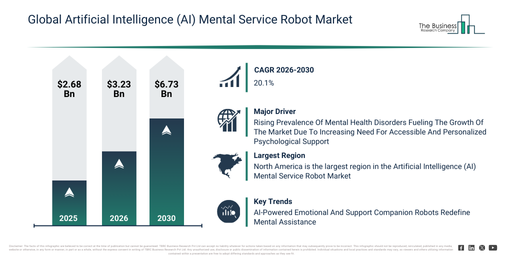
    The artificial intelligence (AI) mental service robot market has experienced substantial expansion in recent years. Projections indicate this market will ascend from $2.68 billion in 2025 to $3.23 billion in 2026, demonstrating a compound annual growth rate (CAGR) of 20.4%. The factors contributing to its historical growth include heightened mental-health awareness, rising stress and anxiety levels, an expanding elderly demographic, the wider adoption of digital health, and an increasing requirement for personalized emotional support.

    The artificial intelligence (AI) mental service robot market is poised for substantial expansion in the coming years. It is projected to achieve a size of $6.73 billion by 2030, demonstrating a compound annual growth rate (CAGR) of 20.1%. This anticipated growth throughout the forecast period is driven by factors such as the increasing adoption of AI mental service robots, their growing integration with telehealth platforms, rising investment in healthcare robotics, the expansion of corporate wellness programs, and an escalating demand for cognitive-behavioral and mindfulness support. Significant trends for this period include technological progress in emotion recognition, innovations in conversational AI and NLP, dedicated research and development in cognitive-behavioral assistance, advancements in human-robot interaction, and further developments in cloud-based AI and data analytics.

    Download A Free Sample Report For Comprehensive Market Insights:

    https://www.thebusinessresearchcompany.com/sample.aspx?id=30515&type=smp&utm_source=Blogs&utm_medium=Paid&utm_campaign=Jul_PR

    #Artificial Intelligence (AI) Mental Service Robot Market Growth Factors: Which Forces Are Supporting Market Expansion?

    The escalating occurrence of mental health conditions is anticipated to fuel the expansion of the artificial intelligence (AI) mental service robot market in the future. These conditions denote ailments that significantly impact an individual’s feelings, cognition, conduct, and general psychological well-being. The rise in mental health disorders is attributed to increasing stress from contemporary living, encompassing demands from work, social detachment, and continuous digital engagement. Artificial intelligence (AI) mental service robots contribute to tackling mental health issues by offering patients interactive, customized assistance and oversight. They improve the availability and regularity of care through real-time advice, behavioral direction, and emotional aid, complementing conventional therapeutic approaches. For instance, in May 2024, as per the American Psychiatric Association, a US-based non-profit organization, in 2024, 43% of adults report feeling more anxious than they did the year before, an increase from 37% in 2023 and 32% in 2022. Consequently, the growing frequency of mental health disorders is propelling the development of the artificial intelligence (AI) mental service robot market.

    Artificial Intelligence (AI) Mental Service Robot Market Segmentation: How Is The Market Structured Across Key Categories?

    The artificial intelligence (AI) mental service robot market covered in this report is segmented –

    1) By Component: Hardware, Software, Services

    2) By Type: Humanoid Or Anthropomorphic, Animal-Like Or Companion, Screen Or Virtual Assistants

    3) By Technology: Natural Language Processing, Machine Learning, Computer Vision, Emotional Recognition

    4) By Sales Channel: Direct Manufacturer Sales, Robotics Distributors, Online Sales Channels, Health-Technology Integrators

    5) By End Use: Health Care Facilities, Educational Institutions, Home Care, Research Institutes

    Subsegments:

    1) By Hardware: Sensors And Actuators, Cameras And Vision Modules, Processors And Control Units, Mobility And Locomotion Components, Communication And Connectivity Modules, Structural And Body Components

    2) By Software: Natural Language Understanding Software, Emotion Recognition Software, Learning And Adaptation Software, Interaction And Behavior Control Software, Navigation And Environmental Mapping Software, Safety And Compliance Monitoring Software

    3) By Services: Installation And Setup Services, Customization And Configuration Services, Training And User Support Services, Maintenance And Repair Services, System Integration Services, Remote Monitoring And Update Services

    Artificial Intelligence (AI) Mental Service Robot Market Industry Trends: What Changes Are Reshaping Demand?

    Leading companies operating within the artificial intelligence (AI) mental service robot market are concentrating on developing advanced products, such as AI-driven emotional support systems, to improve mental well-being, offer therapy, and combat loneliness. These AI emotional support systems are intelligent platforms embedded in companion robots that can understand, respond to, and adapt to a user’s emotional state through conversation, touch, and personalized interactions. For instance, in January 2025, Mind with Heart Robotics Co. Ltd., a China-based robotics company, unveiled AnAn, a bionic AI-powered panda cub robot. This advanced biomimetic robot features a patented tactile sensing system where realistic fur covers more than 10 tactile sensor suites, allowing it to react to touch with distinct sounds. It incorporates an intelligent AI Brain with core and long-term memory and reminder functions, serving as a personal assistant for seniors and providing personalized companionship without human intervention. Additionally, a dedicated app is included for customizing the panda’s personality and connecting users to a global community, expanding its therapeutic applications and fostering emotional bonds for individuals across various demographics.

    Artificial Intelligence (AI) Mental Service Robot Market Competitive Landscape And Leading Companies

    Major companies operating in the artificial intelligence (AI) mental service robot market are Sony Group Corporation, UBTECH Robotics Corp. Ltd., Emotix Private Limited, GROOVE X Inc., Soul Machines Limited, Hanson Robotics Ltd., Blue Frog Robotics S.A.S., Realbotix Corp, LuxAI S.A., Yukai Engineering Inc., RoboKind Inc., PAL Robotics S.L., PARO Robots U.S. Inc., Tombot Inc., Pandorabots Inc., Embodied Inc., Luvozo Public Benefit Corporation, Intuition Robotics Ltd., Furhat Robotics AB, Kindroid Inc.

    Access The Complete Artificial Intelligence (AI) Mental Service Robot Market Report:

    https://www.thebusinessresearchcompany.com/report/artificial-intelligence-ai-mental-service-robot-market-report?utm_source=Blogs&utm_medium=Paid&utm_campaign=Jul_PR

    Artificial Intelligence (AI) Mental Service Robot Market Leading Geography: Which Region Generates The Most Revenue?

    North America was the largest region in the artificial intelligence (AI) mental service robot market in 2025. Asia-Pacific is expected to be the fastest-growing region in the forecast period. The regions covered in the artificial intelligence (AI) mental service robot market report are Asia-Pacific, South East Asia, Western Europe, Eastern Europe, North America, South America, Middle East, Africa.

    Get in touch with us:

    The Business Research Company: https://www.thebusinessresearchcompany.com/

    Americas: +1 310-496-7795

    Asia: +44 7882 955267 & +91 8897263534

    Europe: +44 7882 955267

    Email us at: marketing@tbrc.info

    Follow us on:

    LinkedIn: https://in.linkedin.com/company/the-business-research-company

    YouTube: https://www.youtube.com/channel/UC24_fI0rV8cR5DxlCpgmyFQ

    Global Market Model: https://www.thebusinessresearchcompany.com/global-market-model
  • Artificial Intelligence (AI) Arrhythmia Burden Analytics Market Growth Outlook Reveals A CAGR Of 28.9% And A Market Value Of $8.72 Billion By 2030

    Artificial Intelligence (AI) Arrhythmia Burden Analytics Market Growth Outlook Reveals A CAGR Of 28.9% And A Market Value Of $8.72 Billion By 2030

    Through market attractiveness analysis, total addressable market evaluation, company benchmarking matrices, interactive Excel dashboards, expanded supply chain intelligence, emerging startup coverage, and detailed product insights, The Business Research Company’s 2026 market reports provide more actionable and strategically valuable research.

    Artificial Intelligence (AI) Arrhythmia Burden Analytics Market Expansion From $3.16 Billion In 2026 To $8.72 Billion In 2030

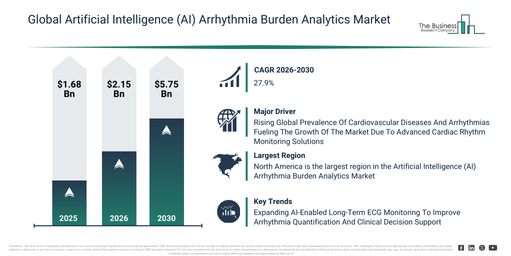
    The artificial intelligence (AI) arrhythmia burden analytics market has experienced substantial expansion in recent years. Its valuation is predicted to rise from $1.68 billion in 2025 to $2.15 billion in 2026, achieving a compound annual growth rate (CAGR) of 28.2%. This historical growth can be linked to the increasing occurrence of cardiovascular diseases, the wider embrace of wearable ECG monitors, a growing requirement for early arrhythmia detection, the expansion of remote patient monitoring platforms, and heightened investment in digital health infrastructure.

    The artificial intelligence (AI) arrhythmia burden analytics market is projected to experience rapid expansion over the upcoming years. This market is anticipated to reach $5.75 billion by 2030, demonstrating a compound annual growth rate (CAGR) of 27.9%. Several factors will drive this growth during the forecast period, including the greater integration of AI within healthcare IT systems, an increased emphasis on predictive and personalized cardiac care, the growing adoption of cloud-based AI solutions, expanded AI research and development efforts, and enhanced regulatory backing for AI-powered medical devices. Key trends anticipated during this period encompass breakthroughs in predictive algorithms, continuous progress in cloud-based deployment strategies, the integration of technology with wearable devices, substantial investment in data analytics platforms, and the creation of AI-enabled diagnostic software.

    Download A Free Sample Report For Comprehensive Market Insights:

    https://www.thebusinessresearchcompany.com/sample.aspx?id=30503&type=smp&utm_source=Blogs&utm_medium=Paid&utm_campaign=Jul_PR

    #Artificial Intelligence (AI) Arrhythmia Burden Analytics Market Growth Factors: Which Forces Are Supporting Market Expansion?

    The expanding worldwide occurrence of cardiovascular diseases and arrhythmias is anticipated to fuel the growth of the artificial intelligence (AI) arrhythmia burden analytics market in the coming years. These conditions encompass an increasing number of individuals globally suffering from heart and blood vessel disorders, including irregular heart rhythms such as atrial fibrillation, which represent significant causes of death and disability across the globe. This increase in prevalence is linked to an aging population and greater exposure to risk factors like hypertension, obesity, and diabetes, all of which raise the chance of developing arrhythmias. Artificial intelligence (AI) arrhythmia burden analytics supports the management of cardiovascular diseases and arrhythmias by offering continuous, precise analysis of cardiac rhythm data, thereby enhancing the early identification and treatment of arrhythmic events. For example, according to the Centers for Disease Control and Prevention, a Switzerland-based public health agency, in August 2025, individuals with chronic and mental health conditions account for 90% of the nation’s 4.9 trillion dollars in annual health care spending. More than 84,000 Americans succumb to heart disease or stroke each year, with cardiovascular disease costs expected to reach approximately 2 trillion dollars by 2050. Consequently, the increasing global prevalence of cardiovascular diseases and arrhythmias is propelling the expansion of the artificial intelligence (AI) arrhythmia burden analytics market.

    Artificial Intelligence (AI) Arrhythmia Burden Analytics Market Segment Breakdown: Which Categories Generate The Most Revenue?

    The artificial intelligence (AI) arrhythmia burden analytics market covered in this report is segmented –

    1) By Component: Software, Hardware, Services

    2) By Technology: Machine Learning (ML), Deep Learning (DL), Natural Language Processing (NLP)

    3) By Deployment Mode: On-Premises, Cloud-Based

    4) By Application: Arrhythmia Detection, Burden Quantification, Predictive Risk Assessment, Treatment Efficacy Monitoring, Clinical Decision Support

    5) By End-User: Healthcare Providers, Diagnostic Centers, Academic And Research Institutes, Other End-Users

    Subsegments:

    1) By Software: Data Management, Predictive Analytics, Visualization Tools, Reporting Platforms, Algorithm Development

    2) By Hardware: Monitoring Devices, Wearable Sensors, Data Storage Units, Processing Units, Connectivity Modules

    3) By Services: Consulting Services, Implementation Services, Maintenance And Support, Training Services, Cloud Hosting Services

    Artificial Intelligence (AI) Arrhythmia Burden Analytics Market Industry Trends: What Changes Are Reshaping Demand?

    Companies operating within the artificial intelligence (AI) arrhythmia burden analytics market are concentrating on developing advanced offerings, such as AI-powered arrhythmia detection systems, to enhance diagnostic accuracy, improve patient adherence, and minimize the risk of misdiagnosis and repeat testing. These AI-driven arrhythmia detection systems incorporate sophisticated algorithms within cardiac monitors, automatically analyzing continuous electrocardiogram (ECG) data to precisely identify and categorize irregular heart rhythms. For instance, in May 2025, iRhythm Technologies, a US-based digital health company, introduced its Zio ECG Recording and Analysis System in Japan. This system is a prescription-only, long-term continuous monitoring solution that features a deep-learned artificial intelligence (AI) algorithm approved by Japan’s Pharmaceuticals and Medical Devices Agency (PMDA). It consists of a patch-based monitor worn for up to 14 days and an accompanying analysis service that provides comprehensive reports, enabling the smooth detection of 13 arrhythmia types without imposing significant patient burden. The system also includes certified clinical review and is linked to a high diagnostic yield and low retesting rates, ultimately improving clinical efficiency for healthcare providers.

    Artificial Intelligence (AI) Arrhythmia Burden Analytics Market Key Players And Strategic Industry Positioning

    Major companies operating in the artificial intelligence (AI) arrhythmia burden analytics market are Medtronic plc, Koninklijke Philips N.V., GE HealthCare Technologies Inc., Boston Scientific Corporation, iRhythm Technologies Inc., Bittium Corporation, Cardiac Rhythm Management, AliveCor Inc., VivaLNK Inc., Biotricity Inc., InfoBionic Inc., Cardiac Insight Inc., Cortrium ApS, Eko Health Inc., CardioComm Solutions Inc., Medi-Lynx Cardiac Monitoring LLC, QT Medical Inc., Wearable Sensors Ltd., HeartVista Inc., iCardiac Technologies Inc.

    Access The Complete Artificial Intelligence (AI) Arrhythmia Burden Analytics Market Report:

    https://www.thebusinessresearchcompany.com/report/artificial-intelligence-ai-arrhythmia-burden-analytics-market-report?utm_source=Blogs&utm_medium=Paid&utm_campaign=Jul_PR

    Artificial Intelligence (AI) Arrhythmia Burden Analytics Market Regional Outlook: Where Are The Largest Opportunities Located?

    North America was the largest region in the artificial intelligence (AI) arrhythmia burden analytics market in 2025. Asia-Pacific is expected to be the fastest-growing region in the forecast period. The regions covered in the artificial intelligence (AI) arrhythmia burden analytics market report are Asia-Pacific, South East Asia, Western Europe, Eastern Europe, North America, South America, Middle East, Africa.

    Get in touch with us:

    The Business Research Company: https://www.thebusinessresearchcompany.com/

    Americas: +1 310-496-7795

    Asia: +44 7882 955267 & +91 8897263534

    Europe: +44 7882 955267

    Email us at: marketing@tbrc.info

    Follow us on:

    LinkedIn: https://in.linkedin.com/company/the-business-research-company

    YouTube: https://www.youtube.com/channel/UC24_fI0rV8cR5DxlCpgmyFQ

    Global Market Model: https://www.thebusinessresearchcompany.com/global-market-model
  • Tumor Profiling Market Set To Grow From $12.3 Billion In 2026 To $17.95 Billion By 2030 At A CAGR Of 9.9%

    Tumor Profiling Market Set To Grow From $12.3 Billion In 2026 To $17.95 Billion By 2030 At A CAGR Of 9.9%

    Enhanced with market attractiveness analysis, total addressable market evaluation, company benchmarking matrices, interactive Excel dashboards, expanded supply chain intelligence, emerging startup coverage, and detailed product insights, The Business Research Company’s 2026 market reports deliver more actionable and strategically valuable research.

    Tumor Profiling Market Growth From $12.3 Billion In 2026 To $17.95 Billion By 2030 At A CAGR Of 9.9%

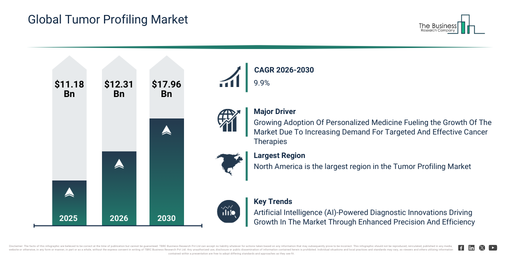
    Driven by an escalating incidence of cancer, a proliferation of molecular diagnostics facilities, a heightened reliance on targeted cancer treatments, significant advancements in sequencing capabilities, and increased investment in oncology research, the tumor profiling market is poised for substantial expansion. This sector, valued at $11.18 billion in 2025, is projected to reach $12.31 billion by 2026, demonstrating a robust compound annual growth rate of 10.1%.

    Foreseeing a period of robust expansion, the tumor profiling market is projected to surge to $17.96 billion by the year 2030, advancing at a compound annual growth rate of 9.9%. This anticipated increase stems from a confluence of factors including the accelerating embrace of precision oncology, a heightened demand for individualized cancer therapies, significant strides in bioinformatics capabilities, the broadening scope of companion diagnostics, and escalating investments directed towards translational cancer research. Key developments shaping the market during this forecast interval are the increasing utilization of next-generation sequencing technologies, a greater reliance on multi-omics profiling strategies, the growing incorporation of artificial intelligence for data analysis, the expanding applications within personalized oncology, and a strengthened emphasis on the identification of novel biomarkers.

    Download A Free Sample Report For Comprehensive Market Insights:

    https://www.thebusinessresearchcompany.com/sample.aspx?id=24420&type=smp

    Tumor Profiling Market Industry Drivers: What Is Driving Revenue Growth?

    The increasing appetite for individualized medical care is projected to be a significant catalyst for the expansion of the tumor profiling market. This personalized approach to healthcare focuses on customizing treatments based on a patient’s unique biological makeup, a trend spurred by individuals desiring more accurate therapeutic interventions that promise superior results and minimized adverse effects compared to conventional methods. Tumor profiling plays a crucial role in this paradigm by pinpointing distinct genetic alterations and indicators within a patient’s cancerous tissues, thereby facilitating treatments directed at these specific anomalies and consequently lessening undesirable reactions. An illustrative example can be found in February 2024, when the Personalized Medicine Coalition, a US entity committed to the progress of personalized medicine, reported that personalized medications represented over a third of all newly approved drugs in 2023, continuing a pattern observed for the past four years. Consequently, the escalating need for personalized medicine is directly fueling the growth trajectory of the tumor profiling market.

    Tumor Profiling Market Segmentation Trends And Revenue Drivers

    The tumor profiling market covered in this report is segmented –

    1) By Technique: Genomics, Proteomics, Epigenetics, Metabolomics

    2) By Technology: Sequencing Techniques, Quantitative Polymerase Chain Reaction (qPCR), Immunohistochemistry, In Situ Hybridization (ISH), Microarray

    3) By Application: Personalized Cancer Medicine, Oncological Diagnostics, Research

    Subsegments:

    1) By Genomics: Next-Generation Sequencing (NGS), Polymerase Chain Reaction (PCR), Microarrays, Sanger sequencing

    2) By Proteomics: Mass Spectrometry (MS), Protein Microarrays, Immunohistochemistry (IHC), Western Blotting

    3) By Epigenetics: DNA Methylation Analysis, Chromatin Immunoprecipitation Sequencing (ChIP-seq), Histone Modification Profiling, Non-Coding RNA Analysis

    4) By Metabolomics: Nuclear Magnetic Resonance (NMR) Spectroscopy, Gas Chromatography-Mass Spectrometry (GC-MS), Liquid Chromatography-Mass Spectrometry (LC-MS), Capillary Electrophoresis-Mass Spectrometry (CE-MS)

    #Tumor Profiling Market Growth Trends: What Is Influencing The Future Outlook?

    In the competitive landscape of the tumor profiling market, leading enterprises are prioritizing the creation of cutting-edge technologies, including artificial intelligence (AI)-driven diagnostic systems, with the aim of boosting precision and effectiveness in cancer therapies. AI involves the application of sophisticated computing techniques to examine extensive genomic, proteomic, and clinical information, thereby facilitating quicker diagnostic outcomes, tailored therapeutic approaches, and improved oversight of illness advancement. Illustrating this trend, Panakeia Technologies LTD, a UK firm concentrating on AI-powered software for cancer detection and treatment, unveiled PANProfiler Colon in January 2025. This innovative AI software is engineered to assess crucial molecular markers, such as microsatellite instability (MSI) and mismatch repair deficiency (dMMR), directly from H and E stained images of colon cancer tissue specimens. This digital instrumentation permits swift and precise molecular characterization of tumors, a critical step for diagnosing colorectal cancer, identifying Lynch syndrome instances, and guiding individualized treatment choices.

    Tumor Profiling Market Industry Leaders: Which Organizations Are Driving Competition?

    Major companies operating in the tumor profiling market are F. Hoffmann-La Roche AG, Thermo Fisher Scientific Inc., Agilent Technologies Inc., Hologic Inc., Illumina Inc., Sysmex Corporation, QIAGEN N.V., Exact Sciences Corporation, Guardant Health Inc., GenScript Biotech Corporation, NeoGenomics Inc., Caris Life Sciences Inc., Tempus Inc., Foundation Medicine Inc., NanoString Technologies Inc., Personalis Inc., Boreal Genomics Inc., Strand Life Sciences Pvt. Ltd., HTG Molecular Diagnostics Inc., Lucence Health Inc., Predictive Oncology Inc.

    Access The Complete Tumor Profiling Market Report:

    https://www.thebusinessresearchcompany.com/report/tumor-profiling-global-market-report

    Tumor Profiling Market Geographic Landscape: Which Region Dominates Industry Growth?

    North Americawas the largest region in the tumor profiling market in 2025. Asia-Pacificis expected to be the fastest-growing region in the forecast period. The regions covered in the tumor profiling market report are Asia-Pacific, South East Asia, Western Europe, Eastern Europe, North America, South America, Middle East, Africa.

    Get in touch with us:

    The Business Research Company: https://www.thebusinessresearchcompany.com/

    Americas: +1 310-496-7795

    Asia: +44 7882 955267 & +91 8897263534

    Europe: +44 7882 955267

    Email us at: marketing@tbrc.info

    Follow us on:

    LinkedIn: https://in.linkedin.com/company/the-business-research-company

    YouTube: https://www.youtube.com/channel/UC24_fI0rV8cR5DxlCpgmyFQ

    Global Market Model: https://www.thebusinessresearchcompany.com/global-market-model
  • Tumor Microenvironment Market Opportunities Are Emerging Beyond Traditional Growth Areas

    Tumor Microenvironment Market Opportunities Are Emerging Beyond Traditional Growth Areas

    Through market attractiveness analysis, total addressable market evaluation, company benchmarking matrices, interactive Excel dashboards, expanded supply chain intelligence, emerging startup coverage, and detailed product insights, The Business Research Company’s 2026 market reports provide more actionable and strategically valuable research.

    Tumor Microenvironment Market Expansion Outlook: What Revenue Opportunities Lie Ahead?

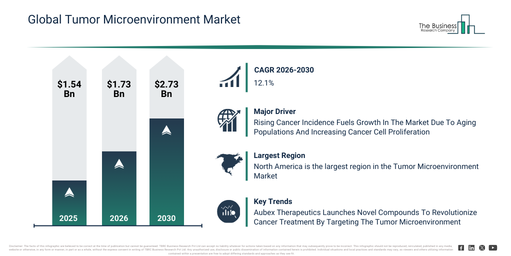
    The market for tumor microenvironment solutions experienced significant expansion historically, projecting an increase from $1.54 billion in 2025 to $1.73 billion in 2026, reflecting a robust compound annual growth rate of 12.4%. This upward trajectory in the past has been fueled by breakthroughs in cancer biology investigations, a deeper comprehension of the interplay between tumors and the immune system, the proliferation of immuno-oncology drug development, heightened academic and clinical inquiry into cancer, and the accessibility of sophisticated laboratory tools.

    The market for tumor microenvironment solutions is poised for swift expansion in the coming years, projected to reach $2.73 billion by 2030, reflecting a compound annual growth rate of 12.1%. This upward trajectory during the forecast period is fueled by escalating investments in tailored cancer treatments, a heightened demand for cutting-edge immunotherapies, the progression of translational cancer investigations, burgeoning partnerships between pharmaceutical firms and research bodies, and an increase in oncology-related clinical trials. Key developments anticipated in this timeframe include a greater emphasis on modulating immune cell behavior, the accelerated development of therapies specifically targeting the tumor microenvironment, the increased utilization of biomarker-driven patient selection, the broader adoption of combined immunotherapy strategies, and the more extensive application of sophisticated molecular profiling techniques.

    Download A Free Sample Report For Comprehensive Market Insights:

    https://www.thebusinessresearchcompany.com/sample.aspx?id=24732&type=smp

    Tumor Microenvironment Market Growth Factors: Which Forces Are Supporting Market Expansion?

    An increasing prevalence of cancer is anticipated to be a key driver for the expansion of the tumor microenvironment market. Cancer, a collection of illnesses defined by aberrant cell proliferation and dissemination, is becoming more common. Factors contributing to this rise include an aging global population, as the likelihood of cancer diagnosis escalates with age due to extended environmental exposure and diminished cellular repair mechanisms. The tumor microenvironment plays a crucial role in cancer progression by facilitating nutrient supply, enabling immune system evasion, and accelerating cancer cell multiplication and spread via complex signaling networks and interactions with adjacent tissues and the extracellular matrix. As an illustration, data from July 2024, provided by the Australian Institute of Health and Welfare, indicated a rise in cancer diagnoses in Australia, moving from 160,570 in 2022 to 164,694 in 2023, signifying a significant year-over-year increase. Consequently, the growing number of cancer cases directly fuels the market for tumor microenvironment research and therapies.

    Tumor Microenvironment Market Segment Analysis Highlighting Growth Areas

    The tumor microenvironment market covered in this report is segmented –

    1) By Cancer Type: Lung Cancer, Colorectal Cancer, Breast Cancer, Prostate Cancer, Bladder Cancer, Kidney Cancer, Other Cancer Types

    2) By Target: T Cells, Tumor-Associated Macrophages (TAMs), Myeloid-Derived Suppressor Cells (MDSCs), Cancer-Associated Fibroblasts (CAFs), Regulatory T Cells (Tregs), Other Targets

    3) By Therapy: Monoclonal Antibodies, Cytokines, Cancer Vaccines, Oncolytic Viruses, Adoptive Cell Therapies, Other Therapies

    4) By End User: Biopharmaceutical Companies, Hospitals, Diagnostic Laboratories, Research Institutes, Contract Research Organizations, Other End Users

    Subsegments:

    1) By Lung Cancer: Non-Small Cell Lung Cancer (NSCLC), Small Cell Lung Cancer (SCLC)

    2) By Colorectal Cancer: Colon Cancer, Rectal Cancer

    3) By Breast Cancer: Hormone Receptor Positive Breast Cancer, Triple-Negative Breast Cancer, HER2-Positive Breast Cancer

    4) By Prostate Cancer: Hormone-Sensitive Prostate Cancer, Castration-Resistant Prostate Cancer

    5) By Bladder Cancer: Non-Muscle Invasive Bladder Cancer (NMIBC), Muscle Invasive Bladder Cancer (MIBC)

    6) By Kidney Cancer: Renal Cell Carcinoma (RCC), Urothelial Carcinoma of the Renal Pelvis

    7) By Other Cancer Types: Pancreatic Cancer, Head and Neck Cancer, Ovarian Cancer

    Tumor Microenvironment Market Industry Trends: What Changes Are Reshaping Demand?

    Within the tumor microenvironment market, key players are prioritizing the creation of novel therapeutic strategies, including precision therapies, to boost effectiveness and address resistance issues. Precision therapies are those that precisely locate and target cancer cells by leveraging distinct molecular signatures, thereby sparing healthy cells from harm. As an illustration, in April of 2024, Aubex Therapeutics Inc., a biotechnology firm situated in the United States, introduced a novel category of agents engineered to revolutionize cancer care through focused intervention within the tumor microenvironment (TME). These novel compounds are conceived to engage with the intricate web constituting the TME, which comprises carcinogenic cells, immunological cells, vascular structures, and connective tissues. Through the regulation of these interplays, Aubex’s methodology strengthens the body’s defense mechanisms in combating tumors and impedes the mechanisms that facilitate tumor proliferation and spread. The objective of this methodology is to surmount refractoriness to conventional treatments, presenting an encouraging substitute for individuals who have not achieved positive outcomes with current therapeutic regimens.

    Tumor Microenvironment Market Leading Companies: Who Holds Significant Market Presence?

    Major companies operating in the tumor microenvironment market are Pfizer Inc., Johnson & Johnson, Merck & Co. Inc., AbbVie Inc., Bayer AG, Sanofi S.A., AstraZeneca plc, Novartis International AG, GlaxoSmithKline plc, Takeda Pharmaceutical Company Limited, Eli Lilly and Company, Gilead Sciences Inc., Amgen Inc., Boehringer Ingelheim GmbH, Regeneron Pharmaceuticals Inc., Genentech Inc., BeiGene Ltd., MacroGenics Inc., Arcus Biosciences Inc., Adaptimmune Therapeutics plc

    Access The Complete Tumor Microenvironment Market Report:

    https://www.thebusinessresearchcompany.com/report/tumor-microenvironment-global-market-report

    Tumor Microenvironment Market Largest Region: Which Geography Holds The Highest Market Share?

    North Americawas the largest region in the tumor microenvironment market in 2025. Asia-Pacificis expected to be the fastest-growing region in the forecast period. The regions covered in the tumor microenvironment market report are Asia-Pacific, South East Asia, Western Europe, Eastern Europe, North America, South America, Middle East, Africa.

    Get in touch with us:

    The Business Research Company: https://www.thebusinessresearchcompany.com/

    Americas: +1 310-496-7795

    Asia: +44 7882 955267 & +91 8897263534

    Europe: +44 7882 955267

    Email us at: marketing@tbrc.info

    Follow us on:

    LinkedIn: https://in.linkedin.com/company/the-business-research-company

    YouTube: https://www.youtube.com/channel/UC24_fI0rV8cR5DxlCpgmyFQ

    Global Market Model: https://www.thebusinessresearchcompany.com/global-market-model
  • Tumor Marker Testing Market Expansion Is Opening New Pathways For Strategic Investment

    Tumor Marker Testing Market Expansion Is Opening New Pathways For Strategic Investment

    Delivering more actionable and strategically valuable research, The Business Research Company’s 2026 market reports feature market attractiveness analysis, total addressable market evaluation, company benchmarking matrices, interactive Excel dashboards, expanded supply chain intelligence, emerging startup coverage, and detailed product insights.

    Tumor Marker Testing Market Growth Potential: How Will Market Size Change Through 2030?

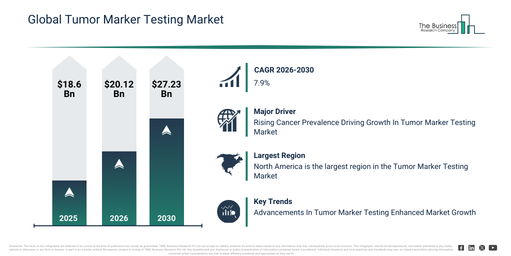
    The market for tumor marker testing has experienced robust expansion recently, projecting a rise from $18.6 billion in 2025 to $20.12 billion in 2026, fueled by a compound annual growth rate (CAGR) of 8.2%. This historical growth trajectory is attributable to a confluence of factors including escalating cancer prevalence, heightened adoption of oncological laboratory diagnostics, the proliferation of cancer testing services within hospitals, the existence of well-recognized biochemical markers, and the expansion of diagnostic laboratory networks.

    The global market for tumor marker testing is poised for significant expansion, projecting a valuation of $27.23 billion by 2030, exhibiting a compound annual growth rate of 7.9%. This anticipated upward trajectory is primarily fueled by an escalating need for the early identification of cancer, a broader embrace of precision oncology methodologies, the proliferation of companion diagnostics, the increasing utility of biomarkers in guiding therapeutic choices, and ongoing breakthroughs in cancer biomarker research. Key developments expected to shape this market during the forecast period encompass a greater utilization of combined tumor marker testing panels, a rise in the adoption of blood-based diagnostic tools for cancer, a more profound integration of tumor markers into the process of monitoring treatment efficacy, the widening scope of early cancer detection initiatives, and a heightened emphasis on individualized cancer care strategies.

    Download A Free Sample Report For Comprehensive Market Insights:

    https://www.thebusinessresearchcompany.com/sample.aspx?id=20668&type=smp

    Tumor Marker Testing Market Demand Drivers: What Is Fueling Industry Growth?

    The escalating incidence of cancer is anticipated to be a significant catalyst for the expansion of the tumor marker testing sector. Cancer, defined by the aberrant proliferation of cells that can infiltrate adjacent tissues and metastasize throughout the body via circulatory and lymphatic pathways, is becoming more widespread. Contributing to this upward trend in cancer diagnoses are demographic shifts like an aging populace, heightened exposure to environmental factors, evolving lifestyles, and advancements in diagnostic capabilities. Tumor marker tests play a crucial role in the management of numerous cancers, aiding in their identification, assessing therapeutic efficacy, and identifying recurrence by quantifying distinct biological substances indicative of malignancy. Supporting this, the National Health Service, a UK governmental body, reported that in 2023, 354,820 new cancer cases were identified, averaging 972 daily, an increase of 8,605 cases compared to the previous year. Consequently, the rising burden of cancer directly fuels the growth of the market for tumor marker diagnostics.

    Tumor Marker Testing Market Segment Performance And Strategic Opportunities

    The tumor marker testing market covered in this report is segmented –

    1) By Product: Biochemical Markers, Oncogenes, Growth Factors, Hormones, Colony Stimulating Factors, Lymphokines

    2) By Methods: Screening, Imaging, Theranostics, Other Methods

    3) By Application: Hospitals, Commercial Or Private Laboratories, Physician Offices Or Group Practices, Cancer Clinics, Ambulatory Care Centers

    Subsegments:

    1) By Biochemical Markers: Alpha-fetoprotein (AFP), Prostate-Specific Antigen (PSA), Carcinoembryonic Antigen (CEA), Cancer Antigen 125 (CA 125), Cancer Antigen 19-9 (CA 19-9), Human Chorionic Gonadotropin (hCG)

    2) By Oncogenes: HER2 Or neu, KRAS, BRAF, EGFR (Epidermal Growth Factor Receptor), c-MYC, p53

    3) By Growth Factors: Vascular Endothelial Growth Factor (VEGF), Platelet-Derived Growth Factor (PDGF), Transforming Growth Factor-beta (TGF-β), Fibroblast Growth Factor (FGF), Insulin-like Growth Factor (IGF)

    4) By Hormones: Estrogen Receptors (ER), Progesterone Receptors (PR), Thyroglobulin, Calcitonin, Adrenocorticotropic Hormone (ACTH), Gastrin

    5) By Colony Stimulating Factors: Granulocyte Colony-Stimulating Factor (G-CSF), Granulocyte-Macrophage Colony-Stimulating Factor (GM-CSF), Macrophage Colony-Stimulating Factor (M-CSF)

    6) By Lymphokines: Interleukin-2 (IL-2), Interferon-gamma (IFN-γ), Tumor Necrosis Factor-alpha (TNF-α), Interleukin-6 (IL-6)

    Tumor Marker Testing Market Innovation Trends: Which Developments Are Transforming The Industry?

    Companies dominant in the tumor marker testing sector are directing greater attention toward the creation of sophisticated tests, specifically molecular testing options, as a means to secure a more advantageous position within the marketplace. Molecular testing solutions encompass cutting-edge diagnostic approaches that scrutinize genetic material, including DNA and RNA, for the identification of alterations, infectious agents, or particular biomarkers at a fundamental molecular level. As an illustration, during April 2024, RGCC International GmbH, a Swiss entity engaged in personalized cancer therapies, introduced Onco-D-clare, a pioneering test designed for cancer detection. This novel test empowers individuals to identify cancer manifestation prior to the onset of visible symptoms, by ingeniously integrating principles of molecular biology with artificial neural networks. The operational mechanism of Onco-D-clare involves separating peripheral blood mononuclear cells from collected blood specimens, followed by an in-depth examination of gene expression patterns across a spectrum exceeding ninety genes.

    Tumor Marker Testing Market Key Players: Which Companies Shape Industry Competition?

    Major companies operating in the tumor marker testing market are Thermo Fisher Scientific Inc., Abbott Laboratories, F. Hoffmann-La Roche AG, Danaher Corporation, Siemens Healthineers AG, Becton Dickinson and Company (BD), Quest Diagnostics Inc., Agilent Technologies Inc, Hologic Inc., Illumina Inc., bioMérieux SA, Bio-Rad Laboratories Inc., Qiagen N.V., DiaSorin S.p.A., Myriad Genetics, Ortho Clinical Diagnostics PLC, Veracyte Inc., Biodesix Inc., Biocept Inc., Proteomedix AG, OncoCyte Corporation, Biocartis NV

    Access The Complete Tumor Marker Testing Market Report:

    https://www.thebusinessresearchcompany.com/report/tumor-marker-testing-global-market-report

    Tumor Marker Testing Market Regional Analysis: Which Region Leads By Revenue?

    North Americawas the largest region in the tumor marker testing market in 2025. The regions covered in the tumor marker testing market report are Asia-Pacific, South East Asia, Western Europe, Eastern Europe, North America, South America, Middle East, Africa.

    Get in touch with us:

    The Business Research Company: https://www.thebusinessresearchcompany.com/

    Americas: +1 310-496-7795

    Asia: +44 7882 955267 & +91 8897263534

    Europe: +44 7882 955267

    Email us at: marketing@tbrc.info

    Follow us on:

    LinkedIn: https://in.linkedin.com/company/the-business-research-company

    YouTube: https://www.youtube.com/channel/UC24_fI0rV8cR5DxlCpgmyFQ

    Global Market Model: https://www.thebusinessresearchcompany.com/global-market-model
  • Tubular External Fixation System Market Trends Are Creating New Opportunities For Industry Leaders

    Tubular External Fixation System Market Trends Are Creating New Opportunities For Industry Leaders

    Enhanced with market attractiveness analysis, total addressable market evaluation, company benchmarking matrices, interactive Excel dashboards, expanded supply chain intelligence, emerging startup coverage, and detailed product insights, The Business Research Company’s 2026 market reports deliver more actionable and strategically valuable research.

    Tubular External Fixation System Market Value Analysis: What Growth Is Expected Over The Forecast Period?

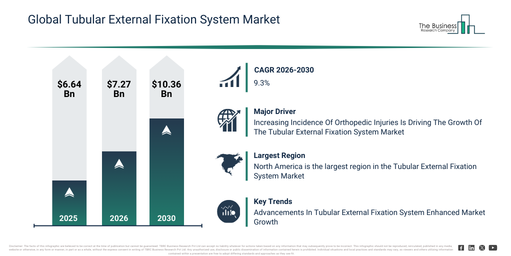
    The global market for tubular external fixation systems has demonstrated robust expansion recently, projecting a rise from $6.64 billion in 2025 to $7.27 billion in 2026, reflecting a compound annual growth rate of 9.6%. This upward trajectory during the historical period is bolstered by several key factors, including a greater frequency of road traffic accidents, an escalating prevalence of intricate fractures, the proliferation of trauma care facilities, increased adoption of external fixation techniques in orthopedic procedures, and the availability of sophisticated fixation materials that facilitate better patient outcomes.

    The market for tubular external fixation systems is projected for robust expansion in the coming years, anticipated to reach $10.36 billion by 2030, spurred by a compound annual growth rate of 9.3%. This upward trajectory in the projected period is fueled by an increasing need for swift fracture stabilization, a rise in orthopedic surgical procedures, a greater emphasis on patient-focused recovery methods, the development of healthcare facilities in developing economies, and continuous advancements in fixation system engineering. Key developments expected to shape this market include a greater embrace of modular external fixation systems, a growing desire for lighter fixation materials, a preference for less invasive orthopedic interventions, broader applications within trauma and emergency care, and an intensified concentration on ensuring both fixation stability and patient mobility.

    Download A Free Sample Report For Comprehensive Market Insights:

    https://www.thebusinessresearchcompany.com/sample.aspx?id=19736&type=smp

    Tubular External Fixation System Market Growth Drivers: What Factors Are Accelerating Expansion?

    The expanding prevalence of bone and joint damage is anticipated to fuel the tubular external fixation system market’s upward trajectory. Such injuries, affecting the body’s structural and movement components like bones, joints, ligaments, tendons, and muscles, are becoming more common due to escalating engagement in sports and exercise, an older demographic susceptible to falls and breaks, and inactive lifestyles that can compromise muscle and joint resilience. Tubular external fixation systems prove beneficial for these orthopedic ailments by offering robust, adaptable stabilization for broken or compromised bones, with minimal disturbance to adjacent soft tissues. Illustrating this trend, projections from the National Institutes of Health in January 2024 indicated that by 2029, the yearly count of hip fractures would ascend to 10,311, corresponding to an incidence of 463 per 100,000 individuals, signifying a substantial 32% surge from 2021 figures. Consequently, the escalating rate of orthopedic injuries serves as a primary catalyst for the tubular external fixation system market’s expansion.

    Tubular External Fixation System Market Segment Landscape And Growth Potential

    The tubular external fixation system market covered in this report is segmented –

    1) By Type: Tibia External Fixation System, Knee External Fixation System, Femur External Fixation System, Ankle External Fixation System, Pelvis External Fixation System, Elbow External Fixation System, Other Types

    2) By Fixation Type: Unilateral And Bilateral, Circular, Hybrid And Other Fixation Types

    3) By Application: Hospitals And Clinics, Rehabilitation Center, Other Applications

    Subsegments:

    1) By Tibia External Fixation System: Unilateral Tibia Fixation, Bilateral Tibia Fixation

    2) By Knee External Fixation System: Unilateral Knee Fixation, Bilateral Knee Fixation

    3) By Femur External Fixation System: Unilateral Femur Fixation, Bilateral Femur Fixation

    4) By Ankle External Fixation System: Unilateral Ankle Fixation, Bilateral Ankle Fixation

    5) By Pelvis External Fixation System: Unilateral Pelvis Fixation, Bilateral Pelvis Fixation

    6) By Elbow External Fixation System: Unilateral Elbow Fixation, Bilateral Elbow Fixation

    7) By Other Types: Shoulder External Fixation System, Wrist External Fixation System

    Tubular External Fixation System Market Trends: What Is Shaping Future Industry Growth?

    Within the tubular external fixation system market, key players are concentrating on creating sophisticated options, including stable external fixation devices, aimed at bettering patient recovery and streamlining orthopedic interventions. A stable external fixation device serves to externally secure and stabilize bone fractures, thereby maintaining correct alignment as healing progresses. An illustrative example is the introduction in September 2023 of the Galaxy Fixation Gemini system by Orthofix Medical Inc., a US entity specializing in spinal and orthopedic solutions. This novel stable external fixation system is engineered for the treatment of limb fractures, both upper and lower, stemming from traumatic incidents. What sets this system apart is its offering in multiple pre-sterilized procedure kit formats, presenting a readily available and rapid response for healthcare providers. The inclusion of these sterile kits obviates the requirement for tray sterilization, leading to considerable reductions in both expenditure and operating room downtimes. Consequently, this system boosts procedural efficiency and is particularly well-suited for rapid implementation in emergency trauma care, thus reinforcing Orthofix’s array of treatment solutions.

    Tubular External Fixation System Market Competitive Landscape: Who Are The Leading Companies?

    Major companies operating in the tubular external fixation system market are Johnson & Johnson, Zimmer Biomet Holdings Inc., NuVasive Inc., Globus Medical Inc., Lepu Medical Technology Co Ltd., Wright Medical Group N.V., Orthofix Medical Inc., Aesculap Inc., Medartis Holding AG, Acumed LLC, KLS Martin Group GmbH & Co. KG, OrthoPediatrics Corp., OsteoMed LLC, Narang Medical Limited, Citieffe S.r.l., GPC Medical Limited, WishBone Medical Inc., Siora Surgicals Pvt. Ltd., Spinamer Health Products Inc., HankilTech Medical Co Ltd., TAEYEON Medical Co Ltd., TASARIMMED Medical Devices Ltd., Zimed Medical Co Ltd., Selaz Medical Devices S.A.

    Access The Complete Tubular External Fixation System Market Report:

    https://www.thebusinessresearchcompany.com/report/tubular-external-fixation-system-global-market-report

    Tubular External Fixation System Market Geographic Distribution And Regional Opportunities

    North Americawas the largest region in the tubular external fixation system market in 2025. The regions covered in the tubular external fixation system market report are Asia-Pacific, South East Asia, Western Europe, Eastern Europe, North America, South America, Middle East, Africa.

    Get in touch with us:

    The Business Research Company: https://www.thebusinessresearchcompany.com/

    Americas: +1 310-496-7795

    Asia: +44 7882 955267 & +91 8897263534

    Europe: +44 7882 955267

    Email us at: marketing@tbrc.info

    Follow us on:

    LinkedIn: https://in.linkedin.com/company/the-business-research-company

    YouTube: https://www.youtube.com/channel/UC24_fI0rV8cR5DxlCpgmyFQ

    Global Market Model: https://www.thebusinessresearchcompany.com/global-market-model
  • Tuberculosis Therapeutics Market Growth Is Reshaping Competitive Advantage Across The Industry

    Tuberculosis Therapeutics Market Growth Is Reshaping Competitive Advantage Across The Industry

    Through market attractiveness analysis, total addressable market evaluation, company benchmarking matrices, interactive Excel dashboards, expanded supply chain intelligence, emerging startup coverage, and detailed product insights, The Business Research Company’s 2026 market reports provide more actionable and strategically valuable research.

    Tuberculosis Therapeutics Market Size Forecast: How Large Could The Market Become By 2030?

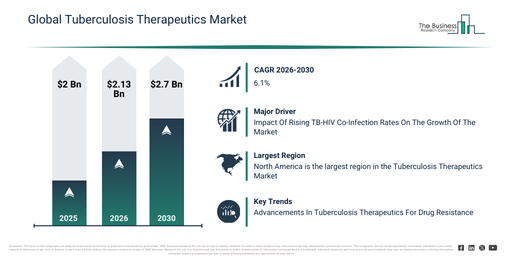
    The market for tuberculosis treatments has experienced robust expansion recently, with projections indicating continued growth. Experts anticipate the market value to increase from $2 billion in 2025 to $2.13 billion in 2026, reflecting a compound annual growth rate of 6.3%. Key factors driving this historical expansion include the significant global burden of tuberculosis, extensive utilization of initial-line anti-TB medications, the broadening scope of governmental efforts to combat the disease, the accessibility of affordable generic tuberculosis drugs, and crucial international financial backing for tuberculosis-focused programs.

    The market for tuberculosis therapeutics is poised for robust expansion over the ensuing years, projecting a valuation of $2.7 billion by 2030, driven by a compound annual growth rate of 6.1%. This anticipated surge is largely fueled by the escalating incidence of multidrug-resistant tuberculosis, ongoing progress in discovering innovative drug treatments for TB, augmented global health financing, wider integration of digital tools to ensure medication adherence, and a heightened emphasis on proactive preventive measures for TB. Key developments anticipated during this forecast period encompass the accelerated creation of treatments for drug-resistant strains of TB, a greater embrace of combination therapy approaches, a concerted push towards reducing treatment timelines, the broadening reach of public health initiatives focused on TB, and enhancements in how patient compliance with treatments is monitored.

    Download A Free Sample Report For Comprehensive Market Insights:

    https://www.thebusinessresearchcompany.com/sample.aspx?id=20983&type=smp

    Tuberculosis Therapeutics Market Growth Factors Supporting Long-Term Expansion

    The increasing incidence of patients concurrently infected with tuberculosis and the human immunodeficiency virus is anticipated to be a significant catalyst for the expansion of the tuberculosis therapeutics market. This dual infection, where individuals harbor both TB and HIV, presents considerable challenges in identifying the diseases, managing treatment regimens, and achieving positive health results, primarily due to weakened immune systems and the intertwining nature of these widespread illnesses. Consequently, the heightened prevalence of these co-infections is fueling a greater need for integrated treatment strategies that specifically address tuberculosis in individuals with HIV, thereby enhancing overall patient prognoses and alleviating the impact of both conditions. Illustrating this trend, data from the Centers for Disease Control and Prevention, a United States governmental organization, indicated a surge in tuberculosis diagnoses, with the case count escalating from 8,320 in 2022 to 9,615 in 2023, marking an increase of 1,295 cases as of March 2024. This upward trajectory in TB-HIV co-infections is thus directly contributing to the market’s growth for tuberculosis therapies.

    Tuberculosis Therapeutics Market Categorization By Product Type And Application

    The tuberculosis therapeutics market covered in this report is segmented –

    1) By Type: Active Tuberculosis (TB), Latent Tuberculosis (TB)

    2) By Drug Type: Isoniazid, Rifampin, Pyrazinamide, Hydrazine derivatives, Miscellaneous anti-tubercular drugs, Ethambutol

    3) By Route of Administration: Oral, Parenteral, Other route of administration

    4) By Distribution Channel: Hospital Pharmacy, Retail Pharmacy, Online Pharmacy

    5) By End-User: Hospitals, Clinics, Ambulatory Surgical Centers, Other End-Users

    Subsegments:

    1) By Active Tuberculosis (TB): First-Line Drugs (Rifampicin, Isoniazid, Pyrazinamide, Ethambutol), Second-Line Drugs (Fluoroquinolones, Aminoglycosides), Combination Therapies, Drug-Resistant TB Treatments (MDR-TB, XDR-TB)

    2) By Latent Tuberculosis (TB): Isoniazid Prophylaxis, Rifampicin-Based Regimens, Rifapentine-Based Regimens, Combination Prophylactic Therapies

    Tuberculosis Therapeutics Market Industry Trends Shaping Future Revenue Growth

    Within the tuberculosis therapeutics arena, leading enterprises are prioritizing the creation of novel treatment approaches, most notably combination therapy, with the overarching goals of enhancing therapeutic effectiveness, shortening treatment timelines, and addressing the challenge of tuberculosis strains resistant to existing drugs. Combination therapy involves administering multiple drugs from distinct categories concurrently to manage a particular illness, thereby aiming to boost treatment success rates, mitigate drug resistance development, and foster better patient health. A prime example of this innovation was seen in July 2024 when Johnson & Johnson, a prominent American pharmaceutical firm, received dual approval for SIRTURO (bedaquiline) from both the U.S. Food and Drug Administration and the European Commission, marking a pivotal advancement in tuberculosis care. This groundbreaking medication stands as the first agent in over forty years specifically formulated to tackle multidrug-resistant tuberculosis (MDR-TB). Its distinctive operational method involves obstructing the ATP synthase enzyme, a critical component for the energy generation processes of TB bacteria, thus presenting a focused and potent treatment strategy. When integrated into comprehensive treatment plans, its utility in combination therapies significantly amplifies the general effectiveness of MDR-TB treatment regimens, consequently leading to abbreviated treatment periods and improved adherence from patients.

    Tuberculosis Therapeutics Market Company Landscape And Strategic Competition

    Major companies operating in the tuberculosis therapeutics market are Pfizer Inc, Johnson & Johnson, Roche Holding AG, Merck & Co. Inc, Sanofi S.A, Novartis AG, GlaxoSmithKline plc, Viatris Inc, Cipla Limited, Lupin Limited, Alkem Laboratories Limited, Emcure Pharmaceuticals Limited, Sequella Inc, AstraZeneca plc, Eli Lilly and Company, Biofabri S L, LegoChem Biosciences, BioVersys AG, SENTAN Pharma Inc, ViChem Pharmaceuticals Inc, PDS Biotechnology Corporation, BioNTech SE, Qurient Co Ltd

    Access The Complete Tuberculosis Therapeutics Market Report:

    https://www.thebusinessresearchcompany.com/report/tuberculosis-therapeutics-global-market-report

    Tuberculosis Therapeutics Market Largest Region By Revenue And Market Share

    North Americawas the largest region in the tuberculosis therapeutics market in 2025. Asia-Pacificis expected to be the fastest-growing region in the forecast period. The regions covered in the tuberculosis therapeutics market report are Asia-Pacific, South East Asia, Western Europe, Eastern Europe, North America, South America, Middle East, Africa.

    Get in touch with us:

    The Business Research Company: https://www.thebusinessresearchcompany.com/

    Americas: +1 310-496-7795

    Asia: +44 7882 955267 & +91 8897263534

    Europe: +44 7882 955267

    Email us at: marketing@tbrc.info

    Follow us on:

    LinkedIn: https://in.linkedin.com/company/the-business-research-company

    YouTube: https://www.youtube.com/channel/UC24_fI0rV8cR5DxlCpgmyFQ

    Global Market Model: https://www.thebusinessresearchcompany.com/global-market-model
  • Trypsin-EDTA Solution For Cell Dissociation Market Forecast Signals New Revenue Opportunities Through 2030

    Trypsin-EDTA Solution For Cell Dissociation Market Forecast Signals New Revenue Opportunities Through 2030

    Delivering more actionable and strategically valuable research, The Business Research Company’s 2026 market reports feature market attractiveness analysis, total addressable market evaluation, company benchmarking matrices, interactive Excel dashboards, expanded supply chain intelligence, emerging startup coverage, and detailed product insights.

    Trypsin-EDTA Solution For Cell Dissociation Market Revenue Outlook: What CAGR Is Expected Through 2030?

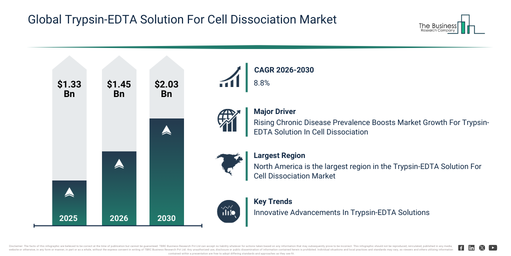
    The market for trypsin-EDTA solutions, instrumental in cell dissociation, has experienced robust expansion, projecting a rise from $1.33 billion in 2025 to $1.45 billion by 2026, reflecting a compound annual growth rate of 9.1%. This upward trajectory in recent years is underpinned by several key factors, including the proliferation of cell culture-based research, a heightened demand for biologics and vaccines, the increasing use of adherent cell lines, the growth in academic and clinical research settings, and the enhanced accessibility of standardized reagents.

    The market for trypsin-EDTA solutions, crucial for cell dissociation, is poised for substantial expansion, projecting a valuation of $2.03 billion by 2030, reflecting a robust compound annual growth rate of 8.8%. This anticipated uplift is primarily fueled by escalating demand for cell-based therapeutics, the expanding scale of biopharmaceutical production processes, a heightened emphasis on automating cell handling techniques, advancements in regenerative medicine research, and a greater regulatory imperative for unwavering process consistency. Key developments shaping this market landscape include a growing preference for serum-free cell dissociation agents, an increasing need for reliable cell harvesting solutions, broader integration into large-scale biomanufacturing operations, wider applications in stem cell and primary cell research, and a dedicated focus on ensuring reproducibility and maintaining optimal cell viability.

    Download A Free Sample Report For Comprehensive Market Insights:

    https://www.thebusinessresearchcompany.com/sample.aspx?id=20667&type=smp

    Trypsin-EDTA Solution For Cell Dissociation Market Demand Drivers Creating New Revenue Opportunities

    The increasing incidence of long-term health conditions is anticipated to boost the market for trypsin-EDTA solutions used in cell dissociation. These persistent illnesses, requiring continuous medical attention, such as diabetes, cardiovascular ailments, and chronic respiratory issues, are becoming more common due to an aging global population, increased exposure to risk factors like unhealthy diets and sedentary lifestyles, and medical advancements that allow for earlier identification and management of these conditions. Trypsin-EDTA solution is a vital tool in researching these chronic diseases, facilitating the effective separation and collection of cells from biological samples for subsequent analysis or treatment development. For example, a February 2024 report from the World Health Organization indicated that around 20 million new cancer diagnoses were made in 2022, resulting in 9.7 million fatalities, with projections suggesting over 35 million new cases by 2050, a significant surge from 2022. Consequently, the escalating rate of chronic diseases is a key factor fueling the expansion of the trypsin-EDTA solution for cell dissociation market.

    The expanding need for individualized medical care is poised to stimulate the market for trypsin-EDTA solutions in cell dissociation. This medical philosophy customizes treatments and healthcare strategies based on an individual’s unique traits, requirements, and genetic makeup. Such a trend is propelled by progress in genetics, the development of targeted therapies, and the rising occurrence of chronic conditions demanding more precise interventions. Trypsin-EDTA solution contributes to personalized medicine by allowing for effective cell culturing and handling, which are critical for advancing research in cell-based therapies and regenerative medicine. To illustrate, data from the Personalized Medicine Coalition revealed in February 2024 that the FDA authorized 16 novel personalized treatments for patients with rare diseases in 2023, an increase from six approvals in the preceding year, with seven of these new treatments targeting cancer and three addressing other ailments. Therefore, the escalating demand for personalized medicine is a significant driver for the trypsin-EDTA solution for cell dissociation market.

    Trypsin-EDTA Solution For Cell Dissociation Market Segment Analysis And Revenue Opportunities

    The trypsin-edta solution for cell dissociation market covered in this report is segmented –

    1) By Type: 0.25% Solution, 0.05% Solution

    2) By Distribution Channel: Online Sales, Direct Sales, Retail

    3) By Application: Insulin Manufacturing, Vaccines Manufacturing, Cell Culture, Other Applications

    Subsegments:

    1) By 0.25% Solution: General Cell Culture, Adherent Cell Lines, Suspension Cell Lines, Tissue-Derived Cells

    2) By 0.05% Solution: Gentler Dissociation for Sensitive Cells, Primary Cell Cultures, Stem Cell Cultures, Short-Term Cell Cultures

    Trypsin-EDTA Solution For Cell Dissociation Market Trends Driving Strategic Industry Expansion

    Key players in the trypsin-EDTA solution for cell dissociation market are introducing novel offerings, including animal-derived extracellular matrix (ECM) dissociation solutions, as a strategy to enhance their market position. These animal-based ECM dissociation solutions are designed as either enzymatic or chemical mixtures originating from animal materials, intended to dismantle the components of the extracellular matrix and thereby aid in the separation of cells from tissue or culture substrates. Illustrating this trend, TheWell Bioscience, a biomedical technology firm based in the United States, unveiled its VitroGel Organoid Recovery Solution in February 2023. This innovative VitroGel Organoid Recovery Solution presents a revolutionary development, facilitating the swift and effective retrieval of organoids from both animal-derived ECM and synthetic VitroGel hydrogels. It accomplishes the complete breakdown of animal-based ECM within a mere 2 minutes, with the entire cell recovery procedure finalized in just 15 minutes, marking a substantial enhancement over the leading existing solution which requires over an hour. Purposely crafted for the recovery of high-quality, intact organoids, this solution ensures superior outcomes in terms of yield, cell viability, and overall quality relevant for subculturing, freezing, or chemical analysis. Furthermore, its operation at ambient temperature negates the necessity for thermal regulation equipment, paving the way for complete laboratory automation critical for scalable organoid production.

    Trypsin-EDTA Solution For Cell Dissociation Market Leading Players Shaping Industry Direction

    Major companies operating in the trypsin-edta solution for cell dissociation market are Thermo Fisher Scientific Inc., Merck KGaA, GE Healthcare, Corning Incorporated, Lonza Group AG, VWR International LLC, Sartorius AG, STEMCELL Technologies Inc., Miltenyi Biotec B.V. & Co. KG, MP Biomedicals LLC, American Type Culture Collection (ATCC), Cyagen Biosciences Inc., HiMedia Laboratories Private Limited, FUJIFILM Irvine Scientific Inc., Nacalai Tesque Inc., Creative Dynamics Inc., PromoCell GmbH, Biological Industries Israel Beit Haemek Ltd., Worthington Biochemical Corporation, Capricorn Scientific GmbH, PAN-Biotech GmbH, Cell Applications Inc., Innovative Cell Technologies Inc., Wisent Bioproducts Inc., ZenBio Inc

    Access The Complete Trypsin-EDTA Solution For Cell Dissociation Market Report:

    https://www.thebusinessresearchcompany.com/report/trypsin-edta-solution-for-cell-dissociation-global-market-report

    Trypsin-EDTA Solution For Cell Dissociation Market Regional Analysis And Leading Geography

    North Americawas the largest region in the trypsin-EDTA solution for cell dissociation market in 2025. Asia-Pacificis expected to be the fastest-growing region in the forecast period. The regions covered in the trypsin-edta solution for cell dissociation market report are Asia-Pacific, South East Asia, Western Europe, Eastern Europe, North America, South America, Middle East, Africa.

    Get in touch with us:

    The Business Research Company: https://www.thebusinessresearchcompany.com/

    Americas: +1 310-496-7795

    Asia: +44 7882 955267 & +91 8897263534

    Europe: +44 7882 955267

    Email us at: marketing@tbrc.info

    Follow us on:

    LinkedIn: https://in.linkedin.com/company/the-business-research-company

    YouTube: https://www.youtube.com/channel/UC24_fI0rV8cR5DxlCpgmyFQ

    Global Market Model: https://www.thebusinessresearchcompany.com/global-market-model
  • Tropomyosin Receptor Kinase C (TrkC) Antibody Market Growth Is Accelerating As Industry Transformation Continues

    Tropomyosin Receptor Kinase C (TrkC) Antibody Market Growth Is Accelerating As Industry Transformation Continues

    Enhanced with market attractiveness analysis, total addressable market evaluation, company benchmarking matrices, interactive Excel dashboards, expanded supply chain intelligence, emerging startup coverage, and detailed product insights, The Business Research Company’s 2026 market reports deliver more actionable and strategically valuable research.

    Tropomyosin Receptor Kinase C (TrkC) Antibody Market Growth Analysis: How Will Revenue Expand During The Forecast Period?

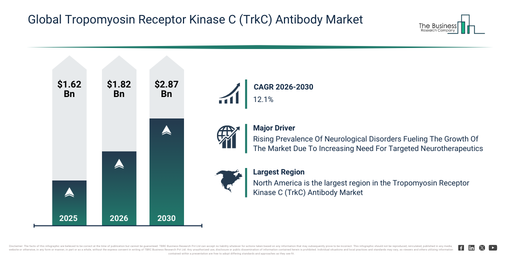
    The market for tropomyosin receptor kinase c (trkc) antibodies has experienced significant expansion; projected to increase from $1.62 billion in 2025 to $1.82 billion in 2026, this growth reflects a compound annual growth rate (CAGR) of 12.4%. This historical growth trajectory has been fueled by several key factors, including a heightened research emphasis on neurotrophin signaling pathways, the broadening scope of academic neuroscience investigations, the increasing accessibility of sophisticated antibody engineering methodologies, augmented financial support for molecular biology research, and a growing application of antibodies within diagnostic research endeavors.

    The market for tropomyosin receptor kinase c (TrkC) antibodies is poised for substantial expansion, projecting a valuation of $2.87 billion by 2030, driven by a projected compound annual growth rate of 12.1%. This anticipated growth throughout the forecast period is bolstered by several key factors, including the increasing incorporation of antibodies into targeted drug discovery processes, escalating investments dedicated to the research of neurological disorders, the broadening scope of precision medicine endeavors, a greater embrace of sophisticated immunoassay methodologies, and a heightened demand for highly specialized research antibodies. Key developments anticipated during this timeframe are the growing preference for TrkC antibodies exhibiting exceptional specificity, the increased utilization of recombinant antibody designs, a surge in the need for neurobiology research instruments, an expanded exploration of targeted signaling pathways, and a more stringent emphasis on robust antibody validation protocols.

    Download A Free Sample Report For Comprehensive Market Insights:

    https://www.thebusinessresearchcompany.com/sample.aspx?id=30423&type=smp

    Tropomyosin Receptor Kinase C (TrkC) Antibody Market Expansion Supported By Key Demand Factors

    An upsurge in neurological conditions is anticipated to foster the expansion of the tropomyosin receptor kinase C (TrkC) antibody market. These disorders, affecting the brain, spinal cord, and nerves, manifest in a spectrum of issues including impaired cognition, movement, and sensation. The growing incidence of such conditions is closely related to an aging demographic, as natural aging processes can compromise neural function, diminish brain adaptability, and heighten oxidative damage, all of which contribute to the onset and advancement of these ailments. Tropomyosin receptor kinase C (TrkC) antibodies play a crucial role in managing neurological disorders by specifically interacting with TrkC receptors, vital components in nerve cell development, survival, and specialization. These antibodies assist in regulating and examining TrkC signaling pathways, thereby facilitating the creation of targeted treatments and deepening our comprehension of neurodegenerative and neurodevelopmental diseases. Illustrating this trend, by June 30, 2024, the UK’s National Health Service reported 487,432 individuals diagnosed with dementia, a marked increase of 3,155 cases from the previous month, underscoring the escalating challenge of neurological disorders and their impact on market demand for TrkC antibodies.

    Driving the expansion of the tropomyosin receptor kinase C (TrkC) antibody market, a growing preference for personalized medicine is emerging. This approach tailors medical interventions to individual patient profiles, considering their genetic makeup, environmental exposures, and lifestyle choices to enhance treatment effectiveness and elevate the quality of care. The increasing adoption of personalized medicine is propelled by sophisticated advancements in genomic technologies that allow for the precise identification of genetic variations and the subsequent development of customized therapies. Tropomyosin receptor kinase C (TrkC) antibodies contribute significantly to this field by enabling the accurate detection and targeting of TrkC receptors, positioning them as key tools for patient-specific treatment strategies. These antibodies enhance the precision of therapeutic interventions by aiding in the development of targeted treatments and improving patient outcomes in conditions affecting the nervous system and certain types of cancer. A notable indicator of this trend, the U.S. Food and Drug Administration approved 26 personalized medicines in 2023, a substantial rise from the 12 approvals in 2022, as reported by the Personalized Medicine Coalition in February 2024, highlighting the growing role of personalized treatments and the associated demand for TrkC antibodies.

    Accelerated cancer rates are poised to stimulate the growth within the tropomyosin receptor kinase C (TrkC) antibody market. Cancer prevalence encompasses both newly diagnosed and existing cases within a specific timeframe. The rising incidence of cancer is attributed to various lifestyle factors, including suboptimal dietary habits, tobacco and alcohol consumption, and exposure to environmental toxins, all of which elevate the risk of developing diverse forms of cancer. Tropomyosin receptor kinase C (TrkC) antibodies are instrumental in cancer management by specifically targeting TrkC receptors, making them valuable for identifying and influencing tumor growth mechanisms. They support highly accurate therapeutic approaches by enabling the development of targeted therapies and improving treatment results in cancers associated with TrkC pathways. For example, in 2022, Australia recorded 160,570 new cancer diagnoses, an increase of 3,789 cases compared to 2021, according to the Australian Institute of Health and Welfare in July 2024, reflecting the escalating burden of cancer and bolstering the demand for TrkC antibodies in oncology.

    Tropomyosin Receptor Kinase C (TrkC) Antibody Market Segmentation And Category Breakdown

    The tropomyosin receptor kinase c (trkc) antibody market covered in this report is segmented –

    1) By Product Type: Monoclonal Antibodies, Polyclonal Antibodies, Recombinant Antibodies

    2) By Application: Basic Research, Drug Discovery

    3) By End-User: Pharmaceutical And Biotechnology Companies, Academic And Research Institutes, Diagnostic Laboratories, Other End-Users

    Subsegments:

    1) By Monoclonal Antibodies: Human Monoclonal Antibodies, Humanized Monoclonal Antibodies, Chimeric Monoclonal Antibodies, Murine Monoclonal Antibodies

    2) By Polyclonal Antibodies: Animal-Derived Polyclonal Antibodies, Recombinant Polyclonal Antibodies, Serum-Based Polyclonal Antibodies, Plant-Derived Polyclonal Antibodies

    3) By Recombinant Antibodies: Single Chain Variable Fragment Antibodies, Fragment Antigen Binding Antibodies, Full-Length Recombinant Antibodies, Engineered Recombinant Antibodies

    Tropomyosin Receptor Kinase C (TrkC) Antibody Market Competitive Analysis Of Major Industry Participants

    Major companies operating in the tropomyosin receptor kinase c (trkc) antibody market are Merck & Co. Inc., Thermo Fisher Scientific Inc., Becton Dickinson and Company, GeneTex Inc., Bio-Techne Corporation, GenScript Biotech Corporation, Cell Signaling Technology Inc, Sino Biological Inc., ACROBiosystems Inc., Proteintech Group Inc., Abclonal Inc., OriGene Technologies Inc., Santa Cruz Biotechnology Inc., Rockland Immunochemicals Inc., Novus Biologicals LLC, Abnova Corporation, Aviva Systems Biology Corporation, MyBioSource Inc., Alomone Labs, LifeSpan BioSciences Inc.

    Access The Complete Tropomyosin Receptor Kinase C (TrkC) Antibody Market Report:

    https://www.thebusinessresearchcompany.com/report/global-tropomyosin-receptor-kinase-c-trkc-antibody-market-report

    Tropomyosin Receptor Kinase C (TrkC) Antibody Market Geographic Analysis: Where Is Demand Growing The Fastest?

    North Americawas the largest region in the tropomyosin receptor kinase C (TrkC) antibody market in 2025. Asia-Pacificis expected to be the fastest-growing region in the forecast period. The regions covered in the tropomyosin receptor kinase c (trkc) antibody market report are Asia-Pacific, South East Asia, Western Europe, Eastern Europe, North America, South America, Middle East, Africa.

    Get in touch with us:

    The Business Research Company: https://www.thebusinessresearchcompany.com/

    Americas: +1 310-496-7795

    Asia: +44 7882 955267 & +91 8897263534

    Europe: +44 7882 955267

    Email us at: marketing@tbrc.info

    Follow us on:

    LinkedIn: https://in.linkedin.com/company/the-business-research-company

    YouTube: https://www.youtube.com/channel/UC24_fI0rV8cR5DxlCpgmyFQ

    Global Market Model: https://www.thebusinessresearchcompany.com/global-market-model
  • Tropical Spastic Paraparesis Market Outlook Highlights The Next Major Growth Opportunities

    Tropical Spastic Paraparesis Market Outlook Highlights The Next Major Growth Opportunities

    Through market attractiveness analysis, total addressable market evaluation, company benchmarking matrices, interactive Excel dashboards, expanded supply chain intelligence, emerging startup coverage, and detailed product insights, The Business Research Company’s 2026 market reports provide more actionable and strategically valuable research.

    Tropical Spastic Paraparesis Market Forecast: What Market Value Is Expected By 2030?

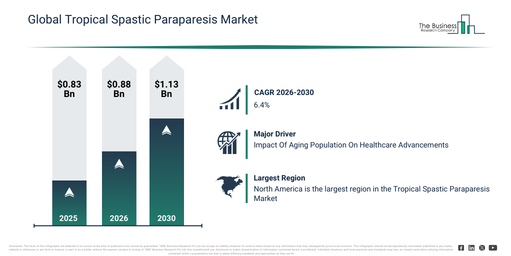
    In the realm of tropical spastic paraparesis, a robust expansion has been observed in market size recently. Projections indicate a rise from $0.83 billion in 2025 to $0.88 billion in 2026, reflecting a compound annual growth rate of 6.6%. Factors contributing to this historical growth trajectory include a heightened prevalence of HTLV-1 infections, a scarcity of treatments capable of modifying the disease’s course, escalating awareness surrounding neurological disorders, enhanced accessibility to diagnostic imaging technologies, and an increasing need for supportive care interventions.

    The market for tropical spastic paraparesis is projected for significant expansion over the upcoming years, anticipated to reach a valuation of $1.13 billion by the year 2030, reflecting a compound annual growth rate of 6.4%. This anticipated growth during the forecast period is bolstered by progress in antiviral research, increased funding for studies into rare neurological conditions, the broadening availability of precision diagnostic tools, a heightened emphasis on managing the condition over the long term, and enhanced patient access to specialized medical services. Key developments shaping the market in this period include a greater concentration on diagnostics specifically targeting HTLV-1, a rise in the utilization of comprehensive, multi-faceted treatment strategies, a growing priority placed on identifying the disease in its early stages, the expansion of rehabilitation programs focused on physiotherapy, and improved public understanding and screening efforts for the condition.

    Download A Free Sample Report For Comprehensive Market Insights:

    https://www.thebusinessresearchcompany.com/sample.aspx?id=21309&type=smp

    Tropical Spastic Paraparesis Market Growth Drivers And Industry Catalysts

    The expanding population of elderly individuals is predicted to fuel the expansion of the tropical spastic paraparesis market in the future. This demographic, typically aged 65 and above, often experiences heightened medical requirements due to age-related physical changes, persistent health conditions, and limitations in daily functioning. Factors contributing to this demographic shift include longer lifespans, advancements in medical science, declining birth rates, enhanced living conditions, more effective disease management strategies, reduced infant mortality, improved nutrition, and access to medical innovations. Tropical spastic paraparesis, a chronic condition affecting motor functions in the nervous system, highlights the amplified need for comprehensive healthcare for seniors by emphasizing the significance of early detection, specialized rehabilitation programs, and long-term care approaches aimed at enhancing mobility, fostering independence, and improving the overall quality of life for an aging populace. As an illustration, the World Health Organization, an intergovernmental body based in Switzerland, indicated in October 2024 that the global number of people aged 60 or older is anticipated to reach 1.4 billion by 2030, constituting one-sixth of the world’s population, with projections suggesting this figure will double to 2.1 billion by 2050, and the count of individuals aged 80 and above will more than triple to 426 million. Consequently, the growing elderly population is a primary catalyst for the tropical spastic paraparesis market’s advancement.

    The upward trend in healthcare expenditure is anticipated to act as a catalyst for the growth trajectory of the tropical spastic paraparesis market. This expenditure encompasses the entirety of financial resources allocated towards medical services, therapeutic interventions, pharmaceutical products, public health initiatives, and healthcare infrastructure development. An increasing global allocation of funds towards healthcare is instigated by factors such as an aging demographic, the escalating prevalence of both chronic and infectious diseases, the introduction of sophisticated medical technologies, and the broadened accessibility of healthcare services. Increased financial investment in the healthcare sector serves to bolster the management of tropical spastic paraparesis by facilitating the funding of research endeavors for novel treatment modalities, enhancing the precision of diagnostic capabilities, and improving the availability of specialized neurological care. For example, the Office for National Statistics, a governmental department within the U.K., reported in May 2024 that the United Kingdom’s healthcare expenditure reached $364 billion (£297.2 billion) in the year 2023, reflecting a consistent rise in national commitment to healthcare funding. Thus, the augmentation of healthcare spending is a significant driver propelling the tropical spastic paraparesis market forward.

    The enhancement of medical facilities is poised to stimulate the expansion of the tropical spastic paraparesis market. These facilities, encompassing institutions like hospitals, clinics, and diagnostic centers, are instrumental in the provision of medical care and services essential for patient treatment and support. The ongoing improvements in healthcare facilities are attributable to a confluence of elements, including heightened investments in healthcare infrastructure, a heightened emphasis on patient-centric care models, escalating population numbers, and the demographic shift towards an older population. The capacity of healthcare facilities to offer superior care, particularly for conditions like tropical spastic paraparesis, can be significantly elevated through the integration of specialized services and concerted research efforts. Addressing this relatively uncommon neurological disorder encourages the development of sophisticated diagnostic instruments, tailored treatment regimens, and the cultivation of multidisciplinary expertise, ultimately leading to improved patient outcomes, more efficient utilization of resources, and increased recognition of less prevalent diseases within healthcare systems. A case in point is the American Health Care Association, a non-profit organization in the U.S., which noted in May 2023 that the nation was home to 6,129 hospitals, a marginal increase of 0.591% from the preceding year when the count stood at 6,093. Therefore, the ongoing improvements in healthcare infrastructure are actively contributing to the growth of the tropical spastic paraparesis market.

    Tropical Spastic Paraparesis Market Segment Outlook: Which Categories Are Expanding The Fastest?

    The tropical spastic paraparesis market covered in this report is segmented –

    1) By Disease Type: Tropical Spastic Paraparesis, HIV Associated Myelopathy, Multiple Sclerosis

    2) By Treatment Modality: Pharmaceuticals, Physiotherapy, Surgical Interventions

    3) By Patient Demographics: Pediatric Patients, Adult Patients, Geriatric Patients

    4) By Diagnostic Technique: Magnetic Resonance Imaging (MRI), Lumbar Puncture

    5) By End Use Industry: Hospitals, Clinics, Diagnostic Centers, Other End Use Industries

    Subsegments:

    1) By Tropical Spastic Paraparesis: Early Stage Tropical Spastic Paraparesis, Late Stage Tropical Spastic Paraparesis

    2) By HIV Associated Myelopathy: Acute HIV Associated Myelopathy, Chronic HIV Associated Myelopathy

    3) By Multiple Sclerosis: Relapsing-Remitting Multiple Sclerosis, Primary Progressive Multiple Sclerosis, Secondary Progressive Multiple Sclerosis

    Tropical Spastic Paraparesis Market Key Companies And Competitive Benchmarking

    Major companies operating in the tropical spastic paraparesis market are Pfizer Inc., Merck & Co. Inc., Bayer AG, Sanofi SA, Bristol‑Myers Squibb Company, AstraZeneca Plc, Novartis AG, Eli Lilly and Company, Takeda Pharmaceutical Company Limited, Teva Pharmaceutical Industries Ltd., UCB S.A., Viatris Inc., Biogen Inc., Ionis Pharmaceuticals, H Lundbeck A/S, AC Immune, VectorY Therapeutics, Verge Genomics, ViroMed Co. Ltd., Coya Therapeutics Inc., AgeneBio

    Access The Complete Tropical Spastic Paraparesis Market Report:

    https://www.thebusinessresearchcompany.com/report/tropical-spastic-paraparesis-global-market-report

    Tropical Spastic Paraparesis Market Global Footprint: Which Region Holds Market Leadership?

    North Americawas the largest region in the tropical spastic paraparesis market in 2025. Asia-Pacificis expected to be the fastest-growing region in the forecast period. The regions covered in the tropical spastic paraparesis market report are Asia-Pacific, South East Asia, Western Europe, Eastern Europe, North America, South America, Middle East, Africa.

    Get in touch with us:

    The Business Research Company: https://www.thebusinessresearchcompany.com/

    Americas: +1 310-496-7795

    Asia: +44 7882 955267 & +91 8897263534

    Europe: +44 7882 955267

    Email us at: marketing@tbrc.info

    Follow us on:

    LinkedIn: https://in.linkedin.com/company/the-business-research-company

    YouTube: https://www.youtube.com/channel/UC24_fI0rV8cR5DxlCpgmyFQ

    Global Market Model: https://www.thebusinessresearchcompany.com/global-market-model