Category: Healthcare Services

  • Weight Loss Products And Services Market Trends Reshaping Industry Growth Through 2030

    Weight Loss Products And Services Market Trends Reshaping Industry Growth Through 2030

    Built to provide research that’s more actionable and strategically valuable, The Business Research Company’s 2026 market reports include market attractiveness analysis, total addressable market sizing, company benchmarking matrices, interactive Excel dashboards, broader supply chain intelligence, emerging startup tracking, and in-depth product insights.

    Weight Loss Products And Services Market Revenue Growth On Track For A 9.5% CAGR Through 2030

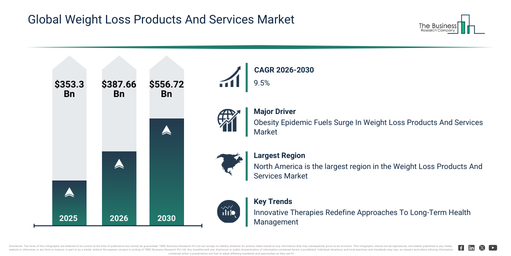
    The weight loss products and services market size has demonstrated robust expansion over recent years. It is anticipated to increase from $353.3 billion in 2025 to $387.66 billion in 2026, reflecting a compound annual growth rate (CAGR) of 9.7%. The surge witnessed historically can be linked to a heightened consumer interest in lifestyle wellness, the enlargement of commercial weight loss offerings, enhanced retail access to diet products, growing public understanding of obesity dangers, and the widespread adoption of e-commerce platforms dedicated to health.

    The market for weight loss products and services is anticipated to experience robust expansion in the coming years. This market is projected to reach $556.72 billion by 2030, demonstrating a compound annual growth rate (CAGR) of 9.5%. Several factors are contributing to this growth over the forecast period, including the increased uptake of digital coaching platforms, a growing need for tailored diet plans, the proliferation of online wellness communities, a heightened emphasis on sustainable and clean-label offerings, and the incorporation of AI-powered nutrition analytics. Key trends foreseen during this period involve a greater call for comprehensive weight loss solutions, the increasing appeal of subscription-model wellness programs, the broader integration of mobile health applications, the diversification of personalized nutrition products, and an intensified commitment to sustainable weight management.

    Get A Free Sample Report With In-Depth Market Insights:

    https://thebusinessresearchcompany.com/sample_request?id=23779622&type=smp&name=Weight%20Loss%20Products%20And%20Services%20Market%20Report%202026&utm_source=Blogs&utm_medium=Paid&utm_campaign=Nov_PR

    Weight Loss Products And Services Market Demand Drivers Opening New Revenue Streams

    The increasing incidence of obesity is anticipated to fuel the expansion of the weight loss products and services market moving ahead. Obesity, a medical condition, involves the excessive accumulation of body fat to a degree that can adversely affect health. Weight loss products and services are designed to address obesity by assisting individuals in shedding surplus body weight, enhancing their general health, and fostering lasting lifestyle modifications. Consequently, the growing prevalence of obesity is propelling the expansion of the weight loss products and services market.

    Weight Loss Products And Services Market Segment Landscape: Which Areas Lead Development?

    The weight loss products and services market covered in this report is segmented –

    1) By Products: Food, Beverage, Supplements, Other Weight Loss Products

    2) By Services: Fitness Centers, Slimming Centers, Consultation Services, Other Services, Fat Replacers

    3) By Sales Channel: Supermarkets And Hypermarkets, Convenience Stores, Retail Pharmacies, E-Commerce

    Subsegments:

    1) By Food: Low-Calorie Snacks, Meal Replacement Bars, Diet Frozen Meals

    2) By Beverage: Weight Loss Shakes, Detox Teas, Low-Calorie Drinks

    3) By Supplements: Herbal Weight Loss Supplements, Protein Supplements, Fat Burners

    4) By Other Weight Loss Products: Weight Loss Devices, Fitness Equipment, Weight Management Apps And Programs

    Weight Loss Products And Services Market Trends Powering Strategic Industry Growth

    Leading firms in the weight loss products and services sector are concentrating on creating novel offerings, particularly GLP-1 receptor agonist medications, to address the increasing need for medically sound obesity treatment and secure, professionally supervised weight loss. These GLP-1 receptor agonists are injectable medicines designed to imitate the glucagon-like peptide-1 hormone, which plays a role in regulating appetite, slowing down stomach emptying, and enhancing blood sugar management, thereby providing a more precise method than conventional diets, exercise, or non-prescription supplements. As an illustration, Novo Nordisk A/S, a pharmaceutical firm based in Denmark, introduced Wegovy in India in June 2025; this is an advanced GLP-1 receptor agonist treatment intended for adults living with obesity or who are overweight with accompanying health conditions. Wegovy’s active component is semaglutide, which is administered weekly through a subcutaneous injection. The drug works by suppressing appetite, increasing feelings of fullness, and encouraging sustained weight loss when used alongside lifestyle changes. Its distinctive attributes encompass a clinically validated weight reduction of up to 15% over 68 weeks, extensive backing for metabolic well-being, and structured dosing routines to boost patient compliance.

    Weight Loss Products And Services Market Industry Leaders And Competitive Landscape

    Major companies operating in the weight loss products and services market are Abbott Laboratories, GlaxoSmithKline PLC, Glanbia PLC, MuscleBlaze, Gold’s Gym International Inc., Hammer Nutrition Direct, Jarrow Formulas Inc., Apollo Endosurgery Inc., WW Health Solutions, Nutrisystem, Jenny Craig Inc., Slimming World, Atkins Nutritionals Inc., Medifast Inc., VLCC Healthcare Ltd., Curves International Inc., Fitbit Inc., Herbalife Nutrition Ltd., Noom Inc., Novo Nordisk, HealthifyMe, CalorieKing

    View The Full Weight Loss Products And Services Market Report:

    https://thebusinessresearchcompany.com/report/weight-loss-products-and-services-global-market-report?utm_source=Blogs&utm_medium=Paid&utm_campaign=Nov_PR

    Weight Loss Products And Services Market Top Region: Where Does Most Revenue Come From?

    North America was the largest region in the weight loss products and services market in 2025. Asia-Pacific is expected to be the fastest-growing region in the weight loss products and services market report during the forecast period. The regions covered in the weight loss products and services market report are Asia-Pacific, South East Asia, Western Europe, Eastern Europe, North America, South America, Middle East, Africa.

    Reach Out To Our Team:

    The Business Research Company: https://www.thebusinessresearchcompany.com/

    Americas: +1 310-496-7795

    Asia: +44 7882 955267 & +91 8897263534

    Europe: +44 7882 955267

    Email us at: marketing@tbrc.info

    Follow us on:

    LinkedIn: https://in.linkedin.com/company/the-business-research-company

    YouTube: https://www.youtube.com/channel/UC24_fI0rV8cR5DxlCpgmyFQ

    Global Market Model: https://www.thebusinessresearchcompany.com/global-market-model

  • Weight Loss Drugs Market Growth To $23.59 Billion Creates New Opportunities Across The Industry

    Weight Loss Drugs Market Growth To $23.59 Billion Creates New Opportunities Across The Industry

    Backed by market attractiveness analysis, total addressable market sizing, company benchmarking matrices, interactive Excel dashboards, wider supply chain intelligence, emerging startup coverage, and detailed product-level insights, The Business Research Company’s 2026 market reports are designed to offer research that is more actionable and strategically valuable than ever.

    Weight Loss Drugs Market Value Growth And Long-Term Outlook

    The weight loss drugs market size has experienced significant growth in recent years. This market is projected to expand from $4.21 billion in 2025 to $5.96 billion in 2026, demonstrating a compound annual growth rate (CAGR) of 41.8%. The historical growth can be attributed to the increasing clinical recognition of obesity as a disease, an expansion of pharmaceutical research investments, rising prescription rates for weight management drugs, growing healthcare provider awareness, and the availability of FDA-approved therapies.

    The weight loss drugs market size is set for significant expansion in the coming years. It is forecast to reach $23.59 billion by 2030, demonstrating a compound annual growth rate (CAGR) of 41.0%. This projected growth can be attributed to the rising demand for advanced anti-obesity drugs, increased investments in metabolic disorder research, the broadening application of personalized drug therapies, the escalating global prevalence of obesity, and ongoing innovation in drug delivery mechanisms. Key trends for the forecast period include the accelerated development of GLP-1 and other novel drug classes, a heightened focus on clinically validated weight loss medications, the growing adoption of long-acting formulations, an expansion of prescription-based obesity treatments, and a stronger emphasis on regulatory compliance.

    Get A Free Sample Report With In-Depth Market Insights:

    https://thebusinessresearchcompany.com/sample_request?id=21903055&type=smp&name=Weight%20Loss%20Drugs%20Market%20Report%202026&utm_source=Blogs&utm_medium=Paid&utm_campaign=Nov_PR

    Weight Loss Drugs Market Growth Backed By Core Demand Fundamentals

    The projected surge in obesity rates is anticipated to fuel the expansion of the weight loss drugs market in the future. An individual’s obesity rate signifies the percentage of people within a population whose body mass index (BMI) is 30 or higher. These medications, utilized in obesity management, assist individuals in shedding weight through various mechanisms, such as suppressing appetite, enhancing satiety, or hindering nutrient absorption. Consequently, the escalating prevalence of obesity is a primary factor propelling the development of the weight loss drugs market.

    Weight Loss Drugs Market Segments: Where Is Growth Concentrated?

    The weight loss drugs market covered in this report is segmented –

    1) By Type: Liquid, Tablets, Capsules

    2) By Distribution Channel: Hospital Pharmacy, Retail Pharmacy, Online Pharmacy

    3) By Application: Weight-Reducing Aid, Fat Absorption Inhibitors, Metabolic Boosters

    Subsegments:

    1) By Liquid: Syrups, Solutions, Suspensions

    2) By Tablets: Immediate-Release Tablets, Extended-Release Tablets

    3) By Capsules: Hard Capsules, Softgel Capsules

    Weight Loss Drugs Market Growth Trends Reshaping The Competitive Landscape

    Major companies within the weight loss drug market are developing innovative products, such as the Zepbound (tirzepatide) injection, to better assist patients. Zepbound is a once-weekly injectable that acts as a dual glucose-dependent insulinotropic polypeptide (GIP) and glucagon-like peptide-1 (GLP-1) receptor agonist.

    Weight Loss Drugs Market Key Participants And Competitive Landscape

    Major companies operating in the weight loss drugs market are Pfizer Inc. , Roche , Merck & Co. , AbbVie Inc. , Novartis AG , Bristol Myers Squibb , Sanofi S.A. , AstraZeneca plc , GlaxoSmithKline , Takeda Pharmaceutical Company , Eli Lilly and Company , Bayer AG , Amgen Inc. , Boehringer Ingelheim group , Novo Nordisk A/S , Merck KGaA , Rhythm Pharmaceuticals Inc. , Structure Therapeutics , Viking Therapeutics Inc. , Saniona , Zealand Pharma A/S

    View The Full Weight Loss Drugs Market Report:

    https://thebusinessresearchcompany.com/report/weight-loss-drugs-global-market-report?utm_source=Blogs&utm_medium=Paid&utm_campaign=Nov_PR

    Weight Loss Drugs Market Regional Breakdown: Where Is Demand Concentrated?

    North America was the largest region in the Weight Loss Drugs market in 2025. The regions covered in the weight loss drugs market report are Asia-Pacific, South East Asia, Western Europe, Eastern Europe, North America, South America, Middle East, Africa.

    Reach Out To Our Team:

    The Business Research Company: https://www.thebusinessresearchcompany.com/

    Americas: +1 310-496-7795

    Asia: +44 7882 955267 & +91 8897263534

    Europe: +44 7882 955267

    Email us at: marketing@tbrc.info

    Follow us on:

    LinkedIn: https://in.linkedin.com/company/the-business-research-company

    YouTube: https://www.youtube.com/channel/UC24_fI0rV8cR5DxlCpgmyFQ

    Global Market Model: https://www.thebusinessresearchcompany.com/global-market-model
  • Weight Loss And Obesity Management Market Forecast: Breaking Down The Numbers Behind Future Expansion

    Weight Loss And Obesity Management Market Forecast: Breaking Down The Numbers Behind Future Expansion

    Featuring market attractiveness scoring, total addressable market sizing, company benchmarking matrices, interactive Excel dashboards, deeper supply chain intelligence, emerging startup tracking, and granular product-level insights, The Business Research Company’s 2026 market reports are built to deliver research that is both more actionable and more strategically valuable.

    Weight Loss And Obesity Management Market Poised To Hit $379.96 Billion By 2030 With A 8.1% CAGR

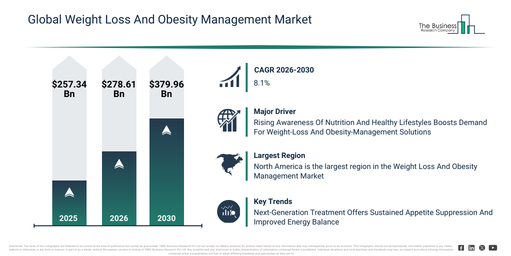
    The weight loss and obesity management market size has experienced significant growth over recent years. It is anticipated to increase from $257.34 billion in 2025 to $278.61 billion in 2026, demonstrating a compound annual growth rate (CAGR) of 8.3%. Historically, this growth has been driven by factors such as the increasing prevalence of obesity-related health conditions, a rise in public health awareness initiatives, the expansion of fitness and wellness centers, greater acceptance of medical weight management, and the wider availability of diverse weight loss solutions.

    The weight loss and obesity management market is projected to experience substantial expansion over the upcoming years. This market is predicted to reach $379.96 billion by 2030, demonstrating a compound annual growth rate (CAGR) of 8.1%. The anticipated growth during this period stems from several factors, including the increasing uptake of digital therapeutics, a heightened demand for customized obesity interventions, the broadening of employer-supported wellness initiatives, the expanding incorporation of AI-powered health analytics, and an intensified emphasis on sustained weight management. Key trends expected over the forecast horizon involve the escalating acceptance of individualized weight management strategies, the greater integration of digital health platforms, an increased reliance on data-informed behavioral therapy, the widening availability of medically overseen weight loss options, and a stronger commitment to achieving preventative health results.

    Get A Free Sample Report With In-Depth Market Insights:

    https://thebusinessresearchcompany.com/sample_request?id=46109039&type=smp&name=Weight%20Loss%20And%20Obesity%20Management%20Market%20Report%202026&utm_source=Blogs&utm_medium=Paid&utm_campaign=Nov_PR

    Weight Loss And Obesity Management Market Growth Catalysts And Demand Drivers

    Increased understanding of nutrition and healthy lifestyles is anticipated to drive expansion in the weight loss and obesity management market. These concepts encompass adopting a balanced diet and participating in physical activities that promote sustained well-being. This awareness is growing as digital platforms like the internet and social media offer readily available information, guidance, and suggestions, simplifying the process for individuals to learn about wholesome eating and routines. This heightened awareness contributes to weight loss and obesity management by empowering people to make educated food choices, engage in consistent physical activity, and uphold lasting healthy behaviors. Consequently, this increasing consciousness regarding healthy eating and dietary practices is fueling expansion in the weight loss and obesity management market.

    Weight Loss And Obesity Management Market Segment Analysis: What Are The Core Market Categories?

    The weight loss and obesity management market covered in this report is segmented –

    1) By Product And Services: Drugs, Supplements, Equipment, Services

    2) By Category: Prescribed, Over The Counter (OTC)

    3) By Age Group: Children, Adults, Geriatric

    4) By Distribution Channel: Institutional Sales, Retail Sales

    5) By Industry Type: Fitness Centers, Slimming Centers, Consulting Services, Online Weight Loss Programs

    Subsegments:

    1) By Drugs: Prescription Drugs, Over-The-Counter (OTC) Drugs, Herbal Drugs

    2) By Supplements: Dietary Supplements, Meal Replacements, Protein Supplements, Fat Burners, Fiber Supplements

    3) By Equipment: Fitness Equipment, Surgical Equipment

    4) By Services: Fitness Centers And Health Clubs, Consultation Services, Online Weight Loss Programs, Behavioral Therapy Services, Diet And Nutrition Counseling, Medical Weight Loss Clinics

    Weight Loss And Obesity Management Market Trends Shaping Long-Term Demand

    Major companies operating in the weight loss and obesity management market are dedicating efforts to creating advanced solutions, including dual incretin GLP-1/GIP receptor agonists, to enhance treatment efficacy, support sustained weight reduction, and improve metabolic outcomes. These dual incretin agonists function by concurrently activating GLP-1 and GIP receptors, which leads to a reduction in appetite, a slowing of gastric emptying, and an improvement in insulin sensitivity, thereby offering more potent and durable effects compared to traditional single-target therapies.

    Weight Loss And Obesity Management Market Top Companies Driving Competitive Growth

    Major companies operating in the weight loss and obesity management market are F. Hoffmann-La Roche Ltd., Medtronic plc, Takeda Pharmaceutical Company Limited, Novo Nordisk A/S, Boehringer Ingelheim International GmbH, Apollo Endosurgery Inc., Biocon Limited, WW International Inc., Equinox Holdings Inc., Noom Inc., Jenny Craig Inc., Nutrisystem Inc., Virta Health Corp., Allurion Technologies Inc., Atkins Nutritionals Inc., ReShape Lifesciences Inc., Nalpropion Pharmaceuticals Inc., OptiBiotix Health plc, PRISTYN CARE

    View The Full Weight Loss And Obesity Management Market Report:

    https://thebusinessresearchcompany.com/report/weight-loss-and-obesity-management-global-market-report?utm_source=Blogs&utm_medium=Paid&utm_campaign=Nov_PR

    Weight Loss And Obesity Management Market Geographic Landscape: Which Region Leads Industry Growth?

    North America was the largest region in the weight loss and obesity management market in 2025. The regions covered in the weight loss and obesity management market report are Asia-Pacific, South East Asia, Western Europe, Eastern Europe, North America, South America, Middle East, Africa.

    Reach Out To Our Team:

    The Business Research Company: https://www.thebusinessresearchcompany.com/

    Americas: +1 310-496-7795

    Asia: +44 7882 955267 & +91 8897263534

    Europe: +44 7882 955267

    Email us at: marketing@tbrc.info

    Follow us on:

    LinkedIn: https://in.linkedin.com/company/the-business-research-company

    YouTube: https://www.youtube.com/channel/UC24_fI0rV8cR5DxlCpgmyFQ

    Global Market Model: https://www.thebusinessresearchcompany.com/global-market-model
  • Wearable Robot Technology Market Expected To Grow At 38.4% CAGR Through 2030: What Businesses Need To Know

    Wearable Robot Technology Market Expected To Grow At 38.4% CAGR Through 2030: What Businesses Need To Know

    Built to provide research that’s more actionable and strategically valuable, The Business Research Company’s 2026 market reports include market attractiveness analysis, total addressable market sizing, company benchmarking matrices, interactive Excel dashboards, broader supply chain intelligence, emerging startup tracking, and in-depth product insights.

    Wearable Robot Technology Market Size And Revenue Outlook Through 2030

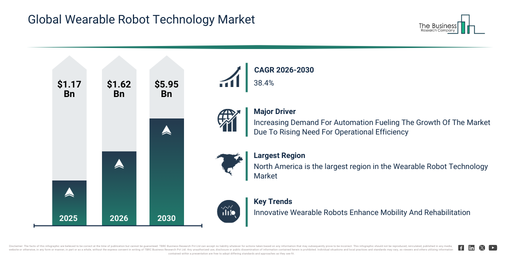
    The wearable robot technology market size has seen remarkable growth in recent years. It is anticipated to expand from $1.17 billion in 2025 to $1.62 billion in 2026, reflecting a compound annual growth rate (CAGR) of 39.1%. The historical expansion of this market can be attributed to advancements in robotic actuator technologies, increasing workplace injury prevention initiatives, growth in rehabilitation robotics research, rising demand for mobility assistance solutions, and early adoption in industrial environments.

    The wearable robot technology market is projected to experience rapid expansion in the coming years, with its size forecast to reach $5.95 billion by 2030, exhibiting a compound annual growth rate (CAGR) of 38.4%. The anticipated growth during this period stems from factors such as the proliferation of technologies supporting an aging population, increased investments in assistive robotics, wider implementation in logistics and manufacturing sectors, a surge in demand for tailored rehabilitation systems, and ongoing advancements in lightweight, flexible materials. Key trends foreseen include the greater deployment of industrial exoskeletons, an uptick in the use of rehabilitation wearable robots, the expanding incorporation of sensor-driven motion control, the advancement of soft wearable assistive technologies, and a heightened emphasis on human-robot interaction.

    Get A Free Sample Report With In-Depth Market Insights:

    https://thebusinessresearchcompany.com/sample_request?id=39245159&type=smp&name=Wearable%20Robot%20Technology%20Market%20Report%202026&utm_source=Blogs&utm_medium=Paid&utm_campaign=Nov_PR

    Wearable Robot Technology Market Opportunity Drivers: What’s Unlocking New Revenue Potential?

    The escalating need for automation is projected to stimulate expansion in the wearable robot technology market moving forward. Automation refers to the utilization of technology or machinery to execute tasks with minimal to no human participation. The rising demand for automation is driven by the necessity for enhanced operational efficiency, as businesses aim to decrease costs, minimize errors, and increase productivity. Wearable robot technology improves automation by enabling human-machine collaboration, making it particularly effective in labor-intensive industries and healthcare settings. It lessens physical exertion by supplementing movement and strength, thereby improving both productivity and operational efficiency. Consequently, the growing demand for automation is propelling the development of the wearable robot technology market.

    Wearable Robot Technology Market Segment Breakdown: Which Categories Lead On Revenue?

    The wearable robot technology market covered in this report is segmented –

    1) By Type: Rigid Type, Soft Type

    2) By Mode Of Operation: Passive, Active And Powered

    3) By Application: Rehabilitation, Assistive, Body Parts Support, Sports, Supply Chain Industry, Other Applications

    4) By End User: Healthcare, Consumer Electronics, Enterprise And Industrial Applications, Other End Users

    Subsegments:

    1) By Rigid Type: Exoskeletons With Metallic Frames, Powered Rigid Suits For Industrial Lifting, Military-Grade Wearable Robots, Medical Rehabilitation Robots, Full-Body Rigid Assistive Devices

    2) By Soft Type: Soft Robotic Exosuits, Pneumatic, Textile-Based Wearable Assistive Devices, Cable-Driven Flexible Actuators, Soft Wearable Robots For Elderly Mobility Support

    Wearable Robot Technology Market Innovation Trends Shaping Future Development

    Leading firms within the wearable robot technology market are prioritizing the creation of novel approaches, such as wearable assistive robotics, to boost mobility and elevate the living standards for users. Wearable assistive robotics are defined as robotic devices worn externally that aid or augment physical movement, frequently assisting persons experiencing mobility impairments or physical limitations.

    Wearable Robot Technology Market Leading Players And Competitive Positioning

    Major companies operating in the wearable robot technology market are Toyota Corporation, Samsung Electronics Co Ltd., Hyundai Motor Company, Lockheed Martin Corporation, Honda Motor Co Ltd., Parker Hannifin Corporation, Myomo Inc, Sarcos Technology and Robotics Corporation, Zimmer Biomet Holdings Inc, Ottobock SE & Co KGaA, Comau LLC, Cyberdyne Inc., Hocoma AG, Ekso Bionics Holdings Inc, Laevo B V, Innophys Co Ltd, Marsi Bionics, Näder Holding GmbH & Co KG, Technaid S L, ReWalk Robotics Ltd, German Bionic

    View The Full Wearable Robot Technology Market Report:

    https://thebusinessresearchcompany.com/report/wearable-robot-technology-global-market-report?utm_source=Blogs&utm_medium=Paid&utm_campaign=Nov_PR

    Wearable Robot Technology Market Largest Region: Which Geography Holds The Biggest Share?

    North America was the largest region in the wearable robot technology market in 2025. Asia-Pacific is expected to be the fastest-growing region in the forecast period. The regions covered in the wearable robot technology market report are Asia-Pacific, South East Asia, Western Europe, Eastern Europe, North America, South America, Middle East, Africa.

    Reach Out To Our Team:

    The Business Research Company: https://www.thebusinessresearchcompany.com/

    Americas: +1 310-496-7795

    Asia: +44 7882 955267 & +91 8897263534

    Europe: +44 7882 955267

    Email us at: marketing@tbrc.info

    Follow us on:

    LinkedIn: https://in.linkedin.com/company/the-business-research-company

    YouTube: https://www.youtube.com/channel/UC24_fI0rV8cR5DxlCpgmyFQ

    Global Market Model: https://www.thebusinessresearchcompany.com/global-market-model
  • Wearable Fitness Trackers Market Forecast To Reach $130.86 Billion By 2030: Key Trends Explained

    Wearable Fitness Trackers Market Forecast To Reach $130.86 Billion By 2030: Key Trends Explained

    Backed by market attractiveness analysis, total addressable market sizing, company benchmarking matrices, interactive Excel dashboards, wider supply chain intelligence, emerging startup coverage, and detailed product-level insights, The Business Research Company’s 2026 market reports are designed to offer research that is more actionable and strategically valuable than ever.

    Wearable Fitness Trackers Market Growth From $70.31 Billion In 2026 To $130.86 Billion By 2030 At A CAGR Of 16.8%

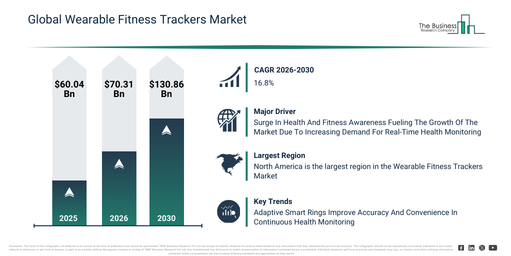
    The wearable fitness trackers market has seen rapid expansion in recent years. It is anticipated to increase from $60.04 billion in 2025 to $70.31 billion in 2026, demonstrating a compound annual growth rate (CAGR) of 17.1%. The expansion witnessed in the previous period can be ascribed to a number of factors, such as consumers’ growing consciousness about personal health, the increasing adoption of smartphones and interconnected devices, the wider application of preventive healthcare practices, the rising interest in fitness-oriented lifestyles, and the availability of economical wearable electronics.

    The wearable fitness trackers market size is poised for significant expansion in the upcoming years. Projections indicate it will swell to $130.86 billion by 2030, exhibiting a robust compound annual growth rate (CAGR) of 16.8%. This anticipated growth throughout the forecast period is driven by factors such as the increasing need for continuous health monitoring solutions, enhanced integration with telehealth platforms, the proliferation of personalized fitness and wellness programs, rising adoption among the elderly, and advancements in sensor precision and battery longevity. Significant developments during this period are expected to include a greater embrace of advanced health monitoring sensors, increased integration of multi-metric wellness tracking, a surging demand for app-based fitness ecosystems, the broadening of smart clothing and wearable accessories, and a sharpened focus on individualized fitness insights.

    Get A Free Sample Report With In-Depth Market Insights:

    https://thebusinessresearchcompany.com/sample_request?id=30916758&type=smp&name=Wearable%20Fitness%20Trackers%20Market%20Report%202026&utm_source=Blogs&utm_medium=Paid&utm_campaign=Nov_PR

    Wearable Fitness Trackers Market Growth Momentum: What Factors Are Shaping Demand?

    The wearable fitness trackers market is projected to expand in the future, driven by an increasing focus on health and well-being. Health and fitness encompass the complete state of physical and mental wellness, maintained through consistent exercise, appropriate nutrition, and a balanced way of life. This elevated awareness of health and fitness stems from a rise in lifestyle-related illnesses, compelling individuals to embrace healthier routines to avert conditions such as obesity, diabetes, and cardiovascular diseases. Consequently, heightened health and fitness consciousness fuels the demand for wearable fitness trackers, as people seek convenient methods to monitor their activity, heart rate, and overall health status instantly. Thus, the expanding awareness of health and fitness is propelling the growth of the wearable fitness trackers market.

    Wearable Fitness Trackers Market Segmentation: How Does The Market Break Down By Category?

    The wearable fitness trackers market covered in this report is segmented –

    1) By Product Type: Smartwatches, Activity Monitors, Smart Clothing

    2) By Connectivity: Bluetooth, Wireless Fidelity (Wi-Fi), Cellular, Near Field Communication (NFC), Other Connectivities

    3) By Operating System: Android, iOS, Windows, Tizen

    4) By Distribution Channel: Online, Offline

    5) By Application: Heart Rate Tracking, Sleep Measurement Tracking, Sport, Running, Cycling Tracking, Glucose Measurement Tracking

    Subsegments:

    1) By Smartwatches: GPS Smartwatches, Heart Rate Monitoring Smartwatches, Blood Oxygen (Spo2) Monitoring Smartwatches, Sleep Tracking Smartwatches, Multi-Sport Smartwatches

    2) By Activity Monitors: Clip-On Trackers, Wristband Trackers, Ankle Or Waist-Worn Trackers, Pedometers, Continuous Glucose Monitors (CGMs)

    3) By Smart Clothing: Smart Shirts, Smart Shoes, Smart Socks, Smart Sports Bras, Smart Tights Or Pants

    Wearable Fitness Trackers Market Trends Redefining Industry Growth

    Leading companies within the wearable fitness trackers market are concentrating on creating advanced solutions, including smart rings featuring adaptive sensing technology. This development aims to improve continuous health monitoring, achieve greater measurement accuracy, and offer a subtle, convenient option compared to conventional wrist-worn gadgets. These compact wearables, worn on the finger, incorporate sophisticated sensors to monitor various metrics such as heart rate, blood oxygen (SpO2), sleep patterns, activity levels, and body temperature. They present a subtle design and extended battery life, thanks to efficient power usage.

    Wearable Fitness Trackers Market Competitive Overview And Top Companies

    Major companies operating in the wearable fitness trackers market are Apple Inc., Samsung Electronics Co. Ltd., Huawei Technologies Co. Ltd., NIKE Inc., Xiaomi Inc., Garmin Ltd., Fossil Group Inc., Fitbit Inc., Polar Electro Oy, MAD Apparel Inc., GOQii, Honor, Moov Inc., Boltt, Sensoria Inc., Ambiotex GmbH, Activinsights Ltd., Atlas Wearables Inc.

    View The Full Wearable Fitness Trackers Market Report:

    https://thebusinessresearchcompany.com/report/wearable-fitness-trackers-global-market-report?utm_source=Blogs&utm_medium=Paid&utm_campaign=Nov_PR

    Wearable Fitness Trackers Market Regional Analysis: Which Geography Leads On Revenue?

    North America was the largest region in the wearable fitness trackers market in 2025. Asia-Pacific is expected to be the fastest-growing region in the forecast period. The regions covered in the wearable fitness trackers market report are Asia-Pacific, South East Asia, Western Europe, Eastern Europe, North America, South America, Middle East, Africa.

    Reach Out To Our Team:

    The Business Research Company: https://www.thebusinessresearchcompany.com/

    Americas: +1 310-496-7795

    Asia: +44 7882 955267 & +91 8897263534

    Europe: +44 7882 955267

    Email us at: marketing@tbrc.info

    Follow us on:

    LinkedIn: https://in.linkedin.com/company/the-business-research-company

    YouTube: https://www.youtube.com/channel/UC24_fI0rV8cR5DxlCpgmyFQ

    Global Market Model: https://www.thebusinessresearchcompany.com/global-market-model
  • Water Flosser Market Analysis Through 2030: Market Size, Growth Trends And Industry Outlook

    Water Flosser Market Analysis Through 2030: Market Size, Growth Trends And Industry Outlook

    Featuring market attractiveness scoring, total addressable market sizing, company benchmarking matrices, interactive Excel dashboards, deeper supply chain intelligence, emerging startup tracking, and granular product-level insights, The Business Research Company’s 2026 market reports are built to deliver research that is both more actionable and more strategically valuable.

    Water Flosser Market Expansion Outlook: What Revenue Opportunities Are Ahead?

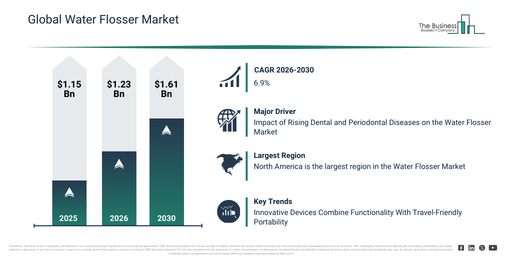
    The water flosser market size has seen significant growth in recent years. It is anticipated to expand from $1.15 billion in 2025 to $1.23 billion by 2026, achieving a compound annual growth rate (CAGR) of 6.9%. The expansion observed in the historical period is a result of factors including heightened awareness of oral hygiene practices, the expansion of retail channels for dental care products, the adoption of electric oral care devices, an increase in orthodontic treatments, and improved consumer access to dental technologies.

    The water flosser market is anticipated to experience substantial expansion in the coming years. This market is projected to reach $1.61 billion by 2030, exhibiting a compound annual growth rate (CAGR) of 6.9%. Key factors driving this growth during the forecast period include the expanding demand for smart oral care devices, the increasing integration of digital health monitoring features, the proliferation of e-commerce channels for dental product sales, a heightened emphasis on preventive dental care, and innovations in compact device design. Prominent trends anticipated in the forecast period encompass the wider adoption of cordless and portable water flossers, an escalating demand for advanced oral hygiene devices, a growing inclination towards home-based dental care solutions, the development of multi-function dental cleaning products, and a greater emphasis on improving gum health.

    Get A Free Sample Report With In-Depth Market Insights:

    https://thebusinessresearchcompany.com/sample_request?id=48920138&type=smp&name=Water%20Flosser%20Market%20Report%202026&utm_source=Blogs&utm_medium=Paid&utm_campaign=Nov_PR

    Water Flosser Market Expansion Drivers: What’s Shaping Future Growth?

    An anticipated rise in dental and periodontal diseases is projected to drive the expansion of the water flosser market in the future. These conditions impact the teeth, gums, and other oral support structures. Factors contributing to their widespread occurrence include inadequate oral hygiene, substantial intake of sugary and acidic foods and drinks, and restricted access to routine dental examinations and professional cleanings. Water flossers help mitigate these diseases by employing a pulsating water stream to dislodge plaque, food debris, and bacteria from interdental spaces and the gum line, thereby diminishing inflammation and averting gum disease. Consequently, the growing incidence of dental and periodontal diseases fuels the water flosser market.

    Water Flosser Market Segment Trends And Revenue Contributors

    The water flosser market covered in this report is segmented –

    1) By Product Type: Cordless Or Battery-Operated Flosser, Countertop Flosser, Shower Flosser, Faucet Flosser, Other Products

    2) By Application: Drug Stores And Pharmacies, Specialty Stores, Hypermarkets Or Supermarkets, Convenience Stores, Online Retailers

    3) By End Use: Commercial, Residential, Other End-Uses

    Subsegments:

    1) By Cordless Or Battery-Operated Flosser: Rechargeable Battery, Replaceable Battery

    2) By Countertop Flosser: Large Capacity Reservoir, Adjustable Pressure Settings

    3) By Shower Flosser: Wall-Mounted, Handheld

    4) By Faucet Flosser: Faucet Adapter Included, Nozzle Control

    5) By Other Products: Travel Flosser, Combination Flosser And Toothbrush

    Water Flosser Market Strategic Trends: What Defines The Next Growth Phase?

    Leading companies in the water flosser market are prioritizing the development of innovative products, such as collapsible cordless water flossers, to improve portability, convenience, and ease of use, especially for travelers and individuals with limited bathroom space. These collapsible cordless water flossers are battery-powered oral irrigators designed to compress into a smaller form factor when not in use, yet they maintain effective water pressure and offer a travel-friendly alternative to traditional countertop models that require a constant power source.

    Water Flosser Market Competitive Landscape: Which Companies Lead The Industry?

    Major companies operating in the water flosser market are Procter & Gamble, Panasonic Holdings Corporation, Xiaomi Corporation, Koninklijke Philips N.V, Church & Dwight Co. Inc., Conair LLC, Water Pik Inc., Fairywill, BURST.USA.Inc., Gurin Products LLC, h2ofloss limited, Homgeek Inc., Jetpik, Mornwell, Nicefeel, Oratec Corporation, Ovonni, Oracura Inc., Waterpulse, AquaSonic Ltd., Perfora

    View The Full Water Flosser Market Report:

    https://thebusinessresearchcompany.com/report/water-flosser-global-market-report?utm_source=Blogs&utm_medium=Paid&utm_campaign=Nov_PR

    Water Flosser Market Geographic Spread And Regional Opportunities

    North America was the largest region in the water flosser market in 2025. Asia-Pacific is expected to be the fastest-growing region in the forecast period. The regions covered in the water flosser market report are Asia-Pacific, South East Asia, Western Europe, Eastern Europe, North America, South America, Middle East, Africa.

    Reach Out To Our Team:

    The Business Research Company: https://www.thebusinessresearchcompany.com/

    Americas: +1 310-496-7795

    Asia: +44 7882 955267 & +91 8897263534

    Europe: +44 7882 955267

    Email us at: marketing@tbrc.info

    Follow us on:

    LinkedIn: https://in.linkedin.com/company/the-business-research-company

    YouTube: https://www.youtube.com/channel/UC24_fI0rV8cR5DxlCpgmyFQ

    Global Market Model: https://www.thebusinessresearchcompany.com/global-market-model
  • Vulvovaginal Candidiasis Treatment Market Outlook From 2026 To 2030: Key Growth Factors And Future Opportunities

    Vulvovaginal Candidiasis Treatment Market Outlook From 2026 To 2030: Key Growth Factors And Future Opportunities

    Built to provide research that’s more actionable and strategically valuable, The Business Research Company’s 2026 market reports include market attractiveness analysis, total addressable market sizing, company benchmarking matrices, interactive Excel dashboards, broader supply chain intelligence, emerging startup tracking, and in-depth product insights.

    Vulvovaginal Candidiasis Treatment Market Growth Potential: How Will Market Size Shift Through 2030?

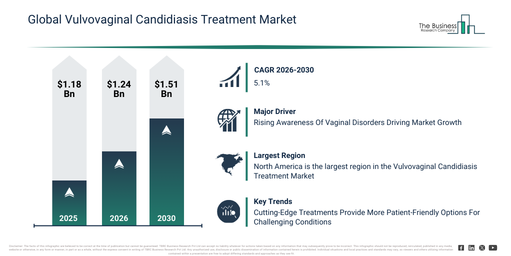
    The market size for vulvovaginal candidiasis treatment has experienced robust growth in recent years. This market is projected to expand from $1.18 billion in 2025 to $1.24 billion by 2026, exhibiting a compound annual growth rate (CAGR) of 5.1%. Historically, this expansion can be ascribed to several factors, including the availability of azole antifungal medications, broader retail pharmacy access, a rise in the diagnosis of fungal infections, advancements in the formulation of topical treatments, and the proliferation of widespread clinical treatment guidelines.

    The vulvovaginal candidiasis treatment market is projected to experience substantial expansion in the coming years. This market is forecast to achieve a size of $1.51 billion by 2030, demonstrating a compound annual growth rate (CAGR) of 5.1%. This anticipated growth is driven by several factors, including the increasing demand for novel antifungal agents, a heightened focus on managing drug resistance, the broader implementation of personalized treatment approaches, the rising adoption of telehealth consultations, and advancements in drug delivery technologies. Furthermore, key trends in the forecast period include the increasing uptake of targeted antifungal therapies, a rising use of combination treatment regimens, a growing emphasis on recurrence prevention strategies, the expansion of over-the-counter treatment options, and enhanced patient awareness and education.

    Get A Free Sample Report With In-Depth Market Insights:

    https://thebusinessresearchcompany.com/sample_request?id=75653643&type=smp&name=Vulvovaginal%20Candidiasis%20Treatment%20Market%20Report%202026&utm_source=Blogs&utm_medium=Paid&utm_campaign=Nov_PR

    Vulvovaginal Candidiasis Treatment Market Development Factors: What’s Supporting Demand?

    The expanding understanding of vaginal conditions is anticipated to fuel the future expansion of the vulvovaginal candidiasis treatment market. Vaginal conditions encompass issues impacting the vagina, such as infections, inflammation, discomfort, or unusual discharge. This increased awareness regarding vaginal disorders stems from enhanced education, better accessibility to healthcare services, and a heightened emphasis on women’s health and wellness. Treatment for vulvovaginal candidiasis aids individuals suffering from vaginal disorders by easing symptoms like itching, irritation, and abnormal discharge, reinstating the vagina’s natural microbial balance, preventing recurring infections, and enhancing general vaginal health and comfort. Consequently, the heightened awareness of vaginal disorders is propelling the growth of the vulvovaginal candidiasis treatment market.

    Vulvovaginal Candidiasis Treatment Market Segment Analysis Spotlighting Growth Areas

    The vulvovaginal candidiasis treatment market covered in this report is segmented –

    1) By Drug Class: Clotrimazole, Nystatin, Fluconazole, Ketoconazole, Terbinafine, Terconazole, Other Drug Classes

    2) By Route Of Administration: Oral, Intravenous, Topical

    3) By Distribution Channel: Hospital Pharmacy , Retail Pharmacy, Online Pharmacy

    Subsegments:

    1) By Clotrimazole: Over-the-Counter (OTC) Medications, Prescription Medications

    2) By Nystatin: Monotherapy, Combination Therapy

    3) By Fluconazole: Single-Dose Therapy, Multi-Dose Therapy

    4) By Ketoconazole: Short-Term Treatment, Long-Term Treatment

    5) By Terbinafine: Systemic Treatment, Topical Treatment

    6) By Terconazole: Low-Dose Therapy, High-Dose Therapy

    7) By Other Drug Classes: Azole Antifungals, Polyene Antifungals, Novel Therapeutics

    Vulvovaginal Candidiasis Treatment Market Transformation Trends: What Innovations Are Driving Change?

    Leading firms within the vulvovaginal candidiasis (VVC) treatment market are prioritizing the creation of novel solutions, specifically selective oral azole antifungals, aiming to boost treatment effectiveness, lessen recurrence, and enhance patient acceptance. These selective oral azoles function as antifungal agents designed to precisely block fungal enzymes like CYP51, which subsequently lowers unintended side effects and negative reactions in contrast to conventional broad-spectrum azoles.

    Vulvovaginal Candidiasis Treatment Market Leading Companies: Who Holds The Strongest Market Presence?

    Major companies operating in the vulvovaginal candidiasis treatment market are Pfizer Inc., Bayer Inc., Teva Pharmaceutical Industries Ltd., Dr. Reddy’s Laboratories Limited, Cipla Limited, Zydus Lifesciences, Novartis Pharmaceuticals Inc., Glenmark Pharmaceuticals Ltd., Taro Pharmaceuticals Industries Ltd., Accord Healthcare Ltd., Incepta Pharmaceuticals Ltd., Cadila Pharmaceuticals, Astellas Pharma Inc., Mycovia Pharmaceuticals Inc., Basilea Pharmaceutica Ltd., Scynexis Inc., Grupo Ferrer Internacional SA, Sanofi SA, Bristol-Myers Squibb Company, Perrigo Company plc, Lupin Limited, Sun Pharmaceutical Industries Ltd.

    View The Full Vulvovaginal Candidiasis Treatment Market Report:

    https://thebusinessresearchcompany.com/report/vulvovaginal-candidiasis-treatment-global-market-report?utm_source=Blogs&utm_medium=Paid&utm_campaign=Nov_PR

    Vulvovaginal Candidiasis Treatment Market Top Region By Revenue And Market Share

    North America was the largest region in the vulvovaginal candidiasis treatment market in 2025. The regions covered in the vulvovaginal candidiasis treatment market report are Asia-Pacific, South East Asia, Western Europe, Eastern Europe, North America, South America, Middle East, Africa.

    Reach Out To Our Team:

    The Business Research Company: https://www.thebusinessresearchcompany.com/

    Americas: +1 310-496-7795

    Asia: +44 7882 955267 & +91 8897263534

    Europe: +44 7882 955267

    Email us at: marketing@tbrc.info

    Follow us on:

    LinkedIn: https://in.linkedin.com/company/the-business-research-company

    YouTube: https://www.youtube.com/channel/UC24_fI0rV8cR5DxlCpgmyFQ

    Global Market Model: https://www.thebusinessresearchcompany.com/global-market-model
  • Vulvodynia Treatment Market Growth Forecast: Market Size, Key Trends And Emerging Opportunities Through 2030

    Vulvodynia Treatment Market Growth Forecast: Market Size, Key Trends And Emerging Opportunities Through 2030

    Backed by market attractiveness analysis, total addressable market sizing, company benchmarking matrices, interactive Excel dashboards, wider supply chain intelligence, emerging startup coverage, and detailed product-level insights, The Business Research Company’s 2026 market reports are designed to offer research that is more actionable and strategically valuable than ever.

    Vulvodynia Treatment Market Value Analysis: What Growth Lies Ahead Over The Forecast Period?

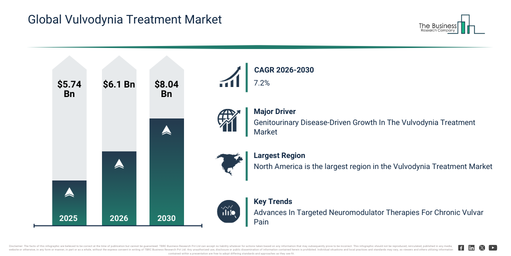
    The vulvodynia treatment market has experienced robust expansion in recent years. Projections indicate it will expand from $5.74 billion in 2025 to reach $6.1 billion in 2026, demonstrating a compound annual growth rate (CAGR) of 6.1%. Historically, this growth can be linked to factors such as enhanced clinical identification of vulvodynia, the widespread availability of neuropathic pain medications, an increase in gynecological care services, strengthened patient advocacy initiatives, and the formulation of pain management guidelines.

    The vulvodynia treatment market is anticipated to experience significant expansion in the coming years, with its size projected to reach $8.04 billion by 2030, demonstrating a compound annual growth rate (CAGR) of 7.2%. This projected growth is largely driven by factors such as increased funding for women’s health studies, a heightened need for customized pain management strategies, the proliferation of specialized treatment centers, the wider acceptance of non-opioid pain relief options, and innovations in specific drug development. Key trends during this period are expected to encompass the broader embrace of diverse pain management methods, an uptick in the application of topical and localized treatments, a greater emphasis on patient-focused care strategies, the availability of more non-surgical alternatives, and improved public understanding of persistent vulvar pain conditions.

    Get A Free Sample Report With In-Depth Market Insights:

    https://thebusinessresearchcompany.com/sample_request?id=82578886&type=smp&name=Vulvodynia%20Treatment%20Market%20Report%202026&utm_source=Blogs&utm_medium=Paid&utm_campaign=Nov_PR

    Vulvodynia Treatment Market Industry Drivers: What’s Behind The Revenue Growth?

    An anticipated increase in genitourinary diseases is projected to drive expansion within the vulvodynia treatment market. Genitourinary, also known as urogenital, diseases encompass health issues impacting the reproductive and urinary systems, potentially stemming from conditions like diabetes or high blood pressure. These systems are commonly considered together due to their close anatomical and functional interconnections. Vulvodynia treatment is predominantly employed for managing different genitourinary diseases in women, offering relief from pain and symptoms and enhancing a patient’s overall quality of life. Consequently, the increasing prevalence of genitourinary diseases is fueling the expansion of the vulvodynia treatment market.

    Vulvodynia Treatment Market Segment Performance And Emerging Opportunities

    The vulvodynia treatment market covered in this report is segmented –

    1) By Drug Type: Anticonvulsants, Tricyclic Antidepressants, Local Anesthetics, Antimicrobials, Hormone Creams, Nerve Blocks, Other Drug Types

    2) By Route Of Administration: Oral, Topical, Other Routes Of Administration

    3) By Distribution Channel: Hospital Pharmacy, Online Pharmacy, Retail Pharmacy

    Subsegments:

    1) By Anticonvulsants: Gabapentin, Pregabalin

    2) By Tricyclic Antidepressants: Amitriptyline, Nortriptyline

    3) By Local Anesthetics: Lidocaine Cream, Benzocaine

    4) By Antimicrobials: Antibiotic Creams, Antifungal Medications

    5) By Hormone Creams: Estrogen Creams, Testosterone Creams

    6) By Nerve Blocks: Pelvic Nerve Blocks, Pudendal Nerve Blocks

    7) By Other Drug Types: Topical Capsaicin, Corticosteroids

    #Vulvodynia Treatment Market Growth Trends: What’s Shaping The Future Outlook?

    Key players within the vulvodynia treatment market are concentrating on developing advanced products, such as novel neuromodulators, to deliver targeted pain relief and enhance patients’ quality of life. These novel neuromodulators are medications engineered to alter nerve signaling by adjusting neurotransmitters in the nervous system, which helps in reducing chronic vulvar pain, improving sexual function, and offering a more precise, mechanism-based strategy compared to conventional therapies like topical anesthetics or general painkillers. For instance, in November 2025, Initiator Pharma A/S, a Denmark-based clinical-stage biotech company, obtained regulatory approval from UK authorities to initiate a Phase 2a clinical proof-of-concept study for pudafensine. This investigational oral monoamine reuptake inhibitor is intended for the treatment of vulvodynia under its clinical program IPVU2025. Pudafensine is formulated to preferentially inhibit the synaptic reuptake of dopamine (and to a lesser extent serotonin), thereby increasing neurotransmitter levels in the synaptic cleft; this modulation may contribute to reducing pain perception and improving sexual function, supported by a favorable safety profile demonstrated in earlier pain/challenge studies.

    Vulvodynia Treatment Market Key Players: Which Companies Lead Industry Competition?

    Major companies operating in the vulvodynia treatment market are Pfizer Inc., Johnson and Johnson Pvt. Ltd., Merck and Co. Inc., AbbVie Inc., Bayer AG, Novartis AG, Sanofi S.A., GlaxoSmithKline plc, Takeda Pharmaceutical Company Limited, Eli Lilly and Company, Amgen Inc., Teva Pharmaceutical Industries Ltd., Janssen Pharmaceuticals Inc., Mylan N.V., Astellas Pharma Inc., Viatris Inc., Cipla Inc., Hikma Pharmaceuticals plc, Endo International Inc., Amneal Pharmaceuticals Inc., Stada Arzneimittel AG, Glenmark Pharmaceuticals Inc., Alkem Laboratories Limited, Cadila Pharmaceuticals Ltd., Taro Pharmaceutical Industries Ltd., Upsher-Smith Laboratories LLC, Noven Pharmaceuticals Inc., Zydus Lifesciences Ltd., Depomed Inc.

    View The Full Vulvodynia Treatment Market Report:

    https://thebusinessresearchcompany.com/report/vulvodynia-treatment-global-market-report?utm_source=Blogs&utm_medium=Paid&utm_campaign=Nov_PR

    Vulvodynia Treatment Market Regional Analysis And Top Geography

    North America was the largest region in the vulvodynia treatment market in 2025. Asia-Pacific is expected to be the fastest-growing region in the forecast period. The regions covered in the vulvodynia treatment market report are Asia-Pacific, South East Asia, Western Europe, Eastern Europe, North America, South America, Middle East, Africa.

    Reach Out To Our Team:

    The Business Research Company: https://www.thebusinessresearchcompany.com/

    Americas: +1 310-496-7795

    Asia: +44 7882 955267 & +91 8897263534

    Europe: +44 7882 955267

    Email us at: marketing@tbrc.info

    Follow us on:

    LinkedIn: https://in.linkedin.com/company/the-business-research-company

    YouTube: https://www.youtube.com/channel/UC24_fI0rV8cR5DxlCpgmyFQ

    Global Market Model: https://www.thebusinessresearchcompany.com/global-market-model
  • Vulvar Cancer Market CAGR Forecast Through 2030: Key Trends Shaping Industry Expansion

    Vulvar Cancer Market CAGR Forecast Through 2030: Key Trends Shaping Industry Expansion

    Featuring market attractiveness scoring, total addressable market sizing, company benchmarking matrices, interactive Excel dashboards, deeper supply chain intelligence, emerging startup tracking, and granular product-level insights, The Business Research Company’s 2026 market reports are built to deliver research that is both more actionable and more strategically valuable.

    Vulvar Cancer Market Size Forecast: How Big Could The Market Get By 2030?

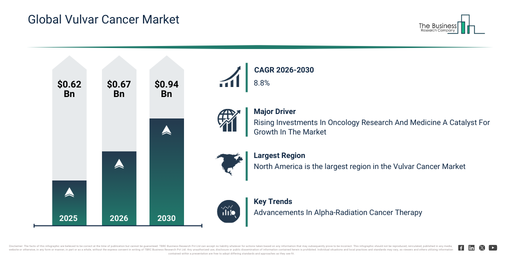
    The market for vulvar cancer has experienced robust growth in recent years. Projections indicate it will expand from $0.62 billion in 2025 to $0.67 billion by 2026, achieving a compound annual growth rate (CAGR) of 8.9%. This historical growth is attributable to factors such as heightened awareness regarding gynecologic cancers, the presence of surgical oncology expertise, the enlargement of hospital oncology departments, the implementation of radiation therapy techniques, and advancements in pathology diagnostics.

    The vulvar cancer market is projected to experience substantial expansion in the coming years, with its size forecast to reach $0.94 billion by 2030, demonstrating a compound annual growth rate (CAGR) of 8.8%. This growth during the forecast period is primarily driven by escalating investments in precision oncology, the increasing embrace of biologic and immunotherapies, broader monitoring of HPV vaccination’s impact, a greater emphasis on tailored treatment strategies, and continuous advancements in diagnostic imaging techniques. Key trends anticipated within this period involve the wider uptake of targeted cancer therapies, a surge in minimally invasive surgical interventions, an intensified focus on early detection and screening, the broadening application of multimodal treatment strategies, and improved integration of personalized oncology care.

    Get A Free Sample Report With In-Depth Market Insights:

    https://thebusinessresearchcompany.com/sample_request?id=13616141&type=smp&name=Vulvar%20Cancer%20Market%20Report%202026&utm_source=Blogs&utm_medium=Paid&utm_campaign=Nov_PR

    Vulvar Cancer Market Growth Factors: What’s Supporting Expansion?

    Increased financial commitment to oncology research and medicine is projected to drive the expansion of the vulvar cancer market in the future. These investments signify monetary resources channeled by governmental bodies, drug manufacturers, research entities, and private funders to further the comprehension, avoidance, identification, and care of cancer. The upsurge in these investments stems from the escalating worldwide cancer prevalence, breakthroughs in precision medicine, a heightened need for novel treatments, the proliferation of clinical trials, public and private funding efforts, and the evolution of targeted and immunotherapy approaches. Such financial commitments aid vulvar cancer by propelling improvements in early detection, bolstering treatment alternatives like targeted and immunotherapies, financing clinical trials for superior medications, enhancing pediatric cancer care facilities, and nurturing cutting-edge research to grasp the disease’s biological mechanisms and advancement more thoroughly. Consequently, the rising financial allocations towards oncology research and medicine fuel the vulvar cancer market. The expanding emphasis on personalized medicine is anticipated to stimulate the future growth of the vulvar cancer market. Personalized medicine involves customizing medical care for individual patients, considering their unique genetic makeup, environmental influences, and lifestyle choices. This approach is gaining traction due to its ability to enhance treatment efficacy and reduce undesirable side effects by accounting for the distinct characteristics of each patient. It assists in vulvar cancer management through the customization of therapies according to a patient’s genetic profile, leading to better results and fewer adverse reactions. Consequently, the increasing emphasis on personalized medicine is fueling the expansion of the vulvar cancer market.

    Vulvar Cancer Market Segment Landscape And Growth Outlook

    The vulvar cancer market covered in this report is segmented –

    1) By Cancer Type: Vulvar Squamous Cell Carcinoma, Vulvar Melanoma, Adenocarcinoma, Basal Cell Carcinoma

    2) By Treatment Type: Chemotherapy, Surgery, Laser Surgery, Excision, Skinning Vulvectomy, Radical Vulvectomy, Radiation Therapy, Biologic Therapy

    3) By Distribution Channel: Online Channel, Offline Channel

    4) By End Users: Hospitals And Clinics, Research And Academic Institutes, Other End Users

    Subsegments:

    1) By Vulvar Squamous Cell Carcinoma: Keratinizing Squamous Cell Carcinoma, Non-Keratinizing Squamous Cell Carcinoma, Verrucous Carcinoma

    2) By Vulvar Melanoma: Mucosal Melanoma, Acral Lentiginous Melanoma, Nodular Melanoma

    3) By Adenocarcinoma: Bartholin Gland Adenocarcinoma, Extramammary Paget’s Disease-Associated Adenocarcinoma, Sweat Gland Adenocarcinoma

    4) By Basal Cell Carcinoma: Superficial Basal Cell Carcinoma, Nodular Basal Cell Carcinoma, Morpheaform (Sclerosing) Basal Cell Carcinoma

    Vulvar Cancer Market Industry Trends: What’s Reshaping Demand?

    Leading companies in the vulvar cancer market are concentrating on therapeutic advancements, such as alpha-radiation cancer therapy, to boost treatment effectiveness and patient outcomes. Alpha-radiation cancer therapy is a method that delivers targeted alpha particles to tumor cells, causing specific damage to cancerous tissue while minimizing harm to adjacent healthy tissue.

    Vulvar Cancer Market Competitive Landscape: Who Leads The Industry?

    Major companies operating in the vulvar cancer market are F. Hoffmann-La Roche Ltd, Merck And Co., Bristol-Myers Squibb Company, Novartis AG, GlaxoSmithKline plc, Amgen Inc., Regeneron Pharmaceuticals Inc., Intuitive Surgical Operations Inc., Elekta AB, Accuray Incorporated, Xencor, ISA Pharmaceuticals BV, Alpha Tau Medical Ltd, AstraZeneca PLC, Johnson & Johnson, Pfizer Inc, Eli Lilly and Company, AbbVie Inc, Astellas Pharma Inc, Takeda Pharmaceutical Company Ltd, Bayer AG, Ipsen, Gilead Sciences Inc

    View The Full Vulvar Cancer Market Report:

    https://thebusinessresearchcompany.com/report/vulvar-cancer-global-market-report?utm_source=Blogs&utm_medium=Paid&utm_campaign=Nov_PR

    Vulvar Cancer Market Geographic Analysis: Where Is Demand Rising Fastest?

    North America was the largest region in the vulvar cancer market in 2025. Asia-Pacific is expected to be the fastest-growing region in the forecast period. The regions covered in the vulvar cancer market report are Asia-Pacific, South East Asia, Western Europe, Eastern Europe, North America, South America, Middle East, Africa.

    Reach Out To Our Team:

    The Business Research Company: https://www.thebusinessresearchcompany.com/

    Americas: +1 310-496-7795

    Asia: +44 7882 955267 & +91 8897263534

    Europe: +44 7882 955267

    Email us at: marketing@tbrc.info

    Follow us on:

    LinkedIn: https://in.linkedin.com/company/the-business-research-company

    YouTube: https://www.youtube.com/channel/UC24_fI0rV8cR5DxlCpgmyFQ

    Global Market Model: https://www.thebusinessresearchcompany.com/global-market-model
  • Von Willebrand Disease Market To Witness 6.8% CAGR Growth Through 2030: Key Industry Drivers

    Von Willebrand Disease Market To Witness 6.8% CAGR Growth Through 2030: Key Industry Drivers

    Built to provide research that’s more actionable and strategically valuable, The Business Research Company’s 2026 market reports include market attractiveness analysis, total addressable market sizing, company benchmarking matrices, interactive Excel dashboards, broader supply chain intelligence, emerging startup tracking, and in-depth product insights.

    Von Willebrand Disease Market Revenue Outlook: What CAGR Lies Ahead Through 2030?

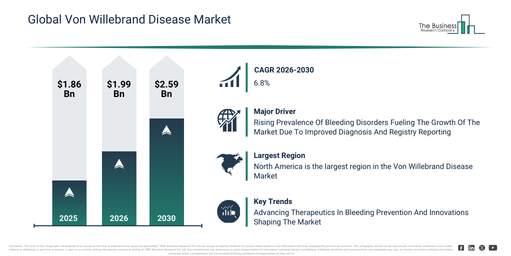
    The von willebrand disease market size has experienced substantial expansion in recent years. It is anticipated to grow from $1.86 billion in 2025 to $1.99 billion in 2026, demonstrating a compound annual growth rate (CAGR) of 6.9%. The market’s past growth is primarily linked to heightened awareness of inherited bleeding disorders, the introduction of plasma-derived vwf therapies, the broadening of diagnostic testing options, a rise in hospital-based hematology care, and initial clinical research into coagulation disorders.

    The von willebrand disease market size is anticipated to undergo significant expansion in the coming years. It is projected to reach $2.59 billion in 2030, demonstrating a compound annual growth rate (CAGR) of 6.8%. This growth during the forecast period is attributable to increasing investments in gene-based therapies, a growing adoption of precision medicine approaches, the expansion of patient registries and screening programs, a rising demand for long-acting therapies, and advancements in recombinant drug development. Major trends during this period encompass an increasing embrace of recombinant von willebrand factor therapies, a rising utilization of personalized treatment protocols, a heightened focus on early genetic diagnosis, an expansion of home-based treatment options, and enhanced monitoring of bleeding disorders.

    Get A Free Sample Report With In-Depth Market Insights:

    https://thebusinessresearchcompany.com/sample_request?id=79174059&type=smp&name=Von%20Willebrand%20Disease%20Market%20Report%202026&utm_source=Blogs&utm_medium=Paid&utm_campaign=Nov_PR

    Von Willebrand Disease Market Demand Drivers: What’s Powering Industry Growth?

    The von Willebrand disease market is anticipated to expand with the increasing occurrence of bleeding disorders. Bleeding disorders are medical conditions that hinder the body’s ability to form blood clots, leading to prolonged or excessive bleeding. The rise in diagnosed bleeding disorders is mainly due to improvements in medical understanding and diagnostic instruments, allowing doctors and hospitals to accurately identify cases that previously went unnoticed. Von Willebrand disease treatment assists bleeding disorder patients by enhancing blood clotting, reducing excessive bleeding, and improving their general quality of life. Consequently, the increasing prevalence of bleeding disorders is a significant factor propelling the growth of the von Willebrand disease market.

    Von Willebrand Disease Market Breakdown By Product Type And Application

    The von willebrand disease market covered in this report is segmented –

    1) By Type: Type 1, Type 2, Type 3

    2) By Drugs: Antihemophilic Factor, Coagulation Factor VIII Complex, Von Willebrand Factor, Desmopressin Acetate, Other Drugs

    3) By Severity: Mild, Moderate, Severe

    4) By Distribution Channel: Hospital Pharmacy, Retail Pharmacy, Online Pharmacy, Other Distribution Channels

    5) By End Users: Hospitals, Speciality Clinics, Homecare, Other End Users

    Subsegments:

    1) By Type 1: Mild Von Willebrand Disease, Moderate Von Willebrand Disease, Severe Von Willebrand Disease

    2) By Type 2: Type 2A, Type 2B, Type 2M, Type 2N

    3) By Type 3: Congenital Type 3, Acquired Type 3

    Von Willebrand Disease Market Innovation Trends: What Developments Are Reshaping The Industry?

    Companies active in the von willebrand disease market are prioritizing innovative therapeutics like von willebrand factor concentrate to enhance the effectiveness of treatment, decrease bleeding incidents, and improve patient health outcomes. Von willebrand factor (VWF) concentrate is a medicine utilized to treat and prevent bleeding in individuals with von willebrand disease (VWD), a hereditary bleeding condition resulting from a deficiency or malfunction of the von willebrand factor.

    Von Willebrand Disease Market Company Landscape And Competitive Strategy

    Major companies operating in the von willebrand disease market are Pfizer Inc., Bayer AG, Sanofi S A, Takeda Pharmaceutical Company Limited, Novo Nordisk A S, CSL Behring, Grifols S A, Kedrion Biopharma Inc., Shanghai RAAS Blood Products Co Ltd, Biotest AG, LFB S A, Bio Products Laboratory Ltd BPL, Octapharma AG, Baxter International Inc, Biogen Inc, Swedish Orphan Biovitrum AB, Roche Holding AG, BioMarin Pharmaceutical Inc, Ferring Pharmaceuticals, Alnylam Pharmaceuticals, Star Therapeutics Inc, Hemab Therapeutics, HEMA Biologics

    View The Full Von Willebrand Disease Market Report:

    https://thebusinessresearchcompany.com/report/von-willebrand-disease-global-market-report?utm_source=Blogs&utm_medium=Paid&utm_campaign=Nov_PR

    Von Willebrand Disease Market Global Footprint: Which Region Leads The Market?

    North America was the largest region in the von willebrand disease market in 2025. Asia-Pacific is expected to be the fastest-growing region in the forecast period. The regions covered in the von willebrand disease market report are Asia-Pacific, South East Asia, Western Europe, Eastern Europe, North America, South America, Middle East, Africa.

    Reach Out To Our Team:

    The Business Research Company: https://www.thebusinessresearchcompany.com/

    Americas: +1 310-496-7795

    Asia: +44 7882 955267 & +91 8897263534

    Europe: +44 7882 955267

    Email us at: marketing@tbrc.info

    Follow us on:

    LinkedIn: https://in.linkedin.com/company/the-business-research-company

    YouTube: https://www.youtube.com/channel/UC24_fI0rV8cR5DxlCpgmyFQ

    Global Market Model: https://www.thebusinessresearchcompany.com/global-market-model