Category: Healthcare Services

  • Viral And Non-Viral Vector Manufacturing Market Growth To $26.83 Billion Creates New Opportunities Across The Industry

    Viral And Non-Viral Vector Manufacturing Market Growth To $26.83 Billion Creates New Opportunities Across The Industry

    Built to provide research that’s more actionable and strategically valuable, The Business Research Company’s 2026 market reports include market attractiveness analysis, total addressable market sizing, company benchmarking matrices, interactive Excel dashboards, broader supply chain intelligence, emerging startup tracking, and in-depth product insights.

    Viral And Non-Viral Vector Manufacturing Market Revenue Growth On Track For A 21.3% CAGR Through 2030

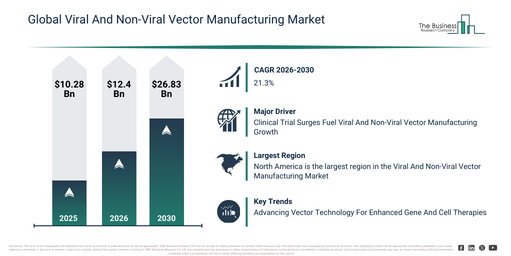
    The viral and non-viral vector manufacturing market size has seen rapid expansion in recent years. It is anticipated to increase from $10.28 billion in 2025 to $12.4 billion in 2026, demonstrating a compound annual growth rate (CAGR) of 20.7%. This historical growth can be linked to advancements in gene therapy research, a rise in clinical trial activity, the enlargement of biopharmaceutical manufacturing facilities, growing demand for viral vectors in oncology, and the presence of specialized manufacturing expertise.

    The viral and non-viral vector manufacturing market size is projected for substantial growth in the upcoming years. It is expected to reach $26.83 billion in 2030, exhibiting a compound annual growth rate (CAGR) of 21.3%. The expansion during the forecast period can be attributed to the increasing commercialization of gene and cell therapies, growing investments in vaccine development, the broadening of CDMO partnerships, an enhanced focus on scalable and flexible manufacturing, and a rise in regulatory approvals for advanced therapies. Notable trends in the forecast period include the increasing scale-up of viral vector production capacity, a rising demand for non-viral delivery systems, the growing adoption of modular manufacturing platforms, the expansion of contract vector manufacturing services, and an intensified focus on process standardization and quality control.

    Get A Free Sample Report With In-Depth Market Insights:

    https://thebusinessresearchcompany.com/sample_request?id=94415673&type=smp&name=Viral%20And%20Non-Viral%20Vector%20Manufacturing%20Market%20Report%202026&utm_source=Blogs&utm_medium=Paid&utm_campaign=Nov_PR

    Viral And Non-Viral Vector Manufacturing Market Opportunity Drivers: What’s Unlocking New Revenue Potential?

    The expansion of the viral and non-viral vector manufacturing markets is anticipated to be fueled by the increasing volume of clinical trials in the future. These trials represent research investigations involving human subjects, designed to assess the safety, effectiveness, and possible adverse reactions of medical interventions, therapies, or medications. The production of viral and non-viral vectors plays a crucial role in facilitating gene therapy clinical trials, as it supplies the essential components for delivering therapeutic genes to patients and guarantees the safety, quality, and scalable production of these vectors across all trial stages. The escalating volume of clinical trials is a key impetus behind the expansion of the viral and non-viral vector manufacturing markets.

    Viral And Non-Viral Vector Manufacturing Market Segment Outlook: Which Categories Are Growing Fastest?

    The viral and non-viral vector manufacturing market covered in this report is segmented –

    1) By Vector Type: Viral Vector, Non-Viral Vector

    2) By Disease: Cancer, Genetic Disease, Infectious Disease, Cardiovascular Disease, Other Diseases

    3) By Application: Gene Therapy, Vaccinology, Cell Therapy, Other Applications

    Subsegments:

    1) By Viral Vector: Adenoviral Vectors, Lentiviral Vectors, AAV (Adeno-Associated Virus) Vectors, Retroviral Vectors, Other Viral Vectors

    2) By Non-Viral Vector: Plasmid DNA, Lipid-Based Vectors, Nanoparticles, Electroporation-Based Vectors, Other Non-Viral Vectors

    Viral And Non-Viral Vector Manufacturing Market Innovation Trends Shaping Future Development

    Leading companies in the viral and non-viral vector manufacturing market are concentrating on strategic partnerships to boost their profitability. These collaborative ventures in viral and non-viral vector manufacturing involve biopharmaceutical firms, CDMOs, research institutions, and technology providers working in unison to enhance the efficiency, safety, and scalability of non-viral vector development and production.

    Viral And Non-Viral Vector Manufacturing Market Leading Companies And Competitive Benchmarking

    Major companies operating in the viral and non-viral vector manufacturing market are Novartis AG, Thermo Fisher Scientific Inc., Merck KGaA, FUJIFILM Holdings Corporation, Regeneron Pharmaceuticals Inc., Astellas Pharma Inc., Lonza Group AG, WuXi AppTec Co Ltd., Catalent Inc., Sartorius AG, Charles River Laboratories Inc., Sarepta Therapeutics Inc., GenScript ProBio Co. Ltd., TAKARA BIO Inc., Oxford BioMedica plc, Beam Therapeutics Inc., Intellia Therapeutics Inc., MaxCyte Inc., Voyager Therapeutics Inc., Genethon, MeiraGTx Holdings plc, Evox Therapeutics Ltd., Entos Pharmaceuticals Inc., LogicBio Therapeutics Inc., bluebird bio Inc., 4D Molecular Therapeutics Inc., Precision NanoSystems Inc., GenSight Biologics S.A., Abeona Therapeutics Inc., Generation Bio Co.

    View The Full Viral And Non-Viral Vector Manufacturing Market Report:

    https://thebusinessresearchcompany.com/report/viral-and-non-viral-vector-manufacturing-global-market-report?utm_source=Blogs&utm_medium=Paid&utm_campaign=Nov_PR

    Viral And Non-Viral Vector Manufacturing Market Regional Analysis And Top Geography

    North America was the largest region in the viral and non-viral vector manufacturing market in 2025. The regions covered in the viral and non-viral vector manufacturing market report are Asia-Pacific, South East Asia, Western Europe, Eastern Europe, North America, South America, Middle East, Africa.

    Reach Out To Our Team:

    The Business Research Company: https://www.thebusinessresearchcompany.com/

    Americas: +1 310-496-7795

    Asia: +44 7882 955267 & +91 8897263534

    Europe: +44 7882 955267

    Email us at: marketing@tbrc.info

    Follow us on:

    LinkedIn: https://in.linkedin.com/company/the-business-research-company

    YouTube: https://www.youtube.com/channel/UC24_fI0rV8cR5DxlCpgmyFQ

    Global Market Model: https://www.thebusinessresearchcompany.com/global-market-model
  • Video Telemedicine Market Forecast: Breaking Down The Numbers Behind Future Expansion

    Video Telemedicine Market Forecast: Breaking Down The Numbers Behind Future Expansion

    Backed by market attractiveness analysis, total addressable market sizing, company benchmarking matrices, interactive Excel dashboards, wider supply chain intelligence, emerging startup coverage, and detailed product-level insights, The Business Research Company’s 2026 market reports are designed to offer research that is more actionable and strategically valuable than ever.

    Video Telemedicine Market Value Growth And Long-Term Outlook

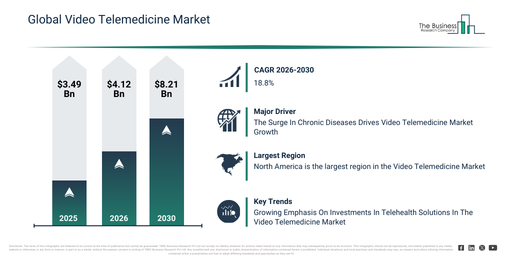
    The video telemedicine market has experienced rapid expansion in recent years. It is anticipated to grow from $3.49 billion in 2025 to $4.12 billion in 2026, at a compound annual growth rate (CAGR) of 18.1%. Historically, this expansion has been driven by increased adoption of digital healthcare, growing patient demand for remote access to care, the broadening of broadband connectivity, a rise in virtual consultation acceptance, and the availability of secure video communication platforms.

    The video telemedicine market is anticipated to experience substantial growth in the coming years, with projections indicating it will reach $8.21 billion by 2030, driven by a compound annual growth rate (CAGR) of 18.8%. This expansion during the forecast period is primarily attributed to the increasing use of AI-enabled clinical decision support, rising investments in digital health infrastructure, the broadening of telehealth services across specialties, a growing focus on remote chronic disease management, and a heightened emphasis on data security and compliance. Concurrently, major trends expected to shape the market include the increasing adoption of remote video consultations, the rising integration of telemedicine platforms with EHR systems, a growing demand for virtual specialty care, the expansion of remote patient monitoring services, and an enhanced focus on secure and compliant telehealth solutions.

    Get A Free Sample Report With In-Depth Market Insights:

    https://thebusinessresearchcompany.com/sample_request?id=75791996&type=smp&name=Video%20Telemedicine%20Market%20Report%202026&utm_source=Blogs&utm_medium=Paid&utm_campaign=Nov_PR

    Video Telemedicine Market Growth Momentum: What Factors Are Shaping Demand?

    The increasing occurrence of chronic diseases is projected to drive the growth of the video telemedicine market in the future. Chronic diseases are persistent health conditions that can typically be managed but are not fully curable. Telemedicine emerges as a crucial tool in managing these long-term illnesses by enhancing access to care, facilitating remote monitoring and self-management, improving communication between patients and healthcare providers, and boosting overall disease management outcomes. The escalation in chronic disease prevalence is anticipated to fuel the expansion of the video telemedicine market.

    Video Telemedicine Market Segment Landscape: Which Areas Lead Development?

    The video telemedicine market covered in this report is segmented –

    1) By Component: Services, Hardware, Software

    2) By Application: Neurology And Psychiatry, Cardiology, Orthopedics, Dermatology, Radiology, Gynecology, Oncology, Dentistry, Pathology

    3) By End User: Home Care Services, Hospitals, Clinics, Other End Users

    Subsegments:

    1) By Services: Real-Time Video Consultation, Remote Patient Monitoring, Telepsychiatry, Teledermatology, Teleradiology

    2) By Hardware: Cameras, Microphones, Monitors, Video Conferencing Equipment, Telepresence Robots

    3) By Software: Video Conferencing Software, Electronic Health Record (EHR) Integration Software, Patient Management Systems, Remote Monitoring Applications, Security And Compliance Solutions

    Video Telemedicine Market Trends Redefining Industry Growth

    Leading companies in the video telemedicine market are focusing on investments in AI-enabled portable eye screening devices, integrated with video telemedicine, to improve patient care access, enhance remote diagnostics, and lower healthcare costs. These AI-powered portable eye screening tools are compact, mobile instruments that leverage artificial intelligence for the real-time detection and diagnosis of eye diseases.

    Video Telemedicine Market Industry Leaders And Competitive Landscape

    Major companies operating in the video telemedicine market are Teladoc Health Inc., American Well Corporation, MDLIVE Inc., GlobalMed Inc., PlushCare Inc., MeMD LLC, AMD Global Telemedicine Inc., Sesame Inc., 98point6 Technologies Inc., HealthTap Inc., CirrusMD Inc., Vidyo Inc., VSee Lab Inc., eVisit Inc., Visionflex Pty Limited, Techmedic International B.V., Talkspace Inc, Doximity Inc., Cisco Systems Inc., Poly Inc., Logitech International S.A.

    View The Full Video Telemedicine Market Report:

    https://thebusinessresearchcompany.com/report/video-telemedicine-global-market-report?utm_source=Blogs&utm_medium=Paid&utm_campaign=Nov_PR

    Video Telemedicine Market Geographic Analysis: Where Is Demand Rising Fastest?

    North America was the largest region in the video telemedicine market in 2025. Asia Pacific is expected to be the fastest-growing region in the forecast period. The regions covered in the video telemedicine market report are Asia-Pacific, South East Asia, Western Europe, Eastern Europe, North America, South America, Middle East, Africa.

    Reach Out To Our Team:

    The Business Research Company: https://www.thebusinessresearchcompany.com/

    Americas: +1 310-496-7795

    Asia: +44 7882 955267 & +91 8897263534

    Europe: +44 7882 955267

    Email us at: marketing@tbrc.info

    Follow us on:

    LinkedIn: https://in.linkedin.com/company/the-business-research-company

    YouTube: https://www.youtube.com/channel/UC24_fI0rV8cR5DxlCpgmyFQ

    Global Market Model: https://www.thebusinessresearchcompany.com/global-market-model
  • Veterinary Diagnostic Imaging Market Expected To Grow At 7.4% CAGR Through 2030: What Businesses Need To Know

    Veterinary Diagnostic Imaging Market Expected To Grow At 7.4% CAGR Through 2030: What Businesses Need To Know

    Featuring market attractiveness scoring, total addressable market sizing, company benchmarking matrices, interactive Excel dashboards, deeper supply chain intelligence, emerging startup tracking, and granular product-level insights, The Business Research Company’s 2026 market reports are built to deliver research that is both more actionable and more strategically valuable.

    Veterinary Diagnostic Imaging Market Poised To Hit $3.39 Billion By 2030 With A 7.4% CAGR

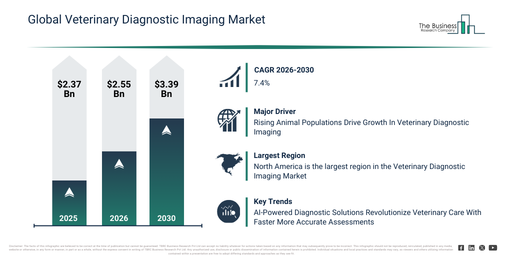
    The veterinary diagnostic imaging market has experienced substantial expansion in recent years. This market is forecasted to increase from $2.37 billion in 2025 to $2.55 billion in 2026, achieving a compound annual growth rate (CAGR) of 7.7%. The historical growth can be attributed to several factors including the rising ownership of companion animals, a greater need for advanced veterinary care, the expansion of veterinary hospital infrastructure, increasing awareness of animal health diagnostics, and the availability of specialized veterinary imaging equipment.

    The veterinary diagnostic imaging market is projected to experience substantial expansion over the coming years. This market is anticipated to reach a valuation of $3.39 billion by 2030, exhibiting a compound annual growth rate (CAGR) of 7.4%. Factors contributing to this growth during the forecast period include the expanding use of AI-assisted imaging analysis, increased investments in veterinary healthcare infrastructure, a surging demand for minimally invasive diagnostic procedures, the proliferation of cloud-based image management systems, and an intensified focus on precision veterinary medicine. Key trends observed within the forecast period encompass the greater embrace of advanced imaging modalities, an increase in the utilization of digital and portable imaging systems, the broadening integration of veterinary PACS solutions, the growth of multi-specialty diagnostic applications, and an elevated emphasis on achieving early and precise animal diagnoses.

    Get A Free Sample Report With In-Depth Market Insights:

    https://thebusinessresearchcompany.com/sample_request?id=41460001&type=smp&name=Veterinary%20Diagnostic%20Imaging%20Market%20Report%202026&utm_source=Blogs&utm_medium=Paid&utm_campaign=Nov_PR

    Veterinary Diagnostic Imaging Market Expansion Drivers: What’s Shaping Future Growth?

    The expanding number of animal populations is anticipated to stimulate the growth of the veterinary diagnostic imaging market in the foreseeable future. This increase in animal populations results from greater pet ownership, improvements in animal healthcare, and a rising demand for livestock, which collectively leads to enhanced food security, sustainable agricultural practices, and stronger human-animal bonds. Veterinary diagnostic imaging offers significant benefits for animal populations by enabling precise diagnoses, improving the success of treatments, and allowing for continuous monitoring of health conditions, ultimately elevating animal care and their overall well-being. The growing animal populations act as a primary driver for the expansion of the veterinary diagnostic imaging market.

    Veterinary Diagnostic Imaging Market Segments: Where Is Growth Concentrated?

    The veterinary diagnostic imaging market covered in this report is segmented –

    1) By Product: Instrument, Reagent, Services, Veterinary PACS

    2) By Animal Type: Small Animals, Large Animals

    3) By Equipment: Radiography (X-ray) Systems, Ultrasound Imaging Systems, Computed Tomography Imaging Systems, Magnetic Resonance Imaging Systems, Video Endoscopy Imaging Systems, Other Equipments

    4) By Application: Orthopaedics And Traumatology, Oncology, Cardiology

    5) By End-User: Veterinary Hospitals, Academic And Research Institutes, Other End Users

    Subsegments:

    1) By Instrument: X-ray Imaging Systems, Ultrasound Imaging Systems, MRI Systems, CT Scanners, Endoscopy Equipment

    2) By Reagent: Contrast Agents (Ultrasound, MRI, CT), Blood Test Reagents, Biochemical Reagents

    3) By Services: Diagnostic Imaging Services, Image Interpretation Services, Veterinary Imaging Consulting Services

    4) By Veterinary PACS (Picture Archiving And Communication System): On-Premise PACS, Cloud-Based PACS

    Veterinary Diagnostic Imaging Market Strategic Trends: What Defines The Next Growth Phase?

    Leading companies in the veterinary diagnostic imaging market are concentrating on developing advanced products, such as AI-powered veterinary X-ray interpretation, to enhance diagnostic accuracy, reduce processing times, and improve overall patient care in veterinary practices. AI-Powered Veterinary X-ray Interpretation refers to the application of artificial intelligence and machine learning technologies to assist veterinarians in analyzing radiographic images (X-rays) of animals. This technology boosts diagnostic precision, accelerates decision-making, and alleviates the workload on veterinary professionals by automating the detection of abnormalities and delivering detailed analyses.

    Veterinary Diagnostic Imaging Market Key Participants And Competitive Landscape

    Major companies operating in the veterinary diagnostic imaging market are Siemens Healthineers AG, General Electric Company, Fujifilm Holdings Corporation, Konica Minolta Inc, VCA Inc, Covetrus Inc., IDEXX Laboratories Inc., Shenzhen Mindray Bio-Medl Elctrnc Co Ltd, Agfa-Gevaert NV, Carestream Health Inc, CVS Limited, Esaote SPA, Canon Medical Systems Corporation, MXR Imaging Inc, Sound Technologies Inc, Heska Corporation, Universal Medical Systems, Inc., Clarius Mobile Health Corp., IMV Imaging, Epica Animal Health, Hallmarq Veterinary Imaging Ltd.

    View The Full Veterinary Diagnostic Imaging Market Report:

    https://thebusinessresearchcompany.com/report/veterinary-diagnostic-imaging-global-market-report?utm_source=Blogs&utm_medium=Paid&utm_campaign=Nov_PR

    Veterinary Diagnostic Imaging Market Global Footprint: Which Region Leads The Market?

    North America was the largest region in the veterinary diagnostic imaging market in 2025. Asia-Pacific is expected to be the fastest-growing region in the forecast period. The regions covered in the veterinary diagnostic imaging market report are Asia-Pacific, South East Asia, Western Europe, Eastern Europe, North America, South America, Middle East, Africa.

    Reach Out To Our Team:

    The Business Research Company: https://www.thebusinessresearchcompany.com/

    Americas: +1 310-496-7795

    Asia: +44 7882 955267 & +91 8897263534

    Europe: +44 7882 955267

    Email us at: marketing@tbrc.info

    Follow us on:

    LinkedIn: https://in.linkedin.com/company/the-business-research-company

    YouTube: https://www.youtube.com/channel/UC24_fI0rV8cR5DxlCpgmyFQ

    Global Market Model: https://www.thebusinessresearchcompany.com/global-market-model
  • Veterinary Clinical Trials Market Forecast To Reach $7.61 Billion By 2030: Key Trends Explained

    Veterinary Clinical Trials Market Forecast To Reach $7.61 Billion By 2030: Key Trends Explained

    Built to provide research that’s more actionable and strategically valuable, The Business Research Company’s 2026 market reports include market attractiveness analysis, total addressable market sizing, company benchmarking matrices, interactive Excel dashboards, broader supply chain intelligence, emerging startup tracking, and in-depth product insights.

    Veterinary Clinical Trials Market Size And Revenue Outlook Through 2030

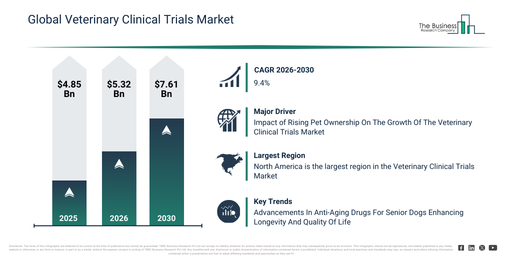
    The veterinary clinical trials market has experienced robust growth in recent years. It is projected to expand from $4.85 billion in 2025 to $5.32 billion in 2026, at a compound annual growth rate (CAGR) of 9.7%. This historic growth is attributable to several factors, including the growth in veterinary pharmaceutical research, increasing pet ownership rates, a rising demand for evidence-based veterinary treatments, the expansion of academic research programs, and improved regulatory frameworks for animal trials.

    The veterinary clinical trials market is projected to experience substantial expansion in the coming years. By 2030, this market is anticipated to reach a valuation of $7.61 billion, exhibiting a compound annual growth rate (CAGR) of 9.4%. The predicted expansion during this period stems from several factors, including heightened investments in veterinary drug development, the growing embrace of precision medicine for animals, the broader participation of Contract Research Organizations (CROs) in veterinary trials, an intensified focus on chronic and oncology conditions, and the augmented utilization of real-world evidence within animal health. Key trends expected during the forecast period encompass a greater uptake of digital platforms for trial management, an increase in genomic and biomarker-driven research, a sharpened focus on clinical studies involving companion animals, the proliferation of multicenter veterinary trials, and a stronger insistence on data integrity and adherence to regulations.

    Get A Free Sample Report With In-Depth Market Insights:

    https://thebusinessresearchcompany.com/sample_request?id=60699696&type=smp&name=Veterinary%20Clinical%20Trials%20Market%20Report%202026&utm_source=Blogs&utm_medium=Paid&utm_campaign=Nov_PR

    Veterinary Clinical Trials Market Development Factors: What’s Supporting Demand?

    An anticipated increase in pet owners is projected to fuel the expansion of the veterinary clinical trials market in the future. Owning a pet involves the act of possessing and looking after one or more animals as household companions. This growth in pet ownership stems from various elements, such as the yearning for companionship, the advantages of pet-assisted therapy, and an increased understanding of how pets positively affect mental and physical health. Veterinary clinical trials benefit pet owners by providing enhanced access to innovative pet treatments and advancing overall veterinary care, thereby ensuring improved health results for animals. Furthermore, these trials play a role in creating safer and more potent treatments. The growing count of pet owners is serving as a catalyst for the expansion of the veterinary clinical trials market.

    Veterinary Clinical Trials Market Segment Analysis: What Are The Core Market Categories?

    The veterinary clinical trials market covered in this report is segmented –

    1) By Animal: Livestock Animal, Companion Animal, Other Animals

    2) By Indications: Oncology, Internal Medicine, Orthopedics, Cardiology, Neurology, Ophthalmology, Dermatology, Other Indications

    3) By Intervention: Medicines, Medical Devices, Other Interventions

    4) By End-Users: Academics And Research Centers, Pharmaceutical And Biopharmaceutical Companies, Other End-Users

    Subsegments:

    1) By Livestock Animal: Cattle, Sheep, Goats, Swine, Poultry

    2) By Companion Animal: Dogs, Cats, Horses, Rabbits, Ferrets

    3) By Other Animals: Wildlife, Exotic Pets, Laboratory Animals, Aquatic Animals

    Veterinary Clinical Trials Market Transformation Trends: What Innovations Are Driving Change?

    Leading companies active in the veterinary clinical trials market are concentrating on developing innovative anti-aging medications to increase pet longevity and improve overall animal health. Novel anti-aging drugs refer to advanced pharmaceuticals designed to slow down or reverse the aging process and enhance the health and vitality of aging animals.

    Veterinary Clinical Trials Market Top Companies Driving Competitive Growth

    Major companies operating in the veterinary clinical trials market are Merck & Co. Inc., Boehringer Ingelheim International GmbH, Zoetis Inc., Elanco Animal Health Incorporated, Charles River Laboratories International Inc., IDEXX Laboratories Inc., Ceva Santé Animale, Hill’s Pet Nutrition Inc., Ethos Veterinary Health LLC, Orion Corporation, Dechra Pharmaceuticals plc, Morris Animal Foundation, Vaxine Pty Ltd, Bioagile Therapeutics Pvt. Ltd., VetStem Inc., VetDC, Vivesto AB, OCRvet, Vetbiolix, Clinvet International, Ondax Scientific S.l., Veterinary Research Management

    View The Full Veterinary Clinical Trials Market Report:

    https://thebusinessresearchcompany.com/report/veterinary-clinical-trials-global-market-report?utm_source=Blogs&utm_medium=Paid&utm_campaign=Nov_PR

    Veterinary Clinical Trials Market Regional Split: Which Areas Are Fueling Growth?

    North America was the largest region in the veterinary clinical trials market in 2025. The regions covered in the veterinary clinical trials market report are Asia-Pacific, South East Asia, Western Europe, Eastern Europe, North America, South America, Middle East, Africa.

    Reach Out To Our Team:

    The Business Research Company: https://www.thebusinessresearchcompany.com/

    Americas: +1 310-496-7795

    Asia: +44 7882 955267 & +91 8897263534

    Europe: +44 7882 955267

    Email us at: marketing@tbrc.info

    Follow us on:

    LinkedIn: https://in.linkedin.com/company/the-business-research-company

    YouTube: https://www.youtube.com/channel/UC24_fI0rV8cR5DxlCpgmyFQ

    Global Market Model: https://www.thebusinessresearchcompany.com/global-market-model
  • Vestibular Neuronitis Treatment Market Analysis Through 2030: Market Size, Growth Trends And Industry Outlook

    Vestibular Neuronitis Treatment Market Analysis Through 2030: Market Size, Growth Trends And Industry Outlook

    Backed by market attractiveness analysis, total addressable market sizing, company benchmarking matrices, interactive Excel dashboards, wider supply chain intelligence, emerging startup coverage, and detailed product-level insights, The Business Research Company’s 2026 market reports are designed to offer research that is more actionable and strategically valuable than ever.

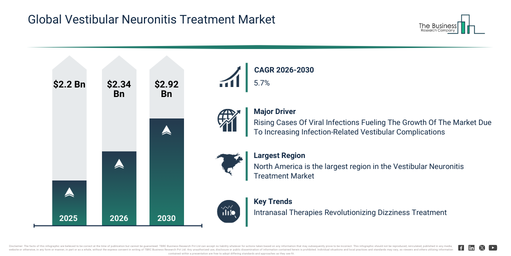
    Vestibular Neuronitis Treatment Market Growth From $2.34 Billion In 2026 To $2.92 Billion By 2030 At A CAGR Of 5.7%

    The vestibular neuronitis treatment market size has experienced significant expansion in recent years. It is anticipated to increase from $2.2 billion in 2025 to $2.34 billion in 2026, demonstrating a compound annual growth rate (CAGR) of 6.1%. The growth observed historically can be linked to a higher occurrence of viral inner ear infections, more effective diagnosis of vestibular neuronitis, growing public understanding of balance disorders, an increase in physical therapy services, and enhanced availability of neurological care.

    The vestibular neuronitis treatment market size is projected to experience substantial growth over the coming years. It is expected to grow to $2.92 billion in 2030, demonstrating a compound annual growth rate (CAGR) of 5.7%. This expansion during the forecast period is driven by factors such as the increasing adoption of personalized rehabilitation programs, growing demand for non-surgical treatment options, the expansion of tele-rehabilitation services, rising investment in vestibular research, and an increasing focus on faster neurological recovery. Key trends anticipated in the forecast period include the increasing adoption of vestibular rehabilitation exercises, a rising use of corticosteroid therapies, a growing focus on early symptom management, the expansion of outpatient treatment settings, and improved multidisciplinary care approaches.

    Get A Free Sample Report With In-Depth Market Insights:

    https://thebusinessresearchcompany.com/sample_request?id=97775265&type=smp&name=Vestibular%20Neuronitis%20Treatment%20Market%20Report%202026&utm_source=Blogs&utm_medium=Paid&utm_campaign=Nov_PR

    Vestibular Neuronitis Treatment Market Industry Drivers: What’s Behind The Revenue Growth?

    The escalation in viral infection occurrences is projected to drive expansion in the vestibular neuronitis treatment market in the future. Viral infections are maladies resulting from viruses entering and multiplying within a host’s cells, causing a range of symptoms and potential tissue harm. The surge in these infections primarily stems from increased global travel and urban development, contributing to denser populations and more human contact, thereby facilitating virus transmission via airborne particles, direct contact, and tainted surfaces. Vestibular neuronitis treatment aids in handling viral infections by decreasing inflammation of the vestibular nerve, relieving feelings of dizziness and problems with balance, and assisting recovery through various medications, rehabilitative therapies, and supportive interventions. The growing number of viral infections is fueling the vestibular neuronitis treatment market.

    Vestibular Neuronitis Treatment Market Segment Breakdown: Which Categories Lead On Revenue?

    The vestibular neuronitis treatment market covered in this report is segmented –

    1) By Treatment Type: Medication, Physical Therapy, Surgery, Alternative Therapy

    2) By Route Of Administration: Oral, Intravenous, Intramuscular

    3) By Age Group: Children, Adults, Elderly

    4) By Symptoms: Sudden Vertigo, Balance Issues, Nausea And Vomiting, Dizziness, Trouble Concentrating

    5) By End Users: Hospitals, Clinics, Other End Users

    Subsegments:

    1) By Medication: Corticosteroids, Antihistamines, Benzodiazepines, Antiemetics, Antiviral Drugs, Antibiotics

    2) By Physical Therapy: Vestibular Rehabilitation Therapy (VRT), Balance Training Exercises, Canalith Repositioning Maneuvers

    3) By Surgery: Labyrinthectomy, Vestibular Nerve Section, Endolymphatic Sac Decompression

    4) By Alternative Therapy: Acupuncture, Herbal Medicine, Chiropractic Therapy, Homeopathic Treatment, Dietary Supplements

    #Vestibular Neuronitis Treatment Market Growth Trends: What’s Shaping The Future Outlook?

    Key companies in the vestibular neuronitis treatment market are prioritizing the creation of novel solutions, including vestibular modulators, to bolster vestibular compensation, expedite recovery from vertigo, and enhance the effectiveness of treatments for patients experiencing balance disorders. Vestibular modulators are therapeutic substances that manage vestibular system activity to improve balance, decrease vertigo, and strengthen vestibular compensation.

    Vestibular Neuronitis Treatment Market Leading Players And Competitive Positioning

    Major companies operating in the vestibular neuronitis treatment market are Kaiser Permanente, Pfizer Inc., Johnson & Johnson, F. Hoffmann-La Roche AG, Merck & Co. Inc., AbbVie Inc., Abbott Laboratories, Novartis AG, GSK plc, Bupa, Teva Pharmaceutical Industries Ltd., Cipla Limited, Dr. Reddy’s Laboratories Ltd., Zydus Lifesciences Limited, Prestige Consumer Healthcare Inc., Sun Pharmaceutical Industries Ltd., ANI Pharmaceuticals Inc., Sanofi S.A., H Lundbeck A/S, Otonomy Inc., Auris Medical Holding Ltd., Bayer AG

    View The Full Vestibular Neuronitis Treatment Market Report:

    https://thebusinessresearchcompany.com/report/vestibular-neuronitis-treatment-global-market-report?utm_source=Blogs&utm_medium=Paid&utm_campaign=Nov_PR

    Vestibular Neuronitis Treatment Market Top Region: Where Does Most Revenue Come From?

    North America was the largest region in the vestibular neuronitis treatment market in 2025. Asia-Pacific is expected to be the fastest-growing region in the forecast period. The regions covered in the vestibular neuronitis treatment market report are Asia-Pacific, South East Asia, Western Europe, Eastern Europe, North America, South America, Middle East, Africa.

    Reach Out To Our Team:

    The Business Research Company: https://www.thebusinessresearchcompany.com/

    Americas: +1 310-496-7795

    Asia: +44 7882 955267 & +91 8897263534

    Europe: +44 7882 955267

    Email us at: marketing@tbrc.info

    Follow us on:

    LinkedIn: https://in.linkedin.com/company/the-business-research-company

    YouTube: https://www.youtube.com/channel/UC24_fI0rV8cR5DxlCpgmyFQ

    Global Market Model: https://www.thebusinessresearchcompany.com/global-market-model
  • Vertigo Treatment Market Outlook From 2026 To 2030: Key Growth Factors And Future Opportunities

    Vertigo Treatment Market Outlook From 2026 To 2030: Key Growth Factors And Future Opportunities

    Featuring market attractiveness scoring, total addressable market sizing, company benchmarking matrices, interactive Excel dashboards, deeper supply chain intelligence, emerging startup tracking, and granular product-level insights, The Business Research Company’s 2026 market reports are built to deliver research that is both more actionable and more strategically valuable.

    Vertigo Treatment Market Expansion Outlook: What Revenue Opportunities Are Ahead?

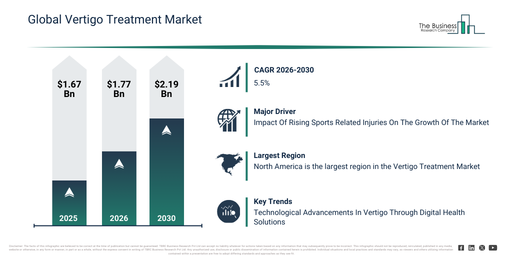
    The vertigo treatment market has experienced robust expansion in recent times. Forecasts indicate it will expand from $1.67 billion in 2025 to $1.77 billion by 2026, demonstrating a compound annual growth rate (CAGR) of 5.7%. Historically, this growth is attributable to factors such as the increasing incidence of vestibular disorders, an expanding elderly demographic, enhanced understanding of vertigo symptoms, the proliferation of neurology clinics, and a greater reliance on diagnostic imaging.

    The vertigo treatment market is projected to experience substantial expansion in the coming years, with its valuation expected to reach $2.19 billion by 2030, exhibiting a compound annual growth rate (CAGR) of 5.5%. This anticipated growth during the forecast period can be linked to several factors, including the increasing integration of personalized vertigo treatment strategies, a rising preference for non-invasive therapeutic options, the broader availability of telemedicine-based consultations, an intensified focus on managing symptoms over the long term, and greater investments in vestibular research. Key developments shaping the market in this period encompass the wider embrace of vestibular rehabilitation therapy, an increase in the application of combination drug treatments, a heightened emphasis on the prompt diagnosis of BPPV, the expansion of outpatient vertigo management services, and advancements in patient education and self-care initiatives.

    Get A Free Sample Report With In-Depth Market Insights:

    https://thebusinessresearchcompany.com/sample_request?id=21288669&type=smp&name=Vertigo%20Treatment%20Market%20Report%202026&utm_source=Blogs&utm_medium=Paid&utm_campaign=Nov_PR

    Vertigo Treatment Market Growth Factors: What’s Supporting Expansion?

    The increasing occurrence of sports-related injuries is projected to fuel the expansion of the vertigo treatment market. These injuries are defined as physical harm suffered during involvement in sports or other recreational physical pursuits. The escalation in sports injuries stems from greater engagement in high-impact sports, demanding training routines, and insufficient measures for injury prevention. Vertigo therapy aids individuals with sports-related injuries by easing dizziness, enhancing balance, and reinstating vestibular function through a combination of medications, vestibular rehabilitation therapy, and adjustments to lifestyle. This enables athletes to recuperate more quickly, recover coordination, and safely resume their athletic endeavors. The growing frequency of sports-related injuries is a key driver for the vertigo treatment market’s development.

    Vertigo Treatment Market Segmentation: How Does The Market Break Down By Category?

    The vertigo treatment market covered in this report is segmented –

    1) By Type: Peripheral Vertigo, Central Vertigo

    2) By Treatment: Medication, Surgery, Therapy

    3) By Route Of Administration: Oral, Topical, Parenteral, Other Routes Of Administration

    4) By End User: Hospitals, Clinics, Other End Users

    Subsegments:

    1) By Peripheral Vertigo: Benign Paroxysmal Positional Vertigo (BPPV), Meniere’s Disease, Vestibular Neuritis, Labyrinthitis

    2) By Central Vertigo: Vestibular Migraine, Stroke-Related Vertigo, Multiple Sclerosis-Associated Vertigo, Brain Tumor-Related Vertigo

    Vertigo Treatment Market Industry Trends: What’s Reshaping Demand?

    Leading companies in the vertigo treatment market are increasingly focusing on technological advancements, such as digital health solutions, to enhance patient care and promote treatment adherence. A digital health solution refers to technology-driven tools and platforms developed to improve health management, diagnosis, treatment, and overall patient care.

    Vertigo Treatment Market Competitive Overview And Top Companies

    Major companies operating in the vertigo treatment market are Pfizer Inc., Abbott Laboratories, Medtronic Plc, Boston Scientific Corp., Eisai Co. Ltd., Lupin Ltd., Vertigenius, Kracie Holdings Ltd. , Biologische Heilmittel Heel GmbH, Interacoustics A/S., AdvaCare Pharma, AuroPharma Inc., Biofield Pharma Pvt Ltd., Sound Pharmaceuticals Inc., Otolith Labs Inc., Ear Technology Corporation, NeuroEquilibrium Diagnostic Systems Pvt Ltd., Vestibular First, Natus Medical Incorporated, Ronish Bioceuticals

    View The Full Vertigo Treatment Market Report:

    https://thebusinessresearchcompany.com/report/vertigo-treatment-global-market-report?utm_source=Blogs&utm_medium=Paid&utm_campaign=Nov_PR

    Vertigo Treatment Market Regional Breakdown: Where Is Demand Concentrated?

    North America was the largest region in the vertigo treatment market in 2025. Asia-Pacific is expected to be the fastest-growing region in the forecast period. The regions covered in the vertigo treatment market report are Asia-Pacific, South East Asia, Western Europe, Eastern Europe, North America, South America, Middle East, Africa.

    Reach Out To Our Team:

    The Business Research Company: https://www.thebusinessresearchcompany.com/

    Americas: +1 310-496-7795

    Asia: +44 7882 955267 & +91 8897263534

    Europe: +44 7882 955267

    Email us at: marketing@tbrc.info

    Follow us on:

    LinkedIn: https://in.linkedin.com/company/the-business-research-company

    YouTube: https://www.youtube.com/channel/UC24_fI0rV8cR5DxlCpgmyFQ

    Global Market Model: https://www.thebusinessresearchcompany.com/global-market-model
  • Vertebroplasty And Kyphoplasty Market Growth Forecast: Market Size, Key Trends And Emerging Opportunities Through 2030

    Vertebroplasty And Kyphoplasty Market Growth Forecast: Market Size, Key Trends And Emerging Opportunities Through 2030

    Built to provide research that’s more actionable and strategically valuable, The Business Research Company’s 2026 market reports include market attractiveness analysis, total addressable market sizing, company benchmarking matrices, interactive Excel dashboards, broader supply chain intelligence, emerging startup tracking, and in-depth product insights.

    Vertebroplasty And Kyphoplasty Market Growth Potential: How Will Market Size Shift Through 2030?

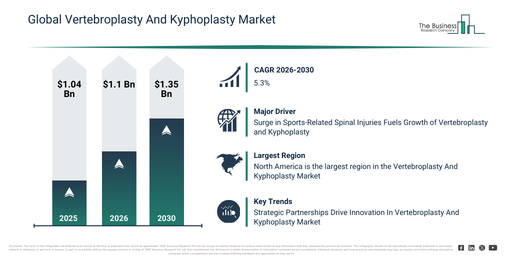
    The vertebroplasty and kyphoplasty market size has shown substantial growth in recent years. It is projected to expand from $1.04 billion in 2025 to $1.1 billion in 2026, exhibiting a compound annual growth rate (CAGR) of 5.8%. The historical increase can be attributed to a growing occurrence of osteoporotic fractures, an expanding aging population, a rise in the diagnosis of vertebral compression fractures, the broadening of spinal intervention capabilities, and improved access to imaging technologies.

    The vertebroplasty and kyphoplasty market is projected to experience substantial expansion over the upcoming years. This market is forecast to reach $1.35 billion by 2030, demonstrating a compound annual growth rate (CAGR) of 5.3%. The anticipated growth during this period stems from several factors, including the rising acceptance of outpatient spine procedures, a heightened need for quick pain relief solutions, the development of sophisticated spinal biomaterials, increased capital in minimally invasive devices, and an amplified emphasis on quicker patient rehabilitation. Key trends foreseen for the forecast period encompass a greater embrace of minimally invasive spine techniques, increased utilization of balloon kyphoplasty instruments, an escalating requirement for image-guided medical procedures, the proliferation of outpatient settings for spine treatments, and advancements in bone cement application technologies.

    Get A Free Sample Report With In-Depth Market Insights:

    https://thebusinessresearchcompany.com/sample_request?id=41221985&type=smp&name=Vertebroplasty%20And%20Kyphoplasty%20Market%20Report%202026&utm_source=Blogs&utm_medium=Paid&utm_campaign=Nov_PR

    Vertebroplasty And Kyphoplasty Market Demand Drivers: What’s Powering Industry Growth?

    The anticipated rise in spinal injuries resulting from sports activities is expected to drive the growth of the vertebroplasty and kyphoplasty markets moving forward. Spinal injuries linked to sports refer to damage to the spine that happens through participation in sports or other physical activities. The increase in sports-related spinal injuries covers conditions such as vertebral compression fractures, spondylolisthesis, and herniated discs, all of which require minimally invasive treatment options like vertebroplasty and kyphoplasty procedures, involving the injection of bone cement into damaged vertebrae. The growing incidence of spinal injuries related to sports will propel the expansion of the vertebroplasty and kyphoplasty market.

    Vertebroplasty And Kyphoplasty Market Segment Trends And Revenue Contributors

    The vertebroplasty and kyphoplasty market covered in this report is segmented –

    1) By Product Type: Kyphoplasty Devices, Vertebroplasty Devices

    2) By Surgery Type: Vertebroplastic Surgery, Kyphoplastic Surgery

    3) By End User: Hospitals, Ambulatory Surgical Centers

    Subsegments:

    1) By Kyphoplasty Devices: Balloon Kyphoplasty Devices, Inflation Devices, Vertebral Restoration Devices

    2) By Vertebroplasty Devices: Bone Cement Delivery Systems, Cannulas and Needles

    Vertebroplasty And Kyphoplasty Market Innovation Trends: What Developments Are Reshaping The Industry?

    Leading companies within the vertebroplasty and kyphoplasty market are embracing strategic partnerships to deliver unipedicular balloon catheters for treating vertebral compression fractures. These collaborations involve firms utilizing one another’s capabilities and assets for shared advantages and accomplishments.

    Vertebroplasty And Kyphoplasty Market Competitive Landscape: Which Companies Lead The Industry?

    Major companies operating in the vertebroplasty and kyphoplasty market are Cardinal Health, Johnson and Johnson (DePuy Synthes), Medtronic Plc., Stryker Corporation, GS Solutions Inc., Lepu Medical Technology (Beijing)Co.Ltd., Merit Medical Systems Inc., Globus Medical Inc., Alphatec Spine Inc., Rontis Corporation, Spectrum Plastics Group., SOMATEX Medical Technologies GmbH, Zavation LLC, MJ Surgical, Benvenue Medical, Joimax GmbH, Laurane Medical LLC, Spine Wave Inc., G21 S.r.l., BM Korea Co. LTD, Teknimed, Joline GmbH And Co. KG, SCW Medicath Ltd., Stöckli Medical AG, Jiangsu ChangMei Medtech Co.Ltd., IZI Medical Products

    View The Full Vertebroplasty And Kyphoplasty Market Report:

    https://thebusinessresearchcompany.com/report/vertebroplasty-and-kyphoplasty-global-market-report?utm_source=Blogs&utm_medium=Paid&utm_campaign=Nov_PR

    Vertebroplasty And Kyphoplasty Market Geographic Landscape: Which Region Leads Industry Growth?

    North America was the largest region in the vertebroplasty and kyphoplasty market in 2025. Asia-Pacific is expected to be the fastest-growing region in the forecast period. The regions covered in the vertebroplasty and kyphoplasty market report are Asia-Pacific, South East Asia, Western Europe, Eastern Europe, North America, South America, Middle East, Africa.

    Reach Out To Our Team:

    The Business Research Company: https://www.thebusinessresearchcompany.com/

    Americas: +1 310-496-7795

    Asia: +44 7882 955267 & +91 8897263534

    Europe: +44 7882 955267

    Email us at: marketing@tbrc.info

    Follow us on:

    LinkedIn: https://in.linkedin.com/company/the-business-research-company

    YouTube: https://www.youtube.com/channel/UC24_fI0rV8cR5DxlCpgmyFQ

    Global Market Model: https://www.thebusinessresearchcompany.com/global-market-model
  • Ventral Hernia Treatment Market CAGR Forecast Through 2030: Key Trends Shaping Industry Expansion

    Ventral Hernia Treatment Market CAGR Forecast Through 2030: Key Trends Shaping Industry Expansion

    Backed by market attractiveness analysis, total addressable market sizing, company benchmarking matrices, interactive Excel dashboards, wider supply chain intelligence, emerging startup coverage, and detailed product-level insights, The Business Research Company’s 2026 market reports are designed to offer research that is more actionable and strategically valuable than ever.

    Ventral Hernia Treatment Market Value Analysis: What Growth Lies Ahead Over The Forecast Period?

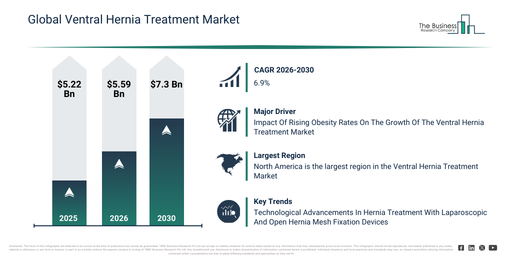
    The ventral hernia treatment market size has demonstrated significant growth over recent years. It is anticipated to expand from $5.22 billion in 2025 to $5.59 billion in 2026, achieving a compound annual growth rate (CAGR) of 7.2%. Historically, this market expansion can be credited to the rising incidence of abdominal hernias, increasing surgical intervention rates, expansion of laparoscopic surgery adoption, growing availability of surgical mesh products, and improved diagnostic imaging utilization.

    The ventral hernia treatment market is anticipated to experience robust expansion over the forthcoming years. This market is projected to attain a valuation of $7.3 billion by 2030, registering a compound annual growth rate (CAGR) of 6.9%. The projected increase within this period is primarily driven by factors such as the rising implementation of robotic surgery platforms, an increasing need for tension-free repair techniques, the growth of ambulatory surgical centers, a sharpened focus on minimizing hernia recurrence rates, and increased capital directed towards advanced surgical technologies. Significant trends expected during the forecast period include the broader acceptance of robotic-assisted hernia repair, an escalating use of sophisticated hernia mesh materials, a growing inclination towards minimally invasive interventions, the proliferation of day-care surgical treatments, and enhanced post-surgical recovery guidelines.

    Get A Free Sample Report With In-Depth Market Insights:

    https://thebusinessresearchcompany.com/sample_request?id=40708995&type=smp&name=Ventral%20Hernia%20Treatment%20Market%20Report%202026&utm_source=Blogs&utm_medium=Paid&utm_campaign=Nov_PR

    Ventral Hernia Treatment Market Growth Drivers: What’s Behind The Acceleration?

    The rising incidence of obesity is projected to propel the growth of the ventral hernia treatment market in the coming years. Obesity, a medical condition characterized by an excessive accumulation of body fat, significantly impairs an individual’s health. The escalating prevalence of obesity is attributed to factors such as poor dietary habits, sedentary lifestyles, genetic predispositions, insufficient physical activity, environmental influences, and emotional stress. Ventral hernia treatment provides support to patients with obesity by addressing complications stemming from their excess weight; it helps alleviate strain on the abdominal wall, reduces the likelihood of hernia recurrence, and enhances overall abdominal strength. This strengthening is vital for promoting mobility and encouraging healthier lifestyle choices in individuals grappling with obesity. The expanding prevalence of obesity is a significant driver for the ventral hernia treatment market.

    Ventral Hernia Treatment Market Segment Analysis Spotlighting Growth Areas

    The ventral hernia treatment market covered in this report is segmented –

    1) By Type: Epigastric (Stomach Area) Hernia, Umbilical (Belly Button) Hernia, Incisional Hernia

    2) By Diagnosis: Ultrasound, Computed Tomography (CT) Scan, Magnetic Resonance Imaging (MRI)

    3) By Surgery: Open Hernia Surgery, Laparoscopic Surgery, Robotic Hernia Surgery

    4) By End Users: Hospitals, Ambulatory Surgical Centres, Clinics

    Subsegments:

    1) By Epigastric (Stomach Area) Hernia: Small Epigastric Hernia, Large Epigastric Hernia

    2) By Umbilical (Belly Button) Hernia: Congenital Umbilical Hernia, Acquired Umbilical Hernia

    3) By Incisional Hernia: Primary Incisional Hernia, Recurrent Incisional Hernia

    Ventral Hernia Treatment Market Trends: What’s Defining The Industry’s Next Phase?

    Leading companies in the ventral hernia treatment market are concentrating on technological advancements, such as laparoscopic and open hernia mesh fixation devices, to enhance surgical outcomes, decrease complications, and improve patient recovery. These devices are medical tools designed to secure mesh during hernia repair surgeries, employing either minimally invasive (laparoscopic) or traditional open surgical approaches.

    Ventral Hernia Treatment Market Leading Companies: Who Holds The Strongest Market Presence?

    Major companies operating in the ventral hernia treatment market are Johnson & Johnson Services Inc., Medtronic Plc, Becton, Dickinson and Company (BD), Braun Melsungen AG, Olympus Corporation, W.L. Gore and Associates Inc, STERIS Plc, Cook Medical Inc, KARL STORZ, Cooper University Health Care, Mölnlycke Health Care, Integra LifeSciences Holdings, ConMed Corporation, Aesculap Inc, Richard Wolf GmbH, Ethicon Inc, Microline Surgical, Hernia Mesh S.R.L., Insightra Medical Inc, Advanced MedTech Solutions Pvt Ltd

    View The Full Ventral Hernia Treatment Market Report:

    https://thebusinessresearchcompany.com/report/ventral-hernia-treatment-global-market-report?utm_source=Blogs&utm_medium=Paid&utm_campaign=Nov_PR

    Ventral Hernia Treatment Market Largest Region: Which Geography Holds The Biggest Share?

    North America was the largest region in the ventral hernia treatment market in 2025. Europe is expected to be the fastest-growing region in the forecast period. The regions covered in the ventral hernia treatment market report are Asia-Pacific, South East Asia, Western Europe, Eastern Europe, North America, South America, Middle East, Africa.

    Reach Out To Our Team:

    The Business Research Company: https://www.thebusinessresearchcompany.com/

    Americas: +1 310-496-7795

    Asia: +44 7882 955267 & +91 8897263534

    Europe: +44 7882 955267

    Email us at: marketing@tbrc.info

    Follow us on:

    LinkedIn: https://in.linkedin.com/company/the-business-research-company

    YouTube: https://www.youtube.com/channel/UC24_fI0rV8cR5DxlCpgmyFQ

    Global Market Model: https://www.thebusinessresearchcompany.com/global-market-model
  • Venous Ulcer Treatment Market To Witness 7.1% CAGR Growth Through 2030: Key Industry Drivers

    Venous Ulcer Treatment Market To Witness 7.1% CAGR Growth Through 2030: Key Industry Drivers

    Featuring market attractiveness scoring, total addressable market sizing, company benchmarking matrices, interactive Excel dashboards, deeper supply chain intelligence, emerging startup tracking, and granular product-level insights, The Business Research Company’s 2026 market reports are built to deliver research that is both more actionable and more strategically valuable.

    Venous Ulcer Treatment Market Size Forecast: How Big Could The Market Get By 2030?

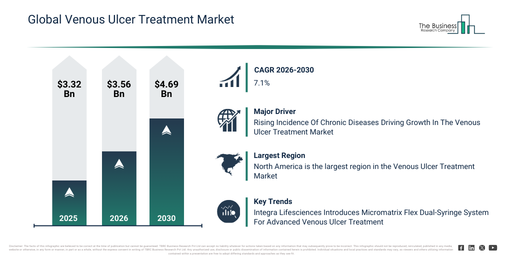
    The venous ulcer treatment market size has demonstrated strong growth over recent years. It is anticipated to expand from $3.32 billion in 2025 to $3.56 billion in 2026, progressing at a compound annual growth rate (CAGR) of 7.4%. This historical growth can be attributed to the increasing prevalence of chronic venous insufficiency, an expanding aging population, a rising incidence of lifestyle-related vascular disorders, broader availability of wound care products, and heightened clinical awareness regarding venous ulcer management.

    The venous ulcer treatment market is poised for robust expansion in the upcoming years. It is forecast to achieve a valuation of $4.69 billion by 2030, progressing at a compound annual growth rate (CAGR) of 7.1%. This expected increase throughout the forecast period is driven by factors such as a growing demand for home-based wound care, the increasing integration of advanced wound healing technologies, the expansion of outpatient care models, rising investments in digital health monitoring, and a greater emphasis on cost-effective chronic wound management. Prominent trends anticipated in this period include the wider adoption of advanced compression therapy solutions, the increasing application of bioactive and antimicrobial wound dressings, the growing incorporation of digital wound monitoring tools, the development of personalized venous ulcer treatment protocols, and a reinforced focus on strategies for recurrence prevention.

    Get A Free Sample Report With In-Depth Market Insights:

    https://thebusinessresearchcompany.com/sample_request?id=60893024&type=smp&name=Venous%20Ulcer%20Treatment%20Market%20Report%202026&utm_source=Blogs&utm_medium=Paid&utm_campaign=Nov_PR

    Venous Ulcer Treatment Market Growth Factors Behind Sustained Expansion

    The increasing prevalence of chronic ailments is anticipated to fuel the expansion of the venous ulcer treatment market in the future. Chronic diseases are long-lasting health conditions that develop gradually, persist over extended periods, and often require ongoing medical attention and management. This rise in chronic diseases is attributed to several factors, including aging populations, sedentary lifestyles, poor dietary habits, escalating obesity rates, and the growing occurrence of risk factors such as smoking and excessive alcohol consumption. Venous ulcer treatment is utilized in managing chronic diseases by addressing and treating ulcers that stem from poor circulation and prolonged venous insufficiency, commonly observed in conditions like diabetes and chronic venous disease. The growing incidence of chronic diseases is driving the growth of the venous ulcer treatment market.

    Venous Ulcer Treatment Market Segment Performance And Emerging Opportunities

    The venous ulcer treatment market covered in this report is segmented –

    1) By Diseases Type: Arterial Ulcers, Neurotropic Ulcer, Venous Ulcers, Diabetic Ulcers

    2) By Treatment Type: Compression Therapy, Surgical Therapy, Skin Grafting, Advanced Wound Dressing

    3) By End-Use: Hospitals, Clinics, Home Care Settings

    Subsegments:

    1) By Arterial Ulcers: Ischemic Ulcers, Atherosclerotic Ulcers, Mixed Arterial-Venous Ulcers

    2) By Neurotropic Ulcer: Pressure Ulcers, Neuropathic Foot Ulcers, Spinal Cord Injury Ulcers

    3) By Venous Ulcers: Superficial Venous Ulcers, Deep Vein Insufficiency Ulcers, Mixed Etiology Ulcers

    4) By Diabetic Ulcers: Diabetic Foot Ulcers, Neuropathic Diabetic Ulcers, Ischemic Diabetic Ulcers

    Venous Ulcer Treatment Market Industry Trends Fueling Future Revenue Growth

    Leading companies in the venous ulcer treatment market are concentrating on creating novel technologies, such as dual-syringe systems, to enhance the effectiveness and convenience of wound care. These specialized medical devices, known as dual-syringe systems, are employed for the simultaneous or sequential administration of two substances, commonly for wound care, injections, or drug delivery.

    Venous Ulcer Treatment Market Key Players: Which Companies Lead Industry Competition?

    Major companies operating in the venous ulcer treatment market are Johnson & Johnson, Bayer AG, Sanofi SA, Bristol-Myers Squibb Company, AstraZeneca plc, Medtronic plc, Becton Dickinson and Company, Cardinal Health Inc., Essity Aktiebolag, Medline Industries Inc., Smith & Nephew plc, Coloplast A/S, 3M Company, ConvaTec Group plc, Integra LifeSciences Holdings Corporation, Organogenesis Holdings Inc., Mölnlycke Health Care AB, Mimedx Group Inc., Tissue Regenix Group plc, Derma Sciences Inc.

    View The Full Venous Ulcer Treatment Market Report:

    https://thebusinessresearchcompany.com/report/venous-ulcer-treatment-global-market-report?utm_source=Blogs&utm_medium=Paid&utm_campaign=Nov_PR

    Venous Ulcer Treatment Market Regional Analysis: Which Geography Leads On Revenue?

    North America was the largest region in the venous ulcer treatment market in 2025. Asia-Pacific is expected to be the fastest-growing region in the forecast period. The regions covered in the venous ulcer treatment market report are Asia-Pacific, South East Asia, Western Europe, Eastern Europe, North America, South America, Middle East, Africa.

    Reach Out To Our Team:

    The Business Research Company: https://www.thebusinessresearchcompany.com/

    Americas: +1 310-496-7795

    Asia: +44 7882 955267 & +91 8897263534

    Europe: +44 7882 955267

    Email us at: marketing@tbrc.info

    Follow us on:

    LinkedIn: https://in.linkedin.com/company/the-business-research-company

    YouTube: https://www.youtube.com/channel/UC24_fI0rV8cR5DxlCpgmyFQ

    Global Market Model: https://www.thebusinessresearchcompany.com/global-market-model
  • Venous Thromboembolism Market Projected For Strong Expansion Through 2030: Key Trends And Future Outlook

    Venous Thromboembolism Market Projected For Strong Expansion Through 2030: Key Trends And Future Outlook

    Built to provide research that’s more actionable and strategically valuable, The Business Research Company’s 2026 market reports include market attractiveness analysis, total addressable market sizing, company benchmarking matrices, interactive Excel dashboards, broader supply chain intelligence, emerging startup tracking, and in-depth product insights.

    Venous Thromboembolism Market Revenue Outlook: What CAGR Lies Ahead Through 2030?

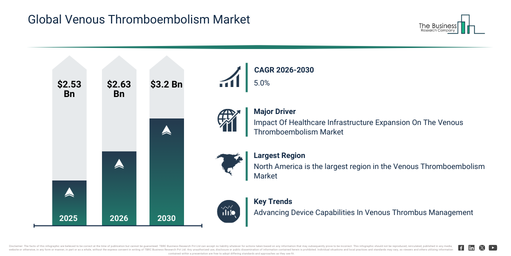
    The market for venous thromboembolism has demonstrated consistent expansion in recent years. It is projected to increase from $2.53 billion in 2025 to $2.63 billion in 2026, growing at a compound annual growth rate (CAGR) of 3.9%. This historical rise can be attributed to several factors including the increasing incidence of venous thromboembolism, the growth of the aging population, the rising prevalence of sedentary lifestyles, improved clinical awareness of VTE risks, and the expansion of hospital-based thrombotic care.

    The venous thromboembolism market is projected to experience consistent expansion over the upcoming years. By 2030, this market is anticipated to reach a valuation of $3.2 billion, demonstrating a compound annual growth rate (CAGR) of 5.0%. This projected growth during the forecast timeframe is primarily driven by factors such as the rising implementation of personalized anticoagulant therapy, the escalating need for minimally invasive treatment choices, the broadening of outpatient VTE care frameworks, increased spending on advanced diagnostic instruments, and a heightened emphasis on managing thrombosis preventively. Significant trends expected within the forecast period encompass the wider adoption of novel oral anticoagulants, an increase in the utilization of mechanical thrombectomy devices, a greater focus on early diagnosis and risk stratification, the expansion of home-based VTE management programs, and enhanced surveillance of anticoagulant therapy.

    Get A Free Sample Report With In-Depth Market Insights:

    https://thebusinessresearchcompany.com/sample_request?id=65525576&type=smp&name=Venous%20Thromboembolism%20Market%20Report%202026&utm_source=Blogs&utm_medium=Paid&utm_campaign=Nov_PR

    Venous Thromboembolism Market Demand Drivers Opening New Revenue Streams

    The expansion of healthcare infrastructure is projected to fuel the growth of the venous thromboembolism market in the future. The healthcare industry integrates various economic sectors providing products and services for patient treatment, prevention, rehabilitation, and palliative care. This expansion supports the creation of institutional infrastructure, policies, practices, and educational programs essential for implementing VTE prevention protocols. The growing healthcare industry is a significant impetus for the venous thromboembolism market’s development.

    Venous Thromboembolism Market Segment Landscape And Growth Outlook

    The venous thromboembolism market covered in this report is segmented –

    1) By Type: Deep Vein Thrombosis, Pulmonary Embolism, Other Types

    2) By Treatment: Anti-Clotting Medications, Mechanical Devices, Thrombolytic Therapy, Other Treatment

    3) By End Users: Hospitals, Homecare, Specialty Centers, Other End Users

    Subsegments:

    1) By Deep Vein Thrombosis (DVT): Proximal DVT, Distal DVT, Asymptomatic DVT

    2) By Pulmonary Embolism (PE): Acute PE, Chronic PE, Submassive PE

    3) By Other Types: Thrombophlebitis, Superficial Vein Thrombosis, Post-Thrombotic Syndrome

    Venous Thromboembolism Market Trends Powering Strategic Industry Growth

    Leading companies operating within the venous thromboembolism (VTE) market are increasingly incorporating sophisticated vascular-access sheath technologies, such as laser-cut hypotube sheaths, to enhance operational efficiency, patient safety, and control during procedures. This laser-cut hypotube sheath technology utilizes a thin-walled metal tube, precisely cut by laser, creating a sheath that offers both flexibility and structural support, thereby facilitating smooth navigation through blood vessels, providing stable support during catheter delivery, and improving hemostasis control during interventions. As an illustration, in January 2025, Penumbra Inc., a US-based medical-device manufacturer, unveiled the Element Vascular Access System, which is a laser-cut hypotube sheath specifically designed for venous thromboembolism procedures. It incorporates the HemoLock dual-valve system for exact hemostasis control, an atraumatic tip design, and 17 F MaxID sizing to ensure smooth delivery and compatibility with large-bore thrombectomy catheters. The Element system is designed to improve procedural efficiency, device trackability, and physician oversight, potentially leading to enhanced safety and improved treatment outcomes in VTE interventions.

    Venous Thromboembolism Market Competitive Landscape: Who Leads The Industry?

    Major companies operating in the venous thromboembolism market are Pfizer Inc., Johnson and Johnson Limited, Merck and Co Inc, AbbVie Inc, Bayer AG, Novartis AG, Sanofi-Aventis LLC, Bristol-Myers Squibb Company, GlaxoSmithKline plc, Eli Lilly and Co Ltd, Boehringer Ingelheim International GmbH, Teva Pharmaceutical Industries Ltd, Daiichi Sankyo Company Limited, Portola Pharmaceuticals Inc, Viatris Inc, AstraZeneca PLC, Medtronic plc, Boston Scientific Corporation, Stryker Corporation, Abbott Laboratories, AngioDynamics Inc, Terumo Corporation

    View The Full Venous Thromboembolism Market Report:

    https://thebusinessresearchcompany.com/report/venous-thromboembolism-global-market-report?utm_source=Blogs&utm_medium=Paid&utm_campaign=Nov_PR

    Venous Thromboembolism Market Geographic Spread And Regional Opportunities

    North America was the largest region in the venous thromboembolism market in 2025. The regions covered in the venous thromboembolism market report are Asia-Pacific, South East Asia, Western Europe, Eastern Europe, North America, South America, Middle East, Africa.

    Reach Out To Our Team:

    The Business Research Company: https://www.thebusinessresearchcompany.com/

    Americas: +1 310-496-7795

    Asia: +44 7882 955267 & +91 8897263534

    Europe: +44 7882 955267

    Email us at: marketing@tbrc.info

    Follow us on:

    LinkedIn: https://in.linkedin.com/company/the-business-research-company

    YouTube: https://www.youtube.com/channel/UC24_fI0rV8cR5DxlCpgmyFQ

    Global Market Model: https://www.thebusinessresearchcompany.com/global-market-model