Category: Healthcare Services

  • Single-Detector Gamma Camera Market Outlook Assessing Future Opportunities And Growth Prospects

    Single-Detector Gamma Camera Market Outlook Assessing Future Opportunities And Growth Prospects

    The Business Research Company’s 2026 market reports feature advanced enhancements such as market attractiveness analysis, total addressable market evaluation, company benchmarking matrices, interactive Excel dashboards, expanded supply chain intelligence, emerging startup coverage, and detailed product insights, delivering more actionable and strategically valuable research.

    How Will The Market Value Of The Single-Detector Gamma Camera Market Increase Between 2026 And 2030?

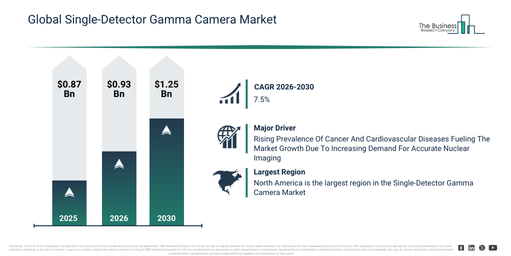
    The single-detector gamma camera market has witnessed substantial growth in recent years. Its value is anticipated to rise from $0.87 billion in 2025 to $0.93 billion in 2026, exhibiting a compound annual growth rate (CAGR) of 7.8%. This historical expansion can be attributed to several factors, including the increasing prevalence of chronic diseases, greater adoption of nuclear medicine diagnostics, an expanding geriatric population, the development of healthcare infrastructure, and the rising need for early disease detection.

    The single-detector gamma camera market is projected to experience substantial expansion in the coming years, reaching $1.25 billion by 2030, exhibiting a compound annual growth rate (CAGR) of 7.5%. This anticipated growth during the forecast period is driven by several factors, including the escalating global prevalence of cancer and cardiovascular ailments, increased investment in healthcare infrastructure (particularly within developing economies), the growing embrace of sophisticated gamma camera systems, the broader application of nuclear medicine in both diagnostics and research, and the heightened need for non-invasive diagnostic imaging techniques. Key trends anticipated during this period encompass technological progress in detectors and imaging systems, advancements in hybrid imaging, the evolution of digital and solid-state gamma cameras, ongoing research and development into new radiopharmaceuticals and imaging protocols, and the increasing incorporation of artificial intelligence (AI) and automated image processing.

    Download A Free Sample Report For Comprehensive Market Insights:

    https://www.thebusinessresearchcompany.com/sample.aspx?id=30743&type=smp

    Which Significant Factors Are Encouraging Growth In The Single-Detector Gamma Camera Market?

    The expanding occurrence of cancer and cardiovascular ailments is anticipated to drive the advancement of the single-detector gamma camera market in the future. The term ‘prevalence’ for these conditions indicates the number of individuals within a particular population who are currently affected by some form of cancer or a heart and blood vessel disease during a defined timeframe. This prevalence is increasing due to an aging global population and greater exposure to risk factors like poor dietary habits and lack of physical activity, which heighten susceptibility to these illnesses. Single-detector gamma cameras aid in diagnosing cancer and cardiovascular conditions by offering essential nuclear imaging. This imaging allows medical professionals to identify, evaluate, and track functional alterations in organs impacted by cancer and heart-related ailments. For instance, the Centers for Disease Control and Prevention, a public health agency based in Switzerland, reported in August 2025 that 90% of the nation’s 4.9 trillion dollars in yearly healthcare expenditure is linked to people with chronic and mental health issues. Annually, over 84,000 Americans succumb to heart disease or stroke, and the expenses related to cardiovascular diseases are predicted to hit approximately $2 trillion by 2050. Consequently, the increasing occurrence of cancer and cardiovascular diseases is stimulating the expansion of the single-detector gamma camera market. The increasing need for nuclear medicine imaging is anticipated to boost the expansion of the single-detector gamma camera market in the coming years. Nuclear medicine imaging involves employing tiny quantities of radioactive substances to visualize and diagnose various illnesses, such as cancer, cardiovascular ailments, and neurological disorders, by utilizing imaging methods that deliver functional and molecular insights. This heightened demand stems from the growing incidence of chronic and intricate diseases, coupled with the necessity for accurate diagnostic instruments. Single-detector gamma cameras facilitate nuclear medicine imaging by providing dependable, economical, and high-resolution images crucial for identifying and overseeing a range of medical conditions. For example, AMN Healthcare, a US-based provider of healthcare workforce solutions, reported in September 2025 that nuclear medicine technologists are forecast to see an 8% increase in job opportunities by 2031, a rate exceeding the average across all professions, with national average salaries typically falling between $68,000 and $95,000 per year, and experienced professionals earning substantially more. Consequently, the rising requirement for nuclear medicine imaging is fueling the advancement of the single-detector gamma camera market.

    Which Segment-Based Categories Are Covered In The Single-Detector Gamma Camera Market?

    The single-detector gamma camera market covered in this report is segmented –

    1) By Type Of Detector: High-Energy General-Purpose Gamma Cameras, Low-Energy High-Resolution Gamma Cameras, Specialized Gamma Cameras

    2) By Type Or Design: Stationary Type Single-Detector Gamma Camera, Mobile Type Single-Detector Gamma Camera Or Single-Head Mobile Gamma Cameras

    3) By Technology: Static Imaging, Dynamic Imaging, Tomographic Imaging (Single Photon Emission Computed Tomography (SPECT)), Quantitative Imaging

    4) By Application: Oncology, Cardiology, Neurology, Bone Scintigraphy, Pulmonary Scintigraphy

    5) By End-User: Hospitals, Diagnostic Imaging Centers, Research Institutions, Outpatient Clinics

    Subsegments:

    1) By High-Energy General-Purpose Gamma Cameras: Cardiac Imaging Gamma Cameras, Whole-Body Imaging Gamma Cameras, Multi-Purpose Imaging Gamma Cameras

    2) By Low-Energy High-Resolution Gamma Cameras: Thyroid Imaging Gamma Cameras, Bone Scintigraphy Gamma Cameras, Renal Imaging Gamma Cameras

    3) By Specialized Gamma Cameras: Cardiac SPECT Imaging Gamma Cameras, Brain SPECT Imaging Gamma Cameras, Liver SPECT Imaging Gamma Cameras

    Who Are The Key Market Participants In The Single-Detector Gamma Camera Market?

    Major companies operating in the single-detector gamma camera market are Siemens Healthineers AG, GE HealthCare Technologies Inc., Koninklijke Philips N.V., Canon Medical Systems Corporation, Digirad Corporation, Serac Life Sciences Limited, Biodex Medical Systems Inc., Beijing Huitai Medical Equipment Co. Ltd., Electronic & Engineering Co. Private Limited, DVS Medical Inc., NUVIATech Instruments, Dilon Technologies Inc., Serac Imaging Systems Limited, RadRays Medical Technology, AdvanScint Imaging Solutions, MedNova Imaging Ltd., GBT Medical Technologies, United Imaging Healthcare Co. Ltd.

    Access The Complete Single-Detector Gamma Camera Market Report:

    https://www.thebusinessresearchcompany.com/report/single-detector-gamma-camera-market-report

    Which Region Has The Strongest Presence In The Single-Detector Gamma Camera Market?

    North America was the largest region in the single-detector gamma camera market in 2025. Asia-Pacific is expected to be the fastest-growing region in the forecast period. The regions covered in the single-detector gamma camera market report are Asia-Pacific, South East Asia, Western Europe, Eastern Europe, North America, South America, Middle East, Africa.

    Access a Customized Single-Detector Gamma Camera Market Report for Deeper Competitive Insights

    https://www.thebusinessresearchcompany.com/sample.aspx?id=30743&type=smp

    Get in touch with us:

    The Business Research Company: https://www.thebusinessresearchcompany.com/

    Americas: +1 310-496-7795

    Asia: +44 7882 955267 & +91 8897263534

    Europe: +44 7882 955267

    Email us at: marketing@tbrc.info

    Follow us on:

    LinkedIn: https://in.linkedin.com/company/the-business-research-company

    YouTube: https://www.youtube.com/channel/UC24_fI0rV8cR5DxlCpgmyFQ

    Global Market Model: https://www.thebusinessresearchcompany.com/global-market-model
  • Semiconductor Timing Integrated Circuit (IC) Market Forecast Analysis Through 2030 With Insights On Industry Expansion

    Semiconductor Timing Integrated Circuit (IC) Market Forecast Analysis Through 2030 With Insights On Industry Expansion

    The Business Research Company’s 2026 market reports feature advanced enhancements such as market attractiveness analysis, total addressable market evaluation, company benchmarking matrices, interactive Excel dashboards, expanded supply chain intelligence, emerging startup coverage, and detailed product insights, delivering more actionable and strategically valuable research.

    What Is The Estimated Growth In Market Size Of The Semiconductor Timing Integrated Circuit (IC) Market During 2026–2030?

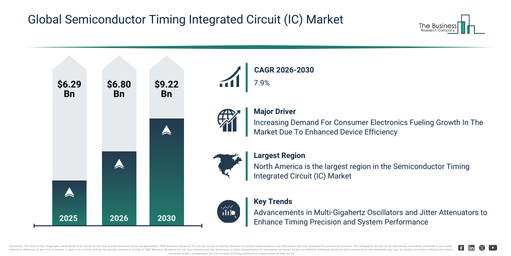
    The semiconductor timing IC market has experienced robust expansion in recent years. Projections indicate it will grow from $6.29 billion in 2025 to $6.80 billion in 2026, achieving a compound annual growth rate (CAGR) of 8.2%. Historically, this market’s growth can be attributed to factors such as the escalating demand for consumer electronics, the widespread adoption of communication systems, increased integration in automotive electronics, the ongoing expansion of industrial automation, and the heightened deployment in healthcare devices.

    The semiconductor timing IC market is anticipated to experience substantial expansion over the coming years, with its size projected to reach $9.22 billion by 2030, growing at a compound annual growth rate (CAGR) of 7.9%. This expansion throughout the forecast period is driven by the growing adoption of 5g and telecommunications infrastructure, a rising need for low-power timing solutions, the increasing deployment of IoT and connected devices, the enlargement of data centers and cloud computing, and the accelerating integration in electric vehicles and smart automotive systems. Key trends during this period include technological advancements in mixed-signal and digital timing ICs, innovations in programmable and multi-output clock generators, the development of low-power and high-precision timing ICs, ongoing research and development for automotive and electric vehicle timing solutions, and progress in crystal oscillators and jitter attenuation technologies.

    Download A Free Sample Report For Comprehensive Market Insights:

    https://www.thebusinessresearchcompany.com/sample.aspx?id=30740&type=smp

    Which Growth Factors Are Strengthening The Semiconductor Timing Integrated Circuit (IC) Market Landscape?

    The expanding requirement for consumer electronics is projected to fuel the advancement of the semiconductor timing integrated circuit (IC) market moving forward. Consumer electronics encompass electronic gadgets crafted for daily individual or domestic utilization, mainly for leisure, interaction, and amusement. These items differentiate themselves from industrial or expert machinery by focusing on non-commercial applications within households or daily routines. The need for consumer electronics is escalating due to swift technological progress, with novel and enhanced gadgets drawing in more users and promoting regular replacements. Semiconductor timing ICs facilitate this demand by supplying accurate timing and synchronization for these devices, guaranteeing their efficient and dependable functioning. For instance, in June 2025, data from the Australian Bureau of Statistics (ABS, an Australia-based official national statistical agency, revealed that electrical and electronic goods retailing increased by 3.9% during that single month, signifying continuous consumer demand expansion for electronics products. This indicates more robust consumer expenditure compared to the beginning of the year. Consequently, the rising demand for consumer electronics is propelling the growth of the semiconductor timing integrated circuit (IC) market.

    How Is The Semiconductor Timing Integrated Circuit (IC) Market Distributed Across Key Segments?

    The semiconductor timing integrated circuit (ic) market covered in this report is segmented –

    1) By Type Of Timing Integrated Circuit (IC): Crystal Oscillators, Real-Time Clock (RTC) Integrated Circuits (ICs), Frequency Synthesizers, Programmable Timing Integrated Circuits (IC), Clock Buffers and Clock Distribution Integrated Circuits (IC)

    2) By Technology: Analog Timing ICs, Digital Timing ICs, Mixed-Signal Timing ICs, Low-Power Timing ICs

    3) By Distribution Channel: Direct Sales, Distributors and Resellers, Online Platforms, Value-Added Resellers (VARs)

    4) By Application: Communication Systems, Consumer Electronics, Automotive Electronics, Industrial Automation, Healthcare Devices

    5) By End-User Sector: Telecommunications, Information Technology (IT) And Computing, Consumer Goods, Medical Equipment, Automotive

    Subsegments:

    1) By Crystal Oscillators: Surface Mount Device Oscillators, Through Hole Oscillators, Temperature Compensated Crystal Oscillators, Voltage Controlled Crystal Oscillators, Oven Controlled Crystal Oscillators

    2) By Real-Time Clock (RTC) Integrated Circuits: Serial Interface Real-Time Clocks, Parallel Interface Real-Time Clocks, Integrated Battery Backup Real-Time Clocks, Low Power Real-Time Clocks

    3) By Frequency Synthesizers: Integer Frequency Synthesizers, Fractional Frequency Synthesizers, Direct Digital Synthesizers, Phase Locked Loop Synthesizers

    4) By Programmable Timing Integrated Circuits: Digitally Controlled Oscillators, Programmable Clock Generators, Configurable Delay Lines, Frequency Agile Timing Controllers

    5) By Clock Buffers and Clock Distribution Integrated Circuits: Fanout Buffers, Clock Multiplexers, Jitter Attenuating Clock Buffers, Zero Delay Buffers, Differential Clock Distributors

    Which Trends Are Affecting The Semiconductor Timing Integrated Circuit (IC) Market Framework?

    Leading companies within the semiconductor timing integrated circuit (IC) market are prioritizing the development of products like multi-gigahertz oscillators and jitter attenuators to address the increasing need for ultra-low jitter, high-frequency, and thermally robust timing solutions in AI, 5G, and advanced computing systems. These multi-gigahertz oscillators and jitter attenuators are specialized ICs engineered to generate and stabilize high-speed clock signals, offering femtosecond-level precision and flexible programmable outputs, thereby surpassing conventional analog timing solutions often characterized by higher jitter and limited thermal stability. For example, in June 2025, Mixed-Signal Devices, a US-based semiconductor company, introduced its MS11X0 oscillator and MS15X0 jitter attenuator families, an innovative product line that provides up to 2 GHz output frequency, ultra-low jitter (as precise as 19 fs RMS), ±20 ppm thermal stability, and compact CMOS packages. These devices feature factory-programmable outputs, adaptive DSP-based timing engines, and strong environmental resilience, making them suitable for AI compute fabrics, 5G network synchronization, coherent optics, and high-speed SerDes interfaces. They integrate CMOS precision and Virtual Crystal architecture, which simplifies clock tree design, reduces component counts, and enhances reliability across complex electronic systems.

    Who Are The Businesses Driving Activity In The Semiconductor Timing Integrated Circuit (IC) Market?

    Major companies operating in the semiconductor timing integrated circuit (ic) market are Texas Instruments Incorporated, STMicroelectronics N.V., Infineon Technologies AG, KYOCERA Corporation, NXP Semiconductors N.V., Murata Manufacturing Co. Ltd., Analog Devices Inc., Renesas Electronics Corporation, Seiko Epson Corporation, ON Semiconductor Corporation, Skyworks Solutions Inc., Microchip Technology Incorporated, ROHM Co. Ltd., MaxLinear Inc., Vishay Intertechnology Inc., Diodes Incorporated, Nuvoton Technology Corporation, Silicon Laboratories Inc., Semtech Corporation, SiTime Corporation, Rakon Limited, Abracon LLC

    Access The Complete Semiconductor Timing Integrated Circuit (IC) Market Report:

    https://www.thebusinessresearchcompany.com/report/semiconductor-timing-integrated-circuit-ic-market-report

    What Is The Largest Regional Market In The Semiconductor Timing Integrated Circuit (IC) Market?

    North America was the largest region in the mobile semiconductor timing IC market in 2025. Asia-Pacific is expected to be the fastest-growing region in the forecast period. The regions covered in the semiconductor timing integrated circuit (ic) market report are Asia-Pacific, South East Asia, Western Europe, Eastern Europe, North America, South America, Middle East, Africa.

    Access a Customized Semiconductor Timing Integrated Circuit (IC) Market Report for Deeper Competitive Insights

    https://www.thebusinessresearchcompany.com/sample.aspx?id=30740&type=smp

    Get in touch with us:

    The Business Research Company: https://www.thebusinessresearchcompany.com/

    Americas: +1 310-496-7795

    Asia: +44 7882 955267 & +91 8897263534

    Europe: +44 7882 955267

    Email us at: marketing@tbrc.info

    Follow us on:

    LinkedIn: https://in.linkedin.com/company/the-business-research-company

    YouTube: https://www.youtube.com/channel/UC24_fI0rV8cR5DxlCpgmyFQ

    Global Market Model: https://www.thebusinessresearchcompany.com/global-market-model
  • Remote Cardiac Rehab Platforms Market Size Forecast To Achieve $2.89 Billion By 2030 With 14.1% CAGR

    Remote Cardiac Rehab Platforms Market Size Forecast To Achieve $2.89 Billion By 2030 With 14.1% CAGR

    The Business Research Company’s 2026 market reports feature advanced enhancements such as market attractiveness analysis, total addressable market evaluation, company benchmarking matrices, interactive Excel dashboards, expanded supply chain intelligence, emerging startup coverage, and detailed product insights, delivering more actionable and strategically valuable research.

    What Increase In Market Value Is Predicted For The Remote Cardiac Rehab Platforms Market During The 2026–2030 Period?

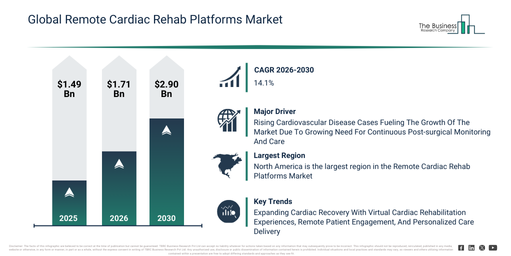
    The remote cardiac rehab platforms market size has experienced significant expansion in recent years. It is anticipated to increase from $1.49 billion in 2025 to $1.71 billion in 2026, achieving a compound annual growth rate (CAGR) of 14.4%. The historical growth of this market is attributable to several factors, including the rising prevalence of cardiovascular diseases, a burgeoning aging population, greater awareness concerning cardiac health, the development of telehealth infrastructure, and an uptick in hospital readmission rates.

    The market for remote cardiac rehab platforms is projected to experience substantial expansion in the coming years. This market is anticipated to reach a valuation of $2.90 billion by 2030, exhibiting a compound annual growth rate (CAGR) of 14.1%. Key drivers for this growth during the forecast period include the increasing uptake of remote monitoring systems, a growing patient inclination towards rehabilitation conducted at home, augmented healthcare spending on digital technologies, broader insurance coverage for remote treatment, and the enhanced integration of wearable devices into rehabilitation programs. Significant trends expected in the forecast period encompass technological progress in wearable sensors, novelties in digital rehabilitation software, advancements in patient monitoring powered by artificial intelligence, dedicated research and development efforts in telecardiology, and the incorporation of mobile applications into remote rehabilitation platforms.

    Download A Free Sample Report For Comprehensive Market Insights:

    https://www.thebusinessresearchcompany.com/sample.aspx?id=30724&type=smp

    Which Drivers Are Advancing The Remote Cardiac Rehab Platforms Market Growth?

    The increasing incidence of cardiovascular diseases is projected to drive the expansion of the remote cardiac rehabilitation platforms market moving forward. This rise in cardiovascular disease cases refers to the growing frequency of heart-related conditions, such as coronary artery disease and heart failure, which demand surgical intervention and ongoing management. Advances in surgical techniques coupled with an aging demographic are fueling these increasing cases, thereby generating a heightened demand for accessible post-operative recovery solutions. Remote cardiac rehabilitation platforms are instrumental in developing comprehensive recovery programs by enabling continuous monitoring of patient vitals and delivering guided exercise therapy within home environments. For instance, in May 2025, the Japanese Association for Thoracic Surgery, a Japan-based professional association dedicated to thoracic surgery, reported that Japan performed 63,427 cardiovascular surgeries in 2023. This represented a 3.0% increase compared to the 61,606 surgeries conducted in 2022. Thus, the escalating cardiovascular disease cases are stimulating the growth of the remote cardiac rehabilitation platforms market.

    What Key Segment Areas Are Included In The Remote Cardiac Rehab Platforms Market Assessment?

    The remote cardiac rehab platforms market covered in this report is segmented –

    1) By Component: Software, Hardware, Services

    2) By Delivery Mode: Web-based, Cloud-based, On-premises

    3) By Application: Chronic Heart Failure, Post-Myocardial Infarction, Hypertension, Arrhythmia, Other Applications

    4) By End User: Hospitals and Clinics, Home Care Settings, Cardiac Rehabilitation Centers, Other End Users

    Subsegments:

    1) By Software: Platform, Patient Application, Clinician Dashboard, Administrative And Billing Module

    2) By Hardware: Wearable Devices, Electrocardiogram(ECG) Monitors, Blood Pressure Monitors, Heart Rate Monitors

    3) By Services: Remote Monitoring, Virtual Consultation, Patient Education, Technical Support

    Which Trends Are Influencing The Direction Of The Remote Cardiac Rehab Platforms Market?

    Leading companies within the remote cardiac rehab platforms market are concentrating on creating sophisticated telehealth solutions, particularly virtual cardiac rehabilitation experiences. Their objective is to expand access to vital rehabilitation programs, boost patient involvement, and facilitate personalized cardiovascular recovery beyond conventional clinical environments. A virtual cardiac rehabilitation experience involves a structured digital care approach, offering exercise instruction, educational content, symptom tracking, and professional feedback via remote platforms. This allows patients to engage in thorough cardiac rehabilitation from their homes or local communities, all while under clinical supervision. For example, in October 2025, WakeMed Health & Hospitals, a US-based healthcare system, introduced a virtual cardiac rehabilitation experience tailored for individuals recovering from heart procedures or managing ongoing heart conditions. This program utilizes connected tools, remote monitoring, and telehealth coaching to guide patients through customized rehabilitation plans, monitor their progress, and deliver real-time support from clinicians. This approach helps to mitigate obstacles like travel distance, inconvenient scheduling, and restricted access to facilities. The introduction of this service highlights the increasing emphasis on incorporating virtual experiences into cardiac rehabilitation to improve patient convenience, compliance, and overall health results. By integrating a virtual cardiac rehabilitation experience into their remote care services, WakeMed and Recora are facilitating wider participation in evidence-based rehabilitation, enhancing the continuity of care, and fostering long-term cardiovascular well-being for patients from various demographic groups.

    Which Key Players Are Active In The Remote Cardiac Rehab Platforms Market?

    Major companies operating in the remote cardiac rehab platforms market are Philips Healthcare, Teladoc Health Inc., Sword Health Inc., BioFourmis Inc., Dozee Health, Wellframe Inc., Health Recovery Solutions, Biotricity Inc., Vivalink Inc., Lyfe, Carda Health Inc., Chanl Health Inc., Fourth Frontier, Heartbeat Health Inc., Life365 Inc., Liva Healthcare, Movn Health, Prevounce, Recora LLC, Veta Health Co.

    Access The Complete Remote Cardiac Rehab Platforms Market Report:

    https://www.thebusinessresearchcompany.com/report/remote-cardiac-rehab-platforms-market-report

    Which Region Is The Primary Market For The Remote Cardiac Rehab Platforms Market?

    North America was the largest region in the remote cardiac rehab platforms market in 2025. Asia-Pacific is expected to be the fastest-growing region in the forecast period. The regions covered in the remote cardiac rehab platforms market report are Asia-Pacific, South East Asia, Western Europe, Eastern Europe, North America, South America, Middle East, Africa.

    Access a Customized Remote Cardiac Rehab Platforms Market Report for Deeper Competitive Insights

    https://www.thebusinessresearchcompany.com/sample.aspx?id=30724&type=smp

    Get in touch with us:

    The Business Research Company: https://www.thebusinessresearchcompany.com/

    Americas: +1 310-496-7795

    Asia: +44 7882 955267 & +91 8897263534

    Europe: +44 7882 955267

    Email us at: marketing@tbrc.info

    Follow us on:

    LinkedIn: https://in.linkedin.com/company/the-business-research-company

    YouTube: https://www.youtube.com/channel/UC24_fI0rV8cR5DxlCpgmyFQ

    Global Market Model: https://www.thebusinessresearchcompany.com/global-market-model
  • Regenerative Wound Care Market Forecast Covering Industry Demand And Market Evolution

    Regenerative Wound Care Market Forecast Covering Industry Demand And Market Evolution

    The Business Research Company’s 2026 market reports feature advanced enhancements such as market attractiveness analysis, total addressable market evaluation, company benchmarking matrices, interactive Excel dashboards, expanded supply chain intelligence, emerging startup coverage, and detailed product insights, delivering more actionable and strategically valuable research.

    How Will The Market Size Of The Regenerative Wound Care Market Progress Through 2030?

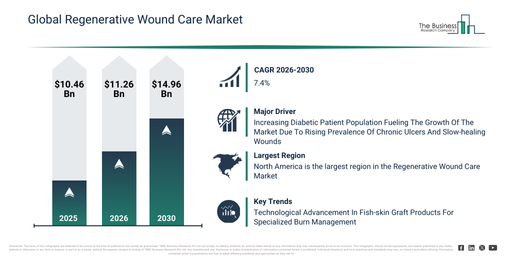
    The regenerative wound care market has seen substantial growth in recent years. It is projected to expand from $10.46 billion in 2025 to $11.26 billion in 2026, recording a compound annual growth rate (CAGR) of 7.6%. The historical growth of this market can be attributed to the increasing prevalence of chronic wounds, an expanding geriatric population, the rising incidence of diabetes and obesity, the development of healthcare infrastructure, and growing awareness of advanced wound care therapies.

    The regenerative wound care market is anticipated to experience robust expansion over the next few years. It is projected to ascend to $14.96 billion by 2030, exhibiting a compound annual growth rate (CAGR) of 7.4%. This anticipated growth throughout the forecast period is largely attributable to the increasing embrace of regenerative wound care products, a rise in investment directed towards biotechnology startups, the growing integration of artificial intelligence in wound management, the expansion of home healthcare services, and an escalating demand for personalized wound care solutions. Noteworthy trends for the forecast period include technological advancements in bioengineered skin substitutes, innovative strides in stem cell therapies, new developments in growth factor-based treatments, intensified research and development efforts in scaffold-based wound healing, and improvements in wound monitoring device technologies.

    Download A Free Sample Report For Comprehensive Market Insights:

    https://www.thebusinessresearchcompany.com/sample.aspx?id=30723&type=smp

    What Primary Factors Are Fueling The Expansion Of The Regenerative Wound Care Market?

    The growing number of diabetic patients is expected to propel the expansion of the regenerative wound care market in the coming period. This increase in the diabetic patient population refers to the rising worldwide occurrence of diabetes mellitus, a chronic condition frequently linked to complications such as poor circulation and neuropathy, which result in wounds that are difficult to heal. Advances in diabetes management and public awareness are driving the identification of this expanding diabetic patient group, underscoring the vital need for advanced therapies to prevent complications like foot ulcers. Regenerative wound care assists in creating effective healing environments by employing bioactive materials and cellular therapies to stimulate tissue repair and closure in complex diabetic wounds. For instance, in July 2025, according to the International Diabetes Federation, a Belgium-based umbrella organization of national diabetes associations, in 2024, diabetes affected 11.10% of the global population, corresponding to 589 million adults, and is projected to reach 12.95% and 853 million by 2050. Therefore, the increasing diabetic patient population is driving the growth of the regenerative wound care market.

    How Is Segment Classification Applied In The Regenerative Wound Care Market?

    The regenerative wound care market covered in this report is segmented –

    1) By Product Type: Autologous Stem Cells, Biological Skin Substitutes, Tissue Or Multiple Tissue Platforms, Fetal Skin, Regenerative Wound Care Devices, Other Product Types

    2) By Wound Type: Chronic Wounds, Diabetic Foot Ulcers (DFUs), Venous Leg Ulcers (VLUs), Pressure Ulcers (Injuries), Acute Wounds, Surgical And Traumatic Wounds, Burn Wounds

    3) By Technology: Active Therapies, Scaffold-Based Therapies, Combination Products

    4) By End Users: Hospitals, Ambulatory Surgical Centers, Burn Care Centers And Wound Clinics, Other End Users

    Subsegments:

    1) By Autologous Stem Cells: Bone Marrow Derived Stem Cells, Adipose Derived Stem Cells, Peripheral Blood Stem Cells

    2) By Biological Skin Substitutes: Allogeneic Skin, Xenogeneic Skin, Composite Skin Substitutes

    3) By Tissue Or Multiple Tissue Platforms: Extracellular Matrix, Amniotic Membrane, Collagen Matrix

    4) By Fetal Skin: Amniotic Epithelial Cells, Dermal Fibroblasts

    5) By Regenerative Wound Care Devices: Negative Pressure Wound Therapy Devices, Bioengineered Tissue Scaffolds, Wound Dressings

    6) By Other Product Types: Growth Factors, Platelet Rich Plasma, Cellular Therapy Products

    What Trends Are Driving Changes In The Regenerative Wound Care Market?

    Leading companies in the regenerative wound care market are prioritizing technological advancements, such as the introduction of specialized fish-skin graft products that are processed to retain their natural structure and omega-3 fatty acids. These advanced grafts are engineered to treat complex burn wounds by providing a bioactive scaffold that supports cellular growth and tissue regeneration, while also being tailored for specific anatomical areas like the hands to improve application efficiency and functional recovery. For example, in January 2023, Kerecis Limited, an Iceland-based medical device company, announced the launch of two new products for the burn market: GraftGuide Mano and GraftGuide Micro. These products incorporate full-thickness fish dermis, processed using Kerecis’ proprietary EnviroIntact method, which preserves the skin’s original 3D structure and fatty acids. GraftGuide Mano is specifically formulated to cover the intricate 3D structure of the hand, simplifying the management of second-degree burns.

    Who Are The Leading Firms Participating In The Regenerative Wound Care Market?

    Major companies operating in the regenerative wound care market are Stryker Corporation, Smith & Nephew plc, Convatec Group plc, Molnlycke Health Care AB, Integra LifeSciences Holdings Corporation, Angelini Pharma SpA, Organogenesis Holdings Inc.., MiMedx Group Inc., Fidia Farmaceutici SpA, Vericel Corporation, BioHorizons IPH Inc., Anika Therapeutics Inc., Kerecis Ltd., AVITA Medical Inc., Aroa Biosurgery Limited, Skye Biologics Inc., Tissue Regenix Group plc, PolarityTE Inc., Regenio, Acelity L.P. Inc.

    Access The Complete Regenerative Wound Care Market Report:

    https://www.thebusinessresearchcompany.com/report/regenerative-wound-care-market-report

    Which Geographic Region Represents The Largest Regenerative Wound Care Market Share?

    North America was the largest region in the regenerative wound care market in 2025. Asia-Pacific is expected to be the fastest-growing region in the forecast period. The regions covered in the regenerative wound care market report are Asia-Pacific, South East Asia, Western Europe, Eastern Europe, North America, South America, Middle East, Africa.

    Access a Customized Regenerative Wound Care Market Report for Deeper Competitive Insights

    https://www.thebusinessresearchcompany.com/sample.aspx?id=30723&type=smp

    Get in touch with us:

    The Business Research Company: https://www.thebusinessresearchcompany.com/

    Americas: +1 310-496-7795

    Asia: +44 7882 955267 & +91 8897263534

    Europe: +44 7882 955267

    Email us at: marketing@tbrc.info

    Follow us on:

    LinkedIn: https://in.linkedin.com/company/the-business-research-company

    YouTube: https://www.youtube.com/channel/UC24_fI0rV8cR5DxlCpgmyFQ

    Global Market Model: https://www.thebusinessresearchcompany.com/global-market-model
  • Recommerce Marketplaces for Retailers Market Trends And Growth Outlook Across The 2026–2030 Forecast Period

    Recommerce Marketplaces for Retailers Market Trends And Growth Outlook Across The 2026–2030 Forecast Period

    The Business Research Company’s 2026 market reports feature advanced enhancements such as market attractiveness analysis, total addressable market evaluation, company benchmarking matrices, interactive Excel dashboards, expanded supply chain intelligence, emerging startup coverage, and detailed product insights, delivering more actionable and strategically valuable research.

    What Is The Expected Market Size Of The Recommerce Marketplaces for Retailers Market In 2026 And How Much Will It Reach By 2030?

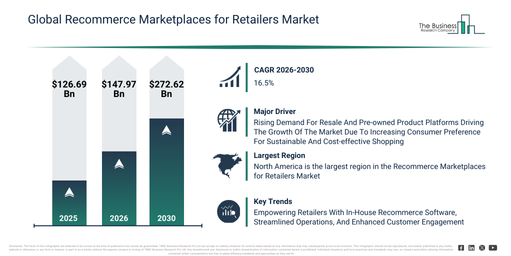
    The market size for recommerce marketplaces designed for retailers has expanded significantly in recent years. It is forecasted to increase from $126.69 billion in 2025 to $147.97 billion in 2026, achieving a compound annual growth rate (CAGR) of 16.8%. The historical expansion of this market can be attributed to a combination of factors, including the increasing adoption of online shopping by consumers, a heightened demand for convenience and rapid delivery, growing smartphone and internet penetration, an expanded variety of products available on e-commerce platforms, and strengthened trust in digital payment systems.

    The market size for recommerce marketplaces designed for retailers is set for considerable expansion in the near future. It is projected to reach $272.62 billion by 2030, demonstrating a compound annual growth rate (CAGR) of 16.5%. This anticipated growth can be attributed to a heightened focus on personalization and AI-powered recommendations, the increasing implementation of omnichannel retail strategies, greater investments in logistics and supply chain automation, the broadening of cross-border e-commerce, and a growing emphasis on sustainability and circular economy practices. Significant trends expected during this period include advancements in artificial intelligence for demand forecasting and personalized offerings, innovations in augmented reality and virtual try-on experiences, developments in automated warehousing and robotics, ongoing research and development in secure payment and blockchain technologies, and the emergence of hyperlocal delivery along with same-day shipping models.

    Download A Free Sample Report For Comprehensive Market Insights:

    https://www.thebusinessresearchcompany.com/sample.aspx?id=30722&type=smp

    Which Strategic Drivers Are Supporting The Recommerce Marketplaces for Retailers Market Development?

    The increasing need for platforms dealing with previously owned and resale items is anticipated to drive the expansion of the recommerce marketplaces for retailers market in the future. These platforms, focused on resale and pre-owned products, signify a growing consumer inclination to acquire and divest items that have had prior ownership, fueled by evolving perspectives on worth, ecological responsibility, and economic viability. Shoppers are showing greater interest in resale and pre-owned platforms because they are looking for budget-friendly alternatives and emphasizing eco-friendly consumption habits due to wider economic challenges and environmental worries. The recommerce marketplaces for retailers bolster resale and pre-owned product platforms by establishing organized, verified resale avenues, broadening availability of various pre-owned goods, and simplifying transactions to meet consumer demands. As an illustration, data from ThredUp Inc., a US-based online resale platform, indicates that in 2025, 63% of consumers who acquired secondhand apparel in 2023 did so online, marking an increase of 17 percentage points from 2022. Additionally, 52% of all consumers engaged in secondhand apparel shopping, and new customers are projected to contribute 65% of the additional secondhand expenditure by 2028, with Generation Z and Millennials making up 65% of this group, which is a 5 percentage points rise from 2022. Consequently, the increased demand for resale and pre-owned product platforms is propelling the expansion of the recommerce marketplaces for retailers market.

    What Are The Core Segment Classifications In The Recommerce Marketplaces for Retailers Market?

    The recommerce marketplaces for retailers market covered in this report is segmented –

    1) By Product Type: Apparel And Footwear, Electronics, Home Goods, Books And Media, Luxury Goods, Other Product Types

    2) By Business Model: Business-To-Business (B2B), Business-To-Consumer (B2C), Consumer-To-Consumer (C2C)

    3) By Platform: Online, Offline

    4) By End-User: Retailers, Brands, Consumers

    Subsegments:

    1) By Apparel And Footwear: Casual Wear, Formal Wear, Sportswear, Footwear, Accessories, Outerwear

    2) By Electronics: Smartphones, Laptops, Tablets, Televisions, Cameras, Wearable Devices, Home Appliances

    3) By Home Goods: Furniture, Home Decor, Kitchenware, Bedding And Linen, Lighting, Storage Solutions

    4) By Books And Media: Books, Magazines, Music Media, Movies, Video Games, Educational Materials

    5) By Luxury Goods: Designer Clothing, Luxury Handbags, Watches, Jewelry, Footwear, Accessories

    6) By Other Product Types: Sports Equipment, Toys And Games, Baby Products, Pet Supplies, Collectibles, Miscellaneous Items

    Which Trends Are Shaping The Recommerce Marketplaces for Retailers Market Landscape?

    Leading companies in the recommerce marketplaces for retailers market are focusing on developing advanced technology, such as proprietary in-house software, to improve operational efficiency, inventory management, and the overall customer experience in second-hand retail. In-house software refers to digital platforms owned and maintained by a company for managing core business processes internally, allowing for greater customization, control, and better integration with existing systems. For example, in May 2024, BuyBay GmbH, an e-commerce solutions provider based in Germany, launched its in-house recommerce software specifically designed for retailers. This platform enables businesses to efficiently manage returned, pre-owned, or refurbished products, integrate them into their sales channels, and optimize the resale process. The software helps retailers streamline recommerce operations, enhance customer satisfaction, and unlock new revenue streams from sustainable product lifecycles.

    Which Companies Are Engaged In The Recommerce Marketplaces for Retailers Market Environment?

    Major companies operating in the recommerce marketplaces for retailers market are Farfetch UK Limited, Aptos Inc., ThredUp Inc., Upstream Commerce Ltd., Trove Recommerce Inc., Recommerce Group SAS, Yerdle Recommerce Services, Archive Resale Inc., Reflaunt S.A., Recurate Inc., reverse.supply GmbH, Troquer S.A. de C.V., ResaleAI Inc., Save Your Wardrobe Ltd., SuperCircle Inc., RecommerceX Ltd., Reshop Inc., Circularity.io, Sellier Knightsbridge Ltd., Sort A Brick Ltd.

    Access The Complete Recommerce Marketplaces for Retailers Market Report:

    https://www.thebusinessresearchcompany.com/report/recommerce-marketplaces-for-retailers-market-report

    Which Region Leads The Recommerce Marketplaces for Retailers Market By Size?

    North America was the largest region in the recommerce marketplaces for retailers market in 2025. Asia-Pacific is expected to be the fastest-growing region in the forecast period. The regions covered in the recommerce marketplaces for retailers market report are Asia-Pacific, South East Asia, Western Europe, Eastern Europe, North America, South America, Middle East, Africa.

    Access a Customized Recommerce Marketplaces for Retailers Market Report for Deeper Competitive Insights

    https://www.thebusinessresearchcompany.com/sample.aspx?id=30722&type=smp

    Get in touch with us:

    The Business Research Company: https://www.thebusinessresearchcompany.com/

    Americas: +1 310-496-7795

    Asia: +44 7882 955267 & +91 8897263534

    Europe: +44 7882 955267

    Email us at: marketing@tbrc.info

    Follow us on:

    LinkedIn: https://in.linkedin.com/company/the-business-research-company

    YouTube: https://www.youtube.com/channel/UC24_fI0rV8cR5DxlCpgmyFQ

    Global Market Model: https://www.thebusinessresearchcompany.com/global-market-model
  • Psychological Healing Service Market Expected To Witness Revenue Growth Toward $267.24 Billion By 2030

    Psychological Healing Service Market Expected To Witness Revenue Growth Toward $267.24 Billion By 2030

    The Business Research Company’s 2026 market reports feature advanced enhancements such as market attractiveness analysis, total addressable market evaluation, company benchmarking matrices, interactive Excel dashboards, expanded supply chain intelligence, emerging startup coverage, and detailed product insights, delivering more actionable and strategically valuable research.

    How Much Larger Will The Psychological Healing Service Market Become By 2030 Compared To 2026?

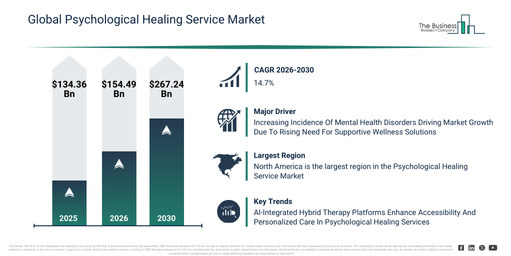
    The market size for psychological healing services has experienced rapid expansion in recent years. It is anticipated to increase from $134.36 billion in 2025 to $154.49 billion in 2026, achieving a compound annual growth rate (CAGR) of 15.0%. The historical growth in this sector can be attributed to factors such as increased mental health awareness, the rising adoption of online therapy platforms, a greater incidence of stress and anxiety disorders, the expansion of corporate mental wellness programs, and the growth of mental health initiatives by governments and NGOs.

    The psychological healing service market is projected for substantial expansion in the coming years. By 2030, this market is anticipated to reach $267.24 billion, demonstrating a compound annual growth rate (CAGR) of 14.7%. This expansion during the forecast period is fueled by several factors, including a greater demand for individualized therapy options, the increasing adoption of artificial intelligence and digital instruments in therapeutic practices, a heightened emphasis on preventative mental health, broader mental health insurance coverage, and enhanced cooperation between healthcare providers and digital platforms. Key trends anticipated over this period encompass significant technological improvements in telehealth platforms, novel developments in AI-driven mental health solutions, progress in immersive virtual reality and augmented reality therapies, ongoing research and development into integrative and holistic therapeutic approaches, and breakthroughs in data-informed personalized mental wellness tools.

    Download A Free Sample Report For Comprehensive Market Insights:

    https://www.thebusinessresearchcompany.com/sample.aspx?id=30713&type=smp

    What Core Drivers Are Transforming The Psychological Healing Service Market?

    The increasing incidence of mental health disorders is projected to drive the growth of the psychological healing service market moving forward. Mental health disorders are defined as a wide array of conditions affecting an individual’s mood, thinking, and behavior, often leading to distress or impaired daily functioning. The increasing prevalence of mental disorders arises from heightened exposure to chronic stress and adverse life experiences that can overwhelm personal coping mechanisms and trigger psychological dysfunction. Psychological healing services assist in addressing mental health disorders by offering structured assessment, counseling, and evidence-based therapies that help individuals process emotions, develop coping skills, and enhance overall psychological resilience. For instance, in October 2025, information from the Institute for Health Metrics and Evaluation, a US-based health research organization, showed that in 2023, mental disorders affected 15% of the global population, contributing to 17% of all years lived with disability worldwide, thereby emphasizing the growing impact of mental health issues. Therefore, the significant prevalence of mental disorders is propelling the expansion of the psychological healing service market.

    How Is The Psychological Healing Service Market Distributed Across Key Segments?

    The psychological healing service market covered in this report is segmented –

    1) By Therapy Type: Cognitive Behavioral Therapy, Psychoanalysis, Humanistic Therapy, Integrative Therapy

    2) By Target Disorder Or Focus Area: Anxiety And Depression, Stress Management And Burnout Trauma, Addiction, Eating Disorders, Relationship

    3) By Duration Of Service: Short-Term Therapy, Long-Term Therapy, Crisis Intervention

    4) By Target Audience: Adults, Children, Adolescents, Elderly

    Subsegments:

    1) By Cognitive Behavioral Therapy: Behavioral Activation, Exposure Therapy, Cognitive Restructuring, Problem-Solving Therapy, Dialectical Behavior Approach

    2) By Psychoanalysis: Free Association Method, Dream Interpretation Method, Transference Analysis, Object Relations Approach, Ego Psychology Approach

    3) By Humanistic Therapy: Person Centered Therapy, Gestalt Therapy, Existential Therapy, Emotion Focused Therapy, Client Directed Approach

    4) By Integrative Therapy: Multimodal Therapy, Holistic Therapy, Mind Body Integration, Eclectic Therapy, Unified Psychotherapy Approach

    Which Trends Are Influencing The Expansion Of The Psychological Healing Service Market?

    Leading companies within the psychological healing service market are prioritizing the creation of sophisticated platforms, including those featuring AI-integrated hybrid therapy, aiming to improve the reach, consistency, and tailored nature of mental health assistance. These AI-integrated hybrid therapy platforms merge artificial intelligence functionalities with structured engagement from human clinicians, providing extensive digital assistance, custom therapeutic journeys, automated evaluations, live communication, and ongoing patient involvement during periods between scheduled sessions. For example, in November 2024, Wysa Ltd, a digital mental health technology company based in the UK, introduced Wysa Copilot. This platform, an AI-integrated hybrid combining digital and human therapy, incorporates AI-powered tools, secure real-time and non-simultaneous communication, and automated tracking to assist clinicians in handling patient loads more effectively and sustaining patient interaction outside conventional therapy sessions. Furthermore, the platform offers personalized treatment paths and evidence-based resources assigned by clinicians, designed to help users address symptoms like anxiety and depression in the intervals between professional appointments.

    Which Organizations Are Operating Within The Psychological Healing Service Market?

    Major companies operating in the psychological healing service market are UnitedHealth Group Incorporated, CVS Health Corporation, Universal Health Services Inc., The MENTOR Network, Acadia Healthcare Company Inc., BetterHelp Inc., Spring Health Inc., Lyra Health Inc., CareTech Holdings plc, Magellan Health Inc., ComPsych Corporation, Ginger.io Inc., Hazelden Betty Ford Foundation, Path Mental Health Inc., Talkspace Inc., Centerstone, Brightside Health Inc., Ginger.io Inc., SonderMind Inc., Modern Health Inc., Two Chairs Inc., Vita Health Group Ltd., Kooth plc, Vita Health Group Ltd., Amaha Health Private Limited

    Access The Complete Psychological Healing Service Market Report:

    https://www.thebusinessresearchcompany.com/report/psychological-healing-service-market-report

    Which Region Contributes The Most To The Psychological Healing Service Market?

    North America was the largest region in the psychological healing service market in 2025. Asia-Pacific is expected to be the fastest-growing region in the forecast period. The regions covered in the psychological healing service market report are Asia-Pacific, South East Asia, Western Europe, Eastern Europe, North America, South America, Middle East, Africa.

    Access a Customized Psychological Healing Service Market Report for Deeper Competitive Insights

    https://www.thebusinessresearchcompany.com/sample.aspx?id=30713&type=smp

    Get in touch with us:

    The Business Research Company: https://www.thebusinessresearchcompany.com/

    Americas: +1 310-496-7795

    Asia: +44 7882 955267 & +91 8897263534

    Europe: +44 7882 955267

    Email us at: marketing@tbrc.info

    Follow us on:

    LinkedIn: https://in.linkedin.com/company/the-business-research-company

    YouTube: https://www.youtube.com/channel/UC24_fI0rV8cR5DxlCpgmyFQ

    Global Market Model: https://www.thebusinessresearchcompany.com/global-market-model
  • Project Scheduling Artificial Intelligence (AI) Market Industry Outlook 2026–2030 Highlighting Growth Momentum And Market Trends

    Project Scheduling Artificial Intelligence (AI) Market Industry Outlook 2026–2030 Highlighting Growth Momentum And Market Trends

    The Business Research Company’s 2026 market reports feature advanced enhancements such as market attractiveness analysis, total addressable market evaluation, company benchmarking matrices, interactive Excel dashboards, expanded supply chain intelligence, emerging startup coverage, and detailed product insights, delivering more actionable and strategically valuable research.

    What Growth In Market Value Is Anticipated For The Project Scheduling Artificial Intelligence (AI) Market Between 2026 And 2030?

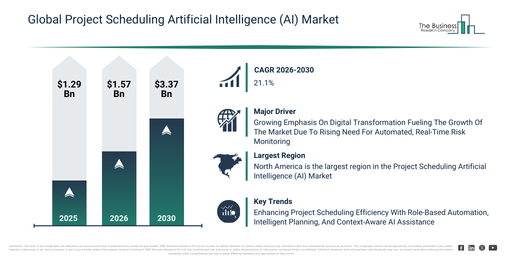
    The project scheduling artificial intelligence (AI) market size has shown substantial exponential growth in recent years. Its valuation is projected to increase from $1.29 billion in 2025 to $1.57 billion in 2026, representing a compound annual growth rate (CAGR) of 21.4%. The expansion observed in the past can be linked to the rising adoption of digital project management instruments, the escalating demand for efficient scheduling in multifaceted projects, the increasing application of data analytics for planning, the broadened integration of automation in operations, and a heightened emphasis on optimizing expenses and timelines.

    The market size for project scheduling artificial intelligence (AI) is projected to experience rapid expansion over the coming years. By 2030, this market is anticipated to reach $3.37 billion, demonstrating a compound annual growth rate (CAGR) of 21.1%. This projected growth during the forecast period stems from factors such as an increasing need for predictive scheduling capabilities, the wider adoption of artificial intelligence (AI)-powered workflows, the expanded application of machine learning in resource allocation, a heightened emphasis on obtaining real-time project visibility, and the broader integration of intelligent automation into project planning processes. Significant trends expected during this period involve advancements in artificial intelligence (AI)-based scheduling technologies, breakthroughs in predictive project planning systems, progress in intelligent automation platforms, ongoing research and development aimed at machine learning optimization, and the emergence of improvements in autonomous scheduling solutions.

    Download A Free Sample Report For Comprehensive Market Insights:

    https://www.thebusinessresearchcompany.com/sample.aspx?id=30712&type=smp

    Which Growth Factors Are Strengthening The Project Scheduling Artificial Intelligence (AI) Market Landscape?

    The increasing focus on digital transformation is anticipated to boost the expansion of the project scheduling artificial intelligence (AI) market in the future. Digital transformation involves the implementation of digital technologies to refine business operations, elevate customer interactions, and foster innovation throughout an organization. The rise of digital transformation stems from the escalating demand to provide quicker, more tailored, and uninterrupted customer experiences in order to maintain competitiveness. Project scheduling artificial intelligence (AI) bolsters digital transformation through the automation of planning tasks, the optimization of resource distribution, and the forecasting of project durations. It elevates operational effectiveness and decision-making by supplying immediate insights, minimizing hold-ups, and facilitating data-informed oversight of intricate endeavors. As an illustration, in July 2024, data from the Office for National Statistics, a government body in the UK, indicated that the digital infrastructure program secured a $535 million (£434 million) investment by 2022, alongside an extra $907 million (£736 million) earmarked for the years 2023 through 2025. Consequently, the heightened focus on digital aspects is propelling the expansion of the project scheduling artificial intelligence (AI) market.

    How Does Segment Analysis Break Down The Project Scheduling Artificial Intelligence (AI) Market Structure?

    The project scheduling artificial intelligence (AI) market covered in this report is segmented –

    1) By Component: Software, Services

    2) By Deployment Mode: Cloud, On-Premises

    3) By Enterprise Size: Large Enterprises, Small And Medium Enterprise

    4) By Applications: Construction, Information Technology And Telecommunication, Manufacturing, Healthcare, Banking, Financial Services, And Insurance, Education, Others Applications

    5) By End-Users: Enterprises, Project Management Offices, Consultants, Others End Users

    Subsegments:

    1) By Software: Project Planning Software, Task Prioritization Software, Resource Management Software, Predictive Scheduling Software, Workflow Automation Software, Risk Forecasting Software

    2) By Services: Implementation Services, Integration Services, Consulting Services, Support And Maintenance Services, Training And Education Services, Process Optimization Services

    What Trends Are Impacting The Project Scheduling Artificial Intelligence (AI) Market?

    Major companies operating in the project scheduling artificial intelligence (AI) market are increasingly focusing on developing advanced AI-powered functionalities, such as AI-powered assistants, with the aim of boosting productivity, refining decision-making, and reducing manual administrative effort. AI-powered assistants are characterized as integrated tools within software platforms that leverage artificial intelligence to automate workflows, generate content, and analyze project data. For instance, in May 2023, ClickUp Inc., a US-based productivity and project management software company, introduced its AI-powered assistant, ClickUp AI. This native, role-based AI assistant integrates directly into the workspace, providing over 100 optimized tools for various functions, which enables teams to promptly generate summaries, enhance writing, and structure content like tables and meeting agendas, thereby accelerating project execution and decreasing manual administrative overhead. The solution embeds AI directly into workflows to support task prioritization, project timelines, documentation, summaries, and action item generation, allowing teams to plan and execute projects with greater efficiency.

    Who Are The Businesses Driving Activity In The Project Scheduling Artificial Intelligence (AI) Market?

    Major companies operating in the project scheduling artificial intelligence (AI) market are Microsoft Corporation, Siemens Aktiengesellschaft, International Business Machines Corporation, Oracle Corporation, SAP SE, ServiceNow Inc., Adobe Inc., Autodesk Inc., Atlassian Corporation plc, Trimble Inc., Zoho Corporation Pvt. Ltd., Procore Technologies Inc., Monday.com Ltd., Asana Inc., Airtable Inc., Redbooth Inc., Mango Technologies Inc., nTask Inc., Easy Projects Inc., Float App Ltd.

    Access The Complete Project Scheduling Artificial Intelligence (AI) Market Report:

    https://www.thebusinessresearchcompany.com/report/project-scheduling-artificial-intelligence-ai-market-report

    Which Regional Market Leads The Project Scheduling Artificial Intelligence (AI) Market?

    North America was the largest region in the project scheduling artificial intelligence (AI) market in 2025. Asia-Pacific is expected to be the fastest-growing region in the forecast period. The regions covered in the project scheduling artificial intelligence (AI) market report are Asia-Pacific, South East Asia, Western Europe, Eastern Europe, North America, South America, Middle East, Africa.

    Access a Customized Project Scheduling Artificial Intelligence (AI) Market Report for Deeper Competitive Insights

    https://www.thebusinessresearchcompany.com/sample.aspx?id=30712&type=smp

    Get in touch with us:

    The Business Research Company: https://www.thebusinessresearchcompany.com/

    Americas: +1 310-496-7795

    Asia: +44 7882 955267 & +91 8897263534

    Europe: +44 7882 955267

    Email us at: marketing@tbrc.info

    Follow us on:

    LinkedIn: https://in.linkedin.com/company/the-business-research-company

    YouTube: https://www.youtube.com/channel/UC24_fI0rV8cR5DxlCpgmyFQ

    Global Market Model: https://www.thebusinessresearchcompany.com/global-market-model
  • Increasing Adoption Of Surge In Prevalence Of Neurological Disorders Fueling Growth Of The Neurology Services Market Through Increased Demand For Specialized Diagnostics, Treatment, And Continuous Care Is Influencing The Neurology Services Market

    Increasing Adoption Of Surge In Prevalence Of Neurological Disorders Fueling Growth Of The Neurology Services Market Through Increased Demand For Specialized Diagnostics, Treatment, And Continuous Care Is Influencing The Neurology Services Market

    The Business Research Company’s 2026 market reports feature advanced enhancements such as market attractiveness analysis, total addressable market evaluation, company benchmarking matrices, interactive Excel dashboards, expanded supply chain intelligence, emerging startup coverage, and detailed product insights, delivering more actionable and strategically valuable research.

    By 2030, How Much Growth In Market Size Is Expected For The Neurology Services Market?

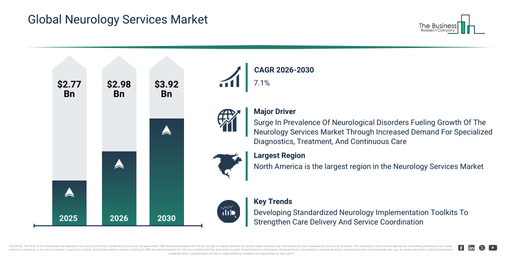
    The market for neurology services has experienced significant growth in recent years. Its valuation is projected to increase from $2.77 billion in 2025 to $2.98 billion by 2026, exhibiting a compound annual growth rate (CAGR) of 7.4%. This historical development is primarily due to several factors, including the increasing incidence of stroke and epilepsy, the expansion of the elderly demographic, progress in neuroimaging technologies, higher expenditure on healthcare, and the proliferation of specialized neurology clinics.

    The neurology services market is projected for significant expansion in the coming years, set to reach $3.92 billion by 2030, demonstrating a compound annual growth rate (CAGR) of 7.1%. This anticipated growth during the forecast period is fueled by several factors, including the surging demand for tele-neurology services, the escalating prevalence of chronic neurological conditions, increased funding for neuroscience research, the integration of artificial intelligence into neurological diagnostics, and the broader availability of outpatient neurology services. Key trends emerging over the forecast period encompass enhanced deployment of remote neurological monitoring, the incorporation of AI-powered decision support systems, a rising inclination towards minimally invasive neurosurgical interventions, a sharper emphasis on customized neurology care, and the expansion of comprehensive multidisciplinary neurorehabilitation initiatives.

    Download A Free Sample Report For Comprehensive Market Insights:

    https://www.thebusinessresearchcompany.com/sample.aspx?id=30677&type=smp

    What Primary Factors Are Fueling The Expansion Of The Neurology Services Market?

    The increasing occurrence of neurological conditions is anticipated to drive expansion in the neurology services market in the future. These disorders encompass conditions impacting the brain, spinal cord, nerves, or muscles, such as stroke, Alzheimer’s disease, epilepsy, migraine, and other nervous system ailments, representing a primary source of disability and disease burden globally. The rise in neurological conditions can be attributed to an aging global population and enhanced survival from chronic illnesses, resulting in more individuals needing long-term neurological care. Neurology Services contribute to public health by offering specialized diagnostic tools, sophisticated imaging, effective therapeutic treatments, and ongoing patient monitoring for those suffering from neurological conditions. An illustration of this trend is the finding, reported by the World Health Organization (WHO), a Switzerland-based health body, in October 2025, that more than 3 billion people globally were experiencing neurological conditions, impacting over 40 % of the world’s population. This highlights a significant disease burden and a pressing demand for greater specialized neurological care services across the globe. Consequently, the growing incidence of neurological conditions is fueling the expansion of the neurology services market.

    What Are The Core Segment Classifications In The Neurology Services Market?

    The neurology services market covered in this report is segmented –

    1) By Service: Diagnostic Service, Monitoring Service, Therapeutics Service, Surgical Service

    2) By Indication: Attention-deficit And Hyperactivity Disorder (ADHD), Mental Health, Stroke, Concussion, Dementia, Multiple Sclerosis, Psychotic Disorder, Other Neurological Diseases

    3) By Payment Model: Fee-For-Service, Value-Based Care And Bundled Payments, Capitation Models

    4) By End User: Hospitals And Specialty Clinics, Outpatient Neurology Centers, Rehabilitation Centers, Home Healthcare Services, Telemedicine Platforms

    Subsegments:

    1) By Diagnostic Service: Neurological Imaging, Electroencephalography Evaluation, Electromyography Assessment, Neurovascular Evaluation, Cognitive Function Testing, Neuropsychological Assessment

    2) By Monitoring Service: Neurological Intensive Care Monitoring, Intraoperative Neuromonitoring, Long-Term Epilepsy Monitoring, Neurophysiological Monitoring, Remote Neurological Monitoring

    3) By Therapeutics Service: Pharmacological Therapy, Physical Therapy, Occupational Therapy, Speech And Language Therapy, Behavioral Therapy, Cognitive Rehabilitation Therapy

    4) By Surgical Service: Minimally Invasive Neurosurgery, Functional Neurosurgery, Stereotactic Neurosurgery

    Which Trends Are Influencing The Direction Of The Neurology Services Market?

    Leading companies in the neurology services market are prioritizing the development of standardized planning and implementation resources, such as comprehensive neurology toolkits, to fortify neurology care systems, enhance service coordination, and align national healthcare delivery with global neurological health goals. Standardized neurology implementation toolkits are structured guidance frameworks that assist policymakers and healthcare planners in designing, prioritizing, and integrating neurological services across health systems, ensuring consistent diagnosis, treatment, and long-term care for neurological disorders. For instance, in July 2024, the World Health Organization (WHO), an intergovernmental health organization based in Switzerland, launched a neurological disorders implementation toolkit to support countries in improving diagnosis, treatment, and care provision as part of the Intersectoral Global Action Plan on Epilepsy and Other Neurological Disorders. This toolkit offers practical guidance on governance, service integration, workforce planning, and monitoring, enabling countries to systematically enhance national neurology services and strengthen health system responses to neurological conditions.

    Who Are The Leading Firms Participating In The Neurology Services Market?

    Major companies operating in the neurology services market are HCA Healthcare Inc., Ascension Health plc, Mass General Brigham Inc., University of Pittsburgh Medical Center, Banner Health, Mayo Clinic, Ramsay Health Care Limited, NYU Langone Health, Cleveland Clinic Foundation, Mount Sinai Health System, Johns Hopkins University School of Medicine, UCLA Health, Cedars-Sinai Medical Center, Teladoc Health Inc., Stanford Health Care, Apollo Hospitals Enterprise Limited, Fortis Healthcare Limited, Narayana Health Limited, Aster DM Healthcare Limited, American Well Corporation, Manipal Health Enterprises, The Walton Centre NHS Foundation, Barrow Neurological Institute, NeuroSpine Group

    Access The Complete Neurology Services Market Report:

    https://www.thebusinessresearchcompany.com/report/neurology-services-market-report

    Which Region Has The Strongest Presence In The Neurology Services Market?

    North America was the largest region in the neurology services market in 2025. Asia-Pacific is expected to be the fastest-growing region in the forecast period. The regions covered in the neurology services market report are Asia-Pacific, South East Asia, Western Europe, Eastern Europe, North America, South America, Middle East, Africa.

    Access a Customized Neurology Services Market Report for Deeper Competitive Insights

    https://www.thebusinessresearchcompany.com/sample.aspx?id=30677&type=smp

    Get in touch with us:

    The Business Research Company: https://www.thebusinessresearchcompany.com/

    Americas: +1 310-496-7795

    Asia: +44 7882 955267 & +91 8897263534

    Europe: +44 7882 955267

    Email us at: marketing@tbrc.info

    Follow us on:

    LinkedIn: https://in.linkedin.com/company/the-business-research-company

    YouTube: https://www.youtube.com/channel/UC24_fI0rV8cR5DxlCpgmyFQ

    Global Market Model: https://www.thebusinessresearchcompany.com/global-market-model
  • Zygomatic And Pterygoid Implants Market Forecast Covering Industry Demand And Market Evolution

    Zygomatic And Pterygoid Implants Market Forecast Covering Industry Demand And Market Evolution

    The Business Research Company’s 2026 market reports feature enhanced tools like market attractiveness analysis, TAM assessment, and company scoring matrices, along with interactive dashboards, deeper supply chain insights, and startup coverage strengthening the depth, usability, and strategic value of insights.

    What Is The Expected Market Value Outlook For The Zygomatic And Pterygoid Implants Market Through 2030?

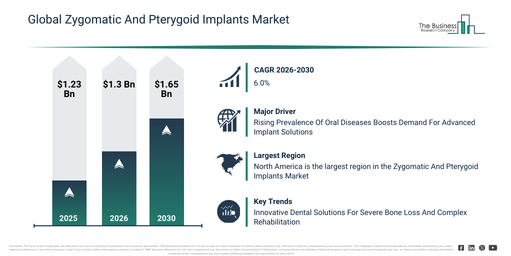
    The market for zygomatic and pterygoid implants has experienced robust growth recently. This market is projected to expand from $1.23 billion in 2025 to $1.3 billion in 2026, demonstrating a compound annual growth rate (CAGR) of 6.3%. Historically, this expansion has been driven by factors such as the increasing occurrence of severe maxillary bone loss, heightened awareness of alternative implant options, increased use of dental implants among elderly patients, the proliferation of specialized dental clinics, and advancements in implant material design.

    The market for zygomatic and pterygoid implants is projected to experience robust expansion over the coming years. This market is anticipated to reach a valuation of $1.65 billion by 2030, demonstrating a compound annual growth rate (CAGR) of 6.0%. Factors contributing to this growth during the projected period include a heightened need for complete-arch restoration options, greater uptake of digital dentistry methods, increased capital expenditure in sophisticated dental implant systems, a stronger inclination towards procedures that avoid bone grafting, and the broadening availability of implant-supported prosthetics. Key developments expected within this timeframe encompass wider implementation of innovative implant insertion methods, more frequent utilization of digital tools for surgical planning, an escalating requirement for immediate loading implant solutions, the proliferation of specialized training initiatives for dental implants, and a sharpened emphasis on less invasive implant interventions.

    Download A Free Sample Report For Comprehensive Market Insights:

    https://www.thebusinessresearchcompany.com/sample.aspx?id=21010&type=smp

    What Primary Factors Are Fueling The Expansion Of The Zygomatic And Pterygoid Implants Market?

    The increasing incidence of oral diseases is projected to drive the expansion of the zygomatic and pterygoid implants market in the future. These conditions encompass various ailments impacting the oral cavity, such as cavities, periodontal disease, infections, and oral cancer, frequently resulting from inadequate hygiene, dietary choices, or pre-existing health problems. The growth in oral diseases stems from contributors like insufficient oral hygiene, diets rich in sugar, limited access to dental services, and growing consumption of tobacco and alcohol. Zygomatic and pterygoid implants offer a solution for oral diseases by offering robust support for dental prosthetics in individuals experiencing significant bone loss, thereby enhancing general oral health and reinstating functionality where conventional implants are unsuitable. For example, data from March 2025, published by the World Health Organization (WHO), a Switzerland-based intergovernmental health organization, indicated that approximately 3.7 billion people globally were estimated to be affected by oral diseases, with over 1 billion individuals worldwide suffering from severe periodontal disease, and total tooth loss observed in about 7% of adults aged 20 years and older, increasing to roughly 23% for those aged 60 years or above. Consequently, the expanding occurrence of oral diseases is fostering expansion in the zygomatic and pterygoid implants market.

    How Does Segment Analysis Break Down The Zygomatic And Pterygoid Implants Market Structure?

    The zygomatic and pterygoid implants market covered in this report is segmented –

    1) By Type: Zygomatic Implants, Pterygoid Implants, Combined Implants

    2) By Length: Up To 30 Mm, 30–50 Mm, Above 50 Mm

    3) By Application: Maxillary Sinuses, Severe Atrophy Of Maxillary Bone, Other Applications

    4) By End User: Dental Clinics, Hospital Dental Departments, Research Institutions

    Subsegments:

    1) By Zygomatic Implants: Single Zygomatic Implants, Multiple Zygomatic Implants

    2) By Pterygoid Implants: Single Pterygoid Implants, Multiple Pterygoid Implants

    3) By Combined Implants: Zygomatic And Pterygoid Combined Implants, Hybrid Zygomatic And Pterygoid Implant Systems

    What Trends Are Affecting The Growth Of The Zygomatic And Pterygoid Implants Market?

    Leading companies in the zollinger-ellison syndrome treatment market are focused on creating new drugs and obtaining their approval to sustain their market position. Current ZES treatments can lead to considerable side effects, such as damage to the kidneys and liver. Advanced therapies can help mitigate the adverse effects of conventional medications and improve patient outcomes. For instance, in May 2023, Meitheal Pharmaceuticals Inc., a US-based manufacturer of generic injectable products, launched Pantoprazole Sodium for Injection at 40 mg per vial. This is a proton pump inhibitor (PPI) recommended for use in patients with pathological hypersecretory diseases like Zollinger-Ellison (ZE) Syndrome. It reduces excessive gastric acid production by inhibiting the proton pump enzyme (H+/K+ ATPase) in gastric parietal cells, thereby decreasing stomach acid secretion and alleviating symptoms associated with ZE syndrome.

    Who Are The Leading Firms Participating In The Zygomatic And Pterygoid Implants Market?

    Major companies operating in the zygomatic and pterygoid implants market are Straumann Holding AG, Zimmer Biomet Holding Inc., Nobel Biocare, BioHorizons Implant Systems Inc., MIS Implants Technologies Ltd., Southern Implants (Pty) Ltd., Camlog Vertriebs GmbH, Jeil Medical Corporation, Osstem Implant Co Ltd, Megagen Implant Co Ltd, Dentsply Sirona Inc, Bicon Dental Implants, Hiossen Inc, Euroteknika SAS.

    Access The Complete Zygomatic And Pterygoid Implants Market Report:

    https://www.thebusinessresearchcompany.com/report/zygomatic-and-pterygoid-implants-global-market-report

    Which Region Accounts For The Highest Share Of The Zygomatic And Pterygoid Implants Market?

    North America was the largest region in the zygomatic and pterygoid implants market in 2025. Asia-Pacific is expected to be the fastest-growing region in the forecast period. The regions covered in the zygomatic and pterygoid implants market report are Asia-Pacific, South East Asia, Western Europe, Eastern Europe, North America, South America, Middle East, Africa.

    Access Zygomatic And Pterygoid Implants Market Report for Deeper Competitive Insights

    https://www.thebusinessresearchcompany.com/customise?id=21010&type=smp

    Browse Through More Reports Similar to the Global Zygomatic And Pterygoid Implants Market 2026, By The Business Research Company

    Smart Implants Global Market Report 2026

    https://www.thebusinessresearchcompany.com/report/smart-implants-global-market-report

    Cosmetic Implants Global Market Report 2026

    https://www.thebusinessresearchcompany.com/report/cosmetic-implants-global-market-report

    Dental Implants And Prosthetics Global Market Report 2026

    https://www.thebusinessresearchcompany.com/report/dental-implants-and-prosthetics-global-market-report

    Get in touch with us:

    The Business Research Company: https://www.thebusinessresearchcompany.com/

    Americas: +1 310-496-7795

    Asia: +44 7882 955267 & +91 8897263534

    Europe: +44 7882 955267

    Email us at: marketing@tbrc.info

    Follow us on:

    LinkedIn: https://in.linkedin.com/company/the-business-research-company

    YouTube: https://www.youtube.com/channel/UC24_fI0rV8cR5DxlCpgmyFQ

    Global Market Model: https://www.thebusinessresearchcompany.com/global-market-model
  • Zollinger-Ellison Syndrome Treatment Market Trends And Growth Outlook Across The 2026–2030 Forecast Period

    Zollinger-Ellison Syndrome Treatment Market Trends And Growth Outlook Across The 2026–2030 Forecast Period

    The Business Research Company’s 2026 market reports feature enhanced tools like market attractiveness analysis, TAM assessment, and company scoring matrices, along with interactive dashboards, deeper supply chain insights, and startup coverage strengthening the depth, usability, and strategic value of insights.

    How Will The Market Value Of The Zollinger-Ellison Syndrome Treatment Market Increase Between 2026 And 2030?

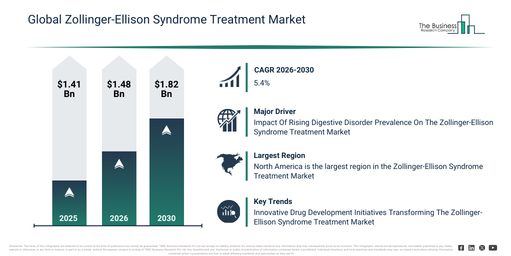
    The zollinger-ellison syndrome treatment market size has shown steady expansion in recent years. It is anticipated to grow from $1.41 billion in 2025 to $1.48 billion in 2026, reflecting a compound annual growth rate (CAGR) of 4.5%. This historical growth can be attributed to an improved clinical understanding of gastrinomas, the availability of effective acid-suppressive drugs, the expansion of diagnostic imaging techniques, the growth of specialty gastroenterology clinics, and the adoption of surgical intervention strategies.

    The zollinger-ellison syndrome treatment market is projected to experience substantial growth in the upcoming years. Its valuation is anticipated to reach $1.82 billion by 2030, demonstrating a compound annual growth rate (CAGR) of 5.4%. This expansion during the forecast period is driven by factors such as the increasing embrace of personalized treatment plans, the rising application of advanced imaging diagnostics, the broadening of multidisciplinary care models, intensifying research into targeted therapies, and a heightened focus on early diagnosis and continuous monitoring. Significant trends expected during this period include a greater reliance on proton pump inhibitors for acid regulation, the wider adoption of sophisticated diagnostic imaging, the expansion of minimally invasive surgical procedures, an increased emphasis on detecting tumors early, and improved systems for long-term disease surveillance.

    Download A Free Sample Report For Comprehensive Market Insights:

    https://www.thebusinessresearchcompany.com/sample.aspx?id=13003&type=smp

    Which Strategic Drivers Are Supporting The Zollinger-Ellison Syndrome Treatment Market Development?

    The rising incidence of digestive conditions is projected to drive expansion in the Zollinger-Ellison syndrome treatment market moving ahead. These disorders encompass various ailments that disrupt the typical operation of the digestive system. The digestive system, also referred to as the gastrointestinal (GI) tract, plays a crucial role in processing food and assimilating nutrients. Therapy for Zollinger-Ellison syndrome (ZES) addresses digestive issues like peptic ulcer disease and gastroesophageal reflux disease (GERD), working by lowering stomach acid production to aid in preventing or managing problems associated with peptic ulcers or acid reflux. As an illustration, in September 2025, data from the UK Health Security Agency (UKHSA), a governmental public health entity, showed that England experienced a 27% rise in laboratory-confirmed Campylobacter infections, with rates climbing from 96.1 per 100,000 people in 2022 to 122.0 per 100,000 in 2024. Consequently, the growing occurrence of digestive disorders is anticipated to stimulate the expansion of the Zollinger-Ellison syndrome treatment market.

    What Segment Types Are Included In The Zollinger-Ellison Syndrome Treatment Market Analysis?

    The zollinger-ellison syndrome treatment market covered in this report is segmented –

    1) By Diagnosis: Blood Test, CT Scan, Ultrasound, X-Ray, Other Diagnosis

    2) By Treatment: Chemotherapy, Surgical Resection, Other Treatments

    3) By Distribution Channel: Hospital Pharmacy, Retail Pharmacy, Online Pharmacies, Other Distribution Channels

    4) By End User: Hospitals, Specialty Clinics, Other End Users

    Subsegments:

    1) By Blood Test: Gastrin Level Measurement, Other Blood Biomarkers

    2) By CT Scan: Contrast-Enhanced CT, Non-Contrast CT

    3) By Ultrasound: Abdominal Ultrasound, Endoscopic Ultrasound

    4) By X-Ray: Standard X-Ray Imaging, Fluoroscopy

    5) By Other Diagnosis: MRI (Magnetic Resonance Imaging), Endoscopy

    Which Trends Are Influencing The Direction Of The Zollinger-Ellison Syndrome Treatment Market?

    Major companies within the zika virus therapeutics market are concentrating on developing innovative technologies, such as second-generation adjuvanted inactivated vaccines, to improve immune response, enhance vaccine efficacy, and provide longer-lasting protection against the virus. A second-generation adjuvanted inactivated vaccine is defined as a vaccine that combines an inactivated virus with an immune-boosting adjuvant to strengthen the body’s immune response for better defense against the target disease. For instance, in March 2024, Valneva SE, a France-based biotechnology company manufacturing vaccines, disclosed the initiation of Phase 1 clinical trials for VLA1601. This is a highly purified inactivated vaccine candidate against Zika virus (ZIKV), which was developed using the same manufacturing platform as Valneva’s licensed Japanese encephalitis vaccine, IXIARO. The vaccine contains an adjuvant, which incorporates substances that enhance the immune response, critically contributing to its effectiveness.

    Which Companies Are Engaged In The Zollinger-Ellison Syndrome Treatment Market Environment?

    Major companies operating in the zollinger-ellison syndrome treatment market are Pfizer Inc., F. Hoffmann-La Roche Ltd., Merck & Co. Inc., Bayer AG, Novartis AG, Sanofi S.A., AstraZeneca PLC, Takeda Pharmaceutical Company Limited, Eli Lilly and Company, Daiichi Sankyo Company Limited, Bristol Myers Squibb Company, Boehringer Ingelheim International GmbH, Amgen Inc., AbbVie Inc., Astellas Pharma Inc., Ipsen S.A., RayzeBio Inc., ITM Isotope Technologies Munich SE, PharmaMar S.A., Crinetics Pharmaceuticals Inc., Gilead Sciences Inc.

    Access The Complete Zollinger-Ellison Syndrome Treatment Market Report:

    https://www.thebusinessresearchcompany.com/report/zollinger-ellison-syndrome-treatment-global-market-report

    Which Region Is The Primary Market For The Zollinger-Ellison Syndrome Treatment Market?

    North America was the largest region in the zollinger-ellison syndrome treatment market in 2025. The regions covered in the zollinger-ellison syndrome treatment market report are Asia-Pacific, South East Asia, Western Europe, Eastern Europe, North America, South America, Middle East, Africa.

    Access Zollinger-Ellison Syndrome Treatment Market Report for Deeper Competitive Insights

    https://www.thebusinessresearchcompany.com/customise?id=13003&type=smp

    Browse Through More Reports Similar to the Global Zollinger-Ellison Syndrome Treatment Market 2026, By The Business Research Company

    Gardner Syndrome Treatment Global Market Report 2026

    https://www.thebusinessresearchcompany.com/report/gardner-syndrome-treatment-global-market-report

    Rare Neurological Disease Treatment Global Market Report 2026

    https://www.thebusinessresearchcompany.com/report/rare-neurological-disease-treatment-global-market-report

    Bells Palsy Treatment Global Market Report 2026

    https://www.thebusinessresearchcompany.com/report/bells-palsy-treatment-global-market-report

    Get in touch with us:

    The Business Research Company: https://www.thebusinessresearchcompany.com/

    Americas: +1 310-496-7795

    Asia: +44 7882 955267 & +91 8897263534

    Europe: +44 7882 955267

    Email us at: marketing@tbrc.info

    Follow us on:

    LinkedIn: https://in.linkedin.com/company/the-business-research-company

    YouTube: https://www.youtube.com/channel/UC24_fI0rV8cR5DxlCpgmyFQ

    Global Market Model: https://www.thebusinessresearchcompany.com/global-market-model