Category: Healthcare Services

  • Global Artificial Intelligence-Enhanced Hospital Equipment Utilization Market Anticipated To Grow To $12.73 Billion By 2030 At 27.1% CAGR

    Global Artificial Intelligence-Enhanced Hospital Equipment Utilization Market Anticipated To Grow To $12.73 Billion By 2030 At 27.1% CAGR

    The Business Research Company’s 2026 market reports feature enhanced tools like market attractiveness analysis, TAM assessment, and company scoring matrices, along with interactive dashboards, deeper supply chain insights, and startup coverage strengthening the depth, usability, and strategic value of insights.

    What Market Value Expansion Is Expected For The Artificial Intelligence-Enhanced Hospital Equipment Utilization Market Over The Forecast Period?

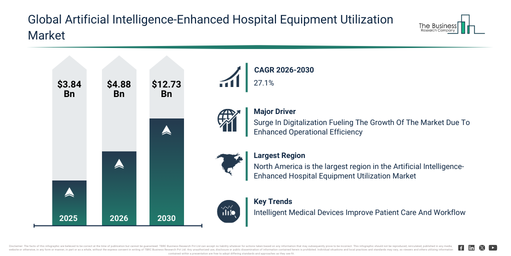
    The market size for artificial intelligence-enhanced hospital equipment utilization has seen significant expansion in recent years. This market is projected to increase from $3.84 billion in 2025 to $4.88 billion in 2026, exhibiting a compound annual growth rate (CAGR) of 27.3%. The growth observed in the preceding period is attributable to factors such as rising hospital equipment utilization rates, increasing operational cost pressures within healthcare facilities, the early adoption of connected medical devices, the expansion of hospital digital transformation initiatives, and the broader implementation of centralized equipment management systems.

    The artificial intelligence-enhanced hospital equipment utilization market size is projected to experience substantial growth in the coming years. It is expected to grow to $12.73 billion in 2030, expanding at a compound annual growth rate (CAGR) of 27.1%. This growth during the forecast period can be attributed to increasing investments in smart hospital infrastructure, rising demand for AI-driven operational efficiency, the expansion of cloud-based equipment management platforms, growing integration of hospital-wide data analytics, and an increasing focus on cost optimization in healthcare operations. Key trends anticipated in the forecast period include the increasing adoption of predictive maintenance for medical equipment, a rising use of AI-based asset tracking systems, growing integration of real-time equipment performance analytics, the expansion of workflow optimization platforms, and an enhanced focus on reducing equipment downtime.

    Download A Free Sample Report For Comprehensive Market Insights:

    https://www.thebusinessresearchcompany.com/sample.aspx?id=28933&type=smp

    Which Major Factors Are Contributing To The Development Of The Artificial Intelligence-Enhanced Hospital Equipment Utilization Market?

    Continued digitalization is projected to drive expansion within the artificial intelligence-enhanced hospital equipment utilization market. Digitalization involves the integration of digital technologies into business processes, services, and routine operations, aimed at boosting efficiency and creating greater value. This surge in digitalization stems from its ability to improve operational efficiency by streamlining workflows and fostering more informed, data-driven decisions. Utilization of artificial intelligence-enhanced hospital equipment fuels digitalization through the integration of smart analytics and real-time monitoring systems, which in turn optimize equipment functionality, elevate hospital operational effectiveness, and reinforce data links throughout healthcare networks. As an illustration, data from May 2025, provided by the Centers for Disease Control and Prevention (CDC), a US federal agency, showed that approximately 92% of state public health laboratories had implemented Electronic Test Orders and Results (ETOR) systems with at least one healthcare collaborator for a particular laboratory initiative, representing an 18% increase from 74% recorded in early 2023. Consequently, the expanding digitalization is a key impetus for the growth of the artificial intelligence-enhanced hospital equipment utilization market.

    What Are The Core Segment Classifications In The Artificial Intelligence-Enhanced Hospital Equipment Utilization Market?

    The artificial intelligence-enhanced hospital equipment utilization market covered in this report is segmented –

    1) By Component: Software, Hardware, Services

    2) By Deployment Mode: On-Premises, Cloud

    3) By Application: Asset Tracking, Predictive Maintenance, Workflow Optimization, Inventory Management, Patient Flow Management

    4) By End-User: Hospitals, Clinics, Ambulatory Surgical Centers, Diagnostic Centers

    Subsegments:

    1) By Software: Predictive Analytics Software, Imaging Analysis Software, Workflow Optimization Software, Patient Monitoring Software

    2) By Hardware: Imaging Devices, Robotic Surgical Systems, Intelligent Monitoring Equipment, Diagnostic Instruments

    3) By Services: Maintenance And Support, Training And Implementation, Data Management, Consulting

    Which Trends Are Influencing The Expansion Of The Artificial Intelligence-Enhanced Hospital Equipment Utilization Market?

    Leading firms within the artificial intelligence-enhanced hospital equipment utilization market are prioritizing the creation of sophisticated medical technologies, including AI-driven imaging systems, to secure a market advantage. These AI-driven imaging systems are defined as medical imaging solutions employing artificial intelligence to refine image analysis, elevate diagnostic precision, and accelerate the identification of anomalies. An illustrative example is GE HealthCare, a US-based medical technology company, which introduced Caption AI for its Vscan Air SL wireless handheld ultrasound system in April 2024. This particular AI-enhanced tool aids medical professionals in acquiring superior cardiac images more precisely and efficiently. Its provision of real-time guidance and automated computations allows even those with less experience to conduct dependable cardiac evaluations. This breakthrough improves diagnostic capacities and fosters a more impactful application of ultrasound technology across clinical environments.

    Who Are The Major Companies Operating In The Artificial Intelligence-Enhanced Hospital Equipment Utilization Market?

    Major companies operating in the artificial intelligence-enhanced hospital equipment utilization market are Butterfly Network Inc., International Business Machines Corporation, Oracle Corporation, Medtronic Plc, Sectra AB, Siemens Healthineers AG, Fujifilm Holdings Corporation, Stryker Corporation, Philips Healthcare, GE Healthcare, Intuitive Surgical Inc., Hologic Inc., Canon Medical Systems Corporation, Carestream Health Inc., Qventus Inc., Agfa HealthCare NV, TRIMEDX Inc., Nuance Communications Inc., Sonitor Technologies AS, CenTrak Inc.

    Access The Complete Artificial Intelligence-Enhanced Hospital Equipment Utilization Market Report:

    https://www.thebusinessresearchcompany.com/report/artificial-intelligence-enhanced-hospital-equipment-utilization-global-market-report

    Which Region Is The Dominant Market In The Artificial Intelligence-Enhanced Hospital Equipment Utilization Market?

    North America was the largest region in the artificial intelligence-enhanced hospital equipment utilization market in 2025. Asia-Pacific is expected to be the fastest-growing region in the forecast period. The regions covered in the artificial intelligence-enhanced hospital equipment utilization market report are Asia-Pacific, South East Asia, Western Europe, Eastern Europe, North America, South America, Middle East, Africa.

    Access Artificial Intelligence-Enhanced Hospital Equipment Utilization Market Report for Deeper Competitive Insights

    https://www.thebusinessresearchcompany.com/customise?id=28933&type=smp

    Browse Through More Reports Similar to the Global Artificial Intelligence-Enhanced Hospital Equipment Utilization Market 2026, By The Business Research Company

    Hospital Capacity Management Solutions Global Market Report 2026

    https://www.thebusinessresearchcompany.com/report/hospital-capacity-management-solutions-global-market-report

    Artificial Intelligence In Healthcare Diagnosis Global Market Report 2026

    https://www.thebusinessresearchcompany.com/report/artificial-intelligence-in-healthcare-diagnosis-global-market-report

    Hospital Robots Global Market Report 2026

    https://www.thebusinessresearchcompany.com/report/hospital-robots-global-market-report

    Get in touch with us:

    The Business Research Company: https://www.thebusinessresearchcompany.com/

    Americas: +1 310-496-7795

    Asia: +44 7882 955267 & +91 8897263534

    Europe: +44 7882 955267

    Email us at: marketing@tbrc.info

    Follow us on:

    LinkedIn: https://in.linkedin.com/company/the-business-research-company

    YouTube: https://www.youtube.com/channel/UC24_fI0rV8cR5DxlCpgmyFQ

    Global Market Model: https://www.thebusinessresearchcompany.com/global-market-model
  • Artificial Intelligence-Driven Hospital Energy Optimization Market Future Analysis Covering Industry Shifts And Growth Potential

    Artificial Intelligence-Driven Hospital Energy Optimization Market Future Analysis Covering Industry Shifts And Growth Potential

    The Business Research Company’s 2026 market reports feature enhanced tools like market attractiveness analysis, TAM assessment, and company scoring matrices, along with interactive dashboards, deeper supply chain insights, and startup coverage strengthening the depth, usability, and strategic value of insights.

    How Will The Market Value Of The Artificial Intelligence-Driven Hospital Energy Optimization Market Change Between 2026 And 2030?

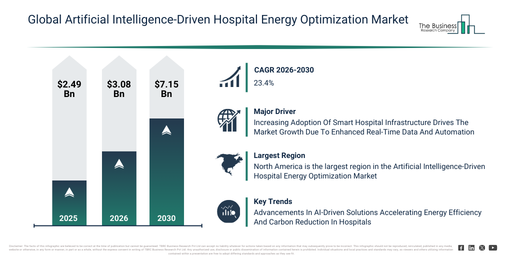
    The market size for artificial intelligence-driven hospital energy optimization has seen significant expansion in recent years. This market is projected to grow from $2.49 billion in 2025 to $3.08 billion in 2026, at a compound annual growth rate (CAGR) of 23.7%. The growth observed in the past can be attributed to factors such as increasing hospital energy consumption levels, rising operational cost pressures, the early adoption of building management systems, the expansion of digital hospital infrastructure, and a growing focus on operational efficiency.

    The artificial intelligence-driven hospital energy optimization market is projected for significant expansion over the coming years. This sector is anticipated to reach $7.15 billion by 2030, demonstrating a compound annual growth rate (CAGR) of 23.4%. The expansion within this period is largely driven by increased investments in green hospital initiatives, a growing demand for carbon footprint reduction, the proliferation of smart hospital projects, the increasing adoption of AI-driven facility management, and a heightened regulatory focus on energy efficiency standards. Key trends shaping the forecast period include the expanding deployment of AI-based energy management platforms, greater utilization of smart sensors and meters, an extension of predictive maintenance for hospital utilities, enhanced integration of building automation systems, and a sharpened focus on optimizing energy expenditures.

    Download A Free Sample Report For Comprehensive Market Insights:

    https://www.thebusinessresearchcompany.com/sample.aspx?id=27205&type=smp

    What Key Growth Drivers Are Influencing The Artificial Intelligence-Driven Hospital Energy Optimization Market?

    The adoption of smart hospital infrastructure is projected to boost the expansion of the artificial intelligence-driven hospital energy optimization market in the future. Smart hospital infrastructure represents an advanced digital network that facilitates efficient healthcare delivery, continuous monitoring, and automated management of hospital assets. The increasing prevalence of smart hospital infrastructure is driven by the necessity to enhance patient outcomes through real-time data surveillance, enabling quicker diagnoses and tailored treatments, thereby improving care quality and efficiency. This infrastructure supports Artificial Intelligence-Driven Hospital Energy Optimization by supplying interconnected sensors and live data from diverse systems, allowing AI algorithms to analyze energy consumption patterns and automatically adjust settings to minimize usage and boost efficiency. For instance, in December 2024, according to the Centers for Control and Prevention (CDC), a US-based national public health agency, the percentage of office-based physicians using the electronic health records system was 88.2%, however, the adoption of certified EHR systems percentage is 77.8%. Consequently, the rising implementation of smart hospital infrastructure is propelling the growth of the artificial intelligence-driven hospital energy optimization market. The growing shift towards remote monitoring solutions, which provides real-time patient and energy insights, is anticipated to drive the artificial intelligence-driven hospital energy optimization market forward. These solutions involve employing digital tools and technologies to monitor patient health data outside conventional clinical environments, ensuring continuous care and early interventions. Remote monitoring is becoming more widespread as healthcare providers seek immediate patient insights, enabling constant tracking of health conditions and prompt interventions, thereby elevating care quality and efficiency. AI-driven hospital energy management utilizes real-time remote monitoring of energy usage and equipment performance, identifying inefficiencies and predicting maintenance requirements, while enabling hospitals to optimize energy consumption and implement adjustments from a distance. For instance, in December 2023, according to the National Health Service, a UK-based government department, there were 33.6 million app users, with monthly logins rising 54% over the past year from 16.8 million to 25.8 million. Therefore, the expanding movement towards remote monitoring solutions is contributing to the growth of the artificial intelligence-driven hospital energy optimization market.

    How Is The Artificial Intelligence-Driven Hospital Energy Optimization Market Structured Across Different Market Segments?

    The artificial intelligence-driven hospital energy optimization market covered in this report is segmented –

    1) By Component: Software, Hardware, Services

    2) By Deployment Mode: On-Premises, Cloud

    3) By Hospital Size: Small And Medium Hospitals, Large Hospitals

    4) By Application: Heating, Ventilation, And Air Conditioning Optimization, Lighting Control, Energy Management, Equipment Monitoring, Other Applications

    5) By End-User: Public Hospitals, Private Hospitals, Specialty Hospitals, Other End-Users

    Subsegments:

    1) By Software: Energy Management Software, Building Automation Software, Predictive Maintenance Software, Data Analytics and Visualization Tools, Artificial Intelligence Algorithms And Optimization Engines

    2) By Hardware: Smart Sensors And Internet Of Things Devices, Smart Meters, Controllers And Actuators, Heating, Ventilation, And Air Conditioning Systems, Lighting Control Systems, Edge Devices And Gateways

    3) By Services: Consulting And Advisory Services, Installation And Integration Services, Maintenance And Support Services, Energy Auditing Services, Training And Education Services

    Which Trends Are Expected To Shape The Artificial Intelligence-Driven Hospital Energy Optimization Market?

    Leading companies in the Artificial Intelligence-Driven Hospital Energy Optimization market are increasingly concentrating on intelligent energy management to expedite the implementation of energy-efficient solutions across healthcare facilities. This intelligent energy management involves deploying AI, cloud computing, and IoT technologies to continuously monitor, analyze, and automatically optimize hospital energy systems, such as HVAC, for enhanced efficiency and reduced consumption. As an illustration, in April 2024, True Digital Group, a Thailand-based digital transformation and technology services firm, collaborated with Alibaba Cloud, a China-based cloud computing company, to unveil the Climate Technology Platform. This platform leverages Alibaba Cloud’s AI-driven “Energy Expert” solution, integrated with cloud, IoT, and big data analytics, to help businesses in Thailand pinpoint energy efficiency challenges, lower greenhouse gas emissions, and adopt sustainable technologies. It facilitates real-time energy management and offers predictive insights, aiming to accelerate Thailand’s green transition and reduce emissions by up to 40% by 2030, with an objective of achieving carbon neutrality by 2050. The platform has already showcased up to 15% energy consumption reduction in pilot projects, including the heating, ventilation, and air conditioning system at Bangkok Hospital.

    Which Companies Are Influencing The Artificial Intelligence-Driven Hospital Energy Optimization Market?

    Major companies operating in the artificial intelligence-driven hospital energy optimization market are Enel S.p.A., General Electric Company, Veolia Environnement S.A., Schneider Electric SE, Honeywell International Inc., ABB Group, Eaton Corporation Plc, Johnson Controls International Plc, Trane Technologies Plc, Centrica Business Solutions Ltd., Rockwell Automation Inc., Ameresco Inc., ENGIE Impact, GridPoint Inc., Optimum Energy LLC, Verdigris Technologies, Enerbrain, BuildingIQ Inc., Deerns, Resync

    Access The Complete Artificial Intelligence-Driven Hospital Energy Optimization Market Report:

    https://www.thebusinessresearchcompany.com/report/artificial-intelligence-driven-hospital-energy-optimization-global-market-report

    Which Area Represents The Largest Portion Of The Artificial Intelligence-Driven Hospital Energy Optimization Market?

    North America was the largest region in the artificial intelligence-driven hospital energy optimization market in 2025. Asia-Pacific is expected to be the fastest-growing region in the forecast period. The regions covered in the artificial intelligence-driven hospital energy optimization market report are Asia-Pacific, South East Asia, Western Europe, Eastern Europe, North America, South America, Middle East, Africa.

    Access Artificial Intelligence-Driven Hospital Energy Optimization Market Report for Deeper Competitive Insights

    https://www.thebusinessresearchcompany.com/customise?id=27205&type=smp

    Browse Through More Reports Similar to the Global Artificial Intelligence-Driven Hospital Energy Optimization Market 2026, By The Business Research Company

    Earthen Plasters Global Market Report 2026

    https://www.thebusinessresearchcompany.com/report/earthen-plasters-global-market-report

    High Performance Ceramic Coatings Global Market Report 2026

    https://www.thebusinessresearchcompany.com/report/high-performance-ceramic-coatings-global-market-report

    Advanced Ceramics Global Market Report 2026

    https://www.thebusinessresearchcompany.com/report/advanced-ceramics-global-market-report

    Get in touch with us:

    The Business Research Company: https://www.thebusinessresearchcompany.com/

    Americas: +1 310-496-7795

    Asia: +44 7882 955267 & +91 8897263534

    Europe: +44 7882 955267

    Email us at: marketing@tbrc.info

    Follow us on:

    LinkedIn: https://in.linkedin.com/company/the-business-research-company

    YouTube: https://www.youtube.com/channel/UC24_fI0rV8cR5DxlCpgmyFQ

    Global Market Model: https://www.thebusinessresearchcompany.com/global-market-model
  • Artificial Intelligence In The Diagnostic Market Analysis Reflecting Expansion Trends And Industry Performance

    Artificial Intelligence In The Diagnostic Market Analysis Reflecting Expansion Trends And Industry Performance

    The Business Research Company’s 2026 market reports feature enhanced tools like market attractiveness analysis, TAM assessment, and company scoring matrices, along with interactive dashboards, deeper supply chain insights, and startup coverage strengthening the depth, usability, and strategic value of insights.

    What Is The Forecasted Rise In Market Size Of The Artificial Intelligence In The Diagnostic Market During The Forecast Period?

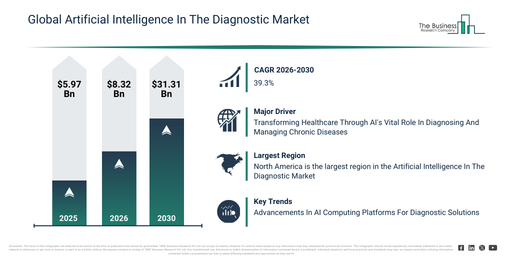
    The artificial intelligence in the diagnostic market has experienced substantial growth in its scale in recent years. Its valuation is set to climb from $5.97 billion in 2025 to $8.32 billion by 2026, driven by a compound annual growth rate (CAGR) of 39.5%. Historical growth was fueled by the increasing access to medical imaging data, enhanced digitization of healthcare records, a shortage of skilled diagnosticians, the pioneering use of computer vision in radiology, and the broadening of healthcare IT infrastructure.

    The artificial intelligence in the diagnostic market size is anticipated to undergo significant expansion in the next few years, reaching $31.31 billion by 2030, driven by a compound annual growth rate (CAGR) of 39.3%. This projected growth throughout the forecast period stems from factors such as increasing demand for early disease detection, escalating investments in AI-driven healthcare solutions, the proliferation of personalized medicine initiatives, the growing incorporation of AI diagnostics into clinical workflows, and an increase in regulatory approvals for AI-based instruments. Prominent trends for the forecast period involve the rising adoption of AI-based diagnostic imaging tools, an increasing utilization of machine learning in clinical decision support, enhanced integration of AI with radiology and pathology workflows, the expansion of predictive analytics in disease detection, and a heightened focus on diagnostic accuracy and speed.

    Download A Free Sample Report For Comprehensive Market Insights:

    https://www.thebusinessresearchcompany.com/sample.aspx?id=13593&type=smp

    Which Core Factors Are Supporting The Expansion Of The Artificial Intelligence In The Diagnostic Market?

    The increasing occurrence of chronic diseases is projected to stimulate the expansion of AI in the diagnostics market moving ahead. These conditions are defined as persistent health issues that endure for a prolonged duration, frequently throughout an individual’s life. Integrating AI-powered diagnostic methods for chronic diseases facilitates prompt identification, forecasting, improved decision-making tools, remote patient oversight, reduced expenses, and personalized treatment plans based on genetic analysis and disease progression. As an illustration, in September 2023, the World Health Organization, a specialized agency of the United Nations based in Switzerland, reported 41 million yearly fatalities, accounting for 74% of global non-communicable disease (NCD) or chronic disease-linked deaths. Additionally, approximately 17.9 million deaths resulted from cardiovascular diseases, 9.3 million from cancer, 4.1 million from chronic respiratory diseases, and 2.0 million from diabetes. Consequently, the growing incidence of chronic diseases is fueling the advancement of AI in the diagnostics market.

    Which Segment-Based Categories Are Covered In The Artificial Intelligence In The Diagnostic Market?

    The artificial intelligence in the diagnostic market covered in this report is segmented –

    1) By Component: Hardware, Software, Services

    2) By Technology: Machine Learning, NLP (Natural Language Processing), Context-Aware Computing, Computer Vision

    3) By Diagnosis Type: Radiology, Pathology, Cardiology, Oncology, Neurology, Chest And Lung, Other Diagnosis Types

    Subsegments:

    1) By Hardware: Imaging Devices, Diagnostic Equipment, Wearable Devices

    2) By Software: Diagnostic Imaging Software, Data Analytics Software, Machine Learning Algorithms, Clinical Decision Support Systems

    3) By Services: Consulting Services, Integration Services, Maintenance And Support Services, Training Services

    Which Trends Are Affecting The Artificial Intelligence In The Diagnostic Market Framework?

    Major companies operating in the AI in diagnostics market are innovating with new technologies, such as AI modules, to gain a competitive advantage. An AI module is a self-contained software component that encapsulates specific AI capabilities or functionalities. For example, in March 2023, Qritive, a Singapore-based provider of AI-powered solutions, launched QAi Prostate for prostate cancer diagnosis. QAi Prostate is capable of efficiently recognizing the most common form of prostate cancer, potentially enhancing diagnostic accuracy and reducing false positives. This tool assists pathologists in distinguishing cancerous from non-cancerous tissue areas, aiding in more informed treatment decisions. QAi Prostate can also prioritize cases for faster diagnosis and reporting, improving efficiency and patient care.

    Who Are The Companies Shaping The Artificial Intelligence In The Diagnostic Market Landscape?

    Major companies operating in the artificial intelligence in the diagnostic market are Siemens Healthineers, Koninklijke Philips N.V., GE Healthcare Technologies Inc., Paige.AI Inc., HeartFlow Inc., Aidoc Medical Ltd., AliveCor Inc., Butterfly Network Inc., Imagen Technologies, Digital Diagnostics Inc., Brainomix Ltd., NovaSignal Corp., Enlitic Inc., Nano-X Imaging LTD., EchoNous Inc., Zebra Medical Vision Ltd., Aidence B.V., Neural Analytics Inc., IDx Technologies Inc., icometrix N.V., Vuno Inc.

    Access The Complete Artificial Intelligence In The Diagnostic Market Report:

    https://www.thebusinessresearchcompany.com/report/artificial-intelligence-in-the-diagnostic-global-market-report

    Which Region Commands The Largest Share Of The Artificial Intelligence In The Diagnostic Market?

    North America was the largest region in the artificial intelligence in diagnostics market in 2025. Asia-Pacific is expected to be the fastest-growing region in the forecast period. The regions covered in the artificial intelligence in the diagnostic market report are Asia-Pacific, South East Asia, Western Europe, Eastern Europe, North America, South America, Middle East, Africa.

    Access Artificial Intelligence In The Diagnostic Market Report for Deeper Competitive Insights

    https://www.thebusinessresearchcompany.com/customise?id=13593&type=smp

    Browse Through More Reports Similar to the Global Artificial Intelligence In The Diagnostic Market 2026, By The Business Research Company

    Artificial Intelligence In Healthcare Diagnosis Global Market Report 2026

    https://www.thebusinessresearchcompany.com/report/artificial-intelligence-in-healthcare-diagnosis-global-market-report

    Ai In Medical Diagnostics Global Market Report 2026

    https://www.thebusinessresearchcompany.com/report/ai-in-medical-diagnostics-global-market-report

    Artificial Intelligence In Cancer Diagnostics Global Market Report 2026

    https://www.thebusinessresearchcompany.com/report/artificial-intelligence-in-cancer-diagnostics-global-market-report

    Get in touch with us:

    The Business Research Company: https://www.thebusinessresearchcompany.com/

    Americas: +1 310-496-7795

    Asia: +44 7882 955267 & +91 8897263534

    Europe: +44 7882 955267

    Email us at: marketing@tbrc.info

    Follow us on:

    LinkedIn: https://in.linkedin.com/company/the-business-research-company

    YouTube: https://www.youtube.com/channel/UC24_fI0rV8cR5DxlCpgmyFQ

    Global Market Model: https://www.thebusinessresearchcompany.com/global-market-model
  • Global Artificial Intelligence In Radiology Market Revenue Expected To Reach $10.69 Billion By 2030

    Global Artificial Intelligence In Radiology Market Revenue Expected To Reach $10.69 Billion By 2030

    The Business Research Company’s 2026 market reports feature enhanced tools like market attractiveness analysis, TAM assessment, and company scoring matrices, along with interactive dashboards, deeper supply chain insights, and startup coverage strengthening the depth, usability, and strategic value of insights.

    How Is The Artificial Intelligence In Radiology Market’s Market Value Anticipated To Evolve From 2026 To 2030?

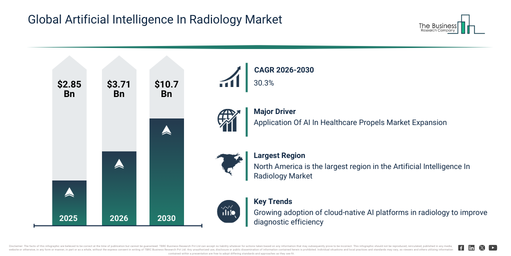
    The artificial intelligence in radiology market has experienced rapid expansion in its size recently. Forecasts indicate it will expand from $2.85 billion in 2025 to reach $3.71 billion by 2026, exhibiting a compound annual growth rate (CAGR) of 30.2%. Historically, this growth can be linked to factors such as a heightened need for diagnostic imaging services, a scarcity of radiology experts, the widespread adoption of digital radiology systems, the growing intricacy of imaging data, and the implementation of picture archiving systems.

    The artificial intelligence in radiology market size is projected to experience substantial growth in the upcoming years. It is forecast to reach $10.7 billion by 2030, with a compound annual growth rate (CAGR) of 30.3%. This projected growth during the forecast period is fueled by several factors, including the increasing adoption of AI-assisted radiology platforms, a heightened focus on optimizing productivity in imaging departments, the expansion of cloud-based radiology AI solutions, the growing utilization of predictive imaging analytics, and greater integration with hospital IT systems. Significant trends anticipated for the forecast period encompass the increasing integration of AI into radiology reporting workflows, a rising reliance on computer vision for image interpretation, the broader deployment of AI for workflow optimization, the expansion of real-time decision support tools, and an enhanced emphasis on improving diagnostic accuracy.

    Download A Free Sample Report For Comprehensive Market Insights:

    https://www.thebusinessresearchcompany.com/sample.aspx?id=13591&type=smp

    What Are The Main Drivers Accelerating The Growth Of The Artificial Intelligence In Radiology Market?

    The increasing adoption of artificial intelligence (AI) in healthcare is anticipated to fuel the expansion of artificial intelligence (AI) in the radiology market in the future. AI-driven algorithms show significant ability to precisely analyze and interpret medical images, thereby assisting radiologists in identifying minute abnormalities and enhancing comprehensive diagnostic results. The enhanced efficiency and rapid processing provided by AI technologies not only optimize radiological procedures but also lead to quicker and more precise diagnoses. As an illustration, in July 2024, data from The Health Foundation, a UK-based independent charity, indicated that over half of the UK public (54%) and three-quarters of surveyed NHS staff (76%) supported the integration of AI into patient care. Furthermore, an even greater proportion approved its application for administrative duties, with 61% of the public and 81% of NHS staff agreeing. Consequently, the expanding implementation of AI within the healthcare sector is propelling the growth of artificial intelligence (AI) in the radiology market.

    What Are The Major Segment Categories Within The Artificial Intelligence In Radiology Market?

    The artificial intelligence in radiology market covered in this report is segmented –

    1) By Solution Type: AI Software, AI Hardware

    2) By Modality: Computed Tomography (CT), Magnetic Resonance (MR), X-Ray, Mammography, Ultrasound (US), Other Modalities

    3) By Application: Neurology, Chest And Lung, Musculoskeletal, Abdomen, Cardiology, Other Applications

    4) By End-User: Hospitals, Diagnostic Imaging Centers, Other End-Users

    Subsegments:

    1) By AI Software: Image Analysis Software, Workflow Optimization Software, Radiology Reporting Software, Decision Support Systems, Predictive Analytics Tools

    2) By AI Hardware: Imaging Devices, Servers And Computing Infrastructure, Robotics For Automated Imaging, Workstations For Radiologists

    What Trends Are Influencing The Artificial Intelligence In Radiology Market?

    Companies operating within the artificial intelligence in radiology market are primarily focused on developing innovative cloud-native radiology informatics platforms, such as AI-orchestrated diagnostic workspaces. Their aim is to enhance imaging workflow efficiency, support quicker clinical decision-making, and effectively manage increasing imaging volumes. A cloud-native AI radiology platform integrates traditional PACS or RIS functionalities with scalable cloud infrastructure, enabling real-time deployment of AI models, sophisticated image streaming, automated reporting, and seamless interoperability across diverse clinical systems. For example, in February 2025, DeepHealth, Inc., a U.S.-based health informatics company, introduced Diagnostic Suite, an AI-driven cloud-native radiology workspace. This platform unifies worklist management, patient briefs, high-speed streaming viewers, AI orchestration, and smart reporting within a single interface. It offers high scalability, integrates multiple AI diagnostic models spanning lung, prostate, brain, and breast imaging, and enhances efficiency by providing smooth interoperability with existing radiology IT infrastructure.

    Which Industry Players Are Present In The Artificial Intelligence In Radiology Market?

    Major companies operating in the artificial intelligence in radiology market are Microsoft Corporation, IBM Corporation, NVIDIA Corporation, Siemens Healthineers AG, Koninklijke Philips N.V, GE Healthcare Technologies Inc., Canon Medical Systems Corporation, HeartFlow Inc., Viz.ai Inc., Aidoc Medical Ltd., EnvoyAI, Butterfly Network Inc., Digital Diagnostics Inc., Caption Health, Enlitic Inc., Arterys, Nano X Imaging Ltd., Subtle Medical Inc., CureMetrix Inc., DiA Imaging Analysis Ltd., Imagen Technologies, Gleamer Ltd., Quibim, Behold.ai, Intel Corporation

    Access The Complete Artificial Intelligence In Radiology Market Report:

    https://www.thebusinessresearchcompany.com/report/artificial-intelligence-in-radiology-global-market-report

    Which Region Accounts For The Highest Share Of The Artificial Intelligence In Radiology Market?

    North America was the largest region in the artificial intelligence in radiology market in 2025. The regions covered in the artificial intelligence in radiology market report are Asia-Pacific, South East Asia, Western Europe, Eastern Europe, North America, South America, Middle East, Africa.

    Access Artificial Intelligence In Radiology Market Report for Deeper Competitive Insights

    https://www.thebusinessresearchcompany.com/customise?id=13591&type=smp

    Browse Through More Reports Similar to the Global Artificial Intelligence In Radiology Market 2026, By The Business Research Company

    Artificial Intelligence Ai Radiology Tool Global Market Report 2026

    https://www.thebusinessresearchcompany.com/report/artificial-intelligence-ai-radiology-tool-global-market-report

    Artificial Intelligence In Medical Imaging Global Market Report 2026

    https://www.thebusinessresearchcompany.com/report/artificial-intelligence-in-medical-imaging-global-market-report

    Artificial Intelligence In The Diagnostic Global Market Report 2026

    https://www.thebusinessresearchcompany.com/report/artificial-intelligence-in-the-diagnostic-global-market-report

    Get in touch with us:

    The Business Research Company: https://www.thebusinessresearchcompany.com/

    Americas: +1 310-496-7795

    Asia: +44 7882 955267 & +91 8897263534

    Europe: +44 7882 955267

    Email us at: marketing@tbrc.info

    Follow us on:

    LinkedIn: https://in.linkedin.com/company/the-business-research-company

    YouTube: https://www.youtube.com/channel/UC24_fI0rV8cR5DxlCpgmyFQ

    Global Market Model: https://www.thebusinessresearchcompany.com/global-market-model
  • Artificial Intelligence In Oncology Market Insights Exploring Expansion Opportunities Through 2030

    Artificial Intelligence In Oncology Market Insights Exploring Expansion Opportunities Through 2030

    The Business Research Company’s 2026 market reports feature enhanced tools like market attractiveness analysis, TAM assessment, and company scoring matrices, along with interactive dashboards, deeper supply chain insights, and startup coverage strengthening the depth, usability, and strategic value of insights.

    By 2030, How Much Growth In Market Size Is Expected For The Artificial Intelligence In Oncology Market?

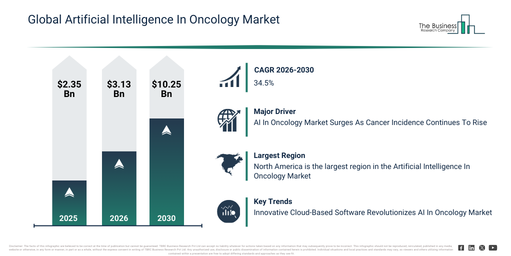
    The artificial intelligence in oncology market has seen substantial growth in its size over recent years. Forecasts indicate it will expand from $2.35 billion in 2025 to $3.13 billion in 2026, demonstrating a compound annual growth rate (CAGR) of 33.4%. This historical expansion is attributable to factors such as increasing global cancer incidence rates, the development of oncology research initiatives, broader adoption of digital pathology, the growing application of data-driven cancer diagnostics, and investments in advanced oncology infrastructure.

    The artificial intelligence in oncology market is projected to experience substantial expansion over the upcoming years. This market is anticipated to reach a valuation of $10.25 billion by 2030, exhibiting a compound annual growth rate (CAGR) of 34.5%. Key drivers propelling this growth during the forecast period include the escalating uptake of precision oncology solutions, a surge in demand for personalized cancer therapies, the broadening application of AI in clinical oncology trials, the expanding integration of genomics with AI platforms, and increasing investments directed towards oncology-focused AI startups. Prominent trends expected throughout this period encompass the growing adoption of AI-based tools for cancer detection, the increasing utilization of AI in optimizing treatment planning, the deeper integration of AI into drug discovery and development processes, the expansion of predictive oncology analytics, and an intensified focus on precision oncology applications.

    Download A Free Sample Report For Comprehensive Market Insights:

    https://www.thebusinessresearchcompany.com/sample.aspx?id=13130&type=smp

    Which Growth Drivers Are Expected To Support The Artificial Intelligence In Oncology Market Forward?

    The increasing occurrence of cancer diagnoses is anticipated to stimulate the expansion of the AI in oncology market. This condition, cancer, represents a multifaceted set of ailments marked by the unchecked multiplication and separation of anomalous cells within the body. The embedding of AI in oncology holds the promise to transform patient care for cancer, rendering it more exact, individually tailored, and streamlined. As an illustration, in 2023, a publication by the American Cancer Society Inc., a voluntary health organization based in the US, reported an increase in the projected new cancer cases from 1.8 million to 1.9 million. Consequently, the growing frequency of cancer cases is serving as a catalyst for the AI in oncology market’s development.

    How Is The Artificial Intelligence In Oncology Market Distributed Across Key Segments?

    The artificial intelligence in oncology market covered in this report is segmented –

    1) By Component: Software Solutions, Hardware, Services

    2) By Treatment Type: Chemotherapy, Radiotherapy, Immunotherapy, Other Treatment Types

    3) By Cancer Type: Breast Cancer, Lung Cancer, Prostate Cancer, Colorectal Cancer, Brain Tumor, Other Cancer Types

    4) By Application: Cancer Detection, Drug Discovery, Drug Development, Other Applications

    5) By End-Users: Hospitals, Diagnostic Centers, Pharmaceutical Companies, Research Institutes, Other End Users

    Subsegments:

    1) By Software Solutions: Diagnostic Software, Treatment Planning Software, Patient Management Software, Data Analytics Platforms

    2) By Hardware: AI-Enabled Imaging Devices, High-Performance Computing Systems

    3) By Services: Consulting Services, Integration Services, Maintenance And Support Services

    Which Trends Are Guiding The Development Of The Artificial Intelligence In Oncology Market?

    Companies operating within the AI in the oncology market are primarily focused on developing cutting-edge software, such as cloud-based solutions, to improve their performance and offer enhanced services. Cloud-based software is essential for AI applications in oncology because it provides a scalable, adaptable, and accessible platform for managing and analyzing large volumes of medical information. For instance, in March 2023, Illumina Inc., a US-based biotechnology company, unveiled Connected Insights, a new cloud-based software designed for tertiary analysis in oncology applications. By integrating external knowledge bases, Connected Insights simplifies the interpretation and reporting of results from various assay types, allowing laboratories to expand their utilization of NGS (Next-Generation Sequencing) and accelerate the turnaround time for clinical reporting.

    Which Organizations Are Involved In The Artificial Intelligence In Oncology Market?

    Major companies operating in the artificial intelligence in oncology market are Azra AI, IBM Corporation, Siemens Healthcare GmbH, GE HealthCare, NVIDIA Corporation, Digital Diagnostics Inc., ConcertAI Inc., PathAI Inc., Median Technologies SA, Kheiron Medical Technologies Ltd, Tempus Labs Inc., Paige AI Inc., Prognos Health Inc., Enlitic, Inspirata Inc., Proscia Inc., Deep 6 AI Inc., Intel Corporation, Zebra Medical Vision, Ibex Medical Analytics, Nanox Imaging Ltd., Berg LLC

    Access The Complete Artificial Intelligence In Oncology Market Report:

    https://www.thebusinessresearchcompany.com/report/artificial-intelligence-in-oncology-global-market-report

    Which Region Is The Primary Market For The Artificial Intelligence In Oncology Market?

    North America was the largest region in the AI in oncology market in 2025. Asia-Pacific is expected to be the fastest-growing region in the forecast period. The regions covered in the artificial intelligence in oncology market report are Asia-Pacific, South East Asia, Western Europe, Eastern Europe, North America, South America, Middle East, Africa.

    Access Artificial Intelligence In Oncology Market Report for Deeper Competitive Insights

    https://www.thebusinessresearchcompany.com/customise?id=13130&type=smp

    Browse Through More Reports Similar to the Global Artificial Intelligence In Oncology Market 2026, By The Business Research Company

    Artificial Intelligence In Cancer Diagnostics Global Market Report 2026

    https://www.thebusinessresearchcompany.com/report/artificial-intelligence-in-cancer-diagnostics-global-market-report

    Artificial Intelligence In Medicine Global Market Report 2026

    https://www.thebusinessresearchcompany.com/report/artificial-intelligence-in-medicine-global-market-report

    Ai In Cancer Diagnostics Global Market Report 2026

    https://www.thebusinessresearchcompany.com/report/ai-in-cancer-diagnostics-global-market-report

    Get in touch with us:

    The Business Research Company: https://www.thebusinessresearchcompany.com/

    Americas: +1 310-496-7795

    Asia: +44 7882 955267 & +91 8897263534

    Europe: +44 7882 955267

    Email us at: marketing@tbrc.info

    Follow us on:

    LinkedIn: https://in.linkedin.com/company/the-business-research-company

    YouTube: https://www.youtube.com/channel/UC24_fI0rV8cR5DxlCpgmyFQ

    Global Market Model: https://www.thebusinessresearchcompany.com/global-market-model
  • Artificial Intelligence In Medicine Market Developments Influencing Industry Expansion Through 2030

    Artificial Intelligence In Medicine Market Developments Influencing Industry Expansion Through 2030

    The Business Research Company’s 2026 market reports feature enhanced tools like market attractiveness analysis, TAM assessment, and company scoring matrices, along with interactive dashboards, deeper supply chain insights, and startup coverage strengthening the depth, usability, and strategic value of insights.

    What Market Value Trend Is Expected For The Artificial Intelligence In Medicine Market From 2026 To 2030?

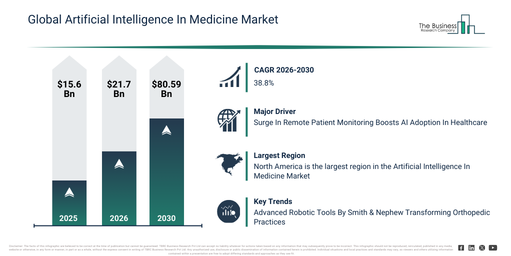
    The artificial intelligence in medicine market size has experienced substantial expansion in recent years. Projections show it will increase from $15.6 billion in 2025 to $21.7 billion in 2026, achieving a compound annual growth rate (CAGR) of 39.1%. The growth observed in previous periods stems from factors such as the increasing digitization of healthcare records, a rising demand for improved clinical outcomes, the broadening use of healthcare data analytics, the escalating complexity of treatment pathways, and the enhanced availability of advanced computing resources.

    The artificial intelligence in medicine market size is projected to experience substantial growth over the coming years, with an anticipated rise to $80.59 billion by 2030, demonstrating a compound annual growth rate (CAGR) of 38.8%. This growth during the forecast period is primarily driven by the increasing adoption of AI-enabled personalized medicine, rising investments in healthcare AI platforms, the expansion of remote and digital care models, the growing utilization of predictive analytics in population health, and the increasing integration of AI across various clinical workflows. Furthermore, major trends in the forecast period include the increasing deployment of AI-based clinical decision support systems, the rising adoption of personalized treatment algorithms, the growing use of AI for disease risk prediction, the expansion of AI applications within hospital operations, and an enhanced focus on data-driven patient management.

    Download A Free Sample Report For Comprehensive Market Insights:

    https://www.thebusinessresearchcompany.com/sample.aspx?id=13590&type=smp

    What Influential Factors Are Boosting The Artificial Intelligence In Medicine Market Demand?

    The escalating interest in real-time remote patient monitoring (RPM) systems is anticipated to stimulate the advancement of artificial intelligence in the medicine market moving forward. A remote patient monitoring system represents a technology-driven healthcare solution developed to observe patients’ health beyond conventional healthcare facilities. Artificial intelligence (AI) in medicine has profoundly transformed remote patient monitoring through the utilization of sophisticated algorithms to analyze vast patient data, providing predictive insights and facilitating personalized care. For instance, in November 2025, according to Statistics Canada, a Canada-based government agency, the Canadian provinces exhibiting the highest proportions of individuals who had virtual appointments only were Newfoundland and Labrador (13.2%), British Columbia (10.6%), and Nova Scotia (10.4%). In contrast, Saskatchewan (2.1%), Alberta (2.4%), and Manitoba (3.3%) registered the smallest proportions of those who exclusively had virtual appointments. Thus, the increasing appeal of real-time remote patient monitoring (RPM) systems is driving the expansion of artificial intelligence in the medicine market.

    How Does Segment Analysis Break Down The Artificial Intelligence In Medicine Market Structure?

    The artificial intelligence in medicine market covered in this report is segmented –

    1) By Type: Hardware, Software, Services

    2) By Technology: Machine Learning, Natural Language Processing, Context-Aware Processing, Computer Vision

    3) By Application: Medical Administration And Support, Patient Management, Research And Development, Other Applications

    4) By End User: Hospitals, Clinics, Research Institutions

    Subsegments:

    1) By Hardware: AI-Powered Imaging Devices, Robotics And Automation Devices, Wearable Health Devices, Servers And Computing Systems

    2) By Software: Machine Learning Algorithms, Natural Language Processing (NLP) Tools, Image Analysis Software, Predictive Analytics Software, Clinical Decision Support Systems

    3) By Services: AI Consulting Services, Integration Services, Maintenance And Support Services, Data Management Services, Training And Education Services

    What Trends Are Influencing The Future Of The Artificial Intelligence In Medicine Market?

    Leading companies in the artificial intelligence in the medicine market are dedicated to developing innovative solutions, such as AI-driven platforms, to deliver reliable services to customers. An AI-powered platform is a software solution that incorporates artificial intelligence (AI) technologies to automate operations, analyze information, and make predictions. For instance, in April 2023, OM1 Inc., a US-based digital health company, launched PhenOM. This system utilizes real-world data and advanced analytics to identify unique digital phenotypes associated with various conditions and outcomes, effectively creating distinct profiles for different patient groups. PhenOM can assess individual patient data to predict potential risks, identify opportunities for medical intervention, and inform choices regarding treatment.

    Who Are The Firms Contributing To The Artificial Intelligence In Medicine Market Ecosystem?

    Major companies operating in the artificial intelligence in medicine market are Google LLC, Microsoft Corporation, Intel Corporation, IBM Corporation, Medtronic PLC, Nvidia Corporation, Siemens Healthineers AG, Philips Healthcare, Babylon Healthcare Services Ltd., Komodo Health Inc., Modernizing Medicine Inc., Viz.ai Inc., Butterfly Network Inc., Augmedix, AiCure LLC, HealthTap Inc., Welltok Inc., Enlitic Inc., PathAI Inc., Nano-X Imaging Ltd., Berg LLC, Insitro, Sense.ly Inc., Subtle Medical Inc., Medasense Biometrics Limited, Immunai, Atomwise Inc., Freenome Holdings Inc., CloudMedX Inc.

    Access The Complete Artificial Intelligence In Medicine Market Report:

    https://www.thebusinessresearchcompany.com/report/artificial-intelligence-in-medicine-global-market-report

    Which Geographic Region Represents The Largest Artificial Intelligence In Medicine Market Share?

    North America was the largest region in the artificial intelligence in medicine market in 2025. Asia-Pacific is expected to be the fastest-growing region in the forecast period. The regions covered in the artificial intelligence in medicine market report are Asia-Pacific, South East Asia, Western Europe, Eastern Europe, North America, South America, Middle East, Africa.

    Access Artificial Intelligence In Medicine Market Report for Deeper Competitive Insights

    https://www.thebusinessresearchcompany.com/customise?id=13590&type=smp

    Browse Through More Reports Similar to the Global Artificial Intelligence In Medicine Market 2026, By The Business Research Company

    Artificial Intelligence In Healthcare Market 2026

    https://www.thebusinessresearchcompany.com/report/artificial-intelligence-in-healthcare-market

    Artificial Intelligence Ai In Precision Medicine Global Market Report 2026

    https://www.thebusinessresearchcompany.com/report/artificial-intelligence-ai-in-precision-medicine-global-market-report

    Artificial Intelligence In Healthcare Diagnosis Global Market Report 2026

    https://www.thebusinessresearchcompany.com/report/artificial-intelligence-in-healthcare-diagnosis-global-market-report

    Get in touch with us:

    The Business Research Company: https://www.thebusinessresearchcompany.com/

    Americas: +1 310-496-7795

    Asia: +44 7882 955267 & +91 8897263534

    Europe: +44 7882 955267

    Email us at: marketing@tbrc.info

    Follow us on:

    LinkedIn: https://in.linkedin.com/company/the-business-research-company

    YouTube: https://www.youtube.com/channel/UC24_fI0rV8cR5DxlCpgmyFQ

    Global Market Model: https://www.thebusinessresearchcompany.com/global-market-model
  • Artificial Intelligence in Medical Imaging Market Size Forecast To Achieve $17.19 Billion By 2030 With 31.1% CAGR

    Artificial Intelligence in Medical Imaging Market Size Forecast To Achieve $17.19 Billion By 2030 With 31.1% CAGR

    The Business Research Company’s 2026 market reports feature enhanced tools like market attractiveness analysis, TAM assessment, and company scoring matrices, along with interactive dashboards, deeper supply chain insights, and startup coverage strengthening the depth, usability, and strategic value of insights.

    How Does The Forecasted Market Size Of The Artificial Intelligence in Medical Imaging Market Compare Between 2026 And 2030?

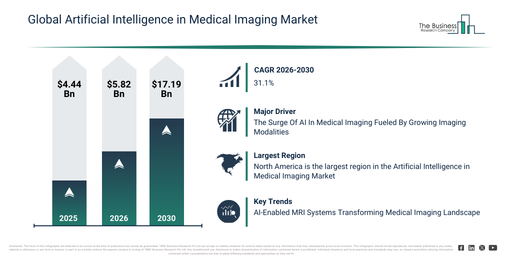
    The artificial intelligence in medical imaging market has experienced significant expansion in its size over recent years. It is projected to increase from $4.44 billion in 2025 to $5.82 billion in 2026, exhibiting a compound annual growth rate (CAGR) of 31.0%. This historical growth is primarily due to several factors, including a rise in medical imaging procedure volumes, a scarcity of skilled radiologists, an increase in the occurrence of chronic and complex diseases, the development of digital imaging infrastructure, and the expansion of hospital imaging departments.

    The artificial intelligence in medical imaging market size is projected to experience substantial growth in the near future. By 2030, this market is anticipated to reach $17.19 billion, achieving a compound annual growth rate (CAGR) of 31.1%. This expansion during the forecast period stems from factors such as the increasing acceptance of AI-powered clinical decision support, a rise in investments directed towards precision diagnostics, the broader application of AI across various imaging modalities, an escalating need for quicker diagnostic results, and the greater incorporation of AI into hospital information systems. Key trends anticipated for this period encompass the growing uptake of AI-assisted diagnostic imaging tools, an increased reliance on deep learning for interpreting images, the progressive integration of AI within radiology workflow automation, the proliferation of AI-based predictive diagnostic models, and a heightened emphasis on the accuracy of early disease detection.

    Download A Free Sample Report For Comprehensive Market Insights:

    https://www.thebusinessresearchcompany.com/sample.aspx?id=13589&type=smp

    Which Drivers Are Advancing The Artificial Intelligence in Medical Imaging Market Growth?

    The expansion of imaging modalities is anticipated to boost the advancement of AI in the medical imaging market in the future. These modalities encompass various medical imaging techniques employed to visualize the body, serving both diagnostic and therapeutic functions. Within these medical modalities, AI algorithms play a crucial role in aiding image reconstruction, minimizing noise, and rectifying artifacts, thereby producing CT images that are both sharper and more precise. As an illustration, in June 2025, data from the National Health Service, a UK-based government department, indicated that 47.2 million imaging tests were recorded in England for the year ending March 2024, marking a 4.8% rise from the 45.0 million tests performed in the preceding year. Consequently, the increasing prevalence of imaging modalities is a key factor propelling the expansion of AI in the medical imaging market.

    What Segment Types Are Included In The Artificial Intelligence in Medical Imaging Market Analysis?

    The artificial intelligence in medical imaging market covered in this report is segmented –

    1) By Modality: Computed Tomography (CT) Scan, Magnetic Resonance Imaging (MRI), X-rays, Ultrasound, Nuclear Imaging

    2) By Technology: Deep Learning, Natural Language Processing (NLP), Other Technologies

    3) By Application: Neurology, Respiratory And Pulmonary, Cardiology, Breast Screening, Orthopedics

    4) By End-Use: Hospitals, Diagnostic Imaging Centers, Other End-Users

    Subsegments:

    1) By Computed Tomography (CT) Scan: Cardiac CT, CT Angiography, Lung CT, Abdominal CT, Head CT

    2) By Magnetic Resonance Imaging (MRI): Brain MRI, Spine MRI, Musculoskeletal MRI, Abdominal MRI, Functional MRI

    3) By X-rays: Chest X-rays, Dental X-rays, Mammography, Bone X-rays, Fluoroscopy

    4) By Ultrasound: Abdominal Ultrasound, Cardiac Ultrasound, Obstetric And Gynecological Ultrasound, Vascular Ultrasound, Musculoskeletal Ultrasound

    5) By Nuclear Imaging: Positron Emission Tomography (PET), Single Photon Emission Computed Tomography (SPECT), Bone Scans, Thyroid Scans, Cardiac Scans

    Which Trends Are Contributing To Changes In The Artificial Intelligence in Medical Imaging Market?

    Leading companies in the AI in medical imaging market are innovating products, such as MRI systems equipped with AI, to better assist patients. An AI-enabled MRI system is essentially a standard Magnetic Resonance Imaging (MRI) machine enhanced with artificial intelligence (AI) capabilities. As an illustration, in December 2023, GE Healthcare, a medical technology company based in the US, introduced SIGNA Champion, an MRI system that incorporates AI. SIGNA Champion is designed to provide various AI-powered workflow features, including AIR Recon DL and Sonic DL, which boost efficiency and deliver superior image quality for users regardless of their experience level. The SIGNA Champion also uniquely combines ample patient clearance inside the bore with brief scan times.

    Which Key Players Are Active In The Artificial Intelligence in Medical Imaging Market?

    Major companies operating in the artificial intelligence in medical imaging market are Google LLC, Microsoft Corporation, IBM Watson Health, Intel Corporation, NVIDIA Corporation, Siemens Healthineers, Koninklijke Philips N.V, GE Healthcare, Agfa-Gevaert Group/Agfa HealthCare, Aidoc Medical, Arterys Inc., Lunit Inc., Butterfly Network Inc., Digital Diagnostics Inc., Caption Health Inc., EchoNous Inc., Covera Health Inc., Nanox Imaging LTD., AZmed, InformAI LLC, Avicenna AI, ImageBiopsy Lab, Nucleai, Icometrix NV., Gleamer

    Access The Complete Artificial Intelligence in Medical Imaging Market Report:

    https://www.thebusinessresearchcompany.com/report/artificial-intelligence-in-medical-imaging-global-market-report

    Which Region Leads The Artificial Intelligence in Medical Imaging Market By Size?

    North America was the largest region in the AI in medical imaging market in 2025. Asia-Pacific is expected to be the fastest-growing region in the forecast period. The regions covered in the artificial intelligence in medical imaging market report are Asia-Pacific, South East Asia, Western Europe, Eastern Europe, North America, South America, Middle East, Africa.

    Access Artificial Intelligence in Medical Imaging Market Report for Deeper Competitive Insights

    https://www.thebusinessresearchcompany.com/customise?id=13589&type=smp

    Browse Through More Reports Similar to the Global Artificial Intelligence in Medical Imaging Market 2026, By The Business Research Company

    Ai In Medical Imaging Global Market Report 2026

    https://www.thebusinessresearchcompany.com/report/ai-in-medical-imaging-global-market-report

    Artificial Intelligence In Magnetic Resonance Imaging Mri Global Market Report 2026

    https://www.thebusinessresearchcompany.com/report/artificial-intelligence-in-magnetic-resonance-imaging-mri-global-market-report

    Artificial Intelligence In Radiology Global Market Report 2026

    https://www.thebusinessresearchcompany.com/report/artificial-intelligence-in-radiology-global-market-report

    Get in touch with us:

    The Business Research Company: https://www.thebusinessresearchcompany.com/

    Americas: +1 310-496-7795

    Asia: +44 7882 955267 & +91 8897263534

    Europe: +44 7882 955267

    Email us at: marketing@tbrc.info

    Follow us on:

    LinkedIn: https://in.linkedin.com/company/the-business-research-company

    YouTube: https://www.youtube.com/channel/UC24_fI0rV8cR5DxlCpgmyFQ

    Global Market Model: https://www.thebusinessresearchcompany.com/global-market-model
  • Artificial Intelligence In Medical Coding Market Forecast Covering Industry Demand And Market Evolution

    Artificial Intelligence In Medical Coding Market Forecast Covering Industry Demand And Market Evolution

    The Business Research Company’s 2026 market reports feature enhanced tools like market attractiveness analysis, TAM assessment, and company scoring matrices, along with interactive dashboards, deeper supply chain insights, and startup coverage strengthening the depth, usability, and strategic value of insights.

    What Increase In Market Value Is Predicted For The Artificial Intelligence In Medical Coding Market During The 2026–2030 Period?

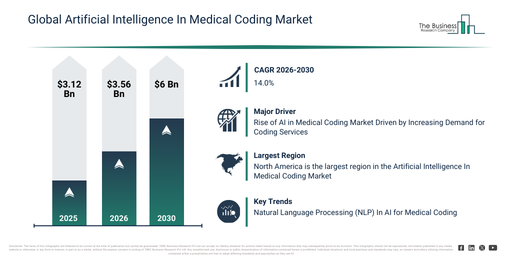
    The artificial intelligence in medical coding market size has experienced rapid growth in recent years. It is anticipated to expand from $3.12 billion in 2025 to $3.56 billion in 2026, achieving a compound annual growth rate (CAGR) of 14.0%. The historical growth in this market can be attributed to several factors, including increasing healthcare data volumes, the rising complexity of medical coding standards, the growing administrative burden on healthcare providers, the expansion of electronic health record systems, and the demand for improved revenue cycle efficiency.

    The artificial intelligence in medical coding market size is projected to experience substantial expansion in the coming years. This market is anticipated to reach $6 billion by 2030, exhibiting a compound annual growth rate (CAGR) of 14.0%. The projected growth during this forecast period stems from factors such as the expanding embrace of fully automated coding solutions, heightened regulatory oversight concerning billing precision, the increasing utilization of AI-assisted clinical documentation, the broadening of outsourced AI-driven coding services, and increased capital injection into healthcare automation technologies. Key trends anticipated within the same period encompass a wider uptake of AI-powered automated coding tools, greater incorporation of NLP-based analysis for clinical documentation, an increasing application of generative AI to enhance code accuracy, the proliferation of AI-supported compliance and auditing instruments, and a sharpened emphasis on minimizing coding mistakes and claim rejections.

    Download A Free Sample Report For Comprehensive Market Insights:

    https://www.thebusinessresearchcompany.com/sample.aspx?id=13588&type=smp

    What Primary Factors Are Fueling The Expansion Of The Artificial Intelligence In Medical Coding Market?

    The expanding need for coding services is anticipated to propel the growth of artificial intelligence in the medical coding market moving ahead. Coding services involve the conversion of healthcare diagnoses, procedures, and medical services into standardized medical alphanumeric codes, which is crucial for precise billing, handling insurance claims, and receiving payments. Artificial intelligence within medical coding improves the efficiency, precision, and flexibility of these services, ultimately benefiting healthcare organizations, medical coders, and patient care. For example, in 2024, data from the American Bureau of Labor Statistics, a government agency based in the US, indicates that the employment of medical records specialists is forecasted to increase by 7 percent between 2024 and 2034. Consequently, the heightened demand for coding services is fueling the expansion of artificial intelligence in the medical coding market.

    Which Segment Divisions Form The Structure Of The Artificial Intelligence In Medical Coding Market?

    The artificial intelligence in medical coding market covered in this report is segmented –

    1) By Component: In-House, Outsourced

    2) By Technology: Machine Learning, Natural Language Processing (NLP), Generative AI

    3) By End-User: Healthcare Providers, Medical Billing Companies, Payers

    Subsegments:

    1) By In-House: Internal Coding Teams, AI-Enhanced Coding Solutions, Integration With Existing Systems

    2) By Outsourced: Third-Party Coding Services, AI-Powered Outsourcing Solutions, Vendor Management For Coding Services

    What Trends Are Shaping The Artificial Intelligence In Medical Coding Market Structure?

    Leading companies in the artificial intelligence medical coding market are developing advanced technologies such as Natural Language Processing (NLP) to understand the context of words, enabling more accurate interpretation of patient conversations and capturing the subtle details of a patient’s medical condition. Natural Language Processing (NLP) is a specialized area of Artificial Intelligence (AI) that allows machines to comprehend and process human-generated spoken or written information. For example, in March 2023, Linguamatics, a UK-based software company, introduced its Healthcare Product Suite designed to convert unstructured electronic health record data into practical patient insights. This suite employs natural language processing (NLP) to extract vital information from various unstructured data sources including EHRs, patient portals, and call center records. Linguamatics’ NLP Data Factory delivers scalable and automated NLP transformation for critical applications, supporting a broad spectrum of healthcare data. Similarly, the Health Language Data Interoperability Solution from Wolters Kluwer also helps organizations consolidate structured, semi-structured, and unstructured data from numerous sources across the healthcare domain.

    Who Are The Leading Firms Participating In The Artificial Intelligence In Medical Coding Market?

    Major companies operating in the artificial intelligence in medical coding market are CodaMetrix Inc., Fathom, Inc., AKASA, Inc., Aideo Technologies, Inc., M-Scribe Technologies, LLC, Dolbey Systems, Inc., Streamline Health Solutions, Inc., Talix, Inc., Health Record Services Corporation, Saince, Inc., Diagnoss, Inc., BUDDI AI, Inc., Oncora Medical, Inc., Epic Systems Corporation, CorroHealth, Inc., nThrive, Inc., Waystar Technologies, Inc., Thoughtful Automation, Inc., Solventum Corporation, Exponential AI, Inc.

    Access The Complete Artificial Intelligence In Medical Coding Market Report:

    https://www.thebusinessresearchcompany.com/report/artificial-intelligence-in-medical-coding-global-market-report

    Which Region Has The Strongest Presence In The Artificial Intelligence In Medical Coding Market?

    North America was the largest region in the artificial intelligence in medical coding market in 2025. The regions covered in the artificial intelligence in medical coding market report are Asia-Pacific, South East Asia, Western Europe, Eastern Europe, North America, South America, Middle East, Africa.

    Access Artificial Intelligence In Medical Coding Market Report for Deeper Competitive Insights

    https://www.thebusinessresearchcompany.com/customise?id=13588&type=smp

    Browse Through More Reports Similar to the Global Artificial Intelligence In Medical Coding Market 2026, By The Business Research Company

    Artificial Intelligence In Medicine Global Market Report 2026

    https://www.thebusinessresearchcompany.com/report/artificial-intelligence-in-medicine-global-market-report

    Medical Coding Global Market Report 2026

    https://www.thebusinessresearchcompany.com/report/medical-coding-global-market-report

    Artificial Intelligence In Healthcare Market 2026

    https://www.thebusinessresearchcompany.com/report/artificial-intelligence-in-healthcare-market

    Get in touch with us:

    The Business Research Company: https://www.thebusinessresearchcompany.com/

    Americas: +1 310-496-7795

    Asia: +44 7882 955267 & +91 8897263534

    Europe: +44 7882 955267

    Email us at: marketing@tbrc.info

    Follow us on:

    LinkedIn: https://in.linkedin.com/company/the-business-research-company

    YouTube: https://www.youtube.com/channel/UC24_fI0rV8cR5DxlCpgmyFQ

    Global Market Model: https://www.thebusinessresearchcompany.com/global-market-model
  • Artificial Intelligence In Life Sciences Market Trends And Growth Outlook Across The 2026–2030 Forecast Period

    Artificial Intelligence In Life Sciences Market Trends And Growth Outlook Across The 2026–2030 Forecast Period

    The Business Research Company’s 2026 market reports feature enhanced tools like market attractiveness analysis, TAM assessment, and company scoring matrices, along with interactive dashboards, deeper supply chain insights, and startup coverage strengthening the depth, usability, and strategic value of insights.

    How Will The Market Size Of The Artificial Intelligence In Life Sciences Market Progress Through 2030?

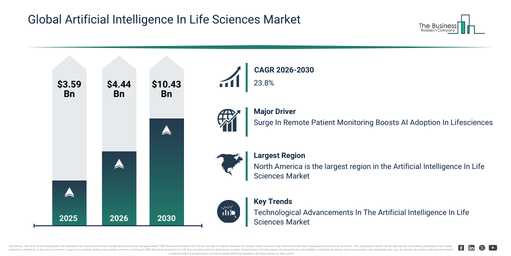
    The artificial intelligence in life sciences market size has experienced significant expansion in recent years. It is anticipated to increase from $3.59 billion in 2025 to $4.44 billion in 2026, demonstrating a compound annual growth rate (CAGR) of 23.6%. The historical growth of this market can be attributed to the increasing complexity of biological datasets, the expansion of genomics research, the rising adoption of digital lab technologies, the early integration of AI in biotechnology research, and the growing demand for faster research cycles.

    The artificial intelligence in life sciences market size is set to experience significant expansion in the upcoming years. It is anticipated to grow to $10.43 billion by 2030, achieving a compound annual growth rate (CAGR) of 23.8%. This expected growth during the forecast period can be attributed to increased investments in personalized medicine, the rising deployment of AI-enabled laboratory automation, the expansion of cloud-based life science platforms, growing collaboration between tech and life science firms, and increasing regulatory acceptance of AI-driven insights. Major trends for the forecast period include the increasing integration of AI across life science workflows, a rising adoption of AI-driven data analytics platforms, the growing use of automation in laboratory operations, the expansion of AI-based precision medicine applications, and an enhanced focus on accelerating research outcomes.

    Download A Free Sample Report For Comprehensive Market Insights:

    https://www.thebusinessresearchcompany.com/sample.aspx?id=13587&type=smp

    Which Strategic Drivers Are Supporting The Artificial Intelligence In Life Sciences Market Development?

    A growing focus on real-time remote patient monitoring (RPM) systems is anticipated to drive the expansion of artificial intelligence in the life sciences market in the future. Such a system represents a technologically advanced healthcare approach aimed at tracking patient well-being beyond conventional medical environments. Artificial intelligence in life sciences plays a crucial role in remote patient monitoring by delivering ongoing, tailored, and insight-driven information, which facilitates proactive healthcare strategies. For example, in April 2025, the Peterson Center on Healthcare, a US-based non-profit organization, documented that expenditures for remote therapeutic monitoring (RTM) within Traditional Medicare increased significantly, from $2.2 million in 2022 to $10.4 million in 2023. Additionally, in 2023, remote patient monitoring (RPM) services were utilized by 451,000 patients covered by Traditional Medicare. Consequently, the rising adoption of real-time remote patient monitoring (RPM) systems is fueling the expansion of artificial intelligence in the life sciences market.

    How Are Different Segment Groups Identified Within The Artificial Intelligence In Life Sciences Market?

    The artificial intelligence in life sciences market covered in this report is segmented –

    1) By Offering: Software, Hardware, Services

    2) By Deployment: On-Premises, Cloud-Based

    3) By Application: Drug Discovery, Medical Diagnosis, Biotechnology, Clinical Trials, Precision And Personalized Medicine, Patient Monitoring

    Subsegments:

    1) By Software: Drug Discovery Software, Genomic Analysis Software, Clinical Trial Management Software, Personalized Medicine Software, Laboratory Information Management Systems (LIMS)

    2) By Hardware: AI-Enabled Laboratory Equipment, Robotics And Automation Systems, Imaging Devices And Equipment, Sensor Technologies

    3) By Services: Consulting Services, Data Analytics Services, Research And Development Services, Implementation And Integration Services, Training And Support Services

    Which Trends Are Supporting The Evolution Of The Artificial Intelligence In Life Sciences Market?

    Leading companies in the artificial intelligence in the life sciences market are concentrating on advanced products, such as drug discovery software, to maintain their market standing. Drug discovery software represents a group of computer programs and applications developed to support pharmaceutical and biotechnology researchers in identifying new medications. For example, in December 2023, Merck, a Germany-based science and technology company, introduced AIDDISON, an innovative drug discovery software. Being the first of its kind, it integrates virtual molecule design with real-world manufacturability, utilizing generative AI, machine learning, and computer-aided drug design. AIDDISON effectively pinpoints drug candidates from extensive possibilities, taking into account essential properties like non-toxicity and solubility. This capability to bridge the divide between virtual molecule design and real-world manufacturability highlights a significant application of artificial intelligence in the life sciences industry.

    Which Companies Are Engaged In The Artificial Intelligence In Life Sciences Market Environment?

    Major companies operating in the artificial intelligence in life sciences market are Google LLC, Microsoft Corporation, Intel Corporation, IBM Corporation, Medtronic PLC, Nvidia Corporation, Novo Nordisk A/S, Siemens Healthineers AG, Philips Healthcare, Babylon Healthcare Services Ltd., Komodo Health Inc., Modernizing Medicine Inc., Viz.ai Inc., Butterfly Network Inc., Augmedix, AiCure LLC, HealthTap Inc., Welltok Inc., Enlitic Inc., PathAI Inc., Nano-X Imaging Ltd., Berg LLC, Insitro, Sense.ly Inc., Subtle Medical Inc., Medasense Biometrics Limited, Immunai, Atomwise Inc., Freenome Holdings Inc., CloudMedX Inc.

    Access The Complete Artificial Intelligence In Life Sciences Market Report:

    https://www.thebusinessresearchcompany.com/report/artificial-intelligence-in-life-sciences-global-market-report

    Which Region Stands As The Largest Contributor To The Artificial Intelligence In Life Sciences Market?

    North America was the largest region in the Artificial Intelligence In Life Sciences market in 2025. Asia-Pacific is expected to be the fastest-growing region in the forecast period. The regions covered in the artificial intelligence in life sciences market report are Asia-Pacific, South East Asia, Western Europe, Eastern Europe, North America, South America, Middle East, Africa.

    Access Artificial Intelligence In Life Sciences Market Report for Deeper Competitive Insights

    https://www.thebusinessresearchcompany.com/customise?id=13587&type=smp

    Browse Through More Reports Similar to the Global Artificial Intelligence In Life Sciences Market 2026, By The Business Research Company

    Ai In Life Science Analytics Global Market Report 2026

    https://www.thebusinessresearchcompany.com/report/ai-in-life-science-analytics-global-market-report

    Artificial Intelligence In Medicine Global Market Report 2026

    https://www.thebusinessresearchcompany.com/report/artificial-intelligence-in-medicine-global-market-report

    Life Science Analytics Global Market Report 2026

    https://www.thebusinessresearchcompany.com/report/life-science-analytics-global-market-report

    Get in touch with us:

    The Business Research Company: https://www.thebusinessresearchcompany.com/

    Americas: +1 310-496-7795

    Asia: +44 7882 955267 & +91 8897263534

    Europe: +44 7882 955267

    Email us at: marketing@tbrc.info

    Follow us on:

    LinkedIn: https://in.linkedin.com/company/the-business-research-company

    YouTube: https://www.youtube.com/channel/UC24_fI0rV8cR5DxlCpgmyFQ

    Global Market Model: https://www.thebusinessresearchcompany.com/global-market-model
  • Artificial Intelligence For Healthcare Payer Market Expansion Outlook Through 2030 With Revenue Growth Insights

    Artificial Intelligence For Healthcare Payer Market Expansion Outlook Through 2030 With Revenue Growth Insights

    The Business Research Company’s 2026 market reports feature enhanced tools like market attractiveness analysis, TAM assessment, and company scoring matrices, along with interactive dashboards, deeper supply chain insights, and startup coverage strengthening the depth, usability, and strategic value of insights.

    What Is The Expected Market Size Of The Artificial Intelligence For Healthcare Payer Market In 2026 And How Much Will It Reach By 2030?

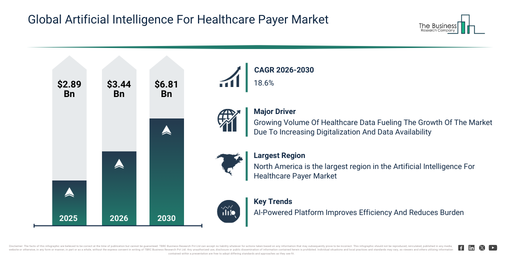
    The artificial intelligence for healthcare payer market has experienced significant expansion in recent years. It is projected to increase from $2.89 billion in 2025 to $3.44 billion in 2026, achieving a compound annual growth rate (CAGR) of 18.9%. This market’s historical growth can be attributed to rising healthcare claims volumes, increasing complexity of reimbursement processes, growth of digital health data availability, early adoption of analytics-driven payer platforms, and increasing pressure to reduce administrative costs.

    The artificial intelligence for healthcare payer market is projected to expand rapidly over the coming years, reaching $6.81 billion by 2030 with a compound annual growth rate (CAGR) of 18.6%. This anticipated growth is driven by several factors, including an increasing transition towards value-based care models, greater investments in cloud-based solutions for payers, a stronger focus on predictive risk adjustment, the broadening of AI-driven member personalization, and intensified regulatory efforts concerning fraud prevention. Key trends expected in the forecast period involve the rising adoption of AI-based claims automation platforms, increased utilization of fraud detection and risk analytics tools, wider deployment of predictive cost management solutions, the expansion of personalized member engagement systems, and an enhanced emphasis on optimizing administrative workflows.

    Download A Free Sample Report For Comprehensive Market Insights:

    https://www.thebusinessresearchcompany.com/sample.aspx?id=30199&type=smp

    What Major Growth Factors Are Impacting The Artificial Intelligence For Healthcare Payer Market?

    The increasing quantity of healthcare information is anticipated to fuel the expansion of artificial intelligence for the healthcare payer market in the future. This data encompasses all details pertaining to health conditions, past medical records, therapeutic interventions, and medical services delivered to individuals or populations. Digitalization is a key factor behind this surge in healthcare data, with electronic health records and networked devices facilitating quicker and more precise collection and examination of patient details. Artificial intelligence (AI) designed for healthcare payers capitalizes on this expanding pool of healthcare data, drawing upon extensive datasets from sources like electronic health records, claims, and wearable technology. This AI improves decision-making by offering data-informed insights, which in turn facilitates precise risk evaluations, identification of fraudulent activities, and streamlined claims processing. As an illustration, figures from June 2022, released by the Department of Health and Social Care, a UK government department, indicate that 90% of National Health Service (NHS) trusts had implemented electronic health records by December 2023, with a full 100% adoption anticipated by March 2025. Consequently, the expanding amount of healthcare data is a primary impetus for the advancement of artificial intelligence for the healthcare payer market.

    What Segment Categories Are Evaluated In The Artificial Intelligence For Healthcare Payer Market Study?

    The artificial intelligence for healthcare payer market covered in this report is segmented –

    1) By Component: Software, Services

    2) By Technology: Machine Learning (ML), Natural Language Processing (NLP), Other Technologies

    3) By Deployment: Cloud, On-Premises

    4) By Application: Claims Processing Optimization, Fraud Detection and Prevention, Revenue Management and Billing, Member Engagement and Personalization, Risk Adjustment And Predictive Analytics, Administrative Workflow Automation, Other Applications

    Subsegments:

    1) By Software: Predictive Analytics Platforms, Claims Management Solutions, Fraud Detection Systems, Risk Assessment Tools, Member Engagement Solutions

    2) By Services: Implementation And Integration Services, Consulting Services, Support And Maintenance Services, Training And Education Services, Managed Services

    What Trends Are Affecting The Growth Of The Artificial Intelligence For Healthcare Payer Market?

    Major companies operating in the artificial intelligence for healthcare payer market are concentrating on developing advanced digital solutions, including AI-driven patient navigation instruments, to enhance operational efficiency, improve the member experience, and alleviate administrative burdens. Artificial intelligence (AI)-powered patient navigation tools are defined as sophisticated digital platforms that utilize artificial intelligence to help patients understand their benefits, locate in-network care providers, and estimate costs. For instance, in April 2024, CVS Health Corporation, a US-based health solutions company, unveiled a suite of new AI and digital tools. These tools feature an AI-powered member experience designed to simplify finding in-network care and comprehending expenses. It specifically includes a personalized patient navigation tool that directs members to the most suitable site of care, such as primary care, urgent care, or a specialist, based on their symptoms, benefits, and local availability, thereby enabling smooth access to care with reduced effort.

    Who Are The Prominent Players Across The Artificial Intelligence For Healthcare Payer Market?

    Major companies operating in the artificial intelligence for healthcare payer market are Amazon Web Services Inc., Google LLC, Microsoft Corporation, Accenture plc, Oracle Corporation, Cognizant Technology Solutions Corporation, Wipro Limited, SAS Institute Inc., Hexaware Technologies Limited, Firstsource Solutions Limited, Innovaccer Incorporated, Cohere Health Incorporated, Softheon, MST Solutions LLC, Lyric AI Incorporated, Inovaare Corporation, Codoxo, Iatros Health Incorporated, Optum Inc., Cerner Corporation

    Access The Complete Artificial Intelligence For Healthcare Payer Market Report:

    https://www.thebusinessresearchcompany.com/report/global-artificial-intelligence-for-healthcare-payer-market-report

    What Is The Largest Regional Market In The Artificial Intelligence For Healthcare Payer Market?

    North America was the largest region in the artificial intelligence for healthcare payer market in 2025. Asia-Pacific is expected to be the fastest-growing region in the forecast period. The regions covered in the artificial intelligence for healthcare payer market report are Asia-Pacific, South East Asia, Western Europe, Eastern Europe, North America, South America, Middle East, Africa.

    Access Artificial Intelligence For Healthcare Payer Market Report for Deeper Competitive Insights

    https://www.thebusinessresearchcompany.com/customise?id=30199&type=smp

    Browse Through More Reports Similar to the Global Artificial Intelligence For Healthcare Payer Market 2026, By The Business Research Company

    Artificial Intelligence Ai For Insurance Global Market Report 2026

    https://www.thebusinessresearchcompany.com/report/artificial-intelligence-ai-for-insurance-global-market-report

    Healthcare Payer Solution Global Market Report 2026

    https://www.thebusinessresearchcompany.com/report/healthcare-payer-solution-global-market-report

    Artificial Intelligence In Healthcare Diagnosis Global Market Report 2026

    https://www.thebusinessresearchcompany.com/report/artificial-intelligence-in-healthcare-diagnosis-global-market-report

    Get in touch with us:

    The Business Research Company: https://www.thebusinessresearchcompany.com/

    Americas: +1 310-496-7795

    Asia: +44 7882 955267 & +91 8897263534

    Europe: +44 7882 955267

    Email us at: marketing@tbrc.info

    Follow us on:

    LinkedIn: https://in.linkedin.com/company/the-business-research-company

    YouTube: https://www.youtube.com/channel/UC24_fI0rV8cR5DxlCpgmyFQ

    Global Market Model: https://www.thebusinessresearchcompany.com/global-market-model