Category: Healthcare Services

  • Global Deep Brain Stimulation In Parkinson`s Disease Market Set for Strong Expansion, Reaching $4.48 Billion With 6.4% CAGR by 2030

    Global Deep Brain Stimulation In Parkinson`s Disease Market Set for Strong Expansion, Reaching $4.48 Billion With 6.4% CAGR by 2030

    Uncover key drivers, emerging technologies, and competitive movements shaping the deep brain stimulation in parkinson`s disease market from 2026–2035 with trusted insights from The Business Research Company

    What level of CAGR-driven expansion is anticipated in the Deep Brain Stimulation In Parkinson`s Disease Market between 2026 and 2030?

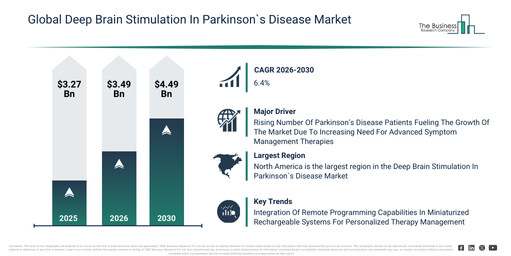
    The deep brain stimulation in parkinson’s disease market has demonstrated substantial growth in recent years. It is projected to expand from $3.27 billion in 2025 to $3.49 billion in 2026, achieving a compound annual growth rate (CAGR) of 6.7%. Historically, this growth has been fueled by elements such as the increasing prevalence of Parkinson’s disease, the growing adoption of DBS devices, rising awareness regarding advanced neuromodulation therapies, the expansion of neurosurgical infrastructure, and an increase in overall healthcare spending.

    The deep brain stimulation in parkinson’s disease market size is projected for substantial expansion over the upcoming years. By 2030, this market is anticipated to reach $4.49 billion, exhibiting a compound annual growth rate (CAGR) of 6.4%. Factors contributing to this growth during the forecast period include an increasing need for individualized neuromodulation treatments, greater investments in both research and clinical studies, improved availability of tele-neurology services, broader reimbursement options, and the growing uptake of MRI-compatible and rechargeable devices. Significant trends anticipated for the forecast period encompass technological progress in closed-loop and directional stimulation systems, novel developments in rechargeable and extended-life implantable pulse generators (IPGs), progress in AI-supported DBS programming, ongoing research and development into less invasive surgical methods, and enhancements in remote patient monitoring and telemedicine functionalities.

    Access Your Free Sample Report for In-Depth Market Insights:

    https://www.thebusinessresearchcompany.com/sample.aspx?id=30568&type=smp

    What Drivers Are Affecting Demand-Supply Dynamics In The Deep Brain Stimulation In Parkinson`s Disease Market?

    An increasing number of individuals diagnosed with Parkinson’s disease is projected to boost the expansion of the deep brain stimulation in Parkinson’s disease market in the future. This condition is a progressive neurological ailment impacting movement, manifested by symptoms like tremors, rigidity, reduced movement speed, and poor balance, resulting from the deterioration of dopamine-generating neurons within the brain. The growth in Parkinson’s disease patient numbers can be attributed to an aging demographic, given that the likelihood of developing the disease substantially increases with age. Deep brain stimulation offers a method to manage Parkinson’s disease through the delivery of focused electrical impulses to distinct areas of the brain, thereby alleviating motor symptoms, enhancing the quality of life, and decreasing reliance on extended medication regimens. As an illustration, the Parkinson’s Foundation, a US-based non-profit organization, reported that approximately 1.1 million individuals in the United States are living with Parkinson’s disease in 2025, a figure anticipated to reach 1.2 million by 2030, alongside nearly 90,000 new diagnoses annually and over 10 million people impacted globally. Consequently, the expanding population of Parkinson’s disease patients is a primary force propelling the growth of the deep brain stimulation in Parkinson’s disease market.

    How Is The Deep Brain Stimulation In Parkinson`s Disease Market Organized Into Various Segments?

    The deep brain stimulation in parkinson`s disease market covered in this report is segmented –

    1) By Product Type: Implantable Pulse Generators (IPGs), Electrodes And Leads, External Programmers, Accessories And Consumables

    2) By Technology: Conventional Deep Brain Stimulation (DBS) Systems, Closed Loop Deep Brain Stimulation (DBS) Systems, Wireless Deep Brain Stimulation (DBS) Systems

    3) By Service Type: Pre-Surgical Evaluation Services, Surgical Implantation Services, Device Programming Services, Patient Monitoring Services, Maintenance And Follow-Up Services, Rehabilitation Support Services, Tele-Neurology Support Services, Training And Education Services

    4) By Application: Tremor Management, Rigidity And Stiffness Management, Bradykinesia (Slow Movement) Management, Dyskinesia Management

    5) By End-Users: Hospitals, Ambulatory Surgical Centres, Neurology Clinics

    Subsegments:

    1) By Implantable Pulse Generators (IPGs): Rechargeable Implantable Pulse Generators, Non-Rechargeable Implantable Pulse Generators, Directional Implantable Pulse Generators

    2) By Electrodes And Leads: Cylindrical Electrodes, Directional Electrodes, Stimulation Leads

    3) By External Programmers: Handheld External Programmers, Desktop External Programmers, Wireless External Programmers

    4) By Accessories And Consumables: Extension Cables, Battery Chargers, Surgical Tool Kits

    What Trends Are Expected To Impact The Competitive Landscape Of The Deep Brain Stimulation In Parkinson`s Disease Market?

    Leading companies in the deep brain stimulation for Parkinson’s disease market are concentrating on developing advanced products, such as smaller rechargeable implantable pulse generators and integrated remote programming platforms, to improve patient comfort and care accessibility. Miniaturizing rechargeable implantable pulse generators involves designing these battery-powered neurostimulation devices in much smaller, thinner forms to allow for less invasive implantation while still delivering reliable therapeutic electrical pulses over extended periods. For instance, in January 2024, Abbott Laboratories, a US-based multinational medical devices and healthcare company, launched its Liberta RC DBS system. This platform is a miniaturized rechargeable deep brain stimulation system featuring remote programming capabilities, created to treat people living with movement disorders like Parkinson’s disease and essential tremor. The solution also offers the longest recharge interval of any FDA-approved DBS system, needing only 10 recharge sessions a year for most people, and utilizes the NeuroSphere Virtual Clinic to allow patients to communicate with their doctors and receive treatment adjustments from the comfort of their homes.

    Who Are The Major Companies Operating In The Deep Brain Stimulation In Parkinson`s Disease Market?

    Major companies operating in the deep brain stimulation in parkinson`s disease market are Abbott Laboratories, Medtronic plc, Boston Scientific Corporation, Mayo Foundation for Medical Education and Research, Cleveland Clinic, Renishaw plc, Neuralink Corp., NeuroPace Inc., PINS Medical Co. Ltd., Neurosoft Ltd., BrainsWay Ltd., Medscape, Inomed Medizintechnik GmbH, SceneRay Corporation Ltd., Neuroelectrics Barcelona S.L., Soterix Medical Inc., CorTec GmbH, Aleva Neurotherapeutics SA, NeuroSigma Inc., BrainGate Company Inc.

    Access The Complete Report For Deeper Market Insights:

    https://www.thebusinessresearchcompany.com/report/deep-brain-stimulation-in-parkinsons-disease-market-report

    Which Region Is Anticipated To See The Fastest Growth In The Deep Brain Stimulation In Parkinson`s Disease Market?

    North America was the largest region in the deep brain stimulation in parkinson’s disease market in 2025. Asia-Pacific is expected to be the fastest-growing region in the forecast period. The regions covered in the deep brain stimulation in parkinson`s disease market report are Asia-Pacific, South East Asia, Western Europe, Eastern Europe, North America, South America, Middle East, Africa.

    Request Your Customized Deep Brain Stimulation In Parkinson`s Disease Market Research Report for Competitive Advantage:

    https://www.thebusinessresearchcompany.com/customise?id=30568&type=smp

    Browse Through More Reports Similar to the Global Deep Brain Stimulation In Parkinson`s Disease Market 2026, By The Business Research Company

    Deep Brain Stimulation Systems Market Report 2026

    https://www.thebusinessresearchcompany.com/report/deep-brain-stimulation-systems-global-market-report

    Deep Brain Stimulation Device Market Report 2026

    https://www.thebusinessresearchcompany.com/report/deep-brain-stimulation-device-global-market-report

    spinal cord stimulation global market report

    https://www.thebusinessresearchcompany.com/report/spinal-cord-stimulation-global-market-report

    Get in touch with us:

    The Business Research Company: https://www.thebusinessresearchcompany.com/

    Americas +1 310-496-7795

    Asia +44 7882 955267 & +91 8897263534

    Europe +44 7882 955267

    Email us at marketing@tbrc.info

    Follow us on:

    LinkedIn: https://in.linkedin.com/company/the-business-research-company

    YouTube: https://www.youtube.com/channel/UC24_fI0rV8cR5DxlCpgmyFQ

    Global Market Model: https://www.thebusinessresearchcompany.com/global-market-model
  • Coconut Charcoal Briquettes Market Outlook 2026–2035: Growth Drivers and Industry Forecast

    Coconut Charcoal Briquettes Market Outlook 2026–2035: Growth Drivers and Industry Forecast

    Uncover key drivers, emerging technologies, and competitive movements shaping the coconut charcoal briquettes market from 2026–2035 with trusted insights from The Business Research Company

    What growth pattern is forecast for the Coconut Charcoal Briquettes Market size between 2026 and 2035?

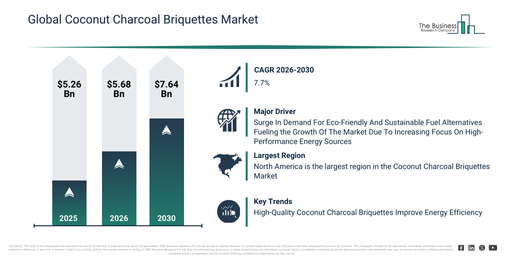
    The coconut charcoal briquettes market has experienced robust growth in recent years. It is projected to expand from $5.26 billion in 2025 to $5.68 billion in 2026, at a compound annual growth rate (CAGR) of 8.0%. This historical growth can be attributed to an increasing demand for eco-friendly fuel, the growing popularity of outdoor cooking, rising awareness of renewable energy, the expansion of barbecue culture, and growing industrial applications for charcoal.

    The coconut charcoal briquettes market size is projected to undergo significant expansion in the next few years. It is forecast to grow to $7.64 billion in 2030, demonstrating a compound annual growth rate (CAGR) of 7.7%. This anticipated growth during the forecast period can be attributed to increasing export opportunities from regions rich in coconuts, a rising consumer preference for charcoal options that are low in ash and smoke-free, the growing adoption of sustainable cooking fuels, the expansion of e-commerce and modern retail distribution channels, and its increasing application in industrial filtration and the production of activated carbon. Key trends expected in this period encompass technological advancements in briquette manufacturing, innovations related to charcoal accessories, developments in sustainable packaging solutions, ongoing research and development aimed at enhancing renewable fuel efficiency, and the integration of technology for optimizing manufacturing operations.

    Access Your Free Sample Report for In-Depth Market Insights:

    https://www.thebusinessresearchcompany.com/sample.aspx?id=30559&type=smp

    Which Drivers Are Impacting Market Performance In The Coconut Charcoal Briquettes Market?

    The expanding need for environmentally friendly and sustainable fuel choices is anticipated to drive the expansion of the coconut charcoal briquettes market in the future. These alternatives involve the increased utilization of fuel sources that lessen their environmental footprint by employing renewable or waste-derived materials, rather than traditional fossil fuels and high-emission charcoal. This escalating demand for green and sustainable fuel options stems from heightened environmental awareness, given their capacity to reduce carbon emissions and help combat climate change. Coconut charcoal briquettes contribute to eco-friendly and sustainable fuel alternatives by providing a renewable, low-emission, high-heat fuel produced from agricultural waste, thereby aligning with sustainability goals and diminishing dependence on conventional fuel types. For example, in November 2025, the UK’s Department for Transport reported that the renewable fuel supplied to the UK in 2024 (3,779 million litres equivalent) surpassed the 2023 figure (3,689 million litres equivalent) by 2%. Consequently, the rising preference for eco friendly and sustainable fuel alternatives is fueling the growth of the coconut charcoal briquettes market.

    Which Segments Are Contributing To The Growth Of The Coconut Charcoal Briquettes Market?

    The coconut charcoal briquettes market covered in this report is segmented –

    1) By Product Type: Pillow Shaped, Hexagonal Shaped, Cube Shaped, Other Products

    2) By Distribution Channel: Online Stores, Supermarkets Or Hypermarkets, Specialty Stores, Other Distributions

    3) By Application: Barbecuing, Grilling, Smoking, Other Cooking Applications

    4) By End-User: Industrial, Residential, Commercial

    Subsegments:

    1) By Pillow Shaped: Large Size Pillow, Medium Size Pillow, Small Size Pillow, Eco Friendly Pillow

    2) By Hexagonal Shaped: Standard Hexagonal, Jumbo Hexagonal, Quick Light Hexagonal, Premium Hexagonal

    3) By Cube Shaped: Small Cube, Medium Cube, Large Cube, Charcoal Cube With Hole

    4) By Other Products: Round Briquettes, Finger Briquettes, Custom Molded Briquettes, Cylindrical Briquettes

    What Long-Term Trends Are Expected To Shape The Future Of The Coconut Charcoal Briquettes Market?

    Leading companies in the coconut charcoal briquettes market are focusing on developing advanced products, such as high-quality coconut charcoal briquettes, to boost efficiency, enhance environmental sustainability, and reduce waste and carbon emissions. High-quality coconut charcoal briquettes are premium solid biofuels made from compressed coconut shell charcoal, offering a high-heat, low-smoke, and long-burning alternative to traditional wood charcoal or fossil fuels. For instance, in June 2025, Little Briquette, a Sri Lanka-based sustainable energy solutions company, launched its premium line of coconut charcoal briquettes. These are produced using a proprietary carbonization and compaction process that ensures high calorific value and consistent density. The product includes a specially designed composition and shape that promotes optimal airflow, enabling seamless ignition and sustained high temperatures for cooking and industrial heating without the need for chemical accelerants. It also incorporates a fully sustainable supply chain and carbon-neutral production, extending product value and reducing environmental impact for consumers and commercial users.

    Who Are The Core Companies Influencing Trends In The Coconut Charcoal Briquettes Market?

    Major companies operating in the coconut charcoal briquettes market are Aracoco Indonesia, PT. Cocofleet, Grand Royal Coco, Djavacoal Indonesia, Vietnam Charcoal, PNP Global Supply Co. Ltd., DP Carbon Pvt. Ltd., Bintang Briquettes Global, Coconut Charcoal Indonesia, PT Global Ace Coco, HASATU, Black Pearl Charcoal, Guru Corporation, Zaza Exports, Bonfire Charcoal, PT Coco Total Karbon Indonesia, PT Berkat Karbon Indonesia, PT. Thrive Coco Indonesia, Jacoid, Nusantara Charcoal Product

    Access The Complete Report For Deeper Market Insights:

    https://www.thebusinessresearchcompany.com/report/coconut-charcoal-briquettes-market-report

    Which Regions Are Projected To Dominate The Coconut Charcoal Briquettes Market In The Coming Years?

    North America was the largest region in the coconut charcoal briquettes market in 2025. Asia-Pacific is expected to be the fastest-growing region in the forecast period. The regions covered in the coconut charcoal briquettes market report are Asia-Pacific, South East Asia, Western Europe, Eastern Europe, North America, South America, Middle East, Africa.

    Request Your Customized Coconut Charcoal Briquettes Market Research Report for Competitive Advantage:

    https://www.thebusinessresearchcompany.com/customise?id=30559&type=smp

    Browse Through More Reports Similar to the Global Coconut Charcoal Briquettes Market 2026, By The Business Research Company

    Charcoal Market Report 2026

    https://www.thebusinessresearchcompany.com/report/charcoal-global-market-report

    Bbq Charcoal Market Report 2026

    https://www.thebusinessresearchcompany.com/report/bbq-charcoal-global-market-report

    coconut sugar global market report

    https://www.thebusinessresearchcompany.com/report/coconut-sugar-global-market-report

    Get in touch with us:

    The Business Research Company: https://www.thebusinessresearchcompany.com/

    Americas +1 310-496-7795

    Asia +44 7882 955267 & +91 8897263534

    Europe +44 7882 955267

    Email us at marketing@tbrc.info

    Follow us on:

    LinkedIn: https://in.linkedin.com/company/the-business-research-company

    YouTube: https://www.youtube.com/channel/UC24_fI0rV8cR5DxlCpgmyFQ

    Global Market Model: https://www.thebusinessresearchcompany.com/global-market-model
  • Global Cloud computing In Pharmaceutical Market Forecast 2026–2035: Long-Term Growth Insights

    Global Cloud computing In Pharmaceutical Market Forecast 2026–2035: Long-Term Growth Insights

    Uncover key drivers, emerging technologies, and competitive movements shaping the cloud computing in pharmaceutical market from 2026–2035 with trusted insights from The Business Research Company

    Starting from its 2026 valuation, what market size is the Cloud computing In Pharmaceutical Market expected to reach by 2030?

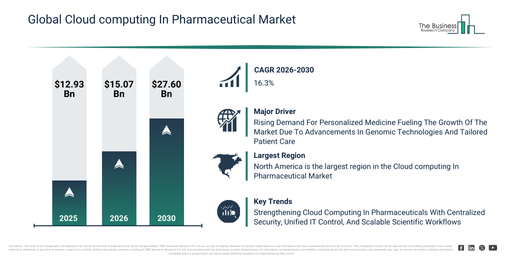
    The market size of cloud computing in the pharmaceutical sector has rapidly expanded in recent years. It is projected to expand from $12.93 billion in 2025 to $15.07 billion in 2026 at a compound annual growth rate (CAGR) of 16.6%. This historical growth has been primarily influenced by the escalating adoption of digital data management, the increasing demand for scalable information technology (IT) infrastructure, the rising utilization of cloud services for clinical data storage, the expansion of pharmaceutical research and development (R&D) activities, and a stronger focus on cost-efficient computing systems.

    The cloud computing in pharmaceutical market is anticipated to experience substantial growth in the upcoming years. It is projected to expand to $27.60 billion by 2030, demonstrating a compound annual growth rate (CAGR) of 16.3%. This expansion during the forecast period is fueled by an increasing demand for AI-enabled drug discovery, the rising integration of hybrid cloud models, a greater transition toward digital pharma manufacturing, the wider use of real-world data and analytics, and a growing necessity for secure cloud-based compliance systems. Significant developments expected in the forecast period include progress in AI and machine learning platforms, advancements in cloud-based clinical trial technologies, innovations in blockchain-enabled data security, research and development in automated pharmaceutical workflows, and enhancements in big data analytics for drug development.

    Access Your Free Sample Report for In-Depth Market Insights:

    https://www.thebusinessresearchcompany.com/sample.aspx?id=30556&type=smp

    What Drivers Are Driving Adoption Within The Cloud computing In Pharmaceutical Market?

    The escalating requirement for personalized medicine is anticipated to fuel the expansion of the cloud computing in pharmaceutical market moving forward. Personalized medicine defines a medical methodology that customizes treatments for individual patients, considering their genetic, environmental, and lifestyle elements to optimize outcomes and improve care. The heightened demand for personalized medicine is attributed to advancements in genomic technologies, which facilitate the exact identification of genetic variations and the creation of bespoke treatments for individuals. Cloud computing in pharmaceutical empowers personalized medicine by providing scalable storage and processing capabilities for extensive volumes of patient, genomic, and clinical data. It enhances treatment precision and speeds up development through support for advanced analytics, real-time collaboration, and data-driven drug discovery, all specifically tailored to individual patient profiles. For example, in February 2024, the Personalized Medicine Coalition (PMC), a US-based nonprofit organization, noted that the U.S. Food and Drug Administration (FDA) sanctioned 26 new personalized medicines in 2023, representing a significant increase from the 12 approved in 2022. Therefore, the increasing need for personalized medicine is a key factor driving the growth of the cloud computing in pharmaceutical market.

    What Segments Are Included Within The Cloud computing In Pharmaceutical Market?

    The cloud computing in pharmaceutical market covered in this report is segmented –

    1) By Service Model: Infrastructure As A Service (IaaS), Platform As A Service (PaaS), Software As A Service (SaaS)

    2) By Deployment Type: Public Cloud, Private Cloud, Hybrid Cloud

    3) By Technology Type: Artificial Intelligence (AI) And Machine Learning, Big Data Analytics, Internet Of Things (IoT), Blockchain, Data Backup And Disaster Recovery Solutions

    4) By Application Area: Drug Discovery And Development, Clinical Trials Management, Manufacturing And Supply Chain, Regulatory Compliance, Pharmacovigilance

    5) By End User: Pharmaceutical Companies, Biotechnology Firms, Research Organizations, Contract Research Organizations (CROs), Academic Institutions

    Subsegments:

    1) By Infrastructure As A Service: Virtual Machines, Storage Services, Networking Services, Backup Services, Disaster Recovery

    2) By Platform As A Service: Application Hosting, Database Management, Development Tools, Middleware Services, Integration Services

    3) By Software As A Service: Clinical Data Management Software, Regulatory Compliance Software, Supply Chain Management Software, Collaboration Tools, Analytics Software

    How Are Emerging Trends Affecting The Progression Of The Cloud computing In Pharmaceutical Market?

    Major companies in the cloud computing in pharmaceutical market are focusing on creating advanced platforms, such as unifying platforms, to improve data protection, regulatory compliance, and operational efficiency across their scientific software offerings. A unifying platform refers to a singular, integrated system that consolidates various tools, functions, or services into one cohesive interface. For instance, in April 2024, Certara Inc., a US-based provider of model-informed drug development software, launched Certara Cloud. This unifying platform integrates the company’s broad suite of scientific software solutions, enabling customers to access and manage their licensed products from discovery to submission with a single login ID, thereby enhancing user experience and accelerating time-to-insight for new therapeutic programs. It serves as a cloud platform to further unify its end-to-end scientific software ecosystem, incorporating centralized security and IT administration. By embedding centralized security controls into its cloud platform, Certara strengthens data integrity, simplifies regulatory adherence, and supports secure collaboration throughout the drug development lifecycle, from early research to regulatory submission.

    Who Are The Prominent Global Companies Shaping The Cloud computing In Pharmaceutical Market Landscape?

    Major companies operating in the cloud computing in pharmaceutical market are Amazon Web Services Inc., Google LLC, Microsoft Corporation, Alibaba Group Holding Ltd., Dell Technologies Inc., Tencent Holdings Ltd., Accenture plc, International Business Machines Corporation, Cisco Systems Inc., Oracle Corporation, Salesforce Inc., SAP SE, Hewlett Packard Enterprise Company, Capgemini SE, Cognizant Technology Solutions Corporation, DXC Technology Company, Akamai Technologies Inc., Snowflake Inc., CareCloud Inc., ClearDATA Networks Inc.

    Access The Complete Report For Deeper Market Insights:

    https://www.thebusinessresearchcompany.com/report/cloud-computing-in-pharmaceutical-market-report

    Which Geographic Areas Are Emerging As Strong Markets For The Cloud computing In Pharmaceutical Market?

    North America was the largest region in the cloud computing in pharmaceutical market in 2025. Asia-Pacific is expected to be the fastest-growing region in the forecast period. The regions covered in the cloud computing in pharmaceutical market report are Asia-Pacific, South East Asia, Western Europe, Eastern Europe, North America, South America, Middle East, Africa.

    Request Your Customized Cloud computing In Pharmaceutical Market Research Report for Competitive Advantage:

    https://www.thebusinessresearchcompany.com/customise?id=30556&type=smp

    Browse Through More Reports Similar to the Global Cloud computing In Pharmaceutical Market 2026, By The Business Research Company

    Healthcare Cloud Computing Market Report 2026

    https://www.thebusinessresearchcompany.com/report/healthcare-cloud-computing-global-market-report

    Cloud Applications Market Report 2026

    https://www.thebusinessresearchcompany.com/report/cloud-applications-global-market-report

    healthcare cloud infrastructure global market report

    https://www.thebusinessresearchcompany.com/report/healthcare-cloud-infrastructure-global-market-report

    Get in touch with us:

    The Business Research Company: https://www.thebusinessresearchcompany.com/

    Americas +1 310-496-7795

    Asia +44 7882 955267 & +91 8897263534

    Europe +44 7882 955267

    Email us at marketing@tbrc.info

    Follow us on:

    LinkedIn: https://in.linkedin.com/company/the-business-research-company

    YouTube: https://www.youtube.com/channel/UC24_fI0rV8cR5DxlCpgmyFQ

    Global Market Model: https://www.thebusinessresearchcompany.com/global-market-model
  • Book Scanner App Market 2026–2030: Forecast, Innovation, and Competitive Trends

    Book Scanner App Market 2026–2030: Forecast, Innovation, and Competitive Trends

    Uncover key drivers, emerging technologies, and competitive movements shaping the book scanner app market from 2026–2035 with trusted insights from The Business Research Company

    How is the Book Scanner App Market size predicted to change over the forecast window of 2026–2035?

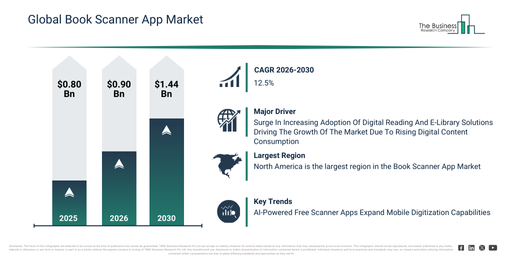
    The market size for book scanner apps has seen rapid expansion in recent years. It is forecast to increase from $0.80 billion in 2025 to $0.90 billion in 2026, demonstrating a compound annual growth rate (CAGR) of 12.8%. This historical growth is attributable to the increasing adoption of mobile digitization, a growing demand for optical character recognition (OCR)-based document tools, rising smartphone penetration globally, the expansion of digital learning environments, and the increasing use of cloud-enabled document storage.

    The market for book scanner applications is projected to experience substantial expansion in the coming years. This market is set to reach $1.44 billion in 2030, exhibiting a compound annual growth rate (CAGR) of 12.5%. This anticipated growth during the forecast period is driven by several factors, including an increasing dependence on mobile scanning solutions for educational purposes, the wider integration of artificial intelligence (AI)-enhanced optical character recognition (OCR) functionalities, a heightened need for cross-platform scanning operations, the expansion of digital archiving projects, and the escalating requirement for remote and paperless documentation. Key trends anticipated over this period encompass technological leaps in artificial intelligence (AI)-powered text recognition, breakthroughs in automated page correction functionalities, progress in cross-platform cloud integration, ongoing research and development into multilingual optical character recognition (OCR) engines, and enhancements in privacy-centric offline scanning technologies.

    Access Your Free Sample Report for In-Depth Market Insights:

    https://www.thebusinessresearchcompany.com/sample.aspx?id=30543&type=smp

    Which Drivers Are Contributing To The Expansion Of The Book Scanner App Market?

    The increasing integration of digital reading and e-library solutions is projected to drive the expansion of the book scanner app market going forward. Digital reading and e-library solutions pertain to the utilization of electronic platforms, applications, or services that enable users to access, read, and manage books and other textual content in digital formats instead of physical print. This surge in the adoption of digital reading and e-library solutions arises from the escalating demand for convenient and accessible educational resources. Book scanner apps support digital reading and e-library solutions by transforming physical printed materials into editable and searchable digital formats, allowing users to seamlessly incorporate scanned content into their digital reading and library ecosystems. For instance, in July 2024, according to the American Library Association, a US-based nonprofit professional membership organization, 95% of libraries offer e-books and or e-audiobooks, while 57.5% provide streaming and downloadable media for patrons. Hence, the rising adoption of digital reading and e-library solutions is fueling the growth of the book scanner app market.

    What Segment Classifications Make Up The Book Scanner App Market?

    The book scanner app market covered in this report is segmented –

    1) By Platform Delivery: Mobile Apps (Android Or iOS), Desktop-Compatible Platforms (Windows), Web-Based Scanning Platforms

    2) By Features: OCR Capability, Cloud Storage Integration, Multi-Language Support, User-Friendly Interface

    3) By Pricing Or Monetization Model: Subscription-Based Plans, One-Time Purchase And Premium Unlock, Freemium Model With In-App Purchases, Enterprise Licensing And Institutional Plans

    4) By Application: Educational Use, Professional Use, Personal Use, Archiving

    5) By End-User: Students, Researchers And Academics, Business Professionals And Enterprises, General And Individual Users

    Subsegments:

    1) By Mobile Apps (Android Or iOS): Freemium Subscription Models, One Time Purchase Applications, Ad Supported Free Applications, Lite And Pro Version Applications

    2) By Desktop Compatible Platforms (Windows): Standalone Licensed Software, Subscription Based Desktop Suites, Freemium Desktop Applications, Professional Grade Scanning Suites

    3) By Web Based Scanning Platforms: Freemium Web Applications, Subscription Based Web Services, Enterprise Web Portal Solutions, Browser Extension Scanning Tools

    What Industry Trends Are Transforming The Book Scanner App Market?

    Companies operating significantly within the book scanner app market are prioritizing AI-driven scanning advancements, such as all-encompassing AI-powered scanner applications, to elevate document digitization, enable intelligent content analysis, and deliver universally accessible instruments. An AI-powered scanner app is characterized as a mobile or desktop application that employs artificial intelligence (AI) technologies to effectively digitize, identify, and handle physical documents or images. For instance, in July 2025, PDF Gear Tech Pte. Ltd, a Singapore-based software company, released PDFgear Scan, an AI-powered scanner app offered without charge that immediately converts paper documents into PDFs or Word files, free of ads, usage limitations, or cost. This app incorporates automated document analysis and question-answering features, allowing users to promptly receive summaries, extract important details, or obtain step-by-step explanations for activities like math problems directly from their scans without switching applications. Furthermore, it integrates smart scanning modes for diverse document categories and potent OCR, thereby enhancing the app’s utility and decreasing operational complexities for both individuals and professionals.

    Which Leading Companies Dominate The Book Scanner App Market Share?

    Major companies operating in the book scanner app market are Apple Inc., Google LLC, Microsoft Corporation, HP Inc., Adobe Inc., Zoho Corporation Pvt Ltd., Dropbox Inc., ABBYY Solutions Limited, Foxit Software Incorporated, Wondershare Technology Co. Ltd., Kdan mobile software Ltd., Evernote Corporation, TapMedia Ltd., Mobisystems Inc., IRIS S.A., Scanbot SDK GmbH, Maple Media Holdings LLC, Grizzly labs S.R.L, Notebloc Scanner SCP, Toolwiz

    Access The Complete Report For Deeper Market Insights:

    https://www.thebusinessresearchcompany.com/report/book-scanner-app-market-report

    How Does The Book Scanner App Market Perform Across Major Global Regions?

    North America was the largest region in the book scanner apps market in 2025. Asia-Pacific is expected to be the fastest-growing region in the forecast period. The regions covered in the book scanner app market report are Asia-Pacific, South East Asia, Western Europe, Eastern Europe, North America, South America, Middle East, Africa.

    Request Your Customized Book Scanner App Market Research Report for Competitive Advantage:

    https://www.thebusinessresearchcompany.com/customise?id=30543&type=smp

    Browse Through More Reports Similar to the Global Book Scanner App Market 2026, By The Business Research Company

    Scanner Software Market Report 2026

    https://www.thebusinessresearchcompany.com/report/scanner-software-global-market-report

    Scanner Market Report 2026

    https://www.thebusinessresearchcompany.com/report/scanner-global-market-report

    document scanning services global market report

    https://www.thebusinessresearchcompany.com/report/document-scanning-services-global-market-report

    Get in touch with us:

    The Business Research Company: https://www.thebusinessresearchcompany.com/

    Americas +1 310-496-7795

    Asia +44 7882 955267 & +91 8897263534

    Europe +44 7882 955267

    Email us at marketing@tbrc.info

    Follow us on:

    LinkedIn: https://in.linkedin.com/company/the-business-research-company

    YouTube: https://www.youtube.com/channel/UC24_fI0rV8cR5DxlCpgmyFQ

    Global Market Model: https://www.thebusinessresearchcompany.com/global-market-model
  • Global Artificial Intelligence (AI)-Driven Hospital Readmission Predictor Market Set for Strong Expansion, Reaching $6.08 Billion With 25.9% CAGR by 2030

    Global Artificial Intelligence (AI)-Driven Hospital Readmission Predictor Market Set for Strong Expansion, Reaching $6.08 Billion With 25.9% CAGR by 2030

    Uncover key drivers, emerging technologies, and competitive movements shaping the artificial intelligence (ai)-driven hospital readmission predictor market from 2026–2035 with trusted insights from The Business Research Company

    What long-term size projections exist for the Artificial Intelligence (AI)-Driven Hospital Readmission Predictor Market covering 2026–2035?

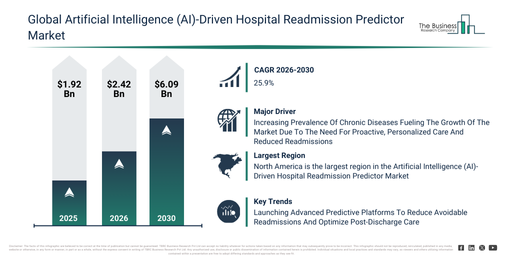
    The market size for artificial intelligence (AI)-driven hospital readmission predictors has experienced significant expansion over recent years. This sector is anticipated to increase from $1.92 billion in 2025 to $2.42 billion in 2026, demonstrating a compound annual growth rate (CAGR) of 26.2%. The historical drivers for this growth include the escalating integration of AI in healthcare, the heightened necessity to minimize hospital readmissions, the increasing presence of electronic health records, the wider deployment of predictive analytics, and an enhanced emphasis on patient welfare.

    The artificial intelligence (AI)-driven hospital readmission predictor market is projected to experience substantial expansion in the coming years. By 2030, its valuation is anticipated to reach $6.09 billion, demonstrating a compound annual growth rate (CAGR) of 25.9%. This anticipated growth throughout the forecast period stems from several factors, including increased investments in healthcare information technology infrastructure, greater incorporation of clinical decision support systems, wider uptake of cloud-based analytics platforms, the broadening availability of remote patient monitoring instruments, and a heightened focus on value-based care frameworks. Key developments expected during this timeframe encompass technological progress in machine learning models, breakthroughs in real-time patient observation, intensified research and development efforts in natural language processing, the emergence of explainable AI solutions tailored for healthcare, and enhancements in interoperable healthcare IT systems.

    Access Your Free Sample Report for In-Depth Market Insights:

    https://www.thebusinessresearchcompany.com/sample.aspx?id=30521&type=smp

    Which Drivers Are Impacting The Competitive Landscape Of The Artificial Intelligence (AI)-Driven Hospital Readmission Predictor Market?

    The expansion of the artificial intelligence (AI)-driven hospital readmission predictor market is anticipated to be driven by the rising occurrence of chronic diseases. These conditions are persistent health issues, like diabetes, heart disease, and arthritis, that typically advance gradually and necessitate continuous medical care and lifestyle adjustments to manage symptoms and avoid complications. Their growing frequency is primarily linked to unhealthy habits such as poor nutrition, lack of exercise, and smoking, which elevate the likelihood of developing conditions like diabetes, heart disease, and obesity. Artificial intelligence (AI)-driven hospital readmission predictors assist in managing chronic diseases by examining patient data to pinpoint individuals with a significant risk of readmission. These tools enhance patient results through proactive interventions, customized care plans, and prompt follow-ups, thereby preventing complications and shortening hospital admissions. As an illustration, the National Health Service, a UK-based government department, reported in June 2024 that 3,615,330 individuals registered with a general practitioner (GP) had received a diagnosis of non-diabetic hyperglycemia or pre-diabetes (a state characterized by elevated blood sugar levels, not yet meeting the criteria for diabetes) in 2023. This represented an 18% rise from the 3,065,825 cases observed in 2022. Consequently, the rising incidence of chronic diseases is fostering the expansion of the artificial intelligence (AI)-driven hospital readmission predictor market.

    What Leading Segments Are Studied In The Artificial Intelligence (AI)-Driven Hospital Readmission Predictor Market?

    The artificial intelligence (AI)-driven hospital readmission predictor market covered in this report is segmented –

    1) By Component: Software, Hardware, Services

    2) By Deployment Mode: On-Premises, Cloud

    3) By Application: Patient Risk Assessment, Care Management, Clinical Decision Support, Population Health Management, Other Applications

    4) By End-User: Hospitals, Clinics, Ambulatory Surgical Centers, Other End-Users

    Subsegments:

    1) By Software: Electronic Health Record Integration, Predictive Analytics Platforms, Risk Scoring Systems, Clinical Decision Support Tools

    2) By Hardware: Servers, Sensors, Monitoring Devices, Data Storage Devices

    3) By Services: Data Analytics Services, Predictive Modeling Services, Integration And Deployment Services, Training And Support Services, Monitoring And Reporting Services

    What Trends Are Projected To Support The Growth Of The Artificial Intelligence (AI)-Driven Hospital Readmission Predictor Market?

    Companies active in the artificial intelligence (AI)-driven hospital readmission predictor market are concentrating on developing sophisticated solutions, such as advanced predictive modeling, to identify high-risk patients, facilitate proactive interventions, and improve post-discharge care. Advanced predictive modeling entails utilizing complex statistical algorithms and machine learning techniques with historical and real-time data to uncover intricate patterns and generate highly precise forecasts of future outcomes. For instance, in July 2025, Innovaccer Inc., a US-based healthcare AI company, introduced its AI-Powered Readmissions Management Solution. This solution integrates advanced predictive modeling to pinpoint avoidable readmissions across Medicare, Medicaid, and uninsured populations. The platform also delivers unified 360-degree patient views, agentic AI tools including Care Management Copilot and Pre-Call Coordinator Agent for automating workflows, and benchmark intelligence for strategic intervention planning. This solution empowers healthcare providers to lower readmission rates, optimize resource allocation, and improve overall patient outcomes.

    Which Leading Companies Dominate The Artificial Intelligence (AI)-Driven Hospital Readmission Predictor Market Share?

    Major companies operating in the artificial intelligence (AI)-driven hospital readmission predictor market are Oracle Corporation, Siemens Healthineers AG, Cognizant Technology Solutions Corp., Epic Systems Corporation, SAS Institute Inc., Veradigm Inc., Merative LLP, Health Catalyst Inc., Lumeris Inc., Innovaccer Inc., Optum Inc., H2O.ai Inc., Healthfirst Inc., Qventus Inc., Lightbeam Health Solutions Inc., HealthEC LLC, Collective Medical Technologies Inc., CarePredict Inc., HBI Solutions Inc., CloudMedx

    Access The Complete Report For Deeper Market Insights:

    https://www.thebusinessresearchcompany.com/report/artificial-intelligence-ai-driven-hospital-readmission-predictor-market-report

    How Does The Artificial Intelligence (AI)-Driven Hospital Readmission Predictor Market Perform Across Major Global Regions?

    North America was the largest region in the artificial intelligence (AI)-driven hospital readmission predictor market in 2025. Asia-Pacific is expected to be the fastest-growing region in the forecast period. The regions covered in the artificial intelligence (AI)-driven hospital readmission predictor market report are Asia-Pacific, South East Asia, Western Europe, Eastern Europe, North America, South America, Middle East, Africa.

    Request Your Customized Artificial Intelligence (AI)-Driven Hospital Readmission Predictor Market Research Report for Competitive Advantage:

    https://www.thebusinessresearchcompany.com/customise?id=30521&type=smp

    Browse Through More Reports Similar to the Global Artificial Intelligence (AI)-Driven Hospital Readmission Predictor Market 2026, By The Business Research Company

    Artificial Intelligence In Healthcare Diagnosis Market Report 2026

    https://www.thebusinessresearchcompany.com/report/artificial-intelligence-in-healthcare-diagnosis-global-market-report

    Artificial Intelligence In Healthcare Market 2026

    https://www.thebusinessresearchcompany.com/report/artificial-intelligence-in-healthcare-market

    generative ai in healthcare global market report

    https://www.thebusinessresearchcompany.com/report/generative-ai-in-healthcare-global-market-report

    Get in touch with us:

    The Business Research Company: https://www.thebusinessresearchcompany.com/

    Americas +1 310-496-7795

    Asia +44 7882 955267 & +91 8897263534

    Europe +44 7882 955267

    Email us at marketing@tbrc.info

    Follow us on:

    LinkedIn: https://in.linkedin.com/company/the-business-research-company

    YouTube: https://www.youtube.com/channel/UC24_fI0rV8cR5DxlCpgmyFQ

    Global Market Model: https://www.thebusinessresearchcompany.com/global-market-model
  • Artificial Intelligence (AI) Tele-Oncology Radiation Dose Scheduler Market Growth Projection: Expected to Surpass $2.27 Billion by 2030 at 23% CAGR

    Artificial Intelligence (AI) Tele-Oncology Radiation Dose Scheduler Market Growth Projection: Expected to Surpass $2.27 Billion by 2030 at 23% CAGR

    Uncover key drivers, emerging technologies, and competitive movements shaping the artificial intelligence (ai) tele-oncology radiation dose scheduler market from 2026–2035 with trusted insights from The Business Research Company

    What total market size is anticipated for the Artificial Intelligence (AI) Tele-Oncology Radiation Dose Scheduler Market in 2030?

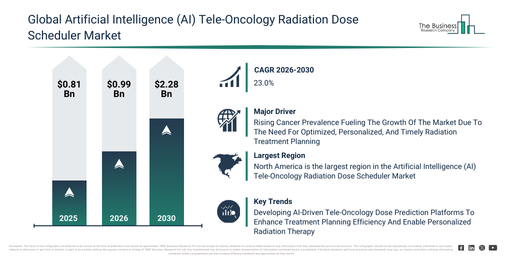
    The artificial intelligence (AI) tele-oncology radiation dose scheduler market has experienced significant expansion in recent years. It is projected to expand from $0.81 billion in 2025 to $0.99 billion in 2026, achieving a compound annual growth rate (CAGR) of 23.3%. This historical growth can be attributed to several factors, including the increasing requirement for remote cancer treatment planning, the growing adoption of tele-oncology platforms, the heightened demand for accurate radiation dose calculation, and the expanding utilization of AI in oncology decision support. Further contributions come from the global rise in cancer incidence, the accelerating digital transformation in hospitals, the increased deployment of cloud-based medical systems, the escalating need for workflow automation in radiotherapy, a sharpened focus on minimizing treatment errors, and the broader integration of intelligent oncology scheduling tools.

    The artificial intelligence (AI) tele-oncology radiation dose scheduler market size is expected to experience significant growth over the next few years. It is predicted to expand to $2.28 billion in 2030, showing a compound annual growth rate (CAGR) of 23.0%. The expansion during this forecast period is driven by factors such as the widening of tele-oncology networks, the adoption of AI-enabled treatment planning platforms, an increasing demand for automated dose calculation systems, the uptake of cloud-based oncology scheduling modules, the deployment of predictive oncology algorithms, the development of remote radiotherapy review tools, the need for precision-based cancer care, the integration of AI tools into oncology departments, partnerships between AI vendors and cancer centers, and the growing acceptance of tele-radiation workflows. Noteworthy trends anticipated in this period include advancements in AI-driven radiotherapy dose prediction, improvements in cloud-based oncology scheduling platforms, progress in real-time dose optimization engines, innovations in automated treatment planning systems, novel developments in predictive oncology algorithms, new approaches in virtual radiation oncology workflows, the integration of tele-oncology with hospital information systems, the merging of AI dose schedulers with imaging platforms, the incorporation of remote dose-review tools for oncologists, and the establishment of multi-center tele-radiation networks.

    Access Your Free Sample Report for In-Depth Market Insights:

    https://www.thebusinessresearchcompany.com/sample.aspx?id=30520&type=smp

    What Drivers Are Influencing Production Trends In The Artificial Intelligence (AI) Tele-Oncology Radiation Dose Scheduler Market?

    The expanding occurrence of cancer is projected to fuel the expansion of the artificial intelligence (AI) tele-oncology radiation dose scheduler market in the future. Cancer is defined as an illness marked by the unchecked proliferation and dissemination of atypical cells, which can harm adjacent tissues and organs if left untreated. The incidence of cancer is growing, attributed to lifestyle factors like inadequate nutrition, tobacco use, alcohol intake, and exposure to environmental contaminants, thereby heightening the likelihood of developing diverse types of cancer. Artificial intelligence (AI) tele-oncology radiation dose schedulers aid in cancer management by refining and tailoring radiation treatment protocols via remote, data-informed assessments. These schedulers enhance patient results by guaranteeing precise dosage, minimizing treatment delays, and facilitating uniform care across different geographical areas. As an illustration, in October 2025, NHS Digital, a UK government body, reported 354,820 new cancer diagnoses in England in 2023, equating to an average of 972 diagnoses daily and marking an increase of 8,605 cases from 2022, with prostate cancer being the predominant diagnosis at 58,137 new cases, showing a 6% rise in registrations year-over-year. Consequently, the increasing prevalence of cancer is propelling the demand for the artificial intelligence (AI) tele-oncology radiation dose scheduler market.

    Which Segment Groups Are Influencing The Artificial Intelligence (AI) Tele-Oncology Radiation Dose Scheduler Market?

    The artificial intelligence (AI) tele-oncology radiation dose scheduler market covered in this report is segmented –

    1) By Component: Software, Hardware, Services

    2) By Technology: Machine Learning Algorithms, Natural Language Processing, Computer Vision, Predictive Analytics

    3) By Deployment Mode: On-Premise (Local Installation), Cloud-Based (SaaS), Hybrid Deployment

    4) By Application: Auto-Contouring And Segmentation (OAR Or Target), Treatment Plan Generation And Optimization, Dose Prediction And Quality Assurance (QA), Workflow And Resource Scheduling Optimization, Adaptive Radiotherapy Planning

    5) By End-User: Hospitals, Cancer Treatment Centers, Research Institutes, Other End-Users

    Subsegments:

    1) By Software: Analytics And Reporting Software, Recommendation Engine Software, Natural Language Processing Software, Machine Learning Model Management Tools, Computer Vision Software, Integration And API Management Software, Mobile And Web Application Software

    2) By Hardware: AI-Optimized Servers, Edge Computing Devices, Sensors And IoT Devices, Smart Cameras, GPUs And AI Accelerators, Storage Systems, Networking And Connectivity Hardware

    3) By Services: Consulting Services, Implementation And Integration Services, Training And Support Services, Managed AI Services, Maintenance And Upgradation Services, Custom AI Development Services, Data Management And Annotation Services

    Which Trends Are Influencing The Performance And Direction Of The Artificial Intelligence (AI) Tele-Oncology Radiation Dose Scheduler Market?

    Leading companies in the AI tele-oncology and radiation therapy market are concentrating on developing advanced solutions, such as AI-powered dose prediction, to forecast personalized radiation dose distributions and improve treatment planning efficiency. These AI-powered dose prediction platforms function as software tools designed to analyze imaging and anatomical data, generate clinically achievable 3D dose distributions, and support timely adjustments for optimizing therapy. For instance, in March 2025, MVision AI, a Finland-based health-tech company, introduced Dose+. This AI-powered dose prediction platform incorporates specialized models for prostate and pelvic lymph node cases, customizes dose distributions to each patient’s anatomy, and supports integration with standard treatment planning systems via DICOM to facilitate efficient planning workflows. This launch represents a significant technological advancement by integrating AI-driven dose prediction into routine clinical practice, bridging traditional planning with automated, patient-specific optimization, and offering clinicians a scalable, efficient solution for precise, personalized radiation therapy.

    Who Are The Major Companies Operating In The Artificial Intelligence (AI) Tele-Oncology Radiation Dose Scheduler Market?

    Major companies operating in the artificial intelligence (AI) tele-oncology radiation dose scheduler market are IBM Corporation, Siemens Healthineers AG, GE HealthCare Technologies Inc., Koninklijke Philips N.V., Varian Medical Systems Inc., Elekta AB, Shanghai United Imaging Healthcare Co. Ltd., Accuray Incorporated, Brainlab AG, RaySearch Laboratories AB, MIM Software Inc., Sun Nuclear Corp., DeepHealth, Radformation Inc., MVision AI Ltd., Mirada Medical Ltd., ViewRay Inc., Oncora Medical, Enlitic, Optellum Ltd.

    Access The Complete Report For Deeper Market Insights:

    https://www.thebusinessresearchcompany.com/report/artificial-intelligence-ai-tele-oncology-radiation-dose-scheduler-market-report

    Which Region Is Anticipated To See The Fastest Growth In The Artificial Intelligence (AI) Tele-Oncology Radiation Dose Scheduler Market?

    North America was the largest region in the AI tele-oncology radiation dose scheduler market in 2025. Asia-Pacific is expected to be the fastest-growing region in the forecast period. The regions covered in the artificial intelligence (AI) tele-oncology radiation dose scheduler market report are Asia-Pacific, South East Asia, Western Europe, Eastern Europe, North America, South America, Middle East, Africa.

    Request Your Customized Artificial Intelligence (AI) Tele-Oncology Radiation Dose Scheduler Market Research Report for Competitive Advantage:

    https://www.thebusinessresearchcompany.com/customise?id=30520&type=smp

    Browse Through More Reports Similar to the Global Artificial Intelligence (AI) Tele-Oncology Radiation Dose Scheduler Market 2026, By The Business Research Company

    Artificial Intelligence In Oncology Market Report 2026

    https://www.thebusinessresearchcompany.com/report/artificial-intelligence-in-oncology-global-market-report

    Radiation Dose Management Market Report 2026

    https://www.thebusinessresearchcompany.com/report/radiation-dose-management-global-market-report

    artificial intelligence ai radiology tool global market report

    https://www.thebusinessresearchcompany.com/report/artificial-intelligence-ai-radiology-tool-global-market-report

    Get in touch with us:

    The Business Research Company: https://www.thebusinessresearchcompany.com/

    Americas +1 310-496-7795

    Asia +44 7882 955267 & +91 8897263534

    Europe +44 7882 955267

    Email us at marketing@tbrc.info

    Follow us on:

    LinkedIn: https://in.linkedin.com/company/the-business-research-company

    YouTube: https://www.youtube.com/channel/UC24_fI0rV8cR5DxlCpgmyFQ

    Global Market Model: https://www.thebusinessresearchcompany.com/global-market-model
  • Artificial Intelligence (AI) Safety Market Forecast 2026–2035: How to Leverage Market Growth

    Artificial Intelligence (AI) Safety Market Forecast 2026–2035: How to Leverage Market Growth

    Uncover key drivers, emerging technologies, and competitive movements shaping the artificial intelligence (ai) safety market from 2026–2035 with trusted insights from The Business Research Company

    What is the expected shift in the Artificial Intelligence (AI) Safety Market’s size between 2026 and 2030?

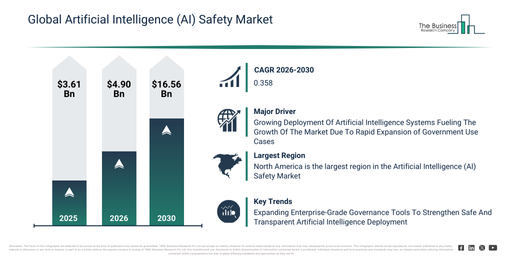
    The artificial intelligence (AI) safety market size has experienced significant expansion recently. It is forecast to grow from $3.61 billion in 2025 to $4.90 billion in 2026, achieving a compound annual growth rate (CAGR) of 35.8 %. This historical growth can be attributed to heightened regulatory scrutiny concerning safe artificial intelligence practices, businesses’ increasing demand for risk-controlled AI deployment, growing apprehension about unintended AI behavior, the wider acceptance of ethical AI frameworks, and increased investment in AI oversight mechanisms.

    The artificial intelligence (AI) safety market is projected to experience substantial growth in the coming years, reaching **$16.56 billion in 2030** with a compound annual growth rate (CAGR) of **35.6 %**. This expansion during the forecast period is driven by increasing demand for explainable and trustworthy AI systems, the growing adoption of AI governance standards, the wider integration of AI safety solutions across various industries, a heightened focus on minimizing AI model bias, and an intensified emphasis on secure AI lifecycle management. Significant trends anticipated for this period include technological progress in AI risk detection, innovative developments in explainable AI modeling, advancements in autonomous system safety protocols, continuous research and development in human-AI alignment, and improvements in AI governance and auditing tools.

    Access Your Free Sample Report for In-Depth Market Insights:

    https://www.thebusinessresearchcompany.com/sample.aspx?id=30519&type=smp

    Which Drivers Are Shaping Strategic Decisions In The Artificial Intelligence (AI) Safety Market?

    The projected growth of the artificial intelligence (AI) safety market is fueled by the expanding use of artificial intelligence systems. These systems are defined as intelligent models or applications capable of significantly impacting safety, civil rights, public services, or critical infrastructure if they malfunction or behave unpredictably. The increase in their deployment stems from the rising demand for automation and efficiency across various industries. This widespread adoption of AI systems necessitates robust safeguards, monitoring, and governance to guarantee their reliable, transparent, and responsible operation in critical contexts, thereby enhancing artificial intelligence (AI) safety. As an illustration, the U.S. Government Accountability Office reported a significant increase in AI use cases, from 571 in 2023 to 1,110 in 2024, with generative AI use cases soaring almost ninefold, from 32 to 282, between the same periods, as of July 2025. Consequently, the expanding implementation of artificial intelligence systems is a key driver for the artificial intelligence (AI) safety market.

    What Segment Classifications Make Up The Artificial Intelligence (AI) Safety Market?

    The artificial intelligence (AI) safety market covered in this report is segmented –

    1) By Component: Software, Hardware, Services

    2) By Deployment Mode: On-Premises, Cloud

    3) By Technology: Machine Learning Safety Systems, Deep Learning Safety Systems, Natural Language Processing Safety Systems, Computer Vision Safety Systems, Reinforcement Learning Safety Systems

    4) By Organization Size: Large Enterprises, Medium Enterprises, Small Enterprises, Micro Enterprises, Public Sector Organizations

    5) By End-User: Banking, Financial Services And Insurance (BFSI), Healthcare, Automotive, Information Technology And Telecommunications, Government, Other End Users

    Subsegments:

    1) By Software: AI Safety Platforms, Robustness And Monitoring Tools, Alignment And Oversight Software, Data Security And Privacy Software

    2) By Hardware: Specialized AI Safety Chips, Secure Enclaves And Trusted Execution Environments, Hardware For Controlled Testing Environments, Biometric And Physical Access Systems

    3) By Services: AI Safety Consulting And Auditing, Red Teaming And Adversarial Testing, Incident Response And Management, Training And Certification

    What Long-Term Trends Are Expected To Shape The Future Of The Artificial Intelligence (AI) Safety Market?

    Major companies operating in the artificial intelligence (AI) safety market are prioritizing the development of technologically advanced solutions, such as open-source model frameworks and enhanced governance functionalities, to elevate transparency, safety adherence, and risk management in enterprise AI deployments. Open-source model frameworks and governance solutions integrate collaborative development, interpretability tools, and community-led safeguards, allowing organizations to build, monitor, and align AI systems effectively while mitigating unintended or harmful outcomes. For example, in May 2024, International Business Machines Corporation, a US-based technology corporation, unveiled the subsequent evolution of its WatsonX platform with open-source product and ecosystem innovations, introducing a family of Granite open-source models and launching InstructLab, a model alignment technique that encourages community contributions and supports safer model development and deployment practices. These enhancements aim to improve visibility, governance, and safety oversight across open and hybrid Artificial Intelligence environments. Therefore, the inclination towards open-source model releases and safety-focused governance innovations is actively shaping the Artificial Intelligence safety market.

    Which Major Firms Are Strengthening Their Position In The Artificial Intelligence (AI) Safety Market?

    Major companies operating in the artificial intelligence (AI) safety market are Microsoft Corporation, OpenAI LLC, MITRE Corporation, Anthropic PBC, DeepMind Technologies Limited, HiddenLayer Inc., Fiddler AI Inc., Arthur AI Inc., ModelOp Center Inc., CalypsoAI Corp., Credo AI Inc., Truera Inc., WhyLabs Inc., Robust Intelligence Inc., Aequitas AI Inc., Fairly AI Inc., Holistic AI Ltd., Goodfire AI Inc., Giskard AI Inc., Center for AI Safety Inc.

    Access The Complete Report For Deeper Market Insights:

    https://www.thebusinessresearchcompany.com/report/artificial-intelligence-ai-safety-market-report

    Which Region Shows The Strongest Potential For Future Expansion In The Artificial Intelligence (AI) Safety Market?

    North America was the largest region in the artificial intelligence (AI) safety market in 2025. Asia-Pacific is expected to be the fastest-growing region in the forecast period. The regions covered in the artificial intelligence (AI) safety market report are Asia-Pacific, South East Asia, Western Europe, Eastern Europe, North America, South America, Middle East, Africa.

    Request Your Customized Artificial Intelligence (AI) Safety Market Research Report for Competitive Advantage:

    https://www.thebusinessresearchcompany.com/customise?id=30519&type=smp

    Browse Through More Reports Similar to the Global Artificial Intelligence (AI) Safety Market 2026, By The Business Research Company

    Ai For Public Security And Safety Market Report 2026

    https://www.thebusinessresearchcompany.com/report/ai-for-public-security-and-safety-global-market-report

    Ai Trust Risk And Security Management Market Report 2026

    https://www.thebusinessresearchcompany.com/report/ai-trust-risk-and-security-management-global-market-report

    artificial intelligence ai in games global market report

    https://www.thebusinessresearchcompany.com/report/artificial-intelligence-ai-in-games-global-market-report

    Get in touch with us:

    The Business Research Company: https://www.thebusinessresearchcompany.com/

    Americas +1 310-496-7795

    Asia +44 7882 955267 & +91 8897263534

    Europe +44 7882 955267

    Email us at marketing@tbrc.info

    Follow us on:

    LinkedIn: https://in.linkedin.com/company/the-business-research-company

    YouTube: https://www.youtube.com/channel/UC24_fI0rV8cR5DxlCpgmyFQ

    Global Market Model: https://www.thebusinessresearchcompany.com/global-market-model
  • Global Artificial Intelligence (AI) Productivity Tools Market 2026–2030: Forecast Insights for Business Planning

    Global Artificial Intelligence (AI) Productivity Tools Market 2026–2030: Forecast Insights for Business Planning

    Uncover key drivers, emerging technologies, and competitive movements shaping the artificial intelligence (ai) productivity tools market from 2026–2035 with trusted insights from The Business Research Company

    What growth pattern is forecast for the Artificial Intelligence (AI) Productivity Tools Market size between 2026 and 2035?

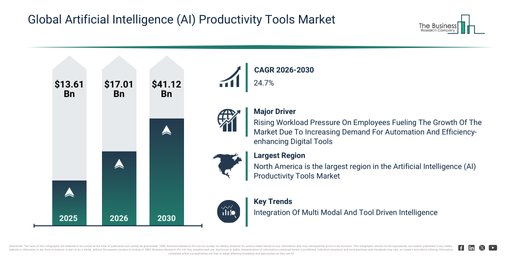
    The market size for artificial intelligence (AI) productivity tools has seen substantial expansion in recent years. This market is projected to grow from $13.61 billion in 2025 to $17.01 billion in 2026, at a compound annual growth rate (CAGR) of 25.0%. Historically, this growth can be attributed to increased enterprise automation adoption, the rising use of cloud-based workforce tools, a greater demand for remote collaboration, the expansion of digital transformation initiatives, and an increase in data-driven decision-making.

    The artificial intelligence (AI) productivity tools market is poised for significant expansion over the coming years. Projections indicate it will reach $41.12 billion by 2030, exhibiting a compound annual growth rate (CAGR) of 24.7%. This anticipated expansion is driven by factors such as increasing investment in AI-powered productivity platforms, the wider acceptance of generative AI assistants, a growing demand for large-scale workflow optimization, the broader integration of AI across various business applications, and a heightened emphasis on cost-effective process automation. Key trends anticipated in this period include technological breakthroughs in generative AI models, ongoing innovation in automation workflows, swift advancements in multimodal AI tools, increased research and development in productivity-focused AI, and emerging progress in adaptive and personalized AI systems.

    Access Your Free Sample Report for In-Depth Market Insights:

    https://www.thebusinessresearchcompany.com/sample.aspx?id=30517&type=smp

    Which Drivers Are Impacting Market Performance In The Artificial Intelligence (AI) Productivity Tools Market?

    The growing workload pressure on employees is expected to stimulate the expansion of the artificial intelligence (AI) productivity tools market moving forward. Employee workload pressure refers to the degree of physical and mental strain workers experience due to significant job demands, tight deadlines, long working hours, or insufficient staffing. This increasing workload pressure on employees is attributed to rising organizational cost optimization, as companies reduce staffing levels while sustaining or expanding operational output. Workload pressure on employees boosts the adoption of artificial intelligence–based productivity tools by generating demand for solutions that automate tasks, improve efficiency, and decrease time spent on repetitive work. For instance, in January 2025, Mental Health UK, a UK-based charitable organization, reported that the risk of burnout remains substantial, with 34% of adults consistently experiencing high or extreme levels of pressure or stress in the past year, which is broadly in line with the 35% recorded in the previous year. Therefore, the rising workload pressure on employees is a primary driver for the artificial intelligence (AI) productivity tools market.

    What Segment Types Are Examined In The Artificial Intelligence (AI) Productivity Tools Market?

    The artificial intelligence (AI) productivity tools market covered in this report is segmented –

    1) By Offering Or Product Type: Virtual Assistants, Document Management, Robotic Process Automation (RPA), Data Analytics And Business Intelligence, Content Creation And Writing Assistance, Code Generation And Assistance, Project Management Tools, Communication And Collaboration Tools, Artificial Intelligence (AI)-Powered Scheduling Tools

    2) By Deployment: Cloud-Based, On-Premises, Hybrid

    3) By Technology: Machine Learning And Deep Learning, Natural Language Processing, Computer Vision, Generative Artificial Intelligence (AI), Other Technologies

    4) By Application: Content Creation And Writing Assistance, Code Development And Assistance, Communication And Meeting Enhancement, Task And Project Management, Data Analysis And Visualization, Other Applications

    5) By End Use: Banking, Financial Services, And Insurance (BFSI), Healthcare, Retail And E-Commerce, Information Technology (IT) And Telecom, Media And Entertainment, Other End Uses

    Subsegments:

    1) By Virtual Assistants: Voice-Based Assistants, Text-Based Assistants, Multimodal Assistants, Task-Oriented Assistants, Customer Support Assistants

    2) By Document Management: Intelligent Document Processing, Automated File Organization, Document Summarization, Document Classification, Smart Search And Retrieval

    3) By Robotic Process Automation (RPA): Rule-Based Automation, Cognitive Automation, Workflow Automation, Intelligent Data Extraction, Automated Error Handling

    4) By Data Analytics And Business Intelligence: Predictive Analytics, Diagnostic Analytics, Prescriptive Analytics, Real-Time Analytics, Natural Language Query Analytics

    5) By Content Creation And Writing Assistance: Text Generation Tools, Editing And Proofreading Tools, Creative Content Tools, Marketing Copy Tools, Academic Writing Tools

    6) By Code Generation And Assistance: Code Completion Tools, Code Review Tools, Code Debugging Tools, Automated Documentation Tools, Software Testing Tools

    7) By Project Management Tools: Task Automation Tools, Resource Allocation Tools, Workflow Optimization Tools, Risk Analysis Tools, Timeline Forecasting Tools

    8) By Communication And Collaboration Tools: Intelligent Meeting Assistants, Automated Transcription Tools, Team Messaging Tools, Real-Time Translation Tools, Collaboration Enhancement Tools

    9) By Artificial Intelligence (AI)-Powered Scheduling Tools: Automated Calendar Management, Meeting Coordination Tools, Availability Prediction Tools, Resource Scheduling Tools, Time Optimization Tools

    Which Market Trends Are Opening Growth Opportunities In The Artificial Intelligence (AI) Productivity Tools Market?

    Major companies operating in the artificial intelligence (AI) productivity tools market are focusing on technological advancements, such as autonomous artificial intelligence (AI) agent technologies, with the goal of automating complex workflows, minimizing manual intervention, and substantially increasing productivity across various tasks and industries. Autonomous artificial intelligence (AI) agent technologies refer to sophisticated artificial intelligence (AI) systems designed to independently plan, execute, and finalize multi-step tasks including data analysis, content creation, and workflow automation without requiring constant human instructions, thereby evolving traditional productivity tools into proactive digital collaborators. As an illustration, in March 2025, Beijing Butterfly Effect Technology Co. Ltd. (Monica), a Singapore-China-based artificial intelligence (AI) startup, launched Manus artificial intelligence (AI), which is a next-generation autonomous artificial intelligence (AI) agent. This new solution provides independent task execution capabilities to automate complex processes with minimal user input, offers multi-modal processing for handling text, images, and code within unified workflows, and includes advanced tool integration for seamless interaction with external systems, all aimed at enhancing real-world productivity outcomes.

    Who Are The Primary Competitors In The Global Artificial Intelligence (AI) Productivity Tools Market?

    Major companies operating in the artificial intelligence (AI) productivity tools market are Nvidia Corporation, Blue Yonder Group Inc., Cognex Corporation, Asana Inc., Lectra SA, Zapier Inc., Centric Software Inc., Datacolor AG, Inspectorio Inc., Uptake Technologies Inc., Alvanon Inc., Coats Digital Ltd., Optitex Ltd., Landing AI inc., Vue.ai, Techmind Solutions LLC, Deepomatic SAS, Resonance Companies Inc., Texel Inc., Unspun Inc., Sewbo Inc.

    Access The Complete Report For Deeper Market Insights:

    https://www.thebusinessresearchcompany.com/report/artificial-intelligence-ai-productivity-tools-market-report

    Which Global Regions Are Shaping The Competitive Landscape Of The Artificial Intelligence (AI) Productivity Tools Market?

    North America was the largest region in the AI productivity tools market in 2025. Asia-Pacific is expected to be the fastest-growing region in the forecast period. The regions covered in the artificial intelligence (AI) productivity tools market report are Asia-Pacific, South East Asia, Western Europe, Eastern Europe, North America, South America, Middle East, Africa.

    Request Your Customized Artificial Intelligence (AI) Productivity Tools Market Research Report for Competitive Advantage:

    https://www.thebusinessresearchcompany.com/customise?id=30517&type=smp

    Browse Through More Reports Similar to the Global Artificial Intelligence (AI) Productivity Tools Market 2026, By The Business Research Company

    Productivity Software Market Report 2026

    https://www.thebusinessresearchcompany.com/report/productivity-software-global-market-report

    Business Productivity Software Market Report 2026

    https://www.thebusinessresearchcompany.com/report/business-productivity-software-global-market-report

    artificial intelligence ai studio global market report

    https://www.thebusinessresearchcompany.com/report/artificial-intelligence-ai-studio-global-market-report

    Get in touch with us:

    The Business Research Company: https://www.thebusinessresearchcompany.com/

    Americas +1 310-496-7795

    Asia +44 7882 955267 & +91 8897263534

    Europe +44 7882 955267

    Email us at marketing@tbrc.info

    Follow us on:

    LinkedIn: https://in.linkedin.com/company/the-business-research-company

    YouTube: https://www.youtube.com/channel/UC24_fI0rV8cR5DxlCpgmyFQ

    Global Market Model: https://www.thebusinessresearchcompany.com/global-market-model
  • Artificial Intelligence (AI) Math Problem Tutors Market Outlook 2026–2035: Growth Drivers and Industry Forecast

    Artificial Intelligence (AI) Math Problem Tutors Market Outlook 2026–2035: Growth Drivers and Industry Forecast

    Uncover key drivers, emerging technologies, and competitive movements shaping the artificial intelligence (ai) math problem tutors market from 2026–2035 with trusted insights from The Business Research Company

    How much larger will the Artificial Intelligence (AI) Math Problem Tutors Market be in 2030 compared with 2026?

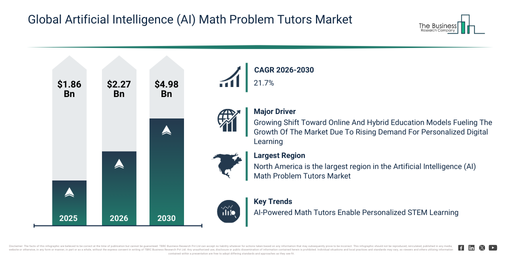
    The artificial intelligence (AI) math problem tutors market has experienced significant expansion in its size over recent years. It is projected to increase from $1.86 billion in 2025 to $2.27 billion in 2026, at a compound annual growth rate (CAGR) of 22.0%. Factors contributing to this growth in the past include the rising adoption of digital learning tools, increasing reliance on online math tutoring, the growing need for personalized student support, the expansion of K-12 STEM programs, and rising parental spending on supplementary math education.

    The market for artificial intelligence (AI) math problem tutors is projected to experience rapid expansion over the coming years. This market is set to reach $4.98 billion by 2030, demonstrating a compound annual growth rate (CAGR) of 21.7%. Several factors will drive this growth during the forecast period, including the rising demand for AI-driven math tutoring, increased adoption of adaptive learning platforms, the expanding reach of mobile math learning applications, a heightened emphasis on enhancing STEM skills, and the wider integration of AI tutors into hybrid classroom settings. Key trends anticipated during this period involve technological progress in AI reasoning models, breakthroughs in adaptive math algorithms, advancements in multimodal math comprehension, ongoing research and development in AI-powered tutoring systems, and the incorporation of sophisticated AI capabilities into educational platforms.

    Access Your Free Sample Report for In-Depth Market Insights:

    https://www.thebusinessresearchcompany.com/sample.aspx?id=30514&type=smp

    What Drivers Are Guiding Growth Patterns In The Artificial Intelligence (AI) Math Problem Tutors Market?

    The increasing adoption of online and hybrid education models is anticipated to drive the expansion of the artificial intelligence (AI) math problem tutors market in the future. These educational frameworks integrate digital platforms with traditional classroom teaching, providing students with access to learning content at any time and location. The surge in online and hybrid education models stems from a heightened demand for adaptable and accessible learning solutions. The AI math problem tutors market facilitates these models by offering intelligent tutoring systems that create customized math problems, evaluate student performance, and adjust learning paths dynamically. For instance, in September 2024, the Institute of Education Sciences, a US government agency, reported that during the 2022–23 school year, approximately 3.4% of students were homeschooled, while 2.5% were engaged in full-time virtual education. Thus, the ongoing transition towards online and hybrid education models is stimulating the growth of the artificial intelligence (AI) math problem tutors market.

    Which Segments Are Driving Activity In The Artificial Intelligence (AI) Math Problem Tutors Market?

    The artificial intelligence (AI) math problem tutors market covered in this report is segmented –

    1) By Component: Software, Services

    2) By Deployment Mode: Cloud-Based, On-Premises

    3) By Technology: Machine Learning and Predictive Analytics, Natural Language Processing (NLP), Computer Vision, Generative Artificial Intelligence (AI)

    4) By Application: K-12 Education, Higher Education, Test Preparation, Professional Training, Other Applications

    5) By End-User: Students, Educational Institutions, Private Tutors, Other End-Users

    Subsegments:

    1) By Software: Interactive Learning Platforms, Intelligent Problem Solving Engines, Automated Feedback Systems, Adaptive Learning Modules, Performance Analytics Tools, Virtual Classroom Interfaces

    2) By Services: Implementation Support Services, Training And Onboarding Services, Technical Assistance Services, Customization And Integration Services, Subscription Management Services, Continuous Improvement Services

    How Are Emerging Trends Affecting The Progression Of The Artificial Intelligence (AI) Math Problem Tutors Market?

    Major companies within the artificial intelligence (AI) math problem tutors market are concentrating on developing advanced products, such as AI-powered learning assistants, to enhance educational accessibility, improve personalized learning, and reduce obstacles to understanding complex topics. AI-powered learning assistants are sophisticated artificial intelligence systems designed to deliver interactive, step-by-step explanations and solutions for challenging subjects like mathematics. For instance, in November 2023, Google LLC, a US-based technology company, introduced an AI-powered math tutor. This intelligent, search-integrated tool possesses the capability to process text and visual queries using Google Lens to comprehend student problems, thereby significantly reducing the difficulty of articulating technical questions. It incorporates functionality for step-by-step problem-solving and personalized practice, facilitating seamless learning across various skill levels and topics without requiring a dedicated platform. Moreover, its integration into everyday tools such as Search expands its reach and lowers the cost for students to access educational support.

    Which Key Market Players Are Investing In Expansion And Innovation Within The Artificial Intelligence (AI) Math Problem Tutors Market?

    Major companies operating in the artificial intelligence (AI) math problem tutors market are Google LLC, Microsoft Corporation, Chegg Inc., Eldan Recycling A/S, Wolfram Alpha, Quizlet Inc., Khan Academy Inc., Bartleby Learn Inc., Pearson plc, Symbolab, Tutor.com Inc., Cuemath Private Limited, Doubtnut Learning Solutions Pvt. Ltd., Photomath Inc., Snapask Ltd., Cognii Inc., Mathway LLC, Querium Corporation, TutorOcean Inc., BYJU’S

    Access The Complete Report For Deeper Market Insights:

    https://www.thebusinessresearchcompany.com/report/artificial-intelligence-ai-math-problem-tutors-market-report

    Which Regions Are Poised For Strategic Growth In The Artificial Intelligence (AI) Math Problem Tutors Market?

    North America was the largest region in the artificial intelligence (AI) math problem tutors market in 2025. Asia-Pacific is expected to be the fastest-growing region in the forecast period. The regions covered in the artificial intelligence (AI) math problem tutors market report are Asia-Pacific, South East Asia, Western Europe, Eastern Europe, North America, South America, Middle East, Africa.

    Request Your Customized Artificial Intelligence (AI) Math Problem Tutors Market Research Report for Competitive Advantage:

    https://www.thebusinessresearchcompany.com/customise?id=30514&type=smp

    Browse Through More Reports Similar to the Global Artificial Intelligence (AI) Math Problem Tutors Market 2026, By The Business Research Company

    Ai In Education Market Report 2026

    https://www.thebusinessresearchcompany.com/report/ai-in-education-global-market-report

    Artificial Intelligence Market Report 2026

    https://www.thebusinessresearchcompany.com/report/artificial-intelligence-global-market-report

    artificial intelligence ai studio global market report

    https://www.thebusinessresearchcompany.com/report/artificial-intelligence-ai-studio-global-market-report

    Get in touch with us:

    The Business Research Company: https://www.thebusinessresearchcompany.com/

    Americas +1 310-496-7795

    Asia +44 7882 955267 & +91 8897263534

    Europe +44 7882 955267

    Email us at marketing@tbrc.info

    Follow us on:

    LinkedIn: https://in.linkedin.com/company/the-business-research-company

    YouTube: https://www.youtube.com/channel/UC24_fI0rV8cR5DxlCpgmyFQ

    Global Market Model: https://www.thebusinessresearchcompany.com/global-market-model

  • Global Application Programming Interface (API) Testing Market Report 2026–2035: Key Forecasts and Growth Areas

    Global Application Programming Interface (API) Testing Market Report 2026–2035: Key Forecasts and Growth Areas

    Uncover key drivers, emerging technologies, and competitive movements shaping the application programming interface (api) testing market from 2026–2035 with trusted insights from The Business Research Company

    How is the Application Programming Interface (API) Testing Market size predicted to change over the forecast window of 2026–2035?

    The market size for application programming interface (API) testing has experienced significant expansion in recent years. This sector is forecast to increase from $1.75 billion in 2025 to $2.14 billion in 2026, achieving a compound annual growth rate (CAGR) of 22.2%. In prior periods, this growth was fueled by the wider adoption of cloud-based applications, an escalating need for automated testing tools, the rise of software development outsourcing, the growth of mobile and web applications, and the necessity for quicker software release cycles.

    The application programming interface (API) testing market size is anticipated to expand significantly in the coming years. It will grow to $4.72 billion in 2030 at a compound annual growth rate (CAGR) of 21.9%. This expansion during the forecast period is attributable to the increasing incorporation of artificial intelligence and machine learning in testing, heightened investment in development and operations along with continuous integration, a rising demand for application programming interface security testing, the proliferation of the Internet of Things and connected devices, and an emphasis on minimizing software development life cycle costs. Prominent trends expected in this period include a move towards continuous and shift-left testing methodologies, the integration of artificial intelligence-driven test automation, greater utilization of cloud-based testing platforms, the adoption of application programming interface monitoring and observability tools, and a focus on testing microservices and serverless architectures.

    Access Your Free Sample Report for In-Depth Market Insights:

    https://www.thebusinessresearchcompany.com/sample.aspx?id=30502&type=smp

    Which Drivers Are Contributing To The Expansion Of The Application Programming Interface (API) Testing Market?

    The growing embrace of automated testing is projected to fuel the expansion of the application programming interface (API) testing market moving ahead. Automated testing involves deploying software tools to automatically run pre-established test scripts, verifying API functionality, reliability, and performance without requiring human intervention. The uptake of automated testing is increasing because organizations require quicker and more dependable quality assurance to match swift release cycles, simultaneously cutting down manual labor and reducing flaws in intricate software systems. API testing facilitates automated testing by allowing for rapid, repeatable validation of backend services via scriptable requests and responses, thereby aiding in the early detection of integration flaws and preserving reliability as applications develop. As an illustration, in November 2025, data from PractiTest Ltd., an Israel-based software testing platform, indicated that the percentage of organizations reporting automation had substituted 75% or more of their manual testing efforts grew from 18% in 2023 to 19% in 2024 and 20% in 2025. Consequently, the rising acceptance of software development and integration is propelling the expansion of the application programming interface (API) testing market.

    What Segment Categories Are Covered In The Application Programming Interface (API) Testing Market?

    The application programming interface (api) testing market covered in this report is segmented –

    1) By Component: Software, Services

    2) By Deployment Mode: Cloud-Based, On-Premise

    3) By Test Type: Functional Testing, Security Testing, Performance Testing, Runtime And Error Detection Testing

    4) By Organization Size: Small And Medium Enterprises, Large Enterprises

    5) By End User Industry: Information Technology And Telecommunications, Banking, Financial Services, And Insurance, Healthcare And Life Sciences, Retail And E-Commerce, Manufacturing And Industrial, Government And Public Sector

    Subsegments:

    1) By Software: Development Tools, Integration Platforms, Security Solutions, Monitoring And Analytics

    2) By Services: Consulting Services, Implementation Services, Support And Maintenance Services, Training And Education Services

    What Trends Are Reshaping The Dynamics Of The Application Programming Interface (API) Testing Market?

    Major companies operating in the application programming interface (API) testing market are concentrating on developing advanced technological solutions, specifically modular SaaS-based platforms, to significantly improve testing efficiency, scalability, and inter-team collaboration. A modular SaaS-based solution is defined as a cloud-delivered platform comprising independent, interoperable modules that can be customized for specific testing requirements, facilitating adaptable deployment, rapid scaling, and continuous updates without the need for on-premises infrastructure. For instance, in April 2025, SmartBear Software, a US-based provider of software quality and testing tools, expanded its API Hub by launching a modular SaaS-based solution that integrates automated testing capabilities, enhanced collaboration features, and centralized management for API tests. This introduction empowers development and QA teams to efficiently design, execute, and monitor API tests within a flexible, cloud-native environment, subsequently lowering testing overhead and accelerating the delivery of high-quality applications.

    Which Key Players Are Driving Competition In The Application Programming Interface (API) Testing Market?

    Major companies operating in the application programming interface (api) testing market are Google LLC, Microsoft Corporation, International Business Machines Corporation, Oracle Corporation, Broadcom Inc., Postman Inc., Tricentis N.V., SmartBear Software Inc., Sauce Labs Inc., Parasoft Corporation, Katalon Inc., TestSigma Inc., Neotys Co., Akana, BlazeMeter Ltd., RapidAPI, Checkly Inc., Micro Focus Ltd., Assertible Inc., Karate Labs Inc., Loadmill Ltd., Testfully GmbH, Firecamp Analytics

    Access The Complete Report For Deeper Market Insights:

    https://www.thebusinessresearchcompany.com/report/application-programming-interface-api-testing-market-report

    Which Region Is Projected To Lead The Application Programming Interface (API) Testing Market During The Forecast Period?

    North America was the largest region in the application programming interface (API) testing market in 2025. Asia-Pacific is expected to be the fastest-growing region in the forecast period. The regions covered in the application programming interface (api) testing market report are Asia-Pacific, South East Asia, Western Europe, Eastern Europe, North America, South America, Middle East, Africa.

    Request Your Customized Application Programming Interface (API) Testing Market Research Report for Competitive Advantage:

    https://www.thebusinessresearchcompany.com/customise?id=30502&type=smp

    Browse Through More Reports Similar to the Global Application Programming Interface (API) Testing Market 2026, By The Business Research Company

    Application Testing Services Market Report 2026

    https://www.thebusinessresearchcompany.com/report/application-testing-services-global-market-report

    Application Programming Interface Api Security Market Report 2026

    https://www.thebusinessresearchcompany.com/report/application-programming-interface-api-security-global-market-report

    software testing global market report

    https://www.thebusinessresearchcompany.com/report/software-testing-global-market-report

    Get in touch with us:

    The Business Research Company: https://www.thebusinessresearchcompany.com/

    Americas +1 310-496-7795

    Asia +44 7882 955267 & +91 8897263534

    Europe +44 7882 955267

    Email us at marketing@tbrc.info

    Follow us on:

    LinkedIn: https://in.linkedin.com/company/the-business-research-company

    YouTube: https://www.youtube.com/channel/UC24_fI0rV8cR5DxlCpgmyFQ

    Global Market Model: https://www.thebusinessresearchcompany.com/global-market-model