Category: Healthcare Services

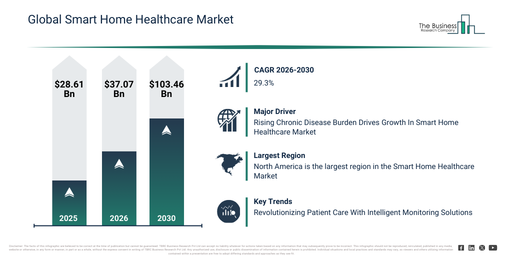
  • Smart Home Healthcare Market Projected to Hit $103.45 Billion by 2030 at 29.3% CAGR

    Smart Home Healthcare Market Projected to Hit $103.45 Billion by 2030 at 29.3% CAGR

    The Business Research Company’s 2026 market reports feature enhanced tools like market attractiveness analysis, TAM assessment, and company scoring matrices, along with interactive dashboards, deeper supply chain insights, and startup coverage strengthening the depth, usability, and strategic value of insights.

    What Expansion In Market Value Is Forecasted For The Smart Home Healthcare Market Between 2026 And 2030?

    The smart home healthcare market has experienced remarkable expansion in recent years. It is projected to increase from $28.61 billion in 2025 to $37.07 billion in 2026, exhibiting a compound annual growth rate (CAGR) of 29.6%. This historical growth can be linked to the growing prevalence of chronic diseases, the broadening of home-based healthcare services, enhanced healthcare digitization, increased adoption of telemedicine, and the advancement of connected medical devices.

    The smart home healthcare market is anticipated to experience substantial growth in the coming years. Its valuation is projected to reach $103.46 billion by 2030, exhibiting a compound annual growth rate (CAGR) of 29.3%. This expansion during the forecast period is driven by factors such as an increasing aging population living independently, rising investments in intelligent healthcare infrastructure, the broadening of AI-enabled remote diagnostics, a growing demand for preventive healthcare solutions, and an increasing focus on delivering cost-effective care. Major trends expected during this period encompass the increasing adoption of remote patient monitoring systems, a rising use of wearable health sensors, the growing integration of AI-based health analytics, the expansion of connected home care platforms, and an enhanced focus on chronic disease management.

    Access Your Free Sample Report For In-Depth Market Analysis:

    https://www.thebusinessresearchcompany.com/sample.aspx?id=19701&type=smp

    What Key Drivers Are Fueling The Growth Of The Smart Home Healthcare Market?

    The escalating burden of chronic diseases is projected to drive the expansion of the smart home healthcare market moving forward. The increasing instances of chronic illnesses are influenced by factors such as aging populations, inactive lifestyles, poor dietary habits, and environmental impacts. Smart home healthcare supports patients with chronic conditions by offering real-time monitoring and customized management to improve their health outcomes and adherence to treatment. For instance, in March 2025, information from GOV.UK, a UK-based non-profit government organization, reported that the prevalence of type 2 diabetes among adults aged 17 and over in England was 7.0% in March 2024, which represented an increase from 6.8% in March 2023. Therefore, the growing burden of chronic diseases is propelling the growth of the smart home healthcare market.

    How Is The Smart Home Healthcare Market Categorized Across Its Segment Groups?

    The smart home healthcare market covered in this report is segmented –

    1) By Product: Smart Glucose Monitoring System, Medical Device Alert Systems, Smart Cardiac Monitoring System, Other Products

    2) By Service: Skilled Nursing Services, Rehabilitation Therapy Services, Hospice And Palliative Care Services, Unskilled Care Services, Respiratory Therapy Services, Infusion Therapy Services, Pregnancy Care Services

    3) By Technology: Wired, Wireless

    4) By Indication: Diabetes, Respiratory Diseases, Pregnancy, Mobility Disorders, Hearing Disorders, Cancer, Wound Care

    5) By Application: Fall Prevention And Detection, Health Status Monitoring, Nutrition Or Diet Monitoring, Memory Aids

    Subsegments:

    1) By Smart Glucose Monitoring System: Continuous Glucose Monitors (CGMs), Smart Glucose Meters, Mobile Apps For Glucose Tracking, Integrated Diabetes Management Systems

    2) By Medical Device Alert Systems: Fall Detection Systems, Medication Reminder Systems, Emergency Alert Systems, Wearable Alert Devices

    3) By Smart Cardiac Monitoring System: Remote Cardiac Monitoring Devices, Smart ECG Monitors, Wearable Heart Rate Monitors, Mobile Cardiac Telemetry Systems

    4) By Other Products: Smart Blood Pressure Monitors, Smart Thermometers, Remote Patient Monitoring Systems, Health Management Apps, Smart Health Hubs

    What Trends Are Influencing The Smart Home Healthcare Market?

    Leading companies active in the smart home healthcare market are concentrating on innovative offerings, such as intelligent monitoring systems, to provide seamless care and enhance patient outcomes by allowing healthcare providers to track vital signs wirelessly and in real time. These intelligent monitoring systems employ advanced technologies like artificial intelligence, machine learning, and Internet of Things (IoT) devices to collect and process data from various sensors and equipment. For instance, in April 2023, LifeSigns, an India-based company focused on remote patient monitoring solutions, introduced Continuum Care. This solution enables real-time remote patient monitoring, irrespective of the patient’s whereabouts. It incorporates wearable biosensors and cloud-based analytics to monitor up to eight vitals, including the electrocardiogram (ECG), blood pressure, peripheral oxygen saturation (SpO2), and temperature. Continuum Care is adaptable and can be customized to address specific healthcare demands. It is intended for deployment in ambulances, hospitals, and home settings, ensuring continuous care and improved patient outcomes.

    Which Firms Are Influencing Competition In The Smart Home Healthcare Market?

    Major companies operating in the smart home healthcare market are Apple Inc., Samsung Electronics Co. Ltd., AT&T Inc., GE Healthcare, Honeywell International Inc., F. Hoffmann-La Roche Ltd, Medtronic Plc, Koninklijke Philips N.V., Boston Scientific Corp, Fitbit Inc., Companion Medical, Connect America, Tunstall Group, Medical Guardian LLC, Withings, VitalConnect, Nureca Limited, Qure4u Inc., Sunfox Technologies Pvt. Ltd., Agatsa Software Pvt. Ltd., Bay Alarm Medical, Health Care Originals, MariCare, Murata Vios Inc.

    Get The Full Smart Home Healthcare Market Report:

    https://www.thebusinessresearchcompany.com/report/smart-home-healthcare-global-market-report

    Which Region Leads The Smart Home Healthcare Market In Terms Of Market Share?

    North America was the largest region in the smart home healthcare market in 2025. Asia-Pacific is expected to be the fastest-growing region in the forecast period. The regions covered in the smart home healthcare market report are Asia-Pacific, South East Asia, Western Europe, Eastern Europe, North America, South America, Middle East, Africa.

    Request A Customized Smart Home Healthcare Market Report For Competitive Insights:

    https://www.thebusinessresearchcompany.com/report/smart-home-healthcare-global-market-report

    Browse Through More Reports Similar to the Global Smart Home Healthcare Market 2026, By The Business Research Company

    Skin Cancer Diagnostics Market Report 2026

    https://www.thebusinessresearchcompany.com/report/skin-cancer-diagnostics-global-market-report

    Diabetic Gastroparesis Treatment Market Report

    https://www.thebusinessresearchcompany.com/report/diabetic-gastroparesis-treatment-global-market-report

    Alopecia Areata Market Report

    https://www.thebusinessresearchcompany.com/report/alopecia-areata-global-market-report

    Get in touch with us:

    The Business Research Company: https://www.thebusinessresearchcompany.com/

    Americas +1 310-496-7795

    Asia +44 7882 955267 & +91 8897263534

    Europe +44 7882 955267

    Email us at info@tbrc.info

    Follow us on:

    LinkedIn: https://in.linkedin.com/company/the-business-research-company

    YouTube: https://www.youtube.com/channel/UC24_fI0rV8cR5DxlCpgmyFQ

    Global Market Model: https://www.thebusinessresearchcompany.com/global-market-model

  • Smart Healthcare Products Market Expected to Reach $574.47 Billion by 2030

    Smart Healthcare Products Market Expected to Reach $574.47 Billion by 2030

    The Business Research Company’s 2026 market reports feature enhanced tools like market attractiveness analysis, TAM assessment, and company scoring matrices, along with interactive dashboards, deeper supply chain insights, and startup coverage strengthening the depth, usability, and strategic value of insights.

    How Large Will The Smart Healthcare Products Market Be By 2030 Compared To Its 2026 Market Size?

    The smart healthcare products market has witnessed substantial growth in its size over recent years. Projections indicate it will expand from $296.93 billion in 2025 to $339.78 billion in 2026, with a compound annual growth rate (CAGR) of 14.4%. This historical growth can be linked to several factors, including healthcare digitization, widespread smartphone penetration, an increased demand for preventive care, the evolution of wearable technology, and initiatives aimed at healthcare cost containment.

    The smart healthcare products market size is projected to experience substantial expansion in the coming years. This market is anticipated to reach $574.47 billion by 2030, exhibiting a compound annual growth rate (CAGR) of 14.0%. This growth over the forecast period is attributable to factors such as an aging population, the expansion of telehealth services, an increasing burden of chronic diseases, progress in AI analytics, and supportive regulatory frameworks for digital health. Key trends shaping the forecast period encompass the proliferation of connected diagnostic devices, the incorporation of AI analytics, a surge in consumer health wearables, the broadening of home monitoring solutions, and enhancements in interoperability.

    Access Your Free Sample Report For In-Depth Market Analysis:

    https://www.thebusinessresearchcompany.com/sample.aspx?id=7029&type=smp

    Which Drivers Are Supporting The Smart Healthcare Products Market Growth?

    Rising expenditure on healthcare is fostering the expansion of the smart healthcare products market. The demand for medical services and facilities has grown significantly, largely propelled by the COVID-19 pandemic. Key factors driving this surge in healthcare spending include a greater governmental focus on universal healthcare access, escalating income levels, an expanding elderly population, enhanced public awareness regarding health, increased penetration of health insurance, and the growing prevalence of non-communicable diseases. These smart healthcare products enable the diagnosis and treatment of various conditions irrespective of location or time. To illustrate, data from December 2024 by the Centers for Medicare & Medicaid Services, a US agency overseeing the Medicare and Medicaid programs, indicated that U.S. health care expenditures in 2023 rose by 7.5%, reaching a total of $4.9 trillion, which equates to approximately $14,570 per person. Consequently, this escalating healthcare expenditure is anticipated to propel the market for smart healthcare products.

    How Are Segments Identified Within The Smart Healthcare Products Market Segment Framework?

    The smart healthcare products market covered in this report is segmented –

    1) By Product Type: Telemedicine, Electronic Health Records, mHealth, Smart Pills And Syringes, Smart RFID Cabinets

    2) By Application: Storage And Inventory Management, Monitoring, Treatment

    3) By End User: Hospitals, Home Care Settings

    Subsegments:

    1) By Telemedicine: Video Consultation Platforms, Remote Patient Monitoring Solutions, Telehealth Software Solutions

    2) By Electronic Health Records: Cloud-Based EHR Systems, On-Premises EHR Solutions, EHR Interoperability Solutions

    3) By mHealth: Mobile Health Applications, Wearable Health Devices, Mobile Health Monitoring Solutions

    4) By Smart Pills And Syringes: Ingestible Sensors, Smart Insulin Pens, Connected Syringe Systems

    5) By Smart RFID Cabinets: RFID Medication Management Systems, RFID Asset Tracking Cabinets, RFID-enabled Supply Chain Solutions

    Which Trends Are Expected To Impact The Smart Healthcare Products Market?

    Major companies operating within the global smart healthcare products market are prioritizing the development of innovative technologies, such as FS-Sample technology, to boost diagnostic accuracy, enhance patient monitoring, and optimize healthcare processes, which ultimately leads to improved patient outcomes and more efficient healthcare delivery. FS-Sample technology is an advanced method for analyzing biological samples that significantly enhances diagnostic precision and efficiency in healthcare settings. For instance, in April 2024, Mindray, a China-based medical device company, launched new mid-volume laboratories. These latest innovations from Mindray represent a significant advancement for mid-volume laboratories, equipping them with the essential tools needed to improve operational efficiency and provide reliable diagnostics. The strategic focus on compact design, advanced technology, and modular integration positions these solutions as valuable assets in contemporary clinical environments.

    Who Are The Companies Competing Within The Smart Healthcare Products Market?

    Major companies operating in the smart healthcare products market are AirStrip Technologies, Samsung Healthcare, Siemens Healthineers AG, Cerner Corporation, Allscripts Healthcare Solutions, Apple Inc., Cisco Systems Inc., GE Healthcare, Given Imaging Inc., International Business Machines Corporation, Abbott Laboratories, Agfa-Gevaert Group, Becton Dickinson and Company, Cognizant Technology Solutions India Private Limited, Fujifilm Holdings Corporation, Honeywell Life Care Solutions, Johnson & Johnson, Koninklijke Philips N.V., Medtronic Plc, Microsoft Corporation, Omron Corporation, Oracle Corporation, ResMed Inc, Epic Systems Corporation, Teladoc Health Inc

    Get The Full Smart Healthcare Products Market Report:

    https://www.thebusinessresearchcompany.com/report/smart-healthcare-products-global-market-report

    Which Region Leads The Smart Healthcare Products Market In Overall Market Size?

    North America was the largest region in the smart healthcare products market in 2025. Asia-Pacific is expected to be the fastest-growing region in the forecast period. The regions covered in the smart healthcare products market report are Asia-Pacific, South East Asia, Western Europe, Eastern Europe, North America, South America, Middle East, Africa.

    Request A Customized Smart Healthcare Products Market Report For Competitive Insights:

    https://www.thebusinessresearchcompany.com/report/smart-healthcare-products-global-market-report

    Browse Through More Reports Similar to the Global Smart Healthcare Products Market 2026, By The Business Research Company

    Smart Card In Healthcare Market Report 2026

    https://www.thebusinessresearchcompany.com/report/smart-card-in-healthcare-global-market-report

    Healthcare Technology Market Report

    https://www.thebusinessresearchcompany.com/report/healthcare-technology-global-market-report

    Smart Hospital Market Report

    https://www.thebusinessresearchcompany.com/report/smart-hospital-global-market-report

    Get in touch with us:

    The Business Research Company: https://www.thebusinessresearchcompany.com/

    Americas +1 310-496-7795

    Asia +44 7882 955267 & +91 8897263534

    Europe +44 7882 955267

    Email us at info@tbrc.info

    Follow us on:

    LinkedIn: https://in.linkedin.com/company/the-business-research-company

    YouTube: https://www.youtube.com/channel/UC24_fI0rV8cR5DxlCpgmyFQ

    Global Market Model: https://www.thebusinessresearchcompany.com/global-market-model
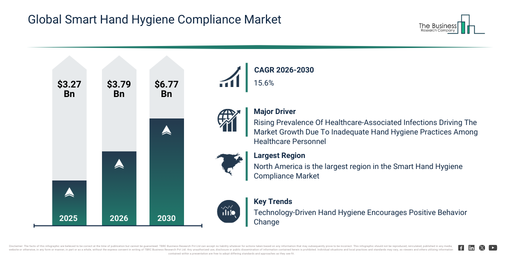
  • Smart Hand Hygiene Compliance Market Growth to $6.77 Billion by 2030 at 15.6% CAGR

    Smart Hand Hygiene Compliance Market Growth to $6.77 Billion by 2030 at 15.6% CAGR

    The Business Research Company’s 2026 market reports feature enhanced tools like market attractiveness analysis, TAM assessment, and company scoring matrices, along with interactive dashboards, deeper supply chain insights, and startup coverage strengthening the depth, usability, and strategic value of insights.

    What Is The Projected Increase In Market Value Of The Smart Hand Hygiene Compliance Market During 2026–2030?

    The smart hand hygiene compliance market has expanded considerably in recent years. It is projected to expand from $3.27 billion in 2025 to $3.79 billion in 2026, exhibiting a compound annual growth rate (CAGR) of 15.9%. This historical growth can be ascribed to several factors, including heightened awareness of healthcare-associated infection risks, the broadening scope of hospital quality compliance programs, the implementation of electronic monitoring solutions, an intensified focus on patient safety standards, and the progressing digitization of healthcare operations.

    The smart hand hygiene compliance market size is anticipated to undergo significant expansion in the next few years. It is projected to reach $6.77 billion in 2030, demonstrating a compound annual growth rate (CAGR) of 15.6%. The expansion during the forecast period is propelled by a heightened regulatory focus on infection prevention, an increasing demand for automated compliance tracking, the growth of smart hospital infrastructure, a rising adoption of analytics-driven healthcare management, and continuous innovation in hygiene monitoring technologies. Noteworthy trends for this period include the increased embrace of real-time hand hygiene monitoring, the expanding implementation of sensor-based compliance systems, deeper integration with hospital infection control initiatives, the proliferation of data-driven hygiene analytics, and an enhanced concentration on automated feedback mechanisms.

    Access Your Free Sample Report For In-Depth Market Analysis:

    https://www.thebusinessresearchcompany.com/sample.aspx?id=29197&type=smp

    What Key Factors Are Affecting The Smart Hand Hygiene Compliance Market Demand?

    The increasing occurrence of healthcare-associated infections is anticipated to propel the expansion of the smart hand hygiene compliance market in the future. Healthcare-associated infections are conditions patients acquire while receiving medical treatment in hospitals or other healthcare facilities. The rise in their prevalence is attributed to inadequate hand hygiene practices among healthcare personnel, as poor compliance enables pathogens to spread rapidly between patients through direct contact. Smart hand hygiene compliance systems aid in diminishing healthcare-associated infections by continuously monitoring and promoting proper hand hygiene practices among healthcare staff, thereby preventing the rapid spread of pathogens between patients and enhancing overall patient safety. For instance, in June 2025, according to the Australian Institute of Health and Welfare, an Australia-based government agency, in 2023–24, approximately 150,000 of the 12.6 million hospitalizations involved one or more hospital-acquired complications, with rates of 1.9 per 100 hospitalizations in public hospitals and 0.8 per 100 in private hospitals. Consequently, the growing prevalence of healthcare-associated infections is a key factor driving the growth of the smart hand hygiene compliance market.

    What Are The Key Segment Divisions In The Smart Hand Hygiene Compliance Market Segment Structure?

    The smart hand hygiene compliance market covered in this report is segmented –

    1) By Product Type: Hand Hygiene Monitoring Systems, Dispensers, Wearable Devices, Sensors, Other Product Types

    2) By Technology: Internet Of Things, Radio Frequency Identification, Bluetooth, Other Technologies

    3) By Distribution Channel: Direct Sales, Distributors, Online Sales, Other Distribution Channels

    4) By End-User: Hospitals And Clinics, Food And Beverage, Hospitality, Corporate Offices, Education, Other End-Users

    Subsegments:

    1) By Hand Hygiene Monitoring Systems: Automated Monitoring Systems, Manual Monitoring Systems, Real Time Monitoring Systems

    2) By Dispensers: Automatic Dispensers, Manual Dispensers, Touchless Dispensers

    3) By Wearable Devices: Smart Wristbands, Smart Badges, Smart Rings

    4) By Sensors: Motion Sensors, Proximity Sensors, Pressure Sensors

    5) By Other Product Types: Data Analytics Software, Mobile Applications, Cloud Platforms

    What Trends Are Influencing Changes In The Smart Hand Hygiene Compliance Market?

    Leading companies within the smart hand hygiene compliance market are concentrating on creating advanced solutions such as real-time tracking and subtle prompts to boost staff adherence and elevate patient safety. These systems, which include real-time monitoring and gentle reminders, observe staff hand hygiene activities as they occur and issue discreet notifications prior to patient interaction. This approach helps guarantee prompt handwashing, increases compliance, minimizes hospital-acquired infections, and supports operational flow without causing additional pressure. For example, in July 2024, Kontakt.io Inc., an indoor spatial intelligence company based in the US, unveiled its Smart Hand Hygiene solution. This offering is specifically engineered to improve infection control through continuous monitoring and smart feedback. The comprehensive system integrates in-room alerts, gamified compliance tracking accessible via the Kio Nurse mobile app, and automated management of dispensers. Staff movements and opportunities for hand hygiene are continuously tracked using the Smart Badge 3 wearable device, which activates reminders at crucial moments before patient care. Furthermore, sophisticated analytics and user-friendly reporting instruments empower hospitals to track compliance patterns, produce Joint Commission–ready reports, and examine data across departments, facilities, or individuals. Additionally, contact tracing based on interactions assists in the rapid identification and containment of potential infection chains, while the incorporation of gamification encourages ongoing participation, transforming hygiene compliance into an engaging and gratifying process.

    Which Organizations Are Engaged In The Smart Hand Hygiene Compliance Market?

    Major companies operating in the smart hand hygiene compliance market are Sodexo S.A., Ecolab Inc., Halma plc, GOJO Industries Inc., SC Johnson Professional Limited, Ascom Holding AG, Hagleitner Hygiene International GmbH, CenTrak Inc., Ophardt Hygiene GmbH, Kontakt Micro-Location Sp. z o.o., SwipeSense Inc., AiRISTA Flow Inc., Cadi Scientific Inc., SureWash Limited, Vitalacy Inc., Hyginex Inc., PathSpot Technologies Inc., BioVigil Healthcare Systems Inc., Soapy Care Inc., Vizzia Technologies Inc.

    Get The Full Smart Hand Hygiene Compliance Market Report:

    https://www.thebusinessresearchcompany.com/report/smart-hand-hygiene-compliance-global-market-report

    Which Region Is The Top Contributor To The Smart Hand Hygiene Compliance Market By Share?

    North America was the largest region in the smart hand hygiene compliance market in 2025. Asia-Pacific is expected to be the fastest-growing region in the forecast period. The regions covered in the smart hand hygiene compliance market report are Asia-Pacific, South East Asia, Western Europe, Eastern Europe, North America, South America, Middle East, Africa.

    Request A Customized Smart Hand Hygiene Compliance Market Report For Competitive Insights:

    https://www.thebusinessresearchcompany.com/report/smart-hand-hygiene-compliance-global-market-report

    Browse Through More Reports Similar to the Global Smart Hand Hygiene Compliance Market 2026, By The Business Research Company

    Hand Sanitizer Dispenser Market Report 2026

    https://www.thebusinessresearchcompany.com/report/hand-sanitizer-dispenser-global-market-report

    Hand Wash Market Report

    https://www.thebusinessresearchcompany.com/report/hand-wash-global-market-report

    Interdental Cleaning Products Market Report

    https://www.thebusinessresearchcompany.com/report/interdental-cleaning-products-global-market-report

    Get in touch with us:

    The Business Research Company: https://www.thebusinessresearchcompany.com/

    Americas +1 310-496-7795

    Asia +44 7882 955267 & +91 8897263534

    Europe +44 7882 955267

    Email us at info@tbrc.info

    Follow us on:

    LinkedIn: https://in.linkedin.com/company/the-business-research-company

    YouTube: https://www.youtube.com/channel/UC24_fI0rV8cR5DxlCpgmyFQ

    Global Market Model: https://www.thebusinessresearchcompany.com/global-market-model

  • Smart Fall Detection Rugs for Elderly Market Growth Outlook to $3.58 Billion by 2030

    Smart Fall Detection Rugs for Elderly Market Growth Outlook to $3.58 Billion by 2030

    The Business Research Company’s 2026 market reports feature enhanced tools like market attractiveness analysis, TAM assessment, and company scoring matrices, along with interactive dashboards, deeper supply chain insights, and startup coverage strengthening the depth, usability, and strategic value of insights.

    How Is The Market Size Of The Smart Elderly Fall Detection Rug Market Expected To Change From 2026 To 2030?

    The market for smart elderly fall detection rugs has experienced substantial growth in recent years. It is projected to expand from $1.72 billion in 2025 to reach $2 billion by 2026, showing a compound annual growth rate (CAGR) of 16.0%. This historical expansion can be linked to factors such as the increasing elderly population, a rise in fall-related injuries, the broader provision of home healthcare services, a growing adoption of remote monitoring solutions, and the accessibility of affordable sensor technologies.

    The smart elderly fall detection rug market is projected to undergo rapid expansion in the upcoming years. It is anticipated to reach a valuation of $3.58 billion by 2030, exhibiting a compound annual growth rate (CAGR) of 15.7%. This growth during the forecast period can be attributed to several factors, including an escalating demand for aging-in-place solutions, increasing integration with telehealth ecosystems, the expansion of smart assisted living facilities, growing investments in technologies dedicated to elderly care, and advancements in AI-based motion detection. Major trends influencing this period involve the rising deployment of sensor-based fall detection systems, an increase in the adoption of non-wearable monitoring solutions for the elderly, enhanced integration with caregiver alert platforms, the proliferation of smart home healthcare devices, and a heightened emphasis on privacy-preserving monitoring.

    Access Your Free Sample Report For In-Depth Market Analysis:

    https://www.thebusinessresearchcompany.com/sample.aspx?id=29195&type=smp

    Which Primary Drivers Are Impacting The Smart Elderly Fall Detection Rug Market Growth?

    The increasing need for real-time monitoring systems is anticipated to drive the expansion of the Smart Elderly Fall Detection Rug market in the future. These systems involve technologies that constantly gather, send, and examine data, offering prompt feedback or alerts for immediate action in critical scenarios. The uptake of real-time monitoring systems is increasing because of the rising occurrence of long-term health issues among seniors, leading to a greater requirement for ongoing, data-informed supervision to guarantee prompt assistance and safety. Smart Elderly Fall Detection Rugs support real-time monitoring through their integrated sensors, which instantly identify falls and send alerts for quick caregiver intervention. For example, as reported in August 2025 by the Department of Health and Human Services, a US government agency supervising federal healthcare initiatives, approximately one million Medicare enrollees in the United States utilized remote patient monitoring services in 2024, representing a 27% rise from 2023. Consequently, the escalating demand for real-time monitoring systems is fueling the expansion of the Smart Elderly Fall Detection Rug market.

    Which Segment Categories Are Included In The Smart Elderly Fall Detection Rug Market Segment Analysis?

    The smart elderly fall detection rug market covered in this report is segmented –

    1) By Product Type: Pressure Sensor Rugs, Infrared Sensor Rugs, Camera-Based Rugs, Other Product Types

    2) By Technology: Wearable Integrated, Non-Wearable, Artificial Intelligence (AI)-Based, Internet Of Things (IoT)-Enabled, Other Technologies

    3) By Distribution Channel: Online Stores, Specialty Stores, Supermarkets Or Hypermarkets, Other Distribution Channels

    4) By Application: Home Care, Hospitals, Assisted Living Facilities, Nursing Homes, Other Applications

    Subsegments:

    1) By Pressure Sensor Rugs: Capacitive Pressure Sensor Rugs, Piezoelectric Pressure Sensor Rugs, Resistive Pressure Sensor Rugs, Fiber Optic Pressure Sensor Rugs

    2) By Infrared Sensor Rugs: Passive Infrared Sensor Rugs, Active Infrared Sensor Rugs, Dual Infrared Sensor Rugs, Multi-Zone Infrared Sensor Rugs

    3) By Camera-Based Rugs: Two-Dimensional Camera Rugs, Three-Dimensional Depth Camera Rugs, Thermal Imaging Camera Rugs, Wide-Angle Camera Rugs

    4) By Other Product Types: Ultrasonic Sensor Rugs, Radar Sensor Rugs, Smart Textile Rugs, Hybrid Sensor Rugs

    Which Trends Are Shaping Growth In The Smart Elderly Fall Detection Rug Market?

    Leading firms within the smart elderly fall detection rug market are prioritizing the integration of advanced technologies, including artificial intelligence (AI)-powered ambient sensing, to improve the precision of real-time monitoring and the effectiveness of fall prevention. This AI-powered ambient sensing utilizes radar or environmental sensors, combined with machine learning algorithms, to interpret movement patterns, vital signs, and surrounding environmental indicators without requiring physical contact. This technology facilitates abilities like live movement analysis, prompt detection of irregularities, and anticipatory warnings. As an illustration, in March 2025, FallCall Solutions, a US-based digital health technology company focused on connected safety systems, collaborated with RANiX, a South Korea-based semiconductor and sensor technology firm. Their joint effort resulted in the introduction of an AI-powered radar system aimed at preventing falls from hospital beds. This system achieves this by tracking patient motion, heart rate, and respiratory rate, characterized by its compact radar integration at the bed’s footboard, uninterrupted data transmission to a cloud-based analytics platform, and automated alerts for caregivers. This system boosts the responsiveness of fall prevention, reinforces patient safety through constant oversight, and enhances the efficiency of care by minimizing the need for manual supervision.

    Who Are The Active Companies Shaping The Smart Elderly Fall Detection Rug Market?

    Major companies operating in the smart elderly fall detection rug market are Medline Industries LP, Drive DeVilbiss Healthcare Inc., AliMed Inc., Vayyar Imaging Ltd., Dynarex Corporation, Tekscan Inc., MekoPrint Ltd., Skil-Care Corporation, Proactive Medical Products Inc., Alerta Medical Ltd., Smart Caregiver Corporation, Future-Shape GmbH, Personal Safety Corporation, Cura1 Pty Ltd., MariCare Oy, BBC Bircher Smart Access AG, Nanomade Labs, Emfit Ltd., 1800Wheelchair Inc., Pratoline HomeCare Ltd.

    Get The Full Smart Elderly Fall Detection Rug Market Report:

    https://www.thebusinessresearchcompany.com/report/smart-elderly-fall-detection-rug-global-market-report

    Which Region Represents The Largest Share Of The Smart Elderly Fall Detection Rug Market?

    North America was the largest region in the smart elderly fall detection rug market in 2025. Asia-Pacific is expected to be the fastest-growing region in the forecast period. The regions covered in the smart elderly fall detection rug market report are Asia-Pacific, South East Asia, Western Europe, Eastern Europe, North America, South America, Middle East, Africa.

    Request A Customized Smart Elderly Fall Detection Rug Market Report For Competitive Insights:

    https://www.thebusinessresearchcompany.com/report/smart-elderly-fall-detection-rug-global-market-report

    Browse Through More Reports Similar to the Global Smart Elderly Fall Detection Rug Market 2026, By The Business Research Company

    Elderly And Disabled Assistive Devices Market Report 2026

    https://www.thebusinessresearchcompany.com/report/elderly-and-disabled-assistive-devices-global-market-report

    Disabled And Elderly Assistive Technology Market Report

    https://www.thebusinessresearchcompany.com/report/disabled-and-elderly-assistive-technology-global-market-report

    Smart Pet Locator And Motion Detector Market Report

    https://www.thebusinessresearchcompany.com/report/smart-pet-locator-and-motion-detector-global-market-report

    Get in touch with us:

    The Business Research Company: https://www.thebusinessresearchcompany.com/

    Americas +1 310-496-7795

    Asia +44 7882 955267 & +91 8897263534

    Europe +44 7882 955267

    Email us at info@tbrc.info

    Follow us on:

    LinkedIn: https://in.linkedin.com/company/the-business-research-company

    YouTube: https://www.youtube.com/channel/UC24_fI0rV8cR5DxlCpgmyFQ

    Global Market Model: https://www.thebusinessresearchcompany.com/global-market-model

  • Smart Drug Delivery Systems Market Expansion to $33.14 Billion by 2030 at 16.5% CAGR

    Smart Drug Delivery Systems Market Expansion to $33.14 Billion by 2030 at 16.5% CAGR

    The Business Research Company’s 2026 market reports feature enhanced tools like market attractiveness analysis, TAM assessment, and company scoring matrices, along with interactive dashboards, deeper supply chain insights, and startup coverage strengthening the depth, usability, and strategic value of insights.

    From Its 2026 Market Size, What Value Is The Smart Drug Delivery Systems Market Projected To Reach By 2030?

    The smart drug delivery systems market size has experienced significant expansion recently. This market is projected to increase from $15.06 billion in 2025 to $18 billion in 2026, demonstrating a compound annual growth rate (CAGR) of 19.5%. Historically, this growth has been driven by factors such as the limitations of conventional drug delivery methods, the increasing prevalence of chronic diseases, advancements in biomaterials, a greater emphasis on improving patient adherence, and continuous pharmaceutical innovation.

    The market for smart drug delivery systems is projected to experience substantial expansion over the upcoming years. This market is anticipated to reach $33.15 billion by 2030, demonstrating a compound annual growth rate (CAGR) of 16.5%. Factors contributing to this growth during the projection period include the increasing demand for personalized therapy, the wider expansion of biologics usage, greater digital health integration, regulatory support for combination devices, and advancements in nanotechnology. Key developments anticipated in the forecast period involve the integration of AI-controlled dosing, the increasing prevalence of implantable delivery systems, a growing need for targeted drug delivery, the embrace of wireless connectivity, and the proliferation of combination drug-device products.

    Access Your Free Sample Report For In-Depth Market Analysis:

    https://www.thebusinessresearchcompany.com/sample.aspx?id=14796&type=smp

    What Significant Factors Are Influencing The Smart Drug Delivery Systems Market Expansion?

    The smart drug delivery systems market is anticipated to expand due to the increasing incidence of chronic diseases. These conditions are long-term health issues that progress slowly over time and frequently stem from intricate causes. The growing occurrence of chronic diseases is attributed to factors such as aging populations, environmental influences, and disparities in healthcare access. Smart drug delivery systems offer a valuable method for managing chronic conditions by improving medication effectiveness and boosting patient adherence. For instance, in April 2025, according to the Centers for Disease Control and Prevention (CDC), a US-based federal agency, in 2023, approximately 194 million U.S. adults, or 76.4%, reported having at least one chronic condition. The prevalence was 59.5% among young adults, 78.4% among midlife adults, and 93.0% among older adults. Consequently, the rising prevalence of chronic diseases is driving the smart drug delivery systems market.

    How Is The Smart Drug Delivery Systems Market Broken Down By Segment Categories?

    The smart drug delivery systems market covered in this report is segmented –

    1) By Product: Connected Inhalers, Connected Autoinjectors, Connected Pen Injectors, Connected Wearable Injectors, Add-On Sensors, Other Products

    2) By Therapeutic Area: Metabolic Disorders, Neurological Disorders, Respiratory Disorders, Hormonal Disorders, Other Therapeutic Areas

    3) By Drug Delivery Mode: Injectable, Inhalation, Oral Drug Delivery Systems

    4) By End-User: Hospitals, Clinics, Home Care, Ambulatory Care Settings, Other End-Users

    Subsegments:

    1) By Connected Inhalers: Dry Powder Inhalers (DPIs), Metered Dose Inhalers (MDIs)

    2) By Connected Autoinjectors: Single-Dose Autoinjectors, Multi-Dose Autoinjectors

    3) By Connected Pen Injectors: Insulin Pen Injectors, Biologic Pen Injectors

    4) By Connected Wearable Injectors: Insulin Wearable Injectors, Infusion Pump Wearable Injectors

    5) By Add-On Sensors: Glucose Monitoring Sensors, Medication Adherence Sensors, Temperature Sensors

    6) By Other Products: Smart Syringes, Smart Patches, Smart Implants

    What Trends Are Affecting The Direction Of The Smart Drug Delivery Systems Market?

    Major companies within the Smart Drug Delivery Systems market are concentrating on developing innovative solutions, such as sophisticated on-body delivery platforms, to enhance the administration of injectable therapies, improve patient convenience, and ensure precise dosing. These advanced on-body delivery platforms are wearable systems designed to deliver medication automatically and accurately over time, thereby boosting convenience, safety, and adherence to treatment. For example, in October 2024, Stevanato Group, an Italy-based pharmaceutical solutions provider, introduced its large-volume Vertiva 10 mL on-body delivery system platform at CPHI Milan. This platform is engineered to support high-volume injectable therapies, offering improved usability, safety, and treatment adherence, thus addressing the rising demand for patient-centric drug delivery solutions.

    Which Players Are Present In The Smart Drug Delivery Systems Market Space?

    Major companies operating in the smart drug delivery systems market are Johnson & Johnson, Abbott Laboratories, Novartis International AG, Medtronic plc, Eli Lilly and Company, Novo Nordisk, Becton Dickinson and Company, Baxter International Inc, Phillips-Medisize Corporation, ResMed Inc, West Pharmaceutical Services Inc, Insulet Corporation, Owen Mumford Ltd, Sonceboz, H&T Presspart Manufacturing Ltd, E3D Elcam Drug Delivery Devices, CeQur Corporation, Ypsomed Holding AG, Nemera, Gerresheimer AG, Haselmeier AG, SHL Medical, Aptar Pharma

    Get The Full Smart Drug Delivery Systems Market Report:

    https://www.thebusinessresearchcompany.com/report/smart-drug-delivery-systems-global-market-report

    Which Geographic Region Dominates The Smart Drug Delivery Systems Market?

    North America was the largest region in the smart drug delivery systems market in 2025. Asia-Pacific is expected to be the fastest-growing region in the forecast period. The regions covered in the smart drug delivery systems market report are Asia-Pacific, South East Asia, Western Europe, Eastern Europe, North America, South America, Middle East, Africa.

    Request A Customized Smart Drug Delivery Systems Market Report For Competitive Insights:

    https://www.thebusinessresearchcompany.com/report/smart-drug-delivery-systems-global-market-report

    Browse Through More Reports Similar to the Global Smart Drug Delivery Systems Market 2026, By The Business Research Company

    Electronic Drug Delivery Systems Market Report 2026

    https://www.thebusinessresearchcompany.com/report/electronic-drug-delivery-systems-global-market-report

    Advanced Drug Delivery Systems Market Report

    https://www.thebusinessresearchcompany.com/report/advanced-drug-delivery-systems-global-market-report

    Pharmaceutical Drug Delivery Market Report

    https://www.thebusinessresearchcompany.com/report/pharmaceutical-drug-delivery-global-market-report

    Get in touch with us:

    The Business Research Company: https://www.thebusinessresearchcompany.com/

    Americas +1 310-496-7795

    Asia +44 7882 955267 & +91 8897263534

    Europe +44 7882 955267

    Email us at info@tbrc.info

    Follow us on:

    LinkedIn: https://in.linkedin.com/company/the-business-research-company

    YouTube: https://www.youtube.com/channel/UC24_fI0rV8cR5DxlCpgmyFQ

    Global Market Model: https://www.thebusinessresearchcompany.com/global-market-model

  • Smart Contact Lenses Market Forecast to Hit $9.38 Billion by 2030 at 9.9% CAGR

    Smart Contact Lenses Market Forecast to Hit $9.38 Billion by 2030 at 9.9% CAGR

    The Business Research Company’s 2026 market reports feature enhanced tools like market attractiveness analysis, TAM assessment, and company scoring matrices, along with interactive dashboards, deeper supply chain insights, and startup coverage strengthening the depth, usability, and strategic value of insights.

    How Much Growth In Market Value Is Expected For The Smart Contact Lenses Market Between 2026 And 2030?

    The smart contact lenses market has experienced rapid expansion recently. Projections indicate it will expand from $5.83 billion in 2025 to $6.42 billion in 2026, demonstrating a compound annual growth rate (CAGR) of 10.1%. Historically, this growth has been driven by several factors, including an increase in vision impairment cases, advancements in lens materials, greater funding for healthcare technology, wider acceptance of wearable devices, and the growth of ophthalmology research.

    The smart contact lenses market is anticipated to undergo significant expansion in the next few years, with its size projected to reach $9.38 billion by 2030, demonstrating a compound annual growth rate (CAGR) of 9.9%. This expansion during the forecast period can be attributed to the increasing incidence of diabetes, advancements in sensor miniaturization, a growing preference for non-invasive monitoring methods, successful regulatory clearances, and collaborative efforts between technology and healthcare enterprises. Prominent developments over the forecast period are expected to include the creation of glucose-sensing lenses, the integration of augmented vision functionalities, an increase in disposable smart lens options, elevated investments in research and development, and a surge in ophthalmic innovation.

    Access Your Free Sample Report For In-Depth Market Analysis:

    https://www.thebusinessresearchcompany.com/sample.aspx?id=13932&type=smp

    Which Important Drivers Are Guiding The Smart Contact Lenses Market Growth?

    The anticipated increase in glaucoma cases is set to boost the expansion of the smart contact lens market in the future. Glaucoma encompasses various eye ailments marked by elevated intraocular pressure (pressure within the eye), which can harm the optic nerve and potentially result in vision impairment or complete blindness if not addressed. Smart contact lenses offer a solution for managing glaucoma through continuous monitoring of intraocular pressure, supplying ongoing data that aids in improved disease oversight and prompt intervention. For example, data from the BrightFocus Foundation, a US-based nonprofit organization, indicated that around 80 million individuals globally had glaucoma in 2023, with projections showing this figure reaching 111 million by 2040. Consequently, the growing incidence of glaucoma is poised to fuel the expansion of the smart contact lens market.

    What Are The Different Segment Types In The Smart Contact Lenses Market Segment Breakdown?

    The smart contact lenses market covered in this report is segmented –

    1) By Type: Daily Wear Soft Lenses, Extended-Wear, Planned Replacement, Rapid Gas Permeable (RGP), Other Types

    2) By Application: Intraocular Pressure Monitoring, Continuous Glucose Monitoring

    3) By End User: Hospitals, Ophthalmology Clinics, Other End Users

    Subsegments:

    1) By Daily Wear Soft Lenses: Daily Disposable Lenses, Weekly Disposable Lenses, Monthly Disposable Lenses

    2) By Extended-Wear: Continuous Wear Lenses, Extended Wear Soft Lenses

    3) By Planned Replacement: Biweekly Lenses, Monthly Lenses

    4) By Rapid Gas Permeable (RGP): Traditional RGP Lenses, Specialty RGP Lenses

    5) By Other Types: Scleral Lenses, Orthokeratology Lenses, Multifocal Lenses

    What Trends Are Influencing The Evolution Of The Smart Contact Lenses Market?

    Major corporations operating in the smart contact lenses market are primarily engaged in advancing technology, such as developing prototypes equipped with integrated sensors and augmented reality capabilities, to improve vision correction, health monitoring, and the user experience. Smart contact lenses are defined as wearable devices containing microelectronics or biosensors that can track ocular health, glucose levels, or project digital information directly onto the eye. As an example, in March 2025, XPANCEO, a US-based smart wearable optics company, introduced its newest smart contact lens prototypes. These prototypes are intended to blend vision correction with advanced biometric tracking and augmented reality features, offering real-time health insights and immersive digital experiences. By integrating state-of-the-art microelectronics into a compact, wearable format, XPANCEO aims to foster innovation and accelerate adoption in the burgeoning smart contact lenses market.

    Who Are The Well-Known Companies In The Smart Contact Lenses Market?

    Major companies operating in the smart contact lenses market are Google LLC, Johnson & Johnson, Samsung Electronics Co Ltd, Novartis AG, Alcon Vision LLC, Liner Technologies Inc., Innovega Inc., InWith Corporation, Azalea Vision, MediPrint Ophthalmics, Mojo Vision, Sensimed AG, Verily Life Sciences, Sony Semiconductor Solutions, Bosch Sensortec, Abbott Laboratories, Dexcom Inc., Bausch + Lomb, CooperVision, Menicon Co Ltd

    Get The Full Smart Contact Lenses Market Report:

    https://www.thebusinessresearchcompany.com/report/smart-contact-lenses-global-market-report

    Which Region Is The Leading Market For The Smart Contact Lenses Market?

    North America was the largest region in the smart contact lenses market in 2025. Asia-Pacific is expected to be the fastest-growing region in the forecast period. The regions covered in the smart contact lenses market report are Asia-Pacific, South East Asia, Western Europe, Eastern Europe, North America, South America, Middle East, Africa.

    Request A Customized Smart Contact Lenses Market Report For Competitive Insights:

    https://www.thebusinessresearchcompany.com/report/smart-contact-lenses-global-market-report

    Browse Through More Reports Similar to the Global Smart Contact Lenses Market 2026, By The Business Research Company

    Contact Lenses Market Report 2026

    https://www.thebusinessresearchcompany.com/report/contact-lenses-global-market-report

    Bionic Contact Lenses Market Report

    https://www.thebusinessresearchcompany.com/report/bionic-contact-lenses-global-market-report

    Contact Lens Solution Market Report

    https://www.thebusinessresearchcompany.com/report/contact-lens-solution-global-market-report

    Get in touch with us:

    The Business Research Company: https://www.thebusinessresearchcompany.com/

    Americas +1 310-496-7795

    Asia +44 7882 955267 & +91 8897263534

    Europe +44 7882 955267

    Email us at info@tbrc.info

    Follow us on:

    LinkedIn: https://in.linkedin.com/company/the-business-research-company

    YouTube: https://www.youtube.com/channel/UC24_fI0rV8cR5DxlCpgmyFQ

    Global Market Model: https://www.thebusinessresearchcompany.com/global-market-model
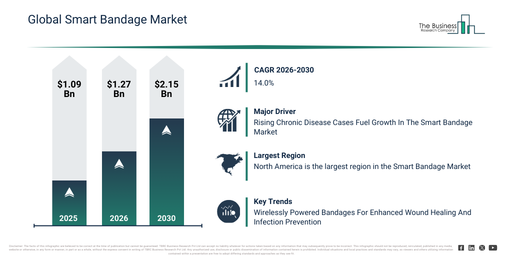
  • Smart Bandage Market Expected to Grow to $2.14 Billion by 2030 at 14% CAGR

    Smart Bandage Market Expected to Grow to $2.14 Billion by 2030 at 14% CAGR

    The Business Research Company’s 2026 market reports feature enhanced tools like market attractiveness analysis, TAM assessment, and company scoring matrices, along with interactive dashboards, deeper supply chain insights, and startup coverage strengthening the depth, usability, and strategic value of insights.

    What Is The Estimated Market Size Of The Smart Bandage Market In 2026, And How Will Its Value Evolve By 2030?

    The smart bandage market has experienced rapid expansion in recent years. It is projected to grow from $1.09 billion in 2025 to $1.27 billion in 2026, achieving a compound annual growth rate (CAGR) of 16.5%. The market’s past growth can be attributed to an increase in diabetic ulcers, rising surgical procedures, the expansion of chronic wounds, improved wound care awareness, and concerns regarding hospital-acquired infections.

    The smart bandage market is projected for substantial expansion over the next few years. It is anticipated to reach $2.15 billion by 2030, demonstrating a compound annual growth rate (CAGR) of 14.0%. The growth during the forecast period is attributable to the expansion of remote care models, advances in flexible electronics, a rising geriatric population, increased home healthcare adoption, and innovation in smart biomaterials. Major trends expected in the forecast period encompass the integration of biosensors in wound dressings, a rising demand for chronic wound management, the adoption of wireless data transmission, the growth of antimicrobial smart materials, and increased home-based wound care usage.

    Access Your Free Sample Report For In-Depth Market Analysis:

    https://www.thebusinessresearchcompany.com/sample.aspx?id=15670&type=smp

    What Major Factors Are Driving The Smart Bandage Market Forward?

    The rising incidence of chronic ailments is anticipated to boost the smart bandage market’s expansion. These are medical conditions persisting for a minimum of three months, necessitating ongoing care or limiting daily functions. Their surge is attributed to factors such as genetic predispositions, an aging populace, and poor lifestyle choices. Smart bandages are vital for handling chronic illnesses, offering early detection of issues, remote oversight, customized therapies, and complication avoidance, thereby enhancing patient well-being and life quality. As an illustration, in April 2025, data from the Centers for Disease Control and Prevention (CDC), a US-based federal agency, indicated that in 2023, about 194 million U.S. adults, representing 76.4%, had at least one chronic condition. The incidence stood at 59.5% for young adults, 78.4% for midlife adults, and 93.0% for older adults. Consequently, the expanding prevalence of chronic conditions is a key stimulant for the smart bandage market’s expansion.

    Which Segment Classifications Are Used In The Smart Bandage Market Segment Analysis?

    The smart bandage market covered in this report is segmented –

    1) By Material: Graphene, Synthetic Fiber

    2) By Product: Electroactive, Sensor-Based, Oxygen Sensing, pH Sensing, Other Products

    3) By Distribution Channel: Retail Pharmacies, Hospital Pharmacies, Trauma Centers, Other Distribution Channels

    4) By Application: Chronic Wound Management, Burns, Sports Injuries, Post-Surgical Care, Other Applications

    Subsegments:

    1) By Graphene: Graphene Oxide-Based Bandages, Reduced Graphene Oxide Bandages

    2) By Synthetic Fiber: Polyurethane-Based Bandages, Polypropylene-Based Bandages, Nylon-Based Bandages

    Which Trends Are Impacting The Progress Of The Smart Bandage Market?

    Leading companies in the smart bandage market are actively pursuing research and development initiatives to create innovative products, such as wirelessly powered bandages, aimed at assisting patients with non-healing wounds and preventing infections. A wirelessly powered bandage is a type of smart bandage designed to receive power and transmit data using wireless technology, eliminating the need for physical connections. Researchers from the U.K. and France have engineered these bandages to be flexible, conformable, and easy-to-wear, thereby enabling continuous wound monitoring and therapy. For instance, in May 2023, researchers from the University of Glasgow and the University of Southampton, both UK-based public research universities, introduced wirelessly powered smart bandages. These are equipped with light-emitting diodes (LEDs) that expose wounds to sterilizing UV light, effectively preventing bacterial development without antibiotics. The UV LEDs are powered wirelessly through a small, flexible inductive coil embedded within the bandage fabric. This coil receives power wirelessly from a second coil linked to the electrical mains, ensuring continuous power for the LEDs. The wireless power delivery technology demonstrates twice the efficiency of previous wearable wireless power receivers, making it highly suitable for medical applications.

    Which Firms Are Contributing To The Smart Bandage Market Ecosystem?

    Major companies operating in the smart bandage market are Johnson & Johnson Services Inc., The 3M Company, Medtronic plc, Baxter International Inc., Medline Industries Inc., Smith & Nephew plc, Paul Hartmann AG, Convatec Group PLC, Mölnlycke Health Care AB, Lohmann & Rauscher International GmbH & Co. KG, BSN medical GmbH, Fleming Medical Ltd., OSNovative Systems, Epicore Biosystems, Grapheal, WINDGO Inc., Band-Aid Technologies, Gentag Inc., Cardinal Health Inc., Coloplast A S, Integra LifeSciences Corporation

    Get The Full Smart Bandage Market Report:

    https://www.thebusinessresearchcompany.com/report/smart-bandage-global-market-report

    Where Is The Smart Bandage Market Primarily Concentrated By Region?

    North America was the largest region in the smart bandage market in 2025. The regions covered in the smart bandage market report are Asia-Pacific, South East Asia, Western Europe, Eastern Europe, North America, South America, Middle East, Africa.

    Request A Customized Smart Bandage Market Report For Competitive Insights:

    https://www.thebusinessresearchcompany.com/report/smart-bandage-global-market-report

    Browse Through More Reports Similar to the Global Smart Bandage Market 2026, By The Business Research Company

    Compression Bandages Market Report 2026

    https://www.thebusinessresearchcompany.com/report/compression-bandages-global-market-report

    Wound Care Devices Market Report

    https://www.thebusinessresearchcompany.com/report/wound-care-devices-global-market-report

    Wound Closure Devices Market Report

    https://www.thebusinessresearchcompany.com/report/wound-closure-devices-global-market-report

    Get in touch with us:

    The Business Research Company: https://www.thebusinessresearchcompany.com/

    Americas +1 310-496-7795

    Asia +44 7882 955267 & +91 8897263534

    Europe +44 7882 955267

    Email us at info@tbrc.info

    Follow us on:

    LinkedIn: https://in.linkedin.com/company/the-business-research-company

    YouTube: https://www.youtube.com/channel/UC24_fI0rV8cR5DxlCpgmyFQ

    Global Market Model: https://www.thebusinessresearchcompany.com/global-market-model

  • Small-Scale Bioreactors Market Projected to Reach $5.08 Billion by 2030 at 15.5% CAGR

    Small-Scale Bioreactors Market Projected to Reach $5.08 Billion by 2030 at 15.5% CAGR

    The Business Research Company’s 2026 market reports feature enhanced tools like market attractiveness analysis, TAM assessment, and company scoring matrices, along with interactive dashboards, deeper supply chain insights, and startup coverage strengthening the depth, usability, and strategic value of insights.

    How Does The Market Size Of The Small-Scale Bioreactors Market Compare Between 2026 And 2030?

    The small-scale bioreactors market has demonstrated substantial expansion in recent years. It is projected to increase from $2.48 billion in 2025 to $2.85 billion in 2026, at a compound annual growth rate (CAGR) of 15.1%. The growth observed in the historic period can be associated with the expansion of biologics research, the demand for scalable laboratory systems, partnerships between academic institutions and industry, advancements in bioprocess technologies, and a rise in research and development investments.

    The small-scale bioreactors market is anticipated to experience significant expansion over the next few years. This market is projected to reach a valuation of $5.09 billion by 2030, exhibiting a compound annual growth rate (CAGR) of 15.5%. Factors contributing to this growth during the forecast period include the expanding development of cell therapy pipelines, a rise in biomanufacturing startups, the need for economical systems, the integration of automation, and the proliferation of nascent biotech centers. Key trends anticipated within the forecast timeframe encompass the wider acceptance of single-use bioreactors, escalating demand from research laboratories, the incorporation of automation solutions, the development of modular bioprocessing approaches, and an increase in academic research funding.

    Access Your Free Sample Report For In-Depth Market Analysis:

    https://www.thebusinessresearchcompany.com/sample.aspx?id=10864&type=smp

    Which Key Drivers Are Affecting The Small-Scale Bioreactors Market Development?

    Growing investments in biopharmaceutical research and development (R&D) are substantially fueling the expansion of the small-scale bioreactors market. These bioreactors serve as crucial instruments for refining processes within biopharmaceutical production. Investigators employ them to analyze and perfect variables related to cell culture, fermentation, and downstream processing prior to scaling up for mass production. This guarantees an efficient, economical, and quality-compliant manufacturing operation. For example, the Office for National Statistics, a UK-based government agency, reported that the UK government’s net R&D expenditure climbed to £17.4 billion ($22.1 billion) in 2023, an increase from £16.1 billion ($20.45 billion) in 2022, representing an 8.2% surge. Consequently, the escalating R&D investments by biopharmaceutical firms are driving the small-scale bioreactors market forward.

    How Is The Small-Scale Bioreactors Market Organized By Segment Classification?

    The small-scale bioreactors market covered in this report is segmented –

    1) By Product: Reusable Bioreactors, Single-Use Bioreactors

    2) By Capacity: 5 ML-100 ML, 100 ML-250 ML, 250 ML -500 ML, 500 ML-1 L, 1L-3L, 3L-5L

    3) By Molecules: Monoclonal Antibodies, Stem Cells, Recombinant Proteins, Vaccines, Gene Therapy

    4) By End User: Pharmaceutical And Biopharmaceutical Companies, Contract Research Organizations (CROs) And Contract Manufacturing Organizations (CMOs), Academic And Research Institutes

    Subsegments:

    1) By Reusable Bioreactors: Stirred Tank Bioreactors, Bubble Column Bioreactors, Airlift Bioreactors, Fixed-Bed Bioreactors

    2) By Single-Use Bioreactors: Disposable Bioreactor Bags, Pre-sterilized Single-Use Systems, Flexible Single-Use Bioreactor Systems, Integrated Single-Use Platforms

    What Trends Are Transforming The Small-Scale Bioreactors Market?

    Major companies operating within the small-scale bioreactor market are primarily focused on introducing advanced products, such as the fixed-bed bioreactor, to enhance efficiency in bioprocessing and improve scalability for both microbial and cell culture applications. A fixed-bed bioreactor is defined as a type of bioreactor where microorganisms or enzymes are immobilized on a solid support within a stationary bed, enabling continuous or batch processing of substrates as they pass through the reactor. For instance, in October 2024, Univercells Technologies, a biotechnology company from Belgium, launched the Scale-XTM Nexo bioreactor. This miniaturized system is designed to optimize cell culture process development. This innovative bioreactor aims to streamline and accelerate development timelines for researchers, ultimately leading to cost reductions of up to 60% compared to conventional methods.

    Who Are The Industry Participants Involved In The Small-Scale Bioreactors Market?

    Major companies operating in the small-scale bioreactors market are Sartorius AG, Thermo Fisher Scientific Inc., Merck KGaA, Miltenyi Biotec B.V. & Co. KG, Solaris Biotechnology Srl, Infors AG, Getinge AB, 2mag AG, Adolf Kuhner AG, Biosan, Esco Micro Private Limited, Hanil Scientific Inc., HiTec Zang GmbH, H.E.L Group, Finesse Solutions Inc., Applikon Biotechnology BV, PBS Biotech Inc., Danaher Corporation, Eppendorf AG, General Electric Company, Sartorius Stedim Biotech, Cytiva, Kuhner Shaker

    Get The Full Small-Scale Bioreactors Market Report:

    https://www.thebusinessresearchcompany.com/report/small-scale-bioreactors-global-market-report

    Which Region Has The Greatest Market Share In The Small-Scale Bioreactors Market?

    North America was the largest region in the small-scale bioreactors market in 2025.Asia-Pacific is expected to be the fastest-growing region in the forecast period. The regions covered in the small-scale bioreactors market report are Asia-Pacific, South East Asia, Western Europe, Eastern Europe, North America, South America, Middle East, Africa.

    Request A Customized Small-Scale Bioreactors Market Report For Competitive Insights:

    https://www.thebusinessresearchcompany.com/report/small-scale-bioreactors-global-market-report

    Browse Through More Reports Similar to the Global Small-Scale Bioreactors Market 2026, By The Business Research Company

    Airlift Bioreactors Market Report 2026

    https://www.thebusinessresearchcompany.com/report/airlift-bioreactors-global-market-report

    Bioreactors And Fermenters Market Report

    https://www.thebusinessresearchcompany.com/report/bioreactors-and-fermenters-global-market-report

    Large And Small Scale Bioprocessing Market Report

    https://www.thebusinessresearchcompany.com/report/large-and-small-scale-bioprocessing-global-market-report

    Get in touch with us:

    The Business Research Company: https://www.thebusinessresearchcompany.com/

    Americas +1 310-496-7795

    Asia +44 7882 955267 & +91 8897263534

    Europe +44 7882 955267

    Email us at info@tbrc.info

    Follow us on:

    LinkedIn: https://in.linkedin.com/company/the-business-research-company

    YouTube: https://www.youtube.com/channel/UC24_fI0rV8cR5DxlCpgmyFQ

    Global Market Model: https://www.thebusinessresearchcompany.com/global-market-model
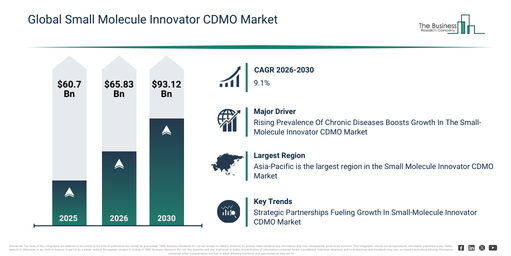
  • Small Molecule Innovator CDMO Market Expansion Across Industries

    Small Molecule Innovator CDMO Market Expansion Across Industries

    The Business Research Company’s 2026 market reports feature enhanced tools like market attractiveness analysis, TAM assessment, and company scoring matrices, along with interactive dashboards, deeper supply chain insights, and startup coverage strengthening the depth, usability, and strategic value of insights.

    What Is The Forecasted Market Size Trajectory Of The Small Molecule Innovator CDMO Market From 2026 To 2030?

    The small molecule innovator CDMO market size has seen strong growth in recent years. It is anticipated to expand from $60.7 billion in 2025 to $65.83 billion in 2026, achieving a compound annual growth rate (CAGR) of 8.4%. This historical growth can be attributed to factors such as increasing r&d costs, patent expirations, the globalization of pharma supply chains, the requirement for specialized chemistry expertise, and the complexity of regulations.

    The small molecule innovator cdmo market size is anticipated to experience substantial growth in the upcoming years. It is projected to expand to $93.12 billion by 2030, demonstrating a compound annual growth rate (CAGR) of 9.1%. This expansion during the forecast period is primarily driven by the increasing number of small molecule pipelines, greater outsourcing by biotechnology companies, the necessity for rapid production scale-up, advancements in green chemistry, and market penetration into emerging economies. Significant trends expected during this period encompass a growing need for comprehensive end-to-end cdmo services, a heightened emphasis on HPAPI manufacturing, the implementation of continuous manufacturing techniques, the expansion of early-stage development provisions, and the proliferation of virtual pharma companies.

    Access Your Free Sample Report For In-Depth Market Analysis:

    https://www.thebusinessresearchcompany.com/sample.aspx?id=12178&type=smp

    What Factors Are Contributing To The Growth Of The Small Molecule Innovator CDMO Market?

    The increasing occurrence of chronic illnesses is anticipated to drive expansion within the small-molecule innovator CDMO market moving ahead. Chronic conditions are defined as ailments persisting for a year or more, requiring ongoing medical attention, limiting daily functions, or a combination of these. The small-molecule innovator CDMO sector offers services and produces medications for chronic diseases, catering to pharmaceutical and biotechnology firms. For example, data from April 2025, provided by the Centers for Disease Control and Prevention (CDC), a US-based federal agency, indicated that in 2023, roughly 194 million U.S. adults, or 76.4%, reported experiencing at least one chronic condition. The incidence stood at 59.5% for young adults, 78.4% for midlife adults, and 93.0% for older adults. Consequently, the growing frequency of chronic diseases is accelerating the small-molecule innovator CDMO market.

    Which Segments Define The Small Molecule Innovator CDMO Market Segment Structure?

    The small molecule innovator cdmo market covered in this report is segmented –

    1) By Product: Small Molecule Active Pharmaceutical Ingredient(API), Small Molecule Drug Product

    2) By Stage: Preclinical, Clinical, Commercial

    3) By Therapeutic: Cardiovascular Disease, Oncology, Respiratory Disorders, Neurology, Metabolic Disorders, Infectious Disease, Other Therapeutics

    4) By Customer: Pharmaceutical, Biotechnology

    Subsegments:

    1) By Small Molecule Active Pharmaceutical Ingredient (API): Generic APIs, Proprietary APIs, Controlled Substances

    2) By Small Molecule Drug Product: Oral Solid Dosage Forms (Tablets, Capsules), Injectable Drug Products, Topical Formulations, Liquid Formulations

    What Trends Are Shaping The Future Of The Small Molecule Innovator CDMO Market?

    Leading companies within the small-molecule innovator CDMO market are embracing a strategic partnerships model for delivering contract development and manufacturing organization (CDMO) services. Such collaborations entail organizations harnessing each other’s capabilities and resources to achieve shared advantages and success. For example, in August 2023, SST Corporation, a US-based pharmaceutical company that manufactures generic and ethical pharmaceuticals and bulk vitamins, formed an alliance with Viwit Pharmaceuticals, a China-based research-focused pharmaceutical and chemical company involved in developing, manufacturing, and marketing products. This partnership aims to strengthen market growth by promoting small molecule pharmaceutical contract development and manufacturing organization (CDMO) services in North America through the introduction of expanded offerings, the utilization of enhanced expertise, increased capacity, and the provision of essential regulatory support, ultimately fortifying their competitive advantage.

    Who Are The Established Players Within The Small Molecule Innovator CDMO Market?

    Major companies operating in the small molecule innovator cdmo market are Thermo Fisher Scientific Inc., Boehringer Ingelheim International GmbH, Evonik Industries AG, Lonza Group Ltd., Catalent Inc., Wuxi AppTec Co. Ltd., Asymchem, Siegfried Holdings, Recipharm AB, Almac Sciences Ltd., Curia Global Inc., Cambrex Corporation, Piramal Pharma Ltd., Hovione, Corden Pharma GmbH, Alcami Corporation, Mikart LLC, August Bioservices LLC, Patheon Pharma Services, Famar Group, Sterling Pharma Solutions, Sai Life Sciences

    Get The Full Small Molecule Innovator CDMO Market Report:

    https://www.thebusinessresearchcompany.com/report/small-molecule-innovator-cdmo-global-market-report

    Which Region Accounts For The Largest Portion Of The Small Molecule Innovator CDMO Market?

    Asia-Pacific was the largest region in the small molecule innovator CDMO market in 2025. The regions covered in the small molecule innovator cdmo market report are Asia-Pacific, South East Asia, Western Europe, Eastern Europe, North America, South America, Middle East, Africa.

    Request A Customized Small Molecule Innovator CDMO Market Report For Competitive Insights:

    https://www.thebusinessresearchcompany.com/report/small-molecule-innovator-cdmo-global-market-report

    Browse Through More Reports Similar to the Global Small Molecule Innovator CDMO Market 2026, By The Business Research Company

    Small Molecule Cmo Or Cdmo Market Report 2026

    https://www.thebusinessresearchcompany.com/report/small-molecule-cmo-or-cdmo-global-market-report

    Biologics Cdmo Market Report

    https://www.thebusinessresearchcompany.com/report/biologics-cdmo-global-market-report

    Small Molecule Drug Discovery Market Report

    https://www.thebusinessresearchcompany.com/report/small-molecule-drug-discovery-global-market-report

    Get in touch with us:

    The Business Research Company: https://www.thebusinessresearchcompany.com/

    Americas +1 310-496-7795

    Asia +44 7882 955267 & +91 8897263534

    Europe +44 7882 955267

    Email us at info@tbrc.info

    Follow us on:

    LinkedIn: https://in.linkedin.com/company/the-business-research-company

    YouTube: https://www.youtube.com/channel/UC24_fI0rV8cR5DxlCpgmyFQ

    Global Market Model: https://www.thebusinessresearchcompany.com/global-market-model

  • Global Small Lymphocytic Lymphoma Market Strategic Analysis 2026–2030

    Global Small Lymphocytic Lymphoma Market Strategic Analysis 2026–2030

    The Business Research Company’s 2026 market reports feature enhanced tools like market attractiveness analysis, TAM assessment, and company scoring matrices, along with interactive dashboards, deeper supply chain insights, and startup coverage strengthening the depth, usability, and strategic value of insights.

    How Much Will The Market Value Of The Small Lymphocytic Lymphoma Market Grow Between 2026 And 2030?

    The small lymphocytic lymphoma market has experienced consistent expansion in recent years. It is anticipated to grow from $3.23 billion in 2025 to $3.36 billion in 2026, exhibiting a compound annual growth rate (CAGR) of 4.1%. The increase observed in past periods can be attributed to progress in hematology research, heightened cancer awareness, improved diagnostic precision, the expansion of oncology centers, and the accessibility of chemotherapy agents.

    The small lymphocytic lymphoma market is projected to experience consistent expansion over the upcoming years. By 2030, its value is anticipated to reach $3.95 billion, exhibiting a compound annual growth rate (CAGR) of 4.1%. This anticipated growth during the forecast period is largely due to factors such as an increase in targeted drug approvals, the broader availability of companion diagnostics, a growing aging demographic, enhanced survival rates, and increased expenditure on oncology healthcare. Key trends expected within this period involve the greater adoption of targeted therapies, a move towards oral oncology medications, advancements in molecular diagnostics, an increase in combination therapy options, and heightened clinical trial engagements.

    Access Your Free Sample Report For In-Depth Market Analysis:

    https://www.thebusinessresearchcompany.com/sample.aspx?id=20957&type=smp

    Which Strong Drivers Are Impacting The Small Lymphocytic Lymphoma Market Growth?

    The small lymphocytic lymphoma market is projected to grow with the increasing prominence of personalized medicine. This medical approach designs treatments and healthcare decisions specifically for individuals, taking into account their genetic profiles, environmental factors, and lifestyle choices. The expansion of personalized medicine is propelled by advancements in genomics, biotechnology, and data analytics, which facilitate more precise, effective, and customized treatments. Small lymphocytic lymphoma (SLL) contributes to the development of personalized medicine by providing insights into specific genetic mutations and biomarkers, thus enabling targeted therapies and individualized treatment plans. For instance, in February 2024, the Personalized Medicine Coalition, a US-based non-profit organization, highlighted that in 2023, the FDA approved 16 new personalized treatments for patients with rare diseases, a substantial increase from the six approved in 2022. Therefore, the progression of personalized medicine will drive the growth of the small lymphocytic lymphoma market.

    How Is The Small Lymphocytic Lymphoma Market Segmented Across Different Segment Categories?

    The small lymphocytic lymphoma market covered in this report is segmented –

    1) By Product: Capsules, Tablets, Injections, Other Products

    2) By Route of Administration: Oral, Parenteral, Other Route of Administrations

    3) By Treatment: Chemotherapy, Targeted Therapy, Stem Cell Transplant, Monoclonal antibody therapy, Other Treatments

    4) By Distribution Channel: Hospital Pharmacy, Retail Pharmacy, Online Pharmacy, Other Distribution Channels

    5) By End-Users: Hospitals, Specialty Clinics, Homecare, Other End Users

    Subsegments:

    1) By Capsules: Oral Chemotherapy Capsules, Targeted Therapy Capsules, Immunomodulatory Capsules

    2) By Tablets: Oral Chemotherapy Tablets, Targeted Therapy Tablets, Immunotherapy Tablets

    3) By Injections: Chemotherapy Injections, Monoclonal Antibody Injections, Immunotherapy Injections, Biologic Injections

    4) By Other Products: Oral Targeted Combination Therapies, Infusion Therapies, Biosimilars For SLL, CAR-T Cell Therapies

    Which Trends Are Contributing To Changes In The Small Lymphocytic Lymphoma Market?

    Leading companies in the small lymphocytic lymphoma market are developing innovative products, such as non-covalent BTK inhibitors, to boost treatment efficacy, combat resistance to current therapies, and improve patient results. Non-covalent BTK inhibitors are a category of drugs that reversibly bind to the Bruton’s tyrosine kinase (BTK) enzyme, targeting B-cell malignancies while mitigating resistance and adverse effects often linked with covalent inhibitors. For instance, in December 2023, Eli Lilly and Company, a US-based pharmaceutical company, announced that the U.S. Food and Drug Administration (FDA) has approved Jaypirca (pirtobrutinib) for adults with chronic lymphocytic leukemia or small lymphocytic lymphoma (CLL/SLL). This approval is particularly significant for its concentration on patients who have already undergone at least two lines of therapy, including a Bruton’s Tyrosine Kinase (BTK) inhibitor and a BCL-2 inhibitor, thereby addressing a critical unmet need in heavily pre-treated populations. Its oral administration provides patient convenience while maintaining robust, targeted therapeutic action.

    Which Organizations Play A Role In The Small Lymphocytic Lymphoma Market Landscape?

    Major companies operating in the small lymphocytic lymphoma market are Pfizer Inc., Johnson & Johnson, AbbVie Inc., Sanofi S.A., Bristol-Myers Squibb Company, AstraZeneca PLC, Eli Lilly and Company, Gilead Sciences Inc., Amgen Inc., Regeneron Pharmaceuticals, Incyte Corporation, Exelixis Inc., Kite Pharma Inc., Spectrum Pharmaceuticals Inc., Aptose Biosciences Inc., Secura Bio Inc., Infinity Pharmaceuticals Inc., TG Therapeutics Inc., Roche Holding AG, Novartis AG, BeiGene Ltd., Merck & Co. Inc., Takeda Pharmaceutical Company Limited

    Get The Full Small Lymphocytic Lymphoma Market Report:

    https://www.thebusinessresearchcompany.com/report/small-lymphocytic-lymphoma-global-market-report

    Which Region Holds The Highest Market Share In The Small Lymphocytic Lymphoma Market?

    North America was the largest region in the small lymphocytic lymphoma market in 2025. Asia-Pacific is expected to be the fastest-growing region in the forecast period. The regions covered in the small lymphocytic lymphoma market report are Asia-Pacific, South East Asia, Western Europe, Eastern Europe, North America, South America, Middle East, Africa.

    Request A Customized Small Lymphocytic Lymphoma Market Report For Competitive Insights:

    https://www.thebusinessresearchcompany.com/report/small-lymphocytic-lymphoma-global-market-report

    Browse Through More Reports Similar to the Global Small Lymphocytic Lymphoma Market 2026, By The Business Research Company

    Non Hodgkin Lymphoma Nhl Market Report 2026

    https://www.thebusinessresearchcompany.com/report/non-hodgkin-lymphoma-nhl-global-market-report

    Non Hodgkin Lymphoma Nhl Market Report

    https://www.thebusinessresearchcompany.com/report/non-hodgkin-lymphoma-nhl-global-market-report

    Acute Myeloid Leukemia Market Report

    https://www.thebusinessresearchcompany.com/report/acute-myeloid-leukemia-global-market-report

    Get in touch with us:

    The Business Research Company: https://www.thebusinessresearchcompany.com/

    Americas +1 310-496-7795

    Asia +44 7882 955267 & +91 8897263534

    Europe +44 7882 955267

    Email us at info@tbrc.info

    Follow us on:

    LinkedIn: https://in.linkedin.com/company/the-business-research-company

    YouTube: https://www.youtube.com/channel/UC24_fI0rV8cR5DxlCpgmyFQ

    Global Market Model: https://www.thebusinessresearchcompany.com/global-market-model