Category: Healthcare Services

  • Primary Antibody Market Forecast (2026–2030) Offering Long-Term Industry Insights

    Primary Antibody Market Forecast (2026–2030) Offering Long-Term Industry Insights

    The Business Research Company’s 2026 market reports feature enhanced tools like market attractiveness analysis, TAM assessment, and company scoring matrices, along with interactive dashboards, deeper supply chain insights, and startup coverage strengthening the depth, usability, and strategic value of insights.

    How Large Will The Primary Antibody Market Be By 2030 Compared To Its 2026 Market Size?

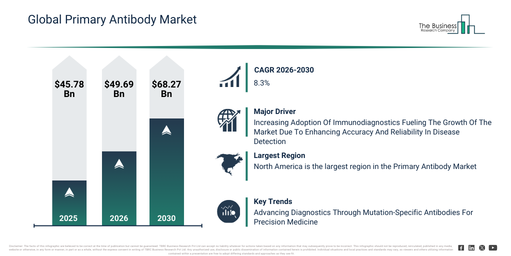
    The primary antibody market has experienced robust expansion in recent years. The market is projected to expand from $45.78 billion in 2025 to $49.69 billion in 2026, exhibiting a compound annual growth rate (CAGR) of 8.6%. Historically, this growth has stemmed from factors such as the broadening of biomedical research initiatives, the escalating application of immunoassays in diagnostics, the development of academic life sciences research, an increasing need for protein analysis instruments, and the presence of varied antibody manufacturing methods.

    The primary antibody market is anticipated to show significant expansion in the next few years, with its size expected to reach $68.27 billion by 2030, demonstrating a compound annual growth rate (CAGR) of 8.3%. This growth during the forecast period is propelled by factors such as increased investments in targeted therapeutics, a rising need for high-throughput screening, the broadening of personalized diagnostics, the increasing adoption of AI-assisted antibody discovery, and a stronger focus on reproducible research tools. Notable trends for the forecast period encompass an escalating demand for highly specific antigen detection, the growing acceptance of recombinant antibody technologies, the expanding application of antibodies in precision diagnostics, the proliferation of automated immunoassay platforms, and an intensified emphasis on batch consistency and reproducibility.

    Access Your Free Sample Report For In-Depth Market Analysis:

    https://www.thebusinessresearchcompany.com/sample.aspx?id=30360&type=smp

    What Primary Drivers Are Shaping The Primary Antibody Market?

    The future expansion of the primary antibody market is anticipated to be driven by the rising uptake of immunodiagnostics. Immunodiagnostics encompasses diagnostic methods that leverage antigen-antibody interactions to identify and quantify particular biomolecules linked to infections, autoimmune conditions, and various cancers. Healthcare providers and laboratories are increasingly incorporating immunodiagnostics in their practices, seeking more precise, swift, and dependable methods for disease detection to enhance clinical judgments and patient health. In immunodiagnostic assays, primary antibodies play a crucial role by specifically attaching to target antigens, facilitating the precise identification and analysis of proteins, pathogens, or biomarkers. These antibodies improve diagnostic accuracy and dependability, minimizing inaccuracies in both experimental and clinical analyses, and are fundamental to techniques such as ELISA, Western blotting, and immunofluorescence. For example, in November 2024, data from the UK Health Security Agency, a UK government body, indicated that from April 2022 to March 2024, a total of 1,981,590 HIV tests, 1,502,799 HCV tests, and 1,185,678 HBV tests were performed. Consequently, the rising use of immunodiagnostics is a significant factor propelling the expansion of the primary antibody market.

    What Segment Categories Shape The Primary Antibody Market Segment Landscape?

    The primary antibody market covered in this report is segmented –

    1) By Type: Immunoglobulin G (IgG), Immunoglobulin M (IgM), Immunoglobulin A (IgA), Other Isotypes

    2) By Source: Monoclonal Antibodies, Polyclonal Antibodies, Recombinant Antibodies

    3) By Technology: Enzyme-Linked Immunosorbent Assay (ELISA), Western Blotting, Immunohistochemistry, Flow Cytometry

    4) By Application: Research And Development, Diagnostics, In Vitro Diagnostics, Point Of Care Testing, Therapeutics

    5) By End User: Academic And Research Institutions, Pharmaceutical And Biopharmaceutical Companies, Clinical Laboratories, Contract Research Organizations (CROs)

    Subsegments:

    1) By Immunoglobulin G: Immunoglobulin G1 Subclass, Immunoglobulin G2 Subclass, Immunoglobulin G3 Subclass, Immunoglobulin G4 Subclass

    2) By Immunoglobulin M: Pentameric Immunoglobulin M, Monomeric Immunoglobulin M

    3) By Immunoglobulin A: Immunoglobulin A1 Subclass, Immunoglobulin A2 Subclass

    4) By Other Isotypes: Immunoglobulin D, Immunoglobulin E

    What Trends Are Affecting The Growth Of The Primary Antibody Market?

    Leading companies in the primary antibody market are prioritizing the creation of innovative products, such as mutation-specific antibodies, to boost diagnostic accuracy, streamline workflow efficiency, and mitigate the risks of misdiagnosis. A mutation-specific antibody functions as a reagent engineered to selectively bind to a specific antigen variant, rather than a broad population of native antigens, thereby allowing clinicians to precisely target particular protein mutations. For instance, F. Hoffmann-La Roche AG, a diagnostics and pharmaceutical company headquartered in Switzerland, introduced the IDH1 R132H (MRQ 67) rabbit monoclonal primary antibody and the ATRX rabbit polyclonal antibody in February 2023. These particular products exhibit high specificity for the IDH1 R132H mutation, are compatible with the BenchMark IHC/ISH platform, and support automated workflows for neuropathology. While these antibodies enhance diagnostic precision and workflow efficiency, they also necessitate increased development costs and possess a more confined scope of target applicability.

    Who Are The Companies Operating Across The Primary Antibody Market Value Chain?

    Major companies operating in the primary antibody market are F. Hoffmann-La Roche AG, Thermo Fisher Scientific Inc., Danaher Corporation, Johnson & Johnson Services Inc., Agilent Technologies Inc., Becton Dickinson And Company, Bio-Techne Corporation, Bio-Rad Laboratories Inc., Genscript Biotech Corporation, Biocytogen Co. Ltd., Sino Biological Inc., Cell Signaling Technology Inc., Cusabio Biotech Co. Ltd., Proteintech Group Inc., Santa Cruz Biotechnology Inc., Rockland Immunochemicals Inc., Creative Diagnostics Inc., Abnova Corporation, Promab Biotechnologies Inc., Boster Biological Technology Co. Ltd., Biorbyt Ltd., Capralogics Inc.

    Get The Full Primary Antibody Market Report:

    https://www.thebusinessresearchcompany.com/report/global-primary-antibody-market-report

    Which Region Leads The Primary Antibody Market In Overall Market Size?

    North America was the largest region in the primary antibody market in 2025. Asia-Pacific is expected to be the fastest-growing region in the forecast period. The regions covered in the primary antibody market report are Asia-Pacific, South East Asia, Western Europe, Eastern Europe, North America, South America, Middle East, Africa.

    Request A Customized Primary Antibody Market Report For Competitive Insights:

    https://www.thebusinessresearchcompany.com/report/global-primary-antibody-market-report

    Browse Through More Reports Similar to the Global Primary Antibody Market 2026, By The Business Research Company

    Healthcare Technology Market Report 2026

    https://www.thebusinessresearchcompany.com/report/healthcare-technology-global-market-report

    Dental Services Market

    https://www.thebusinessresearchcompany.com/report/dental-services-market

    Healthcare Services Market

    https://www.thebusinessresearchcompany.com/report/healthcare-services-market

    Get in touch with us:

    The Business Research Company: https://www.thebusinessresearchcompany.com/

    Americas +1 310-496-7795

    Asia +44 7882 955267 & +91 8897263534

    Europe +44 7882 955267

    Email us at info@tbrc.info

    Follow us on:

    LinkedIn: https://in.linkedin.com/company/the-business-research-company

    YouTube: https://www.youtube.com/channel/UC24_fI0rV8cR5DxlCpgmyFQ

    Global Market Model: https://www.thebusinessresearchcompany.com/global-market-model
  • Scleroderma market insights covering drivers, trends, and opportunities

    Scleroderma market insights covering drivers, trends, and opportunities

    The Business Research Company’s 2026 market reports feature enhanced tools like market attractiveness analysis, TAM assessment, and company scoring matrices, along with interactive dashboards, deeper supply chain insights, and startup coverage strengthening the depth, usability, and strategic value of insights.

    By 2030, What Market Size Is The Scleroderma Market Expected To Reach Based On Its 2026 Value?

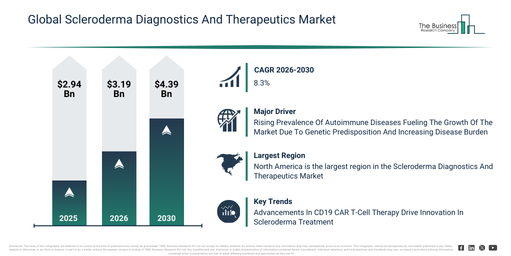
    The scleroderma market has experienced substantial expansion in its size over recent years. This market is projected to expand from $2.48 billion in 2025 to reach $2.65 billion by 2026, demonstrating a compound annual growth rate (CAGR) of 6.7%. Key factors contributing to this historical growth include the increasing prevalence of systemic sclerosis, the widespread use of immunosuppressive therapies, the availability of effective antifibrotic agents, the expansion of specialty rheumatology clinics, and a heightened awareness of connective tissue disorders.

    The scleroderma market is anticipated to experience robust expansion over the coming years. Projections indicate it will reach $3.48 billion by 2030, exhibiting a compound annual growth rate (CAGR) of 7.1%. This anticipated growth during the forecast period is fueled by several factors, including a robust pipeline of innovative disease-modifying medications, the increasing integration of telehealth for ongoing chronic condition management, the evolution of multidisciplinary care frameworks, enhanced government investment in rare disease investigations, and the broadening of initiatives for patient education and assistance. Key trends expected over the forecast horizon encompass the creation and regulatory approval of new disease-modifying treatments, a rise in the application of immunosuppressive and antifibrotic drugs, the proliferation of patient support and prompt intervention initiatives, an increase in clinical trials specifically for systemic scleroderma, and the embrace of comprehensive multidisciplinary care methods for long-term management.

    Access Your Free Sample Report For In-Depth Market Analysis:

    https://www.thebusinessresearchcompany.com/sample.aspx?id=12615&type=smp

    What Primary Drivers Are Shaping The Scleroderma Market?

    The advancement of the scleroderma market is being propelled by exposure to toxins. This refers to the interaction with or absorption of harmful materials that can negatively affect biological processes. The scleroderma market plays a vital role in addressing toxin exposure by fostering research, developing targeted treatments, and enhancing patient support for those affected by scleroderma, a condition potentially triggered by environmental and genetic factors. For instance, in April 2024, data published by the Department for Environment, Food, and Rural Affairs, a UK-based ministerial department, showed that urban background concentrations rose by 3 percent from 2022, reaching 66.8 µg/m³ in 2023, representing the highest value recorded in the time series. Therefore, the presence of toxins is a significant driver for the scleroderma market.

    What Are The Key Segment Divisions In The Scleroderma Market Segment Structure?

    The scleroderma market covered in this report is segmented –

    1) By Treatment: Medication, Surgery, Other Treatments

    2) By Indication: Systemic Scleroderma, Localized Scleroderma

    3) By End User: Hospital, Pharmaceutical Stores, Other End Users

    Subsegments:

    1) By Medication: Immunosuppressants, Antifibrotic Agents, Vasodilators, Corticosteroids, Pain Relievers

    2) By Surgery: Lung Transplantation, Other Surgical Interventions

    3) By Other Treatments: Physical Therapy, Occupational Therapy, Lifestyle Modifications, Alternative Therapies

    What Trends Are Affecting The Growth Of The Scleroderma Market?

    Leading firms within the scleroderma market are prioritizing the introduction of new products, specifically clinical trial platforms, to enhance scleroderma treatments and pinpoint candidates suitable for advancing from Phase IIb to Phase III. Such a platform represents an extensive system and structure designed to enable the concurrent assessment of numerous treatments or interventions uniformly across diverse clinical studies. An example of this is the launch of CONQUEST, an innovative clinical trial platform, by The Scleroderma Research Foundation (SRF), a US-based non-profit dedicated to funding scleroderma research, in August 2023. This initiative extends globally, involving patient enrollment from 130 centers across 22 countries, utilizing a master protocol for evaluating various therapies. This pioneering endeavor is expected to profoundly influence the scleroderma market by accelerating the creation and acceptance of efficacious treatments, owing to its collaborative and streamlined method for clinical assessment.

    Which Organizations Are Engaged In The Scleroderma Market?

    Major companies operating in the scleroderma market are Pfizer Inc., Johnson And Johnson Inc., F. Hoffmann-La Roche AG, Abbvie Inc., Bayer AG, Novartis AG, Merck And Co. Inc., Sanofi S.A., Bristol-Myers Squibb Company, AstraZeneca plc, Takeda Pharmaceutical Company Limited, Eli Lilly and Company, Gilead Sciences Inc., Amgen Inc., GSK plc, Teva Pharmaceutical Industries Ltd., Astellas Pharma Inc., Boehringer Ingelheim International GmbH, Principia Biopharma Corp, aTyr Pharma Inc., Kadmon Holdings Inc., FibroGen Inc., Corbus Pharmaceuticals Holdings Inc., CSL Behring, UCB Pharma, Kyowa Kirin, Mitsubishi Tanabe Pharma, Chugai Pharmaceutical Co. Ltd.

    Get The Full Scleroderma Market Report:

    https://www.thebusinessresearchcompany.com/report/scleroderma-global-market-report

    Where Is The Scleroderma Market Most Concentrated Geographically?

    North America was the largest region in the scleroderma market in 2025. Asia-Pacific is expected to be the fastest-growing region in the forecast period. The regions covered in the scleroderma market report are Asia-Pacific, South East Asia, Western Europe, Eastern Europe, North America, South America, Middle East, Africa.

    Request A Customized Scleroderma Market Report For Competitive Insights:

    https://www.thebusinessresearchcompany.com/report/scleroderma-global-market-report

    Browse Through More Reports Similar to the Global Scleroderma Market 2026, By The Business Research Company

    Clinical Diagnostics Market Report 2026

    https://www.thebusinessresearchcompany.com/report/clinical-diagnostics-global-market-report

    Skin Cancer Diagnostics Market Report

    https://www.thebusinessresearchcompany.com/report/skin-cancer-diagnostics-global-market-report

    Tissue Diagnostic Market Report

    https://www.thebusinessresearchcompany.com/report/tissue-diagnostic-global-market-report

    Get in touch with us:

    The Business Research Company: https://www.thebusinessresearchcompany.com/

    Americas +1 310-496-7795

    Asia +44 7882 955267 & +91 8897263534

    Europe +44 7882 955267

    Email us at info@tbrc.info

    Follow us on:

    LinkedIn: https://in.linkedin.com/company/the-business-research-company

    YouTube: https://www.youtube.com/channel/UC24_fI0rV8cR5DxlCpgmyFQ

    Global Market Model: https://www.thebusinessresearchcompany.com/global-market-model
  • Preventive Healthcare Technologies and Services Market Analysis (2026–2030) Highlighting Innovation and Competition

    Preventive Healthcare Technologies and Services Market Analysis (2026–2030) Highlighting Innovation and Competition

    The Business Research Company’s 2026 market reports feature enhanced tools like market attractiveness analysis, TAM assessment, and company scoring matrices, along with interactive dashboards, deeper supply chain insights, and startup coverage strengthening the depth, usability, and strategic value of insights.

    What Is The Projected Increase In Market Value Of The Preventive Healthcare Technologies And Services Market During 2026–2030?

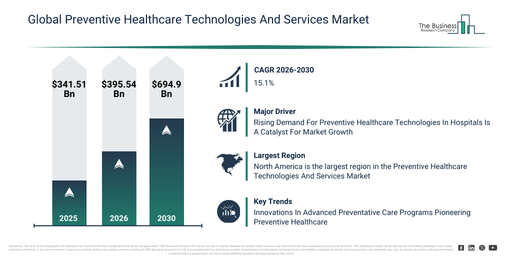
    The market for preventive healthcare technologies and services has shown substantial growth in recent years. It is anticipated to increase from $341.51 billion in 2025 to $395.54 billion in 2026, achieving a compound annual growth rate (CAGR) of 15.8%. The historical expansion of this market can be attributed to a heightened awareness of preventive healthcare benefits, a rise in the adoption of basic health screenings, the ongoing development of digital health infrastructure, an increase in chronic disease monitoring, and the wider availability of consumer health devices.

    The preventive healthcare technologies and services market size is projected for significant expansion over the coming years. This market is anticipated to reach a valuation of $694.9 billion by 2030, demonstrating a compound annual growth rate (CAGR) of 15.1%. Factors driving this growth during the forecast period include a heightened demand for tailored preventive care, greater uptake of remote monitoring solutions, the broadening of data-centric healthcare frameworks, increased funding in population health analytics, and the enhanced incorporation of preventive services into primary care. Key trends anticipated during the forecast timeframe encompass the expanding utilization of wearable health monitoring devices, increased reliance on remote preventive care platforms, the evolving integration of AI-powered risk assessment tools, the proliferation of digital health screening offerings, and a sharpened emphasis on population health management.

    Access Your Free Sample Report For In-Depth Market Analysis:

    https://www.thebusinessresearchcompany.com/sample.aspx?id=6088&type=smp

    Which Major Drivers Are Influencing The Expansion Of The Preventive Healthcare Technologies And Services Market?

    The growing need for hospitals is anticipated to propel the expansion of the preventive healthcare technologies and services market. Hospitals are extensive, organized healthcare institutions that provide a broad spectrum of medical services, treatment, and care to individuals with diverse health conditions. The adoption of preventive healthcare technologies and services in hospitals leads to improved patient outcomes, reduced healthcare expenditures, early disease detection, and enhanced patient engagement, enabling more personalized healthcare approaches, remote patient monitoring, and fostering a healthier workforce. For instance, in August 2023, Interweave Textiles Limited reported 1148 hospitals in the UK. Additionally, in May 2023, the American Hospital Association stated that the number of hospitals in the US increased by 0.6%, from 6,093 in 2022 to 6,129 in 2023. Thus, the rising demand for hospitals is driving the growth of the preventive healthcare technologies and services market.

    Which Segment Types Are Examined In The Preventive Healthcare Technologies And Services Market Segment Study?

    The preventive healthcare technologies and services market covered in this report is segmented –

    1) By Type: Early Detection and Screening Technologies, Vaccines, Chronic Disease Management Technologies, Advanced Technologies

    2) By Application: Hospitals, Clinics

    3) By End User: Homecare Settings, Employers And Corporate Wellness Programs, Health Insurance Providers

    Subsegments:

    1) By Early Detection And Screening Technologies: Diagnostic Imaging, Genetic Testing, Biomarker Testing

    2) By Vaccines: Preventive Vaccines, Therapeutic Vaccines

    3) By Chronic Disease Management Technologies: Telehealth Services, Remote Monitoring Tools, Mobile Health Applications

    4) By Advanced Technologies To Reduce Errors: Clinical Decision Support Systems, Medication Management Systems, Electronic Health Records (EHR) Systems

    Which Trends Are Shaping The Preventive Healthcare Technologies And Services Market?

    Prominent companies within the preventive healthcare technologies and services market are innovating with new products, like advanced preventative care programs, to achieve a competitive advantage. Preventive care programs are defined as actions and strategies created to stop the beginning or worsening of diseases and health problems. As an illustration, in November 2023, WELL Health Technologies Corporation, a Canada-based healthcare technology firm, launched WELL Longevity+. This program, aiming to transform personal and business well-being, expands its existing preventative health division. WELL Longevity+ enhances preventative care by integrating advanced diagnostic imaging software and artificial intelligence to analyze essential health information. The WELL Longevity+ program employs the latest cutting-edge diagnostic technology to enable early therapeutic interventions. These conditions are often major contributors to fatalities and disabilities.

    Which Players Are Part Of The Competitive Landscape Of The Preventive Healthcare Technologies And Services Market?

    Major companies operating in the preventive healthcare technologies and services market are McKesson Corporation, Walgreens Boots Alliance Inc., Pfizer Inc., Merck & Co Inc., GlaxoSmithKline plc, Medtronic plc, TELUS Health Inc., Quest Diagnostics Incorporated, Cerner Corporation, Teladoc Health Inc., Omnicell Inc., CitiusTech Inc., Change Healthcare Inc., Tivity Health Inc., Allscripts Healthcare Solutions Inc., Included Health Inc., Myriad Genetics Inc., Vocera Communications Inc., Viatronix Inc., Dilon Technologies Inc., Novx Systems Inc., U-Systems Inc., Omron Healthcare Inc., GRAIL Inc., Maven Clinic Inc., Novartis AG, Pearl Health Inc., Sanofi S.A.

    Get The Full Preventive Healthcare Technologies And Services Market Report:

    https://www.thebusinessresearchcompany.com/report/preventive-healthcare-technologies-and-services-global-market-report

    Which Region Is The Top Contributor To The Preventive Healthcare Technologies And Services Market By Share?

    North America was the largest region in the preventive healthcare technologies and services market in 2025. Europe is expected to be the fastest-growing region in the forecast period. The regions covered in the preventive healthcare technologies and services market report are Asia-Pacific, South East Asia, Western Europe, Eastern Europe, North America, South America, Middle East, Africa.

    Request A Customized Preventive Healthcare Technologies And Services Market Report For Competitive Insights:

    https://www.thebusinessresearchcompany.com/report/preventive-healthcare-technologies-and-services-global-market-report

    Browse Through More Reports Similar to the Global Preventive Healthcare Technologies And Services Market 2026, By The Business Research Company

    Non Invasive Prenatal Testing Market Report 2026

    https://www.thebusinessresearchcompany.com/report/non-invasive-prenatal-testing-global-market-report

    Postpartum Health Supplements Market Report

    https://www.thebusinessresearchcompany.com/report/postpartum-health-supplements-global-market-report

    Fertility Treatments Market Report

    https://www.thebusinessresearchcompany.com/report/fertility-treatments-global-market-report

    Get in touch with us:

    The Business Research Company: https://www.thebusinessresearchcompany.com/

    Americas +1 310-496-7795

    Asia +44 7882 955267 & +91 8897263534

    Europe +44 7882 955267

    Email us at info@tbrc.info

    Follow us on:

    LinkedIn: https://in.linkedin.com/company/the-business-research-company

    YouTube: https://www.youtube.com/channel/UC24_fI0rV8cR5DxlCpgmyFQ

    Global Market Model: https://www.thebusinessresearchcompany.com/global-market-model
  • Protein Crystallization Market Future Trends Influencing Growth

    Protein Crystallization Market Future Trends Influencing Growth

    The Business Research Company’s 2026 market reports feature enhanced tools like market attractiveness analysis, TAM assessment, and company scoring matrices, along with interactive dashboards, deeper supply chain insights, and startup coverage strengthening the depth, usability, and strategic value of insights.

    How Is The Market Size Of The Protein Crystallization Market Expected To Scale Between 2026 And 2030?

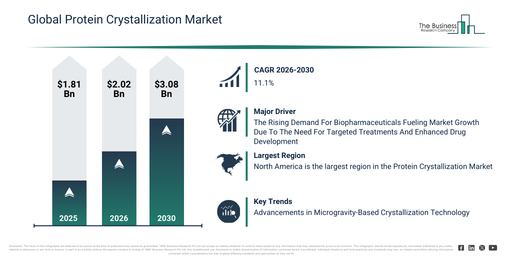
    The protein crystallization market has experienced rapid expansion in recent years. It is projected to increase from $1.81 billion in 2025 to $2.02 billion in 2026, at a compound annual growth rate (CAGR) of 11.4%. Historically, the growth in this market can be attributed to the expansion of structural biology research, rising demand for protein structure determination, growth in pharmaceutical drug discovery programs, increased use of x-ray crystallography, and availability of advanced laboratory instrumentation.

    The protein crystallization market is anticipated to experience substantial growth in the forthcoming years. It is projected to expand to $3.08 billion by 2030, achieving a compound annual growth rate (CAGR) of 11.1%. This expansion during the forecast period is propelled by the increasing adoption of cryo-electron microscopy workflows, rising investments in protein structure-based drug design, the spread of AI-assisted crystallography, a growing emphasis on complex protein analysis, and increased collaboration between academia and industry. Key trends expected over this period include the wider use of automated crystallization systems, an increase in microfluidic crystallization techniques, the growing integration of AI-based structure prediction tools, the expansion of high-resolution structural analysis, and an enhanced focus on reproducible crystal formation.

    Access Your Free Sample Report For In-Depth Market Analysis:

    https://www.thebusinessresearchcompany.com/sample.aspx?id=22117&type=smp

    What Factors Are Contributing To The Growth Of The Protein Crystallization Market?

    The protein crystallization market is anticipated to expand due to increasing demand for biopharmaceuticals. These are medicinal products derived from biological origins or methods, encompassing substances like proteins, vaccines, and gene therapies, used to address diverse ailments. Their growing appeal stems from their capacity to deliver focused therapies, improve patient results, and manage numerous chronic and intricate illnesses, providing customized approaches that often surpass conventional treatments in efficacy. By allowing for accurate identification of protein structures, protein crystallization refines biopharmaceuticals, which in turn aids in creating more targeted therapies and guarantees greater effectiveness and durability in these products. For example, as reported by Cardinal Health Inc., a US-based healthcare company, in January 2023, the U.S. saw 33 biosimilar products approved by the FDA by January 2022, with 21 already commercialized. This number further increased to 40 FDA-approved biosimilars by 2023, of which 25 were commercially available. Consequently, the increased need for biopharmaceuticals is fueling the expansion of the protein crystallization market.

    What Are The Different Segment Types In The Protein Crystallization Market Segment Breakdown?

    The protein crystallization market covered in this report is segmented –

    1) By Product: Instruments, Consumables, Software And Services

    2) By Technology: X-Ray Crystallography, Cryo-electron Microscopy, NMR Spectroscopy, Other Technologies

    3) By End-User: Pharmaceutical And Biotechnology Companies, Academic And Research Institutes

    Subsegments:

    1) By Instruments Type: X-ray Diffractometers, Liquid Handling Systems, Crystallization Imaging Systems, Microfluidic Systems, Incubators & Temperature Control Devices

    2) By Consumables Type: Crystallization Reagents, Microplates & Crystallization Plates, Screens & Buffers, Cryoprotectants, Protein Purification Kits

    3) By Software and Services Type: Crystallography Data Analysis Software, Molecular Modeling Software, AI-Based Structure Prediction Tools, Custom Crystallization Services, Training & Consulting Services

    What Trends Are Shaping The Future Of The Protein Crystallization Market?

    Leading companies in the protein crystallization market are concentrating on developing advanced solutions, such as microfluidic platforms, to improve crystal quality and experimental throughput. Microfluidic platforms are specialized instruments that provide precise control over protein crystallization in small volumes and under regulated conditions, consequently increasing the chance of forming high-quality crystals suitable for X-ray crystallography. As an example, in April 2024, a US-based research team from Arizona State University (ASU) successfully sent microfluidic protein crystallization devices into space using SpaceX’s Cargo Dragon Capsule, which were designed to function in microgravity. This platform allows for the simultaneous screening of multiple proteins and supports high-throughput crystallization experiments. It enables crystals to grow under reduced gravitational forces, which enhances their structural quality and facilitates the crystallization of proteins that are difficult to crystallize on Earth. The devices are also compatible with X-ray diffraction analysis, allowing researchers to obtain three-dimensional protein structures directly from the crystallization hardware.

    Who Are The Well-Known Companies In The Protein Crystallization Market?

    Major companies operating in the protein crystallization market are Thermo Fisher Scientific, Corning Incorporated, Charles River Laboratories, Mettler-Toledo International Inc., Douglas Instruments Limited, Bruker Corporation, Tecan Group, Greiner Bio-One International GmbH, Rigaku Corporation, Viva Biotech, Formulatrix Inc., Creative Biostructure, Calibre Scientific Inc., Creative Biolabs, Molecular Dimensions, Creative Proteomics, Jena Bioscience GmbH, Saromics Biostructures, Art Robbins Instruments, Mitegen

    Get The Full Protein Crystallization Market Report:

    https://www.thebusinessresearchcompany.com/report/protein-crystallization-global-market-report

    Which Region Is The Leading Market For The Protein Crystallization Market?

    North America was the largest region in the protein crystallization market in 2025. Asia-Pacific is expected to be the fastest-growing region in the forecast period. The regions covered in the protein crystallization market report are Asia-Pacific, South East Asia, Western Europe, Eastern Europe, North America, South America, Middle East, Africa.

    Request A Customized Protein Crystallization Market Report For Competitive Insights:

    https://www.thebusinessresearchcompany.com/report/protein-crystallization-global-market-report

    Browse Through More Reports Similar to the Global Protein Crystallization Market 2026, By The Business Research Company

    Organ On Chip Market

    https://www.thebusinessresearchcompany.com/report/organ-on-chip-market

    Dna And Gene Chip Market Report

    https://www.thebusinessresearchcompany.com/report/dna-and-gene-chip-global-market-report

    Protein Engineering Market Report

    https://www.thebusinessresearchcompany.com/report/protein-engineering-global-market-report

    Get in touch with us:

    The Business Research Company: https://www.thebusinessresearchcompany.com/

    Americas +1 310-496-7795

    Asia +44 7882 955267 & +91 8897263534

    Europe +44 7882 955267

    Email us at info@tbrc.info

    Follow us on:

    LinkedIn: https://in.linkedin.com/company/the-business-research-company

    YouTube: https://www.youtube.com/channel/UC24_fI0rV8cR5DxlCpgmyFQ

    Global Market Model: https://www.thebusinessresearchcompany.com/global-market-model
  • Scleritis market developments driving growth

    Scleritis market developments driving growth

    The Business Research Company’s 2026 market reports feature enhanced tools like market attractiveness analysis, TAM assessment, and company scoring matrices, along with interactive dashboards, deeper supply chain insights, and startup coverage strengthening the depth, usability, and strategic value of insights.

    What Is The Anticipated Rise In Market Value Of The Scleritis Market During The Forecast Period?

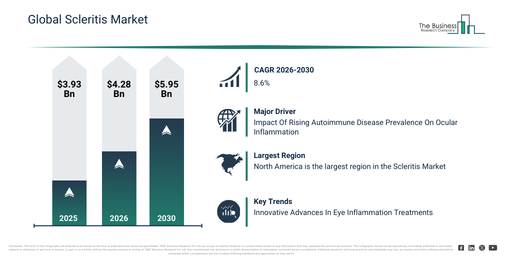
    The scleritis market size has shown significant expansion in recent years. It is projected to increase from $3.93 billion in 2025 to $4.28 billion in 2026, advancing at a compound annual growth rate (CAGR) of 8.9%. This historical growth can be ascribed to an increase in the prevalence of autoimmune disorders, the application of corticosteroids in ocular therapy, the accessibility of immunosuppressive agents, an expanding number of ophthalmology clinics, and a greater awareness of ocular inflammatory diseases.

    The scleritis market size is anticipated to undergo significant expansion over the forthcoming years, with projections indicating it will reach $5.95 billion by 2030, demonstrating a compound annual growth rate (CAGR) of 8.6%. This expected growth within the forecast period is attributable to several factors, including the availability of biologic drugs in the pipeline for ocular inflammation, the increasing adoption of teleophthalmology platforms, advancements in targeted anti-inflammatory therapies, improved access to sophisticated imaging techniques, and the wider reach of rare eye disease awareness programs. Prominent trends throughout this period encompass the broader application of biologic therapies for ocular inflammation, an uptick in the use of corticosteroids and immunosuppressive agents, the increasing embrace of combination therapy approaches, a heightened emphasis on early detection and diagnostic imaging, and the creation of innovative anti-inflammatory ophthalmic drugs.

    Access Your Free Sample Report For In-Depth Market Analysis:

    https://www.thebusinessresearchcompany.com/sample.aspx?id=21283&type=smp

    Which Major Drivers Are Influencing The Expansion Of The Scleritis Market?

    An increasing incidence of autoimmune conditions is anticipated to fuel expansion within the scleritis market. These diseases involve the body’s immune system erroneously targeting its own healthy cells and tissues, perceiving them as threats. The increase in autoimmune diseases is associated with genetic factors, environmental influences, shifts in lifestyle, and improved awareness, resulting in more accurate diagnoses. Autoimmune conditions contribute to scleritis by initiating an inflammatory immune reaction that incorrectly targets the scleral tissue, causing discomfort and redness. For instance, Public Health Scotland, a national organization based in Scotland, reported in August 2024 that the Scottish Multiple Sclerosis Register (SMSR) documented 455 newly diagnosed MS patients during 2023. Consequently, the growing occurrence of autoimmune diseases is propelling the expansion of the scleritis market.

    Which Segment Categories Are Included In The Scleritis Market Segment Analysis?

    The scleritis market covered in this report is segmented –

    1) By Type: Anterior Scleritis, Posterior Scleritis, Other Types

    2) By Treatment: Medication, Surgery, Other Treatment

    3) By Distribution Channel: Direct Tender, Hospital Pharmacy, Retail Pharmacy, Online Pharmacy, Other Distribution Channel

    4) By End-Users: Hospitals, Specialty Clinics, Home Healthcare, Other End-Users

    Subsegments:

    1) By Anterior Scleritis: Non-Necrotizing Anterior Scleritis, Necrotizing Anterior Scleritis

    2) By Posterior Scleritis: Diffuse Posterior Scleritis, Nodular Posterior Scleritis, Scleritis With Choroidal Involvement

    3) By Other Types: Chronic Scleritis, Recurrent Scleritis, Infectious Scleritis

    Which Trends Are Shaping The Scleritis Market?

    Major companies operating in the scleritis market are concentrating on creating sophisticated products, such as eye drops, to tackle underlying inflammation and offer effective, non-invasive treatment options for patients. Eye drops are liquid preparations made for direct application to the eyes to manage conditions including irritation, dryness, inflammation, or infections. For instance, in May 2023, Entod Pharmaceuticals, an India-based pharmaceutical company, introduced CYCLOTEARS eye drops across India and globally. This novel therapy for inflammatory eye disease utilized proprietary SEDDS technology. This product improves drug delivery and effectiveness, providing a pioneering method to address inflammation in DED. This innovation marks a notable advancement in eye inflammatory treatment, ocular myositis, and scleritis.

    Who Are The Active Companies Shaping The Scleritis Market?

    Major companies operating in the scleritis market are Pfizer Inc, Johnson And Johnson, F Hoffmann La Roche Ltd, Bayer AG, Novartis AG, Teva Pharmaceuticals USA Inc, Baxter International Inc, Boehringer Ingelheim, Regeneron Pharmaceuticals Inc, Fresenius Kabi USA LLC, Sun Pharmaceutical Industries Ltd, Perrigo Company, Horizon Therapeutics plc, Aurobindo Pharma Ltd, Hikma Pharmaceuticals PLC, Amneal Pharmaceuticals LLC, Mallinckrodt Pharmaceuticals, Alvogen, Accord Healthcare, West Ward Pharmaceuticals, Jubilant Cadista Pharmaceuticals Inc, Mylan Pharmaceuticals Inc, Zydus Pharmaceuticals Inc

    Get The Full Scleritis Market Report:

    https://www.thebusinessresearchcompany.com/report/scleritis-global-market-report

    Which Region Dominates The Scleritis Market By Market Share?

    North America was the largest region in the scleritis market in 2025. Asia-Pacific is expected to be the fastest-growing region in the forecast period. The regions covered in the scleritis market report are Asia-Pacific, South East Asia, Western Europe, Eastern Europe, North America, South America, Middle East, Africa.

    Request A Customized Scleritis Market Report For Competitive Insights:

    https://www.thebusinessresearchcompany.com/report/scleritis-global-market-report

    Browse Through More Reports Similar to the Global Scleritis Market 2026, By The Business Research Company

    Dermatitis Drugs Market Report 2026

    https://www.thebusinessresearchcompany.com/report/dermatitis-drugs-global-market-report

    Knee Bursitis Market Report

    https://www.thebusinessresearchcompany.com/report/knee-bursitis-global-market-report

    Bacterial Conjunctivitis Market Report

    https://www.thebusinessresearchcompany.com/report/bacterial-conjunctivitis-global-market-report

    Get in touch with us:

    The Business Research Company: https://www.thebusinessresearchcompany.com/

    Americas +1 310-496-7795

    Asia +44 7882 955267 & +91 8897263534

    Europe +44 7882 955267

    Email us at info@tbrc.info

    Follow us on:

    LinkedIn: https://in.linkedin.com/company/the-business-research-company

    YouTube: https://www.youtube.com/channel/UC24_fI0rV8cR5DxlCpgmyFQ

    Global Market Model: https://www.thebusinessresearchcompany.com/global-market-model
  • Protein Chip Market Growth Trends and Forecast Through 2030

    Protein Chip Market Growth Trends and Forecast Through 2030

    The Business Research Company’s 2026 market reports feature enhanced tools like market attractiveness analysis, TAM assessment, and company scoring matrices, along with interactive dashboards, deeper supply chain insights, and startup coverage strengthening the depth, usability, and strategic value of insights.

    What Level Of Market Value Growth Is Predicted For The Protein Chip Market From 2026 To 2030?

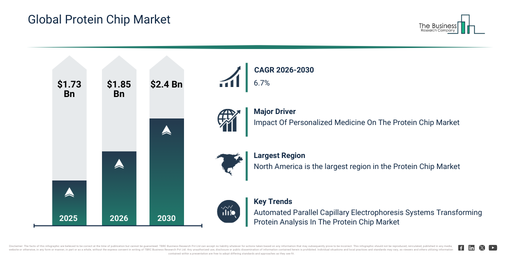
    The protein chip market has experienced substantial growth in recent years. It is forecast to increase from $1.73 billion in 2025 to $1.85 billion in 2026, achieving a compound annual growth rate (CAGR) of 7.4%. The historical expansion of this market can be attributed to several factors: an increase in proteomics research programs, a rising demand for high-throughput analytical tools, the expansion of academic and clinical research laboratories, growing adoption of microarray technologies, and the availability of advanced surface chemistry techniques.

    The protein chip market size is anticipated to experience robust expansion in the upcoming years. It is projected to reach $2.4 billion by 2030, progressing at a compound annual growth rate (CAGR) of 6.7%. This growth during the forecast period is propelled by the expanding applications of protein chips in diagnostics, increasing investments in precision medicine platforms, the wider adoption of point-of-care testing technologies, the growing incorporation of AI-based data analysis, and the rising demand for scalable proteomic tools. Significant trends expected in the forecast period include a greater embrace of high-density protein microarrays, the increasing use of lab-on-chip protein platforms, the growing integration of automated detection systems, the expansion of multiplexed protein interaction analysis, and an elevated focus on miniaturized diagnostic chips.

    Access Your Free Sample Report For In-Depth Market Analysis:

    https://www.thebusinessresearchcompany.com/sample.aspx?id=16163&type=smp

    Which Strong Drivers Are Impacting The Protein Chip Market Growth?

    The escalating need for personalized medicine is projected to stimulate the expansion of the protein chip market. Personalized medicine represents a healthcare philosophy dedicated to customizing medical interventions and treatments to align with the distinct requirements of each patient. Its emergence stems from the swift progression of ‘omics’ technology, enhanced data integration, genetic advancements, and an increasing recognition of the value of patient-specific medications and preventative strategies. Protein chips offer an instrumental platform for advancing personalized medicine by enabling comprehensive proteomic analysis, assisting in biomarker identification, refining drug development and comprehension of responses, and aiding in the formulation of tailored therapeutic approaches. For instance, in February 2024, according to the Personalised Medicine Coalition, a US-based hospital and health care organization, in 2023, the FDA approved 16 new personalized treatments for rare disease patients, up from six in 2022. Consequently, the rising demand for personalized medicine fuels the growth of the protein chip market.

    Which Segment Classifications Are Used In The Protein Chip Market Segment Analysis?

    The protein chip market covered in this report is segmented –

    1) By Product: Lab-On-Chip, Integrated System, Arrays, Microarrays System

    2) By Technology: Analytical Microarrays, Functional Protein Microarrays, Reverse Phase Protein Microarrays

    3) By Application: Diagnostics, Proteomics, Antibody Characterization

    4) By End User: Hospitals And Clinics, Academic And Research Institutes, Diagnostic Laboratories, Pharmaceutical And Biotechnology Companies

    Subsegments:

    1) By Lab-On-Chip: Diagnostic Lab-On-Chip, Point-Of-Care Lab-On-Chip, Drug Discovery Lab-On-Chip, Clinical Lab-On-Chip

    2) By Integrated System: Automated Integrated Systems, Benchtop Integrated Systems, Portable Integrated Systems, Multi-Functional Integrated Systems

    3) By Arrays: Protein Arrays, Peptide Arrays, Antibody Arrays, Antigen Arrays

    4) By Microarrays System: Dna Microarrays, Rna Microarrays, Protein Microarrays, Antibody Microarrays, Cell-Based Microarrays

    Which Trends Are Contributing To Changes In The Protein Chip Market?

    Leading companies in the protein chip market are introducing novel products, such as automated parallel capillary electrophoresis systems, to bolster their competitive edge. These automated parallel capillary electrophoresis systems are sophisticated analytical instruments designed for the high-throughput separation and analysis of biomolecules, specifically proteins and nucleic acids. For example, in January 2024, Agilent Technologies Inc., a US-based creator of advanced analytical, research, and diagnostic instruments for laboratories, unveiled its new ProteoAnalyzer system, an automated parallel capillary electrophoresis device intended for protein analysis. Its distinctive attributes encompass advanced algorithms for accurate protein identification and characterization, empowering researchers to investigate complex biological systems with unparalleled precision and efficacy. The system also presents enhanced data visualization tools, simplifying the intuitive interpretation of findings and accelerating understanding of cellular processes. Moreover, it provides effortless integration with current workflows, ensuring smooth implementation and maximizing productivity in proteomics laboratories.

    Which Firms Are Contributing To The Protein Chip Market Ecosystem?

    Major companies operating in the protein chip market are Thermo Fisher Scientific Inc, GE Healthcare LLC, Roche Diagnostics GmbH, Agilent Technologies Inc, Sigma Aldrich Corporation Merck, PerkinElmer Inc, Shimadzu Corporation, Bio Rad Laboratories Inc, Bruker Corporation, Surmodics Inc, OriGene Technologies Inc, RayBiotech Inc, Sengenics Corporation Pte Ltd, Gyros Protein Technologies AB, Innova Biosciences Limited, Innopsys SA, CDI Laboratories Inc, Microarrays Inc, Full Moon BioSystems Inc, Arrayit Corporation

    Get The Full Protein Chip Market Report:

    https://www.thebusinessresearchcompany.com/report/protein-chip-global-market-report

    Where Is The Protein Chip Market Primarily Concentrated By Region?

    North America was the largest region in the global protein chip market in 2025. Asia-Pacific is expected to be the fastest-growing region in the forecast period. The regions covered in the protein chip market report are Asia-Pacific, South East Asia, Western Europe, Eastern Europe, North America, South America, Middle East, Africa.

    Request A Customized Protein Chip Market Report For Competitive Insights:

    https://www.thebusinessresearchcompany.com/report/protein-chip-global-market-report

    Browse Through More Reports Similar to the Global Protein Chip Market 2026, By The Business Research Company

    Protein Analyzer Market Report 2026

    https://www.thebusinessresearchcompany.com/report/protein-analyzer-global-market-report

    Protein Detection And Quantification Market Report

    https://www.thebusinessresearchcompany.com/report/protein-detection-and-quantification-global-market-report

    Research Grade Proteins Market Report

    https://www.thebusinessresearchcompany.com/report/research-grade-proteins-global-market-report

    Get in touch with us:

    The Business Research Company: https://www.thebusinessresearchcompany.com/

    Americas +1 310-496-7795

    Asia +44 7882 955267 & +91 8897263534

    Europe +44 7882 955267

    Email us at info@tbrc.info

    Follow us on:

    LinkedIn: https://in.linkedin.com/company/the-business-research-company

    YouTube: https://www.youtube.com/channel/UC24_fI0rV8cR5DxlCpgmyFQ

    Global Market Model: https://www.thebusinessresearchcompany.com/global-market-model
  • Preterm Birth Prevention and Management Market Forecast to 2030 With Key Insights

    Preterm Birth Prevention and Management Market Forecast to 2030 With Key Insights

    The Business Research Company’s 2026 market reports feature enhanced tools like market attractiveness analysis, TAM assessment, and company scoring matrices, along with interactive dashboards, deeper supply chain insights, and startup coverage strengthening the depth, usability, and strategic value of insights.

    How Is The Market Size Of The Preterm Birth Prevention And Management Market Expected To Change From 2026 To 2030?

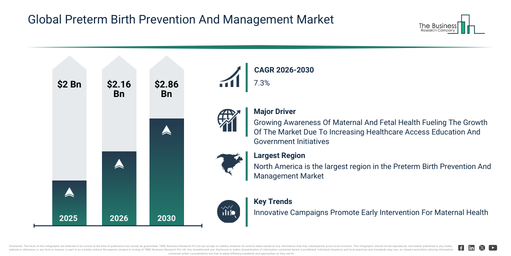
    The preterm birth prevention and management market size has experienced substantial growth in recent years. It is anticipated to expand from $2 billion in 2025 to $2.16 billion in 2026, exhibiting a compound annual growth rate (CAGR) of 7.7%. Historically, this growth can be ascribed to heightened awareness of maternal health risks, broadened access to prenatal care, advancements in diagnostic capabilities, increasing adoption of pharmaceutical interventions, and more intensive monitoring of high-risk pregnancies.

    The preterm birth prevention and management market size is anticipated to experience robust growth in the upcoming years. It is projected to expand to $2.86 billion by 2030, demonstrating a compound annual growth rate (CAGR) of 7.3%. This projected growth throughout the forecast period stems from the increasing prevalence of high-risk pregnancies, rising investments in maternal healthcare infrastructure, the growing adoption of digital prenatal monitoring, the expansion of telemedicine within obstetric care, and an increasing focus on neonatal outcome optimization. Noteworthy trends for the forecast period involve the increasing adoption of early risk screening programs, a rising use of advanced prenatal monitoring technologies, a growing focus on personalized pregnancy care, the expansion of preventive therapeutic interventions, and an enhanced integration of multidisciplinary care models.

    Access Your Free Sample Report For In-Depth Market Analysis:

    https://www.thebusinessresearchcompany.com/sample.aspx?id=23482&type=smp

    What Key Drivers Are Fueling The Growth Of The Preterm Birth Prevention And Management Market?

    The increasing consciousness regarding maternal and fetal well-being is projected to drive the expansion of the preterm birth prevention and management market in the future. Maternal and fetal health pertains to the overall condition of expectant mothers and their developing infants, aiming for secure pregnancies and positive birth outcomes. This awareness is on the rise, primarily due to educational initiatives and public health campaigns that actively highlight the significance of prenatal care, adequate nutrition, immunizations, and routine check-ups for improved pregnancy results. Preventing and managing preterm births are crucial for maternal and fetal health, as these measures help mitigate complications like respiratory problems and developmental delays in newborns, while also diminishing maternal health hazards linked to early delivery. For instance, in July 2024, data from the Welsh Government (Llywodraeth Cymru), a UK-based governing body, indicated that in 2023, the proportion of pregnant women with a BMI of 30 or greater at their initial appointment rose to 32%, representing a 0.8 percentage point increase from the preceding year. Consequently, the heightened awareness of maternal and fetal health is fueling the growth of the preterm birth prevention and management market.

    How Are Different Segments Classified In The Preterm Birth Prevention And Management Market Segment Analysis?

    The preterm birth prevention and management market covered in this report is segmented –

    1) By Product Type: Pharmaceuticals, Medical Devices, Therapies

    2) By Cause-Specific: Multiple Pregnancy, Infection And Chronic Conditions, Structural Abnormalities, Maternal Lifestyle Factors

    3) By Diagnosis Method: Ultrasound Imaging, Biochemical Tests, Physical Examination

    4) By End-User: Hospitals, Clinics, Homecare Settings, Diagnostic Laboratories

    Subsegments:

    1) By Pharmaceuticals: Tocolytics, Corticosteroids, Progesterone Therapy, Magnesium Sulfate

    2) By Medical Devices: Cervical Cerclage Devices, Fetal Monitoring Devices, Uterine Contraction Monitors

    3) By Therapies: Bed Rest Therapy, Nutritional Therapy, Cervical Pessary Therapy

    What Trends Are Influencing The Preterm Birth Prevention And Management Market?

    Leading companies in the preterm birth prevention and management market are developing initiatives, such as campaigns against preeclampsia and preterm birth, to enhance awareness and improve care for preterm infants. A campaign focused on combating preeclampsia and preterm birth prioritizes raising public understanding, fostering research, refining healthcare interventions, and advocating for policies that boost maternal and neonatal health outcomes. For example, in May 2024, March of Dimes Inc., a US-based nonprofit organization, launched the Low Dose, Big Benefits campaign, a long-term initiative created to reduce the risks of preeclampsia and preterm birth through the application of low-dose aspirin. Preeclampsia, a severe pregnancy complication impacting 1 in 25 pregnancies, can be lessened with low-dose aspirin, potentially lowering the risk by up to 15% for preeclampsia and 20% for preterm birth in high-risk pregnancies. The campaign aims to resolve a notable gap in knowledge, as many families, particularly Black families, are currently unfamiliar with preeclampsia.

    Who Are The Companies Driving Activity In The Preterm Birth Prevention And Management Market?

    Major companies operating in the preterm birth prevention and management market are Philips Healthcare, GE Healthcare Technologies Inc, Hologic Inc, QIAGEN NV, Ferring Pharmaceuticals, AMAG Pharmaceuticals, Natus Medical Incorporated, Sera Prognostics, Progenity Inc, CooperSurgical Inc, Medtronic plc, Abbott Laboratories, Siemens Healthineers AG, Roche Diagnostics International AG, Thermo Fisher Scientific Inc, Danaher Corporation, BD Becton Dickinson And Company, Olympus Corporation, Fujifilm Holdings Corporation, Cook Medical LLC, Karl Storz SE And Co KG, Baxter International Inc

    Get The Full Preterm Birth Prevention And Management Market Report:

    https://www.thebusinessresearchcompany.com/report/preterm-birth-prevention-and-management-global-market-report

    Which Region Represents The Largest Share Of The Preterm Birth Prevention And Management Market?

    North America was the largest region in the preterm birth prevention and management market in 2025. Asia-Pacific is expected to be the fastest-growing region in the forecast period. The regions covered in the preterm birth prevention and management market report are Asia-Pacific, South East Asia, Western Europe, Eastern Europe, North America, South America, Middle East, Africa.

    Request A Customized Preterm Birth Prevention And Management Market Report For Competitive Insights:

    https://www.thebusinessresearchcompany.com/report/preterm-birth-prevention-and-management-global-market-report

    Browse Through More Reports Similar to the Global Preterm Birth Prevention And Management Market 2026, By The Business Research Company

    Pressure Ulcer Detection Device Market Report 2026

    https://www.thebusinessresearchcompany.com/report/pressure-ulcer-detection-device-global-market-report

    Gastric Ulcers Market Report

    https://www.thebusinessresearchcompany.com/report/gastric-ulcers-global-market-report

    Duodenal Ulcer Treatment Market Report

    https://www.thebusinessresearchcompany.com/report/duodenal-ulcer-treatment-global-market-report

    Get in touch with us:

    The Business Research Company: https://www.thebusinessresearchcompany.com/

    Americas +1 310-496-7795

    Asia +44 7882 955267 & +91 8897263534

    Europe +44 7882 955267

    Email us at info@tbrc.info

    Follow us on:

    LinkedIn: https://in.linkedin.com/company/the-business-research-company

    YouTube: https://www.youtube.com/channel/UC24_fI0rV8cR5DxlCpgmyFQ

    Global Market Model: https://www.thebusinessresearchcompany.com/global-market-model
  • Protein Assays Market Insights Covering Drivers, Trends, and Opportunities

    Protein Assays Market Insights Covering Drivers, Trends, and Opportunities

    The Business Research Company’s 2026 market reports feature enhanced tools like market attractiveness analysis, TAM assessment, and company scoring matrices, along with interactive dashboards, deeper supply chain insights, and startup coverage strengthening the depth, usability, and strategic value of insights.

    How Will The Market Value Of The Protein Assays Market Progress Between 2026 And 2030?

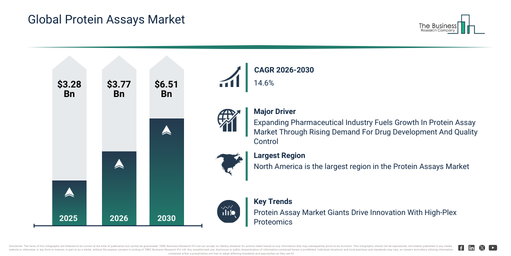
    The protein assays market size has experienced substantial growth in recent years. Its expansion is projected to be from $3.28 billion in 2025 to $3.77 billion in 2026, achieving a compound annual growth rate (CAGR) of 14.9%. The growth witnessed historically is primarily due to the expansion of biomedical research activities, increasing use of proteins in drug development, rising adoption of laboratory automation, growth of clinical diagnostics testing, and the availability of standardized protein reagents.

    The protein assays market is anticipated to undergo significant growth in the coming years. It is expected to reach $6.51 billion by 2030, growing at a compound annual growth rate (CAGR) of 14.6%. This expansion during the forecast period can be attributed to an increased emphasis on personalized medicine research, a rising need for advanced proteomics tools, the broadening of pharmaceutical R&D pipelines, the growing adoption of automated laboratory workflows, and increased investments in life sciences research infrastructure. Prominent trends observed during this period include a wider embrace of high-sensitivity assay kits, an increasing use of automated protein quantification instruments, a growing demand for multiplex protein analysis, the expansion of high-throughput screening applications, and an enhanced focus on the accuracy and reproducibility of assays.

    Access Your Free Sample Report For In-Depth Market Analysis:

    https://www.thebusinessresearchcompany.com/sample.aspx?id=9173&type=smp

    What Key Factors Are Shaping The Protein Assays Market Landscape?

    The protein assay market is expected to experience growth, driven by the expanding pharmaceutical industry. This sector is dedicated to the research, development, production, and distribution of medicines for the prevention, diagnosis, and treatment of diseases. Its expansion stems from various factors, including increasing global health requirements, greater healthcare expenditures, and a rising need for preventive care. Protein assays are vital for the pharmaceutical industry, as they facilitate precise measurement of protein concentration and activity, which is crucial for drug discovery, development, and quality assurance. For example, data from the European Federation of Pharmaceutical Industries and Associations (EFPIA), a Belgium-based trade association for the European pharmaceutical industry, indicated that total pharmaceutical production in Europe reached €390,000 million ($422,803 million) in 2023, marking an increase from €363,300 million ($393,857 million) in 2022. Consequently, the expansion of the pharmaceutical industry is stimulating the protein assay market’s development.

    How Is The Protein Assays Market Organized By Segment Classification?

    The protein assays market covered in this report is segmented –

    1) By Product Type: Reagents And Kits, Instruments

    2) By Technology Type: Absorbance Based Protein Assays, Colorimetric Protein Assays, Fluorescence Based Protein Assays

    3) By End User: Pharmaceutical Industry, Biotechnology Industry, Clinical Laboratories, Hospitals, Academic Research Institutes

    Subsegments:

    1) By Reagents And Kits: Colorimetric Assay Kits, Fluorescent Assay Kits, Luminescent Assay Kits, Other Assay Kits

    2) By Instruments: Spectrophotometers, Microplate Readers, Other Analytical Instruments

    What Market Trends Are Affecting The Protein Assays Market?

    Leading companies in the protein assay market are directing their efforts towards creating innovative solutions, such as high-plex proteomics platforms. A high-plex proteomics platform refers to a proteomic technology or system designed to analyze a large quantity of proteins concurrently in a single experiment. For instance, in November 2023, SomaLogic Inc., a US-based proteomics technology company, launched the ‘SomaScan 11K Platform’. The platform delivers 11,000 total protein measurements and provides researchers a notable advantage in discovering biomarkers and identifying potential drug targets for translational medicine. The integration of 3,500 proteins into the 11K assay is anticipated to uncover new biomarkers that were previously undetectable. This improvement has the capacity to contribute to the creation of diagnostics with increased accuracy.

    Who Are The Industry Participants Involved In The Protein Assays Market?

    Major companies operating in the protein assays market are F Hoffmann La Roche AG, Thermo Fisher Scientific Inc, Roche Diagnostics International AG, Danaher Corporation, Merck KGaA, Siemens Healthineers AG, R And D Systems Inc, Lonza Group AG, PerkinElmer Inc, Bio Rad Laboratories Inc, Takara Bio Inc, Qiagen NV, Promega Corporation, Abcam plc, BioVision Inc, Cayman Chemical Company, Enzo Life Sciences Inc, Novus Biologicals LLC, Abnova Corporation, Elabscience Biotechnology Co Ltd, Geno Technology Inc, Cytoskeleton Inc

    Get The Full Protein Assays Market Report:

    https://www.thebusinessresearchcompany.com/report/protein-assays-global-market-report

    Which Region Has The Greatest Market Share In The Protein Assays Market?

    North America was the largest region in the protein assays market in 2025. Asia-Pacific is expected to be the fastest-growing region in the global protein assays market report during the forecast period. The regions covered in the protein assays market report are Asia-Pacific, South East Asia, Western Europe, Eastern Europe, North America, South America, Middle East, Africa.

    Request A Customized Protein Assays Market Report For Competitive Insights:

    https://www.thebusinessresearchcompany.com/report/protein-assays-global-market-report

    Browse Through More Reports Similar to the Global Protein Assays Market 2026, By The Business Research Company

    Prostate Cancer Diagnostics Market Report 2026

    https://www.thebusinessresearchcompany.com/report/prostate-cancer-diagnostics-global-market-report

    Prostate Cancer Nuclear Medicine Diagnostics Market Report

    https://www.thebusinessresearchcompany.com/report/prostate-cancer-nuclear-medicine-diagnostics-global-market-report

    Prostate Cancer Drugs Market Report

    https://www.thebusinessresearchcompany.com/report/prostate-cancer-drugs-global-market-report

    Get in touch with us:

    The Business Research Company: https://www.thebusinessresearchcompany.com/

    Americas +1 310-496-7795

    Asia +44 7882 955267 & +91 8897263534

    Europe +44 7882 955267

    Email us at info@tbrc.info

    Follow us on:

    LinkedIn: https://in.linkedin.com/company/the-business-research-company

    YouTube: https://www.youtube.com/channel/UC24_fI0rV8cR5DxlCpgmyFQ

    Global Market Model: https://www.thebusinessresearchcompany.com/global-market-model
  • Sciatica treatment market forecast with demand and growth insights

    Sciatica treatment market forecast with demand and growth insights

    The Business Research Company’s 2026 market reports feature enhanced tools like market attractiveness analysis, TAM assessment, and company scoring matrices, along with interactive dashboards, deeper supply chain insights, and startup coverage strengthening the depth, usability, and strategic value of insights.

    How Is The Market Size Of The Sciatica Treatment Market Expected To Scale Between 2026 And 2030?

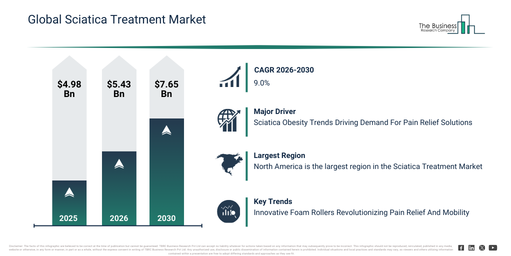
    The sciatica treatment market has seen substantial growth recently. It is projected to expand from $4.98 billion in 2025 to $5.43 billion in 2026, achieving a compound annual growth rate (CAGR) of 9.1%. This historic expansion can be linked to factors such as the increasing occurrence of sciatica, the development of conventional pain management therapies, the proliferation of orthopedic and rehabilitation centers, the availability of spinal surgery and injection procedures, and a rise in healthcare expenditure across developed regions.

    The market for sciatica treatment is anticipated to experience robust expansion in the coming years. This market is projected to reach $7.65 billion by 2030, exhibiting a compound annual growth rate (CAGR) of 9.0%. Factors contributing to this growth during the forecast period include the development of minimally invasive spinal devices, the increasing uptake of tele-rehabilitation and digital therapy platforms, enhanced access to sophisticated imaging and diagnostic tools, the proliferation of non-opioid pain management options, and the broader implementation of sciatica treatment awareness initiatives in developing economies. Key trends anticipated over the forecast horizon encompass a rising inclination towards non-opioid pain management treatments, greater engagement in physical therapy and rehabilitation programs, an increase in minimally invasive spinal surgery operations, a growing application of epidural injections and nerve block procedures, and the creation of innovative pain relief devices and orthopedic implants.

    Access Your Free Sample Report For In-Depth Market Analysis:

    https://www.thebusinessresearchcompany.com/sample.aspx?id=19179&type=smp

    What Key Drivers Are Fueling The Growth Of The Sciatica Treatment Market?

    The rising rates of obesity are anticipated to fuel the expansion of the sciatica treatment market moving forward. Obesity is identified as a medical condition marked by excessive accumulation of body fat, which introduces health concerns such as heart disease, diabetes, and hypertension. The surge in obesity rates is primarily influenced by the widespread availability of processed, high-calorie foods, combined with increasingly sedentary lifestyles resulting from technological advancements and urbanization. Sciatica treatment provides benefits to individuals with obesity by alleviating nerve pain and enhancing mobility through physical therapy and weight management, while also reducing the strain that excess body weight places on the spine. For instance, in May 2025, data from the Office for Health Improvement and Disparities (OHID), a government organization based in the UK, indicated that in 2023–2024, an estimated 64.5% of adults (18+) in England were either overweight or living with obesity, marking a slight increase from 64.0% in the preceding period (2022–2023). Consequently, the growing prevalence of obesity is a key driver for the growth of the sciatica treatment market.

    How Is The Sciatica Treatment Market Broken Down By Segment Categories?

    The sciatica treatment market covered in this report is segmented –

    1) By Type: Acute Sciatica, Chronic Sciatica, Other Types

    2) By Treatment Type: Prescription Drugs, Steroids, Non-Steroidal Anti-Inflammatory Drugs, Antidepressants, Physical Therapy, Spinal Injections, Surgery, Alternative Therapies, Other Treatment Types

    3) By Distribution Channel: Hospitals And Associated Pharmacies, Retail Pharmacies, Online Pharmacies

    Subsegments:

    1) By Acute Sciatica: Physical Therapy, Medications, Chiropractic Care, Epidural Steroid Injections, Heat Or Ice Therapy, Lifestyle Modifications

    2) By Chronic Sciatica: Long-term Physical Therapy, Prescription Medications, Surgery, Nerve Block Injections, Alternative Therapies, Pain Management Programs

    3) By Other Types: Sciatica Due To Pregnancy, Sciatica Due To Herniated Discs, Sacroiliac Joint Dysfunction, Spondylolisthesis-Related Sciatica, Post-surgical Sciatica Treatment

    What Trends Are Influencing The Sciatica Treatment Market?

    Leading companies in the sciatica treatment market are concentrating on developing novel products, such as advanced foam rollers, to improve pain relief and patient mobility. These sophisticated foam rollers for easing sciatica discomfort are specialized tools for self-myofascial release, designed to address tight muscles and boost blood circulation around the lower back, hips, and legs. For example, in July 2024, Rolex Recovery, a US-based provider of innovative recovery tools, introduced an advanced foam rolling solution specifically engineered to alleviate sciatica pain. This product boasts a unique configuration that targets the sciatic nerve and adjacent muscles, thereby facilitating self-myofascial release to decrease inflammation and enhance blood flow. The roller’s distinct design enables users to apply accurate pressure to impacted regions. This precise approach aids in diminishing inflammation, augmenting blood flow, and ultimately reducing pain. Its ergonomic construction ensures effortless integration into daily routines, whether at home, in the gym, or during travel.

    Which Players Are Present In The Sciatica Treatment Market Space?

    Major companies operating in the sciatica treatment market are HCA Healthcare, Merck And Co Inc, Bayer AG, Abbott Laboratories, Novartis AG, Medtronic plc, Stryker Corporation, Mayo Clinic, Boston Scientific, Johns Hopkins Medicine, DJO Global Inc, Rothman Orthopaedic Institute, Axogen Inc, SCILEX Pharmaceuticals Inc, Aurobindo Pharma, Sinfonia Biotherapeutics, QI Spine Clinic, OrthoVirginia Inc, ReLiva Physiotherapy And Rehab, SpineThera Inc, Pfizer Inc, GlaxoSmithKline plc, Eli Lilly And Company, Teva Pharmaceutical Industries Ltd, Sun Pharmaceutical Industries Ltd, Dr Reddys Laboratories Ltd

    Get The Full Sciatica Treatment Market Report:

    https://www.thebusinessresearchcompany.com/report/sciatica-treatment-global-market-report

    Which Region Is The Largest In The Sciatica Treatment Market?

    North America was the largest region in the sciatica treatment market in 2025. Asia-Pacific is expected to be the fastest-growing region in the forecast period. The regions covered in the sciatica treatment market report are Asia-Pacific, South East Asia, Western Europe, Eastern Europe, North America, South America, Middle East, Africa.

    Request A Customized Sciatica Treatment Market Report For Competitive Insights:

    https://www.thebusinessresearchcompany.com/report/sciatica-treatment-global-market-report

    Browse Through More Reports Similar to the Global Sciatica Treatment Market 2026, By The Business Research Company

    Muscle Pain Treatment Market Report 2026

    https://www.thebusinessresearchcompany.com/report/muscle-pain-treatment-global-market-report

    Spine Biologics Market Report

    https://www.thebusinessresearchcompany.com/report/spine-biologics-global-market-report

    Neuralgia Treatment Market Report

    https://www.thebusinessresearchcompany.com/report/neuralgia-treatment-global-market-report

    Get in touch with us:

    The Business Research Company: https://www.thebusinessresearchcompany.com/

    Americas +1 310-496-7795

    Asia +44 7882 955267 & +91 8897263534

    Europe +44 7882 955267

    Email us at info@tbrc.info

    Follow us on:

    LinkedIn: https://in.linkedin.com/company/the-business-research-company

    YouTube: https://www.youtube.com/channel/UC24_fI0rV8cR5DxlCpgmyFQ

    Global Market Model: https://www.thebusinessresearchcompany.com/global-market-model

  • Pressure Ulcers Treatment Market Outlook (2026–2030) Covering Growth Drivers and Industry Trends

    Pressure Ulcers Treatment Market Outlook (2026–2030) Covering Growth Drivers and Industry Trends

    The Business Research Company’s 2026 market reports feature enhanced tools like market attractiveness analysis, TAM assessment, and company scoring matrices, along with interactive dashboards, deeper supply chain insights, and startup coverage strengthening the depth, usability, and strategic value of insights.

    From Its 2026 Market Size, What Value Is The Pressure Ulcers Treatment Market Projected To Reach By 2030?

    The pressure ulcers treatment market size has shown strong growth over recent years. It is anticipated to expand from $5.66 billion in 2025 to $5.97 billion in 2026, achieving a compound annual growth rate (CAGR) of 5.6%. This historical growth can be attributed to factors such as an increased incidence of chronic wounds, the expansion of hospital-based wound care programs, rising surgical intervention rates, the growing availability of specialized wound care products, and improved clinician training in wound management.

    The pressure ulcers treatment market is projected to experience robust expansion in the coming years. This market is anticipated to reach $7.42 billion by 2030, exhibiting a compound annual growth rate (CAGR) of 5.6%. Factors contributing to this growth during the forecast period include a heightened demand for advanced regenerative therapies, the increasing embrace of home-based wound treatment options, the expansion of outpatient wound care centers, growing investments in biologic therapies, and a rising focus on patient-centric treatment models. Key trends expected within the forecast period encompass a growing uptake of advanced wound care therapies, increased utilization of negative pressure wound therapy devices, expanding integration of bioengineered skin substitutes, the development of personalized treatment protocols, and an elevated emphasis on infection control.

    Access Your Free Sample Report For In-Depth Market Analysis:

    https://www.thebusinessresearchcompany.com/sample.aspx?id=18440&type=smp

    Which Drivers Are Supporting The Pressure Ulcers Treatment Market Growth?

    The expanding diabetic population is anticipated to propel the pressure ulcers treatment market going forward. This demographic consists of individuals diagnosed with diabetes mellitus, a chronic health condition marked by elevated blood glucose levels. The growth in the diabetic population stems from widespread changes in lifestyle and dietary habits contributing to obesity and insulin resistance, both significant risk factors for diabetes. Diabetic individuals are more susceptible to developing pressure ulcers due to complications such as reduced sensation, impaired circulation, and slower wound healing, which in turn necessitates a higher demand for effective treatments and management strategies within the market. For instance, in December 2023, according to the International Diabetes Federation (IDF) Diabetes Atlas, a Belgium-based non-profit organization, one in nine persons (20–79 years old) 589 million have diabetes. By 2050, this figure is expected to increase to 853 million. Consequently, the growing diabetic population is driving the growth of the pressure ulcers treatment market.

    How Is The Pressure Ulcers Treatment Market Categorized Across Its Segment Groups?

    The pressure ulcers treatment market covered in this report is segmented –

    1) By Type: Wound Care Dressings, Wound Care Devices, Active Therapies, Other Types

    2) By Wound Type: Stage 1, Stage 2, Stage 3, Stage 4

    3) By End-User: Hospitals And Clinics, Community Healthcare Centers, Homecare, Other End-Users

    Subsegments:

    1) By Wound Care Dressings: Hydrocolloid Dressings, Foam Dressings, Alginate Dressings, Hydrogel Dressings, Composite Dressings, Transparent Film Dressings, Antimicrobial Dressings, Collagen Dressings

    2) By Wound Care Devices: Negative Pressure Wound Therapy (NPWT) Devices, Electrical Stimulation Therapy Devices, Pressure Relief Devices, Infrared Therapy Devices, Light Therapy Devices

    3) By Active Therapies: Hyperbaric Oxygen Therapy (HBOT), Electrical Stimulation Therapy (EST), Bioengineered Skin Substitutes, Platelet-Rich Plasma (PRP) Therapy, Growth Factor Therapies, Stem Cell Therapy

    4) By Other Types: Surgical Debridement Tools, Topical Skin Care Products, Nutritional Supplements

    Which Trends Are Expected To Impact The Pressure Ulcers Treatment Market?

    Leading companies within the pressure ulcers treatment market are concentrating on creating sophisticated wound care products, including biosynthetic cellulose dressings, to boost healing, lessen infection dangers, and enhance patient results in the care of chronic wounds. Biosynthetic cellulose dressings are innovative wound care solutions crafted from bioengineered cellulose, offering superior moisture retention, biocompatibility, and antimicrobial properties to promote faster healing and protect against infections in chronic wounds such as pressure ulcers. For instance, in June 2023, JeNaCell company, a Germany-based Evonik biotech company, introduced its wound dressing, epicite. This product is specifically designed and optimized for managing chronic wounds with low to moderate exudation, covering conditions such as venous leg ulcers, arterial leg ulcers, diabetic foot ulcers, pressure ulcers, and soft tissue injuries. Epicite balance comes in three sizes and will be supplied to hospitals and home care facilities. It consists of biosynthetic cellulose, a hydrophilic polymer crafted for cutting-edge medical device applications. The dressing delivers exceptional wound cleansing benefits and stimulates the healing process in wounds that are slow to heal.

    Which Firms Are Influencing Competition In The Pressure Ulcers Treatment Market?

    Major companies operating in the pressure ulcers treatment market are Cardinal Health, 3M Company, Medtronic plc, Stryker Corporation, Baxter International Inc, Medline Industries Inc, Smith & Nephew, Coloplast Corporation, B. Braun Medical Inc, Mölnlycke Health Care, Integra LifeSciences, Agiliti Health Inc, Arjo AB, Healogics Inc, EHOB Inc, Alimed Inc, Talley Group Ltd, Axio Biosolutions, Advancis Medical, Pegasus Healthcare, Lohmann & Rauscher

    Get The Full Pressure Ulcers Treatment Market Report:

    https://www.thebusinessresearchcompany.com/report/pressure-ulcers-treatment-global-market-report

    Which Geographic Region Dominates The Pressure Ulcers Treatment Market?

    North America was the largest region in the pressure ulcers treatment market in 2025. Asia-Pacific is expected to be the fastest-growing region in the forecast period. The regions covered in the pressure ulcers treatment market report are Asia-Pacific, South East Asia, Western Europe, Eastern Europe, North America, South America, Middle East, Africa.

    Request A Customized Pressure Ulcers Treatment Market Report For Competitive Insights:

    https://www.thebusinessresearchcompany.com/report/pressure-ulcers-treatment-global-market-report

    Browse Through More Reports Similar to the Global Pressure Ulcers Treatment Market 2026, By The Business Research Company

    Gastric Ulcers Market Report 2026

    https://www.thebusinessresearchcompany.com/report/gastric-ulcers-global-market-report

    Pressure Ulcer Detection Device Market Report

    https://www.thebusinessresearchcompany.com/report/pressure-ulcer-detection-device-global-market-report

    Peptic Ulcer Market Report

    https://www.thebusinessresearchcompany.com/report/peptic-ulcer-global-market-report

    Get in touch with us:

    The Business Research Company: https://www.thebusinessresearchcompany.com/

    Americas +1 310-496-7795

    Asia +44 7882 955267 & +91 8897263534

    Europe +44 7882 955267

    Email us at info@tbrc.info

    Follow us on:

    LinkedIn: https://in.linkedin.com/company/the-business-research-company

    YouTube: https://www.youtube.com/channel/UC24_fI0rV8cR5DxlCpgmyFQ

    Global Market Model: https://www.thebusinessresearchcompany.com/global-market-model