Category: Healthcare Services

  • Increasing demand for plant-based and alternative proteins is boosting growth in the protein extracts market

    Increasing demand for plant-based and alternative proteins is boosting growth in the protein extracts market

    The Business Research Company’s 2026 market reports feature enhanced tools like market attractiveness analysis, TAM assessment, and company scoring matrices, along with interactive dashboards, deeper supply chain insights, and startup coverage strengthening the depth, usability, and strategic value of insights.

    How Much Will The Market Value Of The Protein Extracts From Single Cell Protein And Other Conventional Sources Market Grow Between 2026 And 2030?

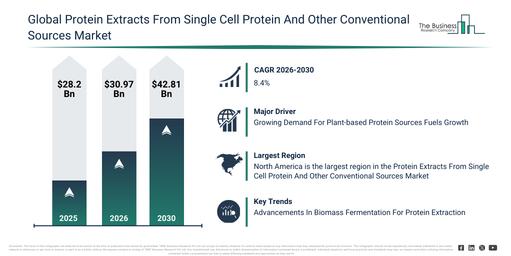
    The market size for protein extracts from single cell protein and other conventional sources has demonstrated strong growth in recent years. It is projected to increase from $28.2 billion in 2025 to $30.97 billion in 2026, achieving a compound annual growth rate (CAGR) of 9.8%. The expansion observed in the past can be attributed to the increasing demand for alternative protein sources, the expansion of animal nutrition industries, the rising use of protein supplements, the availability of large-scale fermentation infrastructure, and the growth of food and feed processing industries.

    The protein extracts from single cell protein and other conventional sources market size is poised for substantial expansion over the next few years. It is forecast to grow to $42.81 billion by 2030, demonstrating a compound annual growth rate (CAGR) of 8.4%. This anticipated growth is primarily fueled by a heightened emphasis on sustainable protein production, increasing investments in microbial fermentation technologies, the broadening of alternative protein applications, a rising demand for high-quality protein ingredients, and enhanced regulatory support for novel protein sources. Significant trends expected during this period include a wider embrace of single cell protein sources, a growing demand for plant-based protein extracts, an increased reliance on fermentation-based protein production, the development of high-purity protein extraction processes, and an intensified focus on functional protein applications.

    Access Your Free Sample Report For In-Depth Market Analysis:

    https://www.thebusinessresearchcompany.com/sample.aspx?id=15644&type=smp

    What Significant Factors Are Influencing The Protein Extracts From Single Cell Protein And Other Conventional Sources Market Expansion?

    The escalating consumer preference for plant-derived protein sources is projected to stimulate the expansion of protein extracts sourced from single-cell proteins and other conventional options moving forward. These plant-based proteins encompass foods originating from protein-rich plants, including legumes (such as beans and lentils), nuts, seeds, tofu, tempeh, and whole grains like quinoa and buckwheat. This heightened demand is propelled by a greater understanding of environmental sustainability, various health benefits, and ethical considerations pertaining to animal agriculture, prompting individuals to seek plant-based protein alternatives. Consequently, protein extracts derived from single-cell sources, alongside their conventional counterparts, are increasingly adopted as plant-based protein ingredients due to their significant nutritional density and sustainable attributes. These extracts offer a wide array of amino acid profiles, effectively meeting dietary needs while simultaneously supporting environmentally sound food production methodologies. For example, data from July 2025 by the Good Food Institute, a US-based non-profit organization, indicated that the retail plant-based food market in the United States reached approximately $8.1 billion in 2024. Therefore, the expanding requirement for plant-based protein sources is a primary driver for the growth of protein extracts derived from single-cell protein and other conventional sources.

    How Are Segments Identified Within The Protein Extracts From Single Cell Protein And Other Conventional Sources Market Segment Framework?

    The protein extracts from single cell protein and other conventional sources market covered in this report is segmented –

    1) By Source: Plant Protein Extract Sources, Microbial Sources – Single Cell Proteins, Microbial Sources – Direct Use

    2) By Feedstock: Organic, Conventional

    3) By Application: Biotechnology, Animal Feed, Agriculture And Fertilizers, Other Applications

    Subsegments:

    1) By Plant Protein Extract Sources: Soy Protein Extracts, Pea Protein Extracts, Rice Protein Extracts, Hemp Protein Extracts, Wheat Protein Extracts, Chickpea Protein Extracts, Potato Protein Extracts, Algae Protein Extracts, Other Plant-Based Protein Extracts

    2) By Microbial Sources – Single Cell Proteins: Yeast-Based Proteins, Bacterial Proteins, Fungal Proteins, Algal Proteins, Protozoan Proteins, Other Single-cell Proteins

    3) By Microbial Sources – Direct Use: Bacterial Protein Extracts, Fungal Protein Extracts, Algal Protein Extracts, Bacteriophage Proteins, Enzyme-Based Proteins

    What Trends Are Affecting The Direction Of The Protein Extracts From Single Cell Protein And Other Conventional Sources Market?

    Key companies engaged in the market for protein extracts derived from single-cell protein and other conventional sources are concentrating on developing quick production methods utilizing biomass fermentation technology to maintain their market presence. The swift production process for single-cell protein ingredients involves using biomass fermentation technology to cultivate microorganisms such as bacteria or yeast, facilitating the efficient conversion of organic matter into protein-rich biomass for various uses. For instance, in November 2023, MicroHarvest GmbH, a Germany-based biotechnology company, established a pilot plant in Lisbon to accelerate the commercialization of its single-cell protein ingredients. This facility allows the company to fine-tune its technology, create prototypes, and test production runs with the goal of launching its first commercial product in early 2024. It is capable of producing sustainable, high-quality protein ingredients with over 60% raw protein within 24 hours using biomass fermentation technology.

    Who Are The Companies Competing Within The Protein Extracts From Single Cell Protein And Other Conventional Sources Market?

    Major companies operating in the protein extracts from single cell protein and other conventional sources market are Cargill Incorporated, The Archer-Daniels-Midland Company, BASF SE, DuPont de Nemours Inc., International Flavors & Fragrances Inc., Koninklijke DSM N.V., Ajinomoto Co. Inc., Kerry Group plc, Ingredion Inc., Lonza Group AG, Glanbia plc, Symrise AG, Roquette Frères, Novozymes A/S, Ashland Global Holdings Inc., Bioproton Pty Ltd., CP Kelco ApS, Omega Protein Corporation, Axiom Foods, Fermentalg SA, Cellana LLC

    Get The Full Protein Extracts From Single Cell Protein And Other Conventional Sources Market Report:

    https://www.thebusinessresearchcompany.com/report/protein-extracts-from-single-cell-protein-and-other-conventional-sources-global-market-report

    Which Region Leads The Protein Extracts From Single Cell Protein And Other Conventional Sources Market In Overall Market Size?

    North America was the largest region in the protein extracts from single cell protein and other conventional sources market in 2025. The regions covered in the protein extracts from single cell protein and other conventional sources market report are Asia-Pacific, South East Asia, Western Europe, Eastern Europe, North America, South America, Middle East, Africa.

    Request A Customized Protein Extracts From Single Cell Protein And Other Conventional Sources Market Report For Competitive Insights:

    https://www.thebusinessresearchcompany.com/report/protein-extracts-from-single-cell-protein-and-other-conventional-sources-global-market-report

    Browse Through More Reports Similar to the Global Protein Extracts From Single Cell Protein And Other Conventional Sources Market 2026, By The Business Research Company

    Gene Expression Market Report 2026

    https://www.thebusinessresearchcompany.com/report/gene-expression-global-market-report

    Difficult To Express Proteins Market Report

    https://www.thebusinessresearchcompany.com/report/difficult-to-express-proteins-global-market-report

    Protein Engineering Market Report

    https://www.thebusinessresearchcompany.com/report/protein-engineering-global-market-report

    Get in touch with us:

    The Business Research Company: https://www.thebusinessresearchcompany.com/

    Americas +1 310-496-7795

    Asia +44 7882 955267 & +91 8897263534

    Europe +44 7882 955267

    Email us at info@tbrc.info

    Follow us on:

    LinkedIn: https://in.linkedin.com/company/the-business-research-company

    YouTube: https://www.youtube.com/channel/UC24_fI0rV8cR5DxlCpgmyFQ

    Global Market Model: https://www.thebusinessresearchcompany.com/global-market-model
  • Rising biologics demand and chronic disease burden are driving growth in the protein expression market

    Rising biologics demand and chronic disease burden are driving growth in the protein expression market

    The Business Research Company’s 2026 market reports feature enhanced tools like market attractiveness analysis, TAM assessment, and company scoring matrices, along with interactive dashboards, deeper supply chain insights, and startup coverage strengthening the depth, usability, and strategic value of insights.

    What Changes In Market Value Are Expected For The Protein Expression Market Over The 2026–2030 Period?

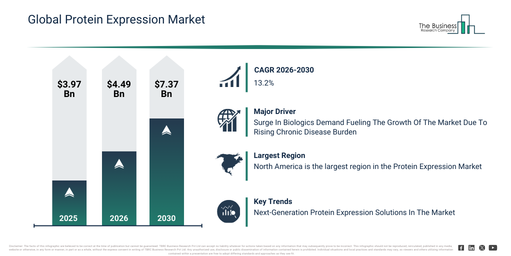
    The protein expression market size has seen rapid growth in recent years. It is expected to expand from $3.97 billion in 2025 to $4.49 billion in 2026, achieving a compound annual growth rate (CAGR) of 13.3%. The growth observed in the historic period can be attributed to the expansion of biologics development programs, increasing demand for recombinant proteins, growth of academic protein research, availability of diverse expression host systems, and rising use of contract research services.

    The protein expression market is projected to experience substantial expansion over the upcoming years, reaching a valuation of $7.37 billion by 2030, driven by a compound annual growth rate (CAGR) of 13.2%. This anticipated growth during the forecast period is primarily fueled by the escalating demand for therapeutic protein manufacturing, the increasing uptake of cell-free expression technologies, the broadening scope of industrial enzyme applications, heightened investment in synthetic biology, and a greater emphasis on expedited protein production platforms. Key developments expected in this period encompass the growing adoption of both mammalian and cell-free expression systems, the expanding utilization of recombinant protein production, an increasing need for scalable expression solutions, the growth of personalized protein expression services, and an intensified focus on optimizing expression yields.

    Access Your Free Sample Report For In-Depth Market Analysis:

    https://www.thebusinessresearchcompany.com/sample.aspx?id=2493&type=smp

    Which Important Drivers Are Guiding The Protein Expression Market Growth?

    The increasing need for biologics is projected to boost the expansion of the protein expression market in the future. Biologics are medicinal products sourced from living organisms or comprising elements like proteins, tissues, genes, cells, and blood derivatives, crafted to offer highly specific and potent treatment alternatives. The surge in demand for biologics stems from the rising occurrence of chronic and intricate diseases, which necessitates more tailored and advanced therapeutic approaches. Protein expression is vital in this scenario, as it facilitates the efficient creation of therapeutic proteins crucial for the development and production of biologic medications. For example, in January 2023, Cardinal Health Inc., a US-based healthcare firm, reported that as of January 2022, the US had 33 biosimilar products sanctioned by the FDA, with 21 accessible in the market. By 2023, the number of FDA-approved biosimilars had grown to 40, with 25 readily available for commercial use. Consequently, the escalating demand for biologics is a key factor propelling the growth of the protein expression market.

    What Are The Key Segment Divisions In The Protein Expression Market Segment Structure?

    The protein expression market covered in this report is segmented –

    1) By Protein Expression: Yeast Expression, Mammalian Expression, Algae Expression, Insect Expression, Bacterial Expression, Cell-free Expression

    2) By Product: Reagents, Competent Cells, Expression vectors, Services, Instruments

    3) By Application: Therapeutic, Industrial, Research

    4) By End Use: Pharmaceutical And Biotechnological Companies, Academic Research, Contract Research Organizations

    Subsegments:

    1) By Yeast Expression: Saccharomyces Cerevisiae, Pichia Pastoris, Kluyveromyces Lactis

    2) By Mammalian Expression: Chinese Hamster Ovary (CHO) Cells, Human Embryonic Kidney (HEK) Cells, Vero Cells

    3) By Algae Expression: Green Algae, Blue-green Algae (Cyanobacteria)

    4) By Insect Expression: Sf9 Cells, Hi5 Cells

    5) By Bacterial Expression: Escherichia Coli (E. coli), Bacillus Subtilis

    6) By Cell-free Expression: Wheat germ Extract, Rabbit Reticulocyte Lysate

    What Trends Are Influencing The Evolution Of The Protein Expression Market?

    Companies operating significantly in the protein expression market are increasingly prioritizing the introduction of advanced solutions, such as Visium CytAssist Gene and Protein Expression Assay, to maximize their revenue in the market. These next-generation solutions involve the application of sophisticated technologies and techniques to enhance the efficiency, accuracy, and speed of protein expression. For example, in May 2023, 10x Genomics Inc., a US-based biotechnology company, released the Visium CytAssist Gene and Protein Expression Assay, designed to allow researchers to examine the relative expression patterns of proteins within the human immune system. Thanks to Visium’s distinctive morphology-first approach, H&E (Hematoxylin and Eosin) staining can be carried out before any chemical treatments are applied to the tissue section. This facilitates three-dimensional spatial analysis on the precise same sample, while also enabling researchers to investigate the morphology of their tissue on the identical slice used for more profound spatial multiomic inquiry. By utilizing a sequencing-based readout, Visium CytAssist Gene and Protein Expression allows for the simultaneous collection of protein and complete transcriptome gene expression along with histological analysis in a single experiment from one tissue section.

    Which Organizations Are Engaged In The Protein Expression Market?

    Major companies operating in the protein expression market are Agilent Technologies Inc., Bio-Rad Laboratories Inc., Thermo Fisher Scientific Inc., New England Biolabs Inc., Promega Corporation, Qiagen NV, Takara Bio Inc., Merck KGaA, GenScript Biotech Corporation, Sigma-Aldrich Corporation, Lucigen Corporation, Lonza Group Ltd., Viva Biotech Holdings, ARTES Biotechnology GmbH, Addgene Inc., Profacgen, ProteoGenix Inc., Oxford Expression Technologies Ltd., Creative Biolabs Inc., Abnova Taiwan Corp., Accelagen Inc., Jena Bioscience GmbH

    Get The Full Protein Expression Market Report:

    https://www.thebusinessresearchcompany.com/report/protein-expression-global-market-report

    Which Region Is The Top Contributor To The Protein Expression Market By Share?

    North America was the largest region in the protein expression market in 2025. Western Europe was the second largest region in the protein expression market. The regions covered in the protein expression market report are Asia-Pacific, South East Asia, Western Europe, Eastern Europe, North America, South America, Middle East, Africa.

    Request A Customized Protein Expression Market Report For Competitive Insights:

    https://www.thebusinessresearchcompany.com/report/protein-expression-global-market-report

    Browse Through More Reports Similar to the Global Protein Expression Market 2026, By The Business Research Company

    Protein Hydrolysis Enzymes Market Report 2026

    https://www.thebusinessresearchcompany.com/report/protein-hydrolysis-enzymes-global-market-report

    Protein Assays Market Report

    https://www.thebusinessresearchcompany.com/report/protein-assays-global-market-report

    Protein Ingredients In Infant Nutrition Market Report

    https://www.thebusinessresearchcompany.com/report/protein-ingredients-in-infant-nutrition-global-market-report

    Get in touch with us:

    The Business Research Company: https://www.thebusinessresearchcompany.com/

    Americas +1 310-496-7795

    Asia +44 7882 955267 & +91 8897263534

    Europe +44 7882 955267

    Email us at info@tbrc.info

    Follow us on:

    LinkedIn: https://in.linkedin.com/company/the-business-research-company

    YouTube: https://www.youtube.com/channel/UC24_fI0rV8cR5DxlCpgmyFQ

    Global Market Model: https://www.thebusinessresearchcompany.com/global-market-model

  • Protein Electrophoresis Market Analysis Focusing on Growth Potential and Outlook

    Protein Electrophoresis Market Analysis Focusing on Growth Potential and Outlook

    The Business Research Company’s 2026 market reports feature enhanced tools like market attractiveness analysis, TAM assessment, and company scoring matrices, along with interactive dashboards, deeper supply chain insights, and startup coverage strengthening the depth, usability, and strategic value of insights.

    By 2030, What Market Size Is The Protein Electrophoresis Market Expected To Reach Based On Its 2026 Value?

    The protein electrophoresis market has experienced robust growth in recent years. It is projected to expand from $3.14 billion in 2025 to $3.35 billion in 2026, demonstrating a compound annual growth rate (CAGR) of 6.6%. The historical surge in this market can be attributed to several factors, including the expansion of clinical diagnostic laboratories, an increasing prevalence of protein-related disorders, a rise in academic proteomics research, the wider application of electrophoresis in molecular biology, and the availability of standardized electrophoresis reagents.

    The protein electrophoresis market is projected to experience substantial expansion in the coming years. This market is anticipated to reach $4.27 billion by 2030, demonstrating a compound annual growth rate (CAGR) of 6.3%. This anticipated growth over the forecast period can be primarily linked to several factors: a surging demand for personalized medicine diagnostics, the increasing incorporation of electrophoresis with digital imaging technologies, the broadening scope of hospital-based diagnostic tests, its expanding application in therapeutic monitoring, and greater investments in proteomics research. Key trends expected during this period involve a greater embrace of automated electrophoresis systems, the growing utilization of high-resolution gel technologies, an increasing need for clinical protein diagnostics, the wider application of multiplex protein analysis, and an intensified emphasis on both reproducibility and accuracy.

    Access Your Free Sample Report For In-Depth Market Analysis:

    https://www.thebusinessresearchcompany.com/sample.aspx?id=20604&type=smp

    What Major Factors Are Driving The Protein Electrophoresis Market Forward?

    The increasing incidence of cancer is anticipated to stimulate the expansion of the protein electrophoresis market in the future. This rise in cancer prevalence is influenced by elements such as aging populations, shifts in lifestyle, environmental exposures, and enhanced diagnostic approaches. Protein electrophoresis assists cancer patients by identifying atypical proteins in the blood, thereby aiding in the diagnosis, monitoring, and management of particular cancers. For instance, in April 2024, data from the International Agency for Research on Cancer (IARC), a France-based intergovernmental agency, and the American Cancer Society (ACS), a US-based non-profit organization for cancer prevention and awareness, revealed that approximately 20 million new cancer cases were recorded globally in 2022. The report further projected a 77% increase, expecting cases to reach 35 million annually by 2050. Lung cancer represented the most frequent diagnosis at 12.4% of cases, followed by breast cancer at 11.6% and colorectal cancer at 9.6%. Lung cancer was also the leading cause of death, accounting for 1.8 million fatalities (18.7%), trailed by colorectal cancer at 9.3% and liver cancer at 7.8%. Consequently, the escalating prevalence of cancer will drive the growth of the protein electrophoresis market.

    Which Segment Categories Are Included In The Protein Electrophoresis Market Segment Analysis?

    The protein electrophoresis market covered in this report is segmented –

    1) By Type: Serum Protein Electrophoresis, Immunostationary Electrophoresis, Isoenzyme Electrophoresis, Lipoprotein Electrophoresis, Hemoglobin Electrophoresis, Glycosylated Hemoglobin Electrophoresis, Non-Concentrated Urine Protein Electrophoresis, Cerebrospinal Fluid Electrophoresis

    2) By Technique: Sodium Dodecyl Sulfate Polyacrylamide Gel Electrophoresis (SDS-Page), Native Page, 1-D Page, 2-D Page

    3) By Gel: Agarose Gel Electrophoresis, Polyacrylamide Gel Electrophoresis

    4) By Application: Protein Analysis, Molecular Biology, Clinical Diagnostics

    5) By End-User: Hospitals And Diagnostics, Academic And Research Institutes, Pharmaceutical And Biotechnology Companies, Other End Users

    Subsegments:

    1) By Serum Protein Electrophoresis (SPEP): Albumin Electrophoresis, Globulin Electrophoresis (Alpha-1, Alpha-2, Beta, And Gamma), Monoclonal Gammopathy Identification, Serum-Free Light Chain Assay (sFLC), Paraprotein Detection, Protein Fractions Analysis

    2) By Immunostationary Electrophoresis (Immunoelectrophoresis): Immunofixation Electrophoresis (IFE), Rocket Immunoelectrophoresis, Counter Immunoelectrophoresis, Two-Dimensional Immunoelectrophoresis, Immunoblotting Techniques, Western Blotting

    3) By Isoenzyme Electrophoresis: Lactate Dehydrogenase (LDH) Isoenzyme Electrophoresis, Creatine Kinase (CK) Isoenzyme Electrophoresis, Alkaline Phosphatase Isoenzyme Electrophoresis, Amylase Isoenzyme Electrophoresis, Glutamate Dehydrogenase (GDH) Isoenzyme Electrophoresis, Malate Dehydrogenase (MDH) Isoenzyme Electrophoresis

    4) By Lipoprotein Electrophoresis: High-Density Lipoproteins (HDL), Low-Density Lipoproteins (LDL), Very Low-Density Lipoproteins (VLDL), Chylomicrons, Intermediate-Density Lipoproteins (IDL)

    5) By Hemoglobin Electrophoresis: Normal Hemoglobin (HbA, HbA2), Sickle Cell Hemoglobin (HbS), Hemoglobin C (HbC), Hemoglobin D (HbD), Thalassemia (HbF, HbH, Hb Bart’s), Hemoglobin E (HbE)

    6) By Glycosylated Hemoglobin Electrophoresis (HbA1c Electrophoresis): Glycated Hemoglobin A1c (HbA1c), Hemoglobin A1a And A1b, Non-Glycated Hemoglobin, Assessment Of Glycemic Control (For Diabetes)

    7) By Non-Concentrated Urine Protein Electrophoresis: Albumin Detection, Bence Jones Proteins Detection, Tubular Proteinuria, Glomerular Proteinuria, Tamm-Horsfall Protein, Urinary Monoclonal Free Light Chains (? And ?)

    8) By Cerebrospinal Fluid (CSF) Electrophoresis: Oligoclonal Bands Detection (For Multiple Sclerosis Diagnosis), CSF IgG Index, CSF Albumin, CSF/Serum Albumin Ratio, CSF Total Protein Fractionation, CSF Free Light Chain Assay (FLC)

    Which Trends Are Impacting The Progress Of The Protein Electrophoresis Market?

    Major companies operating in the protein electrophoresis market are focusing on creating advanced products, such as vertical electrophoresis systems, to gain a competitive edge. A vertical electrophoresis system is laboratory equipment utilized for separating biomolecules, including proteins or nucleic acids, based on attributes like their size or charge through gel electrophoresis. For example, in November 2023, TransGen Biotech Co. Ltd., a France-based manufacturer of molecular and cellular biology reagents, launched the TSE-P Mini Vertical Electrophoresis System. This system is designed to facilitate effective protein separation and transfer, enabling researchers to explore protein composition, diversity, and interactions within samples. The vertical electrophoresis unit allows for the separation of proteins or nucleic acids by their size and charge. This system is compatible with either precast or hand-cast gels and can accept various gel thicknesses and well sizes. Furthermore, the transfer system ensures the efficient movement of separated proteins or nucleic acids from the gel onto a membrane, such as nitrocellulose, for subsequent analysis or detection.

    Who Are The Active Companies Shaping The Protein Electrophoresis Market?

    Major companies operating in the protein electrophoresis market are Bio-Rad Laboratories Inc., Thermo Fisher Scientific Inc., Agilent Technologies Inc., Merck KGaA, Danaher Corporation, Beckman Coulter Inc., Sebia Group, Helena Laboratories Corporation, Shimadzu Corporation, PerkinElmer Inc., Cleaver Scientific Ltd., C.B.S. Scientific Company, Analytik Jena, Serva Electrophoresis GmbH, Takara Bio Inc., Lonza Group Ltd, Promega Corporation, Abcam plc, GE Healthcare, Hoefer Inc.

    Get The Full Protein Electrophoresis Market Report:

    https://www.thebusinessresearchcompany.com/report/protein-electrophoresis-global-market-report

    Which Region Represents The Largest Share Of The Protein Electrophoresis Market?

    North America was the largest region in the protein electrophoresis market in 2025. The regions covered in the protein electrophoresis market report are Asia-Pacific, South East Asia, Western Europe, Eastern Europe, North America, South America, Middle East, Africa.

    Request A Customized Protein Electrophoresis Market Report For Competitive Insights:

    https://www.thebusinessresearchcompany.com/report/protein-electrophoresis-global-market-report

    Browse Through More Reports Similar to the Global Protein Electrophoresis Market 2026, By The Business Research Company

    Protein Characterization And Identification Market Report 2026

    https://www.thebusinessresearchcompany.com/report/protein-characterization-and-identification-global-market-report

    Protein Analyzer Market Report

    https://www.thebusinessresearchcompany.com/report/protein-analyzer-global-market-report

    Protein Assays Market Report

    https://www.thebusinessresearchcompany.com/report/protein-assays-global-market-report

    Get in touch with us:

    The Business Research Company: https://www.thebusinessresearchcompany.com/

    Americas +1 310-496-7795

    Asia +44 7882 955267 & +91 8897263534

    Europe +44 7882 955267

    Email us at info@tbrc.info

    Follow us on:

    LinkedIn: https://in.linkedin.com/company/the-business-research-company

    YouTube: https://www.youtube.com/channel/UC24_fI0rV8cR5DxlCpgmyFQ

    Global Market Model: https://www.thebusinessresearchcompany.com/global-market-model
  • Protein Detection and Quantification Market Forecast Highlighting Industry Progress

    Protein Detection and Quantification Market Forecast Highlighting Industry Progress

    The Business Research Company’s 2026 market reports feature enhanced tools like market attractiveness analysis, TAM assessment, and company scoring matrices, along with interactive dashboards, deeper supply chain insights, and startup coverage strengthening the depth, usability, and strategic value of insights.

    What Is The Anticipated Rise In Market Value Of The Protein Detection And Quantification Market During The Forecast Period?

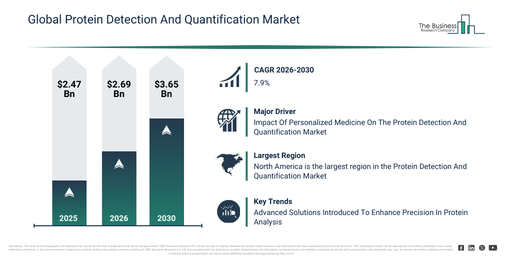
    The protein detection and quantification market has experienced substantial growth in recent years. This market is projected to expand from $2.47 billion in 2025 to $2.69 billion in 2026, demonstrating a compound annual growth rate (CAGR) of 8.9%. Historically, this expansion has been driven by increased proteomics research activities, a rising demand for biomarker discovery, the broadening scope of clinical diagnostic testing, the adoption of chromatography and spectroscopy techniques, and the accessibility of advanced protein reagents.

    The protein detection and quantification market is anticipated to experience robust expansion over the coming years. This market is projected to reach $3.65 billion by 2030, exhibiting a compound annual growth rate (CAGR) of 7.9%. Factors driving this growth during the forecast period include the expanding application of proteomics in personalized medicine, a heightened need for high-throughput diagnostic instruments, the broadening scope of biopharmaceutical manufacturing quality control, the increasing incorporation of AI into protein analytics, and greater investment in clinical research infrastructure. Key trends anticipated during this period encompass the growing uptake of multiplex protein detection platforms, an increase in the utilization of mass spectrometry for quantification, the expanding integration of automated sample processing, the advancement of high-sensitivity detection technologies, and a stronger emphasis on data-driven protein analysis.

    Access Your Free Sample Report For In-Depth Market Analysis:

    https://www.thebusinessresearchcompany.com/sample.aspx?id=16519&type=smp

    Which Key Drivers Are Affecting The Protein Detection And Quantification Market Development?

    The expanding need for personalized medicine is anticipated to fuel the future expansion of the protein detection and quantification market. This medical approach focuses on customizing treatments and interventions to suit individual patient requirements. Its rise is attributed to the swift advancements in omics technology, improved data integration, genetics, and a heightened recognition of the importance of customized patient-specific drugs and preventative strategies. Within personalized medicine, protein detection and quantification are vital for identifying and measuring particular proteins that can serve as biomarkers for individualized patient care. As an illustration, the Personalised Medicine Coalition, a US-based hospital and health care organization, reported in February 2024 that the FDA had approved 16 new personalized treatments for rare disease patients in 2023, a notable increase from six in 2022. Consequently, the increasing demand for personalized medicine is a key driver for the growth of the protein detection and quantification market.

    How Is The Protein Detection And Quantification Market Broken Down By Segment Categories?

    The protein detection and quantification market covered in this report is segmented –

    1) By Products: Kits And Reagents Or Consumables, Instruments, Services

    2) By Technology: Colorimetric Assays, Immunological Methods, Chromatography, Mass Spectrometry, Spectroscopy Instruments, Other Technologies

    3) By Application: Drug Discovery And Development, Clinical Diagnosis, Other Applications

    4) By End User: Academic Research Institutes, Biotechnology And Pharmaceutical Companies, Contract Research Organization, Other End-Users

    Subsegments:

    1) By Kits And Reagents Or Consumables: Protein Assay Kits, Enzyme-Linked Immunosorbent Assay (ELISA) Kits, Western Blotting Reagents, Protein Extraction Kits, Antibodies And Probes

    2) By Instruments: Spectrophotometers, Microplate Readers, Mass Spectrometers, Fluorometers, Chromatography Systems

    3) By Services: Protein Analysis Services, Custom Protein Assay Services, Protein Quantification Testing Services, Data Analysis And Interpretation Services

    What Trends Are Transforming The Protein Detection And Quantification Market?

    Major companies operating in the protein detection and quantification market are focusing on developing advanced solutions, such as next-generation mass spectrometry technologies, to enhance the sensitivity, speed, and depth of biological analysis. A next-generation mass spectrometry solution refers to an innovative analytical instrument designed to deliver deeper proteome coverage, higher throughput, and improved quantitative accuracy, thereby enabling researchers to detect and measure proteins with unprecedented precision. For instance, in June 2023, Thermo Fisher Scientific Inc., a US-based life science instrumentation company, introduced the Orbitrap Astral mass spectrometer, a groundbreaking system engineered to revolutionize biological discovery. This innovation combines ultra-high-resolution Orbitrap technology with Astral mass analysis to achieve up to ten times more peptide identifications, providing researchers with faster, deeper, and more accurate protein characterization. Integrated with Thermo Fisher’s end-to-end proteomics workflows, including sample preparation, chromatography, and data analysis tools, it delivers a seamless analytical experience. The Orbitrap Astral system accelerates scientific insights, simplifies complex proteomic workflows, and supports significant advancements in biomarker discovery, translational research, and precision medicine.

    Which Players Are Present In The Protein Detection And Quantification Market Space?

    Major companies operating in the protein detection and quantification market are Roche Diagnostics, Thermo Fisher Scientific Inc., Danaher Corporation, Merck KGaA, GE HealthCare, Agilent Technologies Inc., Illumina Inc., Sartorius AG, PerkinElmer Inc., Shimadzu Corporation, Waters Corporation, Bio-Rad Laboratories Inc., Bruker Corporation, Qiagen N.V., Horiba ltd., Bio-Techne Corporation, Promega Corporation, Abcam Plc, Molecular Devices LLC, Olink Proteomics, RayBiotech Life Inc., Bio Scientific Research Laboratories

    Get The Full Protein Detection And Quantification Market Report:

    https://www.thebusinessresearchcompany.com/report/protein-detection-and-quantification-global-market-report

    Which Geographic Region Dominates The Protein Detection And Quantification Market?

    North America was the largest region in the protein detection and quantification market in 2025. Asia-Pacific is expected to be the fastest-growing region in the forecast period. The regions covered in the protein detection and quantification market report are Asia-Pacific, South East Asia, Western Europe, Eastern Europe, North America, South America, Middle East, Africa.

    Request A Customized Protein Detection And Quantification Market Report For Competitive Insights:

    https://www.thebusinessresearchcompany.com/report/protein-detection-and-quantification-global-market-report

    Browse Through More Reports Similar to the Global Protein Detection And Quantification Market 2026, By The Business Research Company

    Protein Powder Market Report 2026

    https://www.thebusinessresearchcompany.com/report/protein-powder-global-market-report

    Protein Engineering Market Report

    https://www.thebusinessresearchcompany.com/report/protein-engineering-global-market-report

    Egg Protein Powder Market Report

    https://www.thebusinessresearchcompany.com/report/egg-protein-powder-global-market-report

    Get in touch with us:

    The Business Research Company: https://www.thebusinessresearchcompany.com/

    Americas +1 310-496-7795

    Asia +44 7882 955267 & +91 8897263534

    Europe +44 7882 955267

    Email us at info@tbrc.info

    Follow us on:

    LinkedIn: https://in.linkedin.com/company/the-business-research-company

    YouTube: https://www.youtube.com/channel/UC24_fI0rV8cR5DxlCpgmyFQ

    Global Market Model: https://www.thebusinessresearchcompany.com/global-market-model
  • Protein Crystallization Market Future Trends Influencing Growth

    Protein Crystallization Market Future Trends Influencing Growth

    The Business Research Company’s 2026 market reports feature enhanced tools like market attractiveness analysis, TAM assessment, and company scoring matrices, along with interactive dashboards, deeper supply chain insights, and startup coverage strengthening the depth, usability, and strategic value of insights.

    How Is The Market Size Of The Protein Crystallization Market Expected To Scale Between 2026 And 2030?

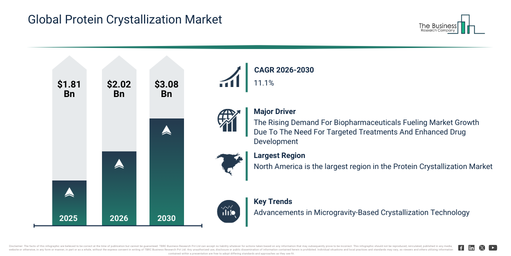
    The protein crystallization market has experienced rapid expansion in recent years. It is projected to increase from $1.81 billion in 2025 to $2.02 billion in 2026, at a compound annual growth rate (CAGR) of 11.4%. Historically, the growth in this market can be attributed to the expansion of structural biology research, rising demand for protein structure determination, growth in pharmaceutical drug discovery programs, increased use of x-ray crystallography, and availability of advanced laboratory instrumentation.

    The protein crystallization market is anticipated to experience substantial growth in the forthcoming years. It is projected to expand to $3.08 billion by 2030, achieving a compound annual growth rate (CAGR) of 11.1%. This expansion during the forecast period is propelled by the increasing adoption of cryo-electron microscopy workflows, rising investments in protein structure-based drug design, the spread of AI-assisted crystallography, a growing emphasis on complex protein analysis, and increased collaboration between academia and industry. Key trends expected over this period include the wider use of automated crystallization systems, an increase in microfluidic crystallization techniques, the growing integration of AI-based structure prediction tools, the expansion of high-resolution structural analysis, and an enhanced focus on reproducible crystal formation.

    Access Your Free Sample Report For In-Depth Market Analysis:

    https://www.thebusinessresearchcompany.com/sample.aspx?id=22117&type=smp

    What Factors Are Contributing To The Growth Of The Protein Crystallization Market?

    The protein crystallization market is anticipated to expand due to increasing demand for biopharmaceuticals. These are medicinal products derived from biological origins or methods, encompassing substances like proteins, vaccines, and gene therapies, used to address diverse ailments. Their growing appeal stems from their capacity to deliver focused therapies, improve patient results, and manage numerous chronic and intricate illnesses, providing customized approaches that often surpass conventional treatments in efficacy. By allowing for accurate identification of protein structures, protein crystallization refines biopharmaceuticals, which in turn aids in creating more targeted therapies and guarantees greater effectiveness and durability in these products. For example, as reported by Cardinal Health Inc., a US-based healthcare company, in January 2023, the U.S. saw 33 biosimilar products approved by the FDA by January 2022, with 21 already commercialized. This number further increased to 40 FDA-approved biosimilars by 2023, of which 25 were commercially available. Consequently, the increased need for biopharmaceuticals is fueling the expansion of the protein crystallization market.

    What Are The Different Segment Types In The Protein Crystallization Market Segment Breakdown?

    The protein crystallization market covered in this report is segmented –

    1) By Product: Instruments, Consumables, Software And Services

    2) By Technology: X-Ray Crystallography, Cryo-electron Microscopy, NMR Spectroscopy, Other Technologies

    3) By End-User: Pharmaceutical And Biotechnology Companies, Academic And Research Institutes

    Subsegments:

    1) By Instruments Type: X-ray Diffractometers, Liquid Handling Systems, Crystallization Imaging Systems, Microfluidic Systems, Incubators & Temperature Control Devices

    2) By Consumables Type: Crystallization Reagents, Microplates & Crystallization Plates, Screens & Buffers, Cryoprotectants, Protein Purification Kits

    3) By Software and Services Type: Crystallography Data Analysis Software, Molecular Modeling Software, AI-Based Structure Prediction Tools, Custom Crystallization Services, Training & Consulting Services

    What Trends Are Shaping The Future Of The Protein Crystallization Market?

    Leading companies in the protein crystallization market are concentrating on developing advanced solutions, such as microfluidic platforms, to improve crystal quality and experimental throughput. Microfluidic platforms are specialized instruments that provide precise control over protein crystallization in small volumes and under regulated conditions, consequently increasing the chance of forming high-quality crystals suitable for X-ray crystallography. As an example, in April 2024, a US-based research team from Arizona State University (ASU) successfully sent microfluidic protein crystallization devices into space using SpaceX’s Cargo Dragon Capsule, which were designed to function in microgravity. This platform allows for the simultaneous screening of multiple proteins and supports high-throughput crystallization experiments. It enables crystals to grow under reduced gravitational forces, which enhances their structural quality and facilitates the crystallization of proteins that are difficult to crystallize on Earth. The devices are also compatible with X-ray diffraction analysis, allowing researchers to obtain three-dimensional protein structures directly from the crystallization hardware.

    Who Are The Well-Known Companies In The Protein Crystallization Market?

    Major companies operating in the protein crystallization market are Thermo Fisher Scientific, Corning Incorporated, Charles River Laboratories, Mettler-Toledo International Inc., Douglas Instruments Limited, Bruker Corporation, Tecan Group, Greiner Bio-One International GmbH, Rigaku Corporation, Viva Biotech, Formulatrix Inc., Creative Biostructure, Calibre Scientific Inc., Creative Biolabs, Molecular Dimensions, Creative Proteomics, Jena Bioscience GmbH, Saromics Biostructures, Art Robbins Instruments, Mitegen

    Get The Full Protein Crystallization Market Report:

    https://www.thebusinessresearchcompany.com/report/protein-crystallization-global-market-report

    Which Region Is The Leading Market For The Protein Crystallization Market?

    North America was the largest region in the protein crystallization market in 2025. Asia-Pacific is expected to be the fastest-growing region in the forecast period. The regions covered in the protein crystallization market report are Asia-Pacific, South East Asia, Western Europe, Eastern Europe, North America, South America, Middle East, Africa.

    Request A Customized Protein Crystallization Market Report For Competitive Insights:

    https://www.thebusinessresearchcompany.com/report/protein-crystallization-global-market-report

    Browse Through More Reports Similar to the Global Protein Crystallization Market 2026, By The Business Research Company

    Organ On Chip Market

    https://www.thebusinessresearchcompany.com/report/organ-on-chip-market

    Dna And Gene Chip Market Report

    https://www.thebusinessresearchcompany.com/report/dna-and-gene-chip-global-market-report

    Protein Engineering Market Report

    https://www.thebusinessresearchcompany.com/report/protein-engineering-global-market-report

    Get in touch with us:

    The Business Research Company: https://www.thebusinessresearchcompany.com/

    Americas +1 310-496-7795

    Asia +44 7882 955267 & +91 8897263534

    Europe +44 7882 955267

    Email us at info@tbrc.info

    Follow us on:

    LinkedIn: https://in.linkedin.com/company/the-business-research-company

    YouTube: https://www.youtube.com/channel/UC24_fI0rV8cR5DxlCpgmyFQ

    Global Market Model: https://www.thebusinessresearchcompany.com/global-market-model
  • Protein Chip Market Growth Trends and Forecast Through 2030

    Protein Chip Market Growth Trends and Forecast Through 2030

    The Business Research Company’s 2026 market reports feature enhanced tools like market attractiveness analysis, TAM assessment, and company scoring matrices, along with interactive dashboards, deeper supply chain insights, and startup coverage strengthening the depth, usability, and strategic value of insights.

    What Level Of Market Value Growth Is Predicted For The Protein Chip Market From 2026 To 2030?

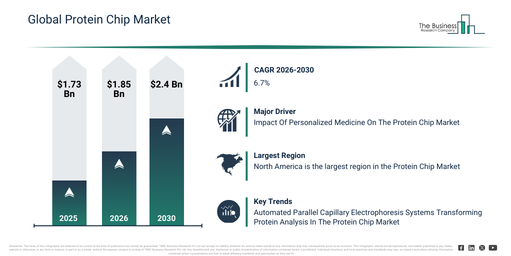
    The protein chip market has experienced substantial growth in recent years. It is forecast to increase from $1.73 billion in 2025 to $1.85 billion in 2026, achieving a compound annual growth rate (CAGR) of 7.4%. The historical expansion of this market can be attributed to several factors: an increase in proteomics research programs, a rising demand for high-throughput analytical tools, the expansion of academic and clinical research laboratories, growing adoption of microarray technologies, and the availability of advanced surface chemistry techniques.

    The protein chip market size is anticipated to experience robust expansion in the upcoming years. It is projected to reach $2.4 billion by 2030, progressing at a compound annual growth rate (CAGR) of 6.7%. This growth during the forecast period is propelled by the expanding applications of protein chips in diagnostics, increasing investments in precision medicine platforms, the wider adoption of point-of-care testing technologies, the growing incorporation of AI-based data analysis, and the rising demand for scalable proteomic tools. Significant trends expected in the forecast period include a greater embrace of high-density protein microarrays, the increasing use of lab-on-chip protein platforms, the growing integration of automated detection systems, the expansion of multiplexed protein interaction analysis, and an elevated focus on miniaturized diagnostic chips.

    Access Your Free Sample Report For In-Depth Market Analysis:

    https://www.thebusinessresearchcompany.com/sample.aspx?id=16163&type=smp

    Which Strong Drivers Are Impacting The Protein Chip Market Growth?

    The escalating need for personalized medicine is projected to stimulate the expansion of the protein chip market. Personalized medicine represents a healthcare philosophy dedicated to customizing medical interventions and treatments to align with the distinct requirements of each patient. Its emergence stems from the swift progression of ‘omics’ technology, enhanced data integration, genetic advancements, and an increasing recognition of the value of patient-specific medications and preventative strategies. Protein chips offer an instrumental platform for advancing personalized medicine by enabling comprehensive proteomic analysis, assisting in biomarker identification, refining drug development and comprehension of responses, and aiding in the formulation of tailored therapeutic approaches. For instance, in February 2024, according to the Personalised Medicine Coalition, a US-based hospital and health care organization, in 2023, the FDA approved 16 new personalized treatments for rare disease patients, up from six in 2022. Consequently, the rising demand for personalized medicine fuels the growth of the protein chip market.

    Which Segment Classifications Are Used In The Protein Chip Market Segment Analysis?

    The protein chip market covered in this report is segmented –

    1) By Product: Lab-On-Chip, Integrated System, Arrays, Microarrays System

    2) By Technology: Analytical Microarrays, Functional Protein Microarrays, Reverse Phase Protein Microarrays

    3) By Application: Diagnostics, Proteomics, Antibody Characterization

    4) By End User: Hospitals And Clinics, Academic And Research Institutes, Diagnostic Laboratories, Pharmaceutical And Biotechnology Companies

    Subsegments:

    1) By Lab-On-Chip: Diagnostic Lab-On-Chip, Point-Of-Care Lab-On-Chip, Drug Discovery Lab-On-Chip, Clinical Lab-On-Chip

    2) By Integrated System: Automated Integrated Systems, Benchtop Integrated Systems, Portable Integrated Systems, Multi-Functional Integrated Systems

    3) By Arrays: Protein Arrays, Peptide Arrays, Antibody Arrays, Antigen Arrays

    4) By Microarrays System: Dna Microarrays, Rna Microarrays, Protein Microarrays, Antibody Microarrays, Cell-Based Microarrays

    Which Trends Are Contributing To Changes In The Protein Chip Market?

    Leading companies in the protein chip market are introducing novel products, such as automated parallel capillary electrophoresis systems, to bolster their competitive edge. These automated parallel capillary electrophoresis systems are sophisticated analytical instruments designed for the high-throughput separation and analysis of biomolecules, specifically proteins and nucleic acids. For example, in January 2024, Agilent Technologies Inc., a US-based creator of advanced analytical, research, and diagnostic instruments for laboratories, unveiled its new ProteoAnalyzer system, an automated parallel capillary electrophoresis device intended for protein analysis. Its distinctive attributes encompass advanced algorithms for accurate protein identification and characterization, empowering researchers to investigate complex biological systems with unparalleled precision and efficacy. The system also presents enhanced data visualization tools, simplifying the intuitive interpretation of findings and accelerating understanding of cellular processes. Moreover, it provides effortless integration with current workflows, ensuring smooth implementation and maximizing productivity in proteomics laboratories.

    Which Firms Are Contributing To The Protein Chip Market Ecosystem?

    Major companies operating in the protein chip market are Thermo Fisher Scientific Inc, GE Healthcare LLC, Roche Diagnostics GmbH, Agilent Technologies Inc, Sigma Aldrich Corporation Merck, PerkinElmer Inc, Shimadzu Corporation, Bio Rad Laboratories Inc, Bruker Corporation, Surmodics Inc, OriGene Technologies Inc, RayBiotech Inc, Sengenics Corporation Pte Ltd, Gyros Protein Technologies AB, Innova Biosciences Limited, Innopsys SA, CDI Laboratories Inc, Microarrays Inc, Full Moon BioSystems Inc, Arrayit Corporation

    Get The Full Protein Chip Market Report:

    https://www.thebusinessresearchcompany.com/report/protein-chip-global-market-report

    Where Is The Protein Chip Market Primarily Concentrated By Region?

    North America was the largest region in the global protein chip market in 2025. Asia-Pacific is expected to be the fastest-growing region in the forecast period. The regions covered in the protein chip market report are Asia-Pacific, South East Asia, Western Europe, Eastern Europe, North America, South America, Middle East, Africa.

    Request A Customized Protein Chip Market Report For Competitive Insights:

    https://www.thebusinessresearchcompany.com/report/protein-chip-global-market-report

    Browse Through More Reports Similar to the Global Protein Chip Market 2026, By The Business Research Company

    Protein Analyzer Market Report 2026

    https://www.thebusinessresearchcompany.com/report/protein-analyzer-global-market-report

    Protein Detection And Quantification Market Report

    https://www.thebusinessresearchcompany.com/report/protein-detection-and-quantification-global-market-report

    Research Grade Proteins Market Report

    https://www.thebusinessresearchcompany.com/report/research-grade-proteins-global-market-report

    Get in touch with us:

    The Business Research Company: https://www.thebusinessresearchcompany.com/

    Americas +1 310-496-7795

    Asia +44 7882 955267 & +91 8897263534

    Europe +44 7882 955267

    Email us at info@tbrc.info

    Follow us on:

    LinkedIn: https://in.linkedin.com/company/the-business-research-company

    YouTube: https://www.youtube.com/channel/UC24_fI0rV8cR5DxlCpgmyFQ

    Global Market Model: https://www.thebusinessresearchcompany.com/global-market-model
  • Protein Assays Market Insights Covering Drivers, Trends, and Opportunities

    Protein Assays Market Insights Covering Drivers, Trends, and Opportunities

    The Business Research Company’s 2026 market reports feature enhanced tools like market attractiveness analysis, TAM assessment, and company scoring matrices, along with interactive dashboards, deeper supply chain insights, and startup coverage strengthening the depth, usability, and strategic value of insights.

    How Will The Market Value Of The Protein Assays Market Progress Between 2026 And 2030?

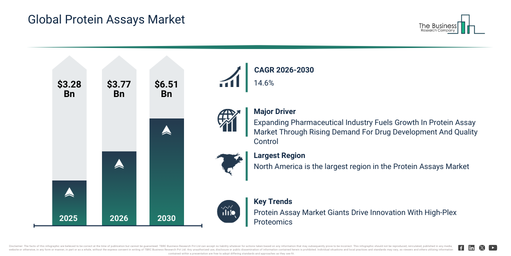
    The protein assays market size has experienced substantial growth in recent years. Its expansion is projected to be from $3.28 billion in 2025 to $3.77 billion in 2026, achieving a compound annual growth rate (CAGR) of 14.9%. The growth witnessed historically is primarily due to the expansion of biomedical research activities, increasing use of proteins in drug development, rising adoption of laboratory automation, growth of clinical diagnostics testing, and the availability of standardized protein reagents.

    The protein assays market is anticipated to undergo significant growth in the coming years. It is expected to reach $6.51 billion by 2030, growing at a compound annual growth rate (CAGR) of 14.6%. This expansion during the forecast period can be attributed to an increased emphasis on personalized medicine research, a rising need for advanced proteomics tools, the broadening of pharmaceutical R&D pipelines, the growing adoption of automated laboratory workflows, and increased investments in life sciences research infrastructure. Prominent trends observed during this period include a wider embrace of high-sensitivity assay kits, an increasing use of automated protein quantification instruments, a growing demand for multiplex protein analysis, the expansion of high-throughput screening applications, and an enhanced focus on the accuracy and reproducibility of assays.

    Access Your Free Sample Report For In-Depth Market Analysis:

    https://www.thebusinessresearchcompany.com/sample.aspx?id=9173&type=smp

    What Key Factors Are Shaping The Protein Assays Market Landscape?

    The protein assay market is expected to experience growth, driven by the expanding pharmaceutical industry. This sector is dedicated to the research, development, production, and distribution of medicines for the prevention, diagnosis, and treatment of diseases. Its expansion stems from various factors, including increasing global health requirements, greater healthcare expenditures, and a rising need for preventive care. Protein assays are vital for the pharmaceutical industry, as they facilitate precise measurement of protein concentration and activity, which is crucial for drug discovery, development, and quality assurance. For example, data from the European Federation of Pharmaceutical Industries and Associations (EFPIA), a Belgium-based trade association for the European pharmaceutical industry, indicated that total pharmaceutical production in Europe reached €390,000 million ($422,803 million) in 2023, marking an increase from €363,300 million ($393,857 million) in 2022. Consequently, the expansion of the pharmaceutical industry is stimulating the protein assay market’s development.

    How Is The Protein Assays Market Organized By Segment Classification?

    The protein assays market covered in this report is segmented –

    1) By Product Type: Reagents And Kits, Instruments

    2) By Technology Type: Absorbance Based Protein Assays, Colorimetric Protein Assays, Fluorescence Based Protein Assays

    3) By End User: Pharmaceutical Industry, Biotechnology Industry, Clinical Laboratories, Hospitals, Academic Research Institutes

    Subsegments:

    1) By Reagents And Kits: Colorimetric Assay Kits, Fluorescent Assay Kits, Luminescent Assay Kits, Other Assay Kits

    2) By Instruments: Spectrophotometers, Microplate Readers, Other Analytical Instruments

    What Market Trends Are Affecting The Protein Assays Market?

    Leading companies in the protein assay market are directing their efforts towards creating innovative solutions, such as high-plex proteomics platforms. A high-plex proteomics platform refers to a proteomic technology or system designed to analyze a large quantity of proteins concurrently in a single experiment. For instance, in November 2023, SomaLogic Inc., a US-based proteomics technology company, launched the ‘SomaScan 11K Platform’. The platform delivers 11,000 total protein measurements and provides researchers a notable advantage in discovering biomarkers and identifying potential drug targets for translational medicine. The integration of 3,500 proteins into the 11K assay is anticipated to uncover new biomarkers that were previously undetectable. This improvement has the capacity to contribute to the creation of diagnostics with increased accuracy.

    Who Are The Industry Participants Involved In The Protein Assays Market?

    Major companies operating in the protein assays market are F Hoffmann La Roche AG, Thermo Fisher Scientific Inc, Roche Diagnostics International AG, Danaher Corporation, Merck KGaA, Siemens Healthineers AG, R And D Systems Inc, Lonza Group AG, PerkinElmer Inc, Bio Rad Laboratories Inc, Takara Bio Inc, Qiagen NV, Promega Corporation, Abcam plc, BioVision Inc, Cayman Chemical Company, Enzo Life Sciences Inc, Novus Biologicals LLC, Abnova Corporation, Elabscience Biotechnology Co Ltd, Geno Technology Inc, Cytoskeleton Inc

    Get The Full Protein Assays Market Report:

    https://www.thebusinessresearchcompany.com/report/protein-assays-global-market-report

    Which Region Has The Greatest Market Share In The Protein Assays Market?

    North America was the largest region in the protein assays market in 2025. Asia-Pacific is expected to be the fastest-growing region in the global protein assays market report during the forecast period. The regions covered in the protein assays market report are Asia-Pacific, South East Asia, Western Europe, Eastern Europe, North America, South America, Middle East, Africa.

    Request A Customized Protein Assays Market Report For Competitive Insights:

    https://www.thebusinessresearchcompany.com/report/protein-assays-global-market-report

    Browse Through More Reports Similar to the Global Protein Assays Market 2026, By The Business Research Company

    Prostate Cancer Diagnostics Market Report 2026

    https://www.thebusinessresearchcompany.com/report/prostate-cancer-diagnostics-global-market-report

    Prostate Cancer Nuclear Medicine Diagnostics Market Report

    https://www.thebusinessresearchcompany.com/report/prostate-cancer-nuclear-medicine-diagnostics-global-market-report

    Prostate Cancer Drugs Market Report

    https://www.thebusinessresearchcompany.com/report/prostate-cancer-drugs-global-market-report

    Get in touch with us:

    The Business Research Company: https://www.thebusinessresearchcompany.com/

    Americas +1 310-496-7795

    Asia +44 7882 955267 & +91 8897263534

    Europe +44 7882 955267

    Email us at info@tbrc.info

    Follow us on:

    LinkedIn: https://in.linkedin.com/company/the-business-research-company

    YouTube: https://www.youtube.com/channel/UC24_fI0rV8cR5DxlCpgmyFQ

    Global Market Model: https://www.thebusinessresearchcompany.com/global-market-model

  • PSMA Theranostic Kits Market Developments Driving Growth

    PSMA Theranostic Kits Market Developments Driving Growth

    The Business Research Company’s 2026 market reports feature enhanced tools like market attractiveness analysis, TAM assessment, and company scoring matrices, along with interactive dashboards, deeper supply chain insights, and startup coverage strengthening the depth, usability, and strategic value of insights.

    What Are The Market Size Estimates For The Prostate-Specific Membrane Antigen (PSMA) Theranostic Kits Market In 2026 And 2030?

    The market size for prostate-specific membrane antigen (psma) theranostic kits has experienced rapid expansion in recent years. This market is anticipated to climb from $1.05 billion in 2025 to $1.19 billion in 2026, exhibiting a compound annual growth rate (CAGR) of 13.9%. The historical growth trajectory can be attributed to several factors including the rising incidence of prostate cancer, notable advancements in nuclear medicine imaging, an increasing embrace of molecular diagnostics, the early successful clinical validation of psma targeting methods, and the ongoing expansion of oncology research programs.

    The market for prostate-specific membrane antigen (psma) theranostic kits is projected to experience swift expansion over the coming years. This market is anticipated to reach a valuation of $1.99 billion by 2030, demonstrating a compound annual growth rate (CAGR) of 13.5%. This projected growth during the forecast period can be attributed to several factors, including a heightened demand for customized cancer therapies, increased capital expenditure in theranostics, the expansion of nuclear medicine facilities, the expanding application of precision oncology diagnostics, and a rise in regulatory clearances for specific therapies. Key developments expected during the forecast period encompass a greater acceptance of targeted radioligand treatments, an increase in the utilization of psma-based precision diagnostics, a deeper integration of imaging and therapeutic processes, the proliferation of personalized oncology treatment kits, and a strengthened emphasis on companion diagnostics.

    Access Your Free Sample Report For In-Depth Market Analysis:

    https://www.thebusinessresearchcompany.com/sample.aspx?id=30362&type=smp

    Which Factors Are Influencing The Growth Of The Prostate-Specific Membrane Antigen (PSMA) Theranostic Kits Market?

    An increasing occurrence of prostate cancer is projected to fuel the expansion of the prostate-specific membrane antigen (PSMA) theranostic kits market moving ahead. Prostate cancer is defined as a malignancy that forms within the prostate gland, which is a small gland situated in men beneath the bladder and anterior to the rectum. The growing occurrence of prostate cancer stems from an aging demographic, given that the likelihood of developing this cancer substantially rises with advancing age. Prostate-specific membrane antigen (PSMA) theranostic kits improve prostate cancer management by providing targeted diagnostic options, which makes them highly suitable for prompt detection and customized treatment strategies. These kits boost diagnostic precision through the combination of PSMA-specific ligands and radiotracers, thereby aiding more effective disease tracking and therapeutic direction. For example, in November 2023, estimates from the American Cancer Society, a US-based non-profit organization, indicated approximately 313,780 new prostate cancer cases and 35,770 related deaths were anticipated in the United States by 2025. Consequently, the increasing prevalence of prostate cancer is fueling the expansion of the prostate-specific membrane antigen (PSMA) theranostic kits market.

    Which Segments Define The Prostate-Specific Membrane Antigen (PSMA) Theranostic Kits Market Segment Structure?

    The prostate-specific membrane antigen (psma) theranostic kits market covered in this report is segmented –

    1) By Product Type: Diagnostic Kits, Therapeutic Kits, Combined Theranostic Kits

    2) By Application: Prostate Cancer, Other Cancers

    3) By End-User: Hospitals, Diagnostic Centers, Research Institutes, Specialty Clinics, Other End-Users

    Subsegments:

    1) By Diagnostic Kits: Prostate-Specific Membrane Antigen (PSMA) Positron Emission Tomography Imaging Kits, Single Photon Emission Computed Tomography Imaging Kits, Companion Diagnostic Kits, Liquid Biopsy Kits

    2) By Therapeutic Kits: Radioligand Therapy Kits, Antibody-Based Therapy Kits, Peptide-Based Therapy Kits, Small Molecule Therapy Kits

    3) By Combined Theranostic Kits: Integrated Imaging And Therapy Kits, Dual Function Radiopharmaceutical Kits, Prostate-Specific Membrane Antigen (PSMA) Ligand-Based Theranostic Kits, Personalized Treatment Kits

    Which Trends Are Influencing Demand In The Prostate-Specific Membrane Antigen (PSMA) Theranostic Kits Market?

    Leading companies within the prostate-specific membrane antigen (PSMA) theranostic kits market are concentrating on developing innovative solutions, such as PSMA-targeted radioligand kits, to address the increasing need for precision oncology, targeted prostate cancer diagnosis, and treatment. PSMA-targeted radioligand kits are medical devices that combine a ligand specifically engineered to bind to Prostate-Specific Membrane Antigen (PSMA) with a radioactive isotope, utilized for either diagnostic imaging or focused therapy of prostate cancer. For instance, in March 2025, Telix Pharmaceuticals Limited, an Australia-based radiopharmaceutical company, launched Illuccix, an advanced kit designed for the preparation of Gallium-68 gozetotide injection. This kit empowers hospitals and nuclear medicine facilities to label the radionuclide immediately before administration for PET imaging of PSMA-positive prostate cancer lesions. Distinctive features of the kit include a ready-to-use preparation format, disease-specific targeting, rapid imaging capabilities, and compatibility with theranostic workflows, which facilitates improved detection of metastatic lesions, comprehensive treatment planning, and effective monitoring of therapy response. Its applications involve diagnosing recurrent or metastatic prostate cancer and guiding personalized treatment decisions, marking a substantial progression over conventional imaging or non-targeted therapies.

    Who Are The Established Players Within The Prostate-Specific Membrane Antigen (PSMA) Theranostic Kits Market?

    Major companies operating in the prostate-specific membrane antigen (psma) theranostic kits market are Cyclotek (Aust) Pty Ltd, Telix Pharmaceuticals Ltd, Curium Pharma, SOFIE Biosciences Inc., Lantheus Holdings Inc., Eckert & Ziegler SE, NorthStar Medical Radioisotopes, Isotopia Molecular Imaging Ltd, ITM Isotope Technologies Munich SE, AdvanCell Pty Ltd, Alpha-9 Theranostics Inc., ABX Advanced Biochemical Compounds GmbH, Clarity Pharmaceuticals Ltd, Ariceum Therapeutics GmbH, RadioMedix Inc., Scintomics GmbH, Novartis AG, Bayer AG, POINT Biopharma Inc., Blue Earth Diagnostics

    Get The Full Prostate-Specific Membrane Antigen (PSMA) Theranostic Kits Market Report:

    https://www.thebusinessresearchcompany.com/report/global-prostate-specific-membrane-antigen-psma-theranostic-kits-market-report

    Which Region Accounts For The Largest Portion Of The Prostate-Specific Membrane Antigen (PSMA) Theranostic Kits Market?

    North America was the largest region in the prostate-specific membrane antigen (PSMA) theranostic kits market in 2025. The regions covered in the prostate-specific membrane antigen (psma) theranostic kits market report are Asia-Pacific, South East Asia, Western Europe, Eastern Europe, North America, South America, Middle East, Africa.

    Request A Customized Prostate-Specific Membrane Antigen (PSMA) Theranostic Kits Market Report For Competitive Insights:

    https://www.thebusinessresearchcompany.com/report/global-prostate-specific-membrane-antigen-psma-theranostic-kits-market-report

    Browse Through More Reports Similar to the Global Prostate-Specific Membrane Antigen (PSMA) Theranostic Kits Market 2026, By The Business Research Company

    Prostate Cancer Diagnostics Market Report 2026

    https://www.thebusinessresearchcompany.com/report/prostate-cancer-diagnostics-global-market-report

    Prostate Cancer Nuclear Medicine Diagnostics Market Report

    https://www.thebusinessresearchcompany.com/report/prostate-cancer-nuclear-medicine-diagnostics-global-market-report

    Endocrine Peptide Test Market Report

    https://www.thebusinessresearchcompany.com/report/endocrine-peptide-test-global-market-report

    Get in touch with us:

    The Business Research Company: https://www.thebusinessresearchcompany.com/

    Americas +1 310-496-7795

    Asia +44 7882 955267 & +91 8897263534

    Europe +44 7882 955267

    Email us at info@tbrc.info

    Follow us on:

    LinkedIn: https://in.linkedin.com/company/the-business-research-company

    YouTube: https://www.youtube.com/channel/UC24_fI0rV8cR5DxlCpgmyFQ

    Global Market Model: https://www.thebusinessresearchcompany.com/global-market-model
  • Operating Room Management Market Insights Highlighting Growth Opportunities

    Operating Room Management Market Insights Highlighting Growth Opportunities

    The Business Research Company’s 2026 market reports feature enhanced tools like market attractiveness analysis, TAM assessment, and company scoring matrices, along with interactive dashboards, deeper supply chain insights, and startup coverage strengthening the depth, usability, and strategic value of insights.

    What Is The Anticipated Rise In Market Value Of The Operating Room Management Market During The Forecast Period?

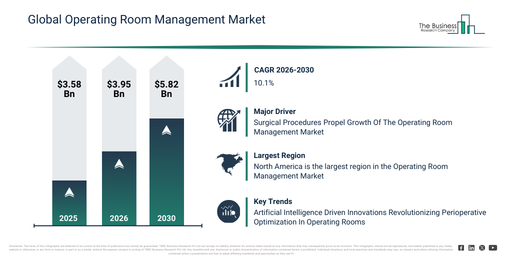
    The operating room management market size has experienced rapid growth in recent years. It is forecast to increase from $3.58 billion in 2025 to $3.95 billion in 2026, achieving a compound annual growth rate (CAGR) of 10.5%. Historically, this growth can be attributed to an increase in surgical procedure volumes, the expansion of hospital infrastructure, the adoption of digital hospital management systems, a growing focus on operating room efficiency, and the availability of integrated hospital IT solutions.

    The operating room management market is anticipated to experience significant expansion in the coming years. This market is projected to reach $5.82 billion by 2030, exhibiting a compound annual growth rate (CAGR) of 10.1%. Factors driving this growth during the forecast period include the increasing deployment of smart operating rooms, a rising demand for predictive analytics in surgery planning, the expansion of cloud-based hospital management platforms, a growing focus on value-based healthcare delivery, and increasing investments in surgical workflow automation. Key trends anticipated for the forecast period encompass the wider adoption of AI-driven surgical scheduling systems, increased integration of real-time operating room analytics, expanding utilization of cloud-based operating room management platforms, the development of automated inventory and supply tracking, and a greater emphasis on workflow optimization.

    Access Your Free Sample Report For In-Depth Market Analysis:

    https://www.thebusinessresearchcompany.com/sample.aspx?id=19628&type=smp

    What Major Factors Are Driving The Operating Room Management Market Forward?

    The growth of the operating room management market is expected to be propelled by an increasing number of surgical procedures moving forward. Surgical procedures are medical interventions that involve making incisions in a patient’s body to treat or diagnose a condition or to improve function. The rise in these procedures stems from several factors, including an aging population, advancements in medical technology, increased awareness, and improved access to healthcare. Operating room management optimizes surgical procedures by enhancing efficiency, resource utilization, and patient outcomes through effective scheduling, staffing, and workflow coordination. For instance, according to the American Society of Plastic Surgeons, a US-based professional society, approximately 1.6 million cosmetic surgical procedures were carried out in 2023, as reported in June 2024. Consequently, the expanding volume of surgical procedures is a key driver for the growth of the operating room management market.

    How Is The Operating Room Management Market Broken Down By Segment Categories?

    The operating room management market covered in this report is segmented –

    1) By Type: Scheduling And Workflow Management Solutions, Data Management And Communication Solutions, Supply Management Solutions, Anesthesia Information Management Solutions, Performance Management Solutions, Other Types

    2) By Component: Software, Services

    3) By Workflow: Preoperative, Intraoperative, Postoperative

    4) By Delivery Mode: On-Premise Model, Cloud-Based Or Web-Based Model

    5) By End User: Hospitals, Ambulatory Surgical Centers, Specialty Clinics, Other End Users

    Subsegments:

    1) By Scheduling And Workflow Management Solutions: Surgery Scheduling Software, Staff Allocation Software, Patient Tracking Systems

    2) By Data Management And Communication Solutions: Electronic Health Records Integration, Clinical Communication Systems, Data Analytics Software

    3) By Supply Management Solutions: Inventory Tracking Systems, Surgical Instrument Management, Consumable Supply Management

    4) By Anesthesia Information Management Solutions: Anesthesia Monitoring Software, Drug Management Systems, Anesthesia Documentation Solutions

    5) By Performance Management Solutions: Quality Improvement Software, Performance Analytics Tools, Benchmarking Systems

    6) By Other Types: Billing And Revenue Cycle Solutions, Compliance Management Software, Training And Simulation Tools

    Which Trends Are Impacting The Progress Of The Operating Room Management Market?

    Major organizations within the operating room management market are concentrating on developing advanced solutions, including artificial intelligence (AI)-powered technology services, to elevate hospital efficiency, expand surgical capacity, and boost profitability by optimizing operating room resources and workflows through AI. Artificial intelligence (AI)-powered technology services employ machine learning and other AI techniques to automate, improve, and streamline various tasks and processes across sectors, delivering smart solutions that evolve and enhance over time. As an example, in March 2023, LeanTaaS Inc., a software development company based in the US, unveiled Perioperative Transformation as a Service (TaaS). This platform combines AI and workflow automation technologies with an expert team of perioperative professionals to maximize surgical case volume, operating room utilization, and staffing. The service ensures significant enhancements in hospital efficiency, profitability, and patient care by expanding access to operating rooms, optimizing scheduling, and implementing data-driven block governance.

    Which Players Are Present In The Operating Room Management Market Space?

    Major companies operating in the operating room management market are Epic Systems Corporation, Cerner Corporation, Medical Information Technology, Surgical Information Systems, Caresyntax, Qventus Inc., Picis Clinical Solutions Inc, Censis Technologies, eClinicalWorks, LeanTaaS, GE Healthcare Command Center, TeleTracking Technologies, Spacelabs Healthcare, Brainlab AG, Barco, Tedisel Medical, caseCTRL, Medicad, Surgimate, Napier Healthcare

    Get The Full Operating Room Management Market Report:

    https://www.thebusinessresearchcompany.com/report/operating-room-management-global-market-report

    Which Region Is The Largest In The Operating Room Management Market?

    North America was the largest region in the operating room management market in 2025. Asia-Pacific is expected to be the fastest-growing region in the forecast period. The regions covered in the operating room management market report are Asia-Pacific, South East Asia, Western Europe, Eastern Europe, North America, South America, Middle East, Africa.

    Request A Customized Operating Room Management Market Report For Competitive Insights:

    https://www.thebusinessresearchcompany.com/report/operating-room-management-global-market-report

    Browse Through More Reports Similar to the Global Operating Room Management Market 2026, By The Business Research Company

    Operating Room Management Software Market Report 2026

    https://www.thebusinessresearchcompany.com/report/operating-room-management-software-global-market-report

    Operating Room Equipment Market

    https://www.thebusinessresearchcompany.com/report/operating-room-equipment-market

    Artificial Intelligence Ai In Operating Room Market Report

    https://www.thebusinessresearchcompany.com/report/artificial-intelligence-ai-in-operating-room-global-market-report

    Get in touch with us:

    The Business Research Company: https://www.thebusinessresearchcompany.com/

    Americas +1 310-496-7795

    Asia +44 7882 955267 & +91 8897263534

    Europe +44 7882 955267

    Email us at info@tbrc.info

    Follow us on:

    LinkedIn: https://in.linkedin.com/company/the-business-research-company

    YouTube: https://www.youtube.com/channel/UC24_fI0rV8cR5DxlCpgmyFQ

    Global Market Model: https://www.thebusinessresearchcompany.com/global-market-model
  • Occupational Therapy Market Insights Covering Key Growth Drivers And Opportunities

    Occupational Therapy Market Insights Covering Key Growth Drivers And Opportunities

    The Business Research Company’s 2026 market reports feature enhanced tools like market attractiveness analysis, TAM assessment, and company scoring matrices, along with interactive dashboards, deeper supply chain insights, and startup coverage strengthening the depth, usability, and strategic value of insights.

    What Is The Estimated Market Size Of The Occupational Therapy Market In 2026, And How Will Its Value Evolve By 2030?

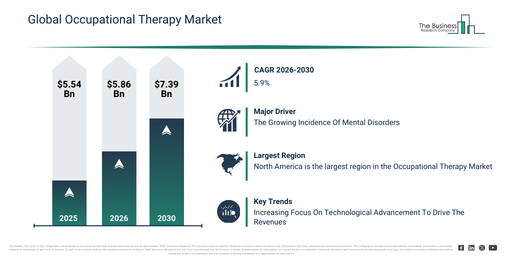
    The occupational therapy market has seen strong growth recently. It is projected to increase from $5.54 billion in 2025 to $5.86 billion in 2026, at a compound annual growth rate (CAGR) of 5.9%. The historical growth can be attributed to several factors including the limited availability of digital therapy solutions, a reliance on traditional in-person therapy, the lack of standardized rehabilitation protocols, low awareness of technology-enabled OT, and the high costs of therapy equipment.

    The occupational therapy market is anticipated to experience robust expansion over the coming years. Its size is projected to reach $7.39 billion by 2030, exhibiting a compound annual growth rate (CAGR) of 5.9%. This expansion during the forecast period is propelled by factors such as the increasing need for teletherapy and remote rehabilitation services, greater uptake of wearable therapy devices, escalating investments in digital health platforms, the broadening of home-based OT provisions, and innovations in virtual and augmented reality therapy solutions. Key developments expected during this period involve the wider adoption of cloud-based OT platforms, greater incorporation of AI for customized therapy, expanded deployment of IoT-enabled patient monitoring tools, increased utilization of AR/VR for virtual rehabilitation, and a heightened emphasis on data analytics to assess treatment outcomes.

    Access Your Free Sample Report For In-Depth Market Analysis:

    https://www.thebusinessresearchcompany.com/sample.aspx?id=13497&type=smp

    What Key Factors Are Affecting The Occupational Therapy Market Demand?

    The increasing occurrence of mental disorders is projected to drive the growth of the occupational therapy market in the future. These conditions, also known as psychiatric disorders or mental illnesses, are health issues that impact a person’s thoughts, feelings, behavior, and overall psychological well-being. Occupational therapy offers benefits for both the treatment and management of mental disorders, focusing on helping individuals facing mental health challenges develop essential skills and strategies to lead meaningful and fulfilling lives. For example, in May 2024, the American Psychiatric Association, a US-based professional organization of psychiatrists and trainee psychiatrists, reported that 43% of adults experienced higher levels of anxiety compared to the previous year, an increase from 37% in 2023 and 32% in 2022. Therefore, the rising prevalence of mental disorders is a primary factor propelling the occupational therapy market’s expansion.

    What Are The Key Segment Divisions In The Occupational Therapy Market Segment Structure?

    The occupational therapy market covered in this report is segmented –

    1) By Type: Pediatric Occupational Therapy, Adult Occupational Therapy, Geriatric Occupational Therapy

    2) By Application: Musculoskeletal Disorders, Neurological Disorders, Developmental Disabilities

    3) By End-User: Hospitals, Rehabilitation Centers, Home Healthcare

    Subsegments:

    1) By Pediatric Occupational Therapy: Autism Spectrum Disorder, Cerebral Palsy, Developmental Delays, Sensory Processing Disorders

    2) By Adult Occupational Therapy: Stroke Rehabilitation, Post-Surgical Rehabilitation, Musculoskeletal Injuries

    3) By Geriatric Occupational Therapy: Arthritis, Dementia, Age-Related Mobility Issues

    What Trends Are Influencing Changes In The Occupational Therapy Market?

    Major companies operating within the occupational therapy sector are adopting advanced technologies, such as AI-driven physical rehabilitation systems, to achieve a competitive advantage. An AI-powered physical rehabilitation solution is a technological breakthrough that employs artificial intelligence to improve and reshape the field of physical therapy and recovery. For example, in June 2024, Sword Health, a healthcare company headquartered in Portugal, unveiled an AI solution called Phoenix, created to enhance virtual physical therapy sessions. This inventive tool enables patients to interact conversationally with Phoenix, obtaining real-time advice and feedback during their therapy. Patients have the ability to discuss their feelings and advancements, and the AI adapts the session’s challenge level and length as needed. Phoenix further analyzes patient movements, offering instant feedback while compiling performance data for evaluation by Sword’s human clinicians, who ensure the exercises are safe and appropriate.

    Which Organizations Are Engaged In The Occupational Therapy Market?

    Major companies operating in the occupational therapy market are ohns Hopkins Medicine International LLC, Premise Health Holding Corp., Midmark Corporation, Ergotron Inc., Performance Health Holdings Inc., Drive DeVilbiss Healthcare, WebPT Inc., Net Health Systems Inc., Clinicient Inc., Dynasplint Systems Inc., AliMed, Optima Health Care Inc., Maddak Inc., Alliance Therapy Services, Rifton Equipment, ClinicSource, BioSensics, Divine Physiotherapy Equipments, SimplePractice LLC, TheraPlatform, Care Patron, CentralReach LLC, ClinicSense, Fusion Web Clinic, Noterro Inc., Practice Perfect EMR

    Get The Full Occupational Therapy Market Report:

    https://www.thebusinessresearchcompany.com/report/occupational-therapy-global-market-report

    Which Region Leads The Occupational Therapy Market In Overall Market Size?

    North America was the largest region in the occupational therapy market in 2025. The regions covered in the occupational therapy market report are Asia-Pacific, South East Asia, Western Europe, Eastern Europe, North America, South America, Middle East, Africa.

    Request A Customized Occupational Therapy Market Report For Competitive Insights:

    https://www.thebusinessresearchcompany.com/report/occupational-therapy-global-market-report

    Browse Through More Reports Similar to the Global Occupational Therapy Market 2026, By The Business Research Company

    Occupational Therapy Market Report 2026

    https://www.thebusinessresearchcompany.com/report/occupational-therapy-global-market-report

    Occupational Medicines Market Report

    https://www.thebusinessresearchcompany.com/report/occupational-medicines-global-market-report

    Health And Wellness Market Report

    https://www.thebusinessresearchcompany.com/report/health-and-wellness-global-market-report

    Get in touch with us:

    The Business Research Company: https://www.thebusinessresearchcompany.com/

    Americas +1 310-496-7795

    Asia +44 7882 955267 & +91 8897263534

    Europe +44 7882 955267

    Email us at info@tbrc.info

    Follow us on:

    LinkedIn: https://in.linkedin.com/company/the-business-research-company

    YouTube: https://www.youtube.com/channel/UC24_fI0rV8cR5DxlCpgmyFQ

    Global Market Model: https://www.thebusinessresearchcompany.com/global-market-model