Category: Healthcare Services

  • The Oral Hygiene Market Growth Driven By Technological Advancements And Evolving Dental Needs

    The Oral Hygiene Market Growth Driven By Technological Advancements And Evolving Dental Needs

    The Business Research Company’s 2026 market reports feature enhanced tools like market attractiveness analysis, TAM assessment, and company scoring matrices, along with interactive dashboards, deeper supply chain insights, and startup coverage strengthening the depth, usability, and strategic value of insights.

    What Level Of Market Value Growth Is Predicted For The Oral Hygiene Market From 2026 To 2030?

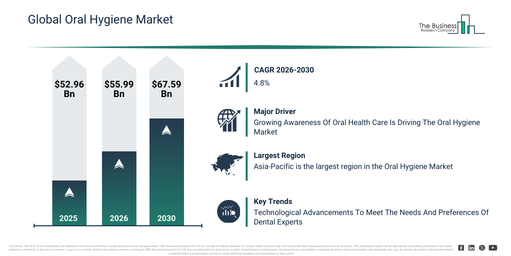
    The oral hygiene market size has experienced robust growth in recent years. It is anticipated to expand from $52.96 billion in 2025 to $55.99 billion in 2026, achieving a compound annual growth rate (CAGR) of 5.7%. This historical growth can be attributed to several factors including the rising prevalence of dental caries and gum diseases, increasing urbanization and lifestyle modifications, broader availability of oral hygiene products in retail outlets, more frequent dentist recommendations for routine oral care, and growing consumer expenditure on personal care items.

    The oral hygiene market is projected to experience consistent expansion in the coming years. This market is set to reach a value of $67.59 billion by 2030, demonstrating a compound annual growth rate (CAGR) of 4.8%. Factors driving this expansion during the forecast period include a heightened focus on preventive healthcare and overall wellness, greater availability of oral care products through e-commerce, advancements in smart and connected oral hygiene technologies, increased understanding of the connections between oral and systemic health, and a rising consumer preference for sustainable and environmentally friendly oral care solutions. Key trends anticipated during this period involve a heightened recognition of preventive oral health routines, a surge in demand for natural and herbal oral hygiene items, wider acceptance of electric toothbrushes and intelligent oral appliances, a growing preference for mouthwashes that are alcohol-free and therapeutic, and an increased emphasis on dental hygiene products tailored for children and infants.

    Access Your Free Sample Report For In-Depth Market Analysis:

    https://www.thebusinessresearchcompany.com/sample.aspx?id=15228&type=smp

    Which Key Drivers Are Affecting The Oral Hygiene Market Development?

    Increased recognition of oral health maintenance is anticipated to boost the expansion of the oral hygiene market in the future. Oral health care encompasses practices aimed at preserving the cleanliness, health, and hygiene of the mouth, teeth, gums, and associated structures, thereby preventing dental ailments and enhancing general well-being. This heightened awareness stems from its role in offering preventive dental measures, averting dental illnesses, and subsequently lowering long-term healthcare expenditures. Products within the oral healthcare sector are specifically formulated to foster the cleanliness, health, and hygiene of the mouth, teeth, and gums, contributing to overall well-being. As an illustration, data from December 2024, provided by the Centers for Medicare & Medicaid Services, a US-based federal agency, revealed that expenditures on dental services rose by 6.2 percent in 2023, reaching $173.8 billion. Consequently, the increasing consciousness regarding oral health care is propelling the expansion of the oral hygiene market.

    How Is The Oral Hygiene Market Broken Down By Segment Categories?

    The oral hygiene market covered in this report is segmented –

    1) By Product: Toothpaste, Toothbrushes And Accessories, Mouthwash And Rinses, Dental Accessories And Ancillaries, Denture Products, Dental Prosthesis Cleaning Solutions, Other Products

    2) By Distribution Channel: Supermarkets And Hypermarkets, Convenience Stores, Pharmacies, Online Stores, Other Distribution Channels

    3) By Application: Adults, Kids, Infants

    Subsegments:

    1) By Toothpaste: Fluoride Toothpaste, Herbal Toothpaste, Whitening Toothpaste, Sensitivity Toothpaste

    2) By Toothbrushes And Accessories: Manual Toothbrushes, Electric Toothbrushes, Toothbrush Heads, Toothbrush Holders

    3) By Mouthwash And Rinses: Antiseptic Mouthwash, Whitening Mouthwash, Alcohol-Free Mouthwash, Therapeutic Mouthwash

    4) By Dental Accessories And Ancillaries: Dental Floss, Tongue Scrapers, Dental Picks, Interdental Brushes

    5) By Denture Products: Denture Adhesives, Denture Cleaners, Denture Repair Kits

    6) By Dental Prosthesis Cleaning Solutions: Ultrasonic Cleaning Solutions, Chemical Cleaning Solutions

    7) By Other Products: Teeth Whitening Kits, Dental Sealants, Breath Fresheners

    What Trends Are Transforming The Oral Hygiene Market?

    Major companies operating in the oral hygiene market are increasingly focusing on introducing technologically advanced products, specifically smart, responsive, and software-enabled toothbrushes. These intelligent brushes are sophisticated toothbrushes that incorporate smart technology and software to elevate the brushing experience. They are equipped with sensors and specialized software designed to monitor various aspects of brushing. For example, in October 2023, Burst Oral Care, a US-based oral hygiene company, unveiled its Pro Sonic Toothbrush and the Curve Sonic Toothbrush, developed based on input from over 35,000 dental professionals. The Pro Sonic Toothbrush includes a new high-end color LED screen, smart, responsive software, a remarkably long (up to) 9-month rechargeable battery life, and a sensor that provides feedback after each brushing session. The Curve Sonic Toothbrush comes fully fitted with super soft tapered bristles, cleansing sonic vibrations from a powerful motor, specific modes for whitening and sensitive teeth, and a two-minute timer.

    Which Players Are Present In The Oral Hygiene Market Space?

    Major companies operating in the oral hygiene market are The Procter & Gamble Company, Johnson & Johnson, GlaxoSmithKline plc, Koninklijke Philips NV, Colgate-Palmolive Company, Reckitt Benckiser Group plc, Church & Dwight Co. Inc., Patanjali Ayurved Limited, Lion Corporation, Dabur India Ltd., Sunstar Suisse SA, Ranir LLC, Dr Fresh LLC, Haleon plc, Burst Oral Care, Hismile, Quip, Trisa AG, Dentaid, Perrigo Company plc, Amway Corp, The Himalaya Drug Company, Orkla, LG Household & Health Care Ltd, LUSH Ltd, Curaden AG, PerioSciences, Purexa Global Private Limited, ORACURA

    Get The Full Oral Hygiene Market Report:

    https://www.thebusinessresearchcompany.com/report/oral-hygiene-global-market-report

    Where Is The Oral Hygiene Market Most Concentrated Geographically?

    Asia-Pacific was the largest region in the oral hygiene market in 2025. Europe is expected to be the fastest-growing region in the forecast period. The regions covered in the oral hygiene market report are Asia-Pacific, South East Asia, Western Europe, Eastern Europe, North America, South America, Middle East, Africa.

    Request A Customized Oral Hygiene Market Report For Competitive Insights:

    https://www.thebusinessresearchcompany.com/report/oral-hygiene-global-market-report

    Browse Through More Reports Similar to the Global Oral Hygiene Market 2026, By The Business Research Company

    Oral Hygiene Market Report 2026

    https://www.thebusinessresearchcompany.com/report/oral-hygiene-global-market-report

    Artificial Saliva Market Report

    https://www.thebusinessresearchcompany.com/report/artificial-saliva-global-market-report

    Mouthwash Market Report

    https://www.thebusinessresearchcompany.com/report/mouthwash-global-market-report

    Get in touch with us:

    The Business Research Company: https://www.thebusinessresearchcompany.com/

    Americas +1 310-496-7795

    Asia +44 7882 955267 & +91 8897263534

    Europe +44 7882 955267

    Email us at info@tbrc.info

    Follow us on:

    LinkedIn: https://in.linkedin.com/company/the-business-research-company

    YouTube: https://www.youtube.com/channel/UC24_fI0rV8cR5DxlCpgmyFQ

    Global Market Model: https://www.thebusinessresearchcompany.com/global-market-model

  • Adoption Of Extended-Release Oral Expectorants Enhancing Patient Compliance Shaping The Oral Expectorant Market

    Adoption Of Extended-Release Oral Expectorants Enhancing Patient Compliance Shaping The Oral Expectorant Market

    The Business Research Company’s 2026 market reports feature enhanced tools like market attractiveness analysis, TAM assessment, and company scoring matrices, along with interactive dashboards, deeper supply chain insights, and startup coverage strengthening the depth, usability, and strategic value of insights.

    How Will The Market Value Of The Oral Expectorant Market Progress Between 2026 And 2030?

    The oral expectorant market size has demonstrated steady expansion in recent years. Its value is anticipated to rise from $4.37 billion in 2025 to $4.57 billion by 2026, exhibiting a compound annual growth rate (CAGR) of 4.7%. The market’s growth in previous periods can be attributed to factors such as a rise in respiratory infections, increasing urban air pollution levels, a growing smoking population, the widespread availability of OTC cough medications, and the expansion of retail drug store networks.

    The oral expectorant market size is projected to experience consistent expansion over the upcoming years. This market is anticipated to reach a valuation of $5.36 billion by 2030, demonstrating a compound annual growth rate (CAGR) of 4.1%. The projected expansion during this period stems from several factors, including an escalating demand for non-invasive respiratory solutions, a heightened emphasis on self-medication, broader penetration of online pharmacies, increased understanding of managing early respiratory symptoms, and continuous product advancements in mucolytic formulations. Key trends expected during the forecast period encompass a growing incidence of respiratory ailments alongside increased product demand, a rising inclination towards over-the-counter oral expectorants, wider utilization of oral liquid formulations for quicker symptom alleviation, greater uptake of combination cough and cold remedies, and an escalating need for expectorants suitable for both pediatric and geriatric populations.

    Access Your Free Sample Report For In-Depth Market Analysis:

    https://www.thebusinessresearchcompany.com/sample.aspx?id=16496&type=smp

    What Factors Are Contributing To The Growth Of The Oral Expectorant Market?

    An anticipated increase in respiratory ailments is set to drive the expansion of the oral expectorant market in the future. These illnesses encompass various diseases and conditions impacting the respiratory system, such as the lungs, airways, and other vital breathing components. The prevalence of respiratory illness cases stems from factors like air pollution, smoking, respiratory infections, and an uptick in chronic ailments like asthma and chronic obstructive pulmonary disease (COPD). Oral expectorants serve to relieve symptoms and enhance respiratory well-being for those suffering from respiratory illnesses. Furthermore, they assist in clearing mucus, facilitating easier breathing, and promoting general recovery and overall health. For example, in 2024, the U.S.-based government agency, Centre for Disease Control, reported that 8.6% of adults aged 18 and above currently have asthma. Additionally, 6.5% of children under 18 years of age currently experience asthma. Consequently, a growing population of corporate travelers is boosting the oral expectorant market.

    What Are The Different Segment Types In The Oral Expectorant Market Segment Breakdown?

    The oral expectorant market covered in this report is segmented –

    1) By Drug Type: Secretion Enhancer, Mucolytics

    2) By Dosage Form: Oral Solids, Oral Liquids, Inhalants

    3) By Medication: Prescription drugs, Over The Counter Drugs

    4) By Distribution Channel: Hospital Pharmacy, Retail Store And Drug Store, Online Pharmacies

    Subsegments:

    1) By Secretion Enhancer: Guaifenesin, Potassium Iodide

    2) By Mucolytics: Acetylcysteine, Bromhexine, Carbocisteine

    What Trends Are Shaping The Future Of The Oral Expectorant Market?

    Leading companies within the oral expectorant market are concentrating on developing advanced technological solutions, notably extended-release tablet formulations for sustained drug delivery. These innovations aim to enhance dosing convenience, maintain stable therapeutic levels, and improve patient adherence. An extended-release preparation slowly releases the active mucus-thinning compound, commonly guaifenesin, over a longer duration, thereby reducing the need for frequent doses when compared to immediate-release syrups or tablets, while offering similar mucus-loosening effectiveness. For example, Marksans Pharma, an India-based pharmaceutical company, obtained U.S. FDA approval in August 2023 for its Guaifenesin Extended-Release Tablets (600 mg and 1,200 mg, OTC). This product provides a gradual release of guaifenesin over 12 hours, consistently assisting in the loosening and thinning of bronchial secretions to make coughs more productive, simultaneously cutting down on the required daily dose count.

    Who Are The Well-Known Companies In The Oral Expectorant Market?

    Major companies operating in the oral expectorant market are Bayer AG, Sanofi S.A., GlaxoSmithKline (GSK) plc, Reckitt Benckiser Group PLC, C.H. Boehringer Sohn AG And Co. KG, Genexa Inc., Johnson & Johnson, Procter & Gamble Co., Pfizer Inc., Roche Holding AG, Merck KGaA, Perrigo Company plc, Sun Pharmaceutical Industries Ltd., Cipla Limited, Aurobindo Pharma Ltd., AstraZeneca plc, Novartis AG, Acella Pharmaceuticals LLC, Glenmark Pharmaceuticals Limited, Dabur India Ltd, ARPIMED, Mayne Pharma Inc., Aytu BioScience Inc., Tris Pharma Inc., Vernalis plc, Prestige Consumer Healthcare Inc.

    Get The Full Oral Expectorant Market Report:

    https://www.thebusinessresearchcompany.com/report/oral-expectorant-global-market-report

    Which Region Dominates The Oral Expectorant Market By Market Share?

    North America was the largest region in the oral expectorant market in 2025. The regions covered in the oral expectorant market report are Asia-Pacific, South East Asia, Western Europe, Eastern Europe, North America, South America, Middle East, Africa.

    Request A Customized Oral Expectorant Market Report For Competitive Insights:

    https://www.thebusinessresearchcompany.com/report/oral-expectorant-global-market-report

    Browse Through More Reports Similar to the Global Oral Expectorant Market 2026, By The Business Research Company

    Oral Hygiene Market Report 2026

    https://www.thebusinessresearchcompany.com/report/oral-hygiene-global-market-report

    Dental Flap Surgery Market Report

    https://www.thebusinessresearchcompany.com/report/dental-flap-surgery-global-market-report

    Dental Services Market

    https://www.thebusinessresearchcompany.com/report/dental-services-market

    Get in touch with us:

    The Business Research Company: https://www.thebusinessresearchcompany.com/

    Americas +1 310-496-7795

    Asia +44 7882 955267 & +91 8897263534

    Europe +44 7882 955267

    Email us at info@tbrc.info

    Follow us on:

    LinkedIn: https://in.linkedin.com/company/the-business-research-company

    YouTube: https://www.youtube.com/channel/UC24_fI0rV8cR5DxlCpgmyFQ

    Global Market Model: https://www.thebusinessresearchcompany.com/global-market-model

  • The Oral Care Market Growth Driven By Increasing Awareness Of Oral Hygiene

    The Oral Care Market Growth Driven By Increasing Awareness Of Oral Hygiene

    The Business Research Company’s 2026 market reports feature enhanced tools like market attractiveness analysis, TAM assessment, and company scoring matrices, along with interactive dashboards, deeper supply chain insights, and startup coverage strengthening the depth, usability, and strategic value of insights.

    What Are The Market Size Estimates For The Oral Care Market In 2026 And 2030?

    The size of the oral care market has experienced robust expansion over recent years. Projections indicate a rise from $54.68 billion in 2025 to $59.54 billion in 2026, demonstrating a compound annual growth rate (CAGR) of 8.9%. This historical growth is attributable to several factors, including the increased occurrence of dental caries and gum diseases, the expansion of urban populations and evolving lifestyles, greater adoption of fundamental oral care items, the broadening of retail and store-based distribution channels, and an uplift in endorsements from dental professionals.

    The oral care market is projected to experience substantial expansion in the coming years, reaching a size of $81.9 billion by 2030, with a compound annual growth rate (CAGR) of 8.3%. This anticipated growth can be linked to several factors, including the increasing demand for high-end and specialized oral care items, a greater emphasis on spending related to preventive healthcare, the growing acceptance of electric and battery-powered toothbrushes, the expansion of online and non-store retail avenues, and the proliferation of oral health awareness initiatives in developing countries. Key developments expected during this period involve a heightened understanding of preventive oral hygiene, a rising preference for natural and herbal oral care products, increased usage of teeth whitening and cosmetic dental items, the widespread adoption of daily oral care regimens across all demographics, and a sharpened focus on solutions for sensitivity and gum health.

    Access Your Free Sample Report For In-Depth Market Analysis:

    https://www.thebusinessresearchcompany.com/sample.aspx?id=7432&type=smp

    Which Strong Drivers Are Impacting The Oral Care Market Growth?

    The oral care market is experiencing significant growth, primarily fueled by increasing awareness of dental health care. Dental or oral health involves the teeth, gums, and mouth, striving to maintain oral wellness and prevent conditions such as gum disease and tooth decay. Oral diseases often result from various factors, including sugar consumption, cigarette use, alcohol use, and inadequate oral hygiene. Oral care is essential for upholding hygiene and keeping the mouth free from disease. For instance, in August 2025, the NHS, a U.K-based public funded health care system, reported that 35 million courses of treatment (COTs) were delivered in 2024-2025, representing a 4% increase from 2023-2024. Furthermore, in 2024-2025, COTs for adult patients grew by 2% to 23 million, and for child patients, they rose by 7% to 12 million. Thus, the growing awareness of dental health care is a key factor driving the expansion of the oral care market.

    Which Segment Classifications Are Used In The Oral Care Market Segment Analysis?

    The oral care market covered in this report is segmented –

    1) By Product Type: Toothpaste, Mouth Wash And Rinse, Teeth Whitening, Dental Floss, Tooth Brush, Orthodontic Wax

    2) By Distribution Channel: Store-Based, Non-Store-Based

    3) By End User: Hospitals, Dental Clinics

    Subsegments:

    1) By Toothpaste: Whitening Toothpaste, Sensitive Toothpaste, Herbal Toothpaste, Fluoride Toothpaste, Children’s Toothpaste

    2) By Mouth Wash And Rinse: Antiseptic Mouthwash, Cosmetic Mouthwash, Fluoride Rinse, Herbal Mouthwash

    3) By Teeth Whitening: Whitening Strips, Whitening Gels, Whitening Kits, Whitening Toothpaste

    4) By Dental Floss: Waxed Floss, Unwaxed Floss, Floss Picks, Dental Tape

    5) By Tooth Brush: Manual Toothbrush, Electric Toothbrush, Battery-Operated Toothbrush, Children’s Toothbrush

    6) By Orthodontic Wax: Mint-Flavored Wax, Unflavored Wax, Colored Orthodontic Wax

    Which Trends Are Contributing To Changes In The Oral Care Market?

    Leading companies within the oral care market are developing advanced technological products, such as the ComfortFit LED Teeth Whitening Kit and the Express Teeth Whitening Pen, to achieve a competitive edge. The ComfortFit LED Teeth Whitening Kit, equipped with Wavelength Technology, and the Express Teeth Whitening Pen utilize specific wavelengths of light, like the blue or violet spectrum, to boost the effectiveness of teeth whitening treatments. For example, in February 2023, Colgate-Palmolive Company, a US-based dental and personal-care product firm, introduced the Colgate Optic White ComfortFit LED Teeth Whitening Kit, featuring wavelength technology. This kit is specifically designed to elevate the user experience by prioritizing comfort, uniform whitening, ease of use, efficacy, and speed. It employs wavelength technology to apply a thin layer of whitening serum to the teeth using the supplied LED device for 10 minutes daily over a 10-day period, leading to rapid stain removal. This particular kit includes a flexible LED whitening light and a teeth whitening pen, offering convenient power options via your smartphone, with compatibility for both iPhone and Android devices.

    Which Firms Are Contributing To The Oral Care Market Ecosystem?

    Major companies operating in the oral care market are Procter & Gamble Co., Johnson & Johnson Services Inc., GlaxoSmithKline Plc, Church & Dwight Co. Inc., Colgate Palmolive Co., Ranir a Perrigo Company, Sunstar Group, The Clorox Company, Unilever plc, Water Pik Inc., Haleon plc, Lion Corporation, Henkel AG & Co. KGaA, Amway Corporation, GC Corporation, Dabur India Ltd., The Himalaya Drug Company, Quip, Burst, Hismile, TePe, Bite, Dr Fresh LLC, Forever Living Products International Inc., Curaprox, TePe, Oral Care AB

    Get The Full Oral Care Market Report:

    https://www.thebusinessresearchcompany.com/report/oral-care-global-market-report

    Which Region Is The Largest In The Oral Care Market?

    Asia-Pacific was the largest region in the oral care market in 2025. The regions covered in the oral care market report are Asia-Pacific, South East Asia, Western Europe, Eastern Europe, North America, South America, Middle East, Africa.

    Request A Customized Oral Care Market Report For Competitive Insights:

    https://www.thebusinessresearchcompany.com/report/oral-care-global-market-report

    Browse Through More Reports Similar to the Global Oral Care Market 2026, By The Business Research Company

    Dental Flap Surgery Market Report 2026

    https://www.thebusinessresearchcompany.com/report/dental-flap-surgery-global-market-report

    Oral Care Market Report

    https://www.thebusinessresearchcompany.com/report/oral-care-global-market-report

    Head And Neck Cancer Therapeutics Market Report

    https://www.thebusinessresearchcompany.com/report/head-and-neck-cancer-therapeutics-global-market-report

    Get in touch with us:

    The Business Research Company: https://www.thebusinessresearchcompany.com/

    Americas +1 310-496-7795

    Asia +44 7882 955267 & +91 8897263534

    Europe +44 7882 955267

    Email us at info@tbrc.info

    Follow us on:

    LinkedIn: https://in.linkedin.com/company/the-business-research-company

    YouTube: https://www.youtube.com/channel/UC24_fI0rV8cR5DxlCpgmyFQ

    Global Market Model: https://www.thebusinessresearchcompany.com/global-market-model
  • Growth In The Oral Cancer Treatment Market Driven By Rising Oral Cancer Prevalence

    Growth In The Oral Cancer Treatment Market Driven By Rising Oral Cancer Prevalence

    The Business Research Company’s 2026 market reports feature enhanced tools like market attractiveness analysis, TAM assessment, and company scoring matrices, along with interactive dashboards, deeper supply chain insights, and startup coverage strengthening the depth, usability, and strategic value of insights.

    What Expansion In Market Value Is Forecasted For The Oral Cancer Treatment Market Between 2026 And 2030?

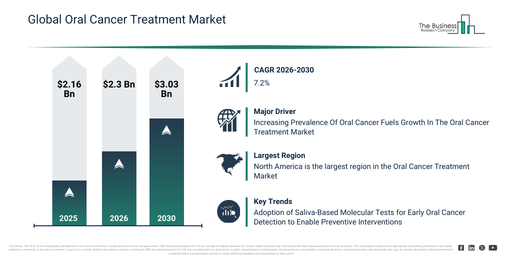
    The oral cancer treatment market has experienced robust expansion in recent years. Forecasts indicate it will increase from $2.16 billion in 2025 to $2.3 billion in 2026, driven by a compound annual growth rate (CAGR) of 6.1%. Factors contributing to this historical expansion include the rising prevalence of tobacco and alcohol use, an increase in the occurrence of oral squamous cell carcinoma, insufficient public understanding of initial oral cancer indicators, the expanding accessibility of chemotherapy and radiation facilities, and the proliferation of oncology departments within hospitals.

    The oral cancer treatment market is projected to experience substantial expansion over the coming years, reaching $3.03 billion by 2030, exhibiting a compound annual growth rate (CAGR) of 7.2%. This anticipated growth during the forecast period is driven by several factors, including the increasing demand for biological and immunotherapy treatments, a heightened emphasis on early cancer screening initiatives, the wider acceptance of personalized oncology care, the proliferation of specialized oncology clinics, and enhanced accessibility to cancer treatment in developing nations. Key trends anticipated during this period encompass a rising embrace of multimodal approaches for oral cancer treatment, greater utilization of combined chemotherapy and radiation therapy, an intensified focus on early diagnosis and stage-based treatment strategies, an increasing call for targeted and biological therapies in oral cancer management, and a growing inclination towards personalized treatment protocols tailored to individual patient health.

    Access Your Free Sample Report For In-Depth Market Analysis:

    https://www.thebusinessresearchcompany.com/sample.aspx?id=13254&type=smp

    What Key Factors Are Shaping The Oral Cancer Treatment Market Landscape?

    The expanding occurrence of oral cancer is anticipated to drive the development of the oral cancer treatment market moving forward. This condition, a malignant neoplasm, impacts the oral cavity’s tissues, marked by uncontrolled cellular proliferation and penetration. Treatment for oral cancer commonly encompasses surgical removal, radiation therapy, and chemotherapy, varying with the disease’s stage and severity. As an illustration, the American Cancer Society, a US-based government organization, projected in October 2025 that in 2025, approximately 59,660 fresh instances of oral cavity (mouth) and pharynx (throat) cancer would be identified in the US, with 12,770 fatalities from the illness. Furthermore, the incidence rates are nearly 3 times greater among men compared to women. Consequently, the rising prevalence of oral cancer is fueling the expansion of the oral cancer treatment market.

    How Is The Oral Cancer Treatment Market Organized By Segment Classification?

    The oral cancer treatment market covered in this report is segmented –

    1) By Type: Oral Squamous Cell Carcinoma, Oral Verrucous Carcinoma, Mucoepidermoid Carcinoma, Oral Cavity Lymphomas

    2) By Therapy Type: Chemotherapy, Radiation Therapy, Biological Therapy

    3) By Route Of Administration: Oral, Injectable, Other Routes Of Administration

    4) By End-User: Hospitals, Homecare, Specialty Clinics, Other End-Users

    Subsegments:

    1) By Oral Squamous Cell Carcinoma: Surgery, Radiation Therapy, Chemotherapy, Targeted Therapy

    2) By Oral Verrucous Carcinoma: Surgical Excision, Radiation Therapy

    3) By Mucoepidermoid Carcinoma: Surgical Resection, Radiation Therapy, Chemotherapy

    4) By Oral Cavity Lymphomas: Chemotherapy, Radiation Therapy, Immunotherapy

    What Market Trends Are Affecting The Oral Cancer Treatment Market?

    Leading enterprises within the oral cancer treatment market are concentrating their efforts on creating technological breakthroughs, notably saliva-based molecular diagnostic tests, with the aim of facilitating early detection and implementing preventative measures. Such a molecular test, utilizing saliva, meticulously examines microbial and mitochondrial activity, quantifies numerous biochemical pathways, and employs machine learning–powered algorithms to pinpoint molecular indicators of oral cancer even before visible lesions manifest, thereby enabling prompt therapeutic direction and effective risk reduction. A notable illustration of this trend occurred in November 2025 when Genefitletics, an emerging biotech company based in India, introduced ORAONCO, which is a diagnostic test for oral cancer that uses saliva. This product works by analyzing 27 biochemical pathways across 7 molecular mechanisms, delivering predictive insights for adults at high risk and suggesting nutritional and therapeutic interventions designed to diminish carcinogenic molecules prior to the advancement of the cancer.

    Who Are The Industry Participants Involved In The Oral Cancer Treatment Market?

    Major companies operating in the oral cancer treatment market are Pfizer Inc., F. Hoffmann La Roche Ltd., Merck & Co., AbbVie Inc., Novartis AG, Bayer AG, Sanofi-Aventis LLC, Bristol Myers Squibb, AstraZeneca plc, GlaxoSmithKline plc, Eli Lilly and Company, C.H. Boehringer Sohn AG & Co. KG., Viatris Inc., Teva Pharmaceuticals Industries Ltd., MD Anderson Cancer Center, Memorial Sloan Kettering Cancer Center, Fred Hutchinson Cancer Research Center, Genentech Inc., BioNTech SE, Transgene S A, ALX Oncology Inc., Iovance Biotherapeutics Inc., Kura Oncology Inc., NeoImmuneTech Inc.

    Get The Full Oral Cancer Treatment Market Report:

    https://www.thebusinessresearchcompany.com/report/oral-cancer-treatment-global-market-report

    Which Region Leads The Oral Cancer Treatment Market In Terms Of Market Share?

    North America was the largest region in the oral cancer treatment market in 2025. Asia-Pacific is expected to be the fastest-growing region in the forecast period. The regions covered in the oral cancer treatment market report are Asia-Pacific, South East Asia, Western Europe, Eastern Europe, North America, South America, Middle East, Africa.

    Request A Customized Oral Cancer Treatment Market Report For Competitive Insights:

    https://www.thebusinessresearchcompany.com/report/oral-cancer-treatment-global-market-report

    Browse Through More Reports Similar to the Global Oral Cancer Treatment Market 2026, By The Business Research Company

    Digital Genome Market Report 2026

    https://www.thebusinessresearchcompany.com/report/digital-genome-global-market-report

    Optical Imaging Market Report

    https://www.thebusinessresearchcompany.com/report/optical-imaging-global-market-report

    Genomics Market Report

    https://www.thebusinessresearchcompany.com/report/genomics-global-market-report

    Get in touch with us:

    The Business Research Company: https://www.thebusinessresearchcompany.com/

    Americas +1 310-496-7795

    Asia +44 7882 955267 & +91 8897263534

    Europe +44 7882 955267

    Email us at info@tbrc.info

    Follow us on:

    LinkedIn: https://in.linkedin.com/company/the-business-research-company

    YouTube: https://www.youtube.com/channel/UC24_fI0rV8cR5DxlCpgmyFQ

    Global Market Model: https://www.thebusinessresearchcompany.com/global-market-model

  • Optical Genome Mapping Market Analysis Highlighting Growth Potential And Market Outlook

    Optical Genome Mapping Market Analysis Highlighting Growth Potential And Market Outlook

    The Business Research Company’s 2026 market reports feature enhanced tools like market attractiveness analysis, TAM assessment, and company scoring matrices, along with interactive dashboards, deeper supply chain insights, and startup coverage strengthening the depth, usability, and strategic value of insights.

    How Large Will The Optical Genome Mapping Market Be By 2030 Compared To Its 2026 Market Size?

    The optical genome mapping market has expanded significantly in recent years. This market is projected to increase from $0.23 billion in 2025 to $0.29 billion in 2026, exhibiting a compound annual growth rate (CAGR) of 29.4%. Historically, this growth has been fueled by factors such as the limitations of next generation sequencing in detecting large structural variants, increasing genomic research funding, the rising prevalence of genetic disorders, a growing demand for advanced cytogenetic techniques, and technological advancements in imaging and DNA labeling.

    The optical genome mapping market size is projected to experience substantial growth over the coming years. By 2030, it is anticipated to reach $0.74 billion, exhibiting a compound annual growth rate (CAGR) of 25.9%. This expansion during the forecast period is driven by factors such as the increasing incorporation of OGM in clinical laboratories, greater investment in precision medicine programs, a rise in the uptake of automated genomic analysis platforms, broadening applications within oncology and hematological malignancies, and a decrease in the expenses associated with genomic analysis technologies. Key developments expected during this period include the expanding utilization of optical genome mapping for structural variant detection, its growing application in rare disease and cancer research, an escalating demand for high-resolution long-read genomic analysis, the extension of OGM applications into clinical diagnostics, and an increasing inclination towards using OGM in conjunction with sequencing technologies.

    Access Your Free Sample Report For In-Depth Market Analysis:

    https://www.thebusinessresearchcompany.com/sample.aspx?id=15882&type=smp

    Which Factors Are Influencing The Growth Of The Optical Genome Mapping Market?

    A key factor anticipated to drive the future expansion of the optical genome mapping market is the rising demand for precision medicine. Precision medicine represents a healthcare strategy tailored to individual traits, including genetic composition, lifestyle choices, and environmental factors, for medical treatment and prevention. The need for precision medicine is fueled by several factors: a growing incidence of chronic illnesses, innovations in genomic technologies, greater investment and funding, and patients’ desire for customized care. optical genome mapping boosts the effectiveness of precision medicine by offering a precise and thorough insight into genomic changes linked to diverse diseases. As an illustration, data from February 2024, shared by the US-based non-profit Personalized Medicine Coalition, revealed that the FDA sanctioned 16 new personalized treatments for individuals with rare conditions in 2023, an increase from six in 2022. Consequently, the heightened demand for precision medicine is acting as a catalyst for the growth of the optical genome mapping market.

    Which Segments Define The Optical Genome Mapping Market Segment Structure?

    The optical genome mapping market covered in this report is segmented –

    1) By Product: Instruments, Consumables And Reagents, Software, Services

    2) By Application: Structural Variant Detection, Genome Assembly, Microbial Strain Typing, Other Applications

    3) By End-User: Biotechnology And Pharmaceutical Companies, Clinical Laboratories, Academic Research Institutes, Other End-Users

    Subsegments:

    1) By Instruments: Optical Genome Mapping Systems, Imaging Systems, Detection And Analysis Devices

    2) By Consumables And Reagents: DNA Preparation Kits, Labeling Reagents, Flow Cells

    3) By Software: Data Analysis Software, Image Processing Software, Mapping Software

    4) By Services: Data Analysis Services, Technical Support Services, Training And Consultation Services

    Which Trends Are Influencing Demand In The Optical Genome Mapping Market?

    Leading companies in the optical genome mapping (OGM) market are concentrating on developing technological advancements, specifically OGM-based laboratory-developed tests (LDTs) for genome-wide structural variant detection. These efforts aim to enhance diagnostic accuracy, improve workflow efficiency, and lessen dependence on multiple traditional cytogenetic tests. An OGM-based LDT functions by utilizing ultra-long, high-molecular-weight DNA molecules which are fluorescently labeled and then linearized in nanochannels. This method facilitates high-resolution imaging to detect insertions, deletions, translocations, and repeat expansions across the genome, features often overlooked by short-read sequencing or microarrays. For instance, in March 2023, Bionano Laboratories, a U.S.-based CLIA-certified subsidiary of Bionano Genomics, introduced the OGM Dx Postnatal Whole Genome SV test. This product allows for genome-wide detection of structural variants in patients suffering from developmental disorders, intellectual disability, autism spectrum disorder, epilepsy, or undiagnosed genetic conditions. It integrates high-resolution OGM with variant calling in a single-test workflow, thereby reducing the need for numerous classical cytogenetic assays and offering quicker, more comprehensive diagnostic insights.

    Who Are The Established Players Within The Optical Genome Mapping Market?

    Major companies operating in the optical genome mapping market are Bionano Genomics Inc., 10x Genomics Inc., Oxford Nanopore Technologies plc, Pacific Biosciences of California Inc., BioSkryb Genomics, Phase Genomics Inc., Nabsys, Daicel Arbor Biosciences, OpGen, Thermo Fisher Scientific Inc., Roche Sequencing Solutions, Genomic Vision SA, INRAE French Plant Genomic Resources Center, Source BioScience, Resolve Biosciences, Arima Genomics Inc., GnuBIO Inc., Longas Technologies, GE Healthcare Life Sciences, Danaher Corporation, Strand Life Sciences, Berry Genomics, Dante Genomics

    Get The Full Optical Genome Mapping Market Report:

    https://www.thebusinessresearchcompany.com/report/optical-genome-mapping-global-market-report

    Which Region Leads The Optical Genome Mapping Market In Overall Market Size?

    North America was the largest region in the optical genome mapping market in 2025. Asia-Pacific is expected to be the fastest-growing region in the forecast period. The regions covered in the optical genome mapping market report are Asia-Pacific, South East Asia, Western Europe, Eastern Europe, North America, South America, Middle East, Africa.

    Request A Customized Optical Genome Mapping Market Report For Competitive Insights:

    https://www.thebusinessresearchcompany.com/report/optical-genome-mapping-global-market-report

    Browse Through More Reports Similar to the Global Optical Genome Mapping Market 2026, By The Business Research Company

    Optic Atrophy Management Market Report 2026

    https://www.thebusinessresearchcompany.com/report/optic-atrophy-management-global-market-report

    Peripheral Neuropathy Market Report

    https://www.thebusinessresearchcompany.com/report/peripheral-neuropathy-global-market-report

    Diabetic Neuropathy Market Report

    https://www.thebusinessresearchcompany.com/report/diabetic-neuropathy-global-market-report

    Get in touch with us:

    The Business Research Company: https://www.thebusinessresearchcompany.com/

    Americas +1 310-496-7795

    Asia +44 7882 955267 & +91 8897263534

    Europe +44 7882 955267

    Email us at info@tbrc.info

    Follow us on:

    LinkedIn: https://in.linkedin.com/company/the-business-research-company

    YouTube: https://www.youtube.com/channel/UC24_fI0rV8cR5DxlCpgmyFQ

    Global Market Model: https://www.thebusinessresearchcompany.com/global-market-model

  • Optic Neuropathy Management Market Forecast Showing Industry Expansion

    Optic Neuropathy Management Market Forecast Showing Industry Expansion

    The Business Research Company’s 2026 market reports feature enhanced tools like market attractiveness analysis, TAM assessment, and company scoring matrices, along with interactive dashboards, deeper supply chain insights, and startup coverage strengthening the depth, usability, and strategic value of insights.

    What Is The Projected Increase In Market Value Of The Optic Neuropathy Management Market During 2026–2030?

    The optic neuropathy management market has experienced significant growth in recent years. This market is projected to expand from $3.83 billion in 2025 to reach $4.06 billion by 2026, exhibiting a compound annual growth rate (CAGR) of 6.0%. The historical expansion can be attributed to several factors, including the increasing prevalence of glaucoma-related optic neuropathy, the limited treatment options available for advanced optic nerve damage, a growing incidence of ischemic and inflammatory optic neuropathies, the rising use of corticosteroids in acute management, and a general lack of awareness leading to delayed diagnosis in early stages.

    The optic neuropathy management market is projected to experience robust expansion in the coming years. This market is anticipated to reach $5.07 billion by 2030, exhibiting a compound annual growth rate (CAGR) of 5.7%. Several factors contribute to this growth over the forecast period, including the increasing clinical acceptance of stem cell and gene therapy methods, heightened investment in neuroprotection research, a growing need for customized optic neuropathy treatment strategies, the expansion of specialized ophthalmology and neurology clinics, and enhanced access to sophisticated diagnostic imaging technologies. Key trends projected for this period encompass a heightened emphasis on early detection and ongoing monitoring of optic neuropathy, the wider uptake of neuroprotective and antioxidant drugs, an increasing application of minimally invasive surgical procedures for optic nerve damage, a growing need for vision rehabilitation and low vision assistance, and the broader integration of multidisciplinary care approaches in managing optic neuropathy.

    Access Your Free Sample Report For In-Depth Market Analysis:

    https://www.thebusinessresearchcompany.com/sample.aspx?id=21236&type=smp

    What Leading Drivers Are Supporting The Optic Neuropathy Management Market Expansion?

    An anticipated increase in the prevalence of eye disease is poised to propel the growth of the optic neuropathy management market moving forward. Eye disease refers to any condition that impacts the structure or function of the eyes, often leading to impaired vision or related symptoms. This rise in prevalence is driven by an aging demographic, extended screen time, poor lifestyle choices, and underlying health conditions such as diabetes. Optic neuropathy management plays a role in reducing the prevalence of eye disease by preventing further optic nerve damage and preserving vision. For instance, in February 2025, according to the Department of Health and Social Care, a UK-based government department, approximately 2 million people in the UK are living with some degree of sight loss, with this number expected to increase to 2.7 million by 2030. Consequently, the increasing prevalence of eye disease is driving the growth of the optic neuropathy management market.

    How Is The Optic Neuropathy Management Market Segmented Across Different Segment Categories?

    The optic neuropathy management market covered in this report is segmented –

    1) By Treatment Type: Medications, Surgery, Other Treatment Types

    2) By Diagnosis: Imaging Tests, Blood Tests, Other Diagnosis

    3) By End-User: Hospitals, Specialty Clinics, Ambulatory Surgical Centers, Other End-Users

    Subsegments:

    1) By Medications: Corticosteroids, Neuroprotective Agents, Antioxidants, Immunosuppressants, Prostaglandin Analogs

    2) By Surgery: Optic Nerve Decompression Surgery, Optic Nerve Transplantation, Retinal Implant Surgery

    3) By Other Treatment Types: Low Vision Aids, Stem Cell Therapy, Gene Therapy

    What Emerging Trends Are Seen In The Optic Neuropathy Management Market?

    Major companies in the optic neuropathy management market are focusing on creating novel therapies, such as monoclonal antibody treatment, to secure a competitive edge. Monoclonal antibodies are proteins engineered in labs to replicate the immune system’s capacity to combat harmful pathogens like viruses and bacteria. For instance, in March 2023, Horizon Therapeutics, an Ireland-based company, unveiled a new analysis of MRI data for their medication, UPLIZNA (inebilizumab). This analysis revealed that UPLIZNA decreases the development of asymptomatic optic nerve lesions in individuals with neuromyelitis optica spectrum disorder (NMOSD). This demonstrates Horizon’s dedication to providing advanced treatments for rare conditions such as NMOSD, gout, and thyroid eye disease. UPLIZNA is a monoclonal antibody developed to treat NMOSD by specifically targeting and eliminating harmful B cells, thereby reducing inflammation and preventing further damage to the central nervous system and optic nerves, ultimately leading to fewer relapses and preserving vision.

    Which Organizations Play A Role In The Optic Neuropathy Management Market Landscape?

    Major companies operating in the optic neuropathy management market are Pfizer Inc., F. Hoffmann-La Roche AG, Bayer AG, Novartis AG, Merck KGaA, Regeneron Pharmaceuticals Inc., Bausch Health Companies Inc., Santen Pharmaceutical Co. Ltd., Aerie Pharmaceuticals, Neurophth Therapeutics, GenSight Biologics S.A., Stealth BioTherapeutics, Oculis Holding AG, Neurotech Pharmaceuticals Inc., Quark Pharmaceuticals Inc., Astellas Pharma Inc., Ionis Pharmaceuticals Inc., Apellis Pharmaceuticals, Biogen Inc., Johnson & Johnson Vision, Sanofi S.A., Sun Pharmaceutical Industries Ltd., Alcon Inc., NicOx SA

    Get The Full Optic Neuropathy Management Market Report:

    https://www.thebusinessresearchcompany.com/report/optic-neuropathy-management-global-market-report

    Which Region Is The Top Contributor To The Optic Neuropathy Management Market By Share?

    North America was the largest region in the optic neuropathy management market in 2025. Asia-Pacific is expected to be the fastest-growing region in the forecast period. The regions covered in the optic neuropathy management market report are Asia-Pacific, South East Asia, Western Europe, Eastern Europe, North America, South America, Middle East, Africa.

    Request A Customized Optic Neuropathy Management Market Report For Competitive Insights:

    https://www.thebusinessresearchcompany.com/report/optic-neuropathy-management-global-market-report

    Browse Through More Reports Similar to the Global Optic Neuropathy Management Market 2026, By The Business Research Company

    Retinal Disorder Treatment Market Report 2026

    https://www.thebusinessresearchcompany.com/report/retinal-disorder-treatment-global-market-report

    Optic Atrophy Management Market Report

    https://www.thebusinessresearchcompany.com/report/optic-atrophy-management-global-market-report

    Ocular Hypertension Treatment Market Report

    https://www.thebusinessresearchcompany.com/report/ocular-hypertension-treatment-global-market-report

    Get in touch with us:

    The Business Research Company: https://www.thebusinessresearchcompany.com/

    Americas +1 310-496-7795

    Asia +44 7882 955267 & +91 8897263534

    Europe +44 7882 955267

    Email us at info@tbrc.info

    Follow us on:

    LinkedIn: https://in.linkedin.com/company/the-business-research-company

    YouTube: https://www.youtube.com/channel/UC24_fI0rV8cR5DxlCpgmyFQ

    Global Market Model: https://www.thebusinessresearchcompany.com/global-market-model
  • Optic Nerve Disorders Treatment Market Trends Influencing Market Growth

    Optic Nerve Disorders Treatment Market Trends Influencing Market Growth

    The Business Research Company’s 2026 market reports feature enhanced tools like market attractiveness analysis, TAM assessment, and company scoring matrices, along with interactive dashboards, deeper supply chain insights, and startup coverage strengthening the depth, usability, and strategic value of insights.

    How Is The Market Size Of The Optic Nerve Disorders Treatment Market Expected To Change From 2026 To 2030?

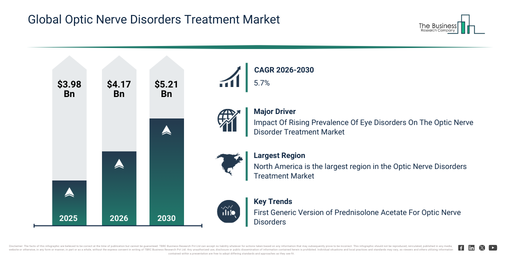
    The market size for optic nerve disorders treatment has observed consistent growth in recent years. It is projected to rise from $3.98 billion in 2025 to $4.17 billion in 2026, at a compound annual growth rate (CAGR) of 4.6%. The expansion witnessed in the past can be ascribed to a high prevalence of glaucoma and optic neuritis cases, the limited efficacy of traditional monotherapies, a rising incidence of autoimmune-related optic nerve disorders, the increasing application of corticosteroids in acute optic conditions, and a lack of early diagnostic access in developing regions.

    The optic nerve disorders treatment market is projected to experience substantial expansion over the upcoming years, with its valuation expected to reach $5.21 billion by 2030, demonstrating a compound annual growth rate (CAGR) of 5.7%. This anticipated growth during the forecast period is driven by several factors, including increasing clinical research in neuroprotection therapies, the greater uptake of immunomodulators and biologics, enhanced awareness of inherited optic nerve conditions, the expansion of specialized ophthalmic care facilities, and a rising demand for customized treatment plans. Key trends identified for the forecast period encompass a heightened emphasis on prompt diagnosis and intervention for optic nerve damage, the increased use of combination therapies for both inflammatory and degenerative optic disorders, a growing focus on sustained disease management and vision retention, an escalating need for neuroprotective and supportive therapeutic strategies, and the increasing integration of multidisciplinary care approaches in treating optic nerve disorders.

    Access Your Free Sample Report For In-Depth Market Analysis:

    https://www.thebusinessresearchcompany.com/sample.aspx?id=12997&type=smp

    Which Key Factors Are Driving The Optic Nerve Disorders Treatment Market Growth?

    An anticipated rise in the occurrence of eye conditions is projected to drive expansion within the optic nerve disorder treatment market. Eye disorders are defined as diseases or ailments impacting the tissues and various parts of the eyes. Treatment for optic nerve disorders assists individuals with eye conditions, addressing diverse eye ailments like glaucoma by either retarding or averting additional damage to the optic nerve. For example, reports from GOV.UK, a U.K-based government agency, in July 2025 indicated that nearly 3.7 million individuals visited hospital outpatient vision clinics in England during the financial year ending 2024. This represented a rate of 6,127 (6,121 to 6,134) per 100,000 population. Consequently, the rising frequency of eye disorders is fueling the expansion of the optic nerve disorder treatment market.

    What Are The Main Segments Within The Optic Nerve Disorders Treatment Market Segment Structure?

    The optic nerve disorders treatment market covered in this report is segmented –

    1) By Treatment Type: Steroidal Therapy, Immunomodulators therapy, Other Treatment Types

    2) By Indication: Glaucoma, Optic Neuritis, Optic Neuropathy, Congenital Optic Atrophy, Other Indications

    3) By End User: Hospitals, Ambulatory Surgery Centers, Clinics, Other End Users

    Subsegments:

    1) By Steroidal Therapy: Corticosteroids, Intravitreal Steroid Injections, Oral Steroids

    2) By Immunomodulators Therapy: Disease-Modifying Antirheumatic Drugs (DMARDs), Biologic Agents, Intravenous Immunoglobulin (IVIG)

    3) By Other Treatment Types: Optical Nerve Decompression Surgery, Neuroprotective Agents, Supportive Therapies

    Which Trends Are Guiding The Direction Of The Optic Nerve Disorders Treatment Market?

    Leading companies active in the optic nerve disorder treatment market are introducing innovations, such as generic suspensions, to maintain their market standing. Generic suspensions for optic nerve disorders typically incorporate corticosteroids or other anti-inflammatory agents in liquid form, engineered to decrease inflammation and manage symptoms in conditions like optic neuritis or other optic nerve diseases. For example, in October 2024, Lupin, an India-based pharmaceutical company, launched the first generic version of prednisolone cetate ophthalmic suspension. This launch signifies a considerable improvement in the treatment possibilities for patients suffering from optic nerve disorders. The generic version of Prednisolone Acetate Ophthalmic Suspension presents a more economical option compared to its branded equivalent, thus making it available to a broader patient population. This specific formulation is intended to alleviate inflammation and treat various eye conditions, including those that affect the optic nerve.

    Who Are The Companies Participating In The Optic Nerve Disorders Treatment Market?

    Major companies operating in the optic nerve disorders treatment market are Pfizer Inc., F. Hoffmann-La Roche Ltd., Merck and Co. Inc., Novartis AG, Regeneron Pharmaceuticals Inc., Alcon Inc., Sun Pharmaceutical Industries Limited, Bausch + Lomb Corporation, Horizon Therapeutics Inc., Santen Pharmaceutical Co. Ltd., Allergan Inc., Akorn Inc., Ionis Pharmaceuticals Inc., Lumenis Ltd., Glaukos Corporation, Nidek Co. Ltd., Aerie Pharmaceuticals Inc., Spark Therapeutics Inc., IRIDEX Corporation, Kowa Company Limited, New World Medical Inc., Heidelberg Engineering GmbH, Editas Medicine Inc., Quark Pharmaceuticals Inc., iSTAR Medical SA, Neurotech Pharmaceuticals Inc., Nicox SA., GenSight Biologics S.A., Inotek Pharmaceuticals Co., Oculis Holding AG

    Get The Full Optic Nerve Disorders Treatment Market Report:

    https://www.thebusinessresearchcompany.com/report/optic-nerve-disorders-treatment-global-market-report

    Which Region Represents The Largest Share Of The Optic Nerve Disorders Treatment Market?

    North America was the largest region in the optic nerve disorders treatment market in 2025. The regions covered in the optic nerve disorders treatment market report are Asia-Pacific, South East Asia, Western Europe, Eastern Europe, North America, South America, Middle East, Africa.

    Request A Customized Optic Nerve Disorders Treatment Market Report For Competitive Insights:

    https://www.thebusinessresearchcompany.com/report/optic-nerve-disorders-treatment-global-market-report

    Browse Through More Reports Similar to the Global Optic Nerve Disorders Treatment Market 2026, By The Business Research Company

    Optic Nerve Disorders Treatment Market Report 2026

    https://www.thebusinessresearchcompany.com/report/optic-nerve-disorders-treatment-global-market-report

    Ocular Hypertension Treatment Market Report

    https://www.thebusinessresearchcompany.com/report/ocular-hypertension-treatment-global-market-report

    Retinal Disorder Treatment Market Report

    https://www.thebusinessresearchcompany.com/report/retinal-disorder-treatment-global-market-report

    Get in touch with us:

    The Business Research Company: https://www.thebusinessresearchcompany.com/

    Americas +1 310-496-7795

    Asia +44 7882 955267 & +91 8897263534

    Europe +44 7882 955267

    Email us at info@tbrc.info

    Follow us on:

    LinkedIn: https://in.linkedin.com/company/the-business-research-company

    YouTube: https://www.youtube.com/channel/UC24_fI0rV8cR5DxlCpgmyFQ

    Global Market Model: https://www.thebusinessresearchcompany.com/global-market-model

  • Optic Atrophy Management Market Growth Patterns Highlighting Industry Expansion Through 2030

    Optic Atrophy Management Market Growth Patterns Highlighting Industry Expansion Through 2030

    The Business Research Company’s 2026 market reports feature enhanced tools like market attractiveness analysis, TAM assessment, and company scoring matrices, along with interactive dashboards, deeper supply chain insights, and startup coverage strengthening the depth, usability, and strategic value of insights.

    From Its 2026 Market Size, What Value Is The Optic Atrophy Management Market Projected To Reach By 2030?

    The optic atrophy management market size has shown significant growth in recent years. It is anticipated to increase from $8.91 billion in 2025 to $9.51 billion in 2026, with a compound annual growth rate (CAGR) of 6.8%. The expansion witnessed in previous periods can be linked to the high prevalence of optic nerve damage resulting from glaucoma and ischemic disorders, the restricted availability of curative treatments, a rising occurrence of infectious and drug-induced optic neuropathy, delayed diagnoses within developing healthcare systems, and a reliance on symptomatic and supportive treatment methodologies.

    The optic atrophy management market is projected to experience robust expansion over the coming years. Its valuation is anticipated to reach $12.32 billion by 2030, exhibiting a compound annual growth rate (CAGR) of 6.7%. This anticipated growth during the forecast period stems from factors such as increasing investments in neuro-ophthalmology research, heightened awareness of optic atrophy among medical professionals, a growing elderly demographic prone to increased neurodegenerative risk, the proliferation of sophisticated diagnostic and imaging technologies, and an intensifying focus on tailored and enduring vision care strategies. Key trends projected for this period encompass an elevated focus on the early detection and surveillance of optic nerve degeneration, the wider implementation of vision rehabilitation and supportive care initiatives, a stronger emphasis on addressing co-existing neurological and systemic ailments, an escalating need for neuroprotective and disease-modifying treatments, and the expanding application of collaborative, multidisciplinary treatment methods in vision care.

    Access Your Free Sample Report For In-Depth Market Analysis:

    https://www.thebusinessresearchcompany.com/sample.aspx?id=13499&type=smp

    What Primary Drivers Are Shaping The Optic Atrophy Management Market?

    The expanding occurrence of diabetes is anticipated to fuel the future expansion of the optic atrophy management market. This chronic condition is marked by high blood glucose levels, stemming from either inadequate insulin production or the body’s inefficient utilization of insulin. Managing optic atrophy offers advantages to individuals with diabetes, especially those with conditions like Wolfram syndrome, by tackling progressive vision loss linked to nerve degeneration. This helps in preventing or decelerating the advancement of diabetic eye complications. As an illustration, figures from Diabetes Canada, a non-profit organization based in Canada, indicated in February 2023 that the estimated prevalence of diabetes in Canada is expected to rise from 2,409,000 cases (representing 15% of the population) in 2023 to 3,009,000 cases (accounting for 17% of the population) by 2033. Consequently, the rising prevalence of diabetes is a significant factor driving the expansion of the optic atrophy management market.

    How Is Segmentation Applied In The Optic Atrophy Management Market Segment Analysis?

    The optic atrophy management market covered in this report is segmented –

    1) By Drug Type: Disulfiram, Amebicides, Ethambutol, Isoniazid, Chloramphenicol, Vincristine, Ciclosporin, Cimetidine

    2) By Route Of Administration: Oral, Injectable

    3) By Distribution Channel: Hospital Pharmacies, Retail Pharmacies, Online Pharmacies

    4) By End-User: Hospitals, Specialty Clinics, Ambulatory Surgical Centers, Rehabilitation Centers

    Subsegments:

    1) By Disulfiram: Oral Disulfiram Tablets, Low-Dose Disulfiram Therapy, Adjunct Neuroprotective Disulfiram Use

    2) By Amebicides: Metronidazole-Based Amebicides, Tinidazole-Based Amebicides, Combination Amebicidal Therapy

    3) By Ethambutol: Low-Dose Ethambutol Regimens, Dose-Adjusted Ethambutol Therapy, Ethambutol With Visual Monitoring Protocols

    4) By Isoniazid: Standard Isoniazid Therapy, Pyridoxine-Supplemented Isoniazid Therapy, Modified-Dose Isoniazid Regimens

    5) By Chloramphenicol: Oral Chloramphenicol Therapy, Injectable Chloramphenicol Therapy, Short-Term Chloramphenicol Use

    6) By Vincristine: Low-Dose Vincristine Therapy, Intravenous Vincristine Administration, Combination Chemotherapy Regimens With Vincristine

    7) By Ciclosporin: Oral Ciclosporin Therapy, Immunomodulatory Ciclosporin Regimens, Dose-Titrated Ciclosporin Treatment

    8) By Cimetidine: Oral Cimetidine Therapy, Adjunctive Cimetidine Use, Dose-Adjusted Cimetidine Regimens

    What Trends Are Affecting The Growth Of The Optic Atrophy Management Market?

    Leading companies engaged in the optic atrophy management market are increasingly prioritizing conducting trials to develop specific therapies for rare genetic disorders, aiming to secure a competitive edge. These targeted therapies for rare genetic disorders endeavor to address the fundamental genetic origin of the condition. This involves introducing genetic material into cells to correct or replace a faulty gene, thereby tackling the underlying cause of the disease. For instance, in April 2023, Stoke Therapeutics, Inc., a US-based biotechnology firm, obtained approval from the Medicines and Healthcare Products Regulatory Agency (MHRA) in the UK for its clinical trial application to commence the Phase I/II OSPREY trial of STK-002. This trial seeks to treat autosomal dominant optic atrophy (ADOA), which is the most common inherited optic nerve disorder causing progressive and irreversible vision loss in both eyes, typically manifesting within the first decade of life. It is noteworthy that there are currently no approved treatments for this condition, and the STK-002 therapy is expected to decelerate or potentially arrest the progression of vision loss in individuals afflicted with autosomal dominant optic atrophy (ADOA).

    Who Are The Companies Participating In The Optic Atrophy Management Market Environment?

    Major companies operating in the optic atrophy management market are Pfizer Inc., Johnson And Johnson, F. Hoffmann-La Roche AG, AbbVie Inc., Bayer AG, Novartis AG, Bristol-Myers Squibb Company, Sanofi SA, GlaxoSmithKline plc, Eli Lilly And Company, Boehringer Ingelheim International GmbH., Teva Pharmaceuticals, Viatris (Mylan N.V.), Astellas Pharma Inc, Bausch Health Companies Inc., Sumitomo Dainippon Pharma Co. Ltd, Bausch And Lomb Inc., Aurobindo Pharma, Cipla Ltd, Apotex Inc. , Zydus Cadila, Santen Pharmaceutical Co. Ltd, Lupin, Allergan ple., LEO Pharma A/S, Aerie Pharmaceuticals Inc., Neurophth Therapeutics Inc, Stoke Therapeutics Inc, Bionure Farma S.L., Mallinckrodt Pharmaceuticals, Ixchel Pharma LLC

    Get The Full Optic Atrophy Management Market Report:

    https://www.thebusinessresearchcompany.com/report/optic-atrophy-management-global-market-report

    Which Geographic Region Dominates The Optic Atrophy Management Market?

    North America was the largest region in the optic atrophy management market in 2025. The regions covered in the optic atrophy management market report are Asia-Pacific, South East Asia, Western Europe, Eastern Europe, North America, South America, Middle East, Africa.

    Request A Customized Optic Atrophy Management Market Report For Competitive Insights:

    https://www.thebusinessresearchcompany.com/report/optic-atrophy-management-global-market-report

    Browse Through More Reports Similar to the Global Optic Atrophy Management Market 2026, By The Business Research Company

    Constipation Treatment Market Report 2026

    https://www.thebusinessresearchcompany.com/report/constipation-treatment-global-market-report

    Constipation Laxative Market Report

    https://www.thebusinessresearchcompany.com/report/constipation-laxative-global-market-report

    Migraine Treatment Market Report

    https://www.thebusinessresearchcompany.com/report/migraine-treatment-global-market-report

    Get in touch with us:

    The Business Research Company: https://www.thebusinessresearchcompany.com/

    Americas +1 310-496-7795

    Asia +44 7882 955267 & +91 8897263534

    Europe +44 7882 955267

    Email us at info@tbrc.info

    Follow us on:

    LinkedIn: https://in.linkedin.com/company/the-business-research-company

    YouTube: https://www.youtube.com/channel/UC24_fI0rV8cR5DxlCpgmyFQ

    Global Market Model: https://www.thebusinessresearchcompany.com/global-market-model
  • Opioid-Induced Constipation Treatment Market Insights Covering Growth Drivers And Market Trends

    Opioid-Induced Constipation Treatment Market Insights Covering Growth Drivers And Market Trends

    The Business Research Company’s 2026 market reports feature enhanced tools like market attractiveness analysis, TAM assessment, and company scoring matrices, along with interactive dashboards, deeper supply chain insights, and startup coverage strengthening the depth, usability, and strategic value of insights.

    How Much Growth In Market Value Is Expected For The Opioid-Induced Constipation Treatment Market Between 2026 And 2030?

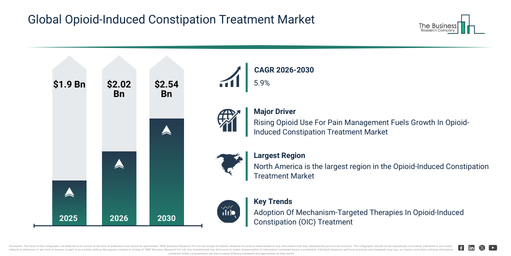
    The opioid-induced constipation treatment market size has experienced robust expansion in recent years. This market is projected to expand from $1.9 billion in 2025 to $2.02 billion in 2026, demonstrating a compound annual growth rate (CAGR) of 6.7%. Historically, this market’s growth has been fueled by several factors, including the extensive use of opioids for managing chronic pain, the inadequate efficacy of conventional laxatives, the rising incidence of cancer-related pain, the absence of early OIC-specific treatments, and an increase in hospital admissions resulting from opioid side effects.

    The market size for opioid-induced constipation treatment is anticipated to experience substantial expansion in the coming years. It is forecast to achieve $2.54 billion by 2030, growing at a compound annual growth rate (CAGR) of 5.9%. This projected growth can be attributed to several factors, including an increasing demand for PAMORA-based therapies, a rise in long-term opioid prescriptions among aging populations, an amplified clinical focus on patient-centric pain management, the expansion of online and retail pharmacy access, and increased investment in drug development for gastrointestinal disorders. Significant trends for the forecast period involve the rising adoption of peripherally acting µ-opioid receptor antagonists, a growing preference for targeted OIC therapies that preserve analgesia, an expanding utilization of combined pharmacological and non-pharmacological treatments, an increasing emphasis on improving the quality of life for chronic pain patients, and enhanced awareness and diagnosis of opioid-induced constipation.

    Access Your Free Sample Report For In-Depth Market Analysis:

    https://www.thebusinessresearchcompany.com/sample.aspx?id=15881&type=smp

    Which Major Drivers Are Influencing The Expansion Of The Opioid-Induced Constipation Treatment Market?

    The increasing use of opioids for both cancer-related and non-cancer-related pain is anticipated to drive the expansion of the opioid-induced constipation treatment market in the future. Cancer pain is defined as discomfort stemming from cancer or its therapies, whereas non-cancer pain involves discomfort from conditions not linked to cancer. Opioids are prescribed for cancer and non-cancer pain primarily to manage moderate to severe discomfort efficiently. This decision takes into account the pain’s intensity and duration, the patient’s reaction to alternative treatments, and the broader objective of enhancing quality of life, all while reducing the potential for addiction and adverse effects. Treatment for opioid-induced constipation (OIC) assists individuals suffering from cancer and non-cancer pain by alleviating constipation induced by opioid use. This, in turn, boosts overall comfort, improves compliance with pain management plans, and enhances quality of life, without diminishing the effectiveness of pain relief. For example, data from November 2024, released by the US-based public health agency, the Centers for Disease Control and Prevention, indicated that in 2023, the opioid prescription dispensing rate was 37.5 per 100 persons. Additionally, in 2023, the states exhibiting the highest opioid dispensing rates per 100 individuals were Arkansas (71.5), Alabama (71.4), Mississippi (63.1), and Louisiana (62.7). Consequently, the increased use of opioids for both cancer and non-cancer pain is stimulating the expansion of the opioid-induced constipation treatment market.

    What Segment Categories Shape The Opioid-Induced Constipation Treatment Market Segment Landscape?

    The opioid-induced constipation treatment market covered in this report is segmented –

    1) By Drug Class: Laxatives, Peripherally Acting µ-opioid Receptor Antagonists, Serotonin Receptor Agonists

    2) By Type: Oral, Parenteral

    3) By Distribution Channel: Hospital Pharmacies, Online Pharmacies, Retail Pharmacies

    Subsegments:

    1) By Laxatives: Osmotic Laxatives, Stimulant Laxatives, Bulk-Forming Laxatives

    2) By Peripherally Acting µ-Opioid Receptor Antagonists: Naloxegol, Methylnaltrexone, Alvimopan

    3) By Serotonin Receptor Agonists: Prucalopride, Tegaserod

    Which Trends Are Shaping The Opioid-Induced Constipation Treatment Market?

    Major companies in the opioid-induced constipation treatment market are prioritizing innovation, such as the development of peripherally acting µ-opioid receptor antagonists (PAMORAs). These compounds focus on targeted gut receptor modulation to improve efficacy, enhance patient compliance, and reduce systemic side effects during opioid therapy. A PAMORA operates by selectively blocking µ-opioid receptors within the gastrointestinal tract without crossing the blood–brain barrier, thereby restoring bowel function while maintaining central analgesia, a distinction from traditional laxatives which do not address the underlying receptor-mediated cause of constipation. For instance, in May 2025, Luye Pharma, a China-based pharmaceutical company, launched Mimeixin, an oral oxycodone/naloxone sustained-release tablet designed for OIC. This product provides once-daily pain relief while antagonizing gut opioid receptors, leading to improved bowel regularity and reduced gastrointestinal side effects compared to older therapies, offering a patient-friendly alternative that combines pain control and constipation management in a single tablet.

    Who Are The Companies Operating Across The Opioid-Induced Constipation Treatment Market Value Chain?

    Major companies operating in the opioid-induced constipation treatment market are Pfizer Inc., AstraZeneca plc, Takeda Pharmaceutical Company Limited, Bausch Health Companies Inc., Ironwood Pharmaceuticals Inc., Collegium Pharmaceutical Inc., Cumberland Pharmaceuticals Inc., RedHill Biopharma Ltd., Theravance Biopharma Inc., Mundipharma International Limited, Daiichi Sankyo Co Ltd, Progenics Pharmaceuticals Inc, Shionogi & Co Ltd, Purdue Pharma, Nektar Therapeutics, S L A Pharma AG, Bristol-Myers Squibb Company, Fresenius Kabi AG, Viatris Inc, Novartis AG, Teva Pharmaceutical Industries Ltd, F Hoffmann-La Roche Ltd, Aurobindo Pharma, Abbott Laboratories, Daewoong Pharmaceutical Company

    Get The Full Opioid-Induced Constipation Treatment Market Report:

    https://www.thebusinessresearchcompany.com/report/opioid-induced-constipation-treatment-global-market-report

    Which Region Is The Leading Market For The Opioid-Induced Constipation Treatment Market?

    North America was the largest region in the opioid-induced constipation treatment market in 2025. Asia-Pacific is expected to be the fastest-growing region in the forecast period. The regions covered in the opioid-induced constipation treatment market report are Asia-Pacific, South East Asia, Western Europe, Eastern Europe, North America, South America, Middle East, Africa.

    Request A Customized Opioid-Induced Constipation Treatment Market Report For Competitive Insights:

    https://www.thebusinessresearchcompany.com/report/opioid-induced-constipation-treatment-global-market-report

    Browse Through More Reports Similar to the Global Opioid-Induced Constipation Treatment Market 2026, By The Business Research Company

    Opioids Market Report 2026

    https://www.thebusinessresearchcompany.com/report/opioids-global-market-report

    Opioid Induced Constipation Treatment Market Report

    https://www.thebusinessresearchcompany.com/report/opioid-induced-constipation-treatment-global-market-report

    Migraine Treatment Market Report

    https://www.thebusinessresearchcompany.com/report/migraine-treatment-global-market-report

    Get in touch with us:

    The Business Research Company: https://www.thebusinessresearchcompany.com/

    Americas +1 310-496-7795

    Asia +44 7882 955267 & +91 8897263534

    Europe +44 7882 955267

    Email us at info@tbrc.info

    Follow us on:

    LinkedIn: https://in.linkedin.com/company/the-business-research-company

    YouTube: https://www.youtube.com/channel/UC24_fI0rV8cR5DxlCpgmyFQ

    Global Market Model: https://www.thebusinessresearchcompany.com/global-market-model

  • Opioid Use Disorder (OUD) Market Developments Highlighting Growth Across The Forecast Period

    Opioid Use Disorder (OUD) Market Developments Highlighting Growth Across The Forecast Period

    The Business Research Company’s 2026 market reports feature enhanced tools like market attractiveness analysis, TAM assessment, and company scoring matrices, along with interactive dashboards, deeper supply chain insights, and startup coverage strengthening the depth, usability, and strategic value of insights.

    What Is The Estimated Market Size Of The Opioid Use Disorder (OUD) Market In 2026, And How Will Its Value Evolve By 2030?

    The market size for opioid use disorder (OUD) has experienced substantial growth in recent years. It is projected to increase from $4.37 billion in 2025 to $4.89 billion in 2026, exhibiting a compound annual growth rate (CAGR) of 11.8%. Historically, this expansion can be linked to the overprescription of opioid painkillers, the growing prevalence of chronic pain conditions, insufficient access to early addiction treatment, the social stigma associated with substance abuse treatment, and the increased availability of illicit opioids.

    The opioid use disorder (oud) market size is projected to experience substantial growth over the coming years, reaching $7.82 billion by 2030, demonstrating a compound annual growth rate (CAGR) of 12.5%. This projected expansion during the forecast period is primarily driven by factors such as increased government financial support for addiction treatment initiatives, a greater embrace of medication-assisted treatment, the proliferation of online and telehealth services for addiction, broadened insurance coverage for OUD therapies, and a heightened emphasis on strategies for prevention and harm reduction. Key developments anticipated in the forecast period involve a rising uptake of medication-assisted treatment programs, enhanced integration of behavioral therapy with pharmacological interventions, the ongoing expansion of community-based opioid treatment facilities, a growing focus on long-acting injectable treatments for OUD, and an increased commitment to preventing relapse and ensuring long-term recovery care.

    Access Your Free Sample Report For In-Depth Market Analysis:

    https://www.thebusinessresearchcompany.com/sample.aspx?id=12586&type=smp

    What Key Drivers Are Fueling The Growth Of The Opioid Use Disorder (OUD) Market?

    An increasing incidence of opioid addiction is anticipated to fuel expansion within the opioid use disorder (OUD) market. This addiction is defined as a chronic medical condition marked by an uncontrollable and persistent reliance on opioids, resulting in detrimental bodily effects. Opioids initially offer feelings of euphoria and pain alleviation, but their ongoing consumption often leads to tolerance, necessitating larger doses for the same impact, ultimately progressing to opioid use disorder. For example, data from the Centers for Disease Control and Prevention, a US public health agency, indicates that in 2023, there were 79,358 drug overdose deaths linked to any opioid. Furthermore, the rate of such deaths was 23.7 per 100,000 population. Consequently, the rising instances of opioid addiction are a key factor driving the growth of the opioid use disorder (OUD) market.

    Which Segment Types Are Examined In The Opioid Use Disorder (OUD) Market Segment Study?

    The opioid use disorder (oud) market covered in this report is segmented –

    1) By Drug Type: Buprenorphine, Naltrexone, Methadone

    2) By Route Of Administration: Oral, Parenteral

    3) By Age Group: 19 To 40, 41 To 60, 61 And Over

    4) By Distribution Channel: Hospital Pharmacies, Retail Pharmacies And Stores, Online Pharmacies

    Subsegments:

    1) By Buprenorphine: Suboxone, Buprenorphine Tablets, Buprenorphine Film

    2) By Naltrexone: Naltrexone Tablets, Vivitrol

    3) By Methadone: Methadone Tablets, Methadone Oral Solution

    What Trends Are Influencing The Opioid Use Disorder (OUD) Market?

    Leading companies active in the opioid use disorder (OUD) market are focusing on developing innovative solutions, such as next-generation extended-release buprenorphine formulations, to meet the increasing demand for long-acting, adherence-supportive treatment options that reduce withdrawal symptoms and improve recovery outcomes. Extended-release buprenorphine formulations provide sustained medication delivery over weekly or monthly intervals, offering greater convenience and stability compared with daily oral or sublingual therapies that may increase relapse risk. For instance, in May 2023, the U.S. Food and Drug Administration, a US-based federal agency, approved Brixadi (buprenorphine) extended-release injection for the treatment of moderate to severe opioid use disorder (OUD). Brixadi is available in two dosage forms: a weekly injection for patients who initiated treatment with a single dose of a transmucosal buprenorphine product or are currently taking the medication, and a monthly version for those who are already receiving the medication.

    Which Players Are Part Of The Competitive Landscape Of The Opioid Use Disorder (OUD) Market?

    Major companies operating in the opioid use disorder (oud) market are Indivior Plc., Alkermes Inc., Braeburn Pharmaceuticals Inc., Titan Pharmaceuticals Inc., BioDelivery Sciences International Inc., Camurus AB, Orexo US Inc., Rhodes Pharmaceuticals L P, Mallinckrodt Pharmaceuticals, Hikma Pharmaceuticals Plc., Teva Pharmaceutical Industries Ltd., Viatris Inc., Mylan NV, Adapt Pharma Inc., Opiant Pharmaceuticals Inc., Dr Reddy’s Laboratories Ltd., Cipla Limited, Luye Pharma Group, Amneal Pharmaceuticals Inc., Sun Pharmaceutical Industries Ltd., Knight Therapeutics, BioCorRx Inc., Lannett Company Inc., Zydus Cadila, Apotex Inc., Intas Biopharmaceuticals, Glenmark Pharmaceuticals Ltd., InterveXion Therapeutics

    Get The Full Opioid Use Disorder (OUD) Market Report:

    https://www.thebusinessresearchcompany.com/report/opioid-use-disorder-oud-global-market-report

    Where Is The Opioid Use Disorder (OUD) Market Primarily Concentrated By Region?

    North America was the largest region in the opioid use disorder (OUD) market in 2025. The regions covered in the opioid use disorder (oud) market report are Asia-Pacific, South East Asia, Western Europe, Eastern Europe, North America, South America, Middle East, Africa.

    Request A Customized Opioid Use Disorder (OUD) Market Report For Competitive Insights:

    https://www.thebusinessresearchcompany.com/report/opioid-use-disorder-oud-global-market-report

    Browse Through More Reports Similar to the Global Opioid Use Disorder (OUD) Market 2026, By The Business Research Company

    Ophthalmic Devices Market Report 2026

    https://www.thebusinessresearchcompany.com/report/ophthalmic-devices-global-market-report

    Ophthalmology Drugs Market

    https://www.thebusinessresearchcompany.com/report/ophthalmology-drugs-market

    Ophthalmic Eye Dropper Market Report

    https://www.thebusinessresearchcompany.com/report/ophthalmic-eye-dropper-global-market-report

    Get in touch with us:

    The Business Research Company: https://www.thebusinessresearchcompany.com/

    Americas +1 310-496-7795

    Asia +44 7882 955267 & +91 8897263534

    Europe +44 7882 955267

    Email us at info@tbrc.info

    Follow us on:

    LinkedIn: https://in.linkedin.com/company/the-business-research-company

    YouTube: https://www.youtube.com/channel/UC24_fI0rV8cR5DxlCpgmyFQ

    Global Market Model: https://www.thebusinessresearchcompany.com/global-market-model