Category: Healthcare Services

  • Microscope Camera Market Outlook Showing Steady Growth Through 2030

    Microscope Camera Market Outlook Showing Steady Growth Through 2030

    The Business Research Company’s 2026 market reports feature enhanced tools like market attractiveness analysis, TAM assessment, and company scoring matrices, along with interactive dashboards, deeper supply chain insights, and startup coverage strengthening the depth, usability, and strategic value of insights.

    From Its 2026 Market Size, What Value Is The Microscope Camera Market Projected To Reach By 2030?

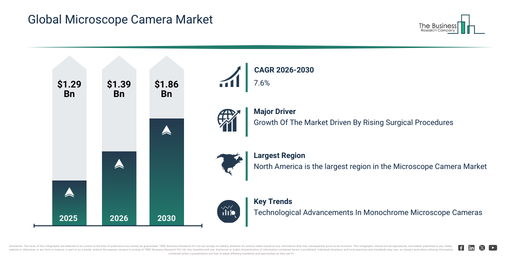
    The microscope camera market has observed substantial growth over recent years. Its value is anticipated to rise from $1.29 billion in 2025 to $1.39 billion in 2026, demonstrating a compound annual growth rate (CAGR) of 7.9%. The expansion witnessed in the past can be attributed to factors like the increasing need for clinical microscopy, the growing utilization of CMOS sensors, the advancement in academic research imaging, the incorporation of digital laboratory workflows, and the broader growth in materials science imaging.

    The microscope camera market is anticipated to show significant expansion in the upcoming years. Its value is expected to reach $1.86 billion by 2030, growing at a compound annual growth rate (CAGR) of 7.6%. The expansion during this forecast period stems from factors such as increasing demand for AI-based diagnostic tools, the growing integration of remote microscopy, the continuous advancement of high-resolution imaging sensors, the broader application of real-time telepathology, and increased investments in biotech R&D. Key trends for the forecast period include AI-enhanced image processing, cloud-based microscopy data management, the adoption of automation in laboratory imaging, IoT-enabled remote microscopy systems, and sophisticated digital imaging solutions for precision diagnostics.

    Access Your Free Sample Report For In-Depth Market Analysis:

    https://www.thebusinessresearchcompany.com/sample.aspx?id=20882&type=smp

    Which Strong Drivers Are Impacting The Microscope Camera Market Growth?

    The anticipated rise in surgical operations is expected to propel the growth of the microscope camera market. These procedures involve a surgeon physically intervening to treat diseases, injuries, or deformities by manipulating tissue to improve patient health or functionality. This increase in surgical activity is linked to an aging population, medical technology advancements, a rise in chronic diseases, better healthcare access, increased medical awareness, improved surgical outcomes, and expanding medical tourism. Microscope cameras significantly enhance these operations by delivering high-definition, magnified views of the surgical site, thereby improving precision, enabling real-time documentation, and facilitating remote collaboration for superior patient outcomes. For instance, in December 2023, according to the UK Health Security Agency, a UK-based government agency, coronary artery bypass graft surgeries increased in 2023 with 27,524 surgeries compared to 2022. Consequently, the growing number of surgical operations is set to boost the growth of the microscope camera market.

    Which Segment Categories Are Included In The Microscope Camera Market Segment Analysis?

    The microscope camera market covered in this report is segmented –

    1) By Type: Monochrome Cameras, Color Cameras

    2) By Sensor Type: Complementary Metal-Oxide-Semiconductor (CMOS) Sensors, Charge-Coupled Device (CCD) Sensors

    3) By Resolution: High-Definition Cameras, Standard-Definition Cameras

    4) By Distribution Channel: Online, Offline

    5) By Application: Medical, Industry, Education, Other Applications

    Subsegments:

    1) By Monochrome Cameras: CMOS Monochrome Cameras, CCD Monochrome Cameras

    2) By Color Cameras: CMOS Color Cameras, CCD Color Cameras

    Which Trends Are Contributing To Changes In The Microscope Camera Market?

    Leading companies operating in the microscope camera market are concentrating on developing technologically advanced solutions, such as monochrome microscope cameras, to boost image clarity and accuracy for high-resolution scientific and medical imaging applications. A monochrome microscope camera is a digital device employed in microscopy to capture high-contrast grayscale images, frequently favored for delivering sharper, more detailed visuals, particularly in scenarios with low light or high sensitivity. As an illustration, in January 2023, Nikon Corporation, an optical instruments and cameras manufacturer from Japan, introduced the Digital Sight 50M monochrome microscope camera. This product was developed for precise analysis and extensive volume sampling, especially in uses like plate screening. This camera features a 50-megapixel resolution, which facilitates improved imaging capabilities and precise detection across diverse scientific and medical contexts. Its sophisticated attributes, such as a 50-megapixel sensor and heightened light sensitivity, ensure the acquisition of precise and clear images, thereby making it well-suited for scientific research, medical diagnostics, and quality control within laboratories.

    Who Are The Active Companies Shaping The Microscope Camera Market?

    Major companies operating in the microscope camera market are Sony Corporation, Canon Inc., Danaher Corporation, Keyence Corporation, Olympus Corporation, Teledyne Technologies, Roper Technologies Inc., Nikon Corporation, Carl Zeiss AG, Hamamatsu, Brunel Microscopes Ltd, Jenoptik AG, Leica Microsystems, Motic China Group Co Ltd, Basler AG, Andor Technology Limited, Oxford Instruments plc, Tucsen Photonics Co Ltd., Lumenera Corporation, Euromex Microscopen BV, Guangzhou Micro-shot Technology Co Ltd., Martin Microscope, Meiji Techno Co Ltd.

    Get The Full Microscope Camera Market Report:

    https://www.thebusinessresearchcompany.com/report/microscope-camera-global-market-report

    Which Region Holds The Highest Market Share In The Microscope Camera Market?

    North America was the largest region in the microscope camera market in 2025. Asia-Pacific is expected to be the fastest-growing region in the forecast period. The regions covered in the microscope camera market report are Asia-Pacific, South East Asia, Western Europe, Eastern Europe, North America, South America, Middle East, Africa.

    Request A Customized Microscope Camera Market Report For Competitive Insights:

    https://www.thebusinessresearchcompany.com/report/microscope-camera-global-market-report

    Browse Through More Reports Similar to the Global Microscope Camera Market 2026, By The Business Research Company

    Microarray Market Report 2026

    https://www.thebusinessresearchcompany.com/report/microarray-global-market-report

    Rna Targeting Small Molecules Therapeutics Market Report

    https://www.thebusinessresearchcompany.com/report/rna-targeting-small-molecules-therapeutics-global-market-report

    Rna Analysis Transcriptomics Market Report

    https://www.thebusinessresearchcompany.com/report/rna-analysis-transcriptomics-global-market-report

    Get in touch with us:

    The Business Research Company: https://www.thebusinessresearchcompany.com/

    Americas +1 310-496-7795

    Asia +44 7882 955267 & +91 8897263534

    Europe +44 7882 955267

    Email us at info@tbrc.info

    Follow us on:

    LinkedIn: https://in.linkedin.com/company/the-business-research-company

    YouTube: https://www.youtube.com/channel/UC24_fI0rV8cR5DxlCpgmyFQ

    Global Market Model: https://www.thebusinessresearchcompany.com/global-market-model
  • MicroRNA Market Growth Forecast Reaching $3.32 Billion By 2030 At 15.6% CAGR

    MicroRNA Market Growth Forecast Reaching $3.32 Billion By 2030 At 15.6% CAGR

    The Business Research Company’s 2026 market reports feature enhanced tools like market attractiveness analysis, TAM assessment, and company scoring matrices, along with interactive dashboards, deeper supply chain insights, and startup coverage strengthening the depth, usability, and strategic value of insights.

    How Much Growth In Market Value Is Expected For The MicroRNA Market Between 2026 And 2030?

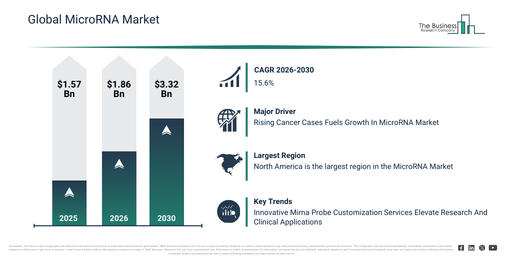
    The microrna market size has expanded considerably in recent years. It is anticipated to increase from $1.57 billion in 2025 to $1.86 billion in 2026, exhibiting a compound annual growth rate (CAGR) of 18.5%. This growth during the historical period is due to the rise in genomic research adoption, increasing demand for biomarker discovery, growth of pcr-based testing, expansion of cancer research programs, and rising use of ngs instruments.

    The microrna market is projected to experience substantial growth over the coming years, with its valuation expected to reach $3.32 billion by 2030, expanding at a compound annual growth rate (CAGR) of 15.6%. This anticipated growth can be linked to factors such as the increasing clinical applications of microrna diagnostics, the growing adoption of personalized medicine, advancements in therapeutic microrna development, the broadening scope of infectious disease research, and increasing capital directed towards molecular assay technologies. Significant trends shaping the market during this period include the wider application of precision genomics, the utilization of AI for microrna expression analysis, an increase in cloud-based storage for sequencing data, greater automation within molecular diagnostics, and the integration of IoT into laboratory workflows.

    Access Your Free Sample Report For In-Depth Market Analysis:

    https://www.thebusinessresearchcompany.com/sample.aspx?id=15608&type=smp

    What Key Factors Are Shaping The MicroRNA Market Landscape?

    The rising incidence of cancer is anticipated to fuel the expansion of the microRNA market in the future. Cancer is defined as an intricate illness marked by uncontrolled cellular growth and multiplication, frequently resulting in the development of malignant tumors capable of invading adjacent tissues and metastasizing to distant organs, thereby presenting substantial health dangers. The surge in cancer cases stems from multiple contributors, such as an aging demographic, lifestyle choices like smoking and inadequate diet, environmental contaminants, and advancements in detection methods facilitating earlier diagnoses. MicroRNA is utilized in conjunction with conventional cancer treatments to boost drug efficacy and enhance patient results. Beyond therapeutic applications, miRNAs function as diagnostic and prognostic indicators, assisting in the identification of cancer types, forecasting disease progression, and tracking responses to treatment. For example, in May 2024, data from the National Cancer Institute, a US-based government agency, showed approximately 20 million new cases and 9.7 million cancer-related deaths annually in 2022, with projections suggesting 15.3 million deaths and 29.9 million new cases per year by 2040. Consequently, the growing number of cancer instances is propelling the growth of the microRNA market.

    How Is The MicroRNA Market Broken Down By Segment Categories?

    The microrna market covered in this report is segmented –

    1) By Product: Instruments, Consumables

    2) By Assay Type: Immunoassay, Next Generation Sequencing, MiRNA Arrays, Polymerase Chain Reaction (PCR) Based Arrays

    3) By Application: Cancer, Infectious Diseases, Immunological Disorder, Cardiovascular Disease, Neurological Disease, Other Applications

    4) By End User: Academic And Research Institutes, Biopharmaceutical Companies, Diagnostic Centers, Clinical Research Organizations

    Subsegments:

    1) By Instruments: Quantitative PCR Systems, Microarray Platforms, Next-Generation Sequencing (NGS) Systems, Real-Time PCR Instruments, Microrna Analyzers

    2) By Consumables: MicroRNA Kits ( Extraction Kits, Detection Kits), PCR Reagents, Primers And Probes, Microarrays And Chips, RNA Sequencing Kits

    What Market Trends Are Affecting The MicroRNA Market?

    Leading companies in the microRNA market are concentrating on developing advanced solutions, such as miRNA probe customization services, to meet the specific needs of researchers and clinicians, enhance the accuracy of miRNA detection, and facilitate a broad range of applications. MiRNA probe customization services refer to specialized offerings from biotechnology and molecular biology companies that design and produce tailored probes for particular microRNAs (miRNAs) for diverse research and clinical uses. For instance, in September 2023, Abnova Corporation, a Taiwan-based biotech company, launched improved services for customizing miRNA probes, along with a new collection of cataloged miRNA probes, to cater to the varied requirements of academic, industrial, and research communities engaged in miRNA research. These probes play a vital role in identifying and precisely locating miRNAs, which are small, non-coding RNA molecules crucial for various biological processes. Abnova’s customization services ensure high specificity and minimal cross-reactivity, making them well-suited for analyzing samples with limited miRNA content.

    Which Players Are Present In The MicroRNA Market Space?

    Major companies operating in the microrna market are Thermo Fisher Scientific Inc., Merck KGaA, Agilent Technologies Inc, Illumina Inc., Bio-Rad Laboratories Inc., QIAGEN N.V., Miltenyi Biotec, LGC Limited, Promega Corporation, Abcam plc, Integrated DNA Technologies Inc., NanoString Technologies Inc., Horizon Discovery Ltd., OriGene Technologies Inc., Omega Bio-Tek, New England Biolabs, Quantabio, SeqMatic LLC, GeneCopoeia Inc., HTG Molecular Diagnostics Inc.

    Get The Full MicroRNA Market Report:

    https://www.thebusinessresearchcompany.com/report/microrna-global-market-report

    Where Is The MicroRNA Market Most Concentrated Geographically?

    North America was the largest region in the microRNA market in 2025. Asia-Pacific is expected to be the fastest-growing region in the forecast period. The regions covered in the microrna market report are Asia-Pacific, South East Asia, Western Europe, Eastern Europe, North America, South America, Middle East, Africa.

    Request A Customized MicroRNA Market Report For Competitive Insights:

    https://www.thebusinessresearchcompany.com/report/microrna-global-market-report

    Browse Through More Reports Similar to the Global MicroRNA Market 2026, By The Business Research Company

    Organic Skincare Market Report 2026

    https://www.thebusinessresearchcompany.com/report/organic-skincare-global-market-report

    Professional Skincare Market Report

    https://www.thebusinessresearchcompany.com/report/professional-skincare-global-market-report

    Skin Care Products Market Report

    https://www.thebusinessresearchcompany.com/report/skin-care-products-global-market-report

    Get in touch with us:

    The Business Research Company: https://www.thebusinessresearchcompany.com/

    Americas +1 310-496-7795

    Asia +44 7882 955267 & +91 8897263534

    Europe +44 7882 955267

    Email us at info@tbrc.info

    Follow us on:

    LinkedIn: https://in.linkedin.com/company/the-business-research-company

    YouTube: https://www.youtube.com/channel/UC24_fI0rV8cR5DxlCpgmyFQ

    Global Market Model: https://www.thebusinessresearchcompany.com/global-market-model
  • Microproteins Skincare Market Revenue Expected To Reach $4.87 Billion By 2030 At 8% CAGR

    Microproteins Skincare Market Revenue Expected To Reach $4.87 Billion By 2030 At 8% CAGR

    The Business Research Company’s 2026 market reports feature enhanced tools like market attractiveness analysis, TAM assessment, and company scoring matrices, along with interactive dashboards, deeper supply chain insights, and startup coverage strengthening the depth, usability, and strategic value of insights.

    What Is The Estimated Market Size Of The Microproteins Skincare Market In 2026, And How Will Its Value Evolve By 2030?

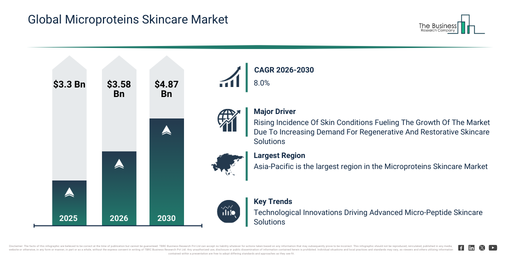
    The microproteins skincare market has demonstrated robust expansion in recent years. Projections indicate a rise from $3.3 billion in 2025 to $3.58 billion in 2026, driven by a compound annual growth rate (CAGR) of 8.3%. Historically, this expansion can be attributed to an increasing consumer focus on anti-aging skincare, a heightened demand for premium cosmetic products, the proliferation of clinical-grade skincare offerings, the growing impact of dermatological research, and broader access to advanced cosmetic formulations.

    The microproteins skincare market is projected to experience significant growth in the coming years. It is expected to expand to $4.87 billion by 2030, with a compound annual growth rate (CAGR) of 8.0%. The anticipated increase during this period stems from growing investments in protein-based skincare research and development, a rising preference for non-invasive anti-aging solutions, the expansion of biotech-enabled cosmetic innovations, an increasing demand for multifunctional skincare products, and a higher uptake of personalized beauty treatments. Key trends for the forecast period include the increasing adoption of microprotein-based anti-aging products, an escalating demand for deep-penetration skincare actives, an intensifying focus on collagen and elastin stimulation, the proliferation of high-performance skincare formulations, and an enhanced emphasis on cellular repair solutions.

    Access Your Free Sample Report For In-Depth Market Analysis:

    https://www.thebusinessresearchcompany.com/sample.aspx?id=30325&type=smp

    Which Factors Are Influencing The Growth Of The Microproteins Skincare Market?

    The increasing prevalence of skin conditions is anticipated to fuel the expansion of the microprotein skincare market going forward. Skin conditions refer to various irregularities or ailments impacting the skin’s structure, appearance, or functionality, including acne, eczema, psoriasis, and infections. The frequency of skin conditions is escalating as more consumers and healthcare professionals recognize the influence of environmental, lifestyle, and genetic factors on skin health, prompting them to prioritize targeted skincare solutions for managing and preventing these issues. Microprotein skincare products play a vital role in addressing skin conditions by fostering skin regeneration, repairing damaged tissues, strengthening barrier function, and reducing inflammation to restore overall skin well-being. For instance, in March 2025, the Chronic Skin Conditions statistics report, published by the British Dermatological Nursing Group, a UK-based independent professional organization, projected that melanoma cases in Northern Ireland would increase by 28% by 2040, potentially adding an estimated $4.8 million (£3.8 million) in annual healthcare costs. Therefore, the rising incidence of skin conditions is a key driver for the growth of the microprotein skincare market.

    What Are The Different Segment Types In The Microproteins Skincare Market Segment Breakdown?

    The microproteins skincare market covered in this report is segmented –

    1) By Product Type: Creams, Serums, Masks, Lotions

    2) By Distribution Channel: Online, Offline

    3) By Application: Anti-aging, Moisturizing, Acne Treatment, Sensitive Skin

    Subsegments:

    1) By Creams: Anti-Aging Creams, Brightening Creams, Hydrating Creams, Firming Creams

    2) By Serums: Anti-Wrinkle Serums, Hydration Serums, Brightening Serums, Repair Serums

    3) By Masks: Sheet Masks, Clay Masks, Gel Masks, Cream Masks

    4) By Lotions: Moisturizing Lotions, Brightening Lotions, Firming Lotions, Soothing Lotions

    Which Trends Are Influencing Demand In The Microproteins Skincare Market?

    Companies operating in the microprotein skincare market are concentrating on developing technologically advanced solutions, such as proprietary micropeptide technology, to boost skin regeneration, improve collagen synthesis, and provide targeted anti-aging benefits. Proprietary micro-peptide technology signifies a distinctive, company-developed method that generates bioactive micro-peptides, engineered to deeply permeate the skin and stimulate natural regeneration, collagen production, and repair mechanisms for enhanced skincare efficacy. As an illustration, in August 2024, Kenvue Inc., a US-based consumer health firm, introduced the Neutrogena Collagen Bank skincare line, which incorporates patented micro-peptide technology that is two times smaller than standard peptides. This allows it to penetrate over 10 layers beneath the skin’s surface to fortify existing collagen and stimulate new collagen generation, thereby addressing the initial indicators of skin aging. The collection features moisturizers intended for daily application, including a broad-spectrum SPF 30 moisturizer and another product infused with bakuchiol, a plant-based alternative to retinol, primarily aimed at Gen Z consumers who are actively striving to prevent collagen depletion and sustain youthful skin from their early 20s.

    Who Are The Well-Known Companies In The Microproteins Skincare Market?

    Major companies operating in the microproteins skincare market are BASF SE, Kenvue Inc., Natura Bissé International S.A., Croda International Plc, Indeed Laboratories Inc., Geltor Inc., HydroPeptide LLC, BeautyStat Inc., Numaferm GmbH, AnteAGE Inc., CLR Chemisches Laboratorium, Erasa Skincare LLC, Intoxicated Cosmetics LLC, Kiwla Co. Ltd., Loti Labs LLC, Merz Pharma GmbH & Co. KGaA, OneSkin Inc., Peach and Lily Inc., Skin Actives Scientific LLC, Topaz Biosciences Inc.

    Get The Full Microproteins Skincare Market Report:

    https://www.thebusinessresearchcompany.com/report/global-microproteins-skincare-market-report

    Which Region Dominates The Microproteins Skincare Market By Market Share?

    Asia-Pacific was the largest region in the microproteins skincare market in 2025. North America is expected to be the fastest-growing region in the forecast period. The regions covered in the microproteins skincare market report are Asia-Pacific, South East Asia, Western Europe, Eastern Europe, North America, South America, Middle East, Africa.

    Request A Customized Microproteins Skincare Market Report For Competitive Insights:

    https://www.thebusinessresearchcompany.com/report/global-microproteins-skincare-market-report

    Browse Through More Reports Similar to the Global Microproteins Skincare Market 2026, By The Business Research Company

    Microirrigation Systems Market Report 2026

    https://www.thebusinessresearchcompany.com/report/microirrigation-systems-global-market-report

    Micromachining Market Report

    https://www.thebusinessresearchcompany.com/report/micromachining-global-market-report

    Microlending Market Report

    https://www.thebusinessresearchcompany.com/report/microlending-global-market-report

    Get in touch with us:

    The Business Research Company: https://www.thebusinessresearchcompany.com/

    Americas +1 310-496-7795

    Asia +44 7882 955267 & +91 8897263534

    Europe +44 7882 955267

    Email us at info@tbrc.info

    Follow us on:

    LinkedIn: https://in.linkedin.com/company/the-business-research-company

    YouTube: https://www.youtube.com/channel/UC24_fI0rV8cR5DxlCpgmyFQ

    Global Market Model: https://www.thebusinessresearchcompany.com/global-market-model

  • Global Micropropagation Market Projected To Reach $2.61 Billion By 2030 At 9% CAGR

    Global Micropropagation Market Projected To Reach $2.61 Billion By 2030 At 9% CAGR

    The Business Research Company’s 2026 market reports feature enhanced tools like market attractiveness analysis, TAM assessment, and company scoring matrices, along with interactive dashboards, deeper supply chain insights, and startup coverage strengthening the depth, usability, and strategic value of insights.

    How Does The Market Size Of The Micropropagation Market Compare Between 2026 And 2030?

    The micropropagation market has experienced rapid expansion in recent years. This market is projected to expand from $1.69 billion in 2025 to $1.86 billion in 2026, demonstrating a compound annual growth rate (CAGR) of 10.1%. Historically, this growth has been driven by factors such as an increasing demand for disease-free planting materials, the widespread adoption of tissue culture techniques in horticulture, a rise in commercial flower production, expanding forestry and agroforestry initiatives, and early implementation in banana and ornamental crops.

    The micropropagation market is anticipated to experience substantial expansion over the next few years, with projections indicating a rise to $2.62 billion by 2030, propelled by a compound annual growth rate (CAGR) of 9.0%. This growth during the forecast period is attributed to the increasing demand for scalable plant multiplication, greater investment in climate-resilient crops, the expansion of medicinal plant cultivation, the growth of commercial greenhouse operations, and advancements in culture media technology. Prominent trends for this period include the wider adoption of precision propagation techniques, a focus on sustainability in plant production, enhanced automation in tissue culture laboratories, AI-assisted optimization of growth, and the integration of cloud-based data monitoring in micropropagation processes.

    Access Your Free Sample Report For In-Depth Market Analysis:

    https://www.thebusinessresearchcompany.com/sample.aspx?id=16737&type=smp

    What Leading Drivers Are Supporting The Micropropagation Market Expansion?

    The expansion of horticulture is anticipated to fuel the future growth of the micropropagation market. Horticulture encompasses the scientific and practical aspects of cultivating plants for purposes such as food, medicine, decoration, or aesthetic pleasure. This sector is progressing due to a rising need for various crops, environmentally sound farming methods, urban green areas, and decorative plants, influenced by expanding populations, ecological concerns, and aesthetic tastes. Micropropagation is essential for horticulture to effectively produce a large volume of healthy plants with specific characteristics, guaranteeing uniform quality and genetic consistency in producing crops, nurturing ornamental gardens, and undertaking conservation initiatives. For instance, in June 2024, a report from the Department for Environment Food and Rural Affairs, a UK ministerial department, indicated that in 2023, the total value of home-grown vegetables increased by 10% to just under £1.9 billion ($2.03 billion). Specifically, the value of field vegetables saw a 12% rise, reaching £1.5 billion ($1.60 billion), and protected vegetables experienced a 3.7% increase, totaling £374 million ($399 million). Consequently, the advancement of horticulture is propelling the growth of the micropropagation market.

    Which Segment Classifications Are Used In The Micropropagation Market Segment Analysis?

    The micropropagation market covered in this report is segmented –

    1) By Crop Types: Banana, Orchids And Ornamentals, Medicinal Plants, Vegetables, Small Fruits, Other Crop Types

    2) By Container Type: Test Tubes And Petri Dishes, Glass Bottles, Plastic Containers

    3) By Sales Channels: Offline, Online

    4) By End User: Farmers, Research Labs, Other End Users

    Subsegments:

    1) By Banana: Cavendish Banana, Red Banana, Plantains

    2) By Orchids And Ornamentals: Phalaenopsis Orchids, Cattleya Orchids, Dendrobium Orchids, Cymbidium Orchids, Gerbera, Chrysanthemums, Roses, Tulips, Lilies

    3) By Medicinal Plants: Aloe Vera, Ginseng, Echinacea, Turmeric, Stevia, Lavender, Mint, Cannabis, Basil

    4) By Vegetables: Tomatoes, Peppers, Lettuce, Cucumber, Spinach, Eggplant, Carrots, Kale

    5) By Small Fruits: Strawberries, Raspberries, Blueberries, Blackberries, Grapes, Gooseberries

    6) By Other Crop Types: Trees And Timber Species, Flowering Plants, Fruits, Nut Crops, Spices, Turfgrass And Lawn Species, Forestry And Agroforestry Crops

    What Emerging Trends Are Seen In The Micropropagation Market?

    Leading companies active in the micropropagation market are developing innovative offerings, such as propagation systems, to enhance the effectiveness and efficiency of plant cultivation and cloning. Propagation systems refer to the methods or techniques employed to reproduce plants from seeds, cuttings, or other plant parts to create new individuals, which can be genetically identical or varied. For instance, in January 2023, NuPlant, an Australia-based biotechnology company, introduced SmartClone. SmartClone is an advanced plant tissue culture propagation system with the goal of quickly producing enhanced plants from breeding programs for various species. This system utilizes precision robotics to generate strong clones from parent material, featuring adjustable conditions for each growth phase. SmartClone is anticipated to yield sturdier, more uniform plantlets while also reducing labor and decreasing costs per plant.

    Which Firms Are Contributing To The Micropropagation Market Ecosystem?

    Major companies operating in the micropropagation market are Phytocultures Ltd., Deroose Plants Inc., Phytelligence Inc., Oglesby Plants International Inc., AgriForest Bio-Technologies Ltd., Tissue-Grown Corporation, Agribiotecnología de Costa Rica S A, Hartmann’s Plant Company, Knight Hollow Nursery Inc., Lowes TC Pty Ltd., Mountain Shadow Nursery LLC, Phytotech Labs Inc., Plant Cell Technology Inc., Rancho Tissue Technologies Inc., Xplant Laboratory Inc., Agromillora Group, Highveld Biotech, TC Propagation Ltd., In Vitro Microplants Ltd., Valley Tissue Culture, Phytoclone Inc., Okanagan Plant Improvement Co Ltd., Meristematic Laboratories

    Get The Full Micropropagation Market Report:

    https://www.thebusinessresearchcompany.com/report/micropropagation-global-market-report

    Which Region Is The Largest In The Micropropagation Market?

    Europe was the largest region in the micropropagation market in 2025. Asia-Pacific is expected to be the fastest-growing region in the forecast period. The regions covered in the micropropagation market report are Asia-Pacific, South East Asia, Western Europe, Eastern Europe, North America, South America, Middle East, Africa.

    Request A Customized Micropropagation Market Report For Competitive Insights:

    https://www.thebusinessresearchcompany.com/report/micropropagation-global-market-report

    Browse Through More Reports Similar to the Global Micropropagation Market 2026, By The Business Research Company

    Natural Skin Care Products Market Report 2026

    https://www.thebusinessresearchcompany.com/report/natural-skin-care-products-global-market-report

    Skincare Market Report

    https://www.thebusinessresearchcompany.com/report/skincare-global-market-report

    Organic Skincare Market Report

    https://www.thebusinessresearchcompany.com/report/organic-skincare-global-market-report

    Get in touch with us:

    The Business Research Company: https://www.thebusinessresearchcompany.com/

    Americas +1 310-496-7795

    Asia +44 7882 955267 & +91 8897263534

    Europe +44 7882 955267

    Email us at info@tbrc.info

    Follow us on:

    LinkedIn: https://in.linkedin.com/company/the-business-research-company

    YouTube: https://www.youtube.com/channel/UC24_fI0rV8cR5DxlCpgmyFQ

    Global Market Model: https://www.thebusinessresearchcompany.com/global-market-model
  • Microbiome Skincare Product Market Growth Expected To Reach $3.15 Billion By 2030 At 18.5% CAGR

    Microbiome Skincare Product Market Growth Expected To Reach $3.15 Billion By 2030 At 18.5% CAGR

    The Business Research Company’s 2026 market reports feature enhanced tools like market attractiveness analysis, TAM assessment, and company scoring matrices, along with interactive dashboards, deeper supply chain insights, and startup coverage strengthening the depth, usability, and strategic value of insights.

    What Is The Forecasted Market Size Trajectory Of The Microbiome Skincare Product Market From 2026 To 2030?

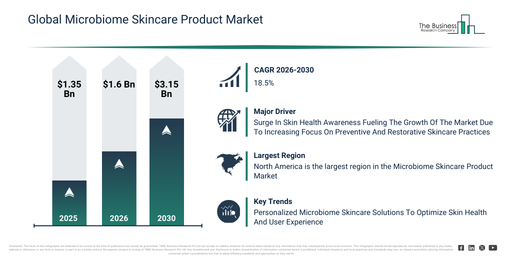
    The microbiome skincare product market has witnessed rapid expansion over recent years. Its valuation is anticipated to climb from $1.35 billion in 2025 to $1.6 billion in 2026, exhibiting a compound annual growth rate (CAGR) of 18.7%. The historical increase in this market’s size is attributable to heightened consumer awareness regarding skin health, a rising demand for solutions tailored for sensitive skin, the broadening of premium skincare categories, enhanced availability of dermatology-supported products, and a greater acceptance of microbiome science within cosmetic applications.

    The microbiome skincare product market is anticipated to experience substantial growth in the upcoming years, with projections indicating it will reach $3.15 billion by 2030, growing at a compound annual growth rate (CAGR) of 18.5%. This growth during the forecast period is fueled by the increasing demand for personalized skincare regimens, rising investments in biotech-based cosmetics, a growing preference for clean-label formulations, the expansion of online skincare distribution channels, and a heightened focus on long-term skin health solutions. Significant trends expected in this period include the increasing adoption of microbiome-friendly formulations, a rising demand for barrier-repair skincare products, the growing use of prebiotic and probiotic ingredients, the expansion of personalized skincare solutions, and an enhanced focus on skin microflora balance.

    Access Your Free Sample Report For In-Depth Market Analysis:

    https://www.thebusinessresearchcompany.com/sample.aspx?id=30323&type=smp

    Which Key Factors Are Driving The Microbiome Skincare Product Market Growth?

    The projected expansion of the microbiome skincare market is largely attributed to a growing understanding of skin health. This encompasses the skin’s complete state and function, specifically its barrier strength, moisture levels, and the equilibrium of its microbial flora. Heightened recognition among consumers and medical experts regarding the significance of a balanced skin microbiome for general skin well-being, coupled with a greater focus on preventative and reparative skincare strategies, is boosting this awareness. Microbiome skincare products work by sustaining the skin’s inherent microbiome, defending against detrimental microbes, and improving the skin’s protective barrier to avert harm and preserve its overall state. A notable example comes from February 2024, when the International League of Dermatological Societies (ILDS), an England-based umbrella organization dedicated to enhancing skin health worldwide, reported that its 2023 World Skin Health Day (WSHD) campaign saw a 21% increase in global involvement, extending to 23 countries and reaching over 8 million individuals. The initiative also provided dermatological care to more than 40,000 patients and advanced skin health knowledge among 916 healthcare professionals and advocates. Consequently, the growing emphasis on skin health is acting as a primary catalyst for the expansion of the microbiome skincare market.

    How Is The Microbiome Skincare Product Market Organized By Segment Classification?

    The microbiome skincare product market covered in this report is segmented –

    1) By Product Type: Cleansers, Moisturizers, Serums, Masks, Other Product Types

    2) By Skin Type: Dry Skin, Oily Skin, Combination Skin, Sensitive Skin, Normal Skin

    3) By Formulation: Cream, Gel, Liquid, Foam

    4) By Distribution Channel: Online Stores, Supermarkets Or Hypermarkets, Specialty Stores, Other Distribution Channels

    5) By End User: Men, Women, Unisex, Infants And Children

    Subsegments:

    1) By Cleansers: Foam Cleanser, Gel Cleanser, Cream Cleanser, Micellar Cleanser, Oil-Based Cleanser

    2) By Moisturizers: Cream Moisturizer, Gel Moisturizer, Lotion Moisturizer, Emulsion Moisturizer, Balm Moisturizer

    3) By Serums: Hydrating Serum, Brightening Serum, Anti-Aging Serum, Repair Serum, Soothing Serum

    4) By Masks: Sheet Mask, Clay Mask, Cream Mask, Peel-Off Mask, Overnight Mask

    5) By Other Product Types: Toner, Exfoliator, Sunscreen, Facial Mist, Eye Cream

    Which Trends Are Guiding The Direction Of The Microbiome Skincare Product Market?

    Leading companies in the microbiome skincare market are focused on developing technological advancements, such as the Microbiome Analyzer, to enhance their understanding of individual skin microbiota, offer personalized skincare solutions, and boost product efficacy through data-driven insights. A microbiome analyzer is a device that evaluates an individual’s skin microbiome and provides customized skincare recommendations based on the assessment. For instance, in July 2024, Unilever, a UK-based consumer goods company, launched the Microbiome Analyzer in partnership with Watsons, a Hong-Kong-based health and skin store, in the Philippines. The apparatus uses a skin swab to analyze microbiome data and propose personalized skincare routines. The distinctive functionalities of the microbiome analyzer include quick analysis within 60 minutes and individualized product suggestions based on specific microbiome profiles. This innovation aims to provide consumers with a more profound grasp of their skin’s unique microbiome composition and its effect on overall skin health, combining advanced skin diagnostics with tailored product recommendations.

    Who Are The Industry Participants Involved In The Microbiome Skincare Product Market?

    Major companies operating in the microbiome skincare product market are BASF S.E., Unilever PLC., L’Oréal S.A., Johnson & Johnson, The Colgate-Palmolive Company, dsm-firmenich AG., Clinique Laboratories LLC., Shiseido Company Limited, Symrise AG., Amorepacific Corporation, Beiersdorf Aktiengesellschaft, Lallemand Inc., BioGaia AB., Eminence Organic Skin Care, Sabinsa Corporation, AOBiome Therapeutics Inc., Esse Skincare Pty. Ltd., LaFlore Probiotic Skincare LLC., Marie Veronique Inc., BeBe & Bella LLC

    Get The Full Microbiome Skincare Product Market Report:

    https://www.thebusinessresearchcompany.com/report/global-microbiome-skincare-product-market-report

    Which Region Leads The Microbiome Skincare Product Market In Terms Of Market Share?

    North America was the largest region in the microbiome skincare product market in 2025. Asia-Pacific is expected to be the fastest-growing region in the forecast period. The regions covered in the microbiome skincare product market report are Asia-Pacific, South East Asia, Western Europe, Eastern Europe, North America, South America, Middle East, Africa.

    Request A Customized Microbiome Skincare Product Market Report For Competitive Insights:

    https://www.thebusinessresearchcompany.com/report/global-microbiome-skincare-product-market-report

    Browse Through More Reports Similar to the Global Microbiome Skincare Product Market 2026, By The Business Research Company

    Genomics Services Market Report 2026

    https://www.thebusinessresearchcompany.com/report/genomics-services-global-market-report

    Microbiomes Market Report

    https://www.thebusinessresearchcompany.com/report/microbiomes-global-market-report

    Next Generation Sequencing Market

    https://www.thebusinessresearchcompany.com/report/next-generation-sequencing-market

    Get in touch with us:

    The Business Research Company: https://www.thebusinessresearchcompany.com/

    Americas +1 310-496-7795

    Asia +44 7882 955267 & +91 8897263534

    Europe +44 7882 955267

    Email us at info@tbrc.info

    Follow us on:

    LinkedIn: https://in.linkedin.com/company/the-business-research-company

    YouTube: https://www.youtube.com/channel/UC24_fI0rV8cR5DxlCpgmyFQ

    Global Market Model: https://www.thebusinessresearchcompany.com/global-market-model

  • Microbiome Sequencing Service Market Forecast Highlighting Expansion Across Key Segments

    Microbiome Sequencing Service Market Forecast Highlighting Expansion Across Key Segments

    The Business Research Company’s 2026 market reports feature enhanced tools like market attractiveness analysis, TAM assessment, and company scoring matrices, along with interactive dashboards, deeper supply chain insights, and startup coverage strengthening the depth, usability, and strategic value of insights.

    How Much Will The Market Value Of The Microbiome Sequencing Service Market Grow Between 2026 And 2030?

    The microbiome sequencing service market has seen rapid expansion in recent years. This market is projected to grow from $2.43 billion in 2025 to $2.84 billion in 2026, achieving a compound annual growth rate (CAGR) of 17.1%. Historically, this growth was fueled by the proliferation of microbiome research initiatives, a rise in academic research funding, a burgeoning interest in studies of gut and skin microbiota, the widespread availability of next-generation sequencing platforms, and enhanced collaboration between academic institutions and industry.

    The microbiome sequencing service market size is anticipated to experience substantial growth over the next few years. It is projected to expand to $5.3 billion by 2030, demonstrating a compound annual growth rate (CAGR) of 16.8%. This expansion during the forecast period is propelled by the increasing clinical embrace of microbiome-based diagnostics, a rise in investments directed towards microbiome therapeutics, the broadening scope of personalized nutrition research, the expanding application of AI-driven microbial analysis, and the growing need for extensive population microbiome studies. Prominent trends expected in this period involve a heightened demand for high-throughput microbiome sequencing services, the increasing utilization of shotgun and amplicon sequencing, the escalating integration of advanced bioinformatics pipelines, the broadening of clinical microbiome research applications, and an enhanced focus on functional microbial profiling.

    Access Your Free Sample Report For In-Depth Market Analysis:

    https://www.thebusinessresearchcompany.com/sample.aspx?id=28270&type=smp

    What Primary Drivers Are Shaping The Microbiome Sequencing Service Market?

    An increasing prevalence of gut-related diseases is projected to boost the growth of the microbiome sequencing service market. These conditions are medical ailments impacting the gastrointestinal (GI) tract, which encompasses the stomach, intestines, and associated organs such as the liver, pancreas, and gallbladder. The rise in gut-related diseases stems from shifts in lifestyle and dietary patterns, including significant consumption of processed foods and insufficient fiber intake, which disrupt the balance of gut microbiota. Microbiome sequencing services support the management of gut-related diseases by offering comprehensive insights into gut microbial composition, making them valuable for diagnosing and monitoring gastrointestinal ailments. They facilitate targeted interventions through identifying microbial imbalances, thereby enhancing personalized treatment and improving overall gut health management. For instance, in June 2025, according to the UK Health Security Agency, a UK-based government agency, laboratory reports for Campylobacter observed an increase of 27.0%, rising from 96.1 to 122.0 per 100,000 population between 2022 and 2024. Thus, the escalating incidence of gut-related diseases is propelling the expansion of the microbiome sequencing service market.

    Which Segments Define The Microbiome Sequencing Service Market Segment Structure?

    The microbiome sequencing service market covered in this report is segmented –

    1) By Service: Sample Preparation, Sequencing And Library Preparation, Data Analysis

    2) By Technology: Sequencing By Litigation (SBL), Sequencing By Synthesis (SBS), Short Gun Sequencing, Targeted Gene Sequencing, RNA Sequencing, Other Technologies

    3) By Application: Autoimmune Disorder, Cancer, Gastrointestinal Disorders, Other Applications

    4) By End-User: Pharmaceutical And Biotechnology Companies, Academic Research Institutes, Other End-Users

    Subsegments:

    1) By Sample Preparation: Deoxyribonucleic Acid (DNA) Extraction, Ribonucleic Acid (RNA) Extraction, Protein Extraction, Cell Lysis, Library Construction

    2) By Sequencing And Library Preparation: Whole Genome Sequencing, Metagenomic Sequencing, Amplicon Sequencing, Shotgun Sequencing, Targeted Sequencing

    3) By Data Analysis: Taxonomic Profiling, Functional Profiling, Comparative Analysis, Statistical Analysis, Pathway Analysis

    What Trends Are Affecting The Growth Of The Microbiome Sequencing Service Market?

    Major companies operating in the microbiome sequencing service market are concentrating on developing advanced solutions, including automated metagenomics sequencing solutions, to enhance efficiency, accuracy, and scalability in microbiome research and analysis. An automated metagenomics sequencing solution represents an extensive system that facilitates the sequencing and analysis of microbial communities with minimal human intervention, ensuring high accuracy, reproducibility, and scalable throughput. For instance, in July 2024, MGI Tech Co. Ltd., a China-based biotechnology company, launched the Human Microbiome Metagenomics Sequencing Package. This product offers a completely integrated workflow, combining automated sample pretreatment, nucleic acid extraction, library preparation, sequencing, and data analysis, to support high-throughput and cost-efficient microbiome research. Its proven performance on a large number of human stool samples guarantees reproducibility and accuracy, establishing a new standard for extensive human microbiome studies.

    Who Are The Established Players Within The Microbiome Sequencing Service Market?

    Major companies operating in the microbiome sequencing service market are Eurofins Scientific LLC, Illumina Inc., Charles River Laboratories, QIAGEN N.V., Mérieux NutriSciences Corporation, OraSure Technologies Inc., Zifo RnD Solutions, Novogene Co. Ltd., Oxford Nanopore Technologies Plc, Macrogen Inc., Zymo Research Corporation, CD Genomics, Molzym GmbH & Co. KG (Gradian Diagnostics), Baseclear BV, Psomagen Inc., Mapmygenome, Rancho Biosciences LLC, Boster Biological Technology Ltd., Clinical Microbiomics, Microba Life Sciences Limited

    Get The Full Microbiome Sequencing Service Market Report:

    https://www.thebusinessresearchcompany.com/report/microbiome-sequencing-service-global-market-report

    Which Region Leads The Microbiome Sequencing Service Market In Overall Market Size?

    North America was the largest region in the microbiome sequencing service market in 2025. Asia-Pacific is expected to be the fastest-growing region in the forecast period. The regions covered in the microbiome sequencing service market report are Asia-Pacific, South East Asia, Western Europe, Eastern Europe, North America, South America, Middle East, Africa.

    Request A Customized Microbiome Sequencing Service Market Report For Competitive Insights:

    https://www.thebusinessresearchcompany.com/report/microbiome-sequencing-service-global-market-report

    Browse Through More Reports Similar to the Global Microbiome Sequencing Service Market 2026, By The Business Research Company

    Supply Chain Security Market Report 2026

    https://www.thebusinessresearchcompany.com/report/supply-chain-security-global-market-report

    Revenue Based Financing Market Report

    https://www.thebusinessresearchcompany.com/report/revenue-based-financing-global-market-report

    Healthcare Supply Chain Management Market Report

    https://www.thebusinessresearchcompany.com/report/healthcare-supply-chain-management-global-market-report

    Get in touch with us:

    The Business Research Company: https://www.thebusinessresearchcompany.com/

    Americas +1 310-496-7795

    Asia +44 7882 955267 & +91 8897263534

    Europe +44 7882 955267

    Email us at info@tbrc.info

    Follow us on:

    LinkedIn: https://in.linkedin.com/company/the-business-research-company

    YouTube: https://www.youtube.com/channel/UC24_fI0rV8cR5DxlCpgmyFQ

    Global Market Model: https://www.thebusinessresearchcompany.com/global-market-model

  • Healthcare environmental services market forecast (2026–2030)

    Healthcare environmental services market forecast (2026–2030)

    The Business Research Company’s 2026 market reports feature enhanced tools like market attractiveness analysis, TAM assessment, and company scoring matrices, along with interactive dashboards, deeper supply chain insights, and startup coverage strengthening the depth, usability, and strategic value of insights.

    What Is The Forecasted Market Size Trajectory Of The Healthcare Environmental Services Market From 2026 To 2030?

    The healthcare environmental services market size has seen robust expansion in recent years. Projections indicate it will grow from $18.52 billion in 2025 to $20.32 billion in 2026, demonstrating a compound annual growth rate (CAGR) of 9.8%. The increase observed in the historic period is largely due to increasing awareness of hospital-acquired infections, expansion of healthcare infrastructure, rising regulatory hygiene standards, growth in outsourced cleaning services, and the adoption of standardized sanitation practices.

    The size of the healthcare environmental services market is anticipated to experience substantial expansion over the upcoming years. By 2030, it is projected to reach $30.1 billion, progressing at a compound annual growth rate (CAGR) of 10.3%. This expansion during the projected timeframe is linked to factors such as greater investments in intelligent cleaning systems, an escalating need for sustainable healthcare sanitation options, the broadening of automated environmental services, a heightened emphasis on real-time cleanliness tracking, and stricter regulatory oversight concerning infection prevention. Noteworthy trends for the forecast period encompass a wider embrace of sophisticated disinfection methods, the growing deployment of UV-C and electrostatic cleaning apparatus, an intensified focus on infection prevention guidelines, the proliferation of automated cleaning machinery, and an elevated commitment to environmental hygiene adherence.

    Access Your Free Sample Report For In-Depth Market Analysis:

    https://www.thebusinessresearchcompany.com/report/healthcare-environmental-services-global-market-report

    What Major Factors Are Driving The Healthcare Environmental Services Market Forward?

    The escalating incidence of hospital-acquired infections is a key factor stimulating the healthcare environmental services market’s progression. Healthcare-acquired infections (HAIs) are defined as infections that patients contract while receiving medical care for other conditions within clinical environments, such as hospitals or clinics. These healthcare environmental services are instrumental in mitigating the risk of acquiring HAIs by ensuring surfaces remain sterile and free from pathogens. As an illustration, in September 2024, the UK Health Security Agency, a UK-based government agency, indicated that the overall figure for hospital-onset healthcare-associated (HOHA) E. coli infections rose from 6,525 to 7,881 cases during the fiscal year 2022–2023. Consequently, the rising prevalence of hospital-acquired infections is a primary catalyst for the expansion of the healthcare environmental services market.

    What Segment Categories Shape The Healthcare Environmental Services Market Segment Landscape?

    The healthcare environmental services market covered in this report is segmented –

    1) By Type: Janitorial Cleaning Services, Enhanced Cleaning Technology

    2) By Facility Type: Acute Care, Post-Acute-Care, Non-Acute Care

    3) By End User: Medical Device Companies, Hospitals And Clinics, Pharmaceutical And Biotechnology Companies, Other End Users

    Subsegments:

    1) By Janitorial Cleaning Services: Routine Cleaning, Disinfection Services, Waste Management And Disposal

    2) By Enhanced Cleaning Technology: Electrostatic Disinfection, UV-C Cleaning Technology, Advanced Cleaning Equipment And Tools

    Which Trends Are Impacting The Progress Of The Healthcare Environmental Services Market?

    Leading companies in the healthcare environmental services market are innovating sterilization wrap to enhance their market profitability. Sterilization wrap, in the context of healthcare environmental services, denotes a material utilized for packaging and safeguarding medical instruments and devices during the sterilization procedure. For example, in May 2023, Ahlstrom-Munksjö Oyj, a Finland-based producer of fiber-based materials and a supplier of innovative and sustainable solutions, unveiled Reliance Fusion. Reliance Fusion, an advanced sterilization wrap, boosts Central Sterilization efficiency by delivering greater throughput, energy conservation, and reduced labor, employing an inventive fiber-based material to mitigate wet packs. This innovative sterilization wrap integrates a cellulose-based inner layer with a sturdy SMS nonwoven outer layer, thereby optimizing tray sterilization within hospitals. Available in Fusion Light and Fusion Heavy configurations, the product shortens drying time, minimizes wet packs, and simplifies the sterilization process by presenting adaptable solutions for diverse application demands.

    Who Are The Companies Operating Across The Healthcare Environmental Services Market Value Chain?

    Major companies operating in the healthcare environmental services market are Veolia North America LLC, Sodexo Group, Aramark Corporation, ABM Industries Inc., Steris plc, Stericycle Inc., Hospital Housekeeping Systems LLC, Healthcare Services Group Inc., Crothall Healthcare Inc., Xanitos Inc., Daniels Health, Triumvirate Environmental Inc, Clean Earth LLC, Heritage Environmental Services LLC, Waste Management Inc., Republic Services Inc., Clean Harbors Inc., US Ecology Inc., Servicon Systems Inc., Jani-King International Inc., BioMedical Waste Solutions LLC, MedPro Disposal, EnviroMed Services Inc., Healthcare Medical Waste Services LLC, EcoMed Services LLC, BWS Inc.

    Get The Full Healthcare Environmental Services Market Report:

    https://www.thebusinessresearchcompany.com/report/healthcare-environmental-services-global-market-report

    Which Region Holds The Highest Market Share In The Healthcare Environmental Services Market?

    North America was the largest region in the healthcare environmental services market in 2025. The regions covered in the healthcare environmental services market report are Asia-Pacific, South East Asia, Western Europe, Eastern Europe, North America, South America, Middle East, Africa.

    Request A Customized Healthcare Environmental Services Market Report For Competitive Insights:

    https://www.thebusinessresearchcompany.com/report/healthcare-environmental-services-global-market-report

    Browse Through More Reports Similar to the Global Healthcare Environmental Services Market 2026, By The Business Research Company

    Environmental Consulting Services Market Report 2026

    https://www.thebusinessresearchcompany.com/report/environmental-consulting-services-global-market-report

    Healthcare Services Market 2026

    https://www.thebusinessresearchcompany.com/report/healthcare-services-market

    Environmental Consulting Services Market Report 2026

    https://www.thebusinessresearchcompany.com/report/environmental-consulting-services-global-market-report

    Get in touch with us:

    The Business Research Company: https://www.thebusinessresearchcompany.com/

    Americas +1 310-496-7795

    Asia +44 7882 955267 & +91 8897263534

    Europe +44 7882 955267

    Email us at info@tbrc.info

    Follow us on:

    LinkedIn: https://in.linkedin.com/company/the-business-research-company

    YouTube: https://www.youtube.com/channel/UC24_fI0rV8cR5DxlCpgmyFQ

    Global Market Model: https://www.thebusinessresearchcompany.com/global-market-model

  • Healthcare electronic data interchange market analysis (2026–2030)

    Healthcare electronic data interchange market analysis (2026–2030)

    The Business Research Company’s 2026 market reports feature enhanced tools like market attractiveness analysis, TAM assessment, and company scoring matrices, along with interactive dashboards, deeper supply chain insights, and startup coverage strengthening the depth, usability, and strategic value of insights.

    How Much Will The Market Value Of The Healthcare Electronic Data Interchange Market Grow Between 2026 And 2030?

    The healthcare electronic data interchange market has experienced substantial expansion recently. This market is projected to expand from $5.98 billion in 2025 to $6.72 billion in 2026, exhibiting a compound annual growth rate (CAGR) of 12.3%. Historically, this expansion has been driven by factors such as the greater digitization of healthcare records, broader health insurance coverage, demand for improved administrative efficiency, the embrace of standardized data exchange formats, and the rise of electronic claims management.

    The healthcare electronic data interchange market size is set for significant growth in the forthcoming years. It is forecast to grow to $10.57 billion in 2030, achieving a compound annual growth rate (CAGR) of 12.0%. This growth during the forecast period can be attributed to the increasing demand for real-time data interoperability, rising investments in healthcare IT modernization, the expansion of value-based care models, a growing focus on cybersecurity in healthcare data exchange, and the increasing adoption of mobile EDI solutions. Major trends anticipated in the forecast period include the increasing adoption of cloud-based EDI solutions, the growing integration of interoperable healthcare data standards, the rising use of automated claims processing, the expansion of secure data exchange platforms, and an enhanced focus on regulatory compliance automation.

    Access Your Free Sample Report For In-Depth Market Analysis:

    https://www.thebusinessresearchcompany.com/report/healthcare-electronic-data-interchange-global-market-report

    Which Key Drivers Are Affecting The Healthcare Electronic Data Interchange Market Development?

    The rising occurrence of chronic diseases is projected to stimulate expansion within the healthcare electronic data interchange market in the foreseeable future. These long-term conditions are ailments that persist, typically for three months or longer, and cannot be prevented by vaccination, cured by medication, or naturally resolved. In managing chronic illnesses, Healthcare EDI serves a vital function by accelerating the exchange of data, optimizing administrative processes, and enabling seamless communication. It supports both medical professionals and patients in aligning treatment plans, overseeing health statuses, and elevating the overall quality of care for individuals dealing with long-term health challenges. A notable example is data from April 2025 by the Centers for Disease Control and Prevention, a US-based federal agency, which indicated that in 2023, approximately 76.4% of U.S. adults reported experiencing at least one of 12 selected chronic conditions, with 51.4% reporting multiple chronic conditions. Consequently, the growing prevalence of chronic diseases is a significant impetus for the healthcare electronic data interchange market.

    Which Segment Types Are Examined In The Healthcare Electronic Data Interchange Market Segment Study?

    The healthcare electronic data interchange market covered in this report is segmented –

    1) By Component: Services, Solution

    2) By Delivery Mode: Web and Cloud-based EDI, EDI Value Added Network (VAN), Direct (Point-to-Point) EDI, Mobile EDI

    3) By End-Use: Healthcare Payers, Healthcare Providers, Pharmaceutical and Medical Device Industries, Other End-Uses

    Subsegments:

    1) By Services: Consulting Services, Implementation Services, Maintenance And Support Services

    2) By Solution: EDI Software, EDI Gateway Solutions, EDI Translation Tools

    What Trends Are Transforming The Healthcare Electronic Data Interchange Market?

    Major companies within the healthcare electronic data interchange market are increasingly prioritizing technological innovations, particularly cloud-native interoperability platforms that unify EDI and FHIR, to address the growing need for smooth data exchange, adherence to regulations (especially CMS mandates), and robust, future-proof connectivity across payers and providers. Such a cloud-native interoperability platform integrates diverse messaging standards, including legacy EDI (e.g., HIPAA X12), modern FHIR APIs, and HL7, into a unified, flexible, and secure infrastructure, unlike older, rigid on-premises EDI gateways that are often siloed and difficult to scale. As an illustration, in February 2025, Edifecs, a US-based health information-technology company, unveiled its Healthcare Interoperability Cloud, a cutting-edge platform designed for payers. This solution integrates Edifecs’ unified EDI Gateway, FHIR Gateway, and smart-trading modules, supporting various formats such as EDI, FHIR, HL7v2, and proprietary ones, while also automating workflows, managing trading partner relationships, and orchestrating shared processes. It is built to ensure compliance with CMS-9115-F and CMS-0057-F rules, features a low-code integration engine, and utilizes AI (including ML and NLP) to generate insights, lessen administrative workload, and ensure the long-term viability of interoperability infrastructure. Ultimately, this platform aids payers in optimizing operations, minimizing data friction, and scaling interoperability more effectively.

    Which Players Are Part Of The Competitive Landscape Of The Healthcare Electronic Data Interchange Market?

    Major companies operating in the healthcare electronic data interchange market are McKesson Corporation, Optum Inc., Allscripts Healthcare Solutions Inc., Athenahealth Inc., NextGen Healthcare Inc., Experian plc, Cognizant Technology Solutions, Cerner Corporation, The SSI Group LLC, Waystar Health, Comarch SA., Axway Software, PLEXIS Healthcare Systems Inc., TrueCommerce B2BGateway, DiCentral Corporation, 123 EDI, Quadax Inc., Epic Systems Corporation, eClinicalWorks, Practice Fusion, MEDITECH Inc., Care360 Pty Ltd., Vitera Ltd., Quality Systems Inc., IBM Corporation, Oracle Corporation, Infor Global Solutions

    Get The Full Healthcare Electronic Data Interchange Market Report:

    https://www.thebusinessresearchcompany.com/report/healthcare-electronic-data-interchange-global-market-report

    Where Is The Healthcare Electronic Data Interchange Market Most Concentrated Geographically?

    North America was the largest region in the healthcare electronic data interchange market in 2025. Asia-Pacific is expected to be the fastest-growing region in the forecast period. The regions covered in the healthcare electronic data interchange market report are Asia-Pacific, South East Asia, Western Europe, Eastern Europe, North America, South America, Middle East, Africa.

    Request A Customized Healthcare Electronic Data Interchange Market Report For Competitive Insights:

    https://www.thebusinessresearchcompany.com/report/healthcare-electronic-data-interchange-global-market-report

    Browse Through More Reports Similar to the Global Healthcare Electronic Data Interchange Market 2026, By The Business Research Company

    Electronic Data Interchange Edi Software Market Report 2026

    https://www.thebusinessresearchcompany.com/report/electronic-data-interchange-edi-software-global-market-report

    Healthcare Data Integration Market Report 2026

    https://www.thebusinessresearchcompany.com/report/healthcare-data-integration-global-market-report

    Healthcare Data Interoperability Market Report 2026

    https://www.thebusinessresearchcompany.com/report/healthcare-data-interoperability-global-market-report

    Get in touch with us:

    The Business Research Company: https://www.thebusinessresearchcompany.com/

    Americas +1 310-496-7795

    Asia +44 7882 955267 & +91 8897263534

    Europe +44 7882 955267

    Email us at info@tbrc.info

    Follow us on:

    LinkedIn: https://in.linkedin.com/company/the-business-research-company

    YouTube: https://www.youtube.com/channel/UC24_fI0rV8cR5DxlCpgmyFQ

    Global Market Model: https://www.thebusinessresearchcompany.com/global-market-model

  • Healthcare education market forecast through 2030

    Healthcare education market forecast through 2030

    The Business Research Company’s 2026 market reports feature enhanced tools like market attractiveness analysis, TAM assessment, and company scoring matrices, along with interactive dashboards, deeper supply chain insights, and startup coverage strengthening the depth, usability, and strategic value of insights.

    What Changes In Market Value Are Expected For The Healthcare Education Market Over The 2026–2030 Period?

    The healthcare education market has seen swift growth in recent years. It is anticipated to expand from $128.27 billion in 2025 to $143.22 billion in 2026, achieving a compound annual growth rate (CAGR) of 11.7%. The expansion observed historically is attributable to an increased focus on preventive healthcare education, the enlargement of medical and nursing schools, a rise in chronic disease prevalence, the development of continuing professional education programs, and the broader embrace of digital learning tools.

    The healthcare education market size is anticipated to undergo substantial growth in the upcoming years. It is forecast to expand to $217.41 billion by 2030, achieving a compound annual growth rate (CAGR) of 11.0%. The expansion during this forecast period can be attributed to the increasing uptake of immersive learning technologies, a growing demand for remote healthcare training, the broadening of digital health literacy initiatives, increased investments in medical simulation infrastructure, and a heightened focus on personalized healthcare education. Key trends observed in the forecast period include the expanding adoption of e-learning platforms, a rising utilization of medical simulation and VR-based training, an escalating demand for patient-centric education programs, the diversification of continuing medical education offerings, and an enhanced emphasis on remote and mobile learning methods.

    Access Your Free Sample Report For In-Depth Market Analysis:

    https://www.thebusinessresearchcompany.com/report/healthcare-education-global-market-report

    What Factors Are Contributing To The Growth Of The Healthcare Education Market?

    The anticipated scarcity of healthcare personnel is projected to drive the expansion of the healthcare education market in the coming period. Healthcare professionals are individuals trained in areas like medicine, nursing, and allied health, whose role is to offer medical care and assistance. This deficiency in healthcare workers stimulates the growth of educational initiatives and establishments, which includes establishing new facilities, launching online learning resources, and broadening healthcare education to meet particular industry demands. For example, in September 2024, as reported by Dynamic Health Staff, a UAE-based healthcare staffing and recruitment agency, the nursing sector is experiencing a considerable shortfall, requiring an estimated 177,400 more Registered Nurses (RNs) between 2023 and 2032, driven by increasing healthcare needs and an aging populace. By 2024, approximately 47.8% of hospitals indicate vacancy rates surpassing 10%, emphasizing the urgent demand for nursing personnel. Consequently, the lack of healthcare professionals is spurring the development of the healthcare education market.

    How Are Different Segments Classified In The Healthcare Education Market Segment Analysis?

    The healthcare education market covered in this report is segmented –

    1) By Provider: Universities And Academic Centers, Continuing Medical Education Providers, OEMs Or Pharmaceutical Companies, Learning Management Systems Providers, Educational Platforms, Medical Simulation

    2) By Delivery Mode: Classroom Based Courses, E-Learning Solutions

    3) By Application: Academic Education, Cardiology, Neurology, Radiology, Internal Medicine, Pediatrics, Other Applications

    4) By End-User: Students, Physicians, Non-Physicians.

    Subsegments:

    1) By Universities And Academic Centers: Medical Schools, Nursing Schools, Allied Health Programs

    2) By Continuing Medical Education (CME) Providers: Accredited CME Organizations, Online CME Platforms

    3) By OEMs Or Pharmaceutical Companies: In-House Training Programs, Sponsored Educational Initiatives

    4) By Learning Management Systems (LMS) Providers: Online Course Management Systems, Virtual Learning Environments

    5) By Educational Platforms: E-Learning Platforms, Mobile Learning Applications

    6) By Medical Simulation: Simulation Training Centers, Virtual Reality (VR) And Augmented Reality (AR) Simulations, Hands-On Simulation Equipment And Tools

    What Trends Are Shaping The Future Of The Healthcare Education Market?

    Leading companies operating in the healthcare education market are progressively utilizing digital platforms, such as integrating in-clinic interactions and technologies, to enhance medical training and education. Their goal is to furnish healthcare professionals with current resources that aid in skill development and elevate patient care outcomes. The integration of in-clinic interactions refers to the combination of face-to-face patient consultations with digital resources and tools, designed to enrich the healthcare experience and facilitate access to information during appointments. As an illustration, in August 2023, Cipla, an India-based pharmaceutical company, unveiled CiplaMed 2.0, an upgraded knowledge platform tailored for healthcare professionals, which merges in-clinic interactions with digital resources. This platform offers access to contemporary medical content across 19 specialities, including scientific articles and webinars, while employing advanced analytics to optimize knowledge-sharing within the pharmaceutical industry.

    Who Are The Companies Driving Activity In The Healthcare Education Market?

    Major companies operating in the healthcare education market are Siemens Healthineers AG, FUJIFILM Holdings Corporation, Koninklijke Philips N.V., Stryker Corporation, GE Healthcare, Olympus Corporation, Medtronic plc, Zimmer Biomet Holdings Inc., Canon Medical Systems Corporation, Elsevier B.V., Johns Hopkins Medicine, Apollo Hospitals Enterprise Limited, McGraw-Hill Education, Harvard Medical School, Stanford University, Coursera Inc., HealthStream Inc., Symplr Inc., PeopleFluent, Articulate Global Inc., HealthcareSource, Trivantis Corporation, Gundersen Health System, Richmond Academy of Medicine Inc., Wolters Kluwer Health, EBSCO Information Services Inc.

    Get The Full Healthcare Education Market Report:

    https://www.thebusinessresearchcompany.com/report/healthcare-education-global-market-report

    Which Region Dominates The Healthcare Education Market By Market Share?

    North America was the largest region in the healthcare education market in 2025. The regions covered in the healthcare education market report are Asia-Pacific, South East Asia, Western Europe, Eastern Europe, North America, South America, Middle East, Africa.

    Request A Customized Healthcare Education Market Report For Competitive Insights:

    https://www.thebusinessresearchcompany.com/report/healthcare-education-global-market-report

    Browse Through More Reports Similar to the Global Healthcare Education Market 2026, By The Business Research Company

    Health And Medical Insurance Market Report 2026

    https://www.thebusinessresearchcompany.com/report/health-and-medical-insurance-global-market-report

    Healthcare Learning Management System Market Report 2026

    https://www.thebusinessresearchcompany.com/report/healthcare-learning-management-system-global-market-report

    Healthcare Services Market 2026

    https://www.thebusinessresearchcompany.com/report/healthcare-services-market

    Get in touch with us:

    The Business Research Company: https://www.thebusinessresearchcompany.com/

    Americas +1 310-496-7795

    Asia +44 7882 955267 & +91 8897263534

    Europe +44 7882 955267

    Email us at info@tbrc.info

    Follow us on:

    LinkedIn: https://in.linkedin.com/company/the-business-research-company

    YouTube: https://www.youtube.com/channel/UC24_fI0rV8cR5DxlCpgmyFQ

    Global Market Model: https://www.thebusinessresearchcompany.com/global-market-model
  • Healthcare EDI market outlook (2026–2030) with key drivers

    Healthcare EDI market outlook (2026–2030) with key drivers

    The Business Research Company’s 2026 market reports feature enhanced tools like market attractiveness analysis, TAM assessment, and company scoring matrices, along with interactive dashboards, deeper supply chain insights, and startup coverage strengthening the depth, usability, and strategic value of insights.

    By 2030, What Market Size Is The Healthcare EDI Market Expected To Reach Based On Its 2026 Value?

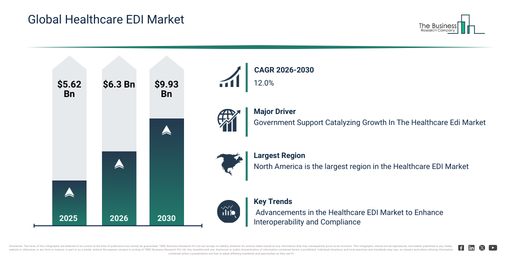
    The healthcare edi market has experienced substantial expansion in recent times. Forecasts indicate it will expand from $5.62 billion in 2025 to reach $6.3 billion by 2026, exhibiting a compound annual growth rate (CAGR) of 12.2%. This historical growth is largely due to factors such as the proliferation of digital healthcare billing systems, a rise in insurance claim volumes, the widespread adoption of standardized healthcare transaction formats, the expansion of payer-provider networks, and an increasing demand for administrative efficiency.

    The healthcare edi market size is projected to experience substantial growth over the next few years. It is forecast to expand to $9.93 billion by 2030, achieving a compound annual growth rate (CAGR) of 12.0%. This anticipated growth during the forecast period is driven by factors such as increasing investments in automated revenue cycle management, a rising need for real-time eligibility verification, the expansion of cloud-native edi solutions, a growing emphasis on interoperability compliance, and the wider adoption of AI-assisted claims processing. Significant trends for the forecast period encompass a greater uptake of cloud-based edi platforms, the progressive automation of claims and billing processes, an increase in the integration of edi with hospital information systems, the expansion of real-time transaction processing, and an intensified focus on compliance and data accuracy.

    Access Your Free Sample Report For In-Depth Market Analysis:

    https://www.thebusinessresearchcompany.com/report/healthcare-edi-global-market-report

    Which Strong Drivers Are Impacting The Healthcare EDI Market Growth?

    Growing government backing for healthcare is anticipated to drive the expansion of the healthcare EDI market. Healthcare EDI facilitates the sharing of information between departments and branches in super-specialty hospitals. This healthcare EDI software aids in transmitting crucial details, including coordination of benefits, claims status and information, insurance data, payment data, and eligibility forms within healthcare. Increased government support for the healthcare industry assists the sector in developing new equipment and delivering improved services to the populace. It also helps to boost technology in government hospitals. For instance, in May 2024, the Office for National Statistics, a UK-based government department, reported that total healthcare expenditure experienced a 5.6% rise in nominal terms from 2022 to 2023, marking a significant acceleration compared to the 0.9% growth observed in 2022. Therefore, the escalating government support for healthcare is propelling the demand for the healthcare EDI market.

    How Is The Healthcare EDI Market Categorized Across Its Segment Groups?

    The healthcare edi market covered in this report is segmented –

    1) By Component: Software, Services

    2) By Transaction: Claim Management, Healthcare Supply Chain, Other Transactions

    3) By Mode of Delivery: VAN, Web And Cloud-based, Point-to-point

    4) By End User: Healthcare Provider, Payer, Pharmacies, Other End Users

    Subsegments:

    1) By Software: EDI Solutions, Integration Software, EDI Mapping And Translation Software

    2) By Services: EDI Consulting Services, Managed EDI Services, Technical Support And Maintenance Services

    Which Trends Are Contributing To Changes In The Healthcare EDI Market?

    Major companies operating within the healthcare EDI (Electronic Data Interchange) market are increasingly prioritizing technological innovations, such as cloud-native interoperability platforms that integrate EDI, FHIR, and HL7, to address the escalating demand for regulatory adherence, seamless data exchange, and scalable connectivity across payers and providers. A cloud-native interoperability platform unifies traditional EDI, like HIPAA X12, modern healthcare APIs, such as FHIR, and clinical messaging standards including HL7, into a single, flexible, and secure infrastructure, contrasting with older, on-premises EDI gateways that are often isolated, rigid, and costly to expand. For instance, in February 2025, Edifecs, a US-based health information-technology company, launched its Healthcare Interoperability Cloud, a next-generation platform designed for payers. This platform facilitates the smooth exchange of administrative and clinical data across EDI, FHIR, HL7v2, and various proprietary formats; it is engineered for regulatory compliance (e.g., CMS-9115-F, CMS-0057-F), provides strategic workflow orchestration, enables shared automation between systems, and incorporates AI (including ML and NLP) to deliver deeper insights and quicker, more adaptive integration. The solution aims to reduce data friction, accelerate collaboration between payers and providers, and establish a future-proof interoperability infrastructure.

    Which Firms Are Influencing Competition In The Healthcare EDI Market?

    Major companies operating in the healthcare edi market are McKesson Corporation, Optum Inc, Allscripts, Cognizant Technology Solutions India Pvt Ltd, Cerner Corporation, The SSI Group, Quadax Inc, AthenaHealth, Change Healthcare Inc, Conduent Inc, Epic Systems Corporation, NextGen Healthcare, Edifecs Inc, Waystar Inc, Availity LLC, eClinicalWorks, Ability Network, PracticeSuite Inc, Jopari Solutions Inc, Alpha II LLC, TransUnion Healthcare, Healthpac Computer Systems

    Get The Full Healthcare EDI Market Report:

    https://www.thebusinessresearchcompany.com/report/healthcare-edi-global-market-report

    Which Region Is The Largest In The Healthcare EDI Market?

    North America was the largest region in the healthcare EDI market in 2025. Asia-Pacific is expected to be the fastest-growing region in the forecast period. The regions covered in the healthcare edi market report are Asia-Pacific, South East Asia, Western Europe, Eastern Europe, North America, South America, Middle East, Africa.

    Request A Customized Healthcare EDI Market Report For Competitive Insights:

    https://www.thebusinessresearchcompany.com/report/healthcare-edi-global-market-report

    Browse Through More Reports Similar to the Global Healthcare EDI Market 2026, By The Business Research Company

    Health And Medical Insurance Market Report 2026

    https://www.thebusinessresearchcompany.com/report/health-and-medical-insurance-global-market-report

    Healthcare Education Market Report 2026

    https://www.thebusinessresearchcompany.com/report/healthcare-education-global-market-report

    Healthcare It Integration Market Report 2026

    https://www.thebusinessresearchcompany.com/report/healthcare-it-integration-global-market-report

    Get in touch with us:

    The Business Research Company: https://www.thebusinessresearchcompany.com/

    Americas +1 310-496-7795

    Asia +44 7882 955267 & +91 8897263534

    Europe +44 7882 955267

    Email us at info@tbrc.info

    Follow us on:

    LinkedIn: https://in.linkedin.com/company/the-business-research-company

    YouTube: https://www.youtube.com/channel/UC24_fI0rV8cR5DxlCpgmyFQ

    Global Market Model: https://www.thebusinessresearchcompany.com/global-market-model