Category: Healthcare Services

  • Gingival Recession Market Growth Driven by Rising Oral Health Awareness

    Gingival Recession Market Growth Driven by Rising Oral Health Awareness

    The Business Research Company’s 2026 market reports feature enhanced tools like market attractiveness analysis, TAM assessment, and company scoring matrices, along with interactive dashboards, deeper supply chain insights, and startup coverage strengthening the depth, usability, and strategic value of insights.

    What Level Of Market Value Growth Is Predicted For The Gingival Recession Market From 2026 To 2030?

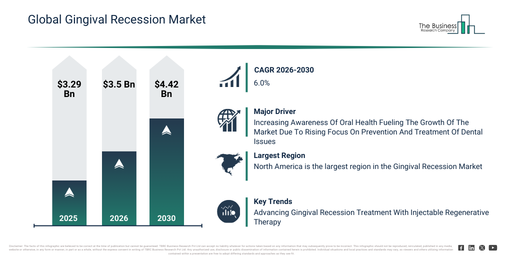
    The gingival recession market has experienced substantial expansion in recent years. It is anticipated to increase from $3.29 billion in 2025 to $3.5 billion in 2026, exhibiting a compound annual growth rate (CAGR) of 6.3%. The market’s past growth can be attributed to the widespread occurrence of periodontal disease, the expansion of dental clinics, the initial embrace of grafting techniques, the demand for cosmetic dentistry procedures, and heightened oral hygiene awareness.

    The gingival recession market is projected to experience substantial expansion over the upcoming years. Its valuation is anticipated to reach $4.42 billion by 2030, demonstrating a compound annual growth rate (CAGR) of 6.0%. This expansion during the projected timeframe is primarily driven by developments in regenerative dentistry, the proliferation of laser-based treatment methods, the increase in dental tourism, patients’ preference for less invasive treatments, and an uptick in dental spending. Key developments expected within this period encompass a heightened demand for minimally invasive interventions, greater application of regenerative dental substances, wider embrace of the pinhole surgical technique, enhanced aesthetic results in dentistry, and the broader provision of preventive dental care.

    Access Your Free Sample Report For In-Depth Market Analysis:

    https://www.thebusinessresearchcompany.com/report/gingival-recession-global-market-report

    What Key Drivers Are Fueling The Growth Of The Gingival Recession Market?

    The expanding understanding of oral health is anticipated to drive the growth of the gingival recession market going forward. Oral health refers to the state of the teeth, gums, and mouth, ensuring they remain free of disease, pain, or infection to facilitate proper function and contribute to overall well-being. Greater access to information through digital media and extensive healthcare campaigns is contributing to rising oral health awareness, highlighting its profound impact on overall well-being. As a noticeable and frequently painful indicator of poor oral health, Gingival recession encourages individuals to seek knowledge about its causes, prevention, and treatment, thus improving awareness of appropriate oral hygiene practices. For instance, a report published in January 2024 by the Manchester Health and Wellbeing Board, a UK-based partnership organization, indicated that between July 2022 and June 2023, 78,230 children under 18 in Manchester received treatment from an NHS dentist. This represented an increase of 13,488 children, or 20.8%, compared to the previous year. Consequently, the heightened awareness surrounding oral health is fueling the growth of the gingival recession market.

    How Is Segmentation Applied In The Gingival Recession Market Segment Analysis?

    The gingival recession market covered in this report is segmented –

    1) By Treatment Method: Soft Tissue Grafting, Regenerative Procedures, Pinhole Surgical Technique (PST)

    2) By Product Type: Tissue Regenerative Materials, Bone Grafting Materials

    3) By End-User: Hospitals, Dental Clinics, Research Institutes

    Subsegments:

    1) By Soft Tissue Grafting: Free Gingival Graft, Connective Tissue Graft, Pedicle Graft, Allograft

    2) By Regenerative Procedures: Guided Tissue Regeneration (GTR), Enamel Matrix Derivatives (EMD), Platelet-Rich Fibrin (PRF), Bone Grafting

    3) By Pinhole Surgical Technique (PST): Minimally Invasive Recession Coverage, Collagen Membrane Application, Scalpel-Free Gum Rejuvenation

    What Trends Are Influencing The Gingival Recession Market?

    Leading companies in the gingival recession market are developing innovative treatments, such as injectable regenerative tissue advancement therapy, to enhance the regeneration of soft and hard tissues, improve treatment outcomes, and address unmet needs within oral healthcare. An injectable regenerative tissue therapy represents a minimally invasive procedure designed to stimulate natural healing and restore both soft and hard tissues by promoting their regeneration. For instance, in February 2025, BioCellgraft, Inc., a US-based biotechnology and regenerative medicine company, launched OraFyl. OraFyl’s injectable formulation distinguishes it from traditional grafting techniques employed in oral tissue regeneration. Unlike conventional surgical procedures that necessitate extensive intervention and prolonged recovery, OraFyl offers a minimally invasive solution for addressing gum recession, papilla loss, and the management of alveolar sockets. Utilizing a human connective tissue matrix (HCTM), it supports the body’s natural healing process, potentially speeding up recovery, reducing patient discomfort, lowering treatment costs, and improving clinical outcomes.

    Who Are The Companies Participating In The Gingival Recession Market Environment?

    Major companies operating in the gingival recession market are Alfa‑Perio Ltd, Zimmer Biomet Dental, Institut Straumann AG, LifeNet Health, BioHorizons, Geistlich Pharma AG, osteocom, Dentevim Dental Clinic, Uniqa Dental LTD, Focus Dental, Premiere Dental Care Center, Dentsply Sirona, ZimVie Inc, Tissue Regenix, Septodont Holding, Medical Consult Implants GmbH, Regedent AG, Regenity Biosciences, Nobel Biocare Services AG, Bioteck S.p.A, Maxigen Biotech Inc

    Get The Full Gingival Recession Market Report:

    https://www.thebusinessresearchcompany.com/report/gingival-recession-global-market-report

    Which Region Is The Leading Market For The Gingival Recession Market?

    North America was the largest region in the gingival recession market in 2025. The regions covered in the gingival recession market report are Asia-Pacific, South East Asia, Western Europe, Eastern Europe, North America, South America, Middle East, Africa.

    Request A Customized Gingival Recession Market Report For Competitive Insights:

    https://www.thebusinessresearchcompany.com/report/gingival-recession-global-market-report

    Browse Through More Reports Similar to the Global Gingival Recession Market 2026, By The Business Research Company

    Oral Care Market Report 2026

    https://www.thebusinessresearchcompany.com/report/oral-care-global-market-report

    Cotton Ginning Machinery Market Report 2026

    https://www.thebusinessresearchcompany.com/report/cotton-ginning-machinery-global-market-report

    Periodontal Market Report 2026

    https://www.thebusinessresearchcompany.com/report/periodontal-global-market-report

    Get in touch with us:

    The Business Research Company: https://www.thebusinessresearchcompany.com/

    Americas +1 310-496-7795

    Asia +44 7882 955267 & +91 8897263534

    Europe +44 7882 955267

    Email us at info@tbrc.info

    Follow us on:

    LinkedIn: https://in.linkedin.com/company/the-business-research-company

    YouTube: https://www.youtube.com/channel/UC24_fI0rV8cR5DxlCpgmyFQ

    Global Market Model: https://www.thebusinessresearchcompany.com/global-market-model

  • Giant Cell Arteritis Market Shift Driven by Personalized Medicine Adoption

    Giant Cell Arteritis Market Shift Driven by Personalized Medicine Adoption

    The Business Research Company’s 2026 market reports feature enhanced tools like market attractiveness analysis, TAM assessment, and company scoring matrices, along with interactive dashboards, deeper supply chain insights, and startup coverage strengthening the depth, usability, and strategic value of insights.

    How Will The Market Value Of The Giant-Cell Arteritis Market Progress Between 2026 And 2030?

    The giant-cell arteritis market has experienced consistent growth in recent years. It is projected to increase from $1.12 billion in 2025 to $1.18 billion in 2026, at a compound annual growth rate (CAGR) of 4.9%. The historical expansion of this market can be attributed to an aging population, the continued reliance on corticosteroid therapy, improvements in rheumatology care, the broader availability of hospital-based treatment, and increased awareness of the disease.

    The market for giant-cell arteritis is projected to experience consistent expansion over the upcoming years. This market is anticipated to reach a valuation of $1.39 billion by 2030, exhibiting a compound annual growth rate (CAGR) of 4.3%. Factors contributing to this growth during the projected period include the approval of biologic drugs, advancements in immunology research, enhanced diagnostic procedures, tailored treatments for vasculitis, and the proliferation of specialized clinics. Key trends anticipated during the same period encompass a greater uptake of biologic therapies, a heightened emphasis on prompt and precise diagnosis, wider application of corticosteroid-reducing treatments, better long-term monitoring of the disease, and increased understanding regarding the prevention of vision loss.

    Access Your Free Sample Report For In-Depth Market Analysis:

    https://www.thebusinessresearchcompany.com/report/giant-cell-arteritis-global-market-report

    Which Drivers Are Supporting The Giant-Cell Arteritis Market Growth?

    The market for giant-cell arteritis is projected to expand due to an increasing focus on personalized medicine. This approach customizes medical care based on unique patient attributes, including genetic makeup, daily habits, and surroundings. Its rise is driven by progress in genomics, biotechnology, and data analytics, which facilitates targeted treatments that enhance effectiveness and minimize side effects for patients. For giant-cell arteritis (GCA), personalized medicine offers the benefit of customized therapies, considering individual patient elements like genetic predispositions, immune system profiles, and how the disease presents itself. As an illustration, in February 2024, the Personalized Medicine Coalition (PMC), a U.S.-based non-profit entity, stated that personalized medicines constituted over one-third of the new drug approvals by the U.S. Food and Drug Administration (FDA) in 2023, marking the fourth consecutive year this trend occurred. In 2023, the FDA sanctioned 16 novel personalized therapies specifically designed for rare diseases, representing a substantial rise from six approvals recorded in 2022. Furthermore, the 2023 approvals included seven cancer medications and three treatments targeting a range of other diseases and health conditions. Consequently, the increasing emphasis on personalized medicine is a key driver for the expansion of the giant-cell arteritis market.

    What Segment Categories Shape The Giant-Cell Arteritis Market Segment Landscape?

    The giant-cell arteritis market covered in this report is segmented –

    1) By Therapeutics: Prednisone, Methotrexate, Tocilizumab, Aspirin

    2) By Mechanism Of Action: Corticosteroids, Immunosuppressive Agents, Anticoagulants, Other Mechanisms Of Action

    3) By Route Of Administration: Oral, Intravenous, Subcutaneous, Other Routes Of Administration

    Subsegments:

    1) By Prednisone: Oral Prednisone, Intravenous (IV) Prednisone, Low-Dose Prednisone Therapy, High-Dose Prednisone Therapy

    2) By Methotrexate: Oral Methotrexate, Subcutaneous Methotrexate, Methotrexate Monotherapy, Methotrexate Combination Therapy

    3) By Tocilizumab: Intravenous Tocilizumab, Subcutaneous Tocilizumab, Tocilizumab Monotherapy, Tocilizumab In Combination With Corticosteroids

    4) By Aspirin: Low-Dose Aspirin Therapy, Aspirin For Cardiovascular Risk Management, Aspirin In Combination Therapy, Enteric-Coated Aspirin

    Which Trends Are Expected To Impact The Giant-Cell Arteritis Market?

    Leading companies engaged in the giant-cell arteritis market are creating new products, such as biosimilars, to expand available treatments and fulfill the unmet medical requirements of patients. A biosimilar is a biological drug that exhibits high similarity to an already sanctioned biological product, lacking any clinically meaningful distinctions in terms of its safety, purity, and potency. For example, in April 2024, Fresenius SE & Co. KGaA, a healthcare company based in Germany, launched Tocilizumab-aazg in the US for managing chronic autoimmune diseases. This biosimilar is approved for conditions including rheumatoid arthritis (RA), systemic juvenile idiopathic arthritis (JIA), polyarticular juvenile idiopathic arthritis (PJIA), and giant cell arteritis. Its approval relied on findings from a randomized, double-blind, single-dose, parallel phase 1 trial comparing its pharmacokinetics, safety, and immunogenicity with both US and EU reference tocilizumab across three patient groups.

    Who Are The Companies Operating Across The Giant-Cell Arteritis Market Value Chain?

    Major companies operating in the giant-cell arteritis market are Roche, AbbVie, Novartis, Pfizer, Sanofi, GlaxoSmithKline, Takeda Pharmaceutical Company Limited, Eli Lilly and Company, Amgen, Bristol‑Myers Squibb, Johnson & Johnson, UCB S.A., Kiniksa Pharmaceuticals Ltd., Teva Pharmaceutical Industries Ltd., Fresenius SE & Co KGaA, CSL Limited, Dr Reddy’s Laboratories, Tianjin Tianyao Pharmaceutical Co Ltd, Gilead Sciences Inc, Sobi AB

    Get The Full Giant-Cell Arteritis Market Report:

    https://www.thebusinessresearchcompany.com/report/giant-cell-arteritis-global-market-report

    Where Is The Giant-Cell Arteritis Market Primarily Concentrated By Region?

    North America was the largest region in the giant-cell arteritis market in 2025. Asia-Pacific is expected to be the fastest-growing region in the forecast period. The regions covered in the giant-cell arteritis market report are Asia-Pacific, South East Asia, Western Europe, Eastern Europe, North America, South America, Middle East, Africa.

    Request A Customized Giant-Cell Arteritis Market Report For Competitive Insights:

    https://www.thebusinessresearchcompany.com/report/giant-cell-arteritis-global-market-report

    Browse Through More Reports Similar to the Global Giant-Cell Arteritis Market 2026, By The Business Research Company

    Rare Inflammatory Disease Treatment Market Report 2026

    https://www.thebusinessresearchcompany.com/report/rare-inflammatory-disease-treatment-global-market-report

    Small Cell Backhaul Market Report 2026

    https://www.thebusinessresearchcompany.com/report/small-cell-backhaul-global-market-report

    Rare Kidney Diseases Market Report 2026

    https://www.thebusinessresearchcompany.com/report/rare-kidney-diseases-global-market-report

    Get in touch with us:

    The Business Research Company: https://www.thebusinessresearchcompany.com/

    Americas +1 310-496-7795

    Asia +44 7882 955267 & +91 8897263534

    Europe +44 7882 955267

    Email us at info@tbrc.info

    Follow us on:

    LinkedIn: https://in.linkedin.com/company/the-business-research-company

    YouTube: https://www.youtube.com/channel/UC24_fI0rV8cR5DxlCpgmyFQ

    Global Market Model: https://www.thebusinessresearchcompany.com/global-market-model

  • GI Stool Testing Market Growth Driven by Rising Gastrointestinal Disorders

    GI Stool Testing Market Growth Driven by Rising Gastrointestinal Disorders

    The Business Research Company’s 2026 market reports feature enhanced tools like market attractiveness analysis, TAM assessment, and company scoring matrices, along with interactive dashboards, deeper supply chain insights, and startup coverage strengthening the depth, usability, and strategic value of insights.

    What Are The Market Size Estimates For The GI Stool Testing Market In 2026 And 2030?

    The gi stool testing market size has experienced significant expansion over recent years. It is anticipated to increase from $1.41 billion in 2025 to $1.51 billion in 2026, reflecting a compound annual growth rate (CAGR) of 7.4%. The historic growth can be attributed to an increase in gastrointestinal disorders, advancements in diagnostic laboratories, the introduction of early microbiology testing, growing colorectal cancer screening, and heightened healthcare awareness.

    The gi stool testing market is projected to experience substantial expansion in the coming years. This market is anticipated to reach a valuation of $1.99 billion by 2030, demonstrating a compound annual growth rate (CAGR) of 7.1%. The projected growth during this period stems from factors such as the increasing prevalence of personalized gut health testing, the rise of home diagnostics, the incorporation of AI-based analysis, greater adoption of preventive healthcare, and a heightened awareness of digestive health. Key trends anticipated within the forecast timeframe encompass an escalating demand for non-invasive diagnostic solutions, the expanding embrace of microbiome-based testing, a surge in the application of molecular diagnostic techniques, the proliferation of home-based stool testing kits, and enhanced capabilities for the early detection of GI disorders.

    Access Your Free Sample Report For In-Depth Market Analysis:

    https://www.thebusinessresearchcompany.com/report/gi-stool-testing-global-market-report

    What Key Factors Are Affecting The GI Stool Testing Market Demand?

    The growing incidence of digestive system conditions is anticipated to fuel the expansion of the GI stool testing market. These disorders encompass ailments impacting the digestive tract, such as the stomach, bowels, and associated organs, manifesting in symptoms like sickness, loose stools, difficulty passing stools, and stomach discomfort. A primary contributor to the increase in these digestive ailments is unhealthy eating habits, where greater intake of processed foods, sugary items, and diets lacking fiber negatively affects gut bacteria, compromises digestive well-being, and leads to issues like acid reflux, irritable bowel syndrome (IBS), and inflammatory bowel disease (IBD). GI stool testing becomes essential for gastrointestinal conditions to identify infections, inflammation, or imbalances in digestion. It aids in recognizing disease-causing agents (bacteria, viruses, parasites), indicators of intestinal inflammation, and insufficient digestive enzymes, thus facilitating precise diagnosis and focused therapeutic interventions. For example, in September 2024, the US-based government body, the Centers for Disease Control and Prevention, documented that NoroSTAT states observed 1,676 norovirus outbreaks between 2024 and 2025, which was a notable increase from the 729 outbreaks reported in the previous season’s corresponding timeframe. Consequently, the rising occurrence of gastrointestinal disorders fuels the expansion of the GI stool testing market.

    Which Segment Types Are Examined In The GI Stool Testing Market Segment Study?

    The gi stool testing market covered in this report is segmented –

    1) By Type: Immunoassay Test, Molecular Diagnostic Test, Chromatography-Based Test, Microbiological Culture Test, Enzyme-Linked Immunosorbent Assay (ELISA)

    2) By Sample Type: Fecal Samples, Serum Samples

    3) By Equipment: Automated Analyzers, Benchtop Instruments, Portable Devices

    4) By Application: Diagnosis Of Gastrointestinal Disorders, Screening For Colorectal Cancer, Monitoring Of Inflammatory Bowel Disease (IBD), Detection Of Gastrointestinal Infections, Evaluation Of Digestive Health

    5) By End User: Hospital, Diagnostic Centre And Laboratory, Academic Institution, Research Centre Organization, Homecare, Other End Users

    Subsegments:

    1) By Immunoassay Test: Rapid Immunoassay, Lateral Flow Assay, Fluorescent Immunoassay

    2) By Molecular Diagnostic Test: Polymerase Chain Reaction (PCR), Nucleic Acid Amplification Test (NAAT), Next-Generation Sequencing (NGS)

    3) By Chromatography-Based Test: Gas Chromatography (GC), Liquid Chromatography (LC), Thin-Layer Chromatography (TLC)

    4) By Microbiological Culture Test: Aerobic Culture, Anaerobic Culture, Selective Media Culture

    5) By Enzyme-Linked Immunosorbent Assay (ELISA): Direct ELISA, Indirect ELISA, Sandwich ELISA, Competitive ELISA

    What Trends Are Influencing Changes In The GI Stool Testing Market?

    Leading companies in the GI stool testing market are concentrating on advanced testing technologies, such as comprehensive diagnostic tests, to enhance accuracy, speed, and early detection of diseases. A comprehensive diagnostic test serves as an advanced medical tool that simultaneously evaluates multiple health parameters, providing a thorough assessment of a condition. For instance, in November 2024, EmeritusDX, a US-based diagnostics company, launched GI Detect, a comprehensive diagnostic test designed to assist healthcare providers in identifying gastrointestinal disorders. This cutting-edge test uses a single stool swab to detect 26 bacteria, viruses, and parasites associated with digestive system disruptions. With a 24-hour turnaround time, GI Detect enables rapid and informed clinical decision-making. In addition to extensive pathogen detection, the test also screens for Helicobacter pylori and its virulence factors VacA, cagA, and babA, as well as common gastrointestinal parasites like Cryptosporidium, Entamoeba histolytica, and Giardia lamblia. This comprehensive methodology ensures accurate and timely diagnosis of gastrointestinal infections.

    Which Players Are Part Of The Competitive Landscape Of The GI Stool Testing Market?

    Major companies operating in the gi stool testing market are Thermo Fisher Scientific Inc., Abbott Laboratories Inc., Hologic Inc., Biomerieux SA, Bio‑Rad Laboratories Inc., Meridian BioScience Inc., Diasorin SPA, ELITechGroup, Genova Diagnostics Inc., US BioTek Laboratories LLC, Doctor’s Data Inc., Diagnostic Solutions Laboratory LLC, Functional Medical Institute Pvt. Ltd., Walk‑In Lab LLC, ScheBo Biotech AG, Qiagen NV, Roche Diagnostics, Siemens Healthineers, QuidelOrtho Corporation, Biohit Oyj, Exact Sciences Corporation

    Get The Full GI Stool Testing Market Report:

    https://www.thebusinessresearchcompany.com/report/gi-stool-testing-global-market-report

    Which Region Has The Greatest Market Share In The GI Stool Testing Market?

    North America was the largest region in the GI stool testing market in 2025. Asia-Pacific is expected to be the fastest-growing region in the forecast period. The regions covered in the gi stool testing market report are Asia-Pacific, South East Asia, Western Europe, Eastern Europe, North America, South America, Middle East, Africa.

    Request A Customized GI Stool Testing Market Report For Competitive Insights:

    https://www.thebusinessresearchcompany.com/report/gi-stool-testing-global-market-report

    Browse Through More Reports Similar to the Global GI Stool Testing Market 2026, By The Business Research Company

    Bowel Management Systems Market Report 2026

    https://www.thebusinessresearchcompany.com/report/bowel-management-systems-global-market-report

    Monkey Pox Testing Market Report 2026

    https://www.thebusinessresearchcompany.com/report/monkey-pox-testing-global-market-report

    Enteric Disease Testing Market Report 2026

    https://www.thebusinessresearchcompany.com/report/enteric-disease-testing-global-market-report

    Get in touch with us:

    The Business Research Company: https://www.thebusinessresearchcompany.com/

    Americas +1 310-496-7795

    Asia +44 7882 955267 & +91 8897263534

    Europe +44 7882 955267

    Email us at info@tbrc.info

    Follow us on:

    LinkedIn: https://in.linkedin.com/company/the-business-research-company

    YouTube: https://www.youtube.com/channel/UC24_fI0rV8cR5DxlCpgmyFQ

    Global Market Model: https://www.thebusinessresearchcompany.com/global-market-model

  • Gestational Trophoblastic Disease Market Growth Driven by Rising Infertility Rates

    Gestational Trophoblastic Disease Market Growth Driven by Rising Infertility Rates

    The Business Research Company’s 2026 market reports feature enhanced tools like market attractiveness analysis, TAM assessment, and company scoring matrices, along with interactive dashboards, deeper supply chain insights, and startup coverage strengthening the depth, usability, and strategic value of insights.

    What Expansion In Market Value Is Forecasted For The Gestational Trophoblastic Disease Market Between 2026 And 2030?

    The gestational trophoblastic disease market has seen consistent expansion over recent years. Forecasting its continued expansion, the market is projected to rise from $2.16 billion in 2025 to $2.26 billion in 2026, exhibiting a compound annual growth rate (CAGR) of 4.6%. This historical growth was primarily driven by several factors, including developments in gynecologic oncology, the widespread availability of hCG testing, the adoption of surgical treatments, heightened awareness regarding rare pregnancy disorders, and established clinical oncology protocols.

    The gestational trophoblastic disease market is projected to experience robust expansion in the coming years. This market is set to reach $2.81 billion by 2030, exhibiting a compound annual growth rate (CAGR) of 5.7%. This anticipated growth during the forecast period is primarily driven by factors such as enhanced diagnostic precision, the proliferation of oncology facilities, the establishment of uniform treatment protocols, wider access to healthcare services, and a heightened emphasis on managing rare diseases. Key trends anticipated for the forecast timeframe encompass advancements in hCG-based disease tracking, an increasing adoption of chemotherapy in GTD management, a greater emphasis on early detection, the expansion of specialized women’s oncology care, and more effective post-treatment follow-up.

    Access Your Free Sample Report For In-Depth Market Analysis:

    https://www.thebusinessresearchcompany.com/report/gestational-trophoblastic-disease-global-market-report

    Which Primary Drivers Are Impacting The Gestational Trophoblastic Disease Market Growth?

    The increasing rates of infertility are projected to drive the expansion of the gestational trophoblastic disease market. Infertility rates denote the proportion of couples or individuals unable to conceive naturally after a year of regular, unprotected sexual activity. These rising rates are largely attributable to advanced maternal and paternal age, which is linked to diminished egg and sperm quality, reduced fertility, and elevated risks of conception complications. Intriguingly, gestational trophoblastic disease, despite being a pathological state, can offer insights into infertility treatments by highlighting the role of trophoblastic tissue in implantation and hormonal regulation, thereby guiding interventions to enhance conception success. For example, in April 2023, the World Health Organization (WHO), a Switzerland-based intergovernmental organization, reported that approximately 17.5% of adults, or about 1 in 6 people globally, experience infertility, underscoring the critical need to improve access to affordable, high-quality fertility care for those affected. Consequently, the escalating infertility rates are propelling the gestational trophoblastic disease market. The growing trend of cigarette smoking is anticipated to fuel the growth of the gestational trophoblastic disease market in the future. Cigarette smoking involves igniting tobacco and inhaling the resultant smoke, which contains various chemicals and toxins detrimental to different bodily structures. Smoking has the potential to damage the DNA of trophoblastic cells, which are crucial for placenta formation, possibly leading to abnormal cell growth and division, and subsequently gestational trophoblastic disease. For instance, in October 2024, a study on youth smoking trends, conducted by the European Respiratory Society’s (ERS), a Switzerland-based non-profit organization, indicated a substantial increase in smoking rates, with 40.1% of respondents smoking in 2024 compared to 22.5% in 2022. Therefore, the rise in cigarette smoking is a key driver for the gestational trophoblastic disease market.

    How Are Different Segments Classified In The Gestational Trophoblastic Disease Market Segment Analysis?

    The gestational trophoblastic disease market covered in this report is segmented –

    1) By Type: Hydatidiform Mole, Choriocarcinoma, Placental-Site Trophoblastic Tumor, Epithelioid Trophoblastic Tumor, Other Types

    2) By Treatment: Surgery, Chemotherapy, Suction Dilation And Curettage (D&C), Radiation Therapy

    3) By End User: Hospital And Clinics, Diagnostic Centers, Other End Users

    Subsegments:

    1) By Hydatidiform Mole: Complete Hydatidiform Mole, Partial Hydatidiform Mole

    2) By Choriocarcinoma: Non-Metastatic Choriocarcinoma, Metastatic Choriocarcinoma

    3) By Placental-Site Trophoblastic Tumor: PSTT With Normal Placentation, PSTT With Abnormal Placentation

    4) By Epithelioid Trophoblastic Tumor: Epithelioid Trophoblastic Tumor With No Evidence Of Metastasis, Epithelioid Trophoblastic Tumor With Metastasis

    5) By Other Types: Trophoblastic Tumor Of Unknown Origin, Non-Gestational Trophoblastic Neoplasia

    Who Are The Companies Driving Activity In The Gestational Trophoblastic Disease Market?

    Major companies operating in the gestational trophoblastic disease market are Pfizer Inc., F. Hoffmann-La Roche AG, AbbVie Inc., Bayer AG, Novartis AG, Merck And Co. Inc., Sun Pharmaceutical Industries Ltd., GSK plc, Bristol-Myers Squibb Company, Sanofi S.A., AstraZeneca plc, Eli Lilly and Company, Daiichi Sankyo Co. Ltd., Eisai Co. Ltd.

    Get The Full Gestational Trophoblastic Disease Market Report:

    https://www.thebusinessresearchcompany.com/report/gestational-trophoblastic-disease-global-market-report

    Which Region Accounts For The Largest Portion Of The Gestational Trophoblastic Disease Market?

    Asia-Pacific was the largest region in the gestational trophoblastic disease market in 2025, and is expected to be the fastest-growing region in the forecast period. The regions covered in the gestational trophoblastic disease market report are Asia-Pacific, South East Asia, Western Europe, Eastern Europe, North America, South America, Middle East, Africa.

    Request A Customized Gestational Trophoblastic Disease Market Report For Competitive Insights:

    https://www.thebusinessresearchcompany.com/report/gestational-trophoblastic-disease-global-market-report

    Browse Through More Reports Similar to the Global Gestational Trophoblastic Disease Market 2026, By The Business Research Company

    Human Chorionic Gonadotropin Market Report 2026

    https://www.thebusinessresearchcompany.com/report/human-chorionic-gonadotropin-global-market-report

    Pompe Disease Market Report 2026

    https://www.thebusinessresearchcompany.com/report/pompe-disease-global-market-report

    Ectopic Pregnancy Market Report 2026

    https://www.thebusinessresearchcompany.com/report/ectopic-pregnancy-global-market-report

    Get in touch with us:

    The Business Research Company: https://www.thebusinessresearchcompany.com/

    Americas +1 310-496-7795

    Asia +44 7882 955267 & +91 8897263534

    Europe +44 7882 955267

    Email us at info@tbrc.info

    Follow us on:

    LinkedIn: https://in.linkedin.com/company/the-business-research-company

    YouTube: https://www.youtube.com/channel/UC24_fI0rV8cR5DxlCpgmyFQ

    Global Market Model: https://www.thebusinessresearchcompany.com/global-market-model
  • Gestational Diabetes Market Shaped by Advances in Diagnostic Solutions

    Gestational Diabetes Market Shaped by Advances in Diagnostic Solutions

    The Business Research Company’s 2026 market reports feature enhanced tools like market attractiveness analysis, TAM assessment, and company scoring matrices, along with interactive dashboards, deeper supply chain insights, and startup coverage strengthening the depth, usability, and strategic value of insights.

    How Large Will The Gestational Diabetes Market Be By 2030 Compared To Its 2026 Market Size?

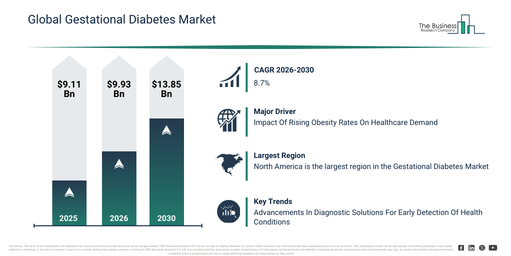
    The gestational diabetes market size has demonstrated strong expansion in recent years. It is anticipated to increase from $9.11 billion in 2025 to $9.93 billion in 2026, achieving a compound annual growth rate (CAGR) of 8.9%. Historically, this growth can be ascribed to elements such as escalating obesity rates, a rise in pregnancies at higher maternal ages, the establishment of early diabetes screening programs, an increase in prenatal care services, and heightened awareness of pregnancy complications.

    The gestational diabetes market is projected to experience substantial expansion in the coming years, anticipated to reach $13.85 billion by 2030, exhibiting a compound annual growth rate (CAGR) of 8.7%. The anticipated growth over the forecast period is primarily driven by factors such as the increasing prevalence of gestational diabetes, the widening adoption of digital health monitoring, advancements in prenatal diagnostics, a greater emphasis on preventive maternal care, and supportive healthcare policies. Key trends observed during this period encompass the increasing acceptance of blood glucose monitoring, a rise in the application of insulin therapy during pregnancy, an evolving focus on lifestyle-centric disease management, the proliferation of prenatal screening initiatives, and heightened maternal health awareness.

    Access Your Free Sample Report For In-Depth Market Analysis:

    https://www.thebusinessresearchcompany.com/report/gestational-diabetes-global-market-report

    What Significant Factors Are Influencing The Gestational Diabetes Market Expansion?

    The growing number of individuals classified as obese is anticipated to fuel expansion in the gestational diabetes market. This demographic includes persons with a body mass index (BMI) of 30 or above, signifying unhealthy levels of body fat that can lead to serious health concerns. The increase in obesity stems from several factors, such as inactive lifestyles, higher intake of calorie-dense, processed foods, hereditary tendencies, and insufficient availability of nutritious food and opportunities for physical activity. Managing gestational diabetes is vital for obese individuals as their elevated susceptibility to insulin resistance and significant weight gain during gestation can result in adverse outcomes for both the mother and the infant if not properly addressed. For example, data released in May 2025 by the Office for Health Improvement and Disparities, a UK government organization, indicated that between 2023 and 2024, approximately 64.5% of adults aged 18 and over in England were either overweight or obese, an increase from 64.0% recorded from 2022 to 2023. Consequently, the expanding obese population is acting as a primary driver for the gestational diabetes market.

    How Is The Gestational Diabetes Market Categorized Across Its Segment Groups?

    The gestational diabetes market covered in this report is segmented –

    1) By Type: Type A1, Type A2, Other Types

    2) By Treatment: Monitoring, Drug Treatment, Non-pharmacological Treatment

    3) By Administration: Oral, Intravenous, Other Administrations

    4) By End User: Hospitals, Clinics, Home Care Settings, Diagnostic Centers

    Subsegments:

    1) By Type A1: Diet-Controlled Gestational Diabetes, Exercise-Controlled Gestational Diabetes

    2) By Type A2: Insulin-Controlled Gestational Diabetes, Oral Medication-Controlled Gestational Diabetes

    3) By Other Types: Pre-Gestational Diabetes, Gestational Diabetes With Complications

    What Trends Are Affecting The Direction Of The Gestational Diabetes Market?

    Companies in the gestational diabetes market are concentrating on creating technologically advanced products, such as diagnostic kits for gestational diabetes, to offer quick, accurate, and convenient methods for early detection. A diagnostic kit for gestational diabetes is a medical instrument used to gauge blood glucose levels and identify atypical glucose tolerance in pregnant women, thereby assisting in the prompt discovery and management of the condition. For instance, in August 2024, DirectSens GmbH, an Austria-based biotechnology company, introduced the XpressGT RUO kit, a diagnostic kit designed for the diagnosis of gestational diabetes, endometriosis, insulin resistance, and liver disease. This kit accurately measures 2-hydroxybutyrate (2-HB) levels found in venous blood, which are naturally produced by the liver during its normal functions. Elevated 2-HB levels are linked to increased reductive stress, which is associated with various endocrine and obesity-related disorders, including insulin resistance. The kit is compatible with any existing clinical analyzer and provides results in just 8 minutes, presenting a rapid and efficient diagnostic solution.

    Which Firms Are Influencing Competition In The Gestational Diabetes Market?

    Major companies operating in the gestational diabetes market are Sanofi S.A., Abbott Laboratories, Eli Lilly and Company, Novo Nordisk A/S, Becton Dickinson and Company, Dexcom Inc, Biocon Limited, Ascensia Diabetes Care Holdings AG, Roche Diabetes Care, Medtronic plc, Insulet Corporation, Tandem Diabetes Care Inc, Ypsomed Holding AG, Beta Bionics Inc, Bigfoot Biomedical Inc, Glooko Inc, Philips Healthcare, Sun Pharmaceutical Industries Ltd, Takeda Pharmaceutical Company Ltd, Pfizer Inc, Novartis AG, Adocia SA, Daiichi Sankyo Company Ltd

    Get The Full Gestational Diabetes Market Report:

    https://www.thebusinessresearchcompany.com/report/gestational-diabetes-global-market-report

    Which Region Holds The Highest Market Share In The Gestational Diabetes Market?

    North America was the largest region in the gestational diabetes market in 2025. Asia-Pacific is expected to be the fastest-growing region in the forecast period. The regions covered in the gestational diabetes market report are Asia-Pacific, South East Asia, Western Europe, Eastern Europe, North America, South America, Middle East, Africa.

    Request A Customized Gestational Diabetes Market Report For Competitive Insights:

    https://www.thebusinessresearchcompany.com/report/gestational-diabetes-global-market-report

    Browse Through More Reports Similar to the Global Gestational Diabetes Market 2026, By The Business Research Company

    Diabetes Care Devices Market 2026

    https://www.thebusinessresearchcompany.com/report/diabetes-care-devices-market

    Type 1 Diabetes Market Report 2026

    https://www.thebusinessresearchcompany.com/report/type-1-diabetes-global-market-report

    Insuman Market Report 2026

    https://www.thebusinessresearchcompany.com/report/insuman-global-market-report

    Get in touch with us:

    The Business Research Company: https://www.thebusinessresearchcompany.com/

    Americas +1 310-496-7795

    Asia +44 7882 955267 & +91 8897263534

    Europe +44 7882 955267

    Email us at info@tbrc.info

    Follow us on:

    LinkedIn: https://in.linkedin.com/company/the-business-research-company

    YouTube: https://www.youtube.com/channel/UC24_fI0rV8cR5DxlCpgmyFQ

    Global Market Model: https://www.thebusinessresearchcompany.com/global-market-model

  • Germ Cell Tumor Market Growth Driven by Increasing Clinical Trials

    Germ Cell Tumor Market Growth Driven by Increasing Clinical Trials

    The Business Research Company’s 2026 market reports feature enhanced tools like market attractiveness analysis, TAM assessment, and company scoring matrices, along with interactive dashboards, deeper supply chain insights, and startup coverage strengthening the depth, usability, and strategic value of insights.

    What Is The Projected Increase In Market Value Of The Germ Cell Tumor Market During 2026–2030?

    The germ cell tumor market has experienced rapid expansion in recent years. It is anticipated to grow from $11.61 billion in 2025 to $13.18 billion in 2026, demonstrating a compound annual growth rate (CAGR) of 13.5%. Historically, this growth can be attributed to advancements in oncology chemotherapy, improvements in cancer diagnostics, the establishment of oncology centers, increased awareness regarding testicular cancer, and the expansion of clinical trials.

    The germ cell tumor market size is projected to experience rapid growth over the next few years. It is expected to expand to $22.55 billion by 2030, demonstrating a compound annual growth rate (CAGR) of 14.4%. This anticipated growth during the forecast period can be attributed to factors such as the development of targeted therapies, an increase in immunotherapy adoption, advancements in precision oncology research, the expansion of cancer treatment infrastructure, and improved screening protocols. Noteworthy trends for the forecast period include a rising reliance on combination chemotherapy regimens, increased integration of immunotherapy approaches, a growing emphasis on early tumor diagnosis, the expansion of treatment for pediatric germ cell tumors, and enhanced survival outcomes through multimodal care.

    Access Your Free Sample Report For In-Depth Market Analysis:

    https://www.thebusinessresearchcompany.com/report/germ-cell-tumor-global-market-report

    Which Important Drivers Are Guiding The Germ Cell Tumor Market Growth?

    The growing volume of clinical trials is projected to fuel the expansion of the germ cell tumor market in the future. These trials involve meticulously planned research studies with human subjects, aiming to assess the safety, effectiveness, and potential advantages of new medical interventions, treatments, therapies, or procedures. They are crucial for studying germ-cell cancers, helping evaluate the effectiveness and safety of new medications and providing valuable insights into current treatment approaches. For example, a report from Xtalks, a Canada-based digital health company, indicated that as of May 2023, a total of 452,604 clinical trials were registered worldwide on ClinicalTrials.gov, with 64,838 of these actively seeking participants. Consequently, the rising number of clinical trials is a key factor propelling the germ cell tumor market’s growth. The rising occurrence of cancer is anticipated to drive the expansion of the germ cell tumor market in the upcoming period. Cancer encompasses a range of diseases defined by the unchecked proliferation and dissemination of abnormal cells, frequently forming tumors capable of invading adjacent tissues and spreading to other areas of the body. Germ cell tumors are primarily treated through surgical excision of the tumor, followed by chemotherapy to eliminate any residual cancer cells. For instance, data from the American Cancer Society Inc., a US-based non-profit health group, projects 1,958,310 new cancer diagnoses in the US for 2023, an increase from 1,918,030 new cases in 2022. Hence, the growing incidence of cancer is a significant catalyst for the growth of the germ cell tumor market.

    How Are Segments Identified Within The Germ Cell Tumor Market Segment Framework?

    The germ cell tumor market covered in this report is segmented –

    1) By Disease: Testicular, Ovarian, Other Diseases

    2) By Treatment Type: Chemotherapy, Immunotherapy

    3) By Route Of Administration: Oral, Intravenous, Intraperitoneal

    4) By End User: Hospitals And Clinics, Research Institutes, Other End Users

    Subsegments:

    1) By Testicular: Seminomas, Non-Seminomas

    2) By Ovarian: Dysgerminoma, Non-Dysgerminomatous Germ Cell Tumors

    3) By Other Diseases: Extragonadal Germ Cell Tumors, Germ Cell Tumors In Children

    What Trends Are Influencing The Evolution Of The Germ Cell Tumor Market?

    Major companies operating in the germ cell tumor market are focusing on developments like CAR T cell therapies. CAR T cell therapy is an advanced immunotherapy in which a patient’s own T cells, a type of immune cell, are genetically engineered to express chimeric antigen receptors (CARs) that can specifically recognize and bind to cancer cells. Once reintroduced into the patient’s body, these modified T cells seek out and destroy targeted tumor cells. For instance, in March 2025, BioNTech SE, a Germany-based biotechnology company developing innovative immunotherapies, initiated a collaboration with Autolus Therapeutics plc, a UK-based biopharmaceutical company focused on advancing BNT211, a CAR T therapy targeting CLDN6-positive solid tumors, which includes germ cell tumors. The collaboration aims to accelerate the development of personalized CAR T treatments for patients with germ cell malignancies by leveraging BioNTech’s expertise in RNA-based and cell therapies. This partnership brings together cutting-edge cellular therapy technology and targeted oncology research to potentially provide new therapeutic options for patients with limited treatment choices.

    Who Are The Companies Competing Within The Germ Cell Tumor Market?

    Major companies operating in the germ cell tumor market are Johnson & Johnson, Pfizer Inc., F. Hoffmann-La Roche AG, AbbVie Inc., Bayer AG, Novartis AG, Merck & Co. Inc., Bristol-Myers Squibb Company, Fresenius Kabi Oncology Limited, Sanofi S.A., AstraZeneca plc, Ipsen Pharma, Takeda Pharmaceutical Company Limited, Eli Lilly and Company, Regeneron Pharmaceuticals Inc., Sandoz International GmbH, Daiichi Sankyo Co. Ltd., Jazz Pharmaceuticals plc, Ono Pharmaceutical Co. Ltd., Kyowa Hakko Kirin Co. Ltd., Mallinckrodt Pharmaceuticals, Taiho Pharmaceutical Co. Ltd., Accord Healthcare Limited, Spectrum Pharmaceuticals Inc., Ziopharm Oncology Inc.

    Get The Full Germ Cell Tumor Market Report:

    https://www.thebusinessresearchcompany.com/report/germ-cell-tumor-global-market-report

    Where Is The Germ Cell Tumor Market Most Concentrated Geographically?

    North America was the largest region in the germ cell tumors market in 2025. Asia-Pacific is expected to be the fastest-growing region in the forecast period. The regions covered in the germ cell tumor market report are Asia-Pacific, South East Asia, Western Europe, Eastern Europe, North America, South America, Middle East, Africa.

    Request A Customized Germ Cell Tumor Market Report For Competitive Insights:

    https://www.thebusinessresearchcompany.com/report/germ-cell-tumor-global-market-report

    Browse Through More Reports Similar to the Global Germ Cell Tumor Market 2026, By The Business Research Company

    Non Hodgkin Lymphoma Nhl Market Report 2026

    https://www.thebusinessresearchcompany.com/report/non-hodgkin-lymphoma-nhl-global-market-report

    Tumor Infiltrating Lymphocytes Market Report 2026

    https://www.thebusinessresearchcompany.com/report/tumor-infiltrating-lymphocytes-global-market-report

    Emphysema Market Report 2026

    https://www.thebusinessresearchcompany.com/report/emphysema-global-market-report

    Get in touch with us:

    The Business Research Company: https://www.thebusinessresearchcompany.com/

    Americas +1 310-496-7795

    Asia +44 7882 955267 & +91 8897263534

    Europe +44 7882 955267

    Email us at info@tbrc.info

    Follow us on:

    LinkedIn: https://in.linkedin.com/company/the-business-research-company

    YouTube: https://www.youtube.com/channel/UC24_fI0rV8cR5DxlCpgmyFQ

    Global Market Model: https://www.thebusinessresearchcompany.com/global-market-model
  • Geriatric Medicines Market Growth Driven by Rising Age-Related Conditions

    Geriatric Medicines Market Growth Driven by Rising Age-Related Conditions

    The Business Research Company’s 2026 market reports feature enhanced tools like market attractiveness analysis, TAM assessment, and company scoring matrices, along with interactive dashboards, deeper supply chain insights, and startup coverage strengthening the depth, usability, and strategic value of insights.

    How Is The Market Size Of The Geriatric Medicines Market Expected To Change From 2026 To 2030?

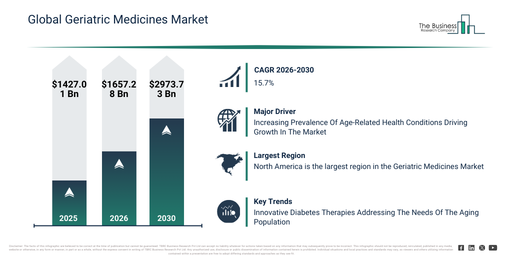
    The geriatric medicines market has shown substantial growth in recent years. Its size is expected to expand from $1427.01 billion in 2025 to $1657.28 billion in 2026, reflecting a compound annual growth rate (CAGR) of 16.1%. Historically, this expansion has been primarily due to factors like an aging demographic, the increasing prevalence of chronic ailments, the development of hospital pharmacies, early progress in geriatric drug creation, and a general increase in life expectancy.

    The geriatric medicines market is projected to experience substantial growth in the upcoming years. This market is set to reach $2973.73 billion by 2030, exhibiting a compound annual growth rate (CAGR) of 15.7%. Factors contributing to this growth during the forecast period include an expanding elderly population, the creation of safer drug formulations, the proliferation of online pharmacies, an emphasis on personalized geriatric care, and increasing healthcare spending. Key trends anticipated in the forecast period encompass a rising demand for polypharmacy management, a heightened focus on age-specific drug formulations, an uptick in the use of cognitive health medications, the broadening of chronic disease drug therapies, and advancements in medication adherence solutions.

    Access Your Free Sample Report For In-Depth Market Analysis:

    https://www.thebusinessresearchcompany.com/report/geriatric-medicines-global-market-report

    What Major Factors Are Driving The Geriatric Medicines Market Forward?

    The anticipated expansion of the geriatric medicines market is linked to the rising occurrence of age-related health issues. These health challenges intensify in frequency or severity with advancing age, a direct consequence of the aging process. The escalating incidence of age-related health conditions is primarily fueled by extended life expectancies, advancements in healthcare, and a growing elderly demographic. Specialized treatments offered by geriatric medicines assist in managing age-related health conditions in older adults, thereby enhancing their quality of life and health outcomes. As an illustration, the Centers for Disease Control and Prevention, a US-based government public health agency, indicated in April 2025 that in 2023, approximately 194 million American adults, comprising 6 in 10 young adults, 8 in 10 midlife adults, and 9 in 10 older adults, reported having 1 or more conditions. Among young adults, the occurrence of chronic conditions rose by 7.0 percentage points. Consequently, the growing occurrence of age-related health issues propels the expansion of the geriatric medicines market.

    What Are The Key Segment Divisions In The Geriatric Medicines Market Segment Structure?

    The geriatric medicines market covered in this report is segmented –

    1) By Therapeutics: Analgesics, Antihypertensive, Statins, Proton Pump Inhibitors, Anticoagulant, Antipsychotic, Other Therapeutics

    2) By Condition: Cardiovascular, Arthritis, Neurological, Cancer, Osteoporosis, Respiratory, Other Conditions

    3) By Route Of Administration: Oral, Parenteral, Other Routes Of Administration

    4) By Distribution Channel: Hospital Pharmacy, Retail Pharmacy, Online Pharmacy

    Subsegments:

    1) By Analgesics: Non-Opioid Analgesics (Acetaminophen, NSAIDs), Opioid Analgesics (Morphine, Oxycodone), Topical Analgesics (Lidocaine Patches)

    2) By Antihypertensive: Angiotensin-Converting Enzyme (ACE) Inhibitors, Angiotensin II Receptor Blockers (ARBs), Beta-Blockers, Calcium Channel Blockers, Diuretics, Alpha-Blockers

    3) By Statins: Atorvastatin, Simvastatin, Rosuvastatin, Pravastatin, Lovastatin

    4) By Proton Pump Inhibitors: Omeprazole, Esomeprazole, Lansoprazole, Pantoprazole, Rabeprazole

    5) By Anticoagulant: Warfarin, Direct Oral Anticoagulants (DOACs): Dabigatran, Rivaroxaban, Apixaban, Heparin

    6) By Antipsychotic: Atypical Antipsychotics, Typical Antipsychotics

    7) By Other Therapeutics: Antidepressants (SSRIs, SNRIs), Antidiabetic Medications (Insulin, Metformin), Anticonvulsants, Anti-Inflammatory Drugs (Corticosteroids), Cognitive Enhancers (Donepezil, Memantine)

    Which Trends Are Impacting The Progress Of The Geriatric Medicines Market?

    Key companies in the geriatric medicines market are focusing on developing innovative diabetes therapy to address the rising demand for effective solutions in the aging demographic. This diabetes therapy involves advanced treatments that enhance diabetes management or offer potential cures that surpass traditional methods, thereby improving efficacy, safety, and patient outcomes. For instance, in August 2023, Akums Drugs & Pharmaceuticals Ltd., an India-based contract manufacturing pharmaceutical company, announced the launch of a novel combination therapy featuring Vildagliptin SR and Metformin SR. This sophisticated formulation is specifically designed to manage Type 2 diabetes in elderly patients. It aims to deliver effective glycemic control and minimize critical concerns such as hypoglycemia and weight gain, which are particularly important for this population. By synergizing the mechanisms of both drugs, the combination therapy enhances insulin secretion and effectively reduces blood sugar levels, ensuring both safety and efficacy. The product has received regulatory approval from the Drug Controller General of India (DCGI).

    Which Organizations Are Engaged In The Geriatric Medicines Market?

    Major companies operating in the geriatric medicines market are Pfizer Inc., Merck & Co. Inc., AbbVie Inc., Sanofi S.A., Bristol-Myers Squibb Company, Novartis AG, F. Hoffmann-La Roche AG, GlaxoSmithKline plc, Eli Lilly and Company, Viatris Inc., Teva Pharmaceutical Industries Ltd., Boehringer Ingelheim GmbH, Regeneron Pharmaceuticals Inc., Macleods Pharmaceuticals Ltd., Apotex Inc., Intas Pharmaceuticals Limited, Dr. Reddy’s Laboratories, Lupin Limited, Biocon Limited, Torrent Pharmaceuticals Ltd., Endo Pharmaceuticals Inc.

    Get The Full Geriatric Medicines Market Report:

    https://www.thebusinessresearchcompany.com/report/geriatric-medicines-global-market-report

    Which Region Dominates The Geriatric Medicines Market By Market Share?

    North America was the largest region in the geriatric medicines market in 2025. Asia-Pacific is expected to be the fastest-growing region in the forecast period. The regions covered in the geriatric medicines market report are Asia-Pacific, South East Asia, Western Europe, Eastern Europe, North America, South America, Middle East, Africa.

    Request A Customized Geriatric Medicines Market Report For Competitive Insights:

    https://www.thebusinessresearchcompany.com/report/geriatric-medicines-global-market-report

    Browse Through More Reports Similar to the Global Geriatric Medicines Market 2026, By The Business Research Company

    Geriatric Medicines Market Report 2026

    https://www.thebusinessresearchcompany.com/report/geriatric-medicines-global-market-report

    Alzheimers Drugs Market Report 2026

    https://www.thebusinessresearchcompany.com/report/alzheimers-drugs-global-market-report

    Geriatric Care Services Market Report 2026

    https://www.thebusinessresearchcompany.com/report/geriatric-care-services-global-market-report

    Get in touch with us:

    The Business Research Company: https://www.thebusinessresearchcompany.com/

    Americas +1 310-496-7795

    Asia +44 7882 955267 & +91 8897263534

    Europe +44 7882 955267

    Email us at info@tbrc.info

    Follow us on:

    LinkedIn: https://in.linkedin.com/company/the-business-research-company

    YouTube: https://www.youtube.com/channel/UC24_fI0rV8cR5DxlCpgmyFQ

    Global Market Model: https://www.thebusinessresearchcompany.com/global-market-model

  • Geriatric Care Services Market: Growth Potential and Outlook

    Geriatric Care Services Market: Growth Potential and Outlook

    The Business Research Company’s 2026 market reports feature enhanced tools like market attractiveness analysis, TAM assessment, and company scoring matrices, along with interactive dashboards, deeper supply chain insights, and startup coverage strengthening the depth, usability, and strategic value of insights.

    From Its 2026 Market Size, What Value Is The Geriatric Care Services Market Projected To Reach By 2030?

    The geriatric care services market has experienced robust expansion over the past few years. This market is projected to expand from $1153.19 billion in 2025 to reach $1234.29 billion by 2026, exhibiting a compound annual growth rate (CAGR) of 7.0%. Factors contributing to this historical growth include an expanding elderly population, longer life expectancies, shifts in family structures, the early adoption of homecare services, and the broadening of healthcare infrastructure.

    The market for geriatric care services is projected to experience robust expansion over the coming years. This market is anticipated to reach $1618.04 billion by 2030, exhibiting a compound annual growth rate (CAGR) of 7.0%. Several factors are driving this growth during the forecast period, including an increase in the elderly population, the incorporation of digital health tools, a need for tailored elderly care, the expansion of assisted living communities, and government initiatives supporting elder care. Key trends expected during this period involve an increasing preference for home-based elderly care, the broadening of telehealth services for seniors, a heightened emphasis on managing chronic diseases, greater uptake of assisted living facilities, and the incorporation of services to support caregivers.

    Access Your Free Sample Report For In-Depth Market Analysis:

    https://www.thebusinessresearchcompany.com/report/geriatric-care-services-global-market-report

    Which Key Drivers Are Affecting The Geriatric Care Services Market Development?

    The rising occurrence of chronic illnesses is anticipated to fuel the expansion of the geriatric care services market moving ahead. These are defined as health conditions that are long-lasting, enduring for prolonged durations, frequently necessitating continuous management and therapy given their typical incurability. The incidence of chronic diseases is increasing due to multiple interrelated elements, including an aging populace, detrimental lifestyle choices, and the availability and framework of healthcare systems. Geriatric care services play a vital role in enhancing the life quality for elderly individuals suffering from long-term medical conditions, providing holistic, patient-focused care that addresses their functional, psychological, and medical needs. As an illustration, in April 2025, data from the Centers for Disease Control and Prevention, a US-based government public health agency, revealed that in 2023, around 194 million American adults – comprising 6 in 10 young adults, 8 in 10 midlife adults, and 9 in 10 older adults – indicated having 1 or more conditions. Among young adults, the prevalence of chronic conditions saw an increase of 7.0 percentage points. Consequently, the growing frequency of chronic diseases is propelling the geriatric care services market.

    Which Segment Categories Are Included In The Geriatric Care Services Market Segment Analysis?

    The geriatric care services market covered in this report is segmented –

    1) By Type: Homecare, Healthcare, Institutional Care Centers, Non-Medical Health Care, Hospital Based Care, Assisted Living, Independent Senior Living, Rehabilitative Care Services

    2) By Age Group: 65 To 70 Years, 70 To 75 Years, 75 To 80 Years, More Than 80 Years

    3) By Application: Respiratory Diseases, Diabetes, Osteoporosis, Other Applications

    4) By End User: Institutional Care Services, Nursing Homes, Rehabilitation Centers, Hospitals

    Subsegments:

    1) By Homecare: Personal Care Services ( Bathing, Dressing), Companionship Services, Home Health Aide Services, Nursing Care Services At Home, Physical Therapy And Rehabilitation At Home, Chronic Disease Management At Home

    2) By Healthcare: In-Home Medical Care ( Physician Visits), Telehealth And Telemedicine For Seniors, Geriatric Nursing Services, Palliative And Hospice Care, Elderly Vaccination And Preventive Health Services, Geriatric Health Screenings And Assessments

    3) By Institutional Care Centers: Nursing Homes, Long-Term Care Facilities, Memory Care Units (For Alzheimer’s Or Dementia Patients), Skilled Nursing Facilities (Snfs), Rehabilitation Centers, Geriatric Psychiatric Care Institutions

    4) By Non-Medical Health Care: Assistance With Daily Living Activities ( Meal Preparation, Housekeeping), Elderly Transportation Services, Companion Care Services, Caregiver Support And Respite Care, Home Safety And Accessibility Modifications

    5) By Hospital-Based Care: Acute Geriatric Care, Geriatric Emergency Care Services, Geriatric Surgery Services, Inpatient Rehabilitation Services, Palliative Care And Pain Management In Hospitals

    6) By Assisted Living: Independent Living With Assistance, Memory Care Assisted Living, 24/7 Supervision And Personal Care Assistance, Community-Based Assisted Living Centers, Medication Management And Assistance

    7) By Independent Senior Living: Senior Apartments And Housing Communities, Age-Restricted Independent Living Communities, Senior Retirement Communities, Community Socialization And Recreation Services, Maintenance-free Living For Seniors, Active Lifestyle Programs For Seniors

    8) By Rehabilitative Care Services: Physical Therapy And Occupational Therapy, Post-Surgery Recovery Services, Speech And Language Therapy, Cardiac And Stroke Rehabilitation, Inpatient And Outpatient Rehabilitation Services, Sports Medicine And Injury Recovery

    What Trends Are Transforming The Geriatric Care Services Market?

    Key companies operating within the geriatric care services market are directing their efforts toward developing innovative technologies, including AI-powered assistant services, to empower users to effectively look after the elderly. AI-driven assistants designed for elder care represent technology-based solutions that harness artificial intelligence (AI) to support and enhance the well-being, health, and day-to-day activities of older adults. For instance, in February 2024, Intuition Robotics, a U.S.-based AI robotics company, unveiled ElliQ 3 at CES, presenting a next-generation eldercare companion robot powered by generative AI (large language models). With this launch, the company aims to broaden the reach of its conversational companion for older adults, facilitating more natural, contextual interactions while maintaining memory and emotional awareness. ElliQ 3 operates on a lighter hardware platform equipped with an octa-core + AI chip, and its software upgrade is compatible with earlier ElliQ devices, enabling existing users to gain from the generative AI enhancements.

    Who Are The Active Companies Shaping The Geriatric Care Services Market?

    Major companies operating in the geriatric care services market are Home Instead Senior Care Incorporated, Genesis HealthCare Corporation, Kindred Healthcare Incorporated, Benesse Holdings Inc., Brookdale Senior Living Incorporated, Amedisys Incorporated, Sunrise Senior Living Incorporated, Active Day Inc., Living Assistance Services Inc., Rosewood Care Group Inc., St Luke’s ElderCare Ltd., Epoch Elder Care Private Limited, LivHOME, GGNSC Holdings LLC, Maxim Healthcare Services, SavaSeniorCare, Senior Lifestyle Corporation, Comfort Keepers, Visiting Angels, Life Care Services, Atria Senior Living

    Get The Full Geriatric Care Services Market Report:

    https://www.thebusinessresearchcompany.com/report/geriatric-care-services-global-market-report

    Which Region Is The Largest In The Geriatric Care Services Market?

    North America was the largest region in the geriatric care services market in 2025. Asia-Pacific is expected to be the fastest-growing region in the forecast period. The regions covered in the geriatric care services market report are Asia-Pacific, South East Asia, Western Europe, Eastern Europe, North America, South America, Middle East, Africa.

    Request A Customized Geriatric Care Services Market Report For Competitive Insights:

    https://www.thebusinessresearchcompany.com/report/geriatric-care-services-global-market-report

    Browse Through More Reports Similar to the Global Geriatric Care Services Market 2026, By The Business Research Company

    Geriatric Medicines Market Report 2026

    https://www.thebusinessresearchcompany.com/report/geriatric-medicines-global-market-report

    Elderly Care Services Market Report 2026

    https://www.thebusinessresearchcompany.com/report/elderly-care-services-global-market-report

    Elderly Care Market Report 2026

    https://www.thebusinessresearchcompany.com/report/elderly-care-global-market-report

    Get in touch with us:

    The Business Research Company: https://www.thebusinessresearchcompany.com/

    Americas +1 310-496-7795

    Asia +44 7882 955267 & +91 8897263534

    Europe +44 7882 955267

    Email us at info@tbrc.info

    Follow us on:

    LinkedIn: https://in.linkedin.com/company/the-business-research-company

    YouTube: https://www.youtube.com/channel/UC24_fI0rV8cR5DxlCpgmyFQ

    Global Market Model: https://www.thebusinessresearchcompany.com/global-market-model
  • Geographic Atrophy Market: Growth Trends and Forecast

    Geographic Atrophy Market: Growth Trends and Forecast

    The Business Research Company’s 2026 market reports feature enhanced tools like market attractiveness analysis, TAM assessment, and company scoring matrices, along with interactive dashboards, deeper supply chain insights, and startup coverage strengthening the depth, usability, and strategic value of insights.

    How Much Growth In Market Value Is Expected For The Geographic Atrophy Market Between 2026 And 2030?

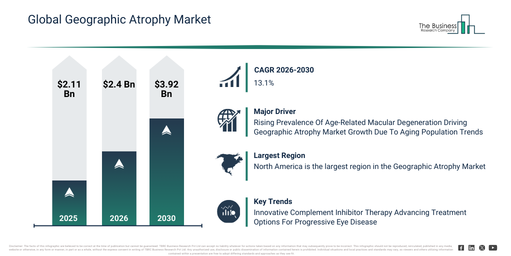
    The geographic atrophy market size has experienced rapid growth in recent years. It is projected to expand from $2.11 billion in 2025 to $2.4 billion in 2026, achieving a compound annual growth rate (CAGR) of 13.3%. This historic growth can be attributed to factors such as the increase in the aging population, the prevalence of age-related macular degeneration, advancements in retinal imaging, early ophthalmic drug development efforts, and clinical research funding.

    The geographic atrophy market size is anticipated to undergo swift expansion in the upcoming years. It is forecast to achieve a value of $3.92 billion by 2030, demonstrating a compound annual growth rate (CAGR) of 13.1%. The growth anticipated during this forecast period can be ascribed to several factors, including the approval of innovative therapies, the broadening of screening programs, the incorporation of AI-based imaging solutions, heightened patient awareness, and the advancement of specialty eye care. Significant trends expected in the forecast period involve the increasing development of complement inhibitor treatments, a concentrated effort on the early diagnosis of retinal disorders, augmented investment in new ophthalmic drugs, the wider adoption of imaging technologies for tracking disease progression, and a rise in clinical trials for AMD treatments.

    Access Your Free Sample Report For In-Depth Market Analysis:

    https://www.thebusinessresearchcompany.com/report/geographic-atrophy-global-market-report

    What Factors Are Contributing To The Growth Of The Geographic Atrophy Market?

    The rising prevalence of age-related macular degeneration is anticipated to drive the expansion of the geographic atrophy market in the coming period. Age-related macular degeneration (AMD) is an ocular condition that harms the central part of the retina in older individuals, making it challenging to see intricate details. The aging demographic serves as a primary driver for the widespread occurrence of age-related macular degeneration, given that increased longevity and the natural aging process progressively damage the eyes, rendering them more susceptible to the disease over time. Treatments for geographic atrophy assist age-related macular degeneration (AMD) patients by decelerating the progression of retinal damage and safeguarding their existing vision. For instance, in January 2024, a report published by Medical News Today, a US-based digital media company, forecast that global cases of age-related macular degeneration are expected to increase from 196 million to 288 million by 2040. Consequently, the escalating prevalence of age-related macular degeneration is fueling the growth of the geographic atrophy market.

    How Is The Geographic Atrophy Market Broken Down By Segment Categories?

    The geographic atrophy market covered in this report is segmented –

    1) By Drug Type: Anti-Vascular Endothelial Growth Factor (VEGF) Therapy, Complement Inhibitors, Neuroprotective Agents, Other Drug Types

    2) By Diagnosis: Fundus Autofluorescence (FAF), Optical Coherence Tomography Angiography (OCT-A), Multifocal Electroretinography (mfERG)

    3) By Route Of Administration: Intravitreal, Oral, Other Routes Of Administration

    4) By Distribution Channel: Hospital Pharmacies, Retail Pharmacies, Online Pharmacies, Other Distribution Channels

    Subsegments:

    1) By Anti-Vascular Endothelial Growth Factor (VEGF) Therapy: Ranibizumab, Aflibercept, Bevacizumab

    2) By Complement Inhibitors: Pegcetacoplan, Lfg316

    3) By Neuroprotective Agents: Latanoprost, Brimonidine

    4) By Other Drug Types: Steroids, Retinoids, Combination Therapy

    What Trends Are Shaping The Future Of The Geographic Atrophy Market?

    Major companies operating in the geographic atrophy market are concentrating on innovative therapies like complement inhibitor therapy to develop advanced treatments for geographic atrophy. Complement inhibitor therapy is a treatment designed to slow an overactive immune response linked to certain diseases, helping to protect healthy cells from damage and reduce disease progression. For instance, in February 2025, Astellas Pharma Inc., a Japan-based pharmaceutical company, announced that IZERVAY (avacincaptad pegol intravitreal solution) for geographic atrophy received approval from the Food and Drug Administration, a US-based government agency. This approval permits IZERVAY to be utilized without a limitation on the duration of dosing for treating geographic atrophy (GA) secondary to age-related macular degeneration (AMD). This decision offers enhanced flexibility for managing GA, providing longer-term treatment options for both patients and healthcare providers.

    Which Players Are Present In The Geographic Atrophy Market Space?

    Major companies operating in the geographic atrophy market are Regeneron Pharmaceuticals Inc, Ocugen Inc, Kodiak Sciences Inc, Apellis Pharmaceuticals Inc, Iveric Bio, Graybug Vision, SparingVision, Alkeus Pharmaceuticals, Kiora Pharmaceuticals, Nanoscope Therapeutics, 4D Molecular Therapeutics, Gensight Biologics, BioMarin Pharmaceutical Inc, Nightstar Therapeutics, MeiraGTx, Retinagenix Inc, Adverum Biotechnologies, AGTC Inc, Editas Therapeutics

    Get The Full Geographic Atrophy Market Report:

    https://www.thebusinessresearchcompany.com/report/geographic-atrophy-global-market-report

    Which Region Leads The Geographic Atrophy Market In Terms Of Market Share?

    North America was the largest region in the geographic atrophy market in 2025. Asia-Pacific is expected to be the fastest-growing region in the forecast period. The regions covered in the geographic atrophy market report are Asia-Pacific, South East Asia, Western Europe, Eastern Europe, North America, South America, Middle East, Africa.

    Request A Customized Geographic Atrophy Market Report For Competitive Insights:

    https://www.thebusinessresearchcompany.com/report/geographic-atrophy-global-market-report

    Browse Through More Reports Similar to the Global Geographic Atrophy Market 2026, By The Business Research Company

    Athleisure Market Report 2026

    https://www.thebusinessresearchcompany.com/report/athleisure-global-market-report

    Geographic Information System Market Report 2026

    https://www.thebusinessresearchcompany.com/report/geographic-information-system-global-market-report

    Geotourism Market Report 2026

    https://www.thebusinessresearchcompany.com/report/geotourism-global-market-report

    Get in touch with us:

    The Business Research Company: https://www.thebusinessresearchcompany.com/

    Americas +1 310-496-7795

    Asia +44 7882 955267 & +91 8897263534

    Europe +44 7882 955267

    Email us at info@tbrc.info

    Follow us on:

    LinkedIn: https://in.linkedin.com/company/the-business-research-company

    YouTube: https://www.youtube.com/channel/UC24_fI0rV8cR5DxlCpgmyFQ

    Global Market Model: https://www.thebusinessresearchcompany.com/global-market-model

  • Genu Recurvatum Market: Emerging Growth Drivers Through 2030

    Genu Recurvatum Market: Emerging Growth Drivers Through 2030

    The Business Research Company’s 2026 market reports feature enhanced tools like market attractiveness analysis, TAM assessment, and company scoring matrices, along with interactive dashboards, deeper supply chain insights, and startup coverage strengthening the depth, usability, and strategic value of insights.

    What Is The Estimated Market Size Of The Genu Recurvatum Market In 2026, And How Will Its Value Evolve By 2030?

    The genu recurvatum market size has shown significant expansion over recent years. It is anticipated to increase from $8.04 billion in 2025 to $8.6 billion in 2026, demonstrating a compound annual growth rate (CAGR) of 6.9%. The drivers behind this past growth include heightened orthopedic condition awareness, the implementation of early rehabilitation practices, the wide availability of bracing solutions, the common prevalence of sports injuries, and ongoing advancements in orthopedic surgery.

    The genu recurvatum market is projected for substantial expansion in the coming years. By 2030, its valuation is anticipated to reach $11.49 billion, expanding at a compound annual growth rate of 7.5%. This projected growth is driven by advancements in orthopedic devices, customized bracing solutions, the expansion of physiotherapy services, an increasing elderly population, and enhancements in diagnostic imaging techniques. Key trends anticipated during this period encompass a greater acceptance of non-surgical treatment methods, wider utilization of bespoke orthotic bracing, escalating demand for physical therapy-centric management, the proliferation of minimally invasive surgical procedures, and an enhanced emphasis on prompt diagnosis and intervention.

    Access Your Free Sample Report For In-Depth Market Analysis:

    https://www.thebusinessresearchcompany.com/report/genu-recurvatum-global-market-report

    Which Strong Drivers Are Impacting The Genu Recurvatum Market Growth?

    The increasing adoption of minimally invasive surgeries is expected to stimulate the expansion of the genu recurvatum market moving forward. These medical procedures involve either minor incisions or none at all, utilizing advanced instruments such as cameras and specialized tools to reduce tissue damage, shorten recovery periods, and diminish scarring compared to traditional open surgery. The growing appeal of minimally invasive surgeries is due to their advantages, including quicker recovery times, lower infection risks, less scarring, and shorter hospital stays. Genu recurvatum facilitates minimally invasive surgeries by enhancing knee alignment and stability, allowing surgeons to operate with less tissue disruption and greater precision. For example, in June 2024, the American Society of Plastic Surgeons, a US-based non-profit organization, reported a 7 percent increase in minimally invasive procedures in 2023, which was 2 percent higher than the growth rate for surgical procedures. Therefore, the rising preference for minimally invasive surgeries is a key driver for the genu recurvatum market’s growth.

    What Are The Different Segment Types In The Genu Recurvatum Market Segment Breakdown?

    The genu recurvatum market covered in this report is segmented –

    1) By Type: External Rotatory Deformity (ERD), Internal Rotatory Deformity (IRD), Non-Rotatory Deformity (NRD)

    2) By Diagnosis: Magnetic Resonance Imaging (MRI), X-Rays, Other Diagnosis

    3) By Treatment: Physical Therapy, Orthoses, Bracing, Surgery

    4) By End-Users: Hospital, Clinics, Other End-Users

    Subsegments:

    1) By External Rotatory Deformity (ERD): Mild ERD, Moderate ERD, Severe ERD

    2) By Internal Rotatory Deformity (IRD): Mild IRD, Moderate IRD, Severe IRD

    3) By Non-Rotatory Deformity (NRD): Fixed NRD, Flexible NRD

    Who Are The Well-Known Companies In The Genu Recurvatum Market?

    Major companies operating in the genu recurvatum market are Johnson & Johnson MedTech, Stryker Corporation, DePuy Synthes Inc., Zimmer Inc., Smith & Nephew plc, Arthrex, DJO Global Inc., Össur hf, AliMed Inc., Thuasne Ltd., OrthoPro Inc., Performance Health, Trulife Group Limited, Breg Inc., Allard USA, Capstone Orthopedic Inc., BraceAbility, Globus Medical, Medtronic plc, ConMed Corporation, Bioventus, Medacta International, Ottobock SE & Co. KGaA, Exactech Inc.

    Get The Full Genu Recurvatum Market Report:

    https://www.thebusinessresearchcompany.com/report/genu-recurvatum-global-market-report

    Which Region Leads The Genu Recurvatum Market In Overall Market Size?

    North America was the largest region in the genu recurvatum market in 2025. Asia-Pacific is expected to be the fastest-growing region in the forecast period. The regions covered in the genu recurvatum market report are Asia-Pacific, South East Asia, Western Europe, Eastern Europe, North America, South America, Middle East, Africa.

    Request A Customized Genu Recurvatum Market Report For Competitive Insights:

    https://www.thebusinessresearchcompany.com/report/genu-recurvatum-global-market-report

    Browse Through More Reports Similar to the Global Genu Recurvatum Market 2026, By The Business Research Company

    Genotyping Market Report 2026

    https://www.thebusinessresearchcompany.com/report/genotyping-global-market-report

    Excavator Market Report 2026

    https://www.thebusinessresearchcompany.com/report/excavator-global-market-report

    Vanadium Market Report 2026

    https://www.thebusinessresearchcompany.com/report/vanadium-global-market-report

    Get in touch with us:

    The Business Research Company: https://www.thebusinessresearchcompany.com/

    Americas +1 310-496-7795

    Asia +44 7882 955267 & +91 8897263534

    Europe +44 7882 955267

    Email us at info@tbrc.info

    Follow us on:

    LinkedIn: https://in.linkedin.com/company/the-business-research-company

    YouTube: https://www.youtube.com/channel/UC24_fI0rV8cR5DxlCpgmyFQ

    Global Market Model: https://www.thebusinessresearchcompany.com/global-market-model