Category: Healthcare Services

  • Hypercalcemia Treatment Market: Key Developments

    Hypercalcemia Treatment Market: Key Developments

    The Business Research Company’s 2026 market reports feature enhanced tools like market attractiveness analysis, TAM assessment, and company scoring matrices, along with interactive dashboards, deeper supply chain insights, and startup coverage strengthening the depth, usability, and strategic value of insights.

    How Is The Market Size Of The Hypercalcemia Treatment Market Expected To Change From 2026 To 2030?

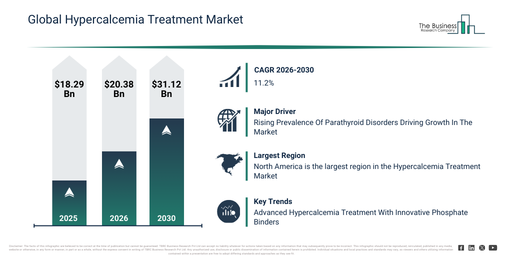
    The hypercalcemia treatment market has shown rapid expansion in recent years. Its value is projected to climb from $18.29 billion in 2025 to $20.38 billion in 2026, representing a compound annual growth rate (CAGR) of 11.5%. This market’s historical growth can be attributed to factors such as the increasing prevalence of malignancy-related hypercalcemia, the established clinical application of bisphosphonates, a rising incidence of primary hyperparathyroidism, the presence of hospital-based emergency management protocols, and the availability of generic calcium-lowering drugs.

    The hypercalcemia treatment market is projected to experience substantial growth in the upcoming years. It is forecast to reach $31.12 billion by 2030, exhibiting a compound annual growth rate (CAGR) of 11.2%. This expansion during the forecast period is primarily driven by an increasing cancer patient population, the heightened adoption of denosumab therapy, innovations in calcimimetic drugs, growing recognition of early diagnosis, and the expansion of outpatient and long-term care management. Significant trends anticipated over the forecast period include the increasing utilization of targeted therapies for hypercalcemia, a growing preference for swift-acting injectable treatments, a heightened focus on managing hypercalcemia associated with oncology, the expansion of combination drug therapies, and a greater embrace of protocol-based emergency management.

    Access Your Free Sample Report For In-Depth Market Analysis:

    https://www.thebusinessresearchcompany.com/report/hypercalcemia-treatment-global-market-report

    What Key Factors Are Shaping The Hypercalcemia Treatment Market Landscape?

    The hypercalcemia treatment market is anticipated to expand due to the increasing occurrence of parathyroid disorders. These disorders are conditions that impact the parathyroid glands, which are responsible for regulating the body’s calcium levels via parathyroid hormone (PTH) production. The growing incidence of parathyroid disorders stems from an aging global population, enhanced awareness, better diagnostic tools, and a rise in conditions such as primary hyperparathyroidism and chronic kidney disease. Managing parathyroid disorders critically involves hypercalcemia treatment, as it helps control elevated calcium levels, prevents issues like kidney stones and bone density loss, and supports overall metabolic equilibrium. For example, data from February 2024 by the National Institute of Health (NIH), a US government agency, indicates that in the United States, hypoparathyroidism affects approximately 6.4 to 37 per 100,000 person-years, with 75% of these instances stemming from complications of thyroidectomy or head and neck surgical procedures. Consequently, the rising prevalence of parathyroid disorders is fueling the expansion of the hypercalcemia treatment market.

    Which Segments Define The Hypercalcemia Treatment Market Segment Structure?

    The hypercalcemia treatment market covered in this report is segmented –

    1) By Drug Type: Bisphosphonates, Calcitonin, Glucocorticoids, Denosumab, Calcimimetics, Other Drug Types

    2) By Distribution Channel: Hospitals Pharmacies, Retail Pharmacies, Online Pharmacies

    3) By End-Users: Hospitals, Clinics

    Subsegments:

    1) By Bisphosphonates: Zoledronic Acid, Pamidronate

    2) By Calcitonin: Salmon Calcitonin, Synthetic Calcitonin

    3) By Glucocorticoids: Prednisone, Dexamethasone, Hydrocortisone

    4) By Denosumab: Denosumab (Monotherapy), Denosumab Combination Therapy

    5) By Calcimimetics: Cinacalcet, Etelcalcetide

    6) By Other Drug Types: Gallium Nitrate, Mithramycin

    What Market Trends Are Affecting The Hypercalcemia Treatment Market?

    Leading companies within the hypercalcemia treatment market are prioritizing the development of novel products, such as phosphate binders, to achieve superior regulation of calcium and phosphorus balance, ultimately improving patient outcomes. Phosphate binders are medications that work by binding to phosphate in the digestive tract, thereby preventing its absorption into the bloodstream, and are frequently utilized to control high phosphate levels in individuals with kidney disease or hypercalcemia. For example, in May 2024, Strides Pharma Science Limited, an India-based pharmaceutical company, obtained approval from the United States Food and Drug Administration (FDA) for its Sevelamer Carbonate Tablets, 800 mg. These tablets effectively manage hyperphosphatemia in patients with chronic kidney disease by binding to dietary phosphate and impeding its absorption. Additionally, they contribute to maintaining bone health and lowering cardiovascular risks associated with elevated phosphate levels.

    Who Are The Established Players Within The Hypercalcemia Treatment Market?

    Major companies operating in the hypercalcemia treatment market are Amgen Inc., Novartis AG, Pfizer Inc., Roche Holding AG, Merck KGaA, Eli Lilly and Company, AstraZeneca plc, GSK plc, AbbVie Inc., Teva Pharmaceutical Industries Ltd., Sandoz Group AG, Hikma Pharmaceuticals plc, Kyowa Kirin Co. Ltd., Ipsen SA, Endo Inc., OPKO Health Inc., Sanofi, Bayer AG, Sun Pharmaceutical Industries Ltd., Dr Reddy’s Laboratories Ltd., Aurobindo Pharma Ltd.

    Get The Full Hypercalcemia Treatment Market Report:

    https://www.thebusinessresearchcompany.com/report/hypercalcemia-treatment-global-market-report

    Which Region Is The Top Contributor To The Hypercalcemia Treatment Market By Share?

    North America was the largest region in the hypercalcemia treatment market in 2025. The regions covered in the hypercalcemia treatment market report are Asia-Pacific, South East Asia, Western Europe, Eastern Europe, North America, South America, Middle East, Africa.

    Request A Customized Hypercalcemia Treatment Market Report For Competitive Insights:

    https://www.thebusinessresearchcompany.com/report/hypercalcemia-treatment-global-market-report

    Browse Through More Reports Similar to the Global Hypercalcemia Treatment Market 2026, By The Business Research Company

    Hyperhidrosis Treatment Market Report 2026

    https://www.thebusinessresearchcompany.com/report/hyperhidrosis-treatment-global-market-report

    Hyperpigmentation Disorder Treatment Market Report 2026

    https://www.thebusinessresearchcompany.com/report/hyperpigmentation-disorder-treatment-global-market-report

    Hyperlipidemia Market Report 2026

    https://www.thebusinessresearchcompany.com/report/hyperlipidemia-global-market-report

    Get in touch with us:

    The Business Research Company: https://www.thebusinessresearchcompany.com/

    Americas +1 310-496-7795

    Asia +44 7882 955267 & +91 8897263534

    Europe +44 7882 955267

    Email us at info@tbrc.info

    Follow us on:

    LinkedIn: https://in.linkedin.com/company/the-business-research-company

    YouTube: https://www.youtube.com/channel/UC24_fI0rV8cR5DxlCpgmyFQ

    Global Market Model: https://www.thebusinessresearchcompany.com/global-market-model
  • Hyperbaric Oxygen Therapy Market: Demand and Growth Outlook

    Hyperbaric Oxygen Therapy Market: Demand and Growth Outlook

    The Business Research Company’s 2026 market reports feature enhanced tools like market attractiveness analysis, TAM assessment, and company scoring matrices, along with interactive dashboards, deeper supply chain insights, and startup coverage strengthening the depth, usability, and strategic value of insights.

    From Its 2026 Market Size, What Value Is The Hyperbaric Oxygen Therapy Market Projected To Reach By 2030?

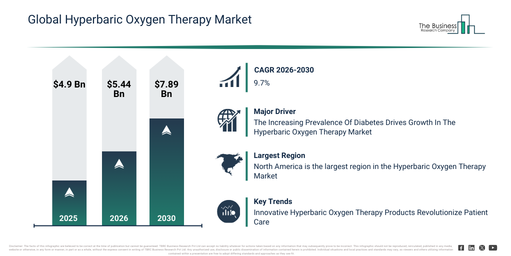
    The hyperbaric oxygen therapy market has witnessed rapid expansion recently. This market is projected to expand from $4.9 billion in 2025 to $5.44 billion in 2026, exhibiting a compound annual growth rate (CAGR) of 11.0%. Historically, this growth has been driven by several key factors: an escalating incidence of chronic non-healing wounds, its recognized role in decompression sickness treatment, a rise in carbon monoxide poisoning cases, validated clinical effectiveness in radiation injury management, and the increased presence of hyperbaric chambers in hospitals.

    The hyperbaric oxygen therapy market is projected to experience substantial expansion in the coming years. Its valuation is anticipated to reach $7.89 billion by 2030, exhibiting a compound annual growth rate (CAGR) of 9.7%. This projected growth during the forecast period stems from factors such as an increasing diabetic population experiencing wound complications, innovations in chamber design technology, the broader adoption in outpatient and ambulatory settings, heightened awareness among medical professionals, and improved reimbursement assistance in specific geographical areas. Key trends for this period encompass the wider application of hbot in treating chronic wounds, the increasing embrace of portable and monoplace hbot systems, enhanced clinical recognition of hbot for addressing radiation-induced injuries, the escalating incorporation of hbot into diverse multidisciplinary treatment plans, and the broadening of hbot’s utility beyond its conventional uses.

    Access Your Free Sample Report For In-Depth Market Analysis:

    https://www.thebusinessresearchcompany.com/report/hyperbaric-oxygen-therapy-global-market-report

    Which Factors Are Influencing The Growth Of The Hyperbaric Oxygen Therapy Market?

    The increasing prevalence of diabetes is projected to drive the expansion of the hyperbaric oxygen therapy market in the future. Diabetes is defined as a collection of chronic metabolic conditions marked by elevated blood sugar levels over an extended duration. Its increase stems from factors such as sedentary lifestyles, inadequate diets, obesity, and genetics. Hyperbaric oxygen therapy (HBOT) finds application in managing complications linked to diabetes, particularly diabetic foot ulcers and other wounds that do not heal readily. For example, in June 2023, the Institute for Health Metrics and Evaluation, a US-based public health research institute, disclosed that more than half a billion individuals worldwide were afflicted with diabetes. This figure is anticipated to more than double, reaching 1.3 billion people by the year 2050. Consequently, the growing prevalence of diabetes is a key driver for the hyperbaric oxygen therapy market.

    How Is The Hyperbaric Oxygen Therapy Market Segmented Across Different Segment Categories?

    The hyperbaric oxygen therapy market covered in this report is segmented –

    1) By Product Type: Monoplace Hyperbaric Oxygen Therapy, Multiplace Hyperbaric Oxygen Therapy

    2) By Application: Wound Healing, Decompression Sickness, Infection Treatment, Gas Embolism, Other Applications

    3) By End-Users: Hospitals And Clinics, Ambulatory Surgery Centers, Other End-Users

    Subsegments:

    1) By Monoplace Hyperbaric Oxygen Therapy: Single-Chamber Monoplace HBOT Systems, Standard Monoplace HBOT Chambers, Advanced Monoplace HBOT Chambers With Integrated Monitoring

    2) By Multiplace Hyperbaric Oxygen Therapy: Dual-Chamber Multiplace HBOT Systems, Multi-Person Multiplace HBOT Chambers, High-Pressure Multiplace HBOT Chambers, Customized Multiplace HBOT Chambers

    Which Trends Are Influencing Demand In The Hyperbaric Oxygen Therapy Market?

    Major companies in the hyperbaric oxygen therapy market are developing innovative products, such as hyperbaric chambers, to offer customers enhanced features. Hyperbaric chambers are specialized medical devices that create a pressurized environment to administer hyperbaric oxygen therapy (HBOT), allowing patients to breathe pure oxygen and improve oxygen delivery to body tissues. For instance, in January 2024, Sechrist Industries Inc., a US-based manufacturer of hyperbaric technology and medical equipment, launched the 3300 HM Hyperbaric Chamber. This chamber features an expansive interior designed for increased patient comfort and accessibility, supporting a broad spectrum of patient sizes and mobility requirements. Equipped with advanced monitoring systems, it ensures real-time tracking of vital signs and chamber conditions, enhancing patient safety. The chamber also includes state-of-the-art oxygen delivery systems that optimize the effectiveness of oxygen intake, and its user-friendly interface allows for easy operation by healthcare professionals.

    Which Organizations Play A Role In The Hyperbaric Oxygen Therapy Market Landscape?

    Major companies operating in the hyperbaric oxygen therapy market are Healogics LLC, SOS Medical Group Ltd., Environmental Tectonics Corporation, Sechrist Industries Inc., BioBarica Profesionales, Perry Baromedical Corporation, Shanghai Baobang Medical Equipment Co. Ltd., Hyperbaric Modular Systems Inc., Baroks Hyperbaric, Haux-Life-Support GmbH, Haux-Technik GmbH, Hyperbaric SAC, Pan America Hyperbarics Inc., OxyHeal Health Group, Fink Engineering Pty Ltd, AHA Hyperbarics, The Oxybarica Group, NHC Medical And Beauty, Hyperbaric Medical Solutions, Gulf Coast Hyperbarics, Hearmec Co. Ltd., Hpotech Hyperbaric Solutions

    Get The Full Hyperbaric Oxygen Therapy Market Report:

    https://www.thebusinessresearchcompany.com/report/hyperbaric-oxygen-therapy-global-market-report

    Which Region Represents The Largest Share Of The Hyperbaric Oxygen Therapy Market?

    North America was the largest region in the hyperbaric oxygen therapy market in 2025. Asia-Pacific is expected to be the fastest-growing region in the forecast period. The regions covered in the hyperbaric oxygen therapy market report are Asia-Pacific, South East Asia, Western Europe, Eastern Europe, North America, South America, Middle East, Africa.

    Request A Customized Hyperbaric Oxygen Therapy Market Report For Competitive Insights:

    https://www.thebusinessresearchcompany.com/report/hyperbaric-oxygen-therapy-global-market-report

    Browse Through More Reports Similar to the Global Hyperbaric Oxygen Therapy Market 2026, By The Business Research Company

    Respiratory Oxygen Delivery Devices Market Report 2026

    https://www.thebusinessresearchcompany.com/report/respiratory-oxygen-delivery-devices-global-market-report

    Hyperbaric Oxygen Therapy Devices Market Report 2026

    https://www.thebusinessresearchcompany.com/report/hyperbaric-oxygen-therapy-devices-global-market-report

    Oxygen Therapy Market Report 2026

    https://www.thebusinessresearchcompany.com/report/oxygen-therapy-global-market-report

    Get in touch with us:

    The Business Research Company: https://www.thebusinessresearchcompany.com/

    Americas +1 310-496-7795

    Asia +44 7882 955267 & +91 8897263534

    Europe +44 7882 955267

    Email us at info@tbrc.info

    Follow us on:

    LinkedIn: https://in.linkedin.com/company/the-business-research-company

    YouTube: https://www.youtube.com/channel/UC24_fI0rV8cR5DxlCpgmyFQ

    Global Market Model: https://www.thebusinessresearchcompany.com/global-market-model
  • Hydronephrosis Market: Drivers and Evolution

    Hydronephrosis Market: Drivers and Evolution

    The Business Research Company’s 2026 market reports feature enhanced tools like market attractiveness analysis, TAM assessment, and company scoring matrices, along with interactive dashboards, deeper supply chain insights, and startup coverage strengthening the depth, usability, and strategic value of insights.

    How Much Growth In Market Value Is Expected For The Hydronephrosis Market Between 2026 And 2030?

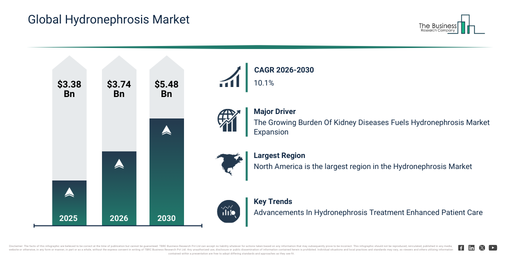
    The hydronephrosis market has seen substantial expansion in recent years. Its valuation is projected to increase from $3.38 billion in 2025 to $3.74 billion in 2026, reflecting a compound annual growth rate (CAGR) of 10.4%. Historically, this market expansion can be linked to enhancements in diagnostic imaging technologies, an increasing prevalence of kidney stones, heightened awareness regarding renal disorders, the expansion of hospital infrastructure, and the accessibility of surgical intervention options.

    The hydronephrosis market is projected to experience substantial expansion in the coming years. By 2030, this market is anticipated to reach $5.48 billion, expanding at a compound annual growth rate (CAGR) of 10.1%. This projected growth is driven by several factors including an aging global population, the rising occurrence of chronic kidney diseases, wider adoption of precision medicine, the proliferation of advanced urology treatment facilities, and a stronger emphasis on diagnosing conditions early. Key trends anticipated during this period encompass the increased utilization of sophisticated imaging diagnostics, a rise in the adoption of minimally invasive treatment methods, an intensified focus on detecting diseases at an early stage, the development of integrated diagnostic and treatment routes, and improved surveillance of kidney function.

    Access Your Free Sample Report For In-Depth Market Analysis:

    https://www.thebusinessresearchcompany.com/report/hydronephrosis-global-market-report

    What Leading Drivers Are Supporting The Hydronephrosis Market Expansion?

    The growing occurrence of kidney conditions is anticipated to fuel the expansion of the hydronephrosis market in the future. Kidney disease, also termed renal disease or nephropathy, encompasses various ailments that cause kidney damage, hindering their efficient blood filtration. The surge in kidney disease cases stems from multiple factors, including the increasing rates of diabetes and hypertension, obesity, an aging demographic, and inherited or ethnic predispositions. Treatment for hydronephrosis focuses on resolving the root cause of the urinary blockage, potentially through medications, surgical procedures, or other methods designed to reinstate regular urine flow. For example, data from June 2023, detailed in a report by Kidney Research UK, a non-profit organization based in the UK, indicated that about 7.2 million individuals in the UK currently suffer from chronic kidney disease, accounting for over 10% of the populace. Among these, 3.25 million are experiencing advanced stages of the condition, with another 3.9 million being in its initial phases. Projections suggest that by 2033, the population impacted by chronic kidney disease will increase to 7.61 million. Consequently, the escalating incidence of kidney diseases is a key factor propelling the expansion of the hydronephrosis market.

    What Are The Main Segments Within The Hydronephrosis Market Segment Structure?

    The hydronephrosis market covered in this report is segmented –

    1) By Type: Unilateral Hydronephrosis, Bilateral Hydronephrosis

    2) By Indication: Intrinsic, Extrinsic

    3) By Diagnosis: Laboratory Test, Imaging

    4) By Treatment: Shock Wave Lithotripsy, Laparoscopy, Bladder Catheterization, Other Treatments

    Subsegments:

    1) By Unilateral Hydronephrosis: Congenital Unilateral Hydronephrosis, Acquired Unilateral Hydronephrosis, Obstructive Unilateral Hydronephrosis, Non-Obstructive Unilateral Hydronephrosis

    2) By Bilateral Hydronephrosis: Congenital Bilateral Hydronephrosis, Acquired Bilateral Hydronephrosis, Obstructive Bilateral Hydronephrosis, Non-Obstructive Bilateral Hydronephrosis

    What Emerging Trends Are Seen In The Hydronephrosis Market?

    Leading companies within the hydronephrosis market are actively developing innovative products, such as drainage catheters, to improve patient care by offering efficient and minimally invasive solutions for extracting urine from the kidneys. Drainage catheters are medical instruments utilized for removing fluids like urine or blood from the body, thereby relieving pressure or preventing fluid accumulation. For example, in October 2024, Argon Medical Devices Inc., a US-based manufacturer of specialized medical products, introduced the SKATER mini-loop drainage catheter. This catheter is a medical device specifically designed for the minimally invasive drainage of undesirable fluid collections within the body. It is inserted through the skin with the aid of imaging guidance and features a loop that is 40% smaller, ensuring secure placement and effective drainage even from smaller cavities. Noted for its durability, resistance to kinking, and compatibility with alcohol, this catheter enhances usability during interventional procedures. By broadening Argon’s existing drainage portfolio, the SKATER Mini-Loop aims to optimize patient outcomes and streamline the drainage process for healthcare professionals.

    Who Are The Companies Participating In The Hydronephrosis Market?

    Major companies operating in the hydronephrosis market are Boston Scientific Corporation, Medtronic PLC, Cook Medical, Coloplast A/S, B. Braun Group, KARL STORZ SE & Co. KG, Olympus Corporation, Richard Wolf GmbH, Teleflex Incorporated, BD, Terumo Corporation, UroGen Pharma Ltd., Urologix Inc., C. R. Bard, ConvaTec Group PLC, AngioDynamics Inc., Merit Medical Systems Inc., NxStage Medical Inc., Fresenius Medical Care, Nipro Corporation

    Get The Full Hydronephrosis Market Report:

    https://www.thebusinessresearchcompany.com/report/hydronephrosis-global-market-report

    Which Geographic Region Dominates The Hydronephrosis Market?

    North America was the largest region in the hydronephrosis market in 2025. The regions covered in the hydronephrosis market report are Asia-Pacific, South East Asia, Western Europe, Eastern Europe, North America, South America, Middle East, Africa.

    Request A Customized Hydronephrosis Market Report For Competitive Insights:

    https://www.thebusinessresearchcompany.com/report/hydronephrosis-global-market-report

    Browse Through More Reports Similar to the Global Hydronephrosis Market 2026, By The Business Research Company

    Rare Kidney Diseases Market Report 2026

    https://www.thebusinessresearchcompany.com/report/rare-kidney-diseases-global-market-report

    Kidney Transplant Market Report 2026

    https://www.thebusinessresearchcompany.com/report/kidney-transplant-global-market-report

    Artificial Kidney Market Report 2026

    https://www.thebusinessresearchcompany.com/report/artificial-kidney-global-market-report

    Get in touch with us:

    The Business Research Company: https://www.thebusinessresearchcompany.com/

    Americas +1 310-496-7795

    Asia +44 7882 955267 & +91 8897263534

    Europe +44 7882 955267

    Email us at info@tbrc.info

    Follow us on:

    LinkedIn: https://in.linkedin.com/company/the-business-research-company

    YouTube: https://www.youtube.com/channel/UC24_fI0rV8cR5DxlCpgmyFQ

    Global Market Model: https://www.thebusinessresearchcompany.com/global-market-model
  • Hydrocortisone Market Overview (2026–2030): Industry Insights

    Hydrocortisone Market Overview (2026–2030): Industry Insights

    The Business Research Company’s 2026 market reports feature enhanced tools like market attractiveness analysis, TAM assessment, and company scoring matrices, along with interactive dashboards, deeper supply chain insights, and startup coverage strengthening the depth, usability, and strategic value of insights.

    What Is The Estimated Market Size Of The Hydrocortisone Market In 2026, And How Will Its Value Evolve By 2030?

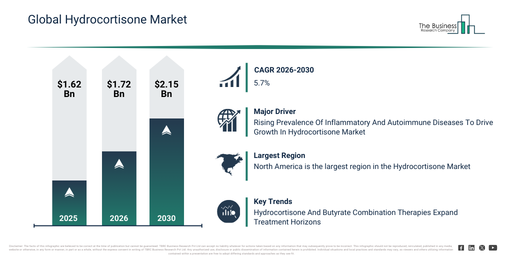
    The hydrocortisone market has experienced robust expansion over recent years. It is projected to increase from $1.62 billion in 2025 to $1.72 billion in 2026, exhibiting a compound annual growth rate (CAGR) of 6.5%. This historical growth can be attributed to several factors, such as the extensive use of corticosteroids in inflammatory diseases, significant physician familiarity with hydrocortisone therapy, the availability of generic formulations, the rising prevalence of skin disorders, and its established role in adrenal insufficiency treatment.

    The hydrocortisone market is projected to experience robust expansion in the upcoming years. By 2030, its value is anticipated to reach $2.15 billion, demonstrating a compound annual growth rate (CAGR) of 5.7%. Factors contributing to this growth during the forecast period include the increasing occurrence of autoimmune and respiratory diseases, the rise in self-medication utilizing otc creams, advancements in delivery systems, an expanding geriatric population, and enhanced accessibility via online pharmacies. Key trends identified for the forecast period encompass an increasing demand for topical corticosteroids within dermatology, a greater adoption of low-dose and otc hydrocortisone products, broadened application of hydrocortisone in chronic inflammatory disorders, a surge in the embrace of extended-release oral formulations, and an emphasis on developing safer long-term corticosteroid therapies.

    Access Your Free Sample Report For In-Depth Market Analysis:

    https://www.thebusinessresearchcompany.com/report/hydrocortisone-global-market-report

    Which Key Factors Are Driving The Hydrocortisone Market Growth?

    The expanding occurrence of inflammatory and autoimmune conditions is projected to boost the hydrocortisone market’s growth into the future. These conditions involve the immune system erroneously targeting the body’s own tissues, leading to persistent inflammation and damage. Increased uptake of treatments for these diseases stems from their growing prevalence and progress in medical treatments. Hydrocortisone is utilized in managing inflammatory and autoimmune ailments, including severe asthma flare-ups, to quickly lessen airway inflammation and enhance respiration. In urgent situations, it is commonly given via intravenous injection. For instance, Public Health Scotland, a national organization in Scotland, reported in August 2024 that the Scottish Multiple Sclerosis Register (SMSR) recorded 455 newly diagnosed MS patients in 2023. Consequently, the expanding occurrence of inflammatory and autoimmune diseases will fuel the hydrocortisone market’s expansion. The increasing elderly population is projected to propel the hydrocortisone market’s growth into the future. This demographic shift signifies a larger segment of older people in society, attributed to longer life spans and reduced birth rates. The expansion of the senior demographic is a result of medical progress that has prolonged human life. Older individuals utilize hydrocortisone to alleviate inflammation and control ailments like arthritis, adrenal insufficiency, and various skin conditions. For example, the Population Reference Bureau, a US non-profit, stated in January 2024 that the population of Americans 65 and above is anticipated to climb from 58 million in 2022 to 82 million by 2050, representing a 47% jump. Consequently, this demographic’s share of the total U.S. population will increase from 17% to 23% over the same timeframe. Thus, the expanding elderly demographic is propelling the hydrocortisone market’s growth.

    How Is Segmentation Applied In The Hydrocortisone Market Segment Analysis?

    The hydrocortisone market covered in this report is segmented –

    1) By Type: Cream, Injection, Tablet

    2) By Route Of Administration: Parenteral, Oral, Topical

    3) By Application: Adrenocortical Dysfunction, Rheumatoid Arthritis, Dermatitis, Asthma And Chronic Obstructive Pulmonary Disease, Other Applications

    4) By Distribution Channel: Hospital Pharmacies, Retail Pharmacies, Online Pharmacies

    Subsegments:

    1) By Cream: Topical Hydrocortisone Cream (0.5%, 1%, 2.5%), Hydrocortisone Ointment

    2) By Injection: Hydrocortisone Sodium Succinate Injection, Hydrocortisone Acetate Injection

    3) By Tablet: Oral Hydrocortisone Tablets (5mg, 10mg, 20mg), Extended-Release Hydrocortisone Tablets

    Which Trends Are Guiding The Direction Of The Hydrocortisone Market?

    Major companies operating within the hydrocortisone market are increasingly focusing on combination therapies, such as lotions formulated with butyrate active ingredients, to enhance treatment efficacy and expand their product portfolios. Hydrocortisone combined with butyrate lotion offers a synergistic approach for managing skin conditions, leveraging hydrocortisone’s anti-inflammatory properties alongside butyrate’s immunomodulatory effects and its potential to improve skin barrier function. For example, in November 2023, J. Molner AS., an Estonian-based pharmaceutical company, launched Hydrocortisone Butyrate Lotion, 0.1%, in the United States. This event signifies a crucial step in its strategy to build a commercial platform for its pharmaceutical products in global markets. The new lotion is designed to address inflammatory skin conditions, demonstrating Molner’s commitment to extending its international market presence.

    Who Are The Companies Participating In The Hydrocortisone Market Environment?

    Major companies operating in the hydrocortisone market are Pfizer Inc., Johnson & Johnson, Bayer AG, GlaxoSmithKline plc, Viatris Inc., Teva Pharmaceutical Industries Ltd., Sandoz AG, Fresenius Kabi AG, Sun Pharmaceutical Industries Ltd., Hikma Pharmaceuticals PLC, Aspen Pharmacare Holdings Limited, Macleods Pharmaceuticals Limited, Glenmark Pharmaceuticals Ltd., Torrent Pharmaceuticals Limited, Taro Pharmaceutical Industries Ltd., Lannett Company Inc., Almirall SA, Leo Pharma AS, Perrigo Company plc, Recordati S.p.A.

    Get The Full Hydrocortisone Market Report:

    https://www.thebusinessresearchcompany.com/report/hydrocortisone-global-market-report

    Which Region Is The Leading Market For The Hydrocortisone Market?

    North America was the largest region in the hydrocortisone market in 2025. Asia-Pacific is expected to be the fastest-growing region in the forecast period. The regions covered in the hydrocortisone market report are Asia-Pacific, South East Asia, Western Europe, Eastern Europe, North America, South America, Middle East, Africa.

    Request A Customized Hydrocortisone Market Report For Competitive Insights:

    https://www.thebusinessresearchcompany.com/report/hydrocortisone-global-market-report

    Browse Through More Reports Similar to the Global Hydrocortisone Market 2026, By The Business Research Company

    Medical Tricorder Market Report 2026

    https://www.thebusinessresearchcompany.com/report/medical-tricorder-global-market-report

    Alexipharmic Drugs Market Report 2026

    https://www.thebusinessresearchcompany.com/report/alexipharmic-drugs-global-market-report

    Alpha Hydroxy Acid Market Report 2026

    https://www.thebusinessresearchcompany.com/report/alpha-hydroxy-acid-global-market-report

    Get in touch with us:

    The Business Research Company: https://www.thebusinessresearchcompany.com/

    Americas +1 310-496-7795

    Asia +44 7882 955267 & +91 8897263534

    Europe +44 7882 955267

    Email us at info@tbrc.info

    Follow us on:

    LinkedIn: https://in.linkedin.com/company/the-business-research-company

    YouTube: https://www.youtube.com/channel/UC24_fI0rV8cR5DxlCpgmyFQ

    Global Market Model: https://www.thebusinessresearchcompany.com/global-market-model
  • Hyaluronic Acid Dermal Fillers Market: Trends and Growth Potential

    Hyaluronic Acid Dermal Fillers Market: Trends and Growth Potential

    The Business Research Company’s 2026 market reports feature enhanced tools like market attractiveness analysis, TAM assessment, and company scoring matrices, along with interactive dashboards, deeper supply chain insights, and startup coverage strengthening the depth, usability, and strategic value of insights.

    How Does The Market Size Of The Hyaluronic Acid-based Dermal Fillers Market Compare Between 2026 And 2030?

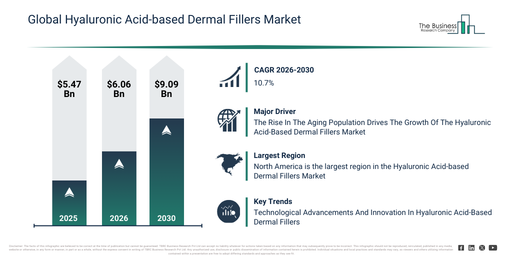
    The hyaluronic acid-based dermal fillers market has seen rapid expansion in recent years. This market is set to increase from $5.47 billion in 2025 to $6.06 billion in 2026, achieving a compound annual growth rate (CAGR) of 11.0%. The historical growth of this market is attributable to a rising consumer focus on physical appearance, greater acceptance of cosmetic procedures, the availability of FDA-approved hyaluronic acid fillers, increasing disposable income within urban populations, and the proliferation of dermatology and aesthetic clinics.

    The hyaluronic acid-based dermal fillers market size is poised for significant expansion in the coming years. It is projected to climb to $9.09 billion by 2030, exhibiting a compound annual growth rate (CAGR) of 10.7%. This anticipated growth can be ascribed to several factors, including the escalating demand for non-surgical anti-aging remedies, advancements in filler formulation technology, the expanding influence of social media and current beauty standards, an increasing aging population seeking aesthetic treatments, and a growing male participation in cosmetic procedures. Prominent trends expected during the forecast period involve a rising preference for minimally invasive aesthetic procedures, an increasing demand for temporary and reversible dermal fillers, the growing adoption of personalized facial aesthetics treatments, the expansion of aesthetic procedures into emerging markets, and continuous innovation in hyaluronic acid formulations.

    Access Your Free Sample Report For In-Depth Market Analysis:

    https://www.thebusinessresearchcompany.com/report/hyaluronic-acid-based-dermal-fillers-global-market-report

    What Primary Drivers Are Shaping The Hyaluronic Acid-based Dermal Fillers Market?

    The expanding elderly population is anticipated to fuel the expansion of the hyaluronic acid-based dermal fillers market. This demographic change, known as an aging population, is marked by an increasing share of older individuals within a society, frequently stemming from longer life expectancies and reduced birth rates. Hyaluronic acid-based dermal fillers provide a non-surgical approach to combat age-related indications such as wrinkles and skin laxity. For example, in January 2024, data from the Population Reference Bureau, a US-based non-profit organization, indicated that the number of Americans aged 65 and older is projected to climb from 58 million in 2022 to 82 million by 2050, representing a 47% increase. Consequently, this cohort’s share of the overall U.S. population will expand from 17% to 23% over this timeframe. Hence, the increasing aging population is a primary catalyst for the growth in the hyaluronic acid-based dermal fillers market.

    What Segment Categories Shape The Hyaluronic Acid-based Dermal Fillers Market Segment Landscape?

    The hyaluronic acid-based dermal fillers market covered in this report is segmented –

    1) By Product: Single-Phase Product, Duplex Product

    2) By Usage: Specialty And Dermatology Clinics, Hospitals And Clinics

    3) By Application: Wrinkle Removal, Lip Augmentation, Rhinoplasty, Other Applications

    Subsegments:

    1) By Single-Phase Product: Smooth Fillers, Firm Fillers

    2) By Duplex Product: Cross-Linked Fillers, Cohesive Fillers

    What Trends Are Affecting The Growth Of The Hyaluronic Acid-based Dermal Fillers Market?

    Leading companies operating in the hyaluronic acid-based dermal fillers market are developing advanced solutions, such as JUVÉDERM VOLUX XC, to deliver more effective facial contouring and improve the structural definition of the jawline, thereby providing longer-lasting and natural-looking outcomes for patients seeking aesthetic treatments. For instance, in January 2023, Allergan plc, an Ireland-based pharmaceutical company, launched JUVÉDERM VOLUX XC. JUVÉDERM VOLUX XC is a long-lasting hyaluronic acid (HA) filler formulated for enhancing facial contours and adding volume to the jawline, addressing the increasing consumer demand for aesthetic treatments that offer natural-looking results. As the latest addition to the JUVÉDERM Collection, JUVÉDERM VOLUX XC provides a minimally invasive, non-surgical treatment alternative with little to no downtime.

    Who Are The Companies Operating Across The Hyaluronic Acid-based Dermal Fillers Market Value Chain?

    Major companies operating in the hyaluronic acid-based dermal fillers market are AbbVie Inc., Galderma Laboratories L.P., Merz Pharmaceuticals GmbH, Teoxane S.A., Sinclair Pharma plc, Laboratories Vivacy SAS, Croma-Pharma GmbH, LG Chem Ltd., Huons Global Co. Ltd., Revance Therapeutics Inc., Suneva Medical Inc., Prollenium Medical Technologies Inc., Medytox Inc., Hugel Inc., Bioxis Pharmaceutical, Bohus Biotech AB, Bloomage BioTechnology Corporation Limited, Caregen Co. Ltd., SciVision Biotech Inc., Luminera Derm Ltd., Sculpt Luxury Dermal Fillers Ltd.

    Get The Full Hyaluronic Acid-based Dermal Fillers Market Report:

    https://www.thebusinessresearchcompany.com/report/hyaluronic-acid-based-dermal-fillers-global-market-report

    Where Is The Hyaluronic Acid-based Dermal Fillers Market Primarily Concentrated By Region?

    North America was the largest region in the hyaluronic acid-based dermal fillers market in 2025. Asia-Pacific is expected to be the fastest-growing region in the forecast period. The regions covered in the hyaluronic acid-based dermal fillers market report are Asia-Pacific, South East Asia, Western Europe, Eastern Europe, North America, South America, Middle East, Africa.

    Request A Customized Hyaluronic Acid-based Dermal Fillers Market Report For Competitive Insights:

    https://www.thebusinessresearchcompany.com/report/hyaluronic-acid-based-dermal-fillers-global-market-report

    Browse Through More Reports Similar to the Global Hyaluronic Acid-based Dermal Fillers Market 2026, By The Business Research Company

    Lip Fillers Market Report 2026

    https://www.thebusinessresearchcompany.com/report/lip-fillers-global-market-report

    Null 2026

    NULL

    Dermal Filler Market Report 2026

    https://www.thebusinessresearchcompany.com/report/dermal-filler-global-market-report

    Get in touch with us:

    The Business Research Company: https://www.thebusinessresearchcompany.com/

    Americas +1 310-496-7795

    Asia +44 7882 955267 & +91 8897263534

    Europe +44 7882 955267

    Email us at info@tbrc.info

    Follow us on:

    LinkedIn: https://in.linkedin.com/company/the-business-research-company

    YouTube: https://www.youtube.com/channel/UC24_fI0rV8cR5DxlCpgmyFQ

    Global Market Model: https://www.thebusinessresearchcompany.com/global-market-model
  • HGPS Market: Drivers and Future Outlook

    HGPS Market: Drivers and Future Outlook

    The Business Research Company’s 2026 market reports feature enhanced tools like market attractiveness analysis, TAM assessment, and company scoring matrices, along with interactive dashboards, deeper supply chain insights, and startup coverage strengthening the depth, usability, and strategic value of insights.

    What Is The Forecasted Market Size Trajectory Of The Hutchinson-Gilford Progeria Syndrome (HGPS) Market From 2026 To 2030?

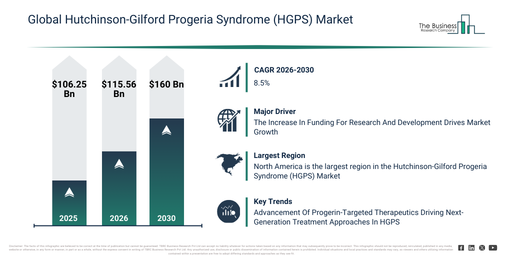
    The Hutchinson-Gilford Progeria Syndrome (HGPS) market has experienced robust expansion in recent years. Projections indicate its value will increase from $106.25 billion in 2025 to $115.56 billion in 2026, demonstrating a compound annual growth rate (CAGR) of 8.8%. This historical growth can be attributed to several factors, including the identification of the LMNA gene mutation, the absence of definitive curative treatments, a reliance on supportive and symptomatic patient care, the relatively small patient population, and the heightened involvement of rare disease foundations.

    The market size for hutchinson-gilford progeria syndrome (hgps) is expected to show significant growth over the coming years. It is projected to expand to $160 billion by 2030, achieving a compound annual growth rate (CAGR) of 8.5%. The expansion during the forecast period is largely due to progress in gene therapy and CRISPR-Cas9 technologies, increased investment in research for ultra-rare diseases, a rise in clinical trials for therapies that modify the disease, greater global understanding of progeria, and stronger regulatory support for orphan drugs. Prominent trends throughout this period include an increased concentration on gene editing and antisense treatments for progeria, the growing use of targeted drug therapies such as farnesyltransferase inhibitors, a rising focus on early genetic diagnosis and counseling, the development of multidisciplinary models for supportive care, and more research collaborations for ultra-rare pediatric conditions.

    Access Your Free Sample Report For In-Depth Market Analysis:

    https://www.thebusinessresearchcompany.com/report/hutchinson-gilford-progeria-syndrome-hgps-global-market-report

    Which Major Drivers Are Influencing The Expansion Of The Hutchinson-Gilford Progeria Syndrome (HGPS) Market?

    Enhanced financial support for the research and development of novel therapies is anticipated to drive the future expansion of the hutchinson-gilford progeria syndrome (HGPS) market. Funding for Research and Development refers to financial resources dedicated to innovating, improving, and advancing scientific knowledge and technological solutions. The rise in research and development funding is attributed to factors such as increasing demand for advanced treatments and government backing for healthcare progress. Greater investment in research and development accelerates the evolution of treatments for hutchinson-gilford Progeria Syndrome by supporting clinical investigations and fostering creative therapeutic approaches. This also propels a deeper understanding of the condition’s genetic origins and assists in the creation of targeted remedies. For example, in May 2024, the Office for National Statistics, a UK-based government department, reported that total healthcare expenditure experienced a 5.6% increase in nominal terms from 2022 to 2023, indicating a substantial acceleration compared to the 0.9% growth observed in 2022. Consequently, the increased funding for research and development of new therapies is stimulating the growth of the hutchinson-gilford progeria syndrome (HGPS) market.

    Which Segment Types Are Examined In The Hutchinson-Gilford Progeria Syndrome (HGPS) Market Segment Study?

    The hutchinson-gilford progeria syndrome (hgps) market covered in this report is segmented –

    1) By Treatment Type: Farnesyltransferase Inhibitors (Zokinvy (Lonafarnib)), Low-dose Aspirin, Physical And Occupational Therapy, Hearing Aids, Genetic Counseling, Other Treatment Types

    2) By Mechanism Of Action: Antisense Oligonucleotides, Crispr-cas9 Gene Editing, Rna Interference, Targeted Drug Delivery Systems

    3) By End-User: Hospitals, Specialty Clinics, Academic And Research Institutes, Other End-Users

    Subsegments:

    1) By Farnesyltransferase Inhibitors (Zokinvy (Lonafarnib)): Monotherapy With Lonafarnib, Combination Therapy With Other Drugs

    2) By Low-dose Aspirin: Cardiovascular Protection, Anti-inflammatory Therapy

    3) By Physical And Occupational Therapy: Mobility Support And Rehabilitation, Joint And Bone Health Management, Adaptive Equipment For Daily Activities

    4) By Hearing Aids: Conventional Hearing Aids, Bone-Anchored Hearing Aids (BAHA), Cochlear Implants

    5) By Genetic Counseling: Family Genetic Testing, Genetic Risk Assessment, Prenatal Counseling And Guidance

    6) By Other Treatment Types: Stem Cell Therapy, Gene Editing and Therapy, Nutritional Support And Management

    Which Trends Are Shaping The Hutchinson-Gilford Progeria Syndrome (HGPS) Market?

    Leading firms within the Hutchinson Gilford Progeria Syndrome (HGPS) market are concentrating on developing antisense and small-molecule agents that modulate progerin, such as Progerinin, with the aim of achieving a competitive edge. An example of this is PRG Science & Technology, a South Korea–based biotech company, which secured FDA clearance in October 2024 to commence a Phase 2a clinical trial for Progerinin. This particular oral therapy is designed to mitigate progerin accumulation and will undergo evaluation concurrently with Zokinvy. This integrated strategy seeks to target the root biological cause of Hutchinson-Gilford Progeria Syndrome (HGPS), moving beyond a sole focus on managing its subsequent symptoms. Although this approach holds promise for advancing treatment options beyond those currently available, its long-term efficacy and safety profile in pediatric patients necessitate further investigation and comprehensive clinical evaluation.

    Which Players Are Part Of The Competitive Landscape Of The Hutchinson-Gilford Progeria Syndrome (HGPS) Market?

    Major companies operating in the hutchinson-gilford progeria syndrome (hgps) market are Sentynl Therapeutics, Progeria Research Foundation, National Institutes of Health, Boston Children’s Hospital, Children’s Hospital of Philadelphia, Johns Hopkins Hospital, Mayo Clinic, Cleveland Clinic, Mount Sinai, Duke University, St Jude Children’s Research Hospital, Cincinnati Children’s Hospital Medical Center, Children’s Hospital Los Angeles, Harvard Medical School, The Scripps Research Institute, Blueprint Genetics, AnGes MG Inc., PRG Science & Technology Co. Ltd., University of Maryland School of Medicine, UCLA Health

    Get The Full Hutchinson-Gilford Progeria Syndrome (HGPS) Market Report:

    https://www.thebusinessresearchcompany.com/report/hutchinson-gilford-progeria-syndrome-hgps-global-market-report

    Which Region Has The Greatest Market Share In The Hutchinson-Gilford Progeria Syndrome (HGPS) Market?

    North America was the largest region in the hutchinson-gilford progeria syndrome (HGPS) market in 2025. Asia-Pacific is expected to be the fastest-growing region in the forecast period. The regions covered in the hutchinson-gilford progeria syndrome (hgps) market report are Asia-Pacific, South East Asia, Western Europe, Eastern Europe, North America, South America, Middle East, Africa.

    Request A Customized Hutchinson-Gilford Progeria Syndrome (HGPS) Market Report For Competitive Insights:

    https://www.thebusinessresearchcompany.com/report/hutchinson-gilford-progeria-syndrome-hgps-global-market-report

    Browse Through More Reports Similar to the Global Hutchinson-Gilford Progeria Syndrome (HGPS) Market 2026, By The Business Research Company

    Pompe Disease Market Report 2026

    https://www.thebusinessresearchcompany.com/report/pompe-disease-global-market-report

    Gardner Syndrome Treatment Market Report 2026

    https://www.thebusinessresearchcompany.com/report/gardner-syndrome-treatment-global-market-report

    Erdheim Chester Disease Market Report 2026

    https://www.thebusinessresearchcompany.com/report/erdheim-chester-disease-global-market-report

    Get in touch with us:

    The Business Research Company: https://www.thebusinessresearchcompany.com/

    Americas +1 310-496-7795

    Asia +44 7882 955267 & +91 8897263534

    Europe +44 7882 955267

    Email us at info@tbrc.info

    Follow us on:

    LinkedIn: https://in.linkedin.com/company/the-business-research-company

    YouTube: https://www.youtube.com/channel/UC24_fI0rV8cR5DxlCpgmyFQ

    Global Market Model: https://www.thebusinessresearchcompany.com/global-market-model
  • Huntington’s Disease Market: Opportunities and Growth Outlook

    Huntington’s Disease Market: Opportunities and Growth Outlook

    The Business Research Company’s 2026 market reports feature enhanced tools like market attractiveness analysis, TAM assessment, and company scoring matrices, along with interactive dashboards, deeper supply chain insights, and startup coverage strengthening the depth, usability, and strategic value of insights.

    How Much Will The Market Value Of The Huntington’s Disease Market Grow Between 2026 And 2030?

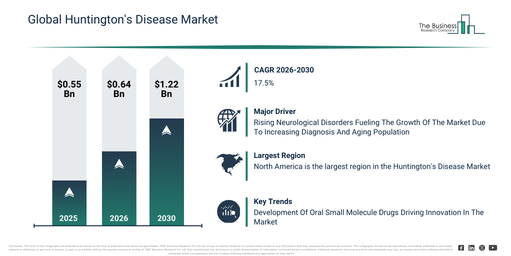
    The huntington’s disease market has experienced rapid expansion in recent years. Projections indicate it will grow from $0.55 billion in 2025 to $0.64 billion in 2026, at a compound annual growth rate (CAGR) of 17.9%. The market’s historic growth is attributable to factors such as the identification of the htt gene mutation, the limited availability of curative treatments, increased awareness of rare neurodegenerative diseases, a reliance on symptomatic therapies, and the rising diagnosis rates through genetic testing.

    The market for Huntington’s disease is projected to experience substantial expansion over the coming years, reaching a valuation of $1.22 billion by 2030, at a compound annual growth rate (CAGR) of 17.5%. This projected growth is primarily due to several factors, including breakthroughs in gene therapy and RNA-based treatments, increased funding for rare disease research, a growing number of clinical trials for disease-modifying therapies, a heightened emphasis on early intervention approaches, and enhanced backing from patient advocacy groups. Key trends anticipated during this period involve a stronger focus on disease-modifying and gene silencing treatments, greater uptake of genetic testing for prompt and precise diagnosis, an increasing emphasis on comprehensive, multidisciplinary strategies for symptom management, the expansion of clinical trials aimed at neurodegenerative conditions, and the growth of patient-centered care models, including home-based management options.

    Access Your Free Sample Report For In-Depth Market Analysis:

    https://www.thebusinessresearchcompany.com/report/huntingtons-disease-global-market-report

    What Key Drivers Are Fueling The Growth Of The Huntington’s Disease Market?

    The increasing occurrence of neurological disorders is anticipated to stimulate the expansion of the huntington’s disease market in the foreseeable future. Neurological disorders are health conditions affecting the brain, spinal cord, and nerves, resulting in symptoms such as issues with movement, coordination, sensation, or cognitive abilities. The rise in these disorders can be attributed to factors like aging populations, environmental toxins, lifestyle changes, improved diagnostic capabilities, and genetic predispositions, which facilitate the identification of more cases. Huntington’s disease is a specific neurodegenerative disorder stemming from a genetic mutation, leading to motor dysfunction, cognitive decline, and psychiatric symptoms that worsen progressively. For instance, in March 2023, the Alzheimer’s Association, a US-based nonprofit voluntary health organization, stated that an estimated 6.7 million Americans aged 65 and older currently have Alzheimer’s dementia. Without medical breakthroughs to prevent, slow, or cure the disease, this number could rise to 13.8 million by 2060. Thus, the increasing prevalence of neurological disorders is propelling the growth of the huntington’s disease market.

    How Are Different Segments Classified In The Huntington’s Disease Market Segment Analysis?

    The huntington’s disease market covered in this report is segmented –

    1) By Treatment Type: Symptomatic Therapy, Disease-Modifying Therapy, Other Treatment Types

    2) By Diagnosis: Magnetic Resonance Imaging (MRI), Genetic Testing

    3) By Distribution Channel: Hospital Pharmacy, Retail Pharmacy

    4) By End User: Hospitals, Homecare, Specialty Clinics, Other End Users

    Subsegments:

    1) By Symptomatic Therapy: Antipsychotics, Antidepressants, Mood Stabilizers, Muscle Relaxants

    2) By Disease-Modifying Therapy: Gene Silencing Therapies, Neuroprotective Agents

    3) By Other Treatment Types: Physical Therapy, Occupational Therapy, Speech Therapy

    What Trends Are Influencing The Huntington’s Disease Market?

    Leading companies active in the Huntington’s disease market are concentrating on creating innovative treatments, such as oral small molecule drugs, to manage symptoms and delay disease progression. An oral small molecule drug is characterized as a low-molecular-weight compound that can be taken by mouth and is formulated to interact with biological targets, including proteins or enzymes, for disease treatment. For example, in September 2024, PTC Therapeutics Inc., a US-based pharmaceutical company, obtained Fast Track designation from the U.S. Food and Drug Administration (USFDA) for its PTC518 program, which is designed to treat Huntington’s disease. This designation is given to therapies addressing significant unmet medical needs, emphasizing PTC518’s potential as a disease-modifying treatment for patients affected by this genetic disorder.

    Who Are The Companies Driving Activity In The Huntington’s Disease Market?

    Major companies operating in the huntington’s disease market are Novartis AG, Eli Lilly and Company, Teva Pharmaceutical Industries Ltd, Bausch Health Companies Inc., Sun Pharmaceutical Industries Ltd., Apotex Inc, Ipsen S.A., Vertex Pharmaceuticals Incorporated, H. Lundbeck A/S, Dr. Reddy’s Laboratories Ltd., Hikma Pharmaceuticals PLC, Lupin Limited., Neurocrine Biosciences Inc., Alnylam Pharmaceuticals Inc, PTC Therapeutics Inc., Annexon Inc., Voyager Therapeutics Inc., Stealth BioTherapeutics Corp., Vaccinex Inc., SOM Biotech S.L., Alterity Therapeutics Limited, Medesis pharma SA.

    Get The Full Huntington’s Disease Market Report:

    https://www.thebusinessresearchcompany.com/report/huntingtons-disease-global-market-report

    Which Region Accounts For The Largest Portion Of The Huntington’s Disease Market?

    North America was the largest region in the huntington’s disease market in 2025. Asia-Pacific is expected to be the fastest-growing region in the forecast period. The regions covered in the huntington’s disease market report are Asia-Pacific, South East Asia, Western Europe, Eastern Europe, North America, South America, Middle East, Africa.

    Request A Customized Huntington’s Disease Market Report For Competitive Insights:

    https://www.thebusinessresearchcompany.com/report/huntingtons-disease-global-market-report

    Browse Through More Reports Similar to the Global Huntington’s Disease Market 2026, By The Business Research Company

    Alzheimers Drugs Market Report 2026

    https://www.thebusinessresearchcompany.com/report/alzheimers-drugs-global-market-report

    Rare Neurological Disease Treatment Market Report 2026

    https://www.thebusinessresearchcompany.com/report/rare-neurological-disease-treatment-global-market-report

    Progressive Ataxia And Weakness Disorders Market Report 2026

    https://www.thebusinessresearchcompany.com/report/progressive-ataxia-and-weakness-disorders-global-market-report

    Get in touch with us:

    The Business Research Company: https://www.thebusinessresearchcompany.com/

    Americas +1 310-496-7795

    Asia +44 7882 955267 & +91 8897263534

    Europe +44 7882 955267

    Email us at info@tbrc.info

    Follow us on:

    LinkedIn: https://in.linkedin.com/company/the-business-research-company

    YouTube: https://www.youtube.com/channel/UC24_fI0rV8cR5DxlCpgmyFQ

    Global Market Model: https://www.thebusinessresearchcompany.com/global-market-model
  • Global Humira Biosimilar Market to Reach $6.53B by 2030 at 12.2% CAGR

    Global Humira Biosimilar Market to Reach $6.53B by 2030 at 12.2% CAGR

    The Business Research Company’s 2026 market reports feature enhanced tools like market attractiveness analysis, TAM assessment, and company scoring matrices, along with interactive dashboards, deeper supply chain insights, and startup coverage strengthening the depth, usability, and strategic value of insights.

    What Changes In Market Value Are Expected For The Humira Biosimilar Market Over The 2026–2030 Period?

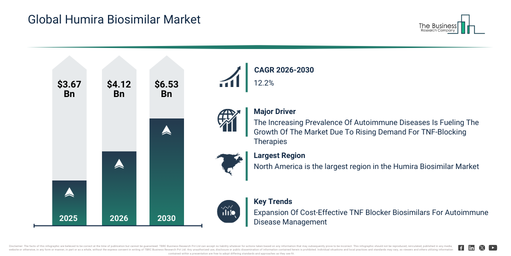
    The humira biosimilar market size has expanded significantly in recent years. It is forecast to increase from $3.67 billion in 2025 to $4.12 billion in 2026, achieving a compound annual growth rate (CAGR) of 12.3%. The historical period’s growth can be linked to the patent expiry of humira, the high treatment costs of branded biologics, the increasing prevalence of autoimmune diseases, regulatory support for biosimilar approvals, and payer pressure to reduce biologic drug spending.

    The Humira biosimilar market is projected to experience substantial expansion in the coming years. This market is set to reach a valuation of $6.53 billion by 2030, exhibiting a compound annual growth rate (CAGR) of 12.2%. This anticipated growth during the forecast period is primarily driven by factors such as the broader integration of biosimilars into clinical practice, expanded reimbursement options for these products, enhanced physician trust in their effectiveness, an increase in interchangeable biosimilar approvals, and growing initiatives aimed at improving patient access to affordable biologics. Key trends anticipated during this period encompass the wider utilization of adalimumab biosimilars for various autoimmune conditions, a heightened emphasis on managing costs associated with biologic treatments, greater acceptance of interchangeable biosimilars among healthcare providers, an escalating need for formulations that are high-concentration and citrate-free, and a rise in competitive intensity among companies manufacturing biosimilars.

    Access Your Free Sample Report For In-Depth Market Analysis:

    https://www.thebusinessresearchcompany.com/report/humira-biosimilar-global-market-report

    Which Drivers Are Supporting The Humira Biosimilar Market Growth?

    The humira biosimilar market is projected to expand due to the escalating prevalence of autoimmune diseases. These conditions manifest when the immune system erroneously targets and attacks the body’s own healthy cells, tissues, or organs. The growing incidence of autoimmune diseases is associated with environmental pollution, which disrupts the immune system and increases the risk of autoimmune reactions. Humira biosimilars operate by blocking tumor necrosis factor (TNF), a protein that triggers inflammation in autoimmune diseases. This action helps to diminish the immune response, thereby easing symptoms and preventing harm to healthy tissues. For instance, in August 2024, data from Public Health Scotland, a national organization located in Scotland, indicated that the Scottish Multiple Sclerosis Register (SMSR) recorded 455 newly diagnosed MS patients in 2023. Thus, the increasing occurrence of autoimmune disorders is a significant factor driving the expansion of the humira biosimilar market.

    How Is The Humira Biosimilar Market Categorized Across Its Segment Groups?

    The humira biosimilar market covered in this report is segmented –

    1) By Product Type: Adalimumab Biosimilars, High-Concentration Adalimumab Biosimilars, Citrate-Free Adalimumab Biosimilars

    2) By Distribution Channel: Hospital Pharmacies, Retail Pharmacies, Online Pharmacies, Other Distribution Channels

    3) By Application: Rheumatoid Arthritis, Psoriasis, Crohn’s Disease, Ulcerative Colitis, Ankylosing Spondylitis, Other Applications

    Subsegments:

    1) By Adalimumab Biosimilars: Citrate-Containing, Standard-Concentration Formulations, Citrate-Free, Standard-Concentration Formulations

    2) By High-Concentration Adalimumab Biosimilars: Citrate-Containing High-Concentration Formulations, Citrate-Free High-Concentration Formulations

    3) By Citrate-Free Adalimumab Biosimilars: Standard-Concentration Citrate-Free Formulations, High-Concentration Citrate-Free Formulations

    Which Trends Are Expected To Impact The Humira Biosimilar Market?

    Companies operating within the humira biosimilar market are concentrating on creating sophisticated products, such as tumor necrosis factor (TNF) blockers, to provide more economical choices for managing autoimmune conditions. Tumor necrosis factor (TNF) blockers are biological drugs that inhibit the action of TNF, a crucial protein involved in promoting inflammation. For instance, in July 2023, Organon & Co., a US-based pharmaceutical firm, collaborated with Samsung Bioepis Co., Ltd., a South Korea-based biotech company, to release HADLIMA, a biosimilar of Humira. HADLIMA is available in high-concentration (100 mg/mL) citrate-free and low-concentration (50 mg/mL) citrate-containing versions, mirroring the options of the originator Humira, with the intention of enhancing patient accessibility and affordability. The product is sold at a substantial reduction, approximately 85% below Humira’s list price, and includes patient assistance schemes. This introduction, enabled by a global settlement allowing U.S. supply, represents a significant step in broadening treatment options for chronic autoimmune diseases across the U.S.

    Which Firms Are Influencing Competition In The Humira Biosimilar Market?

    Major companies operating in the humira biosimilar market are Amgen Inc., Pfizer Inc., Samsung Biologics, Biocon Limited, Celltrion Inc., Boehringer Ingelheim GmbH, Sandoz Group AG, Fresenius Kabi AG, Alvotech, Coherus BioSciences Inc., Zydus Lifesciences Ltd., Hetero Drugs Ltd., LG Chem Ltd., Torrent Pharmaceuticals Ltd., Fujifilm Holdings Corporation, Teva Pharmaceutical Industries Ltd., Merck KGaA, Organon & Co., Cipla Limited, Dr. Reddy’s Laboratories Ltd.

    Get The Full Humira Biosimilar Market Report:

    https://www.thebusinessresearchcompany.com/report/humira-biosimilar-global-market-report

    Which Region Holds The Highest Market Share In The Humira Biosimilar Market?

    North America was the largest region in the humira biosimilar market in 2025. The regions covered in the humira biosimilar market report are Asia-Pacific, South East Asia, Western Europe, Eastern Europe, North America, South America, Middle East, Africa.

    Request A Customized Humira Biosimilar Market Report For Competitive Insights:

    https://www.thebusinessresearchcompany.com/report/humira-biosimilar-global-market-report

    Browse Through More Reports Similar to the Global Humira Biosimilar Market 2026, By The Business Research Company

    Biosimilar Market Report 2026

    https://www.thebusinessresearchcompany.com/report/biosimilar-global-market-report

    Humic Based Biostimulants Market Market Report 2026

    https://www.thebusinessresearchcompany.com/report/humic-based-biostimulants-market-global-market-report

    Biosimulation Market Report 2026

    https://www.thebusinessresearchcompany.com/report/biosimulation-global-market-report

    Get in touch with us:

    The Business Research Company: https://www.thebusinessresearchcompany.com/

    Americas +1 310-496-7795

    Asia +44 7882 955267 & +91 8897263534

    Europe +44 7882 955267

    Email us at info@tbrc.info

    Follow us on:

    LinkedIn: https://in.linkedin.com/company/the-business-research-company

    YouTube: https://www.youtube.com/channel/UC24_fI0rV8cR5DxlCpgmyFQ

    Global Market Model: https://www.thebusinessresearchcompany.com/global-market-model
  • Humanized Antibody Market to Reach $72.46B by 2030

    Humanized Antibody Market to Reach $72.46B by 2030

    The Business Research Company’s 2026 market reports feature enhanced tools like market attractiveness analysis, TAM assessment, and company scoring matrices, along with interactive dashboards, deeper supply chain insights, and startup coverage strengthening the depth, usability, and strategic value of insights.

    By 2030, What Market Size Is The Humanized Antibody Market Expected To Reach Based On Its 2026 Value?

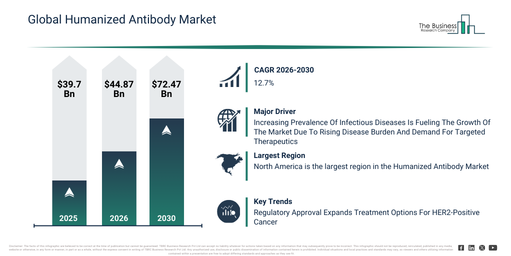
    The humanized antibody market has experienced swift expansion in recent years. It is projected to increase from $39.7 billion in 2025 to $44.87 billion in 2026, achieving a compound annual growth rate (CAGR) of 13.0%. Historically, this growth can be attributed to advancements in monoclonal antibody engineering, early clinical success of antibody therapies, the expansion of oncology drug development, increasing biologics manufacturing capacity, and the development of translational research programs.

    The humanized antibody market is anticipated to experience significant expansion over the coming years. This market is projected to reach $72.47 billion by 2030, exhibiting a compound annual growth rate (CAGR) of 12.7%. This projected growth during the forecast timeframe stems from several factors, including the surging demand for individualized cancer treatments, heightened investments in advanced biologics, a broader range of applications for autoimmune and infectious diseases, the rising embrace of precision medicine strategies, and an increase in regulatory clearances for antibody-derived medications. Key developments expected within this period involve the intensified creation of specific antibody treatments, a greater emphasis on mitigating immunogenicity in biological products, the expanding use of antibody-drug conjugates, the diversification of bispecific and multispecific antibody configurations, and a stronger focus on applications in precision oncology.

    Access Your Free Sample Report For In-Depth Market Analysis:

    https://www.thebusinessresearchcompany.com/report/global-humanized-antibody-market-report

    What Key Factors Are Affecting The Humanized Antibody Market Demand?

    The increasing occurrence of infectious diseases is anticipated to fuel the expansion of the humanized antibody market in the future. These diseases are ailments brought on by disease-causing microorganisms, like bacteria, viruses, fungi, or parasites, which can spread directly or indirectly between individuals. The frequency of infectious disease cases is climbing, largely due to more extensive travel that allows pathogens to disseminate rapidly across national borders. Humanized antibodies assist in treating infectious diseases by delivering precise immune responses, making them highly effective against particular pathogens. They diminish the likelihood of immune rejection by closely mimicking natural human antibodies, thereby enhancing both the safety and efficacy of treatments. For instance, in February 2024, as reported by the UK Health Security Agency, a UK-based government agency, tuberculosis (a contagious bacterial infection primarily affecting the lungs) instances in England reached 4,850 in 2023, marking a 10.7% rise from 4,380 cases recorded in 2022. Consequently, the rising prevalence of infectious diseases is propelling the growth of the humanized antibody market.

    How Are Segments Identified Within The Humanized Antibody Market Segment Framework?

    The humanized antibody market covered in this report is segmented –

    1) By Antibody Type: Humanized Antibodies, Chimeric Antibodies, Fully Human Antibodies, Murine Antibodies

    2) By Application: Cancer, Autoimmune Diseases, Infectious Diseases, Cardiovascular Diseases, Other Applications

    3) By End-User: Hospitals, Research Institutes, Diagnostic Laboratories, Other End-Users

    Subsegments:

    1) By Humanized Antibodies: Monospecific Therapeutic Antibodies, Bispecific And Multispecific Antibodies, Antibody Drug Conjugates, Single Chain Variable Fragment Based Antibodies, Fragment Antigen Binding Based Antibodies

    2) By Chimeric Antibodies: Monospecific Therapeutic Antibodies, Bispecific And Multispecific Antibodies, Antibody Drug Conjugates, Single Chain Variable Fragment Based Antibodies, Fragment Antigen Binding Based Antibodies

    3) By Fully Human Antibodies: Monospecific Therapeutic Antibodies, Bispecific And Multispecific Antibodies, Antibody Drug Conjugates, Single Chain Variable Fragment Based Antibodies, Long Acting Half Life Extended Antibodies

    4) By Murine Antibodies: Monospecific Research Grade Antibodies, Hybridoma Derived Antibodies, Antibody Drug Conjugate Precursors, Single Chain Variable Fragment Based Antibodies, Fragment Antigen Binding Based Antibodies

    What Trends Are Influencing Changes In The Humanized Antibody Market?

    Leading companies within the humanized antibody market are concentrating on the creation of innovative products, such as humanized bispecific antibodies, to rapidly expand their range of treatable conditions and provide more potent, enduring antitumor activity. Humanized Bispecific Antibodies are specifically engineered antibodies capable of simultaneously attaching to two distinct antigens or two different epitopes on the same antigen, while being modified to closely resemble natural human antibodies. For instance, in November 2024, Jazz Pharmaceuticals plc, an Ireland-based biopharmaceutical company, secured accelerated approval from the Food and Drug Administration for Ziihera (zanidatamab-hrii) in the U.S. for patients with previously treated, unresectable, or metastatic HER2-positive (IHC 3+) biliary tract cancer. This antibody is a humanized, immunoglobulin G (IgG)-like, bispecific human epidermal growth factor receptor 2 (HER2)-directed antibody designed to bind two extracellular human epidermal growth factor receptor 2 (HER2) sites. It features a proprietary mechanism of action that both engages immune effector cells and directly triggers apoptosis in cancer cells, facilitating a targeted attack on malignant blasts without requiring prior immune activation.

    Who Are The Companies Competing Within The Humanized Antibody Market?

    Major companies operating in the humanized antibody market are Johnson & Johnson, Roche Holding AG, Merck & Co. Inc., Pfizer Inc., AbbVie Inc., Sanofi S.A., Novartis AG, AstraZeneca PLC, Bristol-Myers Squibb Company, GlaxoSmithKline plc, Eli Lilly and Company, Takeda Pharmaceutical Company Limited, Amgen Inc., Biogen Inc., Daiichi Sankyo Company Limited, UCB S.A., Genmab A/S, Xencor Inc., Zymeworks Inc., MacroGenics Inc.

    Get The Full Humanized Antibody Market Report:

    https://www.thebusinessresearchcompany.com/report/global-humanized-antibody-market-report

    Where Is The Humanized Antibody Market Most Concentrated Geographically?

    North America was the largest region in the humanized antibody market in 2025. Asia-Pacific is expected to be the fastest-growing region in the forecast period. The regions covered in the humanized antibody market report are Asia-Pacific, South East Asia, Western Europe, Eastern Europe, North America, South America, Middle East, Africa.

    Request A Customized Humanized Antibody Market Report For Competitive Insights:

    https://www.thebusinessresearchcompany.com/report/global-humanized-antibody-market-report

    Browse Through More Reports Similar to the Global Humanized Antibody Market 2026, By The Business Research Company

    Polyclonal Antibodies Market Report 2026

    https://www.thebusinessresearchcompany.com/report/polyclonal-antibodies-global-market-report

    Research Antibodie And Reagent Market Report 2026

    https://www.thebusinessresearchcompany.com/report/research-antibodie-and-reagent-global-market-report

    Next Generation Antibody Therapeutics Market Report 2026

    https://www.thebusinessresearchcompany.com/report/next-generation-antibody-therapeutics-global-market-report

    Get in touch with us:

    The Business Research Company: https://www.thebusinessresearchcompany.com/

    Americas +1 310-496-7795

    Asia +44 7882 955267 & +91 8897263534

    Europe +44 7882 955267

    Email us at info@tbrc.info

    Follow us on:

    LinkedIn: https://in.linkedin.com/company/the-business-research-company

    YouTube: https://www.youtube.com/channel/UC24_fI0rV8cR5DxlCpgmyFQ

    Global Market Model: https://www.thebusinessresearchcompany.com/global-market-model
  • RSV Treatment Market to Reach $2.76B by 2030 at 8.5% CAGR

    RSV Treatment Market to Reach $2.76B by 2030 at 8.5% CAGR

    The Business Research Company’s 2026 market reports feature enhanced tools like market attractiveness analysis, TAM assessment, and company scoring matrices, along with interactive dashboards, deeper supply chain insights, and startup coverage strengthening the depth, usability, and strategic value of insights.

    What Is The Anticipated Rise In Market Value Of The Human Respiratory Syncytial Virus Treatment Market During The Forecast Period?

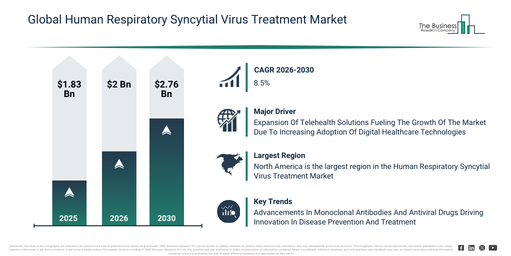
    The human respiratory syncytial virus treatment market has demonstrated significant growth in recent years. It is anticipated to increase from $1.83 billion in 2025 to $2 billion in 2026, achieving a compound annual growth rate (CAGR) of 8.8%. This historical growth can be primarily linked to the elevated global incidence of rsv infections, a rise in hospitalization rates among infants and elderly populations, the reliance on supportive care treatments, the limited availability of approved antiviral therapies, and a growing awareness of rsv-related complications.

    The human respiratory syncytial virus treatment market size is projected to undergo substantial growth in the upcoming years. It is forecast to reach $2.76 billion by 2030, progressing at a compound annual growth rate (CAGR) of 8.5%. The expansion observed during this forecast period can be attributed to several factors, including the increasing approval of RSV vaccines and monoclonal antibodies, a rising demand for preventive therapies, the broadening of immunization programs targeting vulnerable populations, growing investment in respiratory virus research and development, and an increased focus on reducing pediatric hospitalizations. Key trends anticipated in the forecast period involve the expanding adoption of monoclonal antibodies for RSV prevention and treatment, the continued development of RSV vaccines for both pediatric and adult populations, a heightened focus on early intervention for high-risk infants and elderly patients, the expansion of supportive care protocols in severe RSV cases, and increasing clinical research into novel antiviral therapies for RSV.

    Access Your Free Sample Report For In-Depth Market Analysis:

    https://www.thebusinessresearchcompany.com/report/human-respiratory-syncytial-virus-treatment-global-market-report

    Which Primary Drivers Are Impacting The Human Respiratory Syncytial Virus Treatment Market Growth?

    The human respiratory syncytial virus treatment market is expected to grow in the future, fueled by the expanding telehealth solutions. Telehealth solutions refer to digital healthcare services that allow for remote patient consultations, diagnoses, monitoring, and treatment through various telecommunication technologies. The increase in telehealth solutions stems from the rising adoption of digital healthcare technologies, which facilitates remote patient care and lessens the burden on traditional healthcare facilities. For human respiratory syncytial virus treatment, telehealth solutions enable remote monitoring, early detection, and virtual consultations, thereby enhancing patient care and reducing the need for hospital visits. As an illustration, according to Telehealth.HHS.gov, a US-based government official information provider, in quarter four of 2023, telehealth usage climbed to approximately 21,883,731 users, showing a growth of 2,783,159 users or a 13% increase from the third quarter. Consequently, the expansion of telehealth solutions is driving the growth of the human respiratory syncytial virus treatment market.

    What Are The Key Segment Divisions In The Human Respiratory Syncytial Virus Treatment Market Segment Structure?

    The human respiratory syncytial virus treatment market covered in this report is segmented –

    1) By Treatment Type: Antiviral Medications, Monoclonal Antibodies, Vaccines, Supportive Care

    2) By Patient Type: Pediatric Patients, Adult Patients

    3) By Route Of Administration: Oral, Parenteral

    4) By End User: Hospitals, Clinics, Home Care

    Subsegments:

    1) By Antiviral Medications: Fusion Inhibitors, Nucleoside Analogues, RNA Polymerase Inhibitors

    2) By Monoclonal Antibodies: Palivizumab, Nirsevimab, Other RSV-Specific Monoclonal Antibodies

    3) By Vaccines: Live Attenuated Vaccines, Subunit Vaccines, mRNA-Based Vaccines, Vector-Based Vaccines

    4) By Supportive Care: Oxygen Therapy, Mechanical Ventilation, Hydration Therapy, Fever and Pain Management

    Which Trends Are Shaping Growth In The Human Respiratory Syncytial Virus Treatment Market?

    Leading companies engaged in the human respiratory syncytial virus treatment market are prioritizing advanced therapies, such as monoclonal antibodies and antiviral medications, to secure a competitive advantage within the industry. Monoclonal antibodies are laboratory-engineered proteins that support the body’s defense against infections, while antiviral drugs are medicines designed to halt the growth or spread of viruses. For instance, in July 2023, AstraZeneca plc, a UK-based biopharmaceutical company, partnered with Sanofi S.A., a France-based pharmaceutical company, to announce the U.S. Food and Drug Administration (FDA) approval of Beyfortus (nirsevimab-alip), a monoclonal antibody developed to prevent RSV lower respiratory tract disease in infants and high-risk children. This approval marked a significant advancement in RSV prevention, as Beyfortus provides a long-lasting, single-dose option that confers passive immunity throughout the RSV season. It is especially beneficial for newborns and infants, who are at the highest risk of severe RSV infections, helping to decrease hospitalizations and complications.

    Which Organizations Are Engaged In The Human Respiratory Syncytial Virus Treatment Market?

    Major companies operating in the human respiratory syncytial virus treatment market are Pfizer Inc., Merck & Co, Sanofi S.A., AstraZeneca plc, GSK plc, Johnson & Johnson, Moderna Inc., Kyowa Kirin Co. Ltd., Novavax Inc., Alnylam Pharmaceuticals Inc., AdVaccine Biotechnology Co. Ltd., Enanta Pharmaceuticals Inc., Aridis Pharmaceuticals Inc., Synairgen plc, VBI Vaccines Inc., SAB Biotherapeutics Inc., Meissa Vaccines Inc., Osivax SAS, Codagenix Inc., BioVaxys Technology Corp.

    Get The Full Human Respiratory Syncytial Virus Treatment Market Report:

    https://www.thebusinessresearchcompany.com/report/human-respiratory-syncytial-virus-treatment-global-market-report

    Which Region Dominates The Human Respiratory Syncytial Virus Treatment Market By Market Share?

    North America was the largest region in the human respiratory syncytial virus treatment market in 2025. Asia-Pacific is expected to be the fastest-growing region in the forecast period. The regions covered in the human respiratory syncytial virus treatment market report are Asia-Pacific, South East Asia, Western Europe, Eastern Europe, North America, South America, Middle East, Africa.

    Request A Customized Human Respiratory Syncytial Virus Treatment Market Report For Competitive Insights:

    https://www.thebusinessresearchcompany.com/report/human-respiratory-syncytial-virus-treatment-global-market-report

    Browse Through More Reports Similar to the Global Human Respiratory Syncytial Virus Treatment Market 2026, By The Business Research Company

    Respiratory Disease Vaccine Market Report 2026

    https://www.thebusinessresearchcompany.com/report/respiratory-disease-vaccine-global-market-report

    Antiviral Combination Therapy Market Report 2026

    https://www.thebusinessresearchcompany.com/report/antiviral-combination-therapy-global-market-report

    Oncolytic Virus Therapy Market Report 2026

    https://www.thebusinessresearchcompany.com/report/oncolytic-virus-therapy-global-market-report

    Get in touch with us:

    The Business Research Company: https://www.thebusinessresearchcompany.com/

    Americas +1 310-496-7795

    Asia +44 7882 955267 & +91 8897263534

    Europe +44 7882 955267

    Email us at info@tbrc.info

    Follow us on:

    LinkedIn: https://in.linkedin.com/company/the-business-research-company

    YouTube: https://www.youtube.com/channel/UC24_fI0rV8cR5DxlCpgmyFQ

    Global Market Model: https://www.thebusinessresearchcompany.com/global-market-model