Category: Healthcare Services

  • Gastric Ulcer Market: Drivers and Future Outlook

    Gastric Ulcer Market: Drivers and Future Outlook

    The Business Research Company’s 2026 market reports feature enhanced tools like market attractiveness analysis, TAM assessment, and company scoring matrices, along with interactive dashboards, deeper supply chain insights, and startup coverage strengthening the depth, usability, and strategic value of insights.

    How Will The Market Value Of The Gastric Ulcers Market Progress Between 2026 And 2030?

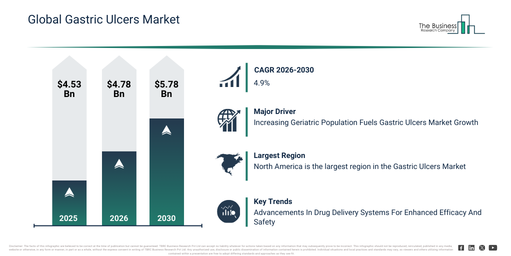
    The gastric ulcers market has experienced substantial growth in recent years. It is anticipated to expand from $4.53 billion in 2025 to $4.78 billion in 2026, demonstrating a compound annual growth rate (CAGR) of 5.5%. The expansion observed in the historic period can be ascribed to the prevalence of h pylori infection, the widespread use of antacids, the availability of antibiotics, hospital-based GI treatments, and the increasing adoption of endoscopic diagnosis.

    The market for gastric ulcers is projected to experience consistent expansion over the upcoming years, reaching a valuation of $5.78 billion by 2030, driven by a compound annual growth rate (CAGR) of 4.9%. This anticipated expansion throughout the forecast period stems from factors such as the creation of sophisticated acid-suppression medications, the need for enduring ulcer management, a rise in outpatient services, enhancements in diagnostic tools, and an uptick in conditions linked to lifestyle. Key developments foreseen during this period encompass a greater reliance on proton pump inhibitors, a heightened emphasis on eradicating Helicobacter pylori, an increase in integrated drug treatments, the broadening of non-invasive diagnostic approaches, and a greater understanding of gastrointestinal ailments.

    Access Your Free Sample Report For In-Depth Market Analysis:

    https://www.thebusinessresearchcompany.com/report/gastric-ulcers-global-market-report

    What Significant Factors Are Influencing The Gastric Ulcers Market Expansion?

    The expanding geriatric population is anticipated to stimulate the growth of the gastric ulcers market moving forward. The geriatric population refers to individuals generally 65 years and older, who are characterized by particular health considerations linked to aging. The growth in this demographic is attributed to advancements in healthcare, which contribute to longer life expectancies, alongside declining birth rates observed globally in numerous regions. Gastric ulcers are frequently found in the elderly, primarily due to increased consumption of NSAIDs and diminished mucosal protection, which often elevates the risk of complications. For instance, in January 2024, the Population Reference Bureau (PRB), a US-based private non-profit organization, projected that the population of Americans aged 65 and older will surge from 58 million in 2022 to 82 million by 2050, indicating a 47% increase. Additionally, this age group’s proportion of the total population is expected to rise from 17% to 23%. Consequently, the increasing geriatric population is a primary force driving the expansion of the gastric ulcers market.

    Which Segment Categories Are Included In The Gastric Ulcers Market Segment Analysis?

    The gastric ulcers market covered in this report is segmented –

    1) By Drug Class: Proton Pump Inhibitors (PPI), H2 Antagonists, Antacids, Antibiotics, Cytoprotective Agents, Other Drug Classes

    2) By Diagnosis: Stool Test, Endoscopy, Imaging Tests, Computed Tomography (CT) Scan, X-ray, Blood Tests, Other Diagnosis

    3) By Route Of Administration: Oral, Parenteral, Other Route Of Administrations

    4) By Distribution Channel: Hospital Pharmacy, Retail Pharmacy, Online Pharmacy, Other Distribution Channels

    5) By End-Users: Hospitals, Specialty Clinics, Homecare, Other End Users

    Subsegments:

    1) By Proton Pump Inhibitors (PPI): Omeprazole, Lansoprazole, Pantoprazole, Esomeprazole, Rabeprazole

    2) By H2 Antagonists: Ranitidine, Famotidine, Cimetidine, Nizatidine

    3) By Antacids: Calcium Carbonate, Magnesium Hydroxide, Aluminum Hydroxide, Sodium Bicarbonate

    4) By Antibiotics: Amoxicillin, Clarithromycin, Metronidazole, Tetracycline

    5) By Cytoprotective Agents: Sucralfate, Misoprostol, Bismuth Subsalicylate

    6) By Other Drug Classes: Prostaglandin Analogues, Prokinetic Agents, Herbal And Alternative Medications, Combination Therapies

    What Trends Are Affecting The Direction Of The Gastric Ulcers Market?

    Leading companies within the gastric ulcer market are concentrating on developing innovative products, such as new formulations of drugs, to improve treatment effectiveness and lessen adverse reactions. New formulation drugs are medications designed with novel combinations of active ingredients, delivery systems, or dosage forms to enhance their efficacy, safety, and patient adherence. For instance, in June 2024, Akums Drugs and Pharmaceuticals Ltd., an India-based pharmaceutical preparation manufacturing company, launched Rabeprazole + Levosulpiride SR Capsules. These capsules were introduced to provide superior relief for conditions including gastro-oesophageal reflux disease (GERD) and other gastrointestinal tract (GIT) disorders. The products integrate a proton pump inhibitor and a prokinetic agent, proving effective in treating gastrointestinal ailments like gastroesophageal reflux disease (GERD) and gastric ulcers. This specific formulation both lowers gastric acid secretion and boosts gastric motility, offering complete symptom relief from issues such as heartburn and indigestion.

    Who Are The Active Companies Shaping The Gastric Ulcers Market?

    Major companies operating in the gastric ulcers market are Pfizer Inc., Merck & Co Inc., AbbVie Inc., Sanofi S.A., AstraZeneca plc, Abbott Laboratories, Novartis AG, GlaxoSmithKline plc, Takeda Pharmaceutical Co. Ltd, Boehringer Ingelheim, Viatris Inc., Daiichi Sankyo Company Limited, Eisai Co. Ltd, Cadila Pharmaceuticals, Dr. Reddy’s Laboratories Ltd., Hikma Pharmaceuticals PLC, Lupin Limited, Yuhan Corporation, Daewoong Pharmaceutical Co. Ltd, Cadila Healthcare Ltd, Novitium Pharma LLC

    Get The Full Gastric Ulcers Market Report:

    https://www.thebusinessresearchcompany.com/report/gastric-ulcers-global-market-report

    Which Region Is The Leading Market For The Gastric Ulcers Market?

    North America was the largest region in the gastric ulcers market in 2025. Asia-Pacific is expected to be the fastest-growing region in the forecast period. The regions covered in the gastric ulcers market report are Asia-Pacific, South East Asia, Western Europe, Eastern Europe, North America, South America, Middle East, Africa.

    Request A Customized Gastric Ulcers Market Report For Competitive Insights:

    https://www.thebusinessresearchcompany.com/report/gastric-ulcers-global-market-report

    Browse Through More Reports Similar to the Global Gastric Ulcers Market 2026, By The Business Research Company

    Duodenal Ulcer Treatment Market Report 2026

    https://www.thebusinessresearchcompany.com/report/duodenal-ulcer-treatment-global-market-report

    Peptic Ulcer Market Report 2026

    https://www.thebusinessresearchcompany.com/report/peptic-ulcer-global-market-report

    Pressure Ulcers Treatment Market Report 2026

    https://www.thebusinessresearchcompany.com/report/pressure-ulcers-treatment-global-market-report

    Get in touch with us:

    The Business Research Company: https://www.thebusinessresearchcompany.com/

    Americas +1 310-496-7795

    Asia +44 7882 955267 & +91 8897263534

    Europe +44 7882 955267

    Email us at info@tbrc.info

    Follow us on:

    LinkedIn: https://in.linkedin.com/company/the-business-research-company

    YouTube: https://www.youtube.com/channel/UC24_fI0rV8cR5DxlCpgmyFQ

    Global Market Model: https://www.thebusinessresearchcompany.com/global-market-model
  • Gastric Cancer Diagnostic Market: Growth Opportunities and Outlook

    Gastric Cancer Diagnostic Market: Growth Opportunities and Outlook

    The Business Research Company’s 2026 market reports feature enhanced tools like market attractiveness analysis, TAM assessment, and company scoring matrices, along with interactive dashboards, deeper supply chain insights, and startup coverage strengthening the depth, usability, and strategic value of insights.

    What Are The Market Size Estimates For The Gastric Cancer Diagnostic Procedure Market In 2026 And 2030?

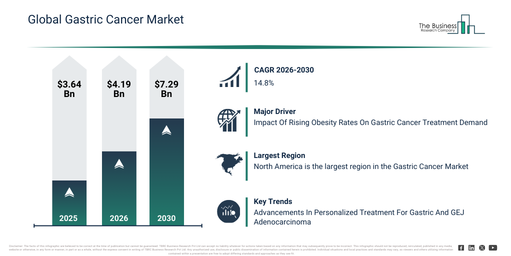
    The gastric cancer diagnostic procedure market size has shown robust growth over recent years. It is anticipated to expand from $1.54 billion in 2025 to $1.65 billion in 2026, exhibiting a compound annual growth rate (CAGR) of 7.4%. This historical growth can be attributed to the application of endoscopy in gastric diagnosis, the widespread adoption of biopsy procedures, the availability of imaging tests, the presence of hospital-based diagnostic infrastructure, and the ongoing development of pathology laboratories.

    The gastric cancer diagnostic procedure market size is anticipated to undergo significant expansion in the foreseeable future. It is projected to achieve a value of $2.23 billion by 2030, growing at a robust compound annual growth rate (CAGR) of 7.7%. This growth during the forecast period is driven by various factors such as the advancements in liquid biopsy techniques, the wider application of molecular diagnostics, the escalating demand for early detection, increased automation in diagnostic workflows, and the emergence of AI-enabled imaging analysis. Prominent trends expected in the forecast period involve the expanding utilization of endoscopic diagnostic techniques, the increasing adoption of molecular and genetic testing, a heightened need for early-stage cancer detection, the growth of non-invasive diagnostic procedures, and the integration of cutting-edge imaging technologies.

    Access Your Free Sample Report For In-Depth Market Analysis:

    https://www.thebusinessresearchcompany.com/report/gastric-cancer-diagnostic-procedure-global-market-report

    Which Important Drivers Are Guiding The Gastric Cancer Diagnostic Procedure Market Growth?

    The escalating trend in smoking is anticipated to boost the expansion of the gastric cancer diagnostic procedure market in the future. Smoking is defined as the act of inhaling and exhaling the smoke produced by burning tobacco or other substances. Gastric cancer diagnostic procedures play a critical role for individuals with a smoking history or those susceptible to smoking-related cancers, facilitating early detection and identification of precancerous lesions, aiding in the development of personalized and tailored treatment plans, enhancing communication and coordination, and offering a comprehensive assessment of the gastric mucosa and surrounding tissues. For instance, in July 2023, a report from the World Health Organization, a Switzerland-based intergovernmental organization, stated that over 8 million people die from tobacco each year, including 1.3 million non-smokers exposed to second-hand smoke. Thus, the increasing surge in smoking is propelling the growth of the gastric cancer diagnostic procedure market.

    How Is The Gastric Cancer Diagnostic Procedure Market Broken Down By Segment Categories?

    The gastric cancer diagnostic procedure market covered in this report is segmented –

    1) By Procedure Type: Endoscopic Procedure, Biopsy, Tissue Tests, Lab Tests, In-Vitro Diagnostic Tests, Imaging Tests, Molecular Diagnostics, Multiplexing Molecular Diagnostics, Immunoassays, Other Procedure Types

    2) By Symptom Type: Symptomatic, Asymptomatic

    3) By Offering Type: Instruments, Reagents And Consumables, Services

    4) By Body Fluid Type: Blood, Urine, Saliva, Stomach Juice, Tissue, Other Body Fluid

    5) By Disease Indication: Early Gastric Cancer, Advanced Gastric Cancer

    Subsegments:

    1) By Endoscopic Procedure: Upper Endoscopy (EGD), Endoscopic Ultrasound (EUS)

    2) By Biopsy: Endoscopic Biopsy, Fine Needle Aspiration (FNA) Biopsy

    3) By Tissue Tests: Histopathology, Immunohistochemistry

    4) By Lab Tests: Blood Tests, Tumor Markers

    5) By In-Vitro Diagnostic Tests: Genetic Testing, Molecular Profiling

    6) By Imaging Tests: Computed Tomography (CT) Scan, Magnetic Resonance Imaging (MRI), Positron Emission Tomography (PET) Scan

    7) By Molecular Diagnostics: PCR Testing, Next-Generation Sequencing (NGS)

    8) By Multiplexing Molecular Diagnostics: Multiplex PCR, Microarray Analysis

    9) By Immunoassays: Enzyme-Linked Immunosorbent Assay (ELISA), Radioimmunoassay (RIA)

    10) By Other Procedure Types: Breath Tests, Liquid Biopsies

    What Trends Are Influencing The Evolution Of The Gastric Cancer Diagnostic Procedure Market?

    Key players in the gastric cancer diagnostic procedure market are concentrating on technological improvements, such as dual cell-free and exosomal miRNA liquid biopsy assays, to achieve a competitive advantage. These assays work by measuring small noncoding RNAs present both freely in the bloodstream and enclosed within tumor-derived exosomes, which facilitates highly sensitive and specific detection of gastric cancer from a basic blood sample. For example, in December 2024, Cizzle Bio, a U.S.-based biotechnology company, unveiled its DEX G2 blood test. This test integrates cell-free and exosomal miRNAs to attain roughly 95% sensitivity and 97% specificity, and it only requires a standard blood draw instead of an invasive endoscopy. This breakthrough holds promise for earlier diagnosis and expanded screening reach, although its widespread acceptance could be limited by regulatory approval schedules and the requirement for real-world validation.

    Which Players Are Present In The Gastric Cancer Diagnostic Procedure Market Space?

    Major companies operating in the gastric cancer diagnostic procedure market are Thermo Fisher Scientific Inc., Agilent Technologies Inc., Myriad Genetics Inc., Foundation Medicine Inc., Biocept Inc., Illumina Inc., Roche Diagnostics, QIAGEN N V, Bio-Rad Laboratories Inc., Siemens Healthineers, Danaher Corporation, Becton Dickinson, bioMérieux SA, PerkinElmer Inc., NeoGenomics Laboratories, Guardant Health Inc., Natera Inc., Caris Molecular Diagnostics, Adaptive Biotechnologies Corp, 10x Genomics Inc

    Get The Full Gastric Cancer Diagnostic Procedure Market Report:

    https://www.thebusinessresearchcompany.com/report/gastric-cancer-diagnostic-procedure-global-market-report

    Where Is The Gastric Cancer Diagnostic Procedure Market Primarily Concentrated By Region?

    North America was the largest region in the gastric cancer diagnostics procedure market in 2025. The regions covered in the gastric cancer diagnostic procedure market report are Asia-Pacific, South East Asia, Western Europe, Eastern Europe, North America, South America, Middle East, Africa.

    Request A Customized Gastric Cancer Diagnostic Procedure Market Report For Competitive Insights:

    https://www.thebusinessresearchcompany.com/report/gastric-cancer-diagnostic-procedure-global-market-report

    Browse Through More Reports Similar to the Global Gastric Cancer Diagnostic Procedure Market 2026, By The Business Research Company

    Cancer Diagnostics Market Report 2026

    https://www.thebusinessresearchcompany.com/report/cancer-diagnostics-global-market-report

    Gastric Cancer Drugs Market Report 2026

    https://www.thebusinessresearchcompany.com/report/gastric-cancer-drugs-global-market-report

    Gastric Ulcers Market Report 2026

    https://www.thebusinessresearchcompany.com/report/gastric-ulcers-global-market-report

    Get in touch with us:

    The Business Research Company: https://www.thebusinessresearchcompany.com/

    Americas +1 310-496-7795

    Asia +44 7882 955267 & +91 8897263534

    Europe +44 7882 955267

    Email us at info@tbrc.info

    Follow us on:

    LinkedIn: https://in.linkedin.com/company/the-business-research-company

    YouTube: https://www.youtube.com/channel/UC24_fI0rV8cR5DxlCpgmyFQ

    Global Market Model: https://www.thebusinessresearchcompany.com/global-market-model
  • Global Gastric Cancer Market to Reach $7.28B by 2030 at 14.8% CAGR

    Global Gastric Cancer Market to Reach $7.28B by 2030 at 14.8% CAGR

    The Business Research Company’s 2026 market reports feature enhanced tools like market attractiveness analysis, TAM assessment, and company scoring matrices, along with interactive dashboards, deeper supply chain insights, and startup coverage strengthening the depth, usability, and strategic value of insights.

    What Expansion In Market Value Is Forecasted For The Gastric Cancer Market Between 2026 And 2030?

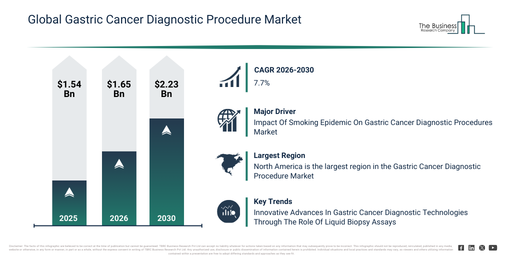
    The gastric cancer market has experienced swift growth in recent years. It is projected to expand from $3.64 billion in 2025 to $4.19 billion in 2026, demonstrating a compound annual growth rate (CAGR) of 15.2%. This growth observed in the historic period can be attributed to factors such as the high prevalence of helicobacter pylori infection, smoking and dietary risk factors, the expansion of chemotherapy usage, the growth of hospital-based oncology care, and the development of surgical oncology.

    The gastric cancer market is projected to experience substantial expansion over the coming years. It is anticipated to reach $7.29 billion by 2030, exhibiting a compound annual growth rate (CAGR) of 14.8%. This projected growth during the forecast period can be linked to several factors, including breakthroughs in immuno-oncology, the expansion of precision diagnostics, the proliferation of cancer screening initiatives, an expanding elderly demographic, and the creation of innovative targeted medications. Key trends anticipated over the forecast timeframe encompass the increasing uptake of targeted therapies and immunotherapies, a heightened emphasis on early detection and screening, the broadening of personalized cancer treatment strategies, the expanding application of combination therapy protocols, and enhanced multidisciplinary approaches to cancer care.

    Access Your Free Sample Report For In-Depth Market Analysis:

    https://www.thebusinessresearchcompany.com/report/gastric-cancer-global-market-report

    What Major Factors Are Driving The Gastric Cancer Market Forward?

    Increasing obesity rates are projected to boost the growth of the gastric cancer market moving forward. Obesity is a medical condition defined by excessive accumulation of body fat, often categorized by a body mass index (BMI) of 30 or higher, which can lead to various health issues. The escalation in obesity rates results from factors such as unhealthy diets, insufficient physical activity, inactive lifestyles, environmental factors, and genetic predispositions. Surplus body fat, particularly visceral fat surrounding the abdomen, is connected to an elevated risk of developing gastric cancer. This is because obesity initiates chronic inflammation and metabolic disturbances, both linked to cancer development, thus contributing to an increased need for gastric cancer treatment. For instance, in March 2024, the World Health Organization (WHO), a Switzerland-based intergovernmental organization, disclosed that one in eight people worldwide now live with obesity, surpassing 1 billion individuals. Therefore, the growing prevalence of obesity is propelling the gastric cancer market.

    What Are The Different Segment Types In The Gastric Cancer Market Segment Breakdown?

    The gastric cancer market covered in this report is segmented –

    1) By Type: Adenocarcinoma, Lymphoma, Gastrointestinal Stromal Tumor, Carcinoid Tumor, Other Types

    2) By Diagnosis: Endoscopy, Biopsy, Imaging Tests, Exploratory Surgery, Other Diagnosis

    3) By Treatment: Surgery, Radiation Therapy, Chemotherapy, Targeted Therapy, Palliative Care, Other Treatments

    4) By Distribution Channel: Hospital Pharmacies, Specialty And Retail Pharmacies, Other Distribution Channels

    Subsegments:

    1) By Adenocarcinoma: Intestinal Type Adenocarcinoma, Diffuse Type Adenocarcinoma, Mixed Type Adenocarcinoma

    2) By Lymphoma: Primary Gastric Lymphoma, Secondary Gastric Lymphoma

    3) By Gastrointestinal Stromal Tumor (GIST): Primary GIST, Metastatic GIST

    4) By Carcinoid Tumor: Gastric Carcinoid Type 1, Gastric Carcinoid Type 2, Gastric Carcinoid Type 3

    5) By Other Types: Small Cell Carcinoma, Squamous Cell Carcinoma, Mixed Tumors

    Which Trends Are Impacting The Progress Of The Gastric Cancer Market?

    Leading companies within the gastric cancer market are directing their efforts toward developing cutting-edge solutions, such as companion diagnostic assays, to facilitate personalized therapeutic approaches. A companion diagnostic assay is a test utilized to identify patients most likely to benefit from a specific therapeutic treatment by detecting the presence of certain biomarkers. For instance, in October 2024, F. Hoffmann-La Roche Ltd., a pharmaceutical company based in Switzerland, announced the U.S. Food and Drug Administration (FDA) approval for its VENTANA CLDN18 (43-14A) RxDx Assay. This assay is recognized as the first immunohistochemistry (IHC) companion diagnostic developed for assessing CLDN18 protein expression in gastric and gastroesophageal junction (GEJ) adenocarcinoma. It identifies patients eligible for targeted treatment with VYLOY (zolbetuximab) by measuring CLDN18 protein variants, primarily CLDN18. 2. Utilizing the OptiView DAB IHC Detection Kit on the BenchMark ULTRA instrument, this test significantly advances personalized healthcare, thereby expanding the treatment options available for gastric and GEJ adenocarcinoma.

    Who Are The Well-Known Companies In The Gastric Cancer Market?

    Major companies operating in the gastric cancer market are F. Hoffmann La Roche Ltd., Merck And Co. Inc., AbbVie Inc., Sanofi S.A., Bristol Myers Squibb Company, Novartis AG, GlaxoSmithKline Plc, Eli Lilly and Company, Amgen Inc., Gilead Sciences Inc., Astellas Pharma Inc., Daiichi Sankyo Company Limited, Eisai Co. Ltd., Ipsen Biopharmaceuticals Inc., Ono Pharmaceutical Co. Ltd., Taiho Oncology Inc., Taiho Pharmaceuticals Co. Ltd., Boehringer Ingelheim, Biocon Limited, Jiangsu Hengrui Medicine Co Ltd, BeiGene Ltd

    Get The Full Gastric Cancer Market Report:

    https://www.thebusinessresearchcompany.com/report/gastric-cancer-global-market-report

    Which Region Has The Greatest Market Share In The Gastric Cancer Market?

    North America was the largest region in the gastric cancer market in 2025. Asia-Pacific is expected to be the fastest-growing region in the forecast period. The regions covered in the gastric cancer market report are Asia-Pacific, South East Asia, Western Europe, Eastern Europe, North America, South America, Middle East, Africa.

    Request A Customized Gastric Cancer Market Report For Competitive Insights:

    https://www.thebusinessresearchcompany.com/report/gastric-cancer-global-market-report

    Browse Through More Reports Similar to the Global Gastric Cancer Market 2026, By The Business Research Company

    Esophageal Cancer Market Report 2026

    https://www.thebusinessresearchcompany.com/report/esophageal-cancer-global-market-report

    Gastric Cancer Drugs Market Report 2026

    https://www.thebusinessresearchcompany.com/report/gastric-cancer-drugs-global-market-report

    Gastric Ulcers Market Report 2026

    https://www.thebusinessresearchcompany.com/report/gastric-ulcers-global-market-report

    Get in touch with us:

    The Business Research Company: https://www.thebusinessresearchcompany.com/

    Americas +1 310-496-7795

    Asia +44 7882 955267 & +91 8897263534

    Europe +44 7882 955267

    Email us at info@tbrc.info

    Follow us on:

    LinkedIn: https://in.linkedin.com/company/the-business-research-company

    YouTube: https://www.youtube.com/channel/UC24_fI0rV8cR5DxlCpgmyFQ

    Global Market Model: https://www.thebusinessresearchcompany.com/global-market-model
  • Gardner Syndrome Treatment Market to Reach $26.08B by 2030

    Gardner Syndrome Treatment Market to Reach $26.08B by 2030

    The Business Research Company’s 2026 market reports feature enhanced tools like market attractiveness analysis, TAM assessment, and company scoring matrices, along with interactive dashboards, deeper supply chain insights, and startup coverage strengthening the depth, usability, and strategic value of insights.

    How Large Will The Gardner Syndrome Treatment Market Be By 2030 Compared To Its 2026 Market Size?

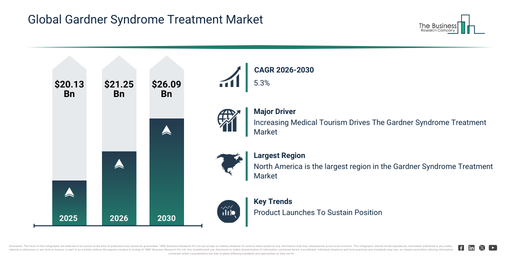
    The gardner syndrome treatment market has seen substantial growth over recent years. Its valuation is expected to rise from $20.13 billion in 2025 to $21.25 billion in 2026, achieving a compound annual growth rate (CAGR) of 5.5%. The expansion witnessed in the past can be attributed to factors such as the identification of fap-related syndromes, improvements in endoscopic monitoring, the introduction of surgical interventions, enhanced cancer surveillance, and the uptake of genetic testing.

    The gardner syndrome treatment market size is projected to experience robust expansion over the coming years. This market is set to reach $26.09 billion by 2030, exhibiting a compound annual growth rate (CAGR) of 5.3%. This anticipated growth during the forecast period is primarily driven by advancements in precision oncology methods, the widening of prophylactic treatment options, greater awareness of inherited cancer syndromes, the development of targeted therapies, and the increasing integration of genetic counseling services. Furthermore, key developments anticipated during this period encompass a heightened emphasis on early genetic screening, the growing application of preventive surgical procedures, the broadening of long-term surveillance programs, the increasing importance of multidisciplinary cancer care, and a focus on family-centered genetic counseling.

    Access Your Free Sample Report For In-Depth Market Analysis:

    https://www.thebusinessresearchcompany.com/report/gardner-syndrome-treatment-global-market-report

    Which Key Drivers Are Affecting The Gardner Syndrome Treatment Market Development?

    The increasing trend of medical tourism is anticipated to boost the growth of the Gardner syndrome treatment market moving forward. Medical tourism involves individuals traveling to a different country or region to receive medical treatment, healthcare services, or surgical procedures. Destinations offering medical tourism provide advanced medical technologies and various treatment options for patients seeking the latest developments in Gardner syndrome treatment. For instance, in May 2024, data from the Ministry of Health and Welfare (MOHW), a South Korea-based national health and social-welfare ministry, showed that South Korea hosted 606,000 foreign patients in 2023, marking a 2.4-times increase compared with prior years. Consequently, the expanding medical tourism sector is fueling the growth of the Gardner syndrome treatment market. The rising need for personalized medicine is projected to drive the growth of the Gardner syndrome treatment market in the future. Personalized medicine refers to a medical strategy that customizes treatments and therapies based on an individual’s genetic, environmental, and lifestyle factors to enhance healthcare outcomes. The demand for personalized medicine is increasing primarily because patients and healthcare providers are progressively seeking treatments tailored to an individual’s genetic profile, ensuring greater effectiveness and fewer adverse effects. Gardner syndrome treatment contributes to this growing demand by requiring targeted, genetics-based interventions that align with each patient’s unique mutation profile, thereby promoting the adoption of personalized therapeutic approaches. For example, in February 2024, the Personalized Medicine Coalition, a US-based non-profit organization, reported that in 2023, the FDA approved 16 new personalized treatments for rare disease patients, an increase from six in 2022. Among these approvals, seven were cancer drugs, while three targeted other diseases and conditions. Therefore, the escalating demand for personalized medicine is propelling the growth of the Gardner syndrome treatment market.

    Which Segment Classifications Are Used In The Gardner Syndrome Treatment Market Segment Analysis?

    The gardner syndrome treatment market covered in this report is segmented –

    1) By Cancer Type: Colorectal Cancer, Osteomas, Other Cancer Types

    2) By Therapeutics Type: NonSteroidal Anti-Inflammatory Drugs (NSAIDs), COX-2 Inhibitor

    3) By Application: Hospitals, Specialty Clinics, Other Applications

    Subsegments:

    1) By Colorectal Cancer: Pharmacological Treatments, Surgical Interventions

    2) By Osteomas: Surgical Interventions, Supportive Care

    3) By Other Cancer Types: Pharmacological Treatments, Surgical Interventions

    What Trends Are Transforming The Gardner Syndrome Treatment Market?

    Companies active in the Gardner syndrome treatment market are launching novel products to sustain their market position. For example, in November 2023, Takeda Pharmaceutical Company Limited, a Japan-based pharmaceutical company, launched Fruzaqla (fruquintinib), which was approved by the Food and Drug Administration (FDA), a US-based federal government agency. Fruzaqla (fruquintinib) is a targeted therapy sanctioned for the treatment of metastatic colorectal cancer (mCRC) in adults. This drug is notable as the first to target all three subtypes of the vascular endothelial growth factor (VEGF) receptor kinases. Individuals with Gardner syndrome face an elevated risk of developing colorectal cancer, a condition for which Fruzaqla (fruquintinib) is a treatment.

    Which Firms Are Contributing To The Gardner Syndrome Treatment Market Ecosystem?

    Major companies operating in the gardner syndrome treatment market are Pfizer Inc., Sanofi S.A., Johnson & Johnson Private Limited, F. Hoffmann-La Roche Ltd., GlaxoSmithKline plc, Novartis AG, Merck & Co. Inc., AstraZeneca plc, Bristol Myers Squibb Company, Eli Lilly and Company, AbbVie Inc., Amgen Inc., Takeda Pharmaceutical Company Limited, Cipla Ltd., Dr. Reddy’s Laboratories Ltd., Cadila Healthcare Ltd., Torrent Pharmaceuticals Ltd., Daiichi Sankyo Company Ltd., Mirati Therapeutics Inc., Plus Therapeutics Inc., Processa Pharmaceuticals Inc., Shanghai Henlius Biotech Inc.

    Get The Full Gardner Syndrome Treatment Market Report:

    https://www.thebusinessresearchcompany.com/report/gardner-syndrome-treatment-global-market-report

    Which Region Accounts For The Largest Portion Of The Gardner Syndrome Treatment Market?

    North America was the largest region in the gardner syndrome treatment market in 2025. The regions covered in the gardner syndrome treatment market report are Asia-Pacific, South East Asia, Western Europe, Eastern Europe, North America, South America, Middle East, Africa.

    Request A Customized Gardner Syndrome Treatment Market Report For Competitive Insights:

    https://www.thebusinessresearchcompany.com/report/gardner-syndrome-treatment-global-market-report

    Browse Through More Reports Similar to the Global Gardner Syndrome Treatment Market 2026, By The Business Research Company

    Zollinger Ellison Syndrome Treatment Market Report 2026

    https://www.thebusinessresearchcompany.com/report/zollinger-ellison-syndrome-treatment-global-market-report

    Kernicterus Treatment Market Report 2026

    https://www.thebusinessresearchcompany.com/report/kernicterus-treatment-global-market-report

    Rare Neurological Disease Treatment Market Report 2026

    https://www.thebusinessresearchcompany.com/report/rare-neurological-disease-treatment-global-market-report

    Get in touch with us:

    The Business Research Company: https://www.thebusinessresearchcompany.com/

    Americas +1 310-496-7795

    Asia +44 7882 955267 & +91 8897263534

    Europe +44 7882 955267

    Email us at info@tbrc.info

    Follow us on:

    LinkedIn: https://in.linkedin.com/company/the-business-research-company

    YouTube: https://www.youtube.com/channel/UC24_fI0rV8cR5DxlCpgmyFQ

    Global Market Model: https://www.thebusinessresearchcompany.com/global-market-model
  • Functional Genomics Market to Reach $28.7B by 2030 at 14.1% CAGR

    Functional Genomics Market to Reach $28.7B by 2030 at 14.1% CAGR

    The Business Research Company’s 2026 market reports feature enhanced tools like market attractiveness analysis, TAM assessment, and company scoring matrices, along with interactive dashboards, deeper supply chain insights, and startup coverage strengthening the depth, usability, and strategic value of insights.

    What Is The Projected Increase In Market Value Of The Functional Genomics Market During 2026–2030?

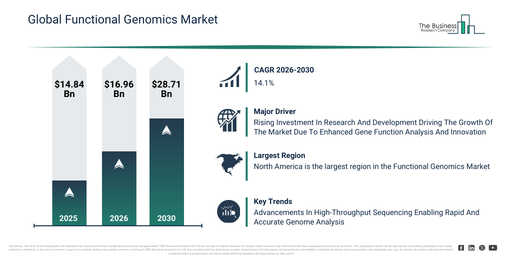
    The functional genomics market size has shown rapid expansion in recent years. This market is expected to expand from $14.84 billion in 2025 to $16.96 billion in 2026, achieving a compound annual growth rate (CAGR) of 14.3%. The growth observed in the past can be linked to the increased funding for genomics research, the broader availability of sequencing technologies, a rise in academic genomics research, the growing need for functional gene analysis, and enhancements in bioinformatics tools.

    The functional genomics market is projected for significant expansion in the coming years, with its size expected to reach $28.71 billion by 2030, driven by a compound annual growth rate (CAGR) of 14.1%. This growth during the forecast period is propelled by factors such as the increasing adoption of precision medicine approaches, a rise in investments dedicated to genomic data analytics, the expansion of gene editing research applications, enhanced collaboration between academia and industry, and a heightened focus on translational genomics research. Major developments anticipated in this period encompass the wider deployment of high-throughput functional genomics tools, the increasing integration of multi-omics analysis platforms, the growing application of AI in gene function interpretation, the expansion of automated genomic workflows, and an enhanced emphasis on discovering disease mechanisms.

    Access Your Free Sample Report For In-Depth Market Analysis:

    https://www.thebusinessresearchcompany.com/report/functional-genomics-global-market-report

    What Factors Are Contributing To The Growth Of The Functional Genomics Market?

    Future expansion of the functional genomics market is anticipated to be driven by increasing capital allocated to research and development. Research and development involves structured initiatives aimed at generating, enhancing, and innovating products, processes, or insights through scientific inquiry and experimentation. Companies are boosting their R&D spending because they are actively pursuing innovation to maintain their competitive edge, which leads them to commit greater funds to creating new offerings, improving existing technologies, and seizing new market prospects. This investment in research and development supports functional genomics by furthering the discovery and examination of gene functions, thereby deepening comprehension of intricate biological mechanisms and fostering the development of accurate therapeutic approaches. An example of this trend is seen in February 2024, when Biospace, a US-based online pharmaceuticals platform, reported that global biopharma research and development (R&D) funding reached $72 billion in 2023, an increase from $61 billion in 2022. Consequently, the rising investment in research and development is propelling the growth of the functional genomics market.

    How Is The Functional Genomics Market Organized By Segment Classification?

    The functional genomics market covered in this report is segmented –

    1) By Product: Kits And Assays, Instruments

    2) By Technology: Next-Generation Sequencing (NGS), Microarray Analysis, CRISPR And Gene Editing Technologies, RNA Sequencing (RNA-Seq)

    3) By End-User: Academic And Research Institutes, Pharmaceutical And Biopharmaceutical Companies, Contract Research Organizations (CROs), Clinical Laboratories, Agricultural Biotechnology Companies

    Subsegments:

    1) By Kits And Assays: PCR Kits, Microarray Kits, NGS Kits, Reagents, Enzymes

    2) By Instruments: Sequencers, Microarray Scanners, PCR Instruments, Automation Systems

    What Trends Are Shaping The Future Of The Functional Genomics Market?

    Leading companies in the functional genomics market are concentrating on developing advanced methods, such as high-throughput sequencing, to deliver highly accurate and detailed insights into complex genomes. High-throughput sequencing is a technique that enables the rapid and simultaneous sequencing of substantial amounts of DNA or RNA to analyze genetic information extensively. For instance, in February 2025, Roche, a Switzerland-based pharmaceutical company, introduced sequencing by expansion (SBX) technology, thereby establishing a new category of next-generation sequencing. The SBX chemistry, paired with an advanced sensor module, facilitates ultra-fast, high-throughput sequencing that is both adaptable and scalable for a broad array of applications. This innovative approach translates the sequence of DNA or RNA into a detectable surrogate polymer called an Xpandomer through a precise biochemical process. Xpandomers, which are fifty times longer than the original nucleic acid, convert sequence information into strong, low-noise signals for clear and reliable detection. By utilizing a CMOS-based sensor with parallel processing, this method achieves highly accurate single-molecule nanopore sequencing with exceptional speed and versatility.

    Who Are The Industry Participants Involved In The Functional Genomics Market?

    Major companies operating in the functional genomics market are Hoffmann-La Roche Ltd., Thermo Fisher Scientific Inc., Merck KGaA, Becton Dickinson and Company, Agilent Technologies Inc., Illumina Inc., Perkin Elmer Inc., Revvity Inc., Exact Sciences Corporation, Bio-Rad Laboratories Inc., QIAGEN NV, Integrated DNA Technologies Inc., Promega Corporation, Pacific Biosciences of California Inc., Genomics Ltd., MEDiC LLC, Enhanc3D Genomics Ltd., Samplix, Arima Genomics Inc., Phase Genomics Inc.

    Get The Full Functional Genomics Market Report:

    https://www.thebusinessresearchcompany.com/report/functional-genomics-global-market-report

    Which Region Holds The Highest Market Share In The Functional Genomics Market?

    North America was the largest region in the functional genomics market in 2025. Asia-Pacific is expected to be the fastest-growing region in the forecast period. The regions covered in the functional genomics market report are Asia-Pacific, South East Asia, Western Europe, Eastern Europe, North America, South America, Middle East, Africa.

    Request A Customized Functional Genomics Market Report For Competitive Insights:

    https://www.thebusinessresearchcompany.com/report/functional-genomics-global-market-report

    Browse Through More Reports Similar to the Global Functional Genomics Market 2026, By The Business Research Company

    Ai In Genomics Market Report 2026

    https://www.thebusinessresearchcompany.com/report/ai-in-genomics-global-market-report

    Metagenomics Market Report 2026

    https://www.thebusinessresearchcompany.com/report/metagenomics-global-market-report

    Genomics Services Market Report 2026

    https://www.thebusinessresearchcompany.com/report/genomics-services-global-market-report

    Get in touch with us:

    The Business Research Company: https://www.thebusinessresearchcompany.com/

    Americas +1 310-496-7795

    Asia +44 7882 955267 & +91 8897263534

    Europe +44 7882 955267

    Email us at info@tbrc.info

    Follow us on:

    LinkedIn: https://in.linkedin.com/company/the-business-research-company

    YouTube: https://www.youtube.com/channel/UC24_fI0rV8cR5DxlCpgmyFQ

    Global Market Model: https://www.thebusinessresearchcompany.com/global-market-model
  • Frasier Syndrome Market: Steady Growth Outlook Through 2030

    Frasier Syndrome Market: Steady Growth Outlook Through 2030

    The Business Research Company’s 2026 market reports feature enhanced tools like market attractiveness analysis, TAM assessment, and company scoring matrices, along with interactive dashboards, deeper supply chain insights, and startup coverage strengthening the depth, usability, and strategic value of insights.

    How Is The Market Size Of The Frasier Syndrome Market Expected To Change From 2026 To 2030?

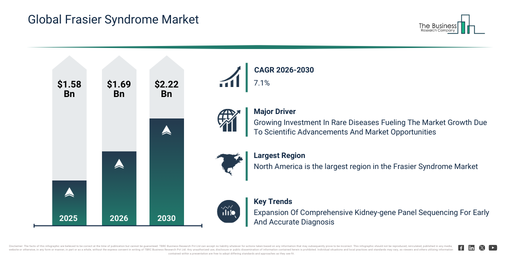
    The frasier syndrome market has experienced substantial growth in recent years. It is anticipated to expand from $1.58 billion in 2025 to $1.69 billion in 2026, at a compound annual growth rate (CAGR) of 7.1%. The expansion observed historically can be attributed to developments in genetic diagnostics, the identification of wt1 mutations, better nephrology care, the accessibility of supportive therapies, and an increase in rare disease research.

    The market size for Frasier syndrome is anticipated to experience robust expansion over the coming years. It is projected to attain a valuation of $2.22 billion by 2030, demonstrating a compound annual growth rate (CAGR) of 7.1%. This projected growth throughout the forecast period stems from various factors, including the broadened scope of genomic screening programs, progress in precision medicine, augmented investment in therapies for rare diseases, the incorporation of genetic counseling services, and enhanced long-term care models. Significant trends expected during this period encompass the escalating adoption of genetic testing for early detection, an intensified focus on managing rare diseases, the proliferation of multidisciplinary treatment methodologies, increasing recognition of WT1 gene mutations, and a strong emphasis on sustained patient monitoring.

    Access Your Free Sample Report For In-Depth Market Analysis:

    https://www.thebusinessresearchcompany.com/report/frasier-syndrome-global-market-report

    Which Strong Drivers Are Impacting The Frasier Syndrome Market Growth?

    The increasing financial commitment to rare diseases is projected to drive the expansion of the Frasier syndrome market moving ahead. A rare disease is a health condition that impacts a small portion of the population, generally fewer than 1 in 2,000 people. These conditions are often long-term, worsen over time, and can be fatal or cause disability. Investment in rare diseases is largely influenced by the growing recognition of critical unmet medical needs and the potential for high profitability through regulatory benefits such as orphan drug designation, exclusive market rights, and reduced development costs. Frasier Syndrome highlights the crucial requirement for dedicated research and development, thereby encouraging funding for rare diseases by demonstrating the potential for effective, niche-specific therapies. For instance, in April 2024, according to Global Genes, a US-based nonprofit organization, companies focused on developing drugs for rare diseases raised $7.1 billion in the first quarter of 2024, indicating a 307% increase compared to the $1.8 billion raised in the same period in 2023. Thus, the growing investment in rare diseases is boosting the growth of the Frasier syndrome market.

    Which Segments Define The Frasier Syndrome Market Segment Structure?

    The frasier syndrome market covered in this report is segmented –

    1) By Treatment Type: Surgical Intervention, Hormone Therapy, Supportive Care, Genetic Counseling

    2) By Diagnosis Method: Genetic Testing, Clinical Evaluation, Imaging Techniques, Biochemical Testing

    3) By Symptoms: Hypospadias, Nephropathy, Hearing Loss, Dental Anomalies

    4) By End Users: Hospitals, Diagnostic Centers, Research Institutes, Other End Users

    Subsegments:

    1) By Surgical Intervention: Nephrectomy, Renal Transplantation, Testicular Biopsy

    2) By Hormone Therapy: Testosterone Replacement Therapy, Estrogen Therapy, Growth Hormone Therapy

    3) By Supportive Care: Blood Pressure Management, Renal Replacement Therapy (Dialysis), Pain Management

    4) By Genetic Counseling: Preconception Counseling, Post-Diagnosis Counseling, Family Planning Guidance

    Which Trends Are Contributing To Changes In The Frasier Syndrome Market?

    Leading firms within the Frasier Syndrome market are prioritizing technological innovations, specifically broad kidney-gene panel sequencing, to secure a competitive edge. Broad kidney-gene panel sequencing describes genetic examinations that scrutinize numerous genes implicated in kidney and urogenital conditions through a single test, aiming to identify mutations linked to uncommon syndromes, such as those related to the WT1 gene. An example is Natera, a US-based genetic-testing enterprise, which launched its enhanced panel test, Renasight, in October 2024. This test covers 397 genes associated with chronic kidney disease, including conditions related to WT1. The Renasight panel provides convenient remote sample collection (using blood or saliva), delivers results in approximately 3 weeks, and offers integrated genetic-counseling assistance. Increased utilization of these panels facilitates earlier and more precise diagnosis of ailments such as Frasier Syndrome and fosters tailored management strategies; nevertheless, the syndrome’s infrequent occurrence and the inconsistent expressivity of mutations might hinder diagnostic effectiveness.

    Who Are The Established Players Within The Frasier Syndrome Market?

    Major companies operating in the frasier syndrome market are Quest Diagnostics Incorporated, Illumina Inc., Natera Inc., PTC Therapeutics, Myriad Genetics Inc., Fulgent Genetics Inc., Invitae Corporation, GeneDx LLC, Travere Therapeutics, Centogene N V, Prevention Genetics, Medicover Hospitals, 3billion Inc, Ambry Genetics, Strand Life Sciences Pvt Ltd, REGENXBIO, Ultragenyx Pharmaceutical Inc, Editas Medicine Inc, Passage Bio, Chimeron Bio, Aro Biotherapeutics, Purespring Therapeutics

    Get The Full Frasier Syndrome Market Report:

    https://www.thebusinessresearchcompany.com/report/frasier-syndrome-global-market-report

    Where Is The Frasier Syndrome Market Most Concentrated Geographically?

    North America was the largest region in the frasier syndrome market in 2025. Europe is expected to be the fastest-growing region in the forecast period. The regions covered in the frasier syndrome market report are Asia-Pacific, South East Asia, Western Europe, Eastern Europe, North America, South America, Middle East, Africa.

    Request A Customized Frasier Syndrome Market Report For Competitive Insights:

    https://www.thebusinessresearchcompany.com/report/frasier-syndrome-global-market-report

    Browse Through More Reports Similar to the Global Frasier Syndrome Market 2026, By The Business Research Company

    Amblyopia Market Report 2026

    https://www.thebusinessresearchcompany.com/report/amblyopia-global-market-report

    Dumping Syndrome Market Report 2026

    https://www.thebusinessresearchcompany.com/report/dumping-syndrome-global-market-report

    Myelodysplastic Syndrome Market Report 2026

    https://www.thebusinessresearchcompany.com/report/myelodysplastic-syndrome-global-market-report

    Get in touch with us:

    The Business Research Company: https://www.thebusinessresearchcompany.com/

    Americas +1 310-496-7795

    Asia +44 7882 955267 & +91 8897263534

    Europe +44 7882 955267

    Email us at info@tbrc.info

    Follow us on:

    LinkedIn: https://in.linkedin.com/company/the-business-research-company

    YouTube: https://www.youtube.com/channel/UC24_fI0rV8cR5DxlCpgmyFQ

    Global Market Model: https://www.thebusinessresearchcompany.com/global-market-model
  • Food Allergy Treatment Market to Reach $12.72B by 2030 at 10.6% CAGR

    Food Allergy Treatment Market to Reach $12.72B by 2030 at 10.6% CAGR

    The Business Research Company’s 2026 market reports feature enhanced tools like market attractiveness analysis, TAM assessment, and company scoring matrices, along with interactive dashboards, deeper supply chain insights, and startup coverage strengthening the depth, usability, and strategic value of insights.

    From Its 2026 Market Size, What Value Is The Food Allergy Treatment Market Projected To Reach By 2030?

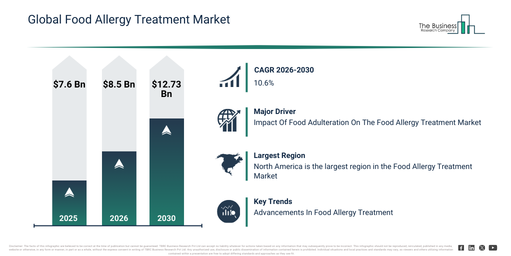
    The food allergy treatment market has experienced substantial expansion in recent years. It is projected to increase from $7.6 billion in 2025 to $8.5 billion in 2026, achieving a compound annual growth rate (CAGR) of 11.8%. This historical growth can be attributed to factors such as an increase in food allergy prevalence, the widespread availability of antihistamines, the adoption of epinephrine therapy, higher rates of allergy diagnosis, and the development of clinical guidelines.

    The food allergy treatment market is projected to experience substantial expansion in the coming years, reaching a valuation of $12.73 billion by 2030, exhibiting a compound annual growth rate (CAGR) of 10.6%. This anticipated growth during the forecast period is primarily driven by advancements in oral immunotherapy, the broader availability of biologic treatments, an increase in pediatric allergy care, the rising need for ongoing allergy management solutions, and improved access to healthcare services. Key trends emerging during this period encompass the growing acceptance of immunotherapy-based therapies, a greater utilization of epinephrine auto-injectors, an intensified focus on proactive allergy prevention, the development of more personalized allergy treatment strategies, and heightened public awareness regarding food allergy conditions.

    Access Your Free Sample Report For In-Depth Market Analysis:

    https://www.thebusinessresearchcompany.com/report/food-allergy-treatment-global-market-report

    What Key Factors Are Shaping The Food Allergy Treatment Market Landscape?

    The escalating incidence of food adulteration is anticipated to fuel the expansion of the food allergy treatment market in the foreseeable future. Food adulteration describes the deliberate modification of food items, involving either the addition of substandard, detrimental, or illicit substances, or the extraction of essential components, primarily to boost volume or improve aesthetic appeal, frequently jeopardizing both quality and safety. This phenomenon is on the rise, attributed to several factors including economic gain, intricate supply chain complexities, insufficient regulatory oversight, advancements in technology, the growing demand for convenience, globalization, environmental influences, consumer awareness, pressure for higher profit margins, and inadequate enforcement of existing regulations. A significant driver behind the expansion of food adulteration is the heightened consumer demand for more affordable goods, which motivates producers to reduce expenses and optimize profits through unscrupulous methods. Such practices can elevate the potential for allergic reactions, either by inadvertently incorporating allergens into food items or by undermining the overall safety and integrity of the food supply chain. As an illustration, in 2023, data from the FDA CORE Network, a U.S.-based government agency, indicated its team assessed 69 incidents, addressed 25, and disseminated 10 public health advisories. This contrasts with 2022, when they recorded 65 incidents, 28 responses, and 11 advisories. Consequently, the escalating problem of food adulteration is a key catalyst for the expansion of the food allergy treatment market.

    How Is The Food Allergy Treatment Market Segmented Across Different Segment Categories?

    The food allergy treatment market covered in this report is segmented –

    1) By Drug Type: Antihistamines, Decongestants, Corticosteroids, Mast Cell Stabilizers, Leukotriene Inhibitors, Nasal Anti-Cholinergic, Immuno-Modulators, Epinephrine, Immunotherapy

    2) By Route Of Administration: Parenteral, Oral

    3) By Allergen Type: Dairy Products, Poultry Product, Tree Nuts, Peanuts, Shellfish, Wheat, Soys, Other Allergens

    4) By End-Use: Hospital Pharmacies, Retail Pharmacies, Other End-Uses

    Subsegments:

    1) By Antihistamines: Oral Antihistamines, Topical Antihistamines, Intranasal Antihistamines

    2) By Decongestants: Oral Decongestants, Nasal Decongestants

    3) By Corticosteroids: Oral Corticosteroids, Topical Corticosteroids, Intranasal Corticosteroids

    4) By Mast Cell Stabilizers: Cromolyn Sodium, Nedocromil

    5) By Leukotriene Inhibitors: Montelukast, Zafirlukast

    6) By Nasal Anti-Cholinergic: Ipratropium Bromide

    7) By Immuno-Modulators: Omalizumab, Dupilumab

    8) By Epinephrine: Injectable Epinephrine, Auto-Injectors

    9) By Immunotherapy: Oral Immunotherapy (OIT), Sublingual Immunotherapy (SLIT), Epicutaneous Immunotherapy (EPIT)

    What Market Trends Are Affecting The Food Allergy Treatment Market?

    Leading corporations within the food allergy treatment market are actively developing innovative therapeutic options, such as monoclonal antibodies, to address the root causes of food allergies and offer more effective solutions for patients. Monoclonal antibodies present a promising strategy for managing food allergies by specifically targeting immune system components involved in allergic reactions, thus providing more precise and potent treatments for individuals. For example, in February 2024, Novartis AG, a pharmaceutical company located in Switzerland, secured FDA approval for Xolair (omalizumab) for the reduction of IgE-mediated food allergies. This humanized monoclonal antibody is administered subcutaneously and functions by preventing the binding of IgE antibodies, subsequently reducing the release of chemicals that cause allergy symptoms. The FDA’s approval stems from positive data yielded by the Phase III OUtMATCH study, which indicated that a significantly larger proportion of food allergy patients, including those as young as 1 year, who were treated with Xolair, could tolerate small amounts of peanut, milk, egg, and cashews without an allergic response, compared to those receiving a placebo.

    Which Organizations Play A Role In The Food Allergy Treatment Market Landscape?

    Major companies operating in the food allergy treatment market are Pfizer Inc., F. Hoffmann-La Roche Ltd., Merck & Co. Inc., Bayer AG, Sanofi S.A., AstraZeneca PLC, Novartis AG, Amgen Inc., Regeneron Pharmaceuticals Inc., ALK-Abelló A/S, Stallergenes Greer, Kaleo Inc., HAL Allergy B.V., Vedanta Biosciences Inc., Aimmune Therapeutics, AnaptysBio Inc., Immunomic Therapeutics Inc., Alladapt Immunotherapeutics Inc., Aravax, Prota Therapeutics Pty Ltd., DBV Technologies, Adamis Pharmaceuticals Corporation

    Get The Full Food Allergy Treatment Market Report:

    https://www.thebusinessresearchcompany.com/report/food-allergy-treatment-global-market-report

    Which Region Dominates The Food Allergy Treatment Market By Market Share?

    North America was the largest region in the food allergy treatment market in 2025. Asia-Pacific is expected to be the fastest-growing region in the forecast period. The regions covered in the food allergy treatment market report are Asia-Pacific, South East Asia, Western Europe, Eastern Europe, North America, South America, Middle East, Africa.

    Request A Customized Food Allergy Treatment Market Report For Competitive Insights:

    https://www.thebusinessresearchcompany.com/report/food-allergy-treatment-global-market-report

    Browse Through More Reports Similar to the Global Food Allergy Treatment Market 2026, By The Business Research Company

    Allergy Immunotherapy Market Report 2026

    https://www.thebusinessresearchcompany.com/report/allergy-immunotherapy-global-market-report

    Allergy Treatment Market Report 2026

    https://www.thebusinessresearchcompany.com/report/allergy-treatment-global-market-report

    Peanut Allergy Treatment Market Report 2026

    https://www.thebusinessresearchcompany.com/report/peanut-allergy-treatment-global-market-report

    Get in touch with us:

    The Business Research Company: https://www.thebusinessresearchcompany.com/

    Americas +1 310-496-7795

    Asia +44 7882 955267 & +91 8897263534

    Europe +44 7882 955267

    Email us at info@tbrc.info

    Follow us on:

    LinkedIn: https://in.linkedin.com/company/the-business-research-company

    YouTube: https://www.youtube.com/channel/UC24_fI0rV8cR5DxlCpgmyFQ

    Global Market Model: https://www.thebusinessresearchcompany.com/global-market-model
  • Food Allergen Testing Market to Reach $1.7B by 2030 at 8.7% CAGR

    Food Allergen Testing Market to Reach $1.7B by 2030 at 8.7% CAGR

    The Business Research Company’s 2026 market reports feature enhanced tools like market attractiveness analysis, TAM assessment, and company scoring matrices, along with interactive dashboards, deeper supply chain insights, and startup coverage strengthening the depth, usability, and strategic value of insights.

    How Much Growth In Market Value Is Expected For The Food Allergen Testing Market Between 2026 And 2030?

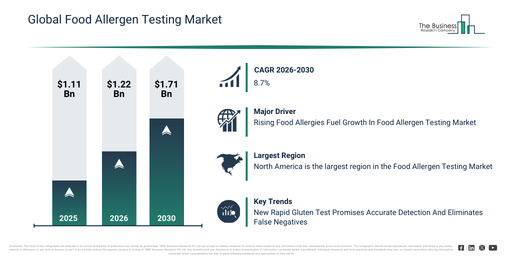
    The food allergen testing market has experienced substantial expansion in recent years. This market is set to increase from $1.11 billion in 2025 to $1.22 billion in 2026, driven by a compound annual growth rate (CAGR) of 10.2%. The historical growth of the market is largely due to factors such as an increase in food allergy prevalence, the implementation of food labeling regulations, the growth of the packaged food industry, the expansion of food testing laboratories, and the adoption of ELISA testing.

    The food allergen testing market is projected to experience substantial expansion in the coming years. This market is set to reach a value of $1.71 billion by 2030, exhibiting a compound annual growth rate (CAGR) of 8.7%. This anticipated growth during the forecast period stems from factors such as increased demand for highly sensitive detection methods, an uptick in global food trade, the broadening application of PCR-based testing, more stringent allergen regulations, and greater automation in food testing procedures. Key trends anticipated within this period involve an escalating demand for food safety testing, more rigorous regulatory compliance demands, broader implementation of allergen detection in processed food products, the increasing deployment of rapid testing technologies, and the uptake of advanced molecular diagnostic approaches.

    Access Your Free Sample Report For In-Depth Market Analysis:

    https://www.thebusinessresearchcompany.com/report/food-allergen-testing-global-market-report

    Which Factors Are Influencing The Growth Of The Food Allergen Testing Market?

    The rising occurrence of food allergies is projected to fuel the expansion of the food allergen testing market in the future. Food allergies are defined as unfavorable immune system reactions triggered by specific food proteins, which can manifest in a spectrum of symptoms ranging from mild discomfort to severe responses. The increasing incidence of food allergies stems from genetic predispositions, environmental influences, alterations in diet, and improved awareness coupled with better diagnosis. Food allergen testing serves to identify and quantify allergenic substances present in food products, thereby aiding in the prevention of allergic reactions for individuals afflicted by food allergies. For instance, in March 2024, as per CPD Online College Limited, a UK-based company, approximately 2 million people in the UK are believed to have a diagnosed food allergy. In the US, an estimated 33 million individuals are thought to have allergies. Australia exhibits some of the highest allergy rates globally, with food allergies impacting 10% of infants, 4-8% of children, and 2% of adults. Consequently, the growing number of food allergy cases is propelling the growth of the food allergen testing market.

    What Are The Main Segments Within The Food Allergen Testing Market Segment Structure?

    The food allergen testing market covered in this report is segmented –

    1) By Test Type: Allergen Testing, Intolerance Testing

    2) By Technology: Biosensors, Immunoassay Or Enzyme Linked Immunosorbent Assay (ELISA), Polymerase Chain Reaction (PCR), Other Technologies

    3) By Application: Seafood And Meat Products, Dairy Products, Beverages, Bakery And Confectionery, Baby Food And Infant Formula, Other Applications

    Subsegments:

    1) By Allergen Testing: Immunoassay-Based Tests, PCR-Based Tests, Mass Spectrometry-Based Tests, Luminex xMAP Technology, Chromatography-Based Tests

    2) By Intolerance Testing: Breath Tests, Blood Tests, Elimination Diets And Food Challenge Testing

    Which Trends Are Influencing Demand In The Food Allergen Testing Market?

    Leading firms within the food allergen testing sector are concentrating on creating quick tests, like immunochromatographic assays, to identify allergens and secure a competitive advantage. An immunochromatographic assay is defined as a fast diagnostic testing approach designed to pinpoint particular allergenic proteins in food items by utilizing chromatographic and immunological principles. For example, in March 2024, Gold Standard Diagnostics Budapest Kft, a Hungarian diagnostic solutions provider, introduced the SENSIStrip Gluten PowerLine lateral flow test. This product aims to reduce false negative outcomes in rapid gluten detection. This test employs an immunochromatographic assay. It functions as a highly sensitive detection system, relying on a monoclonal antibody, and is specifically adept at identifying gluten traces across food matrices, rinse water, and swabs. The test enables prompt and sensitive gluten detection, which is vital for individuals suffering from gluten intolerance or celiac disease. Additionally, it features an integrated hook line designed to prevent false-negative interpretations in samples with high contamination levels. While results are interpretable visually, quantitative assessment is also achievable when used alongside their RapidScan ST5 lateral flow reader.

    Who Are The Companies Participating In The Food Allergen Testing Market?

    Major companies operating in the food allergen testing market are Thermo Fisher Scientific, Ecolab Inc., Eurofins Scientific, SGS SA, Bureau Veritas, Intertek Group plc, Bio-Rad Laboratories Inc., ALS Limited, Neogen Corporation, IEH Laboratories & Consulting Group, AsureQuality Limited, Mérieux NutriSciences, Microbac Laboratories Inc, R-Biopharm AG, TUV SUD America, Symbio Laboratories, Campden BRI, Romer Labs, Q Laboratories Inc., NSL Analytical Services Inc.

    Get The Full Food Allergen Testing Market Report:

    https://www.thebusinessresearchcompany.com/report/food-allergen-testing-global-market-report

    Which Region Is The Largest In The Food Allergen Testing Market?

    North America was the largest region in the food allergen testing market in 2025. Asia-Pacific is expected to be the fastest-growing region in the forecast period. The regions covered in the food allergen testing market report are Asia-Pacific, South East Asia, Western Europe, Eastern Europe, North America, South America, Middle East, Africa.

    Request A Customized Food Allergen Testing Market Report For Competitive Insights:

    https://www.thebusinessresearchcompany.com/report/food-allergen-testing-global-market-report

    Browse Through More Reports Similar to the Global Food Allergen Testing Market 2026, By The Business Research Company

    Food Diagnostics Market Report 2026

    https://www.thebusinessresearchcompany.com/report/food-diagnostics-global-market-report

    Food Safety Testing Market Report 2026

    https://www.thebusinessresearchcompany.com/report/food-safety-testing-global-market-report

    Food Pathogen Testing Market Report 2026

    https://www.thebusinessresearchcompany.com/report/food-pathogen-testing-global-market-report

    Get in touch with us:

    The Business Research Company: https://www.thebusinessresearchcompany.com/

    Americas +1 310-496-7795

    Asia +44 7882 955267 & +91 8897263534

    Europe +44 7882 955267

    Email us at info@tbrc.info

    Follow us on:

    LinkedIn: https://in.linkedin.com/company/the-business-research-company

    YouTube: https://www.youtube.com/channel/UC24_fI0rV8cR5DxlCpgmyFQ

    Global Market Model: https://www.thebusinessresearchcompany.com/global-market-model
  • Global Foley Catheters Market to Reach $2.35B by 2030 at 6.8% CAGR

    Global Foley Catheters Market to Reach $2.35B by 2030 at 6.8% CAGR

    The Business Research Company’s 2026 market reports feature enhanced tools like market attractiveness analysis, TAM assessment, and company scoring matrices, along with interactive dashboards, deeper supply chain insights, and startup coverage strengthening the depth, usability, and strategic value of insights.

    What Is The Estimated Market Size Of The Foley Catheters Market In 2026, And How Will Its Value Evolve By 2030?

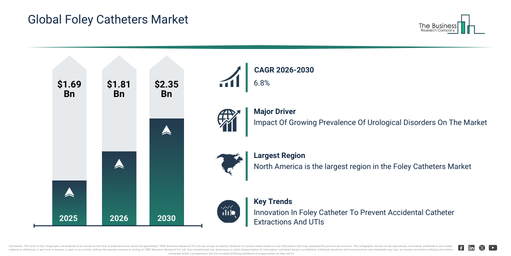
    The foley catheters market has exhibited significant expansion over recent years. It is anticipated to expand from $1.69 billion in 2025 to $1.81 billion in 2026, achieving a compound annual growth rate (CAGR) of 7.0%. The past growth in this market can be linked to an increase in surgical procedures, the widespread occurrence of urinary retention disorders, a growing aging population, the frequent use of catheters in hospitals, and the accessibility of latex catheters.

    The foley catheters market is projected to experience substantial expansion in the coming years, with its size anticipated to reach $2.35 billion by 2030, reflecting a compound annual growth rate (CAGR) of 6.8%. This growth can be primarily attributed to an increasing demand for infection-resistant devices, the broadening of home healthcare services, a growing preference for silicone materials, the escalating burden of chronic diseases, and advancements in catheter coatings. Key trends shaping the market include a rising demand for long-term urinary drainage solutions, increased application in post-surgical care, growing adoption of silicone-based catheters, a strong focus on infection prevention and antibacterial coatings, and the expansion of their usage in homecare and elderly care settings.

    Access Your Free Sample Report For In-Depth Market Analysis:

    https://www.thebusinessresearchcompany.com/report/foley-catheters-global-market-report

    What Leading Drivers Are Supporting The Foley Catheters Market Expansion?

    The increasing incidence of urological conditions is expected to propel the expansion of the Foley catheters market in the future. These disorders encompass conditions affecting the urinary system and male reproductive organs, including issues like kidney stones, bladder infections, prostate complications, and urinary incontinence. This rise in urological disorder prevalence stems from multiple factors such as an aging demographic, chronic illnesses, lifestyle decisions, and environmental factors. Foley catheters assist in mitigating urological disorders through efficient urine drainage, managing urinary retention, and facilitating post-surgical recovery, thereby averting complications and improving patient care. A notable example is data from October 2023, where the National Health Service (NHS) England, a UK-based government department, reported 147,285 hospital admissions with a primary diagnosis of urinary tract infection (UTI) during the 2022/23 period. Among these, 56% (82,392 cases) were patients aged 65 and older. Furthermore, over 800,000 hospital admissions across the nation have been attributed to UTIs in the past five-year period. Consequently, the increasing prevalence of urological conditions is fueling the expansion of the Foley catheters market.

    How Is Segmentation Applied In The Foley Catheters Market Segment Analysis?

    The foley catheters market covered in this report is segmented –

    1) By Product Type: 2-Way Foley Catheter, 3-Way Foley Catheter, 4-Way Foley Catheter

    2) By Material Type: Latex, Silicone, Other Materials

    3) By Application Type: Surgery, Benign Prostatic Hyperplasia, Urinary Incontinence, Other Application Types

    4) By End User: Hospitals, Long-Term Care Facilities, Other End Users

    Subsegments:

    1) By 2-Way Foley Catheter: Standard 2-Way Foley Catheters, Antibacterial Coated 2-Way Foley Catheters, Latex 2-Way Foley Catheters, Silicone 2-Way Foley Catheters, Hydrophilic Coated 2-Way Foley Catheters

    2) By 3-Way Foley Catheter: Standard 3-Way Foley Catheters, 3-Way Foley Catheters With Irrigation Port, Latex 3-Way Foley Catheters, Silicone 3-Way Foley Catheters, Antibacterial Coated 3-Way Foley Catheters

    3) By 4-Way Foley Catheter: Standard 4-Way Foley Catheters, 4-Way Foley Catheters With Continuous Bladder Irrigation (Cbi), Latex 4-Way Foley Catheters, Silicone 4-Way Foley Catheters, Antibacterial Coated 4-Way Foley Catheters

    What Emerging Trends Are Seen In The Foley Catheters Market?

    Leading companies in the Foley catheters market are prioritizing the development of advanced solutions, such as catheter stabilizers, to improve patient comfort and minimize complications related to catheters. A catheter stabilizer is a medical device designed to securely fix a catheter to a patient’s skin, thereby preventing its dislodgement or shifting during lengthy procedures like intravenous (IV) infusions, urinary catheterizations, or dialysis. For instance, in January 2023, Cathetrix Inc., an Israel-based medical device company, launched the Foley/Safe 2.0, an advanced catheter stabilizer intended to prevent accidental Foley catheter extractions and urinary tract infections (UTIs). The product features three protective layers: a fixation adhesive patch, an anti-slide smart mechanism, and a disconnection mechanism that safely severs the catheter when necessary. This innovative device aims to enhance patient safety and reduce the requirement for surgery or extended hospitalization.

    Who Are The Companies Participating In The Foley Catheters Market Environment?

    Major companies operating in the foley catheters market are Cardinal Health Inc, Medtronic PLC, Becton Dickinson and Company, Boston Scientific Corporation, B. Braun Melsungen AG, Coloplast A/S, Teleflex Incorporated, Cook Medical, ConvaTec Group PLC, Lepu Medical Technology, Amsino International Inc, Vygon S.A., Medi-Globe, VOGT Medical, Angiplast Pvt Ltd, Bard Medical, BACTIGUARD AB, AdvaCare Pharma, GWS Surgicals LLP, M. C. Johnson Co. Inc., Ribble International Limited, Advin Health Care, Hospital Equipment Manufacturing Company (HEMC), Sterimed Group

    Get The Full Foley Catheters Market Report:

    https://www.thebusinessresearchcompany.com/report/foley-catheters-global-market-report

    Which Region Leads The Foley Catheters Market In Terms Of Market Share?

    North America was the largest region in the foley catheters market in 2025. Asia-Pacific is expected to be the fastest-growing region in the forecast period. The regions covered in the foley catheters market report are Asia-Pacific, South East Asia, Western Europe, Eastern Europe, North America, South America, Middle East, Africa.

    Request A Customized Foley Catheters Market Report For Competitive Insights:

    https://www.thebusinessresearchcompany.com/report/foley-catheters-global-market-report

    Browse Through More Reports Similar to the Global Foley Catheters Market 2026, By The Business Research Company

    Deflectable Catheters Market Report 2026

    https://www.thebusinessresearchcompany.com/report/deflectable-catheters-global-market-report

    Urinary Catheters Market Report 2026

    https://www.thebusinessresearchcompany.com/report/urinary-catheters-global-market-report

    Diagnostic Catheters Market Report 2026

    https://www.thebusinessresearchcompany.com/report/diagnostic-catheters-global-market-report

    Get in touch with us:

    The Business Research Company: https://www.thebusinessresearchcompany.com/

    Americas +1 310-496-7795

    Asia +44 7882 955267 & +91 8897263534

    Europe +44 7882 955267

    Email us at info@tbrc.info

    Follow us on:

    LinkedIn: https://in.linkedin.com/company/the-business-research-company

    YouTube: https://www.youtube.com/channel/UC24_fI0rV8cR5DxlCpgmyFQ

    Global Market Model: https://www.thebusinessresearchcompany.com/global-market-model
  • Fluoxetine Market to Reach $1.27B by 2030 at 4.1% CAGR

    Fluoxetine Market to Reach $1.27B by 2030 at 4.1% CAGR

    The Business Research Company’s 2026 market reports feature enhanced tools like market attractiveness analysis, TAM assessment, and company scoring matrices, along with interactive dashboards, deeper supply chain insights, and startup coverage strengthening the depth, usability, and strategic value of insights.

    How Does The Market Size Of The Fluoxetine Market Compare Between 2026 And 2030?

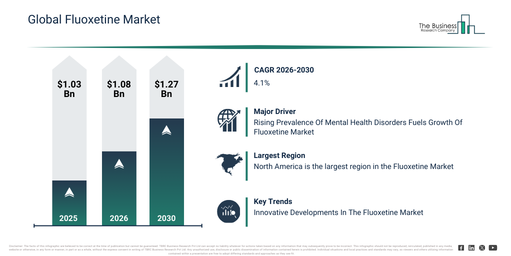
    The fluoxetine market size has demonstrated consistent expansion in recent years. It is anticipated to expand from $1.03 billion in 2025 to $1.08 billion in 2026, exhibiting a compound annual growth rate (CAGR) of 4.7%. This historical growth can be linked to the significant prevalence of depressive disorders, the proven clinical effectiveness of SSRIs, the widespread availability of generic formulations, an increase in psychiatric consultations, and enhanced diagnosis of mental health conditions.

    The fluoxetine market is anticipated to show consistent growth over the next few years, projected to reach $1.27 billion by 2030, with a compound annual growth rate (CAGR) of 4.1%. This expansion during the forecast period is driven by improved access to mental health treatment, the proliferation of telepsychiatry services, an increase in stress-related disorders, broader application in pediatric and geriatric care, and innovations in antidepressant therapy management. Significant trends for the forecast period encompass the increasing use of SSRIs in mental health care, higher rates of prescription for depression and anxiety disorders, the rising adoption of generic fluoxetine, the expansion of mental health awareness initiatives, and a preference for oral antidepressant therapies.

    Access Your Free Sample Report For In-Depth Market Analysis:

    https://www.thebusinessresearchcompany.com/report/fluoxetine-global-market-report

    Which Key Factors Are Driving The Fluoxetine Market Growth?

    The growing occurrence of mental health conditions is anticipated to fuel the expansion of the fluoxetine market in the future. These conditions encompass a wide array of issues impacting cognitive, emotional, and behavioral functions, often resulting in distress or daily life impairment. Their increase stems from a complex interplay of factors, including societal pressures, economic strains, lifestyle modifications, and enhanced awareness and diagnosis. Fluoxetine is utilized for these disorders as it aids in symptom relief by elevating serotonin levels in the brain, a neurotransmitter vital for mood and emotion regulation. For instance, in August 2024, data from the Substance Abuse and Mental Health Services Administration (SAMHSA), a U.S.-based government agency, indicated that nearly 25 percent of adults reported experiencing any mental illness (AMI) in 2023, with approximately 17.1 percent meeting criteria for substance use disorder (SUD). Thus, the increasing incidence of mental health disorders is propelling the growth of the fluoxetine market.

    Fluoxetine Market Driver: Rising Healthcare Expenditure Drives Growth In The Fluoxetine Market

    Elevated healthcare spending is projected to stimulate the expansion of the fluoxetine market moving forward. Healthcare costs are escalating due to the increasing expense of advanced medical technologies, an aging population, and the prevalence of chronic illnesses. Higher healthcare expenditure improves the availability and affordability of medications like fluoxetine, thereby enhancing patient access and adherence for those requiring treatment for depression and anxiety disorders. This can lead to superior overall mental health outcomes and a reduction in long-term healthcare costs. For instance, in May 2024, according to the Office for National Statistics, a UK-based national statistical institute, in 2023, UK healthcare expenditure reached approximately $385 billion (£292 billion), an increase from $373 billion (£283 billion) in 2022. Consequently, the rise in healthcare expenditure is driving the growth of the fluoxetine market.

    What Segment Categories Shape The Fluoxetine Market Segment Landscape?

    The fluoxetine market covered in this report is segmented –

    1) By Dosage Form: Tablet, Capsule, Other Dosage Forms

    2) By Route Of Administration: Oral, Other Routes Of Administration

    3) By Demographic: Adult, Pediatric, Geriatric

    4) By Application: Obsessive-Compulsive Disorder, Panic Disorder, Depression, Bulimia Nervosa, Other Applications

    5) By End User: Clinic, Hospital, Other End Users

    Subsegments:

    1) By Tablet: Regular Tablets, Extended-Release Tablets

    2) By Capsule: Standard Capsules, Delayed-Release Capsules

    3) By Other Dosage Forms: Injection Form, Topical Form

    Which Trends Are Guiding The Direction Of The Fluoxetine Market?

    Key companies operating in the fluoxetine market are concentrating on developing innovative products, specifically fluoxetine tablets, aimed at treating a range of mental health disorders, such as major depressive disorder. These fluoxetine tablets are pharmaceutical formulations that contain fluoxetine hydrochloride, an antidepressant medication categorized as a selective serotonin reuptake inhibitor (SSRI). As an example, in April 2024, Strides Pharma Global Pte. Limited, a Singapore-based pharmaceutical company, announced that its Fluoxetine Tabs 10 mg and 20 mg had received approval from the United States Food and Drug Administration (USFDA). This approval significantly bolsters the company’s fluoxetine product offering by adding fluoxetine tablets to its existing line of approved capsules. Fluoxetine, which is classified as an SSRI antidepressant, is used for the management of conditions including major depressive disorder (MDD), obsessive-compulsive disorder (OCD), bulimia nervosa, and panic disorder, both with and without agoraphobia. The introduction of fluoxetine tablets provides an expanded array of treatment choices within the company’s fluoxetine portfolio, giving patients and healthcare providers greater flexibility and alternatives in addressing these mental health challenges.

    Who Are The Companies Operating Across The Fluoxetine Market Value Chain?

    Major companies operating in the fluoxetine market are Eli Lilly and Company, Viatris Inc., Teva Pharmaceutical Industries Ltd., Sun Pharmaceutical Industries Ltd., Hetero Ltd., Torrent Pharmaceuticals GmbH, Aurobindo Pharma, Cadila Pharmaceuticals Ltd., Dr. Reddy’s Laboratories Limited, Apotex Inc., Amneal Pharmaceuticals Inc., Lupin Ltd., Glenmark Pharmaceuticals Inc., Alvogen, Alembic Pharmaceuticals Limited, Accord Healthcare Ltd., PERRIGO Company plc, Wockhardt Ltd., Jubilant Life Sciences Ltd., Lannett Company Inc., Mayne Pharma International Pty Ltd., Par Pharmaceutical Companies Inc., Zydus Pharmaceuticals USA Inc., Ascend Laboratories LLC

    Get The Full Fluoxetine Market Report:

    https://www.thebusinessresearchcompany.com/report/fluoxetine-global-market-report

    Which Region Leads The Fluoxetine Market In Overall Market Size?

    North America was the largest region in the fluoxetine market in 2025. Asia-Pacific is expected to be the fastest-growing region in the forecast period. The regions covered in the fluoxetine market report are Asia-Pacific, South East Asia, Western Europe, Eastern Europe, North America, South America, Middle East, Africa.

    Request A Customized Fluoxetine Market Report For Competitive Insights:

    https://www.thebusinessresearchcompany.com/report/fluoxetine-global-market-report

    Browse Through More Reports Similar to the Global Fluoxetine Market 2026, By The Business Research Company

    Fluorochemicals Market Report 2026

    https://www.thebusinessresearchcompany.com/report/fluorochemicals-global-market-report

    Anticoccidial Drugs Market Report 2026

    https://www.thebusinessresearchcompany.com/report/anticoccidial-drugs-global-market-report

    Antipsychotic Drugs Market Report 2026

    https://www.thebusinessresearchcompany.com/report/antipsychotic-drugs-global-market-report

    Get in touch with us:

    The Business Research Company: https://www.thebusinessresearchcompany.com/

    Americas +1 310-496-7795

    Asia +44 7882 955267 & +91 8897263534

    Europe +44 7882 955267

    Email us at info@tbrc.info

    Follow us on:

    LinkedIn: https://in.linkedin.com/company/the-business-research-company

    YouTube: https://www.youtube.com/channel/UC24_fI0rV8cR5DxlCpgmyFQ

    Global Market Model: https://www.thebusinessresearchcompany.com/global-market-model