Category: Healthcare Services

  • Family Medicine Services Market to Reach $450.46B by 2030 with Steady Growth

    Family Medicine Services Market to Reach $450.46B by 2030 with Steady Growth

    The Business Research Company’s 2026 market reports feature enhanced tools like market attractiveness analysis, TAM assessment, and company scoring matrices, along with interactive dashboards, deeper supply chain insights, and startup coverage strengthening the depth, usability, and strategic value of insights.

    From Its 2026 Market Size, What Value Is The Family Medicine Services Market Projected To Reach By 2030?

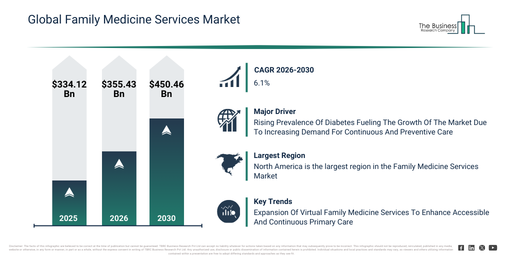
    The family medicine services market has observed significant expansion in recent years. This market is projected to expand from $334.12 billion in 2025 to $355.43 billion by 2026, achieving a compound annual growth rate (CAGR) of 6.4%. The historic growth can be primarily linked to an increasing demand for primary healthcare services, the widening of outpatient clinic networks, a rising prevalence of chronic diseases, an increase in insured patient populations, and better adoption of electronic health records.

    The family medicine services market size is projected to experience substantial expansion over the upcoming years. This market is anticipated to reach $450.46 billion by 2030, driven by a compound annual growth rate (CAGR) of 6.1%. Factors contributing to this growth during the forecast period include a heightened focus on value-based care models, increased investments in remote patient monitoring, the expansion of home-based healthcare services, a stronger emphasis on integrated care delivery, and the growing application of AI-supported diagnostics within primary care. Key trends expected throughout the forecast period encompass the greater adoption of telemedicine in primary care, the increasing integration of digital patient management systems, an evolving focus towards preventive and wellness-oriented care, the broadening of community-based healthcare delivery, and an enhanced utilization of data-driven care coordination.

    Access Your Free Sample Report For In-Depth Market Analysis:

    https://www.thebusinessresearchcompany.com/report/family-medicine-services-global-market-report

    What Leading Drivers Are Supporting The Family Medicine Services Market Expansion?

    The escalating prevalence of diabetes is poised to fuel the expansion of the family medicine services market. Diabetes, a chronic condition, impairs the body’s capacity to manage blood sugar levels effectively, often stemming from issues with insulin production or utilization. The rise in diabetes cases is largely attributable to modern sedentary lifestyles, characterized by reduced physical activity and prolonged sitting, which are significant contributors to escalating obesity rates—a major precursor for the disease. Family medicine services play a crucial role in diabetes management by offering continuous, personalized care that supports patients in controlling blood sugar, encouraging beneficial lifestyle changes, and mitigating the risk of complications through consistent monitoring and guidance. For example, in April 2025, the International Diabetes Federation, a Belgium-based umbrella organization, indicated that around 589 million adults aged 20–79 were living with diabetes in 2024, with this total expected to climb to 853 million by 2050. Thus, the increasing incidence of diabetes is a primary driver for the growth of the family medicine services market.

    Which Segment Types Are Examined In The Family Medicine Services Market Segment Study?

    The family medicine services market covered in this report is segmented –

    1) By Service Type: Preventive Care, Chronic Disease Management, Acute Care Services, Wellness Programs, Telemedicine Services

    2) By Patient Demographics: Pediatric Patients, Adult Patients, Geriatric Patients, Pregnant Women, Special Needs Patients

    3) By Care Delivery Model: Traditional Office Visits, Urgent Care Centers, Community Health Clinics, Mobile Health Units, Home Health Care

    4) By Technology Integration: Electronic Health Record Systems, Remote Patient Monitoring, Mobile Health Applications, Artificial Intelligence (AI) In Diagnoses, Data Analytics For Patient Management

    5) By End-User: Hospitals, Clinics, Home Care, Other End-Users

    Subsegments:

    1) By Preventive Care: Health Screenings, Vaccination Services, Routine Physical Examinations, Lifestyle Counseling

    2) By Chronic Disease Management: Diabetes Management, Hypertension Management, Cardiovascular Disease Management, Asthma And Respiratory Care

    3) By Acute Care Services: Emergency Treatment, Infectious Disease Treatment, Injury And Trauma Care, Surgical Consultations

    4) By Wellness Programs: Nutrition Counseling, Fitness And Exercise Programs, Stress Management Programs, Mental Health Support

    5) By Telemedicine Services: Virtual Consultations, Remote Patient Monitoring, Online Prescription Services, Telehealth Follow-Ups

    What Emerging Trends Are Seen In The Family Medicine Services Market?

    Companies operating in the family medicine services market are increasingly concentrating on broadening virtual primary care offerings, such as virtual family medicine, to enhance patient accessibility, decrease waiting periods for appointments, and ensure ongoing care for long-term health issues. Virtual family medicine involves delivering primary healthcare services remotely, utilizing digital channels like video conferencing, telephone consultations, or mobile applications. For instance, in September 2023, Atrium Health, a healthcare provider based in the US, introduced its Virtual Primary Care service. This service enables individuals to establish a sustained connection with a committed family medicine provider for extensive primary care delivered digitally via secure video consultations. Accessible around the clock (24/7) with adaptable scheduling, this service allows patients to receive treatment for chronic conditions, preventive health measures, mental health support, medication management, lab referrals, and virtual specialist consultations, eliminating the necessity for physical visits. It is designed for individuals with demanding schedules, those who travel frequently, or those encountering barriers to access, offering convenient, customized care from any location – home, office, or while traveling – across North Carolina, South Carolina, and Georgia.

    Which Players Are Part Of The Competitive Landscape Of The Family Medicine Services Market?

    Major companies operating in the family medicine services market are Kaiser Permanente, Trinity Health, Banner Health, Tenet Healthcare Corporation, NYU Langone Hospitals, Intermountain Health Care Inc., Baylor Scott & White Health LLC, Geisinger Clinic, Ascension Health, Michigan Health Corp., UW Health, Stanford Health Care, Evergreen Health, Providence, Sutter Health, UCI Health, Altru Health System, Blessing Health System, Samaritan Health Services, Allcare Health, Skagit Regional Health, Olathe Health

    Get The Full Family Medicine Services Market Report:

    https://www.thebusinessresearchcompany.com/report/family-medicine-services-global-market-report

    Where Is The Family Medicine Services Market Primarily Concentrated By Region?

    North America was the largest region in the family medicine services market in 2025. The regions covered in the family medicine services market report are Asia-Pacific, South East Asia, Western Europe, Eastern Europe, North America, South America, Middle East, Africa.

    Request A Customized Family Medicine Services Market Report For Competitive Insights:

    https://www.thebusinessresearchcompany.com/report/family-medicine-services-global-market-report

    Browse Through More Reports Similar to the Global Family Medicine Services Market 2026, By The Business Research Company

    Personal Care Services Market 2026

    https://www.thebusinessresearchcompany.com/report/personal-care-services-market

    Healthcare Services Market 2026

    https://www.thebusinessresearchcompany.com/report/healthcare-services-market

    Individual And Family Services Market Report 2026

    https://www.thebusinessresearchcompany.com/report/individual-and-family-services-global-market-report

    Get in touch with us:

    The Business Research Company: https://www.thebusinessresearchcompany.com/

    Americas +1 310-496-7795

    Asia +44 7882 955267 & +91 8897263534

    Europe +44 7882 955267

    Email us at info@tbrc.info

    Follow us on:

    LinkedIn: https://in.linkedin.com/company/the-business-research-company

    YouTube: https://www.youtube.com/channel/UC24_fI0rV8cR5DxlCpgmyFQ

    Global Market Model: https://www.thebusinessresearchcompany.com/global-market-model
  • Familial Adenomatous Polyposis Treatment Market to Reach $2.53B by 2030 at 11.1% CAGR

    Familial Adenomatous Polyposis Treatment Market to Reach $2.53B by 2030 at 11.1% CAGR

    The Business Research Company’s 2026 market reports feature enhanced tools like market attractiveness analysis, TAM assessment, and company scoring matrices, along with interactive dashboards, deeper supply chain insights, and startup coverage strengthening the depth, usability, and strategic value of insights.

    How Much Growth In Market Value Is Expected For The Familial Adenomatous Polyposis Treatment Market Between 2026 And 2030?

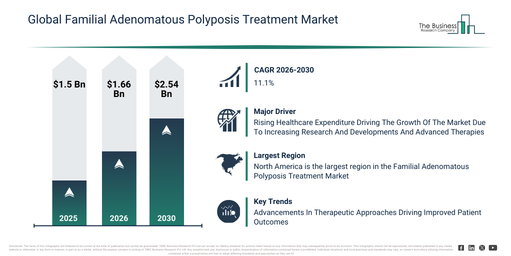
    The familial adenomatous polyposis treatment market size has seen swift expansion in recent years. It is projected to increase from $1.5 billion in 2025 to $1.66 billion in 2026, exhibiting a compound annual growth rate (CAGR) of 11.3%. Historically, this growth can be ascribed to elements such as the early detection of inherited colorectal disorders, the rising availability of genetic testing, the widening of colorectal cancer prevention programs, enhanced awareness of hereditary cancers, and improvements in endoscopic technologies.

    The familial adenomatous polyposis treatment market is projected to experience substantial expansion in the coming years, with its valuation anticipated to reach $2.54 billion by 2030, exhibiting a compound annual growth rate (CAGR) of 11.1%. Key drivers for this growth during the forecast period include advancements in gene-based therapeutic approaches, a greater uptake of tailored treatment strategies, the enlargement of preventive oncology initiatives, the increasing deployment of AI-supported diagnostic tools, and heightened investment in research for rare diseases. Significant trends expected during the forecast timeframe encompass a heightened emphasis on genetic screening and advisory services, the expanding application of preventive surgical procedures, an increasing embrace of targeted pharmaceutical treatments, the broadening of long-term patient monitoring programs, and the incorporation of artificial intelligence into early cancer risk identification.

    Access Your Free Sample Report For In-Depth Market Analysis:

    https://www.thebusinessresearchcompany.com/report/familial-adenomatous-polyposis-treatment-global-market-report

    Which Key Factors Are Driving The Familial Adenomatous Polyposis Treatment Market Growth?

    The increasing financial outlay on healthcare is expected to fuel the expansion of the familial adenomatous polyposis (FAP) treatment market in the coming years. Healthcare spending represents the cumulative financial investment made by individuals, governmental bodies, and private entities in medical services, therapeutic interventions, medications, and health-related infrastructure to uphold and enhance health conditions. This surge in healthcare expenditure stems from an aging global population and continuous breakthroughs in medical technology. As lifespans lengthen, a greater number of older individuals require ongoing care, management for chronic illnesses, and frequent medical procedures, which consequently elevates healthcare expenses. Enhanced healthcare spending stimulates research and development efforts for familial adenomatous polyposis (FAP) treatment, fostering innovations in areas like genetic screening, specific therapeutic approaches, and less invasive surgical methods, all of which contribute to earlier diagnosis, better disease management, and improved patient results. For instance, in December 2024, data from the Centers for Medicare & Medicaid Services, a federal agency situated in the US, indicated that Medicare spending in the US saw an 8.1% rise, reaching $1,029.8 billion, constituting 21% of the overall national health expenditures (NHE). Consequently, the growth in healthcare spending is a key factor propelling the familial adenomatous polyposis (FAP) treatment market forward.

    How Are Different Segments Classified In The Familial Adenomatous Polyposis Treatment Market Segment Analysis?

    The familial adenomatous polyposis treatment market covered in this report is segmented –

    1) By Product Type: Icosapent, Eflornithine Hydrochloride, Aspirin, Cetuximab Oral Formulation (CEQ)-508, Other Product Types

    2) By Disease Type: Attenuated FAP, Familial Adenomatous Polyposis, Gardner Syndrome, Turcot Syndrome

    3) By Symptoms: Bloody Stool, Unexplained Diarrhea, Abdominal Cramps, Bloating , Weight Loss, Lethargy And Vomiting

    4) By Application: Colorectal Cancer Prevention, Genetic Counseling, Surgical Treatment

    5) By End-Users: Clinics, Hospitals, Diagnostic Centres, Home Healthcare, Other End-Users

    Subsegments:

    1) By Icosapent: High-Purity Icosapent, Combination Formulations, Extended-Release Icosapent

    2) By Eflornithine Hydrochloride: Oral Eflornithine Hydrochloride, Topical Eflornithine Hydrochloride, Intravenous Eflornithine Hydrochloride

    3) By Aspirin: Low-Dose Aspirin Therapy, Enteric-Coated Aspirin, Buffered Aspirin

    4) By CEQ-508: Monotherapy CEQ-508, Adjunctive CEQ-508 Therapy, Targeted CEQ-508 Formulations

    5) By Other Product Types: Genetic Testing Kits And Biomarkers, Endoscopic Surveillance Devices, Surgical Instruments And Medical Implants, Probiotics And Microbiome Modulators, Bowel Preparation Solutions, Dietary Supplements And Nutraceuticals

    Which Trends Are Guiding The Direction Of The Familial Adenomatous Polyposis Treatment Market?

    Major companies within the familial adenomatous polyposis (FAP) treatment market are advancing therapeutic strategies significantly to enhance patient outcomes and deliver innovative solutions. These innovations include new pharmaceutical formulations and targeted treatments designed to decrease polyp formation and slow the progression of the disease. For instance, in June 2024, Biodexa Pharmaceuticals PLC, a UK-based biopharmaceutical company, announced promising results from its Phase 2 clinical trial of eRapa for managing FAP. The trial revealed a 75% non-progression rate and a median reduction of 17% in polyp burden over 12 months. In Cohort 2, participants showed an even higher 81% non-progression rate and a 29% reduction in polyps with a specific dosing regimen. The treatment was well-tolerated, demonstrating a 95% compliance rate. These encouraging results establish the groundwork for a Phase 3 trial involving approximately 168 high-risk FAP patients, which could potentially shift the treatment approach from surgery to effective medical therapy.

    Who Are The Companies Driving Activity In The Familial Adenomatous Polyposis Treatment Market?

    Major companies operating in the familial adenomatous polyposis treatment market are Mayo Clinic, Mount Sinai Health System, Johns Hopkins Medicine, Cleveland Clinic, UCLA Health, Houston Methodist Hospital, Scripps Health, Duke University Health System, Texas Children’s Hospital, Massachusetts General Hospital, Inova Health Care Services, Brigham and Women’s Hospital, Stanford Health Care, Barnes-Jewish Hospital, Northwestern Medicine, Geisinger Health, Max Healthcare, Sapience Therapeutics Inc., Frederick Gastroenterology Associates PA, Therapyx

    Get The Full Familial Adenomatous Polyposis Treatment Market Report:

    https://www.thebusinessresearchcompany.com/report/familial-adenomatous-polyposis-treatment-global-market-report

    Which Region Has The Greatest Market Share In The Familial Adenomatous Polyposis Treatment Market?

    North America was the largest region in the familial adenomatous polyposis (FAP) treatment market in 2025. Asia-Pacific is expected to be the fastest-growing region in the forecast period. The regions covered in the familial adenomatous polyposis treatment market report are Asia-Pacific, South East Asia, Western Europe, Eastern Europe, North America, South America, Middle East, Africa.

    Request A Customized Familial Adenomatous Polyposis Treatment Market Report For Competitive Insights:

    https://www.thebusinessresearchcompany.com/report/familial-adenomatous-polyposis-treatment-global-market-report

    Browse Through More Reports Similar to the Global Familial Adenomatous Polyposis Treatment Market 2026, By The Business Research Company

    Nucleic Acid Based Gene Therapy Market Report 2026

    https://www.thebusinessresearchcompany.com/report/nucleic-acid-based-gene-therapy-global-market-report

    Genes Therapy Market Report 2026

    https://www.thebusinessresearchcompany.com/report/genes-therapy-global-market-report

    Hereditary Breast And Ovarian Cancer Syndrome Treatment Market Report 2026

    https://www.thebusinessresearchcompany.com/report/hereditary-breast-and-ovarian-cancer-syndrome-treatment-global-market-report

    Get in touch with us:

    The Business Research Company: https://www.thebusinessresearchcompany.com/

    Americas +1 310-496-7795

    Asia +44 7882 955267 & +91 8897263534

    Europe +44 7882 955267

    Email us at info@tbrc.info

    Follow us on:

    LinkedIn: https://in.linkedin.com/company/the-business-research-company

    YouTube: https://www.youtube.com/channel/UC24_fI0rV8cR5DxlCpgmyFQ

    Global Market Model: https://www.thebusinessresearchcompany.com/global-market-model
  • Facial Rejuvenation Market to Reach $5.66B by 2030 at 10.2% CAGR

    Facial Rejuvenation Market to Reach $5.66B by 2030 at 10.2% CAGR

    The Business Research Company’s 2026 market reports feature enhanced tools like market attractiveness analysis, TAM assessment, and company scoring matrices, along with interactive dashboards, deeper supply chain insights, and startup coverage strengthening the depth, usability, and strategic value of insights.

    What Is The Estimated Market Size Of The Facial Rejuvenation Market In 2026, And How Will Its Value Evolve By 2030?

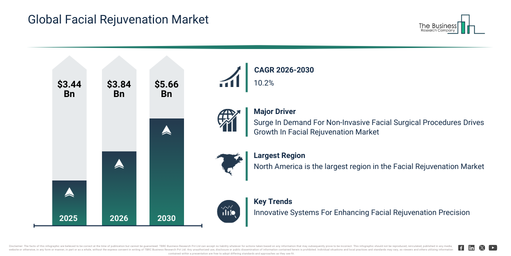
    The facial rejuvenation market has seen a rapid increase in size during recent years. Projections show it expanding from $3.44 billion in 2025 to $3.84 billion in 2026, with a compound annual growth rate (CAGR) of 11.5%. Key drivers for its past growth include an aging population, rising beauty consciousness, the expansion of cosmetic clinics, technological advancements in skin treatments, and increasing disposable income.

    The facial rejuvenation market is poised for substantial expansion in the coming years, with its size projected to reach $5.66 billion by 2030, demonstrating a compound annual growth rate (CAGR) of 10.2%. This growth during the forecast period can be attributed to advancements in energy-based devices, a rising demand for personalized skincare solutions, an increase in minimally invasive treatments, broader adoption of aesthetic procedures by men, and the expansion of dermatology services. Key trends identified for the forecast period include a surging demand for anti-aging treatments, the growing popularity of non-invasive procedures, increased application of combination rejuvenation therapies, the proliferation of medical aesthetic centers, and the adoption of sophisticated skin rejuvenation devices.

    Access Your Free Sample Report For In-Depth Market Analysis:

    https://www.thebusinessresearchcompany.com/report/facial-rejuvenation-global-market-report

    What Primary Drivers Are Shaping The Facial Rejuvenation Market?

    A rise in the adoption of non-invasive facial cosmetic treatments is projected to fuel the expansion of the facial rejuvenation market. These procedures involve cosmetic interventions designed to enhance facial aesthetics without the need for surgical operations or significant cuts. The increasing popularity of these non-invasive techniques stems from advantages such as brief recovery periods, lower invasiveness, diminished hazards, and outcomes that appear natural. Facial rejuvenation utilizes non-surgical methods to lessen the visibility of wrinkles and fine lines by temporarily deactivating the muscles that cause their formation. For example, data from June 2024, provided by the International Society of Aesthetic Plastic Surgery (ISAPS), a US-based professional society, revealed that nonsurgical facial rejuvenation procedures globally amounted to 19,182,141 in 2023 (marking a 1.7% increase compared to 2022). Consequently, the escalating requirement for non-invasive facial surgical procedures is anticipated to drive the facial rejuvenation market forward.

    How Is The Facial Rejuvenation Market Categorized Across Its Segment Groups?

    The facial rejuvenation market covered in this report is segmented –

    1) By Product Type: Botulinum Toxin (BOTOX), Soft Tissue Fillers, Micro Abrasion Equipment, Chemical Peels, Topical Skin Care Products, Skin Rejuvenation Devices

    2) By Mode Of Treatment: Drugs, Injectables, Surgical Means, Other Mode Of Treatment

    3) By End-User: Hospital And Clinics, Beauty Centers And Spa, Dermatology Clinics, Other End-Users

    Subsegments:

    1) By Botulinum Toxin (BOTOX): Botulinum Toxin Type A, Botulinum Toxin Type B

    2) By Soft Tissue Fillers: Hyaluronic Acid-Based Fillers, Collagen-Based Fillers, Calcium Hydroxylapatite-Based Fillers, Poly-L-Lactic Acid-Based Fillers

    3) By Micro Abrasion Equipment: Crystal Microdermabrasion Devices, Diamond Microdermabrasion Devices, Ultrasonic Microdermabrasion Devices

    4) By Chemical Peels: Alpha Hydroxy Acid (AHA) Peels, Beta Hydroxy Acid (BHA) Peels, Trichloroacetic Acid (TCA) Peels, Jessner’s Peels

    5) By Topical Skin Care Products: Anti-Aging Creams And Serums, Moisturizers, Sunscreens, Exfoliators

    6) By Skin Rejuvenation Devices: Laser Skin Rejuvenation Devices, Radiofrequency (RF) Skin Rejuvenation Devices, Ultrasound Skin Rejuvenation Devices, Intense Pulsed Light (IPL) Devices

    What Trends Are Affecting The Growth Of The Facial Rejuvenation Market?

    Leading companies in the facial rejuvenation market are innovating treatments, including permanent hair reduction and skin rejuvenation procedures, to satisfy the increasing demand for non-invasive and minimally invasive cosmetic options. These advanced cosmetic treatments are designed to enhance skin appearance and health while reducing undesirable hair growth. For instance, in March 2024, Reveal Lasers LLC, a US-based aesthetic laser & RF device manufacturer, launched the AlloraPro Laser Workstation, an advanced device specifically engineered for permanent hair reduction and skin rejuvenation treatments. The AlloraPro features an intuitive interface and customizable treatment options, significantly improving efficiency with a 25% larger spot size. This device is also capable of targeting vascular lesions, such as leg veins and facial veins, in addition to pigmented lesions and photorejuvenation. The AlloraPro Laser Workstation’s adjustable pulse width, fluence, repetition rate, automatic spot recognition system, and convenient handpiece storage collectively make it a versatile, effective, and profitable solution for aesthetic practices globally.

    Which Firms Are Influencing Competition In The Facial Rejuvenation Market?

    Major companies operating in the facial rejuvenation market are AbbVie Inc., Bausch Health Companies Inc., Galderma S/A, Contura International A/S, Hologic Inc., Fibrocell Science Inc., Merz Pharma GmbH & Co. KGaA, InMode Ltd., Lumenis Ltd., Cynosure LLC, Cutera Inc., Lutronic Corporation, Anika Therapeutics Inc., Croma-Pharma GmbH, Revance Therapeutics Inc., Sciton Inc., Alma Lasers, Venus Concept Ltd., Zimmer MedizinSystems, Ulthera Inc., Jeisys Medical Inc., Lynton Lasers Ltd., Candela Corporation, Revance Aesthetics Inc.

    Get The Full Facial Rejuvenation Market Report:

    https://www.thebusinessresearchcompany.com/report/facial-rejuvenation-global-market-report

    Which Region Accounts For The Largest Portion Of The Facial Rejuvenation Market?

    North America was the largest region in the facial rejuvenation market in 2025. Asia-Pacific is expected to be the fastest-growing region in the forecast period. The regions covered in the facial rejuvenation market report are Asia-Pacific, South East Asia, Western Europe, Eastern Europe, North America, South America, Middle East, Africa.

    Request A Customized Facial Rejuvenation Market Report For Competitive Insights:

    https://www.thebusinessresearchcompany.com/report/facial-rejuvenation-global-market-report

    Browse Through More Reports Similar to the Global Facial Rejuvenation Market 2026, By The Business Research Company

    Facial Injectable Market Report 2026

    https://www.thebusinessresearchcompany.com/report/facial-injectable-global-market-report

    Reusable Face Mask Market Report 2026

    https://www.thebusinessresearchcompany.com/report/reusable-face-mask-global-market-report

    Vaginal Rejuvenation Market Report 2026

    https://www.thebusinessresearchcompany.com/report/vaginal-rejuvenation-global-market-report

    Get in touch with us:

    The Business Research Company: https://www.thebusinessresearchcompany.com/

    Americas +1 310-496-7795

    Asia +44 7882 955267 & +91 8897263534

    Europe +44 7882 955267

    Email us at info@tbrc.info

    Follow us on:

    LinkedIn: https://in.linkedin.com/company/the-business-research-company

    YouTube: https://www.youtube.com/channel/UC24_fI0rV8cR5DxlCpgmyFQ

    Global Market Model: https://www.thebusinessresearchcompany.com/global-market-model
  • Facial paralysis market projected to reach $3.05B by 2030 at 4.9% CAGR

    Facial paralysis market projected to reach $3.05B by 2030 at 4.9% CAGR

    The Business Research Company’s 2026 market reports feature enhanced tools like market attractiveness analysis, TAM assessment, and company scoring matrices, along with interactive dashboards, deeper supply chain insights, and startup coverage strengthening the depth, usability, and strategic value of insights.

    How Does The Market Size Of The Facial Paralysis Market Compare Between 2026 And 2030?

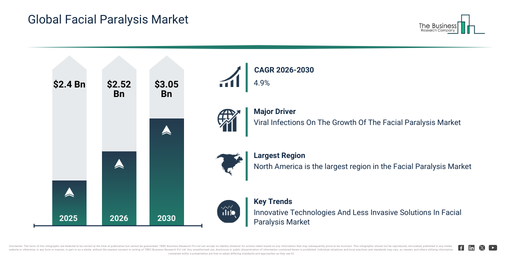
    The facial paralysis market size has shown substantial growth in recent years. This market is projected to expand from $2.4 billion in 2025 to $2.52 billion in 2026, achieving a compound annual growth rate (CAGR) of 5.1%. Several factors have contributed to this growth during the historical period, including a rising incidence of bell’s palsy, an increase in neurological disorders, advancements in diagnostic tools, the expansion of rehabilitation centers, and growing healthcare awareness.

    The facial paralysis market is projected to experience consistent expansion over the next few years. This market is anticipated to reach $3.05 billion by 2030, exhibiting a compound annual growth rate (CAGR) of 4.9%. Key factors driving this growth during the forecast period include progress in nerve regeneration treatments, an increase in neuromuscular rehabilitation services, a heightened call for prompt intervention, the proliferation of specialized care facilities, and enhanced diagnostic imaging capabilities. Significant trends emerging in this period encompass heightened public understanding of early facial paralysis detection, broader implementation of physical and rehabilitation therapies, increasing uptake of electrophysiological diagnostic methods, the broadening of multi-specialty treatment strategies, and improved availability of neurological care.

    Access Your Free Sample Report For In-Depth Market Analysis:

    https://www.thebusinessresearchcompany.com/report/facial-paralysis-global-market-report

    Which Major Drivers Are Influencing The Expansion Of The Facial Paralysis Market?

    The increasing impact of viral infections is anticipated to drive expansion in the facial paralysis market in the future. These infections stem from microscopic organisms capable of affecting different bodily regions, resulting in diverse symptoms and health consequences. The escalation in viral infections is attributed to global travel patterns, shifts in environment, resistance to antimicrobials, socioeconomic elements, and the evolution of viruses. Such infections can induce facial paralysis through inflammation and harm to the facial nerve, impairing its function in controlling facial muscles and resulting in either temporary or lasting weakness or paralysis. For example, an international research team reported in May 2023, as per JAMA Otolaryngology a US-based medical journal Head & Neck Surgery, that SARS-CoV-2 infection elevated the risk of Bell’s palsy by 3.23-fold compared to SARS-CoV-2 vaccination. Consequently, the expanding impact of viral infections fuels the growth of the facial paralysis market.

    How Are Segments Identified Within The Facial Paralysis Market Segment Framework?

    The facial paralysis market covered in this report is segmented –

    1) By Type: Bell’s Palsy, Ramsay Hunt Syndrome

    2) By Diagnosis: Electromyography, Computerized Tomography

    3) By Treatment: Medications, Physical Therapy

    4) By End-User: Hospitals, Specialty Centers

    Subsegments:

    1) By Bell’s Palsy: Idiopathic Bell’s Palsy, Postpartum Bell’s Palsy, Bell’s Palsy in Children

    2) By Ramsay Hunt Syndrome: Type 1 (Herpes Zoster Oticus), Type 2 (Varicella-Zoster Virus)

    Which Trends Are Shaping The Facial Paralysis Market?

    Companies operating within the facial paralysis market are increasingly prioritizing the development of novel solutions, such as exosome-based nerve regeneration therapy, to achieve a competitive edge. This specific therapy utilizes extracellular vesicles derived from cells to deliver molecular payloads designed to foster axonal regrowth and restore function in impaired facial nerves. For instance, in April 2025, NurExone Biologic, a biotech company situated in Canada, launched its leading candidate, ExoPTEN. Preclinical trials using a facial nerve injury model indicated that ExoPTEN significantly enhances both functional recovery and nerve regeneration by downregulating PTEN. Key characteristics of ExoPTEN include its minimally invasive delivery via exosomes, its capacity to address multiple high-value conditions (e.g., spinal cord and optic nerve), and its scalable manufacturing process on a single platform. This innovation could potentially revolutionize the facial paralysis market by tackling the fundamental nerve damage rather than simply managing symptoms, though its long-term safety and clinical validation are yet to be fully established.

    Who Are The Companies Competing Within The Facial Paralysis Market?

    Major companies operating in the facial paralysis market are Pfizer Inc., Johnson & Johnson, Merck & Co. Inc., Sanofi SA, Abbott Laboratories, GlaxoSmithKline Plc, Medtronic plc, Ipsen S.A., Merz Pharma GmbH & Co. KGaA, Revance Therapeutics Inc., Novartis AG, Biogen Inc, Teva Pharmaceutical Industries Ltd, Sun Pharmaceutical Industries Ltd, Cadila Healthcare Ltd, Galderma Laboratories L.P., Medytox Inc, Evolus Inc, Suneva Medical Inc, Sinclair Pharmaceuticals Ltd, Axogen Inc, Integra LifeSciences Holdings Corporation

    Get The Full Facial Paralysis Market Report:

    https://www.thebusinessresearchcompany.com/report/facial-paralysis-global-market-report

    Which Region Holds The Highest Market Share In The Facial Paralysis Market?

    North America was the largest region in the facial paralysis market in 2025. Asia-Pacific is expected to be the fastest-growing region in the market going forward. The regions covered in the facial paralysis market report are Asia-Pacific, South East Asia, Western Europe, Eastern Europe, North America, South America, Middle East, Africa.

    Request A Customized Facial Paralysis Market Report For Competitive Insights:

    https://www.thebusinessresearchcompany.com/report/facial-paralysis-global-market-report

    Browse Through More Reports Similar to the Global Facial Paralysis Market 2026, By The Business Research Company

    Facial Injectable Market Report 2026

    https://www.thebusinessresearchcompany.com/report/facial-injectable-global-market-report

    Vocal Cord Paralysis Market Report 2026

    https://www.thebusinessresearchcompany.com/report/vocal-cord-paralysis-global-market-report

    Facial Rejuvenation Market Report 2026

    https://www.thebusinessresearchcompany.com/report/facial-rejuvenation-global-market-report

    Get in touch with us:

    The Business Research Company: https://www.thebusinessresearchcompany.com/

    Americas +1 310-496-7795

    Asia +44 7882 955267 & +91 8897263534

    Europe +44 7882 955267

    Email us at info@tbrc.info

    Follow us on:

    LinkedIn: https://in.linkedin.com/company/the-business-research-company

    YouTube: https://www.youtube.com/channel/UC24_fI0rV8cR5DxlCpgmyFQ

    Global Market Model: https://www.thebusinessresearchcompany.com/global-market-model
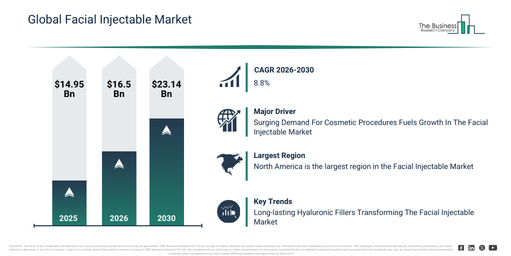
  • Facial injectables market to reach $23.13B by 2030 at 8.8% CAGR

    Facial injectables market to reach $23.13B by 2030 at 8.8% CAGR

    The Business Research Company’s 2026 market reports feature enhanced tools like market attractiveness analysis, TAM assessment, and company scoring matrices, along with interactive dashboards, deeper supply chain insights, and startup coverage strengthening the depth, usability, and strategic value of insights.

    What Is The Forecasted Market Size Trajectory Of The Facial Injectable Market From 2026 To 2030?

    The facial injectable market has seen swift growth in recent years. Its valuation is anticipated to climb from $14.95 billion in 2025 to $16.5 billion in 2026, achieving a compound annual growth rate (CAGR) of 10.3%. The expansion observed in the historic period can be ascribed to heightened aesthetic awareness, a rise in disposable income, the proliferation of cosmetic clinics, the influence of social media, and progress in injectable formulations.

    The facial injectable market is anticipated to exhibit robust expansion in the coming years. It is projected to reach $23.14 billion by 2030, driven by a compound annual growth rate (CAGR) of 8.8%. This increase throughout the forecast period stems from factors such as a heightened desire for personalized aesthetics, advancements in long-lasting fillers, growing acceptance among male patients, an uptick in medical tourism, and the proliferation of minimally invasive cosmetic procedures. Prominent developments for this period include an escalating demand for non-surgical aesthetic treatments, the increasing appeal of hyaluronic acid fillers, greater adoption among younger demographics, the expansion of dermatology and cosmetic clinics, and a preference for less invasive facial enhancements.

    Access Your Free Sample Report For In-Depth Market Analysis:

    https://www.thebusinessresearchcompany.com/report/facial-injectable-global-market-report

    What Key Drivers Are Fueling The Growth Of The Facial Injectable Market?

    The increasing demand for cosmetic interventions is anticipated to fuel the expansion of the facial injectable market in the coming period. These procedures are defined as medical treatments or interventions designed to improve an individual’s appearance, causing minimal disturbance to the body’s natural form, and are generally less invasive than conventional surgeries, frequently carried out as outpatient services. The increase in demand for cosmetic procedures stems from a greater societal focus on aesthetics, progress in medical technology making treatments safer and more widely available, and an expanding wish for personal betterment and increased confidence. Within cosmetic procedures, facial injectables are employed to temporarily diminish wrinkles, provide volume to specific regions, and refine facial contours through the accurate administration of substances like botulinum toxin or dermal fillers. As an illustration, in June 2024, data from the American Society of Plastic Surgeons (ASPS), a US-based professional association, indicated that minimally invasive cosmetic procedures experienced a 7 percent year-on-year growth in 2023. Consequently, the escalating demand for cosmetic procedures is propelling the expansion of the facial injectable market.

    What Are The Key Segment Divisions In The Facial Injectable Market Segment Structure?

    The facial injectable market covered in this report is segmented –

    1) By Type: Botulinum Toxin, Collagen, Hyaluronic Acid, Calcium Hydroxyapatite, Polylactic Acid, Polymethyl-Methacrylate Microspheres (PMMA), Fat Injection, Other Types

    2) By Application: Wrinkle Reduction, Facelift, Acne Scar Treatment, Lipoatrophy Treatment, Lip Enhancement, Other Applications

    3) By End-User: Hospitals And Ambulatory Surgery Centers, Dermatology And Cosmetic Clinics, Other End-Users

    Subsegments:

    1) By Botulinum Toxin: Botulinum Toxin Type A (Botox, Dysport, Xeomin), Botulinum Toxin Type B (Myobloc, Neurobloc)

    2) By Collagen: Bovine Collagen, Human Collagen, Synthetic Collagen

    3) By Hyaluronic Acid: Cross-linked Hyaluronic Acid, Non-Cross-Linked Hyaluronic Acid

    4) By Calcium Hydroxyapatite: Radiesse (Calcium Hydroxyapatite-Based Fillers)

    5) By Polylactic Acid: Sculptra (Polylactic Acid-Based Fillers)

    6) By Polymethyl Methacrylate Microspheres (PMMA): Artefill (PMMA-Based Fillers)

    7) By Fat Injection: Autologous Fat Transfer (Liposuction And Injection), Fat Grafting For Volume Restoration

    8) By Other Types: Poly-L-Lactic Acid, Polycaprolactone-Based Fillers, Other Emerging Injectable Fillers

    What Trends Are Influencing The Facial Injectable Market?

    Leading companies within the facial injectable sector are creating groundbreaking products, including enduring hyaluronic acid (HA) fillers, in response to the increasing need for minimally invasive aesthetic procedures that deliver natural and prolonged outcomes. These HA fillers are cosmetic injections designed to replenish naturally existing skin substances, thereby restoring volume, smoothing wrinkles, and refining facial contours. As an illustration, in January 2023, the Irish pharmaceutical firm Allergan plc introduced JUVEDERM VOLUX XC, a hyaluronic acid filler specifically formulated to improve jawline definition in individuals aged 21 and above who experience moderate to severe contour loss. JUVEDERM VOLUX XC delivers enduring results for up to twelve months, prioritizing a natural aesthetic. Its minimally invasive process guarantees brief recovery periods for those seeking non-surgical options. This advanced filler is supported by comprehensive research and high levels of patient satisfaction, enabling cosmetic specialists to develop personalized treatment strategies.

    Which Organizations Are Engaged In The Facial Injectable Market?

    Major companies operating in the facial injectable market are AbbVie Inc., Ipsen Pharma, Galderma S.A., Merz Pharma GmbH & Co. KGaA, Sinclair Pharma Plc, Revance Therapeutics Inc., Suneva Medical Inc., Prollenium Medical Technologies, Anteis S.A., Anika Therapeutics Inc., Q-Med AB, Bloomage BioTechnology, Medytox Inc., Teoxane Laboratories, Alphaeon Corporation, Hugel Inc., Evolus Inc., Croma-Pharma GmbH, Sientra Inc., Grex Pharma SaS, Daewoong Pharmaceuticals, LG Life Sciences

    Get The Full Facial Injectable Market Report:

    https://www.thebusinessresearchcompany.com/report/facial-injectable-global-market-report

    Where Is The Facial Injectable Market Most Concentrated Geographically?

    North America was the largest region in the facial injectable market in 2025. Asia-Pacific is expected to be the fastest-growing region in the forecast period. The regions covered in the facial injectable market report are Asia-Pacific, South East Asia, Western Europe, Eastern Europe, North America, South America, Middle East, Africa.

    Request A Customized Facial Injectable Market Report For Competitive Insights:

    https://www.thebusinessresearchcompany.com/report/facial-injectable-global-market-report

    Browse Through More Reports Similar to the Global Facial Injectable Market 2026, By The Business Research Company

    Patient Controlled Injectors Market Report 2026

    https://www.thebusinessresearchcompany.com/report/patient-controlled-injectors-global-market-report

    Facial Implants Market Report 2026

    https://www.thebusinessresearchcompany.com/report/facial-implants-global-market-report

    Facial Beauty Devices Market Report 2026

    https://www.thebusinessresearchcompany.com/report/facial-beauty-devices-global-market-report

    Get in touch with us:

    The Business Research Company: https://www.thebusinessresearchcompany.com/

    Americas +1 310-496-7795

    Asia +44 7882 955267 & +91 8897263534

    Europe +44 7882 955267

    Email us at info@tbrc.info

    Follow us on:

    LinkedIn: https://in.linkedin.com/company/the-business-research-company

    YouTube: https://www.youtube.com/channel/UC24_fI0rV8cR5DxlCpgmyFQ

    Global Market Model: https://www.thebusinessresearchcompany.com/global-market-model
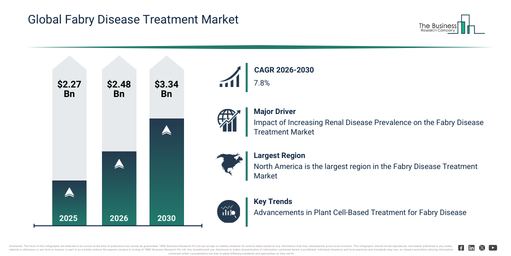
  • Fabry disease treatment market forecast (2026–2030)

    Fabry disease treatment market forecast (2026–2030)

    The Business Research Company’s 2026 market reports feature enhanced tools like market attractiveness analysis, TAM assessment, and company scoring matrices, along with interactive dashboards, deeper supply chain insights, and startup coverage strengthening the depth, usability, and strategic value of insights.

    How Much Will The Market Value Of The Fabry Disease Treatment Market Grow Between 2026 And 2030?

    The fabry disease treatment market has shown robust growth over recent years. Its valuation is projected to expand from $2.27 billion in 2025 to $2.48 billion in 2026, reflecting a compound annual growth rate (CAGR) of 8.8%. This historical expansion can be ascribed to several factors including heightened awareness of rare genetic disorders, the successful approval of enzyme replacement therapies, the broader expansion of genetic testing, an increase in specialty hospitals, and augmented patient advocacy.

    The Fabry disease treatment market is projected to experience substantial expansion in the coming years. This market is anticipated to reach $3.34 billion by 2030, exhibiting a compound annual growth rate (CAGR) of 7.8%. The projected growth during the forecast period is primarily driven by progress in gene therapy, the increasing adoption of personalized medicine, enhancements in newborn screening initiatives, the widening availability of oral therapies, and augmented funding for rare diseases. Key trends anticipated over the forecast period encompass a greater uptake of enzyme replacement therapy, an intensified focus on early genetic diagnosis, the expansion of oral chaperone therapies, an upsurge in research into gene therapy methodologies, and improved patient access to treatments for rare diseases.

    Access Your Free Sample Report For In-Depth Market Analysis:

    https://www.thebusinessresearchcompany.com/report/fabry-disease-treatment-global-market-report

    Which Drivers Are Supporting The Fabry Disease Treatment Market Growth?

    The rising occurrence of renal diseases is projected to boost the expansion of the fabry disease treatment market in the future. Renal diseases, also known as kidney diseases, encompass any conditions that hinder the proper functioning of the kidneys. The incidence of kidney diseases is on the rise due to genetic predispositions, lifestyle choices, environmental factors, and underlying health conditions. Fabry disease originates from the accumulation of globotriaosylceramide (Gb3) in kidney cells, leading to damage and dysfunction, which underscores the critical need for early detection and intervention to prevent kidney complications. For instance, in March 2023, the International Society of Nephrology (ISN), a Belgium-based professional society, reported that approximately 850 million people worldwide lived with chronic kidney disease (CKD), marking an increase compared to prior years. Consequently, the expanding prevalence of renal diseases is fueling the growth of the fabry disease treatment market.

    Which Segment Categories Are Included In The Fabry Disease Treatment Market Segment Analysis?

    The fabry disease treatment market covered in this report is segmented –

    1) By Treatment: Substrate Reduction Therapy, Enzyme Replacement Therapy, Chaperone Treatment, Other Treatments

    2) By Route Of Administration: Oral Route, Intravenous Route

    3) By Disease Severity: Classic Fabry Disease, Late-Onset Fabry Disease

    4) By Distribution Channel: Hospital Pharmacies, Retail Pharmacies, Online Pharmacies

    Subsegments:

    1) By Substrate Reduction Therapy: Migalastat Hydrochloride (Galafold), Other Substrate Reduction Therapies

    2) By Enzyme Replacement Therapy: Agalsidase Beta (Fabrazyme), Agalsidase Alfa (Replagal), Other Enzyme Replacement Therapies

    3) By Chaperone Treatment: Migalastat Hydrochloride (Galafold), Other Chaperone Therapies

    4) By Other Treatments: Gene Therapy, Symptomatic Treatment

    Which Trends Are Expected To Impact The Fabry Disease Treatment Market?

    Leading companies in the Fabry disease treatment market are developing plant cell-based therapies with the aim of boosting therapeutic effectiveness, lowering treatment expenses, and improving patient outcomes through innovative and sustainable methods. Plant cell-based treatment for Fabry disease involves leveraging plant cells to produce enzymes that are deficient in individuals afflicted with the condition. These enzymes, derived from plants, serve as a therapeutic option to substitute the missing or defective enzymes within the body, striving to alleviate symptoms and enhance the health of patients suffering from Fabry disease. For instance, in May 2023, ELFABRIO gained approval, a joint effort by Chiesi Global Rare Diseases, an Italy-based pharmaceutical company, and Protalix BioTherapeutics Inc., an Israel-based pharmaceutical company. ELFABRIO offers an alternative treatment choice for individuals with Fabry disease. It functions as an enzyme replacement therapy (ERT) where the recombinant human a-Galactosidase-A enzyme is generated in plant-cell culture and subsequently modified with PEGylation to significantly extend its half-life. This treatment is designed to reduce administration frequency, improve convenience, and enhance the overall management of Fabry disease symptoms, thereby improving patient quality of life.

    Who Are The Active Companies Shaping The Fabry Disease Treatment Market?

    Major companies operating in the fabry disease treatment market are Sanofi S.A., Takeda Pharmaceutical Company Limited, Ultragenyx Pharmaceutical Inc., Sangamo Therapeutics Inc., Protalix BioTherapeutics, Avrobio Inc., Freeline Therapeutics Holdings PLC, M6P Therapeutics Inc., Yuhan Corporation, Orchard Therapeutics Ltd., Regenxbio Inc., Synlogic Inc., AceLink Therapeutics Inc., Greenovation Biotech GmbH, CANbridge Life Sciences Ltd., Sigilon Therapeutics Inc., BioMarin Pharmaceutical Inc., Sarepta Therapeutics Inc., Daiichi Sankyo Company Ltd., Audentes Therapeutics Inc., Genesis Therapeutics Inc., Idorsia Pharmaceuticals Ltd., JCR Pharmaceuticals Co Ltd., ISU Abxis Co Ltd.

    Get The Full Fabry Disease Treatment Market Report:

    https://www.thebusinessresearchcompany.com/report/fabry-disease-treatment-global-market-report

    Which Region Dominates The Fabry Disease Treatment Market By Market Share?

    North America was the largest region in the fabry disease treatment market in 2025. Asia-Pacific is expected to be the fastest-growing region in the forecast period. The regions covered in the fabry disease treatment market report are Asia-Pacific, South East Asia, Western Europe, Eastern Europe, North America, South America, Middle East, Africa.

    Request A Customized Fabry Disease Treatment Market Report For Competitive Insights:

    https://www.thebusinessresearchcompany.com/report/fabry-disease-treatment-global-market-report

    Browse Through More Reports Similar to the Global Fabry Disease Treatment Market 2026, By The Business Research Company

    Lysosomal Disease Treatment Market Report 2026

    https://www.thebusinessresearchcompany.com/report/lysosomal-disease-treatment-global-market-report

    Plantar Fasciitis Treatment Market Report 2026

    https://www.thebusinessresearchcompany.com/report/plantar-fasciitis-treatment-global-market-report

    Gardner Syndrome Treatment Market Report 2026

    https://www.thebusinessresearchcompany.com/report/gardner-syndrome-treatment-global-market-report

    Get in touch with us:

    The Business Research Company: https://www.thebusinessresearchcompany.com/

    Americas +1 310-496-7795

    Asia +44 7882 955267 & +91 8897263534

    Europe +44 7882 955267

    Email us at info@tbrc.info

    Follow us on:

    LinkedIn: https://in.linkedin.com/company/the-business-research-company

    YouTube: https://www.youtube.com/channel/UC24_fI0rV8cR5DxlCpgmyFQ

    Global Market Model: https://www.thebusinessresearchcompany.com/global-market-model
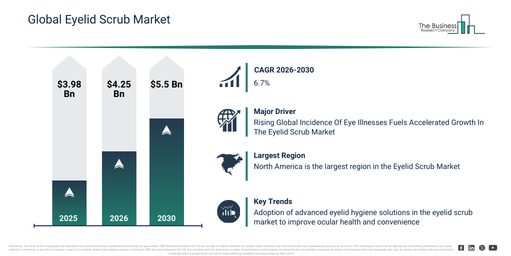
  • Eyelid scrub market analysis (2026–2030)

    Eyelid scrub market analysis (2026–2030)

    The Business Research Company’s 2026 market reports feature enhanced tools like market attractiveness analysis, TAM assessment, and company scoring matrices, along with interactive dashboards, deeper supply chain insights, and startup coverage strengthening the depth, usability, and strategic value of insights.

    What Changes In Market Value Are Expected For The Eyelid Scrub Market Over The 2026–2030 Period?

    The eyelid scrub market has experienced robust growth in recent years. This market is projected to expand from $3.98 billion in 2025 to $4.25 billion in 2026, demonstrating a compound annual growth rate (CAGR) of 6.8%. Historically, this expansion has been driven by factors such as the rising incidence of blepharitis, an increase in dry eye conditions, a surge in ophthalmology appointments, the proliferation of retail pharmacies, and heightened consumer understanding.

    The eyelid scrub market size is anticipated to experience robust growth over the next few years. It is projected to expand to $5.5 billion by 2030, demonstrating a compound annual growth rate (CAGR) of 6.7%. This expansion during the forecast period can be attributed to several factors, including the demand for preservative-free formulations, an increase in preventive eye care, the rising aging population, the expansion of online pharmacies, and innovation in eyelid cleansing products. Prominent trends for the forecast period involve rising awareness of eyelid hygiene, growing use in chronic eye conditions, increased demand for medicated eyelid scrubs, expansion of online and retail distribution, and a preference for hypoallergenic and gentle formulations.

    Access Your Free Sample Report For In-Depth Market Analysis:

    https://www.thebusinessresearchcompany.com/report/eyelid-scrub-global-market-report

    What Key Factors Are Affecting The Eyelid Scrub Market Demand?

    The growing incidence of eye conditions is expected to fuel the expansion of the eyelid scrub market in the coming years. Eye illnesses represent a broad spectrum of health issues and disorders that impact the eyes, vision, and overall ocular health. Eyelid scrubs are utilized to manage various eye conditions by removing debris, bacteria, and excess oils from the eyelids, which helps to reduce the risk of inflammation and improve overall eye comfort. For instance, in June 2023, according to the BrightFocus Foundation, a US-based non-profit organization, the global population of glaucoma patients is projected to rise to 111 million by 2040. Therefore, the increasing prevalence of eye illnesses will significantly drive the eyelid scrub market.

    How Is The Eyelid Scrub Market Broken Down By Segment Categories?

    The eyelid scrub market covered in this report is segmented –

    1) By Product: Pre-Moistened Scrubs, Spray Scrubs, Dry Pad Scrubs

    2) By Distribution Channel: Online Pharmacies, Retail Pharmacies, Hospital Pharmacies, Eye Health Clinics

    3) By Application: Allergies, Dry Eyes, Eye Health, Minor Eye Irritation

    Subsegments:

    1) By Pre-Moistened Scrubs: Hypoallergenic Scrubs, Antibacterial Pre-Moistened Scrubs, Medicated Pre-Moistened Scrubs

    2) By Spray Scrubs: Antibacterial Spray Scrubs, Hypoallergenic Spray Scrubs, Soothing Spray Scrubs

    3) By Dry Pad Scrubs: Sensitive Skin Dry Pads, Exfoliating Dry Pads, Medicated Dry Pads

    What Trends Are Influencing Changes In The Eyelid Scrub Market?

    Leading companies in the eyelid scrub market are focusing on developing innovations such as preservative-free lid wipes for daily hygiene, intending to enhance cleaning efficiency, minimize irritation, and improve patient compliance. A preservative-free lid wipe is a pre-moistened pad formulated with gentle cleansing agents, tea tree oil, hyaluronic acid, and chamomile, facilitating the safe and convenient removal of debris, oil, and allergens from the eyelid margin without requiring rinsing, unlike traditional baby shampoo or soap-based cleansers. For example, in October 2024, Myze, a U.S.-based digital eye-care company, launched the Daily Lid Wipe. This product offers individually wrapped, sterile wipes containing antimicrobial and soothing ingredients designed to reduce eyelid inflammation, support barrier health, and enable convenient daily cleaning without irritation.

    Which Players Are Present In The Eyelid Scrub Market Space?

    Major companies operating in the eyelid scrub market are Johnson & Johnson’s, Alcon AG, Bausch & Lomb Incorporated, OCuSOFT Inc., Cliradex, Eye Love (Heyedrate), TheraTears, Avenova, Systane, The Eye Doctor, Bruder Healthcare, Optase, CorneaCare, I-Med Pharma, Lunovus, Noveha, TearRestore, Thea Pharmaceuticals, Zocular, OptiScrub, Blephaclean, Retaine MGD, Ocusoft Lid Wipes

    Get The Full Eyelid Scrub Market Report:

    https://www.thebusinessresearchcompany.com/report/eyelid-scrub-global-market-report

    Which Region Is The Largest In The Eyelid Scrub Market?

    North America was the largest region in the eyelid scrub market in 2025. The regions covered in the eyelid scrub market report are Asia-Pacific, South East Asia, Western Europe, Eastern Europe, North America, South America, Middle East, Africa.

    Request A Customized Eyelid Scrub Market Report For Competitive Insights:

    https://www.thebusinessresearchcompany.com/report/eyelid-scrub-global-market-report

    Browse Through More Reports Similar to the Global Eyelid Scrub Market 2026, By The Business Research Company

    Eyelash Serum Market Report 2026

    https://www.thebusinessresearchcompany.com/report/eyelash-serum-global-market-report

    Dry Eye Products Market Report 2026

    https://www.thebusinessresearchcompany.com/report/dry-eye-products-global-market-report

    Dry Eye Medication Market 2026

    https://www.thebusinessresearchcompany.com/report/dry-eye-medication-market

    Get in touch with us:

    The Business Research Company: https://www.thebusinessresearchcompany.com/

    Americas +1 310-496-7795

    Asia +44 7882 955267 & +91 8897263534

    Europe +44 7882 955267

    Email us at info@tbrc.info

    Follow us on:

    LinkedIn: https://in.linkedin.com/company/the-business-research-company

    YouTube: https://www.youtube.com/channel/UC24_fI0rV8cR5DxlCpgmyFQ

    Global Market Model: https://www.thebusinessresearchcompany.com/global-market-model
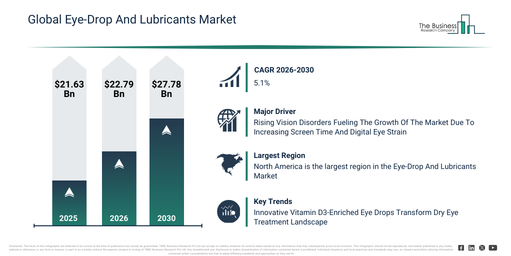
  • Eye drops and lubricants market outlook (2026–2030)

    Eye drops and lubricants market outlook (2026–2030)

    The Business Research Company’s 2026 market reports feature enhanced tools like market attractiveness analysis, TAM assessment, and company scoring matrices, along with interactive dashboards, deeper supply chain insights, and startup coverage strengthening the depth, usability, and strategic value of insights.

    By 2030, What Market Size Is The Eye-Drop And Lubricants Market Expected To Reach Based On Its 2026 Value?

    The eye-drop and lubricants market size has observed substantial growth in recent years. This market is projected to expand from $21.63 billion in 2025 to $22.79 billion in 2026, demonstrating a compound annual growth rate (CAGR) of 5.4%. The historical period’s expansion is due to the escalating incidence of eye disorders, the broadened adoption of self-medication habits, increased consciousness regarding eye hygiene, the proliferation of pharmacy retail networks, and improved availability of ophthalmic products.

    The eye-drop and lubricants market is anticipated to show significant expansion in the coming years. Its value is projected to reach $27.78 billion by 2030, growing at a compound annual growth rate (CAGR) of 5.1%. This projected growth is attributed to factors such as the increasing need for advanced eye care solutions, the broadening scope of online retail distribution, a heightened focus on managing chronic eye conditions, rising acceptance among elderly individuals, and increased investment in ophthalmic research. Dominant trends during the forecast period include a growing demand for preservative-free eye lubricants, the increasing use of multi-dose delivery systems, a wider application of combination eye care therapies, the development of more gel and ointment formulations, and an intensified emphasis on providing extended relief.

    Access Your Free Sample Report For In-Depth Market Analysis:

    https://www.thebusinessresearchcompany.com/report/eye-drop-and-lubricants-global-market-report

    Which Primary Drivers Are Impacting The Eye-Drop And Lubricants Market Growth?

    The increasing occurrence of vision-related issues is anticipated to boost the expansion of the eye-drop and lubricants market in the future. These cases encompass medical conditions, disorders, or problems that impair clear or comfortable vision. The growing incidence of such cases is primarily fueled by increased screen usage, leading to digital eye strain and faster progression of myopia, particularly in younger populations. Eye drops and lubricants mitigate symptoms like dry eye, irritation, and redness associated with these conditions by delivering moisture, easing inflammation, and stabilizing the tear film, thereby improving overall eye comfort and visual acuity. For example, data from October 2024 provided by the Royal National Institute of Blind People, a UK charity assisting visually impaired individuals, forecasts a 29% rise in the number of people with severe sight loss or registered as blind, increasing from 298,000 in 2022 to 379,000 by 2035. Consequently, the increasing prevalence of vision-related issues is propelling the expansion of the eye-drop and lubricant market.

    What Are The Different Segment Types In The Eye-Drop And Lubricants Market Segment Breakdown?

    The eye-drop and lubricants market covered in this report is segmented –

    1) By Type: Antibiotics, Hormones, Artificial Tears, Other Types

    2) By Formulation Type: Liquid, Ointment, Gel, Spray

    3) By Distribution Channel: Online Retail, Pharmacies, Supermarkets Or Hypermarkets, Specialty Stores

    4) By Application: Eye Disease, Eye Care, Other Applications

    5) By End User: Hospitals, Clinics, Homecare, Eyewear Centers

    Subsegments:

    1) By Antibiotics: Broad-Spectrum Antibiotics, Fluoroquinolones, Aminoglycosides, Macrolides

    2) By Hormones: Corticosteroids, Non-Corticosteroid Hormones

    3) By Artificial Tears: Preserved Artificial Tears, Preservative-Free Artificial Tears

    4) By Other Types: Antihistamines, Decongestants, Antiglaucoma Agents, Immunomodulators

    Which Trends Are Shaping Growth In The Eye-Drop And Lubricants Market?

    Major companies operating in the eye-drop and lubricants market are focusing on introducing innovative solutions, such as vitamin D3-enriched lubricating eye drops, to more effectively address dry eye symptoms and meet the growing demand for multifunctional ocular health products. These vitamin D3-enriched lubricating eye drops are ophthalmic solutions formulated with vitamin D3 (cholecalciferol) and moisturizing agents, designed to relieve dry eye symptoms while also providing anti-inflammatory and immune-regulatory benefits. For instance, in May 2024, Entod Pharmaceuticals, an India-based pharmaceutical company, launched vitamin D3-enriched lubricating eye drops, representing a significant advancement in ocular health by offering targeted relief for individuals experiencing dry eye syndrome. This innovative formulation incorporates vitamin D3 into select lubricant eye drop brands, aiming to improve ocular surface health, enhance tear stability, and support corneal wound healing. The product is exclusively available by prescription from healthcare professionals, addressing the widespread issue of vitamin D deficiency in India, which is linked to various eye health problems, including age-related macular degeneration and diabetic retinopathy.

    Who Are The Well-Known Companies In The Eye-Drop And Lubricants Market?

    Major companies operating in the eye-drop and lubricants market are Bayer AG, Sanofi S.A., Novartis AG, Viatris Inc., Teva Pharmaceutical Industries Ltd., Otsuka Pharmaceutical Co. Ltd., Alcon Inc., Bausch + Lomb Incorporated, Santen Pharmaceutical Co. Ltd., Nicox S.A., Scope Ophthalmics Ltd., Lenz Therapeutics Inc., Eyeris Vision Care Pvt. Ltd., Akums Drugs and Pharmaceuticals Ltd., Medtech Products Inc., Rohto Pharmaceutical Co. Ltd, Eyevance Pharmaceuticals LLC, Sun Pharmaceutical Industries Ltd, Johnson & Johnson Vision, Similasan Corporation, Sager Pharma Kft, Cipla Ltd, Ajanta Pharma Ltd, Intas Pharmaceuticals Ltd, FDC Ltd, Alkem Laboratories Ltd, Entod Pharmaceuticals Ltd

    Get The Full Eye-Drop And Lubricants Market Report:

    https://www.thebusinessresearchcompany.com/report/eye-drop-and-lubricants-global-market-report

    Which Region Leads The Eye-Drop And Lubricants Market In Terms Of Market Share?

    North America was the largest region in the eye-drop and lubricants market in 2025. North America is expected to be the fastest-growing region in the forecast period. The regions covered in the eye-drop and lubricants market report are Asia-Pacific, South East Asia, Western Europe, Eastern Europe, North America, South America, Middle East, Africa.

    Request A Customized Eye-Drop And Lubricants Market Report For Competitive Insights:

    https://www.thebusinessresearchcompany.com/report/eye-drop-and-lubricants-global-market-report

    Browse Through More Reports Similar to the Global Eye-Drop And Lubricants Market 2026, By The Business Research Company

    Lubricant Filtration Market Report 2026

    https://www.thebusinessresearchcompany.com/report/lubricant-filtration-global-market-report

    Aviation Lubricants Market Report 2026

    https://www.thebusinessresearchcompany.com/report/aviation-lubricants-global-market-report

    Dry Eye Products Market Report 2026

    https://www.thebusinessresearchcompany.com/report/dry-eye-products-global-market-report

    Get in touch with us:

    The Business Research Company: https://www.thebusinessresearchcompany.com/

    Americas +1 310-496-7795

    Asia +44 7882 955267 & +91 8897263534

    Europe +44 7882 955267

    Email us at info@tbrc.info

    Follow us on:

    LinkedIn: https://in.linkedin.com/company/the-business-research-company

    YouTube: https://www.youtube.com/channel/UC24_fI0rV8cR5DxlCpgmyFQ

    Global Market Model: https://www.thebusinessresearchcompany.com/global-market-model
  • Eye tracking solutions market developments (2026–2030)

    Eye tracking solutions market developments (2026–2030)

    The Business Research Company’s 2026 market reports feature enhanced tools like market attractiveness analysis, TAM assessment, and company scoring matrices, along with interactive dashboards, deeper supply chain insights, and startup coverage strengthening the depth, usability, and strategic value of insights.

    What Is The Anticipated Rise In Market Value Of The Eye Tracking Solutions Market During The Forecast Period?

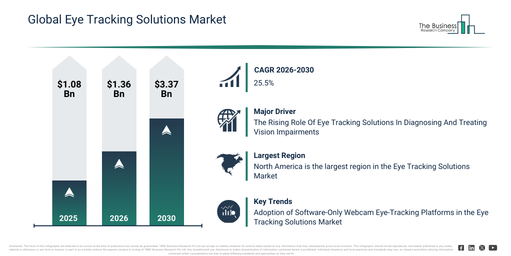
    The eye tracking solutions market size has experienced remarkable growth in recent years. It is projected to expand from $1.08 billion in 2025 to $1.36 billion in 2026, demonstrating a compound annual growth rate (CAGR) of 26.1%. Historically, this growth can be attributed to an increase in digital advertising research, a heightened focus on user experience testing, advancements in eye tracking software, the expansion of academic studies, and an uptick in consumer electronics testing.

    The eye tracking solutions market is set for significant expansion over the next few years. It is forecast to grow to $3.37 billion by 2030, achieving a compound annual growth rate (CAGR) of 25.5%. This growth during the forecast period is fueled by elements such as AI-driven eye tracking analytics, increasing integration into metaverse applications, a rise in its use within neuromarketing, the expansion of cloud platforms, and the development of remote research tools. Major trends expected in this period include a heightened demand for software-based eye tracking analytics, wider application in marketing and consumer research, growing adoption in human-computer interaction studies, increased utilization in gaming and virtual reality, and the incorporation of cloud-based eye tracking platforms.

    Access Your Free Sample Report For In-Depth Market Analysis:

    https://www.thebusinessresearchcompany.com/report/eye-tracking-solutions-global-market-report

    What Significant Factors Are Influencing The Eye Tracking Solutions Market Expansion?

    The increasing need for ophthalmology is anticipated to boost the expansion of the eye tracking solutions market in upcoming years. Ophthalmology is defined as the medical field dedicated to studying the eyes’ structure, operation, and diseases. Within ophthalmology, eye-tracking solutions facilitate the prompt identification of eye conditions, assist in evaluating eye movement for surgical procedures, and provide crucial information for assessing visual focus and cognitive abilities in individuals. As an illustration, data from May 2024 by the Centers for Disease Control and Prevention, a national public health agency based in the US, revealed that 90 million Americans aged over 40 suffer from vision and eye issues. This figure represents over 3 in 5 individuals in that demographic. Projections indicate that by 2050, if no effective interventions are implemented, cataracts are predicted to rise by 87%, glaucoma cases will double, and vision impairment and blindness are expected to increase by 150%. Consequently, the escalating demand for ophthalmology is a key driver for the expansion of the eye tracking solutions market.

    Which Segment Classifications Are Used In The Eye Tracking Solutions Market Segment Analysis?

    The eye tracking solutions market covered in this report is segmented –

    1) By Type: Eye Attached Tracking, Optical Tracking, Electrooculography

    2) By Solution: Hardware, Software

    3) By End-User Industry: Retail And Advertisement Sector, Automotive And Transportation, Media And Entertainment, Aerospace And Defense, Consumer Electronics, Other End-User Industries

    Subsegments:

    1) By Eye Attached Tracking: Wearable Eye Trackers, Smart Glasses

    2) By Optical Tracking: Remote Eye Tracking Systems, Screen-Based Tracking Solutions

    3) By Electrooculography: Fixed Electrode Systems, Mobile Or Portable Electrode Systems

    What Trends Are Affecting The Direction Of The Eye Tracking Solutions Market?

    Major companies operating in the eye tracking solutions market are focusing on developing technological advancements like software-only webcam-based eye-tracking platforms to address the increasing demand for scalable, low-cost attention-computing applications across education, healthcare, and productivity. A software-only webcam eye-tracking platform utilizes AI to infer gaze direction from a user’s standard webcam video feed, distinguishing it from traditional eye trackers that depend on dedicated infrared hardware, thereby enabling eye tracking on almost any device without extra sensors. For instance, in June 2024, Tobii AB, a Sweden-based eye-tracking technology leader, unveiled Tobii Nexus, a software-only integration platform designed for eye-tracking data. This product employs an AI-powered inference engine that translates webcam images into real-time gaze data, performs reliably across different eye shapes and skin tones, and even with glasses or face coverings, while also being optimized for a low computational load. It supports applications in behavioral assessment, such as ADHD and depression; education for insights into student attention; digital collaboration for hands-free interaction; and VR-style 3D experiences on standard desktops.

    Which Firms Are Contributing To The Eye Tracking Solutions Market Ecosystem?

    Major companies operating in the eye tracking solutions market are Fujitsu Limited, ISCAN Inc., Tobii AB, Seeing Machines, Noldus Information Technology BV, Smart Eye AB, SensoMotoric Instruments, BIOPAC Systems Inc., AdHawk Microsystems, iMotions A/S, Mirametrix Inc., LC Technologies, SR Research Ltd., ERGONEERS GmbH, Gazepoint Research Inc., EyeTracking Inc., Pupil Labs GmbH, FOVE Inc., Neuroset Italia S.R.L., SeeTrue Technology LLC, EyeTech Digital Systems Inc., Eyeware Tech SA, CoolTool, The Eye Tribe, Eyegaze Inc., BEQUIPE, Sens-vue

    Get The Full Eye Tracking Solutions Market Report:

    https://www.thebusinessresearchcompany.com/report/eye-tracking-solutions-global-market-report

    Which Region Leads The Eye Tracking Solutions Market In Overall Market Size?

    North America was the largest region in the eye tracking solutions market in 2025. Asia-Pacific is expected to be the fastest-growing region in the forecast period. The regions covered in the eye tracking solutions market report are Asia-Pacific, South East Asia, Western Europe, Eastern Europe, North America, South America, Middle East, Africa.

    Request A Customized Eye Tracking Solutions Market Report For Competitive Insights:

    https://www.thebusinessresearchcompany.com/report/eye-tracking-solutions-global-market-report

    Browse Through More Reports Similar to the Global Eye Tracking Solutions Market 2026, By The Business Research Company

    Eye Testing Equipment Market Report 2026

    https://www.thebusinessresearchcompany.com/report/eye-testing-equipment-global-market-report

    Eye Tracking Market Report 2026

    https://www.thebusinessresearchcompany.com/report/eye-tracking-global-market-report

    3D Eye Tracking Software Market Report 2026

    https://www.thebusinessresearchcompany.com/report/3d-eye-tracking-software-global-market-report

    Get in touch with us:

    The Business Research Company: https://www.thebusinessresearchcompany.com/

    Americas +1 310-496-7795

    Asia +44 7882 955267 & +91 8897263534

    Europe +44 7882 955267

    Email us at info@tbrc.info

    Follow us on:

    LinkedIn: https://in.linkedin.com/company/the-business-research-company

    YouTube: https://www.youtube.com/channel/UC24_fI0rV8cR5DxlCpgmyFQ

    Global Market Model: https://www.thebusinessresearchcompany.com/global-market-model
  • Eye tracking market forecast (2026–2030)

    Eye tracking market forecast (2026–2030)

    The Business Research Company’s 2026 market reports feature enhanced tools like market attractiveness analysis, TAM assessment, and company scoring matrices, along with interactive dashboards, deeper supply chain insights, and startup coverage strengthening the depth, usability, and strategic value of insights.

    How Is The Market Size Of The Eye Tracking Market Expected To Scale Between 2026 And 2030?

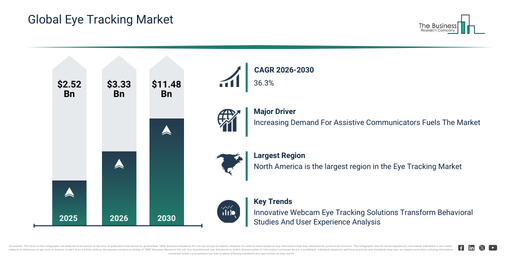
    The eye tracking market size has experienced exponential growth in recent years. It is anticipated to expand from $2.52 billion in 2025 to $3.33 billion in 2026, achieving a compound annual growth rate (CAGR) of 31.9%. The market’s expansion in the historic period can be ascribed to a rise in human-computer interaction studies, increased research funding, the broader application of usability testing, advancements in sensor technologies, and greater academic adoption.

    The eye tracking market is projected to experience rapid expansion over the coming years. This market is anticipated to reach $11.48 billion by 2030, demonstrating a compound annual growth rate (CAGR) of 36.3%. Key factors driving this growth during the forecast period include the incorporation of AI-powered analytics, increasing consumer interest in immersive technologies, the proliferation of autonomous vehicles, wider use in healthcare applications, and innovations in wearable electronics. Significant trends expected within this period encompass its expanding utility in behavioral and cognitive research, broader implementation in automotive safety systems, the development of more wearable eye tracking devices, its growing relevance in healthcare diagnostics, and its seamless integration with virtual and augmented reality.

    Access Your Free Sample Report For In-Depth Market Analysis:

    https://www.thebusinessresearchcompany.com/report/eye-tracking-global-market-report

    Which Important Drivers Are Guiding The Eye Tracking Market Growth?

    The rising need for assistive communicators is projected to drive the eye-tracking market. Assistive communicators are tools that support individuals with communication difficulties by facilitating or enhancing their ability to articulate thoughts, ideas, and necessities. Eye-tracking technology enables users to operate and navigate these communicators by observing their eye movements, thereby offering a more natural and efficient way to communicate. For instance, in January 2024, the World Health Organization (WHO), a Switzerland-based national agency, reported that more than 2.5 billion people globally require one or more assistive products. Additionally, with an aging global population and an increase in noncommunicable diseases, an estimated 3.5 billion people will need assistive technology by 2050. Therefore, the elevated demand for assistive communicators is expected to propel the growth of the eye-tracking market.

    How Is The Eye Tracking Market Organized By Segment Classification?

    The eye tracking market covered in this report is segmented –

    1) By Type: Eye Attached Tracking, Optical Tracking, Electrooculography

    2) By Component: Hardware, Software

    3) By Location: Remote, Mobile

    4) By Application: Healthcare, Retail, Research, Automotive, Consumer Electronics, Other Application

    Subsegments:

    1) By Eye Attached Tracking: Wearable Devices, Head-Mounted Displays (HMDs)

    2) By Optical Tracking: Remote Eye Trackers, Camera-Based Systems, Video-Based Eye Tracking Solutions

    3) By Electrooculography: Contact Electrooculography Devices, Non-Contact Electrooculography Devices, Research-Grade Electrooculography Systems

    What Trends Are Influencing The Evolution Of The Eye Tracking Market?

    Leading companies in the eye-tracking market are concentrating on developing innovative solutions, such as webcam eye-tracking, to achieve a competitive advantage. This technology utilizes a standard webcam or similar camera to monitor and analyze a user’s eye movements and gaze direction in real time. For instance, in June 2024, Tobii AB, a Swedish-based computer software company, launched the Tobii Nexus, a webcam eye tracker. The Tobii Nexus is a cutting-edge webcam eye-tracking solution that provides seamless integration with standard webcams, enabling accurate gaze tracking without the need for specialized hardware. Its unique features encompass real-time eye-tracking capabilities, user-friendly calibration, and compatibility with various software applications, making it ideal for research, accessibility, and user experience analysis.

    Who Are The Industry Participants Involved In The Eye Tracking Market?

    Major companies operating in the eye tracking market are Tobii AB, Varjo, Smart Eye AB, RealEye, Noldus Information Technology, Seeing Machine, Sensomotoric Instruments (SMI), iMotions A/S, NovaSight, Eyegaze Inc., Element Human Ltd., Ergoneers GmbH, Eye Tracking Inc., Gazepoint Research Inc., LC Technologies Inc., 4tiitoo AG, The Eye Tribe, Mirametrix Inc., EyeTech Digital Systems, SR Research, Phoenix Research Labs, GazeHawk, Pupil Labs

    Get The Full Eye Tracking Market Report:

    https://www.thebusinessresearchcompany.com/report/eye-tracking-global-market-report

    Which Region Is The Top Contributor To The Eye Tracking Market By Share?

    North America was the largest region in the eye tracking market in 2025. Asia-Pacific is expected to be the fastest-growing region in the forecast period. The regions covered in the eye tracking market report are Asia-Pacific, South East Asia, Western Europe, Eastern Europe, North America, South America, Middle East, Africa.

    Request A Customized Eye Tracking Market Report For Competitive Insights:

    https://www.thebusinessresearchcompany.com/report/eye-tracking-global-market-report

    Browse Through More Reports Similar to the Global Eye Tracking Market 2026, By The Business Research Company

    Computer Vision Market Report 2026

    https://www.thebusinessresearchcompany.com/report/computer-vision-global-market-report

    Eye Tracking Solutions Market Report 2026

    https://www.thebusinessresearchcompany.com/report/eye-tracking-solutions-global-market-report

    3D Eye Tracking Software Market Report 2026

    https://www.thebusinessresearchcompany.com/report/3d-eye-tracking-software-global-market-report

    Get in touch with us:

    The Business Research Company: https://www.thebusinessresearchcompany.com/

    Americas +1 310-496-7795

    Asia +44 7882 955267 & +91 8897263534

    Europe +44 7882 955267

    Email us at info@tbrc.info

    Follow us on:

    LinkedIn: https://in.linkedin.com/company/the-business-research-company

    YouTube: https://www.youtube.com/channel/UC24_fI0rV8cR5DxlCpgmyFQ

    Global Market Model: https://www.thebusinessresearchcompany.com/global-market-model