Category: Healthcare Services

  • Digital Twins in Healthcare Market (2026–2030): Industry Developments

    Digital Twins in Healthcare Market (2026–2030): Industry Developments

    The Business Research Company’s 2026 market reports feature enhanced tools like market attractiveness analysis, TAM assessment, and company scoring matrices, along with interactive dashboards, deeper supply chain insights, and startup coverage strengthening the depth, usability, and strategic value of insights.

    How Large Will The Digital Twins In Healthcare Market Be By 2030 Compared To Its 2026 Market Size?

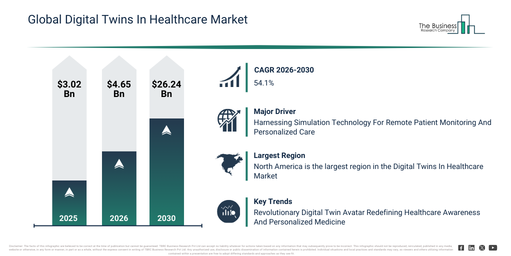
    The digital twins in healthcare market has observed substantial growth in recent years. This market is anticipated to expand from $3.02 billion in 2025 to $4.65 billion in 2026, reflecting a compound annual growth rate (CAGR) of 54.3%. Historically, this expansion can be attributed to advancements in medical imaging, the introduction of early simulation-based planning tools, the increasing availability of healthcare data, the complexity of treatment pathways, and the demand for precision medicine.

    The digital twins in healthcare market size is projected to experience rapid expansion over the upcoming years. This market is forecasted to reach $26.24 billion by 2030, demonstrating a robust compound annual growth rate (CAGR) of 54.1%. The anticipated increase during the forecast period is fueled by factors such as ai-powered modeling platforms, real-time iot data integration, the growth of personalized medicine, various digital hospital initiatives, and improved clinical workflow optimization. Significant trends for the same period encompass the growing use of virtual patient modeling, an increasing embrace of predictive healthcare analytics, the broader expansion of digital twins in hospital operations, a heightened focus on personalized treatment simulation, and the integration of real-time clinical data streams.

    Access Your Free Sample Report For In-Depth Market Analysis:

    https://www.thebusinessresearchcompany.com/report/digital-twins-in-healthcare-global-market-report

    Which Drivers Are Supporting The Digital Twins In Healthcare Market Growth?

    The increasing adoption of telehealth is projected to boost the advancement of digital twins within the healthcare market in the future. Telehealth involves leveraging telecommunications to deliver health services and information from a distance. This includes a range of medical services such as remote consultations, patient monitoring, health education, and the exchange of health information, all facilitated by digital communication. Digital twins are capable of mimicking individual patients’ physiological reactions and disease development in real-time. Telehealth systems can utilize this data for distant oversight, allowing medical professionals to monitor patients’ vital signs, compliance with medication, and general well-being from afar. As an illustration, in November 2025, the Australian Bureau of Statistics (ABS), a governmental statistical body based in Australia, reported that 22.5% of Australians utilized telehealth services during 2024–25. Of those who had a telehealth appointment, 90.3% stated they would use it again if available, an increase from 89.2% in 2023–24, signifying growing acceptance and ongoing uptake. Consequently, the proliferation of telehealth is fostering the development of digital twins in the healthcare market.

    How Is Segmentation Applied In The Digital Twins In Healthcare Market Segment Analysis?

    The digital twins in healthcare market covered in this report is segmented –

    1) By Type: Process And System Digital Twin, Product Digital Twin

    2) By Application: Asset And Process Management, Personalized Medicine, Drug Discovery

    3) By End-User: Clinical Research Organizations (CROs), Research And Diagnostic Laboratories, Hospitals And Clinics

    Subsegments:

    1) By Process And System Digital Twin: Patient Journey Digital Twin, Hospital Operations Digital Twin, Healthcare Workflow Digital Twin, Clinical Process Digital Twin

    2) By Product Digital Twin: Medical Device Digital Twin, Drug Development Digital Twin, Equipment Maintenance Digital Twin, Personalized Medicine Digital Twin

    Which Trends Are Expected To Impact The Digital Twins In Healthcare Market?

    Leading companies in the digital twins in the healthcare market are developing advanced digital twin-enabled technologies, such as Emma, to highlight the significance of virtual twins in accelerating medical research and providing personalized care. Emma is a digital twin-supported technology that delivers an interactive, realistic virtual replica, complete with additional data points, insights, and analysis to enhance the overall experience. This technology has the potential to optimize surgical procedures and offer patients a clearer understanding of their treatment options. For example, in September 2023, Dassault Systèmes SE, a France-based software company, introduced a digital twin avatar named Emma to foster awareness about health research. Emma is a virtual model designed to accurately reflect the characteristics of a physical being. Its creation utilized anonymous health data to perform numerous tests, thereby gaining valuable insights into various diseases and therapies.

    Who Are The Companies Participating In The Digital Twins In Healthcare Market Environment?

    Major companies operating in the digital twins in healthcare market are Amazon.com Inc., Microsoft Corporation, IBM Corporation, Oracle Corporation, SAP SE, NVIDIA Corporation, Siemens AG, Koninklijke Philips N.V., GE HealthCare Technologies Inc., NTT DATA Corporation, Atos SE, Dassault Systemes SE, Ansys Inc., PTC Inc., Twin Health Inc., Faststream Technologies, Rescale Inc., ThoughWire Corp., Q Bio Inc., Verto Healthcare, Unlearn.AI Inc., PrediSurge, QiO Technologies Ltd., NUREA, Predictive Care Inc., Virtonomy GMbH

    Get The Full Digital Twins In Healthcare Market Report:

    https://www.thebusinessresearchcompany.com/report/digital-twins-in-healthcare-global-market-report

    Which Region Holds The Highest Market Share In The Digital Twins In Healthcare Market?

    North America was the largest region in the digital twins in healthcare market in 2025. The regions covered in the digital twins in healthcare market report are Asia-Pacific, South East Asia, Western Europe, Eastern Europe, North America, South America, Middle East, Africa.

    Request A Customized Digital Twins In Healthcare Market Report For Competitive Insights:

    https://www.thebusinessresearchcompany.com/report/digital-twins-in-healthcare-global-market-report

    Browse Through More Reports Similar to the Global Digital Twins In Healthcare Market 2026, By The Business Research Company

    Digital Twin Financial Services And Insurance Market Report 2026

    https://www.thebusinessresearchcompany.com/report/digital-twin-financial-services-and-insurance-global-market-report

    Digital Twin Market Report 2026

    https://www.thebusinessresearchcompany.com/report/digital-twin-global-market-report

    Digital Twin Technology Market Report 2026

    https://www.thebusinessresearchcompany.com/report/digital-twin-technology-global-market-report

    Get in touch with us:

    The Business Research Company: https://www.thebusinessresearchcompany.com/

    Americas +1 310-496-7795

    Asia +44 7882 955267 & +91 8897263534

    Europe +44 7882 955267

    Email us at info@tbrc.info

    Follow us on:

    LinkedIn: https://in.linkedin.com/company/the-business-research-company

    YouTube: https://www.youtube.com/channel/UC24_fI0rV8cR5DxlCpgmyFQ

    Global Market Model: https://www.thebusinessresearchcompany.com/global-market-model
  • Digital Twin NICU Market: Trends and Expansion Potential

    Digital Twin NICU Market: Trends and Expansion Potential

    The Business Research Company’s 2026 market reports feature enhanced tools like market attractiveness analysis, TAM assessment, and company scoring matrices, along with interactive dashboards, deeper supply chain insights, and startup coverage strengthening the depth, usability, and strategic value of insights.

    What Is The Projected Increase In Market Value Of The Digital Twin Neonatal Intensive Care Unit (ICU) Market During 2026–2030?

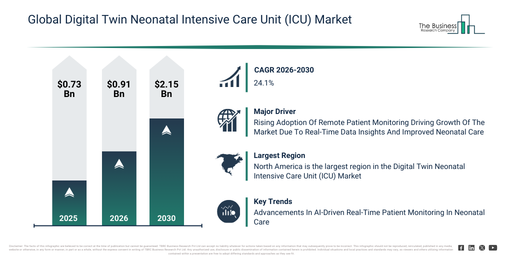
    The digital twin neonatal intensive care unit (ICU) market has seen substantial growth over recent years. It is anticipated to increase from $0.73 billion in 2025 to $0.91 billion in 2026, exhibiting a compound annual growth rate (CAGR) of 24.3%. The historical expansion of this market can be attributed to a rise in neonatal intensive care admissions, the development of digital health infrastructure in hospitals, improved availability of patient monitoring data, a greater emphasis on outcome-based neonatal care, and increased funding for clinical simulation tools.

    The digital twin neonatal intensive care unit (icu) market is anticipated to experience substantial expansion in the coming years. Its valuation is projected to reach $2.15 billion by 2030, demonstrating a compound annual growth rate (CAGR) of 24.1%. This growth during the forecast period can be attributed to several factors, including the wider adoption of AI-driven clinical decision support systems, a surging demand for individualized neonatal care pathways, the proliferation of cloud-based healthcare platforms, a heightened emphasis on predictive and preventive care models, and the expanded application of digital twins in hospital operations. Key trends for the forecast period encompass the increasing uptake of real-time virtual ICU modeling, the enhanced utilization of predictive analytics for assessing neonatal risks, the broadening integration of multi-source patient data streams, the expansion of simulation-based clinical decision support, and an increased focus on proactive neonatal care management.

    Access Your Free Sample Report For In-Depth Market Analysis:

    https://www.thebusinessresearchcompany.com/report/digital-twin-neonatal-intensive-care-unit-icu-global-market-report

    What Key Factors Are Affecting The Digital Twin Neonatal Intensive Care Unit (ICU) Market Demand?

    The increasing emphasis on Remote Patient Monitoring is projected to fuel the expansion of the digital twin neonatal intensive care unit (ICU) market moving ahead. Remote Patient Monitoring (RPM) involves utilizing digital technologies to gather and transmit patients’ health data to healthcare providers, allowing for continuous oversight and prompt interventions without the need for in-person visits. The integration of remote patient monitoring is expanding, thanks to IoT-enabled devices that deliver real-time patient information to healthcare professionals for ongoing surveillance and timely action. A digital twin neonatal intensive care unit aids remote patient monitoring by generating a virtual duplicate of a newborn’s health condition and the NICU surroundings, empowering clinicians to continuously track vital signs, simulate medical procedures, anticipate complications, and render data-driven decisions without physically disturbing the infant. For instance, in August 2025, according to the US Department of Health and Human Services, a US-based government administration, in 2024, nearly 1 million enrollees received remote patient monitoring, a 27% increase from 2023. As a result, the growing focus on remote patient monitoring is stimulating the growth of the digital twin neonatal intensive care unit (ICU) market.

    What Segment Categories Shape The Digital Twin Neonatal Intensive Care Unit (ICU) Market Segment Landscape?

    The digital twin neonatal intensive care unit (icu) market covered in this report is segmented –

    1) By Component: Software, Hardware, Services

    2) By Deployment Mode: On-Premises, Cloud-Based

    3) By Application: Patient Monitoring, Predictive Analytics, Workflow Optimization, Training And Simulation, Other Applications

    4) By End User: Hospitals, Specialty Clinics, Research Institutes, Other End-Users

    Subsegments:

    1) By Hardware: Monitoring Sensors, Imaging Devices, Computing Units

    2) By Software: Simulation And Modeling Software, Data Integration Platforms, Analytics And Visualization Tools

    3) By Services: Implementation And Integration Services, Consulting And Training Services, Maintenance And Support Services

    What Trends Are Influencing Changes In The Digital Twin Neonatal Intensive Care Unit (ICU) Market?

    Leading companies within the digital twin neonatal intensive care unit (ICU) market are concentrating on developing advanced methods, such as real-time AI-assisted patient monitoring, to optimize continuous vital sign tracking and facilitate prompt interventions for critically ill neonates. Real-time AI-assisted patient monitoring entails the ongoing observation and analysis of a patient’s vital signs and health data utilizing artificial intelligence algorithms, which allows for immediate detection of abnormalities and timely clinical actions. For example, in April 2025, AngelEye Health Inc., a US-based technology company, introduced AIVision, a groundbreaking enhancement to its platform that integrates artificial intelligence (AI) and computer vision into neonatal intensive care unit (NICU) and pediatric unit settings. This system employs AI and computer vision, incorporated into NICU bedside cameras, to deliver real-time, intelligent clinical insights, empowering healthcare teams to identify early signs of neonatal distress and neuromotor risks. The technology improves patient safety with features including virtual bed rails and AI-assisted monitoring of pain, sedation, and respiratory status, thereby enhancing the swiftness of interventions. Its objective is to transform neonatal and pediatric care into a more interconnected, data-driven environment that streamlines workflows, fosters personalized care, and ultimately betters health outcomes for vulnerable infants.

    Who Are The Companies Operating Across The Digital Twin Neonatal Intensive Care Unit (ICU) Market Value Chain?

    Major companies operating in the digital twin neonatal intensive care unit (icu) market are Koninklijke Philips N.V., GE HealthCare Technologies Inc., Envision Health Inc., Sibel Health Inc., Genzeon Corporation, Gaumard Scientific Company Inc., Owlet Inc., Caregility Inc., Child Health Imprints Pte. Ltd., NeoLight, Eagle Telemedicine Inc., Wildflower Health Inc., AngelEye Health Inc., Amnion Life Inc., Elevate Healthcare, mOm Incubators Ltd., Pomelo Care Inc., AIIMS-Nagpur Tele-SNCU, Pediatrix & Obstetrix TeleNICU, Techginity Inc.

    Get The Full Digital Twin Neonatal Intensive Care Unit (ICU) Market Report:

    https://www.thebusinessresearchcompany.com/report/digital-twin-neonatal-intensive-care-unit-icu-global-market-report

    Where Is The Digital Twin Neonatal Intensive Care Unit (ICU) Market Most Concentrated Geographically?

    North America was the largest region in the digital twin neonatal intensive care unit (ICU) market in 2025. Asia-Pacific is expected to be the fastest-growing region in the forecast period. The regions covered in the digital twin neonatal intensive care unit (icu) market report are Asia-Pacific, South East Asia, Western Europe, Eastern Europe, North America, South America, Middle East, Africa.

    Request A Customized Digital Twin Neonatal Intensive Care Unit (ICU) Market Report For Competitive Insights:

    https://www.thebusinessresearchcompany.com/report/digital-twin-neonatal-intensive-care-unit-icu-global-market-report

    Browse Through More Reports Similar to the Global Digital Twin Neonatal Intensive Care Unit (ICU) Market 2026, By The Business Research Company

    Neonatal Infant Care Market Report 2026

    https://www.thebusinessresearchcompany.com/report/neonatal-infant-care-global-market-report

    Digital Twins In Healthcare Market Report 2026

    https://www.thebusinessresearchcompany.com/report/digital-twins-in-healthcare-global-market-report

    Tele Intensive Care Unit Market Report 2026

    https://www.thebusinessresearchcompany.com/report/tele-intensive-care-unit-global-market-report

    Get in touch with us:

    The Business Research Company: https://www.thebusinessresearchcompany.com/

    Americas +1 310-496-7795

    Asia +44 7882 955267 & +91 8897263534

    Europe +44 7882 955267

    Email us at info@tbrc.info

    Follow us on:

    LinkedIn: https://in.linkedin.com/company/the-business-research-company

    YouTube: https://www.youtube.com/channel/UC24_fI0rV8cR5DxlCpgmyFQ

    Global Market Model: https://www.thebusinessresearchcompany.com/global-market-model
  • Digital Twin Operating Room Market: Drivers and Future Outlook

    Digital Twin Operating Room Market: Drivers and Future Outlook

    The Business Research Company’s 2026 market reports feature enhanced tools like market attractiveness analysis, TAM assessment, and company scoring matrices, along with interactive dashboards, deeper supply chain insights, and startup coverage strengthening the depth, usability, and strategic value of insights.

    How Is The Market Size Of The Digital Twin Hospital Operating Room Market Expected To Change From 2026 To 2030?

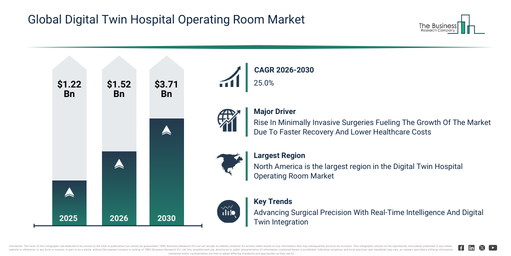
    The digital twin hospital operating room market size has experienced significant expansion in recent years. This market is projected to expand from $1.22 billion in 2025 to reach $1.52 billion by 2026, exhibiting a compound annual growth rate (CAGR) of 25.3%. Historically, this growth has been driven by several factors, including the increasing scope of complex surgical procedures, a heightened need for operational efficiency in hospitals, the wider uptake of connected medical devices, the greater use of surgical robotics, and initial investments in digital hospital infrastructure.

    The market for digital twin hospital operating rooms is projected to experience rapid expansion over the coming years. This market is forecast to reach $3.71 billion by 2030, exhibiting a compound annual growth rate (CAGR) of 25.0%. Several factors contribute to this anticipated growth, including a heightened focus on developing smart hospitals, a rising need for data-driven approaches to surgical optimization, the broadening application of AI-assisted surgical planning, the increasing embrace of cloud-based hospital twin technologies, and a greater emphasis on patient safety analytics. Key trends for this period encompass the growing uptake of real-time or simulation platforms, an increased reliance on predictive equipment maintenance tools, the wider implementation of workflow optimization solutions, the expansion of virtual training and simulation systems, and improved integration of sensor-driven monitoring technologies.

    Access Your Free Sample Report For In-Depth Market Analysis:

    https://www.thebusinessresearchcompany.com/report/digital-twin-hospital-operating-room-global-market-report

    Which Primary Drivers Are Impacting The Digital Twin Hospital Operating Room Market Growth?

    An anticipated increase in minimally invasive surgeries is projected to drive expansion within the digital twin hospital operating room market in the future. These surgical methods utilize small incisions, resulting in less tissue trauma, quicker patient recovery, and a lower incidence of complications compared to traditional open surgical procedures. The growing adoption of minimally invasive surgeries is attributed to their benefits, such as quicker patient recuperation, leading to shorter hospital admissions and reduced healthcare expenditures. Digital twin hospital operating rooms facilitate minimally invasive procedures through features like real-time simulations and three-dimensional visualizations, which allow for meticulous planning, enhanced navigation during surgery, and ultimately, superior patient results. For example, data from June 2024, reported by the American Society of Plastic Surgeons, a US-based organization, indicated a 7% rise in minimally invasive procedures in 2023, surpassing the 2% growth observed in general surgical procedures. Consequently, the increasing prevalence of minimally invasive surgeries is a key factor propelling the expansion of the digital twin hospital operating room market.

    Which Segment Types Are Examined In The Digital Twin Hospital Operating Room Market Segment Study?

    The digital twin hospital operating room market covered in this report is segmented –

    1) By Components: Software, Hardware, Services

    2) By Deployment Mode: On-Premises, Cloud

    3) By Application: Surgical Planning, Training And Simulation, Workflow Optimization, Asset Management, Patient Monitoring, Other Applications

    4) By End User: Hospitals, Ambulatory Surgical Centers, Specialty Clinics, Other End Users

    Subsegments:

    1) By Software: Simulation Software, Data Analytics Software, Workflow Management Software, Visualization And Imaging Software, AI And Machine Learning Platforms

    2) By Hardware: Sensors, IoT Devices, Imaging Devices, Surgical Robots, Workstations And Servers

    3) By Services: Consulting Services, Integration And Implementation Services, Support And Maintenance Services, Training And Education Services, Remote Monitoring Services

    Which Trends Are Shaping Growth In The Digital Twin Hospital Operating Room Market?

    Leading companies in the digital twin hospital operating room market are concentrating on developing advanced solutions, such as real-time intelligence platforms, to enhance surgical decision-making, improve workflow efficiency, and ensure superior patient outcomes through dynamic data integration and visualization. A real-time intelligence platform serves as an intelligent tool that processes live data instantly, enabling users to make quick and accurate decisions. For example, in February 2025, VeroSource Solutions Inc., a Canada-based software company, introduced additional Digital Twin capability to its proprietary VS Data-as-a-Service Platform. A digital twin is a virtual representation of a healthcare system or facility, acting as a digital copy that permits study and prediction without directly affecting the operations of the healthcare institution. Moreover, VeroSource’s Digital Twin technology incorporates other data sources, including population demographics, illness patterns, and other crucial external elements, thereby allowing healthcare practitioners to make more precise and data-driven choices.

    Which Players Are Part Of The Competitive Landscape Of The Digital Twin Hospital Operating Room Market?

    Major companies operating in the digital twin hospital operating room market are Microsoft Corporation, Johnson & Johnson, International Business Machines Corporation, Oracle Corporation, Honeywell International Inc., Medtronic plc, Siemens Healthineers, Philips Healthcare, Stryker Corporation, GE Healthcare Technologies Inc., Zimmer Biomet Holding Inc., Olympus Corporation, Intuitive Surgical, Getinge AB, Karl Storz, Ansys Inc., AVEVA Group plc, Bentley Systems Inc., Dassault Systèmes SE, Schneider Electric SE, NVIDIA Corporation

    Get The Full Digital Twin Hospital Operating Room Market Report:

    https://www.thebusinessresearchcompany.com/report/digital-twin-hospital-operating-room-global-market-report

    Which Region Dominates The Digital Twin Hospital Operating Room Market By Market Share?

    North America was the largest region in the digital twin hospital operating room market in 2025. Asia-Pacific is expected to be the fastest-growing region in the forecast period. The regions covered in the digital twin hospital operating room market report are Asia-Pacific, South East Asia, Western Europe, Eastern Europe, North America, South America, Middle East, Africa.

    Request A Customized Digital Twin Hospital Operating Room Market Report For Competitive Insights:

    https://www.thebusinessresearchcompany.com/report/digital-twin-hospital-operating-room-global-market-report

    Browse Through More Reports Similar to the Global Digital Twin Hospital Operating Room Market 2026, By The Business Research Company

    Whole Life Insurance Market Report 2026

    https://www.thebusinessresearchcompany.com/report/whole-life-insurance-global-market-report

    Term Life Insurance Market 2026

    https://www.thebusinessresearchcompany.com/report/term-life-insurance-market

    Insurance Market Report 2026

    https://www.thebusinessresearchcompany.com/report/insurance-global-market-report

    Get in touch with us:

    The Business Research Company: https://www.thebusinessresearchcompany.com/

    Americas +1 310-496-7795

    Asia +44 7882 955267 & +91 8897263534

    Europe +44 7882 955267

    Email us at info@tbrc.info

    Follow us on:

    LinkedIn: https://in.linkedin.com/company/the-business-research-company

    YouTube: https://www.youtube.com/channel/UC24_fI0rV8cR5DxlCpgmyFQ

    Global Market Model: https://www.thebusinessresearchcompany.com/global-market-model
  • Digital Twin Blood Bank Logistics Market: Growth Opportunities Through 2030

    Digital Twin Blood Bank Logistics Market: Growth Opportunities Through 2030

    The Business Research Company’s 2026 market reports feature enhanced tools like market attractiveness analysis, TAM assessment, and company scoring matrices, along with interactive dashboards, deeper supply chain insights, and startup coverage strengthening the depth, usability, and strategic value of insights.

    From Its 2026 Market Size, What Value Is The Digital Twin Blood Bank Logistics Market Projected To Reach By 2030?

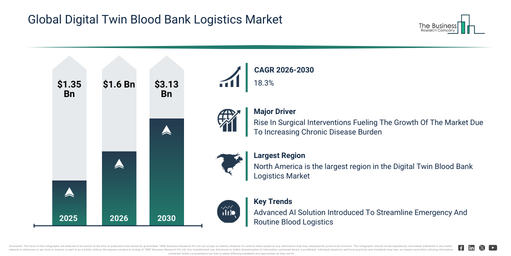
    The digital twin blood bank logistics market size has experienced significant expansion in recent years. It is anticipated to grow from $1.35 billion in 2025 to $1.6 billion in 2026, demonstrating a compound annual growth rate (CAGR) of 18.5%. This historical growth can be attributed to several factors, including escalating blood demand volatility, the broadening of centralized blood bank networks, the uptake of cold-chain monitoring technologies, the emergence of more stringent regulatory compliance requirements, and the initial deployment of logistics analytics platforms.

    The digital twin blood bank logistics market size is projected to experience rapid expansion over the coming years. It is anticipated to grow to $3.13 billion in 2030, exhibiting a compound annual growth rate (CAGR) of 18.3%. The forecasted growth during this period can be attributed to increasing investments in smart healthcare logistics, a rising adoption of cloud-based digital twins, the expansion of AI-driven demand forecasting, a growing focus on zero-waste blood management, and increasing integration with hospital information systems. Major trends anticipated in the forecast period include the increasing adoption of real-time blood supply chain simulation, the rising use of predictive inventory optimization models, the growing integration of IoT-based temperature monitoring, the expansion of end-to-end traceability platforms, and an enhanced focus on waste reduction and efficiency.

    Access Your Free Sample Report For In-Depth Market Analysis:

    https://www.thebusinessresearchcompany.com/report/digital-twin-blood-bank-logistics-global-market-report

    What Significant Factors Are Influencing The Digital Twin Blood Bank Logistics Market Expansion?

    The expanding volume of surgical procedures is anticipated to propel the growth of the digital twin blood bank logistics market going forward. Surgical procedures are defined as medical interventions performed by trained professionals to diagnose, treat, or correct health conditions using manual or instrumental methods. The rise in these procedures is attributed to an aging population, leading to a greater demand for treatments such as joint replacements and cardiovascular surgeries. Digital twin blood bank logistics aids surgical procedures by ensuring real-time visibility and efficient management of blood supply, thereby minimizing delays and shortages during critical operations. For instance, in April 2025, according to the Australian Institute of Health and Welfare (AIHW), an Australia-based government agency, during 2023–24, the number of patients undergoing elective surgery in Australia’s public hospitals reached a record high, with 778,500 admissions from elective surgery waitlists, marking a 5.8% rise from 735,500 admissions in 2022–23. Consequently, the global increase in surgical procedures is a significant driver for the growth of the digital twin blood bank logistics market.

    How Are Different Segments Classified In The Digital Twin Blood Bank Logistics Market Segment Analysis?

    The digital twin blood bank logistics market covered in this report is segmented –

    1) By Component: Software, Hardware, Services

    2) By Deployment Mode: On-Premises, Cloud

    3) By Application: Inventory Management, Temperature Monitoring, Transportation Optimization, Compliance And Traceability, Other Applications

    4) By End-User: Hospitals, Blood Banks, Diagnostic Laboratories, Research Institutes

    Subsegments:

    1) By Software: Simulation Platforms, Data Analytics Tools, Workflow Management Software, Real-Time Monitoring Systems, Inventory Optimization Software

    2) By Hardware: Sensors, Radio Frequency Identification Tags, Smart Storage Units, Temperature Monitoring Devices, Communication Gateways

    3) By Services: Consulting Services, System Integration, Maintenance And Support, Training And Education, Cloud Hosting Services

    What Trends Are Affecting The Direction Of The Digital Twin Blood Bank Logistics Market?

    Key players within the digital twin blood bank logistics market are concentrating on implementing cutting-edge solutions, including AI-driven on-demand blood delivery platforms. These initiatives aim to streamline inventory processes, improve real-time monitoring, minimize wastage, and guarantee a prompt and effective blood distribution to healthcare facilities. Such AI-powered platforms are intelligent systems employing artificial intelligence to forecast demand, oversee stock levels, and coordinate the efficient, real-time delivery of blood products to healthcare providers. An illustrative example is seen in June 2025, when Lytus HealthTech, an India-based healthcare technology firm, introduced BLOD, its AI-powered on-demand blood delivery platform. This pioneering system utilizes sophisticated artificial intelligence alongside autonomous logistics to facilitate continuous (24×7), swift, cold-chain delivery of blood units within 90 minutes, significantly cutting down waiting periods for both hospitals and patients. BLOD’s objectives include eradicating delays, decreasing blood spoilage caused by transportation or cold-chain issues, and establishing a new benchmark for emergency blood distribution within India’s healthcare landscape.

    Who Are The Companies Driving Activity In The Digital Twin Blood Bank Logistics Market?

    Major companies operating in the digital twin blood bank logistics market are Deutsche Post AG, FedEx Corporation, Mærsk A/S, Owens & Minor Inc., SenSat Ltd., KNAPP AG, World Courier Management Inc., Siemens Logistics LLC, Swisslog AG, GPI S.p.A., Zipline International Inc., OnWay Transport LLC, Mediware Information Systems Inc., Logivations GmbH, Medi-Ops LLC, Certainty Health LLC, Sifio Health Inc., UPS Healthcare, Körber Supply Chain, Dematic Group, Zebra Technologies Corporation, Controlant Inc.

    Get The Full Digital Twin Blood Bank Logistics Market Report:

    https://www.thebusinessresearchcompany.com/report/digital-twin-blood-bank-logistics-global-market-report

    Which Region Is The Largest In The Digital Twin Blood Bank Logistics Market?

    North America was the largest region in the digital twin blood bank logistics market in 2025. Asia-Pacific is expected to be the fastest-growing region in the forecast period. The regions covered in the digital twin blood bank logistics market report are Asia-Pacific, South East Asia, Western Europe, Eastern Europe, North America, South America, Middle East, Africa.

    Request A Customized Digital Twin Blood Bank Logistics Market Report For Competitive Insights:

    https://www.thebusinessresearchcompany.com/report/digital-twin-blood-bank-logistics-global-market-report

    Browse Through More Reports Similar to the Global Digital Twin Blood Bank Logistics Market 2026, By The Business Research Company

    Cargo Transportation Insurance Market Report 2026

    https://www.thebusinessresearchcompany.com/report/cargo-transportation-insurance-global-market-report

    Insurance Market Report 2026

    https://www.thebusinessresearchcompany.com/report/insurance-global-market-report

    Usage Based Insurance Market 2026

    https://www.thebusinessresearchcompany.com/report/usage-based-insurance-market

    Get in touch with us:

    The Business Research Company: https://www.thebusinessresearchcompany.com/

    Americas +1 310-496-7795

    Asia +44 7882 955267 & +91 8897263534

    Europe +44 7882 955267

    Email us at info@tbrc.info

    Follow us on:

    LinkedIn: https://in.linkedin.com/company/the-business-research-company

    YouTube: https://www.youtube.com/channel/UC24_fI0rV8cR5DxlCpgmyFQ

    Global Market Model: https://www.thebusinessresearchcompany.com/global-market-model
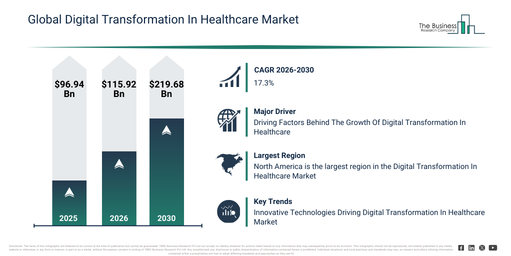
  • Global Healthcare Digital Transformation Market to Hit $219.67B by 2030 at 17.3% CAGR

    Global Healthcare Digital Transformation Market to Hit $219.67B by 2030 at 17.3% CAGR

    The Business Research Company’s 2026 market reports feature enhanced tools like market attractiveness analysis, TAM assessment, and company scoring matrices, along with interactive dashboards, deeper supply chain insights, and startup coverage strengthening the depth, usability, and strategic value of insights.

    How Much Growth In Market Value Is Expected For The Digital Transformation In Healthcare Market Between 2026 And 2030?

    The digital transformation in healthcare market has seen substantial growth in recent years. It is projected to expand from $96.94 billion in 2025 to $115.92 billion in 2026, at a compound annual growth rate (CAGR) of 19.6%. Historically, this growth can be attributed to factors such as paper-based clinical workflows, increasing healthcare operational costs, early health IT adoption, fragmented care delivery systems, and growing patient data volumes.

    The digital transformation in healthcare market size is projected to experience substantial expansion in the coming years. This market is anticipated to reach $219.68 billion by 2030, demonstrating a compound annual growth rate (CAGR) of 17.3%. Factors contributing to this growth include AI-enabled care optimization, government-led digital health initiatives, the adoption of value-based care models, continued cloud infrastructure expansion, and increased cybersecurity investments. Concurrently, major trends for the forecast period encompass the accelerated uptake of electronic health records, the broadening of telemedicine and virtual care services, the increasing use of data-driven clinical decision support, the growing integration of digital patient engagement tools, and a rising demand for interoperable healthcare systems.

    Access Your Free Sample Report For In-Depth Market Analysis:

    https://www.thebusinessresearchcompany.com/report/digital-transformation-in-healthcare-global-market-report

    Which Important Drivers Are Guiding The Digital Transformation In Healthcare Market Growth?

    The rising integration of electronic health records (EHRs) is anticipated to stimulate the expansion of digital transformation within the healthcare market in the future. EHRs represent digital counterparts of traditional patient paper charts, offering up-to-the-minute, patient-focused information readily and securely available to approved individuals. This uptake of EHRs stems from various factors including improved patient care, regulatory incentives, enhanced data exchange, greater patient participation, advanced data analytics, and more effective population health management. Digital transformation within healthcare markedly improves EHRs through the incorporation of cutting-edge technologies and refined system capabilities, facilitating smooth data sharing and synchronized patient care among diverse healthcare providers. For example, data from October 2023, sourced from a report by Oxford Academic, a UK-based research platform offering academic resources, indicated that basic EHR adoption grew from 6.6% to 81.2%, and comprehensive systems saw an increase from 3.6% to 63.2%. Large hospitals demonstrated a 7% higher rate of comprehensive EHR adoption compared to medium-sized hospitals, and surpassed small hospitals by over 34%. Consequently, the expanding use of electronic health records is propelling the growth of digital transformation in the healthcare market.

    How Is The Digital Transformation In Healthcare Market Categorized Across Its Segment Groups?

    The digital transformation in healthcare market covered in this report is segmented –

    1) By Solution: Software, Service

    2) By Organization Size: Small And Medium Size Enterprises, Large Enterprises

    3) By Technology: Artificial Intelligence, Cloud Computing, Big Data And Analytics, Internet Of Things, Cybersecurity

    4) By End User: Hospitals And Clinics, Pharma Companies, Life Science And Biotech Companies, Healthcare Insurance Providers

    Subsegments:

    1) By Software: Electronic Health Records (Ehr), Telemedicine Solutions, Healthcare Analytics Software, Clinical Decision Support Systems (Cdss), Patient Management Software, Healthcare CRM Software, Blockchain Solutions For Healthcare

    2) By Service: Consulting Services, Implementation Services, Integration Services, Support And Maintenance Services, Training Services, Managed Services

    What Trends Are Influencing The Evolution Of The Digital Transformation In Healthcare Market?

    Leading companies active in the digital transformation of the healthcare market are concentrating on creating advanced technologies, such as digitalization solutions, to bolster their market presence. Digitalization solutions involve technologies, strategies, and services that convert traditional analog or manual processes into digital formats, empowering organizations to optimize operations, improve effectiveness, and boost output. For example, in February 2024, Huawei Technologies Co. Ltd., a China-based information and communications technology firm, unveiled its Medical Technology Digitalization Solution to streamline various healthcare workflows. This innovative solution integrates state-of-the-art technologies to revolutionize medical practices, presenting several distinctive attributes. It harnesses artificial intelligence (AI) and machine learning algorithms to enhance medical imaging analysis, allowing for quicker and more precise diagnosis of conditions like cancer and cardiovascular diseases. The solution also incorporates Internet of Things (IoT) devices and sensors to enable real-time patient oversight and remote healthcare provision, thereby improving accessibility and patient outcomes.

    Which Firms Are Influencing Competition In The Digital Transformation In Healthcare Market?

    Major companies operating in the digital transformation in healthcare market are Roche Diagnostics, Medtronic plc, Siemens Healthineers, Philips Healthcare, Stryker Corporation, GE Healthcare, Boston Scientific, Omron Corporation, Intuitive Surgical Inc., Omnicell Inc., Allscripts Healthcare Solutions, InTouch Health, Blue Ocean Robotics ApS, Vecna Robotics, Stereotaxis Inc., Aethon Inc., VGo Communications Inc., ReWalk Robotics Ltd., Epic Systems Corporation, athenahealth Inc., Truveta Inc., Merative L P, K Health, Eko Health Inc., Suki

    Get The Full Digital Transformation In Healthcare Market Report:

    https://www.thebusinessresearchcompany.com/report/digital-transformation-in-healthcare-global-market-report

    Which Region Leads The Digital Transformation In Healthcare Market In Terms Of Market Share?

    North America was the largest region in the digital transformation in healthcare market in 2025. Asia-Pacific is expected to be the fastest-growing region in the forecast period. The regions covered in the digital transformation in healthcare market report are Asia-Pacific, South East Asia, Western Europe, Eastern Europe, North America, South America, Middle East, Africa.

    Request A Customized Digital Transformation In Healthcare Market Report For Competitive Insights:

    https://www.thebusinessresearchcompany.com/report/digital-transformation-in-healthcare-global-market-report

    Browse Through More Reports Similar to the Global Digital Transformation In Healthcare Market 2026, By The Business Research Company

    Retail Digital Transformation Market Report 2026

    https://www.thebusinessresearchcompany.com/report/retail-digital-transformation-global-market-report

    Digital Transformation Market Report 2026

    https://www.thebusinessresearchcompany.com/report/digital-transformation-global-market-report

    Digital Health Market Report 2026

    https://www.thebusinessresearchcompany.com/report/digital-health-global-market-report

    Get in touch with us:

    The Business Research Company: https://www.thebusinessresearchcompany.com/

    Americas +1 310-496-7795

    Asia +44 7882 955267 & +91 8897263534

    Europe +44 7882 955267

    Email us at info@tbrc.info

    Follow us on:

    LinkedIn: https://in.linkedin.com/company/the-business-research-company

    YouTube: https://www.youtube.com/channel/UC24_fI0rV8cR5DxlCpgmyFQ

    Global Market Model: https://www.thebusinessresearchcompany.com/global-market-model
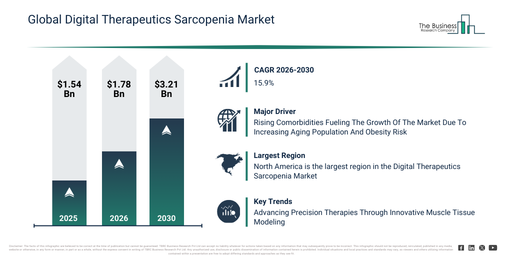
  • Digital Therapeutics for Sarcopenia Market to Reach $3.21B by 2030

    Digital Therapeutics for Sarcopenia Market to Reach $3.21B by 2030

    The Business Research Company’s 2026 market reports feature enhanced tools like market attractiveness analysis, TAM assessment, and company scoring matrices, along with interactive dashboards, deeper supply chain insights, and startup coverage strengthening the depth, usability, and strategic value of insights.

    What Is The Estimated Market Size Of The Digital Therapeutics Sarcopenia Market In 2026, And How Will Its Value Evolve By 2030?

    The digital therapeutics sarcopenia market size has seen rapid expansion in recent years. It is anticipated to increase from $1.54 billion in 2025 to $1.78 billion in 2026, demonstrating a compound annual growth rate (CAGR) of 16.1%. The growth observed historically can be ascribed to elements such as the increasing prevalence of an aging population, heightened awareness of health risks linked to sarcopenia, the expansion of telehealth adoption, increasing acceptance of software-based medical therapies, and the early clinical validation of digital interventions.

    The digital therapeutics sarcopenia market size is projected to experience substantial expansion in the coming years. This market is anticipated to reach a valuation of $3.21 billion by 2030, demonstrating a compound annual growth rate (CAGR) of 15.9%. This projected growth throughout the forecast period stems from factors such as the heightened demand for home-based care for chronic conditions, the escalating incorporation of AI-powered personalized therapies, broadened reimbursement avenues for digital therapeutics, the expanding uptake of remote patient monitoring, and a reinforced emphasis on solutions for preventive muscle health. Key trends anticipated during this period encompass the wider acceptance of tailored digital therapy programs, the increased utilization of wearable devices for muscle monitoring, the broader implementation of remote physiotherapy platforms, the development of data-informed sarcopenia management strategies, and a stronger commitment to patient involvement and compliance.

    Access Your Free Sample Report For In-Depth Market Analysis:

    https://www.thebusinessresearchcompany.com/report/digital-therapeutics-sarcopenia-global-market-report

    What Major Factors Are Driving The Digital Therapeutics Sarcopenia Market Forward?

    The expanding presence of comorbidities is anticipated to fuel the expansion of the digital therapeutics sarcopenia market. Comorbidities are defined as the concurrent existence of multiple health conditions within a single individual. The increase in comorbidities stems from an aging demographic, as older age raises the probability of developing several chronic ailments due to diminishing physiological functions and extended exposure to various health hazards. Digital therapeutics designed for sarcopenia offer advantages in averting comorbidities, particularly obesity, by fostering consistent physical activity and muscle reinforcement, which aids in enhancing metabolism and minimizing fat accumulation. For example, data from March 2024, provided by the World Obesity Federation, a membership body based in the UK, projects that nearly 79% of adults impacted by overweight and obesity will reside in low- and middle-income nations by 2035, with the total count of obese adults forecast to reach 1.53 billion. Consequently, the increasing incidence of comorbidities is propelling the growth of the digital therapeutics sarcopenia market.

    How Are Segments Identified Within The Digital Therapeutics Sarcopenia Market Segment Framework?

    The digital therapeutics sarcopenia market covered in this report is segmented –

    1) By Product: Software, Devices, Services

    2) By Distribution Channel: Online Platforms, Direct-To-Consumer Digital Channels, Other Distribution Channels

    3) By Application: Muscle Strengthening, Physical Activity Monitoring, Nutrition Management, Other Applications

    4) By End User: Hospitals And Clinics, Homecare Settings, Rehabilitation Centers, Other End Users

    Subsegments:

    1) By Software: Mobile Applications, Web-Based Platforms, AI-Powered Monitoring Tools, Exercise And Rehabilitation Programs, Nutritional Guidance Software

    2) By Devices: Wearable Fitness Trackers, Smart Scales, Connected Resistance Bands, Electromyography (EMG) Devices, Muscle Strength Assessment Tools

    3) By Services: Remote Patient Monitoring Services, Virtual Physiotherapy Sessions, Teleconsultation Services, Personalized Coaching Services, Data Analytics And Reporting Services

    Which Trends Are Impacting The Progress Of The Digital Therapeutics Sarcopenia Market?

    Leading companies in the digital therapeutics sarcopenia market are concentrating on developing sophisticated solutions, such as drug discovery platforms. Their objective is to create more targeted therapies, improve treatment effectiveness, and accelerate the provision of personalized care for age-related muscle loss. A drug discovery platform aids in the quicker and more effective identification and creation of new drugs through advanced tools and methods. For example, in April 2025, ProFuse Technology, an Israel-based biotechnology company, unveiled a new drug discovery platform aimed at preventing muscle loss induced by GLP-1 weight-loss drugs, aging (sarcopenia), and cancer cachexia. By employing lab-grown, highly mature muscle tissues that accurately imitate natural muscle, the company can precisely test and screen drug candidates with enhanced speed and efficiency. This advanced platform reduces the dependence on animal testing and decreases research expenses. As the demand for muscle-preserving therapies rises, ProFuse is broadening its scope beyond cultivated meat into the biopharmaceutical industry, offering a pioneering strategy to address increasingly complex muscle health issues.

    Who Are The Companies Competing Within The Digital Therapeutics Sarcopenia Market?

    Major companies operating in the digital therapeutics sarcopenia market are Sword Health Inc., Biofourmis Inc., Hinge Health Inc., Omada Health Inc., Evolv Rehabilitation Technologies Ltd., Click Therapeutics Inc., DarioHealth Corp., WellDoc Inc., Lark Technologies Inc., Kaia Health Software GmbH, Liva Healthcare A/S, Zibrio Inc., Gait Up SA, Noraxon Inc., Mira Rehab Limited, Cometa Srl., Koneksa Health Inc., Physitrack PLC, Kaia Health Inc., XRHealth USA Inc., MedRhythms Inc.

    Get The Full Digital Therapeutics Sarcopenia Market Report:

    https://www.thebusinessresearchcompany.com/report/digital-therapeutics-sarcopenia-global-market-report

    Which Region Leads The Digital Therapeutics Sarcopenia Market In Overall Market Size?

    North America was the largest region in the digital therapeutics sarcopenia market in 2025. Asia-Pacific is expected to be the fastest-growing region in the forecast period. The regions covered in the digital therapeutics sarcopenia market report are Asia-Pacific, South East Asia, Western Europe, Eastern Europe, North America, South America, Middle East, Africa.

    Request A Customized Digital Therapeutics Sarcopenia Market Report For Competitive Insights:

    https://www.thebusinessresearchcompany.com/report/digital-therapeutics-sarcopenia-global-market-report

    Browse Through More Reports Similar to the Global Digital Therapeutics Sarcopenia Market 2026, By The Business Research Company

    Battery Separators Market Report 2026

    https://www.thebusinessresearchcompany.com/report/battery-separators-global-market-report

    Cutter Stapler Market Report 2026

    https://www.thebusinessresearchcompany.com/report/cutter-stapler-global-market-report

    Battery Manufacturing Equipment Market Report 2026

    https://www.thebusinessresearchcompany.com/report/battery-manufacturing-equipment-global-market-report

    Get in touch with us:

    The Business Research Company: https://www.thebusinessresearchcompany.com/

    Americas +1 310-496-7795

    Asia +44 7882 955267 & +91 8897263534

    Europe +44 7882 955267

    Email us at info@tbrc.info

    Follow us on:

    LinkedIn: https://in.linkedin.com/company/the-business-research-company

    YouTube: https://www.youtube.com/channel/UC24_fI0rV8cR5DxlCpgmyFQ

    Global Market Model: https://www.thebusinessresearchcompany.com/global-market-model
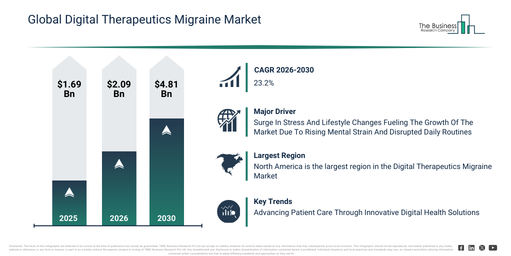
  • Digital Therapeutics for Migraine Market to Reach $4.81B by 2030 at 23.2% CAGR

    Digital Therapeutics for Migraine Market to Reach $4.81B by 2030 at 23.2% CAGR

    The Business Research Company’s 2026 market reports feature enhanced tools like market attractiveness analysis, TAM assessment, and company scoring matrices, along with interactive dashboards, deeper supply chain insights, and startup coverage strengthening the depth, usability, and strategic value of insights.

    How Does The Market Size Of The Digital Therapeutics Migraine Market Compare Between 2026 And 2030?

    The digital therapeutics migraine market size has experienced significant expansion in recent years. It is projected to increase from $1.69 billion in 2025 to $2.09 billion in 2026, achieving a compound annual growth rate (CAGR) of 23.5%. This historical growth can be attributed to factors such as the rising incidence of migraine disorders, greater awareness of non-pharmacological treatments, increased smartphone adoption in healthcare, the broadening of digital health ecosystems, and the acceptance of remote symptom monitoring.

    The digital therapeutics migraine market size is projected to experience substantial expansion in the coming years. It is anticipated to reach $4.81 billion by 2030, demonstrating a compound annual growth rate (CAGR) of 23.2%. This projected growth during the forecast period can be attributed to factors such as a heightened demand for customized digital therapeutics, the increasing incorporation of AI-powered symptom prediction, the wider embrace of remote patient management solutions, the broadening of digital therapeutics reimbursement models, and a greater emphasis on proactive migraine prevention. Major developments anticipated in this period include the increased uptake of individualized migraine management applications, the rising integration of wearable devices for symptom monitoring, the expanded utilization of real-time trigger tracking tools, the broader development of evidence-based digital therapy programs, and a strengthened focus on patient participation and adherence.

    Access Your Free Sample Report For In-Depth Market Analysis:

    https://www.thebusinessresearchcompany.com/report/digital-therapeutics-migraine-global-market-report

    Which Key Drivers Are Affecting The Digital Therapeutics Migraine Market Development?

    The future expansion of the digital therapeutics migraine market is anticipated to be driven by rising stress and shifts in lifestyle. These changes encompass the effects of everyday pressures and routines on an individual’s mental and physical health. This surge in stress and lifestyle alterations stems from contemporary work demands and rapid lifestyles, which intensify mental strain and interfere with beneficial daily habits. Digital therapeutics designed for migraine aid in addressing stress and lifestyle changes through tailored behavioral interventions, trigger monitoring, and encouraging better routines, ultimately reducing migraine episodes and enhancing general well-being. For example, a survey conducted in February 2024 among 2,004 people aged 16 and over in the UK by Forthwithlife, a UK-based provider of at-home blood testing services, revealed that approximately 1 in 5 adults over 16 experiences daily stress. This impact was higher in women (24.5%) compared to men (15.3%). Consequently, the growing prevalence of stress and lifestyle modifications is fueling the expansion of the digital therapeutics migraine market.

    What Are The Key Segment Divisions In The Digital Therapeutics Migraine Market Segment Structure?

    The digital therapeutics migraine market covered in this report is segmented –

    1) By Product Type: Software, Hardware, Services

    2) By Patient Type: Adult, Pediatric

    3) By Application: Prevention, Acute Treatment, Patient Education, Other Applications

    4) By Distribution Channel: Online, Offline

    5) By End-User: Hospitals, Clinics, Homecare, Other End-Users

    Subsegments:

    1) By Software: Mobile Application, Web Platform, Cloud-Based Platform, Wearable Integration Software

    2) By Hardware: Wearable Devices, Neurostimulation Devices, Monitoring Devices, Biosensors

    3) By Services: Teleconsultation Services, Therapy Management Services, Patient Support Services, Data Analytics Services

    What Trends Are Transforming The Digital Therapeutics Migraine Market?

    Leading companies within the digital therapeutics migraine market are concentrating on developing sophisticated innovations, such as e-prescription technology, to improve treatment accessibility, medication adherence, and overall patient management. E-prescription technology refers to a digital system that enables healthcare providers to electronically create, transmit, and manage prescriptions, replacing traditional paper methods. This process enhances accuracy, minimizes medication errors, and boosts efficiency in prescribing and dispensing. For instance, in April 2025, Tonix Pharmaceuticals Holding Corp., a US-based pharmaceutical company, introduced TONIX ONE, a comprehensive digital platform designed to assist patients in managing their migraine condition. The platform delivers personalized tools, educational resources, and support services to deepen disease understanding and facilitate self-management. It aims to grant patients more control over their migraine care, promoting proactive health management. Additionally, TONIX ONE encourages stronger engagement and communication between patients and healthcare providers, streamlining care coordination.

    Which Organizations Are Engaged In The Digital Therapeutics Migraine Market?

    Major companies operating in the digital therapeutics migraine market are Sword Health, Biofourmis Inc., Click Therapeutics Inc., Sidekick Health, Kaia Health Software GmbH, Salvia BioElectronics, Theranica Bio-Electronics Ltd., Cefaly Technology S.A., Neurolief Ltd., Aptar Digital Health, NeuroMetrix Inc., Happify Health, Neura Health, Relivion MG, UpScriptHealth, N1-Headache, ElectroCore, Inc., eNeura Inc., Cirrus Healthcare Products, Neuros Medical, Inc.

    Get The Full Digital Therapeutics Migraine Market Report:

    https://www.thebusinessresearchcompany.com/report/digital-therapeutics-migraine-global-market-report

    Which Region Is The Top Contributor To The Digital Therapeutics Migraine Market By Share?

    North America was the largest region in the digital therapeutics migraine market in 2025. The regions covered in the digital therapeutics migraine market report are Asia-Pacific, South East Asia, Western Europe, Eastern Europe, North America, South America, Middle East, Africa.

    Request A Customized Digital Therapeutics Migraine Market Report For Competitive Insights:

    https://www.thebusinessresearchcompany.com/report/digital-therapeutics-migraine-global-market-report

    Browse Through More Reports Similar to the Global Digital Therapeutics Migraine Market 2026, By The Business Research Company

    Digital Therapeutics Market Report 2026

    https://www.thebusinessresearchcompany.com/report/digital-therapeutics-global-market-report

    Migraine Treatment Market Report 2026

    https://www.thebusinessresearchcompany.com/report/migraine-treatment-global-market-report

    Migraine Market Report 2026

    https://www.thebusinessresearchcompany.com/report/migraine-global-market-report

    Get in touch with us:

    The Business Research Company: https://www.thebusinessresearchcompany.com/

    Americas +1 310-496-7795

    Asia +44 7882 955267 & +91 8897263534

    Europe +44 7882 955267

    Email us at info@tbrc.info

    Follow us on:

    LinkedIn: https://in.linkedin.com/company/the-business-research-company

    YouTube: https://www.youtube.com/channel/UC24_fI0rV8cR5DxlCpgmyFQ

    Global Market Model: https://www.thebusinessresearchcompany.com/global-market-model
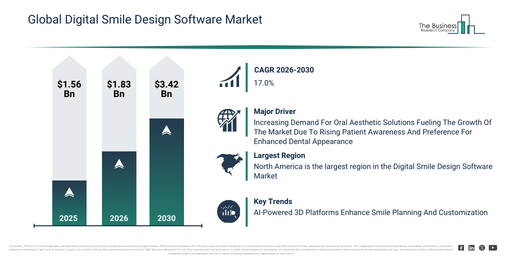
  • Digital Smile Design Software Market to Reach $3.41B by 2030

    Digital Smile Design Software Market to Reach $3.41B by 2030

    The Business Research Company’s 2026 market reports feature enhanced tools like market attractiveness analysis, TAM assessment, and company scoring matrices, along with interactive dashboards, deeper supply chain insights, and startup coverage strengthening the depth, usability, and strategic value of insights.

    What Is The Forecasted Market Size Trajectory Of The Digital Smile Design Software Market From 2026 To 2030?

    The digital smile design software market has experienced significant growth over the past few years. This market is anticipated to expand, moving from $1.56 billion in 2025 to reach $1.83 billion by 2026, achieving a compound annual growth rate (CAGR) of 17.3%. Several factors have contributed to this historical growth, including an increase in cosmetic dentistry procedures, a growing demand for aesthetic dental treatments, the adoption of digital dentistry tools, the enhanced availability of intraoral scanners, and the expansion of dental education programs.

    The digital smile design software market is projected for significant expansion over the coming years. By 2030, this market is anticipated to reach a valuation of $3.42 billion, exhibiting a compound annual growth rate (CAGR) of 17.0%. This forecasted growth is largely driven by factors such as the broader availability of AI-driven dental planning solutions, a surge in demand for customized dental procedures, greater integration with CAD/CAM systems, the rising uptake of cloud-based dental software, and an intensified emphasis on ensuring treatment predictability. Key developments during this period are expected to encompass the increased implementation of 3D smile simulation tools, the burgeoning incorporation of facial scanning technologies, a wider utilization of cloud-based dental design platforms, the expansion of digital workflow integration within dental clinics, and a heightened emphasis on patient visualization and communication.

    Access Your Free Sample Report For In-Depth Market Analysis:

    https://www.thebusinessresearchcompany.com/report/global-digital-smile-design-software-market-report

    What Factors Are Contributing To The Growth Of The Digital Smile Design Software Market?

    The future expansion of the digital smile design software market is anticipated to be driven by the rising need for oral aesthetic solutions. These solutions cover products and procedures aimed at improving the look of teeth and gums, thereby boosting dental aesthetics and patient self-assurance. The surge in demand for oral aesthetic solutions stems from heightened awareness regarding the significance of dental aesthetics, with individuals placing greater importance on the appearance of their smile and overall look. Digital smile design software improves oral aesthetic solutions by enabling accurate digital planning and visualization, rendering it perfect for customized smile makeovers and cosmetic procedures. This software minimizes treatment mistakes through precise simulations and foreseeable results, leading to enhanced patient satisfaction and operational effectiveness in clinics. As an illustration, Uniqa Dental, an Israel-based dental solutions provider, reported in January 2024 that roughly 5.5 million dental implants were installed in the United States during 2023, marking a 10% rise compared to 2022. Consequently, the expanding requirement for oral aesthetic solutions is fueling the development of the digital smile design software market.

    Which Segment Categories Are Included In The Digital Smile Design Software Market Segment Analysis?

    The digital smile design software market covered in this report is segmented –

    1) By Product Type: Two Dimensional (2D) Digital Smile Design Software, Three Dimensional (3D) Digital Smile Design Software

    2) By Deployment Mode: On-Premises, Cloud-Based

    3) By Application: Orthodontics, Prosthodontics, Cosmetic Dentistry, General Dentistry, Other Applications

    4) By End-User: Dental Clinics, Hospitals, Academic And Research Institutes, Other End-Users

    Subsegments:

    1) By Two Dimensional (2D) Digital Smile Design Software: Teeth Alignment Visualization, Tooth Shape And Proportion Analysis, Digital Mockup Generation, Gum Contour Assessment, Smile Line Evaluation, Facial Aesthetics Mapping

    2) By Three Dimensional (3D) Digital Smile Design Software: Three Dimensional Facial Scanning, Virtual Treatment Simulation, Three Dimensional Teeth Morphing, Dental Arch Reconstruction, Three Dimensional Smile Previewing, Implant And Restoration Planning

    What Trends Are Shaping The Future Of The Digital Smile Design Software Market?

    Major companies in the digital smile design software market are prioritizing the development of sophisticated solutions, such as AI-powered 3D smile design platforms, to boost accuracy, personalization, and patient communication. These AI-driven 3D smile design platforms represent software tools that employ artificial intelligence and 3D imaging to digitally plan, simulate, and customize a patient’s smile. For example, in January 2024, SmileFy Inc., a US-based dental technology company, released SmileFy 4.0. This particular AI-powered 3D smile design platform is engineered to assist clinicians in creating esthetic treatment plans and 3D-printable mock-ups right in the operatory. The software integrates AI-driven 3D teeth proposals, automated segmentation, and chairside-ready printable shells and veneers. SmileFy 4.0 enhances productivity, speeds up clinical workflows, and improves patient acceptance through lifelike visual representations and immediate treatment previews.

    Who Are The Active Companies Shaping The Digital Smile Design Software Market?

    Major companies operating in the digital smile design software market are Dentsply Sirona Inc., Align Technology Inc., Straumann Holding AG, Planmeca Oy, Ivoclar Vivadent AG, 3Shape A.S, Zirkonzahn GmbH, Nemotec SL, Medit Corp., MegaGen Implant Co. Ltd., SoftSmile Inc., SmileFy Inc., RAY Company Ltd. Group, Smile Designer Pro S.R.L, Smile Designer App Pty Ltd., Smilecloud GmbH, Dental Treatment Simulation Inc., 88Dent S.R.L, VisagiSMile LLC, Kratos 3D Technologies Private Limited

    Get The Full Digital Smile Design Software Market Report:

    https://www.thebusinessresearchcompany.com/report/global-digital-smile-design-software-market-report

    Which Region Represents The Largest Share Of The Digital Smile Design Software Market?

    North America was the largest region in the digital smile design software market in 2025. Asia-Pacific is expected to be the fastest-growing region in the forecast period. The regions covered in the digital smile design software market report are Asia-Pacific, South East Asia, Western Europe, Eastern Europe, North America, South America, Middle East, Africa.

    Request A Customized Digital Smile Design Software Market Report For Competitive Insights:

    https://www.thebusinessresearchcompany.com/report/global-digital-smile-design-software-market-report

    Browse Through More Reports Similar to the Global Digital Smile Design Software Market 2026, By The Business Research Company

    Digital Dentistry Market Report 2026

    https://www.thebusinessresearchcompany.com/report/digital-dentistry-global-market-report

    Facial Beauty Devices Market Report 2026

    https://www.thebusinessresearchcompany.com/report/facial-beauty-devices-global-market-report

    Fashion Design Software Market Report 2026

    https://www.thebusinessresearchcompany.com/report/fashion-design-software-global-market-report

    Get in touch with us:

    The Business Research Company: https://www.thebusinessresearchcompany.com/

    Americas +1 310-496-7795

    Asia +44 7882 955267 & +91 8897263534

    Europe +44 7882 955267

    Email us at info@tbrc.info

    Follow us on:

    LinkedIn: https://in.linkedin.com/company/the-business-research-company

    YouTube: https://www.youtube.com/channel/UC24_fI0rV8cR5DxlCpgmyFQ

    Global Market Model: https://www.thebusinessresearchcompany.com/global-market-model
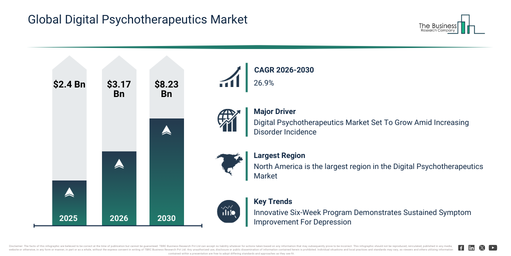
  • Digital Psychotherapeutics Market to Reach $8.22B by 2030 at 26.9% CAGR

    Digital Psychotherapeutics Market to Reach $8.22B by 2030 at 26.9% CAGR

    The Business Research Company’s 2026 market reports feature enhanced tools like market attractiveness analysis, TAM assessment, and company scoring matrices, along with interactive dashboards, deeper supply chain insights, and startup coverage strengthening the depth, usability, and strategic value of insights.

    How Much Will The Market Value Of The Digital Psychotherapeutics Market Grow Between 2026 And 2030?

    The digital psychotherapeutics market has witnessed substantial growth in size during recent years. Projections indicate it will expand from $2.4 billion in 2025 to $3.17 billion in 2026, exhibiting a compound annual growth rate (CAGR) of 32.2%. Historically, this market’s expansion can be ascribed to factors such as mental health stigma reduction, a shortage of therapists, early teletherapy adoption, increasing anxiety prevalence, and the rise of smartphone-based care models.

    The digital psychotherapeutics market is projected to experience rapid expansion over the upcoming years. Its valuation is set to reach $8.23 billion by 2030, demonstrating a compound annual growth rate (CAGR) of 26.9%. This anticipated growth during the projection period stems from factors such as AI-assisted therapy platforms, employer-sponsored mental health initiatives, the clinical validation of digital therapeutics, the rise of VR-based exposure therapy, and the broadening of insurance reimbursement options. Key trends anticipated within this forecast timeframe encompass the expanding utilization of app-based mental health treatments, the increasing uptake of digital CBT platforms, the broadening of remote psychological care frameworks, a surging demand for tools designed for anxiety and stress management, and the incorporation of wearables for monitoring mental well-being.

    Access Your Free Sample Report For In-Depth Market Analysis:

    https://www.thebusinessresearchcompany.com/report/digital-psychotherapeutics-global-market-report

    Which Strong Drivers Are Impacting The Digital Psychotherapeutics Market Growth?

    A growing occurrence of mental health conditions is anticipated to drive the expansion of the digital psychotherapeutics market in the future. These disorders encompass various states impacting an individual’s cognition, feelings, and conduct, resulting in personal suffering and difficulties in everyday activities. This rise in mental health issues stems from elevated stress, societal demands, and traumatic experiences, thereby boosting the need for therapeutic solutions. Digital psychotherapy offers convenience through flexible scheduling and removes the necessity of commuting for therapy sessions. As an illustration, data from November 2023, released by National Health Service (NHS) Digital, a UK government body that gathers and publishes national health and care statistics, indicated that approximately 1 in 5 children and young people aged 8 to 25 years likely experienced a mental disorder in 2023. The documented prevalence stood at 20.3% for the 8 to 16 age group, 23.3% for individuals aged 17 to 19, and 21.7% for young adults aged 20 to 25. Consequently, the increasing frequency of mental health disorders is propelling the expansion of the digital psychotherapeutics market.

    How Is The Digital Psychotherapeutics Market Broken Down By Segment Categories?

    The digital psychotherapeutics market covered in this report is segmented –

    1) By Type: Mobile Apps, Online Platforms, Virtual Reality, Wearable Devices

    2) By Indication: Phobias And Anxiety Disorders, Psychotic Disorders, Other Indications

    3) By Business Model: Direct-To-Patients Or Consumers, Business-To-Business (B2B)

    4) By Application: Prevention, Management, Treatment

    5) By End User: Healthcare Providers, Payers

    Subsegments:

    1) By Mobile Apps: Mental Health Apps, Cognitive Behavioral Therapy (CBT) Apps, Meditation And Mindfulness Apps, Mood Tracking Apps, Sleep Management Apps

    2) By Online Platforms: Telehealth Platforms, Online Therapy Services, Web-Based Mental Health Counseling, Virtual Support Groups, Digital CBT Platforms

    3) By Virtual Reality (VR): VR-Based Exposure Therapy, VR-Assisted CBT, Immersive Meditation VR, VR For Stress Management, VR For PTSD And Anxiety Treatment

    4) By Wearable Devices: Biofeedback Wearables, Stress And Anxiety Monitoring Wearables, Sleep-Tracking Wearables, Heart Rate Variability Wearables, Wearables For Mood Tracking And Emotional Regulation

    Which Trends Are Contributing To Changes In The Digital Psychotherapeutics Market?

    Leading companies in the prescription digital therapeutics market are prioritizing the integration of software-as-a-medical-device (SaMD), including digital psychotherapeutic applications, to enhance treatment accessibility, patient engagement, and clinical effectiveness. These digital psychotherapeutic applications are software-based medical tools designed to deliver structured, evidence-based therapeutic interventions through mobile platforms, thereby enabling features such as guided cognitive-emotional training, remote therapy delivery, and real-time patient support. As an illustration, in April 2024, Otsuka Pharmaceutical Co., Ltd., a Japan-based global healthcare company, secured US Food and Drug Administration (FDA) approval for Rejoyn. This prescription digital therapeutic is intended to support adults with major depressive disorder (MDD) when employed concurrently with antidepressant medication, offering a six-week app-based program that combines cognitive-emotional training and concise therapeutic lessons, is deployable on both iOS and Android smartphones, and has been clinically validated through a large remote randomized trial. Rejoyn works to improve treatment outcomes, patient adherence, and access to structured psychotherapy.

    Which Players Are Present In The Digital Psychotherapeutics Market Space?

    Major companies operating in the digital psychotherapeutics market are AbleTo Inc., BetterHelp Inc., Ginger.io Inc., Meru Health Inc., Novartis International AG, Pear Therapeutics Inc., SilverCloud Health Limited, Spring Health Inc., Starling Minds Inc., SwissDT AG, Talkspace Inc., Woebot Health Inc., CBT Nuggets LLC, Quartet Health Inc., Neurotrack Technologies Inc., Limbix Health Inc., Happify Health LLC, Mindstrong Health Inc., Minddistrict B.V., Ieso Digital Health, Eleos Health, MDLIVE, Lyra Health

    Get The Full Digital Psychotherapeutics Market Report:

    https://www.thebusinessresearchcompany.com/report/digital-psychotherapeutics-global-market-report

    Which Geographic Region Dominates The Digital Psychotherapeutics Market?

    North America was the largest region in the digital psychotherapeutics market in 2025. Asia Pacific is expected to be the fastest-growing region in the forecast period. The regions covered in the digital psychotherapeutics market report are Asia-Pacific, South East Asia, Western Europe, Eastern Europe, North America, South America, Middle East, Africa.

    Request A Customized Digital Psychotherapeutics Market Report For Competitive Insights:

    https://www.thebusinessresearchcompany.com/report/digital-psychotherapeutics-global-market-report

    Browse Through More Reports Similar to the Global Digital Psychotherapeutics Market 2026, By The Business Research Company

    Oncologists Market Report 2026

    https://www.thebusinessresearchcompany.com/report/oncologists-global-market-report

    Digital Mental Health Market Report 2026

    https://www.thebusinessresearchcompany.com/report/digital-mental-health-global-market-report

    Digital Therapeutics Market Report 2026

    https://www.thebusinessresearchcompany.com/report/digital-therapeutics-global-market-report

    Get in touch with us:

    The Business Research Company: https://www.thebusinessresearchcompany.com/

    Americas +1 310-496-7795

    Asia +44 7882 955267 & +91 8897263534

    Europe +44 7882 955267

    Email us at info@tbrc.info

    Follow us on:

    LinkedIn: https://in.linkedin.com/company/the-business-research-company

    YouTube: https://www.youtube.com/channel/UC24_fI0rV8cR5DxlCpgmyFQ

    Global Market Model: https://www.thebusinessresearchcompany.com/global-market-model
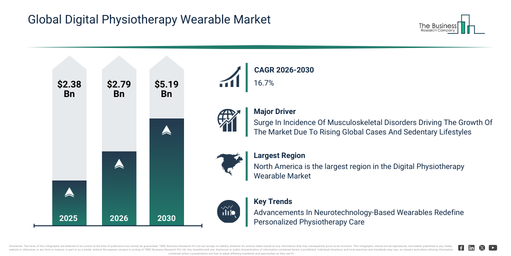
  • Digital Physiotherapy Wearables Market to Reach $5.18B by 2030 at 16.7% CAGR

    Digital Physiotherapy Wearables Market to Reach $5.18B by 2030 at 16.7% CAGR

    The Business Research Company’s 2026 market reports feature enhanced tools like market attractiveness analysis, TAM assessment, and company scoring matrices, along with interactive dashboards, deeper supply chain insights, and startup coverage strengthening the depth, usability, and strategic value of insights.

    What Changes In Market Value Are Expected For The Digital Physiotherapy Wearable Market Over The 2026–2030 Period?

    The digital physiotherapy wearable market size has witnessed rapid expansion in recent years. This market is expected to increase from $2.38 billion in 2025 to $2.79 billion in 2026, achieving a compound annual growth rate (CAGR) of 17.1%. The growth observed in the past can be ascribed to an escalating prevalence of musculoskeletal disorders, the increasing adoption of tele-rehabilitation services, the broadening of wearable health technologies, a heightened focus on patient-centered recovery, and enhancements in motion sensor accuracy.

    The digital physiotherapy wearable market is projected for substantial expansion in the coming years, expected to reach $5.19 billion in 2030, growing at a compound annual growth rate (CAGR) of 16.7%. This anticipated growth is driven by factors such as the increasing demand for remote rehabilitation solutions, the expansion of sports injury recovery programs, growing integration with digital health platforms, the rising use of data analytics in therapy optimization, and increasing investments in smart rehabilitation devices. Key trends for the forecast period include a wider adoption of real-time motion tracking wearables, the escalating use of AI-guided rehabilitation feedback, a growing deployment of home-based physiotherapy solutions, the expansion of sensor-driven exercise monitoring, and an enhanced focus on outcome-based rehabilitation.

    Access Your Free Sample Report For In-Depth Market Analysis:

    https://www.thebusinessresearchcompany.com/report/digital-physiotherapy-wearable-global-market-report

    What Key Factors Are Shaping The Digital Physiotherapy Wearable Market Landscape?

    The escalating occurrence of musculoskeletal disorders is anticipated to stimulate the expansion of the digital physiotherapy wearable market. These conditions affect muscles, bones, joints, tendons, and ligaments, frequently resulting in pain and restricted movement. Sedentary lifestyles are a primary contributor to the rise in musculoskeletal disorders, as prolonged sitting and insufficient physical activity increase stress on muscles and joints, causing discomfort and limited mobility. Digital physiotherapy wearables are instrumental in addressing this increasing incidence by continuously monitoring posture and movement, providing personalized feedback to prevent strain, and promoting optimal musculoskeletal health. For instance, in January 2024, data from GOV.UK, a UK-based government agency, showed that 18.4% of individuals aged 16 and over self-reported a long-term musculoskeletal disorder condition in 2023. Hence, the growing incidence of musculoskeletal disorders is a key driver for the digital physiotherapy wearable market’s growth.

    What Are The Different Segment Types In The Digital Physiotherapy Wearable Market Segment Breakdown?

    The digital physiotherapy wearable market covered in this report is segmented –

    1) By Product Type: Smart Clothing, Wearable Sensors, Exoskeletons, Other Product Types

    2) By Technology: Bluetooth, Wireless Fidelity (Wi-Fi), Radio Frequency Identification (RFID), Other Technologies

    3) By Distribution Channel: Online, Offline

    4) By Application: Musculoskeletal Disorders, Neurological Disorders, Sports And Fitness, Rehabilitation, Other Applications

    5) By End User: Hospitals And Clinics, Home Care Settings, Sports And Fitness Centers, Other End-Users

    Subsegments:

    1) By Smart Clothing: Smart Shirts, Smart Pants, Smart Socks, Smart Gloves, Smart Insoles

    2) By Wearable Sensors: Motion Sensors, Pressure Sensors, Temperature Sensors, Electromyography Sensors, Heart Rate Sensors

    3) By Exoskeletons: Lower Limb Exoskeletons, Upper Limb Exoskeletons, Full Body Exoskeletons, Rehabilitation Exoskeletons, Assistive Exoskeletons

    4) By Other Product Types: Smart Bands, Smart Patches, Head-Mounted Devices, Smart Shoes, Posture Monitoring Devices

    What Market Trends Are Affecting The Digital Physiotherapy Wearable Market?

    Major companies operating in the digital physiotherapy wearable market are focusing on developing advanced second-generation products, including neurotechnology-based wearables, to deliver personalized therapy through real-time neural and motion feedback. A neurotechnology-based wearable combines neuroscience and sensor technology to track and stimulate neural activity, thereby enhancing movement, muscle control, and rehabilitation outcomes by converting brain and nerve signals into immediate therapeutic feedback. For instance, in September 2025, Cionic, a US-based biotechnology company, introduced Neural Sleeve 2. This second-generation wearable neurotechnology is the first device cleared by the Food and Drug Administration (FDA) to simultaneously activate muscle movement and relax muscle spasms using AI-driven MultiStim technology. It aims to improve mobility and muscle re-education for individuals with neurological conditions such as multiple sclerosis, cerebral palsy, spinal cord injury, and stroke, addressing the significant challenge of spasticity that affects movement, pain, and sleep. This clearance signifies a major milestone in mobility care, enabling more comprehensive support for patients nationwide.

    Who Are The Well-Known Companies In The Digital Physiotherapy Wearable Market?

    Major companies operating in the digital physiotherapy wearable market are Medtronic plc, Stryker Corporation, Zimmer Biomet Holdings Inc., Omron Healthcare Co. Ltd., Garmin Ltd., Hinge Health Inc., Sword Health Inc., Valedo Health Inc., Soft Matter, Neofect Co. Ltd., Orpyx Medical Technologies Inc., Avation Medical Inc., ReWalk Robotics Inc., ZetrOZ Systems LLC, Rehabtronics Inc., Motus Nova Inc., DorsaVi Ltd., Rebee Health Private Limited, Anatomech, KnitRegen

    Get The Full Digital Physiotherapy Wearable Market Report:

    https://www.thebusinessresearchcompany.com/report/digital-physiotherapy-wearable-global-market-report

    Which Region Is The Leading Market For The Digital Physiotherapy Wearable Market?

    North America was the largest region in the digital physiotherapy wearable market in 2025. Asia-Pacific is expected to be the fastest-growing region in the forecast period. The regions covered in the digital physiotherapy wearable market report are Asia-Pacific, South East Asia, Western Europe, Eastern Europe, North America, South America, Middle East, Africa.

    Request A Customized Digital Physiotherapy Wearable Market Report For Competitive Insights:

    https://www.thebusinessresearchcompany.com/report/digital-physiotherapy-wearable-global-market-report

    Browse Through More Reports Similar to the Global Digital Physiotherapy Wearable Market 2026, By The Business Research Company

    Physiotherapy Services Market Report 2026

    https://www.thebusinessresearchcompany.com/report/physiotherapy-services-global-market-report

    Wearable Medical Devices Market 2026

    https://www.thebusinessresearchcompany.com/report/wearable-medical-devices-market

    Wearable Computing Market Report 2026

    https://www.thebusinessresearchcompany.com/report/wearable-computing-global-market-report

    Get in touch with us:

    The Business Research Company: https://www.thebusinessresearchcompany.com/

    Americas +1 310-496-7795

    Asia +44 7882 955267 & +91 8897263534

    Europe +44 7882 955267

    Email us at info@tbrc.info

    Follow us on:

    LinkedIn: https://in.linkedin.com/company/the-business-research-company

    YouTube: https://www.youtube.com/channel/UC24_fI0rV8cR5DxlCpgmyFQ

    Global Market Model: https://www.thebusinessresearchcompany.com/global-market-model