Category: Healthcare Services

  • Increasing digestive disease prevalence is boosting demand in the dysphagia supplements market

    Increasing digestive disease prevalence is boosting demand in the dysphagia supplements market

    The Business Research Company’s 2026 market reports feature enhanced tools like market attractiveness analysis, TAM assessment, and company scoring matrices, along with interactive dashboards, deeper supply chain insights, and startup coverage strengthening the depth, usability, and strategic value of insights.

    How Does The Market Size Of The Dysphagia Supplement Market Compare Between 2026 And 2030?

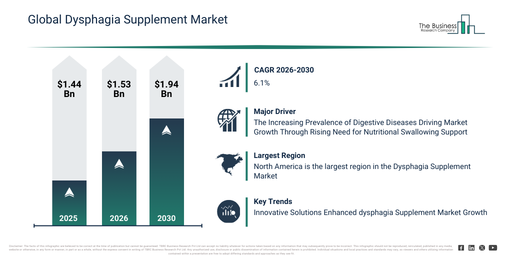
    The dysphagia supplement market has experienced robust expansion recently. Projections indicate an increase from $1.44 billion in 2025 to $1.53 billion in 2026, demonstrating a compound annual growth rate (CAGR) of 6.0%. Historically, this expansion has been driven by factors such as an expanding aging population, an increase in dysphagia cases linked to strokes, the implementation of hospital nutrition protocols, greater awareness of malnutrition, and the broadening of long-term care services.

    The dysphagia supplement market size is projected to experience substantial expansion over the upcoming years. This market is anticipated to reach a valuation of $1.94 billion by 2030, exhibiting a compound annual growth rate (CAGR) of 6.1%. Factors contributing to this growth during the forecast timeframe include the increased adoption of homecare nutrition, the availability of premium clinical supplements, the emergence of personalized nutrition products, a rise in chronic neurological disorders, and improved healthcare nutrition reimbursement. Key trends anticipated for the forecast period encompass a growing need for texture-modified nutrition, wider acceptance of ready-to-drink thickened beverages, an elevated emphasis on clinical nutrition within elderly care, the proliferation of protein and calorie-dense supplements, and advancements in formulations to enhance taste and palatability.

    Access Your Free Sample Report For In-Depth Market Analysis:

    https://www.thebusinessresearchcompany.com/report/dysphagia-supplement-global-market-report

    What Significant Factors Are Influencing The Dysphagia Supplement Market Expansion?

    The rising incidence of digestive diseases is projected to drive future expansion within the dysphagia supplement market. These conditions refer to a broad spectrum of gastrointestinal ailments affecting the esophagus, stomach, intestines, liver, and pancreas. The increasing occurrence of digestive diseases is attributed to an aging global population, suboptimal dietary practices, inactive lifestyles, obesity, and environmental factors. The dysphagia supplement market caters to this trend by offering nutrient-dense, easy-to-swallow formulations designed to help individuals with swallowing difficulties maintain sufficient nutrition throughout the progression of digestive diseases. As an illustration, in December 2023, the IBD Registry, a UK-based non-profit organization, reported reaching over 5,300 individuals with Inflammatory Bowel Disease (IBD) by 2023, which signifies an increase of more than 3,000 members compared to 2022. This demonstrates how the growing prevalence of digestive diseases is stimulating the growth of the dysphagia supplement market.

    How Is Segmentation Applied In The Dysphagia Supplement Market Segment Analysis?

    The dysphagia supplement market covered in this report is segmented –

    1) By Type: Powder Thickener, Ready To Drink Thickened Beverages, Instant Food, Oral Nutritional Supplements

    2) By Indication: Oropharyngeal Dysphagia, Esophageal Dysphagia

    3) By Applications: Hospitals, Nursing Homes, Retail Pharmacies, Drug Stores, Supermarkets

    Subsegments:

    1) By Powder Thickener: Starch-Based Thickeners, Gum-Based Thickeners

    2) By Ready To Drink Thickened Beverages: Thickened Water, Thickened Juices, Thickened Milk And Dairy Beverages

    3) By Instant Food: Instant Soups, Instant Porridge, Instant Pureed Meals

    4) By Oral Nutritional Supplements: Protein Supplements, Fiber Supplements, Caloric Supplements, Vitamin And Mineral Supplements

    What Trends Are Affecting The Direction Of The Dysphagia Supplement Market?

    Leading companies in the dysphagia supplement market are concentrating on developing innovative products like food and beverage thickeners to improve swallowing safety, enhance patient comfort, and reduce the risk of aspiration for individuals with dysphagia. Food and beverage thickeners are substances added to liquids or foods to alter their consistency, thereby making them easier and safer to swallow by aligning the texture with the patient’s swallowing capability and minimizing choking hazards. For instance, in January 2023, Nestlé India, an India-based food and beverage company, launched ThickenUp Clear, a xanthan gum–based thickener designed to assist patients with oropharyngeal dysphagia. The product is tasteless, colorless, odorless, and amylase-resistant, allowing it to be effortlessly mixed into hot or cold liquids while maintaining a stable consistency. ThickenUp Clear provides an effective, instant-thickening solution that enhances swallowing safety and offers a healthier, environmentally friendly option for individuals managing dysphagia.

    Who Are The Companies Participating In The Dysphagia Supplement Market Environment?

    Major companies operating in the dysphagia supplement market are Nestlé S.A., Abbott Laboratories, Fresenius SE & Co. KGaA, Ingredion Incorporated, Tate & Lyle PLC, Kent Precision Foods Group, Prosource, Matsun Nutrition Inc., Medtrition Inc., Simply Thick LLC, Hormel Health Labs, Nutrinovo Ltd., Nutridrinks Limited, RTH Nutrition, Nutritional Research, NutriLicious, Thick-It, Slo Drinks, Nutra Balance Products, Nutilis, Clinico Co Ltd, Kissei Pharmaceutical Co Ltd, Nutri Co Ltd, HiPP GmbH & Co Vertrieb KG, Foods Group Inc.

    Get The Full Dysphagia Supplement Market Report:

    https://www.thebusinessresearchcompany.com/report/dysphagia-supplement-global-market-report

    Which Region Represents The Largest Share Of The Dysphagia Supplement Market?

    North America was the largest region in the dysphagia supplement market in 2025. North America is expected to be the fastest-growing region in the forecast period. The regions covered in the dysphagia supplement market report are Asia-Pacific, South East Asia, Western Europe, Eastern Europe, North America, South America, Middle East, Africa.

    Request A Customized Dysphagia Supplement Market Report For Competitive Insights:

    https://www.thebusinessresearchcompany.com/report/dysphagia-supplement-global-market-report

    Browse Through More Reports Similar to the Global Dysphagia Supplement Market 2026, By The Business Research Company

    Esophageal Dysphagia Market Report 2026

    https://www.thebusinessresearchcompany.com/report/esophageal-dysphagia-global-market-report

    Dysphagia Management Market Report 2026

    https://www.thebusinessresearchcompany.com/report/dysphagia-management-global-market-report

    Brain Health Supplements Market Report 2026

    https://www.thebusinessresearchcompany.com/report/brain-health-supplements-global-market-report

    Get in touch with us:

    The Business Research Company: https://www.thebusinessresearchcompany.com/

    Americas +1 310-496-7795

    Asia +44 7882 955267 & +91 8897263534

    Europe +44 7882 955267

    Email us at info@tbrc.info

    Follow us on:

    LinkedIn: https://in.linkedin.com/company/the-business-research-company

    YouTube: https://www.youtube.com/channel/UC24_fI0rV8cR5DxlCpgmyFQ

    Global Market Model: https://www.thebusinessresearchcompany.com/global-market-model
  • Rising digestive disorders are driving growth in the dysphagia management market

    Rising digestive disorders are driving growth in the dysphagia management market

    The Business Research Company’s 2026 market reports feature enhanced tools like market attractiveness analysis, TAM assessment, and company scoring matrices, along with interactive dashboards, deeper supply chain insights, and startup coverage strengthening the depth, usability, and strategic value of insights.

    What Is The Forecasted Market Size Trajectory Of The Dysphagia Management Market From 2026 To 2030?

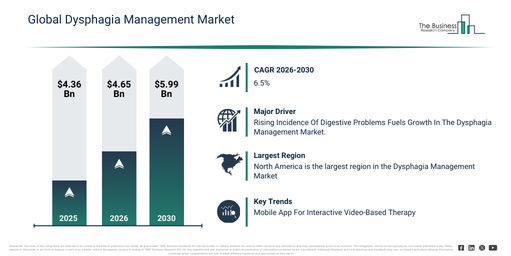
    The dysphagia management market has experienced significant expansion in recent years. It is anticipated to increase from $4.36 billion in 2025 to $4.65 billion in 2026, reflecting a compound annual growth rate (CAGR) of 6.7%. This historical growth can be attributed to factors such as the prevalence of neurological diseases, the rising aging population, the adoption of speech therapy, hospital-based nutrition care services, and increased awareness regarding dysphagia.

    The dysphagia management market is poised for significant expansion in the coming years. It is projected to reach $5.99 billion by 2030, exhibiting a compound annual growth rate (CAGR) of 6.5%. This anticipated growth during the forecast period is driven by factors such as home-based dysphagia care, advanced nutritional formulations, early screening protocols, digital therapy tools, and the expansion of long-term care facilities. Key trends influencing this period encompass the increasing prevalence of swallowing disorders, a greater reliance on nutritional support solutions, the broadening of feeding tube-based interventions, the proliferation of multidisciplinary therapy programs, and advancements in diagnosis and clinical assessment.

    Access Your Free Sample Report For In-Depth Market Analysis:

    https://www.thebusinessresearchcompany.com/report/dysphagia-management-global-market-report

    Which Important Drivers Are Guiding The Dysphagia Management Market Growth?

    The increasing occurrence of digestive issues is anticipated to propel the growth of the dysphagia management market moving forward. Digestive diseases cover a broad spectrum of conditions affecting the gastrointestinal tract, ranging from minor concerns like heartburn to severe illnesses, including cancers and motility disorders. The rise in digestive problems stems from factors such as aging populations, changes in diet, sedentary lifestyles, stress, and metabolic disturbances related to obesity. The dysphagia management market supports this upward trend by offering therapeutic strategies aimed at alleviating swallowing difficulties that arise from conditions such as gastroesophageal reflux disease (GERD), achalasia, and esophageal cancers. For instance, in January 2023, according to the UK Gut Health Report 2023 published by Holland & Barrett International Limited, a UK-based multinational health retailer, 58% of individuals in the UK experienced gut health problems, and 45% reported chronic digestive issues lasting three months or more. Therefore, the growing incidence of digestive problems is a key driver for the expansion of the dysphagia management market.

    What Segment Categories Shape The Dysphagia Management Market Segment Landscape?

    The dysphagia management market covered in this report is segmented –

    1) By Product: Drug (Proton Pump Inhibitors), Feeding Tube, Nutritional Solutions

    2) By Treatment And Therapies: Esophageal Dysphagia, Oropharyngeal Dysphagia, Severe Dysphagia

    3) By Distribution Channel: Hospital Pharmacies, Retail Pharmacies, Drug Stores

    Subsegments:

    1) By Drug (Proton Pump Inhibitors): Oral Proton Pump Inhibitors (Ppis), Injectable Proton Pump Inhibitors

    2) By Feeding Tube: Nasogastric Tubes (Ng Tubes), Percutaneous Endoscopic Gastrostomy (Peg) Tubes, Gastrostomy Tubes (G-Tubes), Jejunostomy Tubes (J-Tubes), Balloon Tubes

    3) By Nutritional Solutions: Liquid Nutritional Supplements, High-Calorie Nutritional Drinks, Modified Texture Foods, Enteral Nutrition Formulas

    What Trends Are Influencing The Evolution Of The Dysphagia Management Market?

    Major companies operating within the dysphagia management market are concentrating on developing innovative solutions, such as mobile applications for interactive video-based therapy sessions, to enhance patient care, improve treatment accessibility, and support better swallowing outcomes. Mobile applications in dysphagia management are digital platforms that enable real-time, remote therapeutic interactions via video, offering features like live consultations, progress tracking, session scheduling, and guided therapeutic exercises to facilitate personalized and continuous care. For instance, in October 2023, Amrita Hospital, an India-based healthcare provider, launched SWALLO, a mobile app crafted to assist individuals with dysphagia by delivering interactive video-based therapy sessions with medical experts, enabling patients to receive therapy without the need for daily hospital visits. The app provides live, appointment-based sessions, supports Malayalam with English subtitles, and is scheduled for expansion into additional Indian languages to improve accessibility and patient engagement.

    Who Are The Companies Operating Across The Dysphagia Management Market Value Chain?

    Major companies operating in the dysphagia management market are Nestlé Health Science, Danone S.A., Medline Industries LP, Fresenius Kabi AG, Phagenesis Ltd., Nutricia Advanced Medical Nutrition, VitalStim UK Ltd., Abbott Laboratories, SimplyThick LLC, Kent Precision Foods Group, B Braun Melsungen AG, Medtrition, RTH Nutrition, Nutritional Research, NutriLicious, Cook Medical Inc., Medtronic plc, Smiths Medical, Boston Scientific Corporation, Becton Dickinson and Company, Olympus Corporation, KARL STORZ, Otsuka Pharmaceutical Co Ltd, Eisai Co Ltd, Cardinal Health, Avanos Medical Inc, Dysphagia Systems Inc.

    Get The Full Dysphagia Management Market Report:

    https://www.thebusinessresearchcompany.com/report/dysphagia-management-global-market-report

    Which Geographic Region Dominates The Dysphagia Management Market?

    North America was the largest region in the dysphagia management market in 2025. The regions covered in the dysphagia management market report are Asia-Pacific, South East Asia, Western Europe, Eastern Europe, North America, South America, Middle East, Africa.

    Request A Customized Dysphagia Management Market Report For Competitive Insights:

    https://www.thebusinessresearchcompany.com/report/dysphagia-management-global-market-report

    Browse Through More Reports Similar to the Global Dysphagia Management Market 2026, By The Business Research Company

    Spasmodic Dysphonia Treatment Market Report 2026

    https://www.thebusinessresearchcompany.com/report/spasmodic-dysphonia-treatment-global-market-report

    Dysphagia Supplement Market Report 2026

    https://www.thebusinessresearchcompany.com/report/dysphagia-supplement-global-market-report

    Esophageal Dysphagia Market Report 2026

    https://www.thebusinessresearchcompany.com/report/esophageal-dysphagia-global-market-report

    Get in touch with us:

    The Business Research Company: https://www.thebusinessresearchcompany.com/

    Americas +1 310-496-7795

    Asia +44 7882 955267 & +91 8897263534

    Europe +44 7882 955267

    Email us at info@tbrc.info

    Follow us on:

    LinkedIn: https://in.linkedin.com/company/the-business-research-company

    YouTube: https://www.youtube.com/channel/UC24_fI0rV8cR5DxlCpgmyFQ

    Global Market Model: https://www.thebusinessresearchcompany.com/global-market-model
  • Dyslipidemia market analysis with future growth outlook

    Dyslipidemia market analysis with future growth outlook

    The Business Research Company’s 2026 market reports feature enhanced tools like market attractiveness analysis, TAM assessment, and company scoring matrices, along with interactive dashboards, deeper supply chain insights, and startup coverage strengthening the depth, usability, and strategic value of insights.

    How Much Will The Market Value Of The Dyslipidemia Market Grow Between 2026 And 2030?

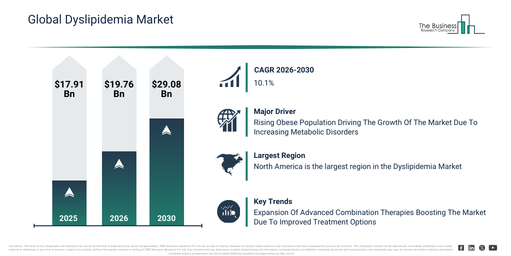
    The dyslipidemia market size has experienced rapid growth in recent years. It is anticipated to expand from $17.91 billion in 2025 to $19.76 billion in 2026, achieving a compound annual growth rate (CAGR) of 10.3%. Historically, this expansion can be attributed to the cardiovascular disease burden, the adoption of statin therapy, lipid screening programs, updates in clinical guidelines, and the expansion of primary care.

    The dyslipidemia market is projected to experience substantial expansion in the coming years. By 2030, its value is anticipated to reach $29.08 billion, exhibiting a compound annual growth rate (CAGR) of 10.1%. This growth during the forecast timeframe is primarily driven by factors such as the expansion of precision cardiology, the emergence of novel lipid treatments, the adoption of digital lipid monitoring, an increased emphasis on preventive healthcare, and a rising aging population. Key trends anticipated during this period encompass the increasing application of advanced lipid-lowering interventions, a greater uptake of PCSK9 inhibitors and siRNA, a heightened concentration on reducing cardiovascular risk, the broader implementation of combination drug regimens, and enhancements in patient monitoring and adherence.

    Access Your Free Sample Report For In-Depth Market Analysis:

    https://www.thebusinessresearchcompany.com/report/dyslipidemia-global-market-report

    What Major Factors Are Driving The Dyslipidemia Market Forward?

    The expanding number of individuals affected by obesity is anticipated to fuel the growth of the dyslipidemia market in the coming years. The obese population refers to those with excessive body fat, a condition that poses significant health threats, including metabolic and cardiovascular complications. This demographic is increasing primarily due to lifestyle changes promoting a sustained energy imbalance, such as sedentary habits, high-calorie diets, reduced physical activity, alongside environmental and socioeconomic factors. The dyslipidemia market is supported by this trend because obesity disrupts lipid metabolism, leading to abnormal cholesterol and triglyceride levels. These abnormalities heighten cardiovascular risk and require medical management. For illustration, in March 2024, the World Health Organization, a Switzerland-based intergovernmental health agency, indicated that roughly one in eight people across the globe were living with obesity. This figure included 2.5 billion adults aged 18 and older, and 37 million children under five years old who were overweight. Hence, the rising obese population acts as a significant driver for the expansion of the dyslipidemia market.

    Which Segment Types Are Examined In The Dyslipidemia Market Segment Study?

    The dyslipidemia market covered in this report is segmented –

    1) By Treatment: Statins, Bile Acid Sequestrants, PCSK9 Inhibitors, Small Interfering RNA (siRNA), Cholesterol Absorption Inhibitors, Fibrates, Niacins, Omega-3 Fatty Acid Derivatives, Other Treatments

    2) By Route Of Administration: Oral, Parental

    3) By Distribution Channel: Hospital Pharmacies, Retail Pharmacies, Drug Store, Online Pharmacies

    Subsegments:

    1) By Statins: Atorvastatin, Simvastatin, Rosuvastatin, Pravastatin

    2) By Bile Acid Sequestrants: Cholestyramine, Colesevelam

    3) By PCSK9 Inhibitors: Evolocumab, Alirocumab

    4) By Small Interfering RNA (siRNA): Inclisiran

    5) By Cholesterol Absorption Inhibitors: Ezetimibe

    6) By Fibrates: Fenofibrate, Gemfibrozil

    7) By Niacins: Nicotinic Acid

    8) By Omega-3 Fatty Acid Derivatives: Eicosapentaenoic Acid (EPA), Docosahexaenoic Acid (DHA)

    9) By Other Treatments: Herbal Supplements, Combination Therapies

    Which Trends Are Impacting The Progress Of The Dyslipidemia Market?

    Major companies in the dyslipidemia market are concentrating on developing advanced combination therapies to enhance treatment efficacy, improve patient compliance, and tackle multiple lipid abnormalities within a single approach. These advanced combination therapies involve treatment methods that integrate two or more therapeutic agents to target distinct pathways in lipid regulation, thereby leading to better outcomes, fewer side effects, and greater flexibility in managing complex lipid disorders. For example, in March 2024, Esperion Therapeutics Inc., a US-based pharmaceutical company, announced that NEXLETOL (bempedoic acid) and NEXLIZET (a combination of bempedoic acid and ezetimibe) received updated approvals from the U.S. Food and Drug Administration, permitting their use as monotherapies or in conjunction with statins. These non-statin oral medications are designed to lower low-density lipoprotein cholesterol (LDL-C) and reduce cardiovascular risk, offering a vital option for patients who are unable to tolerate statins or prefer alternative lipid-lowering strategies.

    Which Players Are Part Of The Competitive Landscape Of The Dyslipidemia Market?

    Major companies operating in the dyslipidemia market are Pfizer Inc, Merck & Co Inc, Sanofi SA, AstraZeneca plc, Novartis AG, Amgen Inc, Viatris Inc, Teva Pharmaceutical Industries Ltd, Zydus Lifesciences Ltd, Lupin Pharmaceuticals Inc, Alnylam Pharmaceuticals Inc, Amarin Corporation, Esperion Therapeutics Inc, NewAmsterdam Pharma Holding BV, Regeneron Pharmaceuticals Inc, Johnson & Johnson, Bristol-Myers Squibb Company, Bayer AG, AbbVie Inc, GlaxoSmithKline plc, Takeda Pharmaceutical Company Limited, Sun Pharmaceutical Industries Ltd, Dr Reddys Laboratories Ltd, Cipla Limited, Torrent Pharmaceuticals Ltd, Roche Holding AG, Boehringer Ingelheim GmbH, Novo Nordisk A/S

    Get The Full Dyslipidemia Market Report:

    https://www.thebusinessresearchcompany.com/report/dyslipidemia-global-market-report

    Which Region Is The Leading Market For The Dyslipidemia Market?

    North America was the largest region in the dyslipidemia market in 2025. Asia-Pacific is expected to be the fastest-growing region in the forecast period. The regions covered in the dyslipidemia market report are Asia-Pacific, South East Asia, Western Europe, Eastern Europe, North America, South America, Middle East, Africa.

    Request A Customized Dyslipidemia Market Report For Competitive Insights:

    https://www.thebusinessresearchcompany.com/report/dyslipidemia-global-market-report

    Browse Through More Reports Similar to the Global Dyslipidemia Market 2026, By The Business Research Company

    Vitamin D Market Report 2026

    https://www.thebusinessresearchcompany.com/report/vitamin-d-global-market-report

    Anosmia Market Report 2026

    https://www.thebusinessresearchcompany.com/report/anosmia-global-market-report

    Lipid Market Report 2026

    https://www.thebusinessresearchcompany.com/report/lipid-global-market-report

    Get in touch with us:

    The Business Research Company: https://www.thebusinessresearchcompany.com/

    Americas +1 310-496-7795

    Asia +44 7882 955267 & +91 8897263534

    Europe +44 7882 955267

    Email us at info@tbrc.info

    Follow us on:

    LinkedIn: https://in.linkedin.com/company/the-business-research-company

    YouTube: https://www.youtube.com/channel/UC24_fI0rV8cR5DxlCpgmyFQ

    Global Market Model: https://www.thebusinessresearchcompany.com/global-market-model
  • Dyslexia treatment market forecast with growth trends

    Dyslexia treatment market forecast with growth trends

    The Business Research Company’s 2026 market reports feature enhanced tools like market attractiveness analysis, TAM assessment, and company scoring matrices, along with interactive dashboards, deeper supply chain insights, and startup coverage strengthening the depth, usability, and strategic value of insights.

    What Changes In Market Value Are Expected For The Dyslexia Treatment Market Over The 2026–2030 Period?

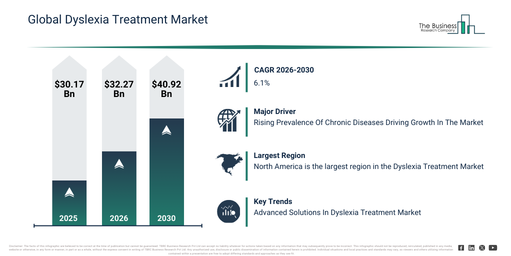
    The dyslexia treatment market size has experienced robust growth in recent years. It is projected to expand from $30.17 billion in 2025 to $32.27 billion in 2026, demonstrating a compound annual growth rate (CAGR) of 6.9%. The growth observed in the past can be attributed to increased learning disability awareness, the implementation of special education programs, the widespread adoption of school-based interventions, advancements in literacy curriculum development, and the availability of therapists.

    The dyslexia treatment market is poised for robust expansion in the coming years. Its valuation is projected to reach $40.92 billion by 2030, demonstrating a compound annual growth rate (CAGR) of 6.1%. Factors contributing to this anticipated growth include the rise of digital education platforms, the adoption of personalized learning models, the implementation of early screening programs, the broader availability of home-based therapies, and the increasing focus on inclusive education policies. Key developments expected during this period involve the expanding acceptance of structured literacy programs, a greater reliance on multisensory learning methods, the proliferation of digital learning and supportive technologies, an intensified emphasis on early childhood intervention, and the incorporation of speech and occupational therapies.

    Access Your Free Sample Report For In-Depth Market Analysis:

    https://www.thebusinessresearchcompany.com/report/dyslexia-treatment-global-market-report

    Which Key Drivers Are Affecting The Dyslexia Treatment Market Development?

    The expanding presence of chronic diseases is anticipated to boost the dysautonomia (autonomic dysfunction) market’s growth in the future. A chronic disease refers to a health condition or sickness that endures for more than three months. The surge in chronic diseases stems from factors such as a higher incidence of multimorbidity, where individuals are diagnosed with multiple chronic disorders concurrently. Dysautonomia (autonomic dysfunction) significantly impacts chronic diseases by hindering the body’s capacity to govern vital processes such as heart rate, blood pressure, and digestion, frequently worsening symptoms and making management more difficult. For instance, in April 2025, the NHS Confederation, a UK-based national association, projected that by 2035, approximately 17% of the UK population might be living with at least four chronic conditions. Consequently, the growing occurrence of chronic diseases is fueling the expansion of the dysautonomia (autonomic dysfunction) industry.

    How Are Different Segments Classified In The Dyslexia Treatment Market Segment Analysis?

    The dyslexia treatment market covered in this report is segmented –

    1) By Type: Double Deficit Dyslexia, Visual Dyslexia, Phonological Dyslexia, Other Types

    2) By Therapy: Occupational Therapy, Speech Therapy, Cognitive Behavioral Therapy

    3) By Distribution Channel: Hospital Pharmacies, Retail Pharmacies, Other Distribution Channels

    4) By End Users: Psychiatric Institutions, Rehabilitation Centers, Home Care, Other End-users

    Subsegments:

    1) By Double Deficit Dyslexia: Phonological And Visual Processing Treatment, Integrated Therapy Approaches

    2) By Visual Dyslexia: Visual Processing Treatment, Optometric And Visual Therapy, Color Overlay Therapy

    3) By Phonological Dyslexia: Phonics-Based Treatment, Speech And Language Therapy, Auditory Training And Exercises

    4) By Other Types: Rapid Naming Dyslexia, Motor Dyslexia, Surface Dyslexia

    What Trends Are Transforming The Dyslexia Treatment Market?

    Leading companies in the dyslexia treatment market are prioritizing the creation of advanced solutions like white noise capabilities to boost focus, lessen distractions, and improve reading fluency for neurodivergent students. A white noise feature functions as an auditory instrument that delivers a consistent background sound to aid concentration and cognitive processing, proving especially beneficial for individuals with dyslexia, ADHD, and related learning variations. For example, in October 2024, Promova Limited, a US-based technology company, unveiled Dyslexia Mode 2.0, an improved accessibility feature crafted to facilitate language learning for those with dyslexia and other neurodiverse conditions. This updated version incorporates adjustable font sizes, color-shifting options to decrease visual contrast, and the removal of all-caps text to enhance readability, alongside helpful auditory elements such as white noise. Developed with expert contributions, including guidance from dyslexic designer Martin Pysny, Dyslexia Mode 2.0 provides a more inclusive and comfortable learning setting tailored to users with distinct cognitive and visual processing needs.

    Who Are The Companies Driving Activity In The Dyslexia Treatment Market?

    Major companies operating in the dyslexia treatment market are Pfizer Inc., Astrazeneca Plc, Novartis AG, Takeda Pharmaceutical Company Limited, Eli Lilly and Company, Viatris Inc., Teva Pharmaceutical Industries Ltd., Purdue Pharma, Apotex Corporation, Endo International Plc, Amneal Pharmaceuticals LLC, Unither Pharmaceuticals LLC, RPG Life Sciences Ltd., Jubilant Pharma Limited, Breckenridge Pharmaceutical Inc., Rhodes Pharmaceuticals L.P., Cian Healthcare Pvt. Ltd, Lexia Learning Systems LLC, Wallace Pharmaceuticals Ltd., Ironshore Pharmaceuticals Inc., DK Pharmachem Pvt Ltd., Speechify Inc., Lingit AS, Lyfta, Nessy Learning Ltd.

    Get The Full Dyslexia Treatment Market Report:

    https://www.thebusinessresearchcompany.com/report/dyslexia-treatment-global-market-report

    Where Is The Dyslexia Treatment Market Primarily Concentrated By Region?

    North America was the largest region in the dyslexia treatment market in 2025. Asia-Pacific is expected to be the fastest-growing region in the forecast period. The regions covered in the dyslexia treatment market report are Asia-Pacific, South East Asia, Western Europe, Eastern Europe, North America, South America, Middle East, Africa.

    Request A Customized Dyslexia Treatment Market Report For Competitive Insights:

    https://www.thebusinessresearchcompany.com/report/dyslexia-treatment-global-market-report

    Browse Through More Reports Similar to the Global Dyslexia Treatment Market 2026, By The Business Research Company

    Episodic Ataxia Treatment Market Report 2026

    https://www.thebusinessresearchcompany.com/report/episodic-ataxia-treatment-global-market-report

    Speech Impairment Market Report 2026

    https://www.thebusinessresearchcompany.com/report/speech-impairment-global-market-report

    Speech And Language Disorder Market Report 2026

    https://www.thebusinessresearchcompany.com/report/speech-and-language-disorder-global-market-report

    Get in touch with us:

    The Business Research Company: https://www.thebusinessresearchcompany.com/

    Americas +1 310-496-7795

    Asia +44 7882 955267 & +91 8897263534

    Europe +44 7882 955267

    Email us at info@tbrc.info

    Follow us on:

    LinkedIn: https://in.linkedin.com/company/the-business-research-company

    YouTube: https://www.youtube.com/channel/UC24_fI0rV8cR5DxlCpgmyFQ

    Global Market Model: https://www.thebusinessresearchcompany.com/global-market-model
  • Dysautonomia market trends influencing growth through 2030

    Dysautonomia market trends influencing growth through 2030

    The Business Research Company’s 2026 market reports feature enhanced tools like market attractiveness analysis, TAM assessment, and company scoring matrices, along with interactive dashboards, deeper supply chain insights, and startup coverage strengthening the depth, usability, and strategic value of insights.

    By 2030, What Market Size Is The Dysautonomia (Autonomic Dysfunction) Market Expected To Reach Based On Its 2026 Value?

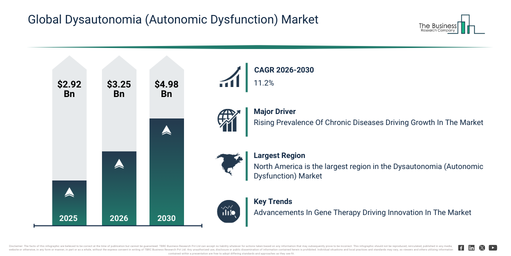
    The market size for dysautonomia (autonomic dysfunction) has experienced rapid growth in recent years. It is anticipated to increase from $2.92 billion in 2025 to $3.25 billion in 2026, demonstrating a compound annual growth rate (CAGR) of 11.5%. The expansion observed in the historic period can be attributed to factors such as neurological disorder prevalence, the availability of diagnostic tests, the growth in autonomic research, the expansion of specialist clinics, and various patient advocacy initiatives.

    The market size for dysautonomia (autonomic dysfunction) is anticipated to experience substantial growth in the coming years, projected to reach $4.98 billion by 2030, exhibiting a compound annual growth rate (CAGR) of 11.2%. This expected expansion can be attributed to the adoption of wearable monitoring, the development of personalized treatment protocols, the broadening of genetic research, the integration of digital health solutions, and an increased demand for long-term care. Key trends for the forecast period include a heightened awareness of autonomic nervous system disorders, a rise in comprehensive diagnostic testing, the advancement of multidisciplinary treatment approaches, the expansion of symptom management therapies, and a growing emphasis on chronic disease monitoring.

    Access Your Free Sample Report For In-Depth Market Analysis:

    https://www.thebusinessresearchcompany.com/report/dysautonomia-autonomic-dysfunction-global-market-report

    What Factors Are Contributing To The Growth Of The Dysautonomia (Autonomic Dysfunction) Market?

    The dysautonomia (autonomic dysfunction) market is anticipated to expand due to an increase in autoimmune and neurological disorders. These conditions involve damage to the central or peripheral nervous system by the immune system or disease processes, resulting in inflammation, nerve dysfunction, and compromised autonomic regulation. Factors contributing to the rise in these disorders include genetic predisposition, environmental influences, shifts in lifestyle, infectious agents, and enhanced diagnostic capabilities. The dysautonomia (autonomic dysfunction) market facilitates this development by assisting healthcare professionals in identifying early autonomic involvement in conditions like Sjögren’s syndrome, multiple sclerosis, Parkinson’s disease, and multiple system atrophy (MSA), which allows for improved monitoring and personalized treatment approaches. As an illustration, in March 2023, the Alzheimer’s Association, a US-based nonprofit voluntary health organization, reported that in 2023, around 6.7 million Americans aged 65 and older were living with Alzheimer’s dementia, a figure expected to climb to 13.8 million by 2060. Consequently, the growing incidence of autoimmune and neurological disorders is fueling the expansion of the dysautonomia (autonomic dysfunction) market.

    How Is The Dysautonomia (Autonomic Dysfunction) Market Categorized Across Its Segment Groups?

    The dysautonomia (autonomic dysfunction) market covered in this report is segmented –

    1) By Type: Neurogenic Orthostatic Hypotension (NOH), Postural Orthostatic Tachycardia Syndrome (POTS), Multiple System Atrophy (MSA), Pure Autonomic Failure (PAF), Other Types

    2) By Tests: Cardiovagal and Vasomotor Function Tests, Thermoregulatory Sweat Test (TST), Sympathetic Skin Response (SSR), Quantitative Sudomotor Axon Reflex Test, Other Tests

    3) By Treatment: Physical Therapy, Exercise Therapy, Counseling, Other Treatments

    4) By Distribution Channel: Hospital Pharmacy, Online Pharmacy, Retail Pharmacy

    5) By End User: Hospitals, Clinics, Diagnostic Centers, Research Institutes

    Subsegments:

    1) By Neurogenic Orthostatic Hypotension (NOH): Primary NOH, Secondary NOH (due to Parkinson’s Disease, Diabetes, etc.), Pharmacological Management of NOH, Non-Pharmacological Interventions

    2) By Postural Orthostatic Tachycardia Syndrome (POTS): Hyperadrenergic POTS, Hypovolemic POTS, Neuropathic POTS, Autoimmune POTS, Treatment With Beta-Blockers, Fludrocortisone, And Salt Supplements

    3) By Multiple System Atrophy (MSA): MSA-P (Parkinsonism), MSA-C (Cerebellar), MSA-A (Autonomic), Disease-Modifying and Symptomatic Treatment

    4) By Pure Autonomic Failure (PAF): Idiopathic PAF, Secondary PAF (due to neurodegenerative diseases), Autonomic Supportive Treatments

    5) By Other Types: Familial Dysautonomia (FD), Diabetic Autonomic Neuropathy, Horner’s Syndrome, Autoimmune Autonomic Ganglionopathy, Chronic Fatigue Syndrome-related Dysautonomia

    What Trends Are Shaping The Future Of The Dysautonomia (Autonomic Dysfunction) Market?

    Leading companies in the dysautonomia (autonomic dysfunction) market are focusing on advancing gene therapy approaches, such as recombinant adeno-associated virus (rAAV) systems, to improve targeted gene delivery and enhance therapeutic outcomes for patients with genetic forms of dysautonomia. A recombinant adeno-associated virus refers to a modified, non-pathogenic viral vector engineered to deliver therapeutic genes into specific cells, enabling long-term expression of corrected or functional proteins without causing disease. For instance, in January 2025, Tikun Therapeutics Inc., a US-based biotechnology company, received U.S. Food and Drug Administration (FDA) approval for Orphan Drug and Rare Pediatric Disease Designations for rAAV2-U1a-hELP1, a gene therapy candidate for optic neuropathy in familial dysautonomia, and BPN-36964, a small-molecule splicing modulator for systemic treatment. These therapies aim to correct the underlying genetic defects responsible for familial dysautonomia, offering the potential for durable, disease-modifying benefits beyond symptomatic management.

    Which Firms Are Influencing Competition In The Dysautonomia (Autonomic Dysfunction) Market?

    Major companies operating in the dysautonomia (autonomic dysfunction) market are Teva Pharmaceutical Industries Ltd., Aurobindo Pharma Limited, Hikma Pharmaceuticals PLC, Cadila Healthcare Limited Zydus Cadila, Lupin Limited, Nemours Children’s Health Delaware, Aurora Health Care Inc., Camber Pharmaceuticals Inc., DyAnsys Inc., Mylan Pharmaceuticals Private Limited, Chelsea Therapeutics International Ltd., Tikun Therapeutics Inc., Pfizer Inc., Novartis AG, Takeda Pharmaceutical Company Limited, Eli Lilly and Company, GlaxoSmithKline plc, Merck and Co Inc., AstraZeneca plc, UCB S.A., Amgen Inc., Johnson and Johnson, Bausch Health Companies Inc., AbbVie Inc., Robinhood Therapeutics, Santhera Pharmaceuticals AG, Valeant Pharmaceuticals

    Get The Full Dysautonomia (Autonomic Dysfunction) Market Report:

    https://www.thebusinessresearchcompany.com/report/dysautonomia-autonomic-dysfunction-global-market-report

    Which Region Has The Greatest Market Share In The Dysautonomia (Autonomic Dysfunction) Market?

    North America was the largest region in the dysautonomia (autonomic dysfunction) market in 2025. Asia-Pacific is expected to be the fastest-growing region in the forecast period. The regions covered in the dysautonomia (autonomic dysfunction) market report are Asia-Pacific, South East Asia, Western Europe, Eastern Europe, North America, South America, Middle East, Africa.

    Request A Customized Dysautonomia (Autonomic Dysfunction) Market Report For Competitive Insights:

    https://www.thebusinessresearchcompany.com/report/dysautonomia-autonomic-dysfunction-global-market-report

    Browse Through More Reports Similar to the Global Dysautonomia (Autonomic Dysfunction) Market 2026, By The Business Research Company

    Panic Disorders Market Report 2026

    https://www.thebusinessresearchcompany.com/report/panic-disorders-global-market-report

    Dysphagia Supplement Market Report 2026

    https://www.thebusinessresearchcompany.com/report/dysphagia-supplement-global-market-report

    Duchenne Muscular Dystrophy Market Report 2026

    https://www.thebusinessresearchcompany.com/report/duchenne-muscular-dystrophy-global-market-report

    Get in touch with us:

    The Business Research Company: https://www.thebusinessresearchcompany.com/

    Americas +1 310-496-7795

    Asia +44 7882 955267 & +91 8897263534

    Europe +44 7882 955267

    Email us at info@tbrc.info

    Follow us on:

    LinkedIn: https://in.linkedin.com/company/the-business-research-company

    YouTube: https://www.youtube.com/channel/UC24_fI0rV8cR5DxlCpgmyFQ

    Global Market Model: https://www.thebusinessresearchcompany.com/global-market-model
  • Dupuytren’s disease market growth outlook through 2030

    Dupuytren’s disease market growth outlook through 2030

    The Business Research Company’s 2026 market reports feature enhanced tools like market attractiveness analysis, TAM assessment, and company scoring matrices, along with interactive dashboards, deeper supply chain insights, and startup coverage strengthening the depth, usability, and strategic value of insights.

    What Is The Anticipated Rise In Market Value Of The Dupuytren’s Disease Market During The Forecast Period?

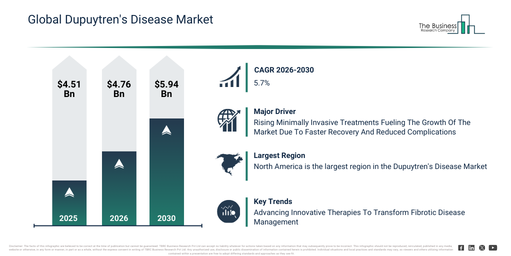
    The market size for dupuytren’s disease has experienced significant expansion in recent times. It is anticipated to expand from $4.51 billion in 2025 to $4.76 billion in 2026, achieving a compound annual growth rate (CAGR) of 5.7%. This historical growth can be attributed to several factors including an increasing aging population, the prevalence of orthopedic disorders, the widespread availability of surgical treatments, the standardization of clinical diagnosis, and the adoption of hand therapy.

    The market for dupuytren’s disease is projected to experience robust expansion over the coming years. This market is forecast to reach $5.94 billion by 2030, exhibiting a compound annual growth rate (CAGR) of 5.7%. Key factors contributing to this anticipated growth include advancements in biologic therapies, innovations in minimally invasive procedures, the broadening of outpatient care options, a heightened emphasis on patient quality of life, and the expansion of rehabilitation services. Noteworthy trends expected during this period involve the increasing uptake of minimally invasive treatments, a greater reliance on enzyme injection therapies, a shift towards outpatient surgical procedures, enhanced early diagnosis and physical examinations, and a concentrated effort on post-treatment rehabilitation.

    Access Your Free Sample Report For In-Depth Market Analysis:

    https://www.thebusinessresearchcompany.com/report/dupuytrens-disease-global-market-report

    Which Strong Drivers Are Impacting The Dupuytren’s Disease Market Growth?

    The future expansion of the Dupuytren’s disease market is anticipated due to the increasing adoption of minimally invasive treatments. These treatments involve medical interventions with slight cuts or minimal tissue damage, leading to less discomfort, quicker healing, and reduced scar formation. Patients and medical professionals increasingly favor minimally invasive approaches over conventional open surgeries because they offer faster recuperation, less pain, and lower risks of complications. In alignment with this trend, the Dupuytren’s disease market provides minimally invasive choices that enhance hand mobility, alleviate finger stiffness, and improve post-treatment results for those affected. As an illustration, data from June 2024, provided by the American Society of Plastic Surgeons, a US-based non-profit body, revealed a 7% rise in minimally invasive procedures in 2023, which surpassed the growth of surgical procedures by 2%. Hand operations, including those for carpal tunnel, arthritis, and trigger finger, reached 207,887 procedures, marking a 2% increase compared to 2022. Consequently, the expansion of minimally invasive treatments is propelling the development of the Dupuytren’s disease market.

    How Are Segments Identified Within The Dupuytren’s Disease Market Segment Framework?

    The dupuytren’s disease market covered in this report is segmented –

    1) By Disease Type: Type I, Type II, Type III

    2) By Treatment: Surgery, Radiation Therapy, Needle Aponeurotomy, Steroid Shot, Enzyme Injection, Occupational Therapy, Other Treatments

    3) By Route of Administration: Oral, Parenteral, Other Routes Of Administration

    4) By Diagnosis: Physical Examination, X-Ray, Other Diagnosis

    5) By End-User: Hospitals, Clinics, Academic And Research Institute, Other End-Users

    Subsegments:

    1) By Type I: Classical Dupuytren’s Disease, Familial Dupuytren’s Disease

    2) By Type II: Palmar Fasciitis, Ledderhose Disease

    3) By Type III: Garrod’s Pads, Peyronie’s Disease

    Which Trends Are Contributing To Changes In The Dupuytren’s Disease Market?

    Key players in the Dupuytren’s disease market are prioritizing clinical trials to create new, primary, disease-altering treatments designed to halt or revert the advancement of fibrosis. These trials are organized research studies evaluating the safety, effectiveness, and potential adverse reactions of novel drugs, treatments, or medical interventions in human subjects prior to obtaining regulatory approval and broad clinical application. An example is Ventoux Biosciences, a US-based biopharmaceutical firm focused on non-surgical Dupuytren’s disease treatments, which disclosed favorable preclinical findings in April 2023 for VEN-201, its primary fibrosis therapy. This drug, a repurposed commercial product, showed effectiveness in lessening skin fibrosis in mouse models of Dupuytren’s contracture. These encouraging outcomes led the company to begin fundraising to progress VEN-201 into clinical trials as a potential therapy capable of modifying the disease.

    Who Are The Companies Competing Within The Dupuytren’s Disease Market?

    Major companies operating in the dupuytren’s disease market are Pfizer Inc., Aetna Inc., Mayo clinic, Penn Medicine, Mercy Health, Endo Inc., Resilience Orthopedics, Raleigh Orthopaedic, Hoag Orthopedic Institute, OSS Health, Connext Inc., University of Utah Health, Ventoux Biosciences Inc., Auxilium Pharmaceuticals, 180 Life Sciences Corp., Brigid Freyne MD, Nantong Jinghua Pharmaceutical Co. Ltd., Sumitomo Dainippon Pharma Co. Ltd., Actiza Pharmaceutical Private Limited, Spear Pharmaceuticals

    Get The Full Dupuytren’s Disease Market Report:

    https://www.thebusinessresearchcompany.com/report/dupuytrens-disease-global-market-report

    Which Region Accounts For The Largest Portion Of The Dupuytren’s Disease Market?

    North America was the largest region in the dupuytren’s disease market in 2025. Asia-Pacific is expected to be the fastest-growing region in the forecast period. The regions covered in the dupuytren’s disease market report are Asia-Pacific, South East Asia, Western Europe, Eastern Europe, North America, South America, Middle East, Africa.

    Request A Customized Dupuytren’s Disease Market Report For Competitive Insights:

    https://www.thebusinessresearchcompany.com/report/dupuytrens-disease-global-market-report

    Browse Through More Reports Similar to the Global Dupuytren’s Disease Market 2026, By The Business Research Company

    Peripheral Arterial Disease Market Report 2026

    https://www.thebusinessresearchcompany.com/report/peripheral-arterial-disease-global-market-report

    Rare Diseases Treatment Market Report 2026

    https://www.thebusinessresearchcompany.com/report/rare-diseases-treatment-global-market-report

    Rare Neurological Disease Treatment Market Report 2026

    https://www.thebusinessresearchcompany.com/report/rare-neurological-disease-treatment-global-market-report

    Get in touch with us:

    The Business Research Company: https://www.thebusinessresearchcompany.com/

    Americas +1 310-496-7795

    Asia +44 7882 955267 & +91 8897263534

    Europe +44 7882 955267

    Email us at info@tbrc.info

    Follow us on:

    LinkedIn: https://in.linkedin.com/company/the-business-research-company

    YouTube: https://www.youtube.com/channel/UC24_fI0rV8cR5DxlCpgmyFQ

    Global Market Model: https://www.thebusinessresearchcompany.com/global-market-model
  • Duodenal ulcer treatment market insights on trends and opportunities

    Duodenal ulcer treatment market insights on trends and opportunities

    The Business Research Company’s 2026 market reports feature enhanced tools like market attractiveness analysis, TAM assessment, and company scoring matrices, along with interactive dashboards, deeper supply chain insights, and startup coverage strengthening the depth, usability, and strategic value of insights.

    How Is The Market Size Of The Duodenal Ulcer Treatment Market Expected To Scale Between 2026 And 2030?

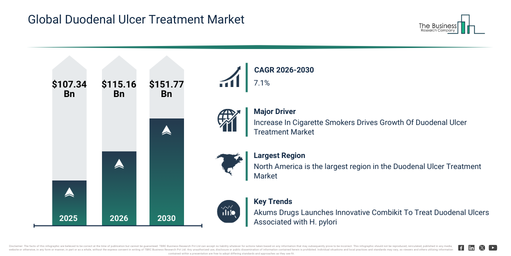
    The duodenal ulcer treatment market size has experienced robust expansion over the past few years. Projections indicate it will expand from $107.34 billion in 2025 to $115.16 billion in 2026, showcasing a compound annual growth rate (CAGR) of 7.3%. Historically, this expansion has been driven by factors such as the adoption of acid suppression drugs, the discovery of h pylori, the burden of gastrointestinal diseases, the availability of endoscopy, and the standardization of antibiotic therapy.

    The duodenal ulcer treatment market size is projected to see robust growth in the coming years. It is expected to expand to $151.77 billion by 2030, exhibiting a compound annual growth rate (CAGR) of 7.1%. The expansion foreseen in this period is attributable to factors such as antibiotic resistance management, the emergence of novel acid blockers, the establishment of early diagnosis programs, efficient outpatient ulcer management, and advancements in personalized gastroenterology care. Significant trends during the forecast period include the increasing application of combination drug therapy, a stronger emphasis on helicobacter pylori eradication, the extended use of proton pump inhibitors, the rise of minimally invasive surgical interventions, and enhanced patient compliance through simplified regimens.

    Access Your Free Sample Report For In-Depth Market Analysis:

    https://www.thebusinessresearchcompany.com/report/duodenal-ulcer-treatment-global-market-report

    What Key Factors Are Shaping The Duodenal Ulcer Treatment Market Landscape?

    An expanding population of cigarette smokers is anticipated to drive the expansion of the duodenal ulcer treatment market in the future. A cigarette smoker refers to a person who regularly uses tobacco-filled cigarettes, inhaling and exhaling the smoke produced by their combustion. The rise in cigarette smoking can be attributed to cultural impacts, socioeconomic conditions, stress-related actions, and greater availability of nicotine items. In response to this trend, the duodenal ulcer treatment market offers specialized ulcer treatments, assistance with quitting smoking, advice on lifestyle, and ongoing surveillance to improve recovery and minimize relapse. For example, in October 2024, a study on youth smoking patterns, conducted by the European Respiratory Society’s (ERS), a non-profit organization based in Switzerland, indicated a substantial increase in smoking prevalence, with 22.5% of participants reporting smoking in 2022, rising to 40.1% in 2024. Consequently, the expanding population of cigarette smokers is fueling the development of the duodenal ulcer treatment market.

    What Are The Key Segment Divisions In The Duodenal Ulcer Treatment Market Segment Structure?

    The duodenal ulcer treatment market covered in this report is segmented –

    1) By Type: Antibiotics, Proton Pump Inhibitors, Antacids, Potassium-Competitive Acid Blockers, H2-Antagonist, Ulcer Protective Drugs, Surgery

    2) By Application: Adult, Elderly

    3) By Distribution Channel: Hospital Pharmacy, Retail Pharmacy, Online Pharmacy

    Subsegments:

    1) By Antibiotics: Amoxicillin, Clarithromycin, Metronidazole, Tetracycline, Levofloxacin

    2) By Proton Pump Inhibitors (PPIs): Omeprazole, Esomeprazole, Lansoprazole, Pantoprazole, Rabeprazole

    3) By Antacids: Magnesium Hydroxide, Aluminum Hydroxide, Calcium Carbonate, Sodium Bicarbonate

    4) By Potassium-Competitive Acid Blockers (P-CABs): Vonoprazan, Tegoprazan

    5) By H2-Antagonists (H2 Blockers): Ranitidine, Famotidine, Cimetidine, Nizatidine

    6) By Ulcer Protective Drugs: Sucralfate, Misoprostol, Bismuth Subsalicylate

    7) By Surgery: Partial Gastrectomy, Vagotomy, Pyloroplasty, Endoscopic Therapy

    What Market Trends Are Affecting The Duodenal Ulcer Treatment Market?

    Leading companies in the duodenal ulcer treatment market are concentrating on developing innovative products such as combikits for duodenal ulcers and Helicobacter pylori (H. pylori) infection to enhance healing outcomes and improve treatment effectiveness. A combikit for duodenal ulcer and H. pylori infection represents a combination therapy package containing multiple medications crafted to collaboratively eradicate H. pylori bacteria while simultaneously reducing gastric acid production, thereby addressing both the origin and indicators of duodenal ulcers. For example, in April 2023, Akums Drugs and Pharmaceutical Limited, an India-based pharmaceutical company, introduced an advanced Combikit designed for treating duodenal ulcers connected with H. pylori infection. This kit contains amoxicillin, clarithromycin, and esomeprazole, a combination engineered to inhibit bacterial growth and decrease gastric acid secretion. Approved by the Central Drugs Standard Control Organization (CDSCO), this Combikit provides an efficient, integrated method for managing duodenal ulcers and eradicating H. pylori in patients experiencing active or healed peptic ulcers.

    Which Organizations Are Engaged In The Duodenal Ulcer Treatment Market?

    Major companies operating in the duodenal ulcer treatment market are Pfizer Inc., Merck & Co. Inc., Bayer AG, Sanofi S.A, Bristol-Myers Squibb, AstraZeneca plc, Abbott Laboratories, GlaxoSmithKline plc, Takeda Pharmaceutical Company Limited, Teva Pharmaceutical Industries Ltd., Mylan N.V., Sandoz AG, Sun Pharmaceutical Industries Limited, Eisai Co. Ltd., Aurobindo Pharma Limited, Cipla Inc., Dr. Reddy’s Laboratories Limited, Intas Pharmaceuticals Limited, Apotex Inc., Lupin Limited, Glenmark Pharmaceuticals Limited, Alkem Laboratories Limited, Jubilant Pharma Limited, Torrent Pharmaceuticals Limited

    Get The Full Duodenal Ulcer Treatment Market Report:

    https://www.thebusinessresearchcompany.com/report/duodenal-ulcer-treatment-global-market-report

    Which Region Holds The Highest Market Share In The Duodenal Ulcer Treatment Market?

    North America was the largest region in the duodenal ulcer treatment market in 2025. The regions covered in the duodenal ulcer treatment market report are Asia-Pacific, South East Asia, Western Europe, Eastern Europe, North America, South America, Middle East, Africa.

    Request A Customized Duodenal Ulcer Treatment Market Report For Competitive Insights:

    https://www.thebusinessresearchcompany.com/report/duodenal-ulcer-treatment-global-market-report

    Browse Through More Reports Similar to the Global Duodenal Ulcer Treatment Market 2026, By The Business Research Company

    Peptic Ulcer Market Report 2026

    https://www.thebusinessresearchcompany.com/report/peptic-ulcer-global-market-report

    Pressure Ulcers Treatment Market Report 2026

    https://www.thebusinessresearchcompany.com/report/pressure-ulcers-treatment-global-market-report

    Gastric Ulcers Market Report 2026

    https://www.thebusinessresearchcompany.com/report/gastric-ulcers-global-market-report

    Get in touch with us:

    The Business Research Company: https://www.thebusinessresearchcompany.com/

    Americas +1 310-496-7795

    Asia +44 7882 955267 & +91 8897263534

    Europe +44 7882 955267

    Email us at info@tbrc.info

    Follow us on:

    LinkedIn: https://in.linkedin.com/company/the-business-research-company

    YouTube: https://www.youtube.com/channel/UC24_fI0rV8cR5DxlCpgmyFQ

    Global Market Model: https://www.thebusinessresearchcompany.com/global-market-model
  • Dumping syndrome market trends shaping future growth

    Dumping syndrome market trends shaping future growth

    The Business Research Company’s 2026 market reports feature enhanced tools like market attractiveness analysis, TAM assessment, and company scoring matrices, along with interactive dashboards, deeper supply chain insights, and startup coverage strengthening the depth, usability, and strategic value of insights.

    What Level Of Market Value Growth Is Predicted For The Dumping Syndrome Market From 2026 To 2030?

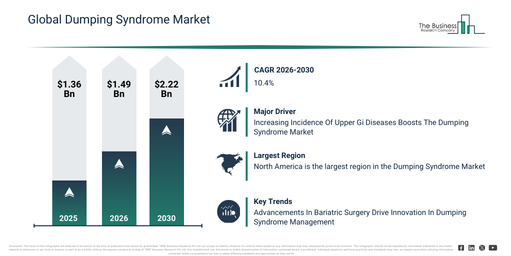
    The dumping syndrome market has demonstrated significant growth in recent years. Its size is expected to increase from $1.36 billion in 2025 to $1.49 billion in 2026, reflecting a compound annual growth rate (CAGR) of 9.5%. The historical expansion of this market can be attributed to factors such as the growth in bariatric surgery, complications from gastric surgery, the adoption of clinical nutrition, progress in gastroenterology diagnostics, and various patient education initiatives.

    The dumping syndrome market size is anticipated to undergo significant growth in the coming years. It is projected to reach $2.22 billion by 2030, exhibiting a compound annual growth rate (CAGR) of 10.4%. The expansion foreseen in the forecast period stems from the increase in minimally invasive surgery, the advancement of personalized nutrition therapy, the availability of advanced diagnostic tools, the broadening of outpatient management, and the development of supportive drugs. Prominent trends throughout the forecast period involve a heightened awareness of post-surgical gastrointestinal disorders, a greater adoption of dietary and lifestyle management, an increase in pharmacological treatment options, more effective diagnostic testing for gastric emptying, and comprehensive multidisciplinary care approaches for symptom management.

    Access Your Free Sample Report For In-Depth Market Analysis:

    https://www.thebusinessresearchcompany.com/report/dumping-syndrome-global-market-report

    Which Factors Are Influencing The Growth Of The Dumping Syndrome Market?

    The escalating occurrence of upper gastrointestinal (GI) diseases is anticipated to fuel the expansion of the dumping syndrome market. These upper GI ailments encompass conditions impacting the esophagus, stomach, and duodenum, manifesting as symptoms like stomach discomfort, acid reflux, internal bleeding, and compromised digestion. The increase in upper GI disease cases stems from factors such as poor dietary habits, increased alcohol intake, Helicobacter pylori infections, an aging global population, and a rise in metabolic and chronic illnesses. This trend positively impacts the dumping syndrome market, as dumping syndrome frequently develops as a post-operative complication following surgical interventions on the stomach, duodenum, or pyloric sphincter—procedures often undertaken to address severe upper GI issues. For example, data from April 2023, sourced from the U.S.-based National Library of Medicine, indicates that upper gastrointestinal bleeding impacts 80 to 150 individuals per 100,000 each year, constitutes 75% of all acute GI bleeding incidents, and carries a mortality rate estimated between 2% and 15%. Consequently, the growing incidence of upper GI diseases is a key driver for the dumping syndrome market’s growth.

    Which Segment Categories Are Included In The Dumping Syndrome Market Segment Analysis?

    The dumping syndrome market covered in this report is segmented –

    1) By Diagnosis: Blood Sugar Test, Gastric Emptying Test, Medical History, Other Diagnosis

    2) By Treatment: Medication, Surgery, Other Treatments

    3) By Route Of Administration: Oral, Intravenous, Other Routes Of Administrations

    4) By Phase: Early Dumping Phase, Late Dumping Phase

    5) By End User: Hospitals And Clinics, Research Laboratories, Other End Users

    Subsegments:

    1) By Blood Sugar Test: Fasting Blood Sugar Test, Postprandial Blood Sugar Test

    2) By Gastric Emptying Test: Scintigraphy, Breath Test

    3) By Medical History: Symptom Assessment, Surgical History Evaluation

    4) By Other Diagnosis: Endoscopy, Imaging Studies

    Which Trends Are Influencing Demand In The Dumping Syndrome Market?

    Companies operating in the dumping syndrome market are increasingly focused on developing innovative treatment approaches, such as bariatric surgery techniques, to enhance patient outcomes and minimize postoperative complications. Bariatric surgery involves a range of medical procedures designed to facilitate significant weight loss by altering the stomach and/or intestines, often leading to improvements in obesity-related conditions and a reduced risk of developing dumping syndrome. For instance, in May 2024, Blackrock WeightCare, an Ireland-based weight loss service provider, launched the Single Anastomosis Duodeno-Ileal Bypass with Sleeve Gastrectomy (SADI-S). This advanced bariatric surgery integrates sleeve gastrectomy with a partial intestinal bypass for patients suffering from severe obesity, especially those with a BMI over 45. The SADI-S procedure, performed with robotic technology, provides improved weight-loss results, enhances obesity-related conditions like diabetes, and carries a lower risk of complications including dumping syndrome, all supported by comprehensive long-term aftercare to maximize patient success.

    Who Are The Active Companies Shaping The Dumping Syndrome Market?

    Major companies operating in the dumping syndrome market are Cardinal Health Inc., Johnson & Johnson Private Limited, Abbott Laboratories Inc., Medtronic Plc, Covidien plc, Fujifilm Holdings Corporation, Stryker Corporation, Allergan plc, Boston Scientific Corporation, B. Braun Melsungen AG, Olympus Corporation, Intuitive Surgical Inc., Terumo Corporation, Steris Corporation, Teleflex Medical Europe Ltd., Cook Medical Inc., Karl Storz SE & Co. KG, Conmed Corporation, Applied Medical Resources Corporation, Richard Wolf GmbH, Pentax Medical Company, GI Dynamics, EndoGastric Solutions Inc., Apollo Endosurgery Inc., EndoChoice Holdings Inc., Cousin Biotech, Mediflex Surgical Product, Asensus Surgical Inc., USGI Medical Inc., TransEnterix Inc.

    Get The Full Dumping Syndrome Market Report:

    https://www.thebusinessresearchcompany.com/report/dumping-syndrome-global-market-report

    Where Is The Dumping Syndrome Market Most Concentrated Geographically?

    North America was the largest region in the dumping syndrome market in 2025. Asia-Pacific is expected to be the fastest-growing region in the forecast period. The regions covered in the dumping syndrome market report are Asia-Pacific, South East Asia, Western Europe, Eastern Europe, North America, South America, Middle East, Africa.

    Request A Customized Dumping Syndrome Market Report For Competitive Insights:

    https://www.thebusinessresearchcompany.com/report/dumping-syndrome-global-market-report

    Browse Through More Reports Similar to the Global Dumping Syndrome Market 2026, By The Business Research Company

    Major Depressive Disorder Market Report 2026

    https://www.thebusinessresearchcompany.com/report/major-depressive-disorder-global-market-report

    Dump Trucks Market Report 2026

    https://www.thebusinessresearchcompany.com/report/dump-trucks-global-market-report

    Construction Dumper Market Report 2026

    https://www.thebusinessresearchcompany.com/report/construction-dumper-global-market-report

    Get in touch with us:

    The Business Research Company: https://www.thebusinessresearchcompany.com/

    Americas +1 310-496-7795

    Asia +44 7882 955267 & +91 8897263534

    Europe +44 7882 955267

    Email us at info@tbrc.info

    Follow us on:

    LinkedIn: https://in.linkedin.com/company/the-business-research-company

    YouTube: https://www.youtube.com/channel/UC24_fI0rV8cR5DxlCpgmyFQ

    Global Market Model: https://www.thebusinessresearchcompany.com/global-market-model
  • Dulaglutide market forecast with demand and growth insights

    Dulaglutide market forecast with demand and growth insights

    The Business Research Company’s 2026 market reports feature enhanced tools like market attractiveness analysis, TAM assessment, and company scoring matrices, along with interactive dashboards, deeper supply chain insights, and startup coverage strengthening the depth, usability, and strategic value of insights.

    How Will The Market Value Of The Dulaglutide Market Progress Between 2026 And 2030?

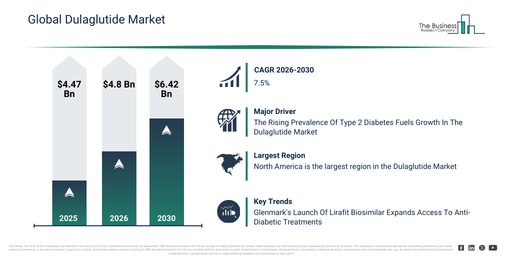
    The dulaglutide market size has experienced substantial growth in recent years. It is anticipated to expand from $4.47 billion in 2025 to $4.8 billion in 2026, at a compound annual growth rate (CAGR) of 7.5%. The expansion witnessed in the historic period can be ascribed to the increasing prevalence of type 2 diabetes, the limitations inherent in insulin therapy, the clinical success of GLP-1, advancements in injectable device technology, and revisions to endocrinology guidelines.

    The dulaglutide market size is anticipated to experience substantial growth in the upcoming years. It is projected to expand to $6.42 billion by 2030, achieving a compound annual growth rate (CAGR) of 7.5%. This growth over the forecast period is primarily driven by treatments for the obesity-diabetes overlap, innovation in long-acting formulations, the development of biosimilars, digital diabetes management tools, and increased access in emerging markets. Significant trends expected during the forecast period include the increasing adoption of GLP-1 receptor agonists, a rising preference for once-weekly injectable therapies, the expansion of combination treatment approaches for diabetes, greater application in cardiometabolic risk management, and the development of patient adherence support programs.

    Access Your Free Sample Report For In-Depth Market Analysis:

    https://www.thebusinessresearchcompany.com/report/dulaglutide-global-market-report

    What Leading Drivers Are Supporting The Dulaglutide Market Expansion?

    The expanding incidence of type 2 diabetes is anticipated to boost the future expansion of the dulaglutide market. This chronic ailment involves the body either developing insulin resistance or insufficient insulin production, resulting in elevated blood glucose concentrations. The rise in type 2 diabetes cases stems from increasing obesity rates, unhealthy eating habits, and inactive lifestyles. Dulaglutide aids in managing type 2 diabetes through improved insulin secretion and decreased glucagon levels after consuming food, thereby lowering blood glucose. For example, a report released in April 2023 by The British Diabetic Association, a UK diabetes charity, indicated that 4.3 million individuals in the UK suffer from diabetes, with more than 2.4 million at high risk of developing type 2 diabetes, and registrations for 2021–22 increased by 148,951. Consequently, the growing occurrence of type 2 diabetes is fueling the expansion of the dulaglutide market.

    How Is The Dulaglutide Market Broken Down By Segment Categories?

    The dulaglutide market covered in this report is segmented –

    1) By Type: Syringe Pen, Multi-Dose Bottles

    2) By Application: Medical Insurance, Pharmaceutical, Clinical Research

    3) By Distribution Channel: Hospital Pharmacies, Retail Pharmacies, Online Pharmacies

    Subsegments:

    1) By Syringe Pen: Disposable Syringe Pen, Reusable Syringe Pen

    2) By Multi-Dose Bottles: Single-Dose Bottles, Multi-Dose Vials

    What Emerging Trends Are Seen In The Dulaglutide Market?

    Companies operating in the dulaglutide market are primarily focused on developing innovative offerings, such as anti-diabetic medications, to address the increasing demand for effective ways to manage diabetes mellitus. These anti-diabetic drugs are therapeutic agents designed to control and treat diabetes mellitus by regulating blood sugar levels, achieved through mechanisms like improving insulin sensitivity, stimulating insulin production, or slowing glucose absorption from the digestive tract. For instance, in January 2024, Glenmark Pharmaceuticals Limited, an India-based pharmaceutical entity, introduced Lirafit, the first biosimilar of the anti-diabetic drug Liraglutide, in India. This action represents Glenmark’s strategic entry into the biosimilar segment for anti-diabetic drugs, aiming to provide patients with a more cost-effective treatment choice. The biosimilar is anticipated to exhibit comparable efficacy and safety profiles to the original drug, adhering to strict regulatory benchmarks.

    Which Players Are Present In The Dulaglutide Market Space?

    Major companies operating in the dulaglutide market are Merck And Co. Inc., AstraZeneca PLC, Takeda Pharmaceutical Company Limited, Eli Lilly and Company, Cipla Limited, Intas Pharmaceuticals Limited, Biocon Limited, Zhejiang Hisun Pharmaceutical Co. Ltd., Glenmark Pharmaceuticals Limited, Insulet Corporation, Nicholas Piramal India Limited, IPCA Laboratories Limited, Alembic Pharmaceuticals Limited, Ypsomed Holding AG, Wockhardt Limited, MannKind Corporation, Bioton S.A., Midas Pharma GmbH, Senova Technology Co. Ltd., Enomark

    Get The Full Dulaglutide Market Report:

    https://www.thebusinessresearchcompany.com/report/dulaglutide-global-market-report

    Which Region Dominates The Dulaglutide Market By Market Share?

    North America was the largest region in the dulaglutide market in 2025. The regions covered in the dulaglutide market report are Asia-Pacific, South East Asia, Western Europe, Eastern Europe, North America, South America, Middle East, Africa.

    Request A Customized Dulaglutide Market Report For Competitive Insights:

    https://www.thebusinessresearchcompany.com/report/dulaglutide-global-market-report

    Browse Through More Reports Similar to the Global Dulaglutide Market 2026, By The Business Research Company

    Capecitabine Market Report 2026

    https://www.thebusinessresearchcompany.com/report/capecitabine-global-market-report

    Liraglutide Market Report 2026

    https://www.thebusinessresearchcompany.com/report/liraglutide-global-market-report

    Edutainment Market Report 2026

    https://www.thebusinessresearchcompany.com/report/edutainment-global-market-report

    Get in touch with us:

    The Business Research Company: https://www.thebusinessresearchcompany.com/

    Americas +1 310-496-7795

    Asia +44 7882 955267 & +91 8897263534

    Europe +44 7882 955267

    Email us at info@tbrc.info

    Follow us on:

    LinkedIn: https://in.linkedin.com/company/the-business-research-company

    YouTube: https://www.youtube.com/channel/UC24_fI0rV8cR5DxlCpgmyFQ

    Global Market Model: https://www.thebusinessresearchcompany.com/global-market-model
  • Dry age-related macular degeneration market outlook with key growth drivers

    Dry age-related macular degeneration market outlook with key growth drivers

    The Business Research Company’s 2026 market reports feature enhanced tools like market attractiveness analysis, TAM assessment, and company scoring matrices, along with interactive dashboards, deeper supply chain insights, and startup coverage strengthening the depth, usability, and strategic value of insights.

    What Are The Market Size Estimates For The Dry Age Related Macular Degeneration (AMD) Market In 2026 And 2030?

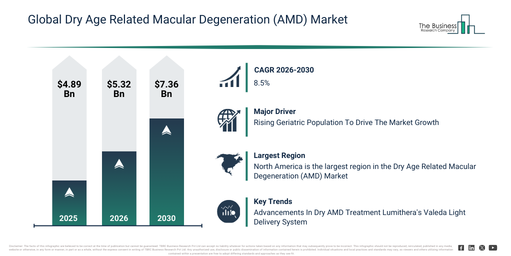
    The market size for dry age related macular degeneration (amd) has experienced robust growth in recent years. It is projected to expand from $4.89 billion in 2025 to $5.32 billion in 2026, demonstrating a compound annual growth rate (CAGR) of 8.8%. Historically, this growth can be attributed to aging population growth, the expansion of ophthalmology clinics, the adoption of vitamin-based therapies, advancements in retinal imaging, and increased awareness of vision loss.

    The market size for dry age related macular degeneration (AMD) is anticipated to show robust growth in the coming years. It is forecast to expand to $7.36 billion by 2030, achieving a compound annual growth rate (CAGR) of 8.5%. This growth during the projection period can be attributed to the development of novel therapeutic pipelines, advancements in precision ophthalmology, the rise of AI-based retinal diagnostics, proactive eye care initiatives, and increased investments in clinical trials. Noteworthy trends anticipated during this period include a heightened focus on early disease detection, a greater adoption of nutritional supplement therapies, an expansion of research into disease-modifying drugs, increased utilization of advanced retinal imaging techniques, and improved patient awareness and screening efforts.

    Access Your Free Sample Report For In-Depth Market Analysis:

    https://www.thebusinessresearchcompany.com/report/dry-age-related-macular-degeneration-amd-global-market-report

    Which Key Factors Are Driving The Dry Age Related Macular Degeneration (AMD) Market Growth?

    An expanding older adult demographic is anticipated to stimulate the advancement of the dry age-related macular degeneration (AMD) market in the future. This demographic comprises individuals aged 65 years and above, who undergo physiological shifts linked to aging, thereby raising their demand for healthcare and vision-care services. The increase in the geriatric population is attributable to longer life expectancies, enhanced management of chronic diseases, progress in medical technology, and broader availability of elder care globally. The dry age-related macular degeneration (AMD) market contributes to this progression by providing specialized treatments and management strategies designed to decelerate retinal degeneration and maintain sight in older individuals. As an illustration, data from the United Nations, a US-based intergovernmental organization, showed in July 2023 that the worldwide population aged 65 years and above reached 0.77 billion in 2022 and is forecasted to near 1.0 billion by 2030. Consequently, the increasing number of older adults is a key impetus for the expansion of the dry age-related macular degeneration (AMD) market.

    What Are The Different Segment Types In The Dry Age Related Macular Degeneration (AMD) Market Segment Breakdown?

    The dry age related macular degeneration (amd) market covered in this report is segmented –

    1) By Stages: Early Age-Related Macular Degeneration, Intermediate Age-Related Macular Degeneration, Late Age-Related Macular Degeneration

    2) By Age Group: Above 75 Years, Above 60 Years, Above 40 Years

    3) By Route Of Administration: Oral, Injectables

    4) By End Users: Hospitals And Clinics, Diagnostic Centers, Academic And Research Institutes

    Subsegments:

    1) By Early Age-Related Macular Degeneration: Drusen Accumulation, Retinal Pigment Epithelium Changes

    2) By Intermediate Age-Related Macular Degeneration: Larger Drusen Deposits, Increased Pigmentary Abnormalities

    3) By Late Age-Related Macular Degeneration: Geographic Atrophy, Central Vision Loss

    Which Trends Are Guiding The Direction Of The Dry Age Related Macular Degeneration (AMD) Market?

    Key companies within the dry age-related macular degeneration (AMD) market are prioritizing the creation of sophisticated technologies, including light delivery systems, aimed at activating retinal cells, improving visual capabilities, and potentially decelerating the disease’s advancement. Light delivery systems are defined as therapeutic instruments engineered to supply controlled light wavelengths to targeted retinal areas, stimulating cellular processes and maintaining retinal health via non-invasive photobiomodulation methods. An illustration of this occurred in January 2024, when LumiThera Inc., a US-based medical device firm, launched its photobiomodulation therapy for dry AMD, featuring the Valeda Light Delivery System, which stands as the first FDA-authorized treatment for vision loss linked to dry AMD. This particular system employs a multi-wavelength light application, utilizing 590 nm, 660 nm, and 850 nm wavelengths to stimulate retinal cells, and LumiThera has initiated the EUROLIGHT registry study to collect comprehensive long-term outcome data, with treatment protocols typically involving nine sessions spread across a three- to four-week period.

    Who Are The Well-Known Companies In The Dry Age Related Macular Degeneration (AMD) Market?

    Major companies operating in the dry age related macular degeneration (amd) market are F Hoffmann-La Roche Ltd., Novartis AG, Bayer AG, Amgen Inc., Biogen Inc., Astellas Pharma Inc., Bausch Health Companies Inc., Lupin Ltd., Santen Pharmaceuticals Inc., Biocon Ltd., Apellis Pharmaceuticals Inc., Belite Bio Inc., Alkeus Pharmaceuticals Inc., Ribomic Inc., Eyestem Research Pvt. Ltd., LumiThera Inc., Adverum Biotechnologies Inc., Regeneron Pharmaceuticals Inc., Annexon Biosciences Inc., Stealth BioTherapeutics Corp., Kodiak Sciences Inc., Ionis Pharmaceuticals Inc., Lineage Cell Therapeutics Inc., Ocular Therapeutix Inc.

    Get The Full Dry Age Related Macular Degeneration (AMD) Market Report:

    https://www.thebusinessresearchcompany.com/report/dry-age-related-macular-degeneration-amd-global-market-report

    Which Region Is The Largest In The Dry Age Related Macular Degeneration (AMD) Market?

    North America was the largest region in the dry age-related macular degeneration (AMD) market in 2025. The regions covered in the dry age related macular degeneration (amd) market report are Asia-Pacific, South East Asia, Western Europe, Eastern Europe, North America, South America, Middle East, Africa.

    Request A Customized Dry Age Related Macular Degeneration (AMD) Market Report For Competitive Insights:

    https://www.thebusinessresearchcompany.com/report/dry-age-related-macular-degeneration-amd-global-market-report

    Browse Through More Reports Similar to the Global Dry Age Related Macular Degeneration (AMD) Market 2026, By The Business Research Company

    Non Proliferative Diabetic Retinopathy Market Report 2026

    https://www.thebusinessresearchcompany.com/report/non-proliferative-diabetic-retinopathy-global-market-report

    Macular Degeneration Treatment Market Report 2026

    https://www.thebusinessresearchcompany.com/report/macular-degeneration-treatment-global-market-report

    Macular Edema And Macular Degeneration Market Report 2026

    https://www.thebusinessresearchcompany.com/report/macular-edema-and-macular-degeneration-global-market-report

    Get in touch with us:

    The Business Research Company: https://www.thebusinessresearchcompany.com/

    Americas +1 310-496-7795

    Asia +44 7882 955267 & +91 8897263534

    Europe +44 7882 955267

    Email us at info@tbrc.info

    Follow us on:

    LinkedIn: https://in.linkedin.com/company/the-business-research-company

    YouTube: https://www.youtube.com/channel/UC24_fI0rV8cR5DxlCpgmyFQ

    Global Market Model: https://www.thebusinessresearchcompany.com/global-market-model