Category: Healthcare Services

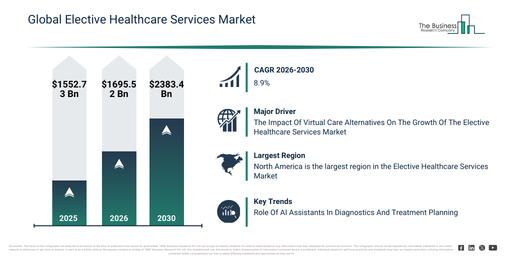
  • Elective healthcare services market to reach $2383.39B by 2030 at 8.9% CAGR

    Elective healthcare services market to reach $2383.39B by 2030 at 8.9% CAGR

    The Business Research Company’s 2026 market reports feature enhanced tools like market attractiveness analysis, TAM assessment, and company scoring matrices, along with interactive dashboards, deeper supply chain insights, and startup coverage strengthening the depth, usability, and strategic value of insights.

    How Much Growth In Market Value Is Expected For The Elective Healthcare Services Market Between 2026 And 2030?

    The size of the elective healthcare services market has experienced significant growth in recent years. This market is expected to expand from $1552.73 billion in 2025 to $1695.52 billion in 2026, reflecting a compound annual growth rate (CAGR) of 9.2%. The historical expansion of this market can be attributed to factors like rising disposable income levels, increased awareness regarding quality-of-life treatments, the proliferation of private healthcare facilities, a growing acceptance of aesthetic procedures, and improved access to specialized healthcare services.

    The elective healthcare services market is poised for significant expansion in the coming years. Its size is projected to reach $2383.4 billion by 2030, exhibiting a compound annual growth rate (CAGR) of 8.9%. This growth during the forecast period stems from factors such as a heightened demand for cosmetic and lifestyle-oriented treatments, the increasing uptake of teleconsultation for elective care, the ongoing development of advanced medical technologies, an intensified focus on preventive healthcare services, and rising investments in specialty clinics. Noteworthy trends for the forecast period involve the growing adoption of personalized elective procedures, a greater application of minimally invasive treatment options, the expanding integration of digital tools for patient engagement, the broadening of outpatient and ambulatory care models, and an elevated focus on optimizing the patient experience.

    Access Your Free Sample Report For In-Depth Market Analysis:

    https://www.thebusinessresearchcompany.com/report/elective-healthcare-services-global-market-report

    Which Drivers Are Supporting The Elective Healthcare Services Market Growth?

    The increased acceptance of virtual care options is anticipated to boost the expansion of the elective healthcare services market in the future. These alternatives involve various health services provided remotely via digital communication platforms, including telemedicine, mobile health applications, and online patient portals, enabling patients to consult professionals without in-person appointments. The rise in virtual care choices stems from technological progress and a growing need for easily accessible and convenient healthcare solutions, particularly highlighted during the COVID-19 pandemic. For elective healthcare services, virtual care options are essential to enhance access, convenience, and operational efficiency for individuals seeking non-urgent medical care. As an illustration, in November 2025, data from the Australian Bureau of Statistics (ABS), an Australia-based governmental statistical body, indicated that 22.5% of Australians utilized telehealth services during 2024–25. Of those who engaged in a telehealth consultation, 90.3% stated they would use telehealth again if available, marking an increase from 89.2% in 2023–24. Consequently, the increasing embrace of virtual care alternatives is fueling the expansion of the elective healthcare services market.

    How Is The Elective Healthcare Services Market Organized By Segment Classification?

    The elective healthcare services market covered in this report is segmented –

    1) By Type: Aesthetic Services, Apnea, Gastrointestinal Disorder, Allergies, Pain Management, Weight Loss, Other Types

    2) By Application: Medical Centers, Hospitals, Clinics, Ambulatory Centers

    3) By End User Gender: Male, Female

    Subsegments:

    1) By Aesthetic Services: Cosmetic Surgery, Non-Surgical Aesthetic Treatments, Skin Rejuvenation

    2) By Apnea: Sleep Apnea Treatments, Home Sleep Apnea Testing, Weight Management Programs For Apnea, Lifestyle Counseling And Behavioral Therapy

    3) By Gastrointestinal Disorders: Diagnostic Procedures, Surgical Procedures, Medical Treatment

    4) By Allergies: Allergy Testing, Allergy Immunotherapy, Medication Management, Respiratory Allergy Management

    5) By Pain Management: Interventional Procedures, Physical Therapy And Rehabilitation, Pharmacologic Management, Alternative Treatments

    6) By Weight Loss: Surgical Weight Loss, Non-Surgical Weight Loss, Physical Activity Programs

    7) By Other Types: Orthopedic Procedures, Cardiovascular Procedures, Fertility Services, Dental Procedures, Vision Correction

    Which Trends Are Expected To Impact The Elective Healthcare Services Market?

    Key organizations within the elective healthcare services market are focused on creating AI-driven diagnostics and treatment planning solutions, including AI assistants. These initiatives aim to boost efficiency, deliver customized support, and improve the accessibility of medical information and services through automated, data-informed interactions. Such AI assistants are sophisticated software applications engineered to execute tasks, furnish information, and aid users by employing natural language processing and machine learning technologies. An example of this is the introduction of Einstein Copilot, a healthcare AI assistant, by Salesforce Inc., a US-based software company, in March 2024. Einstein Copilot operates as a conversational AI assistant, specifically developed to utilize a healthcare organization’s confidential data for the purpose of streamlining its operations. This tool empowers providers and care teams to gather and condense data from diverse clinical and nonclinical origins, update patient and member records, and automate tasks that previously required manual effort. Through Einstein Copilot, providers are able to produce detailed patient summaries, which cover medications, diagnoses, social determinants, assessments, and identified care gaps. Moreover, care managers can leverage this AI to find in-network providers by filtering for location, specialty, and plan coverage, and can automatically complete electronic referral forms using natural language prompts seamlessly incorporated into their workflow.

    Who Are The Industry Participants Involved In The Elective Healthcare Services Market?

    Major companies operating in the elective healthcare services market are HCA Healthcare Inc., Tenet Healthcare Corp., Mayo Clinic, Sutter Health, LifePoint Health Inc., Universal Health Services Inc., Cleveland Clinic, Johns Hopkins Medicine, Integrated Healthcare Holdings (IHH) Bhd, UMass Memorial Health Care Inc., Healthscope Pty Ltd., Surgical Care Affiliates (SCA), Geisinger Medical Center, Catholic Health Initiatives (CHI), Tufts Medical Center Parent Inc., Pristyn Care, Fortis Healthcare Ltd., Mykare Health, Moorfields Eye Hospital NHS Foundation Trust, Glamyo Health, Medfin India Pvt. Ltd.

    Get The Full Elective Healthcare Services Market Report:

    https://www.thebusinessresearchcompany.com/report/elective-healthcare-services-global-market-report

    Where Is The Elective Healthcare Services Market Most Concentrated Geographically?

    North America was the largest region in the elective healthcare services market in 2025. The regions covered in the elective healthcare services market report are Asia-Pacific, South East Asia, Western Europe, Eastern Europe, North America, South America, Middle East, Africa.

    Request A Customized Elective Healthcare Services Market Report For Competitive Insights:

    https://www.thebusinessresearchcompany.com/report/elective-healthcare-services-global-market-report

    Browse Through More Reports Similar to the Global Elective Healthcare Services Market 2026, By The Business Research Company

    Healthcare Reimbursement Market Report 2026

    https://www.thebusinessresearchcompany.com/report/healthcare-reimbursement-global-market-report

    Healthcare Ecommerce Market Report 2026

    https://www.thebusinessresearchcompany.com/report/healthcare-ecommerce-global-market-report

    Healthcare Personal Protective Equipment Market Report 2026

    https://www.thebusinessresearchcompany.com/report/healthcare-personal-protective-equipment-global-market-report

    Get in touch with us:

    The Business Research Company: https://www.thebusinessresearchcompany.com/

    Americas +1 310-496-7795

    Asia +44 7882 955267 & +91 8897263534

    Europe +44 7882 955267

    Email us at info@tbrc.info

    Follow us on:

    LinkedIn: https://in.linkedin.com/company/the-business-research-company

    YouTube: https://www.youtube.com/channel/UC24_fI0rV8cR5DxlCpgmyFQ

    Global Market Model: https://www.thebusinessresearchcompany.com/global-market-model
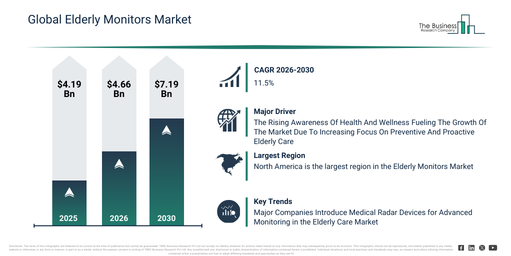
  • Elderly monitoring systems market expected to reach $7.19B by 2030

    Elderly monitoring systems market expected to reach $7.19B by 2030

    The Business Research Company’s 2026 market reports feature enhanced tools like market attractiveness analysis, TAM assessment, and company scoring matrices, along with interactive dashboards, deeper supply chain insights, and startup coverage strengthening the depth, usability, and strategic value of insights.

    What Is The Estimated Market Size Of The Elderly Monitors Market In 2026, And How Will Its Value Evolve By 2030?

    The elderly monitors market has seen rapid expansion in recent years. Its value is anticipated to rise from $4.19 billion in 2025 to $4.66 billion in 2026, achieving a compound annual growth rate (CAGR) of 11.2%. This market’s historical growth can be attributed to several factors, including an increasing aging population, the rising occurrence of chronic diseases, escalating healthcare costs, the early adoption of medical alert systems, and the proliferation of home-based care options.

    The elderly monitors market is projected to experience substantial expansion in the coming years. This market is anticipated to reach $7.19 billion by 2030, exhibiting a compound annual growth rate (CAGR) of 11.5%. Factors driving this expansion during the forecast period include the increasing trend of independent elderly living, a growing need for real-time health tracking, continuous advancements in sensor technologies, a rise in caregiver shortages, and the broader adoption of remote patient monitoring. Key trends observed within this period encompass the widespread use of remote health monitoring, innovations in fall detection and prevention technologies, seamless integration with smart home ecosystems, the emergence of wearable-based elderly monitoring solutions, and the deployment of real-time emergency alert systems.

    Access Your Free Sample Report For In-Depth Market Analysis:

    https://www.thebusinessresearchcompany.com/report/elderly-monitors-global-market-report

    What Key Factors Are Affecting The Elderly Monitors Market Demand?

    Increasing recognition of health and wellness is anticipated to fuel the expansion of the elderly monitoring market in the future. This concept encompasses a comprehensive state of physical, mental, and social well-being, nurtured by balanced lifestyle decisions, proactive healthcare measures, and beneficial habits that improve overall quality of life. The heightened focus on health and wellness stems from an increased emphasis on early disease detection, active health management, and the wider integration of digital health solutions promoting healthier aging. Elderly monitoring systems contribute to health and wellness by tracking vital signs, observing daily activities, and boosting safety via real-time alerts, thus empowering caregivers and healthcare practitioners to offer prompt and efficient support. For example, data from April 2025, provided by the Office for National Statistics (ONS), a UK-based government statistics body, indicated that healthcare expenditure in the United Kingdom totaled around $417.6 billion (£317 billion) in 2024, marking a 6.5% nominal rise from 2023. Consequently, the growing consciousness regarding health and wellness is propelling the expansion of the elderly monitoring market.

    Which Segments Define The Elderly Monitors Market Segment Structure?

    The elderly monitors market covered in this report is segmented –

    1) By Product: Personal Emergency Response Systems (PERS), Smart Home Systems, Medical Alert Systems, GPS Tracking Devices, Wearable Devices

    2) By Technology: Home Tele-Health, Safety Monitoring

    3) By Application: Fall Prevention And Detection, Health Monitoring, Memory Aid, Movement And Mobility Monitoring, Safety And Security Monitoring

    4) By End-User: Home-Based Care, Assisted Living Facilities, Nursing Homes And Hospitals, Personal Use

    Subsegments:

    1) By Personal Emergency Response Systems (PERS): Landline-Based PERS, Mobile PERS, Wearable PERS, Smartphone App-Based PERS

    2) By Smart Home Systems: Smart lighting, Smart Thermostats, Smart Security Systems, Voice-Activated Assistants

    3) By Medical Alert Systems: Emergency Button Systems, Fall Detection Systems, Medication Reminder Systems

    4) By GPS Tracking Devices: Wearable GPS Trackers, Mobile Phone-Based GPS Trackers, In-Home GPS Tracking Systems

    5) By Wearable Devices: Fitness Trackers, Smartwatches, Health Monitoring Patches, Biosensors

    What Trends Are Influencing Changes In The Elderly Monitors Market?

    Major companies in the elderly monitor market are developing innovative products like medical radar devices that can monitor older adults through walls for improved outcomes. A medical radar device is a type of radar technology utilized for medical imaging and monitoring, functioning by emitting radio waves, receiving their reflections, and processing this information to generate data. Radar-based imaging can be employed for preventive screening and the early detection of conditions such as breast cancer and stroke. For example, in April 2023, AT&T Inc., a US-based telecommunications firm, launched a medical radar device. This technology combines radar and AI to detect body position, movement, and biometrics without requiring cameras or wearable trackers. It aims to empower older individuals to live more independently while preserving their privacy. The device is targeted at enterprise customers such as senior living facilities, nursing homes, and healthcare providers. Designed for discretion and simple setup, it resembles a storage box or speaker.

    Who Are The Established Players Within The Elderly Monitors Market?

    Major companies operating in the elderly monitors market are Robert Bosch GmbH, Abbott Laboratories, Medtronic Plc, Koninklije Philips N.V., Boston Scientific Corporation, ADT Inc., Resideo Technologies Inc., BIOTRONIK SE & Co. KG, Omron Healthcare Co. Ltd., Arlo Technologies Inc., Lifeline Systems Inc., GreatCall Inc., Connect America.com LLC, Life Alert Emergency Response Inc., SHL Telemedicine Ltd., Medical Guardian LLC, Shenzhen Reolink Technology Co. Ltd., Digital Care Systems Limited, MobileHelp LLC, Canary Systems Ltd., Bay Alarm Medical, Care Innovations LLC, Alertone Services LLC, QMedic, Eldercare Services Inc., ProVita International Medical Centre Ltd., Shenzhen Wansview technology Co. Ltd.

    Get The Full Elderly Monitors Market Report:

    https://www.thebusinessresearchcompany.com/report/elderly-monitors-global-market-report

    Which Region Dominates The Elderly Monitors Market By Market Share?

    North America was the largest region in the elderly monitors market in 2025. Asia-Pacific is expected to be the fastest-growing region in the forecast period. The regions covered in the elderly monitors market report are Asia-Pacific, South East Asia, Western Europe, Eastern Europe, North America, South America, Middle East, Africa.

    Request A Customized Elderly Monitors Market Report For Competitive Insights:

    https://www.thebusinessresearchcompany.com/report/elderly-monitors-global-market-report

    Browse Through More Reports Similar to the Global Elderly Monitors Market 2026, By The Business Research Company

    Remote Cardiac Monitoring Market Report 2026

    https://www.thebusinessresearchcompany.com/report/remote-cardiac-monitoring-global-market-report

    Monitor Market Report 2026

    https://www.thebusinessresearchcompany.com/report/monitor-global-market-report

    Display Monitor Market Report 2026

    https://www.thebusinessresearchcompany.com/report/display-monitor-global-market-report

    Get in touch with us:

    The Business Research Company: https://www.thebusinessresearchcompany.com/

    Americas +1 310-496-7795

    Asia +44 7882 955267 & +91 8897263534

    Europe +44 7882 955267

    Email us at info@tbrc.info

    Follow us on:

    LinkedIn: https://in.linkedin.com/company/the-business-research-company

    YouTube: https://www.youtube.com/channel/UC24_fI0rV8cR5DxlCpgmyFQ

    Global Market Model: https://www.thebusinessresearchcompany.com/global-market-model
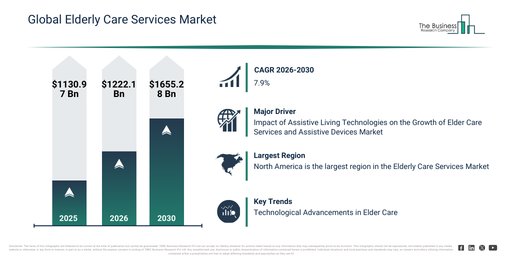
  • Elderly care services market to reach $1655.27B by 2030 at 7.9% CAGR

    Elderly care services market to reach $1655.27B by 2030 at 7.9% CAGR

    The Business Research Company’s 2026 market reports feature enhanced tools like market attractiveness analysis, TAM assessment, and company scoring matrices, along with interactive dashboards, deeper supply chain insights, and startup coverage strengthening the depth, usability, and strategic value of insights.

    How Does The Market Size Of The Elderly Care Services Market Compare Between 2026 And 2030?

    The elderly care services market size has experienced robust growth in recent years. This market is anticipated to expand from $1130.97 billion in 2025 to $1222.1 billion in 2026, achieving a compound annual growth rate (CAGR) of 8.1%. Historically, key contributors to this expansion include the increasing elderly population, the limitations encountered by family caregivers, the prevalence of chronic diseases, the broadening of institutional care options, and the establishment of various social welfare programs.

    The elderly care services market is projected to experience substantial expansion in the coming years. By 2030, this market is anticipated to reach $1655.28 billion, growing at a compound annual growth rate (CAGR) of 7.9%. Factors contributing to this growth over the forecast period include the increasing adoption of community care models, advancements in digital care coordination, the rise of preventive services for the elderly, ongoing workforce skill development, and various government funding initiatives. Key trends expected during the forecast period involve a heightened demand for homecare and community-based services, the broadening of adult day care programs, a greater emphasis on personalized care plans for seniors, the increasing incorporation of telehealth services, and improved support systems for managing chronic diseases.

    Access Your Free Sample Report For In-Depth Market Analysis:

    https://www.thebusinessresearchcompany.com/report/elderly-care-services-global-market-report

    Which Primary Drivers Are Impacting The Elderly Care Services Market Growth?

    The escalating demand for assistive living technologies is set to propel the growth of the elder care services and assistive devices market. Assistive living technologies refer to tools and systems designed to aid individuals with disabilities or age-related difficulties in managing their daily activities and enhancing their overall well-being, thereby fostering greater independence through improved mobility, communication, and task management. The increasing requirement for these technologies is fueled by factors such as an aging population, the rising prevalence of chronic conditions, the desire for increased independence among seniors, and technological advancements that improve functionality and affordability. In the context of elderly care, assistive living technologies boost independence, enhance safety, facilitate communication, enable health monitoring, and support daily living tasks. For instance, in January 2024, the World Health Organization (WHO), a Switzerland-based intergovernmental organization for international public health, indicated that over 2.5 billion people globally currently need assistive products, a figure projected to rise to around 3.5 billion by 2050 due to the aging population and increasing prevalence of noncommunicable diseases. Therefore, the growing need for assistive living technologies is a primary driver for the elder care services and assistive devices market.

    How Is The Elderly Care Services Market Segmented Across Different Segment Categories?

    The elderly care services market covered in this report is segmented –

    1) By Service Type: Homecare, Institutional Care, Adult Day Care, Other Services

    2) By Service Provider: Public, Private

    3) By Application: Diabetes, Alzheimer’s, Respiratory Diseases, Neurological Disorders, Heart Diseases, Cancer, Other Applications

    Subsegments:

    1) By Homecare: Personal Care Services, Home Health Care, Companion Services, Respite Care For Family Caregivers, Live-In Care Services, Hospice And Palliative Care At Home, Rehabilitation Services

    2) By Institutional Care: Nursing Homes And Skilled Nursing Facilities (Snfs), Assisted Living Facilities, Memory Care Facilities, Continuing Care Retirement Communities (Ccrcs), Long-Term Care Facilities, Rehabilitation Centers

    3) By Adult Day Care: Social Adult Day Care Centers, Medical Adult Day Care Centers, Memory Care Day Programs, Specialized Adult Day Programs, Health And Wellness Programs For Seniors, Senior Activity And Recreation Centers

    4) By Other Services: Transportation Services For Seniors, Telehealth And Telemedicine Services, Nutritional Meal Services, Home Modification And Accessibility Services, Caregiver Support Services, Financial And Legal Assistance For Elderly, Elderly Mental Health And Counseling Services

    Which Trends Are Shaping Growth In The Elderly Care Services Market?

    Major companies within the elder care services and assistive devices market are actively developing intelligent care solutions, such as artificial intelligence (AI)-based cognitive care, to elevate the quality of support, enhance patient outcomes, and deliver personalized assistance for older individuals. This AI-powered cognitive care for the elderly employs artificial intelligence to monitor cognitive well-being, offer tailored aid, provide companionship, manage health necessities, and ensure safety. For instance, in June 2023, IIT Madras initiated the National Center for Assistive Health Technologies (NCAHT-IITM), aiming to strengthen research and development in assistive technologies for both disabled individuals and the elderly. This center intends to facilitate engagement among users, developers, and policymakers to produce novel solutions. The inauguration event featured prominent speakers, including Dr. Rajiv Bahl from ICMR, who underscored the center’s significance in transforming lives through technology and collaboration. Additionally, new self-training modules for wheelchair users were introduced to foster greater independence. Consequently, the elder care services and assistive devices market is set for considerable expansion, fueled by the growing aging demographic and an increasing demand for solutions that improve quality of life.

    Which Organizations Play A Role In The Elderly Care Services Market Landscape?

    Major companies operating in the elderly care services market are Korian Group, Nichiigakkan Co. Ltd, BrightStar Care, ComForCare, RIEI Co. Ltd., Benesse Style Care Co. Ltd, NTUC Health Co-Operative Ltd, NMC ProVita International Medical Centre, Home Instead Inc, Econ Healthcare Group, Caring Senior Service, Living Assistance Services Inc., Orange Valley Healthcare, Cascade Living Group, Rosewood Care Group Inc., St Luke’s Elder Care Ltd, FirstLight Home Care, ApnaCare India Pvt, Epoch Elder Care, United Medicare Centre, SASCO Integrated Eldercare Centre, Samvedna Senior Care, Carewell-Service Co. Ltd., Always Best Care

    Get The Full Elderly Care Services Market Report:

    https://www.thebusinessresearchcompany.com/report/elderly-care-services-global-market-report

    Which Region Is The Largest In The Elderly Care Services Market?

    North America was the largest region in the elder care services and assistive devices market in 2025. The regions covered in the elderly care services market report are Asia-Pacific, South East Asia, Western Europe, Eastern Europe, North America, South America, Middle East, Africa.

    Request A Customized Elderly Care Services Market Report For Competitive Insights:

    https://www.thebusinessresearchcompany.com/report/elderly-care-services-global-market-report

    Browse Through More Reports Similar to the Global Elderly Care Services Market 2026, By The Business Research Company

    Care Services Market Report 2026

    https://www.thebusinessresearchcompany.com/report/care-services-global-market-report

    Elderly Care Market Report 2026

    https://www.thebusinessresearchcompany.com/report/elderly-care-global-market-report

    Geriatric Care Services Market Report 2026

    https://www.thebusinessresearchcompany.com/report/geriatric-care-services-global-market-report

    Get in touch with us:

    The Business Research Company: https://www.thebusinessresearchcompany.com/

    Americas +1 310-496-7795

    Asia +44 7882 955267 & +91 8897263534

    Europe +44 7882 955267

    Email us at info@tbrc.info

    Follow us on:

    LinkedIn: https://in.linkedin.com/company/the-business-research-company

    YouTube: https://www.youtube.com/channel/UC24_fI0rV8cR5DxlCpgmyFQ

    Global Market Model: https://www.thebusinessresearchcompany.com/global-market-model
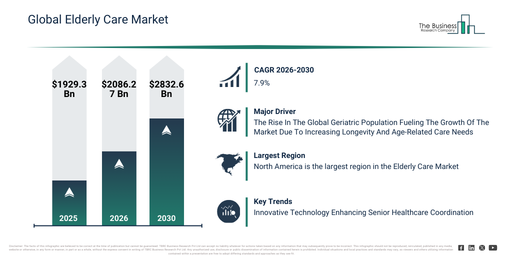
  • Elderly care market projected to reach $2832.6B by 2030 at 7.9% CAGR

    Elderly care market projected to reach $2832.6B by 2030 at 7.9% CAGR

    The Business Research Company’s 2026 market reports feature enhanced tools like market attractiveness analysis, TAM assessment, and company scoring matrices, along with interactive dashboards, deeper supply chain insights, and startup coverage strengthening the depth, usability, and strategic value of insights.

    What Is The Forecasted Market Size Trajectory Of The Elderly Care Market From 2026 To 2030?

    The elderly care market size has demonstrated significant expansion in recent years. It is anticipated to increase from $1929.3 billion in 2025 to $2086.27 billion in 2026, growing at a compound annual growth rate (CAGR) of 8.1%. This historical growth can be attributed to factors such as an increase in life expectancy, the prevalence of nuclear family structures, the rise in chronic illness, the development of long-term care infrastructure, and supportive social care policies.

    The elderly care market is anticipated to experience substantial growth in the upcoming years. It is projected to expand to $2832.6 billion by 2030, achieving a compound annual growth rate (CAGR) of 7.9%. This expansion during the forecast period is expected to be driven by factors such as hybrid care models, digital geriatric monitoring, caregiver training programs, preventive elderly healthcare initiatives, and public-private care partnerships. Noteworthy trends predicted for this period include an increasing preference for in-home elderly care, the growth of assisted living facilities, a heightened focus on managing chronic diseases, a rising demand for palliative and hospice care, and the integration of telehealth into elderly care services.

    Access Your Free Sample Report For In-Depth Market Analysis:

    https://www.thebusinessresearchcompany.com/report/elderly-care-global-market-report

    What Significant Factors Are Influencing The Elderly Care Market Expansion?

    The increasing global geriatric population is set to boost the expansion of the elderly care services market moving forward. This demographic, defined as individuals 65 years and older, is experiencing rapid growth worldwide due to factors such as extended life expectancy, advancements in healthcare systems, and declining fertility rates. The increase in the aging population consequently elevates the need for long-term care, chronic disease management, assistance with daily living, and continuous health monitoring to support older adults. Elderly care services are vital for enhancing safety, promoting independence, and improving the overall quality of life for seniors. As an illustration, in July 2024, the United Nations Department of Economic and Social Affairs (UN DESA), a US-based intergovernmental entity, reported that the number of people aged 65 years or older reached 703 million. This figure is projected to climb to 1.5 billion by 2050, meaning that 1 in 6 individuals globally will be over the age of 65 by mid-century. Thus, the growing geriatric population is a significant driver for the elderly care services market’s growth.

    What Are The Main Segments Within The Elderly Care Market Segment Structure?

    The elderly care market covered in this report is segmented –

    1) By Type: Independent Community Living, Assisted Living, Nursing, In-Home Care, Daycare, Hybrid Care, Palliative Care

    2) By Term: Short-Term, Long-Term

    3) By Application: Heart Diseases, Diabetes, Arthritis, Cancer, Kidney Diseases, Osteoporosis, Neurological, Respiratory, Other Applications

    4) By End-User: Hospitals, Elderly Nursing Homes, Homecare, Other End-Users

    Subsegments:

    1) By Independent Community Living: Senior Independent Living Communities, Active Adult Communities, Senior Co-Housing, Senior Apartments, 55+ Communities, Retirement Communities With Independent Living Facilities

    2) By Assisted Living: Residential Assisted Living Facilities, Assisted Living With Memory Care, Assisted Living With Dementia Care, Assisted Living With Specialized Healthcare Support, Luxury Assisted Living Communities

    3) By Nursing: Skilled Nursing Facilities (Snfs), Long-Term Care Nursing Homes, Transitional Care Units, Rehabilitation Centers, Nursing Care For Chronic Illnesses Or Disabilities

    4) By In-Home Care: Personal Care Assistance, Home Health Aide Services, Home Care For Dementia Or Alzheimer’s Patients, Companion Care Services, Hospice And End-Of-Life Care At Home

    5) By Daycare: Adult Daycare Centers, Memory Care Day Programs, Social Day Programs, Health And Wellness Day Programs, Specialized Day Programs For Disabled Elderly

    6) By Hybrid Care: Combination Of In-Home Care And Assisted Living, Telemedicine And Remote Monitoring With In-Person Support, Integrative Home Health And Daycare Services, Skilled Nursing With Home Healthcare Services, Residential Care With Telehealth Integration

    7) By Palliative Care: Hospice Care Services, Pain Management Services, End-Of-Life Support Services, Comfort And Support Care For Terminal Illnesses, Home-Based Palliative Care

    What Trends Are Affecting The Direction Of The Elderly Care Market?

    Leading companies within the elderly care market are concentrating on innovative products, such as healthcare-grade mobile computers, to elevate the standard of care, optimize operational processes, enhance communication among healthcare providers, and ensure more effective real-time monitoring and management of elderly patients’ health conditions. These healthcare-grade mobile computers are rugged, purpose-built devices specifically engineered for use in clinical environments. For instance, in November 2023, Zebra Technologies unveiled new healthcare-grade mobile computers, intending to improve patient care and increase operational efficiency in healthcare settings. The fresh devices are designed to assist caregivers in handling patient data, streamlining workflows, and fostering better interaction among healthcare teams. Integrating advanced technology, such as improved data capture functionalities and extended battery life, these mobile computers guarantee that healthcare professionals have dependable access to crucial information precisely when required. By enabling immediate data access, the devices aim to enhance patient outcomes and uplift the overall quality of care.

    Who Are The Companies Participating In The Elderly Care Market?

    Major companies operating in the elderly care market are Orpea Groupe S.A, Interim HealthCare Inc., Right at Home LLC, LHC Group Inc., Bayada Home Health Care Inc., Extendicare Inc., Exceptional Living Centers, Home Instead Inc., Cascade Healthcare Services LLC, NTUC Health Co Operative Ltd., Econ Healthcare Group, St Lukes ElderCare Ltd., Rosewood Care Group Inc., Orange Elderly Care Homes, United Medicare Pte Ltd., Samvedna Senior Care Pvt Ltd., Singapore Amalgamated Services Co operative Organisation Ltd SASCO, Vesta Elder Care Pvt Ltd, Brookdale Senior Living, Sunrise Senior Living, Genesis HealthCare, Kindred Healthcare

    Get The Full Elderly Care Market Report:

    https://www.thebusinessresearchcompany.com/report/elderly-care-global-market-report

    Which Region Leads The Elderly Care Market In Terms Of Market Share?

    North America was the largest region in the elderly care market in 2025. The regions covered in the elderly care market report are Asia-Pacific, South East Asia, Western Europe, Eastern Europe, North America, South America, Middle East, Africa.

    Request A Customized Elderly Care Market Report For Competitive Insights:

    https://www.thebusinessresearchcompany.com/report/elderly-care-global-market-report

    Browse Through More Reports Similar to the Global Elderly Care Market 2026, By The Business Research Company

    Elder Care Services And Assistive Devices Market Report 2026

    https://www.thebusinessresearchcompany.com/report/elder-care-services-and-assistive-devices-global-market-report

    Elderly Care Services Market Report 2026

    https://www.thebusinessresearchcompany.com/report/elderly-care-services-global-market-report

    Geriatric Care Services Market Report 2026

    https://www.thebusinessresearchcompany.com/report/geriatric-care-services-global-market-report

    Get in touch with us:

    The Business Research Company: https://www.thebusinessresearchcompany.com/

    Americas +1 310-496-7795

    Asia +44 7882 955267 & +91 8897263534

    Europe +44 7882 955267

    Email us at info@tbrc.info

    Follow us on:

    LinkedIn: https://in.linkedin.com/company/the-business-research-company

    YouTube: https://www.youtube.com/channel/UC24_fI0rV8cR5DxlCpgmyFQ

    Global Market Model: https://www.thebusinessresearchcompany.com/global-market-model
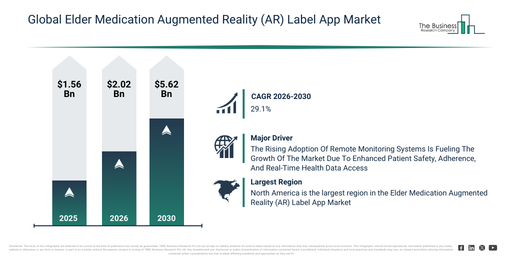
  • AR-based elderly medication labeling apps market to reach $5.61B by 2030 at 29.1% CAGR

    AR-based elderly medication labeling apps market to reach $5.61B by 2030 at 29.1% CAGR

    The Business Research Company’s 2026 market reports feature enhanced tools like market attractiveness analysis, TAM assessment, and company scoring matrices, along with interactive dashboards, deeper supply chain insights, and startup coverage strengthening the depth, usability, and strategic value of insights.

    How Much Will The Market Value Of The Elder Medication Augmented Reality (AR) Label App Market Grow Between 2026 And 2030?

    The market size for elder medication augmented reality (AR) label apps has experienced significant expansion in recent years. It is anticipated to grow from $1.56 billion in 2025 to $2.02 billion in 2026, registering a compound annual growth rate (CAGR) of 29.4%. This historic period’s growth is largely attributable to an increase in the elderly population, the rising occurrence of chronic conditions, persistent medication non-adherence issues, the development of mobile health applications, and wider adoption of digital patient education instruments.

    The elder medication augmented reality (AR) label app market is anticipated to experience substantial growth in the upcoming years. It is projected to expand to $5.62 billion by 2030, achieving a compound annual growth rate (CAGR) of 29.1%. This expansion during the forecast period is fueled by factors such as the increasing demand for personalized digital health solutions, the rising adoption of AR-enabled healthcare applications, the broadening of remote elderly care services, a heightened emphasis on medication safety and compliance, and the growing integration of healthcare apps with smart devices. Prominent trends expected over this period include the increasing uptake of AR-based medication instructions, a rise in the utilization of interactive prescription labeling, the expanding integration of personalized medication guidance, the development of remote medication adherence support, and an enhanced focus on elder-friendly digital interfaces.

    Access Your Free Sample Report For In-Depth Market Analysis:

    https://www.thebusinessresearchcompany.com/report/elder-medication-augmented-reality-ar-label-app-global-market-report

    Which Important Drivers Are Guiding The Elder Medication Augmented Reality (AR) Label App Market Growth?

    The expanded adoption of remote monitoring systems is anticipated to fuel the growth of the elder medication augmented reality (AR) label app market moving forward. Remote monitoring systems are defined as technologies that allow for the continuous tracking and management of patients’ health information from a distance. The increasing use of these systems is driven by a demand for immediate data access and more informed decision-making, further supported by IoT innovations and enhanced connectivity for efficient distant management. The elder medication augmented reality (AR) label app assists seniors in medication management by enabling them to scan labels for interactive details on dosage, timing, and warnings, thereby improving safety, adherence, and minimizing errors. For example, in December 2023, data from the National Health Service, a UK government department, showed approximately 33.6 million monthly logins by NHS app users, marking a 54% increase over the prior year, from 16.8 million to 25.8 million. Consequently, the rising adoption of remote monitoring systems is propelling the expansion of the elder medication augmented reality (AR) label app market. The growing prevalence of smartphones and internet connectivity is projected to advance the elder medication augmented reality (AR) label app market in the future. Smartphones and internet connectivity refer to the widespread availability and use of mobile devices and access to online networks, allowing individuals to engage with digital applications and services. The rise in smartphone and internet penetration is primarily due to more affordable devices and data plans, making digital access more accessible and broadening online connections. Smartphones and internet connectivity enable the elder medication AR label app to scan labels and provide real-time dosage instructions, warnings, and reminders, alongside interactive AR guidance to enhance medication management and adherence for older users. For instance, in May 2025, Ericsson, a telecommunications company based in Sweden, estimated that 5G mobile subscriptions would increase from 1.62 billion in 2023 to 6.29 billion by 2030. Therefore, the increasing penetration of smartphones and internet connectivity is a significant driver for the elder medication augmented reality (AR) label app market.

    How Is Segmentation Applied In The Elder Medication Augmented Reality (AR) Label App Market Segment Analysis?

    The elder medication augmented reality (ar) label app market covered in this report is segmented –

    1) By Component: Software, Hardware, Services

    2) By Platform: iPhone Operating System (iOS), Android, Windows, Other Platforms

    3) By Application: Medication Management, Patient Education, Prescription Tracking, Adherence Monitoring, Other Applications

    4) By End-User: Hospitals, Pharmacies, Homecare, Assisted Living Facilities, Other End-Users

    Subsegments:

    1) By Software: Application Software, System Software, Middleware Software, Cloud-Based Platforms, Mobile Applications

    2) By Hardware: Smart Glasses, Interactive Display Units, Scanning Devices, Wearable Devices, Smart Packaging Units, Tracking Devices

    3) By Services: Implementation Services, Integration Services, Maintenance And Support Services, Training And Consulting Services, Upgradation Services

    Who Are The Companies Participating In The Elder Medication Augmented Reality (AR) Label App Market Environment?

    Major companies operating in the elder medication augmented reality (ar) label app market are Philips Healthcare, Körber AG, Schreiner Group Co. Ltd., Augmedix Inc., Hero Health, Seagull Scientific Inc., OSP Labs, Codonics Inc., TEKLYNX International, EveryDose, Travancore Analytics Inc., Medisafe Inc., AiCure LLC, Pillo Health, Blippar Limited, AdhereTech, HQSoftware, DosePacker Inc., CareClinic, WellSky.

    Get The Full Elder Medication Augmented Reality (AR) Label App Market Report:

    https://www.thebusinessresearchcompany.com/report/elder-medication-augmented-reality-ar-label-app-global-market-report

    Which Region Leads The Elder Medication Augmented Reality (AR) Label App Market In Overall Market Size?

    North America was the largest region in the elder medication augmented reality (AR) label app market in 2025. Asia-Pacific is expected to be the fastest-growing region in the forecast period. The regions covered in the elder medication augmented reality (ar) label app market report are Asia-Pacific, South East Asia, Western Europe, Eastern Europe, North America, South America, Middle East, Africa.

    Request A Customized Elder Medication Augmented Reality (AR) Label App Market Report For Competitive Insights:

    https://www.thebusinessresearchcompany.com/report/elder-medication-augmented-reality-ar-label-app-global-market-report

    Browse Through More Reports Similar to the Global Elder Medication Augmented Reality (AR) Label App Market 2026, By The Business Research Company

    Augmented Reality Devices Market Report 2026

    https://www.thebusinessresearchcompany.com/report/augmented-reality-devices-global-market-report

    Augmented Reality Software Market Report 2026

    https://www.thebusinessresearchcompany.com/report/augmented-reality-software-global-market-report

    Augmented Reality In Health Care Market Report 2026

    https://www.thebusinessresearchcompany.com/report/augmented-reality-in-health-care-global-market-report

    Get in touch with us:

    The Business Research Company: https://www.thebusinessresearchcompany.com/

    Americas +1 310-496-7795

    Asia +44 7882 955267 & +91 8897263534

    Europe +44 7882 955267

    Email us at info@tbrc.info

    Follow us on:

    LinkedIn: https://in.linkedin.com/company/the-business-research-company

    YouTube: https://www.youtube.com/channel/UC24_fI0rV8cR5DxlCpgmyFQ

    Global Market Model: https://www.thebusinessresearchcompany.com/global-market-model
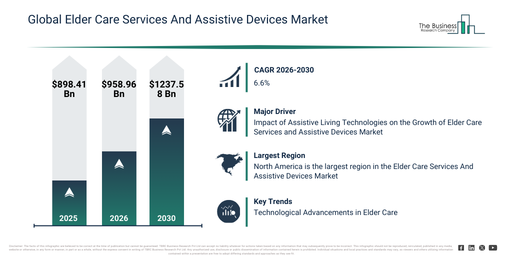
  • Elder care services and assistive devices market to reach $1237.57B by 2030 at 6.6% CAGR

    Elder care services and assistive devices market to reach $1237.57B by 2030 at 6.6% CAGR

    The Business Research Company’s 2026 market reports feature enhanced tools like market attractiveness analysis, TAM assessment, and company scoring matrices, along with interactive dashboards, deeper supply chain insights, and startup coverage strengthening the depth, usability, and strategic value of insights.

    What Changes In Market Value Are Expected For The Elder Care Services And Assistive Devices Market Over The 2026–2030 Period?

    The elder care services and assistive devices market size has demonstrated significant growth in recent years. It is projected to increase from $898.41 billion in 2025 to $958.96 billion in 2026, at a compound annual growth rate (CAGR) of 6.7%. This expansion in previous periods can be linked to factors such as an expanding aging population, a lack of caregivers, the impact of chronic diseases, a preference for independent living, and the expenditures related to long-term care.

    The elder care services and assistive devices market size is projected to experience substantial expansion over the upcoming years. It is forecast to reach $1237.58 billion by 2030, demonstrating a compound annual growth rate (CAGR) of 6.6%. This growth during the projection period is primarily driven by factors such as smart home eldercare solutions, the increasing adoption of wearable monitoring, AI-enabled caregiving tools, preventive geriatric care initiatives, and various government aging programs. Key trends anticipated within this forecast timeframe encompass the escalating uptake of home-based elder care solutions, a surge in the utilization of smart assistive devices, heightened demand for mobility and safety aids, the broadening scope of remote health monitoring for seniors, and the seamless integration of personalized care services.

    Access Your Free Sample Report For In-Depth Market Analysis:

    https://www.thebusinessresearchcompany.com/report/elder-care-services-and-assistive-devices-global-market-report

    What Major Factors Are Driving The Elder Care Services And Assistive Devices Market Forward?

    The increasing demand for assistive living technologies is projected to propel the expansion of the elder care services and assistive devices market in the future. These technologies encompass tools and systems designed to assist individuals facing disabilities or age-related challenges in managing daily routines and enhancing their overall quality of life, promoting increased independence through improved mobility, communication, and task organization. This growing need is driven by factors such as an aging global population, the rising occurrence of chronic health conditions, seniors’ preference for greater autonomy, and technological progress leading to more effective and affordable solutions. Within elderly care, assistive living technologies boost independence, heighten safety, simplify communication, allow for health monitoring, and aid in various daily tasks. For instance, in January 2024, data from the World Health Organization (WHO), a Switzerland-based intergovernmental organization focused on international public health, indicates that over 2.5 billion individuals worldwide currently require assistive products, and this number is anticipated to increase to approximately 3.5 billion by 2050 due to the aging population and growing incidence of noncommunicable diseases. Consequently, the escalating requirement for assistive living technologies is a significant driver for the elder care services and assistive devices market.

    What Segment Categories Shape The Elder Care Services And Assistive Devices Market Segment Landscape?

    The elder care services and assistive devices market covered in this report is segmented –

    1) By Offering: Services, Assisted Devices, Living Aids, Assistive Furniture, Bathroom Safety Equipment, Other Offerings

    2) By Funding: Private, Public

    3) By End User: Hospitals, Homecare Settings, Nursing Homes, Rehabilitation Centers, Other End Users

    Subsegments:

    1) By Services: Home Health Care Services, Nursing And Palliative Care Services, Senior Companion Services, Rehabilitation Services, Telehealth And Remote Monitoring Services, Personal Care Assistance

    2) By Assisted Devices: Mobility Aids, Hearing Aids, Vision Aids, Orthotic Devices, Monitoring Devices

    3) By Living Aids: Adaptive Kitchen Tools, Medication Management Devices, Eating And Drinking Aids, Memory Aids And Cognitive Assistive Devices, Communication Aids

    4) By Assistive Furniture: Adjustable Beds, Reclining Chairs And Lift Chairs, Ergonomic Chairs And Desks, Ramps And Raised Seating, Specialized Tables And Overbed Stands

    5) By Bathroom Safety Equipment: Grab Bars, Shower Chairs And Stools, Raised Toilet Seats, Bath Lifts, Non-Slip Mats And Flooring

    6) By Other Offerings: Environmental Control Systems, Cognitive Therapy Tools, Mobility Platforms, Smart Wearables For Health Monitoring

    Which Trends Are Impacting The Progress Of The Elder Care Services And Assistive Devices Market?

    Leading companies within the elder care services and assistive devices market are advancing intelligent care offerings, such as artificial intelligence (AI)-driven cognitive support, to improve care quality, enhance patient outcomes, and deliver individualized assistance for older individuals. This AI-based cognitive care for the elderly leverages artificial intelligence to monitor cognitive well-being, offer tailored help, provide companionship, manage health requirements, and ensure safety. For example, in June 2023, IIT Madras launched the National Center for Assistive Health Technologies (NCAHT-IITM) with the goal of strengthening research and development in assistive technologies for people with disabilities and the elderly. This center aims to encourage dialogue among users, creators, and policy shapers to develop groundbreaking solutions. The inauguration event featured notable speakers, including Dr. Rajiv Bahl from ICMR, who underscored the center’s critical role in transforming lives through technology and collaborative efforts. Additionally, new self-paced training modules for wheelchair users were introduced to boost their independence. Hence, the elder care services and assistive devices market is projected for considerable expansion, fueled by the growing aging population and an increasing desire for improved quality of life solutions.

    Who Are The Companies Operating Across The Elder Care Services And Assistive Devices Market Value Chain?

    Major companies operating in the elder care services and assistive devices market are Koninklijke Philips N.V., Stryker Corporation, Sonova Holding AG, Sunrise Senior Living, Life Care Centers of America Inc., Brookdale Senior Living Inc., GN Store Nord A/S, Amedisys Inc., LHC Group Inc., Atria Senior Living Inc., Cochlear Limited, Extendicare Inc., Invacare Corporation, Oticon A/S, Genesis HealthCare Co., Sunrise Medical Inc., Permobil AB, Pride Mobility Products Corporation, Five Star Senior Living, Tobii Dynavox AB, Inclusive Technology Ltd., Living Assistance Services Inc., Jabbla, Blue Chip Medical Products Inc.

    Get The Full Elder Care Services And Assistive Devices Market Report:

    https://www.thebusinessresearchcompany.com/report/elder-care-services-and-assistive-devices-global-market-report

    Which Region Is The Top Contributor To The Elder Care Services And Assistive Devices Market By Share?

    North America was the largest region in the elder care services and assistive devices market in 2025. The regions covered in the elder care services and assistive devices market report are Asia-Pacific, South East Asia, Western Europe, Eastern Europe, North America, South America, Middle East, Africa.

    Request A Customized Elder Care Services And Assistive Devices Market Report For Competitive Insights:

    https://www.thebusinessresearchcompany.com/report/elder-care-services-and-assistive-devices-global-market-report

    Browse Through More Reports Similar to the Global Elder Care Services And Assistive Devices Market 2026, By The Business Research Company

    Services For The Elderly And Persons With Disabilities Market 2026

    https://www.thebusinessresearchcompany.com/report/services-for-the-elderly-and-persons-with-disabilities-market

    Elderly And Disabled Assistive Devices Market Report 2026

    https://www.thebusinessresearchcompany.com/report/elderly-and-disabled-assistive-devices-global-market-report

    Elderly Care Services Market Report 2026

    https://www.thebusinessresearchcompany.com/report/elderly-care-services-global-market-report

    Get in touch with us:

    The Business Research Company: https://www.thebusinessresearchcompany.com/

    Americas +1 310-496-7795

    Asia +44 7882 955267 & +91 8897263534

    Europe +44 7882 955267

    Email us at info@tbrc.info

    Follow us on:

    LinkedIn: https://in.linkedin.com/company/the-business-research-company

    YouTube: https://www.youtube.com/channel/UC24_fI0rV8cR5DxlCpgmyFQ

    Global Market Model: https://www.thebusinessresearchcompany.com/global-market-model
  • eHealth 2.0 market forecast (2026–2030) with expansion trends

    eHealth 2.0 market forecast (2026–2030) with expansion trends

    The Business Research Company’s 2026 market reports feature enhanced tools like market attractiveness analysis, TAM assessment, and company scoring matrices, along with interactive dashboards, deeper supply chain insights, and startup coverage strengthening the depth, usability, and strategic value of insights.

    By 2030, What Market Size Is The eHealth 2.0 Market Expected To Reach Based On Its 2026 Value?

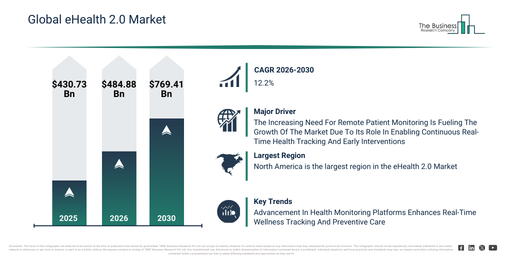
    The ehealth 2.0 market size has experienced significant expansion over recent years. This market is projected to expand from $430.73 billion in 2025 to $484.88 billion in 2026, demonstrating a compound annual growth rate (CAGR) of 12.6%. Factors contributing to its historical growth include greater internet adoption within healthcare, an escalating need for remote care provisions, wider implementation of electronic health records, increased smartphone utilization in medical settings, and an intensified emphasis on healthcare accessibility.

    The ehealth 2.0 market size is anticipated to experience substantial growth in the upcoming years. It is projected to expand to $769.41 billion in 2030, achieving a compound annual growth rate (CAGR) of 12.2%. This growth during the forecast period can be attributed to heightened investments in digital health platforms, the increasing adoption of AI-enabled clinical decision support, the expansion of wearable-based monitoring solutions, a rising emphasis on personalized healthcare delivery, and the growing integration of virtual care models. Prominent trends for the forecast period include the increasing uptake of remote patient monitoring solutions, the rising use of mobile health applications, the expanding integration of telemedicine platforms, the development of interoperable health data ecosystems, and an enhanced focus on patient-centric digital care.

    Access Your Free Sample Report For In-Depth Market Analysis:

    https://www.thebusinessresearchcompany.com/report/ehealth-20-global-market-report

    Which Key Drivers Are Affecting The eHealth 2.0 Market Development?

    The eHealth 2.0 market is anticipated to expand due to the escalating demand for remote patient monitoring. Remote patient monitoring (RPM) leverages digital technologies to gather and transmit patient health data from locations outside traditional clinical settings, facilitating timely interventions and reducing the frequency of hospital visits. The increasing prevalence of chronic diseases is fueling the demand for RPM, as it enables continuous health tracking, thereby allowing for early intervention and lessening the need for frequent hospital visits. RPM supports eHealth 2.0 by collecting real-time health data beyond clinical environments, promoting personalized and preventive care. This technology offers crucial timely insights for swift medical intervention, which helps alleviate hospital workload and enhances patient involvement. For instance, figures from Vivalink, a US-based healthcare technology company, revealed in August 2023 that 81% of clinicians now utilize remote patient monitoring, a significant leap from just 20% in 2021, marking a 305% increase. Furthermore, 84% of existing RPM users intend to expand their adoption of this technology in 2024. Ultimately, the growing necessity for remote patient monitoring is a primary driver behind the expansion of the eHealth 2.0 market.

    Which Segment Types Are Examined In The eHealth 2.0 Market Segment Study?

    The ehealth 2.0 market covered in this report is segmented –

    1) By Type: Telemedicine, Electronic Health Records (EHRs), E-Prescription, Remote Patient Monitoring, Mobile Health (mHealth), Health Information Exchange (HIE), Other Types

    2) By Service: Monitoring, Diagnostic, Treatment

    3) By End-User: Healthcare Providers, Insurers, Other End-Users

    Subsegments:

    1) By Telemedicine: Real-time Telemedicine, Store-And-Forward Telemedicine, Remote Patient Monitoring Telemedicine, Mobile Health (mHealth) Telemedicine

    2) By Electronic Health Records (EHRs): Web-Based Electronic Health Records (EHRs), Client Server-Based Electronic Health Records (EHRs), Hybrid Electronic Health Records (EHRs)

    3) By E-Prescription: Controlled Substances E-Prescription, Non-Controlled Substances E-Prescription, Renewal And Refill E-Prescription

    4) By Remote Patient Monitoring: Chronic Disease Monitoring, Post-Acute Care Monitoring, Wearable Device Monitoring

    5) By Mobile Health (mHealth): Fitness And Wellness Apps, Chronic Disease Management Apps, Medication Management Apps, Women’s Health Apps

    6) By Health Information Exchange (HIE): Directed Exchange, Query-Based Exchange, Consumer-Mediated Exchange

    7) By Other Types: Clinical Decision Support Systems, Medical Imaging Systems, Patient Portals, Healthcare Analytics Platforms

    What Trends Are Transforming The eHealth 2.0 Market?

    Leading companies within the eHealth 2.0 market are concentrating on developing advanced technologies, such as health and fitness monitoring platforms, to boost patient engagement and foster proactive healthcare management. Health and fitness monitoring platforms are digital solutions that consistently track vital signs, activity levels, and overall wellness. They support users and healthcare professionals in managing health, establishing goals, and aiding preventive care decisions. For instance, in August 2024, Huawei Technologies Co., Ltd., a China-based supplier of health monitoring devices, introduced the entirely new HUAWEI TruSense System. This system is engineered to provide more accurate, comprehensive, and real-time health insights specifically for wearable devices. TruSense incorporates sophisticated sensors and algorithms to monitor over 60 health indicators, including heart rate, stress, emotional state, respiratory health, and calorie tracking, thereby delivering faster and more detailed health reports than earlier systems.

    Which Players Are Part Of The Competitive Landscape Of The eHealth 2.0 Market?

    Major companies operating in the ehealth 2.0 market are CVS Health, Optum Inc, International Business Machines Corporation, Oracle Corporation, Siemens Healthineers, GE Healthcare, Athenahealth, Teladoc Health, eClinicalWorks, Veradigm, Doximity, American Well, Greenway Health, Tebra Technologies Inc, AdvancedMD, Doctor On Demand, Medisafe, AMD Global Telemedicine, Philips Healthcare, Cerner Corporation, Allscripts Healthcare Solutions, Epic Systems Corporation

    Get The Full eHealth 2.0 Market Report:

    https://www.thebusinessresearchcompany.com/report/ehealth-20-global-market-report

    Which Region Represents The Largest Share Of The eHealth 2.0 Market?

    North America was the largest region in the eHealth 2.0 market in 2025. Asia-Pacific is expected to be the fastest-growing region in the forecast period. The regions covered in the ehealth 2.0 market report are Asia-Pacific, South East Asia, Western Europe, Eastern Europe, North America, South America, Middle East, Africa.

    Request A Customized eHealth 2.0 Market Report For Competitive Insights:

    https://www.thebusinessresearchcompany.com/report/ehealth-20-global-market-report

    Browse Through More Reports Similar to the Global eHealth 2.0 Market 2026, By The Business Research Company

    Healthcare Technology Market Report 2026

    https://www.thebusinessresearchcompany.com/report/healthcare-technology-global-market-report

    Ear Nose And Throat Ent Workstation Market Report 2026

    https://www.thebusinessresearchcompany.com/report/ear-nose-and-throat-ent-workstation-global-market-report

    Smart Healthcare Products Market Report 2026

    https://www.thebusinessresearchcompany.com/report/smart-healthcare-products-global-market-report

    Get in touch with us:

    The Business Research Company: https://www.thebusinessresearchcompany.com/

    Americas +1 310-496-7795

    Asia +44 7882 955267 & +91 8897263534

    Europe +44 7882 955267

    Email us at info@tbrc.info

    Follow us on:

    LinkedIn: https://in.linkedin.com/company/the-business-research-company

    YouTube: https://www.youtube.com/channel/UC24_fI0rV8cR5DxlCpgmyFQ

    Global Market Model: https://www.thebusinessresearchcompany.com/global-market-model
  • Global eHealth market analysis (2026–2030) with strategic insights

    Global eHealth market analysis (2026–2030) with strategic insights

    The Business Research Company’s 2026 market reports feature enhanced tools like market attractiveness analysis, TAM assessment, and company scoring matrices, along with interactive dashboards, deeper supply chain insights, and startup coverage strengthening the depth, usability, and strategic value of insights.

    What Is The Anticipated Rise In Market Value Of The eHealth Market During The Forecast Period?

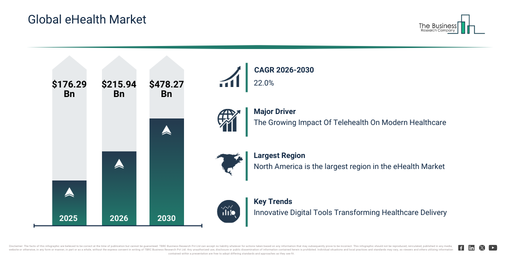
    The ehealth market has experienced substantial expansion in recent years. It is projected to grow from $176.29 billion in 2025 to $215.94 billion in 2026, exhibiting a compound annual growth rate (CAGR) of 22.5%. The growth observed in the past can be ascribed to healthcare digitalization initiatives, the increase in internet penetration, the need for cost containment, the prevalence of chronic diseases, and the adoption of telehealth driven by the pandemic.

    The ehealth market is projected for substantial expansion in the coming years. It is anticipated to reach $478.27 billion by 2030, demonstrating a compound annual growth rate (CAGR) of 22.0%. This growth during the forecast period can be attributed to factors such as AI-enabled clinical decision support, interoperable health data exchange, the adoption of value-based care models, increased wearable device integration, and digital health reimbursement. Significant trends expected in the forecast period include the rising adoption of telemedicine and virtual care, the expansion of mobile health applications, enhanced integration of electronic health records, a growing focus on remote patient monitoring, and improved patient engagement facilitated by digital platforms.

    Access Your Free Sample Report For In-Depth Market Analysis:

    https://www.thebusinessresearchcompany.com/report/ehealth-global-market-report

    What Factors Are Contributing To The Growth Of The eHealth Market?

    Increased adoption of telehealth is projected to fuel the expansion of the eHealth market. Telehealth involves employing digital communication technologies for delivering remote healthcare services, such as virtual consultations, patient monitoring, and health education. This increasing use of telehealth is attributed to its accessibility, convenience, cost-effectiveness, and advancements in technology. Furthermore, eHealth complements telehealth by facilitating remote patient monitoring, enabling virtual consultations, and providing uninterrupted access to digital health records, thereby enhancing healthcare delivery. An illustrative example comes from FAIR Health Inc., a US-based non-profit organization, which reported in April 2023 that national telehealth use in 2023 saw a 7.3% increase, climbing from 5.5% of medical claim lines in December 2022 to 5.9% in January 2023. Consequently, the growing adoption of telehealth is a key factor propelling the eHealth market’s growth.

    How Are Different Segments Classified In The eHealth Market Segment Analysis?

    The ehealth market covered in this report is segmented –

    1) By Type: Ehealth Solutions, Ehealth Services

    2) By Component: Electronic Health Records, E-Prescribing, Clinical Decision Support Systems, Telemedicine, Other Components

    3) By Deployment: On-Premise, Cloud-Based

    4) By End User: Healthcare Providers, Payers, Healthcare Consumers, Other End-Users

    Subsegments:

    1) By Ehealth Solutions: Electronic Health Records (EHR), Telemedicine And Telehealth Solutions, Health Information Systems (HIS), Mobile Health Applications (Mhealth), Remote Monitoring Solutions

    2) By Ehealth Services: Telemedicine Services, Econsultation And Virtual Care, Health Data Analytics Services, Health IT Support Services, Ehealth Consulting Services

    What Trends Are Shaping The Future Of The eHealth Market?

    Leading entities within the eHealth market are concentrating on developing innovative products, such as electronic medical records (EMR) systems, to improve patient data handling, boost healthcare effectiveness, and rationalize clinical processes. An Electronic Medical Records (EMR) system functions as a digital platform designed to store, manage, and retrieve patients’ medical histories, diagnoses, treatments, and other health-related information within a given healthcare facility. For instance, in April 2024, eHealth Solutions Ltd, a UK-based healthcare IT company, unveiled EMRpro, an advanced electronic medical records (EMR) system specifically engineered for private healthcare practices. This cutting-edge healthcare IT solution aims to revolutionize clinical efficiency and patient management. EMRpro incorporates sophisticated capabilities to optimize medical workflows and improve care delivery. In contrast to older EMR systems, it places greater importance on clinical functionality than on administrative tasks. Through its modern, cloud-based infrastructure, EMRpro establishes a new standard in healthcare technology.

    Who Are The Companies Driving Activity In The eHealth Market?

    Major companies operating in the ehealth market are UnitedHealth Group Incorporated, CVS Health Corporation, International Business Machines Corporation (IBM), Cisco Systems Inc., Medtronic plc, Siemens Healthineers AG, Koninklijke Philips N.V., GE HealthCare Technologies Inc., Epic Systems Corporation, Teladoc Health Inc., Veradigm LLC, athenahealth Inc., CompuGroup Medical SE & Co. KGaA, Hims & Hers Health Inc., American Well Corporation, Epocrates LLC, eHealth Technologies Inc., Medisafe Ltd., Oracle Health, iCliniq

    Get The Full eHealth Market Report:

    https://www.thebusinessresearchcompany.com/report/ehealth-global-market-report

    Which Geographic Region Dominates The eHealth Market?

    North America was the largest region in the eHealth market in 2025. Asia-Pacific is expected to be the fastest-growing region in the forecast period. The regions covered in the ehealth market report are Asia-Pacific, South East Asia, Western Europe, Eastern Europe, North America, South America, Middle East, Africa.

    Request A Customized eHealth Market Report For Competitive Insights:

    https://www.thebusinessresearchcompany.com/report/ehealth-global-market-report

    Browse Through More Reports Similar to the Global eHealth Market 2026, By The Business Research Company

    Healthcare Ecommerce Market Report 2026

    https://www.thebusinessresearchcompany.com/report/healthcare-ecommerce-global-market-report

    Healthcare Edi Market Report 2026

    https://www.thebusinessresearchcompany.com/report/healthcare-edi-global-market-report

    Healthcare Technology Market Report 2026

    https://www.thebusinessresearchcompany.com/report/healthcare-technology-global-market-report

    Get in touch with us:

    The Business Research Company: https://www.thebusinessresearchcompany.com/

    Americas +1 310-496-7795

    Asia +44 7882 955267 & +91 8897263534

    Europe +44 7882 955267

    Email us at info@tbrc.info

    Follow us on:

    LinkedIn: https://in.linkedin.com/company/the-business-research-company

    YouTube: https://www.youtube.com/channel/UC24_fI0rV8cR5DxlCpgmyFQ

    Global Market Model: https://www.thebusinessresearchcompany.com/global-market-model
  • Egg freezing and embryo banking market outlook (2026–2030)

    Egg freezing and embryo banking market outlook (2026–2030)

    The Business Research Company’s 2026 market reports feature enhanced tools like market attractiveness analysis, TAM assessment, and company scoring matrices, along with interactive dashboards, deeper supply chain insights, and startup coverage strengthening the depth, usability, and strategic value of insights.

    How Is The Market Size Of The Egg Freezing And Embryo Banking Market Expected To Scale Between 2026 And 2030?

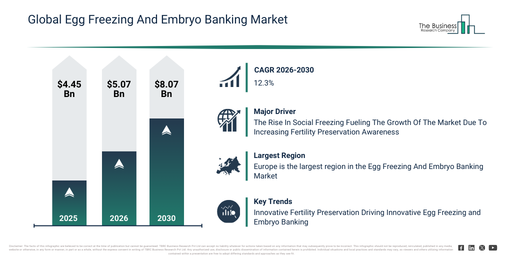
    The egg freezing and embryo banking market size has seen rapid expansion in recent years. This market is anticipated to increase from $4.45 billion in 2025 to $5.07 billion in 2026, demonstrating a compound annual growth rate (CAGR) of 13.9%. Historically, this growth can be ascribed to career prioritization trends, oncology-related fertility preservation, the expansion of IVF clinics, heightened reproductive health awareness, and evolving urban lifestyle changes.

    The egg freezing and embryo banking market is projected to experience substantial expansion in the coming years. Its valuation is anticipated to reach $8.07 billion by 2030, exhibiting a compound annual growth rate (CAGR) of 12.3%. This growth over the forecast period can be primarily attributed to factors such as increased acceptance of social egg freezing, advancements in cryogenic storage, the availability of employer-provided fertility benefits, the rise in fertility tourism, and supportive regulatory frameworks for assisted reproductive technologies. Key trends during this period are expected to encompass a surge in demand for fertility preservation services, a greater embrace of delayed parenthood planning, wider application of cryopreservation technologies, an increase in fertility awareness programs, and enhanced success rates of assisted reproductive techniques.

    Access Your Free Sample Report For In-Depth Market Analysis:

    https://www.thebusinessresearchcompany.com/report/egg-freezing-and-embryo-banking-global-market-report

    Which Strong Drivers Are Impacting The Egg Freezing And Embryo Banking Market Growth?

    The expansion of social freezing is anticipated to boost the egg-freezing and embryo banking markets in the future. This practice, known as social freezing, involves a woman undergoing ovarian stimulation, egg retrieval, and subsequently freezing her eggs for reasons other than medical necessity. The increased adoption of social freezing is primarily motivated by individuals’ desire to safeguard their fertility and retain the flexibility to start families later in life, often influenced by career ambitions, academic pursuits, the lack of a suitable partner, or financial factors. Both egg freezing and embryo banking facilitate reproductive planning by offering long-term solutions for fertility preservation, thus empowering individuals to make well-informed choices regarding their future family building. As an illustration, data from the UK’s Human Fertilisation and Embryology Authority (HFEA) indicates that by June 2025, the volume of egg-freezing cycles had risen from 4,700 in 2022 to 6,900 in 2023, constituting 7% of all treatment and storage cycles. Consequently, the uptick in social freezing is a significant factor propelling the expansion of the egg-freezing and embryo banking market.

    How Is The Egg Freezing And Embryo Banking Market Categorized Across Its Segment Groups?

    The egg freezing and embryo banking market covered in this report is segmented –

    1) By Type: Donor, Non-donor

    2) By Preservation: Egg Freezing, Embryo Freezing

    3) By Application: Under 30 Year Old Female, Above 30 Year Old Female

    4) By End Users: Fertility Centers, Hospitals, Cryo Banks, Other End Users

    Subsegments:

    1) By Donor: Egg Donation, Embryo Donation

    2) By Non-donor: Egg Freezing, Embryo Freezing

    Which Trends Are Contributing To Changes In The Egg Freezing And Embryo Banking Market?

    Leading companies within the egg-freezing and embryo banking markets are prioritizing the development of advanced fertility preservation banks to deliver exhaustive fertility preservation services. A Preservation Bank functions as a resource, providing frozen donor eggs to prospective parents, thereby offering an alternative to fresh eggs. As an example, in March 2023, Pinnacle Fertility, a US-based fertility services provider, introduced its Pinnacle Egg Bank to expand national access to egg donor possibilities. This novel solution, Pinnacle Egg Bank, boasts distinctive characteristics including access to superior quality frozen donor eggs, a stringent screening process for egg donors, specialized knowledge in egg donation and cryopreservation, a simplified and unified patient experience, and success rates equivalent to those of fresh eggs.

    Which Firms Are Influencing Competition In The Egg Freezing And Embryo Banking Market?

    Major companies operating in the egg freezing and embryo banking market are Mayo Clinic, Cleveland Clinic Fertility Center, The Cooper Companies Inc., Reproductive Medicine Associates Network LLC, Shady Grove Fertility, Virtus Health Limited, Monash IVF Group Limited, Kindbody Inc., Carrot Fertility Inc., CREATE Fertility Limited, New England Cryogenic Center Inc., CCRM Management Company LLC, Reproductive Biology Associates LLC, Genea Limited, WINFertility Inc., California Cryobank Inc., Fairfax Cryobank Inc., Institut Marquès, Extend Fertility Medical Practice PLLC, The London Women’s Clinic Limited, Kitazato Corporation, ReproTech LLC, IVF Australia, CHA Medical Group Inc., West Coast Fertility Centers Inc.

    Get The Full Egg Freezing And Embryo Banking Market Report:

    https://www.thebusinessresearchcompany.com/report/egg-freezing-and-embryo-banking-global-market-report

    Which Region Is The Leading Market For The Egg Freezing And Embryo Banking Market?

    Europe was the largest region in the egg freezing and embryo banking market in 2025. Asia-Pacific is expected to be the fastest-growing region in the forecast period. The regions covered in the egg freezing and embryo banking market report are Asia-Pacific, South East Asia, Western Europe, Eastern Europe, North America, South America, Middle East, Africa.

    Request A Customized Egg Freezing And Embryo Banking Market Report For Competitive Insights:

    https://www.thebusinessresearchcompany.com/report/egg-freezing-and-embryo-banking-global-market-report

    Browse Through More Reports Similar to the Global Egg Freezing And Embryo Banking Market 2026, By The Business Research Company

    Processed Eggs Market Report 2026

    https://www.thebusinessresearchcompany.com/report/processed-eggs-global-market-report

    Egg Processing Market Report 2026

    https://www.thebusinessresearchcompany.com/report/egg-processing-global-market-report

    Donor Egg In Vitro Fertilization Ivf Services Market Report 2026

    https://www.thebusinessresearchcompany.com/report/donor-egg-in-vitro-fertilization-ivf-services-global-market-report

    Get in touch with us:

    The Business Research Company: https://www.thebusinessresearchcompany.com/

    Americas +1 310-496-7795

    Asia +44 7882 955267 & +91 8897263534

    Europe +44 7882 955267

    Email us at info@tbrc.info

    Follow us on:

    LinkedIn: https://in.linkedin.com/company/the-business-research-company

    YouTube: https://www.youtube.com/channel/UC24_fI0rV8cR5DxlCpgmyFQ

    Global Market Model: https://www.thebusinessresearchcompany.com/global-market-model
  • Edema clinical trials market developments and opportunities (2026–2030)

    Edema clinical trials market developments and opportunities (2026–2030)

    The Business Research Company’s 2026 market reports feature enhanced tools like market attractiveness analysis, TAM assessment, and company scoring matrices, along with interactive dashboards, deeper supply chain insights, and startup coverage strengthening the depth, usability, and strategic value of insights.

    What Level Of Market Value Growth Is Predicted For The Edema Clinical Trials Market From 2026 To 2030?

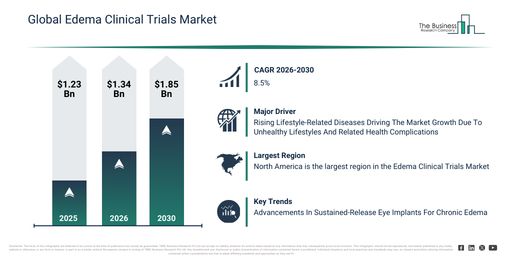
    The edema clinical trials market has experienced robust expansion in recent years. Its size is projected to increase from $1.23 billion in 2025 to $1.34 billion in 2026, exhibiting a compound annual growth rate (CAGR) of 8.8%. This historical growth can be attributed to factors such as the rising incidence of cardiovascular and renal disorders, the broadening of clinical research infrastructure, augmented pharmaceutical R&D investments, an increase in investigator-initiated trials, and advancements in clinical trial management systems.

    The edema clinical trials market size is projected for robust expansion over the coming years, anticipated to reach $1.85 billion by 2030 at a compound annual growth rate (CAGR) of 8.5%. This growth in the forecast period is attributed to factors such as increasing demand for targeted edema therapies, the rising use of decentralized clinical trial models, the expansion of precision medicine approaches, the growing integration of digital data capture tools, and increased regulatory support for innovative trial designs. Major trends expected within the forecast period include the increasing use of AI-assisted patient recruitment, the rising adoption of adaptive trial designs, a growing focus on biomarker-based endpoints, the expansion of multi-center global trials, and an enhanced emphasis on real-world evidence integration.

    Access Your Free Sample Report For In-Depth Market Analysis:

    https://www.thebusinessresearchcompany.com/report/edema-clinical-trials-global-market-report

    What Key Factors Are Shaping The Edema Clinical Trials Market Landscape?

    The rising occurrence of lifestyle-related diseases is anticipated to drive the expansion of the edema clinical trials market in the future. These diseases stem from everyday habits and decisions, such as a sedentary lifestyle, poor dietary choices, and substance consumption. The increase in lifestyle-related diseases is linked to unhealthy eating patterns, where the prevalent intake of processed and high-calorie items contributes to conditions like obesity, diabetes, and cardiovascular issues. Edema clinical trials play a role in addressing lifestyle-related diseases through the creation and evaluation of therapies designed to manage fluid accumulation associated with obesity, diabetes, and cardiovascular conditions. For example, data from March 2024, provided by the Office for Health Improvement & Disparities, a UK government body, indicates that from March 2022 to March 2023, the proportion of individuals with type 1 diabetes receiving all eight suggested care processes saw a 22% increase, and for type 2 diabetes, this figure rose by 21%. Concurrently, the percentage reaching target HbA1c levels climbed to 37.9%, representing the highest recording in the National Diabetes Audit (NDA). Consequently, the growing frequency of lifestyle-related diseases is propelling the expansion of the edema clinical trials market.

    How Are Segments Identified Within The Edema Clinical Trials Market Segment Framework?

    The edema clinical trials market covered in this report is segmented –

    1) By Phase: Phase I, Phase II, Phase III, Phase IV

    2) By Type: Peripheral Edema, Pulmonary Edema, Cerebral Edema, Nephrotic Syndrome Edema

    3) By Study Design: Interventional, Observational, Expanded Access

    4) By Participant: Pediatrics, Adults, Geriatrics

    5) By End User: Pharmaceutical Companies, Research Institutions, Contract Research Organizations (CROs), Academic Research Centers

    Subsegments:

    1) By Phase I: Single Ascending Dose, Multiple Ascending Dose

    2) By Phase II: Proof of Concept, Phase IIb Dose Optimization

    3) By Phase III: Pivotal Efficacy Trials, Comparative Trials

    4) By Phase IV: Post-Marketing Surveillance, Long-Term Safety Studies

    What Market Trends Are Affecting The Edema Clinical Trials Market?

    Leading companies active in the edema clinical trials market are concentrating on developing innovative solutions, such as refillable ocular implants, to enhance treatment effectiveness and patient adherence in managing chronic edema-related eye conditions. A refillable ocular implant is defined as a medical device implanted within the eye capable of continuously delivering medication over an extended period, allowing for periodic refilling of the drug without requiring its removal or replacement, thus ensuring sustained treatment for long-term eye conditions like macular edema. For instance, in February 2025, Roche Holding AG, a pharmaceutical company based in Switzerland, obtained approval from the FDA for Susvimo, recognized as the first and only continuous delivery treatment for diabetic macular edema (DME) and diabetic retinopathy (DR), both primary causes of diabetes-related blindness. This offers an alternative to frequent eye injections with significantly fewer annual treatments. This pioneering approval signifies a substantial advancement in ophthalmic care, as Susvimo’s implantable delivery system aids in improving patient compliance and reducing the treatment burden, potentially enhancing long-term outcomes for individuals living with these chronic eye conditions.

    Who Are The Companies Competing Within The Edema Clinical Trials Market?

    Major companies operating in the edema clinical trials market are Roche Holding AG, Merck & Co. Inc., AbbVie Inc., Bayer AG, Novartis International AG, CSL Limited, Regeneron Pharmaceuticals Inc., Boehringer Ingelheim International GmbH, Genentech Inc., Ionis Pharmaceuticals Inc., ANI Pharmaceuticals Inc., BioCryst Pharmaceuticals Inc., Tactile Medical, REGENXBIO Inc., Koya Medical Inc., KalVista Pharmaceuticals Inc., Kodiak Sciences Inc., Pharvaris B.V., Oxurion NV, Outlook Therapeutics Inc., Adverum Biotechnologies Inc., Oculis Holding AG

    Get The Full Edema Clinical Trials Market Report:

    https://www.thebusinessresearchcompany.com/report/edema-clinical-trials-global-market-report

    Where Is The Edema Clinical Trials Market Primarily Concentrated By Region?

    North America was the largest region in the edema clinical trials market in 2025. Asia-Pacific is expected to be the fastest-growing region in the forecast period. The regions covered in the edema clinical trials market report are Asia-Pacific, South East Asia, Western Europe, Eastern Europe, North America, South America, Middle East, Africa.

    Request A Customized Edema Clinical Trials Market Report For Competitive Insights:

    https://www.thebusinessresearchcompany.com/report/edema-clinical-trials-global-market-report

    Browse Through More Reports Similar to the Global Edema Clinical Trials Market 2026, By The Business Research Company

    Virtual Clinical Trials Market Report 2026

    https://www.thebusinessresearchcompany.com/report/virtual-clinical-trials-global-market-report

    Cardiovascular Clinical Trials Market Report 2026

    https://www.thebusinessresearchcompany.com/report/cardiovascular-clinical-trials-global-market-report

    Healthcare Edi Market Report 2026

    https://www.thebusinessresearchcompany.com/report/healthcare-edi-global-market-report

    Get in touch with us:

    The Business Research Company: https://www.thebusinessresearchcompany.com/

    Americas +1 310-496-7795

    Asia +44 7882 955267 & +91 8897263534

    Europe +44 7882 955267

    Email us at info@tbrc.info

    Follow us on:

    LinkedIn: https://in.linkedin.com/company/the-business-research-company

    YouTube: https://www.youtube.com/channel/UC24_fI0rV8cR5DxlCpgmyFQ

    Global Market Model: https://www.thebusinessresearchcompany.com/global-market-model