Category: Healthcare Services

  • Cell lysis and fractionation market forecast (2026–2030)

    Cell lysis and fractionation market forecast (2026–2030)

    The Business Research Company’s 2026 market reports feature enhanced tools like market attractiveness analysis, TAM assessment, and company scoring matrices, along with interactive dashboards, deeper supply chain insights, and startup coverage strengthening the depth, usability, and strategic value of insights.

    From Its 2026 Market Size, What Value Is The Cell Lysis And Fractionation Market Projected To Reach By 2030?

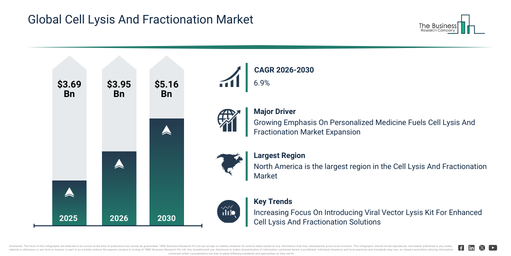
    The cell lysis and fractionation market has shown robust growth recently. This market is projected to expand from $3.69 billion in 2025 to $3.95 billion in 2026, demonstrating a compound annual growth rate (CAGR) of 7.0%. Historically, this growth has stemmed from factors such as heightened molecular biology research, a rise in proteomics investigations, the increasing adoption of nucleic acid purification methods, the proliferation of life science laboratories, and a greater need for standardized sample preparation.

    The cell lysis and fractionation market is anticipated to experience substantial growth over the coming years. By 2030, its size is projected to reach $5.16 billion, expanding at a compound annual growth rate (CAGR) of 6.9%. This projected growth during the forecast period is largely driven by factors such as greater investments in proteomics and genomics studies, a broader uptake of automated sample preparation techniques, an intensified focus on high-throughput analysis, the expansion of biopharmaceutical research pipelines, and an increased implementation of integrated laboratory systems. Key trends anticipated within this period involve the increasing integration of automated cell lysis systems, a surging demand for highly efficient protein extraction, the expanding application of both chemical and mechanical lysis methods, the broadening scope of fractionation-based sample preparation, and an elevated emphasis on maintaining sample integrity.

    Access Your Free Sample Report For In-Depth Market Analysis:

    https://www.thebusinessresearchcompany.com/report/cell-lysis-and-fractionation-global-market-report

    Which Important Drivers Are Guiding The Cell Lysis And Fractionation Market Growth?

    The increasing emphasis on personalized medicine is anticipated to fuel the expansion of the cell lysis and fractionation markets in the future. This innovative medical approach utilizes an individual’s genetic blueprint for disease diagnosis and treatment, customizing medical strategies and therapies based on each patient’s distinct genetic characteristics. Cell lysis and fractionation are vital for precision medicine, enabling the isolation and examination of specific subcellular components—like proteins, organelles, and nucleic acids—from patient samples. This capability empowers scientists and healthcare providers to explore the molecular underpinnings of diseases and develop bespoke treatments tailored to each patient’s distinct molecular profile. For example, data from February 2024, provided by the US-based nonprofit Personalized Medicine Coalition (PMC), indicates that in 2023, the Food and Drug Administration (FDA) sanctioned 7 new personalized cancer treatments, contributing to a total of 26 personalized treatments approved that year, which represents a notable rise compared to the 12 approvals in 2022. Consequently, this heightened attention on personalized medicine is stimulating the expansion of the cell lysis and fractionation markets.

    Which Segment Categories Are Included In The Cell Lysis And Fractionation Market Segment Analysis?

    The cell lysis and fractionation market covered in this report is segmented –

    1) By Type: Mammalian Cells, Microbial Cells

    2) By Application: Nucleic Acid Purification And Isolation, Protein Purification And Isolation

    3) By End-User: Research Laboratories And Institutes, Biopharmaceutical, Biotechnology Companies

    Subsegments:

    1) By Mammalian Cells: Adherent Mammalian Cells, Suspension Mammalian Cells, Primary Cells, Cell Lines

    2) By Microbial Cells: Bacterial Cells, Yeast Cells, Fungal Cells, Algal Cells

    What Trends Are Influencing The Evolution Of The Cell Lysis And Fractionation Market?

    Leading companies in the cell lysis and fractionation market are concentrating on introducing advanced solutions, such as CGT (cell and gene therapy) viral vector lysis kits, to gain a competitive advantage. These lysis kits provide a simplified AAV (Adeno-associated virus) lysis methodology aimed at improving SOPs (Standard Operating Procedures), quality control, and safety, while also standardizing bioprocessing workflows. For example, in July 2023, QIAGEN, a Germany-based supplier of sample and assay technologies, launched its new CGT Viral Vector Lysis Kit. This innovation allows for the quantification of virus titers for several serotypes using an exact and uniform procedure that begins with cell lysates. This new CGT viral vector lysis kit enhances QIAGEN’s rapidly expanding digital PCR portfolio for the biopharma industry, which already includes three QIAcuity Residual DNA Quantification Kits to monitor host cell DNA carryover and ten QIAcuity Cell and Gene Therapy (CGT) dPCR Assays for use in adeno-associated virus (AAV) titer quantification.

    Who Are The Active Companies Shaping The Cell Lysis And Fractionation Market?

    Major companies operating in the cell lysis and fractionation market are Hoffmann-La Roche Ltd, Merck & Co. Inc., Thermo Fisher Scientific Inc., Danaher Corporation, Becton, Dickinson and Company, Lonza Group AG, Illumina Inc., Beckman Coulter Inc., PerkinElmer Inc., IDEX Corporation, Bio-Rad Laboratories Inc., QIAGEN NV, Eppendorf AG, Miltenyi Biotec B.V. & Co. KG, Promega Corporation, Takara Bio Inc., Abcam plc, Cell Signaling Technology Inc., BioVision Inc., Diagenode LLC, Claremont BioSolutions LLC, Norgen Biotek Corp., Qsonica LLC, Labfreez Instruments Group Co. Ltd.

    Get The Full Cell Lysis And Fractionation Market Report:

    https://www.thebusinessresearchcompany.com/report/cell-lysis-and-fractionation-global-market-report

    Which Region Is The Top Contributor To The Cell Lysis And Fractionation Market By Share?

    North America was the largest region in the cell lysis and fractionation market in 2025. The regions covered in the cell lysis and fractionation market report are Asia-Pacific, South East Asia, Western Europe, Eastern Europe, North America, South America, Middle East, Africa.

    Request A Customized Cell Lysis And Fractionation Market Report For Competitive Insights:

    https://www.thebusinessresearchcompany.com/report/cell-lysis-and-fractionation-global-market-report

    Browse Through More Reports Similar to the Global Cell Lysis And Fractionation Market 2026, By The Business Research Company

    Cell Expansion Market Report 2026

    https://www.thebusinessresearchcompany.com/report/cell-expansion-global-market-report

    Plasma Fractionation Market Report 2026

    https://www.thebusinessresearchcompany.com/report/plasma-fractionation-global-market-report

    Cell Separation Market Report 2026

    https://www.thebusinessresearchcompany.com/report/cell-separation-global-market-report

    Get in touch with us:

    The Business Research Company: https://www.thebusinessresearchcompany.com/

    Americas +1 310-496-7795

    Asia +44 7882 955267 & +91 8897263534

    Europe +44 7882 955267

    Email us at info@tbrc.info

    Follow us on:

    LinkedIn: https://in.linkedin.com/company/the-business-research-company

    YouTube: https://www.youtube.com/channel/UC24_fI0rV8cR5DxlCpgmyFQ

    Global Market Model: https://www.thebusinessresearchcompany.com/global-market-model
  • Global cell lysis and disruption market analysis (2026–2030)

    Global cell lysis and disruption market analysis (2026–2030)

    The Business Research Company’s 2026 market reports feature enhanced tools like market attractiveness analysis, TAM assessment, and company scoring matrices, along with interactive dashboards, deeper supply chain insights, and startup coverage strengthening the depth, usability, and strategic value of insights.

    How Much Growth In Market Value Is Expected For The Cell Lysis And Disruption Market Between 2026 And 2030?

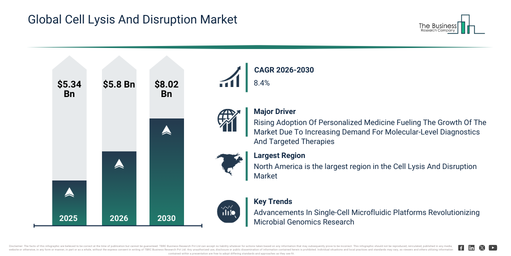
    The cell lysis and disruption market size has experienced significant growth in recent years. This market is expected to expand from $5.34 billion in 2025 to $5.8 billion in 2026, exhibiting a compound annual growth rate (CAGR) of 8.7%. The expansion observed in the past can be linked to the broadening of molecular biology research activities, the increased utilization of recombinant protein production, the rise in academic life sciences research, the surging adoption of microbial fermentation processes, and the accessibility of advanced laboratory instruments.

    The cell lysis and disruption market size is forecast to demonstrate significant growth in the upcoming years, with projections indicating it will reach $8.02 billion by 2030, exhibiting a compound annual growth rate (CAGR) of 8.4%. This anticipated expansion during the forecast period is fueled by an increasing demand for biologics manufacturing, growing investments in cell and gene therapy research, the broadening of proteomics and genomics studies, a heightened emphasis on automation within laboratories, and the expanded adoption of high-throughput screening platforms. Key trends anticipated in this period include the rising adoption of mechanical cell disruption systems, an increased use of high-purity lysis reagents, a growing requirement for scalable cell processing solutions, the expansion of automated sample preparation workflows, and an enhanced focus on achieving both yield and reproducibility.

    Access Your Free Sample Report For In-Depth Market Analysis:

    https://www.thebusinessresearchcompany.com/report/cell-lysis-and-disruption-global-market-report

    What Major Factors Are Driving The Cell Lysis And Disruption Market Forward?

    An escalating emphasis on personalized medicine is projected to propel the expansion of the cell lysis and disruption market moving forward. This medical strategy involves customizing treatment and care based on the distinct traits, like genetic makeup and lifestyle, of individual patients. The need for personalized medicine is growing due to progress in genomic technologies, which facilitate more accurate identification of genetic variations responsible for diseases, thus enabling specific and highly effective treatments. This increasing need for personalized medicine necessitates cell lysis and disruption, as these procedures are crucial for obtaining Deoxyribonucleic Acid (DNA), Ribonucleic Acid (RNA), and proteins from patient samples, which is vital for the molecular analysis needed to formulate customized therapies. For instance, in February 2024, according to the Personalized Medicine Coalition, a US-based nonprofit organization and the U.S. Food and Drug Administration (USFDA), a US-based regulatory authority, approved 16 new personalized treatments for rare disease patients in 2023, a significant increase from 6 personalized treatments in 2022. Consequently, the heightened attention on personalized medicine will stimulate the growth of the cell lysis and disruption market.

    How Is The Cell Lysis And Disruption Market Broken Down By Segment Categories?

    The cell lysis and disruption market covered in this report is segmented –

    1) By Product: Reagents And Consumables, Instruments

    2) By Cell Type: Bacteria Cells, Mammalian Cells, Plant Cells, Yeast Or Fungi Or Algae

    3) By Application: Cell Organelle Isolation, Protein Isolation, Downstream Processing, Nucleic Acid Isolation

    4) By End-Use: Pharmaceutical And Biotechnology Companies, Academic And Research Institutes, Other End-Users

    Subsegments:

    1) By Reagents And Consumables: Enzymes, Detergent Solutions, Kits And Reagents

    2) By Instruments: Homogenizers, Sonicator, Microfluidizer, Other Instruments

    Which Trends Are Impacting The Progress Of The Cell Lysis And Disruption Market?

    Leading companies operating within the cell lysis and disruption market are directing their efforts toward developing advanced solutions, such as single-cell microfluidic platforms, to enhance the capabilities and efficiency of single-cell analysis for researchers engaged in microbial genomics. A single-cell microfluidic platform is defined as a miniaturized device that accurately isolates, manipulates, and analyzes individual cells by managing minute fluid volumes within microchannels, thereby facilitating high-throughput and automated single-cell studies. As an illustration, in January 2024, Atrandi Biosciences Inc., a biotechnology firm located in Lithuania, launched its Flux platform along with the Single-Microbe DNA Barcoding Kit. These specific products leverage semi-permeable capsule (SPC) technology, which permits the efficient isolation and lysis of individual microbial cells while simultaneously upholding the integrity of subsequent reactions. This innovative platform provides high-throughput functionalities, enabling precise microbial genome quantification and DNA sequencing, which is essential for advancing microbial genomics and single-cell analysis. Ultimately, these solutions are engineered to streamline and improve workflows, making high-resolution, single-cell analysis more accessible and effective for researchers across various scientific domains.

    Which Players Are Present In The Cell Lysis And Disruption Market Space?

    Major companies operating in the cell lysis and disruption market are F. Hoffmann-La Roche Ltd., Thermo Fisher Scientific Inc., Merck KGaA, Becton Dickinson and Company (BD), Agilent Technologies Inc., Bio-Rad Laboratories Inc., Qiagen N.V., Eppendorf AG, Miltenyi Biotec GmbH, Takara Bio Inc., Promega Corporation, New England Biolabs Inc., Covaris LLC, Microfluidics International Corp., Claremont BioSolutions LLC, Qsonica LLC, Zymo Research Corp., BioVision Inc., Beckman Coulter Inc., Sartorius AG, PerkinElmer Inc.

    Get The Full Cell Lysis And Disruption Market Report:

    https://www.thebusinessresearchcompany.com/report/cell-lysis-and-disruption-global-market-report

    Which Region Represents The Largest Share Of The Cell Lysis And Disruption Market?

    North America was the largest region in the cell lysis and disruption market in 2025. Asia-Pacific is expected to be the fastest-growing region in the forecast period. The regions covered in the cell lysis and disruption market report are Asia-Pacific, South East Asia, Western Europe, Eastern Europe, North America, South America, Middle East, Africa.

    Request A Customized Cell Lysis And Disruption Market Report For Competitive Insights:

    https://www.thebusinessresearchcompany.com/report/cell-lysis-and-disruption-global-market-report

    Browse Through More Reports Similar to the Global Cell Lysis And Disruption Market 2026, By The Business Research Company

    Cell Harvesting Market Report 2026

    https://www.thebusinessresearchcompany.com/report/cell-harvesting-global-market-report

    Cell Separation Technologies Market Report 2026

    https://www.thebusinessresearchcompany.com/report/cell-separation-technologies-global-market-report

    Cell Therapy Technologies Market Report 2026

    https://www.thebusinessresearchcompany.com/report/cell-therapy-technologies-global-market-report

    Get in touch with us:

    The Business Research Company: https://www.thebusinessresearchcompany.com/

    Americas +1 310-496-7795

    Asia +44 7882 955267 & +91 8897263534

    Europe +44 7882 955267

    Email us at info@tbrc.info

    Follow us on:

    LinkedIn: https://in.linkedin.com/company/the-business-research-company

    YouTube: https://www.youtube.com/channel/UC24_fI0rV8cR5DxlCpgmyFQ

    Global Market Model: https://www.thebusinessresearchcompany.com/global-market-model
  • Cell isolation market outlook (2026–2030)

    Cell isolation market outlook (2026–2030)

    The Business Research Company’s 2026 market reports feature enhanced tools like market attractiveness analysis, TAM assessment, and company scoring matrices, along with interactive dashboards, deeper supply chain insights, and startup coverage strengthening the depth, usability, and strategic value of insights.

    What Is The Estimated Market Size Of The Cell Isolation Market In 2026, And How Will Its Value Evolve By 2030?

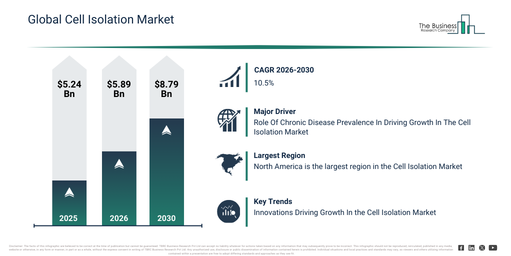
    The cell isolation market size has experienced rapid growth in recent years. It is anticipated to expand from $5.24 billion in 2025 to $5.89 billion in 2026, demonstrating a compound annual growth rate (CAGR) of 12.5%. This historic growth is attributable to the broader scope of stem cell research activities, the expansion of oncology research programs, the increased adoption of flow cytometry, a rising demand for biomolecule isolation, and the wider availability of isolation consumables.

    The cell isolation market is projected to experience substantial expansion in the coming years. Its valuation is anticipated to reach $8.79 billion by 2030, advancing at a compound annual growth rate (CAGR) of 10.5%. This projected growth during the forecast timeframe is largely driven by escalating investments in regenerative medicine, the expanding acceptance of precision diagnostics, a heightened need for single-cell analysis, the widening of cell-based research pipelines, and the greater incorporation of automated laboratory workflows. Key developments expected during the same period encompass the growing integration of automated cell isolation instruments, a surge in the application of magnetic and microbead-based methodologies, a heightened requirement for highly pure cell populations, the broadening of microfluidic cell isolation platforms, and an intensified emphasis on both reproducibility and accuracy.

    Access Your Free Sample Report For In-Depth Market Analysis:

    https://www.thebusinessresearchcompany.com/report/cell-isolation-global-market-report

    Which Key Drivers Are Affecting The Cell Isolation Market Development?

    The escalating incidence of chronic diseases is projected to drive the expansion of the cell isolation market. Chronic diseases are defined as enduring health conditions that persist over extended durations, often spanning years or a lifetime. The growing prevalence of these conditions fosters advancements in cell isolation technologies and associated research, thus opening avenues to leverage the capabilities of stem cells for regenerative medicine and addressing various health ailments. For example, the Centers for Disease Control and Prevention (CDC), a US-based federal agency, reported in April 2025 that in 2023, around 194 million U.S. adults, representing 76.4% of the population, indicated having at least one chronic condition. This prevalence stood at 59.5% for young adults, 78.4% for midlife adults, and 93.0% for older adults. Consequently, the increasing occurrence of chronic diseases is fueling the growth of the cell isolation market.

    What Are The Different Segment Types In The Cell Isolation Market Segment Breakdown?

    The cell isolation market covered in this report is segmented –

    1) By Product: Consumables, Instruments

    2) By Cell Type: Human Cells, Animal Cells

    3) By Cell Source: Bone Marrow, Adipose Tissues, Cord Blood Or Embryonic Stem Cells, Other Cell Sources

    4) By Application: Biomolecule Isolation, Cancer Research, Stem Cell Research, Tissue Regeneration Or Regenerative Medicines, In-vitro Diagnostics, Other Applications

    5) By End-User: Pharmaceutical And Biotechnology Companies, Research And Academic Institutes, Hospitals And Diagnostic Laboratories, Other End-Users

    Subsegments:

    1) By Consumables: Reagents And Kits, Magnetic Beads And Microbeads, Cell Culture Media And Supplements, Antibodies And Enzymes

    2) By Instruments: Cell Separators, Flow Cytometers, Centrifuges, Microfluidic Devices, Automated Cell Isolation Systems

    What Trends Are Transforming The Cell Isolation Market?

    Key companies operating within the cell isolation market are concentrating on the development of automated high-throughput platforms to boost efficiency, precision, and scalability in single-cell analysis and therapeutic applications. Illustratively, Sphere Fluidics, a UK-based life sciences company, launched Cyto-Mine Chroma, an automated single-cell isolation and analysis platform, in January 2025. This platform allows for rapid screening and selection of high-performing cells for various applications, including drug discovery, cell therapy development, and bioprocess optimization. Following this launch, Sphere Fluidics also announced an Early Access Program to enable researchers and biopharma companies to evaluate the system and accelerate its adoption.

    Who Are The Well-Known Companies In The Cell Isolation Market?

    Major companies operating in the cell isolation market are F. Hoffmann-La Roche Ltd., Thermo Fisher Scientific Inc., Danaher Corporation, Merk Co. & KGaA, GE Healthcare Company, Becton Dickinson & Company, Corning Inc., Lonza Inc., Agilent Technologies Inc., Alfa Laval AB, PerkinElmer Inc., Sartorius AG, Terumo Corporation, Beckman Coulter Inc., Bio-Rad Laboratories Inc., Qiagen NV, Bio-Techne Corporation, STEMCELL Technologies Inc., Cytek Biosciences Inc., Miltenyi Biotec Inc., Neogenomics Laboratories Inc., Promega Corporation, Takara Bio Inc., Molecular Devices LLC, NanoString Technologies Inc., Proteintech Group Inc., Sony Biotechnology Inc., PluriSelect Life Science UG & Co. KG, Invent Biotechnologies Inc., Akadeum Life Sciences Inc.

    Get The Full Cell Isolation Market Report:

    https://www.thebusinessresearchcompany.com/report/cell-isolation-global-market-report

    Which Geographic Region Dominates The Cell Isolation Market?

    North America was the largest region in the cell isolation market in 2025. Asia-Pacific is expected to be the fastest-growing region in the forecast period. The regions covered in the cell isolation market report are Asia-Pacific, South East Asia, Western Europe, Eastern Europe, North America, South America, Middle East, Africa.

    Request A Customized Cell Isolation Market Report For Competitive Insights:

    https://www.thebusinessresearchcompany.com/report/cell-isolation-global-market-report

    Browse Through More Reports Similar to the Global Cell Isolation Market 2026, By The Business Research Company

    Cell Free Dna Isolation And Extraction Market Report 2026

    https://www.thebusinessresearchcompany.com/report/cell-free-dna-isolation-and-extraction-global-market-report

    Cell Separation Market Report 2026

    https://www.thebusinessresearchcompany.com/report/cell-separation-global-market-report

    Cell Separation Technologies Market Report 2026

    https://www.thebusinessresearchcompany.com/report/cell-separation-technologies-global-market-report

    Get in touch with us:

    The Business Research Company: https://www.thebusinessresearchcompany.com/

    Americas +1 310-496-7795

    Asia +44 7882 955267 & +91 8897263534

    Europe +44 7882 955267

    Email us at info@tbrc.info

    Follow us on:

    LinkedIn: https://in.linkedin.com/company/the-business-research-company

    YouTube: https://www.youtube.com/channel/UC24_fI0rV8cR5DxlCpgmyFQ

    Global Market Model: https://www.thebusinessresearchcompany.com/global-market-model
  • Cell harvesting market developments (2026–2030)

    Cell harvesting market developments (2026–2030)

    The Business Research Company’s 2026 market reports feature enhanced tools like market attractiveness analysis, TAM assessment, and company scoring matrices, along with interactive dashboards, deeper supply chain insights, and startup coverage strengthening the depth, usability, and strategic value of insights.

    How Does The Market Size Of The Cell Harvesting Market Compare Between 2026 And 2030?

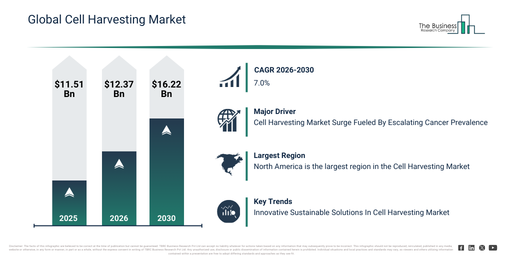
    The size of the cell harvesting market has demonstrated robust growth over recent years. This market is projected to expand from $11.51 billion in 2025 to $12.37 billion by 2026, exhibiting a compound annual growth rate (CAGR) of 7.4%. Historically, this expansion has been driven by factors such as the rise in monoclonal antibody production, greater biopharmaceutical manufacturing capacity, the increasing uptake of cell-based therapeutics, a stronger emphasis on downstream process efficiency, and the expanding application of centrifugation-based harvesting methods.

    The cell harvesting market is projected to experience substantial growth in the upcoming years. It is expected to expand to $16.22 billion by 2030, exhibiting a compound annual growth rate (CAGR) of 7.0%. This growth during the forecast period is attributable to factors such as increasing investments in biologics manufacturing, a rising demand for scalable cell processing solutions, the growing adoption of continuous bioprocessing, an increasing use of single-use technologies, and the expansion of advanced cell therapy pipelines. Significant trends for this period include the increasing integration of automated cell harvesting systems, a rising demand for high-throughput cell processing, the growing application of closed-system harvesting solutions, the expansion of microfluidic harvesting technologies, and an enhanced focus on process consistency and yield optimization.

    Access Your Free Sample Report For In-Depth Market Analysis:

    https://www.thebusinessresearchcompany.com/report/cell-harvesting-global-market-report

    What Factors Are Contributing To The Growth Of The Cell Harvesting Market?

    The escalating incidence of cancer is anticipated to fuel the expansion of the cell harvesting market. Cancer is characterized by the uncontrolled and abnormal proliferation of cells, frequently forming a mass or tumor. The growing occurrence of cancer necessitates cell harvesting, which is crucial for research initiatives, diagnostic applications, therapeutic development, and enhancing comprehension of cancer biology, thereby propelling the growth of the cell harvesting market as a vital component in various facets of cancer-related investigations and medical interventions. For illustration, in July 2024, data from the Australian Institute of Health and Welfare, an Australia-based government entity, indicated that an estimated 165,000 Australians received a new cancer diagnosis in 2023, equating to over 450 cases daily, with males accounting for approximately 55% of these diagnoses. Consequently, the increasing prevalence of cancer is a key driver for the growth of the cell harvesting market.

    Which Segment Classifications Are Used In The Cell Harvesting Market Segment Analysis?

    The cell harvesting market covered in this report is segmented –

    1) By Type: Manual Cell Harvesters, Automated Cell Harvesters

    2) By Distribution Channel: Retail, Direct Tenders

    3) By End-Users: Biotechnology And Biopharmaceutical Companies, Research Institute, Other End-Users

    Subsegments:

    1) By Manual Cell Harvesters: Syringe-Based Harvesters, Centrifuge-Based Harvesters, Filtration Devices

    2) By Automated Cell Harvesters: Robotic Cell Harvesting Systems, Automated Centrifuges, Microfluidic Harvesting Devices

    What Trends Are Shaping The Future Of The Cell Harvesting Market?

    Leading firms within the cell harvesting market are prioritizing the creation of sophisticated automated systems aimed at boosting the effectiveness, processing capacity, and consistency in isolating and analyzing individual cells. These automated cell processing solutions incorporate microfluidics, robotics, and imaging techniques to optimize operations from cell sorting through to their retrieval. An example of this is in March 2025, when Sphere Fluidics, a life sciences technology firm from the UK, introduced its Cyto-Mine Chroma platform and initiated an Early Access Program. This platform facilitates rapid single-cell screening and harvesting with enhanced precision and velocity, supporting applications in research and biomanufacturing, including drug discovery, cell line development, and personalized medicine.

    Which Firms Are Contributing To The Cell Harvesting Market Ecosystem?

    Major companies operating in the cell harvesting market are Sartorius AG, Danaher Corporation, Merck & Co. Inc., Pall Corporation, Thermo Fisher Scientific Inc., GE Healthcare, Esco Lifesciences Group, CESCO Bioengineering Co. Ltd., Alfa Laval Corporate AB, GEA Group Aktiengesellschaft, SPX Flow Inc., Parker Hannifin Corporation, PBS Biotech Inc., Lonza Group AG, Becton Dickinson and Company, Bio-Rad Laboratories Inc., STEMCELL Technologies Inc., Corning Incorporated, Nikon Corporation (Healthcare Business Unit), PromoCell GmbH, Flottweg SE, Repligen Corporation

    Get The Full Cell Harvesting Market Report:

    https://www.thebusinessresearchcompany.com/report/cell-harvesting-global-market-report

    Which Region Is The Leading Market For The Cell Harvesting Market?

    North America was the largest region in the cell harvesting market share in 2025. The regions covered in the cell harvesting market report are Asia-Pacific, South East Asia, Western Europe, Eastern Europe, North America, South America, Middle East, Africa.

    Request A Customized Cell Harvesting Market Report For Competitive Insights:

    https://www.thebusinessresearchcompany.com/report/cell-harvesting-global-market-report

    Browse Through More Reports Similar to the Global Cell Harvesting Market 2026, By The Business Research Company

    Cell Separation Technologies Market Report 2026

    https://www.thebusinessresearchcompany.com/report/cell-separation-technologies-global-market-report

    Harvesting Technology Market Report 2026

    https://www.thebusinessresearchcompany.com/report/harvesting-technology-global-market-report

    Cell Cultures Market Report 2026

    https://www.thebusinessresearchcompany.com/report/cell-cultures-global-market-report

    Get in touch with us:

    The Business Research Company: https://www.thebusinessresearchcompany.com/

    Americas +1 310-496-7795

    Asia +44 7882 955267 & +91 8897263534

    Europe +44 7882 955267

    Email us at info@tbrc.info

    Follow us on:

    LinkedIn: https://in.linkedin.com/company/the-business-research-company

    YouTube: https://www.youtube.com/channel/UC24_fI0rV8cR5DxlCpgmyFQ

    Global Market Model: https://www.thebusinessresearchcompany.com/global-market-model
  • Cell freezing media market forecast (2026–2030)

    Cell freezing media market forecast (2026–2030)

    The Business Research Company’s 2026 market reports feature enhanced tools like market attractiveness analysis, TAM assessment, and company scoring matrices, along with interactive dashboards, deeper supply chain insights, and startup coverage strengthening the depth, usability, and strategic value of insights.

    What Is The Forecasted Market Size Trajectory Of The Cell Freezing Media Market From 2026 To 2030?

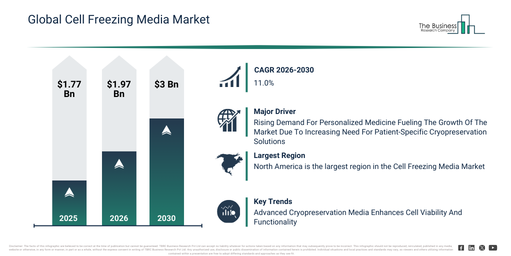
    The cell freezing media market has experienced significant expansion recently. Projections indicate its value will increase from $1.77 billion in 2025 to $1.97 billion in 2026, demonstrating a compound annual growth rate (CAGR) of 11.3%. Factors contributing to this historical growth include the expansion of biobanking activities, the heightened use of cryopreservation in research, the advancement of stem cell research programs, the growing adoption of controlled-rate freezing methods, and the greater availability of liquid nitrogen storage facilities.

    The cell freezing media market size is projected to experience substantial expansion over the coming years. It is expected to reach $3 billion by 2030, demonstrating a compound annual growth rate (CAGR) of 11.0%. This anticipated growth during the forecast timeframe is attributed to several factors, including the increasing development of cell and gene therapies, the rising demand for large-scale cell banking, the expansion of personalized medicine research, the growing regulatory requirements for cell storage quality, and the increasing adoption of automated cryopreservation systems. Key trends anticipated during the forecast period encompass the increasing adoption of ready-to-use cryopreservation media, a rising demand for serum-free freezing media, the growing use of GMP-grade cryoprotectants, the expansion of long-term cell banking practices, and an enhanced focus on post-thaw cell recovery.

    Access Your Free Sample Report For In-Depth Market Analysis:

    https://www.thebusinessresearchcompany.com/report/global-cell-freezing-media-market-report

    Which Strong Drivers Are Impacting The Cell Freezing Media Market Growth?

    The increasing need for personalized medicine is anticipated to fuel the expansion of the cell freezing media market in the future. Personalized medicine is a medical strategy where treatments are customized for individual patients, considering their genetic, environmental, and lifestyle elements to enhance results and patient care. The demand for this approach is escalating, driven by progress in genomic technologies that facilitate accurate identification of genetic differences and the development of specific treatments for individuals. Cell freezing media plays a crucial role in advancing personalized medicine by offering dependable cryopreservation solutions that safeguard patient-specific cells, tissues, and various biologics. This ensures high viability and functionality after thawing, thereby supporting the creation of customized therapies and leading to better treatment outcomes. As an illustration, in February 2024, the Personalized Medicine Coalition (PMC), a US-based nonprofit, reported that the U.S. Food and Drug Administration (FDA) approved 26 new personalized medicines in 2023, a notable rise from the 12 approved in 2022. Consequently, the increasing need for personalized medicine is indeed propelling the expansion of the cell freezing media market.

    How Is The Cell Freezing Media Market Organized By Segment Classification?

    The cell freezing media market covered in this report is segmented –

    1) By Type: Dimethyl Sulfoxide (DMSO), Glycerol, Sucrose, Ficoll, Serum-Based Media

    2) By Cell Culture Type: Suspension Cell Culture, 2D Cell Culture, 3D Cell Culture, Other Cell Culture Types

    3) By Distribution Channel: Direct Sales, Distributors, E-Commerce Platforms, Retail Outlets, Specialized Scientific Instrumentation Suppliers

    4) By Application: Stem Cell Research, Embryonic Cell Preservation, Hematopoietic Cell Preservation, Tissue Sample Storage, Gene Therapy Applications

    5) By End-User: Academic Research Institutions, Biotechnology Companies, Pharmaceutical Companies, Clinical Laboratories, Contract Research Organizations (CROs)

    Subsegments:

    1) By Dimethyl Sulfoxide (DMSO): Pharmaceutical Grade Dimethyl Sulfoxide, Laboratory Grade Dimethyl Sulfoxide, Industrial Grade Dimethyl Sulfoxide, High Purity Dimethyl Sulfoxide

    2) By Glycerol: Pharmaceutical Grade Glycerol, Analytical Grade Glycerol, Biological Grade Glycerol, Synthetic Grade Glycerol

    3) By Sucrose: Pharmaceutical Grade Sucrose, Analytical Grade Sucrose, Biological Grade Sucrose, Crystalline Sucrose

    4) By Ficoll: Ficoll 400, Ficoll 70, Ficoll PM 400 Solution, Low Viscosity Ficoll

    5) By Serum-Based Media: Fetal Bovine Serum Based Media, Human Serum Based Media, Horse Serum Based Media, Newborn Calf Serum Based Media

    Which Trends Are Contributing To Changes In The Cell Freezing Media Market?

    Leading companies operating in the cell freezing media market are focusing on developing advanced products, such as specialized cryopreservation media, to boost efficiency, enhance cell viability, and accelerate therapeutic development. Specialized cryopreservation media refer to formulated solutions designed to preserve cells, tissues, or biological materials at very low temperatures while maintaining their viability, functionality, and structural integrity. For instance, in April 2024, Pluristyx Inc., a US-based biotechnology company, launched PluriFreeze. It is a xeno-free and serum-free cGMP-manufactured media designed to improve post-thaw recovery and function of a wide range of cell types, including stem cells and immune cells. It is engineered to provide a robust, ready-to-use formulation that ensures high cell viability and functionality, supporting the transition of therapies from research to clinical application. PluriFreeze improves post-thaw cell viability, manufacturing efficiency, and reproducibility in stem cell and cell therapy development processes.

    Who Are The Industry Participants Involved In The Cell Freezing Media Market?

    Major companies operating in the cell freezing media market are Merck KGaA, Thermo Fisher Scientific Inc., Danaher Corporation, FUJIFILM Corporation, Lonza Group Ltd., Avantor Inc., Sartorius AG, BioRad Laboratories Inc., BioTechne Corporation, Miltenyi Biotec GmbH, Stemcell Technologies Inc., Vitrolife AB, American Type Culture Collection (ATCC), Bio-Life Solutions Inc., Nacalai Tesque Inc., PromoCell GmbH, Nippon Genetics Co. Ltd., Nippon Zenyaku Kogyo Co. Ltd., Quality Biological Inc., Corning Incorporated

    Get The Full Cell Freezing Media Market Report:

    https://www.thebusinessresearchcompany.com/report/global-cell-freezing-media-market-report

    Where Is The Cell Freezing Media Market Primarily Concentrated By Region?

    North America was the largest region in the cell freezing media market in 2025. Asia-Pacific is expected to be the fastest-growing region in the forecast period. The regions covered in the cell freezing media market report are Asia-Pacific, South East Asia, Western Europe, Eastern Europe, North America, South America, Middle East, Africa.

    Request A Customized Cell Freezing Media Market Report For Competitive Insights:

    https://www.thebusinessresearchcompany.com/report/global-cell-freezing-media-market-report

    Browse Through More Reports Similar to the Global Cell Freezing Media Market 2026, By The Business Research Company

    Frozen Storage Market Report 2026

    https://www.thebusinessresearchcompany.com/report/frozen-storage-global-market-report

    Cell Cryopreservation Market Report 2026

    https://www.thebusinessresearchcompany.com/report/cell-cryopreservation-global-market-report

    Freeze Drying Market Report 2026

    https://www.thebusinessresearchcompany.com/report/freeze-drying-global-market-report

    Get in touch with us:

    The Business Research Company: https://www.thebusinessresearchcompany.com/

    Americas +1 310-496-7795

    Asia +44 7882 955267 & +91 8897263534

    Europe +44 7882 955267

    Email us at info@tbrc.info

    Follow us on:

    LinkedIn: https://in.linkedin.com/company/the-business-research-company

    YouTube: https://www.youtube.com/channel/UC24_fI0rV8cR5DxlCpgmyFQ

    Global Market Model: https://www.thebusinessresearchcompany.com/global-market-model
  • cfDNA testing market analysis (2026–2030)

    cfDNA testing market analysis (2026–2030)

    The Business Research Company’s 2026 market reports feature enhanced tools like market attractiveness analysis, TAM assessment, and company scoring matrices, along with interactive dashboards, deeper supply chain insights, and startup coverage strengthening the depth, usability, and strategic value of insights.

    How Much Will The Market Value Of The Cell Free DNA (cfDNA) Testing Market Grow Between 2026 And 2030?

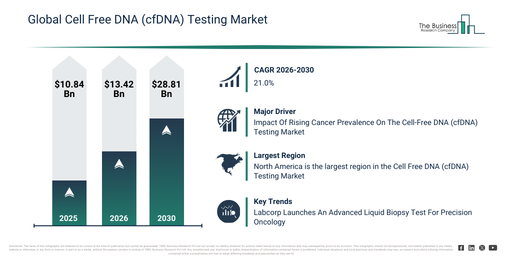
    The cell free dna (cfdna) testing market has demonstrated significant expansion in recent years. This market is expected to increase from $10.84 billion in 2025 to $13.42 billion in 2026, achieving a compound annual growth rate (CAGR) of 23.8%. Factors contributing to its historical growth include the rising occurrence of cancer diagnostics, the embrace of non-invasive testing methodologies, the expansion of prenatal screening programs, enhancements in sequencing technologies, and the growing clinical recognition of liquid biopsy.

    The cell free dna (cfdna) testing market size is expected to undergo significant expansion in the upcoming years. It is projected to grow to $28.81 billion by 2030, demonstrating a compound annual growth rate (CAGR) of 21.0%. This growth during the forecast period can be attributed to increasing investments in precision oncology, a rising demand for early cancer detection, the expansion of transplant monitoring applications, the growing adoption of personalized medicine, and the increasing integration of AI-driven genomic analysis. Notable trends within the forecast period include the increasing adoption of liquid biopsy diagnostics, the rising use of NGS-based cfdna analysis, a growing demand for non-invasive prenatal testing, the expansion of oncology monitoring applications, and the enhanced integration of bioinformatics platforms.

    Access Your Free Sample Report For In-Depth Market Analysis:

    https://www.thebusinessresearchcompany.com/report/cell-free-dna-cfdna-testing-global-market-report

    What Key Factors Are Shaping The Cell Free DNA (cfDNA) Testing Market Landscape?

    The expanding occurrence of cancer is anticipated to stimulate the growth of the cell-free DNA (cfDNA) testing market in the future. Cancer constitutes a complex set of diseases marked by the uncontrolled multiplication and spread of abnormal cells within the body. These cells have the capacity to invade and damage normal tissue, potentially causing significant harm if not managed. The increasing incidence of cancer is linked to an aging populace, shifts in lifestyle, environmental influences, and advances in detection and diagnostic techniques. cfDNA testing identifies genetic mutations associated with cancer at an early stage, frequently before symptoms manifest, enabling timely intervention that enhances patient outcomes and survival rates by detecting the disease in its initial phases. For example, according to the World Health Organization (WHO), a Switzerland-based intergovernmental organization, in February 2024, new cancer cases are projected to surpass 35 million in 2050, indicating a 77% rise from the 20 million cases estimated for 2022. Thus, the escalating prevalence of cancer is driving the expansion of the cell-free DNA (cfDNA) testing market.

    Which Segments Define The Cell Free DNA (cfDNA) Testing Market Segment Structure?

    The cell free dna (cfdna) testing market covered in this report is segmented –

    1) By Product: Donor-Derived Cell-Free DNA, Circulating Cell-Free Tumor DNA, Cell-Free Fetal DNA

    2) By Platforms: Next Generation Sequencing (NGS), rPCR And Multiplexed PCR, qPCR And dPCR, Other platforms

    3) By Application: Oncology, Non-Invasive Prenatal Test (NIPT), Gynecology, Transplantation, Other Applications

    Subsegments:

    1) By Donor-Derived Cell-Free DNA: Organ Transplant Monitoring, Graft Rejection Detection

    2) By Circulating Cell-Free Tumor DNA: Cancer Detection, Minimal Residual Disease Monitoring, Liquid Biopsy

    3) By Cell-Free Fetal DNA: Non-Invasive Prenatal Testing (NIPT), Fetal Genetic Disorder Screening

    What Market Trends Are Affecting The Cell Free DNA (cfDNA) Testing Market?

    Leading companies active in the cell-free DNA (cfDNA) testing market are concentrating on creating advanced technologies, such as liquid biopsy tests, which offer improved sensitivity, specificity, and efficiency for identifying cancer-related mutations and genetic alterations. Liquid biopsy tests represent diagnostic methods that enable oncologists to assess circulating cell-free DNA released by tumor cells, thereby aiding in the development of personalized, targeted treatment strategies. As an illustration, in May 2023, Laboratory Corporation of America Holdings (Labcorp), a US-based life sciences firm, introduced Labcorp Plasma Focus, a new liquid biopsy test tailored for individuals with advanced or metastatic solid tumors. This test evaluates circulating cell-free DNA (cfDNA) released by tumor cells from a routine blood draw, providing a minimally invasive approach with rapid results. It enhances access to precision oncology by identifying clinically actionable biomarkers across several common cancers, including non-small cell lung, colorectal, breast, esophageal, gastroesophageal junction, gastric cancers, and melanoma.

    Who Are The Established Players Within The Cell Free DNA (cfDNA) Testing Market?

    Major companies operating in the cell free dna (cfdna) testing market are F. Hoffmann-La Roche Ltd., Thermo Fisher Scientific Inc., Laboratory Corporation of America Holdings, Quest Diagnostics Incorporated, Agilent Technologies Inc., Illumina Inc., Qiagen N.V., Exact Sciences Corporation, Bio-Techne Corporation, Natera Inc., Myriad Genetics Inc., NeoGenomics Laboratories Inc., Invitae Corporation, Foundation Medicine Inc., Guardant Health Inc., Integrated DNA Technologies Inc., Caris Life Sciences Inc., Twist Bioscience Corporation, Adaptive Biotechnologies Corporation, Biodesix Inc., Biocept Inc., Personal Genome Diagnostics Inc., Agena Bioscience Inc., Menarini Silicon Biosystems Inc., Circulogene Theranostics LLC

    Get The Full Cell Free DNA (cfDNA) Testing Market Report:

    https://www.thebusinessresearchcompany.com/report/cell-free-dna-cfdna-testing-global-market-report

    Which Region Has The Greatest Market Share In The Cell Free DNA (cfDNA) Testing Market?

    North America was the largest region in the cell-free DNA (cfDNA) testing market in 2025. Asia-Pacific is expected to be the fastest-growing region in the forecast period. The regions covered in the cell free dna (cfdna) testing market report are Asia-Pacific, South East Asia, Western Europe, Eastern Europe, North America, South America, Middle East, Africa.

    Request A Customized Cell Free DNA (cfDNA) Testing Market Report For Competitive Insights:

    https://www.thebusinessresearchcompany.com/report/cell-free-dna-cfdna-testing-global-market-report

    Browse Through More Reports Similar to the Global Cell Free DNA (cfDNA) Testing Market 2026, By The Business Research Company

    Dna Diagnostics Market Report 2026

    https://www.thebusinessresearchcompany.com/report/dna-diagnostics-global-market-report

    Dna Testing Market Report 2026

    https://www.thebusinessresearchcompany.com/report/dna-testing-global-market-report

    Cell Free Dna Isolation And Extraction Market Report 2026

    https://www.thebusinessresearchcompany.com/report/cell-free-dna-isolation-and-extraction-global-market-report

    Get in touch with us:

    The Business Research Company: https://www.thebusinessresearchcompany.com/

    Americas +1 310-496-7795

    Asia +44 7882 955267 & +91 8897263534

    Europe +44 7882 955267

    Email us at info@tbrc.info

    Follow us on:

    LinkedIn: https://in.linkedin.com/company/the-business-research-company

    YouTube: https://www.youtube.com/channel/UC24_fI0rV8cR5DxlCpgmyFQ

    Global Market Model: https://www.thebusinessresearchcompany.com/global-market-model
  • Cell expansion market forecast through 2030

    Cell expansion market forecast through 2030

    The Business Research Company’s 2026 market reports feature enhanced tools like market attractiveness analysis, TAM assessment, and company scoring matrices, along with interactive dashboards, deeper supply chain insights, and startup coverage strengthening the depth, usability, and strategic value of insights.

    What Changes In Market Value Are Expected For The Cell Expansion Market Over The 2026–2030 Period?

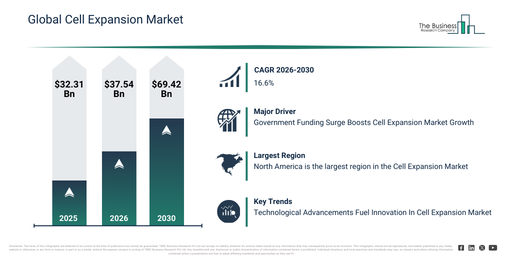
    The cell expansion market size has observed rapid growth over recent years. It is projected to expand from $32.31 billion in 2025 to $37.54 billion in 2026, demonstrating a compound annual growth rate (CAGR) of 16.2%. The historical growth can be attributed to factors like the expansion of biopharmaceutical manufacturing, the increasing utilization of mammalian cell cultures, the integration of cell expansion into vaccine production, the development of research-scale cell cultivation, and the availability of disposable culture systems.

    The cell expansion market is projected to expand significantly, reaching $69.42 billion by 2030, driven by a compound annual growth rate (CAGR) of 16.6%. This anticipated growth is primarily fueled by factors such as the rising demand for cell and gene therapies, increased investments in large-scale biologics manufacturing, the broadening of regenerative medicine pipelines, an intensified focus on achieving cost-efficient scale-up, and the wider uptake of closed-system expansion technologies. Key developments expected during this forecast period involve the greater adoption of single-use cell expansion systems, an increasing need for scalable cell culture platforms, the expanding utilization of serum-free expansion media, the growth of automated bioreactor systems, and a heightened emphasis on standardizing processes.

    Access Your Free Sample Report For In-Depth Market Analysis:

    https://www.thebusinessresearchcompany.com/report/cell-expansion-global-market-report

    Which Factors Are Influencing The Growth Of The Cell Expansion Market?

    The cell expansion market is projected to grow as government funding for research and development increases. This financial backing from governments, provided for particular purposes, is vital for encouraging innovation, advancing cell-based therapies, and accelerating progress in regenerative medicine. For example, in September 2023, the National Cancer Institute, a US-based government agency, secured a budget of $7.3 billion for fiscal year 2023 from the United States Congress, marking a $408 million increase over 2022. Consequently, the rise in government funding for research and development is a significant factor driving the expansion of the cell expansion market.

    How Is The Cell Expansion Market Segmented Across Different Segment Categories?

    The cell expansion market covered in this report is segmented –

    1) By Cell Type: Mammalian, Microbial, Other Cell Types

    2) By Product: Consumables, Reagents, Media, Serum, Disposables, Instruments

    3) By Application: Biopharmaceuticals, Tissue Culture And Engineering, Vaccine Production, Drug Development, Gene Therapy, Cancer Research, Stem Cell Research, Other Applications

    4) By End-User: Biopharmaceutical And Biotechnology Companies, Research Institutes, Cell Banks, Other End-Users

    Subsegments:

    1) By Mammalian: Adherent Cells, Suspension Cells, Stem Cells

    2) By Microbial: Bacterial Cells, Yeast Cells, Fungal Cells

    3) By Other Cell Types: Plant Cells, Insect Cells, Hybridoma Cells

    Which Trends Are Influencing Demand In The Cell Expansion Market?

    Leading companies in the cell expansion market are emphasizing advancements in bioprocessing technologies, such as automated 3D bioreactor systems, to improve the efficiency and scalability of cell production for therapeutic applications. PluriCDMO offers large-scale, automated cell therapy manufacturing utilizing a proprietary 3D bioreactor system, ensuring consistent, high-quality production from early development through clinical trials. For instance, in January 2024, Pluristem Therapeutics Inc., an Israel-based biotechnology company, introduced a new business division called PluriCDMO, which will provide cell therapy manufacturing services as a contract development and manufacturing organization (CDMO). This new division encompasses a 47,000-ft2 good manufacturing practice (GMP) cell therapy production facility. Through this new segment, Pluri intends to offer services ranging from early preclinical development to late-stage clinical trials and commercialization.

    Which Organizations Play A Role In The Cell Expansion Market Landscape?

    Major companies operating in the cell expansion market are Thermo Fisher Scientific Inc., Becton Dickinson and Company, Lonza Group, Corning Inc., Merck KGaA, Sartorius Stedim Biotech SA, Terumo Corporation, Miltenyi Biotec GmbH, Danaher Corporation, Stemcell Technologies Inc., Beckman Coulter Inc., Takara Bio Inc., RepliCel Life Sciences, Neximmune Inc., Celltainer Biotech BV, GE HealthCare Technologies Inc., ReproCELL USA Inc., iXCells Biotechnologies Inc., Neuromics LLC, G&G Technologies Inc., Eppendorf AG, Avantor Inc., Bio-Techne Corporation, BioLife Solutions Inc., Cesca Therapeutics Inc., Core Dynamics Ltd., Lifeline Scientific Inc., Princeton Cryotech Inc., VWR International LLC, Azenta US Inc., MVE Biological Solutions LLC, BioCision LLC, BioSpherix Ltd.

    Get The Full Cell Expansion Market Report:

    https://www.thebusinessresearchcompany.com/report/cell-expansion-global-market-report

    Which Region Accounts For The Largest Portion Of The Cell Expansion Market?

    North America was the largest region in the cell expansion market share in 2025. Asia-Pacific is expected to be the fastest-growing region in the forecast period. The regions covered in the cell expansion market report are Asia-Pacific, South East Asia, Western Europe, Eastern Europe, North America, South America, Middle East, Africa.

    Request A Customized Cell Expansion Market Report For Competitive Insights:

    https://www.thebusinessresearchcompany.com/report/cell-expansion-global-market-report

    Browse Through More Reports Similar to the Global Cell Expansion Market 2026, By The Business Research Company

    Cell Separation Market Report 2026

    https://www.thebusinessresearchcompany.com/report/cell-separation-global-market-report

    Cell Counting Market Report 2026

    https://www.thebusinessresearchcompany.com/report/cell-counting-global-market-report

    Cell Cultures Market Report 2026

    https://www.thebusinessresearchcompany.com/report/cell-cultures-global-market-report

    Get in touch with us:

    The Business Research Company: https://www.thebusinessresearchcompany.com/

    Americas +1 310-496-7795

    Asia +44 7882 955267 & +91 8897263534

    Europe +44 7882 955267

    Email us at info@tbrc.info

    Follow us on:

    LinkedIn: https://in.linkedin.com/company/the-business-research-company

    YouTube: https://www.youtube.com/channel/UC24_fI0rV8cR5DxlCpgmyFQ

    Global Market Model: https://www.thebusinessresearchcompany.com/global-market-model
  • Cell dissociation market outlook (2026–2030)

    Cell dissociation market outlook (2026–2030)

    The Business Research Company’s 2026 market reports feature enhanced tools like market attractiveness analysis, TAM assessment, and company scoring matrices, along with interactive dashboards, deeper supply chain insights, and startup coverage strengthening the depth, usability, and strategic value of insights.

    By 2030, What Market Size Is The Cell Dissociation Market Expected To Reach Based On Its 2026 Value?

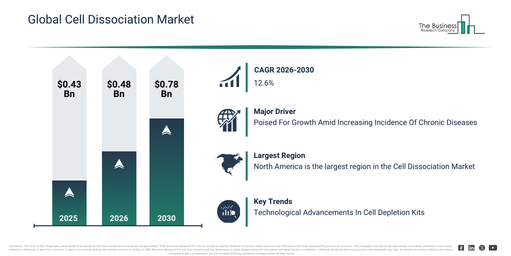
    The market size for cell dissociation has seen rapid growth recently. Projections indicate a rise from $0.43 billion in 2025 to $0.48 billion in 2026, demonstrating a compound annual growth rate (CAGR) of 12.9%. Historically, this expansion has been driven by factors such as the rise in cell-based research activities, the growing application of flow cytometry techniques, advancements in academic life sciences research, the broader integration of in vitro cell culture models, and the accessibility of commercial dissociation reagents.

    The cell dissociation market is projected to experience swift expansion in the coming years, reaching a valuation of $0.78 billion by 2030, driven by a compound annual growth rate (CAGR) of 12.6%. This anticipated growth during the forecast period is fueled by several factors, including the rising adoption of single-cell genomics, increased investments in cell therapy research, a growing need for reproducible cell processing workflows, the expansion of precision medicine studies, and the increasing integration of automated laboratory systems. Key trends expected within the forecast timeframe encompass the wider embrace of standardized enzymatic dissociation protocols, a heightened demand for gentle cell separation methods, the increasing deployment of automated tissue dissociation systems, the broadening of single-cell analysis workflows, and a stronger emphasis on preserving cell viability.

    Access Your Free Sample Report For In-Depth Market Analysis:

    https://www.thebusinessresearchcompany.com/report/cell-dissociation-global-market-report

    What Leading Drivers Are Supporting The Cell Dissociation Market Expansion?

    The future expansion of the cell dissociation market is anticipated to be driven by the rising prevalence of chronic illnesses. This surge in chronic disease occurrences stems from factors like an aging demographic, shifts in lifestyle, and growing levels of obesity, sedentary habits, and poor dietary choices, all of which facilitate the long-term progression and endurance of ailments including diabetes, cardiovascular disease, and cancer. For the study of chronic diseases, cell dissociation holds vital importance because it allows researchers to isolate and examine individual cells, thereby assisting in comprehending disease mechanisms and devising specific therapeutic interventions. As an illustration, in April 2025, data from the Centers for Disease Control and Prevention (CDC), a U.S.-based federal health agency, revealed that in 2023 roughly 194 million U.S. adults (76.4%) indicated suffering from at least one chronic condition, with approximately 130 million adults (51.4%) reporting multiple chronic conditions. Consequently, the growing occurrence of chronic diseases stimulates the cell dissociation market.

    What Are The Main Segments Within The Cell Dissociation Market Segment Structure?

    The cell dissociation market covered in this report is segmented –

    1) By Product: Enzymatic Dissociation, Non-enzymatic Dissociation, Instruments And Accessories

    2) By Tissue: Epithelial Tissue, Connective Tissue

    3) By Application: Tissue Dissociation, Cell Detachment

    4) By End-User: Pharmaceuticals And Biotechnology Companies, Research And Academic Institutes, Clinical Research Organizations (CRO), Other End-Users

    Subsegments:

    1) By Enzymatic Dissociation: Trypsin Solutions, Collagenase Solutions, Dispase Solutions, Other Enzymatic Dissociation Reagents

    2) By Non-Enzymatic Dissociation: Chemical Dissociation Solutions, Mechanical Dissociation Solutions, Hypotonic Solutions

    3) By Instruments and Accessories: Cell Dissociation Systems, Tissue Homogenizers, Centrifuges, Cell Culture Plates And Flasks

    What Emerging Trends Are Seen In The Cell Dissociation Market?

    Companies leading the cell dissociation market are concentrating on developing advanced products, such as cell depletion and enrichment kits, to gain a competitive advantage. These kits are designed to selectively remove or enrich specific cell populations, which improves the efficiency and accuracy of subsequent applications in research and clinical environments. For instance, in February 2023, LevitasBio, a US-based biotechnology company, launched the LeviSelect Suite of Cell Depletion & Enrichment Kits. These kits offer unique features, including rapid processing and minimal impact on cell viability, thereby enhancing their utility in sensitive research settings. The LeviSelect kits also provide customizable protocols, allowing researchers to target a broad range of cell types with precision.

    Who Are The Companies Participating In The Cell Dissociation Market?

    Major companies operating in the cell dissociation market are Roche Holding AG, Danaher Corporation, Fujifilm Holdings Corporation, Becton Dickinson and Company, GE HealthCare Technologies Inc., Corning Incorporated, Lonza Group AG, Bio-Rad Laboratories Inc., Eppendorf AG, Bio-Techne Corporation, Miltenyi Biotec, BioLegend Inc., Cyagen Biosciences Inc., Cell Signaling Technology Inc., HiMedia Laboratories LLC, Gemini Bio-Products, Biological Industries USA Inc., BrainBits LLC, Biocompare Inc., AAT Bioquest Inc.

    Get The Full Cell Dissociation Market Report:

    https://www.thebusinessresearchcompany.com/report/cell-dissociation-global-market-report

    Which Region Holds The Highest Market Share In The Cell Dissociation Market?

    North America was the largest region in the cell dissociation market in 2025. Asia-Pacific is expected to be the fastest-growing region in the forecast period. The regions covered in the cell dissociation market report are Asia-Pacific, South East Asia, Western Europe, Eastern Europe, North America, South America, Middle East, Africa.

    Request A Customized Cell Dissociation Market Report For Competitive Insights:

    https://www.thebusinessresearchcompany.com/report/cell-dissociation-global-market-report

    Browse Through More Reports Similar to the Global Cell Dissociation Market 2026, By The Business Research Company

    Induced Pluripotent Stem Cell Market Report 2026

    https://www.thebusinessresearchcompany.com/report/induced-pluripotent-stem-cell-global-market-report

    Cell Culture Consumables And Equipment Market Report 2026

    https://www.thebusinessresearchcompany.com/report/cell-culture-consumables-and-equipment-global-market-report

    Stem Cell Cord Blood Banking Market Report 2026

    https://www.thebusinessresearchcompany.com/report/stem-cell-cord-blood-banking-global-market-report

    Get in touch with us:

    The Business Research Company: https://www.thebusinessresearchcompany.com/

    Americas +1 310-496-7795

    Asia +44 7882 955267 & +91 8897263534

    Europe +44 7882 955267

    Email us at info@tbrc.info

    Follow us on:

    LinkedIn: https://in.linkedin.com/company/the-business-research-company

    YouTube: https://www.youtube.com/channel/UC24_fI0rV8cR5DxlCpgmyFQ

    Global Market Model: https://www.thebusinessresearchcompany.com/global-market-model
  • Increasing demand for personalized medicine is boosting the cell cytometry market

    Increasing demand for personalized medicine is boosting the cell cytometry market

    The Business Research Company’s 2026 market reports feature enhanced tools like market attractiveness analysis, TAM assessment, and company scoring matrices, along with interactive dashboards, deeper supply chain insights, and startup coverage strengthening the depth, usability, and strategic value of insights.

    What Is The Anticipated Rise In Market Value Of The Cell Cytometry Market During The Forecast Period?

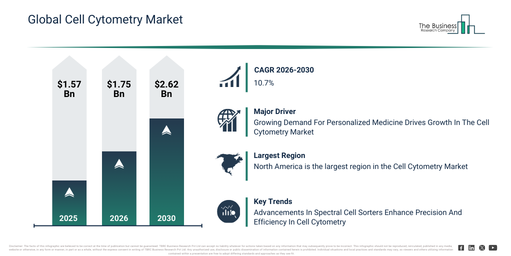
    The cell cytometry market has experienced swift expansion recently. It is projected to increase from $1.57 billion in 2025 to $1.75 billion in 2026, exhibiting a compound annual growth rate (CAGR) of 11.0%. Historically, this growth was primarily driven by factors such as the broadening of cancer research endeavors, the rising application of flow cytometry in diagnostic procedures, an upsurge in pharmaceutical drug discovery efforts, the widespread adoption of automated laboratory systems, and the accessibility of sophisticated cytometry reagents.

    The cell cytometry market size is projected to experience rapid expansion in the coming years, with its value set to reach $2.62 billion by 2030, exhibiting a compound annual growth rate (CAGR) of 10.7%. This notable growth during the forecast period is attributable to factors like the increasing adoption in precision medicine, rising investments in immunotherapy research, the expansion of single-cell analysis applications, growing demand for high-throughput cell analysis, and the increasing integration of digital analytics in cytometry platforms. Key developments anticipated in this period include the increasing adoption of high-parameter flow cytometry, growing use of AI-based cell analysis software, rising demand for immune profiling applications, the expansion of automated cytometry workflows, and an enhanced focus on single-cell analysis.

    Access Your Free Sample Report For In-Depth Market Analysis:

    https://www.thebusinessresearchcompany.com/report/cell-cytometry-global-market-report

    Which Key Factors Are Driving The Cell Cytometry Market Growth?

    The cell cytometry treatment market is anticipated to grow propelled by the increasing demand for personalized medicine. Personalized medicine is a medical approach that tailors treatment and prevention strategies to each patient’s individual characteristics, genetics, and lifestyle, aiming for more precise and effective healthcare. This growing demand for personalized medicine is driven by its potential to offer more effective, targeted treatments with fewer side effects, thereby improving patient outcomes. Cell cytometry is utilized in personalized medicine to analyze individual patients’ cells, enabling precise identification of disease markers, monitoring immune responses, and customizing treatments based on a patient’s specific cellular characteristics, thus enhancing the effectiveness and customization of therapies. For instance, in February 2024, according to the Personalized Medicine Coalition, a US-based non-profit organization, the FDA approved 16 novel personalized therapies for patients with rare diseases in 2023, a rise compared to six in 2022. Therefore, the growing demand for personalized medicine is driving the growth of the cell cytometry market.

    How Is Segmentation Applied In The Cell Cytometry Market Segment Analysis?

    The cell cytometry market covered in this report is segmented –

    1) By Product Type: Instrument, Kit And Reagent, Software And Services

    2) By Technology: Cell-Based Flow Cytometry, Bead-Based Flow Cytometry

    3) By Application: Oncology, Drug Discovery, Stem Cell Therapy, Organ Transplantation, Hematology, Other Applications

    4) By End-User: Hospitals And Clinics, Academia And Research Institutes, Pharmaceutical And Biotechnology Companies, Other End-Users

    Subsegments:

    1) By Instrument: Flow Cytometers, Imaging Cytometers, Mass Cytometers, Laser Scanning Cytometers

    2) By Kit and Reagent: Cell Staining Kits, Antibody Reagents, Isotype Controls, Cell Viability Assays

    3) By Software and Services: Data Analysis Software, Instrument Calibration Software, Consulting Services, Technical Support And Maintenance Services

    Which Trends Are Guiding The Direction Of The Cell Cytometry Market?

    Leading companies in the cell cytometry market are focusing on creating innovative solutions, such as spectral cell sorters, to achieve impartial results and enhance operational efficiency. A spectral cell sorter is an advanced flow cytometry instrument that sorts cells based on their full spectrum of fluorescence emissions, rather than a limited number of discrete wavelengths. For example, in October 2023, Sony Corporation, a Japan-based electronics company, introduced the FP7000 spectral cell sorter. This device offers advanced full-spectrum analysis coupled with high-speed sorting capabilities, allowing for the simultaneous and more precise detection of multiple fluorescent markers. It incorporates Sony’s patented spectral technology, which enables accurate identification of cells through full-spectrum capture and deconvolution, thus improving multiplexing capacities and resolution compared to conventional flow cytometers. The FP7000 is designed for ease of use with intuitive software, making it accessible for intricate research applications in immunology, cancer, and stem cell studies.

    Who Are The Companies Participating In The Cell Cytometry Market Environment?

    Major companies operating in the cell cytometry market are Merck & Co. Inc., Thermo Fisher Scientific Inc., Danaher Corporation, Becton Dickinson and Company, Agilent Technologies Inc., Sartorius AG, Beckman Coulter Inc., Bio-Rad Laboratories Inc., Bruker Corporation, StemCell Technologies Canada Inc., PerkinElmer Inc., Molecular Devices LLC, Luminex Corporation, R&D Systems, Cytek Biosciences Inc., Cell Signaling Technology Inc., Sony Biotechnology Inc., Sysmex Partec GmbH, Nexcelom Bioscience, Vajra Biometrix Private Limited, Accellix, Amphasys

    Get The Full Cell Cytometry Market Report:

    https://www.thebusinessresearchcompany.com/report/cell-cytometry-global-market-report

    Where Is The Cell Cytometry Market Most Concentrated Geographically?

    North America was the largest region in the cell cytometry market in 2025. Asia-Pacific is expected to be the fastest-growing region in the forecast period. The regions covered in the cell cytometry market report are Asia-Pacific, South East Asia, Western Europe, Eastern Europe, North America, South America, Middle East, Africa.

    Request A Customized Cell Cytometry Market Report For Competitive Insights:

    https://www.thebusinessresearchcompany.com/report/cell-cytometry-global-market-report

    Browse Through More Reports Similar to the Global Cell Cytometry Market 2026, By The Business Research Company

    Cellular Telephone Market Report 2026

    https://www.thebusinessresearchcompany.com/report/cellular-telephone-global-market-report

    Flow Cytometry In Oncology And Immunology Market Report 2026

    https://www.thebusinessresearchcompany.com/report/flow-cytometry-in-oncology-and-immunology-global-market-report

    Stem Cell Market Report 2026

    https://www.thebusinessresearchcompany.com/report/stem-cell-global-market-report

    Get in touch with us:

    The Business Research Company: https://www.thebusinessresearchcompany.com/

    Americas +1 310-496-7795

    Asia +44 7882 955267 & +91 8897263534

    Europe +44 7882 955267

    Email us at info@tbrc.info

    Follow us on:

    LinkedIn: https://in.linkedin.com/company/the-business-research-company

    YouTube: https://www.youtube.com/channel/UC24_fI0rV8cR5DxlCpgmyFQ

    Global Market Model: https://www.thebusinessresearchcompany.com/global-market-model
  • Growing regenerative medicine applications are driving the cell culture supplements market

    Growing regenerative medicine applications are driving the cell culture supplements market

    The Business Research Company’s 2026 market reports feature enhanced tools like market attractiveness analysis, TAM assessment, and company scoring matrices, along with interactive dashboards, deeper supply chain insights, and startup coverage strengthening the depth, usability, and strategic value of insights.

    How Is The Market Size Of The Cell Culture Supplements Market Expected To Scale Between 2026 And 2030?

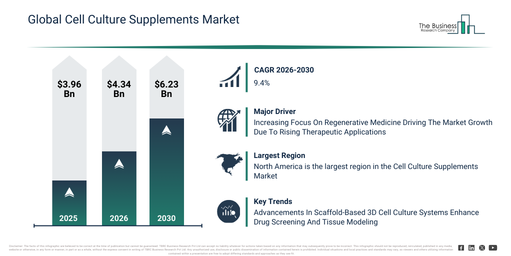
    The market for cell culture supplements has seen robust growth in recent years. It is forecast to increase from $3.96 billion in 2025 to $4.34 billion in 2026, achieving a compound annual growth rate (CAGR) of 9.7%. This historic expansion is largely due to the broadening of cell-based research activities, the surge in biopharmaceutical manufacturing, the greater integration of in vitro testing models, increasing investments in life science research infrastructure, and the rising need for reliable cell culture outcomes.

    The cell culture supplements market size is projected to experience robust expansion over the coming years. This market is set to reach $6.23 billion by 2030, exhibiting a compound annual growth rate (CAGR) of 9.4%. Several factors contribute to this growth during the projected timeframe, including the expanding development of cell and gene therapies, a heightened focus on scalable biologics manufacturing, the broadening of regenerative medicine research, an increasing need for xeno-free culture systems, and an elevated regulatory emphasis on quality-controlled cell culture components. Key trends anticipated within the forecast period encompass a wider embrace of serum-free and chemically defined supplements, a surging demand for high-purity growth factors, the increased utilization of animal-origin-free supplements, the broadening scope of customized media formulations, and a greater emphasis on achieving batch-to-batch consistency.

    Access Your Free Sample Report For In-Depth Market Analysis:

    https://www.thebusinessresearchcompany.com/report/global-cell-culture-supplements-market-report

    What Primary Drivers Are Shaping The Cell Culture Supplements Market?

    The cell culture supplements market is anticipated to expand due to the escalating emphasis on regenerative medicine. This interdisciplinary field utilizes biological methods to mend, substitute, or regrow impaired cells, tissues, and organs, restoring proper function. The heightened attention to regenerative medicine stems from increased government and private sector investments in stem cell research, gene therapies, and tissue engineering solutions for conditions previously without cure. This elevated focus on regenerative medicine subsequently boosts the need for cell culture supplements, which are crucial for growing and sustaining various cell types utilized in crafting regenerative therapies and associated research. For example, in July 2023, a report from the American Society of Gene & Cell Therapy (ASGCT), a U.S.-based professional organization, indicated that there were 247 gene therapies in Phase II by the close of the first quarter of 2023, a figure that climbed by 5% to 260 by the end of the second quarter. Consequently, the rising concentration on regenerative medicine is propelling the growth of the cell culture supplements equipment market.

    What Segment Categories Shape The Cell Culture Supplements Market Segment Landscape?

    The cell culture supplements market covered in this report is segmented –

    1) By Product Type: Growth Factors And Cytokines, Amino Acids, Vitamins, Hormones, Attachment Factors, Other Product Types

    2) By Source: Animal-Based, Human-Based, Synthetic, Plant-Based

    3) By Application: Biopharmaceutical Production, Tissue Engineering And Regenerative Medicine, Diagnostics, Drug Development, Other Applications

    4) By End-User: Pharmaceutical And Biotechnology Companies, Academic And Research Institutes, Other End-Users

    Subsegments:

    1) By Growth Factors And Cytokines: Epidermal Growth Factor (EGF), Fibroblast Growth Factor (FGF), Vascular Endothelial Growth Factor (VEGF), Transforming Growth Factor Beta (TGF-ß), Interleukins (ILs)

    2) By Amino Acids: L-Glutamine, L-Arginine, L-Lysine, L-Leucine, L-Methionine

    3) By Vitamins: Vitamin A (Retinol), Vitamin B Complex, Vitamin C (Ascorbic Acid), Vitamin D, Vitamin E (Tocopherol), Vitamin K

    4) By Hormones: Insulin, Cortisol, Estrogen, Progesterone, Thyroid Hormones

    5) By Attachment Factors: Fibronectin, Laminin, Collagen, Vitronectin

    6) By Other Product Types: Trace Elements, Lipids, Nucleotides, Antioxidants

    What Trends Are Affecting The Growth Of The Cell Culture Supplements Market?

    Leading companies within the cell culture supplements sector are prioritizing the creation of novel offerings, including scaffold-based 3D cell culture systems, to improve the precision of drug screening and tissue modeling. These 3D systems, built on scaffolds, replicate natural tissue structures, facilitating more biologically pertinent cell growth, enhanced disease modeling, and more accurate forecasts of drug responses. As an illustration, in July 2024, Bioserve India, a biotechnology firm based in India, unveiled its sophisticated stem cell range. This range incorporates specialized culture media, growth factors, and instruments designed for stem cell culture, differentiation, and disease modeling utilizing iPSCs and ESCs. The expanded product suite further encompasses kits and small molecules for effective iPSC generation from somatic cells, scaffold-based 3D cell culture platforms for drug screening and toxicity evaluation, cellular assays for evaluating cell viability, proliferation, and metabolic activity, and preclinical services employing human tissue technology to foresee clinical results. Moreover, the product collection provides a worldwide biorepository containing over 600,000 biospecimens, alongside research apparatus like antibodies, proteins, and genomic analysis kits, to aid various scientific inquiries. These products are intended to accelerate stem cell research and therapeutic advancements specifically within the Indian market.

    Who Are The Companies Operating Across The Cell Culture Supplements Market Value Chain?

    Major companies operating in the cell culture supplements market are Thermo Fisher Scientific Inc., Danaher Corporation, Merck KGaA, Becton, Dickinson and Company, GE HealthCare, Corning Incorporated, Lonza Group AG, Sartorius AG, Bio-Techne Corporation, Repligen Corporation, Takara Bio Inc., HiMedia Laboratories, PromoCell GmbH, RoosterBio Inc., Capricorn Scientific GmbH, Genexis Biotech Pvt Ltd., PromoKine GmbH, BioProcess Technologies Ltd., Jin Kairui Biotechnology Co. Ltd., FUJIFILM Irvine Scientific, Athena Enzyme Systems.

    Get The Full Cell Culture Supplements Market Report:

    https://www.thebusinessresearchcompany.com/report/global-cell-culture-supplements-market-report

    Which Region Dominates The Cell Culture Supplements Market By Market Share?

    North America was the largest region in the cell culture supplements market in 2025. Asia-Pacific is expected to be the fastest-growing region in the forecast period. The regions covered in the cell culture supplements market report are Asia-Pacific, South East Asia, Western Europe, Eastern Europe, North America, South America, Middle East, Africa.

    Request A Customized Cell Culture Supplements Market Report For Competitive Insights:

    https://www.thebusinessresearchcompany.com/report/global-cell-culture-supplements-market-report

    Browse Through More Reports Similar to the Global Cell Culture Supplements Market 2026, By The Business Research Company

    Cell Culture Plates Market Report 2026

    https://www.thebusinessresearchcompany.com/report/cell-culture-plates-global-market-report

    Cell Culture Media Market Report 2026

    https://www.thebusinessresearchcompany.com/report/cell-culture-media-global-market-report

    Primary Cell Culture Market Report 2026

    https://www.thebusinessresearchcompany.com/report/primary-cell-culture-global-market-report

    Get in touch with us:

    The Business Research Company: https://www.thebusinessresearchcompany.com/

    Americas +1 310-496-7795

    Asia +44 7882 955267 & +91 8897263534

    Europe +44 7882 955267

    Email us at info@tbrc.info

    Follow us on:

    LinkedIn: https://in.linkedin.com/company/the-business-research-company

    YouTube: https://www.youtube.com/channel/UC24_fI0rV8cR5DxlCpgmyFQ

    Global Market Model: https://www.thebusinessresearchcompany.com/global-market-model