Category: Healthcare Services

  • Automated Cell Culture Market Expansion Driven by Biopharma Production Growth

    Automated Cell Culture Market Expansion Driven by Biopharma Production Growth

    The Business Research Company’s 2026 market reports feature enhanced tools like market attractiveness analysis, TAM assessment, and company scoring matrices, along with interactive dashboards, deeper supply chain insights, and startup coverage strengthening the depth, usability, and strategic value of insights.

    How Large Will The Automated Cell Cultures Market Be By 2030 Compared To Its 2026 Market Size?

    The market size for automated cell cultures has experienced significant growth recently. This market is projected to expand from $7.02 billion in 2025 to $7.78 billion in 2026, demonstrating a compound annual growth rate (CAGR) of 10.8%. Historically, this expansion has been driven by factors such as increased biopharmaceutical research activity, a growing need for standardized cell culture processes, the broadening of drug discovery programs, the availability of modular automation solutions, and the expansion of academic life science research.

    The market for automated cell cultures is projected to experience swift expansion in the coming years, anticipated to reach a valuation of $11.58 billion by 2030, exhibiting a compound annual growth rate (CAGR) of 10.5%. This growth during the forecast period is primarily driven by increasing investments in cell and gene therapy manufacturing, a rising demand for high-throughput screening, the expansion of personalized medicine research, growing adoption of automation in laboratories, and an increasing focus on scalable biologics production. Furthermore, major trends in the forecast period include the increasing deployment of fully automated cell culture platforms, rising adoption of robotic liquid handling systems, the growing use of scalable cell culture automation, expansion of closed-system cell processing, and an enhanced focus on reproducibility and sterility control.

    Access Your Free Sample Report For In-Depth Market Analysis:

    https://www.thebusinessresearchcompany.com/report/automated-cell-cultures-global-market-report

    Which Key Factors Are Driving The Automated Cell Cultures Market Growth?

    The rising output of biopharmaceuticals is projected to drive the expansion of the automated cell cultures market in the coming years. Biopharmaceuticals are medicinal substances created using biotechnological approaches, including recombinant DNA technology and cell culture methods. The increasing need for biopharmaceuticals is fueled by their capacity to deliver targeted, potent treatments with fewer adverse reactions when contrasted with conventional therapies. Automated cell culture improves both the efficiency and consistency of biopharmaceutical manufacturing by optimizing procedures for cell proliferation, monitoring, and harvesting. For example, in July 2025, according to Sartorius, an international life science technology company based in Germany, worldwide sales of biopharmaceutical medications grew by approximately 9% to reach USD 458 billion in 2024, an increase from the preceding year. This accounted for 41% of the total pharmaceutical market, up from 40% in 2023. Hence, the escalating production of biopharmaceuticals is propelling the growth of the automated cell cultures market.

    How Is The Automated Cell Cultures Market Organized By Segment Classification?

    The automated cell cultures market covered in this report is segmented –

    1) By Type: Modular Automation, Whole Label Automation

    2) By Equipment Type: Automated Liquid Handling Systems, Microplate Readers, Robotic Systems, Automated Storage And Retrieval Systems, Other Equipment Types

    3) By Application: Biopharmaceuticals Production, Diagnostics, Gene Therapy, Drug Screening And Development, Toxicity Testing, Stem Cell Research, Tissue Engineering And Regenerative Medicine, Personalized Medicine, Other Applications

    4) By End User: Pharmaceuticals And Biotechnology Companies, Hospital And Diagnostic Laboratories, Research Institutes, Cell Banks

    Subsegments:

    1) By Modular Automation: Automated Cell Culture Systems, Robotic Workstations, Modular Bioreactors

    2) By Whole Label Automation: Fully Automated Cell Culture Systems, Integrated Cell Culture Platforms, Automated Cell Handling Solutions

    Which Trends Are Guiding The Direction Of The Automated Cell Cultures Market?

    Major companies operating in the automated cell cultures market are increasingly focusing on technological advancements, such as the integration of artificial intelligence (AI)-powered software, to gain a competitive edge. This integrated AI-powered software optimizes experimental conditions and enhances operational efficiency by thoroughly analyzing real-time data, consequently improving cell growth and overall productivity. For instance, in October 2023, Molecular Devices LLC, a US-based biotechnology company, launched the CellXpress.ai Automated Cell Culture System, a pioneering innovation aimed at refining drug discovery processes through advanced automation and artificial intelligence. This system is engineered to simplify complex cell culture workflows, thereby enabling researchers to concentrate on more crucial assignments while concurrently boosting efficiency and reliability.

    Who Are The Industry Participants Involved In The Automated Cell Cultures Market?

    Major companies operating in the automated cell cultures market are Hitachi Ltd., Panasonic Holdings Corporation, Thermo Fisher Scientific Inc., Danaher Corporation, Corning Incorporated, Lonza Group AG, Nikon healthcare, Sartorius AG, Beckman Coulter Inc., Celltrio Inc., Eppendorf AG, Tecan Trading AG, Shibuya Corp, Hamilton Company, Molecular Devices LLC, FORMULATRIX, Highres Biosolutions, Biotron Healthcare, Agilent Technologies, Miltenyi Biotec

    Get The Full Automated Cell Cultures Market Report:

    https://www.thebusinessresearchcompany.com/report/automated-cell-cultures-global-market-report

    Which Geographic Region Dominates The Automated Cell Cultures Market?

    North America was the largest region in the automated cell cultures market in 2025. Asia-Pacific is expected to be the fastest-growing region in the forecast period. The regions covered in the automated cell cultures market report are Asia-Pacific, South East Asia, Western Europe, Eastern Europe, North America, South America, Middle East, Africa.

    Request A Customized Automated Cell Cultures Market Report For Competitive Insights:

    https://www.thebusinessresearchcompany.com/report/automated-cell-cultures-global-market-report

    Browse Through More Reports Similar to the Global Automated Cell Cultures Market 2026, By The Business Research Company

    Cells Therapy Market Report 2026

    https://www.thebusinessresearchcompany.com/report/cells-therapy-global-market-report

    Cellular Telephone Market Report 2026

    https://www.thebusinessresearchcompany.com/report/cellular-telephone-global-market-report

    Cell Cultures Market Report 2026

    https://www.thebusinessresearchcompany.com/report/cell-cultures-global-market-report

    Get in touch with us:

    The Business Research Company: https://www.thebusinessresearchcompany.com/

    Americas +1 310-496-7795

    Asia +44 7882 955267 & +91 8897263534

    Europe +44 7882 955267

    Email us at info@tbrc.info

    Follow us on:

    LinkedIn: https://in.linkedin.com/company/the-business-research-company

    YouTube: https://www.youtube.com/channel/UC24_fI0rV8cR5DxlCpgmyFQ

    Global Market Model: https://www.thebusinessresearchcompany.com/global-market-model
  • Automated Cell Culture Equipment Market Growth Supported by Personalized Medicine Demand

    Automated Cell Culture Equipment Market Growth Supported by Personalized Medicine Demand

    The Business Research Company’s 2026 market reports feature enhanced tools like market attractiveness analysis, TAM assessment, and company scoring matrices, along with interactive dashboards, deeper supply chain insights, and startup coverage strengthening the depth, usability, and strategic value of insights.

    What Is The Projected Increase In Market Value Of The Automated Cell Culture Equipment Market During 2026–2030?

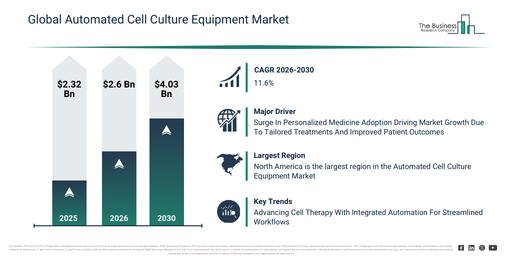
    The automated cell culture equipment market size has experienced swift expansion in recent years. Projections indicate it will increase from $2.32 billion in 2025 to $2.6 billion in 2026, at a compound annual growth rate (CAGR) of 11.9%. This historical growth can be attributed to several factors, including the surge in pharmaceutical and biologics research, a rising demand for consistent cell culture outcomes, the broadening of drug discovery pipelines, the increasing complexity of cell-based assays, and the early adoption of laboratory automation.

    The automated cell culture equipment market is set for significant growth over the next few years, with its size projected to reach $4.03 billion in 2030, expanding at a compound annual growth rate (CAGR) of 11.6%. This expansion during the forecast period is driven by increasing investments in regenerative medicine, the expansion of cell and gene therapy pipelines, a growing demand for scalable cell culture solutions, a rising focus on reducing laboratory variability, and the increasing integration of AI-driven lab automation. Key trends in the upcoming period include the increasing deployment of fully automated cell culture platforms, the rising adoption of high-throughput cell processing systems, the growing integration of robotics and imaging technologies, the expansion of closed-system and contamination-controlled workflows, and an enhanced focus on reproducibility and process standardization.

    Access Your Free Sample Report For In-Depth Market Analysis:

    https://www.thebusinessresearchcompany.com/report/global-automated-cell-culture-equipment-market-report

    What Primary Drivers Are Shaping The Automated Cell Culture Equipment Market?

    The expanding implementation of personalized medicine is projected to stimulate the growth of the automated cell culture equipment market. Personalized medicine involves customizing medical treatment to an individual’s genetic makeup, lifestyle, and environmental conditions to achieve more accurate and effective care. The increased adoption of personalized medicine is fueled by its ability to offer more effective treatments, as therapies are specifically adapted to a patient’s genetic and biological profile, thereby improving patient outcomes. Automated cell culture equipment facilitates personalized medicine by delivering precise, high-throughput, and reproducible cell culture processes that are essential for developing patient-specific therapies and conducting tailored drug testing. As an illustration, in February 2024, the Personalized Medicine Coalition, a US-based non-profit organization, announced that in 2023, the FDA granted approval to 16 new personalized treatments for patients with rare diseases, marking a substantial rise from the six approvals in 2022. Thus, the growing acceptance of personalized medicine is propelling the automated cell culture equipment market forward.

    Which Segments Define The Automated Cell Culture Equipment Market Segment Structure?

    The automated cell culture equipment market covered in this report is segmented –

    1) By Product Type: Instruments, Consumables, Software

    2) By Automation Level: Fully Automated Systems, Semi-Automated Systems, Manual Systems With Automation Features

    3) By Application: Drug Discovery And Development, Regenerative Medicine, Toxicology Testing, Vaccine Development, Stem Cell Research

    4) By End-User: Pharmaceutical Companies, Biotechnology Companies, Academic And Research Institutions, Contract Research Organizations (CROs), Diagnostics And Testing Laboratories

    Subsegments:

    1) By Instruments: Automated Cell Culture Systems, Bioreactors, Incubators, Centrifuges, Cell Counters And Analyzers, Liquid Handling Systems, Cell Imaging Systems, Robotic Arms And Manipulators, Cell Harvesting Systems, Filtration And Separation Devices

    2) By Consumables: Culture Media, Reagents And Supplements, Microplates And Culture Dishes, Flasks And Bottles, Single-Use Bags And Tubing, Filters And Membranes, Pipette Tips And Cartridges, Cell Culture Inserts, Sterile Connectors And Clamps

    3) By Software: Data Management Software, Process Control And Monitoring Software, Laboratory Information Management Systems (LIMS), Image Analysis Software, Workflow Automation Software, Quality Control And Compliance Software, Remote Monitoring And Cloud Integration Tools

    What Trends Are Affecting The Growth Of The Automated Cell Culture Equipment Market?

    Leading companies in the automated cell culture equipment market are emphasizing innovation in seamless workflow integration, such as closed single-use consumable systems, to bolster process standardization, diminish contamination risks, minimize manual handling, and facilitate efficient scaling from research to clinical manufacturing. A closed single-use consumable system functions as a sterile, disposable setup that consolidates multiple cell culture processes into one unit, thereby reducing contamination hazards and enabling scalable, reproducible workflows. For example, in March 2025, Limula SA, a Switzerland-based biotechnology firm specializing in automated cell therapy manufacturing solutions, unveiled LimONE. This integrated system merges hardware, software, and single-use consumables to simplify and standardize cell culture and processing workflows. This launch signifies the introduction of a commercial product serving both research and GMP-compliant manufacturing sectors. LimONE allows for quicker technology transfer, decreases labor and infrastructure costs, and supports the scalable production of advanced cell therapies, including CAR-T and gene-edited stem cells. The system improves workflow efficiency and guarantees reproducibility across diverse cell therapy processes. Overall, this product release enhances Limula’s footprint in the automated cell culture equipment market while supporting adherence to regulatory standards.

    Who Are The Established Players Within The Automated Cell Culture Equipment Market?

    Major companies operating in the automated cell culture equipment market are F. Hoffmann-La Roche Ltd, Hitachi Ltd., Merck KGaA, Panasonic Holdings Corporation, Thermo Fisher Scientific Inc., Danaher Corporation, Becton Dickinson and Company, Corning Incorporated, Lonza Group AG, Olympus Corporation, Sartorius AG, Eppendorf SE, Tecan Group Ltd., STEMCELL Technologies Inc., Miltenyi Biotec B.V. & Co. KG, Hamilton Company, Greiner Bio-One International GmbH, Solida Biotech GmbH, Biostream International B.V., HiMedia Laboratories Pvt. Ltd., Kuhner Shaker AG, Cellexus International Ltd.

    Get The Full Automated Cell Culture Equipment Market Report:

    https://www.thebusinessresearchcompany.com/report/global-automated-cell-culture-equipment-market-report

    Which Region Is The Leading Market For The Automated Cell Culture Equipment Market?

    North America was the largest region in the automated cell culture equipment market in 2025. Asia-Pacific is expected to be the fastest-growing region in the forecast period. The regions covered in the automated cell culture equipment market report are Asia-Pacific, South East Asia, Western Europe, Eastern Europe, North America, South America, Middle East, Africa.

    Request A Customized Automated Cell Culture Equipment Market Report For Competitive Insights:

    https://www.thebusinessresearchcompany.com/report/global-automated-cell-culture-equipment-market-report

    Browse Through More Reports Similar to the Global Automated Cell Culture Equipment Market 2026, By The Business Research Company

    Cell Culture Media Market Report 2026

    https://www.thebusinessresearchcompany.com/report/cell-culture-media-global-market-report

    Cell Cultures Market Report 2026

    https://www.thebusinessresearchcompany.com/report/cell-cultures-global-market-report

    Cell Cultures Market Report 2026

    https://www.thebusinessresearchcompany.com/report/cell-cultures-global-market-report

    Get in touch with us:

    The Business Research Company: https://www.thebusinessresearchcompany.com/

    Americas +1 310-496-7795

    Asia +44 7882 955267 & +91 8897263534

    Europe +44 7882 955267

    Email us at info@tbrc.info

    Follow us on:

    LinkedIn: https://in.linkedin.com/company/the-business-research-company

    YouTube: https://www.youtube.com/channel/UC24_fI0rV8cR5DxlCpgmyFQ

    Global Market Model: https://www.thebusinessresearchcompany.com/global-market-model

  • Black lung disease market forecast through 2030 with growth insights

    Black lung disease market forecast through 2030 with growth insights

    The Business Research Company’s 2026 market reports feature enhanced tools like market attractiveness analysis, TAM assessment, and company scoring matrices, along with interactive dashboards, deeper supply chain insights, and startup coverage strengthening the depth, usability, and strategic value of insights.

    How Is The Market Size Of The Black Lung Disease Market Expected To Scale Between 2026 And 2030?

    The black lung disease market size has experienced significant growth over recent years. It is projected to expand from $10.92 billion in 2025 to $12.51 billion in 2026, registering a compound annual growth rate (CAGR) of 14.6%. Historically, this expansion was largely due to increasing coal mining activities, prolonged exposure to coal dust among miners, limited early diagnostic access in mining regions, a rising incidence of respiratory occupational diseases, and a dependence on traditional diagnostic methods.

    The black lung disease market is anticipated to experience swift expansion over the coming years. It is projected to reach $22.5 billion by 2030, exhibiting a compound annual growth rate (CAGR) of 15.8%. This growth during the forecast period can be attributed to the greater uptake of sophisticated diagnostic technologies, increased funding for occupational health initiatives, expanding research into stem cell and regenerative treatments, improved availability of healthcare in mining areas, and stricter enforcement of worker health safety regulations. Key trends expected in the forecast period involve enhancements in diagnostic imaging for earlier detection, a heightened emphasis on preventative occupational health screening, increasing use of advanced pulmonary function tests, broader investigation into regenerative therapies, and more stringent monitoring of coal dust exposure.

    Access Your Free Sample Report For In-Depth Market Analysis:

    https://www.thebusinessresearchcompany.com/report/black-lung-disease-global-market-report

    What Significant Factors Are Influencing The Black Lung Disease Market Expansion?

    The rise in mining operations is projected to stimulate the expansion of the black lung disease market moving forward. These activities involve the extraction of valuable minerals, ores, and other geological resources from the Earth’s crust. Black lung disease, a condition affecting coal miners, results from these mining operations and the inhalation of coal mine dust, which contains hazardous carbon particles. For example, in July 2024, the International Energy Agency (IEA), a France-based intergovernmental organization, reported that global coal production in 2023 surged by 3.1% to 8,970 Mt, marking an all-time high, primarily influenced by major coal producers such as China, India, and Indonesia. Hence, the increase in mining activities is propelling the growth of the black lung disease market.

    How Is The Black Lung Disease Market Segmented Across Different Segment Categories?

    The black lung disease market covered in this report is segmented –

    1) By Type: Simple Coal Worker’s Pneumoconiosis, Complicated Coal Worker’s Pneumoconiosis

    2) By Treatment: Oxygen Therapy, Bronchodilators, Lung Transplant, Stem Cell Therapy, Other Treatment

    3) By Diagnosis: Biopsy, Imaging, Full Blood Count, Pulmonary Or Lung Function Tests, Physical Examination, Other Diagnosis

    4) By End Users: Hospitals And Clinics, Research Organizations And Academic Institutes, Diagnostic Centers And Labs, Other End Users

    Subsegments:

    1) By Simple Coal Worker’s Pneumoconiosis: Asymptomatic Simple Pneumoconiosis, Symptomatic Simple Pneumoconiosis

    2) By Complicated Coal Worker’s Pneumoconiosis: Progressive Massive Fibrosis (PMF), Complicated Pneumoconiosis With Respiratory Symptoms

    Which Organizations Play A Role In The Black Lung Disease Market Landscape?

    Major companies operating in the black lung disease market are Pfizer Inc., Johnson and Johnson, Siemens AG, General Electric, F. Hoffmann-La Roche AG, Merck and Co. Inc., Bayer AG, Novartis AG, Sanofi S.A., AstraZeneca plc, GlaxoSmithKline plc, Medtronic plc, Eli Lilly and Company, Boehringer Ingelheim International GmbH, Toshiba Corporation, Koninklijke Philips N.V., Mayo Clinic, Baxter International Inc., Teva Pharmaceutical Industries Ltd., Sun Pharmaceutical Industries Ltd., Aurobindo Pharma Limited, Hikma Pharmaceuticals plc, Lupin Limited

    Get The Full Black Lung Disease Market Report:

    https://www.thebusinessresearchcompany.com/report/black-lung-disease-global-market-report

    Which Region Holds The Highest Market Share In The Black Lung Disease Market?

    North America was the largest region in the black lung disease market in 2025. Asia-Pacific is expected to be the fastest-growing region in the forecast period. The regions covered in the black lung disease market report are Asia-Pacific, South East Asia, Western Europe, Eastern Europe, North America, South America, Middle East, Africa.

    Request A Customized Black Lung Disease Market Report For Competitive Insights:

    https://www.thebusinessresearchcompany.com/report/black-lung-disease-global-market-report

    Browse Through More Reports Similar to the Global Black Lung Disease Market 2026, By The Business Research Company

    Respiratory Disease Drugs Market Report 2026

    https://www.thebusinessresearchcompany.com/report/respiratory-disease-drugs-global-market-report

    Interstitial Lung Disease Market Report 2026

    https://www.thebusinessresearchcompany.com/report/interstitial-lung-disease-global-market-report

    Idiopathic Pulmonary Fibrosis Market Report 2026

    https://www.thebusinessresearchcompany.com/report/idiopathic-pulmonary-fibrosis-global-market-report

    Get in touch with us:

    The Business Research Company: https://www.thebusinessresearchcompany.com/

    Americas +1 310-496-7795

    Asia +44 7882 955267 & +91 8897263534

    Europe +44 7882 955267

    Email us at info@tbrc.info

    Follow us on:

    LinkedIn: https://in.linkedin.com/company/the-business-research-company

    YouTube: https://www.youtube.com/channel/UC24_fI0rV8cR5DxlCpgmyFQ

    Global Market Model: https://www.thebusinessresearchcompany.com/global-market-model
  • Bipolar disorder therapeutics market outlook (2026–2030) with key trends

    Bipolar disorder therapeutics market outlook (2026–2030) with key trends

    The Business Research Company’s 2026 market reports feature enhanced tools like market attractiveness analysis, TAM assessment, and company scoring matrices, along with interactive dashboards, deeper supply chain insights, and startup coverage strengthening the depth, usability, and strategic value of insights.

    What Level Of Market Value Growth Is Predicted For The Bipolar Disorder Therapeutics Market From 2026 To 2030?

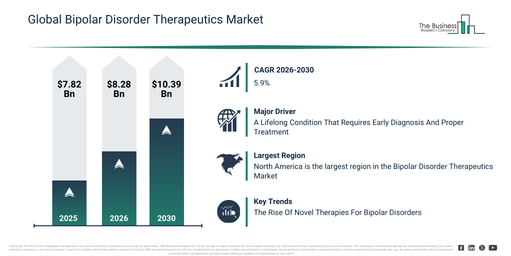
    The bipolar disorder therapeutics market has experienced significant growth in recent years. It is anticipated to expand from $7.82 billion in 2025 to $8.28 billion in 2026, achieving a compound annual growth rate (CAGR) of 5.9%. This historical growth can be attributed to several factors, including the increasing diagnosis of bipolar disorder, a growing awareness of mental health conditions, the expansion of psychiatric care services, the availability of established pharmacological treatments, and rising healthcare expenditure.

    The bipolar disorder therapeutics market is anticipated to experience substantial growth in the upcoming years. It is forecast to expand to $10.39 billion by 2030, achieving a compound annual growth rate (CAGR) of 5.9%. This expansion during the forecast period is propelled by factors such as the rising demand for precision psychiatry solutions, the wider availability of long-acting injectable therapies, the increasing incorporation of digital therapeutics, an elevated focus on improving treatment adherence, and heightened investment in mental health research. Prominent trends observed in this period include the accelerated development of novel mood-stabilizing treatments, the growing acceptance of atypical antipsychotic medications, an intensified focus on personalized mental health care, the broader application of combination drug therapies, and the improved integration of digital mental health support.

    Access Your Free Sample Report For In-Depth Market Analysis:

    https://www.thebusinessresearchcompany.com/report/bipolar-disorder-therapeutics-global-market-report

    Which Important Drivers Are Guiding The Bipolar Disorder Therapeutics Market Growth?

    Rising healthcare spending is projected to drive the expansion of the bipolar disorder therapeutics market in the future. Healthcare expenditure encompasses all expenses associated with medical treatment, preventive strategies, public health programs, rehabilitation services, community health efforts, and health-related research. Various elements contribute to the increase in healthcare spending, such as an aging demographic, the prevalence of chronic illnesses, and elevated pharmaceutical prices, collectively fueling the demand for medical care and interventions. Greater awareness of mental health concerns leads to more diagnoses of bipolar disorder, consequently boosting the need for therapeutic treatments. For example, data from November 2023, provided by the Canadian Institute for Health Information, a non-profit organization based in Canada, indicates that overall health spending in Canada is expected to grow by 2.8% in 2023, after experiencing a relatively small increase of 1.5% in 2022. Consequently, the expanding healthcare expenditure is a key factor propelling the development of the bipolar disorder therapeutics market.

    What Are The Main Segments Within The Bipolar Disorder Therapeutics Market Segment Structure?

    The bipolar disorder therapeutics market covered in this report is segmented –

    1) By Drug Class: Mood Stabilizers, Antipsychotic Drugs, Antidepressant Drugs, Other Drugs

    2) By Mechanism: Selective Serotonin Reuptake Inhibitors, Serotonin-norepinephrine Reuptake Inhibitors, Tricyclic Antidepressants, Monoamine Oxidase Inhibitors, Benzodiazepines, Other Mechanisms

    3) By Distribution Channel: Hospital Pharmacies, Retail Pharmacies, Online Pharmacies

    Subsegments:

    1) By Mood Stabilizers: Lithium, Anticonvulsants

    2) By Antipsychotic Drugs: Atypical Antipsychotics, Typical Antipsychotics

    3) By Antidepressant Drugs: Selective Serotonin Reuptake Inhibitors (SSRIs), Serotonin-Norepinephrine Reuptake Inhibitors (SNRIs), Tricyclic Antidepressants (TCAs)

    4) By Other Drugs: Benzodiazepines, Adjunctive Therapies

    What Trends Are Influencing The Evolution Of The Bipolar Disorder Therapeutics Market?

    Major companies in the Bipolar Disorder Therapeutics and related market are developing new treatments for depressive episodes associated with bipolar I or II disorder, aiming to reach larger customer bases, increase sales, and boost revenue. Bipolar depression is the most prevalent and severe clinical manifestation among bipolar disorders. Compared to manic/hypomanic episodes, these depressed episodes are associated with a poorer prognosis, longer duration, and more recurrences. For instance, in March 2024, the EDIT-B consortium, a France-based collaborative organization specializing in developing innovative diagnostic tools and biomarkers, launched myEDIT-B. This innovative blood diagnostic tool is designed to provide objective biological data that assists psychiatrists and healthcare professionals in making precise diagnoses. It analyzes RNA editing-based biomarkers and has shown sensitivity and specificity rates above 80%. By facilitating quicker and more accurate diagnoses, potentially shortening the wait time to within four weeks, myEDIT-B aims to address the significant issue of misdiagnosis in mental health, as approximately 40% of individuals diagnosed with depression may actually have bipolar disorder.

    Who Are The Companies Participating In The Bipolar Disorder Therapeutics Market?

    Major companies operating in the bipolar disorder therapeutics market are AbbVie Inc., Pfizer Inc., Astellas Pharma Inc., AstraZeneca PLC, Bristol-Myers Squibb, GlaxoSmithKline PLC, Janssen Pharmaceuticals, Novartis AG, Otsuka Pharmaceutical Co. Ltd., Eli Lilly and Company, Gedeon Richter PLC, Sumitomo Pharma Co. Ltd., H. Lundbeck A/S, Sanofi S.A., Allergan plc, Takeda Pharmaceutical Company Limited, Sunovion Pharmaceuticals Inc., Alkermes plc, Mylan N.V., Teva Pharmaceutical Industries Ltd., Johnson & Johnson, NeuroRx Inc., IntraCellular Therapies Inc., Vanda Pharmaceuticals Inc., Sage Therapeutics Inc.

    Get The Full Bipolar Disorder Therapeutics Market Report:

    https://www.thebusinessresearchcompany.com/report/bipolar-disorder-therapeutics-global-market-report

    Where Is The Bipolar Disorder Therapeutics Market Most Concentrated Geographically?

    North America was the largest region in the bipolar disorder therapeutics market in 2025. Europe is expected to be the fastest-growing region in the forecast period. The regions covered in the bipolar disorder therapeutics market report are Asia-Pacific, South East Asia, Western Europe, Eastern Europe, North America, South America, Middle East, Africa.

    Request A Customized Bipolar Disorder Therapeutics Market Report For Competitive Insights:

    https://www.thebusinessresearchcompany.com/report/bipolar-disorder-therapeutics-global-market-report

    Browse Through More Reports Similar to the Global Bipolar Disorder Therapeutics Market 2026, By The Business Research Company

    Addictions Therapeutics Market Report 2026

    https://www.thebusinessresearchcompany.com/report/addictions-therapeutics-global-market-report

    Post Traumatic Stress Disorder Therapeutics Market Report 2026

    https://www.thebusinessresearchcompany.com/report/post-traumatic-stress-disorder-therapeutics-global-market-report

    Attention Deficit Hyperactivity Disorder Adhd Therapeutics Market Report 2026

    https://www.thebusinessresearchcompany.com/report/attention-deficit-hyperactivity-disorder-adhd-therapeutics-global-market-report

    Get in touch with us:

    The Business Research Company: https://www.thebusinessresearchcompany.com/

    Americas +1 310-496-7795

    Asia +44 7882 955267 & +91 8897263534

    Europe +44 7882 955267

    Email us at info@tbrc.info

    Follow us on:

    LinkedIn: https://in.linkedin.com/company/the-business-research-company

    YouTube: https://www.youtube.com/channel/UC24_fI0rV8cR5DxlCpgmyFQ

    Global Market Model: https://www.thebusinessresearchcompany.com/global-market-model
  • Surging demand for PCR is accelerating growth in the biotechnology reagents market

    Surging demand for PCR is accelerating growth in the biotechnology reagents market

    The Business Research Company’s 2026 market reports feature enhanced tools like market attractiveness analysis, TAM assessment, and company scoring matrices, along with interactive dashboards, deeper supply chain insights, and startup coverage strengthening the depth, usability, and strategic value of insights.

    How Will The Market Value Of The Biotechnology Reagents Market Progress Between 2026 And 2030?

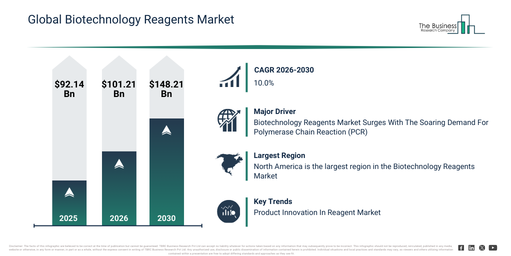
    The biotechnology reagents market size has experienced substantial growth recently. The market is expected to increase from $92.14 billion in 2025 to $101.21 billion in 2026, with a compound annual growth rate (CAGR) of 9.8%. In previous periods, the market’s expansion was due to the expansion of biotechnology research activities, growth in pharmaceutical R&D spending, increasing adoption of molecular diagnostics, rising academic research funding, and the availability of advanced laboratory infrastructure.

    The biotechnology reagents market is projected to experience swift expansion in the coming years, anticipated to reach $148.21 billion by 2030, exhibiting a compound annual growth rate (CAGR) of 10.0%. This growth during the forecast period can be attributed to several factors, including the escalating demand for precision diagnostics, the broadening scope of genomics and proteomics research, increasing investments in personalized medicine, the expanding adoption of automated laboratory systems, and a heightened emphasis on research reproducibility. Key trends characterizing this period involve an increasing need for high-purity molecular biology reagents, the growing uptake of advanced analytical reagents, the expanding utilization of PCR and gene expression kits, the development of automated laboratory workflows, and an elevated focus on the consistency and accuracy of reagents.

    Access Your Free Sample Report For In-Depth Market Analysis:

    https://www.thebusinessresearchcompany.com/report/biotechnology-reagents-global-market-report

    What Major Factors Are Driving The Biotechnology Reagents Market Forward?

    The increasing demand for polymerase chain reaction (PCR) is anticipated to propel the growth of the biotechnology reagents market in the coming period. Polymerase chain reaction (PCR) refers to a molecular technique utilized to amplify smaller segments of DNA into larger ones, which are then used to diagnose certain infectious diseases and investigate genetic changes. During the PCR process, biotechnology reagents are employed to maintain a stable pH, ensuring proper DNA synthesis function, which can subsequently be used for various genomic studies and diagnostic applications. For instance, in March 2025, the World Health Organization, a Switzerland-based United Nations specialized agency responsible for international public health, stated that over the four-week reporting period (6 January to 2 February 2025), weekly SARS-CoV-2 PCR positivity identified through systematic virological surveillance changed from 7.3% in the initial week of the period to 5.0% in the final week, with a weekly average of over 69,900 specimens tested across 103 countries. Consequently, the rising demand for polymerase chain reaction (PCR) is driving the expansion of the biotechnology reagents market.

    How Is Segmentation Applied In The Biotechnology Reagents Market Segment Analysis?

    The biotechnology reagents market covered in this report is segmented –

    1) By Type: Life Science Reagents, Analytical Reagents, Other Reagents

    2) By Applications: Protein synthesis And purification, Gene Expression, DNA And RNA Analysis, Drug Testing

    3) By End-Users: Biotech Companies, Research Institutes, Pharmaceuticals, Diagnostic Centers, Academic Institute, Other End-Users

    Subsegments:

    1) By Life Science Reagents: Molecular Biology Reagents, Cell Culture Reagents, PCR Reagents, Protein Purification Reagents

    2) By Analytical Reagents: Chromatography Reagents, Spectroscopy Reagents, Electrophoresis Reagents

    3) By Other Reagents: Diagnostic Reagents, Biochemical Reagents, Enzyme Reagents

    Which Trends Are Impacting The Progress Of The Biotechnology Reagents Market?

    Leading companies active in the biotechnology reagent market are concentrating on product innovation to solidify their industry standing. This innovation involves creating new or enhanced biotechnology reagents that improve research capabilities, diagnostic accuracy, or analytical performance. For instance, in May 2023, Bio-Techne, a global life sciences company specializing in the development, manufacture, and sale of life science reagents, announced the debut of two new RNAscope in situ Hybridization Probes, Kappa and Lambda, serving as analyte-specific reagents (ASRs). These probes are biotechnology reagents specifically designed for detecting immunoglobulin kappa and lambda light chain mRNA in B-cells, representing a significant advancement for both research and clinical diagnostic applications. This innovation facilitates improved molecular detection and expands the operational capabilities for both research and clinical diagnostic communities.

    Who Are The Companies Participating In The Biotechnology Reagents Market Environment?

    Major companies operating in the biotechnology reagents market are Life Technologies Corporation, Abbott Laboratories, Abcam PLC, Agilent Technologies Inc., Beckman Coulter Inc., Becton Dickinson and Company, BioLegend Inc., bioMérieux SA, Bio-Rad Laboratories Inc., Bio-Techne Corporation, Cell Signaling Technology, Danaher Corp., General Electric incorporated, Hoefer Inc., Illumina Inc., Lonza Group Ltd., Merck KGaA Group, Meridian Bioscience Inc., Millipore Corporation, New England Biolabs Inc., Novus Biologicals LLC, PerkinElmer Inc., Promega Corporation, Quality Biological Inc., Roche Holding AG, Siemens Healthineers AG, Sigma-Aldrich Corp., Sysmex Corporation, Takara Bio Inc., Thermo Fisher Scientific Inc., Tosoh Corporation

    Get The Full Biotechnology Reagents Market Report:

    https://www.thebusinessresearchcompany.com/report/biotechnology-reagents-global-market-report

    Which Region Dominates The Biotechnology Reagents Market By Market Share?

    North America was the largest region in the biotechnology reagents market in 2025. Asia-Pacific is expected to be the fastest-growing region in the forecast period. The regions covered in the biotechnology reagents market report are Asia-Pacific, South East Asia, Western Europe, Eastern Europe, North America, South America, Middle East, Africa.

    Request A Customized Biotechnology Reagents Market Report For Competitive Insights:

    https://www.thebusinessresearchcompany.com/report/biotechnology-reagents-global-market-report

    Browse Through More Reports Similar to the Global Biotechnology Reagents Market 2026, By The Business Research Company

    Biotech Ingredient Market Report 2026

    https://www.thebusinessresearchcompany.com/report/biotech-ingredient-global-market-report

    Molecular Biology Enzymes And Kits And Reagents Market Report 2026

    https://www.thebusinessresearchcompany.com/report/molecular-biology-enzymes-and-kits-and-reagents-global-market-report

    Sequencing Reagents Market Report 2026

    https://www.thebusinessresearchcompany.com/report/sequencing-reagents-global-market-report

    Get in touch with us:

    The Business Research Company: https://www.thebusinessresearchcompany.com/

    Americas +1 310-496-7795

    Asia +44 7882 955267 & +91 8897263534

    Europe +44 7882 955267

    Email us at info@tbrc.info

    Follow us on:

    LinkedIn: https://in.linkedin.com/company/the-business-research-company

    YouTube: https://www.youtube.com/channel/UC24_fI0rV8cR5DxlCpgmyFQ

    Global Market Model: https://www.thebusinessresearchcompany.com/global-market-model
  • Increasing chronic disease burden is fueling growth in biotech and pharma outsourcing services

    Increasing chronic disease burden is fueling growth in biotech and pharma outsourcing services

    The Business Research Company’s 2026 market reports feature enhanced tools like market attractiveness analysis, TAM assessment, and company scoring matrices, along with interactive dashboards, deeper supply chain insights, and startup coverage strengthening the depth, usability, and strategic value of insights.

    What Are The Market Size Estimates For The Biotechnology And Pharmaceutical Services Outsourcing Market In 2026 And 2030?

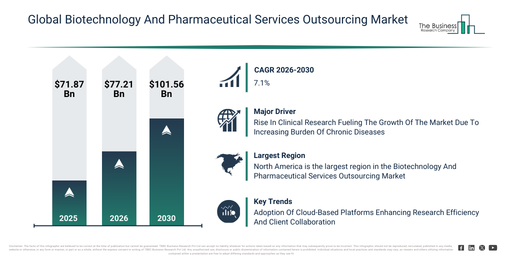
    The biotechnology and pharmaceutical services outsourcing market has experienced robust growth in recent years. Its size is projected to expand from $71.87 billion in 2025 to $77.21 billion in 2026, demonstrating a compound annual growth rate (CAGR) of 7.4%. This historical expansion can be attributed to the growing complexity of drug development pipelines, increased regulatory scrutiny across various markets, the broadening of clinical trial activities, the proliferation of biotech startups, and the demand for specialized external expertise.

    The biotechnology and pharmaceutical services outsourcing market is poised for substantial growth in the upcoming years. Its market size is projected to expand to $101.56 billion by 2030, achieving a compound annual growth rate (CAGR) of 7.1%. This anticipated growth during the forecast period is propelled by several factors, including the acceleration of biologics and cell therapy development, a rising need for adaptable outsourcing collaborations, the expanding application of AI in drug discovery, the broadening of pharmaceutical manufacturing in emerging markets, and an increased emphasis on speed-to-market strategies. Key trends anticipated within this period involve a greater reliance on outsourcing specialized drug development, an escalating demand for regulatory and compliance assistance, the wider adoption of data-driven R&D outsourcing frameworks, the extension of end-to-end lifecycle management services, and a heightened commitment to optimizing both costs and timelines.

    Access Your Free Sample Report For In-Depth Market Analysis:

    https://www.thebusinessresearchcompany.com/report/biotechnology-and-pharmaceutical-services-outsourcing-global-market-report

    Which Key Drivers Are Affecting The Biotechnology And Pharmaceutical Services Outsourcing Market Development?

    The expansion of clinical research is projected to propel the biotechnology and pharmaceutical services outsourcing market in the future. Clinical research involves structured studies with human subjects, aiming to deepen understanding of health issues and assess the safety and efficacy of medical treatments. The growth in clinical research primarily stems from the rising prevalence of chronic illnesses, requiring the creation and evaluation of novel therapies to improve patient outcomes. By offering specialized expertise and sophisticated facilities, the outsourcing of biotechnology and pharmaceutical services aids clinical research, facilitating the efficient, economical, and compliant conduct of trials worldwide. For example, in November 2023, the Association of the British Pharmaceutical Industry (ABPI), a UK-based trade association, indicated that partner data revealed a 15% increase in yearly recruitment for industry clinical trials in the UK, moving from 36,722 participants in 2021/22 to 42,088 in 2022/23. Consequently, heightened clinical research activity is fostering the expansion of the biotechnology and pharmaceutical services outsourcing market.

    What Segment Categories Shape The Biotechnology And Pharmaceutical Services Outsourcing Market Segment Landscape?

    The biotechnology and pharmaceutical services outsourcing market covered in this report is segmented –

    1) By Service: Consulting, Regulatory Affairs, Product Design And Development, Auditing And Assessment, Product Maintenance, Training And Education, Other Services

    2) By Application: Oncology, Neurology, Cardiovascular, Infectious Diseases

    3) By End-Use: Pharma, Biotech

    Subsegments:

    1) By Consulting: Strategic Consulting, Market Access Consulting, Commercialization Strategy, Portfolio Management, Technology And Digital Transformation Consulting

    2) By Regulatory Affairs: Regulatory Submissions, Compliance And Risk Management, Product Registration, Labeling And Packaging Review, Regulatory Intelligence

    3) By Product Design And Development: Formulation Development, Preclinical Development, Bioprocess Development, Analytical Development, Drug Delivery System Design

    4) By Auditing And Assessment: Good Manufacturing Practice (GMP) Audits, Good Clinical Practice (GCP) Audits, Quality System Audits, Supplier And Vendor Audits, Risk Assessments

    5) By Product Maintenance: Lifecycle Management, Change Management, Technical Support, Software And IT System Updates, Compliance Monitoring

    6) By Training And Education: Regulatory Training, Good Laboratory Practice (GLP) Training, Pharmacovigilance Training, Clinical Trial Training, Quality Management Systems Training

    7) By Other Services: Intellectual Property Support, Medical Writing, Data Management And Biostatistics, Pharmacovigilance And Drug Safety, Translation And Localization Services

    What Trends Are Transforming The Biotechnology And Pharmaceutical Services Outsourcing Market?

    Leading companies in the biotechnology and pharmaceutical services outsourcing market are concentrating on developing advanced solutions, such as cloud-based platforms, to enable instant collaboration and remote accessibility. These platforms are online systems that provide users with the ability to utilize computing assets like storage, software applications, and processing capabilities, independently of local infrastructure or equipment. As an illustration, Charles River Labs, a US-based non-clinical contract research organization, introduced Apollo in March 2023, which is a cloud-based platform designed to enhance toxicology studies. This platform offers a distinct benefit by facilitating client access to diverse study data, thereby assisting in safety and toxicology assessments. It incorporates self-service functionalities, empowering users to independently track study advancements, analyze information, and obtain crucial documentation. A notable instrument it possesses is a quoting function, which aids in more precise and effective budget formulation.

    Who Are The Companies Operating Across The Biotechnology And Pharmaceutical Services Outsourcing Market Value Chain?

    Major companies operating in the biotechnology and pharmaceutical services outsourcing market are Thermo Fisher Scientific Inc, LabCorp Holdings, IQVIA Inc, ICON Plc, Eurofins Scientific SE, Lonza Group Ltd, Syneos Health, Catalent Inc, Charles River Laboratories, Samsung Biologics Co Ltd, WuXi Biologics, Recipharm AB, Medpace Holdings Inc, Curia Inc, CordenPharma Corp, Parexel International Ltd, Lachman Consultants, Concept Heidelberg GmbH, The Quantic Group Ltd, PRA Health Sciences, PPD Inc, Covance Inc, Alcami Corporation, Pharmalex GmbH

    Get The Full Biotechnology And Pharmaceutical Services Outsourcing Market Report:

    https://www.thebusinessresearchcompany.com/report/biotechnology-and-pharmaceutical-services-outsourcing-global-market-report

    Which Region Is The Largest In The Biotechnology And Pharmaceutical Services Outsourcing Market?

    North America was the largest region in the biotechnology and pharmaceutical services outsourcing market in 2025. Asia-Pacific is expected to be the fastest-growing region in the forecast period. The regions covered in the biotechnology and pharmaceutical services outsourcing market report are Asia-Pacific, South East Asia, Western Europe, Eastern Europe, North America, South America, Middle East, Africa.

    Request A Customized Biotechnology And Pharmaceutical Services Outsourcing Market Report For Competitive Insights:

    https://www.thebusinessresearchcompany.com/report/biotechnology-and-pharmaceutical-services-outsourcing-global-market-report

    Browse Through More Reports Similar to the Global Biotechnology And Pharmaceutical Services Outsourcing Market 2026, By The Business Research Company

    Pharmaceutical Fill And Finish Outsourcing Market Report 2026

    https://www.thebusinessresearchcompany.com/report/pharmaceutical-fill-and-finish-outsourcing-global-market-report

    Biotechnology Services Market Report 2026

    https://www.thebusinessresearchcompany.com/report/biotechnology-services-global-market-report

    Biologics Outsourcing Market Report 2026

    https://www.thebusinessresearchcompany.com/report/biologics-outsourcing-global-market-report

    Get in touch with us:

    The Business Research Company: https://www.thebusinessresearchcompany.com/

    Americas +1 310-496-7795

    Asia +44 7882 955267 & +91 8897263534

    Europe +44 7882 955267

    Email us at info@tbrc.info

    Follow us on:

    LinkedIn: https://in.linkedin.com/company/the-business-research-company

    YouTube: https://www.youtube.com/channel/UC24_fI0rV8cR5DxlCpgmyFQ

    Global Market Model: https://www.thebusinessresearchcompany.com/global-market-model

  • Rising demand for plant-based products is driving growth in the biotech flavors market

    Rising demand for plant-based products is driving growth in the biotech flavors market

    The Business Research Company’s 2026 market reports feature enhanced tools like market attractiveness analysis, TAM assessment, and company scoring matrices, along with interactive dashboards, deeper supply chain insights, and startup coverage strengthening the depth, usability, and strategic value of insights.

    What Expansion In Market Value Is Forecasted For The Biotech Flavors Market Between 2026 And 2030?

    The biotech flavors market has experienced significant expansion in recent years. It is projected to increase from $29.47 billion in 2025 to $31.57 billion in 2026, achieving a compound annual growth rate (CAGR) of 7.1%. The historical growth can be attributed to several factors including a heightened consumer preference for natural flavors, progress in fermentation technology, an increase in processed food consumption, the expansion of functional food production, and the growing utilization of biotech ingredients.

    The biotech flavors market is projected to experience substantial expansion in the coming years. This market is forecast to reach $41.18 billion by 2030, demonstrating a compound annual growth rate (CAGR) of 6.9%. This anticipated growth is primarily driven by factors such as the increasing consumer preference for plant-based and alternative food options, the proliferation of personalized nutrition offerings, increased capital flow into sustainable flavor development, enhanced regulatory frameworks supporting natural ingredients, and the wider integration of biotech-driven food solutions. Key trends emerging during this forecast timeframe encompass the expanding utilization of fermentation-derived flavor components, a heightened consumer desire for natural and clean-label flavors, the increasing application of enzyme-modified flavor ingredients, the broadening scope of bespoke flavor creation, and a stronger emphasis on environmentally responsible flavor manufacturing.

    Access Your Free Sample Report For In-Depth Market Analysis:

    https://www.thebusinessresearchcompany.com/report/biotech-flavors-global-market-report

    What Factors Are Contributing To The Growth Of The Biotech Flavors Market?

    Increased consumer preference for vegan and plant-derived items is anticipated to drive expansion in the biotech flavors market in the future. These products consist solely of ingredients sourced from plants, free from any animal-derived elements like meat, dairy, eggs, honey, or other animal by-products. The surge in consumer interest for vegan and plant-based products stems from heightened health consciousness, worries about environmental sustainability, and moral concerns regarding animal well-being. Biotech flavors improve the taste of vegan and plant-based offerings by sustainably reproducing natural tastes, thereby guaranteeing genuineness and attracting consumers. An illustration of this trend is a report from August 2024 by ProVeg International, a Germany-based non-profit organization, which stated that in 2023, 38% of individuals surveyed reported adhering to a flexitarian, pescatarian, vegetarian, or vegan diet. Consequently, the growing consumer desire for vegan and plant-based items is fueling the biotech flavors market.

    Which Segment Types Are Examined In The Biotech Flavors Market Segment Study?

    The biotech flavors market covered in this report is segmented –

    1) By Type: Vanilla And Vanillin, Fruity Flavor, Other Types

    2) By Form: Liquid, Powder, Paste

    3) By Source: Microbial, Plant, Animal

    4) By Functional: Sweeteners, Enhancers, Modifiers, Maskers

    5) By Application: Dairy Products, Beverages, Confectionery Products, Non-Dairy Ice-cream, Bakery Products, Nutraceuticals, Other Applications

    Subsegments:

    1) By Vanilla And Vanillin: Natural Vanilla Extracts, Fermentation-Derived Vanillin, Enzyme-Modified Vanillin

    2) By Fruity Flavor: Citrus-Based Flavors, Berry-Based Flavors, Tropical Fruit Flavors

    3) By Other Types: Floral Flavors, Spicy Flavors, Herbal And Mint Flavors

    What Trends Are Shaping The Future Of The Biotech Flavors Market?

    Companies operating in the biotech flavors market are prioritizing the development of innovative offerings, such as natural vanillin, to address the escalating demand for clean-label, sustainable, and plant-based ingredients. These align with consumer preferences for healthier and environmentally conscious products. Natural vanillin flavors represent compounds originating from natural sources, predominantly vanilla beans or biotechnological processes like fermentation, that emulate vanilla’s characteristic sweet, warm, and aromatic profile. For example, in October 2023, Spero Renewables, a biotechnology firm specializing in sustainable flavor and fragrance ingredients, unveiled a new generation of natural vanillin. This product is derived from ferulic acid, which is sourced from non-GMO corn fiber through a fermentation process. This vanillin is clean-label, traceable, and appropriate for natural and organic food formulations, as it is produced from a renewable agricultural feedstock rather than petroleum or vanilla beans. This advancement supports the growing consumer preference for eco-friendly and plant-based flavor solutions, while also providing flavor manufacturers with a highly pure, sustainable vanillin ingredient that complies with stringent regulatory requirements.

    Which Players Are Part Of The Competitive Landscape Of The Biotech Flavors Market?

    Major companies operating in the biotech flavors market are The Archer-Daniels-Midland Company, International Flavors & Fragrances Inc., Kerry Group plc, dsm-firmenich AG, Givaudan S.A., Döhler GmbH, Frutarom Industries, Centrale Suiker Maatschappij (CSM) N V, Takasago International Corporation, Naturex S.A., MANE SA, Synthite Industries Ltd., Flavorchem Corporation, Bell Flavors & Fragrances Inc., Jeneil Biotech, Conagen Inc., Blue Pacific Flavors Inc., Amines BioTech Pvt. Ltd., Keva Flavours Pvt. Ltd.

    Get The Full Biotech Flavors Market Report:

    https://www.thebusinessresearchcompany.com/report/biotech-flavors-global-market-report

    Which Region Leads The Biotech Flavors Market In Terms Of Market Share?

    North America was the largest region in the biotech flavors market in 2025. Asia-Pacific is expected to be the fastest-growing region in the forecast period. The regions covered in the biotech flavors market report are Asia-Pacific, South East Asia, Western Europe, Eastern Europe, North America, South America, Middle East, Africa.

    Request A Customized Biotech Flavors Market Report For Competitive Insights:

    https://www.thebusinessresearchcompany.com/report/biotech-flavors-global-market-report

    Browse Through More Reports Similar to the Global Biotech Flavors Market 2026, By The Business Research Company

    Flavor Enhancer Market Report 2026

    https://www.thebusinessresearchcompany.com/report/flavor-enhancer-global-market-report

    Food Flavors Market Report 2026

    https://www.thebusinessresearchcompany.com/report/food-flavors-global-market-report

    Meat Based Flavors Market Report 2026

    https://www.thebusinessresearchcompany.com/report/meat-based-flavors-global-market-report

    Get in touch with us:

    The Business Research Company: https://www.thebusinessresearchcompany.com/

    Americas +1 310-496-7795

    Asia +44 7882 955267 & +91 8897263534

    Europe +44 7882 955267

    Email us at info@tbrc.info

    Follow us on:

    LinkedIn: https://in.linkedin.com/company/the-business-research-company

    YouTube: https://www.youtube.com/channel/UC24_fI0rV8cR5DxlCpgmyFQ

    Global Market Model: https://www.thebusinessresearchcompany.com/global-market-model
  • Growth of home healthcare initiatives in India is influencing the biosurgery market

    Growth of home healthcare initiatives in India is influencing the biosurgery market

    The Business Research Company’s 2026 market reports feature enhanced tools like market attractiveness analysis, TAM assessment, and company scoring matrices, along with interactive dashboards, deeper supply chain insights, and startup coverage strengthening the depth, usability, and strategic value of insights.

    How Large Will The Biosurgery Market Be By 2030 Compared To Its 2026 Market Size?

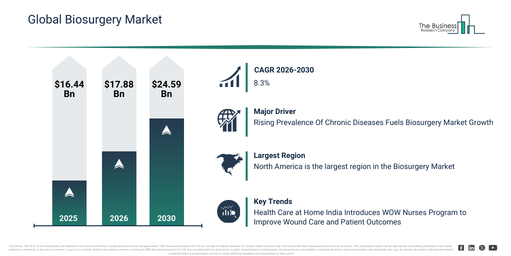
    The biosurgery market has experienced substantial growth in recent years. This market is projected to expand from $16.44 billion in 2025 to $17.88 billion in 2026, demonstrating a compound annual growth rate (CAGR) of 8.7%. The expansion observed historically stems from the rising volume of surgical procedures, increasing prevalence of chronic wounds, expansion of hospital infrastructure, adoption of modern surgical materials, and improvements in biosurgical product safety profiles.

    The biosurgery market is projected to experience robust expansion over the coming years, anticipated to reach $24.59 billion by 2030, demonstrating a compound annual growth rate (CAGR) of 8.3%. This projected growth is driven by several factors, including a heightened need for advanced wound care, a greater emphasis on minimizing post-surgical complications, the expansion of outpatient surgeries, increased funding for biosurgical product innovation, and the wider incorporation of biologics-based surgical assistance. Key developments expected during this timeframe encompass the wider utilization of sophisticated hemostatic agents, an escalating demand for synthetic surgical sealants, the increasing application of bio-based adhesion barriers, the proliferation of minimally invasive surgical techniques, and an intensified pursuit of quicker wound recovery.

    Access Your Free Sample Report For In-Depth Market Analysis:

    https://www.thebusinessresearchcompany.com/report/biosurgery-global-market-report

    Which Strong Drivers Are Impacting The Biosurgery Market Growth?

    The rising occurrence of chronic illnesses is anticipated to fuel the expansion of the biosurgery market in the future. Chronic diseases are defined as health conditions lasting a year or more, requiring ongoing medical attention, limiting daily activities, or both. In the US, major contributors to mortality and disability include chronic ailments like diabetes, cancer, and heart disease. Biosurgery serves to remove necrotic tissue, reduce infection risk, and accelerate the recovery of chronic wounds. For example, the World Health Organization, a specialized UN agency based in Switzerland, reported that noncommunicable diseases (NCDs) account for 74% of worldwide deaths as of September 2025. Consequently, the growing prevalence of chronic diseases is a key factor boosting the biosurgery market’s growth.

    How Are Different Segments Classified In The Biosurgery Market Segment Analysis?

    The biosurgery market covered in this report is segmented –

    1) By Product: Bone-Graft Substitutes, Soft-Tissue Attachments, Hemostatic Agents, Surgical Sealants And Adhesives, Adhesion Barriers, Staple Line Reinforcement

    2) By Source: Natural Or Biologics Products, Synthetic Products

    3) By Application: Orthopedic Surgery, General Surgery, Neurological Surgery, Cardiovascular Surgery, Gynecological Surgery, Other Applications

    4) By End-User: Hospitals, Clinics, Other End-Users

    Subsegments:

    1) By Bone-Graft Substitutes: Synthetic Bone Grafts, Natural Bone Grafts

    2) By Soft-Tissue Attachments: Mesh Products, Biological Grafts

    3) By Hemostatic Agents: Powdered Agents, Gel-based Agents

    4) By Surgical Sealants And Adhesives: Fibrin Sealants, Synthetic Sealants

    5) By Adhesion Barriers: Absorbable Barriers, Non-absorbable Barriers

    6) By Staple Line Reinforcement: Reinforcement Devices, Surgical Staples

    Which Trends Are Contributing To Changes In The Biosurgery Market?

    Leading companies within the biosurgery market are utilizing technological progress, particularly in advanced wound care technology, to bolster healing results, decrease instances of infection, and accelerate patient recuperation periods by implementing novel products and methodologies. This advanced wound care technology incorporates cutting-edge approaches and items specifically developed to optimize wound healing, safeguard against infection, and elevate overall patient well-being. An illustrative example is the September 2024 introduction of WOW (Warriors of Woundcare) Nurses by Health Care at Home India Pvt Ltd, an India-based company that manufactures medical products. The purpose of the WOW Nurses initiative is to proactively address and manage bedsores, which are frequent complications encountered by patients with restricted movement. Such bedsores can markedly impede recovery, prolong hospitalizations, and amplify the danger of infection.

    Who Are The Companies Driving Activity In The Biosurgery Market?

    Major companies operating in the biosurgery market are Baxter International Inc., B. Braun SE, Becton, Dickinson and Company, Hemostasis LLC, Integra LifeSciences Corporation, Johnson & Johnson Services Inc., CryoLife Inc., Zimmer Biomet Holdings Inc., Kuros Biosciences AG, Orthofix Medical Inc., Smith & Nephew plc, Medtronic plc, Stryker Corp., Tissue Regenix Group plc, Aroa Biosurgery Ltd., Anika Therapeutics Inc., Arthrex Inc., B Braun Surgical SA, Biom’Up SA, Boston Scientific Corporation, Coloplast Corp., Cook Medical Inc., Genzyme Corporation

    Get The Full Biosurgery Market Report:

    https://www.thebusinessresearchcompany.com/report/biosurgery-global-market-report

    Which Region Leads The Biosurgery Market In Overall Market Size?

    North America was the largest region in the biosurgery market in 2025. Asia-Pacific is expected to be the fastest-growing region in the biosurgery market report during the forecast period. The regions covered in the biosurgery market report are Asia-Pacific, South East Asia, Western Europe, Eastern Europe, North America, South America, Middle East, Africa.

    Request A Customized Biosurgery Market Report For Competitive Insights:

    https://www.thebusinessresearchcompany.com/report/biosurgery-global-market-report

    Browse Through More Reports Similar to the Global Biosurgery Market 2026, By The Business Research Company

    Bioethanol Market Report 2026

    https://www.thebusinessresearchcompany.com/report/bioethanol-global-market-report

    Biohacking Market Report 2026

    https://www.thebusinessresearchcompany.com/report/biohacking-global-market-report

    Bioceramics Market Report 2026

    https://www.thebusinessresearchcompany.com/report/bioceramics-global-market-report

    Get in touch with us:

    The Business Research Company: https://www.thebusinessresearchcompany.com/

    Americas +1 310-496-7795

    Asia +44 7882 955267 & +91 8897263534

    Europe +44 7882 955267

    Email us at info@tbrc.info

    Follow us on:

    LinkedIn: https://in.linkedin.com/company/the-business-research-company

    YouTube: https://www.youtube.com/channel/UC24_fI0rV8cR5DxlCpgmyFQ

    Global Market Model: https://www.thebusinessresearchcompany.com/global-market-model

  • Facility expansions and technological advancements are shaping the biosimilar testing services market

    Facility expansions and technological advancements are shaping the biosimilar testing services market

    The Business Research Company’s 2026 market reports feature enhanced tools like market attractiveness analysis, TAM assessment, and company scoring matrices, along with interactive dashboards, deeper supply chain insights, and startup coverage strengthening the depth, usability, and strategic value of insights.

    What Is The Projected Increase In Market Value Of The Biosimilar Testing Services Market During 2026–2030?

    The scale of the biosimilar testing services market has expanded significantly over the past few years. This market is projected to expand from $1.84 billion in 2025 to reach $2.08 billion by 2026, demonstrating a compound annual growth rate (CAGR) of 13.0%. Historically, this growth can be ascribed to several factors, including the widening of biosimilar development pipelines, a rise in regulatory clearances for biosimilars, the expansion of biologics production, an increasing dependence on CRO testing services, and advancements in analytical testing methodologies.

    The biosimilar testing services market size is anticipated to undergo significant expansion in the coming years, with projections indicating a rise to $3.37 billion by 2030, achieving a compound annual growth rate (CAGR) of 12.8%. This growth during the forecast period is fueled by the escalating demand for cost-effective biologic alternatives, the widening reach of global biosimilar markets, the increasing intricacy of biologic molecules, a heightened focus on comparability studies, and growing investments in biosimilar R&D. Prominent trends for this period include an increasing requirement for comprehensive analytical characterization, the growing adoption of advanced bioanalytical assays, a stronger emphasis on regulatory-compliant testing services, the expansion of outsourced support for biosimilar development, and an enhanced focus on method validation and consistency.

    Access Your Free Sample Report For In-Depth Market Analysis:

    https://www.thebusinessresearchcompany.com/report/biosimilar-testing-services-global-market-report

    What Key Factors Are Shaping The Biosimilar Testing Services Market Landscape?

    The expanding occurrence of autoimmune diseases is anticipated to drive the growth of the biosimilar testing services market moving forward. Autoimmune diseases are conditions where the body’s immune system mistakenly attacks its own healthy cells and tissues, leading to inflammation and tissue damage. This increasing prevalence is attributed to the rising need for effective biologic treatments that can manage chronic symptoms, reduce flare-ups, and improve long-term patient outcomes. Biosimilar testing services support the management of autoimmune diseases by ensuring biosimilars are safe, effective, and comparable to original biologics, thus helping to provide affordable and accessible therapeutic options. For instance, in February 2024, Arthritis Australia, an Australia-based non-profit organization, estimated that 562,378 Australians would be living with RA in 2025, representing 14% of all arthritis cases for that year. By 2040, this figure is projected to increase by 33% to 748,721 people. This signifies an increase of 186,343 Australians with RA when compared to 2025. Therefore, the rising prevalence of autoimmune diseases is a key driver for the growth of the biosimilar testing services market.

    How Is The Biosimilar Testing Services Market Categorized Across Its Segment Groups?

    The biosimilar testing services market covered in this report is segmented –

    1) By Service Type: Analytical Testing, Bioanalytical Testing, Stability Testing, Method Development And Validation, Other Service Types

    2) By Technology: Cell-Based Assays, Chromatography Techniques, Mass Spectrometry, Bioassays

    3) By Molecule Type: Monoclonal Antibodies, Recombinant Hormones, Insulin, Interferons, Enzymes, Other Molecule Types

    4) By Application: Oncology, Autoimmune Diseases, Blood Disorders, Growth Hormone Deficiency, Other Applications

    5) By End User: Pharmaceutical Companies, Biotechnology Companies, Contract Research Organizations, Academic Research Institutes, Government Agencies

    Subsegments:

    1) By Analytical Testing: Protein Characterization, Impurity Profiling, Potency Testing, Glycosylation Analysis, Structural Analysis

    2) By Bioanalytical Testing: Pharmacokinetics Analysis, Immunogenicity Testing, Biomarker Analysis, Drug Concentration Measurement, Toxicokinetics Testing

    3) By Stability Testing: Long-Term Stability Testing, Accelerated Stability Testing, Stress Testing, Photostability Testing, Temperature Cycling Studies

    4) By Method Development And Validation: Analytical Method Development, Bioanalytical Method Development, Method Validation, Process Validation, Assay Development

    5) By Other Service Types: Immunogenicity Assessment, Formulation Development, Microbial Testing, Release Testing, Regulatory Consulting

    What Market Trends Are Affecting The Biosimilar Testing Services Market?

    Key companies in the biosimilar testing services market are concentrating on enlarging their facilities to incorporate new technologies or capabilities, thereby improving productivity and market standing. Facility expansion entails increasing or modernizing existing physical spaces or infrastructure to support growing operational requirements or future development. For example, in October 2023, Tanvex BioPharma USA Inc., a US-based biotechnology company, unveiled Tanvex CDMO. This cutting-edge contract development and manufacturing organization, situated in San Diego, provides comprehensive biologics development and manufacturing solutions, including cell line development, process optimization, analytical testing, and regulatory assistance. The goal of this new facility is to accelerate the progress of biopharmaceutical products from early stages to commercial production, leveraging advanced technologies and expert teams to deliver groundbreaking and life-altering biologics to patients globally.

    Which Firms Are Influencing Competition In The Biosimilar Testing Services Market?

    Major companies operating in the biosimilar testing services market are Thermo Fisher Scientific Inc., IQVIA Laboratories, Laboratory Corporation of America Holdings, Eurofins Scientific SE, SGS Société Générale de Surveillance SA, WuXi AppTec Co. Ltd., Intertek Group plc, Samsung Biologics Co. Ltd., Almac Group Limited, Syngene International Limited, Shanghai Medicilon Inc., Kymos Group S.L., Pacific BioLabs Inc., Profacgen Inc., ExcellGene SA, BioPharmaSpec Ltd., Charles River Laboratories International Inc., Covance Inc., PPD Inc., ICON plc, Parexel International Corporation, Frontage Laboratories Inc.

    Get The Full Biosimilar Testing Services Market Report:

    https://www.thebusinessresearchcompany.com/report/biosimilar-testing-services-global-market-report

    Which Region Is The Top Contributor To The Biosimilar Testing Services Market By Share?

    North America was the largest region in the biosimilar testing services market in 2025. Asia-Pacific is expected to be the fastest-growing region in the forecast period. The regions covered in the biosimilar testing services market report are Asia-Pacific, South East Asia, Western Europe, Eastern Europe, North America, South America, Middle East, Africa.

    Request A Customized Biosimilar Testing Services Market Report For Competitive Insights:

    https://www.thebusinessresearchcompany.com/report/biosimilar-testing-services-global-market-report

    Browse Through More Reports Similar to the Global Biosimilar Testing Services Market 2026, By The Business Research Company

    Technical Insulation Market Report 2026

    https://www.thebusinessresearchcompany.com/report/technical-insulation-global-market-report

    Insulation Products Market Report 2026

    https://www.thebusinessresearchcompany.com/report/insulation-products-global-market-report

    Aircraft Insulation Market Report 2026

    https://www.thebusinessresearchcompany.com/report/aircraft-insulation-global-market-report

    Get in touch with us:

    The Business Research Company: https://www.thebusinessresearchcompany.com/

    Americas +1 310-496-7795

    Asia +44 7882 955267 & +91 8897263534

    Europe +44 7882 955267

    Email us at info@tbrc.info

    Follow us on:

    LinkedIn: https://in.linkedin.com/company/the-business-research-company

    YouTube: https://www.youtube.com/channel/UC24_fI0rV8cR5DxlCpgmyFQ

    Global Market Model: https://www.thebusinessresearchcompany.com/global-market-model

  • Increasing surgical procedures are boosting the bioresorbable medical materials market

    Increasing surgical procedures are boosting the bioresorbable medical materials market

    The Business Research Company’s 2026 market reports feature enhanced tools like market attractiveness analysis, TAM assessment, and company scoring matrices, along with interactive dashboards, deeper supply chain insights, and startup coverage strengthening the depth, usability, and strategic value of insights.

    How Is The Market Size Of The Bioresorbable Medical Material Market Expected To Change From 2026 To 2030?

    The market for bioresorbable medical materials has experienced robust expansion over recent years. Projections indicate its size will increase from $1.71 billion in 2025 to reach $1.88 billion by 2026, demonstrating a compound annual growth rate (CAGR) of 9.9%. Historically, this growth has been driven by factors such as the expanding application of biodegradable polymers in medical devices, a rise in surgical implant procedures, an increasing preference for minimally invasive treatments, progress in polymer chemistry, and the broadening of biomedical research endeavors.

    The bioresorbable medical material market is projected for significant expansion in the coming years. This market is anticipated to reach $2.77 billion by 2030, exhibiting a compound annual growth rate (CAGR) of 10.1%. Factors contributing to this growth during the forecast period include the increasing adoption of regenerative medicine solutions, a rising demand for next-generation implant materials, the expansion of personalized medical devices, growing investments in tissue engineering technologies, and an intensified focus on reducing secondary surgeries. Key trends expected during the same period encompass the increasing adoption of bioresorbable polymer implants, a rising utilization of temporary medical implants, growing demand for advanced tissue engineering scaffolds, the expansion of drug-eluting bioresorbable devices, and an enhanced focus on controlled degradation materials.

    Access Your Free Sample Report For In-Depth Market Analysis:

    https://www.thebusinessresearchcompany.com/report/bioresorbable-medical-material-global-market-report

    Which Factors Are Influencing The Growth Of The Bioresorbable Medical Material Market?

    The rising number of surgeries is projected to drive the expansion of the bioresorbable medical material market in the coming period. Surgical procedures refer to medical treatments that involve making an incision and employing tools to stop or repair disease in a living body. Bioresorbable polymers find application in molded medical equipment, particularly those utilized in neurology, orthopedics, and cosmetic surgery. These materials can be used to produce sutures, anchors, and screws. For instance, in June 2024, the International Society of Aesthetic Plastic Surgery (ISAPS), a US-based organization, reported that aesthetic procedures reached nearly 35 million in 2023, with the cumulative number of surgical and non-surgical procedures increasing by 3.4% to 34.9 million. Therefore, the increasing volume of surgeries is propelling the growth of the bioresorbable medical material market.

    How Are Segments Identified Within The Bioresorbable Medical Material Market Segment Framework?

    The bioresorbable medical material market covered in this report is segmented –

    1) By Type: Polylactic Acid (PLA), Polyglycolic Acid (PGA), Polysaccharides, Polycaprolactone (PCL), Poly Lactic-Co-Glycolic Acid (PLGA)

    2) By Application: Drug Delivery, Orthopedics, Other Applications

    3) By End-User: Hospitals And Clinics, Ambulatory Surgical Centers, Research Institutes, Other End-Users

    Subsegments:

    1) By Polylactic Acid (PLA): Low Molecular Weight PLA, High Molecular Weight PLA, PLA Blends

    2) By Polyglycolic Acid (PGA): Homopolymer PGA, Copolymer PGA

    3) By Polysaccharides: Chitosan, Alginate, Hyaluronic Acid Derivatives

    4) By Polycaprolactone (PCL): Standard PCL, PCL Copolymers

    5) By Poly Lactic-Co-Glycolic Acid (PLGA): 50:50 PLGA, 75:25 PLGA

    Which Trends Are Influencing Demand In The Bioresorbable Medical Material Market?

    Major companies in the bioresorbable medical material market are concentrating on developing innovative biomaterials for 3D printing applications to maintain their industry standing. Novel biomaterials are advanced, bioresorbable substances crafted to safely degrade within the body while supporting the creation of high-performance medical devices. As an illustration, in September 2023, Zeus Industrial Products, Inc., a US-based company known for advanced polymer solutions, introduced Absorv XSE, a next-generation tubing for bioresorbable vascular scaffolds. This product enhances the capabilities of vascular treatment devices by offering broad customization options across polymer types and sizes, allowing for tailored mechanical and absorption properties. Absorv XSE ensures improved wall-thickness consistency for reliable production and provides approximately 25% more usable scaffolds after laser cutting compared to previous versions.

    Who Are The Companies Competing Within The Bioresorbable Medical Material Market?

    Major companies operating in the bioresorbable medical material market are Johnson & Johnson, Abbott Laboratories, Medtronic PLC, Kureha Corporation, Evonik Industries AG, Stryker Corporation, Toray Industries Inc., Mitsui Chemicals Inc., Arkema S.A., Royal DSM N.V., Zimmer Biomet Holdings Inc., Ashland Global Holdings Inc., Corbion N.V., Zeus Industrial Products Inc., Unitika Ltd., Danimer Scientific, Synbra Technology, KLS Martin Group, Durect Corporation, Putnam Plastics Corporation, Zhejiang Haizheng Biomaterials Co. Ltd., NatureWorks LLC, Foster Corporation, Poly-Med Inc., Futerro S.A., TotalEnergies Corbion B.V.

    Get The Full Bioresorbable Medical Material Market Report:

    https://www.thebusinessresearchcompany.com/report/bioresorbable-medical-material-global-market-report

    Which Region Represents The Largest Share Of The Bioresorbable Medical Material Market?

    North America was the largest region in the bioresorbable medical material market in 2025. Asia-Pacific is expected to be the fastest-growing region in the bioresorbable medical material market report during the forecast period. The regions covered in the bioresorbable medical material market report are Asia-Pacific, South East Asia, Western Europe, Eastern Europe, North America, South America, Middle East, Africa.

    Request A Customized Bioresorbable Medical Material Market Report For Competitive Insights:

    https://www.thebusinessresearchcompany.com/report/bioresorbable-medical-material-global-market-report

    Browse Through More Reports Similar to the Global Bioresorbable Medical Material Market 2026, By The Business Research Company

    Biomaterials Market Report 2026

    https://www.thebusinessresearchcompany.com/report/biomaterials-global-market-report

    Medical Engineered Materials Market Report 2026

    https://www.thebusinessresearchcompany.com/report/medical-engineered-materials-global-market-report

    Core Materials Market Report 2026

    https://www.thebusinessresearchcompany.com/report/core-materials-global-market-report

    Get in touch with us:

    The Business Research Company: https://www.thebusinessresearchcompany.com/

    Americas +1 310-496-7795

    Asia +44 7882 955267 & +91 8897263534

    Europe +44 7882 955267

    Email us at info@tbrc.info

    Follow us on:

    LinkedIn: https://in.linkedin.com/company/the-business-research-company

    YouTube: https://www.youtube.com/channel/UC24_fI0rV8cR5DxlCpgmyFQ

    Global Market Model: https://www.thebusinessresearchcompany.com/global-market-model