Category: Healthcare Services

  • Biopharma Automation Market Outlook (2026–2030): Long-Term Industry Insights

    Biopharma Automation Market Outlook (2026–2030): Long-Term Industry Insights

    The Business Research Company’s 2026 market reports feature enhanced tools like market attractiveness analysis, TAM assessment, and company scoring matrices, along with interactive dashboards, deeper supply chain insights, and startup coverage strengthening the depth, usability, and strategic value of insights.

    How Is The Market Size Of The Automation In Biopharma Industry Market Expected To Scale Between 2026 And 2030?

    The market for automation in the biopharma industry has experienced substantial growth in recent years. It is forecast to increase from $2.19 billion in 2025 to $2.35 billion in 2026, demonstrating a compound annual growth rate (CAGR) of 7.1%. The expansion observed during the historic period can be ascribed to several factors, including the increasing complexity of biologic drug production, a rising demand for scalable biopharma manufacturing solutions, the early adoption of laboratory automation, the broader reach of contract manufacturing services, and continuous advancements in process control technologies.

    The automation in biopharma industry market is predicted to experience significant expansion in the coming years. Its valuation is expected to reach $3.16 billion by 2030, demonstrating a compound annual growth rate (CAGR) of 7.7%. This projected increase is fueled by factors such as greater investments in intelligent biomanufacturing facilities, the rising adoption of continuous manufacturing, the widening scope of personalized biologics production, a growing demand for automation that adheres to regulations, and an intensified focus on optimizing manufacturing efficiency. Significant developments expected during this forecast period involve the increased deployment of robotic manufacturing platforms, the rising integration of digital twin technologies, a broader application of automated quality control systems, the expansion of comprehensive end-to-end bioprocess automation, and an enhanced emphasis on data-driven manufacturing processes.

    Access Your Free Sample Report For In-Depth Market Analysis:

    https://www.thebusinessresearchcompany.com/report/automation-in-biopharma-industry-global-market-report

    What Factors Are Contributing To The Growth Of The Automation In Biopharma Industry Market?

    The expanding integration of robots into pharmaceutical production is anticipated to fuel the expansion of the automation in biopharma industry market. These robots are sophisticated automated systems and machinery designed to execute diverse operations in the creation and packaging of pharmaceutical goods. Their common applications within pharmaceutical manufacturing encompass areas like secondary packaging, intralogistics, laboratory automation, pick and place, streamlining pharmacy processes, and personalized medicine, which leads to benefits such as increased productivity, improved accuracy, lower contamination risks, and enhanced safety for workers. As an example, the International Federation of Robotics, a professional non-profit organization based in Germany, reported that by September 2024, industrial robot installations within Europe’s manufacturing sector had climbed by 9%, setting a new record of 92,393 units. Of this total, the European Union accounted for 80% of installations, amounting to 73,534 units, which represented a 2% increase compared to the prior year. Consequently, the rising deployment of robots in pharmaceutical manufacturing is poised to accelerate the expansion of the automation in biopharma industry market.

    What Are The Key Segment Divisions In The Automation In Biopharma Industry Market Segment Structure?

    The automation in biopharma industry market covered in this report is segmented –

    1) By Technology: Automation Technology, Digitization Technology

    2) By Component: Automation Hardware, Automation Software, Services Project Phase, Services Operation Phase

    3) By Application: Clinical Phase, Drug Discovery Phase, Production Phase

    Subsegments:

    1) By Automation Technology: Process Automation, Laboratory Automation, Robotics And Artificial Intelligence, Control Systems, Programmable Logic Controllers (PLCs)

    2) By Digitization Technology: Data Analytics And Visualization, Electronic Lab Notebooks (ELN), Cloud Computing, Internet Of Things (IoT) In Pharma, Digital Twin Technology

    What Trends Are Shaping The Future Of The Automation In Biopharma Industry Market?

    Major companies are implementing automation within the biopharma industry market, with a focus on developing technological innovations such as robotic cell-therapy manufacturing platforms designed for the scalable, efficient, and error-reduced production of advanced therapies. A robotic cell-therapy manufacturing platform combines mobile robotics, aseptic fluid-handling systems, automated tube welding, and digital process control within a fully closed and modular framework, replacing traditional manual bioprocessing that is highly labor-intensive and uses open systems. For instance, in May 2023, Cellular Origins, a UK-based life sciences automation company, launched Constellation, a configurable robotic platform intended for advanced therapy manufacture. This platform integrates autonomous mobile robots, sterile fluid-transfer technology, and modular processing consoles, allowing for seamless incorporation into existing bioprocessing workflows. It boosts space efficiency by 30 times, decreases labor requirements by 16-fold, and cuts production costs by 51%, while also offering full digital interconnection for quality control and remote monitoring.

    Which Organizations Are Engaged In The Automation In Biopharma Industry Market?

    Major companies operating in the automation in biopharma industry market are F. Hoffmann-La Roche Ltd., Thermo Fisher Scientific Inc., Danaher Corporation, ABB Ltd, Siemens Healthineers AG, Emerson Electric Co., Becton Dickinson and Company (BD), Corning Incorporated, Rockwell Automation Inc., Agilent Technologies Inc., PerkinElmer Inc., Sartorius AG, bioMérieux SA, Mettler-Toledo International Inc., Beckman Coulter Inc., Waters Corporation, Pall Corporation, Bruker Corporation, Qiagen N.V., Eppendorf AG, Tecan Group Ltd., Promega Corporation, Brooks Automation Inc., Omron Automation, Hamilton Company, Integra Biosciences AG, Gilson Inc., Analytik Jena AG, BioTek Instruments Inc.

    Get The Full Automation In Biopharma Industry Market Report:

    https://www.thebusinessresearchcompany.com/report/automation-in-biopharma-industry-global-market-report

    Which Region Is The Largest In The Automation In Biopharma Industry Market?

    North America was the largest region in the automation in biopharma industry market in 2025. The regions covered in the automation in biopharma industry market report are Asia-Pacific, South East Asia, Western Europe, Eastern Europe, North America, South America, Middle East, Africa.

    Request A Customized Automation In Biopharma Industry Market Report For Competitive Insights:

    https://www.thebusinessresearchcompany.com/report/automation-in-biopharma-industry-global-market-report

    Browse Through More Reports Similar to the Global Automation In Biopharma Industry Market 2026, By The Business Research Company

    Pharmacy Automation Systems Market Report 2026

    https://www.thebusinessresearchcompany.com/report/pharmacy-automation-systems-global-market-report

    Bioprocess Automation Market Report 2026

    https://www.thebusinessresearchcompany.com/report/bioprocess-automation-global-market-report

    Pharmacy Automation Market Report 2026

    https://www.thebusinessresearchcompany.com/report/pharmacy-automation-global-market-report

    Get in touch with us:

    The Business Research Company: https://www.thebusinessresearchcompany.com/

    Americas +1 310-496-7795

    Asia +44 7882 955267 & +91 8897263534

    Europe +44 7882 955267

    Email us at info@tbrc.info

    Follow us on:

    LinkedIn: https://in.linkedin.com/company/the-business-research-company

    YouTube: https://www.youtube.com/channel/UC24_fI0rV8cR5DxlCpgmyFQ

    Global Market Model: https://www.thebusinessresearchcompany.com/global-market-model

  • Automated Sample Preparation Market (2026–2030): Innovation and Competitive Landscape

    Automated Sample Preparation Market (2026–2030): Innovation and Competitive Landscape

    The Business Research Company’s 2026 market reports feature enhanced tools like market attractiveness analysis, TAM assessment, and company scoring matrices, along with interactive dashboards, deeper supply chain insights, and startup coverage strengthening the depth, usability, and strategic value of insights.

    What Level Of Market Value Growth Is Predicted For The Automated Sample Preparation Market From 2026 To 2030?

    The automated sample preparation market size has seen rapid expansion in recent years. It is forecast to rise from $1.9 billion in 2025 to $2.14 billion in 2026, achieving a compound annual growth rate (CAGR) of 13.0%. The expansion observed in past periods is attributable to the increasing adoption of laboratory automation initiatives, a growing quantity of clinical and research samples, a heightened focus on ensuring reproducibility in testing, the development of pharmaceutical R&D operations, and the availability of advanced laboratory instrumentation.

    The automated sample preparation market is poised for significant expansion over the next few years, with its size expected to reach $3.45 billion by 2030, exhibiting a compound annual growth rate (CAGR) of 12.7%. This anticipated growth can be attributed to several factors including the rising adoption of fully automated laboratories, an increasing demand for precision diagnostics, the expansion of personalized medicine research, growing investments in smart laboratory infrastructure, and the increasing integration of AI-driven analytics in sample preparation. Prominent trends for the forecast period include the increasing adoption of robotic liquid handling systems, a rising demand for high-throughput sample processing, the growing integration of automated workstations in laboratories, the expansion of error-reduction focused sample handling, and enhanced standardization of laboratory workflows.

    Access Your Free Sample Report For In-Depth Market Analysis:

    https://www.thebusinessresearchcompany.com/report/automated-sample-preparation-global-market-report

    Which Strong Drivers Are Impacting The Automated Sample Preparation Market Growth?

    The projected expansion of the automated sample preparation market is anticipated due to the increasing incidence of infectious diseases. These illnesses are defined as conditions caused by pathogens such as bacteria, viruses, fungi, or parasites, which can be transmitted from person to person or through contaminated sources. The rising number of infectious disease cases is attributed to factors like poor hygiene, inadequate healthcare access, climate change, and the proliferation of drug-resistant pathogens. Automated sample preparation enhances the accuracy and efficiency of infectious disease diagnostics by accelerating and standardizing the processing of biological samples, thereby reducing human error and ensuring consistent results in large-scale testing. For instance, in March 2024, according to the Centers for Disease Control and Prevention (CDC), a US-based public health agency, the number of tuberculosis cases rose from 8,320 in 2022 to 9,615 in 2023, representing an increase of 1,295 cases. Additionally, the rate per 100,000 people went up from 2.5 in 2022 to 2.9 in 2023. Therefore, the growing prevalence of infectious diseases is a key driver for the automated sample preparation market’s growth.

    Which Segment Categories Are Included In The Automated Sample Preparation Market Segment Analysis?

    The automated sample preparation market covered in this report is segmented –

    1) By Product Type: Kits And Consumables, Instruments

    2) By Application: Research And Development, Diagnostics

    3) By End User: Biotechnology And Pharmaceutical Companies, Clinical And Diagnostic Laboratories, Academic And Research Institutions

    Subsegments:

    1) By Kits And Consumables: DNA/RNA Extraction Kits, Protein Purification Kits, Sample Collection Consumables, Reagents And Buffers, Assay Kits

    2) By Instruments: Automated Liquid Handling Systems, Magnetic Bead Separation Systems, Centrifuges, Robotically Controlled Pipetting Systems, Workstations For Sample Preparation

    Which Trends Are Contributing To Changes In The Automated Sample Preparation Market?

    Leading companies in the automated sample preparation market are concentrating on developing advanced solutions, such as fully automated sample preparation modules, to boost efficiency, reduce manual errors, and improve reproducibility in laboratory processes. These fully automated sample preparation modules are sophisticated systems designed to manage all stages of sample processing with minimal human intervention. For example, in July 2024, Shimadzu Corporation, a Japan-based manufacturer of precision instruments and medical equipment, introduced the MUP-3100, a fully automated sample preparation module specifically designed for glycan analysis and to streamline the pretreatment of antibody glycans. Utilizing a 6-axis robot, it automates tasks like reagent dispensing and sample processing, reducing labor, minimizing procedural errors, and enhancing safety. Capable of processing up to 24 samples in six hours, the MUP-3100 considerably accelerates workflows compared to traditional methods, which can take over two days. This advanced system is particularly beneficial for pharmaceutical companies and contract manufacturing organizations (CMOs) involved in biosimilars and antibody drugs.

    Who Are The Active Companies Shaping The Automated Sample Preparation Market?

    Major companies operating in the automated sample preparation market are F. Hoffmann-La Roche Ltd., Thermo Fisher Scientific Inc., Danaher Corporation, Agilent Technologies, Hitachi High-Technologies Corp, Sartorius AG, Mettler-Toledo International Inc., Shimadzu Corporation, PerkinElmer, Waters Corporation, Bio-Rad Laboratories, Bruker Corporation, QIAGEN NV, Eppendorf, Tecan Group, Hamilton Company, Malvern Panalytical, Promega Corporation, Biotage AB, Gilson Inc., Aurora Biomed

    Get The Full Automated Sample Preparation Market Report:

    https://www.thebusinessresearchcompany.com/report/automated-sample-preparation-global-market-report

    Which Region Leads The Automated Sample Preparation Market In Terms Of Market Share?

    North America was the largest region in the automated sample preparation market in 2025. The regions covered in the automated sample preparation market report are Asia-Pacific, South East Asia, Western Europe, Eastern Europe, North America, South America, Middle East, Africa.

    Request A Customized Automated Sample Preparation Market Report For Competitive Insights:

    https://www.thebusinessresearchcompany.com/report/automated-sample-preparation-global-market-report

    Browse Through More Reports Similar to the Global Automated Sample Preparation Market 2026, By The Business Research Company

    Automated Storage And Retrieval System Market Report 2026

    https://www.thebusinessresearchcompany.com/report/automated-storage-and-retrieval-system-global-market-report

    Automated Breach And Attack Simulation Market Report 2026

    https://www.thebusinessresearchcompany.com/report/automated-breach-and-attack-simulation-global-market-report

    Automated Test Equipment Market Report 2026

    https://www.thebusinessresearchcompany.com/report/automated-test-equipment-global-market-report

    Get in touch with us:

    The Business Research Company: https://www.thebusinessresearchcompany.com/

    Americas +1 310-496-7795

    Asia +44 7882 955267 & +91 8897263534

    Europe +44 7882 955267

    Email us at info@tbrc.info

    Follow us on:

    LinkedIn: https://in.linkedin.com/company/the-business-research-company

    YouTube: https://www.youtube.com/channel/UC24_fI0rV8cR5DxlCpgmyFQ

    Global Market Model: https://www.thebusinessresearchcompany.com/global-market-model

  • Automated NGS Library Preparation Market Forecast to 2030: Trends and Insights

    Automated NGS Library Preparation Market Forecast to 2030: Trends and Insights

    The Business Research Company’s 2026 market reports feature enhanced tools like market attractiveness analysis, TAM assessment, and company scoring matrices, along with interactive dashboards, deeper supply chain insights, and startup coverage strengthening the depth, usability, and strategic value of insights.

    How Will The Market Value Of The Automated Next-Generation Sequencing (NGS) Library Preparation Market Progress Between 2026 And 2030?

    The automated next-generation sequencing (ngs) library preparation market has expanded considerably in recent years. It is anticipated to increase from $0.72 billion in 2025 to $0.82 billion in 2026, registering a compound annual growth rate (CAGR) of 13.9%. The market’s past growth can be attributed to several factors, including the expansion of genomic research activities, the increasing adoption of NGS in clinical research, the development of precision medicine initiatives, a rising demand for scalable sequencing workflows, and improvements in sequencing chemistry technologies.

    The automated next-generation sequencing (ngs) library preparation market is projected to experience substantial expansion in the coming years. This market is expected to reach $1.35 billion by 2030, driven by a compound annual growth rate (CAGR) of 13.3%. The anticipated growth during the forecast period is primarily due to the increasing utilization of NGS in diagnostics, rising investments in automated laboratory infrastructure, the broadening scope of population genomics programs, a greater need for rapid sequencing turnaround times, and the increasing integration of single-cell sequencing workflows. Notable trends for the forecast period include a wider adoption of fully automated library preparation platforms, an escalating demand for high-throughput sequencing workflows, the growing integration of robotics in sample processing, the expansion of standardized and reproducible ngs pipelines, and a heightened focus on error reduction and workflow consistency.

    Access Your Free Sample Report For In-Depth Market Analysis:

    https://www.thebusinessresearchcompany.com/report/automated-next-generation-sequencing-ngs-library-preparation-global-market-report

    What Key Factors Are Shaping The Automated Next-Generation Sequencing (NGS) Library Preparation Market Landscape?

    The projected expansion of the automated next-generation sequencing (NGS) library preparation market is anticipated to be driven by the increasing application of gene therapy. This therapeutic approach involves modifying an individual’s genes to address or avert illnesses. The growing incidence of genetic disorders, which necessitate precise and enduring treatment options, contributes to the expansion of gene therapy. Within gene therapy, automated NGS library preparation facilitates the precise analysis and validation of genetic alterations by preparing premium DNA or RNA samples for subsequent sequencing. A notable example is data from April 2024, released by the American Society of Gene and Cell Therapy, a US-based non-profit medical and scientific organization, indicating that phase III gene therapy clinical trials saw a 10% increase in the fourth quarter of 2023. This represented the initial quarterly growth observed since the third quarter of 2022. Consequently, the expanding scope of gene therapy is a key catalyst for the development of the automated next-generation sequencing (NGS) library preparation market.

    How Is The Automated Next-Generation Sequencing (NGS) Library Preparation Market Broken Down By Segment Categories?

    The automated next-generation sequencing (ngs) library preparation market covered in this report is segmented –

    1) By Type: Targeted Genome Sequencing, Whole Genome Sequencing, Whole Exome Sequencing, Other Sequencing Types

    2) By Workflow: Nucleic Acid Extraction, Fragmentation, Adapter Ligation, Purification And Quantification

    3) By Application: Drug And Biomarker Discovery, Disease Diagnostics, Other Applications

    4) By End-Use: Hospitals And Clinics, Academic And Research Institutions, Pharmaceutical And Biotechnology Companies, Other End-Users

    Subsegments:

    1) By Targeted Genome Sequencing: Amplicon-Based Targeted Sequencing, Hybridization Capture-Based Targeted Sequencing, Custom Targeted Panels, Pre-designed Gene Panels

    2) By Whole Genome Sequencing: Human Whole Genome Sequencing, Animal Whole Genome Sequencing, Plant Whole Genome Sequencing, Microbial Whole Genome Sequencing

    3) By Whole Exome Sequencing: Standard Exome Sequencing, Clinical Exome Sequencing, Custom Exome Panels, Ultra-Rapid Exome Sequencing

    4) By Other Sequencing Types: RNA Sequencing (RNA-Seq), Epigenome Sequencing, Metagenomic Sequencing, Single-Cell Sequencing

    What Market Trends Are Affecting The Automated Next-Generation Sequencing (NGS) Library Preparation Market?

    Key players within the automated next-generation sequencing (NGS) library preparation market are concentrating on developing advanced technologies, such as Xpandomer technology, with the aim of improving sequencing speed, enhancing data accuracy, and increasing scalability. This focus is intended to streamline workflows and support more efficient and reliable genomic analysis. Xpandomer technology is an innovative deoxyribonucleic acid (DNA) or ribonucleic acid (RNA) sequencing method that transforms a target nucleic acid molecule into a synthetic, expanded polymer named an Xpandomer, which measures approximately 50 times longer than the original deoxyribonucleic acid (DNA) or ribonucleic acid (RNA) strand. For example, in February 2025, Roche AG, a biotechnology company based in Switzerland, introduced Sequencing by Expansion. This cutting-edge sequencing platform is engineered to boost genomic resolution, benefiting advanced diagnostics, disease research, and precision medicine applications. This inventive automated next-generation sequencing (NGS) library preparation system simplifies intricate workflows, elevates data quality, and accelerates genomic analysis, thereby supporting advanced research and personalized medicine. The Sequencing by Expansion platform offers high versatility, enabling precise analysis of various genomic alterations across a broad spectrum of diseases, including cancer and rare genetic disorders, by improving resolution and accuracy for deeper biological insights.

    Which Players Are Present In The Automated Next-Generation Sequencing (NGS) Library Preparation Market Space?

    Major companies operating in the automated next-generation sequencing (ngs) library preparation market are F. Hoffmann-La Roche Ltd., Thermo Fisher Scientific Inc., Agilent Technologies India Private Limited, Illumina Inc., Beckman Coulter Inc., Bio-Rad Laboratories Inc., IDT Corporation, Tecan Group AG, Hamilton Company, Takara Bio Inc., 10x Genomics Inc., Oxford Nanopore Technologies plc, Twist Bioscience Corporation, New England Biolabs Inc., SPT Labtech Limited, Watchmaker Genomics Inc., Pillar Biosciences Inc., Aurora Biomed Inc., BGI Group, SEQWELL INC., Hudson Robotics Inc.

    Get The Full Automated Next-Generation Sequencing (NGS) Library Preparation Market Report:

    https://www.thebusinessresearchcompany.com/report/automated-next-generation-sequencing-ngs-library-preparation-global-market-report

    Which Region Leads The Automated Next-Generation Sequencing (NGS) Library Preparation Market In Overall Market Size?

    North America was the largest region in the automated next-generation sequencing (NGS) library preparation market in 2025. Asia-Pacific is expected to be the fastest-growing region in the forecast period. The regions covered in the automated next-generation sequencing (ngs) library preparation market report are Asia-Pacific, South East Asia, Western Europe, Eastern Europe, North America, South America, Middle East, Africa.

    Request A Customized Automated Next-Generation Sequencing (NGS) Library Preparation Market Report For Competitive Insights:

    https://www.thebusinessresearchcompany.com/report/automated-next-generation-sequencing-ngs-library-preparation-global-market-report

    Browse Through More Reports Similar to the Global Automated Next-Generation Sequencing (NGS) Library Preparation Market 2026, By The Business Research Company

    Equine Healthcare Market Report 2026

    https://www.thebusinessresearchcompany.com/report/equine-healthcare-global-market-report

    Insurance Market Report 2026

    https://www.thebusinessresearchcompany.com/report/insurance-global-market-report

    Rideshare Insurance Market Report 2026

    https://www.thebusinessresearchcompany.com/report/rideshare-insurance-global-market-report

    Get in touch with us:

    The Business Research Company: https://www.thebusinessresearchcompany.com/

    Americas +1 310-496-7795

    Asia +44 7882 955267 & +91 8897263534

    Europe +44 7882 955267

    Email us at info@tbrc.info

    Follow us on:

    LinkedIn: https://in.linkedin.com/company/the-business-research-company

    YouTube: https://www.youtube.com/channel/UC24_fI0rV8cR5DxlCpgmyFQ

    Global Market Model: https://www.thebusinessresearchcompany.com/global-market-model
  • Automated Microscopy Market Outlook (2026–2030): Growth Drivers and Trends

    Automated Microscopy Market Outlook (2026–2030): Growth Drivers and Trends

    The Business Research Company’s 2026 market reports feature enhanced tools like market attractiveness analysis, TAM assessment, and company scoring matrices, along with interactive dashboards, deeper supply chain insights, and startup coverage strengthening the depth, usability, and strategic value of insights.

    What Are The Market Size Estimates For The Automated Microscopy Market In 2026 And 2030?

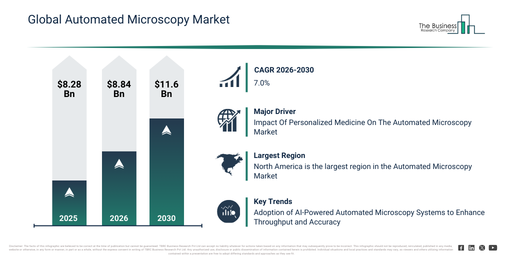
    The automated microscopy market size has experienced robust growth over recent years. It is projected to expand from $8.28 billion in 2025 to $8.84 billion in 2026, demonstrating a compound annual growth rate (CAGR) of 6.8%. This historical growth can be attributed to several factors, including the increasing application of microscopy in life sciences research, the expansion of clinical diagnostics imaging, significant advancements in optical and electron microscopy, the rise in materials science research, and a growing need for reproducible imaging outcomes.

    The automated microscopy market is poised for robust expansion over the coming years. This market is projected to reach $11.6 billion by 2030, demonstrating a compound annual growth rate (CAGR) of 7.0%. The anticipated growth during this period stems from factors such as the expanding embrace of AI-assisted diagnostics, the proliferation of semiconductor inspection applications, escalating investments in automated research facilities, the increasing need for scalable imaging solutions, and the greater integration of cloud-based microscopy platforms. Prominent trends throughout the forecast period include the wider implementation of AI-based image analysis, the rising uptake of high-throughput imaging platforms, the progressive integration of automated sample handling, the extension of remote and digital microscopy, and an intensified focus on the accuracy of high-resolution imaging.

    Access Your Free Sample Report For In-Depth Market Analysis:

    https://www.thebusinessresearchcompany.com/report/automated-microscopy-global-market-report

    Which Factors Are Influencing The Growth Of The Automated Microscopy Market?

    The increasing demand for individualized medicine is anticipated to propel the expansion of the automated microscopy market in the coming years. Personalized medicine represents a healthcare approach that accounts for each person’s unique variations in genes, environment, and lifestyle. The adoption of personalized medicine is rising due to several factors, including greater awareness of genetic variability, progress in genomics, and the growing prevalence of chronic diseases. Automated microscopy equips researchers and clinicians with the necessary tools and technologies to advance personalized medicine by explaining disease mechanisms, identifying predictive biomarkers, and optimizing treatment strategies. For instance, in February 2024, the Personalized Medicine Coalition, a US-based advocacy group for tailored medical treatments, reported that the FDA approved 16 new personalized treatments for rare disease patients in 2023, an increase from six in 2022. Therefore, the escalating demand for personalized medicine is driving the growth of the automated microscopy market.

    What Are The Different Segment Types In The Automated Microscopy Market Segment Breakdown?

    The automated microscopy market covered in this report is segmented –

    1) By Product Type: Optical Microscopes, Electron Microscopes, Scanning Probe Microscopes

    2) By Application: Medical Diagnostics, Nanotechnology, Material Science, Life Sciences, Semiconductors

    3) By End User: Hospitals, Research Facilities, Diagnostic Clinics

    Subsegments:

    1) By Optical Microscopes: Automated Light Microscopes, Confocal Microscopes, Fluorescence Microscopes

    2) By Electron Microscopes: Scanning Electron Microscopes (SEM), Transmission Electron Microscopes (TEM), Scanning Transmission Electron Microscopes (STEM)

    3) By Scanning Probe Microscopes: Atomic Force Microscopes (AFM), Scanning Tunneling Microscopes (STM)

    Which Trends Are Influencing Demand In The Automated Microscopy Market?

    Leading companies in the automated microscopy market are concentrating on developing technological advancements, such as AI-powered automated fluorescence microscopes, to boost throughput, enhance image precision, and decrease manual labor in cell analysis and drug discovery processes. An AI-powered automated microscope integrates motorized stages, autofocus, multi-channel imaging, and intelligent image analysis software, enabling automated cell counting, confluency assessment, and time-lapse imaging with minimal human intervention. For instance, in August 2024, Leica Microsystems, a Germany-based scientific instrumentation company, introduced the Mateo FL, an AI-powered digital fluorescence microscope specifically designed for automated cell-culture analysis. This product combines transmitted-light imaging for label-free monitoring with multi-channel fluorescence imaging, utilizes AI algorithms for automated confluency checks and cell counting, and delivers high reproducibility with faster experimental workflows compared to traditional manual microscopes.

    Who Are The Well-Known Companies In The Automated Microscopy Market?

    Major companies operating in the automated microscopy market are Thermo Fisher Scientific Inc., Zeiss Group, Agilent Technologies Inc., Keyence Corporation, Hitachi High-Tech Corporation, PerkinElmer Inc., Nikon Corporation, Bruker Corporation, Hamamatsu Photonics K.K., Jenoptik AG, HORIBA Scientific, Molecular Devices LLC, JEOL Ltd., Olympus Corporation, Prior Scientific Instruments Ltd., Phase Holographic Imaging PHI AB, Andor Technology Ltd., Crest Optics S.p.A, Delmic B.V., Nanolive SA, Nanosurf AG, Photometrics

    Get The Full Automated Microscopy Market Report:

    https://www.thebusinessresearchcompany.com/report/automated-microscopy-global-market-report

    Which Region Is The Top Contributor To The Automated Microscopy Market By Share?

    North America was the largest region in the automated microscopy market in 2025. Asia-Pacific is expected to be the fastest-growing region in the forecast period. The regions covered in the automated microscopy market report are Asia-Pacific, South East Asia, Western Europe, Eastern Europe, North America, South America, Middle East, Africa.

    Request A Customized Automated Microscopy Market Report For Competitive Insights:

    https://www.thebusinessresearchcompany.com/report/automated-microscopy-global-market-report

    Browse Through More Reports Similar to the Global Automated Microscopy Market 2026, By The Business Research Company

    Optical Microscopes Market Report 2026

    https://www.thebusinessresearchcompany.com/report/optical-microscopes-global-market-report

    Microscopy Market Report 2026

    https://www.thebusinessresearchcompany.com/report/microscopy-global-market-report

    Biological Microscope Market Report 2026

    https://www.thebusinessresearchcompany.com/report/biological-microscope-global-market-report

    Get in touch with us:

    The Business Research Company: https://www.thebusinessresearchcompany.com/

    Americas +1 310-496-7795

    Asia +44 7882 955267 & +91 8897263534

    Europe +44 7882 955267

    Email us at info@tbrc.info

    Follow us on:

    LinkedIn: https://in.linkedin.com/company/the-business-research-company

    YouTube: https://www.youtube.com/channel/UC24_fI0rV8cR5DxlCpgmyFQ

    Global Market Model: https://www.thebusinessresearchcompany.com/global-market-model
  • Automated Microbiology Market Growing with Demand for Rapid Diagnostic Solutions

    Automated Microbiology Market Growing with Demand for Rapid Diagnostic Solutions

    The Business Research Company’s 2026 market reports feature enhanced tools like market attractiveness analysis, TAM assessment, and company scoring matrices, along with interactive dashboards, deeper supply chain insights, and startup coverage strengthening the depth, usability, and strategic value of insights.

    What Expansion In Market Value Is Forecasted For The Automated Microbiology Market Between 2026 And 2030?

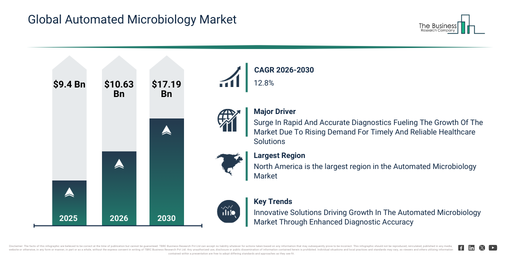
    The automated microbiology market has seen swift expansion in recent years. It is forecast to grow from $9.4 billion in 2025 to $10.63 billion in 2026, achieving a compound annual growth rate (CAGR) of 13.0%. This historical growth can be linked to factors such as an increase in clinical testing volumes, a heightened need for quicker diagnostic results, the enlargement of hospital laboratory infrastructure, a scarcity of skilled lab personnel, and the adoption of standardized diagnostic protocols.

    The automated microbiology market size is expected to experience significant growth in the coming years, with projections indicating it will reach $17.19 billion by 2030, maintaining a compound annual growth rate (CAGR) of 12.8%. The anticipated expansion during this forecast period is attributable to increasing investments in intelligent laboratories, a growing need for rapid infectious disease diagnostics, the widening scope of molecular microbiology applications, the rising implementation of data-integrated laboratory systems, and an increasing emphasis on diagnostic precision. Prominent trends throughout the forecast period include the increasing adoption of fully automated microbiology systems, a rising utilization of AI-driven pathogen identification, the growing integration of LIMS platforms, the expansion of high-throughput diagnostic testing capabilities, and an enhanced focus on laboratory workflow automation.

    Access Your Free Sample Report For In-Depth Market Analysis:

    https://www.thebusinessresearchcompany.com/report/automated-microbiology-global-market-report

    What Leading Drivers Are Supporting The Automated Microbiology Market Expansion?

    The escalating need for swift and precise diagnostic methods is anticipated to boost the expansion of the automated microbiology market. These rapid and accurate diagnostics are medical tests designed to identify infections or diseases quickly and precisely, thereby enabling timely and effective treatment. This heightened demand stems from the growing necessity for early disease identification to avert complications and enhance patient recovery, requiring minimal waiting periods for results. Automated microbiology meets this need by offering high-throughput, standardized, and less error-prone testing, which ensures quicker outcomes and superior patient care. For example, the World Health Organization, a national agency located in Switzerland, indicated that in 2024, initial diagnostic testing was performed for 54% (4.5 million) of the 8.3 million individuals newly diagnosed with TB that year, marking an increase from 48% (out of a total of 8.2 million) in 2023. Consequently, the increasing requirement for rapid and accurate diagnostics is a key driver for the growth within the automated microbiology market.

    Which Segment Classifications Are Used In The Automated Microbiology Market Segment Analysis?

    The automated microbiology market covered in this report is segmented –

    1) By Product: Instruments, Reagents And Kits, Software

    2) By Automation Type: Fully Automated, Semi-Automated

    3) By Diagnostic Technology: DNA And RNA Probe Technology, Detection Techniques

    4) By Application: Biopharmaceutical Production, Clinical Diagnostics, Environmental And Water Testing, Food And Beverage Testing, Other Applications

    5) By End Use: Pharmaceutical And Biotechnology Companies, Hospitals And Diagnostic Laboratories, Academic And Research Institutes, Other End Uses

    Subsegments:

    1) By Instruments: Automated Gram Stainers, Microbial Detection Systems, Automated ID/AST Systems, Blood Culture Systems, Sample Preparation Systems

    2) By Reagents And Kits: Culture Media, Identification Kits, Susceptibility Testing Kits, Staining Reagents, Molecular Diagnostic Reagents

    3) By Software: Data Analysis And Interpretation Tools, Laboratory Workflow Management Software, Integration And Connectivity Solutions, Quality Control And Compliance Software

    What Emerging Trends Are Seen In The Automated Microbiology Market?

    Leading companies in the automated microbiology market are focusing on developing advanced solutions, such as matrix-assisted laser desorption or ionization (MALDI) biotyper systems, to enhance the speed and accuracy of microbial identification. This technique, based on mass spectrometry, identifies microorganisms including bacteria and fungi by analyzing their unique protein profiles. For example, in April 2024, Bruker Corporation, a US-based manufacturer of scientific instruments for molecular and materials research, introduced the MBT Pathfinder IVD robot for automated MALDI Biotyper target preparation. This innovation automates the preparation of targets for matrix-assisted laser desorption or ionization (MALDI) biotyper analysis, which improves efficiency in clinical workflows. It streamlines tasks such as sample loading, matrix application, and plate preparation, facilitating faster and more accurate identification of microorganisms.

    Which Firms Are Contributing To The Automated Microbiology Market Ecosystem?

    Major companies operating in the automated microbiology market are Thermo Fisher Scientific Inc, Danaher Corporation, Becton Dickinson and Company, bioMérieux SA, Abbott Laboratories, Merck KGaA, Agilent Technologies Inc, Sysmex Corporation, Bio-Rad Laboratories Inc, PerkinElmer Inc, HORIBA Ltd, DiaSorin SpA, Neogen Corporation, Rapid Micro Biosystems Inc, Bruker Corporation, Tecan Group AG, Roche Diagnostics International AG, QIAGEN NV, Illumina Inc, Luminex Corporation

    Get The Full Automated Microbiology Market Report:

    https://www.thebusinessresearchcompany.com/report/automated-microbiology-global-market-report

    Which Region Represents The Largest Share Of The Automated Microbiology Market?

    North America was the largest region in the automated microbiology market in 2025. The regions covered in the automated microbiology market report are Asia-Pacific, South East Asia, Western Europe, Eastern Europe, North America, South America, Middle East, Africa.

    Request A Customized Automated Microbiology Market Report For Competitive Insights:

    https://www.thebusinessresearchcompany.com/report/automated-microbiology-global-market-report

    Browse Through More Reports Similar to the Global Automated Microbiology Market 2026, By The Business Research Company

    Microbial Api Market Report 2026

    https://www.thebusinessresearchcompany.com/report/microbial-api-global-market-report

    Clinical Microbiology Market Report 2026

    https://www.thebusinessresearchcompany.com/report/clinical-microbiology-global-market-report

    Bioprocess Automation Market Report 2026

    https://www.thebusinessresearchcompany.com/report/bioprocess-automation-global-market-report

    Get in touch with us:

    The Business Research Company: https://www.thebusinessresearchcompany.com/

    Americas +1 310-496-7795

    Asia +44 7882 955267 & +91 8897263534

    Europe +44 7882 955267

    Email us at info@tbrc.info

    Follow us on:

    LinkedIn: https://in.linkedin.com/company/the-business-research-company

    YouTube: https://www.youtube.com/channel/UC24_fI0rV8cR5DxlCpgmyFQ

    Global Market Model: https://www.thebusinessresearchcompany.com/global-market-model

  • Automated Cell Culture Market Expansion Driven by Biopharma Production Growth

    Automated Cell Culture Market Expansion Driven by Biopharma Production Growth

    The Business Research Company’s 2026 market reports feature enhanced tools like market attractiveness analysis, TAM assessment, and company scoring matrices, along with interactive dashboards, deeper supply chain insights, and startup coverage strengthening the depth, usability, and strategic value of insights.

    How Large Will The Automated Cell Cultures Market Be By 2030 Compared To Its 2026 Market Size?

    The market size for automated cell cultures has experienced significant growth recently. This market is projected to expand from $7.02 billion in 2025 to $7.78 billion in 2026, demonstrating a compound annual growth rate (CAGR) of 10.8%. Historically, this expansion has been driven by factors such as increased biopharmaceutical research activity, a growing need for standardized cell culture processes, the broadening of drug discovery programs, the availability of modular automation solutions, and the expansion of academic life science research.

    The market for automated cell cultures is projected to experience swift expansion in the coming years, anticipated to reach a valuation of $11.58 billion by 2030, exhibiting a compound annual growth rate (CAGR) of 10.5%. This growth during the forecast period is primarily driven by increasing investments in cell and gene therapy manufacturing, a rising demand for high-throughput screening, the expansion of personalized medicine research, growing adoption of automation in laboratories, and an increasing focus on scalable biologics production. Furthermore, major trends in the forecast period include the increasing deployment of fully automated cell culture platforms, rising adoption of robotic liquid handling systems, the growing use of scalable cell culture automation, expansion of closed-system cell processing, and an enhanced focus on reproducibility and sterility control.

    Access Your Free Sample Report For In-Depth Market Analysis:

    https://www.thebusinessresearchcompany.com/report/automated-cell-cultures-global-market-report

    Which Key Factors Are Driving The Automated Cell Cultures Market Growth?

    The rising output of biopharmaceuticals is projected to drive the expansion of the automated cell cultures market in the coming years. Biopharmaceuticals are medicinal substances created using biotechnological approaches, including recombinant DNA technology and cell culture methods. The increasing need for biopharmaceuticals is fueled by their capacity to deliver targeted, potent treatments with fewer adverse reactions when contrasted with conventional therapies. Automated cell culture improves both the efficiency and consistency of biopharmaceutical manufacturing by optimizing procedures for cell proliferation, monitoring, and harvesting. For example, in July 2025, according to Sartorius, an international life science technology company based in Germany, worldwide sales of biopharmaceutical medications grew by approximately 9% to reach USD 458 billion in 2024, an increase from the preceding year. This accounted for 41% of the total pharmaceutical market, up from 40% in 2023. Hence, the escalating production of biopharmaceuticals is propelling the growth of the automated cell cultures market.

    How Is The Automated Cell Cultures Market Organized By Segment Classification?

    The automated cell cultures market covered in this report is segmented –

    1) By Type: Modular Automation, Whole Label Automation

    2) By Equipment Type: Automated Liquid Handling Systems, Microplate Readers, Robotic Systems, Automated Storage And Retrieval Systems, Other Equipment Types

    3) By Application: Biopharmaceuticals Production, Diagnostics, Gene Therapy, Drug Screening And Development, Toxicity Testing, Stem Cell Research, Tissue Engineering And Regenerative Medicine, Personalized Medicine, Other Applications

    4) By End User: Pharmaceuticals And Biotechnology Companies, Hospital And Diagnostic Laboratories, Research Institutes, Cell Banks

    Subsegments:

    1) By Modular Automation: Automated Cell Culture Systems, Robotic Workstations, Modular Bioreactors

    2) By Whole Label Automation: Fully Automated Cell Culture Systems, Integrated Cell Culture Platforms, Automated Cell Handling Solutions

    Which Trends Are Guiding The Direction Of The Automated Cell Cultures Market?

    Major companies operating in the automated cell cultures market are increasingly focusing on technological advancements, such as the integration of artificial intelligence (AI)-powered software, to gain a competitive edge. This integrated AI-powered software optimizes experimental conditions and enhances operational efficiency by thoroughly analyzing real-time data, consequently improving cell growth and overall productivity. For instance, in October 2023, Molecular Devices LLC, a US-based biotechnology company, launched the CellXpress.ai Automated Cell Culture System, a pioneering innovation aimed at refining drug discovery processes through advanced automation and artificial intelligence. This system is engineered to simplify complex cell culture workflows, thereby enabling researchers to concentrate on more crucial assignments while concurrently boosting efficiency and reliability.

    Who Are The Industry Participants Involved In The Automated Cell Cultures Market?

    Major companies operating in the automated cell cultures market are Hitachi Ltd., Panasonic Holdings Corporation, Thermo Fisher Scientific Inc., Danaher Corporation, Corning Incorporated, Lonza Group AG, Nikon healthcare, Sartorius AG, Beckman Coulter Inc., Celltrio Inc., Eppendorf AG, Tecan Trading AG, Shibuya Corp, Hamilton Company, Molecular Devices LLC, FORMULATRIX, Highres Biosolutions, Biotron Healthcare, Agilent Technologies, Miltenyi Biotec

    Get The Full Automated Cell Cultures Market Report:

    https://www.thebusinessresearchcompany.com/report/automated-cell-cultures-global-market-report

    Which Geographic Region Dominates The Automated Cell Cultures Market?

    North America was the largest region in the automated cell cultures market in 2025. Asia-Pacific is expected to be the fastest-growing region in the forecast period. The regions covered in the automated cell cultures market report are Asia-Pacific, South East Asia, Western Europe, Eastern Europe, North America, South America, Middle East, Africa.

    Request A Customized Automated Cell Cultures Market Report For Competitive Insights:

    https://www.thebusinessresearchcompany.com/report/automated-cell-cultures-global-market-report

    Browse Through More Reports Similar to the Global Automated Cell Cultures Market 2026, By The Business Research Company

    Cells Therapy Market Report 2026

    https://www.thebusinessresearchcompany.com/report/cells-therapy-global-market-report

    Cellular Telephone Market Report 2026

    https://www.thebusinessresearchcompany.com/report/cellular-telephone-global-market-report

    Cell Cultures Market Report 2026

    https://www.thebusinessresearchcompany.com/report/cell-cultures-global-market-report

    Get in touch with us:

    The Business Research Company: https://www.thebusinessresearchcompany.com/

    Americas +1 310-496-7795

    Asia +44 7882 955267 & +91 8897263534

    Europe +44 7882 955267

    Email us at info@tbrc.info

    Follow us on:

    LinkedIn: https://in.linkedin.com/company/the-business-research-company

    YouTube: https://www.youtube.com/channel/UC24_fI0rV8cR5DxlCpgmyFQ

    Global Market Model: https://www.thebusinessresearchcompany.com/global-market-model
  • Automated Cell Culture Equipment Market Growth Supported by Personalized Medicine Demand

    Automated Cell Culture Equipment Market Growth Supported by Personalized Medicine Demand

    The Business Research Company’s 2026 market reports feature enhanced tools like market attractiveness analysis, TAM assessment, and company scoring matrices, along with interactive dashboards, deeper supply chain insights, and startup coverage strengthening the depth, usability, and strategic value of insights.

    What Is The Projected Increase In Market Value Of The Automated Cell Culture Equipment Market During 2026–2030?

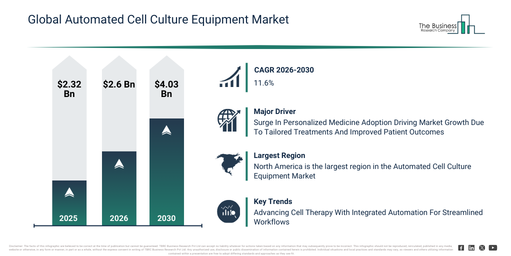
    The automated cell culture equipment market size has experienced swift expansion in recent years. Projections indicate it will increase from $2.32 billion in 2025 to $2.6 billion in 2026, at a compound annual growth rate (CAGR) of 11.9%. This historical growth can be attributed to several factors, including the surge in pharmaceutical and biologics research, a rising demand for consistent cell culture outcomes, the broadening of drug discovery pipelines, the increasing complexity of cell-based assays, and the early adoption of laboratory automation.

    The automated cell culture equipment market is set for significant growth over the next few years, with its size projected to reach $4.03 billion in 2030, expanding at a compound annual growth rate (CAGR) of 11.6%. This expansion during the forecast period is driven by increasing investments in regenerative medicine, the expansion of cell and gene therapy pipelines, a growing demand for scalable cell culture solutions, a rising focus on reducing laboratory variability, and the increasing integration of AI-driven lab automation. Key trends in the upcoming period include the increasing deployment of fully automated cell culture platforms, the rising adoption of high-throughput cell processing systems, the growing integration of robotics and imaging technologies, the expansion of closed-system and contamination-controlled workflows, and an enhanced focus on reproducibility and process standardization.

    Access Your Free Sample Report For In-Depth Market Analysis:

    https://www.thebusinessresearchcompany.com/report/global-automated-cell-culture-equipment-market-report

    What Primary Drivers Are Shaping The Automated Cell Culture Equipment Market?

    The expanding implementation of personalized medicine is projected to stimulate the growth of the automated cell culture equipment market. Personalized medicine involves customizing medical treatment to an individual’s genetic makeup, lifestyle, and environmental conditions to achieve more accurate and effective care. The increased adoption of personalized medicine is fueled by its ability to offer more effective treatments, as therapies are specifically adapted to a patient’s genetic and biological profile, thereby improving patient outcomes. Automated cell culture equipment facilitates personalized medicine by delivering precise, high-throughput, and reproducible cell culture processes that are essential for developing patient-specific therapies and conducting tailored drug testing. As an illustration, in February 2024, the Personalized Medicine Coalition, a US-based non-profit organization, announced that in 2023, the FDA granted approval to 16 new personalized treatments for patients with rare diseases, marking a substantial rise from the six approvals in 2022. Thus, the growing acceptance of personalized medicine is propelling the automated cell culture equipment market forward.

    Which Segments Define The Automated Cell Culture Equipment Market Segment Structure?

    The automated cell culture equipment market covered in this report is segmented –

    1) By Product Type: Instruments, Consumables, Software

    2) By Automation Level: Fully Automated Systems, Semi-Automated Systems, Manual Systems With Automation Features

    3) By Application: Drug Discovery And Development, Regenerative Medicine, Toxicology Testing, Vaccine Development, Stem Cell Research

    4) By End-User: Pharmaceutical Companies, Biotechnology Companies, Academic And Research Institutions, Contract Research Organizations (CROs), Diagnostics And Testing Laboratories

    Subsegments:

    1) By Instruments: Automated Cell Culture Systems, Bioreactors, Incubators, Centrifuges, Cell Counters And Analyzers, Liquid Handling Systems, Cell Imaging Systems, Robotic Arms And Manipulators, Cell Harvesting Systems, Filtration And Separation Devices

    2) By Consumables: Culture Media, Reagents And Supplements, Microplates And Culture Dishes, Flasks And Bottles, Single-Use Bags And Tubing, Filters And Membranes, Pipette Tips And Cartridges, Cell Culture Inserts, Sterile Connectors And Clamps

    3) By Software: Data Management Software, Process Control And Monitoring Software, Laboratory Information Management Systems (LIMS), Image Analysis Software, Workflow Automation Software, Quality Control And Compliance Software, Remote Monitoring And Cloud Integration Tools

    What Trends Are Affecting The Growth Of The Automated Cell Culture Equipment Market?

    Leading companies in the automated cell culture equipment market are emphasizing innovation in seamless workflow integration, such as closed single-use consumable systems, to bolster process standardization, diminish contamination risks, minimize manual handling, and facilitate efficient scaling from research to clinical manufacturing. A closed single-use consumable system functions as a sterile, disposable setup that consolidates multiple cell culture processes into one unit, thereby reducing contamination hazards and enabling scalable, reproducible workflows. For example, in March 2025, Limula SA, a Switzerland-based biotechnology firm specializing in automated cell therapy manufacturing solutions, unveiled LimONE. This integrated system merges hardware, software, and single-use consumables to simplify and standardize cell culture and processing workflows. This launch signifies the introduction of a commercial product serving both research and GMP-compliant manufacturing sectors. LimONE allows for quicker technology transfer, decreases labor and infrastructure costs, and supports the scalable production of advanced cell therapies, including CAR-T and gene-edited stem cells. The system improves workflow efficiency and guarantees reproducibility across diverse cell therapy processes. Overall, this product release enhances Limula’s footprint in the automated cell culture equipment market while supporting adherence to regulatory standards.

    Who Are The Established Players Within The Automated Cell Culture Equipment Market?

    Major companies operating in the automated cell culture equipment market are F. Hoffmann-La Roche Ltd, Hitachi Ltd., Merck KGaA, Panasonic Holdings Corporation, Thermo Fisher Scientific Inc., Danaher Corporation, Becton Dickinson and Company, Corning Incorporated, Lonza Group AG, Olympus Corporation, Sartorius AG, Eppendorf SE, Tecan Group Ltd., STEMCELL Technologies Inc., Miltenyi Biotec B.V. & Co. KG, Hamilton Company, Greiner Bio-One International GmbH, Solida Biotech GmbH, Biostream International B.V., HiMedia Laboratories Pvt. Ltd., Kuhner Shaker AG, Cellexus International Ltd.

    Get The Full Automated Cell Culture Equipment Market Report:

    https://www.thebusinessresearchcompany.com/report/global-automated-cell-culture-equipment-market-report

    Which Region Is The Leading Market For The Automated Cell Culture Equipment Market?

    North America was the largest region in the automated cell culture equipment market in 2025. Asia-Pacific is expected to be the fastest-growing region in the forecast period. The regions covered in the automated cell culture equipment market report are Asia-Pacific, South East Asia, Western Europe, Eastern Europe, North America, South America, Middle East, Africa.

    Request A Customized Automated Cell Culture Equipment Market Report For Competitive Insights:

    https://www.thebusinessresearchcompany.com/report/global-automated-cell-culture-equipment-market-report

    Browse Through More Reports Similar to the Global Automated Cell Culture Equipment Market 2026, By The Business Research Company

    Cell Culture Media Market Report 2026

    https://www.thebusinessresearchcompany.com/report/cell-culture-media-global-market-report

    Cell Cultures Market Report 2026

    https://www.thebusinessresearchcompany.com/report/cell-cultures-global-market-report

    Cell Cultures Market Report 2026

    https://www.thebusinessresearchcompany.com/report/cell-cultures-global-market-report

    Get in touch with us:

    The Business Research Company: https://www.thebusinessresearchcompany.com/

    Americas +1 310-496-7795

    Asia +44 7882 955267 & +91 8897263534

    Europe +44 7882 955267

    Email us at info@tbrc.info

    Follow us on:

    LinkedIn: https://in.linkedin.com/company/the-business-research-company

    YouTube: https://www.youtube.com/channel/UC24_fI0rV8cR5DxlCpgmyFQ

    Global Market Model: https://www.thebusinessresearchcompany.com/global-market-model
  • Automated Cell Culture Equipment Market Growth Supported by Personalized Medicine Demand

    The Business Research Company’s 2026 market reports feature enhanced tools like market attractiveness analysis, TAM assessment, and company scoring matrices, along with interactive dashboards, deeper supply chain insights, and startup coverage strengthening the depth, usability, and strategic value of insights.

    What Is The Projected Increase In Market Value Of The Automated Cell Culture Equipment Market During 2026–2030?

    The automated cell culture equipment market size has experienced swift expansion in recent years. Projections indicate it will increase from $2.32 billion in 2025 to $2.6 billion in 2026, at a compound annual growth rate (CAGR) of 11.9%. This historical growth can be attributed to several factors, including the surge in pharmaceutical and biologics research, a rising demand for consistent cell culture outcomes, the broadening of drug discovery pipelines, the increasing complexity of cell-based assays, and the early adoption of laboratory automation.

    The automated cell culture equipment market is set for significant growth over the next few years, with its size projected to reach $4.03 billion in 2030, expanding at a compound annual growth rate (CAGR) of 11.6%. This expansion during the forecast period is driven by increasing investments in regenerative medicine, the expansion of cell and gene therapy pipelines, a growing demand for scalable cell culture solutions, a rising focus on reducing laboratory variability, and the increasing integration of AI-driven lab automation. Key trends in the upcoming period include the increasing deployment of fully automated cell culture platforms, the rising adoption of high-throughput cell processing systems, the growing integration of robotics and imaging technologies, the expansion of closed-system and contamination-controlled workflows, and an enhanced focus on reproducibility and process standardization.

    Access Your Free Sample Report For In-Depth Market Analysis:

    https://www.thebusinessresearchcompany.com/report/global-automated-cell-culture-equipment-market-report

    What Primary Drivers Are Shaping The Automated Cell Culture Equipment Market?

    The expanding implementation of personalized medicine is projected to stimulate the growth of the automated cell culture equipment market. Personalized medicine involves customizing medical treatment to an individual’s genetic makeup, lifestyle, and environmental conditions to achieve more accurate and effective care. The increased adoption of personalized medicine is fueled by its ability to offer more effective treatments, as therapies are specifically adapted to a patient’s genetic and biological profile, thereby improving patient outcomes. Automated cell culture equipment facilitates personalized medicine by delivering precise, high-throughput, and reproducible cell culture processes that are essential for developing patient-specific therapies and conducting tailored drug testing. As an illustration, in February 2024, the Personalized Medicine Coalition, a US-based non-profit organization, announced that in 2023, the FDA granted approval to 16 new personalized treatments for patients with rare diseases, marking a substantial rise from the six approvals in 2022. Thus, the growing acceptance of personalized medicine is propelling the automated cell culture equipment market forward.

    Which Segments Define The Automated Cell Culture Equipment Market Segment Structure?

    The automated cell culture equipment market covered in this report is segmented –

    1) By Product Type: Instruments, Consumables, Software

    2) By Automation Level: Fully Automated Systems, Semi-Automated Systems, Manual Systems With Automation Features

    3) By Application: Drug Discovery And Development, Regenerative Medicine, Toxicology Testing, Vaccine Development, Stem Cell Research

    4) By End-User: Pharmaceutical Companies, Biotechnology Companies, Academic And Research Institutions, Contract Research Organizations (CROs), Diagnostics And Testing Laboratories

    Subsegments:

    1) By Instruments: Automated Cell Culture Systems, Bioreactors, Incubators, Centrifuges, Cell Counters And Analyzers, Liquid Handling Systems, Cell Imaging Systems, Robotic Arms And Manipulators, Cell Harvesting Systems, Filtration And Separation Devices

    2) By Consumables: Culture Media, Reagents And Supplements, Microplates And Culture Dishes, Flasks And Bottles, Single-Use Bags And Tubing, Filters And Membranes, Pipette Tips And Cartridges, Cell Culture Inserts, Sterile Connectors And Clamps

    3) By Software: Data Management Software, Process Control And Monitoring Software, Laboratory Information Management Systems (LIMS), Image Analysis Software, Workflow Automation Software, Quality Control And Compliance Software, Remote Monitoring And Cloud Integration Tools

    What Trends Are Affecting The Growth Of The Automated Cell Culture Equipment Market?

    Leading companies in the automated cell culture equipment market are emphasizing innovation in seamless workflow integration, such as closed single-use consumable systems, to bolster process standardization, diminish contamination risks, minimize manual handling, and facilitate efficient scaling from research to clinical manufacturing. A closed single-use consumable system functions as a sterile, disposable setup that consolidates multiple cell culture processes into one unit, thereby reducing contamination hazards and enabling scalable, reproducible workflows. For example, in March 2025, Limula SA, a Switzerland-based biotechnology firm specializing in automated cell therapy manufacturing solutions, unveiled LimONE. This integrated system merges hardware, software, and single-use consumables to simplify and standardize cell culture and processing workflows. This launch signifies the introduction of a commercial product serving both research and GMP-compliant manufacturing sectors. LimONE allows for quicker technology transfer, decreases labor and infrastructure costs, and supports the scalable production of advanced cell therapies, including CAR-T and gene-edited stem cells. The system improves workflow efficiency and guarantees reproducibility across diverse cell therapy processes. Overall, this product release enhances Limula’s footprint in the automated cell culture equipment market while supporting adherence to regulatory standards.

    Who Are The Established Players Within The Automated Cell Culture Equipment Market?

    Major companies operating in the automated cell culture equipment market are F. Hoffmann-La Roche Ltd, Hitachi Ltd., Merck KGaA, Panasonic Holdings Corporation, Thermo Fisher Scientific Inc., Danaher Corporation, Becton Dickinson and Company, Corning Incorporated, Lonza Group AG, Olympus Corporation, Sartorius AG, Eppendorf SE, Tecan Group Ltd., STEMCELL Technologies Inc., Miltenyi Biotec B.V. & Co. KG, Hamilton Company, Greiner Bio-One International GmbH, Solida Biotech GmbH, Biostream International B.V., HiMedia Laboratories Pvt. Ltd., Kuhner Shaker AG, Cellexus International Ltd.

    Get The Full Automated Cell Culture Equipment Market Report:

    https://www.thebusinessresearchcompany.com/report/global-automated-cell-culture-equipment-market-report

    Which Region Is The Leading Market For The Automated Cell Culture Equipment Market?

    North America was the largest region in the automated cell culture equipment market in 2025. Asia-Pacific is expected to be the fastest-growing region in the forecast period. The regions covered in the automated cell culture equipment market report are Asia-Pacific, South East Asia, Western Europe, Eastern Europe, North America, South America, Middle East, Africa.

    Request A Customized Automated Cell Culture Equipment Market Report For Competitive Insights:

    https://www.thebusinessresearchcompany.com/report/global-automated-cell-culture-equipment-market-report

    Browse Through More Reports Similar to the Global Automated Cell Culture Equipment Market 2026, By The Business Research Company

    Cell Culture Media Market Report 2026

    https://www.thebusinessresearchcompany.com/report/cell-culture-media-global-market-report

    Cell Cultures Market Report 2026

    https://www.thebusinessresearchcompany.com/report/cell-cultures-global-market-report

    Cell Cultures Market Report 2026

    https://www.thebusinessresearchcompany.com/report/cell-cultures-global-market-report

    Get in touch with us:

    The Business Research Company: https://www.thebusinessresearchcompany.com/

    Americas +1 310-496-7795

    Asia +44 7882 955267 & +91 8897263534

    Europe +44 7882 955267

    Email us at info@tbrc.info

    Follow us on:

    LinkedIn: https://in.linkedin.com/company/the-business-research-company

    YouTube: https://www.youtube.com/channel/UC24_fI0rV8cR5DxlCpgmyFQ

    Global Market Model: https://www.thebusinessresearchcompany.com/global-market-model
  • AI in respiratory diseases market forecast and growth trends

    AI in respiratory diseases market forecast and growth trends

    The Business Research Company’s 2026 market reports feature enhanced tools like market attractiveness analysis, TAM assessment, and company scoring matrices, along with interactive dashboards, deeper supply chain insights, and startup coverage strengthening the depth, usability, and strategic value of insights.

    What Changes In Market Value Are Expected For The Artificial Intelligence (AI) In Respiratory Diseases Market Over The 2026–2030 Period?

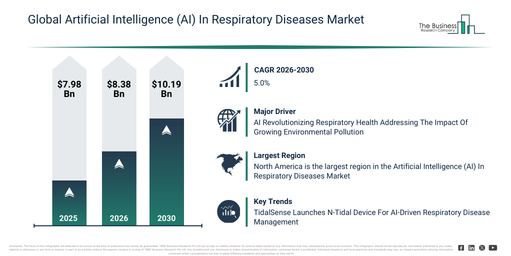
    The artificial intelligence (AI) in respiratory diseases market has shown sustained expansion in recent times. Forecasts indicate that it will increase from $7.98 billion in 2025 to $8.38 billion in 2026, achieving a compound annual growth rate (CAGR) of 4.9%. Historically, this growth stemmed from the escalating prevalence of respiratory conditions, a rise in the application of CT and MRI imaging, the ongoing digitalization of healthcare documentation, the initial embrace of AI-powered diagnostics, and the broadening of hospital diagnostic capacities.

    The artificial intelligence (AI) in respiratory diseases market size is anticipated to demonstrate robust expansion in the upcoming years. It is projected to achieve a valuation of $10.19 billion by 2030, growing at a compound annual growth rate (CAGR) of 5.0%. This anticipated growth can be ascribed to a rising need for personalized respiratory care, the increasing integration of AI with clinical decision support systems, the wider adoption of remote monitoring for chronic respiratory patients, a heightened emphasis on preventive pulmonology, and advancements in medical imaging AI. Notable trends during the forecast period include a greater application of AI-based imaging analysis, the growing implementation of predictive disease progression models, an expanding integration of AI in pulmonary diagnostics, the proliferation of remote respiratory monitoring solutions, and an enhanced commitment to early disease detection.

    Access Your Free Sample Report For In-Depth Market Analysis:

    https://www.thebusinessresearchcompany.com/report/artificial-intelligence-ai-in-respiratory-diseases-global-market-report

    What Key Factors Are Shaping The Artificial Intelligence (AI) In Respiratory Diseases Market Landscape?

    When considering the progression of the respiratory disease market, environmental pollution is characterized by the introduction of any material or energy form into the environment at a rate faster than it can be safely assimilated or stored. Artificial intelligence (AI) applied to respiratory diseases possesses the capability to substantially diminish environmental pollution’s adverse effects on respiratory well-being through real-time surveillance, individualized risk evaluations, well-informed choices, and innovative strategies for both people and wider communities. As an illustration, in November 2024, the Japan-based annual scientific evaluation, the Global Carbon Budget, indicated that fossil carbon dioxide emissions reached 37.4 billion tonnes, representing a 0.8% rise from the prior year. Thus, the escalating environmental pollution serves as a significant impetus for the expansion of artificial intelligence (AI) in the respiratory disease market.

    How Is The Artificial Intelligence (AI) In Respiratory Diseases Market Segmented Across Different Segment Categories?

    The artificial intelligence (AI) in respiratory diseases market covered in this report is segmented –

    1) By Imaging Type: Magnetic Resonance Imaging (MRI), Computed Tomography (CT) Scan, Electronic Patient-Reported Outcomes (ePRO)

    2) By Indication: Chronic Obstructive Pulmonary Disease, Interstitial Lung Disease, Pulmonary Infection

    3) By End Use: Hospital, Diagnostic Centers, Ambulatory Surgical Centers, Other End-Users

    Subsegments:

    1) By Magnetic Resonance Imaging (MRI): Lung Imaging, Thoracic Imaging, Cardiopulmonary Imaging

    2) By Computed Tomography (CT) Scan: High-Resolution CT (HRCT), Low-Dose CT, Thoracic CT

    3) By Electronic Patient-Reported Outcomes (ePRO): Symptom Tracking, Medication Adherence Monitoring, Quality Of Life Assessments

    What Market Trends Are Affecting The Artificial Intelligence (AI) In Respiratory Diseases Market?

    Leading companies active in artificial intelligence (AI) in the respiratory diseases market are creating advanced products like N-Tidal devices for monitoring patients’ tidal breathing. The N-Tidal device quantifies the air volume exchanged during normal respiration and yields essential data regarding lung function. For example, in August 2023, TidalSense, a UK-based respiratory technology company, introduced N-Tidal, which is a regulated AI technology for the diagnosis and management of chronic obstructive pulmonary disease (COPD). This technology integrates N-Tidal’s CO2 sensor data with an artificial intelligence platform to measure shifts in lung function, aiming to enhance the diagnosis and management of this respiratory ailment. Clinical investigations have confirmed the technology’s notable accuracy, and it is projected to revolutionize the diagnostic approach for respiratory conditions. This launch represents a key progression in applying AI for respiratory disease assessment, presenting a more convenient and effective substitute for current diagnostic examinations.

    Which Organizations Play A Role In The Artificial Intelligence (AI) In Respiratory Diseases Market Landscape?

    Major companies operating in the artificial intelligence (AI) in respiratory diseases market are Siemens Healthineers, Philips Healthcare, GE Healthcare, Verily Life Sciences LLC, DeepMind Health, Merative L.P., Aidoc Medical, Butterfly Network, Infervision, Imagen Technologies, Caption Health, Swaasa AI, VIDA Diagnostics Inc., Enlitic, Thirona B.V., ArtiQ, Icometrix, Aidence, Arterys, PneumoWave Ltd

    Get The Full Artificial Intelligence (AI) In Respiratory Diseases Market Report:

    https://www.thebusinessresearchcompany.com/report/artificial-intelligence-ai-in-respiratory-diseases-global-market-report

    Which Region Represents The Largest Share Of The Artificial Intelligence (AI) In Respiratory Diseases Market?

    North America was the largest region in the artificial Intelligence (AI) in respiratory diseases market in 2025. Asia-Pacific is expected to be the fastest-growing region in the forecast period. The regions covered in the artificial intelligence (AI) in respiratory diseases market report are Asia-Pacific, South East Asia, Western Europe, Eastern Europe, North America, South America, Middle East, Africa.

    Request A Customized Artificial Intelligence (AI) In Respiratory Diseases Market Report For Competitive Insights:

    https://www.thebusinessresearchcompany.com/report/artificial-intelligence-ai-in-respiratory-diseases-global-market-report

    Browse Through More Reports Similar to the Global Artificial Intelligence (AI) In Respiratory Diseases Market 2026, By The Business Research Company

    Artificial Intelligence Ai In Animal Health Market Report 2026

    https://www.thebusinessresearchcompany.com/report/artificial-intelligence-ai-in-animal-health-global-market-report

    Artificial Intelligence In Healthcare Diagnosis Market Report 2026

    https://www.thebusinessresearchcompany.com/report/artificial-intelligence-in-healthcare-diagnosis-global-market-report

    Ai In Medical Diagnostics Market Report 2026

    https://www.thebusinessresearchcompany.com/report/ai-in-medical-diagnostics-global-market-report

    Get in touch with us:

    The Business Research Company: https://www.thebusinessresearchcompany.com/

    Americas +1 310-496-7795

    Asia +44 7882 955267 & +91 8897263534

    Europe +44 7882 955267

    Email us at info@tbrc.info

    Follow us on:

    LinkedIn: https://in.linkedin.com/company/the-business-research-company

    YouTube: https://www.youtube.com/channel/UC24_fI0rV8cR5DxlCpgmyFQ

    Global Market Model: https://www.thebusinessresearchcompany.com/global-market-model

  • AI in remote patient monitoring market future trends

    AI in remote patient monitoring market future trends

    The Business Research Company’s 2026 market reports feature enhanced tools like market attractiveness analysis, TAM assessment, and company scoring matrices, along with interactive dashboards, deeper supply chain insights, and startup coverage strengthening the depth, usability, and strategic value of insights.

    By 2030, What Market Size Is The Artificial Intelligence (AI) In Remote Patient Monitoring Market Expected To Reach Based On Its 2026 Value?

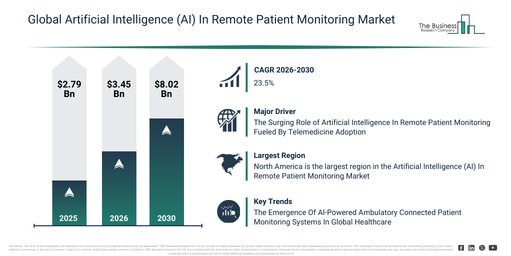
    The artificial intelligence (AI) in remote patient monitoring market size has witnessed exponential expansion in recent years. It is anticipated to grow from $2.79 billion in 2025 to $3.45 billion in 2026, achieving a compound annual growth rate (CAGR) of 23.4%. Historically, this growth can be attributed to several factors, including an increase in the prevalence of chronic diseases, the rising adoption of telehealth services, the expansion of connected medical devices, a surge in healthcare digitization initiatives, and the early use of remote monitoring platforms.

    The artificial intelligence (AI) in remote patient monitoring market size is projected to experience substantial expansion over the upcoming years. This market is anticipated to reach $8.02 billion by 2030, exhibiting a compound annual growth rate (CAGR) of 23.5%. Key factors contributing to this growth during the forecast period include the escalating demand for care models delivered at home, increased funding for AI-driven healthcare analytics, the broadening of personalized care options, greater integration of RPM with electronic health records, and an intensified emphasis on preventive healthcare. Significant trends expected during this period encompass the increased implementation of AI-powered predictive monitoring solutions, the growing use of wearable health sensors, the wider incorporation of real-time health analytics platforms, the development of automated alert and decision support capabilities, and a heightened focus on uninterrupted patient monitoring.

    Access Your Free Sample Report For In-Depth Market Analysis:

    https://www.thebusinessresearchcompany.com/report/artificial-intelligence-ai-in-remote-patient-monitoring-global-market-report

    Which Factors Are Influencing The Growth Of The Artificial Intelligence (AI) In Remote Patient Monitoring Market?

    The widespread adoption of telemedicine is anticipated to propel the expansion of artificial intelligence (AI) in the remote patient monitoring market in the coming years. Telemedicine involves the use of telecommunications technology, such as video calls, phone calls, and online messaging, to provide medical services remotely. AI in remote patient monitoring, when integrated with telemedicine, processes this data in real time, identifying subtle changes and informing healthcare professionals about potential issues before they escalate into emergencies. For instance, in May 2024, according to Eurostat, a Luxembourg-based government agency, in 2023, 8.5% of individuals in the EU aged 16 to 74 participated in online consultations using the internet. Consequently, the high adoption of telemedicine will drive the growth of artificial intelligence (AI) in the remote patient monitoring market.

    What Are The Main Segments Within The Artificial Intelligence (AI) In Remote Patient Monitoring Market Segment Structure?

    The artificial intelligence (AI) in remote patient monitoring market covered in this report is segmented –

    1) By Solution: Software, Hardware, Services

    2) By Product: Vital Monitors, Special Monitors, Other Products

    3) By Technology: Natural Language Processing, Machine Learning, Speech Recognition

    4) By Application: Diabetes, Respiratory Issues, Cardiovascular Diseases, Sleep Disorder

    Subsegments:

    1) By Software: Predictive Analytics, Data Management, Monitoring Platforms, Mobile Applications

    2) By Hardware: Wearable Devices, Sensors, Medical Devices

    3) By Services: Implementation Services, Training And Education Services, Support And Maintenance Services

    Which Trends Are Influencing Demand In The Artificial Intelligence (AI) In Remote Patient Monitoring Market?

    Leading companies within the artificial intelligence (AI) in remote patient monitoring market are prioritizing the incorporation of AI into wearable devices, such as advanced AI-powered ambulatory connected patient monitoring systems, to enhance their competitive edge and streamline healthcare delivery. Such a system denotes a medical solution that merges AI with ambulatory monitoring technology to continuously track and evaluate a patient’s vital signs and health metrics in real time. For instance, in October 2023, Dozee, an India-based medical equipment manufacturer, unveiled ‘Dozee Pro Ex,’ an innovative ambulatory connected patient monitoring system intended for worldwide distribution. This Indian-made offering utilizes wireless wearable sensors to continuously monitor crucial parameters including ECG rhythm, blood pressure, heart rate, oxygen saturation, respiration rate, and temperature. Significantly, ‘Dozee Pro Ex’ incorporates an AI-powered early warning system capable of analyzing trends in vital parameters and issuing prompt alerts for signs of potential clinical decline. This cutting-edge product aims to transform traditional healthcare paradigms by facilitating round-the-clock patient oversight, whether individuals are hospitalized, outside a hospital bed, in a healthcare facility, or at their residence.

    Who Are The Companies Participating In The Artificial Intelligence (AI) In Remote Patient Monitoring Market?

    Major companies operating in the artificial intelligence (AI) in remote patient monitoring market are Medtronic plc, Siemens Healthineers, Koninklijke Philips N.V., GE Healthcare, DexCom Inc, Cerner Corporation, Tunstall Healthcare, Connect America LLC, American Well, Biofourmis, Merative L.P., Vivify Health, Current Health, BioIntelliSense, Preventice Solutions, AiCure LLC, Orbita, MobileHelp, EarlySense, Gyant, Myia Labs, Sentrian, Biobeat, ChroniSense Medical Ltd., Somatix Inc., Twistle, HealthWatch Technologies

    Get The Full Artificial Intelligence (AI) In Remote Patient Monitoring Market Report:

    https://www.thebusinessresearchcompany.com/report/artificial-intelligence-ai-in-remote-patient-monitoring-global-market-report

    Which Geographic Region Dominates The Artificial Intelligence (AI) In Remote Patient Monitoring Market?

    North America was the largest region in the artificial intelligence (AI) in remote patient monitoring market in 2025. Asia-Pacific is expected to be the fastest-growing region in the forecast period. The regions covered in the artificial intelligence (AI) in remote patient monitoring market report are Asia-Pacific, South East Asia, Western Europe, Eastern Europe, North America, South America, Middle East, Africa.

    Request A Customized Artificial Intelligence (AI) In Remote Patient Monitoring Market Report For Competitive Insights:

    https://www.thebusinessresearchcompany.com/report/artificial-intelligence-ai-in-remote-patient-monitoring-global-market-report

    Browse Through More Reports Similar to the Global Artificial Intelligence (AI) In Remote Patient Monitoring Market 2026, By The Business Research Company

    Artificial Intelligence In Healthcare Diagnosis Market Report 2026

    https://www.thebusinessresearchcompany.com/report/artificial-intelligence-in-healthcare-diagnosis-global-market-report

    Artificial Intelligence In Healthcare Market 2026

    https://www.thebusinessresearchcompany.com/report/artificial-intelligence-in-healthcare-market

    Remote Patient Monitoring Devices And Equipment Market Report 2026

    https://www.thebusinessresearchcompany.com/report/remote-patient-monitoring-devices-and-equipment-global-market-report

    Get in touch with us:

    The Business Research Company: https://www.thebusinessresearchcompany.com/

    Americas +1 310-496-7795

    Asia +44 7882 955267 & +91 8897263534

    Europe +44 7882 955267

    Email us at info@tbrc.info

    Follow us on:

    LinkedIn: https://in.linkedin.com/company/the-business-research-company

    YouTube: https://www.youtube.com/channel/UC24_fI0rV8cR5DxlCpgmyFQ

    Global Market Model: https://www.thebusinessresearchcompany.com/global-market-model