Category: Healthcare Services

  • Single-Detector Gamma Camera Market Outlook 2026–2035 Driven by Key Growth Factors

    Single-Detector Gamma Camera Market Outlook 2026–2035 Driven by Key Growth Factors

    The Business Research Company’s 2026 market reports include new capabilities such as market attractiveness scoring and analysis, total addressable market analysis, company scoring matrix, interactive excel data dashboard, improved supply chain analysis, upcoming startups in the market, and overview of key products, aimed at improving the depth, usability, and strategic value of the insights delivered.

    What Is The Estimated Market Size Of The Single-Detector Gamma Camera Market During 2026–2030?

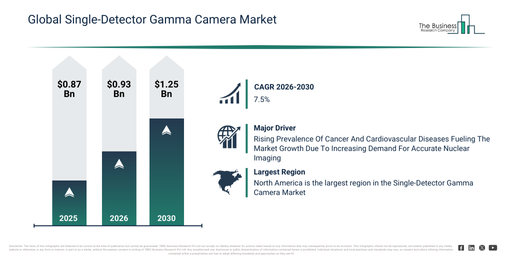
    The single-detector gamma camera market size has experienced strong growth in recent years. It is anticipated to increase from $0.87 billion in 2025 to $0.93 billion in 2026, demonstrating a compound annual growth rate (CAGR) of 7.8%. The historical expansion of this market can be attributed to the escalating prevalence of chronic diseases, the growing adoption of nuclear medicine diagnostics, the increasing geriatric population, the development of healthcare infrastructure, and a heightened demand for early disease detection.

    The market for single-detector gamma cameras is projected to experience robust expansion over the coming years. By 2030, its value is anticipated to reach $1.25 billion, demonstrating a compound annual growth rate (CAGR) of 7.5%. This growth during the forecast period is primarily driven by factors such as the escalating worldwide incidence of cancer and cardiovascular ailments, increased spending on healthcare facilities (particularly in developing regions), greater uptake of sophisticated gamma camera technologies, the broader application of nuclear medicine in diagnosis and research, and an elevated need for non-invasive diagnostic imaging. Key trends expected during this period encompass technological progress in detectors and imaging systems, breakthroughs in hybrid imaging, the evolution of digital and solid-state gamma cameras, continued research and development into new radiopharmaceuticals and imaging methods, and the growing incorporation of artificial intelligence (AI) and automated image processing.

    Download the Free Sample Report to Explore Key Market Insights:

    https://www.thebusinessresearchcompany.com/sample.aspx?id=30743&type=smp

    Which Major Factors Are Driving The Expansion Of The Single-Detector Gamma Camera Market?

    The expanding incidence of cancer and cardiovascular ailments is anticipated to fuel the expansion of the single-detector gamma camera market in the future. The prevalence of these conditions indicates the number of individuals within a population suffering from any form of cancer or heart and blood-vessel disorder at a particular moment or over a specific duration. This prevalence is increasing due to an aging population and higher exposure to risk factors like poor diets and lack of physical activity, which makes individuals more susceptible. Single-detector gamma cameras are instrumental in diagnosing cancer and cardiovascular diseases by delivering essential nuclear imaging, allowing clinicians to identify, evaluate, and track functional changes in affected organs. For example, in August 2025, data from the Centers for Disease Control and Prevention, a Switzerland-based public health agency, revealed that 90% of the nation’s 4.9 trillion dollars in annual health care spending is linked to individuals with chronic and mental health conditions, with over 84,000 Americans succumbing to heart disease or stroke annually, and cardiovascular disease costs expected to hit approximately $2 trillion by 2050. Consequently, the increasing occurrence of cancer and cardiovascular diseases is propelling the growth of the single-detector gamma camera market.

    How Are The Various Segments Of The Single-Detector Gamma Camera Market Categorized?

    The single-detector gamma camera market covered in this report is segmented –

    1) By Type Of Detector: High-Energy General-Purpose Gamma Cameras, Low-Energy High-Resolution Gamma Cameras, Specialized Gamma Cameras

    2) By Type Or Design: Stationary Type Single-Detector Gamma Camera, Mobile Type Single-Detector Gamma Camera Or Single-Head Mobile Gamma Cameras

    3) By Technology: Static Imaging, Dynamic Imaging, Tomographic Imaging (Single Photon Emission Computed Tomography (SPECT)), Quantitative Imaging

    4) By Application: Oncology, Cardiology, Neurology, Bone Scintigraphy, Pulmonary Scintigraphy

    5) By End-User: Hospitals, Diagnostic Imaging Centers, Research Institutions, Outpatient Clinics

    Subsegments:

    1) By High-Energy General-Purpose Gamma Cameras: Cardiac Imaging Gamma Cameras, Whole-Body Imaging Gamma Cameras, Multi-Purpose Imaging Gamma Cameras

    2) By Low-Energy High-Resolution Gamma Cameras: Thyroid Imaging Gamma Cameras, Bone Scintigraphy Gamma Cameras, Renal Imaging Gamma Cameras

    3) By Specialized Gamma Cameras: Cardiac SPECT Imaging Gamma Cameras, Brain SPECT Imaging Gamma Cameras, Liver SPECT Imaging Gamma Cameras

    Who Are The Primary Competitors In The Single-Detector Gamma Camera Market?

    Major companies operating in the single-detector gamma camera market are Siemens Healthineers AG, GE HealthCare Technologies Inc., Koninklijke Philips N.V., Canon Medical Systems Corporation, Digirad Corporation, Serac Life Sciences Limited, Biodex Medical Systems Inc., Beijing Huitai Medical Equipment Co. Ltd., Electronic & Engineering Co. Private Limited, DVS Medical Inc., NUVIATech Instruments, Dilon Technologies Inc., Serac Imaging Systems Limited, RadRays Medical Technology, AdvanScint Imaging Solutions, MedNova Imaging Ltd., GBT Medical Technologies, United Imaging Healthcare Co. Ltd.

    Read the full single-detector gamma camera market report here:

    https://www.thebusinessresearchcompany.com/report/single-detector-gamma-camera-market-report

    Which Region Currently Holds The Largest Share Of The Single-Detector Gamma Camera Market?

    North America was the largest region in the single-detector gamma camera market in 2025. Asia-Pacific is expected to be the fastest-growing region in the forecast period. The regions covered in the single-detector gamma camera market report are Asia-Pacific, South East Asia, Western Europe, Eastern Europe, North America, South America, Middle East, Africa.

    Request A Tailored Single-Detector Gamma Camera Market Research Report For Competitive Advantage:

    https://www.thebusinessresearchcompany.com/customise?id=30743&type=smp

    Browse Through More Reports Similar to the Global Single-Detector Gamma Camera Market 2026, By The Business Research Company

    X Ray Detectors Market Report 2026

    https://www.thebusinessresearchcompany.com/report/x-ray-detectors-global-market-report

    Surveillance Camera Market Report 2026

    https://www.thebusinessresearchcompany.com/report/surveillance-camera-global-market-report

    single photon emission computed tomography SPECT global market report

    https://www.thebusinessresearchcompany.com/report/single-photon-emission-computed-tomography-spect-global-market-report

    Get in touch with us:

    The Business Research Company: https://www.thebusinessresearchcompany.com/

    Americas +1 310-496-7795

    Asia +44 7882 955267 & +91 8897263534

    Europe +44 7882 955267

    Email us at info@tbrc.info

    Follow us on:

    LinkedIn: https://in.linkedin.com/company/the-business-research-company

    YouTube: https://www.youtube.com/channel/UC24_fI0rV8cR5DxlCpgmyFQ

    Global Market Model: https://www.thebusinessresearchcompany.com/global-market-model
  • Global Semiconductor Timing Integrated Circuit (IC) Market Forecast 2026–2035 Presenting Long-Term Growth Insights

    Global Semiconductor Timing Integrated Circuit (IC) Market Forecast 2026–2035 Presenting Long-Term Growth Insights

    The Business Research Company’s 2026 market reports include new capabilities such as market attractiveness scoring and analysis, total addressable market analysis, company scoring matrix, interactive excel data dashboard, improved supply chain analysis, upcoming startups in the market, and overview of key products, aimed at improving the depth, usability, and strategic value of the insights delivered.

    How Large Is The Semiconductor Timing Integrated Circuit (IC) Market Projected To Become By 2030 Based On Its 2026 Valuation?

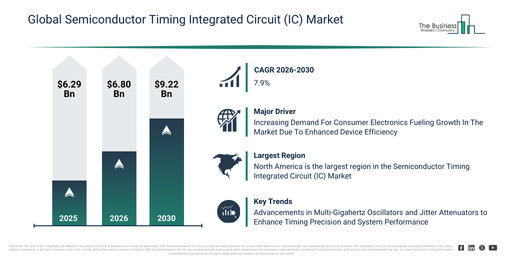
    The semiconductor timing IC market size has shown significant expansion in recent years. It is anticipated to increase from $6.29 billion in 2025 to $6.80 billion in 2026, achieving a compound annual growth rate (CAGR) of 8.2%. Historically, this market expansion can be linked to the rising need for consumer electronics, the broader integration of communication systems, increased embedding in automotive electronics, the advancement of industrial automation, and the expanded utilization in healthcare devices.

    The semiconductor timing IC market is anticipated to experience robust expansion over the coming years, reaching a valuation of $9.22 billion by 2030, exhibiting a compound annual growth rate (CAGR) of 7.9%. This expansion during the projection period is primarily propelled by the increasing uptake of 5G and telecommunication infrastructure, a growing demand for low-power timing solutions, the expanding deployment of IoT and connected devices, the growth of data centers and cloud computing, and the integration into electric vehicles and smart automotive systems. Key developments expected during this forecast timeframe encompass advancements in mixed-signal and digital timing ICs, novelties in programmable and multi-output clock generators, the creation of low-power and high-precision timing ICs, extensive research and development for automotive and electric vehicle timing solutions, and improvements in crystal oscillators and jitter attenuation technologies.

    Download the Free Sample Report to Explore Key Market Insights:

    https://www.thebusinessresearchcompany.com/sample.aspx?id=30740&type=smp

    What Major Growth Drivers Are Shaping The Outlook Of The Semiconductor Timing Integrated Circuit (IC) Market?

    The burgeoning need for consumer electronics is anticipated to fuel expansion within the semiconductor timing integrated circuit (IC) market moving ahead. Consumer electronics encompass electronic devices crafted for daily individual or domestic application, primarily serving entertainment, communication, and recreational purposes. These goods are distinct from industrial or professional gear, as their focus is on non-commercial uses within residences or daily routines. The uptake of consumer electronics is rising because of swift technological progress, with novel and enhanced gadgets drawing in more buyers and promoting regular updates. Semiconductor timing ICs facilitate this demand by delivering accurate timing and synchronization for devices, thereby guaranteeing their efficient and dependable performance. As an illustration, in June 2025, data from the Australian Bureau of Statistics (ABS, an Australia-based official national statistical agency, revealed that in 2025, sales of electrical and electronic goods retailing increased by 3.9% in that single month, signifying continuous growth in consumer demand for electronic items. This performance indicates more robust consumer expenditure relative to the earlier part of the year. Consequently, the expanding need for consumer electronics is propelling the advancement of the semiconductor timing integrated circuit (IC) market.

    What Segment Groups Are Identified Within The Semiconductor Timing Integrated Circuit (IC) Market?

    The semiconductor timing integrated circuit (ic) market covered in this report is segmented –

    1) By Type Of Timing Integrated Circuit (IC): Crystal Oscillators, Real-Time Clock (RTC) Integrated Circuits (ICs), Frequency Synthesizers, Programmable Timing Integrated Circuits (IC), Clock Buffers and Clock Distribution Integrated Circuits (IC)

    2) By Technology: Analog Timing ICs, Digital Timing ICs, Mixed-Signal Timing ICs, Low-Power Timing ICs

    3) By Distribution Channel: Direct Sales, Distributors and Resellers, Online Platforms, Value-Added Resellers (VARs)

    4) By Application: Communication Systems, Consumer Electronics, Automotive Electronics, Industrial Automation, Healthcare Devices

    5) By End-User Sector: Telecommunications, Information Technology (IT) And Computing, Consumer Goods, Medical Equipment, Automotive

    Subsegments:

    1) By Crystal Oscillators: Surface Mount Device Oscillators, Through Hole Oscillators, Temperature Compensated Crystal Oscillators, Voltage Controlled Crystal Oscillators, Oven Controlled Crystal Oscillators

    2) By Real-Time Clock (RTC) Integrated Circuits: Serial Interface Real-Time Clocks, Parallel Interface Real-Time Clocks, Integrated Battery Backup Real-Time Clocks, Low Power Real-Time Clocks

    3) By Frequency Synthesizers: Integer Frequency Synthesizers, Fractional Frequency Synthesizers, Direct Digital Synthesizers, Phase Locked Loop Synthesizers

    4) By Programmable Timing Integrated Circuits: Digitally Controlled Oscillators, Programmable Clock Generators, Configurable Delay Lines, Frequency Agile Timing Controllers

    5) By Clock Buffers and Clock Distribution Integrated Circuits: Fanout Buffers, Clock Multiplexers, Jitter Attenuating Clock Buffers, Zero Delay Buffers, Differential Clock Distributors

    What Trends Are Advancing Progress In The Semiconductor Timing Integrated Circuit (IC) Market?

    Companies prominent in the semiconductor timing integrated circuit (IC) market are channeling efforts into developing products such as multi-gigahertz oscillators and jitter attenuators. This focus aims to address the increasing need for timing solutions that offer ultra-low jitter, high frequency, and thermal robustness within AI, 5G, and advanced computing systems. Multi-gigahertz oscillators and jitter attenuators are specialized integrated circuits engineered to generate and stabilize high-speed clock signals, providing femtosecond-level precision and programmable output flexibility, which represents an advancement over traditional analog timing solutions that often exhibit higher jitter and limited thermal stability. For instance, in June 2025, Mixed-Signal Devices, a US-based semiconductor company, released its MS11X0 oscillator and MS15X0 jitter attenuator families. This innovative portfolio delivers an output frequency of up to 2 GHz, ultra-low jitter (as low as 19 fs RMS), ±20 ppm thermal stability, and is housed in compact CMOS packages. These devices incorporate factory-programmable outputs, adaptive DSP-based timing engines, and strong environmental resilience, making them suitable for AI compute fabrics, 5G network synchronization, coherent optics, and high-speed SerDes interfaces. They integrate CMOS precision with Virtual Crystal architecture, simplifying clock tree design, reducing component counts, and enhancing reliability across complex electronic systems.

    Who Are The Prominent Organizations Shaping The Semiconductor Timing Integrated Circuit (IC) Market?

    Major companies operating in the semiconductor timing integrated circuit (ic) market are Texas Instruments Incorporated, STMicroelectronics N.V., Infineon Technologies AG, KYOCERA Corporation, NXP Semiconductors N.V., Murata Manufacturing Co. Ltd., Analog Devices Inc., Renesas Electronics Corporation, Seiko Epson Corporation, ON Semiconductor Corporation, Skyworks Solutions Inc., Microchip Technology Incorporated, ROHM Co. Ltd., MaxLinear Inc., Vishay Intertechnology Inc., Diodes Incorporated, Nuvoton Technology Corporation, Silicon Laboratories Inc., Semtech Corporation, SiTime Corporation, Rakon Limited, Abracon LLC

    Read the full semiconductor timing integrated circuit (ic) market report here:

    https://www.thebusinessresearchcompany.com/report/semiconductor-timing-integrated-circuit-ic-market-report

    Which Region Is Anticipated To See The Fastest Growth In The Semiconductor Timing Integrated Circuit (IC) Market?

    North America was the largest region in the mobile semiconductor timing IC market in 2025. Asia-Pacific is expected to be the fastest-growing region in the forecast period. The regions covered in the semiconductor timing integrated circuit (ic) market report are Asia-Pacific, South East Asia, Western Europe, Eastern Europe, North America, South America, Middle East, Africa.

    Request A Tailored Semiconductor Timing Integrated Circuit (IC) Market Research Report For Competitive Advantage:

    https://www.thebusinessresearchcompany.com/customise?id=30740&type=smp

    Browse Through More Reports Similar to the Global Semiconductor Timing Integrated Circuit (IC) Market 2026, By The Business Research Company

    Gate Driver Integrated Circuit Ic Market Report 2026

    https://www.thebusinessresearchcompany.com/report/gate-driver-integrated-circuit-ic-global-market-report

    Timing Devices Market Report 2026

    https://www.thebusinessresearchcompany.com/report/timing-devices-global-market-report

    integrated circuits global market report

    https://www.thebusinessresearchcompany.com/report/integrated-circuits-global-market-report

    Get in touch with us:

    The Business Research Company: https://www.thebusinessresearchcompany.com/

    Americas +1 310-496-7795

    Asia +44 7882 955267 & +91 8897263534

    Europe +44 7882 955267

    Email us at info@tbrc.info

    Follow us on:

    LinkedIn: https://in.linkedin.com/company/the-business-research-company

    YouTube: https://www.youtube.com/channel/UC24_fI0rV8cR5DxlCpgmyFQ

    Global Market Model: https://www.thebusinessresearchcompany.com/global-market-model
  • A notable trend in the Remote Cardiac Rehab Platforms Market is the growth of virtual rehabilitation with enhanced patient engagement

    A notable trend in the Remote Cardiac Rehab Platforms Market is the growth of virtual rehabilitation with enhanced patient engagement

    The Business Research Company’s 2026 market reports include new capabilities such as market attractiveness scoring and analysis, total addressable market analysis, company scoring matrix, interactive excel data dashboard, improved supply chain analysis, upcoming startups in the market, and overview of key products, aimed at improving the depth, usability, and strategic value of the insights delivered.

    How Will The Market Size Of The Remote Cardiac Rehab Platforms Market Evolve From 2026 To 2030?

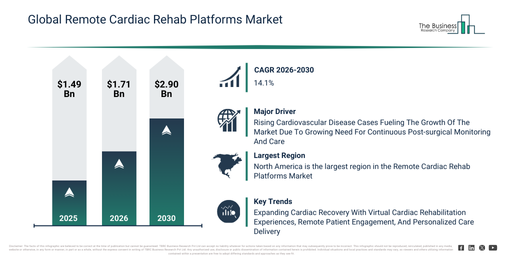
    The remote cardiac rehab platforms market has experienced rapid expansion in recent years. This market is set to increase from $1.49 billion in 2025 to $1.71 billion in 2026, achieving a compound annual growth rate (CAGR) of 14.4%. The historical growth of this market can be attributed to several factors, including the rising prevalence of cardiovascular diseases, an expanding aging population, heightened awareness regarding cardiac health, the development of telehealth infrastructure, and an increase in hospital readmission rates.

    The remote cardiac rehab platforms market size is anticipated to experience significant growth over the next few years, reaching $2.90 billion by 2030, propelled by a compound annual growth rate (CAGR) of 14.1%. This expansion is primarily driven by the increasing adoption of remote monitoring platforms, a rising patient preference for home-based rehabilitation, growing healthcare expenditure on digital solutions, broader insurance coverage for remote therapy, and the enhanced integration of wearable devices with rehab programs. Key trends expected in this forecast period include technological advancements in wearable sensors, innovations in digital rehabilitation software, developments in artificial intelligence-driven patient monitoring, continued research and development in telecardiology, and the integration of mobile applications with remote rehab platforms.

    Download the Free Sample Report to Explore Key Market Insights:

    https://www.thebusinessresearchcompany.com/sample.aspx?id=30724&type=smp

    Which Growth Drivers Are Contributing To The Progress Of The Remote Cardiac Rehab Platforms Market?

    The increasing prevalence of cardiovascular diseases is projected to stimulate expansion within the remote cardiac rehabilitation platforms market. This rise in cardiovascular disease cases signifies a growing occurrence of heart-related ailments, including coronary artery disease and heart failure, which necessitate surgical procedures and ongoing care. Enhanced surgical methodologies and an aging population are contributing factors to the surge in cardiovascular disease cases, thereby generating substantial demand for readily available post-operative recovery options. Remote cardiac rehabilitation platforms facilitate the establishment of holistic recovery regimens through their capacity for continuous monitoring of patient vital signs and the provision of structured exercise programs within patients’ homes. For example, as reported in May 2025 by the Japanese Association for Thoracic Surgery, a professional body focused on thoracic surgery based in Japan, the country performed 63,427 cardiovascular surgeries in 2023, marking a 3.0% rise from the 61,606 surgeries conducted in 2022. Consequently, the uptick in cardiovascular disease cases is fueling the growth of the remote cardiac rehabilitation platforms market.

    Which Segment Areas Are Covered In The Remote Cardiac Rehab Platforms Market Analysis?

    The remote cardiac rehab platforms market covered in this report is segmented –

    1) By Component: Software, Hardware, Services

    2) By Delivery Mode: Web-based, Cloud-based, On-premises

    3) By Application: Chronic Heart Failure, Post-Myocardial Infarction, Hypertension, Arrhythmia, Other Applications

    4) By End User: Hospitals and Clinics, Home Care Settings, Cardiac Rehabilitation Centers, Other End Users

    Subsegments:

    1) By Software: Platform, Patient Application, Clinician Dashboard, Administrative And Billing Module

    2) By Hardware: Wearable Devices, Electrocardiogram(ECG) Monitors, Blood Pressure Monitors, Heart Rate Monitors

    3) By Services: Remote Monitoring, Virtual Consultation, Patient Education, Technical Support

    What Key Developments And Trends Are Impacting The Remote Cardiac Rehab Platforms Market?

    Leading companies within the remote cardiac rehab platforms market are concentrating on developing sophisticated telehealth solutions, particularly virtual cardiac rehabilitation experiences. These initiatives aim to broaden access to vital rehab programs, enhance patient engagement, and support individualized cardiovascular recovery outside conventional clinical environments. A virtual cardiac rehabilitation experience is characterized as a structured digital care pathway that delivers exercise guidance, educational content, symptom monitoring, and professional feedback through remote platforms. This enables patients to partake in comprehensive cardiac rehabilitation from their homes or community settings while maintaining necessary clinical oversight. For instance, in October 2025, WakeMed Health & Hospitals, a U.S.-based healthcare system, unveiled a virtual cardiac rehabilitation experience for individuals recovering from heart procedures or managing chronic heart conditions. This program leverages connected tools, remote monitoring, and telehealth coaching to guide patients through personalized rehab plans, track their progress, and provide real-time clinician support, thereby overcoming obstacles such as travel distance, scheduling difficulties, and limited facility availability. The introduction of this service emphasizes the increasing importance of incorporating virtual experiences into cardiac rehabilitation to improve convenience, patient adherence, and health outcomes. By integrating a virtual cardiac rehabilitation experience into its remote care offerings, WakeMed and Recora facilitate greater participation in evidence-based rehabilitation, enhance care continuity, and foster long-term cardiovascular wellness for patients across various populations.

    Which Key Industry Participants Are Active In The Remote Cardiac Rehab Platforms Market?

    Major companies operating in the remote cardiac rehab platforms market are Philips Healthcare, Teladoc Health Inc., Sword Health Inc., BioFourmis Inc., Dozee Health, Wellframe Inc., Health Recovery Solutions, Biotricity Inc., Vivalink Inc., Lyfe, Carda Health Inc., Chanl Health Inc., Fourth Frontier, Heartbeat Health Inc., Life365 Inc., Liva Healthcare, Movn Health, Prevounce, Recora LLC, Veta Health Co.

    Read the full remote cardiac rehab platforms market report here:

    https://www.thebusinessresearchcompany.com/report/remote-cardiac-rehab-platforms-market-report

    Which Region Currently Holds The Largest Share Of The Remote Cardiac Rehab Platforms Market?

    North America was the largest region in the remote cardiac rehab platforms market in 2025. Asia-Pacific is expected to be the fastest-growing region in the forecast period. The regions covered in the remote cardiac rehab platforms market report are Asia-Pacific, South East Asia, Western Europe, Eastern Europe, North America, South America, Middle East, Africa.

    Request A Tailored Remote Cardiac Rehab Platforms Market Research Report For Competitive Advantage:

    https://www.thebusinessresearchcompany.com/customise?id=30724&type=smp

    Browse Through More Reports Similar to the Global Remote Cardiac Rehab Platforms Market 2026, By The Business Research Company

    Remote Cardiac Monitoring Market Report 2026

    https://www.thebusinessresearchcompany.com/report/remote-cardiac-monitoring-global-market-report

    Smart Portable Rehabilitation Devices Market Report 2026

    https://www.thebusinessresearchcompany.com/report/smart-portable-rehabilitation-devices-global-market-report

    mobile cardiac telemetry systems global market report

    https://www.thebusinessresearchcompany.com/report/mobile-cardiac-telemetry-systems-global-market-report

    Get in touch with us:

    The Business Research Company: https://www.thebusinessresearchcompany.com/

    Americas +1 310-496-7795

    Asia +44 7882 955267 & +91 8897263534

    Europe +44 7882 955267

    Email us at info@tbrc.info

    Follow us on:

    LinkedIn: https://in.linkedin.com/company/the-business-research-company

    YouTube: https://www.youtube.com/channel/UC24_fI0rV8cR5DxlCpgmyFQ

    Global Market Model: https://www.thebusinessresearchcompany.com/global-market-model
  • A significant trend in the Regenerative Wound Care Market is advancements in fish-skin graft technology for specialized burn care

    A significant trend in the Regenerative Wound Care Market is advancements in fish-skin graft technology for specialized burn care

    The Business Research Company’s 2026 market reports include new capabilities such as market attractiveness scoring and analysis, total addressable market analysis, company scoring matrix, interactive excel data dashboard, improved supply chain analysis, upcoming startups in the market, and overview of key products, aimed at improving the depth, usability, and strategic value of the insights delivered.

    What Is The Forecasted Market Value Of The Regenerative Wound Care Market Across 2026–2030?

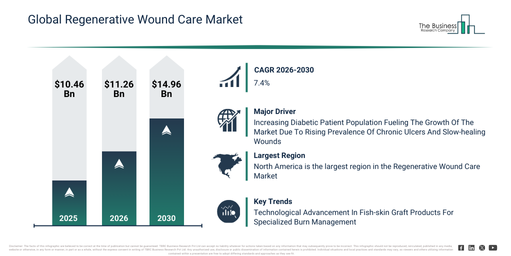
    The size of the regenerative wound care market has shown significant expansion in recent years. It is anticipated to increase from $10.46 billion in 2025 to $11.26 billion in 2026, with a compound annual growth rate (CAGR) of 7.6%. This historical growth can be attributed to the rising prevalence of chronic wounds, an expanding geriatric population, the increasing incidence of diabetes and obesity, the development of healthcare infrastructure, and greater awareness about advanced wound care therapies.

    The regenerative wound care market is expected to demonstrate significant expansion in the upcoming years. It is forecast to increase to $14.96 billion by 2030, achieving a compound annual growth rate (CAGR) of 7.4%. This projected growth can be attributed to several factors during the forecast period, such as the increasing acceptance of regenerative wound care products, heightened investment in biotechnology startups, the expanding integration of artificial intelligence in wound management, the broadening of home healthcare services, and the escalating demand for customized wound care solutions. Noteworthy trends for this period include technological advancements in bioengineered skin substitutes, innovations in stem cell therapies, developments in treatments based on growth factors, continuous research and development in scaffold-based wound healing, and improvements in wound monitoring device technology.

    Download the Free Sample Report to Explore Key Market Insights:

    https://www.thebusinessresearchcompany.com/sample.aspx?id=30723&type=smp

    What Primary Drivers Are Shaping The Development Of The Regenerative Wound Care Market?

    The expanding diabetic patient population is projected to stimulate the growth of the regenerative wound care market moving forward. This increasing diabetic patient population indicates the rising global prevalence of diabetes mellitus, a chronic condition often linked to complications such as poor circulation and neuropathy, which lead to wounds that are difficult to heal. Advances in diabetes management and heightened awareness contribute to identifying this growing diabetic patient population, emphasizing the critical demand for advanced therapies to prevent complications like foot ulcers. Regenerative wound care aids in establishing effective healing environments by employing bioactive materials and cellular therapies to encourage tissue repair and closure in complex diabetic wounds. For instance, in July 2025, according to the International Diabetes Federation, a Belgium-based umbrella organization of national diabetes associations, in 2024, diabetes affected 11.10% of the global population, corresponding to 589 million adults, and is projected to reach 12.95% and 853 million by 2050. Thus, the increasing diabetic patient population is driving the expansion of the regenerative wound care market.

    What Segmentation Levels Are Considered In The Regenerative Wound Care Market?

    The regenerative wound care market covered in this report is segmented –

    1) By Product Type: Autologous Stem Cells, Biological Skin Substitutes, Tissue Or Multiple Tissue Platforms, Fetal Skin, Regenerative Wound Care Devices, Other Product Types

    2) By Wound Type: Chronic Wounds, Diabetic Foot Ulcers (DFUs), Venous Leg Ulcers (VLUs), Pressure Ulcers (Injuries), Acute Wounds, Surgical And Traumatic Wounds, Burn Wounds

    3) By Technology: Active Therapies, Scaffold-Based Therapies, Combination Products

    4) By End Users: Hospitals, Ambulatory Surgical Centers, Burn Care Centers And Wound Clinics, Other End Users

    Subsegments:

    1) By Autologous Stem Cells: Bone Marrow Derived Stem Cells, Adipose Derived Stem Cells, Peripheral Blood Stem Cells

    2) By Biological Skin Substitutes: Allogeneic Skin, Xenogeneic Skin, Composite Skin Substitutes

    3) By Tissue Or Multiple Tissue Platforms: Extracellular Matrix, Amniotic Membrane, Collagen Matrix

    4) By Fetal Skin: Amniotic Epithelial Cells, Dermal Fibroblasts

    5) By Regenerative Wound Care Devices: Negative Pressure Wound Therapy Devices, Bioengineered Tissue Scaffolds, Wound Dressings

    6) By Other Product Types: Growth Factors, Platelet Rich Plasma, Cellular Therapy Products

    What Trends Are Projected To Affect The Regenerative Wound Care Market?

    Leading companies in the regenerative wound care market are concentrating on technological breakthroughs, for example, by developing specialized fish-skin graft products that are processed to maintain their natural composition and omega-3 fatty acids. These sophisticated grafts are engineered to manage intricate burn wounds by supplying a bioactive framework that encourages cellular proliferation and tissue repair, with custom designs for specific anatomical regions like the hands to boost ease of use and improve functional restoration. For instance, in January 2023, Kerecis Limited, an Iceland-based medical device company, declared the introduction of two novel products for the burn market: GraftGuide Mano and GraftGuide Micro. These offerings are made from full-thickness fish dermis, prepared using Kerecis’ proprietary EnviroIntact method, which protects the skin’s original 3D structure and fatty acids. GraftGuide Mano is specifically tailored to fit the complex 3D structure of the hand, making the treatment of second-degree burns more straightforward.

    Who Are The Top Companies Competing In The Regenerative Wound Care Market?

    Major companies operating in the regenerative wound care market are Stryker Corporation, Smith & Nephew plc, Convatec Group plc, Molnlycke Health Care AB, Integra LifeSciences Holdings Corporation, Angelini Pharma SpA, Organogenesis Holdings Inc.., MiMedx Group Inc., Fidia Farmaceutici SpA, Vericel Corporation, BioHorizons IPH Inc., Anika Therapeutics Inc., Kerecis Ltd., AVITA Medical Inc., Aroa Biosurgery Limited, Skye Biologics Inc., Tissue Regenix Group plc, PolarityTE Inc., Regenio, Acelity L.P. Inc.

    Read the full regenerative wound care market report here:

    https://www.thebusinessresearchcompany.com/report/regenerative-wound-care-market-report

    How Does The Regenerative Wound Care Market Perform Across Major Global Regions?

    North America was the largest region in the regenerative wound care market in 2025. Asia-Pacific is expected to be the fastest-growing region in the forecast period. The regions covered in the regenerative wound care market report are Asia-Pacific, South East Asia, Western Europe, Eastern Europe, North America, South America, Middle East, Africa.

    Request A Tailored Regenerative Wound Care Market Research Report For Competitive Advantage:

    https://www.thebusinessresearchcompany.com/customise?id=30723&type=smp

    Browse Through More Reports Similar to the Global Regenerative Wound Care Market 2026, By The Business Research Company

    Chronic Wound Care Market Report 2026

    https://www.thebusinessresearchcompany.com/report/chronic-wound-care-global-market-report

    Active Wound Care Market Report 2026

    https://www.thebusinessresearchcompany.com/report/active-wound-care-global-market-report

    advanced wound care global market report

    https://www.thebusinessresearchcompany.com/report/advanced-wound-care-global-market-report

    Get in touch with us:

    The Business Research Company: https://www.thebusinessresearchcompany.com/

    Americas +1 310-496-7795

    Asia +44 7882 955267 & +91 8897263534

    Europe +44 7882 955267

    Email us at info@tbrc.info

    Follow us on:

    LinkedIn: https://in.linkedin.com/company/the-business-research-company

    YouTube: https://www.youtube.com/channel/UC24_fI0rV8cR5DxlCpgmyFQ

    Global Market Model: https://www.thebusinessresearchcompany.com/global-market-model
  • Psychological Healing Service Market Insights Highlighting Growth Drivers Through 2030

    Psychological Healing Service Market Insights Highlighting Growth Drivers Through 2030

    The Business Research Company’s 2026 market reports include new capabilities such as market attractiveness scoring and analysis, total addressable market analysis, company scoring matrix, interactive excel data dashboard, improved supply chain analysis, upcoming startups in the market, and overview of key products, aimed at improving the depth, usability, and strategic value of the insights delivered.

    What Market Size Expansion Is Predicted For The Psychological Healing Service Market Between 2026 And 2030?

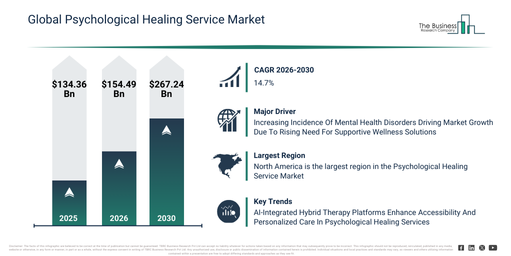
    The psychological healing service market size has experienced rapid expansion recently. It is forecast to increase from $134.36 billion in 2025 to $154.49 billion in 2026, registering a compound annual growth rate (CAGR) of 15.0%. The expansion observed historically can be linked to heightened mental health awareness, increased use of online therapy platforms, a rise in stress and anxiety disorders, the development of corporate mental wellness programs, and more mental health initiatives from governments and NGOs.

    The psychological healing service market is projected to experience substantial expansion over the upcoming years. By 2030, this market is anticipated to reach a valuation of $267.24 billion, demonstrating a compound annual growth rate (CAGR) of 14.7%. This anticipated growth is driven by several factors, including a heightened demand for customized therapy options, the expanding incorporation of AI and digital technologies into therapeutic practices, a greater emphasis on proactive mental well-being, the broadening scope of mental health insurance, and enhanced partnerships between healthcare providers and online platforms. Key trends characterizing this period involve technological progress in telehealth systems, novel AI-driven mental health remedies, advancements in virtual reality (VR) and augmented reality (AR) therapies, ongoing research and development in comprehensive and holistic therapeutic approaches, and the progression of data-informed personalized mental wellness instruments.

    Download the Free Sample Report to Explore Key Market Insights:

    https://www.thebusinessresearchcompany.com/sample.aspx?id=30713&type=smp

    What Drivers Are Influencing The Psychological Healing Service Market?

    The increasing occurrence of mental health conditions is anticipated to drive the expansion of the psychological healing service market moving forward. These disorders encompass various conditions impacting an individual’s mood, thought processes, and behavior, frequently resulting in distress or difficulties in daily life. The growing prevalence of mental health conditions stems from increased exposure to prolonged stress and challenging life events, which can overwhelm personal coping strategies and initiate psychological issues. Psychological healing services address these disorders through structured evaluations, counseling, and evidence-based treatments designed to assist individuals in processing emotions, building coping abilities, and enhancing their overall psychological resilience. For example, data from October 2025, as reported by the Institute for Health Metrics and Evaluation, a US-based health research organization, indicated that in 2023, 15% of the global population was affected by mental disorders, contributing to 17% of all years lived with disability worldwide, highlighting the increasing effect of mental health problems. Consequently, the significant occurrence of mental disorders is fueling the expansion of the psychological healing service market.

    Which Market Segments Are Examined In The Psychological Healing Service Market Study?

    The psychological healing service market covered in this report is segmented –

    1) By Therapy Type: Cognitive Behavioral Therapy, Psychoanalysis, Humanistic Therapy, Integrative Therapy

    2) By Target Disorder Or Focus Area: Anxiety And Depression, Stress Management And Burnout Trauma, Addiction, Eating Disorders, Relationship

    3) By Duration Of Service: Short-Term Therapy, Long-Term Therapy, Crisis Intervention

    4) By Target Audience: Adults, Children, Adolescents, Elderly

    Subsegments:

    1) By Cognitive Behavioral Therapy: Behavioral Activation, Exposure Therapy, Cognitive Restructuring, Problem-Solving Therapy, Dialectical Behavior Approach

    2) By Psychoanalysis: Free Association Method, Dream Interpretation Method, Transference Analysis, Object Relations Approach, Ego Psychology Approach

    3) By Humanistic Therapy: Person Centered Therapy, Gestalt Therapy, Existential Therapy, Emotion Focused Therapy, Client Directed Approach

    4) By Integrative Therapy: Multimodal Therapy, Holistic Therapy, Mind Body Integration, Eclectic Therapy, Unified Psychotherapy Approach

    Which Trends Are Influencing The Psychological Healing Service Market?

    Leading companies within the psychological healing service market are concentrating on developing advanced platforms, such as AI-integrated hybrid therapy platforms, to enhance the accessibility, continuity, and individualized nature of mental health support. These AI-integrated hybrid therapy platforms merge artificial intelligence tools with structured involvement from human clinicians to offer extensive digital assistance, customized therapeutic pathways, automated assessments, real-time messaging, and ongoing patient engagement between in-session care. For instance, in November 2024, Wysa Ltd, a UK-based digital mental health technology company, introduced Wysa Copilot, an AI-integrated hybrid digital and human therapy platform. This platform incorporates AI-guided tools, secure real-time and asynchronous communication, and automated monitoring to help clinicians manage caseloads more efficiently and maintain patient engagement beyond traditional therapy sessions. The platform also provides personalized care pathways and evidence-based tools, assigned by clinicians, to aid users in managing symptoms like anxiety and depression between professional sessions.

    Which Companies Hold Significant Positions In The Psychological Healing Service Market?

    Major companies operating in the psychological healing service market are UnitedHealth Group Incorporated, CVS Health Corporation, Universal Health Services Inc., The MENTOR Network, Acadia Healthcare Company Inc., BetterHelp Inc., Spring Health Inc., Lyra Health Inc., CareTech Holdings plc, Magellan Health Inc., ComPsych Corporation, Ginger.io Inc., Hazelden Betty Ford Foundation, Path Mental Health Inc., Talkspace Inc., Centerstone, Brightside Health Inc., Ginger.io Inc., SonderMind Inc., Modern Health Inc., Two Chairs Inc., Vita Health Group Ltd., Kooth plc, Vita Health Group Ltd., Amaha Health Private Limited

    Read the full psychological healing service market report here:

    https://www.thebusinessresearchcompany.com/report/psychological-healing-service-market-report

    Which Regions Are Projected To Dominate The Psychological Healing Service Market In The Coming Years?

    North America was the largest region in the psychological healing service market in 2025. Asia-Pacific is expected to be the fastest-growing region in the forecast period. The regions covered in the psychological healing service market report are Asia-Pacific, South East Asia, Western Europe, Eastern Europe, North America, South America, Middle East, Africa.

    Request A Tailored Psychological Healing Service Market Research Report For Competitive Advantage:

    https://www.thebusinessresearchcompany.com/customise?id=30713&type=smp

    Browse Through More Reports Similar to the Global Psychological Healing Service Market 2026, By The Business Research Company

    Emotional Counseling Service Market Report 2026

    https://www.thebusinessresearchcompany.com/report/emotional-counseling-service-global-market-report

    Online Therapy Services Market Report 2026

    https://www.thebusinessresearchcompany.com/report/online-therapy-services-global-market-report

    behavioral therapy global market report

    https://www.thebusinessresearchcompany.com/report/behavioral-therapy-global-market-report

    Get in touch with us:

    The Business Research Company: https://www.thebusinessresearchcompany.com/

    Americas +1 310-496-7795

    Asia +44 7882 955267 & +91 8897263534

    Europe +44 7882 955267

    Email us at info@tbrc.info

    Follow us on:

    LinkedIn: https://in.linkedin.com/company/the-business-research-company

    YouTube: https://www.youtube.com/channel/UC24_fI0rV8cR5DxlCpgmyFQ

    Global Market Model: https://www.thebusinessresearchcompany.com/global-market-model
  • Global Project Scheduling Artificial Intelligence (AI) Market Expected to Reach $3.37 Billion by 2030 at 21.1% CAGR

    Global Project Scheduling Artificial Intelligence (AI) Market Expected to Reach $3.37 Billion by 2030 at 21.1% CAGR

    The Business Research Company’s 2026 market reports include new capabilities such as market attractiveness scoring and analysis, total addressable market analysis, company scoring matrix, interactive excel data dashboard, improved supply chain analysis, upcoming startups in the market, and overview of key products, aimed at improving the depth, usability, and strategic value of the insights delivered.

    How Large Is The Project Scheduling Artificial Intelligence (AI) Market Projected To Become By 2030 Based On Its 2026 Valuation?

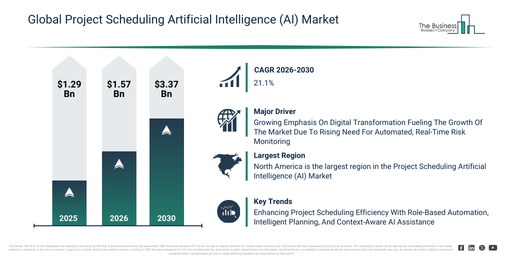
    The project scheduling artificial intelligence (AI) market has experienced substantial expansion over recent years. It is anticipated to increase from $1.29 billion in 2025 to $1.57 billion in 2026, exhibiting a compound annual growth rate (CAGR) of 21.4%. This historical growth can be linked to the increased embrace of digital project management instruments, the rising demand for effective scheduling in intricate projects, the growing utilization of data analytics for strategic planning, the broader incorporation of automation in operational activities, and a heightened emphasis on managing costs and optimizing timeframes.

    The project scheduling artificial intelligence (AI) market size is anticipated to undergo significant expansion in the coming years. It is forecast to reach $3.37 billion in 2030, demonstrating a compound annual growth rate (CAGR) of 21.1%. This projected growth throughout the forecast period stems from factors such as increasing demand for predictive scheduling, the rising adoption of AI-driven workflows, the expanding application of machine learning for resource allocation, a greater emphasis on real-time project visibility, and the growing integration of intelligent automation into project planning. Prominent trends for the forecast period include ongoing advancements in AI-based scheduling technologies, innovative developments in predictive project planning systems, the evolution of intelligent automation platforms, dedicated research and development in machine learning optimization, and emerging enhancements in autonomous scheduling solutions.

    Download the Free Sample Report to Explore Key Market Insights:

    https://www.thebusinessresearchcompany.com/sample.aspx?id=30712&type=smp

    What Drivers Are Shaping The Future Growth Of The Project Scheduling Artificial Intelligence (AI) Market?

    The increasing focus on digital transformation is projected to fuel the expansion of the project scheduling artificial intelligence (AI) market moving ahead. Digital transformation involves integrating digital technologies to enhance business operations, elevate customer interactions, and foster organizational innovation. This transformation is gaining momentum because businesses increasingly need to provide quicker, more tailored, and seamless customer experiences to maintain competitiveness. Project scheduling artificial intelligence (AI) supports digital transformation through automated planning, optimized resource management, and precise project timeline predictions. It boosts operational effectiveness and decision-making by offering real-time data, minimizing postponements, and facilitating data-informed oversight of intricate projects. As an illustration, in July 2024, the Office for National Statistics, a UK government agency, reported that the digital infrastructure program secured a $535 million (£434 million) investment by 2022, with a further $907 million (£736 million) earmarked for 2023 to 2025. Consequently, the heightened focus on digital initiatives is stimulating the expansion of the project scheduling artificial intelligence (AI) market.

    What Segment Groups Are Identified Within The Project Scheduling Artificial Intelligence (AI) Market?

    The project scheduling artificial intelligence (AI) market covered in this report is segmented –

    1) By Component: Software, Services

    2) By Deployment Mode: Cloud, On-Premises

    3) By Enterprise Size: Large Enterprises, Small And Medium Enterprise

    4) By Applications: Construction, Information Technology And Telecommunication, Manufacturing, Healthcare, Banking, Financial Services, And Insurance, Education, Others Applications

    5) By End-Users: Enterprises, Project Management Offices, Consultants, Others End Users

    Subsegments:

    1) By Software: Project Planning Software, Task Prioritization Software, Resource Management Software, Predictive Scheduling Software, Workflow Automation Software, Risk Forecasting Software

    2) By Services: Implementation Services, Integration Services, Consulting Services, Support And Maintenance Services, Training And Education Services, Process Optimization Services

    What Trends Are Advancing Progress In The Project Scheduling Artificial Intelligence (AI) Market?

    Companies prominent within the project scheduling artificial intelligence (AI) market are prioritizing the creation of sophisticated AI-driven capabilities, including AI-powered assistants, with the aim of increasing productivity, improving decision-making, and lessening manual administrative tasks. These AI-powered assistants are defined as integrated functionalities within software platforms that leverage artificial intelligence to automate various workflows, produce content, and analyze project-related data. A notable example occurred in May 2023, when ClickUp Inc., a US-based company specializing in productivity and project management software, introduced its AI-powered assistant named ClickUp AI. This particular native, role-based AI assistant integrates seamlessly into the workspace, offering over 100 optimized tools across diverse functions. It empowers teams to promptly generate summaries, refine written content, and structure various materials like tables and meeting agendas, consequently speeding up project execution and minimizing manual administrative burdens. The solution embeds AI directly within workflows to aid in task prioritization, managing project timelines, creating documentation, summarizing information, and generating action items, thus enabling teams to plan and execute projects with greater efficiency.

    Who Are The Prominent Organizations Shaping The Project Scheduling Artificial Intelligence (AI) Market?

    Major companies operating in the project scheduling artificial intelligence (AI) market are Microsoft Corporation, Siemens Aktiengesellschaft, International Business Machines Corporation, Oracle Corporation, SAP SE, ServiceNow Inc., Adobe Inc., Autodesk Inc., Atlassian Corporation plc, Trimble Inc., Zoho Corporation Pvt. Ltd., Procore Technologies Inc., Monday.com Ltd., Asana Inc., Airtable Inc., Redbooth Inc., Mango Technologies Inc., nTask Inc., Easy Projects Inc., Float App Ltd.

    Read the full project scheduling artificial intelligence (ai) market report here:

    https://www.thebusinessresearchcompany.com/report/project-scheduling-artificial-intelligence-ai-market-report

    Which Region Is Expected To Experience The Fastest Growth In The Project Scheduling Artificial Intelligence (AI) Market?

    North America was the largest region in the project scheduling artificial intelligence (AI) market in 2025. Asia-Pacific is expected to be the fastest-growing region in the forecast period. The regions covered in the project scheduling artificial intelligence (AI) market report are Asia-Pacific, South East Asia, Western Europe, Eastern Europe, North America, South America, Middle East, Africa.

    Request A Tailored Project Scheduling Artificial Intelligence (AI) Market Research Report For Competitive Advantage:

    https://www.thebusinessresearchcompany.com/customise?id=30712&type=smp

    Browse Through More Reports Similar to the Global Project Scheduling Artificial Intelligence (AI) Market 2026, By The Business Research Company

    Ai In Project Management Market Report 2026

    https://www.thebusinessresearchcompany.com/report/ai-in-project-management-global-market-report

    Artificial Intelligence Ai Studio Market Report 2026

    https://www.thebusinessresearchcompany.com/report/artificial-intelligence-ai-studio-global-market-report

    software development ai global market report

    https://www.thebusinessresearchcompany.com/report/software-development-ai-global-market-report

    Get in touch with us:

    The Business Research Company: https://www.thebusinessresearchcompany.com/

    Americas +1 310-496-7795

    Asia +44 7882 955267 & +91 8897263534

    Europe +44 7882 955267

    Email us at info@tbrc.info

    Follow us on:

    LinkedIn: https://in.linkedin.com/company/the-business-research-company

    YouTube: https://www.youtube.com/channel/UC24_fI0rV8cR5DxlCpgmyFQ

    Global Market Model: https://www.thebusinessresearchcompany.com/global-market-model
  • Global Neurology Services Market Analysis 2026–2030 with Strategic Forecast Insights

    Global Neurology Services Market Analysis 2026–2030 with Strategic Forecast Insights

    The Business Research Company’s 2026 market reports include new capabilities such as market attractiveness scoring and analysis, total addressable market analysis, company scoring matrix, interactive excel data dashboard, improved supply chain analysis, upcoming startups in the market, and overview of key products, aimed at improving the depth, usability, and strategic value of the insights delivered.

    What Is The Forecasted Market Value Of The Neurology Services Market Across 2026–2030?

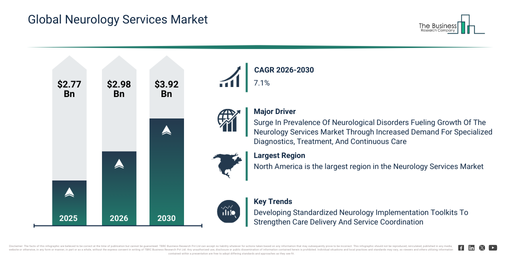
    The neurology services market has demonstrated robust expansion over recent years. It is projected to grow from $2.77 billion in 2025 to $2.98 billion in 2026, at a compound annual growth rate (CAGR) of 7.4%. Historically, this growth can be ascribed to the increasing incidence of stroke and epilepsy, an expanding aging demographic, advancements in neuroimaging technologies, higher healthcare spending, and the establishment of more specialized neurology clinics.

    The neurology services market is anticipated to experience substantial expansion over the upcoming years. It is projected to reach $3.92 billion by 2030, exhibiting a compound annual growth rate (CAGR) of 7.1%. This growth during the forecast period can be attributed to several factors, including the rising demand for tele-neurology services, the increasing prevalence of chronic neurological conditions, enhanced investments in neuroscience research, the integration of artificial intelligence in neurological diagnostics, and the broader availability of outpatient neurology services. Key trends anticipated during this period encompass a wider adoption of remote neurological monitoring, the incorporation of AI-powered decision support systems, a heightened preference for minimally invasive neurosurgical interventions, an increased emphasis on personalized neurology treatment, and the development of multidisciplinary neurorehabilitation initiatives.

    Download the Free Sample Report to Explore Key Market Insights:

    https://www.thebusinessresearchcompany.com/sample.aspx?id=30677&type=smp

    What Underlying Factors Are Accelerating The Growth Of The Neurology Services Market?

    The increasing occurrence of neurological disorders is projected to fuel the expansion of the neurology services market in the future. These conditions, known as neurological disorders, encompass ailments impacting the brain, spinal cord, nerves, or muscles, such as stroke, Alzheimer’s disease, epilepsy, migraine, and various other nervous system afflictions, standing as a primary contributor to global disability and disease burden. The surge in neurological disorders stems from an aging global populace and enhanced survival rates from persistent ailments, resulting in a greater demand for sustained neurological care among individuals. Through offering specialized diagnostics, cutting-edge imaging, therapeutic treatments, and ongoing surveillance for individuals suffering from neurological conditions, Neurology Services contribute significantly to public health. As an illustration, in October 2025, data from the World Health Organization (WHO), a Switzerland-basedandhealth organization, indicated that more than 3 billion people globally were experiencing neurological conditions, impacting over 40 % of the world’s population. This highlights a significant disease burden and an urgent requirement for broadened specialized neurological care services across nations. Consequently, the escalating incidence of neurological disorders is propelling the growth of the neurology services market.

    What Segmentation Levels Are Considered In The Neurology Services Market?

    The neurology services market covered in this report is segmented –

    1) By Service: Diagnostic Service, Monitoring Service, Therapeutics Service, Surgical Service

    2) By Indication: Attention-deficit And Hyperactivity Disorder (ADHD), Mental Health, Stroke, Concussion, Dementia, Multiple Sclerosis, Psychotic Disorder, Other Neurological Diseases

    3) By Payment Model: Fee-For-Service, Value-Based Care And Bundled Payments, Capitation Models

    4) By End User: Hospitals And Specialty Clinics, Outpatient Neurology Centers, Rehabilitation Centers, Home Healthcare Services, Telemedicine Platforms

    Subsegments:

    1) By Diagnostic Service: Neurological Imaging, Electroencephalography Evaluation, Electromyography Assessment, Neurovascular Evaluation, Cognitive Function Testing, Neuropsychological Assessment

    2) By Monitoring Service: Neurological Intensive Care Monitoring, Intraoperative Neuromonitoring, Long-Term Epilepsy Monitoring, Neurophysiological Monitoring, Remote Neurological Monitoring

    3) By Therapeutics Service: Pharmacological Therapy, Physical Therapy, Occupational Therapy, Speech And Language Therapy, Behavioral Therapy, Cognitive Rehabilitation Therapy

    4) By Surgical Service: Minimally Invasive Neurosurgery, Functional Neurosurgery, Stereotactic Neurosurgery

    What Trends Are Projected To Affect The Neurology Services Market?

    Major companies within the neurology services market are prioritizing the creation of standardized planning and implementation resources, such as comprehensive neurology toolkits, with the goal of strengthening neurology care systems, improving service coordination, and aligning national healthcare delivery with global neurological health targets. Standardized neurology implementation toolkits represent structured guidance frameworks that support policymakers and healthcare planners in designing, prioritizing, and integrating neurological services across health systems, ensuring consistent diagnosis, treatment, and long-term care for neurological disorders. For example, in July 2024, the World Health Organization (WHO), an intergovernmental health organization based in Switzerland, introduced a neurological disorders implementation toolkit to assist countries in enhancing diagnosis, treatment, and care provision as part of the Intersectoral Global Action Plan on Epilepsy and Other Neurological Disorders. This toolkit offers practical guidance on governance, service integration, workforce planning, and monitoring, thereby enabling countries to systematically improve national neurology services and fortify health system responses to neurological conditions.

    Who Are The Dominant Players Shaping The Neurology Services Market Landscape?

    Major companies operating in the neurology services market are HCA Healthcare Inc., Ascension Health plc, Mass General Brigham Inc., University of Pittsburgh Medical Center, Banner Health, Mayo Clinic, Ramsay Health Care Limited, NYU Langone Health, Cleveland Clinic Foundation, Mount Sinai Health System, Johns Hopkins University School of Medicine, UCLA Health, Cedars-Sinai Medical Center, Teladoc Health Inc., Stanford Health Care, Apollo Hospitals Enterprise Limited, Fortis Healthcare Limited, Narayana Health Limited, Aster DM Healthcare Limited, American Well Corporation, Manipal Health Enterprises, The Walton Centre NHS Foundation, Barrow Neurological Institute, NeuroSpine Group

    Read the full neurology services market report here:

    https://www.thebusinessresearchcompany.com/report/neurology-services-market-report

    Which Regions Are Projected To Dominate The Neurology Services Market In The Coming Years?

    North America was the largest region in the neurology services market in 2025. Asia-Pacific is expected to be the fastest-growing region in the forecast period. The regions covered in the neurology services market report are Asia-Pacific, South East Asia, Western Europe, Eastern Europe, North America, South America, Middle East, Africa.

    Request A Tailored Neurology Services Market Research Report For Competitive Advantage:

    https://www.thebusinessresearchcompany.com/customise?id=30677&type=smp

    Browse Through More Reports Similar to the Global Neurology Services Market 2026, By The Business Research Company

    Nephrologists Market Report 2020 2030 Covid 19 Implications And Growth 2026

    https://www.thebusinessresearchcompany.com/report/nephrologists-market-global-report-2020-2030-covid-19-implications-and-growth

    Neurology Monitoring Market Report 2026

    https://www.thebusinessresearchcompany.com/report/neurology-monitoring-global-market-report

    interventional oncology devices global market report

    https://www.thebusinessresearchcompany.com/report/interventional-oncology-devices-global-market-report

    Get in touch with us:

    The Business Research Company: https://www.thebusinessresearchcompany.com/

    Americas +1 310-496-7795

    Asia +44 7882 955267 & +91 8897263534

    Europe +44 7882 955267

    Email us at info@tbrc.info

    Follow us on:

    LinkedIn: https://in.linkedin.com/company/the-business-research-company

    YouTube: https://www.youtube.com/channel/UC24_fI0rV8cR5DxlCpgmyFQ

    Global Market Model: https://www.thebusinessresearchcompany.com/global-market-model
  • Neuro Immunoassay Market Outlook 2026–2035 Driven by Key Growth Factors

    Neuro Immunoassay Market Outlook 2026–2035 Driven by Key Growth Factors

    The Business Research Company’s 2026 market reports include new capabilities such as market attractiveness scoring and analysis, total addressable market analysis, company scoring matrix, interactive excel data dashboard, improved supply chain analysis, upcoming startups in the market, and overview of key products, aimed at improving the depth, usability, and strategic value of the insights delivered.

    What Market Size Increase Is Anticipated For The Neuro Immunoassay Market Over The 2026–2030 Period?

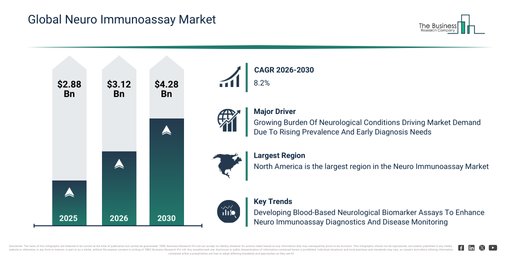
    The neuro immunoassay (NIA) market size has demonstrated strong growth in recent years. It is projected to expand from $2.88 billion in 2025 to $3.12 billion in 2026, achieving a compound annual growth rate (CAGR) of 8.5%. The expansion witnessed in prior periods is attributable to a growing demand for sensitive neurological diagnostics, the increasing adoption of immunoassay techniques in neuroscience research, a rising prevalence of neurodegenerative disorders, the expansion of clinical and research laboratories, and an increasing focus on early disease detection and monitoring.

    The neuro immunoassay (NIA) market is projected for substantial expansion over the upcoming years, with its valuation expected to reach $4.28 billion by 2030, exhibiting a compound annual growth rate (CAGR) of 8.2%. This anticipated increase during the forecast period is fueled by factors such as the growing incorporation of neuro immunoassay (NIA) with artificial intelligence (AI) data analysis, heightened investment in biomarker discovery, the increasing uptake of personalized medicine and therapeutic monitoring, the expansion of high-throughput screening platforms, and an uptick in the need for automated and precise immunoassay systems. Key developments expected during this period involve technology-driven breakthroughs improving assay sensitivity and specificity, progress in artificial intelligence (AI)-enabled data interpretation, the evolution of multiplexed and lab-on-a-chip immunoassay systems, intensified research and development efforts in neuro biomarker identification, and innovations in integrated and automated neurodiagnostic platforms.

    Download the Free Sample Report to Explore Key Market Insights:

    https://www.thebusinessresearchcompany.com/sample.aspx?id=30676&type=smp

    Which Growth Drivers Are Contributing To The Progress Of The Neuro Immunoassay Market?

    The projected expansion of the neuro immunoassay market is linked to the rising occurrence of neurological disorders. These disorders are defined as medical conditions impacting the brain, spinal cord, and nerves, which interfere with normal nervous system function, resulting in various impairments such as those affecting movement, cognition, sensation, behavior, or overall bodily control. Their growing prevalence can be attributed to detrimental lifestyle choices, including inadequate diet, lack of physical activity, smoking, high alcohol intake, and persistent stress. Neuro immunoassays facilitate the identification of particular biomarkers within the nervous system, aiding in prompt diagnosis and personalized treatment for individuals with neurological conditions. For example, in April 2024, the National Institutes of Health (NIH), a US-based government agency, reported that approximately 6.9 million Americans aged 65 and older are currently affected by Alzheimer’s dementia, a number expected to almost double to 13.8 million by 2060. Consequently, the escalating incidence of neurological disorders is a key driver for the neuro immunoassay market.

    How Is The Neuro Immunoassay Market Segmented Across Key Categories?

    The neuro immunoassay market covered in this report is segmented –

    1) By Product Type: Reagents And Kits, Analyzers

    2) By Technology: Radioimmunoassays (RIA), Polymerase Chain Reaction (PCR), Enzyme-Linked Immunosorbent Assay (ELISA), Western Blot, Rapid Tests, Enzyme-Linked Immunospot Assay (ELISPOT)

    3) By Analyte Or Biomarker Type: Amyloid-Beta (Aβ), Tau Protein (p-Tau), Alpha-Synuclein (α-syn), Neurofilament Light Chain (NfL), Autoantibodies, Cytokines, Glial Fibrillary Acidic Protein (GFAP), Neuron-Specific Enolase (NSE), Ubiquitin C-Terminal Hydrolase L1 (UCH-L1), Brain-Derived Neurotrophic Factor (BDNF)

    4) By Application: Alzheimer’s Disease, Parkinson’s Disease (PD), Huntington’s Disease, Amyotrophic Lateral Sclerosis (ALS), Spinal Muscular Atrophy (SMA)

    5) By End-User: Hospitals, Clinics, Academic Organizations, Biopharmaceutical Companies, Pharmaceutical Companies, Other End-Users

    Subsegments:

    1) By Reagents And Kits: Enzyme Linked Immunosorbent Assay Reagents, Western Blotting Kits, Multiplex Assay Kits

    2) By Analyzers: Automated Immunoassay Analysers, Point Of Care Immunoassay Analysers, High Throughput Immunoassay Analysers

    Which Upcoming Trends Are Expected To Influence The Neuro Immunoassay Market?

    Major companies within the neuro immunoassay market are prioritizing the development of advanced solutions, such as blood-based neurological biomarker assays, to enhance disease oversight, improve the precision of prognoses, and support clinical decision-making for neurological disorders. Blood-based neurological biomarker assays are tests designed to quantify specific proteins, including Neurofilament Light Chain (NfL), present in human serum or plasma to evaluate neuronal damage and disease activity. For instance, in June 2024, Siemens Healthineers, a Germany-based in vitro diagnostics company, obtained CE marking for its Neurofilament Light Chain blood test, which is intended for use with the Atellica IM Analyzer and ADVIA Centaur systems. This test quantifies NfL levels to assist in predicting the risk of neuronal injury in adults with relapsing multiple sclerosis, complementing clinical, imaging, and laboratory assessments. The CE mark confirms compliance with European In Vitro Diagnostic Regulations, thus expanding access to standardized neuro immunoassay diagnostics across European laboratories.

    Which Companies Are Leading Innovation In The Neuro Immunoassay Market?

    Major companies operating in the neuro immunoassay market are Thermo Fisher Scientific Inc., Merck KGaA, Bio-Rad Laboratories Inc., GenScript Biotech Corporation, Abcam plc, BioLegend Inc., Meso Scale Diagnostics LLC, Sino Biological Inc., Quanterix Corporation, Cusabio Technology LLC, OriGene Technologies Inc., Elabscience Biotechnology Inc., RayBiotech Life Inc., Enzo Life Sciences Inc., Rockland Immunochemicals Inc., Assay Genie Ltd., Novus Biologicals LLC, Creative Diagnostics, MyBioSource Inc., Immuno-Biological Laboratories Co. Ltd., Boster Biological Technology, Cloud-Clone Corp., FineTest Biotech Inc., Abbexa Ltd.

    Read the full neuro immunoassay market report here:

    https://www.thebusinessresearchcompany.com/report/neuro-immunoassay-market-report

    Which Region Is Expected To Experience The Fastest Growth In The Neuro Immunoassay Market?

    North America was the largest region in the neuro immunoassay (NIA) market in 2025. Asia-Pacific is expected to be the fastest-growing region in the forecast period. The regions covered in the neuro immunoassay market report are Asia-Pacific, South East Asia, Western Europe, Eastern Europe, North America, South America, Middle East, Africa.

    Request A Tailored Neuro Immunoassay Market Research Report For Competitive Advantage:

    https://www.thebusinessresearchcompany.com/customise?id=30676&type=smp

    Browse Through More Reports Similar to the Global Neuro Immunoassay Market 2026, By The Business Research Company

    Immunoassay Market Report 2026

    https://www.thebusinessresearchcompany.com/report/immunoassay-global-market-report

    Immunohematology Market Report 2026

    https://www.thebusinessresearchcompany.com/report/immunohematology-global-market-report

    immunomodulator global market report

    https://www.thebusinessresearchcompany.com/report/immunomodulator-global-market-report

    Get in touch with us:

    The Business Research Company: https://www.thebusinessresearchcompany.com/

    Americas +1 310-496-7795

    Asia +44 7882 955267 & +91 8897263534

    Europe +44 7882 955267

    Email us at info@tbrc.info

    Follow us on:

    LinkedIn: https://in.linkedin.com/company/the-business-research-company

    YouTube: https://www.youtube.com/channel/UC24_fI0rV8cR5DxlCpgmyFQ

    Global Market Model: https://www.thebusinessresearchcompany.com/global-market-model
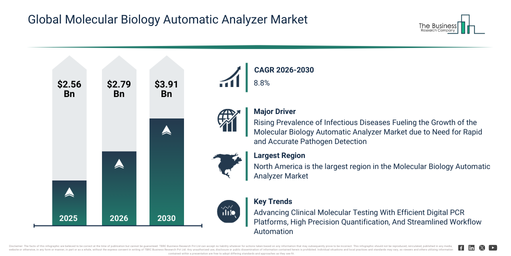
  • Molecular Biology Automatic Analyzer Market Outlook 2026–2030 Highlighting Key Drivers and Emerging Trends

    Molecular Biology Automatic Analyzer Market Outlook 2026–2030 Highlighting Key Drivers and Emerging Trends

    The Business Research Company’s 2026 market reports include new capabilities such as market attractiveness scoring and analysis, total addressable market analysis, company scoring matrix, interactive excel data dashboard, improved supply chain analysis, upcoming startups in the market, and overview of key products, aimed at improving the depth, usability, and strategic value of the insights delivered.

    What Is The Expected Market Size Of The Molecular Biology Automatic Analyzer Market From 2026 To 2030?

    The molecular biology automatic analyzer market has experienced robust growth in recent years. This market is projected to expand from $2.56 billion in 2025 to $2.79 billion in 2026, achieving a compound annual growth rate (CAGR) of 9.1%. The historical expansion can be attributed to the increasing adoption of automated lab equipment, a growing demand for molecular diagnostics, rising investment in genomic research, the expansion of biotechnology research centers, and the increasing prevalence of chronic and infectious diseases.

    The molecular biology automatic analyzer market is set to experience robust expansion over the next few years. It is projected to ascend to $3.91 billion by 2030, exhibiting a compound annual growth rate (CAGR) of 8.8%. This expected growth during the forecast period can be attributed to a heightened focus on personalized medicine, the increasing incorporation of AI and robotics within laboratories, a surging demand for high-throughput sequencing, the extension of molecular diagnostics into emerging markets, and augmented investment in the development of cell and gene therapies. Significant trends anticipated in this period include technological progress in automation and AI, innovations in high-throughput molecular analysis, advancements in multi-omics research, ongoing research and development in gene editing technologies, and improvements in sample preparation and assay accuracy.

    Download the Free Sample Report to Explore Key Market Insights:

    https://www.thebusinessresearchcompany.com/sample.aspx?id=30664&type=smp

    What Drivers Are Shaping The Future Growth Of The Molecular Biology Automatic Analyzer Market?

    The expanding prevalence of infectious diseases is projected to drive the future growth of the molecular biology automatic analyzer market. Infectious diseases are illnesses caused by harmful microorganisms such as bacteria, viruses, fungi, or parasites that invade the body, multiply, and lead to various symptoms and health complications. The surge in these diseases is fueled by increased global travel, which accelerates the spread of pathogens across different regions and populations. Molecular biology automatic analyzers play a crucial role in diagnosing infectious diseases by swiftly and accurately detecting and quantifying pathogens at a genetic level. These analyzers enhance patient outcomes by enabling early, precise, and efficient identification of infections, facilitating timely treatment. For instance, in February 2024, the UK Health Security Agency, a UK-based government agency, indicated that tuberculosis (a contagious bacterial infection primarily affecting the lungs) cases in England increased to 4,850 in 2023, marking a 10.7% rise from 4,380 cases recorded in 2022. Thus, the rising incidence of infectious diseases is a key factor propelling the molecular biology automatic analyzer market’s expansion.

    Which Segments Are Included In The Analysis Of The Molecular Biology Automatic Analyzer Market?

    The molecular biology automatic analyzer market covered in this report is segmented –

    1) By Product Type: Real-Time PCR Systems, Next-Generation Sequencing Systems, Automated Nucleic Acid Extraction Systems, Microarray Analysis Systems, Integrated Sample-To-Answer Molecular Analyzers

    2) By Technology: Optical Technologies, Mass Spectrometry, Microfluidics Technology, Isothermal Nucleic Acid Amplification, Digital PCR Technology

    3) By Throughput And Scale: High-Throughput Systems, Mid-Throughput Systems, Low-Throughput Systems

    4) By Application: Genetic Research, Clinical Diagnostics, Infectious Disease Testing, Oncology And Precision Medicine, Pharmacogenomics, Forensic And Environmental Testing

    5) By End-User: Hospitals And Diagnostic Laboratories, Academic And Research Institutions, Biotechnology And Pharmaceutical Companies, Contract Research Organizations, Public Health Laboratories

    Subsegments:

    1) By Real-Time PCR Systems: Quantitative Polymerase Chain Reaction Instruments, Digital Polymerase Chain Reaction Instruments, High Throughput Polymerase Chain Reaction Platforms, Portable Polymerase Chain Reaction Devices, Multiplex Polymerase Chain Reaction Systems

    2) By Next-Generation Sequencing Systems: Whole Genome Sequencing Platforms, Whole Exome Sequencing Platforms, Targeted Gene Sequencing Platforms, Single Cell Sequencing Systems, Long Read Sequencing Instruments

    3) By Automated Nucleic Acid Extraction Systems: Magnetic Bead Based Extraction Instruments, Cartridge Based Extraction Systems, Automated Liquid Handling Extraction Platforms, High Throughput Extraction Workstations, Portable Nucleic Acid Extraction Devices

    4) By Microarray Analysis Systems: Deoxyribonucleic Acid Microarray Platforms, Ribonucleic Acid Expression Microarray Systems, Protein Microarray Platforms, Single Nucleotide Polymorphism Genotyping Microarrays, High Density Microarray Scanners

    5) By Integrated Sample-To-Answer Molecular Analyzers: Cartridge Based Sample To Result Systems, Fully Automated Point Of Care Molecular Platforms, Closed Tube Integrated Analysis Systems, High Throughput Sample To Answer Workstations, Portable Integrated Molecular Diagnostic Devices

    Which Trends Are Impacting The Growth Of The Molecular Biology Automatic Analyzer Market?

    Major companies operating in the molecular biology automatic analyzer market are concentrating on developing advanced diagnostic technologies, such as efficient digital PCR platforms, to improve sensitivity, accuracy, and throughput in nucleic acid quantification for clinical and research applications. An efficient digital PCR platform is an automated system that partitions samples into thousands of microreactions, enabling precise, absolute quantification of target DNA or RNA sequences with minimal bias, thereby supporting reliable detection of low-abundance biomarkers and enhancing diagnostic confidence. For instance, in September 2024, QIAGEN N.V., a Netherlands-based molecular diagnostics and life science tools company, introduced the QIAcuity Dx digital PCR system for clinical testing in oncology. This platform integrates digital PCR technology with an automated workflow, allowing laboratories to perform high-precision quantification of genetic targets relevant to cancer diagnostics and therapy monitoring. The system’s efficient digital PCR capabilities ensure robust data quality, simplified operation, and rapid turnaround times for clinical test results.

    Who Are The Top Companies Competing In The Molecular Biology Automatic Analyzer Market?

    Major companies operating in the molecular biology automatic analyzer market are Thermo Fisher Scientific Inc., Becton Dickinson and Company, Siemens Healthineers AG, Agilent Technologies Inc., Illumina Inc., Hologic Inc., PerkinElmer Inc., bioMérieux SA, Sysmex Corporation, QIAGEN N.V., Bio-Rad Laboratories Inc., Roche Diagnostics, Hamilton Robotics, Tecan Group Ltd., Eppendorf SE, Takara Bio Inc., BGI Genomics Co. Ltd., Analytik Jena AG, Seegene Inc., Abbott Molecular Inc.

    Read the full molecular biology automatic analyzer market report here:

    https://www.thebusinessresearchcompany.com/report/molecular-biology-automatic-analyzer-market-report

    Which Global Regions Are Shaping The Competitive Landscape Of The Molecular Biology Automatic Analyzer Market?

    North America was the largest region in the molecular biology automatic analyzer market in 2025. Asia-Pacific is expected to be the fastest-growing region in the forecast period. The regions covered in the molecular biology automatic analyzer market report are Asia-Pacific, South East Asia, Western Europe, Eastern Europe, North America, South America, Middle East, Africa.

    Request A Tailored Molecular Biology Automatic Analyzer Market Research Report For Competitive Advantage:

    https://www.thebusinessresearchcompany.com/customise?id=30664&type=smp

    Browse Through More Reports Similar to the Global Molecular Biology Automatic Analyzer Market 2026, By The Business Research Company

    Fully Automatic Biochemistry Analyzer Market Report 2026

    https://www.thebusinessresearchcompany.com/report/fully-automatic-biochemistry-analyzer-global-market-report

    Biochemistry Analyzer Market Report 2026

    https://www.thebusinessresearchcompany.com/report/biochemistry-analyzer-global-market-report

    bioprocess analyzers global market report

    https://www.thebusinessresearchcompany.com/report/bioprocess-analyzers-global-market-report

    Get in touch with us:

    The Business Research Company: https://www.thebusinessresearchcompany.com/

    Americas +1 310-496-7795

    Asia +44 7882 955267 & +91 8897263534

    Europe +44 7882 955267

    Email us at info@tbrc.info

    Follow us on:

    LinkedIn: https://in.linkedin.com/company/the-business-research-company

    YouTube: https://www.youtube.com/channel/UC24_fI0rV8cR5DxlCpgmyFQ

    Global Market Model: https://www.thebusinessresearchcompany.com/global-market-model
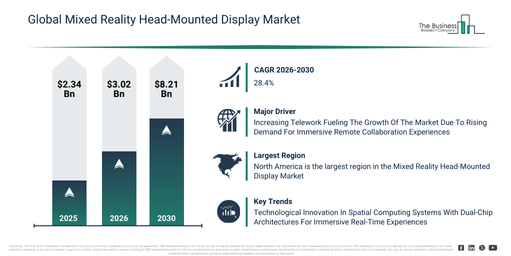
  • A key trend shaping the Mixed Reality Head-Mounted Display Market is rising telework demand, driving immersive remote collaboration solutions

    A key trend shaping the Mixed Reality Head-Mounted Display Market is rising telework demand, driving immersive remote collaboration solutions

    The Business Research Company’s 2026 market reports include new capabilities such as market attractiveness scoring and analysis, total addressable market analysis, company scoring matrix, interactive excel data dashboard, improved supply chain analysis, upcoming startups in the market, and overview of key products, aimed at improving the depth, usability, and strategic value of the insights delivered.

    How Is The Market Size Of The Mixed Reality Head-Mounted Display Market Expected To Change Between 2026 And 2030?

    The mixed reality head-mounted display market has experienced remarkable expansion in recent years. Its valuation is set to increase from $2.34 billion in 2025 to $3.02 billion in 2026, registering a compound annual growth rate (CAGR) of 28.7%. The historical growth of this market can be attributed to several factors, including the rising adoption of virtual reality, a growing demand for immersive experiences, the increasing integration of augmented reality, the broadening scope of gaming applications, and the development of more enterprise training solutions.

    The mixed reality head-mounted display market is set to experience substantial expansion over the next few years. It is anticipated to achieve a valuation of $8.21 billion by 2030, demonstrating a compound annual growth rate (CAGR) of 28.4%. This expected growth during the forecast period is driven by rising investment in mixed reality research, increased application in industrial sectors, broader adoption in healthcare, the proliferation of remote collaboration solutions, and wider implementation in education. Noteworthy trends predicted for this period include technological advancements in optics and sensors, innovations concerning artificial intelligence integration, progress in spatial computing, research and development focused on ergonomics, and improvements in cloud and edge rendering technologies.

    Download the Free Sample Report to Explore Key Market Insights:

    https://www.thebusinessresearchcompany.com/sample.aspx?id=30658&type=smp

    What Major Drivers Are Influencing Demand In The Mixed Reality Head-Mounted Display Market?

    The growing trend towards remote work is projected to fuel the expansion of the mixed reality head-mounted display market in the future. Remote work involves setups where staff carry out their professional responsibilities from their residences or distant sites, utilizing digital communication and teamwork instruments. The adoption of remote work is increasing because businesses acknowledge that these models can decrease operational expenses, broaden access to worldwide talent, and enhance staff work-life equilibrium, all while sustaining or boosting output. Mixed reality head-mounted displays facilitate remote work by allowing for immersive virtual teamwork and distant viewing of professional settings. These devices boost efficiency and communication, letting users engage with three-dimensional content, hold virtual conferences, and carry out remote support activities as though they were physically present. For example, by March 2025, data from the U.S. Bureau of Labor Statistics, a US-based federal agency, revealed that 35.5 million individuals engaged in telework or worked from home for compensation in the first quarter of 2024, representing an increase of 5.1 million compared to the previous year, constituting 22.9 percent of the employed workforce, up from 19.6 percent in 2023. Consequently, the expansion of remote work is propelling the development of the mixed reality head-mounted display market.

    How Is The Mixed Reality Head-Mounted Display Market Structured Across Different Segments?

    The mixed reality head-mounted display market covered in this report is segmented –

    1) By Component: Hardware, Software, Services

    2) By Product Type: Standalone, Tethered

    3) By Technology: Virtual Reality, Augmented Reality, Mixed Reality

    4) By Application: Gaming And Entertainment, Healthcare, Education And Training, Industrial And Manufacturing, Retail, Other Applications

    5) By End-User: Consumer, Commercial, Enterprise, Other End-Users

    Subsegments:

    1) By Hardware: Display Panel, Optical Engine, Sensor Module, Processing Unit, Connectivity Module, Battery System, Input And Control Interface

    2) By Software: Operating Platform, Application Software, Development Tools, Content Management Software, Spatial Mapping Software

    3) By Services: Integration And Deployment Service, Consulting Service, Training And Support Service, Maintenance And Upgrade Service, Managed Service

    Which Trends Are Shaping The Future Of The Mixed Reality Head-Mounted Display Market?

    Leading firms within the mixed reality head-mounted display market are concentrating their efforts on creating sophisticated offerings, including dual-chip silicon architectures, aimed at processing high-resolution visual data with minimal latency. These dual-chip silicon architectures involve configurations where two distinct silicon dies or chips are closely unified within a singular package. This integration serves to distribute computing tasks, boost overall performance, and optimize either power consumption or cost-effectiveness when compared to a sole monolithic chip. As an illustration, in June 2023, Apple Inc., a technology firm based in the US, introduced the Apple Vision Pro, which is its inaugural spatial computer and incorporates visionOS. This particular device incorporates an innovative dual-chip architecture, utilizing the M2 chip for robust independent performance and the entirely new R1 chip. The R1 chip is responsible for processing data originating from 12 cameras, five sensors, and six microphones, enabling the streaming of images to the micro-OLED display system within 12 milliseconds—a speed eight times quicker than the duration of a human eye blink.

    Who Are The Leading Companies Operating In The Mixed Reality Head-Mounted Display Market?

    Major companies operating in the mixed reality head-mounted display market are Apple Inc., Google LLC, Microsoft Corporation, Samsung Electronics Co. Ltd., Meta Platforms Inc., Sony Group Corporation, Panasonic Holdings Corporation, HP Inc., Canon Inc., ASUSTeK Computer Inc., Seiko Epson Corporation, Acer Inc., XREAL Inc., HTC Corporation, Rokid Corporation Ltd., Pimax Innovation Inc., Varjo Technologies Oy, Deepoon Virtual Reality Co. Ltd., IrisVision Global Inc., Vrgineers Inc., NuEyes Technologies Inc.

    Read the full mixed reality head-mounted display market report here:

    https://www.thebusinessresearchcompany.com/report/mixed-reality-head-mounted-display-market-report

    Which Regions Are Projected To Dominate The Mixed Reality Head-Mounted Display Market In The Coming Years?

    North America was the largest region in the mixed reality head-mounted display market in 2025. Asia-Pacific is expected to be the fastest-growing region in the forecast period. The regions covered in the mixed reality head-mounted display market report are Asia-Pacific, South East Asia, Western Europe, Eastern Europe, North America, South America, Middle East, Africa.

    Request A Tailored Mixed Reality Head-Mounted Display Market Research Report For Competitive Advantage:

    https://www.thebusinessresearchcompany.com/customise?id=30658&type=smp

    Browse Through More Reports Similar to the Global Mixed Reality Head-Mounted Display Market 2026, By The Business Research Company

    Head Mount Display Market Report 2026

    https://www.thebusinessresearchcompany.com/report/head-mount-display-global-market-report

    Extended Reality Display Market Report 2026

    https://www.thebusinessresearchcompany.com/report/extended-reality-display-global-market-report

    aerospace helmet mounted display global market report

    https://www.thebusinessresearchcompany.com/report/aerospace-helmet-mounted-display-global-market-report

    Get in touch with us:

    The Business Research Company: https://www.thebusinessresearchcompany.com/

    Americas +1 310-496-7795

    Asia +44 7882 955267 & +91 8897263534

    Europe +44 7882 955267

    Email us at info@tbrc.info

    Follow us on:

    LinkedIn: https://in.linkedin.com/company/the-business-research-company

    YouTube: https://www.youtube.com/channel/UC24_fI0rV8cR5DxlCpgmyFQ

    Global Market Model: https://www.thebusinessresearchcompany.com/global-market-model