Category: Healthcare Services

  • Virtual Rehabilitation Market Revenue Growth Expected to Reach $2.45 Billion by 2030 with 24.6% CAGR

    Virtual Rehabilitation Market Revenue Growth Expected to Reach $2.45 Billion by 2030 with 24.6% CAGR

    The Business Research Company’s 2026 market reports include new capabilities such as market attractiveness scoring and analysis, total addressable market analysis, company scoring matrix, interactive excel data dashboard, improved supply chain analysis, upcoming startups in the market, and overview of key products, aimed at improving the depth, usability, and strategic value of the insights delivered.

    What Market Value Is Expected For The Virtual Rehabilitation Market At The End Of The 2026–2030 Forecast Period?

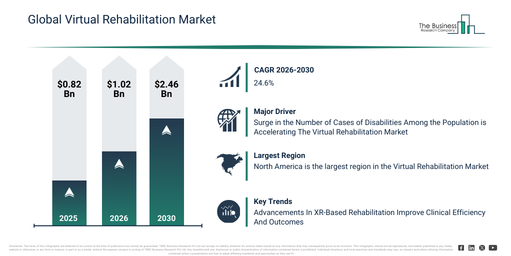
    The virtual rehabilitation market has experienced substantial expansion in recent years. Its value is projected to climb from $0.82 billion in 2025 to $1.02 billion in 2026, demonstrating a compound annual growth rate (CAGR) of 24.3%. The market’s past growth can be attributed to several factors, including an increased demand for rehabilitation services, the growing prevalence of chronic and mobility-related conditions, the broader availability of outpatient therapy services, the increasing adoption of digital health tools, and improved access to rehabilitation technologies.

    The virtual rehabilitation market size is projected for significant expansion over the next few years. It is expected to grow to $2.46 billion in 2030, exhibiting a compound annual growth rate (CAGR) of 24.6%. The anticipated growth within this period is attributed to an increasing focus on remote patient care, rising investments in digital rehabilitation platforms, the expansion of personalized therapy solutions, growing adoption of home-based care models, and increasing use of data-driven rehabilitation programs. Key trends during the forecast period include the increasing adoption of VR-based physical therapy programs, the rising use of gamified rehabilitation solutions, the growing integration of remote monitoring tools, the expansion of home-based virtual rehab platforms, and an enhanced focus on personalized therapy plans.

    Download the Free Sample Report to Explore Key Market Insights:

    https://www.thebusinessresearchcompany.com/sample.aspx?id=13949&type=smp

    What Drivers Are Shaping The Future Growth Of The Virtual Rehabilitation Market?

    The anticipated expansion of the virtual rehabilitation market is driven by the increasing occurrence of disability. Disability refers to a physical, cognitive, sensory, or mental condition that significantly impedes an individual’s capacity to perform daily activities, participate fully in society, or engage in typical life roles. Virtual rehabilitation supports the disabled population by offering remote access to therapeutic interventions and personalized exercises through virtual platforms. For instance, in March 2023, the World Health Organization, a Switzerland-based international public health organization, reported that approximately 1.3 billion people across the globe, constituting 16% of the total global population, have disabilities. Therefore, the growing prevalence of disability among the population is propelling the growth of the virtual rehabilitation market.

    What Segment Types Make Up The Virtual Rehabilitation Market?

    The virtual rehabilitation market covered in this report is segmented –

    1) By Type: Physical Rehabilitation, Neuro And Cognitive Rehabilitation, Other Types

    2) By Patient Type: Short Term Patients, Long Term Patients

    3) By End-User: Inpatient Rehabilitation Hospitals, Rehabilitation Centers And Clinics, Home Care Settings

    Subsegments:

    1) By Physical Rehabilitation: Musculoskeletal Rehabilitation, Sports Injury Rehabilitation, Post-Surgery Rehabilitation

    2) By Neuro And Cognitive Rehabilitation: Stroke Rehabilitation, Traumatic Brain Injury (TBI) Rehabilitation, Memory And Cognitive Skills Training

    3) By Other Types: Pediatric Rehabilitation, Cardiac Rehabilitation, Geriatric Rehabilitation

    Which Trends Are Influencing The Virtual Rehabilitation Market?

    Leading companies within the virtual rehabilitation market are concentrating on developing sophisticated solutions, such as plug-and-play VR rehabilitation stations, to improve therapy accessibility, reduce deployment obstacles, and deliver consistent, high-quality rehabilitation across diverse care settings. A plug-and-play VR rehabilitation station is characterized as an integrated, mobile therapeutic system that provides immersive physical, occupational, and mental health treatment without requiring IT setup, network configuration, or dedicated infrastructure, significantly enhancing ease of use compared to traditional in-clinic rehabilitation tools. For instance, in September 2025, XRHealth, a U.S.-based extended-reality healthcare company, introduced the XR CareCart, an all-in-one mobile VR rehabilitation station designed for immediate deployment in clinics, hospitals, senior care centers, and community health environments. Equipped with two VR headsets, a preloaded therapeutic platform, a patient-facing tablet, dual clinician monitors, and an integrated SIM-based router, this system delivers FDA-registered programs covering physical therapy, occupational therapy, and mental health interventions. The platform facilitates real-time monitoring, session casting, HIPAA-compliant data handling, and scalable multi-patient use, thereby offering an advanced, infrastructure-free alternative to conventional therapy setups.

    Who Are The Key Players Driving Competition In The Virtual Rehabilitation Market?

    Major companies operating in the virtual rehabilitation market are SWORD Health, Hinge Health Inc., Meden-Inmed, BO&BO Ltd., Saebo Inc., Mindmaze, Motek Medical B.V., XRHealth (VRHealth), Tyromotion GmbH, LiteGait, GestureTek Health, Rehab-Robotics, Virtualware Group, MIRA Rehab Limited, Myelin-H, Motorika, Doctor Kinetic, Agile Virtual PT, Cogniv Technologies, Immersive Rehab, Neuro Rehab VR, Rehametrics, CoRehab srl, Accelerated Care Plus Corporation, Euleria S.R.L

    Read the full virtual rehabilitation market report here:

    https://www.thebusinessresearchcompany.com/report/virtual-rehabilitation-global-market-report

    Which Geographic Regions Are Influencing Demand In The Virtual Rehabilitation Market?

    North America was the largest region in the virtual rehabilitation market in 2025. Europe is expected to be the fastest-growing region in the forecast period. The regions covered in the virtual rehabilitation market report are Asia-Pacific, South East Asia, Western Europe, Eastern Europe, North America, South America, Middle East, Africa.

    Request A Tailored Virtual Rehabilitation Market Research Report For Competitive Advantage:

    https://www.thebusinessresearchcompany.com/customise?id=13949&type=smp

    Browse Through More Reports Similar to the Global Virtual Rehabilitation Market 2026, By The Business Research Company

    Behavioral Rehabilitation Global Market Report

    https://www.thebusinessresearchcompany.com/report/behavioral-rehabilitation-global-market-report

    Rehabilitation Robotics Global Market Report

    https://www.thebusinessresearchcompany.com/report/rehabilitation-robotics-global-market-report

    Rehabilitation Equipment Global Market Report

    https://www.thebusinessresearchcompany.com/report/rehabilitation-equipment-global-market-report

    Get in touch with us:

    The Business Research Company: https://www.thebusinessresearchcompany.com/

    Americas +1 310-496-7795

    Asia +44 7882 955267 & +91 8897263534

    Europe +44 7882 955267

    Email us at info@tbrc.info

    Follow us on:

    LinkedIn: https://in.linkedin.com/company/the-business-research-company

    YouTube: https://www.youtube.com/channel/UC24_fI0rV8cR5DxlCpgmyFQ

    Global Market Model: https://www.thebusinessresearchcompany.com/global-market-model
  • Virtual Reality Vision Therapy Market Expected to Record Steady Growth and Approach $3.87 Billion by 2030

    Virtual Reality Vision Therapy Market Expected to Record Steady Growth and Approach $3.87 Billion by 2030

    The Business Research Company’s 2026 market reports include new capabilities such as market attractiveness scoring and analysis, total addressable market analysis, company scoring matrix, interactive excel data dashboard, improved supply chain analysis, upcoming startups in the market, and overview of key products, aimed at improving the depth, usability, and strategic value of the insights delivered.

    What Is The Estimated Market Size Of The Virtual Reality Vision Therapy Market During 2026–2030?

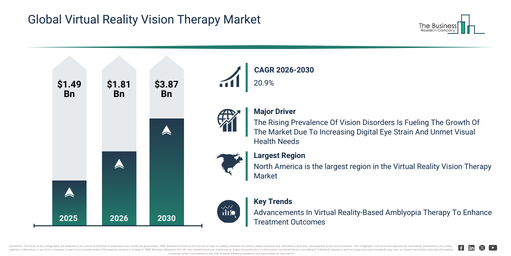
    The virtual reality vision therapy market size has witnessed substantial expansion in recent years. It is anticipated to grow from $1.49 billion in 2025 to $1.81 billion in 2026, showing a compound annual growth rate (CAGR) of 21.2%. The growth experienced in the historic period is attributable to the increasing prevalence of visual disorders, the rising adoption of digital therapeutic tools, a growing acceptance of non-invasive vision treatments, the expansion of pediatric vision therapy practices, and the availability of consumer-grade VR hardware.

    The virtual reality vision therapy market size is expected to experience significant expansion in the next few years, with projections indicating it will reach $3.87 billion by 2030, driven by a compound annual growth rate (CAGR) of 20.9%. This anticipated growth is primarily due to several factors, including an increasing preference for home-based vision therapy, the rising integration of AI-driven visual assessments, the broadening of tele-vision therapy services, greater investments in digital healthcare platforms, and a wider adoption of immersive healthcare solutions. During the forecast period, major trends are set to include the growing acceptance of immersive vision training platforms, increased use of gamified therapy modules, the evolving integration of eye-tracking technologies, the expansion of remote and home-based vision therapy options, and enhanced personalization of therapy programs.

    Download the Free Sample Report to Explore Key Market Insights:

    https://www.thebusinessresearchcompany.com/sample.aspx?id=28359&type=smp

    Which Economic Or Industry Drivers Are Impacting The Virtual Reality Vision Therapy Market?

    The escalating occurrence of vision disorders is projected to boost the expansion of the virtual reality vision therapy market in the coming period. These disorders are conditions that impede clear sight, affecting visual sharpness, focus, or field of vision. The surge in vision disorders is primarily a consequence of extended screen usage, which leads to eye strain and digital eye fatigue, thereby compromising overall visual health. Virtual reality vision therapy addresses these disorders by delivering immersive exercises designed to enhance eye coordination, focus, and depth perception, while also stimulating neural pathways to improve visual processing and overall eye function. As an illustration, in August 2023, the World Health Organization, an intergovernmental agency situated in Switzerland, stated that globally, more than 2.2 billion individuals experience some form of vision impairment, impacting either near or distance vision. Out of these cases, nearly 1 billion, representing almost half, could have been prevented or remain untreated. Consequently, the rising prevalence of vision disorders is a key catalyst for the growth of the virtual reality vision therapy market.

    How Are The Various Segments Of The Virtual Reality Vision Therapy Market Categorized?

    The virtual reality vision therapy market covered in this report is segmented –

    1) By Product Type: Hardware, Software, Services

    2) By Therapy Type: Amblyopia, Strabismus, Convergence Insufficiency, Binocular Vision Dysfunction, Other Therapy Types

    3) By Distribution Channel: Direct Sales, Online Retail, Other Distribution Channels

    4) By End-User: Hospitals And Clinics, Vision Therapy Centers, Homecare Settings, Other End-Users

    Subsegments:

    1) By Hardware: Head-Mounted Displays (HMDs), Virtual Reality (VR) Glasses, Eye-Tracking Devices, Motion Sensors, Haptic Feedback Devices, Handheld Controllers

    2) By Software: Vision Therapy Applications, Virtual Reality (VR) Simulation Software, Eye Exercise Software, Gamified Vision Therapy Programs, Augmented Reality (AR) Integration Software

    3) By Services: Tele-Vision Therapy Services, Clinical Consultation Services, Rehabilitation Program Management, Training And Support Services, Software As A Service (SaaS) For Vision Therapy

    What Trends Are Advancing Progress In The Virtual Reality Vision Therapy Market?

    Leading companies within the virtual reality vision therapy market are concentrating on developing advanced solutions, such as VR-based amblyopia therapy, to boost patient adherence to treatment and enhance visual outcomes. This virtual reality-based amblyopia therapy actively involves the weaker eye via immersive visual exercises, aiming to improve focus, coordination, and depth perception, simultaneously activating neural pathways to refine visual processing and overall sight. As an example, in April 2025, Luminopia, Inc., a US-based digital therapeutics company, secured approval from the Food and Drug Administration (FDA) for its amblyopia treatment for children aged 8 to 12 years, building upon its prior clearance for ages 4 to 7. This authorization stems from substantial real-world data collected from Luminopia’s PUPiL Registry and various clinical trials. Luminopia’s digital therapy employs a VR headset, enabling patients to view familiar TV programs while specialized therapeutic algorithms stimulate both eyes to correct vision in children experiencing amblyopia associated with anisometropia and mild strabismus.

    Which Major Firms Influence Developments In The Virtual Reality Vision Therapy Market?

    Major companies operating in the virtual reality vision therapy market are Meta Platforms Inc., Tobii AB, Varjo Technologies Inc., XRHealth Ltd., VR Vision Group, Floreo Inc., AmblyoPlay, Vivid Vision Inc., Luminopia Inc., NovaSight Inc., Virtualis VR Corp., Wow Vision Therapy, Cognihab Inc., Fusion VR, Computer Orthoptics Inc., SyncThink Inc., NeuraSim Private Limited, Neuro Rehab VR, MindMotion SA, AppliedVR Inc.

    Read the full virtual reality vision therapy market report here:

    https://www.thebusinessresearchcompany.com/report/virtual-reality-vision-therapy-global-market-report

    What Are The Top-Performing Regions Within The Virtual Reality Vision Therapy Market?

    North America was the largest region in the virtual reality vision therapy market in 2025. Asia-Pacific is expected to be the fastest-growing region in the forecast period. The regions covered in the virtual reality vision therapy market report are Asia-Pacific, South East Asia, Western Europe, Eastern Europe, North America, South America, Middle East, Africa.

    Request A Tailored Virtual Reality Vision Therapy Market Research Report For Competitive Advantage:

    https://www.thebusinessresearchcompany.com/customise?id=28359&type=smp

    Browse Through More Reports Similar to the Global Virtual Reality Vision Therapy Market 2026, By The Business Research Company

    Virtual Rehabilitation Global Market Report

    https://www.thebusinessresearchcompany.com/report/virtual-rehabilitation-global-market-report

    Virtual Reality Services Global Market Report

    https://www.thebusinessresearchcompany.com/report/virtual-reality-services-global-market-report

    Virtual Reality Vr In Medical Simulation Global Market Report

    https://www.thebusinessresearchcompany.com/report/virtual-reality-vr-in-medical-simulation-global-market-report

    Get in touch with us:

    The Business Research Company: https://www.thebusinessresearchcompany.com/

    Americas +1 310-496-7795

    Asia +44 7882 955267 & +91 8897263534

    Europe +44 7882 955267

    Email us at info@tbrc.info

    Follow us on:

    LinkedIn: https://in.linkedin.com/company/the-business-research-company

    YouTube: https://www.youtube.com/channel/UC24_fI0rV8cR5DxlCpgmyFQ

    Global Market Model: https://www.thebusinessresearchcompany.com/global-market-model
  • Virtual Reality Therapy Post-Traumatic Stress Disorder (PTSD) Industry Expansion Forecast Showing Market Size of $4.56 Billion by 2030 at 22.3% CAGR

    Virtual Reality Therapy Post-Traumatic Stress Disorder (PTSD) Industry Expansion Forecast Showing Market Size of $4.56 Billion by 2030 at 22.3% CAGR

    The Business Research Company’s 2026 market reports include new capabilities such as market attractiveness scoring and analysis, total addressable market analysis, company scoring matrix, interactive excel data dashboard, improved supply chain analysis, upcoming startups in the market, and overview of key products, aimed at improving the depth, usability, and strategic value of the insights delivered.

    What Market Size Expansion Is Predicted For The Virtual Reality Therapy Post-Traumatic Stress Disorder (PTSD) Market Between 2026 And 2030?

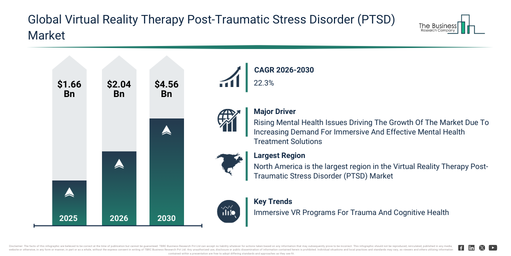
    The virtual reality therapy post-traumatic stress disorder (ptsd) market size has experienced significant expansion in recent years. Projections indicate it will grow from $1.66 billion in 2025 to $2.04 billion in 2026, achieving a compound annual growth rate (CAGR) of 22.6%. The historical growth can be attributed to the increasing prevalence of PTSD cases, rising acceptance of digital mental health therapies, the expansion of clinical research in VR psychology, advancements in VR hardware capabilities, and a growing adoption of simulation-based therapy.

    The market size for virtual reality therapy targeting post-traumatic stress disorder (ptsd) is anticipated to undergo significant expansion in the foreseeable future. It is projected to climb to $4.56 billion by 2030, achieving a compound annual growth rate (CAGR) of 22.3%. This growth during the forecast period is fueled by an escalating demand for adaptable mental health solutions, increasing integration of VR within clinical psychology, the broadening scope of mental health initiatives for military and veteran populations, the evolving incorporation of biometric feedback, and heightened investment in immersive healthcare technologies. Noteworthy trends predicted for this period encompass a wider embrace of immersive exposure therapy platforms, the expanding integration of AI-powered therapy customization, an increased utilization of multi-sensory VR environments, the expansion of remote and home-based ptsd therapy options, and a reinforced focus on measurable therapy outcomes.

    Download the Free Sample Report to Explore Key Market Insights:

    https://www.thebusinessresearchcompany.com/sample.aspx?id=29239&type=smp

    What Major Drivers Are Influencing Demand In The Virtual Reality Therapy Post-Traumatic Stress Disorder (PTSD) Market?

    The rising prevalence of mental health conditions is projected to drive the expansion of the virtual reality therapy post-traumatic stress disorder (PTSD) market in the future. Mental health issues are defined as conditions impacting an individual’s emotional, psychological, and social well-being, which influence their thinking, feeling, and behavior in daily life. The increase in these issues is largely attributable to greater stress and demands from modern lifestyles. Virtual reality therapy for PTSD provides immersive, regulated environments that assist patients in confronting and processing traumatic experiences, thereby reducing symptoms and improving overall mental health. For instance, in October 2023, the Australian Bureau of Statistics (ABS), a statistical agency based in Australia, estimated that roughly 43% of the population had experienced a mental illness at some point, while 21.5% reported showing symptoms of mental illness within the last 12 months. Therefore, the increasing mental health issues are fostering growth in the virtual reality therapy post-traumatic stress disorder (PTSD) market.

    Which Market Segments Are Examined In The Virtual Reality Therapy Post-Traumatic Stress Disorder (PTSD) Market Study?

    The virtual reality therapy post-traumatic stress disorder (ptsd) market covered in this report is segmented –

    1) By Component Type: Hardware, Software, Services

    2) By Therapy Type: Exposure Therapy, Cognitive Behavioral Therapy, Stress Inoculation Training, Other Therapy Type

    3) By Technology Type: 3D Visualization, Haptic Feedback, Gesture Tracking, Eye Tracking, Artificial Intelligence, Machine Learning, Cloud Computing

    4) By Application Type: Military Trauma, Civilian Trauma, Phobias, Other Applications

    5) By End-User: Hospitals And Clinics, Military And Defense, Research And Academic Institutes, Other End-Users

    Subsegments:

    1) By Hardware: Head Mounted Displays, Motion Sensors, Haptic Devices, Computers And Consoles

    2) By Software: Virtual Reality Applications, Therapy Management Software, Simulation Programs, Analytics And Reporting Tools

    3) By Services: Training And Support, Consultation Services, Maintenance Services, Customization Services

    How Are Trends Transforming The Virtual Reality Therapy Post-Traumatic Stress Disorder (PTSD) Market Landscape?

    Leading companies in the virtual reality therapy post-traumatic stress disorder (PTSD) market are concentrating on developing advanced solutions, such as AI-powered VR tools, to individualize exposure therapy, track patient progress in real time, and boost treatment efficacy for individuals dealing with trauma-related disorders. These AI-powered VR solutions represent virtual reality systems that leverage artificial intelligence to personalize therapeutic experiences, analyze user feedback, and optimize treatment results continuously. For instance, in May 2025, X-Technology, a UAE-based technology startup, introduced an AI-powered VR platform across the MENA region, aiming to support emotional and cognitive health in clinical and rehabilitation settings. This innovative platform delivers immersive VR therapy programs specifically designed for PTSD, trauma recovery, stress, and cognitive decline, enabling patients to access care in hospitals, wellness centers, or at home, eliminating the need for extensive physical infrastructure or travel. Equipped with AI and clinician-driven modules, it permits the customization of therapeutic environments, real-time modification of exposure intensity, and constant monitoring of patient responses, all without requiring the deployment of new hardware at each site.

    Who Are The Primary Competitors In The Virtual Reality Therapy Post-Traumatic Stress Disorder (PTSD) Market?

    Major companies operating in the virtual reality therapy post-traumatic stress disorder (ptsd) market are Ellie Mental Health PLLP, MindMaze SA., XRHealth Inc., AppliedVR Inc., Healium XR. LLC., Mieron Inc., SimX Inc., VREX Immersive Inc., MyndVR Inc., Foretell Reality LLC., PsyTechVR Ltd., Virtually Better Inc., Oxford VR Ltd., TheraVR Inc., oVRcome Ltd., Firsthand Technology Inc., Wundrsight Health Inc., PsyCurio GmbH, Limbix Inc., BehaVR Inc.

    Read the full virtual reality therapy post-traumatic stress disorder (ptsd) market report here:

    https://www.thebusinessresearchcompany.com/report/virtual-reality-therapy-post-traumatic-stress-disorder-ptsd-global-market-report

    Which Region Shows The Strongest Potential For Future Growth In The Virtual Reality Therapy Post-Traumatic Stress Disorder (PTSD) Market?

    North America was the largest region in the virtual reality therapy post-traumatic stress disorder (PTSD) market in 2025. Asia-Pacific is expected to be the fastest-growing region in the forecast period. The regions covered in the virtual reality therapy post-traumatic stress disorder (ptsd) market report are Asia-Pacific, South East Asia, Western Europe, Eastern Europe, North America, South America, Middle East, Africa.

    Request A Tailored Virtual Reality Therapy Post-Traumatic Stress Disorder (PTSD) Market Research Report For Competitive Advantage:

    https://www.thebusinessresearchcompany.com/customise?id=29239&type=smp

    Browse Through More Reports Similar to the Global Virtual Reality Therapy Post-Traumatic Stress Disorder (PTSD) Market 2026, By The Business Research Company

    Virtual Reality Vr In Medical Simulation Global Market Report

    https://www.thebusinessresearchcompany.com/report/virtual-reality-vr-in-medical-simulation-global-market-report

    Post Traumatic Stress Disorder Therapeutics Global Market Report

    https://www.thebusinessresearchcompany.com/report/post-traumatic-stress-disorder-therapeutics-global-market-report

    Virtual Reality In Healthcare Global Market Report

    https://www.thebusinessresearchcompany.com/report/virtual-reality-in-healthcare-global-market-report

    Get in touch with us:

    The Business Research Company: https://www.thebusinessresearchcompany.com/

    Americas +1 310-496-7795

    Asia +44 7882 955267 & +91 8897263534

    Europe +44 7882 955267

    Email us at info@tbrc.info

    Follow us on:

    LinkedIn: https://in.linkedin.com/company/the-business-research-company

    YouTube: https://www.youtube.com/channel/UC24_fI0rV8cR5DxlCpgmyFQ

    Global Market Model: https://www.thebusinessresearchcompany.com/global-market-model
  • Virtual Reality Phantom Limb Pain Therapy Market Revenue Expected to Reach $2.67 Billion by 2030 with 22.4% CAGR

    Virtual Reality Phantom Limb Pain Therapy Market Revenue Expected to Reach $2.67 Billion by 2030 with 22.4% CAGR

    The Business Research Company’s 2026 market reports include new capabilities such as market attractiveness scoring and analysis, total addressable market analysis, company scoring matrix, interactive excel data dashboard, improved supply chain analysis, upcoming startups in the market, and overview of key products, aimed at improving the depth, usability, and strategic value of the insights delivered.

    How Large Is The Virtual Reality Phantom Limb Pain Therapy Market Projected To Become By 2030 Based On Its 2026 Valuation?

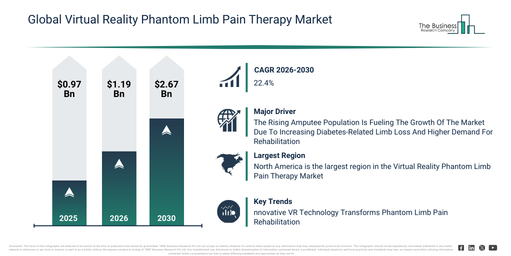
    The virtual reality phantom limb pain therapy market has experienced substantial growth in its size over recent years. It is projected to expand from $0.97 billion in 2025 to $1.19 billion in 2026, demonstrating a compound annual growth rate (CAGR) of 22.7%. This historical expansion can be attributed to several factors, such as an escalating number of limb amputations, the adoption of VR in pain management, a rising acceptance of non-invasive therapies, the broadening of rehabilitation services, and the availability of immersive feedback technologies.

    The virtual reality phantom limb pain therapy market is anticipated to experience significant expansion in the coming years. Its valuation is projected to reach $2.67 billion by 2030, exhibiting a compound annual growth rate (CAGR) of 22.4%. This expected growth during the forecast period is driven by factors such as the increasing demand for personalized pain therapy solutions, the growing integration of AI-based therapy customization, the expansion of remote rehabilitation platforms, a rising focus on long-term pain management, and the increasing clinical validation of VR-based treatments. Prominent trends for the forecast period include the increasing adoption of VR-based pain management therapies, the rising use of mirror therapy simulation techniques, the growing integration of haptic feedback systems, the expansion of home-based phantom limb therapy solutions, and an enhanced focus on psychological and sensory rehabilitation.

    Download the Free Sample Report to Explore Key Market Insights:

    https://www.thebusinessresearchcompany.com/sample.aspx?id=28357&type=smp

    Which Market Drivers Are Supporting The Expansion Of The Virtual Reality Phantom Limb Pain Therapy Market?

    The increasing amputee population is projected to stimulate the expansion of the virtual reality phantom limb pain therapy market in the future. This population consists of individuals who have undergone partial or complete limb loss and need long-term rehabilitation along with specialized therapeutic care. The primary reason for the rise in the amputee population is the growing prevalence of diabetes, which leads to severe complications such as impaired circulation and nerve damage, significantly increasing the rate of limb amputations. The virtual reality phantom limb pain therapy market supports this trend by delivering immersive therapeutic environments that help retrain neural pathways, lessen phantom limb pain, and enhance overall patient well-being. For example, in March 2024, the American Diabetes Association, a US-based nonprofit health organization, stated that annual healthcare expenditure related to diabetes-related amputations in the United States went over $9.1 billion, while global diabetes-related healthcare spending exceeded $966 billion, underscoring the substantial economic burden connected to increasing limb-loss cases. Thus, the growing amputee population is fueling the growth of the virtual reality phantom limb pain therapy market.

    What Segment Groups Are Identified Within The Virtual Reality Phantom Limb Pain Therapy Market?

    The virtual reality phantom limb pain therapy market covered in this report is segmented –

    1) By Technology: Hardware, Software, Services

    2) By Therapy Type: Immersive Virtual Reality (VR) Therapy, Non-Immersive Virtual Reality (VR) Therapy, Mixed Reality Therapy

    3) By Patient Type: Upper Limb Amputees, Lower Limb Amputees

    4) By Application: Hospitals, Rehabilitation Centers, Homecare Settings, Other Applications

    Subsegments:

    1) By Hardware: Head-Mounted Displays (HMDs), Motion Tracking Sensors, Haptic Feedback Devices, Virtual Reality (VR) Gloves, Virtual Reality (VR) Treadmills, Eye-Tracking Devices

    2) By Software: Immersive Virtual Reality (VR) Therapy Applications, Non-Immersive Virtual Reality (VR) Therapy Applications, Mixed Reality Therapy Applications, Artificial Intelligence (AI)-Based Therapy Modules, Gamified Rehabilitation Software

    3) By Services: Clinical Implementation Services, Remote Patient Monitoring Services, Maintenance And Support Services, Training And Consultation Services, Therapy Customization Services

    Which Trends Are Impacting The Growth Of The Virtual Reality Phantom Limb Pain Therapy Market?

    Leading companies in the virtual reality phantom limb pain therapy market are concentrating on developing innovative solutions, such as immersive virtual reality simulators, to alleviate pain and improve rehabilitation outcomes. A virtual reality simulator is a system that utilizes immersive 3D environments and motion-tracking technology to replicate real-world experiences for training, therapy, or rehabilitation purposes. For instance, in November 2025 The UNBROKEN National Rehabilitation Center, a Ukraine-based holistic medical-rehabilitation facility, introduced VRNOW, a game-changing virtual reality (VR) technology designed to ease phantom limb pain in amputees by creating a virtual model of the missing limb. This system helps patients reduce their phantom pain through immersive VR experiences that simulate the presence and movement of the lost limb, enhancing the feeling of body ownership and pain relief. VRNOW represents a significant advance in rehabilitation technology for managing phantom pain and supporting recovery after amputation.

    Which Companies Hold Significant Positions In The Virtual Reality Phantom Limb Pain Therapy Market?

    Major companies operating in the virtual reality phantom limb pain therapy market are Samsung Electronics Co Ltd, Lenovo Group Ltd, Mayo Clinic, The University of Texas at Dallas, Shirley Ryan AbilityLab, HTC Corporation, MindMaze SA, XRHealth Inc., HaptX Inc., Limber Health Inc., Virtualis, LimbPower Limited, OrthoCarolina Research Institute Inc., Karuna Labs Inc., Neuro Rehab VR, Tongji Hospital/University of Science and Technology of China, Bionic Hope Private Limited, Instalimb, Khymeia Group, Veterans Affairs (VA) North Texas Health Care System.

    Read the full virtual reality phantom limb pain therapy market report here:

    https://www.thebusinessresearchcompany.com/report/virtual-reality-phantom-limb-pain-therapy-global-market-report

    How Is The Virtual Reality Phantom Limb Pain Therapy Market Distributed Across Key Geographic Regions?

    North America was the largest region in the virtual reality phantom limb pain therapy market in 2025. The regions covered in the virtual reality phantom limb pain therapy market report are Asia-Pacific, South East Asia, Western Europe, Eastern Europe, North America, South America, Middle East, Africa.

    Request A Tailored Virtual Reality Phantom Limb Pain Therapy Market Research Report For Competitive Advantage:

    https://www.thebusinessresearchcompany.com/customise?id=28357&type=smp

    Browse Through More Reports Similar to the Global Virtual Reality Phantom Limb Pain Therapy Market 2026, By The Business Research Company

    Virtual Reality Vr In Medical Simulation Global Market Report

    https://www.thebusinessresearchcompany.com/report/virtual-reality-vr-in-medical-simulation-global-market-report

    Virtual Reality In Healthcare Global Market Report

    https://www.thebusinessresearchcompany.com/report/virtual-reality-in-healthcare-global-market-report

    Physical Therapy Global Market Report

    https://www.thebusinessresearchcompany.com/report/physical-therapy-global-market-report

    Get in touch with us:

    The Business Research Company: https://www.thebusinessresearchcompany.com/

    Americas +1 310-496-7795

    Asia +44 7882 955267 & +91 8897263534

    Europe +44 7882 955267

    Email us at info@tbrc.info

    Follow us on:

    LinkedIn: https://in.linkedin.com/company/the-business-research-company

    YouTube: https://www.youtube.com/channel/UC24_fI0rV8cR5DxlCpgmyFQ

    Global Market Model: https://www.thebusinessresearchcompany.com/global-market-model
  • Global Virtual Reality Motion Desensitization Platform Market Set for Strong Expansion Reaching $5.52 Billion by 2030 at 22.3% CAGR

    Global Virtual Reality Motion Desensitization Platform Market Set for Strong Expansion Reaching $5.52 Billion by 2030 at 22.3% CAGR

    The Business Research Company’s 2026 market reports include new capabilities such as market attractiveness scoring and analysis, total addressable market analysis, company scoring matrix, interactive excel data dashboard, improved supply chain analysis, upcoming startups in the market, and overview of key products, aimed at improving the depth, usability, and strategic value of the insights delivered.

    What Market Value Is Anticipated For The Virtual Reality Motion Desensitization Platform Market Over The Period 2026–2030?

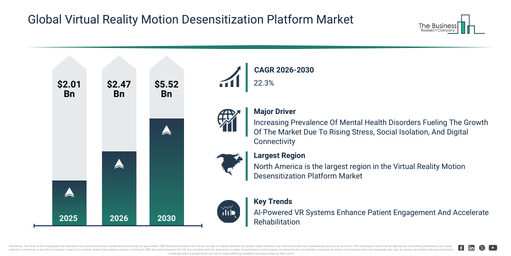
    The market size for virtual reality motion desensitization platforms has experienced substantial growth in recent years. It is projected to expand from $2.01 billion in 2025 to $2.47 billion in 2026, achieving a compound annual growth rate (CAGR) of 22.6%. This historic growth can be attributed to factors such as the increasing prevalence of motion sensitivity disorders, the integration of VR in vestibular therapy, a rising awareness of non-invasive desensitization techniques, the expansion of therapy clinics, and the availability of immersive simulation tools.

    The virtual reality motion desensitization platform market is projected to experience rapid expansion over the upcoming years. By 2030, its value is anticipated to reach $5.52 billion, demonstrating a compound annual growth rate (CAGR) of 22.3%. This anticipated growth is driven by several factors, including a heightened demand for customized motion desensitization programs, increased investments in vr-based therapy platforms, the broadening of remote therapy options, the escalating incorporation of ai-driven adaptive simulations, and its wider use in both training and healthcare settings. Key trends expected during this period involve the greater implementation of vr-based motion exposure therapy, an uptick in the adoption of gradual desensitization methods, the further integration of adaptive simulation environments, the broadening availability of both clinical and home-based motion therapy platforms, and a reinforced emphasis on vestibular rehabilitation.

    Download the Free Sample Report to Explore Key Market Insights:

    https://www.thebusinessresearchcompany.com/sample.aspx?id=28356&type=smp

    What Underlying Factors Are Accelerating The Growth Of The Virtual Reality Motion Desensitization Platform Market?

    The growing incidence of mental health issues is projected to boost the expansion of the virtual reality motion desensitization platform market moving forward. Mental health disorders encompass conditions that profoundly impair an individual’s feelings, cognition, behavior, and overall psychological function. The increase in these disorders stems from heightened stress associated with modern living, including professional pressures, digital overload, and increasing societal isolation. The virtual reality motion desensitization platform market addresses this driver by offering immersive, regulated therapeutic environments that support gradual exposure, lessen psychological distress, and improve treatment participation for conditions like anxiety, phobias, and PTSD. For instance, in May 2024, according to the American Psychiatric Association, a US-based nonprofit organization, 43% of adults reported feeling more anxious than the year before, rising from 37% in 2023 and 32% in 2022, indicating a continued increase in mental health concerns. Thus, the rising prevalence of mental health disorders is fueling the growth of the virtual reality motion desensitization platform market.

    How Is The Virtual Reality Motion Desensitization Platform Market Divided Into Its Major Segments?

    The virtual reality motion desensitization platform market covered in this report is segmented –

    1) By Component: Hardware, Software, Services

    2) By Deployment Mode: On-Premises, Cloud-Based

    3) By Application: Healthcare And Therapy, Gaming And Entertainment, Education And Training, Military And Defense, Other Applications

    4) By End-User: Hospitals And Clinics, Rehabilitation Centers, Academic And Research Institutes, Military Organizations, Other End-Users

    Subsegments:

    1) By Hardware: Head-Mounted Displays, Sensors, Tracking Devices, Haptic Devices

    2) By Software: Virtual Reality Applications, Simulation Software, Analytics Software, Therapy Management Software

    3) By Services: Consulting Services, Maintenance Services, Training Services, Support Services

    What Major Market Trends Are Driving Changes In The Virtual Reality Motion Desensitization Platform Market?

    Leading companies within the virtual reality motion desensitization platform market are prioritizing the creation of sophisticated offerings like AI-powered personalized therapy systems. This focus aims to improve treatment effectiveness, foster greater patient involvement, and decrease obstacles to therapy along with the time needed for adjustment. Artificial intelligence (AI)-powered personalized therapy systems are defined as cutting-edge virtual reality platforms leveraging AI to craft bespoke therapeutic settings and situations customized for specific patient requirements, thereby maximizing desensitization and recovery results. As an example, in September 2024, Interacoustics A/S, a medical equipment manufacturer based in Denmark, introduced the Virtualis balance rehabilitation solutions. The Virtualis system integrates completely immersive virtual reality alongside dynamic posturography force platforms, mimicking real-world settings to support recovery approaches including adaptation, substitution, and habituation. This system features AI-powered adaptable components such as SkiVR and MotionVR, that automatically modify training levels according to patient progress, allowing for accurate and engaging balance recovery without continuous input from a clinician. Additionally, it facilitates precise motion desensitization for issues affecting the vestibular system by means of gradual VR exposure.

    Who Are The Prominent Organizations Shaping The Virtual Reality Motion Desensitization Platform Market?

    Major companies operating in the virtual reality motion desensitization platform market are MindMaze SA, XRHealth Ltd., Bertec Corporation, NeuroSync Inc., Virtual Reality Medical Center Inc., PsyTech VR Inc., C2Care, Virtually Better Inc., Cyclops Medtech Pvt. Ltd., Kinequantum, Neuroequilibrium, Saebo Inc., Kinesix VR, Rey, Rewin Health, PhysioSensing Vertigo, AppliedVR Inc., MindMotion SA, Motek Medical, Synaptive Medical

    Read the full virtual reality motion desensitization platform market report here:

    https://www.thebusinessresearchcompany.com/report/virtual-reality-motion-desensitization-platform-global-market-report

    Which Region Is Projected To Dominate The Virtual Reality Motion Desensitization Platform Market During The Forecast Period?

    North America was the largest region in the virtual reality motion desensitization platform market in 2025. The regions covered in the virtual reality motion desensitization platform market report are Asia-Pacific, South East Asia, Western Europe, Eastern Europe, North America, South America, Middle East, Africa.

    Request A Tailored Virtual Reality Motion Desensitization Platform Market Research Report For Competitive Advantage:

    https://www.thebusinessresearchcompany.com/customise?id=28356&type=smp

    Browse Through More Reports Similar to the Global Virtual Reality Motion Desensitization Platform Market 2026, By The Business Research Company

    Virtual Reality Services Global Market Report

    https://www.thebusinessresearchcompany.com/report/virtual-reality-services-global-market-report

    Virtual Reality Devices Global Market Report

    https://www.thebusinessresearchcompany.com/report/virtual-reality-devices-global-market-report

    Virtual Reality In Healthcare Global Market Report

    https://www.thebusinessresearchcompany.com/report/virtual-reality-in-healthcare-global-market-report

    Get in touch with us:

    The Business Research Company: https://www.thebusinessresearchcompany.com/

    Americas +1 310-496-7795

    Asia +44 7882 955267 & +91 8897263534

    Europe +44 7882 955267

    Email us at info@tbrc.info

    Follow us on:

    LinkedIn: https://in.linkedin.com/company/the-business-research-company

    YouTube: https://www.youtube.com/channel/UC24_fI0rV8cR5DxlCpgmyFQ

    Global Market Model: https://www.thebusinessresearchcompany.com/global-market-model

  • Virtual Reality (VR)-Based Balance Confidence Training Platform Market Growth Expected to Reach $4.41 Billion by 2030 with 22.6% CAGR

    Virtual Reality (VR)-Based Balance Confidence Training Platform Market Growth Expected to Reach $4.41 Billion by 2030 with 22.6% CAGR

    The Business Research Company’s 2026 market reports include new capabilities such as market attractiveness scoring and analysis, total addressable market analysis, company scoring matrix, interactive excel data dashboard, improved supply chain analysis, upcoming startups in the market, and overview of key products, aimed at improving the depth, usability, and strategic value of the insights delivered.

    What Is The Expected Market Size Of The Virtual Reality (VR)-Based Balance Confidence Training Platform Market From 2026 To 2030?

    The virtual reality (vr)-based balance confidence training platform market size has seen substantial growth over recent years. It is projected to increase from $1.59 billion in 2025 to $1.96 billion in 2026, with a compound annual growth rate (CAGR) of 22.9%. This past growth can be linked to factors such as a higher prevalence of balance disorders, an expanding elderly population, the integration of VR into physical therapy environments, an increased emphasis on reducing fall risks, and the accessibility of wearable motion sensors.

    The market for virtual reality (VR)-based balance confidence training platforms is projected to experience substantial growth in the coming years. This market is anticipated to reach a valuation of $4.42 billion by 2030, demonstrating a compound annual growth rate (CAGR) of 22.6%. Several factors are expected to drive this expansion during the forecast period, including a heightened need for preventive balance training solutions, the proliferation of VR-based home therapy platforms, increased incorporation of AI-driven balance assessment, broader implementation in sports rehabilitation, and a greater emphasis on rehabilitation outcomes tied to confidence levels. Key trends for this period are projected to involve wider acceptance of VR-based balance training programs, an uptick in the utilization of real-time motion analytics, more extensive integration of confidence-building virtual scenarios, the broadening of both home-based and clinical balance rehabilitation options, and a sharpened focus on fall prevention technologies.

    Download the Free Sample Report to Explore Key Market Insights:

    https://www.thebusinessresearchcompany.com/sample.aspx?id=28355&type=smp

    Which Growth Drivers Are Contributing To The Progress Of The Virtual Reality (VR)-Based Balance Confidence Training Platform Market?

    The expanding requirement for remote healthcare solutions is anticipated to stimulate the expansion of the virtual reality (VR)-based balance confidence training platform market. Remote healthcare encompasses providing medical assistance via digital and telecommunication methods, enabling interaction between patients and professionals without needing physical attendance. This demand is escalating due to the heightened necessity for readily available and convenient medical support, especially for individuals in geographically distant, underserviced, or mobility-challenged communities. The virtual reality (VR)-based balance confidence training platform market facilitates this trend by offering interactive, at-home rehabilitation sessions, which enhance balance, mitigate fall risks, and decrease the necessity for regular clinical visits. For example, reports from the Office of Inspector General, U.S. Department of Health & Human Services (OIG) in August 2025 indicated that Medicare payments for remote patient monitoring in 2024 surpassed US $536 million, representing a 31 % rise from 2023. Additionally, close to 1 million beneficiaries utilized RPM services, marking a 27 % increase from 2023, with approximately 4,600 medical practices consistently billing for RPM. Consequently, the expanding need for remote healthcare solutions is a key factor propelling the advancement of the virtual reality (VR)-based balance confidence training platform market.

    Which Segments Are Included In The Analysis Of The Virtual Reality (VR)-Based Balance Confidence Training Platform Market?

    The virtual reality (vr)-based balance confidence training platform market covered in this report is segmented –

    1) By Component: Hardware, Software, Services

    2) By Deployment Mode: On-Premises, Cloud-Based

    3) By Application: Rehabilitation Centers, Hospitals And Clinics, Home Care Settings, Academic And Research Institutes, Other Applications

    4) By End-User: Adults, Geriatric Population, Athletes, Other End-Users

    Subsegments:

    1) By Hardware: Head-Mounted Displays (HMDs), Sensors And Motion Trackers, Balance Boards And Platforms, Virtual Reality (VR) Gloves And Controllers, Cameras And Tracking Systems

    2) By Software: Virtual Reality (VR) Simulation And Training Software, Balance Assessment And Monitoring Software, Rehabilitation And Therapy Software, Data Analytics And Reporting Tools

    3) By Services: Training And Education Services, Installation And Integration Services, Maintenance And Support Services, Consulting Services, Cloud-Based Service Offerings

    Which Trends Are Shaping The Future Of The Virtual Reality (VR)-Based Balance Confidence Training Platform Market?

    Major companies engaged in the VR-based balance-confidence training platform market are focusing on developing innovative solutions, including full-body sensor-driven platforms, designed to improve patient mobility, engagement, and personalized therapy. Full-body sensor-driven platforms are systems equipped with motion and pressure sensors that track an individual’s entire body movements in real time, providing precise feedback for training in balance, posture, and coordination. For instance, in September 2024, Interacoustics A/S, a Denmark-based manufacturing company, launched Virtualis, a new line of balance rehabilitation solutions leveraging fully immersive virtual reality (VR) combined with static or dynamic posturography force plates. These solutions integrate fully immersive virtual reality (VR) with dynamic (MotionVR) or static (StaticVR) posturography force plates to simulate real-life environments for personalized assessments such as Sensory Organization Test (SOT), Limits of Stability (LoS), and Subjective Visual Vertical (SVV). Key modules like BalanceVR and PhysioVR deliver engaging, game-like exercises that promote adaptation, substitution, and habituation strategies, featuring real-time feedback and customization for vestibular, neurological, and orthopedic disorders. These tools enhance patient motivation, objectively track progress, and facilitate safe training to restore daily function and confidence.

    Which Key Industry Participants Are Active In The Virtual Reality (VR)-Based Balance Confidence Training Platform Market?

    Major companies operating in the virtual reality (vr)-based balance confidence training platform market are Meta Platforms Inc., Interacoustics, MindMaze SA, Motek Medical, XRHealth, Evolv Rehabilitation Technologies, MindMotion, FYZICAL, Rehabtronics, Virtualis Co, Mieron Inc., Rehab-Robotics Co. Ltd., GaitBetter, Upright VR, Knoxlabs, Teslasuit, Neuro Rehab VR, SyncVR Medical, Immersive Reha, WEART.

    Read the full virtual reality (vr)-based balance confidence training platform market report here:

    https://www.thebusinessresearchcompany.com/report/virtual-reality-vr-based-balance-confidence-training-platform-global-market-report

    What Are The Leading Geographic Regions In The Virtual Reality (VR)-Based Balance Confidence Training Platform Market?

    North America was the largest region in the virtual reality (VR)-based balance confidence training platform market in 2025. Asia-Pacific is expected to be the fastest-growing region in the forecast period. The regions covered in the virtual reality (vr)-based balance confidence training platform market report are Asia-Pacific, South East Asia, Western Europe, Eastern Europe, North America, South America, Middle East, Africa.

    Request A Tailored Virtual Reality (VR)-Based Balance Confidence Training Platform Market Research Report For Competitive Advantage:

    https://www.thebusinessresearchcompany.com/customise?id=28355&type=smp

    Browse Through More Reports Similar to the Global Virtual Reality (VR)-Based Balance Confidence Training Platform Market 2026, By The Business Research Company

    Online Virtual Fitness Global Market Report

    https://www.thebusinessresearchcompany.com/report/online-virtual-fitness-global-market-report

    Virtual Rehabilitation Global Market Report

    https://www.thebusinessresearchcompany.com/report/virtual-rehabilitation-global-market-report

    Virtual Reality Vr In Medical Simulation Global Market Report

    https://www.thebusinessresearchcompany.com/report/virtual-reality-vr-in-medical-simulation-global-market-report

    Get in touch with us:

    The Business Research Company: https://www.thebusinessresearchcompany.com/

    Americas +1 310-496-7795

    Asia +44 7882 955267 & +91 8897263534

    Europe +44 7882 955267

    Email us at info@tbrc.info

    Follow us on:

    LinkedIn: https://in.linkedin.com/company/the-business-research-company

    YouTube: https://www.youtube.com/channel/UC24_fI0rV8cR5DxlCpgmyFQ

    Global Market Model: https://www.thebusinessresearchcompany.com/global-market-model

  • Virtual Reality (VR) Stroke Rehabilitation Market Forecast 2026–2035 Reflecting Expansion Opportunities Across Industries

    Virtual Reality (VR) Stroke Rehabilitation Market Forecast 2026–2035 Reflecting Expansion Opportunities Across Industries

    The Business Research Company’s 2026 market reports include new capabilities such as market attractiveness scoring and analysis, total addressable market analysis, company scoring matrix, interactive excel data dashboard, improved supply chain analysis, upcoming startups in the market, and overview of key products, aimed at improving the depth, usability, and strategic value of the insights delivered.

    What Market Valuation Is Forecasted For The Virtual Reality (VR) Stroke Rehabilitation Market By 2030 Starting From Its 2026 Size?

    The virtual reality (vr) stroke rehabilitation market size has experienced rapid expansion in recent years. Its value is projected to increase from $191.77 billion in 2025 to $217.46 billion by 2026, reflecting a compound annual growth rate (CAGR) of 13.4%. This historical growth is attributable to several factors, including the rising global prevalence of stroke, the expansion of rehabilitation infrastructure, the uptake of technology-assisted therapy methods, an increasing emphasis on repetitive task-based rehabilitation, and the availability of VR platforms for clinical application.

    The virtual reality (VR) stroke rehabilitation market size is projected to experience rapid expansion over the coming years. This market is anticipated to reach $355.71 billion by 2030, exhibiting a compound annual growth rate (CAGR) of 13.1%. The surge during the forecast period is attributable to several factors, including the rising demand for personalized stroke rehabilitation programs, increased investments in digital neurorehabilitation, the expansion of remote rehabilitation services, the growing integration of AI-based therapy analytics, and the wider acceptance of VR within clinical protocols. Key trends foreseen in this period involve the increasing adoption of VR-based neuroplasticity training, a rising utilization of task-specific motor recovery simulations, the growing integration of cognitive and physical rehabilitation modules, the expansion of home-based VR stroke therapy solutions, and an enhanced focus on data-driven therapy progress tracking.

    Download the Free Sample Report to Explore Key Market Insights:

    https://www.thebusinessresearchcompany.com/sample.aspx?id=28354&type=smp

    What Primary Drivers Are Shaping The Development Of The Virtual Reality (VR) Stroke Rehabilitation Market?

    The increased uptake of digital health solutions is projected to fuel expansion in the virtual reality (VR) stroke rehabilitation market. These solutions encompass digital technologies, platforms, and interconnected tools utilized to elevate healthcare provision, better patient results, and optimize health administration. The rise in digital health solution adoption is attributed to the ease of remote care access, enabling patients to obtain medical assistance and oversight without needing numerous physical appointments. Virtual reality (VR) stroke rehabilitation complements this trend by offering immersive, tech-based therapy, complete with tailored exercises and remote oversight, thereby facilitating more effective and readily available stroke recovery. For example, Queen Margaret University, a UK public university, reported in April 2024 that by November 2023, 189 NHS trusts had implemented new electronic patient record systems, achieving 90% adoption among all trusts. Consequently, the expanding use of digital health solutions is a key factor propelling the virtual reality (VR) stroke rehabilitation market’s development.

    Which Segment Categories Define The Virtual Reality (VR) Stroke Rehabilitation Market?

    The virtual reality (vr) stroke rehabilitation market covered in this report is segmented –

    1) By Rehabilitation Type: Physical Rehabilitation, Cognitive Rehabilitation

    2) By Technology Type: Hardware, Software Platforms, Therapeutic Content

    3) By Patient Type: Short Term Patients, Long Term Patients

    4) By Virtual Reality (VR) Application: Motor Skills Training, Cognitive Skills Training, Sensory Training, Pain Management

    5) By End-User: Hospitals, Rehabilitation Centers, Clinics, Home-Based Rehabilitation

    Subsegments:

    1) By Physical Rehabilitation: Upper Limb Rehabilitation, Lower Limb Rehabilitation, Balance And Gait Training, Motor Function Recovery

    2) By Cognitive Rehabilitation: Memory Training, Attention And Concentration Training, Problem-Solving And Executive Function Training, Visual And Spatial Perception Training

    What Key Trends Are Influencing The Development Of The Virtual Reality (VR) Stroke Rehabilitation Market?

    Leading companies in the global virtual reality (VR) stroke rehabilitation market are concentrating on developing advanced solutions, such as immersive VR-based upper-limb rehabilitation systems, with the aim of enhancing motor recovery, improving functional independence, and increasing patient engagement during post-stroke therapy. Immersive VR-based upper-limb rehabilitation systems are characterized as virtual reality platforms that employ head-mounted displays and interactive gamified environments to provide intensive, task-specific arm and hand exercises, while simultaneously monitoring real-time performance metrics to inform personalized rehabilitation. For instance, in 2024, researchers at Beijing Tiantan Hospital, Capital Medical University, a China-based academic medical center, introduced an immersive virtual reality–based upper-extremity rehabilitation system within a randomized controlled trial. This trial included three weeks of immersive VR therapy, delivered five sessions per week, in conjunction with conventional rehabilitation, featuring interactive reaching and grasping tasks performed in fully immersive environments, and resulted in clinically significant improvements in Fugl-Meyer Assessment Upper Extremity and Barthel Index scores, along with positive changes in motor-network brain connectivity.

    Who Are The Top Companies Competing In The Virtual Reality (VR) Stroke Rehabilitation Market?

    Major companies operating in the virtual reality (vr) stroke rehabilitation market are Penumbra Inc., Shepherd Center Inc., Evolv Rehabilitation Technologies S.L., DIH Technology Co. Ltd., Tyromotion GmbH, BTS Bioengineering S.p.A., Floreo Inc., Saebo Inc., Motus Nova LLC, Immergo Labs Inc., Kinestica d.o.o., Cognihab Private Limited, Evolv Solutions LLC, Rehametrics S.L., RecoveryVR Pty Ltd, Neuro Rehab VR Inc., PhysioFunction Limited, XRHealth USA Inc., Bended S.r.l., Jintronix Inc.

    Read the full virtual reality (vr) stroke rehabilitation market report here:

    https://www.thebusinessresearchcompany.com/report/virtual-reality-vr-stroke-rehabilitation-global-market-report

    How Does The Virtual Reality (VR) Stroke Rehabilitation Market Perform Across Major Global Regions?

    North America was the largest region in the virtual reality (VR) stroke rehabilitation market in 2025. Asia Pacific is expected to be the fastest-growing region in the forecast period. The regions covered in the virtual reality (vr) stroke rehabilitation market report are Asia-Pacific, South East Asia, Western Europe, Eastern Europe, North America, South America, Middle East, Africa.

    Request A Tailored Virtual Reality (VR) Stroke Rehabilitation Market Research Report For Competitive Advantage:

    https://www.thebusinessresearchcompany.com/customise?id=28354&type=smp

    Browse Through More Reports Similar to the Global Virtual Reality (VR) Stroke Rehabilitation Market 2026, By The Business Research Company

    Virtual Reality Vr In Medical Simulation Global Market Report

    https://www.thebusinessresearchcompany.com/report/virtual-reality-vr-in-medical-simulation-global-market-report

    Virtual Reality In Healthcare Global Market Report

    https://www.thebusinessresearchcompany.com/report/virtual-reality-in-healthcare-global-market-report

    Stroke Management Global Market Report

    https://www.thebusinessresearchcompany.com/report/stroke-management-global-market-report

    Get in touch with us:

    The Business Research Company: https://www.thebusinessresearchcompany.com/

    Americas +1 310-496-7795

    Asia +44 7882 955267 & +91 8897263534

    Europe +44 7882 955267

    Email us at info@tbrc.info

    Follow us on:

    LinkedIn: https://in.linkedin.com/company/the-business-research-company

    YouTube: https://www.youtube.com/channel/UC24_fI0rV8cR5DxlCpgmyFQ

    Global Market Model: https://www.thebusinessresearchcompany.com/global-market-model

  • Global Virtual Reality (VR) Metaverse Concussion Rehabilitation Market Analysis for 2026–2030 with Strategic Forecast Insights for Businesses

    Global Virtual Reality (VR) Metaverse Concussion Rehabilitation Market Analysis for 2026–2030 with Strategic Forecast Insights for Businesses

    The Business Research Company’s 2026 market reports include new capabilities such as market attractiveness scoring and analysis, total addressable market analysis, company scoring matrix, interactive excel data dashboard, improved supply chain analysis, upcoming startups in the market, and overview of key products, aimed at improving the depth, usability, and strategic value of the insights delivered.

    How Is The Market Size Of The Virtual Reality (VR) Metaverse Concussion Rehabilitation Market Expected To Change Between 2026 And 2030?

    The virtual reality (vr) metaverse concussion rehabilitation market has observed rapid growth in its size over recent years. It is anticipated to expand from $1.63 billion in 2025 to $2.12 billion in 2026, demonstrating a compound annual growth rate (CAGR) of 30.2%. The expansion witnessed in the historical period stems from several factors, including a higher occurrence of sports-related concussions, increased recognition of digital rehabilitation solutions, the integration of VR in neurological therapy, enhanced access to VR hardware in healthcare, and the broadening of outpatient rehabilitation services.

    The virtual reality (vr) metaverse concussion rehabilitation market size is projected to experience substantial growth over the next few years. This market is anticipated to reach $6.02 billion by 2030, exhibiting a compound annual growth rate (CAGR) of 29.9%. The expansion during the forecast period can be primarily attributed to increasing investments in metaverse-based healthcare platforms, a rising demand for home-based concussion rehabilitation, the growing integration of AI-driven therapy personalization, the broader expansion of remote patient monitoring solutions, and the increasing acceptance of digital therapeutics. Key trends for this period include the rising adoption of immersive VR-based rehabilitation programs, an increased use of personalized cognitive recovery modules, the growing integration of remote tele-rehabilitation platforms, the development of motion tracking and sensory feedback systems, and an enhanced focus on patient engagement and therapy adherence.

    Download the Free Sample Report to Explore Key Market Insights:

    https://www.thebusinessresearchcompany.com/sample.aspx?id=28353&type=smp

    Which Major Factors Are Driving The Expansion Of The Virtual Reality (VR) Metaverse Concussion Rehabilitation Market?

    The rising occurrence of sports-related injuries is projected to fuel expansion in the virtual reality (VR) metaverse concussion rehabilitation market in the future. These injuries are defined as physical harm sustained during athletic or exercise endeavors, frequently impacting muscles, bones, joints, and the head. Their increasing frequency stems from greater involvement in intense, competitive, and leisure sports activities in the post-pandemic era. The virtual reality (VR) metaverse concussion rehabilitation facilitates this trend by offering immersive, regulated cognitive-physical therapy settings, which allow for safer recuperation, tailored rehabilitation, and remote oversight of return-to-play protocols. For example, Insideworldfootball, a UK-based online news service, reported in October 2024 that sports injuries totaled 4,123 during the 2023-24 season, representing a 4% rise from the 2022-23 period. Consequently, the growing incidence of sports-related injuries acts as a key impetus for the virtual reality (VR) metaverse concussion rehabilitation market.

    How Is The Virtual Reality (VR) Metaverse Concussion Rehabilitation Market Structured Across Different Segments?

    The virtual reality (vr) metaverse concussion rehabilitation market covered in this report is segmented –

    1) By Component: Hardware, Software, Services

    2) By Deployment Mode: On-Premises, Cloud-Based

    3) By Therapy Type: Physical Therapy, Cognitive Therapy, Occupational Therapy, Speech Therapy, Other Therapy Types

    4) By End-User: Hospitals And Clinics, Rehabilitation Centers, Homecare Settings, Other End-Users

    Subsegments:

    1) By Hardware: Virtual Reality (VR) Headsets, Motion Sensors And Trackers, Controllers And Haptics Devices, Cameras And Wearables, Computing Devices

    2) By Software: Therapy And Rehabilitation Software, Cognitive Training Programs, Balance And Motor Skills Training Software, Speech And Occupational Therapy Software, Cloud-Based Virtual Reality (VR) Platforms

    3) By Services: Deployment And Integration Services, Training And Education Services, Support And Maintenance Services, Tele-rehabilitation And Remote Monitoring Services, Customization And Consulting Services

    Which Major Players Dominate The Virtual Reality (VR) Metaverse Concussion Rehabilitation Market?

    Major companies operating in the virtual reality (vr) metaverse concussion rehabilitation market are MindMaze SA, Oculus Health Inc., XRHealth Inc., Cureosity GmbH, AppliedVR Inc., Takeaway Reality Ltd., Mieron VR Inc., Virtualis Sàrl, Rehametrics S.L., TechVillage Technologies Pvt. Ltd., Neuromersiv Pty Ltd., Cognihab, ORamaVR SA, BehaVR Inc., Neuro Rehab VR Inc., Eye-Sync Inc., HeadRehab VR Inc., Kinesim S.r.l., MindMotion SA, Corpus VR B.V.

    Read the full virtual reality (vr) metaverse concussion rehabilitation market report here:

    https://www.thebusinessresearchcompany.com/report/virtual-reality-vr-metaverse-concussion-rehabilitation-global-market-report

    Which Region Currently Holds The Largest Share Of The Virtual Reality (VR) Metaverse Concussion Rehabilitation Market?

    North America was the largest region in the virtual reality (VR) metaverse concussion rehabilitation market in 2025. The regions covered in the virtual reality (vr) metaverse concussion rehabilitation market report are Asia-Pacific, South East Asia, Western Europe, Eastern Europe, North America, South America, Middle East, Africa.

    Request A Tailored Virtual Reality (VR) Metaverse Concussion Rehabilitation Market Research Report For Competitive Advantage:

    https://www.thebusinessresearchcompany.com/customise?id=28353&type=smp

    Browse Through More Reports Similar to the Global Virtual Reality (VR) Metaverse Concussion Rehabilitation Market 2026, By The Business Research Company

    Virtual Reality Vr In Medical Simulation Global Market Report

    https://www.thebusinessresearchcompany.com/report/virtual-reality-vr-in-medical-simulation-global-market-report

    Traumatic Brain Injury Global Market Report

    https://www.thebusinessresearchcompany.com/report/traumatic-brain-injury-global-market-report

    Concussion Global Market Report

    https://www.thebusinessresearchcompany.com/report/concussion-global-market-report

    Get in touch with us:

    The Business Research Company: https://www.thebusinessresearchcompany.com/

    Americas +1 310-496-7795

    Asia +44 7882 955267 & +91 8897263534

    Europe +44 7882 955267

    Email us at info@tbrc.info

    Follow us on:

    LinkedIn: https://in.linkedin.com/company/the-business-research-company

    YouTube: https://www.youtube.com/channel/UC24_fI0rV8cR5DxlCpgmyFQ

    Global Market Model: https://www.thebusinessresearchcompany.com/global-market-model

  • Virtual Reality (VR) In Telerehabilitation Market Outlook 2026–2035 Driven by Key Growth Factors and Industry Projections

    Virtual Reality (VR) In Telerehabilitation Market Outlook 2026–2035 Driven by Key Growth Factors and Industry Projections

    The Business Research Company’s 2026 market reports include new capabilities such as market attractiveness scoring and analysis, total addressable market analysis, company scoring matrix, interactive excel data dashboard, improved supply chain analysis, upcoming startups in the market, and overview of key products, aimed at improving the depth, usability, and strategic value of the insights delivered.

    What Is The Market Size Of The Virtual Reality (VR) In Telerehabilitation Market In 2026 And What Value Is Projected For 2030?

    The market for virtual reality (VR) in telerehabilitation has seen significant expansion in recent years. It is anticipated to increase from $0.98 billion in 2025 to $1.2 billion in 2026, achieving a compound annual growth rate (CAGR) of 22.3%. The historical period’s growth can be linked to factors including the broader availability of telerehabilitation services, the increasing uptake of digital therapeutics, a heightened focus on patient-centered care, the accessibility of consumer VR hardware, and the progression of remote healthcare delivery methods.

    The virtual reality (vr) in telerehabilitation market is projected to experience rapid expansion over the coming years. This market is anticipated to reach $2.67 billion by 2030, exhibiting a compound annual growth rate (CAGR) of 22.0%. This projected growth during the forecast period is largely due to several factors, including increasing investment in immersive healthcare technologies, a rising demand for home-based rehabilitation solutions, the expansion of ai-enabled therapy platforms, growing integration with wearable devices, and an increasing focus on outcome-based rehabilitation models. Key trends expected within this period encompass increasing adoption of immersive remote rehabilitation programs, the growing use of gamified therapy environments, rising integration of AI-based progress tracking, the expansion of home-based vr therapy solutions, and an enhanced focus on patient engagement and adherence.

    Download the Free Sample Report to Explore Key Market Insights:

    https://www.thebusinessresearchcompany.com/sample.aspx?id=28352&type=smp

    What Key Drivers Are Influencing The Growth Of The Virtual Reality (VR) In Telerehabilitation Market?

    The increasing acceptance of telehealth and remote healthcare services is anticipated to fuel expansion within the virtual reality (VR) in telerehabilitation market moving ahead. These services involve providing clinical treatment to patients utilizing digital and telecommunication platforms, eliminating the need for physical appointments. Telehealth’s uptake is growing because patients desire convenient home consultations and consistent monitoring, which minimizes travel, wait times, and disruptions to care. The virtual reality (VR) in telerehabilitation market supports this trend by improving remote rehabilitation therapy using immersive, interactive, and clinically supervised VR settings, thereby bettering recovery results. A notable example is from August 2023, where Vivalink, a US-based healthcare technology company, reported that 81% of clinicians were employing remote patient monitoring (RPM) technologies in 2023, indicating a robust and quickening embrace of remote care instruments. Consequently, the growing utilization of telehealth and remote healthcare services is fueling the expansion of the virtual reality (VR) in telerehabilitation market.

    What Are The Key Segments Of The Virtual Reality (VR) In Telerehabilitation Market?

    The virtual reality (vr) in telerehabilitation market covered in this report is segmented –

    1) By Component: Hardware, Software, Services

    2) By Rehabilitation: In-Person Rehabilitation, Remote Rehabilitation

    3) By Application: Physical Rehabilitation, Neurological Rehabilitation, Cardiac Rehabilitation, Psychological Rehabilitation, Orthopedic Rehabilitation

    4) By End-User: Healthcare Providers, Rehabilitation Centers, Homecare Settings, Fitness And Wellness Centers, Corporates

    Subsegments:

    1) By Hardware: Head-Mounted Displays (HMDs), Motion Tracking Sensors, Haptic Feedback Devices, Virtual Reality (VR) Gloves, Virtual Reality (VR) Treadmills, Eye-Tracking Devices, Cameras And Depth Sensors, Computing And Graphics Processing Units (GPUs)

    2) By Software: Immersive Virtual Reality (VR) Therapy Applications, Non-Immersive Virtual Reality (VR) Therapy Applications, Mixed Reality Therapy Applications, Artificial Intelligence (AI)-Based Therapy Modules, Gamified Rehabilitation Software, Patient Data Management And Analytics Platforms, Cloud-Based Therapy Software

    3) By Services: Clinical Implementation Services, Remote Patient Monitoring Services, Maintenance And Support Services, Training And Education Services, Consultation And Integration Services

    How Are Trends Impacting The Virtual Reality (VR) In Telerehabilitation Market?

    Major companies operating in the virtual reality (VR) telerehabilitation market are concentrating on developing sophisticated solutions, such as AI-powered immersive therapy platforms, to deliver individualized, remote rehabilitation and cognitive support. AI-powered immersive therapy platforms are digital systems that combine virtual reality (VR) environments with artificial intelligence to generate personalized, interactive therapy experiences for rehabilitation, mental health, or cognitive training. For example, in November 2024, XRHealth Inc., a US-based digital therapeutics company, unveiled an AI-enhanced multidisciplinary extended reality (XR) therapeutic platform. This platform integrates advanced artificial intelligence with immersive XR experiences to offer personalized and interactive therapeutic environments. A key feature of this platform is an AI Generator Space, which allows clinicians to develop custom 360-degree therapeutic environments specifically tailored to individual patient needs, alongside dynamic avatars designed for improved patient interaction.

    Who Are The Leading Companies Operating In The Virtual Reality (VR) In Telerehabilitation Market?

    Major companies operating in the virtual reality (vr) in telerehabilitation market are Penumbra Inc., DIH Holding US Inc., MindMaze, Reflexion Interactive Technologies Inc., Saebo, VR Rehab Inc., CUREosity GmbH, InfiVR, SyncVR Medical, Rehametrics, GestureTek Health, Doctor Kinetic, Cognihab Inc., Neuro Rehab VR, Virtualware, Mice Labs, Evolv Rehabilitation Technologies, XR4REHAB, MIRA Rehab Limited, LiteGait.

    Read the full virtual reality (vr) in telerehabilitation market report here:

    https://www.thebusinessresearchcompany.com/report/virtual-reality-vr-in-telerehabilitation-global-market-report

    Which Region Is Expected To Register The Fastest Growth In The Virtual Reality (VR) In Telerehabilitation Market?

    North America was the largest region in the virtual reality (VR) in telerehabilitation market in 2025. Asia-Pacific is expected to be the fastest-growing region in the forecast period. The regions covered in the virtual reality (vr) in telerehabilitation market report are Asia-Pacific, South East Asia, Western Europe, Eastern Europe, North America, South America, Middle East, Africa.

    Request A Tailored Virtual Reality (VR) In Telerehabilitation Market Research Report For Competitive Advantage:

    https://www.thebusinessresearchcompany.com/customise?id=28352&type=smp

    Browse Through More Reports Similar to the Global Virtual Reality (VR) In Telerehabilitation Market 2026, By The Business Research Company

    Virtual Reality In Healthcare Global Market Report

    https://www.thebusinessresearchcompany.com/report/virtual-reality-in-healthcare-global-market-report

    Virtual Rehabilitation Global Market Report

    https://www.thebusinessresearchcompany.com/report/virtual-rehabilitation-global-market-report

    Virtual Reality Vr Fitness Game Global Market Report

    https://www.thebusinessresearchcompany.com/report/virtual-reality-vr-fitness-game-global-market-report

    Get in touch with us:

    The Business Research Company: https://www.thebusinessresearchcompany.com/

    Americas +1 310-496-7795

    Asia +44 7882 955267 & +91 8897263534

    Europe +44 7882 955267

    Email us at info@tbrc.info

    Follow us on:

    LinkedIn: https://in.linkedin.com/company/the-business-research-company

    YouTube: https://www.youtube.com/channel/UC24_fI0rV8cR5DxlCpgmyFQ

    Global Market Model: https://www.thebusinessresearchcompany.com/global-market-model

  • Virtual Reality (VR) In Medical Simulation Market Developments and Growth Opportunities Across 2026–2030

    Virtual Reality (VR) In Medical Simulation Market Developments and Growth Opportunities Across 2026–2030

    The Business Research Company’s 2026 market reports include new capabilities such as market attractiveness scoring and analysis, total addressable market analysis, company scoring matrix, interactive excel data dashboard, improved supply chain analysis, upcoming startups in the market, and overview of key products, aimed at improving the depth, usability, and strategic value of the insights delivered.

    What Will Be The Estimated Market Valuation Of The Virtual Reality (VR) In Medical Simulation Market By The End Of 2030?

    The virtual reality (VR) in medical simulation market has observed substantial growth in recent years. This market is set to increase from $6.28 billion in 2025 to $8.42 billion in 2026, achieving a compound annual growth rate (CAGR) of 34.2%. The expansion seen in previous periods is attributable to factors including the enlargement of medical education infrastructure, a rising requirement for standardized clinical training, the increasing embrace of simulation-based learning, greater investments in medical training technologies, and improved access to VR hardware.

    The virtual reality (vr) in medical simulation market is anticipated to witness significant expansion over the next few years. This market is projected to attain a size of $24.18 billion by 2030, progressing at a compound annual growth rate (CAGR) of 30.2%. The expansion during the forecast period is primarily fueled by rising investments in immersive medical education, increasing demand for remote and scalable training solutions, wider application of VR in clinical assessment, the growing integration of AI-driven feedback systems, and broader adoption across healthcare institutions. Prominent developments anticipated in the forecast period include the increasing uptake of VR-based medical training simulations, a greater reliance on virtual surgical practice platforms, the growing incorporation of AI-assisted clinical scenarios, the proliferation of remote medical education programs, and an intensified focus on developing skills in a risk-free environment.

    Download the Free Sample Report to Explore Key Market Insights:

    https://www.thebusinessresearchcompany.com/sample.aspx?id=16211&type=smp

    What Major Growth Drivers Are Shaping The Outlook Of The Virtual Reality (VR) In Medical Simulation Market?

    The escalating count of surgeries is anticipated to propel the expansion of virtual reality (VR) in the medical simulation market in the future. Surgeries are medical procedures executed by surgeons for the diagnosis, treatment, or prevention of diseases or injuries, frequently involving incisions to access internal tissues or organs. The surge in surgical volumes is fueled by advancements in medical technologies, refinements in surgical techniques, and broader eligibility for surgical interventions across various specialties. VR in medical simulation supports this evolution by providing immersive, highly realistic training environments that accurately replicate complex anatomy and surgical scenarios, thereby enabling surgeons to develop their skills safely before entering the operating room. For instance, in June 2024, the International Society of Aesthetic Plastic Surgery (ISAPS), a US-based professional association, reported in its Global Survey 2023 that total aesthetic procedures reached 34.9 million, which included more than 15.8 million surgical procedures performed by plastic surgeons in 2023, marking a 5.5% year-over-year increase and a 40% rise over four years. Consequently, the rising number of surgeries is driving the growth of virtual reality (VR) in the medical simulation market.

    Which Segment Classifications Shape The Virtual Reality (VR) In Medical Simulation Market?

    The virtual reality (vr) in medical simulation market covered in this report is segmented –

    1) By Age Group: Adult, Children, Infant

    2) By Application: Medical Education, Virtual Reality In Diagnostics, Pain Management, Mental Illness Treatment, Physical Fitness And Therapy, Virtual Reality In Surgery, Human Simulation Techniques, Virtual Reality In Dentistry, Virtual Reality In Nursing, Other Applications

    3) By End-User: Hospitals, Physician Clinics, Ambulatory Surgical Centers, Medical Institutes, Research Laboratory, Pharmaceutical Industry, Other End-Users

    Subsegments:

    1) By Adult: Vr Medical Simulations For Surgical Training, Vr Simulations For Clinical Diagnosis And Procedures, Vr For Pain Management And Physical Rehabilitation, Vr For Emergency And Trauma Care Training, Vr For Mental Health Therapy (Anxiety, Ptsd)

    2) By Children: Pediatric Vr Simulations For Medical Procedures, Vr For Pediatric Pain Management And Relaxation, Vr For Children’s Health Education (Explaining Procedures), Vr For Pediatric Physical Therapy And Rehabilitation, Vr For Cognitive And Emotional Development

    3) By Infant: Neonatal Vr Simulations For Caregivers And Healthcare Providers, Vr For Infant Care Training (Resuscitation Techniques), Vr For Monitoring Infant Vital Signs And Development, Vr For Early Developmental Therapy (Sensory Stimulation)

    What Industry Trends Are Redefining The Virtual Reality (VR) In Medical Simulation Market?

    Major companies in the virtual reality (VR) medical simulation market are focusing on developing advanced solutions, such as immersive arthroscopic training modules, to enhance surgical competency, reduce training risks, and provide anatomically accurate, repeatable practice environments for learners. Arthroscopic VR training modules are instructional tools based on virtual reality that replicate minimally invasive orthopedic procedures, allowing trainees to practice instrument handling, triangulation, arm positioning, and repair techniques in a controlled, lifelike setting that goes beyond the limitations of traditional cadaver labs or textbook learning. For instance, in May 2023, PrecisionOS, a Canada-based medical simulation technology company, launched its VR Shoulder Simulation Module, an innovative arthroscopic double-row rotator cuff repair training solution sponsored by CONMED. Designed to strengthen trainee proficiency, the module offers high-fidelity anatomical visualization, real-time feedback, procedural step guidance, rotator cuff tear pattern assessment, and the ability to practice independently or with remote mentorship, helping residents and fellows build the skills required for safe and effective surgical performance.

    Which Companies Are Expanding Their Footprint In The Virtual Reality (VR) In Medical Simulation Market?

    Major companies operating in the virtual reality (vr) in medical simulation market are CAE Healthcare Inc, Brainlab AG, Surgical Science Sweden AB, Osso VR Inc, Mentice AB, Augmedics, Virtalis Holdings Ltd, VirtaMed AG, Oxford Medical Simulation Ltd, Health Scholars Inc, AppliedVR Inc, Medisim Ltd, Fundamental Surgery, ImmersiveTouch Inc, SimforHealth, SimX, PrecisionOS Technologies Inc, Body Interact, XRHealth, Oxford Medical Simulation Ltd, Psious, Surgical Theater, MedVR Education, Medical Realities

    Read the full virtual reality (vr) in medical simulation market report here:

    https://www.thebusinessresearchcompany.com/report/virtual-reality-vr-in-medical-simulation-global-market-report

    Which Regions Are Projected To Dominate The Virtual Reality (VR) In Medical Simulation Market In The Coming Years?

    North America was the largest region in the virtual reality (VR) in medical simulation market in 2025. Asia-Pacific is expected to be the fastest-growing region in the forecast period. The regions covered in the virtual reality (vr) in medical simulation market report are Asia-Pacific, South East Asia, Western Europe, Eastern Europe, North America, South America, Middle East, Africa.

    Request A Tailored Virtual Reality (VR) In Medical Simulation Market Research Report For Competitive Advantage:

    https://www.thebusinessresearchcompany.com/customise?id=16211&type=smp

    Browse Through More Reports Similar to the Global Virtual Reality (VR) In Medical Simulation Market 2026, By The Business Research Company

    Virtual Reality In Healthcare Global Market Report

    https://www.thebusinessresearchcompany.com/report/virtual-reality-in-healthcare-global-market-report

    Ar Or Vr Medical Simulation Global Market Report

    https://www.thebusinessresearchcompany.com/report/ar-or-vr-medical-simulation-global-market-report

    Patient Simulators Global Market Report

    https://www.thebusinessresearchcompany.com/report/patient-simulators-global-market-report

    Get in touch with us:

    The Business Research Company: https://www.thebusinessresearchcompany.com/

    Americas +1 310-496-7795

    Asia +44 7882 955267 & +91 8897263534

    Europe +44 7882 955267

    Email us at info@tbrc.info

    Follow us on:

    LinkedIn: https://in.linkedin.com/company/the-business-research-company

    YouTube: https://www.youtube.com/channel/UC24_fI0rV8cR5DxlCpgmyFQ

    Global Market Model: https://www.thebusinessresearchcompany.com/global-market-model