Category: Medical Equipment

  • Revenue of the Partially Absorbable Mesh Market Predicted to Achieve $2.56 Billion by 2030, Driven by 8.3% CAGR

    Revenue of the Partially Absorbable Mesh Market Predicted to Achieve $2.56 Billion by 2030, Driven by 8.3% CAGR

    Uncover key drivers, emerging technologies, and competitive movements shaping the worker heat stress monitoring wearable market from 2026–2035 with trusted insights from The Business Research Company

    What is the estimated market size of the Partially Absorbable Mesh Market by the end of 2030?

    The partially absorbable mesh market size has experienced robust expansion in recent years. This market is projected to expand from $1.72 billion in 2025 to reach $1.87 billion in 2026, exhibiting a compound annual growth rate (CAGR) of 8.6%. Historically, this expansion has been driven by factors such as a dependence on non-absorbable mesh materials, restricted availability of hybrid mesh options, an increasing number of surgical interventions for conditions like hernia and pelvic organ prolapse, a rising need for abdominal wall reconstruction, and a heightened awareness of potential post-surgical complications.

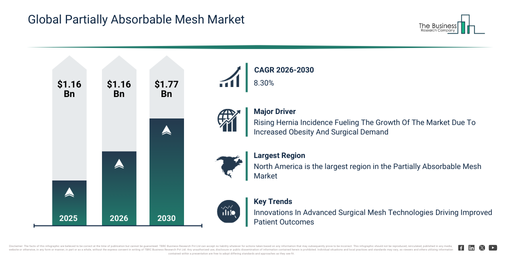
    The partially absorbable mesh market is projected for significant expansion over the coming years. It is forecast to reach $2.57 billion by 2030, exhibiting a compound annual growth rate (CAGR) of 8.3%. This anticipated growth during the forecast period is driven by advancements in composite and biologic mesh, a growing preference for less invasive surgical procedures, the expansion of specialized clinics and outpatient surgical centers, increased capital directed towards surgical research and development, and the uptake of coated and dual-layer mesh designs for better patient results. Key trends identified for this period encompass the increasing use of partially absorbable mesh for hernia and pelvic repair operations, the creation of hybrid mesh materials aimed at enhancing biocompatibility, an increase in minimally invasive surgical interventions, a heightened emphasis on minimizing complications after surgery, and expanding research and development efforts in sophisticated surgical implants.

    Access Your Free Sample Report for In-Depth Market Insights:

    https://www.thebusinessresearchcompany.com/sample.aspx?id=24650&type=smp

    What Drivers Are Shaping Future Opportunities In The Partially Absorbable Mesh Market?

    An anticipated increase in hernia cases is set to drive the expansion of the partially absorbable mesh market in the future. A hernia is defined as a medical condition where an organ or tissue protrudes through a compromised area or aperture in the surrounding muscular or connective tissue, frequently leading to pain or unease. This escalation in hernias stems from growing obesity rates, which exert additional strain on abdominal muscles, thereby weakening them and raising the likelihood of hernia development. Partially absorbable mesh aids in hernia repair through its blend of robust reinforcement and absorbable components that foster recovery and diminish the chance of long-term complications. For example, data from March 2024, provided by the American Society of Anesthesiologists, a US-based nonprofit professional medical association, indicates that over 20 million hernia repair operations are carried out worldwide annually. Furthermore, approximately 800,000 inguinal hernia cases occur each year in the United States, primarily impacting men aged 75 to 80. Consequently, the increasing frequency of hernias is fueling the expansion of the partially absorbable mesh market.

    Which Segments Are Gaining Traction In The Partially Absorbable Mesh Market?

    The partially absorbable mesh market covered in this report is segmented –

    1) By Product Type: Polypropylene Mesh, Polytetrafluoroethylene (PTFE) Mesh, Composite Mesh, Biologic Mesh, Other Product Types

    2) By Material Composition: Synthetic Materials, Natural Materials, Hybrid Materials, Coated Materials, Other Material Compositions

    3) By Distribution Channel: Direct Sales, Distributors, Online Sales, Medical Supply Companies, Other Distribution Channels

    4) By Application: Heia Repair, Pelvic Organ Prolapse Repair, Abdominal Wall Reconstruction, Other Surgical Applications

    5) By End-User: Hospitals, Ambulatory Surgical Centers, Specialty Clinics, Research Institutes, Other Healthcare Facilities

    Subsegments:

    1) By Polypropylene Mesh: Lightweight Polypropylene Mesh, Heavyweight Polypropylene Mesh, Coated Polypropylene Mesh

    2) By Polytetrafluoroethylene (PTFE) Mesh: Expanded Polytetrafluoroethylene (PTFE) Mesh, Dual-Layer Polytetrafluoroethylene (PTFE) Mesh, Microporous Polytetrafluoroethylene (PTFE) Mesh

    3) By Composite Mesh: Synthetic Biologic Composite Mesh, Synthetic Absorbable Polymer Composite Mesh, Dual-Sided Composite Mesh (Anti-Adhesion)

    4) By Biologic Mesh, By Type: Porcine Dermis Mesh, Bovine Dermis Mesh, Human Cadaveric Dermis Mesh

    5) By Other Product Types: Polyester Mesh, Polyvinylidene Fluoride (PVDF) Mesh, Silk Mesh

    What Trends Are Projected To Support The Growth Of The Partially Absorbable Mesh Market?

    Major companies within the partially absorbable mesh market are concentrating on creating innovative solutions, such as composite meshes, to improve patient results, increase biocompatibility, and decrease complications after surgery. Composite meshes are surgical implants made from a blend of absorbable and non-absorbable materials, designed to provide both enduring support and enhanced biocompatibility for procedures like hernia repair. As an example, in April 2025, W. L. Gore & Associates, a US-based producer of medical implantable devices, introduced the GORE SYNECOR Preperitoneal Biomaterial across Europe, the Middle East, and South Africa. This advanced composite surgical mesh is developed for tension-free and minimally invasive hernia repairs, offering both lasting structural reinforcement and temporary tissue support. Specifically, the mesh incorporates a permanent polytetrafluoroethylene (PTFE) layer with a bioabsorbable polyglycolide-co-trimethylene carbonate (PGA:TMC) scaffold, which improves tissue integration, vascularization, and healing post-operation.

    Who Are The Core Companies Influencing Trends In The Partially Absorbable Mesh Market?

    Major companies operating in the partially absorbable mesh market are Johnson And Johnson, Medtronic plc, Medline Industries Inc, Integra LifeSciences Corporation, Meril Life Sciences Pvt Ltd, B Braun Melsungen AG, Gore Medical, Demetech Corporation, TELA Bio Inc, pfm Medical AG, AFS Medical, Dolphin Mesh, Lotus Surgicals Pvt Ltd, KATSAN Medical Devices, Betatech Medical, Orion Sutures India Pvt Ltd, Vitrex Medical A S, BioHealth Medical Tech, Assut Europe S p A, Herniamesh Srl, FEG Textiltechnik mbH

    Access The Complete Report For Deeper Market Insights:

    https://www.thebusinessresearchcompany.com/report/partially-absorbable-mesh-global-market-report

    Which Region Is Expected To Experience The Fastest Growth In The Partially Absorbable Mesh Market?

    North America was the largest region in the partially absorbable mesh market in 2025. Asia-Pacific is expected to be the fastest-growing region in the forecast period. The regions covered in the partially absorbable mesh market report are Asia-Pacific, South East Asia, Western Europe, Eastern Europe, North America, South America, Middle East, Africa.

    Request Your Customized Partially Absorbable Mesh Market Research Report for Competitive Advantage:

    https://www.thebusinessresearchcompany.com/customise?id=24650&type=smp

    Browse Through More Reports Similar to the Global Partially Absorbable Mesh Market 2026, By The Business Research Company

    Wireless Mesh Network Global Market Report 2026

    https://www.thebusinessresearchcompany.com/report/wireless-mesh-network-global-market-report

    Hernia Mesh Devices Global Market Report 2026

    https://www.thebusinessresearchcompany.com/report/hernia-mesh-devices-global-market-report

    Surgical Meshes Global Market Report 2026

    https://www.thebusinessresearchcompany.com/report/surgical-meshes-global-market-report

    Get in touch with us:

    The Business Research Company: https://www.thebusinessresearchcompany.com/

    Americas +1 310-496-7795

    Asia +44 7882 955267 & +91 8897263534

    Europe +44 7882 955267

    Email us at info@tbrc.info

    Follow us on:

    LinkedIn: https://in.linkedin.com/company/the-business-research-company

  • Parcel Delivery Vehicle Sector Forecast Shows Robust Momentum, Climbing to $205.11 Billion With 10.3% CAGR

    Parcel Delivery Vehicle Sector Forecast Shows Robust Momentum, Climbing to $205.11 Billion With 10.3% CAGR

    Uncover key drivers, emerging technologies, and competitive movements shaping the workstation graphics processing unit (gpu) market from 2026–2035 with trusted insights from The Business Research Company

    What was the valuation of the Parcel Delivery Vehicle Market in 2026, and what figure is it projected to hit by 2030?

    The parcel delivery vehicle market size has experienced strong growth in recent years. It is anticipated to expand from $126.72 billion in 2025 to $138.81 billion in 2026, achieving a compound annual growth rate (CAGR) of 9.5%. This historical growth can be attributed to several factors, including the expansion of e-commerce logistics, the broadening of courier and parcel services, increasing urbanization, the rising demand for quicker delivery services, and the availability of light commercial vehicles.

    The parcel delivery vehicle market size is projected for swift expansion over the coming years. This market is anticipated to reach $205.12 billion by 2030, exhibiting a compound annual growth rate (CAGR) of 10.3%. Several factors contribute to this growth during the forecast period, including higher investments in zero-emission delivery fleets, increased adoption of autonomous logistics solutions, an expanding smart city delivery infrastructure, the rising demand for cost-efficient fleet operations, and enhanced regulatory support for electric vehicles. Key trends observed in this period encompass a greater adoption of electric delivery vehicles, a surge in the deployment of autonomous delivery fleets, an escalating demand for last-mile optimization vehicles, the broadening of fleet telematics integration, and an intensified focus on urban-friendly vehicle designs.

    Access Your Free Sample Report for In-Depth Market Insights:

    https://www.thebusinessresearchcompany.com/sample.aspx?id=12353&type=smp

    Which Drivers Are Affecting Market Participation In The Parcel Delivery Vehicle Market?

    The increasing expansion of e-commerce and internet shopping platforms is anticipated to propel the growth of the parcel delivery vehicle market. An e-commerce platform refers to any website supporting online purchasing and selling, while internet shopping platforms are electronic commerce platforms allowing customers to buy directly from sellers using a computer browser and the Internet. The rising development of these platforms is boosting the parcel delivery vehicle market due to their necessity in the door-to-door delivery of products ordered through e-commerce or online shopping websites. For example, in August 2024, the United States Census Bureau, a US-based government agency, reported that U.S. retail e-commerce sales for the second quarter of 2024 reached an estimated $282.3 billion, marking a 5.3% increase compared to the first quarter of 2023. This demonstrates how the growth of e-commerce and Internet shopping platforms is fundamentally driving the expansion of the parcel delivery vehicle market.

    What Segment Categories Are Covered In The Parcel Delivery Vehicle Market?

    The parcel delivery vehicle market covered in this report is segmented –

    1) By Type: Class 2a, Class 2b, Class 3, Class 4

    2) By Vehicle Type: Light Duty Vehicle, Medium Duty Vehicle, Heavy Duty Vehicle

    3) By Gross Weight: 3.5-5 Ton, 6-7.5 Ton, >8 Ton

    4) By End-Use: Courier Companies, Fleet Management Companies, Medical Courier Companies, Warehouse Service Providers, E-Commerce

    Subsegments:

    1) By Class 2a: Light Commercial Vehicles (LCVs), Small Vans

    2) By Class 2b: Medium Commercial Vehicles (MCVs), Larger Vans

    3) By Class 3: Heavy Commercial Vehicles (HCVs), Box Trucks

    4) By Class 4: Trucks Over 7.5 Tonnes, Delivery Trucks

    Which Trends Are Influencing The Performance And Direction Of The Parcel Delivery Vehicle Market?

    Key companies in the parcel delivery vehicle market are concentrating on creating sophisticated solutions to boost delivery efficiency, decrease operational costs, and promote sustainable mobility. For instance, in September 2024, LOXO, an autonomous delivery technology company based in Switzerland, partnered with Planzer to unveil the Planzer Dynamic Micro Hub with the LOXO project, a cutting-edge solution engineered to optimize last-mile parcel delivery. As part of this initiative, LOXO embedded its LOXO Digital Driver autonomous navigation software into a VW ID. vehicle, enabling automated front-door parcel delivery in urban settings. The Dynamic Micro Hub exemplifies one of the most advanced implementations of autonomous technology in parcel logistics, enhancing delivery speed, operational efficiency, and environmental sustainability.

    Which Major Industry Participants Are Leading The Parcel Delivery Vehicle Market Growth?

    Major companies operating in the parcel delivery vehicle market are Toyota Motor Corporation, Ashok Leyland, Daimler AG, Ford Motor Company, General Motors, Hyundai Motor Company, Tesla Inc., Nissan Motor Co. Ltd., Kia Corporation, Renault Group, BYD Motors Inc., Isuzu Motors Limited, Mitsubishi Motors Corporation, Iveco Group, Jeep, Mahindra & Mahindra Ltd., MAN Truck & Bus AG, Navistar International Corporation, Peugeot S.A., Rivian Automotive Inc., Mack Trucks Inc., Kenworth Truck Company, Freightliner Trucks, London EV Company Limited, StreetScooter Engineering GmbH, FCA Group Marketing S.p.A.

    Access The Complete Report For Deeper Market Insights:

    https://www.thebusinessresearchcompany.com/report/parcel-delivery-vehicle-global-market-report

    Which Geographic Areas Are Emerging As Strong Markets For The Parcel Delivery Vehicle Market?

    North America is expected to be the fastest-growing region in the forecast period. The regions covered in the parcel delivery vehicle market report are Asia-Pacific, South East Asia, Western Europe, Eastern Europe, North America, South America, Middle East, Africa.

    Request Your Customized Parcel Delivery Vehicle Market Research Report for Competitive Advantage:

    https://www.thebusinessresearchcompany.com/customise?id=12353&type=smp

    Browse Through More Reports Similar to the Global Parcel Delivery Vehicle Market 2026, By The Business Research Company

    Parcel Delivery Global Market Report 2026

    https://www.thebusinessresearchcompany.com/report/parcel-delivery-global-market-report

    Cargo Shipping Global Market Report 2026

    https://www.thebusinessresearchcompany.com/report/cargo-shipping-global-market-report

    Automated Parcel Delivery Terminals Global Market Report 2026

    https://www.thebusinessresearchcompany.com/report/automated-parcel-delivery-terminals-global-market-report

    Get in touch with us:

    The Business Research Company: https://www.thebusinessresearchcompany.com/

    Americas +1 310-496-7795

    Asia +44 7882 955267 & +91 8897263534

    Europe +44 7882 955267

    Email us at info@tbrc.info

    Follow us on:

    LinkedIn: https://in.linkedin.com/company/the-business-research-company
  • Paper Diagnostics Market Anticipated to Record Steady Gains, Advancing to $17.31 Billion by 2030

    Paper Diagnostics Market Anticipated to Record Steady Gains, Advancing to $17.31 Billion by 2030

    Uncover key drivers, emerging technologies, and competitive movements shaping the worker heat stress monitoring wearable market from 2026–2035 with trusted insights from The Business Research Company

    What are the forecasted starting (2026) and ending (2030) market sizes for the Paper Diagnostics Market?

    The paper diagnostics market has observed substantial growth in recent years. It is anticipated to expand from $10.49 billion in 2025 to $11.62 billion in 2026, demonstrating a compound annual growth rate (CAGR) of 10.7%. The historical market expansion was primarily influenced by an increased demand for point-of-care testing, the escalating prevalence of infectious diseases, the proliferation of decentralized healthcare services, the integration of rapid screening tools, and a heightened usage of dipstick diagnostics.

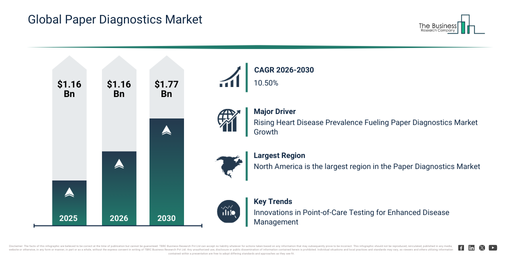
    The paper diagnostics market is poised for significant expansion in the upcoming years. Its size is projected to reach $17.31 billion by 2030, advancing at a compound annual growth rate (CAGR) of 10.5%. This growth throughout the forecast period stems from factors like the rising preference for home-based diagnostics, increased investments in cost-effective healthcare technologies, the broadening scope of preventive healthcare screening, a heightened emphasis on early disease detection, and innovations in paper microfluidics technology. Prominent trends over the forecast horizon encompass the growing integration of rapid point-of-care paper tests, an escalating need for affordable diagnostic solutions, the expanding application of lateral flow assays, the widespread development of paper-based microfluidic devices, and an amplified focus on disposable and eco-friendly diagnostic tools.

    Access Your Free Sample Report for In-Depth Market Insights:

    https://www.thebusinessresearchcompany.com/sample.aspx?id=8582&type=smp

    What Drivers Are Supporting Technological Adoption In The Paper Diagnostics Market?

    The rising occurrence of heart conditions is projected to boost the paper diagnostics market in the future. Heart disease encompasses any ailment affecting the cardiovascular system. Efficient and rapid microfluidic paper-based devices (PADs) facilitate the concurrent identification of multiple cardiac biomarkers, aiding in both early and late diagnosis of acute myocardial infarction; consequently, the growing incidence of heart diseases drives up the need for paper diagnostics. For example, data from January 2024, provided by the American Heart Association, a US-based non-profit entity, revealed that the age-adjusted mortality rate for cardiovascular disease climbed to 233.3 per 100,000 in 2024, representing a 4.0% rise from 224.4 per 100,000 in 2023. Hence, the expanding presence of heart illnesses is fueling the expansion of the paper diagnostics market.

    Which Segments Are Contributing To The Growth Of The Paper Diagnostics Market?

    The paper diagnostics market covered in this report is segmented –

    1) By Product: Dipsticks, Lateral Flow Assays: Paper-Based Microfluidics

    2) By Application: Environmental Monitoring, Clinical Diagnostics, Food Quality Testing

    3) By End-User: Home Healthcare, Assisted Living Healthcare Facilities, Hospital And Clinics

    Subsegments:

    1) By Dipsticks: Urinalysis Dipsticks, Blood Glucose Dipsticks, Pregnancy Test Dipsticks, Drug Test Dipsticks

    2) By Lateral Flow Assays: Point-Of-Care Testing (POCT) Assays, Rapid Infectious Disease Tests, Cardiovascular Marker Tests, Allergy Tests

    3) By Paper-Based Microfluidics: Integrated Microfluidic Devices, Environmental Testing Applications, Food Safety Testing Applications

    What Long-Term Trends Are Expected To Shape The Future Of The Paper Diagnostics Market?

    Leading companies in the paper diagnostics market are concentrating on developing innovative point-of-care tests to gain a competitive advantage. A point-of-care test is a diagnostic method performed at or near the patient’s location, facilitating immediate results and prompt clinical decision-making. For instance, in August 2023, Mylab Discovery Solutions, an India-based company, launched two rapid point-of-care tests for detecting dengue infections: the rapid gold test and the high-accuracy dry luminescence assay test. These tests deliver results within 15-20 minutes, requiring no laboratory setup. They can assist in determining the infection’s stage and progression, supporting dengue screening programs in resource-limited regions. The tests differentiate between IgM and IgG antibodies, providing healthcare professionals with accurate tools for timely diagnosis and effective disease management.

    Who Are The Prominent Global Companies Shaping The Paper Diagnostics Market Landscape?

    Major companies operating in the paper diagnostics market are Abbott Inc, Arkray Inc, Acon Laboratories Inc, Chembio Diagnostic Systems Inc, Abingdon Health, Micro Essential Laboratory Inc, Paperdrop Diagnostics, Diagnostics for All Inc, Mologic Ltd, BioMedomics Inc, EKF Diagnostics Holdings plc, Sysmex Corporation, Siemens Healthineers AG, BioPorto Diagnostics A/S, NanoEnTek Inc, BiognostiX GmbH, BioDot Inc, BioFluidica Inc, Cytodiagnostics Inc, Biopico Systems Inc

    Access The Complete Report For Deeper Market Insights:

    https://www.thebusinessresearchcompany.com/report/paper-diagnostics-global-market-report

    Which Region Is Projected To Lead The Paper Diagnostics Market During The Forecast Period?

    North America was the largest region in the paper diagnostics market share in 2025. Asia-Pacific is expected to be the fastest-growing region in the forecast period. The regions covered in the paper diagnostics market report are Asia-Pacific, South East Asia, Western Europe, Eastern Europe, North America, South America, Middle East, Africa.

    Request Your Customized Paper Diagnostics Market Research Report for Competitive Advantage:

    https://www.thebusinessresearchcompany.com/customise?id=8582&type=smp

    Browse Through More Reports Similar to the Global Paper Diagnostics Market 2026, By The Business Research Company

    Paper Products Global Market Report 2026

    https://www.thebusinessresearchcompany.com/report/paper-products-global-market-report

    Industrial Machinery Global Market Report 2026

    https://www.thebusinessresearchcompany.com/report/industrial-machinery-global-market-report

    Industrial Machinery Global Market Report 2026

    https://www.thebusinessresearchcompany.com/report/industrial-machinery-global-market-report

    Get in touch with us:

    The Business Research Company: https://www.thebusinessresearchcompany.com/

    Americas +1 310-496-7795

    Asia +44 7882 955267 & +91 8897263534

    Europe +44 7882 955267

    Email us at info@tbrc.info

    Follow us on:

    LinkedIn: https://in.linkedin.com/company/the-business-research-company
  • Pain Patch Industry Poised for Rapid Growth, Forecast to Touch $6.28 Billion by 2030 at 7.3% CAGR

    Pain Patch Industry Poised for Rapid Growth, Forecast to Touch $6.28 Billion by 2030 at 7.3% CAGR

    Uncover key drivers, emerging technologies, and competitive movements shaping the workstation graphics processing unit (gpu) market from 2026–2035 with trusted insights from The Business Research Company

    What upper market value could the Pain Patch Market reach by 2030 starting from 2026 levels?

    The pain patch market size has experienced robust growth in recent years. It is anticipated to expand from $4.44 billion in 2025 to $4.74 billion in 2026, demonstrating a compound annual growth rate (CAGR) of 6.7%. The historical increase in this market can be attributed to the rising prevalence of chronic pain conditions, escalating needs for post-surgical pain management, the expansion of outpatient treatment settings, the wider availability of transdermal therapies, and patient preference for non-invasive treatments.

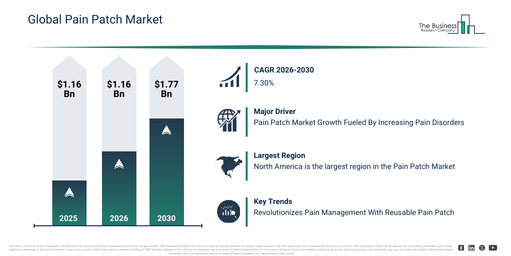
    The pain patch market is anticipated to experience robust expansion over the coming years. This market is projected to reach $6.29 billion by 2030, exhibiting a compound annual growth rate (CAGR) of 7.3%. Factors driving this growth during the projected timeframe include a heightened emphasis on alternatives to opioids, greater investments in sophisticated drug delivery systems, the broadening of personalized pain treatments, an escalating need for sustained-release medications, and the increasing uptake of self-administered therapies. Key developments expected during the forecast period involve a rise in the use of non-opioid pain relief options, a greater implementation of microneedle patch technologies, an expanding requirement for long-acting transdermal treatments, the growth of pain management services in home settings, and a reinforced emphasis on precise drug delivery methods.

    Access Your Free Sample Report for In-Depth Market Insights:

    https://www.thebusinessresearchcompany.com/sample.aspx?id=12649&type=smp

    Which Drivers Are Influencing Long-Term Growth In The Pain Patch Market?

    The increasing incidence of pain disorders is anticipated to propel the expansion of the pain patch market moving forward. Pain disorders are defined as any physical ailment where pain serves as the primary symptom. These conditions are brought on by psychological stress, inflammatory diseases, and physical trauma or injury. Pain patches are effective in treating pain disorders by delivering medication directly through the skin into the bloodstream, facilitating a controlled and steady release of drugs over a prolonged period. For instance, in October 2024, data from the National Library of Medicine, a US-based biomedical library, revealed that in 2023, 24.3% of adults experienced chronic pain, and 8.5% reported high-impact chronic pain over the last three months. Hence, the growing number of pain disorders is a significant driver for the growth of the pain patch market.

    How Is The Pain Patch Market Divided Into Segments?

    The pain patch market covered in this report is segmented –

    1) By Type: Opioid, Non-Opioid

    2) By Route Of Administration: Metered Dose, Microneedle Patches

    3) By Distribution Channel: Online Pharmacies, Retail Pharmacies, Hospital Pharmacies

    Subsegments:

    1) By Opioid: Fentanyl Patches, Buprenorphine Patches

    2) By Non-Opioid: Lidocaine Patches, Capsaicin Patches, Diclofenac Patches

    Which Market Trends Are Opening Growth Opportunities In The Pain Patch Market?

    Major companies in the pain patch market are concentrating on creating reusable pain patch products to boost their market profitability. These reusable medical patches are designed for pain management and can be utilized multiple times without losing their effectiveness. For instance, in November 2023, Signal Relief, a US-based provider of pain management solutions, released the Signal Relief Pain Patch. This patch delivers drug-free, non-invasive, and enduring pain relief. Operating with microscopic particles that act as pain signal antennas, the patch reroutes and interrupts pain messages, thereby reducing their impact and offering relief anytime, anywhere. Furthermore, the patch is reusable, free of chemicals, and wirelessly captures pain signals, proactively suppressing pain responses by intercepting signals before they reach the brain, thus promoting a balanced physiological state.

    Which Key Players Are Driving Competition In The Pain Patch Market?

    Major companies operating in the pain patch market are Pfizer Inc., Bayer AG, Novartis AG, Sanofi S.A., GlaxoSmithKline plc, Viatris Inc., Mylan N.V., Sun Pharmaceutical Industries Ltd., Perrigo Company plc, Hikma Pharmaceuticals plc, Endo International plc, Amneal Pharmaceuticals LLC, Grünenthal Group, Allergan plc, Hisamitsu Pharmaceutical Co. Inc., NICHIBAN Co. Ltd., Teikoku Seiyaku Co. Ltd., Haw Par Corporation, Sorrento Therapeutics Inc., Nanjing Joyful Industrial Co. Ltd., NEXGEL Inc.

    Access The Complete Report For Deeper Market Insights:

    https://www.thebusinessresearchcompany.com/report/pain-patch-global-market-report

    Which Region Currently Holds The Largest Share Of The Pain Patch Market?

    North America was the largest region in the pain patch market in 2025. Asia-Pacific is expected to be the fastest-growing region in the forecast period. The regions covered in the pain patch market report are Asia-Pacific, South East Asia, Western Europe, Eastern Europe, North America, South America, Middle East, Africa.

    Request Your Customized Pain Patch Market Research Report for Competitive Advantage:

    https://www.thebusinessresearchcompany.com/customise?id=12649&type=smp

    Browse Through More Reports Similar to the Global Pain Patch Market 2026, By The Business Research Company

    Non Opioid Pain Patch Global Market Report 2026

    https://www.thebusinessresearchcompany.com/report/non-opioid-pain-patch-global-market-report

    Joint Pain Injections Global Market Report 2026

    https://www.thebusinessresearchcompany.com/report/joint-pain-injections-global-market-report

    Pain Management Drugs Global Market Report 2026

    https://www.thebusinessresearchcompany.com/report/pain-management-drugs-global-market-report

    Get in touch with us:

    The Business Research Company: https://www.thebusinessresearchcompany.com/

    Americas +1 310-496-7795

    Asia +44 7882 955267 & +91 8897263534

    Europe +44 7882 955267

    Email us at info@tbrc.info

    Follow us on:

    LinkedIn: https://in.linkedin.com/company/the-business-research-company
  • Pain Management Devices And Therapies Market Performance Outlook 2026–2030: Revenue to Hit $7.37 Billion at 6.4% CAGR

    Pain Management Devices And Therapies Market Performance Outlook 2026–2030: Revenue to Hit $7.37 Billion at 6.4% CAGR

    Uncover key drivers, emerging technologies, and competitive movements shaping the worker heat stress monitoring wearable market from 2026–2035 with trusted insights from The Business Research Company

    What level of CAGR-driven expansion is anticipated in the Pain Management Devices And Therapies Market between 2026 and 2030?

    The pain management devices and therapies market has experienced significant expansion recently. This market is projected to expand from $5.34 billion in 2025 to reach $5.75 billion by 2026, demonstrating a compound annual growth rate (CAGR) of 7.7%. Historically, this growth has been driven by factors such as rising chronic pain prevalence, increased cancer pain cases, concerns related to opioid-related risks, advancements in neurology treatments, and the growing hospital adoption of stimulators.

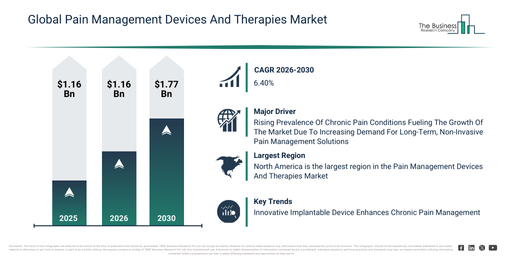
    The pain management devices and therapies market size is projected to experience robust growth in the coming years, with expectations to reach $7.38 billion by 2030, at a compound annual growth rate (CAGR) of 6.4%. This anticipated expansion over the forecast period stems from factors such as an increasing aging population, technological advancements in neurostimulators, a greater demand for long-term pain relief, the expansion of outpatient pain clinics, and rising healthcare expenditure. Furthermore, significant trends during this period include the growing adoption of neurostimulation therapies, an increasing use of non-opioid pain management approaches, the expansion of implantable pain devices, a heightened demand for chronic pain treatments, and a noticeable shift toward minimally invasive pain procedures.

    Access Your Free Sample Report for In-Depth Market Insights:

    https://www.thebusinessresearchcompany.com/sample.aspx?id=2490&type=smp

    What Drivers Are Affecting Demand-Supply Dynamics In The Pain Management Devices And Therapies Market?

    An increasing incidence of chronic pain conditions is anticipated to drive expansion in the pain management devices and therapies market. Chronic pain is defined as ongoing or recurring discomfort that persists for at least three months, negatively impacting daily functions and general well-being. This surge in chronic pain cases is largely attributed to an aging populace, given that elderly individuals are more prone to conditions like degenerative joint diseases and other long-term illnesses leading to continuous suffering. These devices and therapies assist in managing chronic pain by providing targeted, non-invasive relief, thus serving as effective tools for the enduring treatment of diverse pain disorders. They enhance patient comfort through consistent, personalized pain regulation, consequently improving the overall quality of life. As an illustration, the National Center for Health Statistics, a US-based federal agency, reported in November 2024 that roughly 24.3% of U.S. adults suffered from chronic pain in 2023. Consequently, the growing occurrence of chronic pain conditions is a significant factor propelling the expansion of the pain management devices and therapies market.

    What Segments Are Included Within The Pain Management Devices And Therapies Market?

    The pain management devices and therapies market covered in this report is segmented –

    1) By Product Type: Electrical Stimulation Devices, Thermal Therapy Devices, Minimally Invasive Devices, Injection And Infusion Systems, Ultrasound And Laser Therapy Devices, Other Product Types

    2) By Therapy Type: Pharmacologic Therapies, Non-Pharmacologic Therapies, Interventional Or Surgical Therapies

    3) By Pain Indication: Chronic Pain, Acute Pain, Other Pain Conditions

    4) By End User: Hospitals, Ambulatory Surgical Centers, Pain Clinics, Rehabilitation Centers, Home Healthcare, Specialty Clinics Or Outpatient Facilities

    Subsegments:

    1) By Electrical Stimulation Devices: Spinal Cord Stimulators (Scs), Transcutaneous Electrical Nerve Stimulation (Tens), Interferential Current Therapy Devices, Peripheral Nerve Stimulators (Pns), Deep Brain Stimulation (Dbs)

    2) By Thermal Therapy Devices: Cryotherapy Units, Heat Therapy Pads And Wraps

    3) By Minimally Invasive Devices: Radiofrequency Ablation Devices, Epidural Catheters, Intrathecal Drug Delivery Systems, Neuroablative Devices

    4) By Injection And Infusion Systems: Pain Infusion Pumps, Needle-Based Injectors

    5) By Ultrasound And Laser Therapy Devices: Therapeutic Ultrasound, Low-Level Laser Therapy (Lllt)

    6) By Other Product Types: Acupuncture Stimulators, Biofeedback And Rehabilitation Devices

    How Are Emerging Trends Affecting The Progression Of The Pain Management Devices And Therapies Market?

    Leading companies in the pain management devices and therapies market are prioritizing the development of sophisticated neuromodulation technologies, such as closed-loop spinal cord stimulation systems, to offer tailored pain relief, improve patient outcomes, and boost therapy effectiveness. Closed-loop spinal cord stimulation describes an advanced therapeutic system that delivers electrical pulses to the spinal cord while simultaneously recording the spinal cord’s neural responses, automatically adjusting therapy in real-time to maintain consistent relief. For example, in April 2024, Medtronic plc, a US-based healthcare technology company, secured Food and Drug Administration (FDA) approval for its Inceptiv closed-loop rechargeable spinal cord stimulator (SCS) for the management of chronic pain. This fully implantable device incorporates proprietary sensing technology that captures the body’s biological signals to provide personalized, data-driven therapy. It features automatic adjustment functionality, allowing for real-time optimization of spinal cord stimulation to sustain a consistent therapeutic dose for chronic pain without requiring patient intervention.

    Who Are The Top-Performing Companies In The Pain Management Devices And Therapies Market In Recent Years?

    Major companies operating in the pain management devices and therapies market are Abbott Laboratories, Boston Scientific Corporation, Medtronic plc, Baxter International Inc., Johnson & Johnson, Smiths Medical Inc., Becton Dickinson and Company, DJO Global Inc., B Braun Melsungen AG, Neurotech Na, Nevro Corp, NeuroMetrix Inc, Medovex Corporation, Halyard Health Inc, Flowonix Medical Inc, Pain Management Technologies Inc, Avanos Medical Inc, Stimwave Technologies LLC, Omron Healthcare Inc., Stryker Corporation, ICU Medical Inc., Nipro Corporation, Zynex Medical Inc., Saluda Medical Pty Ltd., SPR Therapeutics

    Access The Complete Report For Deeper Market Insights:

    https://www.thebusinessresearchcompany.com/report/pain-management-devices-and-therapies-global-market-report

    How Does The Pain Management Devices And Therapies Market Perform Across Major Global Regions?

    North America was the largest region in the pain management devices and therapies market in 2025. Western Europe was the second-largest region in the pain management devices and therapies market report. The regions covered in the pain management devices and therapies market report are Asia-Pacific, South East Asia, Western Europe, Eastern Europe, North America, South America, Middle East, Africa.

    Request Your Customized Pain Management Devices And Therapies Market Research Report for Competitive Advantage:

    https://www.thebusinessresearchcompany.com/customise?id=2490&type=smp

    Browse Through More Reports Similar to the Global Pain Management Devices And Therapies Market 2026, By The Business Research Company

    Neurostimulation Devices Global Market Report 2026

    https://www.thebusinessresearchcompany.com/report/neurostimulation-devices-global-market-report

    Intravenous Infusion Pumps Global Market Report 2026

    https://www.thebusinessresearchcompany.com/report/intravenous-infusion-pumps-global-market-report

    Ambulatory Iv Infusion Pumps Global Market Report 2026

    https://www.thebusinessresearchcompany.com/report/ambulatory-iv-infusion-pumps-global-market-report

    Get in touch with us:

    The Business Research Company: https://www.thebusinessresearchcompany.com/

    Americas +1 310-496-7795

    Asia +44 7882 955267 & +91 8897263534

    Europe +44 7882 955267

    Email us at info@tbrc.info

    Follow us on:

    LinkedIn: https://in.linkedin.com/company/the-business-research-company
  • Global Pachymeter Device Market Set for Strong Expansion, Reaching $25.27 Billion With 4.5% CAGR by 2030

    Global Pachymeter Device Market Set for Strong Expansion, Reaching $25.27 Billion With 4.5% CAGR by 2030

    Uncover key drivers, emerging technologies, and competitive movements shaping the workstation graphics processing unit (gpu) market from 2026–2035 with trusted insights from The Business Research Company

    What long-term size projections exist for the Pachymeter Device Market covering 2026–2035?

    The pachymeter device market has experienced substantial growth in its size over recent years. Projections indicate it will expand from $20.19 billion in 2025 to $21.21 billion by 2026, demonstrating a compound annual growth rate (CAGR) of 5.1%. This historical growth is attributable to factors such as the increasing occurrence of glaucoma and corneal disorders, the proliferation of ophthalmology clinics, a surge in refractive surgeries, the integration of ultrasound-based eye diagnostics, and advancements in optical imaging technologies.

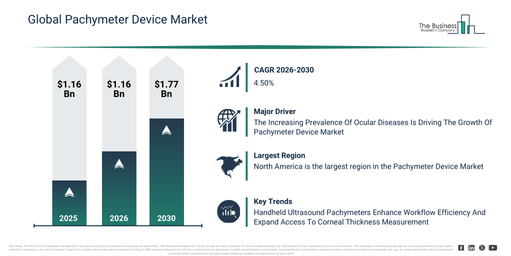
    The pachymeter device market is projected to experience consistent expansion over the upcoming years. By 2030, this market is anticipated to reach a valuation of $25.28 billion, progressing at a compound annual growth rate (CAGR) of 4.5%. This expansion throughout the forecast timeframe stems from factors such as heightened demand for early glaucoma detection, greater integration of advanced anterior segment imaging techniques, the proliferation of outpatient eye care facilities, increased funding for ophthalmic diagnostic breakthroughs, and a stronger emphasis on non-invasive ocular assessments. Key developments anticipated during this period encompass the wider acceptance of non-contact optical pachymeters, a surge in the application of OCT-based corneal measurement systems, an escalating need for portable ophthalmic instruments, the broadening of integrated eye diagnostic platforms, and a heightened priority on the precision and swiftness of measurements.

    Access Your Free Sample Report for In-Depth Market Insights:

    https://www.thebusinessresearchcompany.com/sample.aspx?id=16755&type=smp

    Which Drivers Are Impacting The Competitive Landscape Of The Pachymeter Device Market?

    The escalating occurrence of ocular diseases is projected to drive the expansion of the pachymeter device market moving forward. Ocular diseases encompass a broad spectrum of conditions affecting the eye and its associated structures. This heightened incidence of ocular diseases stems from elements such as increased contact lens usage, shifts in lifestyle, gender-specific factors, and vitamin deficiencies. Pachymetry devices find application in various eye conditions for assessing corneal thickness, which is crucial for the diagnosis and management of particular ailments. Illustratively, in May 2024, the Office for Health Improvement and Disparities, a UK-based government department, reported that roughly 2 million individuals in the UK currently experience some level of sight impairment, a figure anticipated to rise to 2.7 million by the year 2030. Consequently, the growing prevalence of ocular diseases is stimulating the growth of the pachymeter device market.

    What Leading Segments Are Studied In The Pachymeter Device Market?

    The pachymeter device market covered in this report is segmented –

    1) By Measurement Technology: Ultrasound Method, Optical Method

    2) By Product Type: Handheld Type, Non-Handheld Type

    3) By Application: Hospitals, Ophthal Clinics, Other Applications

    Subsegments:

    1) By Ultrasound Method: A-Scan Ultrasound Pachymeters, Contact Ultrasound Pachymeters, Non-Contact Ultrasound Pachymeters, Portable Ultrasound Pachymeters, High-Resolution Ultrasound Pachymeters

    2) By Optical Method: Optical Coherence Tomography (OCT) Pachymeters, Scheimpflug Imaging Pachymeters, Confocal Microscopy Pachymeters, Non-Contact Optical Pachymeters, Anterior Segment Optical Pachymeters, Laser Pachymeters

    Which Innovation Trends Are Advancing Developments Within The Pachymeter Device Market?

    Leading firms within the pachymeter device market are creating advanced offerings, including high-frequency ultrasound probes, aimed at improving measurement precision, portability, and the effectiveness of clinical operations. These high-frequency ultrasound probes function by employing sound waves at elevated frequencies (generally exceeding 20 MHz) to produce exceptionally detailed images or conduct measurements of small, surface-level anatomical parts, like the ocular cornea. As an illustration, during May 2024, Quantel Medical, an ophthalmic device firm based in France, introduced its POCKET III ultrasound pachymeter. This handheld instrument incorporates a 30 MHz probe for precise corneal measurement, provides an expanded measurement spectrum of 150–1,200 µm with an accuracy of ±5 µm, and includes Bluetooth along with USB-C connectivity, facilitating direct data transmission to personal computers and digital records. Such functionalities contribute to quicker patient screenings, lighten the workload for operators, and provide versatility for ophthalmologists needing accurate measurements across various clinical settings.

    Which Leading Companies Dominate The Pachymeter Device Market Share?

    Major companies operating in the pachymeter device market are Bausch And Lomb Incorporated, Canon Medical Systems Corporation, Topcon Corporation, Quantel Medical Inc., Keeler Ltd., Reichert Inc., OCULUS Optikgeräte GmbH, Accutome Inc., Optovue Inc., Sonomed Escalon, Visionix Ltd., Tomey Corporation, Haag-Streit Group, DGH Technology Inc., MicroMedical Devices Inc. (MMD), NIDEK Co. Ltd., Costruzione Strumenti Oftalmici (CSO) S.r.l., Ziemer Ophthalmic Systems AG, iCare Finland Oy, Rexxam Co. Ltd.

    Access The Complete Report For Deeper Market Insights:

    https://www.thebusinessresearchcompany.com/report/pachymeter-device-global-market-report

    Which Region Is Anticipated To See The Fastest Growth In The Pachymeter Device Market?

    North America was the largest region in the pachymeter device market in 2025. The regions covered in the pachymeter device market report are Asia-Pacific, South East Asia, Western Europe, Eastern Europe, North America, South America, Middle East, Africa.

    Request Your Customized Pachymeter Device Market Research Report for Competitive Advantage:

    https://www.thebusinessresearchcompany.com/customise?id=16755&type=smp

    Browse Through More Reports Similar to the Global Pachymeter Device Market 2026, By The Business Research Company

    Digital Or Electrical Sphygmomanometer Global Market Report 2026

    https://www.thebusinessresearchcompany.com/report/digital-or-electrical-sphygmomanometer-global-market-report

    Glucometer Global Market Report 2026

    https://www.thebusinessresearchcompany.com/report/glucometer-global-market-report

    Geodetic Measuring Devices Global Market Report 2026

    https://www.thebusinessresearchcompany.com/report/geodetic-measuring-devices-global-market-report

    Get in touch with us:

    The Business Research Company: https://www.thebusinessresearchcompany.com/

    Americas +1 310-496-7795

    Asia +44 7882 955267 & +91 8897263534

    Europe +44 7882 955267

    Email us at info@tbrc.info

    Follow us on:

    LinkedIn: https://in.linkedin.com/company/the-business-research-company

  • Oxygen Source Equipment Market Growth Projection: Expected to Surpass $6.46 Billion by 2030 at 10.2% CAGR

    Oxygen Source Equipment Market Growth Projection: Expected to Surpass $6.46 Billion by 2030 at 10.2% CAGR

    Uncover key drivers, emerging technologies, and competitive movements shaping the worker heat stress monitoring wearable market from 2026–2035 with trusted insights from The Business Research Company

    What total market size is anticipated for the Oxygen Source Equipment Market in 2030?

    The oxygen source equipment market size has experienced significant expansion in recent years. It is anticipated to grow from $3.97 billion in 2025 to $4.38 billion in 2026, exhibiting a compound annual growth rate (CAGR) of 10.3%. The market’s historic growth was primarily driven by increasing prevalence of respiratory disorders, expansion of hospital infrastructure, growth in industrial manufacturing activities, rising demand for medical oxygen in critical care, and government investments in healthcare facilities.

    The oxygen source equipment market is projected to experience swift expansion over the coming years. This market is set to reach $6.46 billion by 2030, exhibiting a compound annual growth rate (CAGR) of 10.2%. Factors contributing to this anticipated growth include an expanding elderly population suffering from chronic respiratory illnesses, the proliferation of home healthcare services, increased uptake of portable oxygen concentrators, broader applications of oxygen in industrial settings, and innovations in oxygen generation technology. Key trends anticipated during this period encompass the increasing use of oxygen therapy at home, a rising need for easily transportable and light oxygen systems, the spread of on-site oxygen production facilities, greater deployment of oxygen apparatus in emergency and disaster scenarios, and improvements in the safety of oxygen storage and delivery.

    Access Your Free Sample Report for In-Depth Market Insights:

    https://www.thebusinessresearchcompany.com/sample.aspx?id=25865&type=smp

    What Drivers Are Influencing Production Trends In The Oxygen Source Equipment Market?

    The growing occurrence of respiratory illnesses is projected to fuel the expansion of the oxygen source equipment market in the future. These diseases are health issues impacting the lungs and other components of the respiratory system, leading to breathing difficulties. The heightened frequency of respiratory ailments mainly stems from rising air pollution and exposure to environmental harmful substances, which harm lung tissue, diminish respiratory capacity, and provoke or worsen conditions like asthma, chronic obstructive pulmonary disease (COPD), and lung cancer. In cases of respiratory diseases, oxygen source equipment provides supplementary oxygen, assisting in the maintenance of sufficient blood oxygen levels when the lungs cannot perform this function efficiently. As an example, the UK Health Security Agency, a UK-based government body, reported in February 2024 that England experienced a 10.7% year-over-year rise in tuberculosis (TB) cases in 2023, with reported instances increasing from 4,380 in 2022 to 4,850. Consequently, the growing occurrence of respiratory diseases is propelling the expansion of the oxygen source equipment market.

    Which Segment Groups Are Influencing The Oxygen Source Equipment Market?

    The oxygen source equipment market covered in this report is segmented –

    1) By Product Type: Oxygen Cylinders, Oxygen Concentrators, Liquid Oxygen Equipment, Oxygen Systems For Industrial Use, Portable Oxygen Systems

    2) By Delivery Mode: Gas Delivery Systems, Cryogenic Liquid Delivery Systems, Portable Delivery Systems, Pipeline Delivery Systems, Bulk Oxygen Supply Systems

    3) By Application: Hospital, Clinic, Other Applications

    4) By End-User: Healthcare And Medical, Aerospace And Aviation, Industrial Manufacturing, Water Treatment Plants, Energy And Power Generation

    Subsegments:

    1) By Oxygen Cylinders: Steel Oxygen Cylinders, Aluminum Oxygen Cylinders, Composite Oxygen Cylinders, High-Pressure Oxygen Cylinders, Low-Pressure Oxygen Cylinders

    2) By Oxygen Concentrators: Portable Oxygen Concentrators, Stationary Oxygen Concentrators, Continuous Flow Concentrators, Pulse Dose Concentrators

    3) By Liquid Oxygen Equipment: Portable Liquid Oxygen Units, Home-Based Reservoir Systems, Hospital-Based Bulk Liquid Oxygen Systems, Mobile Cryogenic Containers

    4) By Oxygen Systems For Industrial Use: Pressure Swing Adsorption (PSA) Oxygen Plants, Vacuum Pressure Swing Adsorption (VPSA) Plants, Cryogenic Air Separation Units (ASUs), Membrane-Based Oxygen Generators

    5) By Portable Oxygen Systems: Wearable Oxygen Devices, Lightweight Cylindrical Kits, Portable Oxygen Concentrator Kits, Backpack Oxygen Delivery Systems

    Which Competitive Trends Are Impacting The Structure Of The Oxygen Source Equipment Market?

    Leading companies in the oxygen source equipment market are concentrating on developing innovative offerings, such as portable oxygen concentrators, to improve patient mobility, enhance quality of life, and address the increasing need for at-home and travel-friendly respiratory care solutions. A portable oxygen concentrator is a compact medical device that extracts and supplies concentrated oxygen from the surrounding air, enabling patients with respiratory conditions to receive oxygen therapy while mobile. For example, in October 2024, Inogen, a U.S.-based medical technology company, released the Rove 4, a portable oxygen concentrator weighing under 3 lbs. It features four flow settings, delivering up to 840 ml/min of medical-grade oxygen, and includes three battery configurations that provide up to 5 hours and 45 minutes of operation. The device is specifically engineered to support patient mobility and daily activities.

    Who Are The Major Companies Operating In The Oxygen Source Equipment Market?

    Major companies operating in the oxygen source equipment market are Air Liquide Healthcare, Koninklijke Philips N.V., GCE Healthcare, Teijin Limited, ResMed Inc., Fisher & Paykel Healthcare, Invacare Corporation, Contec Medical Systems, Inogen Inc., Drive DeVilbiss Healthcare, CAIRE Inc., Precision Medical Inc., OxyGo LLC, O2 Concepts LLC, Longfian Scitech Co. Ltd., Nidek Medical Products, Besco Medical Limited, Scaleo Medical SAS, Oxus Inc., Linde Healthcare, Taiyo Nippon Sanso Corporation, Messer Group

    Access The Complete Report For Deeper Market Insights:

    https://www.thebusinessresearchcompany.com/report/oxygen-source-equipment-global-market-report

    Which Region Is Anticipated To See The Fastest Growth In The Oxygen Source Equipment Market?

    North America was the largest region in the oxygen source equipment market in 2025. Asia-Pacific is expected to be the fastest-growing region in the forecast period. The regions covered in the oxygen source equipment market report are Asia-Pacific, South East Asia, Western Europe, Eastern Europe, North America, South America, Middle East, Africa.

    Request Your Customized Oxygen Source Equipment Market Research Report for Competitive Advantage:

    https://www.thebusinessresearchcompany.com/customise?id=25865&type=smp

    Browse Through More Reports Similar to the Global Oxygen Source Equipment Market 2026, By The Business Research Company

    Aerospace Oxygen System Global Market Report 2026

    https://www.thebusinessresearchcompany.com/report/aerospace-oxygen-system-global-market-report

    Aircraft Oxygen Systems Global Market Report 2026

    https://www.thebusinessresearchcompany.com/report/aircraft-oxygen-systems-global-market-report

    Oxygen Concentrators Global Market Report 2026

    https://www.thebusinessresearchcompany.com/report/oxygen-concentrators-global-market-report

    Get in touch with us:

    The Business Research Company: https://www.thebusinessresearchcompany.com/

    Americas +1 310-496-7795

    Asia +44 7882 955267 & +91 8897263534

    Europe +44 7882 955267

    Email us at info@tbrc.info

    Follow us on:

    LinkedIn: https://in.linkedin.com/company/the-business-research-company
  • Oxygen Conserving Devices Market Forecast 2026–2035: How to Leverage Market Growth

    Oxygen Conserving Devices Market Forecast 2026–2035: How to Leverage Market Growth

    Uncover key drivers, emerging technologies, and competitive movements shaping the workstation graphics processing unit (gpu) market from 2026–2035 with trusted insights from The Business Research Company

    What is the expected shift in the Oxygen Conserving Devices Market’s size between 2026 and 2030?

    The oxygen conserving devices market size has seen substantial growth in recent years. Its value is predicted to rise from $1.91 billion in 2025 to $2.2 billion in 2026, achieving a compound annual growth rate (CAGR) of 15.4%. The expansion observed historically can be linked to increasing incidence of chronic respiratory diseases, expansion of home healthcare infrastructure, rising demand for portable oxygen therapy, improved access to oxygen delivery systems, and growing awareness of oxygen conservation benefits.

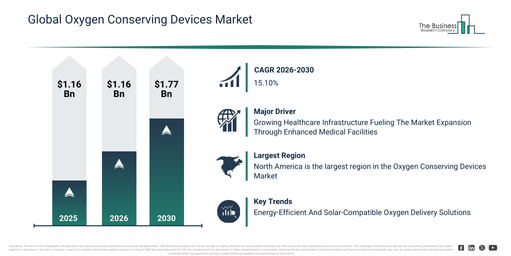
    The market for oxygen conserving devices is projected to experience swift expansion over the coming years. This market is anticipated to reach $3.86 billion by 2030, exhibiting a compound annual growth rate (CAGR) of 15.1%. Several factors will drive this growth during the forecast period, including a heightened demand for intelligent respiratory devices, increased embrace of wearable oxygen solutions, the expansion of care services for the elderly population, an amplified emphasis on economical oxygen therapy, and continuous technological progress in oxygen delivery methods. Key trends anticipated during the forecast period encompass a greater acceptance of intermittent flow oxygen delivery, the increasing utilization of portable oxygen conserving devices, the growing incorporation of smart control mechanisms for oxygen, the broadening of home and long-term care oxygen solutions, and a reinforced focus on optimizing oxygen efficiency.

    Access Your Free Sample Report for In-Depth Market Insights:

    https://www.thebusinessresearchcompany.com/sample.aspx?id=23468&type=smp

    Which Drivers Are Shaping Strategic Decisions In The Oxygen Conserving Devices Market?

    The expanding healthcare infrastructure is projected to propel the growth of the oxygen conserving devices market moving forward. This infrastructure pertains to the physical and organizational arrangements, facilities, systems, and resources necessary for the effective delivery of healthcare services. Healthcare infrastructure is undergoing expansion as the rising prevalence of chronic conditions, such as diabetes and heart ailments, elevates the demand for specialized care facilities and resources to support long-term patient management. It aids oxygen conserving devices by guaranteeing reliable access, efficient provision, and proper maintenance in medical facilities and homecare settings. For instance, in October 2025, based on information from the ScienceSoft USA Corporation, a US-based consulting and software development company, as of 2023, the United States possesses 6,093 hospitals overall, including 5,112 community hospitals. Within these community facilities, 2,978 are nonprofit, 1,214 are for-profit, and 920 are run by government entities. Therefore, the increasing healthcare infrastructure is driving the growth of the oxygen conserving devices market.

    What Segment Classifications Make Up The Oxygen Conserving Devices Market?

    The oxygen conserving devices market covered in this report is segmented –

    1) By Product: Reservoir Cannula, Transtracheal Catheters, Intermittent Flow Device, Continuous Flow Device, Other Products

    2) By Indication: Chronic Obstructive Pulmonary Disease (COPD), Pneumonia, Asthma, Other Respiratory Disorders

    3) By End-User: Hospitals And Clinics, Long-Term Care Units, Home Care, Other End-Users

    Subsegments:

    1) Reservoir Cannula: Pendant Reservoir Cannula, Mustache Reservoir Cannula, Pediatric Reservoir Cannula

    2) Transtracheal Catheters: Micro-Trach Catheter, Scoop-Tip Catheter, Extended-Length Catheter

    3) Intermittent Flow Device: Pulse Dose Oxygen Conserving Device, Demand Oxygen Delivery System, Electronic Oxygen Conserving Device

    4) Continuous Flow Device: Portable Oxygen Concentrators, Stationary Oxygen Concentrators, High-Flow Oxygen Therapy Device

    5) Other Products: Oxygen Masks, Oxygen-Conserving Regulators, Oxygen Reservoir Bags, Nasal Oxygen Prongs, Oxygen Humidifiers

    What Industry Trends Are Transforming The Oxygen Conserving Devices Market?

    Leading companies within the oxygen-conserving devices market are prioritizing energy-efficient solutions for oxygen delivery, including solar-compatible, low-power oxygen concentrators. These are specifically designed for electrical environments that are unstable or resource-constrained, engineered to maintain a steady oxygen output while significantly reducing energy usage, thereby enabling operation even when conventional power sources are unreliable. Typically, these systems incorporate a wide-voltage input capability, soft-start circuitry, and durable components to guarantee reliable performance under challenging conditions. For example, in October 2024, Drive DeVilbiss Healthcare, a US-based respiratory-care company, launched its PulmO2 Oxygen Concentrator. This device features up to 67% lower energy consumption, allowing for extended use in low-resource settings. It also includes a soft-start design that ensures compatibility with solar power systems, supporting off-grid operation, and offers a wide input voltage range (100–240 VAC) with robust environmental tolerance, ensuring dependable performance in high heat, humidity, dust, and at altitudes up to 2,000 m.

    Which Major Firms Are Strengthening Their Position In The Oxygen Conserving Devices Market?

    Major companies operating in the oxygen conserving devices market are Medline Industries LP, Drive DeVilbiss Healthcare LLC, React Health, GF Health Products Inc., Essex Industries Inc., Compass Health Brands, Sunset Healthcare Solutions Inc., CHAD Therapeutics, Precision Medical Inc., Air Liquide Healthcare, Inovo Inc., HERSILL, GCE Group, Responsive Respiratory Inc., Caire Inc., Inogen Inc., Philips Respironics, ResMed Inc., Fisher & Paykel Healthcare, Oxus America, Longfian Scitech Co. Ltd., Beijing North Star Medical Equipment Co. Ltd.

    Access The Complete Report For Deeper Market Insights:

    https://www.thebusinessresearchcompany.com/report/oxygen-conserving-devices-global-market-report

    Which Global Regions Are Shaping The Competitive Landscape Of The Oxygen Conserving Devices Market?

    North America was the largest region in the oxygen conserving devices market in 2025. Asia-Pacific is expected to be the fastest-growing region in the forecast period. The regions covered in the oxygen conserving devices market report are Asia-Pacific, South East Asia, Western Europe, Eastern Europe, North America, South America, Middle East, Africa.

    Request Your Customized Oxygen Conserving Devices Market Research Report for Competitive Advantage:

    https://www.thebusinessresearchcompany.com/customise?id=23468&type=smp

    Browse Through More Reports Similar to the Global Oxygen Conserving Devices Market 2026, By The Business Research Company

    Oxygen Concentrators Global Market Report 2026

    https://www.thebusinessresearchcompany.com/report/oxygen-concentrators-global-market-report

    Respiratory Oxygen Delivery Devices Global Market Report 2026

    https://www.thebusinessresearchcompany.com/report/respiratory-oxygen-delivery-devices-global-market-report

    Aircraft Oxygen Systems Global Market Report 2026

    https://www.thebusinessresearchcompany.com/report/aircraft-oxygen-systems-global-market-report

    Get in touch with us:

    The Business Research Company: https://www.thebusinessresearchcompany.com/

    Americas +1 310-496-7795

    Asia +44 7882 955267 & +91 8897263534

    Europe +44 7882 955267

    Email us at info@tbrc.info

    Follow us on:

    LinkedIn: https://in.linkedin.com/company/the-business-research-company
  • Global Oxygen Conservers Market 2026–2030: Forecast Insights for Business Planning

    Global Oxygen Conservers Market 2026–2030: Forecast Insights for Business Planning

    Uncover key drivers, emerging technologies, and competitive movements shaping the worker heat stress monitoring wearable market from 2026–2035 with trusted insights from The Business Research Company

    What growth pattern is forecast for the Oxygen Conservers Market size between 2026 and 2035?

    The market for oxygen conservers has experienced significant expansion recently. It is projected to increase from $1.84 billion in 2025 to $2.09 billion in 2026, demonstrating a compound annual growth rate (CAGR) of 13.8%. The growth observed in the past can be attributed to the rising prevalence of respiratory disorders, the increasing use of home oxygen therapy, a growing geriatric population, wider availability of oxygen concentrators, and improved clinical awareness concerning oxygen conservation.

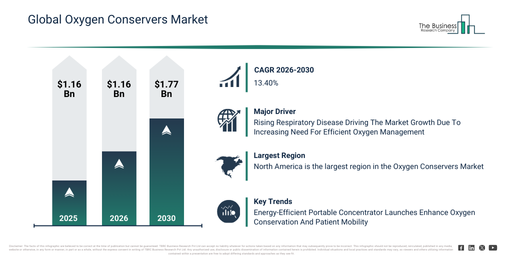
    The oxygen conservers market is anticipated to experience substantial growth in the upcoming years. Its size is predicted to reach $3.46 billion by 2030, expanding at a compound annual growth rate (CAGR) of 13.4%. This expansion during the forecast period can be attributed to several factors, including the increasing integration of smart connected oxygen devices, a growing need for portable respiratory care solutions, the expansion of home healthcare services, an increasing emphasis on the efficiency of long-term oxygen therapy, and rising investments in respiratory devices designed with patients in mind. Prominent trends expected in this period involve the wider adoption of pulse-dose oxygen delivery systems, an increasing demand for lightweight portable oxygen conservers, the growing incorporation of smart oxygen monitoring sensors, the expansion of home-based oxygen therapy solutions, and an enhanced focus on patient mobility and comfort.

    Access Your Free Sample Report for In-Depth Market Insights:

    https://www.thebusinessresearchcompany.com/sample.aspx?id=23467&type=smp

    Which Drivers Are Impacting Market Performance In The Oxygen Conservers Market?

    The increasing occurrence of respiratory ailments is projected to boost the growth of the oxygen conservers market in the future. Respiratory diseases are medical conditions impacting the lungs and airways, leading to difficult breathing and often symptoms like shortness of breath. Enhanced exposure to air pollution contributes to a higher prevalence of respiratory diseases, as pollutants harm lung tissue, weaken immune responses, and trigger chronic conditions. Oxygen conservers enhance respiratory care by optimizing oxygen delivery, making them ideal for patients with chronic lung conditions. These devices extend the oxygen supply by releasing it only during inhalation, thus improving therapy efficiency and patient mobility. For instance, in November 2024, the Australian Institute of Health and Welfare, an Australia-based government agency, reported that 2.8 million people (11%) were living with asthma in 2022. This contributed 2.5% to the total disease burden and 35% to the respiratory disease burden in 2023, with 467 deaths (1.8 per 100,000 population) recorded in 2022, accounting for 0.2% of all deaths. Therefore, the rising prevalence of respiratory diseases is driving the growth of the oxygen conservers market.

    What Segment Types Are Examined In The Oxygen Conservers Market?

    The oxygen conservers market covered in this report is segmented –

    1) By Product Type: Continuous Flow Oxygen Conservers, Pulse Dose Oxygen Conservers, Wall-Mount Oxygen Conservers, Portable Oxygen Conservers

    2) By Technology: Electronic Oxygen Conservers, Mechanical Oxygen Conservers, Integrated Oxygen Delivery Systems

    3) By Application: Respiratory Diseases, Chronic Obstructive Pulmonary Disease (COPD), Liquid Oxygen Systems, Long-Term Oxygen Therapy Applications

    4) By End-User: Hospitals, Clinics, Nursing Homes, HomeCare, Other End-Users

    Subsegments:

    1) By Continuous Flow Oxygen Conservers: High-Flow Continuous Oxygen Conservers, Low-Flow Continuous Oxygen Conservers, Dual-Mode Continuous Flow Oxygen Conservers, Pediatric Continuous Flow Oxygen Conservers, Stationary Continuous Flow Oxygen Conservers

    2) By Pulse Dose Oxygen Conservers: Adjustable Pulse Dose Oxygen Conservers, Fixed-Setting Pulse Dose Oxygen Conservers, Smart Sensor Pulse Dose Oxygen Conservers, High-Volume Pulse Dose Oxygen Conservers, Battery-Operated Pulse Dose Oxygen Conservers

    3) By Wall-Mount Oxygen Conservers: Hospital Room Wall-Mount Oxygen Conservers, Intensive Care Unit (ICU) Wall-Mount Oxygen Conservers, Emergency Department Wall-Mount Oxygen Conservers, Modular Wall-Mount Oxygen Conservers, High-Capacity Wall-Mount Oxygen Conservers

    4) By Portable Oxygen Conservers: Wearable Portable Oxygen Conservers, Compact Travel-Friendly Oxygen Conservers, Rechargeable Battery-Powered Oxygen Conservers, Hybrid Portable And Stationary Oxygen Conservers, Lightweight Backpack Oxygen Conservers

    What Trends Are Reshaping The Dynamics Of The Oxygen Conservers Market?

    Leading companies in the oxygen conservers market are concentrating on energy-efficient portable concentrators, particularly lightweight pulse-dose POCs (portable oxygen concentrators), which are designed to maximize oxygen delivery per watt-hour. These devices contribute to conserving both oxygen and power while enhancing patient mobility. Lightweight pulse-dose POCs are defined as portable oxygen concentrators that are compact, easily transportable, and provide oxygen in brief bursts (pulses) exclusively when the user inhales, rather than a continuous stream. For example, in October 2024, Inogen Inc., a US-based respiratory medical technology firm, introduced the Inogen Rove 4 portable oxygen concentrator. The Rove 4 features four pulse-dose settings, delivering up to 840 mL/min of medical-grade oxygen, offers a choice of three battery options supporting up to 5 hours and 45 minutes of continuous use, and boasts an ultra-lightweight design (2.9 lb / 1.3 kg) for improved patient movement. This system is powered by Inogen’s patented Intelligent Delivery Technology, which senses inhalation in under 250 ms to ensure precise, efficient oxygen delivery only when necessary. This innovation aims to help patients with chronic respiratory conditions achieve greater independence in their daily lives while receiving reliable, clinically effective oxygen therapy.

    Who Are The Primary Competitors In The Global Oxygen Conservers Market?

    Major companies operating in the oxygen conservers market are Medline Industries LP, Drive DeVilbiss Healthcare LLC, React Health, GF Health Products Inc., Essex Industries Inc., Compass Health Brands, Sunset Healthcare Solutions Inc., CHAD Therapeutics, Precision Medical Inc., Air Liquide Healthcare, Inovo Inc., HERSILL, GCE Group, Responsive Respiratory Inc., Caire Inc., Inogen Inc., Philips Respironics, ResMed Inc., Fisher & Paykel Healthcare, Oxus America, Precision Oxygen Group, Longfian Scitech Co. Ltd.

    Access The Complete Report For Deeper Market Insights:

    https://www.thebusinessresearchcompany.com/report/oxygen-conservers-global-market-report

    Which Regions Are Poised For Strategic Growth In The Oxygen Conservers Market?

    North America was the largest region in the oxygen conservers market in 2025. Asia-Pacific is expected to be the fastest-growing region in the forecast period. The regions covered in the oxygen conservers market report are Asia-Pacific, South East Asia, Western Europe, Eastern Europe, North America, South America, Middle East, Africa.

    Request Your Customized Oxygen Conservers Market Research Report for Competitive Advantage:

    https://www.thebusinessresearchcompany.com/customise?id=23467&type=smp

    Browse Through More Reports Similar to the Global Oxygen Conservers Market 2026, By The Business Research Company

    Oxygen Market 2026

    https://www.thebusinessresearchcompany.com/report/oxygen-market

    Oxygen Therapy Global Market Report 2026

    https://www.thebusinessresearchcompany.com/report/oxygen-therapy-global-market-report

    Liquid Oxygen Devices Global Market Report 2026

    https://www.thebusinessresearchcompany.com/report/liquid-oxygen-devices-global-market-report

    Get in touch with us:

    The Business Research Company: https://www.thebusinessresearchcompany.com/

    Americas +1 310-496-7795

    Asia +44 7882 955267 & +91 8897263534

    Europe +44 7882 955267

    Email us at info@tbrc.info

    Follow us on:

    LinkedIn: https://in.linkedin.com/company/the-business-research-company

  • Oxygen Concentrators Market Outlook 2026–2035: Growth Drivers and Industry Forecast

    Oxygen Concentrators Market Outlook 2026–2035: Growth Drivers and Industry Forecast

    Uncover key drivers, emerging technologies, and competitive movements shaping the workstation graphics processing unit (gpu) market from 2026–2035 with trusted insights from The Business Research Company

    How much larger will the Oxygen Concentrators Market be in 2030 compared with 2026?

    The oxygen concentrators market has experienced substantial growth in recent years. It is projected to increase from $2.38 billion in 2025 to $2.54 billion in 2026, at a compound annual growth rate (CAGR) of 7.1%. This historical expansion can be attributed to the rising prevalence of respiratory disorders, the broadening of home healthcare services, growing recognition of oxygen therapy benefits, enhanced access to medical oxygen devices, and an expanding elderly population.

    The oxygen concentrators market is projected to experience substantial expansion over the upcoming years. Its valuation is anticipated to reach $3.31 billion by 2030, demonstrating a compound annual growth rate (CAGR) of 6.9%. This projected growth is driven by factors such as the wider uptake of remote patient monitoring, increasing capital allocation towards home healthcare infrastructure, broader use of portable medical devices, a heightened emphasis on solutions for patient mobility, and ongoing progress in oxygen separation technologies. Key developments anticipated during this period encompass a surging requirement for portable oxygen concentrators, a greater shift towards home-based oxygen therapy, the increasing incorporation of intelligent oxygen monitoring capabilities, the proliferation of lighter and more compact device architectures, and a strengthened emphasis on energy-efficient oxygen delivery methods.

    Access Your Free Sample Report for In-Depth Market Insights:

    https://www.thebusinessresearchcompany.com/sample.aspx?id=5348&type=smp

    What Drivers Are Guiding Growth Patterns In The Oxygen Concentrators Market?

    The global rise in respiratory disorders is anticipated to fuel the expansion of the oxygen concentrators market in the coming period. Respiratory disorders describe chronic or acute health issues such as chronic obstructive pulmonary disease (COPD), asthma, pneumonia, and complications from post-viral infections, all of which hinder lung performance and reduce oxygen levels within the body. This surge in respiratory illnesses is attributed to various factors including air pollution, tobacco consumption, workplace hazards, and the long-term health consequences of respiratory infections. The escalating occurrence of respiratory disorders benefits the oxygen concentrators market by increasing the demand for dependable, continuous oxygen therapy devices utilized in home care, clinics, and emergency medical settings. For example, according to the Centers for Disease Control and Prevention, a US-based government agency, tuberculosis cases escalated from 8,320 in 2022 to 9,615 in 2023, representing an increment of 1,295 cases. Additionally, the incidence rate for these cases climbed from 2.5 per 100,000 individuals in 2022 to 2.9 in 2023. Thus, the growing prevalence of respiratory disorders is propelling the growth of the oxygen concentrators market.

    Which Segments Are Driving Activity In The Oxygen Concentrators Market?

    The oxygen concentrators market covered in this report is segmented –

    1) By Type: Portable, Stationary

    2) By Technology: Pulse Dose, Continuous Flow

    3) By Application: Chronic Obstructive Pulmonary Disease (COPD), Lung Cancer, Pneumonia, Other Applications

    4) By End User: Hospitals, Home Care, Other End Users

    Subsegments:

    1) By Portable: Battery-Operated Portable Concentrators, Travel-Friendly Models, Compact And Lightweight Designs

    2) By Stationary: Continuous Flow Concentrators, Pulse Dose Concentrators, High-Flow Stationary Models

    How Are New Market Trends Shaping The Landscape Of The Oxygen Concentrators Market?

    Major companies in the oxygen concentrators market are increasingly allocating resources to advanced technologies such as artificial intelligence and economical portable devices to enhance the operational capabilities of these oxygen concentrators. Artificial intelligence and low-cost portable devices are defined as accessible, compact diagnostic or monitoring instruments that leverage artificial intelligence (AI) algorithms to deliver swift, accurate analyses and healthcare insights directly at the point of care or in distant settings. For instance, in March 2024, Drive DeVilbiss Healthcare, a US-based leading manufacturer of durable medical equipment, in collaboration with Sanrai International, a US-based company providing innovative medical equipment, unveiled the PulmO2 10L Oxygen Concentrator. This device is specifically engineered to be energy-efficient and highly durable, making it perfectly suited for demanding clinical environments. The PulmO2 aims to provide reliable oxygen therapy, particularly in low-resource settings, and is anticipated to considerably decrease energy expenditures when compared to a traditional 10L concentrator.

    Which Key Market Players Are Investing In Expansion And Innovation Within The Oxygen Concentrators Market?

    Major companies operating in the oxygen concentrators market are Inogen Inc, Koninklijke Philips N.V, Invacare Corporation, CAIRE Inc, O2 Concepts LLC, Nidek Medical Products Inc., Precision Medical Inc, Drive Devilbiss Healthcare Ltd, 3B Medical Inc, BPL, Evox Oxygen Concentrators, Nanjing Everich Medicare Import & Export Co. Ltd, AngelBiss Medical Technology Co. Ltd, Hefei DX Medical Co. Ltd, Longfian Scitech Co. Ltd, Pure O2, Heinen + Lowenstein GmbH & Co. KG, DeVilbiss Healthcare GmbH, ResMed, AirSep Corporation, Sequal Technologies Inc

    Access The Complete Report For Deeper Market Insights:

    https://www.thebusinessresearchcompany.com/report/oxygen-concentrators-global-market-report

    Which Regions Are Projected To Dominate The Oxygen Concentrators Market In The Coming Years?

    North America was the largest region in the oxygen concentrators market in 2025. Europe was the second-largest region in the oxygen concentrators market. The regions covered in the oxygen concentrators market report are Asia-Pacific, South East Asia, Western Europe, Eastern Europe, North America, South America, Middle East, Africa.

    Request Your Customized Oxygen Concentrators Market Research Report for Competitive Advantage:

    https://www.thebusinessresearchcompany.com/customise?id=5348&type=smp

    Browse Through More Reports Similar to the Global Oxygen Concentrators Market 2026, By The Business Research Company

    Aerospace Oxygen System Global Market Report 2026

    https://www.thebusinessresearchcompany.com/report/aerospace-oxygen-system-global-market-report

    Aircraft Oxygen Systems Global Market Report 2026

    https://www.thebusinessresearchcompany.com/report/aircraft-oxygen-systems-global-market-report

    Liquid Oxygen Devices Global Market Report 2026

    https://www.thebusinessresearchcompany.com/report/liquid-oxygen-devices-global-market-report

    Get in touch with us:

    The Business Research Company: https://www.thebusinessresearchcompany.com/

    Americas +1 310-496-7795

    Asia +44 7882 955267 & +91 8897263534

    Europe +44 7882 955267

    Email us at info@tbrc.info

    Follow us on:

    LinkedIn: https://in.linkedin.com/company/the-business-research-company