Category: Medical Equipment

  • Non-Invasive Aesthetic Treatment Market Research: Growth Projections and Trends 2030

    Non-Invasive Aesthetic Treatment Market Research: Growth Projections and Trends 2030

    Uncover key drivers, emerging technologies, and competitive movements shaping the workstation graphics processing unit (gpu) market from 2026–2035 with trusted insights from The Business Research Company

    How much larger will the Non-Invasive Aesthetic Treatment Market be in 2030 compared with 2026?

    The non-invasive aesthetic treatment market size has seen rapid expansion in recent years. Its projected growth is from $76.7 billion in 2025 to $88.99 billion in 2026, at a compound annual growth rate (CAGR) of 16.0%. Historically, this expansion can be attributed to factors such as a heightened consumer emphasis on appearance enhancement, the proliferation of medical spa facilities, a growing acceptance of cosmetic procedures, advancements in aesthetic device safety, and an increasing availability of trained aesthetic practitioners.

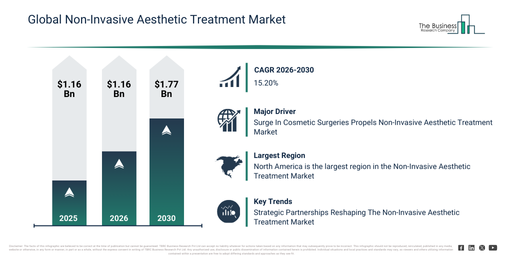
    The non-invasive aesthetic treatment market is anticipated to experience substantial expansion over the coming years, reaching $156.83 billion by 2030, exhibiting a compound annual growth rate (CAGR) of 15.2%. This projected increase during the forecast period is due to factors such as a heightened demand for non-surgical anti-aging solutions, the growing acceptance of tailored aesthetic approaches, the broadening of the male aesthetic treatment market, an increased emphasis on combined therapeutic methods, and the expanding utilization of digital consultation platforms. Significant developments expected in this period encompass the wider adoption of energy-based aesthetic devices, a surge in demand for minimally invasive cosmetic procedures, the increasing application of AI-assisted treatment planning, the proliferation of both home-based and clinic-based aesthetic options, and a stronger focus on patient safety alongside treatment customization.

    Access Your Free Sample Report for In-Depth Market Insights:

    https://www.thebusinessresearchcompany.com/sample.aspx?id=6772&type=smp

    What Drivers Are Guiding Growth Patterns In The Non-Invasive Aesthetic Treatment Market?

    The expanding count of cosmetic surgeries is anticipated to accelerate the growth of the non-invasive aesthetic treatment market in the future. Cosmetic surgery, also known as aesthetic surgery, involves a range of surgical and non-surgical methods performed to enhance an individual’s appearance. Non-invasive aesthetic treatments serve within cosmetic surgeries by offering a less intrusive and often more economical alternative, employing diverse technologies to address various concerns, from wrinkles and fine lines to uneven skin tone and sagging skin. For example, in June 2024, according to the American Society of Plastic Surgeons, a US-based professional medical organization, in 2023, liposuction persisted as the most popular plastic surgery procedure, with nearly 350,000 procedures undertaken, indicating a 7% increase compared to 2022. Consequently, the rising number of cosmetic surgeries is driving the growth of the non-invasive aesthetic treatment market.

    How Is The Non-Invasive Aesthetic Treatment Market Divided Into Segments?

    The non-invasive aesthetic treatment market covered in this report is segmented –

    1) By Product: Injectable, Skin Rejuvenation

    2) By Treatment Area: Facial Aesthetics, Body Contouring, Hair & Scalp

    3) By End Use: Hospitals & Surgery Centers, Medical Spa, Clinics, Traditional Spa, HCP Owned Clinic

    Subsegments:

    1) By Injectable: Dermal Fillers, Botulinum Toxin Injections, Biostimulatory Injectables, Mesotherapy

    2) By Skin Rejuvenation: Chemical Peels, Microdermabrasion, Laser Resurfacing, Radiofrequency Treatments, Intense Pulsed Light (IPL) Therapy

    What Trends Are Projected To Support The Growth Of The Non-Invasive Aesthetic Treatment Market?

    Companies operating prominently in the non-invasive aesthetic treatment market are forging partnerships to develop new offerings and strengthen their standing. Such collaborations and alliances within this market stimulate innovation, accelerate research and development efforts, expand market access, and enhance industry credibility, cultivating a comprehensive and dynamic approach to sector progression. For instance, in August 2023, BeautyHealth, a US-based category-creating enterprise, entered into a partnership with LaserAway, a US-based provider of laser hair removal and aesthetic treatments, with the goal of integrating patented vortex fusion technology with a digital experience. This specific partnership offers consumers improved access to Hydrafacial treatments and generates valuable data insights for both companies involved.

    Which Leading Companies Dominate The Non-Invasive Aesthetic Treatment Market Share?

    Major companies operating in the non-invasive aesthetic treatment market are Johnson & Johnson, Allergan, BTL Industries, Bausch Health Companies Inc., Cynosure LLC, Galderma S.A., MerzPharma, Sinclair Pharma, InMode Ltd., Lumenis, ZELTIQ Aesthetics Inc., Solta Medical, Syneron Medical Ltd., Cutera Inc., Lutronic Corporation, Revance Therapeutics Inc., Venus Concept, Fotona d.o.o., EndyMed Medical Ltd., Alma Lasers, Sciton Inc., ThermiGen LLC, Candela Corporation

    Access The Complete Report For Deeper Market Insights:

    https://www.thebusinessresearchcompany.com/report/non-invasive-aesthetic-treatment-global-market-report

    Which Region Is Anticipated To See The Fastest Growth In The Non-Invasive Aesthetic Treatment Market?

    North America was the largest region in the non-invasive aesthetic treatment market in 2025. Asia-Pacific is expected to be the fastest-growing region in the forecast period. The regions covered in the non-invasive aesthetic treatment market report are Asia-Pacific, South East Asia, Western Europe, Eastern Europe, North America, South America, Middle East, Africa.

    Request Your Customized Non-Invasive Aesthetic Treatment Market Research Report for Competitive Advantage:

    https://www.thebusinessresearchcompany.com/customise?id=6772&type=smp

    Browse Through More Reports Similar to the Global Non-Invasive Aesthetic Treatment Market 2026, By The Business Research Company

    Aesthetic Medicine Global Market Report 2026

    https://www.thebusinessresearchcompany.com/report/aesthetic-medicine-global-market-report

    Aesthetic Implants Global Market Report 2026

    https://www.thebusinessresearchcompany.com/report/aesthetic-implants-global-market-report

    Medical Aesthetics Global Market Report 2026

    https://www.thebusinessresearchcompany.com/report/medical-aesthetics-global-market-report

    Get in touch with us:

    The Business Research Company: https://www.thebusinessresearchcompany.com/

    Americas +1 310-496-7795

    Asia +44 7882 955267 & +91 8897263534

    Europe +44 7882 955267

    Email us at info@tbrc.info

    Follow us on:

    LinkedIn: https://in.linkedin.com/company/the-business-research-company
  • Global Non-Alcoholic Steatohepatitis Biomarkers Industry Insights: Key Trends and Growth Estimates

    Global Non-Alcoholic Steatohepatitis Biomarkers Industry Insights: Key Trends and Growth Estimates

    Uncover key drivers, emerging technologies, and competitive movements shaping the worker heat stress monitoring wearable market from 2026–2035 with trusted insights from The Business Research Company

    Starting from its 2026 valuation, what market size is the Non-Alcoholic Steatohepatitis Biomarkers Market expected to reach by 2030?

    The non-alcoholic steatohepatitis biomarkers market size has seen significant expansion in recent years. It is anticipated to grow from $1.68 billion in 2025 to $2.08 billion in 2026, at a compound annual growth rate (CAGR) of 23.2%. The growth experienced in the past can be attributed to the increasing prevalence of metabolic disorders, a rise in the incidence of obesity and type 2 diabetes, the expansion of liver disease research programs, the availability of advanced diagnostic assays, and a growing pharmaceutical interest in NASH therapies.

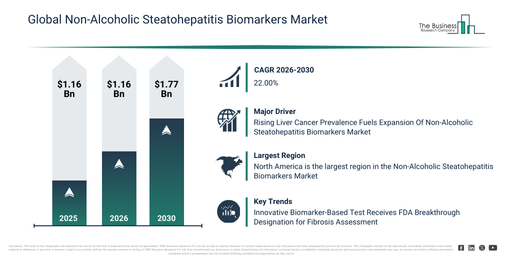
    The non-alcoholic steatohepatitis biomarkers market is projected to experience substantial expansion in the coming years. Its valuation is anticipated to reach $4.6 billion by 2030, demonstrating a compound annual growth rate (CAGR) of 22.0%. This growth trajectory during the forecast period is fueled by heightened investments in precision hepatology, a growing need for non-invasive diagnostic instruments, the broadening scope of biomarker-guided clinical trials, increasing uptake of personalized medical strategies, and an intensified focus on managing diseases in their early stages. Key developments anticipated within this timeframe involve the heightened creation of non-invasive diagnostic biomarkers, increasing application of serum-based NASH biomarkers, the expanding integration of AI in biomarker analytical processes, a wider deployment of companion diagnostics within drug development, and an amplified emphasis on identifying diseases at an early stage.

    Access Your Free Sample Report for In-Depth Market Insights:

    https://www.thebusinessresearchcompany.com/sample.aspx?id=9002&type=smp

    What Drivers Are Driving Adoption Within The Non-Alcoholic Steatohepatitis Biomarkers Market?

    The increasing occurrence of liver cancer is anticipated to boost the expansion of the non-alcoholic steatohepatitis biomarkers market in the future. Liver cancer involves the formation of cancerous growths inside the liver, originating either within the liver itself (known as primary liver cancer) or spreading to it from elsewhere in the body (referred to as secondary or metastatic liver cancer). In cases of liver cancer, non-alcoholic steatohepatitis (NASH) biomarkers find application in early diagnosis, tracking disease advancement, evaluating treatment efficacy, offering prognostic data, and potentially lessening the requirement for invasive medical interventions. For example, projections from July 2025, published by the UK-based cancer journal ecancer medical science, suggest that the number of new liver cancer cases is projected to nearly double from 870,000 in 2022 to 1.52 million by 2050. This increase is primarily attributed to population growth and ageing, with the most significant surges expected in Africa. Furthermore, liver cancer fatalities are also forecast to rise from 760,000 in 2022 to 1.37 million by 2050. Consequently, the expanding incidence of liver cancer is a key factor propelling the expansion of the non-alcoholic steatohepatitis biomarkers market.

    What Segments Are Included Within The Non-Alcoholic Steatohepatitis Biomarkers Market?

    The non-alcoholic steatohepatitis biomarkers market covered in this report is segmented –

    1) By Type: Hepatic Fibrosis Biomarkers, Serum Biomarkers, Oxidative Stress Biomarkers, Apoptosis Biomarkers, Other Types

    2) By Technology: Enzyme-Linked Immunosorbent Assay (ELISA), Mass Spectrometry, Polymerase Chain Reaction (PCR), Immunohistochemistry (IHC), Next-Generation Sequencing (NGS), Other Technologies

    3) By End Use: Research Institutes And Academics, Diagnostic Centers, Pharmaceutical Companies And Pharmaceutical Companies And Contract Research Organizations (CROs), Hospitals And Clinics, Other End-Uses

    Subsegments:

    1) By Hepatic Fibrosis Biomarkers: Hyaluronic Acid, Procollagen III N-terminal Propeptide (PIIINP), Fibrosis-4 (FIB-4) Index

    2) By Serum Biomarkers: Alanine Aminotransferase (ALT), Aspartate Aminotransferase (AST), Adiponectin

    3) By Oxidative Stress Biomarkers: Malondialdehyde (MDA), 8-Isoprostane, Advanced Oxidation Protein Products (AOPP)

    4) By Apoptosis Biomarkers: Caspase-3, Cytochrome c, Liver Inhibitory Protein (LIP)

    5) By Other Types: Metabolomic Biomarkers, Genetic Biomarkers, Inflammatory Biomarkers

    Which Trends Are Influencing The Performance And Direction Of The Non-Alcoholic Steatohepatitis Biomarkers Market?

    Major companies operating in the non-alcoholic steatohepatitis biomarkers market are integrating advanced biomarker-platform technologies, such as multi-analyte fibrosis-scoring assays, to enhance non-invasive disease assessment and the stratification of patient risk. These assays work by measuring multiple fibrosis-related proteins in a single blood sample and applying an algorithm to generate a numerical score, thereby enabling prognostic evaluation and supporting the identification of advanced fibrosis. For instance, in July 2023, Siemens Healthineers, a Germany-based medical-technology company, secured breakthrough device designation from the US Food and Drug Administration for its Enhanced Liver Fibrosis Test, which is a multi-analyte fibrosis-scoring assay designed to support identification of advanced fibrosis and cirrhosis in individuals with non-alcoholic fatty liver disease, distinguished by a numerical score derived from three direct fibrosis biomarkers. The test aids in the earlier clinical evaluation of liver disease severity and lessens reliance on invasive biopsy.

    Who Are The Major Companies Operating In The Non-Alcoholic Steatohepatitis Biomarkers Market?

    Major companies operating in the non-alcoholic steatohepatitis biomarkers market are Genfit SA, Prometheus Laboratories Inc., Siemens Medical Solutions USA Inc., BioPredictive, Quest Diagnostics, AstraZeneca Plc., Laboratory Corporation of America Holdings, Pfizer Inc., Bristol-Myers Squibb Company, NGM Biopharmaceuticals Inc., Gilead Sciences Inc., Perspectum Diagnostics Ltd., One Way Liver SL, Enterome SA, Echosens SA, Cisbio Bioassays SAS, Celerion Inc., Boehringer Ingelheim GmbH Inc., Exalenz Bioscience Ltd., Novartis AG, Novo Nordisk A/S, Allergan PLC., Glympse Bio, HistoIndex Pte Ltd, Cirius Therapeutics, Intercept Pharmaceuticals, Viking Therapeutics, Madrigal Pharmaceuticals, Galmed Pharmaceuticals, Immuron Ltd, Metacrine

    Access The Complete Report For Deeper Market Insights:

    https://www.thebusinessresearchcompany.com/report/non-alcoholic-steatohepatitis-biomarkers-global-market-report

    Which Region Is Anticipated To See The Fastest Growth In The Non-Alcoholic Steatohepatitis Biomarkers Market?

    North America was the largest region in the non-alcoholic steatohepatitis biomarkers market in 2025. Asia-Pacific is expected to be the fastest-growing region in the non-alcoholic steatohepatitis biomarkers market during the forecast period. The regions covered in the non-alcoholic steatohepatitis biomarkers market report are Asia-Pacific, South East Asia, Western Europe, Eastern Europe, North America, South America, Middle East, Africa.

    Request Your Customized Non-Alcoholic Steatohepatitis Biomarkers Market Research Report for Competitive Advantage:

    https://www.thebusinessresearchcompany.com/customise?id=9002&type=smp

    Browse Through More Reports Similar to the Global Non-Alcoholic Steatohepatitis Biomarkers Market 2026, By The Business Research Company

    Non Alcoholic Steatohepatitis Treatment Global Market Report 2026

    https://www.thebusinessresearchcompany.com/report/non-alcoholic-steatohepatitis-treatment-global-market-report

    Non Alcoholic Steatohepatitis Treatment Global Market Report 2026

    https://www.thebusinessresearchcompany.com/report/non-alcoholic-steatohepatitis-treatment-global-market-report

    Fatty Liver Treatment Global Market Report 2026

    https://www.thebusinessresearchcompany.com/report/fatty-liver-treatment-global-market-report

    Get in touch with us:

    The Business Research Company: https://www.thebusinessresearchcompany.com/

    Americas +1 310-496-7795

    Asia +44 7882 955267 & +91 8897263534

    Europe +44 7882 955267

    Email us at info@tbrc.info

    Follow us on:

    LinkedIn: https://in.linkedin.com/company/the-business-research-company
  • Non-Absorbable Mesh Market Forecast: How Big Will It Be by 2030?

    Non-Absorbable Mesh Market Forecast: How Big Will It Be by 2030?

    Uncover key drivers, emerging technologies, and competitive movements shaping the workstation graphics processing unit (gpu) market from 2026–2035 with trusted insights from The Business Research Company

    Across 2026–2030, what is the expected market valuation path of the Non-Absorbable Mesh Market?

    The non-absorbable mesh market size has exhibited robust growth in recent years. It is projected to expand from $1.32 billion in 2025 to $1.43 billion in 2026, registering a compound annual growth rate (CAGR) of 7.9%. The market’s growth in the past period was influenced by factors such as the limited availability of advanced mesh materials, a reliance on conventional polypropylene and polyester mesh, an increase in hernia repair procedures, the rising adoption of surgical mesh in pelvic surgeries, and heightened awareness concerning the reduction of post-surgical recurrence.

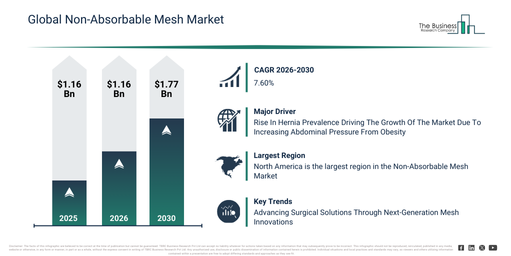
    The non-absorbable mesh market is anticipated to experience robust expansion in the coming years, projected to reach $1.92 billion by 2030, growing at a compound annual growth rate (CAGR) of 7.6%. This expected growth during the forecast period can be attributed to several factors, including the development of composite and absorbable barrier meshes, an increase in minimally invasive and robotic-assisted surgeries, the expansion of hospital infrastructure and surgical centers, a rising demand for pelvic floor reconstruction, and the integration of advanced imaging and surgical planning tools. Furthermore, major trends shaping the forecast period include the increasing adoption of non-absorbable mesh in hernia repairs, the development of composite and multifilament mesh materials, a heightened focus on biocompatibility and patient safety, the expansion of pelvic floor reconstruction procedures, and a growing preference for minimally invasive surgical techniques.

    Access Your Free Sample Report for In-Depth Market Insights:

    https://www.thebusinessresearchcompany.com/sample.aspx?id=24626&type=smp

    Which Drivers Are Supporting The Rise Of The Non-Absorbable Mesh Market?

    The increasing occurrence of hernias is projected to propel the expansion of the non-absorbable mesh market moving forward. A hernia is characterized by the unusual protrusion of an organ or tissue through a weak point in the surrounding muscle or connective tissue. The rise in hernias is attributed to an increase in obesity, which places additional pressure on abdominal muscles and weakens the abdominal wall. Non-absorbable mesh is instrumental in treating hernias by offering enduring structural support to compromised or damaged tissue, thereby decreasing the likelihood of recurrence. For example, in March 2023, Medscape, LLC, a US-based media and information company, reported that over 1 million abdominal wall hernia repairs are conducted annually in the United States, with inguinal hernia repairs accounting for nearly 770,000 of these cases; approximately 90% of all inguinal hernia repairs are performed on males. Hence, the growing prevalence of hernias is a key factor driving the non-absorbable mesh market’s growth.

    What Leading Segments Are Studied In The Non-Absorbable Mesh Market?

    The non-absorbable mesh market covered in this report is segmented –

    1) By Product Type: Prosthetic Mesh, Composite Mesh, Monofilament Mesh, Multifilament Mesh

    2) By Material: Polypropylene, Polyester, Polyethylene, Other Biocompatible Materials

    3) By Application: Hernia Repair, Pelvic Floor Reconstruction, Other Surgical Applications

    4) By End-User: Hospitals, Ambulatory Surgical Centers, Clinics, Other End-Users

    Subsegments:

    1) By Prosthetic Mesh: Polypropylene Mesh, Polyester Mesh, Expanded Polytetrafluoroethylene (ePTFE) Mesh, Polytetrafluoroethylene (PTFE) Mesh

    2) By Composite Mesh: Polypropylene + ePTFE Composite Mesh, Polyester + Collagen Composite Mesh, Polypropylene + Polyurethane Composite Mesh, Composite Mesh With Absorbable Barrier

    3) By Monofilament Mesh: Polypropylene Monofilament Mesh, Polyester Monofilament Mesh, Nylon Monofilament Mesh

    4) By Multifilament Mesh: Polyester Multifilament Mesh, Polyethylene Terephthalate (PET) Multifilament Mesh, Polyamide Multifilament Mesh

    What Long-Term Trends Are Expected To Shape The Future Of The Non-Absorbable Mesh Market?

    Leading companies in the non-absorbable mesh market are concentrating on developing advanced innovations, such as coated composite mesh, to improve biocompatibility and reduce complications following surgery. Coated composite mesh is a surgical mesh featuring a protective coating designed to minimize tissue adhesion and inflammation, thus enhancing safety upon internal placement. For instance, in April 2024, Deep Blue Medical Advances Inc., a US-based medical device company, introduced the T-Line Hernia Mesh, providing surgeons with an innovative choice for hernia repair that addresses prevalent issues like tissue failure and adhesion. This mesh incorporates integrated extensions that offer 15 times the fixation surface area compared to traditional sutures, leading to an anchoring strength that is 275% stronger. Its macroporous, medium-weight polypropylene structure encourages excellent tissue integration and alleviates stress by distributing tension uniformly across the repair site. The mesh is straightforward to handle, adapts to anatomical variations, and removes the requirement for additional fixation devices, thereby enhancing both security and surgical efficiency.

    Which Major Firms Are Strengthening Their Position In The Non-Absorbable Mesh Market?

    Major companies operating in the non-absorbable mesh market are Johnson and Johnson, Medtronic plc, Medline Industries Inc, Coloplast Group, Integra LifeSciences Corporation, Meril Life Sciences Pvt Ltd, B Braun Melsungen AG, W L Gore And Associates Inc, Demetech Corporation, Universal Suture Ltd, Lotus Surgicals Pvt Ltd, Altaylar Medical Ltd, Betatech Medical, DIPROMED Srl, Orion Sutures India Pvt Ltd, ProVi Swiss GmbH, Vinculum Sutures, Lizen Surgicare Private Limited, Herniamesh Srl, Assut Europe S P A, FEG Textiltechnik mbH

    Access The Complete Report For Deeper Market Insights:

    https://www.thebusinessresearchcompany.com/report/non-absorbable-mesh-global-market-report

    Which Global Regions Are Shaping The Competitive Landscape Of The Non-Absorbable Mesh Market?

    North America was the largest region in the non-absorbable mesh market in 2025. The regions covered in the non-absorbable mesh market report are Asia-Pacific, South East Asia, Western Europe, Eastern Europe, North America, South America, Middle East, Africa.

    Request Your Customized Non-Absorbable Mesh Market Research Report for Competitive Advantage:

    https://www.thebusinessresearchcompany.com/customise?id=24626&type=smp

    Browse Through More Reports Similar to the Global Non-Absorbable Mesh Market 2026, By The Business Research Company

    Absorbent Dressings Global Market Report 2026

    https://www.thebusinessresearchcompany.com/report/absorbent-dressings-global-market-report

    Architectural Coatings Global Market Report 2026

    https://www.thebusinessresearchcompany.com/report/architectural-coatings-global-market-report

    Textile Coatings Global Market Report 2026

    https://www.thebusinessresearchcompany.com/report/textile-coatings-global-market-report

    Get in touch with us:

    The Business Research Company: https://www.thebusinessresearchcompany.com/

    Americas +1 310-496-7795

    Asia +44 7882 955267 & +91 8897263534

    Europe +44 7882 955267

    Email us at info@tbrc.info

    Follow us on:

    LinkedIn: https://in.linkedin.com/company/the-business-research-company
  • Non Invasive Neurostimulation Devices Market Report 2026: Strategic Insights and Revenue Outlook

    Non Invasive Neurostimulation Devices Market Report 2026: Strategic Insights and Revenue Outlook

    Uncover key drivers, emerging technologies, and competitive movements shaping the worker heat stress monitoring wearable market from 2026–2035 with trusted insights from The Business Research Company

    What size range is anticipated for the Non Invasive Neurostimulation Devices Market from 2026 to 2030?

    The non invasive neurostimulation devices market has experienced significant expansion in recent years. Projections indicate its value will increase from $1.89 billion in 2025 to $2.14 billion in 2026, demonstrating a compound annual growth rate (CAGR) of 13.0%. The expansion observed in the historic period is largely due to factors such as the initial limited availability of non-invasive neurostimulation devices, a prevailing reliance on conventional pain management therapies, slow adoption within homecare settings, an increasing awareness of neurological disorders, and restricted clinical research and validation.

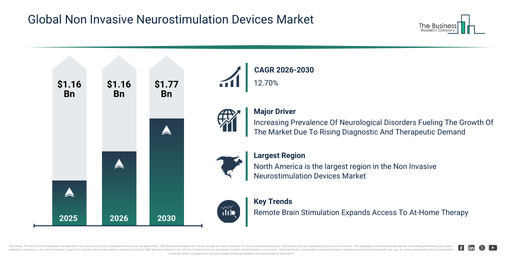
    The non invasive neurostimulation devices market size is anticipated to undergo significant growth in the coming years. It is projected to attain a valuation of $3.45 billion by 2030, demonstrating a compound annual growth rate (CAGR) of 12.7%. This projected growth can be attributed to several factors, including technological advancements in tDCS and EMS devices, the increasing prevalence of chronic pain and neurological disorders, the rising adoption of homecare neurostimulation solutions, augmented investment in clinical research and academic studies, and the integration of AI and smart monitoring within neurostimulation devices. Prominent trends expected during this forecast period involve the increasing embrace of non-invasive pain management therapies, the expansion of homecare neurostimulation devices, the incorporation of wearable and portable neurostimulation solutions, a rise in clinical research and academic studies focusing on neurostimulation, and an increased focus on personalized and targeted neurostimulation treatments.

    Access Your Free Sample Report for In-Depth Market Insights:

    https://www.thebusinessresearchcompany.com/sample.aspx?id=24625&type=smp

    What Drivers Are Affecting Demand In The Non Invasive Neurostimulation Devices Market?

    The rising occurrence of neurological conditions is projected to boost the expansion of the non invasive neurostimulation devices market in the future. These disorders are health issues impacting the brain, spinal cord, and nerves, resulting in various symptoms such as problems with cognition, movement, and sensation. The growing incidence of neurological disorders is associated with the world’s aging demographic, given that aging progressively diminishes neuronal capabilities, decreases brain adaptability, and heightens oxidative stress, thereby fostering the onset and advancement of these ailments. Non-invasive neurostimulation devices assist in the diagnosis of neurological disorders through the application of precise stimulation to evaluate neural reactions. These devices provide non-surgical, immediate assessment techniques, which improve the precision of diagnoses and enhance patient management in both medical and home environments. For instance, as reported in July 2024 by the National Health Service, a UK-based government agency, 487,432 patients were diagnosed with dementia (a progressive brain disorder affecting memory, thinking, and daily activities) by June 30, 2024, marking an increase of 3,155 cases compared to May 31, 2024. Consequently, the rising occurrence of neurological conditions is fueling the expansion of the non invasive neurostimulation devices market.

    Which Segment Groups Are Influencing The Non Invasive Neurostimulation Devices Market?

    The non invasive neurostimulation devices market covered in this report is segmented –

    1) By Type Of Stimulation Technology: Transcutaneous Electrical Nerve Stimulation (TENS), Transcranial Magnetic Stimulation (TMS), Electromagnetic Stimulation (EMS), Other Types Of Stimulation Technologies

    2) By Target Indication: Pain Management, Neurological Disorders, Psychological Disorder, Other Target Indications

    3) By End User: Hospitals And Clinics, Homecare Settings, Research And Academic Institutes

    Subsegments:

    1) By Transcutaneous Electrical Nerve Stimulation (TENS): Conventional Transcutaneous Electrical Nerve Stimulation (TENS), Acupuncture-Like Transcutaneous Electrical Nerve Stimulation (TENS), Brief-Intense Transcutaneous Electrical Nerve Stimulation (TENS), Burst Mode Transcutaneous Electrical Nerve Stimulation (TENS)

    2) By Transcranial Magnetic Stimulation (TMS): Repetitive Transcranial Magnetic Stimulation (rTMS), Deep Transcranial Magnetic Stimulation (dTMS), Single-Pulse Transcranial Magnetic Stimulation, Paired-Pulse Transcranial Magnetic Stimulation

    3) By Electromagnetic Stimulation (EMS): Functional Electromagnetic Stimulation (EMS), Neuromuscular Electromagnetic Stimulation (EMS), High-Frequency Electromagnetic Stimulation (EMS), Low-Frequency Electromagnetic Stimulation (EMS)

    4) By Other Types Of Stimulation Technology: Transcranial Direct Current Stimulation (tDCS), Cranial Electrotherapy Stimulation (CES)

    Which Market Trends Are Opening Growth Opportunities In The Non Invasive Neurostimulation Devices Market?

    Major companies operating in the non invasive neurostimulation devices market are actively developing advanced products, including personalized stimulation protocols, to improve treatment effectiveness and patient outcomes. Personalized stimulation protocols involve tailored neurostimulation settings customized to an individual’s specific medical condition, neural response, and treatment goals, with the aim of maximizing therapeutic benefits and minimizing side effects. For example, in October 2023, Sooma Medical, a Finland-based medical technology company, released a remote clinician-monitored brain stimulation system designed for at-home treatment utilizing non-invasive transcranial direct current stimulation (tDCS). This innovative system empowers healthcare professionals to remotely oversee therapy sessions, thereby improving accessibility and adherence for patients experiencing neurological and mental health conditions like depression and chronic pain.

    Who Are The Primary Competitors In The Global Non Invasive Neurostimulation Devices Market?

    Major companies operating in the non invasive neurostimulation devices market are Alpha Stim, Neurosoft Bioelectronics SA, Neuronetics Inc, BrainsWay Ltd, eNeura Inc, MagVenture A S, Nexstim Plc, Neuroelectrics Barcelona S L U, Cefaly Technology, ElectroCore Inc, Brainbox India Private Limited, Flow Neuroscience AB, Fisher Wallace Laboratories Inc, Sooma Medical, NeuroSigma Inc, Mind Alive Inc, TheBrainDriver LLC, Caputron Medical Products LLC, Soterix Medical Inc, neuroConn GmbH, Halo Neuroscience Inc, BTL Industries Inc, Zimmer MedizinSysteme GmbH

    Access The Complete Report For Deeper Market Insights:

    https://www.thebusinessresearchcompany.com/report/non-invasive-neurostimulation-devices-global-market-report

    Which Regions Are Poised For Strategic Growth In The Non Invasive Neurostimulation Devices Market?

    North America was the largest region in the non invasive neurostimulation devices market in 2025. The regions covered in the non invasive neurostimulation devices market report are Asia-Pacific, South East Asia, Western Europe, Eastern Europe, North America, South America, Middle East, Africa.

    Request Your Customized Non Invasive Neurostimulation Devices Market Research Report for Competitive Advantage:

    https://www.thebusinessresearchcompany.com/customise?id=24625&type=smp

    Browse Through More Reports Similar to the Global Non Invasive Neurostimulation Devices Market 2026, By The Business Research Company

    Implantable Neurostimulation Devices Global Market Report 2026

    https://www.thebusinessresearchcompany.com/report/implantable-neurostimulation-devices-global-market-report

    Internal Neuromodulation Devices Global Market Report 2026

    https://www.thebusinessresearchcompany.com/report/internal-neuromodulation-devices-global-market-report

    Sacral Nerve Stimulation Devices Global Market Report 2026

    https://www.thebusinessresearchcompany.com/report/sacral-nerve-stimulation-devices-global-market-report

    Get in touch with us:

    The Business Research Company: https://www.thebusinessresearchcompany.com/

    Americas +1 310-496-7795

    Asia +44 7882 955267 & +91 8897263534

    Europe +44 7882 955267

    Email us at info@tbrc.info

    Follow us on:

    LinkedIn: https://in.linkedin.com/company/the-business-research-company
  • Global Non Contact Infrared Thermometers Industry Trends and Market Forecast 2026–2030

    Global Non Contact Infrared Thermometers Industry Trends and Market Forecast 2026–2030

    Uncover key drivers, emerging technologies, and competitive movements shaping the workstation graphics processing unit (gpu) market from 2026–2035 with trusted insights from The Business Research Company

    How is the Non Contact Infrared Thermometers Market size predicted to change over the forecast window of 2026–2035?

    The non contact infrared thermometers market size has experienced substantial growth in recent years. It is anticipated to expand from $0.39 billion in 2025 to $0.42 billion in 2026, at a compound annual growth rate (CAGR) of 8.1%. The expansion observed in the historic period stems from pandemic-driven demand for contactless diagnostics, infection control requirements in hospitals, growth in emergency medical infrastructure, rising awareness of non-invasive temperature monitoring, and expansion of retail pharmacy networks.

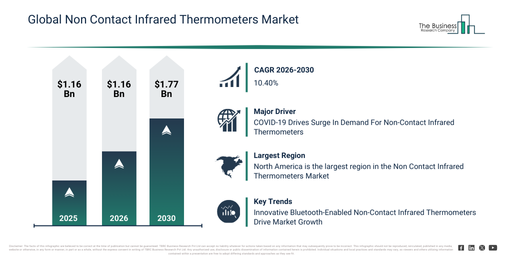
    The non contact infrared thermometers market size is projected to undergo significant expansion in the coming years, reaching $0.62 billion by 2030 with a compound annual growth rate (CAGR) of 10.4%. This anticipated growth during the forecast period is fueled by factors such as the increasing embrace of home healthcare, the rise in veterinary healthcare services, a growing geriatric population, technological enhancements in infrared sensors, and broader e-commerce penetration. Prominent trends expected in this period include a heightened adoption of contactless temperature screening methods, the proliferation of home-based and self-diagnostic devices, an escalating demand for highly accurate medical-grade thermometers, the expansion of online and direct-to-consumer sales channels, and improvements in product miniaturization and ergonomic design.

    Access Your Free Sample Report for In-Depth Market Insights:

    https://www.thebusinessresearchcompany.com/sample.aspx?id=3277&type=smp

    Which Drivers Are Contributing To The Expansion Of The Non Contact Infrared Thermometers Market?

    The escalating demand within the non-contact infrared thermometers market, driven by COVID-19 cases, is a significant factor propelling the market’s growth. As the number of COVID-19 infections rapidly rises and fever is identified as a critical symptom, temperature testing is imperative for individuals in large group settings. Infrared thermometers are effective instruments for precise and frequent body temperature measurements, capable of checking forehead temperature remotely and instantly. Consequently, the daily demand for infrared thermometers continues to increase, attributed to their quick assessment and high accuracy functionalities.

    Non Contact Infrared Thermometers Market Driver: Healthcare Expenditure’s Impact Driving The Non-Contact Infrared Thermometer Market

    What Segment Classifications Make Up The Non Contact Infrared Thermometers Market?

    The non contact infrared thermometers market covered in this report is segmented –

    1) By Product Type: Forehead, In-Ear, Multifunction

    2) By Distribution Channel: Hospital Pharmacy, Retail Pharmacy, Online Sales

    3) By Application: Veterinary, Medical

    Subsegments:

    1) By Forehead: Handheld Forehead Thermometers, Stationary Forehead Thermometers

    2) By In-Ear: Digital In-Ear Thermometers, Infrared In-Ear Thermometers

    3) By Multifunction: Forehead And Ear Combination Thermometers, Body And Surface Temperature Thermometers

    How Are Emerging Trends Affecting The Progression Of The Non Contact Infrared Thermometers Market?

    Leading companies in the non-contact infrared thermometers market are concentrating on developing innovative products, such as Bluetooth-integrated devices, to enhance the overall user experience. These technological advancements aim to fulfill the increasing demand for effective health monitoring solutions across various settings. Bluetooth is defined as a short-range wireless technology enabling data exchange between devices, typically spanning within 100 meters. It operates using low-power radio waves, making it an ideal choice for connecting peripherals like headphones and smartphones. For instance, in July 2023, ThermoPro, a manufacturing company based in Canada, introduced the Twin TempSpike Plus, which offers a Bluetooth range of up to 600 feet and includes dual probes for simultaneously monitoring two meats. Its durable, waterproof construction ensures reliable performance, thereby enhancing cooking precision and food safety.

    Which Key Market Players Are Investing In Expansion And Innovation Within The Non Contact Infrared Thermometers Market?

    Major companies operating in the non contact infrared thermometers market are Helen of Troy Limited, Easywell Biomedical, Omron Healthcare Inc., Paul Hartmann, Microlife Corporation, American Diagnostic Corporation, Beurer, Exergen Corporation, Vivehealth, Contec Medical Systems Co., Japan Sensor Corporation, Terumo Corporation, BPL Medical Technologies, AccuMed, Reliefcare, A&D Medical Manufacturers, Easytem, Bestech Australia, Braun Healthcare, Riester, Vicks, Optris Infrared Sensing LLC, GAO Tek & GAO Group Inc., Safeguard19, PCE Americas Inc., Weiss Instruments Inc., Test Products International Ltd., Horiba Ltd., HORIBA Instruments Brasil Ltd., Dromex, Geratherm, Fluke Corporation, Testo SE & Co. KGaA

    Access The Complete Report For Deeper Market Insights:

    https://www.thebusinessresearchcompany.com/report/non-contact-infrared-thermometers-global-market-report

    Which Regions Are Projected To Dominate The Non Contact Infrared Thermometers Market In The Coming Years?

    North America was the largest region in the non-contact infrared thermometers market in 2025. Western Europe was the second largest region in the non-contact infrared thermometers market report. The regions covered in the non contact infrared thermometers market report are Asia-Pacific, South East Asia, Western Europe, Eastern Europe, North America, South America, Middle East, Africa.

    Request Your Customized Non Contact Infrared Thermometers Market Research Report for Competitive Advantage:

    https://www.thebusinessresearchcompany.com/customise?id=3277&type=smp

    Browse Through More Reports Similar to the Global Non Contact Infrared Thermometers Market 2026, By The Business Research Company

    Temperature Sensor Global Market Report 2026

    https://www.thebusinessresearchcompany.com/report/temperature-sensor-global-market-report

    Temperature Monitoring Devices Global Market Report 2026

    https://www.thebusinessresearchcompany.com/report/temperature-monitoring-devices-global-market-report

    Weight Monitoring And Body Temperature Monitoring Devices And Equipment Global Market Report 2026

    https://www.thebusinessresearchcompany.com/report/weight-monitoring-and-body-temperature-monitoring-devices-and-equipment-global-market-report

    Get in touch with us:

    The Business Research Company: https://www.thebusinessresearchcompany.com/

    Americas +1 310-496-7795

    Asia +44 7882 955267 & +91 8897263534

    Europe +44 7882 955267

    Email us at info@tbrc.info

    Follow us on:

    LinkedIn: https://in.linkedin.com/company/the-business-research-company
  • Nitrile Gloves Market Size and Demand Forecast 2026–2030

    Nitrile Gloves Market Size and Demand Forecast 2026–2030

    Uncover key drivers, emerging technologies, and competitive movements shaping the worker heat stress monitoring wearable market from 2026–2035 with trusted insights from The Business Research Company

    What market expansion outlook does the Nitrile Gloves Market show for the 2026–2030 period?

    The nitrile gloves market size has experienced substantial expansion in recent years. It is projected to increase from $17.57 billion in 2025 to $19.57 billion in 2026, demonstrating a compound annual growth rate (CAGR) of 11.4%. Historically, this market’s growth was driven by the heightened use of protective gloves in laboratory settings, more stringent healthcare hygiene standards, the broader scope of chemical handling operations, stricter industrial safety regulations, and the greater embrace of disposable protective equipment.

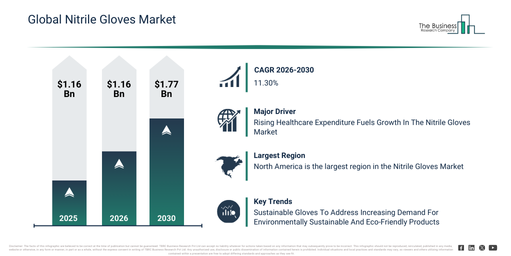
    The nitrile gloves market size is anticipated to experience swift expansion over the coming years. Projections indicate it will reach $30.01 billion by 2030, exhibiting a compound annual growth rate (CAGR) of 11.3%. This projected growth stems from several factors, including heightened demand across the healthcare and pharmaceutical industries, an escalating emphasis on sustainable glove materials, broadened food safety compliance mandates, increased application in cleanroom settings, and greater investments in automated production capabilities. Key trends for this period encompass a rise in the uptake of powder-free disposable gloves, an increasing need for medical-grade nitrile gloves, a stronger focus on resistance to chemicals and punctures, the proliferation of automated glove manufacturing lines, and a heightened commitment to quality and regulatory adherence.

    Access Your Free Sample Report for In-Depth Market Insights:

    https://www.thebusinessresearchcompany.com/sample.aspx?id=8475&type=smp

    What Drivers Are Shaping The Development Of The Nitrile Gloves Market?

    The nitrile gloves market is expected to be propelled forward by increasing healthcare expenditure. This expenditure encompasses spending on family planning, nutrition activities, emergency health assistance, and general health services. Greater healthcare spending will allow for more investment in healthcare products and safety solutions, which will contribute to the market’s growth. For instance, in November 2023, the CIHI, an independent, not-for-profit organization based in Canada, estimated that Canada’s total health spending would reach $344 billion in 2023. This sum is equivalent to $8,740 per Canadian and makes up 12.1% of the country’s gross domestic product (GDP). This spending is projected to grow by 2.8% in 2023, building on a modest 1.5% increase observed in 2022. Thus, the rising healthcare expenditure is a significant driver for the nitrile gloves market.

    What Segment Types Are Examined In The Nitrile Gloves Market?

    The nitrile gloves market covered in this report is segmented –

    1) By Type: Powder-Free Nitrile Gloves, Powder-Coated Nitrile Gloves

    2) By Texture: Smooth, Micro Roughened, Aggressively Textured

    3) By Grade: Medical Grade, Industrial Grade, Food Grade

    4) By End-Use: Healthcare, Food And Beverage, Automotive, Construction, Oil And Gas, Pharmaceutical, Chemical, Metal And Machinery, Cleanrooms, Other End Uses

    Subsegments:

    1) By Powder-Free Nitrile Gloves: Medical-Grade Powder-Free Nitrile Gloves, Industrial-Grade Powder-Free Nitrile Gloves

    2) By Powder-Coated Nitrile Gloves: Medical-Grade Powder-Coated Nitrile Gloves, Industrial-Grade Powder-Coated Nitrile Gloves

    Which Innovation Trends Are Advancing Developments Within The Nitrile Gloves Market?

    Major companies operating in the nitrile gloves market are launching sustainable and eco-friendly gloves to address the increasing demand for environmentally conscious products. Eco-friendly nitrile gloves represent a type of disposable glove designed to mitigate the environmental impact associated with traditional nitrile gloves. For instance, in May 2023, Cranberry, a US-based nitrile glove manufacturer, introduced Bio Nitrile Biodegradable Nitrile Powder Free Examination Gloves. These gloves incorporate a unique additive that accelerates microbial activity in landfills, facilitating the breakdown of the material by up to 90% within 1.5 years. Despite their biodegradability, the gloves surpass ASTM standards for tensile strength and force at break, ensuring durability and protection. This development marks a notable advancement in the healthcare industry, providing an eco-friendly option suitable for examination use in dental and medical settings.

    Who Are The Core Companies Influencing Trends In The Nitrile Gloves Market?

    Major companies operating in the nitrile gloves market are Top Glove Corporation Berhad, Ansell Limited, Hartalega Holdings Berhad, Adenna LLC, Unigloves Limited, Kossan Rubber Industries Berhad, Ammex Corporation, Dynarex Corporation, Rubberex Corporation (M) Berhad, YTY Group, Superior Gloves Works Ltd., Supermax Corporation Berhad, Nacosa USA Corp., Innovative Healthcare Corporation, Nitronix International Pte. Ltd., Renco Corporation, Safetouch PPE Inc., SAS Safety Corporation, HMD Healthcare Corp., The Glove Company LLC, American Nitrile, Semperit AG Holding, Showa Group, Globus Ltd., Riverstone Holdings Limited

    Access The Complete Report For Deeper Market Insights:

    https://www.thebusinessresearchcompany.com/report/nitrile-gloves-global-market-report

    Which Region Is Expected To Experience The Fastest Growth In The Nitrile Gloves Market?

    North America was the largest region in the nitrile gloves market in 2025. The regions covered in the nitrile gloves market report are Asia-Pacific, South East Asia, Western Europe, Eastern Europe, North America, South America, Middle East, Africa.

    Request Your Customized Nitrile Gloves Market Research Report for Competitive Advantage:

    https://www.thebusinessresearchcompany.com/customise?id=8475&type=smp

    Browse Through More Reports Similar to the Global Nitrile Gloves Market 2026, By The Business Research Company

    Industrial Gloves Global Market Report 2026

    https://www.thebusinessresearchcompany.com/report/industrial-gloves-global-market-report

    Boxing Gloves Global Market Report 2026

    https://www.thebusinessresearchcompany.com/report/boxing-gloves-global-market-report

    Rubber Gloves Global Market Report 2026

    https://www.thebusinessresearchcompany.com/report/rubber-gloves-global-market-report

    Get in touch with us:

    The Business Research Company: https://www.thebusinessresearchcompany.com/

    Americas +1 310-496-7795

    Asia +44 7882 955267 & +91 8897263534

    Europe +44 7882 955267

    Email us at info@tbrc.info

    Follow us on:

    LinkedIn: https://in.linkedin.com/company/the-business-research-company
  • Nitinol Based Medical Device Market Outlook: Growth and Forecast Highlights 2030

    Nitinol Based Medical Device Market Outlook: Growth and Forecast Highlights 2030

    Uncover key drivers, emerging technologies, and competitive movements shaping the workstation graphics processing unit (gpu) market from 2026–2035 with trusted insights from The Business Research Company

    What level of growth is expected in the Nitinol Based Medical Device Market between 2026 and 2030?

    The nitinol based medical device market has witnessed a rapid increase in its size over recent years. It is anticipated to expand from $20.91 billion in 2025 to $23.12 billion in 2026, achieving a compound annual growth rate (CAGR) of 10.6%. This historical expansion can be ascribed to factors such as the proliferation of minimally invasive surgical procedures, the provision of advanced nickel-titanium alloys, an upsurge in cardiovascular intervention volumes, the embrace of flexible implant technologies, and the increasing utilization of guidewire-based interventions.

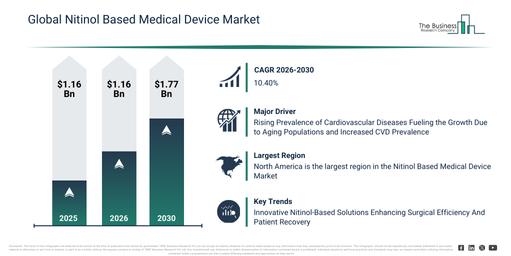
    The nitinol based medical device market is anticipated to experience significant expansion over the coming years. This market is projected to reach $34.36 billion by 2030, demonstrating a compound annual growth rate (CAGR) of 10.4%. Factors contributing to this growth during the forecast period include a rising demand for next-generation implantable devices, increased emphasis on patient-specific device designs, the broadening scope of complex endovascular procedures, increasing investments in advanced biomaterials, and advancements in shape-memory alloy processing. Key trends expected during the forecast period involve the wider adoption of nitinol-based minimally invasive devices, an increase in the utilization of superelastic medical components, a growing need for shape-memory implants, the expansion of cardiovascular and neurovascular applications, and a greater emphasis on the durability and flexibility of devices.

    Access Your Free Sample Report for In-Depth Market Insights:

    https://www.thebusinessresearchcompany.com/sample.aspx?id=24339&type=smp

    Which Drivers Are Expected To Impact The Nitinol Based Medical Device Market During The Forecast Period?

    A rise in the occurrence of cardiovascular diseases is projected to drive the expansion of the nitinol-based medical device market in the future. Cardiovascular disease (CVD) encompasses various conditions affecting the heart and blood vessels, such as coronary artery disease, heart attacks, heart failure, arrhythmias, and stroke. Fundamentally, these illnesses entail the constriction or obstruction of blood vessels, impeding the flow of blood and oxygen to the heart and other vital organs. The increasing incidence of cardiovascular diseases is partly attributable to aging demographics, especially in developed nations, since the likelihood of developing cardiovascular problems escalates with advancing age. Nitinol-based medical devices have proven extremely advantageous in addressing and managing cardiovascular diseases, owing to the distinctive characteristics of nitinol, an alloy composed of nickel and titanium. As an illustration, in January 2024, data from the American Heart Association, a US-based nonprofit organization, indicated that fatalities from cardiovascular diseases totaled 931,578, up from 928,741 in 2023. Furthermore, the age-adjusted mortality rate attributed to cardiovascular disease experienced a slight rise, reaching 233.3 per 100,000, representing a 4.0% increase from the prior year’s rate of 224.4 per 100,000. Consequently, the expanding occurrence of vascular heart conditions is fueling demand in the cardiovascular catheters market.

    Which Segments Are Driving Activity In The Nitinol Based Medical Device Market?

    The nitinol based medical device market covered in this report is segmented –

    1) By Product Type: Stents, Guidewires, Retriever Device, Catheters, Other Product Types

    2) By Application: Cardiovascular, Urology, Dentistry, Other Applications

    3) By End Use: Hospitals, Ambulatory Surgical Centers, Specialty Clinics, Other End Users

    Subsegments:

    1) By Stents: Peripheral Stents, Coronary Stents, Neurovascular Stents, Other Stents

    2) By Guidewires: Diagnostic Guidewires, Interventional Guidewires

    3) By Retriever Devices: Thrombectomy Devices, Foreign Body Retrieval Devices

    4) By Catheters: Balloon Catheters, Guiding Catheters, Microcatheters, Diagnostic Catheters

    5) By Other Product Types: Orthodontic Archwires, Orthopedic Devices, Embolic Protection Devices, Other Specialized Devices

    Which Competitive Trends Are Impacting The Structure Of The Nitinol Based Medical Device Market?

    Major companies in the nitinol-based medical device market are prioritizing the development of self-expanding nitinol stent-electrodes to advance their market offerings. A self-expanding nitinol stent-electrode is a hybrid medical device comprising a stent structure made from nitinol (a nickel-titanium alloy) that automatically expands to a predetermined shape upon deployment in the body, and it contains embedded electrodes designed for electrical stimulation or recording from biological tissues, such as nerves, blood vessels, or the brain. For instance, in September 2024, Synchron, a US-based company developing implantable neurotechnology, reported that Synchron’s Stentrode BCI implant utilizes a self-expanding nitinol stent-electrode array delivered via the jugular vein to the superior sagittal sinus, adjacent to the motor cortex, allowing for minimally invasive placement in approximately ~20 minutes. The nitinol design permits a thin construction (1.3mm lead) with low radial force to avoid venous damage, while platinum electrodes decode motor intent for digital controls.

    Which Major Industry Participants Are Leading The Nitinol Based Medical Device Market Growth?

    Major companies operating in the nitinol based medical device market are Medtronic plc, Cook Medical, Teleflex Incorporated, Cordis, Endologix, Arthrex, Balton, EndoSmart GmbH, Ingpuls Medical, GEE Nitinol, Confluent Medical Technologies, Seisa Medical, Fort Wayne Metals, Norman Noble Inc., Resonetics, Vascotube, Nitinol Devices & Components (Johnson Matthey), SAES Smart Materials, Memry Corporation, Euroflex GmbH, Admedes Schuessler GmbH, ATI Specialty Materials

    Access The Complete Report For Deeper Market Insights:

    https://www.thebusinessresearchcompany.com/report/nitinol-based-medical-device-global-market-report

    Which Geographic Areas Are Emerging As Strong Markets For The Nitinol Based Medical Device Market?

    North America was the largest region in the nitinol-based medical device market in 2025. Asia-Pacific is expected to be the fastest-growing region in the forecast period. The regions covered in the nitinol based medical device market report are Asia-Pacific, South East Asia, Western Europe, Eastern Europe, North America, South America, Middle East, Africa.

    Request Your Customized Nitinol Based Medical Device Market Research Report for Competitive Advantage:

    https://www.thebusinessresearchcompany.com/customise?id=24339&type=smp

    Browse Through More Reports Similar to the Global Nitinol Based Medical Device Market 2026, By The Business Research Company

    Medical Device Contract Research Organization Global Market Report 2026

    https://www.thebusinessresearchcompany.com/report/medical-device-contract-research-organization-global-market-report

    Nanotechnology Based Medical Devices Global Market Report 2026

    https://www.thebusinessresearchcompany.com/report/nanotechnology-based-medical-devices-global-market-report

    Portable Medical Devices Global Market Report 2026

    https://www.thebusinessresearchcompany.com/report/portable-medical-devices-global-market-report

    Get in touch with us:

    The Business Research Company: https://www.thebusinessresearchcompany.com/

    Americas +1 310-496-7795

    Asia +44 7882 955267 & +91 8897263534

    Europe +44 7882 955267

    Email us at info@tbrc.info

    Follow us on:

    LinkedIn: https://in.linkedin.com/company/the-business-research-company
  • NGS-Based RNA-Sequencing Market Insights Report: Opportunities and Drivers 2030

    NGS-Based RNA-Sequencing Market Insights Report: Opportunities and Drivers 2030

    Uncover key drivers, emerging technologies, and competitive movements shaping the worker heat stress monitoring wearable market from 2026–2035 with trusted insights from The Business Research Company

    How much is the NGS-Based RNA-Sequencing Market valued at in 2026, and what valuation is forecast for 2030?

    The ngs-based rna-sequencing market has seen remarkable growth over the past few years. It is anticipated to increase from $4.2 billion in 2025 to $5.27 billion in 2026, exhibiting a compound annual growth rate (CAGR) of 25.3%. This historical growth stemmed from factors such as the broadening of genomic research initiatives, the falling costs of sequencing technologies, increased adoption of rna-seq in academic research, the availability of advanced sequencing platforms, and the development of bioinformatics capabilities.

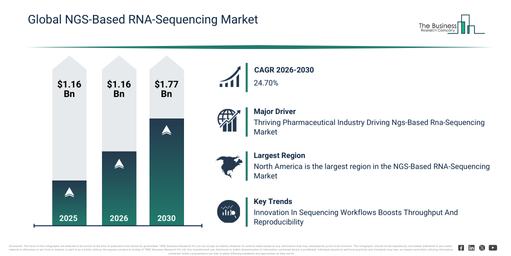
    The ngs-based rna-sequencing market is projected to experience substantial expansion over the upcoming years. By 2030, its valuation is anticipated to reach $12.73 billion, demonstrating a compound annual growth rate (CAGR) of 24.7%. This anticipated growth during the forecast timeframe is primarily driven by factors such as the increasing utilization of rna sequencing in clinical diagnostics, growing investments in precision medicine, the broadening scope of pharmaceutical research applications, an escalating need for integrated data analysis solutions, and a heightened emphasis on multi-omics research. Key developments expected within this period involve the increasing uptake of high-throughput rna sequencing platforms, a surging demand for single-cell rna sequencing, the expanding application of cloud-based bioinformatics analysis, the wider integration of transcriptomics in precision medicine, and a stronger emphasis on ensuring data accuracy and scalability.

    Access Your Free Sample Report for In-Depth Market Insights:

    https://www.thebusinessresearchcompany.com/sample.aspx?id=7416&type=smp

    What Drivers Are Influencing The Growth Of The NGS-Based RNA-Sequencing Market?

    The expanding pharmaceutical sector is projected to boost the future growth of the NGS-based RNA-sequencing market. This industry encompasses the entire process of finding, developing, and manufacturing pharmaceuticals and medications, undertaken by both public and private organizations. NGS-based RNA-sequencing is employed by the pharmaceutical sector for extensive gene expression analysis, pinpointing possible drug targets, evaluating drug effectiveness, and deciphering disease pathways. This advanced technique enhances drug discovery and development by providing profound insights into molecular functions. As an illustration, data from June 2025 by the Centers for Medicare & Medicaid Services (CMS), a US-based federal agency, indicates that spending on prescription drugs increased by 11.4% in 2023, reaching $449.7 billion. This represents an acceleration from the 7.8% growth recorded in 2022. Consequently, the expansion of the pharmaceutical industry is stimulating the growth of the NGS-based RNA-sequencing market.

    How Is The NGS-Based RNA-Sequencing Market Organized Into Various Segments?

    The ngs-based rna-sequencing market covered in this report is segmented –

    1) By Product And Service: Sample Preparation Products, Sequencing Platforms and Consumables, Sequencing Services, Data Analysis, Storage, and Management

    2) By Technology: Sequencing by Synthesis, Ion Semiconductor Sequencing, Single-molecule Real-time Sequencing, Nanopore Sequencing

    3) By Application: Expression Profiling Analysis, Small RNA Sequencing, De Novo Transcriptome Assembly

    4) By End User: Research & Academia, Pharmaceutical & Biotechnology Companies, Other End Users

    Subsegments:

    1) By Sample Preparation Products: RNA Extraction Kits, Library Preparation Kits, Reverse Transcription Kits, Quality Control Reagents

    2) By Sequencing Platforms And Consumables: Sequencing Instruments, Sequencing Consumables

    3) By Sequencing Services: Contract Sequencing Services, Custom Library Preparation Services, Consultation And Experimental Design Services

    4) By Data Analysis, Storage, And Management: Bioinformatics Software, Data Analysis Services, Cloud-Based Data Storage Solutions, Data Management Platforms

    What Industry Trends Are Transforming The NGS-Based RNA-Sequencing Market?

    Major companies operating in the NGS-based RNA-sequencing market are prioritizing the development of innovative products, such as advanced small RNA-seq kits, to streamline workflows and improve the accuracy and efficiency of RNA expression analysis. These advanced small RNA-seq kits are cutting-edge library preparation tools engineered to capture and sequence small RNAs with high precision, assisting researchers in reducing workflow duration, minimizing artifacts like adapter dimers, and achieving more accurate and reproducible expression profiling. For instance, in October 2025, Lexogen, an Austria-based biotechnology company, unveiled the miRVEL Profiling Small RNA-Seq Library Prep Kit, specifically designed to simplify and optimize small RNA research workflows. This groundbreaking kit offers a faster and more dependable workflow, allowing for the preparation of ready-to-sequence libraries in under seven hours with minimal hands-on effort. It integrates advanced adapter blocking technology to prevent adapter dimer formation, ensures consistent results across various input amounts, and includes built-in 8 nt unique dual indices (UDIs) for accurate multiplexing and read assignment. The miRVEL Profiling Kit supports a wide array of applications, including RNA interference studies, host-defense mechanism investigations, and plant or agricultural small RNA research. Additionally, it is compatible with Lexogen’s SPLIT RNA extraction kits and TraPR small RNA enrichment system, delivering an integrated, end-to-end solution for small RNA analysis.

    Who Are The Prominent Global Companies Shaping The NGS-Based RNA-Sequencing Market Landscape?

    Major companies operating in the ngs-based rna-sequencing market are Illumina Inc., Thermo Fisher Scientific Inc., Oxford Nanopore Technologies Ltd., Agilent Technologies Inc., BGI Group, QIAGEN N.V., Eurofins Scientific SE, Bio-Rad Laboratories Inc., F. Hoffmann-La Roche Ltd., Takara Bio Inc., GENEWIZ Inc., Novogene Corporation, Macrogen Inc., Zymo Research Corp., Lexogen GmbH, Partek Incorporated, GATC Biotech AG, Genohub LLC, BaseClear B.V., Otogenetics Corporation, SeqLL LLC, GenXPro GmbH, Genotypic Technology Pvt. Ltd.

    Access The Complete Report For Deeper Market Insights:

    https://www.thebusinessresearchcompany.com/report/ngs-based-rna-sequencing-global-market-report

    Which Region Is Projected To Lead The NGS-Based RNA-Sequencing Market During The Forecast Period?

    North America was the largest region in the NGS-based RNA sequencing market in 2025. Asia-Pacific is expected to be the fastest-growing region in the forecast period. The regions covered in the ngs-based rna-sequencing market report are Asia-Pacific, South East Asia, Western Europe, Eastern Europe, North America, South America, Middle East, Africa.

    Request Your Customized NGS-Based RNA-Sequencing Market Research Report for Competitive Advantage:

    https://www.thebusinessresearchcompany.com/customise?id=7416&type=smp

    Browse Through More Reports Similar to the Global NGS-Based RNA-Sequencing Market 2026, By The Business Research Company

    Clinical Next Generation Sequencing Ngs Data Analysis Global Market Report 2026

    https://www.thebusinessresearchcompany.com/report/clinical-next-generation-sequencing-ngs-data-analysis-global-market-report

    Rna Sequencing Services Global Market Report 2026

    https://www.thebusinessresearchcompany.com/report/rna-sequencing-services-global-market-report

    Next Generation Sequencing Market 2026

    https://www.thebusinessresearchcompany.com/report/next-generation-sequencing-market

    Get in touch with us:

    The Business Research Company: https://www.thebusinessresearchcompany.com/

    Americas +1 310-496-7795

    Asia +44 7882 955267 & +91 8897263534

    Europe +44 7882 955267

    Email us at info@tbrc.info

    Follow us on:

    LinkedIn: https://in.linkedin.com/company/the-business-research-company
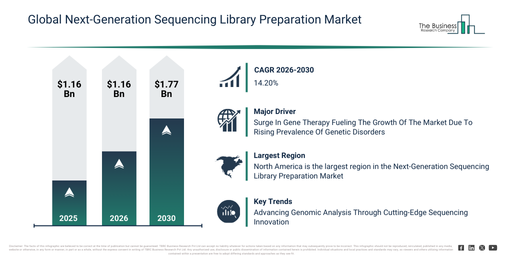
  • Next-Generation Sequencing Library Preparation Global Forecast: Market to Scale Up to $3.16 Billion by 2030 at 14.2% CAGR

    Next-Generation Sequencing Library Preparation Global Forecast: Market to Scale Up to $3.16 Billion by 2030 at 14.2% CAGR

    Uncover key drivers, emerging technologies, and competitive movements shaping the workstation graphics processing unit (gpu) market from 2026–2035 with trusted insights from The Business Research Company

    By how much is the Next-Generation Sequencing Library Preparation Market expected to grow between 2026 and 2030?

    The next-generation sequencing library preparation market has expanded significantly in recent years. This market is projected to grow from $1.63 billion in 2025 to $1.86 billion in 2026, achieving a compound annual growth rate (CAGR) of 14.5%. Historically, this growth has been attributed to elements like limited sequencing throughput, the high cost of library preparation kits, a reliance on manual preparation workflows, increasing demand for genomic research, and the rising adoption of sequencing in clinical diagnostics.

    The next-generation sequencing library preparation market is projected to experience substantial expansion over the coming years, forecast to reach $3.17 billion by 2030, exhibiting a compound annual growth rate (CAGR) of 14.2%. Key factors driving this growth during the projected period include the emergence of automated library preparation systems, the expansion of whole genome and exome sequencing applications, increasing capital allocation towards personalized medicine, the proliferation of academic and research initiatives in genomics, and the incorporation of NGS data with AI and cloud-based analytical tools. Significant trends anticipated in the forecast duration encompass a growing need for high-throughput sequencing solutions, the broader availability of NGS library preparation kits and reagents, a heightened emphasis on personalized medicine and the identification of biomarkers, an increase in diagnostics for infectious diseases and cancer, and the integration of automation into library preparation processes.

    Access Your Free Sample Report for In-Depth Market Insights:

    https://www.thebusinessresearchcompany.com/sample.aspx?id=27365&type=smp

    Which Drivers Are Influencing Market Acceleration In The Next-Generation Sequencing Library Preparation Market?

    An anticipated expansion in gene therapy is projected to drive the future growth of the next-generation sequencing library preparation market. This therapeutic approach involves modifying an individual’s genes to address or avert illnesses. Its growth is fueled by the growing occurrence of genetic conditions demanding precise and enduring treatment options. Within gene therapy, next-generation sequencing (NGS) library preparation serves to meticulously analyze and confirm genetic alterations through the creation of superior DNA or RNA samples for subsequent sequencing. For example, data released in March 2024 by IQVIA, a US-based healthcare intelligence and life sciences firm, revealed that expenditures on cell and gene therapies in 2023 climbed to $5.9 billion, marking a 38% rise from 2022, even though this sum constituted only 0.4% of the total $1.6 trillion spent globally on medicines. Consequently, the growing adoption of gene therapy is a key factor propelling the expansion of the next-generation sequencing library preparation market.

    What Segments Are Identified Within The Structure Of The Next-Generation Sequencing Library Preparation Market?

    The next-generation sequencing library preparation market covered in this report is segmented –

    1) By Sequencing Type: Targeted Genome Sequencing, Whole Genome Sequencing, Whole Exome Sequencing, Other Sequencing Types

    2) By Product: Reagents And Consumables, DNA Library Preparation Kits, Library Preparation Kits, RNA Library Preparation Kits, Other Products

    3) By Technology: Ion Semiconductor Sequencing, Sequencing By Synthesis (SBS), Nanopore Sequencing, Single-Molecule Real-Time Sequencing (SMRT), Other Technologies

    4) By Application: Drug And Biomarker Discovery, Disease Diagnostics, Cancer Diagnostics, Reproductive Health Diagnostics, Infectious Disease Diagnostics, Other Applications

    5) By End-User: Hospitals And Clinics, Academic And Research Institutions, Pharmaceutical And Biotechnology Companies, Other End Users

    Subsegments:

    1) By Targeted Genome Sequencing: Amplicon Sequencing, Hybridization Capture-Based Sequencing, CRISPR-Based Target Enrichment, Multiplex PCR

    2) By Whole Genome Sequencing: Human Whole Genome Sequencing, Animal Whole Genome Sequencing, Plant Whole Genome Sequencing, Microbial Whole Genome Sequencing

    3) By Whole Exome Sequencing: Clinical Whole Exome Sequencing, Research Whole Exome Sequencing, Custom Exome Sequencing, Population-Scale Exome Sequencing

    4) By Other Sequencing Types: RNA Sequencing, ChIP Sequencing (ChIP-Seq), Methylation Sequencing, Single-Cell Sequencing

    What Trends Are Reshaping The Dynamics Of The Next-Generation Sequencing Library Preparation Market?

    Leading companies in the next-generation sequencing library preparation market are focused on developing advanced technologies, such as Xpandomer technology, to improve sequencing speed, enhance data accuracy, and increase scalability. This approach aims to streamline workflows and support more efficient and reliable genomic analysis. Xpandomer technology is an advanced method for deoxyribonucleic acid (DNA) or ribonucleic acid (RNA) sequencing, converting a target nucleic acid molecule into a synthetic, expanded polymer called an Xpandomer, which is 50 times longer than the original deoxyribonucleic acid (DNA) or ribonucleic acid (RNA) strand. As an example, in February 2025, Roche AG, a Switzerland-based biotechnology company, launched Sequencing by Expansion, a sophisticated sequencing platform engineered to boost genomic resolution for advanced diagnostics, disease research, and precision medicine applications. This innovative automated next-generation sequencing (NGS) library preparation system optimizes complex workflows, elevates data quality, and accelerates genomic analysis to aid advanced research and personalized medicine efforts. The Sequencing by Expansion platform offers high versatility, facilitating precise analysis of various genomic alterations across a wide array of diseases, including cancer and rare genetic disorders, by improving resolution and accuracy for deeper biological insights.

    Which Key Players Are Driving Competition In The Next-Generation Sequencing Library Preparation Market?

    Major companies operating in the next-generation sequencing library preparation market are F. Hoffmann-La Roche Ltd., Thermo Fisher Scientific Inc., Agilent Technologies India Private Limited, Illumina Inc., Beckman Coulter Inc., Bio-Rad Laboratories Inc., IDT Corporation, Tecan Group AG, Hamilton Company, Takara Bio Inc., 10x Genomics Inc., Oxford Nanopore Technologies Plc, Twist Bioscience Corporation, New England Biolabs Inc., SPT Labtech Limited, Watchmaker Genomics Inc., Pillar Biosciences Inc., Aurora Biomed Inc., BGI Group, SEQWELL INC.

    Access The Complete Report For Deeper Market Insights:

    https://www.thebusinessresearchcompany.com/report/next-generation-sequencing-library-preparation-global-market-report

    Which Region Currently Holds The Largest Share Of The Next-Generation Sequencing Library Preparation Market?

    North America was the largest region in the next-generation sequencing library preparation market in 2025. Asia-Pacific is expected to be the fastest-growing region in the forecast period. The regions covered in the next-generation sequencing library preparation market report are Asia-Pacific, South East Asia, Western Europe, Eastern Europe, North America, South America, Middle East, Africa.

    Request Your Customized Next-Generation Sequencing Library Preparation Market Research Report for Competitive Advantage:

    https://www.thebusinessresearchcompany.com/customise?id=27365&type=smp

    Browse Through More Reports Similar to the Global Next-Generation Sequencing Library Preparation Market 2026, By The Business Research Company

    Industrial Water Treatment Chemicals Global Market Report 2026

    https://www.thebusinessresearchcompany.com/report/industrial-water-treatment-chemicals-global-market-report

    Cooling Water Treatment Chemicals Global Market Report 2026

    https://www.thebusinessresearchcompany.com/report/cooling-water-treatment-chemicals-global-market-report

    Water Treatment Chemicals Global Market Report 2026

    https://www.thebusinessresearchcompany.com/report/water-treatment-chemicals-global-market-report

    Get in touch with us:

    The Business Research Company: https://www.thebusinessresearchcompany.com/

    Americas +1 310-496-7795

    Asia +44 7882 955267 & +91 8897263534

    Europe +44 7882 955267

    Email us at info@tbrc.info

    Follow us on:

    LinkedIn: https://in.linkedin.com/company/the-business-research-company
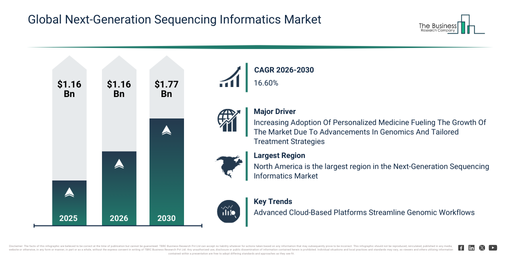
  • Next-Generation Sequencing Informatics Market Future Outlook: Strong Growth Expected Toward $22.13 Billion by 2030

    Next-Generation Sequencing Informatics Market Future Outlook: Strong Growth Expected Toward $22.13 Billion by 2030

    Uncover key drivers, emerging technologies, and competitive movements shaping the worker heat stress monitoring wearable market from 2026–2035 with trusted insights from The Business Research Company

    What is the estimated market size of the Next-Generation Sequencing Informatics Market by the end of 2030?

    The next-generation sequencing informatics market has experienced rapid expansion in its size recently. This market is set to expand from $10.23 billion in 2025 to $11.96 billion in 2026, registering a compound annual growth rate (CAGR) of 16.9%. The growth observed in the past can be credited to factors such as the increasing demand for precision diagnostics, the progression of high-throughput sequencers, a rise in genomic research initiatives, heightened awareness of personalized medicine, and the broadening of bioinformatics capabilities.

    The next-generation sequencing informatics market is projected to experience substantial expansion over the coming years, anticipated to reach a valuation of $22.14 billion by 2030, exhibiting a compound annual growth rate (CAGR) of 16.6%. This projected growth during the forecast period is fueled by several factors, including improvements in NGS informatics software technology, the widespread use of cloud-based genomic platforms, an uptick in partnerships between biotechnology and pharmaceutical firms, the rising incidence of genetic conditions, and the incorporation of AI and machine learning into genomic analysis. Key trends foreseen for this period encompass AI-powered genomic data analysis, the emergence of cloud-based sequencing solutions, their application in personalized medicine, increased automation within NGS workflows, and the integration of IoT into genomic investigations.

    Access Your Free Sample Report for In-Depth Market Insights:

    https://www.thebusinessresearchcompany.com/sample.aspx?id=28282&type=smp

    What Drivers Are Shaping Future Opportunities In The Next-Generation Sequencing Informatics Market?

    The rising adoption of personalized medicine is anticipated to fuel the expansion of the next-generation sequencing informatics market in the coming years. Personalized medicine refers to a medical methodology that tailors treatment and prevention strategies specifically to an individual’s unique genetic makeup, lifestyle, and environment. This increasing uptake of personalized medicine is primarily driven by advancements in genomics, which allow for the precise identification of genetic variations and the development of customized treatments for individuals. Next-generation sequencing informatics significantly enhances personalized medicine by delivering comprehensive genomic data analysis, making it an ideal tool for bespoke treatment strategies and precision healthcare. It helps diminish diagnostic uncertainty by identifying genetic variations and predicting disease risk, thus improving clinical decision-making and patient outcomes. For instance, in February 2024, according to the Personalized Medicine Coalition (PMC), a US-based nonprofit organization, the U.S. Food and Drug Administration (FDA) approved 26 new personalized medicines in 2023, which was a significant rise from the 12 approved in 2022. Therefore, the growing adoption of personalized medicine is acting as a key driver for the growth of the next-generation sequencing informatics market.

    Which Segments Are Gaining Traction In The Next-Generation Sequencing Informatics Market?

    The next-generation sequencing informatics market covered in this report is segmented –

    1) By Offering: Software, Platforms, Services

    2) By Product And Services: Storage And Computing Tools, Commercial Data Analysis, Data Interpretation And Reporting Tools, Informatics Services

    3) By Deployment Mode: Cloud, On-Premise, Hybrid

    4) By Application: Research And Development, Clinical Diagnostics, Drug Discovery, Agrigenomics

    5) By End User: Academic And Research Institutes, Pharmaceutical And Biotechnology Companies, Hospitals And Clinical Laboratories, Agricultural Biotechnology Companies

    Subsegments:

    1) By Software: Data Analysis Software, Data Management And Storage Tools, Workflow Management Software, Sequence Alignment Tools, Variant Analysis Software, Clinical Interpretation Software

    2) By Platforms: On-Premises Platforms, Cloud-Based Platforms, Hybrid Platforms

    3) By Services: Data Analysis Services, Consulting And Implementation Services, Data Management And Storage Services, Technical Support And Maintenance Services, Training And Education Services

    How Are New Market Trends Shaping The Landscape Of The Next-Generation Sequencing Informatics Market?

    Leading companies in the next-generation sequencing informatics (NGS) market are prioritizing the development of advanced solutions, such as cloud-based platforms, to improve scalability, enhance data security, and streamline genomic workflows. Cloud-based platforms refer to digital infrastructures that enable researchers and clinicians to store, process, and analyze large volumes of sequencing data either on remote servers or within local institutional environments. For instance, in March 2023, Illumina Inc., a US-based biotechnology company, launched Connected Insights, a new cloud-based software designed for the tertiary analysis of clinical next-generation sequencing (NGS) data. This software streamlines genomic data interpretation and reporting, integrates over 45 third-party knowledge sources, and reduces turnaround times for clinical reports. It also automates variant interpretation and report generation, thereby reducing manual effort and standardizing workflows across diverse assay types, such as comprehensive genomic profiling (CGP) panels, whole-exome sequencing (WES), and transcriptomic data.

    Who Are The Top-Performing Companies In The Next-Generation Sequencing Informatics Market In Recent Years?

    Major companies operating in the next-generation sequencing informatics market are DNAnexus Inc., SOPHiA GENETICS SA, DNASTAR Inc., Geneious Biomatters Ltd., CosmosID Inc., QIAGEN N.V., Seven Bridges Genomics Inc., PierianDx Inc., Fabric Genomics Inc., Golden Helix Inc., Partek Incorporated, Real Time Genomics Inc., Sentieon Inc., Roche NimbleGen Inc., Agilent Alissa Interpret, WuXi NextCODE Genomics, DNAVision SA, Genoox Ltd., Congenica Ltd., PierianDx Holdings, Bionano Genomics Inc.

    Access The Complete Report For Deeper Market Insights:

    https://www.thebusinessresearchcompany.com/report/next-generation-sequencing-informatics-global-market-report

    How Does The Next-Generation Sequencing Informatics Market Perform Across Major Global Regions?

    North America was the largest region in the next-generation sequencing informatics market in 2025. Asia-Pacific is expected to be the fastest-growing region in the forecast period. The regions covered in the next-generation sequencing informatics market report are Asia-Pacific, South East Asia, Western Europe, Eastern Europe, North America, South America, Middle East, Africa.

    Request Your Customized Next-Generation Sequencing Informatics Market Research Report for Competitive Advantage:

    https://www.thebusinessresearchcompany.com/customise?id=28282&type=smp

    Browse Through More Reports Similar to the Global Next-Generation Sequencing Informatics Market 2026, By The Business Research Company

    Clinical Oncology Next Generation Sequencing Global Market Report 2026

    https://www.thebusinessresearchcompany.com/report/clinical-oncology-next-generation-sequencing-global-market-report

    Clinical Next Generation Sequencing Ngs Data Analysis Global Market Report 2026

    https://www.thebusinessresearchcompany.com/report/clinical-next-generation-sequencing-ngs-data-analysis-global-market-report

    Rna Sequencing Services Global Market Report 2026

    https://www.thebusinessresearchcompany.com/report/rna-sequencing-services-global-market-report

    Get in touch with us:

    The Business Research Company: https://www.thebusinessresearchcompany.com/

    Americas +1 310-496-7795

    Asia +44 7882 955267 & +91 8897263534

    Europe +44 7882 955267

    Email us at info@tbrc.info

    Follow us on:

    LinkedIn: https://in.linkedin.com/company/the-business-research-company