Category: Medical Equipment

  • Heated Shoulder Wrap Sector Forecast Shows Robust Momentum, Climbing to $1.99 Billion With 10% CAGR

    Heated Shoulder Wrap Sector Forecast Shows Robust Momentum, Climbing to $1.99 Billion With 10% CAGR

    Uncover key drivers, emerging technologies, and competitive movements shaping the workstation graphics processing unit (gpu) market from 2026–2035 with trusted insights from The Business Research Company

    What upper market value could the Heated Shoulder Wrap Market reach by 2030 starting from 2026 levels?

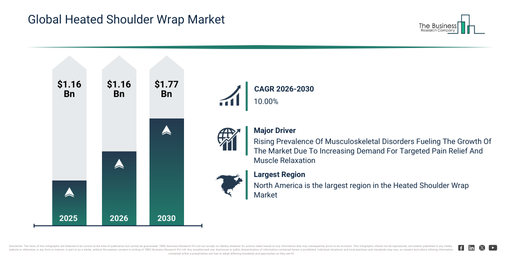
    The heated shoulder wrap market has seen substantial expansion in recent years. Its valuation is set to increase from $1.24 billion in 2025 to $1.37 billion in 2026, exhibiting a compound annual growth rate (CAGR) of 10.3%. The historic growth in this sector can be attributed to factors such as an increase in musculoskeletal disorders, the rise of home healthcare products, an expanding elderly demographic, enhanced retail availability, and increased understanding of heat therapy’s advantages.

    The heated shoulder wrap market size is anticipated to experience robust expansion in the coming years. By 2030, its valuation is projected to reach $2 billion, demonstrating a compound annual growth rate (CAGR) of 10.0%. This projected growth over the forecast period stems from several factors, including an increase in sports rehabilitation requirements, the broadening of e-commerce platforms, advancements in wearable heat therapy, the rising occurrence of chronic pain, and the wider acceptance of smart therapeutic devices. Key trends during this period are expected to encompass an escalating need for home-based therapy, the emergence of portable and lightweight designs, the proliferation of smart heated wraps, their expanded application in sports recovery, and a general inclination towards drug-free pain management solutions.

    Access Your Free Sample Report for In-Depth Market Insights:

    https://www.thebusinessresearchcompany.com/sample.aspx?id=28243&type=smp

    Which Drivers Are Influencing Long-Term Growth In The Heated Shoulder Wrap Market?

    The increasing occurrence of musculoskeletal conditions is projected to drive the expansion of the heated shoulder wrap market in the coming years. Musculoskeletal disorders refer to ailments or injuries affecting muscles, bones, joints, ligaments, tendons, or nerves, causing pain and limited mobility. The rise in these disorders is attributed to inactive lifestyles, where extended periods of sitting and reduced physical movement strain muscles and joints, resulting in chronic musculoskeletal problems. Heated shoulder wraps assist in managing musculoskeletal disorders by delivering focused heat therapy, which loosens rigid muscles, enhances blood flow, decreases joint stiffness, and eases localized discomfort in the shoulder area. For instance, in January 2024, data from the Office for Health Improvement and Disparities, a UK-based government department, indicated that in 2023, 18.4% of individuals aged 16 and above reported experiencing a long-term musculoskeletal condition, a slight increase from 17.6% in 2022. The reporting frequency for these conditions was lower among males (15.8%) compared to females (20.9%). Consequently, the growing prevalence of musculoskeletal disorders is propelling the growth of the heated shoulder wrap market. The rising engagement in fitness activities is anticipated to stimulate the expansion of the heated shoulder wrap market in the future. Fitness activities typically encompass any organized, systematic, and repeated physical movements undertaken to enhance or sustain physical condition, health, and general wellness. The appeal of fitness activities is on the rise due to heightened health and wellness consciousness, as individuals strive to boost physical health, ward off chronic illnesses, and improve overall quality of life. Heated shoulder wraps complement fitness routines by offering localized muscle relief and facilitating quicker recuperation, positioning them as excellent options for post-exercise care. They alleviate discomfort and tenderness through continuous heat application, thereby enhancing overall workout effectiveness and ease. For instance, in February 2024, the Sports and Fitness Industry Association (SFIA), a US-based trade association, reported that 242 million Americans—making up 78.8% of the population—participated in at least one activity in 2023, indicating a 2.2% increase from the prior year. Thus, the increasing popularity of fitness activities is a key factor propelling the growth of the heated shoulder wrap market.

    How Is The Heated Shoulder Wrap Market Divided Into Segments?

    The heated shoulder wrap market covered in this report is segmented –

    1) By Product Type: Electric Heated Shoulder Wraps, Microwaveable Heated Shoulder Wraps, Chemical Heated Shoulder Wraps, Other Product Types

    2) By Distribution Channel: Online Stores, Pharmacies, Specialty Stores, Supermarkets Or Hypermarkets, Other Distribution Channels

    3) By Application: Pain Relief, Injury Recovery, Sports Rehabilitation, Other Applications

    4) By End-User: Hospitals And Clinics, Home Care, Sports And Fitness Centers, Other End-Users

    Subsegments:

    1) By Electric Heated Shoulder Wraps: Battery-Powered Electric Heated Shoulder Wraps, Rechargeable Electric Heated Shoulder Wraps, Corded Electric Heated Shoulder Wraps, Infrared (IR) Electric Heated Shoulder Wraps

    2) By Microwaveable Heated Shoulder Wraps: Herbal-Filled Microwaveable Heated Shoulder Wraps, Gel-Filled Microwaveable Heated Shoulder Wraps, Bead-Filled Microwaveable Heated Shoulder Wraps, Grain-Filled Microwaveable Heated Shoulder Wraps

    3) By Chemical Heated Shoulder Wraps: Single-Use Chemical Heated Shoulder Wraps, Reusable Chemical Heated Shoulder Wraps, Air-Activated Chemical Heated Shoulder Wraps, Liquid-Based Chemical Heated Shoulder Wraps

    4) By Other Product Types: Hybrid Heated Shoulder Wraps, Smart Heated Shoulder Wraps, Water-Heated Shoulder Wraps, Portable Heat Pack-Integrated Shoulder Wraps

    Which Major Industry Participants Are Leading The Heated Shoulder Wrap Market Growth?

    Major companies operating in the heated shoulder wrap market are Conair Corporation, DJO LLC, Beurer GmbH, TheraCare Inc., HoMedics Inc., Compass Health Brands, RENPHO, Pure Enrichment, ThermoTek Inc., Vive Health, iReliev, Nature Creation, UTK Technology, REVIX, TheraICE, Bedsure, Bearaby, Tech Love, Intelex Group, Fabludo

    Access The Complete Report For Deeper Market Insights:

    https://www.thebusinessresearchcompany.com/report/heated-shoulder-wrap-global-market-report

    Which Region Is Expected To Experience The Fastest Growth In The Heated Shoulder Wrap Market?

    North America was the largest region in the heated shoulder wrap market in 2025. The regions covered in the heated shoulder wrap market report are Asia-Pacific, South East Asia, Western Europe, Eastern Europe, North America, South America, Middle East, Africa.

    Request Your Customized Heated Shoulder Wrap Market Research Report for Competitive Advantage:

    https://www.thebusinessresearchcompany.com/customise?id=28243&type=smp

    Browse Through More Reports Similar to the Global Heated Shoulder Wrap Market 2026, By The Business Research Company

    Heating Pad Global Market Report 2026

    https://www.thebusinessresearchcompany.com/report/heating-pad-global-market-report

    Shoulder Fired Weapons Global Market Report 2026

    https://www.thebusinessresearchcompany.com/report/shoulder-fired-weapons-global-market-report

    Heat Shrink Tubing And Sleeves Global Market Report 2026

    https://www.thebusinessresearchcompany.com/report/heat-shrink-tubing-and-sleeves-global-market-report

    Get in touch with us:

    The Business Research Company: https://www.thebusinessresearchcompany.com/

    Americas +1 310-496-7795

    Asia +44 7882 955267 & +91 8897263534

    Europe +44 7882 955267

    Email us at info@tbrc.info

    Follow us on:

    LinkedIn: https://in.linkedin.com/company/the-business-research-company
  • Heart Rate Monitoring Devices Market Anticipated to Record Steady Gains, Advancing to $19.67 Billion by 2030

    Heart Rate Monitoring Devices Market Anticipated to Record Steady Gains, Advancing to $19.67 Billion by 2030

    Uncover key drivers, emerging technologies, and competitive movements shaping the worker heat stress monitoring wearable market from 2026–2035 with trusted insights from The Business Research Company

    What level of CAGR-driven expansion is anticipated in the Heart Rate Monitoring Devices Market between 2026 and 2030?

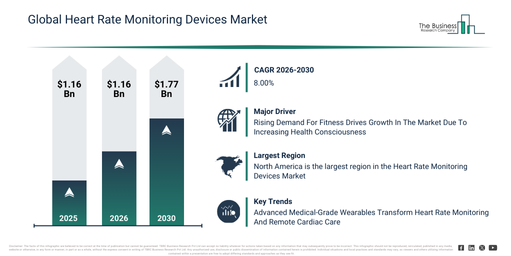
    The market for heart rate monitoring devices has seen substantial growth in recent years. Its size is projected to expand from $13.37 billion in 2025 to $14.48 billion in 2026, achieving a compound annual growth rate (CAGR) of 8.3%. This historical increase is linked to factors such as the initial limited availability of wearable heart rate devices, a reliance on conventional monitoring methods, heightened awareness of cardiovascular health, a rise in sports and fitness participation, and the early incorporation with mobile devices.

    The market for heart rate monitoring devices is projected to experience substantial expansion over the coming years. This sector is expected to grow to $19.67 billion by 2030, achieving a compound annual growth rate (CAGR) of 8.0%. The anticipated growth during this period stems from various factors, including the evolution of advanced sensor technologies, a heightened demand for smartwatches and hybrid monitors, the increasing prevalence of telemedicine and remote patient monitoring, the growing adoption of AI-enabled health analytics, and the broader deployment of solutions for sports performance monitoring. Significant trends forecasted for this period include the rising popularity of wearable heart rate monitors, their integration with fitness and health applications, an expanded application in homecare and remote surveillance, a developing preference for non-invasive monitoring devices, and the widening scope of sports and fitness uses.

    Access Your Free Sample Report for In-Depth Market Insights:

    https://www.thebusinessresearchcompany.com/sample.aspx?id=24556&type=smp

    What Drivers Are Affecting Demand-Supply Dynamics In The Heart Rate Monitoring Devices Market?

    The expanding need for gyms and active sports is anticipated to drive the growth of the heart rate monitoring devices market moving forward. Gyms and physical sports refer to facilities and activities designed to improve physical fitness, overall health, and athletic capabilities through exercise, training, and competitive play. Increasing health consciousness is fueling this rise in gyms and physical sports as people focus on fitness to prevent lifestyle-related illnesses. In these environments, heart rate monitoring devices offer real-time feedback on workout intensity, helping individuals maintain their target heart rate zones. This leads to improved performance, prevents overtraining, and encourages faster recovery. For instance, in August 2025, according to the Time, a US-based media company, reported that a recent survey found 80% of Americans (~247 million people) participated in at least one sport or fitness activity within a year. Thus, the growing demand for gyms and physical sports is a significant factor in the expansion of the heart rate monitoring devices market.

    What Segments Are Included Within The Heart Rate Monitoring Devices Market?

    The heart rate monitoring devices market covered in this report is segmented –

    1) By Type: Wrist Watch Heart Rate Monitor, Chest Strap Heart Rate Monitor, Strapless Heart Rate Monitors, Other Types

    2) By Application: Medical, Sports And Fitness, Exercise, Other Applications

    3) By End-User: Hospitals And Clinics, Homecare, Sport Care Centers

    Subsegments:

    1) By Wrist Watch Heart Rate Monitor: Fitness Smartwatches, Sports Watches, Medical-Grade Smartwatches, Hybrid Smartwatches

    2) By Chest Strap Heart Rate Monitor: Bluetooth-Enabled Chest Straps, Ant+ Compatible Chest Straps, Electrocardiogram (ECG)-Based Chest Straps, Waterproof Chest Straps For Swimming

    3) By Strapless Heart Rate Monitors: Finger-Based Pulse Monitors, Arm Or Forearm Band Monitors, Wearable Clothing With Embedded Sensors, Handheld Heart Rate Monitors

    4) By Other Types: Earbud Heart Rate Monitors, Smart Clothing, Clip-On Devices

    What Trends Are Driving The Growth Trajectory Of The Heart Rate Monitoring Devices Market?

    Leading companies within the heart rate monitoring devices market are concentrating on developing sophisticated products, such as medical-grade wearable monitors, to facilitate ongoing health surveillance and assist in the prompt identification of cardiovascular irregularities. Such a medical-grade wearable monitor is a certified instrument designed for precise, real-time tracking of vital signs. Its extensive application spans clinical environments and remote healthcare, enabling the early discovery of health concerns and persistent patient oversight. As an illustration, in June 2023, Teltonika, an electronics manufacturer headquartered in Lithuania, unveiled TeltoHeart. This device is a versatile smart medical wristband. It provides continuous heart rate measurement and automated arrhythmia detection, leveraging advanced photoplethysmography (PPG) technology. A notable feature is its capacity to record a comprehensive 6-lead ECG and furnish clinically relevant data, which users can readily transmit to healthcare providers via its built-in telemedicine platform. The device guarantees high levels of accuracy, safety, and dependability, substantially enhancing early diagnosis, disease management, and accessibility to cardiac services, particularly for individuals residing in distant or underserved regions.

    Who Are The Prominent Global Companies Shaping The Heart Rate Monitoring Devices Market Landscape?

    Major companies operating in the heart rate monitoring devices market are Apple Inc, Samsung Electronics Co Ltd, Huawei Technologies Co Ltd, Koninklijke Philips N V, Garmin Ltd, Polar Electro, Whoop, Beurer GmbH, Suunto, VitalConnect, Wahoo Fitness, Empatica Inc, Bellabeat Inc, Fitbit LLC, Qardio Inc, Ouraring Inc, Zewa Medical Technology, Veepoo Technology, Aurora Shenzhen Manufacture Co Ltd, Xiaomi Corporation, Amazfit Zepp Health Corporation, Omron Healthcare Co Ltd

    Access The Complete Report For Deeper Market Insights:

    https://www.thebusinessresearchcompany.com/report/heart-rate-monitoring-devices-global-market-report

    Which Geographic Areas Are Emerging As Strong Markets For The Heart Rate Monitoring Devices Market?

    North America was the largest region in the heart rate monitoring devices market in 2025. The regions covered in the heart rate monitoring devices market report are Asia-Pacific, South East Asia, Western Europe, Eastern Europe, North America, South America, Middle East, Africa.

    Request Your Customized Heart Rate Monitoring Devices Market Research Report for Competitive Advantage:

    https://www.thebusinessresearchcompany.com/customise?id=24556&type=smp

    Browse Through More Reports Similar to the Global Heart Rate Monitoring Devices Market 2026, By The Business Research Company

    Remote Cardiac Monitoring Global Market Report 2026

    https://www.thebusinessresearchcompany.com/report/remote-cardiac-monitoring-global-market-report

    Cardiac Rhythm Management Crm Devices And Equipment Global Market Report 2026

    https://www.thebusinessresearchcompany.com/report/cardiac-rhythm-management-crm-devices-and-equipment-global-market-report

    Heart Pump Devices Global Market Report 2026

    https://www.thebusinessresearchcompany.com/report/heart-pump-devices-global-market-report

    Get in touch with us:

    The Business Research Company: https://www.thebusinessresearchcompany.com/

    Americas +1 310-496-7795

    Asia +44 7882 955267 & +91 8897263534

    Europe +44 7882 955267

    Email us at info@tbrc.info

    Follow us on:

    LinkedIn: https://in.linkedin.com/company/the-business-research-company
  • Heart Pump Devices Industry Poised for Rapid Growth, Forecast to Touch $10.37 Billion by 2030 at 18.1% CAGR

    Heart Pump Devices Industry Poised for Rapid Growth, Forecast to Touch $10.37 Billion by 2030 at 18.1% CAGR

    Uncover key drivers, emerging technologies, and competitive movements shaping the workstation graphics processing unit (gpu) market from 2026–2035 with trusted insights from The Business Research Company

    What long-term size projections exist for the Heart Pump Devices Market covering 2026–2035?

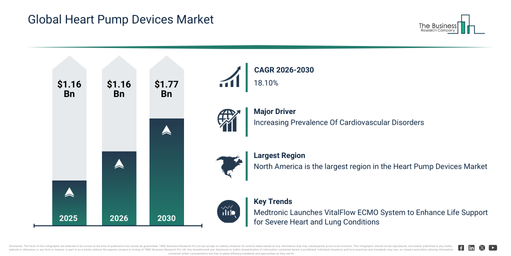
    The heart pump devices market size has experienced rapid expansion in recent years. Projections indicate a rise from $4.48 billion in 2025 to $5.32 billion in 2026 for this market, demonstrating a compound annual growth rate (CAGR) of 19.0%. Historically, this expansion has stemmed from factors such as the rising incidence of heart failure, expansion of cardiac surgery programs, advancements in mechanical pump design, increasing transplant wait times, and growing use of extracorporeal support systems.

    The heart pump devices market is anticipated to experience substantial growth in the coming years, with its size projected to reach $10.37 billion in 2030, exhibiting a compound annual growth rate (CAGR) of 18.1%. This expansion during the forecast period can be attributed to an escalating demand for long-term circulatory support, increased acceptance of destination therapy devices, the proliferation of minimally invasive cardiac procedures, wider integration of smart monitoring technologies, and rising investments in cutting-edge cardiac care. Noteworthy trends in the forecast period involve the growing application of advanced ventricular assist devices, a surge in the adoption of temporary mechanical circulatory support, a heightened focus on miniaturized implantable pumps, the broadening of bridge-to-transplant therapies, and enhanced surveillance of hemodynamic performance.

    Access Your Free Sample Report for In-Depth Market Insights:

    https://www.thebusinessresearchcompany.com/sample.aspx?id=8766&type=smp

    Which Drivers Are Impacting The Competitive Landscape Of The Heart Pump Devices Market?

    The escalating occurrence of cardiovascular disorders is poised to drive the heart pump devices market forward. Cardiovascular disorders encompass conditions that affect the heart or blood vessels. The growing incidence of these diseases will necessitate advanced diagnostic and treatment solutions, including heart pump devices, which assist in circulating blood from the lower left heart chamber to maintain blood flow during high-risk protected percutaneous coronary interventions, thereby increasing market demand. As an illustration, the American Heart Association, a US-based non-profit organization, stated in January 2024 that the age-adjusted death rate from cardiovascular disease rose to 233.3 per 100,000 in 2024, marking a 4.0% increase from 224.4 per 100,000 in 2023. Thus, the rising prevalence of cardiovascular disorders is fueling the growth of the heart pump devices market.

    What Leading Segments Are Studied In The Heart Pump Devices Market?

    The heart pump devices market covered in this report is segmented –

    1) By Type: Implantable Heart Pump Devices, Extracorporeal Heart Pump Devices

    2) By Therapy: Bridge-To-Transplant (BTT), Bridge-To-Candidacy (BTC), Destination Therapy (DT), Other Therapies

    3) By End-user: Hospitals, Cardiac Specialty Hospitals / Heart Centers, Transplant Centers, Other End-Users

    Subsegments:

    1) By Implantable Heart Pump Devices: Left Ventricular Assist Devices (LVADs), Right Ventricular Assist Devices (RVADs), Biventricular Assist Devices (BiVADs), Total Artificial Hearts (TAHs)

    2) By Extracorporeal Heart Pump Devices: Intra-Aortic Balloon Pumps (IABPs), Ventricular Assist Devices (Temporary): Centrifugal Blood Pumps

    What Upcoming Trends Are Likely To Define The Future Path Of The Heart Pump Devices Market?

    Major companies operating in the heart pump devices market are developing extracorporeal membrane oxygenation (ECMO) systems to provide advanced life support for patients with severe heart and lung conditions. Extracorporeal membrane oxygenation (ECMO) systems are defined as advanced life support machines utilized to deliver prolonged cardiac and respiratory support for patients whose heart and lungs are unable to function properly. For instance, in September 2024, Medtronic plc, an Ireland-based medical device company, launched the VitalFlow system, an innovative extracorporeal membrane oxygenation (ECMO) solution engineered to offer circulatory support for patients experiencing severe heart or lung failure. The VitalFlow system functions as a heart pump by employing a pump and oxygenator to take over the work of the heart and lungs. This mechanism is crucial for patients facing life-threatening conditions, allowing their organs to rest and heal.

    Which Key Players Are Driving Competition In The Heart Pump Devices Market?

    Major companies operating in the heart pump devices market are Abbott Laboratories, Medtronic plc, Getinge AB, Terumo Corporation, LivaNova plc, SynCardia Systems Inc, CARMAT SA, Jarvik Heart Inc, BiVACOR Inc, CorWave SA, Fresenius Kabi AG, Asahi Kasei Medical Co Ltd, Nipro Corporation, Eurosets Srl, CardioBridge GmbH, Hemovent GmbH, Evaheart Inc, Calon Cardio-Technology Ltd, Lepu Medical Technology Co Ltd, NewHeart Technologies Inc

    Access The Complete Report For Deeper Market Insights:

    https://www.thebusinessresearchcompany.com/report/heart-pump-devices-global-market-report

    Which Region Is Projected To Lead The Heart Pump Devices Market During The Forecast Period?

    North America was the largest region in the heart pump devices market share in 2025. The regions covered in the heart pump devices market report are Asia-Pacific, South East Asia, Western Europe, Eastern Europe, North America, South America, Middle East, Africa.

    Request Your Customized Heart Pump Devices Market Research Report for Competitive Advantage:

    https://www.thebusinessresearchcompany.com/customise?id=8766&type=smp

    Browse Through More Reports Similar to the Global Heart Pump Devices Market 2026, By The Business Research Company

    Cardiovascular Devices Global Market Report 2026

    https://www.thebusinessresearchcompany.com/report/cardiovascular-devices-global-market-report

    Structural Heart Devices Global Market Report 2026

    https://www.thebusinessresearchcompany.com/report/structural-heart-devices-global-market-report

    Cardiovascular Surgery Devices And Equipment Global Market Report 2026

    https://www.thebusinessresearchcompany.com/report/cardiovascular-surgery-devices-and-equipment-global-market-report

    Get in touch with us:

    The Business Research Company: https://www.thebusinessresearchcompany.com/

    Americas +1 310-496-7795

    Asia +44 7882 955267 & +91 8897263534

    Europe +44 7882 955267

    Email us at info@tbrc.info

    Follow us on:

    LinkedIn: https://in.linkedin.com/company/the-business-research-company
  • Gastrointestinal Devices Market Outlook 2026–2035: Growth Drivers and Industry Forecast

    Gastrointestinal Devices Market Outlook 2026–2035: Growth Drivers and Industry Forecast

    Uncover key drivers, emerging technologies, and competitive movements shaping the worker heat stress monitoring wearable market from 2026–2035 with trusted insights from The Business Research Company

    Starting from its 2026 valuation, what market size is the Gastrointestinal Devices Market expected to reach by 2030?

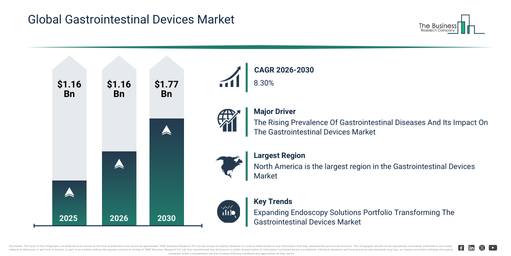
    The gastrointestinal devices market has shown significant growth in recent years. Its valuation is expected to rise from $11.7 billion in 2025 to $12.69 billion in 2026, driven by a compound annual growth rate (CAGR) of 8.5%. This historical expansion can be ascribed to an increasing occurrence of gastrointestinal ailments, the enlargement of gastroenterology departments within hospitals, enhancements in endoscopic imaging technology, the expansion of screening initiatives, and the accessibility of advanced GI devices.

    The gastrointestinal devices market is projected to experience substantial expansion over the upcoming years. This market is anticipated to reach $17.46 billion by 2030, demonstrating a compound annual growth rate (CAGR) of 8.3%. Factors contributing to this growth during the forecast timeframe include the rising adoption of AI-assisted GI diagnostics, increased investments in state-of-the-art endoscopy centers, the expansion of outpatient GI procedures, a heightened demand for single-use GI devices, and an amplified emphasis on patient safety and operational efficiency. Key trends characterizing the forecast period encompass a surge in advanced GI endoscopic procedure adoption, the expanding utilization of capsule endoscopy systems, an increasing appetite for minimally invasive GI treatments, the broadening scope of therapeutic endoscopy applications, and a sharpened focus on instruments for early disease detection.

    Access Your Free Sample Report for In-Depth Market Insights:

    https://www.thebusinessresearchcompany.com/sample.aspx?id=3292&type=smp

    What Drivers Are Driving Adoption Within The Gastrointestinal Devices Market?

    The escalating incidence of gastrointestinal diseases is anticipated to fuel the expansion of the gastrointestinal devices market in the future. These conditions encompass disorders impacting the digestive tract and associated organs, manifesting in symptoms from minor discomfort to severe health complications. A significant factor contributing to the rising occurrence of gastrointestinal diseases is the aging global population, as elderly individuals face higher rates of digestive system ailments that necessitate more medical attention. This rise in diagnoses subsequently creates a greater need for specialized diagnostic and therapeutic devices, empowering healthcare professionals to effectively manage these conditions. For example, in July 2023, Crohn’s and Colitis Canada, a Canada-based national, volunteer-based charity, projected that by 2035, Canada will have 470,000 inflammatory bowel disease (IBD) sufferers, an increase from an estimated 322,600 in 2023. Consequently, the increasing prevalence of gastrointestinal diseases is propelling the growth of the gastrointestinal devices market.

    How Is The Gastrointestinal Devices Market Organized Into Various Segments?

    The gastrointestinal devices market covered in this report is segmented –

    1) By Product Type: GI Videoscopes, Biopsy Devices, Endoscopic Retrograde Cholangiopancreatography Devices (ERCP), Capsule Endoscopy, Endoscopic Ultrasound, Endoscopic Mucosal Resection (EMR), Hemostasis Devices, Other Product Types

    2) By Sales Channel: Online Retailing, Medical Stores And Brand Outlet

    3) By End Users: Hospitals, Clinics And Dialysis Centers, Ambulatory Surgical Center

    Subsegments:

    1) By GI Videoscopes: Flexible Videoscopes, Rigid Videoscopes

    2) By Biopsy Devices: Needle Biopsy Devices, Forceps Biopsy Devices, Punch Biopsy Devices

    3) By Endoscopic Retrograde Cholangiopancreatography Devices (ERCP): ERCP Cannulas, Guidewires, Balloon Sweep Devices

    4) By Capsule Endoscopy: Small Intestine Capsule Endoscopes, Esophageal Capsule Endoscopes, Colonic Capsule Endoscopes

    5) By Endoscopic Ultrasound: EUS Scopes, EUS-guided Fine-needle Aspiration (FNA) Devices

    6) By Endoscopic Mucosal Resection (EMR): EMR Kits, EMR Suction Devices

    7) By Hemostasis Devices: Mechanical Hemostasis Devices, Thermal Hemostasis Devices, Chemical Hemostasis Agents

    8) By Other Product Types: Enteral Feeding Devices, Gastrostomy Tubes, Accessories For GI Devices

    What Long-Term Trends Are Expected To Shape The Future Of The Gastrointestinal Devices Market?

    Leading companies within the gastrointestinal devices market are increasingly prioritizing the enhancement of their endoscopy solutions offerings to secure a competitive edge. This expansion entails the development and introduction of novel products and services within the endoscopy field, a medical procedure utilizing an endoscope to internally examine the human body. As an illustration, in January 2023, Fujifilm India Private Limited, an India-based imaging solutions company, unveiled ClutchCutter and FushKnife, a new range of endoscopy solution portfolios designed for therapeutic gastrointestinal applications. The ClutchCutter functions as a rotatable forceps, enabling clinicians to simultaneously coagulate, dissect, and make incisions, featuring an insulated outer edge for optimal durability and jagged, serrated jaws for enhanced grasping. Meanwhile, the FlushKnife serves as a diathermic slitter, empowering medical professionals to execute various tasks such as marking, flushing, incision, dissection, and coagulation, and includes a ball-tip option that provides good traction for efficient target tissue dissection and coagulation.

    Who Are The Top-Performing Companies In The Gastrointestinal Devices Market In Recent Years?

    Major companies operating in the gastrointestinal devices market are B. Braun Melsungen AG, Olympus Corporation, Interscope Inc., Steris plc, Cook Group Incorporated, MICRO-TECH Co. Ltd., Cantel Medical Corp., CONMED Corporation, PENTAX Medical Company, Karl Storz SE & Co. KG, US Endoscopy Inc., Richard Wolf GmbH, Motus GI Holdings Inc., Congentix Medical Inc., ERBE Elektromedizin GmbH, Creo Medical Group plc, GI Dynamics Inc., Mauna Kea Technologies SA, EndoMaster Pte Ltd., Fujifilm Holdings Corporation

    Access The Complete Report For Deeper Market Insights:

    https://www.thebusinessresearchcompany.com/report/gastrointestinal-devices-global-market-report

    Which Region Currently Holds The Largest Share Of The Gastrointestinal Devices Market?

    North America was the largest region in the gastrointestinal devices market in 2025. Asia-Pacific was the second largest region in the gastrointestinal devices market report. The regions covered in the gastrointestinal devices market report are Asia-Pacific, South East Asia, Western Europe, Eastern Europe, North America, South America, Middle East, Africa.

    Request Your Customized Gastrointestinal Devices Market Research Report for Competitive Advantage:

    https://www.thebusinessresearchcompany.com/customise?id=3292&type=smp

    Browse Through More Reports Similar to the Global Gastrointestinal Devices Market 2026, By The Business Research Company

    Gastrointestinal Bleeding Treatment Devices Global Market Report 2026

    https://www.thebusinessresearchcompany.com/report/gastrointestinal-bleeding-treatment-devices-global-market-report

    Gastrointestinal Drugs Global Market 2026

    https://www.thebusinessresearchcompany.com/report/gastrointestinal-drugs-global-market

    Digestive Health Supplements Global Market Report 2026

    https://www.thebusinessresearchcompany.com/report/digestive-health-supplements-global-market-report

    Get in touch with us:

    The Business Research Company: https://www.thebusinessresearchcompany.com/

    Americas +1 310-496-7795

    Asia +44 7882 955267 & +91 8897263534

    Europe +44 7882 955267

    Email us at info@tbrc.info

    Follow us on:

    LinkedIn: https://in.linkedin.com/company/the-business-research-company

  • Gastrointestinal Bleeding Treatment Devices Market 2026–2030: Emerging Trends and Forecast Opportunities

    Gastrointestinal Bleeding Treatment Devices Market 2026–2030: Emerging Trends and Forecast Opportunities

    Uncover key drivers, emerging technologies, and competitive movements shaping the workstation graphics processing unit (gpu) market from 2026–2035 with trusted insights from The Business Research Company

    Across 2026–2030, what is the expected market valuation path of the Gastrointestinal Bleeding Treatment Devices Market?

    The market size for gastrointestinal bleeding treatment devices has experienced robust expansion in recent years. This market is projected to expand from $0.92 billion in 2025 to $1 billion in 2026, demonstrating a compound annual growth rate (CAGR) of 8.7%. Historically, this growth has been driven by factors such as the increasing occurrence of gastrointestinal disorders, the rising prevalence of peptic ulcer disease, the proliferation of endoscopic diagnostic procedures, the surge in hospital-based GI interventions, and the accessibility of sophisticated endoscopy equipment.

    The market for gastrointestinal bleeding treatment devices is projected to experience substantial expansion in the coming years, anticipated to reach $1.39 billion by 2030, demonstrating a compound annual growth rate (CAGR) of 8.6%. This growth during the forecast period is fueled by several factors, including the increasing integration of next-generation endoscopic devices, the rising need for outpatient GI procedures, an intensifying focus on detecting bleeding early, the expansion of ambulatory surgical centers, and growing investments in sophisticated GI care technologies. Key trends defining this period encompass the wider adoption of advanced endoscopic hemostasis devices, an increase in the utilization of minimally invasive GI bleeding treatments, a surging demand for precision thermal ablation tools, the proliferation of mechanical hemostatic solutions, and a heightened emphasis on technologies for rapid bleeding control.

    Access Your Free Sample Report for In-Depth Market Insights:

    https://www.thebusinessresearchcompany.com/sample.aspx?id=5307&type=smp

    Which Drivers Are Supporting The Rise Of The Gastrointestinal Bleeding Treatment Devices Market?

    The growing occurrence of gastrointestinal disorders is projected to enhance the market’s profitability. Factors such as an insufficient fiber intake, stress, inadequate hydration, excessive consumption of dairy products, a sedentary lifestyle, advancing age, and genetic predispositions can lead to gastrointestinal diseases. As an illustration, in October 2024, data from the National Library of Medicine, a US-based national library, indicated that in 2023, 825 per 100,000 Canadians were afflicted with inflammatory bowel disease (IBD), impacting over 320,000 individuals. Furthermore, forecasts suggest this figure might escalate to 1.1% of the population, which translates to approximately 470,000 Canadians, by 2035. Consequently, the rising incidence of disorders associated with the GI tract is propelling market expansion.

    What Segments Are Identified Within The Structure Of The Gastrointestinal Bleeding Treatment Devices Market?

    The gastrointestinal bleeding treatment devices market covered in this report is segmented –

    1) By Product: Endoscopic Thermal Hemostasis Devices, Mechanical Hemostasis Devices, Injection-Based Hemostasis Devices, Topical Hemostatic Agents & Powders, Combination Or Multimodal Hemostasis Devices

    2) By GI Tract Division: Upper GI Tract, Lower GI Tract

    3) By End User: Hospitals Or Clinics, Ambulatory Surgical Centers, Other End-users

    Subsegments:

    1) By Endoscopic Thermal Hemostasis Devices: Electrocautery And Electrosurgical Coagulation Devices, Argon Plasma Coagulation (APC) Devices, Radiofrequency Ablation (RFA) Devices, Laser Coagulation Devices, Heater Probe Devices

    2) By Mechanical Hemostasis Devices: Hemostatic Clips (Through-the-Scope And Over-the-Scope Clips), Endoscopic Band Ligation Devices, Endoscopic Suturing Devices, Compression And Tamponade Devices

    3) By Injection-Based Hemostasis Devices: Epinephrine Injection Systems, Sclerosant Injection Devices, Cyanoacrylate Glue Injection Devices, Saline And Combination Injection Systems

    4) By Topical Hemostatic Agents And Powders: Hemostatic Powder Sprays, Absorbable Hemostatic Agents, Fibrin-Based Sealants, Collagen-Based Hemostatic Agents

    5) By Combination And Multimodal Hemostasis Devices: Thermal And Mechanical Combination Systems, Injection And Mechanical Combination Systems, Integrated Multimodal Endoscopic Hemostasis Platforms

    Which Market Trends Are Opening Growth Opportunities In The Gastrointestinal Bleeding Treatment Devices Market?

    Major companies operating in the gastrointestinal bleeding treatment devices market are concentrating on developing advanced solutions, such as Hemospray, to improve the effectiveness of treating acute bleeding in the gastrointestinal (GI) tract. Hemospray functions as a hemostatic powder specifically designed to manage and control active bleeding within the GI tract. For instance, in January 2024, AIG Hospitals, an India-based hospital, introduced Hemospray, which represents a significant breakthrough in controlling GI bleeding. This hemostatic agent is specifically formulated for use in endoscopic procedures to control acute gastrointestinal (GI) bleeding. Hemospray is recognized for its ease of use, strong safety profile, and its capability to manage a wide range of GI bleeds, from conditions like peptic ulcers to variceal hemorrhages.

    Which Leading Companies Dominate The Gastrointestinal Bleeding Treatment Devices Market Share?

    Major companies operating in the gastrointestinal bleeding treatment devices market are CONMED Corporation, Boston Scientific Corporation, Ovesco Endoscopy AG, Olympus Corporation, Cook Medical, Erbe Elektromedizin GmbH, Steris plc, Medtronic plc, Johnson & Johnson, Abbott Laboratories, Fujifilm Holdings Corporation, Pentax Medical, Merit Medical Systems, Teleflex Incorporated, AngioDynamics, BTG International Ltd., Smiths Medical, Terumo Corporation, Nipro Corporation, C. R. Bard Inc., EndoChoice Holdings Inc., GI Supply Inc., Hemostasis LLC

    Access The Complete Report For Deeper Market Insights:

    https://www.thebusinessresearchcompany.com/report/gastrointestinal-bleeding-treatment-devices-global-market-report

    How Does The Gastrointestinal Bleeding Treatment Devices Market Perform Across Major Global Regions?

    North America was the largest region in the gastrointestinal bleeding treatment devices market in 2025. Asia-Pacific is expected to be the fastest-growing region in the forecast period. The regions covered in the gastrointestinal bleeding treatment devices market report are Asia-Pacific, South East Asia, Western Europe, Eastern Europe, North America, South America, Middle East, Africa.

    Request Your Customized Gastrointestinal Bleeding Treatment Devices Market Research Report for Competitive Advantage:

    https://www.thebusinessresearchcompany.com/customise?id=5307&type=smp

    Browse Through More Reports Similar to the Global Gastrointestinal Bleeding Treatment Devices Market 2026, By The Business Research Company

    Bleeding Disorders Treatment Global Market Report 2026

    https://www.thebusinessresearchcompany.com/report/bleeding-disorders-treatment-global-market-report

    Gastrointestinal Devices Global Market Report 2026

    https://www.thebusinessresearchcompany.com/report/gastrointestinal-devices-global-market-report

    Bleeding Disorder Testing Global Market Report 2026

    https://www.thebusinessresearchcompany.com/report/bleeding-disorder-testing-global-market-report

    Get in touch with us:

    The Business Research Company: https://www.thebusinessresearchcompany.com/

    Americas +1 310-496-7795

    Asia +44 7882 955267 & +91 8897263534

    Europe +44 7882 955267

    Email us at info@tbrc.info

    Follow us on:

    LinkedIn: https://in.linkedin.com/company/the-business-research-company
  • Global Gastroenteritis Testing Market Forecast 2026–2035: Long-Term Growth Insights

    Global Gastroenteritis Testing Market Forecast 2026–2035: Long-Term Growth Insights

    Uncover key drivers, emerging technologies, and competitive movements shaping the worker heat stress monitoring wearable market from 2026–2035 with trusted insights from The Business Research Company

    What size range is anticipated for the Gastroenteritis Testing Market from 2026 to 2030?

    The gastroenteritis testing market has experienced robust growth in recent years. This market is projected to expand from $4.18 billion in 2025 to $4.44 billion in 2026, achieving a compound annual growth rate (CAGR) of 6.1%. The growth observed in the historic period can be attributed to several factors, including the reliance on conventional immunoassay and culture-based methods, limited availability of advanced molecular diagnostics, an increasing prevalence of gastrointestinal infections, rising hospital and clinic diagnostic capabilities, and the expansion of research institutes focused on infectious disease studies.

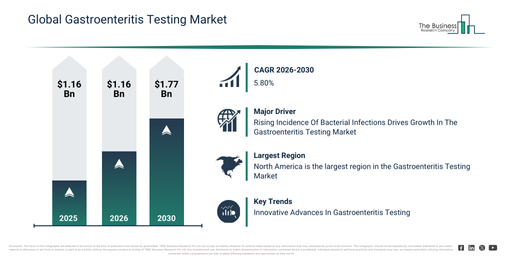
    The market for gastroenteritis testing is projected to experience robust expansion over the coming years. This market is anticipated to reach $5.55 billion by 2030, exhibiting a compound annual growth rate (CAGR) of 5.8%. The expected growth during this forecast period is primarily driven by progress in molecular diagnostic technologies, an increasing need for quick point-of-care testing, enhanced financial support for infectious disease research, greater uptake of integrated laboratory information systems, and the broadening reach of gastroenteritis testing into developing markets. Key trends anticipated for the forecast period encompass a heightened demand for swift and precise gastroenteritis diagnostics, a growing preference for molecular diagnostic testing approaches, the broadening of testing panels to include viral, bacterial, and parasitic agents, an increase in point-of-care and hospital-based diagnostic solutions, and a stronger emphasis on epidemiological surveillance and the management of outbreaks.

    Access Your Free Sample Report for In-Depth Market Insights:

    https://www.thebusinessresearchcompany.com/sample.aspx?id=20556&type=smp

    What Drivers Are Affecting Demand In The Gastroenteritis Testing Market?

    The escalating occurrence of bacterial infections is anticipated to stimulate the expansion of the gastroenteritis testing market moving forward. Bacterial infections are experiencing a surge due to heightened antibiotic resistance, increased population density, and more extensive global travel, all of which contribute to the dissemination of resistant bacteria. Gastroenteritis testing is essential for bacterial infections to accurately pinpoint the specific pathogen causing symptoms such as diarrhea and vomiting, thereby guiding appropriate treatment and preventing the spread of infection. For instance, in 2024, as per GOV.UK, a UK-based organization, serious cases of bacteraemia resulting from antibiotic-resistant bacteria have risen by 9.3% since 2023, climbing from 18,740 cases in 2023 to 20,484 cases in 2024. Therefore, the increasing incidence of bacterial infections is propelling the growth of the gastroenteritis testing market.

    Which Segments Are Gaining Traction In The Gastroenteritis Testing Market?

    The gastroenteritis testing market covered in this report is segmented –

    1) By Type: Viral Gastrointestinal Infections, Bacterial Gastrointestinal Infections, Parasitic Gastrointestinal Infections

    2) By Disease Strains: Bacterial Strains, Viral Strains, Parasitic Strains

    3) By Testing Methods: Immunoassay Testing, Conventional Testing, Molecular Diagnostic Testing

    4) By End-User: Hospitals, Clinics Or Medical Centers, Research Institutes, Diagnostic Laboratories

    Subsegments:

    1) By Viral Gastrointestinal Infections: Norovirus, Rotavirus, Astrovirus, Adenovirus, Sapovirus

    2) By Bacterial Gastrointestinal Infections: Escherichia coli (E. coli), Salmonella, Campylobacter, Shigella, Clostridium perfringens

    3) By Parasitic Gastrointestinal Infections: Giardia lamblia, Entamoeba histolytica, Cryptosporidium, Trichinella, Strongyloides stercoralis

    How Are Emerging Trends Affecting The Progression Of The Gastroenteritis Testing Market?

    Major companies in the gastroenteritis testing market are developing innovative products, such as molecular gastrointestinal tests, to provide high sensitivity and specificity. A molecular gastrointestinal test is a diagnostic approach that employs molecular techniques, like polymerase chain reaction (PCR), to detect and identify specific genetic material from pathogens or organisms in gastrointestinal samples. For instance, in June 2024, QIAGEN N.V., a Germany-based provider of sample and assay technologies, launched the QIAstat-Dx Gastrointestinal Panel 2. This panel is notable for its ability to rapidly and comprehensively detect up to 16 clinically relevant bacterial, viral, and parasitic pathogens responsible for most gastrointestinal infections. It utilizes real-time polymerase chain reaction (PCR) technology to amplify multiple genetic targets in a single reaction, which represents a significant improvement over traditional microbiological methods that typically require 24 hours to 10 days for sample incubation.

    Who Are The Major Companies Operating In The Gastroenteritis Testing Market?

    Major companies operating in the gastroenteritis testing market are F. Hoffmann-La Roche Ltd., Merck & Co. Inc., Abbott Diagnostics, Laboratory Corporation of America Holdings, Thermo Fisher Scientific Inc., Eurofins Scientific SE, Hologic Inc., Becton Dickinson and Company, bioMérieux SA, Quest Diagnostics Incorporated, DiaSorin S.p.A., Bio-Rad Laboratories Inc., Randox Laboratories Ltd., ARUP Laboratories, Meridian Bioscience Inc., MedGenome, Trinity Biotech plc, Savyon Diagnostics Ltd., Coris BioConcept, Aster Clinical Research & Diagnostic Centre Pvt. Ltd., Alimetrix Inc., Luminex Corporation

    Access The Complete Report For Deeper Market Insights:

    https://www.thebusinessresearchcompany.com/report/gastroenteritis-testing-global-market-report

    Which Region Is Anticipated To See The Fastest Growth In The Gastroenteritis Testing Market?

    North America was the largest region in the gastroenteritis testing market in 2025. Asia-Pacific is expected to be the fastest-growing region in the forecast period. The regions covered in the gastroenteritis testing market report are Asia-Pacific, South East Asia, Western Europe, Eastern Europe, North America, South America, Middle East, Africa.

    Request Your Customized Gastroenteritis Testing Market Research Report for Competitive Advantage:

    https://www.thebusinessresearchcompany.com/customise?id=20556&type=smp

    Browse Through More Reports Similar to the Global Gastroenteritis Testing Market 2026, By The Business Research Company

    Gastroesophageal Reflux Disease Gerd Global Market Report 2026

    https://www.thebusinessresearchcompany.com/report/gastroesophageal-reflux-disease-gerd-global-market-report

    Immunochemistry Diagnostic Devices And Equipment Global Market Report 2026

    https://www.thebusinessresearchcompany.com/report/immunochemistry-diagnostic-devices-and-equipment-global-market-report

    Cardiac Rhythm Management Crm Devices And Equipment Global Market Report 2026

    https://www.thebusinessresearchcompany.com/report/cardiac-rhythm-management-crm-devices-and-equipment-global-market-report

    Get in touch with us:

    The Business Research Company: https://www.thebusinessresearchcompany.com/

    Americas +1 310-496-7795

    Asia +44 7882 955267 & +91 8897263534

    Europe +44 7882 955267

    Email us at info@tbrc.info

    Follow us on:

    LinkedIn: https://in.linkedin.com/company/the-business-research-company
  • Gastric Cancer Diagnostic Market 2026–2030: Forecasting Business Opportunities Ahead

    Gastric Cancer Diagnostic Market 2026–2030: Forecasting Business Opportunities Ahead

    Uncover key drivers, emerging technologies, and competitive movements shaping the workstation graphics processing unit (gpu) market from 2026–2035 with trusted insights from The Business Research Company

    How is the Gastric Cancer Diagnostic Market size predicted to change over the forecast window of 2026–2035?

    The gastric cancer diagnostic market has shown significant expansion in recent years. It is projected to increase from $2.78 billion in 2025 to $2.98 billion in 2026, achieving a compound annual growth rate (CAGR) of 7.2%. This historical growth can be attributed to several factors, including the limited availability of fluorescent probes, a reliance on traditional single-color FISH methods, burgeoning genetic research initiatives, expanding hospital and laboratory infrastructure, and the uptake of basic cytogenetic diagnostics.

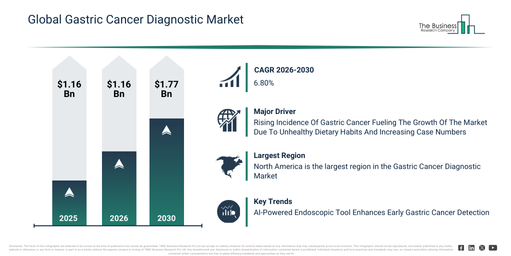
    The gastric cancer diagnostic market is anticipated to experience robust growth over the next few years, with projections indicating it will expand to $3.87 billion by 2030, demonstrating a compound annual growth rate (CAGR) of 6.8%. This expansion during the forecast period is fueled by the development of multiplex and high-throughput probes, an increasing demand for precision medicine, the broadening scope of genetic and pharmaceutical research, technological progress in imaging and quantification, and heightened regulatory compliance and quality standards. Prominent trends for the forecast period include the surging adoption of multiplex and high-throughput FISH probes, the wider application of genetic and molecular diagnostics, their growing utilization in clinical and pharmaceutical research, integration with advanced imaging and analysis technologies, and a stronger focus on the accuracy and sensitivity of probes.

    Access Your Free Sample Report for In-Depth Market Insights:

    https://www.thebusinessresearchcompany.com/sample.aspx?id=27291&type=smp

    Which Drivers Are Contributing To The Expansion Of The Gastric Cancer Diagnostic Market?

    The increasing occurrence of gastric cancer is anticipated to drive expansion within the gastric cancer diagnostic market in the future. Gastric cancer is defined as a malignant tumor forming in the stomach lining, characterized by uncontrolled cell growth that creates a mass capable of invading adjacent tissues and metastasizing throughout the body. This surge in gastric cancer cases is linked to poor dietary choices, specifically the frequent intake of salted, smoked, and processed foods, which elevate the risk of stomach lining damage and subsequent cancer development. Gastric cancer diagnostic tools assist in diagnosing gastric cancer by allowing for the early discovery of malignant lesions, thereby facilitating prompt treatment and enhancing patient prognoses. These diagnostics boost clinical effectiveness through accurate and swift results, aiding in superior disease management. As an illustration, in May 2024, data from the American Cancer Society, a US-based nonprofit, indicated that new stomach cancer cases climbed to 26,890 in 2024, up from 26,500 cases reported in 2023. Consequently, the growing prevalence of gastric cancer is fueling the expansion of the gastric cancer diagnostic market.

    What Segment Categories Are Covered In The Gastric Cancer Diagnostic Market?

    The gastric cancer diagnostic market covered in this report is segmented –

    1) By Diagnostic Type: Endoscopy, Imaging, Biopsy, Laboratory Tests, Biomarker-Based Testing

    2) By Product: Reagents And Consumables, Instruments

    3) By Technology: Molecular Diagnostics, Immunoassays, Next-Generation Sequencing, Other Technologies

    4) By Application: Early Diagnosis, Screening, Monitoring

    5) By End User: Hospitals, Clinics, Diagnostic Laboratories, Other End Users

    Subsegments:

    1) By Endoscopy: Conventional Endoscopy, Chromoendoscopy, Narrow Band Imaging, Confocal Laser Endomicroscopy, Capsule Endoscopy

    2) By Imaging: Computed Tomography, Magnetic Resonance Imaging, Positron Emission Tomography, Ultrasound

    3) By Biopsy: Forceps Biopsy, Needle Biopsy, Endoscopic Ultrasound-Guided Biopsy, Laparoscopic Biopsy

    4) By Laboratory Tests: Blood Tests, Stool Tests, Urea Breath Test, Serology

    5) By Biomarker-Based Testing: Genetic Testing, Protein Biomarker Testing, Circulating Tumor DNA Testing, Microribonucleic Acid Testing

    Which Innovation Trends Are Advancing Developments Within The Gastric Cancer Diagnostic Market?

    Leading companies in the gastric cancer diagnostic market are concentrating on developing innovative diagnostic tools, such as artificial intelligence-based endoscopic diagnostic support devices, to enhance early detection and accuracy. These AI-powered tools are designed to assist in identifying and evaluating gastrointestinal abnormalities during endoscopy. For example, in March 2024, AI Medical Service Inc., a Japan-based medical technology firm, introduced GastroAI-model G, an AI-driven endoscopic diagnostic support system. This system aids gastroenterologists during endoscopic procedures by analyzing video images in real time to pinpoint potential cancerous lesions. It employs deep learning to detect suspicious areas indicative of early gastric cancer, which may warrant a biopsy or further examination. When such lesions are identified, the system promptly alerts the physician by highlighting the area with a rectangle on the endoscopic screen, thereby improving diagnostic accuracy and enabling early cancer detection.

    Which Major Firms Are Strengthening Their Position In The Gastric Cancer Diagnostic Market?

    Major companies operating in the gastric cancer diagnostic market are F. Hoffmann-La Roche Ltd., Thermo Fisher Scientific Inc., Abbott Laboratories, Becton Dickinson and Company, Quest Diagnostics Incorporated, Agilent Technologies Inc., Illumina Inc., bioMérieux SA, Qiagen N.V., DiaSorin S.p.A, Natera Inc., Myriad Genetics Inc., Fulgent Genetics Inc., Foundation Medicine Inc., Invitae Corporation, NeoGenomics Laboratories Inc., Fujirebio Inc., MiRXES Pte Ltd., BIOCEPT Inc., Pillar Biosciences Inc.

    Access The Complete Report For Deeper Market Insights:

    https://www.thebusinessresearchcompany.com/report/gastric-cancer-diagnostic-global-market-report

    Which Region Is Anticipated To See The Fastest Growth In The Gastric Cancer Diagnostic Market?

    North America was the largest region in the gastric cancer diagnostic market in 2025. Asia Pacific is expected to be the fastest-growing region in the forecast period. The regions covered in the gastric cancer diagnostic market report are Asia-Pacific, South East Asia, Western Europe, Eastern Europe, North America, South America, Middle East, Africa.

    Request Your Customized Gastric Cancer Diagnostic Market Research Report for Competitive Advantage:

    https://www.thebusinessresearchcompany.com/customise?id=27291&type=smp

    Browse Through More Reports Similar to the Global Gastric Cancer Diagnostic Market 2026, By The Business Research Company

    Thermal Insulation Material Global Market Report 2026

    https://www.thebusinessresearchcompany.com/report/thermal-insulation-material-global-market-report

    Building Insulation Materials Global Market Report 2026

    https://www.thebusinessresearchcompany.com/report/building-insulation-materials-global-market-report

    Insulation Products Global Market Report 2026

    https://www.thebusinessresearchcompany.com/report/insulation-products-global-market-report

    Get in touch with us:

    The Business Research Company: https://www.thebusinessresearchcompany.com/

    Americas +1 310-496-7795

    Asia +44 7882 955267 & +91 8897263534

    Europe +44 7882 955267

    Email us at info@tbrc.info

    Follow us on:

    LinkedIn: https://in.linkedin.com/company/the-business-research-company
  • Global Gait Analyzer Market Report 2026–2035: Key Forecasts and Growth Areas

    Global Gait Analyzer Market Report 2026–2035: Key Forecasts and Growth Areas

    Uncover key drivers, emerging technologies, and competitive movements shaping the worker heat stress monitoring wearable market from 2026–2035 with trusted insights from The Business Research Company

    What market expansion outlook does the Gait Analyzer Market show for the 2026–2030 period?

    The gait analyzer market size has shown substantial growth in recent years. It is anticipated to expand from $1.41 billion in 2025 to $1.56 billion in 2026, demonstrating a compound annual growth rate (CAGR) of 10.6%. The market’s historical development can be ascribed to several factors, including the increasing prevalence of musculoskeletal disorders, the expansion of rehabilitation and physiotherapy centers, heightened awareness of mobility assessment in clinical care, the integration of gait analysis in sports medicine, and the growth of research studies focused on human movement.

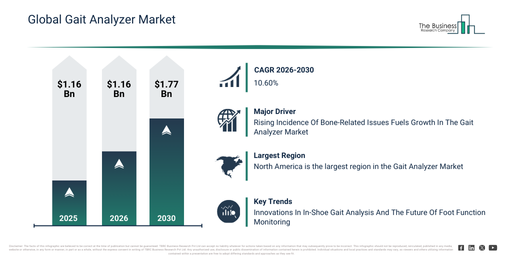
    The gait analyzer market size is projected to experience substantial growth in the coming years. Its value is expected to reach $2.33 billion by 2030, at a compound annual growth rate (CAGR) of 10.6%. This expansion during the forecast period can be attributed to factors such as an aging population facing mobility impairments, an increasing focus on preventive healthcare and early diagnosis, the development of home-based rehabilitation solutions, a growing demand for personalized treatment planning, and the broader application of sports and fitness monitoring. Major trends influencing the market in the forecast period include the increasing adoption of wearable gait analysis systems, the rising use of gait analysis in rehabilitation and physiotherapy, the expanding role of gait assessment in sports performance monitoring, the growing deployment of portable and home-based gait analyzers, and a heightened demand for objective mobility and posture assessment tools.

    Access Your Free Sample Report for In-Depth Market Insights:

    https://www.thebusinessresearchcompany.com/sample.aspx?id=18622&type=smp

    What Drivers Are Shaping The Development Of The Gait Analyzer Market?

    The rising prevalence of bone-related health concerns is projected to stimulate the expansion of the gait analyzer market moving forward. These conditions encompass various disorders that impact the structure, strength, and functionality of bones, potentially stemming from genetic factors, nutritional deficiencies, injuries, infections, or other health complications. The increase in bone-related issues is linked to an aging global population, increasingly sedentary lifestyles, inadequate nutrition, and genetic predispositions. Gait analyzers are instrumental in managing these conditions, offering benefits such as precise diagnostics, ongoing monitoring, customized treatment strategies, complication prevention, support for surgical planning, research contributions, patient education, and overall enhancement of quality of life. As an illustration, research released in February 2023 by the National Library of Medicine, a US-based biomedical library, forecast a rise of 719,364 in total hip arthroplasty (THA) procedures and 1.22 million in total knee arthroplasty (TKA) procedures by 2040. Moreover, by 2060, TKA procedures are anticipated to reach 2.91 million, with THA procedures totaling 1.98 million. Thus, the escalating incidence of bone-related problems is a key factor propelling the growth of the gait analyzer market.

    Which Segments Are Contributing To The Growth Of The Gait Analyzer Market?

    The gait analyzer market covered in this report is segmented –

    1) By Type: With Heart Rate Monitoring, Without Heart Rate Monitoring

    2) By Age: Pediatric, Adult

    3) By Application: Household, Commercial, Other Applications

    Subsegments:

    1) By With Heart Rate Monitoring: Wearable Gait Analyzers With Integrated Heart Rate Sensors, Gait Analysis Systems With Ecg Or Pulse Rate Monitoring, Smart Insoles With Heart Rate Tracking, Portable Gait Monitors With Biometric Feedback

    2) By Without Heart Rate Monitoring: Standalone Gait Analysis Systems (Pressure Mats, Motion Sensors), 3D Motion Capture Systems For Gait Analysis, Video-Based Gait Analysis Systems, Treadmills With Gait Analysis Features (Without Heart Rate Monitoring)

    Which Competitive Trends Are Impacting The Structure Of The Gait Analyzer Market?

    Leading firms within the gait analyzer sector are concentrating on creating advanced products like in-shoe systems for foot function and gait analysis, which deliver real-time, accurate information concerning foot mechanics and gait patterns. These in-shoe systems provide thorough and ongoing understanding of foot mechanics and gait, supporting clinical evaluations and enhancing athletic performance. An example of this is Tekscan, a US-based manufacturer of gait analyzers, which introduced F-Scan GO in June 2023. This new compact in-shoe foot function and gait analysis system is specifically engineered for biomechanics researchers. F-Scan GO provides an uncompromising in-shoe gait analysis solution, allowing for natural gait movement while gathering comprehensive sensor data at unparalleled sampling rates. This innovation further solidifies Tekscan’s prominent position in the realm of in-shoe gait analysis, backed by numerous studies validated through research.

    Who Are The Primary Competitors In The Global Gait Analyzer Market?

    Major companies operating in the gait analyzer market are Kistler Group, Movella Holdings Inc, Tekscan Inc, BTS Bioengineering Corp, Delsys Inc, Noraxon USA Inc, BioSensics LLC, Advanced Mechanical Technology Inc, Motion Analysis Corporation, Qualisys AB, Zebris Medical GmbH, Medilogic GmbH, ProtoKinetics LLC, Microgate Srl, Sensor Medica Srl, DIERS International GmbH, ReTiSense Inc, Novel GmbH, Moticon GmbH, Vicon Motion Systems Ltd

    Access The Complete Report For Deeper Market Insights:

    https://www.thebusinessresearchcompany.com/report/gait-analyzer-global-market-report

    Which Global Regions Are Shaping The Competitive Landscape Of The Gait Analyzer Market?

    North America was the largest region in the gait analyzer market in 2025. The regions covered in the gait analyzer market report are Asia-Pacific, South East Asia, Western Europe, Eastern Europe, North America, South America, Middle East, Africa.

    Request Your Customized Gait Analyzer Market Research Report for Competitive Advantage:

    https://www.thebusinessresearchcompany.com/customise?id=18622&type=smp

    Browse Through More Reports Similar to the Global Gait Analyzer Market 2026, By The Business Research Company

    Fitness Tracker Global Market Report 2026

    https://www.thebusinessresearchcompany.com/report/fitness-tracker-global-market-report

    Industrial Analytics Global Market Report 2026

    https://www.thebusinessresearchcompany.com/report/industrial-analytics-global-market-report

    Foot And Ankle Devices Global Market Report 2026

    https://www.thebusinessresearchcompany.com/report/foot-and-ankle-devices-global-market-report

    Get in touch with us:

    The Business Research Company: https://www.thebusinessresearchcompany.com/

    Americas +1 310-496-7795

    Asia +44 7882 955267 & +91 8897263534

    Europe +44 7882 955267

    Email us at info@tbrc.info

    Follow us on:

    LinkedIn: https://in.linkedin.com/company/the-business-research-company
  • Functional Brain Imaging System Market 2026–2030: Forecast, Innovation, and Competitive Trends

    Functional Brain Imaging System Market 2026–2030: Forecast, Innovation, and Competitive Trends

    Uncover key drivers, emerging technologies, and competitive movements shaping the workstation graphics processing unit (gpu) market from 2026–2035 with trusted insights from The Business Research Company

    What level of growth is expected in the Functional Brain Imaging System Market between 2026 and 2030?

    The market for functional brain imaging systems has demonstrated strong growth over recent years. It is projected to expand from $5.08 billion in 2025 to $5.45 billion in 2026, achieving a compound annual growth rate (CAGR) of 7.4%. The historical increase in this market can be attributed to factors such as the limited availability of high-resolution imaging systems, a dependence on traditional imaging techniques, the rising prevalence of neurological disorders, growing academic research in brain function, and the early adoption of fMRI technologies.

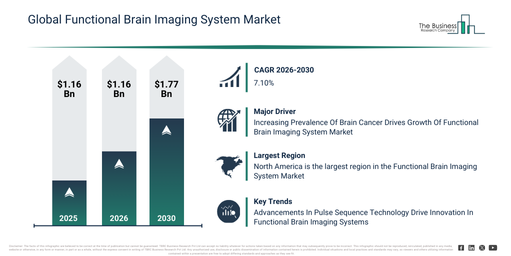
    The functional brain imaging system market is anticipated to show robust expansion in the coming years. It is projected to achieve a size of $7.17 billion by 2030, exhibiting a compound annual growth rate (CAGR) of 7.1%. This expansion during the forecast period is driven by advancements in portable and wearable fNIRS devices, the growing integration of AI in brain imaging analysis, the wider availability of hybrid PET/MRI and PET/CT systems, increased funding for cognitive neuroscience research, and the development of hospital and diagnostic imaging infrastructure. Significant trends for the forecast duration include the growing acceptance of functional brain imaging in clinical diagnosis, the incorporation of portable and wearable brain imaging technologies, an increase in research applications for cognitive science, a stronger focus on neurology and psychiatry applications, and the broadening use of hybrid imaging modalities for brain studies.

    Access Your Free Sample Report for In-Depth Market Insights:

    https://www.thebusinessresearchcompany.com/sample.aspx?id=20555&type=smp

    Which Drivers Are Expected To Impact The Functional Brain Imaging System Market During The Forecast Period?

    The functional brain imaging system market is anticipated to expand due to the rising occurrence of brain cancer. Brain cancer is a medical condition where abnormal cells multiply uncontrollably within the brain, forming tumors that can disrupt normal brain functions. The growing incidence of this disease is linked to factors such as an aging demographic, advancements in detection techniques, various environmental hazards, and improved reporting mechanisms. Functional brain imaging systems are instrumental in boosting diagnostic precision, guiding the formulation of safer and more potent treatment strategies, and enabling continuous patient monitoring to enhance outcomes for individuals suffering from brain cancer. For instance, in 2023, Cancer Australia, a cancer control agency for the Government of Australia, reported that Australia recorded 1,597 deaths attributed to brain cancer, consisting of 956 males and 641 females. Furthermore, it is projected that by 2025, the number of deaths will climb to 1,639, affecting 979 males and 660 females. Thus, the expanding prevalence of brain cancer is significantly propelling the growth of the functional brain imaging system market.

    How Is The Functional Brain Imaging System Market Divided Into Segments?

    The functional brain imaging system market covered in this report is segmented –

    1) By Type: Functional Magnetic Resonance Imaging (fMRI) Systems, Functional Near Infrared Spectroscopy (fNIRS) Systems, Positron Emission Tomography (PET) System, Others Types

    2) By Application: Hospital, Diagnostic imaging center, Other Applications

    3) By End-User: Neurology, Psychiatry, Oncology, Cognitive Science

    Subsegments:

    1) By Functional Magnetic Resonance Imaging (fMRI) Systems: Research-Grade Functional Magnetic Resonance Imaging (fMRI) Systems, Clinical Functional Magnetic Resonance Imaging (fMRI) Systems, High-Field Functional Magnetic Resonance Imaging (fMRI) Systems, Resting-State Functional Magnetic Resonance Imaging (fMRI) Systems

    2) By Functional Near Infrared Spectroscopy (fNIRS) Systems: Portable Functional Near Infrared Spectroscopy (fNIRS) Systems, Multi-Channel Functional Near Infrared Spectroscopy (fNIRS) Systems, Wearable Functional Near Infrared Spectroscopy (fNIRS) Devices, Clinical Functional Near Infrared Spectroscopy (fNIRS) Systems

    3) By Positron Emission Tomography (PET) Systems: Whole-Body Positron Emission Tomography (PET) Systems, Dedicated Brain Positron Emission Tomography (PET) Systems

    4) By Other Types: Electroencephalography (EEG) Systems, Magnetoencephalography (MEG) Systems, Diffusion Tensor Imaging (DTI) Systems, Transcranial Magnetic Stimulation (TMS) Systems

    What Industry Trends Are Transforming The Functional Brain Imaging System Market?

    Leading companies within the functional brain imaging system market are concentrating on creating advanced solutions, including pulse sequence technology, to boost image clarity, refine diagnostic precision, and shorten scan durations, thereby achieving more impactful and streamlined brain imaging processes. Specifically, pulse sequence technology within these systems involves a sequence of precisely timed radiofrequency (RF) pulses and magnetic field gradients utilized during an MRI scan to govern how the MRI system produces images. A notable example is Fujifilm Holdings Corporation, a company based in Japan known for photographic films, which introduced Aperto Lucent, an open 0.4-tesla MRI system, in July 2024. This system features RADAR motion compensating pulse sequence technology, designed to minimize the necessity for repeat scans and lessen motion artifacts, a common difficulty in MRI examinations. Furthermore, the APERTO Lucent employs Fujifilm’s well-regarded permanent magnet technology, which streamlines setup and lowers operational expenses by decreasing the requirement for supplementary equipment to uphold the magnetic field.

    Which Key Market Players Are Investing In Expansion And Innovation Within The Functional Brain Imaging System Market?

    Major companies operating in the functional brain imaging system market are Siemens Healthineers AG, General Electric HealthCare Technologies Inc., NordicNeuroLab AS, Koninklijke Philips N.V., Shimadzu Corporation, Toshiba International Corporation, Elekta AB, Canon Medical Systems Corporation, Cortech Solutions Inc., Compumedics Ltd., Brain Products GmbH, Aspect Imaging Ltd., ANT Neuro GmbH, BIOPAC Systems Inc., Neuroelectrics Corporation, Twente Medical Systems International(TMSI) B.V., Advanced Brain Monitoring Inc., Gowerlabs Ltd., Artinis Medical Systems B.V., NIRx Medical Technologies LLC

    Access The Complete Report For Deeper Market Insights:

    https://www.thebusinessresearchcompany.com/report/functional-brain-imaging-system-global-market-report

    Which Regions Are Poised For Strategic Growth In The Functional Brain Imaging System Market?

    North America was the largest region in the functional brain imaging system market in 2025. The regions covered in the functional brain imaging system market report are Asia-Pacific, South East Asia, Western Europe, Eastern Europe, North America, South America, Middle East, Africa.

    Request Your Customized Functional Brain Imaging System Market Research Report for Competitive Advantage:

    https://www.thebusinessresearchcompany.com/customise?id=20555&type=smp

    Browse Through More Reports Similar to the Global Functional Brain Imaging System Market 2026, By The Business Research Company

    3D Medical Imaging Devices Global Market Report 2026

    https://www.thebusinessresearchcompany.com/report/3d-medical-imaging-devices-global-market-report

    Diagnostic Imaging Equipment Global Market Report 2026

    https://www.thebusinessresearchcompany.com/report/diagnostic-imaging-equipment-global-market-report

    3D Diagnostic Imaging Services Global Market Report 2026

    https://www.thebusinessresearchcompany.com/report/3d-diagnostic-imaging-services-global-market-report

    Get in touch with us:

    The Business Research Company: https://www.thebusinessresearchcompany.com/

    Americas +1 310-496-7795

    Asia +44 7882 955267 & +91 8897263534

    Europe +44 7882 955267

    Email us at info@tbrc.info

    Follow us on:

    LinkedIn: https://in.linkedin.com/company/the-business-research-company
  • Fully Automatic Biochemistry Analyzer Market Forecast 2026–2035: Data Trends and Industry Insights

    Fully Automatic Biochemistry Analyzer Market Forecast 2026–2035: Data Trends and Industry Insights

    Uncover key drivers, emerging technologies, and competitive movements shaping the worker heat stress monitoring wearable market from 2026–2035 with trusted insights from The Business Research Company

    How much is the Fully Automatic Biochemistry Analyzer Market valued at in 2026, and what valuation is forecast for 2030?

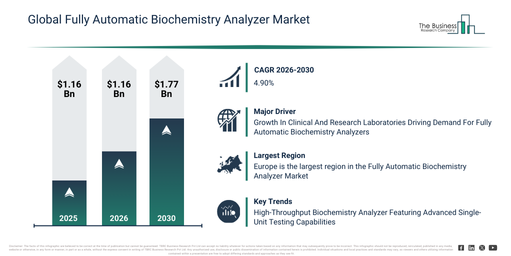
    The fully automatic biochemistry analyzer market has experienced consistent expansion in recent years. This market is anticipated to expand from $3.55 billion in 2025 to $3.72 billion in 2026, achieving a compound annual growth rate (CAGR) of 5.0%. The historical growth can be attributed to factors such as an increase in clinical laboratory testing volumes, the expansion of hospital diagnostic infrastructure, the rising incidence of chronic and metabolic conditions, the growing embrace of automated lab instruments, and the necessity for more rapid diagnostic turnaround times.

    The market for fully automatic biochemistry analyzers is projected to experience consistent expansion over the upcoming years, anticipating a rise to $4.5 billion by 2030, exhibiting a compound annual growth rate (CAGR) of 4.9%. This projected growth stems from several factors, including the escalating demand for extensive diagnostic screening, the expansion of diagnostic laboratory networks, a heightened emphasis on economical laboratory operations, the broadening scope of pharmaceutical and biotechnology research, and increased financial commitments to healthcare automation. Key trends emerging during this period encompass the increasing integration of fully automated laboratory workflows, a surging requirement for high-throughput clinical testing, the wider implementation of integrated systems for sample and reagent handling, the greater deployment of biochemistry analyzers in decentralized diagnostic settings, and an intensified focus on precision and standardization in clinical testing.

    Access Your Free Sample Report for In-Depth Market Insights:

    https://www.thebusinessresearchcompany.com/sample.aspx?id=18620&type=smp

    What Drivers Are Influencing The Growth Of The Fully Automatic Biochemistry Analyzer Market?

    The expansion of clinical and research laboratories is projected to boost the future growth of the fully automatic biochemistry analyzer market. These facilities are dedicated to performing diagnostic tests and conducting scientific investigations on biological specimens. The rise in clinical and research laboratories has gained momentum due to increased financial commitments in biomedical research, clinical trials, and personalized medicine. Moreover, substantial funding from governments, private organizations, and grants actively supports the development of these vital research facilities and laboratories. Fully automatic biochemistry analyzers significantly enhance the efficiency and accuracy within clinical and research laboratories by automating complex testing processes. They also enable labs to manage high volumes of samples, ensure consistent results, and support advanced research initiatives. For instance, in March 2025, according to IQVIA, a US-based human data science company, funding in 2024 reached a 10-year high of $102 billion, indicating a substantial increase from the $71 billion recorded in 2023. Thus, the growth in clinical and research laboratories is a primary driver for the fully automatic biochemistry analyzer market.

    What Segments Are Included Within The Fully Automatic Biochemistry Analyzer Market?

    The fully automatic biochemistry analyzer market covered in this report is segmented –

    1) By Type: Bench Top, Floor-Standing

    2) By Application: Disease Diagnosis, Drugs Of Abuse Testing, Drug Discovery, In Vitro Diagnosis, Other Applications

    3) By End Users: Pharmaceutical And Biotech Companies, Hospitals And Clinics, Diagnostic Laboratories, Point Of Care Centers, Other End-Users

    Subsegments:

    1) By Bench Top: Small Capacity Bench Top Analyzers, Medium Capacity Bench Top Analyzers, High Throughput Bench Top Analyzers, Compact Bench Top Analyzers For Limited Space

    2) By Floor-Standing: High Capacity Floor-standing Analyzers, Fully Automated Floor-Standing Biochemistry Analyzers, Modular Floor-Standing Systems, Multi-Station Floor-Standing Analyzers

    What Trends Are Reshaping The Dynamics Of The Fully Automatic Biochemistry Analyzer Market?

    Leading firms within the fully automatic biochemistry analyzer market are enhancing clinical research methodologies, including single-unit throughput testing, to provide diagnostics that are both more efficient and accurate. These tests specifically gauge an individual analyzer’s operational capabilities or processing volume within set parameters. An illustration of this trend is Shenzhen YHLO Biotech Co., a biotechnology enterprise from China, which launched the YHLO iBC 2000 Fully Automated Biochemistry Analyzer in March 2025. This high-throughput system can process up to 3,200 tests per hour per unit, with the flexibility to link multiple units to achieve a peak throughput of 9,200 tests per hour. This instrument reinforces YHLO’s offerings in the mid-to-high throughput biochemistry segment, seamlessly integrating with its CLIA and comprehensive laboratory automation solutions. It addresses a variety of clinical requirements and underscores the company’s dedication to innovation and cooperative research and development, striving to provide smart, high-performing laboratory solutions across the globe.

    Who Are The Core Companies Influencing Trends In The Fully Automatic Biochemistry Analyzer Market?

    Major companies operating in the fully automatic biochemistry analyzer market are Roche Holding AG, Thermo Fisher Scientific Inc., Abbott Laboratories, Siemens Healthineers, Fujifilm Corporation, Mindray Bio-Medical Electronics Co. Ltd., Hitachi High-Technologies Corporation, Beckman Coulter Inc., Sysmex Corporation, Bio-Rad Laboratories Inc., Ortho Clinical Diagnostics, Horiba Medical Ltd, DiaSorin S.p.A., Randox Laboratories Ltd., Dirui Industries Co. Ltd., Trivitron Healthcare Ltd, EKF Diagnostics Holdings plc, A. Menarini Diagnostics Srl, Analytical Technologies Limited, Urit Medical Electronic Group, Adaltis Inc.

    Access The Complete Report For Deeper Market Insights:

    https://www.thebusinessresearchcompany.com/report/fully-automatic-biochemistry-analyzer-global-market-report

    Which Regions Are Projected To Dominate The Fully Automatic Biochemistry Analyzer Market In The Coming Years?

    Europe was the largest region in the fully automatic biochemistry analyzer market in 2025. The regions covered in the fully automatic biochemistry analyzer market report are Asia-Pacific, South East Asia, Western Europe, Eastern Europe, North America, South America, Middle East, Africa.

    Request Your Customized Fully Automatic Biochemistry Analyzer Market Research Report for Competitive Advantage:

    https://www.thebusinessresearchcompany.com/customise?id=18620&type=smp

    Browse Through More Reports Similar to the Global Fully Automatic Biochemistry Analyzer Market 2026, By The Business Research Company

    Biochemistry Analyzer Global Market Report 2026

    https://www.thebusinessresearchcompany.com/report/biochemistry-analyzer-global-market-report

    Protein Analyzer Global Market Report 2026

    https://www.thebusinessresearchcompany.com/report/protein-analyzer-global-market-report

    Bioprocess Analyzers Global Market Report 2026

    https://www.thebusinessresearchcompany.com/report/bioprocess-analyzers-global-market-report

    Get in touch with us:

    The Business Research Company: https://www.thebusinessresearchcompany.com/

    Americas +1 310-496-7795

    Asia +44 7882 955267 & +91 8897263534

    Europe +44 7882 955267

    Email us at info@tbrc.info

    Follow us on:

    LinkedIn: https://in.linkedin.com/company/the-business-research-company