Category: Medical Equipment

  • Sphygmomanometer Market Projected For Strong Expansion Through 2030: Key Trends And Future Outlook

    Sphygmomanometer Market Projected For Strong Expansion Through 2030: Key Trends And Future Outlook

    Built to provide research that’s more actionable and strategically valuable, The Business Research Company’s 2026 market reports include market attractiveness analysis, total addressable market sizing, company benchmarking matrices, interactive Excel dashboards, broader supply chain intelligence, emerging startup tracking, and in-depth product insights.

    Sphygmomanometer Market Expansion Outlook: What Revenue Opportunities Are Ahead?

    The sphygmomanometer market has seen considerable expansion in recent years. It is forecast to grow from $3.2 billion in 2025 to $3.53 billion in 2026, at a compound annual growth rate (CAGR) of 10.3%. The historical increase can be ascribed to the rising prevalence of hypertension, the extensive past use of mercury-based devices, augmented screening in clinical environments, the development of primary healthcare facilities, and the adoption of manual and aneroid devices.

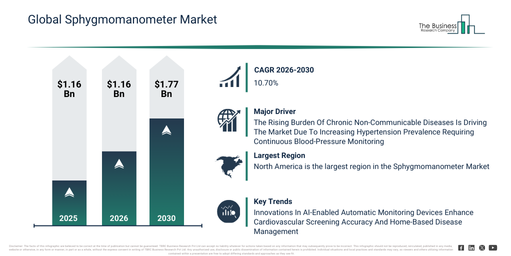
    The sphygmomanometer market size is anticipated to experience substantial growth in the upcoming years. It will grow to $5.31 billion in 2030 at a compound annual growth rate (CAGR) of 10.7%. The expansion foreseen in this period can be ascribed to an escalating demand for remote patient monitoring, the increasing adoption of connected healthcare devices, the broadening of telemedicine services, a heightened focus on preventive cardiovascular care, and the ongoing replacement of mercury-based devices. Prominent trends for the forecast period include a greater acceptance of digital blood pressure monitoring devices, a rising demand for home-based monitoring solutions, the increasing integration of data connectivity features, the proliferation of portable and wearable configurations, and an enhanced emphasis on measurement accuracy and user-friendliness.

    Get A Free Sample Report With In-Depth Market Insights:

    https://thebusinessresearchcompany.com/sample_request?id=81080912&type=smp&name=Sphygmomanometer%20Market%20Report%202026&utm_source=Blogs&utm_medium=Paid&utm_campaign=Oct_PR

    Sphygmomanometer Market Growth Factors: What’s Supporting Expansion?

    The increasing prevalence of chronic non-communicable diseases (NCDs) is anticipated to drive the expansion of the sphygmomanometer market in the future. These long-term health conditions, particularly hypertension and cardiovascular disease, develop gradually and demand continuous surveillance and management. Hypertension poses a significant global health risk and is a primary contributor to cardiovascular issues, thus making consistent blood pressure measurements crucial for early detection and effective intervention. The escalating occurrence of these conditions is influenced by lifestyle elements like an aging global populace, unhealthy eating habits, insufficient physical activity, and rising rates of obesity, all of which contribute to an increase in blood-pressure irregularities worldwide. Sphygmomanometers play a vital role in patient care by facilitating prompt diagnosis, ongoing monitoring, and enhanced cardiovascular risk management in both medical facilities and home environments. For instance, in September 2025, the World Health Organization (WHO), a Switzerland-based agency of the United Nations, reported on the significant global impact of hypertension, estimating that 1.4 billion adults aged 30–79 were affected in 2024—representing 33 percent of this age group—with two-thirds living in low- and middle-income countries. Additionally, approximately 600 million individuals (44 percent) were undiagnosed, and about 630 million (44 percent) had received a diagnosis and treatment. Consequently, the growing incidence of chronic NCDs is fueling the expansion of the sphygmomanometer market.

    Sphygmomanometer Market Segment Analysis Spotlighting Growth Areas

    The sphygmomanometer market covered in this report is segmented –

    1) By Product: Electronic Sphygmomanometer, Aneroid Sphygmomanometer, Mercury Sphygmomanometer

    2) By Configuration: Portable, Desk Mounted, Floor Standing, Wall Mounted

    3) By Operation: Electric, Manual, Automatic, Semi-automatic

    4) By End User: Hospitals, Ambulatory Surgical Centers And Clinics, Home Healthcare, Other End Users

    Subsegments:

    1) By Electronic Sphygmomanometer: Upper Arm Electronic Sphygmomanometer, Wrist Electronic Sphygmomanometer, Finger Electronic Sphygmomanometer

    2) By Aneroid Sphygmomanometer: Manual Aneroid Sphygmomanometer, Digital Aneroid Sphygmomanometer

    3) By Mercury Sphygmomanometer: Standard Mercury Sphygmomanometer, Portable Mercury Sphygmomanometer

    Sphygmomanometer Market Industry Trends: What’s Reshaping Demand?

    Leading companies in the sphygmomanometer market are concentrating on developing sophisticated automatic blood pressure monitoring solutions that integrate AI-driven diagnostic features to enhance measurement accuracy, aid in the early detection of cardiovascular abnormalities, and boost the convenience of home-based health monitoring. These AI-enabled automatic blood pressure monitors utilize machine-learning algorithms to analyze pulse-wave signals during cuff inflation, allowing the device to identify irregular heart rhythms such as atrial fibrillation (AFib) while providing reliable systolic and diastolic readings. For instance, in November 2024, OMRON Healthcare, a Japan-based health equipment, software, and service provider, obtained FDA De Novo authorization for its next-generation home blood pressure monitor equipped with IntelliSense AFib, an AI-powered AFib detection algorithm that evaluates more than 300 pulse-wave indices and demonstrates high diagnostic accuracy, with clinical performance showing 95% sensitivity and 98% specificity. This innovation underscores how automatic oscillometric devices are transforming from simple blood-pressure measurement tools into comprehensive cardiovascular screening technologies that support early detection, continuous monitoring, and improved clinical decision-making.

    Sphygmomanometer Market Company Landscape And Competitive Strategy

    Major companies operating in the sphygmomanometer market are A&D Company Ltd., American Diagnostic Corporation, Omron Healthcare Inc., Microlife Corporation, Beurer GmbH, CIGA Healthcare Ltd., Rossmax International Ltd., Rudolf Riester GmbH, Welch Allyn Inc., Koninklijke Philips N.V., Paul Hartmann AG, Spengler, Holtex Ltd., Timesco Healthcare Ltd., Bremed Ltd., iHealth Labs Inc., Contec Medical Systems Co. Ltd., SunTech Medical Inc., General Electric Company, Amico Group of Companies, HEINE Optotechnik GmbH and Co. KG, Hill-Rom Services Inc., Halma plc

    View The Full Sphygmomanometer Market Report:

    https://thebusinessresearchcompany.com/report/sphygmomanometer-global-market-report?utm_source=Blogs&utm_medium=Paid&utm_campaign=Oct_PR

    Sphygmomanometer Market Largest Region: Which Geography Holds The Highest Market Share?

    North America was the largest region in the sphygmomanometer market in 2025. Asia-Pacific is expected to be the fastest-growing region in the global sphygmomanometer market during the forecast period. The regions covered in the sphygmomanometer market report are Asia-Pacific, South East Asia, Western Europe, Eastern Europe, North America, South America, Middle East, Africa.

    Reach Out To Our Team:

    The Business Research Company: https://www.thebusinessresearchcompany.com/

    Americas: +1 310-496-7795

    Asia: +44 7882 955267 & +91 8897263534

    Europe: +44 7882 955267

    Email us at: marketing@tbrc.info

    Follow us on:

    LinkedIn: https://in.linkedin.com/company/the-business-research-company

    YouTube: https://www.youtube.com/channel/UC24_fI0rV8cR5DxlCpgmyFQ

    Global Market Model: https://www.thebusinessresearchcompany.com/global-market-model

  • Spectrum Therapy Instrument Market Outlook 2026–2030: Growth Trends, Market Dynamics And Emerging Opportunities

    Spectrum Therapy Instrument Market Outlook 2026–2030: Growth Trends, Market Dynamics And Emerging Opportunities

    Backed by market attractiveness analysis, total addressable market sizing, company benchmarking matrices, interactive Excel dashboards, wider supply chain intelligence, emerging startup coverage, and detailed product-level insights, The Business Research Company’s 2026 market reports are designed to offer research that is more actionable and strategically valuable than ever.

    Spectrum Therapy Instrument Market Growth Potential: How Will Market Size Shift Through 2030?

    The spectrum therapy instrument market has demonstrated robust expansion over the past few years. It is forecast to rise from $1.2 billion in 2025 to $1.29 billion in 2026, achieving a compound annual growth rate (CAGR) of 7.8%. This historical growth can be linked to factors such as the prevalence of skin disorders, the expansion of dermatology clinics, heightened awareness of phototherapy, demand for cosmetic treatments, and the adoption of these instruments by hospitals.

    The spectrum therapy instrument market size is projected to experience substantial growth over the coming years. It is anticipated to reach $1.73 billion by 2030, expanding at a compound annual growth rate (CAGR) of 7.5%. This growth during the forecast period is propelled by factors such as home therapy adoption, wellness industry growth, chronic pain management demand, dermatology advancements, and outpatient care growth. Key developments expected in the forecast period involve the growing use of non invasive light therapies, the expansion of home based phototherapy devices, increased adoption in dermatology treatments, demand for pain management alternatives, and the growth of wellness and aesthetic applications.

    Get A Free Sample Report With In-Depth Market Insights:

    https://thebusinessresearchcompany.com/sample_request?id=35165595&type=smp&name=Spectrum%20Therapy%20Instrument%20Market%20Report%202026&utm_source=Blogs&utm_medium=Paid&utm_campaign=Oct_PR

    Spectrum Therapy Instrument Market Demand Drivers: What’s Powering Industry Growth?

    The increasing occurrence of skin diseases is anticipated to boost the expansion of the Spectrum Therapy Instrument Market in the coming years. Skin diseases refer to conditions impacting the skin, encompassing infections, inflammations, and ailments like acne, eczema, or psoriasis. A significant factor contributing to skin diseases is heightened environmental pollution, which aggravates skin irritation and allergic responses. Spectrum therapy instruments, frequently employed in phototherapy, utilize precise light wavelengths to manage diverse skin conditions. This treatment mechanism relies on particular light spectrums’ ability to permeate the skin and influence cellular processes, leading to therapeutic benefits. For instance, in January 2024, Cancer Australia, an Australia-based government agency, indicated that an estimated 18,257 new cases of melanoma of the skin were diagnosed in 2023, comprising 10,639 in males and 7,618 in females. Hence, the rising prevalence of skin diseases is stimulating the growth of the Spectrum Therapy Instrument Market.

    Spectrum Therapy Instrument Market Segment Performance And Emerging Opportunities

    The spectrum therapy instrument market covered in this report is segmented –

    1) By Type: Light Emitting Diode (LED) Spectrum Therapy Instrument, Carbon-Light Spectrum Therapy Instrument

    2) By Technology: Low Level Laser Therapy, Pulsed Electromagnetic Field Therapy

    3) By Patient Demographics: Adults, Pediatrics

    4) By Distribution Channel: Direct Sales, Distributors

    5) By Application: Hospitals, Beauty Salon, Home

    Subsegments:

    1) By Light Emitting Diode (LED) Spectrum Therapy Instrument: Red LED Therapy, Blue LED Therapy, Infrared LED Therapy

    2) By Carbon-Light Spectrum Therapy Instrument: Carbon Dioxide Therapy, Carbon Laser Therapy

    Spectrum Therapy Instrument Market Innovation Trends: What Developments Are Reshaping The Industry?

    Leading companies in the spectrum therapy instrument market are currently developing red light therapy devices to enhance therapeutic efficacy, expand treatment options, and increase the accessibility of advanced, non-invasive therapy for a wider range of patients. A red light therapy device operates by emitting red and infrared light, which penetrates the skin to aid healing, reduce inflammation, and alleviate pain. For example, in January 2024, Lumaflex, a US-based therapy device manufacturing company, introduced Lumaflex Essential. This device utilizes red and near-infrared light, a spectrum therapy function, to stimulate cellular activity, thereby promoting natural healing processes and pain relief. The device offers multiple health advantages, including pain relief, improved energy levels, accelerated injury recovery, and support for muscle growth. It is a portable, waterproof red light therapy device ideal for home, gym, or travel use, optimized for quick, 10-minute sessions. Its design emphasizes ease of use, enabling users to target specific body areas for effective treatment.

    Spectrum Therapy Instrument Market Key Players Shaping Industry Direction

    Major companies operating in the spectrum therapy instrument market are BTL Industries Inc., Beurer GmbH, Cutera Inc., Syneron Candela, BioPhotas Inc., LightStim Inc., Verilux Inc., BioLight Technologies LLC, Hooga Health LLC, Joovv Inc., LED Technologies Inc., Mito Red Light LLC, Red Therapy Co Ltd, TheraLight LLC, Trophy Skin Inc., GembaRed LLC, Rouge Red Light Therapy Inc., Erchonia Corporation, Vielight Inc., Lumenis Ltd, PlatinumLED Therapy Lights LLC, Red Light Rising Ltd, Apira Science Inc, KONINKLIJKE PHILIPS N.V., Northern Light Technologies, HAIRMAX, Ultralux Health, ClearlightRed, Daavlin, Eleve Health

    View The Full Spectrum Therapy Instrument Market Report:

    https://thebusinessresearchcompany.com/report/spectrum-therapy-instrument-global-market-report?utm_source=Blogs&utm_medium=Paid&utm_campaign=Oct_PR

    Spectrum Therapy Instrument Market Regional Analysis: Which Region Leads By Revenue?

    North America was the largest region in the spectrum therapy instrument market in 2025. Asia-Pacific is expected to be the fastest-growing region in the forecast period. The regions covered in the spectrum therapy instrument market report are Asia-Pacific, South East Asia, Western Europe, Eastern Europe, North America, South America, Middle East, Africa.

    Reach Out To Our Team:

    The Business Research Company: https://www.thebusinessresearchcompany.com/

    Americas: +1 310-496-7795

    Asia: +44 7882 955267 & +91 8897263534

    Europe: +44 7882 955267

    Email us at: marketing@tbrc.info

    Follow us on:

    LinkedIn: https://in.linkedin.com/company/the-business-research-company

    YouTube: https://www.youtube.com/channel/UC24_fI0rV8cR5DxlCpgmyFQ

    Global Market Model: https://www.thebusinessresearchcompany.com/global-market-model
  • Spectroscopy Software Market Growth Outlook From $1.67 Billion In 2026 To $2.61 Billion By 2030

    Spectroscopy Software Market Growth Outlook From $1.67 Billion In 2026 To $2.61 Billion By 2030

    Featuring market attractiveness scoring, total addressable market sizing, company benchmarking matrices, interactive Excel dashboards, deeper supply chain intelligence, emerging startup tracking, and granular product-level insights, The Business Research Company’s 2026 market reports are built to deliver research that is both more actionable and more strategically valuable.

    Spectroscopy Software Market Value Analysis: What Growth Lies Ahead Over The Forecast Period?

    The spectroscopy software market size has seen substantial growth recently. It is forecast to expand from $1.49 billion in 2025 to $1.67 billion in 2026, demonstrating a compound annual growth rate (CAGR) of 12.1%. This historical growth can be attributed to several factors, including the increasing integration of spectroscopy in pharmaceutical applications, a growing need for quality control in food industries, wider implementation in environmental testing, continuous advancements in UV-Vis and IR spectroscopy software, and the expansion of analytical laboratories.

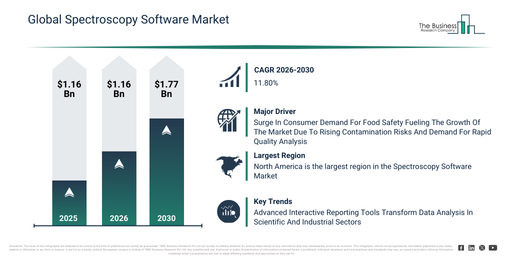
    The spectroscopy software market is anticipated to expand swiftly in the coming years. It is projected to achieve a value of $2.61 billion by 2030, exhibiting a compound annual growth rate (CAGR) of 11.8%. This expansion during the forecast period can be attributed to the integration of AI and machine learning in spectroscopy software, the increasing adoption of cloud-based and hybrid software deployment, a growing demand in forensic science applications, heightened automation in pharmaceutical and biotech laboratories, and the expansion of remote and collaborative research platforms. Major trends expected during this period include the automation of spectral data processing, integration with laboratory information management systems (lims), real-time instrument monitoring, advanced visualization and reporting tools, and remote and collaborative analysis.

    Get A Free Sample Report With In-Depth Market Insights:

    https://thebusinessresearchcompany.com/sample_request?id=50121968&type=smp&name=Spectroscopy%20Software%20Market%20Report%202026&utm_source=Blogs&utm_medium=Paid&utm_campaign=Oct_PR

    Spectroscopy Software Market Growth Drivers: What’s Behind The Acceleration?

    The growing consumer need for food safety is projected to drive the expansion of the spectroscopy software market in the future. Food safety encompasses methods and environments that maintain food quality, thereby preventing contamination and illnesses transmitted through food. Worries regarding food safety are escalating, primarily due to the expanding globalization of the food supply chain, which elevates the chances of contamination at various stages like production, processing, and distribution. Spectroscopy software contributes to guaranteeing food safety by allowing quick, non-invasive examination of food items to identify contaminants, confirm ingredient genuineness, and track quality indicators across the entire supply chain. As an illustration, the Public Interest Research Group (PIRG), a US-based nonprofit, reported in April 2024 that food and beverage recalls in the United States rose by 8% in 2023, up from 6% in 2022. Consequently, the rising consumer requirement for food safety is fueling the expansion of the spectroscopy software market.

    Spectroscopy Software Market Segment Landscape And Growth Outlook

    The spectroscopy software market covered in this report is segmented –

    1) By Type Of Spectroscopy: Ultraviolet-Visible Spectroscopy Software, Infrared Spectroscopy Software, Nuclear Magnetic Resonance Spectroscopy Software, Mass Spectrometry Software, Fluorescence Spectroscopy Software

    2) By Deployment Type: On-Premise Software, Cloud-Based Software, Hybrid Software

    3) By Functionality: Data Acquisition, Data Analysis, Data Management, Reporting And Visualization, Instrument Control

    4) By Application: Food Testing, Environmental Testing, Forensic Science, Pharmaceuticals, Other Applications

    5) By End-User: Pharmaceuticals And Biotechnology Industries, Forensics, Food Industries, Polymers And Organic Chemistry Industries

    Subsegments:

    1) By Ultraviolet-Visible Spectroscopy Software: Single-Beam Ultraviolet-Visible Software, Double-Beam Ultraviolet-Visible Software, Array-Based Ultraviolet-Visible Software, Portable Ultraviolet-Visible Software

    2) By Infrared Spectroscopy Software: Near-Infrared (NIR) Spectroscopy Software, Mid-Infrared (MIR) Spectroscopy Software, Far-Infrared (FIR) Spectroscopy Software, Fourier-Transform Infrared (FTIR) Software

    3) By Nuclear Magnetic Resonance Spectroscopy Software: 1D Nuclear Magnetic Resonance (NMR) Software, 2D Or 3D Nuclear Magnetic Resonance (NMR) Software, Solid-state Nuclear Magnetic Resonance (NMR) Software, High-Resolution Nuclear Magnetic Resonance (NMR) Software

    4) By Mass Spectrometry Software: Gas Chromatography-Mass Spectrometry Software, Liquid Chromatography-Mass Spectrometry Software, Matrix-Assisted Laser Desorption Or Ionization Software, Tandem Mass Spectrometry Software

    5) By Fluorescence Spectroscopy Software: Steady-State Fluorescence Software, Time-Resolved Fluorescence Software, Fluorescence Lifetime Imaging Software, Forster Resonance Energy Transfer (FRET) Software

    Spectroscopy Software Market Trends: What’s Defining The Industry’s Next Phase?

    Leading firms within the spectroscopy software market are concentrating on creating novel solutions like interactive reports. These aim to improve data visualization, facilitate thorough analysis, and deliver adaptable insights to support quicker, better-informed choices for those in scientific and industrial sectors. Interactive reports are defined as dynamic, intuitive digital tools that enable individuals to examine, filter, and view spectroscopy data instantly. As an illustration, in June 2023, Mirion Technologies, Inc., a US-based technology and manufacturing firm, launched Genie 4.0, a substantial upgrade to its primary spectroscopy software. Genie 4.0 provides a superior user experience with interactive reports, enhanced precision through sophisticated algorithms, and increased automation utilizing Python-based scripting. It is developed for both new and established users, ensuring a seamless transition while boosting adaptability. Furthermore, the update brings in new subscription and perpetual licensing models, enabling users to select economical options tailored to their requirements. Genie 4.0 is set to be available for download in mid-July.

    Spectroscopy Software Market Competitive Analysis Of Leading Industry Participants

    Major companies operating in the spectroscopy software market are Thermo Fisher Scientific Inc., Danaher Corporation, Agilent Technologies Inc., PerkinElmer Inc., Mettler-Toledo International Inc., Shimadzu Corporation, Waters Corporation, Bruker Corporation, HORIBA Ltd., JEOL Ltd., Anton Paar GmbH, Renishaw plc, Metrohm AG, Genedata AG, HunterLab Europe GmbH, Avantes B.V.Renishaw plc, JASCO Corporation, Wasatch Photonics Inc., Lablicate GmbH, StellarNet Inc.

    View The Full Spectroscopy Software Market Report:

    https://thebusinessresearchcompany.com/report/spectroscopy-software-global-market-report?utm_source=Blogs&utm_medium=Paid&utm_campaign=Oct_PR

    Spectroscopy Software Market Geographic Distribution And Regional Opportunities

    North America was the largest region in the spectroscopy software market in 2025. Asia-Pacific is expected to be the fastest-growing region in the forecast period. The regions covered in the spectroscopy software market report are Asia-Pacific, South East Asia, Western Europe, Eastern Europe, North America, South America, Middle East, Africa.

    Reach Out To Our Team:

    The Business Research Company: https://www.thebusinessresearchcompany.com/

    Americas: +1 310-496-7795

    Asia: +44 7882 955267 & +91 8897263534

    Europe: +44 7882 955267

    Email us at: marketing@tbrc.info

    Follow us on:

    LinkedIn: https://in.linkedin.com/company/the-business-research-company

    YouTube: https://www.youtube.com/channel/UC24_fI0rV8cR5DxlCpgmyFQ

    Global Market Model: https://www.thebusinessresearchcompany.com/global-market-model
  • Spectacle Lens Market Forecast To Reach $75.91 Billion By 2030: Key Growth Drivers And Industry Trends

    Spectacle Lens Market Forecast To Reach $75.91 Billion By 2030: Key Growth Drivers And Industry Trends

    Built to provide research that’s more actionable and strategically valuable, The Business Research Company’s 2026 market reports include market attractiveness analysis, total addressable market sizing, company benchmarking matrices, interactive Excel dashboards, broader supply chain intelligence, emerging startup tracking, and in-depth product insights.

    Spectacle Lens Market Size Forecast: How Big Could The Market Get By 2030?

    The spectacle lens market size has demonstrated consistent growth in recent years. Forecasts indicate it will expand from $62.02 billion in 2025 to $64.24 billion in 2026, achieving a compound annual growth rate (CAGR) of 3.6%. The historical growth of this market is attributable to an increasing prevalence of vision impairment, a rising aging population, a growth in routine eye examinations, the expansion of optical retail networks, and advancements in lens manufacturing technologies.

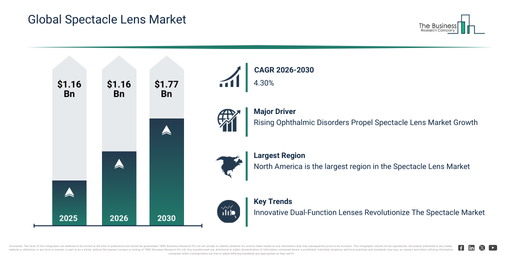
    The spectacle lens market is projected to experience consistent expansion over the upcoming years. This market is set to reach $75.91 billion by 2030, exhibiting a compound annual growth rate (CAGR) of 4.3%. Several factors will drive this growth during the projected period, including a heightened demand for high-end and customized eyewear, the increasing use of digital solutions for eye testing, the widening reach of online sales channels for eyewear, an increased emphasis on lenses that protect against blue light, and advancements in lens material innovation. Key trends anticipated during this period encompass a rising need for personalized vision correction lenses, the growing acceptance of progressive and multifocal lenses, an increase in the utilization of lightweight, high-index materials, the broader application of digitally designed lenses, and an intensified focus on features related to aesthetics and comfort.

    Get A Free Sample Report With In-Depth Market Insights:

    https://thebusinessresearchcompany.com/sample_request?id=96577512&type=smp&name=Spectacle%20Lens%20Market%20Report%202026&utm_source=Blogs&utm_medium=Paid&utm_campaign=Oct_PR

    Spectacle Lens Market Growth Factors Behind Sustained Expansion

    The growing incidence of ophthalmic conditions is anticipated to drive expansion in the spectacle lens market in the coming years. These disorders encompass various eye conditions, from widespread problems like refractive errors to more critical illnesses such as glaucoma and macular degeneration. A surge in screen time, reliance on digital devices, and an aging demographic are escalating ophthalmic disorders, leading to issues like digital eye strain, myopia, and age-related macular degeneration. Spectacle lenses play a crucial role in rectifying conditions such as myopia, hyperopia, astigmatism, and presbyopia. They achieve this by bending light to ensure accurate focus on the retina, thereby enhancing visual clarity and alleviating eye strain. Illustratively, in August 2024, data from the Welsh Government, a UK governmental body, indicated that ophthalmology departments in Wales registered more than 35,000 admissions during 2023-24, representing a 5.8% rise compared to the prior year. Consequently, the heightened occurrence of ophthalmic ailments is serving as a significant impetus for the growth of the spectacle lens market.

    Spectacle Lens Market Breakdown By Product Type And Application

    The spectacle lens market covered in this report is segmented –

    1) By Product: Single Vision Lenses, Progressive Lenses, Bifocal Lenses, Trifocal Lenses

    2) By Material: Plastic Lenses, Polycarbonate Lenses, Trivex Lenses, High-Index Lenses, Glass Lenses

    3) By Sales Channel: Retail Sales, Institutional Sales

    4) By Application: Vision Correction, Fashion And Aesthetic Use, Other Applications

    Subsegments:

    1) By Single Vision Lenses: Distance Vision Lenses, Near Vision Lenses

    2) By Progressive Lenses: Standard Progressive Lenses, Custom Progressive Lenses

    3) By Bifocal Lenses: Flat Top Bifocal Lenses, Round Segment Bifocal Lenses

    4) By Trifocal Lenses: Standard Trifocal Lenses, Custom Trifocal Lenses

    Spectacle Lens Market Industry Trends Fueling Future Revenue Growth

    Leading companies operating in the spectacle lens market are developing dual-function lenses to enhance vision and offer protection against blue light, glare, and UV radiation. Dual-function lenses are defined as optical devices capable of performing two distinct purposes. For instance, in April 2023, Hoya Vision Care, a Japan-based manufacturer of ophthalmic products, launched MiyoSmart Sun Spectacles. These lenses were specifically designed with patented Defocus Incorporating Multiple Segments (DIMS) technology to address myopia progression in children. Besides correcting vision, these glasses also protect against harmful UV rays, making them suitable for outdoor pursuits. They serve as a reliable choice for visual comfort and the overall eye health of children.

    Spectacle Lens Market Leading Companies And Competitive Benchmarking

    Major companies operating in the spectacle lens market are EssilorLuxottica SA, Bausch Health Companies Inc., Hoya Corporation, Carl Zeiss AG, KODAK Lens, Rodenstock GmbH, Warby Parker Inc., Norville Group Ltd, Vision Rx Lab Pvt. Ltd., ABB Optical Group, Walman Optical, Younger Optics, Vision-Ease Lens Ltd, Mingyue Optical Lens Co Ltd, X-Cel Optical Company, Jiangsu Hongchen Optical Co Ltd, Visioneering Technologies Inc., Tokai Optical Co. Ltd., Kbco Lens Ltd, Sola Optical, Seiko Optical Products Co. Ltd.

    View The Full Spectacle Lens Market Report:

    https://thebusinessresearchcompany.com/report/spectacle-lens-global-market-report?utm_source=Blogs&utm_medium=Paid&utm_campaign=Oct_PR

    Spectacle Lens Market Largest Region By Revenue And Market Share

    North America was the largest region in the spectacle lens market in 2025. The regions covered in the spectacle lens market report are Asia-Pacific, South East Asia, Western Europe, Eastern Europe, North America, South America, Middle East, Africa.

    Reach Out To Our Team:

    The Business Research Company: https://www.thebusinessresearchcompany.com/

    Americas: +1 310-496-7795

    Asia: +44 7882 955267 & +91 8897263534

    Europe: +44 7882 955267

    Email us at: marketing@tbrc.info

    Follow us on:

    LinkedIn: https://in.linkedin.com/company/the-business-research-company

    YouTube: https://www.youtube.com/channel/UC24_fI0rV8cR5DxlCpgmyFQ

    Global Market Model: https://www.thebusinessresearchcompany.com/global-market-model
  • Specialty Catheters Market Research 2026: Market Size, Trends, Segments And Growth Forecast

    Specialty Catheters Market Research 2026: Market Size, Trends, Segments And Growth Forecast

    Backed by market attractiveness analysis, total addressable market sizing, company benchmarking matrices, interactive Excel dashboards, wider supply chain intelligence, emerging startup coverage, and detailed product-level insights, The Business Research Company’s 2026 market reports are designed to offer research that is more actionable and strategically valuable than ever.

    Specialty Catheters Market Revenue Outlook: What CAGR Lies Ahead Through 2030?

    The specialty catheters market has shown robust growth over recent years. It is anticipated to expand from $6.95 billion in 2025 to $7.62 billion in 2026, achieving a compound annual growth rate (CAGR) of 9.6%. The historical growth of this market can be linked to factors such as the burden of cardiovascular disease, the expansion of intensive care units, an increase in surgical volumes, a greater emphasis on infection control, and developments in hospital infrastructure.

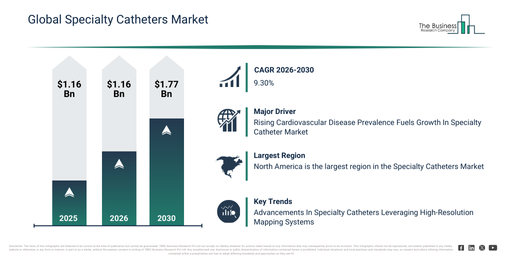
    The specialty catheters market size is anticipated to expand significantly in the coming years. It is projected to achieve a value of $10.87 billion by 2030, demonstrating a compound annual growth rate (CAGR) of 9.3%. The drivers for this growth during the forecast period are an aging population, critical care admissions, sophisticated surgical procedures, the need for precision interventions, and the expansion of hospital capacity. Prominent trends expected in the forecast period involve an increasing demand for procedure specific catheters, a rise in minimally invasive procedures, the adoption of multi lumen catheters, more extensive use in critical care settings, and the customization of catheter designs.

    Get A Free Sample Report With In-Depth Market Insights:

    https://thebusinessresearchcompany.com/sample_request?id=84730530&type=smp&name=Specialty%20Catheters%20Market%20Report%202026&utm_source=Blogs&utm_medium=Paid&utm_campaign=Oct_PR

    Specialty Catheters Market Demand Drivers Opening New Revenue Streams

    The rising incidence of cardiovascular diseases is anticipated to drive expansion within the specialty catheters market. These conditions encompass various heart and blood vessel disorders, such as coronary artery disease, high blood pressure, and heart failure. Their surge is propelled by an uptick in risk factors like obesity, diabetes, and hypertension, alongside an aging global populace and inactive lifestyles. Specialty catheters play a crucial role in treating these diseases by facilitating accurate interventions, including precise drug delivery, angioplasty procedures, and stent insertions, thereby enhancing blood flow and mitigating the likelihood of heart attacks and other related cardiac issues. As an illustration, the Centers for Disease Control and Prevention (CDC), a US-based government agency, stated in May 2024 that heart disease caused 702,880 deaths in the United States in 2022, with worldwide heart disease fatalities predicted to hit 23 million by 2030. Consequently, the growing prevalence of cardiovascular diseases is a significant impetus for the growth of the specialty catheters market.

    Specialty Catheters Market Segment Analysis And Revenue Potential

    The specialty catheters market covered in this report is segmented –

    1) By Product: Wound Catheters, Oximetry Catheters, Thermodilution Catheters, Other Products

    2) By Lumen: Triple-Lumen, Quadruple-Lumen, Other Lumens

    3) By End-Use: Hospitals, Ambulatory Surgical Centers, Other End Users

    Subsegments:

    1) By Wound Catheters: Negative Pressure Wound Therapy Catheters, Surgical Drainage Catheters, Catheters For Wound Irrigation

    2) By Oximetry Catheters: Pulmonary Artery Catheters With Oximetry, Central Venous Catheters with Oximetry, Peripheral Oximetry Catheters

    3) By Thermodilution Catheters: Thermodilution Catheters For Cardiac Output Measurement, Pulmonary Artery Thermodilution Catheters, Catheters With Continuous Cardiac Output Monitoring

    4) By Other Products: Gastrostomy Catheters, Urological Catheters, Infusion Catheters

    Specialty Catheters Market Trends Powering Strategic Industry Growth

    Major companies operating in the specialty catheters market are developing advanced products that incorporate cutting-edge technologies, such as TRUEref technology, to enhance their effectiveness and efficiency. TRUEref technology refers to a sophisticated high-resolution mapping system specifically designed to improve electrophysiological accuracy in managing complex cardiac arrhythmias. For instance, in July 2023, Biosense Webster Inc., a US-based medical technology company, launched the OPTRELL Mapping Catheter, which utilizes TRUEref technology. The OPTRELL Mapping Catheter is a high-density diagnostic catheter, crafted for precise mapping of intricate cardiac arrhythmias. It is equipped with a fixed array of electrodes that deliver detailed and high-resolution electrophysiological insights, facilitating reliable diagnosis and treatment of issues like persistent atrial fibrillation, atrial tachycardia, and ventricular tachycardia.

    Specialty Catheters Market Industry Leaders And Competitive Landscape

    Major companies operating in the specialty catheters market are Cardinal Health Inc., Abbott Laboratories, Medline Industries Inc., Becton Dickinson and Company, Boston Scientific Corporation, B Braun Melsungen AG, Terumo Corporation, Edwards Lifesciences Corporation, Nipro Corporation, Smiths Medical Inc., Cook Medical, Teleflex Incorporated, ICU Medical Inc., Merit Medical Systems Inc., LivaNova plc, Cordis Corporation, Penumbra Inc., Asahi Intecc Co. Ltd., Spectranetics Corporation, AngioDynamics Inc., Bard Medical, Vascular Solutions Inc.

    View The Full Specialty Catheters Market Report:

    https://thebusinessresearchcompany.com/report/specialty-catheters-global-market-report?utm_source=Blogs&utm_medium=Paid&utm_campaign=Oct_PR

    Specialty Catheters Market Regional Analysis And Leading Geography

    North America was the largest region in the specialty catheters market in 2025. The regions covered in the specialty catheters market report are Asia-Pacific, South East Asia, Western Europe, Eastern Europe, North America, South America, Middle East, Africa.

    Reach Out To Our Team:

    The Business Research Company: https://www.thebusinessresearchcompany.com/

    Americas: +1 310-496-7795

    Asia: +44 7882 955267 & +91 8897263534

    Europe: +44 7882 955267

    Email us at: marketing@tbrc.info

    Follow us on:

    LinkedIn: https://in.linkedin.com/company/the-business-research-company

    YouTube: https://www.youtube.com/channel/UC24_fI0rV8cR5DxlCpgmyFQ

    Global Market Model: https://www.thebusinessresearchcompany.com/global-market-model
  • Spatial omics Market Forecast 2026: Market Size, Competitive Landscape And Growth Drivers

    Spatial omics Market Forecast 2026: Market Size, Competitive Landscape And Growth Drivers

    Featuring market attractiveness scoring, total addressable market sizing, company benchmarking matrices, interactive Excel dashboards, deeper supply chain intelligence, emerging startup tracking, and granular product-level insights, The Business Research Company’s 2026 market reports are built to deliver research that is both more actionable and more strategically valuable.

    Spatial omics Market Growth Analysis: How Will Revenue Trend Over The Forecast Period?

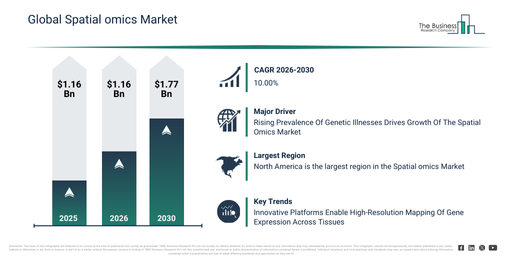
    The spatial omics market has experienced rapid expansion recently. This market is projected to expand from $0.33 billion in 2025 to $0.37 billion in 2026, demonstrating a compound annual growth rate (CAGR) of 11.3%. Historically, this growth has been driven by increased funding for genomics research, the broader scope of academic life sciences research, improvements in molecular imaging technologies, a greater supply of omics consumables, and a heightened emphasis on disease biology research.

    The spatial omics market is anticipated to experience substantial expansion in the coming years. Its valuation is set to reach $0.54 billion by 2030, driven by a compound annual growth rate (CAGR) of 10.0%. This growth during the projection period can be primarily attributed to several factors, including the expanding integration into drug discovery processes, heightened investments in precision medicine investigations, the proliferation of AI-powered biological data analysis, the rising need for spatially resolved biomarkers, and increased expenditure in pharmaceutical research and development. Key trends anticipated within the forecast timeframe encompass the wider acceptance of spatial transcriptomics platforms, greater integration of multi-omics data analysis, the increased deployment of high-resolution imaging technologies, the development of sophisticated data visualization instruments, and a stronger emphasis on molecular mapping at the tissue level.

    Get A Free Sample Report With In-Depth Market Insights:

    https://thebusinessresearchcompany.com/sample_request?id=26050023&type=smp&name=Spatial%20omics%20Market%20Report%202026&utm_source=Blogs&utm_medium=Paid&utm_campaign=Oct_PR

    Spatial omics Market Growth Backed By Core Demand Fundamentals

    The increasing incidence of genetic conditions is anticipated to fuel the expansion of the spatial omics market. Genetic diseases are defined as disorders stemming from abnormalities in an individual’s DNA, inherited from one or both parents. The rise in these conditions is due to heightened awareness, improved diagnostic techniques, changes in lifestyle, and environmental factors contributing to mutations. Spatial omics technologies offer a robust approach to investigating genetic illnesses by providing detailed spatial maps of molecular and genetic features within tissues. For instance, in July 2025, according to the National Blood Authority, an Australia-based blood management agency, there were 2,788 patients living with hereditary haemophilia A (HMA) in 2023–2024, an increase from 2,681 patients in 2022–2023. Therefore, the growing occurrence of genetic illnesses is stimulating the growth of the spatial omics market.

    Spatial omics Market Segmentation And Category Overview

    The spatial omics market covered in this report is segmented –

    1) By Product: Instruments, Consumables, Software

    2) By Sample Type: Formalin-Fixed Paraffin-Embedded (FFPE), Fresh Frozen

    3) By Workflow: Sample Preparation, Instrumental Analysis, Data Analysis

    4) By Technology: Spatial Transcriptomics, Spatial Genomics, Spatial Proteomics

    5) By End-Use: Academic And Translational Research Institutes, Pharmaceutical And Biotechnology Companies

    Subsegments:

    1) By Instruments: Spatial Transcriptomics Instruments, Imaging Systems, Mass Spectrometers

    2) By Consumables: Reagents, Kits, Sample Preparation Materials

    3) By Software: Data Analysis Software, Visualization Tools, Integration Platforms

    Spatial omics Market Growth Trends Reshaping The Competitive Landscape

    Major companies engaged in the spatial omics market are actively developing innovative solutions, such as end-to-end spatial transcriptomics platforms, to facilitate comprehensive mapping of gene expression within tissue context for more precise biological insights. These end-to-end spatial transcriptomics platforms are integrated systems that empower researchers to capture, visualize, and analyze gene expression across tissues in a unified workflow, from initial sample preparation through to data interpretation. For instance, in February 2025, Illumina Inc., a US-based biotechnology company, launched spatial transcriptomics technology designed to transform tissue analysis and cellular mapping. This technology provides unbiased whole-transcriptome profiling at single-cell resolution with high sensitivity, enabling researchers to map complex tissues in unprecedented detail. It incorporates a large capture area that is nine times bigger and four times greater in resolution than current methods, allowing for the analysis of millions of cells per experiment and the identification of rare cell types. The technology integrates with Illumina’s NextSeq and NovaSeq sequencers and is paired with the Illumina Connected Multiomics (ICM) platform, which offers advanced multiomic visualization and analysis capabilities for thorough spatial data exploration.

    Spatial omics Market Key Participants And Competitive Landscape

    Major companies operating in the spatial omics market are Agilent Technologies Inc., PerkinElmer Inc., Illumina Inc., Bruker Corporation, QIAGEN N.V., 10x Genomics Inc., Luminex Corporation, Takara Bio Inc., Oxford Nanopore Technologies, NanoString Technologies Inc., Standard BioTools Inc., Akoya Biosciences Inc., CrestOptics, Indica Labs Inc., Resolve Biosciences GmbH, Pixelgen Technologies, Ionpath Inc., RareCyte Inc., S2 Genomics Inc., Vizgen Inc., BioSpyder Technologies, Ultivue Inc.

    View The Full Spatial omics Market Report:

    https://thebusinessresearchcompany.com/report/spatial-omics-global-market-report?utm_source=Blogs&utm_medium=Paid&utm_campaign=Oct_PR

    Spatial omics Market Geographic Analysis: Where Is Demand Accelerating Fastest?

    North America was the largest region in the Spatial OMICS market in 2025. Asia-Pacific is expected to be the fastest-growing region in the forecast period. The regions covered in the spatial omics market report are Asia-Pacific, South East Asia, Western Europe, Eastern Europe, North America, South America, Middle East, Africa.

    Reach Out To Our Team:

    The Business Research Company: https://www.thebusinessresearchcompany.com/

    Americas: +1 310-496-7795

    Asia: +44 7882 955267 & +91 8897263534

    Europe: +44 7882 955267

    Email us at: marketing@tbrc.info

    Follow us on:

    LinkedIn: https://in.linkedin.com/company/the-business-research-company

    YouTube: https://www.youtube.com/channel/UC24_fI0rV8cR5DxlCpgmyFQ

    Global Market Model: https://www.thebusinessresearchcompany.com/global-market-model

  • Software As A Medical Device (SaMD) Market Size In 2026: Regional Growth, Key Segments And Future Outlook

    Software As A Medical Device (SaMD) Market Size In 2026: Regional Growth, Key Segments And Future Outlook

    Built to provide research that’s more actionable and strategically valuable, The Business Research Company’s 2026 market reports include market attractiveness analysis, total addressable market sizing, company benchmarking matrices, interactive Excel dashboards, broader supply chain intelligence, emerging startup tracking, and in-depth product insights.

    Software As A Medical Device (SaMD) Market Forecast: What Value Will The Market Reach By 2030?

    The market for software as a medical device (samd) has seen considerable expansion in recent years. It is projected to grow from $38.02 billion in 2025 to $47.26 billion in 2026 at a compound annual growth rate (CAGR) of 24.3%. Historically, this expansion has been driven by factors such as the widespread adoption of telemedicine, increasing smartphone penetration, substantial digital health funding, enhanced regulatory clarity, and a growing demand for remote care solutions.

    The software as a medical device (samd) market size is anticipated to undergo significant growth over the next few years. It is projected to expand to $120.54 billion in 2030, demonstrating a compound annual growth rate (CAGR) of 26.4%. This expansion during the forecast period is propelled by factors such as the broadening of virtual care, software-driven diagnostics, the development of cloud healthcare platforms, outcome-based reimbursement systems, and updates in hospital software. Noteworthy trends expected in this period encompass the increased use of clinical decision support software, the rise of remote diagnostic applications, more robust regulatory validation for medical software, the adoption of subscription-based samd business models, and improved integration with electronic health records.

    Get A Free Sample Report With In-Depth Market Insights:

    https://thebusinessresearchcompany.com/sample_request?id=81698744&type=smp&name=Software%20As%20A%20Medical%20Device%20%28SaMD%29%20Market%20Report%202026&utm_source=Blogs&utm_medium=Paid&utm_campaign=Oct_PR

    Software As A Medical Device (SaMD) Market Growth Catalysts And Demand Drivers

    The increasing prevalence of chronic diseases is anticipated to drive the future expansion of the software as a medical device (SaMD) market. These are enduring health conditions, such as diabetes, heart disease, and arthritis, that typically advance slowly and demand continuous medical attention and lifestyle modifications for symptom control and complication prevention. The rise in chronic diseases is largely attributable to unhealthy lifestyles, including poor diet, physical inactivity, and smoking, which heighten the risk of conditions like diabetes, heart disease, and obesity. Software as a medical device (SaMD) assists in managing chronic illnesses by facilitating constant monitoring of patient health metrics, enabling early detection of complications. It further enhances treatment outcomes by delivering personalized insights and supporting remote care, thereby lessening the need for frequent hospital visits. For example, the National Health Service, a UK-based government department, stated in June 2024 that 3,615,330 individuals registered with a general practitioner (GP) were diagnosed with non-diabetic hyperglycemia or pre-diabetes (a condition with elevated blood sugar levels, not high enough to be classified as diabetes) in 2023, reflecting an 18% increase from 3,065,825 cases in 2022. Hence, the growing incidence of chronic diseases is a key factor propelling the growth of the software as a medical device (SaMD) market.

    Software As A Medical Device (SaMD) Market Segment Outlook: Which Categories Are Growing Fastest?

    The software as a medical device (samd) market covered in this report is segmented –

    1) By Device Type: Wearable Device, PCs And Laptop, Smartphone And Tablets

    2) By Deployment Method: Cloud-Based, On-Premise

    3) By Application: Diagnostic, Clinical Management

    Subsegments:

    1) By Wearable Devices: Smartwatches With Health Monitoring Functions, Fitness Trackers, Wearable ECG And Blood Pressure Monitors

    2) By PCs And Laptops: Medical Diagnostic Software, Clinical Decision Support Software, Telemedicine Platforms

    3) By Smartphone And Tablets: Mobile Health (mHealth) Apps, Remote Patient Monitoring Software, Diagnostic Imaging Apps

    Software As A Medical Device (SaMD) Market Trends Shaping Long-Term Demand

    Leading companies operating within the software as a medical device (SaMD) market are increasingly focusing on introducing advanced software, such as SOMNUM, to achieve a competitive advantage. SOMNUM is a sleep disease analysis software that integrates the latest AI research trends with diagnostic algorithms based on multi-channel sleep biosignal data rather than video images. For instance, in September 2023, HoneyNaps Co. Ltd., a South Korea-based software company, obtained approval from the United States Food and Drug Administration (USFDA) for its SOMNUM software. It utilizes deep learning-based AI to perform real-time analysis of various sleep biosignals, including electroencephalograms, electrooculograms, electromyograms, electrocardiograms, respiratory airflow and effort, and oxygen saturation. The software is engineered to provide more accurate and sophisticated readings than conventional methods, and it can reduce the analysis of patient sleep data to under five minutes.

    Software As A Medical Device (SaMD) Market Top Companies Driving Competitive Growth

    Major companies operating in the software as a medical device (samd) market are Apple Inc., Abbott Laboratories, Siemens Healthcare GmbH, GE HealthCare Technologies Inc., Roche Diagnostics, Cerner Corporation, Philips Medical Systems Ltd., Dexcom Inc., Carl Zeiss Meditec AG, Nihon Kohden Corporation, Viz.ai Inc., S3 Connected Health, Arterys Inc., BrightInsight Inc., Agfa HealthCare Corp., iSchemaView Inc., VitalConnect Inc., Volpara Health Technologies, Greenfinch Technology Ltd., MaxQ AI Ltd., IDx Technologies Inc.

    View The Full Software As A Medical Device (SaMD) Market Report:

    https://thebusinessresearchcompany.com/report/SaMD-software-as-a-medical-device-global-market-report?utm_source=Blogs&utm_medium=Paid&utm_campaign=Oct_PR

    Software As A Medical Device (SaMD) Market Global Footprint: Which Region Leads The Industry?

    North America was the largest region in the software as a medical device (SaMD) market in 2025. Asia-Pacific is expected to be the fastest-growing region in the forecast period. The regions covered in the software as a medical device (samd) market report are Asia-Pacific, South East Asia, Western Europe, Eastern Europe, North America, South America, Middle East, Africa.

    Reach Out To Our Team:

    The Business Research Company: https://www.thebusinessresearchcompany.com/

    Americas: +1 310-496-7795

    Asia: +44 7882 955267 & +91 8897263534

    Europe: +44 7882 955267

    Email us at: marketing@tbrc.info

    Follow us on:

    LinkedIn: https://in.linkedin.com/company/the-business-research-company

    YouTube: https://www.youtube.com/channel/UC24_fI0rV8cR5DxlCpgmyFQ

    Global Market Model: https://www.thebusinessresearchcompany.com/global-market-model
  • Soft Tissue Allograft Market Growth Forecast Through 2030: Market Size And Trends In 2026

    Soft Tissue Allograft Market Growth Forecast Through 2030: Market Size And Trends In 2026

    Backed by market attractiveness analysis, total addressable market sizing, company benchmarking matrices, interactive Excel dashboards, wider supply chain intelligence, emerging startup coverage, and detailed product-level insights, The Business Research Company’s 2026 market reports are designed to offer research that is more actionable and strategically valuable than ever.

    Soft Tissue Allograft Market Size Outlook: How Quickly Will Revenue Expand Through 2030?

    The soft tissue allograft market size has demonstrated significant growth in recent years. It is anticipated to expand from $4.87 billion in 2025 to $5.24 billion in 2026, at a compound annual growth rate (CAGR) of 7.7%. The expansion observed during the historic period can be linked to an increase in orthopedic injuries, a rise in sports surgeries, the availability of donor tissue, progress in sterilization techniques, and effective hospital transplant programs.

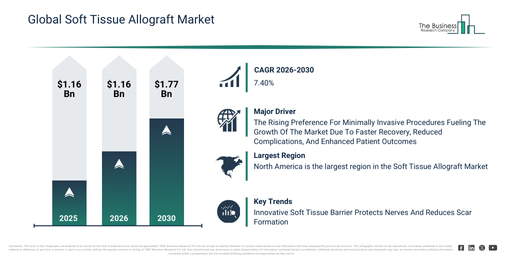
    The soft tissue allograft market is poised for substantial expansion over the next few years. Its valuation is forecast to reach $6.97 billion in 2030, progressing at a compound annual growth rate (CAGR) of 7.4%. This anticipated growth during the forecast period is driven by factors such as an increasing aging population, a rising demand for joint reconstruction, the broadening scope of sports medicine, advancements in tissue preservation, and the implementation of regulatory standardization. Noteworthy trends for the forecast period encompass orthopedic reconstruction procedures, the utilization of sports medicine allografts, refined sterilized tissue processing techniques, the adoption of minimally invasive grafting, and the development of hospital-based tissue banking.

    Get A Free Sample Report With In-Depth Market Insights:

    https://thebusinessresearchcompany.com/sample_request?id=78878703&type=smp&name=Soft%20Tissue%20Allograft%20Market%20Report%202026&utm_source=Blogs&utm_medium=Paid&utm_campaign=Oct_PR

    Soft Tissue Allograft Market Opportunity Drivers: What’s Unlocking New Revenue Potential?

    The increasing inclination towards minimally invasive procedures is anticipated to fuel the expansion of the soft tissue allograft market in the future. These procedures involve medical operations conducted via small cuts or apertures, thereby lessening patient injury and shortening recuperation periods. The popularity of minimally invasive surgeries is growing because they provide quicker healing, lower complication risks, diminished discomfort, and smaller marks, appealing more to patients desiring faster and safer treatment alternatives. Soft tissue allografts facilitate minimally invasive techniques by supplying pre-prepared, donor-sourced tissues that encourage quicker recovery and simplify surgical processes. These allografts improve patient results by safeguarding and mending injured tissues, simultaneously reducing recovery durations and procedural harm. For instance, in June 2024, according to the American Society of Plastic Surgeons, a specialty organization located in the US, minimally invasive procedures grew by 7 percent in 2023, outpacing surgical procedures by 2 percent, with neuromodulator injections and hyaluronic acid fillers each exceeding 9 million and 5 million treatments, respectively. Consequently, the increasing preference for minimally invasive procedures is a key factor boosting the expansion of the soft tissue allograft market.

    Soft Tissue Allograft Market Segment Landscape: Which Areas Lead Development?

    The soft tissue allograft market covered in this report is segmented –

    1) By Type: Cartilage Allograft, Tendon Allograft, Meniscus Allograft, Other Types

    2) By Processing Technique: Fresh Frozen, Irradiated, Dehydrated, Sterilized, Other Processing Techniques

    3) By Application: Musculoskeletal Repair And Reconstruction, Plastic And Reconstructive Surgery, Other Medical Applications

    4) By End-User: Hospitals, Ambulatory Surgical Centers, Private Clinics

    Subsegments:

    1) By Cartilage Allograft: Osteochondral Allograft, Particulate Cartilage Allograft, Juvenile Cartilage Allograft

    2) By Tendon Allograft: Achilles Tendon Allograft, Anterior Tibialis Tendon Allograft, Posterior Tibialis Tendon Allograft, Semitendinosus Tendon Allograft

    3) By Meniscus Allograft: Lateral Meniscus Allograft, Medial Meniscus Allograft

    4) By Other Types: Skin Allograft, Fascia Allograft, Nerve Allograft

    Soft Tissue Allograft Market Innovation Trends Shaping Future Development

    Leading companies in the soft tissue allograft market are prioritizing breakthroughs in tissue processing and sterilization techniques, including resorbable soft tissue allografts, to improve tissue repair, shorten recovery periods, and enhance overall patient outcomes. Resorbable soft tissue allografts are donor-derived tissues that offer temporary structural support and gradually dissolve within the body as the patient’s own tissue replaces them. For instance, in June 2024, Axogen Inc., a US-based medical technology company, launched the Avive Soft Tissue Matrix, which is a resorbable, multi-layer amniotic membrane allograft designed to act as a soft tissue barrier. This product provides interim protection and separates tissues during the vital phase of peripheral nerve healing, contributing to nerve protection from damage and reducing scar tissue development. It is specifically aimed at patients with compression or non-transected nerve injuries, seeking to better outcomes by preventing nerve tethering and supporting tissue repair. The multi-layer construction facilitates easy handling and suturing during operations, marking it a significant development in nerve protection for a broad spectrum of peripheral nerve injuries.

    Soft Tissue Allograft Market Leading Players And Competitive Positioning

    Major companies operating in the soft tissue allograft market are Stryker Corporation, Zimmer Biomet, Arthrex Inc., Integra LifeSciences Holdings Corporation, CONMED Corporation, MTF Biologics, MiMedx Group Inc., RTI Surgical Holdings Inc., LifeNet Health, AlloSource Inc., Xtant Medical Holdings Inc., Acera Surgical Inc., Skye Biologics Inc., StimLabs LLC, Applied Biologics LLC, Human Regenerative Technologies LLC, AxoGen Inc., Aziyo Biologics Inc., BioTissue Holdings Inc., Orthofix Medical Inc.

    View The Full Soft Tissue Allograft Market Report:

    https://thebusinessresearchcompany.com/report/soft-tissue-allograft-global-market-report?utm_source=Blogs&utm_medium=Paid&utm_campaign=Oct_PR

    Soft Tissue Allograft Market Regional Distribution: Which Areas Power Market Growth?

    North America was the largest region in the soft tissue allograft market in 2025. Asia-Pacific is expected to be the fastest-growing region in the forecast period. The regions covered in the soft tissue allograft market report are Asia-Pacific, South East Asia, Western Europe, Eastern Europe, North America, South America, Middle East, Africa.

    Reach Out To Our Team:

    The Business Research Company: https://www.thebusinessresearchcompany.com/

    Americas: +1 310-496-7795

    Asia: +44 7882 955267 & +91 8897263534

    Europe: +44 7882 955267

    Email us at: marketing@tbrc.info

    Follow us on:

    LinkedIn: https://in.linkedin.com/company/the-business-research-company

    YouTube: https://www.youtube.com/channel/UC24_fI0rV8cR5DxlCpgmyFQ

    Global Market Model: https://www.thebusinessresearchcompany.com/global-market-model

  • Soft Contact Lenses Market Analysis: $10.28 Billion Market Size In 2026 And Future Growth Prospects

    Soft Contact Lenses Market Analysis: $10.28 Billion Market Size In 2026 And Future Growth Prospects

    Featuring market attractiveness scoring, total addressable market sizing, company benchmarking matrices, interactive Excel dashboards, deeper supply chain intelligence, emerging startup tracking, and granular product-level insights, The Business Research Company’s 2026 market reports are built to deliver research that is both more actionable and more strategically valuable.

    Soft Contact Lenses Market Size, Value And Growth Trajectory Through 2030

    The soft contact lenses market size has shown significant growth in recent years. It is anticipated to increase from $9.57 billion in 2025 to $10.28 billion in 2026, exhibiting a compound annual growth rate (CAGR) of 7.4%. The expansion observed in prior periods can be attributed to the rising prevalence of refractive errors, heightened awareness about eye care, advancements in hydrogel lens technology, greater availability of daily disposable lenses, and the expansion of optical retail chains.

    The soft contact lenses market is anticipated to experience substantial expansion in the coming years, projected to reach $13.49 billion by 2030, demonstrating a compound annual growth rate (CAGR) of 7.0%. This growth throughout the forecast period stems from factors such as the increasing adoption of silicone hydrogel lenses, a rising preference for cosmetic and colored lenses, expanding e-commerce sales of contact lenses, advancements in smart and connected lenses, and the proliferation of therapeutic and specialty lenses. Key trends identified for this period include the development of personalized lenses, enhanced oxygen permeability in lenses, optimization of water retention and comfort, the sustained popularity of cosmetic and colored lenses, and innovations in therapeutic and medical contact lenses.

    Get A Free Sample Report With In-Depth Market Insights:

    https://thebusinessresearchcompany.com/sample_request?id=82060148&type=smp&name=Soft%20Contact%20Lenses%20Market%20Report%202026&utm_source=Blogs&utm_medium=Paid&utm_campaign=Oct_PR

    Soft Contact Lenses Market Growth Momentum: What Factors Are Shaping Demand?

    The escalating incidence of myopia is anticipated to drive the expansion of the soft contact lenses market in the foreseeable future. Myopia describes a common refractive error where distant objects appear indistinct, while close ones remain clear. This condition arises from an elongated eyeball or excessive corneal curvature, causing light to focus before the retina rather than directly on it. The increasing prevalence of myopia is largely due to the prolonged use of digital screens among children and adolescents, as heightened screen time and reduced outdoor activities contribute to its early onset and faster progression worldwide. Soft contact lenses address myopia by offering comfortable, corrective solutions, including daily and extended-wear options that improve visual acuity and can incorporate advanced designs to slow myopic progression. For instance, in February 2025, data from the National Institutes of Health (NIH), a US-based government agency, indicated that the global prevalence of myopia is projected to reach 36.59% by 2040 and 39.80% by 2050, with the total number of cases expected to exceed 740 million by 2050. Hence, the rising prevalence of myopia is a significant driver for the growth of the soft contact lenses market.

    Soft Contact Lenses Market Segments: Where Is Growth Concentrated?

    The soft contact lenses market covered in this report is segmented –

    1) By Product Type: Daily Disposable Lenses, Extended Wear Lenses, Frequent Replacement Lenses, Multifocal Lenses, Toric Lenses For Astigmatism

    2) By Material Composition: Hydrogel Lenses, Silicone Hydrogel Lenses, Polyhema Lenses, Non-Ionogenic Lenses, Ultraviolet Blocking Lenses

    3) By Age Group: Children, Teenagers, Young Adults, Middle Aged Adults, Senior Citizens

    4) By Distribution Channel: Online Retailers, Optical Stores, Pharmacies, Hospital And Clinic Sales, Direct To Consumer Brands

    5) By Application: Corrective, Therapeutic, Cosmetic, Prosthetic, Lifestyle Oriented

    Subsegments:

    1) By Daily Disposable Lenses: Single Vision Daily Disposable Lenses, Multifocal Daily Disposable Lenses, Toric Daily Disposable Lenses For Astigmatism, Colored Daily Disposable Lenses, Ultraviolet Blocking Daily Disposable Lenses

    2) By Extended Wear Lenses: Seven Day Continuous Wear Lenses, Fourteen Day Continuous Wear Lenses, Thirty Day Continuous Wear Lenses, Silicone Hydrogel Extended Wear Lenses, Overnight Therapeutic Extended Wear Lenses

    3) By Frequent Replacement Lenses: Two Week Replacement Contact Lenses, Monthly Replacement Contact Lenses, Custom Designed Replacement Lenses, Colored Frequent Replacement Lenses, Hydrogel Based Frequent Replacement Lenses

    4) By Multifocal Lenses: Daily Disposable Multifocal Contact Lenses, Extended Wear Multifocal Contact Lenses, Monthly Replacement Multifocal Lenses, Toric Multifocal Contact Lenses For Astigmatism, Aspheric Multifocal Contact Lenses

    5) By Toric Lenses For Astigmatism: Daily Disposable Toric Contact Lenses, Extended Wear Toric Contact Lenses, Monthly Replacement Toric Contact Lenses, Multifocal Toric Contact Lenses, Custom Fit Toric Contact Lenses

    Soft Contact Lenses Market Trends Redefining Industry Growth

    Major companies in the soft contact lenses market are concentrating on creating advanced solutions, including daily disposable multifocal toric lenses. This initiative responds to increasing demand, driven by the rising prevalence of astigmatism and presbyopia, as well as an increasing consumer desire for comfort, hygiene, and visual stability. These specialized contact lenses, known as daily disposable multifocal toric lenses, integrate toric correction for astigmatism with multifocal optics to support near, mid, and distance vision. They offer a convenient single-use, maintenance-free alternative to traditional reusable toric or multifocal lenses. For example, in June 2025, Johnson & Johnson, a US-based eye-health company, introduced ACUVUE OASYS MAX 1-Day MULTIFOCAL for ASTIGMATISM. This product represents the first daily disposable lens specifically designed for individuals with both conditions. Crafted from a high-oxygen-permeable material, the lens incorporates Blink-Stabilized technology for rotational stability, TearStable technology to maintain moisture, an OptiBlue light filter for high-energy visible (HEV) light reduction, and a pupil-optimized multifocal design, ensuring crisp, stable vision in various lighting and all-day wearing comfort.

    Soft Contact Lenses Market Competitive Overview And Top Companies

    Major companies operating in the soft contact lenses market are Johnson And Johnson, EssilorLuxottica SA, Alcon Laboratories Inc, Hoya Corporation, Bausch And Lomb Incorporated, The Cooper Companies Inc, Menicon Co Ltd, Polytouch Contact Lens Co, ABB Optical Group LLC, Contamac Ltd, Art Optical Contact Lens Inc, Clearlab SG Pte Ltd, X Cel Specialty Contacts, Daysoft Limited, Seed Co Ltd, Cantor And Nissel Ltd, Metro Optics Inc, SpecialEyes LLC, TruForm Optics Inc, UltraVision CLPL Limited, Viscon Contact Lens Mfg Ltd, CooperVision Specialty EyeCare

    View The Full Soft Contact Lenses Market Report:

    https://thebusinessresearchcompany.com/report/soft-contact-lenses-global-market-report?utm_source=Blogs&utm_medium=Paid&utm_campaign=Oct_PR

    Soft Contact Lenses Market Leading Geography: Which Region Contributes The Most Revenue?

    North America was the largest region in the soft contact lenses market in 2025. Asia-Pacific is expected to be the fastest-growing region in the forecast period. The regions covered in the soft contact lenses market report are Asia-Pacific, South East Asia, Western Europe, Eastern Europe, North America, South America, Middle East, Africa.

    Reach Out To Our Team:

    The Business Research Company: https://www.thebusinessresearchcompany.com/

    Americas: +1 310-496-7795

    Asia: +44 7882 955267 & +91 8897263534

    Europe: +44 7882 955267

    Email us at: marketing@tbrc.info

    Follow us on:

    LinkedIn: https://in.linkedin.com/company/the-business-research-company

    YouTube: https://www.youtube.com/channel/UC24_fI0rV8cR5DxlCpgmyFQ

    Global Market Model: https://www.thebusinessresearchcompany.com/global-market-model

  • Smart Wearable Snore Detector Market 2026 Market Size And Growth Forecast: Key Trends To Watch

    Smart Wearable Snore Detector Market 2026 Market Size And Growth Forecast: Key Trends To Watch

    Built to provide research that’s more actionable and strategically valuable, The Business Research Company’s 2026 market reports include market attractiveness analysis, total addressable market sizing, company benchmarking matrices, interactive Excel dashboards, broader supply chain intelligence, emerging startup tracking, and in-depth product insights.

    Smart Wearable Snore Detector Market CAGR Outlook And Future Development

    The market size for smart wearable snore detectors has seen rapid growth in recent years. It is anticipated to expand from $0.93 billion in 2025 to $1.04 billion in 2026, exhibiting a compound annual growth rate (CAGR) of 12.4%. This historical growth can be attributed to several factors including the limited availability of smart wearable snore detectors, a reliance on traditional snore monitoring methods, increasing awareness of sleep apnea, the rising adoption of home healthcare, and early integration of mobile health applications.

    The smart wearable snore detector market size is anticipated to experience substantial growth in the upcoming years. This market is projected to reach $1.64 billion by 2030, demonstrating a compound annual growth rate (CAGR) of 12.1%. This expansion over the forecast period is primarily driven by advancements in AI-based snore detection algorithms, a broader embrace of wearable health technology, increased investment in home sleep monitoring solutions, integration with smart home ecosystems, and growing collaborations between technology and healthcare companies. Noteworthy trends anticipated during this period include the increasing adoption of wearable sleep monitoring devices, enhanced integration of snore detection with mobile applications, a heightened awareness of sleep disorders and their health impacts, the development of non-invasive and comfortable snore detection devices, and the expansion of sleep clinics and home care solutions.

    Get A Free Sample Report With In-Depth Market Insights:

    https://thebusinessresearchcompany.com/sample_request?id=46829873&type=smp&name=Smart%20Wearable%20Snore%20Detector%20Market%20Report%202026&utm_source=Blogs&utm_medium=Paid&utm_campaign=Oct_PR

    Smart Wearable Snore Detector Market Expansion Drivers: What’s Shaping Future Growth?

    Increased recognition of sleep health concerns is anticipated to drive expansion in the smart wearable snore detector market in the future. This awareness pertains to the public’s increasing understanding of how vital adequate and good-quality sleep is for general well-being, productivity, and preventing illnesses. The heightened understanding of sleep problems stems from a clearer acknowledgement of the connection between insufficient sleep and chronic conditions like obesity, diabetes, and cardiovascular disease. Smart wearable snore detectors contribute to this awareness by offering real-time data and insights, assisting users in early identification and management of potential sleep disorders. As an illustration, the Sleep Foundation, a US-based entity focused on advancing sleep health via research and evidence, reported in December 2023 that approximately 37% of U.S. adults in 2023 experienced a decline in their sleep quality, a rise from 28% in earlier years. Consequently, the increasing awareness of sleep health challenges fuels the expansion of the smart wearable snore detector market.

    Smart Wearable Snore Detector Market Segment Analysis: What Are The Core Market Categories?

    The smart wearable snore detector market covered in this report is segmented –

    1) By Product Type: Wristband Snore Detectors, Patch Snore Detectors, Headband Snore Detectors, Other Product Types

    2) By Technology: Sound-Based, Vibration-Based, Motion Sensor-Based, Other Technologies

    3) By Distribution Channel: Online Stores, Pharmacies, Specialty Stores, Other Distribution Channels

    4) By Application: Home Care, Sleep Clinics, Hospitals, Other Applications

    Subsegments:

    1) By Wristband Snore Detectors: Vibration-Based Snore Alerts, Bluetooth-Enabled Wristbands, Sleep Tracking Integrated Wristbands, Adjustable Sensitivity Bands.

    2) By Patch Snore Detectors: Adhesive Chest Patches, Throat Vibration Patches, Multi-Sensor Sleep Patches, Disposable Snore Detection Patches

    3) By Headband Snore Detectors: Electroencephalogram-Based Headbands, Bone Conduction Feedback Headbands, Sleep Position Monitoring Headbands, Wireless Smart Headbands

    4) By Other Product Types: Smart Neckbands, In-Ear Snore Monitors, Jaw-Support Wearables, Smart Sleep Masks With Snore Detection

    Smart Wearable Snore Detector Market Strategic Trends: What Defines The Next Growth Phase?

    Leading companies in the smart wearable snore detector market are prioritizing the creation of technologically advanced products, such as AI-powered biofeedback-enabled wristbands, designed to track snoring patterns, enhance sleep quality, and decrease episodes of sleep-disordered breathing. These AI-powered biofeedback-enabled wristbands are intelligent wearables that leverage artificial intelligence to monitor body signals and deliver gentle feedback, like vibrations, to help individuals adjust their behavior or mitigate issues such as snoring. As an illustration, in September 2024, AppYea Inc., an Israel-based digital health company, launched its AppySleep device, an advanced AI-driven wearable wristband developed to assist in reducing snoring and monitoring sleep patterns. The device connects effortlessly to a smartphone app, identifying snoring and unusual breathing during sleep. When snoring is detected, it subtly vibrates to prompt the user to alter their position, often encouraging them to sleep on their side for improved airflow. The vibration settings are customizable to individual preferences. The application furnishes users with extensive sleep data, including snoring statistics, breathing habits, and progress charts. Moreover, users gain entry to a personal cloud account to observe long-term improvements in their sleep quality.

    Smart Wearable Snore Detector Market Competitive Landscape: Which Companies Lead The Industry?

    Major companies operating in the smart wearable snore detector market are Samsung Electronics Co. Ltd., Koninklijke Philips N.V., Fitbit Inc., Zeus Sleep Inc., Ozlo Inc., Hupnos Inc., Imagimob AB, VVFLY Electronics Co. Ltd., Meditas Ltd., AppYea Inc., Beddr Inc., Shenzhen Xinhui Technology Co. Ltd., Snore Circle, Wellue Health, Go2Silence, Sleepmi, Walkervo, Snooor Ltd., ELBME, AMAZHEAL

    View The Full Smart Wearable Snore Detector Market Report:

    https://thebusinessresearchcompany.com/report/smart-wearable-snore-detector-global-market-report?utm_source=Blogs&utm_medium=Paid&utm_campaign=Oct_PR

    Smart Wearable Snore Detector Market Regional Outlook: Where Is Opportunity Concentrated?

    North America was the largest region in the smart wearable snore detector market in 2025. Asia-Pacific is expected to be the fastest-growing region in the forecast period. The regions covered in the smart wearable snore detector market report are Asia-Pacific, South East Asia, Western Europe, Eastern Europe, North America, South America, Middle East, Africa.

    Reach Out To Our Team:

    The Business Research Company: https://www.thebusinessresearchcompany.com/

    Americas: +1 310-496-7795

    Asia: +44 7882 955267 & +91 8897263534

    Europe: +44 7882 955267

    Email us at: marketing@tbrc.info

    Follow us on:

    LinkedIn: https://in.linkedin.com/company/the-business-research-company

    YouTube: https://www.youtube.com/channel/UC24_fI0rV8cR5DxlCpgmyFQ

    Global Market Model: https://www.thebusinessresearchcompany.com/global-market-model