Category: Medical Equipment

  • Global Continuous Glucose Monitoring Industry Insights: Key Trends and Growth Estimates

    Global Continuous Glucose Monitoring Industry Insights: Key Trends and Growth Estimates

    Uncover key drivers, emerging technologies, and competitive movements shaping the worker heat stress monitoring wearable market from 2026–2035 with trusted insights from The Business Research Company

    Starting from its 2026 valuation, what market size is the Continuous Glucose Monitoring Market expected to reach by 2030?

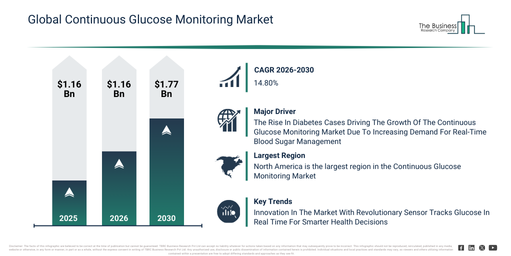
    The continuous glucose monitoring market size has seen swift expansion in recent years. It is anticipated to grow from $9.44 billion in 2025 to $10.87 billion in 2026, at a compound annual growth rate (CAGR) of 15.1%. The historic period’s growth can be attributed to several factors including the limited availability of real-time glucose monitoring devices, the high cost of early CGMs, increasing awareness of diabetes management, a dependence on finger-prick testing, and the rising hospital adoption of monitoring solutions.

    The continuous glucose monitoring market is anticipated to experience significant expansion over the coming years. This market is projected to reach $18.86 billion by 2030, exhibiting a compound annual growth rate (CAGR) of 14.8%. Key factors contributing to this anticipated growth include improvements in implantable and wearable sensor technologies, their incorporation with mobile health and telemedicine platforms, the increasing global incidence of diabetes, the advent of non-invasive glucose monitoring solutions, and the broadening reach of home healthcare and remote patient monitoring services. Prominent trends identified for the forecast period encompass the increasing acceptance of continuous glucose monitoring devices by individuals with diabetes, the innovation of minimally invasive and implantable sensors, the integration of real-time data analysis and alert functionalities, the expansion of home-based monitoring and telehealth options, and a growing need for glucose monitoring solutions tailored for pediatric and geriatric populations.

    Access Your Free Sample Report for In-Depth Market Insights:

    https://www.thebusinessresearchcompany.com/sample.aspx?id=24512&type=smp

    What Drivers Are Driving Adoption Within The Continuous Glucose Monitoring Market?

    The increasing incidence of diabetes is projected to fuel the expansion of the continuous glucose monitoring market in the coming years. Diabetes is a persistent health condition where the body either produces insufficient insulin or cannot effectively utilize the insulin it makes, leading to elevated blood sugar (glucose) levels. The growing occurrence of diabetes is primarily a result of unhealthy eating habits, particularly diets rich in sugars, fats, and processed foods, which contribute to obesity and hinder proper insulin function. Continuous glucose monitoring aids in diabetes management by offering real-time insights into blood sugar fluctuations, allowing for prompt decisions regarding diet, medication, and activity to achieve better glucose control. For example, in June 2024, the National Health Service, a UK-based government department, reported that 3,615,330 individuals registered with a general practitioner (GP) were diagnosed with non-diabetic hyperglycemia or pre-diabetes (a state of elevated blood sugar levels, not yet high enough to be classified as diabetes) in 2023. This marked an 18% increase from 3,065,825 cases recorded in 2022. Consequently, the rising prevalence of diabetes is a key factor driving the growth of the continuous glucose monitoring market.

    What Segments Are Included Within The Continuous Glucose Monitoring Market?

    The continuous glucose monitoring market covered in this report is segmented –

    1) By Component: Transmitters, Sensors, Receivers

    2) By Age Group: Adults, Children

    3) By End Use: Hospitals, Home Care Settings, Diagnostic Centers And Clinics, Other End Uses

    Subsegments:

    1) By Transmitters: Reusable Transmitters, Disposable Transmitters, Rechargeable Transmitters

    2) By Sensors: Implantable Sensors, Transcutaneous Sensors, Disposable Sensors, Real-Time Sensors

    3) By Receivers: Standalone Receivers, Integrated Receivers, Wearable Display Devices

    What Trends Are Reshaping The Dynamics Of The Continuous Glucose Monitoring Market?

    Key companies active in the continuous glucose monitoring market are prioritizing the creation of innovative products, such as sensor-based glucose monitors, to enhance accuracy, provide real-time tracking, and improve patient convenience. These sensor-based glucose monitors are devices designed to continuously measure blood sugar levels using a small sensor placed under the skin. As an illustration, in August 2024, DexCom, Inc., a US-based healthcare company, introduced Stelo, which is the first over-the-counter (OTC) continuous glucose monitor (CGM) specifically developed for adults who do not use insulin. Stelo offers real-time, 24/7 glucose readings through a compact sensor worn on the back of the upper arm, with data sent directly to a smartphone, eliminating the need for a prescription or fingersticks. This device provides personalized insights and trend analysis, assisting users in understanding how factors such as diet, exercise, and sleep influence their glucose levels, thereby enabling more informed lifestyle choices. The sensor remains active for up to 15 days, integrates with health applications, and is an excellent option for individuals with Type 2 diabetes not using insulin, those with prediabetes, or anyone monitoring their glucose health.

    Who Are The Major Companies Operating In The Continuous Glucose Monitoring Market?

    Major companies operating in the continuous glucose monitoring market are Roche Diabetes Care, Abbott Laboratories, Medtronic plc, Dexcom Inc, Insulet Corporation, Tandem Diabetes Care Inc, Ypsomed AG, Nova Biomedical, Ascensia Diabetes Care, Bionime Corporation, Biolinq Inc, Beta Bionics Inc, AgaMatrix Inc, A Menarini Diagnostics SRL, Senseonics Holdings Inc, Medtrum Technologies Inc, Nemaura Medical Inc, LifeScan Inc, EOFlow Co Ltd, POCTech Co Ltd

    Access The Complete Report For Deeper Market Insights:

    https://www.thebusinessresearchcompany.com/report/continuous-glucose-monitoring-global-market-report

    Which Region Is Anticipated To See The Fastest Growth In The Continuous Glucose Monitoring Market?

    North America was the largest region in the continuous glucose monitoring market in 2025. Asia-Pacific is expected to be the fastest-growing region in the forecast period. The regions covered in the continuous glucose monitoring market report are Asia-Pacific, South East Asia, Western Europe, Eastern Europe, North America, South America, Middle East, Africa.

    Request Your Customized Continuous Glucose Monitoring Market Research Report for Competitive Advantage:

    https://www.thebusinessresearchcompany.com/customise?id=24512&type=smp

    Browse Through More Reports Similar to the Global Continuous Glucose Monitoring Market 2026, By The Business Research Company

    Continous Blood Glucose Monitoring Global Market Report 2026

    https://www.thebusinessresearchcompany.com/report/continous-blood-glucose-monitoring-global-market-report

    Blood Glucose Monitoring Systems Global Market Report 2026

    https://www.thebusinessresearchcompany.com/report/blood-glucose-monitoring-systems-global-market-report

    Blood Glucose Meters Global Market Report 2026

    https://www.thebusinessresearchcompany.com/report/blood-glucose-meters-global-market-report

    Get in touch with us:

    The Business Research Company: https://www.thebusinessresearchcompany.com/

    Americas +1 310-496-7795

    Asia +44 7882 955267 & +91 8897263534

    Europe +44 7882 955267

    Email us at info@tbrc.info

    Follow us on:

    LinkedIn: https://in.linkedin.com/company/the-business-research-company
  • Continuous Glucose Monitor System Market Forecast: How Big Will It Be by 2030?

    Continuous Glucose Monitor System Market Forecast: How Big Will It Be by 2030?

    Uncover key drivers, emerging technologies, and competitive movements shaping the workstation graphics processing unit (gpu) market from 2026–2035 with trusted insights from The Business Research Company

    Across 2026–2030, what is the expected market valuation path of the Continuous Glucose Monitor System Market?

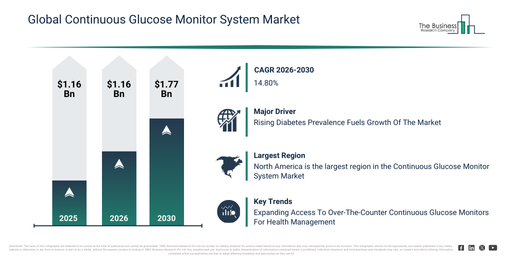
    The market size for continuous glucose monitor systems has expanded quickly in recent years. This market is expected to increase from $9.6 billion in 2025 to $11.05 billion in 2026, achieving a compound annual growth rate (CAGR) of 15.1%. Historically, this growth can be ascribed to a rising global prevalence of diabetes, increased consciousness regarding glucose self-monitoring, enhanced sensor accuracy and dependability, the expansion of outpatient diabetes management programs, and greater acceptance of wearable medical devices.

    The continuous glucose monitor system market is expected to experience significant expansion in the coming years, with projections indicating it will reach $19.18 billion by 2030, demonstrating a compound annual growth rate (CAGR) of 14.8%. This anticipated growth can be attributed to factors such as the increasing adoption of closed-loop insulin delivery systems, a rising demand for remote patient monitoring, the expansion of personalized diabetes management solutions, growing integration with digital health platforms, and an increasing focus on non-invasive glucose sensing. Key trends during this forecast period are set to include the increasing adoption of smartphone-integrated CGM systems, the rising use of real-time glucose monitoring solutions, the growing integration of AI-based glucose analytics, the expansion of wearable sensor technologies, and an enhanced focus on continuous patient monitoring.

    Access Your Free Sample Report for In-Depth Market Insights:

    https://www.thebusinessresearchcompany.com/sample.aspx?id=20732&type=smp

    Which Drivers Are Supporting The Rise Of The Continuous Glucose Monitor System Market?

    The rising incidence of diabetes is projected to drive the expansion of the continuous glucose monitor system market in the future. Diabetes, a persistent medical condition, is defined by elevated blood sugar levels stemming from the body’s impaired capacity to generate or utilize insulin properly. This increase in diabetes is largely linked to growing obesity rates, poor dietary habits, sedentary lifestyles, and an aging demographic. Continuous glucose monitoring (CGM) systems offer real-time glucose data, aiding in diabetes management by identifying patterns and notifying users of unusual readings. These systems enhance glycemic management and reduce the necessity for frequent finger-prick tests. For example, data from June 2024, supplied by the National Health Service, a UK-based government department, indicated that in 2023, the NHS identified over half a million (549,000) new individuals in England at risk of developing type 2 diabetes, elevating the total count of those with non-diabetic hyperglycemia, or pre-diabetes, registered with a GP to 3,615,330. This marks a substantial surge from 3,065,825 recorded in 2022, signifying an increase of nearly 20%. Consequently, the growing occurrence of diabetes is fueling the expansion of the continuous glucose monitor system market.

    What Leading Segments Are Studied In The Continuous Glucose Monitor System Market?

    The continuous glucose monitor system market covered in this report is segmented –

    1) By Component: Transmitters, Receivers, Sensor

    2) By Technology: Real Time Continuous Glucose Monitoring, Intermittently Scanned Continuous Glucose Monitoring

    3) By Demography: Child Population, Adult Population

    4) By Application: Type-1 Diabetes, Type-2 Diabetes, Gestational Diabetes

    5) By End-User: Diagnostics Centers, Hospitals, Clinics, Intensive Care Unit (ICUs), Home Healthcare

    Subsegments:

    1) By Transmitters: Bluetooth-Enabled Transmitters, Wireless Transmitters

    2) By Receivers: Dedicated Devices (CGM Receiver), Smartphone-Based Receivers, Cloud-Connected Receivers

    3) By Sensor: Enzyme-Based Sensors, Non-Enzyme-Based Sensors, Electrochemical Sensors

    How Are New Market Trends Shaping The Landscape Of The Continuous Glucose Monitor System Market?

    Leading companies within the continuous glucose monitor system market are dedicating efforts to developing advanced over-the-counter continuous glucose monitors (CGMs) to improve accessibility and extend their presence among individuals who do not require a prescription. An over-the-counter (OTC) continuous glucose monitor (CGM) is a device capable of tracking glucose levels in real-time without needing a prescription, thereby offering consumers straightforward and convenient access to monitor their glucose independently. For instance, in September 2024, Abbott Laboratories, a US-based medical device company, introduced Lingo in the United States. Designed for adults without diabetes, Lingo enables users to track glucose levels, providing valuable insights into the effects of diet and exercise on overall health. With a wearability of up to 14 days, this device supports Abbott’s strategy to tap into the growing market of consumers focused on prediabetes management and wellness, all without the necessity of a prescription.

    Which Major Firms Are Strengthening Their Position In The Continuous Glucose Monitor System Market?

    Major companies operating in the continuous glucose monitor system market are Abbott Corporation, Medtronic PLC, Murata Manufacturing Co. Ltd., Dexcom Inc., Sinocare Inc., Tandem Diabetes Care Inc., Ascensia Diabetes Care Holdings AG, Glooko Inc., DarioHealth Corp., Menarini Diagnostics SRL, Senseonics Holdings Inc., WaveForm Technologies Inc., Medtrum Technologies Inc., Biolinq Incorporated, Ultrahuman Inc., GlySens Incorporated, Glucotrack, EOFLOW CO. LTD., Nemaura Medical Inc., Meiqi Medical Equipment, Nipro Diagnostics UK Limited

    Access The Complete Report For Deeper Market Insights:

    https://www.thebusinessresearchcompany.com/report/continuous-glucose-monitor-system-global-market-report

    Which Region Is Anticipated To See The Fastest Growth In The Continuous Glucose Monitor System Market?

    North America was the largest region in the continuous glucose monitor (CGM) system market in 2025. The regions covered in the continuous glucose monitor system market report are Asia-Pacific, South East Asia, Western Europe, Eastern Europe, North America, South America, Middle East, Africa.

    Request Your Customized Continuous Glucose Monitor System Market Research Report for Competitive Advantage:

    https://www.thebusinessresearchcompany.com/customise?id=20732&type=smp

    Browse Through More Reports Similar to the Global Continuous Glucose Monitor System Market 2026, By The Business Research Company

    Glucose Biosensors Global Market Report 2026

    https://www.thebusinessresearchcompany.com/report/glucose-biosensors-global-market-report

    Digital Diabetes Management Global Market Report 2026

    https://www.thebusinessresearchcompany.com/report/digital-diabetes-management-global-market-report

    Self Monitoring Blood Glucose Smbg Devices Global Market Report 2026

    https://www.thebusinessresearchcompany.com/report/self-monitoring-blood-glucose-smbg-devices-global-market-report

    Get in touch with us:

    The Business Research Company: https://www.thebusinessresearchcompany.com/

    Americas +1 310-496-7795

    Asia +44 7882 955267 & +91 8897263534

    Europe +44 7882 955267

    Email us at info@tbrc.info

    Follow us on:

    LinkedIn: https://in.linkedin.com/company/the-business-research-company
  • Continuous Blood Glucose Monitoring Market Report 2026: Strategic Insights and Revenue Outlook

    Continuous Blood Glucose Monitoring Market Report 2026: Strategic Insights and Revenue Outlook

    Uncover key drivers, emerging technologies, and competitive movements shaping the worker heat stress monitoring wearable market from 2026–2035 with trusted insights from The Business Research Company

    What size range is anticipated for the Continuous Blood Glucose Monitoring Market from 2026 to 2030?

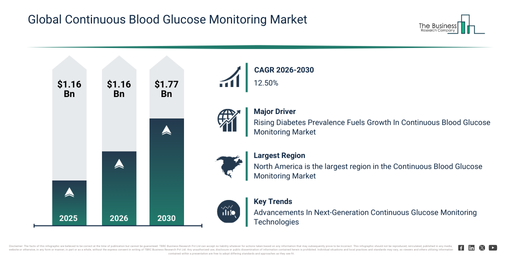
    The continuous blood glucose monitoring market has shown substantial growth over recent years. It is anticipated to expand from $14.87 billion in 2025 to $16.29 billion in 2026, achieving a compound annual growth rate (CAGR) of 9.6%. Historically, this growth can be ascribed to elements such as the limited availability of real-time glucose monitoring, reliance on finger-prick blood testing, an increasing prevalence of diabetes, the rise in hospital and clinical monitoring, and the early adoption of insulin pump therapy.

    The continuous blood glucose monitoring market is projected to experience significant expansion over the coming years. This market is set to reach $26.11 billion by 2030, driven by a compound annual growth rate (CAGR) of 12.5%. The anticipated growth during this period stems from factors such as progress in implantable and flash glucose sensor technology, the proliferation of homecare and remote monitoring solutions, better integration with digital health platforms, heightened awareness regarding diabetes self-management, and the uptake of AI-based predictive analytics. Key trends anticipated for the forecast timeframe involve the increasing uptake of continuous glucose monitoring devices, their integration with smartphone applications and wearable technology, the broadening scope of homecare diagnostics for diabetes care, the creation of minimally invasive and implantable sensors, and an enhanced emphasis on real-time data analysis and alerts.

    Access Your Free Sample Report for In-Depth Market Insights:

    https://www.thebusinessresearchcompany.com/sample.aspx?id=13079&type=smp

    What Drivers Are Affecting Demand In The Continuous Blood Glucose Monitoring Market?

    The rising incidence of diabetes is projected to fuel the expansion of the continuous blood glucose monitoring market in the future. This medical condition, diabetes, arises from variations in blood glucose concentrations within the body. Such devices are instrumental in identifying trends and patterns, thereby offering a more comprehensive understanding of a diabetic individual’s health status. An illustrative example comes from June 2024 data, where the National Health Service (NHS), a UK-based government entity, reported an increase in cases among individuals under 40, escalating from 173,166 in 2022 to 216,440 in 2023. This considerable uptick indicates a worrying development within this specific demographic. The figures underscore a swift rise in the occurrence of diabetes within younger age groups. Consequently, the expanding spread of diabetes is serving as a primary impetus for the continuous blood glucose monitoring market’s advancement moving ahead.

    Which Segment Groups Are Influencing The Continuous Blood Glucose Monitoring Market?

    The continuous blood glucose monitoring market covered in this report is segmented –

    1) By Component: Insulin Pumps, Sensors, Transmitters, Receivers

    2) By Application: Type 1 Diabetic Patients, Type 2 Diabetic Patients, Gestational Diabetes, Critical Care Patients

    3) By End User: Hospitals, Homecare Diagnostics, Other End Users

    Subsegments:

    1) By Insulin Pumps: Tubeless Insulin Pumps, Tubed Insulin Pumps, Patch Pumps

    2) By Sensors: Continuous Glucose Monitoring Sensors, Flash Glucose Monitoring Sensors, Implantable Sensors

    3) By Transmitters: Integrated Transmitters, Wireless Transmitters, Bluetooth-Enabled Transmitters

    4) By Receivers: Standalone Receivers, Smartphone Apps, Integrated Devices

    Which Trends Are Expected To Influence The Continuous Blood Glucose Monitoring Market In The Upcoming Years?

    Major companies within the Continuous Blood Glucose Monitoring (CGM) market are increasingly prioritizing the development of continuous glucose monitoring systems to improve real-time glucose tracking, boost patient convenience, and foster enhanced diabetes management outcomes. A Continuous Glucose Monitoring (CGM) system is a medical apparatus designed to automatically record glucose levels continuously, delivering real-time measurements at consistent intervals, typically every few minutes. For example, in August 2025, Abbott Laboratories, a US-based healthcare company, introduced the FreeStyle Libre 2 Plus system, an advanced CGM sensor that transmits continuous glucose readings every minute directly to a compatible smartphone, removing the necessity for manual scans. This sensor also incorporates optional alarms for low and high glucose, provides a 15-day wear time, and integrates smoothly with Abbott’s digital health ecosystem (LibreView, LibreLink Up), allowing both users and caregivers to monitor glucose trends proactively. The system’s purpose is to optimize glycemic control, decrease hypoglycemia incidents, and supply actionable data while doing away with routine finger-stick tests.

    Who Are The Primary Competitors In The Global Continuous Blood Glucose Monitoring Market?

    Major companies operating in the continuous blood glucose monitoring market are F. Hoffmann-La Roche Ltd., Medtronic plc., Abbott Laboratories, GlySens Inc., Senseonics Holdings Inc., Glysure Limited, Nemaura Medical Inc., Tandem Diabetes Care Inc., Ypsomed Holding AG, Orsense Ltd., Dexcom Inc., Insulet Corporation, Medtrum Technologies Inc., Beta Bionics Inc., Bigfoot Biomedical Inc., GluSense Ltd., i-SENS Inc., Osang Healthcare Co Ltd., WaveForm Technologies, EyeSense GmbH, Calisto Medical, Biorasis, DirectSens GmbH, Ultrahuman Healthcare

    Access The Complete Report For Deeper Market Insights:

    https://www.thebusinessresearchcompany.com/report/continuous-blood-glucose-monitoring-global-market-report

    Which Global Regions Are Shaping The Competitive Landscape Of The Continuous Blood Glucose Monitoring Market?

    North America was the largest region in the continuous blood glucose monitoring market in 2025. The regions covered in the continuous blood glucose monitoring market report are Asia-Pacific, South East Asia, Western Europe, Eastern Europe, North America, South America, Middle East, Africa.

    Request Your Customized Continuous Blood Glucose Monitoring Market Research Report for Competitive Advantage:

    https://www.thebusinessresearchcompany.com/customise?id=13079&type=smp

    Browse Through More Reports Similar to the Global Continuous Blood Glucose Monitoring Market 2026, By The Business Research Company

    Drip Irrigation Global Market Report 2026

    https://www.thebusinessresearchcompany.com/report/drip-irrigation-global-market-report

    Precision Irrigation Global Market Report 2026

    https://www.thebusinessresearchcompany.com/report/precision-irrigation-global-market-report

    Smart Irrigation Global Market Report 2026

    https://www.thebusinessresearchcompany.com/report/smart-irrigation-global-market-report

    Get in touch with us:

    The Business Research Company: https://www.thebusinessresearchcompany.com/

    Americas +1 310-496-7795

    Asia +44 7882 955267 & +91 8897263534

    Europe +44 7882 955267

    Email us at info@tbrc.info

    Follow us on:

    LinkedIn: https://in.linkedin.com/company/the-business-research-company
  • Global Continuous Bladder Irrigation Devices Industry Trends and Market Forecast 2026–2030

    Global Continuous Bladder Irrigation Devices Industry Trends and Market Forecast 2026–2030

    Uncover key drivers, emerging technologies, and competitive movements shaping the workstation graphics processing unit (gpu) market from 2026–2035 with trusted insights from The Business Research Company

    How is the Continuous Bladder Irrigation Devices Market size predicted to change over the forecast window of 2026–2035?

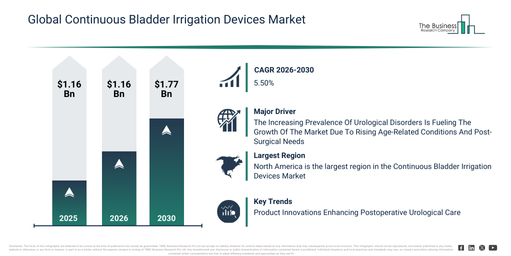
    The continuous bladder irrigation devices market has experienced robust growth in recent years. It is projected to expand from $1.42 billion in 2025 to $1.5 billion in 2026, achieving a compound annual growth rate (CAGR) of 5.6%. The market’s past expansion can be attributed to several factors including the limited availability of advanced foley catheters, a reliance on hospital-based irrigation, the increasing prevalence of bladder cancer and urinary tract complications, the continued usage of conventional irrigation bags, and the low adoption of home-care devices.

    The market for continuous bladder irrigation devices is anticipated to experience substantial expansion over the upcoming years. This market is projected to reach a valuation of $1.86 billion by 2030, exhibiting a compound annual growth rate (CAGR) of 5.5%. Factors contributing to this growth during the forecast period include advancements in silicone and antimicrobial-coated catheters, the increasing availability of home-based urological care, a rise in post-surgical procedures, heightened regulatory compliance and quality standards, and the integration of smart monitoring and IoT-enabled irrigation systems. Key trends foreseen in this period involve the growing acceptance of continuous bladder irrigation following surgery, an increased deployment of antimicrobial-coated and temperature-sensing catheters, the proliferation of home-based irrigation systems, a rising need for sterile and refillable irrigation bags, and a strengthened emphasis on patient safety and infection control.

    Access Your Free Sample Report for In-Depth Market Insights:

    https://www.thebusinessresearchcompany.com/sample.aspx?id=25729&type=smp

    Which Drivers Are Contributing To The Expansion Of The Continuous Bladder Irrigation Devices Market?

    The rising occurrence of urological conditions is anticipated to drive the expansion of the continuous bladder irrigation devices market in the future. Urological disorders are medical states impacting the urinary system or male reproductive organs. Their increase is primarily linked to an aging demographic, as age-associated changes heighten the susceptibility to urinary and prostate ailments. Continuous bladder irrigation (CBI) devices assist in handling urological issues by constantly rinsing the bladder to clear out clots, waste, or infections. This action helps avert catheter obstructions and promotes recovery, particularly following operations. For example, data from October 2023, sourced from the National Health Service (NHS) England, a UK government body, indicates that in 2022/23, hospitals documented 147,285 admissions where urinary tract infection (UTI) was the main diagnosis. Patients over 65 years old represented 56% of these instances, amounting to 82,392 admissions, with the 80-84 age bracket showing the highest admission count at 17,280 cases. Consequently, the expanding occurrence of urological disorders is fueling the expansion of the continuous bladder irrigation devices market.

    Continuous Bladder Irrigation Devices Market Driver: The Increasing Surgical Procedure Volume Is Fueling The Growth Of The Market Due To The Rising Demand For Postoperative Bladder Management Solutions

    The growing number of surgical operations is projected to drive the expansion of the continuous bladder irrigation devices market in the coming years. Surgical procedure volume denotes the overall count of surgeries carried out in healthcare institutions over a specific duration. This volume is increasing because of the expanding senior population, as older individuals tend to suffer more from chronic conditions that frequently necessitate operations. Continuous bladder irrigation (CBI) devices are utilized during or following procedures to continuously cleanse the bladder, eliminating blood, clots, and other waste. This action aids in preventing catheter obstruction, guarantees unobstructed urine flow, and supports recovery. For instance, in April 2025, data from the Australian Institute of Health and Welfare, Australia’s national agency for health and welfare information and statistics, revealed that public hospital elective surgery waitlists in 2023–24 recorded 778,500 admissions, representing a 5.8% increase from 735,500 admissions in 2022–23. Consequently, the escalating volume of surgical procedures is propelling the growth of the continuous bladder irrigation devices market.

    What Segment Classifications Make Up The Continuous Bladder Irrigation Devices Market?

    The continuous bladder irrigation devices market covered in this report is segmented –

    1) By Product: Foley 3 Way Catheters, Accessories, Irrigation Bags

    2) By Application: Post-Surgical Irrigation, Bladder Cancer Management, Hemorrhagic Cystitis, Urinary Tract Infections, Trauma And Urinary Retention, Home-Based Irrigation

    3) By End-Use: Hospitals, Long Term Care Facilities, Other End-Uses

    Subsegments:

    1) By Foley 3 Way Catheters: Silicone 3-Way Foley Catheters, Latex 3-Way Foley Catheters, Antimicrobial-Coated Foley Catheters, Pediatric 3-Way Foley Catheters, Temperature Sensing Foley Catheters

    2) By Accessories: Catheter Connectors, Catheter Stabilization Devices, Leg Drainage Bags, Extension Tubing, Clamps And Valves

    3) By Irrigation Bags: Sterile Irrigation Bags, Non-Sterile Irrigation Bags, Pressure Irrigation Bags, Manual Irrigation Bags, Refillable Irrigation Bags

    What Trends Are Driving The Growth Trajectory Of The Continuous Bladder Irrigation Devices Market?

    Major companies operating in the continuous bladder irrigation (CBI) devices market are primarily focused on developing advanced offerings, such as postoperative care products, to elevate urological procedures. Postoperative care products are defined as medical supplies and devices instrumental in supporting healing, preventing infections, and managing pain after surgery to facilitate proper recovery. For instance, in January 2025, UNOQUIP GmbH, a Switzerland-based medical device company, announced the expansion of its existing range with new postoperative catheter solutions. These additions encompass two specialized catheters, specifically the Hematuria Management Catheter and the 3-Way Silicone Foley Catheter, which are engineered to enable efficient continuous bladder irrigation following urological surgeries. The launch of these new products highlights Uno Medical’s commitment to improving patient safety and comfort by addressing clinical challenges like clot retention and ensuring effective bladder drainage. This product expansion not only strengthens their portfolio within the CBI devices segment but also positions the company to better serve global healthcare providers with enhanced urological care solutions.

    Which Key Market Players Are Investing In Expansion And Innovation Within The Continuous Bladder Irrigation Devices Market?

    Major companies operating in the continuous bladder irrigation devices market are Cardinal Health Inc, Medline Industries LP, Coloplast AS, Teleflex Incorporated, Cook Medical LLC, Hollister Incorporated, B Braun Melsungen AG, Poly Medicure Limited, Angiplast Pvt Ltd, Sterimed Group, Narang Medical Limited, Advin Health Care, AdvaCare Pharma, Ribbel International Ltd, UROMED Kurt Drews KG, Romsons Group Of Industries, GCMEDICA, Medilivescare Manufacturing Pvt Ltd, CODAN Companies, Becton Dickinson Urology Care, Amsino Medical Group, Medtronic Urology Solutions

    Access The Complete Report For Deeper Market Insights:

    https://www.thebusinessresearchcompany.com/report/continuous-bladder-irrigation-devices-global-market-report

    Which Regions Are Poised For Strategic Growth In The Continuous Bladder Irrigation Devices Market?

    North America was the largest region in the continuous bladder irrigation devices market in 2025. The regions covered in the continuous bladder irrigation devices market report are Asia-Pacific, South East Asia, Western Europe, Eastern Europe, North America, South America, Middle East, Africa.

    Request Your Customized Continuous Bladder Irrigation Devices Market Research Report for Competitive Advantage:

    https://www.thebusinessresearchcompany.com/customise?id=25729&type=smp

    Browse Through More Reports Similar to the Global Continuous Bladder Irrigation Devices Market 2026, By The Business Research Company

    Bionic Contact Lenses Global Market Report 2026

    https://www.thebusinessresearchcompany.com/report/bionic-contact-lenses-global-market-report

    Smart Contact Lenses Global Market Report 2026

    https://www.thebusinessresearchcompany.com/report/smart-contact-lenses-global-market-report

    Contact Lens Solution Global Market Report 2026

    https://www.thebusinessresearchcompany.com/report/contact-lens-solution-global-market-report

    Get in touch with us:

    The Business Research Company: https://www.thebusinessresearchcompany.com/

    Americas +1 310-496-7795

    Asia +44 7882 955267 & +91 8897263534

    Europe +44 7882 955267

    Email us at info@tbrc.info

    Follow us on:

    LinkedIn: https://in.linkedin.com/company/the-business-research-company
  • Contact Lenses Market Size and Demand Forecast 2026–2030

    Contact Lenses Market Size and Demand Forecast 2026–2030

    Uncover key drivers, emerging technologies, and competitive movements shaping the worker heat stress monitoring wearable market from 2026–2035 with trusted insights from The Business Research Company

    What market expansion outlook does the Contact Lenses Market show for the 2026–2030 period?

    The contact lenses market has demonstrated robust expansion over recent years. It is anticipated to grow from $9.73 billion in 2025 to $10.37 billion in 2026, reflecting a compound annual growth rate (CAGR) of 6.6%. This historical growth can be attributed to the increasing prevalence of refractive errors, greater awareness of vision correction options, the rise in urbanization and screen usage, the expansion of optometry and ophthalmology services, and the growing acceptance of contact lenses as eyeglass alternatives.

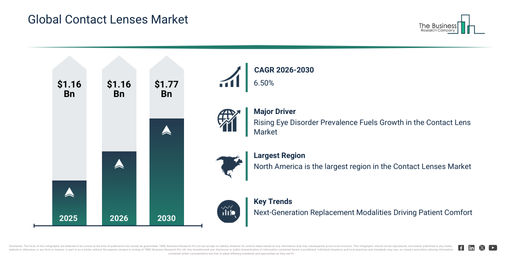
    The contact lenses market is projected to experience substantial expansion over the forthcoming years. This market is anticipated to reach a valuation of $13.36 billion by 2030, exhibiting a compound annual growth rate (CAGR) of 6.5%. The projected growth during this period stems from several factors, including the rising prevalence of myopia and presbyopia, a burgeoning need for convenient and sanitary vision correction solutions, increased consumer expenditure on personal grooming and optical health, the proliferation of online eye care platforms, and the greater uptake of innovative lens materials. Key trends characterizing the forecast horizon encompass a greater inclination towards daily disposable contact lenses, an escalating requirement for multifocal and toric lens types, the increasing appeal of cosmetic and lifestyle-focused lenses, the wider application of silicone hydrogel lenses, and a stronger inclination among consumers to purchase contact lenses online.

    Access Your Free Sample Report for In-Depth Market Insights:

    https://www.thebusinessresearchcompany.com/sample.aspx?id=18547&type=smp

    What Drivers Are Shaping The Development Of The Contact Lenses Market?

    The growing occurrence of eye conditions is anticipated to fuel expansion in the contact lens market. Such a condition involves any medical issue impacting the eye’s structure or performance, often resulting in impaired vision, discomfort, or various ocular symptoms. This increase in eye disorder frequency stems from factors like extended screen usage, an aging global populace, environmental contaminants, and evolving lifestyle habits. Contact lenses play a crucial role in addressing eye disorders by offering corrective measures for refractive errors, alleviating dry eye discomfort, managing specific conditions like keratoconus with specialized options, and fulfilling therapeutic requirements through protective or bandage lenses. For example, in March 2024, data from the Office for Health Improvement and Disparities, a government body in the UK, indicated that approximately 2 million individuals in the UK experience some degree of vision loss, a figure projected to increase to 2.7 million by 2030. Consequently, the increasing prevalence of eye disorders is acting as a significant catalyst for the contact lens market.

    What Segment Types Are Examined In The Contact Lenses Market?

    The contact lenses market covered in this report is segmented –

    1) By Type: Corrective Lens, Therapeutic Lenses, Cosmetic And Lifestyle Oriented Lens

    2) By Wear Type: Daily Disposable Lenses, Disposable Lenses (Two Weeks or Sooner), Frequent Replacement Lenses (Monthly or Quarterly), Conventional Lenses

    3) By Material: Silicone Hydrogel Soft Contact Lens, Methacrylate Hydrogel Soft Contact Lens, Gas-Permeable Contact Lens, Other Materials

    4) By Design: Spherical Lens, Toric Lens, Multifocal Lens, Other Design

    5) By Distribution Channel: Ophthalmologists, Retail Stores, Online Stores

    Subsegments:

    1) By Corrective Lenses: Spherical Lenses, Toric Lenses, Multifocal Lenses, Bifocal Lenses

    2) By Therapeutic Lenses: Scleral Lenses, Bandage Lenses, Orthokeratology Lenses (Ortho-K)

    3) By Cosmetic And Lifestyle-Oriented Lenses: Colored Lenses, Special Effect Lenses (Costume Or Novelty Lenses), Cosmetic Enhancers

    What Upcoming Trends Are Likely To Define The Future Path Of The Contact Lenses Market?

    Major companies in the contact lenses market are concentrating on developing advanced solutions, such as one-week replacement silicone hydrogel lenses, to enhance user convenience, improve eye health, and offer a more adaptable replacement schedule compared to daily or monthly alternatives. A one-week replacement lens represents a new type of lens intended to be worn for seven days before being discarded, providing consistent comfort, high oxygen permeability, and reduced maintenance for users. For example, in November 2024, Alcon Inc., a US-based eye care company, introduced PRECISION7. This innovative lens is designed to meet the demands of consumers seeking greater convenience and healthier lens-wearing practices, presenting a new option that bridges the gap between daily disposable and monthly replacement lenses while supporting long-lasting comfort and visual performance, ultimately strengthening Alcon’s position in the premium contact lens segment.

    Who Are The Core Companies Influencing Trends In The Contact Lenses Market?

    Major companies operating in the contact lenses market are Abbott Medical Optics Inc., EssilorLuxottica SA, Alcon Inc., Bausch Health Companies Inc., HOYA Corporation, The Cooper Companies Inc., Johnson & Johnson Vision Care Inc., Menicon Co. Ltd., STAAR Surgical Company, SynergEyes Inc., Euclid Systems Corporation, Lenstec Inc., Paragon Vision Sciences, X-Cel Specialty Contacts, Medennium Inc., NEO Vision, Blanchard Contact Lens Inc., Weicon Contact Lens Co. Ltd., Lucid Korea Co. Ltd., Bescon Co. Ltd., Conforma Contact Lens Inc.

    Access The Complete Report For Deeper Market Insights:

    https://www.thebusinessresearchcompany.com/report/contact-lenses-global-market-report

    Which Regions Are Projected To Dominate The Contact Lenses Market In The Coming Years?

    North America was the largest region in the contact lenses market in 2025. Asia-Pacific is expected to be the fastest-growing region in the forecast period. The regions covered in the contact lenses market report are Asia-Pacific, South East Asia, Western Europe, Eastern Europe, North America, South America, Middle East, Africa.

    Request Your Customized Contact Lenses Market Research Report for Competitive Advantage:

    https://www.thebusinessresearchcompany.com/customise?id=18547&type=smp

    Browse Through More Reports Similar to the Global Contact Lenses Market 2026, By The Business Research Company

    Buildings Construction Global Market Report 2026

    https://www.thebusinessresearchcompany.com/report/buildings-construction-global-market-report

    Iot In Construction Global Market Report 2026

    https://www.thebusinessresearchcompany.com/report/iot-in-construction-global-market-report

    Construction Global Market Report 2026

    https://www.thebusinessresearchcompany.com/report/construction-global-market-report

    Get in touch with us:

    The Business Research Company: https://www.thebusinessresearchcompany.com/

    Americas +1 310-496-7795

    Asia +44 7882 955267 & +91 8897263534

    Europe +44 7882 955267

    Email us at info@tbrc.info

    Follow us on:

    LinkedIn: https://in.linkedin.com/company/the-business-research-company
  • Construction Aggregate Market Outlook: Growth and Forecast Highlights 2030

    Construction Aggregate Market Outlook: Growth and Forecast Highlights 2030

    Uncover key drivers, emerging technologies, and competitive movements shaping the workstation graphics processing unit (gpu) market from 2026–2035 with trusted insights from The Business Research Company

    What level of growth is expected in the Construction Aggregate Market between 2026 and 2030?

    The construction aggregate market has witnessed robust growth in recent years. It is projected to expand from $430.1 billion in 2025 to $457.57 billion in 2026, achieving a compound annual growth rate (CAGR) of 6.4%. Historically, this growth was driven by factors such as the expansion of urban construction activities, an increased demand for road and bridge development, the proliferation of commercial real estate projects, a rise in quarrying operations, and the presence of large-scale aggregate reserves.

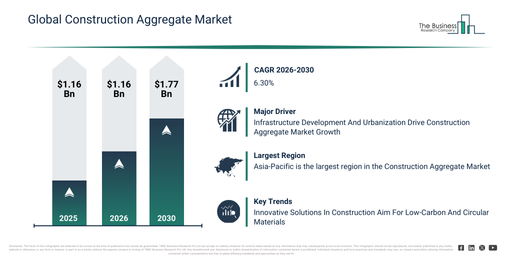
    The construction aggregate market size is projected to experience robust expansion over the coming years. This market is set to reach $584.68 billion by 2030, exhibiting a compound annual growth rate (CAGR) of 6.3%. This expansion during the projection period stems from escalating investments in modernizing infrastructure, a heightened emphasis on sustainable building materials, the proliferation of smart city initiatives, wider adoption of recycled aggregates, and increasing requirements for high-performance concrete. Key developments anticipated in this period encompass the greater utilization of recycled and manufactured aggregates, an escalating need for high-strength construction materials, the rollout of major infrastructure projects, the increasing implementation of automated crushing and screening technologies, and a sharper focus on environmentally responsible quarrying methods.

    Access Your Free Sample Report for In-Depth Market Insights:

    https://www.thebusinessresearchcompany.com/sample.aspx?id=19010&type=smp

    Which Drivers Are Expected To Impact The Construction Aggregate Market During The Forecast Period?

    The construction aggregate market is expected to see growth propelled by infrastructure development and urbanization moving forward. These terms refer to the establishment and expansion of vital facilities and systems, such as transportation and utilities, designed to accommodate an increasing population and the evolving needs of increasingly urbanized areas. The primary forces behind infrastructure development and urbanization include rising population figures, demographic shifts towards urban hubs, economic progress, and the escalating demand for improved infrastructure and public amenities to serve expanding city populations. Construction aggregate plays a crucial role in infrastructure development and urbanization by supplying essential materials like sand, gravel, and crushed stone, which are indispensable for constructing roads, bridges, and buildings, thereby supporting the enlargement and modernization of urban regions to meet growing population and economic demands. For instance, in April 2023, figures published by The World Bank, a US-based international organization, revealed that approximately 56% of the world’s population, or 4.4 billion people, resided in cities in 2023. This trend is anticipated to continue, with projections indicating that nearly 70% of people will live in urban areas by 2050. Thus, infrastructure development and urbanization are driving the growth of the construction aggregate market.

    Which Segments Are Driving Activity In The Construction Aggregate Market?

    The construction aggregate market covered in this report is segmented –

    1) By Type: Sand, Gravel, Crushed Stone, Other Types

    2) By Transportation Mode: Truck, Train, Ship

    3) By Application: Residential Use, Commercial Use, Infrastructure Use, Industrial Use

    Subsegments:

    1) By Sand Types: Natural Sand, Manufactured Sand

    2) By Gravel Types: Crushed Gravel, River Gravel

    3) By Crushed Stone Types: Limestone, Granite, Traprock, Sandstone

    4) By Other Types: Recycled Aggregate, Lightweight Aggregate, Specialty Aggregate

    Which Trends Are Shaping Activity Within The Construction Aggregate Market?

    Leading companies in the construction aggregate market are focused on developing innovative solutions, such as sustainable construction ecosystems, to establish new global standards for environmentally sound construction materials by reducing carbon emissions and encouraging circularity. A sustainable construction ecosystem involves the interconnected processes, materials, and stakeholders within the building industry that prioritize environmental responsibility, resource efficiency, and long-term ecological balance throughout the construction lifecycle. For example, in January 2024, Heidelberg Materials, a Germany-based building materials company, launched evoBuild, a new global brand designed to promote low-carbon and circular construction materials. Under this brand, products must achieve at least a 30 % CO2 reduction compared to reference values or contain a minimum of 30 % recycled content. The significance of this lies in improving transparency, advancing sustainability, and positioning Heidelberg Materials’ product range to target 50 % of its revenue from sustainable products by 2030.

    Which Major Industry Participants Are Leading The Construction Aggregate Market Growth?

    Major companies operating in the construction aggregate market are Holcim Group, CRH plc, China National Building Material Co. Ltd, Colas Group, Siam Cement Group (SCG), CEMEX S.A.B. de C.V., Heidelberg Materials AG, EUROVIA Kamenolomy AS, Vulcan Materials Company, Martin Marietta Materials Inc., Fletcher Building, Buzzi S.p.A., Boral Limited, Tarmac, LSR Group, Adbri Limited, Rogers Group Inc., Carmeuse, CEMROS, Eagle Materials Inc., SRC Group

    Access The Complete Report For Deeper Market Insights:

    https://www.thebusinessresearchcompany.com/report/construction-aggregate-global-market-report

    Which Region Is Expected To Experience The Fastest Growth In The Construction Aggregate Market?

    Asia-Pacific was the largest region in the construction aggregate market in 2025. The regions covered in the construction aggregate market report are Asia-Pacific, South East Asia, Western Europe, Eastern Europe, North America, South America, Middle East, Africa.

    Request Your Customized Construction Aggregate Market Research Report for Competitive Advantage:

    https://www.thebusinessresearchcompany.com/customise?id=19010&type=smp

    Browse Through More Reports Similar to the Global Construction Aggregate Market 2026, By The Business Research Company

    Wearable Computing Global Market Report 2026

    https://www.thebusinessresearchcompany.com/report/wearable-computing-global-market-report

    Smart Wearables Global Market Report 2026

    https://www.thebusinessresearchcompany.com/report/smart-wearables-global-market-report

    Wearable Medical Devices Market 2026

    https://www.thebusinessresearchcompany.com/report/wearable-medical-devices-market

    Get in touch with us:

    The Business Research Company: https://www.thebusinessresearchcompany.com/

    Americas +1 310-496-7795

    Asia +44 7882 955267 & +91 8897263534

    Europe +44 7882 955267

    Email us at info@tbrc.info

    Follow us on:

    LinkedIn: https://in.linkedin.com/company/the-business-research-company
  • Connected Wearable Patches Market Insights Report: Opportunities and Drivers 2030

    Connected Wearable Patches Market Insights Report: Opportunities and Drivers 2030

    Uncover key drivers, emerging technologies, and competitive movements shaping the worker heat stress monitoring wearable market from 2026–2035 with trusted insights from The Business Research Company

    How much is the Connected Wearable Patches Market valued at in 2026, and what valuation is forecast for 2030?

    The connected wearable patches market has seen substantial expansion in recent years. It is anticipated to increase from $6.42 billion in 2025 to $7.32 billion in 2026, achieving a compound annual growth rate (CAGR) of 14.1%. The growth observed historically is attributable to factors such as the initial limited adoption of connected wearable technologies, ongoing reliance on traditional monitoring devices, the rising incidence of chronic diseases, early-stage clinical trials incorporating wearable patches, and a growing emphasis on patient-centric healthcare.

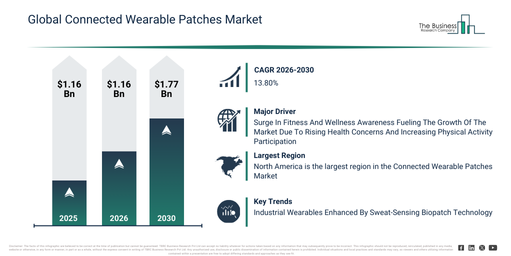
    The connected wearable patches market is anticipated to experience substantial growth over the next few years, with its size projected to reach $12.26 billion by 2030, demonstrating a compound annual growth rate (CAGR) of 13.8%. This expansion during the forecast period is fueled by advancements in sensor miniaturization and connectivity, integration with smartphones and cloud platforms, a rising demand for continuous glucose and cardiac monitoring, the broadening of sports and wellness tracking applications, and increased regulatory approvals along with favorable healthcare reimbursement policies. Significant trends during this period include the growth in remote patient monitoring and telehealth solutions, increasing adoption of non-invasive glucose monitoring technologies, the escalating use of wearable patches in fitness and sports performance, the expansion of transdermal drug delivery applications, and an enhanced focus on data accuracy, sensor reliability, and patient safety.

    Access Your Free Sample Report for In-Depth Market Insights:

    https://www.thebusinessresearchcompany.com/sample.aspx?id=25725&type=smp

    What Drivers Are Influencing The Growth Of The Connected Wearable Patches Market?

    The escalating awareness regarding fitness and wellness is anticipated to fuel the expansion of the connected wearable patches market in the future. This awareness signifies the comprehension of the vital role of consistent physical activity and healthy lifestyle choices for overall well-being. The surge in fitness and wellness consciousness is attributed to growing anxieties about chronic illnesses, motivating individuals to embrace healthier lifestyles for improved long-term health. Connected wearable patches aid in amplifying fitness and wellness awareness by continuously monitoring crucial health metrics, delivering real-time feedback, and encouraging users to remain active and uphold healthier habits. For instance, in June 2024, data from the International Food Information Council (IFIC), a US based non profit organization, indicated that the percentage of Americans who followed a specific diet or eating pattern over the past year remained high at 54%. Most individuals are aiming to increase their protein intake, with interest rising from 59% in 2022 to 67% in 2023, and reaching 71% in 2024. Additionally, about half of consumers are seeking to consume more fresh foods, widely considered the healthiest food options. Consequently, the heightened focus on fitness and wellness is driving the growth of the connected wearable patches market.

    How Is The Connected Wearable Patches Market Organized Into Various Segments?

    The connected wearable patches market covered in this report is segmented –

    1) By Type: Glucose Monitoring Patches, Cardiac Monitoring Patches, Electromyography (EMG) Patches, Transdermal Drug Delivery Patches, Electroencephalography (EEG) Patches, Other Types

    2) By Sensor Technology: Electrocardiography (ECG), Photoplethysmography (PPG), Accelerometry, Gyroscope, Temperature Sensing

    3) By Distribution Channel: Online Stores, Pharmacies, Specialty Stores, Other Distribution Channels

    4) By Application: Remote Patient Monitoring, Fitness And Wellness Monitoring, Drug Delivery, Sports And Performance Monitoring, Other Applications

    5) By End User: Hospitals, Home Care, Fitness Centers, Research Institutions, Other End-Users

    Subsegments:

    1) By Glucose Monitoring Patches: Continuous Glucose Monitoring (CGM) Patches, Flash Glucose Monitoring (FGM) Patches, Non-Invasive Glucose Monitoring Patches, Adhesive Enzyme-Based Glucose Patches

    2) By Cardiac Monitoring Patches: Electrocardiography Monitoring Patches, Arrhythmia Detection Patches, Remote Cardiac Telemetry Patches, Holter Monitoring Patches

    3) By Electromyography (EMG) Patches: Surface Electromyography Patches, Wireless Electromyography Sensor Patches, Multi-channel Electromyography Patches, Rehabilitation Monitoring Electromyography Patches

    4) By Transdermal Drug Delivery Patches: Nicotine Delivery Patches, Hormone Replacement Therapy (HRT) Patches, Pain Management Patches (e.g., Fentanyl), Neurological Drug Delivery Patches, Anti-hypertensive Patches

    5) By Electroencephalography (EEG) Patches: Sleep Monitoring Electroencephalography Patches, Seizure Detection Electroencephalography Patches, Brain-Computer Interface (BCI) Patches, Cognitive Performance Monitoring Patches

    6) By Other Types: Hydration Monitoring Patches, Temperature Monitoring Patches, Sweat Analysis Patches, Oxygen Saturation (SpO2) Monitoring Patches, Respiratory Rate Monitoring Patches

    Which Trends Are Influencing The Development Of The Connected Wearable Patches Market?

    Leading companies in the connected wearable patches market are concentrating on advanced technologies such as sweat-sensing biopatch platforms to deliver real-time, personalized hydration insights for industrial workers. A sweat-sensing biopatch incorporates multiple biosensors to detect fluid and electrolyte loss, body temperature, and movement patterns instantly, enabling proactive hydration and heat stress management. For example, in April 2024, Epicore Biosystems, a US-based digital health company, launched Connected Hydration and an accompanying mobile application. This constitutes a next-generation wearable patch system designed to help industrial workers prevent dehydration and heat-related injuries through immediate data feedback. This sophisticated solution comprises a flexible, non-rechargeable biopatch with a 1,000-hour battery life, real-time dehydration alerts via haptic feedback, and a mobile application for monitoring fluid intake and biometric trends. Its robust design is certified for hazardous environments and integrates machine learning trained on over 420,000 field data points.

    Who Are The Prominent Global Companies Shaping The Connected Wearable Patches Market Landscape?

    Major companies operating in the connected wearable patches market are Abbott Laboratories, Medtronic plc, Koninklijke Philips NV, GE HealthCare Technologies Inc, ZOLL Medical Corporation, Dexcom Inc, Insulet Corporation, MicroPort Scientific Corporation, iRhythm Technologies Inc, Linxens Holding SAS, Biotricity Inc, Blue Spark Technologies Inc, Epicore Biosystems Inc, Cardiac Insight Inc, Delsys Incorporated, G Tech Medical Inc, Leaf Healthcare Inc, VivaLNK Inc, BioIntelliSense Inc, MC10 Inc, LifeSignals Group Inc, Preventice Solutions Inc

    Access The Complete Report For Deeper Market Insights:

    https://www.thebusinessresearchcompany.com/report/connected-wearable-patches-global-market-report

    Which Geographic Areas Are Emerging As Strong Markets For The Connected Wearable Patches Market?

    North America was the largest region in the connected wearable patches market in 2025. Asia-Pacific is expected to be the fastest-growing region in the forecast period. The regions covered in the connected wearable patches market report are Asia-Pacific, South East Asia, Western Europe, Eastern Europe, North America, South America, Middle East, Africa.

    Request Your Customized Connected Wearable Patches Market Research Report for Competitive Advantage:

    https://www.thebusinessresearchcompany.com/customise?id=25725&type=smp

    Browse Through More Reports Similar to the Global Connected Wearable Patches Market 2026, By The Business Research Company

    Medical Device Technologies Global Market Report 2026

    https://www.thebusinessresearchcompany.com/report/medical-device-technologies-global-market-report

    Medical Devices Reimbursement Global Market Report 2026

    https://www.thebusinessresearchcompany.com/report/medical-devices-reimbursement-global-market-report

    Medical Device Contract Research Organization Global Market Report 2026

    https://www.thebusinessresearchcompany.com/report/medical-device-contract-research-organization-global-market-report

    Get in touch with us:

    The Business Research Company: https://www.thebusinessresearchcompany.com/

    Americas +1 310-496-7795

    Asia +44 7882 955267 & +91 8897263534

    Europe +44 7882 955267

    Email us at info@tbrc.info

    Follow us on:

    LinkedIn: https://in.linkedin.com/company/the-business-research-company
  • Connected Medical Device Global Forecast: Market to Scale Up to $117.67 Billion by 2030 at 15.7% CAGR

    Connected Medical Device Global Forecast: Market to Scale Up to $117.67 Billion by 2030 at 15.7% CAGR

    Uncover key drivers, emerging technologies, and competitive movements shaping the workstation graphics processing unit (gpu) market from 2026–2035 with trusted insights from The Business Research Company

    By how much is the Connected Medical Device Market expected to grow between 2026 and 2030?

    The connected medical device market has experienced substantial expansion in recent years. It is projected to increase from $56.74 billion in 2025 to $65.78 billion in 2026, achieving a compound annual growth rate (CAGR) of 15.9%. Historically, this growth can be attributed to several factors including limited connectivity infrastructure in healthcare facilities, the slow adoption of digital health technologies, a reliance on traditional patient monitoring systems, the increasing prevalence of chronic diseases, and the ongoing need for real-time patient data collection.

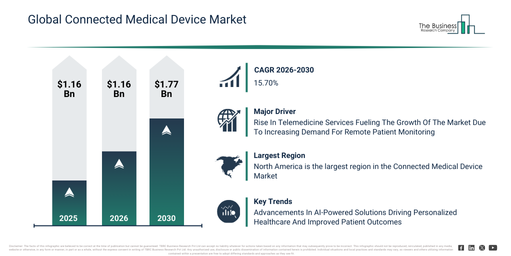
    The connected medical device market is projected to experience substantial expansion over the upcoming years. Its valuation is anticipated to reach $117.68 billion by 2030, exhibiting a compound annual growth rate (CAGR) of 15.7%. This anticipated growth during the forecast period stems from factors such as the proliferation of wearable and implantable medical devices, heightened investment in telehealth and remote monitoring solutions, the integration of artificial intelligence to generate predictive insights, an increase in the adoption of home care and long-term care services, and expanding regulatory backing for connected medical devices. Key trends shaping the forecast period encompass the integration of connected devices with electronic health records (ehrs), a wider uptake of remote patient monitoring solutions, the expansion of chronic disease management initiatives, improved data analytics for supporting clinical decisions, and a growing emphasis on home-based healthcare and telemedicine.

    Access Your Free Sample Report for In-Depth Market Insights:

    https://www.thebusinessresearchcompany.com/sample.aspx?id=24510&type=smp

    Which Drivers Are Influencing Market Acceleration In The Connected Medical Device Market?

    The expansion of telemedicine offerings is expected to propel the growth of the connected medical device market in the upcoming years. Telemedicine involves utilizing technology to deliver medical care and consultations remotely, eliminating the necessity for physical visits. The increasing need for telemedicine stems from its ability to provide accessible healthcare, enabling individuals to quickly consult physicians from their residences, thereby conserving time and decreasing travel requirements. This surge in telemedicine services bolsters the demand for connected medical devices by facilitating remote patient monitoring, which necessitates the real-time transmission of patient data to healthcare professionals for precise diagnosis and prompt intervention without in-person visits. For instance, in April 2025, the American Hospital Association, a US-based nonprofit trade association, indicated that in the last quarter of 2023, more than 12.6% of Medicare beneficiaries utilized a telehealth service. Current information suggests that the United States is projected to experience a deficit of up to 86,000 physicians by 2036. Telehealth serves as a vital component in addressing this escalating physician scarcity. Consequently, the proliferation of telemedicine services will stimulate the expansion of the connected medical device market.

    What Segments Are Identified Within The Structure Of The Connected Medical Device Market?

    The connected medical device market covered in this report is segmented –

    1) By Product Type: Wearable Devices, Implantable Devices, Stationary Devices

    2) By Connectivity Technology: Bluetooth, Wi-Fi, Cellular, Other Connectivity Technologies

    3) By Application: Remote Patient Monitoring, Telemedicine, Clinical Decision Support, Chronic Disease Management, Fitness And Wellness, Other Applications

    4) By End-User: Hospitals And Clinics, Home Care Settings, Long-Term Care Facilities, Ambulatory Surgical Centers, Other End-Users

    Subsegments:

    1) By Wearable Devices: Fitness Trackers, Smartwatches, Continuous Glucose Monitors (CGM), Wearable ECG Monitors, Blood Pressure Monitors, Pulse Oximeters, Sleep Trackers

    2) By Implantable Devices: Cardiac Pacemakers, Implantable Cardioverter Defibrillators (ICDs), Neurostimulators, Cochlear Implants, Implantable Glucose Sensors, Drug Delivery Implants

    3) By Stationary Devices: Remote Patient Monitoring Stations, Telehealth Kiosks, Connected Imaging Devices, Connected Ventilators, Connected Dialysis Machines, Connected Infusion Pumps

    What Trends Are Expected To Impact The Competitive Landscape Of The Connected Medical Device Market?

    Leading companies within the connected medical device market are concentrating on developing advanced solutions, such as AI-powered platforms, to enable personalized user experiences by adapting to individual behaviors and preferences in real-time. These AI-powered platforms are digital systems that leverage artificial intelligence technologies to analyze data, make decisions, and automate tasks with minimal human intervention. For instance, in October 2023, ZS, a US-based technology company, introduced the ZAIDYN Connected Health solution. This solution uniquely delivers trusted, AI-powered insights to assist pharmaceutical companies, healthcare providers, and payers in addressing unmet medical needs and enhancing patient outcomes. Its health insights suite identifies gaps in care and provides personalized recommendations for physicians, patients, and manufacturers to improve treatment access and coordination. The patient engagement suite focuses on understanding individual patient needs to offer customized support and enhance the effectiveness of patient programs. Furthermore, connected research utilizes advanced digital engagement tools to gather reliable evidence that aids healthcare organizations in validating innovations and supporting strategic decisions.

    Which Key Players Are Driving Competition In The Connected Medical Device Market?

    Major companies operating in the connected medical device market are Johnson and Johnson, Abbott Laboratories, Medtronic plc, F Hoffmann La Roche Ltd, Siemens Healthineers AG, Fresenius Medical Care AG and Co KGaA, Becton Dickinson and Company, Koninklijke Philips NV, GE Healthcare Technologies Inc, Boston Scientific Corporation, Baxter International Inc, Olympus Corporation, Terumo Corporation, Garmin Ltd, ResMed Inc, Omron Healthcare Inc, Epitel Inc, Masimo Corporation, AliveCor Inc, DexCom Inc, Insulet Corporation, iRhythm Technologies Inc

    Access The Complete Report For Deeper Market Insights:

    https://www.thebusinessresearchcompany.com/report/connected-medical-device-global-market-report

    Which Region Is Projected To Lead The Connected Medical Device Market During The Forecast Period?

    North America was the largest region in the connected medical device market in 2025. Asia-Pacific is expected to be the fastest-growing region in the forecast period. The regions covered in the connected medical device market report are Asia-Pacific, South East Asia, Western Europe, Eastern Europe, North America, South America, Middle East, Africa.

    Request Your Customized Connected Medical Device Market Research Report for Competitive Advantage:

    https://www.thebusinessresearchcompany.com/customise?id=24510&type=smp

    Browse Through More Reports Similar to the Global Connected Medical Device Market 2026, By The Business Research Company

    Medical Device Connectivity Global Market Report 2026

    https://www.thebusinessresearchcompany.com/report/medical-device-connectivity-global-market-report

    Wearable Medical Devices Global Market Report 2026

    https://www.thebusinessresearchcompany.com/report/wearable-medical-devices-global-market-report

    Portable Medical Devices Global Market Report 2026

    https://www.thebusinessresearchcompany.com/report/portable-medical-devices-global-market-report

    Get in touch with us:

    The Business Research Company: https://www.thebusinessresearchcompany.com/

    Americas +1 310-496-7795

    Asia +44 7882 955267 & +91 8897263534

    Europe +44 7882 955267

    Email us at info@tbrc.info

    Follow us on:

    LinkedIn: https://in.linkedin.com/company/the-business-research-company
  • Connected Health Personal Medical Devices Market Future Outlook: Strong Growth Expected Toward $91.89 Billion by 2030

    Connected Health Personal Medical Devices Market Future Outlook: Strong Growth Expected Toward $91.89 Billion by 2030

    Uncover key drivers, emerging technologies, and competitive movements shaping the worker heat stress monitoring wearable market from 2026–2035 with trusted insights from The Business Research Company

    What is the estimated market size of the Connected Health Personal Medical Devices Market by the end of 2030?

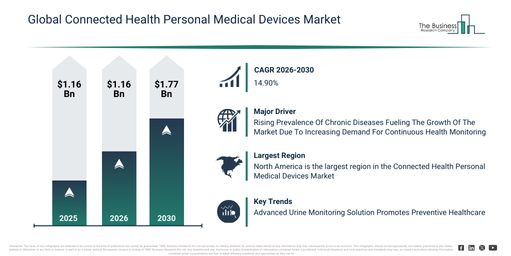
    The market size for connected health personal medical devices has undergone rapid expansion in recent years. It is anticipated to increase from $45.71 billion in 2025 to $52.68 billion in 2026, achieving a compound annual growth rate (CAGR) of 15.2%. The development observed in the past can be ascribed to factors including the limited availability of connected health devices, a reliance on traditional in-clinic monitoring, the slow adoption of wearable technologies, the rising prevalence of chronic diseases, and a lack of standardized healthcare IT infrastructure.

    The connected health personal medical devices market size is projected to experience substantial expansion in the coming years. It is expected to reach $91.9 billion in 2030, exhibiting a compound annual growth rate (CAGR) of 14.9%. This anticipated growth throughout the forecast period stems from the rapid advancement of smart wearable medical devices, the broadening scope of home healthcare solutions, increasing integration with cloud-based health platforms, a rise in patient engagement for self-monitoring, and the adoption of predictive and real-time analytics to deliver personalized care. Prominent trends for the forecast period include the increasing uptake of remote patient monitoring devices, the integration of wearable health technologies with mobile applications, augmented use of smart pill dispensers and glucose monitors, a concentrated effort on chronic disease management and preventive care, and the expansion of telemedicine and home healthcare services.

    Access Your Free Sample Report for In-Depth Market Insights:

    https://www.thebusinessresearchcompany.com/sample.aspx?id=24509&type=smp

    What Drivers Are Shaping Future Opportunities In The Connected Health Personal Medical Devices Market?

    The increasing occurrence of chronic illnesses is anticipated to boost the expansion of the connected health personal medical devices market in the future. Chronic illnesses are enduring health issues that manifest gradually and persist over time, frequently necessitating ongoing medical attention. This rise in chronic disease prevalence is partly attributed to sedentary lifestyles, given that extended periods of sitting and insufficient physical activity heighten the risk of conditions like heart disease and diabetes. Connected health personal medical devices facilitate the management of chronic conditions by allowing real-time health observation, making them highly suitable for overseeing diseases such as diabetes and hypertension from home. These devices diminish the necessity for regular clinic appointments through the provision of continuous data and prompt notifications, thereby enhancing patient results and convenience. As an illustration, in June 2024, data from the National Health Service, a UK-based governmental body, indicated that 3,615,330 individuals registered with a general practitioner (GP) received a diagnosis of non-diabetic hyperglycemia or pre-diabetes (a state where blood sugar levels are elevated but not sufficiently high for a diabetes diagnosis) in 2023. This represented an 18% surge from 3,065,825 cases recorded in 2022. Consequently, the growing incidence of chronic diseases is propelling the expansion of the connected health personal medical devices market.

    Which Segments Are Gaining Traction In The Connected Health Personal Medical Devices Market?

    The connected health personal medical devices market covered in this report is segmented –

    1) By Solution: Healthcare IT, Health Information Exchange, Healthcare Analytics

    2) By Product: Insulin Pumps, Blood Pressure (BP) Monitors, Portable Global Positioning System (GPS) Personal Emergency Response System (PERS), Glucose Monitor, Personal Pulse Oximeter, Smart Pill Dispenser, Personal Electrocardiogram (ECG)

    3) By Connectivity: Bluetooth, Wi-Fi, Cellular, Other Connectivities

    4) By Application: Chronic Disease Management, Fitness And Wellness, Home Healthcare, Other Applications

    5) By End User: Hospitals, Clinics, Homecare Settings, Other End Users

    Subsegments:

    1) By Healthcare IT: Electronic Health Records (EHR), Telemedicine Solutions, Mobile Health (mHealth) Applications, E-Prescribing Systems

    2) By Health Information Exchange: Directed Exchange, Query-Based Exchange, Consumer-Mediated Exchange, Cloud-Based Health Information Platforms

    3) By Healthcare Analytics: Descriptive Analytics, Predictive Analytics, Prescriptive Analytics, Real-Time Analytics

    Which Trends Are Guiding The Evolution Of The Connected Health Personal Medical Devices Market?

    Leading companies in the connected health personal medical devices market are concentrating on developing advanced products, such as sophisticated in-home diagnostic systems, to enhance preventive healthcare and user convenience. In-home diagnostic systems refer to medical tools and devices that enable individuals to monitor, test, and manage their health conditions at home without the necessity of visiting a healthcare facility. For instance, in January 2023, Withings, a France-based health technology company, launched U-Scan, a hands-free, in-home urine analysis system designed to fit inside a toilet bowl. This system employs a replaceable cartridge that conducts daily tests for up to three months, analyzing key hydration and nutrition biomarkers. The device connects to a smartphone app, supplying users with real-time insights and personalized health recommendations. U-Scan seeks to make routine health tracking seamless and non-invasive, fostering proactive wellness management.

    Who Are The Top-Performing Companies In The Connected Health Personal Medical Devices Market In Recent Years?

    Major companies operating in the connected health personal medical devices market are Johnson and Johnson, F Hoffmann La Roche AG, Abbott Laboratories, Medtronic plc, Siemens Healthineers, Becton Dickinson and Company, GE HealthCare, Philips Healthcare, Omron Healthcare, Masimo Corporation, Oura Health Oy, Whoop Inc, Withings, Eko Health Inc, TytoCare Ltd, AliveCor Inc, DarioHealth Corp, iHealth Labs Inc, Samsung Electronics, Biostrap, Aktiia, Ava Science Inc, Bloomlife Inc, Movano Health, Oxitone Medical Ltd, Qardio Inc

    Access The Complete Report For Deeper Market Insights:

    https://www.thebusinessresearchcompany.com/report/connected-health-personal-medical-devices-global-market-report

    Which Region Currently Holds The Largest Share Of The Connected Health Personal Medical Devices Market?

    North America was the largest region in the connected health personal medical devices market in 2025. Asia-Pacific is expected to be the fastest-growing region in the forecast period. The regions covered in the connected health personal medical devices market report are Asia-Pacific, South East Asia, Western Europe, Eastern Europe, North America, South America, Middle East, Africa.

    Request Your Customized Connected Health Personal Medical Devices Market Research Report for Competitive Advantage:

    https://www.thebusinessresearchcompany.com/customise?id=24509&type=smp

    Browse Through More Reports Similar to the Global Connected Health Personal Medical Devices Market 2026, By The Business Research Company

    Corporate Wellness Solutions Global Market Report 2026

    https://www.thebusinessresearchcompany.com/report/corporate-wellness-solutions-global-market-report

    Health And Wellness Global Market Report 2026

    https://www.thebusinessresearchcompany.com/report/health-and-wellness-global-market-report

    Wellness Supplements Global Market Report 2026

    https://www.thebusinessresearchcompany.com/report/wellness-supplements-global-market-report

    Get in touch with us:

    The Business Research Company: https://www.thebusinessresearchcompany.com/

    Americas +1 310-496-7795

    Asia +44 7882 955267 & +91 8897263534

    Europe +44 7882 955267

    Email us at info@tbrc.info

    Follow us on:

    LinkedIn: https://in.linkedin.com/company/the-business-research-company
  • Revenue of the Connected Health and Wellness Solutions Market Predicted to Achieve $238.58 Billion by 2030, Driven by 23.8% CAGR

    Revenue of the Connected Health and Wellness Solutions Market Predicted to Achieve $238.58 Billion by 2030, Driven by 23.8% CAGR

    Uncover key drivers, emerging technologies, and competitive movements shaping the workstation graphics processing unit (gpu) market from 2026–2035 with trusted insights from The Business Research Company

    What was the valuation of the Connected Health and Wellness Solutions Market in 2026, and what figure is it projected to hit by 2030?

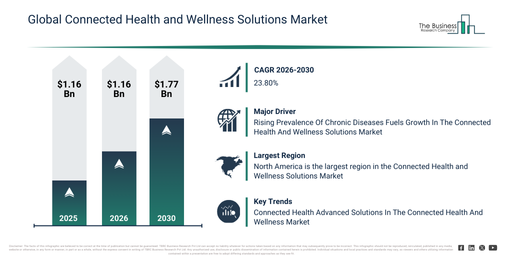
    The connected health and wellness solutions market size has experienced substantial expansion in recent years. It is projected to grow from $82.06 billion in 2025 to $101.69 billion in 2026, achieving a compound annual growth rate (CAGR) of 23.9%. Historically, this growth can be attributed to factors such as the increasing prevalence of smartphones and internet connectivity, heightened consumer health awareness, the wider adoption of wearable devices, an elevated demand for home-based monitoring, and the broader acceptance of digital health tools.

    The connected health and wellness solutions market is projected to experience rapid expansion over the upcoming years. By 2030, this market is anticipated to reach a valuation of $238.59 billion, demonstrating a compound annual growth rate (CAGR) of 23.8%. This projected growth can be attributed to several factors including the rising adoption of AI-driven health analytics, an escalating demand for ongoing health monitoring, the broadening of virtual care models, a heightened emphasis on managing chronic diseases, and the greater integration of connected devices within healthcare systems. Key trends expected during this period involve a surge in the adoption of remote patient monitoring devices, increased utilization of wearable health technologies, the expanding integration of telehealth platforms, the proliferation of mobile health applications, and an intensified focus on preventive and overall wellness monitoring.

    Access Your Free Sample Report for In-Depth Market Insights:

    https://www.thebusinessresearchcompany.com/sample.aspx?id=6766&type=smp

    Which Drivers Are Affecting Market Participation In The Connected Health and Wellness Solutions Market?

    The rising incidence of chronic diseases is projected to drive the expansion of the connected health and wellness solutions market moving forward. Such conditions are defined as health issues lasting a year or more, demanding continuous medical attention, limiting daily activities, or both. Connected health and wellness solutions are employed in managing these chronic diseases, offering features like remote monitoring, support for medication adherence, and personalized treatment to improve patient care and compliance. For example, in March 2025, the Office for Health Improvement & Disparities (OHID), a UK-based unit of the Department of Health and Social Care, reported that the prevalence of type 2 diabetes among adults aged 17 and over in England, as recorded by GPs, stood at 7.0% in March 2024, marking an increase from 6.8% in March 2023. This growing prevalence of chronic diseases is thus expected to fuel the growth of the connected health and wellness solutions market.

    What Segment Categories Are Covered In The Connected Health and Wellness Solutions Market?

    The connected health and wellness solutions market covered in this report is segmented –

    1) By Product: Personal Medical Devices, Wellness Products, Software & Services

    2) By Function: Clinical Monitoring, Telehealth

    3) By Application: Diagnosis & Treatment, Wellness and prevention, Monitoring, Other Applications

    Subsegments:

    1) By Personal Medical Devices: Wearable Health Monitors, Remote Patient Monitoring Devices, Connected Inhalers and Medication Adherence Devices

    2) By Wellness Products: Smart Scales and Body Composition Monitors, Sleep Trackers and Sleep Aids, Smart Thermometers

    3) By Software & Services: Mobile Health Applications (mHealth apps), Telehealth Platforms and Services, Data Analytics and Health Management Solutions

    What Trends Are Projected To Support The Growth Of The Connected Health and Wellness Solutions Market?

    Leading entities within the connected health and wellness solutions market are prioritizing the creation of sophisticated technological offerings, for example, the ZAIDYN connected health solution, with the aim of boosting remote patient oversight and refining health service results. The ZAIDYN connected health platform aids pharmaceutical companies, healthcare providers, and insurers in fostering innovation to more effectively identify underserved requirements, involve patients, and elevate health outcomes. An illustrative example is the launch in October 2023 by ZS Associates Group, Inc., a management consulting and technology company based in the US, of its AI-driven ZAIDYN Connected Health solution, integrated into the ZAIDYN by ZS platform. This solution offers three distinct product suites designed to address deficiencies in healthcare and cultivate a patient-focused future through health insights, patient involvement, and interconnected research.

    Which Leading Companies Dominate The Connected Health and Wellness Solutions Market Share?

    Major companies operating in the connected health and wellness solutions market are Omron Healthcare Inc., Koninklijke Philips N.V., GE Healthcare Technologies Inc., Abbott Laboratories, Apple Inc., Garmin Ltd., Masimo Corporation, ResMed Inc., Medtronic PLC, Boston Scientific Corporation, Microlife AG, AgaMatrix Inc., Dexcom Inc., Withings S.A., Polar Electro Oy, Suunto Oy, iHealth Labs Inc., AliveCor Inc., Oura Health Oy, WHOOP Inc., Samsung Electronics Co. Ltd., Xiaomi Corporation

    Access The Complete Report For Deeper Market Insights:

    https://www.thebusinessresearchcompany.com/report/connected-health-and-wellness-solutions-global-market-report

    How Does The Connected Health and Wellness Solutions Market Perform Across Major Global Regions?

    North America was the largest region in the connected health and wellness solutions market in 2025. Asia-Pacific is expected to be the fastest-growing region in the forecast period. The regions covered in the connected health and wellness solutions market report are Asia-Pacific, South East Asia, Western Europe, Eastern Europe, North America, South America, Middle East, Africa.

    Request Your Customized Connected Health and Wellness Solutions Market Research Report for Competitive Advantage:

    https://www.thebusinessresearchcompany.com/customise?id=6766&type=smp

    Browse Through More Reports Similar to the Global Connected Health and Wellness Solutions Market 2026, By The Business Research Company

    Heart Blocks Treatment Devices Global Market Report 2026

    https://www.thebusinessresearchcompany.com/report/heart-blocks-treatment-devices-global-market-report

    Heart Defect Closure Device Global Market Report 2026

    https://www.thebusinessresearchcompany.com/report/heart-defect-closure-device-global-market-report

    Bradycardia Treatment Devices Global Market Report 2026

    https://www.thebusinessresearchcompany.com/report/bradycardia-treatment-devices-global-market-report

    Get in touch with us:

    The Business Research Company: https://www.thebusinessresearchcompany.com/

    Americas +1 310-496-7795

    Asia +44 7882 955267 & +91 8897263534

    Europe +44 7882 955267

    Email us at info@tbrc.info

    Follow us on:

    LinkedIn: https://in.linkedin.com/company/the-business-research-company