Category: Medical Equipment

  • 3D Orthopedics/Prosthetics Market 2026–2030: Forecasting Business Opportunities Ahead

    3D Orthopedics/Prosthetics Market 2026–2030: Forecasting Business Opportunities Ahead

    Uncover key drivers, emerging technologies, and competitive movements shaping the active semiconductor disk lasers market from 2026–2035 with trusted insights from The Business Research Company

    What size range is anticipated for the 3D Orthopedics/Prosthetics Market from 2026 to 2030?

    The 3D orthopedics/prosthetics market size has seen substantial growth in recent years. It is projected to expand from $3.55 billion in 2025 to $3.75 billion in 2026, growing at a compound annual growth rate (CAGR) of 5.5%. This historical expansion can be linked to an increasing incidence of limb loss and orthopedic injuries, progress in additive manufacturing technologies, the growing availability of rehabilitation services, rising acceptance of prosthetic solutions, and improved material science developments.

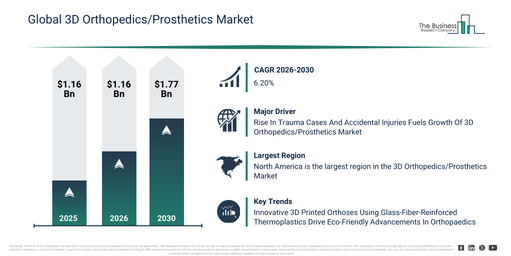
    The 3D orthopedics/prosthetics market size is projected to experience robust expansion in the coming years. This sector is anticipated to reach $4.77 billion by 2030, exhibiting a compound annual growth rate (CAGR) of 6.2%. This projected growth over the forecast period stems from factors such as increasing investments in intelligent prosthetic technologies, a rising need for individualized medical devices, the broadening of digital orthopedic design platforms, an intensified focus on patient mobility results, and the greater embrace of AI-powered prosthetic design. Key developments anticipated during this period encompass the growing adoption of custom 3D printed prosthetics, an increasing demand for orthopedic devices tailored to individual patients, the expanding integration of smart and sensor-equipped prosthetics, the proliferation of hybrid and electric-driven prosthetic systems, and a heightened emphasis on rapid prototyping and adaptable design.

    Access Your Free Sample Report for In-Depth Market Insights:

    https://www.thebusinessresearchcompany.com/sample.aspx?id=6039&type=smp

    What Drivers Are Affecting Demand In The 3D Orthopedics/Prosthetics Market?

    The increasing occurrence of trauma cases and accidental injuries is contributing to the expansion of the 3D orthopedics/prosthetics market. Orthopedic prosthetics refers to the utilization of artificial limbs (prostheses) to enhance the function and lifestyle for individuals experiencing limb loss. To effectively meet an individual’s functional requirements, each prosthesis must be a unique combination of suitable alignment, construction, materials, and design. For instance, in December 2023, according to the Wisconsin Department of Health Services, a US-based public health department, 2023 saw Trauma System Hospitals in Wisconsin report a 4% rise in the number of traumatic injuries treated, alongside a 3% increase specifically in pediatric trauma cases. Furthermore, 2023 recorded 44,970 trauma system entries and 38,198 unique injury events. Therefore, the growing number of trauma cases and accidental injuries is a significant driver for the 3D orthopedics/prosthetics market.

    Which Segments Are Gaining Traction In The 3D Orthopedics/Prosthetics Market?

    The 3D orthopedics/prosthetics market covered in this report is segmented –

    1) By Product Type: Upper Extremity Orthopedic And Prosthetics, Lower Extremity Orthopedic And Prosthetics, Other Product Types

    2) By Technology: Conventional, Electric-powered, Hybrid

    3) By End User: Hospitals, Orthopedic And Prosthetic Centers, Rehabilitation Center, Other End-Users

    Subsegments:

    1) By Upper Extremity Orthopedic And Prosthetics: Prosthetic Arms, Prosthetic Hands, Orthotic Braces for Arms, Shoulder and Elbow Supports

    2) By Lower Extremity Orthopedic And Prosthetics: Prosthetic Legs, Prosthetic Feet, Orthotic Braces for Legs, Knee and Ankle Supports

    3) By Other Product Types: Custom-Made Orthopedic Devices, 3D Printed Implants, Surgical Guides and Templates, Rehabilitation Devices

    What Industry Trends Are Transforming The 3D Orthopedics/Prosthetics Market?

    Companies active in the 3D orthopedics or prosthetics market are concentrating on developing advanced solutions, such as orthoses constructed from glass-fiber-reinforced thermoplastics, to boost durability, structural performance, and customization accuracy. A glass-fiber-reinforced thermoplastic is a high-performance composite material providing increased strength, flexibility, and impact resistance, making it suitable for manufacturing patient-specific orthopedic devices through additive manufacturing. For instance, in March 2024, CRP Technology, an Italy-based 3D-printing company, exhibited its 3D-printed orthoses at the SuperPower Design exhibition. The orthoses were made using selective laser sintering and Windform GT material, showcasing the capability to produce highly customized, durable support devices precisely adapted to individual anatomical requirements.

    Who Are The Prominent Global Companies Shaping The 3D Orthopedics/Prosthetics Market Landscape?

    Major companies operating in the 3d orthopedics/prosthetics market are Zimmer Biomet, Ottobock Inc., DJO Global Inc., Instalimb Inc., Open Bionics, Tornier Inc., Corin Group Plc., Exactech Inc., United Orthopedic Corporation, Stryker Corporation, Allegra Orthopedics, Globus Medical Inc., NEOORTHO, Smith & Nephew, Ortosintese, IMPOL Próteses Ortopédicas, Wright Medical, B. Braun, Meril Life, Matrix Medical, Lithotech Medical, 3D Systems

    Access The Complete Report For Deeper Market Insights:

    https://www.thebusinessresearchcompany.com/report/3d-orthpedics-prosthetics-global-market-report

    Which Geographic Areas Are Emerging As Strong Markets For The 3D Orthopedics/Prosthetics Market?

    North America was the largest region in the 3D orthopedics/prosthetics market in 2025. Asia-Pacific is expected to be the fastest-growing region in the forecast period. The regions covered in the 3D orthopedics/prosthetics market report are Asia-Pacific, South East Asia, Western Europe, Eastern Europe, North America, South America, Middle East, Africa.

    Request Your Customized 3D Orthopedics/Prosthetics Market Research Report for Competitive Advantage:

    https://www.thebusinessresearchcompany.com/customise?id=6039&type=smp

    Browse Through More Reports Similar to the Global 3D Orthopedics/Prosthetics Market 2026, By The Business Research Company

    3D Orthpedics Prosthetics Global Market Report 2026

    https://www.thebusinessresearchcompany.com/report/3d-orthpedics-prosthetics-global-market-report

    3D Printed Prosthetics Global Market Report 2026

    https://www.thebusinessresearchcompany.com/report/3d-printed-prosthetics-global-market-report

    Advanced Orthopedic Technologies Implants And Regenerative Products Global Market Report 2026

    https://www.thebusinessresearchcompany.com/report/advanced-orthopedic-technologies-implants-and-regenerative-products-global-market-report

    Get in touch with us:

    The Business Research Company: https://www.thebusinessresearchcompany.com/

    Americas +1 310-496-7795

    Asia +44 7882 955267 & +91 8897263534

    Europe +44 7882 955267

    Email us at info@tbrc.info

    Follow us on:

    LinkedIn: https://in.linkedin.com/company/the-business-research-company
  • Global 3D Medical Imaging Devices Market Report 2026–2035: Key Forecasts and Growth Areas

    Global 3D Medical Imaging Devices Market Report 2026–2035: Key Forecasts and Growth Areas

    Uncover key drivers, emerging technologies, and competitive movements shaping the 4d radiotherapy equipment market from 2026–2035 with trusted insights from The Business Research Company

    How is the 3D Medical Imaging Devices Market size predicted to change over the forecast window of 2026–2035?

    The 3D medical imaging devices market size has demonstrated significant expansion in recent years. Its projected growth will see it rise from $13.68 billion in 2025 to $14.76 billion in 2026, achieving a compound annual growth rate (CAGR) of 7.9%. This historical growth can be attributed to advancements in medical imaging technologies, an increase in diagnostic imaging centers, a growing need for detailed anatomical visualization, the rising occurrence of chronic diseases, and improvements in hospital imaging infrastructure.

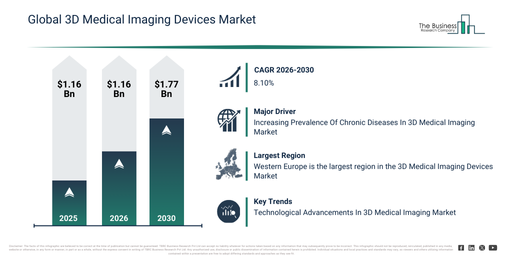
    The 3D medical imaging devices market size is anticipated to experience substantial growth over the coming years. It is projected to expand to $20.16 billion by 2030, demonstrating a compound annual growth rate (CAGR) of 8.1%. This expansion during the forecast period can be attributed to the rising adoption of AI-driven diagnostics, increased investments in precision medicine, the broadening of advanced imaging applications in oncology and cardiology, a growing demand for early disease detection, and the increasing integration of cloud-based imaging platforms. Significant trends for this period include the escalating integration of AI-enabled image reconstruction, the increasing uptake of high-resolution 3D imaging modalities, a wider application of advanced visualization software, the expansion of multi-modality imaging platforms, and a reinforced focus on diagnostic accuracy and speed.

    Access Your Free Sample Report for In-Depth Market Insights:

    https://www.thebusinessresearchcompany.com/sample.aspx?id=2513&type=smp

    Which Drivers Are Contributing To The Expansion Of The 3D Medical Imaging Devices Market?

    The future expansion of the 3D medical imaging market is anticipated to be propelled by the rising occurrence of chronic illnesses. Chronic disease refers to long-lasting health conditions that persist for three months or more. 3D medical imaging techniques, such as computed tomography (CT) scans and magnetic resonance imaging (MRI), are utilized to provide detailed, three-dimensional views of internal structures, enabling healthcare professionals to detect and diagnose chronic diseases at earlier stages. For instance, in January 2023, the National Library of Medicine, a US-based agency, reported that the number of people in the US aged 50 and older with at least one chronic condition is projected to increase by 99.5%, reaching 142.66 million, by 2050. Therefore, the growing prevalence of chronic diseases acts as a driving force for the 3D medical imaging market’s growth.

    What Segment Categories Are Covered In The 3D Medical Imaging Devices Market?

    The 3D medical imaging devices market covered in this report is segmented –

    1) By Type: Ultrasound, X-ray, CT Scan, Other Types

    2) By Application: Gynecology and Obstetrics, Cardiology, Neurology, Orthopedics, Oncology

    3) By End User: Diagnostic Centers, Hospitals, Research Centers

    Subsegments:

    1) By Ultrasound: 3D Or 4D Ultrasound, Contrast-Enhanced Ultrasound

    2) By X-Ray: 3D Mammography Or Tomosynthesis, Cone Beam CT Or CBCT For X-Ray Imaging, Fluoroscopy

    3) By CT Scan: Spiral Or Helical CT, Cone Beam CT Or CBCT, Dual-Energy CT

    4) By Other Types: MRI Or Magnetic Resonance Imaging, Positron Emission Tomography Or PET, Single Photon Emission Computed Tomography Or SPECT, 3D Endoscopic Imaging Systems

    What Trends Are Reshaping The Dynamics Of The 3D Medical Imaging Devices Market?

    Major companies operating in the 3D medical imaging market are innovating new immersive learning platforms to offer reliable services to customers. An immersive learning platform in 3D medical imaging employs hyper-realistic 3D medical imagery, derived from MRI and CT scans, to train medical professionals and students. For example, in August 2023, GigXR, Inc., a US-based innovative company and provider of holographic training solutions, launched the DICOM XR Library. The DICOM XR Library is a shared collection of 3D DICOM holograms that delivers ultra-realistic 3D medical visuals from computed tomography (CT) scans and magnetic resonance imaging (MRI). This offers 360-degree diagnostic imaging. This allows instructors to better prepare learners with medically accurate simulations for observation and assessment.

    Which Key Players Are Driving Competition In The 3D Medical Imaging Devices Market?

    Major companies operating in the 3d medical imaging devices market are GE Healthcare, Royal Philips, Siemens AG, Materialise NV, Toshiba Group, Samsung Medison Co. Ltd., Shimadzu Corporation, Analogic Corporation, Digirad Corporation, Del Medical Systems Group, Hologic Inc., Carestream Health Inc., Ambra Health, Fovia, Mach7 Technologies Ltd., Barco NV, TomTec Imaging Systems GmbH, Fujifilm Holdings Corporation, 3D Systems Healthcare, Canon Medical Systems Corporation, ContextVision AB, Curvebeam AI Ltd., EchoPixel Inc., EOS Imaging, Esaote SpA, Hitachi Healthcare, Intrasense, Konica Minolta Healthcare, Mobius Imaging, Neusoft Medical Systems, Pie Medical Imaging, Planmed Oy, Sectra, Shenzhen Mindray Bio-Medical Electronics, Varian Medical Systems, Ziehm Imaging GmbH

    Access The Complete Report For Deeper Market Insights:

    https://www.thebusinessresearchcompany.com/report/3d-medical-imaging-devices-global-market-report

    Which Region Is Projected To Lead The 3D Medical Imaging Devices Market During The Forecast Period?

    Western Europe was the largest region in the 3D medical imaging market in 2025. Asia-Pacific was the second-largest region in the global 3D medical imaging devices market. The regions covered in the 3D medical imaging devices market report are Asia-Pacific, South East Asia, Western Europe, Eastern Europe, North America, South America, Middle East, Africa.

    Request Your Customized 3D Medical Imaging Devices Market Research Report for Competitive Advantage:

    https://www.thebusinessresearchcompany.com/customise?id=2513&type=smp

    Browse Through More Reports Similar to the Global 3D Medical Imaging Devices Market 2026, By The Business Research Company

    3D Printed Medical Devices Global Market Report 2026

    https://www.thebusinessresearchcompany.com/report/3d-printed-medical-devices-global-market-report

    3D Diagnostic Imaging Services Global Market Report 2026

    https://www.thebusinessresearchcompany.com/report/3d-diagnostic-imaging-services-global-market-report

    3D Imaging Global Market Report 2026

    https://www.thebusinessresearchcompany.com/report/3d-imaging-global-market-report

    Get in touch with us:

    The Business Research Company: https://www.thebusinessresearchcompany.com/

    Americas +1 310-496-7795

    Asia +44 7882 955267 & +91 8897263534

    Europe +44 7882 955267

    Email us at info@tbrc.info

    Follow us on:

    LinkedIn: https://in.linkedin.com/company/the-business-research-company
  • 3D Dental Scanners Market 2026–2030: Forecast, Innovation, and Competitive Trends

    3D Dental Scanners Market 2026–2030: Forecast, Innovation, and Competitive Trends

    Uncover key drivers, emerging technologies, and competitive movements shaping the 3d neuroscience market from 2026–2035 with trusted insights from The Business Research Company

    What market expansion outlook does the 3D Dental Scanners Market show for the 2026–2030 period?

    The 3D dental scanners market has experienced significant expansion in recent years. This market is projected to grow from $2.19 billion in 2025 to $2.36 billion in 2026, at a compound annual growth rate (CAGR) of 7.9%. The increase observed in prior periods can be attributed to several factors: an escalation in orthodontic and prosthodontic treatment volumes, an increasing shift from traditional manual impressions to digital workflows, the rising installation of CBCT systems in dental practices, the expanding adoption of digital dentistry in hospitals and dental clinics, and the growing utilization of laboratory scanners for the fabrication of restorations.

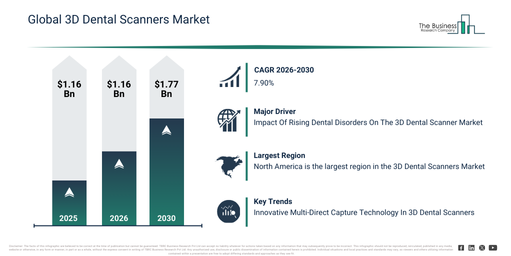
    The 3D dental scanners market size is projected to experience substantial expansion over the coming years. It is anticipated to reach a valuation of $3.19 billion by 2030, exhibiting a compound annual growth rate (CAGR) of 7.9%. This projected growth is primarily driven by an increasing need for chairside intraoral scanning solutions, a greater inclination towards minimally invasive and accurate dental procedures, the expanding incorporation of digital scanning into implantology planning, wider adoption of portable and handheld dental scanner usage, and enhanced investment in sophisticated 3D imaging technology within dental facilities. Key trends expected during this period include the broader use of intraoral 3D dental scanners for in-office diagnostics and treatment formulation, a surge in the application of CBCT scanners for intricate orthodontic and implantology imaging, heightened interest in handheld and portable dental scanners within clinical environments, broader deployment of laboratory dental scanners for precise prosthodontic workflows, and a developing preference for digital impressions instead of traditional mold-based methods.

    Access Your Free Sample Report for In-Depth Market Insights:

    https://www.thebusinessresearchcompany.com/sample.aspx?id=18204&type=smp

    What Drivers Are Shaping The Development Of The 3D Dental Scanners Market?

    An increasing incidence of dental disorders is anticipated to drive the expansion of the global 3D dental scanner market. These disorders encompass any abnormality, disease, or condition within the oral cavity that requires evaluation, diagnosis, and often treatment by dental professionals to maintain oral health and prevent complications. The surge in dental disorders is attributed to factors such as poor oral hygiene habits, increased consumption of sugary foods and beverages, and inadequate access to dental care services. 3D dental scanners are crucial for addressing dental disorders, enabling precise diagnosis, detailed treatment planning, and the creation of customized dental prosthetics with enhanced accuracy and efficiency. For instance, in October 2024, data from the Australian Institute of Health and Welfare, an Australia-based government agency, revealed that in 2022–23, there were around 87,400 hospitalizations for dental conditions that could have been avoided with timely treatment. Children aged 5–9 years exhibited the highest rate of preventable hospitalizations, at 12.3 per 1,000 population. Therefore, the growing prevalence of dental disorders is a key driver for the growth of the 3D dental scanner market.

    Which Segments Are Contributing To The Growth Of The 3D Dental Scanners Market?

    The 3D dental scanners market covered in this report is segmented –

    1) By Type: Desktop Or Laboratory 3D Dental Scanners, Intraoral 3D Dental Scanners, Hand-Held 3D Dental Scanners, Cone Beam Computerized Tomography

    2) By Application: Prosthodontics, Orthodontics, Implantology

    3) By End-User: Hospitals, Dental Clinics, Research And Academic Institutes

    Subsegments:

    1) By Desktop Or Laboratory 3D Dental Scanners: Optical Laboratory Scanners, Structured Light Laboratory Scanners

    2) By Intraoral 3D Dental Scanners: Wireless Intraoral Scanners, Wired Intraoral Scanners

    3) By Hand-Held 3D Dental Scanners: Laser-Based Hand-Held Scanners, Structured Light Hand-Held Scanners

    4) By Cone Beam Computerized Tomography (CBCT): Standard Field-Of-View CBCT Scanners, Extended Field-Of-View CBCT Scanners

    How Are New Market Trends Shaping The Landscape Of The 3D Dental Scanners Market?

    Leading companies in the dental 3D scanner market are concentrating on developing advanced technologies, such as multi-direct capture technology, to enhance scanning accuracy and efficiency, which facilitates more precise dental treatments and streamlined workflows. Multi-direct capture technology in 3D dental scanners refers to a technique where numerous images or scans are simultaneously acquired from various angles. For instance, in January 2024, Align Technology Inc., a US-based medical device company, introduced the iTero Lumina intraoral scanner. This scanner is notable for its unique ability to provide a 3X wider field of capture using a significantly smaller and lighter wand, which ensures faster scanning, greater precision, improved visualization, and a more comfortable user experience. It excels with a generous capture distance of up to 25 mm, simplifying the scanning of intricate oral regions like narrow or deep palates, edentulous spaces, and partially erupted teeth with minimal adjustments. This advanced technology effortlessly gathers extensive data and fine details, resulting in exceptional scan quality and photorealistic 3D models, thereby eliminating the need for bulky digital cameras and traditional cheek retractors.

    Who Are The Top-Performing Companies In The 3D Dental Scanners Market In Recent Years?

    Major companies operating in the 3d dental scanners market are Danaher Corporation, Dentsply Sirona Inc., Align Technology Inc., Midmark Corp., J. Morita Corporation, 3Shape Inc., Roland DG Corp., KaVo Dental GmbH, Amann Girrbach AG, Zirkonzahn, Carestream Health India Pvt. Ltd., Imes-icore GmbH, Planmeca Group Company, Hint-ELS GmbH, Dental Wings Inc., Condor Technologies Inc., Imetric 3D SA, Medit Corporation, Owandy Radiology, 3M Co.

    Access The Complete Report For Deeper Market Insights:

    https://www.thebusinessresearchcompany.com/report/3d-dental-scanners-global-market-report

    Which Region Currently Holds The Largest Share Of The 3D Dental Scanners Market?

    North America was the largest region in the 3D dental scanners market in 2025. Asia-Pacific is expected to be the fastest-growing region in the forecast period. The regions covered in the 3D dental scanners market report are Asia-Pacific, South East Asia, Western Europe, Eastern Europe, North America, South America, Middle East, Africa.

    Request Your Customized 3D Dental Scanners Market Research Report for Competitive Advantage:

    https://www.thebusinessresearchcompany.com/customise?id=18204&type=smp

    Browse Through More Reports Similar to the Global 3D Dental Scanners Market 2026, By The Business Research Company

    3D Dental Scanners Global Market Report 2026

    https://www.thebusinessresearchcompany.com/report/3d-dental-scanners-global-market-report

    Dental Diagnostic Imaging Devices And Equipment Global Market Report 2026

    https://www.thebusinessresearchcompany.com/report/dental-diagnostic-imaging-devices-and-equipment-global-market-report

    3D Scanning Global Market Report 2026

    https://www.thebusinessresearchcompany.com/report/3d-scanning-global-market-report

    Get in touch with us:

    The Business Research Company: https://www.thebusinessresearchcompany.com/

    Americas +1 310-496-7795

    Asia +44 7882 955267 & +91 8897263534

    Europe +44 7882 955267

    Email us at info@tbrc.info

    Follow us on:

    LinkedIn: https://in.linkedin.com/company/the-business-research-company
  • Global Artificial Intelligence (AI) Electrocardiogram (ECG) Analysis Market Set for Strong Expansion, Reaching $4.81 Billion With 19% CAGR by 2030

    Global Artificial Intelligence (AI) Electrocardiogram (ECG) Analysis Market Set for Strong Expansion, Reaching $4.81 Billion With 19% CAGR by 2030

    Uncover key drivers, emerging technologies, and competitive movements shaping the diamond wire saw market from 2026–2035 with trusted insights from The Business Research Company

    What is the expected shift in the Artificial Intelligence (AI) Electrocardiogram (ECG) Analysis Market’s size between 2026 and 2030?

    The artificial intelligence (ai) electrocardiogram (ecg) analysis market size has experienced swift expansion recently. This market is projected to expand from $2.01 billion in 2025 to $2.4 billion in 2026, demonstrating a compound annual growth rate (CAGR) of 19.3%. Historically, this expansion has been driven by factors such as the limited availability of AI-based ECG analysis tools, prevalent manual ECG interpretation practices, an increasing incidence of cardiac disorders, the advancing digitization of healthcare, and the reliance on hospital-based ECG systems.

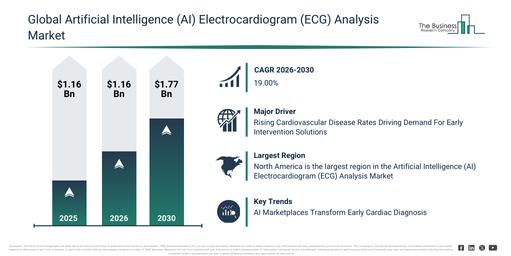
    The artificial intelligence (AI) electrocardiogram (ECG) analysis market size is projected to experience substantial growth in the coming years. Its valuation is expected to reach $4.81 billion by 2030, demonstrating a compound annual growth rate (CAGR) of 19.0%. This expansion during the forecast period can be primarily attributed to developments in deep learning algorithms for ECG, the increasing integration of wearable and portable ECG devices, the broadening of telehealth and remote monitoring services, heightened investment in cloud-based healthcare solutions, and regulatory approvals for AI-assisted diagnostic instruments. Prominent trends observed throughout the forecast timeframe include the rising deployment of AI-driven ECG analysis within hospitals, the incorporation of wearable ECG monitoring devices with AI platforms, a surging need for remote ECG monitoring and telecardiology services, a concentrated effort on real-time cardiac data visualization and supportive decision-making, and the wider availability of cloud-based ECG analysis solutions.

    Access Your Free Sample Report for In-Depth Market Insights:

    https://www.thebusinessresearchcompany.com/sample.aspx?id=27202&type=smp

    Which Drivers Are Shaping Strategic Decisions In The Artificial Intelligence (AI) Electrocardiogram (ECG) Analysis Market?

    The increasing burden of cardiovascular diseases is projected to drive the expansion of the AI powered electrocardiogram (ECG) analysis market going forward. Cardiovascular diseases are conditions that affect the heart and blood vessels, including coronary heart disease, heart failure, stroke, and hypertension. The rise in cardiovascular disease burden stems from factors such as aging populations, metabolic risks, poor diet, and sedentary lifestyles, which collectively heighten the risk of cardiac complications. AI powered ECG analysis supports healthcare by enabling the early detection of cardiac abnormalities, streamlining diagnostic procedures, and enhancing clinical decision-making to improve patient outcomes. For instance, in October 2024, according to the Centers for Disease Control and Prevention, a US-based government agency, in 2023, cardiovascular disease claimed 919,032 lives, accounting for one in every three deaths. Coronary heart disease remained the most prevalent form of heart disease, and notably, about one in six deaths from cardiovascular diseases occurred among adults younger than 65 years. Therefore, the growing prevalence of cardiovascular diseases is fostering the adoption of AI powered ECG analysis.

    What Segment Classifications Make Up The Artificial Intelligence (AI) Electrocardiogram (ECG) Analysis Market?

    The artificial intelligence (ai) electrocardiogram (ecg) analysis market covered in this report is segmented –

    1) By Component: Software, Hardware, Services

    2) By Type: On-Premise, Cloud-Based

    3) By Medical Condition: Cardiac Arrhythmias, Heart Failure, Ischemic Heart Disease And Coronary Artery Disease

    4) By Application: Hospital, Clinic, Other Applications

    Subsegments:

    1) By Software: Artificial Intelligence Electrocardiogram (ECG) Interpretation Platforms, Machine Learning-Based Electrocardiogram Diagnostic Tools, Deep Learning Electrocardiogram (ECG) Analysis Software, Cloud-Based Electrocardiogram Analysis Systems, Real-Time Electrocardiogram Data Visualization Software

    2) By Hardware: Wearable Electrocardiogram Monitoring Devices, Portable Electrocardiogram Acquisition Units, Smart Electrocardiogram Patches, Multi-Lead Electrocardiogram Recording Machines, Sensor-Integrated Electrocardiogram Devices

    3) By Services: Remote Electrocardiogram Monitoring Services, Electrocardiogram Data Annotation And Labeling Services, Artificial Intelligence Algorithm Training And Validation For Electrocardiogram, Technical Support And Software Integration For Electrocardiogram, Clinical Electrocardiogram Reporting And Interpretation Services

    What Trends Are Expected To Impact The Competitive Landscape Of The Artificial Intelligence (AI) Electrocardiogram (ECG) Analysis Market?

    Major companies operating within the artificial intelligence (AI) electrocardiogram (ECG) analysis market are concentrating on developing advanced technological solutions, notably artificial intelligence marketplaces, to optimize early cardiac diagnosis and enhance clinical workflows. These artificial intelligence marketplaces function as central platforms, offering access to numerous validated AI diagnostic tools that empower healthcare providers to integrate sophisticated algorithms into their clinical practices for expedited and more accurate diagnoses. As an illustration, in July 2025, Koninklijke Philips N.V., a Netherlands-based health technology company, introduced Philips’ electrocardiogram artificial intelligence marketplace. This advanced platform is engineered to directly incorporate artificial intelligence-powered diagnostic tools into its IntelliSpace ECG and cardiograph systems. The marketplace initially features FDA-cleared algorithms, starting with Anumana’s electrocardiogram artificial intelligence low ejection fraction algorithm, delivering these instruments at the point of care. This innovation subsequently accelerates ECG review, enables earlier detection of heart failure through the analysis of standard 12-lead resting ECGs, and improves both clinical efficiency and diagnostic accuracy.

    Which Leading Companies Dominate The Artificial Intelligence (AI) Electrocardiogram (ECG) Analysis Market Share?

    Major companies operating in the artificial intelligence (ai) electrocardiogram (ecg) analysis market are iRhythm Technologies Inc., Viz.ai Inc., Tempus Labs Inc., HeartSciences Inc., Neurosoft Software Production S.A., Tricog Health Services Pvt. Ltd., Anumana Inc., IDOVEN S.L., Ultromics Limited., VUNO Inc., Cardio.AI Inc., Powerful Medical s.r.o., RSIP Vision Ltd., AccurKardia Inc., Cardiologs Technologies SAS, Cardiomatics Sp. z o.o., Cordys Analytics B.V., PulseAI Ltd., Vektor Medical Inc., DeepECG Inc

    Access The Complete Report For Deeper Market Insights:

    https://www.thebusinessresearchcompany.com/report/artificial-intelligence-ai-electrocardiogram-ecg-analysis-global-market-report

    How Does The Artificial Intelligence (AI) Electrocardiogram (ECG) Analysis Market Perform Across Major Global Regions?

    North America was the largest region in the artificial intelligence (AI) electrocardiogram (ECG) analysis market in 2025. Asia-Pacific is expected to be the fastest-growing region in the forecast period. The regions covered in the artificial intelligence (AI) electrocardiogram (ecg) analysis market report are Asia-Pacific, South East Asia, Western Europe, Eastern Europe, North America, South America, Middle East, Africa.

    Request Your Customized Artificial Intelligence (AI) Electrocardiogram (ECG) Analysis Market Research Report for Competitive Advantage:

    https://www.thebusinessresearchcompany.com/customise?id=27202&type=smp

    Browse Through More Reports Similar to the Global Artificial Intelligence (AI) Electrocardiogram (ECG) Analysis Market 2026, By The Business Research Company

    Crack Free Concrete Global Market Report 2026

    https://www.thebusinessresearchcompany.com/report/crack-free-concrete-global-market-report

    Polished Concrete Global Market Report 2026

    https://www.thebusinessresearchcompany.com/report/polished-concrete-global-market-report

    Concrete Materials Global Market Report 2026

    https://www.thebusinessresearchcompany.com/report/concrete-materials-global-market-report

    Get in touch with us:

    The Business Research Company: https://www.thebusinessresearchcompany.com/

    Americas +1 310-496-7795

    Asia +44 7882 955267 & +91 8897263534

    Europe +44 7882 955267

    Email us at info@tbrc.info

    Follow us on:

    LinkedIn: https://in.linkedin.com/company/the-business-research-company
  • Artificial Eye Market Growth Projection: Expected to Surpass $3.15 Billion by 2030 at 7.8% CAGR

    Artificial Eye Market Growth Projection: Expected to Surpass $3.15 Billion by 2030 at 7.8% CAGR

    Uncover key drivers, emerging technologies, and competitive movements shaping the deoxyribonucleic acid (dna)–based personalized nutrition kit market from 2026–2035 with trusted insights from The Business Research Company

    What growth pattern is forecast for the Artificial Eye Market size between 2026 and 2035?

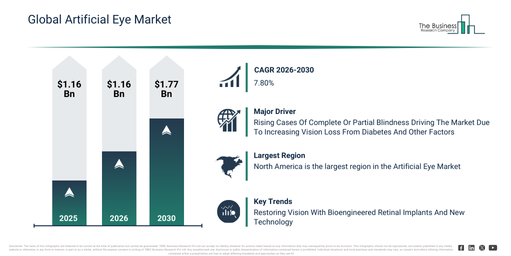
    The artificial eye market size has demonstrated significant growth in recent years. It is projected to expand from $2.16 billion in 2025 to $2.34 billion in 2026, exhibiting a compound annual growth rate (CAGR) of 8.0%. The expansion observed historically can be attributed to factors like the incidence of eye trauma, cases of cancer-related enucleation, the demand for cosmetic rehabilitation, the growth of hospital ophthalmic services, and improvements in prosthetic technology.

    The artificial eye market is projected to experience robust expansion in the coming years. This market is anticipated to reach $3.16 billion by 2030, driven by a compound annual growth rate (CAGR) of 7.8%. This expansion during the forecast period is primarily fueled by factors such as the increasing adoption of 3D printing, the rising demand for personalized prosthetics, enhanced access to healthcare, a greater emphasis on psychological rehabilitation, and breakthroughs in material science. Key developments observed during this period involve the prevalence of custom-made ocular prosthetics, an expanding application of digital eye printing, a strong preference for better aesthetic results, the development of lightweight and biocompatible materials, and increasing public understanding of ocular rehabilitation.

    Access Your Free Sample Report for In-Depth Market Insights:

    https://www.thebusinessresearchcompany.com/sample.aspx?id=23311&type=smp

    Which Drivers Are Impacting Market Performance In The Artificial Eye Market?

    The anticipated expansion of the artificial eye market is primarily fueled by the growing prevalence of individuals experiencing complete or partial blindness. This condition signifies a substantial or total loss of visual perception, hindering the ability to discern light, shapes, or environments, thus gravely affecting daily routines and overall well-being. The surge in individuals afflicted by complete or partial blindness stems from the increasing incidence of retinal degenerative diseases, which progressively harm photoreceptor cells and lead to irreversible vision impairment. Artificial eye technology offers innovative remedies, such as bioengineered retinal implants, designed to restore or augment vision, thereby significantly enhancing the quality of life for those affected. For instance, a report from May 2024 by the East Sussex Joint Strategic Needs Assessment, a UK-based public health body, indicated that approximately 2 million people in the UK currently suffer from some degree of sight loss, a figure expected to climb to 2.7 million by 2030. Consequently, the escalating number of individuals grappling with complete or partial blindness is a significant catalyst for the expansion of the artificial eye market.

    What Segment Types Are Examined In The Artificial Eye Market?

    The artificial eye market covered in this report is segmented –

    1) By Product: Integrated, Semi-Integrated, Non-Integrated

    2) By Technology: Passive Prosthetic Technology, Mechanical

    3) By Distribution Channel: Direct Sales, Online Sales, Third Party Distributors, Specialized Ocular Prosthetic Clinics

    4) By Application: Orbital Support And Aesthetic Restoration, Cosmetic Enhancement, Medical Treatment, Reconstructive Surgery

    5) By End User: Hospitals, Ambulatory Surgical Centers, Other End Users

    Subsegments:

    1) Integrated: Hydroxyapatite (HA), Porous Polyethylene (Medpor), Bioceramic

    2) Semi-Integrated: Acrylic-Based, Silicone-Based, Polymer Composite

    3) Non-Integrated: Glass Prosthetic Eye, Acrylic Prosthetic Eye, Digital-Printed Prosthetic Eye

    Which Trends Are Guiding The Evolution Of The Artificial Eye Market?

    Major companies engaged in the artificial eye industry are concentrating on creating advancements such as bioengineered retinal implants, intending to restore vision for patients afflicted with retinal degenerative diseases. A bioengineered retinal implant is an artificially created, laboratory-designed device that substitutes or augments damaged retinal tissue to reinstate or improve eyesight. Its application is focused on individuals with retinal degenerative diseases, by replacing or enhancing compromised retinal function. For instance, in May 2024, LambdaVision Inc., a US-based biotechnology firm, announced the successful completion of the first phase of its seed funding round, intended to propel preclinical studies for its protein-based artificial retina. This innovative bioengineered retinal implant utilizes bacteriorhodopsin, a protein sensitive to light, to mimic the eye’s natural photoreceptor function, potentially providing a more seamless approach to vision restoration than existing electronic implants. Additionally, the company is pioneering manufacturing methods in microgravity on the International Space Station, which could enhance production quality and efficiency, thereby establishing a new standard for precision in retinal prosthetics.

    Who Are The Major Companies Operating In The Artificial Eye Market?

    Major companies operating in the artificial eye market are Midwest Eye Laboratories Inc., Advanced Artificial Eyes, Boston Ocular Prosthetics Inc., Erickson Laboratories Inc., F.Ad. Muller Sohne GmbH & Co KG, Irises Unlimited Inc., Ocular Prosthetics Incorporated, International Prosthetic Eye Center Private Limited, New Zealand Prosthetic Eye Service, Southeastern Ocularists Inc., The Artificial Eye Co., John O. Hughes Prosthetic Eye Laboratory, Chadwick Optical Inc., Prosthetic Eye Center of New York, American Artificial Eye Center, Hanger Ocular Prosthetics, Romford Artificial Eye Service, Artificial Eye Services Australia, Queensland Artificial Eye Service, Moorfields Ocular Prosthetics Department, Artificial Eye Clinic of India, National Artificial Eye Service

    Access The Complete Report For Deeper Market Insights:

    https://www.thebusinessresearchcompany.com/report/artificial-eye-global-market-report

    Which Region Is Anticipated To See The Fastest Growth In The Artificial Eye Market?

    North America was the largest region in the artificial eye market in 2025. Asia-Pacific is expected to be the fastest-growing region in the forecast period. The regions covered in the artificial eye market report are Asia-Pacific, South East Asia, Western Europe, Eastern Europe, North America, South America, Middle East, Africa.

    Request Your Customized Artificial Eye Market Research Report for Competitive Advantage:

    https://www.thebusinessresearchcompany.com/customise?id=23311&type=smp

    Browse Through More Reports Similar to the Global Artificial Eye Market 2026, By The Business Research Company

    Eye Testing Equipment Global Market Report 2026

    https://www.thebusinessresearchcompany.com/report/eye-testing-equipment-global-market-report

    Eye Tracking Global Market Report 2026

    https://www.thebusinessresearchcompany.com/report/eye-tracking-global-market-report

    Eye Health Supplements Global Market Report 2026

    https://www.thebusinessresearchcompany.com/report/eye-health-supplements-global-market-report

    Get in touch with us:

    The Business Research Company: https://www.thebusinessresearchcompany.com/

    Americas +1 310-496-7795

    Asia +44 7882 955267 & +91 8897263534

    Europe +44 7882 955267

    Email us at info@tbrc.info

    Follow us on:

    LinkedIn: https://in.linkedin.com/company/the-business-research-company
  • Artificial Disc Market Forecast 2026–2035: How to Leverage Market Growth

    Artificial Disc Market Forecast 2026–2035: How to Leverage Market Growth

    Uncover key drivers, emerging technologies, and competitive movements shaping the deep brain stimulation in parkinson`s disease market from 2026–2035 with trusted insights from The Business Research Company

    How much larger will the Artificial Disc Market be in 2030 compared with 2026?

    The artificial disc market size has experienced rapid growth in recent years. It is anticipated to increase from $3.19 billion in 2025 to $3.71 billion in 2026, achieving a compound annual growth rate (CAGR) of 16.0%. This historical growth can be attributed to the escalating prevalence of degenerative spine diseases, a rise in the adoption of disc replacement over fusion, the availability of sophisticated spinal implant designs, the expansion of spine surgery centers, and improved surgical techniques.

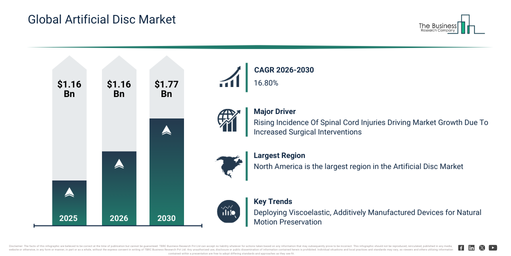
    The artificial disc market is projected to experience substantial expansion over the upcoming years. This market is anticipated to reach a valuation of $6.9 billion by 2030, demonstrating a compound annual growth rate (CAGR) of 16.8%. This projected growth stems from several factors, including an expanding elderly demographic experiencing spinal ailments, a heightened demand for treatments that preserve motion, the proliferation of outpatient spine interventions, increased capital dedicated to innovative spinal implants, and a rising need for quicker post-operative recovery. Key developments expected during this timeframe encompass a greater uptake of spine implants designed to maintain motion, an escalating requirement for cervical disc replacement operations, the wider application of sophisticated biomaterials, an increase in minimally invasive spinal operations, and a sharper emphasis on the durability and efficacy of implants over time.

    Access Your Free Sample Report for In-Depth Market Insights:

    https://www.thebusinessresearchcompany.com/sample.aspx?id=13283&type=smp

    What Drivers Are Guiding Growth Patterns In The Artificial Disc Market?

    The increasing occurrence of spinal cord injuries is anticipated to boost the expansion of the artificial disc market moving ahead. These injuries involve any trauma, damage, or detriment to the spinal column’s components, such as bones (vertebrae), intervertebral discs, ligaments, muscles, nerves, and other supportive tissues. The surge in spinal cord injuries stems from the growing frequency of severe motor vehicle accidents and falls from elevated places, identified as primary contributors to acute traumatic damage to the spinal column and nerves worldwide. Artificial discs provide advantages for spinal cord injuries by serving as a surgical alternative to spinal fusion, re-establishing typical movement, alleviating disc-related back pain, providing adaptability, and averting potential complications associated with fusion procedures. For example, data from July 2024, cited by the Journal of Global Health, a Scotland-based open-access academic publication, indicated that in an investigation involving 2.22 million young individuals, scoliosis was identified in 1.20% of instances, with a greater occurrence among girls (1.57 times more probable than boys). Peak rates reached 1.42% for girls aged 13-14 and 1.07% for boys aged 15-16. Scoliosis appeared most frequently in the central region (1.54%) and was largely mild, exhibiting no connection to altitude or latitude. Consequently, the increasing prevalence of spinal cord injuries is stimulating the expansion of the artificial disc market.

    Which Segments Are Driving Activity In The Artificial Disc Market?

    The artificial disc market covered in this report is segmented –

    1) By Type: Cervical Disc, Artificial Disc, Lumbar

    2) By Material: Metal And Plastic, Metal

    3) By Indication: Spinal Trauma, Degenerative Spine Disease

    4) By End User: Hospitals, Specialty Clinics

    Subsegments:

    1) By Cervical Disc: Single-Level Cervical Discs, Multi-Level Cervical Discs

    2) By Artificial Disc: Total Disc Replacement, Semi-Constrained Disc Implants, Motion-Preserving Disc Implants

    3) By Lumbar Disc: Single-Level Lumbar Discs, Multi-Level Lumbar Discs

    What Trends Are Projected To Support The Growth Of The Artificial Disc Market?

    Leading companies in the artificial disc market are increasingly developing next-generation prostheses that integrate biomechanical sophistication with surgical simplicity. These innovations are designed to better emulate natural spinal movement, minimize wear, and streamline implantation procedures. Such devices frequently utilize advanced materials, including additively manufactured metals, and viscoelastic cores to restore full physiological motion in all six degrees of freedom, thereby enhancing long-term outcomes and expanding product adoption. For instance, in February 2024, NGMedical, a German medical device manufacturer, launched its MOVE-C artificial cervical disc in the United Arab Emirates, representing a key step in its global commercialization. The initial MOVE-C implant procedure was successfully carried out in Abu Dhabi. The MOVE-C prosthesis incorporates a second-generation viscoelastic design, featuring axial damping and progressive resistance, combined with a simplified implantation technique akin to that of a cervical cage, making it user-friendly for surgeons. Notably, MOVE-C is the pioneering disc to employ additively manufactured titanium endplates and eliminates the need for polyethylene cores, which can contribute to reduced long-term wear.

    Which Major Firms Are Strengthening Their Position In The Artificial Disc Market?

    Major companies operating in the artificial disc market are Johnson & Johnson, Medtronic plc, Stryker Corporation, Zimmer Biomet Holding Inc., SIGNUS Medizintechnik GmbH, Globus Medical Inc., Medacta International SA, Aesculap Inc., NuVasive Inc., Orthofix Medical Inc., Spineart, VTI – Vertebral Technologies Inc., Life Spine Inc., Spinal Elements, DePuy Synthes, Neuro France Implants, Paradigm Spine LLC, Xenco Medical, Osimplant, Synergy Spine Solutions Inc., Ranier Technology Limited, FH Orthopedics S.A.S, X-spine Systems Inc., Aditus Medical GmbH, AxioMed LLC

    Access The Complete Report For Deeper Market Insights:

    https://www.thebusinessresearchcompany.com/report/artificial-disc-global-market-report

    Which Region Is Anticipated To See The Fastest Growth In The Artificial Disc Market?

    North America was the largest region in the artificial disc market in 2025. Asia-Pacific is expected to be the fastest-growing region in the forecast period. The regions covered in the artificial disc market report are Asia-Pacific, South East Asia, Western Europe, Eastern Europe, North America, South America, Middle East, Africa.

    Request Your Customized Artificial Disc Market Research Report for Competitive Advantage:

    https://www.thebusinessresearchcompany.com/customise?id=13283&type=smp

    Browse Through More Reports Similar to the Global Artificial Disc Market 2026, By The Business Research Company

    Slip Disc Global Market Report 2026

    https://www.thebusinessresearchcompany.com/report/slip-disc-global-market-report

    Industrial Robots Warehousing And Storage Robots Global Market Report 2026

    https://www.thebusinessresearchcompany.com/report/industrial-robots-warehousing-and-storage-robots-global-market-report

    Artificial Intelligence In Accounting Global Market Report 2026

    https://www.thebusinessresearchcompany.com/report/artificial-intelligence-in-accounting-global-market-report

    Get in touch with us:

    The Business Research Company: https://www.thebusinessresearchcompany.com/

    Americas +1 310-496-7795

    Asia +44 7882 955267 & +91 8897263534

    Europe +44 7882 955267

    Email us at info@tbrc.info

    Follow us on:

    LinkedIn: https://in.linkedin.com/company/the-business-research-company
  • Global Artificial Cartilage Implant Market 2026–2030: Forecast Insights for Business Planning

    Global Artificial Cartilage Implant Market 2026–2030: Forecast Insights for Business Planning

    Uncover key drivers, emerging technologies, and competitive movements shaping the cybersecurity in robotics market from 2026–2035 with trusted insights from The Business Research Company

    Starting from its 2026 valuation, what market size is the Artificial Cartilage Implant Market expected to reach by 2030?

    The artificial cartilage implant market size has shown strong expansion in recent years. It is forecast to rise from $1.54 billion in 2025 to $1.69 billion in 2026, demonstrating a compound annual growth rate (CAGR) of 9.7%. The market’s historic growth can be linked to the limited availability of advanced cartilage implant materials, an increase in orthopedic surgical procedures, growing awareness regarding joint health, a deficiency in local manufacturing capabilities, and a reliance on imported implants.

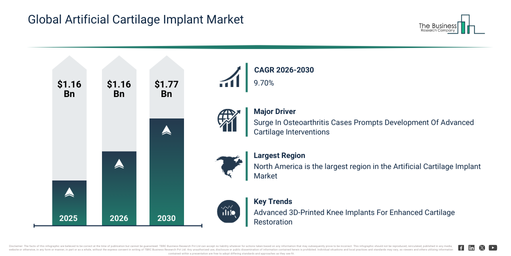
    The artificial cartilage implant market is projected to experience substantial expansion in the coming years. By 2030, its valuation is anticipated to reach $2.45 billion, progressing at a compound annual growth rate (CAGR) of 9.7%. This anticipated growth can be attributed to several factors, including advancements in synthetic and intelligent implants, the increasing need for knee and hip replacement surgeries, the proliferation of ambulatory surgical centers, the growing uptake of 3D-printed personalized implants, and heightened investment in orthopedic research and its clinical applications. Key trends during this period are expected to encompass a surge in osteoarthritis and joint degeneration cases, the broader adoption of less invasive orthopedic techniques, a heightened demand for biocompatible and long-lasting implants, an increase in orthopedic research and clinical trial activities, and the development of customized and patient-specific implant solutions.

    Access Your Free Sample Report for In-Depth Market Insights:

    https://www.thebusinessresearchcompany.com/sample.aspx?id=27201&type=smp

    What Drivers Are Driving Adoption Within The Artificial Cartilage Implant Market?

    An increasing occurrence of osteoarthritis is anticipated to drive the expansion of the artificial cartilage implant market in the future. Osteoarthritis is a degenerative condition affecting joints, marked by the progressive deterioration of cartilage, which results in discomfort, rigidity, and limited movement. This surge in osteoarthritis cases stems from increasing obesity, as excess weight exerts additional strain on joints, accelerating cartilage degradation and overall joint decline. Artificial cartilage implants function by substituting compromised cartilage, thereby restoring even joint surfaces and diminishing friction, which in turn relieves pain, enhances mobility, and decelerates the progression of joint degeneration. For example, data from August 2023, provided by the Institute for Health Metrics and Evaluation, a US-based health research center, forecasts that by 2050, approximately 1 billion individuals will be affected by osteoarthritis. The primary sites where osteoarthritis manifests are the knees and hands. Projections indicate that by 2050, knee osteoarthritis will see a 75% rise, while hand osteoarthritis will increase by 50%. Consequently, the growing prevalence of osteoarthritis is serving as a key driver for the expansion of the artificial cartilage implant market.

    How Is The Artificial Cartilage Implant Market Organized Into Various Segments?

    The artificial cartilage implant market covered in this report is segmented –

    1) By Type Of Implant: Biological Implants, Synthetic Implants, Composite Implants, Smart Implants

    2) By Product Type: Upper Extremity Joints, Lower Extremity Joints, Vertebral Joints

    3) By Distribution Channel: Direct Sales, Online Retail, Distributors, Specialty Clinics

    4) By Application: Knee Replacement, Hip Replacement, Shoulder Reconstruction, Ankle Replacement

    5) By End-User: Hospitals, Orthopedic Clinics, Ambulatory Surgical Centers, Research Institutes, Other End-Users

    Subsegments:

    1) By Biological Implants: Autografts, Allografts, Xenografts, Tissue-Engineered Implants

    2) By Synthetic Implants: Polymer-Based Implants, Hydrogel Implants, Silicone Implants, Polyurethane Implants

    3) By Composite Implants: Polymer-Ceramic Composites, Polymer-Metal Composites, Hydrogel-Ceramic Composites, Bioactive Glass Composites

    4) By Smart Implants: Sensor-Integrated Implants, Drug-Eluting Implants, Shape-Memory Implants, Stimuli-Responsive Implants

    Which Trends Are Influencing The Performance And Direction Of The Artificial Cartilage Implant Market?

    Key companies operating in the artificial cartilage implant market are concentrating on developing innovative products, such as three-dimensional (3D) printed knee implants, to boost joint compatibility and deliver enduring solutions for osteoarthritis. Three-dimensional (3D) printed knee implants represent custom-fit joint replacements, constructed layer by layer with advanced 3D printing technology, providing an accurate anatomical fit and improved joint movement while supporting swifter healing. For example, in July 2025, Nanochon, a US-based medical device startup, unveiled Chondrograft, which obtained approval from Health Canada. This product is specifically formulated to replace absent or injured cartilage in the knee using a synthetic, high-performance material. The implant replicates the porosity and structure of natural cartilage, allowing it to integrate with the body and encourage the growth of new tissue. This ready-to-use solution offers a minimally invasive alternative to conventional therapies like knee replacement and is designed to reinstate knee cartilage function and defer or avert the requirement for more intrusive surgical procedures.

    Who Are The Primary Competitors In The Global Artificial Cartilage Implant Market?

    Major companies operating in the artificial cartilage implant market are Johnson & Johnson, B. Braun Melsungen AG, Medtronic plc, Zimmer Biomet Holdings Inc., Smith & Nephew plc, Stryker Corporation, Arthrex Inc., Conmed Corporation, Orthofix Medical, Corin Group, Anika Therapeutics Inc., Vericel Corporation, Tissue Regenix Group plc, Nusurface, Uteshiya Medicare Inc., Sparta Biomedical Inc., BioPoly LLC, Orthocell Ltd, Sartorius CellGenix GmbH, CytoSeek Limited

    Access The Complete Report For Deeper Market Insights:

    https://www.thebusinessresearchcompany.com/report/artificial-cartilage-implant-global-market-report

    Which Global Regions Are Shaping The Competitive Landscape Of The Artificial Cartilage Implant Market?

    North America was the largest region in the artificial cartilage implant market in 2025. Asia-Pacific is expected to be the fastest-growing region in the forecast period. The regions covered in the artificial cartilage implant market report are Asia-Pacific, South East Asia, Western Europe, Eastern Europe, North America, South America, Middle East, Africa.

    Request Your Customized Artificial Cartilage Implant Market Research Report for Competitive Advantage:

    https://www.thebusinessresearchcompany.com/customise?id=27201&type=smp

    Browse Through More Reports Similar to the Global Artificial Cartilage Implant Market 2026, By The Business Research Company

    Doors Global Market Report 2026

    https://www.thebusinessresearchcompany.com/report/doors-global-market-report

    Commercial Overhead Doors Global Market Report 2026

    https://www.thebusinessresearchcompany.com/report/commercial-overhead-doors-global-market-report

    Aircraft Doors Global Market Report 2026

    https://www.thebusinessresearchcompany.com/report/aircraft-doors-global-market-report

    Get in touch with us:

    The Business Research Company: https://www.thebusinessresearchcompany.com/

    Americas +1 310-496-7795

    Asia +44 7882 955267 & +91 8897263534

    Europe +44 7882 955267

    Email us at info@tbrc.info

    Follow us on:

    LinkedIn: https://in.linkedin.com/company/the-business-research-company
  • Articulating Paper Forceps Market Outlook 2026–2035: Growth Drivers and Industry Forecast

    Articulating Paper Forceps Market Outlook 2026–2035: Growth Drivers and Industry Forecast

    Uncover key drivers, emerging technologies, and competitive movements shaping the creator economy market from 2026–2035 with trusted insights from The Business Research Company

    Across 2026–2030, what is the expected market valuation path of the Articulating Paper Forceps Market?

    The articulating paper forceps market has demonstrated robust growth in recent years. It is anticipated to expand from $1.23 billion in 2025 to $1.31 billion in 2026, achieving a compound annual growth rate (CAGR) of 6.5%. The expansion witnessed in the historic period can be attributed to factors such as the conventional reliance on stainless steel instruments, insufficient knowledge of ergonomic designs, underdeveloped dental and surgical infrastructure, manual procurement procedures, and a dependency on local suppliers.

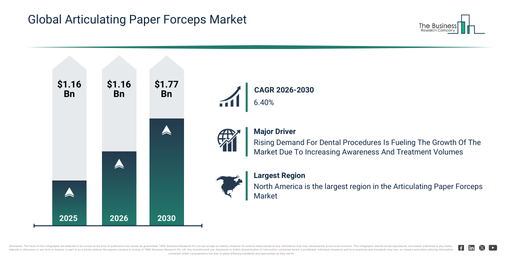
    The articulating paper forceps market is anticipated to experience robust expansion over the coming years, with its value projected to reach $1.68 billion by 2030, driven by a compound annual growth rate (CAGR) of 6.4%. This growth during the forecast period is propelled by factors such as technological advancements in lightweight and durable materials, an increasing adoption of minimally invasive procedures, rising investment in dental and surgical clinics, the expansion of e-commerce distribution channels, and a growing focus on multi-specialty surgical tools. Key developments expected in this period encompass a rising demand for precision dental instruments, the adoption of ergonomic and lightweight forceps designs, increasing use in multidisciplinary surgical applications, a growing preference for sterilizable and reusable materials, and the expansion of online medical equipment distribution channels.

    Access Your Free Sample Report for In-Depth Market Insights:

    https://www.thebusinessresearchcompany.com/sample.aspx?id=27200&type=smp

    Which Drivers Are Supporting The Rise Of The Articulating Paper Forceps Market?

    The expanding requirement for dental procedures is anticipated to fuel the expansion of the articulating paper forceps market in the future. These procedures involve medical interventions on the teeth, gums, and jaw aimed at identifying, preventing, or addressing oral health concerns. The increasing number of dental procedures stems from a greater public understanding of oral health, prompting more individuals to seek routine examinations and timely interventions like cleanings, cavity repairs, and gum maintenance. Articulating paper forceps are instrumental in these dental procedures, offering vital instruments that enable dentists to precisely evaluate bite alignment, thus ensuring successful treatment and enhanced oral function. For example, in August 2024, the British Society of Dental Hygiene and Therapy (BSDHT), a UK-based dental hygienist and dental therapist organization, reported that 34 million dental procedures were carried out in 2023–2024, marking a 4.3% increase from 2022–2023. Furthermore, the total dental activity units climbed to 73 million, a 3.4% rise from 2022 to 2023. Consequently, the heightened demand for dental procedures is boosting the growth of the articulating paper forceps market. The increasing occurrence of dental disorders is anticipated to stimulate the expansion of the articulating paper forceps market in the coming years. Dental disorders encompass various conditions impacting the teeth, gums, and adjacent tissues, resulting in problems like tooth decay, gum disease, infections, or improper bite alignment. The escalation in dental disorders is attributable to the growing intake of sugary and processed foods, which promotes tooth decay and gum ailments such as cavities and gingivitis. Articulating paper forceps play a vital role in identifying and managing dental disorders by enabling dentists to precisely assess bite alignment, which is essential for correcting malocclusion and avoiding uneven wear on teeth. As an illustration, in January 2025, the American Cancer Society, a US-based professional organization, predicted roughly 59,660 new instances of oral cavity and oropharyngeal cancer in the United States, with about 12,770 associated fatalities projected for that year. Consequently, the growing prevalence of dental disorders is fostering market growth for articulating paper forceps.

    What Segments Are Identified Within The Structure Of The Articulating Paper Forceps Market?

    The articulating paper forceps market covered in this report is segmented –

    1) By Type: Straight Articulating Paper Forceps, Curved Articulating Paper Forceps

    2) By Material: Stainless Steel, Titanium, Plastic, Carbon Fiber

    3) By Application: Dental Procedures, Occlusal Adjustments, Restorative Dentistry, Prosthodontics

    4) By Distribution: Direct Sales, Online Sales, Medical Supply Distributors

    5) By End User: Hospitals, Dental Clinics, Ambulatory Surgical Centers, Research Institutes

    Subsegments:

    1) By Straight Articulating Paper Forceps: Standard Straight Forceps, Fine-Tip Straight Forceps, Heavy-Duty Straight Forceps, Locking Straight Forceps

    2) By Curved Articulating Paper Forceps: Standard Curved Forceps, Fine-Tip Curved Forceps, Heavy-Duty Curved Forceps, Locking Curved Forceps

    Which Key Market Players Are Investing In Expansion And Innovation Within The Articulating Paper Forceps Market?

    Major companies operating in the articulating paper forceps market are Henry Schein Inc., Dentsply Sirona Inc., Patterson Dental Supply Inc., Coltene Holding AG, Brasseler USA Dental LLC, GC Corporation, Tashmed Pvt. Ltd., Maxill Inc., Carl Martin GmbH, ASA Dental S.p.A., Medesy S.r.l., A. Titan Instruments Inc., Collateral Medical Pvt. Ltd., Dental Sky UK Ltd., Wittex GmbH, J&J Instruments Inc., VeeCare Dental Instruments, New Surgical Instruments Co., GDC Fine Crafted Dental Precision Instruments Pvt. Ltd., Pure Life India Private Limited.

    Access The Complete Report For Deeper Market Insights:

    https://www.thebusinessresearchcompany.com/report/articulating-paper-forceps-global-market-report

    Which Regions Are Poised For Strategic Growth In The Articulating Paper Forceps Market?

    North America was the largest region in the articulating paper forceps market in 2025. Asia-Pacific is expected to be the fastest-growing region in the forecast period. The regions covered in the articulating paper forceps market report are Asia-Pacific, South East Asia, Western Europe, Eastern Europe, North America, South America, Middle East, Africa.

    Request Your Customized Articulating Paper Forceps Market Research Report for Competitive Advantage:

    https://www.thebusinessresearchcompany.com/customise?id=27200&type=smp

    Browse Through More Reports Similar to the Global Articulating Paper Forceps Market 2026, By The Business Research Company

    High Density Polyethylene Global Market Report 2026

    https://www.thebusinessresearchcompany.com/report/high-density-polyethylene-global-market-report

    Polyolefin Pipes Global Market Report 2026

    https://www.thebusinessresearchcompany.com/report/polyolefin-pipes-global-market-report

    Plastic Pipes And Pipe Fittings Global Market Report 2026

    https://www.thebusinessresearchcompany.com/report/plastic-pipes-and-pipe-fittings-global-market-report

    Get in touch with us:

    The Business Research Company: https://www.thebusinessresearchcompany.com/

    Americas +1 310-496-7795

    Asia +44 7882 955267 & +91 8897263534

    Europe +44 7882 955267

    Email us at info@tbrc.info

    Follow us on:

    LinkedIn: https://in.linkedin.com/company/the-business-research-company
  • Arthroscopy Devices And Equipment Market 2026–2030: Emerging Trends and Forecast Opportunities

    Arthroscopy Devices And Equipment Market 2026–2030: Emerging Trends and Forecast Opportunities

    Uncover key drivers, emerging technologies, and competitive movements shaping the craniomaxillofacial bone plate market from 2026–2035 with trusted insights from The Business Research Company

    What size range is anticipated for the Arthroscopy Devices And Equipment Market from 2026 to 2030?

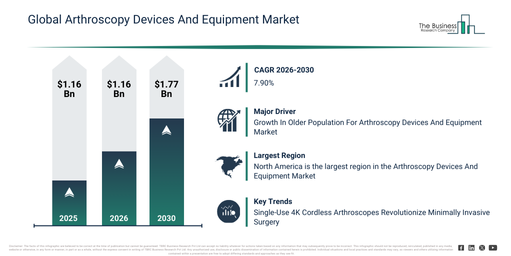
    The arthroscopy devices and equipment market has witnessed substantial expansion in recent years. Its size is expected to grow from $6.23 billion in 2025 to $6.71 billion in 2026, achieving a compound annual growth rate (CAGR) of 7.7%. The historical progression of this market can be attributed to several factors, including a rise in sports-related injuries, an increase in orthopedic surgical procedures, the growing embrace of minimally invasive techniques, enhancements in arthroscopy instrument design, and the augmented availability of specialized trauma centers.

    The arthroscopy devices and equipment market is projected to experience robust expansion over the coming years. Its valuation is anticipated to reach $9.1 billion by 2030, demonstrating a compound annual growth rate (CAGR) of 7.9%. This projected increase during the forecast period stems from several factors, including an expanding elderly population suffering from joint conditions, a heightened demand for outpatient arthroscopy procedures, the proliferation of robotic-assisted orthopedic surgeries, escalating investments in sophisticated surgical visualization, and a heightened emphasis on quicker patient rehabilitation. Significant patterns anticipated during this period involve a greater embrace of minimally invasive arthroscopy techniques, increased utilization of high-definition visualization setups, a growing need for advanced arthroscopy implants, the broadening application of radiofrequency-based treatment solutions, and a stronger focus on highly precise surgical instruments.

    Access Your Free Sample Report for In-Depth Market Insights:

    https://www.thebusinessresearchcompany.com/sample.aspx?id=2405&type=smp

    What Drivers Are Affecting Demand In The Arthroscopy Devices And Equipment Market?

    The rise in the older demographic is anticipated to stimulate the arthroscopy devices and equipment market going forward. This demographic segment is predisposed to a range of orthopedic conditions, such as arthritis, rheumatoid arthritis, and osteoarthritis. As more individuals transition into older age brackets, there is an elevated chance of developing ailments like osteoarthritis and other joint problems, which frequently require arthroscopic procedures for both identification and therapy. For example, in October 2025, the World Health Organization, a US-based specialized health agency, projected that the global population of those aged 80 and above will increase threefold by 2050, reaching an estimated 426 million. Hence, the growing older population is expected to be a primary impetus for the market throughout the forecast period.

    Which Segments Are Gaining Traction In The Arthroscopy Devices And Equipment Market?

    The arthroscopy devices and equipment market covered in this report is segmented –

    1) By Product: Arthroscopes, Arthroscopy Shavers, Arthroscopy Fluid Management System, Arthroscopy Radiofrequency System, Arthroscopy Visualization System, Arthroscopy Implants

    2) By Application: Knee Arthroscopy, Hip Arthroscopy, Spine Arthroscopy, Foot & Ankle Arthroscopy, Shoulder & Elbow Arthroscopy, Other Applications

    3) By End User: Hospitals, Ambulatory Care, Trauma Centers

    Subsegments:

    1) By Arthroscopes: Rigid Arthroscopes, Flexible Arthroscopes

    2) By Arthroscopy Shavers: Electric Arthroscopy Shavers, Pneumatic Arthroscopy Shavers

    3) By Arthroscopy Fluid Management System: Gravity-Based Fluid Management Systems, Pump-Based Fluid Management Systems

    4) By Arthroscopy Radiofrequency System: Monopolar Radiofrequency Systems, Bipolar Radiofrequency Systems

    5) By Arthroscopy Visualization System: Video Arthroscopy Systems, High-Definition Visualization Systems

    6) By Arthroscopy Implants: Knee Arthroscopy Implants, Shoulder Arthroscopy Implants, Hip Arthroscopy Implants

    Which Market Trends Are Opening Growth Opportunities In The Arthroscopy Devices And Equipment Market?

    Leading companies in the arthroscopy devices and equipment market are concentrating on developing innovative instruments, such as single-use arthroscopes, to deliver consistent, brand-new optics for every procedure, guaranteeing reliable image quality. These single-use arthroscopes are disposable tools designed for performing minimally invasive joint inspections or treatments once, after which they are safely discarded to maintain sterility. For instance, in November 2023, Pristine Surgical, a US-based medical device company, launched Summit, a 4K single-use surgical arthroscope. This product is a fully integrated disposable arthroscope that provides 4K imaging in a sterile, budget-friendly design. It arrives ready for use, thereby eliminating the typical operating room preparation, post-procedure cleanup, and reprocessing required with traditional reusable scopes. Each scope is newly sterilized for every patient, ensuring dependable image quality and a smooth workflow. Additionally, it features Pristine Connect software, which enables easy cloud storage of surgical visuals and automated inventory tracking.

    Who Are The Core Companies Influencing Trends In The Arthroscopy Devices And Equipment Market?

    Major companies operating in the arthroscopy devices and equipment market are Arthrex Inc., Smith & Nephew plc, ConMed Corporation, Stryker Corporation, Karl Storz SE & Co. KG, ArthroCare, Richard Wolf GmbH, DePuy Synthes Companies, Aesculap AG & Company, CorTek Endoscopy, Vimex Sp. z o.o., Wright Medical Group N.V., Zimmer Biomet Holdings Inc., GPC Medical Ltd., RTI Surgical Holdings, Outcare Medical Devices Pvt. Ltd., Medacta Group SA, Globus Medical Inc., Joimax GmbH, Pilling Surgical

    Access The Complete Report For Deeper Market Insights:

    https://www.thebusinessresearchcompany.com/report/arthroscopy-devices-and-equipment-global-market-report

    Which Regions Are Projected To Dominate The Arthroscopy Devices And Equipment Market In The Coming Years?

    North America was the largest region in global arthroscopy devices and equipment market in 2025. Western Europe was the second-largest region in global arthroscopy devices and equipment market. The regions covered in the arthroscopy devices and equipment market report are Asia-Pacific, South East Asia, Western Europe, Eastern Europe, North America, South America, Middle East, Africa.

    Request Your Customized Arthroscopy Devices And Equipment Market Research Report for Competitive Advantage:

    https://www.thebusinessresearchcompany.com/customise?id=2405&type=smp

    Browse Through More Reports Similar to the Global Arthroscopy Devices And Equipment Market 2026, By The Business Research Company

    Endoscopy Devices And Equipment Global Market Report 2026

    https://www.thebusinessresearchcompany.com/report/endoscopy-devices-and-equipment-global-market-report

    Dermatology Endoscopy Devices Global Market Report 2026

    https://www.thebusinessresearchcompany.com/report/dermatology-endoscopy-devices-global-market-report

    Photolithography Equipment Global Market Report 2026

    https://www.thebusinessresearchcompany.com/report/photolithography-equipment-global-market-report

    Get in touch with us:

    The Business Research Company: https://www.thebusinessresearchcompany.com/

    Americas +1 310-496-7795

    Asia +44 7882 955267 & +91 8897263534

    Europe +44 7882 955267

    Email us at info@tbrc.info

    Follow us on:

    LinkedIn: https://in.linkedin.com/company/the-business-research-company
  • Global Arthroscopic Visualization Instruments Market Forecast 2026–2035: Long-Term Growth Insights

    Global Arthroscopic Visualization Instruments Market Forecast 2026–2035: Long-Term Growth Insights

    Uncover key drivers, emerging technologies, and competitive movements shaping the cortical grid electrodes market from 2026–2035 with trusted insights from The Business Research Company

    How is the Arthroscopic Visualization Instruments Market size predicted to change over the forecast window of 2026–2035?

    The arthroscopic visualization instruments market has shown robust expansion in recent years. It is anticipated to increase from $2.55 billion in 2025 to $2.71 billion in 2026, achieving a compound annual growth rate (CAGR) of 6.3%. Historically, this growth can be linked to factors such as constrained access to advanced visualization systems, the prevalent use of conventional arthroscopic tools, a rising number of orthopedic surgical procedures, the development of hospital infrastructure, and the requirement for high-quality imaging in joint surgeries.

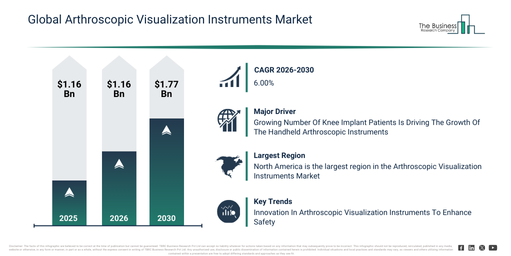
    The arthroscopic visualization instruments market size is projected for substantial expansion over the upcoming years. This market is set to reach $3.42 billion by 2030, exhibiting a compound annual growth rate (CAGR) of 6.0%. This anticipated growth during the forecast period is propelled by factors such as the advancement of 4K and HD arthroscopes, an increasing preference for bioabsorbable implants, innovations in fluid management systems, the growing embrace of minimally invasive procedures, and the incorporation of software with visualization analytics. Key trends expected within this period encompass the escalating adoption of minimally invasive surgical techniques, a greater utilization of high-definition and 4K arthroscopes, the expansion of bioabsorbable and advanced arthroscopic implants, improvements in fluid management and irrigation systems, and the integration of motorized and radiofrequency surgical instruments.

    Access Your Free Sample Report for In-Depth Market Insights:

    https://www.thebusinessresearchcompany.com/sample.aspx?id=19298&type=smp

    Which Drivers Are Contributing To The Expansion Of The Arthroscopic Visualization Instruments Market?

    The rising population of individuals with knee implants is anticipated to fuel the expansion of the arthroscopic visualization instruments market in the future. Knee implant patients are defined as those who have undergone knee replacement surgery, receiving artificial knee joints, known as prostheses, within their bodies. This increase in knee implant patients can be attributed to several factors, including elevated obesity rates, improvements in surgical methods, greater demands for an active lifestyle, extended life spans, high levels of patient contentment, and innovations in implant technology. The expanding cohort of knee implant patients has increasingly utilized arthroscopic visualization instruments, thereby amplifying the need for minimally invasive surgical tools that improve accuracy and shorten recovery periods in orthopedic surgeries. As an illustration, in February 2025, according to Springer Nature Group, a UK-based academic and professional publishing firm, estimations in 2022 revealed 12.94 million cases of knee osteoarthritis among males and 18.80 million among females. These figures are predicted to rise to 18.45 million for males and 25.60 million for females by 2046. Consequently, the increasing volume of knee implant patients is stimulating the expansion of the arthroscopic visualization instruments market.

    What Segment Categories Are Covered In The Arthroscopic Visualization Instruments Market?

    The arthroscopic visualization instruments market covered in this report is segmented –

    1) By Product: Arthroscopic Implants, Arthroscopes, Visualization Systems, Motorized Shavers, Fluid Management Systems, Radiofrequency

    2) By Application: Knee Arthroscopy, Hip Arthroscopy, Shoulder Arthroscopy, Other Applications

    3) By End-User: Hospitals, Ambulatory Surgery Centers, Other End-Users

    Subsegments:

    1) By Arthroscopic Implants: Bioabsorbable Implants, Non-Bioabsorbable Implants, Suture Anchors, Interference Screws, Meniscal Implants, Tendon And Ligament Implants

    2) By Arthroscopes: Rigid Arthroscopes, Flexible Arthroscopes, 4K And HD Arthroscopes, Single-Use Arthroscopes, Fiber Optic Arthroscopes

    3) By Visualization Systems: LED Light Sources, High-Definition Cameras, Video Processors, Display Monitors, Visualization Software, 3D Visualization Systems

    4) By Motorized Shavers: Battery-Operated Motorized Shavers, Pneumatically Operated Motorized Shavers, High-Speed Motorized Shavers, Disposable Motorized Shavers

    5) By Fluid Management Systems: Insufflation Systems, Irrigation Systems, Aspiration Pumps, Fluid Warming Systems, Closed Fluid Management Systems

    6) By Radiofrequency: Radiofrequency Electrosurgical Units, Radiofrequency Probes And Electrodes, Arthroscopic RF Systems For Tissue Cutting And Coagulation, Cryoablation Systems For Arthroscopic Procedures

    How Are Emerging Trends Affecting The Progression Of The Arthroscopic Visualization Instruments Market?

    Major companies in the arthroscopic visualization instruments market are prioritizing the development of innovative solutions, such as single-use arthroscopes, to improve patient safety, lessen infection risks, and offer cost-effective alternatives to reusable devices. Single-use arthroscopes are disposable instruments crafted for one-time use, which helps to reduce infection risks and eliminates the need for sterilization between procedures. For instance, in November 2023, Pristine Surgical, a US-based medical technology manufacturer, introduced the Summit 4K single-use surgical arthroscope in the United States, signifying a major advance in surgical technology. This innovative device features a sterile, single-use design that removes the necessity for reprocessing, thereby decreasing infection risks. It provides high-definition 4K imaging for improved surgical visualization.

    Which Major Industry Participants Are Leading The Arthroscopic Visualization Instruments Market Growth?

    Major companies operating in the arthroscopic visualization instruments market are Johnson & Johnson Services Inc., Medtronic plc, Medline Industries Inc., Stryker Corporation, Boston Scientific Corporation, Zimmer Biomet Holdings Inc., Olympus Corporation, Smith & Nephew plc, Smiths Medical, B. Braun Medical Inc., Arthrex Inc., Teleflex Incorporated, KARL STORZ SE & Co. KG, CONMED Corporation, KLS Martin Group, Richard Wolf GmbH, Anika Therapeutics Inc., GPC Medical Ltd., Tekno-Medical Optik-Chirurgie GmbH, Millennium Surgical Corp., DePuy Synthes, WISAP Medical Technology GmbH

    Access The Complete Report For Deeper Market Insights:

    https://www.thebusinessresearchcompany.com/report/arthroscopic-visualization-instruments-global-market-report

    Which Region Is Expected To Experience The Fastest Growth In The Arthroscopic Visualization Instruments Market?

    North America was the largest region in the arthroscopic visualization instruments market in 2025. The regions covered in the arthroscopic visualization instruments market report are Asia-Pacific, South East Asia, Western Europe, Eastern Europe, North America, South America, Middle East, Africa.

    Request Your Customized Arthroscopic Visualization Instruments Market Research Report for Competitive Advantage:

    https://www.thebusinessresearchcompany.com/customise?id=19298&type=smp

    Browse Through More Reports Similar to the Global Arthroscopic Visualization Instruments Market 2026, By The Business Research Company

    Visualization And 3D Rendering Software Global Market Report 2026

    https://www.thebusinessresearchcompany.com/report/visualization-and-3d-rendering-software-global-market-report

    Data Visualization Tools Global Market Report 2026

    https://www.thebusinessresearchcompany.com/report/data-visualization-tools-global-market-report

    Surgical Visualization Products Global Market Report 2026

    https://www.thebusinessresearchcompany.com/report/surgical-visualization-products-global-market-report

    Get in touch with us:

    The Business Research Company: https://www.thebusinessresearchcompany.com/

    Americas +1 310-496-7795

    Asia +44 7882 955267 & +91 8897263534

    Europe +44 7882 955267

    Email us at info@tbrc.info

    Follow us on:

    LinkedIn: https://in.linkedin.com/company/the-business-research-company