Category: Medical Equipment

  • Arthroscopy Devices And Equipment Market Outlook 2025–2029: Emerging Opportunities and Key Drivers

    Arthroscopy Devices And Equipment Market Outlook 2025–2029: Emerging Opportunities and Key Drivers

    Uncover key drivers, emerging technologies, and competitive movements shaping the arthroscopy devices and equipment market from 2025–2034 with trusted insights from The Business Research Company

    What Is The Present Size Of The Arthroscopy Devices And Equipment Market And What Value Is Projected For 2029?

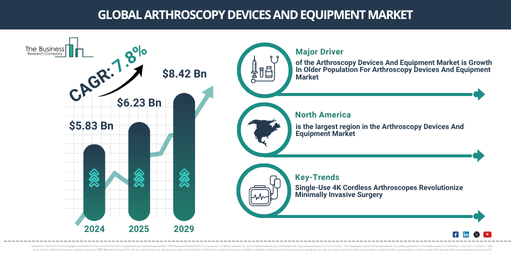
    The arthroscopy devices and equipment market size has experienced strong growth in recent years. It is projected to expand from $5.83 billion in 2024 to $6.23 billion in 2025, exhibiting a compound annual growth rate (CAGR) of 6.7%. This historical growth can be attributed to factors such as the prevalence of orthopedic conditions, the increasing adoption of minimally invasive surgery, a growing aging population, and developments in sports medicine.

    The arthroscopy devices and equipment market is projected to experience substantial expansion in the coming years, anticipated to reach $8.42 billion by 2029, exhibiting a compound annual growth rate (CAGR) of 7.8%. This growth can be attributed to several factors including the expansion of emerging markets, favorable regulatory support and reimbursement policies, the increasing adoption of telehealth and remote consultation, and the shift towards value-based healthcare. Within this period, key trends are expected to encompass augmented reality (AR) and virtual reality (VR), 3D imaging and printing technologies, advancements in artificial intelligence (AI), and the adoption of sustainable practices.

    Access A Free Sample Of The Report:

    https://www.thebusinessresearchcompany.com/sample.aspx?id=2405&type=smp

    What Factors Are Boosting The Arthroscopy Devices And Equipment Market?

    The rising number of elderly individuals is projected to fuel expansion in the arthroscopy devices and equipment market. Elderly people are susceptible to various orthopedic conditions, including arthritis, rheumatoid arthritis, and osteoarthritis. An increasing number of individuals transitioning into old age raises the probability of developing issues like osteoarthritis and other joint problems, frequently requiring arthroscopic interventions for assessment and therapy. A noteworthy example is the data from October 2022 by the World Health Organization, a US-based specialized health agency, which indicated that globally, 1 in 6 individuals will be 60 or older by 2030, with this figure doubling to 2.1 billion by 2050. Consequently, the expanding older population is anticipated to be a significant market driver throughout the forecast period.

    What Are The Core Segmentation Criteria In The Arthroscopy Devices And Equipment Market?

    The arthroscopy devices and equipmentmarket covered in this report is segmented –

    1) By Product: Arthroscopes, Arthroscopy Shavers, Arthroscopy Fluid Management System, Arthroscopy Radiofrequency System, Arthroscopy Visualization System, Arthroscopy Implants

    2) By Application: Knee Arthroscopy, Hip Arthroscopy, Spine Arthroscopy, Foot & Ankle Arthroscopy, Shoulder & Elbow Arthroscopy, Other Applications

    3) By End User: Hospitals, Ambulatory Care, Trauma Centers

    Subsegments:

    1) By Arthroscopes: Rigid Arthroscopes, Flexible Arthroscopes

    2) By Arthroscopy Shavers: Electric Arthroscopy Shavers, Pneumatic Arthroscopy Shavers

    3) By Arthroscopy Fluid Management System: Gravity-Based Fluid Management Systems, Pump-Based Fluid Management Systems

    4) By Arthroscopy Radiofrequency System: Monopolar Radiofrequency Systems, Bipolar Radiofrequency Systems

    5) By Arthroscopy Visualization System: Video Arthroscopy Systems, High-Definition Visualization Systems

    6) By Arthroscopy Implants: Knee Arthroscopy Implants, Shoulder Arthroscopy Implants, Hip Arthroscopy Implants

    What Strategic Shifts And Innovations Are Influencing The Arthroscopy Devices And Equipment Market?

    Leading companies within the arthroscopy devices and equipment market are dedicating efforts to creating advanced devices, exemplified by the Single-Use, 4K, Battery Operated Cordless Arthroscope. These innovations aim to heighten surgical exactness, improve patient outcomes, diminish the likelihood of infections, and offer increased adaptability and convenience during less invasive procedures. The Single-Use, 4K, Battery Operated Cordless Arthroscope itself is a specialized medical tool employed in minimally invasive joint operations, engineered to deliver high-definition, real-time visual feedback to surgeons. As an illustration, in November 2022, Integrated Endoscopy, a US-based manufacturer of medical instruments, introduced the Gen II NUVIS Single-Use, 4K, Battery Operated Cordless Arthroscope. This launch signified a major stride in arthroscopic surgical technology. This cutting-edge device is specifically engineered to counteract the limitations associated with conventional reusable arthroscopes, providing superior image resolution and enhanced operational effectiveness.

    Which Players Are Shaping The Competitive Landscape Of The Arthroscopy Devices And EquipmentXX Market?

    Major companies operating in the arthroscopy devices and equipment market include Arthrex Inc., Smith & Nephew plc, ConMed Corporation, Stryker Corporation, Medtronic plc, Karl Storz SE & CO. KG, ArthroCare, Richard Wolf GmbH, DePuy Synthes Companies, Aesculap AG & Company, CorTek Endoscopy, Aurora Spine Corporation, Agilent Technologies Inc., Vimex SP. Z O. O, Cannuflow Inc., Wright Medical Group N.V., Zimmer Biomet Holdings Inc., GPC Medical Ltd., Breg Inc., Performance Health International Limited, Bauerfeind AG, Mueller Sports Medicine, RTI Surgical Holdings, Bioventus LLC, MedicalExpo, Outcare Medical Devices Pvt. Ltd.

    Download The Full Report Here:

    https://www.thebusinessresearchcompany.com/report/arthroscopy-devices-and-equipment-global-market-report

    What Regional Trends Are Shaping Growth In The Arthroscopy Devices And Equipment Market?

    North America was the largest region in global arthroscopy devices and equipment market in 2024. Western Europe was the second-largest region in global arthroscopy devices and equipment market. The regions covered in the arthroscopy devices and equipment market report are Asia-Pacific, Western Europe, Eastern Europe, North America, South America, Middle East, and Africa.

    Get A Report Customized For You Here:

    https://www.thebusinessresearchcompany.com/customise?id=2405&type=smp

    Browse Through More Reports Similar to the Global Arthroscopy Devices And Equipment Market 2025, By The Business Research Company

    Orthopedic Prosthetics Global Market Report 2025

    https://www.thebusinessresearchcompany.com/report/orthopedic-prosthetics-global-market-report

    Orthopedic Accessories Global Market Report 2025

    https://www.thebusinessresearchcompany.com/report/orthopedic-accessories-global-market-report

    Orthopedic Biomaterials Global Market Report 2025

    https://www.thebusinessresearchcompany.com/report/orthopedic-biomaterials-global-market-report

    Get in touch with us:

    The Business Research Company: https://www.thebusinessresearchcompany.com/

    Americas +1 310-496-7795

    Asia +44 7882 955267 & +91 8897263534

    Europe +44 7882 955267

    Email us at info@tbrc.info

    Follow us on:

    LinkedIn: https://in.linkedin.com/company/the-business-research-company

    YouTube: https://www.youtube.com/channel/UC24_fI0rV8cR5DxlCpgmyFQ

    Global Market Model: https://www.thebusinessresearchcompany.com/global-market-model
  • Global Anesthesia Monitoring Devices Market Size and Forecast to 2029: Revenue, Growth, and Trends

    Global Anesthesia Monitoring Devices Market Size and Forecast to 2029: Revenue, Growth, and Trends

    Uncover key drivers, emerging technologies, and competitive movements shaping the anesthesia monitoring devices market from 2025–2034 with trusted insights from The Business Research Company

    How Big Is The Anesthesia Monitoring Devices Market Size Today And What Will Its Value Be At The End Of 2029?

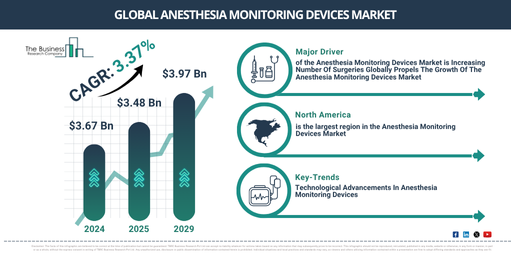
    The anesthesia monitoring devices market size has experienced a sharp reduction in recent years. This market is projected to decrease from $3.67 billion in 2024 to $3.48 billion in 2025, showing a compound annual growth rate (CAGR) of -5.3%. The historical decrease can be attributed to several factors, including the high cost of anesthesia monitoring devices, significant maintenance expenses, and the impact of COVID.

    The anesthesia monitoring devices market size is anticipated to undergo consistent expansion in the coming years. It is forecast to reach $3.97 billion by 2029, demonstrating a compound annual growth rate (CAGR) of 3.4%. This growth during the prediction period is largely due to factors like increasing healthcare expenditure, the spread of remote monitoring and telemedicine, an increase in minimally invasive surgeries, and overall economic improvement. Significant trends for this forecast period involve integration with electronic health records (EHR), the deployment of artificial intelligence (AI) and machine learning, the rise of mobile apps and wearables, advancements in sensors and connectivity, and the proliferation of non-invasive monitoring technologies.

    Access A Free Sample Of The Report:

    https://www.thebusinessresearchcompany.com/sample.aspx?id=5972&type=smp

    Which Key Drivers Are Powering Growth In The Anesthesia Monitoring Devices Market?

    A global rise in the volume of surgical procedures is anticipated to spur expansion within the anesthesia monitoring devices market. The escalating frequency of surgeries for conditions like hip fracture repair, neurosurgical procedures, and cesarean sections, among others, is subsequently leading to a heightened demand for anesthesia monitoring devices. For example, in June 2024, data from the International Society of Aesthetic Plastic Surgery (ISAPS), a US-based association of certified aesthetic plastic surgeons, indicated that in 2023, the aggregate count of surgical and non-surgical procedures increased by 3.4%, reaching 34.9 million. Consequently, the growing number of surgeries is set to drive the anesthesia monitoring device market.

    Which Segment Categories Are Driving Maximum Growth In The Anesthesia Monitoring Devices Market?

    The anesthesia monitoring devicesmarket covered in this report is segmented –

    1) By Product: Advanced Anesthesia Monitors, Basic Anesthesia Monitors, Integrated Anesthesia Workstation

    2) By Application: Cardiology, Neurology, Dental, Ophthalmology, Urology, Orthopedics, Other Applications

    3) By End User: Hospitals, Ambulatory Surgical Centers, Clinics, Nursing Homes

    Subsegments:

    1) By Advanced Anesthesia Monitors: Multi-parameter Monitors, EEG Monitors, Gas Analyzers

    2) By Basic Anesthesia Monitors: Pulse Oximeters, Blood Pressure Monitors, Capnometers

    3) By Integrated Anesthesia Workstation: Anesthesia Delivery Systems, Ventilation Systems, Monitoring Systems

    Which Emerging Trends Are Reshaping The Anesthesia Monitoring Devices Market Landscape?

    A significant trend gaining traction in the anesthesia monitoring devices market involves technological advancements. Consequently, numerous companies are introducing novel, technologically advanced products within the anesthesia monitoring devices industry. An example of this occurred in April 2022, when SCHILLER, a Switzerland-based company, launched the MRI-compatible patient monitor MAGLIFE RT-1. The MAGLIFE RT-1 is capable of patient monitoring in an MRI environment, encompassing all vital parameters necessary during anesthesia. This device facilitates detailed observation during examinations and can be entirely managed from outside the Faraday cage through the MAGSCREEN RT-1. The system’s design accommodates all patient groups: adults, children, and neonates.

    Who Are The Leading Companies Driving The Anesthesia Monitoring Devices Market?

    Major companies operating in the anesthesia monitoring devices market include Baxter International Inc., Cardinal Health Inc., Draegerwerk AG & Co. KGaA, GE Healthcare, Heyer Medical AG, Intersurgical Limited, Medtronic Inc., Mindray Medical International Limited, Nihon Kohden Corporation, Philips Healthcare, Smiths Medical Inc., Infinium Medical Inc., Fukuda Denshi Co. Ltd., Becton Dickinson and Company, Ambu A/S, Teleflex Incorporated, Ventlab, ACOMA Medical Industry Co., BPL Medical Technologies, Dixion GmbH, Löwenstein Medical GmbH & Co. KG, Medasense Biometrics Ltd., Veterinary Anesthesia Systems Inc., CNSystems Medizintechnik GmbH, Allied Medical Limited, Criticare Technologies Inc., Masimo Corporation, Spacelabs Healthcare Inc., Mennen Medical Ltd., BrainU Co. Ltd., OSI Systems Inc., Penlon Limited, Natus Medical Incorporated, Schiller AG, Edwards Lifesciences Corporation, Bionet Co. Ltd., DRE Medical Inc., Digicare Biomedical Technology Inc.

    Download The Full Report Here:

    https://www.thebusinessresearchcompany.com/report/anesthesia-monitoring-devices-global-market-report

    Which Region Holds The Largest Share In The Anesthesia Monitoring Devices Market Today?

    North America was the largest region in the anesthesia monitoring devices market in 2024. Asia-Pacific is expected to be the fastest-growing region in the forecast period. The regions covered in the anesthesia monitoring devices market report include Asia-Pacific, Western Europe, Eastern Europe, North America, South America, Middle East and Africa.

    Get A Report Customized For You Here:

    https://www.thebusinessresearchcompany.com/customise?id=5972&type=smp

    Browse Through More Reports Similar to the Global Anesthesia Monitoring Devices Market 2025, By The Business Research Company

    Operating Room Equipment Market 2025

    https://www.thebusinessresearchcompany.com/report/operating-room-equipment-market

    Anesthesia Disposables Global Market Report 2025

    https://www.thebusinessresearchcompany.com/report/anesthesia-disposables-global-market-report

    Veterinary Anesthesia Equipment Global Market Report 2025

    https://www.thebusinessresearchcompany.com/report/veterinary-anesthesia-equipment-global-market-report

    Get in touch with us:

    The Business Research Company: https://www.thebusinessresearchcompany.com/

    Americas +1 310-496-7795

    Asia +44 7882 955267 & +91 8897263534

    Europe +44 7882 955267

    Email us at info@tbrc.info

    Follow us on:

    LinkedIn: https://in.linkedin.com/company/the-business-research-company

    YouTube: https://www.youtube.com/channel/UC24_fI0rV8cR5DxlCpgmyFQ

    Global Market Model: https://www.thebusinessresearchcompany.com/global-market-model
  • Anesthesia Disposables Market Expansion to $24.99 Billion by 2029: Key Drivers and Trends

    Anesthesia Disposables Market Expansion to $24.99 Billion by 2029: Key Drivers and Trends

    Uncover key drivers, emerging technologies, and competitive movements shaping the anesthesia disposables market from 2025–2034 with trusted insights from The Business Research Company

    What Is The Base Market Size For The Anesthesia Disposables Market Today And What Will It Reach By 2029?

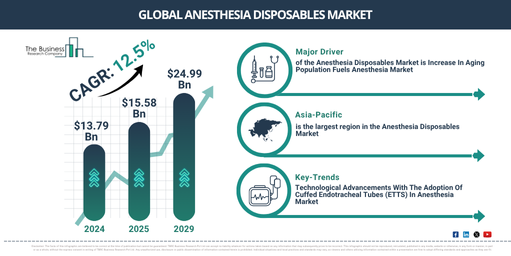
    In recent years, the anesthesia disposables market has experienced significant growth in its size. It is anticipated to increase from $13.79 billion in 2024 to $15.58 billion in 2025, demonstrating a compound annual growth rate (CAGR) of 13.0%. Historically, the market’s expansion has been attributed to factors such as surgical procedures, infection control, the aging population, and patient safety.

    The anesthesia disposables market is projected to experience swift expansion in the coming years. Its valuation is anticipated to reach $24.99 billion by 2029, exhibiting a compound annual growth rate (CAGR) of 12.5%. This projected increase during the forecast period is driven by factors such as the rise in minimally invasive procedures, the expansion of emerging markets, adherence to regulatory compliance, and the adoption of telehealth and remote consultation services. Key developments expected during this period involve sustainable disposables, personalized solutions, remote patient monitoring combined with data integration, and sophisticated drug delivery systems.

    Access A Free Sample Of The Report:

    https://www.thebusinessresearchcompany.com/sample.aspx?id=2448&type=smp

    What Factors Are Boosting The Anesthesia Disposables Market?

    The growing elderly population is leading to an increase in surgeries, which in turn is propelling the anesthesia disposable market. Elevated life expectancies, along with age-related health issues, have expanded the number of seniors who undergo surgical procedures. The prevalence of conditions like cardiovascular disease, arthritis, thyroid disease, and emphysema is steadily rising, directly resulting in a higher volume of surgeries. These illnesses are primarily observed in older individuals, consequently boosting the consumption of anesthesia disposables, as they are extensively utilized in surgical operations and are driving the market throughout the forecast period.

    How Is The Anesthesia Disposables Market Categorized By Application, Type, And Region?

    The anesthesia disposablesmarket covered in this report is segmented –

    1) By Product: Anesthesia Breathing Circuits, Endotracheal Tubes, Anesthesia Gas Masks, Laryngeal Mask Airway

    2) By Patient Group: Neonatal, Adult, Pediatric

    3) By End Users: Hospitals, Clinics, Home Care Settings, Other End users

    Subsegments:

    1) By Anesthesia Breathing Circuits: Single-Patient Use Breathing Circuits, Reusable Breathing Circuits, Disposable Breathing Circuits

    2) By Endotracheal Tubes: Cuffed Endotracheal Tubes, Uncuffed Endotracheal Tubes, Reinforced Endotracheal Tubes

    3) By Anesthesia Gas Masks: Disposable Anesthesia Gas Masks, Reusable Anesthesia Gas Masks

    4) By Laryngeal Mask Airway: Disposable Laryngeal Mask Airways, Reusable Laryngeal Mask Airways

    What Key Trends Are Driving Growth In The Anesthesia Disposables Market?

    There is an increasing demand for cuffed endotracheal tubes (ETTs) in pediatric care when compared to uncuffed ETTs. In pediatric anesthesia, general endotracheal intubation is a common practice for airway management and to deliver positive pressure ventilation. Historically, uncuffed endotracheal tubes were recommended for children up to eight years old. Nevertheless, the primary drawbacks of uncuffed ETTs, such as heightened air leakage around the tube, complicate the task of ensuring that the child is receiving adequate amounts of oxygen. Moreover, the measurement of tidal volume is also compromised. Uncuffed ETTs additionally allow anesthetic waste gases to escape, significantly contributing to the contamination of the operating room and making the anesthetic procedure more costly. As a result, the current tendency is towards increasing the utilization of cuffed ETTs for pediatric medical procedures.

    Who Are The Global Leaders Steering The Anesthesia Disposables Market Forward?

    Major companies operating in the anesthesia disposables market include Ambu A/S, Medline Industries Inc., Smiths Medical, Teleflex Inc., Vyaire Medical Inc., Armstrong Medical Ltd., Hamilton Medical AG, Intersurgical Ltd., Medtronic Plc., Mercury Medical, Fishers and Paykel Healthcare Limited, Draegerwerk AG & Co. KGaA, B. Braun Melsungen AG, Becton Dickinson and Company, Boston Scientific Corporation, Cardinal Health Inc., Cook Medical LLC, Flexicare Medical Limited, GE Healthcare, Halyard Health Inc., Hill-Rom Holdings Inc., Integra Lifesciences Holdings Corporation, Intuitive Surgical Inc., Johnson & Johnson, Koninklijke Philips N.V., Masimo Corporation, Mindray Medical International Limited, Nihon Kohden Corporation, ResMed, Terumo Corporation, Vygon S.A., Westmed Inc., WILMarc Medical, Xiamen Compower Medical Tech Co. Ltd.

    Download The Full Report Here:

    https://www.thebusinessresearchcompany.com/report/anesthesia-disposables-global-market-report

    Which Region Is Projected To Achieve The Fastest Growth In The Anesthesia Disposables Market?

    Asia-Pacific was the largest region in the global anesthesia disposables market in 2024. Western Europe was the second-largest region in the anesthesia disposables market. The regions covered in the anesthesia disposables market report are Asia-Pacific, Western Europe, Eastern Europe, North America, South America, Middle East, and Africa.

    Get A Report Customized For You Here:

    https://www.thebusinessresearchcompany.com/customise?id=2448&type=smp

    Browse Through More Reports Similar to the Global Anesthesia Disposables Market 2025, By The Business Research Company

    Anesthesia Machines Global Market Report 2025

    https://www.thebusinessresearchcompany.com/report/anesthesia-machines-global-market-report

    Anesthesia And Respiratory Devices Global Market Report 2025

    https://www.thebusinessresearchcompany.com/report/anesthesia-and-respiratory-devices-global-market-report

    Anesthesia Monitoring Devices Global Market Report 2025

    https://www.thebusinessresearchcompany.com/report/anesthesia-monitoring-devices-global-market-report

    Get in touch with us:

    The Business Research Company: https://www.thebusinessresearchcompany.com/

    Americas +1 310-496-7795

    Asia +44 7882 955267 & +91 8897263534

    Europe +44 7882 955267

    Email us at info@tbrc.info

    Follow us on:

    LinkedIn: https://in.linkedin.com/company/the-business-research-company

    YouTube: https://www.youtube.com/channel/UC24_fI0rV8cR5DxlCpgmyFQ

    Global Market Model: https://www.thebusinessresearchcompany.com/global-market-model
  • 3D Medical Imaging Devices Market 2025–2029: Tracking 8% CAGR Toward $18.61 Billion in Revenue

    3D Medical Imaging Devices Market 2025–2029: Tracking 8% CAGR Toward $18.61 Billion in Revenue

    Uncover key drivers, emerging technologies, and competitive movements shaping the 3d medical imaging devices market from 2025–2034 with trusted insights from The Business Research Company

    How Will The 3D Medical Imaging Devices Market Size Evolve Between Now And 2029?

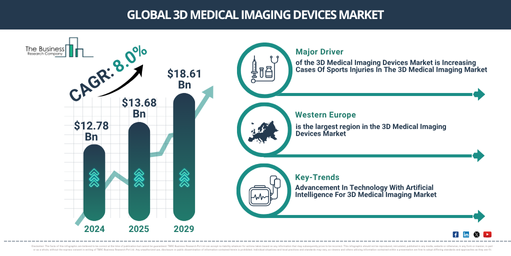
    The 3D medical imaging devices market has demonstrated significant expansion in recent years. Its size is expected to increase from $12.78 billion in 2024 to $13.68 billion by 2025, progressing at a compound annual growth rate (CAGR) of 7.0%. The expansion observed historically can be attributed to elements such as enhanced diagnostic accuracy, the prevalence of minimally invasive procedures, an increasing aging population, and the advancements in personalized medicine.

    The 3D medical imaging devices market is projected to experience substantial expansion over the coming years. This market is anticipated to reach a valuation of $18.61 billion by 2029, demonstrating a compound annual growth rate (CAGR) of 8.0%. Factors contributing to this growth during the forecast period include the expansion of emerging markets, supportive regulatory environments, advancements in artificial intelligence (ai) and machine learning, and an increased focus on early detection and intervention. Significant trends expected in the same period encompass liquid biopsies, multi-omics methodologies, point-of-care testing solutions, and extensive screening and early intervention initiatives.

    Access A Free Sample Of The Report:

    https://www.thebusinessresearchcompany.com/sample.aspx?id=2513&type=smp

    Which Key Drivers Are Powering Growth In The 3D Medical Imaging Devices Market?

    The increasing incidence of injuries, especially those linked to sports, drives the expansion of the 3D medical imaging market. This surge in sports-related injuries stems from the rising participation of individuals in both organized and unorganized athletic pursuits. Moreover, the rigorous training regimens involving high strength and heavy loads for athletes frequently lead to more serious injuries, primarily characterized by soft tissue damage. The application of 3D medical imaging devices, such as ultrasound diagnosis, X-ray radiography, and MRI imaging, offers a precise and objective foundation for diagnosis. These devices aid in the examination of conditions including muscle fascia injury, tendon injury, ligament injury, meniscus injury, articular cartilage damage, and bone fractures. According to the Centre for the Disease Control and Prevention, an estimated 775,000 emergency room visits occur due to injuries in children participating in unorganized and organized sports activities. Consequently, the heightened demand for 3D medical imaging devices positively impacts market growth.

    How Is The Global 3D Medical Imaging Devices Market Structured By Key Segments?

    The 3D medical imaging devicesmarket covered in this report is segmented –

    1) By Type: Ultrasound, X-ray, CT Scan, Other Types

    2) By Application: Gynecology and Obstetrics, Cardiology, Neurology, Orthopedics, Oncology

    3) By End User: Diagnostic Centers, Hospitals, Research Centers

    Subsegments:

    1) By Ultrasound: 3D Or 4D Ultrasound, Contrast-Enhanced Ultrasound

    2) By X-Ray: 3D Mammography Or Tomosynthesis, Cone Beam CT Or CBCT For X-Ray Imaging, Fluoroscopy

    3) By CT Scan: Spiral Or Helical CT, Cone Beam CT Or CBCT, Dual-Energy CT

    4) By Other Types: MRI Or Magnetic Resonance Imaging, Positron Emission Tomography Or PET, Single Photon Emission Computed Tomography Or SPECT, Optical Imaging Systems

    How Are Technological Trends Affecting The 3D Medical Imaging Devices Market Growth?

    Manufacturers of 3D medical imaging devices are increasingly allocating resources to Artificial Intelligence (AI), aiming to enhance diagnostic capabilities through precise, quantifiable measurements. AI significantly boosts efficiency within medical imaging, especially in the identification of organs or detecting irregularities. For instance, integrating image visualization with AI allows cardiologists to determine ejection fraction with superior accuracy and in less time. Ejection fraction denotes the proportion of blood expelled from the heart with each beat. Illustratively, in November 2021, GE Healthcare, a key player in 3D imaging, introduced 60 cutting-edge technology solutions, incorporating artificial intelligence, designed to revolutionize healthcare by offering effective solutions for both patients and clinicians.

    Which Companies Hold A Competitive Edge In The 3D Medical Imaging Devices Market?

    Major companies operating in the 3D medical imaging devices market include GE Healthcare, Royal Philips, Siemens AG, The Esaote Group, Materialise NV, Toshiba Group, Samsung Medison Co Ltd, Shimadzu Corporation, Analogic Corporation, Digirad Corporation, Del Medical Systems Group, Hologic Inc., Carestream Health Inc., Depuy Synthes Companies, Ambra Health, Fovia, Mach7 Technologies Ltd., Medtronic plc, Barco NV, TomTec Imaging Systems GmbH, Fujifilm Holdings Corporation, 3D Systems Healthcare, Artec 3D, Canon Medical Systems Corporation, ContextVision AB, Curvebeam AI Ltd., EchoPixel Inc., EOS Imaging, Esaote SpA, Hitachi Healthcare, Intrasense, KaVo Kerr, Konica Minolta Healthcare, Mobius Imaging, Neusoft Medical Systems, Orfit Industries, Pie Medical Imaging, Planmed Oy, Sectra, Shenzhen Mindray Bio-Medical Electronics, Thermo Fisher Scientific, Varian Medical Systems, Ziehm Imaging GmbH

    Download The Full Report Here:

    https://www.thebusinessresearchcompany.com/report/3d-medical-imaging-devices-global-market-report

    Which Region Is Expected To Lead The 3D Medical Imaging Devices Market In The Next Few Years?

    Western Europe was the largest region in the 3D medical imaging market in 2024. Asia-Pacific was the second-largest region in the global 3D medical imaging devices market. The regions covered in the 3D medical imaging devices market report are Asia-Pacific, Western Europe, Eastern Europe, North America, South America, Middle East, and Africa.

    Get A Report Customized For You Here:

    https://www.thebusinessresearchcompany.com/customise?id=2513&type=smp

    Browse Through More Reports Similar to the Global 3D Medical Imaging Devices Market 2025, By The Business Research Company

    Diagnostic Imaging Equipment Global Market Report 2025

    https://www.thebusinessresearchcompany.com/report/diagnostic-imaging-equipment-global-market-report

    3D Diagnostic Imaging Services Global Market Report 2025

    https://www.thebusinessresearchcompany.com/report/3d-diagnostic-imaging-services-global-market-report

    Pediatric Imaging Global Market Report 2025

    https://www.thebusinessresearchcompany.com/report/pediatric-imaging-global-market-report

    Get in touch with us:

    The Business Research Company: https://www.thebusinessresearchcompany.com/

    Americas +1 310-496-7795

    Asia +44 7882 955267 & +91 8897263534

    Europe +44 7882 955267

    Email us at info@tbrc.info

    Follow us on:

    LinkedIn: https://in.linkedin.com/company/the-business-research-company

    YouTube: https://www.youtube.com/channel/UC24_fI0rV8cR5DxlCpgmyFQ

    Global Market Model: https://www.thebusinessresearchcompany.com/global-market-model
  • Temporomandibular Joint (TMJ) Implants Market Insights: Revenue Expected to Surpass $7.19 Billion by 2029

    Temporomandibular Joint (TMJ) Implants Market Insights: Revenue Expected to Surpass $7.19 Billion by 2029

    Uncover key drivers, emerging technologies, and competitive movements shaping the temporomandibular joint (tmj) implants market from 2025–2034 with trusted insights from The Business Research Company

    What Is The Current Size And Expected Growth Outlook For The Temporomandibular Joint (TMJ) Implants Market?

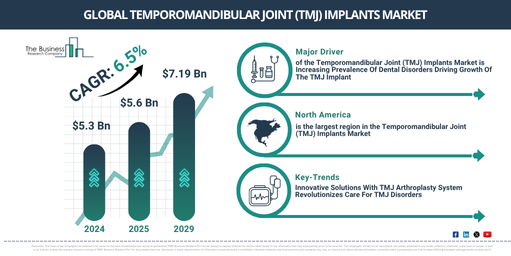
    The temporomandibular joint (tmj) implants market has demonstrated strong growth in recent years. It is anticipated to expand from $5.3 billion in 2024 to $5.6 billion in 2025, progressing at a compound annual growth rate (CAGR) of 5.7%. This historical market expansion can be linked to an increase in temporomandibular joint disorders (TMD) cases, a growing aging population, the rising adoption of biocompatible materials like titanium and polyethylene, and an enhanced focus on quality of life.

    The temporomandibular joint (tmj) implants market is projected to experience substantial expansion in the coming years. This market is forecast to reach a size of $7.19 billion by 2029, exhibiting a compound annual growth rate (CAGR) of 6.5%. Factors contributing to this growth during the forecast period include the growing adoption of 3D printing technology, heightened levels of stress and poor posture prevalent in the young working demographic, an uptick in clinical trials, an increasing number of both patients and healthcare professionals, and a rising need for both surgical and non-surgical treatments. Key trends anticipated within this period involve the creation of biodegradable and bioactive substances, advancements in surgical methods, general technological progress, the availability of custom-made temporomandibular joint (TMJ) implants, and ongoing product enhancements.

    Access A Free Sample Of The Report:

    https://www.thebusinessresearchcompany.com/sample.aspx?id=19216&type=smp

    Which Growth Drivers Are Propelling The Temporomandibular Joint (TMJ) Implants Market?

    The increasing occurrence of dental disorders is projected to fuel the expansion of the temporomandibular joint (TMJ) implant market in the future. Dental disorders cover various conditions affecting the teeth, gums, and oral cavity, leading to pain, functional problems, and other health issues. The rising prevalence of these disorders is attributed to factors like poor oral hygiene, trauma, genetic predispositions, and lifestyle choices. Temporomandibular joint (TMJ) implants provide an innovative solution for those experiencing temporomandibular joint disorders, delivering specific relief and improved function. These sophisticated implants are engineered to address the fundamental problems associated with TMJ dysfunction, thereby enhancing both comfort and quality of life for patients struggling with dental-related joint pain and dysfunction. For example, in September 2023, according to the National Library Of Medicine, a US-based government agency, the older adult population with periodontal disease is expected to grow by 54.57% by 2050. Additionally, the older adult population with carious teeth is estimated to increase by 62.06% in 2050. Therefore, the growing prevalence of dental disorders is a significant impetus for the temporomandibular joint (TMJ) implant market.

    Which Segmentation Factors Are Most Significant In The Temporomandibular Joint (TMJ) Implants Market Analysis?

    The temporomandibular joint (tmj) implantsmarket covered in this report is segmented –

    1) By Components: Mandibular Components, Fossa Prosthesis, Screws

    2) By Material: Cobalt-Chromium-Molybdenum, Titanium Alloy, Ultra-High Molecular Weight Polyethylene (Uhmwpe), Aluminum, Silicone, Other Materials

    3) By Indication: Arthritic Conditions, Ankylosis, Other Indications

    4) By End-User: Hospitals, Dental Clinics, Other End-Users

    Subsegments:

    1) By Mandibular Components: Complete Mandibular Prosthesis, Partial Mandibular Prosthesis, Mandibular Condylar Prosthesis

    2) By Fossa Prosthesis: Non-Adjustable Fossa Prosthesis, Adjustable Fossa Prosthesis, Anatomical Fossa Prosthesis

    3) By Screws: Fixation Screws, Bone Screws, Self-Tapping Screws

    Which Notable Trends Are Transforming The Temporomandibular Joint (TMJ) Implants Market Outlook?

    Leading companies within the temporomandibular joint (TMJ) implant market are concentrating on developing innovative solutions, such as the TMJ Total Arthroplasty System, to enhance the accuracy of joint reconstruction, improve patient outcomes, and shorten recovery periods. This TMJ Total Arthroplasty System is a medical device engineered for the surgical treatment of severe temporomandibular joint (TMJ) disorders, presenting an effective option for patients who have not experienced relief from other therapies. For example, in February 2024, Materialise NV, a 3D printing company located in Belgium, introduced its most recent solution for treating patients who require total temporomandibular joint (TMJ) arthroplasty. The system comprises predrilling and osteotomy guides crafted from titanium or polyamide to ensure precise preparation for the implant. Additionally, it furnishes a surgical splint for occlusion management and a TMJ trial implant for the temporal element. The TMJ Total Arthroplasty System provides fresh optimism for patients enduring TMJ disorders that necessitate total joint replacement. Its comprehensive offering and effortless integration with other Materialise solutions position it as a valuable instrument for oral and maxillofacial surgeons.

    Who Are The Most Influential Companies In The Temporomandibular Joint (TMJ) Implants Market?

    Major companies operating in the temporomandibular joint (TMJ) implants market are Aetna Inc., Stryker Corporation, Zimmer Biomet Holdings Inc., Fortis Healthcare Limited, Raffles Medical Group, Materialise NV, Prince Court Medical Centre, Keystone Dental, Auxein Corporation, Liberty Dental Clinic, Dentsply Sirona, Ortho Baltic, Max Healthcare, Recoup Health, Jajal Medical Services, Xilloc Medical B.V., Ortho Max Mfg. Co. Pvt. Ltd. , Dent Ally, Oris Dental Centre, RAOMED

    Download The Full Report Here:

    https://www.thebusinessresearchcompany.com/report/temporomandibular-joint-tmj-implants-global-market-report

    Which Region Holds The Largest Share In The Temporomandibular Joint (TMJ) Implants Market Today?

    North America was the largest region in the temporomandibular joint (TMJ) implants market in 2024. The regions covered in the temporomandibular joint (TMJ) implants market report are Asia-Pacific, Western Europe, Eastern Europe, North America, South America, Middle East, Africa.

    Get A Report Customized For You Here:

    https://www.thebusinessresearchcompany.com/customise?id=19216&type=smp

    Browse Through More Reports Similar to the Global Temporomandibular Joint (TMJ) Implants Market 2025, By The Business Research Company

    Joint Reconstruction Devices And Equipment Global Market Report 2025

    https://www.thebusinessresearchcompany.com/report/joint-reconstruction-devices-and-equipment-global-market-report

    Joint Pain Injections Global Market Report 2025

    https://www.thebusinessresearchcompany.com/report/joint-pain-injections-global-market-report

    Bone And Joint Health Supplements Global Market Report 2025

    https://www.thebusinessresearchcompany.com/report/bone-and-joint-health-supplements-global-market-report

    Get in touch with us:

    The Business Research Company: https://www.thebusinessresearchcompany.com/

    Americas +1 310-496-7795

    Asia +44 7882 955267 & +91 8897263534

    Europe +44 7882 955267

    Email us at info@tbrc.info

    Follow us on:

    LinkedIn: https://in.linkedin.com/company/the-business-research-company

    YouTube: https://www.youtube.com/channel/UC24_fI0rV8cR5DxlCpgmyFQ

    Global Market Model: https://www.thebusinessresearchcompany.com/global-market-model
  • Global Ultraviolet-C (UVC) Disinfection Products Market Valuation and Growth Prospects: $23.39 Billion by 2029

    Global Ultraviolet-C (UVC) Disinfection Products Market Valuation and Growth Prospects: $23.39 Billion by 2029

    Uncover key drivers, emerging technologies, and competitive movements shaping the ultraviolet-c (uvc) disinfection products market from 2025–2034 with trusted insights from The Business Research Company

    What Are The Future Growth Projections For The Ultraviolet-C (UVC) Disinfection Products Market Size?

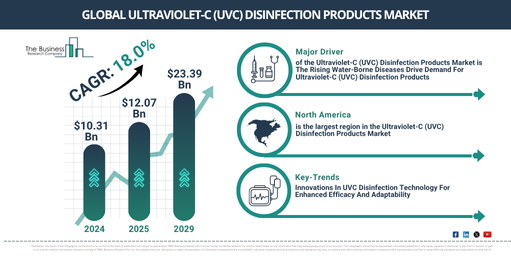
    The ultraviolet-c (uvc) disinfection products market size has expanded quickly in recent years. Its value is set to increase from $10.31 billion in 2024 to $12.07 billion in 2025, at a compound annual growth rate (CAGR) of 17.1%. The expansion observed historically is due to factors such as the increasing incidence of healthcare-associated infections, greater public understanding of hygiene and sanitation, stronger regulatory support for disinfection benchmarks, the COVID-19 pandemic emphasizing the importance of infection control, and the desire for environmentally sound and chemical-free disinfection options.

    The ultraviolet-c (uvc) disinfection products market is projected to experience substantial expansion in the upcoming years. It is forecast to achieve a size of $23.39 billion by 2029, propelled by a compound annual growth rate (CAGR) of 18.0%. This anticipated growth during the forecast period stems from factors such as the expansion of global healthcare infrastructure, the increasing integration of automation and smart technologies in sanitation, an elevated focus on public health and safety in the post-pandemic era, continuous advancements in research and development for new UVC applications, and a growing consumer preference for sustainable and environmentally friendly products. Prominent trends expected over the forecast horizon include the seamless integration of UVC technology with IoT for real-time monitoring capabilities, the creation of portable and more user-friendly UVC devices, a noticeable shift towards comprehensive multi-functional disinfection systems, a sharpened focus on developing energy-efficient UVC solutions, and an enhanced consumer awareness alongside a demand for evidence-based disinfection methods.

    Access A Free Sample Of The Report:

    https://www.thebusinessresearchcompany.com/sample.aspx?id=19233&type=smp

    What Core Market Drivers Are Expanding The Ultraviolet-C (UVC) Disinfection Products Industry?

    The increasing occurrence of water-borne diseases is anticipated to fuel the expansion of the ultraviolet-C (UVC) disinfection products market in the future. These illnesses are characterized by being caused by microscopic organisms, including bacteria, viruses, and parasites, which spread through tainted water. The escalation in water-borne diseases stems from issues like growing pollution levels, insufficient sanitation, and restricted access to potable water. Ultraviolet-C (UVC) disinfection products offer an efficient method to incapacitate pathogens in water by disrupting their DNA, thereby hindering the multiplication and spread of these ailments. For instance, the World Health Organization, a Switzerland-based intergovernmental organization, reported in September 2024 that the incidence of cholera climbed by 13% in 2023, with fatalities seeing a 71% increase over 2022. Despite its preventability and straightforward treatment, cholera led to over 4,000 recorded deaths last year, highlighting the critical demand for superior intervention tactics and resource distribution. Consequently, the expanding prevalence of water-borne diseases is a primary catalyst for the growth of the ultraviolet-C (UVC) disinfection products market.

    What Segment Insights Are Highlighted In The Ultraviolet-C (UVC) Disinfection Products Market Report?

    The ultraviolet-c (uvc) disinfection productsmarket covered in this report is segmented –

    1) By Type: Surface Disinfection Product, Air Disinfection Product, Water Disinfection Product

    2) By Product: Ultraviolet-C (UVC) Sanitizing Or Germicidal Lamps, Handheld Sanitizer Wands, Ultraviolet-C (UVC) Sanitization Box Or Containers, Ultraviolet-C (UVC) Mobile Room Sanitizers Units, Ultraviolet-C (UVC) Disinfection Robots

    3) By Commercial Application: Retail And Shopping Complexes, Hospital And Medical Centers, Corporate Offices, Entertainment Facilities And Parks, Public Transit, Public Assembly Facilities, Other Commercial Applications

    Subsegments:

    1) By Surface Disinfection Product: UVC Lamps, UVC Robots, UVC Wands, UVC Disinfection Boxes, UVC Coatings

    2) By Air Disinfection Product: UVC Air Purifiers, UVC Air Duct Systems, UVC Ceiling Mounted Units, UVC Portable Air Disinfectors, UVC Wall-Mounted Units

    3) By Water Disinfection Product: UVC Water Treatment Systems, UVC Water Sterilizers, UVC Portable Water Disinfectors, UVC Pipeline Systems, UVC Reactor Chambers

    What Future-Focused Trends Are Anticipated In The Ultraviolet-C (UVC) Disinfection Products Market?

    Major companies in the ultraviolet-C (UVC) disinfection products market are progressing with innovative product development, such as sensor360 technology, to improve disinfection efficacy, shorten cycle times, and deliver more adaptable solutions for diverse environments. Sensor360 technology is a groundbreaking system that tracks the reflection of UVC light to precisely administer the required dose for optimal disinfection. For instance, in March 2023, Tru-D SmartUVC, a US-based health technology company, unveiled the Tru-D iQ system, representing the next generation of intelligent UVC disinfection products. This system is specifically engineered to boost disinfection efficiency in healthcare settings, particularly in smaller spaces like bathrooms and examination rooms. It employs Sensor360 technology, which gauges reflected UVC energy to ensure accurate dosing for effective disinfection. This sophisticated technology enables tailored disinfection cycles suited to various environments, ensuring both direct and shadowed areas receive adequate UVC exposure.

    Which Firms Are Driving Innovation Within The Ultraviolet-C (UVC) Disinfection Products Market?

    Major companies operating in the ultraviolet-C (UVC) disinfection products market are Daikin Industries Ltd., Koninklijke Philips N.V., Stanley Electric Co. Ltd., Excelitas Technologies Corp., LightSources Inc., Dr. Hönle AG, Lena Lighting S.A., Servotech Power Systems Ltd., R-Zero Systems Inc., Tru-D SmartUVC LLC, Lumalier Corporation, American Ultraviolet, CleanSlate UV Inc., Seal Shield LLC, Guardian Technologies LLC (GermGuardian), Atlantic Ultraviolet Corporation, OTSAW Digital PTE Ltd., Olympia Lighting Inc., ICleanse LLC, Finsen Technologies Ltd., UV Angel Inc.

    Download The Full Report Here:

    https://www.thebusinessresearchcompany.com/report/ultraviolet-c-uvc-disinfection-products-global-market-report

    What Regional Trends Are Shaping Growth In The Ultraviolet-C (UVC) Disinfection Products Market?

    North America was the largest region in the ultraviolet-C (UVC) disinfection products market in 2024. The regions covered in the ultraviolet-C (UVC) disinfection products market report are Asia-Pacific, Western Europe, Eastern Europe, North America, South America, Middle East, Africa.

    Get A Report Customized For You Here:

    https://www.thebusinessresearchcompany.com/customise?id=19233&type=smp

    Browse Through More Reports Similar to the Global Ultraviolet-C (UVC) Disinfection Products Market 2025, By The Business Research Company

    Extreme Ultraviolet Lithography Global Market Report 2025

    https://www.thebusinessresearchcompany.com/report/extreme-ultraviolet-lithography-global-market-report

    Ultravioletvisible Spectroscopy Global Market Report 2025

    https://www.thebusinessresearchcompany.com/report/ultravioletvisible-spectroscopy-global-market-report

    Ultraviolet Analyzer Global Market Report 2025

    https://www.thebusinessresearchcompany.com/report/ultraviolet-analyzer-global-market-report

    Get in touch with us:

    The Business Research Company: https://www.thebusinessresearchcompany.com/

    Americas +1 310-496-7795

    Asia +44 7882 955267 & +91 8897263534

    Europe +44 7882 955267

    Email us at info@tbrc.info

    Follow us on:

    LinkedIn: https://in.linkedin.com/company/the-business-research-company

    YouTube: https://www.youtube.com/channel/UC24_fI0rV8cR5DxlCpgmyFQ

    Global Market Model: https://www.thebusinessresearchcompany.com/global-market-model
  • Sterility Indicators Market Performance and Future Outlook at 13.7% CAGR Through 2029

    Sterility Indicators Market Performance and Future Outlook at 13.7% CAGR Through 2029

    Uncover key drivers, emerging technologies, and competitive movements shaping the sterility indicators market from 2025–2034 with trusted insights from The Business Research Company

    What Is The Predicted Size Of The Sterility Indicators Industry By 2029?

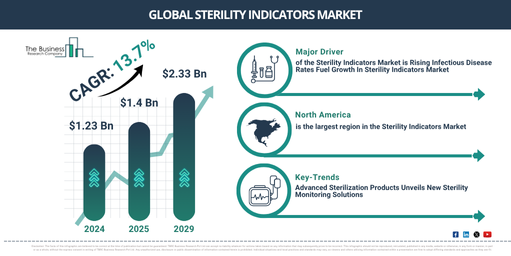
    The sterility indicators market size has observed significant expansion in recent years. It is anticipated to increase from $1.23 billion in 2024 to $1.4 billion in 2025, exhibiting a compound annual growth rate (CAGR) of 13.6%. This historical growth can be linked to heightened regulatory standards for sterilization processes, an uptick in healthcare facilities, a surging demand for advanced sterilization techniques, increased global healthcare expenditures, and a rising need for sterile packaging solutions.

    The sterility indicators market is poised for significant expansion in the coming years. This market is projected to reach $2.33 billion by 2029, demonstrating a compound annual growth rate (CAGR) of 13.7%. This anticipated growth is driven by several factors, including the increasing occurrence of hospital-acquired infections, greater investment in research and development, a growing number of drug introductions, the widespread presence of chronic conditions, and the increasing incidence of infectious diseases. Key trends anticipated during this forecast period encompass technological progress, the integration of automated systems, new developments in biological indicators, advanced rapid monitoring technologies, and the use of spore strips.

    Access A Free Sample Of The Report:

    https://www.thebusinessresearchcompany.com/sample.aspx?id=19205&type=smp

    What Major Drivers Are Impacting The Sterility Indicators Market?

    The increasing incidence of infectious diseases is projected to drive the expansion of the sterility indicators market in the coming years. These illnesses are caused by harmful microorganisms such as bacteria, viruses, fungi, or parasites, which can transmit between individuals either directly or indirectly. Common examples of infectious diseases include tuberculosis (TB), urinary tract infections, and influenza (Flu). The rising prevalence of these diseases is attributable to various factors, including heightened global travel, urbanization, and population density, which facilitate the spread of pathogens. Sterility indicators are crucial for ensuring the effectiveness of sterilization processes, particularly in the management and prevention of infectious diseases, by offering a reliable method to confirm the complete elimination of pathogens. These indicators help maintain the highest safety standards in healthcare environments, thereby minimizing the risk of contamination and disease transmission. For instance, in March 2022, according to the Centers for Disease Control and Prevention, a US-based national public health agency, the United States reported 8,331 tuberculosis (TB) cases and an incidence rate of 2.5 cases per 100,000 persons in 2022, representing a 5.9% increase in case count and 5.5% increase in incidence rate compared with 2021. Thus, the growing prevalence of infectious diseases is a key driver for the sterility indicators market.

    Which Segment Categories Are Driving Maximum Growth In The Sterility Indicators Market?

    The sterility indicatorsmarket covered in this report is segmented –

    1) By Type: Chemical, Biological

    2) By Technique: Heat Sterilization, Low-Temperature Sterilization, Filtration Sterilization, Radiation Sterilization, Liquid Sterilization

    3) By End User: Hospitals, Pharmaceutical Companies, Medical Device Companies, Clinical Laboratories Or Research Centers

    Subsegments:

    1) By Chemical: Class 1 Indicators, Class 2 Indicators, Class 3 Indicators, Class 4 Indicators, Class 5 Indicators, Class 6 Indicators

    2) By Biological: Spore Ampoules, Self-Contained Biological Indicators (SCBIs), Spore Strips, Vials

    What New Opportunities Are Emerging From Trends In The Sterility Indicators Market?

    Leading companies in the sterility indicators market are prioritizing the development of advanced offerings, such as steam monitoring products, to assist healthcare facilities in identifying trends, analyzing performance, and making informed decisions. Steam monitoring products are instruments and tools utilized to confirm the efficacy of steam sterilization methods across various environments, particularly within healthcare, laboratories, and industries where sterilization is critical. These products are essential for maintaining sterility and minimizing contamination risks, especially in settings dealing with infectious materials or vital medical devices. For instance, in October 2023, Advanced Sterilization Products, a US-based healthcare company, announced an expansion of its Sterilization Monitoring portfolio with new Steam Monitoring products, including BIOTRACE Readers, BIOTRACE Biological Indicator, VERISURE Chemical Indicator, and SEALSURE Steam Indicator Tape. These innovations deliver swift results and support compliance by improving workflow and connectivity in sterilization monitoring. The BIOTRACE Biological Indicator simplifies the oversight of steam sterilization processes through an integrated traceability solution. The VERISURE Chemical Indicator facilitates easy and rapid monitoring of sterilization processes, thereby streamlining operations. The SEALSURE Steam Indicator Tape provides a visual method to differentiate between processed and unprocessed steam items, enhancing the tracking and identification of sterilized equipment.

    Who Are The Dominant Players In The Sterility Indicators Market Today?

    Major companies operating in the sterility indicators market are Cardinal Health Inc., Thermo Fisher Scientific Inc., 3M Company, Propper Manufacturing Co. Inc., Andersen Products Inc., Ecolab Inc., Medline Industries Inc., VWR International LLC, STERIS PLC, Getinge AB, Sigma-Aldrich Corporation, Halyard Health Inc., Aesculap Inc., Hu-Friedy Mfg. Co. LLC, Mesa Laboratories Inc., Nelson Laboratories LLC, Crosstex International Inc., Tuttnauer, Matachana Group, Etigam B.V.

    Download The Full Report Here:

    https://www.thebusinessresearchcompany.com/report/sterility-indicators-global-market-report

    Which Region Is At The Forefront Of Innovation In The Sterility Indicators Market?

    North America was the largest region in the sterility indicators market in 2024. Asia-Pacific is expected to be the fastest-growing region in the forecast period. The regions covered in the sterility indicators market report are Asia-Pacific, Western Europe, Eastern Europe, North America, South America, Middle East, Africa.

    Get A Report Customized For You Here:

    https://www.thebusinessresearchcompany.com/customise?id=19205&type=smp

    Browse Through More Reports Similar to the Global Sterility Indicators Market 2025, By The Business Research Company

    Crop Spraying Drones Global Market Report 2025

    https://www.thebusinessresearchcompany.com/report/crop-spraying-drones-global-market-report

    Chemicals Global Market Report 2025

    https://www.thebusinessresearchcompany.com/report/chemicals-global-market-report

    Chemical Sensors Global Market Report 2025

    https://www.thebusinessresearchcompany.com/report/chemical-sensors-global-market-report

    Get in touch with us:

    The Business Research Company: https://www.thebusinessresearchcompany.com/

    Americas +1 310-496-7795

    Asia +44 7882 955267 & +91 8897263534

    Europe +44 7882 955267

    Email us at info@tbrc.info

    Follow us on:

    LinkedIn: https://in.linkedin.com/company/the-business-research-company

    YouTube: https://www.youtube.com/channel/UC24_fI0rV8cR5DxlCpgmyFQ

    Global Market Model: https://www.thebusinessresearchcompany.com/global-market-model
  • Projected Growth of the Global Positron Emission Tomography (PET) Radiotracer Market to Reach $3.61 Billion by 2029

    Projected Growth of the Global Positron Emission Tomography (PET) Radiotracer Market to Reach $3.61 Billion by 2029

    Uncover key drivers, emerging technologies, and competitive movements shaping the positron emission tomography (pet) radiotracer market from 2025–2034 with trusted insights from The Business Research Company

    What CAGR And Valuation Are Anticipated For The Positron Emission Tomography (PET) Radiotracer Market By The End Of 2029?

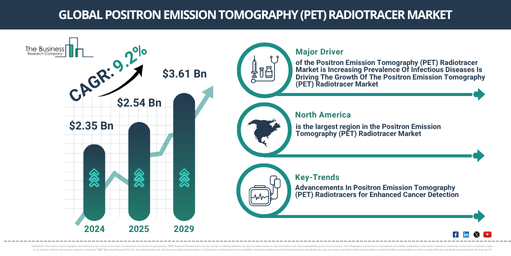
    The positron emission tomography (pet) radiotracer market size has experienced robust growth over recent years. It is anticipated to expand from $2.35 billion in 2024 to $2.54 billion in 2025, achieving a compound annual growth rate (CAGR) of 8.3%. The historical period’s growth can be ascribed to the increasing prevalence of infectious diseases, improved awareness and accessibility, the development of novel radiotracers, the rising prevalence of cancer, and a greater emphasis on preventive medicine.

    The positron emission tomography (pet) radiotracer market size is projected to experience robust expansion over the coming years. It is anticipated to reach $3.61 billion by 2029, exhibiting a compound annual growth rate (CAGR) of 9.2%. This growth during the projected timeframe is largely due to factors such as broader application scopes, increased regulatory clearances, development in nascent markets, an expanding elderly demographic, and the rising uptake of PET radio scanners. Key trends anticipated within this forecast period encompass advancements in micro-pet technology, synergy with wearable devices, the broadening field of theranostics, the emergence of nano-radiotracers, and the utilization of blockchain for enhanced data security.

    Access A Free Sample Of The Report:

    https://www.thebusinessresearchcompany.com/sample.aspx?id=19152&type=smp

    Which Business Drivers Are Underpinning The Growth Of The Positron Emission Tomography (PET) Radiotracer Market?

    The rising occurrence of infectious diseases is anticipated to drive expansion in the positron emission tomography (PET) radiotracer market moving ahead. These diseases are defined as conditions resulting from pathogenic microorganisms like bacteria, viruses, fungi, or parasites. The growing incidence of infectious diseases stems from factors such as climate change, urbanization, globalization, antibiotic resistance, and shifts in human behavior, all of which aid in pathogen dissemination. Positron emission tomography (PET) radiotracers assist in managing infectious diseases by allowing visualization of metabolic activity and inflammation, thereby facilitating infection detection, evaluating treatment efficacy, and distinguishing between infectious and non-infectious conditions to improve patient outcomes. For example, in February 2024, a report released by the UK Health Security Agency, a government agency based in the UK, indicated that tuberculosis (TB) cases in England rose by 10.7% in 2023, with 4,850 reported cases versus 4,380 in 2022. Consequently, the expanding occurrence of infectious diseases is stimulating the growth of the positron emission tomography (PET) radiotracer market.

    What Are The Principal Segment Types In The Positron Emission Tomography (PET) Radiotracer Market?

    The positron emission tomography (pet) radiotracermarket covered in this report is segmented –

    1) By Radiotracer Type: F-18 (Fluorodeoxyglucose 18), Ga-68 (Fibroblast Activation Protein Inhibitor), Other Radiotracer Types

    2) By Application: Cancer, Heart Disease, Gastrointestinal, Endocrine, Neurological Disorders, Other Applications

    3) By End-User: Hospitals, Diagnostic Centers, Other End-Users

    Subsegments:

    1) By F-18 (Fluorodeoxyglucose 18): F-18 FDG (Fluorodeoxyglucose), F-18 Fluoroethyltyrosine (FET), F-18 Florbetapir (Amyloid PET Imaging)

    2) By Ga-68 (Fibroblast Activation Protein Inhibitor): Ga-68 Dotatate (Neuroendocrine Tumor Imaging), Ga-68 PSMA (Prostate-Specific Membrane Antigen Imaging), Ga-68 FAPI (Fibroblast Activation Protein Inhibitor Imaging)

    3) By Other Radiotracer Types: C-11 (Carbon-11), N-13 (Nitrogen-13), O-15 (Oxygen-15), Rb-82 (Rubidium-82), I-124 (Iodine-124)

    Which Long-Term Trends Will Play A Crucial Role In The Positron Emission Tomography (PET) Radiotracer Market?

    Major companies within the positron emission tomography (PET) radiotracer market are concentrating on developing advanced diagnostic solutions, such as positron emission tomography imaging agents, to enhance cancer detection and improve patient outcomes. A positron emission tomography (PET) imaging agent is a radioactive substance utilized to visualize and measure biological processes in the body during PET scans. For instance, in March 2023, IsoLogic Innovative Radiopharmaceuticals, a Canada-based radiopharmaceutical company, launched Illuccix, also known as the Ga-68 Gozetotide Preparation Kit (PSMA-11), in Canada as a prostate cancer imaging agent specifically designed to detect metastatic prostate cancer. This tool proves valuable for physicians in identifying metastatic disease and supporting patient management decisions. It is indicated for use in patients suspected of having metastasis who are candidates for initial definitive therapy, as well as in those with suspected recurrence shown by elevated serum prostate-specific antigen (PSA) levels.

    Which Companies Are Contributing Significantly To The Positron Emission Tomography (PET) Radiotracer Market Growth?

    Major companies operating in the positron emission tomography (PET) radiotracer marker are Cardinal Health Inc., AstraZeneca PLC, Eli Lilly and Company, Siemens Healthineers AG, GE Healthcare Technologies Inc., Philips Healthcare, Bracco Imaging S.p.A., Neusoft Medical Systems Co Ltd., Lantheus Holdings Inc., Jubilant Pharma Limited, SOFIE Biosciences (SOFIE), Yantai Dongcheng Pharmaceutical Group Co. Ltd., Nordion Inc., RefleXion Medical Inc., Isologic Innovative Radiopharmaceuticals, ABX Advanced Biochemical Compounds GmbH, IBA Radiopharma Solutions S.A., IXICO PLC, ImaginAb Inc., Radiomedix Inc.

    Download The Full Report Here:

    https://www.thebusinessresearchcompany.com/report/positron-emission-tomography-pet-radiotracer-global-market-report

    Which Region Offers The Most Opportunity For Positron Emission Tomography (PET) Radiotracer Market Expansion?

    North America was the largest region in the positron emission tomography (PET) radiotracer market in 2024. Asia-Pacific is expected to be the fastest-growing region in the forecast period. The regions covered in the positron emission tomography (PET) radiotracer marker report are Asia-Pacific, Western Europe, Eastern Europe, North America, South America, Middle East, Africa.

    Get A Report Customized For You Here:

    https://www.thebusinessresearchcompany.com/customise?id=19152&type=smp

    Browse Through More Reports Similar to the Global Positron Emission Tomography (PET) Radiotracer Market 2025, By The Business Research Company

    Positron Emission Tomography Pet Scanners Global Market Report 2025

    https://www.thebusinessresearchcompany.com/report/positron-emission-tomography-pet-scanners-global-market-report

    Single Photon Emission Computed Tomography Spect Global Market Report 2025

    https://www.thebusinessresearchcompany.com/report/single-photon-emission-computed-tomography-spect-global-market-report

    Emission Monitoring System Global Market Report 2025

    https://www.thebusinessresearchcompany.com/report/emission-monitoring-system-global-market-report

    Get in touch with us:

    The Business Research Company: https://www.thebusinessresearchcompany.com/

    Americas +1 310-496-7795

    Asia +44 7882 955267 & +91 8897263534

    Europe +44 7882 955267

    Email us at info@tbrc.info

    Follow us on:

    LinkedIn: https://in.linkedin.com/company/the-business-research-company

    YouTube: https://www.youtube.com/channel/UC24_fI0rV8cR5DxlCpgmyFQ

    Global Market Model: https://www.thebusinessresearchcompany.com/global-market-model
  • Optical Coherence Tomography (OCT) For Healthcare And Life Science Market 2025–2029: Strategic Opportunities and Growth Insights

    Optical Coherence Tomography (OCT) For Healthcare And Life Science Market 2025–2029: Strategic Opportunities and Growth Insights

    Uncover key drivers, emerging technologies, and competitive movements shaping the optical coherence tomography (oct) for healthcare and life science market from 2025–2034 with trusted insights from The Business Research Company

    What Are The Market Size Estimates For The Optical Coherence Tomography (OCT) For Healthcare And Life Science Market Now And By 2029?

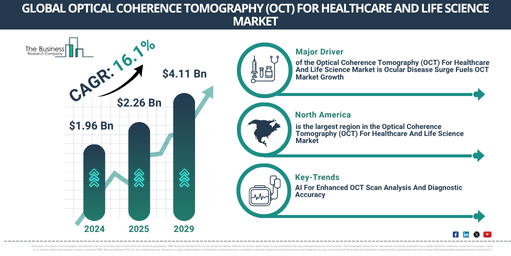
    The market for optical coherence tomography (oct) in healthcare and life science has experienced rapid expansion over recent years. It is anticipated to increase from $1.96 billion in 2024 to $2.26 billion in 2025, achieving a compound annual growth rate (CAGR) of 15.2%. This historical growth can be ascribed to factors such as the increasing prevalence of eye diseases, a growing aging population, a rise in government healthcare initiatives, the expansion of healthcare infrastructure, increasing adoption of non-invasive diagnostic tools, and growing research and development in medical imaging.

    The market for optical coherence tomography (OCT) in healthcare and life science is anticipated to experience significant expansion over the forthcoming years. This market is projected to reach $4.11 billion by 2029, exhibiting a compound annual growth rate (CAGR) of 16.1%. Key drivers for this growth during the forecast period include the escalating need for prompt diagnosis and intervention, an increase in chronic illnesses necessitating OCT, an expanding elderly demographic, heightened investments in medical imaging research, and the rising occurrence of retinal conditions. Prominent trends anticipated in the forecast timeframe encompass the integration of OCT with diverse imaging techniques, the creation of portable and handheld OCT equipment, improvements in OCT software and analytical tools, and progress in OCT applications for pediatric diagnosis.

    Access A Free Sample Of The Report:

    https://www.thebusinessresearchcompany.com/sample.aspx?id=19130&type=smp

    Which Long-Term Drivers Are Expected To Sustain The Optical Coherence Tomography (OCT) For Healthcare And Life Science Market?

    The increasing occurrence of ocular diseases is projected to drive the expansion of optical coherence tomography (OCT) for the healthcare and life science market moving forward. Ocular diseases are conditions affecting the eyes and their adjacent structures, which can potentially lead to vision impairment or blindness. These eye conditions are largely associated with an aging demographic and the heightened prevalence of chronic ailments such as diabetes. Optical coherence tomography (OCT) is utilized to generate detailed, cross-sectional images of the retina and optic nerve, aiding in the diagnosis and surveillance of ocular diseases. As an illustration, in December 2022, a report from the Review of Optometry, a US-based publication offering extensive eye care insights, revealed that an estimated 80 million people globally are impacted by glaucoma, with open-angle glaucoma (OAG) representing 95% of cases. Within the U.S. alone, more than three million individuals are currently living with the condition. Furthermore, this number is anticipated to exceed 111 million by 2040. Therefore, the rising incidence of ocular diseases will fuel the growth of optical coherence tomography (OCT) for the healthcare and life science market.

    How Is The Optical Coherence Tomography (OCT) For Healthcare And Life Science Market Classified By Different Segments?

    The optical coherence tomography (oct) for healthcare and life sciencemarket covered in this report is segmented –

    1) By Type: Catheter Based Optical Coherence Tomography (OCT) Devices, Doppler Optical Coherence Tomography (OCT) Devices, Handheld Optical Coherence Tomography (OCT) Devices, Tabletop Optical Coherence Tomography (OCT) Devices

    2) By Technology: Time Domain Oct (TdOct), Frequency Domain Oct (FdOct), Other Technologies

    3) By Application: Ophthalmology, Cariology, Dermatology, Gastroenterology, Other Applications

    4) By End Users: Hospitals, Specialty Clinics, Research Institutes, Other End Users

    Subsegments:

    1) By Catheter Based Optical Coherence Tomography (OCT) Devices: Intravascular OCT (IV-OCT), Endoscopic OCT, Other Catheter-Based Devices

    2) By Doppler Optical Coherence Tomography (OCT) Devices: Speckle-Tracking Doppler OCT, Phase-Resolved Doppler OCT

    3) By Handheld Optical Coherence Tomography (OCT) Devices: Portable Handheld OCT Systems, Compact Handheld Devices

    4) By Tabletop Optical Coherence Tomography (OCT) Devices: Standalone Tabletop Systems, Modular Tabletop Devices

    How Are Industry Trends Steering The Expansion Of The Optical Coherence Tomography (OCT) For Healthcare And Life Science Market?

    Leading companies within the optical coherence tomography (OCT) for healthcare and life science markets are increasingly integrating artificial intelligence platforms. This strategic focus aims to automate and enhance the efficiency of OCT scan analysis, thereby improving diagnostic accuracy and patient outcomes. Artificial intelligence platforms in optical coherence tomography (OCT) specifically boost diagnostic accuracy and efficiency by automating the analysis and interpretation of OCT scans, leading to better patient outcomes in these sectors. For example, in October 2022, Altris Inc., a US-based medical technology company, unveiled Altris AI, an artificial intelligence platform designed to automate OCT examinations through quick analysis and visualization of 100 retinal pathologies. This cloud-based software enables automated screening, segmentation, and classification of OCT scans, effectively distinguishing between normal and pathological scans. It also offers rapid analysis of macula scans, typically completing processing in about 1 minute, and is compatible with all OCT equipment and file types.

    Who Are The Primary Market Leaders In The Optical Coherence Tomography (OCT) For Healthcare And Life Science Market?

    Major companies operating in the optical coherence tomography (OCT) for healthcare and life science market are Abbott Laboratories, Canon Inc., Carl Zeiss Meditec AG, Leica Microsystems GmbH, Thorlabs Inc., Edmund Optics Inc., Huvitz Co. Ltd., Santec Corporation, Topcon Medical Systems Inc., OPTOPOL Technology SA, NinePoint Medical, AGFA Healthcare, Wasatch Photonics Inc., Perimeter Medical Imaging AI Inc., Nidek Co Ltd., Novacam Technologies Inc., DermaLumics, BaySpec Inc., Imalux Corporation, Lumedica, Phoenix-Micron Inc

    Download The Full Report Here:

    https://www.thebusinessresearchcompany.com/report/optical-coherence-tomography-oct-for-healthcare-and-life-science-global-market-report

    Which Regional Markets Are Emerging As Key Centers For The Optical Coherence Tomography (OCT) For Healthcare And Life Science Market?

    North America was the largest region in the optical coherence tomography (OCT) for healthcare and life science market in 2024. Asia-Pacific is expected to be the fastest-growing region in the forecast period. The regions covered in the optical coherence tomography (OCT) for healthcare and life science market report are Asia-Pacific, Western Europe, Eastern Europe, North America, South America, Middle East, Africa.

    Get A Report Customized For You Here:

    https://www.thebusinessresearchcompany.com/customise?id=19130&type=smp

    Browse Through More Reports Similar to the Global Optical Coherence Tomography (OCT) For Healthcare And Life Science Market 2025, By The Business Research Company

    Optical Instrument And Lens Global Market Report 2025

    https://www.thebusinessresearchcompany.com/report/optical-instrument-and-lens-global-market-report

    Optical Communication And Networking Global Market Report 2025

    https://www.thebusinessresearchcompany.com/report/optical-communication-and-networking-global-market-report

    Passive Optical Network Global Market Report 2025

    https://www.thebusinessresearchcompany.com/report/passive-optical-network-global-market-report

    Get in touch with us:

    The Business Research Company: https://www.thebusinessresearchcompany.com/

    Americas +1 310-496-7795

    Asia +44 7882 955267 & +91 8897263534

    Europe +44 7882 955267

    Email us at info@tbrc.info

    Follow us on:

    LinkedIn: https://in.linkedin.com/company/the-business-research-company

    YouTube: https://www.youtube.com/channel/UC24_fI0rV8cR5DxlCpgmyFQ

    Global Market Model: https://www.thebusinessresearchcompany.com/global-market-model
  • Nanofiber Materials For Biomedical Market Trends, Drivers, and Regional Analysis 2025–2029

    Nanofiber Materials For Biomedical Market Trends, Drivers, and Regional Analysis 2025–2029

    Uncover key drivers, emerging technologies, and competitive movements shaping the nanofiber materials for biomedical market from 2025–2034 with trusted insights from The Business Research Company

    How Is The Nanofiber Materials For Biomedical Market Size Expected To Expand Over 2029-2034?

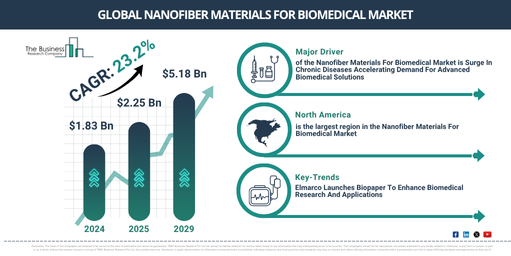
    The nanofiber materials for biomedical market size has experienced significant expansion in recent years. It is projected to grow from $1.83 billion in 2024 to $2.25 billion in 2025, demonstrating a compound annual growth rate (CAGR) of 22.8%. The historical increase can be attributed to factors such as the increasing global demand for medical devices, initial developments in fiber production techniques, enhanced funding for biomedical research, early clinical trials that showcased efficacy, and the introduction of innovative medical devices.

    The nanofiber materials for biomedical market is projected to experience substantial expansion in the coming years. Its valuation is forecast to reach $5.18 billion by 2029, exhibiting a compound annual growth rate (CAGR) of 23.2%. This anticipated growth during the forecast timeframe is primarily driven by the escalating need for sophisticated wound care solutions, increasing enthusiasm for regenerative medicine, greater funding for medical research and the advancement of personalized treatments, and a heightened requirement for economical, high-quality biomaterials. Key developments shaping the market over the forecast period encompass progress in nanotechnology, refined tissue engineering methodologies, superior drug delivery mechanisms, innovative wound healing techniques, the creation of customized implants, and their incorporation into intelligent biomedical devices.

    Access A Free Sample Of The Report:

    https://www.thebusinessresearchcompany.com/sample.aspx?id=19121&type=smp

    Which Market Factors Are Fueling The Nanofiber Materials For Biomedical Industry Growth?

    The increasing incidence of chronic diseases is anticipated to stimulate the expansion of nanofiber materials within the biomedical market in the future. Chronic diseases are defined as long-term medical conditions that typically advance gradually and endure for considerable durations, frequently for many years or even a person’s entire life. The growing occurrence of chronic diseases stems from an aging global population, which elevates the likelihood of conditions such as heart disease and diabetes, coupled with detrimental lifestyle choices like inadequate nutrition and lack of physical activity. Nanofiber materials used in biomedical applications contribute to combating the increasing prevalence of these diseases by facilitating targeted medication delivery, fostering improved tissue regeneration, and sharpening diagnostic accuracy. For example, in January 2023, the National Institutes of Health, a US-based government entity, reported that the population aged 50 and older suffering from at least one chronic disease is predicted to climb by 99.5%, from 71.522 million in 2020 to 142.66 million by 2050. Consequently, the escalating occurrence of chronic diseases acts as a primary catalyst for the growth of nanofiber materials in the biomedical market.

    Which Categories Are Covered In The Nanofiber Materials For Biomedical Market Segmentation Analysis?

    The nanofiber materials for biomedicalmarket covered in this report is segmented –

    1) By Type: Synthetic Polymers, Natural Polymers, Ceramic And Inorganic, Carbon And Graphene, Metallic

    2) By Application: Research, Pharmaceuticals, Medical Devices, Tissue Engineering, Drug Delivery, Wound Healing, Diagnostics, Other Applications

    3) By End-User: Hospitals, Laboratories, Research Institutes, Pharmaceutical Companies, Other End-Users

    Subsegments:

    1) By Synthetic Polymers: Polycaprolactone (PCL), Polylactic Acid (PLA), Polyethylene Oxide (PEO), Polyvinyl Alcohol (PVA)

    2) By Natural Polymers: Collagen, Chitosan, Alginate, Gelatin

    3) By Ceramic And Inorganic: Silica Nanofibers, Hydroxyapatite Nanofibers, Zirconia Nanofibers

    4) By Carbon And Graphene: Carbon Nanofibers, Graphene Oxide Nanofibers, Graphene Nanoribbons

    5) By Metallic: Silver Nanofibers, Gold Nanofibers, Copper Nanofibers

    What Current And Upcoming Trends Are Shaping The Nanofiber Materials For Biomedical Market?

    Leading companies within the nanofiber materials for the biomedical market are prioritizing the creation of advanced biocompatible solutions, including nanofiber cell scaffolds, to enhance tissue regeneration and foster cellular growth. Nanofiber cell scaffolds are three-dimensional constructs made from nanofibers, designed to assist and direct the expansion of cells in both tissue engineering and regenerative medicine. As an illustration, in December 2023, Elmarco Ltd., a company based in the Czech Republic focused on developing and producing nanofiber materials, unveiled BioPaper, a nanofiber cell scaffold derived from gelatin. This innovative offering is engineered to progress research in life sciences and pharmaceuticals by providing a flexible instrument for uses such as regenerative medicine, tissue engineering, and drug screening. BioPaper is produced using Elmarco’s Nanospider technology, which facilitates exact control over fiber dimensions, porosity, and mechanical attributes, guaranteeing reliable production and customization to meet particular research demands.

    Which Organizations Are At The Forefront Of The Nanofiber Materials For Biomedical Market?

    Major companies operating in the nanofiber materials for biomedical market are Asahi Kasei Corporation, Toray Industries Inc., Nouryon Chemicals Holding B.V., Kuraray Co. Ltd., Johns Manville Corporation, Clarivate Plc, Ahlstrom-Munksjö Oyj, Ashland Inc., American Chemical Society, Collagen Matrix Inc., Quizlet Inc., Labster ApS, Substack Inc., Elmarco Ltd., Polymer Molding Inc., Catalytic Materials LLC, Chemistry LibreTexts, European Patent Office (EspaceNet), eSpin Technologies Inc., NAFIGATE Park s.r.o., Nanofiber Solutions LLC, Nanoshel LLC

    Download The Full Report Here:

    https://www.thebusinessresearchcompany.com/report/nanofiber-materials-for-biomedical-global-market-report

    Which Geographic Areas Are Driving Strong Demand For The Nanofiber Materials For Biomedical Market?

    North America was the largest region in the nanofiber materials for biomedical market in 2024. Asia-Pacific is expected to be the fastest-growing region in the forecast period. The regions covered in the nanofiber materials for biomedical market report are Asia-Pacific, Western Europe, Eastern Europe, North America, South America, Middle East, Africa.

    Get A Report Customized For You Here:

    https://www.thebusinessresearchcompany.com/customise?id=19121&type=smp

    Browse Through More Reports Similar to the Global Nanofiber Materials For Biomedical Market 2025, By The Business Research Company

    Nanofibers Global Market Report 2025

    https://www.thebusinessresearchcompany.com/report/nanofibers-global-market-report

    Biomedical Textiles Global Market Report 2025

    https://www.thebusinessresearchcompany.com/report/biomedical-textiles-global-market-report

    Biomaterials Global Market Report 2025

    https://www.thebusinessresearchcompany.com/report/biomaterials-global-market-report

    Get in touch with us:

    The Business Research Company: https://www.thebusinessresearchcompany.com/

    Americas +1 310-496-7795

    Asia +44 7882 955267 & +91 8897263534

    Europe +44 7882 955267

    Email us at info@tbrc.info

    Follow us on:

    LinkedIn: https://in.linkedin.com/company/the-business-research-company

    YouTube: https://www.youtube.com/channel/UC24_fI0rV8cR5DxlCpgmyFQ

    Global Market Model: https://www.thebusinessresearchcompany.com/global-market-model