Category: Medical Equipment

  • Wearable Skin Patch Market Size Forecast: Revenue and CAGR by 2029

    Wearable Skin Patch Market Size Forecast: Revenue and CAGR by 2029

    Unlock Global Insights – Save 20% on Market Reports with Code ONLINE20

    What Market Value Is The Wearable Skin Patch Industry Expected To Reach By 2029, Starting From 2025 Levels?

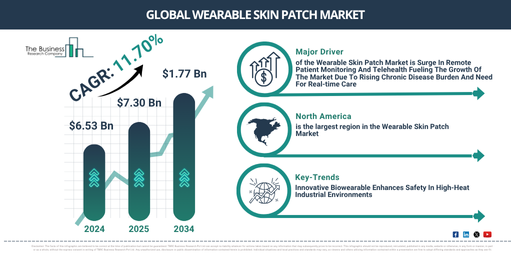
    The market for wearable skin patches has experienced substantial growth in recent years. It is anticipated to increase from $6.53 billion in 2024 to $7.30 billion by 2025, with a compound annual growth rate (CAGR) of 11.9%. This past growth can be ascribed to the increasing spread of chronic illnesses, the rising need for remote patient oversight, a surge in health and fitness consciousness, the growing acceptance of non-invasive drug delivery methods, and an expanding elderly demographic.

    The wearable skin patch market size is projected to experience substantial expansion over the coming years. Its value is anticipated to reach $11.37 billion by 2029, exhibiting a compound annual growth rate (CAGR) of 11.7%. This growth throughout the forecast period stems from factors such as the increasing integration of AI and IoT into wearable patches, a heightened emphasis on personalized healthcare, the rising uptake of telehealth services, the broadening applications in chronic disease management, and expanding investments in wearable health tech startups.

    Key trends expected during the forecast period encompass advancements in biosensor technologies, novel approaches in flexible and stretchable electronics, the incorporation of wireless connectivity features, progress in real-time data analytics, and developments in battery-free and self-powered patches.

    Unlock Your Free Sample Report for Exclusive Market Data:

    https://www.thebusinessresearchcompany.com/sample.aspx?id=25936&type=smp

    Which Drivers Are Impacting The Wearable Skin Patch Market?

    The future expansion of the wearable skin patch market is anticipated to be driven by the increasing need for remote patient monitoring and telehealth services. These services involve leveraging digital technologies to provide healthcare and keep track of patients’ well-being from a distance. This growing demand stems from the increasing incidence of chronic illnesses, which necessitate ongoing oversight and prompt action. Remote patient monitoring and telehealth facilitate this by allowing real-time data exchange and virtual consultations. Wearable skin patches play a crucial role in supporting these remote healthcare methods. They achieve this by continuously gathering physiological data, like glucose levels, heart rate, or body temperature, in real-time and relaying it to medical professionals, thus enabling proactive, distant care and rapid medical intervention. An example illustrating this trend is provided by the Department of Health and Aged Care, an Australia-based government department, which reported in March 2024 that telehealth utilization during 2022–23 peaked with GPs (20%) and allied health (12%). Furthermore, GPs and non-GP specialists were responsible for 75% and 48% of all video consultations, respectively. Consequently, the increased need for remote patient monitoring and telehealth is a key factor propelling the expansion of the wearable skin patch market.

    What Are The Primary Types Of Segments Analyzed In The Wearable Skin Patch Market?

    The wearable skin patch market covered in this report is segmented –

    1) By Types: Medicine Delivery Type, Indicator Monitoring Type

    2) By Technology: Regular Wearable, Connected Wearable

    3) By Application: Clinical, Non-Clinical

    Subsegments:

    1) By Medicine Delivery Type: Insulin Delivery Patches, Nicotine Patches, Hormone Replacement Patches, Pain Relief Patches, Contraceptive Patches, Anti-nausea Patches, Cardiovascular Drug Patches

    2) By Indicator Monitoring Type: Glucose Monitoring Patches, Temperature Monitoring Patches, Hydration Monitoring Patches, pH Level Monitoring Patches, Lactate Monitoring Patches, Sweat Biomarker Monitoring Patches, Oxygen Level Monitoring Patches

    Which Key Trends Are Expected To Influence The Wearable Skin Patch Market In The Coming Years?

    Leading companies in the wearable skin patch market are prioritizing the development of innovative products, such as sweat-sensing patches, to deliver real-time health data, enhance user safety, and address the growing demand for personalized and preventive healthcare solutions. A sweat-sensing patch is an advanced wearable system that monitors sweat biomarkers and provides real-time hydration insights via a connected mobile platform. For instance, in April 2024, Epicore Biosystems, a US-based biotechnology company, launched Connected Hydration, a sweat-sensing wearable patch coupled with a mobile app. This innovative device offers real-time, personalized insights regarding sweat volume, electrolyte loss, body temperature, and movement. It assists frontline industrial workers in anticipating and managing hydration needs before dehydration occurs. The bio wearable is specifically designed for physically demanding sectors like construction, energy, mining, agriculture, and logistics. It also supports military personnel in preventing heat stress and related injuries.

    Which Leading Players Are Enhancing Their Wearable Skin Patch Market Presence Worldwide?

    Major companies operating in the wearable skin patch market are Abbott Laboratories, 3M Company, Medtronic plc, Texas Instruments Incorporated, Nitto Denko Corporation, Dexcom Inc., Insulet Corporation, iRhythm Technologies Inc., Rusan Pharma Ltd., Tapecon Inc., VitalConnect Inc., Blue Spark Technologies Inc., Epicore Biosystems Inc., Beneli AB, UltraLinq Healthcare Solutions Inc., Gentag Inc., Xsensio SA, Nemaura Medical Inc., Zansors LLC, VivaLNK Inc.

    Download The Full Report For Exclusive Market Findings:

    https://www.thebusinessresearchcompany.com/report/wearable-skin-patch-global-market-report

    How Does The Wearable Skin Patch Market Perform Across Key Geographic Regions?

    North America was the largest region in the wearable skin patch market in 2024. Asia-Pacific is expected to be the fastest-growing region in the forecast period. The regions covered in the wearable skin patch market report are Asia-Pacific, Western Europe, Eastern Europe, North America, South America, Middle East, Africa.

    Request A Customized Version Of The Wearable Skin Patch Market Report:

    https://www.thebusinessresearchcompany.com/customise?id=25936&type=smp

    Browse Through More Reports Similar to the Global Wearable Skin Patch Market 2025, By The Business Research Company

    Electronic Skin Patch Global Market Report 2025

    https://www.thebusinessresearchcompany.com/report/electronic-skin-patch-global-market-report

    Transdermal Skin Patche Global Market Report 2025

    https://www.thebusinessresearchcompany.com/report/transdermal-skin-patche-global-market-report

    Skin Care Devices Global Market Report 2025

    https://www.thebusinessresearchcompany.com/report/skin-care-devices-global-market-report

    Get in touch with us:

    The Business Research Company: https://www.thebusinessresearchcompany.com/

    Americas +1 310-496-7795

    Asia +44 7882 955267 & +91 8897263534

    Europe +44 7882 955267

    Email us at info@tbrc.info

    Follow us on:

    LinkedIn: https://in.linkedin.com/company/the-business-research-company

    YouTube: https://www.youtube.com/channel/UC24_fI0rV8cR5DxlCpgmyFQ

    Global Market Model: https://www.thebusinessresearchcompany.com/global-market-model
  • Global Wearable Cardiac Devices Market Trends and Growth Analysis 2025–2029

    Global Wearable Cardiac Devices Market Trends and Growth Analysis 2025–2029

    Unlock Global Insights – Save 20% on Market Reports with Code ONLINE20

    What Is The Anticipated Size Of The Wearable Cardiac Devices Market Over The Five-Year Period 2025–2029?

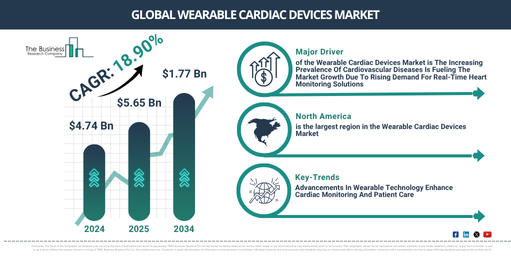
    The wearable cardiac devices market size has seen substantial expansion in recent years. It is projected to increase from $4.74 billion in 2024 to $5.65 billion in 2025, at a compound annual growth rate (CAGR) of 19.3%. The growth observed in the preceding period stems from the rising occurrence of cardiovascular diseases, greater public awareness regarding preventive healthcare, the integration of ECG capabilities into consumer electronics, an increase in the adoption of fitness tracking devices, and a heightened demand for remote patient monitoring solutions.

    The market for wearable cardiac devices is anticipated to experience significant expansion in the upcoming years. This market is projected to reach $11.31 billion by 2029, exhibiting a compound annual growth rate (CAGR) of 18.9%. This projected growth is driven by factors such as the rising uptake of telehealth services, an expanding elderly population, their integration into smartphone health ecosystems, the increasing need for continuous heart health monitoring, and the broader development of telehealth and digital health platforms. Key developments expected during this period involve the miniaturization of cardiac monitoring devices, seamless integration with smartphones and mobile applications, the creation of multi-parameter monitoring wearables, the use of wearable ECG for detecting arrhythmias, and the emergence of subscription models for health monitoring services.

    Unlock Your Free Sample Report for Exclusive Market Data:

    https://www.thebusinessresearchcompany.com/sample.aspx?id=25935&type=smp

    Which Industry Drivers Are Expected To Accelerate The Wearable Cardiac Devices Market From 2025 To 2029?

    The rising occurrence of cardiovascular diseases is projected to boost the expansion of the wearable cardiac devices market in the future. These diseases encompass various conditions impacting the heart and blood vessels, such as coronary artery disease, heart failure, stroke, and hypertension. The growing incidence of cardiovascular diseases is largely associated with several risk factors, notably excessive alcohol consumption, which has the potential to elevate blood pressure, cause irregular heart rhythms, and heighten the likelihood of heart failure and stroke. Wearable cardiac devices facilitate real-time monitoring of heart activity, allowing for prompt detection and management of cardiovascular diseases to avert severe health complications. They achieve this by continuously tracking essential parameters like heart rate, rhythm, and electrical signals, consequently aiding in timely medical interventions and enhancing patient outcomes. For example, data released in December 2023 by the Australian Institute of Health and Welfare, a government agency based in Australia, indicated that doctor-certified deaths from coronary heart disease (CHD) were 14,100 in 2021, increasing to 14,900 in 2022. Consequently, the rising prevalence of cardiovascular diseases is serving as a primary catalyst for the expansion of the wearable cardiac devices market.

    Which Key Segments Fueling The Wearable Cardiac Devices Market?

    The wearable cardiac devices market covered in this report is segmented –

    1) By Product: Holter Monitors, Smartwatches, Patch, Defibrillators, Pulse Oximeters, Other Products

    2) By Application: Arrhythmia Detection, Heart Rate Monitoring, Heart Disease Management

    3) By Distribution Channel: Online, Offline

    4) By End User: Hospitals, Clinics, Individual Consumers, Fitness Centers

    Subsegments:

    1) By Holter Monitors: Single-Channel Holter Monitors, Multi-Channel Holter Monitors, Wireless Holter Monitors

    2) By Smartwatches: Fitness And Wellness Smartwatches, Medical-Grade Smartwatches, Electrocardiogram (ECG)-Enabled Smartwatches

    3) By Patch: Adhesive Cardiac Monitoring Patches, Rechargeable Patch Monitors, Disposable Patch Monitors

    4) By Defibrillators: Wearable Cardioverter Defibrillators (WCDs), Automated External Defibrillators (AEDs) With Wearable Integration

    5) By Pulse Oximeters: Fingertip Wearable Oximeters, Wrist-Worn Oximeters, Ring-Type Oximeters

    6) By Other Products: Chest Straps, Smart Clothing, Portable Electrocardiogram (ECG) Monitors

    What Are The Major Trends Driving The Growth Of The Wearable Cardiac Devices Market?

    Companies specializing in the wearable cardiac device sector are prioritizing the creation of advanced products, like medical-grade smartwatches, to improve continuous heart activity monitoring and enable earlier identification of cardiovascular conditions. Medical-grade smartwatches are innovative wearable gadgets equipped with sophisticated health sensors that adhere to clinical accuracy benchmarks for tracking vital indicators such as heart rate, electrocardiograms (ECG), blood oxygen levels, and sleep patterns. These instruments empower both users and healthcare providers to oversee chronic ailments, detect irregularities promptly, and make well-informed health choices based on real-time information. For instance, in July 2022, Xplore Lifestyle Solutions Pvt Ltd, an Indian manufacturing firm, collaborated with Israel-based CardiacSense to unveil the CardiacSense medical watch, acclaimed as the globe’s inaugural medically-certified smartwatch designed for heart monitoring. This device integrates FDA-cleared photoplethysmography (PPG) and ECG sensors, delivering hospital-grade precision in identifying arrhythmias, atrial fibrillation, and various other cardiac anomalies. Its proprietary algorithms facilitate uninterrupted blood pressure monitoring without requiring calibration, while its sleek, round-the-clock wearable design also features fall detection and emergency SOS notifications.

    Which Major Firms Are Strengthening Their Position In The Wearable Cardiac Devices Industry?

    Major companies operating in the wearable cardiac devices market are Apple Inc., Samsung Electronics Co. Ltd., Abbott Laboratories, Medtronic plc, Garmin Ltd., Masimo Corporation, Nihon Kohden Corporation, iRhythm Technologies Inc., Biofourmis, Bittium Corporation, BPL Medical Technologies Pvt. Ltd., NeuroSky Inc., Bionet Co. Ltd., AliveCor Inc., Qardio Inc., Empatica Inc., VitalConnect Inc., Lifesignals Group, Biotricity Inc., Shimmer Research

    Download The Full Report For Exclusive Market Findings:

    https://www.thebusinessresearchcompany.com/report/wearable-cardiac-devices-global-market-report

    Which Region Is Expected To Witness The Fastest Growth In The Wearable Cardiac Devices Market?

    North America was the largest region in the wearable cardiac devices market in 2024. Asia-Pacific is expected to be the fastest-growing region in the forecast period. The regions covered in the wearable cardiac devices market report are Asia-Pacific, Western Europe, Eastern Europe, North America, South America, Middle East, Africa.

    Request A Customized Version Of The Wearable Cardiac Devices Market Report:

    https://www.thebusinessresearchcompany.com/customise?id=25935&type=smp

    Browse Through More Reports Similar to the Global Wearable Cardiac Devices Market 2025, By The Business Research Company

    Wearable Heart Monitoring Devices Global Market Report 2025

    https://www.thebusinessresearchcompany.com/report/wearable-heart-monitoring-devices-global-market-report

    Cardiac Arrhythmia Monitoring Devices Global Market Report 2025

    https://www.thebusinessresearchcompany.com/report/cardiac-arrhythmia-monitoring-devices-global-market-report

    Wearable Medical Devices Market 2025

    https://www.thebusinessresearchcompany.com/report/wearable-medical-devices-market

    Get in touch with us:

    The Business Research Company: https://www.thebusinessresearchcompany.com/

    Americas +1 310-496-7795

    Asia +44 7882 955267 & +91 8897263534

    Europe +44 7882 955267

    Email us at info@tbrc.info

    Follow us on:

    LinkedIn: https://in.linkedin.com/company/the-business-research-company

    YouTube: https://www.youtube.com/channel/UC24_fI0rV8cR5DxlCpgmyFQ

    Global Market Model: https://www.thebusinessresearchcompany.com/global-market-model
  • Wearable Bioelectronic Skin Patches Market Forecast: What to Expect by 2029

    Wearable Bioelectronic Skin Patches Market Forecast: What to Expect by 2029

    Unlock Global Insights – Save 20% on Market Reports with Code ONLINE20

    What Are The Forecasted Market Size Estimates For The Wearable Bioelectronic Skin Patches Market Between 2025 And 2029?

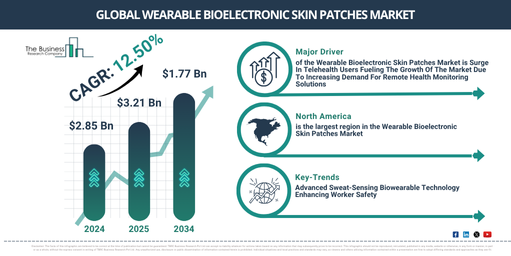
    The wearable bioelectronic skin patch market has seen rapid expansion in recent years. This market is set to increase from $2.85 billion in 2024 to $3.21 billion in 2025, achieving a compound annual growth rate (CAGR) of 12.7%. The historical growth of this market can be attributed to the escalating demand for remote health monitoring, wider adoption of flexible electronics, an increase in chronic disease prevalence, ongoing advancements in sensor technology, and heightened awareness concerning personalized healthcare.

    The wearable bioelectronic skin patch market size is anticipated to experience substantial growth over the next few years. It is projected to expand to $5.15 billion by 2029, achieving a compound annual growth rate (CAGR) of 12.5%. This expansion during the forecast period can be attributed to the increasing integration of artificial intelligence, a growing focus on real-time health analytics, a rising demand for non-invasive monitoring, increased investments in wearable healthcare technology, and the growing adoption of wireless connectivity in patches. Significant trends expected in the forecast period include advancements in flexible and stretchable materials, enhanced biosensor integration, innovations in energy harvesting technologies, the integration of AI and machine learning, and progress in real-time data processing.

    Unlock Your Free Sample Report for Exclusive Market Data:

    https://www.thebusinessresearchcompany.com/sample.aspx?id=25934&type=smp

    What Are The Top Growth Drivers Impacting The Wearable Bioelectronic Skin Patches Market Outlook?

    The increasing adoption of telehealth is projected to fuel the expansion of the wearable bioelectronic skin patches market moving forward. Telehealth users are individuals who access medical services remotely through digital communication tools such as video calls, applications, or phone consultations. The surge in telehealth users is attributed to enhanced convenience, as it enables patients to receive healthcare from their homes without the need for travel. Wearable bioelectronic skin patches support telehealth users by continuously monitoring vital signs and transmitting real-time health data to healthcare providers, which facilitates remote diagnosis, timely interventions, and customized care. For instance, in March 2024, the Department of Health and Aged Care, an Australia-based government department, reported that telehealth usage in 2022–23 was highest among general practitioner (GP) (20%) and allied health (12%), with general practitioner (GP) and non-general practitioner (GP) specialists accounting for 75% and 48% of all video consultations. Consequently, the rising number of telehealth users is propelling the growth of the wearable bioelectronic skin patches market.

    How Is The Wearable Bioelectronic Skin Patches Market Classified Into Different Segments?

    The wearable bioelectronic skin patches market covered in this report is segmented –

    1) By Type: Electrochemical Sensors, Electrocardiogram Sensors, Temperature Sensors, Electromyography Sensors, Other Types

    2) By Application: Fitness And Wellness, Medical Monitoring, Other Applications

    3) By End Use: Hospitals And Clinics, Home Care Settings, Other End Uses

    Subsegments:

    1) By Electrochemical Sensors: Glucose Monitoring Sensors, Lactate Monitoring Sensors, Potential of Hydrogen Sensors, Electrolyte Sensors, Cortisol Detection Sensors

    2) By Electrocardiogram (ECG) Sensors: Single-Lead Electrocardiogram Sensors, Multi-Lead Electrocardiogram Sensors, Dry Electrode Sensors, Wet Electrode Sensors, Wireless Electrocardiogram Patches

    3) By Temperature Sensors: Skin Surface Temperature Sensors, Core Body Temperature Sensors, Infrared Thermography Patches, Thermistor-Based Sensors, Phase Change Material (PCM) Sensors

    4) By Electromyography (EMG) Sensors: Surface Electromyography Patches, Wireless Electromyography Patches, Multi-Channel Electromyography Sensors, Dry Electrode Electromyography Sensors, Textile-Embedded Electromyography Sensors

    5) By Other Types: Optical Sensors, Mechanical Strain Sensors, Hydration Monitoring Sensors, Sweat Rate Sensors, Blood Pressure Sensors

    What Trends Are Expected To Drive The Wearable Bioelectronic Skin Patches Market?

    Leading companies in the wearable bioelectronic skin patches market are concentrating on creating sophisticated technologies, such as multi-sensor sweat-sensing systems. These innovations aim to provide personalized, real-time hydration monitoring and predictive health insights specifically for industrial workers. Such a multi-sensor system combines biosensors to gauge sweat rate, electrolyte loss, skin temperature, and movement, thereby producing immediate data crucial for avoiding dehydration and heat stress. An example of this advancement is Epicore Biosystems, a US-based digital health company, which introduced Connected Hydration, a biowearable patch accompanied by a mobile application, in April 2024. This adaptable, skin-worn device is engineered to monitor sweat volume, electrolyte depletion, body temperature, and movement utilizing numerous biosensors and machine learning algorithms, which were trained on over 420,000 data points. The patch offers instant dehydration warnings via haptic feedback and facilitates tracking of fluid intake through its associated mobile application. It boasts a battery life exceeding 1,000 hours without the need for recharging and adheres to an intrinsically safe design standard (CLASS I, DIV 2). This technological solution significantly aids predictive analytics within challenging work environments.

    Who Are The Primary Competitors In The Global Wearable Bioelectronic Skin Patches Market?

    Major companies operating in the wearable bioelectronic skin patches market are Abbott Laboratories, Medtronic plc, Dexcom Inc., Interuniversity Microelectronics Centre, iRhythm Technologies Inc., Biolinq Inc., Profusa Inc., VitalConnect Inc., Blue Spark Technologies Inc., Epicore Biosystems Inc., BioIntelliSense Inc., Gentag Inc., VivaLNK Inc., PKvitality S.A.S., G-Tech Medical Inc., Biobeat Technologies Ltd., Zansors Inc., Nemaura Medical Inc., QT Medical Inc., Cardiomo Care Inc.

    Download The Full Report For Exclusive Market Findings:

    https://www.thebusinessresearchcompany.com/report/wearable-bioelectronic-skin-patches-global-market-report

    Which Global Regions Are Influencing The Competitive Landscape Of The Wearable Bioelectronic Skin Patches Market?

    North America was the largest region in the wearable bioelectronic skin patches market in 2024. Asia-Pacific is expected to be the fastest-growing region in the forecast period. The regions covered in the wearable bioelectronic skin patches market report are Asia-Pacific, Western Europe, Eastern Europe, North America, South America, Middle East, Africa.

    Request A Customized Version Of The Wearable Bioelectronic Skin Patches Market Report:

    https://www.thebusinessresearchcompany.com/customise?id=25934&type=smp

    Browse Through More Reports Similar to the Global Wearable Bioelectronic Skin Patches Market 2025, By The Business Research Company

    Electronic Skin Patch Global Market Report 2025

    https://www.thebusinessresearchcompany.com/report/electronic-skin-patch-global-market-report

    Transdermal Skin Patche Global Market Report 2025

    https://www.thebusinessresearchcompany.com/report/transdermal-skin-patche-global-market-report

    Skin Care Devices Global Market Report 2025

    https://www.thebusinessresearchcompany.com/report/skin-care-devices-global-market-report

    Get in touch with us:

    The Business Research Company: https://www.thebusinessresearchcompany.com/

    Americas +1 310-496-7795

    Asia +44 7882 955267 & +91 8897263534

    Europe +44 7882 955267

    Email us at info@tbrc.info

    Follow us on:

    LinkedIn: https://in.linkedin.com/company/the-business-research-company

    YouTube: https://www.youtube.com/channel/UC24_fI0rV8cR5DxlCpgmyFQ

    Global Market Model: https://www.thebusinessresearchcompany.com/global-market-model

  • Water For Injection Industry Insights: Market Forecast to 2029

    Water For Injection Industry Insights: Market Forecast to 2029

    Unlock Global Insights – Save 20% on Market Reports with Code ONLINE20

    How Is The Water For Injection Market Size Likely To Evolve From 2025 Through 2034?

    The market for water for injection has experienced robust expansion over recent years. Projections indicate it will expand from $27.79 billion in 2024 to $30.45 billion in 2025, demonstrating a compound annual growth rate (CAGR) of 9.6%. Historically, this growth has stemmed from factors such as increasing demand for parenteral drugs, the stricter global implementation of GMP standards, a surge in biologics production, the rise of contract manufacturing, an increase in hospital-based manufacturing activities, and the growing adoption of aseptic packaging.

    The market for water for injection is anticipated to experience substantial expansion over the upcoming years. By 2029, this market is projected to reach $43.60 billion, demonstrating a compound annual growth rate (CAGR) of 9.4%. This projected growth throughout the forecast period stems from factors such as an increase in regulatory approvals for non-distillation approaches, expanding biopharmaceutical production in developing regions, a heightened need for quickly deployable plug-and-play water solutions, growing requirements from advanced therapy medicinal products, and the emergence of personalized medicine. Key developments expected during this period involve breakthroughs in decentralized generation systems, the implementation of IoT-enabled water for injection systems, the application of artificial intelligence and machine learning in water for injection production, the integrated use of vapor compression distillation, and the embrace of novel technologies.

    Unlock Your Free Sample Report for Exclusive Market Data:

    https://www.thebusinessresearchcompany.com/sample.aspx?id=25933&type=smp

    Which Major Market Drivers Are Shaping The Future Of The Water For Injection Market?

    The expanding incidence of diabetes is projected to drive the future growth of the water for injection market. Diabetes is defined as a chronic medical condition where the body struggles to effectively regulate blood sugar (glucose) levels, either due to insufficient insulin production or its ineffective use. The rising occurrence of diabetes is largely attributed to increasing global rates of obesity, as excess body fat interferes with the body’s ability to use insulin efficiently, leading to impaired blood sugar management and a heightened risk of developing the disease. Water for injection is commonly employed in diabetes management to reconstitute or dilute injectable medications such as insulin, ensuring these drugs are administered in a sterile and safe manner to maintain their effectiveness and prevent infections. For example, in February 2025, according to the Health Professional Academy, a UK-based personalized health professional learning platform, the number of people diagnosed with diabetes in the UK reached a record 4.6 million, an increase from 4.4 million the previous year. Consequently, the increasing prevalence of diabetes is propelling the growth of the water for injection market.

    What Are The Major Segments Identified In The Water For Injection Market?

    The water for injection market covered in this report is segmented –

    1) By Type: Single-Distilled Water For Injection, Double-Distilled Water For Injection, Sterile Water For Injection, Purified Water For Injection

    2) By Packaging: Vial And Ampule, Bottle, Drums And Bulk Container, Other Packaging

    3) By Production Technology: Distillation, Membrane Based Reverse Osmosis

    4) By Applications: Solvents And Diluents, Culture Media, Equipment Cleaning, Other Applications

    5) By End User: Pharmaceutical And Biotechnology Companies , Hospitals And Other Healthcare Facilities, Contract Research And Manufacturing Organizations, Other End Users

    Subsegments:

    1) By Single-Distilled Water For Injection: Glass Ampoules, Plastic Vials, Bulk Packaging For Manufacturing Use, Laboratory Use Packaging

    2) By Double-Distilled Water For Injection: Pharmaceutical Manufacturing, Biotechnology Applications, Injectable Formulation Processing, Analytical Testing Laboratories

    3) By Sterile Water For Injection: Prefilled Syringes, IV Infusion Bags, Vials For Reconstitution, Inhalation And Irrigation Uses

    4) By Purified Water For Injection: Bulk Supply For Pharmaceutical Manufacturing, Custom Formulations, Equipment Cleaning And Preparation, Research And Laboratory Use

    Which Trends Are Impacting The Water For Injection Market?

    Major companies within the water for injection market are concentrating on developing technologically advanced solutions, such as cold water for injection technology, aiming to reduce energy consumption and operational costs while maintaining compliance with regulatory standards. Cold water for injection technology involves producing water for injection through membrane-based purification methods at ambient temperatures, eliminating the need for distillation while still ensuring adherence to pharmacopeial standards. For example, in December 2024, CN Water Systems Pvt. Ltd., an India-based pharmaceutical company, introduced its innovative OSMOTRON Cold/Ambient Water for Injection (WFI) technology. This technology significantly decreases energy consumption and operational costs when compared to traditional distillation methods. It enables the direct generation of WFI from potable water without requiring water softening or dechlorination, by utilizing a triple-membrane barrier for improved safety and efficiency.

    Which Key Market Players Are Investing In Expansion And Innovation Of Water For Injection Market?

    Major companies operating in the water for injection market are Pfizer Inc., Veolia Water Technologies Inc., Thermo Fisher Scientific Inc., GlaxoSmithKline plc, Eli Lilly and Co., Boehringer Ingelheim, Amgen Inc., Merck KGaA, Fresenius SE and Co. KGaA, Asahi Kasei Medical Co. Ltd., Sandoz International GmbH, Baxter International Inc., B. Braun Melsungen AG, Lonza Group AG, Apotex Inc., BWT AG, Sartorius AG, Wuxi Biologics Cayman Inc., ICU Medical Inc., Evoqua Water Technologies, Cambrex Corporation.

    Download The Full Report For Exclusive Market Findings:

    https://www.thebusinessresearchcompany.com/report/water-for-injection-global-market-report

    What Are The Regional Market Dynamics Impacting The Water For Injection Industry?

    North America was the largest region in the water for injection market in 2024. Asia-Pacific is expected to be the fastest-growing region in the forecast period. The regions covered in the water for injection market report are Asia-Pacific, Western Europe, Eastern Europe, North America, South America, Middle East, Africa.

    Request A Customized Version Of The Water For Injection Market Report:

    https://www.thebusinessresearchcompany.com/customise?id=25933&type=smp

    Browse Through More Reports Similar to the Global Water For Injection Market 2025, By The Business Research Company

    Injection Pen Global Market Report 2025

    https://www.thebusinessresearchcompany.com/report/injection-pen-global-market-report

    Self Injections Global Market Report 2025

    https://www.thebusinessresearchcompany.com/report/self-injections-global-market-report

    Injectable Drug Delivery Devices Global Market Report 2025

    https://www.thebusinessresearchcompany.com/report/injectable-drug-delivery-devices-global-market-report

    Get in touch with us:

    The Business Research Company: https://www.thebusinessresearchcompany.com/

    Americas +1 310-496-7795

    Asia +44 7882 955267 & +91 8897263534

    Europe +44 7882 955267

    Email us at info@tbrc.info

    Follow us on:

    LinkedIn: https://in.linkedin.com/company/the-business-research-company

    YouTube: https://www.youtube.com/channel/UC24_fI0rV8cR5DxlCpgmyFQ

    Global Market Model: https://www.thebusinessresearchcompany.com/global-market-model
  • Global Vision Impairment Devices Market Overview: Trends Shaping Growth to 2029

    Global Vision Impairment Devices Market Overview: Trends Shaping Growth to 2029

    Unlock Global Insights – Save 20% on Market Reports with Code ONLINE20

    What Is The Global Market Value Of The Vision Impairment Devices Industry In 2025?

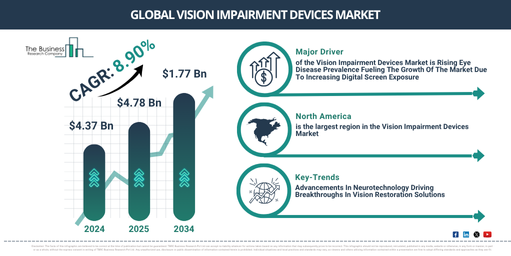
    The market for vision impairment devices has experienced substantial growth in recent years. This market is projected to expand from $4.37 billion in 2024 to $4.78 billion in 2025, demonstrating a compound annual growth rate (CAGR) of 9.2%. Historically, this expansion has been driven by factors such as government investment in assistive technology development, backing from insurance and reimbursement systems for low-vision assistance, an increase in healthcare infrastructure and expenditure, the incorporation of vision aids into public health initiatives and disability schemes, and international conventions on disability rights promoting advancements.

    The vision impairment devices market is projected to experience substantial expansion over the upcoming years. It is anticipated to reach a valuation of $6.71 billion by 2029, demonstrating a compound annual growth rate (CAGR) of 8.9%. This anticipated growth during the forecast period stems from several factors, including an increased desire for independent living among individuals with visual impairments, a growing preference among consumers for non-invasive assistive solutions, greater adoption of assistive wearables by younger demographics, the ability to customize and personalize devices for enhanced user comfort, and the broadening reach of e-commerce platforms for assistive technology. Key developments expected in this period encompass the creation of AI-powered visual aids, an uptick in wearable vision enhancement technologies, the integration of augmented reality (AR) and virtual reality (VR) into vision devices, advancements in portable optical character recognition (OCR) tools, and enhancements in mobile application-based assistive technologies.

    Unlock Your Free Sample Report for Exclusive Market Data:

    https://www.thebusinessresearchcompany.com/sample.aspx?id=25931&type=smp

    Which Factors And Drivers Are Influencing The Vision Impairment Devices Market In 2025?

    The increasing occurrence of eye conditions is expected to drive expansion in the vision impairment devices market over the foreseeable future. These diseases are medical conditions that interfere with the eye’s typical operation or structure, potentially leading to partial or total vision loss if left unaddressed. The surge in eye diseases stems from extended screen use on digital devices, resulting in sustained eye strain and accelerating the onset of issues like myopia and digital eye fatigue, especially among younger demographics. Vision impairment devices empower individuals suffering from eye diseases by boosting accessibility, enhancing day-to-day functionality, and fostering increased independence through sophisticated assistive technologies. A concrete example highlights this: In August 2024, a report from the World Health Organization, an intergovernmental body based in Switzerland, projected that the population affected by presbyopia would climb to 2.1 billion by 2030, and instances of myopia are predicted to rise to approximately 3.36 billion globally. Consequently, the growing incidence of eye conditions will stimulate the expansion of the vision impairment devices market.

    What Are The Major Segment Types Covered In The Vision Impairment Devices Market?

    The vision impairment devices market covered in this report is segmented –

    1) By Product Type: Educational Devices And Software, Mobility Devices, Low Vision Devices, Other Product Types

    2) By Distribution Channel: Online Retail, Offline Retail, Direct Sales, Pharmacies And Optical Stores

    3) By End-User: Blind Schools Or Educational Institutions, Enterprises And Social Organizations, Personal Use Or Individuals, Hospitals And Federations, Other End-Users

    Subsegments:

    1) By Educational Devices And Software: Screen Readers, Magnifying Software, Braille Translators, Educational Apps For Visually Impaired

    2) By Mobility Devices: Smart Canes, GPS-Based Navigation Aids, Electronic Travel Aids, Wearable Mobility Trackers

    3) By Low Vision Devices: Video Magnifiers, Telescopic Glasses, Magnifying Lenses, Text-To-Speech Devices

    4) By Other Product Types: Smart Glasses, Braille Watches, Accessible Home Devices, Tactile Displays

    Which Market Trends Are Creating New Opportunities In The Vision Impairment Devices Industry?

    Leading companies within the vision impairment devices market are concentrating on developing advanced solutions, such as microelectrode arrays, to achieve minimal invasiveness. Microelectrode arrays are compact devices equipped with numerous microscopic electrodes designed to detect or transmit electrical signals within neural or cellular networks with precise spatial resolution. For example, in September 2024, Neuralink, a US-based neurotechnology company, announced that its surgically placed device, Blindsight, had received U.S. Food and Drug Administration approval, aiming to help individuals who have lost their sight regain visual perception. Blindsight implants operate by inserting a microelectrode array into the brain’s visual cortex, thereby stimulating neurons essential for visual processing. This enables the brain to generate visual sensations without dependence on the eyes or optic nerves. A significant feature of this device is its ability to assist individuals who are completely blind or have non-functioning optic nerves, provided their visual cortex is intact. It may even facilitate visual perception for those who have never possessed sight since birth.

    Which Major Industry Participants Are Leading The Vision Impairment Devices Market Growth?

    Major companies operating in the vision impairment devices market are Carl Zeiss Meditec AG, Amedia, HumanWare Ltd., Freedom Scientific Inc., NeoLight, Dolphin Computer Access Ltd., Access Ingenuity, Adaptica SRL, Ambutech Inc., American Thermoform Corp., Analab Scientific Inst Pvt. Ltd., Biotech Healthcare Ltd., Carroll Store, En-Vision America Inc., LVI Low Vision International, NIDEK CO. LTD., Ocutech Inc., Beyond Sight, Blaxall Optics Ltd., Telesensory Corporation

    Download The Full Report For Exclusive Market Findings:

    https://www.thebusinessresearchcompany.com/report/vision-impairment-devices-global-market-report

    How Is Vision Impairment Devices Market Demand Varying Across Different Regions?

    North America was the largest region in the vision impairment devices market in 2024. Asia-Pacific is expected to be the fastest-growing region in the forecast period. The regions covered in the vision impairment devices market report are Asia-Pacific, Western Europe, Eastern Europe, North America, South America, Middle East, Africa.

    Request A Customized Version Of The Vision Impairment Devices Market Report:

    https://www.thebusinessresearchcompany.com/customise?id=25931&type=smp

    Browse Through More Reports Similar to the Global Vision Impairment Devices Market 2025, By The Business Research Company

    Vision Care Devices And Equipment Global Market Report 2025

    https://www.thebusinessresearchcompany.com/report/vision-care-devices-and-equipment-global-market-report

    Night Vision Devices Global Market Report 2025

    https://www.thebusinessresearchcompany.com/report/night-vision-devices-global-market-report

    Assistive Technologies For Visually Impaired Global Market Report 2025

    https://www.thebusinessresearchcompany.com/report/assistive-technologies-for-visually-impaired-global-market-report

    Get in touch with us:

    The Business Research Company: https://www.thebusinessresearchcompany.com/

    Americas +1 310-496-7795

    Asia +44 7882 955267 & +91 8897263534

    Europe +44 7882 955267

    Email us at info@tbrc.info

    Follow us on:

    LinkedIn: https://in.linkedin.com/company/the-business-research-company

    YouTube: https://www.youtube.com/channel/UC24_fI0rV8cR5DxlCpgmyFQ

    Global Market Model: https://www.thebusinessresearchcompany.com/global-market-model
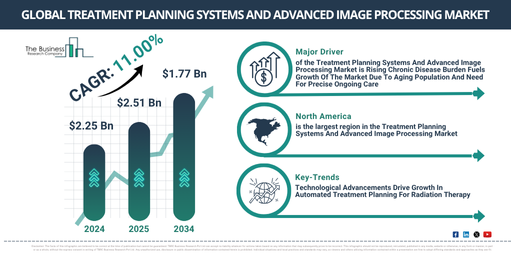
  • Treatment Planning Systems And Advanced Image Processing Industry Forecast to Hit $3.81 Billion by 2029 With a Strong 11% CAGR

    Treatment Planning Systems And Advanced Image Processing Industry Forecast to Hit $3.81 Billion by 2029 With a Strong 11% CAGR

    Unlock Global Insights – Save 20% on Market Reports with Code ONLINE20

    What Is The Future Market Size Estimation For The Treatment Planning Systems And Advanced Image Processing Market Covering 2025–2034?

    The market for treatment planning systems and advanced image processing has expanded significantly in recent times. This market is projected to expand from $2.25 billion in 2024 to $2.51 billion by 2025, demonstrating a compound annual growth rate (CAGR) of 11.3%. Historically, this expansion has been driven by factors such as a greater inclination towards non-invasive treatment methods, increased healthcare spending on oncology facilities, a growing demand for automated treatment planning systems, wider adoption of adaptive radiotherapy, and enhanced use of cloud-based treatment planning solutions.

    The market for treatment planning systems and advanced image processing is projected to experience swift expansion over the coming years. This market is anticipated to reach $3.81 billion by 2029, exhibiting a compound annual growth rate (CAGR) of 11.0%. Factors driving this growth during the forecast period include a higher incidence of cancer cases, increased uptake of radiation therapy, a growing need for personalized medical approaches, the expanding integration of artificial intelligence into imaging and planning, and greater understanding of the importance of early diagnosis and treatment. Key trends expected over this period encompass progress in cloud-native treatment planning platforms, enhanced utilization of digital twins for individualized radiotherapy, the creation of hybrid imaging and planning ecosystems, advancements in planning modules specifically for neuro-oncology, and sophisticated incorporation of radiomics into planning processes.

    Unlock Your Free Sample Report for Exclusive Market Data:

    https://www.thebusinessresearchcompany.com/sample.aspx?id=25927&type=smp

    What Are The Drivers Pushing New Developments In The Treatment Planning Systems And Advanced Image Processing Market?

    The rising occurrence of chronic illnesses is anticipated to boost the expansion of the treatment planning systems and advanced image processing market moving forward. These are persistent, non-contagious conditions necessitating continuous medical attention and potentially hindering daily life. The growing incidence of chronic diseases stems from an aging populace, as older individuals are more susceptible to prolonged health issues. Treatment planning and advanced image processing assist in managing chronic ailments through facilitating accurate diagnosis, precise treatment planning, and continuous monitoring, which contributes to enhanced treatment precision and improved patient results. For example, in April 2025, the Centers for Disease Control and Prevention, a US-based federal agency, reported that 76.4% of US individuals had one or more chronic conditions in 2023, with figures ranging from 59.5% for young adults to 93.0% for older persons. Consequently, the increasing prevalence of chronic diseases is propelling the growth of the treatment planning systems and advanced image processing market.

    What Are The Leading Segments Analyzed In The Treatment Planning Systems And Advanced Image Processing Market?

    The treatment planning systems and advanced image processing market covered in this report is segmented –

    1) By Component: Advanced Image Processing Software, Treatment Planning Software

    2) By Technique: 3D Image Reconstruction, In-Room Imaging, Image Registration Using Graphics Processor Unit

    3) By Technology: Magnetic Resonance Imaging-Based Planning, Computed Tomography-Based Planning, Radiation Therapy

    4) By Application: Online Monitoring, Dose Accumulation, Tracking, Adaptive Radiotherapy, Validation Of Image Registration, Other Applications

    5) By End-User: Hospitals, Cancer Research Institute, Diagnostic And Treatment Centers, Other End-Users

    Subsegments:

    1) By Advanced Image Processing Software: 3d Image Reconstruction, Image Registration Using Graphics Processor Unit (Gpu), In-Room Imaging

    2) By Treatment Planning Software: Magnetic Resonance Imaging-Based Planning, Radiation Therapy, Computed Tomography-Based Planning

    Which Competitive Trends Are Defining The Treatment Planning Systems And Advanced Image Processing Market Structure?

    Leading companies within the treatment planning systems and advanced image processing market are concentrating on creating technological advancements, such as automated treatment planning, to enhance precision, reduce the time spent on planning, and improve patient outcomes in radiation therapy. Automated treatment planning involves the use of sophisticated software algorithms and artificial intelligence to generate optimized radiation therapy plans with minimal manual input, which boosts efficiency, consistency, and accuracy in cancer treatment. For instance, in May 2025, RaySearch Laboratories, a Sweden-based medical technology company, launched RayStation v2025 to offer improved support for adaptive therapy. It delivers rapid, automated radiation therapy planning, incorporating advanced machine learning and support for upright treatments. This innovation enhances consistency, efficiency, and personalization in cancer care.

    Which Leading Companies Dominate The Treatment Planning Systems And Advanced Image Processing Market Share?

    Major companies operating in the treatment planning systems and advanced image processing market are Hitachi Ltd., Siemens Healthineers AG, Koninklijke Philips N.V., GE HealthCare Technologies Inc., Zimmer Biomet, Dentsply Sirona, Institut Straumann AG, Varian Medical Systems, Elekta AB, Agfa-Gevaert Group, Nobel Biocare, Accuray Incorporated, Brainlab AG, Canon Medical Systems Corporation, ViewRay Inc., MIM Software, C-RAD AB, IBA Radiopharma Solutions, IntraOp Medical Corporation, DOSIsoft SA, Mercurius Health, Mirada Medical Limited.

    Download The Full Report For Exclusive Market Findings:

    https://www.thebusinessresearchcompany.com/report/treatment-planning-systems-and-advanced-image-processing-global-market-report

    How Do Regional Market Performances Compare Within The Treatment Planning Systems And Advanced Image Processing Industry?

    North America was the largest region in the treatment planning systems and advanced image processing market in 2024. Asia-Pacific is expected to be the fastest-growing region in the forecast period. The regions covered in the treatment planning systems and advanced image processing market report are Asia-Pacific, Western Europe, Eastern Europe, North America, South America, Middle East, Africa.

    Request A Customized Version Of The Treatment Planning Systems And Advanced Image Processing Market Report:

    https://www.thebusinessresearchcompany.com/customise?id=25927&type=smp

    Browse Through More Reports Similar to the Global Treatment Planning Systems And Advanced Image Processing Market 2025, By The Business Research Company

    Medical Image Management Global Market Report 2025

    https://www.thebusinessresearchcompany.com/report/medical-image-management-global-market-report

    Image Processing Systems Global Market Report 2025

    https://www.thebusinessresearchcompany.com/report/image-processing-systems-global-market-report

    Image Guided Radiation Therapy Global Market Report 2025

    https://www.thebusinessresearchcompany.com/report/image-guided-radiation-therapy-global-market-report

    Get in touch with us:

    The Business Research Company: https://www.thebusinessresearchcompany.com/

    Americas +1 310-496-7795

    Asia +44 7882 955267 & +91 8897263534

    Europe +44 7882 955267

    Email us at info@tbrc.info

    Follow us on:

    LinkedIn: https://in.linkedin.com/company/the-business-research-company

    YouTube: https://www.youtube.com/channel/UC24_fI0rV8cR5DxlCpgmyFQ

    Global Market Model: https://www.thebusinessresearchcompany.com/global-market-model
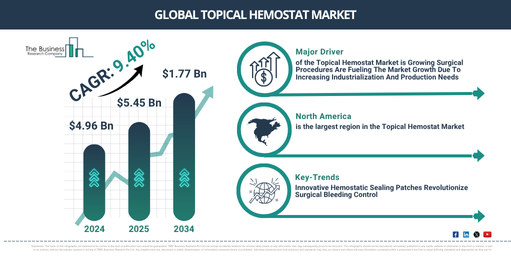
  • Topical Hemostat Market to Reach $7.81 Billion by 2029, Growing at a CAGR of 9.4%

    Topical Hemostat Market to Reach $7.81 Billion by 2029, Growing at a CAGR of 9.4%

    Unlock Global Insights – Save 20% on Market Reports with Code ONLINE20

    What Is The Expected Total Market Size Of The Topical Hemostat Industry By The Forecast Year 2029?

    The topical hemostat market has experienced considerable expansion in recent years. It is projected to increase from $4.96 billion in 2024 to $5.45 billion in 2025, demonstrating a compound annual growth rate (CAGR) of 9.8%. The growth observed in previous periods is attributable to factors including rising healthcare expenditure, an increase in minimally invasive procedures, the growing prevalence of chronic diseases, heightened demand for surgical volumes, and an uptick in the demand for biodegradable products.

    The topical hemostat market size is anticipated to undergo significant expansion in the coming years. It is projected to ascend to $7.81 billion by 2029, demonstrating a compound annual growth rate (CAGR) of 9.4%. This growth during the forecast period is attributable to a progressively aging global population, the proliferation of ambulatory surgical centers, an increased focus on patient outcomes, the rise of adhesive-hemostat combinations, and a greater uptake of bio-based materials. Significant trends for the forecast period encompass advancements in hemostatic technologies, the integration of digital health solutions, technological enhancements in delivery systems, the creation of new combination products, and the incorporation of robotics into hemostasis management.

    Unlock Your Free Sample Report for Exclusive Market Data:

    https://www.thebusinessresearchcompany.com/sample.aspx?id=25926&type=smp

    What Are The Emerging Market Drivers Creating New Opportunities In The Topical Hemostat Industry?

    The increasing number of surgical interventions is projected to boost the growth of the topical hemostat market moving forward. Surgical procedures refer to medical interventions carried out by surgeons using manual methods and specialized tools to diagnose, treat, or correct injuries, diseases, or abnormalities of the body. The volume of surgical procedures is rising considerably as the global population ages rapidly, leading to a higher incidence of age-related health conditions that require surgical intervention to enhance the quality of life and manage chronic illnesses. Topical hemostats are utilized in surgical procedures to help surgeons achieve rapid bleeding control at the operation site, ensure better visibility, minimize blood loss, and reduce the risk of postoperative complications. For instance, in September 2023, data from the International Society of Aesthetic Plastic Surgery (ISAPS), a US-based non-governmental organization, revealed that plastic surgeons performed 11.2% more procedures in 2022 compared to 2021, with a global total of over 14.9 million surgical and 18.8 million non-surgical procedures. Therefore, the growing number of surgical procedures is propelling the expansion of the topical hemostat market. Rising healthcare expenditure is anticipated to drive the growth of the topical hemostat market in the future. Healthcare expenditure signifies the total funds spent on medical services, treatments, and health-related resources within a given timeframe. The increase in healthcare spending, fueled by a growing aging population, results in a greater need for medical services, long-term care, and age-related treatments, collectively placing a higher financial strain on healthcare systems. This rising healthcare expenditure stimulates the demand for topical hemostats by enabling more surgical procedures, supporting the adoption of advanced medical technologies, and enhancing healthcare access globally. Increased funding allows hospitals to invest in effective bleeding control solutions, particularly for minimally invasive and outpatient surgeries. For instance, in April 2025, according to the American Medical Association, a US-based professional association, health spending in the U.S. increased by 7.5% in 2023, reaching $4.9 trillion, or $14,570 per person, marking a significant acceleration compared to the 4.6% growth recorded in 2022. Consequently, the rising healthcare expenditure is driving the expansion of the topical hemostat market.

    What Are The Segment Types Shaping The Topical Hemostat Market?

    The topical hemostat market covered in this report is segmented –

    1) By Type: Fibrin, Thrombin, Cellulose, Collagen, Gelatin, Adhesives, Other Types

    2) By Distribution Channel: Direct Sales, Distributors, Hospital Pharmacies, Online

    3) By Application: General Surgery, Neurosurgery, Vascular Surgery, Cardiovascular Surgery, Other Applications

    4) By End-Use: Hospitals, Ambulatory Surgical Centers, Other End-Uses

    Subsegments:

    1) By Fibrin: Fibrin Sealants, Fibrin Patches

    2) By Thrombin: Human Thrombin, Bovine Thrombin, Recombinant Thrombin

    3) By Cellulose: Oxidized Regenerated Cellulose, Oxidized Non-Regenerated Cellulose, Microfibrillar Cellulose

    4) By Collagen: Microfibrillar Collagen, Collagen Sponges, Collagen Fleece

    5) By Gelatin: Gelatin Sponges, Gelatin Foams, Gelatin Powder

    6) By Adhesives: Cyanoacrylate-Based Adhesives, Polyethylene Glycol Based Sealants, Albumin And Glutaraldehyde-Based Adhesives

    7) By Other Types: Combination Hemostats, Polysaccharide-Based Hemostats, Chitosan-Based Hemostats

    What Are The Latest Industry Trends Transforming The Topical Hemostat Market?

    Leading companies in the topical hemostat market are focusing on developing innovative products, such as hemostatic sealing patches, to enhance bleeding control during surgical procedures by providing faster, more effective, and targeted hemostasis at the wound site. A hemostatic sealing patch is a medical device typically made from materials like collagen or fibrin that quickly stops bleeding by adhering to the tissue and assisting in clot formation during surgery. For instance, in November 2023, Ethicon, Inc., a US-based company specializing in surgical technologies and solutions, introduced the ETHIZIA Hemostatic Sealing Patch. This novel synthetic polymer-based adjunctive hemostat is clinically proven to rapidly stop disruptive bleeding on internal organs. Clinical trials showed that ETHIZIA achieved bleeding cessation within 30 seconds for 80% of patients, which is six times faster than leading fibrin sealant patches. The patch is uniquely designed to be equally effective on both sides and highly adaptable, allowing it to be trimmed, rolled, pulled apart, or tailored for use in both open and minimally invasive surgeries. It functions by dehydrating blood and accelerating coagulation through a gelatin carrier impregnated with polyoxazoline polymer, forming a strong adhesive hydrogel that bonds to tissue.

    Who Are The Major Companies Operating In The Topical Hemostat Market?

    Major companies operating in the topical hemostat market are Pfizer Inc., Johnson & Johnson, Medtronic Plc, Medline Industries, Becton Dickinson and Company, Stryker Corporation, Baxter International, Meril Life Sciences Pvt. Ltd., Teleflex Incorporated, Samyang Holdings, Integra LifeSciences, Medicom Group, B. Braun SE, Advanced Medical Solutions Group Plc, Axio Biosolutions, Marine Polymer Technologies Inc, Hangzhou Singclean Medical Products, Neo Modulus Medical Sci-Tech, Tricol Biomedical, HemCon Medical Technologies Inc., Hemostasis LLC, KATSAN Medical Devices, Zhejiang Perfectseal New Materials

    Download The Full Report For Exclusive Market Findings:

    https://www.thebusinessresearchcompany.com/report/topical-hemostat-global-market-report

    Which Region Currently Holds The Largest Share Of The Topical Hemostat Market?

    North America was the largest region in the topical hemostat market in 2024. Asia-Pacific is expected to be the fastest-growing region in the forecast period. The regions covered in the topical hemostat market report are Asia-Pacific, Western Europe, Eastern Europe, North America, South America, Middle East, Africa.

    Request A Customized Version Of The Topical Hemostat Market Report:

    https://www.thebusinessresearchcompany.com/customise?id=25926&type=smp

    Browse Through More Reports Similar to the Global Topical Hemostat Market 2025, By The Business Research Company

    Hemostats Global Market Report 2025

    https://www.thebusinessresearchcompany.com/report/hemostats-global-market-report

    Hemostasis Products Global Market Report 2025

    https://www.thebusinessresearchcompany.com/report/hemostasis-products-global-market-report

    Topical Wound Agents Global Market Report 2025

    https://www.thebusinessresearchcompany.com/report/topical-wound-agents-global-market-report

    Get in touch with us:

    The Business Research Company: https://www.thebusinessresearchcompany.com/

    Americas +1 310-496-7795

    Asia +44 7882 955267 & +91 8897263534

    Europe +44 7882 955267

    Email us at info@tbrc.info

    Follow us on:

    LinkedIn: https://in.linkedin.com/company/the-business-research-company

    YouTube: https://www.youtube.com/channel/UC24_fI0rV8cR5DxlCpgmyFQ

    Global Market Model: https://www.thebusinessresearchcompany.com/global-market-model
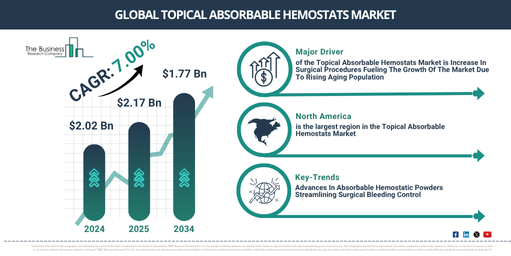
  • Topical Absorbable Hemostats Industry Anticipated to Expand at 7% CAGR During the Forecast Period

    Topical Absorbable Hemostats Industry Anticipated to Expand at 7% CAGR During the Forecast Period

    Unlock Global Insights – Save 20% on Market Reports with Code ONLINE20

    What Is The Predicted Market Size Trajectory For The Topical Absorbable Hemostats Market From 2025 To 2034?

    The topical absorbable hemostats market has experienced robust growth in recent years. It is projected to expand from $2.02 billion in 2024 to $2.17 billion in 2025, demonstrating a compound annual growth rate (CAGR) of 7.2%. This historical expansion was primarily driven by factors such as a rising demand for faster wound healing, the growth in ambulatory surgical centers, an increasing focus on surgical safety and outcomes, growing adoption in dental and orthopedic surgeries, and an increase in elective surgeries.

    The topical absorbable hemostats market is projected to experience substantial expansion in the coming years, reaching $2.84 billion by 2029, with a compound annual growth rate (CAGR) of 7.0%. This anticipated growth is linked to a rise in surgical procedures, an increase in trauma and accident incidents, an expanding elderly population, the proliferation of minimally invasive surgical techniques, and a higher occurrence of bleeding disorders. Key developments expected during this period involve enhancements in hemostatic technologies, a broader selection of product varieties, the creation of biodegradable and biocompatible products, the incorporation of technology into surgical instruments, and the inclusion of hemostats within surgical kits.

    Unlock Your Free Sample Report for Exclusive Market Data:

    https://www.thebusinessresearchcompany.com/sample.aspx?id=25924&type=smp

    Which Industry Drivers Are Expected To Accelerate The Topical Absorbable Hemostats Market From 2025 To 2029?

    The rising volume of surgical interventions is anticipated to fuel expansion in the topical absorbable hemostats market in the future. Surgical procedures involve medical operations that entail cutting into or manipulating bodily tissues to identify, address, or enhance health status. This rise in surgeries is largely driven by the growing elderly demographic, given their higher susceptibility to chronic diseases and degenerative ailments often requiring surgical interventions. During operations, topical absorbable hemostats offer benefits by quickly controlling blood loss and eliminating the need for subsequent removal, thereby reducing surgical duration and decreasing the risk of complications. For example, in June 2024, the US-based professional body, the International Society of Aesthetic Plastic Surgery, reported approximately 35 million aesthetic procedures performed in 2023, with overall surgical and non-surgical procedures seeing a 3.4% rise to 34.9 million. Consequently, the expanding volume of surgical interventions is a key factor propelling the development of the topical absorbable hemostats market.

    What Are The Primary Types Of Segments Analyzed In The Topical Absorbable Hemostats Market?

    The topical absorbable hemostats market covered in this report is segmented –

    1) By Type: Gelatin-Based Hemostats, Collagen-Based Hemostats, Fibrin-Based Hemostats, Cellulose-Based Hemostats, Other Types

    2) By Delivery Method: Surgical Sprays, Pads And Gauzes, Foams And Films, Injectable Solutions

    3) By Application: Orthopedic Surgery, Cardiothoracic Surgery, General Surgery, Neurosurgery, Urology, Gynecological Surgery

    4) By End-User: Hospitals, Ambulatory Surgical Centers (ASCs), Specialty Clinics, Research Institutions

    Subsegments:

    1) By Gelatin-Based Hemostats: Gelatin Sponges, Gelatin Powders, Gelatin Films Or Sheets, Flowable Gelatin Matrices

    2) By Collagen-Based Hemostats: Collagen Sponges, Collagen Powders, Collagen Pads, Collagen Films Or Sheets

    3) By Fibrin-Based Hemostats: Fibrin Sealant Sprays, Fibrin Glue, Fibrin Patch Or Film, Combination Fibrin-Based Products

    4) By Cellulose-Based Hemostats: Oxidized Regenerated Cellulose (ORC) Pads, Cellulose Meshes, Cellulose Powders, Cellulose Films

    5) By Other Types: Chitosan-Based Hemostats, Synthetic Polymer-Based Hemostats, Combination Hemostats, Herbal Or Plant-Derived Hemostats

    How Are Emerging Market Trends Shaping The Topical Absorbable Hemostats Industry Landscape?

    Leading companies within the topical absorbable hemostats market are concentrating on developing advanced products, such as absorbable hemostatic powder, to manage bleeding in complex or irregular wound sites. Absorbable hemostatic powders are favored because they provide rapid bleeding control without requiring removal, thereby reducing the risk of infection and simplifying post-surgical care. For example, in July 2023, Baxter International, a US-based healthcare company, introduced PERCLOT, an absorbable hemostatic powder. PERCLOT offers surgeons a comprehensive selection of active and passive hemostatic solutions to ensure dependable bleeding management. Its specially engineered granules quickly draw in moisture, transforming into an adhesive gel that physically seals the tissue surface. This gel concentrates platelets, red blood cells, and clotting factors like thrombin and fibrinogen, accelerating the body’s natural coagulation cascade. Consistent control of various intraoperative bleeding with PERCLOT can decrease transfusion requirements, mitigate major complications, and ultimately lower overall treatment costs.

    Which Industry Leaders Are Driving Innovation Across The Topical Absorbable Hemostats Market?

    Major companies operating in the topical absorbable hemostats market are Pfizer Inc., Johnson & Johnson Services Inc., Becton, Dickinson & Co., Baxter International Inc., Teleflex Inc., Integra LifeSciences Holdings Corp., Gelita Medical, Advanced Medical Solutions Group Plc, 3D Matrix Ltd., Advanced Biotech Products Pvt. Ltd., Curasan AG, Hemostasis LLC, Advamedica Inc., Medcura Inc., Endomedix Incorporated, BioCer Entwicklungs GmbH, Starch Medical Inc., Arch Therapeutics Inc., Cura Medical BV, ETX Pharma Inc.

    Download The Full Report For Exclusive Market Findings:

    https://www.thebusinessresearchcompany.com/report/topical-absorbable-hemostats-global-market-report

    Which Regional Markets Are Contributing Most To The Topical Absorbable Hemostats Industry Expansion?

    North America was the largest region in the topical absorbable hemostats market in 2024. Asia-Pacific is expected to be the fastest-growing region in the forecast period. The regions covered in the topical absorbable hemostats market report are Asia-Pacific, Western Europe, Eastern Europe, North America, South America, Middle East, Africa.

    Request A Customized Version Of The Topical Absorbable Hemostats Market Report:

    https://www.thebusinessresearchcompany.com/customise?id=25924&type=smp

    Browse Through More Reports Similar to the Global Topical Absorbable Hemostats Market 2025, By The Business Research Company

    Absorbable Hemostats Global Market Report 2025

    https://www.thebusinessresearchcompany.com/report/absorbable-hemostats-global-market-report

    Hemostats Global Market Report 2025

    https://www.thebusinessresearchcompany.com/report/hemostats-global-market-report

    Hemostasis Products Global Market Report 2025

    https://www.thebusinessresearchcompany.com/report/hemostasis-products-global-market-report

    Get in touch with us:

    The Business Research Company: https://www.thebusinessresearchcompany.com/

    Americas +1 310-496-7795

    Asia +44 7882 955267 & +91 8897263534

    Europe +44 7882 955267

    Email us at info@tbrc.info

    Follow us on:

    LinkedIn: https://in.linkedin.com/company/the-business-research-company

    YouTube: https://www.youtube.com/channel/UC24_fI0rV8cR5DxlCpgmyFQ

    Global Market Model: https://www.thebusinessresearchcompany.com/global-market-model
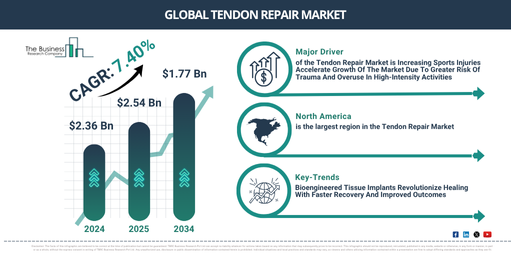
  • Global Tendon Repair Market Projected to Expand at 7.4% CAGR by 2029

    Global Tendon Repair Market Projected to Expand at 7.4% CAGR by 2029

    Unlock Global Insights – Save 20% on Market Reports with Code ONLINE20

    How Much Larger Is The Tendon Repair Market Expected To Become By 2029 Compared With Its 2025 Level?

    The tendon repair market has experienced robust expansion over recent years. Its value is projected to increase from $2.36 billion in 2024 to $2.54 billion in 2025, demonstrating a compound annual growth rate (CAGR) of 7.6%. This historical upward trajectory can be ascribed to several factors, including the increasing embrace of minimally invasive procedures, the escalating need for sports medicine and rehabilitation services, a rise in healthcare spending, a greater incidence of trauma and accident incidents, and the expanding utilization of regenerative medicine.

    The tendon repair market is projected to experience substantial growth in the upcoming years, with expectations to reach $3.38 billion by 2029, exhibiting a compound annual growth rate (CAGR) of 7.4%. This expansion during the forecast period is attributable to several factors, including the rising occurrence of sports-related injuries, an expanding geriatric demographic, the increasing prevalence of musculoskeletal disorders, a greater volume of orthopedic surgical procedures, and heightened awareness regarding prompt treatment alternatives. Key trends anticipated during this period encompass progress in bioengineered tissue implants, technologically advanced minimally invasive surgical approaches, innovations in regenerative medicine, the incorporation of robotics into orthopedic surgery, and improvements in suture anchor systems.

    Unlock Your Free Sample Report for Exclusive Market Data:

    https://www.thebusinessresearchcompany.com/sample.aspx?id=25923&type=smp

    What Are The Top Growth Drivers Impacting The Tendon Repair Market Outlook?

    The anticipated rise in sports-related injuries is set to boost the tendon repair market in the future. These injuries are physical harm sustained during athletic activities, commonly affecting muscles, bones, joints, or connective tissues. The growing participation in high-intensity and competitive sports, which increases the risk of overuse and trauma, largely accounts for the uptick in sports injuries. Tendon repair is crucial for treating these injuries by restoring the integrity and functionality of damaged or torn tendons, thereby fostering effective recovery, alleviating discomfort, and improving mobility and strength for a return to physical activity. For instance, in July 2024, according to the Australian Institute of Health and Welfare, an Australia-based government agency, a report indicated that in 2022, outdoor team sports had the highest injury incidence, with 26% of participants injured. This was followed by combat sports at 16%, while indoor team, motor, and horse sports each reported around 15% injury rates. Consequently, the increasing frequency of sports-related injuries is propelling the expansion of the tendon repair market. Rising Healthcare Expenditure Fuels Growth In The Market Due To Increasing Demand For Cost-Effective And Outcome-Oriented Treatments

    The expansion of the tendon repair market is expected to be propelled by increasing healthcare expenditure. Healthcare expenditure encompasses the overall financial outlay for medical services, goods, and public health programs by individuals, governments, and organizations within a nation. This spending is escalating due to higher demand for medical services, driven by greater health awareness and enhanced access to healthcare facilities. Tendon repair contributes to reducing overall healthcare costs by preventing complications and chronic disabilities, thereby diminishing the need for extensive rehabilitation, repeated surgical procedures, or prolonged medication use. For instance, in May 2023, according to the Office for National Statistics, a UK-based national statistics organization, provisional estimates indicate that UK healthcare expenditure reached approximately $386 billion (£283 billion) in 2022, reflecting a nominal increase of 0.7% compared to 2021. Therefore, the rising healthcare expenditure is driving the growth of the tendon repair market.

    Which Key Segments Fueling The Tendon Repair Market?

    The tendon repair market covered in this report is segmented –

    1) By Product Type: Implants, Suture anchor devices, Grafts, Scaffolds, Screws, Tendons repair matrix, Excision, Other Product Types

    2) By Application: Rotator Cuff Repair, Achilles Tendinosis Repair, Cruciate Ligament Repair, Biceps Tenodesis, Other Applications

    3) By End-User: Hospitals, Ambulatory Surgical Centers (ASCs), Specialty Orthopedic Clinics, Sports Medicine Centers

    Subsegments:

    1) By Implants: Bioinductive Implants, Synthetic Implants, Biodegradable Implants

    2) By Suture Anchor Devices: Metallic Suture Anchors, Bioabsorbable Suture Anchors, All-Suture Anchors

    3) By Grafts: Autografts, Allografts, Xenografts

    4) By Scaffolds: Collagen Based Scaffolds, Synthetic Polymer Scaffolds, Hybrid Scaffolds

    5) By Screws: Interference Screws, Cannulated Screws, Bioabsorbable Screws

    6) By Tendon Repair Matrix: Extracellular Matrix Ecm Patches, Acellular Dermal Matrices, Synthetic Matrices

    7) By Excision: Arthroscopic Excision Tools, Open Surgical Excision Tools

    8) By Other Product Types: Surgical Instruments, Tendon Tensioning Devices, Biologic Adhesives

    Which Key Trends Are Expected To Influence The Tendon Repair Market In The Coming Years?

    Companies operating significantly within the tendon repair market are directing their efforts towards creating cutting-edge technologies, such as bioengineered tissue implants, with the aim of boosting healing results, shortening recuperation periods, and enhancing the resilience and seamless integration of mended tendons. Bioengineered tissue implants are biological creations developed in laboratories, constructed from either natural or synthetic substances that emulate the architecture and performance of natural tissue, intended to support, repair, or regenerate damaged or ailing tissues like tendons. For example, in July 2023, Smith+Nephew Plc, a UK-based healthcare company, introduced the regeneten bioinductive implant in India, designed to foster natural tendon healing and aid in rotator cuff repair. This collagen-based, minimally invasive device is engineered to treat rotator cuff tendon tears by stimulating the growth of new tendon tissue, which contributes to a more rapid recovery, considerable pain alleviation, and a decreased probability of subsequent degeneration or re-tear. Its notable advantages include a reduction in rehabilitation duration, a quicker return to regular activities, and a solid safety track record featuring minimal chances of adverse reactions.

    Who Are The Key Multinational Companies Dominating The Tendon Repair Market?

    Major companies operating in the tendon repair market are Johnson & Johnson Services Inc., Stryker Corporation, Zimmer Biomet Holdings Inc., Smith & Nephew plc, Arthrex Inc., Enovis Corporation, Integra LifeSciences Holdings Corporation, CONMED Corporation, MiMedx Group Inc., Anika Therapeutics Inc., Intrauma S.p.A., Narang Medical Limited, Sharma Orthopedic (India) Pvt. Ltd., Siora Surgicals Private Limited, Auxein Medical Private Limited, Inion Oy, BioPro Inc., Aevumed Inc., Alafair Biosciences Inc., CoNextions Inc., Orthomed S.A.S., TendoMend Ltd.

    Download The Full Report For Exclusive Market Findings:

    https://www.thebusinessresearchcompany.com/report/tendon-repair-global-market-report

    How Does The Tendon Repair Market Perform Across Key Geographic Regions?

    North America was the largest region in the tendon repair market in 2024. Asia-Pacific is expected to be the fastest-growing region in the forecast period. The regions covered in the tendon repair market report are Asia-Pacific, Western Europe, Eastern Europe, North America, South America, Middle East, Africa.

    Request A Customized Version Of The Tendon Repair Market Report:

    https://www.thebusinessresearchcompany.com/customise?id=25923&type=smp

    Browse Through More Reports Similar to the Global Tendon Repair Market 2025, By The Business Research Company

    Tendonitis Treatment Global Market Report 2025

    https://www.thebusinessresearchcompany.com/report/tendonitis-treatment-global-market-report

    Orthopedic Soft Tissue Repair Global Market Report 2025

    https://www.thebusinessresearchcompany.com/report/orthopedic-soft-tissue-repair-global-market-report

    Orthopedic Regenerative Surgical Products Global Market Report 2025

    https://www.thebusinessresearchcompany.com/report/orthopedic-regenerative-surgical-products-global-market-report

    Get in touch with us:

    The Business Research Company: https://www.thebusinessresearchcompany.com/

    Americas +1 310-496-7795

    Asia +44 7882 955267 & +91 8897263534

    Europe +44 7882 955267

    Email us at info@tbrc.info

    Follow us on:

    LinkedIn: https://in.linkedin.com/company/the-business-research-company

    YouTube: https://www.youtube.com/channel/UC24_fI0rV8cR5DxlCpgmyFQ

    Global Market Model: https://www.thebusinessresearchcompany.com/global-market-model
  • Telemedicine Cart Market to Grow at a CAGR of 18.5% from 2025 to 2029

    Telemedicine Cart Market to Grow at a CAGR of 18.5% from 2025 to 2029

    Unlock Global Insights – Save 20% on Market Reports with Code ONLINE20

    #What Are The Current (2025) And Forecast (2029) Sizes Of The Telemedicine Cart Market?

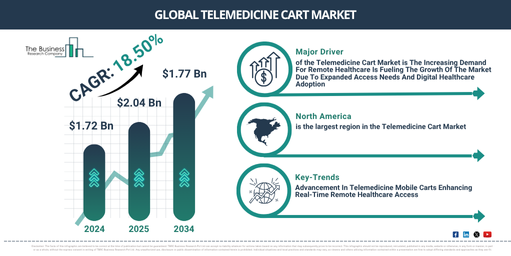
    The scale of the telemedicine cart market has experienced swift expansion over recent years. Its value is projected to rise from $1.72 billion in 2024 to $2.04 billion in 2025, demonstrating a compound annual growth rate (CAGR) of 18.8%. Key drivers for this historic growth include the heightened uptake during the COVID-19 pandemic, a deficit of healthcare providers in rural regions, an escalating need for remote patient observation, the expanding prevalence of chronic diseases, and increasing recognition of wireless communication and video conferencing solutions.

    The telemedicine cart market is projected to experience substantial expansion in the coming years. This market is forecast to reach $4.03 billion by 2029, exhibiting a compound annual growth rate (CAGR) of 18.5%. This anticipated growth is driven by factors such as the increasing integration of AI and machine learning within telehealth, the broadening reach of 5G and advanced internet infrastructure, a heightened emphasis on individualized digital healthcare solutions, greater government investment in telehealth infrastructure, and the expanding application of telemedicine in emergency and critical care environments. Key trends projected for this period encompass the implementation of AI-driven diagnostic tools, seamless integration with remote patient monitoring equipment, strengthened cybersecurity measures, the introduction of 5G-capable telemedicine carts, and the creation of features for real-time multilingual translation.

    Unlock Your Free Sample Report for Exclusive Market Data:

    https://www.thebusinessresearchcompany.com/sample.aspx?id=25922&type=smp

    Which Major Market Drivers Are Shaping The Future Of The Telemedicine Cart Market?

    The rising need for remote healthcare is projected to drive the expansion of the telemedicine cart market moving ahead. Remote healthcare involves the provision of medical services and consultations via digital channels, enabling patients to access care without physical visits to facilities. The demand for remote healthcare is escalating because of the increasing requirement for uninterrupted healthcare access in rural and underserved areas, where conventional medical access is challenging due to inadequate infrastructure. Telemedicine carts support remote care by integrating medical devices, cameras, and communication instruments into a mobile unit for instant virtual consultations. Such carts improve access to healthcare services and optimize clinical processes across geographically dispersed areas. For example, in August 2023, Vivalink, a US-based healthcare technology company, reported that 81% of clinicians currently utilize remote patient monitoring (RPM), a substantial increase from merely 20% in 2021, representing a 305% growth. Furthermore, 84% of existing RPM users plan to broaden their usage in 2024. Consequently, the rising demand for remote healthcare is propelling the growth of the telemedicine cart market.

    How Is The Telemedicine Cart Market Classified Into Different Segments?

    The telemedicine cart market covered in this report is segmented –

    1) By Component: Hardware, Software, Services

    2) By Product Type: Integrated Telemedicine Carts, Modular Telemedicine Carts, Customized Telemedicine Carts

    3) By Connectivity: Wired Connectivity, Wireless Connectivity, Cloud-Based Solutions

    4) By Application: Remote Patient Monitoring, Clinical Consultation, Emergency Care, Education And Training, Other Applications

    5) By End-User: Hospitals And Clinics, Ambulatory Surgical Centers, Specialty Centers, Home Care Settings, Other End-Users

    Subsegments:

    1) By Hardware: Display Screens, Medical Devices Integration, Cameras, Microphones And Speakers, Power Supply Units, Mobility Equipment, Control Panels And Touch Interfaces

    2) By Software: Teleconsultation Platforms, Electronic Health Records (EHR) Integration Software, Real-time Communication Software, Remote Patient Monitoring (RPM) Software, Diagnostic Software, Data Security And Encryption Solutions, Workflow Management Systems

    3) By Services: Installation And Setup Services, Technical Support And Maintenance, Training And Education Services, Software Upgrades And Updates, Integration And Customization Services, Remote Information Technology (IT) Support, Consulting Services

    What Are The Major Trends Driving The Growth Of The Telemedicine Cart Market?

    Companies at the forefront of the telemedicine cart market are prioritizing the development of advanced products, including the telemedicine mobile cart, to enhance real-time access to healthcare services in various clinical settings. A telemedicine mobile cart is a portable system designed to integrate medical instruments, cameras, and communication technology for facilitating live virtual consultations. It aids in remote diagnostics and extends healthcare services to patients in different locations. For instance, in August 2024, First Products Inc., a US-based medical equipment company, introduced the Mov-it TeleView Cart, Mov-it Telediagnostic Cart, and Senior Virtual Health Telemedicine Mobile Cart. These products were launched to improve healthcare delivery, enhance patient outcomes, and streamline clinical workflows. Such advanced carts incorporate features like 2-way HD video conferencing and remote diagnostic tools, enabling real-time consultations, remote examinations, and specialized care for seniors, ultimately broadening access to healthcare, especially in remote and underserved areas, while simultaneously reducing costs and improving efficiency for both providers and patients.

    Which Leading Players Are Enhancing Their Telemedicine Cart Market Presence Worldwide?

    Major companies operating in the telemedicine cart market are Advantech Co. Ltd., Rubbermaid Healthcare, Ergotron Inc., American Well Corporation, Capsa Healthcare, AFC Industries Inc., Vecna Technologies, Rudolf Riester GmbH, TeleSpecialists, AVTEQ Inc., Cybernet Manufacturing Inc., PARSYS TELEMEDICINE, BriteMED Technology Inc., AMD Global Telemedicine Inc., Rife Technologies, La Pastilla S.L., First Products Inc., InTouch Technologies, Ditec Medical, Niramaya Wellness Services Private Limited, Cloudspital Private Limited.

    Download The Full Report For Exclusive Market Findings:

    https://www.thebusinessresearchcompany.com/report/telemedicine-cart-global-market-report

    Which Region Is Expected To Witness The Fastest Growth In The Telemedicine Cart Market?

    North America was the largest region in the telemedicine cart market in 2024. Asia-Pacific is expected to be the fastest-growing region in the forecast period. The regions covered in the telemedicine cart market report are Asia-Pacific, Western Europe, Eastern Europe, North America, South America, Middle East, Africa.

    Request A Customized Version Of The Telemedicine Cart Market Report:

    https://www.thebusinessresearchcompany.com/customise?id=25922&type=smp

    Browse Through More Reports Similar to the Global Telemedicine Cart Market 2025, By The Business Research Company

    Telemedicine Equipment Global Market Report 2025

    https://www.thebusinessresearchcompany.com/report/telemedicine-equipment-global-market-report

    Telemedicine Services Market 2025

    https://www.thebusinessresearchcompany.com/report/telemedicine-services-market

    Telemetry Global Market Report 2025

    https://www.thebusinessresearchcompany.com/report/telemetry-global-market-report

    Get in touch with us:

    The Business Research Company: https://www.thebusinessresearchcompany.com/

    Americas +1 310-496-7795

    Asia +44 7882 955267 & +91 8897263534

    Europe +44 7882 955267

    Email us at info@tbrc.info

    Follow us on:

    LinkedIn: https://in.linkedin.com/company/the-business-research-company

    YouTube: https://www.youtube.com/channel/UC24_fI0rV8cR5DxlCpgmyFQ

    Global Market Model: https://www.thebusinessresearchcompany.com/global-market-model