Category: Medical Equipment

  • 3D Printed Prosthetics Market to Grow at a CAGR of 15.9% from 2025 to 2029

    3D Printed Prosthetics Market to Grow at a CAGR of 15.9% from 2025 to 2029

    Unlock Global Insights – Save 20% on Market Reports with Code ONLINE20

    What Is The Future Market Size Estimation For The 3D Printed Prosthetics Market Covering 2025–2034?

    Significant recent expansion has been observed within the market for 3D printed prosthetics; projections indicate a progression from a valuation of $0 billion in the year 2024 to $0 billion by 2025, reflecting an annual compounded growth rate (CAGR) of 7.9%. Factors underpinning this historical expansion encompass the increasing level of personalization for individual recipients, economic advantages and accessibility, strategic alliances and cooperative ventures, the provision of solutions tailored to specific patients, and the attainment of necessary regulatory clearances alongside adherence to quality benchmarks.

    Anticipation surrounds the 3D printed prosthetics sector, projecting substantial expansion over the coming years, wherein the market value is slated to reach $0 billion by the year 2029, representing a formidable compound annual growth rate (CAGR) of 15.9%. This projected uptrend across the forecast horizon is fundamentally driven by several key factors, including the increasing adoption of remote capabilities for monitoring and modification of devices, the broadening scope of use cases within pediatric care, continuous enhancements in the development of materials compatible with biological systems, worldwide efforts aimed at improving access to these solutions, and a general increase in public recognition and acceptance of the technology. Furthermore, several significant shifts characterize this future period, such as the embedding of tactile feedback systems into devices, the merging of various technologies into unified solutions, the alignment of regulatory frameworks with burgeoning technological progress, ongoing improvements in the core 3D printing processes themselves, and the seamless incorporation of bionic components.

    Unlock Your Free Sample Report for Exclusive Market Data:

    https://www.thebusinessresearchcompany.com/sample.aspx?id=2512&type=smp

    Which Major Market Drivers Are Shaping The Future Of The 3D Printed Prosthetics Market?

    An escalating incidence of unintended harm is fueling the expansion of the market for 3D printed prosthetic tools. Severe physical impairment can result from such mishaps, occasionally necessitating limb removal. To illustrate this trend, data from The Welsh Government’s official portal indicated that in 2022, Welsh police forces documented 4,447 road incidents involving casualties, representing a two percent uptick from the figures recorded in 2021. Among these total numbers, one thousand sixteen individuals, or twenty-three percent, sustained fatalities or severe wounds, a count that mirrored the preceding year’s total. Furthermore, three thousand four hundred thirty-one victims, accounting for seventy-seven percent, experienced minor hurt, marking a three percent rise over the slight injuries reported in 2021; consequently, the increasing frequency of accidental mishaps is propelling the advancement of the market for prosthetics created through 3D printing technology.

    What Are The Major Segment Categories Driving The 3D Printed Prosthetics Market Growth?

    The 3D printed prostheticsmarket covered in this report is segmented –

    1) By Type: Sockets, Limbs, Joints, Covers, Other Types

    2) By Material: Polypropylene, Polyethylene, Acrylics, Polyurethane

    3) By End-User: Hospitals, Rehabilitation Centers, Prosthetic Clinics

    Subsegments:

    1) By Sockets: Adjustable Sockets, Standard Sockets

    2) By Limbs: Upper Limb Prosthetics, Lower Limb Prosthetics

    3) By Joints: Knee Joints, Ankle Joints, Elbow Joints

    4) By Covers: Cosmetic Covers, Functional Covers

    5) By Other Types: Pediatric Prosthetics, Custom-Made Prosthetics

    What Are The Latest Industry Trends Transforming The 3D Printed Prosthetics Market?

    Efforts within the market for 3D printed prosthetics are currently centered on engineering prosthetic apparatuses that possess water-resistant capabilities. This technological advancement seeks to significantly broaden the user’s capacity for movement, particularly when engaging in sporting activities. As an illustration, in April of 2022, Protosthetics, an American firm specializing in the production of prosthetic equipment, introduced Galileo, a system designed for the additive manufacturing of prosthetics. The Galileo offering integrates superior technology, cutting-edge materials, and robust support, thereby furnishing orthotics and prosthetics (O&P) providers with a comprehensive, smooth solution. Furthermore, this Galileo platform facilitates direct, real-time connections between healthcare professionals and specialists in 3D printing, ensuring the successful creation of custom sockets.

    Who Are The Major Companies Operating In The 3D Printed Prosthetics Market?

    Major companies operating in the 3D printed prosthetics market include HP Inc., Laser GmbH, Otto Bock HealthCare GmbH, EOS GmbH, Renishaw Plc, Stratasys Ltd., 3D Systems Corporation, Materialise NV, Groupe Gorge SA, Carbon Inc., SLM Solutions Group AG, Prodways Group, Formlabs Inc., Arcam AB, EnvisionTEC, Freedom Innovations LLC, LimbForge Inc., Concept Laser GmbH, Open Bionics Ltd., UNYQ Inc., Mecuris GmbH, YouBionic S.r.l., Protosthetics LLC, Bionico Hand Solutions, Create Prosthetics Inc., Bio3D Technologies Pte Ltd., 3T RPD Ltd., Ultimaker BV, XYZprinting Inc.

    Download The Full Report For Exclusive Market Findings:

    https://www.thebusinessresearchcompany.com/report/3d-printed-prosthetics-global-market-report

    How Does The 3D Printed Prosthetics Market Perform Across Key Geographic Regions?

    North America was the largest region in the 3D printing medical prosthetics market in 2024. Asia-Pacific was the second-largest region in the global 3D printed prosthetics market. The regions covered in the 3D printed prosthetics market report are Asia-Pacific, Western Europe, Eastern Europe, North America, South America, Middle East, Africa.

    Request A Customized Version Of The 3D Printed Prosthetics Market Report:

    https://www.thebusinessresearchcompany.com/customise?id=2512&type=smp

    Browse Through More Reports Similar to the Global 3D Printed Prosthetics Market 2025, By The Business Research Company

    3D Orthpedics Prosthetics Global Market Report 2025

    https://www.thebusinessresearchcompany.com/report/3d-orthpedics-prosthetics-global-market-report

    Prosthetics And Orthotics Global Market Report 2025

    https://www.thebusinessresearchcompany.com/report/prosthetics-and-orthotics-global-market-report

    Orthopedic Prosthetics Global Market Report 2025

    https://www.thebusinessresearchcompany.com/report/orthopedic-prosthetics-global-market-report

    Get in touch with us:

    The Business Research Company: https://www.thebusinessresearchcompany.com/

    Americas +1 310-496-7795

    Asia +44 7882 955267 & +91 8897263534

    Europe +44 7882 955267

    Email us at info@tbrc.info

    Follow us on:

    LinkedIn: https://in.linkedin.com/company/the-business-research-company

    YouTube: https://www.youtube.com/channel/UC24_fI0rV8cR5DxlCpgmyFQ

    Global Market Model: https://www.thebusinessresearchcompany.com/global-market-model

  • Global Refurbished Medical Imaging Devices Market Trends and Growth Analysis 2025–2029

    Global Refurbished Medical Imaging Devices Market Trends and Growth Analysis 2025–2029

    Unlock Global Insights – Save 20% on Market Reports with Code ONLINE20

    What Is The Anticipated Size Of The Refurbished Medical Imaging Devices Market Over The Five-Year Period 2025–2029?

    The market for second-hand medical imaging equipment has experienced robust expansion over the past few years. Projections indicate a rise from a value of $6.34 billion in 2024 to $6.93 billion in 2025, reflecting a consistent annual growth rate (CAGR) of 9.4%. This upward trajectory during the historical timeframe is attributable to several factors, including prevailing healthcare reimbursement regulations, the clinical necessity and demand for these devices, the backing provided by vendors through support and services, the prioritization of patient well-being and care excellence, alongside the evolving landscape of vendors and the level of servicing provided.

    Significant expansion is foreseen for the market concerning pre-owned medical imaging equipment over the forthcoming years, projecting a valuation of $10.01 billion by the year 2029, fueled by a compound annual growth rate (CAGR) amounting to 9.6%; this upswing throughout the projection timeframe stems from several factors, including the expansion of healthcare facilities, the increasing rate of device obsolescence, heightened requirements for various diagnostic procedures, the need for particular imaging systems, and routine equipment replacement schedules, while key prevailing movements within this period encompass improvements in system linking and data exchange capabilities, the rise of mobile and settings-appropriate diagnostic tools, a concentrated effort on achieving value and environmental responsibility, designs allowing for subsequent enhancements and component swapping, alongside rigorous adherence to regulatory standards and quality maintenance protocols.

    Unlock Your Free Sample Report for Exclusive Market Data:

    https://www.thebusinessresearchcompany.com/sample.aspx?id=15915&type=smp

    What Are The Emerging Market Drivers Creating New Opportunities In The Refurbished Medical Imaging Devices Industry?

    A surge in the volume of medical diagnostic imaging acts as a primary catalyst expected to fuel the expansion of the market for pre-owned medical imaging apparatus in the foreseeable future. Diagnostic imaging encompasses diverse medical methodologies employed to create visual representations of the body’s interior anatomy for the objective of diagnosis. Greater utilization of screenings focused on preventative health is resulting in a corresponding increase in these imaging tasks, thereby enabling the sooner identification and management of various ailments. Secondhand medical equipment finds extensive application across numerous diagnostic needs, such as identifying bone breaks, scrutinizing the thoracic cavity for pulmonary issues, and evaluating abdominal regions for irregularities. Illustratively, data released in December 2023 by the Canadian Agency for Drugs and Technologies in Health, a non-profit professional entity based in Canada, indicated a considerable escalation of 30.8% in the availability of magnetic resonance imaging (MRI) units across all Canadian provinces and a single territory, moving from 308 units in 2021 up to 403 units in 2022. Furthermore, a study involving 56 privately held imaging centers across Canada, executed by the Canadian Agency for Drugs and Technologies in Health, a governmental body in Canada, revealed that the mean frequency of magnetic resonance imaging (MRI) examinations, which fall under the umbrella of diagnostic imaging, undertaken at a typical private Canadian location shifted slightly from an average of 4,703 procedures (with outcomes spanning 531 to 12,194) during 2021–2022 to an average of 5,178 procedures (with a spread between 569 and 12,389 scans). Consequently, the expanding frequency of diagnostic imaging procedures serves to propel the development trajectory of the market for refurbished medical imaging equipment.

    Which Key Segments Fueling The Refurbished Medical Imaging Devices Market?

    The refurbished medical imaging devicesmarket covered in this report is segmented –

    1) By Product: X-Ray Machines, Magnetic Resonance Imaging (MRI) Systems, Ultrasound Systems, Computed Tomography Scanners, Nuclear Imaging Systems, Other Products

    2) By Application: Diagnostic, Therapeutic

    3) By End Users: Hospitals, Clinics, Diagnostic Centers, Other End Users

    Subsegments:

    1) By X-Ray Machines: Analog X-Ray Machines, Digital X-Ray Machines

    2) By Magnetic Resonance Imaging (MRI) Systems: Closed MRI Systems, Open MRI Systems

    3) By Ultrasound Systems: Portable Ultrasound Systems, Cart-Based Ultrasound Systems

    4) By Computed Tomography Scanners: Single Slice CT Scanners, Multi-Slice CT Scanners

    5) By Nuclear Imaging Systems: PET Scanners, SPECT Scanners

    6) By Other Products: Mammography Machines, C-Arms

    What Are The Latest Industry Trends Transforming The Refurbished Medical Imaging Devices Market?

    The prominent firms participating in the market for restored medical imaging hardware are concentrating efforts on establishing key alliances to secure an advantage over rivals. These collaborations within the refurbished medical imaging sector typically unite suppliers of medical apparatus with healthcare institutions, facilitating the delivery of pre-owned imaging technology. As an illustration, in October of 2023, AA Medical, an American firm offering eco-friendly solutions, entered into crucial agreements with Tekyard, another US-based entity focused on used, reconditioned technology and medical instruments, Zantek Medical, a US company supplying biomed-certified and refurbished medical equipment, and MED-SELL.COM, an American business engaged in the trade of previously owned medical devices; these moves are designed to bolster AA Medical’s proficiency in managing healthcare assets, reprocessing medical instruments, and handling device disposal. Through these coordinated efforts, AA Medical’s portfolio of products and services will see worldwide growth, strengthening its footing within the market for previously owned medical apparatus, by utilizing Tekyard’s disposal methodologies, Zantek’s expertise in revitalized biomedical hardware, and MED-SELL.COM’s capabilities in handling end-of-life equipment.

    Which Key Market Players Are Investing In Expansion And Innovation Of Refurbished Medical Imaging Devices Market?

    Major companies operating in the refurbished medical imaging devices market are Hitachi Ltd., Toshiba Medical Systems Corporation, Siemens Healthineers AG, Koninklijke Philips N.V., Stryker Corporation, General Electric Healthcare LLC, Hologic Inc., Carestream Health Inc., Canon Medical Systems Corporation, TTG Imaging Solutions Inc., Block Imaging International Inc., Avante Health Solutions LLC, Shared Imaging LLC, DRE Medical Inc., Dunlee, Soma Technology Inc., Amber Diagnostics Inc., Radiology Oncology Systems Inc., EverX Pty Ltd., Nationwide Imaging Services Inc., Atlantis Worldwide LLC, DirectMed Imaging, Integrity Medical Systems Inc.

    Download The Full Report For Exclusive Market Findings:

    https://www.thebusinessresearchcompany.com/report/refurbished-medical-imaging-devices-global-market-report

    Which Region Is Projected To Lead The Refurbished Medical Imaging Devices Market During The Forecast Period?

    North America was the largest region in the refurbished medical imaging devices market in 2024. Asia-Pacific is expected to be the fastest-growing region in the forecast period. The regions covered in the refurbished medical imaging devices market report are Asia-Pacific, Western Europe, Eastern Europe, North America, South America, Middle East, Africa.

    Request A Customized Version Of The Refurbished Medical Imaging Devices Market Report:

    https://www.thebusinessresearchcompany.com/customise?id=15915&type=smp

    Browse Through More Reports Similar to the Global Refurbished Medical Imaging Devices Market 2025, By The Business Research Company

    Refurbished Medical Equipment Global Market Report 2025

    https://www.thebusinessresearchcompany.com/report/refurbished-medical-equipment-global-market-report

    Refurbished Laptop Global Market Report 2025

    https://www.thebusinessresearchcompany.com/report/refurbished-laptop-global-market-report

    Medical Imaging Workstations Global Market Report 2025

    https://www.thebusinessresearchcompany.com/report/medical-imaging-workstations-global-market-report

    Get in touch with us:

    The Business Research Company: https://www.thebusinessresearchcompany.com/

    Americas +1 310-496-7795

    Asia +44 7882 955267 & +91 8897263534

    Europe +44 7882 955267

    Email us at info@tbrc.info

    Follow us on:

    LinkedIn: https://in.linkedin.com/company/the-business-research-company

    YouTube: https://www.youtube.com/channel/UC24_fI0rV8cR5DxlCpgmyFQ

    Global Market Model: https://www.thebusinessresearchcompany.com/global-market-model
  • Pulmonology Lasers Market Forecast: What to Expect by 2029

    Pulmonology Lasers Market Forecast: What to Expect by 2029

    Unlock Global Insights – Save 20% on Market Reports with Code ONLINE20

    What Are The Forecasted Market Size Estimates For The Pulmonology Lasers Market Between 2025 And 2029?

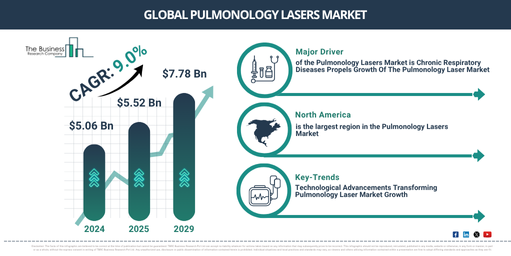
    The market for pulmonology lasers has experienced robust expansion lately, projecting an increase from a valuation of $5.06 billion in 2024 to $5.52 billion by 2025, reflecting a compound annual growth rate (CAGR) of 9.1%. This upward trajectory during the historical timeframe stems from several key factors, including the initial implementation of laser technology within the field of pulmonology, the application of carbon dioxide lasers, ongoing refinements in delivery mechanisms, and the development of procedures like laser bronchoscopy.

    Anticipation surrounds the pulmonology lasers industry, projecting substantial expansion ahead, reaching a scale of $7.78 billion by the year 2029, propelled by a steady compound annual growth rate of 9.0%.This upward trajectory is fundamentally driven by several key factors, notably the demonstrable clinical efficacy of these devices, continuous improvements in making laser equipment smaller, the increasing availability of specialized training and educational resources, the smoothening of regulatory hurdles and approval pathways, and a growing inclination among patients toward surgical options that involve less tissue penetration and quicker recovery.Furthermore, dominant currents shaping this market over the projection timeframe encompass the adoption of highly individualized precision medicine approaches, ongoing discussions regarding pricing structures and ensuring broad availability, burgeoning investigation into immunotherapy alongside combined treatment modalities, necessary navigation of ethical and governing frameworks, and the persistent movement towards treatment methods characterized by minimal invasiveness.

    Unlock Your Free Sample Report for Exclusive Market Data:

    https://www.thebusinessresearchcompany.com/sample.aspx?id=16773&type=smp

    Which Drivers Are Impacting The Pulmonology Lasers Market?

    Anticipated escalation in the prevalence of long-term respiratory ailments is projected to fuel the expansion of the pulmonology laser market moving ahead. These persistent respiratory conditions, which involve enduring issues with the breathing passages and lung architecture, result in compromised respiration and significantly diminish the standard of living. Contributing elements to this increase in chronic respiratory illnesses incorporate environmental contamination, tobacco use, the advancing age of the general populace, swift metropolitan expansion, and shifts in global weather patterns. Lasers employed in pulmonology find application in managing these chronic conditions through both diagnostic bronchoscopy procedures and curative treatments, such as addressing blockages within the airways or removing growths. As an illustration, data from the Australian Institute of Health and Welfare, a governmental body based in Australia, indicated that in June 2024, an estimated 2.8 million Australians, representing 11% of the populace, suffered from asthma (a chronic respiratory affliction), while roughly 638,000 people, or approximately 2.5% of the population, were residing with chronic obstructive pulmonary disease (COPD). Furthermore, COPD stood out as a primary underlying mechanism for mortality, responsible for 4.0% of all deaths recorded in Australia during that particular year. Consequently, this upswing in chronic respiratory diseases serves as the impetus behind the market expansion for pulmonology lasers.

    How Is The Pulmonology Lasers Market Classified Into Different Segments?

    The pulmonology lasersmarket covered in this report is segmented –

    1) By Type: Neodymium-Doped Yttrium Aluminum Garnet (Nd-YAG Laser), Photodynamic Laser

    2) By Indication: Bronchogenic Carcinoma, Malignant Lesions, Benign Tumors, Neoplasms, Hemorrhage, Tracheal Stenosis

    3) By End-Users: Specialty Care Centers, Hospitals, Academic Centers, Research Organizations

    Subsegments:

    1) By Nd-YAG Laser: Continuous Wave Nd-YAG Laser, Pulsed Nd-YAG Laser

    2) By Photodynamic Laser: Low-Level Photodynamic Laser, High-Intensity Photodynamic Laser

    What Trends Are Redefining The Pulmonology Lasers Market Dynamics?

    Leading corporations within the pulmonology laser sector are concentrating their efforts on pioneering sophisticated technological solutions, such as cutting-edge integrated laser systems, aiming to elevate both the precision of diagnoses and the effectiveness of treatments. This concept of next-generation integrated laser technology describes complex platforms where laser apparatus is merged with highly developed software and hardware components, ultimately boosting the exactness, operational swiftness, and curative potential applied in clinical settings. As an illustration, September 2022 saw the introduction of the Capsulo Nd: YAG laser by Lumibird Medical, a company situated in France that specializes in producing ophthalmic and medical instrumentation; this introduction offered practitioners improved accuracy, greater security, and increased operational speed. This novel piece of equipment incorporates advanced Nd laser mechanisms with meticulous design principles, perfectly suiting a spectrum of medical interventions. Its design prioritizes adaptability, guaranteeing exact contact with biological tissue while simultaneously reducing heat-related harm, thereby establishing a novel standard for laser performance technology that leads to better results for those receiving care.

    Who Are The Core Companies Influencing The Pulmonology Lasers Market Landscape?

    Major companies operating in the pulmonology lasers market are Cynosure Inc., Coherent Corp., Han’s Laser Technology Industry Group, IPG Photonics Corporation, HÜBNER Photonics, Lumenis Ltd, Cutera Inc., Lumibird SA, Candela Corporation, Fotona LLC, Sciton Inc., Ellex Medical Pty Ltd, Spectra-Physics Inc., EKSPLA Co, Biolitec AG, Hironic Inc., Alma Lasers Ltd., Bestview Company, Photomedex Inc., Optotek Medical, Optogama UAB, Beijing Hoplaser Lead-Edge Laser Techno. Ltd, Beijing Sincoheren S & T Development Co Ltd, Fisioline Srl, Amada Miyachi

    Download The Full Report For Exclusive Market Findings:

    https://www.thebusinessresearchcompany.com/report/pulmonology-lasers-global-market-report

    What Are The Key Regional Factors Influencing The Pulmonology Lasers Market Growth?

    North America was the largest region in the pulmonology lasers market in 2024. The regions covered in the pulmonology lasers market report are Asia-Pacific, Western Europe, Eastern Europe, North America, South America, Middle East, Africa.

    Request A Customized Version Of The Pulmonology Lasers Market Report:

    https://www.thebusinessresearchcompany.com/customise?id=16773&type=smp

    Browse Through More Reports Similar to the Global Pulmonology Lasers Market 2025, By The Business Research Company

    Dentistry Medical Lasers Global Market Report 2025

    https://www.thebusinessresearchcompany.com/report/dentistry-medical-lasers-global-market-report

    Ophthalmic Medical Lasers Global Market Report 2025

    https://www.thebusinessresearchcompany.com/report/ophthalmic-medical-lasers-global-market-report

    Dermatology Medical Lasers Global Market Report 2025

    https://www.thebusinessresearchcompany.com/report/dermatology-medical-lasers-global-market-report

    Get in touch with us:

    The Business Research Company: https://www.thebusinessresearchcompany.com/

    Americas +1 310-496-7795

    Asia +44 7882 955267 & +91 8897263534

    Europe +44 7882 955267

    Email us at info@tbrc.info

    Follow us on:

    LinkedIn: https://in.linkedin.com/company/the-business-research-company

    YouTube: https://www.youtube.com/channel/UC24_fI0rV8cR5DxlCpgmyFQ

    Global Market Model: https://www.thebusinessresearchcompany.com/global-market-model
  • Pulmonology Devices Industry Insights: Market Forecast to 2029

    Pulmonology Devices Industry Insights: Market Forecast to 2029

    Unlock Global Insights – Save 20% on Market Reports with Code ONLINE20

    How Is The Pulmonology Devices Market Size Likely To Evolve From 2025 Through 2034?

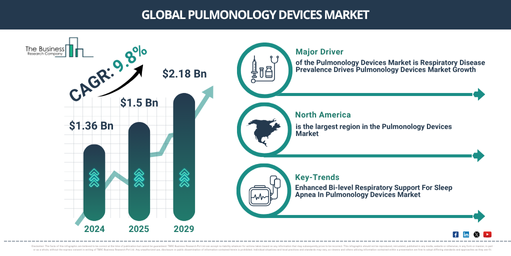
    The domain of pulmonology equipment has experienced swift expansion lately, projected to increase its valuation from $1.36 billion observed in 2024 to reach $1.5 billion by 2025, reflecting a compound annual growth rate of 10.4%. This upswing during the past period is credited to several factors, including the escalating frequency of persistent respiratory ailments, a notable movement toward proactive health management, heightened integration of pulmonology apparatus, a sharp rise in conditions necessitating endoscopic ultrasound techniques, and a swelling demographic of elderly individuals.

    Significant expansion is projected for the pulmonology devices market over the forthcoming years, with its valuation anticipated to reach $2.18 billion by 2029, exhibiting a compound annual growth rate (CAGR) of 9.8%; this upward trajectory is fueled by several factors, notably the increasing incidence of respiratory illnesses, escalating air quality degradation, the proliferation of home-based medical care, heightened consciousness regarding early detection, and the enhancement of medical facilities, while key developments shaping this period involve the incorporation of artificial intelligence, the expansion of telehealth and remote patient oversight, progress in developing compact and wearable medical equipment, the utilization of robotics in minimally invasive diagnostic processes, and an augmentation in the provisions for home-based treatment.

    Unlock Your Free Sample Report for Exclusive Market Data:

    https://www.thebusinessresearchcompany.com/sample.aspx?id=16772&type=smp

    Which Industry Drivers Are Expected To Accelerate The Pulmonology Devices Market From 2025 To 2029?

    Anticipated expansion in the incidence of ailments affecting the respiratory system is projected to fuel the advancement of the pulmonology devices sector in the forthcoming period. Breathing-related disorders encompass various medical afflictions impacting the structures essential for respiration, such as the bronchial tubes, the lungs themselves, and the musculature involved in the breathing process. These conditions are increasingly observed because of escalating atmospheric contamination, tobacco use, and workplace-related risks. Devices utilized in pulmonology facilitate the handling of these respiratory issues by offering precise diagnostic capabilities, ongoing oversight, and potent therapeutic interventions via instruments such as devices that measure lung function, aerosol delivery systems, blood oxygen measurement tools, and mechanical breathing apparatuses, which collectively enhance patient recovery and overall well-being. To illustrate this demand, data from the Australian Institute of Health and Welfare, situated in Australia, indicated in June 2024 that around 8.5 million residents, constituting 34% of the populace, were thought to be experiencing long-term respiratory ailments; specifically, an estimated 2.8 million individuals, or 11% of the population, were documented as having asthma, alongside 638,000 people, representing 2.5% of the demographic, diagnosed with chronic obstructive pulmonary disease (COPD). Consequently, the increasing frequency of respiratory pathologies serves as a stimulus for the expansion within the market for pulmonology equipment.

    What Are The Major Segments Identified In The Pulmonology Devices Market?

    The pulmonology devicesmarket covered in this report is segmented –

    1) By Product Type: Endobronchial Ultrasound (EBUS) Needles, Pulmonary Biopsy Devices, Airway Stents, Single-Use Bronchoscopes, Other Product Types

    2) By Indication: Chronic Obstructive Pulmonary Disease (COPD), Lung Cancer, Tracheal And Bronchial Stenosis, Foreign Body Extraction, Other Indications

    3) By End-User: Pulmonology Clinics, Hospitals, Ambulatory Surgical Centers

    Subsegments:

    1) By Endobronchial Ultrasound (EBUS) Needles: Radial EBUS Needles, Linear EBUS Needles, Biopsy EBUS Needles, EBUS Needles With Safety Features, EBUS Needles For Peripheral Lung Lesions

    2) By Pulmonary Biopsy Devices: Core Biopsy Needles, Fine Needle Aspiration (FNA) Biopsy Devices, Vacuum-Assisted Biopsy Devices, Transthoracic Biopsy Devices, Endoscopic Pulmonary Biopsy Devices

    3) By Airway Stents: Self-Expanding Airway Stents, Balloon-Expandable Airway Stents, Silicone Airway Stents, Metal Airway Stents, Hybrid Airway Stents (Silicone + Metal)

    4) By Single-Use Bronchoscopes: Single-Use Flexible Bronchoscopes, Single-Use Rigid Bronchoscopes, Single-Use Pediatric Bronchoscopes, Single-Use Disposable Video Bronchoscopes, Single-Use Bronchoscopes With Integrated Suction

    5) By Other Product Types: Pulmonary Function Testing Devices, Nebulizers For Pulmonary Disease Treatment, Spirometers, Pulmonary Inhalation Devices, Non-Invasive Ventilation (NIV) Devices

    How Are Emerging Market Trends Shaping The Pulmonology Devices Industry Landscape?

    Leading organizations active within the pulmonology apparatus sector are focusing efforts on creating novel offerings incorporating sophisticated features, like bilevel positive airway pressure (BiPAP) systems, with the goals of elevating patient ease, boosting therapeutic success, and managing a spectrum of breathing ailments. This BiPAP mechanism delivers distinct pressure levels for both breathing in (IPAP) and breathing out (EPAP), potentially presenting an improved experience compared to constant pressure application. To illustrate, in February of 2024, ResMed, an American entity specializing in internet-connected medical instruments, introduced the AirCurve 11 series of upgraded BiPAP units, specifically engineered to boost both comfort and adherence rates for individuals suffering from sleep apnea and related respiratory issues. Specifically, the AirCurve 11 VAuto variant cycles between elevated and reduced pressures during expiration, a design choice intended to synchronize more closely with the individual’s inherent respiratory rhythm, simultaneously, the AirCurve 11 ASV functions as an adaptive servo-ventilation (ASV) instrument, meticulously monitoring thirteen separate metrics across every single breath cycle fifty times every second to effectively stabilize the patient’s air exchange.

    Which Major Industry Participants Are Leading The Pulmonology Devices Market Growth?

    Major companies operating in the pulmonology devices market are Medtronic, Koninklijke Philips N.V., GE Healthcare, Baxter, Boston Scientific Corporation, Medline Industries LP., Olympus Corporation, Omron Healthcare, ResMed, Getinge, ICU Medical Inc., Fisher & Paykel Healthcare Limited, Ambu A/S, Vyaire Medical Inc., Drive DeVilbiss Healthcare, PENTAX Medical, Hamilton Medical, Nonin Medical, CAIRE Inc., Pulmonx Corporation, Verathon Inc., Draegerwerk AG & Co. KGaA, NIOX

    Download The Full Report For Exclusive Market Findings:

    https://www.thebusinessresearchcompany.com/report/pulmonology-devices-global-market-report

    How Do Regional Market Performances Compare Within The Pulmonology Devices Industry?

    North America was the largest region in the pulmonology devices market in 2024. The regions covered in the pulmonology devices market report are Asia-Pacific, Western Europe, Eastern Europe, North America, South America, Middle East, Africa.

    Request A Customized Version Of The Pulmonology Devices Market Report:

    https://www.thebusinessresearchcompany.com/customise?id=16772&type=smp

    Browse Through More Reports Similar to the Global Pulmonology Devices Market 2025, By The Business Research Company

    Portable X Ray Devices Market 2025

    https://www.thebusinessresearchcompany.com/report/portable-x-ray-devices-market

    Point Of Care Diagnostics Devices And Equipment Global Market Report 2025

    https://www.thebusinessresearchcompany.com/report/point-of-care-diagnostics-devices-and-equipment-global-market-report

    Cardiovascular Surgery Devices And Equipment Global Market Report 2025

    https://www.thebusinessresearchcompany.com/report/cardiovascular-surgery-devices-and-equipment-global-market-report

    Get in touch with us:

    The Business Research Company: https://www.thebusinessresearchcompany.com/

    Americas +1 310-496-7795

    Asia +44 7882 955267 & +91 8897263534

    Europe +44 7882 955267

    Email us at info@tbrc.info

    Follow us on:

    LinkedIn: https://in.linkedin.com/company/the-business-research-company

    YouTube: https://www.youtube.com/channel/UC24_fI0rV8cR5DxlCpgmyFQ

    Global Market Model: https://www.thebusinessresearchcompany.com/global-market-model

  • Global 3D Printed Medical Devices Market 2025–2029: Competitive Insights and Opportunities

    Global 3D Printed Medical Devices Market 2025–2029: Competitive Insights and Opportunities

    Unlock Global Insights – Save 20% on Market Reports with Code ONLINE20

    What Is The Expected Total Market Size Of The 3D Printed Medical Devices Industry By The Forecast Year 2029?

    Exponential expansion characterizes the present state of the 3D printed medical devices market, which is projected to ascend from a valuation of $3.32 billion in 2024 to $4.1 billion the following year, reflecting a robust compound annual growth rate (CAGR) of 23.7%; this historical expansion trajectory has been fueled by factors such as tailored product development and personalization, the increasing establishment of regulatory clearances and industry benchmarks, an escalating need for solutions designed uniquely for individual patients, burgeoning collaborations and strategic alliances, alongside demonstrable improvements in cost-effectiveness and reductions in operational timelines.

    Anticipating substantial expansion over the ensuing years, the market encompassing three-dimensionally printed medical apparatus is projected to attain a valuation of $7.69 billion by the year 2029, propelled by a compound annual growth rate (CAGR) registering at 17.0%; this upward trajectory through the forecasted duration is underpinned by factors such as enhanced availability and reduced costs, the broad implementation of additive manufacturing techniques within the medical field, convergence with remote care solutions and telemedicine, a commitment to environmentally sound and sustainable methodologies, and novel developments in materials that are compatible with biological systems. Leading current developments expected to shape this period involve regulatory bodies adjusting to technological progress, the incorporation of artificial intelligence capabilities, ongoing breakthroughs in 3D printing technology itself, the establishment of printing capabilities directly at the point of medical service delivery, and the utilization of remote printing linked with telehealth platforms.

    Unlock Your Free Sample Report for Exclusive Market Data:

    https://www.thebusinessresearchcompany.com/sample.aspx?id=2503&type=smp

    What Are The Main Drivers Boosting The 3D Printed Medical Devices Industry’s Expansion?

    A principal catalyst fueling the expansion of the market for 3D printed medical devices stems from the rising incidence of conditions like osteoarthritis and other ailments affecting the musculoskeletal system. This specific joint disorder compromises the cartilage and neighboring structures, resulting in discomfort, inflexibility, and diminished joint utility for the individual suffering from it. Medical implements fabricated via 3D printing allow for the exact reproduction of a patient’s joint, furnishing surgical practitioners with vital spatial data often undetectable through standard two-dimensional imaging; furthermore, the probability of experiencing osteoarthritis escalates as individuals grow older. Quantitatively demonstrating this trend, projections from the US National Library of Medicine suggest that by the year 2040, roughly 78 million American adults, equating to 26% of those aged 18 and over, are anticipated to have a formally diagnosed case of arthritis, thus propelling the utilization of technologically advanced 3D printed devices and providing a favorable boost to overall market progression.

    How Is The 3D Printed Medical Devices Market Segmented?

    The 3D printed medical devicesmarket covered in this report is segmented –

    1) By Type: Implants, Surgical instruments, Prosthetics, Tissue engineering devices, Other Types

    2) By Raw Material: Plastics, Biomaterial inks, Metals and Alloys

    3) By Technology: Fused Deposition Modelling, Digital Light Processing, Stereolithography, Selective Laser melting

    4) By Application: Orthopedic, Spinal, Dental, Hearing Aids, Other Applications

    5) By End User: Hospitals, Diagnostics Centers, Academic Institutions, Other End Users

    Subsegments:

    1) By Implants: Orthopedic Implants, Dental Implants, Cranial Implants

    2) By Surgical Instruments: Customized Surgical Tools, 3D Printed Guides And Templates

    3) By Prosthetics: Limb Prosthetics, Facial Prosthetics

    4) By Tissue Engineering Devices: Scaffolds, Bioprinted Tissues

    5) By Other Types: Patient-Specific Models, Medical Training Models

    What Trends Are Redefining The 3D Printed Medical Devices Market Dynamics?

    Leading corporations within the sector for three-dimensionally printed medical apparatus are concentrating efforts on unveiling novel offerings, notably in the domain of oral wellness items, engineered to elevate dental attention through tailor-made remedies for individuals. These oral health apparatus encompass products specifically developed for preemptive care, identification, and remediation of dental ailments, such as aligners, false teeth, and procedural guides fabricated using 3D printing technology, all contributing to greater patient ease and precision during dental interventions. Illustratively, Proclaim, a firm situated in the United States, initiated the release of its Custom-Jet Oral Health System in the month of January in 2024. This recently introduced Custom-Jet Oral Health System incorporates a mouthpiece produced via 3D printing, intended to eradicate detrimental microorganisms, most notably P.Gingivalis, with remarkable speed, accomplishing this in a mere seven seconds; furthermore, this groundbreaking instrument has undergone clinical validation confirming its capacity to advance oral well-being, yielding substantial decreases in indications of periodontal illness and positively impacting general bodily wellness.

    Which Global Market Leaders Are Shaping The Future Of The 3D Printed Medical Devices Sector?

    Major companies operating in the 3D printed medical devices market include Siemens AG, General Electric Company, Arcam AB, Hewlett Packard Development Company LP, Adobe Inc., Dassault Systèmes SE, Phidias Technologies, Ansys Inc., Bio3D Technologies Pte Ltd., Renishaw plc, Stratasys Ltd., Concept Laser GmbH, 3D Systems Corporation, Protolabs Inc., Materialise NV, Groupe Gorgé SA, SLM Solutions Group AG, Carbon Inc., Formlabs Inc., ExOne Company, Envision TEC Inc., Nano Dimension Ltd., Cyfuse Biomedical K.K., EOS GmbH Electro Optical Systems, Oxford Performance Materials Inc., FabRx Ltd., Organovo Holdings Inc., Laser GmbH, 3T RPD Ltd.

    Download The Full Report For Exclusive Market Findings:

    https://www.thebusinessresearchcompany.com/report/3d-printed-medical-devices-global-market-report

    Which Region Is Expected To Witness The Fastest Growth In The 3D Printed Medical Devices Market?

    North America was the largest region in the 3D printed medical devices market in 2024. Western Europe was the second largest region in the global 3D printed medical devices market report. The regions covered in the 3D printed medical devices market report are Asia-Pacific, Western Europe, Eastern Europe, North America, South America, Middle East, Africa.

    Request A Customized Version Of The 3D Printed Medical Devices Market Report:

    https://www.thebusinessresearchcompany.com/customise?id=2503&type=smp

    Browse Through More Reports Similar to the Global 3D Printed Medical Devices Market 2025, By The Business Research Company

    3D Printed Prosthetics Global Market Report 2025

    https://www.thebusinessresearchcompany.com/report/3d-printed-prosthetics-global-market-report

    3D Medical Imaging Devices Global Market Report 2025

    https://www.thebusinessresearchcompany.com/report/3d-medical-imaging-devices-global-market-report

    3D Diagnostic Imaging Services Global Market Report 2025

    https://www.thebusinessresearchcompany.com/report/3d-diagnostic-imaging-services-global-market-report

    Get in touch with us:

    The Business Research Company: https://www.thebusinessresearchcompany.com/

    Americas +1 310-496-7795

    Asia +44 7882 955267 & +91 8897263534

    Europe +44 7882 955267

    Email us at info@tbrc.info

    Follow us on:

    LinkedIn: https://in.linkedin.com/company/the-business-research-company

    YouTube: https://www.youtube.com/channel/UC24_fI0rV8cR5DxlCpgmyFQ

    Global Market Model: https://www.thebusinessresearchcompany.com/global-market-model

  • 3D Printed Implants Market Trends 2025–2029: Forecasts for Key Growth Segments

    3D Printed Implants Market Trends 2025–2029: Forecasts for Key Growth Segments

    Unlock Global Insights – Save 20% on Market Reports with Code ONLINE20

    How Does The Market Size Of The 3D Printed Implants Industry Compare Between 2025 And 2029?

    The realm of 3D printed implants has witnessed brisk expansion lately, projecting an increase from a value of 3.3 billion USD in 2024 to 3.9 billion USD in 2025, reflecting a sustained compound annual growth rate of 18.2 percent; this upward trajectory during the past period is ascribed to advancements in medical research and development activities, the acquisition of necessary regulatory clearances, the enhanced capability for tailoring products inherently, and the substantial benefits realized through cost reduction coupled with time efficiencies.

    Anticipation is for the market encompassing 3D printed implants to experience accelerated expansion in the forthcoming years, reaching a valuation of $7.9 billion by 2029, propelled by a compound annual growth rate (CAGR) of 19.3%.This upward trajectory throughout the projected timeframe is fundamentally supported by advancements in biocompatible substances, the broadening scope of medical utilizations, the increasing adoption of remote surgical procedures and telemedicine, the widening global market reach, and the provision of implants tailored to individual patients.Key developments shaping this period feature the convergence of bio-printing with regenerative medicine, ongoing material science breakthroughs, the continued leading position of orthopedic implants, expanding roles within dentistry, and a noticeable increase in strategic alliances and cooperative ventures.

    Unlock Your Free Sample Report for Exclusive Market Data:

    https://www.thebusinessresearchcompany.com/sample.aspx?id=2460&type=smp

    Which Factors And Drivers Are Influencing The 3D Printed Implants Market In 2025?

    Elevated rates of diverse health issues are fueling expansion within the market for 3D printed implants. With a growing patient pool affected by orthopedic, cardiac, and dental ailments, the need for items such as 3D dental crowns, 3D dental bridges, 3D acetabular hip implants, shoulder implants, and a host of other implantable devices is escalating. Data from the World Health Organization (WHO) indicates that the United States alone accounted for approximately 65 million individuals afflicted with periodontitis, which involves the inflammation and subsequent infection of the tissues and bone structure supporting the teeth. This surge is primarily attributable to the escalating incidence of periodontitis, gangrene frequently associated with diabetes, osteoarthritis, and peripheral vascular disease, consequently boosting the requirement for 3D printed implants due to the greater prevalence of these other medical conditions.

    What Are The Key Segments In The 3D Printed Implants Market?

    The 3D printed implantsmarket covered in this report is segmented –

    1) By Implantation Technology: Laser Beam Melting, Electronic Beam Melting, Droplet Deposition, Laminated Deposition, Two-photon Polymerization

    2) By Application: Dental, Orthopedic, Cranio-maxillofacial

    3) By End Users: Medical And Surgical Centers, Pharmaceutical Companies, Biotechnology Industry, Medical Institution

    Subsegments:

    1) By Laser Beam Melting (LBM): Selective Laser Melting (SLM), Direct Metal Laser Sintering (DMLS)

    2) By Electronic Beam Melting (EBM): Vacuum EBM, Atmospheric EBM

    3) By Droplet Deposition: Material Jetting, Binder Jetting

    4) By Laminated Deposition: Laminated Object Manufacturing (LOM)

    5) By Two-Photon Polymerization: Nanoscale 3D Printing, Microfabrication Techniques

    How Are Emerging Market Trends Shaping The 3D Printed Implants Industry Landscape?

    Leading enterprises engaged within the realm of 3D printed implants are consistently introducing novel offerings, exemplified by the Impulse AM, in their pursuit of dependable customer solutions. This particular implant, the Impulse AM, has been engineered specifically for medical applications in three dimensions, aiming to enhance visual clarity throughout surgical interventions. As an illustration of this development, in February of 2022, DeGen Medical, Inc., a firm situated in the U.S. dedicated to medical device advancement, officially released Impulse AM. Comprising a spinal implant structure, the Impulse AM utilizes a special titanium alloy called Puri-Ti, fabricated through additive manufacturing processes. Notably, this represents the inaugural spinal implant created using a 3D printing approach that incorporates Puri-Ti, signifying a distinct titanium material application. The capabilities inherent in Impulse AM permit the fabrication of intricate shapes and organizational frameworks that traditional production techniques often struggle to achieve or cannot replicate at all.

    Which Industry Leaders Are Driving Innovation Across The 3D Printed Implants Market?

    Major companies operating in the 3D printed implants market include Johnson & Johnson, Medtronic plc, Stryker Corporation, GE Healthcare, Zimmer Biomet Holdings Inc., Bio3D Technologies, Renishaw plc, Stratasys Ltd., 3D Systems Corporation, Lima Corporation, Materialise, EOS GmbH Electro Optical Systems, SLM Solutions Group AG, Prodways Group, Arcam AB, EnvisionTEC, axial3D Ltd., Cyfuse Medical, Cyfuse Biomedical K.K., Oxford Performance Materials, Formlabs Inc., FabRx Ltd., 3D LifePrints Ltd., Organovo Holdings Inc., 3T RPD Ltd., Xilloc Medical B.V.

    Download The Full Report For Exclusive Market Findings:

    https://www.thebusinessresearchcompany.com/report/3d-printed-implants-global-market-report

    Which Global Regions Are Influencing The Competitive Landscape Of The 3D Printed Implants Market?

    North America was the largest region in the 3D printed medical implants market in 2024. Asia-Pacific was the second-largest region in the global 3D printed medical implants market. The regions covered in the 3D printed implants market report are Asia-Pacific, Western Europe, Eastern Europe, North America, South America, Middle East, Africa.

    Request A Customized Version Of The 3D Printed Implants Market Report:

    https://www.thebusinessresearchcompany.com/customise?id=2460&type=smp

    Browse Through More Reports Similar to the Global 3D Printed Implants Market 2025, By The Business Research Company

    Hearing Implants Global Market Report 2025

    https://www.thebusinessresearchcompany.com/report/hearing-implants-global-market-report

    Spine Implants Global Market Report 2025

    https://www.thebusinessresearchcompany.com/report/spine-implants-global-market-report

    Dental Implants Global Market Report 2025

    https://www.thebusinessresearchcompany.com/report/dental-implants-global-market-report

    Get in touch with us:

    The Business Research Company: https://www.thebusinessresearchcompany.com/

    Americas +1 310-496-7795

    Asia +44 7882 955267 & +91 8897263534

    Europe +44 7882 955267

    Email us at info@tbrc.info

    Follow us on:

    LinkedIn: https://in.linkedin.com/company/the-business-research-company

    YouTube: https://www.youtube.com/channel/UC24_fI0rV8cR5DxlCpgmyFQ

    Global Market Model: https://www.thebusinessresearchcompany.com/global-market-model
  • Global Xerosis Treatment Market 2025–2029: Competitive Insights and Opportunities

    Global Xerosis Treatment Market 2025–2029: Competitive Insights and Opportunities

    Unlock Global Insights – Save 20% on Market Reports with Code ONLINE20

    What Is The Expected Total Market Size Of The Xerosis Treatment Industry By The Forecast Year 2029?

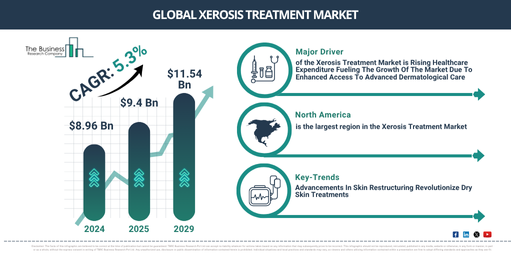
    The overall valuation of the xerosis treatment sector has experienced consistent upward movement lately; projections indicate it will expand from a figure of $8.96 billion in the year 2024 to reach $9.4 billion by 2025, sustaining a compound annual growth rate (CAGR) of 4.9%. This expansion observed throughout the historical timeframe stems from several contributing factors, notably the heightened incidence of xerosis, greater public understanding regarding skin wellness, an escalation in professional dermatological appointments, broader accessibility to non-prescription moisturizing agents, and the growing consumer preference for skincare items derived from natural and organic sources.

    Anticipation surrounds the xerosis treatment sector, pointing toward substantial expansion in the coming years, with projections indicating it will reach a market valuation of $11.54 billion by 2029, achieving a compound annual growth rate (CAGR) of 5.3%. This anticipated upward trajectory during the projection timeframe is propelled by several key factors, notably the swelling elderly demographic, escalating levels of environmental contamination, a heightened emphasis on refining daily skincare practices, the proliferation of dermatological issues, and greater incorporation of customized cosmetic offerings. Within this forecast period, significant shifts and developments manifest across the landscape, encompassing progress in externally applied remedies, sophisticated technological breakthroughs in moisturizer composition, novel developments emerging in skincare solutions requiring a doctor’s script, forward movement in testing protocols for novel treatments, alongside inventive advancements concerning wearable skincare apparatuses.

    Unlock Your Free Sample Report for Exclusive Market Data:

    https://www.thebusinessresearchcompany.com/sample.aspx?id=24432&type=smp

    What Are The Main Drivers Boosting The Xerosis Treatment Industry’s Expansion?

    Elevated spending within the healthcare sector is anticipated to be a catalyst for the expansion of the xerosis treatment market moving ahead. This term, healthcare expenditure, encompasses the aggregate financial resources allocated to health services—covering disease prevention, identification, therapy, and ongoing management—from sources like individuals, public bodies, and private entities. Progress in medical science is inherently pushing healthcare costs upward because novel diagnostic instruments and therapeutic interventions frequently carry substantial expenses related to their creation, deployment, and continued patient support. Growth in overall healthcare spending consequently improves the availability of specialized skin care services, facilitating the prompt identification and sustained control of dry skin conditions via expert consultation and sophisticated therapeutic approaches. To illustrate this trend, data released in May 2024 by the UK’s government statistics body, the Office for National Statistics, revealed that overall health spending increased by 5.6% throughout 2023, with outlays for essential long-term health and social services experiencing a real-term uplift of 2.8% in 2022; consequently, this rising trajectory in healthcare investment propels the market for addressing xerosis.

    How Is The Xerosis Treatment Market Segmented?

    The xerosis treatmentmarket covered in this report is segmented –

    1) By Type: Medication, Personal Care Products

    2) By Form: Tablets, Lotion, Cream, Ointment, Shower Forms, Other Forms

    3) By Symptoms: Roughness, Tightness, Itching, Flaky Skin

    4) By End Users: Hospitals, Clinics, Homecare Settings, Other End Users

    Subsegments:

    1) By Medication: Topical Corticosteroids, Oral Antihistamines, Immunomodulators, Antibacterial Agents, Antifungal Agents

    2) By Personal Care Products: Moisturizers, Emollients, Humectants, Bath Additives, Cleansers

    What Are The Major Trends Driving The Growth Of The Xerosis Treatment Market?

    Leading firms engaged in the xerosis treatment sector are concentrating their efforts on creating sophisticated offerings, like gentle lotions, with the goal of bolstering the skin’s protective barrier and ensuring prolonged moisture retention to improve the control of dry skin ailments. This soft lotion represents a light, non-oily emollient preparation engineered for delicate skin hydration, generally appropriate for incorporation into daily regimens for skin that is either sensitive or typically balanced. As a concrete illustration, in the second month of 2022, Cadila Pharmaceuticals, a pharmaceutical entity situated in India, introduced Laglo Soft Lotion, formulated specifically to address a spectrum of dry skin manifestations. This product demonstrates efficacy in handling conditions such as Xerosis, Ichthyosis, Atopic Dermatitis, and Psoriasis; furthermore, it assists with the signs of skin aging and can be administered as a supplementary treatment alongside steroid-based medications. The composition is intended to deliver comfort through profound moisturization and the advancement of overall skin vitality. Given its demonstrable positive results, Laglo Soft Lotion provides a thorough remedy for dermatological maintenance.

    Which Global Market Leaders Are Shaping The Future Of The Xerosis Treatment Sector?

    Major companies operating in the xerosis treatment market are Pfizer Inc., The Procter & Gamble Company, Johnson & Johnson, Unilever PLC, Bayer AG, Sanofi S.A., L’Oréal S.A., GlaxoSmithKline plc, Bausch Health Companies Inc., Sun Pharmaceutical Industries Ltd., Galderma S.A., Dr. Reddy’s Laboratories Ltd., LEO Pharma A/S, Arcutis Biotherapeutics Inc., Neutrogena, Aveeno, CeraVe, La Roche-Posay, Nivea, Cetaphil.

    Download The Full Report For Exclusive Market Findings:

    https://www.thebusinessresearchcompany.com/report/xerosis-treatment-global-market-report

    Which Region Is Expected To Witness The Fastest Growth In The Xerosis Treatment Market?

    North America was the largest region in the xerosis treatment market in 2024. Asia-Pacific is expected to be the fastest-growing region in the forecast period. The regions covered in the xerosis treatment market report are Asia-Pacific, Western Europe, Eastern Europe, North America, South America, Middle East, Africa.

    Request A Customized Version Of The Xerosis Treatment Market Report:

    https://www.thebusinessresearchcompany.com/customise?id=24432&type=smp

    Browse Through More Reports Similar to the Global Xerosis Treatment Market 2025, By The Business Research Company

    Luxury Skincare Global Market Report 2025

    https://www.thebusinessresearchcompany.com/report/luxury-skincare-global-market-report

    Natural Skin Care Products Global Market Report 2025

    https://www.thebusinessresearchcompany.com/report/natural-skin-care-products-global-market-report

    Skin Barrier Global Market Report 2025

    https://www.thebusinessresearchcompany.com/report/skin-barrier-global-market-report

    Get in touch with us:

    The Business Research Company: https://www.thebusinessresearchcompany.com/

    Americas +1 310-496-7795

    Asia +44 7882 955267 & +91 8897263534

    Europe +44 7882 955267

    Email us at info@tbrc.info

    Follow us on:

    LinkedIn: https://in.linkedin.com/company/the-business-research-company

    YouTube: https://www.youtube.com/channel/UC24_fI0rV8cR5DxlCpgmyFQ

    Global Market Model: https://www.thebusinessresearchcompany.com/global-market-model

  • 3D Orthopedics/Prosthetics Market Forecast 2025–2034: Where Businesses Should Invest Next

    3D Orthopedics/Prosthetics Market Forecast 2025–2034: Where Businesses Should Invest Next

    Unlock Global Insights – Save 20% on Market Reports with Code ONLINE20

    What Is The Predicted Market Size Trajectory For The 3D Orthopedics/Prosthetics Market From 2025 To 2034?

    Recent years have seen consistent expansion within the landscape of the 3D orthopedics and prosthetics market, projected to move from a valuation of $0.97 billion in 2024 to reach $1 billion in 2025, reflecting a compound annual growth rate (CAGR) of 2.7%. This historical upward trajectory is fundamentally linked to a combination of factors including a higher incidence of disabilities, escalating consumer demand for orthopedic medical apparatus, a greater frequency of joint replacement surgeries, technological progress, swelling healthcare spending, and expansion activity in developing economies.

    Anticipated robust expansion is projected for the 3D orthopedics and prosthetics market across the upcoming years, with valuations scheduled to reach $1.27 billion by 2029, reflecting a compound annual growth rate (CAGR) of 6.1%. This upward trajectory through the projection timeframe is fundamentally driven by the expanding elderly demographic, an escalating frequency of limb loss resulting from diabetes, a greater prevalence of trauma from vehicular accidents and athletic mishaps, coupled with heightened requirements for procedures addressing joint reconstruction ailments. Key developments anticipated during this forecast interval encompass the integration of intelligent wearable devices for superior prosthetic command, a concentrated effort toward sustainable material options, employment of artificial intelligence in analyzing specific patient anatomies, deployment of Internet-of-things (IoT) solutions for post-operative monitoring and data acquisition crucial for surgical planning, tailoring implants using cutting-edge biomaterials to suit individual patient conditions, innovating various technologies aimed at enhancing procedural results and streamlining operations, forming strategic alliances to broaden market penetration and capitalize on shared capabilities, alongside capital investments directed toward firms pioneering sophisticated product development.

    Unlock Your Free Sample Report for Exclusive Market Data:

    https://www.thebusinessresearchcompany.com/sample.aspx?id=6039&type=smp

    What Are The Key Drivers Of Growth In The 3D Orthopedics/Prosthetics Market?

    A surge in incidents involving trauma and accidental harm is presently fueling the expansion of the market sector dedicated to 3D orthopedics and prosthetics. Orthopedic prosthetics refers to employing artificial appendages, known as prostheses, with the aim of enhancing the functionality and overall quality of life for persons who have suffered limb loss. It is crucial that any prosthesis designed to meet an individual’s functional requirements incorporates a precise combination of correct positioning, specific fabrication, suitable materials, and thoughtful design. More specifically, data from the Wisconsin Department of Health Services, a governmental public health entity within the United States, indicated in December 2023 that Wisconsin’s Trauma System Hospitals observed a four percent escalation in the total volume of treated traumatic injuries throughout 2023, which included a three percent upturn specifically within pediatric trauma occurrences; furthermore, that year saw 44,970 admissions into the trauma system stemming from 38,198 distinct injury incidents, thus underscoring how the growing frequency of traumas and accidental injuries acts as a key stimulus for the 3D orthopedics and prosthetics market progression.

    What Are The Leading Segments Analyzed In The 3D Orthopedics/Prosthetics Market?

    The 3D orthopedics/prostheticsmarket covered in this report is segmented –

    1) By Product Type: Upper Extremity Orthopedic & Prosthetics, Lower Extremity Orthopedic & Prosthetics, Other Product Type

    2) By Technology: Conventional, Electric-powered, Hybrid

    3) By End User: Hospitals, Orthopedic And Prosthetic Centers, Rehabilitation Center, Other End-Users

    Subsegments:

    1) By Upper Extremity Orthopedic And Prosthetics: Prosthetic Arms, Prosthetic Hands, Orthotic Braces for Arms, Shoulder and Elbow Supports

    2) By Lower Extremity Orthopedic And Prosthetics: Prosthetic Legs, Prosthetic Feet, Orthotic Braces for Legs, Knee and Ankle Supports

    3) By Other Product Type: Custom-Made Orthopedic Devices, 3D Printed Implants, Surgical Guides and Templates, Rehabilitation Devices

    Which Key Trends Are Expected To Influence The 3D Orthopedics/Prosthetics Market In The Coming Years?

    The realm of 3D orthopedics and prosthetics is experiencing a surge in popularity for smart wearable devices, which leverage robotics and artificial intelligence to facilitate exact manipulation of the prosthetic component; this is accomplished because the underlying algorithm can interpret electrical nerve impulses originating from the user’s musculature. To illustrate, consider the development by Esper Bionics, a New York engineering startup, in February 2022, which introduced a prosthetic arm featuring advanced, intuitive self-training capabilities, enabling it to anticipate desired actions with greater accuracy than existing prosthetic options, where movement of the Esper Hand is managed through a brain-computer interface (BCI) system relying on electromyography—a computer-aided technique for gathering brain activity data—since the wearer’s brain transmits activation commands via signals directed to specific muscles when prosthetic operation is intended.

    Who Are The Key Multinational Companies Dominating The 3D Orthopedics/Prosthetics Market?

    Major companies operating in the 3D orthopedics/prosthetics market include Johnson & Johnson Inc., Zimmer Biomet, Ottobock Inc., DJO Global Inc., Instalimb Inc., Open Bionics, Tangible Solutions Inc., Tornier Inc., Corin Group Plc., PolyNovo Limited, Exactech Inc., United Orthopedic Corporation, Aesculap Implant Systems Victrex, Evonik, Stryker Corporation, Allegra Orthopedics, Lepu Medical Technology Company (Beijing) Co. Ltd, Yuwell – Jiangsu Yuyue Medical Equipment & Supply Co. Ltd, Shanghai Runda Medical Technology Co. Ltd., GE Healthcare China Co. Ltd., Beznoska Company Ltd, Sanatmetal Ltd, Medin a.s., Globus Medical Inc., Collagen Matrix Inc., NEOORTHO, Manoel Amaral Baumer, Biomecânica, ORTOBIO, Smith & Nephew, Ortosintese, IMPOL Próteses Ortopédicas, Wright Medical, B. Braun, Meril Life, Elixir Medical Equipment LLC, Matrix Medical, Gulf Medical Co, Almarfa Medical, Lithotech Medical, 3D Systems, Global Medical, Medtronic Africa, EgiFix Medical

    Download The Full Report For Exclusive Market Findings:

    https://www.thebusinessresearchcompany.com/report/3d-orthpedics-prosthetics-global-market-report

    What Are The Regional Market Dynamics Impacting The 3D Orthopedics/Prosthetics Industry?

    North America was the largest region in the 3D orthopedics/prosthetics market in 2024. Asia-Pacific is expected to be the fastest-growing region in the forecast period. The regions covered in the 3D orthopedics/prosthetics market report are Asia-Pacific, Western Europe, Eastern Europe, North America, South America, Middle East, Africa.

    Request A Customized Version Of The 3D Orthopedics/Prosthetics Market Report:

    https://www.thebusinessresearchcompany.com/customise?id=6039&type=smp

    Browse Through More Reports Similar to the Global 3D Orthopedics/Prosthetics Market 2025, By The Business Research Company

    Medical And Diagnostic Laboratory Services Global Market Report 2025

    https://www.thebusinessresearchcompany.com/report/medical-and-diagnostic-laboratory-services-global-market-report

    Neurology Devices Global Market Report 2025

    https://www.thebusinessresearchcompany.com/report/neurology-devices-global-market-report

    Magnetic Resonance Imaging Devices And Equipment Global Market Report 2025

    https://www.thebusinessresearchcompany.com/report/magnetic-resonance-imaging-devices-and-equipment-global-market-report

    Get in touch with us:

    The Business Research Company: https://www.thebusinessresearchcompany.com/

    Americas +1 310-496-7795

    Asia +44 7882 955267 & +91 8897263534

    Europe +44 7882 955267

    Email us at info@tbrc.info

    Follow us on:

    LinkedIn: https://in.linkedin.com/company/the-business-research-company

    YouTube: https://www.youtube.com/channel/UC24_fI0rV8cR5DxlCpgmyFQ

    Global Market Model: https://www.thebusinessresearchcompany.com/global-market-model

  • Wireless Medical Devices Market Trends 2025–2029: Forecasts for Key Growth Segments

    Wireless Medical Devices Market Trends 2025–2029: Forecasts for Key Growth Segments

    Unlock Global Insights – Save 20% on Market Reports with Code ONLINE20

    How Does The Market Size Of The Wireless Medical Devices Industry Compare Between 2025 And 2029?

    The sphere of wireless medical devices has seen swift expansion lately, projecting a value escalation from $27.29 billion in 2024 to $30.97 billion come 2025, reflecting a compound annual growth rate (CAGR) of 13.5%. This historic upward trend is fundamentally fueled by the wider acceptance of wearable health tech, a surging requirement for systems facilitating remote patient oversight, the proliferation of long-term ailments necessitating constant tracking, escalating medical expenses prompting a pivot towards more economical approaches, and the ongoing development of medical service frameworks.

    Anticipating substantial expansion, the sphere of wireless medical devices is projected for swift advancement, reaching a market valuation of $51.86 billion by the year 2029, propelled by a compound annual growth rate (CAGR) of 13.8% across this projection timeframe. This upward trajectory is fueled by several key factors, notably the heightened emphasis on individualized patient care, a surge in governmental support for remote healthcare solutions, greater adoption of intelligent implants to manage various ailments, deepening collaborations between technology firms and medical institutions, and the rising need for mobile health applications designed to interface seamlessly with these devices. During this forecast interval, significant market movements will involve progress in 5G technology enhancing data transmission capabilities, the creation of versatile wearable gadgets, improvements in sensory apparatus, the implementation of blockchain mechanisms to ensure data security during exchange, and innovations in diagnostic tools that do not require invasive procedures.

    Unlock Your Free Sample Report for Exclusive Market Data:

    https://www.thebusinessresearchcompany.com/sample.aspx?id=24431&type=smp

    Which Factors And Drivers Are Influencing The Wireless Medical Devices Market In 2025?

    Spurred by the expanding utilization of telehealth modalities, the wireless medical devices sector is anticipated to see significant forward momentum. Telehealth involves leveraging digital communication platforms—including but not limited to video conferencing, dedicated mobile applications, and remote diagnostic equipment—to furnish healthcare support and information across distances. This surge in telehealth adoption is fundamentally driven by the persistent need for easily accessible medical care, permitting individuals to confer with clinicians remotely rather than requiring physical appointments. Wireless medical apparatus serve to augment telehealth capabilities by facilitating the immediate transmission of patient data from afar, which consequently elevates the standard of patient management, minimizes need for inconvenient hospital trips, and allows for prompt medical responses. Illustratively, data collected by Rock Health, a U.S. organization, revealed from their February 2023 analysis of their 2022 survey results that fully 80 percent of surveyed individuals had experienced telemedicine at some juncture, marking an eight percentage point jump compared to the 72 percent reported in 2021, thus confirming that the increasing uptake of telehealth is a central catalyst for the expansion presently observed in the wireless medical devices market.

    What Are The Key Segments In The Wireless Medical Devices Market?

    The wireless medical devicesmarket covered in this report is segmented –

    1) By Product Type: Wearable Devices, Implantable Devices, Handheld And Portable Devices, Stationary Devices, Other Product Types

    2) By Technology: Bluetooth, Wi-Fi, Near Field Communication (NFC), Zigbee, RFID (Radio Frequency Identification), Ultra-wideband (UWB), Other Technologies

    3) By Application: Cardiology, Neurology, Respiratory, Diabetes Management, Point of Care, Other Applications

    4) By End-User: Hospitals, Home Healthcare, Diagnostic Centers, Ambulatory Care

    Subsegments:

    1) By Wearable Devices: Smartwatches, Fitness Bands, Continuous Glucose Monitors (CGMs), Wearable Electrocardiogram (ECG) Monitors, Wearable Blood Pressure Monitors, Smart Clothing

    2) By Implantable Devices: Cardiac Pacemakers, Implantable Cardioverter Defibrillators (ICDs), Neurostimulators, Implantable Glucose Monitors, Cochlear Implants

    3) By Handheld and Portable Devices: Portable Electrocardiogram (ECG) Monitors, Portable Ultrasound Devices, Glucose Meters, Pulse Oximeters, Digital Thermometers

    4) By Stationary Devices: Remote Patient Monitoring Systems, Wireless Infusion Pumps, Digital Vital Signs Monitors, Wireless Ventilators, Telehealth Stations

    5) By Other Product Types: Wireless Endoscopy Devices, Wireless Capsule Cameras, Smart Inhalers, Wireless Hearing Aids

    What Are The Major Trends Driving The Growth Of The Wireless Medical Devices Market?

    Leading corporations within the sphere of wireless medical devices are concentrating efforts on engineering novel solutions, exemplified by wireless handheld ultrasound apparatus, aiming to elevate diagnostic capabilities right where care is delivered and augment the ease of patient movement. This kind of portable, compact imaging apparatus leverages wireless connectivity to relay ultrasound visuals instantaneously to various personal electronics like mobile phones, tablets, or PCs, thereby facilitating significant progress in the wireless medical technology domain by permitting remote diagnostic evaluations, boosting accessibility for medical personnel, and fostering quicker determinations in urgent situations or at the immediate location of patient treatment. Taking this forward, during August of 2023, the established American firm GE Healthcare Technologies Inc., renowned for its contributions to medical imaging, patient observation systems, and broader healthcare technology, introduced Vscan Air SL, an ultrasound imaging unit designed to be handheld and wireless. This apparatus incorporates a dual-ended transducer offering both sector and linear configurations suitable for evaluating cardiac and vascular structures, providing for swift diagnostic conclusions and subsequent interventions at the bedside, courtesy of its superior imaging quality achieved through SignalMax and XDclear innovations, while also optimizing the image review process and general workflow via the accompanying Vscan Air application.

    Which Industry Leaders Are Driving Innovation Across The Wireless Medical Devices Market?

    Major companies operating in the wireless medical devices market are Abbott Laboratories, Medtronic Public Limited Company, Siemens Healthineers AG, Stryker Corporation, Koninklijke Philips N.V., GE HealthCare Technologies Inc., TE Connectivity Ltd., Omron Healthcare Inc., DexCom Inc., Masimo Corporation, iRhythm Technologies Inc., Digi International Inc., Lantronix Inc., Withings S.A.S., Silex Technology America Inc., AliveCor Inc., iHealth Labs Inc., Bridge-Tech Inc., Voler Systems Inc., Silicon & Software Systems Limited

    Download The Full Report For Exclusive Market Findings:

    https://www.thebusinessresearchcompany.com/report/wireless-medical-devices-global-market-report

    Which Global Regions Are Influencing The Competitive Landscape Of The Wireless Medical Devices Market?

    North America was the largest region in the wireless medical devices market in 2024. Asia-Pacific is expected to be the fastest-growing region in the forecast period. The regions covered in the wireless medical devices market report are Asia-Pacific, Western Europe, Eastern Europe, North America, South America, Middle East, Africa.

    Request A Customized Version Of The Wireless Medical Devices Market Report:

    https://www.thebusinessresearchcompany.com/customise?id=24431&type=smp

    Browse Through More Reports Similar to the Global Wireless Medical Devices Market 2025, By The Business Research Company

    Wireless Telecommunication Carrier Global Market Report 2025

    https://www.thebusinessresearchcompany.com/report/wireless-telecommunication-carrier-global-market-report

    Wireless Speakers Global Market Report 2025

    https://www.thebusinessresearchcompany.com/report/wireless-speakers-global-market-report

    Wireless Internet Services Global Market Report 2025

    https://www.thebusinessresearchcompany.com/report/wireless-internet-services-global-market-report

    Get in touch with us:

    The Business Research Company: https://www.thebusinessresearchcompany.com/

    Americas +1 310-496-7795

    Asia +44 7882 955267 & +91 8897263534

    Europe +44 7882 955267

    Email us at info@tbrc.info

    Follow us on:

    LinkedIn: https://in.linkedin.com/company/the-business-research-company

    YouTube: https://www.youtube.com/channel/UC24_fI0rV8cR5DxlCpgmyFQ

    Global Market Model: https://www.thebusinessresearchcompany.com/global-market-model

  • Wearable Sleep Trackers Market Forecast 2025–2034: Where Businesses Should Invest Next

    Wearable Sleep Trackers Market Forecast 2025–2034: Where Businesses Should Invest Next

    Unlock Global Insights – Save 20% on Market Reports with Code ONLINE20

    What Is The Predicted Market Size Trajectory For The Wearable Sleep Trackers Market From 2025 To 2034?

    The market encompassing wearable devices for monitoring sleep has experienced substantial recent expansion, projected to increase its valuation from $2.46 billion in 2024 up to $2.82 billion by the following year, reflecting a compound annual growth rate of 14.6%; this upward trajectory during the preceding years stemmed from several factors, including boosts in personal spending power, the broadening accessibility through online retail platforms, the escalating adoption of sophisticated smartwatches, a greater emphasis placed on proactive health management, and an increase in benefits provided by health insurance providers.

    Anticipating substantial expansion, the market for wearable sleep monitoring devices is projected to experience swift development moving forward, reaching a valuation of $4.95 billion by the year 2029, reflecting a compounded annual growth rate of 15.1 percent; this upward trajectory is fueled by heightened public understanding concerning the importance of adequate sleep, the proliferation of sleep-related ailments, a growing emphasis on personal health and physical conditioning, demographic shifts towards an older population structure, and climbing incidences of stress and anxiety. Key directional shifts influencing this sector during the projection timeframe encompass progressive innovations within the wearable hardware sphere, deeper interconnectivity with mobile handset applications, a sustained need for monitoring methods that do not require physical intrusion, the market’s pull toward comprehensive well-being packages, and ongoing breakthroughs in the science behind vital sign detection.

    Unlock Your Free Sample Report for Exclusive Market Data:

    https://www.thebusinessresearchcompany.com/sample.aspx?id=24428&type=smp

    What Are The Key Drivers Of Growth In The Wearable Sleep Trackers Market?

    Anticipated expansion within the market for wearable sleep monitoring devices is projected to be driven by the growing prevalence of sleep disturbances, which are defined as ailments consistently impairing the timing, duration, or quality of rest, consequently impacting daily performance and general well-being. The rising occurrence of these sleep issues stems largely from extended periods spent looking at screens and the subsequent blue light exposure, which interferes with natural circadian rhythms by inhibiting melatonin release, thereby resulting in difficulties initiating and maintaining sleep. As a result, wearable sleep trackers, which provide continuous data regarding sleep duration, patterns, and overall quality, become instrumental in enabling timely identification and effective management of these conditions, offering users data-driven feedback to tailor their treatment approaches. To illustrate this trend, data released by the National Health Service in November 2023 indicated that within the UK, 37.8% of youngsters between the ages of 8 and 16 reported grappling with sleep difficulties at least three times over the preceding week; furthermore, individuals suspected of having mental health disorders reported sleep problems at a significantly higher rate of 76.5%, contrasted sharply with only 25.0% of those without such suspected disorders, affirming that the escalation in sleep disorders will serve as a catalyst for the wearable sleep trackers market’s upward trajectory.

    What Are The Leading Segments Analyzed In The Wearable Sleep Trackers Market?

    The wearable sleep trackersmarket covered in this report is segmented –

    1) By Product: Watches, Bands, Earbuds, Others Products

    2) By Technology: Actigraphy, Polysomnography, Other Technologies

    3) By Features: Heart Rate Monitoring, Sleep Stage Tracking, App Integration, Real-Time Notifications, Data Analytics And Reports

    4) By Distribution Channel: Online Stores, Specialty Stores, Supermarkets Or Hypermarkets, Other Distribution Channels

    5) By End User: Fitness Enthusiasts, General Consumers, Healthcare Professionals, Corporate Wellness Programs, Sleep Disorder Patients

    Subsegments:

    1) By Watches: Smartwatches, Fitness Watches, Hybrid Smartwatches, Medical-grade Sleep Monitoring Watches

    2) By Bands: Fitness Bands, Smart Sleep Bands, Health-monitoring Bands, Wrist Actigraphy Bands

    3) By Earbuds: Sleep Tracking Earbuds, Noise-canceling Sleep Earbuds, Smart Audio Sleep Buds, Biometric Sensor Earbuds

    4) By Other Products: Smart Rings, Sleep Masks With Sensors, Headbands, Clip-on Sleep Monitors, Smart Clothing

    What Trends Are Expected To Drive The Wearable Sleep Trackers Market?

    Key players within the wearable sleep trackers industry are directing their efforts toward innovating highly sophisticated devices, exemplified by fingertip-worn trackers, engineered for facile retrieval of crucial performance metrics or capabilities. These miniature pieces of wearable tech attach directly to a finger, enabling health monitoring or digital engagement in a subtle yet highly accessible manner. As an illustration, PranaQ, a medical device firm headquartered in the U.S., introduced TipTraQ in January 2024; this peripheral, worn on the fingertip, is designed for the detection and ongoing management of respiratory sleep disturbances like apnea, alongside improvements in general sleep wellness. TipTraQ not only offers continuous sleep observation but also incorporates a bespoke guidance system powered by generative artificial intelligence, through which PranaQ furnishes tailored recommendations for improving sleep, directing users toward appropriate therapeutic avenues depending on their individual data profiles. Validation from prominent medical institutions has confirmed the precision of this apparatus in evaluating sleep-related breathing patterns, discerning distinct sleep phases, and accurately logging total time spent asleep. Comfort is prioritized via its contoured shape, complemented by a featherlight build and a gripping band ensuring it accommodates a wide range of users securely; moreover, sustainability aspects are integrated through its incorporation of a reusable battery and a strap that can be swapped out, promoting extended service life.

    Who Are The Key Multinational Companies Dominating The Wearable Sleep Trackers Market?

    Major companies operating in the wearable sleep trackers market are Apple Inc., Google LLC, Samsung Electronics Co. Ltd., Huawei Device Co. Ltd., Xiaomi Corporation, Koninklijke Philips N.V., Zepp Health Corporation, Garmin Ltd., ResMed Inc., Fossil Group Inc., Polar Electro Oy, Oura Health Oy, Whoop Inc., Withings S.A., Boult Audio Pvt. Ltd., Eight Sleep Inc., Muse Inc., Emfit Ltd., StimScience Inc., Interaxon Inc.

    Download The Full Report For Exclusive Market Findings:

    https://www.thebusinessresearchcompany.com/report/wearable-sleep-trackers-global-market-report

    What Are The Regional Market Dynamics Impacting The Wearable Sleep Trackers Industry?

    North America was the largest region in the wearable sleep trackers market in 2024. Asia-Pacific is expected to be the fastest-growing region in the forecast period. The regions covered in the wearable sleep trackers market report are Asia-Pacific, Western Europe, Eastern Europe, North America, South America, Middle East, Africa.

    Request A Customized Version Of The Wearable Sleep Trackers Market Report:

    https://www.thebusinessresearchcompany.com/customise?id=24428&type=smp

    Browse Through More Reports Similar to the Global Wearable Sleep Trackers Market 2025, By The Business Research Company

    Wearable Medical Devices Market 2025

    https://www.thebusinessresearchcompany.com/report/wearable-medical-devices-market

    Wearable Blood Pressure Monitors Global Market Report 2025

    https://www.thebusinessresearchcompany.com/report/wearable-blood-pressure-monitors-global-market-report

    Smart Wearables Global Market Report 2025

    https://www.thebusinessresearchcompany.com/report/smart-wearables-global-market-report

    Get in touch with us:

    The Business Research Company: https://www.thebusinessresearchcompany.com/

    Americas +1 310-496-7795

    Asia +44 7882 955267 & +91 8897263534

    Europe +44 7882 955267

    Email us at info@tbrc.info

    Follow us on:

    LinkedIn: https://in.linkedin.com/company/the-business-research-company

    YouTube: https://www.youtube.com/channel/UC24_fI0rV8cR5DxlCpgmyFQ

    Global Market Model: https://www.thebusinessresearchcompany.com/global-market-model