Category: Medical Equipment

  • Outlook for Partially Absorbable Mesh Market: Key Developments and Future Strategies to 2029

    Outlook for Partially Absorbable Mesh Market: Key Developments and Future Strategies to 2029

    Claim your 30% discount on Global Market Reports with code ONLINE30. Limited time only.

    What Is the Outlook for the Partially Absorbable Mesh Market Heading Into 2029?

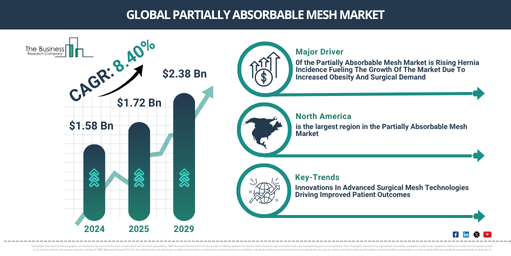
    The market for semi-absorbent mesh has seen robust growth in recent times. The market is projected to expand from $1.58 billion in 2024 to $1.72 billion in 2025, with an impressive compound annual growth rate (CAGR) of 8.7%. Factors contributing to this growth during the historical period include heightened demand for high-tech surgical approaches, growing acceptance of composite and hybrid mesh materials, an increase in global surgical procedures, higher healthcare spending, and an increased inclination towards better biocompatibility and fewer post-surgery complications.

    In the coming years, the market for partially absorbable mesh is set to witness robust growth, expected to reach $2.38 billion in 2029, signifying a compound annual growth rate (CAGR) of 8.4%. This escalation during the forecasted period is primarily due to factors such as the increased adoption of laparoscopic and robotic surgeries, the ongoing collaborations between healthcare providers and medical device manufacturers, a rise in chronic diseases that require soft tissue repair, an enhanced demand for improved patient outcomes, and a heightened emphasis on mitigating surgical complications and shortening recovery time. Major trends that are emerging during this period include advancements in biomaterials for better biocompatibility, the development of improved mesh designs for superior tissue integration, innovations in coating technologies to minimize adhesions, the incorporation of intelligent materials for controlled degradation, and advances in minimally invasive surgical methods.

    Download The Free Sample Report Here:

    https://www.thebusinessresearchcompany.com/sample.aspx?id=24650&type=smp

    Which Factors Are Pushing The Partially Absorbable Mesh Market Forward?

    The increasing occurrence of hernias is anticipated to fuel the expansion of the partially absorbable mesh market. A hernia is a medical condition marked by an organ or tissue protruding through a soft spot or opening in the adjacent muscle or connective tissue, often resulting in pain or discomfort. This escalation in hernias is attributable to the growing rates of obesity, which exert additional strain on the abdominal muscles, thereby weakening them and facilitating the likelihood of hernias. Partially absorbable mesh contributes to hernia repair by merging durable reinforcement with absorbable materials to facilitate healing and mitigate the chance of prolonged complications. For example, in March 2024, as reported by the American Society of Anesthesiologists, this US-based professional non-profit medical association stated that over 20 million hernia repair surgeries are conducted globally each year. This includes approximately 800,000 inguinal hernia cases per year in the United States alone, primarily affecting men between the ages of 75 and 80. Thus, the surging instances of hernia are propelling the growth of the partially absorbable mesh market.

    Which Segment Held The Largest Share In The Partially Absorbable Mesh Market In 2025?

    The partially absorbable mesh market covered in this report is segmented –

    1) By Product Type: Polypropylene Mesh, Polytetrafluoroethylene (PTFE) Mesh, Composite Mesh, Biologic Mesh, Other Product Types

    2) By Material Composition: Synthetic Materials, Natural Materials, Hybrid Materials, Coated Materials, Other Material Compositions

    3) By Distribution Channel: Direct Sales, Distributors, Online Sales, Medical Supply Companies, Other Distribution Channels

    4) By Application: Heia Repair, Pelvic Organ Prolapse Repair, Abdominal Wall Reconstruction, Cardiac Procedures, Other Surgical Applications

    5) By End-User: Hospitals, Ambulatory Surgical Centers, Specialty Clinics, Research Institutes, Other Healthcare Facilities

    Subsegments:

    1) By Polypropylene Mesh: Lightweight Polypropylene Mesh, Heavyweight Polypropylene Mesh, Coated Polypropylene Mesh

    2) By Polytetrafluoroethylene (PTFE) Mesh: Expanded Polytetrafluoroethylene (PTFE) Mesh, Dual-Layer Polytetrafluoroethylene (PTFE) Mesh, Microporous Polytetrafluoroethylene (PTFE) Mesh

    3) By Composite Mesh: Synthetic Biologic Composite Mesh, Synthetic Absorbable Polymer Composite Mesh, Dual-Sided Composite Mesh (Anti-Adhesion)

    4) By Biologic Mesh, By Type: Porcine Dermis Mesh, Bovine Dermis Mesh, Human Cadaveric Dermis Mesh

    5) By Other Product Types: Polyester Mesh, Polyvinylidene Fluoride (PVDF) Mesh, Silk Mesh

    How Are Key Trends Driving Expansion In The Partially Absorbable Mesh Industry?

    Leading firms in the partially absorbable mesh market are redirecting their attention to the development of innovative solutions, such as composite meshes. The goal is to improve patient results, increase biocompatibility and minimize complications after surgery. Composite meshes, surgical implants composed of a fusion of absorbable and non-absorbable materials, are meant to provide prolonged support and enhanced biocompatibility for operations like hernia repair. For example, in February 2022, an advanced series of composite surgical meshes were introduced by Futura Surgicare Pvt Ltd, a manufacturer of wound-closure devices based in India. These meshes cater to tension-free and laparoscopic hernia repairs, providing solid and temporary support for organs and tissues. Notably, the Monosolve mesh is a partially absorbable composite that combines polyglycolide-co-caprolactone (PGCL) with polypropylene, which results in improved flexibility and healing.

    Which Organizations Are Driving Progress In The Partially Absorbable Mesh Industry?

    Major companies operating in the partially absorbable mesh market are Johnson And Johnson, Medtronic plc, Medline Industries Inc., Becton Dickinson and Company, Boston Scientific Corporation, Integra LifeSciences Corporation, Meril life, B. Braun Melsungen AG, Gore Medical, Demetech Corporation, TELA Bio Inc, pfm Medical AG, AFS Medical, Dolphin Mesh, Lotus Surgicals, KATSAN Medical Devices, Betatech Medical, Orion Sutures India Pvt. Ltd., Vitrex Medical A/S, BioHealth Medical Tech

    Get The Full Report Here:

    https://www.thebusinessresearchcompany.com/report/partially-absorbable-mesh-global-market-report

    Which Region Is Expected To Experience The Highest Growth In The Partially Absorbable Mesh Industry?

    North America was the largest region in the partially absorbable mesh market in 2024. Asia-Pacific is expected to be the fastest-growing region in the forecast period. The regions covered in the partially absorbable mesh market report are Asia-Pacific, Western Europe, Eastern Europe, North America, South America, Middle East, Africa.

    Request For A Customized Report:

    https://www.thebusinessresearchcompany.com/customise?id=24650&type=smp

    About The Business Research Company:

    With over 15000+ reports from 27 industries covering 60+ geographies, The Business Research Company has built a reputation for offering comprehensive, data-rich research and insights. Armed with 1,500,000 datasets, the optimistic contribution of in-depth secondary research, and unique insights from industry leaders, you can get the information you need to stay ahead in the game.

    Get in touch with us:

    The Business Research Company: https://www.thebusinessresearchcompany.com/

    Americas +1 310-496-7795

    Asia +44 7882 955267 & +91 8897263534

    Europe +44 7882 955267

    Email us at info@tbrc.info

    Follow us on:

    LinkedIn: https://in.linkedin.com/company/the-business-research-company

    YouTube: https://www.youtube.com/channel/UC24_fI0rV8cR5DxlCpgmyFQ

    Global Market Model: https://www.thebusinessresearchcompany.com/global-market-model
  • Industry Forecast: Osseointegration Implants Market to Generate $10.53 Billion Revenue by 2029

    Industry Forecast: Osseointegration Implants Market to Generate $10.53 Billion Revenue by 2029

    Claim your 30% discount on Global Market Reports with code ONLINE30. Limited time only.

    How Much Is the Global Osseointegration Implants Market Valued at Present and by 2029?

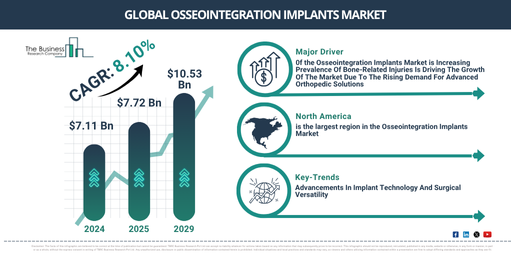
    The market size for osseointegration implants has seen robust growth in the past few years. The market is projected to expand from $7.11 billion in 2024 to $7.72 billion in 2025, reflecting a compound annual growth rate (CAGR) of 8.5%. The impressive growth observed in the earlier period is due to factors such as the rising demand for dental reconstruction, the increasing number of orthopedic surgeries, heightened awareness about prosthetic advancements, enlargement of healthcare facilities in developed nations, and a growing number of traumatic injuries.

    The market size for osseointegration implants is projected to experience substantial expansion in the upcoming years, expected to reach $10.53 billion in 2029 with a compound annual growth rate of 8.1%. Various factors contributing to this projected growth during the forecast period include an increasing elderly population, the widespread adoption of sophisticated prosthetic devices, higher healthcare spending in developing nations, the growth of medical tourism, and the rising incidence of limb amputations resulting from chronic illnesses. Significant trends in the forecast period encompass advancements in implant material technology, breakthroughs in 3D printing for personalized implants, progress in minimally invasive operation methods, R&D in titanium surface adjustments, and the incorporation of digital surgical planning systems.

    Download The Free Sample Report Here:

    https://www.thebusinessresearchcompany.com/sample.aspx?id=24638&type=smp

    #What Drivers Are Influencing Growth In The Osseointegration Implants Market?

    The rising incidence of bone-related injuries is likely to stimulate the expansion of the osseointegration implants market. These injuries to the bone, encompassing fractures, ruptures, or joint dislocations, are seeing an uptick primarily due to the expanding elderly population who are more susceptible to fractures due to their brittle bones. Osseointegration implants facilitate the treatment of bone injuries by firmly connecting prosthetics to the bone, which improves support and healing. To illustrate, a study by Healthy Bones Australia, an Australian non-governmental organization, noted in August 2024 that there was a fracture every 2.7 minutes in Australia in the year 2023. This frequency is predicted to escalate to one fracture every 30 seconds by the year 2033. Consequently, the growing incidence of bone-related injuries is fueling the growth of the osseointegration implants market.

    What Are The Main Segments Identified In The Osseointegration Implants Market Research?

    The osseointegration implants market covered in this report is segmented –

    1) By Product: Dental Implants, Hip Implants, Knee Implants, Spinal Implants, Other Products

    2) By Material: Ceramic Implants, Zirconia Implants, Stainless Steel Implants, Titanium Implants, Metallic Implants, Other Materials

    3) By End User: Hospitals, Ambulatory Surgical Centers, Dental Clinics, Other End-Users

    Subsegments:

    1) By Dental Implants: Endosteal Implants, Subperiosteal Implants, Zygomatic Implants, Mini Dental Implants, Basal Implants

    2) By Hip Implants: Total Hip Replacement, Partial Hip Replacement, Hip Resurfacing, Revision Hip Implants

    3) By Knee Implants: Total Knee Replacement, Partial Knee Replacement, Revision Knee Implants

    4) By Spinal Implants: Interbody Fusion Devices, Pedicle Screws, Rods And Plates, Artificial Discs, Spinal Cages

    5) By Other Products: Shoulder Implants, Elbow Implants, Ankle Implants, Wrist Implants, Other Joint Implants

    What Are The Leading Trends And Opportunities In The Osseointegration Implants Sector?

    Major companies in the osseointegration implants arena are concentrating on blending with digital dentistry, encompassing surgical and restorative flexibility in order to offer dentistry professionals cutting-edge implant solutions that enrich treatment certainty and patient results. The flexibility in the surgical and restorative aspects implies that the implant is crafted to synchronize well with diverse surgical methods and prosthetic choices, making it conformable to an array of clinical situations. For example, in February 2024, ZimVie Inc., an American life sciences firm, unveiled the TSX Implant. This cutting-edge implant is engineered for urgent placement and loading, backed by more than 20 years of clinical information that guarantees long-lasting bone well-being and prosthetic steadiness. The TSX Implant effortlessly merges with ZimVie’s digital dentistry solutions and adapts to diverse surgical procedures, making procedures simpler and boosting certainty for dental professionals. This product launch reinforces the firm’s dedication to innovation and market leadership.

    Which Companies Play A Key Role In The Development Of The Osseointegration Implants Market?

    Major companies operating in the osseointegration implants market are Johnson & Johnson, Medtronic plc, Danaher Corporation, Stryker Corporation, Henry Schein Inc., Zimmer Biomet Holdings Inc., Smith & Nephew plc, Dentsply Sirona Inc., Institut Straumann AG, Straumann Holding AG, DePuy Synthes, Cochlear Limited, CONMED Corporation, OSSTEM Implant Co. Ltd., B. Braun Melsungen AG, Bicon LLC, Megagen Implant Co. Ltd., CAMLOG Biotechnologies GmbH, BTT Health GmbH, Integrum.

    Get The Full Report Here:

    https://www.thebusinessresearchcompany.com/report/osseointegration-implants-global-market-report

    What Are The Key Regional Developments Shaping The Osseointegration Implants Market?

    North America was the largest region in the osseointegration implants market in 2024. Asia-Pacific is expected to be the fastest-growing region in the forecast period. The regions covered in the osseointegration implants market report are Asia-Pacific, Western Europe, Eastern Europe, North America, South America, Middle East, Africa.

    Request For A Customized Report:

    https://www.thebusinessresearchcompany.com/customise?id=24638&type=smp

    About The Business Research Company:

    With over 15000+ reports from 27 industries covering 60+ geographies, The Business Research Company has built a reputation for offering comprehensive, data-rich research and insights. Armed with 1,500,000 datasets, the optimistic contribution of in-depth secondary research, and unique insights from industry leaders, you can get the information you need to stay ahead in the game.

    Get in touch with us:

    The Business Research Company: https://www.thebusinessresearchcompany.com/

    Americas +1 310-496-7795

    Asia +44 7882 955267 & +91 8897263534

    Europe +44 7882 955267

    Email us at info@tbrc.info

    Follow us on:

    LinkedIn: https://in.linkedin.com/company/the-business-research-company

    YouTube: https://www.youtube.com/channel/UC24_fI0rV8cR5DxlCpgmyFQ

    Global Market Model: https://www.thebusinessresearchcompany.com/global-market-model
  • Future Projections: Ophthalmic Equipment Market to Reach $89.49 Billion by 2029 at 6.5% CAGR

    Future Projections: Ophthalmic Equipment Market to Reach $89.49 Billion by 2029 at 6.5% CAGR

    Claim your 30% discount on Global Market Reports with code ONLINE30. Limited time only.

    How Will the Ophthalmic Equipment Market Evolve in Terms of Growth and Size by 2029?

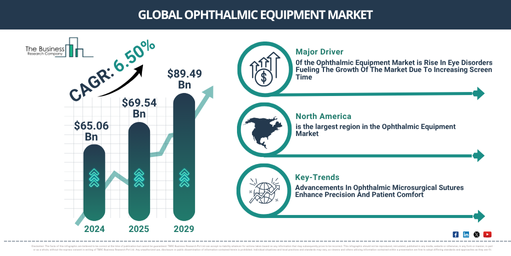
    In recent times, there has been a robust growth in the market size of ophthalmic equipment. It is projected to expand from $65.06 billion in 2024 to $69.54 billion in 2025, with a compound annual growth rate (CAGR) of 6.9%. Factors contributing to this growth during the historic period include the rising number of ophthalmic clinics and specialized eye care centres, an increase in disposable income, the development of healthcare infrastructure, governmental programs and funding aimed at eye care, and an uptick in the number of eye surgeries carried out.

    In the coming years, the ophthalmic equipment market is poised to witness significant growth, escalating to a total of $89.49 billion by 2029, buoyed by a compound annual growth rate (CAGR) of 6.5%. Factors contributing to this surge during the projected period encompass an increasing incidence of eye disorders, a rise in the elderly population vulnerable to vision issues, enhanced consciousness about eye health and eyesight care, and a spike in diabetes cases. Also fuelling demand for early disease detection and treatment of eye diseases. Key trends anticipated during this period involve the advancements in ophthalmic diagnostic tools, the debut of less invasive surgical methods, advancements in laser eye surgery tools, novel imaging techniques, and the accessibility of cutting-edge diagnostic software that integrates with ophthalmic devices.

    Download The Free Sample Report Here:

    https://www.thebusinessresearchcompany.com/sample.aspx?id=24636&type=smp

    What factors are expected to fuel Ophthalmic Equipment market growth in the coming years?

    The escalation in eye disorder rates is anticipated to propel the expansion of the ophthalmic equipment market in the future. An eye disorder is a situation that impacts the structure or function of the eye, potentially compromising vision or inducing discomfort. The prevalence of eye disorders is rising due to the increase in screen exposure, causing prolonged eye strain and contributing to vision-related problems such as digital eye strain and myopia. The need for ophthalmic equipment is crucial for the treatment of these disorders, as it allows for an accurate diagnosis and exact treatment, helping in the early identification of issues and enhancing patient outcomes. For instance, as per a report by the Centers for Disease Control and Prevention, a US government agency, in May 2024, if effective interventions are not executed, there could be a 72% surge in diabetic retinopathy cases and an 87% rise in cataracts cases by 2050. Furthermore, the population experiencing vision impairment and blindness could potentially surge by up to 150%. Consequently, the escalating rates of eye disorders contribute significantly towards the growth of the ophthalmic equipment market.

    What Are The Key Findings From The Segmentation Analysis Of The Ophthalmic Equipment Market?

    The ophthalmic equipment market covered in this report is segmented –

    1) By Product Type: Ophthalmic Surgical Devices, Ophthalmic Diagnostic Devices, Ophthalmic Vision Care Devices

    2) By Technology: Laser Technology, Optical Coherence Tomography, Ultrasound Technology, Phacoemulsification

    3) By Application: Cataract Surgery, Retinal Surgery, Glaucoma Surgery, Refractive Surgery

    4) By End-Users: Hospitals, Ophthalmology Clinics, Ambulatory Surgical Centers (ASCs), Optical Retail Centers, Other End-Users

    Subsegments:

    1) By Ophthalmic Surgical Devices: Phacoemulsification Devices, Laser Surgical Devices, Vitrectomy Devices, Ophthalmic Microsurgical Instruments, Intraocular Lenses (IOLs), Ophthalmic Cryotherapy Devices

    2) By Ophthalmic Diagnostic Devices: Slit Lamp Microscopes, Optical Coherence Tomography (OCT) Devices, Visual Field Analyzers, Fundus Cameras, Keratometers, Pachymeters, Retinal Imaging Devices, Tonometers

    3) By Ophthalmic Vision Care Devices: Contact Lens Fitters, Autorefractors, Lens Meters, Trial Lens Sets, Phoropters, Lens Edgers, Vision Screening Devices

    Which Trends Are Expected To Shape The Future Of The Ophthalmic Equipment Market?

    Key players in the market for ophthalmic equipment are concentrating efforts on creating state-of-the-art products like ophthalmic microsurgical sutures to decrease the risks of infection and inflammation. Ophthalmic microsurgical sutures refer to extremely thin threadlike materials used by eye surgeons to perform precise stitching and sealing of delicate eye tissues during surgical procedures. As an example, Corza Medical, an American medical technology company, debuted a product called Onatec ophthalmic microsurgical sutures in October 2024. Onatec needles, manufactured using a highly tempered variety of stainless steel, are a product of Corza Medical. They provide high bending resistance and durability. Thanks to their advanced automated production methods, these needles are guaranteed to have precise shapes and accurate grinds, making them perfect for stitching fragile tissues in very small areas. Their needles are also known for their superior surface finish, which ensures a smooth entry, reducing trauma to tissues. This balance of precision and quality increases comfort levels for patients undergoing ophthalmic microsurgeries.

    What Are The Most Active Companies In The Ophthalmic Equipment Market Today?

    Major companies operating in the ophthalmic equipment market are Medtronic Plc, Alcon Inc., Bausch + Lomb Corp., Buhler Group, Carl Zeiss Meditec AG, Rodenstock GmbH, Leica Microsystems, Corza Medical, EXTREME d.o.o., BVI Medical Inc., Heine Optotechnik, Essilor International S.A., Rumex International Co., Advancing Eyecare, MS Westfalia GmbH, Designs For Vision, FCI S.A.S., Stille AB, Visionix Ltd., Optotek Medical, Coburn Technologies Inc., Haag-Streit AG, MDT Medical Devices Manufacturer, Carleton Limited, INNOVA Medical Group Inc.

    Get The Full Report Here:

    https://www.thebusinessresearchcompany.com/report/ophthalmic-equipment-global-market-report

    Which Regional Markets Are Attracting The Most Investment In Ophthalmic Equipment?

    North America was the largest region in the ophthalmic wquipment market in 2024. Asia-Pacific is expected to be the fastest-growing region in the forecast period. The regions covered in the ophthalmic equipment market report are Asia-Pacific, Western Europe, Eastern Europe, North America, South America, Middle East, Africa.

    Request For A Customized Report:

    https://www.thebusinessresearchcompany.com/customise?id=24636&type=smp

    About The Business Research Company:

    With over 15000+ reports from 27 industries covering 60+ geographies, The Business Research Company has built a reputation for offering comprehensive, data-rich research and insights. Armed with 1,500,000 datasets, the optimistic contribution of in-depth secondary research, and unique insights from industry leaders, you can get the information you need to stay ahead in the game.

    Get in touch with us:

    The Business Research Company: https://www.thebusinessresearchcompany.com/

    Americas +1 310-496-7795

    Asia +44 7882 955267 & +91 8897263534

    Europe +44 7882 955267

    Email us at info@tbrc.info

    Follow us on:

    LinkedIn: https://in.linkedin.com/company/the-business-research-company

    YouTube: https://www.youtube.com/channel/UC24_fI0rV8cR5DxlCpgmyFQ

    Global Market Model: https://www.thebusinessresearchcompany.com/global-market-model
  • In-Depth Obstetrics Device Market Report: Business Trends, Growth Factors, and Forecast to 2029

    In-Depth Obstetrics Device Market Report: Business Trends, Growth Factors, and Forecast to 2029

    Claim your 30% discount on Global Market Reports with code ONLINE30. Limited time only.

    What Is the Estimated Industry Valuation for the Obstetrics Device Sector?

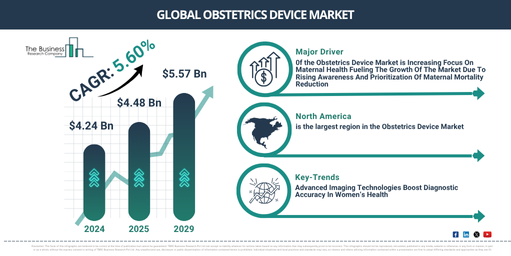
    In the recent past, the market size for obstetrics devices has seen robust growth. It is projected to expand from $4.24 billion in 2024 to around $4.48 billion in 2025, with a compound annual growth rate (CAGR) of 5.9%. The growth during the historical period is primarily driven by factors such as increasing birth rates in developing nations, a rise in institutional deliveries, an uptick in cesarean section rates, heightened sensitivity towards prenatal care, and the implementation of government maternal health initiatives.

    In the upcoming years, the obstetrics device market is projected to witness substantial expansion. It’s anticipated to reach $5.57 billion by 2029, growing at a compound annual growth rate (CAGR) of 5.6%. This projected growth during the forecast period can be ascribed to several factors such as increased global emphasis on decreasing maternal death rates, aging maternal population in developed nations, development of healthcare infrastructure in emerging markets, a rise in fertility treatments, and increased penetration of health insurance. Predominant trends predicted for the forecast period encompass the inclusion of artificial intelligence (AI) and machine learning, sophisticated imaging technologies, personalized and smart delivery rooms, sustainable and eco-friendly product designs, and intelligent, wearable monitoring devices.

    Download The Free Sample Report Here:

    https://www.thebusinessresearchcompany.com/sample.aspx?id=24632&type=smp

    What Forces Are Driving The Growth Of The Obstetrics Device Market?

    The escalating emphasis on maternal health is anticipated to boost the growth of the obstetrics device market in the future. Maternal health involves women’s health and wellness during pregnancy, childbirth, and the postpartum phase. This heightened emphasis on maternal health arises from growing awareness as governments and organizations globally are committed to decreasing maternal mortality and enhancing pregnancy results. Obstetrics equipment contribute to maternal health by providing precise monitoring and diagnostic abilities, allowing for early complication detection and promoting safer pregnancies. They enhance clinical judgment and help achieve better outcomes for mothers and infants. As an example, the US-based government agency, Centers for Disease Control and Prevention, reported in April 2025 that the birth rate had risen by 1% from 3,591,328 in 2023 to 3,622,673 in 2024. Consequently, the escalating emphasis on maternal health is spurring the growth of the obstetrics device market.

    How Is The Obstetrics Device Industry Segmented Across Key Parameters?

    The obstetrics device market covered in this report is segmented –

    1) By Type: Monitoring Devices, Surgical Instruments, Diagnostic Devices, Catheters

    2) By Technology: Digital Monitoring, Ultrasound Imaging, Wireless Technologies

    3) By Application: Pregnancy Monitoring, Labor And Delivery, Cesarean Sections, Neonatal Care, Reproductive Health

    4) By End User: Hospitals, Clinics, Birthing Centers, Ambulatory Surgical Centers

    Subsegments:

    1) By Monitoring Devices: Fetal Monitors, Contraction Monitors, Maternal Vital Sign Monitors, Ultrasound Monitoring Devices

    2) By Surgical Instruments: Forceps, Scissors, Retractors, Curettes, Needle Holders

    3) By Diagnostic Devices: Ultrasound Machines, Dopplers, Amniotic Fluid Analyzers, Biochemical Analyzers

    4) By Catheters: Intrauterine Catheters, Foley Catheters, Balloon Catheters, Cervical Ripening Catheters

    What Notable Trends Are Shaping The Direction Of The Obstetrics Device Market?

    Top-tier organizations in the obstetrics appliance sector are prioritizing the progression of innovative products, such as exclusive ultrasound systems. This is to enhance diagnostic precision and streamline procedures in maternity and cardiovascular treatment. A high-profile ultrasound system is an elite diagnostic imaging appliance providing advanced image-taking capabilities, superior image clarity, and groundbreaking technology for accurate medical assessments. For instance, in September 2024, HERA Z20, a top-of-the-line ultrasound system geared towards obstetrics and gynecology, was unveiled by Samsung Medison Co. Ltd., a medical appliance organization rooted in South Korea. The advanced imaging technologies of the HERA Z20 allow for remarkable sharpness and exactness, offer improved diagnostic capabilities specifically oriented towards women’s health, and feature an easy-to-navigate user interface to boost workflow productivity. In addition, it incorporates artificial intelligence-powered instruments that aid medical practitioners in making more efficient and correct judgments, thereby redefining the standard for ultrasound systems in the field of obstetrics and gynecology.

    Which Companies Currently Dominate The Competitive Landscape In The Obstetrics Device Industry?

    Major companies operating in the obstetrics device market are Medtronic plc, Siemens Healthineers AG, Fujifilm Holdings Corporation, Becton, Dickinson and Company, Royal Philips N.V., Stryker Corporation, GE Healthcare, Boston Scientific Corporation, Olympus Corporation, Shenzhen Mindray Bio-Medical Electronics Co Ltd., Hologic Inc., Mindray Medical International Limited, CooperSurgical Inc., Canon Medical Systems Corporation, Karl Storz GmbH & Co. KG, Cook Medical Incorporated, Natus Medical Incorporated, Esaote SpA, Atom Medical Corporation, CHISON Medical Technologies Co Ltd.

    Get The Full Report Here:

    https://www.thebusinessresearchcompany.com/report/obstetrics-device-global-market-report

    Which Geographic Regions Are Driving Demand In The Obstetrics Device Market?

    North America was the largest region in the obstetrics device market in 2024. Asia-Pacific is expected to be the fastest-growing region in the forecast period. The regions covered in the obstetrics device market report are Asia-Pacific, Western Europe, Eastern Europe, North America, South America, Middle East, Africa.

    Request For A Customized Report:

    https://www.thebusinessresearchcompany.com/customise?id=24632&type=smp

    About The Business Research Company:

    With over 15000+ reports from 27 industries covering 60+ geographies, The Business Research Company has built a reputation for offering comprehensive, data-rich research and insights. Armed with 1,500,000 datasets, the optimistic contribution of in-depth secondary research, and unique insights from industry leaders, you can get the information you need to stay ahead in the game.

    Get in touch with us:

    The Business Research Company: https://www.thebusinessresearchcompany.com/

    Americas +1 310-496-7795

    Asia +44 7882 955267 & +91 8897263534

    Europe +44 7882 955267

    Email us at info@tbrc.info

    Follow us on:

    LinkedIn: https://in.linkedin.com/company/the-business-research-company

    YouTube: https://www.youtube.com/channel/UC24_fI0rV8cR5DxlCpgmyFQ

    Global Market Model: https://www.thebusinessresearchcompany.com/global-market-model
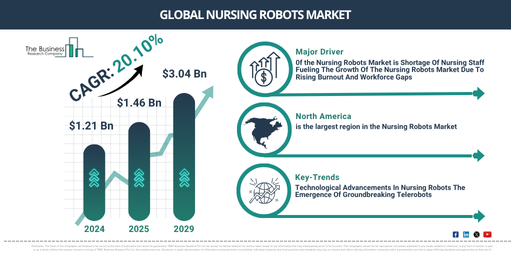
  • Nursing Robots Industry Poised for Rapid Expansion, Projected to Hit $3.04 Billion by 2029

    Nursing Robots Industry Poised for Rapid Expansion, Projected to Hit $3.04 Billion by 2029

    Claim your 30% discount on Global Market Reports with code ONLINE30. Limited time only.

    How Large Is the Nursing Robots Market Expected to Be in 2029?

    In recent times, the market size of nursing robots has shown substantial growth. The value is projected to rise from $1.21 billion in 2024 to $1.46 billion in 2025, indicating a compound annual growth rate (CAGR) of 20.5%. Factors responsible for this historical growth include pilot programs instituted in hospitals, enhanced media and public understanding, the creation of easy-to-use interfaces, contributions from research and academics, and the implementation of standardization and regulatory frameworks.

    The market size of nursing robots is anticipated to witness a tremendous escalation in the coming years. It’s projected to amplify to $3.04 billion by 2029, with a compound annual growth rate (CAGR) of 20.1%. Factors attributing to its rise in the forecast period involve a persistently aging global population, increased penetration into home care environments, better mobility and finesse, customized patient engagement, and programs focused on training and education. The upcoming period will showcase key trends such as wearable robotic exoskeletons, adoption of natural language processing (NLP), AI-powered diagnostics, implementation of 5G technology, and tactile-sensitive interfaces.

    Download The Free Sample Report Here:

    https://www.thebusinessresearchcompany.com/sample.aspx?id=24631&type=smp

    What Are The Contributors To Demand In The Nursing Robots Market?

    The escalating deficit in nursing personnel is predicted to catalyze the expansion of the nursing robots market in the future. Nursing personnel alludes to a cohort of healthcare providers dedicated to offering care and support for patients, predominantly in hospitals, clinics, nursing facilities and other health care environments. The scarcity of nursing staff is dramatically increasing due to the high prevalence of burnout, resulting in premature departures, decreased work hours, and fewer experts continuing in the occupation. Nursing robots assist by performing monotonous or physically strenuous jobs like shifting patients, distributing supplies, or checking vital statistics, decreasing workload and enabling nurses to concentrate on critical patient care. For example, the World Health Organization, a Swiss intergovernmental institution, reported in May 2024 that the global nursing labor force comprises approximately 29 million nurses and 2.2 million midwives. The report projected a shortfall of 4.5 million nurses and 310,000 midwives by 2030. Therefore, the escalating shortage of nursing personnel is facilitating the expansion of the nursing robots market.

    What Segmentation Categories Are Included In The Nursing Robots Market Analysis?

    The nursing robots market covered in this report is segmented –

    1) By Type: Humanoid Robots, Assistive Robots, Autonomous Robots

    2) By Product Type: Independent Support Robots, Daily Care And Transportation Robots, Medication Dispensing Robots, Other Product Types

    3) By Application: Elderly Care, Post-Surgical Care, Mental Health Support, Patient Monitoring And Assistance, Rehabilitation And Physical Therapy

    4) By End User: Hospitals And Clinics, Home Care Settings, Nursing Home, Other End Users

    Subsegments:

    1) By Humanoid Robots: Social Assistance Robots, Caregiving Robots, Communication Robots, Monitoring And Surveillance Robots

    2) By Assistive Robots: Physical Assistance Robots, Mobility Aid Robots, Rehabilitation Robots, Prosthetic And Orthotic Assistive Devices

    3) By Autonomous Robots: Autonomous Delivery Robots, Autonomous Medication Management Robots, Autonomous Monitoring Robots, Autonomous Disinfection Robots

    What Upcoming Trends Are Expected To Impact The Nursing Robots Market Globally?

    Major companies in the nursing robot market are concentrating their efforts on technological innovation, such as the development of telerobots, in a bid to improve patient care and reduce the burden on healthcare professionals. Essentially, a telerobot is a cutting-edge robotic system operated remotely, offering groundbreaking features or abilities that further the robotics field substantially. For instance, in June 2023, Scotland-based deep-tech firm Touchlab launched Välkky, an innovative nursing-assistant telerobot, at the Laakso Hospital in Helsinki, Finland. This was part of a three-month trial project to study the potential of advanced robotics in easing the pressure on healthcare workers and improving patient care. The distinctive features of Välkky comprise ultra-thin electronic skin for tactile sensation, haptic systems for real-time remote control, the capacity to execute standard healthcare duties, and integrated safety features to ensure safe engagement with patients.

    Who Are The Top-Ranked Companies In The Nursing Robots Market Today?

    Major companies operating in the nursing robots market are Toyota Motor Corporation, Panasonic Holdings Corporation, KUKA Robotics Corporation, Sumitomo Riko Company Limited, Nikkei Inc., NCS Group, RIKEN, SoftBank Robotics Group Corp., Softeq Development Corporation, Shine Technology Co Ltd., DocCheck Community GmbH, Shenzhen Zuowei Technology Co Ltd., Diligent Robotics Inc., SARA Robotics & Automation Services, Hansen Medical Inc., Chang Robotics Co Ltd., CT Asia Robotics Co Ltd., Takayama Shoji Co Ltd., Club First Roboptics Co Ltd., Hstar Technologies.

    Get The Full Report Here:

    https://www.thebusinessresearchcompany.com/report/nursing-robots-global-market-report

    How Is Nursing Robots Market Adoption Varying Across Different Regions And Sectors?

    North America was the largest region in the nursing robots market in 2024. Asia-Pacific is expected to be the fastest-growing region in the forecast period. The regions covered in the nursing robots market report are Asia-Pacific, Western Europe, Eastern Europe, North America, South America, Middle East, Africa.

    Request For A Customized Report:

    https://www.thebusinessresearchcompany.com/customise?id=24631&type=smp

    About The Business Research Company:

    With over 15000+ reports from 27 industries covering 60+ geographies, The Business Research Company has built a reputation for offering comprehensive, data-rich research and insights. Armed with 1,500,000 datasets, the optimistic contribution of in-depth secondary research, and unique insights from industry leaders, you can get the information you need to stay ahead in the game.

    Get in touch with us:

    The Business Research Company: https://www.thebusinessresearchcompany.com/

    Americas +1 310-496-7795

    Asia +44 7882 955267 & +91 8897263534

    Europe +44 7882 955267

    Email us at info@tbrc.info

    Follow us on:

    LinkedIn: https://in.linkedin.com/company/the-business-research-company

    YouTube: https://www.youtube.com/channel/UC24_fI0rV8cR5DxlCpgmyFQ

    Global Market Model: https://www.thebusinessresearchcompany.com/global-market-model
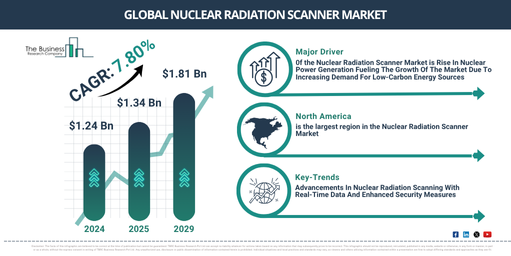
  • Global Nuclear Radiation Scanner Market Forecast to Reach $1.81 Billion by 2029, Driven by 7.8% CAGR

    Global Nuclear Radiation Scanner Market Forecast to Reach $1.81 Billion by 2029, Driven by 7.8% CAGR

    Claim your 30% discount on Global Market Reports with code ONLINE30. Limited time only.

    What Is the Outlook for the Nuclear Radiation Scanner Market Heading Into 2029?

    In the past few years, the market size of nuclear radiation scanners has experienced substantial growth. From $1.24 billion in 2024, it is projected to increase to $1.34 billion in 2025, reflecting a compound annual growth rate (CAGR) of 8.1%. Various factors have contributed to this growth in the historical period such as an increase in industrial applications, enhanced security concerns due to radioactive materials, a surge in research and development activities, expansion of the nuclear medicine field, and escalated threat levels from nuclear terrorism.

    Over the coming years, an anticipated robust expansion was foreseen in the nuclear radiation scanner market, where it is projected to reach $1.81 billion by 2029, with a compound annual growth rate (CAGR) of 7.8%. This growth during the predicated period can be ascribed to several factors, including the rise in nuclear power production, amplified funding and government initiatives towards nuclear safety, a heightened consciousness about radiation hazards, an upsurge in nuclear waste management, and the augmentation in radiation mishaps. Upcoming trends for the predicted period encompass advancements in sensor technology, the creation of portable radiation detectors, the surge in demand for instantaneous radiation monitoring, enhancements in detector sensitivity, and the integration of automated and digital systems.

    Download The Free Sample Report Here:

    https://www.thebusinessresearchcompany.com/sample.aspx?id=24630&type=smp

    Which Factors Are Pushing The Nuclear Radiation Scanner Market Forward?

    The increase in nuclear power generation is expected to drive the expansion of the nuclear radiation scanner market in the future. The energy produced from regulated nuclear reactions, generally through fission, is known as nuclear power, which is used to generate electricity. The growing need for low-carbon energy sources is causing a surge in nuclear power generation, as it provides a large-scale and reliable substitute for fossil fuels, and aids in reducing greenhouse gas emissions. Nuclear radiation scanners play a crucial role in nuclear power generation, as they help detect and monitor radiation levels to ensure the safety of workers and the environment, prevent detrimental exposure, and comply with regulations. For example, a report released by the European Commission, a Belgium-based executive body, in February 2025 stated that in 2023, the 13 European Union nations producing nuclear electricity collectively generated 619,601 gigawatt hours (GWh)—a 1.7% increase from the production in 2022. Consequently, the expected rise in nuclear power generation is likely to enhance the growth of the nuclear radiation scanner market.

    Which Segment Held The Largest Share In The Nuclear Radiation Scanner Market In 2025?

    The nuclear radiation scanner market covered in this report is segmented –

    1) By Product Type: Portable Scanners, Fixed Scanners, Handheld Scanners

    2) By Technology: Geiger-Muller Counters, Scintillation Detectors, Semiconductor Detectors, Others Technologies

    3) By Distribution Channel: Direct Sales, Online Sales, Distributors And Resellers, Aftermarket Services

    4) By End-User: Hospitals, Research Institutes, Nuclear Power Plants, Defense And Security Agencies, Other End Users

    Subsegments:

    1) By Portable Scanners: Backpack Radiation Detectors, Vehicle-Mounted Radiation Detectors, Portable Radiation Portal Monitors

    2) By Fixed Scanners: Fixed Radiation Portal Monitors, Area Radiation Monitors, Continuous Emission Monitoring Systems

    3) By Handheld Scanners: Handheld Gamma Spectrometers, Handheld Geiger Counters, Personal Radiation Detectors

    How Are Key Trends Driving Expansion In The Nuclear Radiation Scanner Industry?

    Leading enterprises in the nuclear radiation scanner market are concentrating on developing innovative solutions, such as software tools, to achieve higher precision and regularity in their tasks. These software tools are digital applications created to accomplish certain tasks, amplify productivity, or aid in creating and managing other systems or software. For example, the International Atomic Energy Agency, a center for nuclear cooperation based in Austria, formulated the Mobile-Integrated Nuclear Security Network, a software tool which provides real-time radiation data, in June 2023. This tool ensures robust nuclear security by offering up-to-the-minute radiation data for high-traffic areas like border checkpoints, ports, and airports. It assists decision-makers to interpret radiation data and make educated decisions for public protection in case of a potential nuclear or radioactive material event. The vendor-neutral design of M-INSN, a critical feature, allows it to be combined with any detection equipment and provides administrators instant access to radiation data and the exact location of users, including radiation specialists and security officers. Additionally, an updated interactive map displaying the condition of the equipment provides essential data for tracking nuclear security activities.

    Which Organizations Are Driving Progress In The Nuclear Radiation Scanner Industry?

    Major companies operating in the nuclear radiation scanner market are Bruker Corporation, HORIBA Ltd., LANDAUER INC., Canon Electron Tubes & Devices Co. Ltd., Atomtex Co., Berkeley Nucleonics Corporation, Rotem Industries Ltd., LND Inc., AMPTEK Inc., Radiation Monitoring Devices Inc., Mediso Ltd., Advacam s.r.o., Arktis Radiation Detectors Ltd., INNORIID GMBH, CapeSym Inc., M.C. TEC B.V., Radiation Detection Technologies Inc., US Nuclear Corp., John Caunt Scientific Ltd., ELSE NUCLEAR S.r.l

    Get The Full Report Here:

    https://www.thebusinessresearchcompany.com/report/nuclear-radiation-scanner-global-market-report

    Which Region Is Expected To Experience The Highest Growth In The Nuclear Radiation Scanner Industry?

    North America was the largest region in the nuclear radiation scanner market in 2024. Asia-Pacific is expected to be the fastest-growing region in the forecast period. The regions covered in the nuclear radiation scanner market report are Asia-Pacific, Western Europe, Eastern Europe, North America, South America, Middle East, Africa.

    Request For A Customized Report:

    https://www.thebusinessresearchcompany.com/customise?id=24630&type=smp

    About The Business Research Company:

    With over 15000+ reports from 27 industries covering 60+ geographies, The Business Research Company has built a reputation for offering comprehensive, data-rich research and insights. Armed with 1,500,000 datasets, the optimistic contribution of in-depth secondary research, and unique insights from industry leaders, you can get the information you need to stay ahead in the game.

    Get in touch with us:

    The Business Research Company: https://www.thebusinessresearchcompany.com/

    Americas +1 310-496-7795

    Asia +44 7882 955267 & +91 8897263534

    Europe +44 7882 955267

    Email us at info@tbrc.info

    Follow us on:

    LinkedIn: https://in.linkedin.com/company/the-business-research-company

    YouTube: https://www.youtube.com/channel/UC24_fI0rV8cR5DxlCpgmyFQ

    Global Market Model: https://www.thebusinessresearchcompany.com/global-market-model
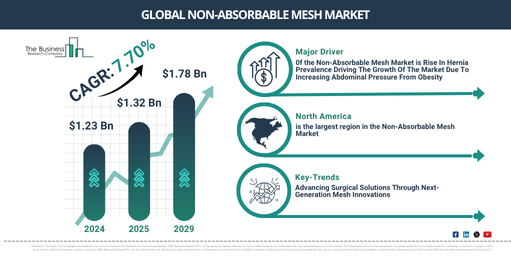
  • Industry Trends Show Non-Absorbable Mesh Market Set to Expand at 7.7% CAGR Until 2029

    Industry Trends Show Non-Absorbable Mesh Market Set to Expand at 7.7% CAGR Until 2029

    Claim your 30% discount on Global Market Reports with code ONLINE30. Limited time only.

    How Will the Non-Absorbable Mesh Market Evolve in Terms of Growth and Size by 2029?

    In the past few years, the non-absorbable mesh market has experienced considerable growth. It is projected to expand from $1.23 billion in 2024 to $1.32 billion in 2025, representing a compound annual growth rate (CAGR) of 8.0%. The historic growth of this market can be traced back to factors such as an increase in healthcare spending, a higher demand for long-lasting implant materials, and expanded availability of specialized surgical mesh products. In addition to these, the increase in the number of hospitals and surgical centers and a heightened focus on better patient outcomes have also contributed to this growth.

    In the forthcoming years, the non-absorbable mesh market is projected to experience substantial growth, reaching a valuation of $1.78 billion in 2029, with a CAGR of 7.7%. This anticipated development in the forecast duration can be credited to incrementing demand for durable surgical implants, escalation in healthcare infrastructure investments, the rise in chronic conditions that need surgical interference, a heightened emphasis on minimizing surgical complications, and a growing appreciation for outpatient surgical procedures. Key trends that will shape the forecast period consist of advancements in mesh technology for improved biocompatibility, modern manufacturing methods for personalized mesh design, ingenuity in antimicrobial coatings to curb infection risk, the incorporation of 3D printing for individualized implants, and progress in minimally invasive surgical instruments.

    Download The Free Sample Report Here:

    https://www.thebusinessresearchcompany.com/sample.aspx?id=24626&type=smp

    What factors are expected to fuel Non-Absorbable Mesh market growth in the coming years?

    An escalated incidence of hernia is forecasted to drive the expansion of the non-absorbable mesh market. Hernia is a condition characterized by an unusual outward bulging of an organ or tissue through a weak point in the surrounding muscle or connective tissue. The increment in hernias is attributed to elevating obesity rates, leading to more pressure on abdominal muscles and weakening the abdominal wall. The non-absorbable mesh is beneficial in hernia treatments as it provides prolonged structural support to weakened or damaged tissue, lowering recurrence risk. For example, in July 2024, data from Eurostat, a government agency based in Luxembourg, indicated that in 2022, inguinal hernia repair procedures were usually conducted at rates between 142 and 231 per 100,000 residents in most countries. Austria, however, recorded a notably high rate of 273.2 per 100,000 residents. Consequently, this upward trend in hernia prevalence is fostering the non-absorbable mesh market’s development.

    What Are The Key Findings From The Segmentation Analysis Of The Non-Absorbable Mesh Market?

    The non-absorbable mesh market covered in this report is segmented –

    1) By Product Type: Prosthetic Mesh, Composite Mesh, Monofilament Mesh, Multifilament Mesh

    2) By Material: Polypropylene, Polyester, Polyethylene, Other Biocompatible Materials

    3) By Application: Hernia Repair, Pelvic Floor Reconstruction, Other Surgical Applications

    4) By End-User: Hospitals, Ambulatory Surgical Centers, Clinics, Other End-Users

    Subsegments

    1) By Prosthetic Mesh: Polypropylene Mesh, Polyester Mesh, Expanded Polytetrafluoroethylene (ePTFE) Mesh, Polytetrafluoroethylene (PTFE) Mesh

    2) By Composite Mesh: Polypropylene + ePTFE Composite Mesh, Polyester + Collagen Composite Mesh, Polypropylene + Polyurethane Composite Mesh, Composite Mesh With Absorbable Barrier

    3) By Monofilament Mesh: Polypropylene Monofilament Mesh, Polyester Monofilament Mesh, Nylon Monofilament Mesh

    4) By Multifilament Mesh: Polyester Multifilament Mesh, Polyethylene Terephthalate (PET) Multifilament Mesh, Polyamide Multifilament Mesh

    Which Trends Are Expected To Shape The Future Of The Non-Absorbable Mesh Market?

    Key players in the non-absorbable mesh industry are making strides in inventing superior technologies such as coated composite mesh to increase biocompatibility and minimize complications after surgery. Coated composite mesh is a type of surgical mesh covered with a protective layer that cuts down on tissue adhesion and inflammation, thus augmenting safety when implanted within the body. For example, in April 2024, Deep Blue Medical Advances Inc., a company based in the US specializing in medical devices, unveiled the T-Line Hernia Mesh. This novel product offers surgeons a new solution for hernia repair that addresses typical problems like tissue breakdown and adhesion. The mesh boasts integrated extensions that afford a fixation surface area 15 times greater than what is provided by conventional sutures, leading to an anchoring strength that is 275% more robust. Constructed from macroporous, medium-weight polypropylene, it encourages outstanding tissue integration and stress reduction by evenly spreading tension throughout the repair site. This mesh is not only easy to manipulate but also adjusts easily to anatomical variations and obviates the requirement for additional fixation equipment, thereby enhancing both safety and surgical productivity.

    What Are The Most Active Companies In The Non-Absorbable Mesh Market Today?

    Major companies operating in the non-absorbable mesh market are Johnson and Johnson, Medtronic plc, Medline Industries Inc., Becton Dickinson And Company, MedStar Health Inc., Coloplast Group, Integra LifeSciences Corporation, Meril Life Sciences Pvt. Ltd., B. Braun Melsungen AG, W. L. Gore And Associates Inc., Demetech Corporation, Universal Suture Ltd., Lotus Surgicals Pvt. Ltd., Altaylar Medical Ltd., Betatech Medical, DIPROMED Srl, Orion Sutures India Pvt. Ltd., ProVi Swiss GmbH, Vinculum Sutures, Lizen Surgicare Private Limited

    Get The Full Report Here:

    https://www.thebusinessresearchcompany.com/report/non-absorbable-mesh-global-market-report

    Which Regional Markets Are Attracting The Most Investment In Non-Absorbable Mesh?

    North America was the largest region in the non-absorbable mesh market in 2024. The regions covered in the non-absorbable mesh market report are Asia-Pacific, Western Europe, Eastern Europe, North America, South America, Middle East, Africa.

    Request For A Customized Report:

    https://www.thebusinessresearchcompany.com/customise?id=24626&type=smp

    About The Business Research Company:

    With over 15000+ reports from 27 industries covering 60+ geographies, The Business Research Company has built a reputation for offering comprehensive, data-rich research and insights. Armed with 1,500,000 datasets, the optimistic contribution of in-depth secondary research, and unique insights from industry leaders, you can get the information you need to stay ahead in the game.

    Get in touch with us:

    The Business Research Company: https://www.thebusinessresearchcompany.com/

    Americas +1 310-496-7795

    Asia +44 7882 955267 & +91 8897263534

    Europe +44 7882 955267

    Email us at info@tbrc.info

    Follow us on:

    LinkedIn: https://in.linkedin.com/company/the-business-research-company

    YouTube: https://www.youtube.com/channel/UC24_fI0rV8cR5DxlCpgmyFQ

    Global Market Model: https://www.thebusinessresearchcompany.com/global-market-model
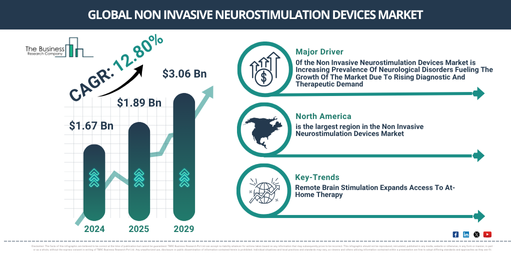
  • Competitive and Market Trend Analysis of Non Invasive Neurostimulation Devices Industry Through 2029

    Competitive and Market Trend Analysis of Non Invasive Neurostimulation Devices Industry Through 2029

    Claim your 30% discount on Global Market Reports with code ONLINE30. Limited time only.

    What CAGR Is Anticipated for the Non Invasive Neurostimulation Devices Market Through 2029?

    In the past few years, there has been a striking surge in the market size of non-invasive neurostimulation devices. Projection estimates reveal an increase from $1.67 billion in 2024 to $1.89 billion in 2025, with a compound annual growth rate (CAGR) of 13.1%. Factors that have contributed to this upward trend in the historic period are the amplified incidence of neurological conditions, heightened awareness of neurostimulation therapies, growing demand for non-surgical interventions, expanded healthcare infrastructure, and amplified scientific research in neuromodulation.

    Anticipated to witness swift expansion in the upcoming years, the market size for non-invasive neurostimulation devices is predicted to inflate to $3.06 billion in 2029, with a compound annual growth rate (CAGR) of 12.8%. Factors contributing towards this projected increase during the forecast period include the escalating geriatric demographic, the increasing popularity and usage of wearable neurostimulation apparatuses, a rising degree in healthcare spending, supportive governmental regulations, and the widening of its implementation in mental health care. Noteworthy elements in the forecast period consist of a transitioning inclination to minimally invasive neurostimulation, the innovation of cordless neurostimulation tools, the broadening of telehealth capacities, the emergence of closed-loop neurostimulation systems, and a heightened accent on patient-unique neurostimulation treatments.

    Download The Free Sample Report Here:

    https://www.thebusinessresearchcompany.com/sample.aspx?id=24625&type=smp

    What Market Forces Are Driving The Non Invasive Neurostimulation Devices Sector In 2025 And Beyond?

    The rise in neurological disorders is anticipated to boost the growth of the non invasive neurostimulation devices market. Neurological disorders are medical issues affecting the brain, spinal cord, and nerves, leading to a variety of symptoms including cognitive, motor, and sensory problems. The rise of these disorders can be connected to the aging global population since aging gradually weakens neuronal function, decreases brain flexibility, and increases oxidative stress, contributing to the creation and development of these disorders. Non-invasive neurostimulation devices help in diagnosing these neurological disorders by providing targeted stimulation to evaluate neural responses. They provide non-surgical, real-time evaluation techniques, increasing diagnostic precision and enhancing patient care in both clinical and home environments. For example, in July 2024, the National Health Service, a UK government agency, reported 487,432 patients were diagnosed with dementia (a brain disorder affecting memory, thinking, and daily activities) by June 30, 2024, a rise of 3,155 cases compared to May 31, 2024. Consequently, the increasing rates of neurological disorders are fueling the growth of the non invasive neurostimulation devices market.

    How Is The Global Non Invasive Neurostimulation Devices Market Categorized By Segments?

    The non invasive neurostimulation devices market covered in this report is segmented –

    1) By Type Of Stimulation Technology: Transcutaneous Electrical Nerve Stimulation (TENS), Transcranial Magnetic Stimulation (TMS), Electromagnetic Stimulation (EMS), Other Types Of Stimulation Technologies

    2) By Target Indication: Pain Management, Neurological Disorders, Psychological Disorder, Other Target Indications

    3) By End User: Hospitals And Clinics, Homecare Settings, Research And Academic Institutes

    Subsegments:

    1) By Transcutaneous Electrical Nerve Stimulation (TENS): Conventional Transcutaneous Electrical Nerve Stimulation (TENS), Acupuncture-Like Transcutaneous Electrical Nerve Stimulation (TENS), Brief-Intense Transcutaneous Electrical Nerve Stimulation (TENS), Burst Mode Transcutaneous Electrical Nerve Stimulation (TENS)

    2) By Transcranial Magnetic Stimulation (TMS): Repetitive Transcranial Magnetic Stimulation (rTMS), Deep Transcranial Magnetic Stimulation (dTMS), Single-Pulse Transcranial Magnetic Stimulation, Paired-Pulse Transcranial Magnetic Stimulation

    3) By Electromagnetic Stimulation (EMS): Functional Electromagnetic Stimulation (EMS), Neuromuscular Electromagnetic Stimulation (EMS), High-Frequency Electromagnetic Stimulation (EMS), Low-Frequency Electromagnetic Stimulation (EMS)

    4) By Other Types Of Stimulation Technology: Transcranial Direct Current Stimulation (tDCS), Vagus Nerve Stimulation, Cranial Electrotherapy Stimulation (CES), Peripheral Nerve Stimulation (PNS)

    What Long-Term Trends Are Likely To Affect The Non Invasive Neurostimulation Devices Market?

    Companies dominating the non-invasive neurostimulation devices market are concentrating on the innovation of advanced products, including personalized stimulation protocols, to amplify treatment efficacy and patient results. Customized stimulation protocols refer to neurostimulation setups tailored according to an individual’s specific health condition, neural response and treatment objectives, aiming to optimize therapeutic effectiveness and limit adverse effects. For example, in October 2023, Sooma Medical, a medical technology firm based in Finland, introduced a remote clinician-monitored brain stimulation system for at-home treatment utilizing non-invasive transcranial direct current stimulation (tDCS). This pioneering system provides healthcare practitioners the ability to remotely supervise therapy sessions, enhancing accessibility and compliance for patients suffering from neurological and mental health disorders like depression and chronic pain.

    Which Firms Are Considered Leaders In The Non Invasive Neurostimulation Devices Market Space?

    Major companies operating in the non invasive neurostimulation devices market are Boston Scientific Corporation, Alpha-Stim, Neurosoft Bioelectronics SA, Neuronetics Inc., BrainsWay Ltd., eNeura Inc., MagVenture A/S, Nexstim Plc, Neuroelectrics Barcelona S.L.U., Cefaly Technology, ElectroCore Inc., Brainbox India Private Limited, Flow Neuroscience AB, Fisher Wallace Laboratories Inc., Sooma Medical, Aleva Neurotherapeutics SA, NeuroSigma Inc., Mind Alive Inc., TheBrainDriver LLC, Caputron Medical Products LLC.

    Get The Full Report Here:

    https://www.thebusinessresearchcompany.com/report/non-invasive-neurostimulation-devices-global-market-report

    What Role Do Regional Policies And Investments Play In Non Invasive Neurostimulation Devices Market Expansion?

    North America was the largest region in the non invasive neurostimulation devices market in 2024. The regions covered in the non invasive neurostimulation devices market report are Asia-Pacific, Western Europe, Eastern Europe, North America, South America, Middle East, Africa.

    Request For A Customized Report:

    https://www.thebusinessresearchcompany.com/customise?id=24625&type=smp

    About The Business Research Company:

    With over 15000+ reports from 27 industries covering 60+ geographies, The Business Research Company has built a reputation for offering comprehensive, data-rich research and insights. Armed with 1,500,000 datasets, the optimistic contribution of in-depth secondary research, and unique insights from industry leaders, you can get the information you need to stay ahead in the game.

    Get in touch with us:

    The Business Research Company: https://www.thebusinessresearchcompany.com/

    Americas +1 310-496-7795

    Asia +44 7882 955267 & +91 8897263534

    Europe +44 7882 955267

    Email us at info@tbrc.info

    Follow us on:

    LinkedIn: https://in.linkedin.com/company/the-business-research-company

    YouTube: https://www.youtube.com/channel/UC24_fI0rV8cR5DxlCpgmyFQ

    Global Market Model: https://www.thebusinessresearchcompany.com/global-market-model
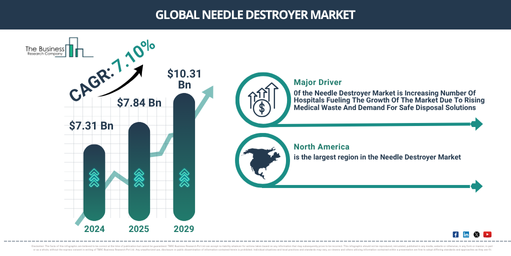
  • Future Projections: Needle Destroyer Market to Reach $10.31 Billion by 2029 at 7.1% CAGR

    Future Projections: Needle Destroyer Market to Reach $10.31 Billion by 2029 at 7.1% CAGR

    Claim your 30% discount on Global Market Reports with code ONLINE30. Limited time only.

    What CAGR Is Anticipated for the Needle Destroyer Market Through 2029?

    The market for needle destroyers has substantially expanded over recent years. It is anticipated to increase from a size of $7.31 billion in 2024 to $7.84 billion in 2025, indicating a compound annual growth rate (CAGR) of 7.3%. The expansion observed during the historical period is due to a number of factors including the surge in the volume of medical procedures, escalated demand for portable medical equipment, a higher demand for tackling infections and the rise in the ageing population.

    Expectations are high for a significant expansion in the needle destroyer market over the forthcoming years. The projections suggest this market will reach $10.31 billion by 2029, growing at a compound annual growth rate (CAGR) of 7.1%. Factors contributing to this anticipated growth during the forecast period include an increase in hospital-acquired infections, a higher prevalence of chronic diseases, escalating health and safety concerns, growing apprehension about exposure to blood-borne viruses in the workplace, and an expansion in the number of healthcare facilities. Also, forthcoming trends during the projected period include waste disposal automation, the integration of smart sensors, advanced sterilization techniques, real-time waste monitoring, and leveraging blockchain for waste management purposes.

    Download The Free Sample Report Here:

    https://www.thebusinessresearchcompany.com/sample.aspx?id=24615&type=smp

    What Market Forces Are Driving The Needle Destroyer Sector In 2025 And Beyond?

    The continual growth of hospitals is anticipated to foster the needle destroyer market’s expansion. The increasing number of hospitals can be traced back to the intensifying need for accessible healthcare services due to urbanization and population growth. Needle destroyers, which are primarily utilized in hospitals for safe disposal of used hypodermic needles, contribute significantly to the safety of healthcare facilities by preventing misusage and injury from used needles. According to data from the American Health Care Association in May 2023, there was an incremental growth of 0.591% in the number of hospitals in the United States from 2022, where the total count was 6,093 to 6,129 hospitals in 2023. Consequently, the proliferating number of healthcare facilities is steering the expansion of the needle destroyer market. Hospital-acquired infections (HAIs), or nosocomial infections, are increasingly being cited as critical factors driving the needle destroyer market’s growth forward. These are infections contracted during a hospital visit, which were absent during the time of admission. They typically include surgical site infections (SSIs), catheter-associated urinary tract infections (CAUTIs), and the like. The misuse of antibiotics is a significant contributor to the spread of such infections, leading to the emergence of antibiotic-resistant bacteria. Needle destroyers play a crucial role in reducing such infections by ensuring used needles are destroyed effectively, thereby reducing contamination risks. As an example, the Centers for Disease Control and Prevention reported in November 2024 an increase in surgical site infections by 3% from 2022 to 2023, including an 8% hike in SSIs following abdominal hysterectomy procedures. Hence, the growing prevalence of hospital-acquired infections is nudging the growth of the needle destroyer market.

    How Is The Global Needle Destroyer Market Categorized By Segments?

    The needle destroyer market covered in this report is segmented –

    1) By Product: Electrical Needle Burner, Needle syringe destroyer

    2) By Material Type: Steel, Aluminum, Plastic, Composite Materials

    3) By Distribution Channel: Online Retail, Offline Retail

    4) By Application: Medical Waste Disposal, Industrial Waste Disposal, Household Waste Disposal

    5) By End User: Hospital, Ambulatory Surgical Center, Diagnostic Laboratories, Clinics, Others Healthcare Facilities

    Subsegments:

    1) By Needle Syringe Destroyer: Manual Needle Syringe Destroyer, Electric Needle Syringe Destroyer, Battery-Operated Needle Syringe Destroyer, Dual Function Needle and Syringe Destroyer

    2) By Electrical Needle Burner: Automatic Electrical Needle Burner, Semi-Automatic Electrical Needle Burner, Portable Electrical Needle Burner, Table-Top Electrical Needle Burner

    Which Firms Are Considered Leaders In The Needle Destroyer Market Space?

    Major companies operating in the needle destroyer market are Medtronic plc, Becton, Dickinson and Company, Narang Medical Limited, Saratech Equipments, GPC Medical Ltd., Medi Safe International, Cecon Pollutech Systems Pvt. Ltd., IndoSurgicals Private Limited, Meditech Engineers Pvt. Ltd., Surgitech Industries, Amkay Products Private Limited, LabLine Equipment Pvt. Ltd., Labtech Disposables, Naugra Medical Lab Equipments, United Scientific & Surgicals, Bos Medicare Surgical, Fusion Biotech, Invitro Biotech Ltd., K And L Kyoling, Lab-X SOLUTIONS

    Get The Full Report Here:

    https://www.thebusinessresearchcompany.com/report/needle-destroyer-global-market-report

    What Role Do Regional Policies And Investments Play In Needle Destroyer Market Expansion?

    North America was the largest region in the needle destroyer market in 2024. The regions covered in the needle destroyer market report are Asia-Pacific, Western Europe, Eastern Europe, North America, South America, Middle East, Africa.

    Request For A Customized Report:

    https://www.thebusinessresearchcompany.com/customise?id=24615&type=smp

    About The Business Research Company:

    With over 15000+ reports from 27 industries covering 60+ geographies, The Business Research Company has built a reputation for offering comprehensive, data-rich research and insights. Armed with 1,500,000 datasets, the optimistic contribution of in-depth secondary research, and unique insights from industry leaders, you can get the information you need to stay ahead in the game.

    Get in touch with us:

    The Business Research Company: https://www.thebusinessresearchcompany.com/

    Americas +1 310-496-7795

    Asia +44 7882 955267 & +91 8897263534

    Europe +44 7882 955267

    Email us at info@tbrc.info

    Follow us on:

    LinkedIn: https://in.linkedin.com/company/the-business-research-company

    YouTube: https://www.youtube.com/channel/UC24_fI0rV8cR5DxlCpgmyFQ

    Global Market Model: https://www.thebusinessresearchcompany.com/global-market-model

  • Future Demand and Leading Companies Shaping the Medication Adherence Devices Market to 2029

    Claim your 30% discount on Global Market Reports with code ONLINE30. Limited time only.

    How Large Is the Medication Adherence Devices Market Expected to Be in 2029?

    In recent times, the market size of medication adherence devices has exhibited robust growth. It is projected to increase from $3.2 billion in 2024 to $3.4 billion in 2025, representing a compound annual growth rate (CAGR) of 6.4%. The historical growth can be traced back to factors such as the escalating number of chronic illness cases, an upsurge in the elderly population, an uptick in awareness about medication adherence, initiatives by the government to decrease hospital readmission rates, and the proliferation of home healthcare services.

    Expectations for the medication adherence devices market project robust expansion in the coming years, with the market potentially swelling to $4.32 billion in 2029, showcasing a compound annual growth rate (CAGR) of 6.2%. This anticipated market surge throughout the forecast period can be linked to a rising inclination towards connected health devices, the escalating demand for tailored healthcare solutions, the extension of telehealth services, regulatory favors for digital health interventions, and an intensified concentration on minimizing healthcare expenses. Crucial trends that will cast their shadow over the forecast period encompass technological progress in Internet of Things devices, breakthroughs in artificial intelligence employed for adherence supervision, advancements in cloud-oriented data analytics, innovative strides in smart packaging research and development, and the incorporation of machine learning to anticipate adherence.

    Download The Free Sample Report Here:

    https://www.thebusinessresearchcompany.com/sample.aspx?id=24601&type=smp

    What Are The Contributors To Demand In The Medication Adherence Devices Market?

    The increasing incidence of cardiovascular diseases is predicted to drive the expansion of the market for medication adherence devices. Cardiovascular diseases encompass a variety of conditions that impact the heart and blood vessels, frequently resulting in serious health issues like strokes, heart attacks, and heart failure. Due to increasingly inactive lifestyles, such as prolonged sitting jobs and extended screen time with insufficient physical exercise, cardiovascular disease rates are increasing. Medication adherence devices aid in the control of cardiovascular diseases by ensuring regular and timely medication intake, which lowers the likelihood of issues like strokes and heart attacks. For example, the American Heart Association, a US-based nonprofit, reported an age-adjusted death rate of 233.3 per 100,000 due to cardiovascular disease in January 2024, representing a 4.0% rise from the previous year’s rate of 224.4 per 100,000 and a 4.6% increase from the preceding year. Consequently, the escalating occurrence of cardiovascular diseases is fueling the expansion of the medication adherence device market.

    What Segmentation Categories Are Included In The Medication Adherence Devices Market Analysis?

    The medication adherence devices market covered in this report is segmented –

    1) By Type: Hardware Centric, Software Centric

    2) By Medication: Cardiovascular, Central Nervous System, Diabetes, Oncology, Gastrointestinal, Musculoskeletal, Other Medications

    3) By End User: Hospitals, Homecare Settings, Pharmacies, Long-Term Care Facilities, Clinics

    Subsegments:

    1) By Hardware Centric: Smart Pill Bottles, Smart Pill Dispensers, Wearable Medication Reminders, Smart Packaging, Ingestible Sensors

    2) By Software Centric: Mobile Health Apps, SMS Or IVR Reminders, Web-Based Platforms, Electronic Health Record (EHR)-Integrated Adherence Systems, Cloud-Based Medication Management Platforms

    What Upcoming Trends Are Expected To Impact The Medication Adherence Devices Market Globally?

    Leading firms in the medication adherence devices market are prioritizing the creation of innovative solutions like smart pill organizers for the real-time remote observation of medication adherence. A smart pill organizer is a digital tool that aids people in managing their medication by offering automated reminders, dispensing medication at preset times, and syncing with mobile apps for tracking and notifications. For example, in April 2025, US-based prescription containers manufacturer, Centor Inc., debuted a new smart weekly pill organizer that utilizes LTE and cloud technology to bolster medication adherence. The device monitors medication consumption in real time and sends the gathered data directly to pharmacies and medical partners, removing the necessity for patients to download or sync a smartphone app, thus making it particularly useful for the elderly or those not adept at using technology. The organizer, jointly developed with RxCap, is easy to operate and smoothly integrates with Centor’s remote monitoring services, allowing pharmacies to run reimbursable adherence programs and give necessary interventions in a timely manner.

    Who Are The Top-Ranked Companies In The Medication Adherence Devices Market Today?

    Major companies operating in the medication adherence devices market are McKesson Corporation, Cardinal Health Inc., Johnson & Johnson Services Inc., Novartis AG, Becton Dickinson and Company, Koninklijke Philips N.V., AptarGroup Inc., Insulet Corporation, Omnicell Inc., Ypsomed Holding AG, MedMinder Systems Inc., Propeller Health Inc., Bigfoot Biomedical Inc., Information Mediary Corp., AARDEX Group SA, Hero Health Inc., CareRight Technologies, Adherium Limited, Popit Oy, SMRxT Inc., Wisepill Technologies Inc., SeamlessMD.

    Get The Full Report Here:

    https://www.thebusinessresearchcompany.com/report/medication-adherence-devices-global-market-report

    How Is Medication Adherence Devices Market Adoption Varying Across Different Regions And Sectors?

    North America was the largest region in the medication adherence devices market in 2024. The regions covered in the medication adherence devices market report are Asia-Pacific, Western Europe, Eastern Europe, North America, South America, Middle East, Africa.

    Request For A Customized Report:

    https://www.thebusinessresearchcompany.com/customise?id=24601&type=smp

    About The Business Research Company:

    With over 15000+ reports from 27 industries covering 60+ geographies, The Business Research Company has built a reputation for offering comprehensive, data-rich research and insights. Armed with 1,500,000 datasets, the optimistic contribution of in-depth secondary research, and unique insights from industry leaders, you can get the information you need to stay ahead in the game.

    Get in touch with us:

    The Business Research Company: https://www.thebusinessresearchcompany.com/

    Americas +1 310-496-7795

    Asia +44 7882 955267 & +91 8897263534

    Europe +44 7882 955267

    Email us at info@tbrc.info

    Follow us on:

    LinkedIn: https://in.linkedin.com/company/the-business-research-company

    YouTube: https://www.youtube.com/channel/UC24_fI0rV8cR5DxlCpgmyFQ

    Global Market Model: https://www.thebusinessresearchcompany.com/global-market-model