Category: Medical Equipment

  • Future Growth Forecast For The Deep Brain Stimulation Systems Global Market 2024-2033

    Future Growth Forecast For The Deep Brain Stimulation Systems Global Market 2024-2033

    The Business Research Company’s global market reports provide comprehensive analysis on the various markets in 27 industries across 60 geographies.

    Market Size and Growth Dynamics
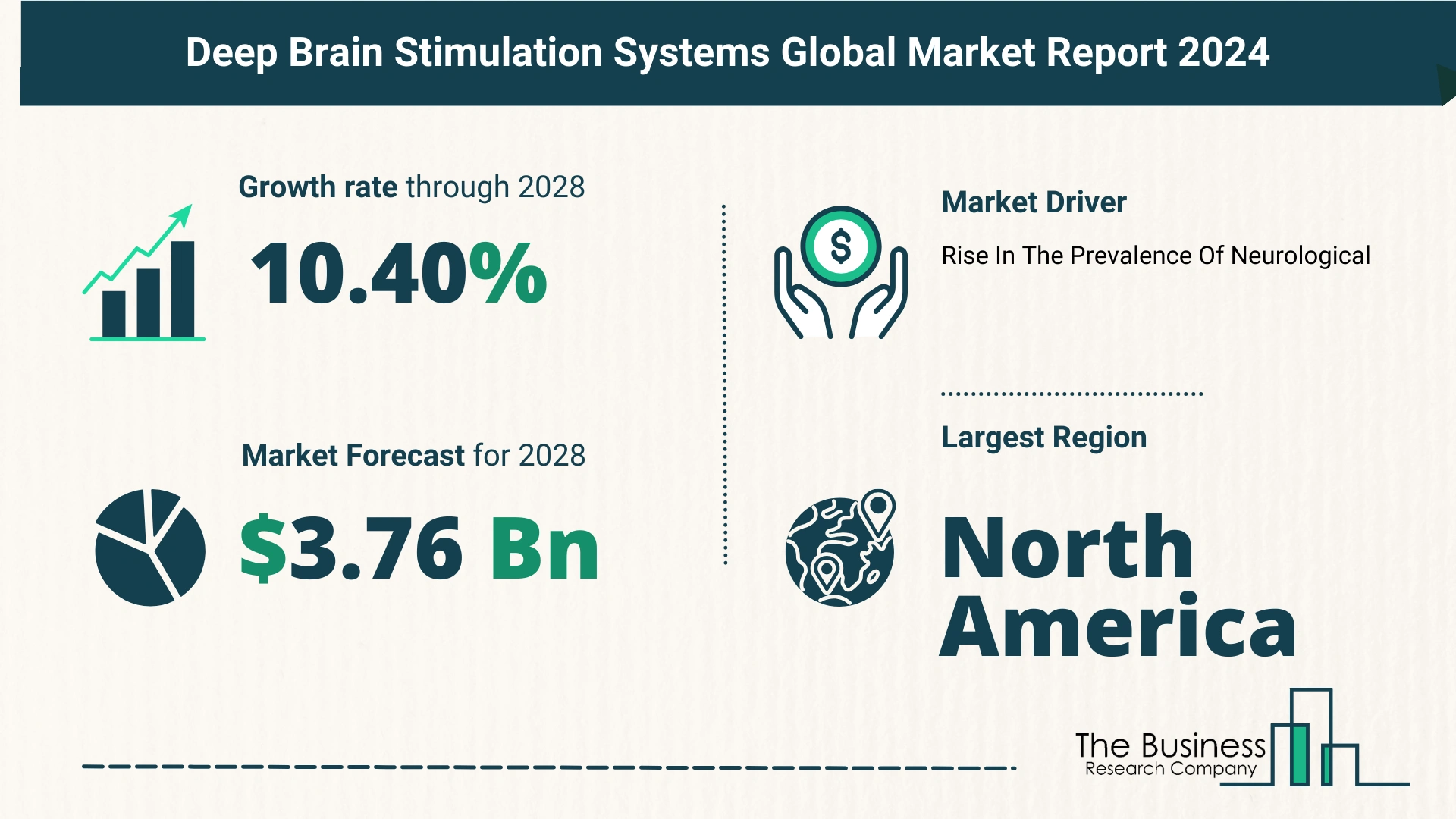
    The deep brain stimulation systems market has witnessed rapid expansion, growing from $2.28 billion in 2023 to $2.53 billion in 2024 at a CAGR of 11.1%. Looking ahead, it is projected to reach $3.76 billion by 2028, with a CAGR of 10.4%. This growth trajectory is fueled by:

    • Rising demand for minimally invasive surgeries
    • Increasing prevalence of neurological disorders globally
    • Technological advancements in deep brain stimulation devices

    Drivers of Market Expansion
    Increasing Prevalence of Neurological Disorders
    Neurological disorders such as Parkinson’s disease and epilepsy are becoming more prevalent worldwide. For example, in the US alone, the number of annual Parkinson’s disease diagnoses has surged by 50%, emphasizing the need for effective treatment options like deep brain stimulation systems.

    Advancements in Technology
    Innovations in deep brain stimulation technology, including miniaturization, advanced materials, and wireless connectivity, are enhancing treatment efficacy and patient convenience.

    View More On The Deep Brain Stimulation Systems Market Report 2024 – https://www.thebusinessresearchcompany.com/report/deep-brain-stimulation-systems-global-market-report

    Major Players and Innovations
    Innovative Product Launches
    Abbott Laboratories recently introduced the Liberta RC DBS system, the world’s smallest rechargeable device with remote programming capabilities. This innovation enhances patient care by allowing remote adjustments without frequent clinic visits.

    Strategic Partnerships
    Aster Medcity’s collaboration with Medtronic plc aims to expand advanced DBS programs for Parkinson’s patients in India, underscoring regional growth opportunities and enhanced treatment accessibility.

    Market Segmentation
    The market is segmented based on:

    1. Product Types: Single Channel, Dual Channel
    2. Applications: Parkinson’s Disease, Essential Tremor, Epilepsy, and more
    3. End-users: Hospitals, Ambulatory Surgical Centers, Neurological Clinics

    Regional Insights
    North America dominated the market in 2023, driven by advanced healthcare infrastructure and high disease prevalence. Asia-Pacific is poised to witness the fastest growth, fueled by increasing healthcare investments and rising awareness of neurostimulation therapies.

    Conclusion
    The deep brain stimulation systems market is experiencing robust growth, driven by technological advancements, increasing neurological disorder prevalence, and strategic innovations by key players. As demand rises for minimally invasive treatment options, the market’s expansion into new regions and applications is expected to continue, offering significant opportunities for stakeholders across the healthcare sector.

    Request A Sample Of The Global Deep Brain Stimulation Systems Market Report 2024:
    https://www.thebusinessresearchcompany.com/sample_request?id=13834&type=smp
  • Global Bone Void Fillers Market Analysis: Estimated Market Size And Growth Rate

    Global Bone Void Fillers Market Analysis: Estimated Market Size And Growth Rate

    The Business Research Company’s global market reports are now updated with the latest market sizing information for the year 2024 and forecasted to 2033

    Market Overview

    • Market Size (2023-2024): The bone void fillers market size is experiencing robust growth, increasing from $3.26 billion in 2023 to $3.53 billion in 2024, with a compound annual growth rate (CAGR) of 8.1%.
    • Historic Growth Drivers: Factors such as the rising prevalence of bone-related diseases, an aging population, sports injuries, increasing healthcare expenditures, and funding from private and government organizations have fueled market growth in recent years.

    Future Market Projections

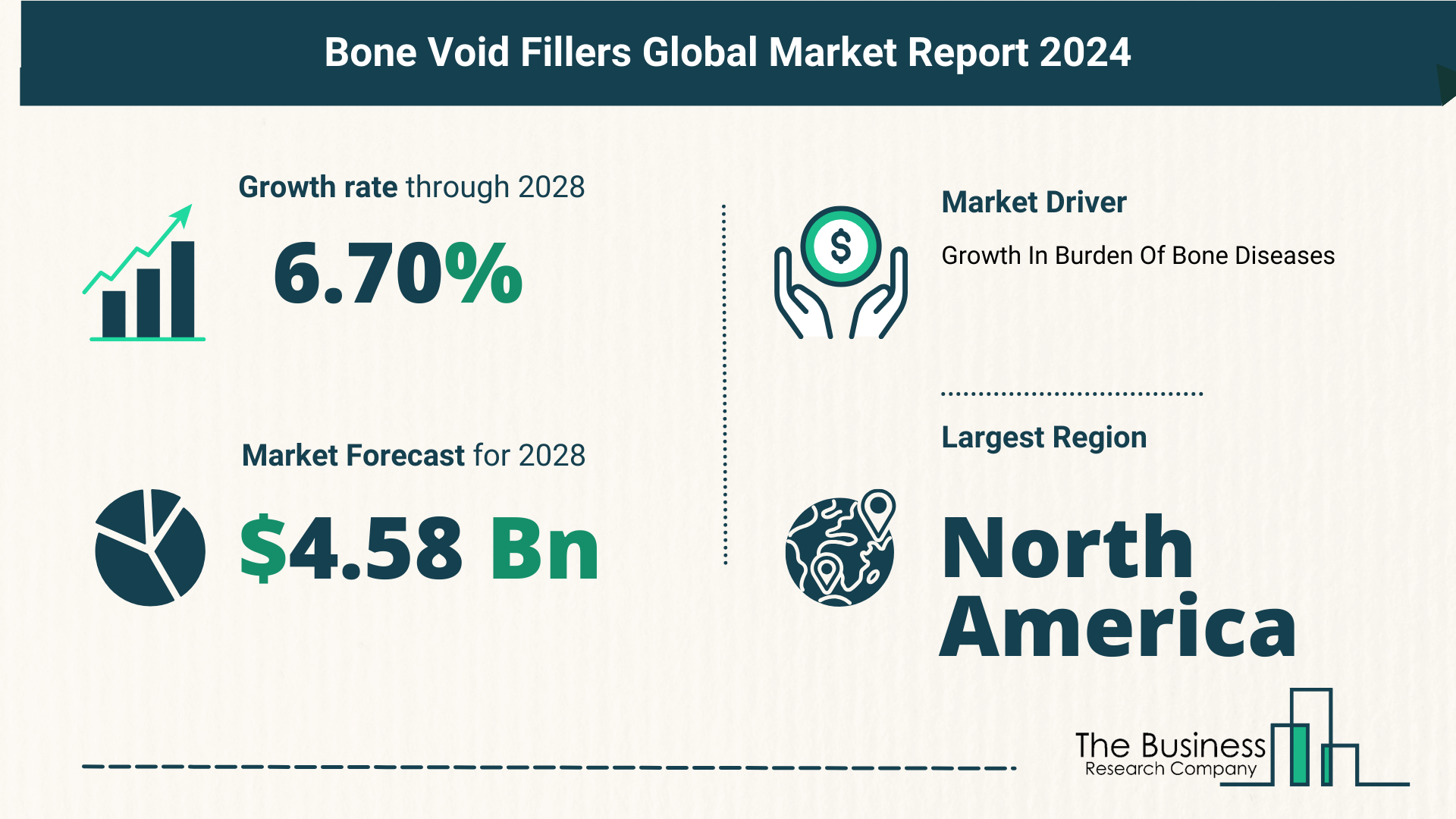
    • Market Size (2024-2028): The market is projected to grow to $4.58 billion by 2028, with a CAGR of 6.7%.
    • Forecast Period Growth Drivers: Key drivers include expanding applications in regenerative medicine, increased incidence of lifestyle diseases, a rise in orthopedic surgeries, greater adoption of minimally invasive surgical techniques, and the emergence of personalized medicine and tailored treatments.

    View More On The Bone Void Fillers Market Report 2024 – https://www.thebusinessresearchcompany.com/report/bone-void-fillers-global-market-report

    Trends Shaping the Future

    • Medical Technology Advancements: Innovations in medical technology and biocompatibility are set to drive the market.
    • Customization and 3D Printing: Customization of bone void fillers through 3D printing technology is becoming more prevalent.
    • Surgical Procedure Advancements: Technological advancements in surgical procedures, imaging, and surgical planning are enhancing the effectiveness of treatments.

    Growing Burden of Bone Diseases

    • Impact on Market: The increasing burden of bone diseases is expected to propel the market growth of bone void fillers.
    • Disease Statistics: According to the Institute for Health Metrics and Evaluation (IHME), nearly 1 billion individuals are projected to suffer from osteoarthritis by 2050, with knee osteoarthritis expected to rise by 75% and hand osteoarthritis by 50%.

    Leading Companies in the Market

    • Key Players: Major companies in the market include Johnson & Johnson, Medtronic plc, Danaher Corporation, Heraeus Group, Stryker Corporation, Baxter International Inc., B. Braun Melsungen AG, Huntsman Corporation, Zimmer Biomet Holdings Inc., and many others.

    Advancements in Bone Healing Through Carbohydrate Polymer Technologies

    • Innovative Products: Companies are developing innovative products like carbohydrate polymer bone graft substitutes to enhance market profitability.
    • Example Product: In May 2023, Royal Biologics launched Bio-Reign 3D, a bone graft substitute made from hyper-crosslinked natural carbohydrate polymer. It provides an optimal environment for cell growth and bone regeneration, transitioning from radiolucent to radiopaque as healing progresses.

    Henry Schein Expands Capabilities

    • Strategic Acquisition: In April 2023, Henry Schein Inc. acquired a majority stake in Biotech Dental SAS, aiming to enhance digital integration between Biotech Dental’s software and its product suite, driving global expansion in the implant and orthodontics sectors.

    Market Segmentation

    • By Type: Demineralized Bone Matrix, Calcium Phosphate Bone Graft Substitute, Collagen Matrix, Other Types.
    • By Form: Gel and Putty, Granules, Other Forms.
    • By Application: Bone Fracture, Spine Fusion, Other Applications.
    • By End-User: Hospitals, Specialty Clinics.

    Regional Insights

    • Largest Region: North America was the largest region in the bone void fillers market in 2023, driven by advanced healthcare infrastructure and high adoption rates of innovative medical technologies.

    The bone void fillers market is set for continued growth, driven by technological advancements, increasing demand for minimally invasive procedures, and a rising prevalence of bone-related conditions. With key players investing in innovative products and strategic acquisitions, the market is poised for significant developments in the coming years.

    Request A Sample Of The Global Bone Void Fillers Market Report 2024:
    https://www.thebusinessresearchcompany.com/sample_request?id=13815&type=smp

  • Aortic Endograft Market Growth Analysis Till 2033 By The Business Research Company

    Aortic Endograft Market Growth Analysis Till 2033 By The Business Research Company

    The Business Research Company’s market reports offer an in-depth analysis on the market’s growth potential, major drivers, key trends and more.

    Strong Historical Growth

    • Market Size: Grew from $3.14 billion in 2023 to $3.35 billion in 2024.
    • CAGR: 6.7%.
    • Key Drivers:
      • Growth in medical tourism.
      • Increasing need for aortic aneurysm management.
      • Rising number of aortic aneurysm cases.
      • Technical success of endograft implantation.
      • Increase in the number of hospitals.

    Promising Future Outlook

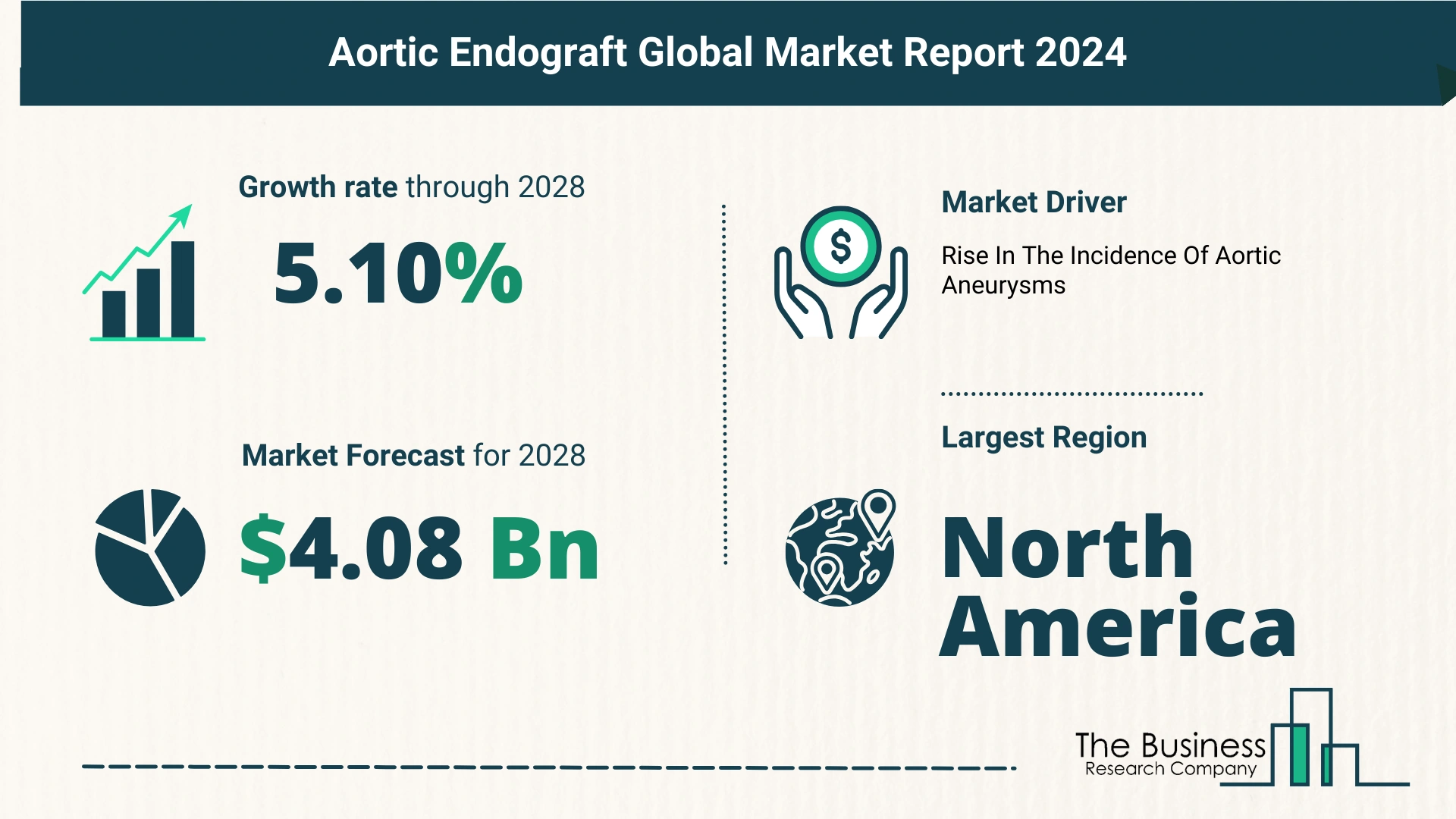
    • Expected Growth: Projected to reach $4.08 billion by 2028.
    • CAGR: 5.1%.
    • Key Drivers:
      • Increasing prevalence of abdominal aortic aneurysm.
      • Growing preference for minimally invasive procedures.
      • Rising geriatric population.
      • Advancements in stent-graft materials and configurations.
      • Introduction of new stent-graft products.

    Read More On The Aortic Endograft Market Report 2024 – https://www.thebusinessresearchcompany.com/report/aortic-endograft-global-market-report

    Market Trends and Innovations

    • Trends:
      • Adoption of endovascular abdominal aortic aneurysm (AAA) repair devices.
      • Effectiveness of unibody and non-unibody aortic stents.
      • Product innovation.

    Rising Incidence of Aortic Aneurysms

    • Aortic Aneurysms: Localized dilation or bulging of the aorta.
    • Treatment: Aortic endografts are less invasive than traditional surgery, involving a fabric-covered metal or polymer device inserted via a catheter.
    • Screening Statistics: In the UK, 274,800 men were screened between April 2021 and March 2022, identifying 1,794 aneurysms.

    Key Players in the Market

    • Major Companies:
      • Cardinal Health Inc.
      • Abbott Laboratories
      • Medtronic Plc
      • Becton, Dickinson and Company
      • Koninklijke Philips N.V.
      • Boston Scientific Corporation
      • Terumo Corporation
      • W. L. Gore & Associates Inc.
      • Cook Medical Inc.
      • Merit Medical Systems Inc.
      • Penumbra Inc.
      • LifeTech Scientific Corporation
      • Altura Medical Inc.
      • MicroVention Inc.
      • MicroPort Scientific Corporation
      • CryoLife Inc.
      • Cordis Corporation
      • Endologix LLC

    Innovations in Medical Devices

    • Castor-Branched Aortic Stent Graft System:
      • Manufacturer: Shanghai MicroPort Endovascular MedTech Group Co. Ltd.
      • Launch: December 2021.
      • Features: Minimally invasive repair of aorta and aortic arch, especially in Stanford type B aortic dissection (TBAD). Unique unibody design conforming to diverse arch anatomies, offering one-time access and release, and promoting long-term stability.

    Strategic Acquisitions

    • Endologix LLC: Acquired PQ Bypass Inc. in April 2021.
      • Objective: Expand and reinforce its position in abdominal aortic aneurysm treatment.
      • PQ Bypass Inc.: US-based medical device company specializing in aortic endografts.

    Market Segmentation

    • By Product:
      • Abdominal Aortic Grafts.
      • Thoracic Aortic Grafts.
    • By Material:
      • Metallic Endografts.
      • Polymeric Endografts.
    • By Procedure:
      • Open Surgical Repair.
      • Endovascular Aneurysm Repair (EVAR).
    • By End User:
      • Hospitals.
      • Ambulatory Surgical Centers.

    Regional Insights

    • Largest Region (2023): North America.
    • Fastest-Growing Region (Forecast Period): Asia-Pacific.

    Request for A Sample Of The Global Aortic Endograft Market Report:
    https://www.thebusinessresearchcompany.com/sample_request?id=13784&type=smp

  • Future Growth Forecast For The Medical Bed Global Market 2024-2033

    Future Growth Forecast For The Medical Bed Global Market 2024-2033

    The Business Research Company’s global market reports provide comprehensive analysis on the various markets in 27 industries across 60 geographies.

     The medical bed market has witnessed robust growth in recent years, driven by factors like an aging population, increasing chronic diseases, and advancements in healthcare infrastructure. Let’s delve into the dynamics shaping this market and its future prospects.

    Market Growth Dynamics

    • Recent Market Size: In 2023, the medical bed market reached $3.82 billion.
    • Projected Growth: Expected to grow to $4.11 billion in 2024, with a CAGR of 7.7%.
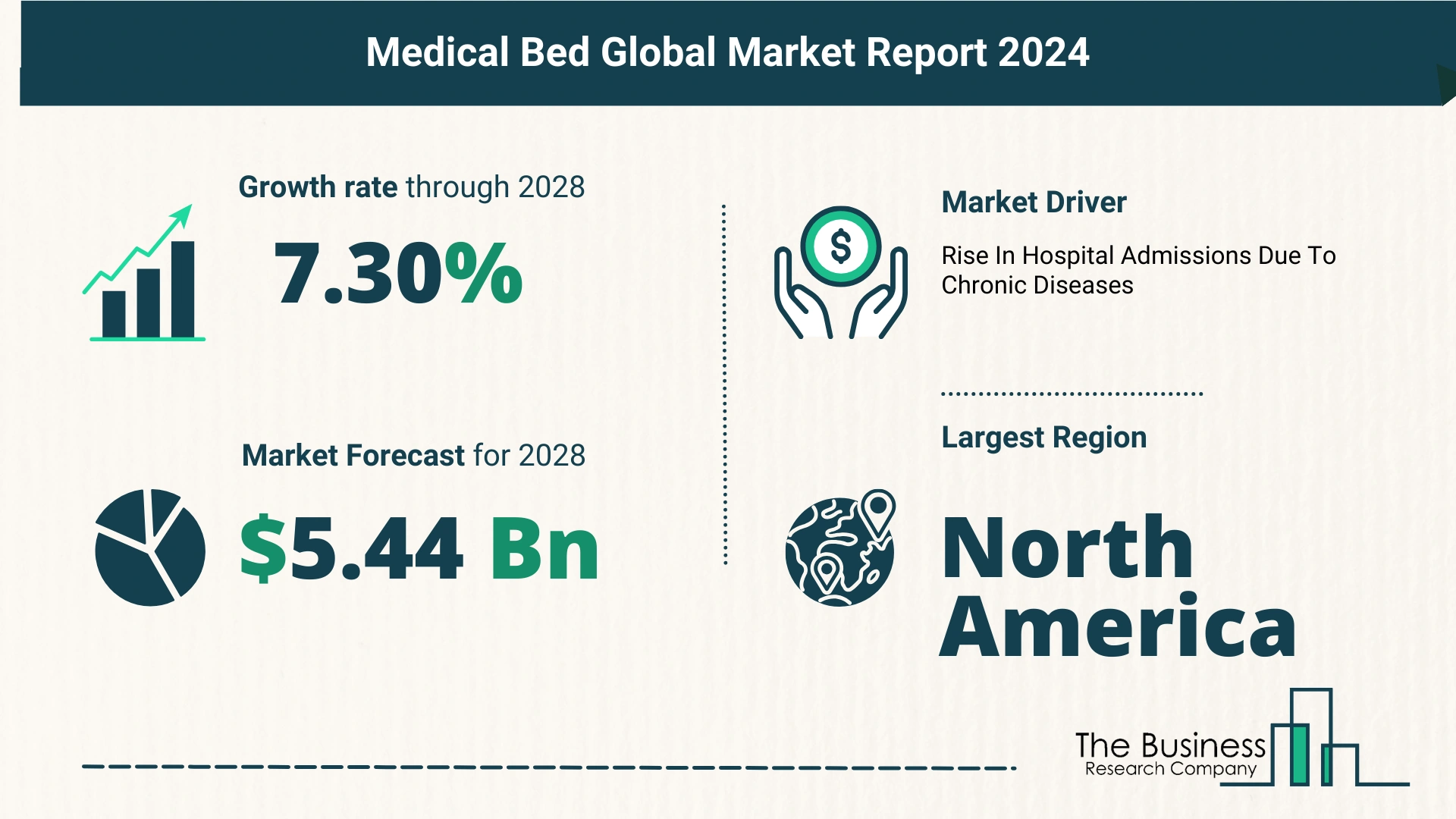
    • Future Outlook: Forecasted to reach $5.44 billion by 2028, growing at a CAGR of 7.3%.

    Drivers of Recent Growth

    • Aging Population: Higher demand for healthcare services.
    • Prevalence of Chronic Diseases: Increased need for long-term care solutions.
    • Advancements in Healthcare Infrastructure: Improved healthcare facilities globally.
    • Rising Healthcare Expenditure: Investments in hospital equipment and facilities.
    • Bariatric Patient Care Needs: Specialized beds for overweight and obese patients.

    Future Growth Factors

    • Focus on Patient Safety and Comfort: Innovations to enhance patient experience.
    • Global Pandemic Preparedness: Heightened awareness and readiness for healthcare emergencies.
    • Increasing Surgical Procedures: Demand for specialized beds in surgical settings.
    • Demographic Shifts: Aging population and changing healthcare needs.
    • Rising Incidence of Lifestyle-related Diseases: Chronic disease management and care.

    View More On The Medical Bed Market Report 2024 – https://www.thebusinessresearchcompany.com/report/medical-bed-global-market-report

    Impact of Rising Hospital Admissions

    The increase in hospital admissions due to chronic diseases is a significant driver for the medical bed market. Medical beds play a crucial role in patient care and management during hospital stays. They ensure comfort, safety, and effective medical treatment, supporting healthcare providers in delivering quality care.

    Key Industry Players and Innovations

    • Major Companies: Leading players include Stryker Corporation, Getinge AB, Hillrom (now part of Baxter International), and Arjo.
    • Innovative Products: Companies are focusing on developing advanced medical beds to cater to evolving healthcare needs.

    Case Study: Stryker’s ProCuity Wireless Hospital Bed

    Stryker’s ProCuity is a pioneering wireless hospital bed designed to enhance patient safety and improve workflow efficiencies for nurses. Launched in February 2021, it features seamless integration with nurse call systems and ergonomic design to prevent in-hospital patient falls. This innovation underscores the industry’s move towards smarter, more efficient healthcare solutions.

    Baxter International’s Strategic Acquisition of Hillrom

    In December 2021, Baxter International acquired Hillrom for $12.5 billion, expanding its footprint in the medical bed market. Hillrom’s range of beds complements Baxter’s healthcare solutions, enhancing patient care capabilities and operational efficiencies across global markets.

    Market Segmentation and Regional Insights

    • By Type: Electric Medical Beds, Semi Electric Medical Beds, Manual Medical Beds
    • By Usage: Intensive Care, Non-intensive Care
    • By End-user: Hospitals, Home Care Settings, Rehabilitation Centers, Other End-Users
    • Regional Dynamics: North America dominated the market in 2023, while Asia-Pacific is poised for rapid growth.

    Future Trends and Opportunities

    • Technological Advancements: Integration of smart technologies for enhanced patient monitoring and comfort.
    • Medical Tourism: Increasing demand for specialized healthcare services globally.
    • Regulatory Standards and Compliance: Stricter regulations driving product innovation and safety standards.
    • Innovations in Materials: Lightweight and durable materials improving bed design and functionality.
    • Telemedicine Adoption: Beds equipped for telemedicine consultations and remote patient monitoring.
    • Holistic Patient Care Approach: Focus on patient-centered care and multidisciplinary treatment strategies.

    Conclusion

    The medical bed market continues to expand, driven by demographic shifts, technological advancements, and the increasing prevalence of chronic diseases. As healthcare providers strive to enhance patient outcomes and operational efficiencies, investments in innovative medical beds and patient care solutions will remain pivotal. With ongoing advancements and strategic acquisitions, the future of the medical bed market looks promising, poised for sustained growth and innovation

    Request A Sample Of The Global Medical Bed Market Report 2024:
    https://www.thebusinessresearchcompany.com/sample_request?id=13700&type=smp

  • How Is The Vascular Access Devices Market Expected To Grow Through 2024-2033

    How Is The Vascular Access Devices Market Expected To Grow Through 2024-2033

    The Business Research Company’s global market reports are now updated with the latest market sizing information for the year 2024 and forecasted to 2033

    According to The Business Research Company’s Vascular Access Devices Global Market Report 2024, the vascular access devices market is expected to show promising growth in the forecast period.

    The vascular access devices (VAD) market has experienced significant growth in recent years, fueled by various factors ranging from the rise in chronic diseases to advancements in healthcare infrastructure. As we look to the future, this market shows no signs of slowing down, with promising trends and innovations set to drive further expansion.

    Current Market Landscape

    Rapid Market Growth

    • 2023 to 2024 Growth: The market size will grow from $5.3 billion in 2023 to $5.74 billion in 2024, reflecting a compound annual growth rate (CAGR) of 8.3%.
    • Contributing Factors: Key drivers include the rising incidence of chronic diseases, an aging population, expanded healthcare infrastructure, an increase in surgical procedures, and improved awareness and training among healthcare professionals.

    Future Projections

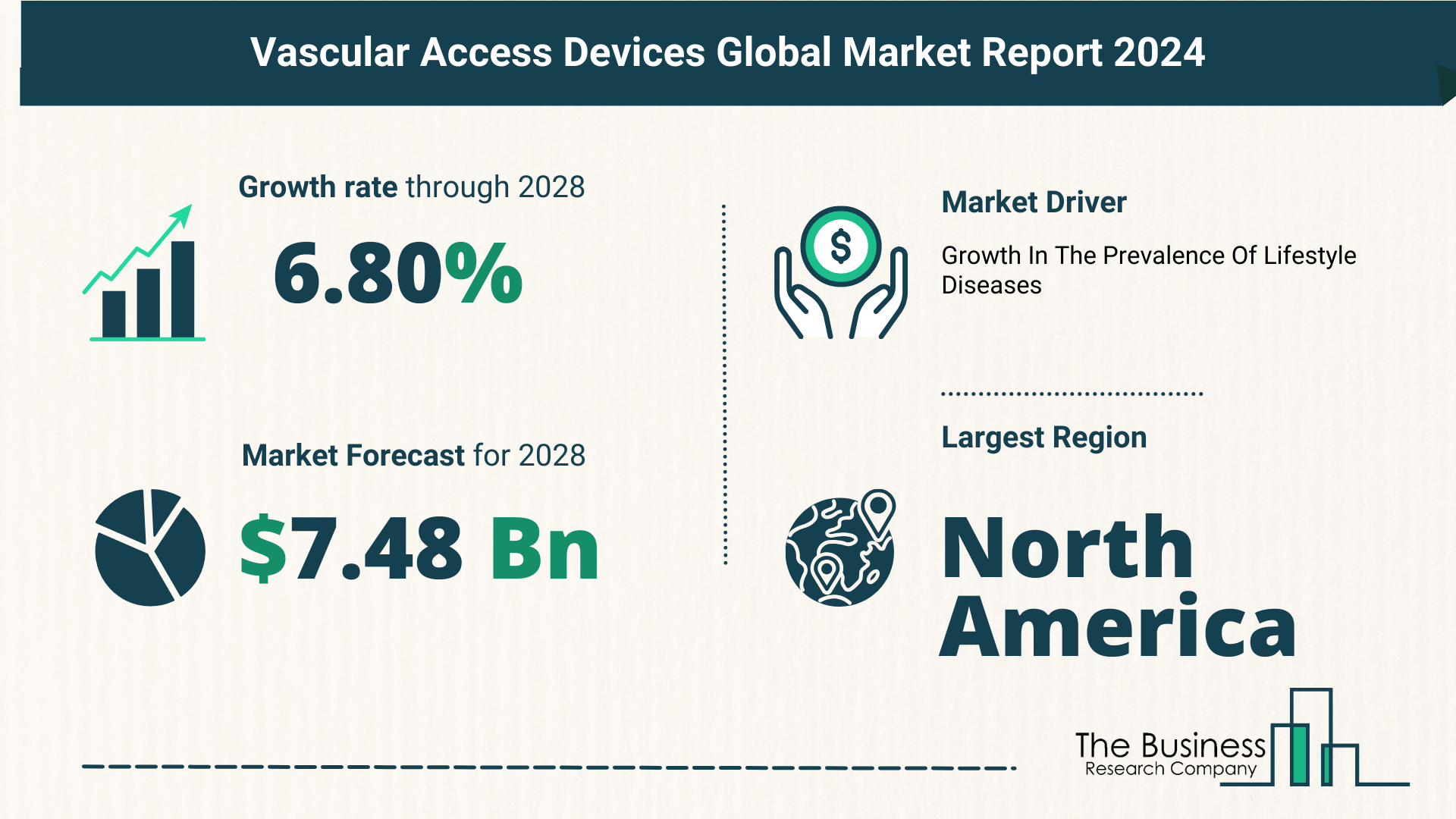
    • 2024 to 2028 Growth: The market is expected to reach $7.48 billion by 2028, with a CAGR of 6.8%.
    • Driving Forces: Growth will be driven by advancements in material science, the rise of ambulatory care, globalization of healthcare, telemedicine, and a focus on infection control.

    Trends Shaping the Future

    Infection Prevention and Antimicrobial Technologies

    • Focus on Infection Control: Enhanced efforts to prevent infections are leading to the development of antimicrobial technologies in VADs.
    • Specialty Devices Demand: There is a growing demand for specialized vascular access devices designed to reduce infection rates and improve patient outcomes.

    Training and Education

    • Healthcare Professional Training: Emphasis on training and education for healthcare professionals ensures better utilization and management of VADs.
    • Collaborative Product Development: Partnerships and collaborations among companies are crucial for developing innovative products and expanding market reach.

    View More On The Vascular Access Devices Market Report 2024 – https://www.thebusinessresearchcompany.com/report/vascular-access-devices-global-market-report

    Lifestyle Diseases Driving Market Growth

    Prevalence of Chronic Diseases

    • Non-communicable Diseases (NCDs): Lifestyle diseases, such as cardiovascular diseases, cancer, chronic respiratory diseases, and diabetes, are major contributors to the increased need for VADs.
    • Global Impact: According to the World Health Organization, NCDs cause 41 million deaths annually, accounting for 74% of global deaths.

    Essential for Ongoing Treatment

    • Ongoing Care Requirements: VADs are essential for the safe and effective delivery of medications and therapies required for managing chronic diseases.

    Key Players in the Market

    Leading Companies

    • Major Companies: Notable players include Medtronic PLC, Siemens Healthineers, Fresenius Medical Care, Becton Dickinson and Company (BD), Baxter International, Boston Scientific, and many more.
    • Innovative Technologies: Companies are focusing on innovative technologies to maintain competitive edges, such as TipTracker technology for real-time visual navigation during catheter placements.

    Innovations Revolutionizing Care

    TipTracker Technology

    • Teleflex’s New Devices: In May 2023, Teleflex Incorporated launched the VPS Rhythm and DLX Device featuring TipTracker technology, which eliminates the need for confirmatory X-rays and enhances the PICC insertion process.
    • Benefits: These devices improve patient care, expand treatment options, and increase procedural efficiency.

    BD’s Acquisition of Velano Vascular

    • Enhancing Blood Collection: In July 2021, BD acquired Velano Vascular, a company known for its needle-free blood collection technology, aiming to alleviate patient discomfort during blood sampling.
    • Impact: This acquisition is set to make blood collection easier and more comfortable, showcasing BD’s commitment to improving patient care.

    Market Segmentation

    Device Types and Applications

    • By Device Type: Central Vascular Access Devices and Peripheral Vascular Access Devices.
    • By Application: Drug Administration, Fluid and Nutrition Administration, Blood Transfusion, Diagnostics and Testing.

    End Users

    • Primary End Users: Hospitals, clinics, ambulatory care centers, and other healthcare facilities.
    • Regional Insights: North America was the largest region in the market in 2023, while Asia-Pacific is expected to be the fastest-growing region during the forecast period.

    Conclusion

    The vascular access devices market is on a robust growth trajectory, driven by the rising prevalence of chronic diseases, technological advancements, and an increased focus on infection control. With major companies investing in innovative solutions and collaborative efforts, the market is poised for significant advancements and expansion in the coming years.

    Request A Sample Of The Global Vascular Access Devices Market Report 2024:
    https://www.thebusinessresearchcompany.com/sample_request?id=13554&type=smp

  • Future Growth Forecast For The Uterine Fibroid Embolization Device Global Market 2024-2033

    Future Growth Forecast For The Uterine Fibroid Embolization Device Global Market 2024-2033

    The Business Research Company’s global market reports provide comprehensive analysis on the various markets in 27 industries across 60 geographies.

    The uterine fibroid embolization (UFE) device market has witnessed significant growth in recent years and continues to show promising trends. This blog explores the factors driving this growth and the future outlook of the market.

    Recent Market Growth

    Robust Growth from 2023 to 2024

    • Market Size Increase: The market is projected to grow from $5.3 billion in 2023 to $5.62 billion in 2024.
    • CAGR: This represents a compound annual growth rate (CAGR) of 6.0%.

    Factors Contributing to Growth

    • Increasing Incidence of Uterine Fibroids: More women are being diagnosed with uterine fibroids, leading to higher demand for treatment.
    • Preference for Non-Surgical Alternatives: Many patients prefer non-invasive treatments over traditional surgery.
    • Awareness and Education Initiatives: Efforts to educate women about uterine health and treatment options are paying off.
    • Focus on Women’s Health: Healthcare providers are placing a greater emphasis on women’s health issues.
    • Shift Toward Outpatient Procedures: More procedures are being performed in outpatient settings, making them more accessible.
    • Physician Training Programs: Improved training for physicians in using UFE devices has increased their adoption.

    View More On The Uterine Fibroid Embolization Device Market Report 2024 – https://www.thebusinessresearchcompany.com/report/uterine-fibroid-embolization-device-global-market-report

    Future Market Outlook

    Steady Growth Expected

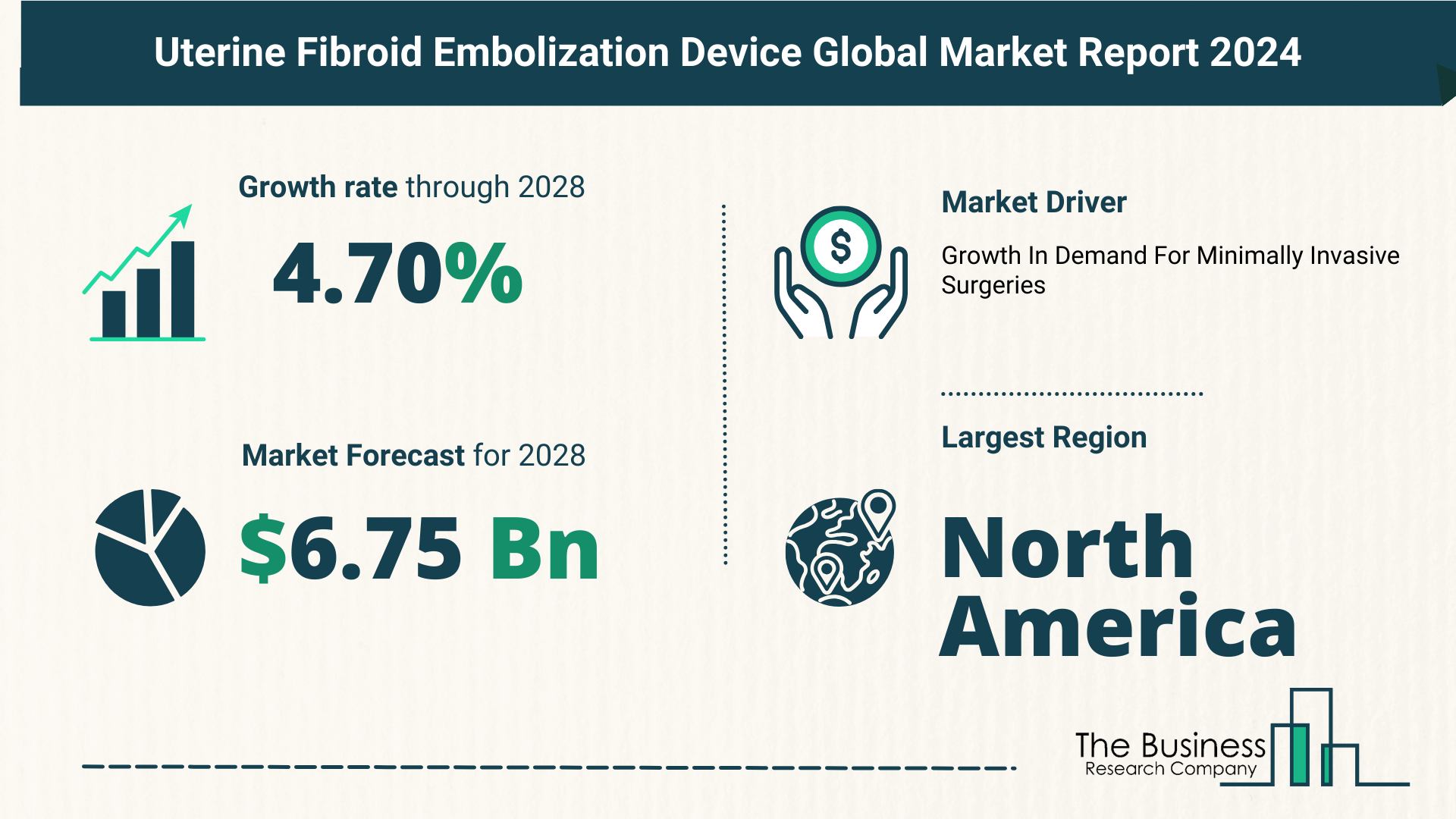
    • Market Size Projection: The market is expected to reach $6.75 billion by 2028.
    • CAGR: The growth rate will slightly decrease to a CAGR of 4.7%.

    Key Growth Drivers

    • Increasing Awareness of Non-Invasive Treatments: As more women learn about non-invasive options, the demand for UFE devices will rise.
    • Global Expansion of Healthcare Services: Improved access to healthcare globally will drive market growth.
    • Rise in Female Healthcare Initiatives: Initiatives focused on female health are expected to boost market demand.
    • Integration with Multidisciplinary Care: UFE treatments are becoming part of broader, multidisciplinary healthcare approaches.
    • Expansion of Outpatient Services: More treatments are being offered in outpatient settings, which is more convenient for patients.

    Trends Shaping the Market

    Minimally Invasive Surgery Driving Growth

    • Demand for Minimally Invasive Surgeries: Minimally invasive procedures are becoming more popular due to their reduced recovery times and lower risk.
    • Technological Advancements: Advances in surgical technology, such as the da Vinci Surgical System, are enhancing the effectiveness of minimally invasive surgeries.

    Innovative Products Enhancing Treatment

    • Development of New Products: Companies like Medtronic are launching new devices, such as the TruClear system, which offer safer and more effective treatment options.
    • TruClear System: This system is a mechanical hysteroscopic tissue removal tool designed for treating intrauterine abnormalities with precision and safety.

    Strategic Acquisitions Expanding Capabilities

    • Hologic’s Acquisition of Bolder Surgical: Hologic Inc. acquired Bolder Surgical for $160 million to strengthen its position in the women’s health market and expand its product offerings.
    • Innovative Technology Integration: The acquisition provides access to innovative surgical instruments, enhancing Hologic’s capabilities.

    Market Segmentation

    By Technology

    • Surgical Techniques
    • Laparoscopic Techniques
    • Ablation Techniques
    • Embolization Techniques

    By Mode of Treatment

    • Invasive Treatment
    • Minimally Invasive Treatment
    • Non-Invasive Treatment

    By End User

    • Hospitals
    • Clinics
    • Ambulatory Surgical Centers

    Regional Insights

    • North America: In 2023, North America was the largest region in the UFE device market, driven by advanced healthcare infrastructure and high awareness levels.

    Conclusion

    The uterine fibroid embolization device market is set to continue its growth trajectory, driven by advancements in minimally invasive surgery, innovative product developments, and strategic industry acquisitions. As awareness and access to non-invasive treatments increase, the market is poised for sustained expansion, providing better healthcare outcomes for women worldwide.

    Request A Sample Of The Global Uterine Fibroid Embolization Device Market Report 2024:
    https://www.thebusinessresearchcompany.com/sample_request?id=13551&type=smp

  • Overview Of The Ultrasound Transducer Market 2024-2033: Growth And Major Players Analysis

    Overview Of The Ultrasound Transducer Market 2024-2033: Growth And Major Players Analysis

    The Business Research Company’s global market reports are now updated with the latest market sizing information for the year 2024 and forecasted to 2033

    The ultrasound transducer market has witnessed significant growth in recent years and is poised for continued expansion. This blog explores the factors driving this growth, future projections, and key trends shaping the market.

    Market Size and Growth Projections

    • Current Market Value: The market size increased from $3.96 billion in 2023 to $4.18 billion in 2024, reflecting a compound annual growth rate (CAGR) of 5.6%.
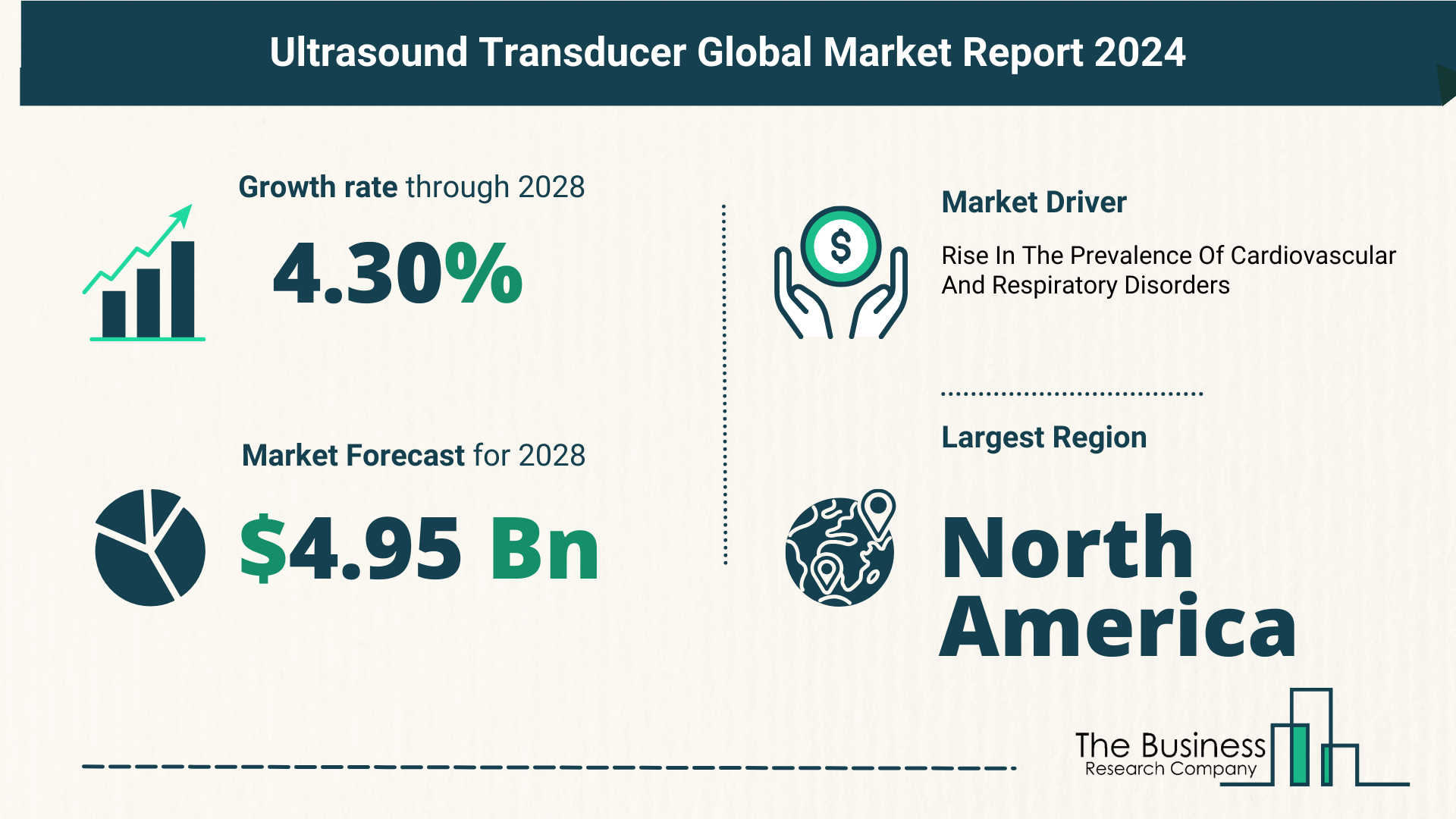
    • Future Market Value: By 2028, the market is expected to grow to $4.95 billion, at a CAGR of 4.3%.

    Factors Driving Historic Growth

    • Diagnostic Imaging Demand: Increased demand for diagnostic imaging has been a major driver.
    • Chronic Diseases: The rise in chronic diseases necessitates advanced diagnostic tools.
    • Obstetrics and Gynecology: Expanding applications in these fields contribute significantly.
    • Geriatric Population: Growing elderly population requires more frequent medical imaging.
    • Healthcare Infrastructure: Global development of healthcare infrastructure supports market growth.

    Projected Growth Factors

    • Telemedicine Services: The proliferation of telemedicine services boosts market demand.
    • Point-of-Care Diagnostics: Increased focus on point-of-care diagnostics aids market expansion.
    • Accessibility in Developing Regions: Improved healthcare accessibility in developing regions is crucial.
    • Interventional Procedures: Expanding applications in interventional procedures enhance growth.
    • Customization: Customization for specific medical specialties is a key factor.

    View More On The Ultrasound Transducer Market Report 2024 – https://www.thebusinessresearchcompany.com/report/ultrasound-transducer-global-market-report

    Key Trends in the Forecast Period

    • Miniaturization: Ongoing miniaturization of transducer technology is notable.
    • Point-of-Care Ultrasound (POCUS): Expansion of POCUS is a significant trend.
    • High-Frequency Transducers: Development of high-frequency transducers for better imaging.
    • Artificial Intelligence Integration: AI integration in ultrasound technology is becoming more prevalent.
    • Advanced Materials: Advancements in transducer materials improve performance.
    • Wireless Connectivity: Shift towards wireless and cable-free transducer connectivity enhances usability.

    Impact of Rising Cardiovascular and Respiratory Disorders

    • Increased Prevalence: The growing prevalence of cardiovascular and respiratory disorders drives market growth.
    • Diagnostic Importance: Ultrasound transducers are essential in diagnosing and managing these conditions.
    • Statistics:
      • UK heart attack deaths: 19,440 to 20,061 (2020-2021).
      • Australian respiratory disease deaths: 43,031 to 46,551 (2020-2021).

    Major Companies and Innovations

    • Key Players: Hitachi Medical Corporation, Siemens Healthineers, Fujifilm Holdings Corporation, and more.
    • Innovative Products: Companies are developing advanced products like Mindray Global’s TEX20 Series.
      • TEX20 Series Features: Includes ZST, AI-powered tools, ergonomic design, wireless transducers, and high-frequency imaging.

    Notable Acquisition

    • GE Healthcare’s Acquisition: In December 2021, GE Healthcare acquired BK Medical Holding Inc. for $1.45 billion.
      • Purpose: To expand ultrasound business into surgical and therapeutic treatments and enhance precision health.

    Market Segmentation

    • By Product: Linear, Convex, Phased array, Endocavitary, Continuous wave Doppler, and others.
    • By Application: Cardiovascular, General Imaging, Musculoskeletal, Obstetrics and Gynecology, Vascular, and others.
    • By End User: Hospitals, Diagnostic Centers, Ambulatory Surgical Centers, and Clinics.

    Regional Insights

    • Largest Market: North America held the largest market share in 2023.
    • Fastest-Growing Region: Asia-Pacific is expected to be the fastest-growing region during the forecast period.

    The ultrasound transducer market is set for steady growth, driven by technological advancements, increasing prevalence of chronic diseases, and expanding applications in various medical fields. With significant innovations and strategic acquisitions, the market dynamics are poised to transform the landscape of diagnostic imaging.

    Request A Sample Of The Global Ultrasound Transducer Market Report 2024:
    https://www.thebusinessresearchcompany.com/sample_request?id=13549&type=smp

  • 5 Key Insights On The Tooth Filling Materials Market 2024

    5 Key Insights On The Tooth Filling Materials Market 2024

    The Business Research Company’s global market reports are now updated with the latest market sizing information for the year 2024 and forecasted to 2033

    As per The Business Research Company’s Tooth Filling Materials Global Market Report 2024, the tooth filling materials market is expected to show significant growth in the forecast period.

    Market Growth and Projections

    • Recent Growth: The tooth filling materials market has seen substantial growth in recent years, expanding from $1.71 billion in 2023 to an anticipated $1.82 billion in 2024, with a compound annual growth rate (CAGR) of 6.6%.
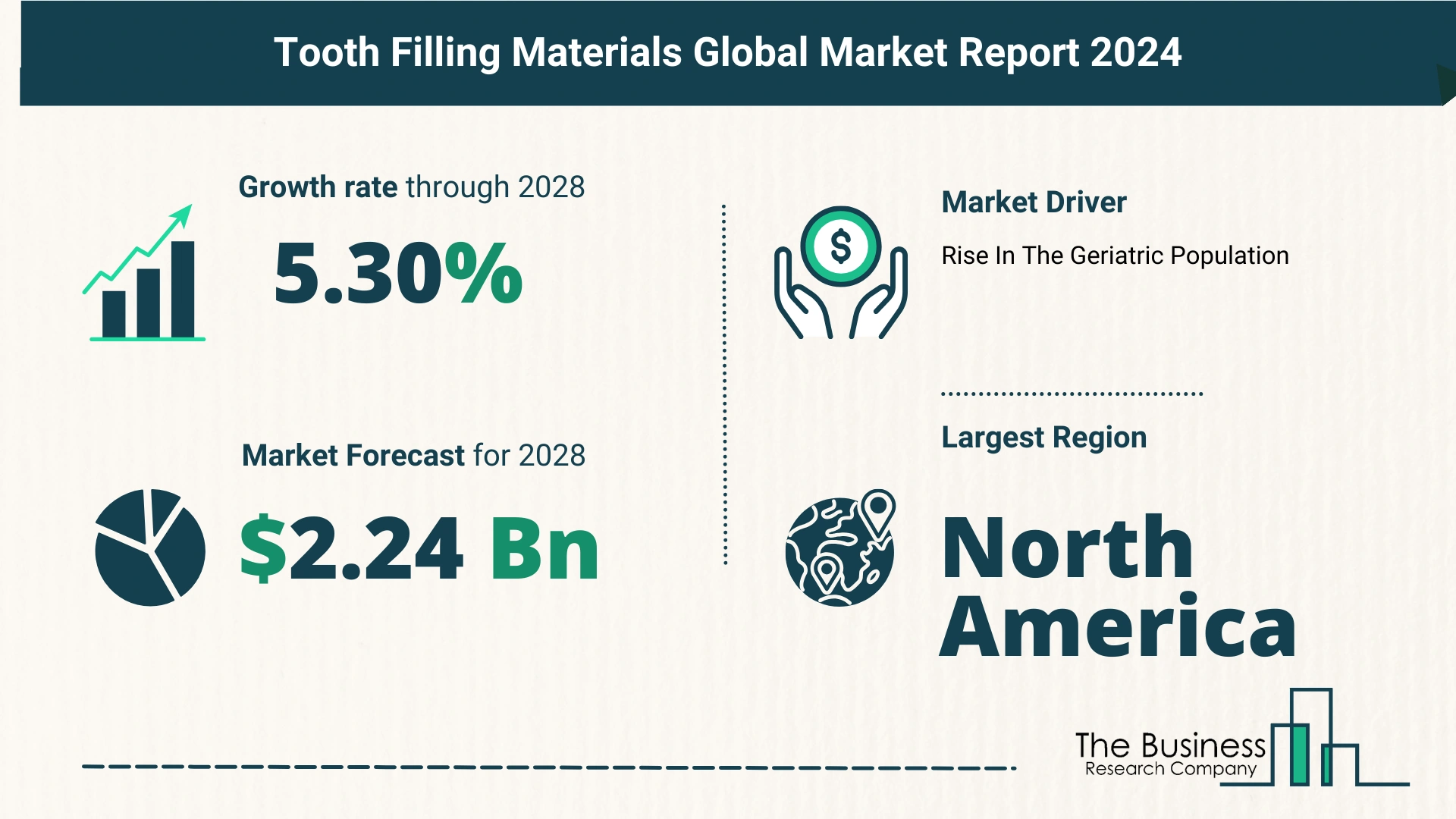
    • Future Projections: The market is set to continue its strong growth trajectory, expected to reach $2.24 billion by 2028, at a CAGR of 5.3%.

    Drivers of Market Growth
    Increasing Dental Health Awareness

    • Awareness Campaigns: Greater public awareness of dental health has driven demand for dental services and products.
    • Educational Programs: Initiatives promoting regular dental check-ups and oral hygiene have contributed to market expansion.

    Demographic Trends

    • Aging Population: The growing elderly population, who are more prone to dental issues, has increased the need for dental treatments.
    • Youth and Aesthetic Dentistry: Younger generations’ preferences for aesthetic dental treatments, such as tooth-colored fillings, are also boosting market growth.

    Dental Insurance Coverage

    • Insurance Accessibility: Increased coverage and better dental insurance policies have made dental treatments more affordable and accessible.
    • Policy Support: Government and private sector initiatives supporting dental health are fueling market demand.

    Consumer Preferences and Prevalence of Dental Issues

    • Aesthetic Preferences: There is a rising demand for aesthetically pleasing dental materials, like composite resins and glass ionomers.
    • Dental Issues: High prevalence of dental disorders, such as tooth decay and gum disease, necessitates the use of tooth filling materials.

    View More On The Tooth Filling Materials Market Report 2024 – https://www.thebusinessresearchcompany.com/report/tooth-filling-materials-global-market-report

    Market Trends and Innovations
    Focus on Minimally Invasive Dentistry

    • Non-Invasive Treatments: Growing preference for minimally invasive dental procedures is expected to drive the demand for advanced filling materials.
    • Patient Comfort: Emphasis on patient comfort and quicker recovery times are key factors.

    Technological Advancements

    • Digital Dentistry Integration: The adoption of digital technologies in dental practices, including 3D printing, is revolutionizing the market.
    • Nanotechnology: Innovations in nanotechnology are enhancing the quality and performance of dental filling materials.

    Regulatory Landscape

    • Evolving Regulations: Changes in dental material regulations ensure higher quality and safer products.
    • Compliance: Companies are focusing on compliance to gain market credibility and consumer trust.

    Major Players in the Market

    • Leading Companies: Notable companies include 3M Corporation, Dentsply Sirona, Kerr Corporation, Ultradent Products Inc., and Ivoclar Vivadent AG.
    • Product Innovations: These companies are continuously developing new materials to maintain a competitive edge.

    Innovations and Acquisitions
    Flexcera Smile Ultra Plus Resin

    • Product Introduction: In February 2022, Desktop Health introduced Flexcera Smile Ultra Plus Resin, a hybrid nanoceramic resin for enhanced dental restorations.
    • Key Benefits: This next-generation material offers ceramic-like strength and improved aesthetics, suitable for use with EnvisionTEC 3D printers.

    Pac-Dent Inc.’s Strategic Acquisition

    • Acquisition of JS Dental: In September 2021, Pac-Dent Inc. acquired JS Dental Manufacturing to expand its endodontic product range.
    • Market Impact: This acquisition allows Pac-Dent to diversify its product offerings and strengthen its market position.

    Market Segmentation

    • By Product: Composite Resin, Silver Amalgam, Glass Ionomer, Gold Fillings, and other products.
    • By Filling: Direct and Indirect.
    • By End Use: Hospitals, Dental Clinics, and Other End Uses.

    Regional Insights

    • North America: This region was the largest market for tooth filling materials in 2023, driven by advanced healthcare infrastructure and high dental awareness.
    • Asia-Pacific: Expected to be the fastest-growing region in the forecast period, fueled by rising disposable incomes and growing healthcare investments.

    Conclusion
    The tooth filling materials market is poised for significant growth driven by increased dental health awareness, demographic trends, technological advancements, and strategic acquisitions. As the market evolves, innovations in digital dentistry and nanotechnology will play a pivotal role in shaping its future, offering enhanced solutions for dental restorations and improved patient outcomes.

    Request A Sample Of The Global Tooth Filling Materials Market Report 2024:
    https://www.thebusinessresearchcompany.com/sample_request?id=13546&type=smp

  • Key Trends And Drivers In The Surgical Drapes Market 2024

    Key Trends And Drivers In The Surgical Drapes Market 2024

    The Business Research Company’s market reports offer an in-depth analysis on the market’s growth potential, major drivers, key trends and more.

    The surgical drapes market is evolving rapidly, driven by technological advancements and increasing demand in healthcare facilities worldwide. This blog explores the key drivers, market analysis, and trends shaping the future of the surgical drapes industry.

    Market Drivers

    Innovation in Product Development

    • Advanced Technology: Companies are leveraging advanced technologies like BeneHold CHG adhesive to enhance the efficacy of surgical drapes.
    • Antibacterial Solutions: The incorporation of antibacterial chemicals, such as chlorhexidine gluconate (CHG), helps in maintaining a sterile surgical site.

    Strategic Partnerships

    • Cardinal Health and MedStar Health: In April 2023, Cardinal Health partnered with MedStar Health to launch Stray Away, a hair management drape designed to enhance patient comfort and streamline surgical procedures.

    Rising Healthcare Demand

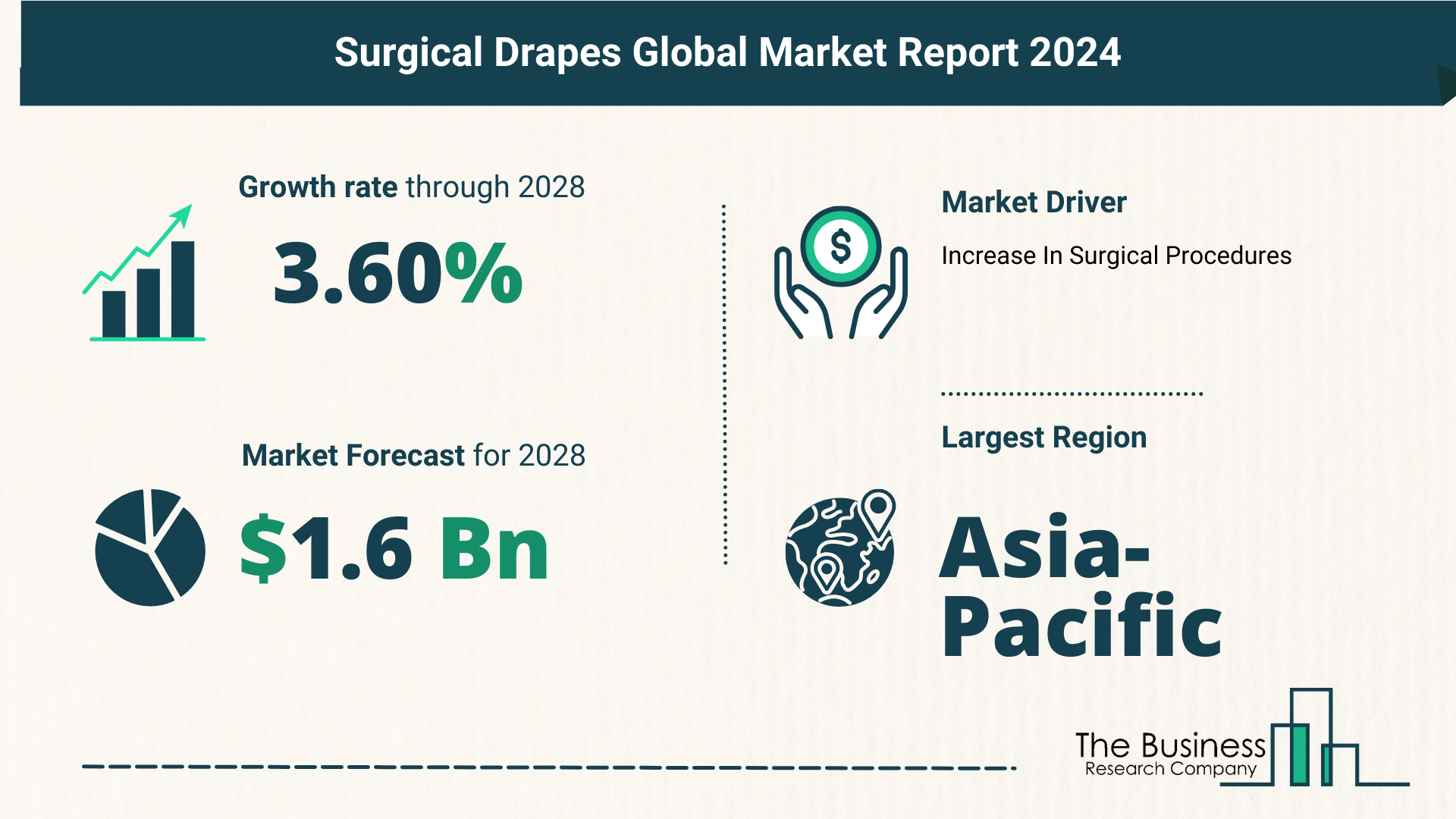
    • Increasing Surgeries: The growing number of surgical procedures globally is driving the demand for effective and reliable surgical drapes.
    • Healthcare Infrastructure: Expanding healthcare infrastructure in developing regions is contributing to market growth.

    Read More On The Surgical Drapes Market Report 2024 – https://www.thebusinessresearchcompany.com/report/surgical-drapes-global-market-report

    Market Analysis

    Segment Insights

    • By Type: The market is segmented into disposable and reusable drapes, with disposable drapes seeing higher demand due to hygiene and convenience factors.
    • By Risk Type: Categories include minimal (AAMI Level 1), low (AAMI Level 2), moderate (AAMI Level 3), and high risk (AAMI Level 4) drapes, catering to different levels of surgical needs.
    • By End User: The main end users are clinics, hospitals, ambulatory surgical centers, and other healthcare facilities.

    Regional Analysis

    • Asia-Pacific Dominance: Asia-Pacific was the largest region in the surgical drapes market in 2023, driven by expanding healthcare infrastructure and rising surgical procedures.

    Market Trends

    Technological Advancements

    • Enhanced Adhesive Technologies: The development of adhesive technologies like BeneHold CHG is a major trend, providing better infection control.
    • Eco-Friendly Options: Growing awareness about environmental sustainability is pushing companies to develop eco-friendly, reusable drapes.

    Collaborative Efforts

    • Partnerships and Collaborations: Companies are increasingly partnering with healthcare providers to develop customized solutions that enhance operational efficiency and patient safety.

    Market Data and Insights

    Market Share

    • Key Players: Major companies in the market include Cardinal Health Inc., Thermo Fisher Scientific Inc., 3M Company, Medline Industries LP, and Ecolab Inc.
    • Competitive Landscape: The market is highly competitive with players focusing on innovation, product development, and strategic partnerships.

    Market Report

    • Comprehensive Analysis: Detailed reports provide insights into market size, growth potential, and competitive strategies.
    • Forecasts: Market outlooks predict continued growth driven by technological innovations and increasing surgical procedures.

    Market Segments

    Disposable vs. Reusable

    • Disposable Drapes: Preferred for their convenience and hygiene, dominating the market share.
    • Reusable Drapes: Gaining traction due to cost-effectiveness and environmental benefits.

    Risk Type Categories

    • Minimal to High Risk: Offering various levels of protection to cater to specific surgical requirements.

    End User Diversity

    • Hospitals and Clinics: Major consumers of surgical drapes.
    • Ambulatory Surgical Centers: Emerging as significant end users due to the rise in outpatient surgeries.

    Industry Analysis

    Competitive Strategies

    • Innovation Focus: Companies are investing in R&D to introduce innovative products and maintain a competitive edge.
    • Market Expansion: Efforts to expand market presence in emerging regions are prominent among major players.

    Outlook and Future Trends

    • Positive Growth: The market is expected to grow robustly due to continuous advancements and increasing healthcare needs.
    • Sustainable Practices: Emphasis on sustainable and cost-effective solutions will shape future market trends.

    Conclusion

    The surgical drapes market is poised for significant growth, driven by innovation, strategic collaborations, and increasing healthcare demands. Major players are focusing on developing advanced products and expanding their market reach to capitalize on emerging opportunities. As the market evolves, staying informed about the latest trends and developments will be crucial for stakeholders.

    Request for A Sample Of The Global Surgical Drapes Market Report:
    https://www.thebusinessresearchcompany.com/sample_request?id=13540&type=smp

  • 5 Key Insights On The Thoracic Surgery Devices Market 2024

    5 Key Insights On The Thoracic Surgery Devices Market 2024

    The Business Research Company’s global market reports are now updated with the latest market sizing information for the year 2024 and forecasted to 2033

    As per The Business Research Company’s Thoracic Surgery Devices Global Market Report 2024, the thoracic surgery devices market is expected to show significant growth in the forecast period.

    The thoracic surgery devices market has witnessed significant growth recently. In 2023, the market size was valued at $8.07 billion, and it is projected to reach $8.89 billion in 2024, demonstrating a compound annual growth rate (CAGR) of 10.1%.

    Key Growth Drivers in the Historic Period:

    • Advancements in Surgical Techniques: Improved methods have increased precision and safety.
    • Aging Population and Prevalence of Thoracic Diseases: More elderly individuals and a higher incidence of conditions affecting the thoracic cavity.
    • Increasing Surgical Volume: A rise in the number of thoracic surgeries performed.
    • Healthcare Infrastructure Development: Better facilities and resources support more procedures.
    • Training and Education Initiatives: Enhanced professional training has improved surgical outcomes.

    Projected Market Expansion

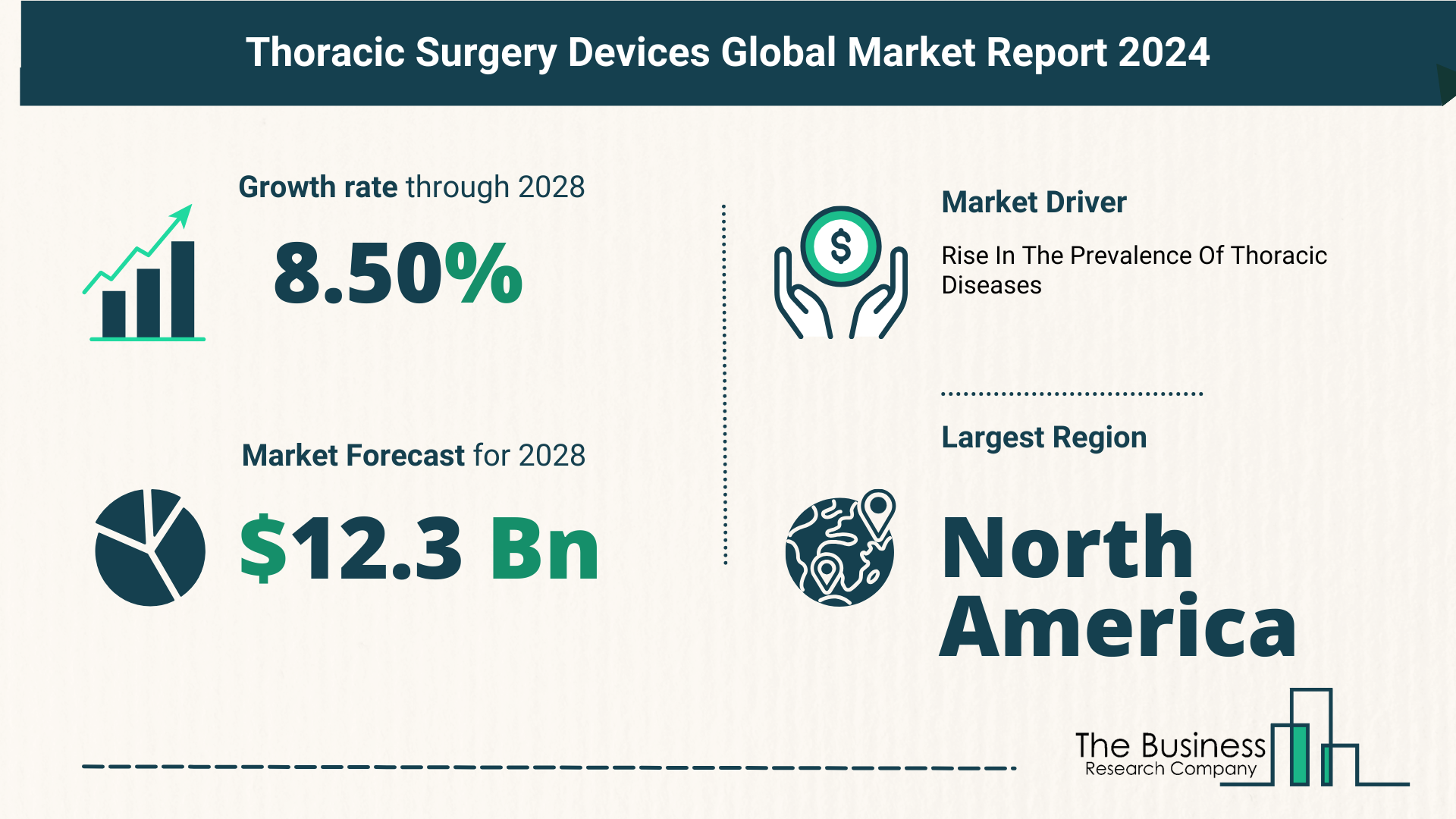
    Looking ahead, the thoracic surgery devices market is expected to continue its strong growth trajectory. By 2028, the market is forecasted to reach $12.3 billion, with a CAGR of 8.5%.

    Future Growth Drivers:

    • Robotics and AI Integration: Enhanced precision and automation in surgeries.
    • Patient-Centric Approaches: Focus on individual patient needs and outcomes.
    • Customized Implant Solutions: Tailored implants for better patient compatibility.
    • Telemedicine and Remote Surgery: Expanding access and convenience.
    • Value-Based Healthcare Models: Emphasis on cost-effective and efficient care.

    View More On The Thoracic Surgery Devices Market Report 2024 – https://www.thebusinessresearchcompany.com/report/thoracic-surgery-devices-global-market-report

    Major Trends Shaping the Market:

    • Global Collaboration in Healthcare: Cross-border partnerships and knowledge exchange.
    • Technological Innovations in Medical Devices: Continued advancements in device technology.
    • Advancements in Imaging Technology: Improved diagnostics and surgical planning.
    • Rise in Ambulatory Surgical Centers (ASCs): More surgeries performed in outpatient settings.

    Surge in Market Growth Due to Thoracic Diseases

    The increasing prevalence of thoracic diseases significantly drives the market. These conditions, affecting organs within the thoracic cavity, require precise and effective surgical interventions.

    Example: Chronic Obstructive Pulmonary Disease (COPD):

    • Impact: In 2023, COPD accounted for 3.6% of the total disease burden in Australia, representing 50% of the burden attributable to respiratory conditions.
    • Market Impact: The growing need for surgical solutions for such conditions propels market growth.

    Leading Companies and Innovations

    Several major companies dominate the thoracic surgery devices market, contributing to its growth through innovative products and strategic acquisitions.

    Key Players:

    • Cardinal Health
    • Medtronic PLC
    • Danaher Corporation
    • Becton, Dickinson and Company
    • Stryker Corporation
    • Braun Melsungen AG
    • Olympus Corporation
    • Intuitive Surgical

    Innovative Products:

    • 3D-Printed Airway Stents:Developed by ETH Zurich, these stents provide customized and durable airway support, gradually dissolving after implantation. They are produced using digital light processing (DLP) and bioresorbable materials, eliminating the need for invasive removal procedures.

    Strategic Acquisitions

    Medtronic PLC’s Acquisition of Intersect ENT:

    • Date:May 2022
    • Objective:Expand Medtronic’s portfolio with Intersect ENT’s bioabsorbable steroid-eluting sinus implants.
    • Outcome:Strengthens Medtronic’s position in providing innovative thoracic devices and therapies.

    Market Segmentation

    The thoracic surgery devices market is segmented based on product type, surgery type, and end-user.

    By Product:

    • Forceps, Graspers, Clamps and Staplers, Scissors, Spreaders, Needle Holders, Other Products

    By Surgery Type:

    • Lobectomy, Wedge Resection, Pneumonectomy, Other Surgery Types

    By End-User:

    • Hospitals, Ambulatory Surgical Centers, Other End-Users

    Regional Insights

    In 2023, North America emerged as the largest region in the thoracic surgery devices market, driven by advanced healthcare infrastructure and high prevalence of thoracic diseases.

    Conclusion

    The thoracic surgery devices market is experiencing rapid growth, fueled by advancements in technology, increasing disease prevalence, and strategic industry moves. As innovations continue and healthcare evolves, the market is set to expand further, offering enhanced surgical solutions and improved patient outcomes.

    Request A Sample Of The Global Thoracic Surgery Devices Market Report 2024:
    https://www.thebusinessresearchcompany.com/sample_request?id=13544&type=smp