Category: Medical Equipment

  • Key Trends And Drivers In The Nuclear Imaging Devices And Equipment Market 2024

    Key Trends And Drivers In The Nuclear Imaging Devices And Equipment Market 2024

    The Business Research Company’s market reports offer an in-depth analysis on the market’s growth potential, major drivers, key trends and more.

    Rising Prevalence of Chronic Conditions Fuels Growth

    • Chronic diseases drive market expansion
    • Insights from nuclear imaging vital for disease management
    • WHO statistics highlight chronic disease impact

    All-Digital PET or CT System Elevating Medical Imaging Standards

    • Innovation drives accuracy in medical imaging
    • GE Healthcare introduces Omni Legend for enhanced diagnostics
    • Benefits of all-digital PET or CT systems

    Mediso Ltd. Acquires Bartec Technologies Ltd.

    • Acquisition aims at portfolio expansion and global reach
    • Mediso strengthens market position through acquisition

    Market Segmentation and Regional Analysis

    • Segmentation by product type, application, and end-user
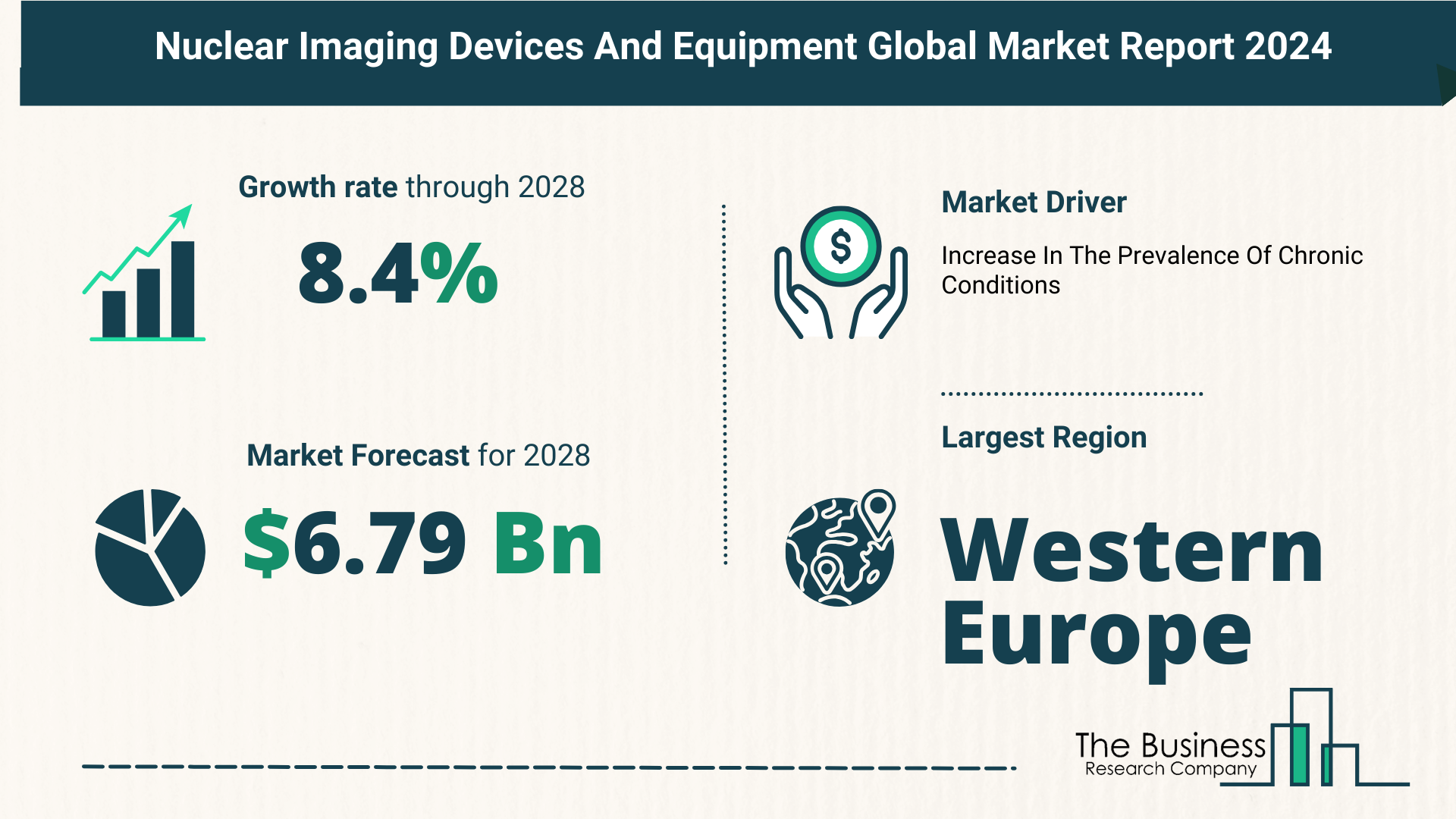
    • Western Europe leads nuclear imaging devices and equipment market

    The nuclear imaging devices and equipment market has witnessed remarkable growth in recent years, with significant projections for the future.

    Read More On The Nuclear Imaging Devices And Equipment Market Report 2024 – https://www.thebusinessresearchcompany.com/report/nuclear-imaging-devices-and-equipment-global-market-report

    Rising Prevalence of Chronic Conditions Fuels Growth

    The increasing prevalence of chronic conditions, including cardiovascular diseases, cancer, chronic respiratory diseases, and diabetes, is a key driver for market expansion. Nuclear imaging devices and equipment play a crucial role in diagnosing and monitoring these conditions, providing valuable insights into disease progression and treatment efficacy.

    All-Digital PET or CT System Elevating Medical Imaging Standards

    Major companies are focusing on product innovation to enhance accuracy in medical imaging systems. The introduction of all-digital PET or CT systems, such as GE Healthcare’s Omni Legend, signifies a significant advancement in diagnostic capabilities. These systems combine the power of PET and CT imaging in a digital format, promising higher resolution and sensitivity.

    Mediso Ltd. Acquires Bartec Technologies Ltd.

    In a strategic move to expand its nuclear medicine imaging equipment portfolio and global reach, Mediso Ltd. acquired Bartec Technologies Ltd. This acquisition strengthens Mediso’s market position and provides access to new expertise and markets.

    Market Segmentation and Regional Analysis

    The nuclear imaging devices and equipment market is segmented by product type, application, and end-user. Major segments include SPECT Systems, PET Systems, Planar Scintigraphy Systems, with applications in Oncology, Cardiology, Neurology, and other fields. End-users primarily include hospitals, imaging centers, and academic & research institutes.

    Western Europe Leads Market Growth

    Western Europe emerged as the largest region in the nuclear imaging devices and equipment market in 2023. With increasing healthcare expenditure and technological advancements, the region continues to drive market growth.

    In conclusion, the nuclear imaging devices and equipment market is poised for substantial growth, fueled by the rising prevalence of chronic conditions, technological innovations, strategic acquisitions, and regional market dynamics. As major players focus on product innovation and expansion strategies, the market is expected to witness continued expansion in the coming years.

    Request for A Sample Of The Global Nuclear Imaging Devices And Equipment Market Report:
    https://www.thebusinessresearchcompany.com/sample_request?id=2399&type=smp
  • Growth Trajectory Of The Operating Room Equipment Market 2024-2033

    Growth Trajectory Of The Operating Room Equipment Market 2024-2033

    The Business Research Company’s global market reports are now updated with the latest market sizing information for the year 2024 and forecasted to 2033

    Introduction 

    The operating room equipment market has witnessed robust growth in recent years, with significant projections for the future. Let’s delve into the key drivers, trends, and major players shaping this dynamic landscape.

    Market Growth and Projections

    • The market size soared from $17.13 billion in 2023 to $18.33 billion in 2024, with a CAGR of 7.0%.
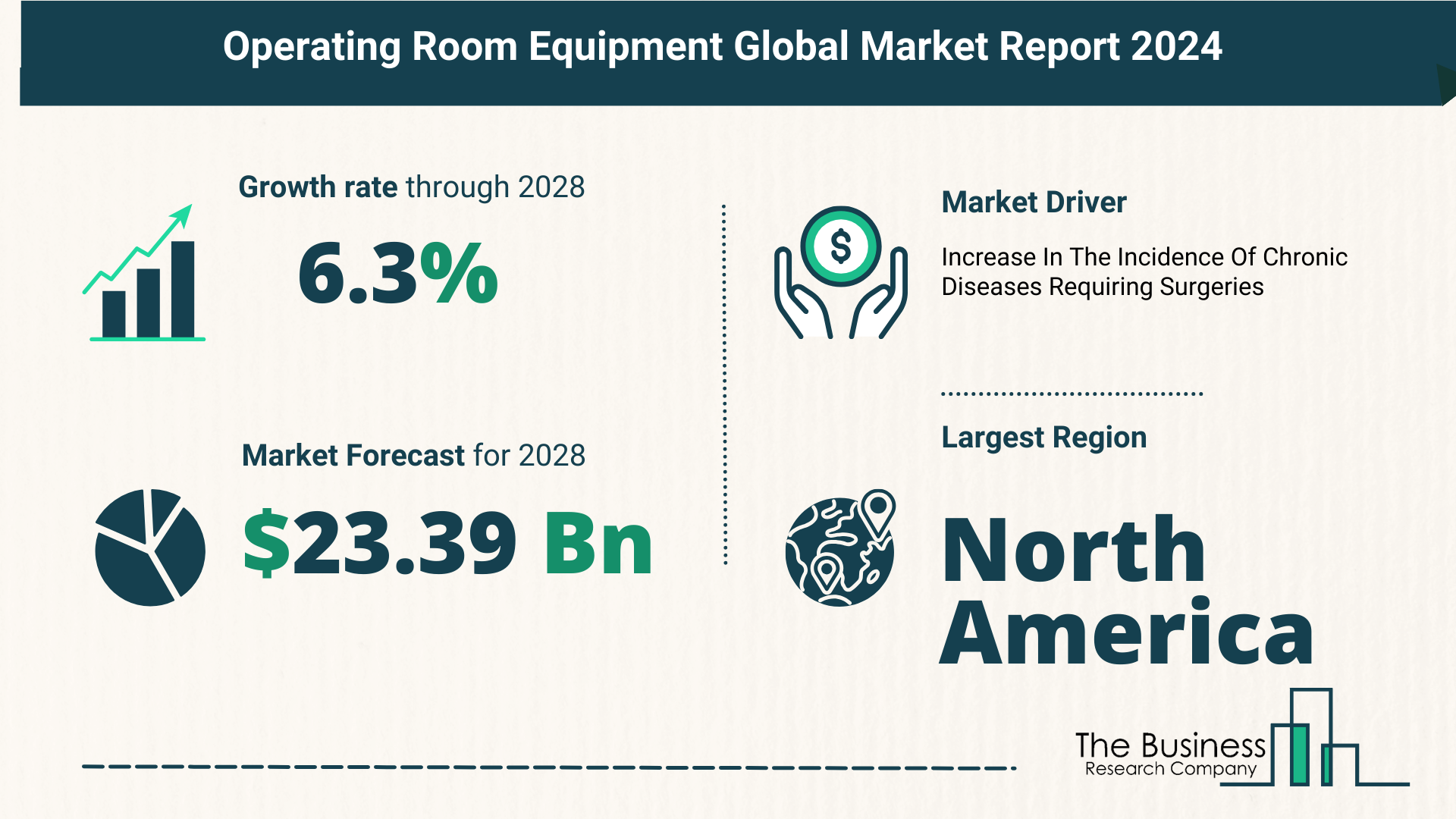
    • Projected to reach $23.39 billion by 2028, boasting a CAGR of 6.3%.
    • Factors driving this growth include economic expansion, demand for minimally invasive surgeries, and government healthcare initiatives.

    Key Trends Shaping the Future

    • Customized MPMS development.
    • Implementation of EPAD technology in neuromonitoring devices.
    • Next-generation ultrasonic surgical devices.
    • Multi-modal surgical devices.
    • Adoption of pay-per-use models for operational cost reduction.

    Rising Incidence of Chronic Diseases

    • Increasing prevalence of chronic diseases necessitates surgical interventions.
    • Advanced operating room equipment crucial for precise surgical procedures.
    • Chronic diseases account for a significant portion of global fatalities, propelling market growth.

    View More On The Operating Room Equipment Market Report 2024 – https://www.thebusinessresearchcompany.com/report/operating-room-equipment-global-market-report

    Major Players in the Market

    • Medtronic PLC
    • Olympus Corporation
    • General Electric Company
    • Stryker Corporation
    • Koninklijke Philips N.V.
    • And many more…

    Hybrid Operating Rooms: A Game-Changer

    • Emerging trend offering advanced medical imaging systems.
    • Supports high-quality interventional imaging and minimally invasive surgeries.
    • Reduces healthcare expenditure, enhances patient safety, and minimizes surgery time.

    Baxter’s Acquisition of Hillrom

    • Baxter’s acquisition of Hillrom for $15 billion in December 2021.
    • Unites two leading MedTech organizations to transform healthcare.
    • Hillrom, a US-based medical technology provider, strengthens Baxter’s global footprint.

    Market Segmentation

    • Types: Anesthesia Devices, Endoscopes, Operating room Lights, Operating Tables, Electrosurgical Devices, Surgical Imaging Devices, Patient Monitors.
    • Applications: Cardiovascular Surgery, Thoracic Surgery, Neurosurgery, and Others.
    • End Users: Hospitals, Outpatient Facilities, and Ambulatory Surgery Centers.

    Regional Insights

    • North America led the global operating room equipment market in 2023.

    Conclusion 

    The operating room equipment market is poised for remarkable growth driven by technological advancements, rising chronic disease incidences, and strategic industry collaborations. As healthcare continues to evolve, innovative solutions offered by operating room equipment pave the way for enhanced patient outcomes and revolutionized surgical practices worldwide.

    Request A Sample Of The Global Operating Room Equipment Market Report 2024:
    https://www.thebusinessresearchcompany.com/sample_request?id=3804&type=smp

  • Microbiology Diagnostic Devices And Equipment Global Market Outlook 2024-2033: Size And Growth Rate Analysis

    Microbiology Diagnostic Devices And Equipment Global Market Outlook 2024-2033: Size And Growth Rate Analysis

    The Business Research Company’s global market reports provide comprehensive analysis on the various markets in 27 industries across 60 geographies.

    Understanding Market Dynamics
    The microbiology diagnostic devices and equipment market has experienced remarkable growth in recent years. In 2023, it reached a valuation of $4.49 billion, with projections indicating further expansion to $5.02 billion in 2024, boasting a Compound Annual Growth Rate (CAGR) of 11.8%. This growth trajectory is underpinned by several key factors:

    1. Increased Healthcare Expenditure
    • Rising investments in healthcare infrastructure globally.
    • Growing emphasis on disease prevention and management.
    1. Emerging Markets Growth
    • Expanding healthcare access in developing regions.
    • Greater adoption of diagnostic technologies.
    1. Rapid Technological Advances
    • Innovation driving the development of more efficient diagnostic tools.
    • Integration of digital solutions for enhanced accuracy and speed.
    1. Aging Population
    • Demographic shifts leading to higher demand for healthcare services.
    • Increased susceptibility to infectious diseases among the elderly.
    1. Emergence of Novel Pathogenic Infestations
    • Ongoing challenges posed by new infectious agents.
    • Urgent need for advanced diagnostic solutions to combat emerging threats.

    View More On The Microbiology Diagnostic Devices And Equipment Market Report 2024 – https://www.thebusinessresearchcompany.com/report/microbiology-diagnostic-devices-and-equipment-global-market-report

    Riding the Wave of Growth: Future Projections
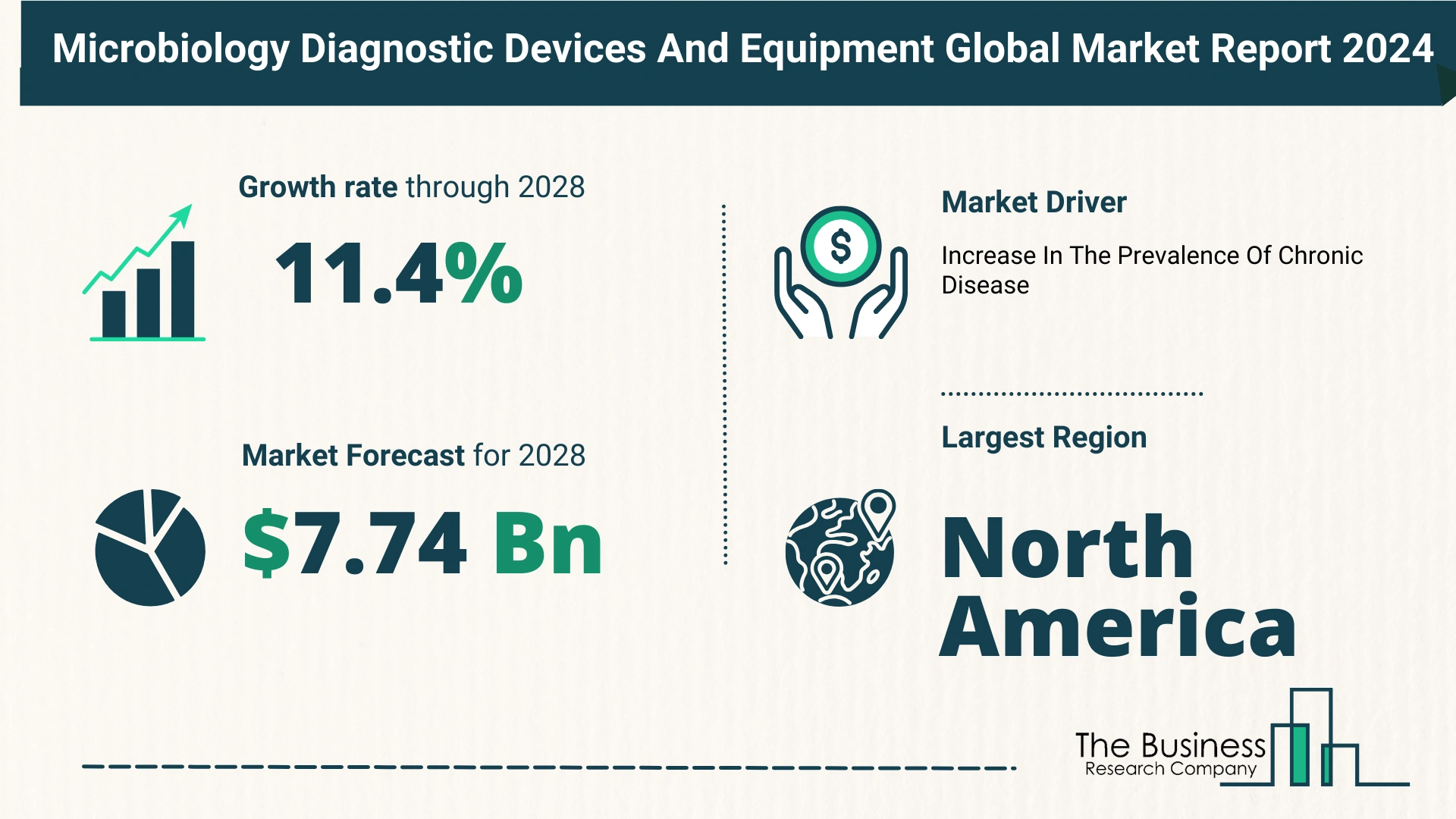
    Looking ahead, the microbiology diagnostic devices and equipment market is poised for continued expansion. By 2028, it is forecasted to soar to $7.74 billion, with a CAGR of 11.4%. Several factors will fuel this growth:

    1. Rise in Funding
    • Increased investments in medical devices and technology.
    • Funding support for research and development endeavors.
    1. Aging Population
    • Continued demographic shifts driving healthcare demand.
    • Heightened focus on geriatric healthcare needs.
    1. Increase in Healthcare Access
    • Efforts to improve healthcare infrastructure worldwide.
    • Greater emphasis on preventive care and early diagnosis.
    1. Rise of Bacterial and Viral Epidemics
    • Growing prevalence of infectious diseases.
    • Demand for robust diagnostic solutions to address public health challenges.
    1. Major Trends Shaping the Landscape
    • Adoption of predictive diagnostics for proactive healthcare management.
    • Automation revolutionizing microbiology diagnostics processes.
    • Next-generation microbial testing enhancing accuracy and efficiency.
    • Increasing mergers and acquisitions driving market consolidation.

    Spotlight on Key Drivers: Industry Insights
    Surge In Funding And Investments Accelerates Growth In The Microbiology Diagnostic Devices Market

    • Increased confidence in microbiology diagnostic devices fueled by rising investments.
    • Notable investments in digital health technologies and AI augment market growth.
    • Leading companies like Danaher, Abbott Laboratories, and Thermo Fisher Scientific driving innovation.

    Next-Generation Sequencing Revolutionizes Microbiology Diagnostic Devices Market

    • Next-Generation Sequencing (NGS) technologies offer cost-effective and sensitive solutions.
    • Partnerships like BioMérieux and Illumina pave the way for advanced diagnostic services.
    • Modern NGS technologies such as Illumina sequencing and Roche 454 sequencing are leading the charge.

    DCN Dx Bolsters Its Point-Of-Use Testing Capabilities With Acquisition Of Biomed Diagnostics

    • Strategic acquisitions enhancing companies’ market presence and offerings.
    • DCN Dx’s acquisition of Biomed Diagnostics strengthens its position in point-of-use testing.
    • Market segmentation facilitates targeted approaches for varied end-users and needs.

    Conclusion: Charting the Course Ahead
    As North America takes the lead in the microbiology diagnostics devices and equipment market, global players are gearing up to capitalize on burgeoning opportunities. With a blend of innovation, strategic partnerships, and market segmentation, the industry is poised to address evolving healthcare needs and navigate the complexities of infectious disease management. As stakeholders continue to invest in cutting-edge technologies and expand their reach, the journey towards comprehensive microbiology diagnostics solutions accelerates, promising brighter prospects for healthcare worldwide.

    Request A Sample Of The Global Microbiology Diagnostic Devices And Equipment Market Report 2024:
    https://www.thebusinessresearchcompany.com/sample_request?id=3408&type=smp

  • How Is The Medical Equipment Market Expected To Grow Through 2024-2033

    How Is The Medical Equipment Market Expected To Grow Through 2024-2033

    The Business Research Company’s global market reports are now updated with the latest market sizing information for the year 2024 and forecasted to 2033

    According to The Business Research Company’s Medical Equipment Global Market Report 2024, the medical equipment market is expected to show promising growth in the forecast period.

    Current Landscape and Projections

    • The medical equipment market has experienced robust growth in recent years.
    • From $709.55 billion in 2023, it’s projected to reach $775.42 billion in 2024, with a CAGR of 9.3%.
    • This growth is attributed to increased healthcare expenditure, economic growth in emerging markets, and a surge in healthcare facilities and surgical procedures.

    Anticipated Growth and Contributing Factors

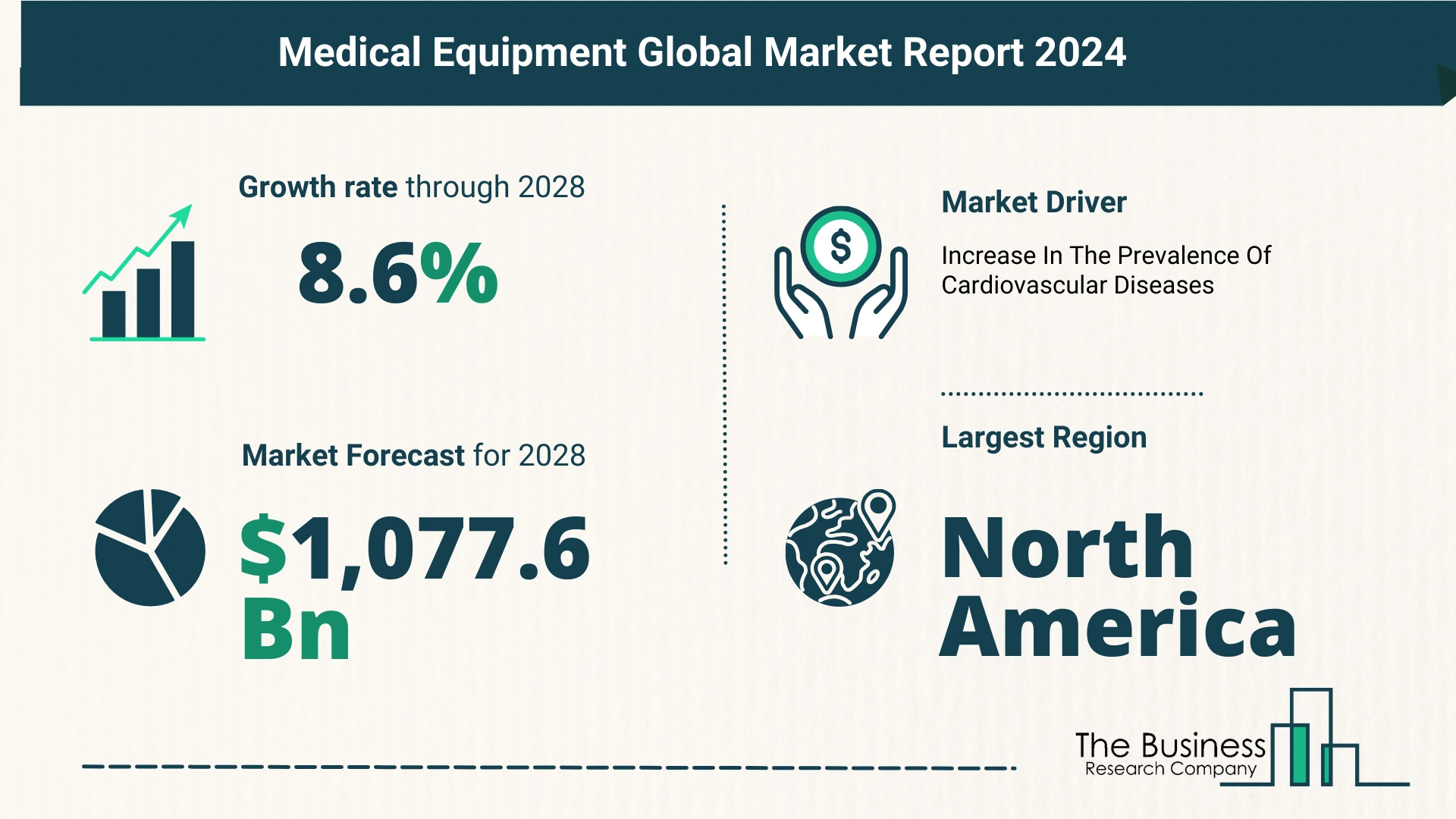
    • The market is expected to soar to $1,077.6 billion by 2028, boasting a CAGR of 8.6%.
    • Factors driving this growth include an aging population, escalating chronic diseases, and government support.
    • Key trends in this period encompass technological advancements, expansion of manufacturing facilities, partnerships, and a focus on cardiovascular devices and hybrid imaging technologies.

    Surge In Cardiovascular Disease Prevalence Drives Growth

    • Cardiovascular diseases are poised to fuel market growth.
    • The prevalence of conditions like atherosclerosis and blood clots necessitates medical equipment for prevention, diagnosis, and treatment.
    • Heart disease alone claimed 695,000 lives in the US in 2021, emphasizing the market’s potential for growth.

    View More On The Medical Equipment Market Report 2024 – https://www.thebusinessresearchcompany.com/report/medical-equipment-global-market-report

    Major Players in the Arena

    • Leading companies in the medical equipment market include Medtronic Inc, Abbott Laboratories, Johnson & Johnson, and more.
    • Innovation is key, with companies like Stryker Corporation introducing groundbreaking products such as the EasyFuse Dynamic Compression System.

    Innovative Easyfuse Dynamic Compression System

    • The EasyFuse system offers advanced fixation in foot and ankle surgeries.
    • Launched by Stryker Corporation, it simplifies procedures, reduces surgical waste, and ensures consistent implant strength.

    Segmentation for Market Understanding

    1. By Type: Includes In-Vitro Diagnostics, Dental Equipment, Ophthalmic Devices, and more.
    2. By Type of Expenditure: Segregated into Public and Private sectors.
    3. By Product: Categorized as Instruments and Equipment, or Disposables and Consumables.
    4. By End User: Encompasses Hospitals, Homecare, Diagnostic Centers, and Other End Users.

    Regional Insights

    • North America emerged as the largest region in the global medical equipment market in 2023.

    Conclusion

    The medical equipment market is on an upward trajectory, driven by various factors including technological advancements, demographic shifts, and strategic collaborations. With a burgeoning demand for healthcare services worldwide, the industry is poised for continued growth and innovation. As major players continue to invest in research and development, the landscape of medical equipment will undoubtedly evolve to meet the ever-changing needs of healthcare providers and patients alike.

    Request A Sample Of The Global Medical Equipment Market Report 2024:
    https://www.thebusinessresearchcompany.com/sample_request?id=3157&type=smp

  • Overview Of The Masks (N95 Respirators And Other Surgical Masks) Market 2024-2033: Growth And Major Players Analysis

    Overview Of The Masks (N95 Respirators And Other Surgical Masks) Market 2024-2033: Growth And Major Players Analysis

    The Business Research Company’s global market reports are now updated with the latest market sizing information for the year 2024 and forecasted to 2033

    Introduction:

    • The masks market has experienced significant growth in recent years.
    • Projections indicate continued expansion in the coming years.

    Market Overview:

    • Size grew from $14.49 billion in 2023 to $15.6 billion in 2024.
    • Compound Annual Growth Rate (CAGR) of 7.6%.
    • Factors driving growth:
      • Impact of COVID-19 pandemic.
      • Rising air pollution levels.
      • Escalating number of smokers.
      • Increased surgical procedures.
      • Rise in healthcare expenditure.
      • Increased geriatric population.

    Future Growth Projections:

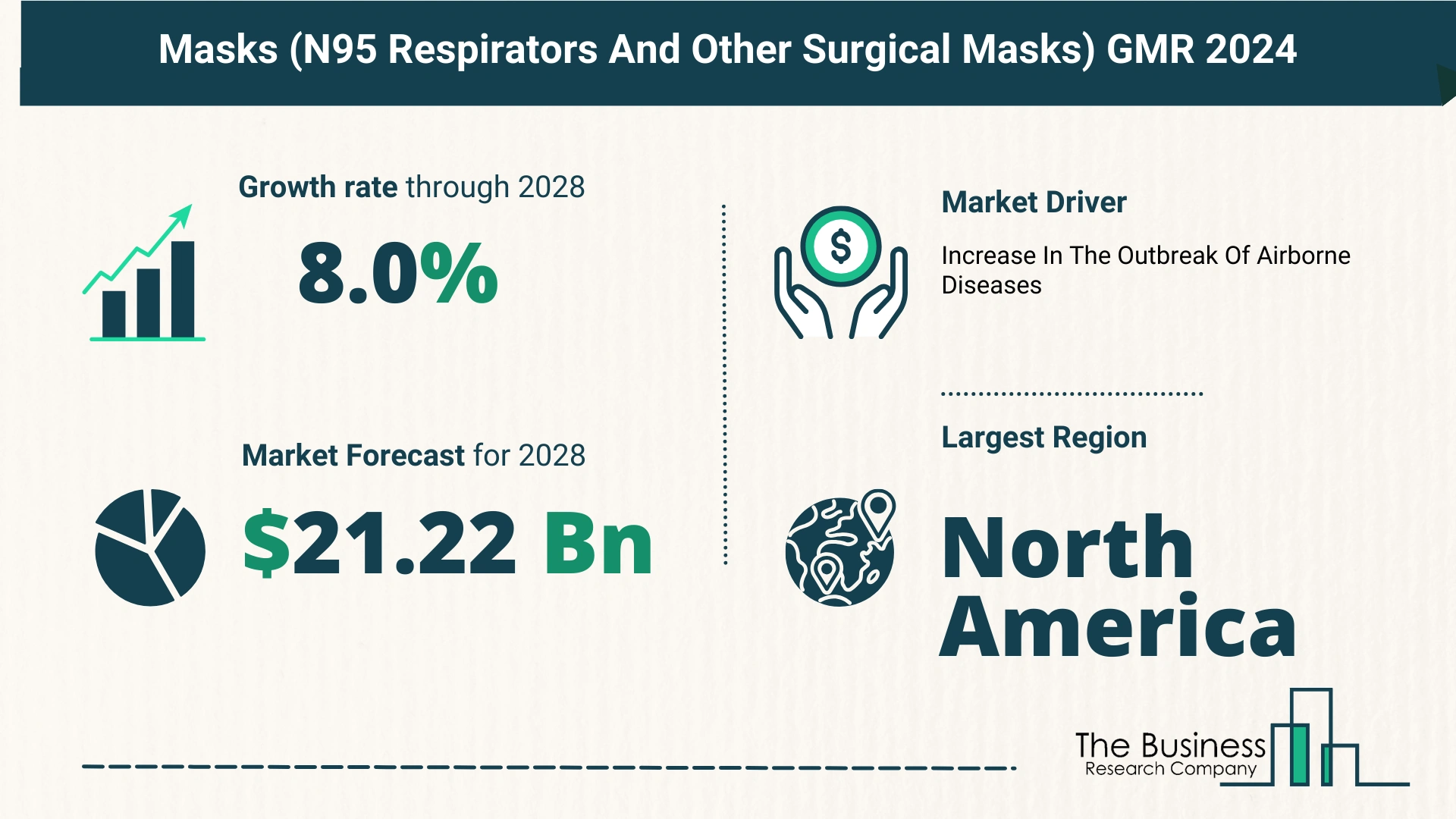
    • Expected to reach $21.22 billion by 2028.
    • CAGR of 8.0%.
    • Factors contributing to growth:
      • New COVID-19 strains.
      • Rise in airborne diseases.
      • Government initiatives.
      • Increase in online pharmacies.
    • Major trends in forecast period:
      • Integration of new technologies.
      • Mergers and acquisitions.
      • Investment in biodegradable materials.
      • Nanotechnology.
      • Customized mask manufacturing.
      • Development of reusable silicon masks.

    View More On The Masks (N95 Respirators And Other Surgical Masks) Market Report 2024 – https://www.thebusinessresearchcompany.com/report/masks-n95-respirators-and-other-surgical-masks-global-market-report

    Surge In Construction Activities Boosts Growth Of Masks Market:

    • Construction sector driving growth.
    • N95 masks used to protect workers.
    • Global construction output expected to increase by 42% by 2030.
    • Construction activities fueling demand for masks.

    Key Players in the Market:

    • Major companies include:
      • Honeywell International Inc.
      • 3M Company.
      • Kimberly-Clark Corporation.
      • DuPont.
      • Johnson & Johnson.
    • Diverse range of companies operating in the market.

    Shift Towards Disposable Devices In Developed Countries:

    • Disposable devices gaining traction.
    • Advantages include:
      • Elimination of sterilization need.
      • Reduced cross-contamination.
      • Cost-effectiveness.
    • Disposable masks preferred over reusable ones.
    • Disposable surgical masks seen as more protective.

    Market Segmentation:

    • Segmented by:
      1. Type: N95 Respirator, Surgical Masks, Others.
      2. End User: Hospitals, Individuals, Others.
      3. Nature: Reusable, Disposable.
    • North America leading region in 2023.

    Conclusion:

    • The masks market is witnessing robust growth.
    • Factors such as the COVID-19 pandemic, rising pollution levels, and healthcare expenditure contribute to its expansion.
    • Future projections indicate continued growth, driven by technological advancements and market trends.
    • The surge in construction activities and the shift towards disposable devices further fuel market growth.
    • With key players and diverse market segmentation, the masks market presents ample opportunities for investors and stakeholders alike.

    Request A Sample Of The Global Masks (N95 Respirators And Other Surgical Masks) Market Report 2024:
    https://www.thebusinessresearchcompany.com/sample_request?id=3992&type=smp

  • Key Insights On The Lateral Flow Immunoassay (LFIA) Based Rapid Test Market 2024 – Size, Driver, And Major Players

    Key Insights On The Lateral Flow Immunoassay (LFIA) Based Rapid Test Market 2024 – Size, Driver, And Major Players

    The Business Research Company’s global market reports are now updated with the latest market sizing information for the year 2024 and forecasted to 2033

    As per The Business Research Company’s Lateral Flow Immunoassay (LFIA) Based Rapid Test Global Market Report 2024, the lateral flow immunoassay (LFIA) based rapid test market is expected to show significant growth in the forecast period.

    The lateral flow immunoassay (LFIA) based rapid test market has witnessed a significant downturn in recent years, with the market size declining from $9.19 billion in 2023 to $8.33 billion in 2024, marking a compound annual growth rate (CAGR) of -9.4%. This decline is attributed to various factors including:

    • Limited sensitivity and specificity
    • Complexity of multiplexing
    • Cross-reactivity issues
    • Storage and shelf-life challenges
    • Limited quantitative capability

    Forecasting the Future

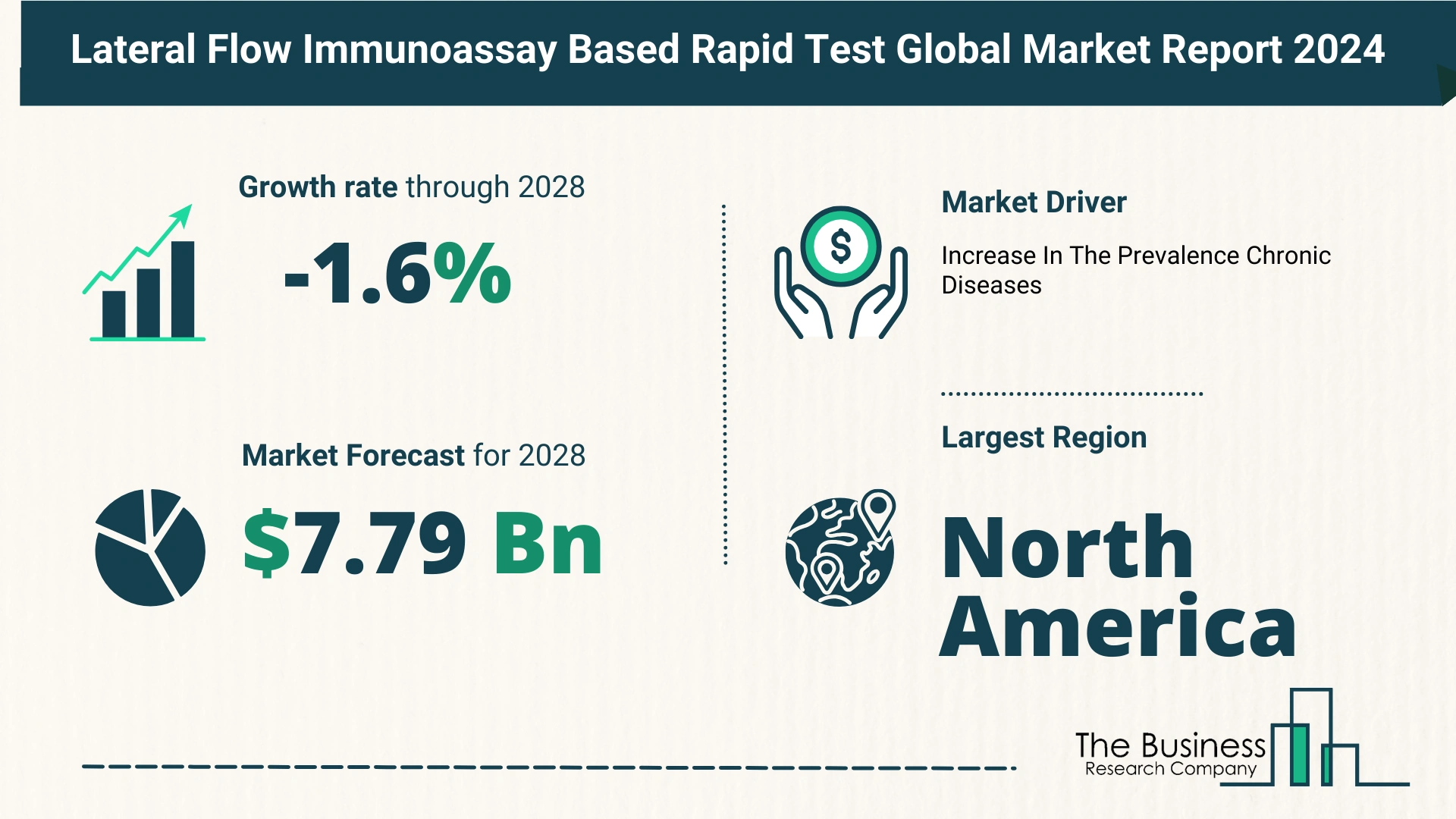
    While the decline is expected to continue, albeit marginally, the market is projected to reach $7.79 billion by 2028, with a CAGR of -1.6%. Factors contributing to this forecasted decline include:

    • Global supply chain disruptions
    • Regulatory challenges
    • Increased competition
    • Emergence of alternative technologies
    • Integration with digital health platforms

    View More On The Lateral Flow Immunoassay (LFIA) Based Rapid Test Market Report 2024 – https://www.thebusinessresearchcompany.com/report/lateral-flow-immunoassay-based-rapid-test-global-market-report

    Emerging Trends and Strategies

    Despite the challenges, several trends and strategies are expected to shape the LFIA market in the forecast period:

    • Development of advanced technologies for multiple or repetitive LFIA based rapid tests
    • Focus on partnerships and collaborations
    • Investment in at-home test kits
    • Integration of artificial intelligence-based tests for disease screening and detection
    • Development of low-cost test kits for improved accessibility

    Rising Demand For Point-Of-Care Testing In Home Care Settings Propels The LFIA-Based Rapid Test Market

    Driving Factors

    The demand for point-of-care testing in home care settings is anticipated to be a key driver for the LFIA-based rapid test market. Point-of-care testing allows for rapid on-site diagnosis and treatment, with important features including quick analysis time and a test-to-answer format. LFIA tests are favored for their speed, precision, simplicity, and affordability.

    Case in Point: COVID-19

    The recent COVID-19 outbreak has underscored the importance of LFIA-based rapid tests for rapid screening and surveillance. Products such as the Acro Biotech COVID-19 Rapid POC CE-IVD and OZO’s variations for COVID-19 testing highlight the role of LFIA in point-of-care testing.

    Market Players

    Major companies driving the LFIA market include Abbott Laboratories, F. Hoffmann-La Roche, Quidel Corporation, and many more. These players are instrumental in providing essential testing solutions, especially in critical times such as disease outbreaks.

    Increasing Focus On Product Innovations To Provide Reliable Services To Their Customers

    Innovative Solutions

    Companies in the LFIA market are focusing on product innovations to drive market growth. Examples include Abbott Laboratories’ Panbio COVID-19 antigen self-test, which enables individuals to detect the presence of the SARS-CoV-2 virus quickly and conveniently.

    Strategic Acquisitions

    Strategic acquisitions, such as Danaher Corporation’s acquisition of Abcam plc, play a significant role in enhancing companies’ capabilities and expanding their market presence. This acquisition, aimed at bolstering Danaher’s life sciences business, exemplifies the industry’s commitment to growth and innovation.

    Segmentation and Regional Insights

    Market Segmentation

    The LFIA market is segmented by technique, application, and end-users, catering to a diverse range of diagnostic needs. Techniques include competitive assay, sandwich assay, and multiplex detection assay, while applications span infectious disease, pregnancy and fertility, toxicology, cardiac marker and cholesterol testing, among others.

    Regional Dynamics

    North America emerged as the largest region in the LFIA market in 2023, underscoring the region’s significant contribution to the global diagnostic landscape.

    In conclusion, while the LFIA-based rapid test market faces challenges, innovative solutions, strategic partnerships, and a focus on customer needs are poised to drive growth and resilience in the years to come.

    Request A Sample Of The Global Lateral Flow Immunoassay (LFIA) Based Rapid Test Market Report 2024:
    https://www.thebusinessresearchcompany.com/sample_request?id=3293&type=smp

  • What Is The Forecast Growth Rate For The Laboratory Automation Systems Market?

    What Is The Forecast Growth Rate For The Laboratory Automation Systems Market?

    The Business Research Company’s market reports offer an in-depth analysis on the market’s growth potential, major drivers, key trends and more.

    • Market Growth in Recent Years: Significant increase from $5.28 billion in 2023 to $5.57 billion in 2024 at a CAGR of 5.6%.
    • Key Drivers: Increase in medical errors, growth in healthcare facilities, economic growth in emerging markets, rise in healthcare expenditure, and rapid growth in the elderly population.

    Anticipated Growth and Key Drivers

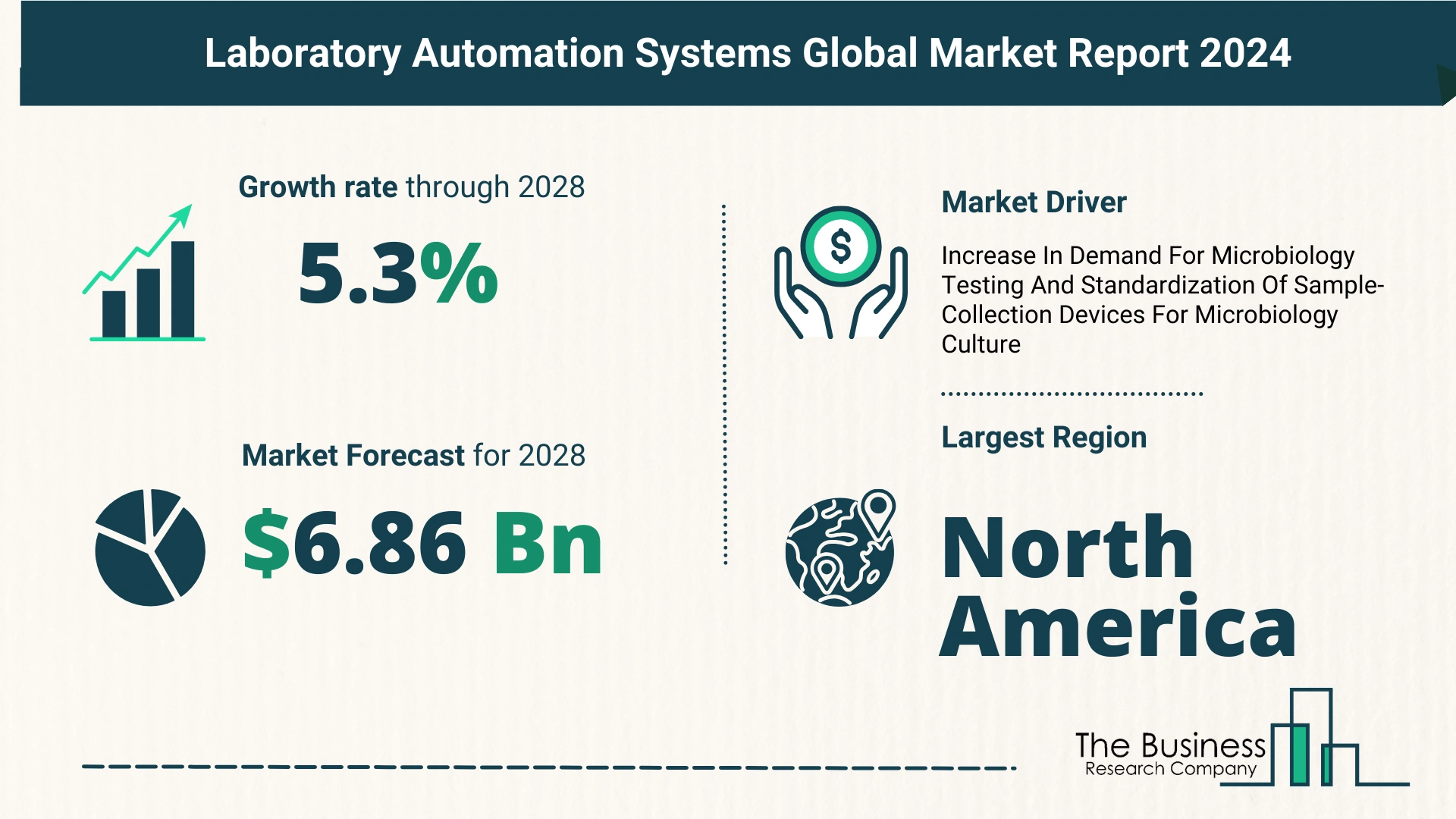
    • Projected Growth: Expected to reach $6.86 billion in 2028 at a CAGR of 5.3%.
    • Factors Driving Growth:
      • Rapid technological advances
      • Rising aging population
      • Increasing prevalence of chronic diseases
      • Impact of COVID-19
      • Rise in lifestyle diseases

    Read More On The Laboratory Automation Systems Market Report 2024 – https://www.thebusinessresearchcompany.com/report/laboratory-automation-systems-global-market-report

    Major Trends in the Forecast Period

    • Investment in R&D: Emphasizing more on investing in research and development.
    • Collaboration with AI Companies: Partnering with artificial intelligence companies for enhanced solutions.
    • Partnerships: Collaborating with other players in the market for mutual benefits.
    • Efficient Solutions: Developing more efficient laboratory automation solutions.
    • RFID Technology: Incorporating RFID technology for improved tracking and identification.
    • New Product Launches: Bringing new product launches and approvals.
    • Government Initiatives: Receiving aid from government initiatives to boost market growth.

    Implementation of RFID Technology to Enhance Laboratory Automation

    • Adoption Trends: Hospital laboratories increasingly adopting RFID technology.
    • Benefits: Better productivity, product quality, reduced costs, error reduction, faster sample delivery, and reduced human intervention.
    • Functionality: RFID technology allows automatic identification and additional functions without human intervention.
    • Example: Mayo Clinic’s adoption of RFID-enabled systems resulted in significant error reduction and efficiency improvement.

    SPT Labtech Acquisition of BioMicroLab

    • Strategic Move: Acquisition of BioMicroLab by SPT Labtech expands product offerings in life sciences sample management.
    • Impact: Strengthens SPT Labtech’s position in the robotics automation market for life sciences laboratories.

    Market Segmentation

    1. By Type: Modular Automation, Total Lab Automation
    2. By Equipment And Software: Automated Liquid Handling, Microplate Readers, Standalone Robots, Automated Storage, Retrieval
    3. By Application: Drug Discovery, Clinical Diagnostics, Genomics Solutions, Proteomics Solutions, Others
    4. By End User: Biotechnology And Pharmaceutical Industries, Research Institutes, Hospitals And Private Labs, Academic Institutes

    Regional Analysis

    • North America: Largest region in the laboratory automation systems market in 2023.

    The laboratory automation systems market is poised for significant growth, driven by technological advancements, demographic shifts, and increasing healthcare needs. With a focus on innovation, collaboration, and efficiency, the market is expected to witness transformative changes in the coming years.

    Request for A Sample Of The Global Laboratory Automation Systems Market Report:
    https://www.thebusinessresearchcompany.com/sample_request?id=2560&type=smp

  • Comprehensive Analysis On Size, Share, And Drivers Of The Joint Reconstruction Devices And Equipment Market

    Comprehensive Analysis On Size, Share, And Drivers Of The Joint Reconstruction Devices And Equipment Market

    The Business Research Company’s global market reports provide comprehensive analysis on the various markets in 27 industries across 60 geographies.

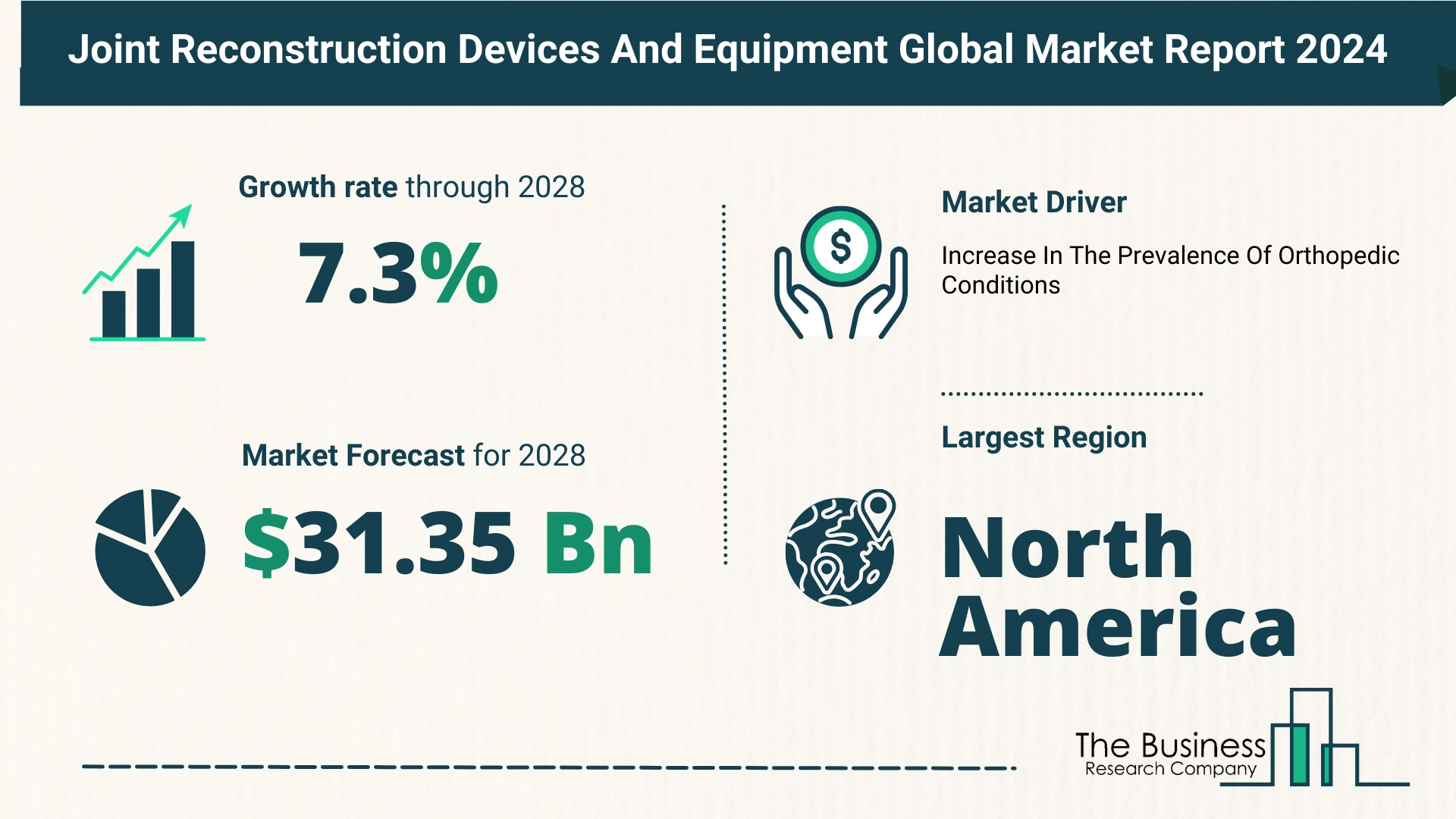
    The joint reconstruction devices and equipment market has witnessed robust growth in recent years, with significant advancements in technologies and increasing healthcare expenditure. The market size is projected to grow from $21.86 billion in 2023 to $23.62 billion in 2024, marking a compound annual growth rate (CAGR) of 8.1%. Looking ahead, the market is poised for continued expansion, reaching $31.35 billion in 2028 at a CAGR of 7.3%.

    Expanding Patient Pool With Joint Reconstruction Diseases Fuels Growth

    • Increasing Prevalence: The rise in joint reconstruction diseases, including osteoarthritis, knee and hip injuries, and cartilage damage, is expanding the patient pool.
    • Preference for Joint Replacement: Patients are opting for joint replacement treatments due to their enhanced safety and reliability over other options.
    • Geriatric Population Impact: The aging population globally, coupled with conditions like osteoarthritis, is significantly contributing to the surge in demand for joint reconstruction devices.

    Innovative Advancements Revolutionize Treatment Landscape

    • 3D Printing Technology: Major companies are investing in 3D printing technology, enabling personalized preoperative planning and improved safety for patients.
    • Case in Point: Exactech’s launch of a novel total hip arthroplasty system showcases the potential of advanced design features in improving surgical outcomes.

    View More On The Joint Reconstruction Devices And Equipment Market Report 2024 – https://www.thebusinessresearchcompany.com/report/joint-reconstruction-devices-and-equipment-global-market-report

    Stryker’s Strategic Acquisition Bolsters Presence in Smart Sensor Technologies

    • OrthoSensor Acquisition: In January 2021, Stryker Corporation acquired OrthoSensor, reinforcing its position in smart sensor technologies.
    • Smart Sensor Solutions: OrthoSensor’s expertise in digital knee replacement solutions aligns with Stryker’s commitment to innovation and excellence in orthopedic care.

    Market Segmentation and Regional Landscape
    The joint reconstruction devices and equipment market is segmented based on product type, application, and end-user:

    1. Product Type: Knee Reconstruction Devices, Hip Reconstruction Devices, Extremity Reconstruction Devices
    2. Application: Arthrodesis, Arthroscopy, Joint Replacement Surgery, Osteotomy, Resurfacing Surgery, Small Joint Surgery
    3. End User: Hospitals, Orthopedic Clinics, Ambulatory Surgical Centers
    • Regional Dominance: North America emerged as the largest region in the global joint reconstruction devices and equipment market in 2023.

    Future Outlook: Trends Shaping the Market

    • IoT-enabled Solutions: Development of IoT-enabled solutions for joint reconstruction surgery to enhance surgical precision and patient outcomes.
    • AI Integration: Utilization of artificial intelligence to streamline processes, reduce costs, and optimize surgical procedures.
    • Robotic Innovations: Increased investment in robotics products for joint reconstruction surgery to improve surgical efficiency and outcomes.
    • Merger and Acquisition Activities: Focus on consolidation through merger and acquisition activities for business expansion and market dominance.
    • 3D Printing Technology: Continued investment in 3D printing technology for personalized implants and surgical planning, driving innovation in the field.

    In conclusion, the joint reconstruction devices and equipment market is experiencing significant growth driven by technological advancements, increasing prevalence of joint diseases, and strategic initiatives by key players. With a promising outlook and ongoing innovations, the market is poised for continued expansion in the years to come.

    Request A Sample Of The Global Joint Reconstruction Devices And Equipment Market Report 2024:
    https://www.thebusinessresearchcompany.com/sample_request?id=2436&type=smp

  • Growth Trajectory Of The Interventional Oncology Devices Market 2024-2033

    Growth Trajectory Of The Interventional Oncology Devices Market 2024-2033

    The Business Research Company’s global market reports are now updated with the latest market sizing information for the year 2024 and forecasted to 2033

    The interventional oncology devices market has exhibited robust expansion, with the market size witnessing significant growth. From $2.35 billion in 2023, it is projected to reach $2.5 billion in 2024, reflecting a compound annual growth rate (CAGR) of 6.4%. Key factors fueling this growth in the historic period include:

    • Aging population pool
    • Increase in cancer prevalence
    • Rise in pharmaceutical R&D expenditure
    • Expanded healthcare expenditure
    • Growth in healthcare facilities

    Anticipating Future Growth
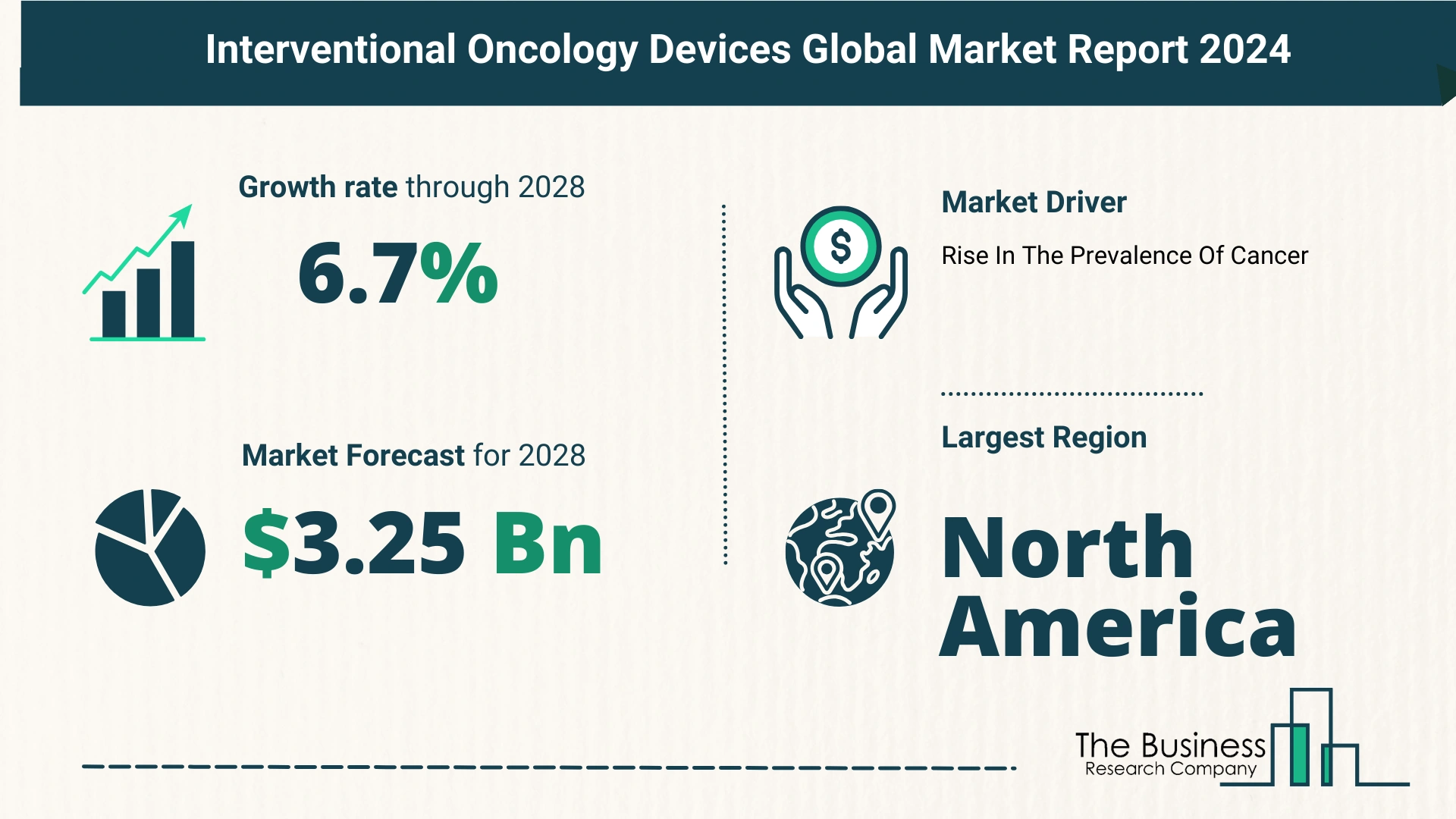
    The outlook for the interventional oncology devices market remains promising, with strong growth projected in the coming years. By 2028, the market is expected to surge to $3.25 billion, at a CAGR of 6.7%. The forecasted growth drivers include:

    • Increasing older population
    • Preference for minimally invasive surgeries (MIS)
    • Growth in research and development spending
    • Rise in healthcare expenditure
    • High potential in emerging economies
    • Increasing prevalence of cancer and chronic diseases

    Emerging Trends in the Forecast Period
    The forecasted period is marked by several notable trends shaping the landscape of interventional oncology devices:

    • Development of advanced image-guided oncology devices
    • Utilization of AI for innovative device development
    • Innovation in embolic devices for improved oncology procedures
    • Integration of robotics technology
    • Collaborative efforts for accelerated product development and innovation

    View More On The Interventional Oncology Devices Market Report 2024 – https://www.thebusinessresearchcompany.com/report/interventional-oncology-devices-global-market-report

    Funding Initiatives Boost Interventional Oncology Devices Market For Enhanced Cancer Treatments
    Driving Growth Through Funding
    Funding initiatives play a pivotal role in propelling the interventional oncology devices market forward. Both private and government funding avenues have contributed significantly to market expansion. Key highlights include:

    • The American Cancer Society allocated substantial grants totaling $384,262,652 in 2021, supporting 630 projects.
    • BioProtect Ltd. secured $13 million in Series D equity financing for the development of ProSpace balloon spacer, enhancing prostate cancer treatment.
    • Endosight, an augmented-reality-guided ablative system, received substantial funding from private organizations.

    Major Players and Market Dynamics
    Several prominent companies operate within the interventional oncology devices market, including:

    • Boston Scientific Corporation
    • Terumo Corporation
    • Siemens Healthineers
    • Sirtex Medical Limited
    • Merit Medical Systems, Inc.
    • Merck & Co. Inc.
    • And many more

    Innovative Ai-Powered Solution Revolutionizes Breast Cancer Diagnosis In Interventional Oncology Devices Market
    Advancements in Breast Cancer Diagnosis
    Major players in the market are innovating with AI-powered solutions to enhance breast cancer diagnosis accuracy. Noteworthy developments include:

    • Paige AI Inc. launched Paige Breast Lymph Node, an AI-powered digital pathology solution, to detect breast cancer metastases in lymph node tissue with high accuracy and efficiency.
    • This innovative technology offers AI-driven detection capabilities, convenient visualization features, and seamless integration into existing pathology workflows.

    Boston Scientific Enhances Interventional Oncology Portfolio With Acquisition Of Obsidio Inc.
    Expanding Portfolio Through Strategic Acquisition
    In August 2022, Boston Scientific Corporation acquired Obsidio Inc., bolstering its position in the interventional oncology market:

    • Obsidio Inc. specializes in developing minimally invasive interventional oncology devices for liver cancer and other solid tumors.
    • The acquisition aims to strengthen Boston Scientific’s interventional oncology portfolio and tap into the growing market demand.

    Segmentation and Regional Insights
    Understanding Market Dynamics
    The interventional oncology devices market is segmented based on various parameters:

    1. Product: Embolization Devices, Ablation Devices, Support Devices
    2. Procedure: Thermal Tumor Ablation, Non-Thermal Tumor Ablation, Transcatheter Arterial Chemoembolization (TACE), Transcatheter Arterial Radioembolization (TARE), Selective Internal Radiation Therapy (SIRT), Transcatheter Arterial Embolization (TAE), Bland Embolization
    3. Cancer Type: Liver Cancer, Kidney Cancer, Lung Cancer, Bone Cancer, Other Cancer Types

    Regional Outlook

    • North America emerged as the largest region in the interventional oncology devices market in 2023, indicating significant market dominance in this region.

    Request A Sample Of The Global Interventional Oncology Devices Market Report 2024:
    https://www.thebusinessresearchcompany.com/sample_request?id=3304&type=smp

  • 5 Takeaways From The Injectable Drug Delivery Devices Market Overview 2024

    5 Takeaways From The Injectable Drug Delivery Devices Market Overview 2024

    The Business Research Company’s global market reports are now updated with the latest market sizing information for the year 2024 and forecasted to 2033

    According to The Business Research Company’s Injectable Drug Delivery Devices Global Market Report 2024, the injectable drug delivery devices market is expected to show promising growth in the forecast period.

    Understanding Market Dynamics

    The injectable drug delivery devices market has witnessed robust growth in recent years, with notable projections for the future. Several factors have contributed to this upward trend:

    • Rapid growth in the elderly population
    • Expansion of healthcare facilities
    • Increased healthcare expenditure
    • Growth in biologics usage
    • Rising awareness of self-administration

    Current Market Size and Projections

    • In 2023, the market size reached $43.54 billion
    • Expected growth to $47.46 billion in 2024 at a CAGR of 9.0%
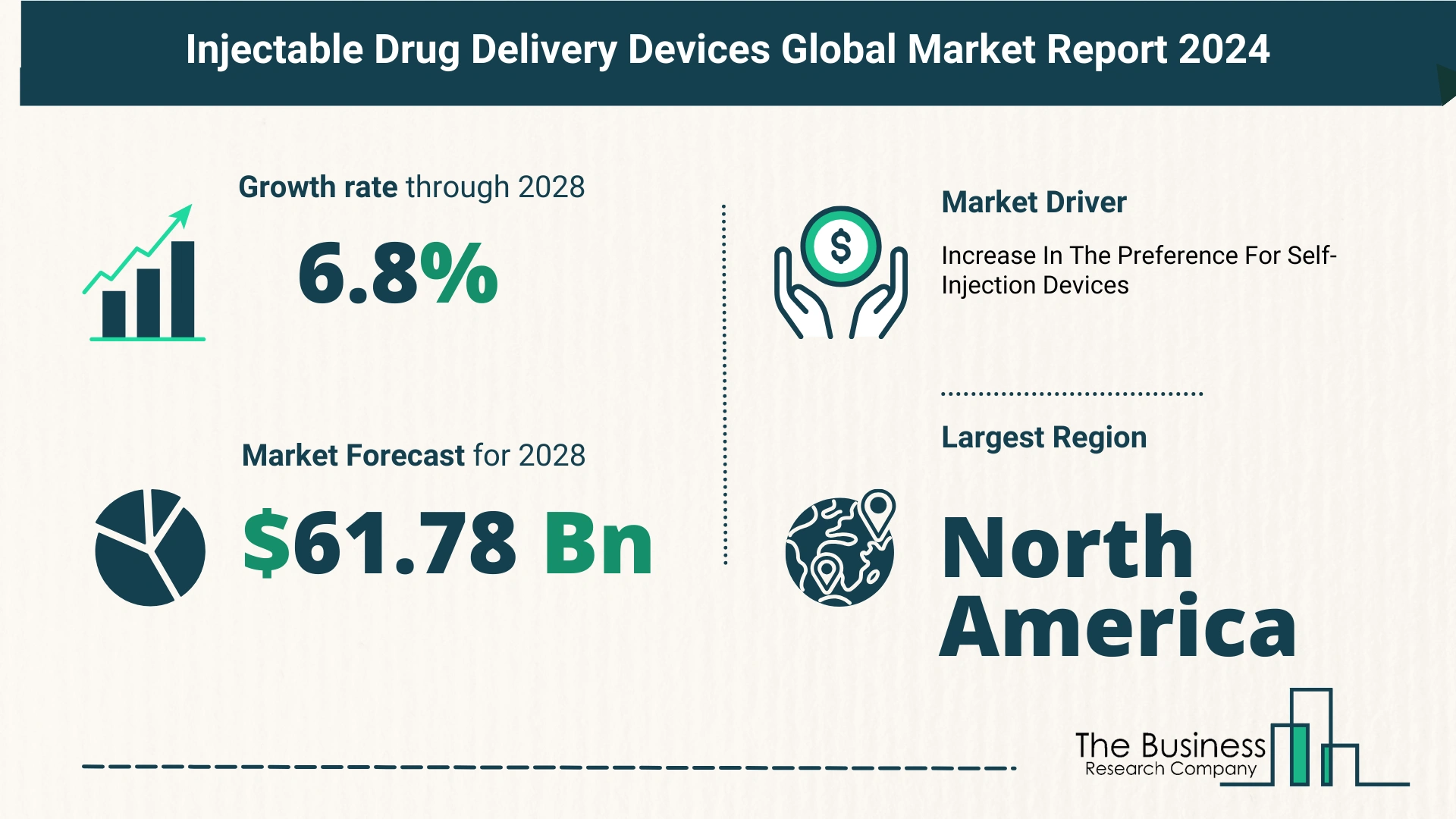
    • Forecasted to reach $61.78 billion in 2028 with a CAGR of 6.8%

    Factors Driving Future Growth

    • Increasing prevalence of chronic diseases
    • Rising demand for injectable drugs
    • Emergence of severe infections
    • Numerous drugs and vaccines in clinical trial stages

    View More On The Injectable Drug Delivery Devices Market Report 2024 – https://www.thebusinessresearchcompany.com/report/injectable-drug-delivery-devices-global-market-report

    Key Trends to Watch

    In the forecast period, several trends are expected to shape the market landscape:

    1. Microneedle-based drug delivery systems
    2. Research and development of self-injectable devices
    3. Manufacturing wearable devices
    4. Needle-free injection system
    5. Expansion of product line to prefilled syringes
    6. Improvement in digital technology
    7. Innovation in device manufacturing
    8. Development of innovative auto-injectors

    Key Players

    A plethora of companies operates in this market, including:

    • Becton, Dickinson and Company
    • Baxter International
    • Gerresheimer AG
    • Braun Melsungen AG
    • Catalent, Inc.
    • SkyePharma PLC
    • Antares Pharma
    • Pfizer Inc.
    • GE Healthcare
    • Owen Mumford
    • Catalent Pharma Solutions
    • Philips
    • West Pharmaceutical Services, Inc.
    • Aptalis Pharma, Inc.
    • Terumo Corporation
    • Kedalion Therapeutics
    • Amgen Inc.

    Advancements In Auto-Injectors For Enhanced Injectable Drug Delivery Devices

    Auto-injectors have emerged as a focal point for many companies in the market. These devices offer advanced features such as:

    • Full automation
    • High customization
    • Reusability

    Market Segmentation

    The injectable drug delivery devices market is segmented based on:

    1. Type: Syringes, Injectors, and Pump
    2. Application: Autoimmune Diseases, Hormonal Disorders, Oncology, Orphan Diseases, Pain Management, Respiratory Therapy, and Other Applications
    3. End-user: Hospitals and Clinics, Home Healthcare Settings, Pharmaceutical and Biotechnological Companies, Research Laboratories, and Other End Users

    Regional Insights

    North America emerged as the largest region in the injectable drug delivery devices market in 2023.

    In conclusion, the injectable drug delivery devices market is poised for significant expansion driven by technological advancements, increasing healthcare needs, and a growing elderly population. With a diverse range of players and ongoing innovations, the landscape promises continued evolution and opportunities for stakeholders across the globe.

    Request A Sample Of The Global Injectable Drug Delivery Devices Market Report 2024:
    https://www.thebusinessresearchcompany.com/sample_request?id=2835&type=smp