Category: Medical Equipment

  • Hematocrit Test Devices Market Size In 2026: Regional Growth, Key Segments And Future Outlook

    Hematocrit Test Devices Market Size In 2026: Regional Growth, Key Segments And Future Outlook

    Built to provide research that’s more actionable and strategically valuable, The Business Research Company’s 2026 market reports include market attractiveness analysis, total addressable market sizing, company benchmarking matrices, interactive Excel dashboards, broader supply chain intelligence, emerging startup tracking, and in-depth product insights.

    Hematocrit Test Devices Market Size Outlook: How Quickly Will Revenue Expand Through 2030?

    The hematocrit test devices market size has experienced strong growth in recent years. It is projected to expand from $4.91 billion in 2025 to $5.22 billion in 2026, demonstrating a compound annual growth rate (CAGR) of 6.4%. The historical growth in this market can be attributed to several factors, including the increasing prevalence of anemia and blood disorders, a rise in hospital and laboratory diagnostic testing, growing demand for blood donor screening, the expansion of emergency and trauma care services, and an increasing awareness of hematocrit monitoring in clinical practice.

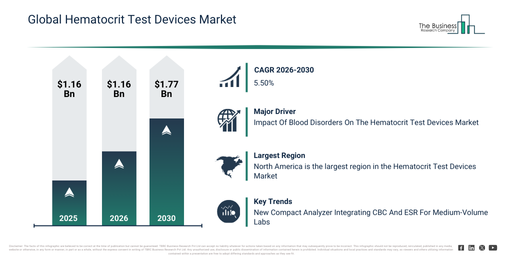
    The hematocrit test devices market is projected to experience robust expansion over the coming years. It is anticipated to reach a valuation of $6.47 billion by 2030, demonstrating a compound annual growth rate (CAGR) of 5.5%. This growth during the forecast period can be primarily ascribed to an escalating demand for point-of-care diagnostic solutions, a growing prevalence of chronic and lifestyle-related illnesses, the expansion of decentralized healthcare systems and at-home testing options, increasing capital allocation towards diagnostic infrastructure, and a heightened emphasis on early disease identification and preventative health measures. Key trends anticipated during this period encompass a surge in the adoption of point-of-care hematocrit testing devices, an increasing need for prompt and precise blood parameter evaluations, wider utilization of portable and handheld hematocrit meters, the broadening application of hematocrit testing within emergency and critical care environments, and a greater emphasis on routine health screenings and the management of chronic conditions.

    Get A Free Sample Report With In-Depth Market Insights:

    https://thebusinessresearchcompany.com/sample_request?id=87074484&type=smp&name=Hematocrit%20Test%20Devices%20Market%20Report%202026&utm_source=Blogs&utm_medium=Paid&utm_campaign=Oct_PR

    Hematocrit Test Devices Market Growth Drivers: What’s Behind The Acceleration?

    The increasing incidence of blood disorders is anticipated to stimulate the expansion of the hematocrit test devices market moving forward. A blood disorder is characterized as a condition impacting components of human blood, including red blood cells, white blood cells, platelets, and blood plasma. The rising occurrence of these disorders is linked to various factors such as genetic predispositions, environmental pollution, and changes in lifestyle. Hematocrit test devices primarily serve to quantify the volume percentage of red blood cells within whole blood, thereby offering vital data concerning a patient’s hematological well-being. Illustratively, in January 2024, a report by the American Cancer Society, a US-based non-profit organization, projected around 62,770 new cases of leukemia across all types in the United States for 2024, leading to an estimated 23,670 deaths. Among these, approximately 20,800 new instances of acute myeloid leukemia (AML) are expected, predominantly affecting adults, with about 11,220 deaths attributed to AML, almost exclusively among adult patients. Therefore, the growing number of blood disorder cases is propelling the growth of the hematocrit test devices market.

    Hematocrit Test Devices Market Segment Analysis Spotlighting Growth Areas

    The hematocrit test devices market covered in this report is segmented –

    1) By Product: Hematocrit Test Meter, Hematocrit Test Analyzer, Reagents And Consumables

    2) By Application: Anemia, Polycythemia Vera, Congenital Heart Diseases, Other Applications

    3) By End-User: Hospitals And Ambulatory Surgical Centers, Clinics, Diagnostic And Pathology Labs, Other End-Users

    Subsegments:

    1) By Hematocrit Test Meter: Handheld Hematocrit Meters, Portable Hematocrit Meters, Desktop Hematocrit Meters, Point-Of-Care Hematocrit Meters, Digital Hematocrit Meters, Battery-Powered Hematocrit Meters

    2) By Hematocrit Test Analyzer: Automated Hematocrit Analyzers, Benchtop Hematocrit Analyzers, Semi-Automated Hematocrit Analyzers, Microhematocrit Analyzers, High-Throughput Hematocrit Analyzers, Compact Hematocrit Analyzers

    3) By Reagents And Consumables: Hematocrit Test Strips, Hematocrit Pipettes And Capillaries, Blood Sample Collection Tubes For Hematocrit Testing, Quality Control Reagents For Hematocrit Testing, Calibration Standards For Hematocrit Devices, Disposable Test Kits And Consumables

    Hematocrit Test Devices Market Trends: What’s Defining The Industry’s Next Phase?

    Leading companies within the hematocrit test device sector are prioritizing sophisticated technologies, specifically user-friendly platforms tailored for laboratories with medium testing volumes. Such platforms are systems incorporating intuitive, simple-to-use features, allowing for rapid operation with very little training required. As an illustration, in March 2024, Mindray, a health technology firm based in China, launched the BC-700 Series—a streamlined, integrated hematology analyzer designed for small to medium laboratories, which merges CBC and ESR testing capabilities into a single unit. This device yields results in merely 1.5 minutes, significantly enhancing both efficiency and workflow. The system employs SF Cube 3D analysis technology to achieve precise cell differentiation and incorporates the PLT-H parameter to enhance platelet counting accuracy. Its integration of CBC and ESR into one instrument leads to a reduction in both equipment and consumable expenses. Offered in both open vial and autoloader configurations, the BC-700 Series offers dependable, automated, and compact testing solutions, demonstrating a strong alignment with conventional methods while also improving safety and repeatability.

    Hematocrit Test Devices Market Leading Companies And Competitive Benchmarking

    Major companies operating in the hematocrit test devices market are F. Hoffmann-La Roche Ltd., Thermo Fisher Scientific Inc., Abbott Laboratories, Danaher Corporation, Siemens Healthcare GmbH, Becton Dickinson and Company, Terumo Corporation, Beckman Coulter Inc., Mindray Medical International Limited, bioMérieux SA, Sysmex Corporation, Horiba Ltd., Nihon Kohden Corporation, Erba Mannheim, EKF Diagnostics Holding Plc., Nova Biomedical Corporation, Boule Diagnostics AB, Stanbio Laboratory LP, Drucker Diagnostics, A. Menarini Diagnostics Srl, Sensa Core, Mikroscan Technologies Inc.

    View The Full Hematocrit Test Devices Market Report:

    https://thebusinessresearchcompany.com/report/hematocrit-test-devices-global-market-report?utm_source=Blogs&utm_medium=Paid&utm_campaign=Oct_PR

    Hematocrit Test Devices Market Top Region By Revenue And Market Share

    North America was the largest region in the hematocrit test devices market in 2025. Asia-Pacific is expected to be the fastest-growing region in the forecast period. The regions covered in the hematocrit test devices market report are Asia-Pacific, South East Asia, Western Europe, Eastern Europe, North America, South America, Middle East, Africa.

    Reach Out To Our Team:

    The Business Research Company: https://www.thebusinessresearchcompany.com/

    Americas: +1 310-496-7795

    Asia: +44 7882 955267 & +91 8897263534

    Europe: +44 7882 955267

    Email us at: marketing@tbrc.info

    Follow us on:

    LinkedIn: https://in.linkedin.com/company/the-business-research-company

    YouTube: https://www.youtube.com/channel/UC24_fI0rV8cR5DxlCpgmyFQ

    Global Market Model: https://www.thebusinessresearchcompany.com/global-market-model
  • Hemato Oncology Testing Market Growth Forecast Through 2030: Market Size And Trends In 2026

    Hemato Oncology Testing Market Growth Forecast Through 2030: Market Size And Trends In 2026

    Backed by market attractiveness analysis, total addressable market sizing, company benchmarking matrices, interactive Excel dashboards, wider supply chain intelligence, emerging startup coverage, and detailed product-level insights, The Business Research Company’s 2026 market reports are designed to offer research that is more actionable and strategically valuable than ever.

    Hemato Oncology Testing Market Size, Value And Growth Trajectory Through 2030

    The hemato oncology testing market size has experienced rapid growth in recent years. It is projected to expand from $3.93 billion in 2025 to $4.5 billion in 2026, achieving a compound annual growth rate (CAGR) of 14.4%. This historic growth can be attributed to several factors including the rising incidence of blood cancers, the expansion of hospital diagnostic laboratories, increasing awareness of early cancer detection, a surge in clinical research activities, and the availability of advanced testing reagents.

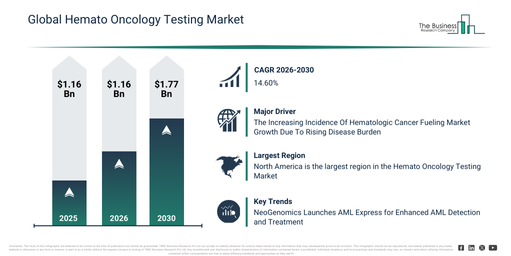
    The hemato oncology testing market is poised for significant expansion in the coming years. This market is projected to reach $7.76 billion by 2030, exhibiting a compound annual growth rate (CAGR) of 14.6%. This anticipated growth during the forecast period is fueled by factors such as the increasing adoption of precision oncology diagnostics, growing investments in genomic testing infrastructure, the expansion of AI-driven diagnostic platforms, the rising demand for companion diagnostics, and ongoing innovation in assay technologies. Key trends characterizing this period encompass the increasing uptake of molecular diagnostic testing, the expanding utilization of next-generation sequencing in oncology, the escalating demand for personalized cancer diagnostics, the proliferation of automated laboratory testing platforms, and the improved integration of data analytics within hemato-oncology.

    Get A Free Sample Report With In-Depth Market Insights:

    https://thebusinessresearchcompany.com/sample_request?id=41483315&type=smp&name=Hemato%20Oncology%20Testing%20Market%20Report%202026&utm_source=Blogs&utm_medium=Paid&utm_campaign=Oct_PR

    Hemato Oncology Testing Market Growth Factors Behind Sustained Expansion

    The hemato oncology testing market is anticipated to expand due to the growing occurrence of hematologic cancer. Hematologic cancer describes a category of cancers that originate in the blood, affecting the blood, bone marrow, and lymphatic system, and includes diseases such as leukemia, lymphoma, and myeloma. Early diagnosis, which can be accomplished through hemato oncology testing, is vital for reducing the impact of these diseases. As an illustration, in September 2025, Cancer Research UK, a UK-based charity, indicated that from 2024 to 2026, the incidence rate of leukemia in the UK is estimated to be approximately 17.9 cases per 100,000 people per year, with a projected decrease of 3% to about 17.4 per 100,000 by 2038 to 2040. Therefore, the rising incidence of hematologic cancer is a significant factor driving the growth of the hemato-oncology testing market.

    Hemato Oncology Testing Market Segment Performance And Emerging Opportunities

    The hemato oncology testing market covered in this report is segmented –

    1) By Product And Services: Assay Kits And Reagents, Services

    2) By Cancer Type: Leukemia, Lymphoma, Multiple Myeloma

    3) By Technology: Polymerase Chain Reaction (PCR), Immunohistochemistry (IHC), Next-Generation Sequencing (NGS)

    4) By End User: Hospitals, Academic And Research Institutes

    Subsegments:

    1) By Assay Kits And Reagents: PCR Kits, Next-Generation Sequencing (NGS) Kits, Flow Cytometry Reagents, Antibodies

    2) By Services: Testing Services, Data Analysis Services

    Hemato Oncology Testing Market Industry Trends Fueling Future Revenue Growth

    Leading companies within the hemato-oncology testing market are introducing advancements such as next-generation sequencing (NGS) to enhance the precision and speed of genetic analysis, enable thorough profiling of hematologic cancers, and support customized treatment approaches aligned with individual patient requirements. Next-generation sequencing (NGS) represents a high-throughput DNA sequencing method that facilitates the rapid and economical examination of entire genomes or specific DNA segments. A notable instance occurred in October 2024, when NeoGenomics Inc., a US-based entity specializing in cancer diagnostics and genomic testing, unveiled AML Express. This next-generation sequencing (NGS) tool is specifically designed for the swift identification of mutations linked to Acute Myeloid Leukemia (AML). This sophisticated diagnostic platform delivers superior accuracy and prompt results, thereby assisting oncologists in making well-timed, targeted therapeutic choices. AML Express aims to elevate patient outcomes by offering precise mutation insights relevant to AML-specific genetic profiles.

    Hemato Oncology Testing Market Industry Leaders And Competitive Landscape

    Major companies operating in the hemato oncology testing market are F. Hoffmann-La Roche Ltd., Abbott Laboratories, Thermo Fisher Scientific Inc., Illumina Inc., Invivoscribe Inc., Qiagen N.V., Bio-Rad Laboratories Inc., Archerdx Inc., ARUP Laboratories Inc., Asuragen Inc., Adaptive Biotechnologies Corp., Cepheid Inc., EntroGen Inc., CORE Diagnostics Inc., Genoptix Inc., GenPath Diagnostics, NeoGenomics Laboratories Inc., Siemens AG, Sysmex Corporation, Laboratory Corporation of America Holdings, Agilent Technologies, Danaher Corporation, Grifols SA, Diaorin SpA, HTG Molecular Diagnostics Inc., Admera Health

    View The Full Hemato Oncology Testing Market Report:

    https://thebusinessresearchcompany.com/report/hemato-oncology-testing-global-market-report?utm_source=Blogs&utm_medium=Paid&utm_campaign=Oct_PR

    Hemato Oncology Testing Market Regional Analysis And Top Geography

    North America was the largest region in the hemato oncology testing market in 2025. Asia-Pacific is expected to be the fastest-growing region in the global hemato oncology testing market report during the forecast period. The regions covered in the hemato oncology testing market report are Asia-Pacific, South East Asia, Western Europe, Eastern Europe, North America, South America, Middle East, Africa.

    Reach Out To Our Team:

    The Business Research Company: https://www.thebusinessresearchcompany.com/

    Americas: +1 310-496-7795

    Asia: +44 7882 955267 & +91 8897263534

    Europe: +44 7882 955267

    Email us at: marketing@tbrc.info

    Follow us on:

    LinkedIn: https://in.linkedin.com/company/the-business-research-company

    YouTube: https://www.youtube.com/channel/UC24_fI0rV8cR5DxlCpgmyFQ

    Global Market Model: https://www.thebusinessresearchcompany.com/global-market-model
  • Heavy Payload Robotic Arm Market Analysis: $14.84 Billion Market Size In 2026 And Future Growth Prospects

    Heavy Payload Robotic Arm Market Analysis: $14.84 Billion Market Size In 2026 And Future Growth Prospects

    Featuring market attractiveness scoring, total addressable market sizing, company benchmarking matrices, interactive Excel dashboards, deeper supply chain intelligence, emerging startup tracking, and granular product-level insights, The Business Research Company’s 2026 market reports are built to deliver research that is both more actionable and more strategically valuable.

    Heavy Payload Robotic Arm Market CAGR Outlook And Future Development

    The market size for heavy payload robotic arms has shown considerable growth in recent years. It is projected to increase from $13.79 billion in 2025 to $14.84 billion in 2026, exhibiting a compound annual growth rate (CAGR) of 7.6%. This historical growth can be linked to a significant reliance on labor in material handling, insufficient automation in welding and metal fabrication, an expanding industrial manufacturing sector, rising automotive production, and a dependence on standard robotic arm models.

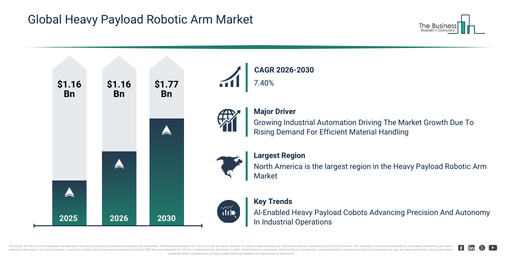
    The heavy payload robotic arm market is projected for substantial expansion over the upcoming years. This market is anticipated to reach $19.72 billion by 2030, exhibiting a compound annual growth rate (CAGR) of 7.4%. Factors driving this growth during the projection period include the creation of sophisticated multi-axis robotic arms, the incorporation of AI and machine learning for enhanced accuracy, increased activity in the electronics and automotive sectors, growing use in construction and chemical industries, and improvements in wireless and computer-based control systems. Key developments expected during this timeframe involve a greater uptake of heavy payload robotic arms for material handling, a surging requirement for multi-axis robotic arms, broader automation in welding and metal fabrication, an increase in palletizing and packaging uses, and an emphasis on improving safety and precision in industrial operations.

    Get A Free Sample Report With In-Depth Market Insights:

    https://thebusinessresearchcompany.com/sample_request?id=92732137&type=smp&name=Heavy%20Payload%20Robotic%20Arm%20Market%20Report%202026&utm_source=Blogs&utm_medium=Paid&utm_campaign=Oct_PR

    Heavy Payload Robotic Arm Market Demand Drivers Opening New Revenue Streams

    The heavy payload robotic arms market is anticipated to experience growth driven by the expansion of industrial automation. This automation involves the deployment of control systems, machinery, and advanced technology to manage industrial processes with minimal human intervention. The increase in industrial automation is primarily attributed to the rising need for higher productivity, as automated systems facilitate quicker production rates, enhanced precision, and reduced operational downtime compared to manual operations. Heavy payload robotic arms contribute to industrial automation by accurately and rapidly managing heavy materials, which in turn boosts productivity, decreases labor requirements, and improves safety in manufacturing environments. For instance, in September 2024, a report published by the International Federation of Robotics (IFR), a Germany-based non-profit organization, indicated that the UK experienced a 51% rise in industrial robot installations in 2023, reaching a total of 3,830 units. Consequently, the growing industrial automation is a significant factor driving the development of the heavy payload robotic arms market.

    Heavy Payload Robotic Arm Market Segment Landscape And Growth Outlook

    The heavy payload robotic arm market covered in this report is segmented –

    1) By Type: Articulated, Cartesian, Selective Compliance Assembly Robot Arm (SCARA), Cylindrical, Other Types

    2) By Payload Capacity: Up To 500 Kilograms (Kg), 500 Kilograms (Kg) To 1000 Kilograms (Kg), 1000 Kilograms (Kg) To 2000 Kilograms (Kg), Above 2000 Kilograms (Kg)

    3) By Control System: Manual Control, Programmable Logic Controller (PLC), Computer-Based Control Systems, Wireless Control Systems

    4) By Application: Material Handling, Welding And Metal Fabrication, Palletizing And Packaging, Other Applications

    5) By End-User Industry: Automotive, Healthcare, Electrical Or Electronics, Metal And Machinery, Chemical, Construction, Other End-Users

    Subsegments:

    1) By Articulated: Four Axis Robotic Arm, Five Axis Robotic Arm, Six Axis Robotic Arm, Seven Axis Robotic Arm

    2) By Cartesian: Two Axis Cartesian Robot, Three Axis Cartesian Robot, Four Axis Cartesian Robot, Gantry Type Cartesian Robot

    3) By Selective Compliance Assembly Robot Arm (SCARA): Horizontal Arm Selective Compliance Assembly Robot Arm (SCARA) Robot, Vertically Articulated Selective Compliance Assembly Robot Arm (SCARA) Robot, Single Arm Selective Compliance Assembly Robot Arm (SCARA) Robot, Dual Arm Selective Compliance Assembly Robot Arm (SCARA) Robot

    4) By Cylindrical: Fixed Base Cylindrical Robot, Mobile Base Cylindrical Robot, Dual Arm Cylindrical Robot, Telescopic Cylindrical Robot

    5) By Other Types: Spherical Robotic Arm, Delta Robotic Arm, Polar Robotic Arm, Hybrid Robotic Arm

    Heavy Payload Robotic Arm Market Trends Powering Strategic Industry Growth

    Major companies operating in the heavy payload robotic arm market are concentrating on developing advanced products, such as heavy payload collaborative robots (cobots), to facilitate smooth collaboration between humans and machines in demanding industrial applications. A heavy payload cobot is a collaborative robotic arm designed to operate alongside humans while safely managing large and heavy loads, integrating significant lifting capacity with enhanced safety features and versatility for various industries. For example, in May 2024, Techman Robot Inc., a Taiwan-based collaborative robot manufacturer, introduced the TM30S. This advanced heavy payload robotic arm offers a maximum payload capacity of 35 kg and a reach of 1,702 mm. The TM30S incorporates built-in smart vision and a 3D camera that employs AI recognition technology to detect object size and position, allowing the robot to execute tasks such as palletizing, pick-and-place, and material handling without depending on predefined stacking patterns. This innovation supports real-time object detection, adaptive path planning, and efficient mixed-case palletizing, which reflects the increasing trend of integrating AI-enabled vision systems to improve operational precision and autonomy in complex industrial environments.

    Heavy Payload Robotic Arm Market Key Participants And Competitive Landscape

    Major companies operating in the heavy payload robotic arm market are Mitsubishi Electric Corporation, ABB Ltd., Kawasaki Heavy Industries Ltd., Seiko Epson Corporation, Hyundai Heavy Industries Co. Ltd., FANUC Corporation, Yaskawa Electric Corporation, Stäubli International AG, NACHI-FUJIKOSHI CORP., Comau S.p.A., SIASUN Robot & Automation Co. Ltd., Scott Technology Limited, Vulcan Engineering Co. Inc., Ellison Technologies Inc., Apex Automation and Robotics Pty. Ltd., TM Robotics Ltd., OTC DAIHEN Inc., Black-I Robotics Inc., CHAIFU Industries Co. Ltd., GS Automatic Co. Ltd.

    View The Full Heavy Payload Robotic Arm Market Report:

    https://thebusinessresearchcompany.com/report/heavy-payload-robotic-arm-global-market-report?utm_source=Blogs&utm_medium=Paid&utm_campaign=Oct_PR

    Heavy Payload Robotic Arm Market Geographic Analysis: Where Is Demand Rising Fastest?

    North America was the largest region in the heavy payload robotic arm market in 2025. Asia-Pacific is expected to be the fastest-growing region in the forecast period. The regions covered in the heavy payload robotic arm market report are Asia-Pacific, South East Asia, Western Europe, Eastern Europe, North America, South America, Middle East, Africa.

    Reach Out To Our Team:

    The Business Research Company: https://www.thebusinessresearchcompany.com/

    Americas: +1 310-496-7795

    Asia: +44 7882 955267 & +91 8897263534

    Europe: +44 7882 955267

    Email us at: marketing@tbrc.info

    Follow us on:

    LinkedIn: https://in.linkedin.com/company/the-business-research-company

    YouTube: https://www.youtube.com/channel/UC24_fI0rV8cR5DxlCpgmyFQ

    Global Market Model: https://www.thebusinessresearchcompany.com/global-market-model
  • Heated Shoulder Wrap Market 2026 Market Size And Growth Forecast: Key Trends To Watch

    Heated Shoulder Wrap Market 2026 Market Size And Growth Forecast: Key Trends To Watch

    Built to provide research that’s more actionable and strategically valuable, The Business Research Company’s 2026 market reports include market attractiveness analysis, total addressable market sizing, company benchmarking matrices, interactive Excel dashboards, broader supply chain intelligence, emerging startup tracking, and in-depth product insights.

    Heated Shoulder Wrap Market Set To Climb From $1.37 Billion In 2026 To $2 Billion By 2030

    The market for heated shoulder wraps has experienced significant expansion in recent years. Projections indicate it will increase from $1.24 billion in 2025 to $1.37 billion in 2026, demonstrating a compound annual growth rate (CAGR) of 10.3%. Historically, this expansion has been driven by factors such as an escalation in musculoskeletal disorders, the proliferation of home healthcare products, a rising elderly demographic, broader retail availability, and increased understanding of the therapeutic benefits of heat.

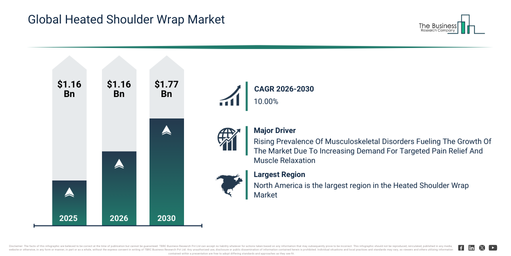
    The heated shoulder wrap market is projected for significant expansion in the coming years. It is anticipated to reach a valuation of $2 billion by 2030, demonstrating a compound annual growth rate (CAGR) of 10.0%. This projected growth throughout the forecast period stems from factors such as increasing demand for sports rehabilitation, the broadening reach of e-commerce channels, advancements in wearable heat therapy, a rise in the prevalence of chronic pain, and the wider adoption of smart therapeutic devices. Key trends during this period are expected to encompass an escalating demand for home-based therapy, the development of portable and lightweight designs, the emergence of smart heated wraps, expanded application in sports recovery, and a growing inclination towards drug-free pain management solutions.

    Get A Free Sample Report With In-Depth Market Insights:

    https://thebusinessresearchcompany.com/sample_request?id=33360293&type=smp&name=Heated%20Shoulder%20Wrap%20Market%20Report%202026&utm_source=Blogs&utm_medium=Paid&utm_campaign=Oct_PR

    Heated Shoulder Wrap Market Growth Backed By Core Demand Fundamentals

    The increasing occurrence of musculoskeletal disorders is anticipated to stimulate the expansion of the heated shoulder wrap market moving forward. Musculoskeletal disorders refer to conditions or injuries impacting muscles, bones, joints, ligaments, tendons, or nerves, leading to pain and limited mobility. These disorders are becoming more common due to sedentary lifestyles, as prolonged sitting and insufficient physical activity strain muscles and joints, resulting in persistent musculoskeletal issues. A heated shoulder wrap assists in managing musculoskeletal disorders by offering targeted heat therapy, which relaxes stiff muscles, improves blood circulation, reduces joint stiffness, and alleviates localized pain in the shoulder region. For example, in January 2024, according to the Office for Health Improvement and Disparities, a UK-based government department, in 2023, 18.4% of people aged 16 and over reported having a long-term musculoskeletal condition, a slight rise from 17.6% in 2022. Such conditions were reported less often by males (15.8%) compared with females (20.9%). Thus, the escalating prevalence of musculoskeletal disorders is propelling the growth of the heated shoulder wrap market.

    Heated Shoulder Wrap Market Breakdown By Product Type And Application

    The heated shoulder wrap market covered in this report is segmented –

    1) By Product Type: Electric Heated Shoulder Wraps, Microwaveable Heated Shoulder Wraps, Chemical Heated Shoulder Wraps, Other Product Types

    2) By Distribution Channel: Online Stores, Pharmacies, Specialty Stores, Supermarkets Or Hypermarkets, Other Distribution Channels

    3) By Application: Pain Relief, Injury Recovery, Sports Rehabilitation, Other Applications

    4) By End-User: Hospitals And Clinics, Home Care, Sports And Fitness Centers, Other End-Users

    Subsegments:

    1) By Electric Heated Shoulder Wraps: Battery-Powered Electric Heated Shoulder Wraps, Rechargeable Electric Heated Shoulder Wraps, Corded Electric Heated Shoulder Wraps, Infrared (IR) Electric Heated Shoulder Wraps

    2) By Microwaveable Heated Shoulder Wraps: Herbal-Filled Microwaveable Heated Shoulder Wraps, Gel-Filled Microwaveable Heated Shoulder Wraps, Bead-Filled Microwaveable Heated Shoulder Wraps, Grain-Filled Microwaveable Heated Shoulder Wraps

    3) By Chemical Heated Shoulder Wraps: Single-Use Chemical Heated Shoulder Wraps, Reusable Chemical Heated Shoulder Wraps, Air-Activated Chemical Heated Shoulder Wraps, Liquid-Based Chemical Heated Shoulder Wraps

    4) By Other Product Types: Hybrid Heated Shoulder Wraps, Smart Heated Shoulder Wraps, Water-Heated Shoulder Wraps, Portable Heat Pack-Integrated Shoulder Wraps

    Heated Shoulder Wrap Market Top Companies Driving Competitive Growth

    Major companies operating in the heated shoulder wrap market are Conair Corporation, DJO LLC, Beurer GmbH, TheraCare Inc., HoMedics Inc., Compass Health Brands, RENPHO, Pure Enrichment, ThermoTek Inc., Vive Health, iReliev, Nature Creation, UTK Technology, REVIX, TheraICE, Bedsure, Bearaby, Tech Love, Intelex Group, Fabludo

    View The Full Heated Shoulder Wrap Market Report:

    https://thebusinessresearchcompany.com/report/heated-shoulder-wrap-global-market-report?utm_source=Blogs&utm_medium=Paid&utm_campaign=Oct_PR

    Heated Shoulder Wrap Market Global Footprint: Which Region Leads The Market?

    North America was the largest region in the heated shoulder wrap market in 2025. The regions covered in the heated shoulder wrap market report are Asia-Pacific, South East Asia, Western Europe, Eastern Europe, North America, South America, Middle East, Africa.

    Reach Out To Our Team:

    The Business Research Company: https://www.thebusinessresearchcompany.com/

    Americas: +1 310-496-7795

    Asia: +44 7882 955267 & +91 8897263534

    Europe: +44 7882 955267

    Email us at: marketing@tbrc.info

    Follow us on:

    LinkedIn: https://in.linkedin.com/company/the-business-research-company

    YouTube: https://www.youtube.com/channel/UC24_fI0rV8cR5DxlCpgmyFQ

    Global Market Model: https://www.thebusinessresearchcompany.com/global-market-model
  • Heart Rate Monitoring Devices Market Size Forecast: How The Industry Is Expected To Grow From 2026 To 2030

    Heart Rate Monitoring Devices Market Size Forecast: How The Industry Is Expected To Grow From 2026 To 2030

    Backed by market attractiveness analysis, total addressable market sizing, company benchmarking matrices, interactive Excel dashboards, wider supply chain intelligence, emerging startup coverage, and detailed product-level insights, The Business Research Company’s 2026 market reports are designed to offer research that is more actionable and strategically valuable than ever.

    Heart Rate Monitoring Devices Market Forecast: Value Set To Climb From $14.48 Billion To $19.67 Billion

    The heart rate monitoring devices market has demonstrated significant growth over recent years. It is anticipated to expand from $13.37 billion in 2025 to $14.48 billion in 2026, achieving a compound annual growth rate (CAGR) of 8.3%. This historical growth can be attributed to factors such as the limited availability of wearable heart rate devices, a previous reliance on traditional monitoring methods, increasing awareness of cardiovascular health, a rise in sports and fitness participation, and the early integration with mobile devices.

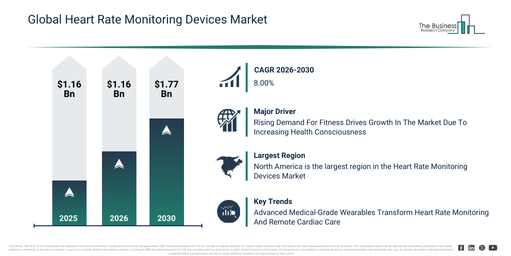
    The heart rate monitoring devices market is projected to experience substantial growth in the upcoming years, reaching $19.67 billion in 2030 at a compound annual growth rate (CAGR) of 8.0%. This anticipated expansion over the forecast period is driven by several factors, including the advancement of sophisticated sensor technologies, a heightened demand for smartwatches and hybrid monitors, the increasing adoption of telemedicine and remote patient monitoring, the rising use of AI-enabled health analytics, and the broader implementation of sports performance monitoring solutions. Prominent trends within this forecast timeframe encompass the increasing adoption of wearable heart rate monitors, their integration with fitness and health applications, expanded utility in homecare and remote monitoring, a growing preference for non-invasive monitoring devices, and wider application in sports and fitness activities.

    Get A Free Sample Report With In-Depth Market Insights:

    https://thebusinessresearchcompany.com/sample_request?id=31265555&type=smp&name=Heart%20Rate%20Monitoring%20Devices%20Market%20Report%202026&utm_source=Blogs&utm_medium=Paid&utm_campaign=Oct_PR

    Heart Rate Monitoring Devices Market Growth Catalysts And Demand Drivers

    The escalating demand for fitness centers and athletic pursuits is anticipated to fuel the expansion of the heart rate monitoring devices market moving forward. Gyms and physical sports encompass activities and facilities designed to enhance physical fitness, overall health, and athletic capabilities through regular exercise, training, and competitive play. A growing awareness of health issues is spurring the increase in participation in gyms and physical sports as individuals prioritize fitness to prevent lifestyle-related ailments. Within these environments, heart rate monitoring devices deliver real-time feedback on workout intensity, enabling users to maintain their target heart rate zones. This contributes to better performance, helps avert overtraining, and supports faster recovery. For instance, in August 2025, according to the Time, a US-based media company, reported that as of a recent survey, 80% of Americans (~247 million people) participated in at least one sport or fitness activity in a year. Consequently, the surging demand for gyms and physical sports is a key factor driving the growth of the heart rate monitoring devices market.

    Heart Rate Monitoring Devices Market Segment Analysis And Revenue Potential

    The heart rate monitoring devices market covered in this report is segmented –

    1) By Type: Wrist Watch Heart Rate Monitor, Chest Strap Heart Rate Monitor, Strapless Heart Rate Monitors, Other Types

    2) By Application: Medical, Sports And Fitness, Exercise, Other Applications

    3) By End-User: Hospitals And Clinics, Homecare, Sport Care Centers

    Subsegments:

    1) By Wrist Watch Heart Rate Monitor: Fitness Smartwatches, Sports Watches, Medical-Grade Smartwatches, Hybrid Smartwatches

    2) By Chest Strap Heart Rate Monitor: Bluetooth-Enabled Chest Straps, Ant+ Compatible Chest Straps, Electrocardiogram (ECG)-Based Chest Straps, Waterproof Chest Straps For Swimming

    3) By Strapless Heart Rate Monitors: Finger-Based Pulse Monitors, Arm Or Forearm Band Monitors, Wearable Clothing With Embedded Sensors, Handheld Heart Rate Monitors

    4) By Other Types: Earbud Heart Rate Monitors, Smart Clothing, Clip-On Devices

    Heart Rate Monitoring Devices Market Trends Shaping Long-Term Demand

    Major companies operating in the heart rate monitoring devices market are focusing on developing advanced products, such as medical-grade wearable monitors, to enable continuous health tracking and support early detection of cardiovascular anomalies. A medical-grade wearable monitor is a certified device that accurately tracks vital signs in real time, finding extensive use in clinical settings and remote care for the early detection of health issues and continuous patient monitoring. For instance, in June 2023, Teltonika, a Lithuania-based electronics manufacturer, launched TeltoHeart. This multifunctional smart medical wristband offers continuous heart rate monitoring and automatic detection of arrhythmias using advanced photoplethysmography (PPG) technology. It is notable for recording a detailed 6-lead ECG and providing clinically valuable data that users can easily share with healthcare professionals through its integrated telemedicine platform. The device ensures high accuracy, safety, and reliability, significantly advancing early detection, disease management, and access to cardiac care, especially for patients in remote or underserved areas.

    Heart Rate Monitoring Devices Market Leading Players And Competitive Positioning

    Major companies operating in the heart rate monitoring devices market are Apple Inc, Samsung Electronics Co Ltd, Huawei Technologies Co Ltd, Koninklijke Philips N V, Garmin Ltd, Polar Electro, Whoop, Beurer GmbH, Suunto, VitalConnect, Wahoo Fitness, Empatica Inc, Bellabeat Inc, Fitbit LLC, Qardio Inc, Ouraring Inc, Zewa Medical Technology, Veepoo Technology, Aurora Shenzhen Manufacture Co Ltd, Xiaomi Corporation, Amazfit Zepp Health Corporation, Omron Healthcare Co Ltd

    View The Full Heart Rate Monitoring Devices Market Report:

    https://thebusinessresearchcompany.com/report/heart-rate-monitoring-devices-global-market-report?utm_source=Blogs&utm_medium=Paid&utm_campaign=Oct_PR

    Heart Rate Monitoring Devices Market Regional Split: Which Areas Are Fueling Growth?

    North America was the largest region in the heart rate monitoring devices market in 2025. The regions covered in the heart rate monitoring devices market report are Asia-Pacific, South East Asia, Western Europe, Eastern Europe, North America, South America, Middle East, Africa.

    Reach Out To Our Team:

    The Business Research Company: https://www.thebusinessresearchcompany.com/

    Americas: +1 310-496-7795

    Asia: +44 7882 955267 & +91 8897263534

    Europe: +44 7882 955267

    Email us at: marketing@tbrc.info

    Follow us on:

    LinkedIn: https://in.linkedin.com/company/the-business-research-company

    YouTube: https://www.youtube.com/channel/UC24_fI0rV8cR5DxlCpgmyFQ

    Global Market Model: https://www.thebusinessresearchcompany.com/global-market-model
  • Heart Pump Devices Market Reaches $10.37 Billion In 2026: Forecast And Growth Opportunities

    Heart Pump Devices Market Reaches $10.37 Billion In 2026: Forecast And Growth Opportunities

    Featuring market attractiveness scoring, total addressable market sizing, company benchmarking matrices, interactive Excel dashboards, deeper supply chain intelligence, emerging startup tracking, and granular product-level insights, The Business Research Company’s 2026 market reports are built to deliver research that is both more actionable and more strategically valuable.

    Heart Pump Devices Market Revenue Growth On Track For A 18.1% CAGR Through 2030

    The heart pump devices market size has experienced significant expansion recently. Projections indicate it will expand from $4.48 billion in 2025 to $5.32 billion in 2026, demonstrating a compound annual growth rate (CAGR) of 19.0%. Historically, this growth has been driven by factors such as the increasing occurrence of heart failure, the broadening of cardiac surgery initiatives, developments in mechanical pump technology, longer waiting periods for transplants, and the expanding application of extracorporeal support systems.

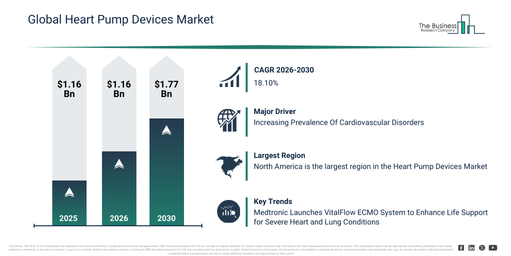
    The heart pump devices market size is expected to experience substantial expansion over the next few years. It will grow to $10.37 billion in 2030 at a compound annual growth rate (CAGR) of 18.1%. The growth predicted for this period can be attributed to a rising demand for long-term circulatory support, the increasing adoption of destination therapy devices, the expansion of minimally invasive cardiac procedures, the growing integration of smart monitoring technologies, and increasing investments in advanced cardiac care. Significant trends during the forecast period include a greater utilization of advanced ventricular assist devices, increasing adoption of temporary mechanical circulatory support, a growing emphasis on miniaturized implantable pumps, the expansion of bridge-to-transplant therapies, and enhanced monitoring of hemodynamic performance.

    Get A Free Sample Report With In-Depth Market Insights:

    https://thebusinessresearchcompany.com/sample_request?id=75230848&type=smp&name=Heart%20Pump%20Devices%20Market%20Report%202026&utm_source=Blogs&utm_medium=Paid&utm_campaign=Oct_PR

    Heart Pump Devices Market Opportunity Drivers: What’s Unlocking New Revenue Potential?

    The growing occurrence of cardiovascular conditions is anticipated to drive the heart pump devices market in the future. Cardiovascular disorders are health issues that impact the heart or blood vessels. The escalation in these diseases necessitates sophisticated diagnostic tools and therapies like heart pump devices, which assist in circulating blood from the lower left heart chamber, crucial for sustaining blood flow during high-risk protected percutaneous coronary interventions, thereby boosting market demand. As an illustration, the American Heart Association, a US-based non-profit organization, reported in January 2024 that the age-adjusted death rate from cardiovascular disease rose to 233.3 per 100,000 in 2024, a 4.0% increase from 224.4 per 100,000 in 2023. Consequently, the rising incidence of cardiovascular disorders is a key factor fueling the expansion of the heart pump devices market.

    Heart Pump Devices Market Segmentation And Category Overview

    The heart pump devices market covered in this report is segmented –

    1) By Type: Implantable Heart Pump Devices, Extracorporeal Heart Pump Devices

    2) By Therapy: Bridge-To-Transplant (BTT), Bridge-To-Candidacy (BTC), Destination Therapy (DT), Other Therapies

    3) By End-user: Hospitals, Cardiac Specialty Hospitals / Heart Centers, Transplant Centers, Other End-Users

    Subsegments:

    1) By Implantable Heart Pump Devices: Left Ventricular Assist Devices (LVADs), Right Ventricular Assist Devices (RVADs), Biventricular Assist Devices (BiVADs), Total Artificial Hearts (TAHs)

    2) By Extracorporeal Heart Pump Devices: Intra-Aortic Balloon Pumps (IABPs), Ventricular Assist Devices (Temporary): Centrifugal Blood Pumps

    Heart Pump Devices Market Innovation Trends Shaping Future Development

    Major companies operating in the heart pump devices market are actively developing extracorporeal membrane oxygenation (ECMO) systems, aiming to provide advanced life support for patients afflicted with severe heart and lung conditions. Extracorporeal membrane oxygenation (ECMO) systems are defined as sophisticated life support machines used to deliver prolonged cardiac and respiratory assistance to patients whose heart and lungs cannot properly function. For example, in September 2024, Medtronic plc, an Ireland-based medical device company, unveiled its VitalFlow system, an innovative extracorporeal membrane oxygenation (ECMO) solution specifically designed to offer circulatory support for patients experiencing severe heart or lung failure. The VitalFlow system functions effectively as a heart pump by employing a pump and oxygenator to take over the crucial work of the heart and lungs. This functionality is essential for patients confronting life-threatening conditions, enabling their organs to rest and begin the healing process.

    Heart Pump Devices Market Competitive Overview And Top Companies

    Major companies operating in the heart pump devices market are Abbott Laboratories, Medtronic plc, Getinge AB, Terumo Corporation, LivaNova plc, SynCardia Systems Inc, CARMAT SA, Jarvik Heart Inc, BiVACOR Inc, CorWave SA, Fresenius Kabi AG, Asahi Kasei Medical Co Ltd, Nipro Corporation, Eurosets Srl, CardioBridge GmbH, Hemovent GmbH, Evaheart Inc, Calon Cardio-Technology Ltd, Lepu Medical Technology Co Ltd, NewHeart Technologies Inc

    View The Full Heart Pump Devices Market Report:

    https://thebusinessresearchcompany.com/report/heart-pump-devices-global-market-report?utm_source=Blogs&utm_medium=Paid&utm_campaign=Oct_PR

    Heart Pump Devices Market Top Region: Where Does Most Revenue Come From?

    North America was the largest region in the heart pump devices market share in 2025. The regions covered in the heart pump devices market report are Asia-Pacific, South East Asia, Western Europe, Eastern Europe, North America, South America, Middle East, Africa.

    Reach Out To Our Team:

    The Business Research Company: https://www.thebusinessresearchcompany.com/

    Americas: +1 310-496-7795

    Asia: +44 7882 955267 & +91 8897263534

    Europe: +44 7882 955267

    Email us at: marketing@tbrc.info

    Follow us on:

    LinkedIn: https://in.linkedin.com/company/the-business-research-company

    YouTube: https://www.youtube.com/channel/UC24_fI0rV8cR5DxlCpgmyFQ

    Global Market Model: https://www.thebusinessresearchcompany.com/global-market-model
  • Heart Defect Closure Device Market Growth In 2026: Market Size, Key Drivers And Future Outlook

    Heart Defect Closure Device Market Growth In 2026: Market Size, Key Drivers And Future Outlook

    Built to provide research that’s more actionable and strategically valuable, The Business Research Company’s 2026 market reports include market attractiveness analysis, total addressable market sizing, company benchmarking matrices, interactive Excel dashboards, broader supply chain intelligence, emerging startup tracking, and in-depth product insights.

    Heart Defect Closure Device Market Value Growth And Long-Term Outlook

    The market size for heart defect closure devices has seen substantial growth recently. This market is projected to expand from $1.27 billion in 2025 to $1.45 billion in 2026, at a compound annual growth rate (CAGR) of 14.5%. The historical growth can be ascribed to the increasing prevalence of congenital heart defects, developments in interventional cardiology, heightened awareness regarding septal defect treatments, the expansion of cardiac catheterization labs, and a rising demand for minimally invasive cardiac procedures.

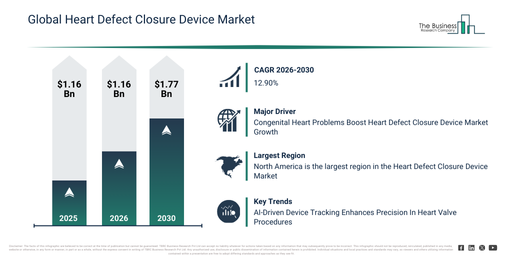
    The heart defect closure device market is poised for significant expansion in the coming years, with projections indicating it will reach $2.36 billion in 2030 at a compound annual growth rate (CAGR) of 12.9%. This anticipated growth during the forecast period is propelled by factors such as an expanding population of elderly and pediatric patients suffering from structural heart defects, an increasing adoption of transcatheter cardiac interventions, a rise in healthcare spending allocated to cardiovascular care, the proliferation of specialized cardiac centers, and an intensified focus on the early detection and management of heart defects. Furthermore, key market trends throughout the forecast period include the rising acceptance of minimally invasive transcatheter closure procedures, the growing utilization of nitinol-based and self-expanding closure devices, an increasing preference for device-based alternatives to open-heart surgery, the expansion of structural heart disease treatment programs, and an elevated emphasis on improving safety, efficacy, and long-term patient outcomes.

    Get A Free Sample Report With In-Depth Market Insights:

    https://thebusinessresearchcompany.com/sample_request?id=92023633&type=smp&name=Heart%20Defect%20Closure%20Device%20Market%20Report%202026&utm_source=Blogs&utm_medium=Paid&utm_campaign=Oct_PR

    Heart Defect Closure Device Market Growth Momentum: What Factors Are Shaping Demand?

    The future expansion of the heart defect closure device market is anticipated to be fueled by the increasing prevalence of individuals suffering from congenital heart conditions. These problems are defined as structural irregularities in the heart that exist from birth. The rise in congenital heart issues stems from genetic factors, environmental impacts, and maternal health complications like diabetes, obesity, contact with specific drugs, or infections during gestation. Heart defect closure devices aid in managing congenital heart issues through minimally invasive approaches that seal irregular heart openings, thereby re-establishing typical blood flow, lessening complications, and enhancing overall heart function. As an illustration, a report from August 2025 by the National Center for Biotechnology Information, a US governmental body, indicates a substantial projected increase in cardiovascular disease between 2025 and 2050. Prevalence is forecast to climb by 90.0%, crude mortality by 73.4%, and crude DALYs by 54.7%, resulting in an estimated 35.6 million cardiovascular fatalities in 2050, an increase from 20.5 million in 2025. Consequently, the expanding population affected by congenital heart problems is a key factor propelling the heart defect closure device market.

    Heart Defect Closure Device Market Segment Outlook: Which Categories Are Growing Fastest?

    The heart defect closure device market covered in this report is segmented –

    1) By Type: Atrial Septal Defect (ASD) Closure Device, Left Atrial Appendage (LAA) Closure Devices, Patent Foramen Ovale (PFO) Closure Devices, Patent Ductus Arteriosus (PDA) Closure Devices, Ventricular Septal Defect (VSD) Closure Devices

    2) By Material: Nitinol-Based Devices, Stainless Steel Devices, Other Materials

    3) By Mode Of Delivery: Transcatheter Delivery, Surgical Delivery, Other Modes

    4) By End-User: Hospitals, Clinics, Ambulatory Surgical Centers, Other End-Users

    Subsegments:

    1) By Atrial Septal Defect (ASD) Closure Device: Occluder Devices (Septal Occluders), Implantable Patch Devices, Self-Expanding Devices, Balloon-Expandable Devices

    2) By Left Atrial Appendage (LAA) Closure Devices: Occluder Devices (WATCHMAN Device), Clip-Based Devices, Self-Expanding LAA Closure Devices

    3) By Patent Foramen Ovale (PFO) Closure Devices: Septal Occluders, Self-Expanding Occluders, Balloon-Expandable Occluders

    4) By Patent Ductus Arteriosus (PDA) Closure Devices: Coil-Based Closure Devices, Stent-Based Closure Devices, Amplatzer Occluders

    5) By Ventricular Septal Defect (VSD) Closure Devices: Septal Occluder Devices, Balloon-Expandable Occluders, Self-Expanding Occluders

    Heart Defect Closure Device Market Trends Redefining Industry Growth

    Leading companies in the heart defect closure device market are progressing technologies such as device tracking tools, aiming to boost procedural exactness and elevate clinician confidence. A device tracking tool is a system offering real-time visualization of medical device position and movement during treatment. For instance, in November 2025, Philips, a Netherlands-based health technology company, unveiled DeviceGuide—an AI-driven tracking solution. This innovation is designed to assist clinicians during intricate minimally invasive heart valve repair procedures, particularly for mitral valve regurgitation. Operating in conjunction with the EchoNavigator platform, DeviceGuide merges live X-ray and ultrasound imaging to generate a real-time 3D model of the repair device within the beating heart, thereby enhancing visual clarity, spatial understanding, and overall precision. Developed through a partnership with Edwards Lifesciences, the system optimizes operational processes, strengthens team synergy, and facilitates wider global accessibility to sophisticated cardiac interventions.

    Heart Defect Closure Device Market Competitive Landscape: Which Companies Lead The Industry?

    Major companies operating in the heart defect closure device market are Abbott Laboratories, Medtronic, W L Gore and Associates, Occlutech, LifeTech Scientific Corporation, Lepu Medical Technology, Meril Life Sciences Pvt Ltd, MicroPort Scientific Corporation, Boston Scientific Corporation, Edwards Lifesciences, Terumo Corporation, Cardia Inc, Coherex Medical Inc, AtriCure Inc, Sahajanand Medical Technologies Limited, Vivasure Medical, Transmural Systems Inc, Cormatrix Cardiovascular Inc, Baylis Medical Company Inc, Biosense Webster Inc, BIOTRONIK SE and Co KG, B Braun

    View The Full Heart Defect Closure Device Market Report:

    https://thebusinessresearchcompany.com/report/heart-defect-closure-device-global-market-report?utm_source=Blogs&utm_medium=Paid&utm_campaign=Oct_PR

    Heart Defect Closure Device Market Regional Breakdown: Where Is Demand Concentrated?

    North America was the largest region in the heart defect closure device market in 2025. Asia-Pacific is expected to be the fastest-growing region in the forecast period. The regions covered in the heart defect closure device market report are Asia-Pacific, South East Asia, Western Europe, Eastern Europe, North America, South America, Middle East, Africa.

    Reach Out To Our Team:

    The Business Research Company: https://www.thebusinessresearchcompany.com/

    Americas: +1 310-496-7795

    Asia: +44 7882 955267 & +91 8897263534

    Europe: +44 7882 955267

    Email us at: marketing@tbrc.info

    Follow us on:

    LinkedIn: https://in.linkedin.com/company/the-business-research-company

    YouTube: https://www.youtube.com/channel/UC24_fI0rV8cR5DxlCpgmyFQ

    Global Market Model: https://www.thebusinessresearchcompany.com/global-market-model
  • Heart Closure Devices Market Size And Forecast 2026–2030: Trends Driving Industry Expansion

    Heart Closure Devices Market Size And Forecast 2026–2030: Trends Driving Industry Expansion

    Backed by market attractiveness analysis, total addressable market sizing, company benchmarking matrices, interactive Excel dashboards, wider supply chain intelligence, emerging startup coverage, and detailed product-level insights, The Business Research Company’s 2026 market reports are designed to offer research that is more actionable and strategically valuable than ever.

    Heart Closure Devices Market Poised To Hit $5.42 Billion By 2030 With A 11.9% CAGR

    The market for heart closure devices has expanded significantly in recent times. This market is projected to expand from $3.08 billion in 2025 to $3.46 billion in 2026, exhibiting a compound annual growth rate (CAGR) of 12.2%. Several factors have contributed to its historical growth, including the increasing prevalence of congenital heart defects, the expansion of catheterization laboratories, the growing adoption of minimally invasive cardiac treatments, a rising awareness of structural heart conditions, and the availability of advanced imaging guidance.

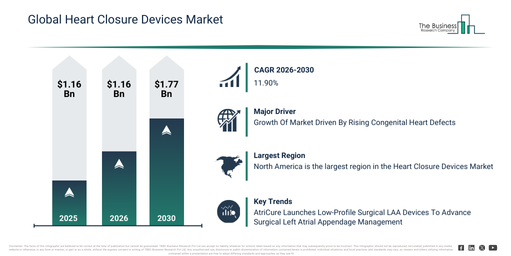
    The heart closure devices market size is projected for substantial growth in the upcoming years, with expectations to reach $5.42 billion by 2030, demonstrating a compound annual growth rate (CAGR) of 11.9%. This anticipated expansion during the forecast period is fueled by an escalating demand for catheter-based cardiac therapies, increased investments in structural heart disease treatment, the establishment of more specialized cardiac centers, a heightened emphasis on minimizing surgical risks, and continuous technological advancements in the design of closure devices. Prominent trends observed in this period include the wider adoption of transcatheter heart closure procedures, a rising preference for minimally invasive cardiac devices, the expanded application of nitinol-based closure systems, the growth of structural heart intervention programs, and an intensified focus on ensuring procedural safety and efficacy.

    Get A Free Sample Report With In-Depth Market Insights:

    https://thebusinessresearchcompany.com/sample_request?id=68570581&type=smp&name=Heart%20Closure%20Devices%20Market%20Report%202026&utm_source=Blogs&utm_medium=Paid&utm_campaign=Oct_PR

    Heart Closure Devices Market Expansion Drivers: What’s Shaping Future Growth?

    The rising occurrence of cardiovascular diseases (CVDs) is anticipated to propel the growth of the heart closure devices market going forward. This escalating incidence of CVDs stems from factors such as aging, unhealthy lifestyle choices, genetic predisposition, and the increasing prevalence of risk factors like hypertension, diabetes, and obesity. Heart closure devices play a crucial role in reducing complications from congenital heart defects by minimally invasively sealing abnormal openings in the heart, thereby enhancing blood flow and preventing further health issues. For instance, in May 2024, information from the Singapore Heart Foundation (SHF), a non-profit organization based in Singapore, revealed that the total number of deaths due to cardiovascular disease reached 26,885 in 2023. Additionally, ischemic heart disease led to 5,302 deaths, marking an increase from 5,290 deaths recorded in 2022. Thus, the escalating incidence of cardiovascular diseases (CVDs) is a key driver for the expansion of the heart closure devices market.

    Heart Closure Devices Market Segment Landscape: Which Areas Lead Development?

    The heart closure devices market covered in this report is segmented –

    1) By Product: Atrial Septal Defect (ASD) Closure Devices, Ventricular Septal Defect (VSD) Closure Devices, Patent Foramen Ovale (PFO) Closure Devices, Left Atrial Appendage (LAA) Closure Devices, Other Products

    2) By Material: Nitinol-Based Devices, Stainless Steel Devices, Other Materials

    3) By Mode of Delivery: Transcatheter Delivery, Surgical Delivery

    4) By End Use: Hospitals, Ambulatory Surgical Centers (ASCs), Cardiac Catheterization Laboratories, Other End Uses

    Subsegments:

    1) By Atrial Septal Defect (ASD) Closure Devices: Self-expanding Occluders, Balloon-expandable Occluders, Other ASD Closure Devices

    2) By Ventricular Septal Defect (VSD) Closure Devices: Transcatheter VSD Closure Devices, Surgical VSD Closure Devices, Other VSD Closure Devices

    3) By Patent Foramen Ovale (PFO) Closure Devices: Double-Disc Occluders, Single-Disc Occluders, Other PFO Closure Devices

    4) By Left Atrial Appendage (LAA) Closure Devices: LAA Occluders, LAA Clip Systems, Other LAA Closure Devices

    5) By Other Products: Septal Defect Closure Devices, Endovascular Closure Devices, Other Specialty Closure Devices

    Heart Closure Devices Market Strategic Trends: What Defines The Next Growth Phase?

    Major companies operating in the heart closure devices market are concentrating on technological advancements, such as creating low-profile, ergonomic surgical LAA devices featuring continuous closing force mechanisms. These innovations are designed to improve procedural precision, visibility, and ease of use for physicians, while simultaneously enhancing patient outcomes. Low-Profile Surgical LAA Devices enable secure and effective closure of the left atrial appendage, ensuring optimal tissue compression, simplified single-handed placement, and better access during minimally invasive procedures. For example, in August 2024, AtriCure, Inc., a US-based cardiac surgical solutions company, treated its first patient with the AtriClip FLEX-Mini device, which is currently the smallest-profile surgical LAA device available on the market. Building on the established AtriClip platform, this device incorporates a fully enclosed design with parallel beams for consistent closing force, offers improved visibility, and features an ergonomic handle for single-handed placement, thereby assisting physicians in providing precise, safe, and efficient LAA management for patients with atrial fibrillation.

    Heart Closure Devices Market Competitive Landscape: Who Leads The Industry?

    Major companies operating in the heart closure devices market are Abbott Laboratories, Medtronic plc, Boston Scientific Corp., Lepu Medical Technology Ltd., Terumo Corporation, Edwards Lifesciences, Teleflex Incorporated, Merit Medical Systems Inc., Cordis Corporation, AtriCure Inc., Lifetech Scientific Corp., Sahajanand Medical Technologies, W. L. Gore And Associates Inc., Occlutech GmbH, NMT Medical Inc., Sorin Group Italia S.p.A., Vivasure Medical Limited, B Braun Interventional Systems, HeartStitch Inc., MicroPort Scientific Corporation

    View The Full Heart Closure Devices Market Report:

    https://thebusinessresearchcompany.com/report/heart-closure-devices-global-market-report?utm_source=Blogs&utm_medium=Paid&utm_campaign=Oct_PR

    Heart Closure Devices Market Geographic Landscape: Which Region Dominates Industry Growth?

    North America was the largest region in the heart closure devices market in 2025. Asia-Pacific is expected to be the fastest-growing region in the forecast period. The regions covered in the heart closure devices market report are Asia-Pacific, South East Asia, Western Europe, Eastern Europe, North America, South America, Middle East, Africa.

    Reach Out To Our Team:

    The Business Research Company: https://www.thebusinessresearchcompany.com/

    Americas: +1 310-496-7795

    Asia: +44 7882 955267 & +91 8897263534

    Europe: +44 7882 955267

    Email us at: marketing@tbrc.info

    Follow us on:

    LinkedIn: https://in.linkedin.com/company/the-business-research-company

    YouTube: https://www.youtube.com/channel/UC24_fI0rV8cR5DxlCpgmyFQ

    Global Market Model: https://www.thebusinessresearchcompany.com/global-market-model
  • Heart Blocks Treatment Devices Market 2026 Outlook: Market Size, CAGR And Key Growth Opportunities

    Heart Blocks Treatment Devices Market 2026 Outlook: Market Size, CAGR And Key Growth Opportunities

    Featuring market attractiveness scoring, total addressable market sizing, company benchmarking matrices, interactive Excel dashboards, deeper supply chain intelligence, emerging startup tracking, and granular product-level insights, The Business Research Company’s 2026 market reports are built to deliver research that is both more actionable and more strategically valuable.

    Heart Blocks Treatment Devices Market Size And Revenue Outlook Through 2030

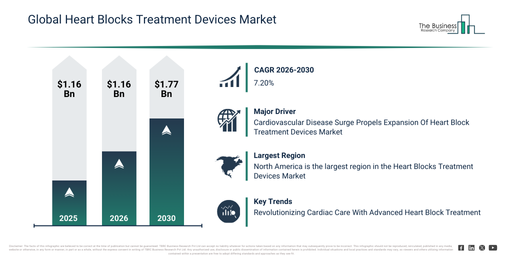
    The heart blocks treatment devices market has demonstrated substantial growth in recent years. Its value is projected to rise from $3.36 billion in 2025 to $3.59 billion in 2026, exhibiting a compound annual growth rate (CAGR) of 6.9%. Historically, this expansion can be ascribed to several factors, including the increasing occurrence of cardiovascular conditions, a growing elderly demographic, the enhancement of hospital cardiac care facilities, better availability of cardiac diagnostic services, and improvements in the dependability of implantable devices.

    The heart blocks treatment devices market is poised for significant expansion in the foreseeable future. It is forecast to grow to $4.74 billion in 2030, demonstrating a compound annual growth rate (CAGR) of 7.2%. This expected growth can be attributed to the increasing adoption of remote patient monitoring, rising investments in cardiac digital health solutions, a growing demand for personalized rhythm management, the expansion of home-based cardiac care models, and continuous innovation in implantable cardiac devices. Prominent trends for this period include the increasing adoption of advanced pacemaker technologies, a rising use of implantable cardiac rhythm devices, the growing integration of remote cardiac monitoring systems, an expansion of minimally invasive cardiac procedures, and an enhanced focus on long-term rhythm management.

    Get A Free Sample Report With In-Depth Market Insights:

    https://thebusinessresearchcompany.com/sample_request?id=45091098&type=smp&name=Heart%20Blocks%20Treatment%20Devices%20Market%20Report%202026&utm_source=Blogs&utm_medium=Paid&utm_campaign=Oct_PR

    Heart Blocks Treatment Devices Market Development Factors: What’s Supporting Demand?

    The increasing occurrence of cardiovascular disease is anticipated to stimulate the expansion of the heart blocks treatment devices market in the future. These conditions impact the heart and its associated blood vessels, encompassing ailments like coronary artery disease, heart failure, and stroke. The sharp rise in cardiovascular disease cases primarily stems from an aging population, evolving lifestyles and diets, alongside growing rates of obesity and diabetes. Heart blocks treatment devices offer a solution by correcting structural defects or abnormalities within the heart to manage these cardiovascular disorders. For example, data released in March 2024 by GOV.UK, a UK government services and information provider, indicated that by the financial year ending 2023, general practitioners had diagnosed over 1,862,500 people in England, representing approximately 3% of the population, with coronary heart disease (CHD). Consequently, the expanding prevalence of cardiovascular disease is serving as a key impetus for the growth of the heart blocks treatment devices market.

    Heart Blocks Treatment Devices Market Segments: Where Is Growth Concentrated?

    The heart blocks treatment devices market covered in this report is segmented –

    1) By Clinical Classification: First-Degree Heart Block, Second-Degree Heart Block, Third-Degree Heart Block

    2) By Product: Transcutaneous Pacing (TCP), Pacemaker

    3) By End-User: Hospitals & Cardiac Care Centers, Clinics, Home-Care & Remote Monitoring Users

    Subsegments:

    1) By First-Degree Heart Block: Cardiac Monitoring Devices, Temporary Pacing Devices (Rare / Symptomatic Cases)

    2) By Second-Degree Heart Block: Type I (Wenckebach) Management Devices, Type II Management Devices, Pacemakers

    3) By Third-Degree Heart Block: Permanent Pacemakers (Primary Treatment), Cardiac Resynchronization Therapy (CRT) Devices, Temporary Pacing Devices (Acute / Emergency Management)

    Heart Blocks Treatment Devices Market Transformation Trends: What Innovations Are Driving Change?

    Leading firms within the heart block treatment device market are prioritizing technological innovations, including dual-chamber pacemakers, to deliver dependable services to consumers. These dual-chamber pacemakers represent a leadless pacing system technology designed to address irregular or slow heart rhythms. As an illustration, Abbott Laboratories, a US-based medical device and health care corporation, introduced a dual-chamber pacemaker in November 2023, marking its initial U.S. implants. This launch is significant given that over 80% of individuals requiring a pacemaker need pacing in both the right atrium and right ventricle of the heart. The company specifically developed its i2i technology to employ high-frequency pulses, transmitting signals via the inherent conductive properties of the body’s blood between individual leadless pacemakers.

    Heart Blocks Treatment Devices Market Company Landscape And Competitive Strategy

    Major companies operating in the heart blocks treatment devices market are Medtronic plc, Abbott Laboratories, Boston Scientific Corporation, Biotronik SE & Co. KG, MicroPort Scientific Corporation, Lepu Medical Technology (Beijing) Co. Ltd., Nihon Kohden Corporation, ZOLL Medical Corporation, LivaNova PLC, Osypka Medical GmbH, Shree Pacetronix Ltd., EBR Systems Inc., Medico S.p.A., Cook Medical, B. Braun SE, Oscor Inc., Pacetronix Ltd., Fukuda Denshi Co. Ltd., Teleflex Incorporated, NIPRO Corporation

    View The Full Heart Blocks Treatment Devices Market Report:

    https://thebusinessresearchcompany.com/report/heart-blocks-treatment-devices-global-market-report?utm_source=Blogs&utm_medium=Paid&utm_campaign=Oct_PR

    Heart Blocks Treatment Devices Market Largest Region: Which Geography Holds The Highest Market Share?

    North America was the largest region in the heart blocks treatment devices market in 2025. Asia-Pacific is expected to be the fastest-growing region in the forecast period. The regions covered in the heart blocks treatment devices market report are Asia-Pacific, South East Asia, Western Europe, Eastern Europe, North America, South America, Middle East, Africa.

    Reach Out To Our Team:

    The Business Research Company: https://www.thebusinessresearchcompany.com/

    Americas: +1 310-496-7795

    Asia: +44 7882 955267 & +91 8897263534

    Europe: +44 7882 955267

    Email us at: marketing@tbrc.info

    Follow us on:

    LinkedIn: https://in.linkedin.com/company/the-business-research-company

    YouTube: https://www.youtube.com/channel/UC24_fI0rV8cR5DxlCpgmyFQ

    Global Market Model: https://www.thebusinessresearchcompany.com/global-market-model
  • Heart Attack Diagnostic Market Size Growth: From $12.64 Billion In 2026 To $17.9 Billion By 2030

    Heart Attack Diagnostic Market Size Growth: From $12.64 Billion In 2026 To $17.9 Billion By 2030

    Built to provide research that’s more actionable and strategically valuable, The Business Research Company’s 2026 market reports include market attractiveness analysis, total addressable market sizing, company benchmarking matrices, interactive Excel dashboards, broader supply chain intelligence, emerging startup tracking, and in-depth product insights.

    Heart Attack Diagnostic Market Growth From $12.64 Billion In 2026 To $17.9 Billion By 2030 At A CAGR Of 9.1%

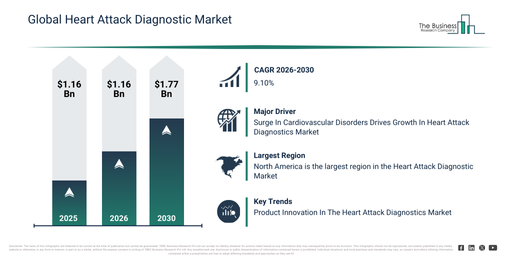
    The heart attack diagnostic market has experienced robust growth over the past few years. This market is anticipated to increase from $11.54 billion in 2025 to $12.64 billion in 2026, exhibiting a compound annual growth rate (CAGR) of 9.5%. Factors contributing to its historical growth include an escalating prevalence of cardiovascular conditions, expanded hospital diagnostic services, better access to cardiac imaging, increased recognition of the need for early heart attack detection, and innovations in lab testing.

    The heart attack diagnostic market size is anticipated to experience robust expansion over the coming years, with projections indicating a growth to $17.9 billion in 2030 at a compound annual growth rate (CAGR) of 9.1%. This growth during the forecast period is primarily driven by factors such as a heightened need for swift diagnostic methods, the expanding incorporation of digital health infrastructures, the proliferation of remote cardiac surveillance, increased capital injection into cutting-edge imaging technologies, and the wider embrace of accurate cardiology diagnostic tools. Key developments projected for this period encompass the widespread uptake of AI-powered diagnostic instruments, the growing application of highly sensitive cardiac biomarkers, the progressive inclusion of point-of-care testing apparatus, the broadening scope of non-invasive diagnostic processes, and a sharpened emphasis on prompt emergency diagnostics.

    Get A Free Sample Report With In-Depth Market Insights:

    https://thebusinessresearchcompany.com/sample_request?id=28132969&type=smp&name=Heart%20Attack%20Diagnostic%20Market%20Report%202026&utm_source=Blogs&utm_medium=Paid&utm_campaign=Oct_PR

    Heart Attack Diagnostic Market Industry Drivers: What’s Behind The Revenue Growth?

    The increasing prevalence of cardiac disorders is propelling the growth of the heart attack diagnostics market. Cardiac disorders (CVD) are a group of conditions affecting the heart and blood vessels. Unhealthy eating, inactivity, tobacco use, and alcohol abuse are the primary factors contributing to heart disease and stroke. Heart attack diagnosis aids in analyzing the causes and severity of heart attacks, strokes, and heart failure. For instance, in January 2024, according to the American Heart Association, a US-based non-profit organization, the age-adjusted death rate from cardiovascular disease increased to 233.3 per 100,000 in 2024, up 4.0% from 224.4 per 100,000 in 2023. Therefore, the rising frequency of cardiovascular illnesses will continue to drive the heart attack diagnostics market.

    Heart Attack Diagnostic Market Segment Analysis: What Are The Core Market Categories?

    The heart attack diagnostic market covered in this report is segmented –

    1) By Test Type: Electrocardiogram (ECG Or EKG), Blood Tests, Echocardiogram, Coronary Catheterization (Angiogram)

    2) By Procedure: Invasive Procedure, Non-Invasive Procedure

    3) By End-Use Industry: Hospitals, Ambulatory Surgical Centers, Diagnostics Centers, Other End-Users

    Subsegments:

    1) By Electrocardiogram (ECG Or EKG): Resting ECG, Holter Monitor, Event Monitor

    2) By Blood Tests: Cardiac Biomarkers, Lipid Panel, B-Type Natriuretic Peptide (BNP)

    3) By Echocardiogram: Transthoracic Echocardiogram (TTE), Transesophageal Echocardiogram (TEE), Doppler Echocardiogram

    4) By Coronary Catheterization (Angiogram): Coronary Angiography, Right Heart Catheterization, Left Heart Catheterization

    #Heart Attack Diagnostic Market Growth Trends: What’s Shaping The Future Outlook?

    Leading companies in the heart attack diagnostics market are developing innovative products, such as tests for detecting coronary heart disease, to cater to broader customer bases, increase sales, and boost revenue. Coronary heart disease (CHD) detection tests refer to medical assessments and diagnostic procedures designed to identify the presence of coronary heart disease, a condition characterized by the narrowing or blockage of coronary arteries that supply blood to the heart muscle. For instance, in August 2023, Cardio Diagnostics Holdings Inc., a US-based biotechnology company, launched PrecisionCHD. The PrecisionCHD test, a groundbreaking innovation, is a blood-based detection method for coronary heart disease (CHD), distinguishing itself as the sole detection technology that seamlessly combines epigenetic and genetic biomarkers with Artificial Intelligence (AI). This unique test requires only a straightforward blood sample, conveniently collected at a doctor’s office or through a simple at-home procedure, and utilizes the same highly scalable laboratory technique employed in COVID-19 testing. With results available for review within a swift 10 business days, the PrecisionCHD test offers a rapid and efficient alternative to traditional first-line CHD detection tools like stress echocardiograms.

    Heart Attack Diagnostic Market Key Players Shaping Industry Direction

    Major companies operating in the heart attack diagnostic market are Abbott Laboratories, F. Hoffmann-La Roche AG, General Electric Co., Koninklijke Philips NV, Siemens AG, Canon Medical Systems Corporation, GE Healthcare, Roche Diagnostics, Beckman Coulter Inc., Schiller AG, Becton Dickinson and Company, Danaher Corporation, Thermo Fisher Scientific Inc., Quest Diagnostics, Bio-Rad Laboratories Inc., Hitachi Ltd., Toshiba Corp., Fujifilm Holdings, Midmark Corp., Welch Allyn Inc., HILL ROM HOLDINGS Inc., HeartFlow, Cardio Diagnostics Holdings Inc.

    View The Full Heart Attack Diagnostic Market Report:

    https://thebusinessresearchcompany.com/report/heart-attack-diagnostic-global-market-report?utm_source=Blogs&utm_medium=Paid&utm_campaign=Oct_PR

    Heart Attack Diagnostic Market Regional Analysis: Which Region Leads By Revenue?

    North America was the largest region in the heart attack diagnostics market in 2025. Asia-Pacific is expected to be the fastest-growing region in the forecast period. The regions covered in the heart attack diagnostic market report are Asia-Pacific, South East Asia, Western Europe, Eastern Europe, North America, South America, Middle East, Africa.

    Reach Out To Our Team:

    The Business Research Company: https://www.thebusinessresearchcompany.com/

    Americas: +1 310-496-7795

    Asia: +44 7882 955267 & +91 8897263534

    Europe: +44 7882 955267

    Email us at: marketing@tbrc.info

    Follow us on:

    LinkedIn: https://in.linkedin.com/company/the-business-research-company

    YouTube: https://www.youtube.com/channel/UC24_fI0rV8cR5DxlCpgmyFQ

    Global Market Model: https://www.thebusinessresearchcompany.com/global-market-model