Category: Medical Equipment

  • Neurophysiology Devices And Equipment Market Insights Exploring Expansion Opportunities Through 2030

    Neurophysiology Devices And Equipment Market Insights Exploring Expansion Opportunities Through 2030

    The Business Research Company’s 2026 market reports feature advanced enhancements such as market attractiveness analysis, total addressable market evaluation, company benchmarking matrices, interactive Excel dashboards, expanded supply chain intelligence, emerging startup coverage, and detailed product insights, delivering more actionable and strategically valuable research.

    How Is The Neurophysiology Devices And Equipment Market’s Market Value Anticipated To Evolve From 2026 To 2030?

    The size of the neurophysiology devices and equipment market has experienced modest growth in recent times. This market is projected to expand from $1.72 billion in 2025 to $1.76 billion in 2026, demonstrating a compound annual growth rate (CAGR) of 2.3%. The market’s historical growth can be ascribed to several factors, including an increase in neurological testing, innovations in EMG and EEG technologies, a rise in surgical volumes, the broadening of hospital neurology departments, and an expansion in clinical research.

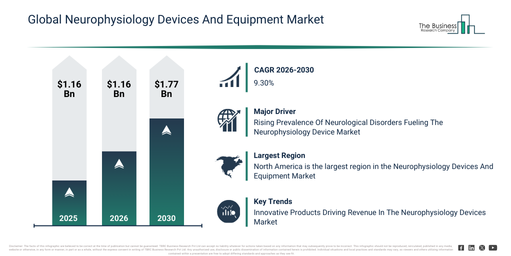
    The neurophysiology devices and equipment market is anticipated to experience significant expansion over the upcoming years. This market is projected to reach $2.51 billion by 2030, exhibiting a compound annual growth rate (CAGR) of 9.3%. Key factors driving this growth during the forecast period include the increasing need for point-of-care diagnostics, the growing incidence of nerve disorders, advancements in technological miniaturization, the proliferation of ambulatory centers, and the rise in training and education initiatives. Noteworthy trends shaping the forecast period encompass the increasing acceptance of portable neurophysiology devices, their expanded application in intraoperative monitoring, a surge in demand for wireless recording systems, the growth of neurology and neurodiagnostic laboratories, and an intensified emphasis on the early identification of nerve disorders.

    Download A Free Sample Report For Comprehensive Market Insights:

    https://www.thebusinessresearchcompany.com/sample.aspx?id=2521&type=smp

    Which Growth Drivers Are Expected To Support The Neurophysiology Devices And Equipment Market Forward?

    The primary factor contributing to the expansion of the neurophysiology device and equipment market worldwide is the increasing prevalence of neurological disorders. Neurological disorders are recognized as among the most common ailments among all recurring health conditions. There exist over 600 types of neurological disorders, including brain tumors, epilepsy, Parkinson’s disease, and Alzheimer’s. These disorders were ranked as the leading group for Disability Adjusted Life Years (DALYs), which measures the years lost due to poor health, disability, or early death. The growing incidence of neurological diseases and the rising patient count are consequently driving the demand for devices used in their treatment. For instance, in February 2023, according to Cancer Research UK, a UK-based charity, the average annual incidence of new brain, other CNS, and intracranial tumors in the UK is expected to increase from approximately 12,600 cases between 2023 and 2025 to about 13,600 cases by 2038 to 2040. This rise is anticipated to increase the demand for medical devices used in the treatment of neurological disorders, thereby propelling the Neurophysiology device and equipment market during the forecast period.

    What Are The Core Segment Classifications In The Neurophysiology Devices And Equipment Market?

    The neurophysiology devices and equipment market covered in this report is segmented –

    1) By Technology: Electromyography (EMG), Electroencephalography (EEG), Electrocorticography (ECoG), Evoked Potential (EP)

    2) By Modality: Standalone, Portable

    3) By End Users: Hospitals, Ambulatory Surgical Centers

    Subsegments:

    1) By Electromyography (EMG): Surface EMG Devices, Needle EMG Devices, Wireless EMG Devices

    2) By Electroencephalography (EEG): Conventional EEG Systems, Portable EEG Systems, Wireless EEG Systems

    3) By Electrocorticography (ECoG): Grid Electrodes, Strip Electrodes, Subdural Electrodes

    4) By Evoked Potential (EP): Visual Evoked Potential (VEP) Devices, Auditory Evoked Potential (AEP) Devices, Somatosensory Evoked Potential (SEP) Devices

    Which Trends Are Influencing The Direction Of The Neurophysiology Devices And Equipment Market?

    Major companies active in the neurophysiology devices and equipment market are developing innovative products such as Evo sEEG electrodes to drive revenue in the sector. The Evo sEEG electrode is a high-definition, minimally invasive thin film electrode designed for the diagnosis and treatment of various neurological conditions. For instance, in May 2023, NeuroOne Medical Technologies Corporation, a US-based medical technology company, launched its Evo sEEG electrodes. These electrodes also hold potential for future capabilities in spinal cord stimulation and ablation solutions. This electrode incorporates high-definition, thin film electrodes that are expected to increase signal clarity and offer secure, precise, and less invasive diagnostic procedures for patients afflicted with epilepsy, chronic back pain, and Parkinson’s disease.

    Which Organizations Are Involved In The Neurophysiology Devices And Equipment Market?

    Major companies operating in the neurophysiology devices and equipment market are Medtronic Plc, Nihon Kohden Corporation, Dr. Langer Medical GmbH, Natus Medical Incorporated, Inomed Medizintechnik, NuVasive Inc, Axon Healthcare Ltd., Bovie Medical Corporation, Neurosign, Neurowave Systems, Cadwell Industries, Brainsway, Checkpoint Surgical, Deymed Diagnostic Inc., EMS Biomedical, Compumedics Limited, Magtism, Langer Medical, Shanghai NCC Medical, Ambu, Blackrock Microsystems, Cognionics, Morningside Medical Equipment, BeckerSmith Medical, Cognivue, Helius Medical Technologies, inTRAvent Medical Partners, Neural Diagnostics Pty Ltd, Irras AB

    Access The Complete Neurophysiology Devices And Equipment Market Report:

    https://www.thebusinessresearchcompany.com/report/neurophysiology-devices-and-equipment-global-market-report

    Which Region Is The Dominant Market In The Neurophysiology Devices And Equipment Market?

    North America was the largest region in the neurophysiology devices and equipment market in 2025. Western Europe was the second-largest region in the global neurophysiology devices and equipment market share. The regions covered in the neurophysiology devices and equipment market report are Asia-Pacific, South East Asia, Western Europe, Eastern Europe, North America, South America, Middle East, Africa.

    Access a Neurophysiology Devices And Equipment Market Report for Deeper Competitive Insights

    https://www.thebusinessresearchcompany.com/report/neurophysiology-devices-and-equipment-global-market-report

    Browse Through More Reports Similar to the Global Neurophysiology Devices And Equipment Market 2026, By The Business Research Company

    Neurology Devices Market Report 2026

    https://www.thebusinessresearchcompany.com/report/neurology-devices-global-market-report

    Neurodegenerative Disorder Therapeutic Market Report 2026

    https://www.thebusinessresearchcompany.com/report/neurodegenerative-disorder-therapeutic-global-market-report

    Interventional Neurology Devices And Equipment Market Report 2026

    https://www.thebusinessresearchcompany.com/report/interventional-neurology-devices-and-equipment-global-market-report

    Get in touch with us:

    The Business Research Company: https://www.thebusinessresearchcompany.com/

    Americas: +1 310-496-7795

    Asia: +44 7882 955267 & +91 8897263534

    Europe: +44 7882 955267

    Email us at: marketing@tbrc.info

    Follow us on:

    LinkedIn: https://in.linkedin.com/company/the-business-research-company

    YouTube: https://www.youtube.com/channel/UC24_fI0rV8cR5DxlCpgmyFQ

    Global Market Model: https://www.thebusinessresearchcompany.com/global-market-model
  • Neuro-Navigation Systems Market Developments Influencing Industry Expansion Through 2030

    Neuro-Navigation Systems Market Developments Influencing Industry Expansion Through 2030

    The Business Research Company’s 2026 market reports feature advanced enhancements such as market attractiveness analysis, total addressable market evaluation, company benchmarking matrices, interactive Excel dashboards, expanded supply chain intelligence, emerging startup coverage, and detailed product insights, delivering more actionable and strategically valuable research.

    By 2030, How Much Growth In Market Size Is Expected For The Neuro-Navigation Systems Market?

    The neuro-navigation systems market has experienced robust expansion in recent years. This market is projected to expand from $3.13 billion in 2025 to $3.44 billion by 2026, exhibiting a compound annual growth rate (CAGR) of 9.9%. Historically, this expansion was driven by factors such as an increase in neurological disorders, the demand for greater neurosurgical precision, advancements in imaging technology, improvements in hospital infrastructure, and a heightened focus on enhancing surgical outcomes.

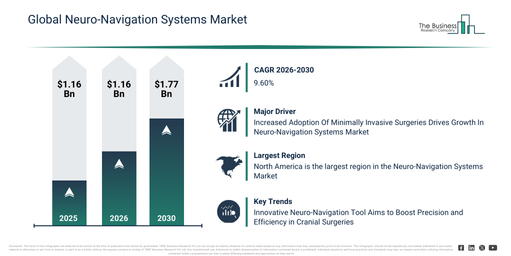
    The neuro-navigation systems market is projected to experience substantial expansion over the coming years. This market is anticipated to reach $4.96 billion by 2030, exhibiting a compound annual growth rate (CAGR) of 9.6%. Factors contributing to this growth during the forecast period include the rise in robot-assisted surgeries, an increase in complex brain surgical procedures, the integration of AI into navigation systems, growing demand for spine surgeries, and the expansion of specialty hospitals. Key trends shaping the forecast period encompass image-guided brain surgery, the adoption of minimally invasive neurosurgery, advancements in real-time surgical navigation, the prevalence of robotic-assisted neurosurgical procedures, and precision spine surgery.

    Download A Free Sample Report For Comprehensive Market Insights:

    https://www.thebusinessresearchcompany.com/sample.aspx?id=19613&type=smp

    What Influential Factors Are Boosting The Neuro-Navigation Systems Market Demand?

    The increasing application of minimally invasive surgical procedures is projected to fuel the expansion of the neuro-navigation systems market moving forward. These procedures involve operations performed through small incisions or natural body openings using specialized tools and techniques. The rising embrace of minimally invasive methods stems from their benefits, including less pain, quicker recovery, and a reduced risk of complications. Neuro-navigation systems enhance the precision and effectiveness of these surgeries by providing real-time, detailed guidance that assists surgeons in accurately navigating complex anatomical structures. For instance, in January 2023, data from the American Society of Plastic Surgeons revealed that approximately 23,672,269 minimally invasive cosmetic surgeries were carried out in the USA in 2022, showing a 7% increase to 25,442,640 surgeries in 2023. Consequently, the surging adoption of minimally invasive surgical procedures is driving the growth of the neuro-navigation systems market.

    How Is The Neuro-Navigation Systems Market Structured Across Different Market Segments?

    The neuro-navigation systems market covered in this report is segmented –

    1) By Type: Optical Surgical Navigation Systems, Electromagnetic Surgical Navigation Systems, Robotic Navigation Systems

    2) By Application: Neurosurgery, Craniomaxillofacial Surgery, Spinal Surgery, Other Applications

    3) By End User: Hospitals, Neurology Clinic, Ambulatory Surgical Centers (ASC), Research Centers, Other End Users

    Subsegments:

    1) By Optical Surgical Navigation Systems: 2D Optical Navigation Systems, 3D Optical Navigation Systems, Optical Tracking Devices, Image-Guided Surgery Systems

    2) By Electromagnetic Surgical Navigation Systems: Electromagnetic Tracking Systems, Wireless Electromagnetic Navigation Devices, Electromagnetic Guidance Systems for Biopsies

    3) By Robotic Navigation Systems: Robotic-Assisted Surgical Systems, Telemanipulation Navigation Systems

    What Trends Are Driving Changes In The Neuro-Navigation Systems Market?

    Leading companies within the neuro-navigation systems market are concentrating on creating sophisticated offerings, including advanced surgical planning and navigation platforms, with the goal of increasing surgical accuracy, decreasing procedure durations, and bettering patient results. These platforms represent complex systems that combine imaging innovations with real-time tracking capabilities to support surgeons in precisely traversing intricate anatomical areas throughout operations, thereby boosting exactness and fostering superior patient recovery. An example of this is seen in July 2023, when Stryker, a US-based medical technology firm, introduced its Q Guidance System with Cranial Guidance Software. This Q Guidance System, paired with Cranial Guidance Software, serves as an innovative neuro-navigation instrument engineered to deliver instantaneous, high-definition imaging and exact guidance for intricate cranial operations. It elevates surgical exactness and enhances patient recovery through its provision of 3D visualization and sophisticated guidance to surgeons during interventions. This particular system is poised to optimize operational processes, lessen the duration spent in the operating room, and play a part in the expanding domain of neuro-navigation systems.

    Who Are The Firms Contributing To The Neuro-Navigation Systems Market Ecosystem?

    Major companies operating in the neuro-navigation systems market are Medtronic Plc, Stryker Corporation, BrainLAB AG, Synaptive Medical, ClearPoint Neuro Inc., ClaroNav, Scopis GmbH, Northern Digital Inc., Philips Healthcare, GE HealthCare Technologies Inc., Canon Medical Systems, Hitachi Medical Systems, Siemens Healthineers, Zimmer Biomet, Johnson And Johnson Medical Devices, Mazor Robotics, Brainlab Spine, FHC Inc., Inomed Medizintechnik GmbH, Renishaw Plc, Leica Microsystems

    Access The Complete Neuro-Navigation Systems Market Report:

    https://www.thebusinessresearchcompany.com/report/neuro-navigation-systems-global-market-report

    Which Area Represents The Largest Portion Of The Neuro-Navigation Systems Market?

    North America was the largest region in the neuro-navigation systems market in 2025. Asia-Pacific is expected to be the fastest-growing region in the forecast period. The regions covered in the neuro-navigation systems market report are Asia-Pacific, South East Asia, Western Europe, Eastern Europe, North America, South America, Middle East, Africa.

    Access a Neuro-Navigation Systems Market Report for Deeper Competitive Insights

    https://www.thebusinessresearchcompany.com/report/neuro-navigation-systems-global-market-report

    Browse Through More Reports Similar to the Global Neuro-Navigation Systems Market 2026, By The Business Research Company

    Internal Neuromodulation Devices Market Report 2026

    https://www.thebusinessresearchcompany.com/report/internal-neuromodulation-devices-global-market-report

    Neurotechnology Market Report 2026

    https://www.thebusinessresearchcompany.com/report/neurotechnology-global-market-report

    Neurostimulation Devices Market Report 2026

    https://www.thebusinessresearchcompany.com/report/neurostimulation-devices-global-market-report

    Get in touch with us:

    The Business Research Company: https://www.thebusinessresearchcompany.com/

    Americas: +1 310-496-7795

    Asia: +44 7882 955267 & +91 8897263534

    Europe: +44 7882 955267

    Email us at: marketing@tbrc.info

    Follow us on:

    LinkedIn: https://in.linkedin.com/company/the-business-research-company

    YouTube: https://www.youtube.com/channel/UC24_fI0rV8cR5DxlCpgmyFQ

    Global Market Model: https://www.thebusinessresearchcompany.com/global-market-model
  • Neuromodulation Market Size Forecast To Achieve $12.87 Billion By 2030 With 11.1% CAGR

    Neuromodulation Market Size Forecast To Achieve $12.87 Billion By 2030 With 11.1% CAGR

    The Business Research Company’s 2026 market reports feature advanced enhancements such as market attractiveness analysis, total addressable market evaluation, company benchmarking matrices, interactive Excel dashboards, expanded supply chain intelligence, emerging startup coverage, and detailed product insights, delivering more actionable and strategically valuable research.

    What Market Value Trend Is Expected For The Neuromodulation Market From 2026 To 2030?

    The neuromodulation market has seen significant expansion in recent years. It is anticipated to increase from $7.62 billion in 2025 to $8.45 billion in 2026, achieving a compound annual growth rate (CAGR) of 10.9%. Historically, this market’s growth can be linked to the increasing prevalence of chronic pain conditions, a rising incidence of neurological disorders, greater acceptance of minimally invasive therapies, the expansion of specialized pain management centers, and the availability of advanced implantable devices.

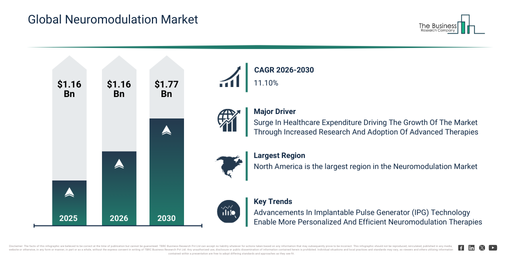
    The neuromodulation market is projected to experience swift expansion in the coming years. By 2030, its valuation is anticipated to reach $12.88 billion, exhibiting a compound annual growth rate (CAGR) of 11.1%. This projected growth is driven by several factors, including the increasing integration of AI-assisted neuromodulation systems, a surge in demand for neuromodulation treatments administered at home, broader approved uses for psychiatric and neurological conditions, an intensifying focus on tailored patient stimulation methods, and ongoing technological improvements in biomaterials and device miniaturization. Key trends anticipated during this period encompass a greater uptake of implantable neuromodulation devices, increased utilization of non-invasive neuromodulation techniques, the expanding incorporation of intelligent and programmable stimulators, the broadening scope of neuromodulation applications beyond pain management, and a strengthened emphasis on individualized neurotherapy.

    Download A Free Sample Report For Comprehensive Market Insights:

    https://www.thebusinessresearchcompany.com/sample.aspx?id=10142&type=smp

    Which Drivers Are Advancing The Neuromodulation Market Growth?

    Increased healthcare spending is anticipated to fuel the expansion of the neuromodulation market moving forward. Healthcare expenditure encompasses the total financial outlay on health care and related activities, including the delivery of health services, private and public health insurance, health research, and public health initiatives. Elevated expenditures contribute to the creation and adoption of novel therapies and diagnostic methods for neurological conditions. Furthermore, greater financial backing enables more extensive research into new neuromodulation technologies, thereby enhancing their efficacy, safety, and targeting capabilities. For instance, in May 2024, figures from the Office for National Statistics, a UK-based government department, revealed that total healthcare expenditure registered a 5.6% increase in nominal terms in 2023, representing a 0.9% growth compared to 2022. Thus, the upward trend in healthcare expenditure is a significant driver for the growth of the neuromodulation market.

    Which Segment-Based Categories Are Covered In The Neuromodulation Market?

    The neuromodulation market covered in this report is segmented –

    1) By Technology: Internal Neuromodulation, External Neuromodulation (Non-invasive)

    2) By Biomaterial: Polymeric Biomaterial, Metallic Biomaterial, Ceramic Biomaterial

    3) By Application: Chronic Pain, Urinary And Fecal Incontinence, Migraine, Failed Back Syndrome, Parkinson Disease, Epilepsy, Tremor, Depression, Other Applications

    4) By End-User: Hospitals, Clinics, Home Healthcare

    Subsegments:

    1) By Internal Neuromodulation: Implantable Devices, Intrathecal Drug Delivery Systems

    2) By External Neuromodulation (Non-invasive): Transcranial Magnetic Stimulation (TMS), Transcranial Direct Current Stimulation (tDCS), Transcutaneous Electrical Nerve Stimulation (TENS), Peripheral Nerve Stimulation (PNS)

    Which Trends Are Shaping The Neuromodulation Market Landscape?

    Major companies in the neuromodulation market are prioritizing the development of advanced devices, such as next-generation implantable pulse generators (IPGs), to enhance therapeutic precision, improve patient comfort, and maintain their competitive position. An IPG is a compact, battery-powered device typically implanted under the skin, often in the chest or abdomen, that delivers targeted electrical stimulation to manage neurological disorders. These innovations aim to provide greater personalization, improved battery longevity, and simplified implantation procedures. For instance, in July 2023, Boston Scientific Corporation, a US-based biotechnology and biomedical engineering firm, secured FDA approval for its Vercise Neural Navigator 5 software with STIMVIEW XT technology, intended for use with the fourth-generation Vercise Genus Deep Brain Stimulation (DBS) System. This platform encompasses both rechargeable and non-rechargeable IPGs and supports five MR-Conditional implantable pulse generators (IPGs), thereby offering the widest array of therapy options to customize DBS treatment for individuals with Parkinson’s disease or essential tremor.

    Which Key Players Are Active In The Neuromodulation Market?

    Major companies operating in the neuromodulation market are Abbott Laboratories, Soterix Medical Inc., Boston Scientific Corporation, Medtronic plc, Synapse Biomedical Inc., Nevro Corp, NeuroPace Inc., LivaNova PLC, NeuroSigma Inc., Neuronetics Inc., Bioness Inc., Aleva Neurotherapeutics S.A., Integer Holdings Corporation, Inspire Medical Systems Inc., Saluda Medical Pty Ltd, Inbrain Neuroelectronics SAS, Pixium Vision SA, Neuromod Devices Limited, Cognito Therapeutics Inc., PathMaker Neurosystems Inc., Dignify Therapeutics Inc., Neuros Medical Inc., Koninklijke Philips N.V., Omron Corporation

    Access The Complete Neuromodulation Market Report:

    https://www.thebusinessresearchcompany.com/report/neuromodulation-global-market-report

    Which Region Commands The Largest Share Of The Neuromodulation Market?

    North America was the largest region in the neuromodulation market in 2025. The regions covered in the neuromodulation market report are Asia-Pacific, South East Asia, Western Europe, Eastern Europe, North America, South America, Middle East, Africa.

    Access a Neuromodulation Market Report for Deeper Competitive Insights

    https://www.thebusinessresearchcompany.com/report/neuromodulation-global-market-report

    Browse Through More Reports Similar to the Global Neuromodulation Market 2026, By The Business Research Company

    Nephrologists Market Report 2020 2030 Covid 19 Implications And Growth 2026

    https://www.thebusinessresearchcompany.com/report/nephrologists-market-global-report-2020-2030-covid-19-implications-and-growth

    Neurology Devices Market Report 2026

    https://www.thebusinessresearchcompany.com/report/neurology-devices-global-market-report

    Brain Monitoring Market Report 2026

    https://www.thebusinessresearchcompany.com/report/brain-monitoring-global-market-report

    Get in touch with us:

    The Business Research Company: https://www.thebusinessresearchcompany.com/

    Americas: +1 310-496-7795

    Asia: +44 7882 955267 & +91 8897263534

    Europe: +44 7882 955267

    Email us at: marketing@tbrc.info

    Follow us on:

    LinkedIn: https://in.linkedin.com/company/the-business-research-company

    YouTube: https://www.youtube.com/channel/UC24_fI0rV8cR5DxlCpgmyFQ

    Global Market Model: https://www.thebusinessresearchcompany.com/global-market-model
  • Neurology Monitoring Market Forecast Covering Industry Demand And Market Evolution

    Neurology Monitoring Market Forecast Covering Industry Demand And Market Evolution

    The Business Research Company’s 2026 market reports feature advanced enhancements such as market attractiveness analysis, total addressable market evaluation, company benchmarking matrices, interactive Excel dashboards, expanded supply chain intelligence, emerging startup coverage, and detailed product insights, delivering more actionable and strategically valuable research.

    How Does The Forecasted Market Size Of The Neurology Monitoring Market Compare Between 2026 And 2030?

    The neurology monitoring market has seen significant expansion in recent years. It is anticipated to increase from $6.95 billion in 2025 to $7.34 billion in 2026, achieving a compound annual growth rate (CAGR) of 5.5%. The market’s past growth can be attributed to an uptick in complex neurological surgeries, the rising occurrence of neurological disorders, the establishment of more specialized neurology centers, the implementation of intraoperative monitoring standards, and innovations in neurodiagnostic technologies.

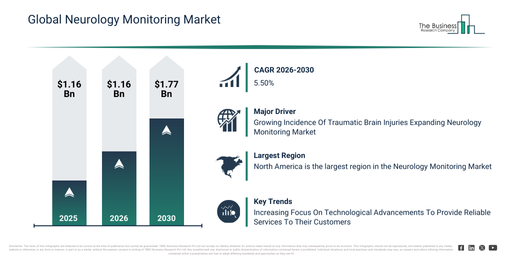
    The neurology monitoring market size is anticipated to experience robust expansion over the next few years, with projections indicating it will reach $9.08 billion in 2030, exhibiting a compound annual growth rate (CAGR) of 5.5%. This forecasted growth can be attributed to several factors, including the increasing demand for continuous brain monitoring solutions, rising investments in advanced neuromonitoring technologies, the expansion of minimally invasive neurosurgeries, a growing focus on patient safety outcomes, and the increasing integration of AI-based neurological analytics. Key trends expected during this period involve the increasing adoption of real-time neuromonitoring systems, the rising use of portable and wireless monitoring devices, the growing integration of multi-parameter neurological monitoring, an expansion of intraoperative monitoring applications, and an enhanced focus on data-driven clinical decision support.

    Download A Free Sample Report For Comprehensive Market Insights:

    https://www.thebusinessresearchcompany.com/sample.aspx?id=13496&type=smp

    What Primary Factors Are Fueling The Expansion Of The Neurology Monitoring Market?

    An anticipated increase in traumatic brain injuries is set to drive expansion within the neurology monitoring market. Traumatic brain injury (TBI) is defined as brain damage resulting from an external force or physical trauma. The rising occurrence of traumatic brain injuries stems from a surge in road traffic accidents, where increased vehicle use and hazardous driving practices contribute to a higher incidence of head injuries. For the management of traumatic brain injuries (TBIs), neurology monitoring is utilized to assess a patient’s brain function, keep track of intracranial pressure, and detect any shifts in neurological status. This capability aids medical professionals in formulating treatment plans and interventions, thereby ensuring patients get prompt and personalized care. An illustrative example comes from March 2023, when the Colorado Department of Human Services (CDHS), a US-based government agency, reported that annually, approximately 2.8 million Americans suffer a traumatic brain injury, resulting in close to 2.5 million emergency department visits, 225,000 hospitalizations, and 65,000 deaths each year. Consequently, the escalating frequency of traumatic brain injuries is a key driver for the neurology monitoring market.

    What Are The Major Segment Categories Within The Neurology Monitoring Market?

    The neurology monitoring market covered in this report is segmented –

    1) By Product Type: Magnetic Resonance Imaging (MRI) Devices, Electroencephalography Devices, Cerebral Oximeters, Intracranial Pressure Monitors, Other Product Types

    2) By Disease Type: Traumatic Brain Injury (TBI), Stroke, Sleep Disorders, Parkinson’s Disease, Epilepsy, Other Disease Types

    3) By End User: Hospitals, Neurology Centers, Diagnostic Centers, Advancing Surgical Care And Clinics, Other End Users

    Subsegments:

    1) By Magnetic Resonance Imaging (MRI) Devices: Functional MRI (fMRI), Closed MRI Systems, Open MRI Systems, Portable MRI Systems

    2) By Electroencephalography (EEG) Devices: Portable EEG Devices, Wireless EEG Devices, Ambulatory EEG Devices, Clinical EEG Devices

    3) By Cerebral Oximeters: Non-Invasive Cerebral Oximeters, Handheld Cerebral Oximeters

    4) By Intracranial Pressure Monitors: Invasive Intracranial Pressure Monitors, Non-Invasive Intracranial Pressure Monitors

    5) By Other Product Types: Electromyography (EMG) Devices, Transcranial Doppler (TCD) Devices, Evoked Potential Systems, Near-Infrared Spectroscopy (NIRS) Devices

    What Trends Are Influencing The Neurology Monitoring Market Outlook?

    Leading companies active within the neurology monitoring market are concentrating on creating innovative electroencephalogram (EEG) monitoring devices, such as portable, cloud-connected EEG solutions, to offer dependable services to their clientele. Such a cloud-linked portable EEG device enables real-time brain activity observation by wirelessly transmitting data to the cloud for remote analysis and storage. For example, in November 2023, BioSerenity, a France-based healthcare company, secured FDA clearance for its Neuronaute Plus, a comprehensive and simplified EEG device developed by BioSerenity. This portable medical instrument gathers EEG data that can be uploaded to the cloud, allowing specialists in Europe, Canada, and the U.S. to conveniently analyze the recordings. It is designed with user-friendliness in mind, requiring minimal training, and is complemented by the Icecap, a novel EEG electrode net that streamlines the recording process.

    Who Are The Leading Firms Participating In The Neurology Monitoring Market?

    Major companies operating in the neurology monitoring market are Medtronic plc, Siemens Healthcare GmbH, GE Healthcare, Philips Healthcare, Drägerwerk AG & Co. KgaA, Masimo Corporation, Nihon Kohden Corporation, Integra LifeSciences Corporation, Natus Medical Incorporated, Raumedic AG, Neurosoft LLC, Cadwell Laboratories Inc., Compumedics Limited, Sophysa SA, Electrical Geodesics Inc., BrainScope Company Inc., G.Tec Medical Engineering GmbH, Persyst Development Corporation, Advanced Brain Monitoring Inc., NeuroWave Systems Inc., Spiegelberg GmbH & Co. KG, BrainMaster Technologies Inc., DEYMED Diagnostic s.r.o., Inomed Medizintechnik GmbH, Novela Neurotechnologies Inc

    Access The Complete Neurology Monitoring Market Report:

    https://www.thebusinessresearchcompany.com/report/neurology-monitoring-global-market-report

    Which Region Accounts For The Highest Share Of The Neurology Monitoring Market?

    North America was the largest region in the neurology monitoring market in 2025. Asia-Pacific is expected to be the fastest-growing region in the forecast period. The regions covered in the neurology monitoring market report are Asia-Pacific, South East Asia, Western Europe, Eastern Europe, North America, South America, Middle East, Africa.

    Access a Neurology Monitoring Market Report for Deeper Competitive Insights

    https://www.thebusinessresearchcompany.com/report/neurology-monitoring-global-market-report

    Browse Through More Reports Similar to the Global Neurology Monitoring Market 2026, By The Business Research Company

    Interventional Neurology Devices And Equipment Market Report 2026

    https://www.thebusinessresearchcompany.com/report/interventional-neurology-devices-and-equipment-global-market-report

    Neurophysiology Devices And Equipment Market Report 2026

    https://www.thebusinessresearchcompany.com/report/neurophysiology-devices-and-equipment-global-market-report

    Neurostimulation Devices Market Report 2026

    https://www.thebusinessresearchcompany.com/report/neurostimulation-devices-global-market-report

    Get in touch with us:

    The Business Research Company: https://www.thebusinessresearchcompany.com/

    Americas: +1 310-496-7795

    Asia: +44 7882 955267 & +91 8897263534

    Europe: +44 7882 955267

    Email us at: marketing@tbrc.info

    Follow us on:

    LinkedIn: https://in.linkedin.com/company/the-business-research-company

    YouTube: https://www.youtube.com/channel/UC24_fI0rV8cR5DxlCpgmyFQ

    Global Market Model: https://www.thebusinessresearchcompany.com/global-market-model
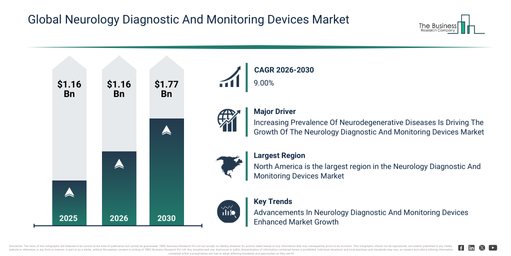
  • Neurology Diagnostic And Monitoring Devices Market Trends And Growth Outlook Across The 2026–2030 Forecast Period

    Neurology Diagnostic And Monitoring Devices Market Trends And Growth Outlook Across The 2026–2030 Forecast Period

    The Business Research Company’s 2026 market reports feature advanced enhancements such as market attractiveness analysis, total addressable market evaluation, company benchmarking matrices, interactive Excel dashboards, expanded supply chain intelligence, emerging startup coverage, and detailed product insights, delivering more actionable and strategically valuable research.

    What Increase In Market Value Is Predicted For The Neurology Diagnostic And Monitoring Devices Market During The 2026–2030 Period?

    The neurology diagnostic and monitoring devices market has shown robust expansion in recent years. It is projected to expand from $9.32 billion in 2025 to $10.19 billion in 2026, achieving a compound annual growth rate (CAGR) of 9.3%. This historical growth can be attributed to several factors, including the increasing prevalence of neurological disorders, the expansion of imaging infrastructure, advancements in EEG and MRI systems, a rise in hospital diagnostics, and an aging population.

    The neurology diagnostic and monitoring devices market size is anticipated to undergo significant growth in the upcoming years. It is forecasted to expand to $14.38 billion by 2030, exhibiting a compound annual growth rate (CAGR) of 9.0%. This projected growth over the forecast period stems from factors such as increased demand for remote patient monitoring, the expansion of neurology centers, heightened awareness regarding brain health, technological advancements in imaging, and rising research investments. Prominent trends within the forecast period include the increasing utilization of portable neurology devices, a growing need for early disease diagnosis, the broader implementation of remote neurological monitoring, an uptick in the adoption of non-invasive diagnostic tools, and the development of multimodal imaging approaches.

    Download A Free Sample Report For Comprehensive Market Insights:

    https://www.thebusinessresearchcompany.com/sample.aspx?id=20578&type=smp

    Which Strategic Drivers Are Supporting The Neurology Diagnostic And Monitoring Devices Market Development?

    The expanding occurrence of neurodegenerative conditions is anticipated to drive the advancement of the neurology diagnostic and monitoring devices market in the future. These diseases encompass a range of ailments marked by the gradual deterioration or demise of nerve cells (neurons) within the brain and/or spinal cord. The rise in neurodegenerative diseases can be attributed to an aging global populace, extended lifespans, and heightened exposure to both environmental and genetic risk factors. Neurology diagnostic and monitoring devices assist in managing neurodegenerative diseases by offering accurate, real-time evaluations of brain activity and disease advancement, which facilitates prompt diagnosis, customized treatment strategies, and efficient tracking of treatment outcomes. As an illustration, in April 2025, the Alzheimer’s Association, a US-based non-profit entity, reported that over 7 million Americans are currently affected by Alzheimer’s, with projections indicating an increase to almost 13 million by 2050. Consequently, the rising prevalence of neurodegenerative conditions is a key factor fueling the expansion of the neurology diagnostic and monitoring devices market.

    How Is The Neurology Diagnostic And Monitoring Devices Market Distributed Across Key Segments?

    The neurology diagnostic and monitoring devices market covered in this report is segmented –

    1) By Device Type: Electroencephalogram (EEG) Systems, Magnetic Resonance Imaging (MRI) Systems, Computed Tomography (CT) Scanner, Position Emission Tomography (PET) System, Ultrasound Imaging Systems, Other Device Types

    2) By Indication: Neurodegenerative Disease, Epilepsy, Stroke, Other Indications

    3) By End-User: Hospitals And Surgery Centers, Neurology Centers, Ambulatory Care Centers, Diagnostic Laboratories And Imaging Centers, Research Laboratories And Academic Institutes

    Subsegments:

    1) By Electroencephalogram (EEG) Systems: Portable EEG Systems, Clinical EEG Systems, Wireless EEG Systems

    2) By Magnetic Resonance Imaging (MRI) Systems: Closed MRI Systems, Open MRI Systems, Functional MRI (fMRI) Systems

    3) By Computed Tomography (CT) Scanner: Standard CT Scanners, High-Definition CT Scanners, 3D CT Scanners

    4) By Position Emission Tomography (PET) System: PET-CT Scanners, PET-MRI Scanners

    5) By Ultrasound Imaging Systems: Diagnostic Ultrasound Systems, 3D And 4D Ultrasound Systems, Portable Ultrasound Systems

    6) By Other Device Types: Nerve Conduction Study (NCS) Devices, Evoked Potential (EP) Systems, Brain Implants And Neurostimulators

    Which Trends Are Expected To Shape The Neurology Diagnostic And Monitoring Devices Market?

    Leading companies in the neurology diagnostic and monitoring devices market are focusing on developing advanced solutions, such as an image-guided therapy system, to enhance precision in neurovascular procedures. An image-guided therapy system refers to a medical technology used to assist in the real-time planning, navigation, and execution of various therapeutic procedures. For instance, in February 2024, Koninklijke Philips N.V., the Netherlands-based health technology company, launched the new Azurion neuro biplane system to accelerate and enhance the minimally invasive diagnosis and treatment of neurovascular patients. It offers unique features such as enhanced C-arm rotation and angulation for improved imaging flexibility, rapid transitioning between 2D and 3D imaging for optimized workflow, comprehensive table-side control to maintain a sterile field, automatic beam rotation for accurate image orientation, a new head immobilizer to support stroke patient care, and integration of AI and machine learning to monitor performance and predict service issues.

    Which Companies Are Engaged In The Neurology Diagnostic And Monitoring Devices Market Environment?

    Major companies operating in the neurology diagnostic and monitoring devices market are Siemens Healthineers, Koninklijke Philips N.V., GE HealthCare Technologies Inc., Shimadzu Corporation, Masimo Corporation, Nihon Kohden Corporation, Elekta AB, Natus Medical Incorporated, Esaote S.p.A., Zynex Medical Inc., Canon Medical Systems Corporation, Neurosoft S.A., Cadwell Industries Inc., Cogito Brains Inc., Blackrock Neurotech Inc., Compumedics Limited, Ceribell Inc., Nexstim Plc, NeuroMetrix Inc., Lumos Labs Inc., Soterix Medical Inc., Advanced Brain Monitoring Inc., Sense Neuro Diagnostics Inc.

    Access The Complete Neurology Diagnostic And Monitoring Devices Market Report:

    https://www.thebusinessresearchcompany.com/report/neurology-diagnostic-and-monitoring-devices-global-market-report

    Which Region Is The Primary Market For The Neurology Diagnostic And Monitoring Devices Market?

    North America was the largest region in the neurology diagnostic and monitoring devices market in 2025. Asia-Pacific is expected to be the fastest-growing region in the forecast period. The regions covered in the neurology diagnostic and monitoring devices market report are Asia-Pacific, South East Asia, Western Europe, Eastern Europe, North America, South America, Middle East, Africa.

    Access a Neurology Diagnostic And Monitoring Devices Market Report for Deeper Competitive Insights

    https://www.thebusinessresearchcompany.com/report/neurology-diagnostic-and-monitoring-devices-global-market-report

    Browse Through More Reports Similar to the Global Neurology Diagnostic And Monitoring Devices Market 2026, By The Business Research Company

    Interventional Neurology Devices And Equipment Market Report 2026

    https://www.thebusinessresearchcompany.com/report/interventional-neurology-devices-and-equipment-global-market-report

    Neurology Devices Market Report 2026

    https://www.thebusinessresearchcompany.com/report/neurology-devices-global-market-report

    Neurosurgery Devices And Equipment Market Report 2026

    https://www.thebusinessresearchcompany.com/report/neurosurgery-devices-and-equipment-global-market-report

    Get in touch with us:

    The Business Research Company: https://www.thebusinessresearchcompany.com/

    Americas: +1 310-496-7795

    Asia: +44 7882 955267 & +91 8897263534

    Europe: +44 7882 955267

    Email us at: marketing@tbrc.info

    Follow us on:

    LinkedIn: https://in.linkedin.com/company/the-business-research-company

    YouTube: https://www.youtube.com/channel/UC24_fI0rV8cR5DxlCpgmyFQ

    Global Market Model: https://www.thebusinessresearchcompany.com/global-market-model
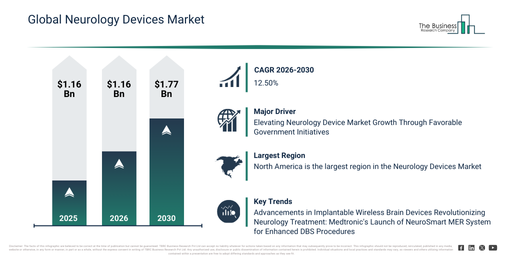
  • Neurology Devices Market Expansion Outlook Through 2030 With Revenue Growth Insights

    Neurology Devices Market Expansion Outlook Through 2030 With Revenue Growth Insights

    The Business Research Company’s 2026 market reports feature advanced enhancements such as market attractiveness analysis, total addressable market evaluation, company benchmarking matrices, interactive Excel dashboards, expanded supply chain intelligence, emerging startup coverage, and detailed product insights, delivering more actionable and strategically valuable research.

    How Will The Market Size Of The Neurology Devices Market Progress Through 2030?

    The neurology devices market size has experienced significant expansion in recent years. It is projected to grow from $20.09 billion in 2025 to $22.44 billion in 2026, achieving a compound annual growth rate (CAGR) of 11.7%. This historical growth can be ascribed to the rising prevalence of neurological disorders, the expansion of neurosurgical capabilities in hospitals, increasing availability of advanced imaging technologies, growing demand for minimally invasive procedures, and improvements in clinical outcomes of neurology devices.

    The neurology devices market size is projected to experience substantial growth over the coming years. It is anticipated to reach $35.94 billion by 2030, exhibiting a compound annual growth rate (CAGR) of 12.5%. This expansion during the forecast period can be attributed to several factors, including escalating investments in brain-computer interface research, the increasing embrace of precision neurology approaches, the broadening of outpatient neurology treatment centers, a surging demand for non-invasive neurodiagnostic tools, and a heightened focus on remote neurological monitoring. Key trends expected during this period involve a greater adoption of neurostimulation therapies, the rising utilization of image-guided neurosurgical systems, the expanding integration of AI in neurological diagnostics, the proliferation of minimally invasive neurology procedures, and an intensified focus on personalized neurological treatments.

    Download A Free Sample Report For Comprehensive Market Insights:

    https://www.thebusinessresearchcompany.com/sample.aspx?id=1977&type=smp

    What Major Growth Factors Are Impacting The Neurology Devices Market?

    Positive government initiatives are anticipated to boost the neurology device market’s expansion in the coming years. Government actions concerning medical devices encompass policies, regulations, and programs designed to ensure the safety, quality, and innovation of healthcare products. These efforts can stimulate market growth by influencing regulatory frameworks, funding research and development, providing financial incentives, expanding telemedicine services, promoting public health awareness, and enhancing overall healthcare access. For example, in October 2023, the Food and Drug Administration, a US-based federal agency under the Department of Health and Human Services, extended the Total Product Life Cycle Advisory Programme (TAP) to include neurological and physical medicine devices, aiming to accelerate technological advancements in these sectors. By the first quarter of 2025, the FDA plans to integrate four more offices into the program and register up to 65 additional devices. Therefore, favorable government initiatives are propelling the growth of the neurology device market.

    How Does Segment Analysis Break Down The Neurology Devices Market Structure?

    The neurology devices market covered in this report is segmented –

    1) By Type: Cerebrospinal Fluid Management (CSF) Devices And Equipment, Interventional Neurology Devices And Equipment, Neurosurgery Devices And Equipment, Neurostimulation Devices

    2) By Type of Expenditure: Public, Private

    3) By End User: Hospitals And Clinics, Diagnostic Laboratories, Other End Users

    Subsegments:

    1) By Cerebrospinal Fluid Management (CSF) Devices And Equipment: CSF Shunts, CSF Drainage Systems, Ventriculostomy Devices

    2) By Interventional Neurology Devices And Equipment: Intracranial Stents, Embolic Coils, Neurovascular Catheters

    3) By Neurosurgery Devices And Equipment: Surgical Microscopes, Surgical Navigation Systems, Neurosurgical Instruments

    4) By Neurostimulation Devices: Deep Brain Stimulation Devices, Spinal Cord Stimulation Devices, Transcranial Magnetic Stimulation Devices

    What Trends Are Affecting The Neurology Devices Market Dynamics?

    Major companies operating in the neurology devices market are focused on developing Advancements in Implantable Wireless Brain Devices Transforming Neurology Treatment, which encompass sophisticated medical instruments designed to improve therapies for neurological conditions via continuous monitoring and brain-computer interfaces. These new developments prioritize less invasive methods, better patient results, and customized therapeutic approaches. A sophisticated medical device refers to an intricate tool employing state-of-the-art technology for diagnosis, treatment, or surveillance. For example, in April 2024, Medtronic, an Ireland-based medical device company, introduced a NeuroSmart Portable Micro Electrode Recording (MER) Navigation System. This system significantly improves Deep Brain Stimulation (DBS) procedures for Parkinson’s disease by ensuring accurate, real-time electrode positioning and automated navigation, resulting in better patient outcomes and fewer adverse reactions. Its mobile nature and advanced capabilities enable medical professionals to effectively administer customized treatments.

    Who Are The Prominent Players Across The Neurology Devices Market?

    Major companies operating in the neurology devices market are Medtronic PLC, Stryker Corporation, Boston Scientific Corporation, Integra LifeSciences, Abbott Laboratories, LivaNova PLC, Integer, Penumbra Inc., B. Braun Group, Johnson & Johnson, W.L Gore, St. Jude Medical LLC, Parasym, Smiths Medical, Cizeta Surgical, Neuro France Implants, Ectron, Accentus Medical Ltd, Argonaut Therapeutics, Brainwave Discovery, Cerus Endovascular, Chronus Therapeutics, Natus Medical Incorporated, Cerenovus, Nevro, Aleva Neurotherapeutics SA, Cyberonics Inc.

    Access The Complete Neurology Devices Market Report:

    https://www.thebusinessresearchcompany.com/report/neurology-devices-global-market-report

    Which Geographic Region Represents The Largest Neurology Devices Market Share?

    North America was the largest region in the global neurology devices market in 2025. Asia-Pacific is expected to be the fastest-growing region in the forecast period. The regions covered in the neurology devices market report are Asia-Pacific, South East Asia, Western Europe, Eastern Europe, North America, South America, Middle East, Africa.

    Access a Neurology Devices Market Report for Deeper Competitive Insights

    https://www.thebusinessresearchcompany.com/report/neurology-devices-global-market-report

    Browse Through More Reports Similar to the Global Neurology Devices Market 2026, By The Business Research Company

    Brain And Neuroimaging Devices Market Report 2026

    https://www.thebusinessresearchcompany.com/report/brain-and-neuroimaging-devices-global-market-report

    Neurostimulation Devices Market Report 2026

    https://www.thebusinessresearchcompany.com/report/neurostimulation-devices-global-market-report

    Electroencephalography Devices Market Report 2026

    https://www.thebusinessresearchcompany.com/report/electroencephalography-devices-global-market-report

    Get in touch with us:

    The Business Research Company: https://www.thebusinessresearchcompany.com/

    Americas: +1 310-496-7795

    Asia: +44 7882 955267 & +91 8897263534

    Europe: +44 7882 955267

    Email us at: marketing@tbrc.info

    Follow us on:

    LinkedIn: https://in.linkedin.com/company/the-business-research-company

    YouTube: https://www.youtube.com/channel/UC24_fI0rV8cR5DxlCpgmyFQ

    Global Market Model: https://www.thebusinessresearchcompany.com/global-market-model
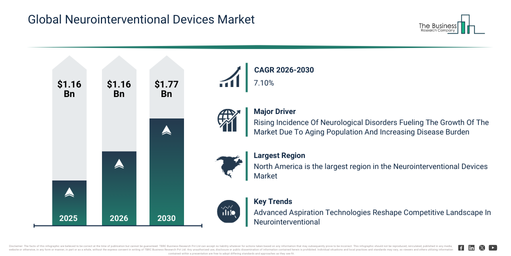
  • Neurointerventional Devices Market Industry Analysis Covering Trends, Drivers, And Future Outlook

    Neurointerventional Devices Market Industry Analysis Covering Trends, Drivers, And Future Outlook

    The Business Research Company’s 2026 market reports feature advanced enhancements such as market attractiveness analysis, total addressable market evaluation, company benchmarking matrices, interactive Excel dashboards, expanded supply chain intelligence, emerging startup coverage, and detailed product insights, delivering more actionable and strategically valuable research.

    What Is The Expected Market Size Of The Neurointerventional Devices Market In 2026 And How Much Will It Reach By 2030?

    The neurointerventional devices market has experienced robust expansion in recent years. Projections indicate it will escalate from $2.76 billion in 2025 to $2.97 billion in 2026, at a compound annual growth rate (CAGR) of 7.6%. Historically, this market’s expansion is attributable to factors such as the increasing prevalence of stroke and aneurysm, advancements in catheter and stent design, an increase in neurology specialist training programs, the growing adoption of minimally invasive procedures, and the expansion of hospital neurovascular departments.

    The neurointerventional devices market is projected to experience substantial expansion in the coming years. This market is anticipated to reach $3.91 billion by 2030, exhibiting a compound annual growth rate (CAGR) of 7.1%. Factors contributing to this growth during the forecast period include an expanding aging population, heightened investments in neurovascular research, an increase in comprehensive stroke centers, a need for quicker reperfusion outcomes, and escalating healthcare spending in developing nations. Key developments anticipated within the forecast timeframe involve sophisticated image-guided neurointervention, a move towards less invasive stroke treatments, greater uptake of flow diversion technologies, a growing requirement for swift clot retrieval devices, and the broadening of neurointerventional procedures across emerging markets.

    Download A Free Sample Report For Comprehensive Market Insights:

    https://www.thebusinessresearchcompany.com/sample.aspx?id=25846&type=smp

    What Market Drivers Are Helping Shape The Neurointerventional Devices Market Expansion?

    The increasing occurrence of neurological conditions is anticipated to fuel expansion in the neurointerventional devices market in the future. A neurological disorder is defined as any ailment impacting the brain, spinal cord, or nerves, thereby hindering their typical operations. The growth in these disorders stems from an aging worldwide populace, given that increasing age heightens the likelihood of neurodegenerative conditions owing to the inherent decrease in brain function and cellular repair capabilities. Neurointerventional devices facilitate the treatment of neurological disorders through minimally invasive procedures, allowing for the diagnosis and management of ailments like brain aneurysms, strokes, and vascular malformations. This leads to diminished risks, shorter recovery periods, and enhanced patient results. For example, a report from April 2024 by the Alzheimer’s Association, a US-based nonprofit voluntary health organization, indicated that in 2022, 6.5 million Americans aged 65 and older received an Alzheimer’s dementia diagnosis, a figure projected to rise to 6.9 million by 2024. Consequently, the growing prevalence of neurological disorders is stimulating expansion within the neurointerventional devices market.

    What Segment Types Are Included In The Neurointerventional Devices Market Analysis?

    The neurointerventional devices market covered in this report is segmented –

    1) By Product: Embolic Coils, Carotid Stents, Intracranial Stents, Neurovascular Thrombectomy, Embolic Protection Device, Flow Diverters Device, Intrasaccular Device, Other Products

    2) By Indication: Brain Aneurysm, Stroke, Other Indications

    3) By Technique: Neurothrombectomy Procedure, Cerebral Angiography, Stenting, Coiling Procedures, Flow Disruption

    4) By End User: Hospitals, Ambulatory Surgical Centers, Specialty Clinics, Research Institutes

    Subsegments:

    1) By Embolic Coils: Bare Platinum Coils, Coated Or Modified Coils, Complex-Shaped Coils, Detachable Coils

    2) By Carotid Stents: Open-Cell Stents, Closed-Cell Stents, Hybrid-Cell Stents, Drug-Eluting Stents

    3) By Intracranial Stents: Self-Expanding Stents, Balloon-Expandable Stents, Drug-Eluting Stents

    4) By Neurovascular Thrombectomy Devices: Stent Retrievers, Aspiration Catheters, Combined Thrombectomy Systems

    5) By Embolic Protection Devices: Distal Filters, Proximal Occlusion Devices, Distal Occlusion Devices

    6) By Flow Diverters Devices: Braided Flow Diverters, Dual-Layer Flow Diverters, Coated Flow Diverters

    7) By Intrasaccular Devices: Woven Mesh Implants, Expandable Mesh Baskets, Flow Disrupting Implants

    8) By Other Products: Microcatheters, Guidewires, Balloon Catheters, Distal Access Catheters

    Which Trends Are Influencing The Expansion Of The Neurointerventional Devices Market?

    Leading companies in the neurointerventional devices market are focusing on the creation of innovative solutions, including large-bore aspiration reperfusion catheters with advanced delivery aids. These aspiration reperfusion catheters are extended, wide-lumen, flexible catheters specifically designed to deliver powerful distal vacuum aspiration directly at the clot site. In contrast to conventional stent-retriever techniques, they prioritize direct aspiration (occasionally complemented by adjunctive devices) to remove blockages, resulting in fewer device passes, reduced device complexity at the clot face, and a potentially more efficient procedure workflow. As an example, in May 2024, Penumbra Inc., a US-based medical device company, launched RED 43, RED 72 with SENDit Technology, and RED 78, a series of neurovascular reperfusion catheters introduced to Europe that broadens the company’s aspiration-based thrombectomy offerings. The RED devices are constructed with multi-layer catheter shafts (incorporating PTFE liners, and hybrid stainless steel/nitinol coils) and precision polymer distal tips to ensure a balance between lumen size and distal trackability. Their operation involves advancing the catheter to or near the thrombus and applying aspiration using Penumbra’s ENGINE aspiration source to extract the clot. Distinctive features include engineered transition zones and REDglide technology, enhancing deliverability through winding vessels, along with a variety of lumen sizes.

    Which Companies Form The Competitive Landscape Of The Neurointerventional Devices Market?

    Major companies operating in the neurointerventional devices market are Medtronic plc, Stryker Corporation, Johnson And Johnson, Abbott Laboratories, Boston Scientific Corporation, Terumo Corporation, Kaneka Corporation, Cook Medical LLC, Merit Medical Systems Inc., MicroPort Scientific Corporation, Penumbra Inc., Asahi Intecc Co Ltd, MicroVention Inc, Phenox GmbH, Balt Group SAS, Balton Sp z o o, Zylox Tonbridge Medical Technology Co Ltd, Veiva Scientific Co Ltd, InspireMD Inc, Rapid Medical Ltd, Wallaby Medical, Cerus Endovascular Ltd

    Access The Complete Neurointerventional Devices Market Report:

    https://www.thebusinessresearchcompany.com/report/neurointerventional-devices-global-market-report

    Which Region Leads The Neurointerventional Devices Market By Size?

    North America was the largest region in the neurointerventional market in 2025. The regions covered in the neurointerventional devices market report are Asia-Pacific, South East Asia, Western Europe, Eastern Europe, North America, South America, Middle East, Africa.

    Access a Neurointerventional Devices Market Report for Deeper Competitive Insights

    https://www.thebusinessresearchcompany.com/report/neurointerventional-devices-global-market-report

    Browse Through More Reports Similar to the Global Neurointerventional Devices Market 2026, By The Business Research Company

    Magnetic Resonance Imaging Coils Market Report 2026

    https://www.thebusinessresearchcompany.com/report/magnetic-resonance-imaging-coils-global-market-report

    Embolization Coils Market Report 2026

    https://www.thebusinessresearchcompany.com/report/embolization-coils-global-market-report

    Neurology Devices Market Report 2026

    https://www.thebusinessresearchcompany.com/report/neurology-devices-global-market-report

    Get in touch with us:

    The Business Research Company: https://www.thebusinessresearchcompany.com/

    Americas: +1 310-496-7795

    Asia: +44 7882 955267 & +91 8897263534

    Europe: +44 7882 955267

    Email us at: marketing@tbrc.info

    Follow us on:

    LinkedIn: https://in.linkedin.com/company/the-business-research-company

    YouTube: https://www.youtube.com/channel/UC24_fI0rV8cR5DxlCpgmyFQ

    Global Market Model: https://www.thebusinessresearchcompany.com/global-market-model
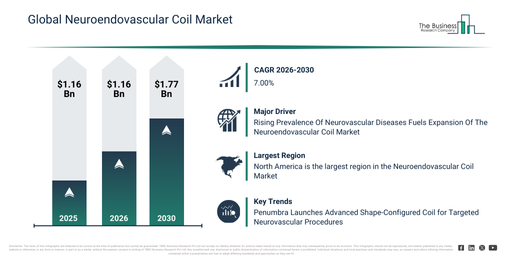
  • Neuroendovascular Coil Market Forecast Assessing Growth Potential And Industry Direction

    Neuroendovascular Coil Market Forecast Assessing Growth Potential And Industry Direction

    The Business Research Company’s 2026 market reports feature advanced enhancements such as market attractiveness analysis, total addressable market evaluation, company benchmarking matrices, interactive Excel dashboards, expanded supply chain intelligence, emerging startup coverage, and detailed product insights, delivering more actionable and strategically valuable research.

    What Market Size Is Forecasted For The Neuroendovascular Coil Market By 2030 Based On Its 2026 Value?

    The neuroendovascular coil market size has experienced significant growth in recent years. It is anticipated to expand from $1.39 billion in 2025 to $1.49 billion in 2026, at a compound annual growth rate (CAGR) of 7.1%. The increase observed in prior periods can be attributed to the rising incidence of cerebral aneurysms, advancements in endovascular treatment techniques, a surge in neurointerventional procedures, the expansion of stroke treatment centers, and improved clinician expertise in neurovascular care.

    The neuroendovascular coil market is projected to experience substantial expansion in the coming years, anticipated to reach a valuation of $1.96 billion by 2030, exhibiting a compound annual growth rate (CAGR) of 7.0%. This growth over the forecast period is primarily driven by factors such as the increasing uptake of advanced embolization devices, a surge in investments directed towards neurovascular research, the proliferation of minimally invasive treatment alternatives, the escalating need for more secure aneurysm management strategies, and a heightened emphasis on individualized neurointerventional care. Key trends expected during this period involve the increasing integration of sophisticated detachable coil designs, a growing reliance on flow-diverter and matrix coils, an expanding preference for minimally invasive neurovascular interventions, the development of high-precision coil deployment methodologies, and a stronger commitment to achieving sustained treatment results.

    Download A Free Sample Report For Comprehensive Market Insights:

    https://www.thebusinessresearchcompany.com/sample.aspx?id=13495&type=smp

    Which Significant Factors Are Encouraging Growth In The Neuroendovascular Coil Market?

    The increasing occurrence of neurovascular diseases is anticipated to drive the expansion of the neuroendovascular coil market in the future. These conditions impact the blood vessels supplying the nervous system, frequently leading to neurological symptoms and complications. The rising incidence of neurovascular diseases is attributed to an aging population, as older adults are more susceptible to conditions such as stroke and aneurysms, thereby increasing the overall disease burden. Neuroendovascular coils are utilized in treating neurovascular diseases by being inserted into blood vessels to block or stabilize abnormal blood vessel structures, thus minimizing the risk of bleeding or other complications. For instance, in March 2025, a report from the Stroke Association, a UK-based charity dedicated to stroke support, indicated that in 2024, the UK had 1.3 million stroke survivors, a figure projected to grow to 2.1 million by 2035. Consequently, the increasing prevalence of neurovascular diseases is propelling the growth of the neuroendovascular coil market.

    Which Segment Divisions Form The Structure Of The Neuroendovascular Coil Market?

    The neuroendovascular coil market covered in this report is segmented –

    1) By Product Type: Guglielmi Detachable Coils (GDCs), Matrix Coils

    2) By Indication: Ruptured Aneurysm, Unruptured Aneurysm

    3) By Application: Medical Teaching, Cerebral Aneurysm Treatment, Other Vascular Abnormalities

    4) By End User: Hospitals, Ambulatory Surgical Centers (ASCs), Stroke Centers, Other End Users

    Subsegments:

    1) By Guglielmi Detachable Coils (GDCs): Soft GDCs, Standard GDCs, Detachable GDCs With Various Configurations

    2) By Matrix Coils: Soft Matrix Coils, Coated Matrix Coils, Detachable Matrix Coils, Flow Diverter Matrix Coils

    What Trends Are Impacting The Neuroendovascular Coil Market?

    Leading companies within the neuroendovascular coil market are concentrating on technological breakthroughs, particularly shape-configured, adaptive embolization coils. These innovations facilitate precise vessel wall apposition, controlled deployment, and dense occlusion within small and complex neurovascular structures. Such shape-configured, adaptive embolization coils employ specialized coil geometry and anchoring features to conform to the vessel’s anatomy, optimize occlusion, and support sequential filling with complementary coils, ultimately enhancing procedural accuracy and stability in managing intracranial aneurysms and other neurovascular abnormalities. For example, in October 2025, Penumbra, a US-based neurovascular medical device company, introduced the SwiftSET Neuro Embolization Coil. This coil is characterized by a .135 primary diameter, a shape-optimized configuration for vessel wall apposition, and an anchoring design that allows physicians to establish an initial anchor and then fill with space-seeking SwiftPAC coils, thereby providing precise, controllable, and secure embolization in small or tortuous vessels.

    Who Are The Key Market Participants In The Neuroendovascular Coil Market?

    Major companies operating in the neuroendovascular coil market are Johnson & Johnson Services Inc., Medtronic PLC, Stryker Corporation, Boston Scientific Corporation, Terumo Corporation, Kaneka Neurovascular USA, W.L. Gore & Associates Inc., Merit Medical Systems Inc., MicroPort Scientific Corporation, Penumbra Inc., MicroVention Inc., Medikit Co. Ltd., Balt USA LLC, Acandis GmbH, Rapid Medical Ltd., Shape Memory Medical Inc., Wuhan HNC Technology Co. Ltd., Intratech Medical Inc., Phenox GmbH, Cerenovus, Svelte Medical Systems

    Access The Complete Neuroendovascular Coil Market Report:

    https://www.thebusinessresearchcompany.com/report/neuroendovascular-coil-global-market-report

    Which Region Has The Strongest Presence In The Neuroendovascular Coil Market?

    North America was the largest region in the neuroendovascular coil market in 2025. Asia-Pacific is expected to be the fastest-growing region in the forecast period. The regions covered in the neuroendovascular coil market report are Asia-Pacific, South East Asia, Western Europe, Eastern Europe, North America, South America, Middle East, Africa.

    Access a Neuroendovascular Coil Market Report for Deeper Competitive Insights

    https://www.thebusinessresearchcompany.com/report/neuroendovascular-coil-global-market-report

    Browse Through More Reports Similar to the Global Neuroendovascular Coil Market 2026, By The Business Research Company

    Nephrologists Market Report 2020 2030 Covid 19 Implications And Growth 2026

    https://www.thebusinessresearchcompany.com/report/nephrologists-market-global-report-2020-2030-covid-19-implications-and-growth

    High Resolution Anoscopy Market Report 2026

    https://www.thebusinessresearchcompany.com/report/high-resolution-anoscopy-global-market-report

    Endoscopy Devices And Equipment Market Report 2026

    https://www.thebusinessresearchcompany.com/report/endoscopy-devices-and-equipment-global-market-report

    Get in touch with us:

    The Business Research Company: https://www.thebusinessresearchcompany.com/

    Americas: +1 310-496-7795

    Asia: +44 7882 955267 & +91 8897263534

    Europe: +44 7882 955267

    Email us at: marketing@tbrc.info

    Follow us on:

    LinkedIn: https://in.linkedin.com/company/the-business-research-company

    YouTube: https://www.youtube.com/channel/UC24_fI0rV8cR5DxlCpgmyFQ

    Global Market Model: https://www.thebusinessresearchcompany.com/global-market-model
  • Neuroendoscopy Market Expected To Witness Revenue Growth Toward $1.08 Billion By 2030

    Neuroendoscopy Market Expected To Witness Revenue Growth Toward $1.08 Billion By 2030

    The Business Research Company’s 2026 market reports feature advanced enhancements such as market attractiveness analysis, total addressable market evaluation, company benchmarking matrices, interactive Excel dashboards, expanded supply chain intelligence, emerging startup coverage, and detailed product insights, delivering more actionable and strategically valuable research.

    How Is The Market Value Of The Neuroendoscopy Market Projected To Expand During 2026–2030?

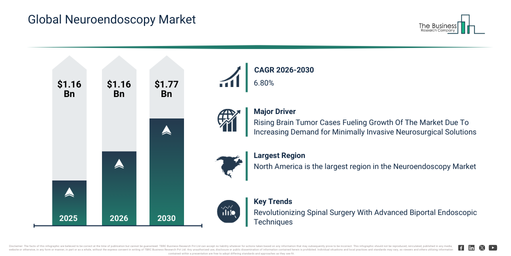
    The neuroendoscopy market has experienced significant growth over the past few years. This market is projected to expand from $0.78 billion in 2025 to $0.83 billion in 2026, demonstrating a compound annual growth rate (CAGR) of 6.9%. Factors contributing to its historical growth include the rising incidence of neurological disorders, the broadening range of neurosurgical treatment alternatives, the uptake of endoscopic surgical methods, the accessibility of sophisticated visualization instruments, and the establishment of more specialized neurosurgery centers.

    The neuroendoscopy market is expected to experience substantial expansion in the coming years. It is projected to reach $1.09 billion by 2030, demonstrating a compound annual growth rate (CAGR) of 6.8%. This growth throughout the forecast period can be attributed to the increasing demand for minimally invasive brain surgeries, rising investments in advanced surgical imaging technologies, the expansion of pediatric neurosurgery services, a growing emphasis on faster patient recovery, and ongoing innovation in neuroendoscopic instruments. Major trends anticipated during this period include a greater adoption of minimally invasive neuroendoscopic procedures, an increase in the use of HD and 4K visualization systems, a growing need for flexible neuroendoscopes, the broadening of pediatric neuroendoscopy applications, and an enhanced focus on surgical precision and patient safety.

    Download A Free Sample Report For Comprehensive Market Insights:

    https://www.thebusinessresearchcompany.com/sample.aspx?id=24333&type=smp

    What Core Drivers Are Transforming The Neuroendoscopy Market?

    An anticipated rise in brain tumor diagnoses is projected to stimulate the expansion of the neuroendoscopy market in the future. Brain tumors constitute irregular cellular formations occurring within the brain or central spinal canal, which may be either cancerous or non-cancerous. These growths have the potential to impair brain function and might necessitate surgical, radiation-based, or medicinal treatments, contingent on their specific classification and position. Enhanced diagnostic imaging methods, coupled with heightened exposure to environmental hazards like ionizing radiation and industrial contaminants, have played a role in the documented surge in brain tumor occurrences. Neuroendoscopy provides assistance in managing brain tumors through its minimally invasive approach to the brain, facilitating tumor extraction or biopsy with decreased invasiveness, quicker recuperation, and fewer adverse effects. As an illustration, in 2023, data from Cancer Australia, an Australian government body, indicated an approximate 1,924 new diagnoses of brain cancer nationally, comprising 1,183 males and 741 females, representing 1.2% of all new cancer cases. Consequently, the escalating occurrence of brain tumors serves as a key impetus for the expansion of the neuroendoscopy market.

    How Are Different Segment Groups Identified Within The Neuroendoscopy Market?

    The neuroendoscopy market covered in this report is segmented –

    1) By Product: Rigid Neuroendoscope, Rigid Fiberscopes, Rigid Videoscopes, Flexible Neuroendoscopes

    2) By Patient: Adult, Pediatric

    3) By Application: Tumor Removal, Endoscopic Third Ventriculostomy

    4) By End User: Hospitals And Clinics, Neurosurgical Centers, Other End-Users

    Subsegments:

    1) By Rigid Neuroendoscope: Ventriculoscope, Ventricular Neuroendoscope, Skull Base Neuroendoscope

    2) By Rigid Fiberscopes: Non Video Transmitting Fiberscopes, High Definition Fiberscopes, Disposable Rigid Fiberscopes

    3) By Rigid Videoscopes: Camera Integrated Videoscopes, HD Or 4K Videoscopes, Modular Videoscopes

    4) By Flexible Neuroendoscopes: Fiber Optic Flexible Endoscopes, Video Flexible Endoscopes, Steerable Flexible Endoscopes

    Which Trends Are Affecting The Neuroendoscopy Market Framework?

    Major companies engaged in the neuroendoscopy market are concentrating on innovations like the biportal endoscopic surgical system. These advancements are intended to improve surgical precision, decrease invasiveness, quicken patient recovery times, and broaden the spectrum of neurological conditions that can be treated. A biportal endoscopic system enables minimally invasive surgery by employing two distinct entry points—one for viewing and another for operating—which allows for enhanced imaging clarity, more exact procedures, and faster patient recuperation. For example, in October 2023, Joimax, a US-based company manufacturing surgical systems, launched the iLESSYS biportable endoscopic system tailored for spinal surgery, offering heightened freedom of movement and accuracy through biportal access. Featuring tools for triangulation, irrigation management, and tissue resection, this system supports both biportal and bimanual techniques.

    Which Organizations Are Operating Within The Neuroendoscopy Market?

    Major companies operating in the neuroendoscopy market are Medtronic plc, Stryker Corporation, Karl Storz SE & Co. KG, Carl Zeiss Meditec AG, Aesculap AG, B. Braun Melsungen AG, Richard Wolf GmbH, Integra LifeSciences Holdings Corporation, Schindler Endoskopie Technologie GmbH, Machida Endoscope Co. Ltd., Adeor Medical AG, Inova Technology GmbH, Zhejiang Tiansong Medical Instrument Co. Ltd., Tonglu WANHE Medical Instrument Co. Ltd., Olympus Corporation, Fujifilm Holdings Corporation, ConMed Corporation, Schoelly Fiberoptic GmbH, Endoservice GmbH, Ackermann Instrumente GmbH, XION Medical GmbH, Happersberger Otopront GmbH

    Access The Complete Neuroendoscopy Market Report:

    https://www.thebusinessresearchcompany.com/report/neuroendoscopy-global-market-report

    Which Region Stands As The Largest Contributor To The Neuroendoscopy Market?

    North America was the largest region in the neuroendoscopy market in 2025. Asia-Pacific is expected to be the fastest-growing region in the forecast period. The regions covered in the neuroendoscopy market report are Asia-Pacific, South East Asia, Western Europe, Eastern Europe, North America, South America, Middle East, Africa.

    Access a Neuroendoscopy Market Report for Deeper Competitive Insights

    https://www.thebusinessresearchcompany.com/report/neuroendoscopy-global-market-report

    Browse Through More Reports Similar to the Global Neuroendoscopy Market 2026, By The Business Research Company

    Interventional Neurology Devices And Equipment Market Report 2026

    https://www.thebusinessresearchcompany.com/report/interventional-neurology-devices-and-equipment-global-market-report

    Neuroprosthetics Market Report 2026

    https://www.thebusinessresearchcompany.com/report/neuroprosthetics-global-market-report

    Neuroscience Antibodies And Assays Market Report 2026

    https://www.thebusinessresearchcompany.com/report/neuroscience-antibodies-and-assays-global-market-report

    Get in touch with us:

    The Business Research Company: https://www.thebusinessresearchcompany.com/

    Americas: +1 310-496-7795

    Asia: +44 7882 955267 & +91 8897263534

    Europe: +44 7882 955267

    Email us at: marketing@tbrc.info

    Follow us on:

    LinkedIn: https://in.linkedin.com/company/the-business-research-company

    YouTube: https://www.youtube.com/channel/UC24_fI0rV8cR5DxlCpgmyFQ

    Global Market Model: https://www.thebusinessresearchcompany.com/global-market-model
  • Neural Implants Market Industry Outlook 2026–2030 Highlighting Growth Momentum And Market Trends

    Neural Implants Market Industry Outlook 2026–2030 Highlighting Growth Momentum And Market Trends

    The Business Research Company’s 2026 market reports feature advanced enhancements such as market attractiveness analysis, total addressable market evaluation, company benchmarking matrices, interactive Excel dashboards, expanded supply chain intelligence, emerging startup coverage, and detailed product insights, delivering more actionable and strategically valuable research.

    What Are The Forecasted Market Size Figures For The Neural Implants Market In 2026 And 2030?

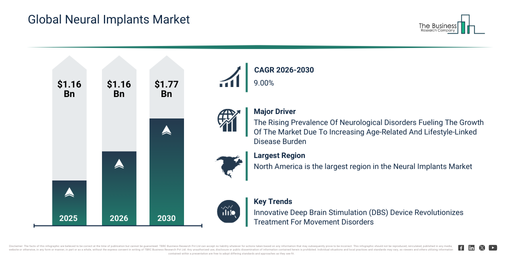
    The neural implants market has seen rapid growth in recent years. It is projected to increase from $5.91 billion in 2025 to $6.53 billion in 2026, exhibiting a compound annual growth rate (CAGR) of 10.4%. This historical expansion can be attributed to several factors, including the increasing prevalence of neurological disorders, the growing chronic pain patient population, the rising adoption of deep brain stimulation therapies, the expansion of neurology specialty centers, and increasing clinical evidence supporting neuromodulation.

    The neural implants market is poised for significant expansion in the coming years. It is projected to achieve a value of $9.2 billion by 2030, exhibiting a compound annual growth rate (CAGR) of 9.0%. This anticipated growth is fueled by factors such as continuous advancements in implantable neurotechnology, an increasing geriatric demographic grappling with neurological disorders, the burgeoning demand for personalized neurological care, the proliferation of outpatient neurological procedures, and augmented investments in neurotechnology research. Noteworthy trends during this period involve the increasing uptake of neurostimulation therapies for chronic ailments, the expanded application of implantable devices for managing movement disorders, a heightened clinical acceptance of brain-computer interface technologies, the extension of neuromodulation applications beyond mere pain management, and a growing need for enduring solutions in neurological disorder management.

    Download A Free Sample Report For Comprehensive Market Insights:

    https://www.thebusinessresearchcompany.com/sample.aspx?id=15618&type=smp

    Which Growth Factors Are Strengthening The Neural Implants Market Landscape?

    The increasing occurrence of neurological conditions is anticipated to fuel the expansion of the neural implants market in the future. Neurological disorders encompass any dysfunction of the nervous system, characterized by anatomical, biochemical, or electrical irregularities within the brain, spinal cord, or peripheral nerves. The rise in these disorders stems from factors such as an aging global populace, genetic predispositions, and evolving diagnostic standards. Neural implants are instrumental in treating and managing a range of neurological ailments by directly interacting with the nervous system to recover or augment neural capabilities. These implantable devices offer a customized therapeutic approach, potentially boosting treatment effectiveness and reducing side effects, particularly for conditions like Parkinson’s disease, epilepsy, and spinal cord injuries. As an illustration, in 2024, data from the Department of Health and Human Services, a US federal entity dedicated to safeguarding American health and welfare, indicated that over 6 million Americans were afflicted with Alzheimer’s disease in 2023. Projections suggest this figure will substantially climb annually as the population ages, reaching 13 million by 2060. Consequently, the growing prevalence of neurological disorders acts as a key driver for the growth of the neural implants market.

    What Segment Categories Are Evaluated In The Neural Implants Market Study?

    The neural implants market covered in this report is segmented –

    1) By Product: F And B Spinal Cord Stimulation (SCS), Deep Brain Stimulation (DBS), Vagus Nerve Stimulation (VNS)

    2) By Application: Chronic Pain, Parkinson’s Disease (PD), Epilepsy, Other Applications

    3) By End-User: Hospitals, Specialized Neurological Centers (SNCs), Outpatient Surgery Centers

    Subsegments:

    1) By F And B Spinal Cord Stimulation (SCS): Traditional Spinal Cord Stimulation, High-Frequency Spinal Cord Stimulation, Burst Spinal Cord Stimulation

    2) By Deep Brain Stimulation (DBS): Subthalamic Nucleus (Stn) Dbs, Globus Pallidus Internus (Gpi) Dbs, Ventral Intermediate Nucleus (Vim) Dbs

    3) By Vagus Nerve Stimulation (VNS): Implantable Vagus Nerve Stimulators, Non-Invasive Vagus Nerve Stimulators

    What Trends Are Influencing The Neural Implants Market?

    Major companies in the neural implant market are concentrating on creating advanced products, such as deep brain stimulation (DBS) devices, to address movement disorders like Parkinson’s disease and essential tremors, thereby achieving a market advantage. Deep Brain Stimulation (DBS) devices function as medical implants designed to manage neurological conditions by delivering electrical impulses to targeted brain regions. For instance, in January 2024, Abbott Laboratories, a US-based medical devices and healthcare company, introduced Liberta RC, which is the world’s smallest rechargeable deep brain stimulation (DBS) device featuring remote programming, intended for individuals with movement disorders. This product stands out with the lowest recharge frequency among FDA-approved DBS systems, typically needing only 10 recharge sessions per year for the majority of users. It is also connected to Abbott’s proprietary NeuroSphere virtual clinic, enabling patients to remotely engage with clinicians, verify settings and functionality, and receive updated treatment configurations. The system incorporates a wireless charger that can be placed over the device, allowing users to remain active while using it. Furthermore, the device provides beneficial notifications and adjustable settings to ensure a tailored charging experience for customers.

    Who Are The Businesses Driving Activity In The Neural Implants Market?

    Major companies operating in the neural implants market are Medtronic plc, Abbott Laboratories, Boston Scientific Corporation, LivaNova PLC, Nevro Corp., NeuroPace Inc., Axonics Modulation Technologies Inc., Saluda Medical, Nuvectra Corporation, Cerbomed GmbH, Inspire Medical Systems Inc., Synchron Inc., Blackrock Neurotech, Neuralink, BrainGate, Bioinduction Ltd, SetPoint Medical, CereGate, Gyrus ACMI, Aleva Neurotherapeutics

    Access The Complete Neural Implants Market Report:

    https://www.thebusinessresearchcompany.com/report/neural-implants-global-market-report

    What Is The Largest Regional Market In The Neural Implants Market?

    North America was the largest region in the neural implants market in 2025. Asia-Pacific is expected to be the fastest-growing region in the forecast period. The regions covered in the neural implants market report are Asia-Pacific, South East Asia, Western Europe, Eastern Europe, North America, South America, Middle East, Africa.

    Access a Neural Implants Market Report for Deeper Competitive Insights

    https://www.thebusinessresearchcompany.com/report/neural-implants-global-market-report

    Browse Through More Reports Similar to the Global Neural Implants Market 2026, By The Business Research Company

    Implantable Neurostimulation Devices Market Report 2026

    https://www.thebusinessresearchcompany.com/report/implantable-neurostimulation-devices-global-market-report

    Smart Implants Market Report 2026

    https://www.thebusinessresearchcompany.com/report/smart-implants-global-market-report

    Microelectronic Medical Implants Market Report 2026

    https://www.thebusinessresearchcompany.com/report/microelectronic-medical-implants-global-market-report

    Get in touch with us:

    The Business Research Company: https://www.thebusinessresearchcompany.com/

    Americas: +1 310-496-7795

    Asia: +44 7882 955267 & +91 8897263534

    Europe: +44 7882 955267

    Email us at: marketing@tbrc.info

    Follow us on:

    LinkedIn: https://in.linkedin.com/company/the-business-research-company

    YouTube: https://www.youtube.com/channel/UC24_fI0rV8cR5DxlCpgmyFQ

    Global Market Model: https://www.thebusinessresearchcompany.com/global-market-model