Category: Medical Equipment

  • Laboratory Accessories Market Outlook Through 2030 With Analysis Of Industry Trends And Developments

    Laboratory Accessories Market Outlook Through 2030 With Analysis Of Industry Trends And Developments

    The Business Research Company’s 2026 market reports feature advanced enhancements such as market attractiveness analysis, total addressable market evaluation, company benchmarking matrices, interactive Excel dashboards, expanded supply chain intelligence, emerging startup coverage, and detailed product insights, delivering more actionable and strategically valuable research.

    What Market Value Trend Is Expected For The Laboratory Accessories Market From 2026 To 2030?

    The laboratory accessories market size has demonstrated robust expansion in recent years. It is anticipated to increase from $660.04 billion in 2025 to $713.28 billion in 2026, registering a compound annual growth rate (CAGR) of 8.1%. The growth observed in prior periods is attributable to factors including the expansion of clinical and diagnostic laboratories, an increase in academic and research institutions, rising laboratory testing volumes, a heightened focus on laboratory safety standards, and growing investments in scientific research.

    The laboratory accessories market size is projected to experience substantial expansion over the upcoming years. By 2030, this market is anticipated to reach a valuation of $971.55 billion, exhibiting a compound annual growth rate (CAGR) of 8.0%. This anticipated growth throughout the forecast period stems from factors such as a heightened demand for products supporting laboratory automation, an increase in pharmaceutical and biotechnology research endeavors, the escalating requirements for healthcare diagnostic testing, the expansion of laboratory infrastructure within developing markets, and a growing focus on enhancing efficiency and precision in laboratory work. Key trends identified for the forecast timeframe encompass an escalating need for durable and high-quality laboratory consumables, a strengthened emphasis on accessories for laboratory safety and regulatory compliance, a greater push for standardizing laboratory workflows and equipment, the broadening of laboratory infrastructure across both healthcare and research sectors, and an increasing inclination towards ergonomic and space-efficient laboratory furniture solutions.

    Download A Free Sample Report For Comprehensive Market Insights:

    https://www.thebusinessresearchcompany.com/sample.aspx?id=18651&type=smp

    What Major Growth Factors Are Impacting The Laboratory Accessories Market?

    The growth of the laboratory accessories market is anticipated to be significantly propelled by the increasing volume of diagnostic tests. These medical procedures are specifically designed to identify the presence, nature, or cause of diseases or conditions in patients. The surge in diagnostic tests can be attributed to factors such as enhanced healthcare access, the imperative for managing chronic diseases, evolving patient expectations, and the advancement of genetic testing. Laboratory accessories are essential throughout the entire diagnostic testing process, covering stages from sample collection and preparation to analysis and documentation. Their function is to ensure the accuracy, efficiency, and safety of diagnostic tests, thereby yielding reliable and actionable results for patient care. For example, in November 2023, the Diagnostic Imaging Dataset Annual Statistical, a UK-based government organization, reported that England saw 45.0 million imaging tests in March 2023, a rise from 44.0 million in the previous year, which indicates a growth of 2.2%. Thus, the expanding number of diagnostic tests consistently drives demand in the laboratory accessories market.

    What Segment Types Are Included In The Laboratory Accessories Market Analysis?

    The laboratory accessories market covered in this report is segmented –

    1) By Product Type: Instruments, Glassware, Lab Tables, Consumables, Other Product Types

    2) By Laboratory Type: Clinical And Diagnostics Labs, Pharma, Biotech, And Medical Device Companies, Academic And Research Labs

    3) By Application: Academic, Hospitals, Private Laboratories, Biotechnology, Other Applications

    Subsegments:

    1) By Instruments: Laboratory Analyzers, Centrifuges, Microscopes, Spectrophotometers, Ph Meters

    2) By Glassware: Beakers, Flasks, Test Tubes, Pipettes, Burettes, Petri Dishes

    3) By Lab Tables: Workbenches, Laboratory Island Tables, Height-Adjustable Lab Tables, Chemical-Resistant Tables

    4) By Consumables: Gloves And Lab Coats, Filters And Membranes, Test Strips, Disposable Pipettes, Culture Media

    5) By Other Product Types: Lab Safety Equipment, Storage Solutions, Lab Cleanliness Product

    Which Trends Are Influencing The Expansion Of The Laboratory Accessories Market?

    Companies operating in the laboratory accessories market are dedicating efforts to creating innovative products, including automated plasmid purification systems. These products are developed to offer high-throughput solutions, improve reproducibility, and support advanced applications in molecular biology, clinical diagnostics, and pharmaceutical development. An automated plasmid purification system is an advanced laboratory device specifically engineered to streamline the isolation of plasmid DNA (pDNA) from bacterial cultures without requiring manual intervention. For instance, in June 2024, Thermo Fisher Scientific, a US-based life science and clinical research company, unveiled the Thermo Scientific KingFisher PlasmidPro Maxi Processor, a fully automated maxi-scale plasmid DNA (pDNA) purification system. This system is designed to streamline the purification process, consequently enhancing the efficiency of laboratory workflows essential for the discovery and development of therapies. The innovation’s primary goals are to diminish manual errors and increase throughput, particularly benefiting molecular biology and genetic research.

    Who Are The Prominent Players Across The Laboratory Accessories Market?

    Major companies operating in the laboratory accessories market are Thermo Fisher Scientific Inc., The Merck Group, Agilent Technologies Inc., Sartorius AG, PerkinElmer Inc., Mettler-Toledo International Inc., Endress+Hauser Group Services AG, Shimadzu Corporation, Waters Corporation, Bio-Rad Laboratories Inc., Bruker Corporation, Horiba Ltd., Eppendorf AG, Metrohm AG, Hamilton Company, Analytik Jena AG, Labconco Corporation, Rigaku Corporation, Biotix Inc., SP Industries Inc, Corning Incorporated, Tecan Group Ltd.

    Access The Complete Laboratory Accessories Market Report:

    https://www.thebusinessresearchcompany.com/report/laboratory-accessories-global-market-report

    What Is The Largest Regional Market In The Laboratory Accessories Market?

    North America was the largest region in the laboratory accessories market in 2025. Asia-Pacific is expected to be the fastest-growing region in the forecast period. The regions covered in the laboratory accessories market report are Asia-Pacific, South East Asia, Western Europe, Eastern Europe, North America, South America, Middle East, Africa.

    Access a Laboratory Accessories Market Report for Deeper Competitive Insights

    https://www.thebusinessresearchcompany.com/report/laboratory-accessories-global-market-report

    Browse Through More Reports Similar to the Global Laboratory Accessories Market 2026, By The Business Research Company

    Lab Supplies Market Report 2026

    https://www.thebusinessresearchcompany.com/report/lab-supplies-global-market-report

    Microscope Accessories Market Report 2026

    https://www.thebusinessresearchcompany.com/report/microscope-accessories-global-market-report

    Laboratory Testing Services Market Report 2026

    https://www.thebusinessresearchcompany.com/report/laboratory-testing-services-global-market-report

    Get in touch with us:

    The Business Research Company: https://www.thebusinessresearchcompany.com/

    Americas: +1 310-496-7795

    Asia: +44 7882 955267 & +91 8897263534

    Europe: +44 7882 955267

    Email us at: marketing@tbrc.info

    Follow us on:

    LinkedIn: https://in.linkedin.com/company/the-business-research-company

    YouTube: https://www.youtube.com/channel/UC24_fI0rV8cR5DxlCpgmyFQ

    Global Market Model: https://www.thebusinessresearchcompany.com/global-market-model
  • Lab-On-Skin Microfluidic Patch Market Revenue Anticipated To Reach $3.57 Billion By 2030 With 19.9% CAGR

    Lab-On-Skin Microfluidic Patch Market Revenue Anticipated To Reach $3.57 Billion By 2030 With 19.9% CAGR

    The Business Research Company’s 2026 market reports feature advanced enhancements such as market attractiveness analysis, total addressable market evaluation, company benchmarking matrices, interactive Excel dashboards, expanded supply chain intelligence, emerging startup coverage, and detailed product insights, delivering more actionable and strategically valuable research.

    How Does The Forecasted Market Size Of The Lab-On-Skin Microfluidic Patch Market Compare Between 2026 And 2030?

    The lab-on-skin microfluidic patch market has experienced substantial growth in its size over recent years. The market is expected to expand from $1.44 billion in 2025 to $1.73 billion in 2026, achieving a compound annual growth rate (CAGR) of 20.1%. This historical expansion can be linked to significant advancements in microfluidics, the wider embrace of wearable healthcare technology, the expansion of sports analytics, a rising need for non-invasive diagnostic tools, and ongoing research in biofluid analysis.

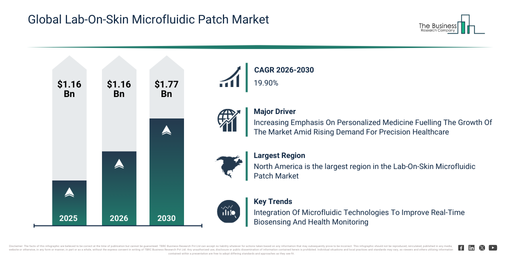
    The lab-on-skin microfluidic patch market is projected to experience substantial expansion over the coming years. This market is set to reach $3.57 billion by 2030, demonstrating a compound annual growth rate (CAGR) of 19.9%. Key factors driving this growth during the forecast period include the incorporation of AI-driven analytics, the increasing scope of personalized medicine, the rise of remote patient monitoring, its uptake in the fitness and wellness industries, and advancements in patch material technology. Significant developments anticipated during this period encompass continuous health monitoring, non-invasive diagnostic methods, personalized medical devices, analytics for sports and fitness, and the detection of biomarkers in real time.

    Download A Free Sample Report For Comprehensive Market Insights:

    https://www.thebusinessresearchcompany.com/sample.aspx?id=29109&type=smp

    What Market Drivers Are Helping Shape The Lab-On-Skin Microfluidic Patch Market Expansion?

    The future expansion of the lab-on-skin microfluidic patch market is anticipated to be driven by the growing focus on personalized medicine. This medical strategy involves tailoring healthcare to each patient’s unique attributes, utilizing genetic, biomarker, and clinical data to achieve optimal treatment results. The increased adoption of personalized medicine stems from progress in genomics and biotechnology, which facilitates accurate diagnoses and specific treatments, leading to better patient results and fewer unsuccessful interventions. Lab-on-skin microfluidic patches contribute to personalized medicine by continuously tracking individual biomarkers, allowing for real-time, customized therapeutic choices. An example is provided by the Personalized Medicine Coalition (PMC), a US-based nonprofit dedicated to personalized medicine, which reported in February 2024 that the US Food and Drug Administration (FDA) gave approval to 16 novel personalized therapies for rare disease patients in 2023, an increase from six in 2022. Consequently, the heightened focus on personalized medicine is accelerating the expansion of the lab-on-skin microfluidic patch market.

    Which Segment Divisions Form The Structure Of The Lab-On-Skin Microfluidic Patch Market?

    The lab-on-skin microfluidic patch market covered in this report is segmented –

    1) By Product Type: Diagnostic Patches, Monitoring Patches

    2) By Material Type: Polymer-Based, Hybrid, Other Material Types

    3) By Application: Healthcare Monitoring, Disease Diagnosis, Sports And Fitness, Other Applications

    4) By End-User: Hospitals And Clinics, Homecare, Research Institutes, Sports And Fitness Centers, Other End-Users

    Subsegments:

    1) By Diagnostic Patches: Sweat-Based Microfluidic Diagnostic Patches, Interstitial Fluid Microfluidic Diagnostic Patches, Glucose and Metabolite Detection Microfluidic Patches, Electrolyte and Biomarker Analysis Microfluidic Patches, Multi-Analyte Lab-on-Skin Diagnostic Patches

    2) By Monitoring Patches: Continuous Hydration Monitoring Microfluidic Patches, Continuous Lactate Monitoring Microfluidic Patches, Electrolyte Balance Monitoring Microfluidic Patches, Stress and Fatigue Monitoring Microfluidic Patches (Biochemical-Based), Personalized Health Monitoring Lab-on-Skin Patches

    What Trends Are Impacting The Lab-On-Skin Microfluidic Patch Market?

    Companies operating in the lab-on-skin microfluidic patch market are focusing on developing technological advancements, such as sweat-sensing patches, to enable real-time health monitoring and personalized diagnostics. A sweat-sensing patch is a wearable device that collects and analyzes sweat to monitor biomarkers, electrolytes, and other physiological parameters in real time. For instance, in April 2024, Epicore Biosystems Inc., a US-based digital health company, launched Connected Hydration, a wearable microfluidic patch and mobile app designed to help industrial workers prevent dehydration and heat stress through continuous sweat and electrolyte monitoring. It provides real-time personalized hydration insights, vibration alerts, and AI-driven guidance to optimize fluid intake before fatigue or injury occurs. By combining lab-on-skin sensing, cloud analytics, and a long-life battery design, Connected Hydration enhances worker safety, productivity, and resilience in extreme heat environments across global industrial sectors.

    Which Companies Form The Competitive Landscape Of The Lab-On-Skin Microfluidic Patch Market?

    Major companies operating in the lab-on-skin microfluidic patch market are Epicore Biosystems, Xsensio SA, Persperity Health Inc., Nutromics Pty Ltd., Biolinq Inc., Flow Bio Ltd., GraphWear Technologies Inc., GENTAG Inc., Nemaura Medical Inc., Kenzen Inc., Aline Inc., Eccrine Systems Inc., Nix Biosensors, Sonera, Zansors LLC, PointFit Technology Co. Ltd., Bitome Inc., Arma Biosciences, VivaLNK Inc., MC10 Inc., BioIntelliSense Inc.

    Access The Complete Lab-On-Skin Microfluidic Patch Market Report:

    https://www.thebusinessresearchcompany.com/report/lab-on-skin-microfluidic-patch-global-market-report

    Which Region Contributes The Most To The Lab-On-Skin Microfluidic Patch Market?

    North America was the largest region in the lab-on-skin microfluidic patch market in 2025. Asia-Pacific is expected to be the fastest-growing region in the forecast period. The regions covered in the lab-on-skin microfluidic patch market report are Asia-Pacific, South East Asia, Western Europe, Eastern Europe, North America, South America, Middle East, Africa.

    Access a Lab-On-Skin Microfluidic Patch Market Report for Deeper Competitive Insights

    https://www.thebusinessresearchcompany.com/report/lab-on-skin-microfluidic-patch-global-market-report

    Browse Through More Reports Similar to the Global Lab-On-Skin Microfluidic Patch Market 2026, By The Business Research Company

    Smart Label Market Report 2026

    https://www.thebusinessresearchcompany.com/report/smart-label-global-market-report

    Packaging And Labeling Services Market Report 2026

    https://www.thebusinessresearchcompany.com/report/packaging-and-labeling-services-global-market-report

    Data Labeling Solution And Services Market Report 2026

    https://www.thebusinessresearchcompany.com/report/data-labeling-solution-and-services-global-market-report

    Get in touch with us:

    The Business Research Company: https://www.thebusinessresearchcompany.com/

    Americas: +1 310-496-7795

    Asia: +44 7882 955267 & +91 8897263534

    Europe: +44 7882 955267

    Email us at: marketing@tbrc.info

    Follow us on:

    LinkedIn: https://in.linkedin.com/company/the-business-research-company

    YouTube: https://www.youtube.com/channel/UC24_fI0rV8cR5DxlCpgmyFQ

    Global Market Model: https://www.thebusinessresearchcompany.com/global-market-model

  • Label-Free Array Systems Market Outlook Assessing Future Opportunities And Growth Prospects

    Label-Free Array Systems Market Outlook Assessing Future Opportunities And Growth Prospects

    The Business Research Company’s 2026 market reports feature advanced enhancements such as market attractiveness analysis, total addressable market evaluation, company benchmarking matrices, interactive Excel dashboards, expanded supply chain intelligence, emerging startup coverage, and detailed product insights, delivering more actionable and strategically valuable research.

    What Increase In Market Value Is Predicted For The Label-Free Array Systems Market During The 2026–2030 Period?

    The label-free array systems market size has experienced robust growth recently. This market is projected to expand from $1.48 billion in 2025 to $1.59 billion in 2026, exhibiting a compound annual growth rate (CAGR) of 7.6%. Historically, this expansion has been driven by factors such as the restricted availability of label-free platforms, a dependence on traditional labeling techniques, increasing pharmaceutical research and development, the growth of academic and research institutions, and the uptake of conventional biosensors.

    The market for label-free array systems is projected to experience substantial expansion over the upcoming years. This market is forecast to reach $2.1 billion by 2030, exhibiting a compound annual growth rate (CAGR) of 7.2%. This anticipated growth during the projection period stems from improvements in surface plasmon resonance and bio-layer interferometry, increased uptake by contract research organizations (CROs), an escalating need for high-throughput and automated platforms, a heightened emphasis on kinetics and affinity mapping, and the incorporation of AI and big data analytics. Key trends for this forecast timeframe encompass the expanding embrace of label-free detection techniques, a surging requirement for real-time analysis of molecular interactions, the incorporation of high-throughput screening functionalities, broadening application in drug discovery and protein-protein interaction investigations, and an intensified drive towards more sensitive and accurate assays.

    Download A Free Sample Report For Comprehensive Market Insights:

    https://www.thebusinessresearchcompany.com/sample.aspx?id=24581&type=smp

    Which Significant Factors Are Encouraging Growth In The Label-Free Array Systems Market?

    The escalating prevalence of lifestyle-related chronic ailments is expected to stimulate the expansion of the label-free array systems market in the foreseeable future. These long-term health issues primarily stem from detrimental habits such as inadequate nutrition, insufficient physical activity, tobacco use, and excessive alcohol consumption. Their rise is further exacerbated by growing sedentary lifestyles, with a greater number of individuals involved in office-based work and screen-centric recreational pursuits, leading to diminished physical movement and adverse effects on metabolic well-being. Label-free array systems represent sophisticated biosensing platforms that facilitate real-time, high-volume identification of biomolecular interactions, free from the need for fluorescent or radioactive markers. Such systems are increasingly vital in mitigating the danger of lifestyle-related chronic conditions through facilitating prompt diagnosis, risk evaluation, and tailored preventive measures. For example, in April 2025, reports from the Centers for Disease Control and Prevention, a US-based federal government agency, indicated that in 2023, 76.4% (equaling 194 million) of US adults disclosed having one or more chronic conditions, encompassing 59.5% of young adults, 78.4% of midlife adults, and 93.0% of older adults. Furthermore, 51.4% (amounting to 130 million) of US adults reported multiple chronic conditions (MCC), specifically 27.1% among young adults, 52.7% among midlife adults, and 78.8% among older adults. Consequently, the expanding threat posed by lifestyle-related chronic diseases will propel the growth of the label-free array systems market.

    How Are Different Segment Groups Identified Within The Label-Free Array Systems Market?

    The label-free array systems market covered in this report is segmented –

    1) By Technology: Surface Plasmon Resonance, Bio Layer Interferometry, Cellular Dielectric Spectroscopy, Other Technologies

    2) By Accessories: Sensor Chips, Reagents, Consumables, Other Accessories

    3) By Application: Drug Discovery, Protein-Protein Interactions, Receptor Ligand Assays, Thermodynamics, Kinetics Or Affinity Mapping, Other Applications

    4) By End-User: Pharmaceutical And Biotechnology Companies, Academic And Research Institutes, Contract Research Organizations, Other End Users

    Subsegments:

    1) By Surface Plasmon Resonance: Imaging SPR, SPR Microscopy, Multi-Parametric SPR, Localized SPR

    2) By Bio Layer Interferometry: Fiber Optic-Based BLI, Plate-Based BLI, High-Throughput BLI Systems

    3) By Cellular Dielectric Spectroscopy: Real-Time Impedance-Based Systems, Multi-Well Plate CDS Platforms, Label-Free Cytotoxicity Assays

    4) By Other Technologies: Microcantilever-Based Systems, Optical Waveguide Grating Sensors, Quartz Crystal Microbalance (QCM), Field-Effect Transistor (FET)-Based Biosensors

    Which Trends Are Affecting The Label-Free Array Systems Market Framework?

    Leading companies in the label-free array systems market are focusing on developing advanced solutions, such as label-free biosensors, to streamline the testing process. These biosensors are analytical devices designed to detect biological interactions directly, eliminating the need for fluorescent or radioactive tags. For example, in February 2024, SPOC Proteomics Inc., a US-based life science company, launched its customizable SPOC protein biosensor chips. This product offers real-time, label-free biosensing for up to 1,000 fully folded proteins on a compact 1.5 cm² SPR chip. It utilizes a unique technique that produces proteins directly from DNA within tiny nanoliter wells, simultaneously capturing and purifying these proteins on the sensor surface. This approach bypasses the traditional recombinant protein production process, thereby cutting costs by 10 to 100 times compared to standard methods. Additionally, SPOC protein biosensor chips uniquely provide large-scale qualitative, quantitative, and kinetic data, making them ideal for high-throughput proteomic studies.

    Who Are The Key Market Participants In The Label-Free Array Systems Market?

    Major companies operating in the label-free array systems market are Merck KGaA, Thermo Fisher Scientific Inc, Agilent Technologies Inc, Cytiva, PerkinElmer Inc, Sartorius AG, Bruker Corporation, Horiba Instruments Incorporated, Malvern Panalytical Ltd, Reichert Inc, Attana AB, NanoSPR Devices, BioNavis Ltd, Biosensing Instrument Inc, GeSiM Co, Plexera LLC, Plasmetrix, Nicoya Lifesciences Inc, Creoptix AG, Sierra Sensors GmbH

    Access The Complete Label-Free Array Systems Market Report:

    https://www.thebusinessresearchcompany.com/report/label-free-array-systems-global-market-report

    Which Regional Market Leads The Label-Free Array Systems Market?

    North America was the largest region in the label-free array systems market in 2025. Asia-Pacific is expected to be the fastest-growing region in the forecast period. The regions covered in the label-free array systems market report are Asia-Pacific, South East Asia, Western Europe, Eastern Europe, North America, South America, Middle East, Africa.

    Access a Label-Free Array Systems Market Report for Deeper Competitive Insights

    https://www.thebusinessresearchcompany.com/report/label-free-array-systems-global-market-report

    Browse Through More Reports Similar to the Global Label-Free Array Systems Market 2026, By The Business Research Company

    Electronic Skin Patch Market Report 2026

    https://www.thebusinessresearchcompany.com/report/electronic-skin-patch-global-market-report

    Dermatology Devices Market Report 2026

    https://www.thebusinessresearchcompany.com/report/dermatology-devices-global-market-report

    Transdermal Skin Patche Market Report 2026

    https://www.thebusinessresearchcompany.com/report/transdermal-skin-patche-global-market-report

    Get in touch with us:

    The Business Research Company: https://www.thebusinessresearchcompany.com/

    Americas: +1 310-496-7795

    Asia: +44 7882 955267 & +91 8897263534

    Europe: +44 7882 955267

    Email us at: marketing@tbrc.info

    Follow us on:

    LinkedIn: https://in.linkedin.com/company/the-business-research-company

    YouTube: https://www.youtube.com/channel/UC24_fI0rV8cR5DxlCpgmyFQ

    Global Market Model: https://www.thebusinessresearchcompany.com/global-market-model
  • Lab Supplies Market Industry Forecast Reflecting Growth To $60.89 Billion By 2030

    Lab Supplies Market Industry Forecast Reflecting Growth To $60.89 Billion By 2030

    The Business Research Company’s 2026 market reports feature advanced enhancements such as market attractiveness analysis, total addressable market evaluation, company benchmarking matrices, interactive Excel dashboards, expanded supply chain intelligence, emerging startup coverage, and detailed product insights, delivering more actionable and strategically valuable research.

    How Will The Market Size Of The Lab Supplies Market Progress Through 2030?

    The lab supplies market size has experienced significant expansion in recent times. It is anticipated to expand from $40.3 billion in 2025 to $43.94 billion in 2026, exhibiting a compound annual growth rate (CAGR) of 9.0%. This historical growth can be ascribed to several contributing factors, such as the proliferation of scientific research activities, the development of the pharmaceutical and biotechnology industries, an increase in academic research funding, the broader application of laboratory testing, and the availability of standardized lab equipment.

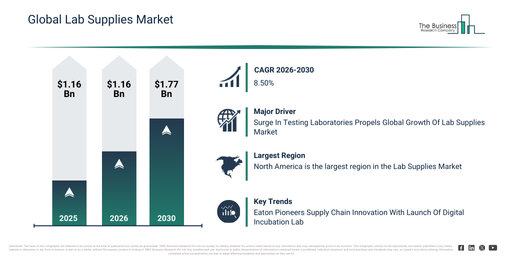
    The lab supplies market is projected to experience substantial growth over the next few years, with its size forecast to reach $60.9 billion by 2030, growing at a compound annual growth rate (CAGR) of 8.5%. This anticipated expansion during the forecast period is primarily driven by escalating investments in life sciences research, an increasing need for advanced diagnostic testing, the broader establishment of automated laboratories, a heightened emphasis on contamination control, and the wider adoption of sustainable laboratory consumables. Significant developments expected in this period include a rising demand for superior quality laboratory consumables, greater uptake of automated laboratory equipment, a reinforced commitment to laboratory safety and compliance, the proliferation of disposable and single-use lab supplies, and enhanced integration of digital laboratory systems.

    Download A Free Sample Report For Comprehensive Market Insights:

    https://www.thebusinessresearchcompany.com/sample.aspx?id=8989&type=smp

    What Core Drivers Are Transforming The Lab Supplies Market?

    The anticipated increase in the number of testing laboratories worldwide is projected to fuel the expansion of the lab supplies market. A testing laboratory serves as a facility where diagnostic evaluations or research endeavors are conducted. These laboratories utilize lab supplies for executing chemical reactions and for the containment of various chemicals. Consequently, a rise in the number of testing laboratories leads to a greater consumption of lab supplies, thereby stimulating the lab supplies market. For instance, in April 2023, data from the International Laboratory Accreditation Cooperation, an Australia-based international organization for accreditation bodies, revealed that from September 2022 to April 2023, ILAC Full Members accredited over 85,000 to 88,000 laboratories, 13,000 to 13,900 inspection bodies, 600 to 604 proficiency testing providers (PTP), and 250 to 260 reference material producers (RMP) across 154 organizations in 129 economies worldwide. This illustrates that the growing global count of testing laboratories is a key driver for the growth of the lab supplies market.

    What Segment Categories Are Evaluated In The Lab Supplies Market Study?

    The lab supplies market covered in this report is segmented –

    1) By Product: Equipment, Disposables

    2) By Application: Biochemistry, Endocrinology, Microbiology, Genetic Testing, Other Applications

    3) By End Users: Academic Institutes, Clinical And Diagnostic Laboratories, Pharmaceutical And Biotechnology Companies, Other End Users

    Subsegments:

    1) By Equipment: Laboratory Instruments, Analytical Equipment, Safety Equipment, Storage Equipment

    2) By Disposables: Glassware, Plasticware, Consumables, Biohazard Bags And Containers

    What Trends Are Influencing The Lab Supplies Market?

    Leading market participants are actively introducing novel and cutting-edge technologies to secure their market presence. These innovative technologies within the lab supplies sector significantly improve efficiency, accuracy, and overall capabilities, thereby driving forward progress in research, diagnostics, and experimental work. For instance, in June 2023, Eaton Corporation, an Ireland-based multinational power management company, established its initial Supply Chain Digital Incubation Lab in Pune, India. This lab is a key component of Eaton’s broader digital transformation and innovation efforts, aimed at fostering advancements in supply chain practices. It operates as both a physical and virtual testing ground where new ideas and technologies related to supply chain management are assessed, evaluated, and validated, with a view towards potential commercialization. This initiative highlights Eaton’s unwavering commitment to integrating digitalization and Industry 4.0 technologies into its operations, alongside enhancing its internal productivity and elevating the customer experience.

    Which Organizations Are Operating Within The Lab Supplies Market?

    Major companies operating in the lab supplies market are Thermo Fisher Scientific Inc., Danaher Corporation, Agilent Technologies Inc., PerkinElmer Inc., Avantor, VWR International, MilliporeSigma, Bio-Rad Laboratories Inc., Bruker Corporation, Eppendorf AG, Cole-Parmer, Sartorius AG, Waters Corporation, Shimadzu Corporation, Corning Inc., BrandTech Scientific Inc., Qiagen N.V., Mettler Toledo, Lab Pro Inc., Fujifilm Holdings Corporation

    Access The Complete Lab Supplies Market Report:

    https://www.thebusinessresearchcompany.com/report/lab-supplies-global-market-report

    Which Region Holds The Largest Share In The Lab Supplies Market?

    North America was the largest region in the lab supplies market in 2025. The regions covered in the lab supplies market report are Asia-Pacific, South East Asia, Western Europe, Eastern Europe, North America, South America, Middle East, Africa.

    Access a Lab Supplies Market Report for Deeper Competitive Insights

    https://www.thebusinessresearchcompany.com/report/lab-supplies-global-market-report

    Browse Through More Reports Similar to the Global Lab Supplies Market 2026, By The Business Research Company

    Laboratory Accessories Market Report 2026

    https://www.thebusinessresearchcompany.com/report/laboratory-accessories-global-market-report

    Central Lab Market Report 2026

    https://www.thebusinessresearchcompany.com/report/central-lab-global-market-report

    Laboratory Testing Services Market Report 2026

    https://www.thebusinessresearchcompany.com/report/laboratory-testing-services-global-market-report

    Get in touch with us:

    The Business Research Company: https://www.thebusinessresearchcompany.com/

    Americas: +1 310-496-7795

    Asia: +44 7882 955267 & +91 8897263534

    Europe: +44 7882 955267

    Email us at: marketing@tbrc.info

    Follow us on:

    LinkedIn: https://in.linkedin.com/company/the-business-research-company

    YouTube: https://www.youtube.com/channel/UC24_fI0rV8cR5DxlCpgmyFQ

    Global Market Model: https://www.thebusinessresearchcompany.com/global-market-model
  • Lab On Chip Market Forecast Analysis Through 2030 With Insights On Industry Expansion

    Lab On Chip Market Forecast Analysis Through 2030 With Insights On Industry Expansion

    The Business Research Company’s 2026 market reports feature advanced enhancements such as market attractiveness analysis, total addressable market evaluation, company benchmarking matrices, interactive Excel dashboards, expanded supply chain intelligence, emerging startup coverage, and detailed product insights, delivering more actionable and strategically valuable research.

    What Is The Expected Market Size Of The Lab On Chip Market In 2026 And How Much Will It Reach By 2030?

    The lab on chip market has experienced substantial growth in recent years. Its valuation is projected to rise from $8.85 billion in 2025 to $10.02 billion in 2026, reflecting a compound annual growth rate (CAGR) of 13.2%. This historical expansion can be attributed to several factors: advancements in microfluidics technology, an increase in diagnostic testing demand, growing research funding, the necessity for faster clinical results, and the broadening of biotechnology research.

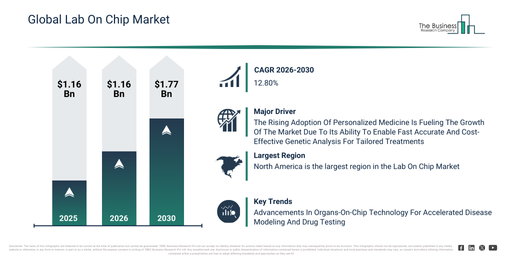
    The lab on chip market is expected to experience swift expansion in the upcoming years. Its size is projected to reach $16.25 billion by 2030, advancing at a compound annual growth rate (CAGR) of 12.8%. This growth over the forecast period can be attributed to the increasing prevalence of decentralized healthcare testing, greater adoption in resource-limited environments, integration with digital health platforms, the broadening scope of personalized diagnostics, and a growing utilization in drug discovery. Significant developments anticipated during this timeframe include the miniaturization of diagnostic devices, an expansion in point-of-care testing, the incorporation of multiple laboratory functions onto a chip, increased deployment of microfluidics, and an escalating demand for rapid diagnostics.

    Download A Free Sample Report For Comprehensive Market Insights:

    https://www.thebusinessresearchcompany.com/sample.aspx?id=28255&type=smp

    Which Growth Factors Are Strengthening The Lab On Chip Market Landscape?

    The increasing embrace of personalized medicine is projected to fuel the expansion of the lab on chip market in the future. This healthcare approach tailors prevention and treatment strategies to an individual’s distinct genetic profile, environmental factors, and lifestyle choices. Its growth stems from progress in genetic testing, which allows treatments to be aligned with a person’s genetic blueprint, thereby boosting efficacy and reducing adverse reactions. Lab-on-chip devices facilitate quick and precise analysis of a patient’s genetic and molecular data, making personalized therapies possible and cutting down on both time and expenditure relative to traditional laboratory techniques. As an illustration, in February 2024, the Personalized Medicine Coalition, a US-based non-profit organization, reported that the Food and Drug Administration (FDA) authorized 16 personalized treatments in 2023 specifically for rare diseases, an increase from the six similar treatments cleared in 2022. Consequently, the expanding use of personalized medicine is a key impetus behind the growth of the lab on chip market.

    How Is The Lab On Chip Market Examined Through Segment Analysis?

    The lab on chip market covered in this report is segmented –

    1) By Product And Service: Reagents And Consumables, Instruments, Software And Services

    2) By Technology: Microfluidics-Based Technology, Micro-Electro-Mechanical Systems (MEMS), Nanolithography, Three-Dimensional (3D) Printing Technology

    3) By Material: Polymers, Glass, Silicon, Paper

    4) By Application: Genomics, Proteomics, Point Of Care Diagnostics, Drug Discovery, Other Applications

    5) By End-User: Biotechnology And Pharmaceuticals Companies, Hospitals, Diagnostics Centers, Academic And Research Institutes, Other End-Users

    Subsegments:

    1) By Reagents And Consumables: Enzymes And Buffers, Deoxyribonucleic Acid (DNA) Or Ribonucleic Acid (RNA) Extraction Kits, Microfluidic Cartridges, Microplates And Pipette Tips, Stains And Dyes

    2) By Instruments: Microfluidic Analyzers, Lab-On-A-Chip Readers, Fluid Handling Systems, Imaging And Detection Systems, Automation And Robotics Platforms

    3) By Software And Services: Data Analysis Software, Lab Management Software, Simulation And Modeling Software, Custom Development Services, Maintenance And Support Services

    Which Trends Are Guiding The Development Of The Lab On Chip Market?

    Key players within the lab on chip market are dedicating efforts to creating advanced technological solutions, such as instruments built on organ-on-chip technology, to expedite disease modeling and bolster personalized medicine applications. Instruments utilizing organs-on-chip technology are microfluidic devices that replicate human organ structure and function, thereby allowing precise simulation of biological processes and enabling accurate drug testing and disease modeling outside the body. For example, in September 2023, NETRI, a France-based company providing neuro-organs-on-chip technologies, released organs-on-chip kits. These kits are engineered to facilitate quicker and more predictive preclinical testing by integrating organs-on-chips into healthcare research. Supporting cells from various species, these kits enable cross-species in vitro studies with predictive clinical insights, which accelerates the development of drug candidates and diminishes reliance on animal models. This launch signifies a crucial step toward the widespread adoption of groundbreaking organs-on-chip technology in medical research.

    Who Are The Businesses Driving Activity In The Lab On Chip Market?

    Major companies operating in the lab on chip market are F. Hoffmann-La Roche Ltd., Merck KGaA, Thermo Fisher Scientific Inc., Danaher Corporation, Agilent Technologies Inc., Illumina Inc., Revvity Inc., Bio-Rad Laboratories Inc., QIAGEN N.V., Tecan Group Ltd, QuantuMDx Group Ltd., InSphero, Micronit B.V., MesoBioTech, Mimetas, Achira Labs Pvt. Ltd., Elvesys, Beonchip, Lab Chip Technologies, Sphere Bio.

    Access The Complete Lab On Chip Market Report:

    https://www.thebusinessresearchcompany.com/report/lab-on-chip-global-market-report

    Which Region Is The Dominant Market In The Lab On Chip Market?

    North America was the largest region in the lab on chip market in 2025. Asia-Pacific is expected to be the fastest-growing region in the forecast period. The regions covered in the lab on chip market report are Asia-Pacific, South East Asia, Western Europe, Eastern Europe, North America, South America, Middle East, Africa.

    Access a Lab On Chip Market Report for Deeper Competitive Insights

    https://www.thebusinessresearchcompany.com/report/lab-on-chip-global-market-report

    Browse Through More Reports Similar to the Global Lab On Chip Market 2026, By The Business Research Company

    Organ On Chip Market 2026

    https://www.thebusinessresearchcompany.com/report/organ-on-chip-market

    System On Chip Market Report 2026

    https://www.thebusinessresearchcompany.com/report/system-on-chip-global-market-report

    Artificial Intelligence Chip Market Report 2026

    https://www.thebusinessresearchcompany.com/report/artificial-intelligence-chip-global-market-report

    Get in touch with us:

    The Business Research Company: https://www.thebusinessresearchcompany.com/

    Americas: +1 310-496-7795

    Asia: +44 7882 955267 & +91 8897263534

    Europe: +44 7882 955267

    Email us at: marketing@tbrc.info

    Follow us on:

    LinkedIn: https://in.linkedin.com/company/the-business-research-company

    YouTube: https://www.youtube.com/channel/UC24_fI0rV8cR5DxlCpgmyFQ

    Global Market Model: https://www.thebusinessresearchcompany.com/global-market-model
  • Rising Accidents Is Driving The Growth Of The Limb Prosthetics Market Is Supporting Development Across The Limb Prosthetics Market

    Rising Accidents Is Driving The Growth Of The Limb Prosthetics Market Is Supporting Development Across The Limb Prosthetics Market

    The Business Research Company’s 2026 market reports feature advanced enhancements such as market attractiveness analysis, total addressable market evaluation, company benchmarking matrices, interactive Excel dashboards, expanded supply chain intelligence, emerging startup coverage, and detailed product insights, delivering more actionable and strategically valuable research.

    How Will The Market Size Of The Limb Prosthetics Market Progress Through 2030?

    The limb prosthetics market size has shown significant growth in recent years. It is projected to expand from $1.78 billion in 2025 to $1.92 billion in 2026, achieving a compound annual growth rate (CAGR) of 7.9%. This historical growth can be attributed to factors such as the limited availability of advanced prosthetic technology, a reliance on conventional prosthetic devices, the high cost of early prosthetic solutions, an increasing incidence of limb loss due to accidents and injuries, and the emergence of orthopedics and O&P clinics.

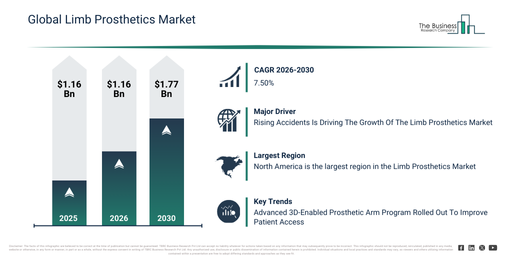
    The limb prosthetics market is projected to experience substantial expansion over the upcoming years. This market is anticipated to reach $2.56 billion by 2030, demonstrating a compound annual growth rate (CAGR) of 7.5%. Several factors will drive this growth during the forecast period, including advancements in electric and hybrid prosthetic technologies, increased investment in prosthetic r&d, an expanding elderly population with evolving mobility needs, the incorporation of ai and robotics into prosthetic devices, and the proliferation of rehabilitation and prosthetic service centers. Key trends expected over the forecast period involve the increasing adoption of myoelectric and hybrid prosthetic devices, a surge in demand for custom-fitted prosthetics and sockets, a heightened emphasis on rehabilitation and mobility solutions, the broadening reach of orthotics and prosthetics (o&p) clinics, and the innovation of lightweight and durable prosthetic materials.

    Download A Free Sample Report For Comprehensive Market Insights:

    https://www.thebusinessresearchcompany.com/sample.aspx?id=19548&type=smp

    Which Growth Drivers Are Expected To Support The Limb Prosthetics Market Forward?

    The escalating number of road accidents is anticipated to stimulate the expansion of the limb prosthetics market moving forward. These road incidents are significantly increasing due to factors such as elevated vehicle traffic, driver inattention, speeding, and poor road infrastructure. Limb prosthetics provide vital assistance to road accident survivors by offering functional replacements for limbs that are lost or severely damaged, thereby enhancing their mobility and improving their quality of life through advanced technological applications and customization. For instance, in June 2025, data from the Transport Accident Commission, an Australia-based government agency, indicated that 296 individuals lost their lives on Victorian roads. This represented a 3.1% increase, equating to 9 more deaths, when compared to the prior 12-month period from July 2024 to June 2025. Therefore, the rising incidence of accidents is a key driver for the growth of the limb prosthetics market.

    How Is Segment Classification Applied In The Limb Prosthetics Market?

    The limb prosthetics market covered in this report is segmented –

    1) By Type: Lower Limb Prosthetics, Upper Limb Prosthetics

    2) By Component: Socket, Appendage, Joint, Connecting Module, Other Components

    3) By Technology: Conventional Prosthetic Devices, Electric Prosthetic Devices, Hybrid Prosthetic Devices

    4) By End-User: Orthotics And Prosthetics (O&P) Clinics, Orthopedic Clinics, Other End-Users

    Subsegments:

    1) By Lower Limb Prosthetics: Below Knee Prosthetics (BK), Above Knee Prosthetics (AK), Transfemoral Prosthetics, Transtibial Prosthetics, Knee and Ankle Prosthetics, Prosthetic Feet

    2) By Upper Limb Prosthetics: Transradial Prosthetics, Transhumeral Prosthetics, Partial Hand Prosthetics, Myoelectric Prosthetics, Body-Powered Prosthetics, Prosthetic Hands

    What Trends Are Influencing The Limb Prosthetics Market Outlook?

    Leading companies in the limb prosthetics market are actively developing advanced assistive technologies, particularly personalized assistive solutions, to create highly customized mechanical prosthetic arms that offer enhanced speed and precision. Personalized assistive technology refers to bespoke devices or tools specifically designed to cater to an individual’s distinct needs, abilities, and daily activities, thereby improving their independence and overall quality of life. For instance, in October 2025, Motorica, a Russia-based medical technology company, launched a Digital Prosthetics Program in India, which utilizes a digital-first workflow that integrates 3D scanning, digital modeling, and 3D printing to deliver customized prosthetic arms more swiftly and accurately. This program eliminates the necessity for physical molds by capturing limb measurements remotely through standard smartphone cameras, considerably shortening both production and delivery timelines. Final design and fabrication are carried out at Motorica’s advanced Moscow facility to guarantee consistent quality. This initiative equips prosthetists with sophisticated digital tools, enabling them to focus on complex tasks while providing patients with faster access to high-quality prosthetics. It also broadens accessibility by mitigating geographical limitations and fostering collaborations with hospitals, clinics, and NGOs across India to expand inclusive and efficient prosthetic care.

    Which Organizations Are Involved In The Limb Prosthetics Market?

    Major companies operating in the limb prosthetics market are Össur Kristinsson, Ottobock SE & Co. KGaA, Hanger Inc., Kare Enterprise Private Limited, Blatchford Limited, Endolite India Ltd., Trulife India Private Limited, Steeper Inc., College Park Industries, Fillauer LLC, Freedom Innovations LLC, WillowWood Global LLC, Toughware Prosthetics, ALIMCO (Artificial Limbs Manufacturing Corporation of India), Streifeneder USA, Silipos Holding LLC, ST&G Corporation, Ortho Europe Ltd., Open Bionics, Mobius Bionics, exiii Inc, Integrum AB, Motorica

    Access The Complete Limb Prosthetics Market Report:

    https://www.thebusinessresearchcompany.com/report/limb-prosthetics-global-market-report

    Which Region Is The Dominant Market In The Limb Prosthetics Market?

    North America was the largest region in the limb prosthetics market in 2025. The regions covered in the limb prosthetics market report are Asia-Pacific, South East Asia, Western Europe, Eastern Europe, North America, South America, Middle East, Africa.

    Access a Limb Prosthetics Market Report for Deeper Competitive Insights

    https://www.thebusinessresearchcompany.com/report/limb-prosthetics-global-market-report

    Browse Through More Reports Similar to the Global Limb Prosthetics Market 2026, By The Business Research Company

    Orthopedic Prosthetics Market Report 2026

    https://www.thebusinessresearchcompany.com/report/orthopedic-prosthetics-global-market-report

    3D Orthpedics Prosthetics Market Report 2026

    https://www.thebusinessresearchcompany.com/report/3d-orthpedics-prosthetics-global-market-report

    Neuroprosthetics Market Report 2026

    https://www.thebusinessresearchcompany.com/report/neuroprosthetics-global-market-report

    Get in touch with us:

    The Business Research Company: https://www.thebusinessresearchcompany.com/

    Americas: +1 310-496-7795

    Asia: +44 7882 955267 & +91 8897263534

    Europe: +44 7882 955267

    Email us at: marketing@tbrc.info

    Follow us on:

    LinkedIn: https://in.linkedin.com/company/the-business-research-company

    YouTube: https://www.youtube.com/channel/UC24_fI0rV8cR5DxlCpgmyFQ

    Global Market Model: https://www.thebusinessresearchcompany.com/global-market-model

  • Integration Of Smart Technologies In Lightweight Electric Folding Wheelchair Is Affecting The Direction Of The Lightweight Electric Folding Wheelchair Market

    Integration Of Smart Technologies In Lightweight Electric Folding Wheelchair Is Affecting The Direction Of The Lightweight Electric Folding Wheelchair Market

    The Business Research Company’s 2026 market reports feature advanced enhancements such as market attractiveness analysis, total addressable market evaluation, company benchmarking matrices, interactive Excel dashboards, expanded supply chain intelligence, emerging startup coverage, and detailed product insights, delivering more actionable and strategically valuable research.

    What Is The Expected Market Size Of The Lightweight Electric Folding Wheelchair Market In 2026 And How Much Will It Reach By 2030?

    The market for lightweight electric folding wheelchairs has experienced substantial growth recently. It is projected to expand from $5.71 billion in 2025 to $6.34 billion in 2026, achieving an 11.0% compound annual growth rate (CAGR). This historical growth can be attributed to several factors, including an expanding aging population, a rising prevalence of mobility impairments, the availability of lightweight materials, the growth of home-based care solutions, and increasing accessibility awareness.

    The lightweight electric folding wheelchair market size is projected to experience substantial growth over the next few years. It is predicted to expand to $9.58 billion by 2030, achieving a compound annual growth rate (CAGR) of 10.9%. This projected growth can be ascribed to several factors, including the increasing demand for portable mobility devices, the rising uptake of electric assist technologies, the expansion of e-commerce channels for medical device sales, a growing emphasis on independent living solutions, and continued innovation in battery efficiency. Significant trends for the forecast period include the increasing adoption of ultra-lightweight frame designs, a rising demand for compact folding electric wheelchairs, the growing integration of smart battery management systems, the expansion of travel-friendly mobility solutions, and an enhanced focus on user comfort and ergonomics.

    Download A Free Sample Report For Comprehensive Market Insights:

    https://www.thebusinessresearchcompany.com/sample.aspx?id=19106&type=smp

    What Influential Factors Are Boosting The Lightweight Electric Folding Wheelchair Market Demand?

    The increasing prevalence of physical disabilities is anticipated to fuel the growth of the lightweight electric folding wheelchair market moving forward. Physical disabilities are impairments that impact an individual’s capacity to perform physical activities or maintain mobility, and their incidence is rising due to age-related conditions and the growing occurrence of chronic health issues, which contribute to higher rates of physical impairments. Lightweight electric folding wheelchairs enhance mobility and independence for individuals experiencing physical disabilities, offering features like easy transportability, reduced physical effort via powered movement, and customizable comfort and support. For example, in December 2024, the Canadian Council on Rehabilitation and Work (CCRW), a Canada-based not-for-profit organization, reported that youth aged 15–24 experienced the most significant increase, with disability prevalence climbing by 7% to reach 20% in 2023. Thus, the rising occurrence of physical disabilities acts as a primary driver for the lightweight electric folding wheelchair market.

    What Are The Core Segment Classifications In The Lightweight Electric Folding Wheelchair Market?

    The lightweight electric folding wheelchair market covered in this report is segmented –

    1) By Type: Center Wheel Drive Chair, Front Wheel Drive Chair, Rear Wheel Drive Chair

    2) By Category: Adults, Pediatric

    3) By Application: E-Commerce, Offline

    Subsegments:

    1) By Center Wheel Drive Chair: Standard Center Wheel Drive Wheelchairs, Lightweight Folding Center Wheel Drive Wheelchairs, Compact Center Wheel Drive Wheelchairs

    2) By Front Wheel Drive Chair: Standard Front Wheel Drive Wheelchairs, Lightweight Folding Front Wheel Drive Wheelchairs, Compact Lightweight Front Wheel Drive Wheelchairs

    3) By Rear Wheel Drive Chair: Standard Rear Wheel Drive Wheelchairs, Lightweight Folding Rear Wheel Drive Wheelchairs, Compact Rear Wheel Drive Wheelchairs

    Which Trends Are Expected To Shape The Lightweight Electric Folding Wheelchair Market?

    Leading manufacturers in the lightweight electric folding wheelchair market are concentrating on developing novel solutions, such as compact folding carbon fiber power wheelchairs, to satisfy the increasing consumer desire for ease of transport and simple operation. These compact folding carbon fiber power wheelchairs represent mobility aids that are both light and durable, specifically engineered for effortless portability and storage, thereby offering users increased convenience and autonomy. As an illustration, in March 2024, Sunrise Medical, a manufacturer of manual and electric wheelchairs based in Germany, unveiled its Quickie Q700 M Mini. This innovative power wheelchair integrates a lightweight carbon fiber structure with a collapsible design. This groundbreaking model is presented as the lightest in its category, simplifying its transportation and handling for users. The Quickie Q700 M Mini features a compact chassis, adaptable seating configurations, and improved performance for both interior and exterior environments, providing enhanced independence and mobility for individuals facing mobility issues. This product launch highlights Sunrise Medical’s dedication to enhancing the well-being of its clientele through the creation of advanced assistive technologies.

    Who Are The Firms Contributing To The Lightweight Electric Folding Wheelchair Market Ecosystem?

    Major companies operating in the lightweight electric folding wheelchair market are Dahao Smart Technology Co Ltd, Otto Bock HealthCare LP, Invacare Corporation, Permobil AB, Drive DeVilbiss Healthcare, Pride Mobility Products Corporation, Hoveround Corporation Inc, Airwheel Technology Holdings Limited, WHILL Inc., Golden Technologies Inc, KD Smart Chair Inc, Karman Healthcare Inc, SmartScoot LLC, Quickie Wheelchairs by Sunrise Medical, Wheelchair88 Limited, Tzora Active Systems Ltd, Pihsiang Machinery MFG Co Ltd, EZ Lite Cruiser LLC, eFoldi Limited, Forcemech Ltd, Mobiclinic S.L, Featherweight Wheelchair Co, Zip’r Mobility LLC

    Access The Complete Lightweight Electric Folding Wheelchair Market Report:

    https://www.thebusinessresearchcompany.com/report/lightweight-electric-folding-wheelchair-global-market-report

    Which Area Represents The Largest Portion Of The Lightweight Electric Folding Wheelchair Market?

    North America was the largest region in the lightweight electric folding wheelchair market in 2025. The regions covered in the lightweight electric folding wheelchair market report are Asia-Pacific, South East Asia, Western Europe, Eastern Europe, North America, South America, Middle East, Africa.

    Access a Lightweight Electric Folding Wheelchair Market Report for Deeper Competitive Insights

    https://www.thebusinessresearchcompany.com/report/lightweight-electric-folding-wheelchair-global-market-report

    Browse Through More Reports Similar to the Global Lightweight Electric Folding Wheelchair Market 2026, By The Business Research Company

    Foldable Electric Scooter Market Report 2026

    https://www.thebusinessresearchcompany.com/report/foldable-electric-scooter-global-market-report

    Robotic Wheelchairs Market Report 2026

    https://www.thebusinessresearchcompany.com/report/robotic-wheelchairs-global-market-report

    Wheelchair Accessible Vehicle Converter Market Report 2026

    https://www.thebusinessresearchcompany.com/report/wheelchair-accessible-vehicle-converter-global-market-report

    Get in touch with us:

    The Business Research Company: https://www.thebusinessresearchcompany.com/

    Americas: +1 310-496-7795

    Asia: +44 7882 955267 & +91 8897263534

    Europe: +44 7882 955267

    Email us at: marketing@tbrc.info

    Follow us on:

    LinkedIn: https://in.linkedin.com/company/the-business-research-company

    YouTube: https://www.youtube.com/channel/UC24_fI0rV8cR5DxlCpgmyFQ

    Global Market Model: https://www.thebusinessresearchcompany.com/global-market-model

  • The Life Science Tools Market Is Advancing With Support From Rise In Demand for Biopharmaceuticals Driving The Market Growth Due To Expansion Of Biologic Drug Development And Manufacturing

    The Life Science Tools Market Is Advancing With Support From Rise In Demand for Biopharmaceuticals Driving The Market Growth Due To Expansion Of Biologic Drug Development And Manufacturing

    The Business Research Company’s 2026 market reports feature advanced enhancements such as market attractiveness analysis, total addressable market evaluation, company benchmarking matrices, interactive Excel dashboards, expanded supply chain intelligence, emerging startup coverage, and detailed product insights, delivering more actionable and strategically valuable research.

    What Market Size Is Forecasted For The Life Science Tools Market By 2030 Based On Its 2026 Value?

    The life science tools market size has seen substantial growth over recent years. It is forecast to grow from $201.37 billion in 2025 to $229.1 billion in 2026, at a compound annual growth rate (CAGR) of 13.8%. The expansion observed in the past can be linked to factors such as a dependence on traditional laboratory instruments, restricted availability of high-quality reagents and consumables, increasing pharmaceutical and biotech research activities, the proliferation of academic and research institutions, and the widespread use of manual laboratory processes.

    The life science tools market size is expected to experience substantial expansion in the coming years. It is projected to reach $379.95 billion by 2030, demonstrating a compound annual growth rate (CAGR) of 13.5%. The anticipated growth in this period is largely attributable to the integration of automation and smart laboratory equipment, increasing investment in genomics and proteomics research, the rising demand for personalized medicine, the expansion of clinical diagnostics and drug discovery applications, and the adoption of cloud-based data analytics and digital lab solutions. Key trends during the forecast period include the increasing adoption of high-throughput instruments and automation, a growing demand for advanced consumables and reagents, the broadening of genomic, proteomic, and cell biology research, an increasing focus on contract research organizations (cros), and enhanced quality control and calibration services for life science tools.

    Download A Free Sample Report For Comprehensive Market Insights:

    https://www.thebusinessresearchcompany.com/sample.aspx?id=27329&type=smp

    Which Drivers Are Advancing The Life Science Tools Market Growth?

    The growing demand for biopharmaceuticals is anticipated to drive the expansion of the life science tools market in the future. Biopharmaceuticals are defined as medical drugs created using biotechnology, employing biological sources such as living cells or organisms to develop therapies like proteins, antibodies, or vaccines. This surge in demand for biopharmaceuticals is primarily attributed to their effectiveness in treating complex and chronic diseases that traditional small-molecule drugs often cannot adequately address. Life science tools facilitate the development and manufacturing of biopharmaceuticals by providing essential technologies for research, analysis, and quality control throughout the drug production process, thereby ensuring accuracy, efficiency, and compliance with regulatory standards. For instance, in January 2023, according to Cardinal Health Inc., a US-based healthcare company, the US had 33 biosimilar products approved by the FDA as of January 2022, with 21 of them available in the market. By 2023, the number of FDA-approved biosimilars grew to 40, with 25 commercially accessible. Therefore, the increasing demand for biopharmaceuticals is propelling the growth of the life science tools market.

    How Is The Life Science Tools Market Structured Across Different Market Segments?

    The life science tools market covered in this report is segmented –

    1) By Type: Instruments, Consumables, Services

    2) By Technology: Polymerase Chain Reaction(PCR) And Quantitative Polymerase Chain Reaction (qPCR), Sanger Sequencing, Separation Technologies, Flow Cytometry, Nucleic Acid Microarray, Mass Spectrometry, Other Technologies

    3) By Application: Drug Discovery And Development, Clinical Diagnostics, Genomic And Proteomic Research, Cell Biology Research, Other Applications

    4) By End-User: Academic And Research Institutions, Biotechnology And Pharmaceutical Companies, Hospitals And Diagnostic Laboratories, Contract Research Organizations (CROs), Government And Regulatory Agencies

    Subsegments:

    1) By Instruments: Microscopes, Sequencers, Analyzers, Spectrometers, Centrifuges, Chromatography Systems, Laboratory Automation Equipment

    2) By Consumables: Reagents, Kits, Culture Media, Pipettes And Tips, Plasticware, Laboratory Chemicals, Assay Kits

    3) By Services: Calibration Services, Maintenance And Repair, Laboratory Testing Services, Consulting Services, Training And Support, Research And Development Services

    What Trends Are Affecting The Life Science Tools Market Dynamics?

    Leading companies in the life science tools market are concentrating on creating advanced solutions, such as automated sequencing platforms, to boost efficiency, precision, and availability in genetic analysis, thereby accelerating both research and clinical diagnostics. Automated sequencing platforms are sophisticated systems that perform DNA or RNA sequencing with minimal human intervention using robotics and software, helping to increase throughput, reduce errors, and enable faster, more reliable genetic research and diagnostics. For instance, in October 2024, Illumina Inc., a US-based biotechnology company, introduced the MiSeq i100 series, its most straightforward and rapid benchtop sequencers, designed to make next-generation sequencing more accessible to a broader range of laboratories. The new MiSeq i100 and MiSeq i100 Plus Systems allow for room-temperature kit storage and shipping, removing delays caused by reagent thawing and facilitating same-day sample-to-analysis workflows. These platforms offer swift sequencing, with run times as short as four hours, cost-effective consumables, and intuitive, push-button workflows that support various applications in microbiology, infectious disease, and oncology. This innovation exemplifies the market’s movement toward efficient, scalable, and user-friendly sequencing tools that empower both researchers and clinicians.

    Which Key Players Are Active In The Life Science Tools Market?

    Major companies operating in the life science tools market are F. Hoffmann-La Roche Ltd., Merck KGaA, Thermo Fisher Scientific Inc., Danaher Corporation, Agilent Technologies Inc., Lonza Group Ltd., Illumina Inc., Sartorius AG, Shimadzu Corporation, Revvity Inc., Waters Corporation, Bio-Rad Laboratories Inc., Bruker Corporation, Eppendorf AG, Tecan Group Ltd., Bio-Techne Corporation, Takara Bio Inc., GenScript Biotech Corporation, 10x Genomics Inc., Hamilton Company.

    Access The Complete Life Science Tools Market Report:

    https://www.thebusinessresearchcompany.com/report/life-science-tools-global-market-report

    Which Region Commands The Largest Share Of The Life Science Tools Market?

    North America was the largest region in the life science tools market in 2025. Asia-Pacific is expected to be the fastest-growing region in the forecast period. The regions covered in the life science tools market report are Asia-Pacific, South East Asia, Western Europe, Eastern Europe, North America, South America, Middle East, Africa.

    Access a Life Science Tools Market Report for Deeper Competitive Insights

    https://www.thebusinessresearchcompany.com/report/life-science-tools-global-market-report

    Browse Through More Reports Similar to the Global Life Science Tools Market 2026, By The Business Research Company

    Finance Cloud Market Report 2026

    https://www.thebusinessresearchcompany.com/report/finance-cloud-global-market-report

    Online Trading Platform Market 2026

    https://www.thebusinessresearchcompany.com/report/online-trading-platform-market

    Personal Finance Apps Market Report 2026

    https://www.thebusinessresearchcompany.com/report/personal-finance-apps-global-market-report

    Get in touch with us:

    The Business Research Company: https://www.thebusinessresearchcompany.com/

    Americas: +1 310-496-7795

    Asia: +44 7882 955267 & +91 8897263534

    Europe: +44 7882 955267

    Email us at: marketing@tbrc.info

    Follow us on:

    LinkedIn: https://in.linkedin.com/company/the-business-research-company

    YouTube: https://www.youtube.com/channel/UC24_fI0rV8cR5DxlCpgmyFQ

    Global Market Model: https://www.thebusinessresearchcompany.com/global-market-model
  • Increasing Adoption Of Increased R&D Investments Propel Growth In The Life Science And Chemical Instrumentation Market Is Influencing The Life Science And Chemical Instrumentation Market

    Increasing Adoption Of Increased R&D Investments Propel Growth In The Life Science And Chemical Instrumentation Market Is Influencing The Life Science And Chemical Instrumentation Market

    The Business Research Company’s 2026 market reports feature advanced enhancements such as market attractiveness analysis, total addressable market evaluation, company benchmarking matrices, interactive Excel dashboards, expanded supply chain intelligence, emerging startup coverage, and detailed product insights, delivering more actionable and strategically valuable research.

    How Is The Market Value Of The Life Science And Chemical Instrumentation Market Projected To Expand During 2026–2030?

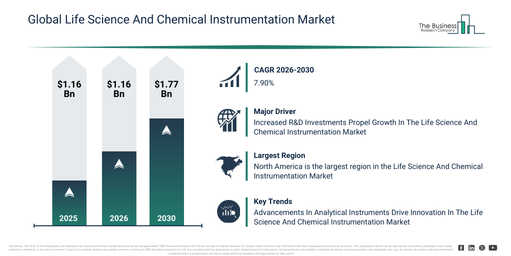
    The life science and chemical instrumentation market size has demonstrated significant growth over recent years. This market is anticipated to expand from $61.82 billion in 2025 to $66.94 billion in 2026, progressing at a compound annual growth rate (CAGR) of 8.3%. The expansion observed historically is attributable to an increase in pharmaceutical research activities, greater adoption of laboratory automation, a surging requirement for quality control testing, the proliferation of biotechnology research programs, and enhanced academic research funding.

    The life science and chemical instrumentation market is anticipated to experience robust expansion over the coming years. This market is projected to reach $90.58 billion by 2030, exhibiting a compound annual growth rate (CAGR) of 7.9%. Key drivers for this growth during the projected period include the rising uptake of advanced omics technologies, increased funding for personalized medicine research, the proliferation of digital laboratories, a heightened emphasis on automating regulatory compliance, and a greater need for real-time analytical data. Significant trends anticipated in this forecast timeframe encompass the wider adoption of automated analytical instruments, an escalating demand for high-throughput testing solutions, the deeper integration of laboratory information systems, the advancement of precision measurement technologies, and an intensified commitment to data integrity and compliance.

    Download A Free Sample Report For Comprehensive Market Insights:

    https://www.thebusinessresearchcompany.com/sample.aspx?id=8902&type=smp

    What Primary Factors Are Fueling The Expansion Of The Life Science And Chemical Instrumentation Market?

    Increasing financial commitments to research and development are projected to drive the expansion of the life science and chemical instrumentation market moving ahead. Research and development encompasses systematic and innovative efforts aimed at expanding scientific understanding and creating novel or enhanced products, technologies, and methodologies. This increase in research and development is fueled by greater government allocations designed to speed up technological advancements for sustaining economic rivalry. The life science and chemical instrumentation industry is experiencing heightened demand because the swift growth of research and development compels businesses to integrate sophisticated analytical, detection, and measurement solutions to facilitate accurate scientific endeavors. For example, in September 2025, according to Eurostat, the Luxembourg-based government agency, research and development expenditure in the European Union reached 2.26% of GDP in 2023, an increase from 2.22% in 2022. Consequently, the escalating investments in research and development are stimulating the demand within the life science and chemical instrumentation market.

    Which Segment-Based Categories Are Covered In The Life Science And Chemical Instrumentation Market?

    The life science and chemical instrumentation market covered in this report is segmented –

    1) By Technology: Polymerase Chain Reaction (PCR), DNA Sequencers and Amplifiers, Flow Cytometry, Spectroscopy, Electrophoresis, Chromatography, Centrifuges, Other Technologies

    2) By Application: Cell Culture And Cell Therapy, Cancer Research, Drug Discovery, Genomics, In Vitro Fertilization, Bioprocess, Metabolomics, Proteomics, Other Applications

    3) By End Users: Hospitals And Diagnostic Centers, Pharmaceutical And Biotechnology Companies, Contract Research Organization (CRO), Academia And Research Institutes

    Subsegments:

    1) By Polymerase Chain Reaction (PCR): Real-Time PCR, Digital PCR, Standard PCR

    2) By DNA Sequencers And Amplifiers: Next-Generation Sequencing (NGS), Sanger Sequencing

    3) By Flow Cytometry: Cell Sorting, Multiparameter Analysis

    4) By Spectroscopy: UV-Vis Spectroscopy, Mass Spectrometry, Infrared Spectroscopy

    5) By Electrophoresis: Gel Electrophoresis, Capillary Electrophoresis

    6) By Chromatography: Gas Chromatography (GC), High-Performance Liquid Chromatography (HPLC)

    7) By Centrifuges: Benchtop Centrifuges, Ultracentrifuges

    8) By Other Technologies: Microarray Technology, Immunoassay

    Which Trends Are Influencing The Expansion Of The Life Science And Chemical Instrumentation Market?

    Major companies in the life science and chemical instrumentation market are prioritizing the integration of scalable and energy-efficient analytical technologies, such as next-generation gas chromatography (GC) systems, to enhance laboratory efficiency, analytical flexibility, and sustainability. These next-generation GC systems are advanced analytical platforms crafted to separate, detect, and quantify chemical compounds with superior throughput, reduced energy consumption, and smarter automation, facilitating features like intelligent operation, decreased consumable usage, and seamless integration with complementary instruments. For instance, in October 2023, Shimadzu Corporation, a Japan-based manufacturer of analytical instruments, launched the Brevis GC-2050. This instrument is engineered for high scalability, enabling connections to auto-samplers, mass spectrometers, and other accessories, all while maintaining a slim width of just 35 cm. It also boasts a 30% reduction in energy consumption compared to traditional models and minimizes helium usage, promoting environmental sustainability. The Brevis GC-2050 is a compact and advanced gas chromatography system that incorporates intelligent automated features.

    Who Are The Leading Firms Participating In The Life Science And Chemical Instrumentation Market?

    Major companies operating in the life science and chemical instrumentation market are Agilent Technologies Inc., Becton Dickinson and Company, Bio-Rad Laboratories Inc., Bruker Corporation, Danaher Corporation, PerkinElmer Inc., Thermo Fisher Scientific Inc., Waters Corporation, F. Hoffmann-La Roche Ltd., Illumina Inc., Shimadzu Corporation, General Electric Healthcare LLC, Hitachi High-Technologies Corporation, JEOL Ltd., Oxford Instruments PLC, Rigaku Corporation, Sigma-Aldrich Corporation, SRI Instruments, Analytik Jena AG, Biochrom Ltd., BioTek Instruments Inc., Cole-Parmer Instrument Company LLC, Eppendorf AG, Harvard Bioscience Inc., HORIBA Ltd., Labconco Corporation, Mettler-Toledo International Inc., New England Biolabs Inc., QIAGEN N.V.

    Access The Complete Life Science And Chemical Instrumentation Market Report:

    https://www.thebusinessresearchcompany.com/report/life-science-and-chemical-instrumentation-global-market-report

    Which Region Accounts For The Highest Share Of The Life Science And Chemical Instrumentation Market?

    North America was the largest region in the life science and chemical instrumentation market share in 2025. Asia-Pacific is expected to be the fastest-growing region in the forecast period. The regions covered in the life science and chemical instrumentation market report are Asia-Pacific, South East Asia, Western Europe, Eastern Europe, North America, South America, Middle East, Africa.

    Access a Life Science And Chemical Instrumentation Market Report for Deeper Competitive Insights

    https://www.thebusinessresearchcompany.com/report/life-science-and-chemical-instrumentation-global-market-report

    Browse Through More Reports Similar to the Global Life Science And Chemical Instrumentation Market 2026, By The Business Research Company

    Life Sciences Bpo Market Report 2026

    https://www.thebusinessresearchcompany.com/report/life-sciences-bpo-global-market-report

    Life Science Analytics Market Report 2026

    https://www.thebusinessresearchcompany.com/report/life-science-analytics-global-market-report

    Laboratory Chemicals Market Report 2026

    https://www.thebusinessresearchcompany.com/report/laboratory-chemicals-global-market-report

    Get in touch with us:

    The Business Research Company: https://www.thebusinessresearchcompany.com/

    Americas: +1 310-496-7795

    Asia: +44 7882 955267 & +91 8897263534

    Europe: +44 7882 955267

    Email us at: marketing@tbrc.info

    Follow us on:

    LinkedIn: https://in.linkedin.com/company/the-business-research-company

    YouTube: https://www.youtube.com/channel/UC24_fI0rV8cR5DxlCpgmyFQ

    Global Market Model: https://www.thebusinessresearchcompany.com/global-market-model
  • Increasing Prevalence Of Autoimmune Diseases Fueling The Growth Of The Market Due To Its Association With Immune System Dysregulation Continues To Impact The Growth Of The Lichen Planus Market

    Increasing Prevalence Of Autoimmune Diseases Fueling The Growth Of The Market Due To Its Association With Immune System Dysregulation Continues To Impact The Growth Of The Lichen Planus Market

    The Business Research Company’s 2026 market reports feature advanced enhancements such as market attractiveness analysis, total addressable market evaluation, company benchmarking matrices, interactive Excel dashboards, expanded supply chain intelligence, emerging startup coverage, and detailed product insights, delivering more actionable and strategically valuable research.

    What Are The Forecasted Market Size Figures For The Lichen Planus Market In 2026 And 2030?

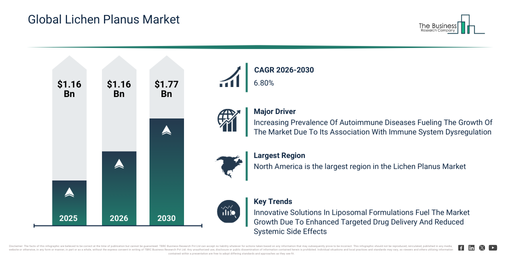
    The market size for lichen planus has shown robust growth in recent years. Its valuation is projected to rise from $1.26 billion in 2025 to $1.35 billion in 2026, advancing at a compound annual growth rate (CAGR) of 7.1%. Factors contributing to this historical expansion include a rise in the diagnosis of autoimmune skin disorders, the accessibility of corticosteroid therapies, the proliferation of dermatology specialty clinics, enhanced clinical understanding of lichen planus, and the adoption of phototherapy techniques.

    The lichen planus market is projected for robust expansion in the coming years. It is anticipated to reach $1.76 billion by 2030, exhibiting a compound annual growth rate (CAGR) of 6.8%. This expansion over the forecast period is due to factors such as increased demand for cutting-edge immunotherapies, a heightened emphasis on sustained symptom management, the broadening of biologic treatment investigations, greater incorporation of digital dermatology instruments, and innovations in specific anti-inflammatory medications. Key developments expected during this period involve the rising uptake of targeted immunomodulatory treatments, an increase in the application of combined topical and systemic therapies, a reinforced focus on the management of chronic conditions, the growth of individualized dermatology services, and enhanced patient awareness and disease tracking.

    Download A Free Sample Report For Comprehensive Market Insights:

    https://www.thebusinessresearchcompany.com/sample.aspx?id=24279&type=smp

    Which Strategic Drivers Are Supporting The Lichen Planus Market Development?

    A future expansion of the lichen planus market is anticipated, driven by the rising occurrence of autoimmune diseases. These conditions involve the immune system erroneously targeting healthy cells within the body, and include examples like rheumatoid arthritis, lupus, type 1 diabetes, multiple sclerosis, and psoriasis. The growing incidence of autoimmune diseases is linked to genetic predispositions, where particular gene variations affect immune system function and lead to connective tissue irregularities. This uptick in autoimmune disease cases not only highlights a wider issue in immune regulation but also contributes to a greater frequency of lichen planus occurrences. For example, as reported in June 2024 by the Australian Institute of Health and Welfare, an Australian government agency, around 514,000 (2.0%) individuals had rheumatoid arthritis in 2022. This condition accounted for 2.0% of the overall disease burden and 16% of the musculoskeletal conditions burden in 2023, with 1,322 deaths (5.1 deaths per 100,000 population) documented in 2022, representing 0.7% of all fatalities. Consequently, the expanding occurrence of autoimmune diseases is a key factor boosting the lichen planus market’s expansion.

    What Are The Major Segment Categories Within The Lichen Planus Market?

    The lichen planus market covered in this report is segmented –

    1) By Disease Type: Lichen Planus, Oral Lichen Planus, Genital Lichen Planus, Lichen Planus Pigmentosus

    2) By Treatment Type: Topical Therapies, Systemic Therapies, Phototherapy

    3) By Route Of Administration: Topical, Oral, Intravenous

    4) By End User: Hospitals, Homecare, Specialty Clinics, Other End-Users

    Subsegments:

    1) By Lichen Planus: Papular Lichen Planus, Hypertrophic Lichen Planus, Actinic Lichen Planus, Linear Lichen Planus, Annular Lichen Planus

    2) By Oral Lichen Planus: Reticular Oral Lichen Planus, Erosive Oral Lichen Planus, Atrophic Oral Lichen Planus, Plaque-Like Oral Lichen Planus, Bullous Oral Lichen Planus

    3) By Genital Lichen Planus: Erosive Genital Lichen Planus, Papular Genital Lichen Planus, Annular Genital Lichen Planus, Vulvovaginal-Gingival Syndrome

    4) By Lichen Planus Pigmentosus: Diffuse Lichen Planus Pigmentosus, Blotchy Lichen Planus Pigmentosus, Linear Lichen Planus Pigmentosus, Perifollicular Lichen Planus Pigmentosus, Flexural Lichen Planus Pigmentosus

    What Trends Are Impacting The Lichen Planus Market?

    Leading companies within the lichen planus market are concentrating on creating innovative solutions, such as liposomal formulations, to enhance targeted drug delivery and minimize systemic side effects. These liposomal formulations represent drug delivery systems in which active ingredients are encased within liposomes, which are small spherical vesicles made of lipid bilayers that improve drug stability, increase absorption, and facilitate targeted delivery with reduced systemic side effects. For example, in February 2025, Lipella Pharmaceuticals Inc., a US-based biotechnology company specializing in therapies for serious diseases, secured US Food and Drug Administration approval for an expanded access program (EAP) for LP-310. LP-310 is a liposomal formulation of tacrolimus specifically designed to provide targeted relief for oral lichen planus (OLP) patients, while concurrently reducing systemic exposure. This program enables patients facing serious or life-threatening conditions with unmet medical needs to access treatments beyond clinical trials before their official approval.

    Which Companies Are Engaged In The Lichen Planus Market Environment?

    Major companies operating in the lichen planus market are Pfizer Inc., Johnson & Johnson Services Inc., F. Hoffmann-La Roche AG, Merck & Co. Inc, AbbVie Inc., Sanofi SA, Bristol-Myers Squibb Company, Novartis AG, GlaxoSmithKline plc, Takeda Pharmaceutical Company, Eli Lilly and Company, Teva Pharmaceutical Industries Ltd., Boehringer Ingelheim International GmbH, Dr. Reddy’s Laboratories Ltd, Amneal Pharmaceuticals Inc., Hikma Pharmaceuticals plc, LEO Pharma A/S, Basilea Pharmaceutica Ltd., UCB S.A., Almirall SA, Lipella Pharmaceuticals Inc.

    Access The Complete Lichen Planus Market Report:

    https://www.thebusinessresearchcompany.com/report/lichen-planus-global-market-report

    Which Region Is The Primary Market For The Lichen Planus Market?

    North America was the largest region in the lichen planus market in 2025. The regions covered in the lichen planus market report are Asia-Pacific, South East Asia, Western Europe, Eastern Europe, North America, South America, Middle East, Africa.

    Access a Lichen Planus Market Report for Deeper Competitive Insights

    https://www.thebusinessresearchcompany.com/report/lichen-planus-global-market-report

    Browse Through More Reports Similar to the Global Lichen Planus Market 2026, By The Business Research Company

    Luxury Skincare Market Report 2026

    https://www.thebusinessresearchcompany.com/report/luxury-skincare-global-market-report

    Liraglutide Market Report 2026

    https://www.thebusinessresearchcompany.com/report/liraglutide-global-market-report

    Sugar And Confectionery Products Market Report 2026

    https://www.thebusinessresearchcompany.com/report/sugar-and-confectionery-products-global-market-report

    Get in touch with us:

    The Business Research Company: https://www.thebusinessresearchcompany.com/

    Americas: +1 310-496-7795

    Asia: +44 7882 955267 & +91 8897263534

    Europe: +44 7882 955267

    Email us at: marketing@tbrc.info

    Follow us on:

    LinkedIn: https://in.linkedin.com/company/the-business-research-company

    YouTube: https://www.youtube.com/channel/UC24_fI0rV8cR5DxlCpgmyFQ

    Global Market Model: https://www.thebusinessresearchcompany.com/global-market-model