Category: Medical Equipment

  • Hospital Beds Market Developments Influencing Industry Expansion Through 2030

    Hospital Beds Market Developments Influencing Industry Expansion Through 2030

    The Business Research Company’s 2026 market reports feature advanced enhancements such as market attractiveness analysis, total addressable market evaluation, company benchmarking matrices, interactive Excel dashboards, expanded supply chain intelligence, emerging startup coverage, and detailed product insights, delivering more actionable and strategically valuable research.

    How Is The Hospital Beds Market’s Market Value Anticipated To Evolve From 2026 To 2030?

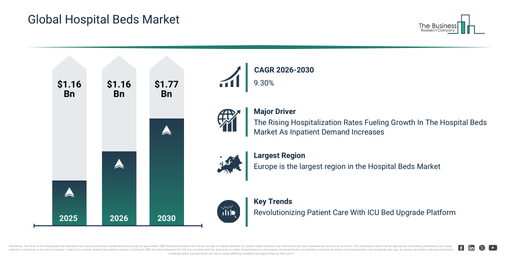
    The hospital beds market has demonstrated robust growth in recent years. This market is projected to expand from $4.6 billion in 2025 to $4.99 billion in 2026, achieving a compound annual growth rate (CAGR) of 8.5%. Historically, this growth can be attributed to several factors, including the expansion of hospital infrastructure, the rising prevalence of chronic diseases, increasing hospitalization rates, growing demand for intensive care capacity, and the modernization of healthcare facilities.

    The hospital beds market size is projected to experience significant growth in the coming years. It is anticipated to expand to $7.11 billion by 2030, achieving a compound annual growth rate (CAGR) of 9.3%. This expansion during the forecast period can be attributed to several factors, including increasing investments in smart hospitals, a rising demand for connected patient care equipment, the expansion of facilities for elderly care, a growing focus on infection control solutions, and the increasing adoption of home healthcare beds. Key trends expected in the forecast period encompass the growing adoption of smart and connected hospital beds, an increasing demand for electrically adjustable bed systems, a heightened focus on features for patient safety and comfort, the expansion of ICU-specific bed designs, and enhanced integration of remote monitoring capabilities.

    Download A Free Sample Report For Comprehensive Market Insights:

    https://www.thebusinessresearchcompany.com/sample.aspx?id=12408&type=smp

    What Influential Factors Are Boosting The Hospital Beds Market Demand?

    An increase in the hospitalization rate is anticipated to fuel the expansion of the hospital bed market. Hospitalization involves the admission of a patient to a hospital or similar healthcare institution for purposes such as medical treatment, observation, or general care. Once hospitalized, patients utilize hospital beds for their stay within the facility during treatment, recovery, and rest periods. As an illustration, data from November 2024, provided by the Australian Institute of Health and Welfare, an Australia-based government agency, indicated that during 2022–23, at least one hospital-acquired complication (HAC) was documented in 115,000 hospitalizations in public hospitals (representing 2.0% of hospitalizations) and in 34,200 hospitalizations in private hospitals (constituting 0.8% of hospitalizations). Consequently, the increasing rates of hospitalization are boosting the expansion of the hospital beds market.

    Which Segment Groups Define The Hospital Beds Market Landscape?

    The hospital beds market covered in this report is segmented –

    1) By Type: Semi-Electric Beds, Electric Beds, Manual Beds

    2) By Usage: Acute Care Beds, Long-Term Care Beds, Psychiatric Care Beds, Other Usages

    3) By Application: Non-Intensive Care Beds, Intensive Care Beds

    4) By End User: Hospitals, Clinics, Other End Users

    Subsegments:

    1) By Semi-Electric Beds:Backrest and Knee-Rest Electrically Adjustable Beds, Adjustable Height Semi-Electric Beds

    2) By Electric Beds: ICU Electric Beds, Standard Electric Beds, Specialty Electric Beds

    3) By Manual Beds: Adjustable Manual Beds, Fixed Height Manual Beds

    What Trends Are Influencing The Hospital Beds Market?

    Leading companies in the hospital bed market are introducing technologically advanced products, such as ICU bed upgrade platforms, to maintain their competitive edge. An ICU bed upgrade platform signifies a system or technology that enables enhancements or improvements to intensive care unit (ICU) beds, potentially involving upgrades in features, functionality, or capabilities. For example, in March 2023, Stryker, a US-based medical device company, launched SmartMedic, India’s first ICU bed upgrade platform, with the goal of improving patient care and caregiver safety. SmartMedic is a patient care platform designed to enhance the existing capabilities of ICU beds in hospitals. This solution is engineered to manage changes in patient weight, enable monitoring of patient turns from nurse stations, and assist medical staff in performing X-rays on patients within the ICU without requiring them to be moved. Ultimately, SmartMedic aims to reduce patient discomfort and provide superior care.

    Who Are The Firms Contributing To The Hospital Beds Market Ecosystem?

    Major companies operating in the hospital beds market are Paramount Bed Co. Ltd., Linet spol s.r.o., Joh. Stiegelmeyer & Co. GmbH, Invacare Corporation, Joerns Healthcare LLC, Stryker Corporation, Getinge AB, Arjo AB, Merivaara Corporation, Malvestio SpA, Haelvoet NV, Savion Industries, Kanghui Medical Technology Co. Ltd., Besco Medical Co. Ltd., Gendron Inc., Midmark Corporation, Span-America Medical Systems, Amico Corporation, Nitrocare, Proma Reha Inc., Hopefull Medical Equipment Co. Ltd., Novak M d.o.o., Royax s.r.o.

    Access The Complete Hospital Beds Market Report:

    https://www.thebusinessresearchcompany.com/report/hospital-beds-global-market-report

    Which Region Contributes The Most To The Hospital Beds Market?

    Europe was the largest region in the hospital beds market in 2025. Asia-Pacific is expected to be the fastest-growing region in the forecast period. The regions covered in the hospital beds market report are Asia-Pacific, South East Asia, Western Europe, Eastern Europe, North America, South America, Middle East, Africa.

    Access a Hospital Beds Market Report for Deeper Competitive Insights

    https://www.thebusinessresearchcompany.com/report/hospital-beds-global-market-report

    Browse Through More Reports Similar to the Global Hospital Beds Market 2026, By The Business Research Company

    Hospital Bed Management Systems Market Report 2026

    https://www.thebusinessresearchcompany.com/report/hospital-bed-management-systems-global-market-report

    Automated Hospital Beds Market Report 2026

    https://www.thebusinessresearchcompany.com/report/automated-hospital-beds-global-market-report

    Medical Bed Market Report 2026

    https://www.thebusinessresearchcompany.com/report/medical-bed-global-market-report

    Get in touch with us:

    The Business Research Company: https://www.thebusinessresearchcompany.com/

    Americas: +1 310-496-7795

    Asia: +44 7882 955267 & +91 8897263534

    Europe: +44 7882 955267

    Email us at: marketing@tbrc.info

    Follow us on:

    LinkedIn: https://in.linkedin.com/company/the-business-research-company

    YouTube: https://www.youtube.com/channel/UC24_fI0rV8cR5DxlCpgmyFQ

    Global Market Model: https://www.thebusinessresearchcompany.com/global-market-model

  • Hospital Acquired Infections Testing Kits Market Size Forecast To Achieve $7.19 Billion By 2030 With 8.5% CAGR

    Hospital Acquired Infections Testing Kits Market Size Forecast To Achieve $7.19 Billion By 2030 With 8.5% CAGR

    The Business Research Company’s 2026 market reports feature advanced enhancements such as market attractiveness analysis, total addressable market evaluation, company benchmarking matrices, interactive Excel dashboards, expanded supply chain intelligence, emerging startup coverage, and detailed product insights, delivering more actionable and strategically valuable research.

    By 2030, How Much Growth In Market Size Is Expected For The Hospital Acquired Infections Testing Kits Market?

    Significant expansion has been observed in the hospital acquired infections testing kits market size during recent years. This market is projected to grow from $4.79 billion in 2025 to $5.19 billion in 2026, achieving a compound annual growth rate (CAGR) of 8.5%. The historical rise in this market can be attributed to elements such as increasing hospital infection surveillance, the escalating prevalence of antibiotic-resistant pathogens, the enlargement of clinical microbiology laboratories, the implementation of infection control protocols, and the widespread availability of molecular diagnostic tools.

    The hospital acquired infections testing kits market is projected to experience substantial expansion in the coming years. This market is set to reach a valuation of $7.2 billion by 2030, exhibiting a compound annual growth rate (CAGR) of 8.5%. Factors driving this growth during the projected period include a heightened emphasis on prompt infection identification, increased capital allocation for hospital safety infrastructure, the wider embrace of rapid testing methods, an escalating need for automated diagnostic processes, and innovations in molecular diagnostics technology. Key trends anticipated over the forecast period encompass the surging acceptance of rapid diagnostic test kits, a greater reliance on molecular testing for HAIs, the increasing incorporation of automated diagnostic equipment, the broadening scope of point-of-care infection testing, and a sharpened focus on detecting multiple pathogens.

    Download A Free Sample Report For Comprehensive Market Insights:

    https://www.thebusinessresearchcompany.com/sample.aspx?id=2469&type=smp

    Which Drivers Are Advancing The Hospital Acquired Infections Testing Kits Market Growth?

    The expansion in the number of healthcare settings is anticipated to fuel the growth of the hospital-acquired infections testing kits market in the future. Within these settings, a broad spectrum of healthcare facilities and services, such as acute care hospitals, urgent care centers, rehabilitation facilities, nursing homes, and long-term care facilities, are available, providing extensive healthcare options. Hospital-acquired infections testing kits serve as essential instruments for identifying and preventing healthcare-associated infections, thereby improving patient safety within these healthcare environments. For example, data from May 2023, cited by the American Hospital Association, a US-based healthcare industry trade group, indicates a notable increase in the total number of hospitals across the U.S. region, climbing from 6,093 in 2022 to 60,129 in 2023. Concurrently, admissions in community hospitals also expanded, rising from 31,393,318 in 2022 to 31,967,073 in 2023. Consequently, the growing prevalence of healthcare settings is a key driver for the hospital-acquired infections testing kits market.

    What Key Segment Areas Are Included In The Hospital Acquired Infections Testing Kits Market Assessment?

    The hospital acquired infections testing kits market covered in this report is segmented –

    1) By Product: Consumables And Reagents, Instruments

    2) By Test Type: Pneumoia Infection, Urinary Track Infection, Blood Stream Associated Infection, Surgical Site Infection, MRSA infection, Others

    3) By Pathogen Type: Viral, Bacterial, Fungal

    4) By Application: Drug Resistance Testing, Disease Testing

    Subsegments:

    1) By Consumables and Reagents: Culture Media (Used for isolating and identifying pathogens), Reagents For Molecular Testing (Includes PCR reagents and kits for detecting specific pathogens), Test Kits (Rapid tests and other kits designed for various infections), Other Consumables (Includes swabs, sample collection devices, and preservation solutions)

    2) By Instruments: Automated Analyzers (Equipment used for blood culture analysis and identification of pathogens), Molecular Diagnostic Instruments (Machines used for PCR and other molecular testing methods), Microscopes (Used for the identification of pathogens in samples), Incubators And Growth Chambers (For culturing samples under controlled conditions)

    Which Trends Are Guiding The Development Of The Hospital Acquired Infections Testing Kits Market?

    Leading companies in the hospital-acquired infections (HAI) testing kits market are concentrating on developing advanced point-of-care antimicrobial susceptibility testing (AST) solutions to enable rapid diagnosis, guide targeted therapy, and combat antimicrobial resistance (AMR). Point-of-care AST employs proprietary microfluidic technology to quickly identify bacterial presence and evaluate antibiotic effectiveness directly from patient urine samples, thereby reducing diagnostic delays and improving treatment decisions. For instance, in June 2023, Sysmex Corporation, a Japan-based diagnostics company, unveiled the world’s first point-of-care testing system in Europe capable of executing antimicrobial susceptibility testing in just 30 minutes. Utilizing a microfluidic-based AST approach for patients with suspected urinary tract infections, the system significantly decreases turnaround time and supports antimicrobial stewardship in primary care settings by allowing for timely and informed antibiotic use, thus contributing to global efforts to curb AMR.

    Which Key Players Are Active In The Hospital Acquired Infections Testing Kits Market?

    Major companies operating in the hospital acquired infections testing kits market are Becton Dickinson and Company, Abbott Laboratories, Cepheid, F. Hoffmann-La Roche Ltd, STERIS plc, QIAGEN, Meridian Bioscience Inc., BioMérieux SA, GE Healthcare, Seegene, SD Biosensor, Fujirebio, Sysmex Corporation, Getein Biotech, Hangzhou Biotest Biotech, AmonMed Biotechnology, Beijing Tigsun Diagnostics, Hunan Lituo Biotechnology, ImmunoScience, Vivacheck Lab

    Access The Complete Hospital Acquired Infections Testing Kits Market Report:

    https://www.thebusinessresearchcompany.com/report/hospital-acquired-infections-testing-kits-global-market-report

    Which Regional Market Leads The Hospital Acquired Infections Testing Kits Market?

    North America was the largest region in the hospital-acquired infections testing kits market in 2025. Asia-Pacific is expected to be the fastest-growing region in the forecast period. The regions covered in the hospital acquired infections testing kits market report are Asia-Pacific, South East Asia, Western Europe, Eastern Europe, North America, South America, Middle East, Africa.

    Access a Hospital Acquired Infections Testing Kits Market Report for Deeper Competitive Insights

    https://www.thebusinessresearchcompany.com/report/hospital-acquired-infections-testing-kits-global-market-report

    Browse Through More Reports Similar to the Global Hospital Acquired Infections Testing Kits Market 2026, By The Business Research Company

    Viral Diagnostic Test Kits Market Report 2026

    https://www.thebusinessresearchcompany.com/report/viral-diagnostic-test-kits-global-market-report

    Infection Control Supplies Market Report 2026

    https://www.thebusinessresearchcompany.com/report/infection-control-supplies-global-market-report

    Hospital Acquired Infection Control Market Report 2026

    https://www.thebusinessresearchcompany.com/report/hospital-acquired-infection-control-global-market-report

    Get in touch with us:

    The Business Research Company: https://www.thebusinessresearchcompany.com/

    Americas: +1 310-496-7795

    Asia: +44 7882 955267 & +91 8897263534

    Europe: +44 7882 955267

    Email us at: marketing@tbrc.info

    Follow us on:

    LinkedIn: https://in.linkedin.com/company/the-business-research-company

    YouTube: https://www.youtube.com/channel/UC24_fI0rV8cR5DxlCpgmyFQ

    Global Market Model: https://www.thebusinessresearchcompany.com/global-market-model

  • Hormonal Intrauterine Devices (IUDs) Market Forecast Covering Industry Demand And Market Evolution

    Hormonal Intrauterine Devices (IUDs) Market Forecast Covering Industry Demand And Market Evolution

    The Business Research Company’s 2026 market reports feature advanced enhancements such as market attractiveness analysis, total addressable market evaluation, company benchmarking matrices, interactive Excel dashboards, expanded supply chain intelligence, emerging startup coverage, and detailed product insights, delivering more actionable and strategically valuable research.

    What Market Value Trend Is Expected For The Hormonal Intrauterine Devices (IUDs) Market From 2026 To 2030?

    The market size for hormonal intrauterine devices (iuds) has expanded significantly in recent years. This market is projected to grow from $2.87 billion in 2025 to $3.18 billion in 2026, at a compound annual growth rate (CAGR) of 10.6%. Historically, this growth can be attributed to heightened awareness regarding family planning options, the expansion of women’s reproductive healthcare programs, a rising preference for long-term contraception, the increasing availability of hormone-based devices, and strong support from public health initiatives.

    The market size for hormonal intrauterine devices (iuds) is anticipated to experience significant expansion over the upcoming years. It is projected to reach $4.74 billion by 2030, demonstrating a compound annual growth rate (CAGR) of 10.5%. This growth during the forecast period is fueled by factors such as the increasing demand for non-surgical contraceptive alternatives, an elevated focus on menstrual health management, wider access in emerging markets, rising investments in women’s health technologies, and continued innovation in hormone delivery systems. Prominent trends throughout the forecast period include the growing adoption of low-dose hormonal iuds, an increasing need for long-acting reversible contraceptives, a developing preference for frameless device designs, the broadening of therapeutic iud applications, and an intensified emphasis on patient comfort and safety.

    Download A Free Sample Report For Comprehensive Market Insights:

    https://www.thebusinessresearchcompany.com/sample.aspx?id=19091&type=smp

    What Primary Factors Are Fueling The Expansion Of The Hormonal Intrauterine Devices (IUDs) Market?

    The growing prevalence of unintended pregnancies is anticipated to drive the expansion of the hormonal intrauterine devices market. Unintended pregnancies are defined as those not planned or desired when conception occurs. Such pregnancies can result from various factors, including contraceptive failures, insufficient access to birth control methods, incorrect use of contraception, or instances of sexual violence. When access to effective contraception is restricted, it escalates the likelihood of unintended pregnancies by diminishing individuals’ autonomy over their reproductive choices. Hormonal IUDs demonstrate high effectiveness in preventing pregnancy, boasting a failure rate of less than 1%. These devices offer sustained protection for 3 to 7 years, depending on the specific type, presenting a reliable option for individuals aiming to prevent unwanted pregnancies. For instance, in July 2025, data from the Society for Family Planning, a professional body based in the US, indicated a rise in abortions to 1.14 million in 2024, up from 1.05 million recorded in 2023. Consequently, the increasing incidence of unwanted pregnancies is a key factor propelling the growth of the hormonal intrauterine devices market.

    How Is Segment Classification Applied In The Hormonal Intrauterine Devices (IUDs) Market?

    The hormonal intrauterine devices (iuds) market covered in this report is segmented –

    1) By Type: 13 Milligram Hormonal Intrauterine Devices, 19 Milligram Hormonal Intrauterine Devices, 52 Milligram Hormonal Intrauterine Devices

    2) By Device Design: Framed Intrauterine Devices, Frameless Intrauterine Devices

    3) By Hormone Type: Levonorgestrel Releasing Intrauterine Devices, Progesterone Releasing Intrauterine Devices

    4) By Application: Age 20-24, Age 25-34, Age 35-44, Other Applications

    Subsegments:

    1) By 13 Milligram Hormonal Intrauterine Devices: Low-Dose 13 Mg IUDs, Specialty 13 Mg IUDs For Specific Conditions

    2) By 19 Milligram Hormonal Intrauterine Devices: Low-Dose 19 Mg IUDs, Specialty 19 Mg IUDs For Specific Conditions

    3) By 52 Milligram Hormonal Intrauterine Devices: Standard 52 Mg IUDs, Extended-Release 52 Mg IUDs, Specialty 52 Mg IUDs For Heavy Menstrual Bleeding Or Endometriosis

    What Trends Are Influencing The Future Of The Hormonal Intrauterine Devices (IUDs) Market?

    Prominent companies in the hormonal intrauterine devices market are concentrating on developing sophisticated products, such as levonorgestrel intrauterine devices (IUDs), aimed at alleviating menstrual bleeding and cramps. These levonorgestrel intrauterine devices (IUDs) serve as extended-duration birth control solutions, implanted into the uterus to gradually release the hormone levonorgestrel and prevent pregnancy. For example, in October 2024, Medicines360, a nonprofit organization based in the US, introduced Avibela, a 52 mg levonorgestrel intrauterine device (IUD), in Zambia. This device offers two primary benefits: up to eight years of pregnancy avoidance and up to five years of reduction in heavy menstrual bleeding. Its contraceptive action stems from its capacity to increase the density of cervical mucus, thereby stopping sperm from accessing the uterus. For managing heavy bleeding, it functions by thinning the uterine lining, which contributes to a decrease in menstrual flow.

    Who Are The Leading Firms Participating In The Hormonal Intrauterine Devices (IUDs) Market?

    Major companies operating in the hormonal intrauterine devices (iuds) market are Bayer AG, Organon & Companies, Gedeon Richter Plc, Meril Life Science Pvt Ltd., Teva UK Limited, Medicines360, HLL Lifecare Limited, Pregna International Ltd., DKT WomanCare Global, SMB Corporation of India, Oy Leiras, OCON Healthcare, Bayer Healthcare Pharmaceuticals, CooperSurgical Inc., Mithra Pharmaceuticals, Shanghai Dahua Medical Apparatus Co. Ltd., Beijing Zizhu Pharmaceutical Co. Ltd., Shanghai Jiansheng Medical Devices Co. Ltd., Zhejiang Xianju Pharmaceutical Co. Ltd., Shanghai Chuangling Medical Devices Co. Ltd.

    Access The Complete Hormonal Intrauterine Devices (IUDs) Market Report:

    https://www.thebusinessresearchcompany.com/report/hormonal-intrauterine-devices-iuds-global-market-report

    Which Region Holds The Largest Share In The Hormonal Intrauterine Devices (IUDs) Market?

    North America was the largest region in the hormonal intrauterine devices (IUDs) market in 2025. Asia-Pacific is expected to be the fastest-growing region in the forecast period. The regions covered in the hormonal intrauterine devices (iuds) market report are Asia-Pacific, South East Asia, Western Europe, Eastern Europe, North America, South America, Middle East, Africa.

    Access a Hormonal Intrauterine Devices (IUDs) Market Report for Deeper Competitive Insights

    https://www.thebusinessresearchcompany.com/report/hormonal-intrauterine-devices-iuds-global-market-report

    Browse Through More Reports Similar to the Global Hormonal Intrauterine Devices (IUDs) Market 2026, By The Business Research Company

    Contraceptive Devices Market Report 2026

    https://www.thebusinessresearchcompany.com/report/contraceptive-devices-global-market-report

    Hormonal Contraceptives Market Report 2026

    https://www.thebusinessresearchcompany.com/report/hormonal-contraceptives-global-market-report

    Gynecological Devices Market Report 2026

    https://www.thebusinessresearchcompany.com/report/gynecological-devices-global-market-report

    Get in touch with us:

    The Business Research Company: https://www.thebusinessresearchcompany.com/

    Americas: +1 310-496-7795

    Asia: +44 7882 955267 & +91 8897263534

    Europe: +44 7882 955267

    Email us at: marketing@tbrc.info

    Follow us on:

    LinkedIn: https://in.linkedin.com/company/the-business-research-company

    YouTube: https://www.youtube.com/channel/UC24_fI0rV8cR5DxlCpgmyFQ

    Global Market Model: https://www.thebusinessresearchcompany.com/global-market-model

  • Homeopathic Products Market Trends And Growth Outlook Across The 2026–2030 Forecast Period

    Homeopathic Products Market Trends And Growth Outlook Across The 2026–2030 Forecast Period

    The Business Research Company’s 2026 market reports feature advanced enhancements such as market attractiveness analysis, total addressable market evaluation, company benchmarking matrices, interactive Excel dashboards, expanded supply chain intelligence, emerging startup coverage, and detailed product insights, delivering more actionable and strategically valuable research.

    How Does The Forecasted Market Size Of The Homeopathic Products Market Compare Between 2026 And 2030?

    The homeopathic products market size has experienced swift expansion in recent years. It is anticipated to expand from $16.77 billion in 2025 to $19.54 billion in 2026, demonstrating a compound annual growth rate (CAGR) of 16.6%. The historical rise in this market can be ascribed to increasing consumer interest in natural therapies, long-standing use of homeopathy in emerging markets, expansion of alternative medicine practices, growth of self-care culture, and wider retail availability of homeopathic products.

    The homeopathic products market size is anticipated to expand significantly over the coming years. It is projected to reach $35.75 billion by 2030, exhibiting a compound annual growth rate (CAGR) of 16.3%. This expansion during the forecast period can be attributed to several factors, including a heightened demand for comprehensive healthcare methods, an increased emphasis on immune-boosting offerings, the proliferation of online sales platforms, stricter governmental oversight on product excellence, and improved public awareness regarding complementary medicine. Key trends anticipated in this period encompass a rising inclination towards natural and alternative health solutions, a greater need for preventative health measures, the broader availability of plant-based homeopathic remedies, increased acceptance of integrated medical practices, and a sharpened focus on product consistency and quality assurance.

    Download A Free Sample Report For Comprehensive Market Insights:

    https://www.thebusinessresearchcompany.com/sample.aspx?id=24240&type=smp

    Which Strategic Drivers Are Supporting The Homeopathic Products Market Development?

    A growing inclination towards natural and holistic remedies is projected to boost the expansion of the homeopathic products market in the future. These remedies encompass treatments employing natural components and methods to foster comprehensive well-being, targeting health’s physical, emotional, and spiritual dimensions. This rising preference stems from consumers’ heightened understanding of the advantages of organic, plant-derived therapies and a demand for non-synthetic chemical options in healthcare. Homeopathic products contribute to natural and holistic approaches by providing natural, non-invasive solutions that aid the body’s healing mechanisms, tackle fundamental problems, and serve as a substitute for traditional medicine in pursuing sustained wellness. For example, the American Botanical Council, a US non-profit, reported that US annual sales of herbal dietary supplements achieved $12.551 billion in 2023, representing a 4.4% rise from the prior year and an increase of $533 million in sales compared to 2022. Consequently, the expanding favoritism for natural and holistic remedies is set to fuel the growth of the homeopathic products market.

    What Are The Core Segment Classifications In The Homeopathic Products Market?

    The homeopathic products market covered in this report is segmented –

    1) By Product Type: Tincture, Dilutions, Biochemics, Ointments, Tablets, Other Product Types

    2) By Source: Plants, Animals, Minerals

    3) By Application: Analgesic And Antipyretic, Respiratory, Neurology, Immunology, Gastroenterology, Dermatology, Other Applications

    4) By End User: Men, Women, Other End Users

    Subsegments:

    1) By Tincture: Alcohol-Based Tinctures, Glycerin-Based Tinctures, Hydro-Alcoholic Tinctures

    2) By Dilutions: Single Potency Dilutions, Multiple Potency Dilutions, Low Potency Dilutions, High Potency Dilutions

    3) By Biochemics: Tissue Salts, Schuessler’s Tissue Salts, Biochemic Combinations

    4) By Ointments: Herbal Ointments, Homeopathic Ointments For Pain Relief, Skin Care Ointment

    5) By Tablets: Homeopathic Remedy Tablets, Sugar Pill Tablets, Lactose-Free Tablets

    6) By Other Product Types: Homeopathic Sprays, Homeopathic Syrups, Homeopathic Gels, Lozenges

    Which Trends Are Contributing To Changes In The Homeopathic Products Market?

    Key companies within the homeopathic products market are emphasizing convenience and portability, incorporating innovations like advanced spray nozzle designs to deliver natural remedies precisely and conveniently to consumers, thereby elevating user experience and addressing the increasing need for mild, plant-based healthcare options. A spray nozzle is an apparatus that governs the direction, movement, and dispersal of liquid, facilitating its release as a fine mist or spray for specific application. As an illustration, in October 2024, Boiron, a France-based pharmaceutical entity, introduced ThroatCalm Spray, a plant-based homeopathic product for occasional sore throat relief, which employs Echinacea and Plantago major to soothe the throat without the anesthetizing effects of conventional treatments. Packaged in a portable spray bottle, it offers a natural and accessible solution for individuals seeking potent, non-invasive relief from sore throats.

    Which Companies Are Engaged In The Homeopathic Products Market Environment?

    Major companies operating in the homeopathic products market are Dr. Willmar Schwabe GmbH & Co. KG, Boiron Laboratories, Hyland’s Inc., SBL Pvt. Ltd., Excel Pharma, Bakson Drugs & Pharmaceuticals Pvt. Ltd., Ainsworths Ltd., Bio-India Pharma Pvt. Ltd., Lord’s Homeopathic Laboratory Pvt. Ltd., Bioforce AG, Hevert-Arzneimittel GmbH & Co. KG, Helios Homeopathy, Hahnemann Laboratories Inc., Homeocan Inc., A. Nelson & Co. Limited, Rxhomeo Inc., Washington Homeopathic Products, Powell Laboratories Pvt. Ltd., Dr. Reckeweg & Co. GmbH, Allen Healthcare Co. Limited.

    Access The Complete Homeopathic Products Market Report:

    https://www.thebusinessresearchcompany.com/report/homeopathic-products-global-market-report

    Which Region Is The Dominant Market In The Homeopathic Products Market?

    North America was the largest region in the homeopathic products market in 2025. Asia-Pacific is expected to be the fastest-growing region in the forecast period. The regions covered in the homeopathic products market report are Asia-Pacific, South East Asia, Western Europe, Eastern Europe, North America, South America, Middle East, Africa.

    Access a Homeopathic Products Market Report for Deeper Competitive Insights

    https://www.thebusinessresearchcompany.com/report/homeopathic-products-global-market-report

    Browse Through More Reports Similar to the Global Homeopathic Products Market 2026, By The Business Research Company

    Luxury Bath And Body Products Market Report 2026

    https://www.thebusinessresearchcompany.com/report/luxury-bath-and-body-products-global-market-report

    Sexual Health Supplement Market Report 2026

    https://www.thebusinessresearchcompany.com/report/sexual-health-supplement-global-market-report

    Skin Care Products Market Report 2026

    https://www.thebusinessresearchcompany.com/report/skin-care-products-global-market-report

    Get in touch with us:

    The Business Research Company: https://www.thebusinessresearchcompany.com/

    Americas: +1 310-496-7795

    Asia: +44 7882 955267 & +91 8897263534

    Europe: +44 7882 955267

    Email us at: marketing@tbrc.info

    Follow us on:

    LinkedIn: https://in.linkedin.com/company/the-business-research-company

    YouTube: https://www.youtube.com/channel/UC24_fI0rV8cR5DxlCpgmyFQ

    Global Market Model: https://www.thebusinessresearchcompany.com/global-market-model

  • Home Spirometry Bluetooth Device Market Expansion Outlook Through 2030 With Revenue Growth Insights

    Home Spirometry Bluetooth Device Market Expansion Outlook Through 2030 With Revenue Growth Insights

    The Business Research Company’s 2026 market reports feature advanced enhancements such as market attractiveness analysis, total addressable market evaluation, company benchmarking matrices, interactive Excel dashboards, expanded supply chain intelligence, emerging startup coverage, and detailed product insights, delivering more actionable and strategically valuable research.

    What Increase In Market Value Is Predicted For The Home Spirometry Bluetooth Device Market During The 2026–2030 Period?

    The home spirometry bluetooth device market size has witnessed substantial growth in recent years. This market is projected to expand from $1.28 billion in 2025 to $1.42 billion in 2026, at a compound annual growth rate (CAGR) of 10.5%. The historical increase in the market can be attributed to a rise in chronic respiratory diseases, the early adoption of home health devices, advancements in Bluetooth connectivity, growing patient self-monitoring awareness, and the integration of these systems with hospital networks.

    The home spirometry bluetooth device market is projected to experience substantial expansion in the coming years. This market is anticipated to reach $2.08 billion by 2030, exhibiting a compound annual growth rate (CAGR) of 10.2%. Key factors driving this growth during the forecast period include AI-powered predictive respiratory analytics, the increasing prevalence of remote healthcare programs, seamless integration with telemedicine platforms, wider adoption by homecare providers, and a rising need for continuous pulmonary monitoring. Prominent trends expected over the forecast period encompass wireless transmission of pulmonary data, the availability of portable home monitoring devices, real-time tracking of lung function, integration with various mobile health applications, and enhanced patient adherence monitoring.

    Download A Free Sample Report For Comprehensive Market Insights:

    https://www.thebusinessresearchcompany.com/sample.aspx?id=29083&type=smp

    What Major Growth Factors Are Impacting The Home Spirometry Bluetooth Device Market?

    The anticipated expansion of the home spirometry Bluetooth device market is linked to the rising occurrence of chronic respiratory illnesses. These conditions are defined as persistent ailments impacting the airways and lung structures, resulting in diminished lung function and a decline in general respiratory well-being. The surge in chronic respiratory disease prevalence is primarily attributed to an aging demographic, given that older adults are more susceptible to respiratory issues due to natural decreases in lung capacity and prolonged contact with environmental pollutants. Such devices enable real-time, remote observation of lung function for individuals suffering from chronic respiratory diseases, facilitating prompt identification of deteriorating conditions for rapid medical action and improved sustained care. To illustrate this trend, information from May 2025 by the Centers for Disease Control and Prevention, a US-based government public health agency, indicated that chronic obstructive pulmonary disease (COPD) constituted the fifth leading cause of death in the United States in 2023, accounting for 141,733 deaths. During the same year, the age-adjusted prevalence of diagnosed COPD among adults aged 18 years and older stood at 3.8 percent. Consequently, the expanding occurrence of chronic respiratory conditions is a key factor propelling the expansion of the home spirometry Bluetooth device market.

    How Is The Home Spirometry Bluetooth Device Market Structured Across Different Market Segments?

    The home spirometry bluetooth device market covered in this report is segmented –

    1) By Product Type: Handheld Home Spirometry Devices, Compact Tabletop Home Spirometry Devices

    2) By Connectivity: Bluetooth-Enabled Devices, Bluetooth + Wi-Fi Enabled Devices

    3) By Distribution Channel: Online, Offline

    4) By Application: Chronic Obstructive Pulmonary Disease (COPD), Asthma, Cystic Fibrosis, Other Applications

    5) By End-User: Homecare Settings, Patients, Hospitals and Clinics, Other End-Users

    Subsegments:

    1) By Handheld Home Spirometry Devices: Portable Bluetooth Spirometers, Pocket-Size Spirometers, Smartphone-Integrated Spirometers, Rechargeable Handheld Spirometers, Battery-Operated Handheld Spirometers

    2) By Compact Tabletop Home Spirometry Devices: Wireless Bluetooth Tabletop Spirometers, Digital Home Diagnostic Spirometers, Multi-Parameter Home Monitoring Spirometers

    What Trends Are Shaping The Home Spirometry Bluetooth Device Market Structure?

    Leading companies in the home spirometry Bluetooth device market are concentrating on developing innovative solutions, such as the Air Next Spirometer, which aids in remote patient management and the early detection of respiratory conditions like asthma and COPD. The Air Next Spirometer is a Bluetooth-enabled, smartphone-connected home spirometry device designed for accurate lung function measurement and the transmission of real-time respiratory data for distant monitoring and management. For instance, in January 2024, NuvoAir Medical, a US-based company specializing in personalized heart and lung care, announced that its Air Next Spirometer received formal 510(k) clearance from the U.S. Food and Drug Administration (FDA) for comprehensive spirometry use at home. This clearance signifies that the device is approved for patient use at home, offering a thorough lung function assessment comparable to those conducted in clinical settings. It enables patients to perform various lung function tests, including forced expiratory volume (FEV1) and forced vital capacity (FVC), from their homes, with data forwarded to healthcare providers for ongoing management. Additionally, this approval supports clinical trials, research, and consistent monitoring of lung health outside traditional healthcare facilities, promoting more accessible and uninterrupted respiratory care.

    Who Are The Prominent Players Across The Home Spirometry Bluetooth Device Market?

    Major companies operating in the home spirometry bluetooth device market are Contec Medical Systems Co. Ltd., Vitalograph Ltd., Medcaptain Medical Technology Co. Ltd., Medical International Research S.p.A., CareSimple Inc., Geratherm Medical AG, SDI Diagnostics Inc., NDD Medical Technologies, Futuremed America Inc., Sibelmed S.L., Uscom Ltd., e-LinkCare Meditech Co. Ltd., Monitored Therapeutics Inc. (MTI), Aluna Health Inc., Jones Medical Instrument Company, CMI Health, Healthup SA, Motustech Inc., Medikro Oy, Icen Technology Company Limited

    Access The Complete Home Spirometry Bluetooth Device Market Report:

    https://www.thebusinessresearchcompany.com/report/home-spirometry-bluetooth-device-global-market-report

    Which Area Represents The Largest Portion Of The Home Spirometry Bluetooth Device Market?

    North America was the largest region in the home spirometry bluetooth device market in 2025. Asia-Pacific is expected to be the fastest-growing region in the forecast period. The regions covered in the home spirometry bluetooth device market report are Asia-Pacific, South East Asia, Western Europe, Eastern Europe, North America, South America, Middle East, Africa.

    Access a Home Spirometry Bluetooth Device Market Report for Deeper Competitive Insights

    https://www.thebusinessresearchcompany.com/report/home-spirometry-bluetooth-device-global-market-report

    Browse Through More Reports Similar to the Global Home Spirometry Bluetooth Device Market 2026, By The Business Research Company

    Spirometer Market Report 2026

    https://www.thebusinessresearchcompany.com/report/spirometer-global-market-report

    Bluetooth Low Energy Ble Technology Market Report 2026

    https://www.thebusinessresearchcompany.com/report/bluetooth-low-energy-ble-technology-global-market-report

    Respiratory Monitoring Devices Market Report 2026

    https://www.thebusinessresearchcompany.com/report/respiratory-monitoring-devices-global-market-report

    Get in touch with us:

    The Business Research Company: https://www.thebusinessresearchcompany.com/

    Americas: +1 310-496-7795

    Asia: +44 7882 955267 & +91 8897263534

    Europe: +44 7882 955267

    Email us at: marketing@tbrc.info

    Follow us on:

    LinkedIn: https://in.linkedin.com/company/the-business-research-company

    YouTube: https://www.youtube.com/channel/UC24_fI0rV8cR5DxlCpgmyFQ

    Global Market Model: https://www.thebusinessresearchcompany.com/global-market-model

  • Home Sleep Screening Devices Market Industry Analysis Covering Trends, Drivers, And Future Outlook

    Home Sleep Screening Devices Market Industry Analysis Covering Trends, Drivers, And Future Outlook

    The Business Research Company’s 2026 market reports feature advanced enhancements such as market attractiveness analysis, total addressable market evaluation, company benchmarking matrices, interactive Excel dashboards, expanded supply chain intelligence, emerging startup coverage, and detailed product insights, delivering more actionable and strategically valuable research.

    How Will The Market Size Of The Home Sleep Screening Devices Market Progress Through 2030?

    The home sleep screening devices market has experienced rapid expansion in recent years. This market is projected to grow from $3.87 billion in 2025 to $4.26 billion in 2026, demonstrating a compound annual growth rate (CAGR) of 10.1%. The growth observed in prior periods is attributable to factors such as increasing awareness regarding sleep disorders, a rising prevalence of sleep apnea, the adoption of portable medical devices, ongoing technological advancements in sensors, and the expansion of home healthcare services.

    The market for home sleep screening devices is projected to experience substantial expansion over the upcoming years, anticipated to reach $6.22 billion by 2030, exhibiting a compound annual growth rate (CAGR) of 9.9%. Factors contributing to this growth during the forecast timeframe include the incorporation of AI into sleep monitoring, an increasing elderly demographic, the expansion of the wearable devices market, the spread of telemedicine, and the need for customized sleep therapy solutions. Key trends anticipated during this period encompass remote sleep monitoring, individualized sleep therapy, the integration of mobile health, sophisticated respiratory analytics, and user-friendly sleep devices.

    Download A Free Sample Report For Comprehensive Market Insights:

    https://www.thebusinessresearchcompany.com/sample.aspx?id=25785&type=smp

    What Market Drivers Are Helping Shape The Home Sleep Screening Devices Market Expansion?

    The rising occurrence of sleep disorders is anticipated to fuel the expansion of the home sleep screening devices market in the future. These disorders are medical conditions that consistently impair an individual’s capacity to achieve restful sleep, encompassing conditions like insomnia, sleep apnea, and restless legs syndrome. The uptick in sleep disorders is attributed to excessive screen usage prior to bedtime, given that blue light disrupts melatonin synthesis and postpones the onset of sleep. Home sleep screening devices facilitate early detection and monitoring of sleep disorders by offering accessible, real-time information regarding sleep patterns and vital signs within the user’s home environment. As an illustration, in May 2025, data from the Fawcett Mattress, a Canada-based public high-quality organic latex mattress company, indicated that in 2024, approximately 48% of Canadian adults reported sleep difficulties, with 23.1% of women and 14.8% of men showing signs of nighttime insomnia. Consequently, the growing incidence of sleep disorders is serving as a catalyst for the expansion of the home sleep screening devices market.

    Which Segment-Based Categories Are Covered In The Home Sleep Screening Devices Market?

    The home sleep screening devices market covered in this report is segmented –

    1) By Type: Wearable Devices, Non-Wearable Devices, Smartphone Applications

    2) By Technology: Polysomnography, Actigraphy, Respiratory Monitoring

    3) By Distribution Channel: Online Retail, Brick-And-Mortar Stores, Healthcare Providers

    4) By Application: Sleep Apnea, Insomnia, Restless Leg Syndrome

    5) By End-User: Homecare Settings, Sleep Clinics, Hospitals

    Subsegments:

    1) By Wearable Devices: Smartwatches, Fitness Bands, Headbands, Ring-Based Sleep Monitors, Chest Straps

    2) By Non-Wearable Devices: Bedside Monitors, Mattress-Based Sensors, Under-Mattress Sensors, Contact-Free Sleep Trackers, Pillow Sensors

    3) By Smartphone Applications: Sound-Based Sleep Trackers, Motion Detection Apps, Clinical Sleep Data Analysis Platforms, App-Integrated Device Controllers, AI-Based Sleep Disorder Risk Assessment Software

    Which Trends Are Supporting The Evolution Of The Home Sleep Screening Devices Market?

    Major companies operating in the home sleep screening devices market are concentrating on developing innovative solutions, such as home sleep apnea tests, to facilitate early diagnosis of sleep disorders, thus improving patient access and outcomes. These home sleep apnea tests are compact devices designed to track breathing, oxygen levels, and heart rate during sleep to identify signs of sleep apnea. They offer a convenient, affordable option for early diagnosis when compared to traditional lab-based sleep studies. For instance, in April 2025, ResMed, a US-based medical device company, launched its FDA-cleared NightOwl in the United States. This is a small, disposable device worn on the fingertip that records up to 10 nights of sleep data, including movement, pulse rate, and blood oxygen levels. Paired with a smartphone app, it enables users to conveniently complete the test at home, with results sent to a cloud-based platform for physician analysis. This innovation aims to simplify and speed up the diagnosis of obstructive sleep apnea, making it more accessible and user-friendly for both patients and healthcare providers.

    Which Companies Form The Competitive Landscape Of The Home Sleep Screening Devices Market?

    Major companies operating in the home sleep screening devices market are Koninklijke Philips N.V., ResMed Inc., Nihon Kohden Corporation, Natus Medical Incorporated, Vyaire Medical Inc., Cadwell Industries Inc., Itamar Medical Ltd., BMC Medical Co. Ltd., Compumedics Limited, Snap Diagnostics, Sunrise SA, Cleveland Medical Devices Inc., Advanced Brain Monitoring Inc., Braebon Medical Corporation, SOMNOmedics AG, Belun Technology Company Limited, Nox Medical, Neurovirtual Inc., SOMNOtech GmbH, iXensor Co. Ltd., Apnea Sciences Corporation, Vivosense Inc.

    Access The Complete Home Sleep Screening Devices Market Report:

    https://www.thebusinessresearchcompany.com/report/home-sleep-screening-devices-global-market-report

    Which Region Commands The Largest Share Of The Home Sleep Screening Devices Market?

    North America was the largest region in the home sleep screening devices market in 2025. Asia-Pacific is expected to be the fastest-growing region in the forecast period. The regions covered in the home sleep screening devices market report are Asia-Pacific, South East Asia, Western Europe, Eastern Europe, North America, South America, Middle East, Africa.

    Access a Home Sleep Screening Devices Market Report for Deeper Competitive Insights

    https://www.thebusinessresearchcompany.com/report/home-sleep-screening-devices-global-market-report

    Browse Through More Reports Similar to the Global Home Sleep Screening Devices Market 2026, By The Business Research Company

    Sleep Study Equipment Market Report 2026

    https://www.thebusinessresearchcompany.com/report/sleep-study-equipment-global-market-report

    Sleep Testing Services Market Report 2026

    https://www.thebusinessresearchcompany.com/report/sleep-testing-services-global-market-report

    Smart Sleep Monitor Market Report 2026

    https://www.thebusinessresearchcompany.com/report/smart-sleep-monitor-global-market-report

    Get in touch with us:

    The Business Research Company: https://www.thebusinessresearchcompany.com/

    Americas: +1 310-496-7795

    Asia: +44 7882 955267 & +91 8897263534

    Europe: +44 7882 955267

    Email us at: marketing@tbrc.info

    Follow us on:

    LinkedIn: https://in.linkedin.com/company/the-business-research-company

    YouTube: https://www.youtube.com/channel/UC24_fI0rV8cR5DxlCpgmyFQ

    Global Market Model: https://www.thebusinessresearchcompany.com/global-market-model

  • Home Sleep Apnea Testing Devices Market Forecast Assessing Growth Potential And Industry Direction

    Home Sleep Apnea Testing Devices Market Forecast Assessing Growth Potential And Industry Direction

    The Business Research Company’s 2026 market reports feature advanced enhancements such as market attractiveness analysis, total addressable market evaluation, company benchmarking matrices, interactive Excel dashboards, expanded supply chain intelligence, emerging startup coverage, and detailed product insights, delivering more actionable and strategically valuable research.

    What Is The Expected Market Size Of The Home Sleep Apnea Testing Devices Market In 2026 And How Much Will It Reach By 2030?

    The home sleep apnea testing devices market size has experienced rapid expansion in recent years. This market is projected to expand from $1.98 billion in 2025 to $2.19 billion in 2026, demonstrating a compound annual growth rate (CAGR) of 10.6%. Historically, this expansion can be linked to factors such as a scarcity of at-home sleep apnea devices, a dependence on sleep studies conducted in labs, an increasing incidence of undiagnosed sleep apnea, heightened public understanding of sleep wellness, and augmented investment in medical facilities.

    The home sleep apnea testing devices market is projected to experience substantial expansion over the upcoming years. This market is anticipated to reach $3.24 billion by 2030, exhibiting a compound annual growth rate (CAGR) of 10.3%. This anticipated growth during the forecast period is fueled by several factors, including developments in portable monitoring and wearable technology, greater integration with cloud-based analytical tools, an increase in telemedicine and remote patient support, a growing elderly demographic experiencing sleep disorders, and the expansion of sales avenues such as online and physical pharmacies. Key trends foreseen for this period encompass a rise in the use of sleep monitoring devices at home, a stronger inclination towards wearable sleep trackers, heightened public knowledge of sleep apnea and related disorders, the broadening of remote patient monitoring and telehealth offerings, and the incorporation of patient information into healthcare provider systems.

    Download A Free Sample Report For Comprehensive Market Insights:

    https://www.thebusinessresearchcompany.com/sample.aspx?id=27308&type=smp

    Which Significant Factors Are Encouraging Growth In The Home Sleep Apnea Testing Devices Market?

    The growing occurrence of sleep disorders is anticipated to propel the expansion of the home sleep apnea testing devices market in the future. Sleep disorders are health conditions that interfere with regular sleep cycles, affecting sleep quality, duration, or timing, and leading to difficulties during the day. The rise in sleep disorders is attributed to increasing levels of stress and anxiety, as these factors hinder the body’s ability to relax and maintain healthy sleep patterns. Home sleep apnea testing (HSAT) devices assist in diagnosing sleep disorders by tracking breathing patterns, airflow, and oxygen saturation while an individual sleeps at home, allowing for the early identification and management of conditions such as obstructive sleep apnea. For instance, in November 2023, the National Health Service (NHS), a government agency in the UK, reported that 64.9% of individuals aged 17–23 experienced sleep problems on three or more nights in the previous week, a figure higher than the rates recorded in children aged 8–16. This incidence was significantly higher in young women (74.7%) compared to young men (55.7%). Therefore, the increasing incidence of sleep disorders is driving the growth of the home sleep apnea testing devices market.

    What Are The Major Segment Categories Within The Home Sleep Apnea Testing Devices Market?

    The home sleep apnea testing devices market covered in this report is segmented –

    1) By Device Type: Portable Monitoring Devices, Home Sleep Tests (HST), Wearable Sleep Trackers, Monitoring And Diagnostic Equipment

    2) By Technology: Oximetry, Actigraphy, Polysomnography, Other Technologies

    3) By Patient Age Group: Adults (Aged 18-64), Seniors (Aged 65 And Above), Pediatric Patients (Aged 0-17), Middle-Aged Adults (Aged 45-64)

    4) By Distribution Channel: Direct Sales, Online Sales, Retail Pharmacies, Health Care Institutions

    5) By End User: Individuals (Home Users), Healthcare Providers, Diagnostic Laboratories, Sleep Centers

    Subsegments:

    1) By Portable Monitoring Devices: Type III Monitors, Wireless Portable Monitors, Type IV Monitors

    2) By Home Sleep Tests (HST): Unattended Home Sleep Test Devices, Self-Applied Home Sleep Test Kits

    3) By Wearable Sleep Trackers: Wrist-Worn Devices, Headbands, Ring-Based Trackers

    4) By Monitoring And Diagnostic Equipment: Oximeters, Nasal Flow Sensors, Respiratory Effort Belts

    What Trends Are Affecting The Growth Of The Home Sleep Apnea Testing Devices Market?

    Leading companies within the home sleep apnea testing devices market are concentrating on developing technological advancements, such as home-based diagnostic instruments, to improve patient convenience, increase diagnostic accuracy, and support the early detection and management of sleep apnea. A home-based diagnostic device is a portable medical tool designed to allow individuals to monitor and record crucial physiological parameters, including airflow, oxygen saturation, and breathing patterns, comfortably within their home setting for diagnosing conditions like sleep apnea. For example, in April 2025, ResMed Inc., a US-based medical device company, launched NightOwl, a compact, wireless system for diagnosing sleep apnea. It incorporates an accurate, disposable fingertip sensor specifically for home use, capable of capturing data for up to 10 nights to reflect sleep variability and boost diagnostic outcomes. The significant benefits of this device include easy self-application, the elimination of bulky equipment, minimal sleep disruption, automatically scored results accessible to clinicians via a cloud platform, and full disposability for user convenience and infection control.

    Who Are The Key Market Participants In The Home Sleep Apnea Testing Devices Market?

    Major companies operating in the home sleep apnea testing devices market are Koninklijke Philips N.V., ZOLL Itamar, ResMed Inc., Nihon Kohden Corporation, Contec Medical Systems Co. Ltd., Bittium Corporation, Cadwell Industries Inc., BMC Medical Co. Ltd, SOMNOmedics AG., Compumedics Limited, Allengers Medical Systems Limited, Advanced Brain Monitoring Inc., BetterNight, Acurable Limited, ApneaMed, Belun Technology Company Limited, Braebon Medical Corporation, DormoTech Medical GmbH, Nox Medical ehf., Onera Health B.V., PranaQ Ltd.

    Access The Complete Home Sleep Apnea Testing Devices Market Report:

    https://www.thebusinessresearchcompany.com/report/home-sleep-apnea-testing-devices-global-market-report

    Which Region Accounts For The Highest Share Of The Home Sleep Apnea Testing Devices Market?

    North America was the largest region in the home sleep apnea testing devices market in 2025. Asia-Pacific is expected to be the fastest-growing region in the forecast period. The regions covered in the home sleep apnea testing devices market report are Asia-Pacific, South East Asia, Western Europe, Eastern Europe, North America, South America, Middle East, Africa.

    Access a Home Sleep Apnea Testing Devices Market Report for Deeper Competitive Insights

    https://www.thebusinessresearchcompany.com/report/home-sleep-apnea-testing-devices-global-market-report

    Browse Through More Reports Similar to the Global Home Sleep Apnea Testing Devices Market 2026, By The Business Research Company

    Hard Surface Flooring Market Report 2026

    https://www.thebusinessresearchcompany.com/report/hard-surface-flooring-global-market-report

    Industrial Flooring Market Report 2026

    https://www.thebusinessresearchcompany.com/report/industrial-flooring-global-market-report

    Laminating Adhesives Market Report 2026

    https://www.thebusinessresearchcompany.com/report/laminating-adhesives-global-market-report

    Get in touch with us:

    The Business Research Company: https://www.thebusinessresearchcompany.com/

    Americas: +1 310-496-7795

    Asia: +44 7882 955267 & +91 8897263534

    Europe: +44 7882 955267

    Email us at: marketing@tbrc.info

    Follow us on:

    LinkedIn: https://in.linkedin.com/company/the-business-research-company

    YouTube: https://www.youtube.com/channel/UC24_fI0rV8cR5DxlCpgmyFQ

    Global Market Model: https://www.thebusinessresearchcompany.com/global-market-model

  • Home Sequential Compression Devices Market Expected To Witness Revenue Growth Toward $1.61 Billion By 2030

    Home Sequential Compression Devices Market Expected To Witness Revenue Growth Toward $1.61 Billion By 2030

    The Business Research Company’s 2026 market reports feature advanced enhancements such as market attractiveness analysis, total addressable market evaluation, company benchmarking matrices, interactive Excel dashboards, expanded supply chain intelligence, emerging startup coverage, and detailed product insights, delivering more actionable and strategically valuable research.

    What Market Size Is Forecasted For The Home Sequential Compression Devices Market By 2030 Based On Its 2026 Value?

    The market for home sequential compression devices has experienced substantial growth in recent years. This sector is anticipated to expand from $1.17 billion in 2025 to $1.26 billion in 2026, achieving a compound annual growth rate (CAGR) of 7.6%. The historical growth of this market can be attributed to several factors, including the increasing prevalence of lymphedema and venous disorders, the expansion of home healthcare services, a rising preference for non-invasive therapy options, improvements in pneumatic compression technology, and wider insurance coverage for home therapies.

    The home sequential compression devices market is anticipated to experience substantial growth over the next few years. It is projected to expand to $1.62 billion by 2030, exhibiting a compound annual growth rate (CAGR) of 6.5%. This growth during the forecast period is driven by factors such as the increasing demand for connected home medical devices, the rising adoption of remote patient monitoring, the expansion of chronic disease management within the home, a growing focus on personalized compression therapy, and advancements in wearable medical device technology. Significant trends expected during this period include the wider acceptance of portable and wearable compression devices, a heightened demand for home-based vascular therapy solutions, the increasing use of rechargeable and battery-operated models, the expansion of remote monitoring functionalities, and an enhanced emphasis on patient mobility and convenience.

    Download A Free Sample Report For Comprehensive Market Insights:

    https://www.thebusinessresearchcompany.com/sample.aspx?id=14930&type=smp

    What Core Drivers Are Transforming The Home Sequential Compression Devices Market?

    The rising prevalence of obesity is anticipated to drive the expansion of the home sequential compression devices market. Obesity, a medical condition characterized by an excessive accumulation of body fat that poses a risk to an individual’s health, is a significant factor. Home sequential compression devices assist in managing the increasing instances of obesity by promoting improved circulation and reducing the risk of venous thromboembolism in individuals with limited mobility or sedentary lifestyles. This encourages better blood flow, decreases swelling, and can potentially enhance metabolic function, thereby supporting weight management efforts. For example, in May 2025, the Office for Health Improvement & Disparities, a UK-based government department, reported that an estimated 64.5% of adults aged 18 and over in England were overweight or living with obesity between 2023 and 2024, representing a slight increase from 64.0% in 2022 to 2023. Consequently, the increasing incidences of obesity are driving the home sequential compression devices market.

    How Is The Home Sequential Compression Devices Market Distributed Across Key Segments?

    The home sequential compression devices market covered in this report is segmented –

    1) By Type: Standard, Portable

    2) By Device Type: Simultaneous Sequential Compression Device (SSCD), Alternate Sequential Compression Device (ASCD)

    3) By Application: Deep Vein Thrombosis (DVT), Lymphedema Management, Chronic Venous Insufficiency (CVI), Other Applications

    Subsegments:

    1) By Standard: Non-Portable Models, Tabletop Models, Clinical-Grade Devices

    2) By Portable: Battery-Operated Models, Wearable Models, Rechargeable Portable Devices

    Which Trends Are Influencing The Direction Of The Home Sequential Compression Devices Market?

    Leading companies in the home sequential compression devices market are prioritizing the creation of advanced products, such as sequential compression devices and pants-style compression garments, to secure a competitive edge. A sequential compression device (SCD) is a technique utilized for the prevention of deep vein thrombosis (DVT), working by enhancing blood flow in the legs. Compression garments are lower body apparel that prove beneficial for patients with lymphedema, particularly in addressing conditions affecting the lower legs, back, abdomen, pelvic, and hip regions. For instance, in September 2023, AIROS Medical Inc., a US-based manufacturer of medical equipment, unveiled the AIROS 6P and compression pants. This device is capable of operating globally at 100-240 VAC. It allows for treatment with new, larger garments, which are necessary for some lymphedema patients. The lower truncal pants garments specifically target additional areas of swelling in the legs and abdomen.

    Which Organizations Are Operating Within The Home Sequential Compression Devices Market?

    Major companies operating in the home sequential compression devices market are Medtronic plc, DJO LLC, Arjo Medical Devices, BTL Corporate, Tactile Medical, Sigvaris Group, Huntleigh Healthcare Limited, Breg Inc, NormaTec, Abigo Medical AB, Medcom Group, BIOCOMPRESSION SYSTEMS, Precision Medical Products, Devon Medical Inc., AIROS Medical Inc., Mego Afek ltd., PAIO Medical, NovaFlow Medical, FlowTech Medical, CircuTherapy Inc.

    Access The Complete Home Sequential Compression Devices Market Report:

    https://www.thebusinessresearchcompany.com/report/home-sequential-compression-devices-global-market-report

    Which Region Is The Primary Market For The Home Sequential Compression Devices Market?

    North America was the largest region in the home sequential compression devices market in 2025. The regions covered in the home sequential compression devices market report are Asia-Pacific, South East Asia, Western Europe, Eastern Europe, North America, South America, Middle East, Africa.

    Access a Home Sequential Compression Devices Market Report for Deeper Competitive Insights

    https://www.thebusinessresearchcompany.com/report/home-sequential-compression-devices-global-market-report

    Browse Through More Reports Similar to the Global Home Sequential Compression Devices Market 2026, By The Business Research Company

    Data Compression Software Market Report 2026

    https://www.thebusinessresearchcompany.com/report/data-compression-software-global-market-report

    Intermittent Pneumatic Compression Ipc Devices Market Report 2026

    https://www.thebusinessresearchcompany.com/report/intermittent-pneumatic-compression-ipc-devices-global-market-report

    Compressors Market Report 2026

    https://www.thebusinessresearchcompany.com/report/compressors-global-market-report

    Get in touch with us:

    The Business Research Company: https://www.thebusinessresearchcompany.com/

    Americas: +1 310-496-7795

    Asia: +44 7882 955267 & +91 8897263534

    Europe: +44 7882 955267

    Email us at: marketing@tbrc.info

    Follow us on:

    LinkedIn: https://in.linkedin.com/company/the-business-research-company

    YouTube: https://www.youtube.com/channel/UC24_fI0rV8cR5DxlCpgmyFQ

    Global Market Model: https://www.thebusinessresearchcompany.com/global-market-model

  • Home Medical Equipment (HME) Devices Market Industry Outlook 2026–2030 Highlighting Growth Momentum And Market Trends

    Home Medical Equipment (HME) Devices Market Industry Outlook 2026–2030 Highlighting Growth Momentum And Market Trends

    The Business Research Company’s 2026 market reports feature advanced enhancements such as market attractiveness analysis, total addressable market evaluation, company benchmarking matrices, interactive Excel dashboards, expanded supply chain intelligence, emerging startup coverage, and detailed product insights, delivering more actionable and strategically valuable research.

    How Is The Market Value Of The Home Medical Equipment (HME) Devices Market Projected To Expand During 2026–2030?

    The home medical equipment (hme) devices market has experienced robust growth in recent years. It is anticipated to expand from $39.9 billion in 2025 to $43.47 billion in 2026, demonstrating a compound annual growth rate (CAGR) of 8.9%. This historical growth can be primarily attributed to aging population growth, the increasing prevalence of chronic diseases, the expansion of home healthcare services, rising hospital cost pressures, and the growing acceptance of self-monitoring medical devices.

    The home medical equipment (hme) devices market size is anticipated to experience robust expansion over the coming years. It is projected to reach $61.05 billion by 2030, exhibiting a compound annual growth rate (CAGR) of 8.9%. This projected growth throughout the forecast period stems from factors such as increasing investments in digital health technologies, a rising demand for home-based care models, the widening integration of telehealth with hme devices, an escalating emphasis on preventive healthcare, and the growing adoption of smart medical equipment. Key trends expected during this forecast period include the increasing uptake of remote patient monitoring devices, a growing need for portable and user-friendly equipment, the expansion of connected home healthcare solutions, the rising incorporation of AI-enabled diagnostic features, and a heightened focus on patient comfort and independence.

    Download A Free Sample Report For Comprehensive Market Insights:

    https://www.thebusinessresearchcompany.com/sample.aspx?id=24239&type=smp

    Which Growth Factors Are Strengthening The Home Medical Equipment (HME) Devices Market Landscape?

    The increasing adoption of remote patient monitoring is expected to significantly propel the growth of the home medical equipment devices market in the future. Remote Patient Monitoring (RPM) refers to the use of technology to observe a patient’s health and medical status from a distance, typically outside a traditional healthcare environment. This process involves devices such as wearable sensors, mobile apps, or other electronic tools that collect health data (like heart rate, blood pressure, glucose levels, etc.) and transmit it to healthcare providers. The transition to remote patient monitoring is fueled by innovations in wearable technology, enabling continuous, real-time health data collection, improving the management of chronic conditions, and enhancing patient care beyond conventional clinical settings. Home medical equipment devices contribute to remote patient monitoring by allowing individuals to track their health conditions from home. This functionality enables doctors to supervise patient progress, adjust treatments, and intervene when necessary without requiring frequent in-person visits. For instance, in April 2024, according to the Insurance Thought Leadership Inc., a US-based insurance and risk management information company, telehealth usage surged to over 53 million Medicare participants, with 91% of health systems operating telehealth programs. Therefore, the shift towards remote patient monitoring is a key driver for the growth of the home medical equipment devices market.

    How Does Segment Analysis Break Down The Home Medical Equipment (HME) Devices Market Structure?

    The home medical equipment (hme) devices market covered in this report is segmented –

    1) By Product Type: Oxygen Equipment, Mobility Assistive Devices, Respiratory Therapy Equipment, Other Products

    2) By Application: Home Healthcare, Long-term Care, Other Applications

    3) By Distribution Channel: Online Retail, Hospital Pharmacies, Retail Pharmacies, Other Distribution Channels

    4) By End-User: Adults, Pediatric, Geriatric

    Subsegments:

    1) Oxygen Equipment: Oxygen Concentrators, Oxygen Cylinders, Liquid Oxygen Systems, Oxygen Masks, Oxygen Regulators

    2) Mobility Assistive Devices: Wheelchairs, Walking Aids, Scooters, Lift Chairs, Stair Lifts

    3) Respiratory Therapy Equipment: Ventilators, CPAP Machines, BiPAP Machines, Nebulizers, Inhalers

    4) Other Products: Home Dialysis Equipment, Blood Pressure Monitors, Temperature Monitors, Pulse Oximeters, Patient Lifting Equipment

    What Trends Are Driving Changes In The Home Medical Equipment (HME) Devices Market?

    Leading companies operating within the home medical equipment devices market are prioritizing the development of advanced products, including wearable health monitoring devices, to deliver highly accurate, real-time health tracking and improve patient outcomes. Wearable health monitoring devices are sophisticated technologies engineered to continuously monitor vital health parameters such as heart rate, blood pressure, and glucose levels. For instance, in September 2024, Abbott Laboratories, a US-based healthcare company, unveiled Lingo, the first over-the-counter continuous glucose monitoring (CGM) system in the United States. Lingo is specifically designed for adults not undergoing insulin therapy, empowering users to track their glucose levels through a compact adhesive sensor that integrates with a smartphone application. Lingo’s purpose is to offer accessible glucose monitoring for health-conscious individuals and those actively managing prediabetes.

    Who Are The Businesses Driving Activity In The Home Medical Equipment (HME) Devices Market?

    Major companies operating in the home medical equipment (hme) devices market are Cardinal Health Inc., Abbott Laboratories, Medtronic plc, 3M Health Care, Medline Industries Inc., Fresenius Medical Care AG & Co. KGaA, Becton Dickinson and Company, Koninklijke Philips N.V., Stryker Corporation, GE HealthCare, Baxter International Inc., Smith & Nephew, ResMed Inc., Fisher and Paykel Healthcare Corporation Limited, Rotech Healthcare Inc., Invacare Corporation, Sunrise Medical LLC, Hollister Incorporated, B. Braun SE, Omron Healthcare Inc., Nidek Medical Products Inc.

    Access The Complete Home Medical Equipment (HME) Devices Market Report:

    https://www.thebusinessresearchcompany.com/report/home-medical-equipment-hme-devices-global-market-report

    Which Geographic Region Represents The Largest Home Medical Equipment (HME) Devices Market Share?

    North America was the largest region in the home medical equipment (HME) devices market in 2025. Asia-Pacific is expected to be the fastest-growing region in the forecast period. The regions covered in the home medical equipment (hme) devices market report are Asia-Pacific, South East Asia, Western Europe, Eastern Europe, North America, South America, Middle East, Africa.

    Access a Home Medical Equipment (HME) Devices Market Report for Deeper Competitive Insights

    https://www.thebusinessresearchcompany.com/report/home-medical-equipment-hme-devices-global-market-report

    Browse Through More Reports Similar to the Global Home Medical Equipment (HME) Devices Market 2026, By The Business Research Company

    Medical Device Technologies Market Report 2026

    https://www.thebusinessresearchcompany.com/report/medical-device-technologies-global-market-report

    Medical Equipment Market Report 2026

    https://www.thebusinessresearchcompany.com/report/medical-equipment-global-market-report

    Portable Medical Devices Market Report 2026

    https://www.thebusinessresearchcompany.com/report/portable-medical-devices-global-market-report

    Get in touch with us:

    The Business Research Company: https://www.thebusinessresearchcompany.com/

    Americas: +1 310-496-7795

    Asia: +44 7882 955267 & +91 8897263534

    Europe: +44 7882 955267

    Email us at: marketing@tbrc.info

    Follow us on:

    LinkedIn: https://in.linkedin.com/company/the-business-research-company

    YouTube: https://www.youtube.com/channel/UC24_fI0rV8cR5DxlCpgmyFQ

    Global Market Model: https://www.thebusinessresearchcompany.com/global-market-model

  • Home Medical Alert Systems Market Growth Forecast With Analysis Of Industry Progress Through 2030

    Home Medical Alert Systems Market Growth Forecast With Analysis Of Industry Progress Through 2030

    The Business Research Company’s 2026 market reports feature advanced enhancements such as market attractiveness analysis, total addressable market evaluation, company benchmarking matrices, interactive Excel dashboards, expanded supply chain intelligence, emerging startup coverage, and detailed product insights, delivering more actionable and strategically valuable research.

    What Are The Forecasted Market Size Figures For The Home Medical Alert Systems Market In 2026 And 2030?

    The market size for home medical alert systems has experienced swift expansion over recent years. This market is projected to expand from $4.4 billion in 2025 to reach $4.93 billion by 2026, exhibiting a compound annual growth rate (CAGR) of 11.9%. Historic growth in this sector is attributable to several factors, including an expanding elderly demographic, a dependence on landline-based personal emergency response systems, restricted mobile connectivity during earlier periods, heightened recognition of safety within the home, and the introduction of fundamental emergency pendant devices.

    The home medical alert systems market is anticipated to experience substantial expansion over the upcoming years. This market is projected to reach $7.65 billion by 2030, exhibiting a compound annual growth rate (CAGR) of 11.6%. Factors contributing to this growth during the forecast period include the increasing uptake of smartphone-enabled and AI-driven alert applications, seamless integration with smart home environments, a rise in chronic disease prevalence, continuous advancements in wearable technology, and the expanding presence of assisted living and nursing home establishments. Key trends anticipated during this period encompass the increasing use of wearable medical alert devices, their integration with telehealth and remote monitoring solutions, a growing need for GPS and fall detection functionalities, the proliferation of subscription and pay-as-you-go service models, and an intensified emphasis on user-friendly interfaces and overall accessibility.

    Download A Free Sample Report For Comprehensive Market Insights:

    https://www.thebusinessresearchcompany.com/sample.aspx?id=24562&type=smp

    What Important Drivers Are Powering The Home Medical Alert Systems Market Growth?

    The expanding reach of mobile networks is anticipated to stimulate the growth of the home medical alert systems market moving forward. Mobile networks are defined as wireless communication systems that link mobile devices to the internet and phone services utilizing radio waves. The increased access to mobile networks stems from the rising need for internet access in both urban and rural areas. Home medical alert systems frequently rely on mobile connectivity to function effectively, thereby promoting greater network installations in residential settings. For example, in February 2025, the GSM Association, a UK-based global organization of mobile operators and companies, reported a worldwide total of 5.8 billion unique mobile subscribers, which represented a 71% penetration rate. This figure is expected to climb to 6.5 billion by 2030. Therefore, the increasing prevalence of mobile networks is a significant factor driving the expansion of the home medical alert systems market.

    What Segment Types Are Included In The Home Medical Alert Systems Market Analysis?

    The home medical alert systems market covered in this report is segmented –

    1) By Type: Personal Emergency Response Systems (PERS), Wearable Alert Systems, Smartphone Based Alert Systems, In Home Alert Systems

    2) By Service Model: Subscription Based Services, One Time Purchase Models, Bundled Services, Pay-As-You-Go Services

    3) By Applications: Home Based Use, Nursing Home, Assisted Living Facilities, Hospices, Other Applications

    4) By Distribution Channel: Online Retailers, Medical Equipment Stores, Direct Sales, Healthcare Facilities

    5) By End User: Seniors, Disabled Individuals, Patients With Chronic Conditions, Other End Users

    Subsegments:

    1) By Personal Emergency Response Systems (PERS): Landline-Based PERS, Cellular-Based PERS, GPS-Enabled PERS, Two-Way Voice Communication PERS, Fall Detection-Integrated PERS

    2) By Wearable Alert Systems: Medical Alert Smartwatches, Emergency Pendant Alarms, Wristband Alert Devices, Necklace Alert Devices, Clip-On Wearable Sensors

    3) By Smartphone-Based Alert Systems: Dedicated Medical Alert Apps, Hybrid Smartphone + Wearable Systems, AI-Powered Emergency Response Apps, Family-Connected Alert Apps, GPS Location Tracking Apps

    4) By In-Home Alert Systems: Wall-Mounted Emergency Buttons, Bedside Alert Systems, Voice-Activated Home Assistants, Motion-Sensor Based Alarms, Smart Home-Integrated Medical Alerts

    Which Trends Are Shaping The Home Medical Alert Systems Market Landscape?

    Major companies in the home medical alert systems market are concentrating on advanced technology, like artificial intelligence (AI)-powered fall detection, to provide quicker emergency responses, enhanced user safety, and more personalized health monitoring. AI-powered fall detection specifically involves using artificial intelligence algorithms in devices to accurately identify and alert caregivers of falls in real-time, thereby improving emergency response and minimizing false alarms. For instance, in November 2024, LogicMark, a US-based company specializing in medical alert systems, launched the Freedom Alert Max, an advanced home medical alert device. This innovative system integrates AI-powered fall detection, GPS tracking, and emergency video calling into one unit. It also features seamless connectivity with mobile applications and 24/7 US-based professional monitoring. The Freedom Alert Max significantly enhances user safety and independence for seniors and vulnerable individuals.

    Which Firms Are Competing In The Home Medical Alert Systems Market?

    Major companies operating in the home medical alert systems market are ADT Inc., Connect America LLC, Lifeline Systems Pvt. Ltd., LifeStation Inc., Medical Guardian LLC, LifeFone Inc., AlertOne Services LLC, Life Alert Emergency Response Inc., Rescue Alert of California, MyNotifi by MedHab Inc., Bay Alarm Medical, SafeGuardian LLC, LifeCall Medical Alert Systems, Senior Safety Medical Alert, AlertCare Medical Alert Systems, LifeSignals Group Inc., LogicMark Inc., ResponseNow Medical Alert Systems, Rescue Touch LLC, Vital Alert Communication Inc.

    Access The Complete Home Medical Alert Systems Market Report:

    https://www.thebusinessresearchcompany.com/report/home-medical-alert-systems-global-market-report

    Which Region Leads The Home Medical Alert Systems Market By Size?

    North America was the largest region in the home medical alert systems market in 2025. Asia-Pacific is expected to be the fastest-growing region in the forecast period. The regions covered in the home medical alert systems market report are Asia-Pacific, South East Asia, Western Europe, Eastern Europe, North America, South America, Middle East, Africa.

    Access a Home Medical Alert Systems Market Report for Deeper Competitive Insights

    https://www.thebusinessresearchcompany.com/report/home-medical-alert-systems-global-market-report

    Browse Through More Reports Similar to the Global Home Medical Alert Systems Market 2026, By The Business Research Company

    Clinical Alarm Management Market Report 2026

    https://www.thebusinessresearchcompany.com/report/clinical-alarm-management-global-market-report

    Emergency Medical Services Products Market Report 2026

    https://www.thebusinessresearchcompany.com/report/emergency-medical-services-products-global-market-report

    Home Healthcare Software Market Report 2026

    https://www.thebusinessresearchcompany.com/report/home-healthcare-software-global-market-report

    Get in touch with us:

    The Business Research Company: https://www.thebusinessresearchcompany.com/

    Americas: +1 310-496-7795

    Asia: +44 7882 955267 & +91 8897263534

    Europe: +44 7882 955267

    Email us at: marketing@tbrc.info

    Follow us on:

    LinkedIn: https://in.linkedin.com/company/the-business-research-company

    YouTube: https://www.youtube.com/channel/UC24_fI0rV8cR5DxlCpgmyFQ

    Global Market Model: https://www.thebusinessresearchcompany.com/global-market-model