Category: Medical Equipment

  • Increasing Adoption Of Rising Incidence Of Cardiovascular Diseases Fueling The Growth Of The Market Due To Increasing Heart-Related Morbidity And Mortality Rates Is Influencing The Artificial Intelligence (AI) Powered Remote Electrocardiogram (ECG) Monitoring Market

    Increasing Adoption Of Rising Incidence Of Cardiovascular Diseases Fueling The Growth Of The Market Due To Increasing Heart-Related Morbidity And Mortality Rates Is Influencing The Artificial Intelligence (AI) Powered Remote Electrocardiogram (ECG) Monitoring Market

    The Business Research Company’s 2026 market reports feature advanced enhancements such as market attractiveness analysis, total addressable market evaluation, company benchmarking matrices, interactive Excel dashboards, expanded supply chain intelligence, emerging startup coverage, and detailed product insights, delivering more actionable and strategically valuable research.

    By 2030, How Much Growth In Market Size Is Expected For The Artificial Intelligence (AI) Powered Remote Electrocardiogram (ECG) Monitoring Market?

    The artificial intelligence (ai) powered remote electrocardiogram (ecg) monitoring market has experienced significant expansion in recent years. It is forecast to increase from $1.61 billion in 2025 to $1.94 billion in 2026, demonstrating a compound annual growth rate (CAGR) of 20.2%. The expansion observed historically can be attributed to several factors including the rising prevalence of cardiovascular diseases, the adoption of wearable ecg devices, the escalating demand for continuous heart monitoring, the integration of ai in cardiac diagnostics, and the growth of telehealth platforms.

    The artificial intelligence (ai) powered remote electrocardiogram (ecg) monitoring market is poised for significant expansion in the coming years. It is projected to achieve a value of $4.01 billion by 2030, growing at a compound annual growth rate (CAGR) of 19.9%. This anticipated growth can be linked to the emergence of cloud-based ecg monitoring solutions, the integration of predictive analytics for arrhythmia, the proliferation of remote patient monitoring services, investments in portable and wearable ecg devices, and increased adoption in homecare and ambulatory environments. Notable trends throughout this period include remote cardiac surveillance, AI-driven arrhythmia detection, predictive cardiovascular analysis, cloud-integrated ecg platforms, and instant heart health insights.

    Download A Free Sample Report For Comprehensive Market Insights:

    https://www.thebusinessresearchcompany.com/sample.aspx?id=28125&type=smp

    What Primary Factors Are Fueling The Expansion Of The Artificial Intelligence (AI) Powered Remote Electrocardiogram (ECG) Monitoring Market?

    The increasing occurrence of cardiovascular diseases is projected to drive the expansion of the artificial intelligence (AI) powered remote electrocardiogram (ECG) monitoring market in the future. These diseases encompass various conditions impacting the heart and blood vessels, such as coronary artery disease, heart failure, and stroke. This increase in cardiovascular ailments stems from poor dietary choices, where consuming too many processed foods and fats results in elevated cholesterol, thereby raising heart-related risks. The artificial intelligence (AI) powered remote electrocardiogram (ECG) monitoring system assists in managing cardiovascular diseases by offering ongoing, real-time analysis of heart rhythms. This technology facilitates earlier identification of irregularities, allows for prompt medical interventions, and enhances patient oversight from distant locations, ultimately contributing to improved long-term heart health outcomes. As an illustration, the Centers for Disease Control, a US government agency, reported that in October 2024, in 2023, around 919,032 individuals succumbed to cardiovascular disease, representing 1 in every 3 fatalities. Consequently, the growing prevalence of cardiovascular diseases is fueling the development of the artificial intelligence (AI) powered remote electrocardiogram (ECG) monitoring market.

    What Are The Core Segment Classifications In The Artificial Intelligence (AI) Powered Remote Electrocardiogram (ECG) Monitoring Market?

    The artificial intelligence (ai) powered remote electrocardiogram (ecg) monitoring market covered in this report is segmented –

    1) By Component: Hardware, Software, Services

    2) By Deployment Mode: Cloud-Based, On-Premises

    3) By End-User: Hospitals And Clinics, Ambulatory Surgical Centers, Homecare Settings, Research Institutes, Other End User

    Subsegments:

    1) By Hardware: Wearable Devices, Electrocardiogram Machines, Sensors And Electrodes, Mobile Devices

    2) By Software: Data Analytics Platforms, Artificial Intelligence Algorithms, Cloud-Based Monitoring Solutions, Mobile Applications

    3) By Services: Remote Patient Monitoring, Technical Support And Maintenance, Training And Consultation, Data Management Services

    Which Trends Are Influencing The Direction Of The Artificial Intelligence (AI) Powered Remote Electrocardiogram (ECG) Monitoring Market?

    Leading companies within the artificial intelligence (AI)-powered remote electrocardiogram (ECG) monitoring market are concentrating on developing sophisticated products, such as AI-driven arrhythmia detection tools, to elevate diagnostic precision, enhance patient outcomes, and mitigate healthcare expenditures. These AI-driven arrhythmia detection tools are systems that utilize artificial intelligence for the automatic analysis of ECG data to pinpoint irregular heart rhythms, thereby facilitating early detection, real-time alerts, and improved cardiac care. For example, in April 2024, BIOTRONIK, a medical technology company based in Germany, unveiled the BIOMONITOR IV insertable cardiac monitor, equipped with artificial intelligence capabilities, specifically designed to refine arrhythmia detection and optimize patient management. This device features advanced AI algorithms capable of analyzing cardiac signals in real time, accurately identifying clinically relevant arrhythmias while concurrently reducing false positives. The BioMonitor IV ICM further incorporates automated rhythm classification and adaptive monitoring functionality, enabling proactive medical intervention and personalized treatment plans without requiring manual data review from clinicians.

    Who Are The Leading Firms Participating In The Artificial Intelligence (AI) Powered Remote Electrocardiogram (ECG) Monitoring Market?

    Major companies operating in the artificial intelligence (ai) powered remote electrocardiogram (ecg) monitoring market are Koninklijke Philips N.V., GE Healthcare, Masimo Corporation, Biotronik SE & Co. KG, Nihon Kohden Corporation, iRhythm Technologies Inc., Biofourmis Pte. Ltd., BioSerenity Inc., Withings SA, Eko Devices Inc., AliveCor Inc., Compumedics Limited, Anumana Inc., Electrical Geodesics Inc. (EGI), InfoBionic Inc., Neurable Inc., Cardiomatics Sp. z o.o., IDOVEN S.L., Zeto Inc., NextGen Neuro Inc.

    Access The Complete Artificial Intelligence (AI) Powered Remote Electrocardiogram (ECG) Monitoring Market Report:

    https://www.thebusinessresearchcompany.com/report/artificial-intelligence-ai-powered-remote-electrocardiogram-ecg-monitoring-global-market-report

    Which Region Has The Strongest Presence In The Artificial Intelligence (AI) Powered Remote Electrocardiogram (ECG) Monitoring Market?

    North America was the largest region in the artificial intelligence (AI) powered remote electrocardiogram (ECG) monitoring market in 2025. Asia-Pacific is expected to be the fastest-growing region in the forecast period. The regions covered in the artificial intelligence (AI) powered remote electrocardiogram (ecg) monitoring market report are Asia-Pacific, South East Asia, Western Europe, Eastern Europe, North America, South America, Middle East, Africa.

    Access a Customized Artificial Intelligence (AI) Powered Remote Electrocardiogram (ECG) Monitoring Market Report for Deeper Competitive Insights

    https://www.thebusinessresearchcompany.com/customise?id=28125&type=smp

    Browse Through More Reports Similar to the Global Artificial Intelligence (AI) Powered Remote Electrocardiogram (ECG) Monitoring Market 2026, By The Business Research Company

    Artificial Intelligence Ai In Remote Patient Monitoring Market Report 2026

    https://www.thebusinessresearchcompany.com/report/artificial-intelligence-ai-in-remote-patient-monitoring-global-market-report

    Remote Cardiac Monitoring Market Report 2026

    https://www.thebusinessresearchcompany.com/report/remote-cardiac-monitoring-global-market-report

    Electrocardiogram Ecg Equipment And Management System Market Report 2026

    https://www.thebusinessresearchcompany.com/report/electrocardiogram-ecg-equipment-and-management-system-global-market-report

    Get in touch with us:

    The Business Research Company: https://www.thebusinessresearchcompany.com/

    Americas: +1 310-496-7795

    Asia: +44 7882 955267 & +91 8897263534

    Europe: +44 7882 955267

    Email us at: marketing@tbrc.info

    Follow us on:

    LinkedIn: https://in.linkedin.com/company/the-business-research-company

    YouTube: https://www.youtube.com/channel/UC24_fI0rV8cR5DxlCpgmyFQ

    Global Market Model: https://www.thebusinessresearchcompany.com/global-market-model

  • Rising Prevalence Of Ear-Related Disorders Driving The Growth Of The Market Due To Increasing Hearing Loss And Need For Early Diagnosis Continues To Impact The Growth Of The Artificial Intelligence (AI) Otoscopic Image Triaging Platform Market

    Rising Prevalence Of Ear-Related Disorders Driving The Growth Of The Market Due To Increasing Hearing Loss And Need For Early Diagnosis Continues To Impact The Growth Of The Artificial Intelligence (AI) Otoscopic Image Triaging Platform Market

    The Business Research Company’s 2026 market reports feature advanced enhancements such as market attractiveness analysis, total addressable market evaluation, company benchmarking matrices, interactive Excel dashboards, expanded supply chain intelligence, emerging startup coverage, and detailed product insights, delivering more actionable and strategically valuable research.

    What Market Value Trend Is Expected For The Artificial Intelligence (AI) Otoscopic Image Triaging Platform Market From 2026 To 2030?

    The artificial intelligence (ai) otoscopic image triaging platform market size has experienced rapid growth in recent years. It is anticipated to expand from $0.64 billion in 2025 to $0.75 billion in 2026, demonstrating a compound annual growth rate (CAGR) of 17.1%. The historical growth in this sector is attributable to the adoption of digital otoscopes, the rise in telemedicine services, the increasing prevalence of ear infections, a growing demand for efficient ENT diagnostics, and advancements in imaging sensors.

    The artificial intelligence (ai) otoscopic image triaging platform market is anticipated to experience significant expansion in the upcoming years. It is forecast to grow to $1.4 billion in 2030, achieving a compound annual growth rate (CAGR) of 16.8%. This growth during the forecast period can be attributed to the integration of AI with portable otoscopes, the expansion of cloud-based triaging platforms, the development of predictive diagnostic algorithms, investments in remote ENT monitoring solutions, and increasing adoption in primary care and telehealth. Prominent trends expected in the forecast period include automated ear image classification, AI-powered workflow optimization, remote otoscopy solutions, cloud-based image analysis, and prioritized case triage.

    Download A Free Sample Report For Comprehensive Market Insights:

    https://www.thebusinessresearchcompany.com/sample.aspx?id=28123&type=smp

    Which Strategic Drivers Are Supporting The Artificial Intelligence (AI) Otoscopic Image Triaging Platform Market Development?

    The escalating burden of ear-related disorders is anticipated to drive the expansion of the artificial intelligence (AI) otoscopic image triaging platform market going forward. These conditions, which compromise the ear’s normal functioning, impact hearing, balance, or overall ear health. A significant factor contributing to their rise is increased exposure to loud noise, as prolonged or repeated intense sounds can damage the delicate structures of the inner ear, leading to hearing loss and equilibrium issues. Artificial intelligence (AI) otoscopic image triaging platforms offer assistance in managing these disorders by rapidly and accurately analyzing ear images to identify abnormalities, thereby enabling early diagnosis, timely prioritization of urgent cases, and more effective treatment planning. For instance, in February 2025, the World Health Organization (WHO), an intergovernmental organization based in Switzerland, estimated that around 2.5 billion people would experience some level of hearing loss by 2050, with over 700 million individuals needing hearing rehabilitation. This underscores how the growing burden of ear-related disorders is propelling the growth of the artificial intelligence (AI) otoscopic image triaging platform market.

    How Is The Artificial Intelligence (AI) Otoscopic Image Triaging Platform Market Structured Across Different Market Segments?

    The artificial intelligence (ai) otoscopic image triaging platform market covered in this report is segmented –

    1) By Component: Software, Hardware, Services

    2) By Deployment Mode: Cloud-Based, On-Premises

    3) By Application: Telemedicine, Primary Care, ENT Clinics, Hospitals, Research And Academic Institutes, Other Applications

    Subsegments:

    1) By Software: AI Algorithms, Image Analysis Tools, Diagnostic Support Systems, Workflow Management Solutions, Cloud-Based Platforms

    2) By Hardware: Digital Otoscopes, Imaging Sensors And Detectors, Workstations And Displays, AI-Enhanced Imaging Devices

    3) By Services: Implementation And Integration Services, Training And Maintenance Services, Consulting Services, Data Management Services, Technical Support Services

    What Trends Are Driving Changes In The Artificial Intelligence (AI) Otoscopic Image Triaging Platform Market?

    Leading companies within the artificial intelligence (AI) otoscopic image triaging platform market are prioritizing the creation of sophisticated solutions, including digital otoscopes, to facilitate simpler documentation and remote consultations. These electronic digital otoscopes deliver high-definition images or videos of the ear canal and eardrum, aiding in accurate examination and diagnosis. As an illustration, JEDMED, a US-based medical instrument firm, collaborated with Otologic Tech, a US-based enterprise focused on AI-enabled digital otoscopy, to introduce an AI-enabled digital otoscope in February 2025. This device integrates effortlessly with Otologic Technologies’ platform, assisting medical professionals with automated diagnostics. It offers real-time analysis of middle ear conditions, thereby improving clinical decision-making. The conversion of captured video feeds into a single, high-quality image streamlines both examination and review processes. Furthermore, it provides a probability assessment indicating the likelihood of an ear being normal or diseased, which supports quicker and more informed treatment choices.

    Which Companies Are Engaged In The Artificial Intelligence (AI) Otoscopic Image Triaging Platform Market Environment?

    Major companies operating in the artificial intelligence (ai) otoscopic image triaging platform market are TytoCare Ltd, Digital Diagnostics Inc, Tympa Health Technologies, hearX, Otologic Technologies, OtoNexus Medical Technologies Inc, Siemens Healthineers AG, Philips Healthcare, Folio3 Software Inc, Aidoc Medical Ltd, Ajackus, DeepTek, CARPL AI, Zebra Medical Vision, Enlitic, VUNO Inc, CellScope, PhotoniCare, Otovation, Cupris Health, Aural Analytics, Earscan, Otoharmonics, ResApp Health

    Access The Complete Artificial Intelligence (AI) Otoscopic Image Triaging Platform Market Report:

    https://www.thebusinessresearchcompany.com/report/artificial-intelligence-ai-otoscopic-image-triaging-platform-global-market-report

    Which Region Stands As The Largest Contributor To The Artificial Intelligence (AI) Otoscopic Image Triaging Platform Market?

    North America was the largest region in the artificial intelligence (AI) otoscopic image triaging platform market in 2025. Asia-Pacific is expected to be the fastest-growing region in the forecast period. The regions covered in the artificial intelligence (AI) otoscopic image triaging platform market report are Asia-Pacific, South East Asia, Western Europe, Eastern Europe, North America, South America, Middle East, Africa.

    Access a Customized Artificial Intelligence (AI) Otoscopic Image Triaging Platform Market Report for Deeper Competitive Insights

    https://www.thebusinessresearchcompany.com/customise?id=28123&type=smp

    Browse Through More Reports Similar to the Global Artificial Intelligence (AI) Otoscopic Image Triaging Platform Market 2026, By The Business Research Company

    Ai Enabled Medical Imaging Solutions Market Report 2026

    https://www.thebusinessresearchcompany.com/report/ai-enabled-medical-imaging-solutions-global-market-report

    Artificial Intelligence Ai Radiology Tool Market Report 2026

    https://www.thebusinessresearchcompany.com/report/artificial-intelligence-ai-radiology-tool-global-market-report

    Ai In Medical Imaging Market Report 2026

    https://www.thebusinessresearchcompany.com/report/ai-in-medical-imaging-global-market-report

    Get in touch with us:

    The Business Research Company: https://www.thebusinessresearchcompany.com/

    Americas: +1 310-496-7795

    Asia: +44 7882 955267 & +91 8897263534

    Europe: +44 7882 955267

    Email us at: marketing@tbrc.info

    Follow us on:

    LinkedIn: https://in.linkedin.com/company/the-business-research-company

    YouTube: https://www.youtube.com/channel/UC24_fI0rV8cR5DxlCpgmyFQ

    Global Market Model: https://www.thebusinessresearchcompany.com/global-market-model

  • Artificial Intelligence (AI) Optical Coherence Tomography (OCT) Market Outlook Through 2030 With Analysis Of Industry Trends And Developments

    Artificial Intelligence (AI) Optical Coherence Tomography (OCT) Market Outlook Through 2030 With Analysis Of Industry Trends And Developments

    The Business Research Company’s 2026 market reports feature advanced enhancements such as market attractiveness analysis, total addressable market evaluation, company benchmarking matrices, interactive Excel dashboards, expanded supply chain intelligence, emerging startup coverage, and detailed product insights, delivering more actionable and strategically valuable research.

    How Does The Forecasted Market Size Of The Artificial Intelligence (AI) Optical Coherence Tomography (OCT) Market Compare Between 2026 And 2030?

    The artificial intelligence (ai) optical coherence tomography (oct) market has experienced rapid expansion recently. It is projected to increase from $2.06 billion in 2025 to $2.32 billion in 2026, exhibiting a compound annual growth rate (CAGR) of 12.2%. Historically, this growth has been fueled by the adoption of OCT in ophthalmology, the demand for early disease detection, advancements in retinal imaging devices, the increasing prevalence of eye disorders, and the integration of digital imaging technologies.

    The artificial intelligence (ai) optical coherence tomography (oct) market is anticipated to undergo significant expansion over the next several years. It is projected to reach a value of $3.63 billion by 2030, demonstrating a compound annual growth rate (CAGR) of 11.9%. This expansion during the forecast period is fueled by elements such as the integration of AI with portable OCT devices, the broadening reach of cloud-based ophthalmic platforms, the evolution of real-time diagnostic algorithms, increasing investments in tele-ophthalmology, and the escalating demand for personalized eye care solutions. Noteworthy trends predicted for this period include AI-assisted retinal imaging, automated disease detection, predictive ophthalmic analysis, cloud-based oct platforms, and high-resolution image interpretation.

    Download A Free Sample Report For Comprehensive Market Insights:

    https://www.thebusinessresearchcompany.com/sample.aspx?id=28121&type=smp

    What Major Growth Factors Are Impacting The Artificial Intelligence (AI) Optical Coherence Tomography (OCT) Market?

    The future expansion of the artificial intelligence (AI) optical coherence tomography (OCT) market is anticipated to be driven by the rising occurrence of ophthalmological diseases. These diseases encompass various disorders and conditions of the eyes and visual system, with potential consequences for vision, eye anatomy, or overall ocular well-being. A key factor contributing to the increase in ophthalmological diseases is the growing prevalence of diabetes, which can harm retinal blood vessels and cause conditions that threaten vision. Artificial intelligence (AI) optical coherence tomography (OCT) technology assists in diagnosing ophthalmological conditions through its ability to provide high-resolution images of the retina, proving highly effective for the early identification and ongoing observation of eye disorders. This technology also accelerates diagnostic procedures by delivering automated analysis of retinal scans, thereby enhancing both clinical efficiency and the quality of patient care. As an illustration, data from May 2024, provided by the Centers for Disease Control and Prevention (CDC), a US-based public health agency, indicated that over 3 million individuals were affected by glaucoma, with projections estimating this figure to rise to 6.3 million by 2050. Consequently, the expanding occurrence of ophthalmological diseases is a significant catalyst for the expansion of the artificial intelligence (AI) optical coherence tomography (OCT) market.

    Which Segment-Based Categories Are Covered In The Artificial Intelligence (AI) Optical Coherence Tomography (OCT) Market?

    The artificial intelligence (ai) optical coherence tomography (oct) market covered in this report is segmented –

    1) By Type: Table Type, Portable

    2) By Technology: Time Domain Optical Coherence Tomography, Spectral Domain Optical Coherence Tomography, Swept Source Optical Coherence Tomography

    3) By Application: Hospitals, Clinic, Other Applications

    Subsegments:

    1) By Table Type: Spectral-Domain Optical Coherence Tomography (SD-OCT), Time-Domain Optical Coherence Tomography (TD-OCT), Swept-Source Optical Coherence Tomography (SS-OCT), Full-Field Optical Coherence Tomography, Doppler Optical Coherence Tomography

    2) By Portable: Handheld Optical Coherence Tomography, Smartphone Or Tablet-Based Optical Coherence Tomography, Point-Of-Care Optical Coherence Tomography Devices, Compact Or Bedside Optical Coherence Tomography Units, Wearable Optical Coherence Tomography

    Which Trends Are Shaping The Artificial Intelligence (AI) Optical Coherence Tomography (OCT) Market Landscape?

    Leading enterprises within the artificial intelligence (AI) optical coherence tomography (OCT) market are concentrating on creating sophisticated offerings, particularly at-home optical coherence tomography (OCT) devices, with the aim of improving diagnostic accuracy, facilitating remote oversight, and optimizing ophthalmic procedures. These at-home optical coherence tomography (OCT) devices represent portable instruments, empowering individuals to perform retinal scans themselves from their residences for the ongoing remote surveillance of ocular conditions. Illustratively, in May 2024, Notal Vision Inc., a healthcare firm located in the US, secured de novo authorization for its artificial intelligence (AI)-powered SCANLY Home OCT device from the US Food and Drug Administration (FDA). This marks it as the inaugural self-operated retinal imaging apparatus designed for tracking wet age-related macular degeneration (AMD) in the elderly population. The device utilizes spectral-domain optical coherence tomography (OCT) and the AI-driven Notal OCT analyzer (NOA) to detect and quantify retinal biomarkers, thus supporting remote, high-resolution observation during intervals between clinical appointments. Images captured by this device are transmitted securely to the Notal Health cloud for subsequent examination by medical professionals. Furthermore, SCANLY is supported by existing current procedural terminology (CPT) billing codes.

    Who Are The Prominent Players Across The Artificial Intelligence (AI) Optical Coherence Tomography (OCT) Market?

    Major companies operating in the artificial intelligence (ai) optical coherence tomography (oct) market are Abbott Laboratories, Canon Inc., Carl Zeiss AG, Excelitas Technologies Corp., Topcon Corporation, Thorlabs Inc., Santec Holdings Corporation, Notal Vision Inc., Optopol Technology Sp. z o.o., BigVision Tech Inc., Shenzhen Certainn Technology Co. Ltd., Conavi Medical Inc., Wasatch Photonics Inc., RSIP Vision Ltd., Visionix Ltd., Altris AI Ltd., NIDEK Co. Ltd., Perimeter Medical Imaging AI Inc., Michelson Diagnostics Ltd., Artelus Private Limited

    Access The Complete Artificial Intelligence (AI) Optical Coherence Tomography (OCT) Market Report:

    https://www.thebusinessresearchcompany.com/report/artificial-intelligence-ai-optical-coherence-tomography-oct-global-market-report

    What Is The Largest Regional Market In The Artificial Intelligence (AI) Optical Coherence Tomography (OCT) Market?

    North America was the largest region in the artificial intelligence (AI) optical coherence tomography (OCT) market in 2025. Asia-Pacific is expected to be the fastest-growing region in the forecast period. The regions covered in the artificial intelligence (AI) optical coherence tomography (oct) market report are Asia-Pacific, South East Asia, Western Europe, Eastern Europe, North America, South America, Middle East, Africa.

    Access a Customized Artificial Intelligence (AI) Optical Coherence Tomography (OCT) Market Report for Deeper Competitive Insights

    https://www.thebusinessresearchcompany.com/customise?id=28121&type=smp

    Browse Through More Reports Similar to the Global Artificial Intelligence (AI) Optical Coherence Tomography (OCT) Market 2026, By The Business Research Company

    Ai In Medical Imaging Market Report 2026

    https://www.thebusinessresearchcompany.com/report/ai-in-medical-imaging-global-market-report

    Artificial Intelligence In Medical Imaging Market Report 2026

    https://www.thebusinessresearchcompany.com/report/artificial-intelligence-in-medical-imaging-global-market-report

    Ai Enabled Imaging Solutions Market Report 2026

    https://www.thebusinessresearchcompany.com/report/ai-enabled-imaging-solutions-global-market-report

    Get in touch with us:

    The Business Research Company: https://www.thebusinessresearchcompany.com/

    Americas: +1 310-496-7795

    Asia: +44 7882 955267 & +91 8897263534

    Europe: +44 7882 955267

    Email us at: marketing@tbrc.info

    Follow us on:

    LinkedIn: https://in.linkedin.com/company/the-business-research-company

    YouTube: https://www.youtube.com/channel/UC24_fI0rV8cR5DxlCpgmyFQ

    Global Market Model: https://www.thebusinessresearchcompany.com/global-market-model

  • Artificial Intelligence (AI) In In Vitro Diagnostics (IVD) Market Revenue Anticipated To Reach $7 Billion By 2030 With 18.1% CAGR

    Artificial Intelligence (AI) In In Vitro Diagnostics (IVD) Market Revenue Anticipated To Reach $7 Billion By 2030 With 18.1% CAGR

    The Business Research Company’s 2026 market reports feature advanced enhancements such as market attractiveness analysis, total addressable market evaluation, company benchmarking matrices, interactive Excel dashboards, expanded supply chain intelligence, emerging startup coverage, and detailed product insights, delivering more actionable and strategically valuable research.

    What Increase In Market Value Is Predicted For The Artificial Intelligence (AI) In In Vitro Diagnostics (IVD) Market During The 2026–2030 Period?

    The market for artificial intelligence (AI) in in vitro diagnostics (IVD) has experienced substantial growth recently. This market is projected to expand from $3.04 billion in 2025 to reach $3.6 billion in 2026, exhibiting a compound annual growth rate (CAGR) of 18.4%. Factors contributing to its historical expansion include a heightened need for precise diagnostic methods, the development of laboratory infrastructure, the growing incidence of chronic ailments, the integration of digital diagnostic instruments, and breakthroughs in biomarker research.

    The market for artificial intelligence (ai) in in vitro diagnostics (ivd) is projected to experience substantial expansion over the coming years. This market is anticipated to reach $7.01 billion by 2030, exhibiting a compound annual growth rate (CAGR) of 18.1%. This anticipated growth is driven by factors such as the proliferation of cloud-based diagnostic platforms, the incorporation of AI with genomics, advancements in point-of-care AI diagnostics, increased funding in personalized medicine, and a rising need for swift and economical testing solutions. Key trends expected during this period involve AI-powered laboratory automation, diagnostic tools for predicting diseases, interpretation of tests based on data, continued adoption of cloud-based diagnostic platforms, and individualized patient profiling.

    Download A Free Sample Report For Comprehensive Market Insights:

    https://www.thebusinessresearchcompany.com/sample.aspx?id=28120&type=smp

    What Market Drivers Are Helping Shape The Artificial Intelligence (AI) In In Vitro Diagnostics (IVD) Market Expansion?

    The increasing demand for personalized medicine is expected to drive the expansion of the artificial intelligence (AI) in in vitro diagnostics (IVD) market in the future. Personalized medicine defines a healthcare method that customizes prevention, diagnosis, and treatment based on an individual’s genetic profile, lifestyle, and environment. The rise of personalized medicine is fueled by progress in genomic data and sequencing technologies, which enable more accurate, targeted, and effective treatments tailored to individual patients. Artificial intelligence (AI) in in vitro diagnostics (IVD) assists personalized medicine by analyzing complex diagnostic data to identify patient-specific disease patterns, thereby enabling precise, timely, and tailored treatment decisions. For instance, in February 2024, according to the Personalized Medicine Coalition, a US-based non-profit organization, in 2023, the FDA approved 16 new personalized treatments for rare disease patients, an increase from six in 2022. The newly approved personalized treatments for 2023 also included seven cancer drugs and three for other diseases and conditions. Therefore, the growing demand for personalized medicine is powering the growth of the artificial intelligence (AI) in in vitro diagnostics (IVD) market.

    What Are The Major Segment Categories Within The Artificial Intelligence (AI) In In Vitro Diagnostics (IVD) Market?

    The artificial intelligence (ai) in in vitro diagnostics (ivd) market covered in this report is segmented –

    1) By Component: Software, Hardware, Services

    2) By Technology: Machine Learning, Natural Language Processing, Computer Vision, Robotics Process Automation, Deep Learning

    3) By Deployment Model: Cloud-Based, On-Premise, Hybrid

    4) By Application: Diagnostic Imaging, Laboratory Testing, Pathology, Genomics, Personalized Medicine

    5) By End User: Hospitals And Clinics, Diagnostic Laboratories, Research Institutes, Pharmaceutical Companies, Medical Device Manufacturers

    Subsegments:

    1) By Software: Diagnostic Algorithms, Data Analytics Platforms, Decision Support Systems

    2) By Hardware: Laboratory Instruments, Imaging Devices, Point-Of-Care Devices

    3) By Services: Consulting And Implementation, Maintenance And Support, Training And Education

    What Trends Are Influencing The Artificial Intelligence (AI) In In Vitro Diagnostics (IVD) Market Outlook?

    Leading companies within the artificial intelligence (AI) in in vitro diagnostics (IVD) market are prioritizing the creation of advanced solutions, including CE-IVDR-certified transparent AI platforms, with the goal of improving diagnostic precision, streamlining operational processes, and supporting individualized patient treatment. A CE-IVDR-certified transparent AI platform refers to an AI system for in vitro diagnostics that adheres to EU regulatory standards and delivers clear, auditable, and easily understandable decision-making. As an illustration, in May 2025, Diagnostics.ai, a diagnostic testing firm based in the UK, unveiled PCR.AI, an intelligent solution aimed at expediting and enhancing PCR diagnostics. This system automates and accelerates the interpretation of real-time PCR diagnostics with an accuracy exceeding 99.9%. It ensures transparency by explicitly detailing how each result is reached, thus securing regulatory compliance and elevating clinical confidence. This development markedly boosts laboratory efficiency, reduces inaccuracies, and facilitates uninterrupted regulatory adherence for molecular diagnostics.

    Which Companies Form The Competitive Landscape Of The Artificial Intelligence (AI) In In Vitro Diagnostics (IVD) Market?

    Major companies operating in the artificial intelligence (ai) in in vitro diagnostics (ivd) market are Roche Diagnostics GmbH, Thermo Fisher Scientific Inc., Abbott Laboratories, Danaher Corporation, Siemens Healthineers AG, Illumina Inc., Hologic Inc., Sysmex Corporation, QIAGEN N.V., Tempus Labs Inc., BillionToOne Inc., PathAI Inc., Proscia Inc., Indica Labs Inc., Visiopharm A/S, aetherAI Co. Ltd., Ibex Medical Analytics Ltd., Mindpeak GmbH, OncoHost Ltd., Qritive, Aiforia Technologies Oyj

    Access The Complete Artificial Intelligence (AI) In In Vitro Diagnostics (IVD) Market Report:

    https://www.thebusinessresearchcompany.com/report/artificial-intelligence-ai-in-in-vitro-diagnostics-ivd-global-market-report

    Which Region Contributes The Most To The Artificial Intelligence (AI) In In Vitro Diagnostics (IVD) Market?

    North America was the largest region in the artificial intelligence (AI) in in vitro diagnostics (IVD) market in 2025. Asia-Pacific is expected to be the fastest-growing region in the forecast period. The regions covered in the artificial intelligence (AI) in in vitro diagnostics (ivd) market report are Asia-Pacific, South East Asia, Western Europe, Eastern Europe, North America, South America, Middle East, Africa.

    Access a Customized Artificial Intelligence (AI) In In Vitro Diagnostics (IVD) Market Report for Deeper Competitive Insights

    https://www.thebusinessresearchcompany.com/customise?id=28120&type=smp

    Browse Through More Reports Similar to the Global Artificial Intelligence (AI) In In Vitro Diagnostics (IVD) Market 2026, By The Business Research Company

    Artificial Intelligence In The Diagnostic Market Report 2026

    https://www.thebusinessresearchcompany.com/report/artificial-intelligence-in-the-diagnostic-global-market-report

    Ai In Cancer Diagnostics Market Report 2026

    https://www.thebusinessresearchcompany.com/report/ai-in-cancer-diagnostics-global-market-report

    Ai In Medical Devices Market Report 2026

    https://www.thebusinessresearchcompany.com/report/ai-in-medical-devices-global-market-report

    Get in touch with us:

    The Business Research Company: https://www.thebusinessresearchcompany.com/

    Americas: +1 310-496-7795

    Asia: +44 7882 955267 & +91 8897263534

    Europe: +44 7882 955267

    Email us at: marketing@tbrc.info

    Follow us on:

    LinkedIn: https://in.linkedin.com/company/the-business-research-company

    YouTube: https://www.youtube.com/channel/UC24_fI0rV8cR5DxlCpgmyFQ

    Global Market Model: https://www.thebusinessresearchcompany.com/global-market-model
  • Artificial Intelligence (AI) In Endoscopy Market Outlook Assessing Future Opportunities And Growth Prospects

    Artificial Intelligence (AI) In Endoscopy Market Outlook Assessing Future Opportunities And Growth Prospects

    The Business Research Company’s 2026 market reports feature advanced enhancements such as market attractiveness analysis, total addressable market evaluation, company benchmarking matrices, interactive Excel dashboards, expanded supply chain intelligence, emerging startup coverage, and detailed product insights, delivering more actionable and strategically valuable research.

    How Will The Market Size Of The Artificial Intelligence (AI) In Endoscopy Market Progress Through 2030?

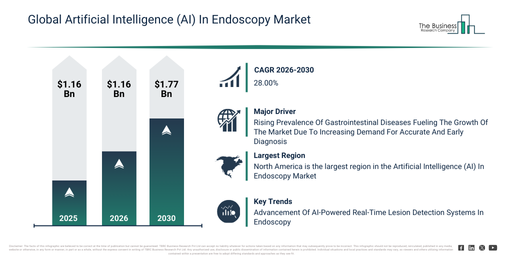
    The artificial intelligence (ai) in endoscopy market has seen considerable expansion in recent years. It is anticipated to increase from $13.52 billion in 2025 to $17.34 billion in 2026, achieving a compound annual growth rate (CAGR) of 28.3%. This historical growth can be linked to several factors, including the increasing occurrence of gastrointestinal and colorectal diseases, the shortcomings of traditional endoscopic interpretation, the rising number of endoscopy procedures, enhanced understanding of early cancer detection, and the integration of digital endoscopy platforms.

    The artificial intelligence (AI) in endoscopy market size is anticipated to experience substantial growth over the next few years. It is projected to expand to $46.53 billion by 2030, exhibiting a compound annual growth rate (CAGR) of 28.0%. This growth during the forecast period can be attributed to advances in machine learning algorithms for medical imaging, increased investment in AI-enabled healthcare solutions, the proliferation of minimally invasive diagnostic procedures, wider acceptance of clinical decision support tools, and supportive regulatory frameworks for AI-based medical devices. Significant trends in the upcoming period include the increasing adoption of real-time lesion detection during endoscopy, greater integration of AI software with current endoscopic systems, a rising demand for enhanced diagnostic accuracy and a reduction in missed lesions, the expansion of AI-assisted training and simulation in endoscopy, and a stronger focus on workflow efficiency and procedure standardization.

    Download A Free Sample Report For Comprehensive Market Insights:

    https://www.thebusinessresearchcompany.com/sample.aspx?id=25698&type=smp

    Which Significant Factors Are Encouraging Growth In The Artificial Intelligence (AI) In Endoscopy Market?

    The increasing incidence of gastrointestinal conditions is projected to boost the expansion of the artificial intelligence (AI) in endoscopy market in the future. These conditions encompass various ailments impacting the digestive system, resulting in signs like stomach discomfort, distension, and irregular bowel habits. The rise in gastrointestinal diseases stems from a greater intake of ultra-processed foods, which interfere with gut bacteria and promote persistent inflammation and digestive problems. AI in endoscopy enhances the identification of gastrointestinal diseases through precise real-time image analysis for anomaly detection. This technology facilitates prompt treatment, reduces diagnostic mistakes, and improves patient results. For example, in December 2023, the IBD Registry, a UK-based non-profit, reported that in 2023, individuals with inflammatory bowel disease (IBD) enrolling in the registry expanded to over 5,300, marking an increment of more than 3,000 from 2022. Consequently, the growing occurrence of gastrointestinal illnesses is propelling the artificial intelligence (AI) in endoscopy market.

    How Is The Artificial Intelligence (AI) In Endoscopy Market Distributed Across Key Segments?

    The artificial intelligence (ai) in endoscopy market covered in this report is segmented –

    1) By Product Type: Artificial Intelligence-Driven Imaging Systems, Artificial Intelligence-Powered Endoscopic Equipment, Wearable Endoscopy Devices, Consumables Used In Artificial Intelligence Endoscopy, Software Solutions For Artificial Intelligence Integration

    2) By Functionality: Image Capture And Processing, Data Management, Enhanced Visualization, Real-Time Decision Support, Training And Simulation Systems

    3) By Application: Gastrointestinal Endoscopy, Respiratory Endoscopy, Urological Endoscopy, Pancreatic Endoscopy, Neurological Endoscopy

    4) By End-User: Hospitals, Endoscopy Centers, Outpatient Surgical Centers, Research Institutions, Specialized Clinics

    Subsegments:

    1) By Artificial Intelligence-Driven Imaging Systems: High Definition Imaging Platforms, Three-Dimensional (3D) Visualization Systems, Fluorescence-Based Imaging Devices, Low Light Sensitivity Imaging Systems, Contrast-Enhanced Endoscopic Imaging Systems

    2) By Artificial Intelligence-Powered Endoscopic Equipment: Flexible Endoscopic Systems With Artificial Intelligence Integration, Rigid Endoscopic Systems With Artificial Intelligence Support, Capsule-Based Endoscopic Devices With Smart Processing, Robotic Assisted Endoscopic Instrumentation, Navigation-Enabled Endoscopic Equipment With Artificial Intelligence

    3) By Wearable Endoscopy Devices: Swallowable Capsule Endoscopy Units, Sensor Integrated Wearable Endoscopy Devices, Wireless Data Enabled Endoscopic Monitoring Devices, Artificial Intelligence-Based Wearable Imaging Systems, Miniature High Resolution Endoscopic Cameras

    4) By Consumables Used In Artificial Intelligence Endoscopy: Biopsy Forceps Compatible With Artificial Intelligence Systems, Single Use Endoscopic Protective Sheaths, Medical-Grade Contrast Media For Enhanced Imaging, Artificial Intelligence Compatible Irrigation Tubing, Disposable Accessories For Visualization And Sampling

    5) By Software Solutions For Artificial Intelligence Integration: Real-Time Lesion Detection Software Modules, Computer-Aided Diagnostic Imaging Platforms, Cloud-Based Endoscopic Data Management Systems, Image Segmentation And Classification Software Tools, Data Visualization And Automated Reporting Interfaces

    Which Trends Are Expected To Shape The Artificial Intelligence (AI) In Endoscopy Market?

    Companies operating within the artificial intelligence in endoscopy market are prioritizing the development of sophisticated technologies, specifically AI-powered real-time lesion detection systems, to enhance clinical decision-making during gastrointestinal examinations. These AI-powered real-time lesion detection systems are advanced software instruments that consistently analyze live endoscopic video feeds to accurately identify and highlight suspicious lesions, such as polyps and tumors, throughout endoscopic procedures. For instance, in August 2024, Ainex Corporation, a medical technology company situated in Singapore, unveiled its Endoscopy AI system to improve the real-time detection and diagnosis of gastrointestinal abnormalities during endoscopic procedures. This system integrates advanced machine learning algorithms to detect gastrointestinal lesions instantly during both upper and lower endoscopy, thereby increasing diagnostic accuracy, reducing false positive outcomes, and enhancing the visualization of mucosal abnormalities. The product is engineered to streamline clinical workflows, shorten procedure durations, and advance the early discovery of gastrointestinal cancers and other conditions.

    Who Are The Key Market Participants In The Artificial Intelligence (AI) In Endoscopy Market?

    Major companies operating in the artificial intelligence (ai) in endoscopy market are Medtronic plc, Fujifilm Holdings Corporation, Olympus Corporation, Iterative Health, CapsoVision Inc, EndoSoft Inc, Mauna Kea Technologies SA, LPixel Inc, Sky Engine Limited, Endovision Limited, BioCam Sp z o o, MAIA Labs Inc, Magentiq Eye Ltd, EndoSurg AI Inc, iEndoscopic GmbH, Intelliscopes LLC, Odin Vision, Wision AI, NEC Corporation Medical AI, Shanghai Wision AI Co Ltd, Shanghai Ankon Technologies Co Ltd, Fujifilm Medical AI Solutions

    Access The Complete Artificial Intelligence (AI) In Endoscopy Market Report:

    https://www.thebusinessresearchcompany.com/report/artificial-intelligence-ai-in-endoscopy-global-market-report

    Which Regional Market Leads The Artificial Intelligence (AI) In Endoscopy Market?

    North America was the largest region in the artificial intelligence (AI) in endoscopy market in 2025. Asia-Pacific is expected to be the fastest-growing region in the forecast period. The regions covered in the artificial intelligence (AI) in endoscopy market report are Asia-Pacific, South East Asia, Western Europe, Eastern Europe, North America, South America, Middle East, Africa.

    Access a Customized Artificial Intelligence (AI) In Endoscopy Market Report for Deeper Competitive Insights

    https://www.thebusinessresearchcompany.com/customise?id=25698&type=smp

    Browse Through More Reports Similar to the Global Artificial Intelligence (AI) In Endoscopy Market 2026, By The Business Research Company

    Ai In Medical Diagnostics Market Report 2026

    https://www.thebusinessresearchcompany.com/report/ai-in-medical-diagnostics-global-market-report

    Ai In Medical Devices Market Report 2026

    https://www.thebusinessresearchcompany.com/report/ai-in-medical-devices-global-market-report

    Ai Based Surgical Robots Market Report 2026

    https://www.thebusinessresearchcompany.com/report/ai-based-surgical-robots-global-market-report

    Get in touch with us:

    The Business Research Company: https://www.thebusinessresearchcompany.com/

    Americas: +1 310-496-7795

    Asia: +44 7882 955267 & +91 8897263534

    Europe: +44 7882 955267

    Email us at: marketing@tbrc.info

    Follow us on:

    LinkedIn: https://in.linkedin.com/company/the-business-research-company

    YouTube: https://www.youtube.com/channel/UC24_fI0rV8cR5DxlCpgmyFQ

    Global Market Model: https://www.thebusinessresearchcompany.com/global-market-model

  • Artificial Intelligence (AI) Electrocardiogram (ECG) Analysis Market Industry Forecast Reflecting Growth To $4.81 Billion By 2030

    Artificial Intelligence (AI) Electrocardiogram (ECG) Analysis Market Industry Forecast Reflecting Growth To $4.81 Billion By 2030

    The Business Research Company’s 2026 market reports feature advanced enhancements such as market attractiveness analysis, total addressable market evaluation, company benchmarking matrices, interactive Excel dashboards, expanded supply chain intelligence, emerging startup coverage, and detailed product insights, delivering more actionable and strategically valuable research.

    What Is The Expected Market Size Of The Artificial Intelligence (AI) Electrocardiogram (ECG) Analysis Market In 2026 And How Much Will It Reach By 2030?

    The artificial intelligence (AI) electrocardiogram (ECG) analysis market has expanded quickly in recent years. Its size is anticipated to rise from $2.01 billion in 2025 to $2.4 billion in 2026, exhibiting a compound annual growth rate (CAGR) of 19.3%. The market’s historical growth was influenced by factors such as the limited availability of AI-based ECG analysis tools, the prevalence of manual ECG interpretation practices, the increasing incidence of cardiac disorders, the growing digitization of healthcare, and the reliance on hospital-based ECG systems.

    The artificial intelligence (ai) electrocardiogram (ecg) analysis market is projected to experience substantial expansion in the coming years, anticipated to reach a valuation of $4.81 billion by 2030, exhibiting a compound annual growth rate (CAGR) of 19.0%. Factors fueling this growth during the forecast period encompass progress in deep learning algorithms specifically for ECG, a rise in the uptake of wearable and portable ECG devices, the broadening of telehealth and remote monitoring services, increased capital allocation towards cloud-based healthcare solutions, and regulatory endorsements for AI-enhanced diagnostic instruments. Key developments expected over this period involve a greater implementation of AI-powered ECG analysis within hospital settings, the incorporation of wearable ECG monitoring equipment with AI platforms, an escalating need for remote ECG monitoring and telecardiology services, an emphasis on immediate cardiac data presentation and supportive decision-making, and the proliferation of cloud-based ECG analysis options.

    Download A Free Sample Report For Comprehensive Market Insights:

    https://www.thebusinessresearchcompany.com/sample.aspx?id=27202&type=smp

    What Core Drivers Are Transforming The Artificial Intelligence (AI) Electrocardiogram (ECG) Analysis Market?

    The future expansion of the AI powered electrocardiogram (ECG) analysis market is anticipated to be driven by the increasing incidence of cardiovascular diseases. These conditions encompass a range of ailments impacting the heart and blood vessels, such as coronary heart disease, heart failure, stroke, and hypertension. The growing burden of cardiovascular diseases stems from factors like aging demographics, metabolic risk factors, unhealthy eating habits, and inactive lifestyles, all of which contribute to a higher likelihood of cardiac issues. AI powered ECG analysis aids healthcare by facilitating the prompt identification of heart irregularities, optimizing diagnostic processes, and refining clinical judgments to better patient results. For example, data from October 2024, provided by the US government agency, the Centers for Disease Control and Prevention, showed that in 2023, cardiovascular disease was responsible for 919,032 fatalities, representing one in every three deaths. Coronary heart disease persisted as the most widespread type of heart condition, with approximately one in six cardiovascular disease-related deaths occurring in individuals younger than 65 years. Consequently, the escalating occurrence of cardiovascular diseases is accelerating the integration of AI powered ECG analysis.

    How Does Segment Analysis Break Down The Artificial Intelligence (AI) Electrocardiogram (ECG) Analysis Market Structure?

    The artificial intelligence (ai) electrocardiogram (ecg) analysis market covered in this report is segmented –

    1) By Component: Software, Hardware, Services

    2) By Type: On-Premise, Cloud-Based

    3) By Medical Condition: Cardiac Arrhythmias, Heart Failure, Ischemic Heart Disease And Coronary Artery Disease

    4) By Application: Hospital, Clinic, Other Applications

    Subsegments:

    1) By Software: Artificial Intelligence Electrocardiogram (ECG) Interpretation Platforms, Machine Learning-Based Electrocardiogram Diagnostic Tools, Deep Learning Electrocardiogram (ECG) Analysis Software, Cloud-Based Electrocardiogram Analysis Systems, Real-Time Electrocardiogram Data Visualization Software

    2) By Hardware: Wearable Electrocardiogram Monitoring Devices, Portable Electrocardiogram Acquisition Units, Smart Electrocardiogram Patches, Multi-Lead Electrocardiogram Recording Machines, Sensor-Integrated Electrocardiogram Devices

    3) By Services: Remote Electrocardiogram Monitoring Services, Electrocardiogram Data Annotation And Labeling Services, Artificial Intelligence Algorithm Training And Validation For Electrocardiogram, Technical Support And Software Integration For Electrocardiogram, Clinical Electrocardiogram Reporting And Interpretation Services

    What Trends Are Affecting The Artificial Intelligence (AI) Electrocardiogram (ECG) Analysis Market Dynamics?

    Major companies operating in the artificial intelligence (AI) electrocardiogram (ECG) analysis market are prioritizing the development of advanced solutions like artificial intelligence marketplaces, aiming to streamline early cardiac diagnosis and enhance clinical workflows. Artificial intelligence marketplaces function as centralized platforms, providing access to multiple validated AI diagnostic tools, which empowers healthcare providers to integrate sophisticated algorithms into their clinical processes for faster and more accurate diagnoses. As an illustration, in July 2025, Koninklijke Philips N.V., a health technology company from the Netherlands, unveiled Philips’ electrocardiogram artificial intelligence marketplace. This cutting-edge platform is engineered to directly incorporate artificial intelligence-powered diagnostic tools into its IntelliSpace ECG and cardiograph systems. The marketplace initially features FDA-cleared algorithms, commencing with Anumana’s electrocardiogram artificial intelligence low ejection fraction algorithm, and makes these tools available at the point of care. This innovation accelerates the review of ECGs, enables the earlier identification of heart failure through analysis of standard 12-lead resting ECGs, and significantly improves both clinical efficiency and diagnostic accuracy.

    Which Organizations Are Operating Within The Artificial Intelligence (AI) Electrocardiogram (ECG) Analysis Market?

    Major companies operating in the artificial intelligence (ai) electrocardiogram (ecg) analysis market are iRhythm Technologies Inc., Viz.ai Inc., Tempus Labs Inc., HeartSciences Inc., Neurosoft Software Production S.A., Tricog Health Services Pvt. Ltd., Anumana Inc., IDOVEN S.L., Ultromics Limited., VUNO Inc., Cardio.AI Inc., Powerful Medical s.r.o., RSIP Vision Ltd., AccurKardia Inc., Cardiologs Technologies SAS, Cardiomatics Sp. z o.o., Cordys Analytics B.V., PulseAI Ltd., Vektor Medical Inc., DeepECG Inc

    Access The Complete Artificial Intelligence (AI) Electrocardiogram (ECG) Analysis Market Report:

    https://www.thebusinessresearchcompany.com/report/artificial-intelligence-ai-electrocardiogram-ecg-analysis-global-market-report

    Which Region Holds The Largest Share In The Artificial Intelligence (AI) Electrocardiogram (ECG) Analysis Market?

    North America was the largest region in the artificial intelligence (AI) electrocardiogram (ECG) analysis market in 2025. Asia-Pacific is expected to be the fastest-growing region in the forecast period. The regions covered in the artificial intelligence (AI) electrocardiogram (ecg) analysis market report are Asia-Pacific, South East Asia, Western Europe, Eastern Europe, North America, South America, Middle East, Africa.

    Access a Customized Artificial Intelligence (AI) Electrocardiogram (ECG) Analysis Market Report for Deeper Competitive Insights

    https://www.thebusinessresearchcompany.com/customise?id=27202&type=smp

    Browse Through More Reports Similar to the Global Artificial Intelligence (AI) Electrocardiogram (ECG) Analysis Market 2026, By The Business Research Company

    Crack Free Concrete Market Report 2026

    https://www.thebusinessresearchcompany.com/report/crack-free-concrete-global-market-report

    Polished Concrete Market Report 2026

    https://www.thebusinessresearchcompany.com/report/polished-concrete-global-market-report

    Concrete Materials Market Report 2026

    https://www.thebusinessresearchcompany.com/report/concrete-materials-global-market-report

    Get in touch with us:

    The Business Research Company: https://www.thebusinessresearchcompany.com/

    Americas: +1 310-496-7795

    Asia: +44 7882 955267 & +91 8897263534

    Europe: +44 7882 955267

    Email us at: marketing@tbrc.info

    Follow us on:

    LinkedIn: https://in.linkedin.com/company/the-business-research-company

    YouTube: https://www.youtube.com/channel/UC24_fI0rV8cR5DxlCpgmyFQ

    Global Market Model: https://www.thebusinessresearchcompany.com/global-market-model
  • Artificial Eye Market Forecast Analysis Through 2030 With Insights On Industry Expansion

    Artificial Eye Market Forecast Analysis Through 2030 With Insights On Industry Expansion

    The Business Research Company’s 2026 market reports feature advanced enhancements such as market attractiveness analysis, total addressable market evaluation, company benchmarking matrices, interactive Excel dashboards, expanded supply chain intelligence, emerging startup coverage, and detailed product insights, delivering more actionable and strategically valuable research.

    What Market Size Is Forecasted For The Artificial Eye Market By 2030 Based On Its 2026 Value?

    The artificial eye market has demonstrated substantial growth over recent years. Its valuation is projected to expand from $2.16 billion in 2025 to $2.34 billion in 2026, reflecting a compound annual growth rate (CAGR) of 8.0%. Factors contributing to this growth in the past include eye trauma incidence, cancer-related enucleation cases, the demand for cosmetic rehabilitation, an increase in hospital ophthalmic services, and advancements in prosthetic technology.

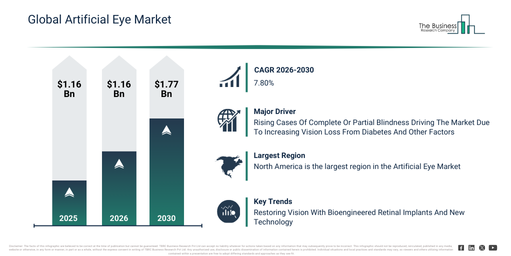
    The artificial eye market is anticipated to experience substantial growth in the upcoming years. Its value is projected to climb to $3.16 billion by 2030, progressing at a compound annual growth rate (CAGR) of 7.8%. This expansion during the forecast period can be attributed to the uptake of 3D printing, the rising demand for personalized prosthetics, improvements in healthcare access, a focus on psychological rehabilitation, and innovations in material science. Significant trends expected during this period include custom-made ocular prosthetics, an increasing application of digital eye printing, the pursuit of enhanced aesthetic outcomes, the development of lightweight and biocompatible materials, and a growing awareness of ocular rehabilitation.

    Download A Free Sample Report For Comprehensive Market Insights:

    https://www.thebusinessresearchcompany.com/sample.aspx?id=23311&type=smp

    Which Growth Factors Are Strengthening The Artificial Eye Market Landscape?

    The increasing incidence of complete or partial blindness is projected to drive the expansion of the artificial eye market in the future. This condition, characterized by a substantial or total inability to see, prevents individuals from discerning light, forms, or their environment, profoundly affecting their daily routines and overall well-being. The growing prevalence of such blindness stems from an increase in retinal degenerative diseases, which gradually harm photoreceptor cells, leading to permanent vision impairment. Artificial eye technology offers advanced solutions like bioengineered retinal implants that can restore or improve sight, thus considerably enhancing the life quality of those impacted. As an illustration, in May 2024, a report from the East Sussex Joint Strategic Needs Assessment, a UK-based public health assessment body, indicated that approximately 2 million individuals in the UK currently experience some form of sight loss, a figure anticipated to reach 2.7 million by 2030. Consequently, the increasing population affected by complete or partial blindness is fueling the expansion of the artificial eye market.

    What Segment Types Are Included In The Artificial Eye Market Analysis?

    The artificial eye market covered in this report is segmented –

    1) By Product: Integrated, Semi-Integrated, Non-Integrated

    2) By Technology: Passive Prosthetic Technology, Mechanical

    3) By Distribution Channel: Direct Sales, Online Sales, Third Party Distributors, Specialized Ocular Prosthetic Clinics

    4) By Application: Orbital Support And Aesthetic Restoration, Cosmetic Enhancement, Medical Treatment, Reconstructive Surgery

    5) By End User: Hospitals, Ambulatory Surgical Centers, Other End Users

    Subsegments:

    1) Integrated: Hydroxyapatite (HA), Porous Polyethylene (Medpor), Bioceramic

    2) Semi-Integrated: Acrylic-Based, Silicone-Based, Polymer Composite

    3) Non-Integrated: Glass Prosthetic Eye, Acrylic Prosthetic Eye, Digital-Printed Prosthetic Eye

    Which Trends Are Influencing The Expansion Of The Artificial Eye Market?

    Leading companies active in the artificial eye sector are directing their efforts toward developing innovations such as bioengineered retinal implants, with the aim of restoring sight for individuals afflicted with retinal degenerative conditions. A bioengineered retinal implant is an engineered, lab-created device designed to replace or bolster compromised retinal tissue, thereby re-establishing or improving visual function. Its primary use is to recover vision in those with retinal degenerative diseases by substituting or enhancing impaired retinal capabilities. For instance, in May 2024, LambdaVision Inc., a biotechnology company based in the US, announced the successful initial closing of its seed funding round, which will support the advancement of preclinical studies for its protein-based artificial retina. This advanced bioengineered retinal implant uses bacteriorhodopsin, a light-sensitive protein, to replicate the natural photoreceptor activity in the human eye, potentially providing a more integrated method for vision restoration compared to conventional electronic implants. Additionally, the company is spearheading microgravity-based manufacturing on the International Space Station, a move that could improve the quality and efficiency of production and establish a new benchmark for precision in retinal prosthetics.

    Who Are The Businesses Driving Activity In The Artificial Eye Market?

    Major companies operating in the artificial eye market are Midwest Eye Laboratories Inc., Advanced Artificial Eyes, Boston Ocular Prosthetics Inc., Erickson Laboratories Inc., F.Ad. Muller Sohne GmbH & Co KG, Irises Unlimited Inc., Ocular Prosthetics Incorporated, International Prosthetic Eye Center Private Limited, New Zealand Prosthetic Eye Service, Southeastern Ocularists Inc., The Artificial Eye Co., John O. Hughes Prosthetic Eye Laboratory, Chadwick Optical Inc., Prosthetic Eye Center of New York, American Artificial Eye Center, Hanger Ocular Prosthetics, Romford Artificial Eye Service, Artificial Eye Services Australia, Queensland Artificial Eye Service, Moorfields Ocular Prosthetics Department, Artificial Eye Clinic of India, National Artificial Eye Service

    Access The Complete Artificial Eye Market Report:

    https://www.thebusinessresearchcompany.com/report/artificial-eye-global-market-report

    Which Region Is The Dominant Market In The Artificial Eye Market?

    North America was the largest region in the artificial eye market in 2025. Asia-Pacific is expected to be the fastest-growing region in the forecast period. The regions covered in the artificial eye market report are Asia-Pacific, South East Asia, Western Europe, Eastern Europe, North America, South America, Middle East, Africa.

    Access a Customized Artificial Eye Market Report for Deeper Competitive Insights

    https://www.thebusinessresearchcompany.com/customise?id=23311&type=smp

    Browse Through More Reports Similar to the Global Artificial Eye Market 2026, By The Business Research Company

    Eye Testing Equipment Market Report 2026

    https://www.thebusinessresearchcompany.com/report/eye-testing-equipment-global-market-report

    Eye Tracking Market Report 2026

    https://www.thebusinessresearchcompany.com/report/eye-tracking-global-market-report

    Eye Health Supplements Market Report 2026

    https://www.thebusinessresearchcompany.com/report/eye-health-supplements-global-market-report

    Get in touch with us:

    The Business Research Company: https://www.thebusinessresearchcompany.com/

    Americas: +1 310-496-7795

    Asia: +44 7882 955267 & +91 8897263534

    Europe: +44 7882 955267

    Email us at: marketing@tbrc.info

    Follow us on:

    LinkedIn: https://in.linkedin.com/company/the-business-research-company

    YouTube: https://www.youtube.com/channel/UC24_fI0rV8cR5DxlCpgmyFQ

    Global Market Model: https://www.thebusinessresearchcompany.com/global-market-model
  • Artificial Disc Market Growth Outlook Indicating Expansion To $6.89 Billion By 2030

    Artificial Disc Market Growth Outlook Indicating Expansion To $6.89 Billion By 2030

    The Business Research Company’s 2026 market reports feature advanced enhancements such as market attractiveness analysis, total addressable market evaluation, company benchmarking matrices, interactive Excel dashboards, expanded supply chain intelligence, emerging startup coverage, and detailed product insights, delivering more actionable and strategically valuable research.

    How Is The Market Value Of The Artificial Disc Market Projected To Expand During 2026–2030?

    The artificial disc market has experienced rapid expansion in its size over recent years. It is forecast to grow from $3.19 billion in 2025 to $3.71 billion in 2026, achieving a compound annual growth rate (CAGR) of 16.0%. The growth observed in the past can be credited to factors such as a rise in the prevalence of degenerative spine diseases, increased preference for disc replacement over fusion procedures, the availability of cutting-edge spinal implant designs, the broadening reach of spine surgery centers, and enhancements in surgical techniques.

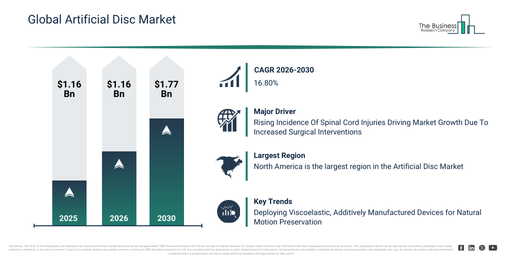
    The artificial disc market is projected to experience swift expansion in the coming years. This market is anticipated to reach a valuation of $6.9 billion by 2030, exhibiting a compound annual growth rate (CAGR) of 16.8%. Factors contributing to this expansion during the forecast period include a growing elderly demographic experiencing spinal conditions, a heightened preference for treatments that preserve motion, the proliferation of outpatient spine interventions, increased capital flowing into advanced spinal implants, and a greater need for quicker recuperation options. Key trends anticipated over the forecast timeframe encompass the wider integration of motion-preserving spinal implants, an escalating demand for cervical disc replacement operations, the broader application of sophisticated biomaterials, the growth of minimally invasive spine operations, and an amplified emphasis on the enduring efficacy of implants.

    Download A Free Sample Report For Comprehensive Market Insights:

    https://www.thebusinessresearchcompany.com/sample.aspx?id=13283&type=smp

    What Important Drivers Are Powering The Artificial Disc Market Growth?

    The growing occurrence of spinal cord injuries is anticipated to stimulate the expansion of the artificial disc market. These injuries involve any trauma, damage, or harm to the spine’s components, including its bones (vertebrae), intervertebral discs, ligaments, muscles, nerves, and other supporting structures. The increase in spinal cord injuries is attributed to a rising number of high-impact motor vehicle accidents and falls from heights, which are globally recognized as primary causes of acute traumatic damage to the spinal column and nerves. Artificial discs prove beneficial for spinal cord injuries by offering a surgical substitute to spinal fusion, restoring natural movement, alleviating discogenic back pain, providing flexibility, and preventing potential complications associated with fusion surgery. For instance, in July 2024, according to the Journal of Global Health, a Scotland-based open-access academic journal, a study of 2.22 million youths identified scoliosis in 1.20% of cases, with girls being 1.57 times more prevalent than boys. The highest rates were 1.42% in girls aged 13-14 and 1.07% in boys aged 15-16. Scoliosis was most common in the central region (1.54%) and largely mild, showing no correlation to altitude or latitude. Hence, the increasing incidence of spinal cord injuries is propelling the growth of the artificial disc market.

    Which Segment Divisions Form The Structure Of The Artificial Disc Market?

    The artificial disc market covered in this report is segmented –

    1) By Type: Cervical Disc, Artificial Disc, Lumbar

    2) By Material: Metal And Plastic, Metal

    3) By Indication: Spinal Trauma, Degenerative Spine Disease

    4) By End User: Hospitals, Specialty Clinics

    Subsegments:

    1) By Cervical Disc: Single-Level Cervical Discs, Multi-Level Cervical Discs

    2) By Artificial Disc: Total Disc Replacement, Semi-Constrained Disc Implants, Motion-Preserving Disc Implants

    3) By Lumbar Disc: Single-Level Lumbar Discs, Multi-Level Lumbar Discs

    What Trends Are Impacting The Artificial Disc Market?

    Major companies in the artificial disc market are increasingly focusing on the development of next-generation prostheses, merging sophisticated biomechanical principles with simplified surgical procedures. These advancements are designed to more closely replicate natural spinal movement, lessen wear, and ease the implantation process. Often, these devices utilize advanced materials such as additively manufactured metals and viscoelastic cores to restore physiological motion across all six degrees of freedom, thereby improving long-term patient outcomes and fostering wider adoption. As an illustration, in February 2024, NGMedical, a medical device manufacturer from Germany, introduced its MOVE-C artificial cervical disc in the United Arab Emirates. This launch represents a crucial step in its global commercialization strategy, with the inaugural MOVE-C implant successfully performed in Abu Dhabi. The MOVE-C prosthesis integrates a second-generation viscoelastic design, featuring axial damping and progressive resistance, with an implantation technique simplified to be akin to that of a cervical cage, making it highly surgeon-friendly. Significantly, MOVE-C is pioneering the use of additively manufactured titanium endplates and eliminates polyethylene cores, which is expected to mitigate long-term wear.

    Which Firms Are Competing In The Artificial Disc Market?

    Major companies operating in the artificial disc market are Johnson & Johnson, Medtronic plc, Stryker Corporation, Zimmer Biomet Holding Inc., SIGNUS Medizintechnik GmbH, Globus Medical Inc., Medacta International SA, Aesculap Inc., NuVasive Inc., Orthofix Medical Inc., Spineart, VTI – Vertebral Technologies Inc., Life Spine Inc., Spinal Elements, DePuy Synthes, Neuro France Implants, Paradigm Spine LLC, Xenco Medical, Osimplant, Synergy Spine Solutions Inc., Ranier Technology Limited, FH Orthopedics S.A.S, X-spine Systems Inc., Aditus Medical GmbH, AxioMed LLC

    Access The Complete Artificial Disc Market Report:

    https://www.thebusinessresearchcompany.com/report/artificial-disc-global-market-report

    Which Area Represents The Largest Portion Of The Artificial Disc Market?

    North America was the largest region in the artificial disc market in 2025. Asia-Pacific is expected to be the fastest-growing region in the forecast period. The regions covered in the artificial disc market report are Asia-Pacific, South East Asia, Western Europe, Eastern Europe, North America, South America, Middle East, Africa.

    Access a Customized Artificial Disc Market Report for Deeper Competitive Insights

    https://www.thebusinessresearchcompany.com/customise?id=13283&type=smp

    Browse Through More Reports Similar to the Global Artificial Disc Market 2026, By The Business Research Company

    Slip Disc Market Report 2026

    https://www.thebusinessresearchcompany.com/report/slip-disc-global-market-report

    Industrial Robots Warehousing And Storage Robots Market Report 2026

    https://www.thebusinessresearchcompany.com/report/industrial-robots-warehousing-and-storage-robots-global-market-report

    Artificial Intelligence In Accounting Market Report 2026

    https://www.thebusinessresearchcompany.com/report/artificial-intelligence-in-accounting-global-market-report

    Get in touch with us:

    The Business Research Company: https://www.thebusinessresearchcompany.com/

    Americas: +1 310-496-7795

    Asia: +44 7882 955267 & +91 8897263534

    Europe: +44 7882 955267

    Email us at: marketing@tbrc.info

    Follow us on:

    LinkedIn: https://in.linkedin.com/company/the-business-research-company

    YouTube: https://www.youtube.com/channel/UC24_fI0rV8cR5DxlCpgmyFQ

    Global Market Model: https://www.thebusinessresearchcompany.com/global-market-model

  • Global Artificial Cartilage Implant Market Anticipated To Grow To $2.45 Billion By 2030 At 9.7% CAGR

    Global Artificial Cartilage Implant Market Anticipated To Grow To $2.45 Billion By 2030 At 9.7% CAGR

    The Business Research Company’s 2026 market reports feature advanced enhancements such as market attractiveness analysis, total addressable market evaluation, company benchmarking matrices, interactive Excel dashboards, expanded supply chain intelligence, emerging startup coverage, and detailed product insights, delivering more actionable and strategically valuable research.

    What Are The Forecasted Market Size Figures For The Artificial Cartilage Implant Market In 2026 And 2030?

    The artificial cartilage implant market size has experienced significant expansion in recent years. It is anticipated to increase from $1.54 billion in 2025 to $1.69 billion in 2026, achieving a compound annual growth rate (CAGR) of 9.7%. The market’s historical growth can be attributed to elements such as the limited availability of advanced cartilage implant materials, a rise in orthopedic surgical procedures, growing public awareness concerning joint health, a scarcity of local manufacturing capabilities, and a dependency on imported implants.

    The artificial cartilage implant market size is projected to experience substantial growth in the coming years. It is expected to expand to $2.45 billion by 2030, achieving a compound annual growth rate (CAGR) of 9.7%. This anticipated growth during the forecast period can be attributed to several factors, including innovations in synthetic and smart implants, an increasing demand for knee and hip replacements, the expansion of ambulatory surgical centers, the rising adoption of 3D-printed patient-specific implants, and increased investment in orthopedic research and clinical applications. Key trends influencing this period encompass a rising incidence of osteoarthritis and joint degeneration, a greater adoption of minimally invasive orthopedic procedures, a growing demand for biocompatible and durable implants, the expansion of orthopedic research and clinical trials, and the development of customization and patient-specific implant solutions.

    Download A Free Sample Report For Comprehensive Market Insights:

    https://www.thebusinessresearchcompany.com/sample.aspx?id=27201&type=smp

    Which Major Factors Are Contributing To The Development Of The Artificial Cartilage Implant Market?

    An increasing prevalence of osteoarthritis is anticipated to drive the expansion of the artificial cartilage implant market. Osteoarthritis is defined as a degenerative joint condition marked by progressive cartilage deterioration, resulting in pain, stiffness, and impaired movement. The rise in osteoarthritis cases is linked to growing obesity, which places additional stress on joints, accelerating cartilage degradation and overall joint damage. Artificial cartilage implants are designed to substitute compromised cartilage, thereby restoring smooth joint articulation, minimizing friction, relieving discomfort, enhancing mobility, and delaying further joint degeneration. Supporting this trend, data from August 2023 by the Institute for Health Metrics and Evaluation, a US-based health research center, projects that by 2050, nearly 1 billion individuals will suffer from osteoarthritis. The most common sites for this condition are knees and hands, with knee osteoarthritis expected to increase by 75% and hand osteoarthritis by 50% by 2050. Consequently, the escalating incidence of osteoarthritis is fueling the growth of the artificial cartilage implant market.

    How Are Different Segment Groups Identified Within The Artificial Cartilage Implant Market?

    The artificial cartilage implant market covered in this report is segmented –

    1) By Type Of Implant: Biological Implants, Synthetic Implants, Composite Implants, Smart Implants

    2) By Product Type: Upper Extremity Joints, Lower Extremity Joints, Vertebral Joints

    3) By Distribution Channel: Direct Sales, Online Retail, Distributors, Specialty Clinics

    4) By Application: Knee Replacement, Hip Replacement, Shoulder Reconstruction, Ankle Replacement

    5) By End-User: Hospitals, Orthopedic Clinics, Ambulatory Surgical Centers, Research Institutes, Other End-Users

    Subsegments:

    1) By Biological Implants: Autografts, Allografts, Xenografts, Tissue-Engineered Implants

    2) By Synthetic Implants: Polymer-Based Implants, Hydrogel Implants, Silicone Implants, Polyurethane Implants

    3) By Composite Implants: Polymer-Ceramic Composites, Polymer-Metal Composites, Hydrogel-Ceramic Composites, Bioactive Glass Composites

    4) By Smart Implants: Sensor-Integrated Implants, Drug-Eluting Implants, Shape-Memory Implants, Stimuli-Responsive Implants

    Which Trends Are Affecting The Artificial Cartilage Implant Market Framework?

    Leading companies within the artificial cartilage implant market are concentrating on developing advanced products like three-dimensional (3D) printed knee implants to improve joint compatibility and offer durable solutions for osteoarthritis. These 3D printed knee implants represent patient-specific joint replacements, constructed layer by layer using sophisticated 3D printing technology, which provides a precise anatomical fit and enhanced joint function while aiding in quicker recovery. For instance, in July 2025, Nanochon, a US-based medical device startup, launched Chondrograft after receiving approval from Health Canada. This product is specifically designed to replace lost or damaged cartilage in the knee using a synthetic, high-performance material. The implant mirrors the porosity and structure of natural cartilage, allowing it to integrate with the body and stimulate new tissue growth. This readily available solution offers a minimally invasive alternative to traditional treatments such as knee replacement, aiming to restore knee cartilage function and postpone or prevent the requirement for more invasive procedures.

    Who Are The Major Companies Operating In The Artificial Cartilage Implant Market?

    Major companies operating in the artificial cartilage implant market are Johnson & Johnson, B. Braun Melsungen AG, Medtronic plc, Zimmer Biomet Holdings Inc., Smith & Nephew plc, Stryker Corporation, Arthrex Inc., Conmed Corporation, Orthofix Medical, Corin Group, Anika Therapeutics Inc., Vericel Corporation, Tissue Regenix Group plc, Nusurface, Uteshiya Medicare Inc., Sparta Biomedical Inc., BioPoly LLC, Orthocell Ltd, Sartorius CellGenix GmbH, CytoSeek Limited

    Access The Complete Artificial Cartilage Implant Market Report:

    https://www.thebusinessresearchcompany.com/report/artificial-cartilage-implant-global-market-report

    Which Region Commands The Largest Share Of The Artificial Cartilage Implant Market?

    North America was the largest region in the artificial cartilage implant market in 2025. Asia-Pacific is expected to be the fastest-growing region in the forecast period. The regions covered in the artificial cartilage implant market report are Asia-Pacific, South East Asia, Western Europe, Eastern Europe, North America, South America, Middle East, Africa.

    Access a Customized Artificial Cartilage Implant Market Report for Deeper Competitive Insights

    https://www.thebusinessresearchcompany.com/customise?id=27201&type=smp

    Browse Through More Reports Similar to the Global Artificial Cartilage Implant Market 2026, By The Business Research Company

    Doors Market Report 2026

    https://www.thebusinessresearchcompany.com/report/doors-global-market-report

    Commercial Overhead Doors Market Report 2026

    https://www.thebusinessresearchcompany.com/report/commercial-overhead-doors-global-market-report

    Aircraft Doors Market Report 2026

    https://www.thebusinessresearchcompany.com/report/aircraft-doors-global-market-report

    Get in touch with us:

    The Business Research Company: https://www.thebusinessresearchcompany.com/

    Americas: +1 310-496-7795

    Asia: +44 7882 955267 & +91 8897263534

    Europe: +44 7882 955267

    Email us at: marketing@tbrc.info

    Follow us on:

    LinkedIn: https://in.linkedin.com/company/the-business-research-company

    YouTube: https://www.youtube.com/channel/UC24_fI0rV8cR5DxlCpgmyFQ

    Global Market Model: https://www.thebusinessresearchcompany.com/global-market-model

  • Articulating Paper Forceps Market Future Analysis Covering Industry Shifts And Growth Potential

    Articulating Paper Forceps Market Future Analysis Covering Industry Shifts And Growth Potential

    The Business Research Company’s 2026 market reports feature advanced enhancements such as market attractiveness analysis, total addressable market evaluation, company benchmarking matrices, interactive Excel dashboards, expanded supply chain intelligence, emerging startup coverage, and detailed product insights, delivering more actionable and strategically valuable research.

    How Much Larger Will The Articulating Paper Forceps Market Become By 2030 Compared To 2026?

    The articulating paper forceps market size has experienced strong growth in recent years. It is anticipated to expand from $1.23 billion in 2025 to $1.31 billion in 2026, demonstrating a compound annual growth rate (CAGR) of 6.5%. The increase observed in the historic period can be ascribed to a customary reliance on stainless steel instruments, insufficient recognition of ergonomic designs, limitations in dental and surgical infrastructure, manual purchasing procedures, and dependence on regional suppliers.

    The articulating paper forceps market is projected to experience robust expansion in the coming years. This market is forecast to reach $1.68 billion by 2030, exhibiting a compound annual growth rate (CAGR) of 6.4%. This anticipated growth is driven by several factors, including innovations in lightweight and durable materials, the wider acceptance of minimally invasive procedures, increased funding for dental and surgical clinics, the proliferation of e-commerce distribution channels, and an escalating emphasis on multi-specialty surgical instruments. Key trends during this period are expected to involve a heightened demand for precise dental tools, the uptake of ergonomic and lightweight forceps designs, their expanded application in multidisciplinary surgical contexts, a stronger preference for sterilizable and reusable materials, and the broadening of online distribution networks for medical equipment.

    Download A Free Sample Report For Comprehensive Market Insights:

    https://www.thebusinessresearchcompany.com/sample.aspx?id=27200&type=smp

    What Key Growth Drivers Are Influencing The Articulating Paper Forceps Market?

    The increased demand for dental treatments is projected to drive the expansion of the Articulating Paper Forceps Market in the future. These procedures encompass medical interventions performed on the teeth, gums, and jaw, aimed at diagnosing, preventing, or addressing oral health concerns. The surge in dental procedures stems from greater public awareness of oral hygiene, prompting individuals to pursue routine examinations and prompt care such as cleanings, cavity fillings, and gum treatment. Articulating paper forceps play a crucial role in these treatments by offering vital instruments that enable dentists to precisely evaluate bite alignment, thus guaranteeing successful treatment and enhanced oral function. For example, data from August 2024, provided by the British Society of Dental Hygiene and Therapy (BSDHT), a UK professional body for dental hygienists and therapists, indicated that 34 million dental procedures were carried out in 2023–2024, marking a 4.3% rise compared to 2022–2023. Furthermore, the total dental activity units reached 73 million, showing a 3.4% increase from 2022 to 2023. Consequently, the growing demand for dental services is propelling the expansion of the Articulating Paper Forceps Market.

    What Segment Categories Are Evaluated In The Articulating Paper Forceps Market Study?

    The articulating paper forceps market covered in this report is segmented –

    1) By Type: Straight Articulating Paper Forceps, Curved Articulating Paper Forceps

    2) By Material: Stainless Steel, Titanium, Plastic, Carbon Fiber

    3) By Application: Dental Procedures, Occlusal Adjustments, Restorative Dentistry, Prosthodontics

    4) By Distribution: Direct Sales, Online Sales, Medical Supply Distributors

    5) By End User: Hospitals, Dental Clinics, Ambulatory Surgical Centers, Research Institutes

    Subsegments:

    1) By Straight Articulating Paper Forceps: Standard Straight Forceps, Fine-Tip Straight Forceps, Heavy-Duty Straight Forceps, Locking Straight Forceps

    2) By Curved Articulating Paper Forceps: Standard Curved Forceps, Fine-Tip Curved Forceps, Heavy-Duty Curved Forceps, Locking Curved Forceps

    Which Companies Are Influencing The Articulating Paper Forceps Market?

    Major companies operating in the articulating paper forceps market are Henry Schein Inc., Dentsply Sirona Inc., Patterson Dental Supply Inc., Coltene Holding AG, Brasseler USA Dental LLC, GC Corporation, Tashmed Pvt. Ltd., Maxill Inc., Carl Martin GmbH, ASA Dental S.p.A., Medesy S.r.l., A. Titan Instruments Inc., Collateral Medical Pvt. Ltd., Dental Sky UK Ltd., Wittex GmbH, J&J Instruments Inc., VeeCare Dental Instruments, New Surgical Instruments Co., GDC Fine Crafted Dental Precision Instruments Pvt. Ltd., Pure Life India Private Limited.

    Access The Complete Articulating Paper Forceps Market Report:

    https://www.thebusinessresearchcompany.com/report/articulating-paper-forceps-global-market-report

    Which Region Accounts For The Highest Share Of The Articulating Paper Forceps Market?

    North America was the largest region in the articulating paper forceps market in 2025. Asia-Pacific is expected to be the fastest-growing region in the forecast period. The regions covered in the articulating paper forceps market report are Asia-Pacific, South East Asia, Western Europe, Eastern Europe, North America, South America, Middle East, Africa.

    Access a Customized Articulating Paper Forceps Market Report for Deeper Competitive Insights

    https://www.thebusinessresearchcompany.com/customise?id=27200&type=smp

    Browse Through More Reports Similar to the Global Articulating Paper Forceps Market 2026, By The Business Research Company

    High Density Polyethylene Market Report 2026

    https://www.thebusinessresearchcompany.com/report/high-density-polyethylene-global-market-report

    Polyolefin Pipes Market Report 2026

    https://www.thebusinessresearchcompany.com/report/polyolefin-pipes-global-market-report

    Plastic Pipes And Pipe Fittings Market Report 2026

    https://www.thebusinessresearchcompany.com/report/plastic-pipes-and-pipe-fittings-global-market-report

    Get in touch with us:

    The Business Research Company: https://www.thebusinessresearchcompany.com/

    Americas: +1 310-496-7795

    Asia: +44 7882 955267 & +91 8897263534

    Europe: +44 7882 955267

    Email us at: marketing@tbrc.info

    Follow us on:

    LinkedIn: https://in.linkedin.com/company/the-business-research-company

    YouTube: https://www.youtube.com/channel/UC24_fI0rV8cR5DxlCpgmyFQ

    Global Market Model: https://www.thebusinessresearchcompany.com/global-market-model