Category: Medical Equipment

  • Increasing Adoption Of Government Funding And Breast Cancer Diagnostics A Path To Improved Healthcare Is Influencing The Breast Cancer Diagnostics Market

    Increasing Adoption Of Government Funding And Breast Cancer Diagnostics A Path To Improved Healthcare Is Influencing The Breast Cancer Diagnostics Market

    The Business Research Company’s 2026 market reports feature advanced enhancements such as market attractiveness analysis, total addressable market evaluation, company benchmarking matrices, interactive Excel dashboards, expanded supply chain intelligence, emerging startup coverage, and detailed product insights, delivering more actionable and strategically valuable research.

    How Does The Forecasted Market Size Of The Breast Cancer Diagnostics Market Compare Between 2026 And 2030?

    The breast cancer diagnostics market size has shown robust growth in recent years. It is projected to increase from $5 billion in 2025 to $5.42 billion in 2026, achieving a compound annual growth rate (CAGR) of 8.3%. The expansion observed in past periods is attributable to factors such as the rising global prevalence of breast cancer, greater public understanding of early cancer screening, the broadening of diagnostic imaging infrastructure, the increasing availability of biomarker-based tests, and advancements in the accuracy and safety of biopsies.

    The breast cancer diagnostics market size is projected to experience robust expansion over the upcoming years. This market is set to reach $7.28 billion by 2030, exhibiting a compound annual growth rate (CAGR) of 7.7%. Factors contributing to this growth during the forecast period include the expanding use of precision oncology diagnostics, increased investments in AI-powered diagnostic platforms, a heightened demand for less invasive testing methods, the proliferation of population-based screening initiatives, and ongoing innovations in molecular diagnostic technologies. Key trends anticipated for the forecast timeframe involve a greater uptake of AI-assisted imaging analysis, a surge in genomic and molecular testing applications, the broader implementation of liquid biopsy techniques, the spread of advanced non-ionizing imaging modalities, and an intensified emphasis on early and customized diagnosis.

    Download A Free Sample Report For Comprehensive Market Insights:

    https://www.thebusinessresearchcompany.com/sample.aspx?id=3284&type=smp

    What Primary Factors Are Fueling The Expansion Of The Breast Cancer Diagnostics Market?

    Government initiatives and dedicated funding for breast cancer are anticipated to fuel the expansion of the breast cancer diagnostics market moving forward. Such government support encompasses financial aid provided to selected entities whose proposals or projects contribute to and improve public services and the economy. These governmental efforts play a vital role in bolstering breast cancer research, prevention, and treatment, with various programs established to heighten awareness, encourage early detection through screening and mammography services, and provide financial assistance for breast cancer testing and care to underserved communities. As an illustration, The Australian Government Department of Health (DoH), the Australia-based Government agency, earmarked $40.7 million in its 2022-23 budget. This allocation aimed to boost the availability of testing and screening services for diverse cancers, offsetting delays caused by the COVID-19 pandemic, and ensuring timely referrals, rapid diagnosis, and early intervention, with $9.7 million specifically allocated for breast cancer screening. Hence, government initiatives and funding for breast cancer are propelling the growth of the breast cancer diagnostics market.

    How Is The Breast Cancer Diagnostics Market Distributed Across Key Segments?

    The breast cancer diagnostics market covered in this report is segmented –

    1) By Type: Imaging, Biopsy, Genomic Tests, Blood Tests, Other Types

    2) By Technology: Fluorescent In Situ Hybridization (FISH), Comparative Genomic Hybridization (CGH), Immunohistochemical (IHC), Other Technologies

    3) By Cancer Type: BRCA Breast Cancer, ER And PR Breast Cancer, HER 2 Breast Cancer, Triple-Negative Breast Cancer, Other Cancer Types

    4) By Diagnostic Type: Ionizing Breast Imaging Technologies, Non-ionizing Imaging Technologies

    5) By End Users: Hospitals And Clinics, Cancer Research Centers, Diagnostic Laboratories, Ambulatory Surgical Centers

    Subsegments:

    1) By Imaging: Mammography, Ultrasound Imaging, Magnetic Resonance Imaging (MRI), Positron Emission Tomography (PET), Tomosynthesis

    2) By Biopsy: Needle Biopsy, Core Needle Biopsy, Fine Needle Aspiration Biopsy (FNA), Stereotactic Biopsy

    3) By Genomic Tests: Oncotype DX, MammaPrint, PAM50, BRCA1 Or 2 Testing

    4) By Blood Tests: Liquid Biopsy, Circulating Tumor DNA (ctDNA) Tests, Circulating Tumor Cells (CTCs) Tests

    5) By Other Types: Hormone Receptor Tests, HER2 Tests, Genetic Mutation Testing

    Which Trends Are Guiding The Development Of The Breast Cancer Diagnostics Market?

    Leading companies within the breast cancer diagnostics market are prioritizing the creation of innovative AI-powered diagnostic solutions, including advanced pathology scoring platforms, to boost precision, optimize workflows, and enable individualized treatment planning. These AI-driven diagnostic platforms incorporate machine learning and deep-learning algorithms to analyze medical imaging, pathology slides, or clinical data, subsequently providing diagnostic insights or risk stratifications that aid clinical decision-making. For instance, in September 2024, Ibex Medical Analytics, an Israel-based digital pathology company, unveiled its expanded AI platform dedicated to breast cancer diagnostics, which notably introduced a fully automated zero-click HER2 immunohistochemistry (IHC) scoring feature within its Ibex Breast HER2 module. This tool effectively identifies invasive cancer regions, categorizes HER2 expression levels (0, 1+, 2+, 3+), and supports breast cancer diagnosis and treatment-pathway determinations with enhanced accuracy and workflow efficiency.

    Who Are The Leading Firms Participating In The Breast Cancer Diagnostics Market?

    Major companies operating in the breast cancer diagnostics market are Abbott Laboratories, Myriad Genetics Inc., Hologic Inc., Koninklijke Philips N.V., Fujifilm Holdings Corporation, GE Healthcare, Thermo Fisher Scientific Inc., Siemens AG, NanoString Technologies Inc., Gamma Medica Inc., Aurora Imaging Technology Inc., Dilon Technologies Inc., Exact Sciences Corporation, F. Hoffmann-La Roche Ltd., Micrima Limited, Provista Diagnostics Inc., Leica Biosystems Nussloch GmbH, bioTheranostics Inc., Bio-Rad Laboratories Inc., Illumina Inc., Biocept Inc., Quest Diagnostics Incorporated, Agilent Technologies Inc., Cepheid, Guardant Health Inc., Invitae Corporation, Natera Inc., NeoGenomics Laboratories Inc., Oncocyte Corporation, PerkinElmer Inc., Sysmex Corporation, Veracyte Inc.

    Access The Complete Breast Cancer Diagnostics Market Report:

    https://www.thebusinessresearchcompany.com/report/breast-cancer-diagnostics-global-market-report

    Which Region Is The Dominant Market In The Breast Cancer Diagnostics Market?

    North America was the largest region in the breast cancer diagnostics market in 2025. Asia-Pacific was the second largest region in the breast cancer diagnostics industry. The regions covered in the breast cancer diagnostics market report are Asia-Pacific, South East Asia, Western Europe, Eastern Europe, North America, South America, Middle East, Africa.

    Access a Customized Breast Cancer Diagnostics Market Report for Deeper Competitive Insights

    https://www.thebusinessresearchcompany.com/customise?id=3284&type=smp

    Browse Through More Reports Similar to the Global Breast Cancer Diagnostics Market 2026, By The Business Research Company

    Next Generation Gynecological Cancer Diagnostics Market Report 2026

    https://www.thebusinessresearchcompany.com/report/next-generation-gynecological-cancer-diagnostics-global-market-report

    Cancer Diagnostics Market Report 2026

    https://www.thebusinessresearchcompany.com/report/cancer-diagnostics-global-market-report

    Breast Imaging Technologies Market Report 2026

    https://www.thebusinessresearchcompany.com/report/breast-imaging-technologies-global-market-report

    Get in touch with us:

    The Business Research Company: https://www.thebusinessresearchcompany.com/

    Americas: +1 310-496-7795

    Asia: +44 7882 955267 & +91 8897263534

    Europe: +44 7882 955267

    Email us at: marketing@tbrc.info

    Follow us on:

    LinkedIn: https://in.linkedin.com/company/the-business-research-company

    YouTube: https://www.youtube.com/channel/UC24_fI0rV8cR5DxlCpgmyFQ

    Global Market Model: https://www.thebusinessresearchcompany.com/global-market-model
  • Rising Breast Cancer Cases Drive Increasing Demand For Breast Biopsy Procedures Continues To Impact The Growth Of The Breast Biopsy Market

    Rising Breast Cancer Cases Drive Increasing Demand For Breast Biopsy Procedures Continues To Impact The Growth Of The Breast Biopsy Market

    The Business Research Company’s 2026 market reports feature advanced enhancements such as market attractiveness analysis, total addressable market evaluation, company benchmarking matrices, interactive Excel dashboards, expanded supply chain intelligence, emerging startup coverage, and detailed product insights, delivering more actionable and strategically valuable research.

    What Increase In Market Value Is Predicted For The Breast Biopsy Market During The 2026–2030 Period?

    The breast biopsy market has experienced significant expansion over recent years. It is anticipated to grow from $1.53 billion in 2025 to $1.65 billion in 2026, at a compound annual growth rate (CAGR) of 7.5%. The historical growth of this market can be attributed to several factors, including the limited availability of advanced biopsy systems, reliance on traditional surgical biopsy methods, increasing breast cancer incidence, growing hospital and diagnostic center infrastructure, and the adoption of ultrasound-guided procedures.

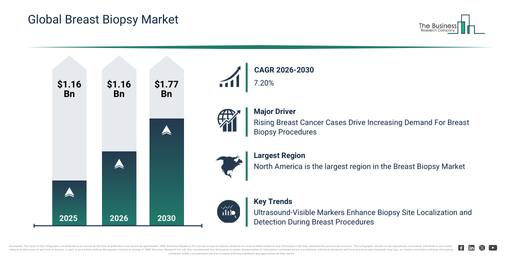
    The breast biopsy market is poised for significant expansion in the foreseeable future. Its size is expected to climb to $2.17 billion by 2030, demonstrating a compound annual growth rate (CAGR) of 7.2%. This anticipated growth during the forecast period is propelled by technological progress in liquid biopsy and imaging-guided systems, a heightened awareness regarding early breast cancer detection, the proliferation of diagnostic centers and hospitals, increased integration of AI and data analytics, and the emergence of personalized and precision medicine approaches. Key trends anticipated in the upcoming period involve a greater adoption of minimally invasive biopsy procedures, a rise in the application of liquid biopsy techniques, the development of imaging-guided biopsy systems, the broadening of breast cancer diagnostic and screening initiatives, and an intensified focus on patient safety and the accuracy of samples.

    Download A Free Sample Report For Comprehensive Market Insights:

    https://www.thebusinessresearchcompany.com/sample.aspx?id=19348&type=smp

    Which Strategic Drivers Are Supporting The Breast Biopsy Market Development?

    The increasing incidence of breast cancer is anticipated to stimulate the expansion of the breast biopsy market in the coming years. Breast cancer is characterized as a malignant growth developing in the cells of breast tissue, capable of spreading to other bodily regions if not addressed swiftly. The rise in breast cancer cases is linked to elements such as extended life expectancy, enhanced diagnostic techniques, and greater public understanding of the condition. A breast biopsy serves to collect tissue specimens from questionable zones within the breast, aiding in the diagnosis and characterization of breast cancer. For example, in October 2025, as per Breastcancer.org, a US-based non-profit organization, projections for 2025 indicate that approximately 316,950 women are predicted to receive a diagnosis of invasive breast cancer, alongside around 59,080 new cases of non-invasive ductal carcinoma in situ (DCIS). Consequently, the escalating occurrence of breast cancer is fueling the development of the breast biopsy market.

    How Does Segment Analysis Break Down The Breast Biopsy Market Structure?

    The breast biopsy market covered in this report is segmented –

    1) By Type: Biopsy Needles, Guidance Systems, Biopsy Tables, Localization Wires, Assay Kits, Liquid Biopsy Instruments, Other Types

    2) By Image Guided Technology: Magnetic Resonance Imaging (MRI) Guided Breast Biopsy, Ultrasound Guided Breast Biopsy, Mammography Guided Stereotactic Biopsy, Computed Tomography (CT) Guided Biopsy, Other Image Guided Technologies

    3) By Procedure: Needle Breast Biopsy, Open Surgical Breast Biopsy, Liquid Breast Biopsy

    4) By Application: Hospitals, Clinics, Diagnostic Centers, Other Applications

    Subsegments:

    1) By Biopsy Needles: Core Biopsy Needles, Fine Needle Aspiration (FNA) Needles, Vacuum-Assisted Biopsy Needles, Automatic Biopsy Needles

    2) By Guidance Systems: Ultrasound Guidance Systems, MRI Guidance Systems, Stereotactic Guidance Systems, Tomosynthesis Guidance Systems

    3) By Biopsy Tables: Adjustable Biopsy Tables, Specialty Biopsy Tables, Imaging-Compatible Biopsy Tables

    4) By Localization Wires: Hookwire Localization Devices, Radioguided Localization Wires, Magnetic Seed Localization Systems

    5) By Assay Kits: Breast Cancer Assay Kits, Biomarker Detection Kits, Genetic Testing Kits for Breast Cancer

    6) By Liquid Biopsy Instruments: Circulating Tumor Cell (CTC) Isolation Devices, Plasma DNA Isolation Kits, Liquid Biopsy Analysis Systems

    7) By Other Types: Biopsy Adhesives, Specimen Collection and Transport Devices, Patient Management Systems

    What Trends Are Influencing The Future Of The Breast Biopsy Market?

    Leading companies in the breast biopsy marker market are focusing on developing innovative products, such as ultrasound-visible site markers, to improve lesion localization and decrease marker displacement during breast biopsy procedures. An ultrasound-visible site marker is a specially engineered implantable device that enhances the visualization of biopsy sites during imaging and provides stable localization for future surgical intervention. For instance, in August 2023, Mammotome, a US-based provider of breast biopsy and localization technologies, introduced HydroMark Plus. This new breast biopsy site marker offers enhanced lesion visibility on ultrasound, assisting radiologists and surgeons in accurately targeting biopsy sites while reducing the risk of marker displacement during subsequent surgical procedures. As the latest addition to Mammotome’s HydroMark portfolio, HydroMark Plus is designed for improved procedural reliability and is slated for nationwide availability in the U.S. by the end of the year. The product’s key features include high ultrasound conspicuity for easy detection, a minimized risk of movement within breast tissue, and suitability for a wide variety of breast imaging and interventional workflows. These attributes are aimed at improving clinical outcomes and procedural confidence for both physicians and patients.

    Which Companies Are Engaged In The Breast Biopsy Market Environment?

    Major companies operating in the breast biopsy market are Siemens Healthineers AG, Fujifilm Holdings Corporation, Becton Dickinson and Company BD, Koninklijke Philips, GE HealthCare Technologies Inc, Hologic Inc, Merit Medical Systems, Argon Medical Devices, Canon Medical Systems Corporation, Devicor Medical Products Inc, Planmed Oy, Menarini-Silicon Biosystems, Seno Medical Instruments Inc, Dilon Technologies Inc, INRAD Inc, Promaxo Inc, Cook Medical LLC, Boston Scientific Corporation, Stryker Corporation, Intact Medical Corporation, Scion Medical Technologies LLC, Galini SRL, Ethicon Surgical Technologies, Encapsule Medical Devices LLC, Cardinal Health Inc, Olympus Corporation, F Hoffmann-La Roche Ltd, Biocept Inc.

    Access The Complete Breast Biopsy Market Report:

    https://www.thebusinessresearchcompany.com/report/breast-biopsy-global-market-report

    Which Area Represents The Largest Portion Of The Breast Biopsy Market?

    North America was the largest region in the breast biopsy market in 2025. Asia-Pacific is expected to be the fastest-growing region in the forecast period. The regions covered in the breast biopsy market report are Asia-Pacific, South East Asia, Western Europe, Eastern Europe, North America, South America, Middle East, Africa.

    Access a Customized Breast Biopsy Market Report for Deeper Competitive Insights

    https://www.thebusinessresearchcompany.com/customise?id=19348&type=smp

    Browse Through More Reports Similar to the Global Breast Biopsy Market 2026, By The Business Research Company

    Biopsy Devices Market Report 2026

    https://www.thebusinessresearchcompany.com/report/biopsy-devices-global-market-report

    Liquid Biopsy For Cancer Diagnostics Market Report 2026

    https://www.thebusinessresearchcompany.com/report/liquid-biopsy-for-cancer-diagnostics-global-market-report

    Smart Biopsy Devices Market Report 2026

    https://www.thebusinessresearchcompany.com/report/smart-biopsy-devices-global-market-report

    Get in touch with us:

    The Business Research Company: https://www.thebusinessresearchcompany.com/

    Americas: +1 310-496-7795

    Asia: +44 7882 955267 & +91 8897263534

    Europe: +44 7882 955267

    Email us at: marketing@tbrc.info

    Follow us on:

    LinkedIn: https://in.linkedin.com/company/the-business-research-company

    YouTube: https://www.youtube.com/channel/UC24_fI0rV8cR5DxlCpgmyFQ

    Global Market Model: https://www.thebusinessresearchcompany.com/global-market-model

  • Brain Wave Analyzer Market Outlook Through 2030 With Analysis Of Industry Trends And Developments

    Brain Wave Analyzer Market Outlook Through 2030 With Analysis Of Industry Trends And Developments

    The Business Research Company’s 2026 market reports feature advanced enhancements such as market attractiveness analysis, total addressable market evaluation, company benchmarking matrices, interactive Excel dashboards, expanded supply chain intelligence, emerging startup coverage, and detailed product insights, delivering more actionable and strategically valuable research.

    How Will The Market Size Of The Brain Wave Analyzer Market Progress Through 2030?

    The brain wave analyzer market has seen substantial expansion over the past few years. This market is projected to expand from $2.42 billion in 2025 to $2.56 billion in 2026, demonstrating a compound annual growth rate (CAGR) of 5.9%. Historically, this expansion has been driven by factors such as an increasing incidence of neurological conditions, a heightened need for EEG-based diagnostic tools, more widespread application of brain monitoring in healthcare facilities, the broadening of clinical neurology provisions, and an increase in financial support for neuroscience research.

    The brain wave analyzer market is anticipated to experience robust expansion over the coming years, with projections indicating a rise to $3.22 billion by 2030, driven by a compound annual growth rate (CAGR) of 5.9%. This projected growth stems from an intensified focus on preventive brain health, the escalating adoption of home-based brain monitoring, greater awareness surrounding mental health, increasing demand for customized neurology solutions, and the broadening integration of brain monitoring into wellness applications. Key developments expected during this timeframe involve the rising use of AI for brain signal interpretation, the incorporation of connected and wearable brain monitoring devices, the implementation of cloud-based storage and remote analysis for brain data, the advancement of precision neurology and personalized brain care, and the utilization of immersive interfaces for visualizing brain data.

    Download A Free Sample Report For Comprehensive Market Insights:

    https://www.thebusinessresearchcompany.com/sample.aspx?id=18271&type=smp

    What Major Growth Factors Are Impacting The Brain Wave Analyzer Market?

    The increasing occurrence of neurological disorders is anticipated to stimulate the expansion of the brain wave analyzer market moving forward. These disorders represent a collection of conditions impacting the nervous system, encompassing the brain, spinal cord, and peripheral nerves. The rise in neurological disorders is linked to elevated stress, inadequate dietary habits, insufficient physical activity, and exposure to environmental toxins. A brain wave analyzer, utilizing electroencephalograph (EEG) technology, plays a crucial role in diagnosing and managing neurological disorders by measuring brain activity to detect abnormalities, monitor disease progression, inform therapeutic strategies, and support various interventions. For example, in March 2023, according to the Alzheimer’s Association, a US-based non-profit voluntary health organization, an estimated 6.7 million Americans aged 65 and older in the United States were living with Alzheimer’s dementia, which is a neurological disorder. Furthermore, it is projected that by 2060, the number of individuals aged 65 and older with Alzheimer’s dementia will increase to 13.8 million. Hence, the escalating prevalence of neurological disorders is propelling the growth of the brain wave analyzer market.

    What Segment Types Are Included In The Brain Wave Analyzer Market Analysis?

    The brain wave analyzer market covered in this report is segmented –

    1) By Product: Software, Hardware

    2) By Application: Neuro Feedback, Sleeping Aid

    3) By End User: Hospitals, Neurology Centers, Clinics And Ambulatory Surgical Centers (ASCs)

    Subsegments:

    1) By Software: Brainwave Monitoring Software, Brainwave Analysis And Visualization Software, EEG Signal Processing Software, Cognitive State Monitoring Software

    2) By Hardware: EEG Headsets And Electrodes, Portable EEG Devices, Clinical EEG Machines, Wireless Brainwave Sensors

    Which Trends Are Contributing To Changes In The Brain Wave Analyzer Market?

    Leading companies in the brain wave analyzer market are concentrating on developing innovative brain wave analysis devices equipped with advanced capabilities to boost the accuracy and practicality of brain wave analysis. Such innovative devices are cutting-edge tools engineered to capture, interpret, and analyze brain wave activity with enhanced precision and efficiency. For example, in September 2024, Neurable, a US based company focused on brain-computer interface (BCI) technology, unveiled its MW75 Neuro smart headphones, signifying a major leap in consumer technology. These headphones are unique in their integration of BCI technology, enabling users to monitor their brain activity through integrated electroencephalography (EEG) sensors. The MW75 Neuro is designed to improve cognitive health by offering insights into focus and aiding in burnout management via real-time brainwave analysis.

    Who Are The Prominent Players Across The Brain Wave Analyzer Market?

    Major companies operating in the brain wave analyzer market are Nihon Kohden, Natus Medical, Cadwell Industries, NeuroSky, Compumedics, Brain Products, EMOTIV, ANT Neuro, EGI Inc., Neuroelectrics, BrainScope, G.Tec Medical Engineering, Advanced Brain Monitoring, NeuroWave Systems, BrainMaster Technologies, Mind Media, Mitsar, Neurobit Systems, NeuroStyle, Neurovigil, Qneuro, Cortech Solutions

    Access The Complete Brain Wave Analyzer Market Report:

    https://www.thebusinessresearchcompany.com/report/brain-wave-analyzer-global-market-report

    Which Region Commands The Largest Share Of The Brain Wave Analyzer Market?

    North America was the largest region in the brain wave analyzer market in 2025. Asia-Pacific is expected to be the fastest-growing region in the forecast period. The regions covered in the brain wave analyzer market report are Asia-Pacific, South East Asia, Western Europe, Eastern Europe, North America, South America, Middle East, Africa.

    Access a Customized Brain Wave Analyzer Market Report for Deeper Competitive Insights

    https://www.thebusinessresearchcompany.com/customise?id=18271&type=smp

    Browse Through More Reports Similar to the Global Brain Wave Analyzer Market 2026, By The Business Research Company

    Brain Monitoring Market Report 2026

    https://www.thebusinessresearchcompany.com/report/brain-monitoring-global-market-report

    Brain Mapping Instruments Market Report 2026

    https://www.thebusinessresearchcompany.com/report/brain-mapping-instruments-global-market-report

    Brain Health Supplements Market Report 2026

    https://www.thebusinessresearchcompany.com/report/brain-health-supplements-global-market-report

    Get in touch with us:

    The Business Research Company: https://www.thebusinessresearchcompany.com/

    Americas: +1 310-496-7795

    Asia: +44 7882 955267 & +91 8897263534

    Europe: +44 7882 955267

    Email us at: marketing@tbrc.info

    Follow us on:

    LinkedIn: https://in.linkedin.com/company/the-business-research-company

    YouTube: https://www.youtube.com/channel/UC24_fI0rV8cR5DxlCpgmyFQ

    Global Market Model: https://www.thebusinessresearchcompany.com/global-market-model
  • Brain Pacemaker Market Revenue Anticipated To Reach $3.39 Billion By 2030 With 13.2% CAGR

    Brain Pacemaker Market Revenue Anticipated To Reach $3.39 Billion By 2030 With 13.2% CAGR

    The Business Research Company’s 2026 market reports feature advanced enhancements such as market attractiveness analysis, total addressable market evaluation, company benchmarking matrices, interactive Excel dashboards, expanded supply chain intelligence, emerging startup coverage, and detailed product insights, delivering more actionable and strategically valuable research.

    What Is The Expected Market Size Of The Brain Pacemaker Market In 2026 And How Much Will It Reach By 2030?

    The brain pacemaker market has experienced swift expansion over recent years. Its valuation is set to increase from $1.8 billion in 2025 to $2.07 billion in 2026, demonstrating a compound annual growth rate (CAGR) of 14.8%. The historical growth trajectory can be ascribed to a rise in Parkinson’s disease treatment initiatives, the initial clinical adoption of deep brain stimulation therapy, the increasing provision of implantable single channel devices, the expansion of neurology and movement disorder care facilities, and enhanced strategies for epilepsy and dystonia management.

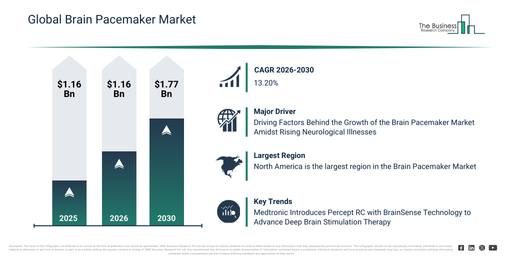
    The brain pacemaker market is projected to experience substantial expansion over the coming years, reaching $3.4 billion by 2030, driven by a compound annual growth rate (CAGR) of 13.2%. This anticipated increase is due to several factors, including a rising demand for dual channel programmable pacemakers, greater integration into ambulatory surgical centers, increased investment in neuromodulation research and device innovation, growing clinical acceptance for conditions such as obsessive-compulsive disorder and essential tremor, alongside the development of broader reimbursement frameworks and patient access programs.

    Key trends anticipated during the forecast period involve the increasing uptake of implantable neuromodulation and deep brain stimulation systems, expanded application of brain pacemakers for managing complex movement and neuropsychiatric disorders, and the proliferation of dual-channel and programmable stimulation devices to meet advanced therapeutic requirements. Furthermore, a growing inclination towards minimally invasive implantation techniques and patient-centric device designs is evident, with a strong emphasis on ensuring long-term therapy reliability, extended battery longevity, and comprehensive post-implant monitoring.

    Download A Free Sample Report For Comprehensive Market Insights:

    https://www.thebusinessresearchcompany.com/sample.aspx?id=16634&type=smp

    What Market Drivers Are Helping Shape The Brain Pacemaker Market Expansion?

    The growing incidence of neurological illnesses is anticipated to drive the expansion of the brain pacemaker market. Neurological illnesses, also known as neurological disorders, are conditions affecting the nervous system. The rising occurrence of these illnesses is mainly attributed to an aging population, lifestyle habits, environmental exposures, genetic predispositions, infectious diseases, traumatic injuries, healthcare disparities, and the consequences of urbanization and industrialization. A brain pacemaker aids in neurological illnesses by providing targeted electrical impulses to regulate abnormal brain activity, thereby alleviating symptoms and improving the quality of life for patients with neurological conditions. For instance, in October 2023, according to the World Federation of Neurology, a UK-based association of national neurological societies, over 40% of the global population suffers from some neurological condition, a figure projected to nearly double by 2050. Additionally, the global annual death toll from stroke is estimated to be 9.7 million deaths per year, which is expected to increase by 50% by 2050. Thus, the increasing incidence of neurological illnesses is a primary driver for the growth of the brain pacemaker market.

    Which Segment Divisions Form The Structure Of The Brain Pacemaker Market?

    The brain pacemaker market covered in this report is segmented –

    1) By Type: Single Channel, Dual Channel

    2) By Application: Dystonia, Epilepsy, Essential Tremor, Obsessive-Compulsive Disorder, Parkinson’s Disease, Other Applications

    3) By Sales Channel: Channel Sales, Direct Sales

    4) By End-User: Hospitals, Ambulatory Surgical Centers And Clinics, Other End-Users

    Subsegments:

    1) By Single Channel: Implantable Single Channel Brain Pacemakers, Wearable Single Channel Brain Pacemakers

    2) By Dual Channel: Implantable Dual Channel Brain Pacemakers

    What Trends Are Shaping The Brain Pacemaker Market Structure?

    Leading firms within the brain pacemaker market are creating cutting-edge products utilizing sophisticated technologies, including BrainSense technology, aiming to improve the accuracy and tailored nature of deep brain stimulation treatments. BrainSense technology functions by capturing and logging brain signals, delivering immediate data for customizing and refining deep brain stimulation therapy. An example of this is when, in January 2024, Medtronic, a US-based medical technology company, launched its Percept RC deep brain stimulation (DBS) system. The Percept RC stands as the smallest and most slender dual-channel neurostimulator offered for DBS, incorporating Medtronic’s proprietary BrainSense technology. DBS therapy involves a medical device surgically implanted, similar to a heart pacemaker, to deliver electrical stimulation to specific, targeted areas. Through BrainSense technology, the Percept RC can capture and log brain signals, providing crucial information that empowers healthcare professionals to adjust and individualize DBS therapy according to the patient’s changing requirements.

    Which Companies Form The Competitive Landscape Of The Brain Pacemaker Market?

    Major companies operating in the brain pacemaker market are Abbott Laboratories, Medtronic plc, Boston Scientific Corporation, LivaNova PLC, Renishaw plc, NeuroPace Inc., Aleva Neurotherapeutics SA, Beijing PINS Medical Co Ltd, Newronika S.p.A, Deep Brain Innovations LLC, NI2O (NI20 UK), Nuviant Medical Inc, Alpha Omega Engineering Ltd, SceneRay Co Ltd, Neuroelectrics Barcelona SLU, Neurosoft LLC, AlphaDBS Solutions, Nuvectra Corporation, Picostim

    Access The Complete Brain Pacemaker Market Report:

    https://www.thebusinessresearchcompany.com/report/brain-pacemaker-global-market-report

    Which Region Accounts For The Highest Share Of The Brain Pacemaker Market?

    North America was the largest region in the brain pacemaker market in 2025. Asia-Pacific is expected to be the fastest-growing region in the forecast period. The regions covered in the brain pacemaker market report are Asia-Pacific, South East Asia, Western Europe, Eastern Europe, North America, South America, Middle East, Africa.

    Access a Customized Brain Pacemaker Market Report for Deeper Competitive Insights

    https://www.thebusinessresearchcompany.com/customise?id=16634&type=smp

    Browse Through More Reports Similar to the Global Brain Pacemaker Market 2026, By The Business Research Company

    Pacemakers Market Report 2026

    https://www.thebusinessresearchcompany.com/report/pacemakers-global-market-report

    Cardiac Pacemakers Market Report 2026

    https://www.thebusinessresearchcompany.com/report/cardiac-pacemakers-global-market-report

    External Pacemakers Market Report 2026

    https://www.thebusinessresearchcompany.com/report/external-pacemakers-global-market-report

    Get in touch with us:

    The Business Research Company: https://www.thebusinessresearchcompany.com/

    Americas: +1 310-496-7795

    Asia: +44 7882 955267 & +91 8897263534

    Europe: +44 7882 955267

    Email us at: marketing@tbrc.info

    Follow us on:

    LinkedIn: https://in.linkedin.com/company/the-business-research-company

    YouTube: https://www.youtube.com/channel/UC24_fI0rV8cR5DxlCpgmyFQ

    Global Market Model: https://www.thebusinessresearchcompany.com/global-market-model
  • Brain Monitoring Market Outlook Assessing Future Opportunities And Growth Prospects

    Brain Monitoring Market Outlook Assessing Future Opportunities And Growth Prospects

    The Business Research Company’s 2026 market reports feature advanced enhancements such as market attractiveness analysis, total addressable market evaluation, company benchmarking matrices, interactive Excel dashboards, expanded supply chain intelligence, emerging startup coverage, and detailed product insights, delivering more actionable and strategically valuable research.

    What Market Size Is Forecasted For The Brain Monitoring Market By 2030 Based On Its 2026 Value?

    The size of the brain monitoring market has seen rapid growth in recent years. It is projected to expand from $8.74 billion in 2025 to $9.66 billion in 2026, at a compound annual growth rate (CAGR) of 10.6%. The historical growth of this market is attributable to factors such as the rising prevalence of neurological disorders, the expansion of critical care monitoring practices, the increasing adoption of EEG-based diagnostics, growth in neuroimaging infrastructure, and improved availability of brain monitoring technologies.

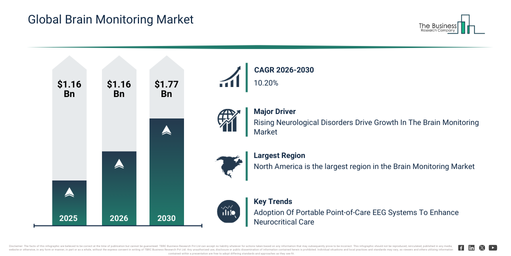
    The brain monitoring market is anticipated to experience substantial expansion over the next few years, with its size projected to reach $14.26 billion by 2030, demonstrating a compound annual growth rate (CAGR) of 10.2%. This growth during the forecast period is driven by factors such as the increasing demand for personalized neurological treatment, rising investments in neurotechnology research, the expansion of remote patient monitoring, the growing use of AI-assisted brain diagnostics, and the increasing adoption of wearable brain monitoring systems. Prominent trends observed in this period encompass the increasing adoption of portable and wireless brain monitoring devices, a rising use of continuous cerebral oxygen monitoring, the growing integration of multimodal brain imaging systems, an expansion of non-invasive neurodiagnostic techniques, and an enhanced focus on real-time brain data analysis.

    Download A Free Sample Report For Comprehensive Market Insights:

    https://www.thebusinessresearchcompany.com/sample.aspx?id=6587&type=smp

    Which Significant Factors Are Encouraging Growth In The Brain Monitoring Market?

    The growing occurrence and spread of neurological conditions are anticipated to fuel the expansion of the brain monitoring market in the future. Brain monitoring involves employing instruments to assess neurological injuries, and its application in neurological disorders ensures greater precision and dependability in understanding the severity of such injuries. For example, data from April 2024, released by the National Institutes of Health (NIH), the US-based government’s premier biomedical research agency, indicates that approximately 6.9 million Americans aged 65 and older currently suffer from Alzheimer’s dementia. This number is predicted to almost double, reaching 13.8 million by 2060. Consequently, the escalating frequency and occurrence of neurological disorders are propelling the development of the brain monitoring market.

    How Are Different Segment Groups Identified Within The Brain Monitoring Market?

    The brain monitoring market covered in this report is segmented –

    1) By Product: Magnetoencephalograph, Electroencephalograph, Cerebral Oximeters, Intracranial Pressure Monitoring Devices

    2) By Procedure: Invasive, Non-invasive

    3) By Application: Parkinson’s Disease, Traumatic Brain Injury, Epilepsy, Dementia, Sleep Disorders, Other Applications

    4) By End User: Hospitals and Clinics, Neurology Centers, Diagnostic Centers

    Subsegments:

    1) By Magnetoencephalograph (MEG): Whole-Head MEG Systems, Biomagnetic Measurement Systems

    2) By Electroencephalograph (EEG): Portable EEG Devices, Clinical EEG Systems, Wireless EEG Systems

    3) By Cerebral Oximeters: Near-Infrared Spectroscopy (NIRS) Devices, Continuous Cerebral Oxygen Monitoring Devices

    4) By Intracranial Pressure Monitoring Devices: Intraventricular Catheters, Subdural and Epidural Sensors

    Which Trends Are Supporting The Evolution Of The Brain Monitoring Market?

    Leading companies within the brain monitoring market are concentrating on developing technological innovations, such as portable, point-of-care EEG systems, aimed at accelerating neurodiagnostics. These advancements seek to improve patient oversight, enhance clinical decision-making, and facilitate remote neurological care. A point-of-care EEG system employs wireless, head-worn electrodes alongside cloud-based analytics; unlike traditional stationary EEG machines, it enables swift setup, continuous monitoring, and real-time alerts concerning neurological events. For example, in May 2025, Natus Medical Incorporated, a U.S.-based neurodiagnostics company, introduced BrainWatch, a wearable point-of-care EEG system specifically optimized for emergency departments and intensive care units. This device features high-quality wireless EEG electrodes, can be deployed in under five minutes, streams data to Natus NeuroWorks software, and integrates Persyst AI algorithms for real-time seizure detection, thereby assisting clinical teams in quickly identifying non-convulsive seizures, collaborating remotely with neurologists, and improving patient outcomes.

    Who Are The Key Market Participants In The Brain Monitoring Market?

    Major companies operating in the brain monitoring market are Natus Medical Incorporated, Nihon Kohden Corporation, Philips Healthcare N.V., GE Healthcare Technologies Incorporated, Compumedics Limited, Medtronic Public Limited Company, Masimo Corporation, Spiegelberg GmbH & Co. KG, Cadwell Industries Incorporated, Elekta AB, Drägerwerk AG & Co. KGaA, Electrical Geodesics Incorporated, Integra LifeSciences Corporation, Siemens AG, CAS Medical Systems Incorporated, Neural Analytics Incorporated, BrainScope Company Incorporated, NeuroWave Systems Incorporated, Brain Products GmbH, ANT Neuro B.V., Blackrock Microsystems LLC, Cognionics Incorporated, Emotiv Incorporated, G.TEC Medical Engineering GmbH, Neurosoft Company, Advanced Brain Monitoring, NeuroSky Incorporated, OpenBCI Incorporated, Qneuro Private Limited, A.St.A. World-Wide

    Access The Complete Brain Monitoring Market Report:

    https://www.thebusinessresearchcompany.com/report/brain-monitoring-global-market-report

    Which Region Is The Primary Market For The Brain Monitoring Market?

    North America was the largest region in the brain monitoring market in 2025. Asia-Pacific is expected to be the fastest-growing region in the forecast period. The regions covered in the brain monitoring market report are Asia-Pacific, South East Asia, Western Europe, Eastern Europe, North America, South America, Middle East, Africa.

    Access a Customized Brain Monitoring Market Report for Deeper Competitive Insights

    https://www.thebusinessresearchcompany.com/customise?id=6587&type=smp

    Browse Through More Reports Similar to the Global Brain Monitoring Market 2026, By The Business Research Company

    Brain Health Supplements Market Report 2026

    https://www.thebusinessresearchcompany.com/report/brain-health-supplements-global-market-report

    Brain Mapping Instruments Market Report 2026

    https://www.thebusinessresearchcompany.com/report/brain-mapping-instruments-global-market-report

    Neurology Monitoring Market Report 2026

    https://www.thebusinessresearchcompany.com/report/neurology-monitoring-global-market-report

    Get in touch with us:

    The Business Research Company: https://www.thebusinessresearchcompany.com/

    Americas: +1 310-496-7795

    Asia: +44 7882 955267 & +91 8897263534

    Europe: +44 7882 955267

    Email us at: marketing@tbrc.info

    Follow us on:

    LinkedIn: https://in.linkedin.com/company/the-business-research-company

    YouTube: https://www.youtube.com/channel/UC24_fI0rV8cR5DxlCpgmyFQ

    Global Market Model: https://www.thebusinessresearchcompany.com/global-market-model

  • Brain Mapping Instruments Market Industry Forecast Reflecting Growth To $3.33 Billion By 2030

    Brain Mapping Instruments Market Industry Forecast Reflecting Growth To $3.33 Billion By 2030

    The Business Research Company’s 2026 market reports feature advanced enhancements such as market attractiveness analysis, total addressable market evaluation, company benchmarking matrices, interactive Excel dashboards, expanded supply chain intelligence, emerging startup coverage, and detailed product insights, delivering more actionable and strategically valuable research.

    How Is The Market Value Of The Brain Mapping Instruments Market Projected To Expand During 2026–2030?

    The brain mapping instruments market size has seen significant growth in recent years. It is anticipated to expand from $2.42 billion in 2025 to $2.58 billion in 2026, achieving a compound annual growth rate (CAGR) of 6.6%. This past growth can be attributed to several factors, including the increase in neurological disorder diagnosis programs, the rising adoption of EEG and CT-based brain mapping systems, the early integration of neuroimaging tools in hospitals and research centers, the broadening of brain activity monitoring in clinical neurology, and increased investment in neuroscience research infrastructure.

    The brain mapping instruments market is poised for robust expansion over the coming years, with its valuation projected to reach $3.33 billion by 2030, exhibiting a compound annual growth rate (CAGR) of 6.6%. This anticipated growth during the forecast period is fueled by several factors, including the escalating demand for fMRI and PET-based functional brain mapping, the greater adoption of hybrid and high-resolution imaging systems, an increase in the use of non-invasive mapping solutions in outpatient environments, the expanding incorporation of multimodal brain analysis tools, and the broadening utility of brain mapping within precision medicine and neurotherapeutics. Key developments expected during this timeframe encompass the increasing implementation of sophisticated neuroimaging and brain activity monitoring technologies, the wider deployment of brain mapping instruments in clinical diagnosis and the formulation of treatment strategies, the extended application of brain mapping across neuroscience and cognitive research, a growing inclination towards non-invasive and patient-centric brain mapping techniques, and an emphasis on improving imaging precision, data integrity, and diagnostic effectiveness.

    Download A Free Sample Report For Comprehensive Market Insights:

    https://www.thebusinessresearchcompany.com/sample.aspx?id=18270&type=smp

    What Core Drivers Are Transforming The Brain Mapping Instruments Market?

    The rising occurrence of neurological conditions is anticipated to drive the expansion of the brain mapping instrument market in the future. These disorders encompass conditions impacting the brain, spinal cord, and nerves, manifesting as issues like impaired movement, reduced cognitive function, and sensory disturbances, with examples such as Alzheimer’s, Parkinson’s, epilepsy, multiple sclerosis, and stroke. The growing incidence of neurological disorders can be attributed to factors such as an aging population, increased urbanization, evolving lifestyles, advancements in diagnostic methods, and environmental alongside infectious risk factors. In both clinical settings and research, brain mapping instruments are crucial for gaining profound understanding of neurological disorders and formulating individualized treatment plans. For example, data from March 2023, reported by the Alzheimer’s Association, a US-based non-profit voluntary health organization, indicated that approximately 6.7 million Americans aged 65 and older in the United States were affected by Alzheimer’s dementia, which falls under neurological disorders. Furthermore, projections suggest that by 2060, the population aged 65 and older suffering from Alzheimer’s dementia will rise to 13.8 million. Consequently, the rising prevalence of neurological disorders serves as a key driver for the expansion of the brain mapping instrument market.

    What Segment Categories Are Evaluated In The Brain Mapping Instruments Market Study?

    The brain mapping instruments market covered in this report is segmented –

    1) By Product: Computed Axial Tomography (CAT), Positron Emission Tomography, Electroencephalography (EEG), Functional Near-Infrared Spectroscopy (FNIRS), Functional Magnetic Resonance Imaging (FMRI), Other Products

    2) By Procedure: Devices For Invasive Procedures, Devices For Non-invasive Procedures

    3) By End User: Hospitals, Ambulatory Centers

    Subsegments:

    1) By Computed Axial Tomography (CAT): Conventional CT Scanners, High-Resolution CT Scanners, Portable CT Scanners

    2) By Positron Emission Tomography (PET): PET Scanners (Standalone), Hybrid PET/CT Scanners, PET/MRI Scanners

    3) By Electroencephalography (EEG): Digital EEG Systems, Ambulatory EEG Systems, Video EEG Monitoring Systems

    4) By Functional Near-Infrared Spectroscopy (FNIRS): Continuous Wave Fnirs Systems, Frequency Domain Fnirs Systems, Hybrid Fnirs Systems

    5) By Functional Magnetic Resonance Imaging (FMRI): Resting-State Fmri, Task-Based Fmri, High-Field MRI Systems

    6) By Other Products: Magnetoencephalography (MEG) Systems, Near-Infrared Spectroscopy (NIRS) Devices, Transcranial Magnetic Stimulation (TMS) Systems

    What Trends Are Affecting The Growth Of The Brain Mapping Instruments Market?

    Major companies operating in the brain mapping instruments market are concentrating on adaptive neuromodulation systems with sensing capabilities, such as BrainSense-enabled closed-loop deep brain stimulation (DBS), which integrates real-time brain signal detection to tailor stimulation therapy. BrainSense technology functions as a neuro-interface integrated into DBS systems, recording local field potentials (LFPs) from specific brain regions, processing these signals, and dynamically adjusting electrical stimulation based on a patient’s neural activity, thereby optimizing therapeutic effects and minimizing side effects. For instance, in February 2025, Medtronic, a US-based medical-technology company, unveiled its BrainSense Adaptive DBS system following FDA approval, offering features like real-time self-adjusting stimulation, a BrainSense Electrode Identifier to quickly determine the optimal electrode contact, and personalized closed-loop therapy that adapts both in clinical settings and during a patient’s daily life.

    Which Organizations Are Operating Within The Brain Mapping Instruments Market?

    Major companies operating in the brain mapping instruments market are Siemens Healthineers, GE Healthcare, Philips Healthcare, Elekta AB, Nihon Kohden Corporation, Brainlab AG, Natus Medical Incorporated, Hitachi Medical Systems, Canon Medical Systems Corporation, Compumedics Limited, Medtronic PLC, Magstim Company Limited, EB Neuro S.p.A., Brain Products GmbH, Soterix Medical Inc., Rogue Research Inc., NIRx Medical Technologies LLC, Neurosoft, Artinis Medical Systems, Gowerlabs Ltd.

    Access The Complete Brain Mapping Instruments Market Report:

    https://www.thebusinessresearchcompany.com/report/brain-mapping-instruments-global-market-report

    Which Geographic Region Represents The Largest Brain Mapping Instruments Market Share?

    North America was the largest region in the brain mapping instruments market in 2025. Asia-Pacific is expected to be the fastest-growing region in the forecast period. The regions covered in the brain mapping instruments market report are Asia-Pacific, South East Asia, Western Europe, Eastern Europe, North America, South America, Middle East, Africa.

    Access a Customized Brain Mapping Instruments Market Report for Deeper Competitive Insights

    https://www.thebusinessresearchcompany.com/customise?id=18270&type=smp

    Browse Through More Reports Similar to the Global Brain Mapping Instruments Market 2026, By The Business Research Company

    Brain And Neuroimaging Devices Market Report 2026

    https://www.thebusinessresearchcompany.com/report/brain-and-neuroimaging-devices-global-market-report

    Brain Monitoring Market Report 2026

    https://www.thebusinessresearchcompany.com/report/brain-monitoring-global-market-report

    Brain Health Supplements Market Report 2026

    https://www.thebusinessresearchcompany.com/report/brain-health-supplements-global-market-report

    Get in touch with us:

    The Business Research Company: https://www.thebusinessresearchcompany.com/

    Americas: +1 310-496-7795

    Asia: +44 7882 955267 & +91 8897263534

    Europe: +44 7882 955267

    Email us at: marketing@tbrc.info

    Follow us on:

    LinkedIn: https://in.linkedin.com/company/the-business-research-company

    YouTube: https://www.youtube.com/channel/UC24_fI0rV8cR5DxlCpgmyFQ

    Global Market Model: https://www.thebusinessresearchcompany.com/global-market-model
  • Brain Imaging Modalities Market Forecast Analysis Through 2030 With Insights On Industry Expansion

    Brain Imaging Modalities Market Forecast Analysis Through 2030 With Insights On Industry Expansion

    The Business Research Company’s 2026 market reports feature advanced enhancements such as market attractiveness analysis, total addressable market evaluation, company benchmarking matrices, interactive Excel dashboards, expanded supply chain intelligence, emerging startup coverage, and detailed product insights, delivering more actionable and strategically valuable research.

    What Are The Forecasted Market Size Figures For The Brain Imaging Modalities Market In 2026 And 2030?

    The brain imaging modalities market size has seen significant expansion in recent years. This market is set to increase from $13.9 billion in 2025 to $14.76 billion in 2026, at a compound annual growth rate (CAGR) of 6.2%. The historical growth can be linked to factors such as the limited availability of advanced brain imaging devices, the high cost of early imaging equipment, growing awareness of neurological disorders, a reliance on stationary imaging systems, and an increasing number of diagnostic centers.

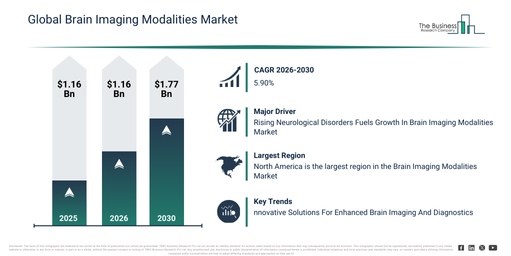
    The brain imaging modalities market is projected to experience robust expansion in the coming years, reaching a valuation of $18.55 billion by 2030, driven by a compound annual growth rate (CAGR) of 5.9%. This anticipated growth is linked to several factors, including advancements in fMRI and PET system technologies, an increase in the use of portable and research-focused imaging devices, greater investment in neuroimaging studies, enhanced integration of AI and big data analytics, and the broader development of hospitals and diagnostic facilities. Key developments foreseen during this period encompass the increased uptake of sophisticated MRI and CT imaging techniques, a growing reliance on portable and point-of-care brain imaging devices, a rise in the need for pediatric and infant brain imaging solutions, the incorporation of image processing software with patient monitoring systems, and the broader application of functional brain imaging in both research and clinical settings.

    Download A Free Sample Report For Comprehensive Market Insights:

    https://www.thebusinessresearchcompany.com/sample.aspx?id=19347&type=smp

    Which Growth Factors Are Strengthening The Brain Imaging Modalities Market Landscape?

    The projected expansion of the brain imaging modality market is primarily driven by the increasing prevalence of neurological disorders. These are medical conditions affecting the nervous system, encompassing the brain, spinal cord, and nerves, which can manifest as problems with movement, sensation, cognition, or behavior. The rise in neurological disorders can be attributed to several factors including an aging population, enhanced diagnostic capabilities, the spread of chronic diseases, genetic predispositions, environmental changes, and lifestyle influences. Brain imaging modalities are instrumental in the diagnosis and ongoing monitoring of neurological disorders, providing intricate images of the brain’s structure and function, which supports effective treatment planning. For instance, in January 2025, the European Brain Council, a Belgium-based non-profit organization, reported that 7 million people in Europe are living with Alzheimer’s disease, a figure expected to reach 14 million by 2030. Therefore, the growing incidence of neurological disorders is a significant force propelling the growth of the brain imaging modality market.

    How Is The Brain Imaging Modalities Market Examined Through Segment Analysis?

    The brain imaging modalities market covered in this report is segmented –

    1) By Product: Devices, Accessories, Usability

    2) By Imaging Type: Computed Tomography (CT), Positron Emission Tomography (PET), Magnetic Resonance Imaging (MRI), Single Photon Emission Computed Tomography (SPECT)

    3) By Modalities: Stand-Alone Functional Brain Imaging Systems, Portable Functional Brain Imaging Systems

    4) By Patient Type: Adults, Pediatrics, Infants

    5) By End-User: Hospitals, Diagnostic Centers, Research Institutes

    Subsegments:

    1) By Devices: Magnetic Resonance Imaging (MRI) Machines, Computed Tomography (CT) Scanners, Positron Emission Tomography (PET) Scanners, Electroencephalography (EEG) Devices, Functional MRI (fMRI) Systems, Single Photon Emission Computed Tomography (SPECT) Scanners

    2) By Accessories: Contrast Agents, MRI Coils, EEG Electrodes, Image Processing Software, Patient Monitoring Systems

    3) By Usability: Portable Brain Imaging Devices, Stationary Brain Imaging Systems, Point-Of-Care Brain Imaging Solutions, Research-Oriented Brain Imaging Equipment

    Which Trends Are Influencing The Direction Of The Brain Imaging Modalities Market?

    Leading entities within the brain imaging modalities market are concentrating on creating novel technologies, including neuroimaging advancements, to secure a competitive edge. These neuroimaging technologies represent sophisticated medical instruments employed for obtaining comprehensive visual data concerning the brain’s form and activity. An illustrative example occurred in February 2024, when Koninklijke Philips N.V., a technology firm based in the Netherlands, collaborated with SyntheticMR, a software company from Sweden, to introduce Smart Quant Neuro 3D. This new offering incorporates automated three-dimensional quantification of neuroimaging information, instantaneous depiction of brain anatomies, and the incorporation of artificial intelligence to enhance the precision of diagnoses. The objective of this breakthrough is to optimize operational procedures and decrease the duration needed for image examination, ultimately providing advantages to both medical professionals and individuals receiving care.

    Who Are The Businesses Driving Activity In The Brain Imaging Modalities Market?

    Major companies operating in the brain imaging modalities market are Hitachi Ltd, Siemens AG, Toshiba Corporation, FUJIFILM Corporation, Koninklijke Philips N.V, GE HealthCare Technologies Inc., Shenzhen Mindray Bio-Medical Electronics Co. Ltd., Shimadzu Corporation, Canon Medical Systems Corporation, Neusoft Corporation, Agfa-Gevaert N.V., Carestream Health, Brainlab AG, Esaote SpA, NeuroLogica Corp., Swissray International Inc., Xoran Technologies LLC., Allengers Medical Systems Ltd., Konica Minolta Healthcare Americas Inc., Hi-Tech Medical Imaging

    Access The Complete Brain Imaging Modalities Market Report:

    https://www.thebusinessresearchcompany.com/report/brain-imaging-modalities-global-market-report

    Which Region Leads The Brain Imaging Modalities Market By Size?

    North America was the largest region in the brain imaging modalities market in 2025. Asia-Pacific is expected to be the fastest-growing region in the forecast period. The regions covered in the brain imaging modalities market report are Asia-Pacific, South East Asia, Western Europe, Eastern Europe, North America, South America, Middle East, Africa.

    Access a Customized Brain Imaging Modalities Market Report for Deeper Competitive Insights

    https://www.thebusinessresearchcompany.com/customise?id=19347&type=smp

    Browse Through More Reports Similar to the Global Brain Imaging Modalities Market 2026, By The Business Research Company

    Brain And Neuroimaging Devices Market Report 2026

    https://www.thebusinessresearchcompany.com/report/brain-and-neuroimaging-devices-global-market-report

    Brain Monitoring Market Report 2026

    https://www.thebusinessresearchcompany.com/report/brain-monitoring-global-market-report

    Brain Computer Interface Market Report 2026

    https://www.thebusinessresearchcompany.com/report/brain-computer-interface-global-market-report

    Get in touch with us:

    The Business Research Company: https://www.thebusinessresearchcompany.com/

    Americas: +1 310-496-7795

    Asia: +44 7882 955267 & +91 8897263534

    Europe: +44 7882 955267

    Email us at: marketing@tbrc.info

    Follow us on:

    LinkedIn: https://in.linkedin.com/company/the-business-research-company

    YouTube: https://www.youtube.com/channel/UC24_fI0rV8cR5DxlCpgmyFQ

    Global Market Model: https://www.thebusinessresearchcompany.com/global-market-model

  • Brain Health Devices Market Growth Outlook Indicating Expansion To $16.83 Billion By 2030

    Brain Health Devices Market Growth Outlook Indicating Expansion To $16.83 Billion By 2030

    The Business Research Company’s 2026 market reports feature advanced enhancements such as market attractiveness analysis, total addressable market evaluation, company benchmarking matrices, interactive Excel dashboards, expanded supply chain intelligence, emerging startup coverage, and detailed product insights, delivering more actionable and strategically valuable research.

    How Much Larger Will The Brain Health Devices Market Become By 2030 Compared To 2026?

    The brain health devices market has experienced robust growth in recent years. It is anticipated to expand from $11.9 billion in 2025 to $12.79 billion in 2026, registering a compound annual growth rate (CAGR) of 7.5%. The expansion witnessed in the historic period can be attributed to the limited availability of advanced neuroimaging devices, the rising prevalence of neurological disorders, the increasing development of hospital and clinic infrastructure, a reliance on conventional diagnostic procedures, and a growing awareness of cognitive health management.

    The brain health devices market is projected for substantial expansion in the coming years, reaching $16.84 billion by 2030, exhibiting a compound annual growth rate (CAGR) of 7.1%. This anticipated growth during the forecast period is primarily driven by several factors, including ongoing advancements in wearable brain health devices, the integration of AI and machine learning algorithms, an increasing embrace of telehealth and remote monitoring services, heightened government and private investment in neurotechnology, and the emergence of portable and affordable brain health solutions. Key trends expected over this period involve the expanding use of non-invasive brain monitoring devices, a heightened emphasis on the early identification of neurological disorders, the incorporation of wearable devices for cognitive tracking, a growing need for home-centric brain health solutions, and the broadening scope of brain training and neurostimulation applications.

    Download A Free Sample Report For Comprehensive Market Insights:

    https://www.thebusinessresearchcompany.com/sample.aspx?id=20519&type=smp

    What Important Drivers Are Powering The Brain Health Devices Market Growth?

    The expanding occurrence of neurological conditions is anticipated to fuel the progress of the brain health devices market in the future. These medical conditions impact the nervous system, encompassing the brain, spinal cord, and nerves, resulting in diverse cognitive, motor, and sensory impairments. This growing prevalence is primarily propelled by an aging demographic and an increase in chronic illnesses like diabetes and hypertension. Furthermore, environmental and lifestyle elements, coupled with improvements in diagnostic methods and genetic susceptibilities, contribute to the rising count of documented instances. Brain health devices observe brain activity and deliver specific treatments to alleviate symptoms, boost cognitive capabilities, and enhance patient results. For example, the European Brain Council, a Belgium-based non-profit organization, reported in January 2025 that 7 million individuals in Europe are affected by Alzheimer’s disease, with projections indicating this figure could dramatically increase to 14 million by 2030. Consequently, the rising occurrence of neurological disorders is stimulating expansion in the brain health devices market.

    Which Segment Groups Define The Brain Health Devices Market Landscape?

    The brain health devices market covered in this report is segmented –

    1) By Device Type: Magnetic Resonance Imaging, Magneto Encephalogram, Computed Tomography, Transcranial Doppler Device, Other Device Types

    2) By Procedure: Invasive, Non-Invasive

    3) By Application: Sleep Disorders, Accidental Injuries, Alzheimer’s Disease, Epilepsy, Stroke, Other Applications

    4) By End-User: Hospitals And Clinics, Diagnostic Imaging Centers, Homecare Settings, Assisted Living Facilities, Other End-Users

    Subsegments:

    1) By Magnetic Resonance Imaging (MRI): Functional MRI (fMRI), Diffusion Tensor Imaging (DTI), MRI Spectroscopy

    2) By Magnetoencephalogram (MEG): Whole-Head MEG Systems, Cooled MEG Systems

    3) By Computed Tomography (CT): Standard CT Scanners, CT Angiography, High-Resolution CT Scanners

    4) By Transcranial Doppler Device: Handheld Transcranial Doppler Devices, Portable Transcranial Doppler Devices

    5) By Other Device Types: Electroencephalogram (EEG) Devices, Positron Emission Tomography (PET) Scanners, Near-Infrared Spectroscopy (NIRS) Devices

    What Trends Are Driving Changes In The Brain Health Devices Market?

    Leading companies within the brain health monitoring market are concentrating on developing innovative products, such as passive smartphone-based monitoring platforms, to continuously track cognitive and motor function changes without requiring active patient participation or wearable devices. This passive smartphone-based monitoring leverages everyday keyboard interactions, motion, and device usage to subtly generate clinically relevant neurological insights. For instance, in May 2025, Neurocast, a Netherlands-based provider of digital health and brain health monitoring solutions, launched its FDA-registered Neurocast platform in the U.S. This platform analyzes routine smartphone interactions like keystrokes, motion patterns, and usage behaviors to detect subtle neurological changes, enabling early identification of cognitive or motor decline in patients with conditions such as multiple sclerosis, Alzheimer’s disease, ADHD, and depression. Key features of Neurocast include continuous data collection through daily phone use, a privacy-centered design with no active input or wearables required, GDPR compliance, ISO 27001 certification, and real-world clinical validation across European studies involving hundreds of patients. The launch empowers U.S. healthcare providers to access scalable, unobtrusive, and data-driven insights for proactive brain health management, marking a pivotal milestone in remote neurological care.

    Which Firms Are Competing In The Brain Health Devices Market?

    Major companies operating in the brain health devices market are Johnson & Johnson Services Inc., Medtronic plc, Siemens Healthineers AG, Koninklijke Philips N.V., GE HealthCare Technologies Inc., Boston Scientific Corporation, electroCore Inc., Masimo Corporation, Integra LifeSciences Corporation, LivaNova plc, Natus Medical Incorporated, Cadwell Industries Inc., NeuroSky Inc., Neuropace Inc., Compumedics Limited, Magstim Co. Ltd., Mindmaze SA, Brain Products GmbH, Emotiv Inc., Electrical Geodesics Inc., BrainScope Company Inc., Soterix Medical Inc., Advanced Brain Monitoring Inc., Bio-Signal Group Corp., Cognionics Inc

    Access The Complete Brain Health Devices Market Report:

    https://www.thebusinessresearchcompany.com/report/brain-health-devices-global-market-report

    Which Region Has The Strongest Presence In The Brain Health Devices Market?

    North America was the largest region in the brain health devices market in 2025. Asia-Pacific is expected to be the fastest-growing region in the forecast period. The regions covered in the brain health devices market report are Asia-Pacific, South East Asia, Western Europe, Eastern Europe, North America, South America, Middle East, Africa.

    Access a Customized Brain Health Devices Market Report for Deeper Competitive Insights

    https://www.thebusinessresearchcompany.com/customise?id=20519&type=smp

    Browse Through More Reports Similar to the Global Brain Health Devices Market 2026, By The Business Research Company

    Brain Computer Interface Market Report 2026

    https://www.thebusinessresearchcompany.com/report/brain-computer-interface-global-market-report

    Brain Health Supplements Market Report 2026

    https://www.thebusinessresearchcompany.com/report/brain-health-supplements-global-market-report

    Non Invasive Brain Trauma Monitoring Devices Market Report 2026

    https://www.thebusinessresearchcompany.com/report/non-invasive-brain-trauma-monitoring-devices-global-market-report

    Get in touch with us:

    The Business Research Company: https://www.thebusinessresearchcompany.com/

    Americas: +1 310-496-7795

    Asia: +44 7882 955267 & +91 8897263534

    Europe: +44 7882 955267

    Email us at: marketing@tbrc.info

    Follow us on:

    LinkedIn: https://in.linkedin.com/company/the-business-research-company

    YouTube: https://www.youtube.com/channel/UC24_fI0rV8cR5DxlCpgmyFQ

    Global Market Model: https://www.thebusinessresearchcompany.com/global-market-model

  • Global Brain Disease Device And Software Market Anticipated To Grow To $25.21 Billion By 2030 At 10% CAGR

    Global Brain Disease Device And Software Market Anticipated To Grow To $25.21 Billion By 2030 At 10% CAGR

    The Business Research Company’s 2026 market reports feature advanced enhancements such as market attractiveness analysis, total addressable market evaluation, company benchmarking matrices, interactive Excel dashboards, expanded supply chain intelligence, emerging startup coverage, and detailed product insights, delivering more actionable and strategically valuable research.

    What Growth In Market Value Is Anticipated For The Brain Disease Device And Software Market Between 2026 And 2030?

    The brain disease device and software market has witnessed rapid growth in recent years. It is forecast to increase from $15.59 billion in 2025 to $17.2 billion in 2026, achieving a compound annual growth rate (CAGR) of 10.3%. This historical expansion can be attributed to several factors including the limited availability of brain disease diagnostic tools, the rising prevalence of neurological disorders, enhancements in hospital and clinic infrastructure, the early adoption of telemedicine solutions, and a reliance on traditional brain imaging techniques.

    The brain disease device and software market is projected to experience swift expansion over the coming years. By 2030, its value is anticipated to reach $25.21 billion, exhibiting a compound annual growth rate (CAGR) of 10.0%. This anticipated growth during the forecast period stems from developments in wearable and AI-enabled devices for brain diseases, greater capital allocation to neurorehabilitation technologies, the spread of home care and distant monitoring options, an increasing need for software to manage brain data, and expanding research in neuroinformatics and cognitive evaluation methods. Significant trends expected in the forecast period involve the growing use of neurostimulation and brain monitoring devices, the incorporation of telemedicine alongside remote patient observation, the advancement of cognitive assessment and neurofeedback software, a heightened emphasis on individualized treatments for brain disorders, and the broadening of neuroimaging and data analytics solutions.

    Download A Free Sample Report For Comprehensive Market Insights:

    https://www.thebusinessresearchcompany.com/sample.aspx?id=27230&type=smp

    Which Major Factors Are Contributing To The Development Of The Brain Disease Device And Software Market?

    The rising occurrence of neurological conditions is anticipated to fuel the expansion of the brain disease device and software market in the future. These are health issues impacting the brain, spinal cord, and nerves, manifesting in various symptoms such as difficulties with cognition, movement, and sensation. The growing incidence of neurological disorders correlates with the world’s aging demographic, given that aging progressively diminishes neuronal function, decreases brain’s adaptability, and heightens oxidative stress, thereby facilitating the onset and advancement of these conditions. Brain disease devices and software assist in managing neurological disorders through facilitating prompt diagnosis and ongoing monitoring. Furthermore, they enable timely interventions utilizing sophisticated AI and data analytics, which enhances patient care and improves treatment results. To illustrate, in July 2024, the National Health Service, a UK-based government agency, reported 487,432 patients had been diagnosed with dementia (a progressive brain disorder impacting memory, thought, and daily functions) by June 30, 2024. This represented an increase of 3,155 cases from May 31, 2024. Consequently, the expanding occurrence of neurological disorders is propelling the growth of the brain disease device and software market.

    What Key Segment Areas Are Included In The Brain Disease Device And Software Market Assessment?

    The brain disease device and software market covered in this report is segmented –

    1) By Type: Brain Disease Device, Brain Disease Software

    2) By Technology: Wearable Technology, Telemedicine Solutions, Artificial Intelligence And Machine Learning, Mobile Health Applications, Neuroimaging Technologies

    3) By Application: Alzheimer’s Disease, Parkinson’s Disease, Epilepsy, Other Applications

    4) By End-User: Hospitals And Clinics, Home Care Settings, Rehabilitation Centers, Research and Academic Institutions, Diagnostic Laboratories

    Subsegments:

    1) By Brain Disease Device: Neurostimulation Devices, Brain Imaging Devices, Brain Monitoring Devices, Brain-Computer Interface Devices, Neurorehabilitation Devices

    2) By Brain Disease Software: Brain Imaging Analysis Software, Cognitive Assessment Software, Neurofeedback Software, Brain Data Management Software, Neurological Disorder Diagnostic Software

    Which Trends Are Shaping The Brain Disease Device And Software Market Landscape?

    Leading companies in the brain disease device and software market are increasingly focusing on utilizing innovative technologies, such as artificial intelligence (AI)-driven brain imaging analytics, to improve the early and accurate detection, monitoring, and management of neurodegenerative conditions like Alzheimer’s disease and dementia. AI-driven brain imaging analytics involves advanced software platforms that apply machine-learning models to MRI and other neuroimaging data, enabling the identification of subtle microstructural alterations in brain tissue that might be overlooked by conventional volumetric imaging, thereby allowing for earlier and more sensitive diagnosis. For instance, in January 2025, Oxford Brain Diagnostics Ltd., a UK-based medtech company, secured U.S. Food and Drug Administration (FDA) 510(k) clearance and subsequently launched CDM Insights, a cloud-native software solution based on its proprietary Cortical Disarray Measurement (CDM) technology. This tool analyzes routine 1.5 T and 3 T MRI scans to generate novel measures of cortical thickness and microstructural disarray in grey matter, offering objective, quantifiable indicators of neurodegeneration. Following these regulatory approvals, the company initiated its commercial rollout across healthcare systems in the US and UK, supporting clinicians in early diagnosis, disease monitoring, and treatment stratification.

    Who Are The Major Companies Operating In The Brain Disease Device And Software Market?

    Major companies operating in the brain disease device and software market are Medtronic plc, Insightec Ltd., Cadwell Industries Inc., NeuroPace Inc., Synchron Inc., Compumedics Ltd., Neuronetics Inc., BrainsWay Ltd., The Magstim Company Ltd., Paradromics Inc., Linus Health Inc., MagVenture A/S, Neurophet Inc., Neuroelectrics Corporation, BrainScope Company Inc, Blackrock Neurotech LLC, Neurable Inc., NeuroSigma Inc., Cognixion Inc., Brightmind.AI

    Access The Complete Brain Disease Device And Software Market Report:

    https://www.thebusinessresearchcompany.com/report/brain-disease-device-and-software-global-market-report

    Which Region Stands As The Largest Contributor To The Brain Disease Device And Software Market?

    North America was the largest region in the brain disease device and software market in 2025. Asia-Pacific is expected to be the fastest-growing region in the forecast period. The regions covered in the brain disease device and software market report are Asia-Pacific, South East Asia, Western Europe, Eastern Europe, North America, South America, Middle East, Africa.

    Access a Customized Brain Disease Device And Software Market Report for Deeper Competitive Insights

    https://www.thebusinessresearchcompany.com/customise?id=27230&type=smp

    Browse Through More Reports Similar to the Global Brain Disease Device And Software Market 2026, By The Business Research Company

    Building Insulation Materials Market Report 2026

    https://www.thebusinessresearchcompany.com/report/building-insulation-materials-global-market-report

    Technical Insulation Market Report 2026

    https://www.thebusinessresearchcompany.com/report/technical-insulation-global-market-report

    Building Thermal Insulation Market Report 2026

    https://www.thebusinessresearchcompany.com/report/building-thermal-insulation-global-market-report

    Get in touch with us:

    The Business Research Company: https://www.thebusinessresearchcompany.com/

    Americas: +1 310-496-7795

    Asia: +44 7882 955267 & +91 8897263534

    Europe: +44 7882 955267

    Email us at: marketing@tbrc.info

    Follow us on:

    LinkedIn: https://in.linkedin.com/company/the-business-research-company

    YouTube: https://www.youtube.com/channel/UC24_fI0rV8cR5DxlCpgmyFQ

    Global Market Model: https://www.thebusinessresearchcompany.com/global-market-model

  • Brain And Neuroimaging Devices Market Future Analysis Covering Industry Shifts And Growth Potential

    Brain And Neuroimaging Devices Market Future Analysis Covering Industry Shifts And Growth Potential

    The Business Research Company’s 2026 market reports feature advanced enhancements such as market attractiveness analysis, total addressable market evaluation, company benchmarking matrices, interactive Excel dashboards, expanded supply chain intelligence, emerging startup coverage, and detailed product insights, delivering more actionable and strategically valuable research.

    What Is The Expected Market Value Outlook For The Brain And Neuroimaging Devices Market Through 2030?

    The brain and neuroimaging devices market has experienced significant growth in recent years. This market is anticipated to expand from $44.1 billion in 2025 to $46.7 billion in 2026, indicating a compound annual growth rate (CAGR) of 5.9%. Historically, this expansion has been propelled by elements such as an increasing occurrence of neurological disorders, the proliferation of diagnostic imaging centers, the adoption of sophisticated MRI and CT technologies, the advancement of neurological research programs, and a greater reliance on EEG-based diagnostics.

    The brain and neuroimaging devices market size is anticipated to undergo significant expansion in the coming years, projected to reach $59.26 billion by 2030, demonstrating a compound annual growth rate (CAGR) of 6.1%. This expected growth throughout the forecast period stems from factors such as the increasing need for early diagnosis of brain disorders, the broadened application of precision neurology, growing investments in neuroimaging research, a rise in the adoption of hybrid imaging systems, and enhanced integration of imaging with digital health platforms. Prominent trends for the forecast period include the expanding use of AI-assisted neuroimaging analysis, an increase in the deployment of high-resolution brain imaging modalities, the growing incorporation of multimodal imaging techniques, the widening scope of functional brain mapping applications, and an elevated focus on early neurological diagnosis.

    Download A Free Sample Report For Comprehensive Market Insights:

    https://www.thebusinessresearchcompany.com/sample.aspx?id=3290&type=smp

    What Key Growth Drivers Are Influencing The Brain And Neuroimaging Devices Market?

    An increasing number of traumatic brain injuries is expected to fuel the expansion of the Brain And Neuroimaging Devices Market. A traumatic brain injury (TBI) is defined as harm or damage to the brain resulting from a sudden external force or trauma, impacting an individual’s physical, cognitive, emotional, and behavioral capabilities. These devices are crucial for the diagnosis, evaluation, and treatment of TBI, helping medical professionals detect issues like bleeding, fractures, or structural irregularities. For example, reports from Neural Regeneration Research, a China-based academic journal focused on neuroscience, indicated in October 2023 that roughly 69 million individuals globally experience a traumatic brain injury annually. Consequently, the growing occurrence of traumatic brain injuries is a key factor propelling the Brain And Neuroimaging Devices Market.

    How Is Segment Classification Applied In The Brain And Neuroimaging Devices Market?

    The brain and neuroimaging devices market covered in this report is segmented –

    1) By Imaging Type: Functional Magnetic Resonance Imaging (FMRI), Computed Tomography (CT), Positron Emission Tomography (PET), Electroencephalography (EEG), Magneto Encephalography (MEG), Other Imaging Types

    2) By Application: Parkinson’s Disease, Traumatic Brain Injury, Epilepsy, Dementia, Sleep Disorders, Other Applications

    3) By End-User: Hospitals, Diagnostic Centres, Research Institutes And Neurology Clinics

    Subsegments:

    1) By Functional Magnetic Resonance Imaging (FMRI): Resting-State FMRI, Task-Based FMRI, Diffusion Tensor Imaging (DTI) With FMRI

    2) By Computed Tomography (CT): X-ray CT, Positron Emission Tomography (PET) Or CT Hybrid Imaging, Multi-Slice CT

    3) By Positron Emission Tomography (PET): PET Or CT, PET Or MRI

    4) By Electroencephalography (EEG): Conventional EEG, Ambulatory EEG, High-Density EEG

    5) By Magnetoencephalography (MEG): Whole-Head MEG, Electromagnetic Source Imaging (ESI) With MEG

    6) By Other Imaging Types: Near-Infrared Spectroscopy (NIRS), Transcranial Magnetic Stimulation (TMS), Functional Near-Infrared Brain Imaging Systems

    What Trends Are Influencing The Brain And Neuroimaging Devices Market Outlook?

    Key companies operating in the brain and neuroimaging device market are prioritizing the development of technology incorporating artificial intelligence (AI), such as Neuro Suite, to gain a market edge. Neuro Suite, powered by artificial intelligence, is designed to deliver comprehensive solutions as a brain and neuroimaging device for various neurological disorders. For instance, in April 2023, TeraRecon, Inc., a US-based company known for developing medical imaging equipment, launched the Neuro Suite. This Neuro Suite functions as an artificial intelligence (AI)-assisted clinical suite solution for neurological conditions like neuro-oncology, multiple sclerosis, and dementia. This empowers radiologists to utilize a range of artificial intelligence (AI)-powered neuroimaging modalities.

    Which Companies Are Influencing The Brain And Neuroimaging Devices Market?

    Major companies operating in the brain and neuroimaging devices market are GE HealthCare, Siemens AG, Koninklijke Philips, Canon Medical Systems Corporation, Hitachi Medical Systems, EB Neuro S.p.A., Neurosoft, MinFound Medical Systems Co. Ltd., Elekta, Toshiba Corporation, Shimadzu Corporation, Bruker Corporation, PerkinElmer Inc., Carl Zeiss Meditec AG, Fujifilm Holdings Corporation, Nihon Kohden Corporation, Natus Medical Incorporated, RIMED Ltd., Advanced Brain Monitoring Inc., Compumedics Limited

    Access The Complete Brain And Neuroimaging Devices Market Report:

    https://www.thebusinessresearchcompany.com/report/brain-and-neuroimaging-devices-global-market-report

    What Is The Largest Regional Market In The Brain And Neuroimaging Devices Market?

    Western Europe was the largest region in the brain and neuroimaging devices market in 2025. North America was the second-largest region in the global brain and neuroimaging devices market report. Africa. was the smallest region in the brain and neuroimaging devices market. The regions covered in the brain and neuroimaging devices market report are Asia-Pacific, South East Asia, Western Europe, Eastern Europe, North America, South America, Middle East, Africa.

    Access a Customized Brain And Neuroimaging Devices Market Report for Deeper Competitive Insights

    https://www.thebusinessresearchcompany.com/customise?id=3290&type=smp

    Browse Through More Reports Similar to the Global Brain And Neuroimaging Devices Market 2026, By The Business Research Company

    Neurology Devices Market Report 2026

    https://www.thebusinessresearchcompany.com/report/neurology-devices-global-market-report

    Electroencephalography Devices Market Report 2026

    https://www.thebusinessresearchcompany.com/report/electroencephalography-devices-global-market-report

    Brain Mapping Instruments Market Report 2026

    https://www.thebusinessresearchcompany.com/report/brain-mapping-instruments-global-market-report

    Get in touch with us:

    The Business Research Company: https://www.thebusinessresearchcompany.com/

    Americas: +1 310-496-7795

    Asia: +44 7882 955267 & +91 8897263534

    Europe: +44 7882 955267

    Email us at: marketing@tbrc.info

    Follow us on:

    LinkedIn: https://in.linkedin.com/company/the-business-research-company

    YouTube: https://www.youtube.com/channel/UC24_fI0rV8cR5DxlCpgmyFQ

    Global Market Model: https://www.thebusinessresearchcompany.com/global-market-model