Category: Medical Equipment

  • Connected Wearable Patches Market Trends Reshaping Industry Growth Through 2030

    Connected Wearable Patches Market Trends Reshaping Industry Growth Through 2030

    Backed by market attractiveness analysis, total addressable market sizing, company benchmarking matrices, interactive Excel dashboards, wider supply chain intelligence, emerging startup coverage, and detailed product-level insights, The Business Research Company’s 2026 market reports are designed to offer research that is more actionable and strategically valuable than ever.

    Connected Wearable Patches Market Growth Potential: How Will Market Size Shift Through 2030?

    The market for connected wearable patches has shown swift expansion in recent years. This sector is forecast to increase from $6.42 billion in 2025 to $7.32 billion in 2026, achieving a compound annual growth rate (CAGR) of 14.1%. The expansion observed in the past can be attributed to several factors including the initial limited adoption of connected wearable technologies, a reliance on traditional monitoring devices, the increasing prevalence of chronic diseases, early-stage clinical trials utilizing wearable patches, and a growing awareness of patient-centric healthcare.

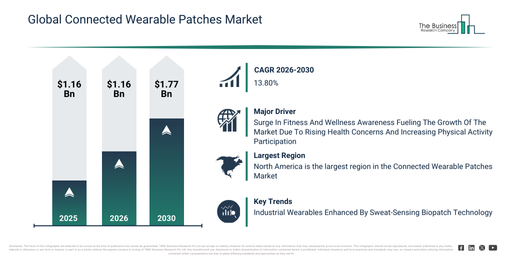
    The connected wearable patches market is projected for substantial growth over the next few years. It is anticipated to reach $12.26 billion by 2030, exhibiting a compound annual growth rate (CAGR) of 13.8%. This expansion during the forecast period is largely due to advancements in sensor miniaturization and connectivity, integration with smartphones and cloud platforms, increasing demand for continuous glucose and cardiac monitoring, the broadening of sports and wellness tracking applications, and improved regulatory approvals along with healthcare reimbursement policies. Prominent trends expected in this period involve the development of remote patient monitoring and telehealth solutions, a growing adoption of non-invasive glucose monitoring technologies, the increasing application of wearable patches in fitness and sports performance, the expansion of transdermal drug delivery applications, and a stronger focus on data accuracy, sensor reliability, and patient safety.

    Get A Free Sample Report With In-Depth Market Insights:

    https://thebusinessresearchcompany.com/sample_request?id=44768564&type=smp&name=Connected%20Wearable%20Patches%20Market%20Report%202026&utm_source=Blogs&utm_medium=Paid&utm_campaign=Oct_PR

    Connected Wearable Patches Market Growth Factors: What’s Supporting Expansion?

    The expanding awareness of fitness and wellness is anticipated to fuel the future growth of the connected wearable patches market. This awareness signifies an understanding of the crucial role of consistent physical activity and healthy lifestyle choices for overall well-being. The heightened concern over chronic illnesses is contributing to this increase in fitness and wellness awareness, motivating people to embrace healthier habits for improved long-term health. Connected wearable patches contribute to this by continuously tracking key health indicators, offering immediate feedback, and inspiring users to remain active and uphold healthier routines. For example, data from June 2024, provided by the International Food Information Council (IFIC), a US based non profit organization, indicates that a substantial 54% of Americans adhered to a specific diet or eating pattern in the preceding year. A significant number of individuals are focused on increasing their protein consumption, with interest growing from 59% in 2022 to 67% in 2023, and further to 71% in 2024. Furthermore, approximately half of consumers are prioritizing increased intake of fresh foods, recognized as among the healthiest dietary choices. Consequently, the rising fitness and wellness awareness is a key driver for the expansion of the connected wearable patches market.

    Connected Wearable Patches Market Segment Analysis: What Are The Core Market Categories?

    The connected wearable patches market covered in this report is segmented –

    1) By Type: Glucose Monitoring Patches, Cardiac Monitoring Patches, Electromyography (EMG) Patches, Transdermal Drug Delivery Patches, Electroencephalography (EEG) Patches, Other Types

    2) By Sensor Technology: Electrocardiography (ECG), Photoplethysmography (PPG), Accelerometry, Gyroscope, Temperature Sensing

    3) By Distribution Channel: Online Stores, Pharmacies, Specialty Stores, Other Distribution Channels

    4) By Application: Remote Patient Monitoring, Fitness And Wellness Monitoring, Drug Delivery, Sports And Performance Monitoring, Other Applications

    5) By End User: Hospitals, Home Care, Fitness Centers, Research Institutions, Other End-Users

    Subsegments:

    1) By Glucose Monitoring Patches: Continuous Glucose Monitoring (CGM) Patches, Flash Glucose Monitoring (FGM) Patches, Non-Invasive Glucose Monitoring Patches, Adhesive Enzyme-Based Glucose Patches

    2) By Cardiac Monitoring Patches: Electrocardiography Monitoring Patches, Arrhythmia Detection Patches, Remote Cardiac Telemetry Patches, Holter Monitoring Patches

    3) By Electromyography (EMG) Patches: Surface Electromyography Patches, Wireless Electromyography Sensor Patches, Multi-channel Electromyography Patches, Rehabilitation Monitoring Electromyography Patches

    4) By Transdermal Drug Delivery Patches: Nicotine Delivery Patches, Hormone Replacement Therapy (HRT) Patches, Pain Management Patches (e.g., Fentanyl), Neurological Drug Delivery Patches, Anti-hypertensive Patches

    5) By Electroencephalography (EEG) Patches: Sleep Monitoring Electroencephalography Patches, Seizure Detection Electroencephalography Patches, Brain-Computer Interface (BCI) Patches, Cognitive Performance Monitoring Patches

    6) By Other Types: Hydration Monitoring Patches, Temperature Monitoring Patches, Sweat Analysis Patches, Oxygen Saturation (SpO₂) Monitoring Patches, Respiratory Rate Monitoring Patches

    Connected Wearable Patches Market Industry Trends: What’s Reshaping Demand?

    Major companies operating in the connected wearable patches market are increasingly focusing on advanced technologies, such as sweat-sensing biopatch platforms, to deliver real-time, personalized hydration insights for industrial workers. A sweat-sensing biopatch integrates multiple biosensors to detect fluid and electrolyte loss, body temperature, and movement patterns instantly, facilitating proactive hydration and heat stress management. For instance, in April 2024, Epicore Biosystems, a US-based digital health company, unveiled Connected Hydration alongside a mobile application. This represents a next-generation wearable patch system engineered to help industrial workers prevent dehydration and heat-related injuries through immediate data feedback. This sophisticated solution features a flexible, non-rechargeable biopatch with a 1,000-hour battery life, real-time dehydration alerts delivered via haptic feedback, and a mobile application for tracking fluid intake and biometric trends. Its sturdy design is certified for hazardous environments and incorporates machine learning trained on over 420,000 field data points.

    Connected Wearable Patches Market Leading Players And Competitive Positioning

    Major companies operating in the connected wearable patches market are Abbott Laboratories, Medtronic plc, Koninklijke Philips NV, GE HealthCare Technologies Inc, ZOLL Medical Corporation, Dexcom Inc, Insulet Corporation, MicroPort Scientific Corporation, iRhythm Technologies Inc, Linxens Holding SAS, Biotricity Inc, Blue Spark Technologies Inc, Epicore Biosystems Inc, Cardiac Insight Inc, Delsys Incorporated, G Tech Medical Inc, Leaf Healthcare Inc, VivaLNK Inc, BioIntelliSense Inc, MC10 Inc, LifeSignals Group Inc, Preventice Solutions Inc

    View The Full Connected Wearable Patches Market Report:

    https://thebusinessresearchcompany.com/report/connected-wearable-patches-global-market-report?utm_source=Blogs&utm_medium=Paid&utm_campaign=Oct_PR

    Connected Wearable Patches Market Regional Split: Which Areas Are Fueling Growth?

    North America was the largest region in the connected wearable patches market in 2025. Asia-Pacific is expected to be the fastest-growing region in the forecast period. The regions covered in the connected wearable patches market report are Asia-Pacific, South East Asia, Western Europe, Eastern Europe, North America, South America, Middle East, Africa.

    Reach Out To Our Team:

    The Business Research Company: https://www.thebusinessresearchcompany.com/

    Americas: +1 310-496-7795

    Asia: +44 7882 955267 & +91 8897263534

    Europe: +44 7882 955267

    Email us at: marketing@tbrc.info

    Follow us on:

    LinkedIn: https://in.linkedin.com/company/the-business-research-company

    YouTube: https://www.youtube.com/channel/UC24_fI0rV8cR5DxlCpgmyFQ

    Global Market Model: https://www.thebusinessresearchcompany.com/global-market-model
  • Connected Medical Device Market Growth To $117.68 Billion Creates New Opportunities Across The Industry

    Connected Medical Device Market Growth To $117.68 Billion Creates New Opportunities Across The Industry

    Featuring market attractiveness scoring, total addressable market sizing, company benchmarking matrices, interactive Excel dashboards, deeper supply chain intelligence, emerging startup tracking, and granular product-level insights, The Business Research Company’s 2026 market reports are built to deliver research that is both more actionable and more strategically valuable.

    Connected Medical Device Market Value Analysis: What Growth Lies Ahead Over The Forecast Period?

    The connected medical device market has experienced substantial expansion in its size over recent years. Projections indicate it will expand from $56.74 billion in 2025 to reach $65.78 billion by 2026, demonstrating a compound annual growth rate (CAGR) of 15.9%. Key factors contributing to this historic growth include inadequate connectivity infrastructure within healthcare settings, the gradual embrace of digital health innovations, a dependency on conventional patient monitoring approaches, the rising incidence of chronic ailments, and the imperative for immediate patient data acquisition.

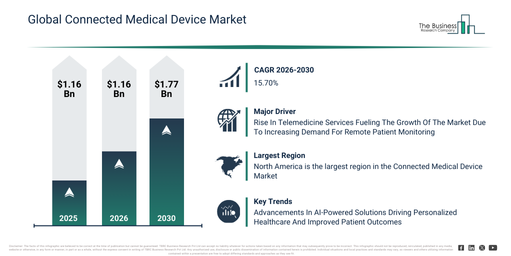
    The connected medical device market is anticipated to experience substantial expansion over the upcoming years. It is projected to reach $117.68 billion in 2030, demonstrating a compound annual growth rate (CAGR) of 15.7%. This predicted increase during the forecast period stems from factors such as the proliferation of wearable and implantable medical devices, growing financial commitments to telehealth and remote monitoring, the incorporation of artificial intelligence for producing predictive insights, an increase in the acceptance of home care and long-term care, and enhanced regulatory backing for connected medical devices. Key developments expected during the forecast timeframe encompass the merging of connected devices with electronic health records (ehrs), a wider embrace of remote patient monitoring solutions, an expansion in chronic disease management programs, improved data analytics to aid clinical decision support, and a heightened emphasis on home-based healthcare and telemedicine.

    Get A Free Sample Report With In-Depth Market Insights:

    https://thebusinessresearchcompany.com/sample_request?id=21616220&type=smp&name=Connected%20Medical%20Device%20Market%20Report%202026&utm_source=Blogs&utm_medium=Paid&utm_campaign=Oct_PR

    Connected Medical Device Market Demand Drivers: What’s Powering Industry Growth?

    The expansion of telemedicine services is projected to stimulate the growth of the connected medical device market in the coming years. Telemedicine involves using technology to deliver medical care and consultations from a distance, removing the necessity for in-person visits. The increasing demand for telemedicine is driven by its convenient access to healthcare, allowing patients to quickly consult doctors from their homes, which saves time and lessens the need for travel. This uptick in telemedicine services supports the need for connected medical devices by enabling remote patient monitoring, which mandates real-time data transmission from patients to healthcare providers to ensure accurate diagnosis and timely intervention without physical attendance. For instance, in April 2025, according to the American Hospital Association, a US-based nonprofit trade association, it was reported that in the last quarter of 2023, over 12.6% of Medicare beneficiaries received a telehealth service. Recent data also suggest that the United States will face a physician shortage of up to 86,000 physicians by 2036. Telehealth is a crucial element in addressing the escalating shortage of physicians. Therefore, the increase in telemedicine services will propel the growth of the connected medical device market.

    Connected Medical Device Market Segment Breakdown: Which Categories Lead On Revenue?

    The connected medical device market covered in this report is segmented –

    1) By Product Type: Wearable Devices, Implantable Devices, Stationary Devices

    2) By Connectivity Technology: Bluetooth, Wi-Fi, Cellular, Other Connectivity Technologies

    3) By Application: Remote Patient Monitoring, Telemedicine, Clinical Decision Support, Chronic Disease Management, Fitness And Wellness, Other Applications

    4) By End-User: Hospitals And Clinics, Home Care Settings, Long-Term Care Facilities, Ambulatory Surgical Centers, Other End-Users

    Subsegments:

    1) By Wearable Devices: Fitness Trackers, Smartwatches, Continuous Glucose Monitors (CGM), Wearable ECG Monitors, Blood Pressure Monitors, Pulse Oximeters, Sleep Trackers

    2) By Implantable Devices: Cardiac Pacemakers, Implantable Cardioverter Defibrillators (ICDs), Neurostimulators, Cochlear Implants, Implantable Glucose Sensors, Drug Delivery Implants

    3) By Stationary Devices: Remote Patient Monitoring Stations, Telehealth Kiosks, Connected Imaging Devices, Connected Ventilators, Connected Dialysis Machines, Connected Infusion Pumps

    Connected Medical Device Market Innovation Trends: What Developments Are Reshaping The Industry?

    Leading companies within the connected medical device market are concentrating on developing sophisticated solutions, such as AI-driven platforms, to facilitate customized user experiences by adjusting to unique behaviors and preferences instantly. These AI-driven platforms represent digital frameworks that leverage artificial intelligence capabilities to analyze information, formulate decisions, and automate various tasks with very little human oversight. As an illustration, in October 2023, ZS, a US-based technology enterprise, introduced its ZAIDYN Connected Health solution. This solution uniquely provides reliable, AI-driven insights to assist pharmaceutical firms, healthcare practitioners, and insurers in tackling unresolved medical requirements and improving patient results. Its health insights component pinpoints deficiencies in care and offers tailored advice for doctors, patients, and producers, aiming to enhance access to treatment and its coordination. The patient engagement component is dedicated to comprehending the specific requirements of individual patients to provide bespoke assistance and boost the efficacy of patient initiatives. Furthermore, connected research employs sophisticated digital engagement instruments to collect dependable evidence, thereby assisting healthcare entities in validating novelties and underpinning strategic choices.

    Connected Medical Device Market Competitive Overview And Top Companies

    Major companies operating in the connected medical device market are Johnson and Johnson, Abbott Laboratories, Medtronic plc, F Hoffmann La Roche Ltd, Siemens Healthineers AG, Fresenius Medical Care AG and Co KGaA, Becton Dickinson and Company, Koninklijke Philips NV, GE Healthcare Technologies Inc, Boston Scientific Corporation, Baxter International Inc, Olympus Corporation, Terumo Corporation, Garmin Ltd, ResMed Inc, Omron Healthcare Inc, Epitel Inc, Masimo Corporation, AliveCor Inc, DexCom Inc, Insulet Corporation, iRhythm Technologies Inc

    View The Full Connected Medical Device Market Report:

    https://thebusinessresearchcompany.com/report/connected-medical-device-global-market-report?utm_source=Blogs&utm_medium=Paid&utm_campaign=Oct_PR

    Connected Medical Device Market Top Region: Where Does Most Revenue Come From?

    North America was the largest region in the connected medical device market in 2025. Asia-Pacific is expected to be the fastest-growing region in the forecast period. The regions covered in the connected medical device market report are Asia-Pacific, South East Asia, Western Europe, Eastern Europe, North America, South America, Middle East, Africa.

    Reach Out To Our Team:

    The Business Research Company: https://www.thebusinessresearchcompany.com/

    Americas: +1 310-496-7795

    Asia: +44 7882 955267 & +91 8897263534

    Europe: +44 7882 955267

    Email us at: marketing@tbrc.info

    Follow us on:

    LinkedIn: https://in.linkedin.com/company/the-business-research-company

    YouTube: https://www.youtube.com/channel/UC24_fI0rV8cR5DxlCpgmyFQ

    Global Market Model: https://www.thebusinessresearchcompany.com/global-market-model
  • Connected Health Personal Medical Devices Market Forecast: Breaking Down The Numbers Behind Future Expansion

    Connected Health Personal Medical Devices Market Forecast: Breaking Down The Numbers Behind Future Expansion

    Built to provide research that’s more actionable and strategically valuable, The Business Research Company’s 2026 market reports include market attractiveness analysis, total addressable market sizing, company benchmarking matrices, interactive Excel dashboards, broader supply chain intelligence, emerging startup tracking, and in-depth product insights.

    Connected Health Personal Medical Devices Market Size Forecast: How Big Could The Market Get By 2030?

    The connected health personal medical devices market size has seen swift expansion recently. It is projected to increase from $45.71 billion in 2025 to $52.68 billion by 2026, with a compound annual growth rate (CAGR) of 15.2%. Historically, this growth has been driven by the limited accessibility of connected health devices, a dependence on traditional in-clinic monitoring, the gradual embrace of wearable technologies, a rising prevalence of chronic diseases, and an absence of standardized healthcare IT infrastructure.

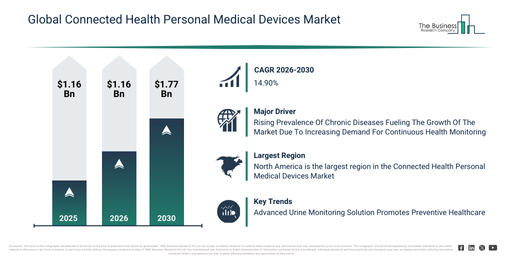
    The connected health personal medical devices market is poised for significant expansion over the next few years. It is projected to achieve a size of $91.9 billion in 2030, growing at a compound annual growth rate (CAGR) of 14.9%. This anticipated growth is fueled by the rapid advancement of smart wearable medical devices, the increasing reach of home healthcare solutions, deeper integration with cloud-based health platforms, a rise in patient engagement with self-monitoring, and the adoption of predictive and real-time analytics for individualized care. Prominent trends for the forecast period include the escalating adoption of remote patient monitoring devices, the integration of wearable health technologies with mobile applications, a surge in the usage of smart pill dispensers and glucose monitors, a heightened focus on managing chronic diseases and preventive care, and the continued expansion of telemedicine and home .

    Get A Free Sample Report With In-Depth Market Insights:

    https://thebusinessresearchcompany.com/sample_request?id=96773317&type=smp&name=Connected%20Health%20Personal%20Medical%20Devices%20Market%20Report%202026&utm_source=Blogs&utm_medium=Paid&utm_campaign=Oct_PR

    Connected Health Personal Medical Devices Market Growth Drivers: What’s Behind The Acceleration?

    The increasing occurrence of chronic illnesses is anticipated to fuel the expansion of the connected health personal medical devices market in the future. These conditions are long-lasting health issues that develop gradually and persist over extended periods, often demanding ongoing medical attention. A contributing factor to the rising incidence of chronic diseases is inactive lifestyles, as prolonged sedentary behavior and insufficient physical activity heighten the risk of ailments like heart conditions and diabetes. Connected health personal medical devices facilitate the oversight of chronic diseases by enabling real-time health monitoring, making them highly suitable for managing conditions such as diabetes and hypertension from home. They minimize the necessity for frequent medical appointments through the provision of continuous data and prompt notifications, thereby enhancing patient results and ease. For instance, in June 2024, the National Health Service, a UK-based government department, reported that 3,615,330 individuals registered with a general practitioner (GP) were diagnosed with non-diabetic hyperglycemia or pre-diabetes (a condition with elevated blood sugar levels, not high enough to be classified as diabetes) in 2023, which represented an 18% increase from 3,065,825 cases in 2022. Consequently, the growing prevalence of chronic diseases is propelling the expansion of the connected health personal medical devices market.

    Connected Health Personal Medical Devices Market Segmentation: How Does The Market Break Down By Category?

    The connected health personal medical devices market covered in this report is segmented –

    1) By Solution: Healthcare IT, Health Information Exchange, Healthcare Analytics

    2) By Product: Insulin Pumps, Blood Pressure (BP) Monitors, Portable Global Positioning System (GPS) Personal Emergency Response System (PERS), Glucose Monitor, Personal Pulse Oximeter, Smart Pill Dispenser, Personal Electrocardiogram (ECG)

    3) By Connectivity: Bluetooth, Wi-Fi, Cellular, Other Connectivities

    4) By Application: Chronic Disease Management, Fitness And Wellness, Home Healthcare, Other Applications

    5) By End User: Hospitals, Clinics, Homecare Settings, Other End Users

    Subsegments:

    1) By Healthcare IT: Electronic Health Records (EHR), Telemedicine Solutions, Mobile Health (mHealth) Applications, E-Prescribing Systems

    2) By Health Information Exchange: Directed Exchange, Query-Based Exchange, Consumer-Mediated Exchange, Cloud-Based Health Information Platforms

    3) By Healthcare Analytics: Descriptive Analytics, Predictive Analytics, Prescriptive Analytics, Real-Time Analytics

    Connected Health Personal Medical Devices Market Trends: What’s Defining The Industry’s Next Phase?

    Companies within the connected health personal medical devices market are prioritizing the development of sophisticated offerings, such as advanced in-home diagnostic systems, with the goal of enhancing preventive healthcare and user convenience. In-home diagnostic systems refer to medical tools and devices that enable individuals to monitor, test, and manage their health conditions from home, removing the necessity of visiting a healthcare facility. As an example, in January 2023, Withings, a health technology company based in France, introduced U-Scan, a hands-free, in-home urine analysis system designed to fit into a toilet bowl. This system employs a replaceable cartridge that conducts daily tests for as long as three months, evaluating key hydration and nutrition biomarkers. The device links to a smartphone application, supplying users with immediate insights and customized health recommendations. U-Scan’s objective is to make routine health tracking effortless and non-invasive, thereby supporting proactive wellness management.

    Connected Health Personal Medical Devices Market Competitive Landscape: Which Companies Lead The Industry?

    Major companies operating in the connected health personal medical devices market are Johnson and Johnson, F Hoffmann La Roche AG, Abbott Laboratories, Medtronic plc, Siemens Healthineers, Becton Dickinson and Company, GE HealthCare, Philips Healthcare, Omron Healthcare, Masimo Corporation, Oura Health Oy, Whoop Inc, Withings, Eko Health Inc, TytoCare Ltd, AliveCor Inc, DarioHealth Corp, iHealth Labs Inc, Samsung Electronics, Biostrap, Aktiia, Ava Science Inc, Bloomlife Inc, Movano Health, Oxitone Medical Ltd, Qardio Inc

    View The Full Connected Health Personal Medical Devices Market Report:

    https://thebusinessresearchcompany.com/report/connected-health-personal-medical-devices-global-market-report?utm_source=Blogs&utm_medium=Paid&utm_campaign=Oct_PR

    Connected Health Personal Medical Devices Market Regional Breakdown: Where Is Demand Concentrated?

    North America was the largest region in the connected health personal medical devices market in 2025. Asia-Pacific is expected to be the fastest-growing region in the forecast period. The regions covered in the connected health personal medical devices market report are Asia-Pacific, South East Asia, Western Europe, Eastern Europe, North America, South America, Middle East, Africa.

    Reach Out To Our Team:

    The Business Research Company: https://www.thebusinessresearchcompany.com/

    Americas: +1 310-496-7795

    Asia: +44 7882 955267 & +91 8897263534

    Europe: +44 7882 955267

    Email us at: marketing@tbrc.info

    Follow us on:

    LinkedIn: https://in.linkedin.com/company/the-business-research-company

    YouTube: https://www.youtube.com/channel/UC24_fI0rV8cR5DxlCpgmyFQ

    Global Market Model: https://www.thebusinessresearchcompany.com/global-market-model
  • Connected Health and Wellness Solutions Market Expected To Grow At 23.8% CAGR Through 2030: What Businesses Need To Know

    Connected Health and Wellness Solutions Market Expected To Grow At 23.8% CAGR Through 2030: What Businesses Need To Know

    Backed by market attractiveness analysis, total addressable market sizing, company benchmarking matrices, interactive Excel dashboards, wider supply chain intelligence, emerging startup coverage, and detailed product-level insights, The Business Research Company’s 2026 market reports are designed to offer research that is more actionable and strategically valuable than ever.

    Connected Health and Wellness Solutions Market Revenue Outlook: What CAGR Lies Ahead Through 2030?

    The connected health and wellness solutions market has seen exponential growth in recent years. Its size is forecast to expand from $82.06 billion in 2025 to $101.69 billion in 2026, achieving a compound annual growth rate (CAGR) of 23.9%. Historically, this growth can be attributed to the increasing prevalence of smartphones and internet connectivity, heightened consumer health awareness, the broader adoption of wearable devices, a rising demand for home-based monitoring, and wider acceptance of digital health tools.

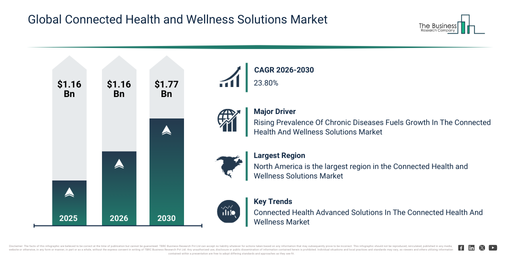
    The connected health and wellness solutions market is projected to experience substantial expansion in the coming years. It is anticipated to achieve a valuation of $238.59 billion by 2030, demonstrating a compound annual growth rate (CAGR) of 23.8%. This growth during the forecast period stems from factors such as the increasing adoption of AI-driven health analytics, a rising demand for continuous health monitoring, the expansion of virtual care models, a growing emphasis on chronic disease management, and the increasing integration of connected devices within healthcare systems. Prominent trends expected in this period include the wider adoption of remote patient monitoring devices, an increased use of wearable health technologies, the growing integration of telehealth platforms, the proliferation of mobile health applications, and an enhanced focus on preventive and wellness monitoring.

    Get A Free Sample Report With In-Depth Market Insights:

    https://thebusinessresearchcompany.com/sample_request?id=52667789&type=smp&name=Connected%20Health%20and%20Wellness%20Solutions%20Market%20Report%202026&utm_source=Blogs&utm_medium=Paid&utm_campaign=Oct_PR

    Connected Health and Wellness Solutions Market Growth Factors Behind Sustained Expansion

    The growing incidence of chronic conditions is anticipated to drive the expansion of the connected health and wellness solutions market in the future. These conditions are characterized as health issues that persist for at least a year, requiring ongoing medical attention, limiting daily functions, or a combination of these factors. In managing such long-term illnesses, connected health and wellness solutions are utilized to offer remote patient surveillance, support for medication compliance, and tailored therapies, thereby improving patient care and bolstering adherence to treatment plans. For instance, a report from March 2025 by the Office for Health Improvement & Disparities (OHID), a UK-based unit of the Department of Health and Social Care, indicated that GP-recorded type 2 diabetes prevalence in adults was 7.0% for those aged 17 and over in England in March 2024, representing a rise from 6.8% in March 2023. Consequently, the rising prevalence of chronic diseases is projected to stimulate the growth of the connected health and wellness solutions market.

    Connected Health and Wellness Solutions Market Segment Trends And Revenue Contributors

    The connected health and wellness solutions market covered in this report is segmented –

    1) By Product: Personal Medical Devices, Wellness Products, Software & Services

    2) By Function: Clinical Monitoring, Telehealth

    3) By Application: Diagnosis & Treatment, Wellness and prevention, Monitoring, Other Applications

    Subsegments:

    1) By Personal Medical Devices: Wearable Health Monitors, Remote Patient Monitoring Devices, Connected Inhalers and Medication Adherence Devices

    2) By Wellness Products: Smart Scales and Body Composition Monitors, Sleep Trackers and Sleep Aids, Smart Thermometers

    3) By Software & Services: Mobile Health Applications (mHealth apps), Telehealth Platforms and Services, Data Analytics and Health Management Solutions

    Connected Health and Wellness Solutions Market Industry Trends Fueling Future Revenue Growth

    Leading companies within the connected health and wellness solutions market are prioritizing the creation of advanced technological products, such as the ZAIDYN connected health solution, aiming to enhance remote patient monitoring and improve healthcare outcomes. ZAIDYN connected health supports pharmaceutical firms, healthcare providers, and payers in their innovation efforts to better identify unmet needs, engage patients, and elevate health outcomes. For instance, in October 2023, ZS Associates Group, Inc., a US-based management consulting and technology firm, unveiled the AI-powered ZAIDYN Connected Health solution as part of the ZAIDYN by ZS platform. It delivers three product suites that help bridge gaps in healthcare and establish a patient-centric future by providing health insights, facilitating patient engagement, and enabling connected research.

    Connected Health and Wellness Solutions Market Competitive Landscape: Who Leads The Industry?

    Major companies operating in the connected health and wellness solutions market are Omron Healthcare Inc., Koninklijke Philips N.V., GE Healthcare Technologies Inc., Abbott Laboratories, Apple Inc., Garmin Ltd., Masimo Corporation, ResMed Inc., Medtronic PLC, Boston Scientific Corporation, Microlife AG, AgaMatrix Inc., Dexcom Inc., Withings S.A., Polar Electro Oy, Suunto Oy, iHealth Labs Inc., AliveCor Inc., Oura Health Oy, WHOOP Inc., Samsung Electronics Co. Ltd., Xiaomi Corporation

    View The Full Connected Health and Wellness Solutions Market Report:

    https://thebusinessresearchcompany.com/report/connected-health-and-wellness-solutions-global-market-report?utm_source=Blogs&utm_medium=Paid&utm_campaign=Oct_PR

    Connected Health and Wellness Solutions Market Geographic Landscape: Which Region Dominates Industry Growth?

    North America was the largest region in the connected health and wellness solutions market in 2025. Asia-Pacific is expected to be the fastest-growing region in the forecast period. The regions covered in the connected health and wellness solutions market report are Asia-Pacific, South East Asia, Western Europe, Eastern Europe, North America, South America, Middle East, Africa.

    Reach Out To Our Team:

    The Business Research Company: https://www.thebusinessresearchcompany.com/

    Americas: +1 310-496-7795

    Asia: +44 7882 955267 & +91 8897263534

    Europe: +44 7882 955267

    Email us at: marketing@tbrc.info

    Follow us on:

    LinkedIn: https://in.linkedin.com/company/the-business-research-company

    YouTube: https://www.youtube.com/channel/UC24_fI0rV8cR5DxlCpgmyFQ

    Global Market Model: https://www.thebusinessresearchcompany.com/global-market-model
  • Congestive Heart Failure Treatment Devices Market Forecast To Reach $30.07 Billion By 2030: Key Trends Explained

    Congestive Heart Failure Treatment Devices Market Forecast To Reach $30.07 Billion By 2030: Key Trends Explained

    Featuring market attractiveness scoring, total addressable market sizing, company benchmarking matrices, interactive Excel dashboards, deeper supply chain intelligence, emerging startup tracking, and granular product-level insights, The Business Research Company’s 2026 market reports are built to deliver research that is both more actionable and more strategically valuable.

    Congestive Heart Failure Treatment Devices Market Growth Analysis: How Will Revenue Trend Over The Forecast Period?

    The congestive heart failure treatment devices market has experienced robust growth in recent years. It is anticipated to expand from $21.07 billion in 2025 to $22.76 billion in 2026, with a compound annual growth rate (CAGR) of 8.0%. This historical growth can be attributed to the increasing prevalence of congestive heart failure, a rise in cardiovascular disease cases, greater use of implantable cardiac devices, the expansion of specialized cardiac care facilities, and enhanced survival rates for heart failure patients.

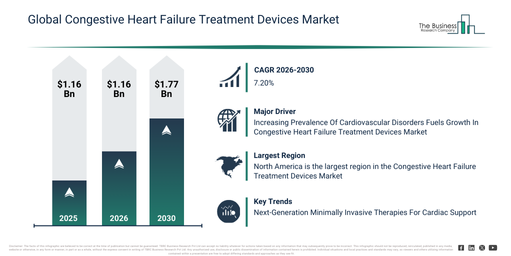
    The congestive heart failure treatment devices market is projected to experience substantial expansion over the upcoming years. This market is anticipated to reach $30.07 billion in 2030, exhibiting a compound annual growth rate (CAGR) of 7.2%. Factors contributing to this growth during the forecast period include a demographic shift towards an older population more susceptible to heart failure, a rising need for less invasive cardiac treatments, an intensified emphasis on prompt intervention and managing the disease, broader availability of sophisticated heart failure treatments in developing regions, and the increasing uptake of prolonged mechanical circulatory support devices. Key trends anticipated during this period involve the growing acceptance of cutting-edge implantable devices for heart failure, a rise in the application of ventricular assist devices for advanced chf, a heightened effort to decrease hospital admissions due to heart failure, the broadening scope of device-based solutions for sustained cardiac assistance, and an escalating requirement for ongoing heart monitoring and management.

    Get A Free Sample Report With In-Depth Market Insights:

    https://thebusinessresearchcompany.com/sample_request?id=31801856&type=smp&name=Congestive%20Heart%20Failure%20Treatment%20Devices%20Market%20Report%202026&utm_source=Blogs&utm_medium=Paid&utm_campaign=Oct_PR

    Congestive Heart Failure Treatment Devices Market Demand Drivers Opening New Revenue Streams

    The rising occurrence of cardiovascular conditions is projected to boost the expansion of the congestive heart failure treatment devices market going forward. These disorders encompass a range of diseases affecting the heart and blood vessels, including coronary artery disease, hypertension, and heart failure, which impact blood circulation and overall heart health. The increasing prevalence of cardiovascular disorders is largely attributable to the growing rates of risk factors such as obesity, sedentary lifestyles, poor diets, and aging populations. Congestive heart failure treatment devices are essential in managing cardiovascular disorders by regulating heart rhythms and improving heart function, thereby significantly enhancing patient outcomes. For instance, in October 2024, according to the Centers for Disease Control and Prevention, a US-based government agency, cardiovascular disease was responsible for 919,032 deaths in 2023, accounting for one in every three deaths. Coronary heart disease remained the most prevalent form of heart disease, and notably, approximately one in six deaths from cardiovascular diseases occurred among adults younger than 65 years. Therefore, the increase in the prevalence of cardiovascular disorders is driving the growth of the congestive heart failure (CHF) treatment devices market.

    Congestive Heart Failure Treatment Devices Market Segment Analysis Spotlighting Growth Areas

    The congestive heart failure treatment devices market covered in this report is segmented –

    1) By Product: Cardiac Pacemaker, Implantable Cardioverter Defibrillators (ICDs), Cardiac Resynchronization Therapy Devices (CRT), Counter Pulsation Devices, Ventricular Assist Devices (VADs)

    2) By Application: Left Ventricular Assist Device (LVAD), Right Ventricular Assist Device (RVAD), Biventricular Assist Device (BIVAD)

    3) By End-User: Hospitals And Clinic, Specialized Cardiovascular Disease Treatment Centers, Ambulatory Surgery Centers

    Subsegments:

    1) By Cardiac Pacemaker: Single Chamber Pacemaker, Dual Chamber Pacemaker, Biventricular Pacemaker

    2) By Implantable Cardioverter Defibrillators (ICDs): Traditional ICDs, Subcutaneous ICDs, CRT-D (Cardiac Resynchronization Therapy Defibrillator)

    3) By Cardiac Resynchronization Therapy Devices (CRT): CRT-P (Cardiac Resynchronization Therapy Pacemaker), CRT-D (Cardiac Resynchronization Therapy Defibrillator)

    4) By Counter Pulsation Devices: Intra-Aortic Balloon Pumps (IABP), External Counterpulsation Devices (ECP)

    5) By Ventricular Assist Devices (VADs): Left Ventricular Assist Devices (LVAD), Right Ventricular Assist Devices (RVAD), Biventricular Assist Devices (BiVAD)

    Congestive Heart Failure Treatment Devices Market Trends Powering Strategic Industry Growth

    Leading companies within the congestive heart failure treatment devices market are concentrating on developing advanced solutions, such as the implant-free atrial septostomy system, to boost hemodynamic relief, simplify procedural complexity, and offer less invasive treatment alternatives for individuals with heart failure. An implant-free atrial septostomy system is a minimally invasive device crafted to create a controlled opening in the atrial septum without leaving a permanent implant, thereby enabling better left atrial pressure reduction and improved cardiac hemodynamics in heart failure patients. For instance, in January 2025, Alleviant Medical Inc., a US-based medical device company, attained significant FDA milestones for its novel no-implant interatrial shunt device for addressing heart failure. This device presents a minimally invasive solution for heart failure by establishing a precise shunt that lowers elevated pressure in the left atrium without requiring a permanent implant. This method reduces complications often associated with implanted devices, encourages lasting shunt patency, and improves symptoms, exercise capacity, and the quality of life for chronic heart failure patients. Its primary aim is to relieve the heart’s burden, alleviate symptoms, and provide a safer, innovative treatment alternative for patients with limited choices.

    Congestive Heart Failure Treatment Devices Market Company Landscape And Competitive Strategy

    Major companies operating in the congestive heart failure treatment devices market are Medtronic plc, Abbott Laboratories, Boston Scientific Corporation, Biotronik SE & Co KG, LivaNova PLC, Berlin Heart GmbH, Jarvik Heart Inc, ReliantHeart Inc, Abiomed Inc, Lepu Medical Technology Co Ltd, Magenta Medical Ltd, MicroPort Inc, EBR Systems Inc, Syncardia Systems LLC, Oscor Inc, OSYPKA Medical GmbH, Calon Cardio‑Technology, CoreWave SA, Zoll Medical Corporation

    View The Full Congestive Heart Failure Treatment Devices Market Report:

    https://thebusinessresearchcompany.com/report/congestive-heart-failure-treatment-devices-global-market-report?utm_source=Blogs&utm_medium=Paid&utm_campaign=Oct_PR

    Congestive Heart Failure Treatment Devices Market Largest Region: Which Geography Holds The Highest Market Share?

    North America was the largest region in the congestive heart failure treatment devices market in 2025. Asia-Pacific is expected to be the fastest-growing region in the forecast period. The regions covered in the congestive heart failure treatment devices market report are Asia-Pacific, South East Asia, Western Europe, Eastern Europe, North America, South America, Middle East, Africa.

    Reach Out To Our Team:

    The Business Research Company: https://www.thebusinessresearchcompany.com/

    Americas: +1 310-496-7795

    Asia: +44 7882 955267 & +91 8897263534

    Europe: +44 7882 955267

    Email us at: marketing@tbrc.info

    Follow us on:

    LinkedIn: https://in.linkedin.com/company/the-business-research-company

    YouTube: https://www.youtube.com/channel/UC24_fI0rV8cR5DxlCpgmyFQ

    Global Market Model: https://www.thebusinessresearchcompany.com/global-market-model
  • Congenital Heart Defect Devices Market Analysis Through 2030: Market Size, Growth Trends And Industry Outlook

    Congenital Heart Defect Devices Market Analysis Through 2030: Market Size, Growth Trends And Industry Outlook

    Backed by market attractiveness analysis, total addressable market sizing, company benchmarking matrices, interactive Excel dashboards, wider supply chain intelligence, emerging startup coverage, and detailed product-level insights, The Business Research Company’s 2026 market reports are designed to offer research that is more actionable and strategically valuable than ever.

    Congenital Heart Defect Devices Market Forecast: What Value Will The Market Reach By 2030?

    The market size for congenital heart defect devices has shown robust growth recently. It is anticipated to expand from $3.11 billion in 2025 to $3.34 billion in 2026, achieving a compound annual growth rate (CAGR) of 7.4%. This historical increase can be attributed to several factors including the rising prevalence of congenital heart defects, continuous advancements in pediatric cardiac surgery, improved survival rates for patients with congenital heart conditions, the expansion of specialized cardiac care centers, and an increased focus on early diagnosis of congenital defects.

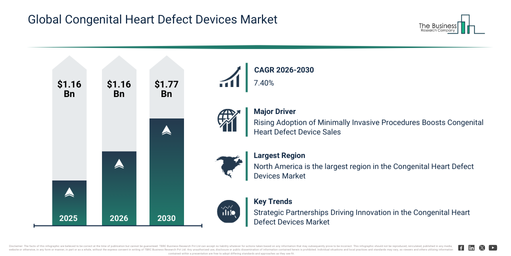
    The congenital heart defect devices market size is projected to experience robust growth in the upcoming years. It is anticipated to expand to $4.45 billion in 2030, demonstrating a compound annual growth rate (CAGR) of 7.4%. This projected expansion during the forecast period can be attributed to an increased emphasis on early diagnosis and intervention, a rising need for minimally invasive pediatric cardiac treatments, wider access to advanced cardiac care in developing markets, a growing population of adults living with congenital heart disease, and continuous innovation in implantable cardiac devices. Significant trends over this period include the increasing adoption of minimally invasive congenital heart procedures, a greater use of transcatheter and implantable cardiac devices, an escalating focus on early-life and pediatric cardiac interventions, the expansion of device-based therapies for complex heart defects, and a heightened demand for long-term cardiac monitoring and support devices.

    Get A Free Sample Report With In-Depth Market Insights:

    https://thebusinessresearchcompany.com/sample_request?id=54986781&type=smp&name=Congenital%20Heart%20Defect%20Devices%20Market%20Report%202026&utm_source=Blogs&utm_medium=Paid&utm_campaign=Oct_PR

    Congenital Heart Defect Devices Market Growth Backed By Core Demand Fundamentals

    The market for congenital heart defect devices is anticipated to expand, driven by the rising volume of minimally invasive procedures. These procedures entail surgical interventions performed via small cuts or natural bodily orifices, frequently employing specialized instruments and methods to lessen injury and improve recuperation. This surge in minimally invasive procedures stems from technological progress, patients favoring less intrusive treatments, enhancements in surgical methods, and the advantages of shorter recovery periods and fewer complications. Congenital heart defect devices are employed in minimally invasive procedures, aiding in the diagnosis, therapy, and handling of cardiac anomalies through methods involving smaller cuts or catheter-guided interventions. An example supporting this is the data from June 2024, where the American Society of Plastic Surgeons, a US-based organization, reported that in 2023, plastic surgeries saw a 5% increase, and minimally invasive procedures grew by 7% year-over-year. Consequently, the growing adoption of minimally invasive procedures is a key factor propelling the congenital heart defect device market.

    Congenital Heart Defect Devices Market Segment Performance And Emerging Opportunities

    The congenital heart defect devices market covered in this report is segmented –

    1) By Device Type: Catheters, Pacemakers, Single-Chamber Pacemakers, Dual-Chamber Pacemakers, Biventricular Pacemakers, Leadless Pacemakers, Implantable Cardioverter Defibrillators, Biventricular Devices, Implanted Cardiac Loop Recorders, Other Device Types

    2) By Defect Type: Atrial Septal Defect, Ventricular Septal Defect, Atrioventricular Septal Defect, Tricuspid Atresia, Truncus Arteriosus, Other Defect Types

    3) By End user: Hospitals, Specialty Clinics, Academic And Research Institute, Other End Users

    Subsegments:

    1) By Catheters: Balloon Catheters, Diagnostic Catheters, Guiding Catheters

    2) By Pacemakers: Single-Chamber Pacemakers, Dual-Chamber Pacemakers, Biventricular Pacemakers, Leadless Pacemakers

    3) By Implantable Cardioverter Defibrillators: Single-Chamber Icds, Dual-Chamber Icds, Subcutaneous Icds

    4) By Biventricular Devices: Crt-P (Cardiac Resynchronization Therapy Pacemakers), Crt-D (Cardiac Resynchronization Therapy Defibrillators)

    5) By Implanted Cardiac Loop Recorders: Traditional Implantable Loop Recorders, Subcutaneous Implantable Loop Recorders

    6) By Other Device Types: Transcatheter Heart Valves, Ventricular Assist Devices (VADS)

    Congenital Heart Defect Devices Market Growth Trends Reshaping The Competitive Landscape

    Leading companies operating within the congenital heart defect devices market are adopting a strategic partnerships approach to develop innovative congenital heart defect devices. These strategic alliances support firms in the congenital heart defect devices sector by consolidating resources and expertise, enhancing research and development efforts, broadening market access, and accelerating commercialization. Ultimately, this collaborative approach stimulates innovation and drives growth across the industry. For instance, in May 2024, SMT (Sahajanand Medical Technologies Pvt Ltd), an India-based manufacturing company, partnered with HeartX, an India-based MedTech firm, to improve patient care within the cardiovascular sector. Through this partnership, Sahajanand Medical Technologies (SMT) strengthens its position in the congenital heart defect (CHD) space by integrating HeartX’s innovative solutions, such as the JOVE VB Stent. This strategic alliance allows SMT to offer advanced CHD devices that enhance treatment efficacy, simplify procedures, and improve patient outcomes.

    Congenital Heart Defect Devices Market Key Players Shaping Industry Direction

    Major companies operating in the congenital heart defect devices market are Johnson & Johnson, Abbott Laboratories, Medtronic plc, Boston Scientific Corporation, W L Gore & Associates Inc, Lepu Medical Technology Beijing Co Ltd, MicroPort Scientific Corporation, Berlin Heart GmbH, Syncardia Systems LLC, Occlutech Holding AG, Sahajanand Medical Technologies Pvt Ltd, Xeltis AG, Procyrion Inc, Heartstitch Inc, Cardia Inc, OSYPKA Medical GmbH, On-X Life Technologies Inc, Ventracor Limited, HemoFlow Technologies, NuPulseCV Inc

    View The Full Congenital Heart Defect Devices Market Report:

    https://thebusinessresearchcompany.com/report/congenital-heart-defect-devices-global-market-report?utm_source=Blogs&utm_medium=Paid&utm_campaign=Oct_PR

    Congenital Heart Defect Devices Market Regional Analysis: Which Region Leads By Revenue?

    North America was the largest region in the congenital heart defect devices market in 2025. Asia-Pacific is expected to be the fastest-growing region in the forecast period. The regions covered in the congenital heart defect devices market report are Asia-Pacific, South East Asia, Western Europe, Eastern Europe, North America, South America, Middle East, Africa.

    Reach Out To Our Team:

    The Business Research Company: https://www.thebusinessresearchcompany.com/

    Americas: +1 310-496-7795

    Asia: +44 7882 955267 & +91 8897263534

    Europe: +44 7882 955267

    Email us at: marketing@tbrc.info

    Follow us on:

    LinkedIn: https://in.linkedin.com/company/the-business-research-company

    YouTube: https://www.youtube.com/channel/UC24_fI0rV8cR5DxlCpgmyFQ

    Global Market Model: https://www.thebusinessresearchcompany.com/global-market-model
  • Cone Beam Computed Tomography Market Outlook From 2026 To 2030: Key Growth Factors And Future Opportunities

    Cone Beam Computed Tomography Market Outlook From 2026 To 2030: Key Growth Factors And Future Opportunities

    Featuring market attractiveness scoring, total addressable market sizing, company benchmarking matrices, interactive Excel dashboards, deeper supply chain intelligence, emerging startup tracking, and granular product-level insights, The Business Research Company’s 2026 market reports are built to deliver research that is both more actionable and more strategically valuable.

    Cone Beam Computed Tomography Market Size Outlook: How Quickly Will Revenue Expand Through 2030?

    The cone beam computed tomography market has experienced rapid expansion in recent years. Its value is projected to rise from $1.47 billion in 2025 to $1.65 billion in 2026, achieving a compound annual growth rate (CAGR) of 11.9%. This historical development can be attributed to elements such as the increasing prevalence of dental disorders, the expansion of orthodontic and implant procedures, the growing adoption of digital dentistry, a rising demand for precise diagnostic imaging, and the availability of advanced imaging hardware.

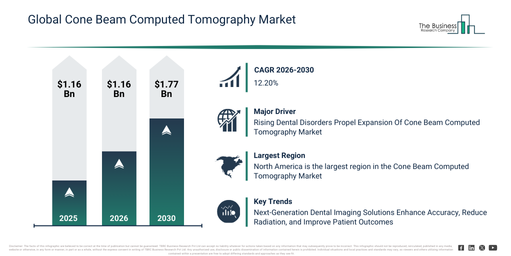
    The cone beam computed tomography market is projected for substantial growth over the coming years, with its valuation set to reach $2.61 billion by 2030, demonstrating a compound annual growth rate (CAGR) of 12.2%. Factors contributing to this growth during the forecast period include greater investments in dental imaging technologies, an escalating demand for minimally invasive diagnostic procedures, the proliferation of dental clinics in developing markets, the expanding application of AI-driven treatment planning, and a heightened emphasis on imaging solutions tailored to individual patients. Key trends anticipated within the forecast timeframe encompass the increasing integration of AI-assisted image reconstruction, a surge in the utilization of high-resolution dental imaging systems, an escalating preference for compact and in-clinic CBCT devices, the broadening scope of multi-application CBCT platforms, and a reinforced commitment to optimizing radiation doses.

    Get A Free Sample Report With In-Depth Market Insights:

    https://thebusinessresearchcompany.com/sample_request?id=37696656&type=smp&name=Cone%20Beam%20Computed%20Tomography%20Market%20Report%202026&utm_source=Blogs&utm_medium=Paid&utm_campaign=Oct_PR

    Cone Beam Computed Tomography Market Growth Catalysts And Demand Drivers

    The rising prevalence of dental disorders is anticipated to fuel the expansion of the cone beam computed tomography market in the future. These oral conditions, such as gum disease, tooth erosion, and cavities, impact oral health and can lead to pain, discomfort, limitations in eating, and a negative effect on self-esteem. Cone beam computed tomography is primarily utilized for the early detection of dental issues, thereby enhancing an endodontist’s capability to identify, assess, and provide care for patients, as well as to evaluate problems concerning the jaw, teeth, and facial skeletal structures. For example, in March 2023, a report published by the World Health Organization (WHO), a Switzerland-based health organization, revealed that nearly 3.5 billion individuals worldwide were affected by oral diseases. Approximately 10 percent of people globally suffer from severe periodontal gum disease, which can cause tooth loss. Additionally, 2.3 billion individuals across the globe have dental caries in their permanent teeth, and 520 million children worldwide experience primary tooth decay. Thus, the increasing incidence of dental disorders is a significant driver for the growth of the cone beam computed tomography market.

    Cone Beam Computed Tomography Market Segment Landscape And Growth Outlook

    The cone beam computed tomography market covered in this report is segmented –

    1) By Patient Position: Standing, Seated, Supine

    2) By Application: Dental Implantology, Oral And Maxillofacial Surgery, Orthodontics, Endodontics, General Dentistry, Temporomandibular Joint (TMJ) Disorders, Periodontics, Forensic Dentistry, Other Applications

    3) By End User: Hospitals, Dental Clinics, Other End-Users

    Subsegments:

    1) By Standing: Upright Standing Position, Upright Standing with Head Stabilization

    2) By Seated: Upright Seated Position, Upright Seated with Head Stabilization

    3) By Supine: Standard Supine Position, Adjustable Supine Position

    Cone Beam Computed Tomography Market Trends Shaping Long-Term Demand

    Leading companies in the cone-beam computed tomography (CBCT) market are concentrating on developing advanced imaging solutions, including optimized exposure protocols, enhanced sensors, and motion-artifact correction technologies, with the aim of boosting diagnostic accuracy, streamlining workflows, and improving patient outcomes. These next-generation imaging advancements provide clearer visualization, reduced radiation dose, and increased reliability, even in challenging clinical scenarios. For instance, in March 2025, Planmeca Oy, a Finland-based dental imaging and technology company, introduced the Planmeca Viso® G1 CBCT at IDS 2025. This system features a field of view up to 11 × 11 cm, incorporates Planmeca’s Ultra Low Dose protocol, and utilizes the CALM motion-artifact correction algorithm to deliver high-quality 3D images even when patient movement occurs, thereby supporting greater diagnostic confidence and improved clinical decision-making.

    Cone Beam Computed Tomography Market Competitive Analysis Of Leading Industry Participants

    Major companies operating in the cone beam computed tomography market are Planmeca Group, Vatech Co. Ltd., Asahi Roentgen Industry Co. Ltd., J Morita Corporation, QR s.r.l., CurveBeam AI, PreXion Inc., Canon Medical Systems Corporation, Fussen Technology Co. Ltd., Genoray Co. Ltd., Carestream Health Inc., Villa Sistemi Medicali S.p.A., Cefla S.C., PointNix Co. Ltd., LargeV Instrument Corp., Idetec Medical Imaging, Dentsply Sirona Inc., ACTEON Group, Owandy Radiology, Ray Co. Ltd.

    View The Full Cone Beam Computed Tomography Market Report:

    https://thebusinessresearchcompany.com/report/cone-beam-computed-tomography-global-market-report?utm_source=Blogs&utm_medium=Paid&utm_campaign=Oct_PR

    Cone Beam Computed Tomography Market Geographic Distribution And Regional Opportunities

    North America was the largest region in the cone beam computed tomography market in 2025. Asia-Pacific is expected to be the fastest-growing region in the global cone beam computed tomography market during the forecast period. The regions covered in the cone beam computed tomography market report are Asia-Pacific, South East Asia, Western Europe, Eastern Europe, North America, South America, Middle East, Africa.

    Reach Out To Our Team:

    The Business Research Company: https://www.thebusinessresearchcompany.com/

    Americas: +1 310-496-7795

    Asia: +44 7882 955267 & +91 8897263534

    Europe: +44 7882 955267

    Email us at: marketing@tbrc.info

    Follow us on:

    LinkedIn: https://in.linkedin.com/company/the-business-research-company

    YouTube: https://www.youtube.com/channel/UC24_fI0rV8cR5DxlCpgmyFQ

    Global Market Model: https://www.thebusinessresearchcompany.com/global-market-model
  • Computed Tomography (CT) Scanners Devices And Equipment Market Growth Forecast: Market Size, Key Trends And Emerging Opportunities Through 2030

    Computed Tomography (CT) Scanners Devices And Equipment Market Growth Forecast: Market Size, Key Trends And Emerging Opportunities Through 2030

    Built to provide research that’s more actionable and strategically valuable, The Business Research Company’s 2026 market reports include market attractiveness analysis, total addressable market sizing, company benchmarking matrices, interactive Excel dashboards, broader supply chain intelligence, emerging startup tracking, and in-depth product insights.

    Computed Tomography (CT) Scanners Devices And Equipment Market Size, Value And Growth Trajectory Through 2030

    The computed tomography (ct) scanners devices and equipment market has shown consistent growth recently. It will grow from $8.47 billion in 2025 to $8.77 billion in 2026 at a compound annual growth rate (CAGR) of 3.6%. The expansion observed historically can be linked to factors such as the rising incidence of chronic diseases, the growth in diagnostic imaging centers, an increasing need for early disease detection, enhancements in x-ray detector technologies, and wider clinical adoption of CT imaging.

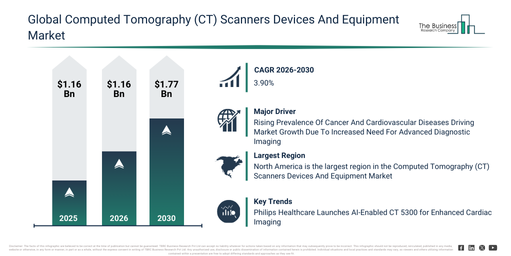
    The computed tomography (ct) scanners devices and equipment market size is anticipated to show steady expansion in the next few years, projected to reach $10.21 billion in 2030 at a compound annual growth rate (CAGR) of 3.9%. This growth during the forecast period is fueled by several factors, including the increasing adoption of AI-driven diagnostic tools, rising investments in advanced imaging infrastructure, a growing demand for precision diagnostics, the expansion of outpatient diagnostic services, and technological advancements in low-dose imaging. Significant trends expected in this period encompass the increasing integration of AI-assisted image reconstruction, a rising demand for high-slice CT scanners, greater incorporation of dose reduction technologies, the broadening of advanced 3D and 4D imaging capabilities, and an enhanced focus on workflow automation.

    Get A Free Sample Report With In-Depth Market Insights:

    https://thebusinessresearchcompany.com/sample_request?id=79785287&type=smp&name=Computed%20Tomography%20%28CT%29%20Scanners%20Devices%20And%20Equipment%20Market%20Report%202026&utm_source=Blogs&utm_medium=Paid&utm_campaign=Oct_PR

    Computed Tomography (CT) Scanners Devices And Equipment Market Opportunity Drivers: What’s Unlocking New Revenue Potential?

    The increasing occurrence of cancer and cardiovascular diseases is anticipated to boost the expansion of the computed tomography (CT) scanner devices and equipment market in the future. Both cancer and cardiovascular diseases (CVD) stem from multiple factors and share significant risk factors such as smoking, metabolic syndrome, radiation exposure, advancing age, and air pollution. The escalating incidence of these conditions arises from common risk factors like chronic inflammation, obesity, and lifestyle choices, all of which contribute to their development and progression via interconnected biological processes. CT scans serve as a diagnostic tool for identifying tumors and other irregularities within the body, including those associated with cancer and CVD. Furthermore, these scans are instrumental in planning and directing interventional or therapeutic procedures, including cryotherapy, radiofrequency ablation, and the insertion of radioactive seeds. For instance, in October 2024, data from the Centers for Disease Control and Prevention, a US-based public health institute, indicated that in 2023, approximately 1 out of every 6 deaths attributed to cardiovascular diseases occurred in adults younger than 65 years old, with a total of 919,032 people succumbing to cardiovascular disease, accounting for 1 in every 3 deaths. Consequently, the growing prevalence of cancer and cardiovascular diseases is a key factor propelling the growth of the computed tomography (CT) scanner devices and equipment market.

    Computed Tomography (CT) Scanners Devices And Equipment Market Breakdown By Product Type And Application

    The computed tomography (ct) scanners devices and equipment market covered in this report is segmented –

    1) By Product Type: Low Slice, Medium Slice, High Slice

    2) By Application: Oncology, Neurology, Cardiovascular, Musculoskeletal, Other Applications

    3) By End User: Clinics, Diagnostic Services, Hospitals

    Subsegments:

    1) By Low Slice: 4-Slice CT Scanners, 8-Slice CT Scanners, Other Low Slice CT Scanners

    2) By Medium Slice: 16-Slice CT Scanners, 32-Slice CT Scanners, Other Medium Slice CT Scanners

    3) By High Slice: 64-Slice CT Scanners, 128-Slice CT Scanners, 256-Slice CT Scanners, 320-Slice CT Scanners, Other High Slice CT Scanners

    Computed Tomography (CT) Scanners Devices And Equipment Market Innovation Trends Shaping Future Development

    Major companies operating in the computed tomography (CT) scanner devices and equipment market are developing innovative products equipped with advanced technologies, such as AI-enabled CT scanners, to better serve patients. An AI-enabled CT (Computed Tomography) scanner refers to a medical imaging device that integrates artificial intelligence (AI) technologies to enhance the quality, speed, and accuracy of CT imaging. For instance, in March 2024, Philips Healthcare, a Netherlands-based health technology company, launched the AI-enabled CT 5300, an advanced computed tomography scanner specifically tailored for cardiac imaging. This innovative system integrates artificial intelligence to enhance diagnostic accuracy and streamline workflows, notably featuring the industry’s first nanopanel precise detector designed for AI-based reconstruction. It significantly improves image quality while reducing radiation exposure by up to 80%, achieving lower noise levels and better low-contrast detectability. Already operational in several European hospitals, the CT 5300 aims to improve patient care and address challenges in healthcare delivery, reflecting Philips’ commitment to advancing cardiac care through cutting-edge technology.

    Computed Tomography (CT) Scanners Devices And Equipment Market Leading Companies And Competitive Benchmarking

    Major companies operating in the computed tomography (ct) scanners devices and equipment market are GE Healthcare, Koninklijke Philips N.V., Hitachi Ltd., Siemens Healthineers, Canon Medical Systems Corporation, Neusoft Medical Systems, NeuroLogica Corp., Samsung Electronics, Shimadzu Corporation, Shenzhen Anke High-Tech, Fujifilm Holdings Corporation, Koning Corporation, ScanCO Medical AG, United Imaging, Carestream Health, Planmed Oy, Dunlee, Shared Imaging, Allengers Medical Systems, Fujifilm Medical Systems, Konica Minolta Healthcare, Toshiba Medical Systems Corporation, Xoran Technologies

    View The Full Computed Tomography (CT) Scanners Devices And Equipment Market Report:

    https://thebusinessresearchcompany.com/report/computed-tomography-CT-scanners-devices-and-equipment-global-market-report?utm_source=Blogs&utm_medium=Paid&utm_campaign=Oct_PR

    Computed Tomography (CT) Scanners Devices And Equipment Market Largest Region By Revenue And Market Share

    North America was the largest region in the computed tomography scanners devices and equipment market in 2025. Western Europe was the second-largest region in the global computed tomography (CT) scanners devices and equipment market share. The regions covered in the computed tomography (ct) scanners devices and equipment market report are Asia-Pacific, South East Asia, Western Europe, Eastern Europe, North America, South America, Middle East, Africa.

    Reach Out To Our Team:

    The Business Research Company: https://www.thebusinessresearchcompany.com/

    Americas: +1 310-496-7795

    Asia: +44 7882 955267 & +91 8897263534

    Europe: +44 7882 955267

    Email us at: marketing@tbrc.info

    Follow us on:

    LinkedIn: https://in.linkedin.com/company/the-business-research-company

    YouTube: https://www.youtube.com/channel/UC24_fI0rV8cR5DxlCpgmyFQ

    Global Market Model: https://www.thebusinessresearchcompany.com/global-market-model
  • Compression Garments And Stockings Market CAGR Forecast Through 2030: Key Trends Shaping Industry Expansion

    Compression Garments And Stockings Market CAGR Forecast Through 2030: Key Trends Shaping Industry Expansion

    Backed by market attractiveness analysis, total addressable market sizing, company benchmarking matrices, interactive Excel dashboards, wider supply chain intelligence, emerging startup coverage, and detailed product-level insights, The Business Research Company’s 2026 market reports are designed to offer research that is more actionable and strategically valuable than ever.

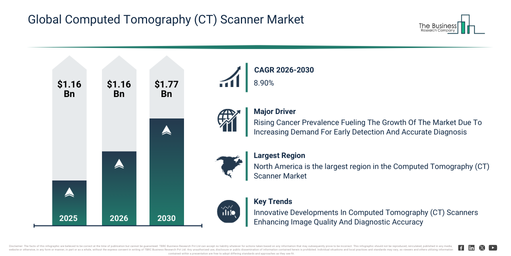
    Computed Tomography (CT) Scanner Market CAGR Outlook And Future Development

    The computed tomography (ct) scanner market has experienced robust expansion in recent years. It will grow from $8.22 billion in 2025 to $8.96 billion in 2026 at a compound annual growth rate (CAGR) of 9.0%. Historically, this market’s growth can be attributed to the development of advanced medical imaging infrastructure, a greater incidence of chronic and acute diseases, the expanding application of CT imaging in diagnostics, the existence of reimbursement frameworks, and the enlargement of hospital imaging departments.

    The computed tomography (ct) scanner market is poised for significant expansion in the coming years. It is forecast to grow to $12.59 billion in 2030, achieving a compound annual growth rate (CAGR) of 8.9%. This anticipated growth over the forecast period is driven by increased investments in advanced imaging technologies, a heightened demand for early disease detection, the spread of outpatient diagnostic centers, an increased emphasis on reducing radiation dosage, and continuous innovation in CT scanner performance. Prominent trends for this period include the wider adoption of high-slice CT systems, the rising acceptance of AI-assisted image reconstruction, a growing need for portable CT scanners, the expansion of low-dose imaging solutions, and an enhanced focus on diagnostic precision.

    Get A Free Sample Report With In-Depth Market Insights:

    https://thebusinessresearchcompany.com/sample_request?id=20847696&type=smp&name=Computed%20Tomography%20%28CT%29%20Scanner%20Market%20Report%202026&utm_source=Blogs&utm_medium=Paid&utm_campaign=Oct_PR

    Computed Tomography (CT) Scanner Market Growth Momentum: What Factors Are Shaping Demand?

    The rising incidence of cancer is anticipated to fuel the expansion of the computed tomography (CT) scanner market in the foreseeable future. Cancer is defined as a collection of illnesses marked by the uncontrolled multiplication and dispersion of atypical cells throughout the body. This increase in cancer cases is largely attributed to the world’s aging population; extended lifespans result in more people reaching older age, where the combined impact of genetic changes, environmental factors, and compromised immune defenses substantially elevates the likelihood of developing diverse cancers. Computed tomography (CT) scanners are vital in cancer management, offering detailed cross-sectional and 3D imaging crucial for early identification, exact tumor positioning, precise staging, therapy formulation, and continuous tumor surveillance, thereby empowering clinicians to make well-informed choices and enhance patient results across the entire spectrum of cancer care. As an illustration, in April 2024, the American Cancer Society, a US-based professional organization, reported an estimated 20 million new cancer cases and 9.7 million deaths globally in 2022, with projections indicating a surge to 35 million cancer cases by 2050. Consequently, the growing occurrence of cancer is a key factor propelling the expansion of the computed tomography (CT) scanner market.

    Computed Tomography (CT) Scanner Market Segment Analysis And Revenue Potential

    The computed tomography (ct) scanner market covered in this report is segmented –

    1) By Type: Stationary Computed Tomography Scanner, Portable Computed Tomography Scanner

    2) By Architecture: O-Arm, Gantry-Based CT Architecture

    3) By Technology: High-Slice Computed Tomography, Mid-Slice Computed Tomography, Low-Slice Computed Tomography, Cone Beam Computed Tomography

    4) By Application: Neurology, Oncology, Cardiovascular, Orthopedics, Other Applications

    5) By End Users: Hospitals And Diagnostics Centers, Research Laboratories, Academic Institutes And Contract Research Organizations, Ambulatory Care Centers, Veterinary Clinics And Hospitals, Other End Users

    Subsegments:

    1) By Stationary Computed Tomography Scanner: Single-Slice Computed Tomography Scanner, Multi-Slice Computed Tomography Scanner, Cone Beam Computed Tomography Scanner, Dual-Source Computed Tomography Scanner

    2) By Portable Computed Tomography Scanner: Compact Mobile CT Scanners, Mobile Computed Tomography Scanner

    Computed Tomography (CT) Scanner Market Trends Redefining Industry Growth

    Leading companies in the computed tomography (CT) scanner market are prioritizing the creation of advanced technologies, such as volume imaging technology, with the aim of improving image quality, shortening scan durations, lowering radiation exposure, and enhancing diagnostic accuracy across numerous clinical applications. Volume imaging technology facilitates the capture of complete anatomical volumes in a single rotation, significantly boosting image resolution and diminishing motion artifacts. As an illustration, in March 2025, GE Healthcare Technologies Inc., a US-based medical technology and diagnostics company, unveiled the Revolution Vibe CT system, which offers unlimited one-beat cardiac imaging and artificial intelligence (AI)-powered workflow improvements. This system produces high-quality images even in complex situations, including atrial fibrillation and heavily calcified coronaries, and streamlines patient preparation by removing the requirement for ECG connections. The Revolution Vibe seeks to increase diagnostic confidence and patient comfort while simultaneously improving workflow efficiency.

    Computed Tomography (CT) Scanner Market Industry Leaders And Competitive Landscape

    Major companies operating in the computed tomography (ct) scanner market are Siemens Healthineers AG, GE HealthCare Technologies Inc., Koninklijke Philips N.V., FUJIFILM Holdings Corporation, Canon Medical Systems Corporation, Shimadzu Corporation, Neusoft Medical Systems Co. Ltd., Shanghai United Imaging Healthcare Co. Ltd., Carestream Health Inc., Analogic Corporation, Trivitron Healthcare Private Limited, Shenzhen Anke High-tech Co. Ltd., Planmed Oy, Xoran Technologies LLC, SinoVision Technologies (Beijing) Co. Ltd., Koning Corporation, CurveBeam AI Inc., MinFound Medical Systems Co. Ltd., Hitachi Ltd. (Medical Systems), Toshiba Medical Systems Corporation, Samsung Healthcare (CT Division), Mediso Ltd., GE Precision Healthcare

    View The Full Computed Tomography (CT) Scanner Market Report:

    https://thebusinessresearchcompany.com/report/computed-tomography-ct-scanner-global-market-report?utm_source=Blogs&utm_medium=Paid&utm_campaign=Oct_PR

    Computed Tomography (CT) Scanner Market Regional Analysis And Leading Geography

    North America was the largest region in the computed tomography (CT) scanner market in 2025. Asia-Pacific is expected to be the fastest-growing region in the forecast period. The regions covered in the computed tomography (ct) scanner market report are Asia-Pacific, South East Asia, Western Europe, Eastern Europe, North America, South America, Middle East, Africa.

    Reach Out To Our Team:

    The Business Research Company: https://www.thebusinessresearchcompany.com/

    Americas: +1 310-496-7795

    Asia: +44 7882 955267 & +91 8897263534

    Europe: +44 7882 955267

    Email us at: marketing@tbrc.info

    Follow us on:

    LinkedIn: https://in.linkedin.com/company/the-business-research-company

    YouTube: https://www.youtube.com/channel/UC24_fI0rV8cR5DxlCpgmyFQ

    Global Market Model: https://www.thebusinessresearchcompany.com/global-market-model
  • Compression Garments And Stockings Market To Witness 6.7% CAGR Growth Through 2030: Key Industry Drivers

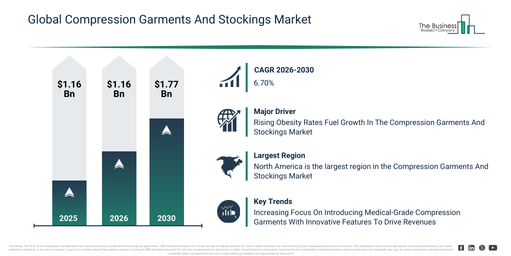
    Compression Garments And Stockings Market To Witness 6.7% CAGR Growth Through 2030: Key Industry Drivers

    Featuring market attractiveness scoring, total addressable market sizing, company benchmarking matrices, interactive Excel dashboards, deeper supply chain intelligence, emerging startup tracking, and granular product-level insights, The Business Research Company’s 2026 market reports are built to deliver research that is both more actionable and more strategically valuable.

    Compression Garments And Stockings Market Set To Climb From $3.6 Billion In 2026 To $4.66 Billion By 2030

    The compression garments and stockings market has experienced substantial growth in recent years. Its size is expected to increase from $3.41 billion in 2025 to $3.6 billion in 2026, showing a compound annual growth rate (CAGR) of 5.6%. The expansion observed in prior periods can be attributed to the increasing prevalence of venous disorders, a rising adoption of compression therapy in post-surgical care, the broadening of sports injury management practices, an enhanced awareness of circulatory health, and the availability of mass-produced compression products.

    The compression garments and stockings market is set to experience substantial expansion over the next few years. It is projected to increase to $4.66 billion in 2030, achieving a compound annual growth rate (CAGR) of 6.7%. This anticipated growth during the forecast period can be attributed to various factors, including the increasing need for home-based healthcare options, the rising acceptance of compression wear in preventive health, the widening reach of e-commerce distribution channels, a greater emphasis on lifestyle and wellness items, and ongoing product innovation in textile technology. Significant trends foreseen in this period include a heightened demand for medical-grade compression products, the growing integration of compression therapy in sports medicine, the expanded utilization of advanced elastomeric fabrics, the development of customized and patient-specific garments, and an increased focus on comfort and breathability.

    Get A Free Sample Report With In-Depth Market Insights:

    https://thebusinessresearchcompany.com/sample_request?id=78993648&type=smp&name=Compression%20Garments%20And%20Stockings%20Market%20Report%202026&utm_source=Blogs&utm_medium=Paid&utm_campaign=Oct_PR

    Compression Garments And Stockings Market Expansion Drivers: What’s Shaping Future Growth?

    The rising prevalence of obesity is anticipated to drive the expansion of the compression garments and stockings market in the coming years. Obesity refers to a health condition marked by an excessive and potentially detrimental build-up of body fat. These garments aid overweight or obese individuals by easing pain and discomfort during weight loss efforts, in addition to enhancing circulation and decreasing swelling and inflammation, frequently observed in this population. As an illustration, a report from March 2023 by the World Heart Federation, a global cardiovascular community headquartered in Switzerland, indicated that approximately 2.3 billion adults and children worldwide were either obese or overweight. Furthermore, projections based on current obesity trends suggest that the count of individuals affected by obesity will climb to 2.7 billion by 2025. Consequently, the escalating occurrence of obesity is fueling the growth within the compression garments and stockings market.

    Compression Garments And Stockings Market Segmentation And Category Overview

    The compression garments and stockings market covered in this report is segmented –

    1) By Product Type: Compression Garments, Compression Stockings

    2) By Distribution Channel: Hospitals, Ambulatory Surgical Centers, Clinics, Online Sales, Other Healthcare Facilities

    3) By Application Type: Varicose Veins, Wound Care, Burns, Oncology, Other Applications

    Subsegments:

    1) By Compression Garments: Compression Shirts, Compression Sleeves (Arm And Leg), Compression Shorts, Full-Body Compression Suits

    2) By Compression Stockings: Knee-High Compression Stockings, Thigh-High Compression Stockings, Waist-High Compression Stockings, Anti-Embolism Stockings

    Compression Garments And Stockings Market Strategic Trends: What Defines The Next Growth Phase?

    Leading companies in the compression garments and stockings market are intensifying their efforts to introduce medical-grade compression garments equipped with advanced features, such as FlexFit Comfort Ankle, to increase their market revenues. FlexFit Comfort Ankle is a distinct foot design featuring sliding compression sections, which aids in improving blood circulation, lymphatic flow, and ankle flexibility. As an illustration, in July 2023, The Marena Group, a US-based manufacturing firm specializing in medical-grade compression, unveiled a lipedema compression garment that incorporates the innovative FlexFit Comfort Ankle, crucial for ensuring comfort and managing unease during recovery. This product was specifically engineered to support individuals recuperating from lipedema reduction procedures. Furthermore, this new lipedema garment also integrated Marena’s proprietary TriFlex Fabric, predominantly utilized for its post-surgical recovery benefits after liposuction. This fabric delivers multidirectional 3D stretch, moisture-wicking and cooling effects, shape-enhancing qualities, and properties that prevent microbial growth.

    Compression Garments And Stockings Market Key Participants And Competitive Landscape

    Major companies operating in the compression garments and stockings market are 3M Company, BSN Medical Pvt. Ltd., Medi GmBH & Co. KG, SIGVARIS Group, Medical Z, Paul Hartmann AG, Biocompression Systems, 2XU Pty Ltd., Smith & Nephew PLC, Lymphedivas, Narang Medical Limited, Sanyleg SRL, Santemol Group Medikal, Leonisa S.A., Creswell Sock Mills LLC, Spanx Inc., Julius Zorn GmbH, Comfort Plus Corporation, VIM & VIGR LLC, Tommie Copper Inc., Venosan, Tactile Medical, Design Veronique, Medico International Inc., Marena Group LLC, Therafirm LLC, Zensah Company

    View The Full Compression Garments And Stockings Market Report:

    https://thebusinessresearchcompany.com/report/compression-garments-and-stockings-global-market-report?utm_source=Blogs&utm_medium=Paid&utm_campaign=Oct_PR

    Compression Garments And Stockings Market Geographic Analysis: Where Is Demand Accelerating Fastest?

    North America was the largest region in the compression garments and stockings market in 2025. Asia-Pacific is expected to be the fastest-growing region in the forecast period. The regions covered in the compression garments and stockings market report are Asia-Pacific, South East Asia, Western Europe, Eastern Europe, North America, South America, Middle East, Africa.

    Reach Out To Our Team:

    The Business Research Company: https://www.thebusinessresearchcompany.com/

    Americas: +1 310-496-7795

    Asia: +44 7882 955267 & +91 8897263534

    Europe: +44 7882 955267

    Email us at: marketing@tbrc.info

    Follow us on:

    LinkedIn: https://in.linkedin.com/company/the-business-research-company

    YouTube: https://www.youtube.com/channel/UC24_fI0rV8cR5DxlCpgmyFQ

    Global Market Model: https://www.thebusinessresearchcompany.com/global-market-model