Category: Medical Equipment

  • Software As A Medical Device (SaMD) Market Forecast Highlighting Key Trends And Expansion Potential

    Software As A Medical Device (SaMD) Market Forecast Highlighting Key Trends And Expansion Potential

    The Business Research Company’s 2026 market reports feature enhanced tools like market attractiveness analysis, TAM assessment, and company scoring matrices, along with interactive dashboards, deeper supply chain insights, and startup coverage strengthening the depth, usability, and strategic value of insights.

    What Level Of Market Value Growth Is Predicted For The Software As A Medical Device (SaMD) Market From 2026 To 2030?

    The market for software as a medical device (samd) has experienced rapid expansion over recent years. Forecasts indicate it will expand from $38.02 billion in 2025 to $47.26 billion in 2026, demonstrating a compound annual growth rate (CAGR) of 24.3%. Historically, this growth is primarily due to factors such as telemedicine adoption, increasing smartphone penetration, significant digital health funding, clearer regulatory frameworks, and a rising demand for remote care solutions.

    The software as a medical device (samd) market is projected to experience substantial expansion in the coming years. By 2030, its valuation is anticipated to reach $120.54 billion, demonstrating a compound annual growth rate (CAGR) of 26.4%. This projected growth during the forecast period is primarily fueled by factors such as the expansion of virtual care, the rise of software-driven diagnostics, the adoption of cloud healthcare platforms, outcome-based reimbursement models, and ongoing hospital software modernization. Key trends expected within this period encompass the wider deployment of clinical decision support software, the proliferation of remote diagnostic applications, enhanced regulatory approval for medical software, the emergence of subscription-based samd business models, and improved integration with electronic health records.

    Access Your Free Sample Report For In-Depth Market Analysis:

    https://www.thebusinessresearchcompany.com/report/samd-software-as-a-medical-device-global-market-report

    What Key Drivers Are Fueling The Growth Of The Software As A Medical Device (SaMD) Market?

    The rising occurrence of chronic illnesses is anticipated to fuel the expansion of the software as a medical device (SaMD) market in the future. These are enduring health conditions, including diabetes, heart disease, and arthritis, that typically advance gradually and necessitate continuous medical care and lifestyle adjustments to manage symptoms and avert complications. The growth in chronic diseases is primarily attributed to unhealthy habits like poor diet, lack of physical activity, and smoking, which heighten the likelihood of developing conditions such as diabetes, heart disease, and obesity. Software as a medical device (SaMD) assists in managing chronic conditions by facilitating the constant tracking of patient health data, leading to the prompt identification of complications. Moreover, it enhances treatment results through personalized insights and remote care support, thereby decreasing the necessity for numerous hospital visits. As an illustration, data from the National Health Service, a UK-based government department, revealed in June 2024 that 3,615,330 individuals registered with a general practitioner (GP) were diagnosed with non-diabetic hyperglycemia or pre-diabetes (a condition with elevated blood sugar levels, not high enough to be classified as diabetes) in 2023. This represented an 18% rise from 3,065,825 cases recorded in 2022. Consequently, the expanding prevalence of chronic illnesses is propelling the growth of the software as a medical device (SaMD) market.

    How Is The Software As A Medical Device (SaMD) Market Organized By Segment Classification?

    The software as a medical device (samd) market covered in this report is segmented –

    1) By Device Type: Wearable Device, PCs And Laptop, Smartphone And Tablets

    2) By Deployment Method: Cloud-Based, On-Premise

    3) By Application: Diagnostic, Clinical Management

    Subsegments:

    1) By Wearable Devices: Smartwatches With Health Monitoring Functions, Fitness Trackers, Wearable ECG And Blood Pressure Monitors

    2) By PCs And Laptops: Medical Diagnostic Software, Clinical Decision Support Software, Telemedicine Platforms

    3) By Smartphone And Tablets: Mobile Health (mHealth) Apps, Remote Patient Monitoring Software, Diagnostic Imaging Apps

    What Trends Are Influencing The Software As A Medical Device (SaMD) Market?

    Leading entities within the software as a medical device (SaMD) sector are intensifying their efforts to launch sophisticated software solutions, like SOMNUM, to secure a market advantage. SOMNUM functions as a sleep disorder analysis program, incorporating contemporary AI research advancements with diagnostic algorithms derived from multi-channel sleep biosignal data, in contrast to relying on video imagery. An illustrative example is HoneyNaps Co. Ltd., a software firm from South Korea, which obtained approval for its SOMNUM software from the United States Food and Drug Administration (USFDA) in September 2023. This software leverages deep learning-powered AI to conduct real-time examinations of diverse sleep biosignals, such as electroencephalograms, electrooculograms, electromyograms, electrocardiograms, respiratory airflow and effort, and oxygen saturation. Designed to deliver superior accuracy and complexity in readings compared to traditional approaches, the software can also reduce the processing time for patient sleep data to less than five minutes.

    Who Are The Industry Participants Involved In The Software As A Medical Device (SaMD) Market?

    Major companies operating in the software as a medical device (samd) market are Apple Inc., Abbott Laboratories, Siemens Healthcare GmbH, GE HealthCare Technologies Inc., Roche Diagnostics, Cerner Corporation, Philips Medical Systems Ltd., Dexcom Inc., Carl Zeiss Meditec AG, Nihon Kohden Corporation, Viz.ai Inc., S3 Connected Health, Arterys Inc., BrightInsight Inc., Agfa HealthCare Corp., iSchemaView Inc., VitalConnect Inc., Volpara Health Technologies, Greenfinch Technology Ltd., MaxQ AI Ltd., IDx Technologies Inc.

    Get The Full Software As A Medical Device (SaMD) Market Report:

    https://www.thebusinessresearchcompany.com/report/samd-software-as-a-medical-device-global-market-report

    Which Region Has The Greatest Market Share In The Software As A Medical Device (SaMD) Market?

    North America was the largest region in the software as a medical device (SaMD) market in 2025. Asia-Pacific is expected to be the fastest-growing region in the forecast period. The regions covered in the software as a medical device (samd) market report are Asia-Pacific, South East Asia, Western Europe, Eastern Europe, North America, South America, Middle East, Africa.

    Request A Customized Software As A Medical Device (SaMD) Market Report For Competitive Insights:

    https://www.thebusinessresearchcompany.com/report/samd-software-as-a-medical-device-global-market-report

    Browse Through More Reports Similar to the Global Software As A Medical Device (SaMD) Market 2026, By The Business Research Company

    Medical Equipment Market Report 2026

    https://www.thebusinessresearchcompany.com/report/medical-equipment-global-market-report

    Medical And Diagnostic Laboratory Services Market Report 2026

    https://www.thebusinessresearchcompany.com/report/medical-and-diagnostic-laboratory-services-global-market-report

    Medical Aesthetics Market Report 2026

    https://www.thebusinessresearchcompany.com/report/medical-aesthetics-global-market-report

    Get in touch with us:

    The Business Research Company: https://www.thebusinessresearchcompany.com/

    Americas +1 310-496-7795

    Asia +44 7882 955267 & +91 8897263534

    Europe +44 7882 955267

    Email us at info@tbrc.info

    Follow us on:

    LinkedIn: https://in.linkedin.com/company/the-business-research-company

    YouTube: https://www.youtube.com/channel/UC24_fI0rV8cR5DxlCpgmyFQ

    Global Market Model: https://www.thebusinessresearchcompany.com/global-market-model

  • Soft Tissue Allograft Market Analysis Covering Growth Drivers And Future Outlook

    Soft Tissue Allograft Market Analysis Covering Growth Drivers And Future Outlook

    The Business Research Company’s 2026 market reports feature enhanced tools like market attractiveness analysis, TAM assessment, and company scoring matrices, along with interactive dashboards, deeper supply chain insights, and startup coverage strengthening the depth, usability, and strategic value of insights.

    How Will The Market Value Of The Soft Tissue Allograft Market Progress Between 2026 And 2030?

    The soft tissue allograft market has experienced robust expansion in recent years. This market is anticipated to increase from $4.87 billion in 2025 to $5.24 billion in 2026, exhibiting a compound annual growth rate (CAGR) of 7.7%. The observed growth during the historical period is attributable to a rise in orthopedic injuries, an increase in sports surgeries, the availability of donor tissue, improvements in sterilization, and the establishment of hospital transplant programs.

    The soft tissue allograft market size is anticipated to undergo significant expansion over the next few years. It is projected to reach $6.97 billion by 2030, advancing at a compound annual growth rate (CAGR) of 7.4%. This growth during the forecast period is attributable to factors such as an aging global population, the rising demand for joint reconstruction, the ongoing expansion of sports medicine, continuous innovation in tissue preservation, and the implementation of regulatory standardization. Prominent trends expected in this period encompass orthopedic reconstruction procedures, the increased use of sports medicine allografts, advancements in sterilized tissue processing, the adoption of minimally invasive grafting techniques, and the development of hospital-based tissue banking facilities.

    Access Your Free Sample Report For In-Depth Market Analysis:

    https://www.thebusinessresearchcompany.com/report/soft-tissue-allograft-global-market-report

    Which Drivers Are Supporting The Soft Tissue Allograft Market Growth?

    The growing inclination toward minimally invasive procedures is projected to stimulate the expansion of the soft tissue allograft market moving forward. Minimally invasive procedures are defined as medical interventions executed through small incisions or apertures, which decreases patient trauma and shortens recuperation periods. The demand for such surgical methods is escalating because they facilitate quicker healing, mitigate risks of complications, reduce pain, and result in smaller scars, thereby appealing more to patients seeking swifter and safer treatment alternatives. Soft tissue allografts support minimally invasive procedures by offering ready-to-use, donor-derived tissues that promote rapid healing and simplify surgical complexity. They enhance patient outcomes by protecting and repairing compromised tissues while minimizing recovery duration and procedural distress. For instance, in June 2024, data from the American Society of Plastic Surgeons, a US-based specialty organization, indicated that a 7 percent growth in minimally invasive procedures in 2023 exceeded surgical procedures by 2 percent, with neuromodulator injections and hyaluronic acid fillers each surpassing 9 million and 5 million treatments, respectively. Therefore, the increasing preference for minimally invasive procedures is driving the growth of the soft tissue allograft market.

    Which Segments Define The Soft Tissue Allograft Market Segment Structure?

    The soft tissue allograft market covered in this report is segmented –

    1) By Type: Cartilage Allograft, Tendon Allograft, Meniscus Allograft, Other Types

    2) By Processing Technique: Fresh Frozen, Irradiated, Dehydrated, Sterilized, Other Processing Techniques

    3) By Application: Musculoskeletal Repair And Reconstruction, Plastic And Reconstructive Surgery, Other Medical Applications

    4) By End-User: Hospitals, Ambulatory Surgical Centers, Private Clinics

    Subsegments:

    1) By Cartilage Allograft: Osteochondral Allograft, Particulate Cartilage Allograft, Juvenile Cartilage Allograft

    2) By Tendon Allograft: Achilles Tendon Allograft, Anterior Tibialis Tendon Allograft, Posterior Tibialis Tendon Allograft, Semitendinosus Tendon Allograft

    3) By Meniscus Allograft: Lateral Meniscus Allograft, Medial Meniscus Allograft

    4) By Other Types: Skin Allograft, Fascia Allograft, Nerve Allograft

    Which Trends Are Expected To Impact The Soft Tissue Allograft Market?

    Leading companies within the soft tissue allograft market are concentrating on developing innovative tissue processing and sterilization methods, including resorbable soft tissue allografts, to improve tissue repair, shorten recovery periods, and achieve better patient outcomes. Resorbable soft tissue allografts are tissues sourced from donors that offer temporary structural support, gradually dissolving as the patient’s native tissue regenerates and takes their place. As an illustration, in June 2024, Axogen Inc., a medical technology company based in the US, introduced the Avive Soft Tissue Matrix. This product is a resorbable, multi-layer amniotic membrane allograft designed to function as a soft tissue barrier. It provides temporary safeguarding and separates tissues during the crucial stage of peripheral nerve healing, thereby helping to shield nerves from damage and minimize the formation of scar tissue. This product is specifically aimed at patients experiencing compression or non-transected nerve injuries, with the objective of enhancing recovery by preventing nerve tethering and facilitating tissue repair. The multi-layer construction simplifies handling and suturing during surgical procedures, establishing it as a significant advancement in nerve protection for a broad spectrum of peripheral nerve injuries.

    Who Are The Established Players Within The Soft Tissue Allograft Market?

    Major companies operating in the soft tissue allograft market are Stryker Corporation, Zimmer Biomet, Arthrex Inc., Integra LifeSciences Holdings Corporation, CONMED Corporation, MTF Biologics, MiMedx Group Inc., RTI Surgical Holdings Inc., LifeNet Health, AlloSource Inc., Xtant Medical Holdings Inc., Acera Surgical Inc., Skye Biologics Inc., StimLabs LLC, Applied Biologics LLC, Human Regenerative Technologies LLC, AxoGen Inc., Aziyo Biologics Inc., BioTissue Holdings Inc., Orthofix Medical Inc.

    Get The Full Soft Tissue Allograft Market Report:

    https://www.thebusinessresearchcompany.com/report/soft-tissue-allograft-global-market-report

    Which Region Accounts For The Largest Portion Of The Soft Tissue Allograft Market?

    North America was the largest region in the soft tissue allograft market in 2025. Asia-Pacific is expected to be the fastest-growing region in the forecast period. The regions covered in the soft tissue allograft market report are Asia-Pacific, South East Asia, Western Europe, Eastern Europe, North America, South America, Middle East, Africa.

    Request A Customized Soft Tissue Allograft Market Report For Competitive Insights:

    https://www.thebusinessresearchcompany.com/report/soft-tissue-allograft-global-market-report

    Browse Through More Reports Similar to the Global Soft Tissue Allograft Market 2026, By The Business Research Company

    Orthopedic Soft Tissue Repair Market Report 2026

    https://www.thebusinessresearchcompany.com/report/orthopedic-soft-tissue-repair-global-market-report

    Surgical Soft Tissue Forceps Market Report 2026

    https://www.thebusinessresearchcompany.com/report/surgical-soft-tissue-forceps-global-market-report

    Tissue Engineering Market Report 2026

    https://www.thebusinessresearchcompany.com/report/tissue-engineering-global-market-report

    Get in touch with us:

    The Business Research Company: https://www.thebusinessresearchcompany.com/

    Americas +1 310-496-7795

    Asia +44 7882 955267 & +91 8897263534

    Europe +44 7882 955267

    Email us at info@tbrc.info

    Follow us on:

    LinkedIn: https://in.linkedin.com/company/the-business-research-company

    YouTube: https://www.youtube.com/channel/UC24_fI0rV8cR5DxlCpgmyFQ

    Global Market Model: https://www.thebusinessresearchcompany.com/global-market-model

  • Soft Contact Lenses Market Insights Highlighting Opportunities Supporting Growth To 2030

    Soft Contact Lenses Market Insights Highlighting Opportunities Supporting Growth To 2030

    The Business Research Company’s 2026 market reports feature enhanced tools like market attractiveness analysis, TAM assessment, and company scoring matrices, along with interactive dashboards, deeper supply chain insights, and startup coverage strengthening the depth, usability, and strategic value of insights.

    What Are The Market Size Estimates For The Soft Contact Lenses Market In 2026 And 2030?

    The soft contact lenses market has shown robust expansion in recent years. This market is expected to expand from $9.57 billion in 2025 to $10.28 billion in 2026, achieving a compound annual growth rate (CAGR) of 7.4%. The historical market growth can be attributed to the rising prevalence of refractive errors, growing awareness about eye care, advances in hydrogel lens technology, increasing availability of daily disposable lenses, and the expansion of optical retail chains.

    The soft contact lenses market size is expected to show substantial expansion in the upcoming years. It is projected to reach $13.49 billion by 2030, growing at a compound annual growth rate (CAGR) of 7.0%. This anticipated growth during the forecast period is attributable to factors such as the increasing adoption of silicone hydrogel lenses, a rising demand for cosmetic and colored lenses, expanding e-commerce sales of contact lenses, the development of smart and connected lenses, and an increase in therapeutic and specialty lenses. Key trends identified for this period include the development of personalized lenses, lenses with enhanced oxygen permeability, optimized water retention and comfort, continued popularity of cosmetic and colored lenses, and advances in therapeutic and medical contact lenses.

    Access Your Free Sample Report For In-Depth Market Analysis:

    https://www.thebusinessresearchcompany.com/report/soft-contact-lenses-global-market-report

    What Key Factors Are Affecting The Soft Contact Lenses Market Demand?

    The escalating occurrence of myopia is projected to fuel expansion within the soft contact lenses market. Myopia, a widespread refractive error, causes distant visuals to appear indistinct while nearby items remain clear, resulting from an elongated eyeball or an overly curved cornea that misdirects light rays to converge ahead of the retina instead of precisely upon it. This rise in myopia’s prevalence is attributed to the extended usage of digital screens by children and adolescents, where greater screen exposure and diminished outdoor engagement contribute to its premature development and accelerated advancement globally. Soft contact lenses effectively manage myopia by providing comfortable, vision-correcting lenses, available in daily and extended-wear formats, which enhance visual clarity and may feature sophisticated designs to decelerate the progression of myopia. For example, in February 2025, data from the National Institutes of Health (NIH), a US government agency, indicated that the global prevalence of myopia is forecasted to climb to 36.59% by 2040 and 39.80% by 2050, with the total cases projected to exceed 740 million by 2050. Consequently, the expanding prevalence of myopia serves as a key impetus for the expansion of the soft contact lenses market.

    How Is The Soft Contact Lenses Market Segmented Across Different Segment Categories?

    The soft contact lenses market covered in this report is segmented –

    1) By Product Type: Daily Disposable Lenses, Extended Wear Lenses, Frequent Replacement Lenses, Multifocal Lenses, Toric Lenses For Astigmatism

    2) By Material Composition: Hydrogel Lenses, Silicone Hydrogel Lenses, Polyhema Lenses, Non-Ionogenic Lenses, Ultraviolet Blocking Lenses

    3) By Age Group: Children, Teenagers, Young Adults, Middle Aged Adults, Senior Citizens

    4) By Distribution Channel: Online Retailers, Optical Stores, Pharmacies, Hospital And Clinic Sales, Direct To Consumer Brands

    5) By Application: Corrective, Therapeutic, Cosmetic, Prosthetic, Lifestyle Oriented

    Subsegments:

    1) By Daily Disposable Lenses: Single Vision Daily Disposable Lenses, Multifocal Daily Disposable Lenses, Toric Daily Disposable Lenses For Astigmatism, Colored Daily Disposable Lenses, Ultraviolet Blocking Daily Disposable Lenses

    2) By Extended Wear Lenses: Seven Day Continuous Wear Lenses, Fourteen Day Continuous Wear Lenses, Thirty Day Continuous Wear Lenses, Silicone Hydrogel Extended Wear Lenses, Overnight Therapeutic Extended Wear Lenses

    3) By Frequent Replacement Lenses: Two Week Replacement Contact Lenses, Monthly Replacement Contact Lenses, Custom Designed Replacement Lenses, Colored Frequent Replacement Lenses, Hydrogel Based Frequent Replacement Lenses

    4) By Multifocal Lenses: Daily Disposable Multifocal Contact Lenses, Extended Wear Multifocal Contact Lenses, Monthly Replacement Multifocal Lenses, Toric Multifocal Contact Lenses For Astigmatism, Aspheric Multifocal Contact Lenses

    5) By Toric Lenses For Astigmatism: Daily Disposable Toric Contact Lenses, Extended Wear Toric Contact Lenses, Monthly Replacement Toric Contact Lenses, Multifocal Toric Contact Lenses, Custom Fit Toric Contact Lenses

    What Trends Are Influencing Changes In The Soft Contact Lenses Market?

    Leading firms within the soft contact lenses market are concentrating on creating sophisticated offerings, including daily disposable multifocal toric lenses, to meet escalating demand. This demand is fueled by the rising occurrence of astigmatism and presbyopia, alongside consumers’ growing desire for enhanced comfort, hygiene, and stable vision. These daily disposable multifocal toric lenses are specialized contact lenses that integrate toric correction for astigmatism with multifocal capabilities to support near, mid, and distance vision. They present a single-use, no-maintenance option, differing from conventional reusable toric or multifocal lenses. An illustration of this trend is the June 2025 launch by Johnson & Johnson, a US-based eye-health company, of ACUVUE OASYS MAX 1-Day MULTIFOCAL for ASTIGMATISM. This product represents the initial daily disposable lens engineered specifically for individuals experiencing both these vision conditions. Constructed from a highly oxygen-permeable material, the lens features Blink-Stabilized technology to ensure rotational stability and TearStable technology to preserve moisture. It also includes an OptiBlue light filter to reduce high-energy visible (HEV) light and a pupil-optimized multifocal design, delivering clear, consistent vision across different lighting environments and comfort for extended wear.

    Which Organizations Play A Role In The Soft Contact Lenses Market Landscape?

    Major companies operating in the soft contact lenses market are Johnson And Johnson, EssilorLuxottica SA, Alcon Laboratories Inc, Hoya Corporation, Bausch And Lomb Incorporated, The Cooper Companies Inc, Menicon Co Ltd, Polytouch Contact Lens Co, ABB Optical Group LLC, Contamac Ltd, Art Optical Contact Lens Inc, Clearlab SG Pte Ltd, X Cel Specialty Contacts, Daysoft Limited, Seed Co Ltd, Cantor And Nissel Ltd, Metro Optics Inc, SpecialEyes LLC, TruForm Optics Inc, UltraVision CLPL Limited, Viscon Contact Lens Mfg Ltd, CooperVision Specialty EyeCare

    Get The Full Soft Contact Lenses Market Report:

    https://www.thebusinessresearchcompany.com/report/soft-contact-lenses-global-market-report

    Which Region Holds The Highest Market Share In The Soft Contact Lenses Market?

    North America was the largest region in the soft contact lenses market in 2025. Asia-Pacific is expected to be the fastest-growing region in the forecast period. The regions covered in the soft contact lenses market report are Asia-Pacific, South East Asia, Western Europe, Eastern Europe, North America, South America, Middle East, Africa.

    Request A Customized Soft Contact Lenses Market Report For Competitive Insights:

    https://www.thebusinessresearchcompany.com/report/soft-contact-lenses-global-market-report

    Browse Through More Reports Similar to the Global Soft Contact Lenses Market 2026, By The Business Research Company

    Smart Contact Lenses Market Report 2026

    https://www.thebusinessresearchcompany.com/report/smart-contact-lenses-global-market-report

    Bionic Contact Lenses Market Report 2026

    https://www.thebusinessresearchcompany.com/report/bionic-contact-lenses-global-market-report

    Contact Lens Solution Market Report 2026

    https://www.thebusinessresearchcompany.com/report/contact-lens-solution-global-market-report

    Get in touch with us:

    The Business Research Company: https://www.thebusinessresearchcompany.com/

    Americas +1 310-496-7795

    Asia +44 7882 955267 & +91 8897263534

    Europe +44 7882 955267

    Email us at info@tbrc.info

    Follow us on:

    LinkedIn: https://in.linkedin.com/company/the-business-research-company

    YouTube: https://www.youtube.com/channel/UC24_fI0rV8cR5DxlCpgmyFQ

    Global Market Model: https://www.thebusinessresearchcompany.com/global-market-model

  • Global Smart Wearable Snore Detector Market Expected To Reach $1.64 Billion By 2030 With 12.1% CAGR

    Global Smart Wearable Snore Detector Market Expected To Reach $1.64 Billion By 2030 With 12.1% CAGR

    The Business Research Company’s 2026 market reports feature enhanced tools like market attractiveness analysis, TAM assessment, and company scoring matrices, along with interactive dashboards, deeper supply chain insights, and startup coverage strengthening the depth, usability, and strategic value of insights.

    What Expansion In Market Value Is Forecasted For The Smart Wearable Snore Detector Market Between 2026 And 2030?

    The smart wearable snore detector market has experienced significant expansion recently. This market is projected to expand from $0.93 billion in 2025 to $1.04 billion in 2026, demonstrating a compound annual growth rate (CAGR) of 12.4%. Historically, this growth can be attributed to several factors including the limited availability of smart wearable snore detectors, a reliance on conventional snore monitoring techniques, increasing public understanding of sleep apnea, the rising adoption of home healthcare, and the initial integration of mobile health applications.

    The smart wearable snore detector market is anticipated to experience substantial expansion over the next few years. It is projected to reach a size of $1.64 billion by 2030, exhibiting a compound annual growth rate (CAGR) of 12.1%. This growth during the forecast period is attributable to advancements in AI-based snore detection algorithms, the increasing adoption of wearable health tech, greater investment in home sleep monitoring solutions, integration with smart home ecosystems, and a rise in collaborations between tech and healthcare companies. Significant trends for the forecast period include the rising adoption of wearable sleep monitoring devices, enhanced integration of snore detection with mobile apps, growing awareness of sleep disorders and health impacts, the development of non-invasive and comfortable snore detection devices, and the expansion of sleep clinics and home care solutions.

    Access Your Free Sample Report For In-Depth Market Analysis:

    https://www.thebusinessresearchcompany.com/report/smart-wearable-snore-detector-global-market-report

    Which Primary Drivers Are Impacting The Smart Wearable Snore Detector Market Growth?

    The increasing recognition of sleep health issues is anticipated to propel the growth of the smart wearable snore detector market going forward. This awareness refers to the public’s growing understanding of the importance of adequate and quality sleep for overall well-being, productivity, and disease prevention. Awareness of sleep health issues is escalating due to the rising recognition of the connection between poor sleep and chronic health conditions like obesity, diabetes, and cardiovascular disease. Smart wearable snore detectors contribute to this awareness by providing real-time insights and data that help users identify and address potential sleep disorders early. For instance, in December 2023, according to the Sleep Foundation, a US-based organization dedicated to promoting sleep health through evidence-based information and research, in 2023 around 37% of U.S. adults reported that their sleep quality had worsened compared to 28% from previous years. Consequently, the rising awareness of sleep health issues propels the growth of the smart wearable snore detector market.

    What Are The Main Segments Within The Smart Wearable Snore Detector Market Segment Structure?

    The smart wearable snore detector market covered in this report is segmented –

    1) By Product Type: Wristband Snore Detectors, Patch Snore Detectors, Headband Snore Detectors, Other Product Types

    2) By Technology: Sound-Based, Vibration-Based, Motion Sensor-Based, Other Technologies

    3) By Distribution Channel: Online Stores, Pharmacies, Specialty Stores, Other Distribution Channels

    4) By Application: Home Care, Sleep Clinics, Hospitals, Other Applications

    Subsegments:

    1) By Wristband Snore Detectors: Vibration-Based Snore Alerts, Bluetooth-Enabled Wristbands, Sleep Tracking Integrated Wristbands, Adjustable Sensitivity Bands.

    2) By Patch Snore Detectors: Adhesive Chest Patches, Throat Vibration Patches, Multi-Sensor Sleep Patches, Disposable Snore Detection Patches

    3) By Headband Snore Detectors: Electroencephalogram-Based Headbands, Bone Conduction Feedback Headbands, Sleep Position Monitoring Headbands, Wireless Smart Headbands

    4) By Other Product Types: Smart Neckbands, In-Ear Snore Monitors, Jaw-Support Wearables, Smart Sleep Masks With Snore Detection

    Which Trends Are Shaping Growth In The Smart Wearable Snore Detector Market?

    Leading companies operating within the smart wearable snore detector market are concentrating on developing technologically sophisticated products, such as AI-powered biofeedback-enabled wristbands. These innovations are designed to monitor snoring patterns, elevate sleep quality, and diminish episodes of sleep-disordered breathing. AI-powered biofeedback-enabled wristbands are intelligent wearable devices that utilize artificial intelligence to track physiological signals and provide gentle prompts, like vibrations, to assist users in adjusting behaviors or reducing issues such as snoring. For instance, in September 2024, AppYea Inc., an Israel-based digital health company, launched the AppySleep device. This advanced AI-driven wearable wristband is engineered to help decrease snoring and oversee sleep patterns. It connects effortlessly to a smartphone application, detecting snoring and abnormal breathing during sleep. When snoring is identified, it emits a gentle vibration to prompt the user to alter their position, often encouraging side-sleeping for better airflow. The vibration intensity can be customized to individual preferences. The app furnishes users with thorough sleep insights, encompassing snoring data, breathing patterns, and progress graphs. Additionally, users gain access to a personal cloud account to monitor sustained enhancements in sleep quality.

    Who Are The Companies Participating In The Smart Wearable Snore Detector Market?

    Major companies operating in the smart wearable snore detector market are Samsung Electronics Co. Ltd., Koninklijke Philips N.V., Fitbit Inc., Zeus Sleep Inc., Ozlo Inc., Hupnos Inc., Imagimob AB, VVFLY Electronics Co. Ltd., Meditas Ltd., AppYea Inc., Beddr Inc., Shenzhen Xinhui Technology Co. Ltd., Snore Circle, Wellue Health, Go2Silence, Sleepmi, Walkervo, Snooor Ltd., ELBME, AMAZHEAL

    Get The Full Smart Wearable Snore Detector Market Report:

    https://www.thebusinessresearchcompany.com/report/smart-wearable-snore-detector-global-market-report

    Where Is The Smart Wearable Snore Detector Market Most Concentrated Geographically?

    North America was the largest region in the smart wearable snore detector market in 2025. Asia-Pacific is expected to be the fastest-growing region in the forecast period. The regions covered in the smart wearable snore detector market report are Asia-Pacific, South East Asia, Western Europe, Eastern Europe, North America, South America, Middle East, Africa.

    Request A Customized Smart Wearable Snore Detector Market Report For Competitive Insights:

    https://www.thebusinessresearchcompany.com/report/smart-wearable-snore-detector-global-market-report

    Browse Through More Reports Similar to the Global Smart Wearable Snore Detector Market 2026, By The Business Research Company

    Nanotechnology In Energy Applications Market Report 2026

    https://www.thebusinessresearchcompany.com/report/nanotechnology-in-energy-applications-global-market-report

    Smart Polymers Market Report 2026

    https://www.thebusinessresearchcompany.com/report/smart-polymers-global-market-report

    Internet Of Nano Things Market Report 2026

    https://www.thebusinessresearchcompany.com/report/internet-of-nano-things-global-market-report

    Get in touch with us:

    The Business Research Company: https://www.thebusinessresearchcompany.com/

    Americas +1 310-496-7795

    Asia +44 7882 955267 & +91 8897263534

    Europe +44 7882 955267

    Email us at info@tbrc.info

    Follow us on:

    LinkedIn: https://in.linkedin.com/company/the-business-research-company

    YouTube: https://www.youtube.com/channel/UC24_fI0rV8cR5DxlCpgmyFQ

    Global Market Model: https://www.thebusinessresearchcompany.com/global-market-model

  • Smart Wearable Kidney Monitor Market Future Outlook Showing Growth Toward $2.47 Billion By 2030

    Smart Wearable Kidney Monitor Market Future Outlook Showing Growth Toward $2.47 Billion By 2030

    The Business Research Company’s 2026 market reports feature enhanced tools like market attractiveness analysis, TAM assessment, and company scoring matrices, along with interactive dashboards, deeper supply chain insights, and startup coverage strengthening the depth, usability, and strategic value of insights.

    How Large Will The Smart Wearable Kidney Monitor Market Be By 2030 Compared To Its 2026 Market Size?

    The smart wearable kidney monitor market has expanded considerably in recent years. It is anticipated to grow from $1.07 billion in 2025 to $1.27 billion in 2026, exhibiting a compound annual growth rate (CAGR) of 18.4%. The historical expansion of this market can be attributed to the limited availability of wearable renal monitoring technology, reliance on hospital-based kidney function tests, the growing prevalence of chronic kidney disease, increasing patient awareness of kidney health, and the adoption of conventional dialysis monitoring.

    The smart wearable kidney monitor market size is anticipated to undergo significant growth over the next few years. It is projected to reach $2.47 billion by 2030, exhibiting a compound annual growth rate (CAGR) of 18.1%. This expansion during the forecast period can be attributed to advancements in sensor miniaturization, improved integration with mobile health applications, the rising adoption of AI-based predictive analytics, the development of home-based care solutions, and increasing partnerships between device manufacturers and healthcare providers. Key trends during this period include the growing acceptance of non-invasive kidney monitoring devices, the integration of multi-parameter biomarker tracking, a heightened demand for remote patient monitoring solutions, the expansion of home care and ambulatory monitoring services, and an emphasis on real-time data analytics for early detection.

    Access Your Free Sample Report For In-Depth Market Analysis:

    https://www.thebusinessresearchcompany.com/report/smart-wearable-kidney-monitor-global-market-report

    What Significant Factors Are Influencing The Smart Wearable Kidney Monitor Market Expansion?

    The smart wearable kidney monitor market is expected to grow, driven by the increasing number of kidney transplant procedures. These procedures are surgical interventions where a healthy kidney from a donor is placed into a patient with kidney failure to restore proper renal function. The rising number of kidney transplant procedures is attributed to the growing prevalence of chronic kidney disease (CKD), as more patients advance to end-stage renal failure, necessitating a transplant for survival. A smart wearable kidney monitor assists in kidney transplant care by offering continuous, non-invasive monitoring of kidney function, which helps in the early detection of complications. Such monitors support personalized treatment and reduce the need for hospital visits, ultimately improving post-transplant outcomes and patient convenience. For instance, in January 2025, according to the U.S. Department of Health & Human Services, a US-based government agency, the number of kidney transplants reached 27,759 in 2024, marking an increase of 1.6% compared to 2023. Thus, the increasing volume of kidney transplant procedures propels the expansion of the smart wearable kidney monitor market.

    How Is Segmentation Applied In The Smart Wearable Kidney Monitor Market Segment Analysis?

    The smart wearable kidney monitor market covered in this report is segmented –

    1) By Product Type: Patch-Based Monitors, Wristband Monitors, Belt Monitors, Other Types

    2) By Distribution Channel: Online, Offline

    3) By Application: Chronic Kidney Disease Monitoring, Dialysis Monitoring, Post-Transplant Monitoring, Other Applications

    4) By End-User: Hospitals And Clinics, Home Care Settings, Ambulatory Surgical Centers, Other End-Users

    Subsegments:

    1) By Patch-Based Monitors: Electrolyte Monitoring Patches, Hydration Monitoring Patches, Uremic Toxin Monitoring Patches, Hemodynamic Monitoring Patches, Multi-Parameter Biomarker Monitoring Patches

    2) By Wristband Monitors: Potassium Monitoring Wristbands, Fluid Balance Tracking Wristbands, Blood Pressure Monitoring Wristbands, Heart Rate And Vital Sign Monitoring Wristbands, Smart Alert-Enabled Wristbands

    3) By Belt Monitors: Dialysate Flow Tracking Belts, Portable Hemodialysis Support Belts, Renal Function Monitoring Belts, Wireless Data-Transmission Belts

    4) By Other Types: Smart Clothing With Embedded Renal Sensors, Implantable Kidney Monitoring Devices, Clip-On Monitoring Modules, Wearable Artificial Kidney Devices, Sensor-Integrated Headbands Or Chest Straps

    What Trends Are Affecting The Direction Of The Smart Wearable Kidney Monitor Market?

    Leading companies in the smart wearable kidney monitor market are concentrating on developing advanced products, such as biowearable sensors, to enhance accuracy, improve patient outcomes, and enable real-time monitoring of chronic kidney disease (CKD). Biowearable sensors are compact, non-invasive devices that continuously track key biomarkers related to kidney function, like creatinine and urea levels, through sweat or interstitial fluid analysis. For instance, in April 2024, Metyos, a France-based biowearable technology company, introduced a biowearable sensor device. This lightweight, wrist-worn biosensor measures critical kidney biomarkers in real time, providing patients and healthcare providers with continuous data to better manage the disease. The biowearable device leverages advanced nanotechnology and AI-driven analytics to detect early signs of kidney dysfunction, reducing the need for frequent blood tests and hospital visits. Additionally, the device connects with a mobile app, offering personalized health insights and alerts for abnormal biomarker levels, enabling proactive care and timely medical intervention.

    Who Are The Companies Participating In The Smart Wearable Kidney Monitor Market Environment?

    Major companies operating in the smart wearable kidney monitor market are KidneyX, GFR90 Inc., Kalium Health Ltd., WearTech Applied Research Center, RenalSense Ltd., Outset Medical Inc., Baxter International Inc., Fresenius Medical Care AG & Co. KGaA, Medtronic plc., B. Braun Melsungen AG, Nipro Corporation, Quanta Dialysis Technologies Ltd., AWAK Technologies Pte Ltd, CloudCath Inc., Diality Inc., Siemens Healthineers, Abbott Laboratories, Biotricity Ltd., Blood Purification Technologies Inc., Wearable Artificial Organs Inc.

    Get The Full Smart Wearable Kidney Monitor Market Report:

    https://www.thebusinessresearchcompany.com/report/smart-wearable-kidney-monitor-global-market-report

    Which Region Dominates The Smart Wearable Kidney Monitor Market By Market Share?

    North America was the largest region in the smart wearable kidney monitor market in 2025. Asia-Pacific is expected to be the fastest-growing region in the forecast period. The regions covered in the smart wearable kidney monitor market report are Asia-Pacific, South East Asia, Western Europe, Eastern Europe, North America, South America, Middle East, Africa.

    Request A Customized Smart Wearable Kidney Monitor Market Report For Competitive Insights:

    https://www.thebusinessresearchcompany.com/report/smart-wearable-kidney-monitor-global-market-report

    Browse Through More Reports Similar to the Global Smart Wearable Kidney Monitor Market 2026, By The Business Research Company

    Smart Polymers Market Report 2026

    https://www.thebusinessresearchcompany.com/report/smart-polymers-global-market-report

    Nanotechnology In Energy Applications Market Report 2026

    https://www.thebusinessresearchcompany.com/report/nanotechnology-in-energy-applications-global-market-report

    Advanced Materials Market Report 2026

    https://www.thebusinessresearchcompany.com/report/advanced-materials-global-market-report

    Get in touch with us:

    The Business Research Company: https://www.thebusinessresearchcompany.com/

    Americas +1 310-496-7795

    Asia +44 7882 955267 & +91 8897263534

    Europe +44 7882 955267

    Email us at info@tbrc.info

    Follow us on:

    LinkedIn: https://in.linkedin.com/company/the-business-research-company

    YouTube: https://www.youtube.com/channel/UC24_fI0rV8cR5DxlCpgmyFQ

    Global Market Model: https://www.thebusinessresearchcompany.com/global-market-model

  • Smart Wearable Glucose Patch Market Revenue Growth Forecast To Reach $5.08 Billion By 2030 At 18% CAGR

    Smart Wearable Glucose Patch Market Revenue Growth Forecast To Reach $5.08 Billion By 2030 At 18% CAGR

    The Business Research Company’s 2026 market reports feature enhanced tools like market attractiveness analysis, TAM assessment, and company scoring matrices, along with interactive dashboards, deeper supply chain insights, and startup coverage strengthening the depth, usability, and strategic value of insights.

    What Is The Projected Increase In Market Value Of The Smart Wearable Glucose Patch Market During 2026–2030?

    The smart wearable glucose patch market has experienced rapid growth in recent years. This market is set to expand from $2.22 billion in 2025 to $2.62 billion in 2026, registering a compound annual growth rate (CAGR) of 18.3%. Historically, this growth has been driven by factors such as the increasing prevalence of diabetes, the need for alternatives to finger-prick methods, the advancement of wearable biosensors, the expansion of chronic disease monitoring, and the wider adoption of patient self-care.

    The smart wearable glucose patch market is projected to experience substantial expansion over the upcoming years. This market is set to reach $5.09 billion by 2030, exhibiting a compound annual growth rate (CAGR) of 18.0%. Factors contributing to this anticipated growth include the expansion of remote diabetes management, the emergence of AI-driven glucose analytics, increased telehealth integration, a focus on preventive diabetes care, and enhanced reimbursement support for CGM devices. Key trends anticipated during the forecast period encompass non-invasive glucose monitoring, continuous glucose sensing capabilities, real-time glucose data transmission, the development of long-duration wearable patches, and advancements in diabetes self-management tools.

    Access Your Free Sample Report For In-Depth Market Analysis:

    https://www.thebusinessresearchcompany.com/report/smart-wearable-glucose-patch-global-market-report

    Which Important Drivers Are Guiding The Smart Wearable Glucose Patch Market Growth?

    The increasing incidence of diabetes is anticipated to drive the expansion of the smart wearable glucose patch market. Diabetes is a long-term metabolic condition marked by elevated blood glucose levels, stemming from the body’s impaired capacity to generate or utilize insulin effectively, which can result in severe health issues if left untreated. This rise in diabetes cases is primarily attributed to unhealthy lifestyle choices, where inadequate nutrition and insufficient physical exercise contribute to obesity and insulin resistance, thereby substantially elevating the likelihood of developing diabetes. The smart wearable glucose patch aids diabetes management through continuous, real-time glucose monitoring, assisting in keeping blood sugar levels stable, lessening the necessity for invasive tests, and enabling users to implement prompt adjustments to their lifestyle or medication for improved health results. For example, in June 2024, figures from the National Health Service (NHS), a UK-based government department, indicated that in 2023, the NHS identified more than 549,000 additional individuals in England at risk of developing type 2 diabetes. This brought the total number of people with non-diabetic hyperglycemia, or pre-diabetes, registered with a GP to 3,615,330. This figure signifies a notable rise compared to 3,065,825 in 2022, showing an increase of nearly 20%. Consequently, the expanding occurrence of diabetes is fueling the growth of the smart wearable glucose patch market.

    What Segment Categories Shape The Smart Wearable Glucose Patch Market Segment Landscape?

    The smart wearable glucose patch market covered in this report is segmented –

    1) By Product Type: Continuous Glucose Monitoring Patch, Non-Invasive Glucose Patch, Disposable Glucose Patch, Reusable Glucose Patch

    2) By Distribution Channel: Online Retail, Pharmacies, Direct Sales, Other Distribution channels

    3) By Application: Diabetes Management, Remote Patient Monitoring, Other Applications

    4) By End-User: Hospitals And Clinics, Homecare Settings, Other End-Users

    Subsegments:

    1) By Continuous Glucose Monitoring Patch: Real-Time Continuous Glucose Monitoring (CGM) Patches, Intermittently Scanned Continuous Glucose Monitoring Patches, Bluetooth-Enabled Continuous Glucose Monitoring Patches, Long-Duration Continuous Glucose Monitoring Patches

    2) By Non-Invasive Glucose Patch: Optical Sensor-Based Glucose Patches, Ultrasound-Based Glucose Patches, Transdermal Glucose Patches

    3) By Disposable Glucose Patch: Single-Use Glucose Patches, Short-Term Wearable Glucose Patches, Adhesive Disposable Glucose Patches, Sterile Disposable Glucose Patches

    4) By Reusable Glucose Patch: Rechargeable Glucose Patches, Sensor Replacement Glucose Patches, Long-Life Reusable Glucose Patches, Smart Connected Reusable Glucose Patches

    What Trends Are Influencing The Evolution Of The Smart Wearable Glucose Patch Market?

    Leading companies within the smart wearable glucose patch market are focused on developing over-the-counter continuous glucose monitoring sensors to improve accessibility, enhance diabetes management, and promote proactive health tracking. These over-the-counter continuous glucose monitoring (CGM) sensors are wearable devices that track glucose levels in real time without requiring a prescription, aiding users with type 2 diabetes or prediabetes in monitoring how diet, exercise, and lifestyle choices impact their glucose and enabling informed health decisions. For instance, in September 2024, Dexcom, Inc., a US-based diabetes technology company, launched Stelo, its initial over-the-counter (OTC) continuous glucose monitoring (CGM) biosensor, following FDA clearance earlier that year. This small, discreet patch, worn on the upper arm, continuously tracks glucose levels and transmits real-time data to a smartphone, eliminating the need for fingersticks or prescriptions. Stelo is designed for people with type 2 diabetes not using insulin and those with prediabetes, helping them understand how diet, exercise, stress, and sleep affect their glucose levels. Boasting a 15-day wear time, waterproof design, and an intuitive app providing daily insights and trends, Stelo fosters improved metabolic awareness. Flexible pay-as-you-go and subscription options available through Dexcom’s website make advanced glucose tracking more accessible and affordable.

    Who Are The Companies Operating Across The Smart Wearable Glucose Patch Market Value Chain?

    Major companies operating in the smart wearable glucose patch market are F. Hoffmann-La Roche AG, Abbott Laboratories, Medtronic Public Limited Company, Dexcom Inc., Biolinq Inc., Ascensia Diabetes Care Holdings AG, AgaMatrix Inc., Senseonics Holdings Inc., Nemaura Medical Inc., Suzhou Novosense Microelectronics Co. Ltd., RSP Systems A/S, Nutromics Ltd., Cnoga Medical Ltd., GraphWear Technologies Inc., Stelo Technology Private Limited, Afon Technology Ltd., LifePlus Inc., PKvitality S.A.S., Movano Inc., Transdermal Diagnostics Ltd.

    Get The Full Smart Wearable Glucose Patch Market Report:

    https://www.thebusinessresearchcompany.com/report/smart-wearable-glucose-patch-global-market-report

    Which Region Is The Largest In The Smart Wearable Glucose Patch Market?

    North America was the largest region in the smart wearable glucose patch market in 2025. Asia-Pacific is expected to be the fastest-growing region in the forecast period. The regions covered in the smart wearable glucose patch market report are Asia-Pacific, South East Asia, Western Europe, Eastern Europe, North America, South America, Middle East, Africa.

    Request A Customized Smart Wearable Glucose Patch Market Report For Competitive Insights:

    https://www.thebusinessresearchcompany.com/report/smart-wearable-glucose-patch-global-market-report

    Browse Through More Reports Similar to the Global Smart Wearable Glucose Patch Market 2026, By The Business Research Company

    Diabetes Care Devices Market 2026

    https://www.thebusinessresearchcompany.com/report/diabetes-care-devices-market

    Self Monitoring Blood Glucose Smbg Devices Market Report 2026

    https://www.thebusinessresearchcompany.com/report/self-monitoring-blood-glucose-smbg-devices-global-market-report

    Smart Wearables Market Report 2026

    https://www.thebusinessresearchcompany.com/report/smart-wearables-global-market-report

    Get in touch with us:

    The Business Research Company: https://www.thebusinessresearchcompany.com/

    Americas +1 310-496-7795

    Asia +44 7882 955267 & +91 8897263534

    Europe +44 7882 955267

    Email us at info@tbrc.info

    Follow us on:

    LinkedIn: https://in.linkedin.com/company/the-business-research-company

    YouTube: https://www.youtube.com/channel/UC24_fI0rV8cR5DxlCpgmyFQ

    Global Market Model: https://www.thebusinessresearchcompany.com/global-market-model
  • Smart Wearable Fetal Monitoring Patch Market Expected To Grow Steadily And Approach $2.86 Billion By 2030

    Smart Wearable Fetal Monitoring Patch Market Expected To Grow Steadily And Approach $2.86 Billion By 2030

    The Business Research Company’s 2026 market reports feature enhanced tools like market attractiveness analysis, TAM assessment, and company scoring matrices, along with interactive dashboards, deeper supply chain insights, and startup coverage strengthening the depth, usability, and strategic value of insights.

    How Is The Market Size Of The Smart Wearable Fetal Monitoring Patch Market Expected To Change From 2026 To 2030?

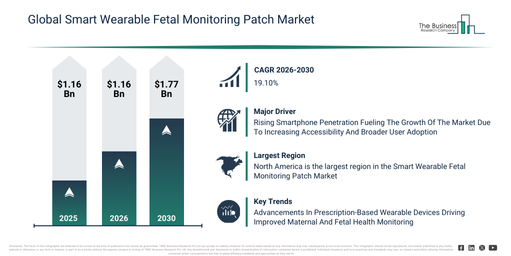
    The smart wearable fetal monitoring patch market has experienced swift expansion over recent years. Its value is expected to rise from $1.19 billion in 2025 to $1.42 billion in 2026, achieving a compound annual growth rate (CAGR) of 19.4%. Factors contributing to this historical growth include an increase in high-risk pregnancies, the necessity for continuous fetal monitoring, the expansion of hospital prenatal care services, heightened maternal health awareness, and advancements in wearable sensor technologies.

    The smart wearable fetal monitoring patch market is anticipated to experience substantial expansion over the next few years, with projections indicating it will reach $2.86 billion by 2030, growing at a compound annual growth rate (CAGR) of 19.1%. This projected growth is driven by factors such as the increase in tele-maternity care, the development of AI-assisted fetal analytics, the rising demand for home pregnancy monitoring, the adoption of remote obstetric care, and the spread of digital prenatal platforms. Throughout this forecast period, key trends are expected to include continuous fetal heart rate monitoring, the emergence of non-invasive prenatal wearables, widespread remote pregnancy monitoring, wireless maternal health tracking innovations, and the prevalence of home-based fetal monitoring solutions.

    Access Your Free Sample Report For In-Depth Market Analysis:

    https://www.thebusinessresearchcompany.com/report/smart-wearable-fetal-monitoring-patch-global-market-report

    What Major Factors Are Driving The Smart Wearable Fetal Monitoring Patch Market Forward?

    The growing prevalence of smartphones is projected to drive the expansion of the smart wearable fetal monitoring patch market in the future. These handheld devices combine communication, internet connectivity, and computing capabilities into a unified gadget. The rise of smartphones stems from broader internet access, enabling a larger population to conveniently reach online services, social media, and digital entertainment from their gadgets. Extensive smartphone adoption provides advantages for smart wearable fetal monitoring patches through facilitating uninterrupted connectivity and instant data transfer, which empowers expectant mothers and healthcare professionals to effortlessly retrieve, monitor, and oversee fetal health data via mobile apps. As an illustration, a report released by Uswitch Limited, a UK-based online and telephone comparison and switching service, indicated in February 2023 that by the year 2025, an estimated 95% of the 68.3 million inhabitants of the UK will possess smartphones. Consequently, the expanding ownership of smartphones is anticipated to fuel the growth of the smart wearable fetal monitoring patch market.

    Which Segment Types Are Examined In The Smart Wearable Fetal Monitoring Patch Market Segment Study?

    The smart wearable fetal monitoring patch market covered in this report is segmented –

    1) By Product Type: Single-Use Patch, Reusable Patch

    2) By Distribution Channel: Online, Offline

    3) By Application: Home Care, Hospitals, Clinics, Other Applications

    4) By End-User: Pregnant Women, Healthcare Providers

    Subsegments:

    1) By Single-Use Patch: Adhesive Sensor Patch, Hydrogel Sensor Patch

    2) By Reusable Patch: Electronic Sensor Patch, Bluetooth Enabled Patch, Rechargeable Sensor Patch

    Which Trends Are Impacting The Progress Of The Smart Wearable Fetal Monitoring Patch Market?

    Major companies operating in the smart wearable fetal monitoring patch market are concentrating on creating advanced solutions, such as wearable devices requiring a prescription, to enable smooth data sharing with medical professionals. Prescription-based wearable devices are favored for their ability to provide reliable, medically approved monitoring tailored to a patient’s specific health requirements and overseen by healthcare professionals. For instance, in January 2024, Bloomlife, a US-based healthcare technology company, announced that its Bloomlife MFM-Pro device received clearance from the US Food and Drug Administration (FDA). This is a prescription wearable designed to track both maternal and fetal heart rates, delivering dependable monitoring in home and clinical settings. It facilitates continuous observation, helping healthcare providers and patients stay informed about fetal and maternal health. Receiving FDA clearance represents a significant achievement, signaling the company’s shift from consumer products to regulated medical devices.

    Which Players Are Part Of The Competitive Landscape Of The Smart Wearable Fetal Monitoring Patch Market?

    Major companies operating in the smart wearable fetal monitoring patch market are iMec International, Nuvo Group, Monica Healthcare, Bloomlife, MindChild Medical, HeraMED, Janitri Innovations, NEMO Healthcare, Empathy Labs, Philips, GE HealthCare, Mindray, Edan Instruments, Samsung Medison, Analogic, Fetal Care Technologies, Sotera Wireless, Biolight Medical, Bionet, Comen Medical, Arjo, Welch Allyn

    Get The Full Smart Wearable Fetal Monitoring Patch Market Report:

    https://www.thebusinessresearchcompany.com/report/smart-wearable-fetal-monitoring-patch-global-market-report

    Which Region Leads The Smart Wearable Fetal Monitoring Patch Market In Terms Of Market Share?

    North America was the largest region in the smart wearable fetal monitoring patch market in 2025. Asia-Pacific is expected to be the fastest-growing region in the forecast period. The regions covered in the smart wearable fetal monitoring patch market report are Asia-Pacific, South East Asia, Western Europe, Eastern Europe, North America, South America, Middle East, Africa.

    Request A Customized Smart Wearable Fetal Monitoring Patch Market Report For Competitive Insights:

    https://www.thebusinessresearchcompany.com/report/smart-wearable-fetal-monitoring-patch-global-market-report

    Browse Through More Reports Similar to the Global Smart Wearable Fetal Monitoring Patch Market 2026, By The Business Research Company

    Fetal Monitoring Market Report 2026

    https://www.thebusinessresearchcompany.com/report/fetal-monitoring-global-market-report

    Fetal And Neonatal Monitoring Devices Market Report 2026

    https://www.thebusinessresearchcompany.com/report/fetal-and-neonatal-monitoring-devices-global-market-report

    Smart Baby Monitor Market Report 2026

    https://www.thebusinessresearchcompany.com/report/smart-baby-monitor-global-market-report

    Get in touch with us:

    The Business Research Company: https://www.thebusinessresearchcompany.com/

    Americas +1 310-496-7795

    Asia +44 7882 955267 & +91 8897263534

    Europe +44 7882 955267

    Email us at info@tbrc.info

    Follow us on:

    LinkedIn: https://in.linkedin.com/company/the-business-research-company

    YouTube: https://www.youtube.com/channel/UC24_fI0rV8cR5DxlCpgmyFQ

    Global Market Model: https://www.thebusinessresearchcompany.com/global-market-model

  • Smart Wearable Breathing Trainer Market Expansion Forecast Reaching $2.34 Billion By 2030 At 15% CAGR

    Smart Wearable Breathing Trainer Market Expansion Forecast Reaching $2.34 Billion By 2030 At 15% CAGR

    The Business Research Company’s 2026 market reports feature enhanced tools like market attractiveness analysis, TAM assessment, and company scoring matrices, along with interactive dashboards, deeper supply chain insights, and startup coverage strengthening the depth, usability, and strategic value of insights.

    From Its 2026 Market Size, What Value Is The Smart Wearable Breathing Trainer Market Projected To Reach By 2030?

    The smart wearable breathing trainer market has experienced rapid expansion in recent years. It is projected to increase from $1.16 billion in 2025 to $1.34 billion in 2026, with a compound annual growth rate (CAGR) of 15.3%. Historically, this growth can be ascribed to a combination of factors including restricted awareness of respiratory health devices, a prevailing dependence on traditional mechanical trainers, the emergence of fitness and wellness trends, a rising incidence of respiratory disorders, and the early adoption of wearable technology.

    The smart wearable breathing trainer market is poised for substantial growth over the next few years, with its size expected to reach $2.35 billion in 2030, demonstrating a compound annual growth rate (CAGR) of 15.0%. This expansion during the forecast period is propelled by developments such as advancements in AI-guided breathing trainers, the increased availability of sensor-integrated respiratory wearables, a rise in the adoption of hybrid and electronic-mechanical dual feedback devices, greater integration with telehealth and mobile applications, and an escalating demand for personalized wellness and rehabilitation solutions. Significant trends anticipated in this period include the rising adoption of smart wearable respiratory devices, their integration with mobile apps for personalized breathing training, expanding usage in sports, fitness, and rehabilitation programs, a stronger focus on home healthcare and remote monitoring, and enhanced user engagement through real-time feedback and biofeedback.

    Access Your Free Sample Report For In-Depth Market Analysis:

    https://www.thebusinessresearchcompany.com/report/smart-wearable-breathing-trainer-global-market-report

    Which Key Drivers Are Affecting The Smart Wearable Breathing Trainer Market Development?

    The increasing incidence of respiratory ailments is anticipated to drive the expansion of the smart wearable breathing trainer market in the foreseeable future. These conditions encompass various issues impacting the lungs and airways, such as asthma, chronic obstructive pulmonary disease (COPD), and sleep apnea, frequently resulting in diminished lung capacity and challenges with breathing. The occurrence of respiratory issues is on the rise, primarily attributed to escalating air pollution, since sustained exposure to contaminated air impairs lung performance and heightens susceptibility to long-term respiratory illnesses. A smart wearable breathing trainer aids individuals with respiratory disorders through real-time feedback and structured breathing drills, contributing to better lung function and stronger respiratory muscles. For example, data from March 2024, reported by the US government agency, the Centers for Disease Control and Prevention, showed a climb in tuberculosis cases from 8,320 in 2022 to 9,615 in 2023, representing an increase of 1,295 cases. Consequently, the growing frequency of respiratory diseases is fostering the development of the smart wearable breathing trainer market.

    How Are Different Segments Classified In The Smart Wearable Breathing Trainer Market Segment Analysis?

    The smart wearable breathing trainer market covered in this report is segmented –

    1) By Product Type: Electronic Breathing Trainers, Hybrid Breathing Trainers, Other Product Types

    2) By Distribution Channel: Online Stores, Specialty Stores, Pharmacies, Other Distribution Channels

    3) By Application: Sports and Fitness, Medical and Healthcare, Wellness and Rehabilitation, Other Applications

    4) By End-User: Adults, Children, Elderly

    Subsegments:

    1) By Electronic Breathing Trainers: Sensor-Enabled Electronic Breathing Trainers, Mobile App-Connected Electronic Breathing Trainers, Feedback-Based Electronic Breathing Trainers, Adaptive Electronic Breathing Trainers

    2) By Hybrid Breathing Trainers: Mechanical-Electronic Hybrid Breathing Trainers, Sensor-Assisted Hybrid Breathing Trainers, Smart Hybrid Breathing Trainers, Multi-Function Hybrid Breathing Trainers

    3) By Other Product Types: Portable Breathing Trainers, Wearable Respiratory Monitoring Devices, Biofeedback-Integrated Breathing Trainers, Customizable Breathing Trainer Devices

    What Trends Are Transforming The Smart Wearable Breathing Trainer Market?

    Leading firms in the smart wearable breathing trainer market are developing innovations like Bluetooth-enabled smart adaptors, which integrate with mobile coaching applications, addressing the increasing need for data-centric respiratory exercises, distant oversight, and tailored lung wellness improvement. Such a smart breathing adaptor links traditional inspiratory or expiratory muscle training (IMT/EMT) equipment to smartphones using Bluetooth, allowing individuals to gain instant feedback, monitor performance data, and adhere to personalized exercise regimens, which mechanical trainers alone cannot provide. Illustratively, in December 2024, POWERbreathe International, a UK-based respiratory device company, introduced its Smart Adaptor coupled with the ActiBreathe app, thereby transforming its existing breathing trainers into a completely integrated system. This product incorporates a compact, rechargeable adaptor that connects to current POWERbreathe Plus (IMT) and EX1 (EMT) devices, establishing a Bluetooth link to the application. The application facilitates users in conducting strength assessments, participating in guided breathing routines with immediate feedback, and observing their advancement over varying durations, from weeks to years. The system delivers customized training schedules for medical patients, sportspeople, or general well-being advocates, encouraging them via accomplishments and providing factual data on respiratory muscle function.

    Who Are The Companies Driving Activity In The Smart Wearable Breathing Trainer Market?

    Major companies operating in the smart wearable breathing trainer market are Oxa Life Ltd., B-Arm Medical Co. Ltd., Airofit A/S, Powerbreathe International Ltd., Oumua Inc., CHASKi Health Technologies Inc., POWERbreathe International Ltd., Hexoskin (Carré Technologies Inc.), Prana Tech LLC, SpiroTiger (Idiag AG), Tymewear Inc., ProSwimwear Ltd., Alvio Inc., Shenzhen Viatom Technology Co. Ltd, Opump Health Technology Co. Ltd., HelloEd Ltd., BRISH Co. Ltd., Zhongshan Huagong Technology Co. Ltd., GH Innotek Co. Ltd., Shenzhen Lanxiaozhichuang Technology Co. Ltd

    Get The Full Smart Wearable Breathing Trainer Market Report:

    https://www.thebusinessresearchcompany.com/report/smart-wearable-breathing-trainer-global-market-report

    Which Region Leads The Smart Wearable Breathing Trainer Market In Overall Market Size?

    North America was the largest region in the smart wearable breathing trainer market in 2025. Asia-Pacific is expected to be the fastest-growing region in the forecast period. The regions covered in the smart wearable breathing trainer market report are Asia-Pacific, South East Asia, Western Europe, Eastern Europe, North America, South America, Middle East, Africa.

    Request A Customized Smart Wearable Breathing Trainer Market Report For Competitive Insights:

    https://www.thebusinessresearchcompany.com/report/smart-wearable-breathing-trainer-global-market-report

    Browse Through More Reports Similar to the Global Smart Wearable Breathing Trainer Market 2026, By The Business Research Company

    Smart Ticketing Market Report 2026

    https://www.thebusinessresearchcompany.com/report/smart-ticketing-global-market-report

    Smart Government Market Report 2026

    https://www.thebusinessresearchcompany.com/report/smart-government-global-market-report

    Smart Stadium Market Report 2026

    https://www.thebusinessresearchcompany.com/report/smart-stadium-global-market-report

    Get in touch with us:

    The Business Research Company: https://www.thebusinessresearchcompany.com/

    Americas +1 310-496-7795

    Asia +44 7882 955267 & +91 8897263534

    Europe +44 7882 955267

    Email us at info@tbrc.info

    Follow us on:

    LinkedIn: https://in.linkedin.com/company/the-business-research-company

    YouTube: https://www.youtube.com/channel/UC24_fI0rV8cR5DxlCpgmyFQ

    Global Market Model: https://www.thebusinessresearchcompany.com/global-market-model
  • Smart Wearable Blood Pressure Monitor Market Revenue Projected To Hit $4.24 Billion By 2030 With 18.2% CAGR

    Smart Wearable Blood Pressure Monitor Market Revenue Projected To Hit $4.24 Billion By 2030 With 18.2% CAGR

    The Business Research Company’s 2026 market reports feature enhanced tools like market attractiveness analysis, TAM assessment, and company scoring matrices, along with interactive dashboards, deeper supply chain insights, and startup coverage strengthening the depth, usability, and strategic value of insights.

    How Much Growth In Market Value Is Expected For The Smart Wearable Blood Pressure Monitor Market Between 2026 And 2030?

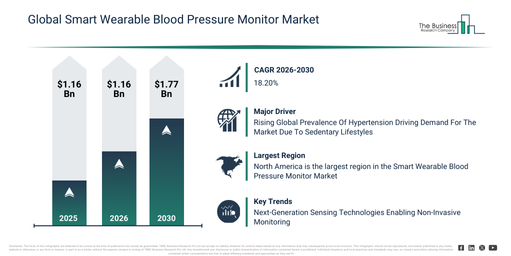
    The smart wearable blood pressure monitor market has experienced rapid expansion in recent years. It is projected to increase from $1.84 billion in 2025 to $2.18 billion in 2026, achieving a compound annual growth rate (CAGR) of 18.4%. This historical growth can be attributed to factors such as the rising prevalence of hypertension, the proliferation of wearable devices, increased demand for home health monitoring, the limitations of traditional cuffs, and the broader adoption of digital health.

    The smart wearable blood pressure monitor market is projected to experience substantial expansion over the coming years. Its valuation is anticipated to reach $4.25 billion by 2030, demonstrating a compound annual growth rate (CAGR) of 18.2%. This projected growth throughout the forecast period stems from several key drivers, such as the increasing adoption of remote patient monitoring, advancements in AI-based cardiovascular insights, a heightened focus on preventive healthcare, expanded smartwatch integration, and the emergence of value-based healthcare models. Furthermore, significant developments anticipated in this period encompass continuous blood pressure monitoring, cuffless blood pressure measurement, wearable cardiovascular tracking, the provision of real-time health alerts, and sophisticated long-term hypertension analytics.

    Access Your Free Sample Report For In-Depth Market Analysis:

    https://www.thebusinessresearchcompany.com/report/smart-wearable-blood-pressure-monitor-global-market-report

    What Factors Are Contributing To The Growth Of The Smart Wearable Blood Pressure Monitor Market?

    The rising occurrence of hypertension is anticipated to boost the expansion of the smart wearable blood pressure monitor market in the future. This chronic health condition involves persistently high arterial pressure, elevating the chances of heart disease, stroke, and other serious cardiovascular issues. The increasing prevalence signifies a growing number of individuals developing sustained high blood pressure over time, influenced by wider demographic shifts that contribute to both the development and identification of the condition. Smart wearable blood pressure monitors assist individuals with hypertension through continuous, real-time monitoring of blood pressure, allowing for prompt identification of changes, tailored health advice, and appropriate medical actions. These tools aid in better treatment compliance, refined medication management, and a reduced risk of cardiovascular complications. As an example, in September 2025, the World Health Organization, a Switzerland-based health organization, reported that around 1.4 billion adults aged 30–79 years globally were suffering from hypertension, representing approximately 33% of the world’s population in that age bracket in 2024. Consequently, the increasing prevalence of hypertension is a key factor driving the smart wearable blood pressure monitor market.

    How Is The Smart Wearable Blood Pressure Monitor Market Categorized Across Its Segment Groups?

    The smart wearable blood pressure monitor market covered in this report is segmented –

    1) By Product Type: Wrist-Based Smart Blood Pressure Monitors, Arm-Based Smart Wearable Blood Pressure Monitors, Finger-Based Smart Blood Pressure Monitors

    2) By Technology: Bluetooth, Wireless Fidelity (Wi-Fi), Cellular, Other Technologies

    3) By Distribution Channel: Online Stores, Pharmacies, Specialty Stores, Other Distribution Channels

    4) By Application: Home Healthcare, Remote Patient Monitoring, Sports and Fitness, Other Applications

    5) By End User: Hospitals And Clinics, Ambulatory Surgical Centers, Individuals, Other End Users

    Subsegments:

    1) By Wrist-Based Smart Blood Pressure Monitors: Digital Display Wrist Wearables, Touchscreen-Enabled Smart Wrist Wearables, Cuffless Wrist-Based Blood Pressure Monitors

    2) By Arm-Based Smart Wearable Blood Pressure Monitors: Upper-Arm Wearable Smart Blood Pressure Monitors, Lower-Arm Wearable Smart Blood Pressure Monitors, Automatic Sensor-Based Arm Wearable Blood Pressure Monitors

    3) By Finger-Based Smart Blood Pressure Monitors: Ring-Style Blood Pressure Wearables, Clip-Style Wearable Blood Pressure Monitors

    What Trends Are Shaping The Future Of The Smart Wearable Blood Pressure Monitor Market?

    Major companies operating in the smart wearable blood pressure monitor market are focusing on advancements like ultrasonic blood pressure monitoring solutions to enhance user comfort, provide continuous and accurate monitoring, and support early detection of cardiovascular risks through cuffless measurement. Ultrasonic blood pressure monitoring is a non-invasive method that uses ultrasound waves to detect arterial wall movements and changes in blood flow, enabling blood pressure measurement without an inflatable cuff. For example, in October 2024, Novosound, a UK-based deep-tech sensors company, introduced an advanced ultrasonic blood pressure monitoring solution built on its proprietary Slanj platform. This innovation leverages thin-film ultrasound sensors to miniaturize blood pressure measurement for integration into wearable devices such as smartwatches and rings. This technology delivers accuracy comparable to traditional cuff-based systems, while enabling continuous, stable monitoring and enhancing user adoption through seamless daily wearability.

    Which Firms Are Influencing Competition In The Smart Wearable Blood Pressure Monitor Market?

    Major companies operating in the smart wearable blood pressure monitor market are Aktiia SA, Biobeat Technologies Ltd, Corsano Health, HealthSTATS International, Blipcare, Omron Healthcare, Withings SA, Qardio Inc, iHealth Labs Inc, Beurer GmbH, A&D Company Limited, Samsung Electronics Co. Ltd, Huawei Technologies Co. Ltd, Xiaomi Corporation, YHE Technology, BPL Medical Technologies, Med-Watch, CareTaker Medical, Viatom Technology, ForaCare Suisse AG

    Get The Full Smart Wearable Blood Pressure Monitor Market Report:

    https://www.thebusinessresearchcompany.com/report/smart-wearable-blood-pressure-monitor-global-market-report

    Which Region Is The Top Contributor To The Smart Wearable Blood Pressure Monitor Market By Share?

    North America was the largest region in the smart wearable blood pressure Monitor market in 2025. Asia-Pacific is expected to be the fastest-growing region in the forecast period. The regions covered in the smart wearable blood pressure monitor market report are Asia-Pacific, South East Asia, Western Europe, Eastern Europe, North America, South America, Middle East, Africa.

    Request A Customized Smart Wearable Blood Pressure Monitor Market Report For Competitive Insights:

    https://www.thebusinessresearchcompany.com/report/smart-wearable-blood-pressure-monitor-global-market-report

    Browse Through More Reports Similar to the Global Smart Wearable Blood Pressure Monitor Market 2026, By The Business Research Company

    Blood Pressure Monitoring Devices Market Report 2026

    https://www.thebusinessresearchcompany.com/report/blood-pressure-monitoring-devices-global-market-report

    Wearable Heart Monitoring Devices Market Report 2026

    https://www.thebusinessresearchcompany.com/report/wearable-heart-monitoring-devices-global-market-report

    Cardiovascular Monitoring And Diagnostic Devices And Equipment Market Report 2026

    https://www.thebusinessresearchcompany.com/report/cardiovascular-monitoring-and-diagnostic-devices-and-equipment-global-market-report

    Get in touch with us:

    The Business Research Company: https://www.thebusinessresearchcompany.com/

    Americas +1 310-496-7795

    Asia +44 7882 955267 & +91 8897263534

    Europe +44 7882 955267

    Email us at info@tbrc.info

    Follow us on:

    LinkedIn: https://in.linkedin.com/company/the-business-research-company

    YouTube: https://www.youtube.com/channel/UC24_fI0rV8cR5DxlCpgmyFQ

    Global Market Model: https://www.thebusinessresearchcompany.com/global-market-model

  • Global Smart Walker Balance Robot Market Set To Expand To $3.55 Billion By 2030 At 15.8% CAGR

    Global Smart Walker Balance Robot Market Set To Expand To $3.55 Billion By 2030 At 15.8% CAGR

    The Business Research Company’s 2026 market reports feature enhanced tools like market attractiveness analysis, TAM assessment, and company scoring matrices, along with interactive dashboards, deeper supply chain insights, and startup coverage strengthening the depth, usability, and strategic value of insights.

    What Is The Estimated Market Size Of The Smart Walker Balance Robot Market In 2026, And How Will Its Value Evolve By 2030?

    The smart walker balance robot market has seen rapid growth in its size over recent years. It is anticipated to increase from $1.7 billion in 2025 to $1.98 billion in 2026, demonstrating a compound annual growth rate (CAGR) of 16.1%. The expansion observed during the historic period can be ascribed to aging population growth, an increase in mobility impairments, the adoption of rehabilitation technology, a rising demand for assisted walking devices, and advancements in robotics.

    The smart walker balance robot market size is anticipated to experience rapid expansion over the next few years. It is projected to reach $3.56 billion by 2030, with a compound annual growth rate (CAGR) of 15.8%. This growth during the forecast period can be attributed to factors such as AI-powered gait analysis, the increasing development of homecare mobility solutions, rising demand for smart rehabilitation, enhanced integration with healthcare monitoring, and a growing emphasis on elderly independence. Key trends identified for the forecast period include dynamic balance control systems, sensor-assisted gait stabilization, obstacle detection and avoidance capabilities, AI-based mobility assistance, and adaptive posture adjustment features.

    Access Your Free Sample Report For In-Depth Market Analysis:

    https://www.thebusinessresearchcompany.com/report/smart-walker-balance-robot-global-market-report

    Which Strong Drivers Are Impacting The Smart Walker Balance Robot Market Growth?

    An increasing incidence of neurological disorders is anticipated to fuel the expansion of the smart walker balance robot market in the future. These disorders encompass illnesses impacting the brain, spinal cord, or nerves, leading to impairments in movement, sensation, or cognitive functions. The rise in such conditions is linked to an aging demographic, which is more susceptible to ailments such as stroke, epilepsy, and Alzheimer’s disease. Smart walker balance robots assist neurological patients by offering gait assistance, preventing falls, and delivering immediate feedback to enhance their mobility and autonomy. For example, data from October 2023, sourced from the World Federation of Neurology (WFN), a non-profit organization based in the UK, indicated that over 40% of the world’s population was affected by neurological conditions, a number projected to almost double by 2050. Consequently, the rising occurrence of neurological disorders is a key impetus for the expansion of the smart walker balance robot market.

    How Are Segments Identified Within The Smart Walker Balance Robot Market Segment Framework?

    The smart walker balance robot market covered in this report is segmented –

    1) By Product Type: Sensor-Assisted Smart Walker Balance Robots, Motorized Smart Walker Balance Robots, AI-Enabled Smart Walker Balance Robots, Autonomous Smart Walker Balance Robots

    2) By Distribution Channel: Specialty Stores, Direct Sales, Other Distribution Channels

    3) By Application: Elderly Care, Rehabilitation Centers, Hospitals, Other Applications

    4) By End-User: Individuals, Healthcare Facilities, Other End-Users

    Subsegments:

    1) By Sensor-Assisted Smart Walker Balance Robots: Inertial Sensor-Based Balance Walkers, Pressure-Sensor Gait Support Walkers, Proximity-Sensor Obstacle-Aware Walkers, Multi-Sensor Fusion Balance Walkers

    2) By Motorized Smart Walker Balance Robots: Power-Assisted Drive Walkers, Self-Propelled Motorized Balance Walkers, Adaptive Speed-Control Walkers, Terrain-Responsive Motorized Walkers

    3) By AI-Enabled Smart Walker Balance Robots: AI Gait-Analysis Walkers, Predictive Balance-Correction Walkers, Machine-Learning Adaptive Walkers, Fall-Risk Detection Walkers

    4) By Autonomous Smart Walker Balance Robots: Self-Navigating Smart Walkers, Autonomous Obstacle-Avoidance Walkers, Path-Planning Robotic Walkers, Fully Autonomous Balance-Stabilizing Walkers

    Which Trends Are Contributing To Changes In The Smart Walker Balance Robot Market?

    Major companies in the smart walker balance robot market are concentrating on developing innovative approaches, such as artificial intelligence (AI)-powered gait analysis, to enhance mobility assistance, improve fall prevention, and provide personalized rehabilitation support for users. Artificial intelligence (AI)-powered gait analysis refers to the application of artificial intelligence (AI) algorithms and sensor data to assess and understand a person’s walking patterns for mobility, safety, and rehabilitation purposes. For instance, in January 2023, Camino Mobility, a US-based wellness and fitness technology company, unveiled the world’s first smart walker. This Smart Walker features embedded cameras and artificial intelligence (AI) that track a user’s gait in real time, providing adaptive auto-boost and intelligent braking to ensure safer movement. Its compact folding design enables it to fit through narrow spaces like airplane aisles, and optional add-ons increase user convenience. Connected to a cloud-based artificial intelligence (AI) health platform, it offers mobility data, safety notifications, and remote monitoring for caregivers and families. This connectivity aids in early interventions, helping users maintain independence, safety, and healthy aging.

    Who Are The Companies Competing Within The Smart Walker Balance Robot Market?

    Major companies operating in the smart walker balance robot market are UPnRIDE Robotics Ltd., Camino Mobility, Trexo Robotics, Rex Bionics, Wandercraft, Ekso Bionics Holdings Inc., UBTECH Robotics Corp. Ltd., Shenzhen Zuowei Technology Co. Ltd., Siyi Intelligent Technology, ReWalk Robotics, Bionik Laboratories, Cyberdyne Inc., Toyota Motor Corporation, Honda Motor Co. Ltd., Hyundai Motor Company, Panasonic Corporation, Walk-E, Roam Robotics, Indego, Parker Hannifin

    Get The Full Smart Walker Balance Robot Market Report:

    https://www.thebusinessresearchcompany.com/report/smart-walker-balance-robot-global-market-report

    Which Region Represents The Largest Share Of The Smart Walker Balance Robot Market?

    North America was the largest region in the smart walker balance robot market in 2025. Asia-Pacific is expected to be the fastest-growing region in the forecast period. The regions covered in the smart walker balance robot market report are Asia-Pacific, South East Asia, Western Europe, Eastern Europe, North America, South America, Middle East, Africa.

    Request A Customized Smart Walker Balance Robot Market Report For Competitive Insights:

    https://www.thebusinessresearchcompany.com/report/smart-walker-balance-robot-global-market-report

    Browse Through More Reports Similar to the Global Smart Walker Balance Robot Market 2026, By The Business Research Company

    Robotic Wheelchairs Market Report 2026

    https://www.thebusinessresearchcompany.com/report/robotic-wheelchairs-global-market-report

    Robotic Smart Motors Market Report 2026

    https://www.thebusinessresearchcompany.com/report/robotic-smart-motors-global-market-report

    Articulated Robot Market Report 2026

    https://www.thebusinessresearchcompany.com/report/articulated-robot-global-market-report

    Get in touch with us:

    The Business Research Company: https://www.thebusinessresearchcompany.com/

    Americas +1 310-496-7795

    Asia +44 7882 955267 & +91 8897263534

    Europe +44 7882 955267

    Email us at info@tbrc.info

    Follow us on:

    LinkedIn: https://in.linkedin.com/company/the-business-research-company

    YouTube: https://www.youtube.com/channel/UC24_fI0rV8cR5DxlCpgmyFQ

    Global Market Model: https://www.thebusinessresearchcompany.com/global-market-model