Category: Medical Equipment

  • Iron Oxide Nanopowders Market Revenue Projected To Hit $2.77 Billion By 2030 With 12.8% CAGR

    Iron Oxide Nanopowders Market Revenue Projected To Hit $2.77 Billion By 2030 With 12.8% CAGR

    The Business Research Company’s 2026 market reports feature enhanced tools like market attractiveness analysis, TAM assessment, and company scoring matrices, along with interactive dashboards, deeper supply chain insights, and startup coverage strengthening the depth, usability, and strategic value of insights.

    What Is The Estimated Market Size Of The Iron Oxide Nanopowders Market In 2026, And How Will Its Value Evolve By 2030?

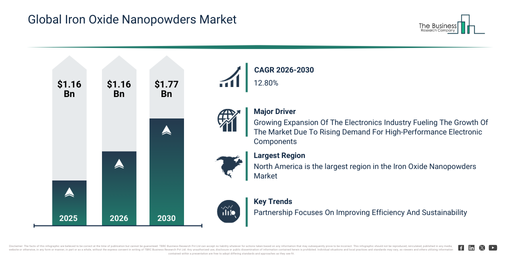
    The iron oxide nanopowders market has seen substantial growth in recent years. Its value is anticipated to rise from $1.51 billion in 2025 to $1.71 billion in 2026, achieving a compound annual growth rate (CAGR) of 13.1%. This historic expansion can be linked to factors like the scarcity of large-scale nanopowder production methods, the high expenses of early synthesis techniques, their initial use in specific biomedical sectors, a reliance on traditional iron oxide pigments, and inadequate regulatory guidelines for nanomaterials.

    The iron oxide nanopowders market size is projected to experience substantial growth in the upcoming years. It is forecast to expand to $2.77 billion by 2030, achieving a compound annual growth rate (CAGR) of 12.8%. This growth throughout the forecast period can be ascribed to advancements in scalable synthesis methodologies, increasing requirements in healthcare and biomedical uses, expanding industrial integration in the energy and electronics sectors, a rise in environmental and catalytic applications, and enhanced research and development into multifunctional nanomaterials. Prominent trends anticipated during the forecast period encompass the increasing application of iron oxide nanopowders in biomedical imaging and drug delivery, the broadening scope of catalysts and energy storage applications, heightened demand within paints, coatings, and anti-corrosion solutions, their deployment in environmental remediation and wastewater treatment, and the ongoing development of advanced nanostructured materials for electronics and sensors.

    Access Your Free Sample Report For In-Depth Market Analysis:

    https://www.thebusinessresearchcompany.com/report/iron-oxide-nanopowders-global-market-report

    What Primary Drivers Are Shaping The Iron Oxide Nanopowders Market?

    The expanding electronics sector is anticipated to fuel the growth of the iron oxide nanopowders market moving forward. This industry involves the design, manufacturing, and distribution of electronic devices and components utilized in consumer, industrial, and communication technologies. The increasing expansion of the electronics industry is a result of the rising demand for consumer electronics, driven by increased digitalization and the adoption of smart devices. Iron oxide nanopowders aid the electronics industry by offering distinct magnetic and conductive characteristics, making them crucial for sensors, data storage devices, and electronic components. They improve device functionality by enabling miniaturization and enhancing energy efficiency, thereby stimulating innovation in contemporary electronics. For instance, in July 2024, as per the Semiconductor Industry Association, a US-based trade association, global semiconductor industry sales reached $49.1 billion in May 2024, signifying a 19.3% increase from $41.2 billion in May 2023. Thus, the continuous growth of the electronics industry is a key driver for the iron oxide nanopowders market.

    How Is The Iron Oxide Nanopowders Market Categorized Across Its Segment Groups?

    The iron oxide nanopowders market covered in this report is segmented –

    1) By Product Type: Magnetite, Hematite, Wüstite, Other Product Types

    2) By Form: Dry Form, Wet Form

    3) By Size: Below 50 Nanometer (NM), 50-100 Nanometer (NM), Above 100 Nanometer (NM)

    4) By Application: Electronics, Catalysts, Paints And Coatings, Energy Storage, Environmental Remediation, Biomedical, Agriculture

    5) By End-User Industry: Construction, Automotive, Aerospace, Healthcare, Consumer Goods

    Subsegments:

    1) By Magnetite: Magnetic Resonance Imaging Contrast Agents, Targeted Drug Delivery Systems, Magnetic Data Storage Devices, Ferrofluids For Cooling Applications, Wastewater Treatment Adsorbents

    2) By Hematite: Photocatalysts For Water Splitting, Anti-Corrosion Pigment Coatings, Gas Sensor Components, Lithium Ion Battery Electrodes, Ceramic And Glass Colorants

    3) By Wüstite: Steel Manufacturing Additives, High Temperature Catalysts, Fuel Cell Electrode Materials, Iron-Based Nanocomposites, Ceramic Sintering Aids

    4) By Other Product Types: Maghemite For Magnetic Imaging, Iron Oxide Nanorods, Coated Iron Nanoparticles, Iron Oxide Quantum Dots, Doped Iron Oxide Nanoparticles

    What Trends Are Affecting The Growth Of The Iron Oxide Nanopowders Market?

    Leading firms within the iron oxide nanopowders market are prioritizing a strategic alliance strategy to improve technological integration and broaden their market presence. Such a partnership generally signifies a cooperative arrangement involving multiple entities that pool their resources, specialized knowledge, and endeavors to fulfill shared aims or targets. An illustrative example occurred in January 2024, when LANXESS AG, a specialty chemicals firm based in Germany, collaborated with IBU-tec advanced materials AG, a specialty materials manufacturer also from Germany. Together, they formulated novel iron oxides designed to enhance the performance of lithium iron phosphate (LFP) battery cathode materials. The objective of this joint effort is to utilize LANXESS’s proficiency in producing high-performance iron oxides alongside IBU-tec’s sophisticated material processing techniques, thereby boosting the efficiency, environmental friendliness, and expandability of LFP battery materials. Furthermore, this alliance is dedicated to refining iron oxide nanopowders to elevate battery performance across aspects like energy density, cycle life, and cost-effectiveness, addressing the increasing need for advanced energy storage solutions.

    Which Firms Are Influencing Competition In The Iron Oxide Nanopowders Market?

    Major companies operating in the iron oxide nanopowders market are American Elements Corporation, Inframat Corporation, NN-LABS LLC, PlasmaChem GmbH, CDH Fine Chemical, Nanoshel LLC, Skyspring Nanomaterials Inc., Nano Research Elements Inc., Nanostructured & Amorphous Materials Inc., MKNano Inc., US Research Nanomaterials Inc., BASF SE, Evonik Industries AG, Merck KGaA, Toda Kogyo Corporation, Nanoiron s.r.o., Nanophase Technologies Corporation, Promethean Particles Ltd, Magnacol Ltd, FerroTec Corporation, Materials and Electrochemical Research Corporation

    Get The Full Iron Oxide Nanopowders Market Report:

    https://www.thebusinessresearchcompany.com/report/iron-oxide-nanopowders-global-market-report

    Which Region Accounts For The Largest Portion Of The Iron Oxide Nanopowders Market?

    North America was the largest region in the iron oxide nanopowders market in 2025. Asia-Pacific is expected to be the fastest-growing region in the forecast period. The regions covered in the iron oxide nanopowders market report are Asia-Pacific, South East Asia, Western Europe, Eastern Europe, North America, South America, Middle East, Africa.

    Request A Customized Iron Oxide Nanopowders Market Report For Competitive Insights:

    https://www.thebusinessresearchcompany.com/report/iron-oxide-nanopowders-global-market-report

    Browse Through More Reports Similar to the Global Iron Oxide Nanopowders Market 2026, By The Business Research Company

    Superconducting Materials Market Report 2026

    https://www.thebusinessresearchcompany.com/report/superconducting-materials-global-market-report

    Aluminum Wires Market 2026

    https://www.thebusinessresearchcompany.com/report/aluminum-wires-market

    Medicated Personal Care Products Market Report 2026

    https://www.thebusinessresearchcompany.com/report/medicated-personal-care-products-global-market-report

    Get in touch with us:

    The Business Research Company: https://www.thebusinessresearchcompany.com/

    Americas +1 310-496-7795

    Asia +44 7882 955267 & +91 8897263534

    Europe +44 7882 955267

    Email us at info@tbrc.info

    Follow us on:

    LinkedIn: https://in.linkedin.com/company/the-business-research-company

    YouTube: https://www.youtube.com/channel/UC24_fI0rV8cR5DxlCpgmyFQ

    Global Market Model: https://www.thebusinessresearchcompany.com/global-market-model
  • Global Iron Fortified Infant Formula Market Set To Expand To $3.33 Billion By 2030 At 6.3% CAGR

    Global Iron Fortified Infant Formula Market Set To Expand To $3.33 Billion By 2030 At 6.3% CAGR

    The Business Research Company’s 2026 market reports feature enhanced tools like market attractiveness analysis, TAM assessment, and company scoring matrices, along with interactive dashboards, deeper supply chain insights, and startup coverage strengthening the depth, usability, and strategic value of insights.

    How Does The Market Size Of The Iron Fortified Infant Formula Market Compare Between 2026 And 2030?

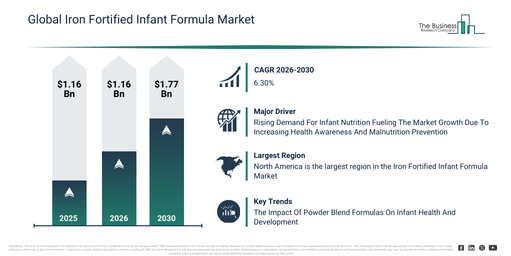
    The iron fortified infant formula market has shown robust expansion in recent years. It is anticipated to increase from $2.45 billion in 2025 to $2.61 billion in 2026, achieving a compound annual growth rate (CAGR) of 6.5%. This historical growth can be linked to factors such as greater awareness of infant nutrition, the rising population of urban working parents, an uptick in packaged infant food consumption, improved availability of pediatric healthcare guidance, and the increasing occurrence of iron deficiency in infants.

    The iron fortified infant formula market is anticipated to exhibit substantial growth in the next few years. It is projected to reach $3.34 billion by 2030, growing at a compound annual growth rate (CAGR) of 6.3%. This expansion during the forecast period is driven by increasing demand for premium infant nutrition products, a growing preference for convenient feeding options, the expansion of online infant nutrition sales, a rising regulatory focus on nutrient standards, and innovation in fortified formula compositions. Key trends for the forecast period include an escalating demand for organic and clean-label infant formula, the increasing use of optimized iron fortification blends, the proliferation of ready-to-use infant formula formats, an enhanced focus on digestibility and nutrient absorption, and rising investment in quality and safety assurance.

    Access Your Free Sample Report For In-Depth Market Analysis:

    https://www.thebusinessresearchcompany.com/report/iron-fortified-infant-formula-global-market-report

    Which Major Drivers Are Influencing The Expansion Of The Iron Fortified Infant Formula Market?

    The projected expansion of the iron-fortified infant formula market is anticipated to be fueled by the rising global requirement for infant nutrition. Infant nutrition encompasses providing appropriate nourishment to children from birth up to two years old, aiding in robust physical growth, cognitive development, immune system strength, and general health. This heightened need for infant nutrition stems largely from growing parental recognition of the critical role early childhood nourishment plays in fostering healthy development and growth. Iron-fortified infant formula plays a crucial role in infant nutrition, supplying vital nutrients that support healthy growth and development, particularly when breastfeeding is either insufficient or impractical. As an illustration, in 2023, a report from the United Nations International Children’s Emergency Fund, a US-based humanitarian aid organization, indicated that the United Nations International Children’s Emergency Fund (UNICEF) distributed approximately 480 million vitamin A capsules across 71 countries. This provision allowed over 320 million children to receive two doses of Vitamin A Supplementation (VAS), representing a 26% increase from prior years. Consequently, the escalating need for infant nutrition is propelling the expansion of the iron-fortified infant formula market.

    How Are Segments Identified Within The Iron Fortified Infant Formula Market Segment Framework?

    The iron fortified infant formula market covered in this report is segmented –

    1) By Product Type: Powdered Iron-Fortified Infant Formula, Liquid Concentrates, Ready-To-Use Liquids

    2) By Feeding Method: Breastfeeding Supplement, Exclusive Formula Feeding, Combination Feeding

    3) By Packaging Type: Tin Cans, Plastic Containers, Pouches, Single-Serve Sachets

    4) By Age Group: Newborn, Infants (1-6 Months), Crawlers (6-12 Months), Toddlers (12+ Months)

    5) By Distribution Channel: Online Retail, Supermarkets Or Hypermarkets, Pharmacies, Specialty Stores

    Subsegments:

    1) By Powdered Iron-Fortified Infant Formula: Cow Milk-Based Powder, Soy-Based Powder, Specialty Powder, Organic Powder

    2) By Liquid Concentrates: Cow Milk-Based Concentrate, Soy-Based Concentrate, Specialty Concentrate, Organic Concentrate

    3) By Ready-To-Use Liquids: Cow Milk-Based Ready-To-Use, Soy-Based Ready-To-Use, Specialty Ready-To-Use, Organic Ready-To-Use

    Which Trends Are Shaping The Iron Fortified Infant Formula Market?

    Major companies operating in the iron-fortified infant formula market are focusing on developing innovative products, such as powder blends, to enhance nutrient absorption and improve infant health. A powder blend, a uniform mixture of powdered ingredients, helps in iron-fortified infant formula by ensuring even distribution of iron and other nutrients, thereby enhancing stability, absorption, and consistent nutritional value in every serving. For instance, in July 2023, Danone S.A., a France-based food company, launched Danone’s dairy and plant milk powder blend for infants, combining 60% dairy protein sourced from whey and casein with 40% non-genetically modified organism (GMO) soy protein. This innovative formula was designed to cater to the rising demand for plant-based products while ensuring comprehensive nutritional support for young children. The product is fortified with key micronutrients, including zinc, iron, folate, and vitamins A, B6, B12, C, and D, to support immune system function. The formula addresses parents’ increasing desire for plant-based diets for their children without compromising on the essential nutrients required for infant and toddler development.

    Who Are The Companies Competing Within The Iron Fortified Infant Formula Market?

    Major companies operating in the iron fortified infant formula market are Nestlé S.A., Abbott Nutrition Manufacturing Inc., Groupe Danone, FrieslandCampina, Meiji Holdings Co. Ltd., Perrigo Company plc, Morinaga Milk Industry Co. Ltd., The a2 Milk Company, HiPP GmbH & Co. Vertrieb KG, Synutra International Inc., ByHeart, Bubs Australia Limited, Bellamy’s Organic, Bobbie Baby Inc., Arla Foods amba, Kendamil, Holle Baby Food GmbH, Beingmate Baby & Child Food Co. Ltd., Hero AG, Reckitt Benckiser Group plc, Feihe International Inc., Ausnutria Dairy Corporation Ltd., Yili Group, Danone Nutricia

    Get The Full Iron Fortified Infant Formula Market Report:

    https://www.thebusinessresearchcompany.com/report/iron-fortified-infant-formula-global-market-report

    Which Region Holds The Highest Market Share In The Iron Fortified Infant Formula Market?

    North America was the largest region in the iron fortified infant formula market in 2025. Asia-Pacific is expected to be the fastest-growing region in the forecast period. The regions covered in the iron fortified infant formula market report are Asia-Pacific, South East Asia, Western Europe, Eastern Europe, North America, South America, Middle East, Africa.

    Request A Customized Iron Fortified Infant Formula Market Report For Competitive Insights:

    https://www.thebusinessresearchcompany.com/report/iron-fortified-infant-formula-global-market-report

    Browse Through More Reports Similar to the Global Iron Fortified Infant Formula Market 2026, By The Business Research Company

    Supplements And Infant Milk Formula For Travel Retail Market Report 2026

    https://www.thebusinessresearchcompany.com/report/supplements-and-infant-milk-formula-for-travel-retail-global-market-report

    Infant Nutrition Market Report 2026

    https://www.thebusinessresearchcompany.com/report/infant-nutrition-global-market-report

    Iron Deficiency Injectable Market Report 2026

    https://www.thebusinessresearchcompany.com/report/iron-deficiency-injectable-global-market-report

    Get in touch with us:

    The Business Research Company: https://www.thebusinessresearchcompany.com/

    Americas +1 310-496-7795

    Asia +44 7882 955267 & +91 8897263534

    Europe +44 7882 955267

    Email us at info@tbrc.info

    Follow us on:

    LinkedIn: https://in.linkedin.com/company/the-business-research-company

    YouTube: https://www.youtube.com/channel/UC24_fI0rV8cR5DxlCpgmyFQ

    Global Market Model: https://www.thebusinessresearchcompany.com/global-market-model
  • Next-Generation Sequencing (NGS) In Precision Medicine Market Insights On Growth Drivers, Trends, And Opportunities

    Next-Generation Sequencing (NGS) In Precision Medicine Market Insights On Growth Drivers, Trends, And Opportunities

    The Business Research Company’s 2026 market reports feature enhanced tools like market attractiveness analysis, TAM assessment, and company scoring matrices, along with interactive dashboards, deeper supply chain insights, and startup coverage strengthening the depth, usability, and strategic value of insights.

    How Is The Market Size Of The Next-Generation Sequencing (NGS) In Precision Medicine Market Expected To Change From 2026 To 2030? _x000D_

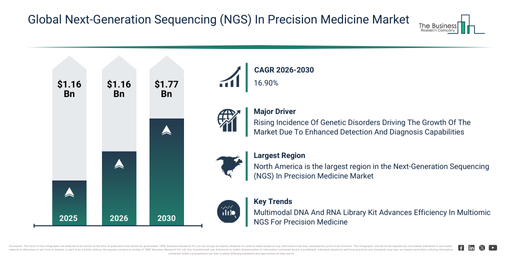
    The next-generation sequencing (NGS) in precision medicine market has experienced rapid growth in recent years. It is anticipated to expand from $6.42 billion in 2025 to $7.52 billion in 2026, at a compound annual growth rate (CAGR) of 17.2%. The historical increase in the market size can be attributed to the advancement of high-throughput sequencers, increasing understanding of personalized medicine, the progression of genomic research, the proliferation of bioinformatics software, and the integration of precision medicine into clinical trials._x000D_

    _x000D_

    The next-generation sequencing (ngs) in precision medicine market is anticipated to experience substantial expansion in the coming years. By 2030, this market is projected to reach $14.05 billion, demonstrating a compound annual growth rate (CAGR) of 16.9%. This projected growth during the forecast period is attributable to several factors, including ongoing technological progress in sequencing instruments, the incorporation of AI into genomics, the proliferation of cloud-based sequencing services, a rise in collaborations between pharmaceutical and biotechnology firms, and the spread of precision medicine into developing areas. Key trends anticipated within this period encompass AI-driven genomic analysis, the adoption of cloud-based sequencing solutions, the broader application of personalized medicine, increased automation in sequencing processes, and real-time interpretation of genomic data._x000D_

    _x000D_

    #Access Your Free Sample Report For In-Depth Market Analysis:#_x000D_

    https://www.thebusinessresearchcompany.com/report/next-generation-sequencing-ngs-in-precision-medicine-global-market-report_x000D_

    _x000D_

    What Leading Drivers Are Supporting The Next-Generation Sequencing (NGS) In Precision Medicine Market Expansion?_x000D_

    The increasing occurrence of genetic disorders is anticipated to propel the expansion of the next-generation sequencing (NGS) in precision medicine market in the coming years. Genetic disorders are defined as illnesses or conditions resulting from irregularities in an individual’s DNA, which can be inherited or arise due to mutations. The frequency of genetic disorders is rising as advancements in diagnostic technologies, such as genetic screening and next-generation sequencing, allow medical professionals to identify cases that previously went undetected, leading to a higher reported prevalence. Next-generation sequencing in precision medicine assists in detecting genetic mutations, facilitating accurate diagnosis, personalized treatments, and early intervention for genetic disorders. For instance, in May 2024, according to the National Health Service, a UK-based government department, approximately 17,000 people in England live with sickle cell disease, an inherited blood disorder, with around 250 new cases diagnosed each year. Therefore, the growing incidence of genetic disorders is driving the growth of the next-generation sequencing (NGS) in precision medicine market._x000D_

    _x000D_

    What Segment Categories Shape The Next-Generation Sequencing (NGS) In Precision Medicine Market Segment Landscape?_x000D_

    The next-generation sequencing (ngs) in precision medicine market covered in this report is segmented – _x000D_

    _x000D_

    1) By Product And Service: Sequencing Instruments, Consumables And Reagents, Library Preparation Kits, Bioinformatics Software, Next-Generation Sequencing (NGS) Services_x000D_

    2) By Technology: Whole Genome Sequencing (WGS), Whole Exome Sequencing (Wes), Targeted Sequencing, Ribonucleic Acid (RNA) Sequencing, Single-Cell Sequencing_x000D_

    3) By Application: Oncology, Infectious Disease, Rare And Inherited Disorders, Prenatal And Reproductive Health, Pharmacogenomics_x000D_

    4) By End Use: Hospitals And Clinics, Academic And Research Institutions, Biopharmaceutical Companies, Diagnostic Laboratories, Contract Research Organizations (CROs)_x000D_

    _x000D_

    Subsegments:_x000D_

    1) By Sequencing Instruments: Benchtop Sequencers, High Throughput Sequencers_x000D_

    2) By Consumables And Reagents: Sequencing Reagents, Sequencing Chips, Flow Cells, Sample Preparation Reagents_x000D_

    3) By Library Preparation Kits: Deoxyribonucleic Acid (DNA) Library Preparation Kits, Ribonucleic Acid (RNA) Library Preparation Kits, Whole Genome Amplification Kits, Target Enrichment Kits_x000D_

    4) By Bioinformatics Software: Data Analysis Software, Data Management Software, Sequence Alignment Software, Variant Calling Software_x000D_

    5) By Next-Generation Sequencing Services: Whole Genome Sequencing Services, Whole Exome Sequencing Services, Targeted Sequencing Services, Ribonucleic Acid (RNA) Sequencing Services, Epigenomic Sequencing Services_x000D_

    _x000D_

    What Emerging Trends Are Seen In The Next-Generation Sequencing (NGS) In Precision Medicine Market?_x000D_

    Leading companies in the next-generation sequencing (NGS) in precision medicine market are concentrating on developing innovative solutions, such as multimodal DNA and RNA library kits, to improve the effectiveness and accuracy of genomic analyses. A multimodal DNA and RNA library kit serves as a laboratory tool that enables the concurrent preparation of sequencing libraries from both DNA and RNA within a single process, thereby allowing for a comprehensive analysis of a sample’s genome and transcriptome. As an example, in May 2024, Qiagen N.V., a Germany-based provider of sample and assay technologies for molecular diagnostics, introduced its QIAseq Multimodal DNA and RNA Library Kit. This particular next-generation sequencing solution facilitates multiomic studies and advances precision medicine by enabling streamlined DNA and RNA library preparation from a single sample. This kit supports whole genome and whole transcriptome sequencing, as well as downstream target enrichment, simplifying multiomic studies by integrating optimized chemistry for DNA and RNA simultaneously. It significantly reduces the necessity for large sample quantities and labor-intensive procedures commonly found in traditional separate DNA and RNA workflows. By boosting efficiency in multiomic research, this kit contributes to the progress of precision medicine through enhanced biomarker discovery and a deeper understanding of diseases, particularly in cancer research._x000D_

    _x000D_

    Who Are The Companies Operating Across The Next-Generation Sequencing (NGS) In Precision Medicine Market Value Chain?_x000D_

    Major companies operating in the next-generation sequencing (ngs) in precision medicine market are Thermo Fisher Scientific Inc., Eurofins Scientific SE, Agilent Technologies Inc., Illumina Inc., Bio-Rad Laboratories Inc., Exact Sciences Corporation, QIAGEN N.V., Natera Inc., Tempus Labs Inc., 10x Genomics Inc., BGI Genomics Co. Ltd., Guardant Health Inc., Caris Life Sciences Inc., Fulgent Genetics Inc., Twist Bioscience Corporation, Pacific Biosciences of California Inc., Macrogen Inc., Ultima Genomics Inc., Personalis Inc., Element Biosciences Inc., Genomenon Inc., Strand Life Sciences Pvt. Ltd., Singular Genomics Systems Inc. _x000D_

    _x000D_

    #Get The Full Next-Generation Sequencing (NGS) In Precision Medicine Market Report:#_x000D_

    https://www.thebusinessresearchcompany.com/report/next-generation-sequencing-ngs-in-precision-medicine-global-market-report_x000D_

    _x000D_

    Where Is The Next-Generation Sequencing (NGS) In Precision Medicine Market Most Concentrated Geographically?_x000D_

    North America was the largest region in the next-generation sequencing (NGS) in precision medicine market in 2025. Asia-Pacific is expected to be the fastest-growing region in the forecast period. The regions covered in the next-generation sequencing (ngs) in precision medicine market report are Asia-Pacific, South East Asia, Western Europe, Eastern Europe, North America, South America, Middle East, Africa._x000D_

    _x000D_

    #Request A Customized Next-Generation Sequencing (NGS) In Precision Medicine Market Report For Competitive Insights:#_x000D_

    https://www.thebusinessresearchcompany.com/report/next-generation-sequencing-ngs-in-precision-medicine-global-market-report_x000D_

    _x000D_

    #Browse Through More Reports Similar to the Global Next-Generation Sequencing (NGS) In Precision Medicine Market 2026, By The Business Research Company#_x000D_

    _x000D_

    Ngs Based Rna Sequencing Market Report 2026_x000D_

    https://www.thebusinessresearchcompany.com/report/ngs-based-rna-sequencing-global-market-report_x000D_

    _x000D_

    Next Generation Sequencing Market 2026_x000D_

    https://www.thebusinessresearchcompany.com/report/next-generation-sequencing-market_x000D_

    _x000D_

    Clinical Oncology Next Generation Sequencing Market Report 2026_x000D_

    https://www.thebusinessresearchcompany.com/report/clinical-oncology-next-generation-sequencing-global-market-report_x000D_

    _x000D_

    #Get in touch with us:#_x000D_

    _x000D_

    The Business Research Company: https://www.thebusinessresearchcompany.com/_x000D_

    Americas +1 310-496-7795_x000D_

    Asia +44 7882 955267 & +91 8897263534_x000D_

    Europe +44 7882 955267_x000D_

    Email us at info@tbrc.info_x000D_

    _x000D_

    #Follow us on:#_x000D_

    _x000D_

    LinkedIn: https://in.linkedin.com/company/the-business-research-company_x000D_

    YouTube: https://www.youtube.com/channel/UC24_fI0rV8cR5DxlCpgmyFQ_x000D_

    Global Market Model: https://www.thebusinessresearchcompany.com/global-market-model

  • Iron Deficiency Anemia Treatment Market Growth Expected To Reach $16.17 Billion By 2030 At 12.8% CAGR

    Iron Deficiency Anemia Treatment Market Growth Expected To Reach $16.17 Billion By 2030 At 12.8% CAGR

    The Business Research Company’s 2026 market reports feature enhanced tools like market attractiveness analysis, TAM assessment, and company scoring matrices, along with interactive dashboards, deeper supply chain insights, and startup coverage strengthening the depth, usability, and strategic value of insights.

    What Is The Forecasted Market Size Trajectory Of The Iron Deficiency Anemia Treatment Market From 2026 To 2030?

    The iron deficiency anemia treatment market has experienced rapid growth in recent years. This market is projected to expand from $8.83 billion in 2025 to $9.98 billion in 2026, achieving a compound annual growth rate (CAGR) of 13.0%. Historically, this growth has been driven by several factors, including the increasing prevalence of iron deficiency disorders, enhanced diagnosis of anemia in chronic diseases, the broadening of hospital-based treatment protocols, the accessibility of oral iron supplements, and an increasing awareness regarding anemia management.

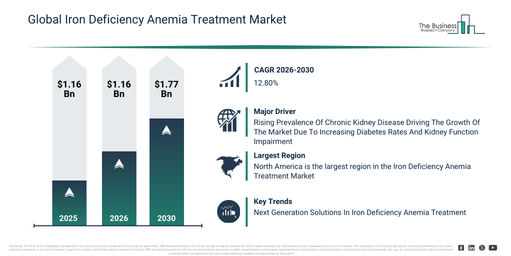
    The iron deficiency anemia treatment market is projected to experience significant expansion in the coming years. It is anticipated to reach a value of $16.17 billion by 2030, growing at a compound annual growth rate (CAGR) of 12.8%. This growth during the forecast period can be attributed to factors such as the increasing susceptibility of the geriatric population, a rising demand for rapid iron repletion therapies, the expansion of injectable iron usage, a growing focus on patient-centric treatment models, and advancements in iron formulation technologies. Furthermore, key trends expected in this period include an increasing adoption of intravenous iron therapies, a rising use of high-bioavailability iron formulations, a growing emphasis on personalized anemia treatment approaches, the expansion of outpatient and home-based iron therapy, and improved patient monitoring and compliance tools.

    Access Your Free Sample Report For In-Depth Market Analysis:

    https://www.thebusinessresearchcompany.com/report/iron-deficiency-anemia-treatment-global-market-report

    What Key Drivers Are Fueling The Growth Of The Iron Deficiency Anemia Treatment Market?

    The projected rise in chronic kidney disease (CKD) is anticipated to propel the expansion of the iron deficiency anemia treatment market in the coming years. Chronic kidney disease (CKD) is characterized by a gradual decline in kidney function over time. The increase in CKD cases can be linked to growing rates of diabetes, as persistently high blood sugar levels harm the kidney’s blood vessels, hindering their ability to filter waste. Treatment for iron deficiency anemia assists individuals with chronic kidney disease by improving oxygen delivery to tissues, lessening fatigue, and enhancing quality of life, and it may also improve kidney function by addressing the anemia that frequently stems from reduced erythropoietin production in CKD. For instance, in April 2024, a report published by AstraZeneca, a UK-based pharmaceutical company, projected that by 2032, up to 16.5% of the population across eight countries, including the United States, Brazil, the United Kingdom, Spain, Germany, the Netherlands, China, and Australia, will be affected by chronic kidney disease (CKD), with advanced-stage cases seeing a significant increase of up to 59.3%. Consequently, the growing incidence of chronic kidney disease is fueling growth in the iron deficiency anemia treatment market.

    What Are The Key Segment Divisions In The Iron Deficiency Anemia Treatment Market Segment Structure?

    The iron deficiency anemia treatment market covered in this report is segmented –

    1) By Treatment Type: Medications, Blood Transfusions, Other Treatment Types

    2) By Drug Type: Ferrous Sulfate, Iron Carbohydrates, Other Drug Types

    3) By Therapy Areas: Inflammatory Bowel Disease, Oncology, Other Therapy Areas

    4) By Route Of Administration: Oral, Injectable

    5) By End User: Hospitals, Clinics, Home Care Settings, Pharmacies

    Subsegments:

    1) By Medications: Oral Iron Supplements, Intravenous Iron Therapy, Iron-Based Injections, Erythropoiesis-Stimulating Agents

    2) By Blood Transfusions: Packed Red Blood Cells Transfusion, Whole Blood Transfusion

    3) By Other Treatment Types: Dietary Modifications, Iron Infusion Therapy, Long-Term Maintenance Iron Therapy

    What Trends Are Influencing The Iron Deficiency Anemia Treatment Market?

    Major companies operating in the iron deficiency anemia treatment market are concentrating on developing next-generation solutions, such as iron injections, to enhance treatment efficacy, safety, and patient convenience. An iron injection refers to a new or significantly improved injectable iron therapy that represents a major advancement in the treatment of iron deficiency or iron deficiency anemia. For instance, in March 2024, Cadila Pharmaceuticals, an India-based pharmaceutical company, launched Redshot FCM, an intravenous iron therapy using ferric carboxymaltose to treat iron deficiency anemia (IDA). It offers unique features, including an advanced ferric carboxymaltose formulation for rapid iron replenishment, minimal anaphylaxis risk, high-dose single-infusion administration for swift correction, and pediatric applicability (1+ years) alongside adult use. It accelerates hemoglobin recovery and targets high-risk groups, including pregnant women and cancer patients, with superior tolerability.

    Which Organizations Are Engaged In The Iron Deficiency Anemia Treatment Market?

    Major companies operating in the iron deficiency anemia treatment market are Sanofi SA, Fresenius SE & Co. KGaA, Amgen Inc., Teva Pharmaceutical Industries Ltd., Sandoz Group AG, Daiichi Sankyo Company Limited, Lupin Limited, Zydus Lifesciences Limited, Alkem Laboratories Ltd., Pharmascience Inc., American Regent Inc., PharmaNutra S.p.A., Rockwell Medical Inc., Keryx Biopharmaceuticals Inc., Pharmacosmos A/S, AdvaCare Pharma USA LLC, Apotex Inc., Shield Therapeutics plc, CSL Vifor AG, Abbott Laboratories, Bayer AG, Pfizer Inc., Cipla Limited, Dr. Reddy’s Laboratories Ltd.

    Get The Full Iron Deficiency Anemia Treatment Market Report:

    https://www.thebusinessresearchcompany.com/report/iron-deficiency-anemia-treatment-global-market-report

    Where Is The Iron Deficiency Anemia Treatment Market Most Concentrated Geographically?

    North America was the largest region in the iron deficiency anemia treatment market in 2025. Asia-Pacific is expected to be the fastest-growing region in the forecast period. The regions covered in the iron deficiency anemia treatment market report are Asia-Pacific, South East Asia, Western Europe, Eastern Europe, North America, South America, Middle East, Africa.

    Request A Customized Iron Deficiency Anemia Treatment Market Report For Competitive Insights:

    https://www.thebusinessresearchcompany.com/report/iron-deficiency-anemia-treatment-global-market-report

    Browse Through More Reports Similar to the Global Iron Deficiency Anemia Treatment Market 2026, By The Business Research Company

    Hemochromatosis Iron Overload Disease Treatment Market Report 2026

    https://www.thebusinessresearchcompany.com/report/hemochromatosis-iron-overload-disease-treatment-global-market-report

    Anemia And Other Blood Disorder Drugs Market Report 2026

    https://www.thebusinessresearchcompany.com/report/anemia-and-other-blood-disorder-drugs-global-market-report

    Chemotherapy Induced Anemia Market Report 2026

    https://www.thebusinessresearchcompany.com/report/chemotherapy-induced-anemia-global-market-report

    Get in touch with us:

    The Business Research Company: https://www.thebusinessresearchcompany.com/

    Americas +1 310-496-7795

    Asia +44 7882 955267 & +91 8897263534

    Europe +44 7882 955267

    Email us at info@tbrc.info

    Follow us on:

    LinkedIn: https://in.linkedin.com/company/the-business-research-company

    YouTube: https://www.youtube.com/channel/UC24_fI0rV8cR5DxlCpgmyFQ

    Global Market Model: https://www.thebusinessresearchcompany.com/global-market-model
  • Iron Deficiency Anemia Therapy Market Forecast 2026–2030 Highlighting Expansion Across Industries

    Iron Deficiency Anemia Therapy Market Forecast 2026–2030 Highlighting Expansion Across Industries

    The Business Research Company’s 2026 market reports feature enhanced tools like market attractiveness analysis, TAM assessment, and company scoring matrices, along with interactive dashboards, deeper supply chain insights, and startup coverage strengthening the depth, usability, and strategic value of insights.

    How Much Will The Market Value Of The Iron Deficiency Anemia Therapy Market Grow Between 2026 And 2030?

    The iron deficiency anemia therapy market has shown significant expansion in recent years. It is anticipated to increase from $4.78 billion in 2025 to $5.15 billion in 2026, at a compound annual growth rate (CAGR) of 7.8%. This historical market growth is due to several factors, including the rising prevalence of iron deficiency anemia, increased awareness of anemia management, the broader implementation of hospital-based treatment protocols, the growing consumption of oral iron supplements, and advancements in diagnostic screening for anemia.

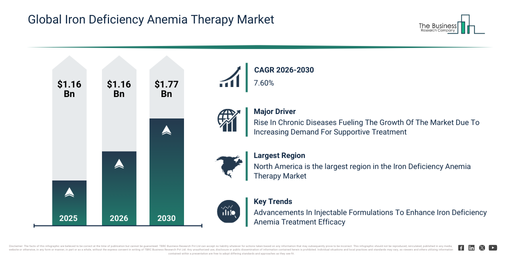
    The iron deficiency anemia therapy market is projected to experience robust expansion in the coming years. Its size is expected to climb to $6.92 billion by 2030, driven by a compound annual growth rate (CAGR) of 7.6%. This anticipated growth during the forecast period is influenced by factors such as the increasing demand for quicker anemia correction, a rise in chronic diseases that cause anemia, the establishment of more specialty anemia clinics, a heightened focus on maternal and pediatric anemia care, and ongoing advancements in iron formulation technologies. Significant trends for this period include a greater adoption of intravenous iron therapies, a growing call for targeted anemia treatments, an increasing emphasis on patient-specific therapy regimens, the expansion of combination oral and parenteral therapies, and an enhanced focus on both treatment efficacy and safety.

    Access Your Free Sample Report For In-Depth Market Analysis:

    https://www.thebusinessresearchcompany.com/report/iron-deficiency-anemia-therapy-global-market-report

    Which Drivers Are Supporting The Iron Deficiency Anemia Therapy Market Growth?

    The future expansion of the iron deficiency anemia therapy market is anticipated to be driven by a rising incidence of chronic ailments. These are defined as enduring medical conditions, typically lasting a year or longer. An increase in chronic illnesses stems from a growing occurrence of unhealthy habits, such as inadequate diet, insufficient exercise, and tobacco use, leading to conditions like obesity, diabetes, and cardiovascular issues, and subsequently, prolonged health problems. Such long-term conditions can escalate the demand for iron deficiency anemia therapy because they impair the body’s proper iron absorption, thereby elevating the likelihood of iron deficiency and making supplementation or treatment essential to re-establish iron levels. As an illustration, data from June 2024 by the National Health Service, a UK government body, revealed that 3,615,330 individuals registered with a GP received a diagnosis of non-diabetic hyperglycemia (pre-diabetes) in 2023. This represented an 18% surge compared to 3,065,825 cases recorded in 2022. Consequently, the expanding number of chronic disease cases is a key driver for the growth of the iron deficiency anemia therapy market.

    Which Segment Categories Are Included In The Iron Deficiency Anemia Therapy Market Segment Analysis?

    The iron deficiency anemia therapy market covered in this report is segmented –

    1) By Product Type: Ferrous Sulphate, Ferrous Gluconate, Ferrous Fumerate, Ferric Hydroxide

    2) By Therapy Type: Parenteral Iron Therapy, Oral Iron Therapy, Red Blood Cell Transfusion, Other Therapy Types

    3) By Therapy Areas: Inflammatory Bowel Diseases, Renal Diseases, Obstetrics and Gynecology, Congestive Heart Failure, Oncology

    4) By Distribution channel: Hospital Pharmacy, Drug Stores And Retail Pharmacies, Online Pharmacies

    5) By End User: Hospitals, Speciality Clinics, Home Care Setting, Other End Users

    Subsegments:

    1) By Ferrous Sulphate: Oral Ferrous Sulphate Tablets, Oral Liquid Ferrous Sulphate, Intravenous Ferrous Sulphate, Extended Or Delayed Release Formulations

    2) By Ferrous Gluconate: Oral Tablets, Chewable Tablets, Liquid Solutions, Pediatric Formulations

    3) By Ferrous Fumarate: Oral Tablets Or Capsules, Prenatal Supplements, Multivitamin with Iron Formulations, Pediatric Drops Or Syrups

    4) By Ferric Hydroxide: Intravenous Iron Therapy, Ferric Hydroxide Polymaltose Complex, Dialysis-Specific Iron Therapy, Hospital-Based Injectable Formulations

    Which Trends Are Expected To Impact The Iron Deficiency Anemia Therapy Market?

    Leading companies in the iron deficiency anemia therapy market are increasingly focusing on developing advanced treatment options, such as injectable formulations, to improve both treatment effectiveness and patient access. A new injectable formulation refers to a drug version recently developed or modified for administration via injection. For example, in May 2023, Emcure Pharmaceuticals Ltd., an Indian-based pharmaceutical company, introduced Orofer FCM 750, a ferric carboxymaltose (FCM) formulation designed to address iron deficiency and iron deficiency anemia (IDA). Its advantages include enhanced patient compliance due to less frequent dosing compared to oral supplements. The product’s objective is to effectively manage iron deficiency anemia, particularly for individuals unable to tolerate oral iron supplements. This 750 mg/15 ml injectable ferric carboxymaltose gained approval from India’s DCGI for treating IDA in patients unresponsive to oral iron, especially pregnant women with hemoglobin <10 g/dl and weighing 35–70 kg. It facilitates a 15-minute infusion (when diluted in saline) and aligns with Anemia Mukt Bharat guidelines as a primary treatment for severe cases.

    Who Are The Active Companies Shaping The Iron Deficiency Anemia Therapy Market?

    Major companies operating in the iron deficiency anemia therapy market are Sanofi SA, Fresenius SE & Co. KGaA, GlaxoSmithKline plc, Sun Pharmaceutical Industries Ltd, CSL Vifor AG, Zydus Lifesciences Limited, Alkem Laboratories Ltd., Luitpold Pharmaceuticals Inc., Covis Pharma GmbH, Pharmacosmos Therapeutics Inc., AFT Pharmaceuticals Ltd., Rockwell Medical Inc., Otsuka Pharmaceutical Co. Ltd., AdvaCare Pharma USA LLC, Apotex Inc., KYE Pharmaceuticals Inc., Emcure Pharmaceuticals Limited, Shield Therapeutics plc, Abbott Laboratories, Bayer AG, Pfizer Inc., Lupin Limited, Cipla Limited, Dr. Reddy’s Laboratories Ltd.

    Get The Full Iron Deficiency Anemia Therapy Market Report:

    https://www.thebusinessresearchcompany.com/report/iron-deficiency-anemia-therapy-global-market-report

    Which Region Dominates The Iron Deficiency Anemia Therapy Market By Market Share?

    North America was the largest region in the iron deficiency anemia therapy market in 2025. Asia-Pacific is expected to be the fastest-growing region in the forecast period. The regions covered in the iron deficiency anemia therapy market report are Asia-Pacific, South East Asia, Western Europe, Eastern Europe, North America, South America, Middle East, Africa.

    Request A Customized Iron Deficiency Anemia Therapy Market Report For Competitive Insights:

    https://www.thebusinessresearchcompany.com/report/iron-deficiency-anemia-therapy-global-market-report

    Browse Through More Reports Similar to the Global Iron Deficiency Anemia Therapy Market 2026, By The Business Research Company

    Hemochromatosis Iron Overload Disease Treatment Market Report 2026

    https://www.thebusinessresearchcompany.com/report/hemochromatosis-iron-overload-disease-treatment-global-market-report

    Anemia And Other Blood Disorder Drugs Market Report 2026

    https://www.thebusinessresearchcompany.com/report/anemia-and-other-blood-disorder-drugs-global-market-report

    Chemotherapy Induced Anemia Market Report 2026

    https://www.thebusinessresearchcompany.com/report/chemotherapy-induced-anemia-global-market-report

    Get in touch with us:

    The Business Research Company: https://www.thebusinessresearchcompany.com/

    Americas +1 310-496-7795

    Asia +44 7882 955267 & +91 8897263534

    Europe +44 7882 955267

    Email us at info@tbrc.info

    Follow us on:

    LinkedIn: https://in.linkedin.com/company/the-business-research-company

    YouTube: https://www.youtube.com/channel/UC24_fI0rV8cR5DxlCpgmyFQ

    Global Market Model: https://www.thebusinessresearchcompany.com/global-market-model
  • Next-Generation Oncology Devices And Solutions Market Developments Shaping Growth Across The Forecast Period

    Next-Generation Oncology Devices And Solutions Market Developments Shaping Growth Across The Forecast Period

    The Business Research Company’s 2026 market reports feature enhanced tools like market attractiveness analysis, TAM assessment, and company scoring matrices, along with interactive dashboards, deeper supply chain insights, and startup coverage strengthening the depth, usability, and strategic value of insights.

    From Its 2026 Market Size, What Value Is The Next-Generation Oncology Devices And Solutions Market Projected To Reach By 2030? _x000D_

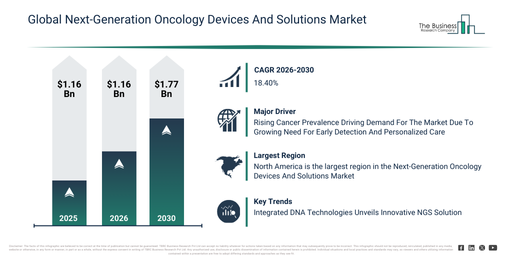
    The market size for next-generation oncology devices and solutions has experienced rapid expansion in recent years. This market is projected to grow from $16.41 billion in 2025 to $19.46 billion in 2026, achieving a compound annual growth rate (CAGR) of 18.6%. Historically, this expansion has been primarily due to increasing global cancer incidence rates, the expansion of molecular diagnostic capabilities, the availability of advanced oncology testing tools, the growth of hospital-based cancer care programs, and the rising adoption of targeted therapies._x000D_

    _x000D_

    The next-generation oncology devices and solutions market is poised for rapid expansion over the next few years. It is anticipated to reach $38.19 billion by 2030, growing at a compound annual growth rate (CAGR) of 18.4%. This growth during the forecast period can be attributed to factors such as increasing demand for personalized cancer treatment, rising investments in genomic diagnostics, the expansion of early screening programs, the growing integration of AI in oncology workflows, and advancements in biomarker-based cancer management. Major trends projected for this period include the increasing adoption of precision oncology platforms, the rising use of NGS-based cancer diagnostics, the growing integration of digital pathology solutions, the expansion of personalized cancer treatment approaches, and an enhanced focus on early detection technologies._x000D_

    _x000D_

    #Access Your Free Sample Report For In-Depth Market Analysis:#_x000D_

    https://www.thebusinessresearchcompany.com/report/next-generation-oncology-devices-and-solutions-global-market-report_x000D_

    _x000D_

    Which Key Factors Are Driving The Next-Generation Oncology Devices And Solutions Market Growth?_x000D_

    The growing incidence of cancer is anticipated to fuel the expansion of the next-generation oncology devices and solutions market in the future. Cancer is defined as a condition characterized by the uncontrolled proliferation of abnormal cells, which can metastasize and impair regular bodily functions. This escalating incidence of cancer is primarily attributable to aging populations, given that the likelihood of developing the disease escalates with advancing age. Next-generation oncology devices and solutions play a crucial role in managing the increasing burden of cancer through facilitating earlier detection, more accurate diagnosis, and tailored treatment approaches. For example, data from January 2024 released by the American Cancer Society, a nonprofit organization based in the US, projects that cancer will be responsible for over 611,000 fatalities in the United States, translating to more than 1,600 cancer-related deaths daily. Consequently, the expanding occurrence of cancer will act as a significant driver for the next-generation oncology devices and solutions market._x000D_

    _x000D_

    Which Segment Types Are Examined In The Next-Generation Oncology Devices And Solutions Market Segment Study?_x000D_

    The next-generation oncology devices and solutions market covered in this report is segmented – _x000D_

    _x000D_

    1) By Cancer Type: Breast Cancer, Cervical Cancer, Colorectal Cancer, Lung Cancer_x000D_

    2) By Technology: Next-Generation Sequencing (NGS), Polymerase Chain Reaction (PCR), DNA Microarrays, Multiplexing, Other Technologies_x000D_

    3) By Application: Screening And Early Detection, Prognostics And Monitoring, Therapy Selection, Recurrence Monitoring, Other Applications_x000D_

    4) By End Use: Hospitals And Clinics, Diagnostic Laboratories, Academic And Research Institutions, Other End Uses_x000D_

    _x000D_

    Subsegments:_x000D_

    1) By Breast Cancer: Invasive Ductal Carcinoma, Invasive Lobular Carcinoma, Triple-Negative Breast Cancer, HER2-Positive Breast Cancer_x000D_

    2) By Cervical Cancer: Squamous Cell Carcinoma, Adenocarcinoma, Adenosquamous Carcinoma_x000D_

    3) By Colorectal Cancer: Colon Cancer, Rectal Cancer, Metastatic Colorectal Cancer_x000D_

    4) By Lung Cancer: Non-Small Cell Lung Cancer (NSCLC), Small Cell Lung Cancer (SCLC), Lung Adenocarcinoma, Squamous Cell Lung Carcinoma_x000D_

    _x000D_

    Which Trends Are Guiding The Direction Of The Next-Generation Oncology Devices And Solutions Market?_x000D_

    Companies operating in the next-generation oncology devices and solutions market are concentrating on technological advancements, such as next-generation sequencing (NGS) target enrichment solutions, to enhance the detection of rare genetic variants, improve sequencing accuracy, and expedite cancer diagnosis and treatment decisions. Next-generation sequencing (NGS) target enrichment solutions are methods that selectively capture and concentrate specific DNA or RNA regions for sequencing, allowing for a more accurate and efficient analysis of genetic variants linked to diseases like cancer. For example, in April 2025, Integrated DNA Technologies (IDT), a US-based biotechnology company, launched the xGen Hybridization and Wash v3 Kit, a revolutionary hybridization capture solution designed to accelerate cancer research by streamlining next-generation sequencing (NGS) workflows. This cutting-edge kit significantly reduces the hybridization time to just one hour, enabling researchers to complete sample preparation and proceed to sequencing within a single workday. By eliminating the need for heated buffers and decreasing hands-on time by 20%, the solution is highly automation-friendly and well-suited for high-throughput applications._x000D_

    _x000D_

    Which Players Are Part Of The Competitive Landscape Of The Next-Generation Oncology Devices And Solutions Market?_x000D_

    Major companies operating in the next-generation oncology devices and solutions market are Johnson & Johnson Services Inc., Siemens AG, Merck & Co. Inc., Thermo Fisher Scientific Inc., Novartis AG, Koninklijke Philips N.V., GE HealthCare Technologies Inc., Agilent Technologies Inc., Illumina Inc., Sysmex Corporation, QIAGEN N.V., Exact Sciences Corporation, Elekta AB, Myriad Genetics Inc., Takara Bio USA Inc., NeoGenomics Inc., Guardant Health Inc., Accuray Incorporated, SOPHiA GENETICS SA, Paige.AI Inc., Deep Bio Inc., Lucida Medical Ltd. _x000D_

    _x000D_

    #Get The Full Next-Generation Oncology Devices And Solutions Market Report:#_x000D_

    https://www.thebusinessresearchcompany.com/report/next-generation-oncology-devices-and-solutions-global-market-report_x000D_

    _x000D_

    Which Region Dominates The Next-Generation Oncology Devices And Solutions Market By Market Share?_x000D_

    North America was the largest region in the next-generation oncology devices and solutions market in 2025. The regions covered in the next-generation oncology devices and solutions market report are Asia-Pacific, South East Asia, Western Europe, Eastern Europe, North America, South America, Middle East, Africa._x000D_

    _x000D_

    #Request A Customized Next-Generation Oncology Devices And Solutions Market Report For Competitive Insights:#_x000D_

    https://www.thebusinessresearchcompany.com/report/next-generation-oncology-devices-and-solutions-global-market-report_x000D_

    _x000D_

    #Browse Through More Reports Similar to the Global Next-Generation Oncology Devices And Solutions Market 2026, By The Business Research Company#_x000D_

    _x000D_

    Interventional Oncology Devices Market Report 2026_x000D_

    https://www.thebusinessresearchcompany.com/report/interventional-oncology-devices-global-market-report_x000D_

    _x000D_

    Oncology Drugs Market 2026_x000D_

    https://www.thebusinessresearchcompany.com/report/oncology-drugs-market_x000D_

    _x000D_

    Oncology Drugs Market 2026_x000D_

    https://www.thebusinessresearchcompany.com/report/oncology-drugs-market_x000D_

    _x000D_

    #Get in touch with us:#_x000D_

    _x000D_

    The Business Research Company: https://www.thebusinessresearchcompany.com/_x000D_

    Americas +1 310-496-7795_x000D_

    Asia +44 7882 955267 & +91 8897263534_x000D_

    Europe +44 7882 955267_x000D_

    Email us at info@tbrc.info_x000D_

    _x000D_

    #Follow us on:#_x000D_

    _x000D_

    LinkedIn: https://in.linkedin.com/company/the-business-research-company_x000D_

    YouTube: https://www.youtube.com/channel/UC24_fI0rV8cR5DxlCpgmyFQ_x000D_

    Global Market Model: https://www.thebusinessresearchcompany.com/global-market-model

  • Global In-vivo Prime Editing Platform Market Analysis For 2026–2030 With Strategic Insights

    Global In-vivo Prime Editing Platform Market Analysis For 2026–2030 With Strategic Insights

    The Business Research Company’s 2026 market reports feature enhanced tools like market attractiveness analysis, TAM assessment, and company scoring matrices, along with interactive dashboards, deeper supply chain insights, and startup coverage strengthening the depth, usability, and strategic value of insights.

    What Changes In Market Value Are Expected For The In-vivo Prime Editing Platform Market Over The 2026–2030 Period?

    The in-vivo prime editing platform market size has experienced rapid expansion in recent years. It is projected to grow from $1.26 billion in 2025 to $1.63 billion in 2026, exhibiting a compound annual growth rate (CAGR) of 29.4%. This historical growth can be attributed to the discovery of CRISPR technologies, the growth of genetic disorder research, increased biotech funding, academic genome editing research, and the early success of gene therapies.

    The market size for the in-vivo prime editing platform is projected to experience substantial growth over the coming years. This market is anticipated to reach $4.52 billion by 2030, exhibiting a compound annual growth rate (CAGR) of 29.1%. Factors contributing to this expansion during the forecast period include the clinical application of prime editing, the increasing scope of in-vivo gene therapies, supportive regulatory frameworks for genetic treatments, collaborations between biotechnology and pharmaceutical companies, and advancements in delivery vector technology. Key trends anticipated in the forecast period involve enhancements in precision genome editing, the broadening of gene therapy research, an intensified focus on addressing rare diseases, the creation of more effective delivery systems, and a rise in both preclinical and clinical investigations.

    Access Your Free Sample Report For In-Depth Market Analysis:

    https://www.thebusinessresearchcompany.com/report/in-vivo-prime-editing-platform-global-market-report

    What Key Factors Are Affecting The In-vivo Prime Editing Platform Market Demand?

    The increasing requirement for precise and efficient genome editing solutions is anticipated to drive the expansion of the in-vivo prime editing platform market. This involves making accurate, targeted changes to DNA (deoxyribonucleic acid), the molecule that stores genetic information in cells, while minimizing off-target edits and unintended consequences. This heightened demand is propelled by the growing need for targeted therapies that reduce errors and deliver lasting clinical outcomes. The in-vivo prime editing platform addresses this need by enabling highly accurate, targeted DNA corrections inside living tissues with reduced off-target effects and the potential for long-term therapeutic benefit. For instance, the World Economic Forum, a Switzerland-based international non-profit organization, stated that over 2,000 gene therapies were in development worldwide, a number that had doubled from just three years earlier. Thus, the rising demand for precise and efficient genome editing solutions is a key factor boosting the growth of the in-vivo prime editing platform market.

    How Is The In-vivo Prime Editing Platform Market Broken Down By Segment Categories?

    The in-vivo prime editing platform market covered in this report is segmented –

    1) By Product Type: Prime Editing Enzymes, Guide Ribonucleic Acids, Delivery Systems, Other Product Types

    2) By Application: Genetic Disease Treatment, Oncology, Rare Diseases, Research And Development

    3) By Delivery Method: Viral Vectors, Non-Viral Methods, Lipid Nanoparticles, Other Delivery Method Types

    4) By End-User: Pharmaceutical And Biotechnology Companies, Academic And Research Institutes, Contract Research Organizations, Other End-Users

    Subsegments:

    1) By Prime Editing Enzymes: Cas9 Nickeas, Reverse Transcriptase, Engineered Variants

    2) By Guide Ribonucleic Acids: pegRNA (Prime Editing Guide RNA), sgRNA (Single Guide RNA), Optimized Synthetic RNAs

    3) By Delivery Systems: Viral Vectors (AAV, Lentivirus), Non-Viral Vectors (Lipid Nanoparticles, Electroporation, Physical Methods), Exosomes

    4) By Other Product Types: Screening Tools, Assay Kits, Supporting Reagents

    What Trends Are Influencing Changes In The In-vivo Prime Editing Platform Market?

    Major companies and research institutions active in the in-vivo prime editing platform market are channeling their efforts into improving delivery systems, such as lipid nanoparticles, viral vectors, and engineered extracellular vesicles, to gain an advantage over competitors. Lipid nanoparticles and other sophisticated carriers enclose critical prime editing constituents, including Cas9 nickase, reverse transcriptase, and pegRNAs, which shields them from deterioration and enables effective transport into target cells while boosting absorption and specificity for tissues. For example, in September 2023, Moderna, a US-based biotechnology company, showcased that optimized lipid nanoparticle formulations are capable of delivering prime editing machinery to liver and muscle tissues in animal models with high accuracy, accomplishing desired genome alterations and minimizing unintended effects. These types of advancements demonstrate how innovations in delivery enhance the effectiveness, exactitude, and prospective therapeutic value of in-vivo prime editing treatments.

    Which Players Are Present In The In-vivo Prime Editing Platform Market Space?

    Major companies operating in the in-vivo prime editing platform market are AstraZeneca PLC, Danaher Corporation, Regeneron Pharmaceuticals Inc., Moderna Inc., Integrated DNA Technologies Inc., Beam Therapeutics Inc., CRISPR Therapeutics AG, Maravai LifeSciences Holdings Inc., Sangamo Therapeutics Inc., Editas Medicine Inc., Precision BioSciences Inc., Metagenomi Inc., Tessera Therapeutics Inc., Mammoth Biosciences Inc., Arbor Biotechnologies Inc., Intellia Therapeutics Inc. (NTLA), Caribou Biosciences Inc., Scribe Therapeutics Inc., EGENESIS INC., Prime Medicine Inc., Cellectis S.A.

    Get The Full In-vivo Prime Editing Platform Market Report:

    https://www.thebusinessresearchcompany.com/report/in-vivo-prime-editing-platform-global-market-report

    Which Region Is The Largest In The In-vivo Prime Editing Platform Market?

    North America was the largest region in the in-vivo prime editing platform market in 2025. Asia-Pacific is expected to be the fastest-growing region in the forecast period. The regions covered in the in-vivo prime editing platform market report are Asia-Pacific, South East Asia, Western Europe, Eastern Europe, North America, South America, Middle East, Africa.

    Request A Customized In-vivo Prime Editing Platform Market Report For Competitive Insights:

    https://www.thebusinessresearchcompany.com/report/in-vivo-prime-editing-platform-global-market-report

    Browse Through More Reports Similar to the Global In-vivo Prime Editing Platform Market 2026, By The Business Research Company

    Endotracheal Tubes Market Report 2026

    https://www.thebusinessresearchcompany.com/report/endotracheal-tubes-global-market-report

    Enteral Feeding Tube Equipment Market Report 2026

    https://www.thebusinessresearchcompany.com/report/enteral-feeding-tube-equipment-global-market-report

    Industrial Tubes Market Report 2026

    https://www.thebusinessresearchcompany.com/report/industrial-tubes-global-market-report

    Get in touch with us:

    The Business Research Company: https://www.thebusinessresearchcompany.com/

    Americas +1 310-496-7795

    Asia +44 7882 955267 & +91 8897263534

    Europe +44 7882 955267

    Email us at info@tbrc.info

    Follow us on:

    LinkedIn: https://in.linkedin.com/company/the-business-research-company

    YouTube: https://www.youtube.com/channel/UC24_fI0rV8cR5DxlCpgmyFQ

    Global Market Model: https://www.thebusinessresearchcompany.com/global-market-model
  • Next-Generation Mass Spectrometer Market Forecast With Insights On Demand And Industry Growth

    Next-Generation Mass Spectrometer Market Forecast With Insights On Demand And Industry Growth

    The Business Research Company’s 2026 market reports feature enhanced tools like market attractiveness analysis, TAM assessment, and company scoring matrices, along with interactive dashboards, deeper supply chain insights, and startup coverage strengthening the depth, usability, and strategic value of insights.

    How Much Growth In Market Value Is Expected For The Next-Generation Mass Spectrometer Market Between 2026 And 2030?_x000D_

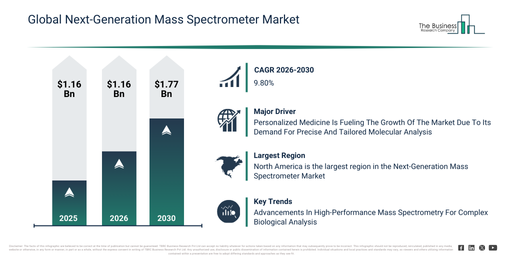
    The next-generation mass spectrometer market has witnessed substantial expansion in recent years. This market is projected to expand from $3.6 billion in 2025 to $3.96 billion in 2026, achieving a compound annual growth rate (CAGR) of 10.1%. Historically, this growth can be ascribed to several factors, including the constrained sensitivity and resolution of early mass spectrometers, the dependence on conventional ion trap and quadrupole systems, the expansion of pharmaceutical and biotech research, a heightened demand for precise molecular analysis, and the considerable operational complexity and maintenance costs involved._x000D_

    _x000D_

    The next-generation mass spectrometer market is anticipated to experience robust expansion in the coming years. Projections indicate it will reach a valuation of $5.75 billion by 2030, exhibiting a compound annual growth rate (CAGR) of 9.8%. This projected increase during the forecast period is driven by several factors, including advancements in next-generation FT-MS and Orbitrap systems, the incorporation of AI-based data interpretation, the broadening scope of clinical diagnostics and forensic applications, a rise in environmental monitoring and food safety testing, and the increasing need for high-throughput and automated mass spectrometry solutions. Key developments expected throughout this period encompass a growing demand for high-resolution mass spectrometry, the integration of real-time data processing and analytical capabilities, the expansion of research in proteomics and metabolomics, greater uptake in environmental and food testing scenarios, and an emphasis on device miniaturization alongside improved instrument sensitivity._x000D_

    _x000D_

    #Access Your Free Sample Report For In-Depth Market Analysis:#_x000D_

    https://www.thebusinessresearchcompany.com/report/next-generation-mass-spectrometer-global-market-report_x000D_

    _x000D_

    What Primary Drivers Are Shaping The Next-Generation Mass Spectrometer Market?_x000D_

    The increasing focus on personalized medicine is poised to propel the next-generation mass spectrometer market forward. Personalized medicine is a medical approach that customizes treatment and healthcare decisions based on an individual’s unique genetic, environmental, and lifestyle factors to achieve more effective results. This heightened emphasis on personalized medicine arises from the need for tailored treatments that enhance patient outcomes, minimize side effects, and optimize healthcare efficiency, all informed by individual genetic and lifestyle characteristics. Next-generation mass spectrometers support personalized medicine by offering highly precise and extensive molecular analysis. This analysis assists in identifying individual biomarkers, monitoring therapeutic responses, and guiding customized treatment plans for improved patient outcomes. For instance, in February 2024, a report from the Personalized Medicine Coalition, a US-based non-profit organization, revealed that in 2023, the Food and Drug Administration (FDA), a US-based federal agency, approved 16 new personalized medicines for rare disease patients, a rise from six in 2022. Therefore, the escalating emphasis on personalized medicine will significantly contribute to the growth of the next-generation mass spectrometer market._x000D_

    _x000D_

    How Are Different Segments Classified In The Next-Generation Mass Spectrometer Market Segment Analysis?_x000D_

    The next-generation mass spectrometer market covered in this report is segmented – _x000D_

    _x000D_

    1) By Type: Fourier Transform, Linear Ion Trap Mass Spectrometry, Other Types_x000D_

    2) By Application: Pharmaceuticals, Biotechnology, Clinical Diagnostics, Environmental Analysis, Food And Beverage Testing, Forensic Science, Other Applications_x000D_

    3) By End User: Research Laboratories, Academic Institutions, Pharmaceutical Companies, Biotechnology Firms, Clinical Laboratories, Government Agencies_x000D_

    _x000D_

    Subsegments:_x000D_

    1) By Fourier Transform: Fourier Transform Ion Cyclotron Resonance (FT-ICR), Fourier Transform Orbitrap Mass Spectrometry, Hybrid FT-MS Systems, High-Resolution Accurate Mass (HRAM) FT-MS_x000D_

    2) By Linear Ion Trap Mass Spectrometry: Quadrupole Ion Trap, Three-Dimensional Linear Ion Trap, Dual-Pressure Linear Ion Trap, Linear Ion Trap-Time Of Flight (LIT-TOF) Hybrid_x000D_

    3) By Other Types: Time-Of-Flight Mass Spectrometry (TOF-MS), Quadrupole Mass Spectrometry, Orbitrap Mass Spectrometry (Non-FT Applications), Magnetic Sector Mass Spectrometry, Ion Mobility Mass Spectrometry, Hybrid Mass Spectrometers_x000D_

    _x000D_

    What Trends Are Affecting The Growth Of The Next-Generation Mass Spectrometer Market?_x000D_

    Key players in the next-generation mass spectrometer market are dedicating their efforts to developing highly efficient instruments that enable researchers to analyze complex biological samples with exceptional precision and speed. These innovations are geared towards improving biomarker discovery, facilitating early disease detection, and accelerating the creation of personalized therapies. For instance, in June 2023, Thermo Fisher Scientific Inc., a US-based clinical research company, introduced the Orbitrap Astral mass spectrometer, which boasts fast throughput, high sensitivity, and deep proteome coverage, making it one of the most significant advancements in mass spectrometry in 15 years. This cutting-edge instrument allows researchers to detect previously inaccessible low-abundance proteins by combining ultra-fast scan speeds, exceptional sensitivity, and deep proteome coverage, thus markedly advancing large-scale proteomic analysis. It also features enhanced ion transmission efficiency, an improved dynamic range, and achieves up to four times higher throughput, enabling faster biomarker discovery, precise quantification, and the development of targeted therapies across a diverse range of diseases._x000D_

    _x000D_

    Who Are The Companies Driving Activity In The Next-Generation Mass Spectrometer Market?_x000D_

    Major companies operating in the next-generation mass spectrometer market are Hitachi Ltd., Thermo Fisher Scientific Inc., Danaher Corporation, Agilent Technologies Inc., PerkinElmer Inc., Shimadzu Corporation, Waters Corporation, Bruker Corporation, HORIBA Ltd., JEOL Ltd., Rigaku Corporation, LECO Corporation, Hiden Analytical Ltd., Scion Instruments Ltd., MOBILion Systems Inc., Jiangsu Skyray Instrument Co. Ltd., Advion Inc., Postnova Analytics GmbH, Kore Technology Ltd., Variolytics GmbH, Spectroswiss, Excellims Corporation, 908 Devices Inc. _x000D_

    _x000D_

    #Get The Full Next-Generation Mass Spectrometer Market Report:#_x000D_

    https://www.thebusinessresearchcompany.com/report/next-generation-mass-spectrometer-global-market-report_x000D_

    _x000D_

    Which Region Is The Largest In The Next-Generation Mass Spectrometer Market?_x000D_

    North America was the largest region in the next-generation mass spectrometer market in 2025. Asia-Pacific is expected to be the fastest-growing region in the forecast period. The regions covered in the next-generation mass spectrometer market report are Asia-Pacific, South East Asia, Western Europe, Eastern Europe, North America, South America, Middle East, Africa._x000D_

    _x000D_

    #Request A Customized Next-Generation Mass Spectrometer Market Report For Competitive Insights:#_x000D_

    https://www.thebusinessresearchcompany.com/report/next-generation-mass-spectrometer-global-market-report_x000D_

    _x000D_

    #Browse Through More Reports Similar to the Global Next-Generation Mass Spectrometer Market 2026, By The Business Research Company#_x000D_

    _x000D_

    Restaurant Point Of Sale Pos Software Market Report 2026_x000D_

    https://www.thebusinessresearchcompany.com/report/restaurant-point-of-sale-pos-software-global-market-report_x000D_

    _x000D_

    Cloud Point Of Sale Pos Market Report 2026_x000D_

    https://www.thebusinessresearchcompany.com/report/cloud-point-of-sale-pos-global-market-report_x000D_

    _x000D_

    Electronic Cash Register Market Report 2026_x000D_

    https://www.thebusinessresearchcompany.com/report/electronic-cash-register-global-market-report_x000D_

    _x000D_

    #Get in touch with us:#_x000D_

    _x000D_

    The Business Research Company: https://www.thebusinessresearchcompany.com/_x000D_

    Americas +1 310-496-7795_x000D_

    Asia +44 7882 955267 & +91 8897263534_x000D_

    Europe +44 7882 955267_x000D_

    Email us at info@tbrc.info_x000D_

    _x000D_

    #Follow us on:#_x000D_

    _x000D_

    LinkedIn: https://in.linkedin.com/company/the-business-research-company_x000D_

    YouTube: https://www.youtube.com/channel/UC24_fI0rV8cR5DxlCpgmyFQ_x000D_

    Global Market Model: https://www.thebusinessresearchcompany.com/global-market-model

  • In-Vitro Diagnostics Instruments Market Outlook 2026–2030 Driven By Growth Factors And Projections

    In-Vitro Diagnostics Instruments Market Outlook 2026–2030 Driven By Growth Factors And Projections

    The Business Research Company’s 2026 market reports feature enhanced tools like market attractiveness analysis, TAM assessment, and company scoring matrices, along with interactive dashboards, deeper supply chain insights, and startup coverage strengthening the depth, usability, and strategic value of insights.

    By 2030, What Market Size Is The In-Vitro Diagnostics Instruments Market Expected To Reach Based On Its 2026 Value?

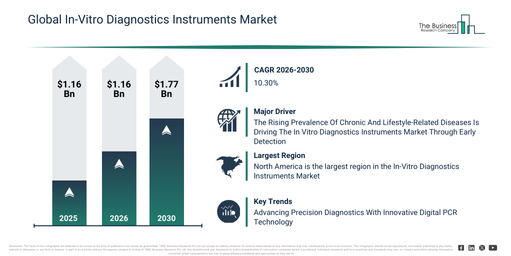
    The in-vitro diagnostics instruments market size has shown robust expansion in recent years. It is anticipated to increase from $61.09 billion in 2025 to $67.18 billion in 2026, demonstrating a compound annual growth rate (CAGR) of 10.0%. The expansion observed historically is attributable to factors including the rising prevalence of chronic diseases, an increase in hospital lab infrastructure, advancements in diagnostic reagents, growing awareness for early disease detection, and government healthcare initiatives.

    The in-vitro diagnostics instruments market is projected for swift expansion in the upcoming years. This market is set to reach $99.44 billion by 2030, exhibiting a compound annual growth rate (CAGR) of 10.3%. Key drivers for this growth during the forecast period include technological progress in molecular diagnostics, the rise of personalized medicine, the incorporation of AI into diagnostic procedures, the development of healthcare in emerging markets, and the increasing need for home-based diagnostic solutions. Significant trends anticipated in the forecast period encompass the broadening of point-of-care testing, individualized diagnostics, the embrace of rapid molecular testing, the incorporation of remote patient monitoring, and the advent of miniaturized lab instruments.

    Access Your Free Sample Report For In-Depth Market Analysis:

    https://www.thebusinessresearchcompany.com/report/in-vitro-diagnostics-instruments-global-market-report

    Which Primary Drivers Are Impacting The In-Vitro Diagnostics Instruments Market Growth?

    The increasing incidence of chronic and lifestyle-related diseases is anticipated to fuel the expansion of the in vitro diagnostics instruments market in the future. Chronic and lifestyle-related diseases refer to enduring health conditions primarily influenced by daily behaviors, habits, and environmental elements, encompassing illnesses like heart disease, diabetes, obesity, and specific cancers. These conditions are on the rise due to inactive lifestyles and poor dietary choices. As these chronic and lifestyle-related diseases spread rapidly, driving companies to adopt early detection and monitoring solutions for improved disease management, the in vitro diagnostics instruments solutions are experiencing heightened demand. For instance, in 2024, the American Action Forum, a US-based non-profit, center-right think tank, noted that chronic diseases remain a significant public health concern in the U.S., with close to 60 percent of adults living with at least one condition, 40 percent managing multiple conditions, and the prevalence is expected to nearly double by 2050. Additionally, the chronic disease treatment market is projected to reach approximately USD 38.02 billion by 2034, marking a substantial rise from USD 9.74 billion in 2025. Therefore, the growing prevalence of chronic and lifestyle-related diseases is a key factor driving the demand for the in vitro diagnostics instruments market.

    What Are The Different Segment Types In The In-Vitro Diagnostics Instruments Market Segment Breakdown?

    The in-vitro diagnostics instruments market covered in this report is segmented –

    1) By Product Type: Clinical Chemistry, Immunoassay, Molecular Diagnostics, Hematology, Microbiology, Coagulation, Other Product Types

    2) By Application: Infectious Diseases, Cancer, Cardiology, Nephrology, Autoimmune Diseases, Other Applications

    3) By End User: Hospitals And Diagnostic Laboratories, Academic And Research Institutes, Point-Of-Care Settings, Blood Banks, Pharmaceutical And Biotechnology Companies, Other Healthcare Facilities

    Subsegments:

    1) By Clinical Chemistry: Automated Clinical Chemistry Analyzers, Semi-Automated Clinical Chemistry Analyzers, Point-Of-Care Clinical Chemistry Devices

    2) By Immunoassay: Enzyme-Linked Immunosorbent Assay (ELISA) Systems, Chemiluminescence Immunoassay (CLIA) Analyzers, Radioimmunoassay (RIA) Systems

    3) By Molecular Diagnostics: Polymerase Chain Reaction (PCR) Systems, Next-Generation Sequencing (NGS) Platforms, Deoxyribonucleic Acid Microarrays, Isothermal Amplification Devices

    4) By Hematology: Automated Hematology Analyzers, Manual Hematology Analyzers, Hemostasis Analyzers, Coagulation Analyzers

    5) By Microbiology: Microbial Identification Systems, Antibiotic Susceptibility Testing (AST) Systems, Blood Culture Systems, Automated Microbial Analyzers.

    6) By Coagulation: Coagulometers, Platelet Function Analyzers, Thromboelastography (TEG) Systems, Point-Of-Care Coagulation Devices

    7) By Other Product Types: Point-Of-Care Diagnostic Devices, Miscellaneous Laboratory Instruments

    Which Trends Are Shaping Growth In The In-Vitro Diagnostics Instruments Market?

    Leading companies in the in-vitro diagnostics instruments market are concentrating on developing advanced products, such as digital polymerase chain reaction (dPCR) systems, to achieve highly precise and sensitive nucleic acid quantification essential for advanced diagnostics. Digital polymerase chain reaction (dPCR) systems are sophisticated diagnostic tools that accurately quantify DNA or RNA molecules by separating samples into thousands of individual reactions, ensuring highly accurate and sensitive detection. For example, in September 2024, QIAGEN N.V., a Netherlands-based biotechnology company, introduced the QIAcuityDx Digital PCR System, broadening its digital PCR portfolio into clinical diagnostics with a particular emphasis on oncology testing. This fully integrated, automated system is specifically designed for clinical testing in oncology, featuring a cartridge-based workflow that significantly reduces hands-on time. The QIAcuityDx also incorporates automated analysis and reporting software, which allows for the rapid and accurate detection of genetic biomarkers for cancer diagnosis and therapy monitoring without requiring extensive operator intervention.

    Who Are The Well-Known Companies In The In-Vitro Diagnostics Instruments Market?

    Major companies operating in the in-vitro diagnostics instruments market are F. Hoffmann-La Roche Ltd, Danaher Corporation, Abbott Laboratories, Thermo Fisher Scientific, Siemens Healthineers AG, Becton Dickinson and Company, Sysmex Corporation, Bio-Rad Laboratories Inc, Agilent Technologies, Hologic Inc, Qiagen N.V., Illumina Inc, Ortho Clinical Diagnostics, Beckman Coulter Inc, Mindray Medical International Limited, Horiba Ltd, Randox Laboratories Ltd, DiaSorin S.p.A., Werfen S.A., Trinity Biotech plc

    Get The Full In-Vitro Diagnostics Instruments Market Report:

    https://www.thebusinessresearchcompany.com/report/in-vitro-diagnostics-instruments-global-market-report

    Which Region Leads The In-Vitro Diagnostics Instruments Market In Terms Of Market Share?

    North America was the largest region in the in-vitro diagnostics instruments market in 2025. Asia-Pacific is expected to be the fastest-growing region in the forecast period. The regions covered in the in-vitro diagnostics instruments market report are Asia-Pacific, South East Asia, Western Europe, Eastern Europe, North America, South America, Middle East, Africa.

    Request A Customized In-Vitro Diagnostics Instruments Market Report For Competitive Insights:

    https://www.thebusinessresearchcompany.com/report/in-vitro-diagnostics-instruments-global-market-report

    Browse Through More Reports Similar to the Global In-Vitro Diagnostics Instruments Market 2026, By The Business Research Company

    Intravenous Iv Hydration Therapy Market Report 2026

    https://www.thebusinessresearchcompany.com/report/intravenous-iv-hydration-therapy-global-market-report

    Intravenous Immunoglobulin Market Report 2026

    https://www.thebusinessresearchcompany.com/report/intravenous-immunoglobulin-global-market-report

    Intravenous Infusion Pumps Market Report 2026

    https://www.thebusinessresearchcompany.com/report/intravenous-infusion-pumps-global-market-report

    Get in touch with us:

    The Business Research Company: https://www.thebusinessresearchcompany.com/

    Americas +1 310-496-7795

    Asia +44 7882 955267 & +91 8897263534

    Europe +44 7882 955267

    Email us at info@tbrc.info

    Follow us on:

    LinkedIn: https://in.linkedin.com/company/the-business-research-company

    YouTube: https://www.youtube.com/channel/UC24_fI0rV8cR5DxlCpgmyFQ

    Global Market Model: https://www.thebusinessresearchcompany.com/global-market-model
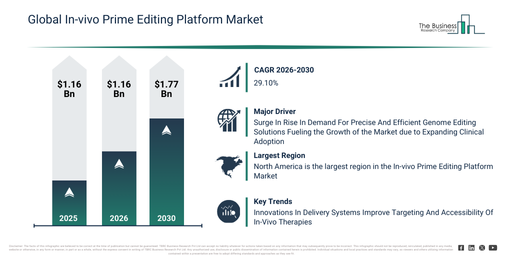
  • Intubation Tubes Market Developments And Opportunities Across 2026–2030

    Intubation Tubes Market Developments And Opportunities Across 2026–2030

    The Business Research Company’s 2026 market reports feature enhanced tools like market attractiveness analysis, TAM assessment, and company scoring matrices, along with interactive dashboards, deeper supply chain insights, and startup coverage strengthening the depth, usability, and strategic value of insights.

    What Is The Anticipated Rise In Market Value Of The Intubation Tubes Market During The Forecast Period?

    The intubation tubes market size has experienced strong growth in recent years. It is projected to increase from $3.13 billion in 2025 to $3.41 billion in 2026, achieving a compound annual growth rate (CAGR) of 9.0%. This historical expansion can be attributed to a higher volume of surgical procedures, an escalating prevalence of respiratory disorders, the enlargement of intensive care units, the development of emergency medical services, and the wider availability of anesthesia services.

    The intubation tubes market is projected to experience substantial expansion in the coming years. This market is anticipated to reach a valuation of $4.94 billion by 2030, exhibiting a compound annual growth rate (CAGR) of 9.7%. Several factors are driving this projected growth, including heightened demand for minimally invasive ventilation solutions, a greater emphasis on lowering ventilator-associated infections, an expanding critical care infrastructure, an aging global population, and the wider implementation of sophisticated anesthesia techniques. Key developments expected during this period involve the increased integration of advanced airway management devices, a surge in demand for disposable sterile intubation tubes, the expanding application of reinforced and preformed tubes in intricate medical procedures, a reinforced commitment to patient safety and infection control, and the broadened scope of emergency and critical care uses.

    Access Your Free Sample Report For In-Depth Market Analysis:

    https://www.thebusinessresearchcompany.com/report/intubation-tubes-global-market-report

    What Significant Factors Are Influencing The Intubation Tubes Market Expansion?

    The increasing volume of surgical procedures is anticipated to propel the expansion of the intubation tube market. Surgery involves operative or manual interventions performed on patients to diagnose, treat, or cure various medical conditions, injuries, or diseases. The rise in surgical activity is fueled by growing demand for elective, reconstructive, and aesthetic operations. Since most surgical procedures require general anesthesia, endotracheal intubation is crucial for providing controlled ventilation and safeguarding the patient’s airway during the process, making intubation tubes a critical component of perioperative care. For instance, in May 2025, according to the Australian Institute of Health and Welfare, an Australia-based government agency, 778,500 patients were admitted for surgery from public hospital elective surgery waiting lists in 2023-24, representing a 5.8% increase compared with 2022-23. Therefore, the growing number of surgeries is driving the growth of the intubation tube market.

    Which Segment Classifications Are Used In The Intubation Tubes Market Segment Analysis?

    The intubation tubes market covered in this report is segmented –

    1) By Product Type: Regular Intubation Tube, Reinforced Intubation Tube, Preformed Intubation Tube, Double lumen Intubation Tube

    2) By Application: Emergency Treatment, Therapy, Other Applications

    3) By End-User: Hospitals, Medical Centers, Other End-Users

    Subsegments:

    1) By Regular Intubation Tube: Standard Endotracheal Tube, Cuffed Endotracheal Tube, Uncuffed Endotracheal Tube

    2) By Reinforced Intubation Tube: Wire-Reinforced Endotracheal Tube, Flexible Reinforced Endotracheal Tube

    3) By Preformed Intubation Tube: Oral Preformed Intubation Tube, Nasal Preformed Intubation Tube

    4) By Double Lumen Intubation Tube: Double Lumen Endotracheal Tube, Double Lumen Bronchial Tube

    What Trends Are Affecting The Direction Of The Intubation Tubes Market?

    Leading companies in the intubation tube market are concentrating on developing advanced solutions, such as single-lumen endotracheal tubes equipped with integrated cameras. These innovations aim to replace traditional blind-placement methods and reduce the reliance on separate bronchoscopes. An integrated-camera tube is an airway device that embeds a miniature video sensor and light source directly into its wall, enabling continuous, real-time visualization of tube placement, unlike conventional tubes that require a separate bronchoscope or laryngoscope for positioning confirmation. For instance, in July 2023, Ambu, a Denmark-based medical device company, launched the Ambu VivaSight 2 SLT. This sterile, single-use, single-lumen endotracheal tube features an integrated CMOS camera and LED light source, designed to connect with their aView 2 Advance full-HD monitor. This tube offers continuous visualization of the patient’s airways during intubation, allows flushing of secretions from the lens via a dedicated port, decreases the need for bronchoscopes, facilitates real-time confirmation of correct tube placement (and blocker position, if used), and enhances patient safety through its sterile, single-use design.

    Which Firms Are Contributing To The Intubation Tubes Market Ecosystem?

    Major companies operating in the intubation tubes market are Teleflex Incorporated, Medtronic Plc, Venner Medical GmbH, Armstrong Medical Ltd., Airway Innovations LLC, Smiths Group Plc, C. R. Bard Inc., Cook Medical, Olympus Corporation, ICU Medical Inc., Mercury Medical Inc., Intersurgical Ltd., Vyaire Medical Inc., VBM Medizintechnik GmbH, SunMed Holdings LLC, Diversatek Inc., Verathon Inc., Vygon SA, Ambu A/S, Laerdal Medical AS

    Get The Full Intubation Tubes Market Report:

    https://www.thebusinessresearchcompany.com/report/intubation-tubes-global-market-report

    Which Region Leads The Intubation Tubes Market In Overall Market Size?

    North America was the largest region in the intubation tubes market in 2025. The regions covered in the intubation tubes market report are Asia-Pacific, South East Asia, Western Europe, Eastern Europe, North America, South America, Middle East, Africa.

    Request A Customized Intubation Tubes Market Report For Competitive Insights:

    https://www.thebusinessresearchcompany.com/report/intubation-tubes-global-market-report

    Browse Through More Reports Similar to the Global Intubation Tubes Market 2026, By The Business Research Company

    Intravenous Infusion Pumps Market Report 2026

    https://www.thebusinessresearchcompany.com/report/intravenous-infusion-pumps-global-market-report

    Plasmas Therapy Market Report 2026

    https://www.thebusinessresearchcompany.com/report/plasmas-therapy-global-market-report

    Tumor Ablation Therapy Devices Market Report 2026

    https://www.thebusinessresearchcompany.com/report/tumor-ablation-therapy-devices-global-market-report

    Get in touch with us:

    The Business Research Company: https://www.thebusinessresearchcompany.com/

    Americas +1 310-496-7795

    Asia +44 7882 955267 & +91 8897263534

    Europe +44 7882 955267

    Email us at info@tbrc.info

    Follow us on:

    LinkedIn: https://in.linkedin.com/company/the-business-research-company

    YouTube: https://www.youtube.com/channel/UC24_fI0rV8cR5DxlCpgmyFQ

    Global Market Model: https://www.thebusinessresearchcompany.com/global-market-model