Category: Medical Equipment

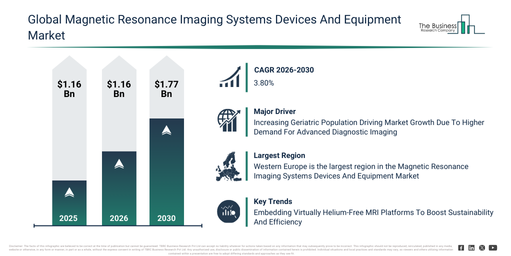
  • Magnetic Resonance Imaging Systems Devices And Equipment Market Revenue Growth Forecast To Reach $11.67 Billion By 2030 At 3.8% CAGR

    Magnetic Resonance Imaging Systems Devices And Equipment Market Revenue Growth Forecast To Reach $11.67 Billion By 2030 At 3.8% CAGR

    The Business Research Company’s 2026 market reports feature enhanced tools like market attractiveness analysis, TAM assessment, and company scoring matrices, along with interactive dashboards, deeper supply chain insights, and startup coverage strengthening the depth, usability, and strategic value of insights.

    How Large Will The Magnetic Resonance Imaging Systems Devices And Equipment Market Be By 2030 Compared To Its 2026 Market Size?

    The magnetic resonance imaging systems devices and equipment market has demonstrated consistent expansion over the past few years. It is anticipated to expand from $9.69 billion in 2025 to $10.04 billion in 2026, achieving a compound annual growth rate (CAGR) of 3.6%. The market’s past growth can be ascribed to several factors, including the increasing occurrence of chronic and neurological disorders, the advancement of diagnostic imaging infrastructure, greater hospital investments in cutting-edge imaging equipment, heightened awareness regarding early disease diagnosis, and the introduction of high-field MRI technologies.

    The market for magnetic resonance imaging systems, devices, and equipment is projected to experience consistent expansion over the upcoming years. This market is anticipated to reach a valuation of $11.67 billion by 2030, demonstrating a compound annual growth rate (CAGR) of 3.8%. This projected growth during the forecast timeframe stems from factors such as the increasing integration of ai in diagnostic imaging, a heightened demand for precision diagnostics, the expansion of outpatient imaging centers, a greater emphasis on workflow optimization within radiology, and the rising adoption of value-based healthcare models. Key trends expected during this period involve the increasing adoption of ai-assisted image reconstruction, a growing demand for high-field and ultra-high-field mri systems, an increasing preference for patient-friendly open mri designs, the expansion of advanced mri software and analytics, and a heightened focus on achieving faster and high-resolution imaging.

    Access Your Free Sample Report For In-Depth Market Analysis:

    https://www.thebusinessresearchcompany.com/report/magnetic-resonance-imaging-systems-devices-and-equipment-global-market-report

    Which Important Drivers Are Guiding The Magnetic Resonance Imaging Systems Devices And Equipment Market Growth?

    The magnetic resonance imaging systems devices and equipment market is anticipated to expand due to the rising number of elderly individuals. This demographic, comprising individuals aged 65 and above, exhibits a heightened vulnerability to chronic health issues like neurological conditions, musculoskeletal problems, cardiovascular diseases, and various cancers. The growth in the elderly population stems from longer life expectancies coupled with decreasing fertility rates, leading to a greater share of older people within the overall population. Magnetic resonance imaging systems devices and equipment play a crucial role in meeting the distinct healthcare requirements of this older demographic. These devices facilitate early detection, tailored treatment plans, and enhanced overall health outcomes for seniors. For example, the World Economic Forum, a Switzerland-based international organization, reported in September 2025 that Japan had 36.25 million people aged 65 and over in 2024, constituting 29.3% of its total population. This proportion is predicted to rise to 34.8% by 2040 and 36.3% by 2045. Consequently, the expanding elderly demographic is fueling the expansion of the lancing devices and equipment market.

    What Are The Key Segment Divisions In The Magnetic Resonance Imaging Systems Devices And Equipment Market Segment Structure?

    The magnetic resonance imaging systems devices and equipment market covered in this report is segmented –

    1) By Type: Close MRI, Open MRI

    2) By Application: Oncology, Neurology, Cardiology, Inflamatory and Infectious Diseases, Other Applications

    3) By End User: Hospitals, Imaging centers, Ambulatory surgical centers

    Subsegments:

    1) By Close MRI: High-field MRI, Low-field MRI, Very High-field MRI

    2) By Open MRI: Open High-field MRI, Open Low-field MRI

    What Trends Are Influencing The Evolution Of The Magnetic Resonance Imaging Systems Devices And Equipment Market?

    Major companies in the MRI systems market are concentrating on technological advancements, such as virtually helium-free MRI platforms, to lessen dependence on scarce cryogens, cut infrastructure costs, and enhance sustainability. These virtually helium-free MRI platforms utilize advanced cooling circuits and energy-saving modes, while integrating automation and AI-driven workflows to deliver high-quality imaging with fewer resources. For instance, in February 2024, Siemens Healthineers, a Germany-based medical technology company, introduced its MAGNETOM Flow, a 1.5 T MRI platform that employs DryCool technology to limit helium usage to just 0.7 liters with a closed helium circuit and no quench pipe. The system incorporates automated workflows and AI-based image reconstruction (Deep Resolve), enabling scan time reductions up to 50% and improved image quality. Magnetom Flow also supports energy-saving modes like Eco Gradient Mode and Eco Power Mode, reducing cooling energy consumption by up to 30–45%. Its compact footprint (24 m², <2 m tall) and the lack of a quench pipe make it simpler and more cost-effective to site in various clinical settings.

    Which Organizations Are Engaged In The Magnetic Resonance Imaging Systems Devices And Equipment Market?

    Major companies operating in the magnetic resonance imaging systems devices and equipment market are Siemens Healthineers, GE Healthcare, Philips Healthcare, Hitachi Ltd., Canon Medical Systems, Esaote S.p.A, Bruker Corporation, Fonar Corporation, Neusoft Medical Systems Co. Ltd., Time Medical Systems, Aurora Imaging Technology, AllTech Medical Systems, Magnetica, Tomtec Imaging Systems GMBH, Sanrad Medical Systems Pvt. Ltd., Analogic Corporation, Hologic Inc, IMRIS Inc., Innervision Mri, Medinus Co., Millennium Technology Inc., Mindray Medical International Ltd., MR Solutions, Toshiba Corporation, Koninklijke Philips N.V., Hyperfine

    Get The Full Magnetic Resonance Imaging Systems Devices And Equipment Market Report:

    https://www.thebusinessresearchcompany.com/report/magnetic-resonance-imaging-systems-devices-and-equipment-global-market-report

    Which Region Leads The Magnetic Resonance Imaging Systems Devices And Equipment Market In Terms Of Market Share?

    Western Europe was the largest region in the global magnetic resource imaging devices and equipment market in 2025. North America was the second-largest region in global magnetic resource imaging devices and equipment market. The regions covered in the magnetic resonance imaging systems devices and equipment market report are Asia-Pacific, South East Asia, Western Europe, Eastern Europe, North America, South America, Middle East, Africa.

    Request A Customized Magnetic Resonance Imaging Systems Devices And Equipment Market Report For Competitive Insights:

    https://www.thebusinessresearchcompany.com/report/magnetic-resonance-imaging-systems-devices-and-equipment-global-market-report

    Browse Through More Reports Similar to the Global Magnetic Resonance Imaging Systems Devices And Equipment Market 2026, By The Business Research Company

    Magnetic Resonance Imaging Coils Market Report 2026

    https://www.thebusinessresearchcompany.com/report/magnetic-resonance-imaging-coils-global-market-report

    Portable Magnetic Resonance Imaging Mri Market Report 2026

    https://www.thebusinessresearchcompany.com/report/portable-magnetic-resonance-imaging-mri-global-market-report

    Medical Imaging Equipment Market Report 2026

    https://www.thebusinessresearchcompany.com/report/medical-imaging-equipment-global-market-report

    Get in touch with us:

    The Business Research Company: https://www.thebusinessresearchcompany.com/

    Americas +1 310-496-7795

    Asia +44 7882 955267 & +91 8897263534

    Europe +44 7882 955267

    Email us at info@tbrc.info

    Follow us on:

    LinkedIn: https://in.linkedin.com/company/the-business-research-company

    YouTube: https://www.youtube.com/channel/UC24_fI0rV8cR5DxlCpgmyFQ

    Global Market Model: https://www.thebusinessresearchcompany.com/global-market-model
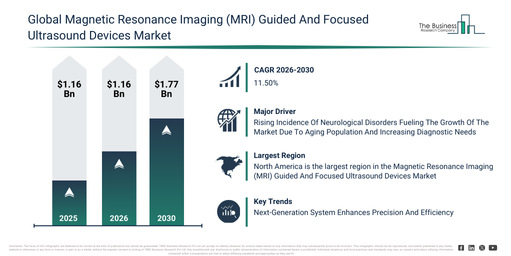
  • Magnetic Resonance Imaging (MRI) Guided And Focused Ultrasound Devices Market Expected To Grow Steadily And Approach $5.42 Billion By 2030

    Magnetic Resonance Imaging (MRI) Guided And Focused Ultrasound Devices Market Expected To Grow Steadily And Approach $5.42 Billion By 2030

    The Business Research Company’s 2026 market reports feature enhanced tools like market attractiveness analysis, TAM assessment, and company scoring matrices, along with interactive dashboards, deeper supply chain insights, and startup coverage strengthening the depth, usability, and strategic value of insights.

    What Is The Projected Increase In Market Value Of The Magnetic Resonance Imaging (MRI) Guided And Focused Ultrasound Devices Market During 2026–2030?

    The magnetic resonance imaging (mri) guided and focused ultrasound devices market has experienced rapid expansion in recent years. Its value is projected to climb from $3.14 billion in 2025 to $3.51 billion in 2026, exhibiting a compound annual growth rate (CAGR) of 11.8%. Historically, this growth has been influenced by factors such as an increase in minimally invasive procedures, advancements in MRI imaging resolution, the rising prevalence of oncology disorders, increased adoption of image-guided therapies, and the clinical validation of focused ultrasound.

    The market for magnetic resonance imaging (mri) guided and focused ultrasound devices is projected to experience substantial expansion in the coming years. This market is anticipated to reach $5.43 billion by 2030, exhibiting a compound annual growth rate (CAGR) of 11.5%. This anticipated growth is driven by several factors, including the increasing scope of non-invasive neurosurgical treatments, the incorporation of AI-based therapy control, a rising need for outpatient treatment options, increased funding for precision medicine, and wider regulatory approvals for focused ultrasound technologies. Key developments expected during this period involve MRI-guided non-invasive therapy, AI-assisted treatment planning, precision ablation guided by real-time imaging, combined imaging and therapy platforms, and treatment monitoring based on data.

    Access Your Free Sample Report For In-Depth Market Analysis:

    https://www.thebusinessresearchcompany.com/report/magnetic-resonance-imaging-mri-guided-and-focused-ultrasound-devices-global-market-report

    What Major Factors Are Driving The Magnetic Resonance Imaging (MRI) Guided And Focused Ultrasound Devices Market Forward?

    The increasing occurrence of neurological conditions is projected to fuel the expansion of the magnetic resonance imaging (MRI)-guided focused ultrasound devices market moving ahead. These disorders encompass medical ailments impacting the brain, spinal cord, and nerves, resulting in various symptoms such as cognitive, motor, and sensory difficulties. The growing frequency of neurological disorders is associated with the world’s aging populace, given that aging progressively diminishes neuronal function, decreases brain plasticity, and heightens oxidative stress, thereby fostering the onset and advancement of these conditions. Magnetic resonance imaging (MRI)-guided focused ultrasound devices assist in diagnosing neurological disorders by offering real-time imaging alongside non-invasive treatment options, positioning them as excellent tools for accurately targeting compromised areas of the brain. These devices enhance diagnostic precision and refine treatment strategies through comprehensive visualization and targeted therapy, ultimately improving patient results and operational efficiency in clinical settings. To illustrate, in July 2024, data from the National Health Service, a UK-based government agency, indicated 487,432 patients had been diagnosed with dementia (a progressive brain disorder affecting memory, thinking, and daily activities) by June 30, 2024, marking an increase of 3,155 cases compared to May 31, 2024. Consequently, the escalating occurrence of neurological disorders is propelling the expansion of the magnetic resonance imaging (MRI)-guided focused ultrasound devices market.

    Which Segment Categories Are Included In The Magnetic Resonance Imaging (MRI) Guided And Focused Ultrasound Devices Market Segment Analysis?

    The magnetic resonance imaging (mri) guided and focused ultrasound devices market covered in this report is segmented –

    1) By Type: Magnetic Resonance Imaging (MRI) Guided, Focused Ultrasound

    2) By Treatment Type: Thermal Ablation, Non-Thermal Ablation, Drug Delivery Systems

    3) By Technology: Magnetic Resonance Imaging (MRI) Guided Ultrasound, Focused Ultrasound Therapy, Combination Systems

    4) By Application: Oncology, Neurology, Cardiology, Urology, Other Applications

    5) By End User: Hospitals, Clinics, Ambulatory Surgical Centers, Research And Academic Institutes

    Subsegments:

    1) By Magnetic Resonance Imaging (MRI) Guided: High-Intensity Focused Ultrasound (HIFU), Low-Intensity Focused Ultrasound (LIFU)

    2) By Focused Ultrasound: Therapeutic Focused Ultrasound, Diagnostic Focused Ultrasound, Neurological Applications, Urological Applications, Oncological Applications

    Which Trends Are Impacting The Progress Of The Magnetic Resonance Imaging (MRI) Guided And Focused Ultrasound Devices Market?

    Leading companies in the magnetic resonance imaging (MRI)-guided focused ultrasound devices market are concentrating on developing advanced offerings, such as next-generation MR-guided focused ultrasound systems, with the goal of enhancing precision, broadening applications, and improving patient outcomes. These next-generation MR-guided focused ultrasound systems represent sophisticated medical platforms that integrate real-time MRI imaging with high-intensity focused ultrasound, thereby providing superior precision, automation, usability, and expanded clinical applications compared to earlier systems. As an illustration, in January 2024, Insightec Ltd., an Israel-based medical technology company, unveiled the Exablate Prime system, which is an advanced MR-guided focused ultrasound (MRgFUS) platform. This system incorporates intelligently designed algorithms, automated task-based workflows, and integrates seamlessly with hospital systems like PACS, facilitating remote physician planning and technical support. Its enhanced computing architecture supports the generation of up to 150 reports, and the system is equipped with a high-resolution monitor for optimized imaging and a cross transducer engineered for optimal performance during MR-guided procedures. The Exablate Prime system is the result of a decade of research and user feedback, aiming to deliver unparalleled precision in neurosurgical applications, including the treatment of essential tremor and Parkinson’s disease, while simultaneously reducing procedure times and enhancing operational efficiency.

    Who Are The Active Companies Shaping The Magnetic Resonance Imaging (MRI) Guided And Focused Ultrasound Devices Market?

    Major companies operating in the magnetic resonance imaging (mri) guided and focused ultrasound devices market are InSightec Ltd, EDAP TMS SA, Image Guided Therapy SA, Profound Medical Inc, Cardiawave, Focal One, FUS Instruments Inc, Theraclion SA, Siemens Healthineers, GE Healthcare, Koninklijke Philips NV, EpiSonica Corp, Kona Medical Inc, Mirabilis Medical Inc, Chongqing Haifu Technology Co Ltd, Shanghai A&S Co Ltd, Shenzhen PRO-HIFU Medical Tech Co Ltd, Changjiangyuan Technology Development Co Ltd, Wuxi Haiying Medical Co Ltd, Elekta AB, CarThera, Monteris Medical, Eye Tech Care, HistoSonics Inc, NaviFUS Corp, NeuroBlate (Monteris Medical)†, HIFU Devices Inc.

    Get The Full Magnetic Resonance Imaging (MRI) Guided And Focused Ultrasound Devices Market Report:

    https://www.thebusinessresearchcompany.com/report/magnetic-resonance-imaging-mri-guided-and-focused-ultrasound-devices-global-market-report

    Which Region Leads The Magnetic Resonance Imaging (MRI) Guided And Focused Ultrasound Devices Market In Overall Market Size?

    North America was the largest region in the magnetic resonance imaging (MRI)-guided focused ultrasound devices market in 2025. Asia-Pacific is expected to be the fastest-growing region in the forecast period. The regions covered in the magnetic resonance imaging (mri) guided and focused ultrasound devices market report are Asia-Pacific, South East Asia, Western Europe, Eastern Europe, North America, South America, Middle East, Africa.

    Request A Customized Magnetic Resonance Imaging (MRI) Guided And Focused Ultrasound Devices Market Report For Competitive Insights:

    https://www.thebusinessresearchcompany.com/report/magnetic-resonance-imaging-mri-guided-and-focused-ultrasound-devices-global-market-report

    Browse Through More Reports Similar to the Global Magnetic Resonance Imaging (MRI) Guided And Focused Ultrasound Devices Market 2026, By The Business Research Company

    3D And 4D Ultrasound Devices Market Report 2026

    https://www.thebusinessresearchcompany.com/report/3d-and-4d-ultrasound-devices-global-market-report

    Contrast Enhanced Ultrasound Market Report 2026

    https://www.thebusinessresearchcompany.com/report/contrast-enhanced-ultrasound-global-market-report

    Magnetic Resonance Imaging Systems Devices And Equipment Market Report 2026

    https://www.thebusinessresearchcompany.com/report/magnetic-resonance-imaging-systems-devices-and-equipment-global-market-report

    Get in touch with us:

    The Business Research Company: https://www.thebusinessresearchcompany.com/

    Americas +1 310-496-7795

    Asia +44 7882 955267 & +91 8897263534

    Europe +44 7882 955267

    Email us at info@tbrc.info

    Follow us on:

    LinkedIn: https://in.linkedin.com/company/the-business-research-company

    YouTube: https://www.youtube.com/channel/UC24_fI0rV8cR5DxlCpgmyFQ

    Global Market Model: https://www.thebusinessresearchcompany.com/global-market-model
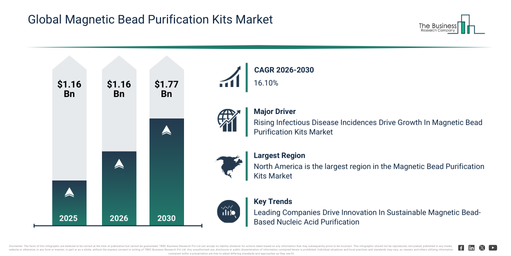
  • Magnetic Bead Purification Kits Market Expansion Forecast Reaching $8.64 Billion By 2030 At 16.1% CAGR

    Magnetic Bead Purification Kits Market Expansion Forecast Reaching $8.64 Billion By 2030 At 16.1% CAGR

    The Business Research Company’s 2026 market reports feature enhanced tools like market attractiveness analysis, TAM assessment, and company scoring matrices, along with interactive dashboards, deeper supply chain insights, and startup coverage strengthening the depth, usability, and strategic value of insights.

    How Is The Market Size Of The Magnetic Bead Purification Kits Market Expected To Change From 2026 To 2030?

    The magnetic bead purification kits market has experienced substantial growth in recent years. It is projected to expand from $4.08 billion in 2025 to $4.75 billion in 2026, at a compound annual growth rate (CAGR) of 16.4%. The expansion observed in the historic period was primarily influenced by factors such as the dependence on manual membrane column-based kits, the restricted availability of standardized reagents, an increase in biotechnology research initiatives, escalating diagnostic testing requirements, and a heightened recognition of the importance of nucleic acid purification.

    The market for magnetic bead purification kits is expected to experience rapid expansion over the next few years. It is projected to reach a value of $8.64 billion by 2030, showing a compound annual growth rate (CAGR) of 16.1%. This growth during the forecast period can be attributed to several factors, including the advancement of semi-automated purification systems, the increasing scope of genomics and proteomics research, the expanding applications in pharmaceutical and diagnostic fields, the rising importance of regulatory compliance and quality standards, and integration with high-throughput laboratory automation. Key trends anticipated in the forecast period include a growing demand for the isolation of high-purity DNA, RNA, and proteins, increased adoption of semi-automated magnetic bead-based kits, the broadening of academic and pharmaceutical research applications, the expanding use of miRNA purification kits in diagnostics, and a focus on purification processes that are rapid, efficient, and require minimal handling.

    Access Your Free Sample Report For In-Depth Market Analysis:

    https://www.thebusinessresearchcompany.com/report/magnetic-bead-purification-kits-global-market-report

    Which Key Drivers Are Affecting The Magnetic Bead Purification Kits Market Development?

    The growing occurrence of infectious diseases is anticipated to drive the expansion of the magnetic bead purification kits market moving forward. These diseases are illnesses caused by pathogenic microorganisms, such as bacteria, viruses, fungi, or parasites, that invade and multiply within the body. Common examples include tuberculosis (TB), streptococcal infections, methicillin-resistant staphylococcus aureus (MRSA), and influenza (Flu). The increasing prevalence of these diseases is influenced by factors like a lack of antimicrobial resistance, environmental shifts, and behavioral and social aspects. Virology and bacteriology testing are instrumental in diagnosing infectious diseases by identifying the specific pathogens responsible, thus enabling targeted treatment and management. For instance, in February 2024, GOV.UK, a UK-based government department, reported that cases of tuberculosis (TB) in England rose by 10.7% in 2023, increasing from 4,380 in 2022 to 4,850. Hence, the escalating incidence of infectious diseases serves as a driver for the magnetic bead purification kits market.

    How Is The Magnetic Bead Purification Kits Market Broken Down By Segment Categories?

    The magnetic bead purification kits market covered in this report is segmented –

    1) By Type: Semi-Automated Magnetic Bead-based Kits, Manual Membrane Column-Based Kits, Isolation Reagents

    2) By Nucleic Acid Type: DNA Purification Kits, RNA Purification Kits, miRNA Purification Kits

    3) By End-User: Biotechnology And Pharmaceutical Companies, Academic And Research Institutes, Diagnostic Laboratories

    Subsegments:

    1) By Semi-Automated Magnetic Bead-based Kits: Semi-Automated RNA Purification Kits, Semi-Automated DNA Purification Kits, Semi-Automated Protein Purification Kits, Semi-Automated Cell Isolation Kits, Semi-Automated Immunoprecipitation Kits

    2) By Manual Membrane Column-Based Kits: Manual RNA Isolation Kits, Manual DNA Isolation Kits, Manual Protein Purification Kits, Manual Antibody Purification Kits, Manual Cell Isolation Kits

    3) By Isolation Reagents: RNA Isolation Reagents, DNA Isolation Reagents, Protein Isolation Reagents, Cell Isolation Reagents, Immunoprecipitation Reagents

    What Trends Are Transforming The Magnetic Bead Purification Kits Market?

    Leading companies in the magnetic bead purification kits market are concentrating on developing innovative products, specifically magnetic bead-based extraction kits, to improve the efficiency and accuracy of nucleic acid and protein purification, streamline sample preparation, and reduce processing times for various applications in research, diagnostics, and biotechnology. A magnetic bead-based extraction kit functions as a tool for isolating and purifying specific biomolecules from a mixture. These kits utilize magnetic beads coated with capture molecules that are designed to specifically bind to target biomolecules such as DNA, RNA, or proteins. For instance, in April 2024, New England Biolabs, Inc., a US-based life sciences company, launched the Monarch Mag Viral DNA/RNA Extraction Kit, which is a magnetic bead-based extraction kit. This extraction kit enhances the recovery of low quantities of viral nucleic acids, thereby facilitating sensitive detection. Employing a magnetic bead-based method, the kit efficiently and reproducibly extracts viral RNA and DNA, and is scalable for high-throughput automation. It is compatible with various sample types, including saliva, respiratory swabs, and wastewater samples, after an enrichment step. The Monarch Mag Viral DNA/RNA Extraction Kit is engineered to integrate seamlessly with NEB’s downstream amplification and library preparation products for next-generation sequencing applications and can be used in conjunction with these product lines.

    Which Players Are Present In The Magnetic Bead Purification Kits Market Space?

    Major companies operating in the magnetic bead purification kits market are Thermo Fisher Scientific Inc., Roche Holdings AG, E. Merck KG, Corning Inc., Agilent Technologies Inc., Bio-Rad Laboratories Inc., Qiagen N.V., Promega Corporation, Takara Bio Inc., New England Biolabs Inc., Analytik Jena AG, Omega Bio-tek Inc., RayBiotech Inc., Diagenode Inc., Zymo Research Corporation, Covaris LLC, Bioneer Corporation, Creative Diagnostics Inc., TIANGEN Biotech Co. Ltd., Geneaid Ltd., Norgen Biotek Corp., Magbio Genomics Inc.

    Get The Full Magnetic Bead Purification Kits Market Report:

    https://www.thebusinessresearchcompany.com/report/magnetic-bead-purification-kits-global-market-report

    Which Region Is The Top Contributor To The Magnetic Bead Purification Kits Market By Share?

    North America was the largest region in the magnetic bead purification kits market in 2025. The regions covered in the magnetic bead purification kits market report are Asia-Pacific, South East Asia, Western Europe, Eastern Europe, North America, South America, Middle East, Africa.

    Request A Customized Magnetic Bead Purification Kits Market Report For Competitive Insights:

    https://www.thebusinessresearchcompany.com/report/magnetic-bead-purification-kits-global-market-report

    Browse Through More Reports Similar to the Global Magnetic Bead Purification Kits Market 2026, By The Business Research Company

    Commercial Fan And Air Purification Equipment Market Report 2026

    https://www.thebusinessresearchcompany.com/report/commercial-fan-and-air-purification-equipment-global-market-report

    Air Purification Equipment Market Report 2026

    https://www.thebusinessresearchcompany.com/report/air-purification-equipment-global-market-report

    Protein Purification And Isolation Market Report 2026

    https://www.thebusinessresearchcompany.com/report/protein-purification-and-isolation-global-market-report

    Get in touch with us:

    The Business Research Company: https://www.thebusinessresearchcompany.com/

    Americas +1 310-496-7795

    Asia +44 7882 955267 & +91 8897263534

    Europe +44 7882 955267

    Email us at info@tbrc.info

    Follow us on:

    LinkedIn: https://in.linkedin.com/company/the-business-research-company

    YouTube: https://www.youtube.com/channel/UC24_fI0rV8cR5DxlCpgmyFQ

    Global Market Model: https://www.thebusinessresearchcompany.com/global-market-model
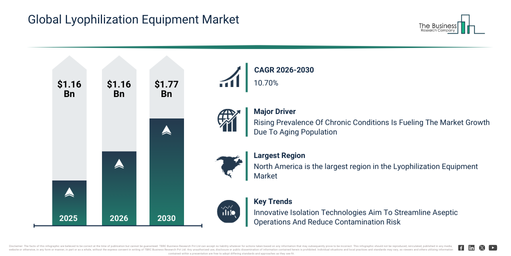
  • Lyophilization Equipment Market Revenue Projected To Hit $12.21 Billion By 2030 With 10.7% CAGR

    Lyophilization Equipment Market Revenue Projected To Hit $12.21 Billion By 2030 With 10.7% CAGR

    The Business Research Company’s 2026 market reports feature enhanced tools like market attractiveness analysis, TAM assessment, and company scoring matrices, along with interactive dashboards, deeper supply chain insights, and startup coverage strengthening the depth, usability, and strategic value of insights.

    From Its 2026 Market Size, What Value Is The Lyophilization Equipment Market Projected To Reach By 2030?

    The lyophilization equipment market has seen a rapid expansion in its size over recent years. This market is projected to expand from $7.32 billion in 2025 to reach $8.13 billion in 2026, exhibiting a compound annual growth rate (CAGR) of 11.1%. Historically, this growth has been driven by factors such as increasing biopharmaceutical production, the expansion of vaccine manufacturing, the need for stable drug formulations, the implementation of freeze-drying within the food industry, and innovations in lab-scale lyophilization equipment.

    The lyophilization equipment market is anticipated to undergo significant expansion in the next few years, reaching a valuation of $12.21 billion by 2030, driven by a compound annual growth rate (CAGR) of 10.7%. This projected increase is attributed to various factors, including heightened investment in the biopharma and biotech sectors, the demand for continuous freeze-drying technologies, the enlargement of contract research organizations, the adoption of automated lyophilization systems, and the growth within the nutraceutical and functional food markets. Key trends expected during this forecast period encompass a greater need for heat-sensitive drug preservation, the proliferation of biopharmaceuticals and vaccines, the miniaturization of laboratory freeze dryers, increased automation in freeze-drying processes, and the expansion of freeze-drying applications in food and nutraceuticals.

    Access Your Free Sample Report For In-Depth Market Analysis:

    https://www.thebusinessresearchcompany.com/report/lyophilization-equipment-global-market-report

    What Factors Are Contributing To The Growth Of The Lyophilization Equipment Market?

    The increasing incidence of long-term health issues is anticipated to fuel the expansion of the lyophilization equipment market in the future. These conditions are defined as health problems enduring for a year or longer, frequently necessitating continuous medical care or restricting daily functions. The growth in chronic conditions stems from an aging demographic, which is more susceptible to enduring ailments like heart disease, diabetes, and arthritis. Lyophilization technology supports the management of chronic conditions by facilitating the stable, extended preservation of biopharmaceuticals and injectable drugs frequently used in therapy, thereby guaranteeing these vital treatments stay potent, secure, and accessible for patients needing continuous treatment. As an illustration, in June 2024, data from the National Health Service, a UK government body, revealed that in 2023, 3,615,330 persons registered with a GP received a diagnosis of non-diabetic hyperglycemia, or pre-diabetes, representing an 18% rise from 3,065,825 cases reported in 2022. Consequently, the expanding occurrence of chronic conditions is propelling the development of the lyophilization equipment market.

    What Are The Different Segment Types In The Lyophilization Equipment Market Segment Breakdown?

    The lyophilization equipment market covered in this report is segmented –

    1) By Type Of Lyophilization Equipment: Freeze Dryers, Pharmaceutical Lyophilizers, Laboratory Freeze Dryers, Industrial Freeze Dryers, Portable Freeze Dryers

    2) By Form: Powders, Cakes, Granules, Semi-Solid Forms

    3) By Technology: Manifold Lyophilization, Tray Lyophilization, Batch Freeze Drying, Continuous Freeze Drying

    4) By Application: Autoimmune Diseases, Respiratory Diseases, Gastrointestinal Disorders, Oncology, Cardiovascular Diseases, Infectious Diseases, Metabolic Disorders, Other Applications

    5) By End User: Pharmaceutical Companies, Biotechnology Firms, Academic And Research Institutions, Food Manufacturers, Contract Research Organizations (CROs)

    Subsegments:

    1) By Freeze Dryers: Tray Freeze Dryers, Manifold Freeze Dryers, Rotary Freeze Dryers

    2) By Pharmaceutical Lyophilizers: Pilot-Scale Pharmaceutical Lyophilizers, Production-Scale Pharmaceutical Lyophilizers, GMP Pharmaceutical Lyophilizers

    3) By Laboratory Freeze Dryers: Benchtop Laboratory Freeze Dryers, Floor-Standing Laboratory Freeze Dryers, Small-Scale Research Freeze Dryers

    4) By Industrial Freeze Dryers: Food Processing Industrial Freeze Dryers, Bulk Production Industrial Freeze Dryers, Continuous Industrial Freeze Dryers

    5) By Portable Freeze Dryers: Home-Use Portable Freeze Dryers, Field-Use Portable Freeze Dryers, Compact Research Portable Freeze Dryers

    What Trends Are Shaping The Future Of The Lyophilization Equipment Market?

    Leading firms within the lyophilization equipment market are concentrating on creating novel solutions, including sophisticated dual-mode isolator systems, to improve sterility, containment, and overall process efficiency. These dual-mode isolators are designed to facilitate both aseptic filling and containment operations within one system, thereby minimizing the need for multiple pieces of equipment, maximizing spatial utilization, and upholding stringent sterility standards. A notable example occurred in March 2024 when Telstar, a pharmaceutical-equipment engineering company based in Spain, launched a dual-mode isolator system at Pharma Congress 2024. This system, engineered for enhanced operational flexibility and efficiency, incorporates various modes of operation such as maintenance, pressure hold, biodecontamination, and both sterile and non-sterile processing. It also utilizes an advanced bio-decontamination mechanism, guaranteeing significant microbial reduction, quicker cycle durations, and lower operating expenses.

    Who Are The Well-Known Companies In The Lyophilization Equipment Market?

    Major companies operating in the lyophilization equipment market are GEA Group AG, OPTIMA packaging group GmbH, Dara Pharmaceutical Equipment, Büchi Labortechnik AG, Tofflon Science and Technology Group Co Ltd., Spinco Biotech Pvt Ltd., Labconco Corporation, HOF Sonderanlagenbau GmbH, Harvest Right LLC, Cuddon Freeze Dry, ZIRBUS technology GmbH, MechaTech Systems Ltd., IlShin BioBase Co Ltd., SP Industries Inc., Millrock Technology Inc., Tofflon Dehui Pharmaceutical Equipment Co Ltd., Freeze Drying Systems Pvt Ltd., Martin Christ Gefriertrocknungsanlagen GmbH, Telstar Life Sciences, IMA Life, Lyomac AG, GEA Lyophil GmbH

    Get The Full Lyophilization Equipment Market Report:

    https://www.thebusinessresearchcompany.com/report/lyophilization-equipment-global-market-report

    Which Region Represents The Largest Share Of The Lyophilization Equipment Market?

    North America was the largest region in the lyophilization equipment market in 2025. Asia-Pacific is expected to be the fastest-growing region in the forecast period. The regions covered in the lyophilization equipment market report are Asia-Pacific, South East Asia, Western Europe, Eastern Europe, North America, South America, Middle East, Africa.

    Request A Customized Lyophilization Equipment Market Report For Competitive Insights:

    https://www.thebusinessresearchcompany.com/report/lyophilization-equipment-global-market-report

    Browse Through More Reports Similar to the Global Lyophilization Equipment Market 2026, By The Business Research Company

    Sterilization Equipment Market Report 2026

    https://www.thebusinessresearchcompany.com/report/sterilization-equipment-global-market-report

    Cogeneration Equipment Market Report 2026

    https://www.thebusinessresearchcompany.com/report/cogeneration-equipment-global-market-report

    Lathe Machines Market Report 2026

    https://www.thebusinessresearchcompany.com/report/lathe-machines-global-market-report

    Get in touch with us:

    The Business Research Company: https://www.thebusinessresearchcompany.com/

    Americas +1 310-496-7795

    Asia +44 7882 955267 & +91 8897263534

    Europe +44 7882 955267

    Email us at info@tbrc.info

    Follow us on:

    LinkedIn: https://in.linkedin.com/company/the-business-research-company

    YouTube: https://www.youtube.com/channel/UC24_fI0rV8cR5DxlCpgmyFQ

    Global Market Model: https://www.thebusinessresearchcompany.com/global-market-model
  • Global Lyme Disease Testing Market Set To Expand To $16.46 Billion By 2030 At 9% CAGR

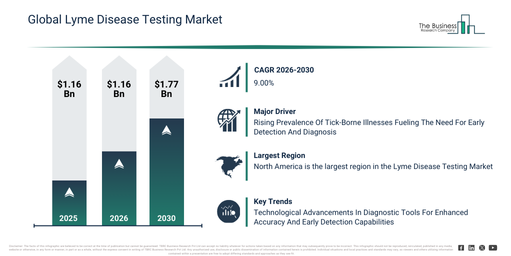
    Global Lyme Disease Testing Market Set To Expand To $16.46 Billion By 2030 At 9% CAGR

    The Business Research Company’s 2026 market reports feature enhanced tools like market attractiveness analysis, TAM assessment, and company scoring matrices, along with interactive dashboards, deeper supply chain insights, and startup coverage strengthening the depth, usability, and strategic value of insights.

    How Much Growth In Market Value Is Expected For The Lyme Disease Testing Market Between 2026 And 2030?

    The lyme disease testing market size has experienced robust growth in recent years. It is projected to expand from $10.68 billion in 2025 to $11.67 billion in 2026, exhibiting a compound annual growth rate (CAGR) of 9.3%. The historic increase in this market can be attributed to the rising incidence of lyme disease, limited awareness concerning early diagnosis, reliance on conventional serological testing methods, the increasing prevalence of hospital-based diagnostics, and growing research efforts in tick-borne diseases.

    The lyme disease testing market size is anticipated to experience robust expansion over the coming years. This market is projected to reach a value of $16.46 billion by 2030, exhibiting a compound annual growth rate (CAGR) of 9.0%. The projected increase during this period is driven by factors such as the integration of AI-assisted diagnostics, the rise in popularity of home-testing kits, the development of multi-disease panels, increased government investment in tick-borne disease monitoring, and the adoption of cloud-based laboratory data management. Key developments expected during the forecast timeframe encompass the wider deployment of point-of-care testing, the availability of home-based lyme disease diagnostics, the emergence of multi-pathogen tick-borne panels, the increased use of rapid test kits, and the implementation of personalized diagnostic protocols.

    Access Your Free Sample Report For In-Depth Market Analysis:

    https://www.thebusinessresearchcompany.com/report/lyme-disease-testing-global-market-report

    Which Strong Drivers Are Impacting The Lyme Disease Testing Market Growth?

    The increasing incidence of tick-borne diseases is projected to boost the expansion of the lyme disease testing market moving forward. These illnesses are a category of diseases spread to humans via bites from infected ticks, which are tiny, blood-consuming parasites typically found in grassy, forested, or countryside environments. The growing need for treatments for tick-borne illnesses stems from the widening geographical distribution of ticks due to climate change, resulting in increased exposure and infection rates. As the main method of transmitting Lyme disease, tick-borne illnesses drive the demand for Lyme disease testing, making early detection and diagnosis crucial for effectively handling the increasing number of infection cases. For example, reports from March 2025 by the U.S. Centers for Disease Control and Prevention (CDC), a federal public health agency based in the U.S., indicated that in 2023, over 89,000 cases of Lyme disease were recorded. This highlights a persistent significant impact from tick-borne illnesses compared to earlier years. Consequently, the escalating occurrence of tick-borne illnesses is propelling the expansion of the lyme disease testing market.

    Which Segment Classifications Are Used In The Lyme Disease Testing Market Segment Analysis?

    The lyme disease testing market covered in this report is segmented –

    1) By Test Type: Serological Tests, Nucleic Acid Tests, Urine Antigen Tests, Other Test Types

    2) By Testing Methodology: Enzyme-Linked Immunosorbent Assay (ELISA), Weste Blot, Polymerase Chain Reaction (PCR), Immunofluorescence Assay (IFA), Other Emerging Technologies

    3) By Disease Stage: Early Lyme Disease, Disseminated Lyme Disease, Chronic Lyme Disease, Asymptomatic Lyme Disease Detection

    4) By Sample Type: Blood, Urine, Cerebrospinal Fluid(CSF), Other Blood Samples

    5) By End-User: Hospitals And Clinics, Diagnostic Laboratories, Home Care Settings, Research Institutions, Public Health Organizations

    Subsegments:

    1) By Serological Tests: Enzyme-Linked Immunosorbent Assay, Western Blot, Immunofluorescence Assay (IFA), Line Immunoassay (LIA)

    2) By Nucleic Acid Tests: Polymerase Chain Reaction (PCR), Loop-Mediated Isothermal Amplification (LAMP), Next-Generation Sequencing (NGS)

    3) By Urine Antigen Tests: Lateral Flow Assay, Enzyme Immunoassay (EIA), Immunoblot Urine Tests

    4) By Other Test Types: Culture-Based Tests, Tick-Borne Co-Infection Panels, Artificial Intelligence-Assisted Diagnostic Tools

    Which Trends Are Contributing To Changes In The Lyme Disease Testing Market?

    Major companies operating in the Lyme disease testing market are concentrating on technological advancements in diagnostic instruments to enhance test precision, reduce processing times, and enable the identification of the disease in its early stages. Diagnostic tools refer to medical devices, kits, or technologies utilized to confirm the presence of Lyme disease by identifying specific antibodies, antigens, or genetic material associated with the Borrelia burgdorferi bacteria. For instance, in August 2024, EpitogenX Ltd., a UK-based biotechnology company, disclosed the introduction of an advanced Lyme Disease Diagnostic Kit. This is an ELISA-based assay engineered using their proprietary EpitoGen platform. It incorporates approximately ~120 distinct Borrelia epitopes, providing high specificity and sensitivity, and is designated for research use (RUO). It facilitates early, strain-specific detection and can be customized for various laboratory applications. Created for research and diagnostic laboratories, it is optimal for improving detection accuracy and allowing deeper insights into Lyme disease.

    Which Firms Are Contributing To The Lyme Disease Testing Market Ecosystem?

    Major companies operating in the lyme disease testing market are Roche Holding AG, Thermo Fisher Scientific Inc., Labcorp Holdings Inc., Quest Diagnostics Incorporated, Eurofins Scientific, BIOMÉRIEUX, Quidel Corporation, Bio Rad Laboratories Inc., QIAGEN N.V., DiaSorin S.p.A, Meridian Bioscience, Trinity Biotech, T2 Biosystems, IGeneX, Viramed Biotech AG, Ceres Nanosciences, Galaxy Diagnostics, Lyme Diagnostics Ltd, Abbott Laboratories, Siemens Healthineers AG, Hologic Inc., Seegene Inc.

    Get The Full Lyme Disease Testing Market Report:

    https://www.thebusinessresearchcompany.com/report/lyme-disease-testing-global-market-report

    Which Geographic Region Dominates The Lyme Disease Testing Market?

    North America was the largest region in the lyme disease testing market in 2025. Asia-Pacific is expected to be the fastest-growing region in the forecast period. The regions covered in the lyme disease testing market report are Asia-Pacific, South East Asia, Western Europe, Eastern Europe, North America, South America, Middle East, Africa.

    Request A Customized Lyme Disease Testing Market Report For Competitive Insights:

    https://www.thebusinessresearchcompany.com/report/lyme-disease-testing-global-market-report

    Browse Through More Reports Similar to the Global Lyme Disease Testing Market 2026, By The Business Research Company

    Biologics Testing Market Report 2026

    https://www.thebusinessresearchcompany.com/report/biologics-testing-global-market-report

    Covid 19 Saliva Screening Test Potential Market Report 2026

    https://www.thebusinessresearchcompany.com/report/covid-19-saliva-screening-test-potential-global-market-report

    Typhoid Antibody Testing Market Report 2026

    https://www.thebusinessresearchcompany.com/report/typhoid-antibody-testing-global-market-report

    Get in touch with us:

    The Business Research Company: https://www.thebusinessresearchcompany.com/

    Americas +1 310-496-7795

    Asia +44 7882 955267 & +91 8897263534

    Europe +44 7882 955267

    Email us at info@tbrc.info

    Follow us on:

    LinkedIn: https://in.linkedin.com/company/the-business-research-company

    YouTube: https://www.youtube.com/channel/UC24_fI0rV8cR5DxlCpgmyFQ

    Global Market Model: https://www.thebusinessresearchcompany.com/global-market-model
  • Lung Cancer Surgery Equipment Market Growth Expected To Reach $5.09 Billion By 2030 At 6.4% CAGR

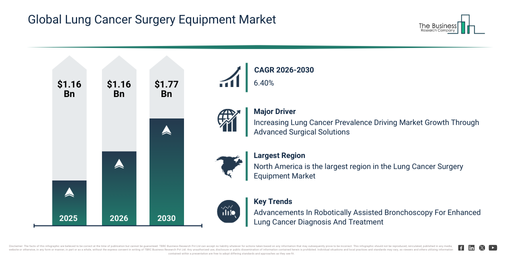
    Lung Cancer Surgery Equipment Market Growth Expected To Reach $5.09 Billion By 2030 At 6.4% CAGR

    The Business Research Company’s 2026 market reports feature enhanced tools like market attractiveness analysis, TAM assessment, and company scoring matrices, along with interactive dashboards, deeper supply chain insights, and startup coverage strengthening the depth, usability, and strategic value of insights.

    What Is The Estimated Market Size Of The Lung Cancer Surgery Equipment Market In 2026, And How Will Its Value Evolve By 2030?

    The lung cancer surgery equipment market size has experienced significant expansion in recent years. It is anticipated to increase from $3.73 billion in 2025 to $3.98 billion in 2026, at a compound annual growth rate (CAGR) of 6.7%. The market’s historical development can be linked to factors such as the limited availability of advanced thoracic surgery equipment, the reliance on traditional open surgeries, the increasing prevalence of lung cancer, a rising number of hospital and surgical clinics, and the adoption of standard biopsy and imaging procedures.

    Significant expansion is anticipated for the lung cancer surgery equipment market over the coming years. Projections indicate its value will reach $5.1 billion by 2030, demonstrating a compound annual growth rate (CAGR) of 6.4%. This projected increase is linked to several factors, including advancements in robotic-assisted and minimally invasive surgical instruments, the incorporation of AI-powered imaging and monitoring systems, increased funding in research and academic institutions, the wider acceptance of enhanced recovery after surgery (ERAS) guidelines, and the establishment of more specialized lung cancer treatment facilities. Key developments expected during this period involve a greater embrace of minimally invasive lung procedures, an escalating need for sophisticated imaging and diagnostic apparatus, the merging of patient monitoring technologies with surgical tools, an intensified emphasis on post-operative recovery and subsequent care, and the broadening application of robotic-assisted thoracic surgeries.

    Access Your Free Sample Report For In-Depth Market Analysis:

    https://www.thebusinessresearchcompany.com/report/lung-cancer-surgery-equipment-global-market-report

    What Key Factors Are Shaping The Lung Cancer Surgery Equipment Market Landscape?

    The escalating prevalence of lung cancer is anticipated to propel the expansion of the lung cancer surgery equipment market. This condition involves the unchecked proliferation of abnormal cells within the lungs, often stemming from smoking or detrimental environmental contact. The increase in lung cancer diagnoses is primarily attributed to heightened exposure to risk factors including tobacco smoke, air pollution, and occupational carcinogens, alongside an aging demographic. Such equipment serves to diagnose the disease, remove cancerous tissue, and assist in post-operative care by means of precise surgical procedures and patient surveillance. As an illustration, the Cancer Council, an Australia-based non-profit organization, reported in February 2025 that approximately 15,122 individuals were diagnosed with lung cancer in Australia during 2024, with the average age at diagnosis recorded as 72. In the country, lung cancer stands as the fifth most frequently diagnosed cancer, and it is estimated that one in 20 Australians will receive such a diagnosis by the age of 85. Consequently, the increasing prevalence of lung cancer is fueling the expansion of the lung cancer surgery equipment market.

    How Is The Lung Cancer Surgery Equipment Market Organized By Segment Classification?

    The lung cancer surgery equipment market covered in this report is segmented –

    1) By Product Type: Surgical Instruments, Access Devices, Imaging Equipment, Electrosurgical Devices, Biopsy Devices, Patient Monitoring Equipment

    2) By Surgery Type: Lobectomy Surgery, Pneumonectomy Surgery, Wedge Resection, Video-Assisted Thoracoscopic Surgery (VATS), Robotic-Assisted Surgery

    3) By Application: Diagnosis, Treatment, Aftercare And Rehabilitation

    4) By End User: Hospitals, Surgical Clinics, Ambulatory Surgical Centers, Research And Academic Institutes

    Subsegments:

    1) By Surgical Instruments: Scalpels, Forceps, Retractors, Scissors, Sutures

    2) By Access Devices: Trocars, Catheters, Guidewires, Introducers

    3) By Imaging Equipment: CT Scanners, MRI Machines, PET Scanners, X-Ray Systems, Ultrasound Devices

    4) By Electrosurgical Devices: Electrosurgical Generators, Electrosurgical Probes, Electrosurgical Electrodes, Smoke Evacuation Systems

    5) By Biopsy Devices: Needle Biopsy Devices, Core Biopsy Devices, Vacuum-Assisted Biopsy Devices, Endoscopic Biopsy Devices

    6) By Patient Monitoring Equipment: Pulse Oximeters, ECG Monitors, Respiratory Monitors, Blood Pressure Monitors, Temperature Monitors

    What Market Trends Are Affecting The Lung Cancer Surgery Equipment Market?

    Leading companies operating in the lung cancer surgery equipment market are directing their efforts toward creating devices for robotically assisted bronchoscopy. This initiative seeks to improve the precision and safety of tumor localization and biopsy, enhance access to hard-to-reach lung nodules, and aid in the early and accurate diagnosis of lung cancer. Robotically assisted bronchoscopy is an advanced medical procedure that employs robotic technology to guide a bronchoscope, a thin, flexible tube, into the lungs with greater exactness and oversight compared to conventional manual methods. For instance, in March 2025, Johnson and Johnson, a US-based pharmaceutical company, announced that its MONARCH QUEST system, an advanced robotic-assisted bronchoscopy technology, had been granted U.S. FDA 510(k) clearance. This system represents the newest iteration of the MONARCH Platform, which is designed to improve the diagnosis of lung cancer using minimally invasive procedures. The system connects with the GE HealthCare OEC 3D mobile CBCT Imaging System, enabling real-time, intraprocedural 3D imaging. This integration enhances the precision of targeting lung nodules, especially those located in hard-to-reach areas of the lung.

    Who Are The Industry Participants Involved In The Lung Cancer Surgery Equipment Market?

    Major companies operating in the lung cancer surgery equipment market are Johnson & Johnson, Medtronic plc, Siemens Healthcare AG, Fujifilm Limited, GE Healthcare Technologies Inc, Boston Scientific Corporation, Olympus Corporation, Intuitive Surgical Inc, Teleflex Incorporated, KARL STORZ GmbH & Co KG, Integra LifeSciences Corporation, Richard Wolf GmbH, Angiodynamics Inc, B Braun Melsungen AG, Sontec Instruments Inc, Novadaq Technologies Inc, Stryker Corporation, CONMED Corporation, Smith & Nephew plc, Ambu A S

    Get The Full Lung Cancer Surgery Equipment Market Report:

    https://www.thebusinessresearchcompany.com/report/lung-cancer-surgery-equipment-global-market-report

    Which Region Is The Leading Market For The Lung Cancer Surgery Equipment Market?

    North America was the largest region in the lung cancer surgery equipment market in 2025. Asia-Pacific is expected to be the fastest-growing region in the forecast period. The regions covered in the lung cancer surgery equipment market report are Asia-Pacific, South East Asia, Western Europe, Eastern Europe, North America, South America, Middle East, Africa.

    Request A Customized Lung Cancer Surgery Equipment Market Report For Competitive Insights:

    https://www.thebusinessresearchcompany.com/report/lung-cancer-surgery-equipment-global-market-report

    Browse Through More Reports Similar to the Global Lung Cancer Surgery Equipment Market 2026, By The Business Research Company

    Lung Cancer Drugs Market Report 2026

    https://www.thebusinessresearchcompany.com/report/lung-cancer-drugs-global-market-report

    Thoracic Surgery Devices Market Report 2026

    https://www.thebusinessresearchcompany.com/report/thoracic-surgery-devices-global-market-report

    Surgical Equipment Market Report 2026

    https://www.thebusinessresearchcompany.com/report/surgical-equipment-global-market-report

    Get in touch with us:

    The Business Research Company: https://www.thebusinessresearchcompany.com/

    Americas +1 310-496-7795

    Asia +44 7882 955267 & +91 8897263534

    Europe +44 7882 955267

    Email us at info@tbrc.info

    Follow us on:

    LinkedIn: https://in.linkedin.com/company/the-business-research-company

    YouTube: https://www.youtube.com/channel/UC24_fI0rV8cR5DxlCpgmyFQ

    Global Market Model: https://www.thebusinessresearchcompany.com/global-market-model
  • Lumbar Disc Replacement Devices Market Forecast 2026–2030 Highlighting Expansion Across Industries

    Lumbar Disc Replacement Devices Market Forecast 2026–2030 Highlighting Expansion Across Industries

    The Business Research Company’s 2026 market reports feature enhanced tools like market attractiveness analysis, TAM assessment, and company scoring matrices, along with interactive dashboards, deeper supply chain insights, and startup coverage strengthening the depth, usability, and strategic value of insights.

    How Does The Market Size Of The Lumbar Disc Replacement Devices Market Compare Between 2026 And 2030?

    Recently, the lumbar disc replacement devices market size has experienced significant expansion. It is anticipated to increase from $1.3 billion in 2025 to $1.47 billion in 2026, at a compound annual growth rate (CAGR) of 13.1%. The growth observed in prior periods stemmed from factors such as the rising prevalence of degenerative disc disease, an uptick in spinal injury incidents, the proliferation of orthopedic surgical centers, increased adoption of disc replacement procedures, and the accessibility of advanced implant materials.

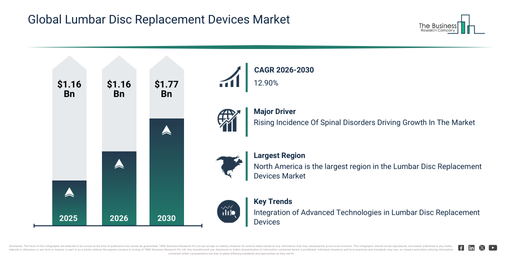
    The lumbar disc replacement devices market is anticipated to undergo substantial growth in the next few years, with projections indicating it will reach $2.39 billion in 2030, at a compound annual growth rate (CAGR) of 12.9%. This expansion over the forecast period is fueled by an increasing demand for motion-preserving surgical solutions, rising adoption of personalized implants, the expanding aging population base, growing investments in spinal biomechanics research, and an increasing preference for alternatives to spinal fusion. Key developments during this period are expected to include the increasing adoption of motion-preserving spine implants, rising demand for minimally invasive spine procedures, growing use of advanced biocompatible materials, expansion of personalized spinal implant designs, and an enhanced focus on long-term mobility outcomes.

    Access Your Free Sample Report For In-Depth Market Analysis:

    https://www.thebusinessresearchcompany.com/report/lumbar-disc-replacement-devices-global-market-report

    Which Factors Are Influencing The Growth Of The Lumbar Disc Replacement Devices Market?

    The escalating occurrence of spinal disorders is projected to fuel the expansion of the lumbar disc replacement devices market in the coming years. These conditions encompass various affections of the spine, such as abnormalities, injuries, or diseases that affect vertebrae, discs, nerves, and adjacent tissues, frequently resulting in discomfort, restricted movement, or other health issues. The heightened incidence of spinal disorders stems from factors including aging demographics, inactive lifestyles, excess weight, and a greater frequency of degenerative conditions like osteoarthritis and herniated discs. Lumbar disc replacement devices assist in managing spinal disorders by restoring flexibility and reducing pain for individuals with degenerative disc disease, serving as a viable substitute for conventional spinal fusion procedures. For example, in April 2024, the World Health Organization, an intergovernmental body based in Switzerland, reported that over 15 million people globally are affected by spinal cord injuries (SCI). Consequently, the growing prevalence of spinal disorders is boosting the growth of the lumbar disc replacement devices market.

    lumbar disc replacement devices Market Driver: Expansion of Healthcare Infrastructure Boosting Adoption of Advanced Medical Procedures due to Increased Investments and Spending

    The growth in healthcare infrastructure is anticipated to drive the expansion of the lumbar disc replacement devices market moving ahead. This refers to the system of hospitals, clinics, diagnostic facilities, and other medical support centers that ensure the population has access to high-quality healthcare services. The expansion of healthcare infrastructure is fueled by increasing investments from both government and private sectors, a rising population, and a greater need for sophisticated medical care. Enhanced infrastructure facilitates the integration of new medical technologies, improves patient access to care, and boosts the effectiveness of healthcare provision. For instance, in May 2023, a report from the UK-based government department, the Office for National Statistics, indicated that healthcare spending in the UK grew by 5.6% between 2022 and 2023, a notable increase compared to the 0.9% growth seen in 2022. Hence, the expansion of healthcare infrastructure is propelling the growth in the lumbar disc replacement devices market.

    Which Segments Define The Lumbar Disc Replacement Devices Market Segment Structure?

    The lumbar disc replacement devices market covered in this report is segmented –

    1) By Product: Metal-On-Metal, Metal-On-Biopolymer

    2) By Pain Type: Chronic, Acute, Radicular, Other Pain Types

    3) By End-User: Hospitals, Ambulatory Surgical Center, Other End Users

    Subsegments:

    1) By Metal-On-Metal: Cobalt-Chromium Alloy, Titanium Alloy

    2) By Metal-On-Biopolymer: Metal-On-PEEK (Polyether Ether Ketone), Metal-On-Polymer Composite

    Which Trends Are Influencing Demand In The Lumbar Disc Replacement Devices Market?

    Leading companies within the lumbar disc replacement devices market are concentrating on integrating sophisticated technologies, such as numerical code technology, to advance lumbar total disc replacement procedures. Numerical code technology involves utilizing specialized algorithms and computational models to simulate and optimize the design, performance, and implantation processes of medical devices, including lumbar disc replacement devices, thereby enhancing their precision and effectiveness in clinical applications. For example, in January 2023, the American Medical Association, a professional organization located in the US, issued a Current Procedural Terminology (CPT) code for the second level of lumbar total disc replacement (TDR) procedures. Centinel Spine LLC, a US-based medical equipment manufacturing firm, adopted this code to improve access to two-level lumbar TDR procedures. This initiative is vital for broadening the treatment alternatives available to patients, ultimately fostering superior clinical outcomes and more efficient healthcare delivery.

    Who Are The Established Players Within The Lumbar Disc Replacement Devices Market?

    Major companies operating in the lumbar disc replacement devices market are Medtronic Inc., Stryker Corporation, Zimmer Biomet Holdings Inc., NuVasive Inc., Globus Medical Inc., Orthofix International NV, Medacta International, Aesculap Inc., Alphatec Spine Inc., Paradigm Spine GmbH, B. Braun Melsungen AG, Neoflex Spine Inc., Centinel Spine Inc., Spineart SA, DePuy Synthes, AxioMed LLC, Spinal Stabilization Technologies LLC, NEURO FRANCE Implants SARL, SINTX Technologies Inc., SIGNUS Medizintechnik GmbH

    Get The Full Lumbar Disc Replacement Devices Market Report:

    https://www.thebusinessresearchcompany.com/report/lumbar-disc-replacement-devices-global-market-report

    Where Is The Lumbar Disc Replacement Devices Market Primarily Concentrated By Region?

    North America was the largest region in the lumbar disc replacement devices market in 2025. The regions covered in the lumbar disc replacement devices market report are Asia-Pacific, South East Asia, Western Europe, Eastern Europe, North America, South America, Middle East, Africa.

    Request A Customized Lumbar Disc Replacement Devices Market Report For Competitive Insights:

    https://www.thebusinessresearchcompany.com/report/lumbar-disc-replacement-devices-global-market-report

    Browse Through More Reports Similar to the Global Lumbar Disc Replacement Devices Market 2026, By The Business Research Company

    Spinal Surgery Devices And Equipment Market Report 2026

    https://www.thebusinessresearchcompany.com/report/spinal-surgery-devices-and-equipment-global-market-report

    Degenerative Disc Disease Treatment Market Report 2026

    https://www.thebusinessresearchcompany.com/report/degenerative-disc-disease-treatment-global-market-report

    Spine Implants Market Report 2026

    https://www.thebusinessresearchcompany.com/report/spine-implants-global-market-report

    Get in touch with us:

    The Business Research Company: https://www.thebusinessresearchcompany.com/

    Americas +1 310-496-7795

    Asia +44 7882 955267 & +91 8897263534

    Europe +44 7882 955267

    Email us at info@tbrc.info

    Follow us on:

    LinkedIn: https://in.linkedin.com/company/the-business-research-company

    YouTube: https://www.youtube.com/channel/UC24_fI0rV8cR5DxlCpgmyFQ

    Global Market Model: https://www.thebusinessresearchcompany.com/global-market-model
  • Global Low Vision Electronic Visual Aids Market Analysis For 2026–2030 With Strategic Insights

    Global Low Vision Electronic Visual Aids Market Analysis For 2026–2030 With Strategic Insights

    The Business Research Company’s 2026 market reports feature enhanced tools like market attractiveness analysis, TAM assessment, and company scoring matrices, along with interactive dashboards, deeper supply chain insights, and startup coverage strengthening the depth, usability, and strategic value of insights.

    What Is The Forecasted Market Size Trajectory Of The Low Vision Electronic Visual Aids Market From 2026 To 2030?

    The market size for low vision electronic visual aids has seen robust expansion in recent years. It is projected to expand from $1.25 billion in 2025 to $1.35 billion in 2026, achieving a compound annual growth rate (CAGR) of 8.0%. This historical market growth can be ascribed to factors such as the rising prevalence of visual impairments, the limited availability of affordable visual aids, increasing awareness regarding low vision aids, advancements in optical magnification technologies, and an expanding geriatric population.

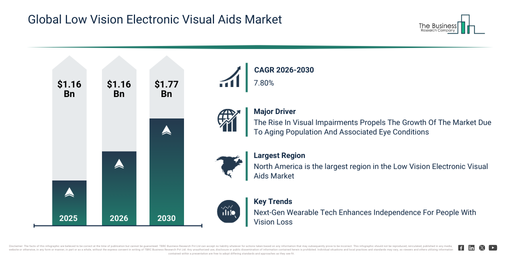
    The low vision electronic visual aids market is projected to experience robust expansion in the coming years. This market is set to reach $1.82 billion by 2030, driven by a compound annual growth rate (CAGR) of 7.8%. The anticipated growth during this period stems from factors such as technological integration with AI and IoT, a rising demand for portable and wearable devices, supportive government programs, increased use in educational settings, and the expansion of e-commerce channels for distribution. Key trends expected throughout the forecast period involve the uptake of wearable low vision devices, the miniaturization of electronic magnifiers, visual assistance controlled by voice, seamless integration with smart home systems, and the development of personalized vision enhancement solutions.

    Access Your Free Sample Report For In-Depth Market Analysis:

    https://www.thebusinessresearchcompany.com/report/low-vision-electronic-visual-aids-global-market-report

    What Leading Drivers Are Supporting The Low Vision Electronic Visual Aids Market Expansion?

    The expansion of the low vision electronic visual aids market is anticipated to be driven by the increasing incidence of visual impairments. Visual impairments encompass various conditions of vision loss that standard corrective measures like glasses, contact lenses, medicine, or surgery cannot completely rectify, impacting an individual’s visual clarity. This rise in visual impairments is largely attributed to the aging global demographic, given that age-related ocular conditions such as macular degeneration, cataracts, and glaucoma become more prevalent with advancing age. Low-vision electronic visual aids assist those with visual impairments by improving their residual vision through features like magnification, contrast adjustments, and digital image processing, thereby fostering greater autonomy in their daily routines. For example, as reported by the World Health Organization, a specialized United Nations agency based in Switzerland, in August 2023, a staggering 2.2 billion individuals worldwide experience a near or distance vision impairment. Despite this, estimates indicate that only 36% of people with distance vision impairment stemming from refractive errors and merely 17% of those with vision impairment caused by cataracts have accessed suitable treatment. Consequently, the growing occurrence of visual impairments is acting as a significant catalyst for the expansion of the low vision electronic visual aids market.

    How Is The Low Vision Electronic Visual Aids Market Segmented Across Different Segment Categories?

    The low vision electronic visual aids market covered in this report is segmented –

    1) By Type: Portable Electronic Magnifiers, Closed Circuit Television, Voice Readers, Other Types

    2) By Technology: Optical Devices, Electronic Magnifiers, Text-to-Speech Devices, Speech Recognition Systems

    3) By Application: Reading Assistance, Navigation Assistance, Social Interaction And Communication, Entertainment

    4) By Distribution Channel: Online Retail, Specialty Stores, Optical Stores, Other Distribution Channels

    5) By End-User: Individuals, Hospitals And Clinics, Rehabilitation Centers, Educational Institutions

    Subsegments:

    1) By Portable Electronic Magnifiers: Handheld Magnifiers, Stand Magnifiers, Wearable Magnifiers, Digital Magnifier Tablets

    2) By Closed Circuit Television: Desktop Closed Circuit Television Systems, Transportable Closed Circuit Television Systems, Wearable Closed Circuit Television Devices, Closed Circuit Television With Text-To-Speech Integration

    3) By Voice Readers: Screen Readers, Book Readers, Optical Character Recognition-Based Readers, Smart Audio Assistants For Reading

    4) By Other Types: Braille Notetakers, Smart Glasses, Screen Magnification Software, Navigation Aids

    What Emerging Trends Are Seen In The Low Vision Electronic Visual Aids Market?

    Leading companies in the low vision electronic visual aids market are concentrating on developing innovative solutions, such as artificial intelligence-powered wearable smart glasses, to enhance real-time visual interpretation and user independence. Artificial intelligence-powered wearable smart glasses are sophisticated electronic visual aids that utilize AI-driven image processing, object recognition, and voice output to help individuals with low vision perceive and interact with their surroundings more effectively. For instance, in August 2024, Eyedaptic Inc., a US-based medical technology company, introduced EYE6 with Ivy, a next-generation wearable visual assistant tailored for individuals with age-related macular degeneration and other retinal disorders. These lightweight smart glasses integrate advanced vision enhancement with an AI-powered assistant named Ivy. It can read text, identify objects, describe surroundings, and support users in 99 languages to promote greater independence. Featuring full HD 1080p displays, hands-free voice control, and remote upgrade capabilities, the EYE6 offers a seamless, customizable user experience for people with low vision conditions.

    Which Organizations Play A Role In The Low Vision Electronic Visual Aids Market Landscape?

    Major companies operating in the low vision electronic visual aids market are Eschenbach Optik GmbH, Vispero, HumanWare Group, Freedom Scientific Inc., IrisVision Global Inc., VisionAid International Ltd., Zoomax Technology Co. Ltd., HIMS Inc., LS And S Products Inc., CTECH Low Vision And Blindness Solutions, Low Vision International AB, NuEyes Technologies Inc., Optelec U.S. Inc., Reinecker Vision GmbH, OrCam Technologies Ltd., Enhanced Vision, Dolphin Computer Access, Acesight, Eyedaptic Inc., eSight Corporation, Eurobraille, Help Tech GmbH & Co. KG

    Get The Full Low Vision Electronic Visual Aids Market Report:

    https://www.thebusinessresearchcompany.com/report/low-vision-electronic-visual-aids-global-market-report

    Which Region Has The Greatest Market Share In The Low Vision Electronic Visual Aids Market?

    North America was the largest region in the low vision electronic visual aids market in 2025. Asia-Pacific is expected to be the fastest-growing region in the forecast period. The regions covered in the low vision electronic visual aids market report are Asia-Pacific, South East Asia, Western Europe, Eastern Europe, North America, South America, Middle East, Africa.

    Request A Customized Low Vision Electronic Visual Aids Market Report For Competitive Insights:

    https://www.thebusinessresearchcompany.com/report/low-vision-electronic-visual-aids-global-market-report

    Browse Through More Reports Similar to the Global Low Vision Electronic Visual Aids Market 2026, By The Business Research Company

    Night Vision Devices Market Report 2026

    https://www.thebusinessresearchcompany.com/report/night-vision-devices-global-market-report

    Assistive Technologies For Visually Impaired Market Report 2026

    https://www.thebusinessresearchcompany.com/report/assistive-technologies-for-visually-impaired-global-market-report

    Computer Vision Market Report 2026

    https://www.thebusinessresearchcompany.com/report/computer-vision-global-market-report

    Get in touch with us:

    The Business Research Company: https://www.thebusinessresearchcompany.com/

    Americas +1 310-496-7795

    Asia +44 7882 955267 & +91 8897263534

    Europe +44 7882 955267

    Email us at info@tbrc.info

    Follow us on:

    LinkedIn: https://in.linkedin.com/company/the-business-research-company

    YouTube: https://www.youtube.com/channel/UC24_fI0rV8cR5DxlCpgmyFQ

    Global Market Model: https://www.thebusinessresearchcompany.com/global-market-model
  • Low Vision Electronic Glasses Market Outlook 2026–2030 Driven By Growth Factors And Projections

    Low Vision Electronic Glasses Market Outlook 2026–2030 Driven By Growth Factors And Projections

    The Business Research Company’s 2026 market reports feature enhanced tools like market attractiveness analysis, TAM assessment, and company scoring matrices, along with interactive dashboards, deeper supply chain insights, and startup coverage strengthening the depth, usability, and strategic value of insights.

    How Much Will The Market Value Of The Low Vision Electronic Glasses Market Grow Between 2026 And 2030?

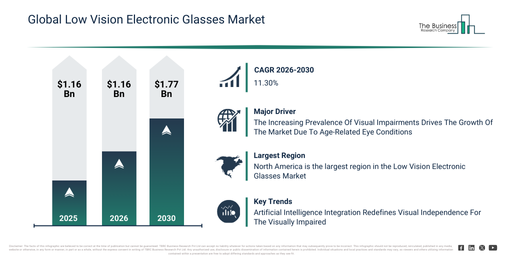
    The low vision electronic glasses market size has experienced swift expansion in recent years. It is projected to grow from $0.97 billion in 2025 to $1.08 billion in 2026, achieving a compound annual growth rate (CAGR) of 11.6%. The expansion during the historic period is attributable to an increasing prevalence of visual impairments, technological limitations in traditional optical aids, the elevated cost of initial devices, limited awareness of low vision aids, and a shortage of trained professionals.

    The low vision electronic glasses market is projected to experience substantial expansion in the coming years. This market is anticipated to reach $1.66 billion by 2030, exhibiting a compound annual growth rate (CAGR) of 11.3%. This projected growth is driven by several factors, including developments in AI-powered vision enhancement, the incorporation of AR/VR for more immersive experiences, decreased device expenses due to large-scale manufacturing, rising usage among the elderly, and an increased emphasis on fostering independent living for those with visual impairments. Key trends anticipated during this period involve the miniaturization of these devices, improved real-time image enhancement capabilities, enhanced wearable comfort and ergonomic designs, the integration of voice and gesture controls, and tailored vision assistance features.

    Access Your Free Sample Report For In-Depth Market Analysis:

    https://www.thebusinessresearchcompany.com/report/low-vision-electronic-glasses-global-market-report

    Which Key Factors Are Driving The Low Vision Electronic Glasses Market Growth?

    The rising occurrence of visual impairments is projected to boost the expansion of the low vision electronic glasses market in the future. Visual impairments denote a substantial decline in eyesight that remains uncorrectable by standard methods such as glasses, contact lenses, drugs, or operations, thereby impacting an individual’s capacity to carry out daily activities. This increase in visual impairments is largely attributed to aging populations, given that the likelihood of developing eye conditions like cataracts, glaucoma, and macular degeneration considerably increases with age. Low-vision electronic glasses assist those with visual impairments by improving their residual vision via magnification, contrast modification, and real-time image processing, thereby fostering increased autonomy in everyday routines. For example, in August 2023, data from the World Health Organization, a Switzerland-based specialized health agency of the United Nations, indicated that worldwide, a minimum of 2.2 billion individuals suffer from near or distance vision impairment. Nevertheless, estimations reveal that only 36% of individuals with distance vision impairment stemming from refractive errors and merely 17% of those experiencing vision impairment due to cataracts have received suitable treatment. Consequently, the growing occurrence of visual impairments is fueling the expansion of the low vision electronic glasses market.

    What Are The Main Segments Within The Low Vision Electronic Glasses Market Segment Structure?

    The low vision electronic glasses market covered in this report is segmented –

    1) By Product Type: Wearable Glasses, Smart Glasses, Augmented Reality Glasses, Night Vision Glasses

    2) By Technology: Optical Technology, Digital Technology, Adaptive Technology, Artificial Intelligence Integrated Technology

    3) By Application: Personal Use, Professional Use

    4) By Distribution Channel: Online Retail, Offline Retail, Direct Sales, Healthcare Providers

    5) By End-User: Individuals With Visual Impairments, Healthcare Institutions, Educational Institutions, Occupational Rehabilitation Centers

    Subsegments:

    1) By Wearable Glasses: Head-Mounted Low Vision Glasses, Clip-on Assistive Glasses, Full-Frame Digital Glasses

    2) By Smart Glasses: Voice-Controlled Smart Glasses, Bluetooth-Enabled Visual Aid Glasses, Integrated Camera Smart Glasses

    3) By Augmented Reality Glasses: Augmented Reality Glasses For Object Recognition, Augmented Reality Navigation Assistance Glasses, Augmented Reality Text-to-Speech Glasses

    4) By Night Vision Glasses: Infrared-Based Vision Glasses, Thermal Imaging Glasses for Low Vision, Low-Light Enhancement Glasses

    Which Trends Are Guiding The Direction Of The Low Vision Electronic Glasses Market?

    Companies operating within the low vision electronic glasses market are increasingly prioritizing the development of cutting-edge solutions, such as smart glasses integrated with artificial intelligence, to enhance visual clarity and promote independence for individuals facing visual impairments. Artificial intelligence-powered smart glasses are wearable devices that leverage AI technology to augment vision through object recognition, aloud text reading, and real-time image adjustments to assist people with visual challenges. For instance, in August 2024, Eyedaptic Inc., a vision technology company based in the US, unveiled EYE6 smart glasses, an advanced wearable device specifically designed to aid individuals experiencing central vision loss. These smart glasses integrate augmented reality and AI-driven vision enhancement to provide real-time image optimization, thereby improving visual clarity and contrast for users. The features of these glasses encompass a lightweight and discreet build, hands-free functionality, a multilingual visual assistant supporting 99 languages, and capabilities like text reading, environmental descriptions, and assistance with various everyday activities.

    Who Are The Companies Participating In The Low Vision Electronic Glasses Market?

    Major companies operating in the low vision electronic glasses market are OrCam Technologies Ltd., Enhanced Vision Systems Inc., Vuzix Corporation, Zoomax Technology Co. Ltd., IrisVision Global Inc., Acesight, Ceciaa SAS, Envision Technologies BV, Eyedaptic Inc., GiveVision Ltd., NuEyes Technologies Inc., OXSIGHT Ltd., Vision Buddy Inc., eSight Corporation, Everysight Labs Ltd., Nreal Technology Ltd., Rokid Corporation, Avegant Corporation, Magic Leap Inc., Lenovo Smart Glasses Division, Sony Smart Vision Systems, Epson Smart Glasses Division

    Get The Full Low Vision Electronic Glasses Market Report:

    https://www.thebusinessresearchcompany.com/report/low-vision-electronic-glasses-global-market-report

    Which Region Accounts For The Largest Portion Of The Low Vision Electronic Glasses Market?

    North America was the largest region in the low vision electronic glasses market in 2025. Asia-Pacific is expected to be the fastest-growing region in the forecast period. The regions covered in the low vision electronic glasses market report are Asia-Pacific, South East Asia, Western Europe, Eastern Europe, North America, South America, Middle East, Africa.

    Request A Customized Low Vision Electronic Glasses Market Report For Competitive Insights:

    https://www.thebusinessresearchcompany.com/report/low-vision-electronic-glasses-global-market-report

    Browse Through More Reports Similar to the Global Low Vision Electronic Glasses Market 2026, By The Business Research Company

    Advanced Glass Market Report 2026

    https://www.thebusinessresearchcompany.com/report/advanced-glass-global-market-report

    Smart Glass Market Report 2026

    https://www.thebusinessresearchcompany.com/report/smart-glass-global-market-report

    Glasses Case Market Report 2026

    https://www.thebusinessresearchcompany.com/report/glasses-case-global-market-report

    Get in touch with us:

    The Business Research Company: https://www.thebusinessresearchcompany.com/

    Americas +1 310-496-7795

    Asia +44 7882 955267 & +91 8897263534

    Europe +44 7882 955267

    Email us at info@tbrc.info

    Follow us on:

    LinkedIn: https://in.linkedin.com/company/the-business-research-company

    YouTube: https://www.youtube.com/channel/UC24_fI0rV8cR5DxlCpgmyFQ

    Global Market Model: https://www.thebusinessresearchcompany.com/global-market-model
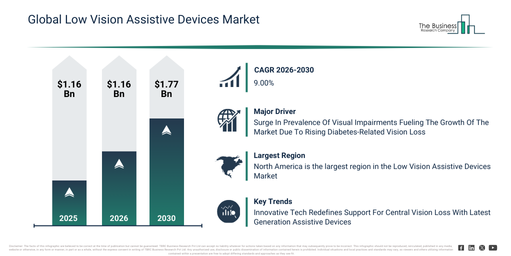
  • Low Vision Assistive Devices Market Developments And Opportunities Across 2026–2030

    Low Vision Assistive Devices Market Developments And Opportunities Across 2026–2030

    The Business Research Company’s 2026 market reports feature enhanced tools like market attractiveness analysis, TAM assessment, and company scoring matrices, along with interactive dashboards, deeper supply chain insights, and startup coverage strengthening the depth, usability, and strategic value of insights.

    What Changes In Market Value Are Expected For The Low Vision Assistive Devices Market Over The 2026–2030 Period?

    The low vision assistive devices market size has seen strong expansion in recent years. It is projected to increase from $1.23 billion in 2025 to $1.34 billion in 2026, at a compound annual growth rate (CAGR) of 8.9%. The growth observed in the past can be attributed to heightened awareness about visual impairments, an expanding elderly demographic, advancements in optical device technology, governmental programs for individuals with disabilities, and the increasing use of screen readers in education.

    The low vision assistive devices market is anticipated to experience substantial expansion over the coming years. This market is projected to reach $1.89 billion by 2030, exhibiting a compound annual growth rate (CAGR) of 9.0%. This expansion during the forecast period is primarily driven by progress in AI-powered assistive technologies, the incorporation of AR/VR solutions for individuals with low vision, a rise in healthcare accessibility investments, the growing need for wearable low vision aids, and the expansion of online sales platforms. Key developments expected within this period encompass the adoption of portable and wearable devices, a heightened demand for electronic magnifiers, the seamless integration of assistive software into everyday devices, improved accessibility in educational and professional environments, and the development of customized low vision solutions.

    Access Your Free Sample Report For In-Depth Market Analysis:

    https://www.thebusinessresearchcompany.com/report/low-vision-assistive-devices-global-market-report

    What Primary Drivers Are Shaping The Low Vision Assistive Devices Market?

    The anticipated expansion of the low vision assistive devices market is largely driven by the growing occurrence of visual impairments. These impairments encompass various forms of sight loss, from partial vision to total blindness, which are not amenable to full correction with conventional eyeglasses or contact lenses. This surge in visual impairment cases stems from an increasing incidence of diabetes, a condition frequently causing retinal damage and progressive vision deterioration. Low vision assistive devices play a crucial role in managing visual impairments by amplifying residual vision, facilitating everyday tasks, and boosting the autonomy and well-being of those affected. A notable example illustrates this trend: in February 2025, Vision Australia, as cited by Developing Australia Communities – an Australia-based entity dedicated to empowering the disability sector – disclosed that 453,000 Australians live with blindness or low vision, with projections indicating this number will climb to 564,000 by 2030. Consequently, the expanding occurrence of visual impairments acts as a primary catalyst for the growth within the low vision assistive devices market.

    How Is Segmentation Applied In The Low Vision Assistive Devices Market Segment Analysis?

    The low vision assistive devices market covered in this report is segmented –

    1) By Product Type: Magnifiers, Reading Devices, Wearable Devices, Screen Readers, Other Product Types

    2) By Application: Education, Healthcare, Personal Use

    3) By Distribution Channel: Online Stores, Specialty Stores, Optical Stores, Other Distribution Channels

    4) By End-User: Children, Adults, Elderly

    Subsegments:

    1) By Magnifiers: Handheld Magnifiers, Stand Magnifiers, Electronic Magnifiers, Pocket Magnifiers

    2) By Reading Devices: Optical Character Recognition (OCR) Devices, Text-To-Speech Devices, Desktop Video Magnifiers, Portable Reading Machines

    3) By Wearable Devices: Smart Glasses, Head-Mounted Displays (HMDs), Augmented Reality (AR)-Based Devices, Camera-Based Wearable Systems

    4) By Screen Readers: Software-Based Screen Readers, Web-Based Screen Readers, Mobile Screen Readers, Braille Display Integrated Readers

    5) By Other Product Types: Braille Embossers, Tactile Graphics Devices, Speech-To-Text Converters, Audio Books And E-Readers

    What Trends Are Affecting The Growth Of The Low Vision Assistive Devices Market?

    Major companies operating in the low vision assistive devices market are prioritizing advanced technologies, such as the latest generation of blind assistive devices, to enhance visual clarity, independence, and mobility for individuals with central vision loss. These cutting-edge blind assistive devices integrate high-resolution imaging, real-time image processing, and wearable organic light-emitting diode (OLED) display systems to project improved visuals that merge smoothly with the user’s remaining vision while preserving peripheral awareness. For instance, in July 2025, eSight, a Canada-based assistive technology company, launched its eSight Go wearable device. It features a 12-megapixel camera with 4K capability, dual full high definition (HD) organic light emitting diode (OLED) screens, and a broad 45-degree field of view, offering a natural and immersive visual experience. Additional attributes include advanced image stabilization, a simplified user interface, and a neck-distributed battery pack that improves comfort for daily usage. These next-generation assistive technologies are designed to enable users to maintain full mobility and participate more actively in daily life, whether at school, work, home, or in social environments, supporting over 20 different vision impairments worldwide.

    Who Are The Companies Participating In The Low Vision Assistive Devices Market Environment?

    Major companies operating in the low vision assistive devices market are HIMS Inc., OrCam Technologies Ltd., HumanWare Group, Freedom Scientific Inc., eSight Corporation, IrisVision Global Inc., Zoomax Technology Co. Limited, Optelec U.S. Inc., Cobolt Systems Ltd., NuEyes Technologies Inc., Vision Buddy Inc., Acesight, Eyedaptic Inc., LVI Low Vision International AB, Reinecker Vision GmbH, Ash Technologies Ltd., RevoSight Inc., Enhanced Vision, Dolphin Computer Access, Vispero, Eurobraille, Help Tech GmbH & Co. KG

    Get The Full Low Vision Assistive Devices Market Report:

    https://www.thebusinessresearchcompany.com/report/low-vision-assistive-devices-global-market-report

    Which Region Holds The Highest Market Share In The Low Vision Assistive Devices Market?

    North America was the largest region in the low vision assistive devices market in 2025. The regions covered in the low vision assistive devices market report are Asia-Pacific, South East Asia, Western Europe, Eastern Europe, North America, South America, Middle East, Africa.

    Request A Customized Low Vision Assistive Devices Market Report For Competitive Insights:

    https://www.thebusinessresearchcompany.com/report/low-vision-assistive-devices-global-market-report

    Browse Through More Reports Similar to the Global Low Vision Assistive Devices Market 2026, By The Business Research Company

    Assistive Technologies For Visually Impaired Market Report 2026

    https://www.thebusinessresearchcompany.com/report/assistive-technologies-for-visually-impaired-global-market-report

    Night Vision Devices Market Report 2026

    https://www.thebusinessresearchcompany.com/report/night-vision-devices-global-market-report

    Robotic Vision Market Report 2026

    https://www.thebusinessresearchcompany.com/report/robotic-vision-global-market-report

    Get in touch with us:

    The Business Research Company: https://www.thebusinessresearchcompany.com/

    Americas +1 310-496-7795

    Asia +44 7882 955267 & +91 8897263534

    Europe +44 7882 955267

    Email us at info@tbrc.info

    Follow us on:

    LinkedIn: https://in.linkedin.com/company/the-business-research-company

    YouTube: https://www.youtube.com/channel/UC24_fI0rV8cR5DxlCpgmyFQ

    Global Market Model: https://www.thebusinessresearchcompany.com/global-market-model