Category: Medical Equipment

  • Anastomosis Devices Market To Witness 7.9% CAGR Growth Through 2030: Key Industry Drivers

    Anastomosis Devices Market To Witness 7.9% CAGR Growth Through 2030: Key Industry Drivers

    Featuring market attractiveness scoring, total addressable market sizing, company benchmarking matrices, interactive Excel dashboards, deeper supply chain intelligence, emerging startup tracking, and granular product-level insights, The Business Research Company’s 2026 market reports are built to deliver research that is both more actionable and more strategically valuable.

    Anastomosis Devices Market Revenue Outlook: What CAGR Lies Ahead Through 2030?

    The anastomosis devices market size has demonstrated robust growth in recent years. It is forecast to grow from $3.86 billion in 2025 to $4.15 billion in 2026, achieving a compound annual growth rate (CAGR) of 7.5%. This historical expansion is linked to factors such as an increasing volume of gastrointestinal surgeries, rising adoption of surgical stapling techniques, improvements in suture material performance, wider integration of minimally invasive surgery, and an increase in hospital surgical capacity.

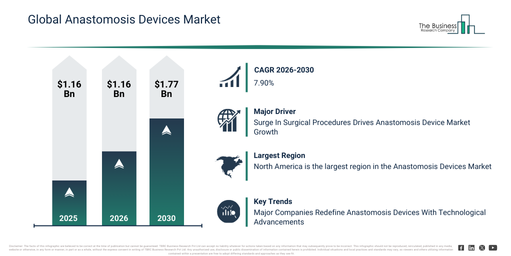
    The anastomosis devices market size is anticipated to expand significantly over the coming years. It is projected to reach $5.64 billion in 2030, exhibiting a compound annual growth rate (CAGR) of 7.9%. This expansion throughout the forecast period stems from various factors, such as the increasing demand for robotic surgical systems, a heightened focus on achieving faster patient recovery outcomes, the broadening of advanced surgical training programs, the rising adoption of disposable surgical devices, and continuous technological advancements in automated suturing. Furthermore, prominent trends anticipated during this period include the increased uptake of automated anastomosis devices, a surge in the use of bioabsorbable sutures and staples, a growing preference for minimally invasive surgical closure, the expansion of robotic-assisted suturing systems, and an intensified focus on leak-prevention technologies.

    Get A Free Sample Report With In-Depth Market Insights:

    https://thebusinessresearchcompany.com/sample_request?id=23022048&type=smp&name=Anastomosis%20Devices%20Market%20Report%202026&utm_source=Blogs&utm_medium=Paid&utm_campaign=Sep_PR

    Anastomosis Devices Market Expansion Drivers: What’s Shaping Future Growth?

    The anticipated increase in surgical procedures is projected to fuel the expansion of the anastomosis device market in the future. Surgical procedures are defined as any medical intervention requiring an incision on an individual’s body. The escalation in these procedures stems from a rising need for both medical treatments and cosmetic operations. Anastomosis devices play a crucial role by allowing surgeons to join two anatomical parts, like blood vessels or intestines, with efficiency and safety during operations. For instance, in May 2025, the Australian Institute of Health and Welfare, an Australia-based government agency, reported that 778,500 patients were admitted for surgery from public hospital elective surgery waiting lists in 2023-24, marking a 5.8% increase compared with 2022-23. Consequently, the uptick in surgical procedures is actively boosting the growth of the anastomosis device market.

    Anastomosis Devices Market Segment Outlook: Which Categories Are Growing Fastest?

    The anastomosis devices market covered in this report is segmented –

    1) By Type: Surgical Staplers, Surgical Sutures, Surgical Sealants and Adhesives, Automated Suturing

    2) By Usage: Disposable, Reusable

    3) By Application: Cardiovascular And Thoracic Surgery, Gastrointestinal Surgery, Gynecological Surgery, Other Applications

    4) By End-User: Hospitals, Ambulatory Surgery Centers, Other End-Users

    Subsegments:

    1) By Surgical Staplers: Manual Surgical Staplers, Automated Surgical Staplers, Endoscopic Staplers

    2) By Surgical Sutures: Absorbable Sutures, Non-Absorbable Sutures, Barbed Sutures

    3) By Surgical Sealants And Adhesives: Fibrin Sealants, Tissue Adhesives, Cyanoacrylate Adhesives

    4) By Automated Suturing: Linear Cutters, Circular Suturing Devices, Robotic Suturing Systems

    Anastomosis Devices Market Strategic Trends: What Defines The Next Growth Phase?

    Leading companies in the anastomosis devices market are concentrating on developing innovative surgical solutions, including advanced stapling technologies, to enhance surgical outcomes and improve patient safety. These sophisticated stapling technologies are engineered to diminish complications such as leaks at the staple line, thus ensuring the integrity of tissue closures and facilitating faster, safer recovery. For instance, in May 2024, Ethicon, a US-based medical device company, introduced the ECHELON LINEAR Cutter, a pioneering surgical stapler intended to improve surgical outcomes by significantly reducing the chance of leaks at the staple line. This inventive device is reported to achieve 47% fewer leaks when compared to traditional staplers, which can help alleviate potential complications during and after surgical procedures. The primary goal of the ECHELON linear cutter is to minimize the occurrence of leaks at the staple line, which is vital for maintaining the integrity of tissue closures. Leaks can result in serious complications, including infections and prolonged recovery periods.

    Anastomosis Devices Market Competitive Overview And Top Companies

    Major companies operating in the anastomosis devices market are Medtronic plc, B. Braun Melsungen AG, Johnson & Johnson Services Inc., Boston Scientific Corp., Baxter International Inc., Meril Life Sciences Pvt. Ltd., Becton Dickinson and Company, Terumo Corporation, Teleflex Incorporated, Getinge AB, LivaNova plc, Stryker Corporation, ConMed Corporation, Grena Ltd., Microline Surgical Inc., Scanlan International Inc., Innovia Medical, Genesee BioMedical Inc., EndoEvolution LLC, Novare Surgical Systems Inc., Dextera Surgical Inc., Intuitive Surgical Inc., Artivion Inc., CryoLife Inc., Cardica Inc., Vascular Graft Solutions Ltd., LifeNet Health Inc.

    View The Full Anastomosis Devices Market Report:

    https://thebusinessresearchcompany.com/report/anastomosis-devices-global-market-report?utm_source=Blogs&utm_medium=Paid&utm_campaign=Sep_PR

    Anastomosis Devices Market Top Region: Where Does Most Revenue Come From?

    North America was the largest region in the anastomosis devices market in 2025.Asia-Pacific is expected to be the fastest-growing region in the global anastomosis devices market report during the forecast period. The regions covered in the anastomosis devices market report are Asia-Pacific, South East Asia, Western Europe, Eastern Europe, North America, South America, Middle East, Africa.

    Reach Out To Our Team:

    The Business Research Company: https://www.thebusinessresearchcompany.com/

    Americas: +1 310-496-7795

    Asia: +44 7882 955267 & +91 8897263534

    Europe: +44 7882 955267

    Email us at: marketing@tbrc.info

    Follow us on:

    LinkedIn: https://in.linkedin.com/company/the-business-research-company

    YouTube: https://www.youtube.com/channel/UC24_fI0rV8cR5DxlCpgmyFQ

    Global Market Model: https://www.thebusinessresearchcompany.com/global-market-model
  • Analytical Instrumentation Market Projected For Strong Expansion Through 2030: Key Trends And Future Outlook

    Analytical Instrumentation Market Projected For Strong Expansion Through 2030: Key Trends And Future Outlook

    Built to provide research that’s more actionable and strategically valuable, The Business Research Company’s 2026 market reports include market attractiveness analysis, total addressable market sizing, company benchmarking matrices, interactive Excel dashboards, broader supply chain intelligence, emerging startup tracking, and in-depth product insights.

    Analytical Instrumentation Market Growth Analysis: How Will Revenue Trend Over The Forecast Period?

    The analytical instrumentation market size has experienced robust expansion recently. This market is projected to expand from $61.45 billion in 2025 to $66.42 billion in 2026, achieving a compound annual growth rate (CAGR) of 8.1%. Historically, this expansion has been driven by factors including the dependence on traditional laboratory instruments, the restricted integration of software with instruments, increasing research and development activities within life sciences, a rise in clinical and diagnostic testing, and the emergence of spectroscopy and chromatography techniques.

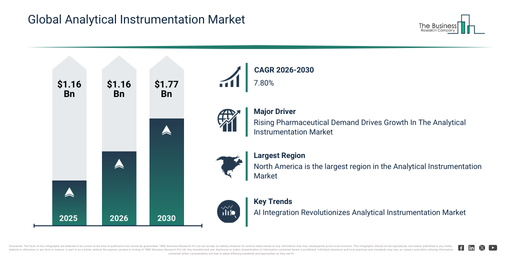
    The analytical instrumentation market size is anticipated to experience significant expansion over the upcoming years. Its valuation is forecast to reach $89.58 billion by 2030, exhibiting a compound annual growth rate (CAGR) of 7.8%. This growth throughout the projected period is attributed to advancements in mass spectrometry and flow cytometry instruments, increased adoption of sequencing and microarray technologies, the proliferation of laboratory automation and smart labs, a rising demand for software-enabled analytical solutions, and a heightened emphasis on multi-application analytical platforms. Furthermore, significant trends expected during this timeframe include a broader uptake of high-precision analytical instruments, the integration of data analysis with lab management software, a growing requirement for calibration and maintenance services, widening application areas in food, environmental, and forensic testing, and a stronger focus on adhering to regulatory standards and ensuring quality.

    Get A Free Sample Report With In-Depth Market Insights:

    https://thebusinessresearchcompany.com/sample_request?id=89526978&type=smp&name=Analytical%20Instrumentation%20Market%20Report%202026&utm_source=Blogs&utm_medium=Paid&utm_campaign=Sep_PR

    Analytical Instrumentation Market Development Factors: What’s Supporting Demand?

    The escalating demand within the pharmaceutical industries is anticipated to drive the expansion of the analytical instrumentation market. This growth in the pharmaceutical sector is primarily attributed to ongoing innovation in research and development, successful regulatory clearances, an aging global demographic, technological advancements, globalization, and enhanced access to healthcare. Analytical instrumentation assists pharmaceutical companies by facilitating precise measurement, rigorous quality control, and thorough validation of drug formulations, thereby guaranteeing product safety, effectiveness, and adherence to regulatory standards. For example, in August 2025, the European Federation of Pharmaceutical Industries and Associations (EFPIA), a Belgium-based trade association representing the pharmaceutical industry, reported that in 2023, the pharmaceutical industry invested approximately $60377.11 million (€52,400 million) in R&D in Europe. Consequently, the increasing demand from pharmaceutical industries is a key driver for the growth of the analytical instrumentation market.

    Analytical Instrumentation Market Segment Landscape: Which Areas Lead Development?

    The analytical instrumentation market covered in this report is segmented –

    1) By Product: Instruments, Services, Software

    2) By Technology: Polymerase Chain Reaction, Spectroscopy, Microscopy, Chromatography, Flow Cytometry, Sequencing, Microarray, Other Technologies

    3) By Application: Life Sciences Research And Development, Clinical And Diagnostic Analysis, Food And Beverage Analysis, Forensic Analysis, Environmental Testing, Other Applications

    Subsegments:

    1) By Instruments: Chromatography Instruments, Spectroscopy Instruments, Mass Spectrometry Instruments, Electrochemical Analyzers, Microscopy Instruments

    2) By Services: Calibration Services, Maintenance Services, Consulting Services, Training Services

    3) By Software: Data Analysis Software, Instrument Control Software, Lab Management Software, Regulatory Compliance Software

    Analytical Instrumentation Market Transformation Trends: What Innovations Are Driving Change?

    Leading companies in the analytical instrumentation market are concentrating on integrating smart technologies to improve data analysis, enhance accuracy, and automate various processes. Intelligent analytical instrumentation elevates data precision, expands automation, strengthens predictive capabilities, and refines decision-making. For example, in April 2024, Agilent Technologies, a US-based analytical instrumentation firm, unveiled its new Advanced Dilution System, the ADS 2, crafted to optimize laboratory workflows and boost sample throughput for ICP-MS and ICP-OES analysis. This system incorporates an intelligent auto dilutor that connects effortlessly with Agilent autosamplers. It employs the same software as the ICP instruments for uniform data management and reporting, which is particularly useful for laboratories routinely analyzing numerous samples from varied matrices where analyte concentrations often show wide variations.

    Analytical Instrumentation Market Competitive Landscape: Which Companies Lead The Industry?

    Major companies operating in the analytical instrumentation market are Hitachi Ltd., F. Hoffmann-La Roche Ltd, Thermo Fisher Scientific Inc., Danaher Corporation, Avantor Inc., Agilent Technologies Inc., Illumina Inc., Sartorius AG, Mettler-Toledo International Inc., PerkinElmer Inc., Shimadzu Corporation, Waters Corporation, Bio-Rad Laboratories Inc., Bruker Corporation, Carl Zeiss AG, HORIBA Group, Eppendorf SE, Renishaw plc, Malvern Panalytical Ltd, Smiths Detection Group Ltd., Techcomp Inc., LECO Corporation, JASCO International Co. Ltd

    View The Full Analytical Instrumentation Market Report:

    https://thebusinessresearchcompany.com/report/analytical-instrumentation-global-market-report?utm_source=Blogs&utm_medium=Paid&utm_campaign=Sep_PR

    Analytical Instrumentation Market Regional Breakdown: Where Is Demand Concentrated?

    North America was the largest region in the analytical instrumentation market in 2025. Asia-Pacific is expected to be the fastest-growing region in the forecast period. The regions covered in the analytical instrumentation market report are Asia-Pacific, South East Asia, Western Europe, Eastern Europe, North America, South America, Middle East, Africa.

    Reach Out To Our Team:

    The Business Research Company: https://www.thebusinessresearchcompany.com/

    Americas: +1 310-496-7795

    Asia: +44 7882 955267 & +91 8897263534

    Europe: +44 7882 955267

    Email us at: marketing@tbrc.info

    Follow us on:

    LinkedIn: https://in.linkedin.com/company/the-business-research-company

    YouTube: https://www.youtube.com/channel/UC24_fI0rV8cR5DxlCpgmyFQ

    Global Market Model: https://www.thebusinessresearchcompany.com/global-market-model

  • Amnion Patch Market Outlook 2026–2030: Growth Trends, Market Dynamics And Emerging Opportunities

    Amnion Patch Market Outlook 2026–2030: Growth Trends, Market Dynamics And Emerging Opportunities

    Backed by market attractiveness analysis, total addressable market sizing, company benchmarking matrices, interactive Excel dashboards, wider supply chain intelligence, emerging startup coverage, and detailed product-level insights, The Business Research Company’s 2026 market reports are designed to offer research that is more actionable and strategically valuable than ever.

    Amnion Patch Market Forecast: What Value Will The Market Reach By 2030?

    The amnion patch market size has shown significant growth in recent years. It is anticipated to expand from $1.91 billion in 2025 to $2.07 billion in 2026, registering a compound annual growth rate (CAGR) of 8.3%. The historical expansion can be linked to factors such as the limited availability of amniotic membrane products, a reliance on fresh tissue grafts, an increasing demand for ocular surface reconstruction, a rise in hospital and clinic procedures, and the absence of standardized preservation techniques.

    The amnion patch market size is anticipated to undergo significant expansion in the next few years, with projections indicating it will climb to $2.81 billion in 2030, exhibiting a compound annual growth rate (CAGR) of 8.0%. This expected growth during the forecast period is largely driven by factors such as the development of cryopreserved and lyophilized amnion patches, their increasing adoption in corneal repair and ocular surgeries, wider application in dental and orthopedic fields, a rise in research and development initiatives, and the expansion of eye and tissue banks. Significant trends for this period include the rising utilization of amnion patches for wound healing and tissue regeneration, a greater uptake of cryopreserved and lyophilized products, the broadening of ophthalmic and dental applications, an increasing emphasis on minimally invasive surgical procedures, and enhanced regulatory compliance and quality standards for amniotic products.

    Get A Free Sample Report With In-Depth Market Insights:

    https://thebusinessresearchcompany.com/sample_request?id=77020815&type=smp&name=Amnion%20Patch%20Market%20Report%202026&utm_source=Blogs&utm_medium=Paid&utm_campaign=Sep_PR

    Amnion Patch Market Industry Drivers: What’s Behind The Revenue Growth?

    The growing incidence of diabetes is projected to fuel the expansion of the amnion patch market in the future. This rising prevalence of diabetes stems from various factors, including inactive lifestyles, poor eating habits, a surge in obesity, an aging demographic, and genetic predispositions. Amnion patches find application in diabetic foot ulcers, which arise from severe diabetes, facilitating quicker recovery through the provision of bioactive tissue that aids in cellular regeneration and diminishes inflammation. For example, in June 2023, the Institute for Health Metrics and Evaluation, a US-based public health research institute, stated that more than half a billion individuals worldwide suffered from diabetes. This figure is anticipated to more than double, reaching 1.3 billion people by 2050. Consequently, the expanding prevalence of diabetes is serving as a significant impetus for the growth of the amnion patch market.

    Amnion Patch Market Segments: Where Is Growth Concentrated?

    The amnion patch market covered in this report is segmented –

    1) By Product Type: Transplantation Grade Amnion Patches, Transplantation Grade Amnion Or Chorion Patches, Suspension Liquid Amnio Patch

    2) By Application: Corneal Repair, Ocular Surface Reconstruction, Amniotic Membrane Transplantation, Dental Applications, Wound Healing, Orthopedic Applications

    3) By End User: Hospitals, Eye Banks, Clinics, Research Institutes

    Subsegments:

    1) By Transplantation Grade Amnion Patches: Cryopreserved Transplantation Grade Amnion Patches, Lyophilized Transplantation Grade Amnion Patches, Fresh Transplantation Grade Amnion Patches

    2) By Transplantation Grade Amnion or Chorion Patches: Cryopreserved Amnion or Chorion Patches, Lyophilized Amnion or Chorion Patches, Fresh Amnion Or Chorion Patches

    3) By Suspension Liquid Amnio Patch: Cryopreserved Suspension Liquid Amnio Patch, Lyophilized Suspension Liquid Amnio Patch, Fresh Suspension Liquid Amnio Patch

    #Amnion Patch Market Growth Trends: What’s Shaping The Future Outlook?

    Companies operating in the amnion patch market are concentrating on developing innovative products, such as dehydrated dual-layer amniotic membrane patches, to offer a shelf-stable, biologically active scaffold that aids wound healing and protects tissue. A dehydrated dual-layer amniotic membrane patch is an allograft with two layers derived from placental tissue, processed to preserve its extracellular matrix components, which functions as both a barrier and a scaffold, remaining stable at room temperature. For instance, in 2025, Mindsight Medical / Total Ancillary, a US-based provider of biologic wound care grafts, launched the RevoShield+ Dual Layer Amnio Patch. This patch, crafted from dehydrated human amniotic membrane, provides a five-year shelf life at room temperature and can be applied easily with or without glue or sutures. It restricts moisture loss, serves as a protective barrier, and acts as a biological scaffold for tissue reconstruction in acute and chronic wounds, podiatry, Mohs surgery, and other areas.

    Amnion Patch Market Competitive Landscape: Who Leads The Industry?

    Major companies operating in the amnion patch market are Integra LifeSciences Corporation, AlloSource, Bio‑Tissue Inc., Infinity Biologics Inc., VIVEX Biologics Inc., Tissue Regenix Ltd, Celularity, Royal Biologics, NuVision Biotherapies Ltd, Olifant Biologics, MTF Biologics, BioHealing, MiMedx Group Inc, Amnio Technology LLC, Amniox Medical Inc, Regenative Labs LLC, Organogenesis Inc, Skye Biologics Holdings LLC, Human Regenerative Technologies LLC, Genesis Biologics, Ventris Medical LLC

    View The Full Amnion Patch Market Report:

    https://thebusinessresearchcompany.com/report/amnion-patch-global-market-report?utm_source=Blogs&utm_medium=Paid&utm_campaign=Sep_PR

    Amnion Patch Market Geographic Landscape: Which Region Dominates Industry Growth?

    North America was the largest region in the amnion patch market in 2025. The regions covered in the amnion patch market report are Asia-Pacific, South East Asia, Western Europe, Eastern Europe, North America, South America, Middle East, Africa.

    Reach Out To Our Team:

    The Business Research Company: https://www.thebusinessresearchcompany.com/

    Americas: +1 310-496-7795

    Asia: +44 7882 955267 & +91 8897263534

    Europe: +44 7882 955267

    Email us at: marketing@tbrc.info

    Follow us on:

    LinkedIn: https://in.linkedin.com/company/the-business-research-company

    YouTube: https://www.youtube.com/channel/UC24_fI0rV8cR5DxlCpgmyFQ

    Global Market Model: https://www.thebusinessresearchcompany.com/global-market-model
  • Ambulatory X-Ray Devices Market Growth Outlook From $2.44 Billion In 2026 To $3.2 Billion By 2030

    Ambulatory X-Ray Devices Market Growth Outlook From $2.44 Billion In 2026 To $3.2 Billion By 2030

    Featuring market attractiveness scoring, total addressable market sizing, company benchmarking matrices, interactive Excel dashboards, deeper supply chain intelligence, emerging startup tracking, and granular product-level insights, The Business Research Company’s 2026 market reports are built to deliver research that is both more actionable and more strategically valuable.

    Ambulatory X-Ray Devices Market Size Outlook: How Quickly Will Revenue Expand Through 2030?

    The market size for ambulatory x-ray devices has seen considerable expansion in recent years. This market is anticipated to grow from $2.27 billion in 2025 to $2.44 billion in 2026, achieving a compound annual growth rate (CAGR) of 7.4%. The growth observed in prior periods can be attributed to the limited availability of portable imaging devices, reliance on fixed hospital radiology infrastructure, increasing orthopedic and cancer diagnostics, growing hospital and clinic setups, and early adoption of digital imaging solutions.

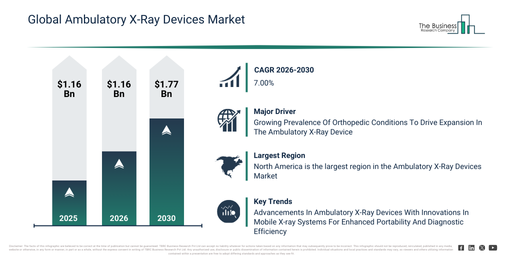
    The ambulatory x-ray devices market size is projected to experience substantial growth in the next few years. It is forecast to grow to $3.2 billion in 2030, showing a compound annual growth rate (CAGR) of 7.0%. This expansion during the forecast period can be attributed to advancements in mobile and wireless x-ray devices, an increasing demand for outpatient and home , the integration of AI-based imaging analysis, the proliferation of ambulatory surgical centers, and the rising adoption of compact and battery-operated devices. Noteworthy trends for the forecast period include the growing acceptance of portable and mobile x-ray devices, a heightened demand for point-of-care diagnostics, the incorporation of wireless and battery-operated imaging systems, the ongoing expansion of ambulatory surgical centers and outpatient services, and a dedicated focus on compact and space-saving imaging solutions.

    Get A Free Sample Report With In-Depth Market Insights:

    https://thebusinessresearchcompany.com/sample_request?id=33786207&type=smp&name=Ambulatory%20X-Ray%20Devices%20Market%20Report%202026&utm_source=Blogs&utm_medium=Paid&utm_campaign=Sep_PR

    Ambulatory X-Ray Devices Market Growth Factors: What’s Supporting Expansion?

    An anticipated increase in orthopedic ailments is projected to drive expansion within the ambulatory X-ray device market. These conditions encompass a range of disorders and illnesses impacting the musculoskeletal framework, specifically bones, joints, muscles, tendons, ligaments, and nerves. Several factors contribute to this growing prevalence, such as an aging demographic, the widespread issue of obesity, involvement in sports, job-related elements, and advancements in diagnostic techniques. Importantly, ambulatory X-ray instruments are crucial for both identifying and overseeing orthopedic conditions, facilitating prompt diagnosis and more effective tracking of treatment progress. For example, data from February 2023, sourced from research by the National Library of Medicine, a US-based biomedical library, indicates a projected rise in total hip arthroplasty (THA) and total knee arthroplasty (TKA) procedures by 719,364 and 1.22 million, respectively, by the year 2040. Furthermore, by 2060, TKAs are foreseen to reach 2.91 million, while THAs are expected to total 1.98 million. Consequently, the increasing incidence of orthopedic conditions serves as a key impetus for the ambulatory X-ray device market.

    Ambulatory X-Ray Devices Market Segment Analysis: What Are The Core Market Categories?

    The ambulatory x-ray devices market covered in this report is segmented –

    1) By Type: Standalone, Mobile

    2) By Application: Orthopedic, Cancer, Cardiovascular , Other Applications

    3) By Distribution Channel: Direct Tenders, Distributor

    4) By End-User: Hospitals, Ambulatory Surgical Centers, Other End-Users

    Subsegments:

    1) By Standalone: Digital Standalone X-Ray Devices, Analog Standalone X-Ray Devices, Fixed Standalone X-Ray Devices, Portable Standalone X-Ray Devices

    2) By Mobile: Mobile Digital X-Ray Devices, Mobile Analog X-Ray Devices, Compact Mobile X-Ray Devices, Battery-Operated Mobile X-Ray Devices, Wireless Mobile X-Ray Devices

    Ambulatory X-Ray Devices Market Industry Trends: What’s Reshaping Demand?

    Leading companies in the ambulatory X-ray devices market are concentrating on creating innovative products, such as mobile X-ray systems, to facilitate high-quality imaging even within confined, hard-to-access clinical environments. A mobile X-ray system represents a portable radiography unit designed for effortless transport to patient bedsides or various clinical sites, enabling on-site imaging without requiring patient relocation. For instance, in February 2023, Carestream Health India, a US-based medical equipment manufacturing firm, launched its Motion Mobile X-Ray System. The system features a balanced, articulating arm and a tube head, which allow for excellent visibility and accurate positioning. It is equipped with an 8-inch touchscreen monitor that offers easy-to-set protocols, a hand-switch for exposure control, and a manual light-beam collimator to ensure precise alignment. Internally, a 32-kW capacitor-discharge generator powers a broad spectrum of general radiography applications, complemented by an optional dose-area product (DAP) meter that furnishes vital dose monitoring data.

    Ambulatory X-Ray Devices Market Company Landscape And Competitive Strategy

    Major companies operating in the ambulatory x-ray devices market are Siemens Healthineers AG, Koninklijke Philips N.V., Fujifilm Holdings Corporation, GE HealthCare Technologies Inc., Konica Minolta Inc., Shimadzu Corporation, Carestream Health Inc., Canon Medical Systems Corporation, Ziehm Imaging GmbH, Kubtec Scientific, DEL Medical Inc., Mindray Medical International Limited, Agfa-Gevaert Group, BMI Biomedical International S.r.l., United Imaging Healthcare Co. Ltd., EcoRay Co. Ltd., Analogic Corporation, Xoran Technologies LLC, Varian Medical Systems Inc., Medtronic PLC, Esaote S.p.A., Samsung Medison Co. Ltd, Canon Imaging Products

    View The Full Ambulatory X-Ray Devices Market Report:

    https://thebusinessresearchcompany.com/report/ambulatory-x-ray-devices-global-market-report?utm_source=Blogs&utm_medium=Paid&utm_campaign=Sep_PR

    Ambulatory X-Ray Devices Market Largest Region: Which Geography Holds The Highest Market Share?

    North America was the largest region in the ambulatory X-ray devices market in 2025. Asia-Pacific is expected to be the fastest-growing region in the forecast period. The regions covered in the ambulatory x-ray devices market report are Asia-Pacific, South East Asia, Western Europe, Eastern Europe, North America, South America, Middle East, Africa.

    Reach Out To Our Team:

    The Business Research Company: https://www.thebusinessresearchcompany.com/

    Americas: +1 310-496-7795

    Asia: +44 7882 955267 & +91 8897263534

    Europe: +44 7882 955267

    Email us at: marketing@tbrc.info

    Follow us on:

    LinkedIn: https://in.linkedin.com/company/the-business-research-company

    YouTube: https://www.youtube.com/channel/UC24_fI0rV8cR5DxlCpgmyFQ

    Global Market Model: https://www.thebusinessresearchcompany.com/global-market-model
  • Ambulatory IV infusion Pumps Market Forecast To Reach $1.15 Billion By 2030: Key Growth Drivers And Industry Trends

    Ambulatory IV infusion Pumps Market Forecast To Reach $1.15 Billion By 2030: Key Growth Drivers And Industry Trends

    Built to provide research that’s more actionable and strategically valuable, The Business Research Company’s 2026 market reports include market attractiveness analysis, total addressable market sizing, company benchmarking matrices, interactive Excel dashboards, broader supply chain intelligence, emerging startup tracking, and in-depth product insights.

    Ambulatory IV infusion Pumps Market Size, Value And Growth Trajectory Through 2030

    The market size for ambulatory iv infusion pumps has experienced steady growth in recent years. It is forecast to increase from $0.91 billion in 2025 to $0.95 billion in 2026, at a compound annual growth rate (CAGR) of 4.5%. The expansion witnessed during the historic period can be attributed to factors such as the growth in outpatient treatment models, the rising prevalence of chronic diseases, the early adoption of ambulatory infusion technologies, the expansion of home , and enhancements in pump safety mechanisms.

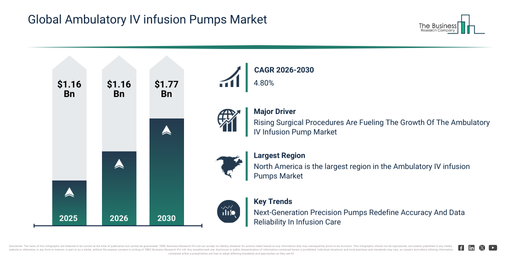
    The ambulatory iv infusion pumps market size is anticipated to demonstrate sustained growth over the next few years. Its valuation is set to reach $1.15 billion by 2030, achieving a compound annual growth rate (CAGR) of 4.8%. The projected growth during this period can be attributed to several factors, including the increasing demand for remote therapy management, the rising integration of connected healthcare devices, the expansion of personalized drug delivery solutions, a growing focus on reducing hospital stays, and advancements in battery efficiency and pump miniaturization. Key trends for the forecast period include the increasing adoption of portable and wearable infusion pumps, a rising demand for home-based infusion therapies, the growing integration of smart dose monitoring features, the expansion of multi-therapy pump applications, and an enhanced focus on patient mobility and comfort.

    Get A Free Sample Report With In-Depth Market Insights:

    https://thebusinessresearchcompany.com/sample_request?id=51511020&type=smp&name=Ambulatory%20IV%20infusion%20Pumps%20Market%20Report%202026&utm_source=Blogs&utm_medium=Paid&utm_campaign=Sep_PR

    Ambulatory IV infusion Pumps Market Demand Drivers: What’s Powering Industry Growth?

    The increasing frequency of surgical operations is anticipated to drive expansion in the ambulatory IV infusion pumps market in the future. These procedures are defined as medical interventions or treatments requiring incisions or invasive methods to reach and address internal or external bodily regions. Ambulatory IV infusion pumps facilitate the regulated delivery of fluids, drugs, and anesthetics during operations, guaranteeing accurate and uninterrupted flow, which improves patient safety and operational effectiveness. As an illustration, the American Med Spa Association, a US-based organization offering legal, compliance, and business support for medical spas and aesthetic practices, reported in July 2025 that cosmetic procedure volumes climbed by 42.5% in the last four years, amounting to 20.5 million non-surgical treatments and 17.4 million surgical procedures by 2024. Consequently, the growing volume of surgical procedures is a key factor boosting the expansion of the ambulatory IV infusion pumps market.

    Ambulatory IV infusion Pumps Market Segment Breakdown: Which Categories Lead On Revenue?

    The ambulatory iv infusion pumps market covered in this report is segmented –

    1) By Therapy: Chemotherapy Infusion Pumps, Anti-Infective Infusion Pumps, Other Therapies

    2) By Application: Chemotherapy Or Oncology, Diabetes, Gastroenterology, Analgesia Or Pain Management, Pediatrics Or Neonatology, Hematology, Anti-Infective, Other Applications

    3) By Patient Care Setting: Hospitals, Home Healthcare, Other End Users

    Subsegments:

    1) By Chemotherapy Infusion Pumps: Continuous Chemotherapy Infusion Pumps, Cyclic Chemotherapy Infusion Pumps, Patient-Controlled Analgesia (PCA) Pumps for Chemotherapy

    2) By Anti-Infective Infusion Pumps: Antibiotic Infusion Pumps, Antiviral Infusion Pumps, Antifungal Infusion Pumps

    3) By Other Therapies: Pain Management Infusion Pumps, Nutritional Infusion Pumps (Total Parenteral Nutrition), Hormonal Therapy Infusion Pumps, Hydration Infusion Pumps

    Ambulatory IV infusion Pumps Market Innovation Trends: What Developments Are Reshaping The Industry?

    Leading companies within the ambulatory IV infusion pumps market are prioritizing the development of innovative advancements, such as precision infusion pumps, to improve the accuracy, consistency, and data reliability of infusion therapy. A precision infusion pump is a sophisticated infusion device crafted to deliver medications and fluids with exceptionally controlled accuracy, thus minimizing variability across various clinical environments. For example, in April 2025, ICU Medical, a US-based company involved in the development and manufacture of medical infusion technologies, introduced its Plum Solo and Plum Duo precision IV pumps. These devices incorporate a high-accuracy delivery mechanism bolstered by integrated digital functionalities, which enhance infusion consistency irrespective of external or setup conditions. They also expand a unified infusion platform that strengthens medication management, supports complete electronic health record interoperability, and provides clinicians with more dependable real-time infusion data.

    Ambulatory IV infusion Pumps Market Key Players Shaping Industry Direction

    Major companies operating in the ambulatory iv infusion pumps market are Baxter International Inc, Becton Dickinson and Company, B. Braun Melsungen AG, Fresenius Kabi AG, ICU Medical Inc, Medtronic plc, Mindray Medical International Limited, Nipro Corporation, Moog Inc, Zyno Medical LLC, Micrel Medical Devices SA, JMS Co Ltd, Eitan Medical, SOOIL Development Co Ltd, Ypsomed Holding AG, Arcomed AG, Comen Medical, Flowonix Medical, Akas Infusion, CME Medical

    View The Full Ambulatory IV infusion Pumps Market Report:

    https://thebusinessresearchcompany.com/report/ambulatory-iv-infusion-pumps-global-market-report?utm_source=Blogs&utm_medium=Paid&utm_campaign=Sep_PR

    Ambulatory IV infusion Pumps Market Regional Analysis: Which Region Leads By Revenue?

    North America was the largest region in the ambulatory IV infusion pumps market in 2025. Western Europe was the second largest region in the global ambulatory IV infusion pump market. The regions covered in the ambulatory iv infusion pumps market report are Asia-Pacific, South East Asia, Western Europe, Eastern Europe, North America, South America, Middle East, Africa.

    Reach Out To Our Team:

    The Business Research Company: https://www.thebusinessresearchcompany.com/

    Americas: +1 310-496-7795

    Asia: +44 7882 955267 & +91 8897263534

    Europe: +44 7882 955267

    Email us at: marketing@tbrc.info

    Follow us on:

    LinkedIn: https://in.linkedin.com/company/the-business-research-company

    YouTube: https://www.youtube.com/channel/UC24_fI0rV8cR5DxlCpgmyFQ

    Global Market Model: https://www.thebusinessresearchcompany.com/global-market-model
  • Ambulatory Blood Pressure Monitoring Devices Market Research 2026: Market Size, Trends, Segments And Growth Forecast

    Ambulatory Blood Pressure Monitoring Devices Market Research 2026: Market Size, Trends, Segments And Growth Forecast

    Backed by market attractiveness analysis, total addressable market sizing, company benchmarking matrices, interactive Excel dashboards, wider supply chain intelligence, emerging startup coverage, and detailed product-level insights, The Business Research Company’s 2026 market reports are designed to offer research that is more actionable and strategically valuable than ever.

    Ambulatory Blood Pressure Monitoring Devices Market CAGR Outlook And Future Development

    The ambulatory blood pressure monitoring devices market has observed substantial growth over recent years. Its valuation is anticipated to climb from $1.15 billion in 2025 to $1.29 billion in 2026, achieving a compound annual growth rate (CAGR) of 11.7%. This historic expansion can be attributed to elements such as restricted access to ambulatory monitoring devices, a reliance on manual blood pressure assessments, an escalating incidence of hypertension, the proliferation of hospital-based cardiovascular monitoring, and a heightened awareness of nocturnal and white-coat hypertension.

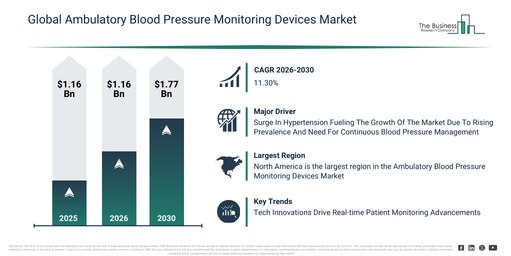
    The market for ambulatory blood pressure monitoring devices is projected to experience substantial expansion in the coming years. This market is anticipated to reach $1.98 billion by 2030, exhibiting a compound annual growth rate (CAGR) of 11.3%. This projected increase is driven by factors such as advancements in wearable and smartphone-integrated technologies, greater adoption of homecare solutions, a growing need for automated ABPM devices, the broadening of remote patient monitoring capabilities, and the incorporation of these devices into digital health platforms and telemedicine services. Significant trends anticipated during this period encompass the increasing use of home-based blood pressure monitoring, the merging of wearable and smartphone-enabled ABPM devices, enhanced public understanding of white-coat and nocturnal hypertension, the broadening scope of preoperative and postoperative cardiovascular monitoring, and a heightened emphasis on continuous and remote patient oversight.

    Get A Free Sample Report With In-Depth Market Insights:

    https://thebusinessresearchcompany.com/sample_request?id=45318666&type=smp&name=Ambulatory%20Blood%20Pressure%20Monitoring%20Devices%20Market%20Report%202026&utm_source=Blogs&utm_medium=Paid&utm_campaign=Sep_PR

    Ambulatory Blood Pressure Monitoring Devices Market Growth Drivers: What’s Behind The Acceleration?

    The rising occurrence of hypertension is anticipated to fuel the expansion of the ambulatory blood pressure monitoring devices market in the future. This condition, hypertension, is defined by persistently elevated blood pressure readings within the arteries. The escalation in hypertension cases stems from contributors like poor dietary habits, inactive routines, and growing rates of obesity. Ambulatory blood pressure monitoring devices address hypertension by delivering continuous, precise blood pressure measurements during both daytime activities and nighttime sleep, thereby facilitating improved diagnosis and tailored treatment strategies. For example, in September 2023, data from the World Health Organization (WHO), a Switzerland-based intergovernmental body, indicated that hypertension impacts 1 in 3 adults globally (approximately 1.3 billion individuals). Furthermore, enhancing effective treatment coverage to 50% by 2025 has the potential to avert 76 million deaths by 2050. Consequently, the growing incidence of hypertension is poised to drive the expansion of the ambulatory blood pressure monitoring devices market.

    Ambulatory Blood Pressure Monitoring Devices Market Segmentation: How Does The Market Break Down By Category?

    The ambulatory blood pressure monitoring devices market covered in this report is segmented –

    1) By Product Type: Automatic ABPM Devices, Manual ABPM Devices, Specialised ABPM Devices

    2) By Device Type: Ambulatory Blood Pressure Monitor, Home Blood Pressure Monitor, Hospital Blood Pressure Monitor, Wearable Blood Pressure Monitor

    3) By Applications: Hypertension Management, Cardiovascular Disease Monitoring, Preoperative Assessment, Postoperative Monitoring

    4) By Distribution Channel: Direct Sales, Online Retail, Third-Party Distributors, Pharmacies

    5) By End Use: Hospitals, Homecare, Prescription, OTC

    Subsegments:

    1) By Automatic ABPM Devices: Upper Arm Automatic ABPM Devices, Wrist-Worn Automatic ABPM Devices, Bluetooth-Enabled Automatic ABPM Devices, Smartphone-Integrated ABPM Devices

    2) By Manual ABPM Devices: Aneroid Manual ABPM Devices, Mercury-Based Manual ABPM Devices, Digital Readout Manual Devices (Semi-Automatic)

    3) By Specialised ABPM Devices: Pediatric ABPM Devices, Geriatric ABPM Devices, Nocturnal ABPM Devices, Wearable Patch-Based ABPM Devices

    Ambulatory Blood Pressure Monitoring Devices Market Trends: What’s Defining The Industry’s Next Phase?

    Leading companies within the ambulatory surgical pressure monitoring devices market are concentrating their efforts on creating technological innovations, including point-of-care devices. These innovations aim to boost the precision of real-time monitoring, elevate patient comfort, and facilitate quicker clinical decision-making. Such a point-of-care device functions as a medical instrument utilized directly at or close to the patient’s location, delivering rapid diagnostic or monitoring outcomes without requiring a central laboratory. An illustrative example is the launch of the BPM Pro 2 in October 2024 by Withings, a France-based digital health technology company. This advanced remote blood pressure monitoring device was introduced to enhance real-world cardiovascular assessment. The device provides precise blood pressure measurements and incorporates built-in cellular, Wi-Fi, and Bluetooth connectivity, allowing for seamless, real-time data exchange between patients and healthcare providers, circumventing the need for a smartphone. Furthermore, it includes an integrated “Patient Insights” tool which gathers symptom and lifestyle data subsequent to each reading, thereby assisting clinicians in making more prompt and informed decisions. The BPM Pro 2 is also equipped with on-device guidance and prompts for retaking measurements, ensuring the reliability of the data obtained. Its intuitive design promotes user comfort and encourages consistent monitoring, which in turn aids in the improved detection and management of hypertension beyond traditional clinical environments.

    Ambulatory Blood Pressure Monitoring Devices Market Competitive Analysis Of Leading Industry Participants

    Major companies operating in the ambulatory blood pressure monitoring devices market are Koninklijke Philips NV, GE Healthcare Technologies Inc, Omron Healthcare Co Ltd, Hill Rom Holdings Inc, Halma plc, Spacelabs Healthcare Inc, Schiller Holding AG, Withings SA, Contec Medical Systems Co Ltd, BPL Medical Technologies Private Limited, Microlife AG, SunTech Medical Inc, Rossmax International Ltd, Rudolf Riester GmbH, iHealth Labs Inc, American Diagnostic Corporation, Bosch and Sohn GmbH and Co KG, A and D Medical, Welch Allyn Hill Rom, CardieX Limited

    View The Full Ambulatory Blood Pressure Monitoring Devices Market Report:

    https://thebusinessresearchcompany.com/report/ambulatory-blood-pressure-monitoring-devices-global-market-report?utm_source=Blogs&utm_medium=Paid&utm_campaign=Sep_PR

    Ambulatory Blood Pressure Monitoring Devices Market Geographic Distribution And Regional Opportunities

    North America was the largest region in the ambulatory blood pressure monitoring devices market in 2025. Asia-Pacific is expected to be the fastest-growing region in the forecast period. The regions covered in the ambulatory blood pressure monitoring devices market report are Asia-Pacific, South East Asia, Western Europe, Eastern Europe, North America, South America, Middle East, Africa.

    Reach Out To Our Team:

    The Business Research Company: https://www.thebusinessresearchcompany.com/

    Americas: +1 310-496-7795

    Asia: +44 7882 955267 & +91 8897263534

    Europe: +44 7882 955267

    Email us at: marketing@tbrc.info

    Follow us on:

    LinkedIn: https://in.linkedin.com/company/the-business-research-company

    YouTube: https://www.youtube.com/channel/UC24_fI0rV8cR5DxlCpgmyFQ

    Global Market Model: https://www.thebusinessresearchcompany.com/global-market-model

  • Ambulance Stretchers Market Forecast 2026: Market Size, Competitive Landscape And Growth Drivers

    Ambulance Stretchers Market Forecast 2026: Market Size, Competitive Landscape And Growth Drivers

    Featuring market attractiveness scoring, total addressable market sizing, company benchmarking matrices, interactive Excel dashboards, deeper supply chain intelligence, emerging startup tracking, and granular product-level insights, The Business Research Company’s 2026 market reports are built to deliver research that is both more actionable and more strategically valuable.

    Ambulance Stretchers Market Set To Climb From $2.91 Billion In 2026 To $3.72 Billion By 2030

    The ambulance stretchers market size has experienced significant expansion in recent years. Projections indicate a rise from $2.73 billion in 2025 to $2.91 billion in 2026, demonstrating a compound annual growth rate (CAGR) of 6.6%. The historical market expansion is linked to factors such as a rise in road accidents and trauma incidents, the expansion of hospital emergency departments, the continued use of manual patient handling equipment, the enlargement of ambulance fleets, and the ongoing need for fundamental patient transport solutions.

    The ambulance stretchers market size is anticipated to demonstrate substantial growth in the next few years. It is forecast to grow to $3.72 billion in 2030, advancing at a compound annual growth rate (CAGR) of 6.3%. The expansion observed during this forecast period stems from factors such as the increasing use of motorized and self-loading stretchers, greater investment in emergency medical services, a rising emphasis on reducing injuries among caregivers, technological improvements in stretcher materials, and the escalating demand for swift and efficient patient transportation. Notable trends for the forecast period include the increasing adoption of electric and motorized stretchers, a growing requirement for lightweight and ergonomic designs, a heightened focus on patient safety and comfort capabilities, the expansion of emergency medical services infrastructure, and an increased need for foldable and space-saving stretcher options.

    Get A Free Sample Report With In-Depth Market Insights:

    https://thebusinessresearchcompany.com/sample_request?id=73075759&type=smp&name=Ambulance%20Stretchers%20Market%20Report%202026&utm_source=Blogs&utm_medium=Paid&utm_campaign=Sep_PR

    Ambulance Stretchers Market Growth Factors Behind Sustained Expansion

    The increasing occurrence of road accidents is anticipated to boost the ambulance stretchers market’s expansion. Road accidents are defined as unforeseen events or crashes on roads or highways involving one or more vehicles, frequently leading to injuries, fatalities, or damage to property. The surge in road accidents is attributed to the escalating problem of distracted driving caused by mobile phone usage, which diverts drivers’ focus and elevates the likelihood of collisions. Ambulance stretchers play a crucial role in road accidents by facilitating the secure and efficient transportation of injured persons from the site to medical facilities, thus preventing additional injury and allowing for immediate medical care. For example, in June 2024, data from the Transport Accident Commission, an Australia-based government entity, indicated that 289 lives were lost on Victorian roads. This represented an 8.6% increase, with 23 more fatalities compared to the corresponding period last year. Consequently, the growing number of road accidents is fueling the expansion of the ambulance stretchers market.

    Ambulance Stretchers Market Segment Trends And Revenue Contributors

    The ambulance stretchers market covered in this report is segmented –

    1) By Type: Manual Stretchers, Electric Stretchers, Foldable Stretchers, Stretcher Chairs

    2) By Technology: Non-Motorized, Motorized

    3) By Material: Aluminum, Steel, Plastic, Composite Materials

    4) By End Users: Emergency Medical Service Providers, Hospitals, Ambulatory Service Centers, Other End-Users

    Subsegments:

    1) By Manual Stretchers: Wheeled Stretchers, Non-wheeled Stretchers, Scoop Stretchers, Basket Stretchers

    2) By Electric Stretchers: Hydraulic Electric Stretchers, Battery-powered Electric Stretchers, Adjustable Height Electric Stretchers, Self-loading Electric Stretchers

    3) By Foldable Stretchers: Canvas Foldable Stretchers, Aluminum Foldable Stretchers, Pole-Type Foldable Stretchers, Spinal Board Foldable Stretchers

    4) By Stretcher Chairs: Convertible Stretcher Chairs, Stair Climbing Stretcher Chairs, Foldable Stretcher Chairs, Transport Wheelchair Stretchers

    Ambulance Stretchers Market Industry Trends Fueling Future Revenue Growth

    Leading companies in the ambulance stretcher market are prioritizing the development of advanced innovations, such as self-loading electric stretchers, to bolster patient safety, minimize manual handling by emergency staff, and boost efficiency during patient transfers. A self-loading electric stretcher is defined as a motorized patient transport apparatus equipped with an automated loading and unloading mechanism, enabling it to lift and secure itself into an ambulance without requiring manual lifting by medical personnel. For example, in December 2023, KARTSANA, S.L., a manufacturing company situated in Spain, unveiled the superbrava electric stretcher, intending to elevate the efficiency and safety of patient transport. This stretcher delivers peak strength, security, and maneuverability through a hydraulic lifting system that supports up to 320 kg, complemented by multi-position adjustable handrails for patient comfort and security. It is engineered to facilitate easy and safe patient transport while alleviating the operational burden on emergency medical technicians in vital scenarios.

    Ambulance Stretchers Market Leading Companies And Competitive Benchmarking

    Major companies operating in the ambulance stretchers market are Medline Industries LP, Stryker Corporation, Hill Rom Holdings Inc, Hebei Pukang Medical Instruments Co Ltd, Ferno Washington Inc, Spencer Italia S r l, Narang Medical Limited, Advin Health Care, Kartsana Medical GmbH, IndoSurgicals Private Limited, Frima Concept SARL, Dragon Industry Co Ltd, PVS S p A, Desco Medical India, Fu Shun Hsing Technology Co Ltd, Besco Medical Limited, Red Leaf Medical Inc, Sarvottam Appliances Private Limited, EMS Mobil Sistemler A S, Jiangsu Saikang Medical Equipment Co Ltd, Zhangjiagang Rongchang Machinery Manufacture Co Ltd, Xiehe Medical Apparatus And Instruments Co Ltd

    View The Full Ambulance Stretchers Market Report:

    https://thebusinessresearchcompany.com/report/ambulance-stretchers-global-market-report?utm_source=Blogs&utm_medium=Paid&utm_campaign=Sep_PR

    Ambulance Stretchers Market Largest Region By Revenue And Market Share

    North America was the largest region in the ambulance stretchers market in 2025. Asia-Pacific is expected to be the fastest-growing region in the forecast period. The regions covered in the ambulance stretchers market report are Asia-Pacific, South East Asia, Western Europe, Eastern Europe, North America, South America, Middle East, Africa.

    Reach Out To Our Team:

    The Business Research Company: https://www.thebusinessresearchcompany.com/

    Americas: +1 310-496-7795

    Asia: +44 7882 955267 & +91 8897263534

    Europe: +44 7882 955267

    Email us at: marketing@tbrc.info

    Follow us on:

    LinkedIn: https://in.linkedin.com/company/the-business-research-company

    YouTube: https://www.youtube.com/channel/UC24_fI0rV8cR5DxlCpgmyFQ

    Global Market Model: https://www.thebusinessresearchcompany.com/global-market-model
  • Alpha Emitter Market Size In 2026: Regional Growth, Key Segments And Future Outlook

    Alpha Emitter Market Size In 2026: Regional Growth, Key Segments And Future Outlook

    Built to provide research that’s more actionable and strategically valuable, The Business Research Company’s 2026 market reports include market attractiveness analysis, total addressable market sizing, company benchmarking matrices, interactive Excel dashboards, broader supply chain intelligence, emerging startup tracking, and in-depth product insights.

    Alpha Emitter Market Forecast: Value Set To Climb From $1.99 Billion To $4.6 Billion

    The alpha emitter market has seen considerable expansion in recent years. It will grow from $1.61 billion in 2025 to $1.99 billion in 2026 at a compound annual growth rate (CAGR) of 23.6%. In previous periods, this growth was primarily driven by the restricted availability of alpha-emitting radionuclides, a reliance on natural resources such as uranium and radium, increasing awareness regarding targeted cancer therapies, the initiation of early clinical trials, and an underdeveloped production infrastructure.

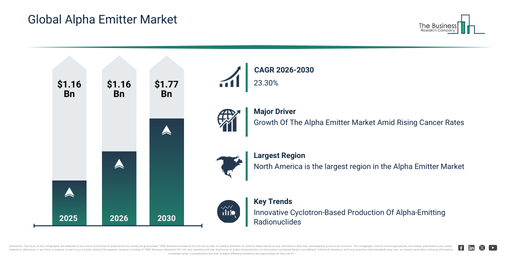
    The alpha emitter market is projected to experience substantial expansion in the coming years. This market is anticipated to reach $4.6 billion by 2030, demonstrating a compound annual growth rate (CAGR) of 23.3%. This projected growth is fueled by factors such as the establishment of artificial radionuclide production facilities, increased funding for oncology treatments, broader application in therapies for bone metastasis and prostate cancer, innovations in targeted alpha therapy technologies, and a wider scope of medical research uses. Key trends expected during this period involve the growing acceptance of alpha-emitter-based cancer treatments, heightened research efforts in radionuclide production and separation, an increase in artificially generated alpha emitters, the diversification of therapeutic applications beyond cancer treatment, and a sharpened emphasis on the safe handling of radioactive substances and adherence to regulations.

    Get A Free Sample Report With In-Depth Market Insights:

    https://thebusinessresearchcompany.com/sample_request?id=84647524&type=smp&name=Alpha%20Emitter%20Market%20Report%202026&utm_source=Blogs&utm_medium=Paid&utm_campaign=Sep_PR

    Alpha Emitter Market Demand Drivers Opening New Revenue Streams

    The rising incidence of cancer is anticipated to drive the expansion of the alpha emitter market moving forward. Cancer is defined by the uncontrolled multiplication and spread of abnormal cells throughout the body, which can result in tumor formation and the invasion of adjacent tissues. The widespread occurrence of cancer is attributed to factors such as aging populations, environmental exposures, lifestyle modifications, and enhanced detection methods. Alpha emitters are utilized in cancer treatment to precisely target and eliminate tumor cells, while minimizing damage to surrounding healthy tissues. For instance, in February 2024, the World Health Organization, a Switzerland-based intergovernmental organization, projected that by 2050, over 35 million new cancer cases would arise, representing a 77% increase compared to the estimated 20 million cases in 2022. Therefore, the increasing prevalence of cancer is fueling the growth of the alpha emitter market.

    Alpha Emitter Market Segment Analysis Spotlighting Growth Areas

    The alpha emitter market covered in this report is segmented –

    1) By Type Of Radionuclide: Radium, Actinium, Lead, Bismuth, Other Types Of Radionuclides

    2) By Source: Natural Sources, Artificially Produced Sources, Other Sources

    3) By Application: Pancreatic Cancer, Ovarian Cancer, Prostate Cancer, Lymphoma, Melanoma, Bone Metastasis, Other Applications

    4) By End-User: Hospitals, Medical Research Institutions, Other End-Users

    Subsegments:

    1) By Radium: Radium-223, Radium-226, Radium-228

    2) By Actinium: Actinium-227, Actinium-225

    3) By Lead: Lead-210, Lead-212

    4) By Bismuth: Bismuth-213, Bismuth-212

    5) By Other Types of Radionuclides: Thorium, Polonium, Francium

    Alpha Emitter Market Trends Powering Strategic Industry Growth

    Companies operating within the alpha-emitter market are increasingly focusing their investments on innovative solutions, such as alpha-emitting radionuclides produced using cyclotrons, to achieve a competitive advantage. These alpha-emitting radionuclides, generated by cyclotrons, are radioactive isotopes that release alpha particles during their decay, a process achieved by accelerating charged particles to high energies within a cyclotron. For example, in April 2023, Ionetix, a US-based cyclotron and technology company, successfully produced its initial alpha-emitting radionuclide, Astatine-211 (At-211), at its newly established Alpha Isotope Manufacturing facility in Lansing, Michigan. This facility is notable as the first in the U.S. exclusively dedicated to the production of alpha-emitting radionuclides utilizing cyclotron technology. The manufacturing was made possible by the commissioning of a 30 MeV cyclotron, specifically engineered to accelerate alpha particles for the high-yield creation of At-211 and Actinium-225 (Ac-225).

    Alpha Emitter Market Industry Leaders And Competitive Landscape

    Major companies operating in the alpha emitter market are Bayer AG, Lantheus Holdings Inc., Curium Pharma, Eckert & Ziegler BEBIG GmbH, Telix Pharmaceuticals Limited, NorthStar Medical Radioisotopes LLC, ITM Isotope Technologies Munich SE, International Isotopes Inc., IBA Radiopharma Solutions, Orano Med LLC, Actinium Pharmaceuticals Inc., Clarity Pharmaceuticals Ltd., RadioMedix Inc., Nordic Nanovector ASA, TAE Life Sciences, Fusion Pharmaceuticals Inc., Alpha Tau Medical Ltd., Alpha‑9 Oncology, Aktis Oncology, Abdera Therapeutics, Oncoinvent ASA, Theragnostics Ltd., ARICEUM Therapeutics, Sirius Medical Systems B.V.

    View The Full Alpha Emitter Market Report:

    https://thebusinessresearchcompany.com/report/alpha-emitter-global-market-report?utm_source=Blogs&utm_medium=Paid&utm_campaign=Sep_PR

    Alpha Emitter Market Regional Analysis And Leading Geography

    North America was the largest region in the alpha emitter market in 2025. Europe is expected to be the fastest-growing region in the forecast period. The regions covered in the alpha emitter market report are Asia-Pacific, South East Asia, Western Europe, Eastern Europe, North America, South America, Middle East, Africa.

    Reach Out To Our Team:

    The Business Research Company: https://www.thebusinessresearchcompany.com/

    Americas: +1 310-496-7795

    Asia: +44 7882 955267 & +91 8897263534

    Europe: +44 7882 955267

    Email us at: marketing@tbrc.info

    Follow us on:

    LinkedIn: https://in.linkedin.com/company/the-business-research-company

    YouTube: https://www.youtube.com/channel/UC24_fI0rV8cR5DxlCpgmyFQ

    Global Market Model: https://www.thebusinessresearchcompany.com/global-market-model
  • Alimentary Tract Implant Market Growth Forecast Through 2030: Market Size And Trends In 2026

    Alimentary Tract Implant Market Growth Forecast Through 2030: Market Size And Trends In 2026

    Backed by market attractiveness analysis, total addressable market sizing, company benchmarking matrices, interactive Excel dashboards, wider supply chain intelligence, emerging startup coverage, and detailed product-level insights, The Business Research Company’s 2026 market reports are designed to offer research that is more actionable and strategically valuable than ever.

    Alimentary Tract Implant Market Revenue Growth On Track For A 6.7% CAGR Through 2030

    The alimentary tract implant market has experienced substantial growth in recent years. This market is projected to expand from $5.13 billion in 2025 to $5.49 billion in 2026, achieving a compound annual growth rate (CAGR) of 7.0%. The past growth in this market can be attributed to factors like rising obesity rates, an increase in metabolic disorders, progress in endoscopic surgery, the demand for non-pharmaceutical treatments, and the expansion of healthcare infrastructure.

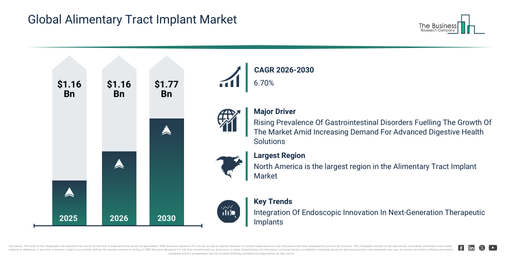
    The alimentary tract implant market is projected to experience robust expansion in the coming years. This market is anticipated to reach $7.12 billion by 2030, exhibiting a compound annual growth rate (CAGR) of 6.7%. The factors contributing to this growth during the projection period include a rise in diabetes management implants, the demand for minimally invasive procedures, advancements in implant materials, precise treatment methodologies, and an expanding aging demographic. Key trends predicted for the forecast timeframe encompass minimally invasive digestive implants, bariatric and metabolic implants, endoscopic implant procedures, neuromodulation techniques for GI disorders, and enhanced long-term implant biocompatibility.

    Get A Free Sample Report With In-Depth Market Insights:

    https://thebusinessresearchcompany.com/sample_request?id=33157473&type=smp&name=Alimentary%20Tract%20Implant%20Market%20Report%202026&utm_source=Blogs&utm_medium=Paid&utm_campaign=Sep_PR

    Alimentary Tract Implant Market Growth Backed By Core Demand Fundamentals

    The increasing incidence of gastrointestinal conditions is projected to drive the expansion of the alimentary tract implant market in the future. These disorders encompass various ailments impacting the digestive system, such as the stomach, intestines, and related organs, leading to symptoms like discomfort, swelling, blockages, or reduced movement. The growing occurrence of gastrointestinal issues largely stems from unhealthy eating patterns, especially the greater consumption of processed and fatty foods, which upset the gut microbiome and lead to digestive problems. Consequently, the demand for alimentary tract implants is growing, as the swift rise in gastrointestinal ailments compels healthcare professionals to utilize sophisticated implantable options for addressing obesity, fecal incontinence, gastrointestinal obstruction, and other long-term digestive conditions. For example, in September 2025, the UK Health Security Agency (UKHSA), a UK-based government public health organization, reported that England experienced a 27% rise in confirmed Campylobacter infections, with rates escalating from 96.1 per 100,000 people in 2022 to 122.0 per 100,000 in 2024. This trend underscores how the increasing prevalence of gastrointestinal disorders is fueling the expansion of the alimentary tract implant market.

    Alimentary Tract Implant Market Segment Performance And Emerging Opportunities

    The alimentary tract implant market covered in this report is segmented –

    1) By Implant Type: Bariatric Restriction And Balloons, Gastric Electrical Stimulation Or Neuromodulation, Gastrointestinal (GI) Stents Or Endoluminal Scaffolds, Continence Or Anal Sphincter Implants

    2) By Procedure Approach: Endoscopic Or Transoral, Laparoscopic Bariatric, Open Or Revision Surgery, Colorectal Or Perineal Implantation

    3) By Indication: Obesity Or Metabolic Control, Motility Disorders, Gastrointestinal (GI) Stricture Or Obstruction Or Leak Management, Fecal Incontinence Or Continence Restoration

    Subsegments:

    1) By Bariatric Restriction And Balloons: Gastric Bands, Gastric Balloons, Adjustable Gastric Balloons, Non-Adjustable Gastric Balloons, Intragastric Balloons

    2) By Gastric Electrical Stimulation Or Neuromodulation: Implantable Gastric Stimulators, Vagal Nerve Stimulators, Enteric Nerve Stimulators, Gastric Pacemakers

    3) By Gastrointestinal Stents Or Endoluminal Scaffolds: Esophageal Stents, Gastric Stents, Duodenal Stents, Colonic Stents, Biliary Stents

    4) By Continence Or Anal Sphincter Implants: Artificial Anal Sphincters, Sacral Nerve Stimulators, Magnetic Anal Sphincters

    Alimentary Tract Implant Market Growth Trends Reshaping The Competitive Landscape

    Major companies active in the alimentary tract implant market are concentrating on integrating sophisticated surgical processing and therapeutic implant techniques, such as minimally invasive endoscopic technology, to elevate treatment accuracy, patient security, and recuperation outcomes. Minimally invasive endoscopic technology represents an advanced method that utilizes a flexible endoscope outfitted with imaging and surgical instruments to access and treat internal organs via natural body openings, allowing for real-time viewing and intervention without the need for external incisions. For example, in December 2024, Boston Scientific, a US-based medical device manufacturer specializing in minimally invasive therapies, introduced the Apollo ESG System and Orbera365 Intragastric Balloon System, both of which harness endoscopic technology for weight-loss and gastrointestinal interventions. These products incorporate innovations such as incision-free endoscopic entry, live visualization, and resilient biocompatible materials to deliver efficacious bariatric treatment with reduced recovery durations and fewer complications. The Apollo ESG System and Orbera365 enhance clinical effectiveness, patient comfort, and the enduring success rate of alimentary tract procedures.

    Alimentary Tract Implant Market Key Participants And Competitive Landscape

    Major companies operating in the alimentary tract implant market are Medtronic Public Limited Company, Boston Scientific Corporation, Cook Group Incorporated, B. Braun Melsungen AG, Allurion Technologies Incorporated, ReShape Lifesciences Incorporated, Spatz Medical Limited, Hobbs Medical Incorporated, MICRO-TECH (Nanjing) Company Limited, M.I.Tech Company Limited, ELLA-CS s.r.o., BVM Medical Limited, EndoGastric Solutions Inc., EnteroMedics Inc., Inspire Medical Systems Inc., Coloplast A/S, Axonics Inc., Medica S.p.A., Taewoong Medical Co. Ltd., S&G Biotech Incorporated

    View The Full Alimentary Tract Implant Market Report:

    https://thebusinessresearchcompany.com/report/global-alimentary-tract-implant-market-report?utm_source=Blogs&utm_medium=Paid&utm_campaign=Sep_PR

    Alimentary Tract Implant Market Geographic Analysis: Where Is Demand Accelerating Fastest?

    North America was the largest region in the alimentary tract implant market in 2025. Asia-Pacific is expected to be the fastest-growing region in the forecast period. The regions covered in the alimentary tract implant market report are Asia-Pacific, South East Asia, Western Europe, Eastern Europe, North America, South America, Middle East, Africa.

    Reach Out To Our Team:

    The Business Research Company: https://www.thebusinessresearchcompany.com/

    Americas: +1 310-496-7795

    Asia: +44 7882 955267 & +91 8897263534

    Europe: +44 7882 955267

    Email us at: marketing@tbrc.info

    Follow us on:

    LinkedIn: https://in.linkedin.com/company/the-business-research-company

    YouTube: https://www.youtube.com/channel/UC24_fI0rV8cR5DxlCpgmyFQ

    Global Market Model: https://www.thebusinessresearchcompany.com/global-market-model
  • Alcohol Tests Market Analysis: $8.16 Billion Market Size In 2026 And Future Growth Prospects

    Alcohol Tests Market Analysis: $8.16 Billion Market Size In 2026 And Future Growth Prospects

    Featuring market attractiveness scoring, total addressable market sizing, company benchmarking matrices, interactive Excel dashboards, deeper supply chain intelligence, emerging startup tracking, and granular product-level insights, The Business Research Company’s 2026 market reports are built to deliver research that is both more actionable and more strategically valuable.

    Alcohol Tests Market Value Growth And Long-Term Outlook

    The alcohol tests market has shown robust expansion in recent years. Its valuation is predicted to rise from $7.71 billion in 2025 to $8.16 billion in 2026, achieving a compound annual growth rate (CAGR) of 5.8%. Historically, this market growth stemmed from a dependency on traditional urine and blood testing approaches, restricted knowledge of alcohol monitoring, the widespread implementation of workplace alcohol testing policies, a reliance on stationary equipment in medical facilities and laboratories, and a segmented market featuring numerous regional participants.

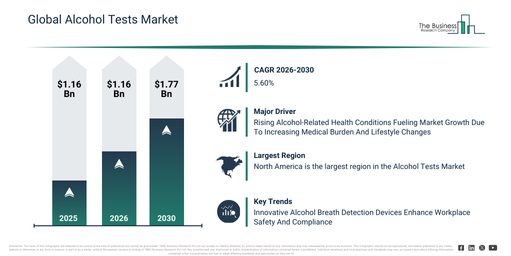
    The alcohol tests market size is projected for substantial expansion in the coming years, reaching $10.15 billion in 2030 at a compound annual growth rate (CAGR) of 5.6%. This anticipated growth is driven by several factors, including innovations in wearable and portable analysis devices, an increasing need for non-invasive and quick testing methods, wider implementation in professional environments and legal systems, the spread of point-of-care and at-home testing options, and the incorporation of these tests with digital health and monitoring technologies. Key developments anticipated during this period encompass the increased use of portable and wearable breath analyzers, the embedding of alcohol testing into workplace safety initiatives, a heightened preference for non-invasive testing approaches, the broadening of testing programs within criminal justice and law enforcement, and the expansion of monitoring efforts in rehabilitation and healthcare settings.

    Get A Free Sample Report With In-Depth Market Insights:

    https://thebusinessresearchcompany.com/sample_request?id=70864269&type=smp&name=Alcohol%20Tests%20Market%20Report%202026&utm_source=Blogs&utm_medium=Paid&utm_campaign=Sep_PR

    Alcohol Tests Market Growth Catalysts And Demand Drivers

    The growing occurrence of health problems linked to alcohol is anticipated to propel the expansion of the alcohol tests market going forward. These issues refer to medical conditions and complications, such as liver disease, heart problems, and mental health disorders, which emerge from excessive or long-term alcohol consumption. The frequency of alcohol-related health issues is on the rise, primarily due to heightened stress levels and shifting lifestyle patterns, leading more individuals to depend on alcohol as a coping mechanism. Alcohol tests are instrumental in addressing these issues by allowing for early detection and monitoring of alcohol consumption, thereby supporting timely intervention and treatment efforts. For instance, in February 2025, the Office for Health Improvement and Disparities, a UK-based government department, stated that in 2023, England recorded 22,644 alcohol-related deaths, showing a 3.3% increase from 2022 and representing a mortality rate of 40.7 per 100,000 people. Thus, the increasing incidence of alcohol-related health issues is fueling the growth of the alcohol tests market.

    Alcohol Tests Market Segment Landscape And Growth Outlook

    The alcohol tests market covered in this report is segmented –

    1) By Product: Infrared (IR)-Based Equipment, Alcohol Breath Analyzers, Semi-Conductor Equipment, Urine Testing Devices, Fuel Cell-Based Equipment, Chromatography Instruments, Immunoassay Analyzers, Hair-Testing Devices

    2) By Sample: Urine, Blood, Hair, Breath, Sweat

    3) By End User: Hospitals, Laboratories, Rehabilitation Centers, Federal Agencies, Criminal Justice, Workplaces

    Subsegments:

    1) By Infrared (IR)-Based Equipment: Fixed Infrared Breath Analyzers, Portable Infrared Breath Analyzers

    2) By Alcohol Breath Analyzers: Handheld Breath Analyzers, Desktop Breath Analyzers, Wearable Breath Analyzers

    3) By Semi-Conductor Equipment: Reusable Sensor Devices

    4) By Urine Testing Devices: Dipstick Test Kits, Urine Analyzers

    5) By Fuel Cell-Based Equipment: Personal Use Devices, Professional Use Devices

    6) By Chromatography Instruments: Gas Chromatography Systems, Liquid Chromatography Systems

    7) By Immunoassay Analyzers: Laboratory-Based Immunoassay Systems, Point-Of-Care Immunoassay Devices

    8) By Hair-Testing Devices: Single Panel Hair Test Kits, Multi-Panel Hair Test Kits

    Alcohol Tests Market Trends Shaping Long-Term Demand

    Major companies operating in the alcohol tests market are focusing on developing innovative product solutions, such as alcohol breath detection devices, to enhance testing accuracy, ensure rapid detection, and support law enforcement and workplace safety initiatives. Alcohol breath detection devices refer to electronic tools that estimate a person’s blood alcohol content (BAC) by analyzing their breath, offering a quick and non-invasive method for alcohol screening. For instance, in May 2024, Cannabix Technologies, a Canada-based developer of marijuana breathalyzer devices, launched the Compact Breath Logix Workplace Series, a new wall-mounted and autonomous alcohol breath detection device designed specifically for workplace safety. This innovative system is smaller, lighter, and easier to install than prior models, enabling quick, contactless, and automated alcohol screening for employees in office and indoor facility environments. The device features advanced sensor technology, automated identity and incident tracking, user-friendly maintenance with modular cartridges, and real-time alerts for positive test results. It aims to save organizations time and money by automating the alcohol screening process while supporting safety and compliance in the workplace.

    Alcohol Tests Market Top Companies Driving Competitive Growth

    Major companies operating in the alcohol tests market are Abbott Laboratories, 3M Company, Siemens Healthineers, Labcorp Holdings Inc., Drägerwerk AG & Co. KGaA, Alcohol Countermeasure Systems Corporation, MP Biomedicals LLC, LifeSafer Inc., Intoximeters Inc., Randox Laboratories, Psychemedics Corporation, Premier Biotech Inc., Omega Laboratories Inc., Lifeloc Technologies Inc., Securetec Detektions‑Systeme AG, AK GlobalTech Corporation, AlcoPro Inc., Andatech Private Limited, BACtrack LLC, Lion Laboratories Limited, PAS Systems International Inc., Quest Products Inc., Sentech Korea Corp., CMI Inc.

    View The Full Alcohol Tests Market Report:

    https://thebusinessresearchcompany.com/report/alcohol-tests-global-market-report?utm_source=Blogs&utm_medium=Paid&utm_campaign=Sep_PR

    Alcohol Tests Market Global Footprint: Which Region Leads The Industry?

    North America was the largest region in the alcohol tests market in 2025. Asia-Pacific is expected to be the fastest-growing region in the forecast period. The regions covered in the alcohol tests market report are Asia-Pacific, South East Asia, Western Europe, Eastern Europe, North America, South America, Middle East, Africa.

    Reach Out To Our Team:

    The Business Research Company: https://www.thebusinessresearchcompany.com/

    Americas: +1 310-496-7795

    Asia: +44 7882 955267 & +91 8897263534

    Europe: +44 7882 955267

    Email us at: marketing@tbrc.info

    Follow us on:

    LinkedIn: https://in.linkedin.com/company/the-business-research-company

    YouTube: https://www.youtube.com/channel/UC24_fI0rV8cR5DxlCpgmyFQ

    Global Market Model: https://www.thebusinessresearchcompany.com/global-market-model