Category: Medical Equipment

  • Heart Defect Closure Device Market Analysis Covering Growth Drivers And Future Outlook

    Heart Defect Closure Device Market Analysis Covering Growth Drivers And Future Outlook

    The Business Research Company’s 2026 market reports feature enhanced tools like market attractiveness analysis, TAM assessment, and company scoring matrices, along with interactive dashboards, deeper supply chain insights, and startup coverage strengthening the depth, usability, and strategic value of insights.

    From Its 2026 Market Size, What Value Is The Heart Defect Closure Device Market Projected To Reach By 2030?

    The heart defect closure device market has experienced rapid expansion recently. Forecasts indicate a rise from $1.27 billion in 2025 to $1.45 billion in 2026, demonstrating a compound annual growth rate (CAGR) of 14.5%. Historically, this growth has stemmed from factors such as the increasing occurrence of congenital heart defects, progress in interventional cardiology, heightened awareness regarding septal defect therapies, an increase in cardiac catheterization laboratory facilities, and a surging demand for minimally invasive cardiac procedures.

    The heart defect closure device market is poised for significant expansion in the coming years. Projections indicate it will reach $2.36 billion by 2030, demonstrating a compound annual growth rate (CAGR) of 12.9%. This anticipated growth during the forecast period stems from factors such as an expanding elderly and pediatric demographic suffering from structural heart defects, an increasing embrace of transcatheter cardiac interventions, heightened healthcare spending on cardiovascular care, the proliferation of specialized cardiac centers, and a greater emphasis on prompt detection and management of heart defects. Key trends identified for this period encompass a surge in the adoption of minimally invasive transcatheter closure techniques, an increased deployment of nitinol-based and self-expanding closure devices, a growing inclination towards device-based solutions over traditional open-heart surgery, the enlargement of structural heart disease treatment initiatives, and an escalating commitment to enhancing safety, effectiveness, and long-term patient results.

    Access Your Free Sample Report For In-Depth Market Analysis:

    https://www.thebusinessresearchcompany.com/sample.aspx?id=16074&type=smp

    What Major Factors Are Driving The Heart Defect Closure Device Market Forward?

    The increasing prevalence of congenital heart conditions is anticipated to fuel the expansion of the heart defect closure device market in the future. These conditions are defined as structural irregularities of the heart that exist from birth. The rise in congenital heart issues stems from factors like genetic susceptibility, environmental factors, and maternal health concerns, including diabetes, obesity, or exposure to specific drugs or infections during gestation. Heart defect closure devices play a crucial role in treating congenital heart defects by providing minimally invasive methods to seal atypical heart openings, thereby restoring typical blood flow, lessening complications, and enhancing overall heart performance. An illustration of this trend is a projection from the National Center for Biotechnology Information, a US governmental agency, made in August 2025. It indicates that between 2025 and 2050, cardiovascular disease is expected to show a substantial increase, with its prevalence climbing by 90.0%, crude mortality by 73.4%, and crude DALYs by 54.7%. This surge is predicted to result in approximately 35.6 million cardiovascular deaths by 2050, a significant jump from 20.5 million in 2025. Consequently, the increasing population affected by congenital heart problems is propelling the heart defect closure device market.

    Which Segment Categories Are Included In The Heart Defect Closure Device Market Segment Analysis?

    The heart defect closure device market covered in this report is segmented –

    1) By Type: Atrial Septal Defect (ASD) Closure Device, Left Atrial Appendage (LAA) Closure Devices, Patent Foramen Ovale (PFO) Closure Devices, Patent Ductus Arteriosus (PDA) Closure Devices, Ventricular Septal Defect (VSD) Closure Devices

    2) By Material: Nitinol-Based Devices, Stainless Steel Devices, Other Materials

    3) By Mode Of Delivery: Transcatheter Delivery, Surgical Delivery, Other Modes

    4) By End-User: Hospitals, Clinics, Ambulatory Surgical Centers, Other End-Users

    Subsegments:

    1) By Atrial Septal Defect (ASD) Closure Device: Occluder Devices (Septal Occluders), Implantable Patch Devices, Self-Expanding Devices, Balloon-Expandable Devices

    2) By Left Atrial Appendage (LAA) Closure Devices: Occluder Devices (WATCHMAN Device), Clip-Based Devices, Self-Expanding LAA Closure Devices

    3) By Patent Foramen Ovale (PFO) Closure Devices: Septal Occluders, Self-Expanding Occluders, Balloon-Expandable Occluders

    4) By Patent Ductus Arteriosus (PDA) Closure Devices: Coil-Based Closure Devices, Stent-Based Closure Devices, Amplatzer Occluders

    5) By Ventricular Septal Defect (VSD) Closure Devices: Septal Occluder Devices, Balloon-Expandable Occluders, Self-Expanding Occluders

    Which Trends Are Impacting The Progress Of The Heart Defect Closure Device Market?

    Leading companies in the heart defect closure device market are progressing technologies like device tracking instruments to improve the accuracy of procedures and bolster clinician assurance. A device tracking tool is a system that offers live visualization of the location and movement of medical devices during treatment. For example, in November 2025, Philips, a Netherlands-based health technology company, launched DeviceGuide—an AI-powered tracking solution intended to aid clinicians during intricate minimally invasive heart valve repair procedures, particularly for mitral valve regurgitation. Integrated with the EchoNavigator platform, DeviceGuide combines live X-ray and ultrasound imaging to create a real-time 3D model of the repair device within the beating heart, thereby enhancing visualization, spatial awareness, and precision. Developed in collaboration with Edwards Lifesciences, this system streamlines operational processes, improves team synergy, and promotes wider accessibility to advanced cardiac interventions globally.

    Who Are The Active Companies Shaping The Heart Defect Closure Device Market?

    Major companies operating in the heart defect closure device market are Abbott Laboratories, Medtronic, W L Gore and Associates, Occlutech, LifeTech Scientific Corporation, Lepu Medical Technology, Meril Life Sciences Pvt Ltd, MicroPort Scientific Corporation, Boston Scientific Corporation, Edwards Lifesciences, Terumo Corporation, Cardia Inc, Coherex Medical Inc, AtriCure Inc, Sahajanand Medical Technologies Limited, Vivasure Medical, Transmural Systems Inc, Cormatrix Cardiovascular Inc, Baylis Medical Company Inc, Biosense Webster Inc, BIOTRONIK SE and Co KG, B Braun

    Get The Full Heart Defect Closure Device Market Report:

    https://www.thebusinessresearchcompany.com/report/heart-defect-closure-device-global-market-report

    Which Region Has The Greatest Market Share In The Heart Defect Closure Device Market?

    North America was the largest region in the heart defect closure device market in 2025. Asia-Pacific is expected to be the fastest-growing region in the forecast period. The regions covered in the heart defect closure device market report are Asia-Pacific, South East Asia, Western Europe, Eastern Europe, North America, South America, Middle East, Africa.

    Request A Customized Heart Defect Closure Device Market Report For Competitive Insights:

    https://www.thebusinessresearchcompany.com/customise?id=16074&type=smp

    Browse Through More Reports Similar to the Global Heart Defect Closure Device Market 2026, By The Business Research Company

    Congenital Heart Defect Devices Market Report 2026

    https://www.thebusinessresearchcompany.com/report/congenital-heart-defect-devices-global-market-report

    Congestive Heart Failure Treatment Devices Market Report 2026

    https://www.thebusinessresearchcompany.com/report/congestive-heart-failure-treatment-devices-global-market-report

    Heart Blocks Treatment Devices Market Report 2026

    https://www.thebusinessresearchcompany.com/report/heart-blocks-treatment-devices-global-market-report

    Get in touch with us:

    The Business Research Company: https://www.thebusinessresearchcompany.com/

    Americas +1 310-496-7795

    Asia +44 7882 955267 & +91 8897263534

    Europe +44 7882 955267

    Email us at info@tbrc.info

    Follow us on:

    LinkedIn: https://in.linkedin.com/company/the-business-research-company

    YouTube: https://www.youtube.com/channel/UC24_fI0rV8cR5DxlCpgmyFQ

    Global Market Model: https://www.thebusinessresearchcompany.com/global-market-model

  • Heart Closure Devices Market Insights Highlighting Opportunities Supporting Growth To 2030

    Heart Closure Devices Market Insights Highlighting Opportunities Supporting Growth To 2030

    The Business Research Company’s 2026 market reports feature enhanced tools like market attractiveness analysis, TAM assessment, and company scoring matrices, along with interactive dashboards, deeper supply chain insights, and startup coverage strengthening the depth, usability, and strategic value of insights.

    How Much Growth In Market Value Is Expected For The Heart Closure Devices Market Between 2026 And 2030?

    The heart closure devices market has experienced significant expansion in recent years. It is anticipated to grow from $3.08 billion in 2025 to $3.46 billion in 2026, achieving a compound annual growth rate (CAGR) of 12.2%. The historical increase can be attributed to the rising prevalence of congenital heart defects, the expansion of catheterization laboratories, the increasing adoption of minimally invasive cardiac treatments, greater awareness of structural heart conditions, and the availability of advanced imaging guidance.

    The heart closure devices market size is projected for significant expansion in the coming years. This market is anticipated to reach $5.42 billion by 2030, exhibiting a compound annual growth rate (CAGR) of 11.9%. This projected growth is driven by several factors, including the increasing demand for catheter-based cardiac therapies, heightened investments in structural heart disease treatment, the expansion of specialized cardiac centers, a greater emphasis on minimizing surgical risks, and ongoing technological advancements in closure device design. Key trends anticipated during this period encompass the growing adoption of transcatheter heart closure procedures, a rising demand for minimally invasive cardiac devices, the expanding utilization of nitinol-based closure systems, the enlargement of structural heart intervention programs, and an elevated focus on procedural safety and efficacy.

    Access Your Free Sample Report For In-Depth Market Analysis:

    https://www.thebusinessresearchcompany.com/sample.aspx?id=20828&type=smp

    Which Key Drivers Are Affecting The Heart Closure Devices Market Development?

    The rising prevalence of cardiovascular diseases (CVDs) is projected to boost the expansion of the heart closure devices market moving forward. This surge in CVDs is attributed to factors like an aging population, unhealthy lifestyle choices, genetic predispositions, and the increasing occurrence of risk factors such as hypertension, diabetes, and obesity. Heart closure devices are instrumental in reducing complications from congenital heart defects by providing a minimally invasive means to seal abnormal openings in the heart, thereby enhancing blood flow and preventing subsequent health complications. As an illustration, in May 2024, the Singapore Heart Foundation (SHF), a non-profit organization based in Singapore, reported that cardiovascular disease caused a total of 26,885 deaths in 2023. Furthermore, ischemic heart disease alone accounted for 5,302 deaths, representing an increase from 5,290 deaths in 2022. Thus, the growing incidence of cardiovascular diseases (CVDs) is propelling the growth of the heart closure devices market.

    How Is The Heart Closure Devices Market Broken Down By Segment Categories?

    The heart closure devices market covered in this report is segmented –

    1) By Product: Atrial Septal Defect (ASD) Closure Devices, Ventricular Septal Defect (VSD) Closure Devices, Patent Foramen Ovale (PFO) Closure Devices, Left Atrial Appendage (LAA) Closure Devices, Other Products

    2) By Material: Nitinol-Based Devices, Stainless Steel Devices, Other Materials

    3) By Mode of Delivery: Transcatheter Delivery, Surgical Delivery

    4) By End Use: Hospitals, Ambulatory Surgical Centers (ASCs), Cardiac Catheterization Laboratories, Other End Uses

    Subsegments:

    1) By Atrial Septal Defect (ASD) Closure Devices: Self-expanding Occluders, Balloon-expandable Occluders, Other ASD Closure Devices

    2) By Ventricular Septal Defect (VSD) Closure Devices: Transcatheter VSD Closure Devices, Surgical VSD Closure Devices, Other VSD Closure Devices

    3) By Patent Foramen Ovale (PFO) Closure Devices: Double-Disc Occluders, Single-Disc Occluders, Other PFO Closure Devices

    4) By Left Atrial Appendage (LAA) Closure Devices: LAA Occluders, LAA Clip Systems, Other LAA Closure Devices

    5) By Other Products: Septal Defect Closure Devices, Endovascular Closure Devices, Other Specialty Closure Devices

    What Trends Are Transforming The Heart Closure Devices Market?

    Companies operating within the heart closure devices market are increasingly concentrating on technological advancements, such as developing low-profile, ergonomic surgical LAA devices that incorporate continuous closing force mechanisms. This focus aims to elevate procedural accuracy, enhance visibility, and simplify use for medical professionals, consequently improving patient outcomes. Low-Profile Surgical LAA Devices enable secure and effective closure of the left atrial appendage, delivering optimal tissue compression, streamlined single-handed placement, and better access in minimally invasive procedures. For instance, in August 2024, AtriCure, Inc., a US-based cardiac surgical solutions company, initiated treatment for its first patient using its AtriClip FLEX-Mini device, which is currently the smallest-profile surgical LAA device available. Leveraging the established AtriClip platform, the device features a completely enclosed design with parallel beams to ensure continuous closing force, offers improved visibility, and includes an ergonomic handle for single-handed placement, thereby assisting physicians in providing precise, safe, and efficient LAA management for individuals suffering from atrial fibrillation.

    Which Players Are Present In The Heart Closure Devices Market Space?

    Major companies operating in the heart closure devices market are Abbott Laboratories, Medtronic plc, Boston Scientific Corp., Lepu Medical Technology Ltd., Terumo Corporation, Edwards Lifesciences, Teleflex Incorporated, Merit Medical Systems Inc., Cordis Corporation, AtriCure Inc., Lifetech Scientific Corp., Sahajanand Medical Technologies, W. L. Gore And Associates Inc., Occlutech GmbH, NMT Medical Inc., Sorin Group Italia S.p.A., Vivasure Medical Limited, B Braun Interventional Systems, HeartStitch Inc., MicroPort Scientific Corporation

    Get The Full Heart Closure Devices Market Report:

    https://www.thebusinessresearchcompany.com/report/heart-closure-devices-global-market-report

    Which Region Accounts For The Largest Portion Of The Heart Closure Devices Market?

    North America was the largest region in the heart closure devices market in 2025. Asia-Pacific is expected to be the fastest-growing region in the forecast period. The regions covered in the heart closure devices market report are Asia-Pacific, South East Asia, Western Europe, Eastern Europe, North America, South America, Middle East, Africa.

    Request A Customized Heart Closure Devices Market Report For Competitive Insights:

    https://www.thebusinessresearchcompany.com/customise?id=20828&type=smp

    Browse Through More Reports Similar to the Global Heart Closure Devices Market 2026, By The Business Research Company

    Heart Pump Devices Market Report 2026

    https://www.thebusinessresearchcompany.com/report/heart-pump-devices-global-market-report

    Heart Blocks Treatment Devices Market Report 2026

    https://www.thebusinessresearchcompany.com/report/heart-blocks-treatment-devices-global-market-report

    Congestive Heart Failure Treatment Devices Market Report 2026

    https://www.thebusinessresearchcompany.com/report/congestive-heart-failure-treatment-devices-global-market-report

    Get in touch with us:

    The Business Research Company: https://www.thebusinessresearchcompany.com/

    Americas +1 310-496-7795

    Asia +44 7882 955267 & +91 8897263534

    Europe +44 7882 955267

    Email us at info@tbrc.info

    Follow us on:

    LinkedIn: https://in.linkedin.com/company/the-business-research-company

    YouTube: https://www.youtube.com/channel/UC24_fI0rV8cR5DxlCpgmyFQ

    Global Market Model: https://www.thebusinessresearchcompany.com/global-market-model
  • Global Heart Blocks Treatment Devices Market Expected To Reach $4.74 Billion By 2030 With 7.2% CAGR

    Global Heart Blocks Treatment Devices Market Expected To Reach $4.74 Billion By 2030 With 7.2% CAGR

    The Business Research Company’s 2026 market reports feature enhanced tools like market attractiveness analysis, TAM assessment, and company scoring matrices, along with interactive dashboards, deeper supply chain insights, and startup coverage strengthening the depth, usability, and strategic value of insights.

    What Is The Estimated Market Size Of The Heart Blocks Treatment Devices Market In 2026, And How Will Its Value Evolve By 2030?

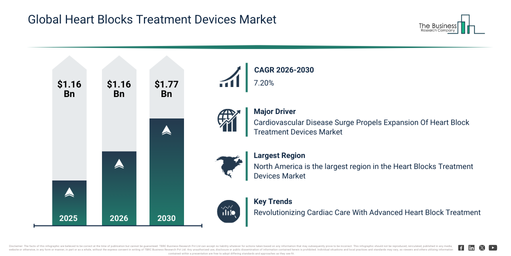
    The market size for heart blocks treatment devices has shown strong growth in recent years. It is projected to expand from $3.36 billion in 2025 to $3.59 billion in 2026, achieving a compound annual growth rate (CAGR) of 6.9%. The growth observed historically is due to factors such as the rising prevalence of cardiovascular disorders, an increasing aging population, the expansion of hospital cardiac care infrastructure, improved access to cardiac diagnostic services, and advancements in implantable device reliability.

    The heart blocks treatment devices market size is anticipated to exhibit robust expansion in the forthcoming years. It is projected to reach $4.74 billion by 2030, growing at a compound annual growth rate (CAGR) of 7.2%. This growth over the forecast period is propelled by factors such as the increasing embrace of remote patient monitoring, escalating investments in cardiac digital health solutions, a rising need for personalized rhythm management, the broader implementation of home-based cardiac care models, and continuous innovation in implantable cardiac devices. Significant trends during this period involve the expanding adoption of advanced pacemaker technologies, increased deployment of implantable cardiac rhythm devices, greater integration of remote cardiac monitoring systems, the proliferation of minimally invasive cardiac procedures, and a heightened emphasis on long-term rhythm management.

    Access Your Free Sample Report For In-Depth Market Analysis:

    https://www.thebusinessresearchcompany.com/sample.aspx?id=12062&type=smp

    What Factors Are Contributing To The Growth Of The Heart Blocks Treatment Devices Market?

    The growth of the heart block treatment device market is anticipated to be fueled by the expanding aging population. An aging population is characterized by a continuous increase in the proportion of elderly individuals within a demographic. This demographic shift significantly contributes to a higher incidence of heart block. As people age, their susceptibility to cardiac conduction system abnormalities, including heart block, increases, thereby escalating the requirement for heart block treatment devices. For example, in July 2024, data from the UK Parliament’s House of Commons Library, a UK-based government administration, revealed that in 2022, the UK had 12.7 million individuals aged 65 or older, making up 19% of the total population. This figure is projected to climb to 22.1 million by 2072, representing 27% of the population. Consequently, the aging population is expected to stimulate demand for the heart block treatment device market.

    What Are The Different Segment Types In The Heart Blocks Treatment Devices Market Segment Breakdown?

    The heart blocks treatment devices market covered in this report is segmented –

    1) By Clinical Classification: First-Degree Heart Block, Second-Degree Heart Block, Third-Degree Heart Block

    2) By Product: Transcutaneous Pacing (TCP), Pacemaker

    3) By End-User: Hospitals & Cardiac Care Centers, Clinics, Home-Care & Remote Monitoring Users

    Subsegments:

    1) By First-Degree Heart Block: Cardiac Monitoring Devices, Temporary Pacing Devices (Rare / Symptomatic Cases)

    2) By Second-Degree Heart Block: Type I (Wenckebach) Management Devices, Type II Management Devices, Pacemakers

    3) By Third-Degree Heart Block: Permanent Pacemakers (Primary Treatment), Cardiac Resynchronization Therapy (CRT) Devices, Temporary Pacing Devices (Acute / Emergency Management)

    What Trends Are Shaping The Future Of The Heart Blocks Treatment Devices Market?

    Leading companies within the heart block treatment device market are prioritizing technological innovations, including dual-chamber pacemakers, to offer dependable services to consumers. These dual-chamber pacemakers represent a technology utilizing leadless pacing systems to address irregular or sluggish heart rhythms. For example, in November 2023, Abbott Laboratories, a US-based medical device and healthcare firm, introduced a dual-chamber pacemaker, marking the first U.S. implants, given that over 80% of individuals requiring a pacemaker need pacing in both the right atrium and right ventricle of the heart. The company developed its i2i technology to employ high-frequency pulses, which transmit messages via the body’s naturally conductive blood properties between each leadless pacemaker.

    Who Are The Well-Known Companies In The Heart Blocks Treatment Devices Market?

    Major companies operating in the heart blocks treatment devices market are Medtronic plc, Abbott Laboratories, Boston Scientific Corporation, Biotronik SE & Co. KG, MicroPort Scientific Corporation, Lepu Medical Technology (Beijing) Co. Ltd., Nihon Kohden Corporation, ZOLL Medical Corporation, LivaNova PLC, Osypka Medical GmbH, Shree Pacetronix Ltd., EBR Systems Inc., Medico S.p.A., Cook Medical, B. Braun SE, Oscor Inc., Pacetronix Ltd., Fukuda Denshi Co. Ltd., Teleflex Incorporated, NIPRO Corporation

    Get The Full Heart Blocks Treatment Devices Market Report:

    https://www.thebusinessresearchcompany.com/report/heart-blocks-treatment-devices-global-market-report

    Which Region Holds The Highest Market Share In The Heart Blocks Treatment Devices Market?

    North America was the largest region in the heart blocks treatment devices market in 2025. Asia-Pacific is expected to be the fastest-growing region in the forecast period. The regions covered in the heart blocks treatment devices market report are Asia-Pacific, South East Asia, Western Europe, Eastern Europe, North America, South America, Middle East, Africa.

    Request A Customized Heart Blocks Treatment Devices Market Report For Competitive Insights:

    https://www.thebusinessresearchcompany.com/customise?id=12062&type=smp

    Browse Through More Reports Similar to the Global Heart Blocks Treatment Devices Market 2026, By The Business Research Company

    Congestive Heart Failure Treatment Devices Market Report 2026

    https://www.thebusinessresearchcompany.com/report/congestive-heart-failure-treatment-devices-global-market-report

    Bradycardia Treatment Devices Market Report 2026

    https://www.thebusinessresearchcompany.com/report/bradycardia-treatment-devices-global-market-report

    Heart Defect Closure Device Market Report 2026

    https://www.thebusinessresearchcompany.com/report/heart-defect-closure-device-global-market-report

    Get in touch with us:

    The Business Research Company: https://www.thebusinessresearchcompany.com/

    Americas +1 310-496-7795

    Asia +44 7882 955267 & +91 8897263534

    Europe +44 7882 955267

    Email us at info@tbrc.info

    Follow us on:

    LinkedIn: https://in.linkedin.com/company/the-business-research-company

    YouTube: https://www.youtube.com/channel/UC24_fI0rV8cR5DxlCpgmyFQ

    Global Market Model: https://www.thebusinessresearchcompany.com/global-market-model

  • Global Fast Biological Reader Market Set To Expand To $3.99 Billion By 2030 At 11.5% CAGR

    Global Fast Biological Reader Market Set To Expand To $3.99 Billion By 2030 At 11.5% CAGR

    The Business Research Company’s 2026 market reports feature enhanced tools like market attractiveness analysis, TAM assessment, and company scoring matrices, along with interactive dashboards, deeper supply chain insights, and startup coverage strengthening the depth, usability, and strategic value of insights.

    What Level Of Market Value Growth Is Predicted For The Fast Biological Reader Market From 2026 To 2030?

    The fast biological reader market size has demonstrated substantial expansion in recent years. It is anticipated to increase from $2.31 billion in 2025 to $2.58 billion in 2026, achieving a compound annual growth rate (CAGR) of 11.8%. The growth observed in the past can be ascribed to the increasing adoption of laboratory automation, a rising demand for faster diagnostic results, the expansion of pharmaceutical research activities, an elevated use of fluorescence-based assays, and growth in biomedical research funding.

    The fast biological reader market size is anticipated to experience substantial growth in the coming years, with projections indicating it will reach $3.99 billion by 2030, achieving a compound annual growth rate (CAGR) of 11.5%. This expansion during the forecast period is primarily driven by factors such as the increasing requirement for rapid point-of-care testing, the integration of AI-driven data analytics, the broadening of personalized medicine research, growing applications in food and environmental testing, and the development of portable fast biological readers. Key trends in the forecast period include swift real-time biological detection, high-throughput assay screening, the miniaturization of analytical instruments, multi-modal detection capabilities, and enhanced automation in laboratory workflows.

    Access Your Free Sample Report For In-Depth Market Analysis:

    https://www.thebusinessresearchcompany.com/sample.aspx?id=28219&type=smp

    What Significant Factors Are Influencing The Fast Biological Reader Market Expansion?

    The expanding occurrence of chronic illnesses is anticipated to fuel the expansion of the fast biological reader market in the future. These are enduring health conditions that usually advance gradually and necessitate continuous medical attention, encompassing issues like cardiovascular disorders, diabetes, and respiratory illnesses, frequently stemming from a mix of genetic, environmental, and lifestyle elements. A key contributor to the growing incidence of chronic ailments is the widespread embrace of inactive lifestyles, leading to decreased physical movement, poor eating habits, and metabolic disruptions, subsequently raising the likelihood of developing enduring health issues. Fast biological reader technology provides swift and precise identification of biomarkers, which aids in early detection and supports prompt medical actions to enhance patient results. As an illustration, data from July 2023, shared by The Health Foundation, a UK-based independent charity, indicates that England is forecast to have 9.1 million individuals afflicted with significant chronic diseases by 2040. Consequently, the increased prevalence of chronic diseases is stimulating the expansion of the fast biological reader market.

    Which Segment Classifications Are Used In The Fast Biological Reader Market Segment Analysis?

    The fast biological reader market covered in this report is segmented –

    1) By Product Type: Portable Fast Biological Readers, Benchtop Fast Biological Readers

    2) By Technology: Fluorescence, Luminescence, Absorbance, Other Technologies

    3) By Application: Clinical Diagnostics, Research Laboratories, Pharmaceutical And Biotechnology Companies, Environmental Testing, Food And Beverage Testing, Other Applications

    4) By End-User: Hospitals, Diagnostic Centers, Academic And Research Institutes, Other End Users

    Subsegments:

    1) By Portable Fast Biological Readers: Colorimetric Detection, Electrochemical Detection, Surface Plasmon Resonance Detection, Molecular Hybridization Detection, Immunological Assay Detection

    2) By Benchtop Fast Biological Readers: Mass Spectrometry Detection, Chromatographic Detection, Isothermal Amplification Detection, Digital Image Analysis Detection, Optical Sensor Detection

    What Trends Are Affecting The Direction Of The Fast Biological Reader Market?

    Major companies operating in the fast biological reader market are prioritizing the creation of innovative solutions, such as multiwavelength microplate readers, to improve the rapidity, adaptability, and seamless incorporation of laboratory assays and growth monitoring. A multiwavelength microplate reader functions as a laboratory instrument designed to gauge absorbance at multiple wavelengths across microplate wells, facilitating swift and adaptable examination of biological, biochemical, and environmental samples in both endpoint and kinetic formats. For instance, in September 2025, Cerillo, a US-based biotechnology company, unveiled Rayo, its newest multiwavelength platform for ELISA assays, protein quantification, and kinetic growth curves for plant, algae, and microbial cells. Rayo features multiwavelength absorbance at four distinct wavelengths with both rapid endpoint and continuous kinetic measurement capabilities, serving laboratories as an adaptable system for enzyme-linked immunosorbent assays, protein quantification, and microbial or plant growth monitoring. Its ultra-compact, automation-compatible design with standalone operation, local data storage, and remote transfer allows for effortless integration into restricted laboratory spaces and automated workflows, thereby substantially enhancing operational effectiveness and ease of data access.

    Which Firms Are Contributing To The Fast Biological Reader Market Ecosystem?

    Major companies operating in the fast biological reader market are Hoffmann-La Roche Ltd., Thermo Fisher Scientific Inc., Abbott Laboratories, Medtronic Plc, Danaher Corporation, Lonza Group AG, Agilent Technologies Inc., Sartorius AG, Revvity Inc., Bio-Rad Laboratories Inc., Horiba Ltd., Tecan Group Ltd., Eppendorf SE, Hamilton Company, Promega Corporation, Advanced Sterilization Products (ASP), Analytik Jena, Berthold Technologies GmbH & Co. KG, BMG LABTECH GmbH, Hidex Oy

    Get The Full Fast Biological Reader Market Report:

    https://www.thebusinessresearchcompany.com/report/fast-biological-reader-global-market-report

    Which Region Has The Greatest Market Share In The Fast Biological Reader Market?

    North America was the largest region in the fast biological reader market in 2025. Asia-Pacific is expected to be the fastest-growing region in the forecast period. The regions covered in the fast biological reader market report are Asia-Pacific, South East Asia, Western Europe, Eastern Europe, North America, South America, Middle East, Africa.

    Request A Customized Fast Biological Reader Market Report For Competitive Insights:

    https://www.thebusinessresearchcompany.com/customise?id=28219&type=smp

    Browse Through More Reports Similar to the Global Fast Biological Reader Market 2026, By The Business Research Company

    Biological Data Visualization Market Report 2026

    https://www.thebusinessresearchcompany.com/report/biological-data-visualization-global-market-report

    Biological Microscope Market Report 2026

    https://www.thebusinessresearchcompany.com/report/biological-microscope-global-market-report

    Computational Biology Market Report 2026

    https://www.thebusinessresearchcompany.com/report/computational-biology-global-market-report

    Get in touch with us:

    The Business Research Company: https://www.thebusinessresearchcompany.com/

    Americas +1 310-496-7795

    Asia +44 7882 955267 & +91 8897263534

    Europe +44 7882 955267

    Email us at info@tbrc.info

    Follow us on:

    LinkedIn: https://in.linkedin.com/company/the-business-research-company

    YouTube: https://www.youtube.com/channel/UC24_fI0rV8cR5DxlCpgmyFQ

    Global Market Model: https://www.thebusinessresearchcompany.com/global-market-model

  • Faecal Extraction Systems Market Growth Expected To Reach $2.2 Billion By 2030 At 5.4% CAGR

    Faecal Extraction Systems Market Growth Expected To Reach $2.2 Billion By 2030 At 5.4% CAGR

    The Business Research Company’s 2026 market reports feature enhanced tools like market attractiveness analysis, TAM assessment, and company scoring matrices, along with interactive dashboards, deeper supply chain insights, and startup coverage strengthening the depth, usability, and strategic value of insights.

    How Will The Market Value Of The Faecal Extraction Systems Market Progress Between 2026 And 2030?

    The faecal extraction systems market size has experienced significant expansion over recent years. This market is anticipated to escalate from $1.7 billion in 2025 to $1.79 billion in 2026, advancing at a compound annual growth rate (CAGR) of 5.5%. The historical growth experienced by this market stems from factors such as an increasing occurrence of gastrointestinal infections, the widening reach of diagnostic laboratory networks, a greater embrace of fecal biomarker testing, an increase in parasitic disease screening activities, and enhanced clinical understanding regarding gut health.

    The faecal extraction systems market size is anticipated to experience substantial expansion over the next few years. It will grow to $2.21 billion in 2030 at a compound annual growth rate (CAGR) of 5.4%. This growth during the forecast period is primarily driven by a heightened need for prompt disease identification, growing capital allocation in advanced diagnostic assays, the broadening of outpatient diagnostic offerings, an intensifying emphasis on preventative health measures, and the wider integration of automated laboratory processes. Noteworthy trends for the forecast duration encompass the greater implementation of automated sample collection mechanisms, a surging need for quick stool diagnostic solutions, the expanded application of immunological and molecular assays, the proliferation of point-of-care testing options, and a heightened priority on diagnostic precision and cleanliness.

    Access Your Free Sample Report For In-Depth Market Analysis:

    https://www.thebusinessresearchcompany.com/sample.aspx?id=8297&type=smp

    Which Important Drivers Are Guiding The Faecal Extraction Systems Market Growth?

    The escalating occurrence of inflammatory bowel disease (IBD) is poised to drive the expansion of the faecal extraction systems market. IBD refers to chronic inflammatory conditions affecting the tissues of the digestive system. Faecal extraction systems are essential for the diagnosis, monitoring of disease activity, guiding treatment, and predicting both disease relapse and post-operative recurrence in inflammatory bowel disease, thus increasing their demand as IBD becomes more prevalent. For instance, the Impact of IBD Report 2023, published in September 2023 by the Canada-based IBD Clinical and Research Centre, highlighted that over 320,000 people in Canada were affected by IBD in 2023, reflecting a prevalence of 825 per 100,000. With an anticipated annual increase in prevalence of 2.44%, projections suggest that 1.1% of the population, equating to 470,000 Canadians, will be living with IBD by 2035. Therefore, the growing prevalence of inflammatory bowel disease is expected to fuel the growth of the faecal extraction systems market.

    How Is The Faecal Extraction Systems Market Organized By Segment Classification?

    The faecal extraction systems market covered in this report is segmented –

    1) By Assay: Calprotectin, Hemoglobin

    2) By Analysis Test: Microscopic, Chemical, Immunological, Microbiological

    3) By Indication: Parasitic Infection, Bacterial Indication, Poor Nutrient Absorption

    4) By End-Use: Diagnostic Centers, Hospitals And Clinics

    Subsegments:

    1) By Calprotectin: Quantitative Calprotectin Assays, Qualitative Calprotectin Assays

    2) By Hemoglobin: Fecal Occult Blood Tests (FOBT), Immunochemical Fecal Hemoglobin Tests

    What Trends Are Influencing The Evolution Of The Faecal Extraction Systems Market?

    Leading companies in the faecal extraction system market are developing innovative products, such as colorectal cancer (CRC) screening tests, to attract larger customer bases, drive more sales, and enhance revenue. Colorectal cancer (CRC) screening tests are diagnostic procedures specifically designed to identify the presence of colorectal cancer or precancerous conditions in individuals who may not be experiencing symptoms. An illustration of this is Guardant Health, a US-based diagnostics company, which introduced Shield, a blood-based colorectal cancer (CRC) screening test, in November 2023. The Shield assay is notably characterized by its capability to pinpoint particular DNA characteristics that could indicate the presence of cancer. Its effectiveness in detecting colorectal cancer in average-risk individuals was verified by the ECLIPSE registrational study, which involved over 20,000 participants throughout the United States.

    Who Are The Industry Participants Involved In The Faecal Extraction Systems Market?

    Major companies operating in the faecal extraction systems market are Alpha Laboratories Ltd., Arbor Assays, Buhlmann Laboratories AG, Calpro AS, DRG Instruments GmbH, Biohit Healthcare Ltd., Meridian Bioscience Inc., Quidel Corporation, DiaSorin SpA, Sekisui Diagnostics LLC, Abbott Laboratories, Roche Diagnostics Corporation, Randox Laboratories Ltd., Trinity Biotech plc, bioMérieux SA, Werfen SA, Mobidiag Oy, Hologic Inc., Siemens Healthineers, Beckman Coulter Inc., Thermo Fisher Scientific Inc.

    Get The Full Faecal Extraction Systems Market Report:

    https://www.thebusinessresearchcompany.com/report/faecal-extraction-systems-global-market-report

    Which Region Accounts For The Largest Portion Of The Faecal Extraction Systems Market?

    North America was the largest region in the faecal extraction systems market in 2025. The regions covered in the faecal extraction systems market report are Asia-Pacific, South East Asia, Western Europe, Eastern Europe, North America, South America, Middle East, Africa.

    Request A Customized Faecal Extraction Systems Market Report For Competitive Insights:

    https://www.thebusinessresearchcompany.com/customise?id=8297&type=smp

    Browse Through More Reports Similar to the Global Faecal Extraction Systems Market 2026, By The Business Research Company

    Bowel Management Systems Market Report 2026

    https://www.thebusinessresearchcompany.com/report/bowel-management-systems-global-market-report

    Food Traceability Market Report 2026

    https://www.thebusinessresearchcompany.com/report/food-traceability-global-market-report

    Sanitary Ware Market Report 2026

    https://www.thebusinessresearchcompany.com/report/sanitary-ware-global-market-report

    Get in touch with us:

    The Business Research Company: https://www.thebusinessresearchcompany.com/

    Americas +1 310-496-7795

    Asia +44 7882 955267 & +91 8897263534

    Europe +44 7882 955267

    Email us at info@tbrc.info

    Follow us on:

    LinkedIn: https://in.linkedin.com/company/the-business-research-company

    YouTube: https://www.youtube.com/channel/UC24_fI0rV8cR5DxlCpgmyFQ

    Global Market Model: https://www.thebusinessresearchcompany.com/global-market-model
  • Facial Implants Market Forecast 2026–2030 Highlighting Expansion Across Industries

    Facial Implants Market Forecast 2026–2030 Highlighting Expansion Across Industries

    The Business Research Company’s 2026 market reports feature enhanced tools like market attractiveness analysis, TAM assessment, and company scoring matrices, along with interactive dashboards, deeper supply chain insights, and startup coverage strengthening the depth, usability, and strategic value of insights.

    What Are The Market Size Estimates For The Facial Implants Market In 2026 And 2030?

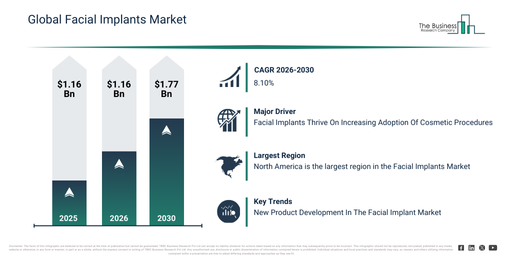
    The facial implants market has experienced substantial growth in recent years. It is forecast to grow from $2.95 billion in 2025 to $3.19 billion in 2026, demonstrating a compound annual growth rate (CAGR) of 8.2%. The expansion during the historic period can be attributed to factors such as increased awareness of facial aesthetics, a rise in disposable income, the growing influence of beauty standards and media, the wider availability of cosmetic surgery centers, and an escalating demand for facial reconstruction procedures.

    The market for facial implants is projected to experience substantial expansion over the upcoming years. This market is anticipated to reach a value of $4.36 billion by 2030, demonstrating a compound annual growth rate (CAGR) of 8.1%. Key drivers behind this projected growth include the escalating demand for tailored facial treatments, an expanding elderly demographic pursuing rejuvenation, wider acceptance of cosmetic surgery among all genders, the growth of medical tourism for aesthetic operations, and a heightened emphasis on improving facial symmetry and contours. Significant trends observed during this forecast timeframe encompass an increasing desire for facial aesthetic improvement procedures, the expanding use of customized and patient-specific implants, a growing inclination towards less invasive facial interventions, the broadening scope of facial rejuvenation and anti-aging therapies, and greater approval of both cosmetic and reconstructive facial surgery.

    Access Your Free Sample Report For In-Depth Market Analysis:

    https://www.thebusinessresearchcompany.com/sample.aspx?id=18605&type=smp

    What Major Factors Are Driving The Facial Implants Market Forward?

    The increasing demand for cosmetic surgeries is projected to drive the expansion of the facial implants market in the coming years. Cosmetic surgeries refer to elective procedures aimed at enhancing or refining an individual’s aesthetic appearance. The growing appeal of cosmetic surgeries stems from greater societal acceptance, innovations in technology offering safer and more effective treatments, and an increasing desire for personal enhancement and boosted confidence. The facial implants utilized in cosmetic surgeries provide advanced solutions for facial contouring and augmentation, offering patients enduring and natural-looking outcomes that effectively satisfy aesthetic goals. For example, in March 2025, as reported by the Yellow Bus ABA, a US-based therapy group, 2023 witnessed significant activity in the global plastic surgery sector, with approximately 34.9 million aesthetic procedures performed worldwide, marking a 3.4% increase compared to 2022. Thus, the escalating demand for cosmetic surgeries is propelling the growth of the facial implants market.

    Which Segments Define The Facial Implants Market Segment Structure?

    The facial implants market covered in this report is segmented –

    1) By Product: Chin And Mandibular, Cheek, Nasal

    2) By Material: Metal, Biologicals, Polymers, Ceramic

    3) By Procedure: Eyelid Surgery, Facelift, Rhinoplasty

    Subsegments:

    1) By Chin And Mandibular: Chin Implants, Mandibular (Jaw) Implants, Custom Chin And Mandibular Implants, Biocompatible Chin And Mandibular Implants, Silicone And Polyethylene Chin Implants

    2) By Cheek: Malar Implants (Cheekbone Implants), Submalar Implants, High-projection Cheek Implants, Biocompatible And Silicone Cheek Implants, Custom And 3D Printed Cheek Implants

    3) By Nasal: Nasal Implants (Nose Tip Or Bridge), Septal Implants, Rhinoplasty Implants, Custom Nasal Implants, Biocompatible Nasal Implants

    Which Trends Are Impacting The Progress Of The Facial Implants Market?

    Key players in the facial implants market are prioritizing the creation of novel products, including arthroplasty implants, to bolster their presence in the sector. Arthroplasty implants refer to prosthetic devices employed in facial reconstruction and aesthetic surgery to re-establish or enhance the function and visual appeal of facial components. An instance of this is Materialise, a Belgium-based 3D-printing firm, which unveiled its Personalized TMJ Total Arthroplasty System in February 2024. This system is specifically designed for comprehensive temporomandibular joint (TMJ) arthroplasty, a procedure that replaces the joint linking the jawbone to the skull. It features personalized titanium implants custom-made to suit the patient’s individual anatomy, thereby offering a facial implant solution for managing severe TMJ issues that necessitate joint replacement.

    Who Are The Established Players Within The Facial Implants Market?

    Major companies operating in the facial implants market are Johnson & Johnson, Medtronic plc, Stryker Corporation, Zimmer Biomet Holdings Inc., Galderma SA, W.L. Gore & Associates Inc., Integra LifeSciences Corporation, Anthony Products Inc., Hugel Inc, Revance Therapeutics Inc., Sientra Inc., OsteoMed L.P., Spectrims Design Medicals Inc., Implantech Associates Inc., Sebbin International, AART Inc., Surgiform Technology Ltd., Guangzhou Wanhe Plastic Material Co. Ltd., Hanson Medical Inc., Xilloc Medical Int. B.V.

    Get The Full Facial Implants Market Report:

    https://www.thebusinessresearchcompany.com/report/facial-implants-global-market-report

    Which Region Holds The Highest Market Share In The Facial Implants Market?

    North America was the largest region in the facial implants market in 2025. Asia-Pacific is expected to be the fastest-growing region in the forecast period. The regions covered in the facial implants market report are Asia-Pacific, South East Asia, Western Europe, Eastern Europe, North America, South America, Middle East, Africa.

    Request A Customized Facial Implants Market Report For Competitive Insights:

    https://www.thebusinessresearchcompany.com/customise?id=18605&type=smp

    Browse Through More Reports Similar to the Global Facial Implants Market 2026, By The Business Research Company

    Cosmetic Implants Market Report 2026

    https://www.thebusinessresearchcompany.com/report/cosmetic-implants-global-market-report

    Dental Implants Market Report 2026

    https://www.thebusinessresearchcompany.com/report/dental-implants-global-market-report

    Aesthetic Implants Market Report 2026

    https://www.thebusinessresearchcompany.com/report/aesthetic-implants-global-market-report

    Get in touch with us:

    The Business Research Company: https://www.thebusinessresearchcompany.com/

    Americas +1 310-496-7795

    Asia +44 7882 955267 & +91 8897263534

    Europe +44 7882 955267

    Email us at info@tbrc.info

    Follow us on:

    LinkedIn: https://in.linkedin.com/company/the-business-research-company

    YouTube: https://www.youtube.com/channel/UC24_fI0rV8cR5DxlCpgmyFQ

    Global Market Model: https://www.thebusinessresearchcompany.com/global-market-model
  • Global Eyewear Market Analysis For 2026–2030 With Strategic Insights

    Global Eyewear Market Analysis For 2026–2030 With Strategic Insights

    The Business Research Company’s 2026 market reports feature enhanced tools like market attractiveness analysis, TAM assessment, and company scoring matrices, along with interactive dashboards, deeper supply chain insights, and startup coverage strengthening the depth, usability, and strategic value of insights.

    What Expansion In Market Value Is Forecasted For The Eyewear Market Between 2026 And 2030?

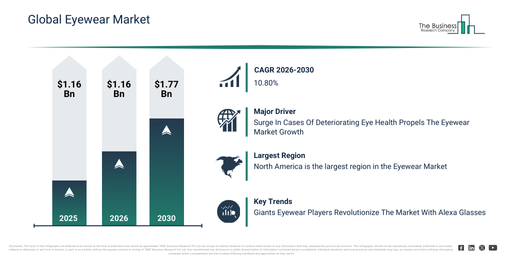
    The eyewear market size has experienced significant expansion in recent years. It is anticipated to grow from $173.89 billion in 2025 to $193.58 billion in 2026, exhibiting a compound annual growth rate (CAGR) of 11.3%. Historically, this growth can be ascribed to a number of factors, including the increasing prevalence of vision impairment, rising screen exposure across all age demographics, the expansion of fashion eyewear consumption, the development of optical retail networks, and the accessibility of affordable eyewear products.

    The eyewear market is projected to experience substantial expansion over the upcoming years. Its valuation is anticipated to reach $291.65 billion by 2030, demonstrating a compound annual growth rate (CAGR) of 10.8%. This expansion during the forecast period is propelled by factors such as the greater integration of smart eyewear technologies, an escalating need for customized vision solutions, a broader availability of sustainable and eco-conscious eyewear products, deeper market penetration of e-commerce for eyewear, and a heightened consumer emphasis on eye health. Key developments expected during this timeframe encompass a rising demand for blue light blocking glasses, the increasing use of sustainable eyewear materials, the growing appeal of smart and connected eyewear, the enlargement of online and omnichannel eyewear retail channels, and a stronger emphasis on stylish yet functional eyewear.

    Access Your Free Sample Report For In-Depth Market Analysis:

    https://www.thebusinessresearchcompany.com/sample.aspx?id=6910&type=smp

    Which Key Drivers Are Affecting The Eyewear Market Development?

    A surge in instances of declining eye health is fueling the expansion of the eyewear market. Eye deterioration signifies a loss of clear vision or the development of ocular defects. Common factors contributing to eye deterioration encompass age-related macular degeneration, cataract, diabetic retinopathy, glaucoma, and extensive screen time. This rising occurrence of eye deterioration is expected to generate substantial demand for eyewear, given its role in correcting eye disorders and restoring clear sight. As an illustration, data from May 2024, provided by the Centers for Disease Control and Preventionat, a US-based Government agency, reveals that roughly 3 in 5 Americans over the age of 40, amounting to approximately 90 million individuals, encounter vision and eye problems. Projections indicate that by 2050, vision-related concerns in the U.S. will see a substantial increase, with diabetic retinopathy anticipated to rise by 72%, cataracts by 87%, and both glaucoma and age-related macular degeneration expected to double. Furthermore, vision impairment and blindness are projected to grow by 150%, while the financial burden of vision problems is set to climb by 157% to $373 billion. Consequently, the growing number of deteriorating eye health cases is anticipated to drive up the demand for eyewear throughout the forecast period.

    How Is The Eyewear Market Segmented Across Different Segment Categories?

    The eyewear market covered in this report is segmented –

    1) By Product: Contact Lenses, Spectacles, Sunglasses

    2) By Gender: Men, Women, Unisex

    3) By Distribution Channel: Optical Stores, Independent Brand Showrooms, Online Stores, Retail Stores

    Subsegments:

    1) By Contact Lenses: Soft Contact Lenses, Rigid Gas Permeable (RGP) Lenses, Colored Contact Lenses

    2) By Spectacles: Prescription Glasses, Reading Glasses, Blue Light Blocking Glasses

    3) By Sunglasses: Polarized Sunglasses, Fashion Sunglasses, Sports Sunglasses

    What Trends Are Transforming The Eyewear Market?

    Major companies operating in the eyewear market are prioritizing the development of innovative technologies, such as Alexa-powered glasses. These Alexa-powered glasses seamlessly integrate Amazon’s virtual assistant, Alexa, allowing users to interact with the digital assistant hands-free via voice control directly incorporated into the eyewear. For instance, in September 2023, Amazon.com, Inc., a US-based e-commerce company, launched ‘Echo Frames’. These smart frames come integrated with Alexa, enabling users to maintain connectivity while effortlessly blending into their lifestyle even when not actively engaged. These smart glasses offer a range of lens options, including UV400-protected sunglass lenses, prescription-ready choices, and blue light lenses. Furthermore, they feature IPX4 water resistance and scratch-resistant properties. On a full battery charge, each pair of these smart glasses provides up to six hours of continuous media playback, offering 40% more audio playback and 80% more talk time compared to the previous generation. Packed with user-friendly features, they allow users to initiate a playlist with a double-press of a button and support multipoint pairing.

    Which Organizations Play A Role In The Eyewear Market Landscape?

    Major companies operating in the eyewear market are Silhouette International Schmied AG, JAND Inc., LVMH Moët Hennessy Louis Vuitton SE, Essilor International S.A., Carl Zeiss AG, Alcon Vision LLC, Hoya Corporation, Johnson & Johnson Vision Care Inc., Specsavers Optical Group Limited, GrandVision BV, Burberry Group plc, Bausch & Lomb Incorporated, The Cooper Companies Inc., Italia Independent Group S.p.A., Fielmann AG, Safilo Group S.p.A., Kering Eyewear, Marchon Eyewear Inc., Rodenstock GmbH, TAG Heuer SA, De Rigo Vision S.p.A., Marcolin S.p.A., Oakley Inc., Maui Jim Inc., Charmant Group Inc., Seiko Optical Products Co. Ltd., Lafont Paris, Luxottica Group S.p.A., Luxexcel Group BV

    Get The Full Eyewear Market Report:

    https://www.thebusinessresearchcompany.com/report/eyewear-global-market-report

    Where Is The Eyewear Market Most Concentrated Geographically?

    North America was the largest region in the eyewear market in 2025. Asia-Pacific is expected to be the fastest-growing region in the eyewear market during the forecast period. The regions covered in the eyewear market report are Asia-Pacific, South East Asia, Western Europe, Eastern Europe, North America, South America, Middle East, Africa.

    Request A Customized Eyewear Market Report For Competitive Insights:

    https://www.thebusinessresearchcompany.com/customise?id=6910&type=smp

    Browse Through More Reports Similar to the Global Eyewear Market 2026, By The Business Research Company

    Dry Eye Products Market Report 2026

    https://www.thebusinessresearchcompany.com/report/dry-eye-products-global-market-report

    Eye Health Supplements Market Report 2026

    https://www.thebusinessresearchcompany.com/report/eye-health-supplements-global-market-report

    Luxury Footwear Market Report 2026

    https://www.thebusinessresearchcompany.com/report/luxury-footwear-global-market-report

    Get in touch with us:

    The Business Research Company: https://www.thebusinessresearchcompany.com/

    Americas +1 310-496-7795

    Asia +44 7882 955267 & +91 8897263534

    Europe +44 7882 955267

    Email us at info@tbrc.info

    Follow us on:

    LinkedIn: https://in.linkedin.com/company/the-business-research-company

    YouTube: https://www.youtube.com/channel/UC24_fI0rV8cR5DxlCpgmyFQ

    Global Market Model: https://www.thebusinessresearchcompany.com/global-market-model
  • Eye Testing Equipment Market Outlook 2026–2030 Driven By Growth Factors And Projections

    Eye Testing Equipment Market Outlook 2026–2030 Driven By Growth Factors And Projections

    The Business Research Company’s 2026 market reports feature enhanced tools like market attractiveness analysis, TAM assessment, and company scoring matrices, along with interactive dashboards, deeper supply chain insights, and startup coverage strengthening the depth, usability, and strategic value of insights.

    How Large Will The Eye Testing Equipment Market Be By 2030 Compared To Its 2026 Market Size?

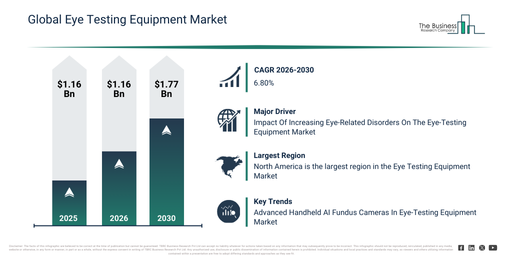
    The market for eye testing equipment has experienced significant expansion over recent years. Projections indicate its expansion from $3.51 billion in 2025 to $3.78 billion in 2026, demonstrating a compound annual growth rate (CAGR) of 7.7%. Historically, this growth has been driven by several factors, including the increasing incidence of vision impairment, an expanding elderly demographic, an increase in eye clinics and hospitals, a greater occurrence of cataract and glaucoma, and the wider adoption of routine eye examination procedures.

    The eye testing equipment market is poised for significant expansion in the coming years, with projections indicating it will reach $4.92 billion by 2030, growing at a compound annual growth rate (CAGR) of 6.8%. This anticipated growth during the forecast period is largely attributed to the increasing demand for early detection of eye diseases, heightened awareness regarding regular eye check-ups, advancements in ophthalmology infrastructure, the expansion of optometry education and training institutes, and a rising focus on vision care for aging populations. Key trends expected in this period include the increasing adoption of advanced diagnostic eye testing devices, a growing demand for comprehensive vision screening solutions, the expanded use of multi-function ophthalmic equipment, the promotion of preventive eye health and early diagnosis, and the increasing integration of digital displays and automated measurements.

    Access Your Free Sample Report For In-Depth Market Analysis:

    https://www.thebusinessresearchcompany.com/sample.aspx?id=17147&type=smp

    What Factors Are Contributing To The Growth Of The Eye Testing Equipment Market?

    The escalating prevalence of eye-related disorders is anticipated to stimulate the expansion of the eye-testing equipment market. These disorders encompass a spectrum of conditions impacting vision, including diseases like glaucoma, cataracts, and macular degeneration, as well as refractive errors such as myopia and hyperopia. The surge in individuals affected by these eye conditions is attributed to factors such as aging demographics, shifts in lifestyle, environmental influences, and inadequate diagnostic capabilities that lead to delayed problem detection. Eye testing equipment is essential for the early identification, accurate diagnosis, and effective management of various ocular conditions, including glaucoma, cataracts, and macular degeneration. A notable example is the data from the Centers for Disease Control and Prevention in January 2024, which reported over 3.4 million Americans aged 40 years and older were blind or visually impaired, a number forecasted to double by 2030. Thus, the growing incidence of eye-related disorders is poised to propel the growth of the eye-testing equipment market.

    What Are The Main Segments Within The Eye Testing Equipment Market Segment Structure?

    The eye testing equipment market covered in this report is segmented –

    1) By Device: Slit Lamp, Biometer, Perimeter, Tonometer, Optical Coherence Tomography (OCT), Fundus Camera, Autorefractor And Keratometer, Other Devices

    2) By Application: General Examination, Glaucoma, Cataract, Other Applications

    3) By End User: Hospital, Eye Clinic, Optometry Academic Institutes

    Subsegments:

    1) By Slit Lamp: Tabletop Slit Lamp, Handheld Slit Lamp, Digital Slit Lamp

    2) By Biometer: Optical Biometer, Ultrasound Biometer

    3) By Perimeter: Static Perimeter, Kinetic Perimeter

    4) By Tonometer: Applanation Tonometer, Non-Contact Tonometer, Rebound Tonometer, Indentation Tonometer

    5) By Optical Coherence Tomography (OCT): Spectral Domain OCT (SD-OCT), Swept-Source OCT (SS-OCT), Handheld OCT

    6) By Fundus Camera: Mydriatic Fundus Camera, Non-Mydriatic Fundus Camera, Hybrid Fundus Camera

    7) By Autorefractor And Keratometer: Standalone Autorefractor, Combined Autorefractor-Keratometer

    8) By Other Devices: Phoropter, Retinoscope, Visual Field Analyzer, Corneal Topographer

    What Trends Are Shaping The Future Of The Eye Testing Equipment Market?

    Leading companies in the eye-testing equipment market are developing advanced diagnostic tools, such as handheld artificial intelligence fundus cameras, to improve diagnostic accuracy and streamline screening processes. A handheld fundus camera, enhanced with AI technology, is utilized for capturing detailed images of the eye’s fundus to assist in diagnosing eye conditions. For instance, in May 2024, Optomed USA, a US-based medical technology company, launched Optomed Aurora AEYE. This device is a handheld, AI-powered fundus camera specifically engineered to quickly detect diabetic retinopathy beyond mild stages, enabling prompt eye screenings in primary care settings. Its user-friendly design simplifies the screening process, requiring only one image per eye and delivering results within a minute.

    Who Are The Companies Participating In The Eye Testing Equipment Market?

    Major companies operating in the eye testing equipment market are Carl Zeiss Meditec AG, Topcon Corporation, Nidek Co. Ltd., Canon Medical Systems Inc., Heidelberg Engineering GmbH, Takagi Seiko Co. Ltd., Huvitz Co. Ltd., Revenio Group PLC, Tomey Corporation, Kowa Company Ltd., Oculus Optikgeräte GmbH, HEINE Optotechnik GmbH & Co. KG, Luneau Technology Group, Coburn Technologies Inc., Shanghai Bolan Optical Electric Co. Ltd., Rexxam Co. Ltd., CSO Costruzione Strumenti Oftalmici Srl, Righton Ophthalmic Instruments, Suoer Optical Technology Co. Ltd., Inami & Co. Ltd.

    Get The Full Eye Testing Equipment Market Report:

    https://www.thebusinessresearchcompany.com/report/eye-testing-equipment-global-market-report

    Which Region Dominates The Eye Testing Equipment Market By Market Share?

    North America was the largest region in the eye testing equipment market in 2025. Asia-Pacific is expected to be the fastest-growing region in the forecast period. The regions covered in the eye testing equipment market report are Asia-Pacific, South East Asia, Western Europe, Eastern Europe, North America, South America, Middle East, Africa.

    Request A Customized Eye Testing Equipment Market Report For Competitive Insights:

    https://www.thebusinessresearchcompany.com/customise?id=17147&type=smp

    Browse Through More Reports Similar to the Global Eye Testing Equipment Market 2026, By The Business Research Company

    Diagnostic And Monitoring Ophthalmic Devices And Equipment Market 2026

    https://www.thebusinessresearchcompany.com/report/diagnostic-and-monitoring-ophthalmic-devices-and-equipment-market

    Vision Care Devices And Equipment Market Report 2026

    https://www.thebusinessresearchcompany.com/report/vision-care-devices-and-equipment-global-market-report

    Ophthalmic Devices Market Report 2026

    https://www.thebusinessresearchcompany.com/report/ophthalmic-devices-global-market-report

    Get in touch with us:

    The Business Research Company: https://www.thebusinessresearchcompany.com/

    Americas +1 310-496-7795

    Asia +44 7882 955267 & +91 8897263534

    Europe +44 7882 955267

    Email us at info@tbrc.info

    Follow us on:

    LinkedIn: https://in.linkedin.com/company/the-business-research-company

    YouTube: https://www.youtube.com/channel/UC24_fI0rV8cR5DxlCpgmyFQ

    Global Market Model: https://www.thebusinessresearchcompany.com/global-market-model

  • External Ventricular Drain Market Developments And Opportunities Across 2026–2030

    External Ventricular Drain Market Developments And Opportunities Across 2026–2030

    The Business Research Company’s 2026 market reports feature enhanced tools like market attractiveness analysis, TAM assessment, and company scoring matrices, along with interactive dashboards, deeper supply chain insights, and startup coverage strengthening the depth, usability, and strategic value of insights.

    What Is The Projected Increase In Market Value Of The External Ventricular Drain Market During 2026–2030?

    The external ventricular drain market has experienced substantial growth in recent years. It is projected to expand from $4.99 billion in 2025 to $5.33 billion in 2026, achieving a compound annual growth rate (CAGR) of 6.7%. This historic period’s growth can be attributed to the increasing incidence of traumatic brain injury, rising cases of intracranial hemorrhage, the growing prevalence of hydrocephalus, the expansion of neurosurgical care facilities, and an increased adoption of critical care monitoring practices.

    The external ventricular drain market size is projected to undergo significant expansion in the coming years, with an anticipated growth to $6.74 billion by 2030, reflecting a compound annual growth rate (CAGR) of 6.1%. This growth during the forecast period is primarily driven by the escalating burden of neurological disorders, the increasing demand for advanced neurocritical care, rising investments in neurosurgery infrastructure, heightened awareness of intracranial pressure management, and expanding access to specialty neurological hospitals. Notable trends for the forecast period include the increasing utilization of external ventricular drains in neurocritical care, the growing adoption of adjustable and continuous EVD systems, an escalating demand for accurate intracranial pressure management, a rising emphasis on infection control in cerebrospinal fluid drainage, and the expanding use of EVDs in traumatic brain injury management.

    Access Your Free Sample Report For In-Depth Market Analysis:

    https://www.thebusinessresearchcompany.com/sample.aspx?id=15808&type=smp

    Which Strong Drivers Are Impacting The External Ventricular Drain Market Growth?

    The rising occurrence of traumatic brain injuries (TBI) is projected to drive the expansion of the external ventricular drain market in the future. A TBI is defined as a brain injury stemming from an external impact, potentially leading to temporary or lasting deficits in cognitive, physical, and psychosocial functions. This surge in TBI cases can be linked to several factors, such as increased engagement in contact sports, a greater frequency of motor vehicle collisions, and an older demographic more susceptible to falls. Such injuries often lead to heightened intracranial pressure (ICP) caused by swelling, internal bleeding, or an accumulation of cerebrospinal fluid (CSF), each capable of causing further brain damage. An external ventricular drain (EVD) mitigates these severe outcomes by facilitating the removal of surplus CSF and continuously tracking ICP. As an illustration, the World Federation of Neurology, a UK-based organization dedicated to global neurological practice and research, reported in October 2023 that over 40% of the worldwide populace suffers from a neurological condition, with this number expected to almost double by 2050. Consequently, the growing frequency of traumatic brain injuries is fueling the expansion of the external ventricular drain market.

    How Is Segmentation Applied In The External Ventricular Drain Market Segment Analysis?

    The external ventricular drain market covered in this report is segmented –

    1) By Product: External Ventricular Drainage Set, Accessories

    2) By Application: Traumatic Brain Injury, Intracranial Hemorrhage, Hydrocephalus, Other Applications

    3) By End-User: Hospitals, Specialty Hospitals, Specialty Clinics, Other End-Users

    Subsegments:

    1) By External Ventricular Drainage Set: Standard External Ventricular Drainage Set, Adjustable External Ventricular Drainage Set, Continuous External Ventricular Drainage Set

    2) By Accessories: Catheters, Pressure Monitoring Devices, Drainage Bags, Connecting Tubes

    Which Trends Are Contributing To Changes In The External Ventricular Drain Market?

    Leading companies within the external ventricular drain market are prioritizing the development of advanced solutions, including neurocritical care devices, to enhance patient outcomes, improve procedural efficiency, and address complex neurological conditions. A neurocritical care device is a medical instrument utilized for monitoring and managing critically ill patients afflicted with severe neurological conditions, supporting essential functions like intracranial pressure monitoring and cerebrospinal fluid drainage. For example, in March 2025, Anuncia Medical Inc., a US-based neurotherapeutic device company, obtained FDA Breakthrough Device Designation for its ReFlow External Ventricular Drains (EVD). This novel device is specifically designed to manage brain swelling and elevated intracranial pressure. The ReFlow EVD is the first of its kind to incorporate a noninvasive, manual flushing mechanism for restoring and maintaining cerebrospinal fluid (CSF) flow. It can be managed by nurses during regular patient checks, potentially shortening ICU stays, reducing the need for additional surgeries, and minimizing costly EVD replacements. This designation extends Anuncia’s product portfolio beyond hydrocephalus management into acute neurocritical care, thereby improving patient outcomes and streamlining clinical workflows.

    Who Are The Companies Participating In The External Ventricular Drain Market Environment?

    Major companies operating in the external ventricular drain market are Medtronic Plc, B. Braun SE, Integra LifeSciences, Teleflex Incorporated, Spiegelberg GmbH & Co. KG, IRRAS AB, Sophysa, Raumedic AG, Luciole Medical AG, Fuji Systems Corporation, Ad-Tech Medical Instrument Corporation, Mizuho Medical Co. Ltd., Nipro Corporation, Kaneka Corporation, Samyang Biopharmaceuticals Corporation, Neuromedex GmbH, SILMAG S.A., Tokibo Co. Ltd., Well Lead Medical Co. Ltd., Beijing Xinlingwei Technology Co. Ltd.

    Get The Full External Ventricular Drain Market Report:

    https://www.thebusinessresearchcompany.com/report/external-ventricular-drain-global-market-report

    Which Region Is The Largest In The External Ventricular Drain Market?

    North America was the largest region in the external ventricular drain market in 2025. Asia-Pacific is expected to be the fastest-growing region in the forecast period. The regions covered in the external ventricular drain market report are Asia-Pacific, South East Asia, Western Europe, Eastern Europe, North America, South America, Middle East, Africa.

    Request A Customized External Ventricular Drain Market Report For Competitive Insights:

    https://www.thebusinessresearchcompany.com/customise?id=15808&type=smp

    Browse Through More Reports Similar to the Global External Ventricular Drain Market 2026, By The Business Research Company

    Ventricular Fibrillation Market Report 2026

    https://www.thebusinessresearchcompany.com/report/ventricular-fibrillation-global-market-report

    Ventricular Assist Device Market Report 2026

    https://www.thebusinessresearchcompany.com/report/ventricular-assist-device-global-market-report

    Cardiac Valve Market Report 2026

    https://www.thebusinessresearchcompany.com/report/cardiac-valve-global-market-report

    Get in touch with us:

    The Business Research Company: https://www.thebusinessresearchcompany.com/

    Americas +1 310-496-7795

    Asia +44 7882 955267 & +91 8897263534

    Europe +44 7882 955267

    Email us at info@tbrc.info

    Follow us on:

    LinkedIn: https://in.linkedin.com/company/the-business-research-company

    YouTube: https://www.youtube.com/channel/UC24_fI0rV8cR5DxlCpgmyFQ

    Global Market Model: https://www.thebusinessresearchcompany.com/global-market-model
  • External Pacemakers Market Forecast 2026–2030 Presenting Long-Term Industry Insights

    External Pacemakers Market Forecast 2026–2030 Presenting Long-Term Industry Insights

    The Business Research Company’s 2026 market reports feature enhanced tools like market attractiveness analysis, TAM assessment, and company scoring matrices, along with interactive dashboards, deeper supply chain insights, and startup coverage strengthening the depth, usability, and strategic value of insights.

    How Is The Market Size Of The External Pacemakers Market Expected To Change From 2026 To 2030?

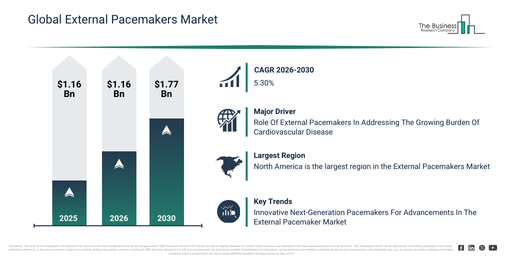
    The external pacemakers market has exhibited substantial growth in recent years. This market is expected to expand from $1.6 billion in 2025 to $1.7 billion in 2026, achieving a compound annual growth rate (CAGR) of 5.9%. Historically, the market’s expansion has been driven by factors such as the rising incidence of bradycardia, the increasing prevalence of acute myocardial infarction, an increase in cardiac surgical procedures, the expanding emergency medical services infrastructure, and the enhanced availability of cardiac critical care units.

    The external pacemakers market size is expected to experience significant growth in the coming years, with projections indicating it will reach $2.09 billion by 2030, growing at a compound annual growth rate (CAGR) of 5.3%. This expansion during the forecast period is attributed to the increasing prevalence of cardiovascular diseases, a growing aging population, the rising demand for temporary cardiac pacing solutions, the expansion of advanced cardiac care facilities, and improved access to emergency and critical care services. Major trends anticipated during this period include the increasing use of external pacemakers in emergency cardiac care, a rising adoption of temporary cardiac pacing in surgical settings, a growing demand for portable and user-friendly external pacemakers, an increasing preference for dual chamber external pacemakers, and a heightened focus on rapid cardiac stabilization in acute care.

    Access Your Free Sample Report For In-Depth Market Analysis:

    https://www.thebusinessresearchcompany.com/sample.aspx?id=15807&type=smp

    What Key Factors Are Shaping The External Pacemakers Market Landscape?

    The rising prevalence of cardiovascular diseases (CVD), conditions affecting the heart or blood vessels, is anticipated to stimulate the expansion of the external pacemaker market in the future. The increasing occurrence of CVD is linked to factors such as inactive lifestyles, diets rich in processed foods and sugars, rising obesity rates, smoking, hypertension, and stress. External pacemakers are utilized in the management of cardiovascular diseases to normalize irregular heart rhythms and enhance cardiac performance. A notable example is provided by the Centers for Disease Control and Prevention, a US-based government agency, which reported in October 2024 that cardiovascular disease caused 919,032 lives in 2023, representing roughly one out of every three fatalities. Consequently, the increasing incidence of cardiovascular diseases is projected to fuel the growth of the external pacemaker market. Growing healthcare spending is expected to drive the expansion of the external pacemaker market. Healthcare expenditure denotes the total sum allocated to healthcare products and services over a defined period, typically at a national or institutional level. Such investment in healthcare can foster research and development for external pacemakers, leading to technological advancements, improved device accessibility, and a more holistic approach to individual health and healthcare systems. For example, the Centers for Medicare & Medicaid Services, a US-based agency overseeing Medicare and Medicaid programs, reported in December 2024 that U.S. health care expenditures rose by 7.5% in 2023, reaching $4.9 trillion, or approximately $14,570 per person. Thus, the continuous rise in healthcare expenditure is propelling the growth of the external pacemaker market.

    What Segment Categories Shape The External Pacemakers Market Segment Landscape?

    The external pacemakers market covered in this report is segmented –

    1) By Product: Single Chamber, Dual Chamber

    2) By Application: Bradycardia, Acute Myocardial Infarction

    3) By End-user: Hospitals, Ambulatory Surgical Centers, Other End-Users

    Subsegments:

    1) By Single Chamber Pacemakers: Unipolar External Pacemakers, Bipolar External Pacemakers

    2) By Dual Chamber Pacemakers: Unipolar Dual Chamber Pacemakers, Bipolar Dual Chamber Pacemakers

    What Market Trends Are Affecting The External Pacemakers Market?

    Leading companies in the external pacemaker market are developing innovative products, such as miniaturized pacemakers, to extend battery life and gain a competitive edge. These miniaturized or leadless pacemakers are small electronic devices implanted in the heart to regulate its rhythm. For instance, in May 2023, Medtronic Plc, an Ireland-based medical device company, received Food and Drug Administration approval for Micra AV2 and Micra VR2, which are the next generation of its industry-leading miniaturized, leadless pacemakers. These devices offer up to 40% more battery life than their predecessors, with an estimated median battery life spanning nearly 16 to 17 years. They also incorporate advanced algorithms for automatic AV synchrony programming and enhanced tracking capabilities for active patients. Micra pacemakers contribute to minimizing complications and improving the patient experience due to their compact size and the absence of leads or surgical pockets.

    Who Are The Companies Operating Across The External Pacemakers Market Value Chain?

    Major companies operating in the external pacemakers market are ZOLL Medical Corporation, Shree Pacetronix Ltd, Osypka Medical Inc, Medtronic plc, Abbott Laboratories, Boston Scientific Corporation, Lepu Medical Technology Co Ltd, Biotronik SE & Co KG, LivaNova PLC, MicroPort CRM, Nihon Kohden Corporation, BPL Medical Technologies, Schiller AG, Progetti Medical Equipment Solutions, Instramed Indústria Médico Hospitalar, Corpuls GmbH, Skanray Technologies Ltd, Bexen Cardio, CU Medical Systems Inc, Advanced Instrumentations

    Get The Full External Pacemakers Market Report:

    https://www.thebusinessresearchcompany.com/report/external-pacemakers-global-market-report

    Which Region Leads The External Pacemakers Market In Terms Of Market Share?

    North America was the largest region in the external peacemakers market in 2025. Asia-Pacific is expected to be the fastest-growing region in the forecast period. The regions covered in the external pacemakers market report are Asia-Pacific, South East Asia, Western Europe, Eastern Europe, North America, South America, Middle East, Africa.

    Request A Customized External Pacemakers Market Report For Competitive Insights:

    https://www.thebusinessresearchcompany.com/customise?id=15807&type=smp

    Browse Through More Reports Similar to the Global External Pacemakers Market 2026, By The Business Research Company

    Pacemakers Market Report 2026

    https://www.thebusinessresearchcompany.com/report/pacemakers-global-market-report

    Leadless Pacemakers Market Report 2026

    https://www.thebusinessresearchcompany.com/report/leadless-pacemakers-global-market-report

    Cardiac Pacemakers Market Report 2026

    https://www.thebusinessresearchcompany.com/report/cardiac-pacemakers-global-market-report

    Get in touch with us:

    The Business Research Company: https://www.thebusinessresearchcompany.com/

    Americas +1 310-496-7795

    Asia +44 7882 955267 & +91 8897263534

    Europe +44 7882 955267

    Email us at info@tbrc.info

    Follow us on:

    LinkedIn: https://in.linkedin.com/company/the-business-research-company

    YouTube: https://www.youtube.com/channel/UC24_fI0rV8cR5DxlCpgmyFQ

    Global Market Model: https://www.thebusinessresearchcompany.com/global-market-model