Category: Medical Equipment

  • Rising Breast Cancer Incidence Is Driving Growth In The Breast Cancer Screening Test Market

    Rising Breast Cancer Incidence Is Driving Growth In The Breast Cancer Screening Test Market

    The Business Research Company’s 2026 market reports feature enhanced tools like market attractiveness analysis, TAM assessment, and company scoring matrices, along with interactive dashboards, deeper supply chain insights, and startup coverage strengthening the depth, usability, and strategic value of insights.

    What Is The Estimated Market Size Of The Breast Cancer Screening Test Market In 2026, And How Will Its Value Evolve By 2030?

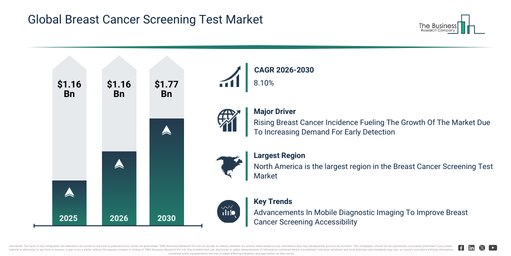
    The breast cancer screening test market has demonstrated robust growth over recent years. Projections indicate its expansion from $2.49 billion in 2025 to $2.69 billion in 2026, achieving a compound annual growth rate (CAGR) of 8.3%. Historically, this growth has been driven by factors such as enhanced awareness of breast cancer incidence, the broad implementation of mammography screening initiatives, the enlargement of diagnostic laboratory facilities, the provision of uniform screening protocols, and escalating public health screening campaigns.

    The breast cancer screening test market is projected to experience substantial expansion in the coming years. This market is anticipated to reach $3.68 billion by 2030, exhibiting a compound annual growth rate (CAGR) of 8.1%. The anticipated growth throughout this forecast period stems from several factors, including the increasing integration of personalized cancer screening protocols, the wider utilization of AI-powered diagnostic tools, the broadening adoption of genetic testing, a heightened emphasis on detecting cancer in its early stages, and greater investments in preventive oncology services. Key trends identified for the forecast timeframe encompass the rising uptake of advanced imaging-based screening tests, the expanding application of genetic and molecular diagnostics, the increasing incorporation of AI in image interpretation, the development of multi-modal screening methodologies, and a stronger focus on diagnostics that are both early and preventive.

    Access Your Free Sample Report For In-Depth Market Analysis:

    https://www.thebusinessresearchcompany.com/sample.aspx?id=24180&type=smp

    What Key Factors Are Affecting The Breast Cancer Screening Test Market Demand?

    An anticipated increase in breast cancer cases is projected to stimulate expansion within the breast cancer screening test market moving ahead. Breast cancer is defined by the uncontrolled proliferation of abnormal cells within breast tissue, potentially forming tumors and metastasizing elsewhere in the body. This uptick in breast cancer cases stems from the world’s aging populace, given that increasing age is a primary risk factor for the condition, and extended life expectancies contribute to a larger pool of individuals susceptible to it. Early detection of the disease through breast cancer screening tests improves prospects for successful treatment and lowers mortality associated with breast cancer. As an illustration, in March 2025, Breastcancer.org, a US nonprofit, anticipates approximately 316,950 women will be diagnosed with invasive breast cancer in 2025, alongside 59,080 new instances of non-invasive ductal carcinoma in situ (DCIS). Consequently, the escalating incidence of breast cancer is a key factor propelling the expansion of the breast cancer screening test market.

    What Segment Categories Shape The Breast Cancer Screening Test Market Segment Landscape?

    The breast cancer screening test market covered in this report is segmented –

    1) By Diagnostic Test Type: Blood Marker Test, Imaging Test, Genetic Test, Immunohistochemistry Test

    2) By Risk Level: High-risk Population, Moderate-risk Population, Average-risk Population

    3) By End User: Hospitals, Diagnostic Centres, Cancer Institutes, Research Laboratories

    Subsegments:

    1) By Blood Marker Test: Circulating Tumor Cells (Ctcs) Test, Gene Expression Profiling Test, Circulating Tumor Dna (Ctdna) Test, Proteomic Biomarker Test

    2) By Imaging Test: Mammography, Magnetic Resonance Imaging Screening Test, Molecular Breast Imaging Test, Positron Emission Mammography, Ultrasound

    3) By Genetic Test: Fluorescence In Situ Hybridization, Her Gene Test

    4) By Immunohistochemistry (Ihc) Test: Estrogen Receptor (Er) Test, Ki-67 Proliferation Marker Test, Progesterone Receptor (Pr) Test, Her2 Or Neu Test

    What Trends Are Influencing Changes In The Breast Cancer Screening Test Market?

    Major companies in the breast cancer screening test market are concentrating on developing innovative products, such as mobile cancer screening units. This strategy aims to enhance accessibility, improve early detection rates, and expand screening coverage in underserved and remote areas. A mobile cancer screening unit functions as a transportable facility equipped with diagnostic imaging technologies like mammography, designed to deliver on-site breast cancer screening services in remote or underserved locations. For instance, in September 2024, Granules India Ltd., an India-based pharmaceutical company, launched a Breast Health Express to boost breast cancer screening in underprivileged communities. This unit is fitted with state-of-the-art mammography and ultrasound technology, enabling high-quality screenings to be performed on the go. The initiative focuses on reaching underserved and rural communities where access to healthcare facilities may be limited, thereby ensuring women in remote areas can access crucial early detection services.

    Who Are The Companies Operating Across The Breast Cancer Screening Test Market Value Chain?

    Major companies operating in the breast cancer screening test market are F. Hoffmann-La Roche Ltd., Thermo Fisher Scientific Inc., Abbott Laboratories, Siemens Healthcare GmbH, Fujifilm Corporation, Koninklijke Philips NV, GE HealthCare Technologies Inc., Quest Diagnostics Incorporated, Hologic Inc., Hitachi High-Tech Corporation, Exact Sciences Corporation, Natera Inc., Myriad Genetics Inc., Canon Medical Systems Corporation, Provista Diagnostics Inc., Niramai Health Analytix Pvt. Ltd., Kheiron Medical Technologies Limited, UE LifeSciences Inc., BD (Becton Dickinson and Company), Agilent Technologies Inc.

    Get The Full Breast Cancer Screening Test Market Report:

    https://www.thebusinessresearchcompany.com/report/breast-cancer-screening-test-global-market-report

    Which Region Holds The Highest Market Share In The Breast Cancer Screening Test Market?

    North America was the largest region in the breast cancer screening test market in 2025. Asia-Pacific is expected to be the fastest-growing region in the forecast period. The regions covered in the breast cancer screening test market report are Asia-Pacific, South East Asia, Western Europe, Eastern Europe, North America, South America, Middle East, Africa.

    Request A Customized Breast Cancer Screening Test Market Report For Competitive Insights:

    https://www.thebusinessresearchcompany.com/customise?id=24180&type=smp

    Browse Through More Reports Similar to the Global Breast Cancer Screening Test Market 2026, By The Business Research Company

    Cellular Health Screening Market Report 2026

    https://www.thebusinessresearchcompany.com/report/cellular-health-screening-global-market-report

    Next Generation Gynecological Cancer Diagnostics Market Report 2026

    https://www.thebusinessresearchcompany.com/report/next-generation-gynecological-cancer-diagnostics-global-market-report

    Breast Cancer Drugs Market Report 2026

    https://www.thebusinessresearchcompany.com/report/breast-cancer-drugs-global-market-report

    Get in touch with us:

    The Business Research Company: https://www.thebusinessresearchcompany.com/

    Americas +1 310-496-7795

    Asia +44 7882 955267 & +91 8897263534

    Europe +44 7882 955267

    Email us at info@tbrc.info

    Follow us on:

    LinkedIn: https://in.linkedin.com/company/the-business-research-company

    YouTube: https://www.youtube.com/channel/UC24_fI0rV8cR5DxlCpgmyFQ

    Global Market Model: https://www.thebusinessresearchcompany.com/global-market-model
  • Breast Cancer Liquid Biopsy Market Analysis Highlighting Growth Potential And Outlook

    Breast Cancer Liquid Biopsy Market Analysis Highlighting Growth Potential And Outlook

    The Business Research Company’s 2026 market reports feature enhanced tools like market attractiveness analysis, TAM assessment, and company scoring matrices, along with interactive dashboards, deeper supply chain insights, and startup coverage strengthening the depth, usability, and strategic value of insights.

    How Does The Market Size Of The Breast Cancer Liquid Biopsy Market Compare Between 2026 And 2030?

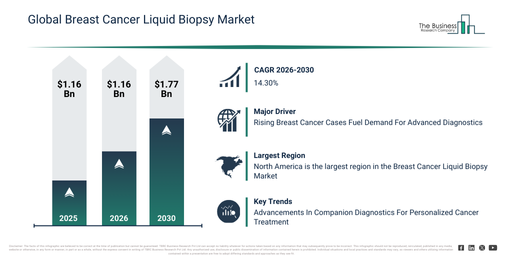
    The breast cancer liquid biopsy market size has seen rapid expansion in recent years. It is anticipated to grow from $0.89 billion in 2025 to $1.02 billion in 2026, achieving a compound annual growth rate (CAGR) of 14.6%. The historical increase in this market can be attributed to several factors such as rising breast cancer prevalence, limitations of tissue biopsy, oncology diagnostic advancements, increased screening awareness, and laboratory testing expansion.

    The breast cancer liquid biopsy market is anticipated to undergo significant expansion in the coming years, with its size projected to reach $1.75 billion by 2030, driven by a compound annual growth rate (CAGR) of 14.3%. This expansion during the forecast period is primarily due to factors like precision oncology adoption, AI-based mutation analysis, personalized treatment planning, growth in cfDNA testing, and decentralized cancer diagnostics. Prominent trends for this period include multi-biomarker blood-based testing, non-invasive cancer monitoring, treatment response tracking, early recurrence detection, and personalized oncology diagnostics.

    Access Your Free Sample Report For In-Depth Market Analysis:

    https://www.thebusinessresearchcompany.com/sample.aspx?id=21119&type=smp

    Which Primary Drivers Are Impacting The Breast Cancer Liquid Biopsy Market Growth?

    The increasing number of breast cancer cases is projected to drive the expansion of the breast cancer liquid biopsy market in the coming years. Breast cancer is a malignancy that forms in the breast’s cells, typically within the lobules (milk-producing glands) or ducts (pathways that transport milk to the nipple). The growing occurrence of breast cancer is influenced by factors including genetic predisposition, hormonal imbalances, an aging demographic, changes in lifestyle, obesity, alcohol consumption, insufficient physical activity, exposure to radiation, and environmental pollutants. A breast cancer liquid biopsy is employed in treatment to identify circulating tumor DNA (ctDNA) or circulating tumor cells (CTCs) in the bloodstream, facilitating real-time disease monitoring. It plays a role in evaluating treatment effectiveness, detecting resistance to therapy, and pinpointing genetic mutations for targeted interventions. For instance, in 2025, according to the American Cancer Society, a US-based nonprofit organization dedicated to cancer research, education, advocacy, and patient support, the count of new breast cancer cases is anticipated to climb to 319,750 in 2025, an increase from 313,510 cases in 2024. Consequently, the rise in breast cancer cases is propelling the growth of the breast cancer liquid biopsy market.

    Which Segment Types Are Examined In The Breast Cancer Liquid Biopsy Market Segment Study?

    The breast cancer liquid biopsy market covered in this report is segmented –

    1) By Product: Consumables, Kits

    2) By Biomarkers: Extracellular Vesicles (EVs), Cell-free DNA (cfDNA), Circulating Tumor RNA (ctRNA), Circulating Tumor Cells (CTCs), Cell-free RNA (cfRNA), Other Biomarkers

    3) By Application: Early Detection Or Screening, Diagnosis, Other Applications

    4) By End Users: Laboratories, Hospitals, Physician Laboratories, Reference Laboratories, Public Health Laboratories, Research Institutes, Small Molecular Laboratories, Pathology Laboratories

    Subsegments:

    1) By Consumables: Reagents, Polymerase Chain Reaction (PCR) Assays, Sequencing Panels, Sample Collection Tubes

    2) By Kits: DNA-based Liquid Biopsy Kits, RNA-based Liquid Biopsy Kits, Multi-marker Liquid Biopsy Kits

    Which Trends Are Shaping Growth In The Breast Cancer Liquid Biopsy Market?

    Major companies operating in the breast cancer liquid biopsy market are primarily focusing on the development of innovative products, such as companion diagnostics, to enable personalized treatment approaches by pinpointing patients who are likely to benefit from specific therapies. Companion diagnostics utilize liquid biopsy technologies to detect crucial biomarkers like genetic mutations, circulating tumor DNA (ctDNA), or protein expressions that indicate treatment responsiveness. For instance, in January 2023, Guardant Health Inc., a US-based biotechnology company, secured Food and Drug Administration (FDA) approval for its Guardant360 CDx liquid biopsy test. This test functions as a companion diagnostic for Menarini Group’s ORSERDU (elacestrant), a treatment intended for advanced or metastatic breast cancer patients with ESR1 mutations. This approval empowers oncologists to use the test for comprehensive genomic profiling, thereby identifying patients who may be suitable candidates for the targeted therapy. It represents Guardant Health’s inaugural U.S. Food and Drug Administration (FDA) approval in the breast cancer field and enhances its contribution to precision oncology.

    Which Players Are Part Of The Competitive Landscape Of The Breast Cancer Liquid Biopsy Market?

    Major companies operating in the breast cancer liquid biopsy market are Johnson & Johnson Private Limited, Roche Diagnostics, Merck KGaA, Thermo Fisher Scientific, Siemens Healthineers, Agilent Technologies Inc., Illumina Inc., Sysmex Corporation, Qiagen N.V., Myriad Genetics Inc., NeoGenomics Laboratories, Guardant Health Inc., Twist Bioscience, Foundation Medicine Inc., Biodesix Inc., Menarini Silicon Biosystems, Datar Cancer Genetics, Abcam plc, OncoDNA SA, Genomic Health Inc., RainDance Technologies, Biocept Inc., Fluxion Biosciences Inc., Angle plc

    Get The Full Breast Cancer Liquid Biopsy Market Report:

    https://www.thebusinessresearchcompany.com/report/breast-cancer-liquid-biopsy-global-market-report

    Where Is The Breast Cancer Liquid Biopsy Market Most Concentrated Geographically?

    North America was the largest region in the breast cancer liquid biopsy market in 2025. Asia-Pacific is expected to be the fastest-growing region in the forecast period. The regions covered in the breast cancer liquid biopsy market report are Asia-Pacific, South East Asia, Western Europe, Eastern Europe, North America, South America, Middle East, Africa.

    Request A Customized Breast Cancer Liquid Biopsy Market Report For Competitive Insights:

    https://www.thebusinessresearchcompany.com/customise?id=21119&type=smp

    Browse Through More Reports Similar to the Global Breast Cancer Liquid Biopsy Market 2026, By The Business Research Company

    Liquid Biopsy Market Report 2026

    https://www.thebusinessresearchcompany.com/report/liquid-biopsy-global-market-report

    Breast Cancer Diagnostics Market Report 2026

    https://www.thebusinessresearchcompany.com/report/breast-cancer-diagnostics-global-market-report

    Biopsy Devices Market Report 2026

    https://www.thebusinessresearchcompany.com/report/biopsy-devices-global-market-report

    Get in touch with us:

    The Business Research Company: https://www.thebusinessresearchcompany.com/

    Americas +1 310-496-7795

    Asia +44 7882 955267 & +91 8897263534

    Europe +44 7882 955267

    Email us at info@tbrc.info

    Follow us on:

    LinkedIn: https://in.linkedin.com/company/the-business-research-company

    YouTube: https://www.youtube.com/channel/UC24_fI0rV8cR5DxlCpgmyFQ

    Global Market Model: https://www.thebusinessresearchcompany.com/global-market-model
  • Breast Cancer Diagnostics Market Forecast Highlighting Industry Progress And Growth Trends

    Breast Cancer Diagnostics Market Forecast Highlighting Industry Progress And Growth Trends

    The Business Research Company’s 2026 market reports feature enhanced tools like market attractiveness analysis, TAM assessment, and company scoring matrices, along with interactive dashboards, deeper supply chain insights, and startup coverage strengthening the depth, usability, and strategic value of insights.

    What Is The Forecasted Market Size Trajectory Of The Breast Cancer Diagnostics Market From 2026 To 2030?

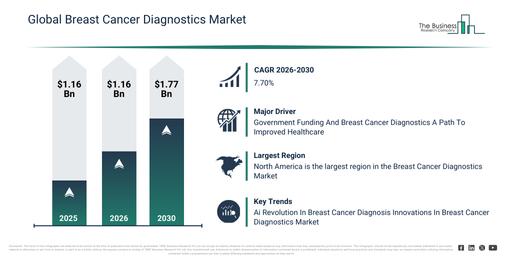
    The breast cancer diagnostics market has demonstrated robust growth in recent years. It is projected to expand from $5 billion in 2025 to $5.42 billion in 2026, at a compound annual growth rate (CAGR) of 8.3%. The growth observed in the historic period stems from several factors, including the rising incidence of breast cancer globally, increased awareness of early cancer screening, the expansion of diagnostic imaging infrastructure, the growing availability of biomarker-based tests, and enhancements in biopsy accuracy and safety.

    The breast cancer diagnostics market is anticipated to experience substantial growth over the coming years. This market is projected to reach $7.28 billion by 2030, demonstrating a compound annual growth rate (CAGR) of 7.7%. Factors contributing to this anticipated growth include the wider adoption of precision oncology diagnostics, increased investments in AI-powered diagnostic platforms, a rising need for less invasive testing methods, the expansion of widespread screening initiatives, and ongoing innovations in molecular diagnostic technologies. Key trends expected during this period encompass the growing integration of AI-assisted imaging analysis, an uptick in genomic and molecular testing, the increased application of liquid biopsy techniques, the development of sophisticated non-ionizing imaging approaches, and a stronger emphasis on prompt and tailored diagnoses.

    Access Your Free Sample Report For In-Depth Market Analysis:

    https://www.thebusinessresearchcompany.com/sample.aspx?id=3284&type=smp

    What Significant Factors Are Influencing The Breast Cancer Diagnostics Market Expansion?

    Government initiatives and funding directed at breast cancer are anticipated to stimulate the expansion of the breast cancer diagnostics market moving forward. These government initiatives and funding represent a form of financial aid provided by the government to selected entities with concepts or projects that contribute to and enhance public services and the economy. Such governmental support is vital for bolstering breast cancer research, prevention, and treatment, with various programs being rolled out to increase public awareness, encourage early detection through screening and mammography, and provide financial assistance to underserved communities for breast cancer testing and treatment. For example, The Australian Government Department of Health (DoH), the Australia-based Government agency, allocated $40.7 million in its 2022-23 budget to improve access to testing and screening services for different types of cancers, addressing disruptions caused by the COVID-19 pandemic, and facilitating timely referrals, swift diagnosis, and early intervention. This allocation included $9.7 million specifically designated for breast cancer screening. Therefore, government initiatives and funding for breast cancer are instrumental in driving the growth of the breast cancer diagnostics market.

    How Are Different Segments Classified In The Breast Cancer Diagnostics Market Segment Analysis?

    The breast cancer diagnostics market covered in this report is segmented –

    1) By Type: Imaging, Biopsy, Genomic Tests, Blood Tests, Other Types

    2) By Technology: Fluorescent In Situ Hybridization (FISH), Comparative Genomic Hybridization (CGH), Immunohistochemical (IHC), Other Technologies

    3) By Cancer Type: BRCA Breast Cancer, ER And PR Breast Cancer, HER 2 Breast Cancer, Triple-Negative Breast Cancer, Other Cancer Types

    4) By Diagnostic Type: Ionizing Breast Imaging Technologies, Non-ionizing Imaging Technologies

    5) By End Users: Hospitals And Clinics, Cancer Research Centers, Diagnostic Laboratories, Ambulatory Surgical Centers

    Subsegments:

    1) By Imaging: Mammography, Ultrasound Imaging, Magnetic Resonance Imaging (MRI), Positron Emission Tomography (PET), Tomosynthesis

    2) By Biopsy: Needle Biopsy, Core Needle Biopsy, Fine Needle Aspiration Biopsy (FNA), Stereotactic Biopsy

    3) By Genomic Tests: Oncotype DX, MammaPrint, PAM50, BRCA1 Or 2 Testing

    4) By Blood Tests: Liquid Biopsy, Circulating Tumor DNA (ctDNA) Tests, Circulating Tumor Cells (CTCs) Tests

    5) By Other Types: Hormone Receptor Tests, HER2 Tests, Genetic Mutation Testing

    What Trends Are Affecting The Direction Of The Breast Cancer Diagnostics Market?

    Leading companies in the breast cancer diagnostics market are concentrating on developing innovative AI-powered diagnostic solutions, such as advanced pathology scoring platforms, to boost accuracy, streamline workflows, and enable personalized treatment planning. AI-based diagnostic platforms are defined as technologies that leverage machine learning and deep-learning algorithms to analyze medical imaging, pathology slides, or clinical data, providing diagnostic insights or risk stratifications that support clinical decision-making. For instance, in September 2024, Ibex Medical Analytics, an Israel-based digital pathology company, unveiled its expanded AI platform for breast cancer diagnostics, introducing a fully automated zero-click HER2 immunohistochemistry (IHC) scoring feature within its Ibex Breast HER2 module. This tool accurately identifies invasive cancer areas, classifies HER2 expression levels (0, 1+, 2+, 3+), and assists breast cancer diagnosis and treatment-pathway decisions with enhanced accuracy and workflow efficiency.

    Who Are The Companies Driving Activity In The Breast Cancer Diagnostics Market?

    Major companies operating in the breast cancer diagnostics market are Abbott Laboratories, Myriad Genetics Inc., Hologic Inc., Koninklijke Philips N.V., Fujifilm Holdings Corporation, GE Healthcare, Thermo Fisher Scientific Inc., Siemens AG, NanoString Technologies Inc., Gamma Medica Inc., Aurora Imaging Technology Inc., Dilon Technologies Inc., Exact Sciences Corporation, F. Hoffmann-La Roche Ltd., Micrima Limited, Provista Diagnostics Inc., Leica Biosystems Nussloch GmbH, bioTheranostics Inc., Bio-Rad Laboratories Inc., Illumina Inc., Biocept Inc., Quest Diagnostics Incorporated, Agilent Technologies Inc., Cepheid, Guardant Health Inc., Invitae Corporation, Natera Inc., NeoGenomics Laboratories Inc., Oncocyte Corporation, PerkinElmer Inc., Sysmex Corporation, Veracyte Inc.

    Get The Full Breast Cancer Diagnostics Market Report:

    https://www.thebusinessresearchcompany.com/report/breast-cancer-diagnostics-global-market-report

    Which Region Dominates The Breast Cancer Diagnostics Market By Market Share?

    North America was the largest region in the breast cancer diagnostics market in 2025. Asia-Pacific was the second largest region in the breast cancer diagnostics industry. The regions covered in the breast cancer diagnostics market report are Asia-Pacific, South East Asia, Western Europe, Eastern Europe, North America, South America, Middle East, Africa.

    Request A Customized Breast Cancer Diagnostics Market Report For Competitive Insights:

    https://www.thebusinessresearchcompany.com/customise?id=3284&type=smp

    Browse Through More Reports Similar to the Global Breast Cancer Diagnostics Market 2026, By The Business Research Company

    Next Generation Gynecological Cancer Diagnostics Market Report 2026

    https://www.thebusinessresearchcompany.com/report/next-generation-gynecological-cancer-diagnostics-global-market-report

    Cancer Diagnostics Market Report 2026

    https://www.thebusinessresearchcompany.com/report/cancer-diagnostics-global-market-report

    Breast Imaging Technologies Market Report 2026

    https://www.thebusinessresearchcompany.com/report/breast-imaging-technologies-global-market-report

    Get in touch with us:

    The Business Research Company: https://www.thebusinessresearchcompany.com/

    Americas +1 310-496-7795

    Asia +44 7882 955267 & +91 8897263534

    Europe +44 7882 955267

    Email us at info@tbrc.info

    Follow us on:

    LinkedIn: https://in.linkedin.com/company/the-business-research-company

    YouTube: https://www.youtube.com/channel/UC24_fI0rV8cR5DxlCpgmyFQ

    Global Market Model: https://www.thebusinessresearchcompany.com/global-market-model
  • Breast Biopsy Market Trends Driving Growth Through 2030

    Breast Biopsy Market Trends Driving Growth Through 2030

    The Business Research Company’s 2026 market reports feature enhanced tools like market attractiveness analysis, TAM assessment, and company scoring matrices, along with interactive dashboards, deeper supply chain insights, and startup coverage strengthening the depth, usability, and strategic value of insights.

    How Much Will The Market Value Of The Breast Biopsy Market Grow Between 2026 And 2030?

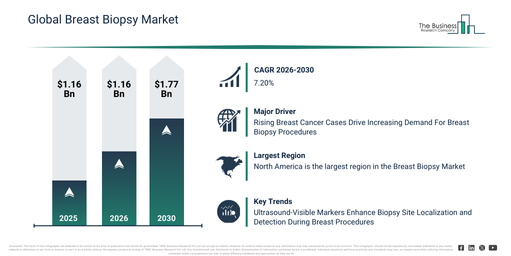
    The breast biopsy market size has experienced substantial growth in recent years. This market is anticipated to expand from $1.53 billion in 2025 to $1.65 billion in 2026, demonstrating a compound annual growth rate (CAGR) of 7.5%. The historical period’s expansion can be attributed to several factors, including the limited availability of advanced biopsy systems, reliance on traditional surgical biopsy methods, an increasing incidence of breast cancer, the development of hospital and diagnostic center infrastructure, and the adoption of ultrasound-guided procedures.

    The breast biopsy market is projected to experience substantial expansion in the coming years. Its valuation is anticipated to reach $2.17 billion by 2030, exhibiting a compound annual growth rate (CAGR) of 7.2%. This projected growth is driven by several factors, including ongoing technological progress in liquid biopsy and imaging-guided systems, increased awareness regarding the early identification of breast cancer, the proliferation of diagnostic centers and hospitals, the growing adoption of AI and data analytics, and the evolution of personalized and precision medicine strategies. Key trends anticipated during this period encompass a greater acceptance of minimally invasive biopsy techniques, the increasing application of liquid biopsy methods, advancements in imaging-guided biopsy systems, the broadening scope of breast cancer diagnostic and screening initiatives, and a heightened emphasis on ensuring patient safety and sample precision.

    Access Your Free Sample Report For In-Depth Market Analysis:

    https://www.thebusinessresearchcompany.com/sample.aspx?id=19348&type=smp

    Which Important Drivers Are Guiding The Breast Biopsy Market Growth?

    The increasing incidence of breast cancer is anticipated to drive the expansion of the breast biopsy market in the future. Breast cancer refers to a malicious tumor originating in breast tissue cells, capable of metastasizing to other bodily regions if not addressed swiftly. Its widespread occurrence is linked to elements like extended lifespans, enhanced diagnostic techniques, and greater public understanding of the condition. To diagnose and characterize breast cancer, a breast biopsy procedure collects tissue specimens from questionable breast regions. For example, in October 2025, Breastcancer.org, a US-based non-profit organization, indicated that an estimated 316,950 women are projected to receive a diagnosis of invasive breast cancer in 2025, alongside approximately 59,080 new cases of non-invasive ductal carcinoma in situ (DCIS). Consequently, the rising prevalence of breast cancer is fueling the expansion of the breast biopsy market.

    How Is The Breast Biopsy Market Categorized Across Its Segment Groups?

    The breast biopsy market covered in this report is segmented –

    1) By Type: Biopsy Needles, Guidance Systems, Biopsy Tables, Localization Wires, Assay Kits, Liquid Biopsy Instruments, Other Types

    2) By Image Guided Technology: Magnetic Resonance Imaging (MRI) Guided Breast Biopsy, Ultrasound Guided Breast Biopsy, Mammography Guided Stereotactic Biopsy, Computed Tomography (CT) Guided Biopsy, Other Image Guided Technologies

    3) By Procedure: Needle Breast Biopsy, Open Surgical Breast Biopsy, Liquid Breast Biopsy

    4) By Application: Hospitals, Clinics, Diagnostic Centers, Other Applications

    Subsegments:

    1) By Biopsy Needles: Core Biopsy Needles, Fine Needle Aspiration (FNA) Needles, Vacuum-Assisted Biopsy Needles, Automatic Biopsy Needles

    2) By Guidance Systems: Ultrasound Guidance Systems, MRI Guidance Systems, Stereotactic Guidance Systems, Tomosynthesis Guidance Systems

    3) By Biopsy Tables: Adjustable Biopsy Tables, Specialty Biopsy Tables, Imaging-Compatible Biopsy Tables

    4) By Localization Wires: Hookwire Localization Devices, Radioguided Localization Wires, Magnetic Seed Localization Systems

    5) By Assay Kits: Breast Cancer Assay Kits, Biomarker Detection Kits, Genetic Testing Kits for Breast Cancer

    6) By Liquid Biopsy Instruments: Circulating Tumor Cell (CTC) Isolation Devices, Plasma DNA Isolation Kits, Liquid Biopsy Analysis Systems

    7) By Other Types: Biopsy Adhesives, Specimen Collection and Transport Devices, Patient Management Systems

    What Trends Are Influencing The Evolution Of The Breast Biopsy Market?

    Leading companies operating in the breast biopsy marker market are concentrating on developing innovative products, such as ultrasound-visible site markers, to enhance lesion localization and reduce marker displacement during breast biopsy procedures. An ultrasound-visible site marker is a specially designed implantable device that improves visualization of biopsy sites during imaging and provides stable localization for future surgical intervention. For instance, in August 2023, Mammotome, a US-based provider of breast biopsy and localization technologies, launched HydroMark Plus. This new breast biopsy site marker offers improved lesion visibility on ultrasound, which assists radiologists and surgeons in accurately targeting biopsy sites while reducing the risk of marker displacement during subsequent surgical procedures. As the latest addition to Mammotome’s HydroMark portfolio, HydroMark Plus is designed for enhanced procedural reliability and is slated for nationwide availability in the U.S. by the end of the year. The product’s key features include high ultrasound conspicuity for easy detection, minimized risk of movement within breast tissue, and suitability for a wide variety of breast imaging and interventional workflows. These attributes are aimed at improving clinical outcomes and procedural confidence for both physicians and patients.

    Which Firms Are Influencing Competition In The Breast Biopsy Market?

    Major companies operating in the breast biopsy market are Siemens Healthineers AG, Fujifilm Holdings Corporation, Becton Dickinson and Company BD, Koninklijke Philips, GE HealthCare Technologies Inc, Hologic Inc, Merit Medical Systems, Argon Medical Devices, Canon Medical Systems Corporation, Devicor Medical Products Inc, Planmed Oy, Menarini-Silicon Biosystems, Seno Medical Instruments Inc, Dilon Technologies Inc, INRAD Inc, Promaxo Inc, Cook Medical LLC, Boston Scientific Corporation, Stryker Corporation, Intact Medical Corporation, Scion Medical Technologies LLC, Galini SRL, Ethicon Surgical Technologies, Encapsule Medical Devices LLC, Cardinal Health Inc, Olympus Corporation, F Hoffmann-La Roche Ltd, Biocept Inc.

    Get The Full Breast Biopsy Market Report:

    https://www.thebusinessresearchcompany.com/report/breast-biopsy-global-market-report

    Which Region Is The Largest In The Breast Biopsy Market?

    North America was the largest region in the breast biopsy market in 2025. Asia-Pacific is expected to be the fastest-growing region in the forecast period. The regions covered in the breast biopsy market report are Asia-Pacific, South East Asia, Western Europe, Eastern Europe, North America, South America, Middle East, Africa.

    Request A Customized Breast Biopsy Market Report For Competitive Insights:

    https://www.thebusinessresearchcompany.com/customise?id=19348&type=smp

    Browse Through More Reports Similar to the Global Breast Biopsy Market 2026, By The Business Research Company

    Biopsy Devices Market Report 2026

    https://www.thebusinessresearchcompany.com/report/biopsy-devices-global-market-report

    Liquid Biopsy For Cancer Diagnostics Market Report 2026

    https://www.thebusinessresearchcompany.com/report/liquid-biopsy-for-cancer-diagnostics-global-market-report

    Smart Biopsy Devices Market Report 2026

    https://www.thebusinessresearchcompany.com/report/smart-biopsy-devices-global-market-report

    Get in touch with us:

    The Business Research Company: https://www.thebusinessresearchcompany.com/

    Americas +1 310-496-7795

    Asia +44 7882 955267 & +91 8897263534

    Europe +44 7882 955267

    Email us at info@tbrc.info

    Follow us on:

    LinkedIn: https://in.linkedin.com/company/the-business-research-company

    YouTube: https://www.youtube.com/channel/UC24_fI0rV8cR5DxlCpgmyFQ

    Global Market Model: https://www.thebusinessresearchcompany.com/global-market-model
  • Brain Wave Analyzer Market Growth Trends And Forecast Outlook Through 2030

    Brain Wave Analyzer Market Growth Trends And Forecast Outlook Through 2030

    The Business Research Company’s 2026 market reports feature enhanced tools like market attractiveness analysis, TAM assessment, and company scoring matrices, along with interactive dashboards, deeper supply chain insights, and startup coverage strengthening the depth, usability, and strategic value of insights.

    What Changes In Market Value Are Expected For The Brain Wave Analyzer Market Over The 2026–2030 Period?

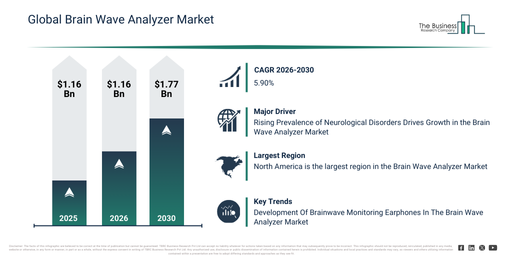
    The brain wave analyzer market size has exhibited robust growth over recent years. It is anticipated to expand from $2.42 billion in 2025 to $2.56 billion in 2026, demonstrating a compound annual growth rate (CAGR) of 5.9%. This historical expansion can be linked to factors such as the increasing prevalence of neurological disorders, a heightened demand for EEG-based diagnostics, the greater use of brain monitoring in hospital environments, the broadening of clinical neurology services, and an increase in neuroscience research funding.

    The brain wave analyzer market is anticipated to show significant expansion in the upcoming years. Its value is projected to reach $3.22 billion by 2030, growing at a compound annual growth rate (CAGR) of 5.9%. This surge during the forecast period is driven by an increased focus on preventive brain health, the growing adoption of home-based brain monitoring, heightened mental health awareness, the rising need for personalized neurology solutions, and the broader integration of brain monitoring into wellness applications. Notable trends for the forecast period encompass the increasing use of AI-enabled brain signal interpretation, the integration of connected and wearable brain monitoring devices, cloud-based storage and remote analysis of brain data, the expansion of precision neurology and personalized brain care, and the employment of immersive interfaces for visualizing brain data.

    Access Your Free Sample Report For In-Depth Market Analysis:

    https://www.thebusinessresearchcompany.com/sample.aspx?id=18271&type=smp

    What Major Factors Are Driving The Brain Wave Analyzer Market Forward?

    The increasing occurrence of neurological disorders is projected to stimulate the growth of the brain wave analyzer market moving forward. Neurological disorders are a collection of conditions that affect the nervous system, including the brain, spinal cord, and peripheral nerves. The rise in neurological disorders is attributed to elevated stress, poor dietary habits, lack of physical activity, and exposure to environmental toxins. A brain wave analyzer, leveraging electroencephalograph (EEG), assists in diagnosing and managing neurological disorders by assessing brain activity to detect anomalies, monitor advancement, inform therapy plans, and support interventional treatments. For instance, in March 2023, according to the Alzheimer’s Association, a US-based non-profit voluntary health organization, in the United States, an estimated 6.7 million Americans aged 65 and older were living with Alzheimer’s dementia, which is a neurological disorder. Furthermore, by 2060, the number of individuals aged 65 and older with Alzheimer’s dementia is anticipated to rise to 13.8 million. Therefore, the escalating prevalence of neurological disorders is fueling the expansion of the brain wave analyzer market.

    How Are Segments Identified Within The Brain Wave Analyzer Market Segment Framework?

    The brain wave analyzer market covered in this report is segmented –

    1) By Product: Software, Hardware

    2) By Application: Neuro Feedback, Sleeping Aid

    3) By End User: Hospitals, Neurology Centers, Clinics And Ambulatory Surgical Centers (ASCs)

    Subsegments:

    1) By Software: Brainwave Monitoring Software, Brainwave Analysis And Visualization Software, EEG Signal Processing Software, Cognitive State Monitoring Software

    2) By Hardware: EEG Headsets And Electrodes, Portable EEG Devices, Clinical EEG Machines, Wireless Brainwave Sensors

    Which Trends Are Impacting The Progress Of The Brain Wave Analyzer Market?

    Leading companies in the brain wave analyzer market are focusing on developing innovative brain wave analysis devices equipped with advanced features to enhance the accuracy and usability of brain wave analysis. Innovative brain wave analysis devices refer to sophisticated tools designed to capture, interpret, and analyze brain wave activity with greater precision and efficiency. For instance, in September 2024, Neurable, a US based company that develops brain-computer interface (BCI) technology, launched MW75 Neuro smart headphones, marking a significant advancement in consumer technology. These headphones are the first to integrate brain-computer interface (BCI) technology, enabling users to monitor their brain activity through embedded electroencephalography (EEG) sensors. The MW75 Neuro aims to improve cognitive health by providing insights into focus and aiding in the management of burnout through real-time brainwave analysis.

    Who Are The Companies Competing Within The Brain Wave Analyzer Market?

    Major companies operating in the brain wave analyzer market are Nihon Kohden, Natus Medical, Cadwell Industries, NeuroSky, Compumedics, Brain Products, EMOTIV, ANT Neuro, EGI Inc., Neuroelectrics, BrainScope, G.Tec Medical Engineering, Advanced Brain Monitoring, NeuroWave Systems, BrainMaster Technologies, Mind Media, Mitsar, Neurobit Systems, NeuroStyle, Neurovigil, Qneuro, Cortech Solutions

    Get The Full Brain Wave Analyzer Market Report:

    https://www.thebusinessresearchcompany.com/report/brain-wave-analyzer-global-market-report

    Which Region Leads The Brain Wave Analyzer Market In Terms Of Market Share?

    North America was the largest region in the brain wave analyzer market in 2025. Asia-Pacific is expected to be the fastest-growing region in the forecast period. The regions covered in the brain wave analyzer market report are Asia-Pacific, South East Asia, Western Europe, Eastern Europe, North America, South America, Middle East, Africa.

    Request A Customized Brain Wave Analyzer Market Report For Competitive Insights:

    https://www.thebusinessresearchcompany.com/customise?id=18271&type=smp

    Browse Through More Reports Similar to the Global Brain Wave Analyzer Market 2026, By The Business Research Company

    Brain Monitoring Market Report 2026

    https://www.thebusinessresearchcompany.com/report/brain-monitoring-global-market-report

    Brain Mapping Instruments Market Report 2026

    https://www.thebusinessresearchcompany.com/report/brain-mapping-instruments-global-market-report

    Brain Health Supplements Market Report 2026

    https://www.thebusinessresearchcompany.com/report/brain-health-supplements-global-market-report

    Get in touch with us:

    The Business Research Company: https://www.thebusinessresearchcompany.com/

    Americas +1 310-496-7795

    Asia +44 7882 955267 & +91 8897263534

    Europe +44 7882 955267

    Email us at info@tbrc.info

    Follow us on:

    LinkedIn: https://in.linkedin.com/company/the-business-research-company

    YouTube: https://www.youtube.com/channel/UC24_fI0rV8cR5DxlCpgmyFQ

    Global Market Model: https://www.thebusinessresearchcompany.com/global-market-model
  • Brain Pacemaker Market Insights Covering Growth Drivers, Trends, And Opportunities

    Brain Pacemaker Market Insights Covering Growth Drivers, Trends, And Opportunities

    The Business Research Company’s 2026 market reports feature enhanced tools like market attractiveness analysis, TAM assessment, and company scoring matrices, along with interactive dashboards, deeper supply chain insights, and startup coverage strengthening the depth, usability, and strategic value of insights.

    By 2030, What Market Size Is The Brain Pacemaker Market Expected To Reach Based On Its 2026 Value?

    The brain pacemaker market has experienced significant expansion recently. Its valuation is projected to increase from $1.8 billion in 2025 to $2.07 billion in 2026, exhibiting a compound annual growth rate (CAGR) of 14.8%. This historical growth has been driven by factors such as the rise in Parkinson’s disease treatment programs, the early clinical acceptance of deep brain stimulation therapy, the growing availability of implantable single-channel devices, the expansion of neurology and movement disorder care centers, and broader approaches to epilepsy and dystonia management.

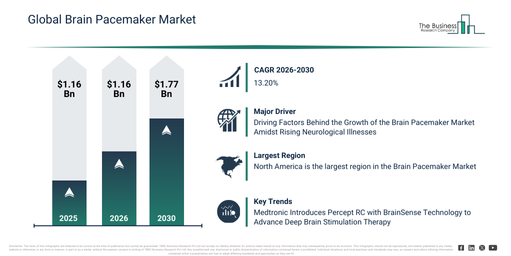
    The brain pacemaker market size is projected for substantial expansion in the coming years, reaching $3.4 billion by 2030, exhibiting a compound annual growth rate (CAGR) of 13.2%. This anticipated growth is driven by several factors, including an increasing demand for dual channel programmable pacemakers and their expanding presence in ambulatory surgical centers. Additionally, heightened investment in neuromodulation research and device innovation, coupled with the rising clinical acceptance for treating obsessive-compulsive disorder and essential tremor, contribute significantly. Furthermore, the expansion of reimbursement frameworks and patient access initiatives also fuels this market growth. Key trends influencing the market during this period encompass the increasing adoption of implantable neuromodulation and deep brain stimulation systems, alongside the growing application of brain pacemakers for intricate movement and neuropsychiatric disorders. The market is also seeing an expansion of dual-channel and programmable stimulation devices to meet advanced therapy requirements. A notable preference for minimally invasive implantation and patient-friendly device designs is emerging, complemented by a strong emphasis on long-term therapy reliability, extended battery longevity, and comprehensive post-implant monitoring.

    Access Your Free Sample Report For In-Depth Market Analysis:

    https://www.thebusinessresearchcompany.com/sample.aspx?id=16634&type=smp

    Which Key Drivers Are Affecting The Brain Pacemaker Market Development?

    The increasing occurrence of neurological conditions is anticipated to drive the expansion of the brain pacemaker market in the future. These illnesses, also referred to as neurological disorders, are health problems impacting the nervous system. The rise in neurological illness incidence is largely attributed to factors such as an aging demographic, lifestyle choices, environmental exposures, genetic susceptibility, infectious diseases, traumatic injuries, inequalities in healthcare, and the consequences of urbanization and industrialization. A brain pacemaker assists in managing neurological illnesses by providing precise electrical impulses to normalize irregular brain activity, thereby reducing symptoms and enhancing the quality of life for individuals suffering from these conditions. As an illustration, data from October 2023, reported by the World Federation of Neurology, a UK-based organization representing national neurological societies, indicates that more than 40% of people worldwide are affected by a neurological condition, a figure expected to almost double by 2050. Furthermore, an estimated 9.7 million deaths per year globally are caused by stroke, a number projected to rise by 50% by 2050. Consequently, the increasing prevalence of neurological illnesses is fueling the expansion of the brain pacemaker market.

    What Are The Key Segment Divisions In The Brain Pacemaker Market Segment Structure?

    The brain pacemaker market covered in this report is segmented –

    1) By Type: Single Channel, Dual Channel

    2) By Application: Dystonia, Epilepsy, Essential Tremor, Obsessive-Compulsive Disorder, Parkinson’s Disease, Other Applications

    3) By Sales Channel: Channel Sales, Direct Sales

    4) By End-User: Hospitals, Ambulatory Surgical Centers And Clinics, Other End-Users

    Subsegments:

    1) By Single Channel: Implantable Single Channel Brain Pacemakers, Wearable Single Channel Brain Pacemakers

    2) By Dual Channel: Implantable Dual Channel Brain Pacemakers

    What Trends Are Transforming The Brain Pacemaker Market?

    Leading companies in the brain pacemaker market are developing innovative products with advanced technologies, such as BrainSense technology, to enhance the precision and personalization of deep brain stimulation therapies. BrainSense technology captures and records brain signals, providing real-time data to personalize and optimize deep brain stimulation therapy. For instance, in January 2024, Medtronic, a US-based medical technology company, introduced the Percept RC deep brain stimulation (DBS) system. The Percept RC is the smallest and thinnest dual-channel neurostimulator available for DBS, featuring Medtronic’s exclusive BrainSense technology. DBS therapy uses a surgically implanted medical device, identical to a cardiac pacemaker, to administer electrical stimulation to precisely specified locations. BrainSense technology enables the Percept RC to capture and record brain signals, offering valuable insights that allow healthcare providers to adapt and personalize DBS therapy to meet the patient’s evolving needs.

    Which Organizations Are Engaged In The Brain Pacemaker Market?

    Major companies operating in the brain pacemaker market are Abbott Laboratories, Medtronic plc, Boston Scientific Corporation, LivaNova PLC, Renishaw plc, NeuroPace Inc., Aleva Neurotherapeutics SA, Beijing PINS Medical Co Ltd, Newronika S.p.A, Deep Brain Innovations LLC, NI2O (NI20 UK), Nuviant Medical Inc, Alpha Omega Engineering Ltd, SceneRay Co Ltd, Neuroelectrics Barcelona SLU, Neurosoft LLC, AlphaDBS Solutions, Nuvectra Corporation, Picostim

    Get The Full Brain Pacemaker Market Report:

    https://www.thebusinessresearchcompany.com/report/brain-pacemaker-global-market-report

    Which Region Leads The Brain Pacemaker Market In Overall Market Size?

    North America was the largest region in the brain pacemaker market in 2025. Asia-Pacific is expected to be the fastest-growing region in the forecast period. The regions covered in the brain pacemaker market report are Asia-Pacific, South East Asia, Western Europe, Eastern Europe, North America, South America, Middle East, Africa.

    Request A Customized Brain Pacemaker Market Report For Competitive Insights:

    https://www.thebusinessresearchcompany.com/customise?id=16634&type=smp

    Browse Through More Reports Similar to the Global Brain Pacemaker Market 2026, By The Business Research Company

    Pacemakers Market Report 2026

    https://www.thebusinessresearchcompany.com/report/pacemakers-global-market-report

    Cardiac Pacemakers Market Report 2026

    https://www.thebusinessresearchcompany.com/report/cardiac-pacemakers-global-market-report

    External Pacemakers Market Report 2026

    https://www.thebusinessresearchcompany.com/report/external-pacemakers-global-market-report

    Get in touch with us:

    The Business Research Company: https://www.thebusinessresearchcompany.com/

    Americas +1 310-496-7795

    Asia +44 7882 955267 & +91 8897263534

    Europe +44 7882 955267

    Email us at info@tbrc.info

    Follow us on:

    LinkedIn: https://in.linkedin.com/company/the-business-research-company

    YouTube: https://www.youtube.com/channel/UC24_fI0rV8cR5DxlCpgmyFQ

    Global Market Model: https://www.thebusinessresearchcompany.com/global-market-model
  • Brain Monitoring Market Developments Driving Growth Across The Forecast Period

    Brain Monitoring Market Developments Driving Growth Across The Forecast Period

    The Business Research Company’s 2026 market reports feature enhanced tools like market attractiveness analysis, TAM assessment, and company scoring matrices, along with interactive dashboards, deeper supply chain insights, and startup coverage strengthening the depth, usability, and strategic value of insights.

    What Is The Anticipated Rise In Market Value Of The Brain Monitoring Market During The Forecast Period?

    The brain monitoring market size has experienced rapid expansion in recent years. This market is set to increase from $8.74 billion in 2025 to $9.66 billion in 2026, demonstrating a compound annual growth rate (CAGR) of 10.6%. The historical growth in this sector is attributable to the increasing incidence of neurological disorders, the broader application of critical care monitoring practices, a rise in the adoption of EEG-based diagnostics, advancements in neuroimaging infrastructure, and improved access to brain monitoring technologies.

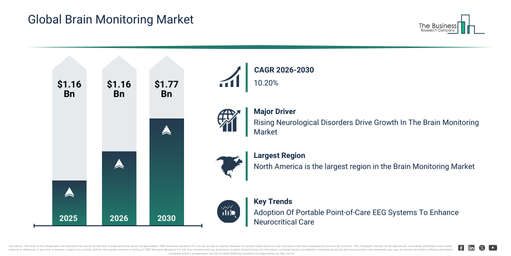
    The brain monitoring market size is anticipated to experience substantial growth over the next few years. It is projected to expand to $14.26 billion by 2030, achieving a compound annual growth rate (CAGR) of 10.2%. This growth in the forecast period can be attributed to the rising demand for personalized neurological treatment, increased investments in neurotechnology research, the expansion of remote patient monitoring, the growing utilization of AI-assisted brain diagnostics, and the increasing adoption of wearable brain monitoring systems. Significant trends during this period include the wider adoption of portable and wireless brain monitoring devices, an increase in the use of continuous cerebral oxygen monitoring, the growing integration of multimodal brain imaging systems, the expansion of non-invasive neurodiagnostic techniques, and an enhanced focus on real-time brain data analysis.

    Access Your Free Sample Report For In-Depth Market Analysis:

    https://www.thebusinessresearchcompany.com/sample.aspx?id=6587&type=smp

    What Factors Are Contributing To The Growth Of The Brain Monitoring Market?

    The rising occurrence and widespread presence of neurological disorders are projected to drive the growth of the brain monitoring market in the future. Brain monitoring is characterized as the application of instruments to assess neurological damage. It is employed in neurological conditions to offer enhanced accuracy and dependability of data regarding the severity of the neurological injury. For example, figures from April 2024, provided by the National Institutes of Health (NIH), a leading US government biomedical research agency, indicate that approximately 6.9 million Americans aged 65 and above currently suffer from Alzheimer’s dementia, with this number anticipated to almost double to 13.8 million by 2060. Consequently, the escalating frequency and occurrence of neurological disorders are propelling the expansion of the brain monitoring market.

    Which Segment Categories Are Included In The Brain Monitoring Market Segment Analysis?

    The brain monitoring market covered in this report is segmented –

    1) By Product: Magnetoencephalograph, Electroencephalograph, Cerebral Oximeters, Intracranial Pressure Monitoring Devices

    2) By Procedure: Invasive, Non-invasive

    3) By Application: Parkinson’s Disease, Traumatic Brain Injury, Epilepsy, Dementia, Sleep Disorders, Other Applications

    4) By End User: Hospitals and Clinics, Neurology Centers, Diagnostic Centers

    Subsegments:

    1) By Magnetoencephalograph (MEG): Whole-Head MEG Systems, Biomagnetic Measurement Systems

    2) By Electroencephalograph (EEG): Portable EEG Devices, Clinical EEG Systems, Wireless EEG Systems

    3) By Cerebral Oximeters: Near-Infrared Spectroscopy (NIRS) Devices, Continuous Cerebral Oxygen Monitoring Devices

    4) By Intracranial Pressure Monitoring Devices: Intraventricular Catheters, Subdural and Epidural Sensors

    What Trends Are Shaping The Future Of The Brain Monitoring Market?

    Major companies within the brain monitoring market are actively developing technological advancements, specifically focusing on portable, point-of-care EEG systems for rapid neurodiagnostics. These efforts aim to enhance patient monitoring, refine clinical decision-making, and enable remote neurological care. A point-of-care EEG system employs wireless, head-worn electrodes combined with cloud-based analytics, and unlike conventional stationary EEG machines, it allows for quick setup, continuous monitoring, and real-time alerts concerning neurological events. As an illustration, in May 2025, Natus Medical Incorporated, a U.S.-based neurodiagnostics company, launched BrainWatch, a wearable point-of-care EEG system optimized for emergency departments and intensive care units. This product features high-quality wireless EEG electrodes, can be deployed in less than five minutes, streams data to Natus NeuroWorks software, and integrates Persyst AI algorithms for instant seizure detection, thereby assisting clinical teams in rapidly identifying non-convulsive seizures, collaborating remotely with neurologists, and improving patient outcomes.

    Who Are The Active Companies Shaping The Brain Monitoring Market?

    Major companies operating in the brain monitoring market are Natus Medical Incorporated, Nihon Kohden Corporation, Philips Healthcare N.V., GE Healthcare Technologies Incorporated, Compumedics Limited, Medtronic Public Limited Company, Masimo Corporation, Spiegelberg GmbH & Co. KG, Cadwell Industries Incorporated, Elekta AB, Drägerwerk AG & Co. KGaA, Electrical Geodesics Incorporated, Integra LifeSciences Corporation, Siemens AG, CAS Medical Systems Incorporated, Neural Analytics Incorporated, BrainScope Company Incorporated, NeuroWave Systems Incorporated, Brain Products GmbH, ANT Neuro B.V., Blackrock Microsystems LLC, Cognionics Incorporated, Emotiv Incorporated, G.TEC Medical Engineering GmbH, Neurosoft Company, Advanced Brain Monitoring, NeuroSky Incorporated, OpenBCI Incorporated, Qneuro Private Limited, A.St.A. World-Wide

    Get The Full Brain Monitoring Market Report:

    https://www.thebusinessresearchcompany.com/report/brain-monitoring-global-market-report

    Which Region Is The Top Contributor To The Brain Monitoring Market By Share?

    North America was the largest region in the brain monitoring market in 2025. Asia-Pacific is expected to be the fastest-growing region in the forecast period. The regions covered in the brain monitoring market report are Asia-Pacific, South East Asia, Western Europe, Eastern Europe, North America, South America, Middle East, Africa.

    Request A Customized Brain Monitoring Market Report For Competitive Insights:

    https://www.thebusinessresearchcompany.com/customise?id=6587&type=smp

    Browse Through More Reports Similar to the Global Brain Monitoring Market 2026, By The Business Research Company

    Brain Health Supplements Market Report 2026

    https://www.thebusinessresearchcompany.com/report/brain-health-supplements-global-market-report

    Brain Mapping Instruments Market Report 2026

    https://www.thebusinessresearchcompany.com/report/brain-mapping-instruments-global-market-report

    Neurology Monitoring Market Report 2026

    https://www.thebusinessresearchcompany.com/report/neurology-monitoring-global-market-report

    Get in touch with us:

    The Business Research Company: https://www.thebusinessresearchcompany.com/

    Americas +1 310-496-7795

    Asia +44 7882 955267 & +91 8897263534

    Europe +44 7882 955267

    Email us at info@tbrc.info

    Follow us on:

    LinkedIn: https://in.linkedin.com/company/the-business-research-company

    YouTube: https://www.youtube.com/channel/UC24_fI0rV8cR5DxlCpgmyFQ

    Global Market Model: https://www.thebusinessresearchcompany.com/global-market-model
  • Brain Mapping Instruments Market Forecast Highlighting Demand And Industry Growth

    Brain Mapping Instruments Market Forecast Highlighting Demand And Industry Growth

    The Business Research Company’s 2026 market reports feature enhanced tools like market attractiveness analysis, TAM assessment, and company scoring matrices, along with interactive dashboards, deeper supply chain insights, and startup coverage strengthening the depth, usability, and strategic value of insights.

    How Is The Market Size Of The Brain Mapping Instruments Market Expected To Scale Between 2026 And 2030?

    The brain mapping instruments market has seen substantial growth in recent years. It is forecast to increase from $2.42 billion in 2025 to $2.58 billion in 2026, achieving a compound annual growth rate (CAGR) of 6.6%. This historical expansion can be attributed to factors such as the rise in neurological disorder diagnosis programs, the greater use of EEG and CT-based brain mapping systems, the swift implementation of neuroimaging tools in hospitals and research centers, the broadening scope of brain activity monitoring in clinical neurology, and enhanced investment in neuroscience research infrastructure.

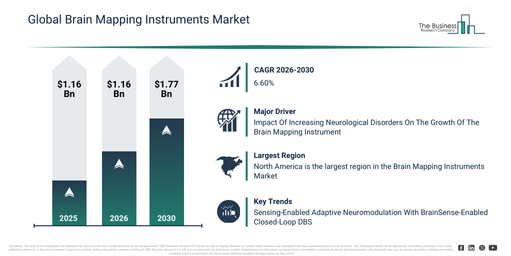
    The brain mapping instruments market size is projected to experience substantial expansion over the upcoming years. This market is anticipated to reach $3.33 billion by 2030, demonstrating a compound annual growth rate (CAGR) of 6.6%. Factors contributing to this growth during the forecast period include the escalating demand for fMRI and PET-based functional brain mapping, a surge in the adoption of hybrid and high-resolution imaging systems, the increased use of non-invasive mapping solutions in ambulatory environments, the expanding integration of multimodal brain analysis tools, and the broadening application of brain mapping within precision medicine and neurotherapeutics. Key trends anticipated throughout the forecast timeframe encompass the rising uptake of sophisticated neuroimaging and brain activity monitoring technologies, the expanding utilization of brain mapping instruments for clinical diagnosis and treatment planning, the widening scope of brain mapping applications in neuroscience and cognitive research, a growing inclination towards non-invasive and patient-friendly brain mapping procedures, and a strong emphasis on improving imaging accuracy, data quality, and diagnostic efficiency.

    Access Your Free Sample Report For In-Depth Market Analysis:

    https://www.thebusinessresearchcompany.com/sample.aspx?id=18270&type=smp

    Which Strong Drivers Are Impacting The Brain Mapping Instruments Market Growth?

    The rising incidence of neurological conditions is anticipated to fuel the expansion of the brain mapping instrument market. These conditions impact the brain, spinal cord, and nerves, manifesting as issues with movement, cognitive abilities, and sensation. Notable examples include Alzheimer’s, Parkinson’s, epilepsy, multiple sclerosis, and stroke. The growing occurrence of neurological disorders is attributable to factors like an aging global population, increased urbanization, shifts in lifestyle, enhanced diagnostic tools, and various environmental and infectious hazards. Brain mapping instruments play a crucial role in both clinical settings and research, offering profound understanding of these disorders and aiding the development of tailored treatment approaches. As an illustration, data from the Alzheimer’s Association, a US-based non-profit voluntary health organization, indicated that in March 2023, approximately 6.7 million Americans aged 65 and older in the United States were suffering from Alzheimer’s dementia, a form of neurological disorder. Furthermore, projections suggest that by 2060, this figure is expected to climb to 13.8 million for individuals aged 65 and older with Alzheimer’s dementia. Consequently, the heightened prevalence of neurological disorders is a significant factor propelling the growth of the brain mapping instrument market.

    How Is The Brain Mapping Instruments Market Broken Down By Segment Categories?

    The brain mapping instruments market covered in this report is segmented –

    1) By Product: Computed Axial Tomography (CAT), Positron Emission Tomography, Electroencephalography (EEG), Functional Near-Infrared Spectroscopy (FNIRS), Functional Magnetic Resonance Imaging (FMRI), Other Products

    2) By Procedure: Devices For Invasive Procedures, Devices For Non-invasive Procedures

    3) By End User: Hospitals, Ambulatory Centers

    Subsegments:

    1) By Computed Axial Tomography (CAT): Conventional CT Scanners, High-Resolution CT Scanners, Portable CT Scanners

    2) By Positron Emission Tomography (PET): PET Scanners (Standalone), Hybrid PET/CT Scanners, PET/MRI Scanners

    3) By Electroencephalography (EEG): Digital EEG Systems, Ambulatory EEG Systems, Video EEG Monitoring Systems

    4) By Functional Near-Infrared Spectroscopy (FNIRS): Continuous Wave Fnirs Systems, Frequency Domain Fnirs Systems, Hybrid Fnirs Systems

    5) By Functional Magnetic Resonance Imaging (FMRI): Resting-State Fmri, Task-Based Fmri, High-Field MRI Systems

    6) By Other Products: Magnetoencephalography (MEG) Systems, Near-Infrared Spectroscopy (NIRS) Devices, Transcranial Magnetic Stimulation (TMS) Systems

    Which Trends Are Contributing To Changes In The Brain Mapping Instruments Market?

    Key players within the brain mapping instruments market are prioritizing sensing-enabled adaptive neuromodulation, such as BrainSense-enabled closed-loop deep brain stimulation (DBS), which integrates real-time brain signal detection to customize stimulation therapy. BrainSense technology serves as a neuro-interface embedded in DBS systems, recording local field potentials (LFPs) from specific brain regions, processing these signals, and dynamically adjusting electrical stimulation based on a patient’s neural activity, thereby optimizing therapeutic effects and minimizing side effects. For instance, in February 2025, Medtronic, a US-based medical-technology company, launched its BrainSense Adaptive DBS system following FDA approval, offering capabilities such as real-time self-adjusting stimulation, a BrainSense Electrode Identifier to quickly pinpoint the optimal electrode contact, and closed-loop personalized therapy that adapts both in clinical environments and during a patient’s everyday life.

    Which Players Are Present In The Brain Mapping Instruments Market Space?

    Major companies operating in the brain mapping instruments market are Siemens Healthineers, GE Healthcare, Philips Healthcare, Elekta AB, Nihon Kohden Corporation, Brainlab AG, Natus Medical Incorporated, Hitachi Medical Systems, Canon Medical Systems Corporation, Compumedics Limited, Medtronic PLC, Magstim Company Limited, EB Neuro S.p.A., Brain Products GmbH, Soterix Medical Inc., Rogue Research Inc., NIRx Medical Technologies LLC, Neurosoft, Artinis Medical Systems, Gowerlabs Ltd.

    Get The Full Brain Mapping Instruments Market Report:

    https://www.thebusinessresearchcompany.com/report/brain-mapping-instruments-global-market-report

    Which Region Represents The Largest Share Of The Brain Mapping Instruments Market?

    North America was the largest region in the brain mapping instruments market in 2025. Asia-Pacific is expected to be the fastest-growing region in the forecast period. The regions covered in the brain mapping instruments market report are Asia-Pacific, South East Asia, Western Europe, Eastern Europe, North America, South America, Middle East, Africa.

    Request A Customized Brain Mapping Instruments Market Report For Competitive Insights:

    https://www.thebusinessresearchcompany.com/customise?id=18270&type=smp

    Browse Through More Reports Similar to the Global Brain Mapping Instruments Market 2026, By The Business Research Company

    Brain And Neuroimaging Devices Market Report 2026

    https://www.thebusinessresearchcompany.com/report/brain-and-neuroimaging-devices-global-market-report

    Brain Monitoring Market Report 2026

    https://www.thebusinessresearchcompany.com/report/brain-monitoring-global-market-report

    Brain Health Supplements Market Report 2026

    https://www.thebusinessresearchcompany.com/report/brain-health-supplements-global-market-report

    Get in touch with us:

    The Business Research Company: https://www.thebusinessresearchcompany.com/

    Americas +1 310-496-7795

    Asia +44 7882 955267 & +91 8897263534

    Europe +44 7882 955267

    Email us at info@tbrc.info

    Follow us on:

    LinkedIn: https://in.linkedin.com/company/the-business-research-company

    YouTube: https://www.youtube.com/channel/UC24_fI0rV8cR5DxlCpgmyFQ

    Global Market Model: https://www.thebusinessresearchcompany.com/global-market-model
  • Brain Imaging Modalities Market Outlook Highlighting Growth Drivers And Market Evolution

    Brain Imaging Modalities Market Outlook Highlighting Growth Drivers And Market Evolution

    The Business Research Company’s 2026 market reports feature enhanced tools like market attractiveness analysis, TAM assessment, and company scoring matrices, along with interactive dashboards, deeper supply chain insights, and startup coverage strengthening the depth, usability, and strategic value of insights.

    What Level Of Market Value Growth Is Predicted For The Brain Imaging Modalities Market From 2026 To 2030?

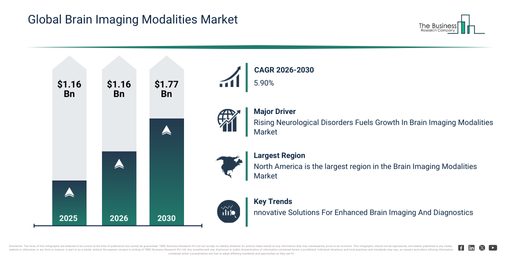
    The brain imaging modalities market has shown significant expansion in recent years. This market is expected to increase from $13.9 billion in 2025 to $14.76 billion in 2026, achieving a compound annual growth rate (CAGR) of 6.2%. The historical growth of this market can be linked to factors such as the limited availability of advanced brain imaging devices, the high cost of early imaging equipment, a growing awareness of neurological disorders, a reliance on stationary imaging systems, and an increasing number of diagnostic centers.

    The brain imaging modalities market is anticipated to experience substantial expansion over the coming years, reaching $18.55 billion by 2030, driven by a compound annual growth rate (CAGR) of 5.9%. This projected growth during the forecast period is fueled by several factors, including ongoing technological enhancements in fMRI and PET systems, a surge in the adoption of portable and research-focused imaging tools, increased capital allocation for neuroimaging studies, greater incorporation of AI and big data analytics, and the expansion of healthcare facilities and diagnostic centers. Key developments expected during this period encompass a heightened uptake of advanced MRI and CT imaging methods, a greater reliance on portable and point-of-care brain imaging technologies, an expanding need for pediatric and infant brain imaging options, the fusion of image processing software with patient monitoring systems, and the broadening scope of functional brain imaging for both investigative and medical uses.

    Access Your Free Sample Report For In-Depth Market Analysis:

    https://www.thebusinessresearchcompany.com/sample.aspx?id=19347&type=smp

    What Key Factors Are Shaping The Brain Imaging Modalities Market Landscape?

    The growth of the brain imaging modality market is projected to be propelled by the rising prevalence of neurological disorders. These conditions, affecting the nervous system—including the brain, spinal cord, and nerves—can lead to issues with movement, sensation, cognition, or behavior. The increase in neurological disorders stems from various factors such as an aging population, enhanced diagnosis, chronic illnesses, genetic elements, environmental shifts, and lifestyle choices. Brain imaging modalities are instrumental in the diagnosis and ongoing monitoring of neurological disorders, offering detailed insights into the brain’s structure and function to facilitate effective treatment planning. For instance, in January 2025, the European Brain Council, a Belgium-based non-profit organization, reported 7 million people in Europe living with Alzheimer’s disease, with projections indicating this figure will reach 14 million by 2030. Thus, the escalating incidence of neurological disorders is undeniably driving the expansion of the brain imaging modality market.

    What Are The Different Segment Types In The Brain Imaging Modalities Market Segment Breakdown?

    The brain imaging modalities market covered in this report is segmented –

    1) By Product: Devices, Accessories, Usability

    2) By Imaging Type: Computed Tomography (CT), Positron Emission Tomography (PET), Magnetic Resonance Imaging (MRI), Single Photon Emission Computed Tomography (SPECT)

    3) By Modalities: Stand-Alone Functional Brain Imaging Systems, Portable Functional Brain Imaging Systems

    4) By Patient Type: Adults, Pediatrics, Infants

    5) By End-User: Hospitals, Diagnostic Centers, Research Institutes

    Subsegments:

    1) By Devices: Magnetic Resonance Imaging (MRI) Machines, Computed Tomography (CT) Scanners, Positron Emission Tomography (PET) Scanners, Electroencephalography (EEG) Devices, Functional MRI (fMRI) Systems, Single Photon Emission Computed Tomography (SPECT) Scanners

    2) By Accessories: Contrast Agents, MRI Coils, EEG Electrodes, Image Processing Software, Patient Monitoring Systems

    3) By Usability: Portable Brain Imaging Devices, Stationary Brain Imaging Systems, Point-Of-Care Brain Imaging Solutions, Research-Oriented Brain Imaging Equipment

    What Market Trends Are Affecting The Brain Imaging Modalities Market?

    Key companies within the brain imaging modalities market are prioritizing the creation of novel solutions, such as neuroimaging advancements, to secure a competitive edge. Neuroimaging technologies are sophisticated medical instruments designed to capture comprehensive visuals of the brain’s anatomy and activity. For example, in February 2024, Koninklijke Philips N.V., a technology firm from the Netherlands, collaborated with SyntheticMR, a Sweden-based software company, to unveil Smart Quant Neuro 3D. This product features automated 3D quantification of neuroimaging data, real-time visualization of brain structures, and integrates artificial intelligence to boost diagnostic accuracy. This particular innovation aims to streamline operational processes and shorten the time needed for image interpretation, ultimately benefiting both healthcare providers and patients.

    Who Are The Well-Known Companies In The Brain Imaging Modalities Market?

    Major companies operating in the brain imaging modalities market are Hitachi Ltd, Siemens AG, Toshiba Corporation, FUJIFILM Corporation, Koninklijke Philips N.V, GE HealthCare Technologies Inc., Shenzhen Mindray Bio-Medical Electronics Co. Ltd., Shimadzu Corporation, Canon Medical Systems Corporation, Neusoft Corporation, Agfa-Gevaert N.V., Carestream Health, Brainlab AG, Esaote SpA, NeuroLogica Corp., Swissray International Inc., Xoran Technologies LLC., Allengers Medical Systems Ltd., Konica Minolta Healthcare Americas Inc., Hi-Tech Medical Imaging

    Get The Full Brain Imaging Modalities Market Report:

    https://www.thebusinessresearchcompany.com/report/brain-imaging-modalities-global-market-report

    Which Geographic Region Dominates The Brain Imaging Modalities Market?

    North America was the largest region in the brain imaging modalities market in 2025. Asia-Pacific is expected to be the fastest-growing region in the forecast period. The regions covered in the brain imaging modalities market report are Asia-Pacific, South East Asia, Western Europe, Eastern Europe, North America, South America, Middle East, Africa.

    Request A Customized Brain Imaging Modalities Market Report For Competitive Insights:

    https://www.thebusinessresearchcompany.com/customise?id=19347&type=smp

    Browse Through More Reports Similar to the Global Brain Imaging Modalities Market 2026, By The Business Research Company

    Brain And Neuroimaging Devices Market Report 2026

    https://www.thebusinessresearchcompany.com/report/brain-and-neuroimaging-devices-global-market-report

    Brain Monitoring Market Report 2026

    https://www.thebusinessresearchcompany.com/report/brain-monitoring-global-market-report

    Brain Computer Interface Market Report 2026

    https://www.thebusinessresearchcompany.com/report/brain-computer-interface-global-market-report

    Get in touch with us:

    The Business Research Company: https://www.thebusinessresearchcompany.com/

    Americas +1 310-496-7795

    Asia +44 7882 955267 & +91 8897263534

    Europe +44 7882 955267

    Email us at info@tbrc.info

    Follow us on:

    LinkedIn: https://in.linkedin.com/company/the-business-research-company

    YouTube: https://www.youtube.com/channel/UC24_fI0rV8cR5DxlCpgmyFQ

    Global Market Model: https://www.thebusinessresearchcompany.com/global-market-model
  • Rising Adoption of Minimally Invasive Procedures Boosts Congenital Heart Defect Device Sales Is Supporting Expansion In The Congenital Heart Defect Devices Market

    Rising Adoption of Minimally Invasive Procedures Boosts Congenital Heart Defect Device Sales Is Supporting Expansion In The Congenital Heart Defect Devices Market

    The Business Research Company’s 2026 market reports feature enhanced tools like market attractiveness analysis, TAM assessment, and company scoring matrices, along with interactive dashboards, deeper supply chain insights, and startup coverage strengthening the depth, usability, and strategic value of insights.

    What Level Of Market Value Growth Is Predicted For The Congenital Heart Defect Devices Market From 2026 To 2030?

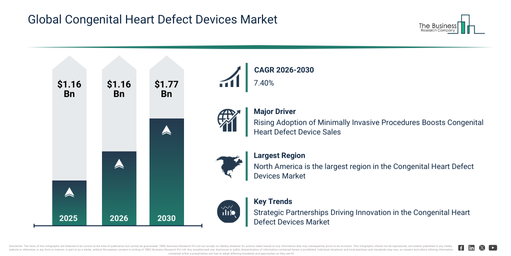
    The congenital heart defect devices market has experienced robust expansion recently. This market is projected to expand from $3.11 billion in 2025 to $3.34 billion in 2026, demonstrating a compound annual growth rate (CAGR) of 7.4%. Historically, this growth has been driven by factors such as the increasing occurrence of congenital heart defects, significant progress in pediatric cardiac surgical techniques, improved survival rates for patients with congenital heart conditions, the establishment of more specialized cardiac care facilities, and enhanced recognition of early congenital defect diagnosis.

    The congenital heart defect devices market is anticipated to show significant expansion in the next few years, with its size forecast to reach $4.45 billion in 2030, exhibiting a compound annual growth rate (CAGR) of 7.4%. This growth during the forecast period is primarily attributed to an increased emphasis on early diagnosis and intervention, the rising demand for minimally invasive pediatric cardiac treatments, improved access to advanced cardiac care within emerging markets, a growing population of adults with congenital heart disease, and continuous innovation in implantable cardiac devices. Major trends expected in this period include the increasing adoption of minimally invasive congenital heart procedures, greater utilization of transcatheter and implantable cardiac devices, a heightened focus on early-life and pediatric cardiac interventions, the expansion of device-based therapies for complex heart defects, and an escalating demand for long-term cardiac monitoring and support devices.

    Access Your Free Sample Report For In-Depth Market Analysis:

    https://www.thebusinessresearchcompany.com/sample.aspx?id=18543&type=smp

    Which Primary Drivers Are Impacting The Congenital Heart Defect Devices Market Growth?

    The escalating adoption of minimally invasive procedures is projected to fuel the expansion of the congenital heart defect device market. These procedures entail surgical operations conducted through minor cuts or natural orifices, frequently employing specialized instruments and methods to lessen injury and improve recuperation. The rise in minimally invasive procedures stems from technological progress, patients’ inclination for less intrusive therapies, enhanced surgical methods, and the advantages of quicker recovery and fewer complications. Congenital heart defect devices are integral to minimally invasive procedures, aiding in the identification, care, and control of cardiac irregularities via approaches that use smaller incisions or catheter-based techniques. For example, in June 2024, data from the American Society of Plastic Surgeons, a US-based organization, indicated that in 2023, plastic surgeries grew by 5%, while minimally invasive procedures saw a 7% increase over the previous year. Consequently, the growing frequency of minimally invasive procedures is propelling the congenital heart defect devices market.

    Which Segment Classifications Are Used In The Congenital Heart Defect Devices Market Segment Analysis?

    The congenital heart defect devices market covered in this report is segmented –

    1) By Device Type: Catheters, Pacemakers, Single-Chamber Pacemakers, Dual-Chamber Pacemakers, Biventricular Pacemakers, Leadless Pacemakers, Implantable Cardioverter Defibrillators, Biventricular Devices, Implanted Cardiac Loop Recorders, Other Device Types

    2) By Defect Type: Atrial Septal Defect, Ventricular Septal Defect, Atrioventricular Septal Defect, Tricuspid Atresia, Truncus Arteriosus, Other Defect Types

    3) By End user: Hospitals, Specialty Clinics, Academic And Research Institute, Other End Users

    Subsegments:

    1) By Catheters: Balloon Catheters, Diagnostic Catheters, Guiding Catheters

    2) By Pacemakers: Single-Chamber Pacemakers, Dual-Chamber Pacemakers, Biventricular Pacemakers, Leadless Pacemakers

    3) By Implantable Cardioverter Defibrillators: Single-Chamber Icds, Dual-Chamber Icds, Subcutaneous Icds

    4) By Biventricular Devices: Crt-P (Cardiac Resynchronization Therapy Pacemakers), Crt-D (Cardiac Resynchronization Therapy Defibrillators)

    5) By Implanted Cardiac Loop Recorders: Traditional Implantable Loop Recorders, Subcutaneous Implantable Loop Recorders

    6) By Other Device Types: Transcatheter Heart Valves, Ventricular Assist Devices (VADS)

    Which Trends Are Shaping Growth In The Congenital Heart Defect Devices Market?

    Leading companies in the congenital heart defect devices market are adopting strategic partnerships to develop innovative solutions for congenital heart defects. These alliances support businesses in the congenital heart defect devices sector by pooling resources and expertise, accelerating research and development, broadening market access, and speeding up commercialization. Ultimately, this collaboration fosters innovation and drives growth within the industry. For instance, in May 2024, SMT (Sahajanand Medical Technologies Pvt Ltd), an India-based manufacturing company, partnered with HeartX, an India-based MedTech firm, to enhance patient care in the cardiovascular sector. Through this partnership, Sahajanand Medical Technologies (SMT) strengthens its position in the congenital heart defect (CHD) space by integrating HeartX’s innovative solutions, such as the JOVE VB Stent. This strategic alliance enables SMT to offer advanced CHD devices that enhance treatment efficacy, simplify procedures, and improve patient outcomes.

    Which Firms Are Contributing To The Congenital Heart Defect Devices Market Ecosystem?

    Major companies operating in the congenital heart defect devices market are Johnson & Johnson, Abbott Laboratories, Medtronic plc, Boston Scientific Corporation, W L Gore & Associates Inc, Lepu Medical Technology Beijing Co Ltd, MicroPort Scientific Corporation, Berlin Heart GmbH, Syncardia Systems LLC, Occlutech Holding AG, Sahajanand Medical Technologies Pvt Ltd, Xeltis AG, Procyrion Inc, Heartstitch Inc, Cardia Inc, OSYPKA Medical GmbH, On-X Life Technologies Inc, Ventracor Limited, HemoFlow Technologies, NuPulseCV Inc

    Get The Full Congenital Heart Defect Devices Market Report:

    https://www.thebusinessresearchcompany.com/report/congenital-heart-defect-devices-global-market-report

    Which Region Is The Top Contributor To The Congenital Heart Defect Devices Market By Share?

    North America was the largest region in the congenital heart defect devices market in 2025. Asia-Pacific is expected to be the fastest-growing region in the forecast period. The regions covered in the congenital heart defect devices market report are Asia-Pacific, South East Asia, Western Europe, Eastern Europe, North America, South America, Middle East, Africa.

    Request A Customized Congenital Heart Defect Devices Market Report For Competitive Insights:

    https://www.thebusinessresearchcompany.com/customise?id=18543&type=smp

    Browse Through More Reports Similar to the Global Congenital Heart Defect Devices Market 2026, By The Business Research Company

    Computed Tomography Ct Scanners Devices And Equipment Market Report 2026

    https://www.thebusinessresearchcompany.com/report/computed-tomography-ct-scanners-devices-and-equipment-global-market-report

    Computed Tomography Ct Scanner Market Report 2026

    https://www.thebusinessresearchcompany.com/report/computed-tomography-ct-scanner-global-market-report

    Positron Emission Tomography Pet Scanners Market Report 2026

    https://www.thebusinessresearchcompany.com/report/positron-emission-tomography-pet-scanners-global-market-report

    Get in touch with us:

    The Business Research Company: https://www.thebusinessresearchcompany.com/

    Americas +1 310-496-7795

    Asia +44 7882 955267 & +91 8897263534

    Europe +44 7882 955267

    Email us at info@tbrc.info

    Follow us on:

    LinkedIn: https://in.linkedin.com/company/the-business-research-company

    YouTube: https://www.youtube.com/channel/UC24_fI0rV8cR5DxlCpgmyFQ

    Global Market Model: https://www.thebusinessresearchcompany.com/global-market-model