Category: Medical Equipment

  • Cementless Total Knee Arthroplasty Market Overview 2026–2030 Highlighting Industry Developments

    Cementless Total Knee Arthroplasty Market Overview 2026–2030 Highlighting Industry Developments

    The Business Research Company’s 2026 market reports feature enhanced tools like market attractiveness analysis, TAM assessment, and company scoring matrices, along with interactive dashboards, deeper supply chain insights, and startup coverage strengthening the depth, usability, and strategic value of insights.

    How Is The Market Size Of The Cementless Total Knee Arthroplasty Market Expected To Scale Between 2026 And 2030?

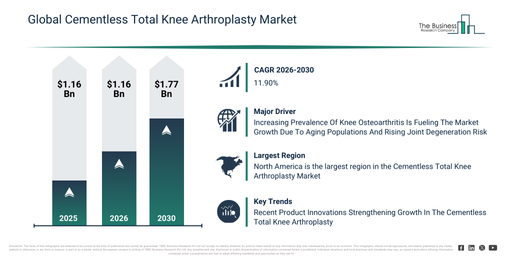
    The cementless total knee arthroplasty market has witnessed rapid growth in recent years. It is forecast to expand from $2.95 billion in 2025 to $3.31 billion in 2026, exhibiting a compound annual growth rate (CAGR) of 12.2%. This historical growth can be attributed to the rising prevalence of osteoarthritis, an increasing geriatric population, advancements in conventional knee arthroplasty techniques, a surge in orthopedic surgical procedures, and enhanced awareness regarding long-term implant durability.

    The market size for cementless total knee arthroplasty is projected to experience swift expansion over the coming years. This market is predicted to reach $5.19 billion by 2030, demonstrating a compound annual growth rate (CAGR) of 11.9%. Factors driving this growth during the projected period include advancements in cementless implant coatings, an increasing inclination towards minimally invasive surgical procedures, the expansion of orthopedic facilities, the uptake of patient-specific implants, and the incorporation of robotic-assisted knee arthroplasty techniques. Key trends anticipated for the forecast timeframe encompass the wider acceptance of cementless knee implants, a heightened demand for minimally invasive knee operations, improvements in porous and coated implant surfaces, the proliferation of orthopedic surgery centers, and an intensifying emphasis on patient-specific knee implants.

    Access Your Free Sample Report For In-Depth Market Analysis:

    https://www.thebusinessresearchcompany.com/sample.aspx?id=27248&type=smp

    Which Important Drivers Are Guiding The Cementless Total Knee Arthroplasty Market Growth?

    The growing incidence of knee osteoarthritis is anticipated to fuel the expansion of the cementless total knee arthroplasty market in the foreseeable future. This condition, characterized by degenerative joint changes, leads to discomfort, swelling, and rigidity in the knee, thereby hindering mobility. The surge in knee osteoarthritis cases is primarily attributed to rising obesity rates, as increased body weight exerts extra pressure on knee joints, accelerating cartilage degradation and joint deterioration. Cementless total knee arthroplasty offers a solution for knee osteoarthritis by substituting impaired joint surfaces with prosthetic elements designed to foster natural bone integration, ensuring enduring stability and enhanced joint performance. For example, data released in February 2024 by Arthritis Australia, an Australian non-profit body, predicts that in 2025, osteoarthritis (OA) will impact 2.35 million Australians, constituting 57% of the entire arthritis demographic and establishing it as the most common type of arthritis in Australia. Furthermore, by 2040, the count of Australians suffering from OA is expected to climb to 3.11 million, marking a 32% increment from 2025. This signifies an additional 762,515 individuals in Australia will be living with OA in 2040 compared to 2025. Consequently, the increasing occurrence of knee osteoarthritis is acting as a significant catalyst for the growth of the cementless total knee arthroplasty market.

    How Is Segmentation Applied In The Cementless Total Knee Arthroplasty Market Segment Analysis?

    The cementless total knee arthroplasty market covered in this report is segmented –

    1) By Product: Fixed-Bearing, Mobile-Bearing

    2) By Material: Titanium, Cobalt-Chromium, Polyethylene, Ceramic

    3) By Distribution Channels: Direct Sales, Distributors And Resellers

    4) By Application: Primary Total Knee Arthroplasty, Revision Total Knee Arthroplasty

    5) By End User: Hospitals, Specialty Clinics, Ambulatory Surgery Centers, Other End Users

    Subsegments:

    1) By Fixed-Bearing: Posterior Stabilized Fixed-Bearing, Cruciate Retaining Fixed-Bearing, Medial Pivot Fixed-Bearing

    2) By Mobile-Bearing: Rotating Platform Mobile-Bearing, Meniscal Bearing Mobile-Bearing, Dual Mobility Mobile-Bearing

    What Trends Are Influencing The Evolution Of The Cementless Total Knee Arthroplasty Market?

    Companies operating in the cementless total knee arthroplasty market are increasingly prioritizing the development of 3D-printed, patient-specific cementless implants. This focus addresses the growing demand for prostheses that offer biological integration, improved long-term stability, and better outcomes, especially for younger, more active patients. These implants are produced using additive-manufacturing (3D-printing) technology to form a porous lattice structure, which promotes bone in-growth and achieves osseointegration, a distinct approach from traditional cemented knee implants that rely on bone cement for immediate securement. For instance, in April 2025, restor3D Inc., a US-based medical technology company, obtained U.S. Food and Drug Administration (FDA) 510(k) clearance for its iTotal Identity CR 3DP Porous Total Knee Replacement System. This marked restor3D Inc.’s first cementless offering within its portfolio of patient-specific implants. The system utilizes restor3d’s proprietary TIDAL Technology, which features a high-strength porous lattice designed for optimal bone ingrowth, fatigue resistance, and effective load distribution. It comprises femoral, tibial, and patellar components custom-designed to each patient’s anatomy, along with personalized, pre-navigated surgical instruments provided in a sterile, single-use kit, which helps minimize intraoperative guesswork and enhances surgical efficiency. By combining a patient-matched design with advanced surface engineering, this implant offers a more natural feel and durable fixation compared to traditional cemented options.

    Who Are The Companies Participating In The Cementless Total Knee Arthroplasty Market Environment?

    Major companies operating in the cementless total knee arthroplasty market are Johnson & Johnson, Stryker Corporation, Zimmer Biomet Holdings Inc., Smith & Nephew Plc, Enovis Corporation, CONMED Corporation, Globus Medical Inc., MicroPort Scientific Corporation, Medacta Group SA, B. Braun Melsungen SE, TTK Healthcare Limited, Waldemar Link GmbH & Co. KG, United Orthopedic Corporation, Symbios Orthopédie SA, Gruppo Bioimpianti S.p.A., Permedica Orthopaedics S.p.A., Uteshiya Medicare Private Limited, LINK Orthopaedics GmbH, Plus Orthopaedics India Pvt. Ltd., XLO India Pvt. Ltd.

    Get The Full Cementless Total Knee Arthroplasty Market Report:

    https://www.thebusinessresearchcompany.com/report/cementless-total-knee-arthroplasty-global-market-report

    Which Region Leads The Cementless Total Knee Arthroplasty Market In Terms Of Market Share?

    North America was the largest region in the cementless total knee arthroplasty market in 2025. Asia-Pacific is expected to be the fastest-growing region in the forecast period. The regions covered in the cementless total knee arthroplasty market report are Asia-Pacific, South East Asia, Western Europe, Eastern Europe, North America, South America, Middle East, Africa.

    Request A Customized Cementless Total Knee Arthroplasty Market Report For Competitive Insights:

    https://www.thebusinessresearchcompany.com/customise?id=27248&type=smp

    Browse Through More Reports Similar to the Global Cementless Total Knee Arthroplasty Market 2026, By The Business Research Company

    Cell Free Dna Isolation And Extraction Market Report 2026

    https://www.thebusinessresearchcompany.com/report/cell-free-dna-isolation-and-extraction-global-market-report

    Dna Test Kits Market Report 2026

    https://www.thebusinessresearchcompany.com/report/dna-test-kits-global-market-report

    Plasmid Dna Manufacturing Market Report 2026

    https://www.thebusinessresearchcompany.com/report/plasmid-dna-manufacturing-global-market-report

    Get in touch with us:

    The Business Research Company: https://www.thebusinessresearchcompany.com/

    Americas +1 310-496-7795

    Asia +44 7882 955267 & +91 8897263534

    Europe +44 7882 955267

    Email us at info@tbrc.info

    Follow us on:

    LinkedIn: https://in.linkedin.com/company/the-business-research-company

    YouTube: https://www.youtube.com/channel/UC24_fI0rV8cR5DxlCpgmyFQ

    Global Market Model: https://www.thebusinessresearchcompany.com/global-market-model
  • Ear-Worn Core-Temp Sensor Market Forecast 2026–2030 Presenting Long-Term Industry Insights

    Ear-Worn Core-Temp Sensor Market Forecast 2026–2030 Presenting Long-Term Industry Insights

    The Business Research Company’s 2026 market reports feature enhanced tools like market attractiveness analysis, TAM assessment, and company scoring matrices, along with interactive dashboards, deeper supply chain insights, and startup coverage strengthening the depth, usability, and strategic value of insights.

    How Much Growth In Market Value Is Expected For The Ear-Worn Core-Temp Sensor Market Between 2026 And 2030?

    The ear-worn core-temp sensor market size has experienced rapid expansion in recent years. It is anticipated to increase from $0.75 billion in 2025 to $0.87 billion in 2026, demonstrating a compound annual growth rate (CAGR) of 16.2%. The historical growth of this market can be attributed to factors such as early adoption in healthcare monitoring, advancements in infrared sensor technology, rising awareness of non-invasive diagnostics, increasing demand in sports medicine, and integration with clinical monitoring devices.

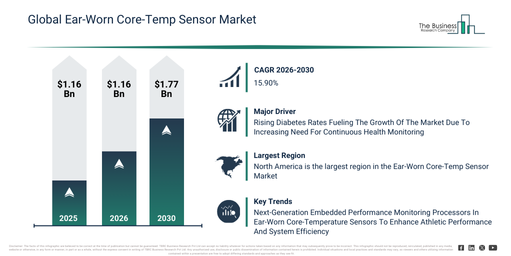
    The ear-worn core-temp sensor market is anticipated to experience significant expansion in the coming years. Its valuation is projected to reach $1.57 billion by 2030, demonstrating a compound annual growth rate (CAGR) of 15.9%. This projected growth can be ascribed to several factors during the forecast period, including the increase in homecare and remote monitoring solutions, the incorporation of AI-driven health platforms, increased uptake in military and industrial applications, improved connectivity with IoT devices, and the creation of versatile health wearables. Key trends identified for the forecast period encompass continuous core temperature tracking, remote health notifications, seamless integration within wearable ecosystems, capabilities for predictive fever detection, and tailored health monitoring.

    Access Your Free Sample Report For In-Depth Market Analysis:

    https://www.thebusinessresearchcompany.com/sample.aspx?id=29044&type=smp

    What Key Drivers Are Fueling The Growth Of The Ear-Worn Core-Temp Sensor Market?

    The growing incidence of diabetes is anticipated to propel the expansion of the ear-worn core-temp sensor market. This chronic ailment involves the body’s failure to produce adequate insulin or to use it effectively, leading to elevated blood sugar levels. The rise in diabetes cases is primarily attributed to unhealthy lifestyles, as increased consumption of high-calorie foods and physical inactivity foster obesity, which significantly elevates the risk of developing the condition. An ear-worn core-temperature sensor offers benefits to diabetes patients by continuously monitoring body temperature, thereby assisting in the early identification of infections or metabolic imbalances—common complications for diabetic individuals. For instance, in March 2025, the Office for Health Improvement & Disparities, a UK-based government department, reported that in England, the prevalence of type 2 diabetes among adults aged 17 and over reached 7.0% in March 2024, up from 6.8% in March 2023. Thus, the increasing prevalence of diabetes is a key factor driving the growth of the ear-worn core-temp sensor market.

    How Is The Ear-Worn Core-Temp Sensor Market Organized By Segment Classification?

    The ear-worn core-temp sensor market covered in this report is segmented –

    1) By Product Type: Disposable, Reusable

    2) By Sensor Technology: Infrared, Thermistor, Other Sensor Technologies

    3) By Distribution Channel: Online, Offline

    4) By Application: Healthcare Monitoring, Sports And Fitness, Military And Defense, Industrial, Other Applications

    5) By End-User: Hospitals And Clinics, Homecare, Athletes, Military Personnel, Industrial Workers, Other End Users

    Subsegments:

    1) By Disposable: Single Use, Sterile

    2) By Reusable: Sterilizable, Multi Use

    What Trends Are Influencing The Ear-Worn Core-Temp Sensor Market?

    Major companies in the ear-worn core-temp sensor market are concentrating on technological innovations, such as next-generation wearable body temperature sensors, to enhance real-time health monitoring accuracy, ensure user comfort, and enable continuous, non-invasive temperature tracking. Next-generation wearable body temperature sensors are advanced, miniaturized devices that continuously and accurately measure body temperature in real time using innovative materials and wireless technologies for improved health monitoring and performance tracking. For instance, in January 2025, CORE, a Switzerland-based developer of advanced thermal monitoring solutions, launched CORE 2, a next-generation wearable body temperature sensor designed to help athletes monitor and manage their core body temperature in real time. Built in Switzerland, CORE 2 is 48% smaller and 30% lighter than its predecessor, yet more powerful, offering smarter features like LED indicators, a modular attachment system, and BLE/ANT+ connectivity for seamless integration with Garmin, Wahoo, iOS, and Android devices. It utilizes advanced thermal energy transfer technology for AI-enhanced accuracy, enabling athletes to optimize performance and heat adaptation during training and races.

    Who Are The Industry Participants Involved In The Ear-Worn Core-Temp Sensor Market?

    Major companies operating in the ear-worn core-temp sensor market are Cosinuss GmbH, Bodytrak, GreenTEG AG, BodyCap Technologies, Equivital Ltd., Tempdrop Ltd., CORE Sensors Inc., VivaLNK Inc., Kenzen Inc., Epicore Biosystems Inc., Nix Biosensors Inc., Valencell Inc., Biofourmis Inc., Empatica Inc., Preventice Solutions Inc., Lief Therapeutics Inc., Oura Health Oy, Bloomlife Inc., Neteera Technologies Ltd., VivaQuant Inc.

    Get The Full Ear-Worn Core-Temp Sensor Market Report:

    https://www.thebusinessresearchcompany.com/report/ear-worn-core-temp-sensor-global-market-report

    Which Region Is The Leading Market For The Ear-Worn Core-Temp Sensor Market?

    North America was the largest region in the ear-worn core-temp sensor market in 2025. Asia-Pacific is expected to be the fastest-growing region in the forecast period. The regions covered in the ear-worn core-temp sensor market report are Asia-Pacific, South East Asia, Western Europe, Eastern Europe, North America, South America, Middle East, Africa.

    Request A Customized Ear-Worn Core-Temp Sensor Market Report For Competitive Insights:

    https://www.thebusinessresearchcompany.com/customise?id=29044&type=smp

    Browse Through More Reports Similar to the Global Ear-Worn Core-Temp Sensor Market 2026, By The Business Research Company

    Ear Health Market Report 2026

    https://www.thebusinessresearchcompany.com/report/ear-health-global-market-report

    Ent Surgical Devices And Equipment Market Report 2026

    https://www.thebusinessresearchcompany.com/report/ent-surgical-devices-and-equipment-global-market-report

    Ent Devices Market Report 2026

    https://www.thebusinessresearchcompany.com/report/ent-devices-global-market-report

    Get in touch with us:

    The Business Research Company: https://www.thebusinessresearchcompany.com/

    Americas +1 310-496-7795

    Asia +44 7882 955267 & +91 8897263534

    Europe +44 7882 955267

    Email us at info@tbrc.info

    Follow us on:

    LinkedIn: https://in.linkedin.com/company/the-business-research-company

    YouTube: https://www.youtube.com/channel/UC24_fI0rV8cR5DxlCpgmyFQ

    Global Market Model: https://www.thebusinessresearchcompany.com/global-market-model
  • Ear, Nose, And Throat (ENT) Workstation Market Growth Analysis 2026–2030 Highlighting Innovation And Competitive Landscape

    Ear, Nose, And Throat (ENT) Workstation Market Growth Analysis 2026–2030 Highlighting Innovation And Competitive Landscape

    The Business Research Company’s 2026 market reports feature enhanced tools like market attractiveness analysis, TAM assessment, and company scoring matrices, along with interactive dashboards, deeper supply chain insights, and startup coverage strengthening the depth, usability, and strategic value of insights.

    What Is The Estimated Market Size Of The Ear, Nose, And Throat (ENT) Workstation Market In 2026, And How Will Its Value Evolve By 2030?

    The ear, nose, and throat (ent) workstation market has shown significant growth in recent years. It is anticipated to increase from $1.51 billion in 2025 to $1.64 billion in 2026, achieving a compound annual growth rate (CAGR) of 9.2%. Historically, this expansion has been driven by factors such as a rise in ENT disorder prevalence, the enlargement of hospital infrastructure, the need for efficient examination setups, the proliferation of specialty clinics, and an increasing demand for surgical precision.

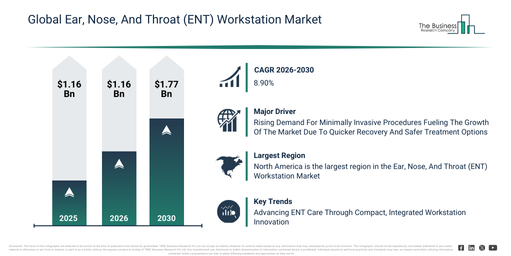
    The ear, nose, and throat (ENT) workstation market is projected to experience substantial expansion in the coming years, with its size anticipated to reach $2.32 billion by 2030, exhibiting a compound annual growth rate (CAGR) of 8.9%. This growth in the forecast period can be attributed to the proliferation of ambulatory surgery centers, modernization efforts in ENT departments, the increasing demand for compact workstations, healthcare investments in emerging markets, and the expansion of ENT specialty care. Major trends expected within this timeframe include integrated diagnostic and treatment units, a rising imperative for workflow optimization, the growth of outpatient ENT procedures, a preference for modular workstation designs, and increasing standardization of ENT equipment.

    Access Your Free Sample Report For In-Depth Market Analysis:

    https://www.thebusinessresearchcompany.com/sample.aspx?id=23379&type=smp

    Which Drivers Are Supporting The Ear, Nose, And Throat (ENT) Workstation Market Growth?

    An increasing need for minimally invasive procedures is projected to propel the expansion of the ear, nose, and throat (ENT) workstation market moving forward. These procedures involve medical operations conducted via minor cuts or apertures, thereby lessening patient discomfort and shortening recuperation periods. The growing preference for minimally invasive procedures stems from their capacity to provide quicker healing and less noticeable scarring, rendering them more attractive to individuals desiring faster and safer therapeutic alternatives. The ear, nose, and throat (ENT) workstation improves minimally invasive techniques by facilitating accurate, image-assisted interventions, thereby decreasing the reliance on conventional surgical methods. As an illustration, in February 2024, data from the American Academy of Facial Plastic and Reconstructive Surgery, a US-based non-profit organization, indicated that in 2023, minimally invasive procedures constituted 83% of all medical interventions carried out, marking a 5% rise from 2022. Consequently, the growing requirement for minimally invasive procedures is a key impetus for the expansion of the ear, nose, and throat (ENT) workstation market.

    Which Segments Define The Ear, Nose, And Throat (ENT) Workstation Market Segment Structure?

    The ear, nose, and throat (ent) workstation market covered in this report is segmented –

    1) By Product Type: Portable Ear, Nose, And Throat (ENT) Workstations, Fixed Ear, Nose, And Throat (ENT) Workstations

    2) By Application: Hospitals, Clinics, Ambulatory Surgical Centers, Other Applications

    3) By End-User: Otolaryngologists, Audiologists, Other End-Users

    Subsegments:

    1) By Portable ENT Workstations: Mobile Ear, Nose, And Throat (ENT) Workstations, Battery-Operated Ear, Nose, And Throat (ENT) Workstations, Lightweight Ear, Nose, And Throat (ENT) Workstations

    2) By Fixed ENT Workstations: Wall-Mounted Ear, Nose, And Throat (ENT) Workstations, Floor-Standing Ear, Nose, And Throat (ENT) Workstations, Modular Ear, Nose, And Throat (ENT) Workstations

    Which Trends Are Expected To Impact The Ear, Nose, And Throat (ENT) Workstation Market?

    Leading companies in the ear, nose, and throat (ENT) workstation market are concentrating on advancing technology, specifically developing compact, mobile ear, nose, and throat (ENT) workstations equipped with integrated multimodal capabilities. This effort aims to maximize space efficiency and streamline ENT consultations and procedures. These technologically advanced compact ear, nose, and throat (ENT) workstations are specialized treatment units that combine essential ear, nose, and throat (ENT) diagnostic and therapeutic functions, such as suction, irrigation, endoscopic imaging, illumination, and organized instrument storage. They are designed as ergonomic, mobile platforms for space-constrained consulting rooms, all while upholding stringent hygiene standards and workflow efficiency. For instance, in September 2023, Entermed BV, a Netherlands-based provider of ear, nose, and throat (ENT) treatment units, launched the MICRONOMIC III mobile ENT workstation. This budget-friendly unit boasts a very small footprint while offering large dual storage drawers and the ability to integrate key devices, including a suction system, light source, irrigator, endoscopy camera system, and even an optional microscope. This configuration enables ear, nose, and throat (ENT) surgeons to perform routine examinations and minor procedures efficiently even in tight rooms. Its mobile castor-based construction, handle-free easy-to-clean fronts, and maintenance-friendly dry suction and air pumps help clinics optimize room utilization, adhere to infection-control standards, and minimize maintenance downtime in busy ear, nose, and throat (ENT) outpatient environments.

    Who Are The Established Players Within The Ear, Nose, And Throat (ENT) Workstation Market?

    Major companies operating in the ear, nose, and throat (ent) workstation market are Olympus Corporation, Karl Storz GmbH & Co. KG, PENTAX Medical (HOYA Corporation), MS Westfalia GmbH, Heinemann HNO Medizintechnik GmbH, Optomic España S.A., Labo America Inc., ATMOS MedizinTechnik GmbH & Co. KG, Euroclinic Medi-Care Solutions S.r.l., Mega Medical Co. Ltd., Ecleris S.R.L., Chammed Co. Ltd., Entermed B.V., Happersberger Otopront GmbH, G. Heinemann Medizintechnik GmbH, Dantschke Medizintechnik GmbH & Co. KG, XION Medical GmbH, Medstar Co. Ltd., RZ Medizintechnik GmbH, Cuadra Medical Technologies, Nagashima Medical Instruments Co. Ltd., Seiler Instrument Inc.

    Get The Full Ear, Nose, And Throat (ENT) Workstation Market Report:

    https://www.thebusinessresearchcompany.com/report/ear-nose-and-throat-ent-workstation-global-market-report

    Where Is The Ear, Nose, And Throat (ENT) Workstation Market Primarily Concentrated By Region?

    North America was the largest region in the ear, nose, and throat (ENT) workstation market in 2025. Asia-Pacific is expected to be the fastest-growing region in the forecast period. The regions covered in the ear, nose, and throat (ent) workstation market report are Asia-Pacific, South East Asia, Western Europe, Eastern Europe, North America, South America, Middle East, Africa.

    Request A Customized Ear, Nose, And Throat (ENT) Workstation Market Report For Competitive Insights:

    https://www.thebusinessresearchcompany.com/customise?id=23379&type=smp

    Browse Through More Reports Similar to the Global Ear, Nose, And Throat (ENT) Workstation Market 2026, By The Business Research Company

    Textile Market Report 2026

    https://www.thebusinessresearchcompany.com/report/textile-global-market-report

    Textile Chemicals Market Report 2026

    https://www.thebusinessresearchcompany.com/report/textile-chemicals-global-market-report

    Technical Textiles Market Report 2026

    https://www.thebusinessresearchcompany.com/report/technical-textiles-global-market-report

    Get in touch with us:

    The Business Research Company: https://www.thebusinessresearchcompany.com/

    Americas +1 310-496-7795

    Asia +44 7882 955267 & +91 8897263534

    Europe +44 7882 955267

    Email us at info@tbrc.info

    Follow us on:

    LinkedIn: https://in.linkedin.com/company/the-business-research-company

    YouTube: https://www.youtube.com/channel/UC24_fI0rV8cR5DxlCpgmyFQ

    Global Market Model: https://www.thebusinessresearchcompany.com/global-market-model
  • Cell-Free DNA (cfDNA) Kits Market Forecast Highlighting Trends And Growth Potential

    Cell-Free DNA (cfDNA) Kits Market Forecast Highlighting Trends And Growth Potential

    The Business Research Company’s 2026 market reports feature enhanced tools like market attractiveness analysis, TAM assessment, and company scoring matrices, along with interactive dashboards, deeper supply chain insights, and startup coverage strengthening the depth, usability, and strategic value of insights.

    What Level Of Market Value Growth Is Predicted For The Cell-Free DNA (cfDNA) Kits Market From 2026 To 2030?

    The cell-free DNA (cfDNA) kits market has observed substantial expansion in recent years. This market is set to increase from $1.8 billion in 2025 to $2.02 billion in 2026, registering a compound annual growth rate (CAGR) of 12.4%. The historical growth of this market can be ascribed to factors such as the increasing embrace of liquid biopsy, the advancement in cancer diagnostics, a rise in prenatal testing, the evolution of PCR and NGS technologies, and the proliferation of research laboratories.

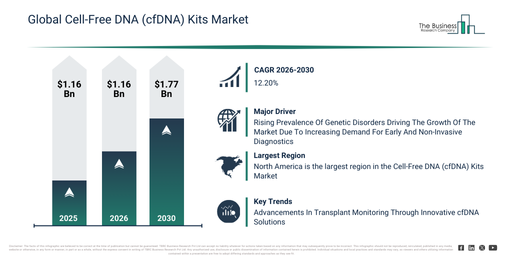
    The cell-free DNA (cfDNA) kits market is anticipated to experience significant expansion in the coming years. Its valuation is projected to reach $3.2 billion by 2030, demonstrating a compound annual growth rate (CAGR) of 12.2%. This anticipated growth during the forecast period is driven by advancements such as technological innovations in cfDNA kits, a rising emphasis on non-invasive diagnostic methods, the incorporation of AI into analysis, the broadening of molecular testing in developing markets, and enhanced research and development in cancer biomarkers. Key developments expected during this period involve high-sensitivity DNA isolation, automated sample preparation, integration with NGS platforms, accelerated DNA extraction, and the standardization of cfDNA kits.

    Access Your Free Sample Report For In-Depth Market Analysis:

    https://www.thebusinessresearchcompany.com/sample.aspx?id=28161&type=smp

    What Major Factors Are Driving The Cell-Free DNA (cfDNA) Kits Market Forward?

    The increasing incidence of genetic conditions is projected to boost the expansion of the cell-free DNA (cfDNA) kits market in the coming years. Genetic disorders are health ailments resulting from alterations in a person’s DNA, which can stem from mutations in a single gene, multiple genes, or chromosomal abnormalities. The escalating occurrence of genetic disorders is fueled by lifestyle modifications and environmental factors such as pollution and poor dietary choices, which can lead to genetic mutations or exacerbate existing inherited conditions. Cell-free DNA (cfDNA) kits enable the early and non-invasive detection of genetic anomalies by analyzing DNA fragments present in blood or other bodily fluids, thereby facilitating faster diagnoses and empowering healthcare providers to make timely and accurate treatment decisions. For instance, in November 2024, according to the Centers for Disease Control and Prevention (CDC), a US-based government agency, roughly 1 in every 33 newborns in the US is born with a birth defect, with many having genetic links. Consequently, the rising prevalence of genetic disorders is a significant driver for the growth of the cell-free DNA (cfDNA) kits market.

    What Segment Categories Shape The Cell-Free DNA (cfDNA) Kits Market Segment Landscape?

    The cell-free dna (cfdna) kits market covered in this report is segmented –

    1) By Product Type: Plasma Cell-Free DNA (Cfdna) Kits, Serum Cell-Free DNA (Cfdna) Kits, Urine Cell-Free DNA (Cfdna) Kits, Other Product Types

    2) By Technology: Next-Generation Sequencing (NGS), Polymerase Chain Reaction (PCR), Microarray Technology, Digital Polymerase Chain Reaction(PCR)

    3) By Application: Cancer Diagnostics, Prenatal Testing, Transplant Rejection Monitoring, Non-Invasive Disease Detection

    4) By Distribution Channel: Direct Sales, Retail Pharmacies, Online Sales, Distributors

    5) By End User: Hospitals, Research Laboratories, Diagnostic Laboratories, Academic Institutions

    Subsegments:

    1) By Plasma Cell-Free DNA Kits: Single-Stranded DNA Kits, Double-Stranded DNA Kits, High-Sensitivity DNA Kits, Rapid Extraction DNA Kits

    2) By Serum Cell-Free DNA Kits: Low-Volume DNA Kits, High-Yield DNA Kits, Automated DNA Kits, Manual Extraction DNA Kits

    3) By Urine Cell-Free DNA Kits: Early Detection DNA Kits, Concentration DNA Kits, High-Purity DNA Kits, Long-Term Stability DNA Kits

    4) By Other Product Types: Saliva DNA Kits, Cerebrospinal Fluid DNA Kits, Amniotic Fluid DNA Kits, Tissue-Derived DNA Kits

    Which Trends Are Impacting The Progress Of The Cell-Free DNA (cfDNA) Kits Market?

    Major companies engaged in the cell-free DNA (cfDNA) kits market are prioritizing the development of innovative products featuring digital polymerase chain reaction (PCR)-based absolute quantification to improve the sensitivity and precision of cfDNA analysis. Digital PCR-based absolute quantification facilitates the highly accurate detection of low-frequency genetic variants with enhanced consistency, thereby supporting vital applications in cancer diagnostics, prenatal screening, and the monitoring of transplant rejection. For example, in June 2024, Omixon, a Hungarian molecular diagnostics company, introduced HoloGRAFT ONE, a research-use-only kit designed for post-transplant surveillance of donor-derived cell-free DNA (dd-cfDNA). This kit employs proprietary genetic markers and digital PCR to distinguish donor DNA from the patient’s DNA, measuring both the absolute and relative quantities of dd-cfDNA through copy-number variants. The innovative test aims to enable early detection of transplant rejection, enhance patient supervision, and bolster personalized post-transplant care by providing clinicians with precise, actionable cfDNA measurements.

    Who Are The Companies Operating Across The Cell-Free DNA (cfDNA) Kits Market Value Chain?

    Major companies operating in the cell-free dna (cfdna) kits market are F. Hoffmann-La Roche Ltd, Thermo Fisher Scientific Inc., Agilent Technologies Inc., Illumina Inc., Bio-Rad Laboratories Inc., QIAGEN N.V, Natera Inc., Myriad Genetics Inc., Guardant Health Inc., Bioneer Corporation, Streck Inc., Freenome Holdings Inc., GRAIL Inc., Zymo Research Corporation, Geneseeq Technology Inc, Covaris LLC, Active Motif Inc., Norgen Biotek Corp, AMSBIO LLC, EpiGentek Group Inc., Paragon Genomics Inc., Suzhou Beaver Biomedical Engineering.

    Get The Full Cell-Free DNA (cfDNA) Kits Market Report:

    https://www.thebusinessresearchcompany.com/report/cell-free-dna-cfdna-kits-global-market-report

    Which Region Leads The Cell-Free DNA (cfDNA) Kits Market In Overall Market Size?

    North America was the largest region in the cell-free DNA (cfDNA) kits market in 2025. Asia-Pacific is expected to be the fastest-growing region in the forecast period. The regions covered in the cell-free dna (cfdna) kits market report are Asia-Pacific, South East Asia, Western Europe, Eastern Europe, North America, South America, Middle East, Africa.

    Request A Customized Cell-Free DNA (cfDNA) Kits Market Report For Competitive Insights:

    https://www.thebusinessresearchcompany.com/customise?id=28161&type=smp

    Browse Through More Reports Similar to the Global Cell-Free DNA (cfDNA) Kits Market 2026, By The Business Research Company

    Cell Free Dna Isolation And Extraction Market Report 2026

    https://www.thebusinessresearchcompany.com/report/cell-free-dna-isolation-and-extraction-global-market-report

    Blood Collection Tubes Market Report 2026

    https://www.thebusinessresearchcompany.com/report/blood-collection-tubes-global-market-report

    Dna Digital Data Storage Market Report 2026

    https://www.thebusinessresearchcompany.com/report/dna-digital-data-storage-global-market-report

    Get in touch with us:

    The Business Research Company: https://www.thebusinessresearchcompany.com/

    Americas +1 310-496-7795

    Asia +44 7882 955267 & +91 8897263534

    Europe +44 7882 955267

    Email us at info@tbrc.info

    Follow us on:

    LinkedIn: https://in.linkedin.com/company/the-business-research-company

    YouTube: https://www.youtube.com/channel/UC24_fI0rV8cR5DxlCpgmyFQ

    Global Market Model: https://www.thebusinessresearchcompany.com/global-market-model
  • Cell-Free DNA (cfDNA) Blood Collection Tube Market Analysis Highlighting Growth Drivers And Outlook

    Cell-Free DNA (cfDNA) Blood Collection Tube Market Analysis Highlighting Growth Drivers And Outlook

    The Business Research Company’s 2026 market reports feature enhanced tools like market attractiveness analysis, TAM assessment, and company scoring matrices, along with interactive dashboards, deeper supply chain insights, and startup coverage strengthening the depth, usability, and strategic value of insights.

    How Will The Market Value Of The Cell-Free DNA (cfDNA) Blood Collection Tube Market Progress Between 2026 And 2030?

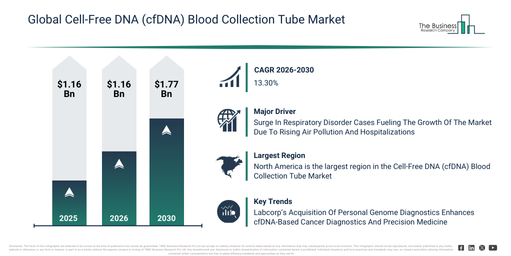
    The cell-free DNA (cfDNA) blood collection tube market has seen rapid expansion in recent years. It is anticipated to increase from $1.33 billion in 2025 to $1.51 billion in 2026, exhibiting a compound annual growth rate (CAGR) of 13.6%. The historical growth of this market can be linked to factors such as a rising need for prenatal testing, the development of cancer diagnostics, the integration of cfDNA into research, advancements in laboratory automation, and the growth of diagnostic centers.

    The cell-free dna (cfdna) blood collection tube market size is projected to experience significant expansion in the coming years, with expectations to reach $2.49 billion by 2030, progressing at a compound annual growth rate (CAGR) of 13.3%. This projected growth throughout the forecast period stems from innovations in blood tube preservatives, the integration with AI diagnostics, the expanding liquid biopsy market, an increase in clinical trials, and growing demand in emerging markets. Noteworthy trends for this period include enhanced sample preservation, integration with liquid biopsy platforms, standardized blood collection protocols, automation in sample processing, and high-stability tube designs.

    Access Your Free Sample Report For In-Depth Market Analysis:

    https://www.thebusinessresearchcompany.com/sample.aspx?id=28160&type=smp

    Which Key Drivers Are Affecting The Cell-Free DNA (cfDNA) Blood Collection Tube Market Development?

    A future expansion of the cell-free DNA (cfDNA) blood collection tube market is anticipated, driven by the growing incidence of respiratory disorders. These disorders are health issues impacting the lungs and associated respiratory components, which compromise effective breathing, oxygen supply to the blood, or carbon dioxide expulsion. The rise in these conditions is substantially linked to air pollution, a factor that inflames airways, diminishes lung capacity, and elevates the likelihood of ailments such as asthma, bronchitis, and chronic obstructive pulmonary disease (COPD). In the context of respiratory disorder management, cell-free DNA (cfDNA) blood collection tubes facilitate the identification of genetic mutations, tracking of disease advancement, and evaluation of treatment outcomes via a straightforward blood examination, consequently diminishing the necessity for intrusive lung biopsies. As an illustration, the Centers for Disease Control and Prevention, a US-based government agency, reported in December 2024 that respiratory syncytial virus (RSV) led to an estimated 17,000 to 34,000 hospitalizations between October 1 and November 30, 2024. Consequently, the growing incidence of respiratory disorders is propelling the expansion of the cell-free DNA (cfDNA) blood collection tube market.

    Which Segment Types Are Examined In The Cell-Free DNA (cfDNA) Blood Collection Tube Market Segment Study?

    The cell-free dna (cfdna) blood collection tube market covered in this report is segmented –

    1) By Type: 5ml, 10ml

    2) By Sample Type: Plasma, Serum, Whole Blood

    3) By Application: In Vitro Diagnostics, Scientific Research

    4) By End-User: Diagnostic Laboratories, Hospitals Or Clinical Centers, Genetic Diagnostic Labs, Cancer Research Centers, Research And Development Institutions, Conventional Diagnostic Centers

    Subsegments:

    1) By 5 mL: Single Use Tube, Vacuum Blood Collection Tube, Gel Separator Tube

    2) By 10 mL: Double Draw Tube, High Volume Collection Tube, Anticoagulant Treated Tube

    What Trends Are Transforming The Cell-Free DNA (cfDNA) Blood Collection Tube Market?

    Major companies operating in the cell-free DNA (cfDNA) blood collection tube market are concentrating on automating cfDNA extraction to elevate workflow efficiency. The automation of cfDNA extraction refers to the deployment of advanced robotic instruments and standardized methods to isolate cell-free DNA from blood samples with minimal human involvement, thereby enhancing efficiency, accuracy, and consistency while decreasing processing time and minimizing human errors. For instance, in September 2023, Yourgene Health plc, a UK-based molecular diagnostics company, introduced the MagBench Automated DNA Extraction Instrument and Kit, providing a fast, straightforward, and cost-effective bench-top robotic solution tailored for cell-free DNA extraction in non-invasive prenatal testing (NIPT) workflows. This launch aims to strengthen automation in NIPT workflows by delivering superior throughput, reproducibility, and reliability in cfDNA extraction, concurrently reducing manual input and operational expenditures.

    Which Players Are Part Of The Competitive Landscape Of The Cell-Free DNA (cfDNA) Blood Collection Tube Market?

    Major companies operating in the cell-free dna (cfdna) blood collection tube market are Roche Holding AG, Thermo Fisher Scientific Inc., Becton Dickinson (BD), Qiagen N.V., SARSTEDT AG & Co. KG, Guangzhou Improve Medical Technology, Streck Inc., DiaCarta Inc., Zymo Research Corporation, Biomatrica Inc., PreAnalytiX GmbH, Beijing Cowin Bioscience Co.Ltd., Norgen Biotek Corporation, Nonacus Limited, Guangdong Ardent Biomed Co. Ltd, MagBio Genomics Inc., VanGenes, BEAVER, Hebei Xinle Science & Technology Co. Ltd., Nasmed Diagnostics Pvt. Ltd.

    Get The Full Cell-Free DNA (cfDNA) Blood Collection Tube Market Report:

    https://www.thebusinessresearchcompany.com/report/cell-free-dna-cfdna-blood-collection-tube-global-market-report

    Which Region Is The Top Contributor To The Cell-Free DNA (cfDNA) Blood Collection Tube Market By Share?

    North America was the largest region in the cell-free DNA (cfDNA) blood collection tube market in 2025. Asia-Pacific is expected to be the fastest-growing region in the forecast period. The regions covered in the cell-free dna (cfdna) blood collection tube market report are Asia-Pacific, South East Asia, Western Europe, Eastern Europe, North America, South America, Middle East, Africa.

    Request A Customized Cell-Free DNA (cfDNA) Blood Collection Tube Market Report For Competitive Insights:

    https://www.thebusinessresearchcompany.com/customise?id=28160&type=smp

    Browse Through More Reports Similar to the Global Cell-Free DNA (cfDNA) Blood Collection Tube Market 2026, By The Business Research Company

    Medical Skin Markers Market Report 2026

    https://www.thebusinessresearchcompany.com/report/medical-skin-markers-global-market-report

    Surface Vision And Inspection Market Report 2026

    https://www.thebusinessresearchcompany.com/report/surface-vision-and-inspection-global-market-report

    Biomarkers Market Report 2026

    https://www.thebusinessresearchcompany.com/report/biomarkers-global-market-report

    Get in touch with us:

    The Business Research Company: https://www.thebusinessresearchcompany.com/

    Americas +1 310-496-7795

    Asia +44 7882 955267 & +91 8897263534

    Europe +44 7882 955267

    Email us at info@tbrc.info

    Follow us on:

    LinkedIn: https://in.linkedin.com/company/the-business-research-company

    YouTube: https://www.youtube.com/channel/UC24_fI0rV8cR5DxlCpgmyFQ

    Global Market Model: https://www.thebusinessresearchcompany.com/global-market-model
  • Dynamic Blood Pressure Monitor Market Forecast Through 2030 With Insights On Market Patterns And Developments

    Dynamic Blood Pressure Monitor Market Forecast Through 2030 With Insights On Market Patterns And Developments

    The Business Research Company’s 2026 market reports feature enhanced tools like market attractiveness analysis, TAM assessment, and company scoring matrices, along with interactive dashboards, deeper supply chain insights, and startup coverage strengthening the depth, usability, and strategic value of insights.

    How Does The Market Size Of The Dynamic Blood Pressure Monitor Market Compare Between 2026 And 2030?

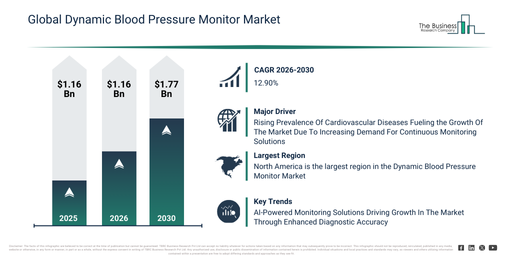
    The size of the dynamic blood pressure monitor market has seen rapid expansion over recent years. This market is projected to expand from $1.63 billion in 2025 to $1.84 billion by 2026, achieving a compound annual growth rate (CAGR) of 13.2%. Factors contributing to this growth historically include the restricted availability of continuous blood pressure monitoring devices, the prevalent reliance on manual measurement methods, a growing awareness of hypertension and cardiovascular diseases, the expanding use in clinical and hospital settings, and an increasing demand for home health devices.

    The dynamic blood pressure monitor market size is projected for substantial expansion in the coming years. It is anticipated to grow to $3 billion by 2030, exhibiting a compound annual growth rate (CAGR) of 12.9%. This growth throughout the forecast period is attributable to advancements in wearable and wireless monitoring technologies, their integration with mobile health applications, the increasing adoption of telemedicine, a rise in preventive healthcare initiatives, and the broader expansion of remote patient monitoring solutions. Significant trends during the forecast period include the increasing uptake of home health monitoring devices, the growing utilization of telemedicine platforms for hypertension management, a rising demand for compact and portable monitors, the integration of Bluetooth and Wi-Fi enabled monitors, and a strong emphasis on preventive healthcare and continuous blood pressure tracking.

    Access Your Free Sample Report For In-Depth Market Analysis:

    https://www.thebusinessresearchcompany.com/sample.aspx?id=24525&type=smp

    What Key Factors Are Affecting The Dynamic Blood Pressure Monitor Market Demand?

    The projected expansion of the dynamic blood pressure monitors market is attributed to the increasing prevalence of cardiovascular diseases. These conditions, which impact the heart and blood vessels, are significantly influenced by high blood pressure, a key contributor to heart attacks, strokes, and other serious health complications. The surge in cardiovascular diseases is largely a consequence of sedentary lifestyles, as a lack of physical activity impairs heart health and raises blood pressure. Dynamic blood pressure monitors play a crucial role in managing cardiovascular diseases by providing continuous, real-world blood pressure data, thereby enhancing diagnostic accuracy and enabling the detection of high-risk patterns such as nocturnal hypertension. For instance, in January 2024, the American Heart Association reported that the age-adjusted death rate from cardiovascular disease escalated to 233.3 per 100,000 in 2024, representing a 4.0% increase from 224.4 per 100,000 in 2023. Consequently, the rising incidence of cardiovascular diseases is a primary catalyst for the growth of the dynamic blood pressure monitors market.

    How Is The Dynamic Blood Pressure Monitor Market Segmented Across Different Segment Categories?

    The dynamic blood pressure monitor market covered in this report is segmented –

    1) By Product Type: Wrist Blood Pressure Monitors, Arm Blood Pressure Monitors, Finger Blood Pressure Monitors

    2) By Measurement Method: Automatic Measurement, Ambulatory Measurement

    3) By Distribution Channel: Online Stores, Pharmacies, Specialty Stores, Other Distribution Channels

    4) By Application: Home Health Monitoring, Clinical Settings, Preventive Healthcare, Telemedicine

    5) By End-User: Hospitals, Clinics, Home Care Settings, Other End-Users

    Subsegments:

    1) By Wrist Blood Pressure Monitors: Bluetooth-Enabled Monitors, Ambulatory Wrist Monitors, Automatic Inflation Monitors

    2) By Arm Blood Pressure Monitors: Upper Arm Monitors With Cuff, Bluetooth Or Wi-Fi Integrated Monitors, Ambulatory Upper Arm Monitors

    3) By Finger Blood Pressure Monitors: Compact Digital Monitors, Rechargeable Finger Monitors, USB-Connected Monitors

    What Trends Are Influencing Changes In The Dynamic Blood Pressure Monitor Market?

    Leading companies in the dynamic blood pressure monitor market are focusing on the development of innovative monitoring devices, such as next-generation hemodynamic monitoring systems, to enhance the accuracy and real-time tracking of blood pressure and cardiovascular parameters. Next-generation hemodynamic monitoring systems are sophisticated medical devices crafted to continuously and precisely measure cardiovascular parameters, including blood pressure, cardiac output, and blood flow dynamics, in real-time. For instance, in April 2025, Becton, Dickinson and Company, a US-based medical technology company, released the HemoSphere Alta platform, a next-generation hemodynamic monitoring solution specifically designed for operating rooms and intensive care units. This advanced system incorporates artificial intelligence-based predictive algorithms to assist clinicians in proactively managing blood pressure instability and optimizing blood flow, identifying potential life-threatening changes instantly. Its key features include a cerebral autoregulation index (CAI) for personalized blood pressure targets, the acumen hypotension prediction index (HPI) software for forecasting low blood pressure events, and a high-resolution touchscreen with voice and gesture commands for hands-free, sterile interaction.

    Which Organizations Play A Role In The Dynamic Blood Pressure Monitor Market Landscape?

    Major companies operating in the dynamic blood pressure monitor market are Koninklijke Philips N.V., GE HealthCare Technologies Inc., OMRON HEALTHCARE Co. Ltd., Hill-Rom Holdings Inc., Nihon Kohden Corporation, Spacelabs Healthcare Inc., Contec Medical Systems Co. Ltd., Schiller AG, Microlife Corporation, Qingdao Meditech Equipment Co. Ltd., A&D Company Limited, SunTech Medical Inc., Rudolf Riester GmbH, Bionet America Inc., Shenzhen Hingmed Instrument Co. Ltd., CNSystems Medizintechnik GmbH, WHALETEQ Co. LTD, Bosch + Sohn GmbH & Co. KG, DynaPulse Inc., IEM GmbH, Welch Allyn Inc., Beurer GmbH

    Get The Full Dynamic Blood Pressure Monitor Market Report:

    https://www.thebusinessresearchcompany.com/report/dynamic-blood-pressure-monitor-global-market-report

    Which Region Has The Greatest Market Share In The Dynamic Blood Pressure Monitor Market?

    North America was the largest region in the dynamic blood pressure monitor market in 2025. Asia-Pacific is expected to be the fastest-growing region in the forecast period. The regions covered in the dynamic blood pressure monitor market report are Asia-Pacific, South East Asia, Western Europe, Eastern Europe, North America, South America, Middle East, Africa.

    Request A Customized Dynamic Blood Pressure Monitor Market Report For Competitive Insights:

    https://www.thebusinessresearchcompany.com/customise?id=24525&type=smp

    Browse Through More Reports Similar to the Global Dynamic Blood Pressure Monitor Market 2026, By The Business Research Company

    Blood Pressure Monitoring Devices Market Report 2026

    https://www.thebusinessresearchcompany.com/report/blood-pressure-monitoring-devices-global-market-report

    Hemodynamic Monitoring Systems Market Report 2026

    https://www.thebusinessresearchcompany.com/report/hemodynamic-monitoring-systems-global-market-report

    Cardiovascular Clinical Trials Market Report 2026

    https://www.thebusinessresearchcompany.com/report/cardiovascular-clinical-trials-global-market-report

    Get in touch with us:

    The Business Research Company: https://www.thebusinessresearchcompany.com/

    Americas +1 310-496-7795

    Asia +44 7882 955267 & +91 8897263534

    Europe +44 7882 955267

    Email us at info@tbrc.info

    Follow us on:

    LinkedIn: https://in.linkedin.com/company/the-business-research-company

    YouTube: https://www.youtube.com/channel/UC24_fI0rV8cR5DxlCpgmyFQ

    Global Market Model: https://www.thebusinessresearchcompany.com/global-market-model
  • Cell Surface Marker Detection Market Insights Highlighting Growth Opportunities To 2030

    Cell Surface Marker Detection Market Insights Highlighting Growth Opportunities To 2030

    The Business Research Company’s 2026 market reports feature enhanced tools like market attractiveness analysis, TAM assessment, and company scoring matrices, along with interactive dashboards, deeper supply chain insights, and startup coverage strengthening the depth, usability, and strategic value of insights.

    What Are The Market Size Estimates For The Cell Surface Marker Detection Market In 2026 And 2030?

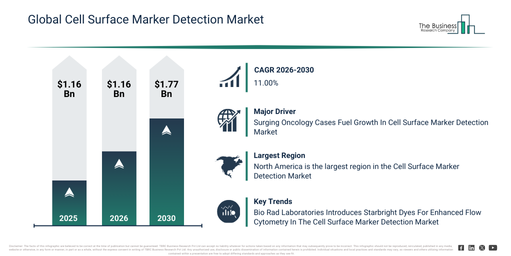
    The cell surface marker detection market has experienced rapid expansion in recent years. It is anticipated to increase from $6.39 billion in 2025 to $7.11 billion in 2026, exhibiting a compound annual growth rate (CAGR) of 11.2%. The growth observed in the past can be attributed to heightened biomedical research activities, the broadening of pharmaceutical drug discovery programs, an increased application of flow cytometry in diagnostics, rising investments within life sciences research, and improved availability of laboratory automation.

    The cell surface marker detection market is projected to experience rapid expansion in the coming years. It is expected to reach $10.81 billion by 2030, growing at a compound annual growth rate (CAGR) of 11.0%. This anticipated growth during the forecast period is fueled by the increasing adoption of precision medicine approaches, a rising demand for single-cell analysis, the expansion of translational research initiatives, the growing use of AI-assisted cell analysis, and increasing investments in advanced diagnostic laboratories. Prominent trends throughout this period involve the increasing adoption of high-throughput flow cytometry systems, a rising demand for advanced reagents and kits, the growing use of automated cell analysis platforms, the expansion of marker-based precision diagnostics, and an enhanced focus on multiparameter cell profiling.

    Access Your Free Sample Report For In-Depth Market Analysis:

    https://www.thebusinessresearchcompany.com/sample.aspx?id=8619&type=smp

    What Factors Are Contributing To The Growth Of The Cell Surface Marker Detection Market?

    The escalating prevalence of oncology diseases is projected to stimulate the expansion of the cell surface marker detection market moving forward. Cancer is defined as a condition where certain cells grow uncontrollably and disseminate to other parts of the body. Various factors, including the adoption of Western lifestyles, unhealthy dietary choices, frequent consumption of non-vegetarian diets, exposure to chemical pollution, and insufficient physical activity, have all contributed to the worldwide rise in cancer incidents. Cell surface marker detection aids cancer cells by providing point-of-care forecasting of how patients will respond to different cancer medications, thereby boosting its demand. As an illustration, in February 2024, the World Health Organization, an international organization based in Switzerland focusing on global health policy and public health initiatives, projected over 35 million new cancer cases by 2050, signifying a 77% increase compared to the estimated 20 million cases in 2022. Hence, the increasing occurrence of oncology diseases is a key driver for the growth of the cell surface marker detection market.

    How Are Different Segments Classified In The Cell Surface Marker Detection Market Segment Analysis?

    The cell surface marker detection market covered in this report is segmented –

    1) By Product: Flow Cytometry, Reagents And Kits

    2) By Application: Disease Diagnosis, Diseases Identification, Research For Drug Discovery, Cytological Academic Research

    3) By End-Users: Pharmaceutical And Biotechnology Companies, Hospitals And Clinical Testing Laboratories, Academic And Research Institutes, Other End Users

    Subsegments:

    1) By Flow Cytometry: Benchtop Flow Cytometers, Portable Flow Cytometers, High-Throughput Flow Cytometers

    2) By Reagents And Kits: Antibodies And Conjugates, Staining Kits, Calibration And Control Kits

    What Trends Are Shaping The Future Of The Cell Surface Marker Detection Market?

    Leading companies in the cell surface marker detection market are investing in advanced technologies, such as innovative fluorescent dyes and antibodies, to improve multicolour flow cytometry capabilities, thereby enhancing the accuracy and efficiency of immunological research and diagnostics. Bio-Rad has expanded its StarBright Violet Dye series, now including 29 highly validated antibodies conjugated to various StarBright Violet Dyes, which improves the detection and analysis of multiple cell surface markers in human and animal studies via multicolour flow cytometry. For instance, in May 2024, Bio-Rad Laboratories, Inc., a US-based company that develops and manufactures specialized technological products, introduced three new StarBright Red Dyes: StarBright Red 715, 775, and 815. This expansion strengthens their existing collection of fluorescent dyes, now offering 32 options compatible with multiple lasers, specifically designed for conventional and full-spectrum flow cytometry applications. Moreover, these dyes demonstrate minimal background interference compared to traditional cyanine tandem dyes and possess sufficient stability to be fixed in formalin or alcohol-based fixatives without compromising signal integrity.

    Who Are The Companies Driving Activity In The Cell Surface Marker Detection Market?

    Major companies operating in the cell surface marker detection market are Thermo Fisher Scientific Inc, Beckman Coulter Inc, Bio-Rad Laboratories Inc, Becton Dickinson and Company, BD Biosciences, Agilent Inc, Sigma-Aldrich, Qiagen NV, Abcam PLC, GenScript Biotech, BioLegend, Cell Signaling Technology Inc, Merck KGaA, Bio-Techne Corporation, Affymetrix, Danaher Corporation, Miltenyi Biotec, R&D Systems, Siemens Healthineers, F Hoffmann-La Roche Ltd, Sartorius, Sysmex Corporation, Nihon Kohden Corporation, Diasorin SpA, Janssen Diagnostics

    Get The Full Cell Surface Marker Detection Market Report:

    https://www.thebusinessresearchcompany.com/report/cell-surface-marker-detection-global-market-report

    Which Region Represents The Largest Share Of The Cell Surface Marker Detection Market?

    North America was the largest region in the cell surface marker detection market in 2025. Asia-Pacific is expected to be the fastest-growing region in the forecast period. The regions covered in the cell surface marker detection market report are Asia-Pacific, South East Asia, Western Europe, Eastern Europe, North America, South America, Middle East, Africa.

    Request A Customized Cell Surface Marker Detection Market Report For Competitive Insights:

    https://www.thebusinessresearchcompany.com/customise?id=8619&type=smp

    Browse Through More Reports Similar to the Global Cell Surface Marker Detection Market 2026, By The Business Research Company

    Individual And Family Services Market Report 2026

    https://www.thebusinessresearchcompany.com/report/individual-and-family-services-global-market-report

    Legal Services Market Report 2026

    https://www.thebusinessresearchcompany.com/report/legal-services-global-market-report

    Individual And Family Services Market Report 2026

    https://www.thebusinessresearchcompany.com/report/individual-and-family-services-global-market-report

    Get in touch with us:

    The Business Research Company: https://www.thebusinessresearchcompany.com/

    Americas +1 310-496-7795

    Asia +44 7882 955267 & +91 8897263534

    Europe +44 7882 955267

    Email us at info@tbrc.info

    Follow us on:

    LinkedIn: https://in.linkedin.com/company/the-business-research-company

    YouTube: https://www.youtube.com/channel/UC24_fI0rV8cR5DxlCpgmyFQ

    Global Market Model: https://www.thebusinessresearchcompany.com/global-market-model
  • Durable Medical Equipment Market Outlook For 2026–2030 Covering Growth Drivers And Industry Trends

    Durable Medical Equipment Market Outlook For 2026–2030 Covering Growth Drivers And Industry Trends

    The Business Research Company’s 2026 market reports feature enhanced tools like market attractiveness analysis, TAM assessment, and company scoring matrices, along with interactive dashboards, deeper supply chain insights, and startup coverage strengthening the depth, usability, and strategic value of insights.

    What Is The Forecasted Market Size Trajectory Of The Durable Medical Equipment Market From 2026 To 2030?

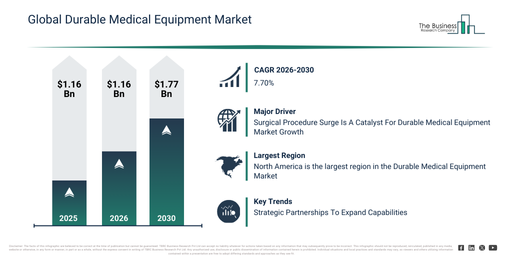
    The durable medical equipment market has experienced significant expansion in recent years. It is anticipated to increase from $229.95 billion in 2025 to $248.58 billion in 2026, exhibiting a compound annual growth rate (CAGR) of 8.1%. This historical expansion can be primarily attributed to an escalating aging population, the growing incidence of chronic diseases, the expansion of home healthcare services, improved reimbursement coverage for dme, and the increasing accessibility of assistive medical devices.

    The durable medical equipment market size is projected to see significant expansion in the next few years. It is anticipated to grow to $334.08 billion by 2030, demonstrating a compound annual growth rate (CAGR) of 7.7%. This growth over the forecast period can be attributed to an increasing need for home healthcare solutions, the rising integration of connected medical devices, the broadening of value-based care models, an escalating focus on patient-centric care delivery, and heightened investments in digital health infrastructure. Key trends expected during this period include a greater adoption of home-based medical equipment, an increased demand for remote patient monitoring devices, a growing emphasis on long-term care solutions, the expansion of smart and connected dme products, and an enhanced focus on patient mobility and independence.

    Access Your Free Sample Report For In-Depth Market Analysis:

    https://www.thebusinessresearchcompany.com/sample.aspx?id=9821&type=smp

    Which Primary Drivers Are Impacting The Durable Medical Equipment Market Growth?

    A rising volume of surgical procedures is anticipated to fuel the expansion of the durable medical equipment market in the future. Surgical procedures are defined as medical interventions where incisions are made or minimally invasive methods are employed to address, mend, extract, or identify a bodily condition. Durable medical equipment (DME) is vital across numerous surgical procedures, providing patient support and comfort, aiding mobility, ensuring safety and stability, assisting with infection control, improving surgical results, and shortening hospital stays. For example, in June 2024, a report from the International Society of Aesthetic Plastic Surgery, a US-based professional body for board-certified aesthetic plastic surgeons, revealed that total surgical and non-surgical procedures increased by 3.4% in 2023, reaching 34.9 million. Procedures involving the face and head experienced substantial growth, exceeding 6.5 million, marking a 19.6% rise compared to the prior year. Consequently, the growing number of surgical procedures is a key impetus for the durable medical equipment market’s expansion.

    What Are The Main Segments Within The Durable Medical Equipment Market Segment Structure?

    The durable medical equipment market covered in this report is segmented –

    1) By Product: Personal Mobility Devices, Bathroom Safety Devices And Medical Furniture, Monitoring And Therapeutic Devices

    2) By Payer: Public, Private, Out-Of-Pocket

    3) By End-Use: Nursing Homes, Home Healthcare, Other End-Uses

    Subsegments:

    1) By Personal Mobility Devices: Wheelchairs, Scooters, Walkers And Canes

    2) By Bathroom Safety Devices And Medical Furniture: Grab Bars, Shower Chairs, Commodes, Hospital Beds

    3) By Monitoring And Therapeutic Devices: Blood Pressure Monitors, Nebulizers, CPAP Machines

    Which Trends Are Shaping Growth In The Durable Medical Equipment Market?

    Major companies in the durable medical equipment market are concentrating on strategic partnerships to expand their capabilities. Such strategic partnerships involve a process where companies utilize each other’s strengths and resources to achieve mutual benefits and success. For instance, in November 2023, Humana Inc., a Kentucky-based for-profit American health insurance company, collaborated with two national durable medical equipment (DME) organizations, AdaptHealth Corp. and Rotech Healthcare Inc., to offer DME services for its Medicare Advantage HMO members. These collaborations aim to improve members’ access to durable medical equipment, deliver greater value, and streamline the experience for individuals managing their health at home. AdaptHealth Corp. is a Pennsylvania-based home healthcare equipment company. Rotech Healthcare Inc. is a Florida-based provider of ventilators, oxygen, sleep apnea treatment, wound care solutions, and home medical equipment.

    Who Are The Companies Participating In The Durable Medical Equipment Market?

    Major companies operating in the durable medical equipment market are Invacare Corporation, GF Health Products Inc., Hill-Rom Holdings Inc., Koninklijke Philips NV, Sunrise Medical Inc., Drive Medical, ArjoHuntleigh, Permobil AB, ResMed Inc., OMRON Corporation, Medline Industries Inc., Compass Health Brands, Pride Mobility, Stryker Corporation, Masimo Corporation, Getinge AB, Nihon Kohden Corporation, Mindray Medical International Limited, Abbott, GE Electric Company

    Get The Full Durable Medical Equipment Market Report:

    https://www.thebusinessresearchcompany.com/report/durable-medical-equipment-global-market-report

    Which Region Accounts For The Largest Portion Of The Durable Medical Equipment Market?

    North America was the largest region in the durable medical equipment market in 2025. The regions covered in the durable medical equipment market report are Asia-Pacific, South East Asia, Western Europe, Eastern Europe, North America, South America, Middle East, Africa.

    Request A Customized Durable Medical Equipment Market Report For Competitive Insights:

    https://www.thebusinessresearchcompany.com/customise?id=9821&type=smp

    Browse Through More Reports Similar to the Global Durable Medical Equipment Market 2026, By The Business Research Company

    Refurbished Medical Equipment Market Report 2026

    https://www.thebusinessresearchcompany.com/report/refurbished-medical-equipment-global-market-report

    Medical Equipment Market Report 2026

    https://www.thebusinessresearchcompany.com/report/medical-equipment-global-market-report

    Medical Equipment Maintenance Market Report 2026

    https://www.thebusinessresearchcompany.com/report/medical-equipment-maintenance-global-market-report

    Get in touch with us:

    The Business Research Company: https://www.thebusinessresearchcompany.com/

    Americas +1 310-496-7795

    Asia +44 7882 955267 & +91 8897263534

    Europe +44 7882 955267

    Email us at info@tbrc.info

    Follow us on:

    LinkedIn: https://in.linkedin.com/company/the-business-research-company

    YouTube: https://www.youtube.com/channel/UC24_fI0rV8cR5DxlCpgmyFQ

    Global Market Model: https://www.thebusinessresearchcompany.com/global-market-model
  • Rising Cardiovascular Disease Prevalence Driving The Market Growth Due To Sedentary Lifestyles And Poor Nutrition Is Supporting Expansion In The Dual Chamber Pacemaker Market

    Rising Cardiovascular Disease Prevalence Driving The Market Growth Due To Sedentary Lifestyles And Poor Nutrition Is Supporting Expansion In The Dual Chamber Pacemaker Market

    The Business Research Company’s 2026 market reports feature enhanced tools like market attractiveness analysis, TAM assessment, and company scoring matrices, along with interactive dashboards, deeper supply chain insights, and startup coverage strengthening the depth, usability, and strategic value of insights.

    How Much Will The Market Value Of The Dual Chamber Pacemaker Market Grow Between 2026 And 2030?

    The dual chamber pacemaker market size has experienced significant expansion in recent years. This market is anticipated to increase from $4.24 billion in 2025 to $4.53 billion in 2026, achieving a compound annual growth rate (CAGR) of 6.6%. The historical growth of this market stemmed from factors such as the rising prevalence of atrial fibrillation and bradycardia, the adoption of conventional pacemaker devices, enhancements in hospital cardiac care infrastructure, increased awareness regarding cardiac resynchronization therapy, and the reliance on in-hospital cardiac procedures.

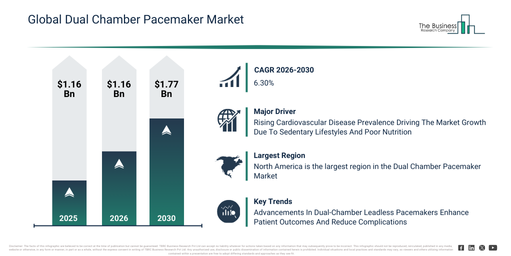
    The dual chamber pacemaker market is anticipated to experience substantial expansion over the upcoming years. By 2030, its valuation is projected to reach $5.78 billion, demonstrating a compound annual growth rate (CAGR) of 6.3%. This growth during the forecast period is fueled by several factors, including advancements in dual-chamber leadless pacemakers, the incorporation of remote monitoring and IoT-enabled technologies, an increase in home healthcare for individuals with cardiac conditions, the proliferation of ambulatory surgical centers, and the creation of more battery-efficient and durable pacemaker systems. Key developments expected in the forecast timeframe encompass a greater uptake of dual-chamber pacemakers for managing arrhythmia, the advancement of leadless and minimally invasive pacemaker technologies, the broadening of remote cardiac monitoring networks, increased public understanding and early detection of bradycardia and heart block, and a heightened emphasis on patient-centered cardiac care and at-home health solutions.

    Access Your Free Sample Report For In-Depth Market Analysis:

    https://www.thebusinessresearchcompany.com/sample.aspx?id=24524&type=smp

    What Significant Factors Are Influencing The Dual Chamber Pacemaker Market Expansion?

    The escalating frequency of cardiovascular diseases is anticipated to boost the expansion of the dual-chamber pacemaker market moving forward. These conditions involve disorders affecting the heart and blood vessels, leading to critical issues such as heart attacks and strokes. The surge in cardiovascular diseases is primarily attributed to inactive lifestyles and inadequate nutrition, which contribute to obesity and associated cardiac problems. A dual-chamber pacemaker aids in treating cardiovascular diseases by regulating the heart’s rhythm through electrical impulses delivered to both the atrium and ventricle, thereby enhancing coordination and efficient blood flow. For instance, in January 2024, according to the American Heart Association, a US-based non-profit organization, the age-adjusted death rate from cardiovascular disease increased to 233.3 per 100,000 in 2024, up 4.0% from 224.4 per 100,000 in 2023. Thus, the increasing prevalence of cardiovascular diseases is stimulating the growth of the dual-chamber pacemaker market.

    How Is Segmentation Applied In The Dual Chamber Pacemaker Market Segment Analysis?

    The dual chamber pacemaker market covered in this report is segmented –

    1) By Product Type: Single-Chamber Pacemakers, Dual-Chamber Pacemakers, Biventricular Pacemakers

    2) By Technology: Micra Pacemaker, Conventional Pacemakers, Leadless Pacemakers, Remote Monitoring Systems

    3) By Distribution Channel: Direct Sales, Distributors, Tender-Based Sales

    4) By Application: Atrial Fibrillation, Bradycardia, Heart Block, Cardiac Resynchronization Therapy

    5) By End-User: Hospitals, Cardiac Care Centers, Ambulatory Surgical Centers, Home Healthcare

    Subsegments:

    1) By Single-Chamber Pacemakers: Single-Chamber Leadless Pacemakers, Single-Chamber Conventional Pacemakers

    2) By Dual-Chamber Pacemakers: Dual-Chamber Leadless Pacemakers, Dual-Chamber Conventional Pacemakers

    3) By Biventricular Pacemakers: Cardiac Resynchronization Therapy Pacemakers (CRT-P), Cardiac Resynchronization Therapy Defibrillators (CRT-D)

    What Trends Are Affecting The Direction Of The Dual Chamber Pacemaker Market?

    Leading companies in the dual-chamber pacemaker market are prioritizing the development of advanced products, such as the dual-chamber leadless pacemaker, to enhance patient comfort, mitigate infection risks, and extend device longevity. This compact, implantable device paces the heart’s atrium and ventricle without relying on traditional leads, which in turn reduces complications and improves cardiac rhythm management. For example, in July 2023, Abbott Laboratories, a US-based medical device company, introduced AVEIR, a dual-chamber leadless pacemaker that gained approval from the U.S. Food and Drug Administration. This innovative system features two miniaturized devices, one for the right atrium and one for the right ventricle, designed to communicate wirelessly, providing synchronized pacing for patients with abnormal or slow heart rhythms and covering all common pacemaker indications. The leadless design eliminates the requirement for wires and surgical pockets, thereby decreasing complications and boosting patient comfort, while clinical trials have showcased high safety and efficacy with a 98% implant success rate and over 97% atrioventricular synchrony.

    Who Are The Companies Participating In The Dual Chamber Pacemaker Market Environment?

    Major companies operating in the dual chamber pacemaker market are Abbott Laboratories, Medtronic plc, Boston Scientific Corporation, Biotronik SE & Co. KG, LivaNova PLC, Lepu Medical Technology Beijing Co. Ltd., MicroPort Scientific Corporation, Oscor Inc., Sorin Group, EBR Systems Inc., Vitatron, Medico S.p.A., Osypka Medical GmbH, Shree Pacetronix Ltd., Pacetronix Ltd., Medtronic India Pvt. Ltd., Abbott Medical Japan, MicroPort CRM, Biotronik India Pvt. Ltd.

    Get The Full Dual Chamber Pacemaker Market Report:

    https://www.thebusinessresearchcompany.com/report/dual-chamber-pacemaker-global-market-report

    Which Region Holds The Highest Market Share In The Dual Chamber Pacemaker Market?

    North America was the largest region in the dual chamber pacemaker market in 2025. Asia-Pacific is expected to be the fastest-growing region in the forecast period. The regions covered in the dual chamber pacemaker market report are Asia-Pacific, South East Asia, Western Europe, Eastern Europe, North America, South America, Middle East, Africa.

    Request A Customized Dual Chamber Pacemaker Market Report For Competitive Insights:

    https://www.thebusinessresearchcompany.com/customise?id=24524&type=smp

    Browse Through More Reports Similar to the Global Dual Chamber Pacemaker Market 2026, By The Business Research Company

    Pacemakers Market Report 2026

    https://www.thebusinessresearchcompany.com/report/pacemakers-global-market-report

    Heart Pump Devices Market Report 2026

    https://www.thebusinessresearchcompany.com/report/heart-pump-devices-global-market-report

    Leadless Pacemakers Market Report 2026

    https://www.thebusinessresearchcompany.com/report/leadless-pacemakers-global-market-report

    Get in touch with us:

    The Business Research Company: https://www.thebusinessresearchcompany.com/

    Americas +1 310-496-7795

    Asia +44 7882 955267 & +91 8897263534

    Europe +44 7882 955267

    Email us at info@tbrc.info

    Follow us on:

    LinkedIn: https://in.linkedin.com/company/the-business-research-company

    YouTube: https://www.youtube.com/channel/UC24_fI0rV8cR5DxlCpgmyFQ

    Global Market Model: https://www.thebusinessresearchcompany.com/global-market-model
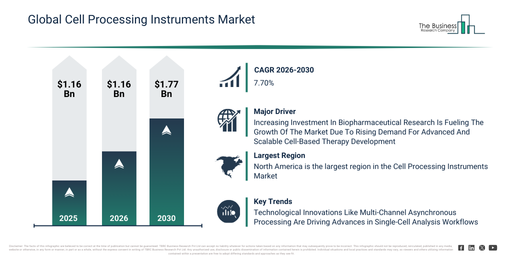
  • Global Cell Processing Instruments Market Expected To Reach $10.1 Billion By 2030 At 7.7% CAGR

    Global Cell Processing Instruments Market Expected To Reach $10.1 Billion By 2030 At 7.7% CAGR

    The Business Research Company’s 2026 market reports feature enhanced tools like market attractiveness analysis, TAM assessment, and company scoring matrices, along with interactive dashboards, deeper supply chain insights, and startup coverage strengthening the depth, usability, and strategic value of insights.

    What Expansion In Market Value Is Forecasted For The Cell Processing Instruments Market Between 2026 And 2030?

    The cell processing instruments market size has demonstrated significant expansion in recent years. This market is anticipated to increase from $6.95 billion in 2025 to $7.51 billion in 2026, progressing at a compound annual growth rate (CAGR) of 8.1%. Historically, this growth can be ascribed to several factors, including the previous lack of automation in cell processing, a dependence on manual cell counting and separation techniques, an escalation in academic and research activities, a heightened requirement for precise cell analysis, and the emergence of flow cytometry technologies.

    The cell processing instruments market is anticipated to experience substantial expansion in the coming years, with projections indicating it will reach $10.1 billion by 2030, exhibiting a compound annual growth rate (CAGR) of 7.7%. This growth is primarily driven by the development of integrated cell processing platforms, increasing investment in cell therapy and regenerative medicine, the adoption of digital and automated imaging systems, a rise in contract research and manufacturing activities, and advancements in live cell analysis and high-content screening. Furthermore, significant trends for this period include a heightened demand for automated cell processing systems, the growing adoption of flow cytometry and high-content imaging, the expansion of cell therapy and regenerative medicine applications, an emphasis on standardization and regulatory compliance, and the integration of multi-functional cell analysis platforms.

    Access Your Free Sample Report For In-Depth Market Analysis:

    https://www.thebusinessresearchcompany.com/sample.aspx?id=27242&type=smp

    Which Strong Drivers Are Impacting The Cell Processing Instruments Market Growth?

    The increasing investment in biopharmaceutical research is expected to propel the growth of the cell processing instruments market going forward. Biopharmaceutical research refers to the scientific study and development of therapeutic products derived from biological sources or designed to mimic biological molecules for diagnosing, preventing, or treating diseases. The growing demand for innovative therapies to address rising chronic diseases and unmet medical needs is driving this increasing investment, prompting greater research and development efforts for targeted, effective treatments. Cell processing instruments support biopharmaceutical research by enabling efficient, standardized, and scalable cell handling, which accelerates the development and production of advanced cell-based therapies. For instance, in January 2025, according to the BioIndustry Association (BIA), a UK-based trade association, the UK biotech sector experienced substantial growth in 2024, securing £3.5 billion (approximately $ 4.4 billion) in investment, an impressive 94% increase from the previous year. Therefore, the increasing investment in biopharmaceutical research is driving the growth of the cell processing instruments market.

    How Is The Cell Processing Instruments Market Categorized Across Its Segment Groups?

    The cell processing instruments market covered in this report is segmented –

    1) By Type: Cell Counters, Cell Imaging Systems, Flow Cytometers, Cell Separator Systems, Automated Cell Processing Systems, Other Instruments

    2) By Application: Cell Isolation Or Separation, Cell Imaging And Counting, Cell Viability And Proliferation, Other Applications

    3) By End-Use: Pharmaceutical And Biotechnology Companies, Contract Research Organizations (CROs) And Contract Manufacturing Organizations (CMOs), Academic And Research Institutes, Other End-Uses

    Subsegments:

    1) By Cell Counters: Manual Cell Counters, Automated Cell Counters, Digital Cell Counters

    2) By Cell Imaging Systems: Brightfield Imaging Systems, Fluorescence Imaging Systems, High-Content Imaging Systems, Live Cell Imaging Systems

    3) By Flow Cytometers: Analog Flow Cytometers, Digital Flow Cytometers, Benchtop Flow Cytometers, Clinical Flow Cytometers

    4) By Cell Separator Systems: Magnetic-Activated Cell Sorting (MACS) Systems, Fluorescence-Activated Cell Sorting (FACS) Systems, Centrifugal Elutriation Systems

    5) By Automated Cell Processing Systems: Cell Expansion Systems, Cell Washing And Concentration Systems, Cell Harvesting Systems, Integrated Cell Processing Platforms

    6) By Other Instruments: Cell Disruption Systems, Cell Viability Analyzers, Centrifuges For Cell Processing, Cell Freezing And Thawing Systems

    Which Trends Are Contributing To Changes In The Cell Processing Instruments Market?

    Companies within the cell processing instruments market are prioritizing the creation of advanced methods, including multi-channel asynchronous processing, to elevate workflow effectiveness and flexibility in cell therapy development. Multi-channel asynchronous processing provides a system with the capacity to run multiple separate workflows simultaneously on distinct channels, allowing different operations to proceed in parallel without needing to wait for one another. As an illustration, in June 2023, Singleron Biotechnologies GmbH, a German biotechnology company, unveiled two new instruments, Python Junior and Matrix NEO, designed to refine and standardize the single-cell analysis workflow. Python Junior facilitates the dissociation of solid tissues into premium single-cell suspensions using dual independent channels through a blend of mechanical and enzymatic processing, whereas Matrix NEO allows for high-throughput, fully automated single-cell library preparation, covering chip priming, cell partitioning, lysis, and nucleic acid capture across four channels, thereby accommodating various applications and throughput requirements in both research and clinical settings.

    Which Firms Are Influencing Competition In The Cell Processing Instruments Market?

    Major companies operating in the cell processing instruments market are Thermo Fisher Scientific Inc., Danaher Corporation, Merck KGaA, Becton Dickinson and Company, Avantor Inc., Agilent Technologies Inc., Sartorius AG, Revvity Inc., Bio-Rad Laboratories Inc., Eppendorf SE, Tecan Group Ltd., Bio-Techne Corporation, STEMCELL Technologies Inc., Miltenyi Biotec B.V. & Co. KG, Takara Bio Inc., 10x Genomics Inc., Promega Corporation, Esco Lifesciences Group Ltd., NanoCellect Biomedical Inc., InGeneron Inc.

    Get The Full Cell Processing Instruments Market Report:

    https://www.thebusinessresearchcompany.com/report/cell-processing-instruments-global-market-report

    Which Geographic Region Dominates The Cell Processing Instruments Market?

    North America was the largest region in the cell processing instruments market in 2025. Asia-Pacific is expected to be the fastest-growing region in the forecast period. The regions covered in the cell processing instruments market report are Asia-Pacific, South East Asia, Western Europe, Eastern Europe, North America, South America, Middle East, Africa.

    Request A Customized Cell Processing Instruments Market Report For Competitive Insights:

    https://www.thebusinessresearchcompany.com/customise?id=27242&type=smp

    Browse Through More Reports Similar to the Global Cell Processing Instruments Market 2026, By The Business Research Company

    Cell Free Dna Isolation And Extraction Market Report 2026

    https://www.thebusinessresearchcompany.com/report/cell-free-dna-isolation-and-extraction-global-market-report

    Dna Diagnostics Market Report 2026

    https://www.thebusinessresearchcompany.com/report/dna-diagnostics-global-market-report

    Dna Testing Market Report 2026

    https://www.thebusinessresearchcompany.com/report/dna-testing-global-market-report

    Get in touch with us:

    The Business Research Company: https://www.thebusinessresearchcompany.com/

    Americas +1 310-496-7795

    Asia +44 7882 955267 & +91 8897263534

    Europe +44 7882 955267

    Email us at info@tbrc.info

    Follow us on:

    LinkedIn: https://in.linkedin.com/company/the-business-research-company

    YouTube: https://www.youtube.com/channel/UC24_fI0rV8cR5DxlCpgmyFQ

    Global Market Model: https://www.thebusinessresearchcompany.com/global-market-model