
Category: Medical Equipment

  • Cell Culture Plates Market Forecast To Reach $3.08 Billion By 2030 At 6.1% CAGR

    Cell Culture Plates Market Forecast To Reach $3.08 Billion By 2030 At 6.1% CAGR

    The Business Research Company’s 2026 market reports feature enhanced tools like market attractiveness analysis, TAM assessment, and company scoring matrices, along with interactive dashboards, deeper supply chain insights, and startup coverage strengthening the depth, usability, and strategic value of insights.

    What Is The Projected Increase In Market Value Of The Cell Culture Plates Market During 2026–2030?

    The market size for cell culture plates has demonstrated substantial growth in recent years. Projections indicate an increase from $2.29 billion in 2025 to $2.44 billion by 2026, reflecting a compound annual growth rate (CAGR) of 6.2%. This market’s historical expansion is largely due to factors such as the broadening of biomedical research activities, the increased adoption of in vitro testing models, a rise in pharmaceutical R&D spending, the growing acceptance of cell-based assays, and the consistent availability of standardized laboratory consumables.

    The cell culture plates market size is anticipated to undergo significant expansion in the upcoming years. It is projected to reach $3.09 billion by 2030, driven by a compound annual growth rate (CAGR) of 6.1%. This expansion over the forecast period is primarily due to the escalating demand for advanced cell culture models, increasing investments in regenerative medicine research, the broadening scope of biopharmaceutical manufacturing, the growing integration of automated laboratory workflows, and a heightened emphasis on precision medicine research. Noteworthy trends during this period include the rising adoption of high-throughput cell culture plates, an increased reliance on 3D cell culture systems, a growing need for coated culture surfaces, the expansion of plates designed for organoid and stem cell research, and an intensified focus on reproducibility in cell-based assays.

    Access Your Free Sample Report For In-Depth Market Analysis:

    https://www.thebusinessresearchcompany.com/sample.aspx?id=12438&type=smp

    Which Factors Are Influencing The Growth Of The Cell Culture Plates Market?

    The increasing occurrence of chronic illnesses is anticipated to drive the expansion of the cell culture plates market in the future. These are conditions enduring for a year or more, requiring ongoing medical attention, limiting daily functions, or both. In research and development, cell culture plates are utilized to bring together various cell types within integrated, self-organizing systems. This enables understanding disease development, creating ideal environments for cell culture, evaluating novel therapies, and assessing drug efficacy. As an illustration, in June 2024, the National Health Service, a UK government body, reported that 3,615,330 people registered with a general practitioner (GP) were diagnosed with non-diabetic hyperglycemia or pre-diabetes (characterized by elevated blood sugar levels, but not meeting diabetes criteria) in 2023. This represented an 18% rise from the 3,065,825 cases recorded in 2022. Consequently, the growing incidence of chronic ailments is fueling the growth of the cell culture plate market.

    What Are The Key Segment Divisions In The Cell Culture Plates Market Segment Structure?

    The cell culture plates market covered in this report is segmented –

    1) By Type: Standard Cell Culture Plates, Coated Cell Culture Plates, Specialty Cell Culture Plates

    2) By Material: Polystyrene, Glass, Other Materials

    3) By Surface: Treated, Untreated

    4) By Application: Drug Discovery And Development, Biopharmaceutical Production, Tissue Engineering And Regenerative Medicine, Other Applications

    5) By End-User: Research Institutes, Pharmaceutical And Biotechnology, Diagnostic Laboratories

    Subsegments:

    1) By Standard Cell Culture Plates: 6-Well Plates, 12-Well Plates, 24-Well Plates, 48-Well Plates, 96-Well Plates, 384-Well Plates

    2) By Coated Cell Culture Plates: Collagen-Coated Plates, Poly-D-Lysine-Coated Plates, Fibronectin-Coated Plates

    3) By Specialty Cell Culture Plates: 3D Cell Culture Plates, Microplates For High-Throughput Screening, Plates For Stem Cell Culture, Plates For Organoid Culture

    Which Trends Are Influencing Demand In The Cell Culture Plates Market?

    Leading companies within the cell culture plate market are strategically focusing on developing advanced products, such as 3D Cell Culture Plates, to strengthen their market presence. These 3D cell culture plates effectively address the demand for sophisticated, physiologically relevant models, thereby significantly contributing to the cell culture plates market across diverse research and development applications. For instance, in May 2024, TheWell Bioscience, a US-based biotechnology research company, introduced its VitroPrime Spread-Attach Plates. These VitroPrime Spread-Attach Plates are specifically designed for hydrogel-based 3D and 2D cell culture, providing excellent hydrogel spreading and adherence to boost cell attachment. Such plates ensure homogenous gel distribution, minimize edge effects, and promote rapid cell growth for high-throughput applications.

    Which Organizations Are Engaged In The Cell Culture Plates Market?

    Major companies operating in the cell culture plates market are Thermo Fisher Scientific Inc., Corning Inc., Merck KGaA, Lonza Group AG, Sartorius AG, Eppendorf AG, Greiner Bio-One International GmbH, Sarstedt AG & Co., TPP Techno Plastic Products AG, Sumitomo Bakelite Co. Ltd., USA Scientific Inc., Himedia Laboratories Pvt. Ltd., Porvair PLC, Brand GmbH & Co. KG, Stemcell Technologies Inc., MatTek Corporation, Celltreat Scientific Products, Crystalgen Inc., Jet Bio-Filtration Co. Ltd., Zhejiang Sorfa Life Science Research Co. Ltd., Wuxi NEST Biotechnology Co. Ltd., Cellvis

    Get The Full Cell Culture Plates Market Report:

    https://www.thebusinessresearchcompany.com/report/cell-culture-plates-global-market-report

    Where Is The Cell Culture Plates Market Primarily Concentrated By Region?

    North America was the largest region in the cell culture plates market in 2025. The regions covered in the cell culture plates market report are Asia-Pacific, South East Asia, Western Europe, Eastern Europe, North America, South America, Middle East, Africa.

    Request A Customized Cell Culture Plates Market Report For Competitive Insights:

    https://www.thebusinessresearchcompany.com/customise?id=12438&type=smp

    Browse Through More Reports Similar to the Global Cell Culture Plates Market 2026, By The Business Research Company

    Cell Culture Media Market Report 2026

    https://www.thebusinessresearchcompany.com/report/cell-culture-media-global-market-report

    3D Cell Culture Technologies Market Report 2026

    https://www.thebusinessresearchcompany.com/report/3d-cell-culture-technologies-global-market-report

    Cell Cultures Market Report 2026

    https://www.thebusinessresearchcompany.com/report/cell-cultures-global-market-report

    Get in touch with us:

    The Business Research Company: https://www.thebusinessresearchcompany.com/

    Americas +1 310-496-7795

    Asia +44 7882 955267 & +91 8897263534

    Europe +44 7882 955267

    Email us at info@tbrc.info

    Follow us on:

    LinkedIn: https://in.linkedin.com/company/the-business-research-company

    YouTube: https://www.youtube.com/channel/UC24_fI0rV8cR5DxlCpgmyFQ

    Global Market Model: https://www.thebusinessresearchcompany.com/global-market-model
  • Cell Culture Media Storage Containers Market Expected To Reach $5.5 Billion By 2030

    Cell Culture Media Storage Containers Market Expected To Reach $5.5 Billion By 2030

    The Business Research Company’s 2026 market reports feature enhanced tools like market attractiveness analysis, TAM assessment, and company scoring matrices, along with interactive dashboards, deeper supply chain insights, and startup coverage strengthening the depth, usability, and strategic value of insights.

    How Is The Market Size Of The Cell Culture Media Storage Containers Market Expected To Change From 2026 To 2030?

    The cell culture media storage containers market has experienced rapid expansion in recent years. This market is projected to expand from $2.88 billion in 2025 to $3.32 billion in 2026, demonstrating a compound annual growth rate (CAGR) of 15.1%. The growth observed in the historic period can be attributed to the rise in cell-based research activities, the expansion of biopharmaceutical production, the increasing utilization of in vitro testing methods, growing investment in academic life sciences research, and the broader adoption of tissue culture techniques.

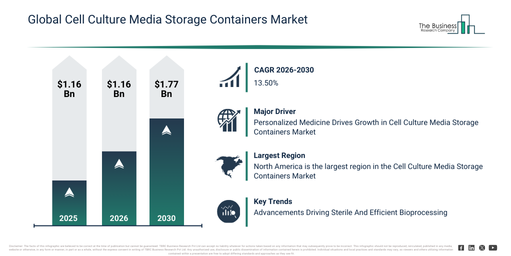
    The cell culture media storage containers market is projected to experience substantial expansion over the upcoming years. Its valuation is anticipated to reach $5.51 billion by 2030, exhibiting a compound annual growth rate (CAGR) of 13.5%. This anticipated growth during the forecast timeframe stems from several factors, including an escalating demand for biologics and biosimilars, the broadening scope of regenerative medicine research, enhanced outsourcing activities to CROs and CMOs, a heightened emphasis on scalable cell culture methodologies, and increased financial commitment towards sophisticated laboratory infrastructure. Key trends defining this forecast period encompass a rising imperative for sterile and contamination-free media storage, the expanding implementation of single-use cell culture storage options, a growing inclination towards containers that offer high durability and are leak-proof, the widening requirements for media storage within biopharmaceutical manufacturing, and an increasing drive towards standardizing storage containers across various laboratories.

    Access Your Free Sample Report For In-Depth Market Analysis:

    https://www.thebusinessresearchcompany.com/sample.aspx?id=15756&type=smp

    What Leading Drivers Are Supporting The Cell Culture Media Storage Containers Market Expansion?

    An increasing emphasis on personalized medicine is anticipated to drive growth in the cell culture media storage containers market in the future. Personalized medicine, interchangeably called precision medicine, represents a medical strategy where treatments and healthcare methods are adapted to the unique attributes of every patient. This growing attention to personalized medicine stems from the demand for more specific and efficacious therapies, alongside progress in genomics and precision healthcare technologies. In the development of personalized medicine, cell culture media storage containers are essential for maintaining and preserving cell cultures, thereby facilitating the creation of patient-specific therapies and tailored treatments. As an example, in February 2024, data from the Personalized Medicine Coalition, a US-based entity advocating for personalized medicine, showed that the U.S. Food and Drug Administration cleared 16 new personalized therapies for individuals with rare diseases, an increase from 6 in 2022. Consequently, the heightened emphasis on personalized medicine fuels the expansion of the cell culture media storage containers market.

    Which Segment Categories Are Included In The Cell Culture Media Storage Containers Market Segment Analysis?

    The cell culture media storage containers market covered in this report is segmented –

    1) By Product: Storage Bag, Storage Bottle, Storage Bin And Drum

    2) By Application: Biopharmaceutical Production, Tissue Engineering, Diagnostic, Regenerative Medicine

    3) By End Use: Pharmaceutical And Biotechnology Companies, Contract Research Organizations And Contract Manufacturing Organizations, Academic And Research Institutes

    Subsegments:

    1) By Storage Bag: Single-Use Storage Bags, Biopharmaceutical Storage Bags, Sterile Storage Bags

    2) By Storage Bottle: Polycarbonate Storage Bottles, Plastic Storage Bottles, Glass Storage Bottles

    3) By Storage Bin And Drum: Plastic Storage Bins, Metal Storage Drums, Food-Grade Storage Bins

    What Emerging Trends Are Seen In The Cell Culture Media Storage Containers Market?

    Major companies operating in the cell culture media storage containers market are prioritizing the development of innovative solutions, such as next-generation single-use mixing technologies, to enhance media homogeneity, improve sterility, and support efficient bioprocessing workflows. These next-generation single-use mixing technologies are defined as contact-free, magnetically driven systems crafted to deliver uniform and contamination-free blending of cell culture media, buffers, and process liquids. For instance, in April 2024, Cytiva, a US-based technology company, launched its Xcellerex Magnetic Mixer at Interphex. This solution is engineered to provide scalable, efficient, and contamination-free mixing, assisting biomanufacturers in maintaining consistent media quality and optimizing both upstream and downstream processing performance. This innovation offers greater operational flexibility and aligns with the industry’s increasing adoption of single-use bioprocessing technologies.

    Who Are The Active Companies Shaping The Cell Culture Media Storage Containers Market?

    Major companies operating in the cell culture media storage containers market are Merck KGaA, Thermo Fisher Scientific Inc, FUJIFILM Holdings Corporation, Becton Dickinson and Company, Corning Incorporated, Avantor Inc, Danaher Life Sciences LLC, Lonza Group AG, Sartorius AG, Bio-Rad Laboratories Inc, Eppendorf AG, STEMCELL Technologies Inc, Greiner Bio-One International GmbH, SARSTEDT AG & Co KG, Cole-Parmer Instrument Company LLC, BioLife Solutions Inc, DWK Life Sciences, MP Biomedicals LLC, HiMedia Laboratories Pvt Ltd, OriGen Biomedical Inc, ThermoGenesis Holdings Inc, CELLTREAT Scientific Products, TPP Techno Plastic Products AG

    Get The Full Cell Culture Media Storage Containers Market Report:

    https://www.thebusinessresearchcompany.com/report/cell-culture-media-storage-containers-global-market-report

    Which Region Has The Greatest Market Share In The Cell Culture Media Storage Containers Market?

    North America was the largest region in the cell culture media storage containers market in 2025. Asia-Pacific is expected to be the fastest-growing region in the forecast period. The regions covered in the cell culture media storage containers market report are Asia-Pacific, South East Asia, Western Europe, Eastern Europe, North America, South America, Middle East, Africa.

    Request A Customized Cell Culture Media Storage Containers Market Report For Competitive Insights:

    https://www.thebusinessresearchcompany.com/customise?id=15756&type=smp

    Browse Through More Reports Similar to the Global Cell Culture Media Storage Containers Market 2026, By The Business Research Company

    Cells Therapy Market Report 2026

    https://www.thebusinessresearchcompany.com/report/cells-therapy-global-market-report

    Cellulars Immunotherapy Market Report 2026

    https://www.thebusinessresearchcompany.com/report/cellulars-immunotherapy-global-market-report

    Cell And Genes Therapy Market Report 2026

    https://www.thebusinessresearchcompany.com/report/cell-and-genes-therapy-global-market-report

    Get in touch with us:

    The Business Research Company: https://www.thebusinessresearchcompany.com/

    Americas +1 310-496-7795

    Asia +44 7882 955267 & +91 8897263534

    Europe +44 7882 955267

    Email us at info@tbrc.info

    Follow us on:

    LinkedIn: https://in.linkedin.com/company/the-business-research-company

    YouTube: https://www.youtube.com/channel/UC24_fI0rV8cR5DxlCpgmyFQ

    Global Market Model: https://www.thebusinessresearchcompany.com/global-market-model
  • Cell Culture Consumables And Equipment Market Forecast To Reach $25.49 Billion By 2030 At 12.3% CAGR

    Cell Culture Consumables And Equipment Market Forecast To Reach $25.49 Billion By 2030 At 12.3% CAGR

    The Business Research Company’s 2026 market reports feature enhanced tools like market attractiveness analysis, TAM assessment, and company scoring matrices, along with interactive dashboards, deeper supply chain insights, and startup coverage strengthening the depth, usability, and strategic value of insights.

    From Its 2026 Market Size, What Value Is The Cell Culture Consumables And Equipment Market Projected To Reach By 2030?

    The cell culture consumables and equipment market has demonstrated strong growth in recent years. It is anticipated to increase from $14.69 billion in 2025 to $16.05 billion in 2026, exhibiting a compound annual growth rate (CAGR) of 9.3%. This historical growth can be ascribed to elements such as the limited availability of specialized cell culture instruments, a reliance on conventional culture media, an expansion in academic and industrial research activities, an increase in vaccine and biologics development, and a rising awareness regarding the potential of regenerative medicine.

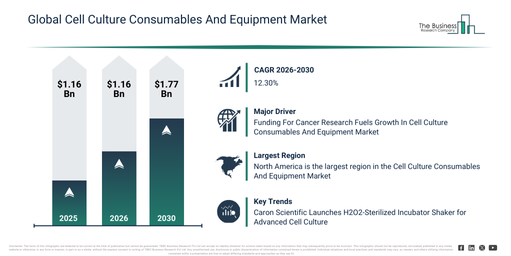
    The cell culture consumables and equipment market size is poised for significant expansion over the next few years. It is forecast to reach $25.49 billion by 2030, demonstrating a compound annual growth rate (CAGR) of 12.3%. This projected growth can be attributed to enhancements in bioreactors and automated incubators, escalating investments in stem cell and gene therapy research, the development of biotechnology and pharmaceutical industries, the adoption of high-throughput screening technologies, and the incorporation of smart and automated laboratory equipment. Notable trends anticipated during the forecast period include a rising demand for advanced cell culture consumables, the broadening scope of stem cell and regenerative medicine research, increasing uptake of automated cell culture instruments, growth in applications for drug screening and development, and a strong focus on high-quality culture media and reagents.

    Access Your Free Sample Report For In-Depth Market Analysis:

    https://www.thebusinessresearchcompany.com/sample.aspx?id=2463&type=smp

    Which Key Factors Are Driving The Cell Culture Consumables And Equipment Market Growth?

    The cell culture consumables and equipment market is anticipated to experience growth driven by increased funding for cancer research. The allocation of financial resources is vital for supporting the development, advancement, and accessibility of cell culture consumables and equipment. For example, in September 2023, the United States Congress provided the National Cancer Institute, a US-based government agency, with a budget of $7.3 billion for fiscal year 2023, representing a $408 million increase over 2022. Thus, the augmented funding for cancer research is a significant factor propelling the expansion of the cell culture consumables and equipment market.

    How Is The Cell Culture Consumables And Equipment Market Broken Down By Segment Categories?

    The cell culture consumables and equipment market covered in this report is segmented –

    1) By Product: Consumables, Instruments

    2) By Application: Vaccination, Toxicity Testing, Cancer Research, Drug Screening And Development, Recombinant Products, Stem Cell Technology, Regenerative Medicine, Other Applications

    3) By End User: Industrial, Biotechnology, Agriculture, Other End Users

    Subsegments:

    1) By Consumables: Culture Media, Cell Culture Reagents, Serum And Supplements, Cell Culture Vials And Flasks, Culture Plates And Dishes, Pipettes And Pipette Tips

    2) By Instruments: Cell Culture Incubators, Bioreactors, Centrifuges, Microscopes, Cell Counters, Shakers And Stirring Systems

    Which Trends Are Guiding The Direction Of The Cell Culture Consumables And Equipment Market?

    Leading companies within the Cell Culture Consumables And Equipment market are concentrating on developing innovative products, such as in-unit dry hydrogen-peroxide fogging sterilization, to significantly reduce contamination risk and downtime in GMP cell culture production. This dry H2O2 fogging sterilization is a decontamination method that utilizes vapor-phase hydrogen peroxide without condensation, thereby achieving effective sterilization free of water pooling. As an illustration of this innovation, Caron Scientific, a US-based provider of environmental testing, controlled-environment incubators, and bioprocess equipment, introduced its 7406 Series Incubator Shaker in March 2025. This system provides the highest single-chamber capacity in its class while maintaining a compact, vertical footprint, and delivers tightly controlled temperature (20 °C–60 °C), CO2 (0–20%), humidity (ambient to 90%), and shaking parameters (adjustable RPM and orbit). Its integrated dry H2O2 decontamination cycle, which is monitored by a humidity sensor and electronic control, prevents condensation and facilitates immediate reuse following sterilization – a pioneering feature in incubator-shaker design. These attributes make it highly suitable for high-throughput, GMP-compliant biologics production, offering improved operational efficiency and superior contamination control.

    Which Players Are Present In The Cell Culture Consumables And Equipment Market Space?

    Major companies operating in the cell culture consumables and equipment market are Becton Dickinson and Company, Corning Inc., Danaher Corporation, Eppendorf AG, HiMedia Laboratories Private Limited, Lonza Group AG, Merck KGAA, Promocell GmbH, Sartorius AG, Thermo Fisher Scientific Inc., Irvine Scientific Sales Company Inc., CellGenix GmbH, InVitria Inc., Cytiva, Bio-Techne Corporation, GenScript Biotech Corporation, Gedeon Richter Plc., Hetero Drugs Limited, Intas Pharmaceuticals Ltd., LG Chem Ltd., Lupin Limited, Bio-Rad Laboratories Inc., Illumina Inc., Qiagen NV, F. Hoffmann-La Roche Ltd, Norgen Biotek Corporation, Tecan Group Ltd.

    Get The Full Cell Culture Consumables And Equipment Market Report:

    https://www.thebusinessresearchcompany.com/report/cell-culture-consumables-and-equipment-global-market-report

    Which Region Accounts For The Largest Portion Of The Cell Culture Consumables And Equipment Market?

    North America was the largest region in the cell culture consumables and equipment market in 2025. Western Europe was the second-largest region in the global cell culture consumables and equipment market share. The regions covered in the cell culture consumables and equipment market report are Asia-Pacific, South East Asia, Western Europe, Eastern Europe, North America, South America, Middle East, Africa.

    Request A Customized Cell Culture Consumables And Equipment Market Report For Competitive Insights:

    https://www.thebusinessresearchcompany.com/customise?id=2463&type=smp

    Browse Through More Reports Similar to the Global Cell Culture Consumables And Equipment Market 2026, By The Business Research Company

    Automated Cell Counter Market Report 2026

    https://www.thebusinessresearchcompany.com/report/automated-cell-counter-global-market-report

    Cell Harvesting Market Report 2026

    https://www.thebusinessresearchcompany.com/report/cell-harvesting-global-market-report

    Cell Cultures Market Report 2026

    https://www.thebusinessresearchcompany.com/report/cell-cultures-global-market-report

    Get in touch with us:

    The Business Research Company: https://www.thebusinessresearchcompany.com/

    Americas +1 310-496-7795

    Asia +44 7882 955267 & +91 8897263534

    Europe +44 7882 955267

    Email us at info@tbrc.info

    Follow us on:

    LinkedIn: https://in.linkedin.com/company/the-business-research-company

    YouTube: https://www.youtube.com/channel/UC24_fI0rV8cR5DxlCpgmyFQ

    Global Market Model: https://www.thebusinessresearchcompany.com/global-market-model
  • Cell Counting Market Projected To Reach $17.83 Billion By 2030 At 9.3% CAGR

    Cell Counting Market Projected To Reach $17.83 Billion By 2030 At 9.3% CAGR

    The Business Research Company’s 2026 market reports feature enhanced tools like market attractiveness analysis, TAM assessment, and company scoring matrices, along with interactive dashboards, deeper supply chain insights, and startup coverage strengthening the depth, usability, and strategic value of insights.

    How Much Growth In Market Value Is Expected For The Cell Counting Market Between 2026 And 2030?

    The cell counting market has experienced substantial growth in recent years. It is anticipated to expand from $11.39 billion in 2025 to $12.49 billion in 2026, achieving a compound annual growth rate (CAGR) of 9.7%. This historical growth can be attributed to factors such as the expansion of life sciences research activities, the increasing adoption of cell culture techniques, higher investments in pharmaceutical research, increased academic research funding, and the wider implementation of laboratory automation.

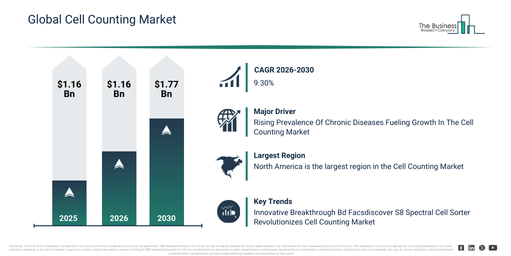
    The cell counting market is projected to experience substantial growth in the upcoming years. This market is anticipated to reach $17.83 billion by 2030, exhibiting a compound annual growth rate (CAGR) of 9.3%. Factors driving this growth during the forecast period include the escalating demand for cell-based therapies, the growing acceptance of precision diagnostics, the expansion of biotechnology research pipelines, the increasing application of AI-enabled laboratory analytics, and a heightened emphasis on standardized laboratory workflows. Key trends for the forecast period encompass the increasing integration of automated cell counting systems, the rising utilization of flow cytometry for cell analysis, the growing need for high-throughput cell counting, the broadening of cell-based research applications, and a strengthened focus on data accuracy and reproducibility.

    Access Your Free Sample Report For In-Depth Market Analysis:

    https://www.thebusinessresearchcompany.com/sample.aspx?id=6489&type=smp

    What Primary Drivers Are Shaping The Cell Counting Market?

    The increasing incidence of chronic illnesses is anticipated to boost the expansion of the cell counting market in the coming years. These conditions are defined as problems that persist for a year or longer, necessitating ongoing medical attention, interfering with daily activities, or both. Chronic diseases are characterized by complex origins, numerous risk factors, prolonged incubation periods, extended sickness, and diminished functioning or impairment. Cell counting serves as a crucial technique for the diagnosis, monitoring, and treatment of chronic illnesses. It aids healthcare professionals in identifying and observing changes in cell counts, which can provide vital information regarding the progression of a disease and the efficacy of therapy. For instance, in June 2024, according to the National Health Service, a UK-based government department, 3,615,330 individuals registered with a general practitioner (GP) were diagnosed with non-diabetic hyperglycemia or pre-diabetes (a condition with elevated blood sugar levels, not high enough to be classified as diabetes) in 2023, marking an 18% increase from 3,065,825 cases in 2022. Consequently, the growing occurrence of chronic diseases is propelling the cell counting market.

    What Are The Different Segment Types In The Cell Counting Market Segment Breakdown?

    The cell counting market covered in this report is segmented –

    1) By Consumables And Accessories: Media, Sera And Reagents, Assay Kits, Microplates

    2) By Product: Multi-Mode Readers, Cell Counters, Automated Cell Counters, Hemocytometers, Manual Cell Counters, Flow Cytometers

    3) By Application: Research Applications, Clinical And Diagnostic Applications, Industrial Applications

    4) By End-User: Hospitals And Diagnostic, Research Institutions, Pharmaceutical And Biotechnology Companies, Other End-Users

    Subsegments:

    1) By Media: Cell Culture Media, Specialized Growth Media

    2) By Sera and Reagents: Fetal Bovine Serum (FBS), Human Serum, Reagents for Cell Viability

    3) By Assay Kits: Cell Counting Kits, Apoptosis Detection Kits

    4) By Microplates: 96-Well Plates, 384-Well Plates, Specialized Cell Culture Plates

    What Trends Are Affecting The Growth Of The Cell Counting Market?

    Leading companies in the cell counting market are prioritizing innovative products, such as the BD FACSDiscover S8 spectral cell sorter, to better address the needs of their existing customers. Spectral cell sorting represents a revolutionary method that categorizes cells based on their visual properties by integrating advanced spectral flow cytometry with high-speed imaging technologies. Unlike conventional flow cytometry, which identifies specific fluorescent bands, spectral flow cytometry captures the complete spectrum of signals generated by sample arrangements, thereby enabling multi-parameter sorting. For instance, in May 2023, Becton, Dickinson, and Company, a US-based manufacturer of medical devices, instrument systems, and reagents, launched the BD FACSDiscover S8 Cell Sorter. This product introduces two transformative technologies designed to help researchers uncover previously undetectable information about cells in standard flow cytometry investigations. Utilizing BD CellView Image Technology, researchers can examine comprehensive microscopic images of individual cells and sort them rapidly based on visual criteria to validate findings instantly. Additionally, BD SpectralFX Technology enables researchers to perform high-parameter studies through full-spectrum cell sorting and enhanced performance, facilitated by a new flexible optical architecture and system-aware algorithms. The integration of these advancements within the BD FACSDiscover S8 Cell Sorter significantly broadens researchers’ capabilities, offering the potential to reshape research and cell-based therapy development across various domains, including drug discovery, immuno-oncology, and genomics.

    Who Are The Well-Known Companies In The Cell Counting Market?

    Major companies operating in the cell counting market are Thermo Fisher Scientific Inc., Merck KGaA, PerkinElmer Inc., Bio-Rad Laboratories Inc., Danaher Corporation, Olympus Corporation, HORIBA Ltd., Logos Biosystems Inc., Becton Dickinson and Company, GE Healthcare, Agilent Technologies Inc., BioTek Instruments Inc., DeNovix Inc., Sysmex Corporation, Nexcelom Bioscience LLC, Beckman Coulter Inc., Roche Diagnostics International Ltd., Miltenyi Biotec GmbH, AccuBioTech Co. Ltd., ChemoMetec A/S, Countstar Microscopy Systems, Luminex Corporation, NanoEnTek Inc., Partec GmbH, Advanced Instruments Inc., Analytik Jena AG, Integra Biosciences AG, Meridian Bioscience Inc., Promega Corporation, Sartorius AG

    Get The Full Cell Counting Market Report:

    https://www.thebusinessresearchcompany.com/report/cell-counting-global-market-report

    Which Region Holds The Highest Market Share In The Cell Counting Market?

    North America was the largest region in the cell counting market in 2025. Asia-Pacific is expected to be the fastest-growing region in the forecast period. The regions covered in the cell counting market report are Asia-Pacific, South East Asia, Western Europe, Eastern Europe, North America, South America, Middle East, Africa.

    Request A Customized Cell Counting Market Report For Competitive Insights:

    https://www.thebusinessresearchcompany.com/customise?id=6489&type=smp

    Browse Through More Reports Similar to the Global Cell Counting Market 2026, By The Business Research Company

    Dental Diagnostic Imaging Devices And Equipment Market Report 2026

    https://www.thebusinessresearchcompany.com/report/dental-diagnostic-imaging-devices-and-equipment-global-market-report

    Dental Digital X Ray Market Report 2026

    https://www.thebusinessresearchcompany.com/report/dental-digital-x-ray-global-market-report

    Medical And Diagnostic Laboratory Services Market Report 2026

    https://www.thebusinessresearchcompany.com/report/medical-and-diagnostic-laboratory-services-global-market-report

    Get in touch with us:

    The Business Research Company: https://www.thebusinessresearchcompany.com/

    Americas +1 310-496-7795

    Asia +44 7882 955267 & +91 8897263534

    Europe +44 7882 955267

    Email us at info@tbrc.info

    Follow us on:

    LinkedIn: https://in.linkedin.com/company/the-business-research-company

    YouTube: https://www.youtube.com/channel/UC24_fI0rV8cR5DxlCpgmyFQ

    Global Market Model: https://www.thebusinessresearchcompany.com/global-market-model
  • Rising Adoption of Minimally Invasive Procedures Boosts Congenital Heart Defect Device Sales Is Supporting Expansion In The Congenital Heart Defect Devices Market

    Rising Adoption of Minimally Invasive Procedures Boosts Congenital Heart Defect Device Sales Is Supporting Expansion In The Congenital Heart Defect Devices Market

    The Business Research Company’s 2026 market reports feature enhanced tools like market attractiveness analysis, TAM assessment, and company scoring matrices, along with interactive dashboards, deeper supply chain insights, and startup coverage strengthening the depth, usability, and strategic value of insights.

    What Level Of Market Value Growth Is Predicted For The Congenital Heart Defect Devices Market From 2026 To 2030?

    The congenital heart defect devices market has experienced robust expansion recently. This market is projected to expand from $3.11 billion in 2025 to $3.34 billion in 2026, demonstrating a compound annual growth rate (CAGR) of 7.4%. Historically, this growth has been driven by factors such as the increasing occurrence of congenital heart defects, significant progress in pediatric cardiac surgical techniques, improved survival rates for patients with congenital heart conditions, the establishment of more specialized cardiac care facilities, and enhanced recognition of early congenital defect diagnosis.

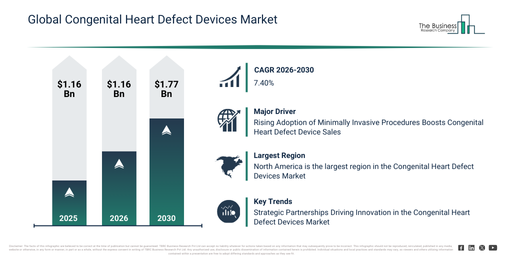
    The congenital heart defect devices market is anticipated to show significant expansion in the next few years, with its size forecast to reach $4.45 billion in 2030, exhibiting a compound annual growth rate (CAGR) of 7.4%. This growth during the forecast period is primarily attributed to an increased emphasis on early diagnosis and intervention, the rising demand for minimally invasive pediatric cardiac treatments, improved access to advanced cardiac care within emerging markets, a growing population of adults with congenital heart disease, and continuous innovation in implantable cardiac devices. Major trends expected in this period include the increasing adoption of minimally invasive congenital heart procedures, greater utilization of transcatheter and implantable cardiac devices, a heightened focus on early-life and pediatric cardiac interventions, the expansion of device-based therapies for complex heart defects, and an escalating demand for long-term cardiac monitoring and support devices.

    Access Your Free Sample Report For In-Depth Market Analysis:

    https://www.thebusinessresearchcompany.com/sample.aspx?id=18543&type=smp

    Which Primary Drivers Are Impacting The Congenital Heart Defect Devices Market Growth?

    The escalating adoption of minimally invasive procedures is projected to fuel the expansion of the congenital heart defect device market. These procedures entail surgical operations conducted through minor cuts or natural orifices, frequently employing specialized instruments and methods to lessen injury and improve recuperation. The rise in minimally invasive procedures stems from technological progress, patients’ inclination for less intrusive therapies, enhanced surgical methods, and the advantages of quicker recovery and fewer complications. Congenital heart defect devices are integral to minimally invasive procedures, aiding in the identification, care, and control of cardiac irregularities via approaches that use smaller incisions or catheter-based techniques. For example, in June 2024, data from the American Society of Plastic Surgeons, a US-based organization, indicated that in 2023, plastic surgeries grew by 5%, while minimally invasive procedures saw a 7% increase over the previous year. Consequently, the growing frequency of minimally invasive procedures is propelling the congenital heart defect devices market.

    Which Segment Classifications Are Used In The Congenital Heart Defect Devices Market Segment Analysis?

    The congenital heart defect devices market covered in this report is segmented –

    1) By Device Type: Catheters, Pacemakers, Single-Chamber Pacemakers, Dual-Chamber Pacemakers, Biventricular Pacemakers, Leadless Pacemakers, Implantable Cardioverter Defibrillators, Biventricular Devices, Implanted Cardiac Loop Recorders, Other Device Types

    2) By Defect Type: Atrial Septal Defect, Ventricular Septal Defect, Atrioventricular Septal Defect, Tricuspid Atresia, Truncus Arteriosus, Other Defect Types

    3) By End user: Hospitals, Specialty Clinics, Academic And Research Institute, Other End Users

    Subsegments:

    1) By Catheters: Balloon Catheters, Diagnostic Catheters, Guiding Catheters

    2) By Pacemakers: Single-Chamber Pacemakers, Dual-Chamber Pacemakers, Biventricular Pacemakers, Leadless Pacemakers

    3) By Implantable Cardioverter Defibrillators: Single-Chamber Icds, Dual-Chamber Icds, Subcutaneous Icds

    4) By Biventricular Devices: Crt-P (Cardiac Resynchronization Therapy Pacemakers), Crt-D (Cardiac Resynchronization Therapy Defibrillators)

    5) By Implanted Cardiac Loop Recorders: Traditional Implantable Loop Recorders, Subcutaneous Implantable Loop Recorders

    6) By Other Device Types: Transcatheter Heart Valves, Ventricular Assist Devices (VADS)

    Which Trends Are Shaping Growth In The Congenital Heart Defect Devices Market?

    Leading companies in the congenital heart defect devices market are adopting strategic partnerships to develop innovative solutions for congenital heart defects. These alliances support businesses in the congenital heart defect devices sector by pooling resources and expertise, accelerating research and development, broadening market access, and speeding up commercialization. Ultimately, this collaboration fosters innovation and drives growth within the industry. For instance, in May 2024, SMT (Sahajanand Medical Technologies Pvt Ltd), an India-based manufacturing company, partnered with HeartX, an India-based MedTech firm, to enhance patient care in the cardiovascular sector. Through this partnership, Sahajanand Medical Technologies (SMT) strengthens its position in the congenital heart defect (CHD) space by integrating HeartX’s innovative solutions, such as the JOVE VB Stent. This strategic alliance enables SMT to offer advanced CHD devices that enhance treatment efficacy, simplify procedures, and improve patient outcomes.

    Which Firms Are Contributing To The Congenital Heart Defect Devices Market Ecosystem?

    Major companies operating in the congenital heart defect devices market are Johnson & Johnson, Abbott Laboratories, Medtronic plc, Boston Scientific Corporation, W L Gore & Associates Inc, Lepu Medical Technology Beijing Co Ltd, MicroPort Scientific Corporation, Berlin Heart GmbH, Syncardia Systems LLC, Occlutech Holding AG, Sahajanand Medical Technologies Pvt Ltd, Xeltis AG, Procyrion Inc, Heartstitch Inc, Cardia Inc, OSYPKA Medical GmbH, On-X Life Technologies Inc, Ventracor Limited, HemoFlow Technologies, NuPulseCV Inc

    Get The Full Congenital Heart Defect Devices Market Report:

    https://www.thebusinessresearchcompany.com/report/congenital-heart-defect-devices-global-market-report

    Which Region Is The Top Contributor To The Congenital Heart Defect Devices Market By Share?

    North America was the largest region in the congenital heart defect devices market in 2025. Asia-Pacific is expected to be the fastest-growing region in the forecast period. The regions covered in the congenital heart defect devices market report are Asia-Pacific, South East Asia, Western Europe, Eastern Europe, North America, South America, Middle East, Africa.

    Request A Customized Congenital Heart Defect Devices Market Report For Competitive Insights:

    https://www.thebusinessresearchcompany.com/customise?id=18543&type=smp

    Browse Through More Reports Similar to the Global Congenital Heart Defect Devices Market 2026, By The Business Research Company

    Computed Tomography Ct Scanners Devices And Equipment Market Report 2026

    https://www.thebusinessresearchcompany.com/report/computed-tomography-ct-scanners-devices-and-equipment-global-market-report

    Computed Tomography Ct Scanner Market Report 2026

    https://www.thebusinessresearchcompany.com/report/computed-tomography-ct-scanner-global-market-report

    Positron Emission Tomography Pet Scanners Market Report 2026

    https://www.thebusinessresearchcompany.com/report/positron-emission-tomography-pet-scanners-global-market-report

    Get in touch with us:

    The Business Research Company: https://www.thebusinessresearchcompany.com/

    Americas +1 310-496-7795

    Asia +44 7882 955267 & +91 8897263534

    Europe +44 7882 955267

    Email us at info@tbrc.info

    Follow us on:

    LinkedIn: https://in.linkedin.com/company/the-business-research-company

    YouTube: https://www.youtube.com/channel/UC24_fI0rV8cR5DxlCpgmyFQ

    Global Market Model: https://www.thebusinessresearchcompany.com/global-market-model
  • Rising Dental Disorders Propel Expansion Of Cone Beam Computed Tomography Market Is Contributing To Changes In The Cone Beam Computed Tomography Market

    Rising Dental Disorders Propel Expansion Of Cone Beam Computed Tomography Market Is Contributing To Changes In The Cone Beam Computed Tomography Market

    The Business Research Company’s 2026 market reports feature enhanced tools like market attractiveness analysis, TAM assessment, and company scoring matrices, along with interactive dashboards, deeper supply chain insights, and startup coverage strengthening the depth, usability, and strategic value of insights.

    How Will The Market Value Of The Cone Beam Computed Tomography Market Progress Between 2026 And 2030?

    The cone beam computed tomography market size has experienced rapid growth in recent years. It is projected to expand from $1.47 billion in 2025 to $1.65 billion in 2026, achieving a compound annual growth rate (CAGR) of 11.9%. This market’s historic growth stems from several factors, including the increasing prevalence of dental disorders, the expansion of orthodontic and implant procedures, the growing adoption of digital dentistry, the rising demand for precise diagnostic imaging, and the availability of advanced imaging hardware.

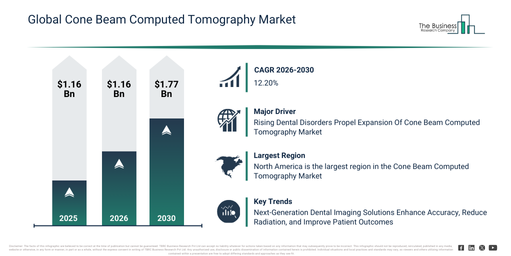
    The cone beam computed tomography market is projected for significant expansion over the coming years. By 2030, its value is forecast to reach $2.61 billion, demonstrating a compound annual growth rate (CAGR) of 12.2%. This anticipated growth is driven by factors such as greater investments in dental imaging technologies, a heightened need for minimally invasive diagnostic methods, the proliferation of dental clinics in developing regions, the expanding application of AI-powered treatment planning, and an increased emphasis on tailored patient imaging solutions. Key developments expected during this period involve the wider acceptance of AI-assisted image reconstruction, an uptick in the utilization of high-resolution dental imaging systems, a surging preference for compact and in-clinic CBCT units, the broadening availability of multi-application CBCT platforms, and a strengthened commitment to optimizing radiation doses.

    Access Your Free Sample Report For In-Depth Market Analysis:

    https://www.thebusinessresearchcompany.com/sample.aspx?id=10235&type=smp

    What Significant Factors Are Influencing The Cone Beam Computed Tomography Market Expansion?

    The escalating prevalence of dental disorders is anticipated to drive the expansion of the cone beam computed tomography market in the foreseeable future. These disorders encompass various oral health conditions such as gum disease, tooth erosion, and cavities, which can inflict pain and discomfort, impede eating abilities, and negatively impact an individual’s self-esteem. Cone beam computed tomography serves as a vital tool for early detection of dental issues, thereby enhancing an endodontist’s ability to diagnose, evaluate, and treat patients, along with assessing problems related to the jaw, teeth, and facial bone structure. As an illustration, a report released in March 2023 by the World Health Organization (WHO), a Switzerland-based health organization, revealed that nearly 3.5 billion individuals globally were impacted by oral diseases. Roughly 10 percent of the world’s population suffers from severe periodontal gum disease, which often leads to tooth loss. Furthermore, 2.3 billion individuals worldwide experience dental caries in their permanent teeth, and 520 million children worldwide are affected by primary tooth decay. Consequently, the rising incidence of dental disorders is fueling the growth of the cone-beam computed tomography market.

    How Is The Cone Beam Computed Tomography Market Organized By Segment Classification?

    The cone beam computed tomography market covered in this report is segmented –

    1) By Patient Position: Standing, Seated, Supine

    2) By Application: Dental Implantology, Oral And Maxillofacial Surgery, Orthodontics, Endodontics, General Dentistry, Temporomandibular Joint (TMJ) Disorders, Periodontics, Forensic Dentistry, Other Applications

    3) By End User: Hospitals, Dental Clinics, Other End-Users

    Subsegments:

    1) By Standing: Upright Standing Position, Upright Standing with Head Stabilization

    2) By Seated: Upright Seated Position, Upright Seated with Head Stabilization

    3) By Supine: Standard Supine Position, Adjustable Supine Position

    What Trends Are Affecting The Direction Of The Cone Beam Computed Tomography Market?

    Leading companies within the cone-beam computed tomography (CBCT) market are prioritizing the creation of advanced imaging solutions, which encompass optimized exposure protocols, enhanced sensors, and motion-artifact correction technologies. These efforts aim to heighten diagnostic accuracy, streamline operational workflows, and improve patient outcomes. Such new-generation imaging enhancements facilitate clearer visualization, reduced radiation dosage, and superior reliability, even in demanding clinical settings. For example, in March 2025, Planmeca Oy, a dental imaging and technology company based in Finland, launched the Planmeca Viso® G1 CBCT at IDS 2025. This system boasts a field of view reaching up to 11 × 11 cm, incorporates Planmeca’s Ultra Low Dose protocol, and uses the CALM motion-artifact correction algorithm to provide high-quality 3D images even during patient movement, thereby supporting greater diagnostic confidence and more informed clinical decision-making.

    Who Are The Industry Participants Involved In The Cone Beam Computed Tomography Market?

    Major companies operating in the cone beam computed tomography market are Planmeca Group, Vatech Co. Ltd., Asahi Roentgen Industry Co. Ltd., J Morita Corporation, QR s.r.l., CurveBeam AI, PreXion Inc., Canon Medical Systems Corporation, Fussen Technology Co. Ltd., Genoray Co. Ltd., Carestream Health Inc., Villa Sistemi Medicali S.p.A., Cefla S.C., PointNix Co. Ltd., LargeV Instrument Corp., Idetec Medical Imaging, Dentsply Sirona Inc., ACTEON Group, Owandy Radiology, Ray Co. Ltd.

    Get The Full Cone Beam Computed Tomography Market Report:

    https://www.thebusinessresearchcompany.com/report/cone-beam-computed-tomography-global-market-report

    Which Region Represents The Largest Share Of The Cone Beam Computed Tomography Market?

    North America was the largest region in the cone beam computed tomography market in 2025. Asia-Pacific is expected to be the fastest-growing region in the global cone beam computed tomography market during the forecast period. The regions covered in the cone beam computed tomography market report are Asia-Pacific, South East Asia, Western Europe, Eastern Europe, North America, South America, Middle East, Africa.

    Request A Customized Cone Beam Computed Tomography Market Report For Competitive Insights:

    https://www.thebusinessresearchcompany.com/customise?id=10235&type=smp

    Browse Through More Reports Similar to the Global Cone Beam Computed Tomography Market 2026, By The Business Research Company

    Computed Tomography Ct Scanner Market Report 2026

    https://www.thebusinessresearchcompany.com/report/computed-tomography-ct-scanner-global-market-report

    Positron Emission Tomography Pet Scanners Market Report 2026

    https://www.thebusinessresearchcompany.com/report/positron-emission-tomography-pet-scanners-global-market-report

    Medical Imaging Equipment Market Report 2026

    https://www.thebusinessresearchcompany.com/report/medical-imaging-equipment-global-market-report

    Get in touch with us:

    The Business Research Company: https://www.thebusinessresearchcompany.com/

    Americas +1 310-496-7795

    Asia +44 7882 955267 & +91 8897263534

    Europe +44 7882 955267

    Email us at info@tbrc.info

    Follow us on:

    LinkedIn: https://in.linkedin.com/company/the-business-research-company

    YouTube: https://www.youtube.com/channel/UC24_fI0rV8cR5DxlCpgmyFQ

    Global Market Model: https://www.thebusinessresearchcompany.com/global-market-model
  • The Computed Tomography (CT) Scanners Devices And Equipment Market Is Evolving Due To Rising Prevalence Of Cancer And Cardiovascular Diseases Driving Market Growth Due To Increased Need For Advanced Diagnostic Imaging

    The Computed Tomography (CT) Scanners Devices And Equipment Market Is Evolving Due To Rising Prevalence Of Cancer And Cardiovascular Diseases Driving Market Growth Due To Increased Need For Advanced Diagnostic Imaging

    The Business Research Company’s 2026 market reports feature enhanced tools like market attractiveness analysis, TAM assessment, and company scoring matrices, along with interactive dashboards, deeper supply chain insights, and startup coverage strengthening the depth, usability, and strategic value of insights.

    What Are The Market Size Estimates For The Computed Tomography (CT) Scanners Devices And Equipment Market In 2026 And 2030?

    The market for computed tomography (ct) scanners devices and equipment has observed consistent expansion over recent years. This market is anticipated to increase from $8.47 billion in 2025 to $8.77 billion in 2026, achieving a compound annual growth rate (CAGR) of 3.6%. Historically, this expansion has been driven by factors such as the increasing prevalence of chronic diseases, the expansion of diagnostic imaging centers, a rising demand for early disease detection, advancements in x-ray detector technologies, and the wider clinical acceptance of ct imaging.

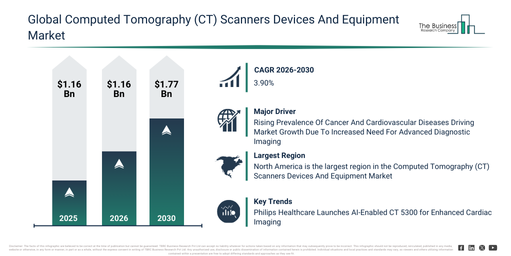
    The computed tomography (ct) scanners devices and equipment market size is projected to experience consistent growth over the coming years. It is anticipated to expand to $10.21 billion in 2030, achieving a compound annual growth rate (CAGR) of 3.9%. The expansion in the forecast period can be attributed to the increasing adoption of AI-driven diagnostic tools, rising investments in advanced imaging infrastructure, growing demand for precision diagnostics, the expansion of outpatient diagnostic services, and technological advancements in low-dose imaging. Major trends identified for the forecast period include a greater uptake of AI-assisted image reconstruction, a rising demand for high-slice CT scanners, the increasing integration of dose reduction technologies, the broadening of advanced 3D and 4D imaging capabilities, and an enhanced focus on workflow automation.

    Access Your Free Sample Report For In-Depth Market Analysis:

    https://www.thebusinessresearchcompany.com/sample.aspx?id=2397&type=smp

    Which Important Drivers Are Guiding The Computed Tomography (CT) Scanners Devices And Equipment Market Growth?

    The growing incidence of cancer and cardiovascular diseases is anticipated to accelerate the expansion of the computed tomography (CT) scanner devices and equipment market moving forward. Both cancer and cardiovascular diseases (CVD) are complex, sharing numerous risk factors, such as smoking, metabolic syndrome, radiation, age, and air pollution. This increased occurrence of cancer and cardiovascular diseases is attributable to shared risk factors including chronic inflammation, obesity, and lifestyle choices, which foster the development and progression of both conditions through common biological pathways. CT scans are instrumental in diagnosing tumors and other abnormalities within the body, including those linked to cancer and CVD. They are also utilized for planning and guiding interventional or therapeutic procedures, such as cryotherapy, radiofrequency ablation, and the implantation of radioactive seeds. For instance, in October 2024, according to the Centers for Disease Control and Prevention, a US-based public health institute, in 2023, about 1 out of every 6 deaths from cardiovascular diseases was among adults younger than 65 years old, and a total of 919,032 people died from cardiovascular disease, representing 1 in every 3 deaths. Therefore, the increasing prevalence of cancer and cardiovascular diseases is propelling the growth of the computed tomography (CT) scanner devices and equipment market.

    Which Segments Define The Computed Tomography (CT) Scanners Devices And Equipment Market Segment Structure?

    The computed tomography (ct) scanners devices and equipment market covered in this report is segmented –

    1) By Product Type: Low Slice, Medium Slice, High Slice

    2) By Application: Oncology, Neurology, Cardiovascular, Musculoskeletal, Other Applications

    3) By End User: Clinics, Diagnostic Services, Hospitals

    Subsegments:

    1) By Low Slice: 4-Slice CT Scanners, 8-Slice CT Scanners, Other Low Slice CT Scanners

    2) By Medium Slice: 16-Slice CT Scanners, 32-Slice CT Scanners, Other Medium Slice CT Scanners

    3) By High Slice: 64-Slice CT Scanners, 128-Slice CT Scanners, 256-Slice CT Scanners, 320-Slice CT Scanners, Other High Slice CT Scanners

    What Trends Are Influencing The Evolution Of The Computed Tomography (CT) Scanners Devices And Equipment Market?

    Companies operating within the computed tomography (CT) scanner devices and equipment market are actively developing innovative products featuring advanced technologies, such as AI-enabled CT scanners, to better serve patients. An AI-enabled CT (Computed Tomography) scanner refers to a medical imaging device that incorporates artificial intelligence (AI) technologies to enhance the quality, speed, and accuracy of CT imaging. For instance, in March 2024, Philips Healthcare, a Netherlands-based health technology company, introduced the AI-enabled CT 5300, an advanced computed tomography scanner specifically designed for cardiac imaging. This groundbreaking system integrates artificial intelligence to boost diagnostic accuracy and streamline workflows, notably featuring the industry’s first nanopanel precise detector engineered for AI-based reconstruction. It significantly improves image quality while reducing radiation exposure by up to 80%, achieving lower noise levels and better low-contrast detectability. Already in operation in several European hospitals, the CT 5300 aims to enhance patient care and address challenges in healthcare delivery, reflecting Philips’ commitment to advancing cardiac care through cutting-edge technology.

    Who Are The Established Players Within The Computed Tomography (CT) Scanners Devices And Equipment Market?

    Major companies operating in the computed tomography (ct) scanners devices and equipment market are GE Healthcare, Koninklijke Philips N.V., Hitachi Ltd., Siemens Healthineers, Canon Medical Systems Corporation, Neusoft Medical Systems, NeuroLogica Corp., Samsung Electronics, Shimadzu Corporation, Shenzhen Anke High-Tech, Fujifilm Holdings Corporation, Koning Corporation, ScanCO Medical AG, United Imaging, Carestream Health, Planmed Oy, Dunlee, Shared Imaging, Allengers Medical Systems, Fujifilm Medical Systems, Konica Minolta Healthcare, Toshiba Medical Systems Corporation, Xoran Technologies

    Get The Full Computed Tomography (CT) Scanners Devices And Equipment Market Report:

    https://www.thebusinessresearchcompany.com/report/computed-tomography-ct-scanners-devices-and-equipment-global-market-report

    Which Geographic Region Dominates The Computed Tomography (CT) Scanners Devices And Equipment Market?

    North America was the largest region in the computed tomography scanners devices and equipment market in 2025. Western Europe was the second-largest region in the global computed tomography (CT) scanners devices and equipment market share. The regions covered in the computed tomography (ct) scanners devices and equipment market report are Asia-Pacific, South East Asia, Western Europe, Eastern Europe, North America, South America, Middle East, Africa.

    Request A Customized Computed Tomography (CT) Scanners Devices And Equipment Market Report For Competitive Insights:

    https://www.thebusinessresearchcompany.com/customise?id=2397&type=smp

    Browse Through More Reports Similar to the Global Computed Tomography (CT) Scanners Devices And Equipment Market 2026, By The Business Research Company

    Computed Tomography Ct Scanner Market Report 2026

    https://www.thebusinessresearchcompany.com/report/computed-tomography-ct-scanner-global-market-report

    Cone Beam Computed Tomography Market Report 2026

    https://www.thebusinessresearchcompany.com/report/cone-beam-computed-tomography-global-market-report

    Cheese Market Report 2026

    https://www.thebusinessresearchcompany.com/report/cheese-global-market-report

    Get in touch with us:

    The Business Research Company: https://www.thebusinessresearchcompany.com/

    Americas +1 310-496-7795

    Asia +44 7882 955267 & +91 8897263534

    Europe +44 7882 955267

    Email us at info@tbrc.info

    Follow us on:

    LinkedIn: https://in.linkedin.com/company/the-business-research-company

    YouTube: https://www.youtube.com/channel/UC24_fI0rV8cR5DxlCpgmyFQ

    Global Market Model: https://www.thebusinessresearchcompany.com/global-market-model
  • The Rise Of Innovative Developments In Computed Tomography (CT) Scanners Enhancing Image Quality And Diagnostic Accuracy Is Influencing The Computed Tomography (CT) Scanner Market

    The Rise Of Innovative Developments In Computed Tomography (CT) Scanners Enhancing Image Quality And Diagnostic Accuracy Is Influencing The Computed Tomography (CT) Scanner Market

    The Business Research Company’s 2026 market reports feature enhanced tools like market attractiveness analysis, TAM assessment, and company scoring matrices, along with interactive dashboards, deeper supply chain insights, and startup coverage strengthening the depth, usability, and strategic value of insights.

    What Expansion In Market Value Is Forecasted For The Computed Tomography (CT) Scanner Market Between 2026 And 2030?

    The computed tomography (ct) scanner market has demonstrated substantial growth in recent years. It is anticipated to expand from $8.22 billion in 2025 to $8.96 billion in 2026, achieving a compound annual growth rate (CAGR) of 9.0%. This historical growth can be linked to the development of advanced medical imaging infrastructure, an increase in chronic and acute diseases, the expanding utilization of CT imaging in diagnostics, the availability of reimbursement frameworks, and the enlargement of hospital imaging departments.

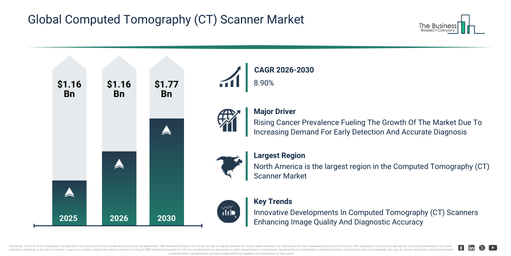
    The computed tomography (ct) scanner market size is anticipated to demonstrate significant expansion in the upcoming years. It is projected to achieve a valuation of $12.59 billion by 2030, progressing at a compound annual growth rate (CAGR) of 8.9%. This expansion throughout the forecast period stems from factors such as increased investments in cutting-edge imaging technologies, a rising necessity for prompt disease diagnosis, the proliferation of outpatient diagnostic centers, an enhanced emphasis on minimizing radiation dosage, and continuous advancements in ct scanner functionalities. Notable trends expected during this period involve a greater implementation of high-slice ct systems, a growing embrace of AI-assisted image reconstruction, an increasing demand for portable ct scanners, the broader availability of low-dose imaging solutions, and a heightened focus on diagnostic accuracy.

    Access Your Free Sample Report For In-Depth Market Analysis:

    https://www.thebusinessresearchcompany.com/sample.aspx?id=24196&type=smp

    What Major Factors Are Driving The Computed Tomography (CT) Scanner Market Forward?

    The rising incidence of cancer is anticipated to fuel the expansion of the computed tomography (CT) scanner market in the future. This medical condition encompasses various illnesses marked by the uncontrolled multiplication and dispersion of irregular cells throughout the body. The primary driver behind this surge is the world’s aging populace; extended lifespans result in a greater number of people reaching advanced ages, during which accumulated genetic alterations, environmental influences, and compromised immune defenses substantially elevate the probability of developing different cancers. In cancer management, computed tomography (CT) scanners are instrumental, offering comprehensive cross-sectional and three-dimensional images. These visuals aid significantly in identifying tumors early, pinpointing their exact location, determining their precise stage, formulating treatment strategies, and continuously tracking their progression. This capability empowers medical professionals to render well-informed choices and enhance patient recoveries across the entire spectrum of cancer treatment. For example, data released in April 2024 by the American Cancer Society, a US-based professional body, indicated that approximately 20 million new cancer diagnoses were made globally, and 9.7 million fatalities were recorded in 2022. Projections further suggest that the total number of cancer cases could reach 35 million by 2050. Consequently, the escalating incidence of cancer is a key factor propelling the expansion of the computed tomography (CT) scanner market.

    How Is The Computed Tomography (CT) Scanner Market Segmented Across Different Segment Categories?

    The computed tomography (ct) scanner market covered in this report is segmented –

    1) By Type: Stationary Computed Tomography Scanner, Portable Computed Tomography Scanner

    2) By Architecture: O-Arm, Gantry-Based CT Architecture

    3) By Technology: High-Slice Computed Tomography, Mid-Slice Computed Tomography, Low-Slice Computed Tomography, Cone Beam Computed Tomography

    4) By Application: Neurology, Oncology, Cardiovascular, Orthopedics, Other Applications

    5) By End Users: Hospitals And Diagnostics Centers, Research Laboratories, Academic Institutes And Contract Research Organizations, Ambulatory Care Centers, Veterinary Clinics And Hospitals, Other End Users

    Subsegments:

    1) By Stationary Computed Tomography Scanner: Single-Slice Computed Tomography Scanner, Multi-Slice Computed Tomography Scanner, Cone Beam Computed Tomography Scanner, Dual-Source Computed Tomography Scanner

    2) By Portable Computed Tomography Scanner: Compact Mobile CT Scanners, Mobile Computed Tomography Scanner

    Which Trends Are Impacting The Progress Of The Computed Tomography (CT) Scanner Market?

    Leading companies in the computed tomography (CT) scanner market are actively developing innovative technologies, such as volume imaging, to enhance image clarity, reduce scan durations, minimize radiation exposure, and improve diagnostic accuracy across various clinical applications. Volume imaging technology allows for the capture of complete anatomical volumes in a single rotation, significantly boosting image resolution and decreasing motion artifacts. For instance, in March 2025, GE Healthcare Technologies Inc., a US-based medical technology and diagnostics company, introduced its Revolution Vibe CT system. This system features unrestricted one-beat cardiac imaging and artificial intelligence (AI)-powered enhancements to workflow. It delivers high-quality images even in challenging scenarios, such as atrial fibrillation and severely calcified coronaries, and simplifies patient preparation by eliminating the need for ECG connections. The Revolution Vibe aims to increase diagnostic confidence and patient comfort while improving workflow efficiency.

    Which Organizations Play A Role In The Computed Tomography (CT) Scanner Market Landscape?

    Major companies operating in the computed tomography (ct) scanner market are Siemens Healthineers AG, GE HealthCare Technologies Inc., Koninklijke Philips N.V., FUJIFILM Holdings Corporation, Canon Medical Systems Corporation, Shimadzu Corporation, Neusoft Medical Systems Co. Ltd., Shanghai United Imaging Healthcare Co. Ltd., Carestream Health Inc., Analogic Corporation, Trivitron Healthcare Private Limited, Shenzhen Anke High-tech Co. Ltd., Planmed Oy, Xoran Technologies LLC, SinoVision Technologies (Beijing) Co. Ltd., Koning Corporation, CurveBeam AI Inc., MinFound Medical Systems Co. Ltd., Hitachi Ltd. (Medical Systems), Toshiba Medical Systems Corporation, Samsung Healthcare (CT Division), Mediso Ltd., GE Precision Healthcare

    Get The Full Computed Tomography (CT) Scanner Market Report:

    https://www.thebusinessresearchcompany.com/report/computed-tomography-ct-scanner-global-market-report

    Which Region Is The Leading Market For The Computed Tomography (CT) Scanner Market?

    North America was the largest region in the computed tomography (CT) scanner market in 2025. Asia-Pacific is expected to be the fastest-growing region in the forecast period. The regions covered in the computed tomography (ct) scanner market report are Asia-Pacific, South East Asia, Western Europe, Eastern Europe, North America, South America, Middle East, Africa.

    Request A Customized Computed Tomography (CT) Scanner Market Report For Competitive Insights:

    https://www.thebusinessresearchcompany.com/customise?id=24196&type=smp

    Browse Through More Reports Similar to the Global Computed Tomography (CT) Scanner Market 2026, By The Business Research Company

    Compression Stockings Market Report 2026

    https://www.thebusinessresearchcompany.com/report/compression-stockings-global-market-report

    Compression Wear And Shapewear Market Report 2026

    https://www.thebusinessresearchcompany.com/report/compression-wear-and-shapewear-global-market-report

    Compression Sleeves Market Report 2026

    https://www.thebusinessresearchcompany.com/report/compression-sleeves-global-market-report

    Get in touch with us:

    The Business Research Company: https://www.thebusinessresearchcompany.com/

    Americas +1 310-496-7795

    Asia +44 7882 955267 & +91 8897263534

    Europe +44 7882 955267

    Email us at info@tbrc.info

    Follow us on:

    LinkedIn: https://in.linkedin.com/company/the-business-research-company

    YouTube: https://www.youtube.com/channel/UC24_fI0rV8cR5DxlCpgmyFQ

    Global Market Model: https://www.thebusinessresearchcompany.com/global-market-model
  • Increasing Focus On Introducing Medical-Grade Compression Garments With Innovative Features To Drive Revenues Is Playing A Role In Shaping The Compression Garments And Stockings Market

    Increasing Focus On Introducing Medical-Grade Compression Garments With Innovative Features To Drive Revenues Is Playing A Role In Shaping The Compression Garments And Stockings Market

    The Business Research Company’s 2026 market reports feature enhanced tools like market attractiveness analysis, TAM assessment, and company scoring matrices, along with interactive dashboards, deeper supply chain insights, and startup coverage strengthening the depth, usability, and strategic value of insights.

    How Large Will The Compression Garments And Stockings Market Be By 2030 Compared To Its 2026 Market Size?

    The compression garments and stockings market has experienced significant growth over recent years. It is projected to expand from $3.41 billion in 2025 to $3.6 billion in 2026, exhibiting a compound annual growth rate (CAGR) of 5.6%. The historical expansion of the market can be linked to the increasing prevalence of venous disorders, the rising application of compression therapy in post-surgical recovery, the wider adoption of sports injury management practices, growing awareness surrounding circulatory health, and the availability of mass-produced compression products.

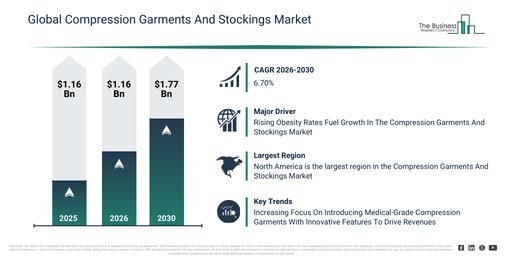
    The compression garments and stockings market is poised for robust growth over the next few years. It is projected to expand to $4.66 billion by 2030, achieving a compound annual growth rate (CAGR) of 6.7%. This expansion in the forecast period can be attributed to the increasing demand for home-based healthcare solutions, a rising adoption of compression wear in preventive care, the expansion of e-commerce distribution channels, a growing focus on lifestyle and wellness products, and increasing product innovation in textile technology. Major trends during this period include a heightened demand for medical-grade compression products, the rising adoption of compression therapy in sports medicine, an increasing use of advanced elastomeric fabrics, the expansion of customized and patient-specific garments, and an enhanced focus on comfort and breathability.

    Access Your Free Sample Report For In-Depth Market Analysis:

    https://www.thebusinessresearchcompany.com/sample.aspx?id=13288&type=smp

    Which Key Drivers Are Affecting The Compression Garments And Stockings Market Development?

    The increasing prevalence of obesity is anticipated to stimulate the future expansion of the compression garments and stockings market. Obesity is a medical condition characterized by an unusually high and potentially unhealthy accumulation of body fat. Compression garments serve to assist overweight or obese individuals by alleviating pain and discomfort as they work towards weight loss, in addition to improving circulation and reducing swelling and inflammation, which are frequently observed in this population. For instance, in March 2023, the World Heart Federation, a Switzerland-based non-government global cardiovascular community, indicated that roughly 2.3 billion adults and children globally were either obese or overweight, and projections suggest that with current obesity trends, the number of individuals living with obesity will reach 2.7 billion by 2025. This rise in obesity cases is therefore a primary driver for the growth of the compression garments and stockings market.

    What Are The Main Segments Within The Compression Garments And Stockings Market Segment Structure?

    The compression garments and stockings market covered in this report is segmented –

    1) By Product Type: Compression Garments, Compression Stockings

    2) By Distribution Channel: Hospitals, Ambulatory Surgical Centers, Clinics, Online Sales, Other Healthcare Facilities

    3) By Application Type: Varicose Veins, Wound Care, Burns, Oncology, Other Applications

    Subsegments:

    1) By Compression Garments: Compression Shirts, Compression Sleeves (Arm And Leg), Compression Shorts, Full-Body Compression Suits

    2) By Compression Stockings: Knee-High Compression Stockings, Thigh-High Compression Stockings, Waist-High Compression Stockings, Anti-Embolism Stockings

    What Trends Are Transforming The Compression Garments And Stockings Market?

    Leading companies in the compression garments and stockings market are increasingly focusing on introducing medical-grade compression garments with innovative features, such as FlexFit Comfort Ankle, to boost their revenues within the sector. FlexFit Comfort Ankle is a distinctive foot design incorporating sliding compression sections, which aids in promoting enhanced blood circulation, lymphatic flow, and ankle flexibility. For instance, in July 2023, The Marena Group, a US-based manufacturing company providing medical-grade compression, launched a lipedema compression garment featuring the pioneering FlexFit Comfort Ankle, crucial for ensuring comfort and managing discomfort during healing. This product was specifically crafted to support individuals recovering from lipedema reduction procedures. Furthermore, this new lipedema garment also incorporated Marena’s proprietary TriFlex Fabric, primarily used for its post-surgical recovery advantages after liposuction. This fabric offers multidirectional 3D stretch, moisture-wicking and cooling effects, shape-enhancing attributes, and features that prevent microbial growth.

    Who Are The Companies Participating In The Compression Garments And Stockings Market?

    Major companies operating in the compression garments and stockings market are 3M Company, BSN Medical Pvt. Ltd., Medi GmBH & Co. KG, SIGVARIS Group, Medical Z, Paul Hartmann AG, Biocompression Systems, 2XU Pty Ltd., Smith & Nephew PLC, Lymphedivas, Narang Medical Limited, Sanyleg SRL, Santemol Group Medikal, Leonisa S.A., Creswell Sock Mills LLC, Spanx Inc., Julius Zorn GmbH, Comfort Plus Corporation, VIM & VIGR LLC, Tommie Copper Inc., Venosan, Tactile Medical, Design Veronique, Medico International Inc., Marena Group LLC, Therafirm LLC, Zensah Company

    Get The Full Compression Garments And Stockings Market Report:

    https://www.thebusinessresearchcompany.com/report/compression-garments-and-stockings-global-market-report

    Where Is The Compression Garments And Stockings Market Primarily Concentrated By Region?

    North America was the largest region in the compression garments and stockings market in 2025. Asia-Pacific is expected to be the fastest-growing region in the forecast period. The regions covered in the compression garments and stockings market report are Asia-Pacific, South East Asia, Western Europe, Eastern Europe, North America, South America, Middle East, Africa.

    Request A Customized Compression Garments And Stockings Market Report For Competitive Insights:

    https://www.thebusinessresearchcompany.com/customise?id=13288&type=smp

    Browse Through More Reports Similar to the Global Compression Garments And Stockings Market 2026, By The Business Research Company

    Blood Collection Processing Management Devices Market Report 2026

    https://www.thebusinessresearchcompany.com/report/blood-collection-processing-management-devices-global-market-report

    Blood Processing Devices And Consumables Market Report 2026

    https://www.thebusinessresearchcompany.com/report/blood-processing-devices-and-consumables-global-market-report

    Capillary Blood Collection Devices Market Report 2026

    https://www.thebusinessresearchcompany.com/report/capillary-blood-collection-devices-global-market-report

    Get in touch with us:

    The Business Research Company: https://www.thebusinessresearchcompany.com/

    Americas +1 310-496-7795

    Asia +44 7882 955267 & +91 8897263534

    Europe +44 7882 955267

    Email us at info@tbrc.info

    Follow us on:

    LinkedIn: https://in.linkedin.com/company/the-business-research-company

    YouTube: https://www.youtube.com/channel/UC24_fI0rV8cR5DxlCpgmyFQ

    Global Market Model: https://www.thebusinessresearchcompany.com/global-market-model
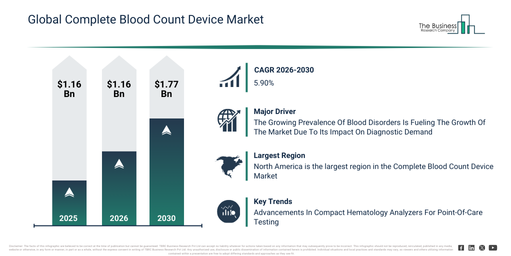
  • The Complete Blood Count Device Market Is Witnessing Impact From The Growing Prevalence Of Blood Disorders Is Fueling The Growth Of The Market Due To Its Impact On Diagnostic Demand

    The Complete Blood Count Device Market Is Witnessing Impact From The Growing Prevalence Of Blood Disorders Is Fueling The Growth Of The Market Due To Its Impact On Diagnostic Demand

    The Business Research Company’s 2026 market reports feature enhanced tools like market attractiveness analysis, TAM assessment, and company scoring matrices, along with interactive dashboards, deeper supply chain insights, and startup coverage strengthening the depth, usability, and strategic value of insights.

    What Is The Projected Increase In Market Value Of The Complete Blood Count Device Market During 2026–2030?

    The complete blood count device market has experienced substantial growth in recent years. This market is set to increase from $4.33 billion in 2025 to $4.58 billion in 2026, progressing at a compound annual growth rate (CAGR) of 6.0%. Historically, this expansion can be attributed to several factors including the rising volume of clinical diagnostic testing, greater automation in hospital laboratories, the increasing burden of chronic diseases, the presence of standardized blood testing protocols, and the growing demand for routine health screenings.

    The complete blood count device market size is projected to experience substantial expansion in the coming years. It is anticipated to reach $5.76 billion by 2030, demonstrating a compound annual growth rate (CAGR) of 5.9%. This expansion during the forecast period is primarily driven by factors such as the increasing embrace of decentralized diagnostics, higher investments in smart laboratory infrastructure, the growing need for swift diagnostic outcomes, the broadening scope of preventive healthcare testing, and ongoing progress in hematology technology. Key trends foreseen for the same period encompass the wider use of automated hematology analyzers, a surge in the demand for point-of-care cbc devices, the increasing incorporation of AI-based diagnostics, the proliferation of high-throughput laboratory systems, and a sharpened emphasis on the precision and speed of diagnostics.

    Access Your Free Sample Report For In-Depth Market Analysis:

    https://www.thebusinessresearchcompany.com/sample.aspx?id=24195&type=smp

    What Factors Are Contributing To The Growth Of The Complete Blood Count Device Market?

    The increasing occurrence of blood-related conditions is anticipated to fuel the expansion of the complete blood count device market. These conditions involve malfunctions in the creation, operation, or formation of blood cells, leading to compromised blood functionality. The escalation of blood disorders is connected to the rising incidence of lifestyle-related illnesses, where factors like unhealthy eating, lack of physical activity, and stress contribute to ailments such as anemia and coagulation problems. A complete blood count (CBC) device assists in the diagnosis of blood conditions through the analysis of vital blood components and the identification of irregularities, enabling medical professionals to detect clotting issues and facilitate timely, accurate treatment. As an illustration, in May 2024, data from the Canadian Cancer Society, a Canada-based organization, revealed that 4,100 individuals received a diagnosis of multiple myeloma (a type of blood cancer), while 1,750 succumbed to the disease. Consequently, the increasing frequency of blood disorders is stimulating the expansion of the complete blood count device market.

    How Is Segmentation Applied In The Complete Blood Count Device Market Segment Analysis?

    The complete blood count device market covered in this report is segmented –

    1) By Device Type: Automated Blood Count Analyzers, Manual Blood Count Analyzers, Point-Of-Care Testing Devices, Hematology Analyzers

    2) By Test Type: White Blood Cell Count (WBC Or Leukocyte Count), White Blood Cell (WBC) Differential Count, Red Blood Cell Count (RBC Or Erythrocyte Count), Hematocrit (Hct), Hemoglobin (Hbg), Platelet Count, Mean Platelet Volume (MPV), Mean Corpuscular Hemoglobin (MCH), Other Test Types

    3) By Technology: Impedance Technology, Laser-Based Technology, Flow Cytometry, Microscopy

    4) By Distribution Channel: Direct Sales, Online Sales, Third-Party Distributors, Laboratory Equipment Suppliers

    5) By End-User: Hospital, Diagnostic Laboratories, Research Institutes, Other End-Users

    Subsegments:

    1) By Automated Blood Count Analyzers: 3-Part Differential Analyzers, 5-Part Differential Analyzers, 6-Part And Above Differential Analyzers, Integrated Hematology Systems, High-Throughput Lab Analyzers

    2) By Manual Blood Count Analyzers: Hemocytometers, Microscopes For Manual Differential, Manual Cell Counters, Staining Kits And Reagents

    3) By Point-of-Care Testing Devices: Portable Hematology Analyzers, Handheld Complete Blood Count (CBC) Devices, Fingerstick Blood Test Devices, Rapid Diagnostic Complete Blood Count (CBC) Kits

    4) By Hematology Analyzers: Low-Volume Hematology Analyzers, Mid-Volume Hematology Analyzers, High-Volume Hematology Analyzers, Veterinary Hematology Analyzers, Reagent-Free Analyzers

    What Trends Are Shaping The Future Of The Complete Blood Count Device Market?

    Leading companies within the complete blood count device market are focusing their efforts on creating advanced products, such as compact hematology analyzers, to deliver more precise, faster, and cost-effective solutions for point-of-care testing. Compact hematology analyzers are portable, user-friendly instruments that provide rapid, accurate complete blood count (CBC) results using only a small sample volume, positioning them as ideal for point-of-care applications, improving diagnostic accuracy, efficiency, and user convenience, all while being economical and easy to upkeep. An example of this trend is HORIBA, a Japan-based analytical and measurement technology company, which launched the Yumizen H550E and H500E hematology analyzers in June 2024. These compact devices combine erythrocyte sedimentation rate (ESR) testing with complete blood count (CBC) and 5-part differential (DIFF) analysis, leveraging HORIBA’s patented CoRA (correlated rouleaux analysis) technology to furnish comprehensive results from whole blood samples in just 60 seconds.

    Who Are The Companies Participating In The Complete Blood Count Device Market Environment?

    Major companies operating in the complete blood count device market are Abbott Laboratories, Siemens Healthineers, Mindray Medical International Limited, Beckman Coulter Inc., Sysmex Corporation, Horiba Ltd., Nihon Kohden Corporation, Agappe Diagnostics Ltd., Trivitron Healthcare Pvt. Ltd., HemoCue AB, EKF Diagnostics Holdings plc, Erba Mannheim, Boule Diagnostics AB, Biosystems S.A., Diatron MI Zrt., Labtron Equipment Ltd., Microlab Instruments Co. Pvt. Ltd., URIT Medical Electronic Co. Ltd., Roche Diagnostics, Ortho Clinical Diagnostics, BioSystems Diagnostics Pvt. Ltd., Drew Scientific (subsidiary of EKF), Analyticon Biotechnologies GmbH, Rayto Life and Analytical Sciences Co. Ltd.

    Get The Full Complete Blood Count Device Market Report:

    https://www.thebusinessresearchcompany.com/report/complete-blood-count-device-global-market-report

    Which Region Has The Greatest Market Share In The Complete Blood Count Device Market?

    North America was the largest region in the complete blood count device market in 2025. Asia-Pacific is expected to be the fastest-growing region in the forecast period. The regions covered in the complete blood count device market report are Asia-Pacific, South East Asia, Western Europe, Eastern Europe, North America, South America, Middle East, Africa.

    Request A Customized Complete Blood Count Device Market Report For Competitive Insights:

    https://www.thebusinessresearchcompany.com/customise?id=24195&type=smp

    Browse Through More Reports Similar to the Global Complete Blood Count Device Market 2026, By The Business Research Company

    Clinical Diagnostics Market Report 2026

    https://www.thebusinessresearchcompany.com/report/clinical-diagnostics-global-market-report

    Oncology Companion Diagnostics Market Report 2026

    https://www.thebusinessresearchcompany.com/report/oncology-companion-diagnostics-global-market-report

    Nuclear Medicine Diagnostics Market Report 2026

    https://www.thebusinessresearchcompany.com/report/nuclear-medicine-diagnostics-global-market-report

    Get in touch with us:

    The Business Research Company: https://www.thebusinessresearchcompany.com/

    Americas +1 310-496-7795

    Asia +44 7882 955267 & +91 8897263534

    Europe +44 7882 955267

    Email us at info@tbrc.info

    Follow us on:

    LinkedIn: https://in.linkedin.com/company/the-business-research-company

    YouTube: https://www.youtube.com/channel/UC24_fI0rV8cR5DxlCpgmyFQ

    Global Market Model: https://www.thebusinessresearchcompany.com/global-market-model